Category: Children’s Museums & Art Galleries

National Baseball Hall of Fame & Museum                      25 Main Street                                     Cooperstown, NY 13326

National Baseball Hall of Fame & Museum 25 Main Street Cooperstown, NY 13326

National Baseball Hall of Fame & Museum

25 Main Street

Cooperstown, NY 13326

(607) 547-7200

https://baseballhall.org/

Open: Sunday-Saturday 9:00am-5:00pm

Fee: Adults $30.00/Seniors (65+) $20.00/Veterans $18.00/Children 7-12 $15.00/Active Military-Children under 6-Members Free

My review on TripAdvisor:
https://www.tripadvisor.com/Attraction_Review-g47529-d102933-Reviews-National_Baseball_Hall_of_Fame_and_Museum-Cooperstown_Otsego_New_York.html?m=19905

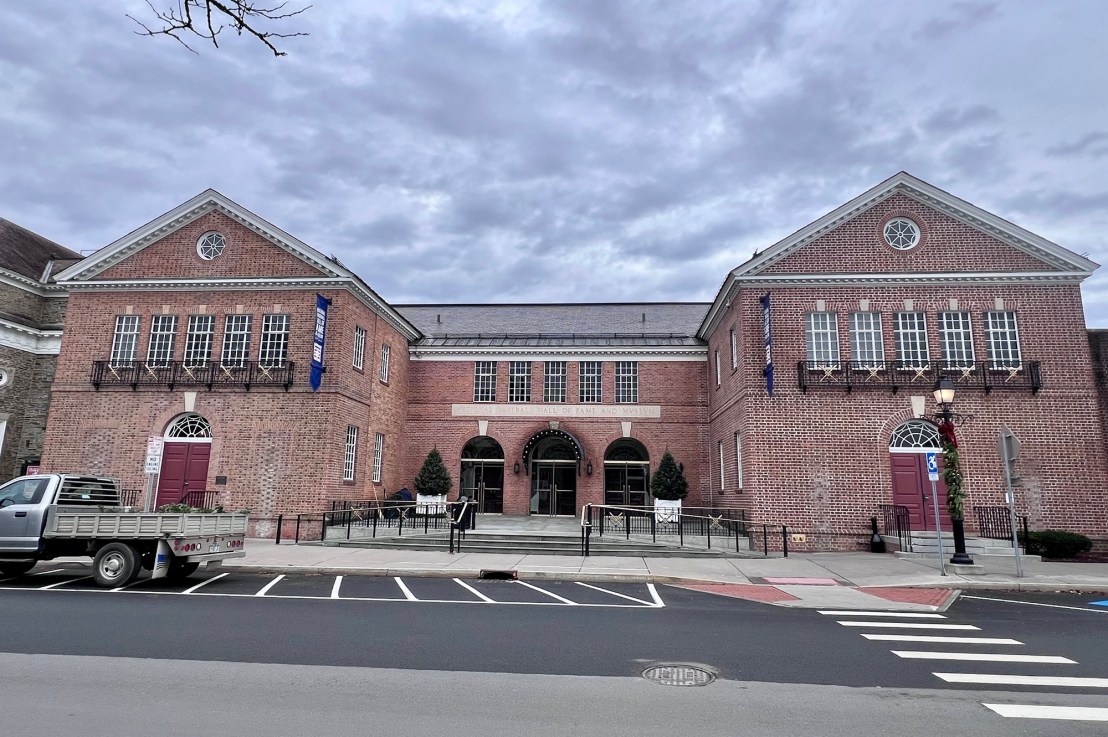
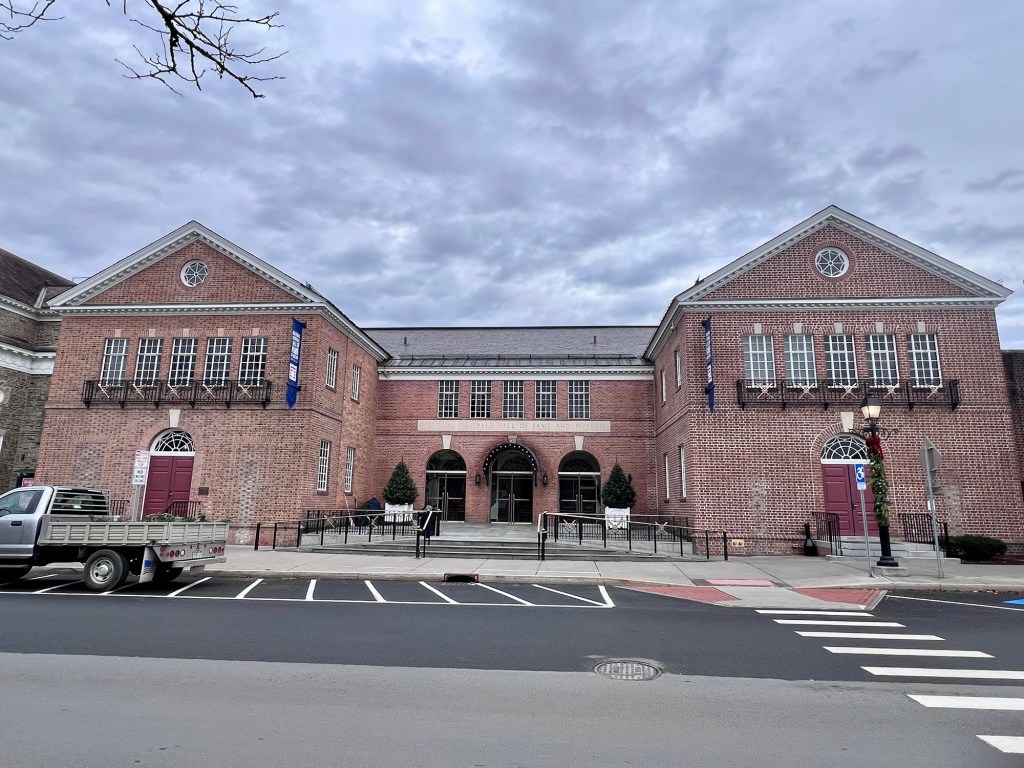
The National Baseball Hall of Fame at 25 Main Street

When visiting the National Baseball Hall of Fame be prepared to spend over two hours in the museum because there is so much to see. When I visited the museum recently they had just inducted Derek Jeter as one of its newer members so a lot of Yankee fans were swarming around the picture and the display.
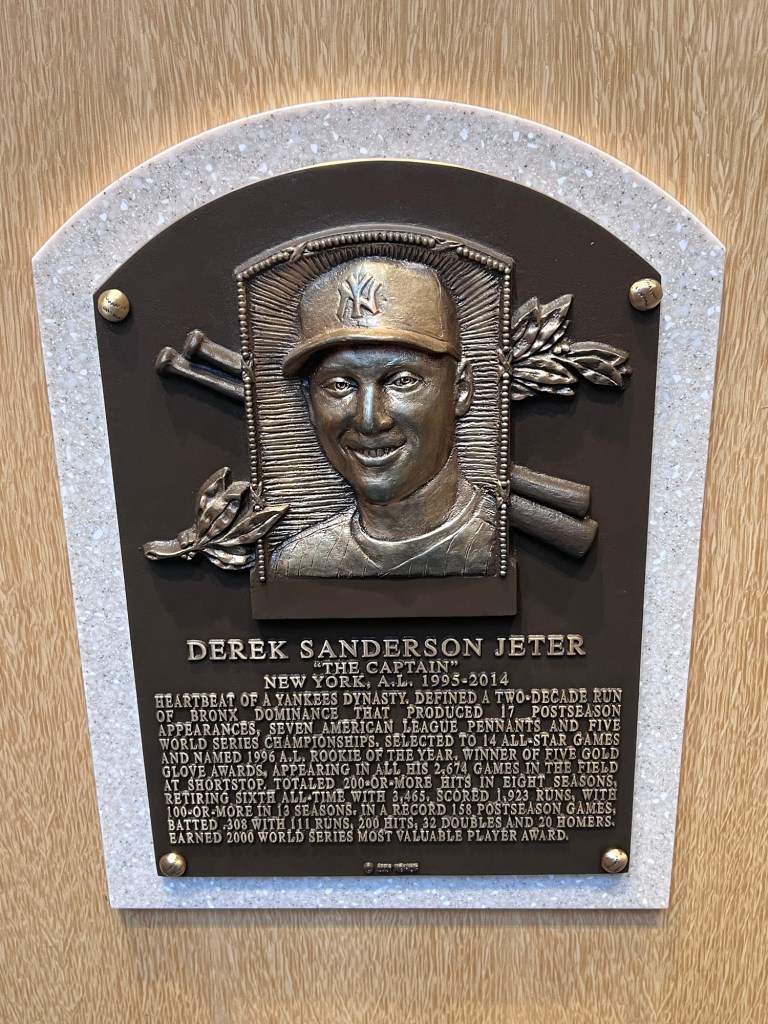
Derek “The Captain” Jeter being inducted into the Baseball Hall of Fame

The museum can be overwhelming if you don’t break it down to the part of the visit. I wanted to see the Hall of Fame plaques so I started there. All the players of the past were memorialized by the pictures on plaques with a small blurb about their careers and what team they wanted to be remembered by when they were inducted in.
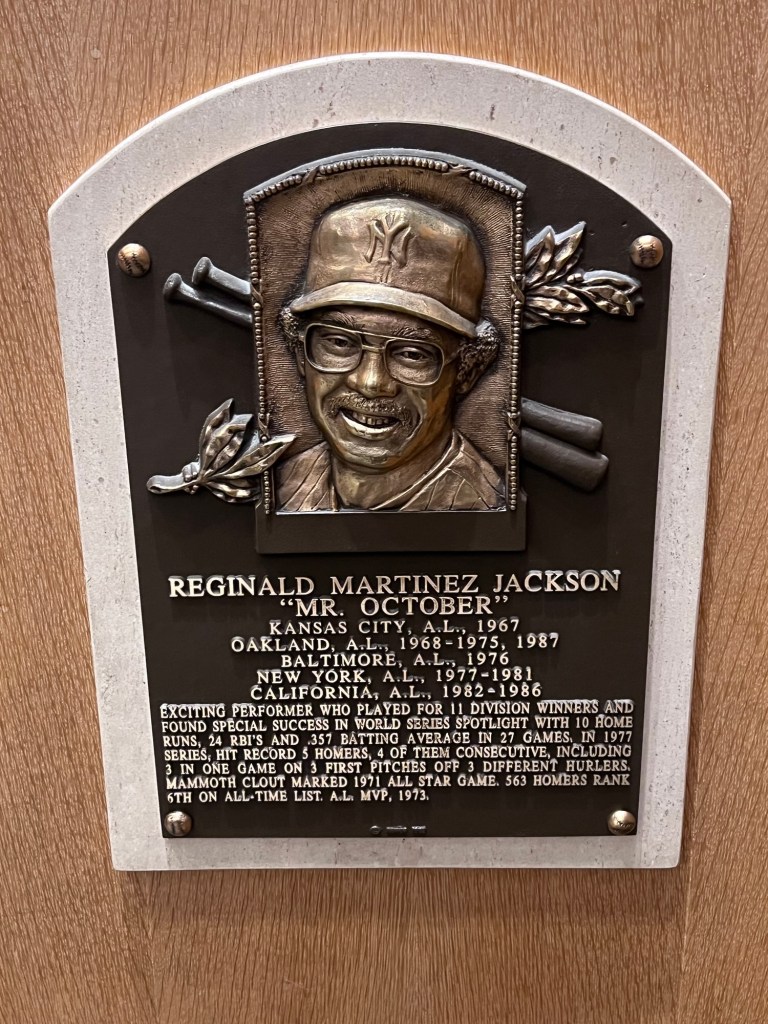
My hero, Reggie Jackson ‘Mr. October’

I was looking for Reggie Jackson, because I remember when “Mr. October” entered he said with pride that he was coming in as a Yankee. He was one of my hero’s of the 1970’s.
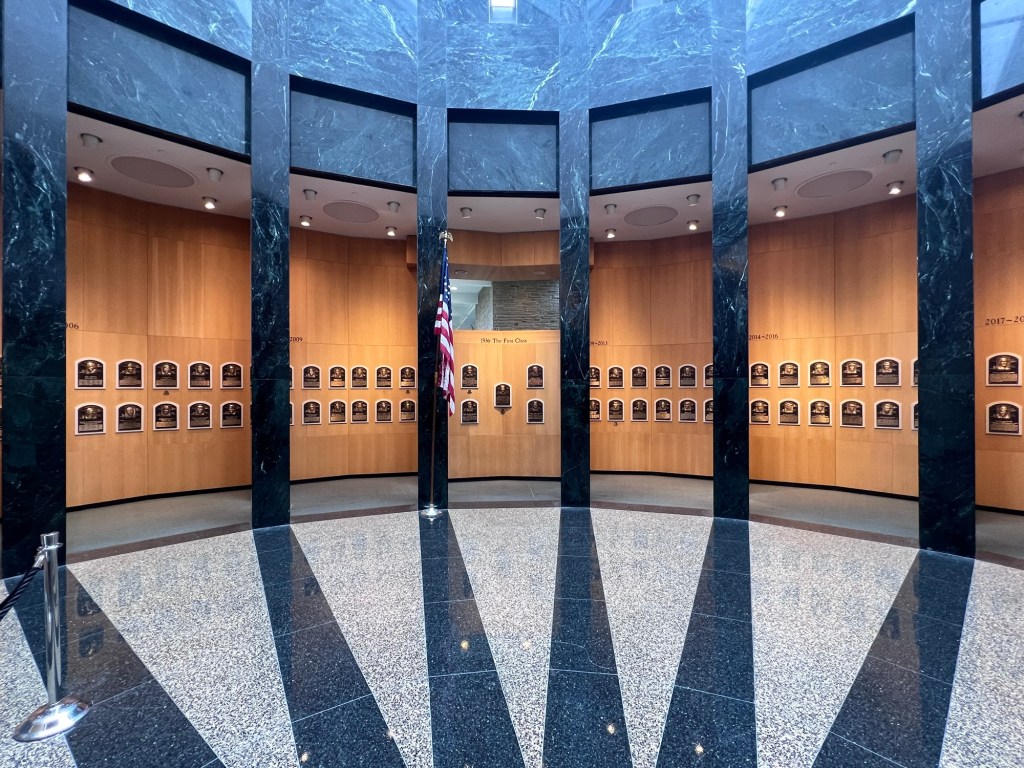
The Hall of Fame Plaque Wall
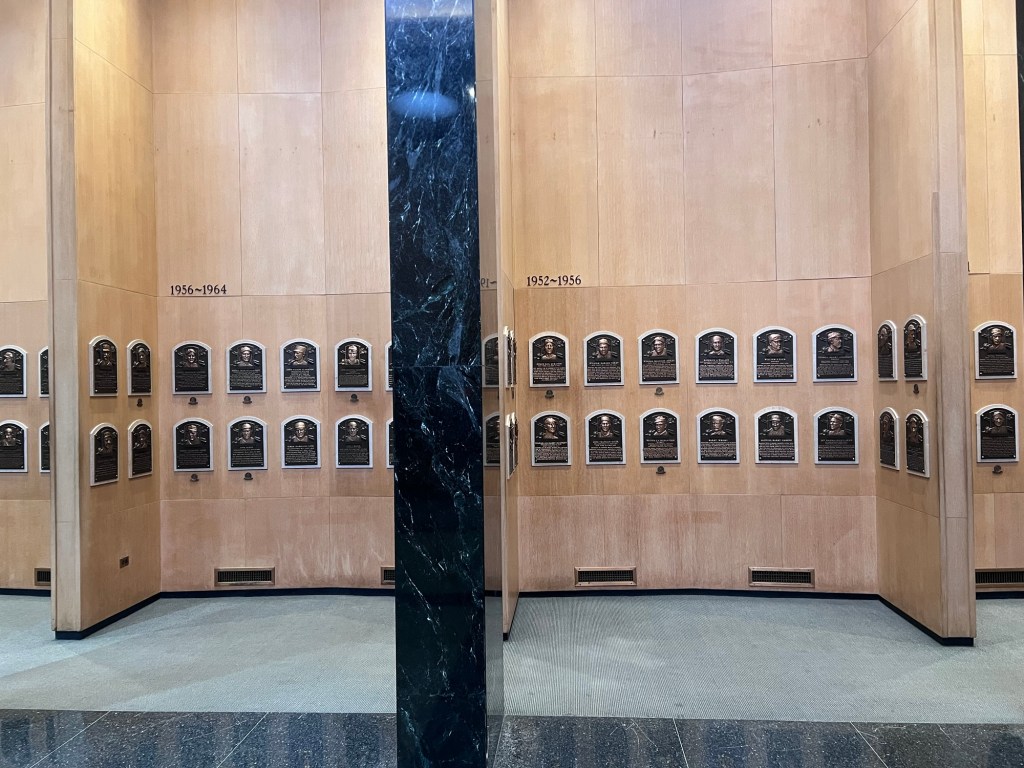
The Hall of Fame Gallery

The second floor is loaded with all sorts of baseball memorabilia from Hank Aaron’s uniforms, pictures and stats to a complete display of all of Babe Ruth’s career history from uniforms, stats, recordings, pictures and even his locker.
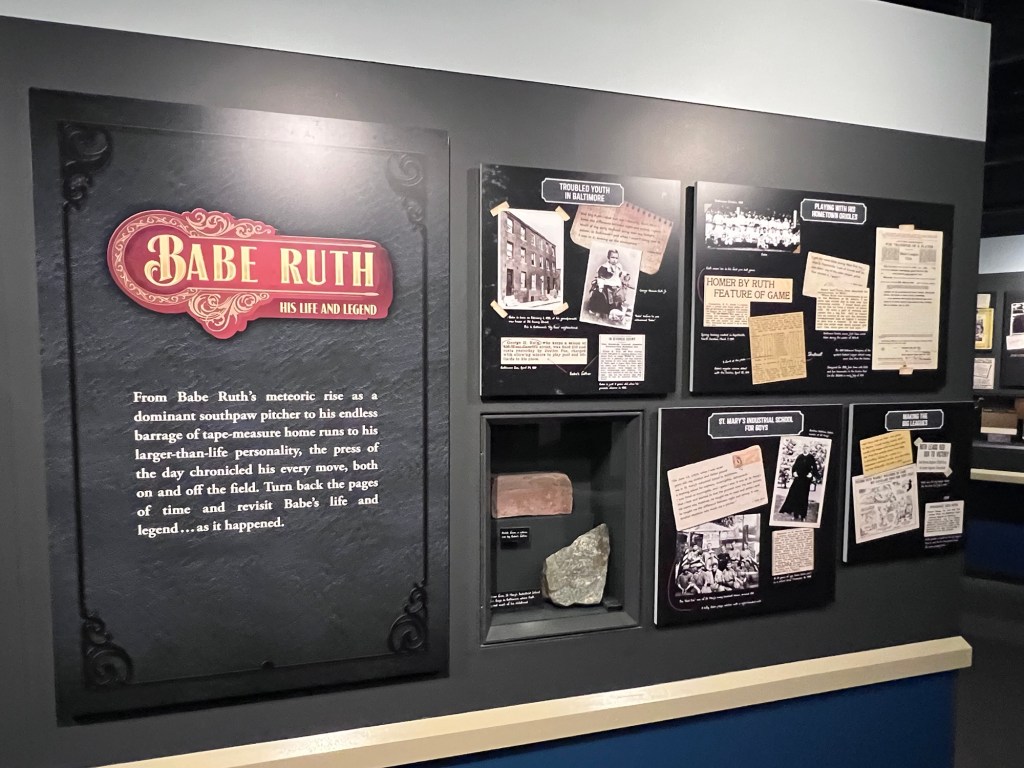
Babe Ruth display
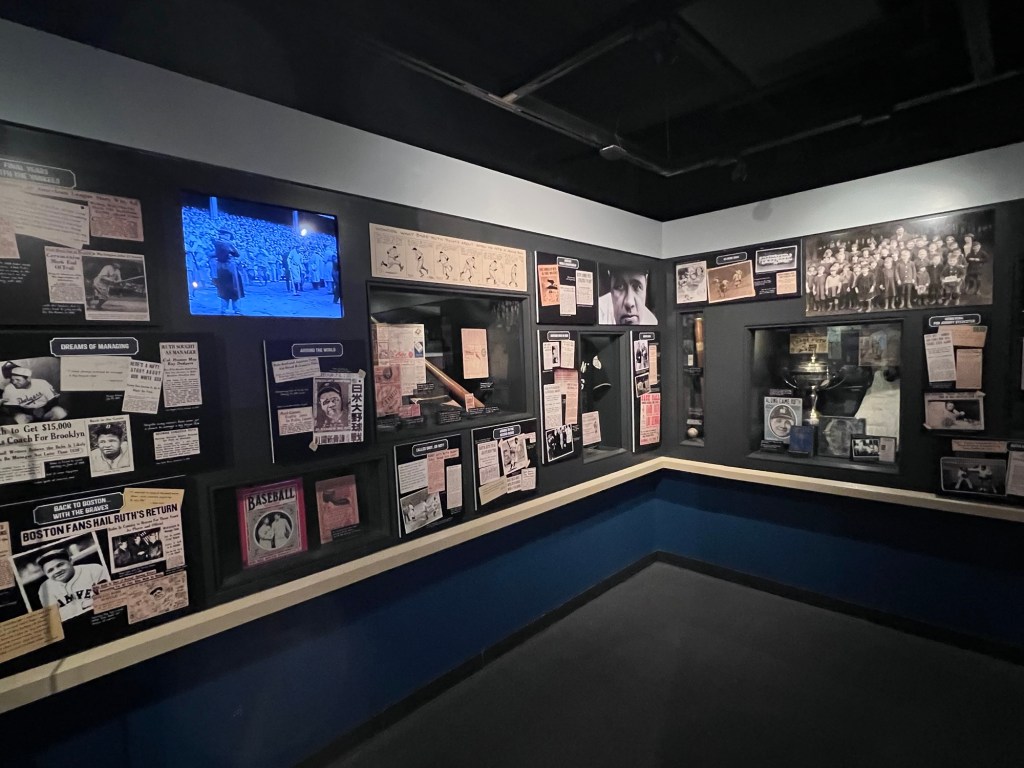
The Babe Ruth exhibit
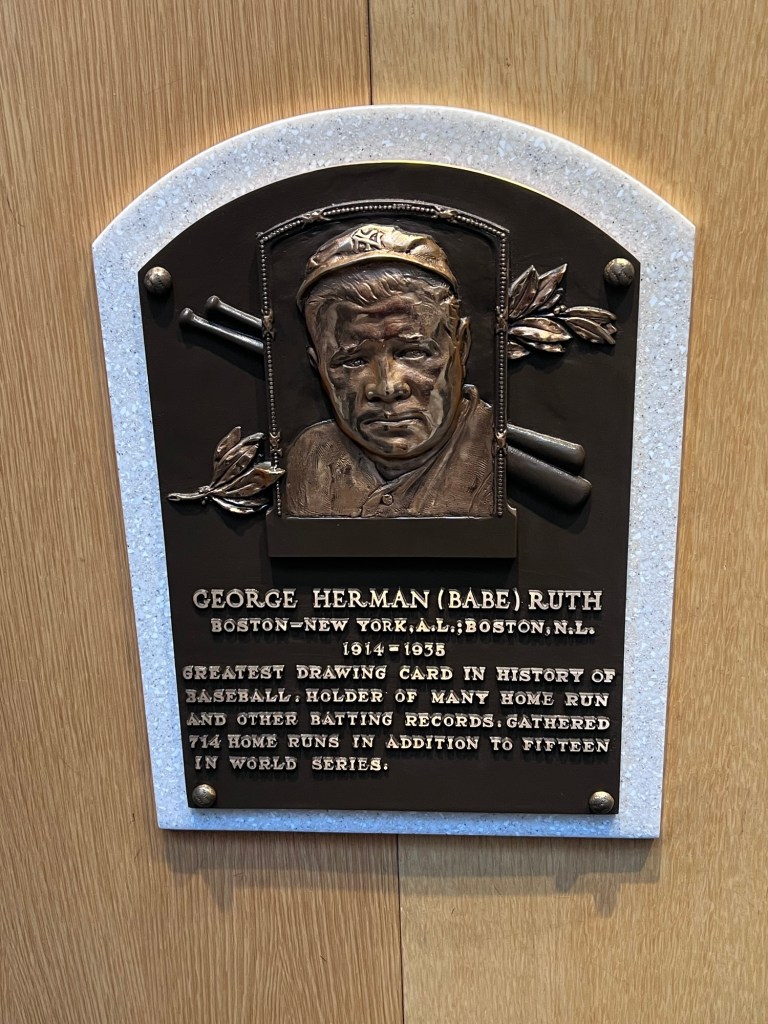
The Babe Ruth panel

Each display case represented the history of baseball and how it has progressed over the years. From the early Egyptians playing a similar sport with a bat and ball to the progression of cricket in the British Territories to modern day stickball in the cities, baseball keeps morphing and changing to modern times.
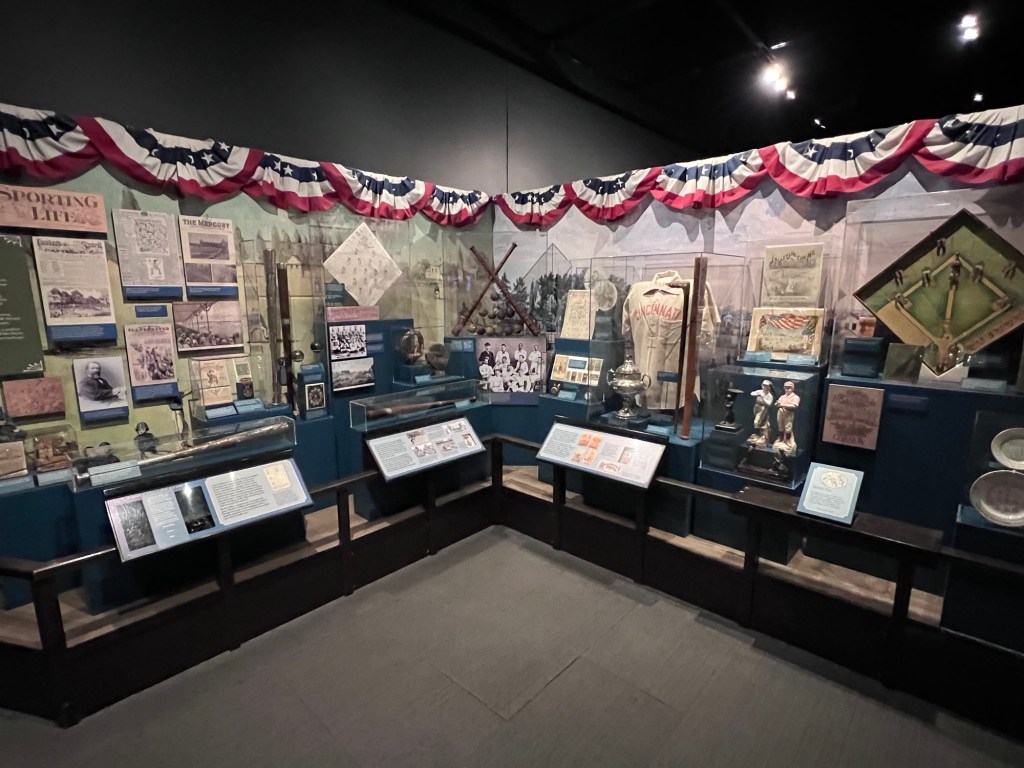
The history of Baseball
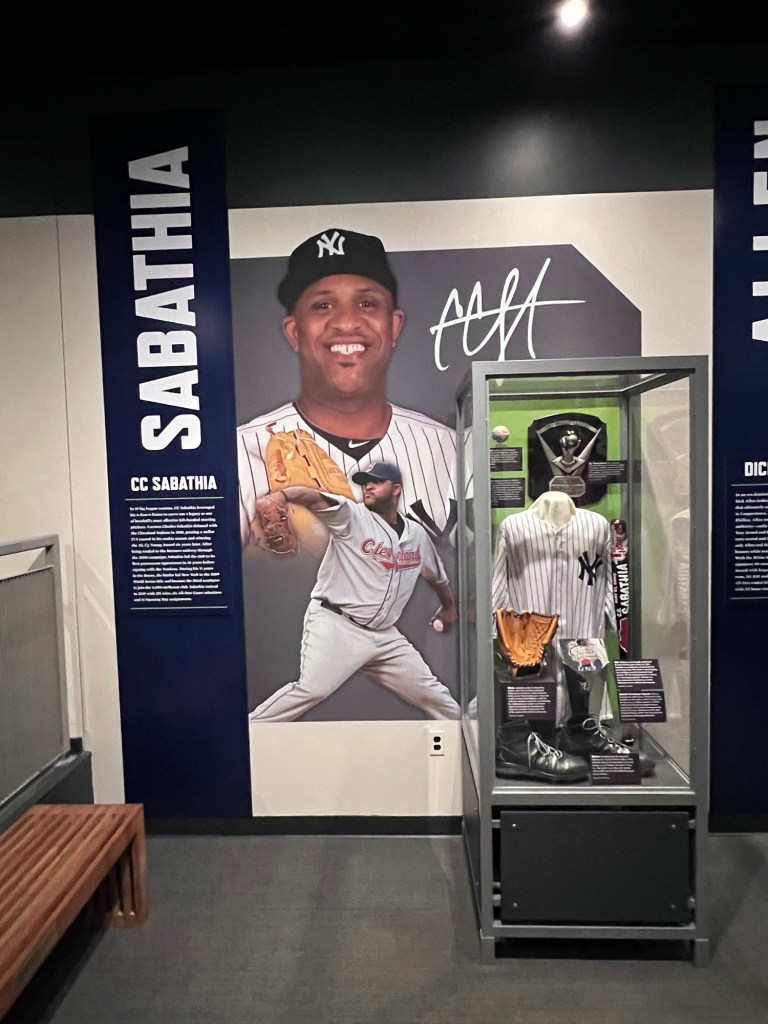
The CC Sabathia exhibit on his coming into the Hall of Fame

Many famous players have donated their entire collections to the museum so it was interesting to see their progression from the time they were young to the time of their retirement.
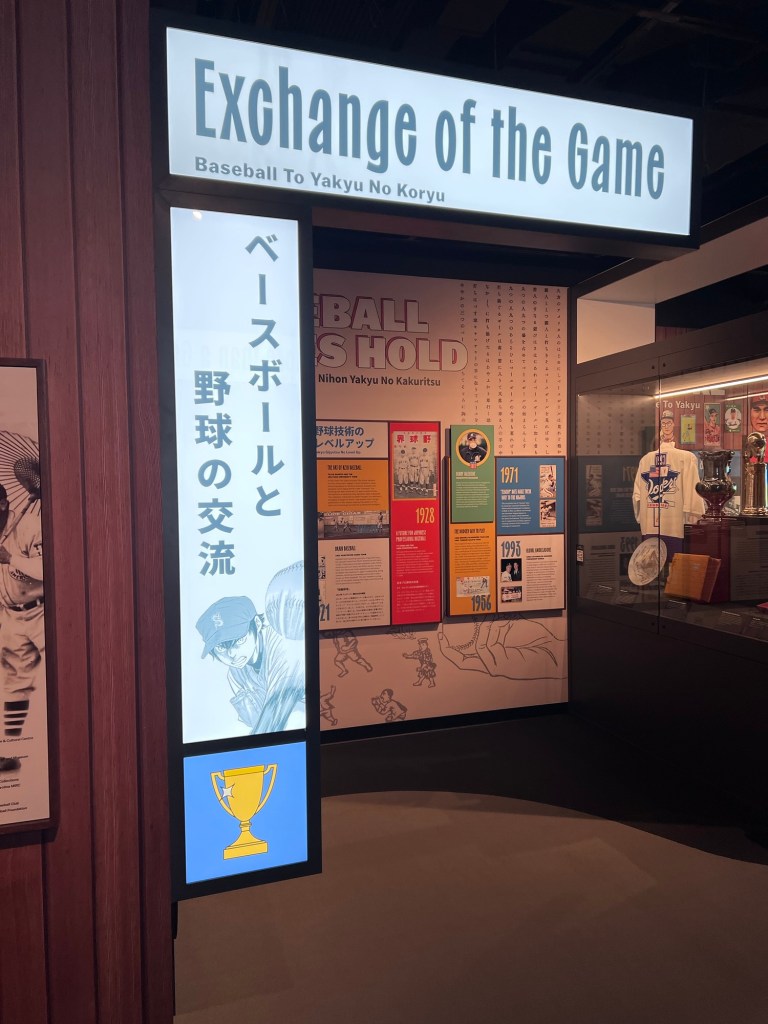
The Japanese baseball history

There are also collections of baseball cards, recordings and films, modern day artworks and even Hollywood’s take on baseball with posters like the “Field of Dreams” and “The Bad News Bears”. I was surprised how the lines between reality and the truth begin to blur in a museum like this.

What I was grateful to was the amount of items donated by the fans, wanting to part with something so valuable to them to share it with other fans.
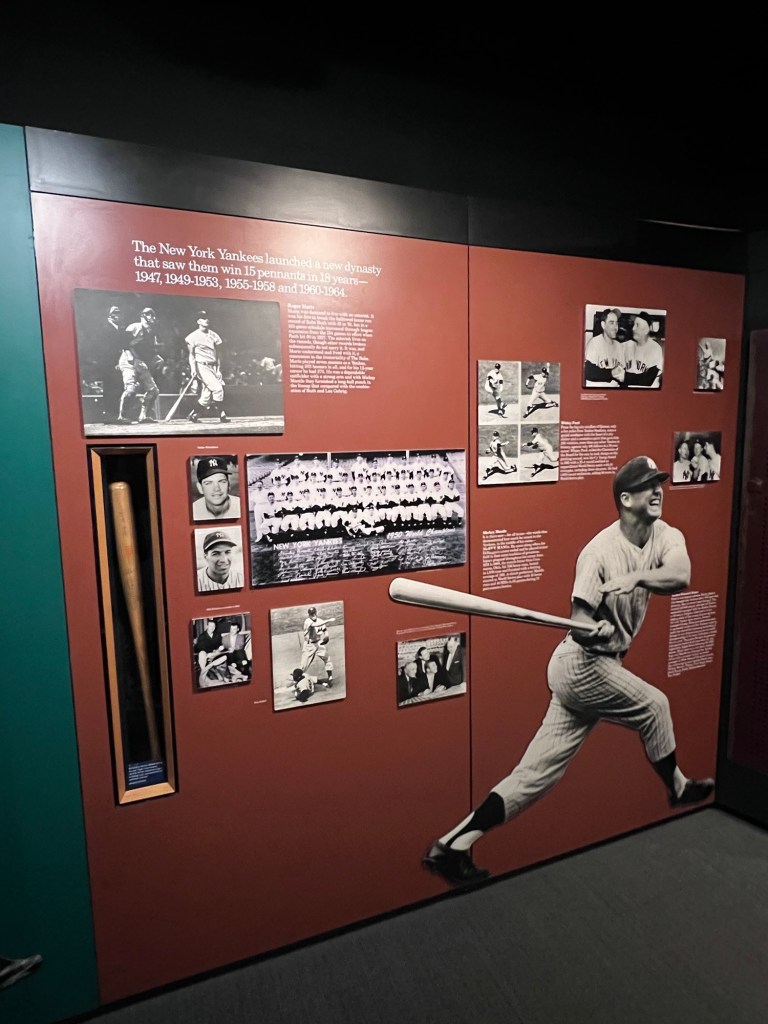
The NY Yankee dynasty

I have to say that the museum can be a little overwhelming at time since there is so much to see so plan on spending at least over two hours and break the visit into two days to really experience the museum especially if you are a true baseball fan at heart.

It is an amazing experience.
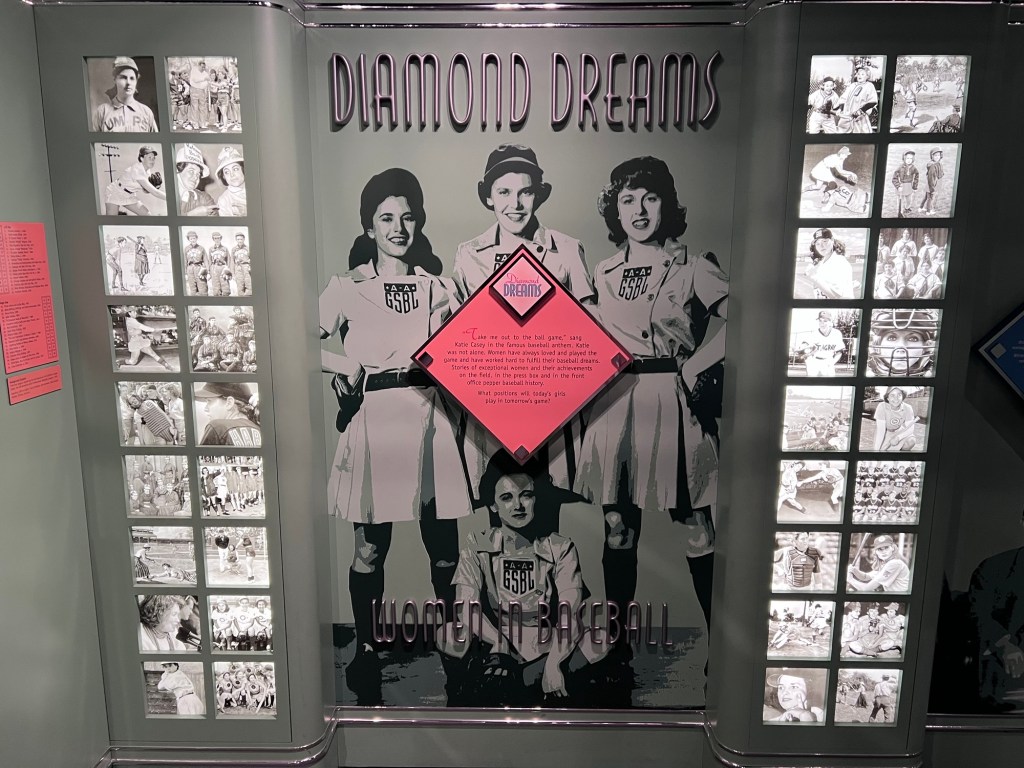
The Women’s League history
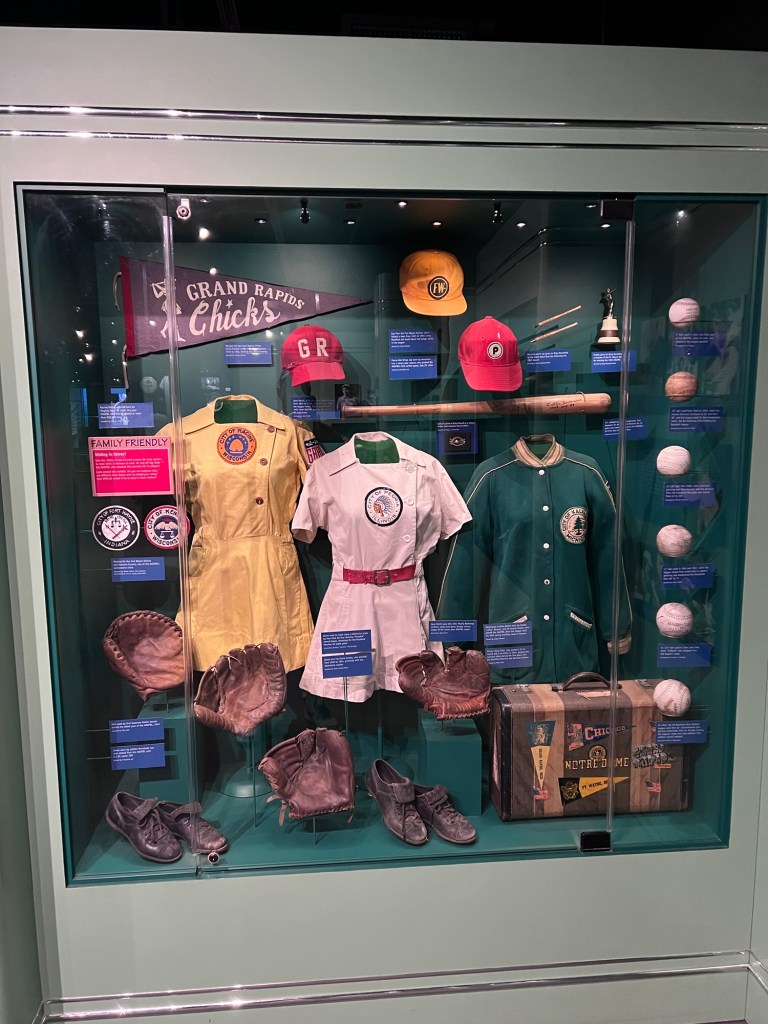
The outfits for Women’s Baseball League

History of the National Baseball Hall of Fame:

(From the museum website)

The Village is pure Americana, a one-stoplight town nestled between the Adirondacks and the Catskills in Central New York. It drew from the family of James Fenimore Cooper, whose father, William, founded the village, whose works of literature have become American standards.

And yet Cooperstown has become a synonym for “baseball”, thanks to a story about a Civil War general and the country’s love for a timeless game. By the last half of the 19th Century, baseball had become the National Pastime. The United States was a little more than 100 years old and baseball had evolved with the country. But there was no definitive answer as to the birth of the game.

Enter the Spalding Commission, a board created by sporting goods magnate and former player A. G. Spalding to establish the genesis of baseball. And after a few years of searching, they found their answer.

A plaque commemorating Major General Abner Doubleday was installed prior to the Hall of Fame’s opening on June 12th, 1939.(Homer Osterhoudt/National Baseball Hall of Fame and Museum).
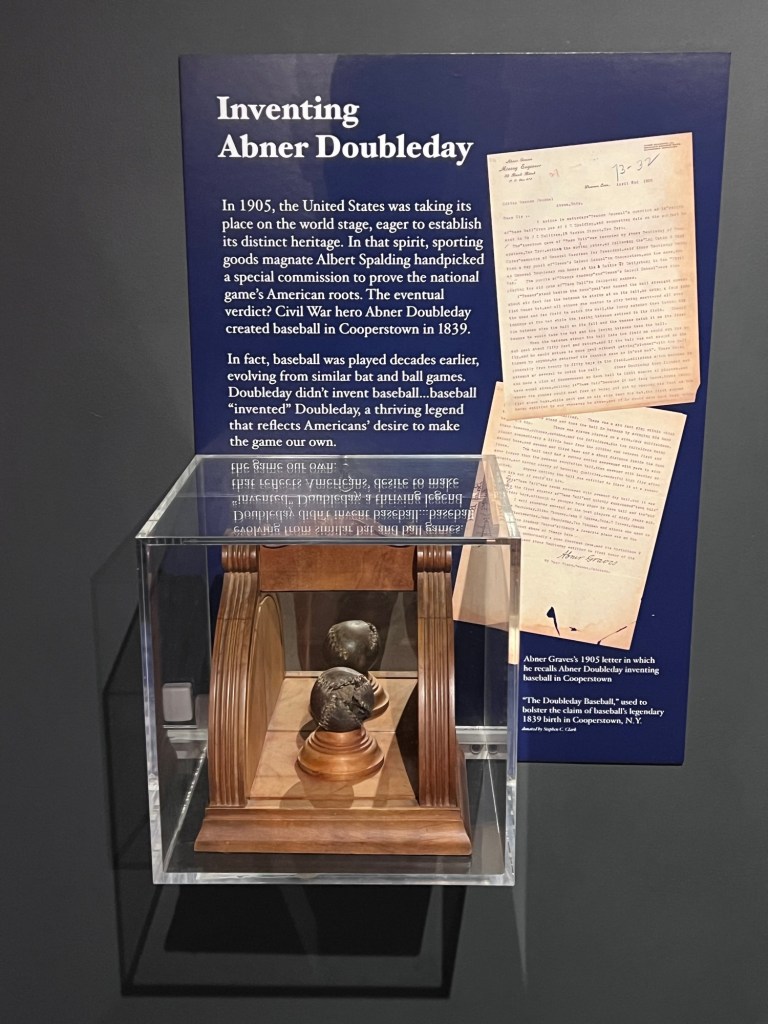
The Abner Doubleday display

Abner Graves, a mining engineer, proclaimed that Abner Doubleday, a decorated Union Army officer who fired the first shot of defense of Fort Sumter at the start of the Civil War and later served at the Battle of Gettysburg, invented baseball in 1839 in Cooperstown. That was good enough for the Spalding Commission, which came to its conclusion in 1907.

Three decades later, Cooperstown philanthropist Stephen C. Clark, seeking a way to celebrate and protect the National Pastime as well as an economic engine for Cooperstown, asked National League president Ford C. Frick if he would support the establishment of a Baseball Hall of Fame in Cooperstown. The idea was welcomed and in 1936 the inaugural Hall of Fame class of Ty Cobb, Walter Johnson, Christy Mathewson, Babe Ruth and Honus Wagner was elected.

Three years later, the Hall of Fame building officially opened in Cooperstown as all of baseball paused to honor what was called “Baseball’s Centennial” and as the first four Hall of Fame classes were inducted.

To mark the occasion, Time Magazine wrote: “The world will little note nor long remember what (Doubleday) did at Gettysburg but it can never forget what he did at Cooperstown.”

In the years since, The Doubleday Myth has been refuted. Doubleday himself was at West Point in 1839. Yet the Myth has become strong enough that the facts alone do not deter the spirit of Cooperstown.

The National Baseball Hall of Fame and Museum surely the most well-known sports shrine in the world, continues to thrive in the town where baseball’s pulse beats the strongest.

But in the following the opening of the Hall of Fame on June 12th, 1939, the Museum has become much more than just home to baseball’s biggest stars. The Hall of Fame is the keeper of the game.

The Hall of Fame’s collections contain more than 40,000 three demensional artifacts, such as bats, balls, gloves and uniforms donated by players and fans who want to see history preserved. The museum’s curators use the artifacts, whose number grows by about 400 a year, to tell the story of the National Pastime through exhibits.

The Museum itself is a melding of five buildings sewn together via several renovation and expansion programs. Today, the Museum easily accommodates more than 3000 visitors per day during the peak season.

The artifact collection is housed in climate-controlled rooms to protect the delicate, fabric and wood materials used in baseball. The Museum promises, in exchange for the donation of an artifact, to care for an item in perpetuity, which means the effects of temperature and humidity must be constantly regulated. The Museum’s first accessioned item was the “Doubleday Baseball”, which was discovered in a farmhouse in nearby Fly Creek, NY in 1935 and dates to the 19th Century.

Then in 1937, Cy Young, elected to the Hall of Fame that year in the second year of voting, generously donated several artifacts, including the 1908 ball from his 500th win and the 1911 uniform he wore with the Boston Braves. Young’s donations generated new offers from other players as well as fans.

Thousands of fans attended the opening of the Hall of Fame on June 12th, 1939 and that same year another Cooperstown tradition was started with the launch of the annual Hall of Fame game. For 70 years, the Hall of Fame game became an annual celebration of the game as two Major League Baseball teams played an annual exhibition contest at Doubleday Field in Cooperstown.

Though the game was discontinued in 2008, the legends live on with the advent of the Hall of Fame Classic, an annual event over Memorial Day Weekend featuring Hall of Famers and former major leaguers at historic Doubleday Field.

The field itself dates back to 1920 and the first grandstand was built in 1924. Thanks to Works Progress Administration money during the Great Depression, Doubleday Field was expanded again in 1934. Today, the field is occupied non-stop during the spring, summer and fall as high school athletes, collegiate summer league stars and recreational players savor the chance to play on hallowed ground.

The A. Bartlett Giamatti research Center is also part of the Museum experience and the Center’s Library contains more than three million documents on the history of baseball, ranging from reference books to the “Green Light Letter” sent by President Franklin D. Roosevelt to baseball commissioner Kenesaw Mountain Landis in January of 1942, urging Landis to keep baseball going during World War II. The National Baseball Hall of Fame Library also contains more than 250,00 baseball photographs and images.

As an educational institution, the Museum offers outreach programs for audiences of all ages. Through virtual classroom technology, Cooperstown is transported to school across the country with video-conference lessons featuring any one of 16 learning modules.
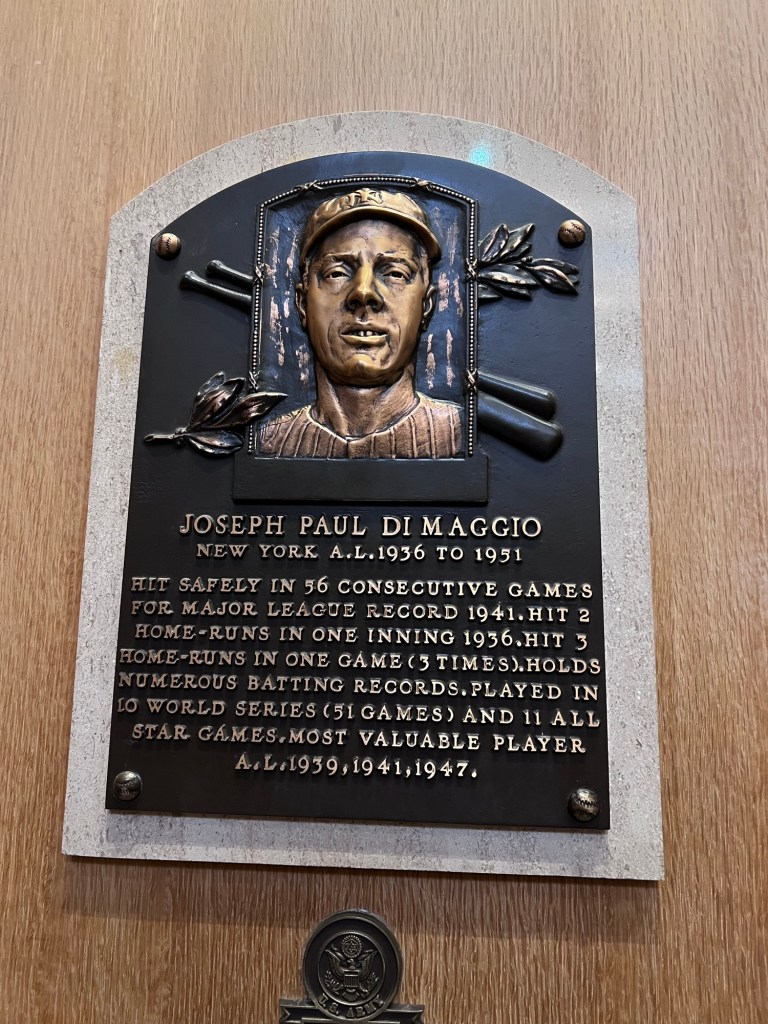
The Joe Di Maggie award

Mission of the Museum:

Preserving History, Honoring Excellence and Connecting Generations.

The National Baseball Hall of Fame and Museum is an independent, non-profit educational institution dedicated to fostering an appreciation of the historical development of baseball and its impact on our culture by collecting, preserving, exhibiting and interpreting its collection for a global audience as well as honoring those who have made outstanding contributions to our national pastime.
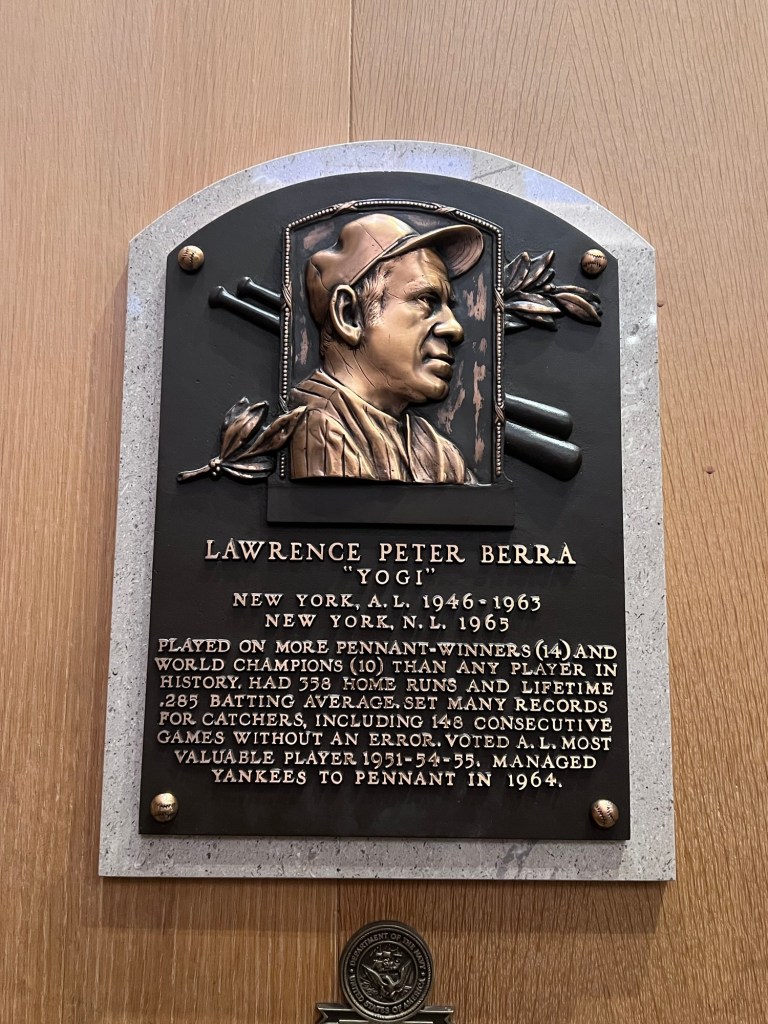
The Yogi Berra panel

The Hall of Fame’s mission is to preserve the sport’s history, honor excellence within the game and make a connection between the generations of people who enjoy baseball. Likewise the institution functions as three entities under one roof with a museum, the actual Hall of Fame and a research library. With these parts working together, the Museum is committed to fulfilling its mission by:

Collecting, through donations, baseball artifacts, works of art, literature, photgraphs, memorabilia and related materials which focus on the history of the game over time, its players and those elected to the Hall of Fame.

Preserving the collections by adhering to professional museum standards with respect to conservation and maintaining a permanent record of holdings through documentation, study, research, cataloging and publication.
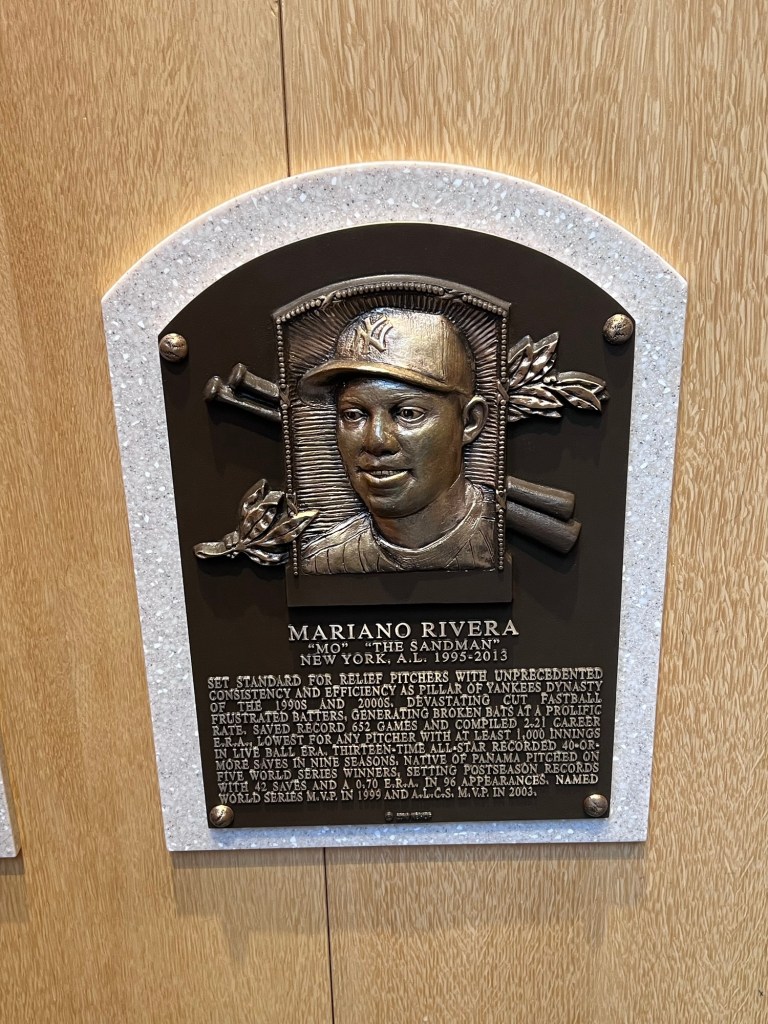
The Mariano Rivera plaque

Exhibiting material in permanent gallery space, organizing on-site changing exhibitions on various themes, with works from the Hall of Fame collectins or other sources, working with other individuals or organizations to exhibit loaned material of significance to baseball and providing related research facilities.

Interpreting artifacts its exhibition and education programs to enhance awareness, understanding and appreciation of the game fora diverse audience.
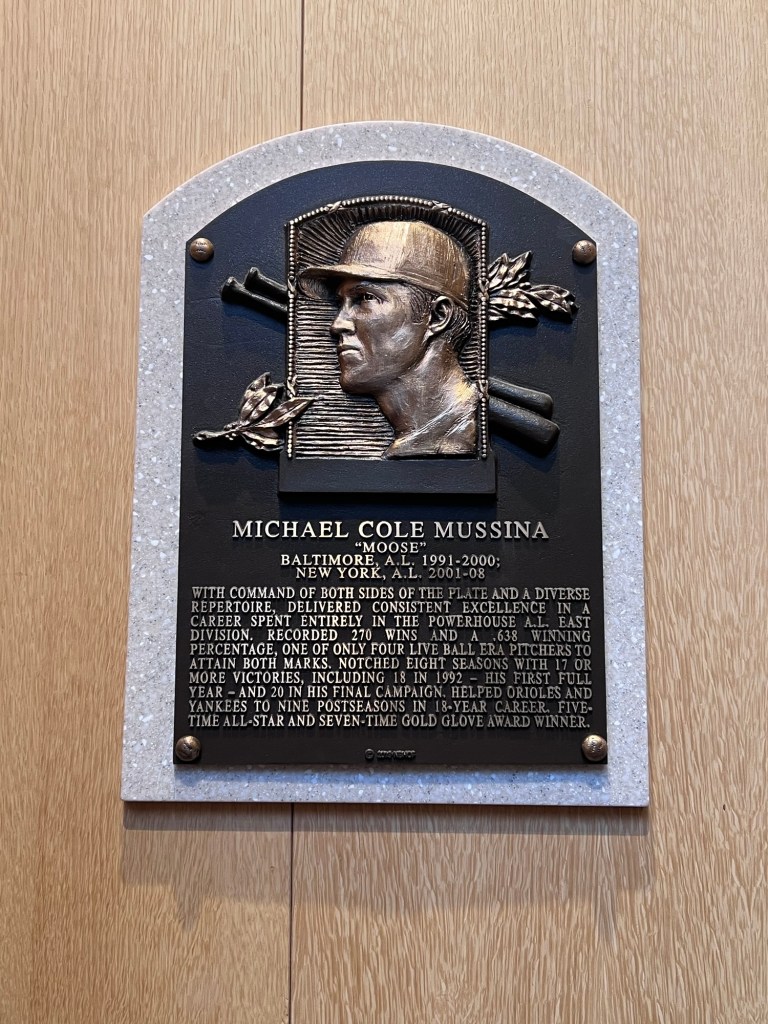
The Mike Mussina plaque

Honoring, by enshrinement, those individuals who had exceptional careers and recognizing others for their significant achievements.

High School of Art & Design-John B. Kenny Gallery                                                                   245 East 54th Street                                           New York, NY 10022

High School of Art & Design-John B. Kenny Gallery 245 East 54th Street New York, NY 10022

High School of Art & Design-John B. Kenny Gallery

245 East 54th  Street

New York, NY  10022

(212) 752-4340

http://www.artanddesignhs.org/

https://insideschools.org/school/02M630

https://en.wikipedia.org/wiki/High_School_of_Art_and_Design

Open: Seasonal when school is open and only at certain times of the year

Fee: Free-check in with the security guard

 The High School of Art & Design at 245 East 54th Street

I passed the High School of Art & Design when I was touring the Turtle Bay neighborhood in Manhattan for my blog, MywalkinManhattan.com. The school was open during the Spring Break and some of the kids were in the school were taking classes. The security guard let me walk around and then he asked me would I like the see the art gallery. I said sure and I was able to explore the John B. Kenny Gallery.

John B. Kenny was Ceramist and an administrator who saved the school and created the school with three other artists in 1936. He founded the school with artists Henry Cordes, Mildred Harston and Jerod Magon.

High School of Art & Design V

The School History:

https://www.biblio.com/the-complete-book-of-pottery-by-kenny-john-b/work/59670

https://muse.jhu.edu/article/598110/pdf


The School Mission Statement:

The Mission of the High School of Art & Design is to inspire, educate and fully prepare our gifted students to become exceptional artists. Through a unified curriculum that incorporates a broad spectrum of disciplines integrating art, technology and academics, our students are prepared to go on to college and careers with industry-standard mastery in the major of their choice.

With a commitment to promoting strong ethical values and professional demeanor, we strive to foster a sense of community among our students, staff and parents. We are dedicated to engendering student’s productive, creative and innovative participation in the world of visual arts as concerned and caring citizens of the global community (School Mission Statement).

John B. Kenny artist

John B. Kenny artist

https://www.goodreads.com/author/show/242318.John_B_Kenny

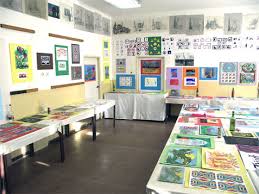
The Gallery is full with Alumni and student art and it revolves at various times of the year. It is a nice size gallery full of interesting art. There was a combination of sculpture, painting and paper sculpture in the gallery.

High School of Art and Design Gallery Show

The John B. Kenny Gallery is very interesting

I was only able to spend a short time in the gallery but it is a hidden gem tucked in the side of the main entrance and just talk to the security guards at the front of the school and they will let you tour on your own.

Check it out when the school reopens in the Fall.


Studio in a School NYC Gallery                               1 East 53rd Street                                               New York, NY 10022

Studio in a School NYC Gallery 1 East 53rd Street New York, NY 10022

Studio in a School NYC Gallery LLC.

1 East 53rd Street

New York, NY  10022

(212) 459-1455

https://studioinstitute.org

Open: Sunday & Saturday Closed/Monday-Friday 8:00am-7:00pm

Fee: Free

My review on TripAdvisor:


1 East 53rd Street

The entrance to the Gallery is at 1 East 53rd Street

The Dragon that guards the door of the gallery.

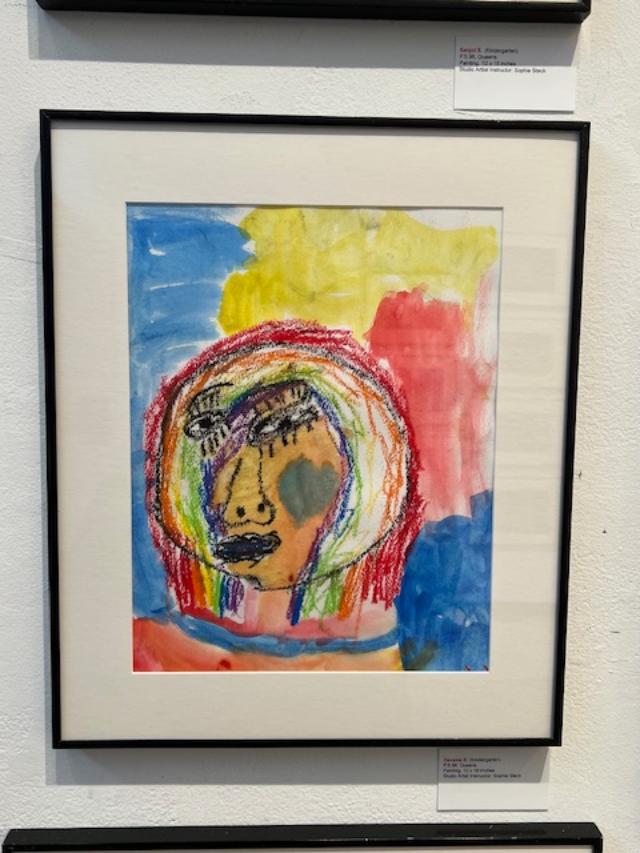
I came across this little gallery full of Public School K-12 art when walking around the Upper East Side for my walking project, “MywalkinManhattan.com” This small gallery space in the lobby of 1 East 53rd Street has a revolving exhibition of works from students in schools all over New York City.

The revolving art at the Studio in a School Gallery is unique.

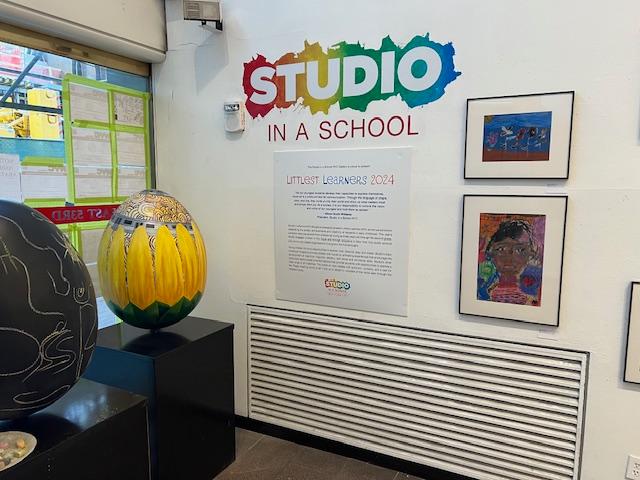
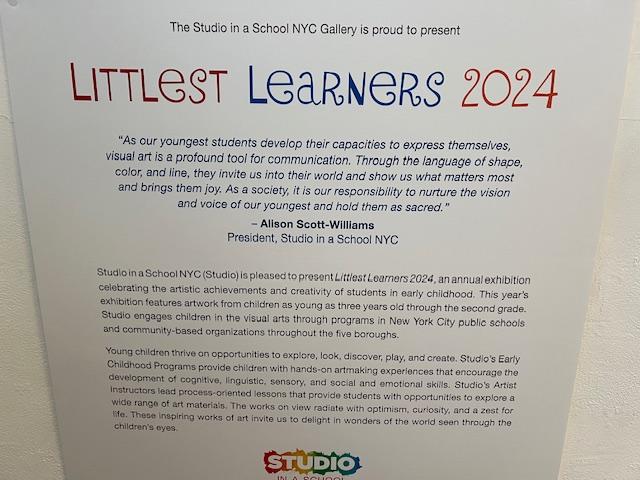
The Littlest Learners 2024 exhibition.

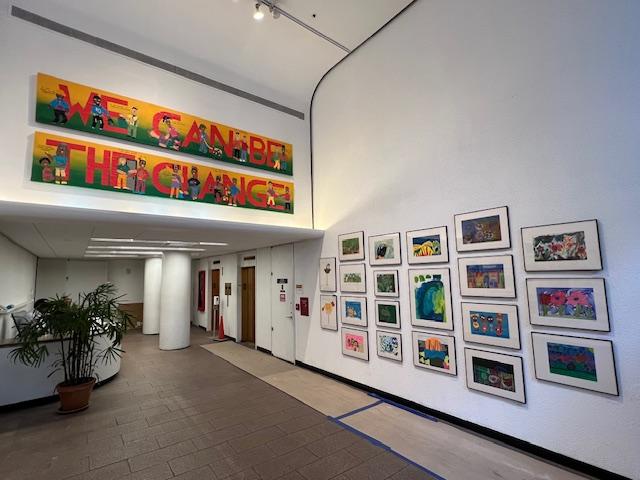
The art gallery revolves its art at different times of the year and you get to see the students creativity. There are paintings, sculptures and paperwork objects. It is amazing to see the talent the students have at all ages.

“These kids have talent “Littlest Learners Exhibition 2024”

“Littlest Learners Exhibition” gallery work. Like a Picasso.

“The Littlest Learners” exhibition

The best part of the gallery is that it is free. Just don’t try to go past the security guards at the desk and you will be fine. Take time to look at the over-hanging paper sculptures. They are very unique. Almost like a surrealist kite.

The “Littlest Learners” exhibition was wonderful. It was like visiting a modern art gallery of contemporary works. The 2024 exhibition was colorful, creative and delightful.

What is also nice is that it is free and only takes about 45 minutes to get through the whole gallery so it is a nice place to visit on a rainy day or on lunch hour. 

Congratulations to the student artists.

History of the Studio in a School:

Studio in a School fosters the creative and intellectual development of New York City youth through quality visual arts program, directed by arts professionals. The organizer also collaborates with and develops the ability of those who provide or support arts programming and creative development for youth both in and outside of schools.

Studio in a School serves young people by integrating the visual arts into teaching and learning and provides professional development for artists and teachers.

In 1977, during a financial crisis in New York City, public school arts education budgets were dramatically cut. In response, Agnes Gund, philanthropist and President Emerita of The Museum of Modern Art, founded Studio in a School.

Today, under Ms. Gund’s leadership, together with the support of many, our programs continue to thrive, bringing visual arts education taught by professional artists to students in New York City and beyond. We fulfill out mission through two divisions: the NYC Schools Program, offering programs for students in Pre-K through high school and the Studio Institute, which shares professional learning, partnership programs, arts internships and research grants in local and national forums.

It’s such a nice little gallery of student artwork.

Disclaimer: This information was taken from the Studio in a School website and I give them full credit for the information.

The Amiable Child Memorial                                554 Riverside Drive at West 124th Street          New York, NY 10027

The Amiable Child Memorial 554 Riverside Drive at West 124th Street New York, NY 10027

The Amiable Child Memorial

554 Riverside Drive at West 124th Street

New York, NY 10027

Open: 6:00am-1:00am

https://www.nycgovparks.org/parks/riversidepark/monuments/1206

https://riversideparknyc.org/places/amiable-child-monument

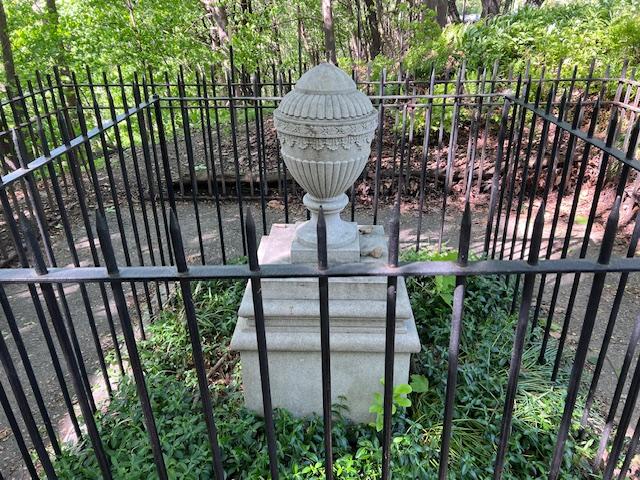
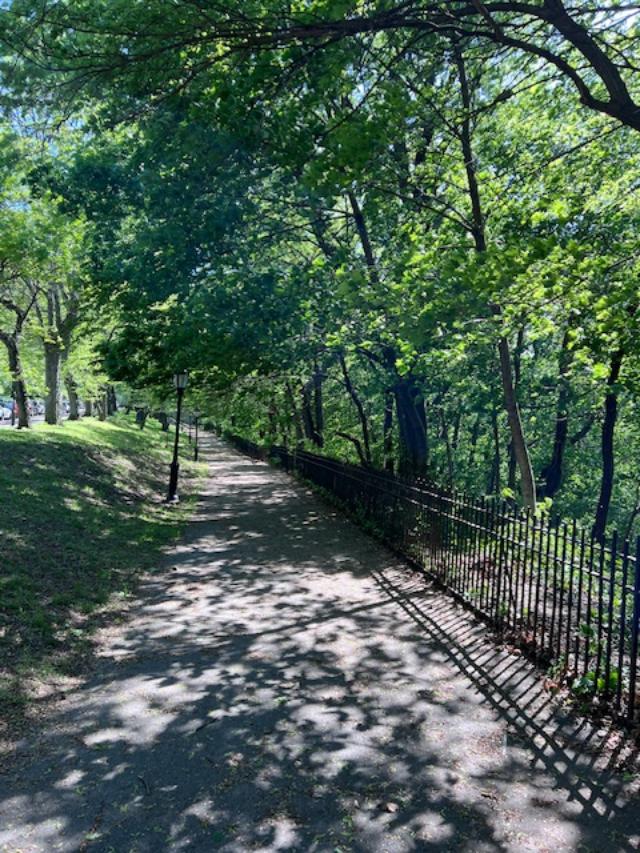
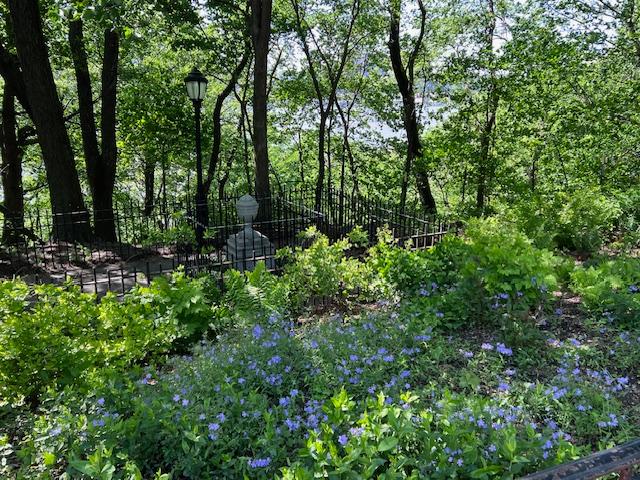
I stumbled across the Amiable Child Memorial over the summer when I was walking Riverside Drive for “MywalkinManhattan” project (see walking 155th Street) and came across this small memorial when I was passing Grant’s Tomb. It is off to the side on the path by the woods. It is a small monument and very humbling in its look. It is a small urn on a pedestal marking a grave of a small child surrounded by a fence. I got the following information from the NYC Parks Department website when I wanted to know more about the site:

The historic sign for the Tomb

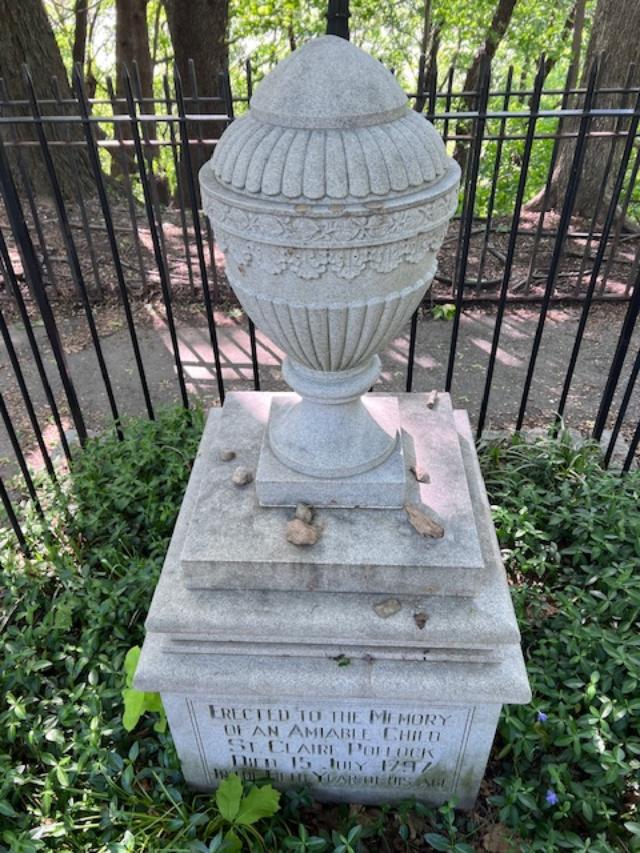
This unique New York City monument marks the site of one of the few private graves on public land within the five boroughs. It belongs to St. Claire Pollock (the namesake of nearby St. Claire Place), a child who died on July 15, 1797 in the fifth year of his life, probably from a fall from the cliffs of the parkland onto the rocks near the Hudson River.

The tomb up close 

In the two centuries that have passed since the tragedy of the “Amiable Child” as he was described on his headstone-different accounts of St. Claire origins and family have persisted. George Pollock, the owner of the property on which the boy was buried, was either his father or his uncle. He was a linen merchant of Scots-Irish or possibly English descent, who lived in a mansion on Strawberry Hill (later called Claremont) in the 1790’s. He  had sold his property to Mrs. Cornelia Verplanck, his former neighbor, by January 18, 1800 when he wrote as follows:

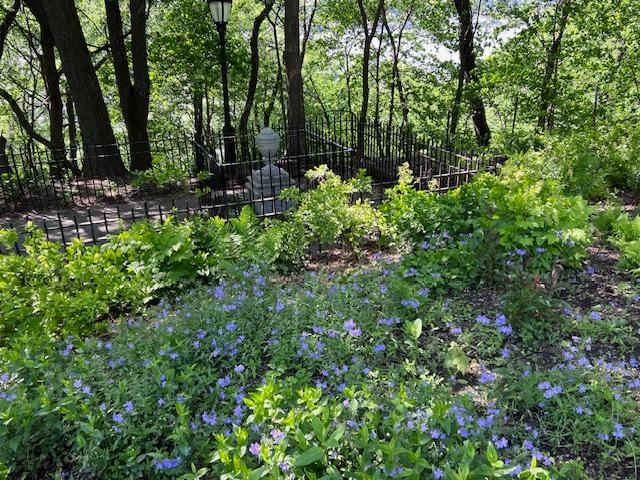
The Tomb of the Amiable Child park and flowers

“There is a small enclosure near your boundary fence within which lie the remains of a favorite child, covered by a marble monument. You will confer a peculiar and interesting favor upon me by allowing me to convey the enclosure to you so that you will consider its part of your own estate, keeping it however always enclosed and sacred.”

The park in the Spring of 2025

Claremont Hill was the site of the Battle of Harlem Heights, fought during the Revolutionary War on September 16, 1776. By 1806, it had been acquired by Michael Hogan, a former British Consul in Havana, who built Claremont Mansion (for which Claremont Avenue was named). Possible sources for the name are Hogan’s birthplace of County Clare, Ireland and his friend Prince William, Duke of Clarence, who would ascend the English throne as King William IV in 1830. Known as the site of a popular roadside inn by 1860, Claremont was acquired by the City from the heirs of Joel Post in 1873 for the development of Riverside Park.

The Park and the Tomb in the Spring 2025

In the 1890’s, Claremont Inn was host to numerous politicians, socialites and entertainers including the Morgan’s, Vanderbilt’s and Whitney’s, Lillian Russell and Admiral George Dewey. By 1907, the Inn had been transformed into a restaurant, serving the likes of Cole Porter and James J. Walker. It was destroyed by fire in 1950. The playground which now stands on the site was built shortly afterwards.

A century after the Tomb of the Amiable Child was laid, New York’s most famous monumental grave-Grant’s Tomb-was completed. The domed structure across Riverside Drive, designed by architect John Duncan and sculptor John Massey Rhind, was dedicated on April 27, 1897. The later structure is as grand a testimony to the accomplishments of national leader as the monument to the amiable child is a modest and touching tribute to a young boy who never had the opportunity to grow into adulthood. This monument was dedicated on May 3, 1967 (www.nycgovparks.org/parks/riverside-park/mounments/1206).

*You really have to look off the beaten path to see this unique little memorial but it is very touching and soulful. Take the time when visiting the neighborhood to visit this very touching site. You will find it by the path behind Grant’s Tomb.

Look for more sculptures  by looking at the Parks website http://www.nycgovparks.org.