This interesting little ‘gem’ is located up on the hill next to Blauvelt Mansion and is easy to miss. You will see the signs as you drive past it.
Open: Wednesday, Thursday and Friday: 10:00am-4:00pm/Saturday and Sunday: 2:00pm-5:00pm
Fee: Free donations accepted
The Blauvelt Art Museum is funded by the Blauvelt-Demarest Foundation and is a member of the New Jersey Association of Museums, the Mid-Atlantic Association of Museums and the American Association of Museums.
The Blauvelt Art Museum was established in 1957 by the Blauvelt-Demarest Foundation, a legacy of the late Hiram Blauvelt, philanthropist, conservationist and collector. Through the contribution of his private wildlife art and big game collections, he hoped to promote the cultural value of wildlife art and the need for conservation of its subject and their habitats.
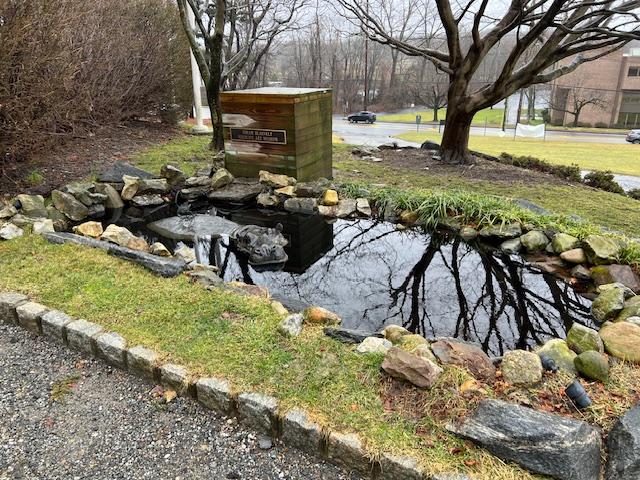
The fountain outside the museum
The entrance to the museum.
During the early part of the 20th Century, wildlife was believe to be abundant. Many dedicated conservationists, notable Theodore Roosevelt, gathered animals from their natural habitats for museums. The beauty of the animals could then be viewed by many.
The entrance to the museum.
Like Roosevelt, Hiram Blauvelt realized the value of his collection and wanted to share it with the public. It was his interest and desire to share his far ranging adventures, his stories of explorations and his collection of these animals. Hiram hoped to educate the coming generations to the diversity and beauty of the wildlife kingdom. He especially wanted to enlighten the public to the challenges we face to preserve the marvels of wildlife and their natural environments.
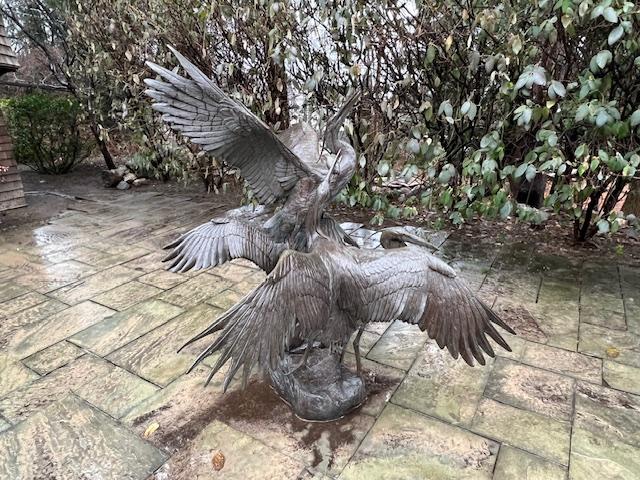
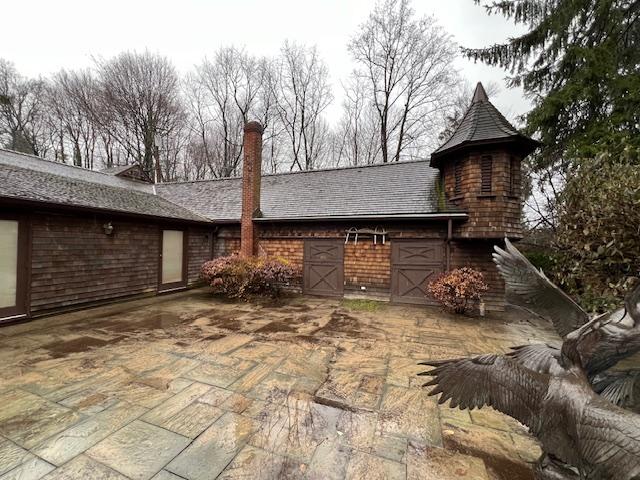
The interesting artwork by the carriage house of pelicans.
The Pelican art outside the museum.
Founded in 1957 as a natural history museum, it introduced students, scouts and youth groups to the need to support wildlife and habitats conservation. Visiting artists created drawings and paintings from close observations of the specimens.
Embracing Penguins outside the museum dedicated to Wildlife Art.
Twenty-five years later, the Board of Directors of the Blauvelt-Demarest Foundation decided that the original objectives would be best achieved by redesigning the museum to feature the works of contemporary wildlife artists, built on the artistic foundation of the Blauvelt’s early collection of works by Charles Livingston Bull (notably a resident of Oradell at one time), Carl Rungius and a complete Audubon Folio of birds of America.
The interesting wildlife artwork just outside the museum.
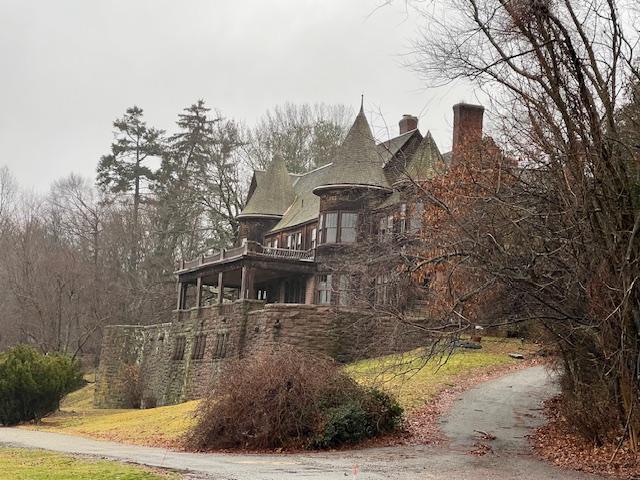
The Blauvelt Museum, located in an 1893 cedar shingle and turret carriage house, underwent extensive renovations to accommodate its new and expanded mission. The original carriage house was re-designed to include a large reception area, 4 mini galleries and museum offices, all with original materials from the historic building and preserving its aura.
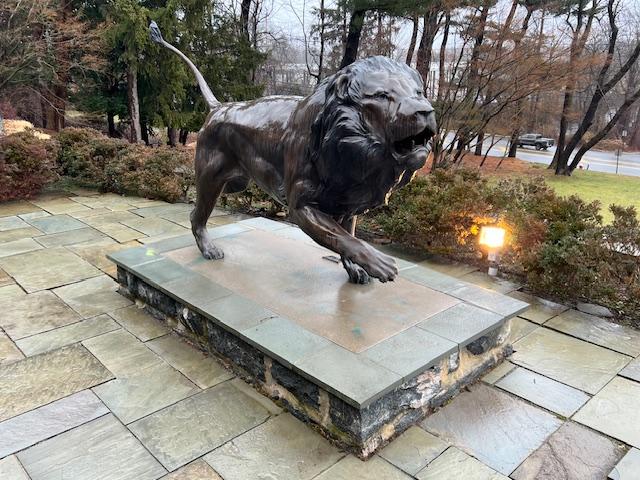
The Blauvelt Art Museum lion statue “Fides et Virtus” by artist Aaron Yount outside the museum.
Four new galleries were added, providing wall space for mounting museum quality flatwork and generous room for pedestals to hold creative sculpture. Substantial artificial lighting is augmented by natural light from the north.
High on a hill overlooking the Hackensack River, the Oradell Reservoir and parklands to the east, the entrance to the museum is through a curving stone and slate terrace, framed by large oak trees and other indigenous foliage, which serves as a natural sculpture garden.
The open air museum just outside the museum itself dedicated to wildlife art.
Many of its visitors today, accompanied by their children, are revisiting the museum which they first visited with their parents in past decades. The Blauvelt treasures their comments remarking on the greater beauties of its collections, while preserving the ambiance of their memories.
The inside galleries of the museum (from their Facebook page).
Artist in Residence:
The Blauvelt Art Museum established an Artist-in-Residence program in 1985. Artists were selected on the basis of their artistic ability and promise and on their commitment to the museum’s mission for the need for conservation to protect wildlife and their habitats. The museum provides a furnished home for the artist on the museum property, including a studio, painting supplies, etc. Artist-in-Residence have given lectures, led round table discussions, visited schools and demonstrated painting and drawing techniques.
The Carriage House from the outside.
The Current Exhibition (2018):
Artist Brian Jarvi’s African Menagerie is showing right now and the collection has some very interesting and detailed pieces on Mr. Jarvi’s visits to Africa. Don’t miss this exhibition!
The Blauvelt Museum is on the Blauvelt-Demarest Estate.
Disclaimer: This information was take directly from the pamphlet provided by the Blauvelt Art Museum. Please call the museum for any changes to their time schedule and don’t miss the current exhibition.
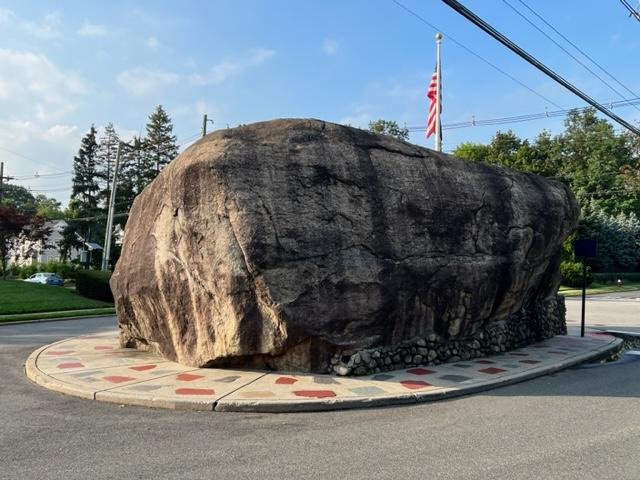
The ‘Rock’ where the town of Glen Rock, NJ gets its name from is more than just a rock in the middle of road off the downtown. It has a rich history that is part of the history of Bergen County itself.
Glen Rock was settled around a large boulder in a small valley (glen) from which it gets its name. The boulder, a glacial erratic weighing in at 570 short tons (520t) and located where Doremus Avenue meets Rock Road is believed to have been carried to the site by a glacier that picked up the rock 15,000 years ago near Peekskill, New York and carried it for 20 miles (32km) to its present location.
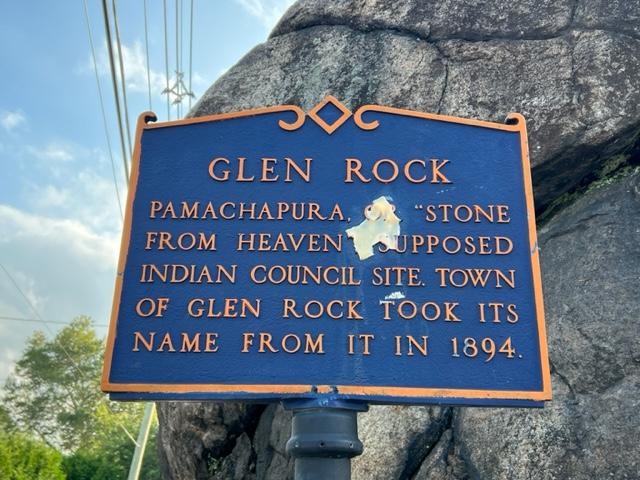
The Lenape Native Americans called the boulder “Pamachapuka” (meaning ‘stone from heaven’ or ‘stone from the sky’) and used it for signal fires and as a trail marker (Wikipedia).
The Glen Rock Rock
This is an interesting part of Bergen County’s early Native American history and is located right off the downtown area of the town on Rock Road.
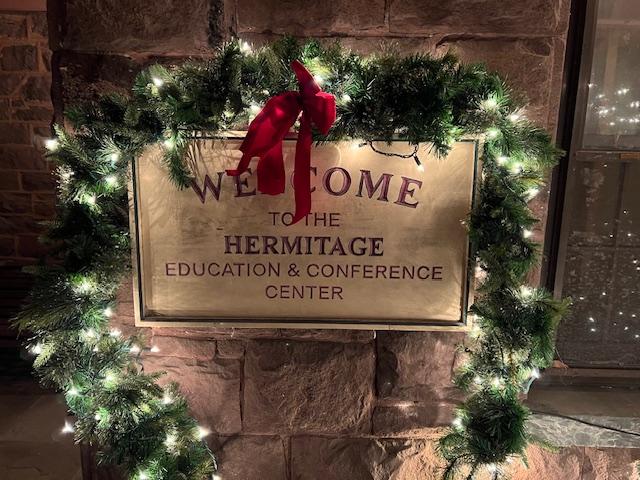
I have been to the Hermitage Museum many times for events and they do a nice job portraying the house in different periods at different times of the year. Both Christmas and Halloween at the homestead are always a treat.
The Hermitage at Christmas is very special.
The front of the Visitors Center and Gift Shop at Christmas time.
I have taken the Haunted House tours during Halloween when The Hermitage hosts seances. Their medium was not that convincing and I did not believe a word he said. We took a tour around the house at midnight and that was interesting. The house can be quite spooky at midnight but then every house is spooky at midnight. I noticed the boards creaking and the wind blowing around the house but that’s what old houses do. The house does creak a lot and when the wind acts up you can jump. Still there was noting to convey to me that the place was haunted.
The Hermitage is spooky at Midnight at Halloween.
The tour guides will go through how the family fortunes changed the way people lived in the house up to the 1970’s when the last family member died. Please don’t miss visiting the home during Halloween for their ‘Ghost tours’ . It can get quite spooky in the house at midnight with the wind hallowing and things creaking.
Things are much more cheerful at Christmas time when the house is decorated for the holidays. During the Revolutionary War, things were kept simple. There was church service in the morning and then a Christmas lunch and visits to family. It was not until the Victorian Age and the Industrial Revolution that things got more elaborate. Queen Victoria’s husband, King George came from Germany and brought with him Pagan traditions of evergreens, garland and greens all over the house to show life in the colder months of the year.
The tours of the house are $25.00 and very reasonable for a hourlong tour.
The house was decorated in 2018 for Christmas in the 1930’s during the Depression and it showed that people still decorated and gave presents in a more subdued way during this tough time.
The Hermitage keeps this tradition alive by decorating the house for the holidays. The entrance to the kitchen was kept simple but welcoming for visitors.
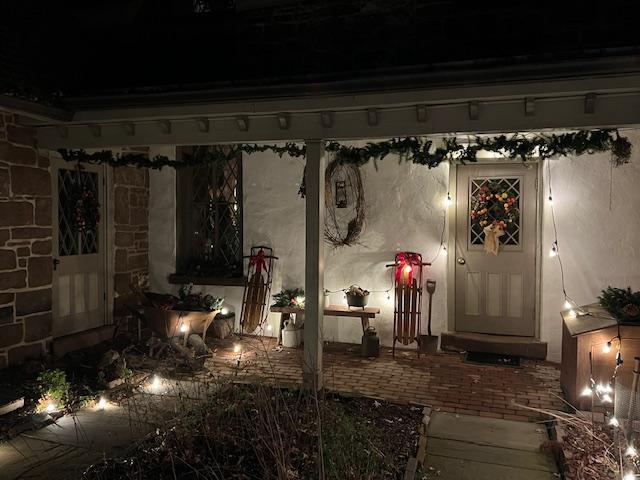
The decorations outside were kept simple with greens.
The outside of the house for the tour in 2023 was done in simple lights and greens but when it gets dark the magic of the holidays shows it beauty in the house. Each room is decorated for the holidays and there are all sorts of displays about Christmas, life at the Hermitage and elaborate displays of toys and gifts and meals that would have been served to the family at that time. There did not seem to be a nook or cranny that was missed and the house was just beautiful.
Getting ready for the holidays at the Hermitage.
The docent took us room by room and we got to see how the families lived at different times of the house’s history. We were allowed a glimpse into their daily lives at the holidays.
The Hermitage decorated for Christmas
In 2019, the house was decorated for the Victorian era and was done up quite elaborately. The Dining Room was set in the best china and silver with decorative poppers for Christmas lunch. The meal that day was one of the biggest and finest of the year with roasted oysters, roast turkey, sweet and mashed potatoes and many root vegetables.
The Hermitage is beautiful at Christmas time
The Living Room was decorated with an elaborate tree with lights and beautiful Christmas ornaments and there was garland all over the room leading into the hallway with more garland on the banister. The upstairs rooms were set with seasonal plants and clothing depicting the era. It looked like the family was going on an outing.
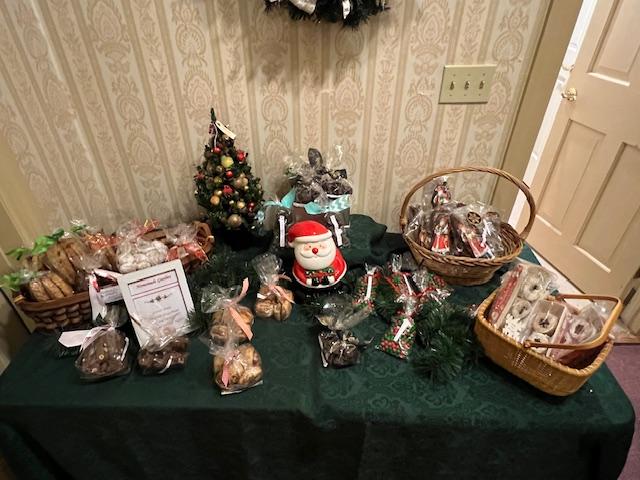
Sweets and Treats on sale and after the tours at Christmas time.
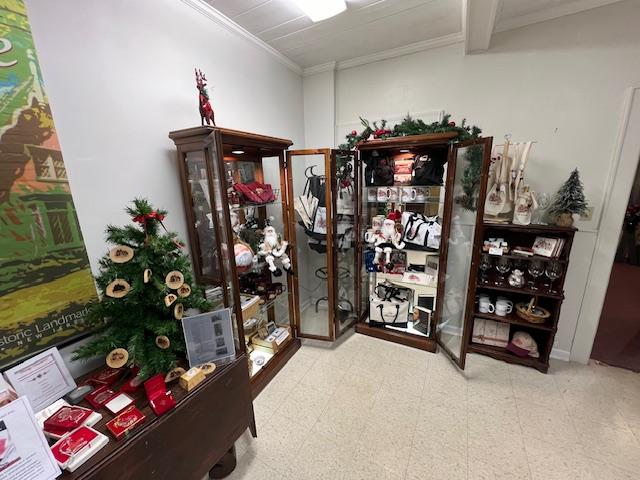
The Hermitage gift shop has amazing things at Christmas.
Touring the house at Christmas is always a treat as it was set up for a Victorian Christmas and the whole house was decorated inside and out. The pathways were set with luminaries and white lights and the porches were elaborately decorated.
The side of the house was decorated with white lights and luminaries.
The porch was decorated with an old fashioned sleigh
The front entrance to the house at Christmas.
The Hermitage Museum History:
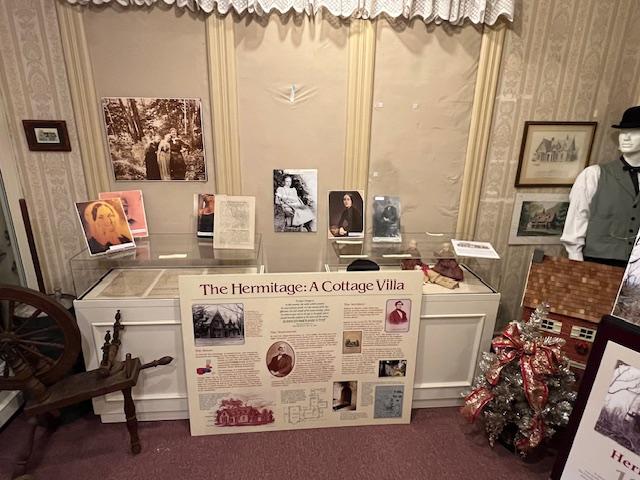
The Hermitage Museum in Ho-Ho-Kus, New Jersey is a charming and romantic mid-19th century Gothic Revival cottage. Surrounded by more than four acres of park land, the Hermitage is restored and furnished to reflect the lifestyle and interests of the Rosencrantz family during the second half of the 19th century.
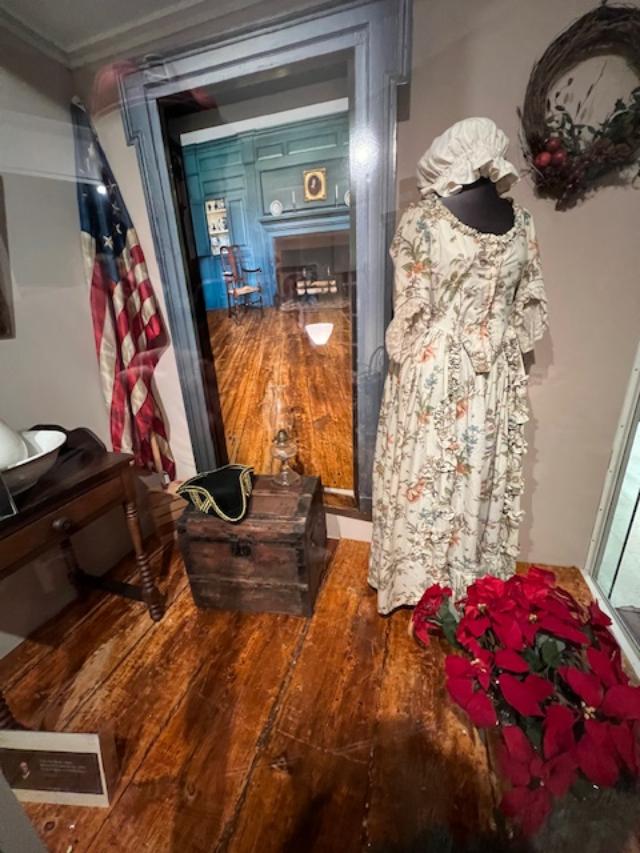
The Revolutionary War display.
The fourteen room home is built in the Gothic Revival architecture that surrounds the original Dutch American home built in the 1700’s. The original colonial estate was bought by Ann Barlow DeVisne, who was from Manhattan, for herself and her five children.
The Rosencrantz Doll collection at the Hermitage.
One of the children, Theodosia Bartow Prevost, lived in the house with her husband, James Marcus Prevost. Major James Marcus Prevost fought on the side of the British during the Revolutionary War in battles in Georgia and North Carolina. Her husband would be later killed in the War.
The front of the house decorated for Christmas 2023.
During battle time with the British, Theodosia invited General Washington to stay at the house which he and his troops did in 1778. Theodosia welcomed all troops, both British and American to stay at the house during the war. In 1782, she married Aaron Burr, a soldier she had met during the war. On top of her five children by her first marriage, she had another child with Aaron Burr named Theodosia. Theodosia Prevost-Burr died in 1794.
The original Ice House/Smoke House at night.
The house was then sold to the Rosencrantz family in 1807 and then the house was expanded from the Dutch tradition into the Gothic Revival addition between 1847-48 by noted architect, William H. Ranlett. The addition was at the request of Elijah Rosencrantz Jr.
The Revolutionary War display at the Hermitage.
The house was lived in by four generation of Rosencrantz’s. Elijah’s daughter, Mary Elizabeth, was born in the house in 1885 and lived there her entire life until 1970 when she fell ill. She left the house to the State of New Jersey as a National Historical site.
The history of the Hermitage display at the museum.
The Hermitage is special at the holidays
During Christmas time, the house is decorated for the holidays. This year’s theme in 2018 is “Home for the Holidays: A 1930’s Christmas at the Hermitage”. The house is decorated at the time of the Great Depression and how people dealt with those times while still providing holiday cheer to their families. The decorations do not reflect Victorian times but more when times were tough and people had to watch their budgets.
The house was beautifully decorated for the holidays.
Even the gift shop offered cheerful items such as ornaments, collectables, small trees and elaborate gifts.
This cheerful Santa was on sale at the gift shop at the Hermitage. By the time I came back from the tour, he was sold.
Disclaimer: this information was taken directly from The Hermitage pamphlet and Wikipedia and Google. Please call the facility for information on special events.
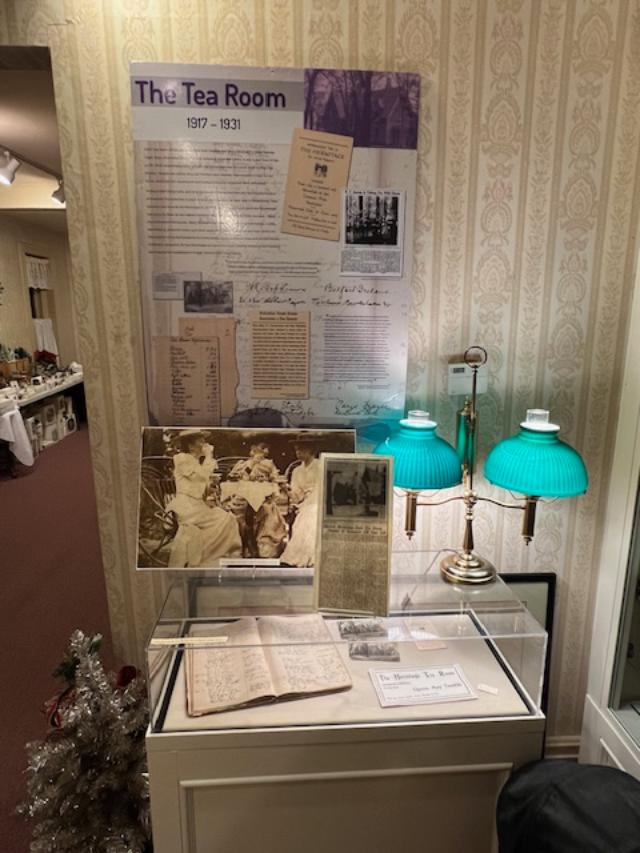
The Hermitage “Tea Room” exhibition where the family made money during the 1900’s -1930s.
I have visited this interesting small history museum a few times and they do a wonderful job in presenting their displays with interesting facts catering not just to a local crowd, but anyone interested in history and events.
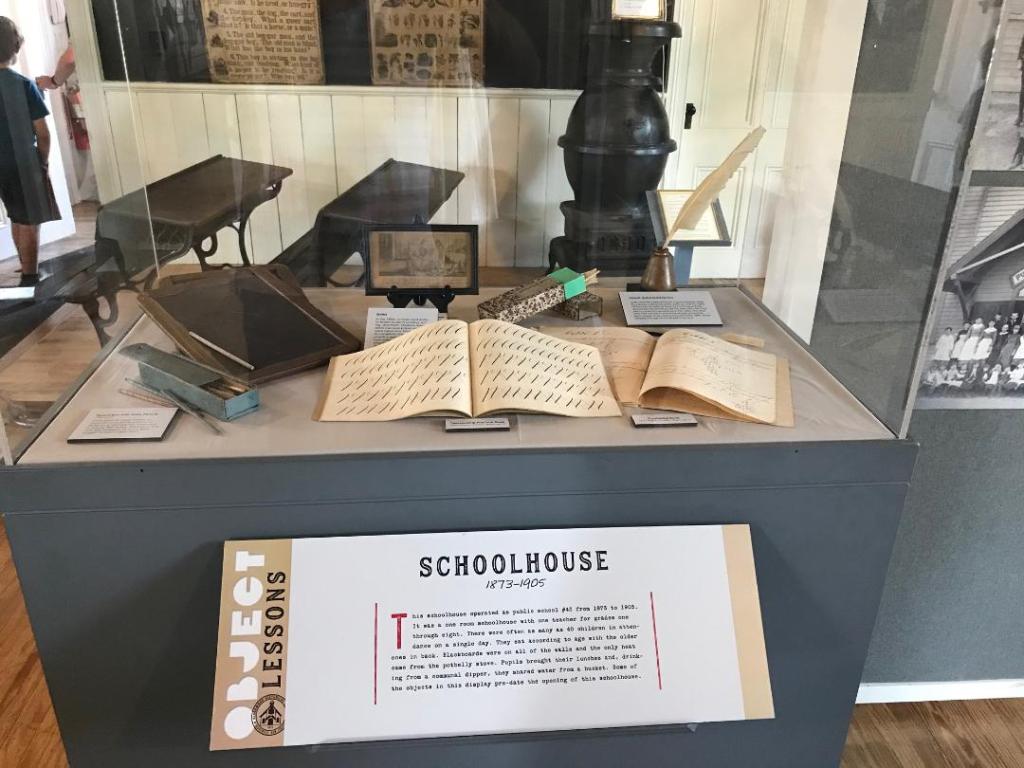
The one-room schoolhouse, built in 1872, operated as a public school until 1905. It was part of the district school system formed in 1864 or 1865, which was geographically defined rather than by township. It was operated as School District No. 45. When the towns incorporated in 1894, that district system was dissolved, and the school became part of the Ridgewood school district.
The Ridgewood Schoolhouse Museum’s permanent collection
Tradition has it that the original land grant to the Dutch Reformed congregation from Pierre Fauconier and his daughter, Magdalena Valleau, stated that room should always be given upon the church land for a school. We know that a small school building opened in 1785. A second stone school was built in 1820 and eventually replaced by a frame structure in 1845.
Eventually the present schoolhouse was built in 1872 at a cost of $4600.00. It is likely that other schools existed on the church property from the time the church was built in 1735 to 1785, for the consistory assumed responsibility for education and the exact time when that responsibility was handed over to the public is not known.
The large bell summoned children from miles away to school each morning. The original belfry is gone but the bell stands in the entryway. It was used in other schools and a church after the school closed in 1905 but was returned to the historical society in 1977.
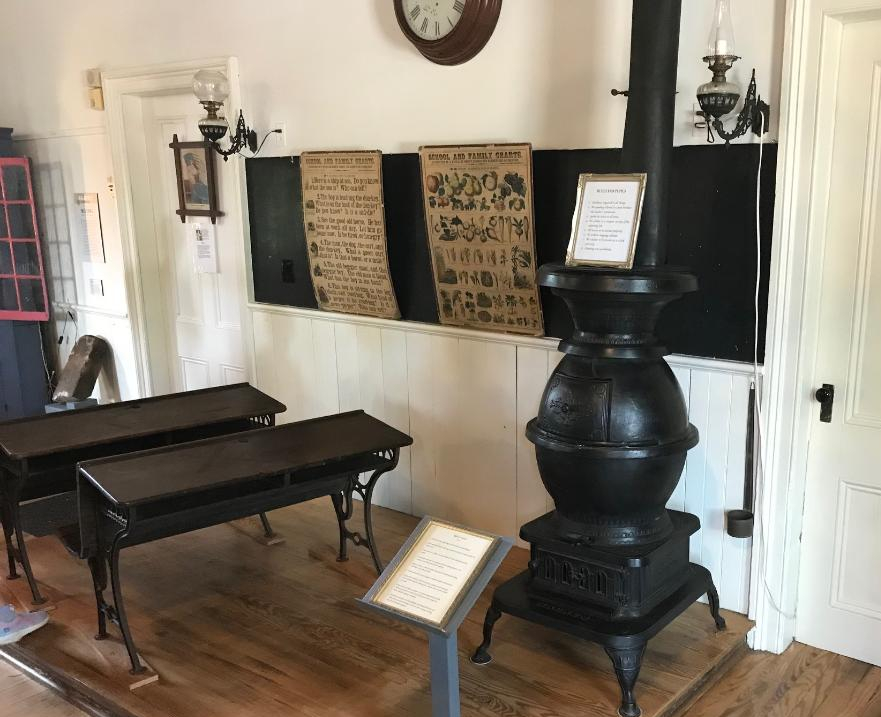
The original entry was divided into separate entrances and cloakrooms for boys and girls. The potbelly stove is original as are the windows and the two central lamps. The black boards around the room have been removed except for one behind the teacher’s platform.
There is a recreation of the old schoolhouse when you walk into the museum
When the Historical Society started the museum, the privy building was attached to the main building to provide more display area. In their special display area, they have an exhibition space for farming and a local comedian.
The schoolhouse display
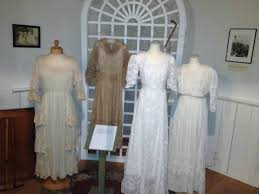
In April 2018, they have a very interesting exhibition call “The Thread of Life” which tells the story of family’s progression in home life from the end of the Civil War until the beginning of the Depression and times changed between the Civil War and WWI. Between the Victorian Era, the sinking if the Titanic and the devastation of WWI, the baby boom of the teens and the ‘Roaring Twenties’ with the stock market built changed the attitudes.
The way of life for an entire generation until the Great Depression put a halt on it. You can see the changes of behavior in the displays of clothes and household decor. It is an interesting display.
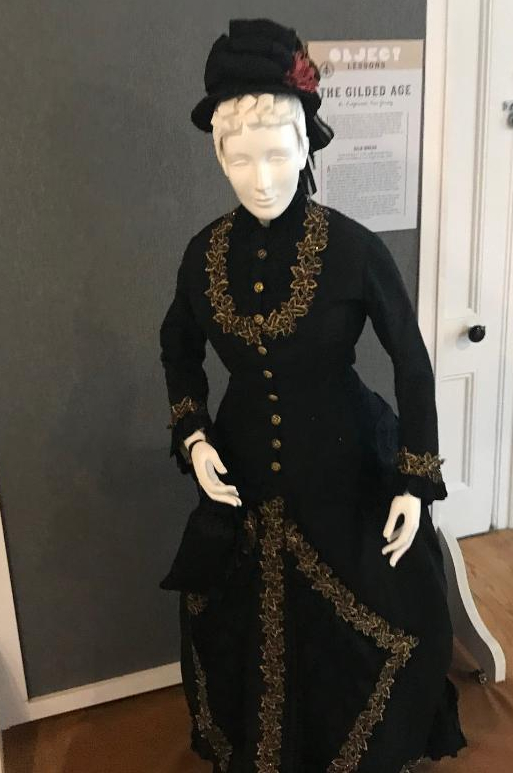
A Morning Outfit during the Victorian Age
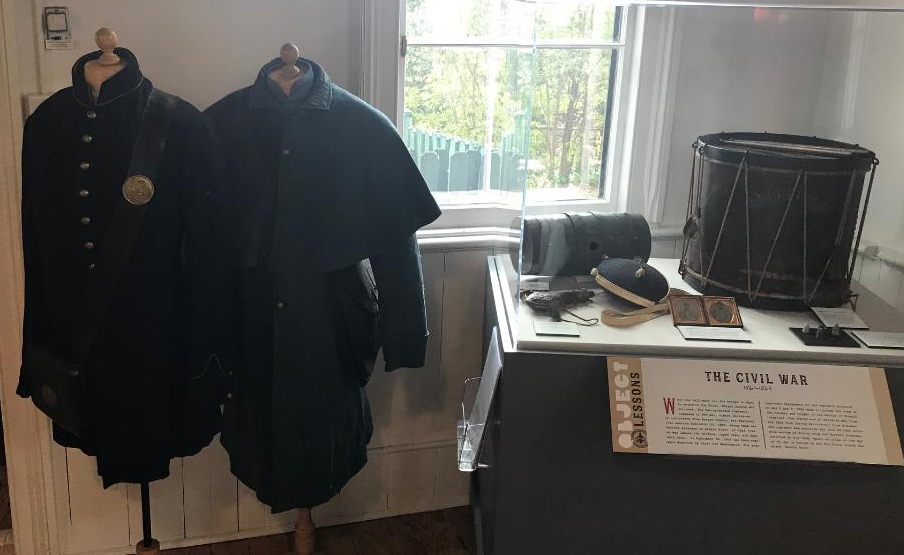
Union Army outfits and display for the “Civil War” artifacts
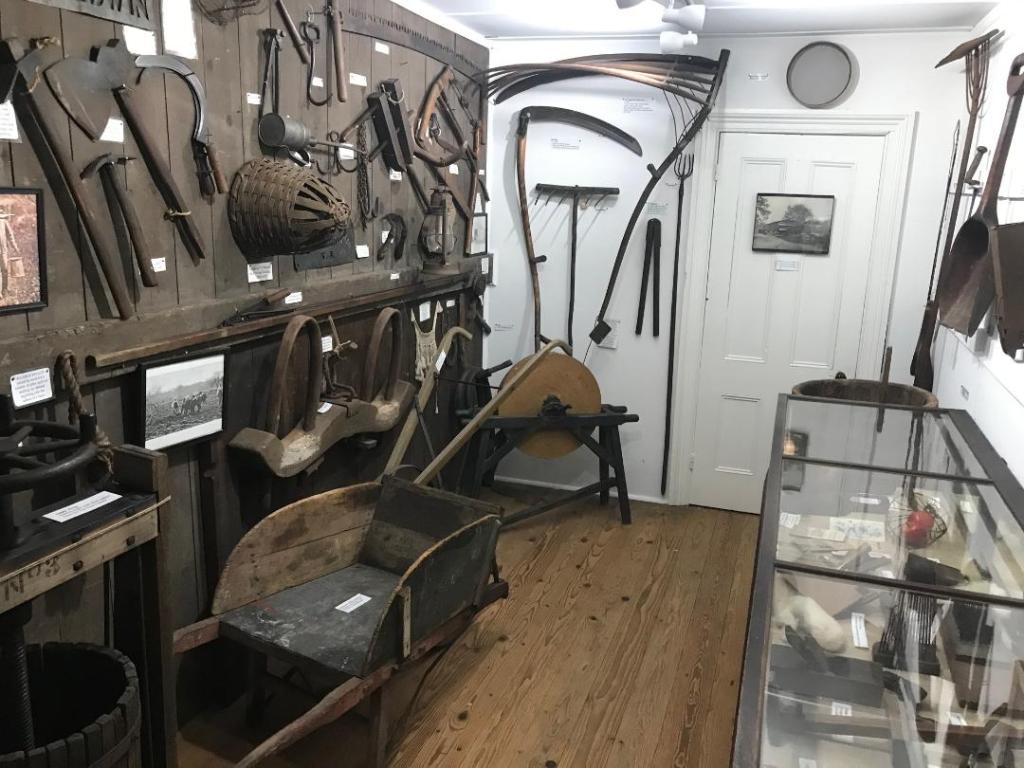
They also have an ongoing exhibition of farm equipment and a continuation of their “Farming in Bergen County” exhibition that just closed before this show. This is how farmers of Bergen County produced their crops.
Dutch items in the collection
The Blauvelt, Zabriskie and Haring families are known farming family names in Bergen County and were important in business and politics during the after the Revolutionary War.
The “Farming and Agricultural” display
Also, see their ‘Halloween Cemetery Walk” in my blog, “MywalkinManhattan.com” entry “This is Halloween” Day Ninety-Six, October 31, 2017. Don’t miss it this year!
Day Ninety-Six: This is Halloween-MywalkinManhattan.com:
The Cemetery Walks in October are extremely popular
Don’t miss the “Here comes the Brides” exhibition that just opened up in May of 2019. It shows the history of formal wear for weddings along with accessories, menswear, invitations and even cakes toppers.
‘Here comes the Bride’ Exhibition 2019
In July of 2020, as Phase Three of the Opening in the State of New Jersey, the Museum is now open from 2:00pm-4:00pm for viewing with a new exhibition “A” is for Artistry: Celebrating Centuries of Art, Artists & Creativity”. The exhibit is a combination of local donated art and heirlooms from Ridgewood and the surrounding towns.
The Exhibition “A is for Artistry”
There are interesting displays of early photography and portrait painting as a way of preserving a persons’ image for the future. The use of oil painting, tin and then photo ‘sittings’ came in vogue as the technology changed.
Portraits were the form of imagetry before photography was invented
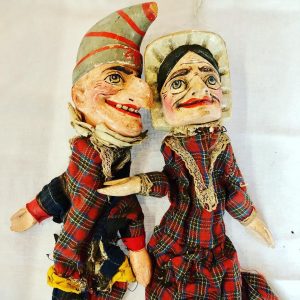
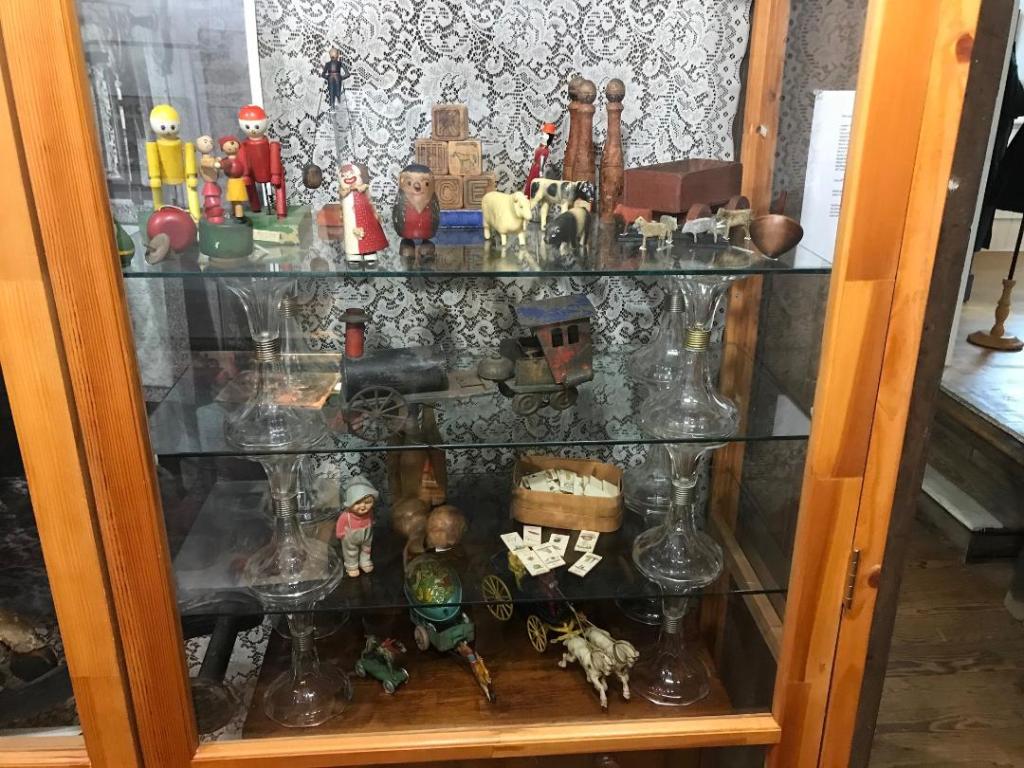
There was an interesting display of Children’s toys from the handmade farm toys of clay and corn husks to the fancier toys of bisque and cloth when imports and specialty toy stores were created for children’s playthings. They even had a collection of the famous “Punch & Judy Dolls”.
The Punch & Judy Dolls at the “A is for Artistry” exhibition
Children’s playthings over the last two hundred years
Another standout of the exhibition was the display from General Westervelt, a local citizen of Bergen County whose shipping expertise helped the North during the Civil War. His use of navigation and sailing was a detriment to the South and there was a $1000.00 bounty on his head. He died during the Civil War.
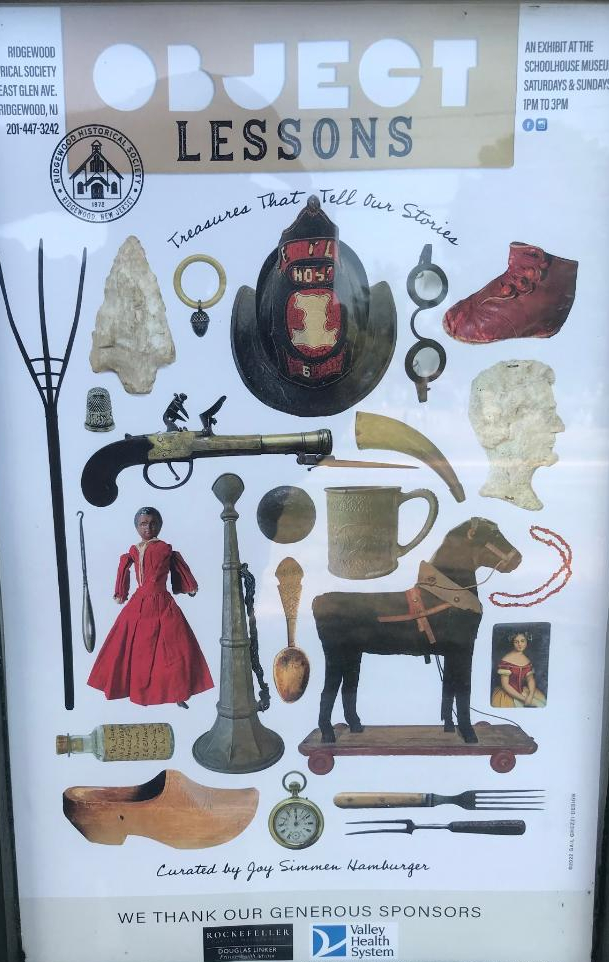
The “Object Lessons-Treasures that tell our Stories” exhibition
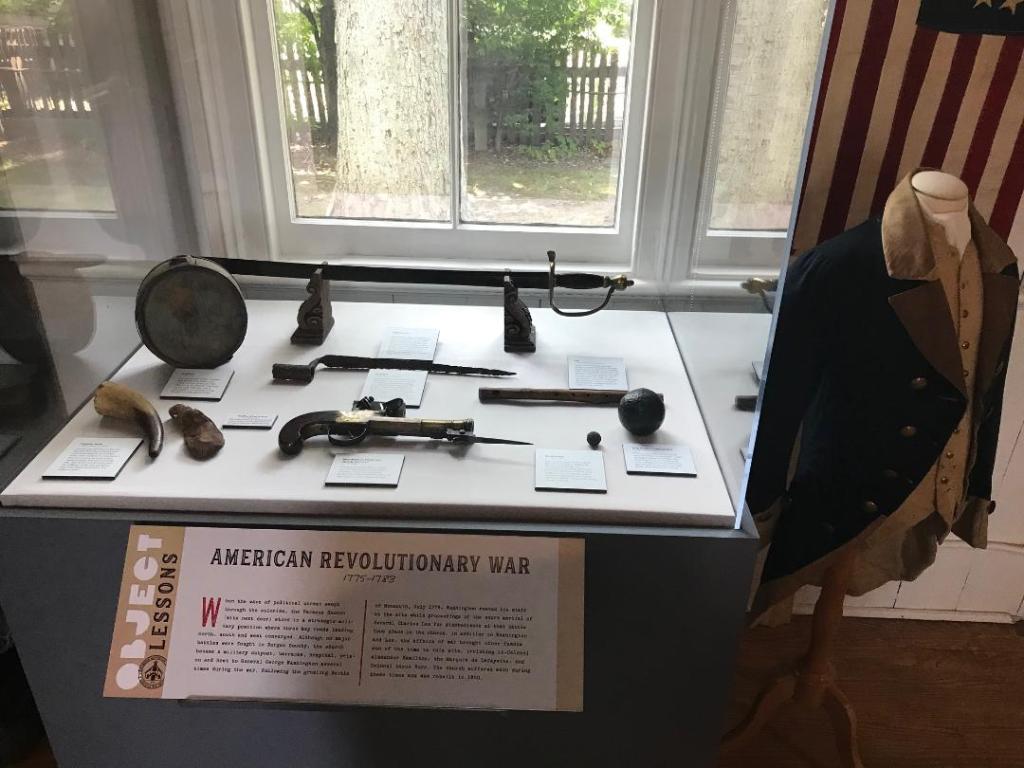
In 2022, when the Museum reopened after a long closure with COVID, they opened with two exhibitions: One was “Object Lessons-Treasures that tell our stories”, in which household objects, farming equipment and all sorts of artifacts from the pre-Revolution, Revolutionary War and Civil War periods were shown. It showed the progression that life took for families between the Revolutionary War and the beginnings of the Victorian Age.
“American Revolutionary War” display
They had local Dutch family heirlooms such as chests, cabinets, china, clothing and even documents. The average Dutch family kept their family linens, china, silver and bedding in a locked chest as these were valuable family luxuries that needed protection and proper care.
Dutch Chest with family items that were locked up.
There was a “Lincoln display” at the museum. They had a copy of the poster from the night that President Lincoln was assassinated at Ford Theater during the performance of “My American Cousin”. There was a family shot of the Lincoln family and items from the period.
The “Lincoln Display” that showed an original poster from “Our American Cousin” the night Abraham Lincoln was assassinated.
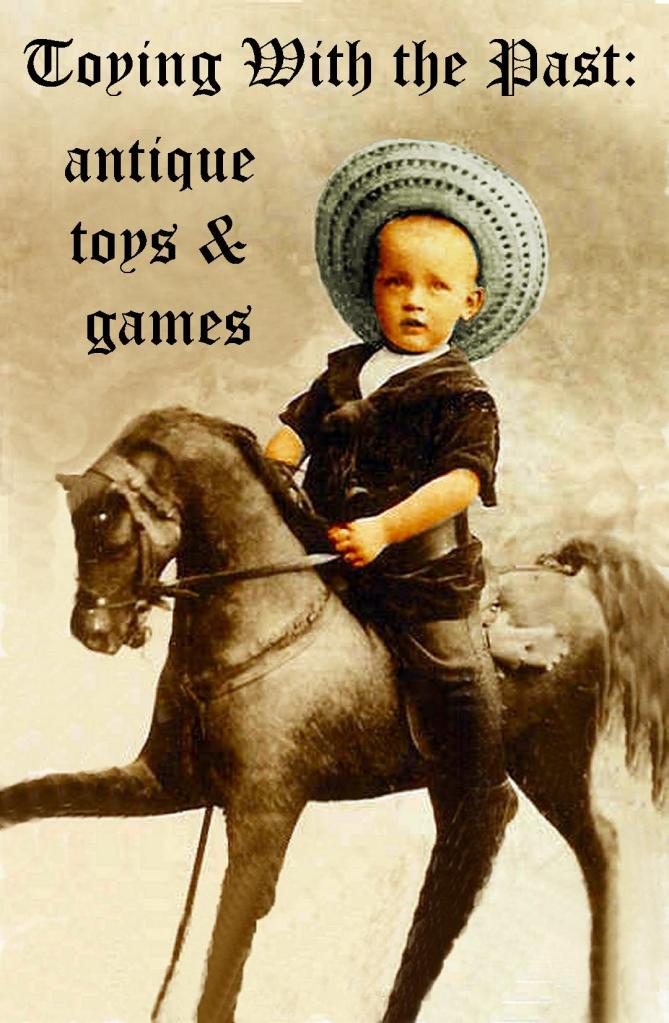
The other exhibition was “Toying with the Past: Antique Toys & Games”:
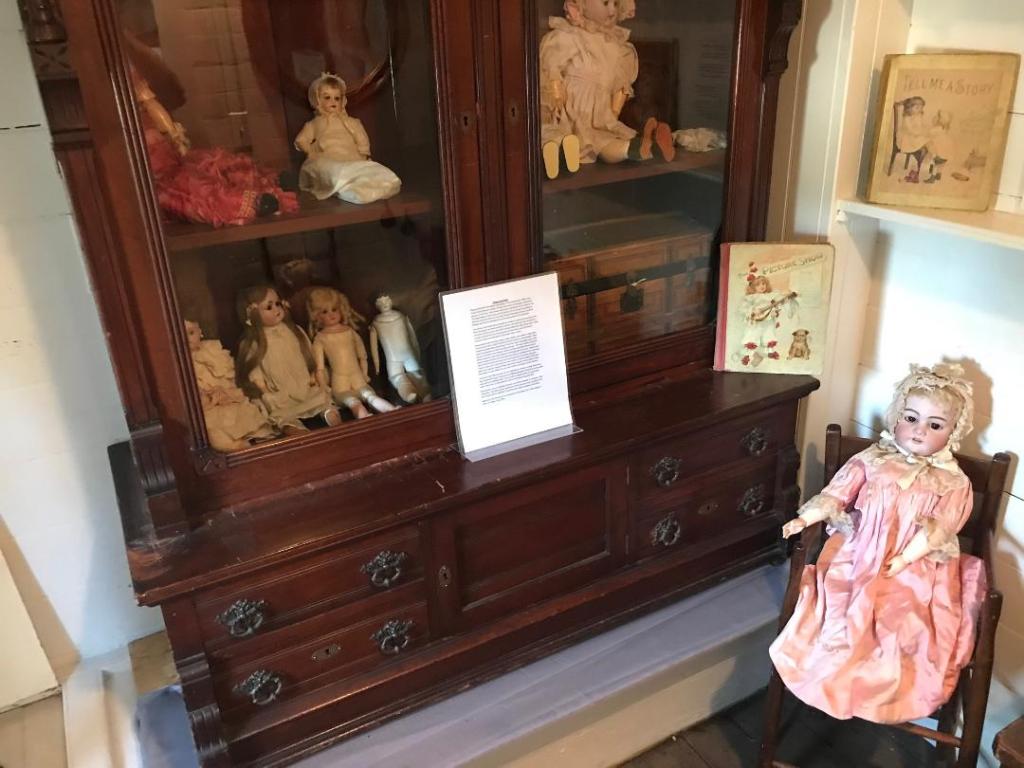
Toying with the Past was an interesting exhibition in that it showed how much toys have developed and changed over the years and how much they have stayed the same. There was a beautiful collection of china and bisque dolls, some that were made as playthings and others used as marketing tools to show women the latest fashions coming out of Europe. The dolls would be dressed in the dressmakers’ newest designs.
The Doll Collection is beautifully displayed
There were older versions of modern board games, everyday items like marbles and Jaxs. There were kitchen-based items that a little girl might be given to improve her domestic skills and there was even an early version of an “Easy Bake Oven”, with an electric oven that could be plugged in and boil water.
The items a young girl would receive to prepare her for homelife
Fancy rocking horses and dolls
Vehicles and Board Games that sparked children’s imagination
More dolls and vehicles over the last 100 years
There was also all sort of toys on wheels and rocking horses that could entertain a grumpy child for hours. They even had a selection of play clothes and school items to show what classroom work was like at the turn of the last century.
Childhood was changing for young people after the Civil War and during the Victorian Age
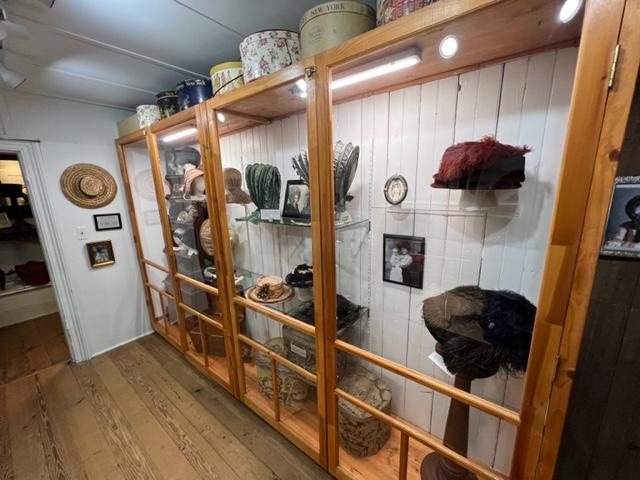
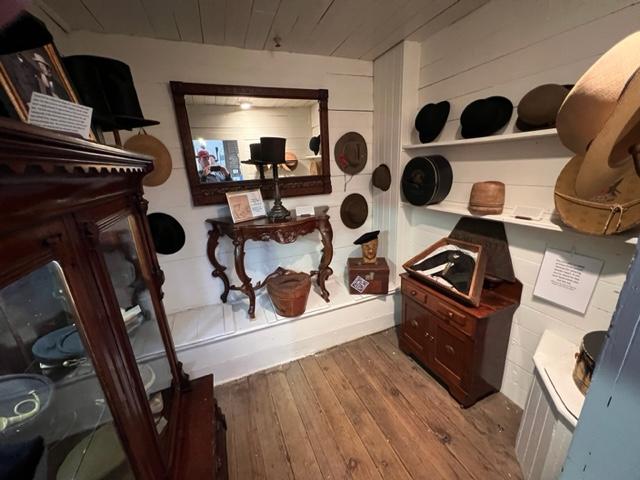
The Latest Exhibition that was on display in April 2023 was the “History of Hats” that replaced the Toy exhibiton:
Hats from all ages
Men’s hats through the ages
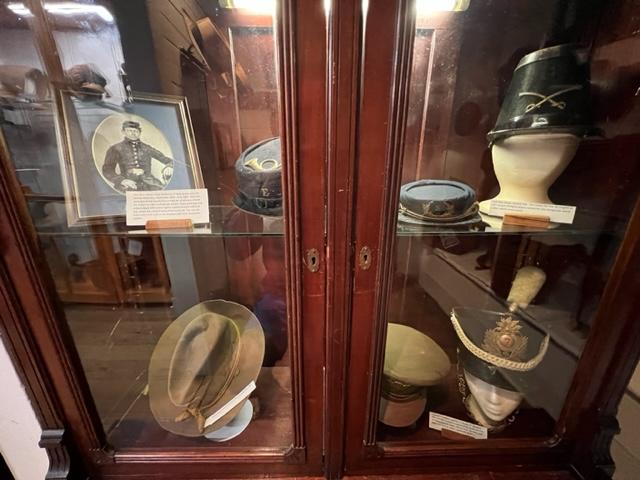
Military Hats
General’s Hat
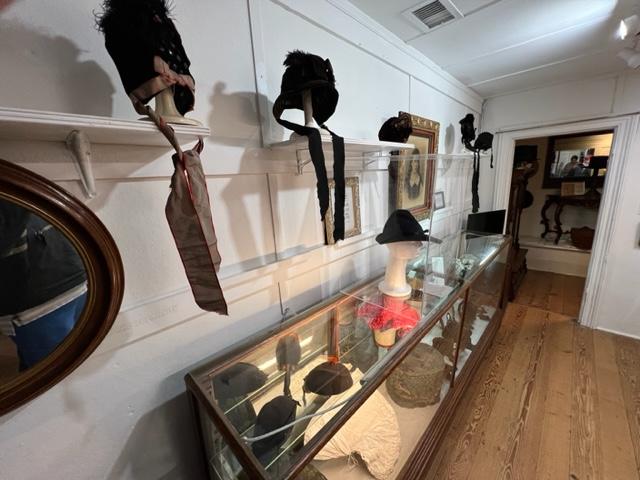
Ladies bonnets
‘Fashion of the 1880’s’
Special Events and Lectures at the Museum:
Don’t miss their ‘Cemetery Walks’ during the day. I took one recently at the old Dutch Reformed Church and we discussed the history of the church, the location of the old church versus the building of the new one, which is why the cemetery looks the way it does and the locations of the tombstones as well as how time and advancement in carving went from sandstone, which fades and chips over time when to the production of granite and marble for future tombstones.
The Cemetery Walks in Valleau Cemetery across from the museum
The cemetery is filled with names famous and prominent in Bergen County and North Jersey history which includes participation in the wars and the building of Bergen County including the Westervelt’s, Van Riper’s, Haring’s, Zabriskie’s, Terhune’s, Demerest’s, Blauvelt’s and Tice’s families. It is a fascinating place to learn Bergen County history and its development.
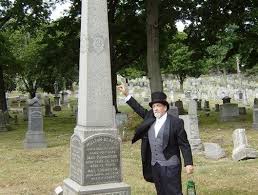
The Cemetery Tours that take place the week before Halloween are interesting as well. The paths of the Valleau Cemetery in Ridgewood are lined with candles and you follow the path with the town historian who takes you on a creepy tour of the famous dead residents of Ridgewood. These include prominent athletes, business people and local laborers. You pretty much tour about a third of the cemetery as you move from one tombstone to another met by costumed actors, who they themselves have to sit in the cemetery in the dark waiting for you. That is a horror movie into itself.
The Valleau Cemetery Walk and Lecture
The best part of the tour is you are greeted at the museum with a tour of the museum and a table laden with fresh apple cider and cider doughnuts that make the perfect refreshment on a cool fall evening. Make sure to take the 7:00pm tour when it is dark out and make the reservation well in advance as these tours fill up fast.
Taking the Cemetery Tours is interesting!
Don’t miss their upcoming tours for Halloween, Christmas and their lecture series.
Please check out the museum’s website for all their very original special programming.
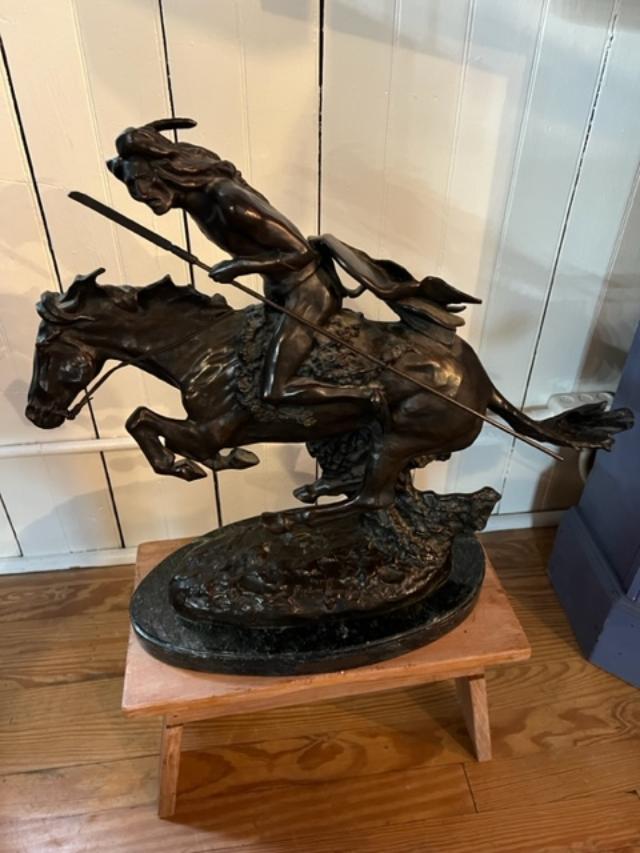
The museum’s latest acquisition, a Native American on horseback
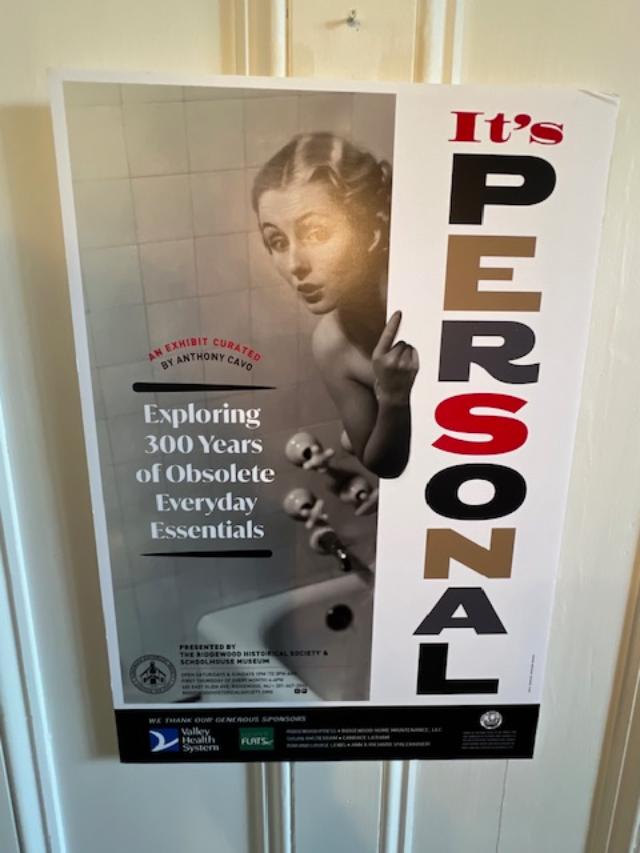
For the 2024 Northwest Bergen Historic Coalition Day, I visited the museum again and they were having an exhibition entitled “It’s Personal-100 years of obsolete Everyday Essentials”. It made me feel old when I saw a rotary phone, ink well and some of the other items that were in the exhibit. Some of them were from my generation and I do not consider myself old.
The sign from the “It’s Personal” exhibition.
The entrance to the Ridgewood Schoolhouse Museum for the “It’s Personal” exhibition
The Ridgewood Schoolhouse Museum “It’s Personal” exhibition.
The Ridgewood Schoolhouse Museum “It’s Personal” exhibition.
The Inkwell display at the “It’s Personal” exhibition to be replaced by the modern pen.
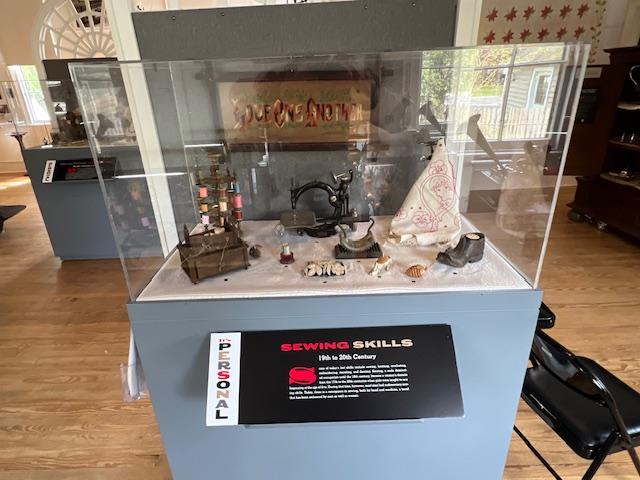
The Sewing Kit at the “It’s Personal” exhibition to be replaced by the modern sewing machine than by Ready to Wear clothing.
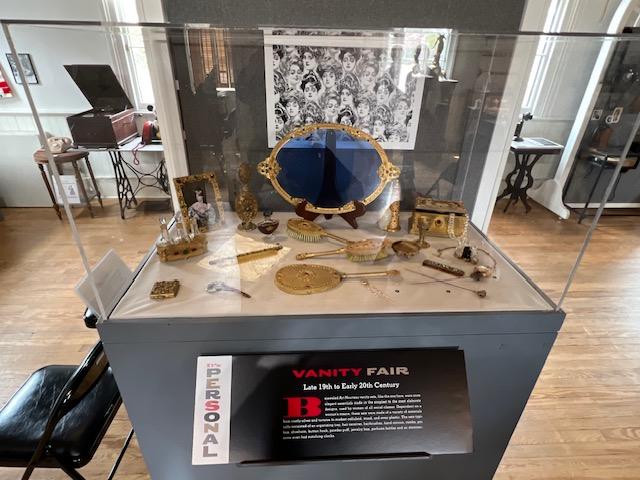
The Vanity which is still in use depending on the person in the “It’s Personal” exhibition.
The development of the phone and then the change to the modern cell phone in the “It’s Personal” exhibition.
The exhibition was interesting because its takes the modern perspective of the development of objects and their use over the last 100 years and show them with a modern twist on how times continue to change.


 blauveltartmuseum.com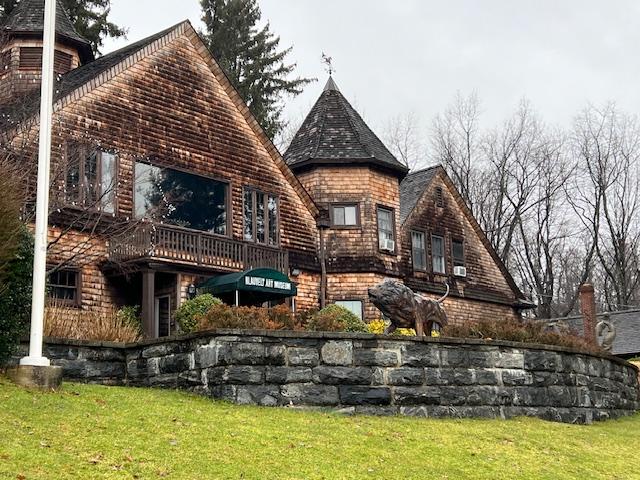



































 Visiting a Museum: The Unique, Unusual, Obscure and Historical