Tag: Visiting the Hudson River Valley

Clermont State Historic Site                          County Route 6                                    Germantown, NY 12526

Clermont State Historic Site County Route 6 Germantown, NY 12526

Clermont State Historic Site-New York Parks & Recreation

Route 6 (Off Route 9G)

Germantown, NY  12526

(518) 537-6622

https://parks.ny.gov/historic-sites/16/details.aspxhttp:/clermontstatehistoricsite.blogspot.comwww.friendsofclermont.org

https://www.friendsofclermont.org/

Open: April 11-October 31 Wednesday-Sunday 10:30am-4:00pm/November 1-

December 22/Saturday & Sunday 10:30am-3:00pm

Please call in advance due to seasons and weather conditions

Fee: Adults $7.00/Seniors and Adults $6.00/Children Under 12 and Members Free

My review on TripAdvisor:

https://www.tripadvisor.com/Attraction_Review-g47780-d263704-Reviews-The_Clermont_Mansion-Germantown_New_York.html?m=19905

Clermont Manor Estate off Route 9 in Clermont, NY

I enjoy coming up to Germantown to visit the Clermont Mansion at any time of the year especially at Christmas time. I came for a tour of Clermont in the Christmas season of 2019 (pre-COVID) to tour the home. The old mansions of the Hudson River Valley show their real beauty at this time of the year.

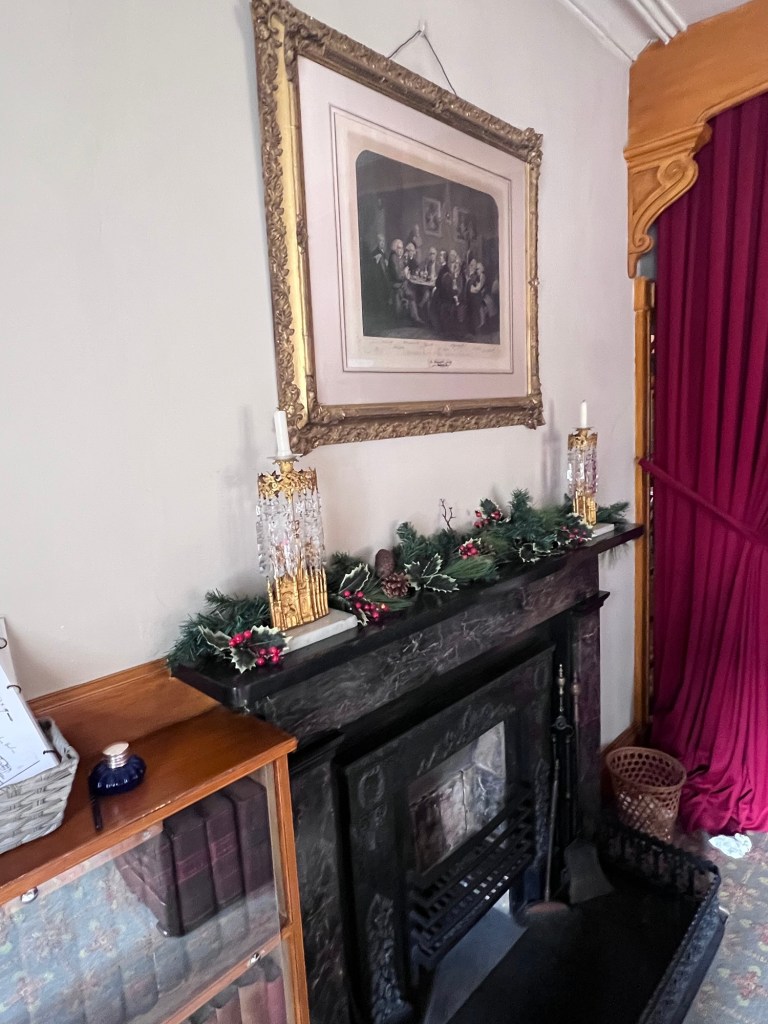
The Clermont Library decorated for Christmas

In 2020, the home closed like everything else for COVID and because of extensive renovations on the property and in the home, did not open again until June of 2023. I came up finally in July of 2023 for another tour of the home. The mansion looked very refreshed and bright on a blue, sunny afternoon. The grounds were in full bloom and everything looked so green.

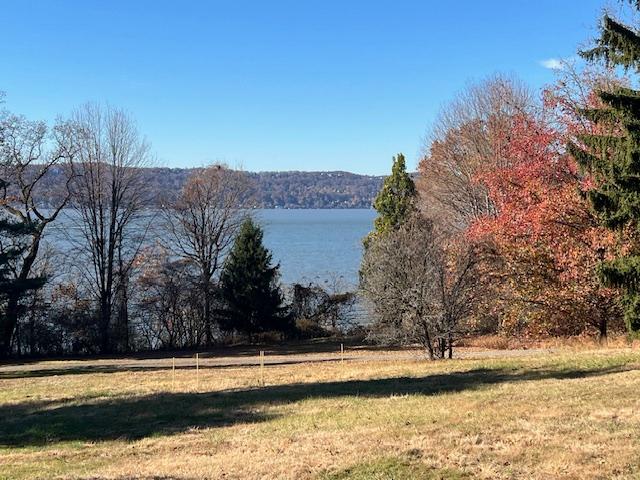
The views of the river when you arrive

Walking around Clermont is like walking through a history book. To think you are walking around the very rooms that family members who wrote the Declaration of Independence, were Governors and Ambassadors from our country and who owned most of Upstate New York lived is really incredible. The Livingston Family did so much for the United States in the formation of this country is a testament to the family.

Once you arrive at the Visitors Center and pay for your tour, you will have time to walk around the exhibition of the history of the family in the old stables. Here you will learn about the family who built and lived in this wonderful home. The family lived here for seven generations and like most families over time when the money depleted, they had to move out. The last daughter of the family, Honoria, sold the estate to the State of New York as a park. The upkeep got to be too much for the family.

The Visitor’s Center display on the family

The family story boards in the old stables

The history of the estate and the Livingston family in the Visitor’s Center

The history of the estate

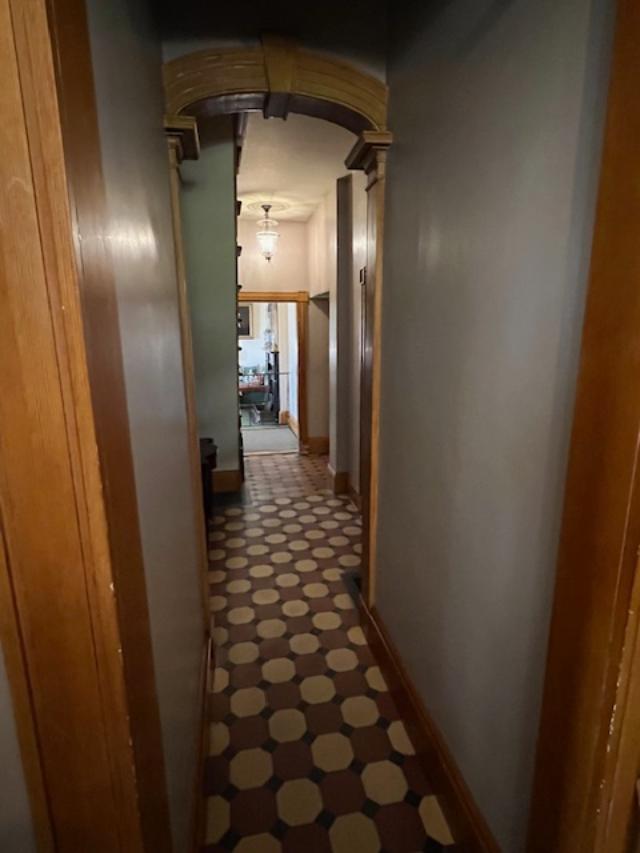
The tour 2019 was wonderful because of the one on one conversation I had with my tour guide, Molly. It was the same in 2023 when Aaron took me on a one on one tour of the mansion. We started in the entry hallway where the family hang many of the family portraits and the long hall lead to wonderful views of the Hudson River.

The Entrance Hall of Clermont

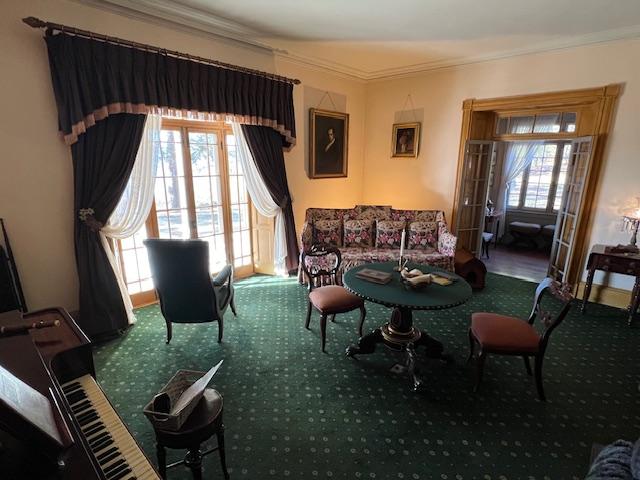
Just off to the right of the front entrance of the home (the front entrance faces the river not the back entrance where you start the tour) is the Receiving Room. This was the room in 2023 during my summer tour of the house. The Receiving Room is where guests would wait to be welcomed by family members or people would call on the family and leave their calling cards.

The Receiving Room was also used as a Music Room as well

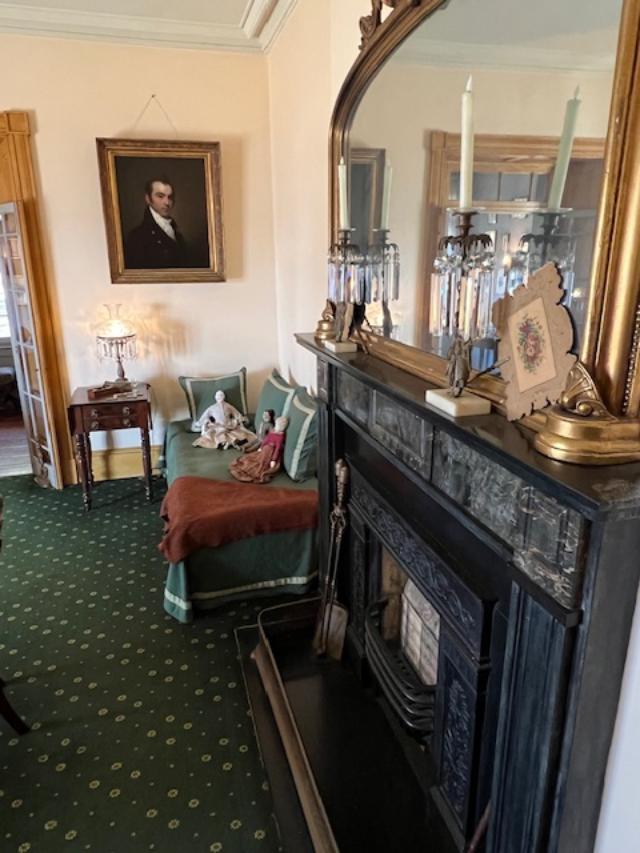
The Receiving Room was decorated for the holidays in 2019 with more beautiful views of the river and a very interesting clock on the mantle that there are only two in the world. This clock represented the first balloon launch in France and this was the clock where the balloon went up. In France was the other clock with the balloon going down. I thought that was pretty interesting.

Clermont III.jpg

The Balloon Clock on the mantle decorated for Christmas

Our next stop was the Library which seemed very homey and relaxing. It looked like a room that a family would want to spend their time in after a long day. The windows faced the river and the formal gardens at that time and let in a lot of light. The room was decorated with a elegant tree and looked like the family was ready to walk in and join us for the holidays.

The Library of Clermont

The Office/Library on the first floor

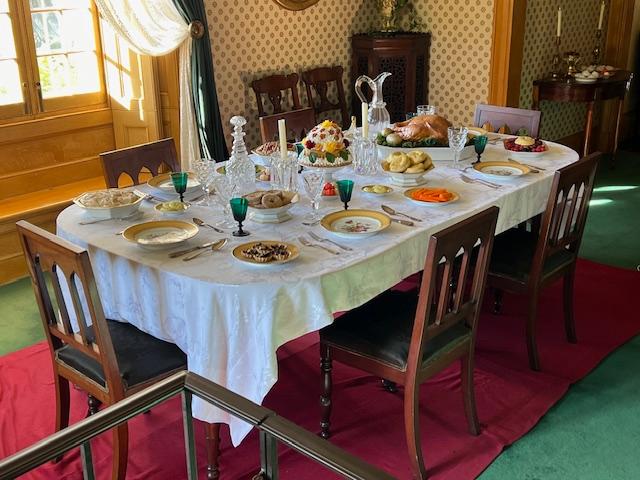
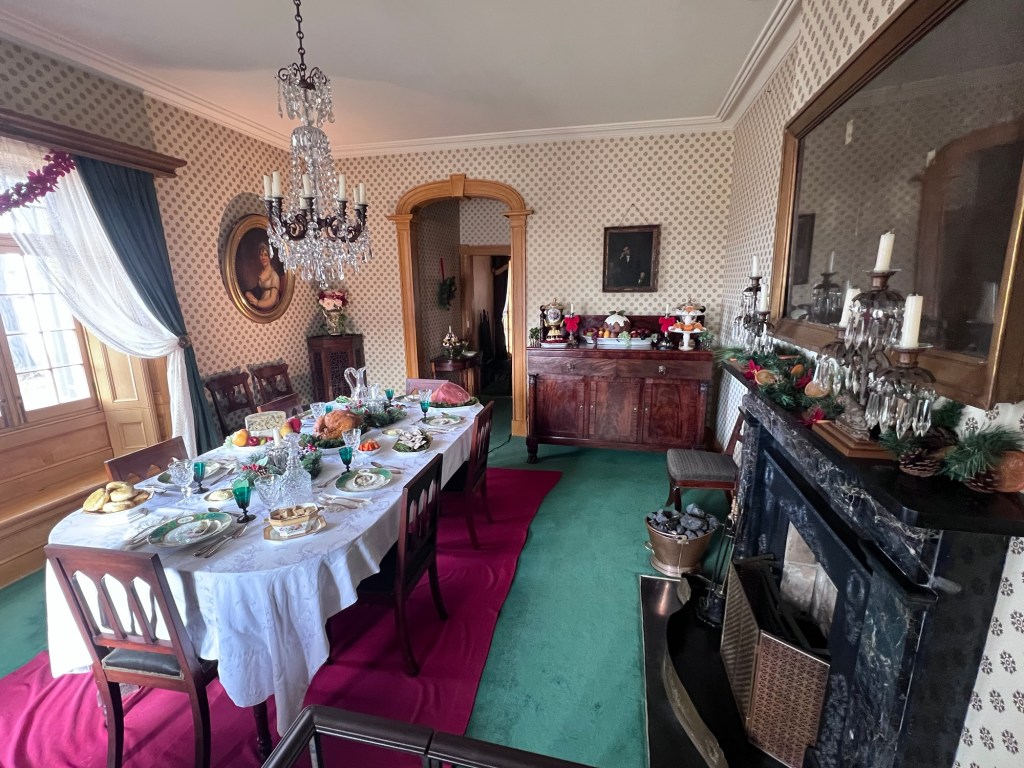
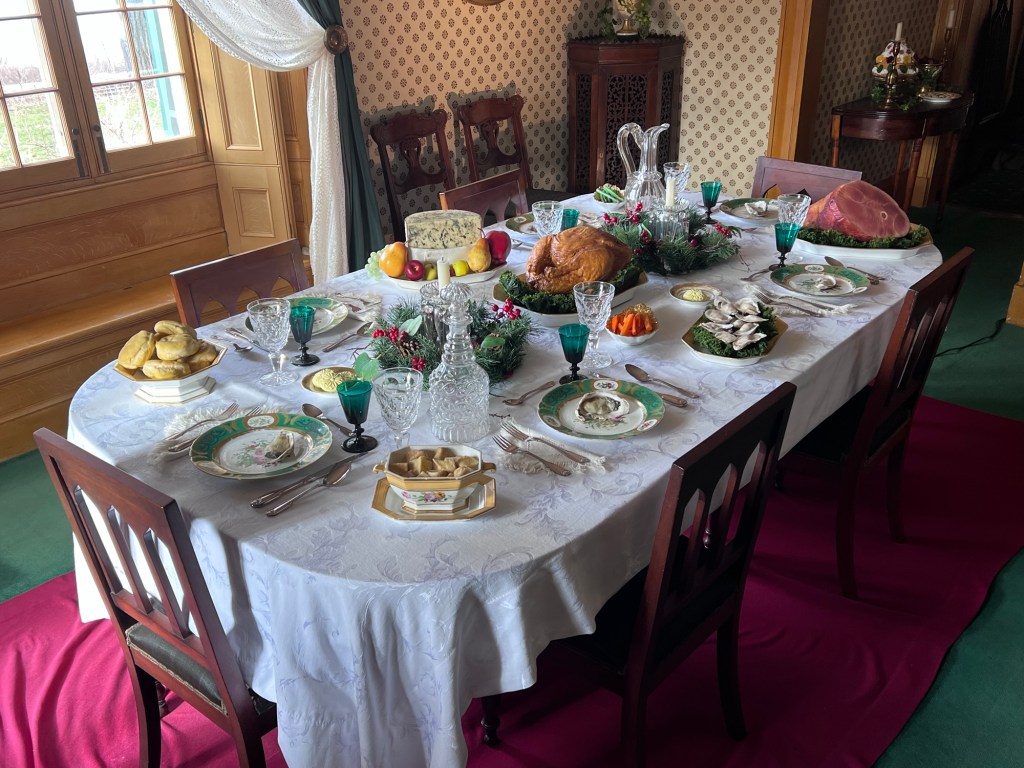
Next it was off to the formal Dining Room where the portraits of Margaret Beekman Livingston (a VERY distant relative of mine by marriage) and her husband, Robert Livingston hung. She had saved these along with the grandfather clock before her first house was burned by the British during the war years. It was set for Christmas lunch when the family would dine together.

Clermont V.jpg

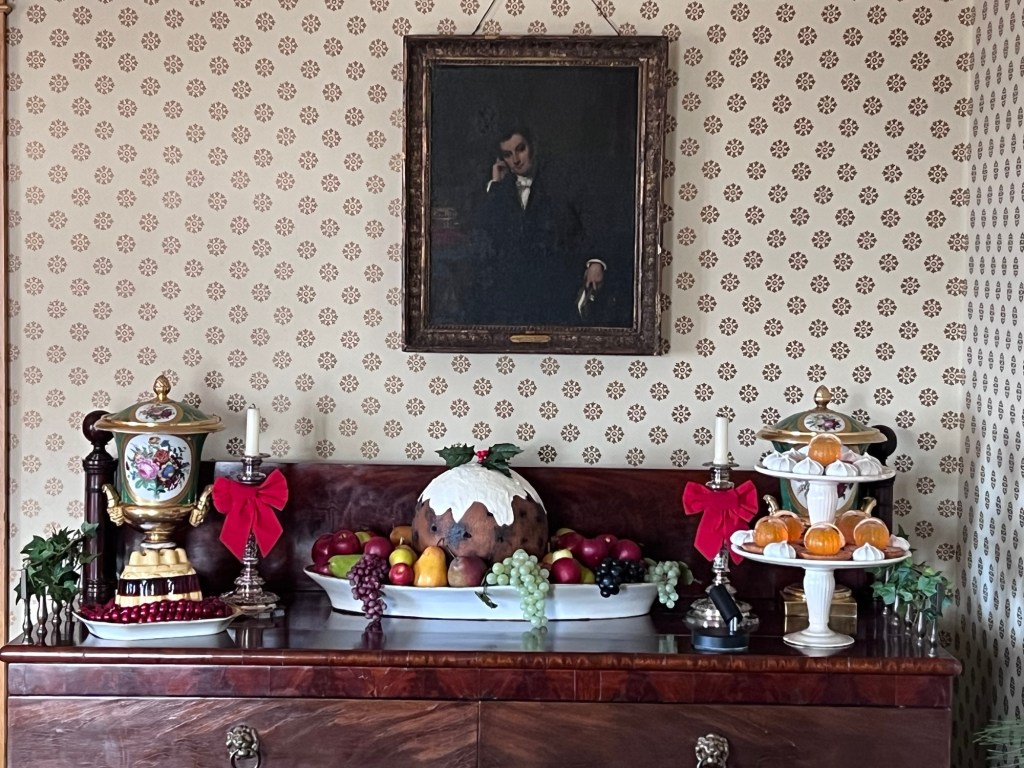
The Clermont Dining Room is very elegant at Christmas. This is in 2019 (pre-COVID)

In the summer months, the room was pretty plain with no set up on the table. The Dining Room has just had some renovation work so the walls and ceiling looked really nice.

The Clermont Dining Room in the summer of 2023

The Dining Room portraits

Margaret Beekman Livingston’s Wedding portrait in the Dining Room

Robert Livingston’s Wedding portrait in the Dining Room

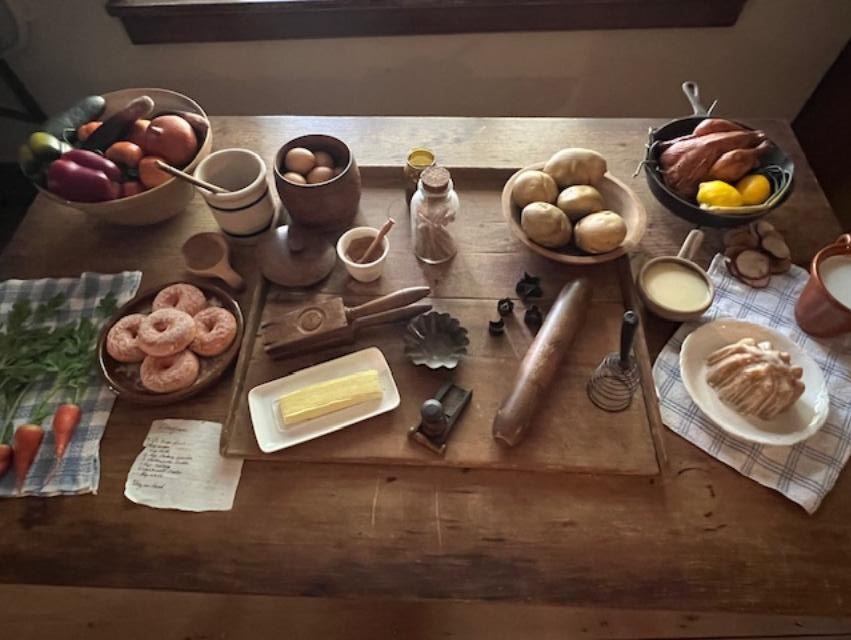
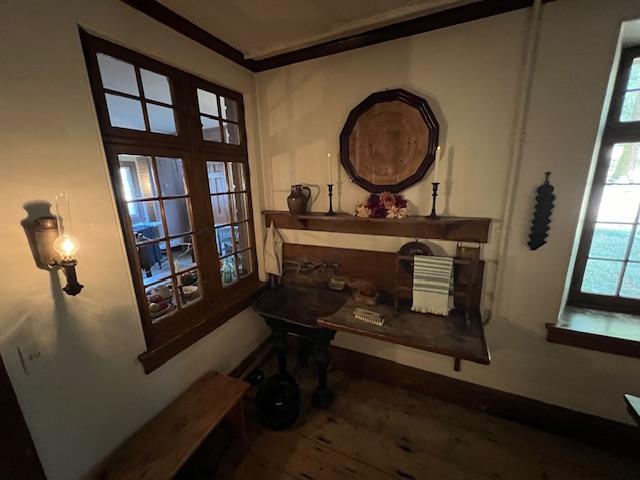
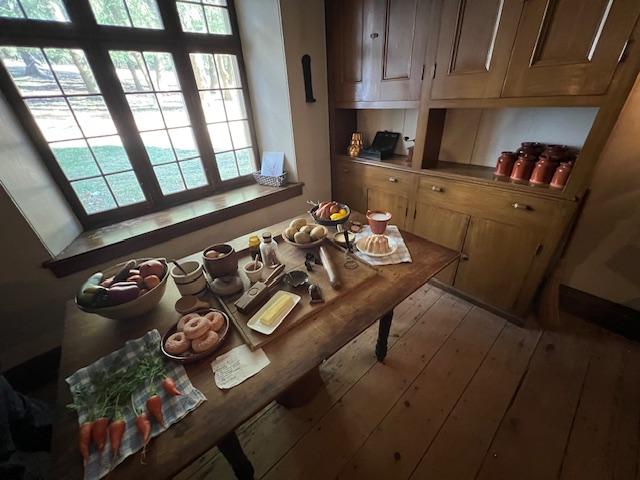
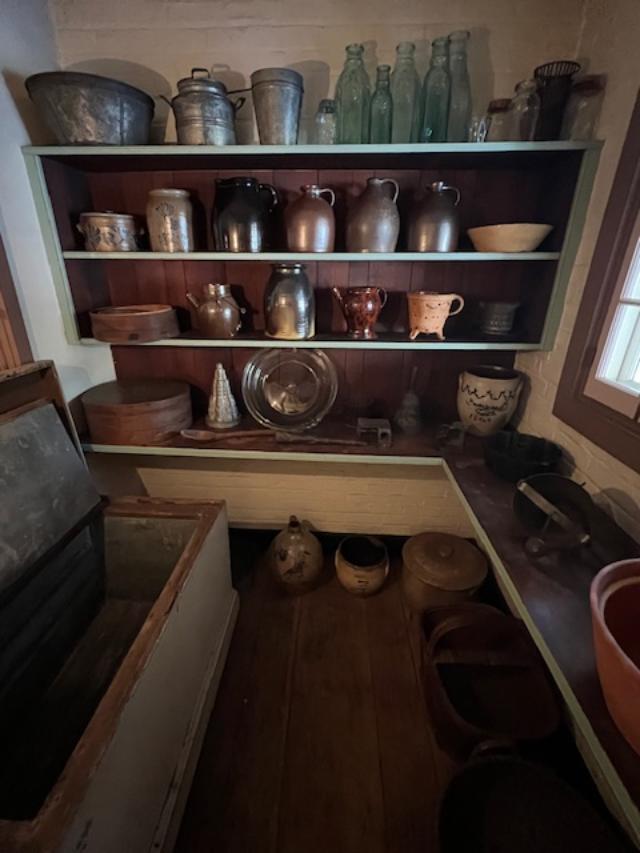
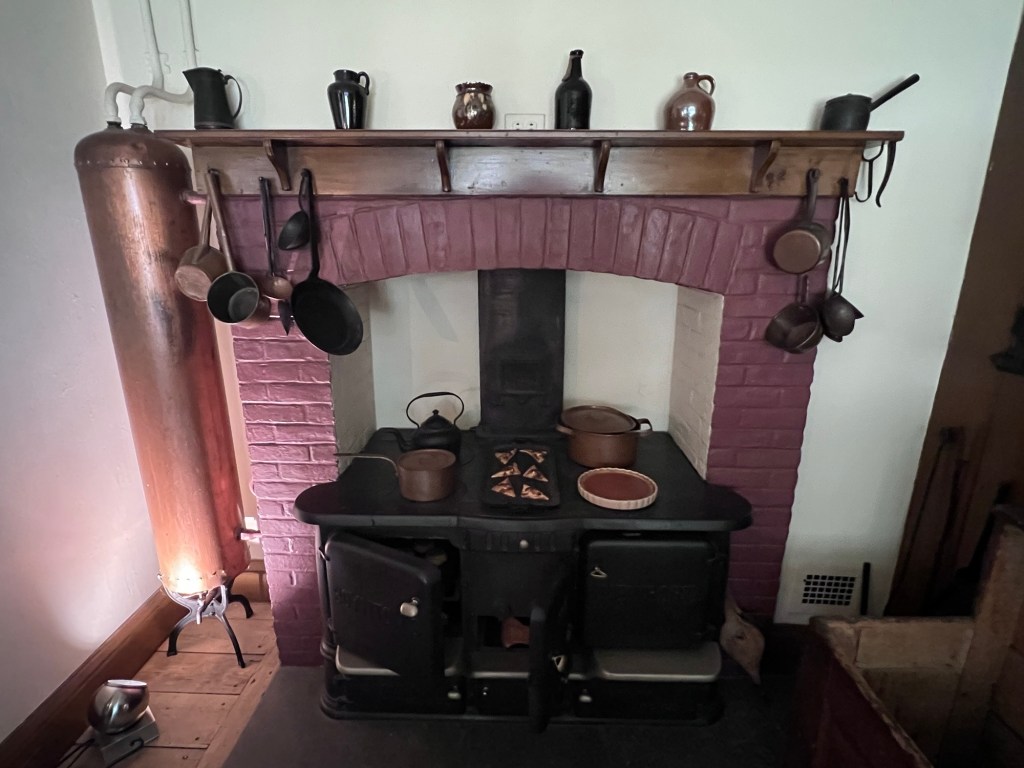
We also toured where the food was prepared and prepped from the kitchen to the Dining Room, which was all done in organized fashion. I was told by the tour guide that for the most part the family lived here year round unlike some of the other mansions who only lived here during certain times of the season.

The Kitchen at Clermont

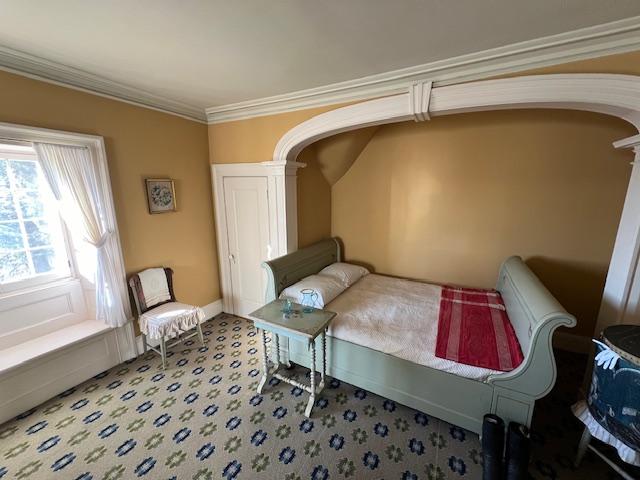
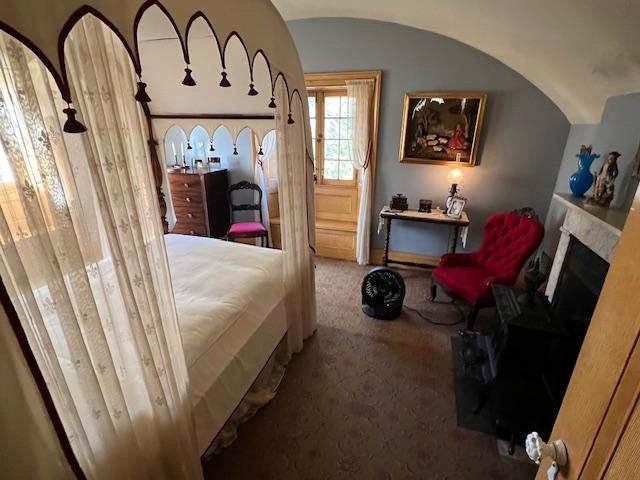
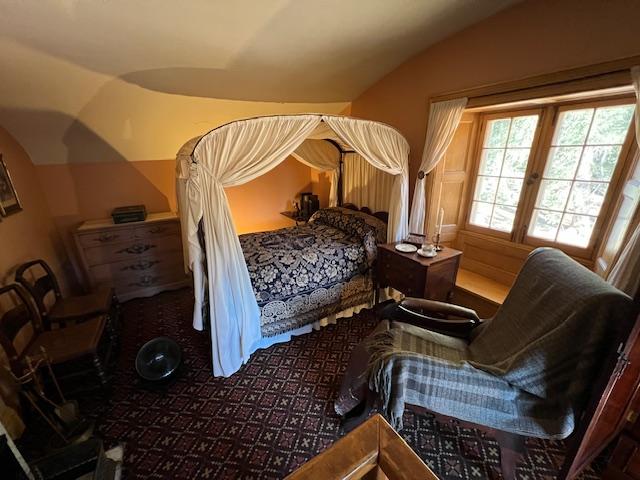
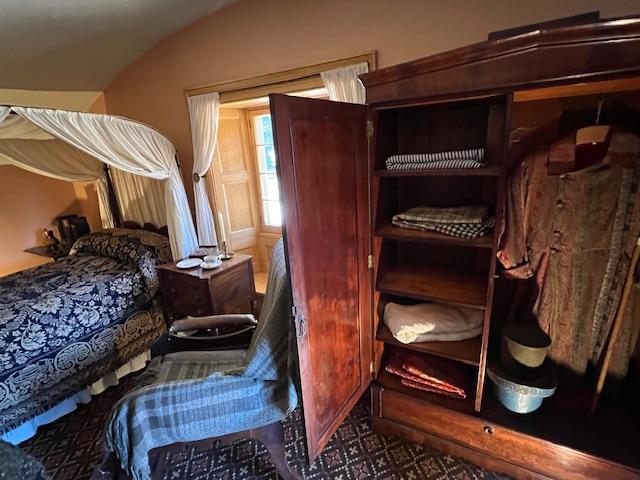
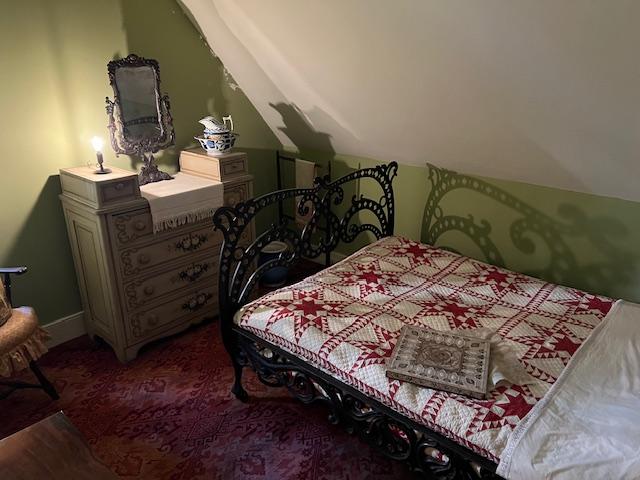
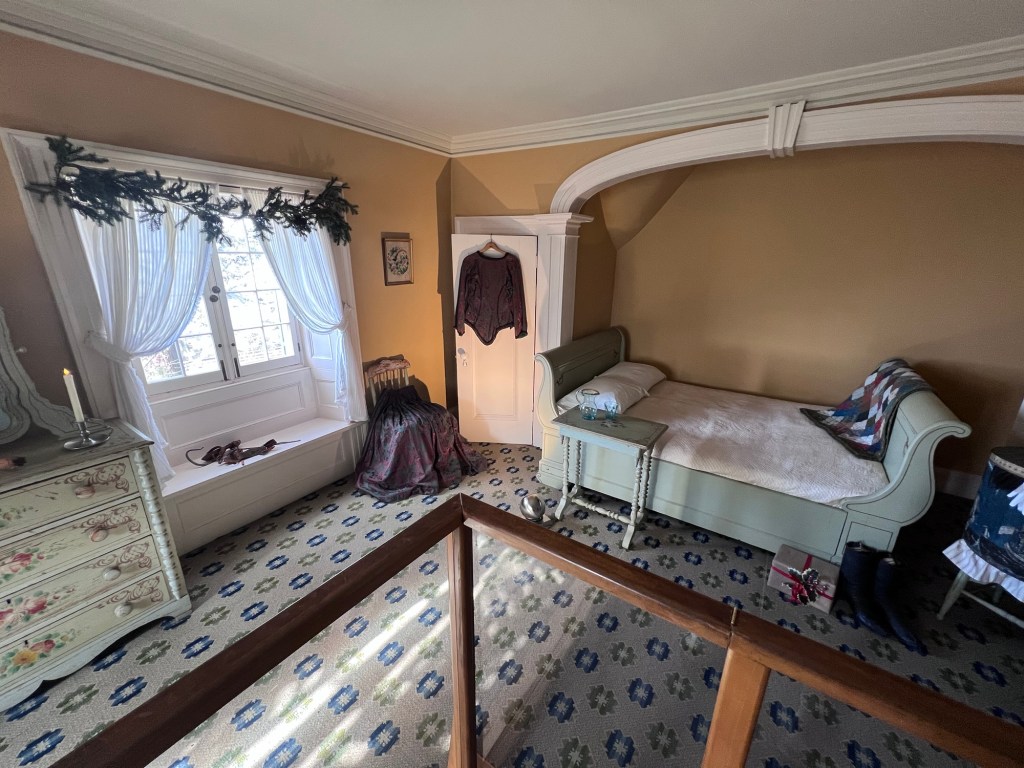
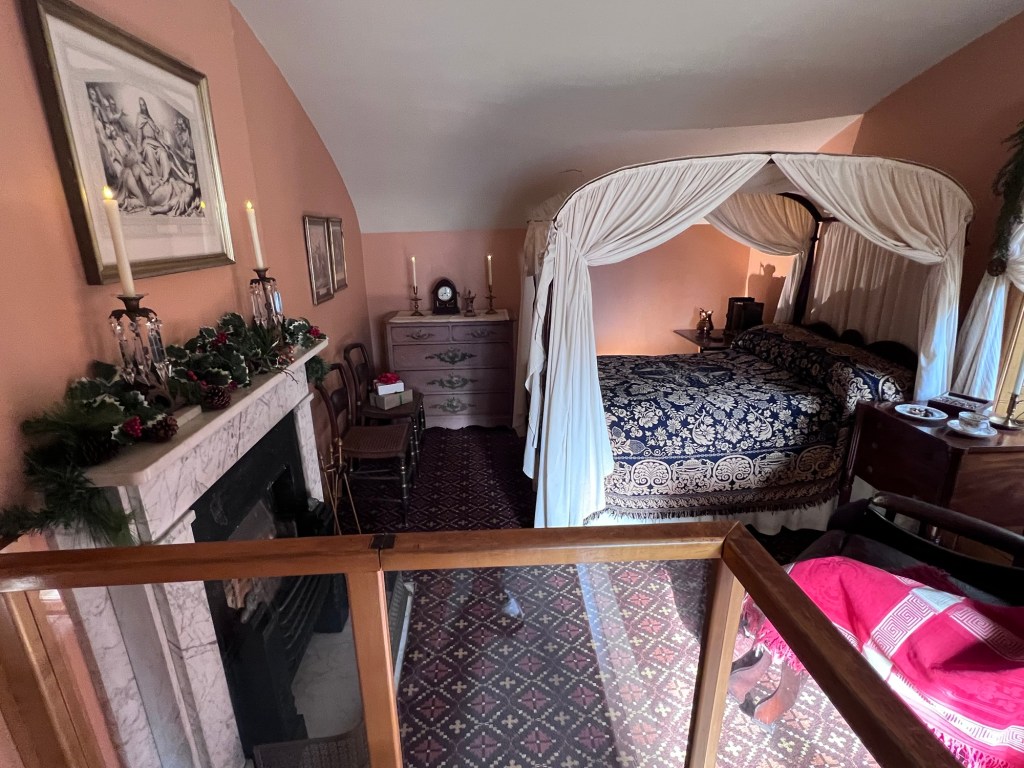
We took a walk upstairs to see the upstairs bedrooms and see where the third Mrs. Livingston lived. I thought it was interesting that she had two beds in her room in which neither was big enough to accommodate her. One was the main bed and the smaller one was a Day bed when she wanted to take a nap but did not want to mess up her main bed.

The last Mrs. Livingston’s bedroom until the 1960’s

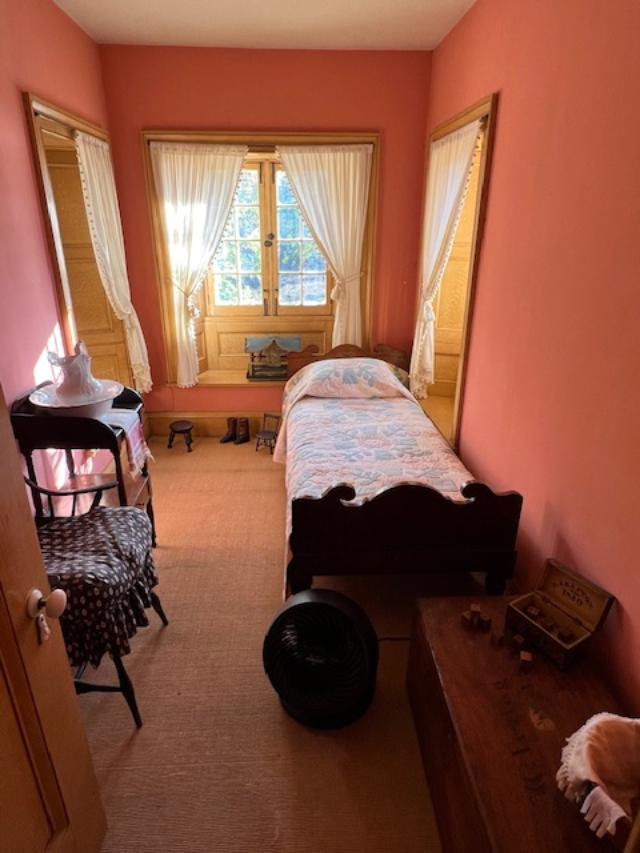
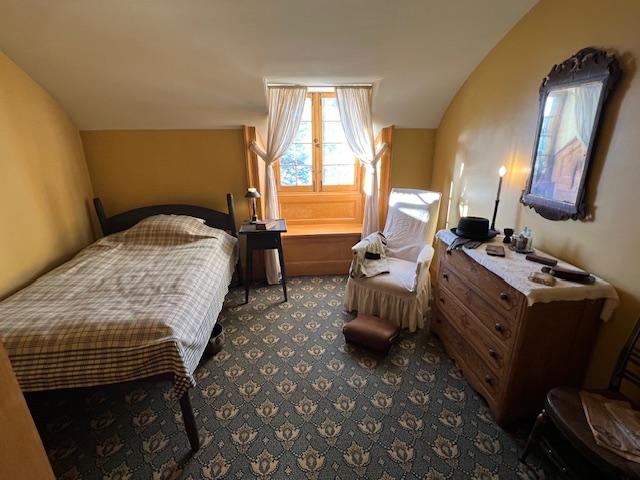
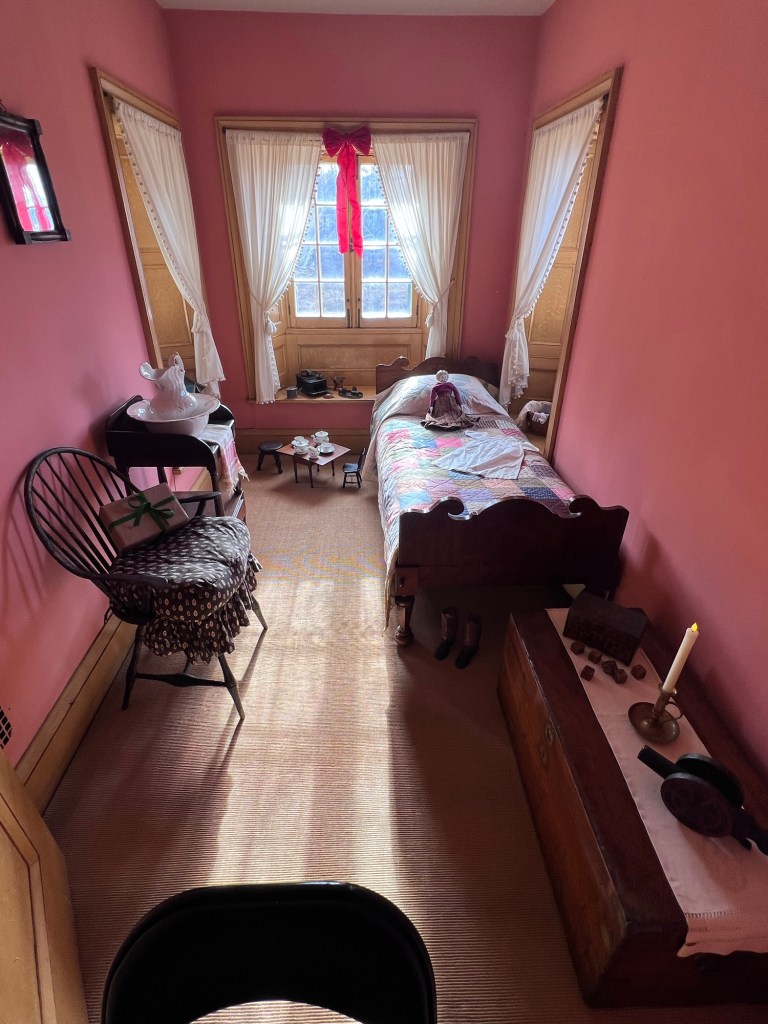
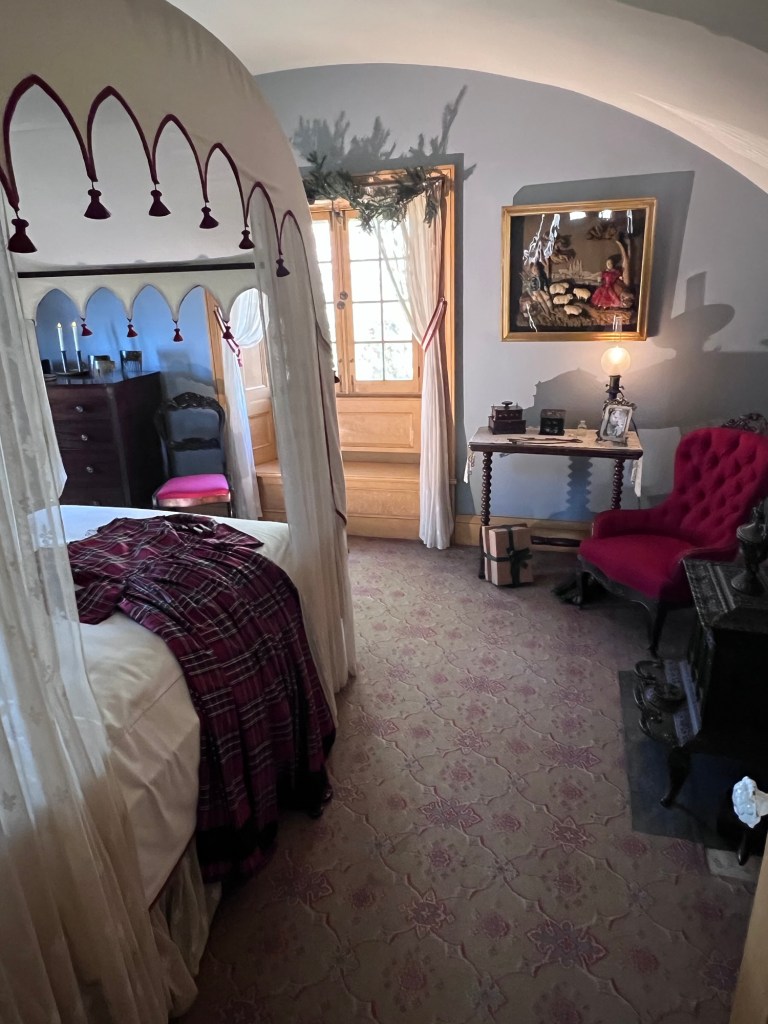
We then toured what had been Honoria’s and Alice’s bedroom when they were children and then became the Guest Room. It still looked like a Children’s Room.

The Daughter’s/Guest Bedroom

Then it was back down to the formal hallway for the end of the tour. The one thing I have to say about Clermont is that it looks like someone’s home not some grand mansion like the Mills or Vanderbilt mansions that looked like they for a moment time or only for a season. This family lived here all the time.

The upstairs bathroom was one of the remodeling features

The family lived here until the 1960’s when upkeep of the estate got to be too much for the family and it was sold to the state. The New York Park is now maintained by the New York State Park system.

The Gardens:

The formal gardens were in bloom when I got there that weekend. Since the house opened in June most of the Spring plantings were already gone but the Summer plantings were in full bloom. There were three gardens on the property, two of which had been brought back to nature, the Wilderness Garden and the South Spring Garden and then the Walled Garden was well maintained and planted.

The Wilderness Garden was well-maintained and planted with natural plants

The South Spring Garden

The South Spring Garden has given way to nature

The Walled Garden was the most formal of all the gardens

The Walled Garden

The Walled Garden

The Walled Garden

The Walled Garden

The Walled Garden

In the Fall, I went back up to Clermont for the Ghost Tour and the foliage was amazing, but the rain knocked a lot of it off. Still the colors were glorious.

Clermont in the Fall of 2023

The formal gardens in the Fall

The formal gardens in the Fall

The gardens in the Fall.

The I toured the rest of the estate and saw the ruins of the other mansion, Arryl, that is on the other side of the parking lot and then saw the ruins of the Old House and the Root Cellar.

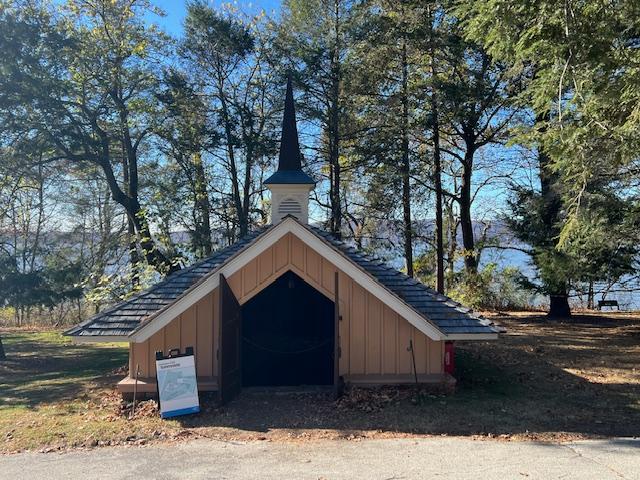
The Ice House

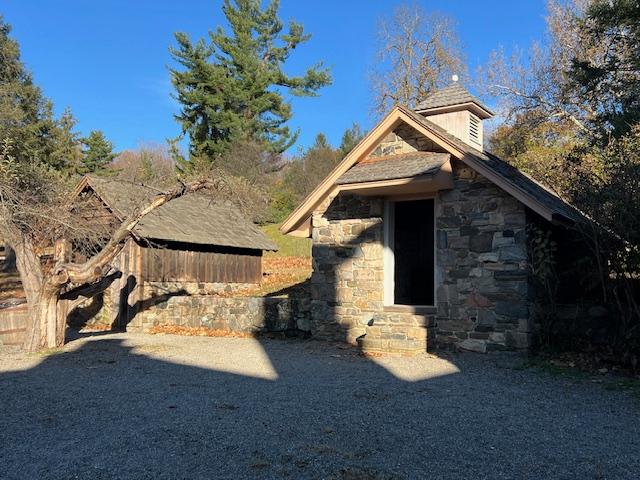
The Root Cellar

The flowers by the Root Cellar

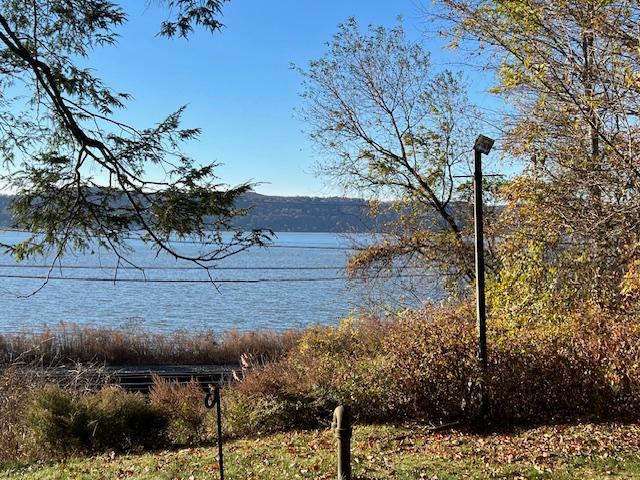
View of the Hudson River

The History of Clermont:

The name Clermont derives from “clear mountain” in French and was inspired by the view of the Catskill Mountains across the Hudson River from the estate.

The front of Clermont that faces the Hudson River

The estate was established by Robert Livingston following the death of his father, the first Lord of the Manor was inherited by the eldest son, Philip Livingston, 13,000 acres in the southwest corner later named Clermont was willed to Robert. The original house was built around 1740.

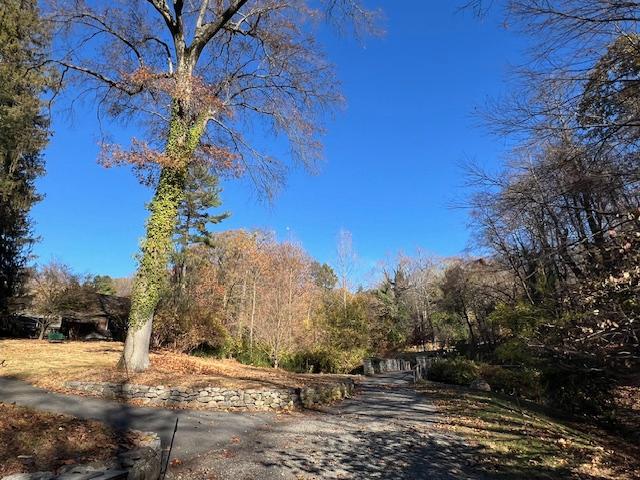
The path leading to the main house

Robert Livingston of Clermont died on June 27, 1775 and the estate passed to his son, Robert, who was known as ‘Judge Livingston’ to distinguish him from his father. Judge Livingston was a member of the New York General Assembly from 1759 to 1768, served as Judge of the admiralty court from 1760 to 1763 and was a delegate to the Stamp Act Congress of 1765. He married Margaret Beekman, daughter of Colonel Henry Beekman. Their son, Robert R. Livingston, later known as “Chancellor”, served on the committee that drafted the Declaration of Independence. Judge Robert died about six months after his father, on December 9, 1775.

Burning and  Rebuilding:

In October 1777, British ships sailed upriver from New York City in support of General John Burgoyne who was north of Albany. That same force had already stormed two forts in the Hudson Highlands and burned Kingston, New York. Major General John Vaughan led a raiding party to Clermont and burned Livingston’s home because of the family’s role in the rebellion.

The history of the ‘famous’ Robert’s of Clermont

Margaret Beekman Livingston rebuilt the family home between 1779 and 1782. Robert R. Livingston became the estate’s most prominent resident. Chancellor Livingston administered the oath of office to President General Washington, became Secretary of Foreign Affairs and negotiated the Louisiana Purchase.

Margaret Beekman Livingston

He also partnered with Robert Fulton in 1807 to create the first commercially successful steamboat on the Hudson River, the North River Steamboat (later known as the Clermont) which stopped at the house on its inaugural trip.

Robert Livingston in the famous Gilbert Sullivan painting.

The home’s final Livingston owners were John Henry Livingston and his wife, Alice. They added to the home and greatly valued the homes important historical role. The Livingston’s built second mansion on the property known as Arryl House, which burned down in 1909. The ruins of Arryl House are still visible at the south end of the property.

The burnt ruins of Arryl Mansion on the other side of the property.

The Arryl Mansion in the Fall of 2023

Alice Livingston was responsible for creating many of the landscaped gardens that are continued to this day. Following John Henry’s death, Alice turned the Mansion and property over to the State of New York in 1962 so that all the people of New York could enjoy it.

The landscaping around the old Ice House

The house is now a New York State Historic Site and was designated a United States National Historic landmark in 1972. It is a contributing property to another National Historic Landmark, the Hudson River Historic District. Although locate in the town of Clermont, its mailing address is in the nearby town of Germantown.

The views from the back of Clermont to the Hudson River

(This information is a combination from the Clermont Website and Wiki and I give them full credit for this information. Please check the website above for more information on the site and its activities through their Friends site.)

The Clermont Grounds

The Fall in the Hudson River Valley is one of the most brilliant times to visit and the foliage is so colorful. The constant rain knocked a lot of it down already but all around the house their were still signs of the reds, golds and oranges. I came up for the Ghost Tours which the mansion resumed this year to sold out crowds.

The Clermont Estate in the Fall.

The river front of the estate in the fall.

The Hudson River in all its glory.

The Ghost Tour of the estate:

The Ghost Tour took us on a tour through the house to meet the costumed characters throughout the mansion. The mansion was decorated for the Halloween and with the lights dimmed, it gave the house an eerie appearance to it.

When I arrived at the estate, the house loomed in the distance in its it glories with the golden colors of autumn.

Jack-a Lanterns lined the pathways and lit the way to the house.

We were greeted with fresh Apple Cider Doughnuts and Apple Cider from a local farm in Kingston, NY.

We were also treated to old fashioned Halloween candy with Mary Janes, Tootsie Rolls and other treats.

We started our tour at 7:00pm at twilight with the lanterns lit and the house waiting in the distance.

The hallway was decorated for Halloween.

First we met an embittered Robert Livingston (who over acted)

We stopped in the haunted Living Room to talk to the maid.

We met the ghost of Janet Livingston Montgomery in the Parlor.

Then it was off to the Dining Room to meet the last inhabitant of the house, Janet Livingston.

Margaret Beekman Livingston guarding the Dining Room.

On the way to the kitchen, we met Captain Kidd, the Livingston children and the last owners of the house on the way out the back door to end the tour. The whole tour took less than an hour.

We exited the house through the kitchen and out the door to a moon lit night with jack-a-lanterns taking us back to the Visitors Center. The night had fallen in the early evening at the mansion as we were the second to last tour of the evening and the moon had come out giving the sky a ominous and spooky look about it.

I visited again for the Christmas Open House in early December to see the decorations. I had not been there since 2018 and wanted to see how things had changed for the winter months. Everything was decked out for Christmas. The rooms were decorated but not in an over the top way as some of the other Hudson River homes.

The Clermont Estate at Christmas time.

The Clermont Estate at Christmas time.

The Front porch at Christmas time.

The Christmas tree on the porch.

Even the logs on the porch were decorated for the holidays.

The entrance foyer from the stairs.

Upon entering the front door, you could see the beauty and simplicity of the Christmas holidays in the early 1800’s before Victorian traditions took over and the house was overdone with decorations. Garland, Holly and simple pine trees adorned the rooms and welcomed everyone to the Christmas Holiday Open House sponsored by the Friends of Clermont. The home was nicely decorated for the holidays circa 1840’s.

Entering the Front Door at Clermont at Christmas.

The wreath was beautiful on the door.

Livingston Painting in the foyer

The Sugar Spun Clermont Sculpture.

Painting in the Foyer of Robert Livingston

Portrait of Margaret Livingston in the Foyer.

The holiday display.

The Office of Clermont

The Table Top tree in the Office.

The Library was set for Christmas morning with a large tree, homemade presents from the family and a morning of Christmas cheer. The views from the windows would have shown the beautiful views of the river.

The Library at Clermont

The Clermont Library at Christmas time.

The Christmas tree in the library.

The Library decorations.

Library decorations.

The Living Room was set for Afternoon Tea and for greeting guests who would have entered through the front door right off the main hallway.

The Living Room decorated for Christmas.

The Living Room was set for Afternoon Tea.

The portrait of Robert Livingston in the Living Room.

The portraits of Alida and Robert Livingston.

The Dining Room was not set for dinner but in anticipation of the holidays. The elegant runners, china, crystal and silver were off to the side awaiting the servants to set the table and prepare for Christmas dinner.

The Dining Room decorated for the holidays.

Holiday display in the Dining Room.

The Wedding Painting of Margaret Beekman Livingston in the Dining Room.

The family’s private bedrooms were decorated with garland and a small tree in the foyer.

Heading to the Second Floor of Clermont.

The view of the foyer from the upstairs.

The Livingston girls Bedroom.

The Livingston girl’s doll adorns the room.

The Christmas tree in the upstairs Foyer outside the bedrooms.

The Gingerbread House display in the Foyer.

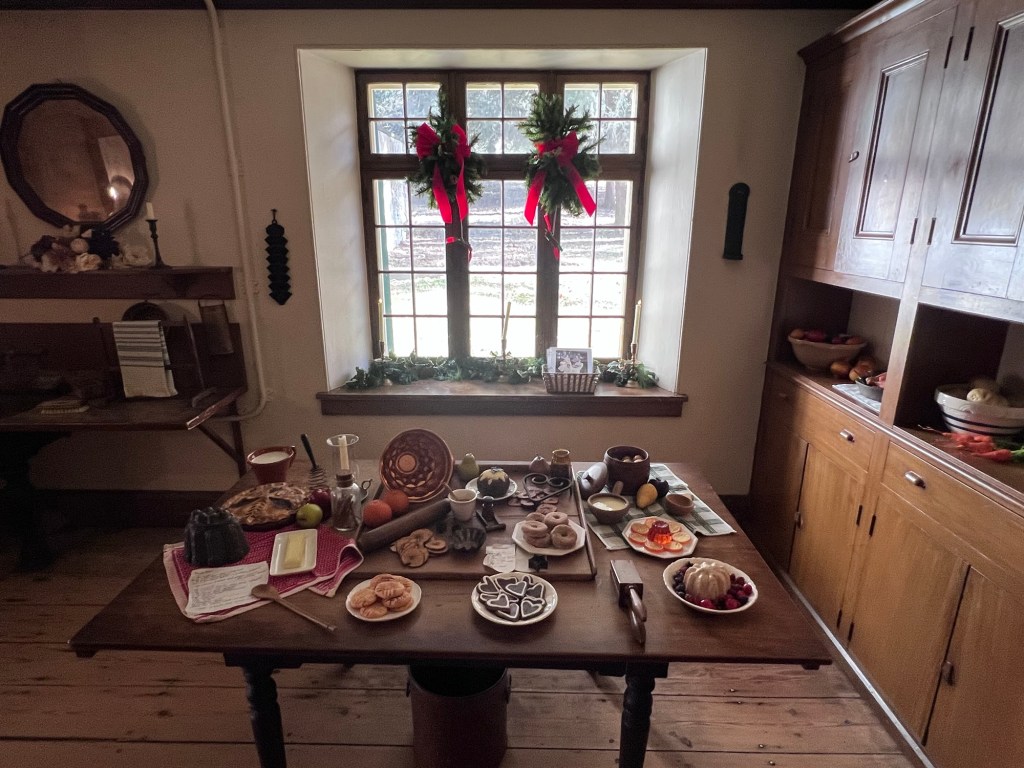
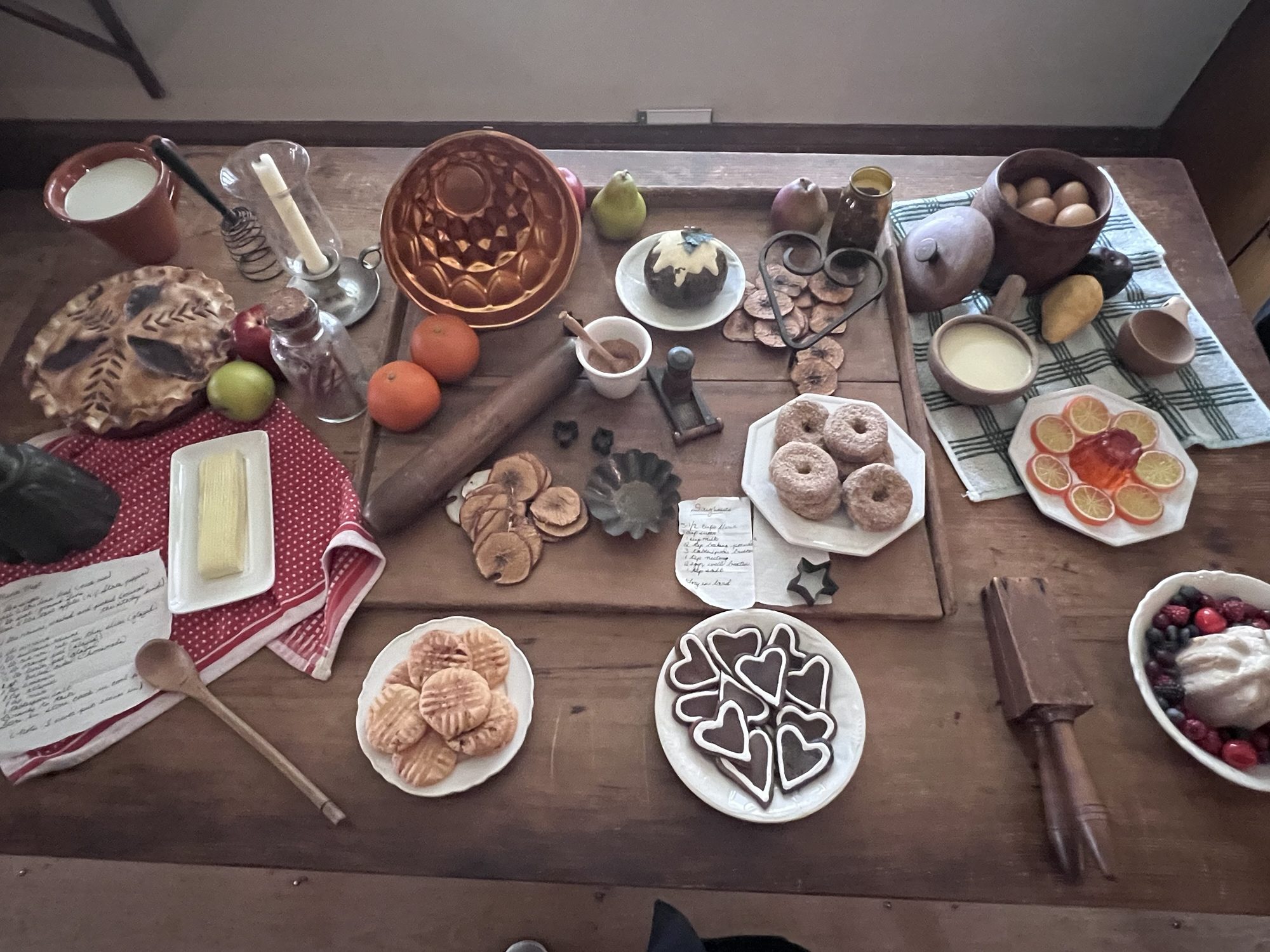
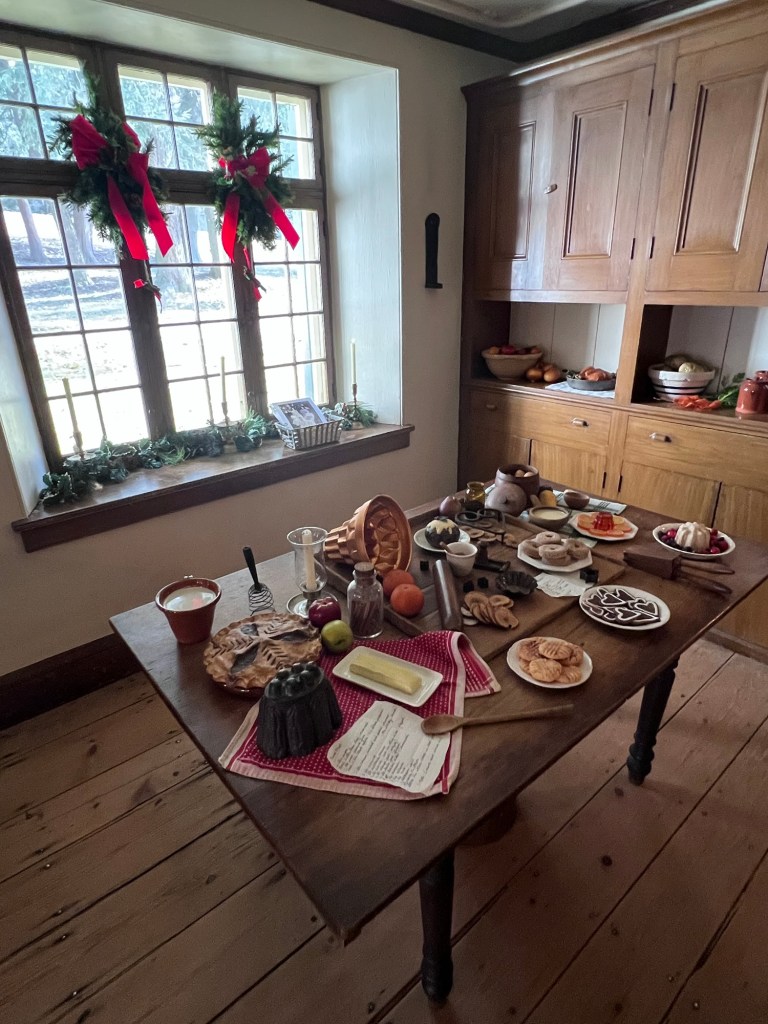
When touring the kitchen which is located to the side of the house, the counters and tables were filled with all the delicious foods that would have been served at Christmas. Roasts, Trifles, Cakes and Pies would have been served by the staff for holiday get togethers and dinners at the mansion.

The Kitchen staff preparing the family’s Christmas dinner feast.

Preparations for Christmas dinner for the family.

Preparing Christmas dinner in the kitchen at Clermont.

After the Christmas Open House tour was over, the Friends sponsored Marshmallow roasting on the front lawn of the mansion and refreshments and talks up at the Visitors Center.

Roasting Marshmallows over the firepit on the mansion’s grounds after the walking tour of the mansion.

Christmas cookies, Apple Cider and Classic Candies in the Visitors Center ended the tour and the Open House for the day.

After the tour was over, I toured the gardens, which were dormant at the time and the grounds along the Hudson River. The views were just amazing and the gardens awaited the coming of the Spring when flowers would be blooming again.

Both the Open Houses at Halloween and at Christmas are a lot of fun and very special at Clermont. The Friends of Clermont do a nice job depicting the holidays and how the family would have celebrated them.

In the Summer of 2024, I took a special Garden Tour of the Livingston Gardens. A new Lead Gardener had been hired by the State of New York and she was starting to renovate the gardens. So we took a tour of the four gardens near the mansion. While we toured the estate grounds, we visited the South Spring Garden, the Walled Garden, the Children’s Garden and the Cutting Garden to see how they were progressing. The staff here is doing a good job bringing these gardens back to life to how Alice Livingston envisioned them.

The first was the South Spring Garden which is closest the house. This was built when the stairs to the side of the home were built and one of Alice Livingston’s first gardens.
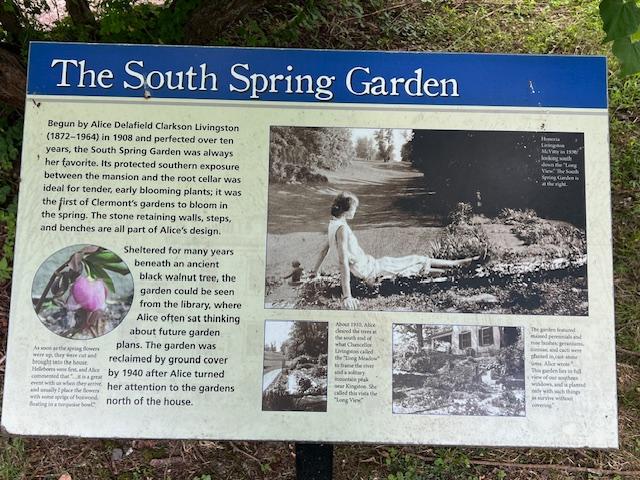
The South Spring Garden sign

The South Spring Garden in Summer 2023

The South Spring Garden being cleaned up in Summer 2024

The grown in wall of the South Spring Garden
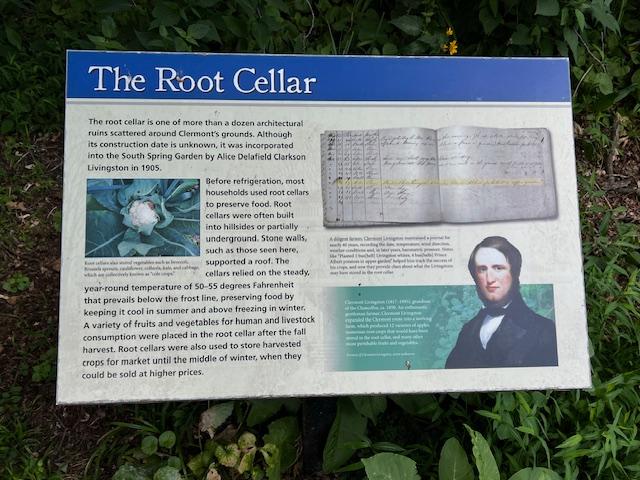
The Root Cellar sign

The Root Cellar remains by the South Spring Gardens

The flowers in the South Spring Gardens

The sign for the Walled Garden

The Walled Garden
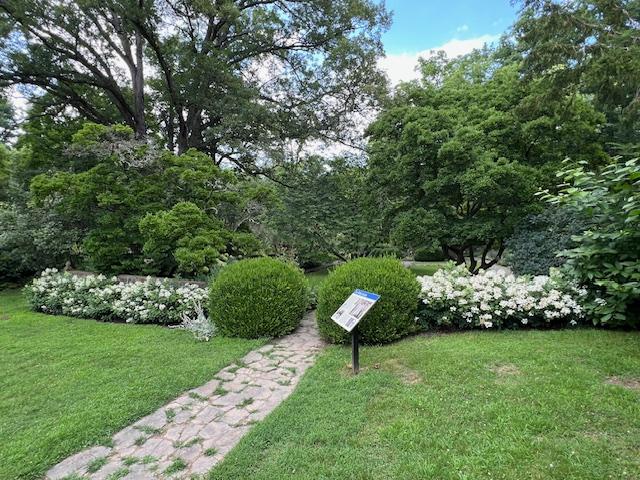
The Walled Garden
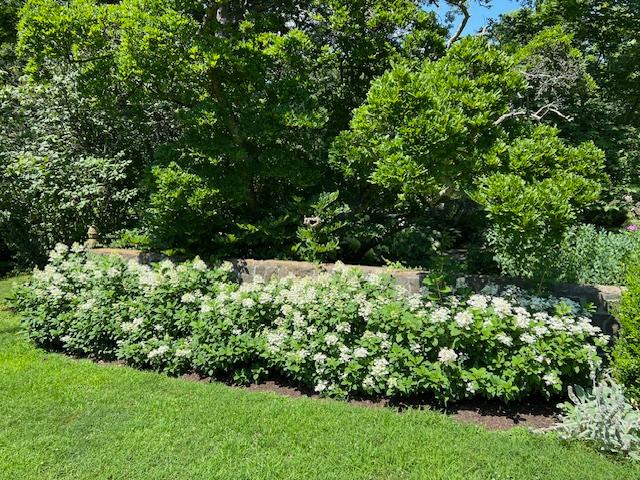
The Walled Garden

The Walled Garden

The Walled Garden Statuary

The Walled Garden

Then we visited the Wilderness Gardens that were just beyond these and they also had been brought back to life by the gardeners. This was to be a transition from the formal gardens to the woods.

The Wilderness Gardens:
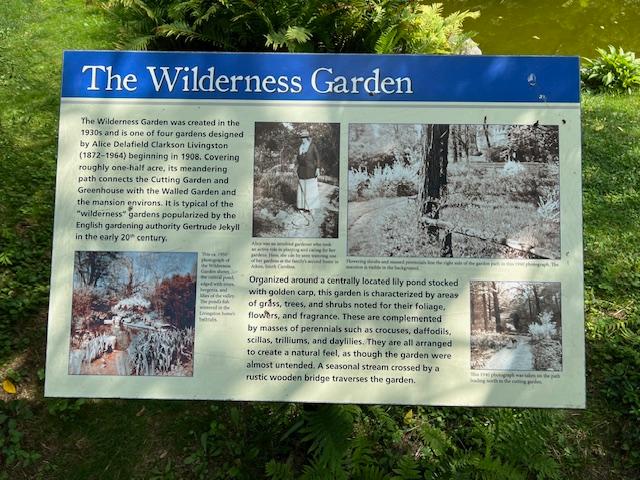
The Wilderness Gardens sign

The Wilderness Gardens
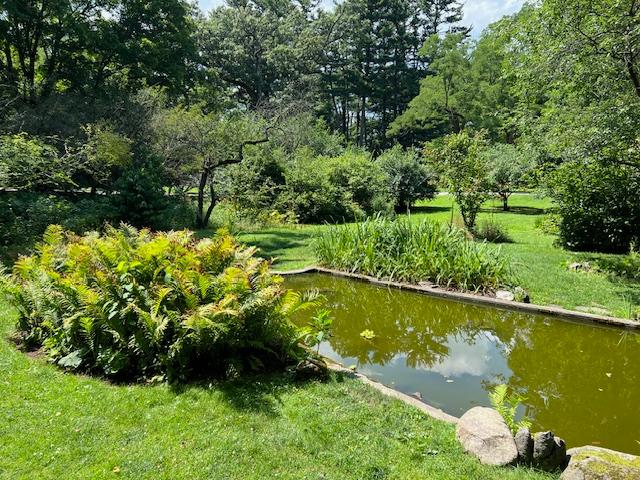
The Wilderness Gardens

The we visited the Children’s Garden and the Cutting Gardens which were the newest gardens on the estate. The Children’s Garden playhouse had just been renovated and the beds had been replanted.
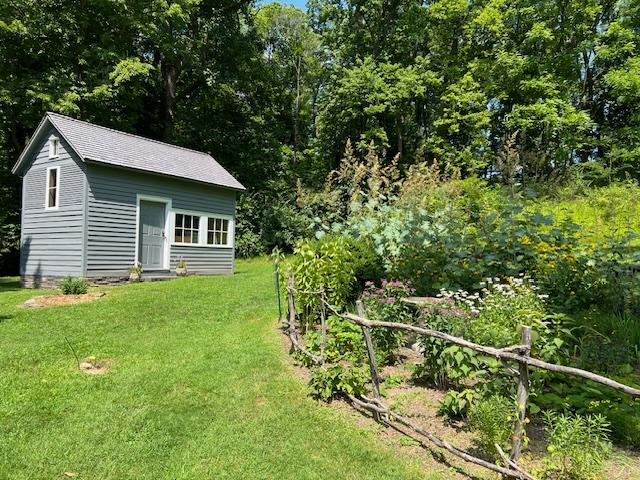
The Children’s Garden with the Children’s playhouse
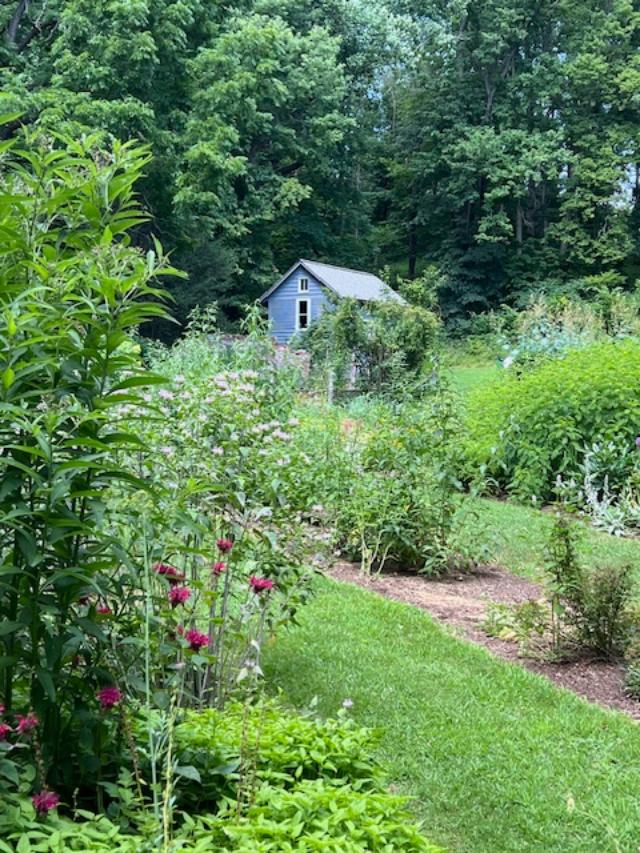
The Children’s Garden from the entrance

The Children’s Garden Garden

The Children’s Garden

The Cutting Gardens were created so that Alice Livingston could grow the types of flowers that would decorate the house at various points in the season. These gardens have been brought back to their original purpose and the flowers and assortments that have been planted are colorful and the fragrances are so nice. On a beautiful day, walking amongst the beds is so nice and relaxing.

The Cutting Garden

The Cutting Garden

The Cutting Garden

The Cutting Garden trellis

The bridge between the Walled Gardens and the Children’s and Cutting Gardens

The Gardens Tour was very informative. Alice Livingston’s love of flowers and how they accented the house were her pride and joy. The Cutting Garden were all the flowers that she used to decorate the house with and the Children’s Gardens taught her daughters responsibilities and knowledge of horticulture.

The biggest problem in recent years is how to maintain all these gardens. This takes a lot of effort and work to weed. plant and prune these beds and make them look nice. The new gardener hired by the State and her team of two staff and volunteers are doing a nice job cleaning out the old beds and replanting and pruning all the plants and bushes that were already there. You can tell by the pictures there is a lot more to do but the gardens are on their way back to their original look.

After touring the mansion at Christmas time in December 2023, I visited Downtown Germantown, which itself was decorated for the both holidays.

Downtown Germantown, NY decorated for the Christmas holidays.

Exploring Germantown, NY:

Downtown Germantown during the Christmas holidays.

Downtown Germantown at the Christmas holidays.

Downtown Germantown for the Christmas holidays and church service.

After the tour in July 2024 for the Summer Garden tour, I revisited Germantown again to see what it was like during the summer months. It is a very active and historical downtown with nice restaurants and shops, a wonderful gourmet grocery store and beautiful historical churches. It is a nice place to spend the weekend when touring the mansions in Columbia and Duchess Counties.

Germantown in the Summer of 2024:

Downtown Germantown, NY in the summer
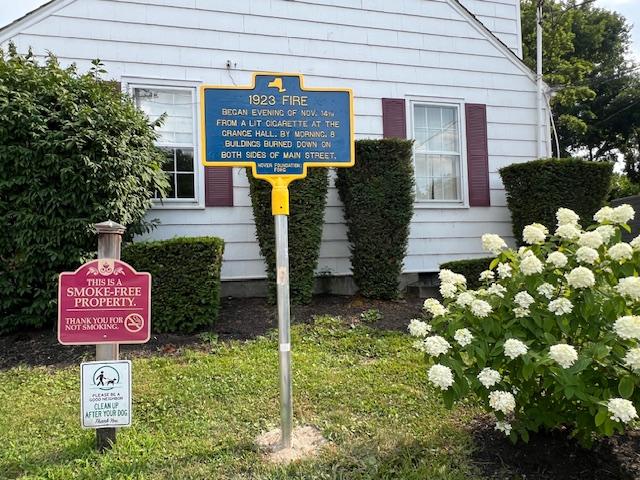
The town square and historical sign

The Inn downtown
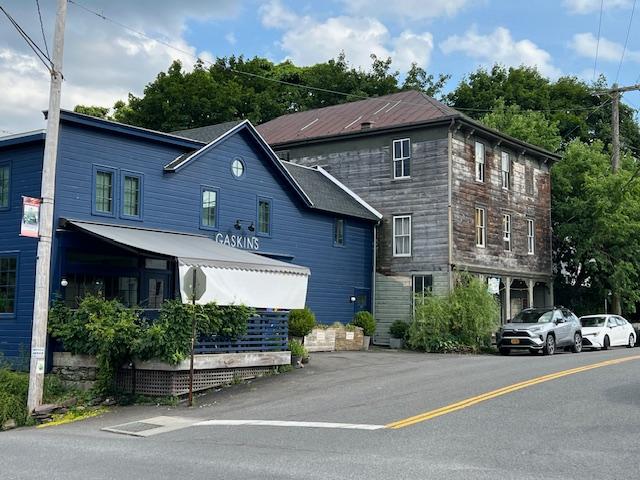
The restaurant row of Germantown with Gaskin’s in the background
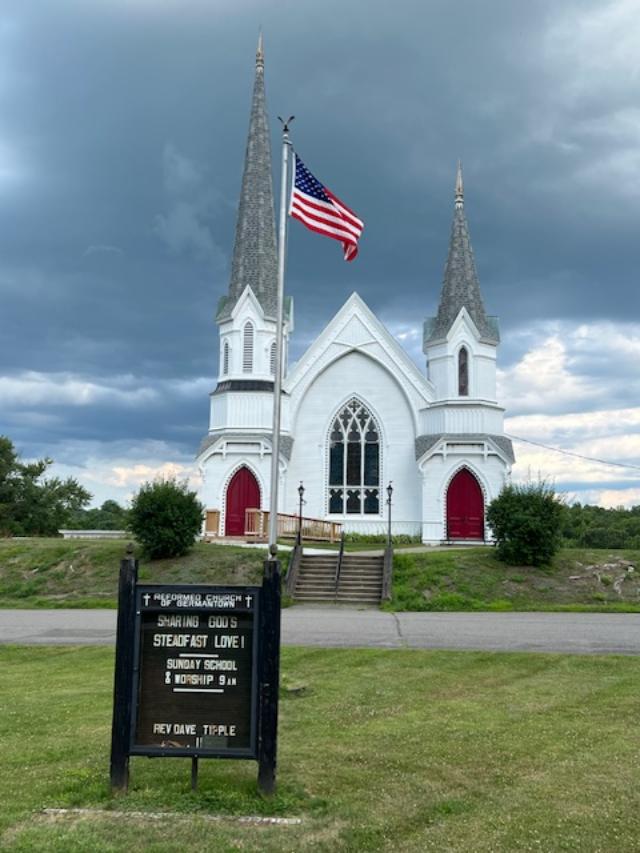
The Reformed Church of Germantown. For some reason the clouds started to roll in after a sunny day.

The church grounds across the street

Germantown is a small town that keeps changing as more people from the City move up to the Hudson River Valley. A lot of the buildings in town are becoming art galleries, furniture shops and new restaurants. With each season, there are more changes coming to the town.
Washington Irving’s Sunnyside                                     3 West Sunnyside Lane                              Irvington, NY 10533

Washington Irving’s Sunnyside 3 West Sunnyside Lane Irvington, NY 10533

Washington Irving’s Sunnyside

3 West Sunnyside Lane

Irvington, NY  10533

(914) 591-8763

Admission: Please see their website

Open: Please check the website for seasonality

My review on TripAdvisor:

https://www.tripadvisor.com/Attraction_Review-g48720-d3680157-Reviews-Sunnyside-Tarrytown_New_York.html?m=19905

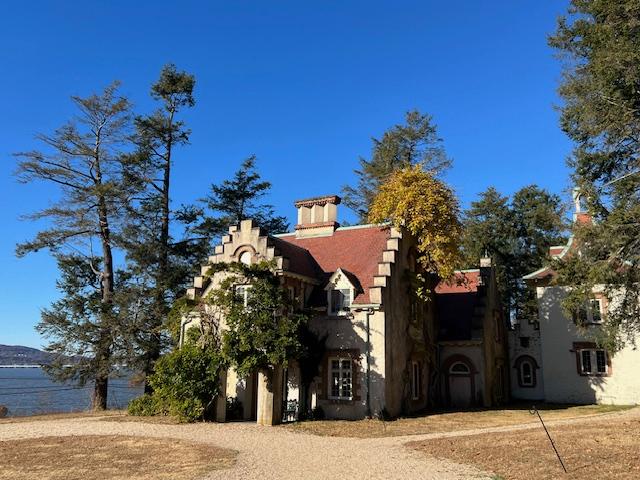
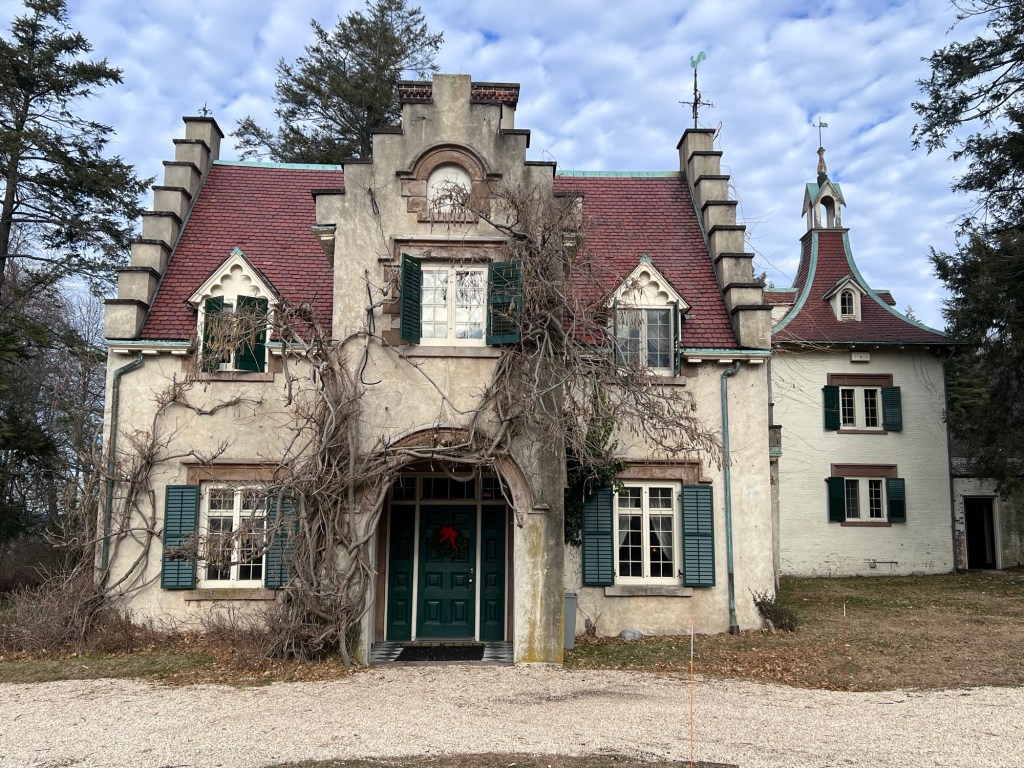
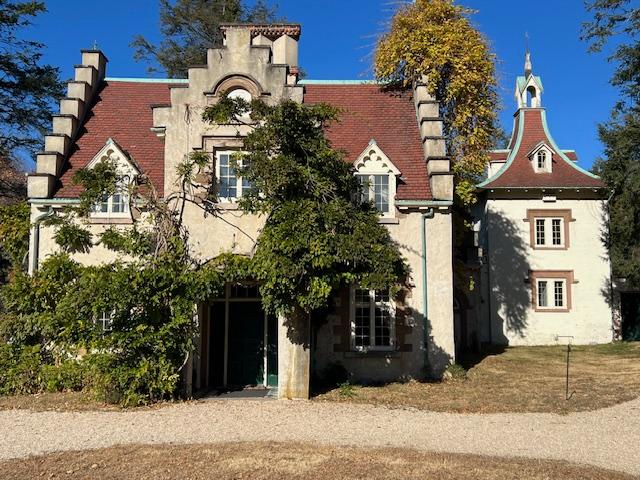
The front of Sunnyside in the Fall of 2024

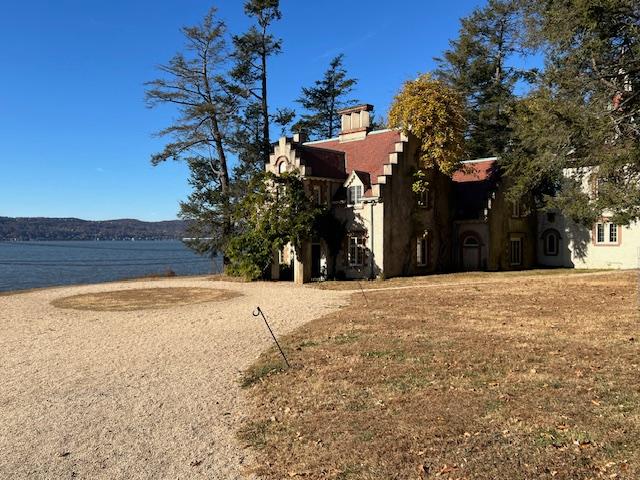
Washington Irving’s home, Sunnyside is open during the warmer months of the year, closing at the end of October. The house looks like a enchanted cottage with almost a fairy like appearance right on the banks of the Hudson River with the most spectacular views of the river valley and the Tappan Zee Bridge in the distance.

Sunnyside during the Fall of 2024

The house was designed by architect George Harvey and reflects the Dutch Colonial Revival, Scottish Gothic and Tudor Revival influences with wisteria growing up and around it and a jagged crow stepped gable.

The front of Sunnyside in the Fall of 2024

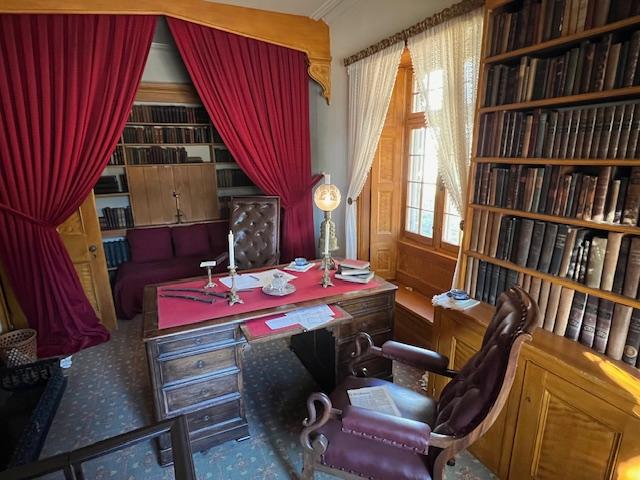
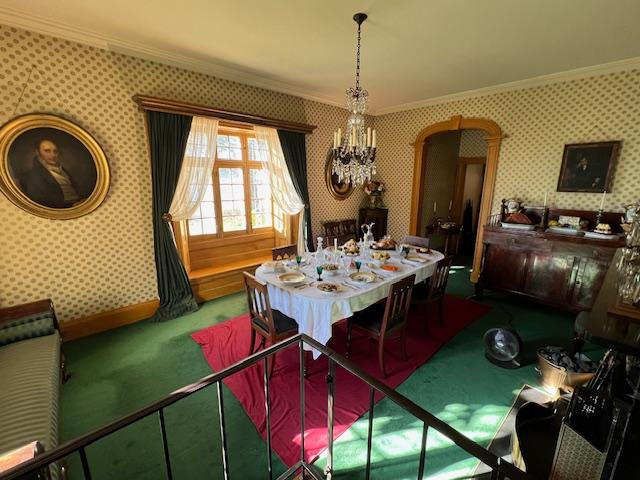
When walking through the home, you will see the study where Washington Irving conducted the business of the house and did his writing. To the other side of the house, you will see the living room and small dining room where the family used to entertain.

Washington Irving’s Study

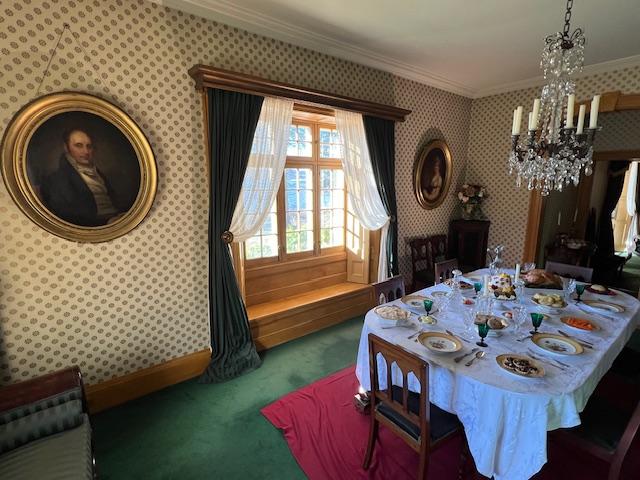
The Dining Room set for a formal lunch

The Dining Room in the Fall of 2024

The formal meal at the afternoon

The hallway between the Dining Room and the Living Room

The Living Room where the family gathered and entertained visitors

The Living Room of Sunnyside

The upstairs contains small bedrooms where Washington Irving, his brother, Ebeneezer and his five nieces lived on and off when they were living at the house. Washington’s brother’s business had failed and the family came to live with him. Two of the nieces never married and ran the home for their uncle.

The Guest bedroom at Sunnyside

The Guest Bedroom

The Children’s Bedroom that catered to the little guests

The house is nicely furnished in the most modern decor of its time but is not an elaborate house. It is a home and not a weekend mansion and this ten acre estate was a once a  working farm. In the back of the house, there is an ice house and a barn show where the people who worked on the estate kept the house running.

Ebenezer’s daughter’s room

Ebenezer’s Room in Sunnyside; Ebenezer was Washington Irving’s Older Brother

Washington Irving’s bedroom

Washington Irving’s bedroom

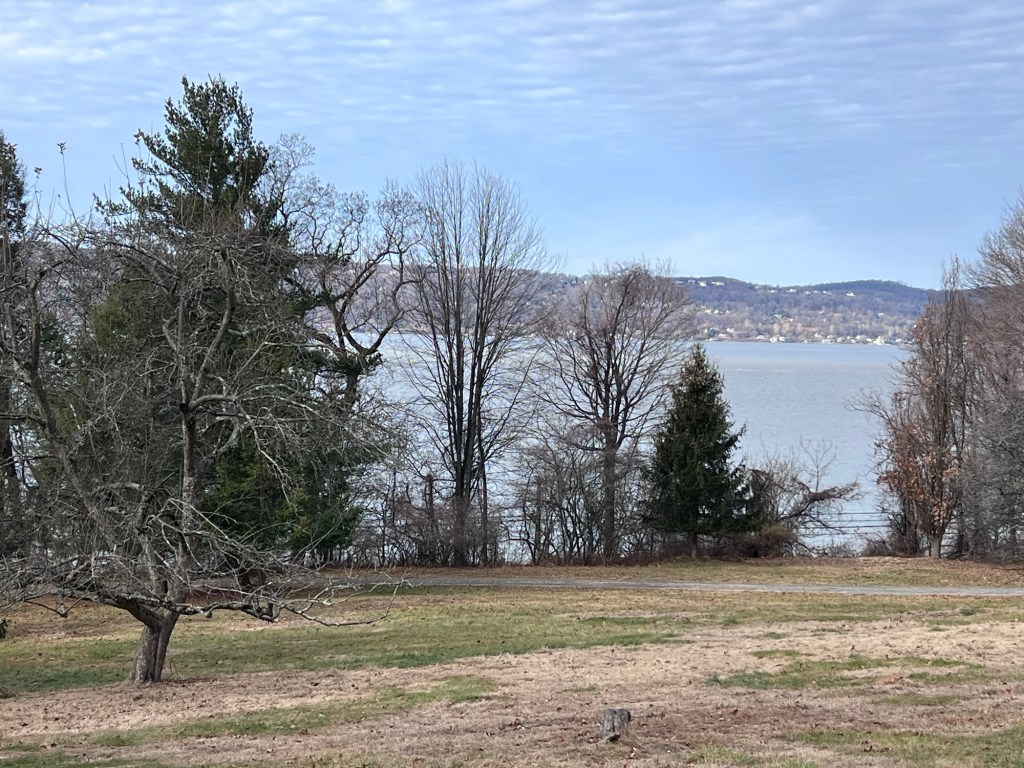
The view of the river is one of the most spectacular in the Hudson River Valley as its at the widest part of the Hudson River. You can see the cliffs of New Jersey on the other side with views of Nyack and the Tappan Zee Bridge in the background.

The grounds of Sunnyside

The grounds of Sunnyside

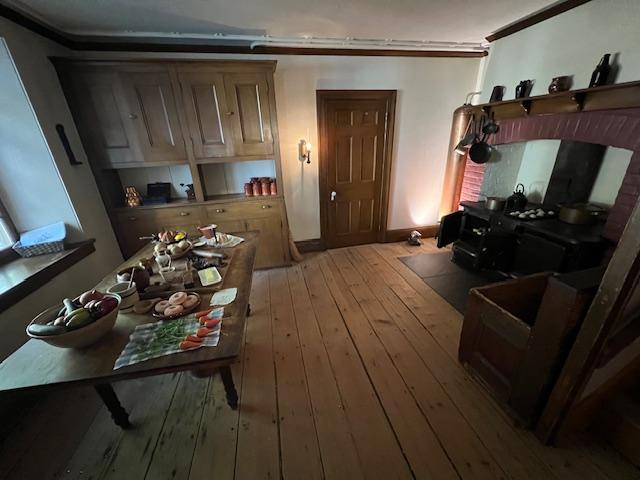
During the Fall season there are all sorts of activities going on at the estate and the tours are a very interesting look at life at that time. The Kitchen staff ran the home for social calls and main family meals as well as all the things it took to run the household.

The Sunnyside Kitchen

The kitchen and pantry area

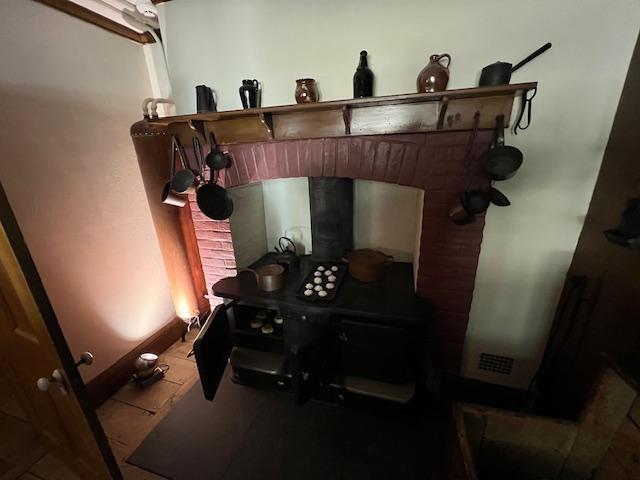
The stove in the kitchen

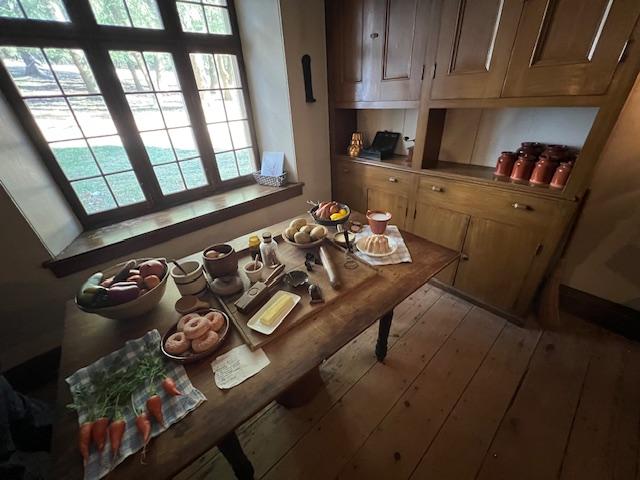
The delicious items that were prepared in the Country kitchen

The sink area of the kitchen

The Cooks Kitchen

The Pantry

The Linen Room

The Sewing Room for the family

The History of Sunnyside:

The estate was once the home of Wolfert Acker called Wolfert’s Roost and was part of the Manor of Philipsburg and this home was once a simple two room stone tenant farmhouse built around 1690.

The patio view from the back of the house

The property came into the hands of the Van Tassel family, who were married into the Eckert family and owned it until 1802. That year, 150 acres were deeded to the family of Benson Ferris, one time clerk of the Old Dutch Church of Sleepy Hollow, whose wife, Maria Acker, was a descendant of Wolfert Acker’s.

The grounds of Sunnyside

In 1832, Washington Irving visited his nephew, Oscar Irving, who lived near the old stone farmhouse and was looking for a home at the time. He purchased the property on June 7, 1835 and would add to the property.

The view of the house of the Hudson River

Irving wrote a story, “Wolfert’s Roost”, about Acker and the site. In a letter to his brother Peter, he described it as “a beautiful spot, capable of being made a little paradise…I have had an architect up there and shall build upon the old mansion this summer. My idea is to make a little nookery somewhat in the Dutch style, quaint but unpretending. It will be of stone.” He asked his neighbor to help him remodel the house and landscape the grounds in Romantic style adding a brook and waterfall.

The grounds of Sunnyside

The house became a major spot of people visiting the area to meet the author. In 1842, he was appointed to be the Ambassador of Spain and left the estate in the care of his brother and four daughters. He returned in 1846 and added to the home the ‘Spanish Tower” in 1847. This added four more bedrooms to the home.

The Smokehouse

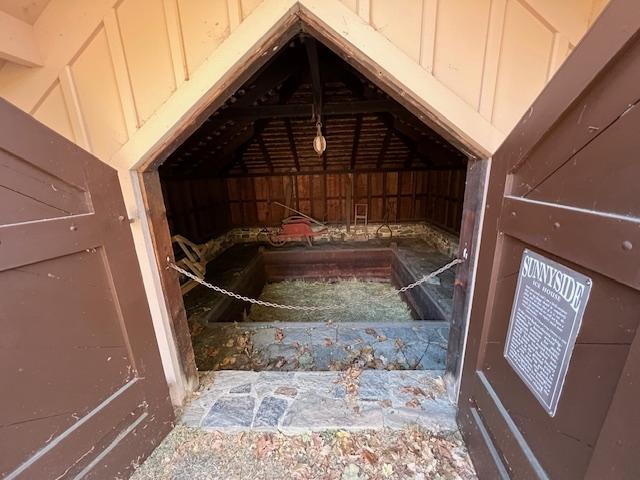
The Ice House at Sunnyside

The Ice House

The Fruit Cellar

Irving died in the house in 1859 of a heart attack at age 76.

The house was purchased from Louis Irving by John D. Rockefeller Jr. and was restored for historic preservation. It was opened to the public in 1947.

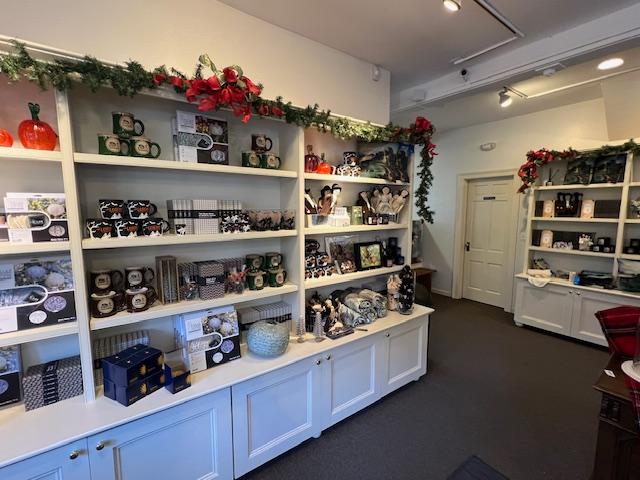
The grounds has a very nice gift shop

In 2025, I visited Sunnyside during the holidays to see what Christmas would have been like in the pre-Civil War era. These were not the elaborate times of the Victorian era but still the life of an Upper Middle Class families who celebrated the spirit of the holiday.

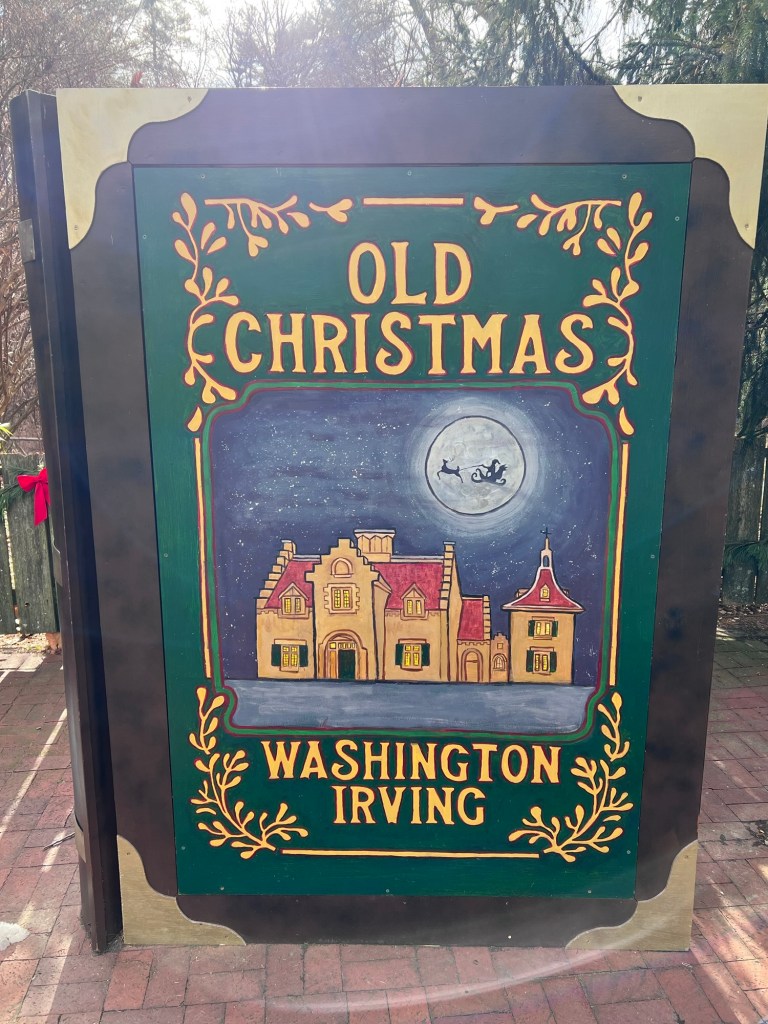
I visited the estate for a special Victorian event with refreshments, creating crafts and a special open tour of the home decorated for the Christmas holidays.

The property decorated during the holidays

The holiday events at the estate

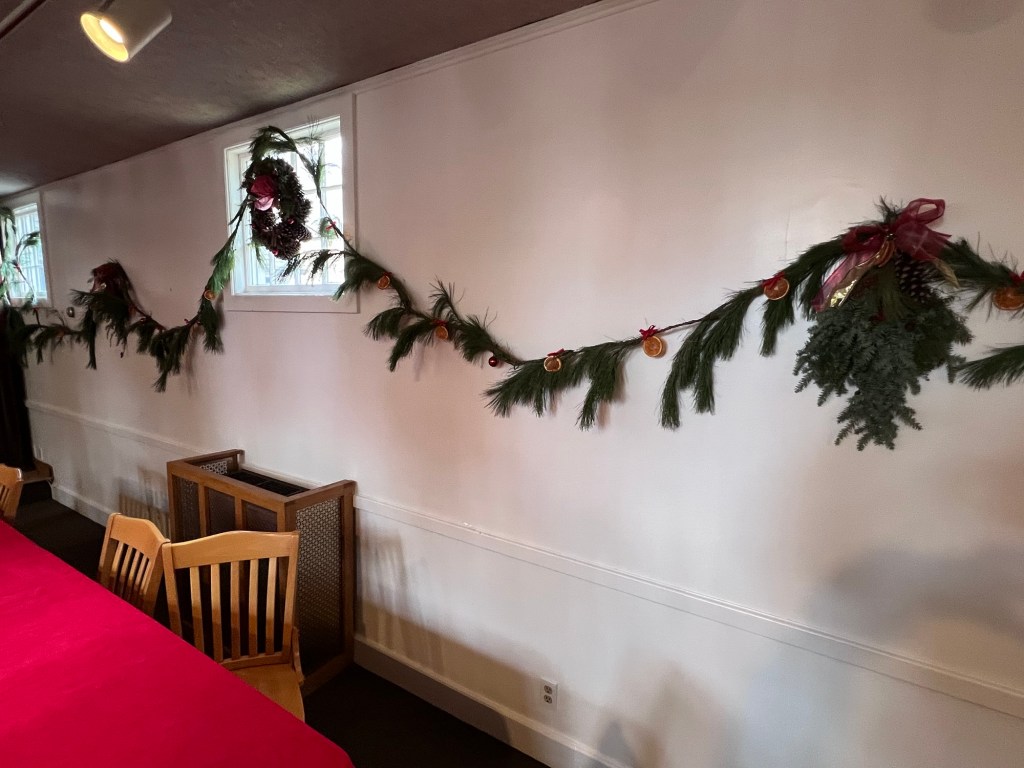
The meeting room was decorated for the holidays for refreshments and good conversation

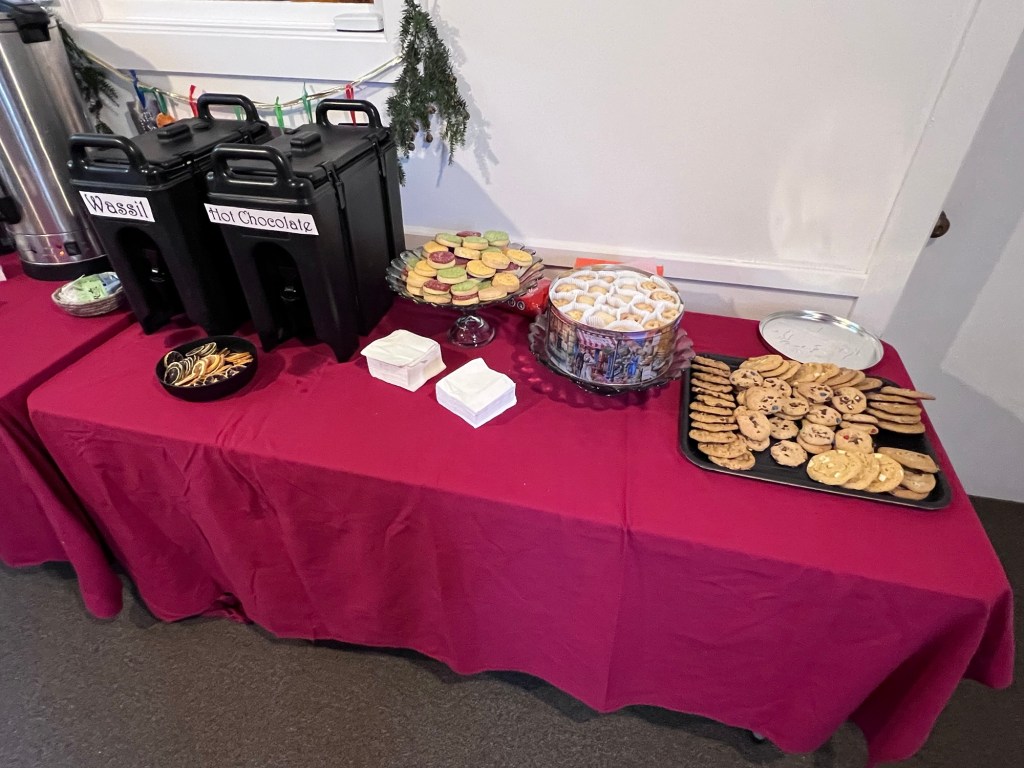
The refreshments at the Open House included cookies, candies, Hot Cider Wassil and Hot Chocolate and Tea

Sunnyside at Christmas time

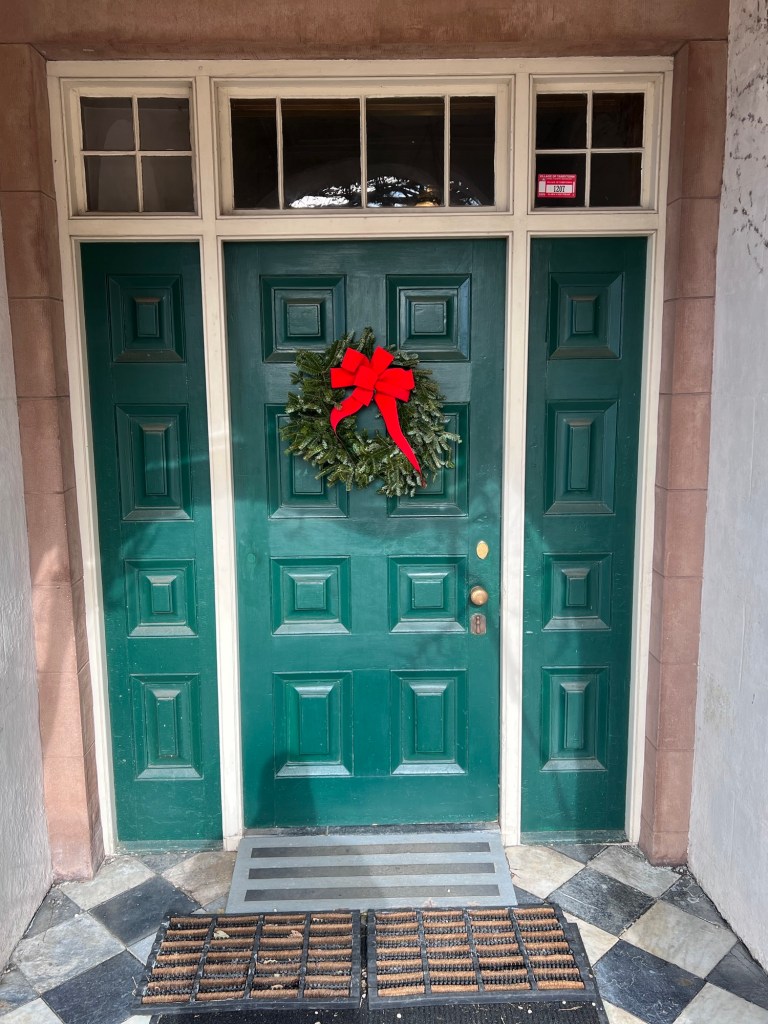
The Sunnyside front door at the holidays

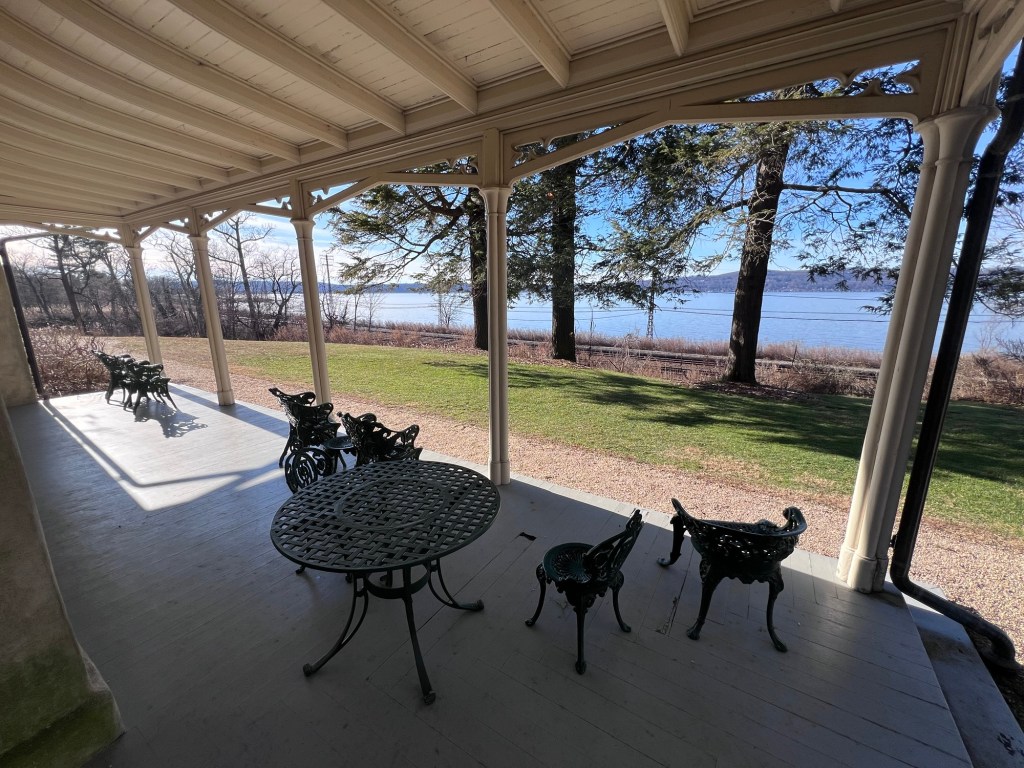
The beautiful view of the estate overlooking the Hudson River

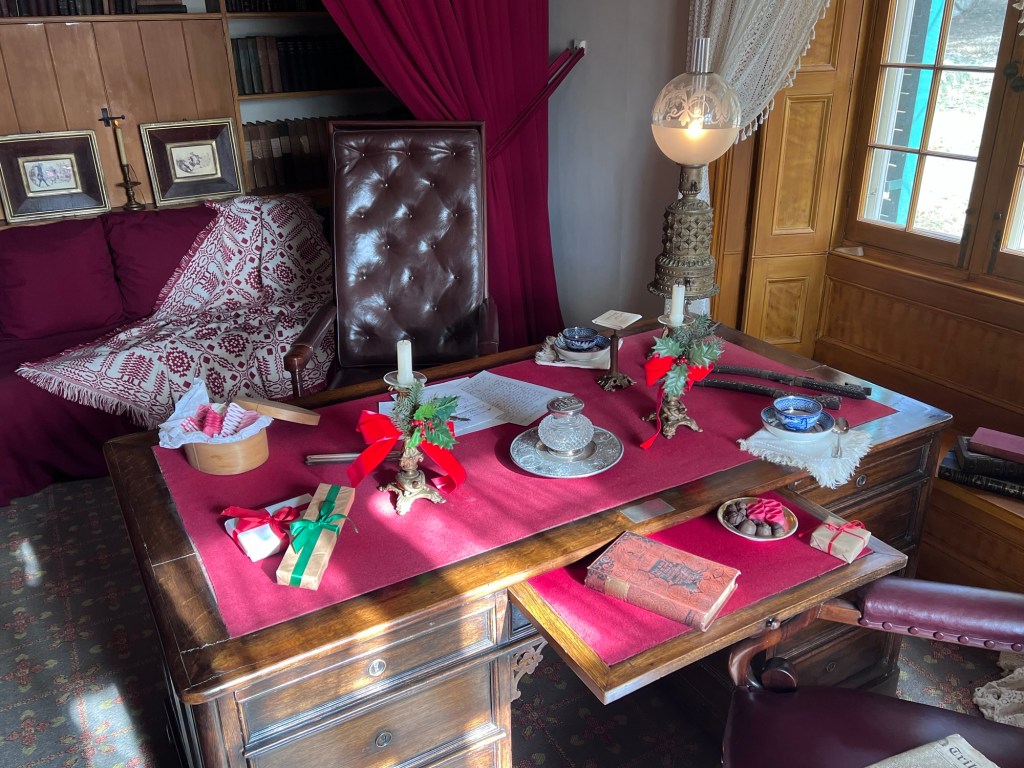
When you enter the house, the first room to the left is the office of Washington Irving. There was a bed in the room for last night work and the room decorated for the holidays.

Washington Irving’s office during the holidays

The fireplace in the author’s office

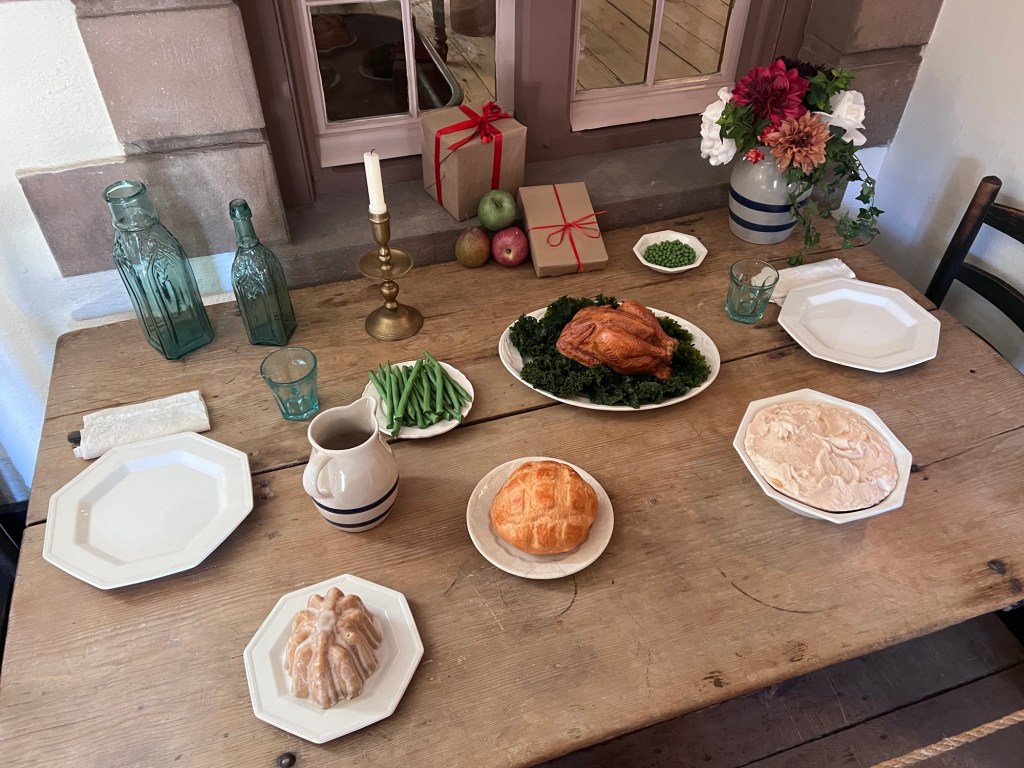
Nothing says entertaining than the dining room with a holiday lunch set with family china and all the delicacies of the time.

The Dining Room set for a holiday lunch

The Dining Room table set for Christmas lunch

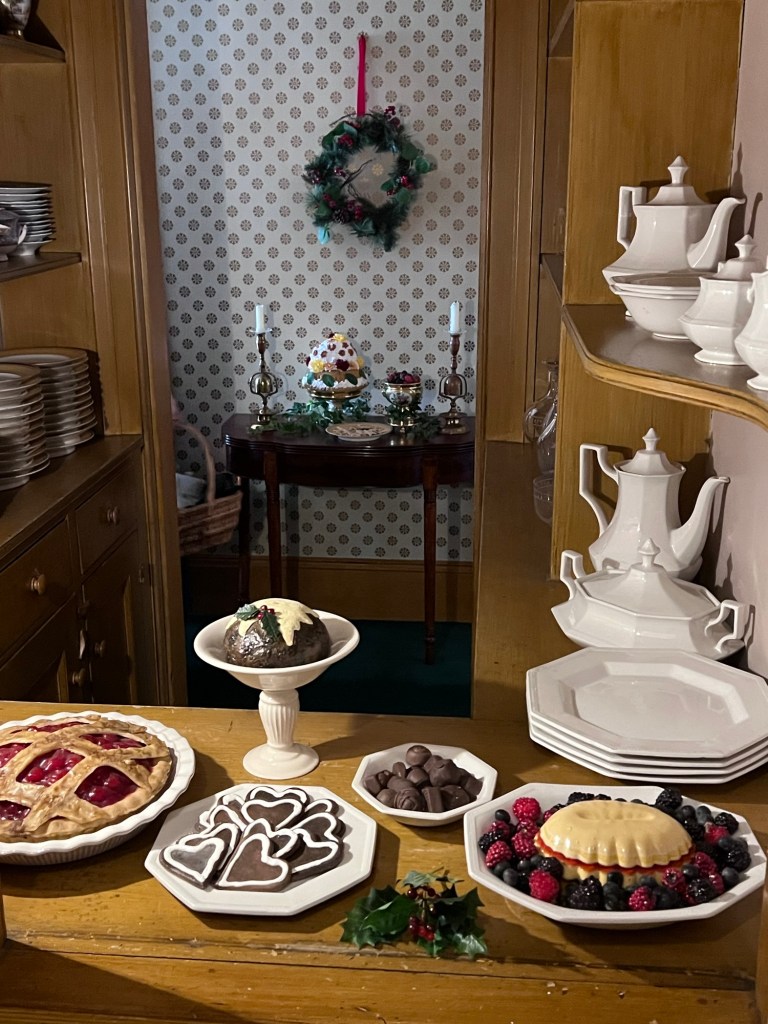
The Christmas desserts showcasing the Christmas pudding

The pantry set for Afternoon Tea

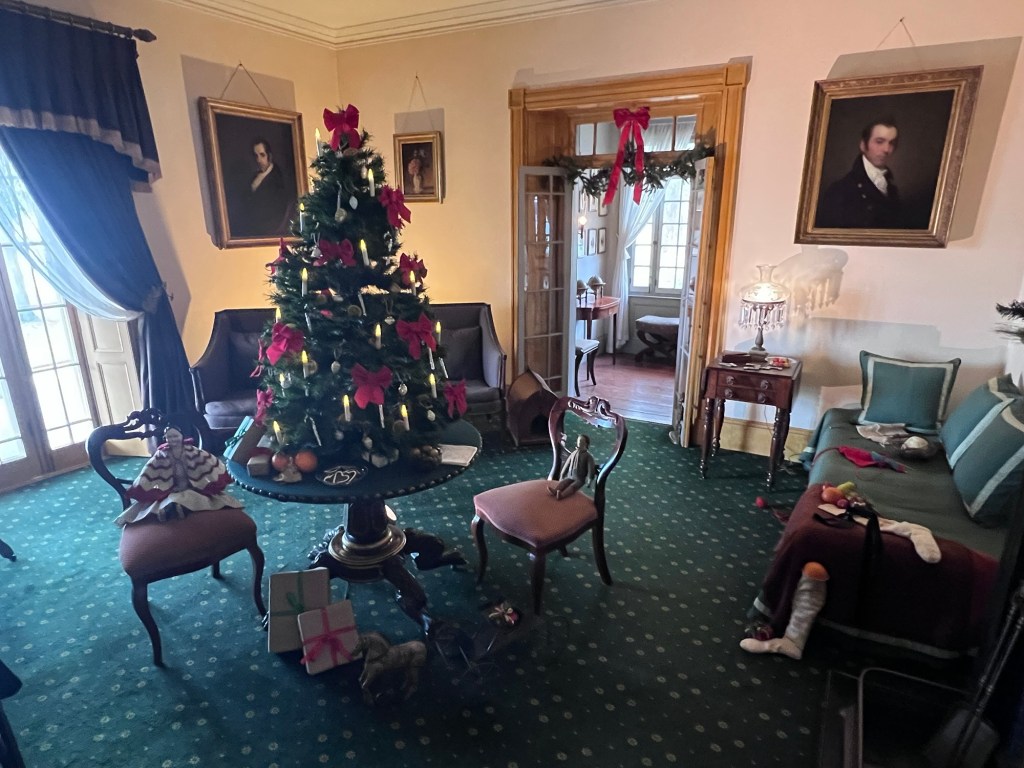
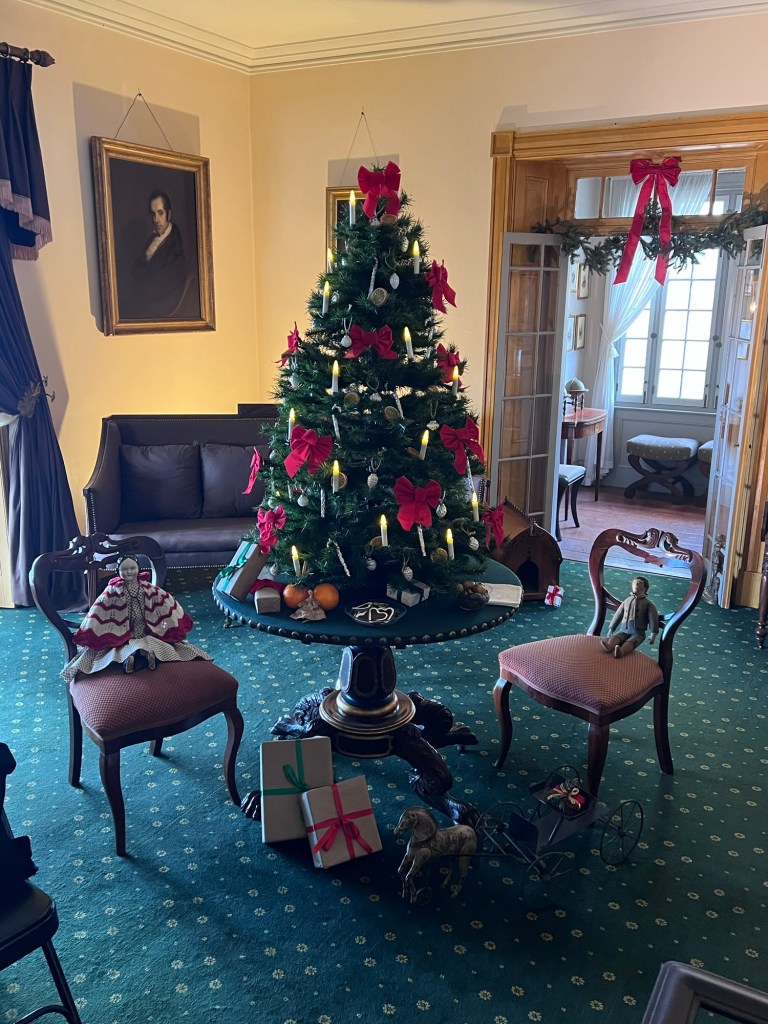
The Living Room decorated for the holidays with a Table tree, fashionable for the times.

The Table tree in the Living Room

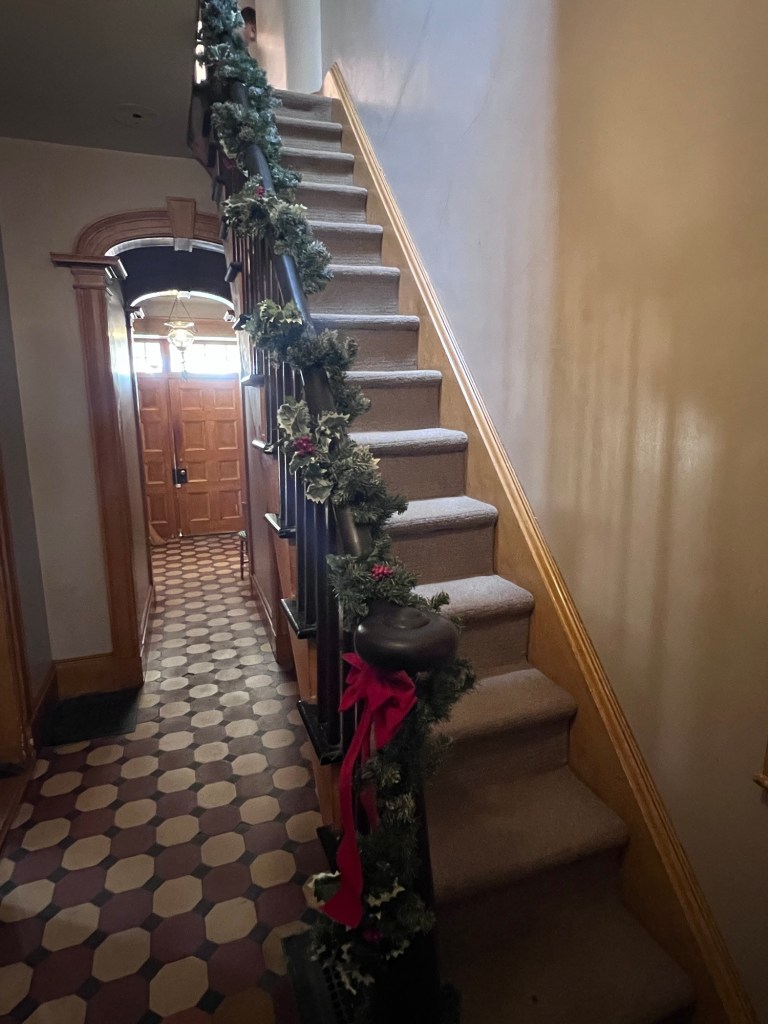
The hallway and stairs decorated for the holidays

The French inspired bedroom

The Children’s room of a visiting niece

Washington Irving’s bedroom

The niece’s bedroom of those that lived with him

My last part of the tour led to the behind the scenes of how the household runs with the kitchen, washrooms and sewing room.

The Christmas dinner being prepared for the family

The delicious foods prepared for the family meals including cookies, pies and a favorite treat, doughnuts

The kitchen stove where all the family meals were cooked

The house kitchen is decorated for the holidays

The staff holiday dinner was less elaborate but still very festive

The patio off the kitchen overlooking the Hudson River

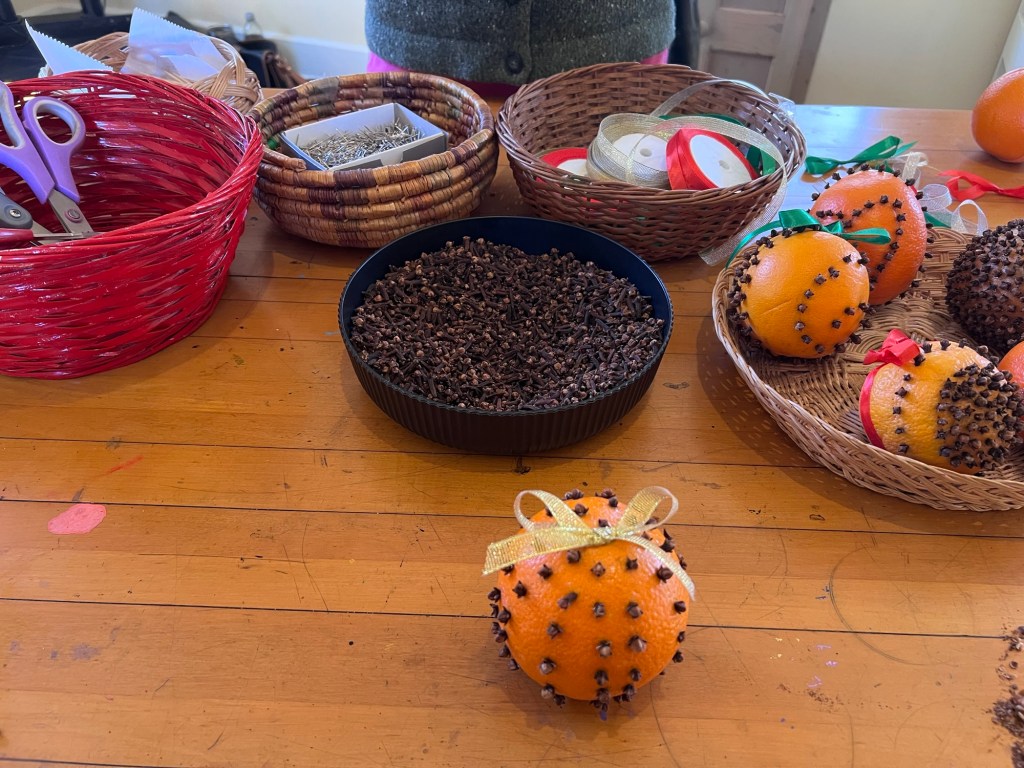
After the tour was over, I joined other guests making crafts such as Christmas crackers, creating ornaments and making pumices, the oranges studded with clovers.

The festive barn where crafts were created

Me making my pumice for the holidays

Visiting Sunnyside during the holidays is a special trip to the past to join the Irving family in their celebration. Not as elaborate as some of the Victorian mansions of the Hudson River Valley but a look at a family whose celebration was similar to our own. Their traditions are the basis of our own of food, family and fun.
Van Cortlandt Manor                                                                  5 Riverside Avenue                                                           Croton-on-the-Hudson, NY 10502

Van Cortlandt Manor 5 Riverside Avenue Croton-on-the-Hudson, NY 10502

Van Cortandt Manor

5 Riverside Avenue

Croton-on-the-Hudson, NY  10502

(914) 366-6900

Open: See website for seasonal hours

My review on TripAdvisor (Manor and Pumpkin Blaze):

https://www.tripadvisor.com/Attraction_Review-g47560-d116391-Reviews-Van_Cortlandt_Manor-Croton_on_Hudson_New_York.html?m=19905

A trip to the Van Cortlandt Manor in Croton-on-the-Hudson is an interesting step back into the Colonial history of this country. During the summer, there is an interesting walking tour of the home offered usually from the end of July to Labor Day. Then the house is closed to prepare for the huge ‘Pumpkin Blaze’ during the months of October and November and then the house is shut down until the spring.
The house tour is interesting because it shows the home as a working farm and place of commerce for the family. This was not a weekend home for the family working in the City but crops being grown for shipping, vibrant gardens that supplied the house and a small tavern for travelers along the Albany Post Road as well as a place for shipping goods down the rivers.

van-cortlandt-manor-1.jpg

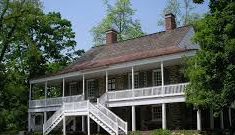
Van Cortlandt Manor

The home is furnished in the most modern furnishings of the time and you can see how the house reflected the needs of the family at that time. It was more of a home than a luxurious place to entertain. The furnishes are practical, very in fashion of the time and nicely decorated.
van-cortlandt-manor-ii.jpg

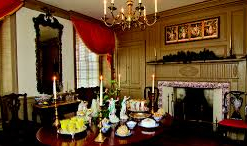
The Dining Room

The tour of the kitchens and storage areas show that even in what was the modern era was not such easy living without servants. The estate was somewhat self-contained with animals and provisions being raised on the land and there is even an area where fabric such as flax and cotton where spun and made into clothing.

Van Cortlandt Manor III.jpg

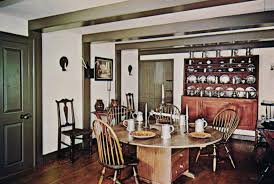
The kitchen dining area

The upstairs bedrooms show that the linens were under lock and key even with the servants and that the rooms were well-appointed and comfortable. A lot of the family heirlooms still reside in the house and it gives you a perfect look at what life must have been like when the family lived here.

Don’t miss the gardens as well. Some have been over-grown because of the lack of volunteers but still you can see the beauty of the flowers and trees around the house. The house sits right on the cross between the Croton and Hudson rivers and even though it is now grown in, you can see that the house stood at one of the busiest sections of Upstate commerce.

The Pumpkin Blaze-Hudson Valley Historical Association:

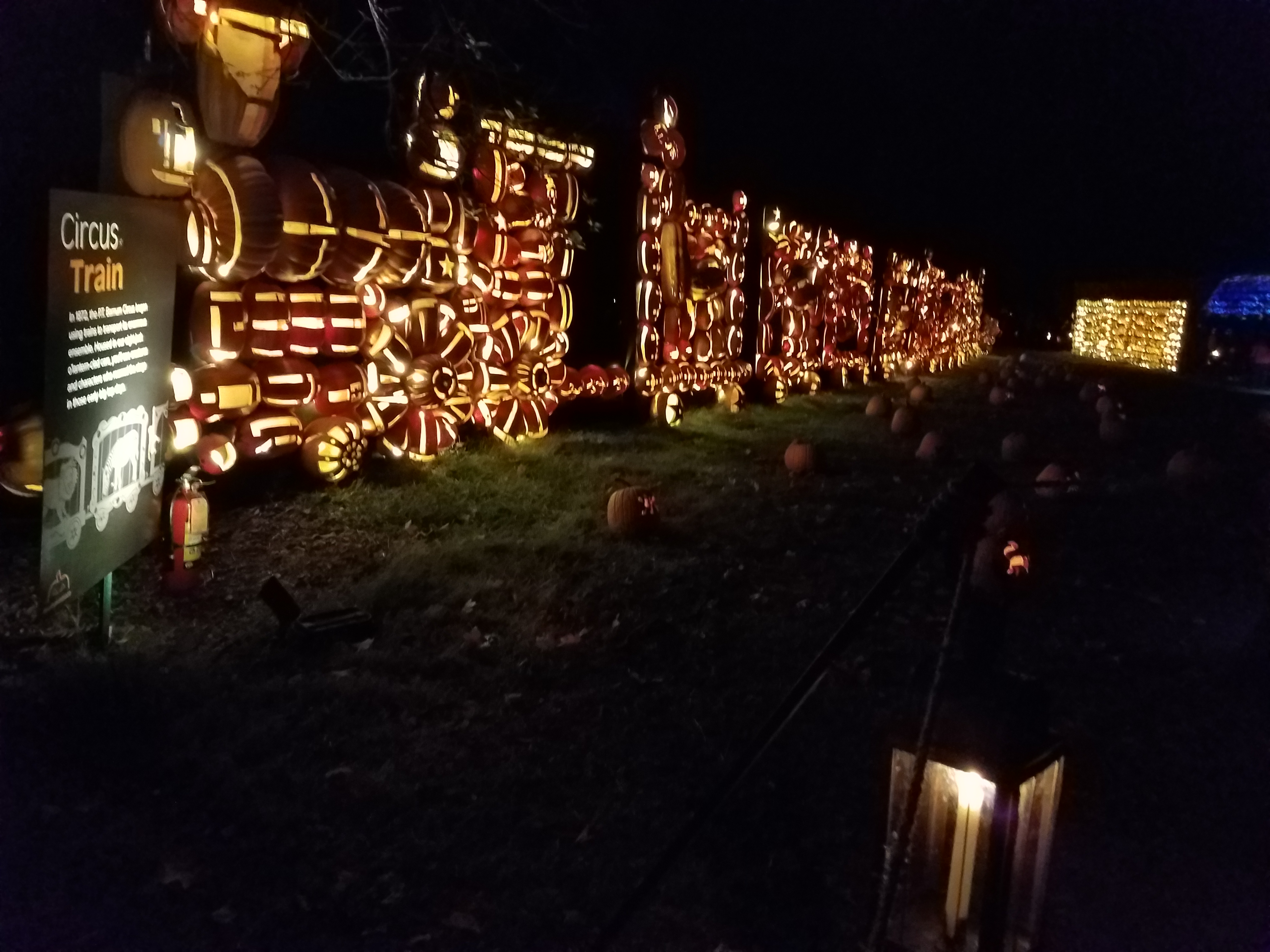
During the months of Halloween, there are thousands of pumpkins that line the walks and beautiful displays to see along the paths of the estate and the river. This event is sponsored by the Hudson Valley Historical Association and is one of their biggest fundraisers. Don’t miss this annual event every fall.

The Blaze is amazing!

The Pumpkin Blaze in 2019:

371.jpg

Some pictures from the MoMA Pumpkin Museum:

368

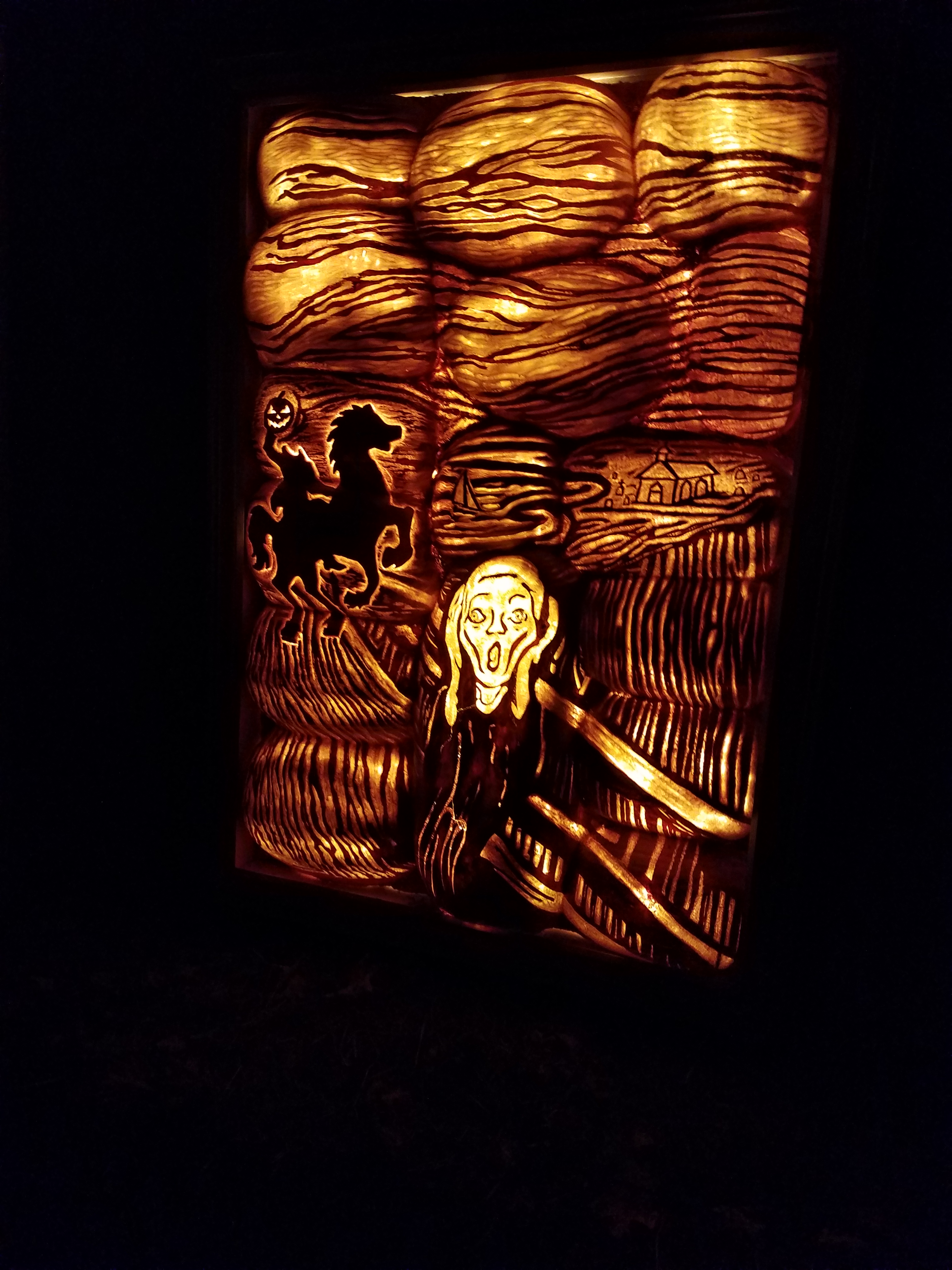
Their version of “The Scream”:

366
393

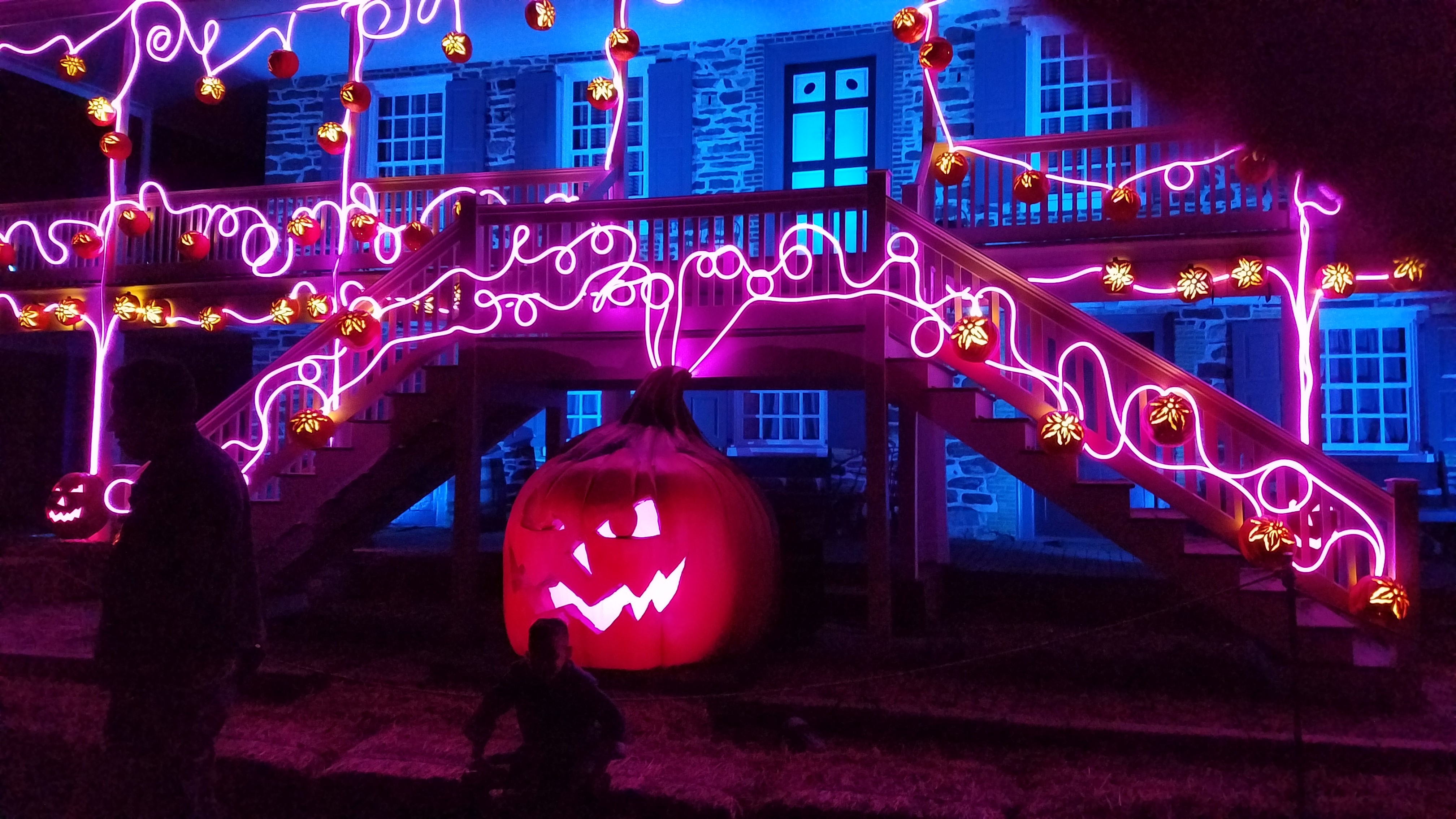
The Van Cortlandt Manor ablaze with lights and sounds

406

Justin Watrel at the Pumpkin Blaze

412

My Aunt and I at the Pumpkin Blaze in 2019

The Pumpkin Blaze in 2022:

Entering the Pumpkin Blaze in 2022

Pumpkins greeting you in all shapes and sizes

The Pumpkin Planetarium at the Pumpkin Blaze

Pumpkin Bee Hive

The “Terror Zee Bridge” at the Pumpkin Blaze

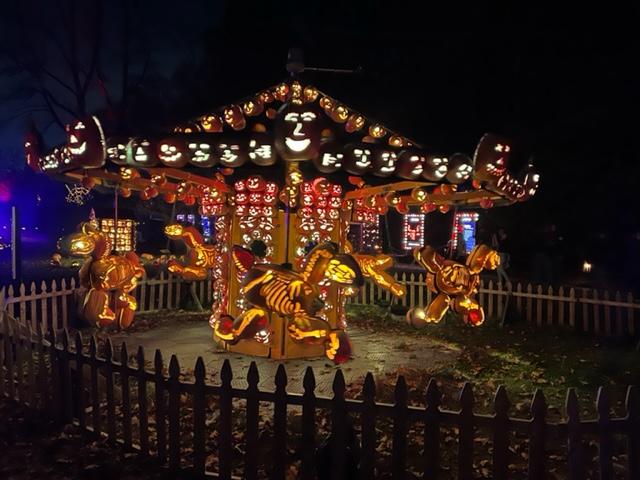
The Pumpkin Carousel

The Pumpkin Fire Services

The Headless Horseman is the theme of many October festivals in the Hudson River Valley

The History of the Van Cortlandt Manor:

By Royal Charter, Van Cortlandt Manor was originally a 86,000 acre tract granted as a patent to Stephanus Van Cortlandt in 1697 by King William III, stretching from the Hudson River on the west to the first boundary line between the Province of New York and the Colony of Connecticut, on the east, twenty English miles in length by ten miles in width in shape nearly a rectangular parallelogram forming, “The Manor of Cortlandt”.

The massive holding was acquired by direct purchase from the Indians, in part by Stephanus van Cortlandt, a native born Dutch gentleman of New York and in part by others whose titles he subsequently bought, this tract together with a small tract on the west side of the Hudson River opposite the promontory of Anthony’s Nose, which he also purchased from the Indians.

The Manor House was built sometime before 1732 but was not any owner’s principal residence until a grandson, Pierre Van Cortlandt, moved there in 1749. At the time the manor house was on a 1000 acre portion of the original tract.

Pierre brought his family to the estate in 1749 and established the manor into it most vibrant days, according to some. During this period, the manor was operating an apple orchard, dairy farm, a bee house, a kiln, a tavern and a carpenter and blacksmith shops. Van Cortlandt Manor was a self-sustaining community while Pierre and his family resided in the estate. At this time, tensions leading to the Revolutionary War were building and the manor would become a place of wartime retreat.

Pierre sided with the colonies and the manor was used to assist the Continental Army, using its resources to make food and supplies. Pierre was involved with military legislature and his son Philip was a soldier for the Continental Army. Eventually Pierre and his family vacated the manor in the thick of war. The manor was ransacked by the British Army and left in poor standing. Philip, becoming a brigadier general by the war’s end, returned and along with his sister, Catherine, brought the manor back to working order.

Van Cortlandt Manor became an essential stop on the route from New York to Albany in the years that followed the war. The mills were once again thriving and provided the community and travelers with food, supplies and lodging. Pierre and his wife did not return until 1803 once the manor was in full working order again. The manor was passed down in the family until it was sold to a non-relative, Otis Taylor in 1945. By this time, the property had lost its luster and was not the flourishing estate it had once been.

In 1953, John D. Rockefeller Jr. purchased the property and began restoring the manor to previous prominence. In 1961, Van Cortlandt Manor became registered as a National Historic Landmark.

Disclaimer: This information on the history of the house was provided by Wiki and I give them full credit on the information.

Places to Eat:

Located in the ShopRite Mall next to the Blaze:

The food at New Happy Garden in the Shoprite Mall is excellent and you can sit down in the restaurant. It is the perfect place for lunch or dinner before or after the Blaze. Their Lo Mein and General Tso’s Chicken are excellent. Please read my reviews on TripAdvisor.

New Happy Garden

440 South River Side Avenue

Croton on the Hudson, NY  10520

(914) 271-7888/8268

https://www.menupix.com/westchester/restaurants/3212099/Dong-Happy-Garden-Menu-Croton-On-Hudson-NY

Open: Sunday 12:00pm-9:00pm/Monday Closed/Tuesday-Saturday 11:00am-10:00pm

My review on TripAdvisor:

https://www.tripadvisor.com/Restaurant_Review-g47560-d4616434-Reviews-Dong_Happy_Garden-Croton_on_Hudson_New_York.html?m=19905

Historic Huguenot Street                                       81 Huguenot Street                                            New Paltz, NY 12561

Historic Huguenot Street 81 Huguenot Street New Paltz, NY 12561

Historic Huguenot Street

81 Huguenot Street

New Paltz, NY  12561

(845) 255-1889

http://www.huguenotstreet.org

info@huguenotstreet.org

My review on TripAdvisor:

https://www.tripadvisor.com/Attraction_Review-g48245-d288641-Reviews-Historic_Huguenot_Street-New_Paltz_New_York.html?m=19905

Plan your visit:

For current information on guided tours, group tour reservations, school groups, special events or accessibility, call (845) 255-1660 or visit http://www.huguenotstreet.org.

The history of Slavery in the area

App:

Our free Walking Tour mobile app features histories of the houses on the street with archival photos as well as photos of the house interiors and the collection pieces within. Mobile users can download the app on both the App Store and Google Play.

The entrance to the site

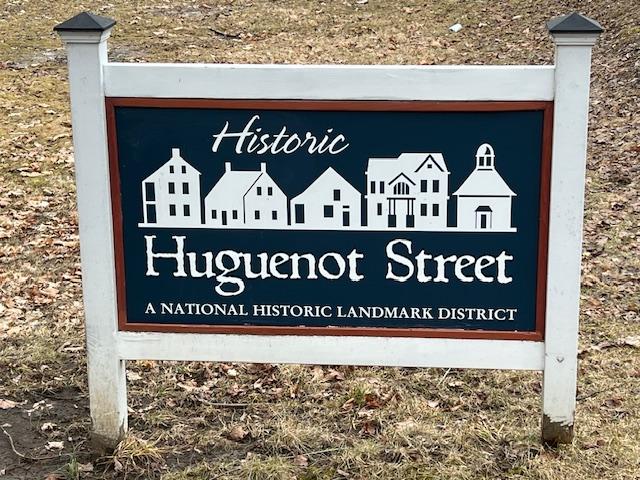
The historic sign at the entrance

History of the site:

At our 10 acre National Historic Landmark District, visitors experience more than 300 years of history through the lens of a French Huguenot community as it evolved over time. Guided tours begin with an introduction to the pre-colonial Munsee Esopus landscape dating back 7000 years and the religion, culture and architecture of New Paltz’s earliest European settlers and enslaved Africans. The experience continues as guests visit fully furnished houses reflecting unique human narratives and changing tastes across the Colonial and Federal periods, through the Gilded Age and into the early 20th century.

(Promotional Materials)

I visited Historic Huguenot Street one afternoon after visiting here about five years earlier during the holidays. The houses are easy to tour and the street is blocked so that you can walk amongst the houses.  There are tours every half hour when the site is open. Here you can tour inside the houses instead of just the grounds. On a nice day, it is interesting to look over the architecture of the homes.

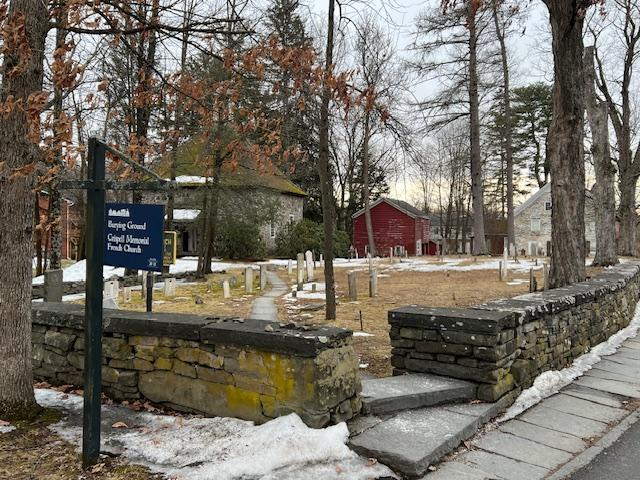
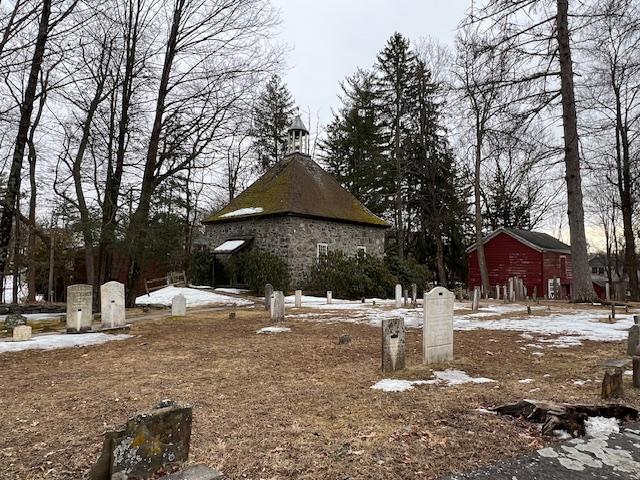
Make sure that you take time to look at the historical cemetery by the church at the end of the block. Some of the original settlers are buried here. It is also nice to tour around the Waykill River.

Take the extra time to visit the gift shop and see the information video on the site and look over the literature of the site.

The area has a pretty interesting history.

The map of the site

History of the Huguenot Street Historic District:

The site is owned and operated by Historic Huguenot Street (HHS), which was founded in 1894. In 1899, Historic Huguenot Street purchased the Jean Hasbrouck House as the first house museum on the street. In the 1950’s and 60’s, the organization and related family associations purchased most of the remaining stone houses in the district and subsequently opened them as museums. These acquisitions were funded in large part by descendants of the original Huguenot founders. Their family associations play a key role in supporting the institution today.

The Individual Houses:

Bevier-Elting House:

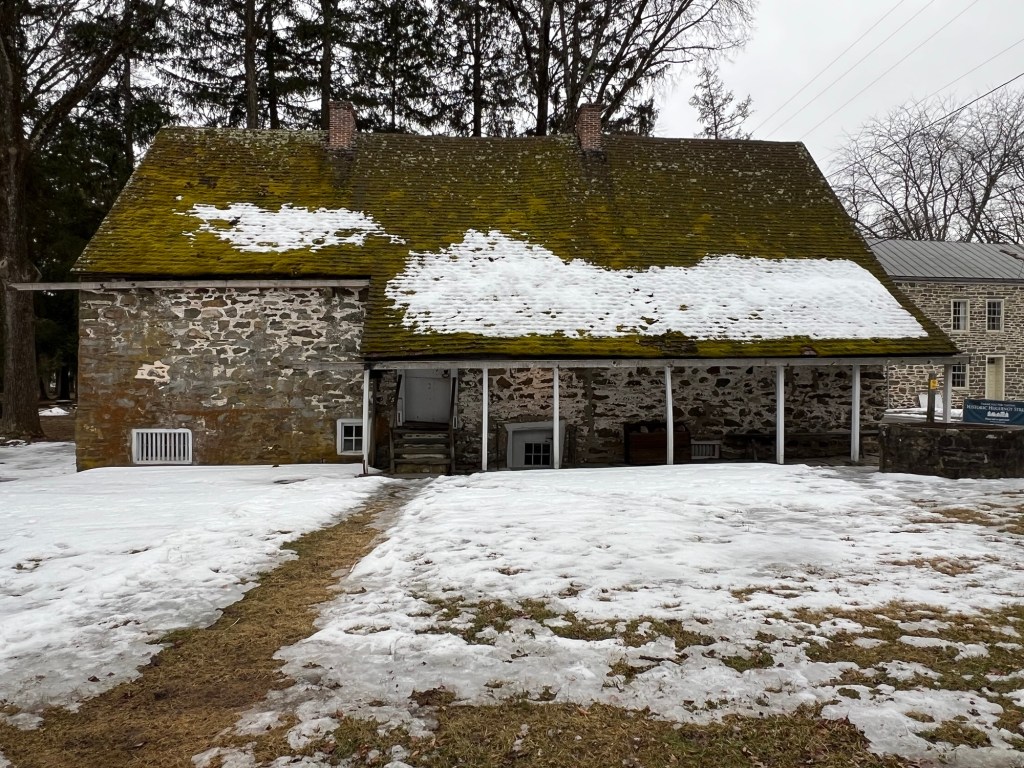
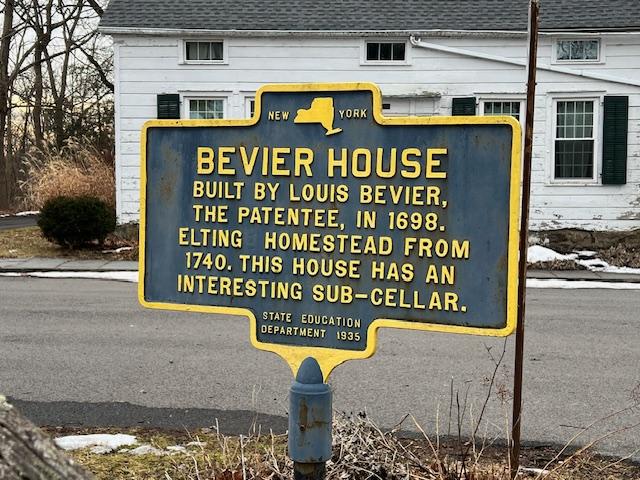
Dating to the early 18th century, the house was originally a one room building built with the narrow or gable end facing the street-then the prevailing style of the low countries of Northern Europe. Two expansions were built later as was a small cellar that was used to house African slaves. The house was built by the Beiver family, one of the founding families and subsequently sold to the Dutch Elting family.

The Historic Marker

Abraham Hasbrouck House:

https://www.huguenotstreet.org/hasbrouck

The Abraham Hasbrouck House

The Hasbrouck House at Christmas

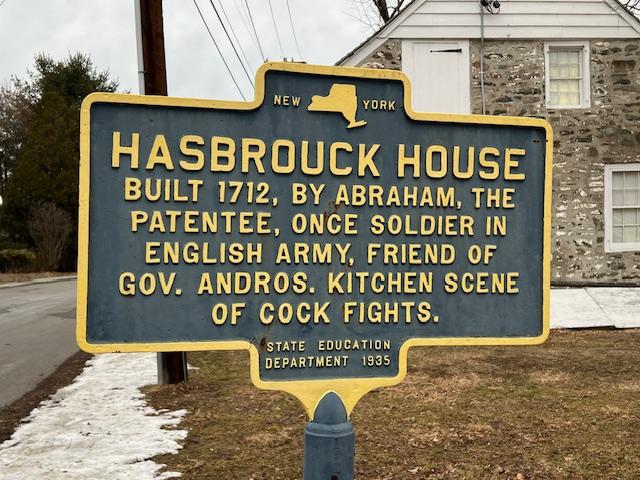
The structure as the Abraham Hasbrouck House was built in three phases in the 1720’s and 30’s. The first of the house-the center room-was constructed in 1721 by Daniel Hasbrouck, the son of Abraham Hasbrouck the patentee. The date 1721 is based on recent dendrochronology, which is a process by which wooden structural members are dated. This house represents a New World innovation in Dutch-style architecture. The initial houses in the Dutch region of New York, such as New Amsterdam, Albany and Kingston were built in the tradition of Dutch cities with the gable-ends to the street, which conserves street frontage. The basic structure of the house consists of a series of H-bents which spread the weight of the house across the entire expanse. The original one room house exhibited several defining elements of Dutch architecture, the jambless fireplace being the principal and most recognized feature in the house. Recently re-opened to the public in July 2012 following a restoration and reinterpretation focusing on the life of Widow Wyntje.

The Abraham Hasbrouck House Historic Marker

Jean Hasbrouck House:

https://en.wikipedia.org/wiki/Jean_Hasbrouck_House

The Jean Hasbrouck House

The Jean Hasbrouck House at Christmas time

Also built in 1721 by Jean’s son Jacob (and perhaps incorporating elements of an early home built by New Paltz founder Jean Hasbrouck), this home is an excellent example of Hudson Valley Dutch architecture and the showpiece of Historic Huguenot Street. A National Historic Landmark in its own right, it boasts the only remaining original jambless fireplace of any of the Huguenot Street houses and is one of the few surviving examples in what was formerly the New Netherland.

In 2006, the north wall of the house was carefully dismantled, repaired and reconstructed. Reproduction Dutch-style casement windows were installed. Interior restoration followed, resulting in a house that is an excellent example of how a comfortable family in the region lived in the mid-18th century.

Jean Hasbrouck House Historic Marker

DuBois Fort:

https://www.huguenotstreet.org/visitor-information

The DuBois House/Fort

The DuBois House at Christmas time

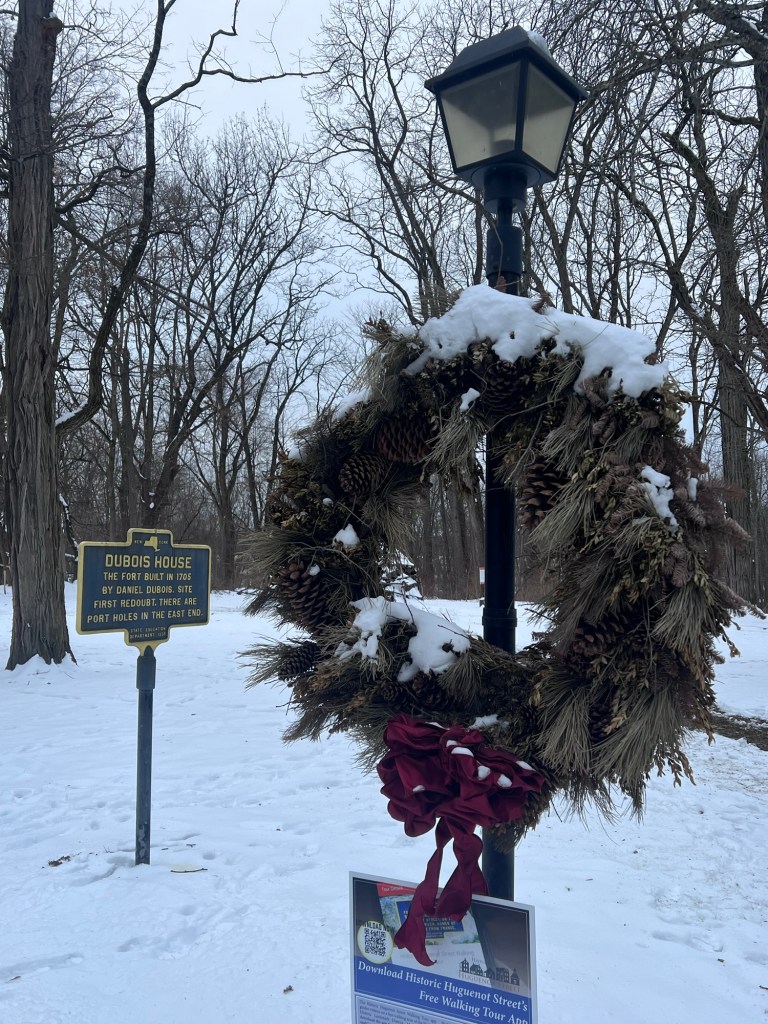
Built circa 1705 for the DuBois family, it might have served as a fortified place for the small community if needed. Originally a smaller 1 1/2 story structure, this building was expanded to its current size in the late 1830’s. Some historians and antiquarians believe that the presence of “gun ports” made it a fort but there is no evidence of the presence of any such portholes before the 19th century. The DuBois Fort currently serves as the orientation center and gift shop as well as a location for special events. Guest can purchase their admission tickets and memberships at this building. Over the last 300 years, it has also been used as a residence and a restaurant.

The DuBois House historic marker

Freer House:

https://www.huguenotstreet.org/freer

https://home.cc.umanitoba.ca/~sfreer/huguenot.html

The Freer House

The Freer House at Christmas time

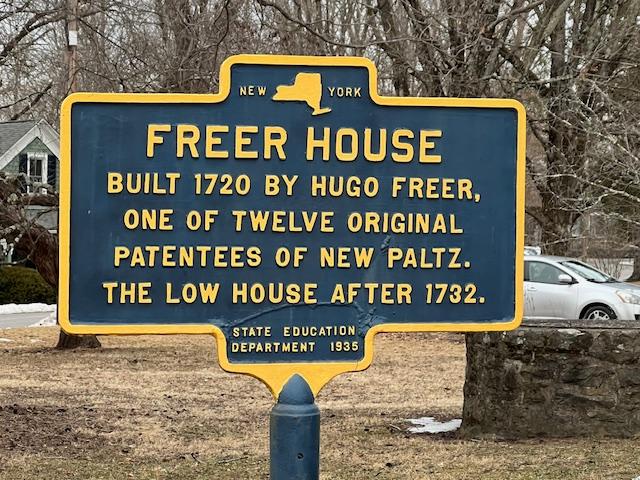
The Freer House is one of the six 18th century stone houses owned by Historic Huguenot Street. It was altered in various points in its approximately 250 years of occupancy with its most recent major alterations occurring in 1943 when it was purchased by Rev. John Wright Follette, a direct descendant of it s original builder, Hugo Freer. Over the years, the interior was modernized into a 20th century idea of a colonial home. This structure is not currently open to the public.

The Freer House Historic Marker

Deyo House:

https://www.huguenotstreet.org/deyo

https://cdm16694.contentdm.oclc.org/digital/collection/elting/id/375

The Deyo House

The original portion of the house was built around 1720 by Patentee Pierre Deyo. It began as a one room house was subsequently expanded to two rooms and ultimately to three when a stone addition was added off the rear by Pierre’s grandson Abraham. Circumstances for this house changed dramatically when at the height of the Colonial Revival movement, two descendants of Pierre Deyo, Abraham and Gertrude Brodhead, inherited the house.

The Deyo House at Christmas

Wanting to live on the street of their ancestors but also wanted a modern, gracious home that reflected their affluence, the Brodheads partially dismantled the original stone house and build a grand Queen Anne home around it in 1894. They also significantly changed their surrounding property in essence changing a small village farm into a handsomely appointed and landscaped mini estate.

The house passed out of Deyo family ownership in 1915. It was a private home until 1971, when it was purchased by the Deyo-Family Association and donated in order to be opened to be opened to the public as a house museum. The home was most recently restored in 2003 and features circa 1915 interiors.

The patentee Pierre Deyo died in 1700, so couldn’t have built the house in 1720 as stated. Per the plaque mounted outside the house it was built in 1692.

The Deyo House Historic marker

Crispell Memorial French Church:

https://www.huguenotstreet.org/crispell

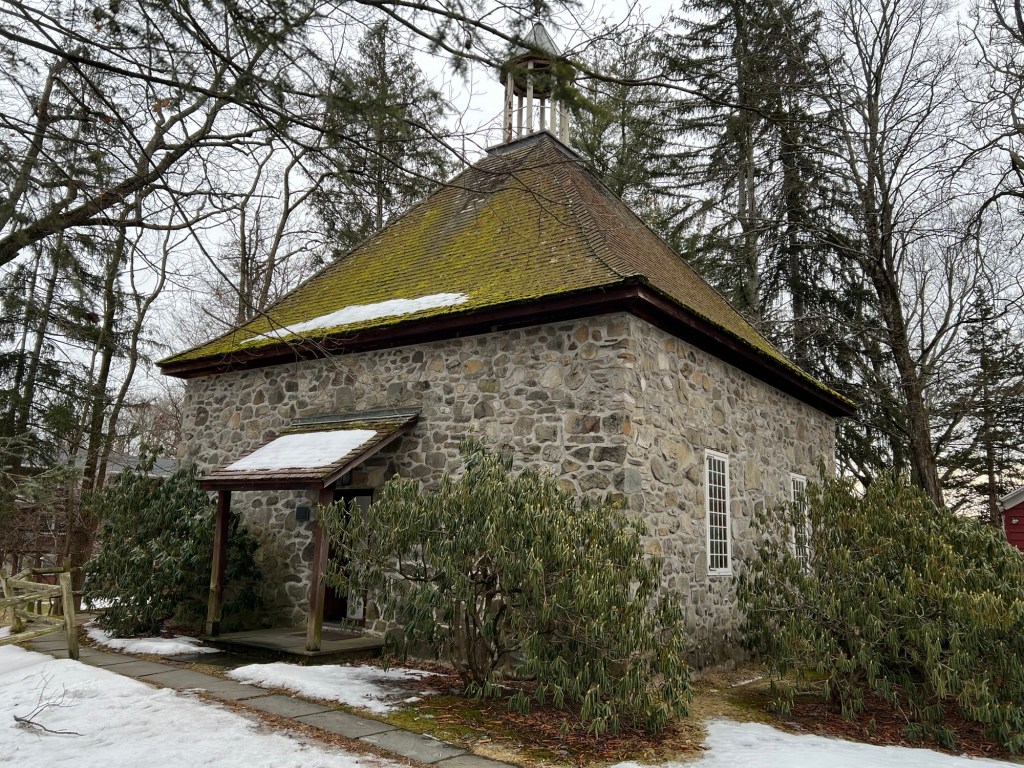
Since the community’s founding, there have been four sanctuaries built on what is today called Huguenot Street. The French-speaking Protestants who settled in New Paltz built their first church in 1683-a simple log building. This was replaced in 1717 with a straightforward, square stone building that reflected the permanence of the settlement. This existing building in the burying ground is a highly conjectural reconstructed of the 1717 building near its original location.

The Historic Walloon Church

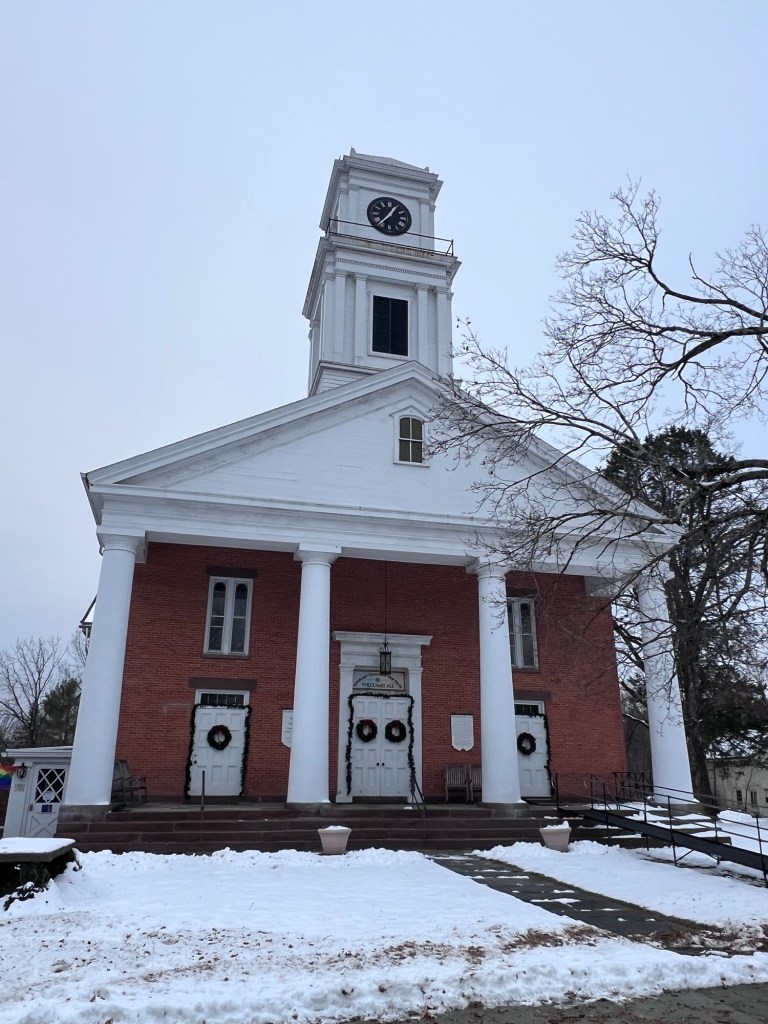
As the New Paltz community increased in size throughout the 18th century, a larger church became necessary. A second stone church was built down the street in 1772. When it became too small, it was demolished and replaced by a third church built in 1839. This church survives today and is home to an active Reformed congregation.

The Church and the graveyard

The reconstructed church is named in honor of Antoine Crispell, one of the twelve founders or patentees of New Paltz and a direct ancestor of Franklin Delano Roosevelt. It was built as the result of a fundraising campaign led by the Crispell Family Association. The Crispell Family Foundation opted to create this reconstruction church in their ancestor’s honor. It was completed in 1972.

The 1717 church was designed to reflect Reform thinking; the pulpit was placed in a central location and the pews were placed so that everyone could see and hear more equally. This expressed the concept that each person had a direct relationship with God, rather than one mediated through a church hierarchy.

LeFevre House:

https://www.huguenotstreet.org/lefevre

https://www.townofnewpaltz.org/historic-preservation-commission/news/the-josiah-p-lefevre-house-generations-of-history

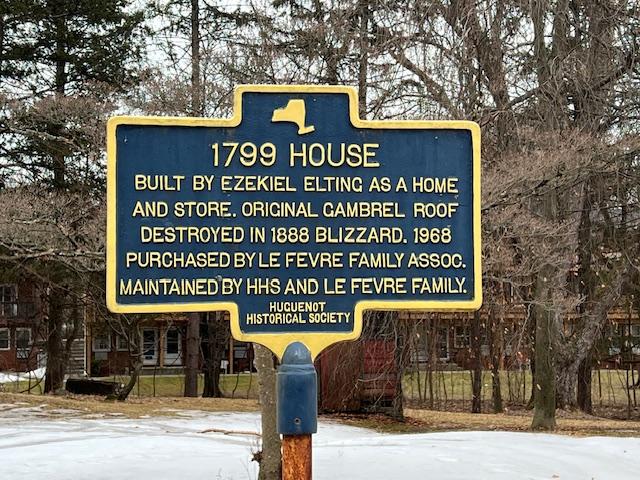
Built int 1799 by Ezekiel Elting, a prosperous merchant who was born in the Bevier-Elting House, this stone and brick building is quite different from the earlier stone houses on Huguenot Street. Its Georgian-style architecture reflects the transition of New Paltz from a French and Dutch settlement to an Anglo-American community and increasing refinement in architecture in this period as settlements matured. The house shows the changes in architectural style from the early 18th century. This house reflects the several changes in the society and home life of New Paltz in the early 19th century.

The Elting-LeFevre Historic Marker

Deyo Hall:

https://www.poughkeepsiejournal.com/story/news/local/2014/12/09/dateline-deyo-hall-history/20146611/

https://www.facebook.com/deyohall/

Deyo Hall

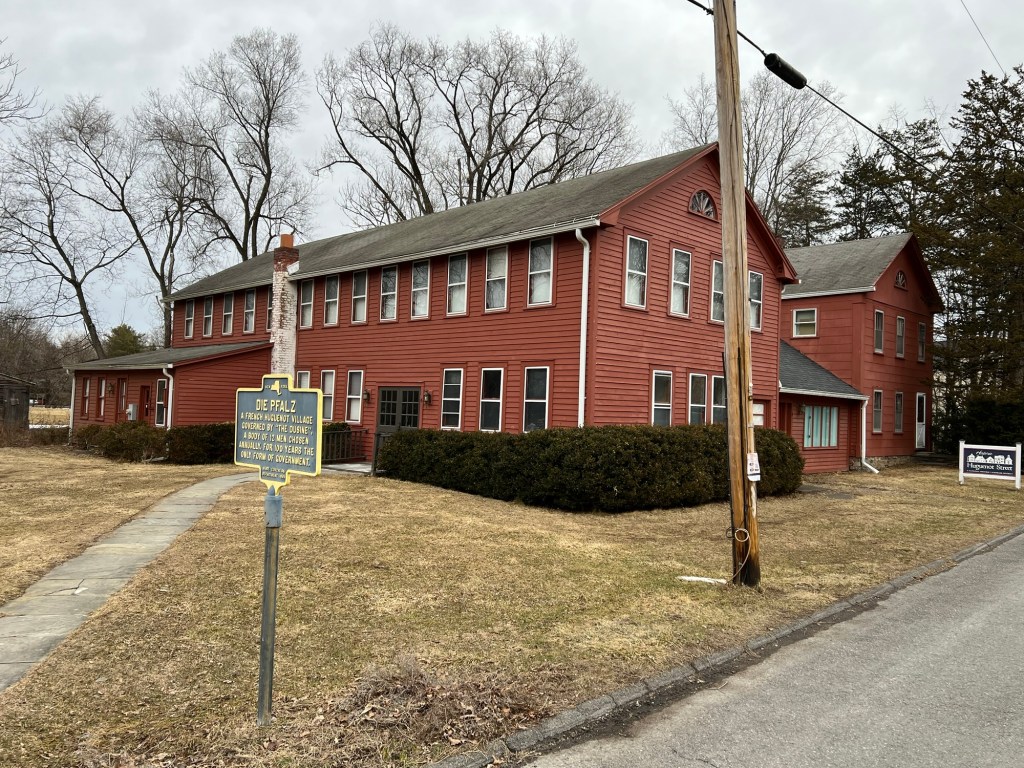
Formerly a glass factory, Deyo Hall is the site of event and meeting facilities and public restrooms. Collections storage is housed in this building.

The New Paltz Historic Market

Roosa House Library and Archives:

https://mapcarta.com/W304906815

Located in the Roosa House, the Library and Archives at Historic Huguenot Street is a research facility devoted primarily to the history and genealogy of the Huguenot and Dutch settlers of the Hudson Valley. It also functions as a general repository for local history, regardless of ethnicity or religious persuasion. The collections consist of family genealogies, church, cemetery and bible records, wills and deeds, census records, genealogical periodicals, county histories and publications relating to Huguenot ancestry. Genealogists, local historians and other interested parties can access the collections by appointment. The colorful paint replicates the original colors of the house in 1891.

Native American presence on Huguenot Street:

Historians and archaeologist have learned more about the continuing relations between the Esopus, the original inhabitants of the area and the Huguenots. Some results of research can be found at the HHS site at “Relations between the Huguenots of New Paltz, NY and the Esopus Indians (http://www.huguenotstreet.org/library_archives/exhibits_research/Indian_affairs.html). The “Before Hudson” exhibit, currently on view at the DuBois Fort Visitor Center, shows some of the highlights of archaeological excavation in our area with artifacts dating back 6,000-8,000 years ago.

Historic Huguenot Street III.jpg

Indian Wigwam

Christmas at Historic Huguenot Street:

https://www.huguenotstreet.org/holiday

Historic Huguenot Street Christmas

(This information from the homes is from Wiki

The Presbyterian Church during the Christmas season