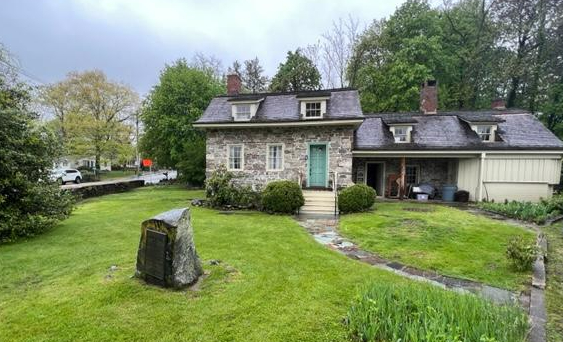
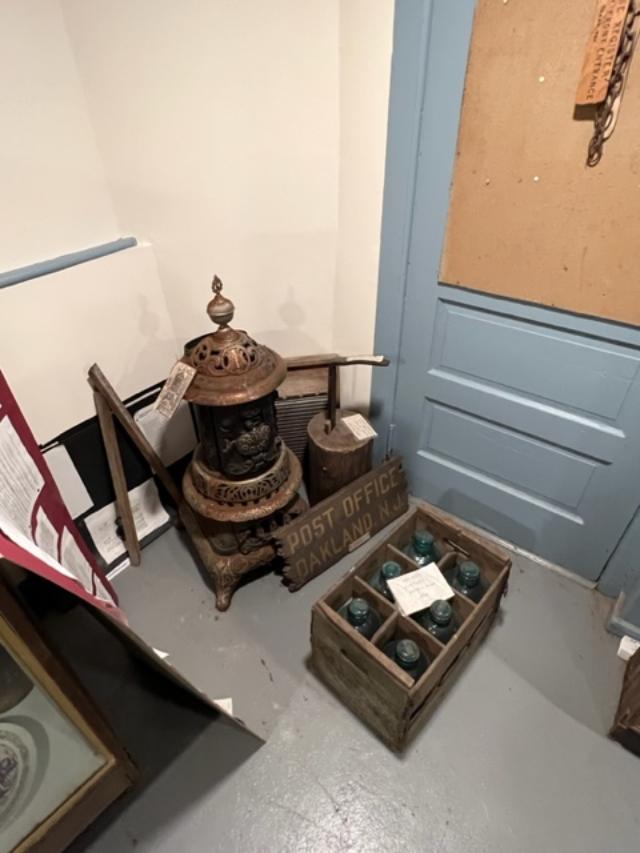
Tag: The Bergen 250-250th Anniversary of Bergen County NJ

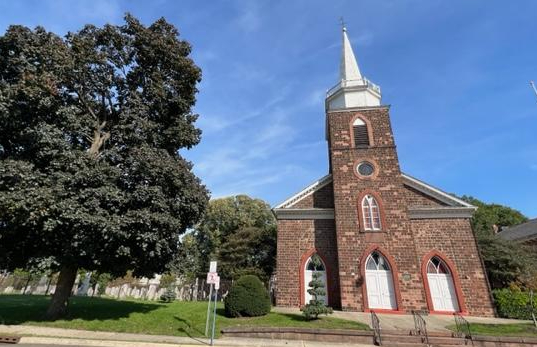
‘Church on the Green’                                                               (The First Reformed Church of Hackensack), the Church Cemetery and the Hackensack Green                                                                   42 Court Street                                                                      Hackensack, NJ 07601

‘Church on the Green’ (The First Reformed Church of Hackensack), the Church Cemetery and the Hackensack Green 42 Court Street Hackensack, NJ 07601

“Church on the Green” (The First Reformed Church of Hackensack), the Cemetery and the Hackensack Green

43 Court Street

Hackensack, NJ  07601

Bergen County Division of Cultural and Historic Affairs

(201) 336-7267

(201) 342-7050

http://www.co.bergen.nj.us

https://www.facebook.com/pages/First-Reformed-Dutch-Church-Hackensack/107959952566397

My review on TripAdvisor:

https://www.tripadvisor.com/ShowUserReviews-g46480-d34352436-r1058240159-First_Reformed_Church_of_Hackensack-Hackensack_New_Jersey.html?m=19905

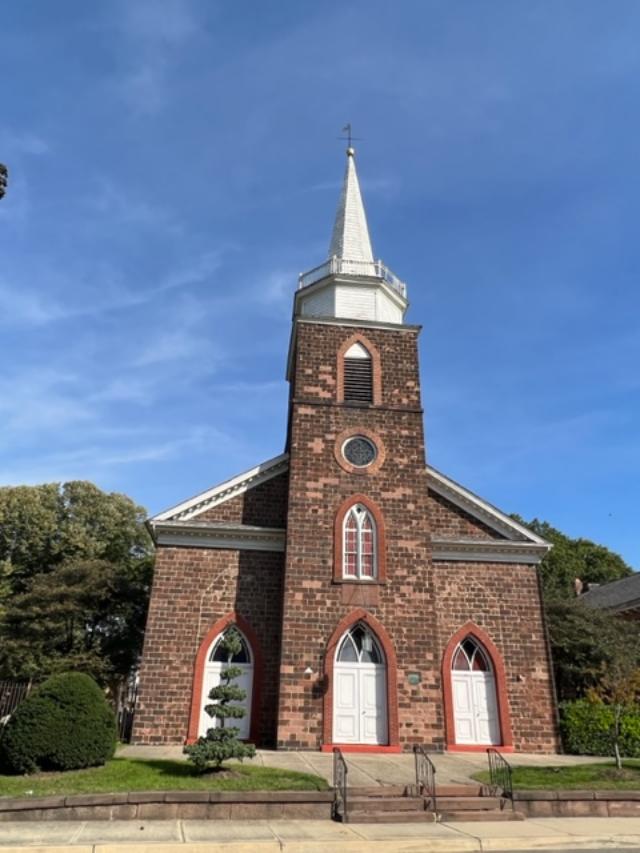
The First Reformed church of Hackensack at 43 Court Street

Due to their national historic significance the church, cemetery and the adjacent Hackensack Green were placed on the National Register of Historic Places in 1983. The Green dates back to 1696 and is one of the oldest public squares in NJ.

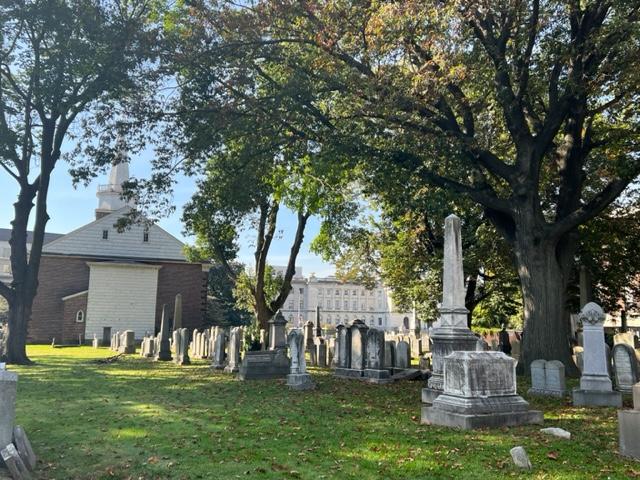
The church and its interesting cemetery.

The inside of the church was visited by General George Washington visited and worshipped here. The church still has the original pews and fixturing. I visited the church for Sunday services which is now run by the Korean Joy Catholic Church. I had a very nice time visiting with the parishioners and the Pastor.

The inside of the church

The inside of the church

The bell tower and gas light fixture

The light fixture

A strategic point during the American Revolution, Hackensack was a small village centered on The Green, a public meeting place where public notices were posted. In the 18th century it was where punishments were inflicted on criminals and where the local militia trained.

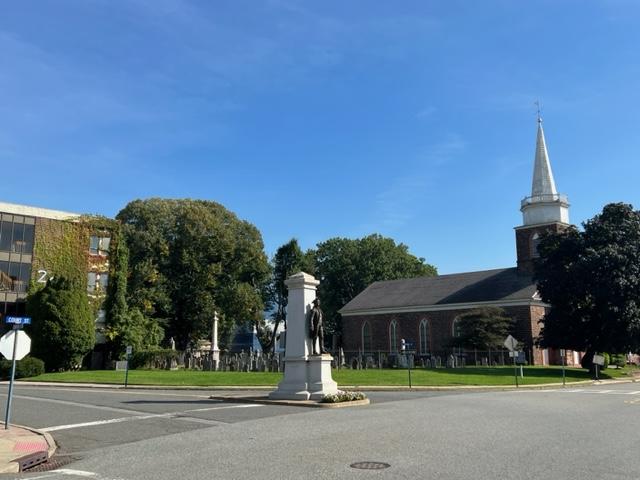
The Hackensack Green

The Hackensack Green

General Washington headquartered here in November 1776, while he surveyed the local roads and bridges. On November 20, 1776, he led his army into Hackensack. The army camped on The Green as Washington made the important decision to continue the retreat from overwhelming British and Hessian forces. On March 23, 1780, the British raided Hackensack and burned the courthouse that stood on the Green at that time. Since 1715, a Bergen County courthouse building faced The Green in Hackensack, the County Seat since 1710, making it the historic heart of Bergen County (County of Bergen Division of Cultural and Historic Affairs).

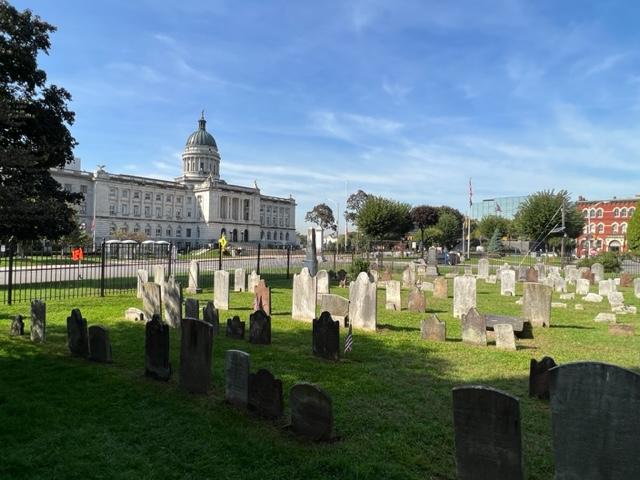
The historic Courthouse of Hackensack, NJ facing the cemetery at the Church.

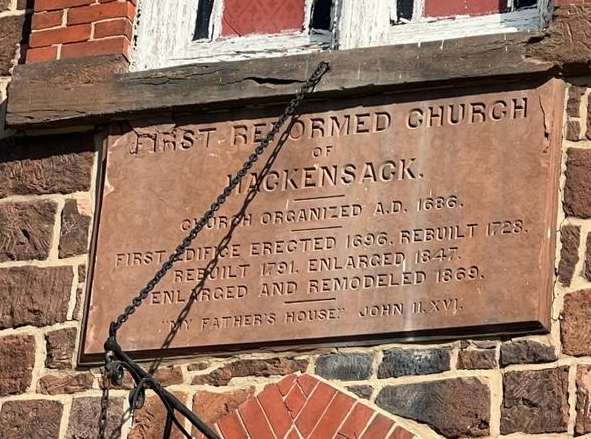
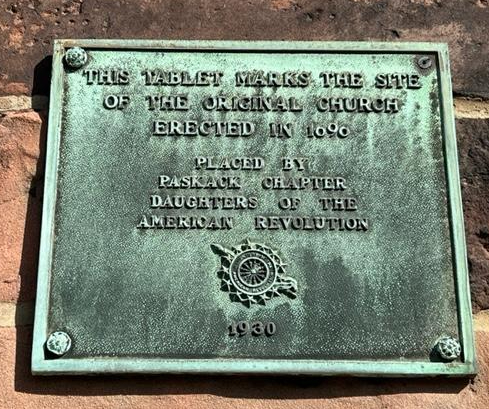
The Cornerstone

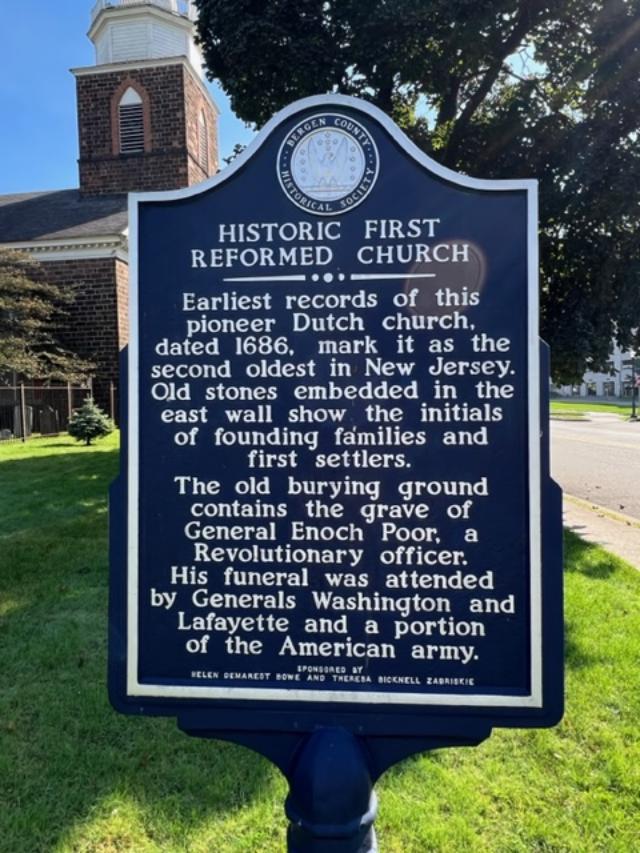
The First Dutch Reformed Church congregation was organized in 1686, the oldest Reformed Dutch congregation in Bergen County and second oldest in NJ. (County of Bergen Division of Cultural and Historic Affairs).

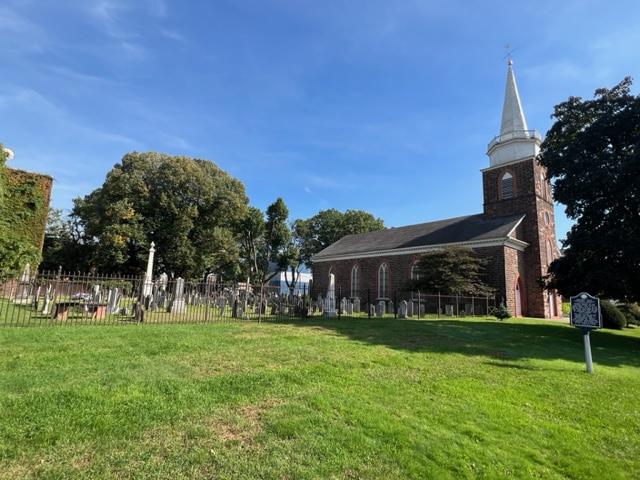
The historic marker outside the church.

The historic marker

The cornerstones of the original church with the names of the ‘First Families’ of Bergen County. The original spelling of the Zabriskie’s, Paulson’s, Haring’s, and Terhune’s are embedded in the history of this church.

The First Families of Bergen County keystones on the Church:

The family keystones

John Paulson keystone

Henry Berry keystone

Albert C. Zabrifky keystone

The stone of Peter Zabrfky

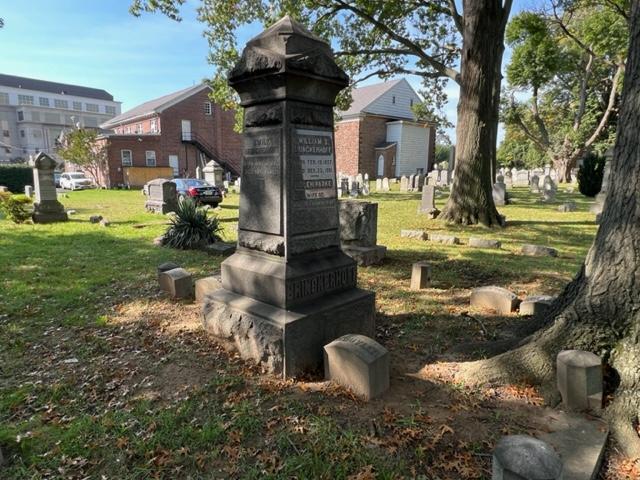
The stone of Jacob Brinckerhoff

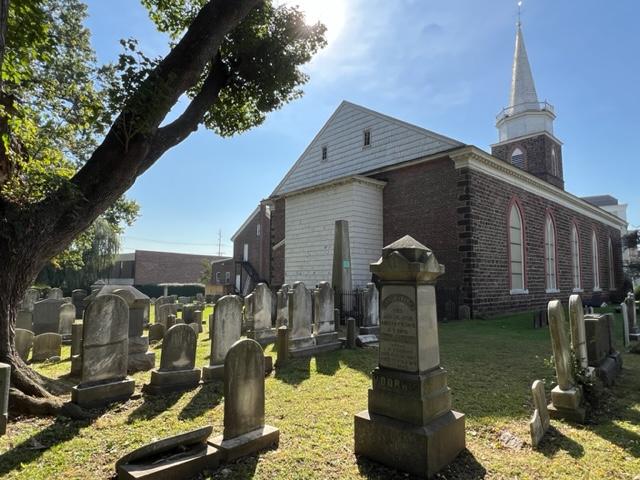
The Hackensack Reformed Church graveyard is one of the most famous in the State of New Jersey with many prominent families of Bergen County whose contributions helped shape not just the State of New Jersey but the United States as well. The graveyard contains the graves of many who fought for our freedom in the Revolutionary War.

The front of the church

The back of the graveyard

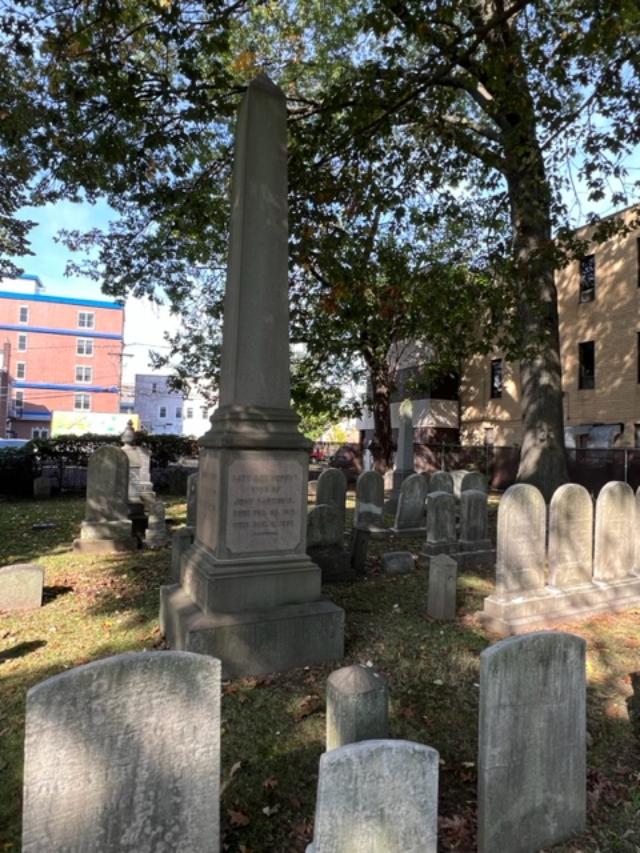
The historic graveyard

During the first ten years, churchgoers worshiped in a private home outside the limits of modern-day Hackensack. The official name of the congregation was the “Dutch Reformed Church of Ackensack” and comprised thirty-three residents from Hackensack, New Barbadoes and Acquackanonk. All three of these townships made up most of northeastern New Jersey.

Acquackanonk was located in the northern portion of modern Essex County. New Barbadoes was comprised of land west of the Hackensack River, while Ackensack was located to the east. In April of 1696, Captain John Berry (1619-1712), the proprietor of a large portion of land in northeastern New Jersey, donated two and three-quarter acres of his property to the congregation to support their efforts to build the church.

Most of present-day Hackensack at that time was called “New Barbadoes Township” and Hackensack is thought to have gotten its unofficial name when the Church relocated to New Barbadoes and brought the name “Ackensack” with it (Church website).

The historic church and cemetery in the back.

The emergence of the Dutch Reformed Church in America developed from Dutch colonization of New York and New Jersey during the 17th century. Dutch settlement was prominent in these areas before the British took control of the area in the late 1600’s. Still, the Dutch were freely allowed to practice their religion in America, even under British sovereignty. The Hackensack First Reformed Church would become the second oldest Reformed Church in New Jersey and the first in Hackensack. Construction of the church was completed in the latter part of 1696.

The historic cemetery at the church

John Berry’s donation of land was appropriately dubbed, “The Green” and the church soon became known as “The Church on the Green”. The first sermon was preached on November 15th, 1696, based on Psalm 26:8 “Lord, I have loved the habitation of thy house and the place where thine honor dwelleth.” Although the first church was largely completed in 1696, the steeple was not built until 1708. The entire structure was rebuilt in 1728 on the same site. These two early church buildings were thought to have been octagonal structures.

The Schuyler Family marker

In 1780, during the Revolutionary War, the British invaded Hackensack. They burned the courthouse and jail and threatened to destroy the Church on the Green, which was located adjacent to the aforementioned buildings. Fortunately, the church was spared. Dutch Colonial architecture with sandstone walls being the prominent feature of the building. Some aspects, especially the arched and pointed windows, appear to have Gothic elements.

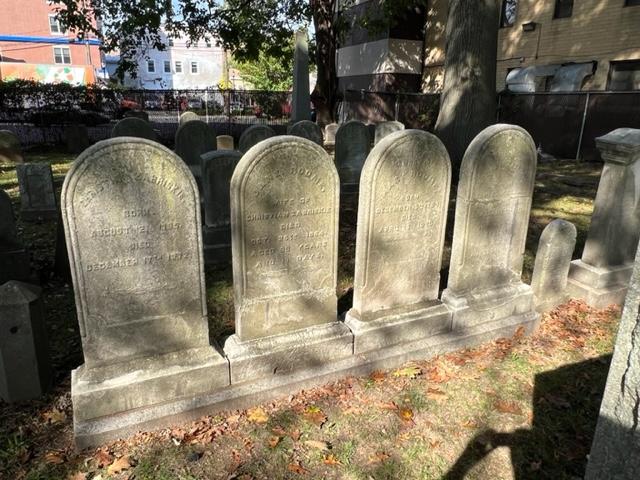
The Zabriskie Family plot

The front of the church has three sets of double doors with similarly arched doorways and transom windows. This style was a precursor for many of the Reformed Dutch churches that were eventually build in New Jersey. Although the present-day building dates from 1791, the church was enlarged in 1847 and again in 1847 and again in 1869, thus containing newer elements.

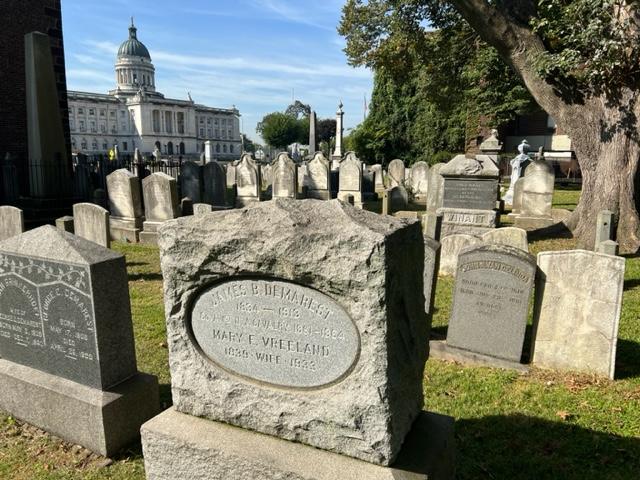
The Demarest Family plot.

The attached cemetery is original to the first building’s construction in the late seventeenth century but during the renovation in 1847, it was also enlarged. The neighboring service house was built in 1867 and was used as a Sunday school, lecture hall and chapel.

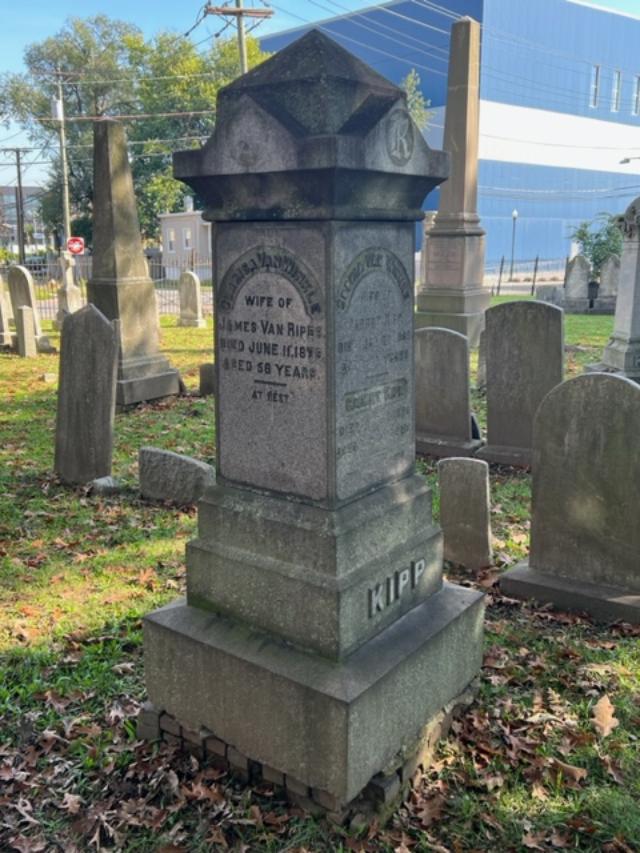
The Van Riper/Kipp Family plot

The Hackensack graveyard

The First Reformed Church of Hackensack

I recently visited both the church and the graveyard of the church which is home to many veterans of both the Revolutionary and Civil War. It is home also to the family plots of ‘Founding Families’ of Bergen County who worshipped at this famous church.

As one of my Team Projects, my students were mapping the cemetery for veterans of the Revolutionary War, many of them buried in the church graveyard. We came to pay our respects.

The Van Buren family plot

The Van Saun family plot

The Westervelt family plot

The Banta family plot

The Brinckerhoff-Terhune family

The Herring family

The Kipp family plot

The Paulson family plot

The Demarest-Doremus family plot

The Zabriskie family

Easter at the First Reformed Church of Hackensack with the Korean Joy Catholic Church:

I visited the church during the Easter Holidays as a invitation by members of the congregation and it was a very nice experience. I found that the service being very inspiring. The service was followed by an Easter Dinner with the congregation and I was very honored to be invited. It was a wonderful time and I really enjoyed the experience. I had never been to a Christian service that was done all in Korean, The Paster was very inspiring and knew how to inspire to the congregation. The whole service was very uplifting. Then members of the congregation invited me to stay for Easter Dinner which was very nice. A combination of classic Easter dishes mixed with traditional Korean specialties. It was one of the most enjoyable Easter’s I had had in a long time.

The beginning of the service

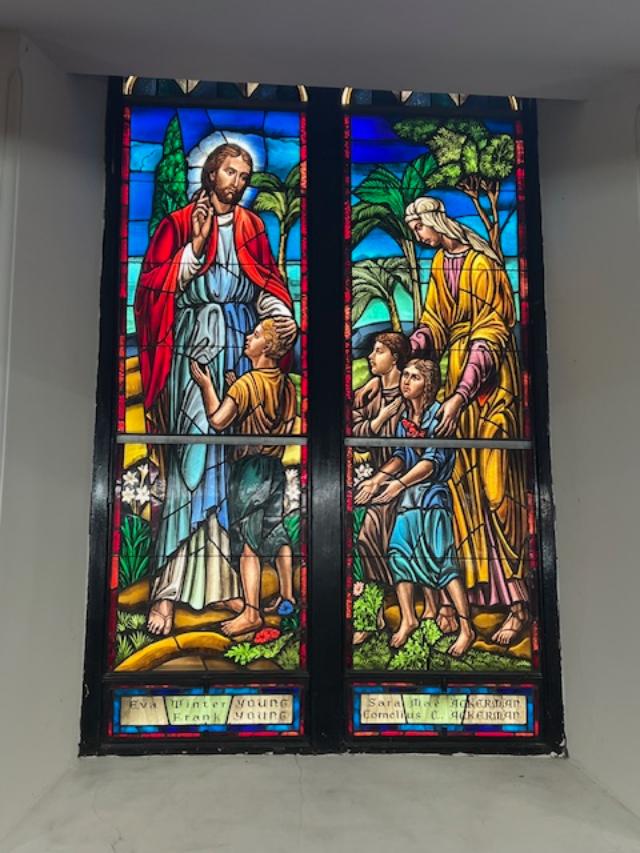
The Historic First Reformed Church of Hackensack pews and stained glass windows. Each one of the stained glass windows were dedicated by a well known “First Family” of Northern New Jersey:

The first floor of the church

The stained glass windows inside the church dedicated by the Ackerman family

The Child’s family windows

Voorhis-Lozier-Moore Windows

The Kraissi family windows

The Van Valen windows

The War years windows

The alter at Easter in the Spring of 2026

The Easter flowers on the alter

After the Easter service was over, I joined the other members of the congregation for dinner. This was a combination of Korean and American foods for the holidays. What a wonderful experience!

Easter Dinner

Easter dinner with the other parishioners

Yam rice cakes for dessert

Layer cake for dessert

Enjoying the service so much, I have returned for Sunday Service a few more times, enjoying the music, the sermons and the comradery. Even though I do not speak Korean, I can follow the inspiring words of Pastor Jung just by emotion and passion in the sermon.

What I like after the service is that after the sermon is over, the congregation joins with the English speaking congregation to have supper, which I think is a nice way for everyone to talk and get to know each other.

Enjoying a recent supper with the rest of the congregation and getting to know the members of the church. Everyone makes you feel so welcome. I think this is really how we celebrate God by joining in and getting to know one another. We have the same traditions in both the Polish and Italian churches I have attended.

Supper with the Congregation

Fish Tofu Soup

Korean specialties for supper

My Team Project from Bergen Community College “Bergen 250: Exploring the Revolutionary War era Cemeteries and Graveyards of Bergen County, NJ”:

The recent tour with my students hosted by members of the church, we were able to see the second floor, take a full tour of the church and graveyard. We got to see parts of the church that you do not see during service plus many of the artifacts the church owns from different eras of the church’s history. The church served as an important part of the American Revolutionary where later members of the same families, both Loyalists and Patriots, broke away from each other and some formed their own churches in other parts of Bergen County. This church still stands as a testament to Bergen County’s religious beginnings.

We toured the inside of the church, the second floor with its historical artifacts and views of the stained glass windows and then toured the historic graveyard where the majority of the Revolutionary War veterans were buried. Our Team covering this graveyard spent of their time walking amongst the tombstones searching for our veterans.

The inside pews

The alter

The view of inside of the church

The Revolutionary War artifacts

My student visit:

Tour of the church

The Team picture in front of the church

Many of the veterans of the American Revolution were buried closest to the church which was the tradition of the time to be buried as close to the church as possible. Their graves were marked by Revolutionary War medallions and American flags.

The Demarest-Voorhis Revolutionary War graves

General Poor’s grave

Albert Romin grave Revolutionary War veteran

The front part of the church by the Hackensack Green was the resting place of many of these heros

Our Team of Student Consultants picture inside the historic graveyard

The churchyard cemetery features simple stone tablets and obelisks that are surrounded by a wrought iron fence. Some notable burials include General Enoch Poor (1736-1780), Colonel and New York Mayor Richard Varick (1753-1831), Congressman George Cassedy (1783-1842) and Congressman Adam Boyd (1746-1835). General Enoch Poor’s burial is especially noteworthy as he served alongside George Washington during the Revolutionary War.

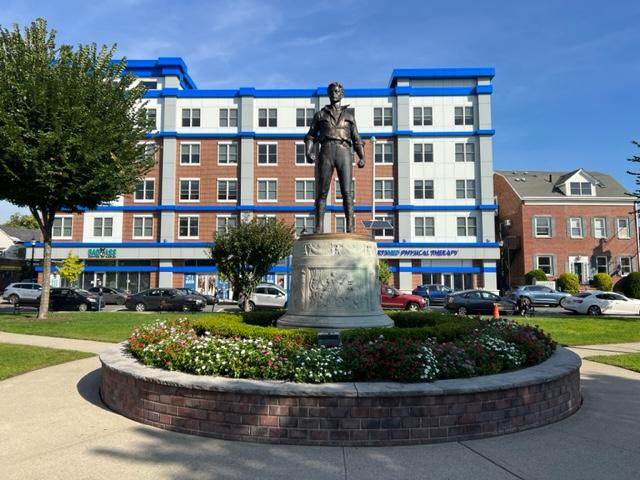
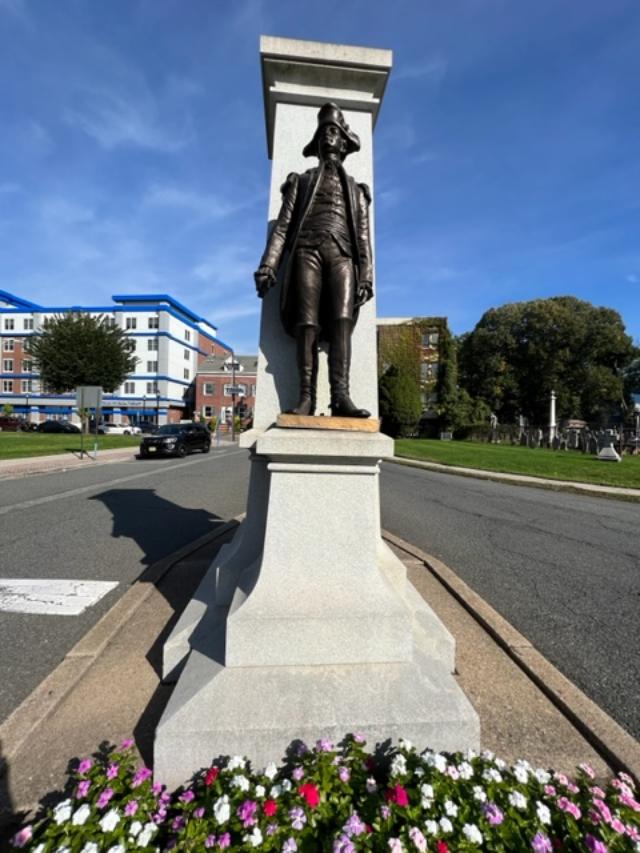
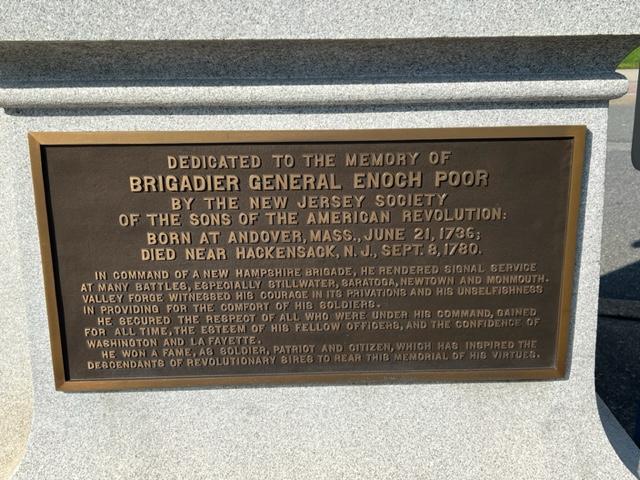
The General Poor statue on the Green

Enoch Poor – Wikipedia

Enoch Poor | New Hampshire Society of the Cincinnati

Plaque on the side of the statue

General Poor’s grave

Additionally, both Washington and the Marquis de Lafayette were in attendance at Poor’s funeral. Enoch Poor’s gravestone reads: “In Memory of the Hon’ble Brigadier General Enoch Poor of the State of New Hampshire who Departed this Life on the 8 day of Sept: 1780 aged 44 years/Washington, Lafayette and a portion of the American army attended the burial of Gen. Poor.

The Team picture in front of General Poor’s grave

In 1824, Lafayette visited this grave and turned away much affected, exclaimed, “Ah, that was one of my Generals!” Poor died in 1780, before the close of the Revolutionary War, so this gravestone is clearly not the original (Church website).

The graveyard at the Dutch Reformed Church

The Reformed Church was nominated to the National Register of Historic Places on April 25, 1983. Included in this nomination was the “Green”,  which is one of the oldest public squares in New Jersey. This area encompasses the Churchyard, the cemetery, the church outbuilding and the green area that is adjacent to the Bergen County Courthouse. There are a few monuments that occupy this space, including a statue memorial to General Enoch Poor, which was dedicated in 1904 and the Hackensack War Memorial, which dates to 1924.

The church continues to be a prominent feature of the history of Hackensack through community and self-guided walking tours. In addition to this, there are yearly Memorial Day commemorations, where a wreath is placed over General Enoch Poor’s grave and a tour of the church is provided to the attendees of the celebration.

Surrounding the Green, there are a few other historical buildings:

*The Peter Zabriskie Mansion site at 50 Main Street.

*Archibald Campbell’s Tavern Site at 41 Main Street

*The Hackensack War Memorial

*Site of the Burned Jail

Christmas at the First Reformed Church of Hackensack:

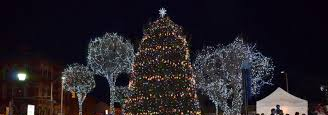
During the holidays, this evergreen serves as the Christmas tree for the City of Hackensack at the historical Green other downtown. The entire Green is decorated for the entire Christmas season and the light display is amazing in the early evenings of December. Santa is on his way!

The Hackensack Town Green

The Christmas tree from downtown

Christmas Tree at Hackensack Green

*The Annual Christmas Tree on the Hackensack Town Green

Disclaimer: This information was taken directly from the Bergen County Historical Society pamphlet and the Clio Website on the First Dutch Reformed Church of Hackensack and from visiting downtown Hackensack. Please call the church at (201) 342-7050 for details on visiting it. Please remember this is a resting place.

Garretson Forge & Farm                                                              4-02 River Road                                                                      Fair Lawn, New Jersey 07410

Garretson Forge & Farm 4-02 River Road Fair Lawn, New Jersey 07410

Garretson Forge & Farm

4-02 River Road

Fair Lawn, New Jersey 07410

(201) 797-1775

http://garretsonfarm.org/

info@garretsonfarm.org

https://www.facebook.com/GarretsonFarm/

https://en.wikipedia.org/wiki/Garretson_Forge_and_Farm

Hours: Please check the website by season

Fee: Free but donations are accepted

TripAdvisor Review:

https://www.tripadvisor.com/Attraction_Review-g46430-d12854166-Reviews-Garretson_Forge_Farm-Fair_Lawn_New_Jersey.html?m=19905

I have been to many special events at the Garretson Forge & Farm over the years, but COVID had put a stop to many of them since 2020. The farm is now back and running beautifully with the help of their roster of volunteers and master gardeners manning the grounds both in the front and back of the homestead.

In previous years when I have visited, I have toured the home visiting the indoor kitchen and display room that is the oldest part of the house which was built in 1719.

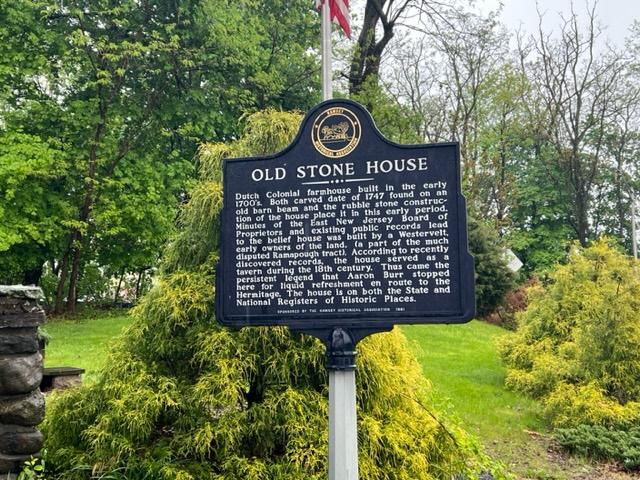
The signage in front of the house

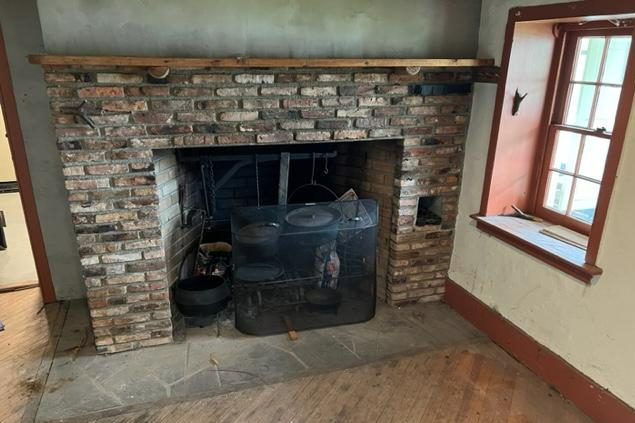
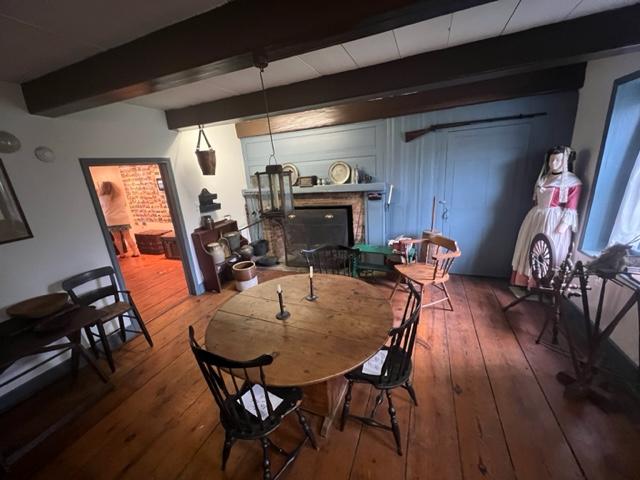
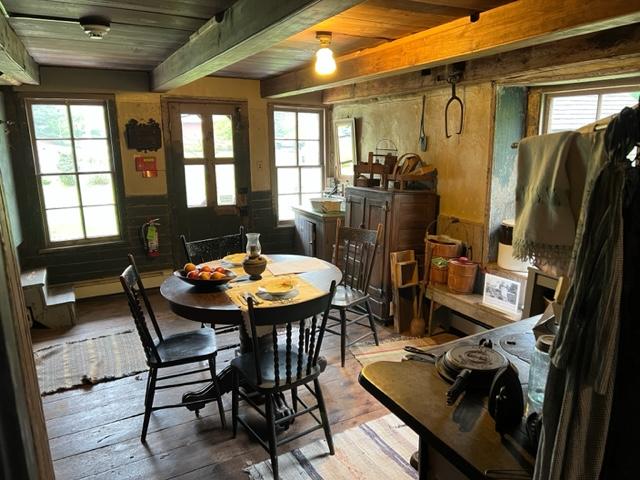
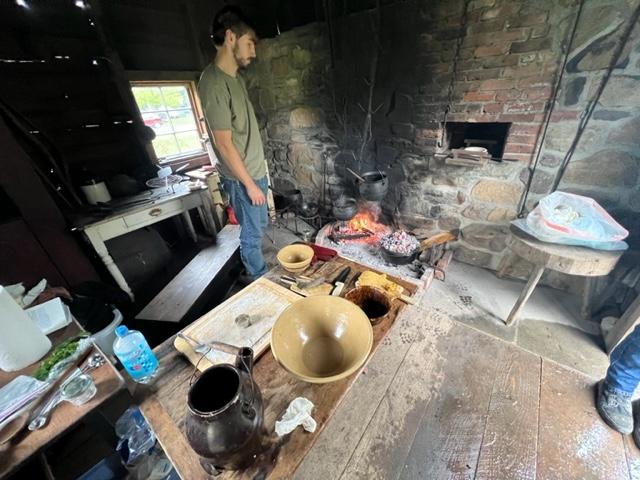
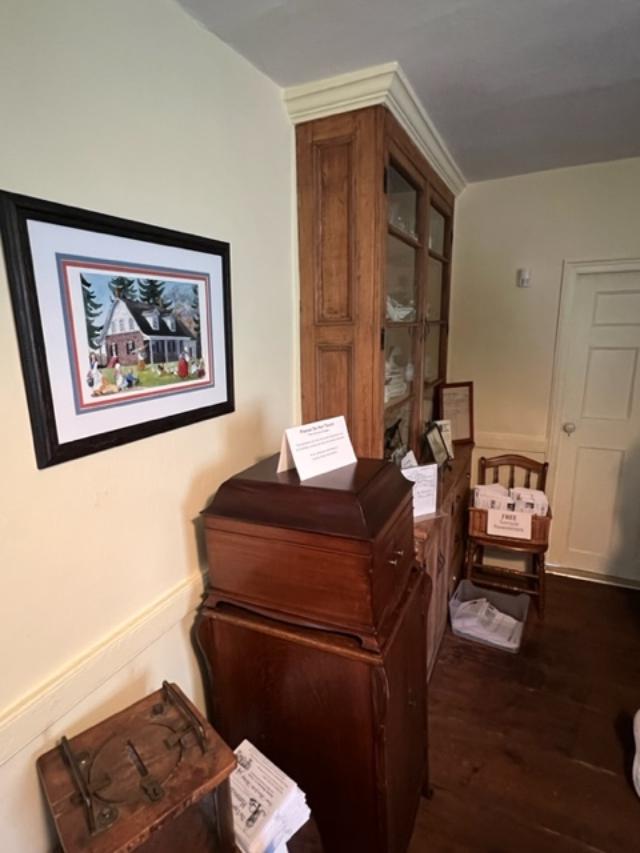
The kitchen of the Garretson Forge is from the original structure of the house.

The kitchen

The cooking utensils at the Garretson Forge kitchen

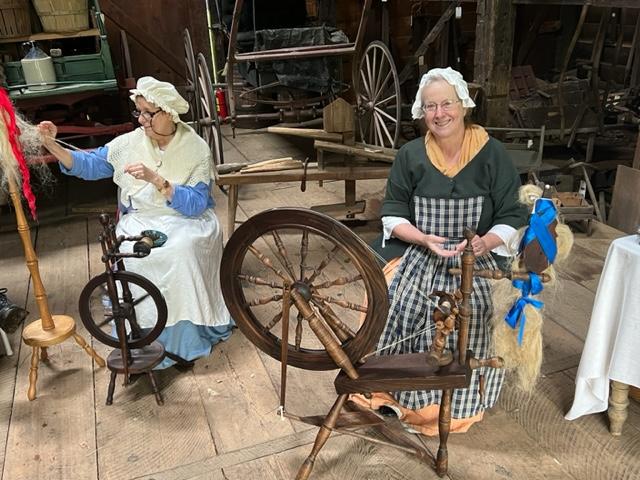
The spinning at the Garretson Forge farm was part of life

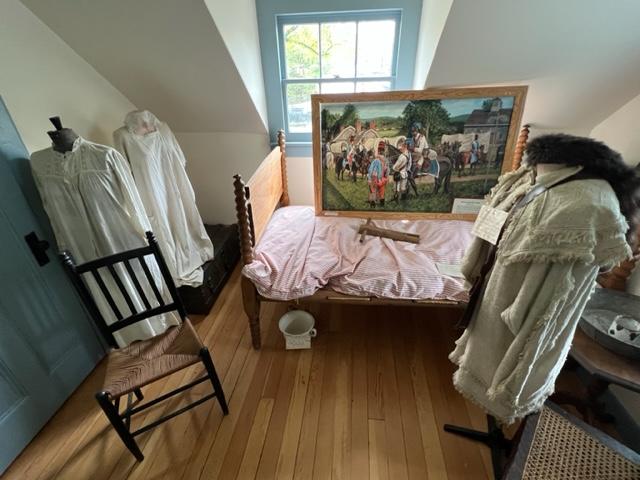
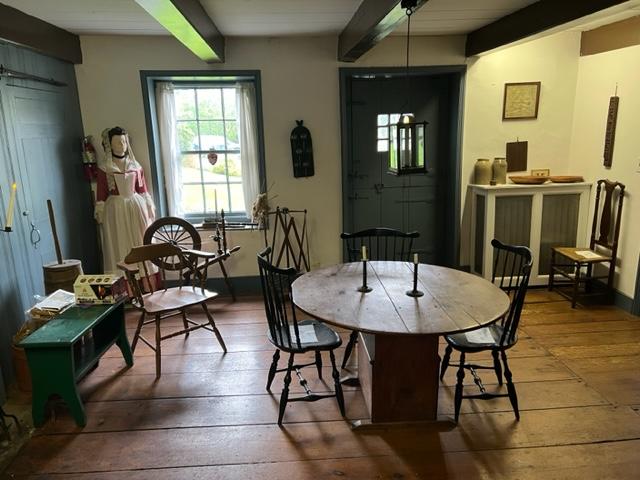
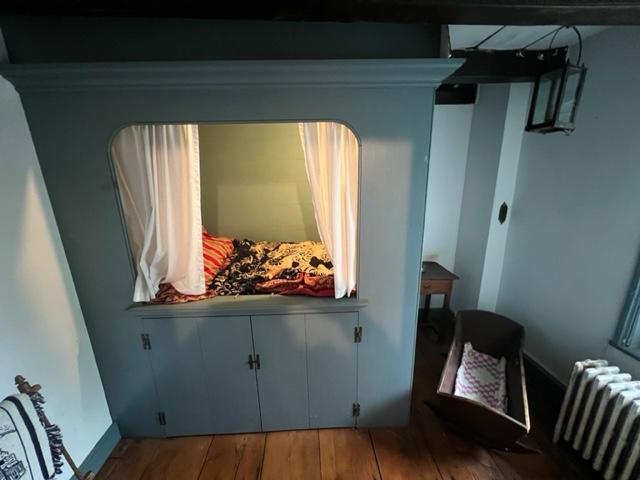
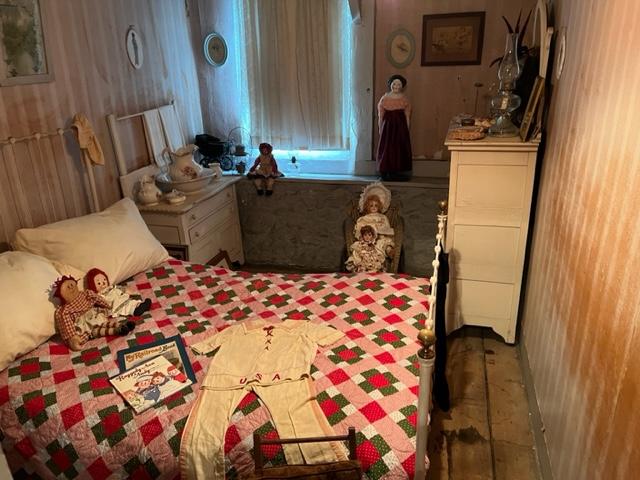
The newer part of the house where spinning takes place and where you can see examples of Dutch furniture with chest for clothing and a rope bed, where the expression ‘sleep tight don’t let the bedbugs bite’ comes from. You had to tighten a rope bed with a key to tighten the ropes at night and the mattresses were either made from straw or if you were lucky, goose feathers.

The newer part of the home with the upstairs dormers was built in 1760.

The upstairs is the newest addition to the house

The Upstairs

The Garretson Family tree

Inside the original part of the home is the family tree of the Garretson family who lived in the house for six generations from 1719 to 1972 when the last of the Garretson line, the husband of the wife who was a direct descendant died and the home was bought by a developer. The also have a collection of Presidential signatures that are kept under lock and key at night.

The Presidential Signature Room

The Living Room fireplace is right off the Signature Room

The kitchen in the original 1719 part of the home is decorated with period utensils, herbs and vegetables for drying and all the things you would need to prepare food for the long winter. These things would have been placed in the fruit cellar.

The Herb Garden right off the kitchen

The water pump and herb garden are right in back of the kitchen

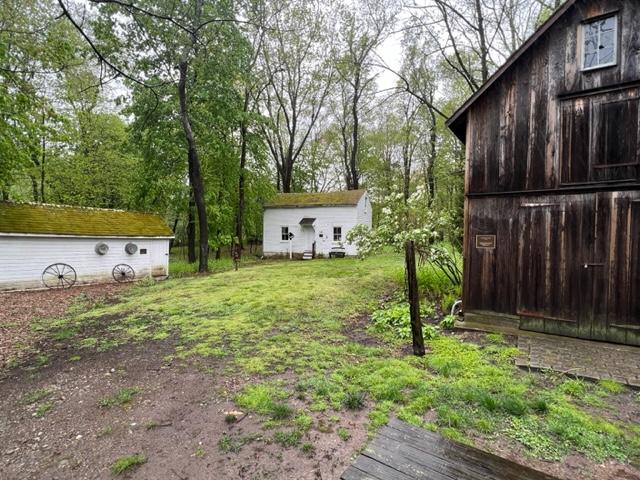
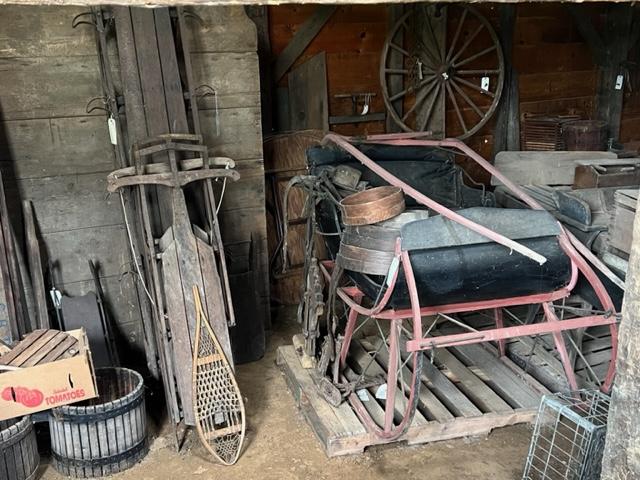
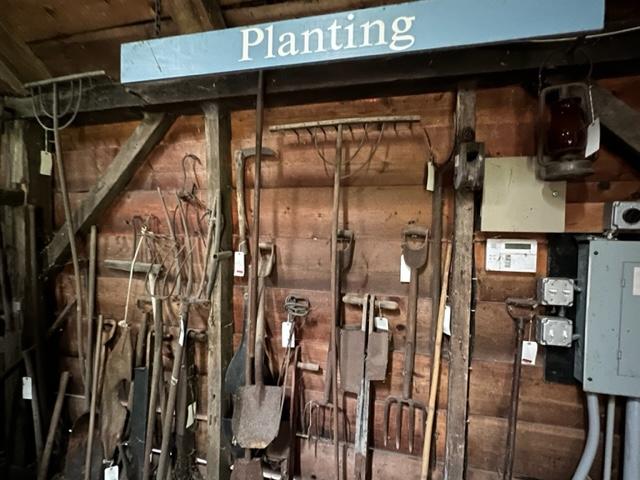
Outside the home during the recent Harvest Festival that I attended in October 2022, you can visit all sorts of farming equipment, sleds, and hoes for using on the farm to grow plants.

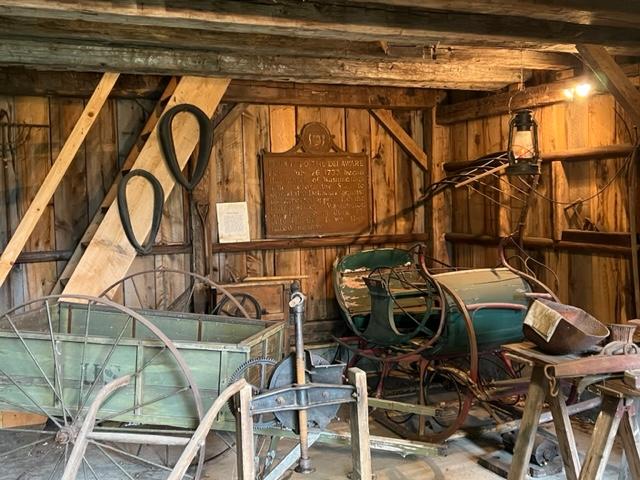
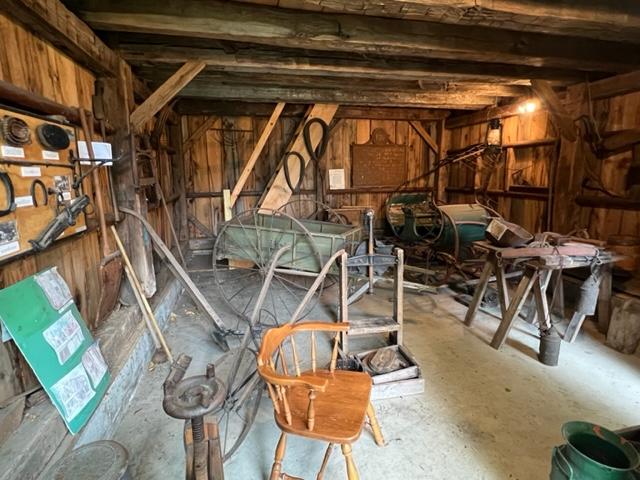
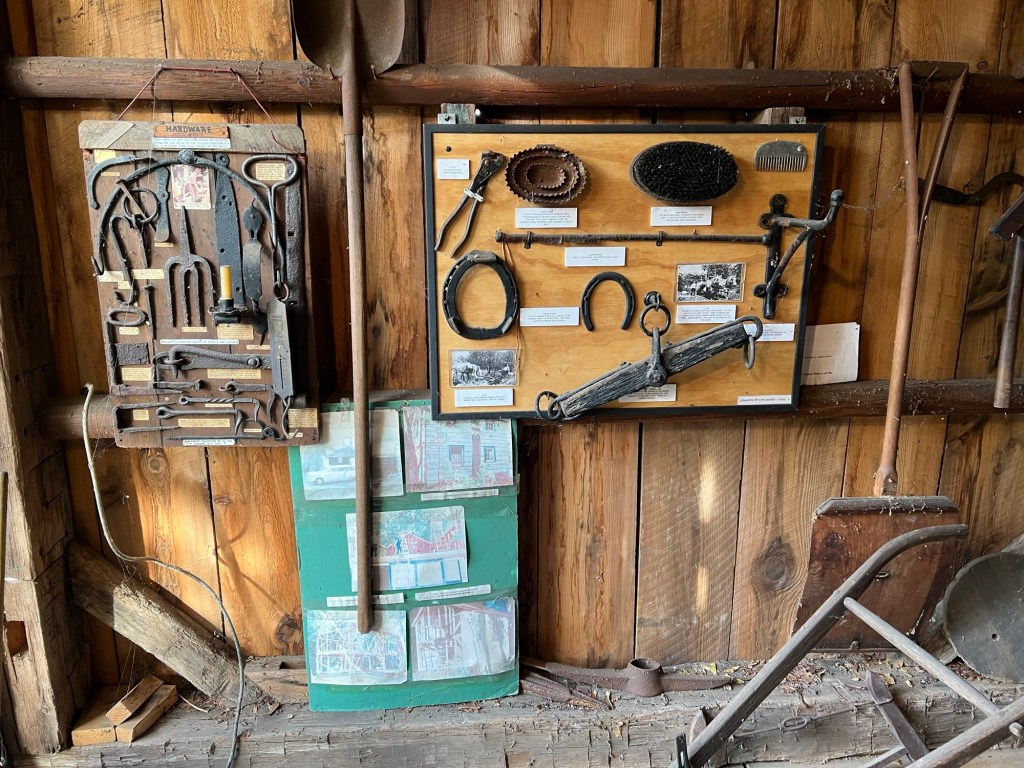
The barn has herbs drying for the season and foods being stored. This along with farm equipment. These items have been brought from all over Bergen County.

The Fall Festival 2022 on October 9th, 2022

The other barn had period carriages and even a dairy vehicle delivery of milk and eggs to homes. There were items drying out in the barn for basketmaking and even in the back the tombstone of an original member of the family.

The Barn Vehicles

The barn equipment

The backyard of the home is an extensive number of plantings that the Master Gardeners maintain and many of the items grown on the property go to a foodbank in Paterson, NJ. I thought that was a very nice donation to give especially these days. I was able to walk through what was left of the vegetables and fruits that had not either been picked or went through their growing cycle.

Items drying in the barn

Activities at the Harvest Festival included making colonial dishes from original recipes including a roasting ham on the fire, pumpkin pie, chopped vegetables for stew and a stew that was cooking on the fire.

The bounty of Fall in Colonial America

Unfortunately, we were not able to sample these delicious looking items because of a food license but everything looked really good. They had everything laid out on the table as the ladies explained to me how things were cooked back then.

Roasting meats on the fire a traditional way

Here and there were tables of items for sale including snacks, crafts and vintage decorative items for the home. This helps raise money for the maintenance of the house.

There was also a plant sale where items grown on the property were being sold for people’s decorative gardens.

Before I left, the master gardener explained to me that the Chinese Chestnut Tree in the back of the property was a documented tree and was one of the oldest and largest in the State of New Jersey. They are not too sure who planted it years ago.

Their Harvest Festival was a lot of fun and there were lots to do for families with small children. This takes place every October.

In December I took a special tour of the farmhouse during the holiday season when the forge was decorated for the Sinterklaas event and the Christmas holiday season. I was very lucky that the President of the organization gave me a private tour of the house and gardens. The house had been very busy for the Christmas season.

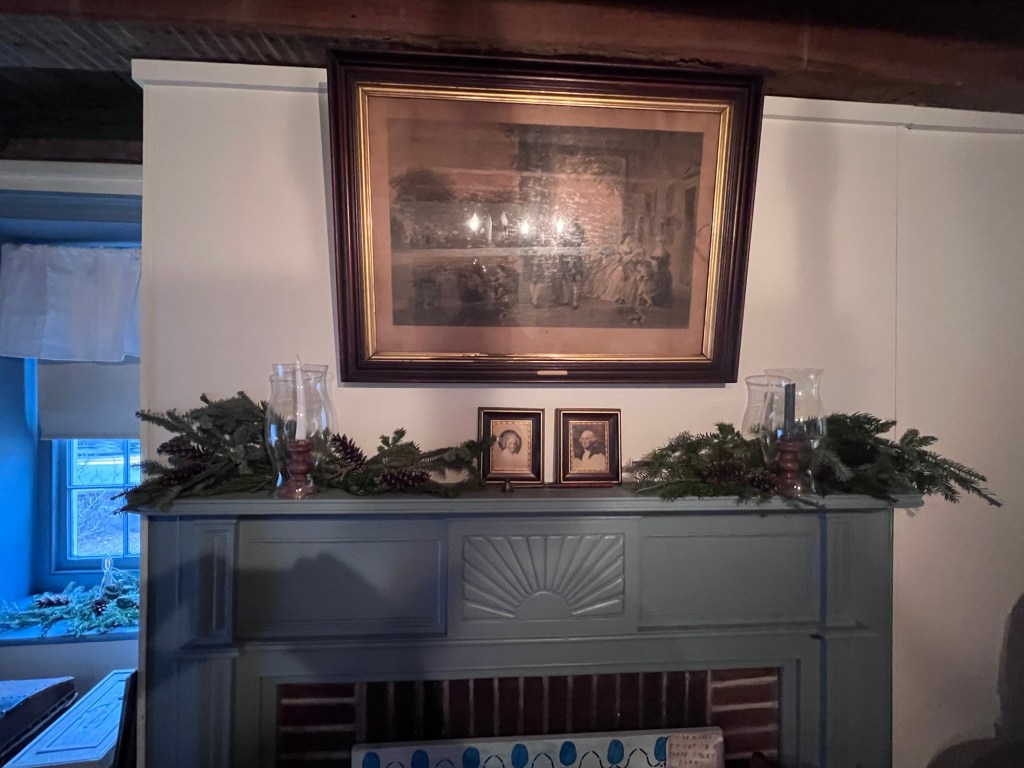
During the time of the Dutch, homes would not have been as decorated for the holidays as they would during the Victorian Age with trees and massive amounts of decorations. Around the time of the Revolutionary War, ‘greens’ would have decorated the home to bring ‘life’ back into the home during the long winter months. So things like pine, holly and mistletoe would have decorated the house.

The front of the house for the holiday season.

The front of the house at Christmas time.

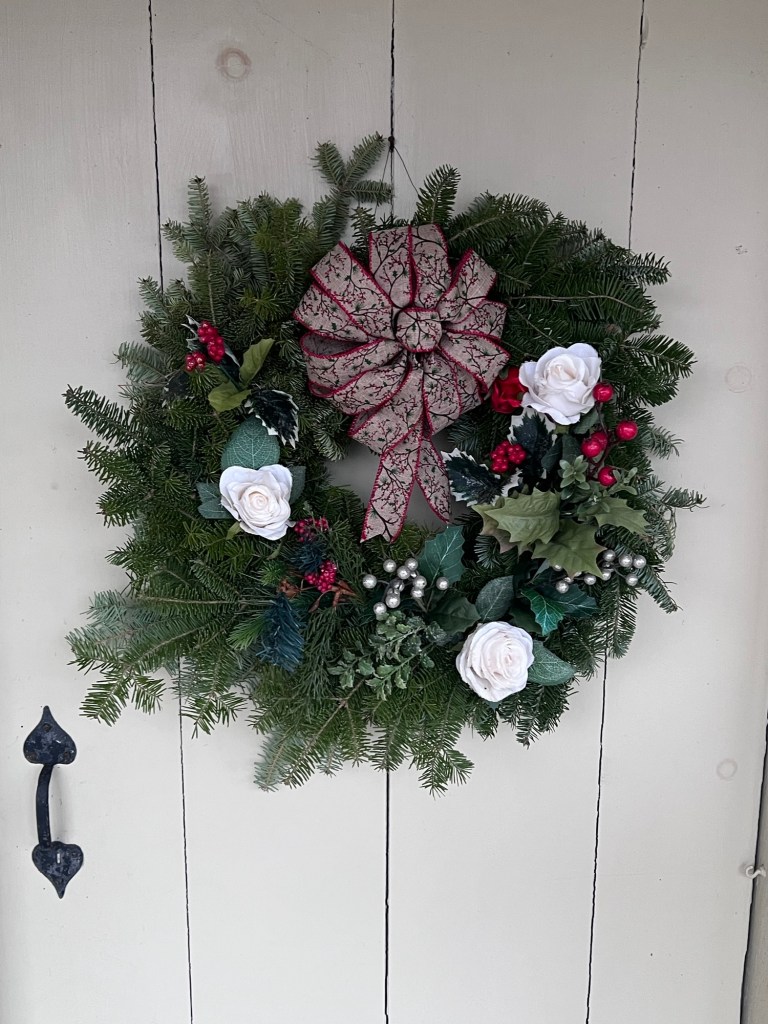
The entrance to the house decorated in bows and garland.

The entrance to the house decked in garland, bows and fruit during the holiday season.

Entering the house from the back door.

The entrance to the back door decked out for the holidays.

The entrance to the historic farmhouse.

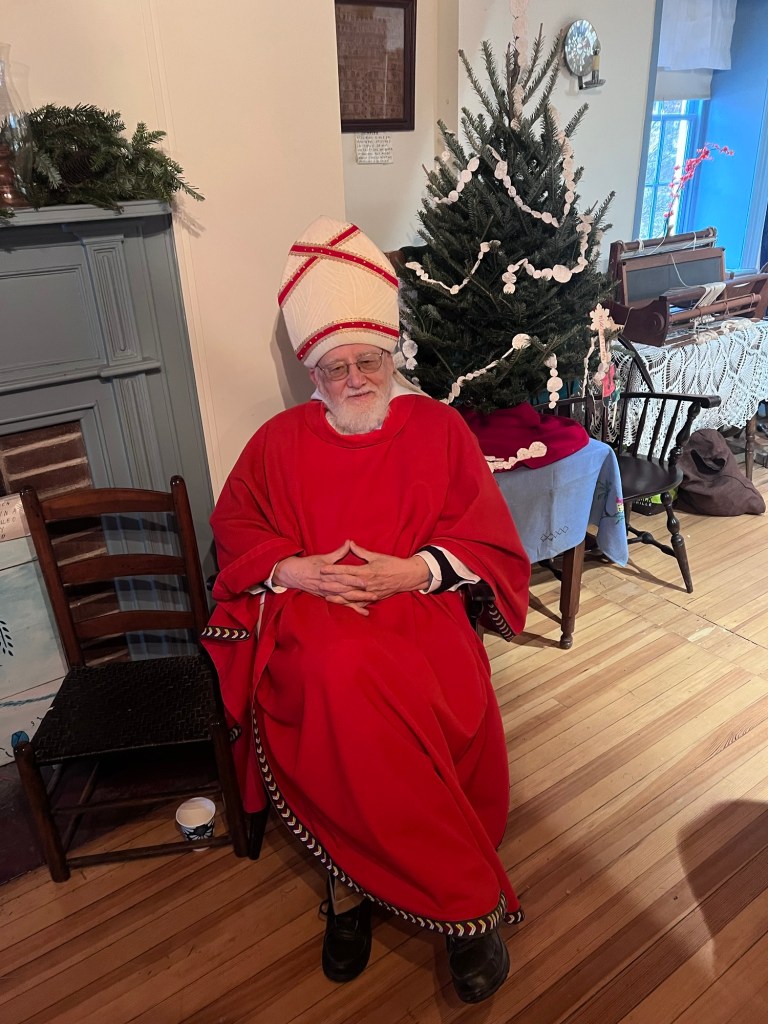
During the holiday season, the New Jersey Dutch citizens would celebrate “Sinterklaas”, the Dutch Christmas festival in which Sinterklaas (Santa Claus) would bring good little children toys and sweets. During the first week of December, the farmhouse has the traditional “Dutch Christmas Festival” in which children can visit with Sinterklaas and enjoy music and holiday treats.

The front hallway decorated for the Dutch Festival.

The Dutch Kitchen ready for the holidays.

The kitchen getting ready for the holidays.

The back fireplace during the Christmas holidays.

The main room of the Dutch Farmhouse during the Christmas holidays.

The banister was decorated in garland and bows.

The Spinning Wheel and fireplace during the festivities.

Where Sinterklaas engages the small children at the event.

The stockings and wooden shoes which would have been filled with candy and toys by Sinterklaas for good little girls and boys. The Christmas tree would have come in Victorian times along with the presents in the later part of the 1870’s and 80’s with the rise of Queen Victoria.

As we exited the house at the end of the tour, the President took me on a tour of the greenhouse that was attached to the house. This is where all the new plants and saplings were being grown during the winter months.

The Greenhouse is attached to the main house.

The decorated window box just outside the kitchen of the farmhouse.

We passed through the gardens that were now dormant for the holidays but would be sprouting in about four months.

During the Revolutionary War and the take over of the English, Christmas would have meant church services on Christmas Day and a light luncheon in the afternoon. Things like gift giving, entertainment and music would have been later in the 1800’s as the ‘Puritan influence’ would have prevailed at this time with little merriment during the holidays.

After the Civil War and the rise of the Industrial Revolution did Christmas get more elaborate and festivities became more colorful. You see this in different stages of the house. The forge is open for the “Sinterklaas Festival” the first week of December every year.

In the Spring, I attended “Pea Day”, the first planting of the gardens took place in March of 2024. The volunteers were cleaning the beds out and planting the first fruits and vegetables that could survive in the cool weather. It gave us a chance to see how things were planted on the farm during the different seasons.

The front of the Garretson Forge & Farm during the last days of Winter.

The property during the late Winter months.

The daffodils were in full bloom on the property.

Cleaning up the property during the late Winter months.

The volunteers planting the beds during “Pea Day”.

The volunteers planting the beds during “Pea Day”.

The students of Bergen Community College learning about the Garretson Forge.

“Pea Day” gave us a chance to see the property and see how the plantings of the farm were timed with the seasons. It also gave the students a chance to see what the farm looked like and understand its logistics.

The farm on “Pea Day”.

The History of Garretson Forge & Farm:

Garretson Forge & Farm is one of the oldest historic sites in Bergen County, New Jersey. Settled in 1719, this Dutch Colonial homestead was home to six generations of the Garretson family. Their homestead remains a rare surviving example of a simple farming life that was prevalent in the 1700’s and 1800’s. It now functions as a living museum and a working farm, preserving our colonial past and agricultural heritage.

The front of the Garretson Forge on River Road in Fair Lawn, NJ.

The Property:

Located along an old Native American trail, about a mile north of Garretson Lane, is one of the original farms in Slooterdam, owned by the Dutch family of Peter Garretson. Today, more than 300 years later, the trail has come to be known as River Road, Garretson Lane is now called Broadway and Slooterdam has evolved into Fair Lawn, yet the original farmhouse and remaining grounds are still referred to as the Garretson Homestead.

In the 17th century, New Jersey was divided into the Provinces of East and West Jersey by its English proprietors, Lords Berkeley and Carteret. These lands were then sold to a group of Quakers headed by William Penn. By 1692, part of East Jersey, known as the Saddle River Tract, had been divided into large lots, one of which was sold to the Stillwell family.

The Garretson homestead stand on a portion of land that was acquired in 1708 by David Daniellse from the Stillwell family. A copy of the original propriety deed signed by King George of England and the Lenni Lenape Chief, Spotted Tail and granting the land to David Daniellse, is hanging in the homestead. The original property was bounded on the west by the Passaic River and on the east by the Saddle River. Peter Garretson purchased the property from Mr. Daniellse in 1719.

After Peter Garretson’s death, title to the land was passed from one generation to the next. From time-to-time parcels of the tract were sold. The present site consists of 1.84 acres along River Road.

The beauty of the Garretson Forge Farm in the Fall

The Homestead:

The house is an example of Dutch Colonial architecture which is charismatic of Bergen, Passaic and Hudson Counties.

One and one-half stories high and built about 1719 of rubble and undressed stone, the current kitchen wing is considered by most to be the homestead. It features a large open-hearth fireplace typical of Flemish design of the late 1600’s. On a late nineteenth-century photograph of the house, remnants of a brick beehive oven can be seen on the outer wall.

Farming equipment outside the barn

In 1760, the larger section of the house was built using dressed stone. The sandstone blocks were held together with mortar made of river mud mixed with straw and hogs hair. It was under this section that fragments of clay pipes (c1720) were uncovered.

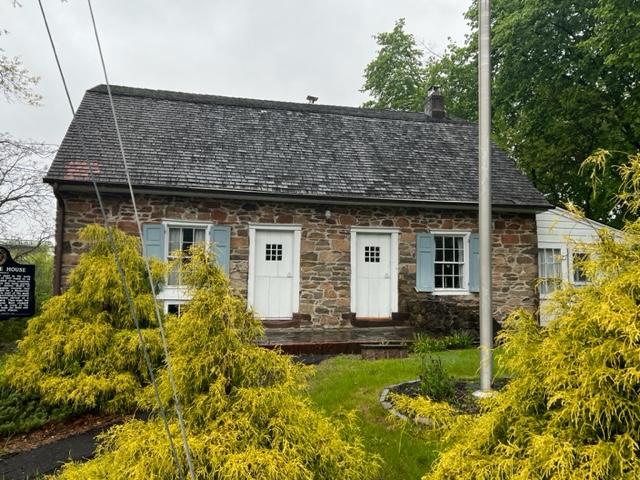
The farmhouse on River Road in Fairlawn, NJ

The Farmhouse

Extensive renovations were made to the house in 1902. The present gambrel roof replaced a steep gable roof; a front door was replaced with a window; an inner stairway to the basement replaced cellar hatches. A large center Victorian stairway to the second floor was also built and the open-hearth fireplaces were enclosed in the Victorian style. A large pillared porch was also added.

An early nineteenth century carriage house still stands on the property along with a large barn and several smaller outbuildings, the oldest of which is a small wooden structure built circa 1800 in the Dutch barn style.

Garretson Farm III

The barn and carriage house

The Garretson Family:

The history of the Garretson family in America began in 1660 with the emigration of Gerrit Gerritse, his wife, Annetje Hermansse and their son, Gerrit from Wageningen, Gelderland (Netherlands). They arrived in New Amsterdam and proceeded to the town of Bergen, where in 1668, Gerrit (Sr) bought from Philip Carteret, eight parcels of land. The family resided in what is now the Communipaw section of Jersey City, where Gerrit died in October of 1696. His wife died on September 7, 1696.

Some of Gerrit Gerritse’s children took the name Van Wagenen, while others retained that of Garretson, from the name of their father. The descendants of Gerrit Gerritse, going by the surname of Garretson, Van Wegenen and Van Wagoner are today numerous throughout Bergen and Hudson Counties.

Mary Garretson’s Tombstone is located in the barn

Peter Garretson, grandson of the elder Gerrit Gerritse, purchased the Slooterdam Patent from David Daniellse in 1719. The house was built shortly afterwards. Six generations of the Garretson family resided on the farm until the death of Mary Garretson Brocker in 1950. Her widower, Feenix Brocker, remained at the homestead and continued farming until 1974.

The Gardens:

Originally a homestead farm, subsistence and market crops were grown from the early 1700’s through the early 1970’s by the Garretson family.

Garretson Farm IV

The back of the house

Today, the gardens at Garretson continue an agricultural tradition. A variety of heirloom vegetables, all open-pollinated are grown in the kitchen garden using organic and sustainable practices. Produce in season is donated to a local emergency food pantry. An extensive herb garden contains over 75 types of medicinal and culinary herbs that were grown in the seventeen and eighteen hundreds.

The Garretson farm gardens behind the house are tended to by the master gardeners.

Garretson’s Butterfly Garden provides host plants and nectar sources for many different kinds of butterflies. Since 2005, Garretson has been certified by Monarch Watch as a Monarch Waystation (monarch habitat).

The Children’s Garden at Garretson abounds in spring ephemeral wildflowers, bulbs and ferns. In the heat of summer its offers a welcome place to sit in the shade. Gardeners have been restoring native plants to this woodland area.

The garden sheds behind the house

Many of the garden volunteers are Rutgers-trained Master Gardeners who have done their community service at Garretson and who give back to the community and Bergen County Master Gardener Program by training new gardeners at Garretson.

The gardens at the Garretson Forge farms behind the house

Garretson Forge and Farm Restoration Inc.:

The Garretson property was sold in 1974 to a private builder for residential value, community members became interested in acquiring the property for preservation. This led to the founding of the Garretson Forge and Farm Restoration Inc. in 1974 for the purpose of raising funds for the purchase. Through the efforts of the organization, the community at large and government agencies, the necessary funds were raised for the acquisition of the property.

GFFR Inc. continued to raise funds to maintain the site and to restore the kitchen to its eighteenth-century design. Money was also used to purchase artifacts and articles related to Garretson history.

The open kitchen at the Garretson Farm

In 1977, ownership of the property was accepted by the Freeholders of Bergen County. Now a county historical site, the Garretson homestead continues to be administered by the members of Garretson Forge and Farm Restoration Inc.

GFFR Inc. is a volunteer organization whose mission is to preserve and maintain the Garretson homestead, keeping it open to the public; to educate the greater community about local and state history; to foster environmentally sustainable agricultural practices and biodiversity.

Programs and Special Events:

Throughout the year, Garretson Forge and Farm offers.

Living history events:

*The Spring Festival celebrating colonial life and crafts in the 1700’s.

*The Fall Festival celebrating the harvest and the 1800’s farm.

Fall Festival 2022

Civil War Activities at the Garretson Forge

Civil War activities at the Fall Festival

Spinning wool and cloth making at the Fall Festival

*Dutch Christmas presenting a traditional Dutch celebration with the homestead decorated in Victorian style.

The house decorated for the Sinterklaas and Christmas festivals.

The house decorated for the Christmas holidays.

Educational Programs:

The Map and Signature galleries

*School Tours

Children’s toys at the Garretson Forge

*Open House and garden tours

*Lectures on the environment and on local history.

The Signature and Map Collection at Garretson Forge

*The Master Gardener Program

*Organic/sustainable gardening

*Garden and craft workshops

*The annual Butterfly Festival for families.

Community Service Programs:

*Eagle Scout Projects

*Community Seed Bank

*Seasonal produce donations to local food banks.

For more information on events, please check out the website:

http://www.garretsonfarm.org or on Facebook: Garretson Farm

http://www.co.bergen.nj.us

The Bergen County Division of Cultural & Historic Affairs received an operating support grant from the New Jersey Historical Commission, a division of the Department of State.

Disclaimer: This information is taken directly from the pamphlet from the Garretson Forge & Farm. For more information on the site, please call the above numbers or email them.

In the Spring Semester of 2023, my Introduction to Business class at Bergen Community College in Paramus, NJ created a project to promote the Garretson Forge & Farm for Destination Tourism. It was an extensive project creating new programs, new advertising and promoting the site with commercials and walking tours.

Here is the project:

Here is the blog on the project:

The Project “Bergecco-Parc Consulting Inc. presents “Touring at the Bergen County Historical Society”:

https://wordpress.com/post/mywalkinmanhattan.com/40413

I think a lot of these historical sites do not get the attention they deserve and with the 250 Anniversary of the Revolutionary War happening in two years, these wonderful sites needed to be showcased. They needed to dusted off, revamped and a fresh perspective was needed to tell their story. This is where the project for the “The Bergen 250: Tourism at the Garretson Forge & Farm” came from.

The project “Bergecco-Parc Consulting Inc. presents “Bergen 250-Touring the Garretson Forge & Farm”:

That and the tour the former President gave me during the holiday season when I begged to see the Christmas decorations for the Sinterklaas celebrations were still up. I needed pictures for my blog, “VisitingaMuseum.com” and “MywalkinManhattan.com”.

My blog on Touring the Garretson Forge & Farm on VisitingaMuseum.com:

https://wordpress.com/post/visitingamuseum.com/1448

When I toured the home during the holidays, I approached them on using the home as a future project and she seemed to like the idea. This is where the partnership for the project came from.

Our first visit to the site was on “Pea Day” in March 2024 for an extra credit assignment to start the project off so that the students could see the grounds and experience the farm and its attributes.

Visiting the Garretson Forge & Farm in Fair Lawn, NJ for “Pea Day”

Visiting the farm house and gardens on “Pea Day”

The volunteers planting at the Garretson Forge & Farm on “Pea Day”.

Observing the Master Gardeners and Volunteers on “Pea Day”.

The students coming in on their day off to attend “Pea Day”

Everyone took turns getting their hands dirty on “Pea Day”

We also had a special field trip to the Garretson Forge & Farm on class day so that everyone could tour the farm and the farmhouse. Outside “Pea Day”, it was the first time anyone in my class had ever visited the site.

The Garretson Forge & Farm:

https://www.garretsonfarm.org

My review on TripAdvisor:

https://www.tripadvisor.com/Attraction_Review-g46430-d12854166-Reviews-Garretson_Forge_Farm-Fair_Lawn_New_Jersey.html

My review on VisitingaMuseum.com:

We started the tour on a rather gloomy night. We had just had a rain storm but that did not stop our visit. Our whole class attended the trip (it is a mandatory part of both the project and the class) and it was a interesting tour for all of us.

Our host was the President of the Friends group that helps raise money for the site. We started the tour after the rain storm with a trip through the barns to see some of the old farm equipment. The were some interesting artifacts that included farm plows and horse drawn articles to carriages and sleds.

Then we toured the gardens where the volunteers had just finished the plantings of the summer fruits and vegetables. The President explained that the fruits and vegetables that were grown here were donated to a soup kitchen in Paterson. I thought this was a great idea.

Then were toured the farmhouse, which I had just been to for a private tour during the holidays. The kitchen was set up for a harvest meal now and I explained to some of the students how food was cooked back then in the hearth.

Then we toured the small museum and looked at the family tree, where generations of Garretson’s had lived. Our last stop on the tour of the farmhouse was the main living room where the Sinterklass event was held and many of the talks on domestic life on the farm.

This is where we concluded the tour and many students asked questions about life at that period of time. After the tour was over, I took the students out to dinner as part of their Team Building. It is important for the students to get to know one another.

The start of the tour near the barns.

Our tour of the grounds, the barns and life on the farm.

The grounds near the second barn.
Touring the gardens at twilight
Tour of the kitchen.

Discussing the expression “Sleep tight don’t let the bed bugs bite” and where it came from.

Discussion on the second floor.

The second floor had been added on years later.

Discussion on farm living.

Discussing the furnishings and how the farmhouse ran as a farm and a home.

Continuing our discussion of life on the farm.

Talking about life on the farm.

The Bergecco-Parc Consulting Inc. tour of the site.

Our group shot with President of the Garretson Forge & Farm April Barth.

After the tour was over, I took my class to Bella Vita Pizzeria in Fair Lawn, NJ for their first Corporate dinner and Team building exercise. The dinner was wonderful, and the pizza was excellent. It really warmed us up after a cold night of touring and the students seemed to enjoy getting to know each other over a hot pizza dinner.

Bella Vita Pizzeria at 1761 River Rd A, Fair Lawn, NJ 07410:

https://www.bellavitaitalianrestaurant.com

My review on TripAdvisor:

https://www.tripadvisor.com/Restaurant_Review-g46430-d1114260-Reviews-Bella_Vita_Italian_Restaurant-Fair_Lawn_New_Jersey.html?m=19905

Dining together after the tour:

My Teams dining together at a “Corporate” pizza dinner.

The company Team dining together that night.

The aspect of dining together is an important part of the Team Building exercise and you can tell by the pictures that my students enjoyed it.

The next few weeks were preparing the project for the presentation. We had a visit from Vivian Davis, who I had known for years from working in the Division of Disability Services when she was one of our speakers. She now was running the “Bergen 250: The 250th Anniversary of the Revolutionary War in Bergen County” and we had incorporated part of this in the project. I had given her a copy of the project and she came into the class to discuss what she was planning and the significance of the Revolutionary War had on the towns in Bergen County. It was a real history lesson on some of the towns in Bergen County and some of the historical homes and sites in Bergen County.

The Bergen 250 Program:

This project was a bit more intense than my morning class. While they designed the rigors of the Bergen Room Bistro, my evening class was putting together an entire game plan of Revolutionary War events for the ‘Bergen 250’.

I had the students working on an Independence Day event, a Children’s Walking tour of the property, a Mid Summer dinner with a Revolutionary War themed dinner, a continuation of the Sinterklaas event that would extend visiting the decorations in the house another two weekends and then a new Digital Marketing campaign for the site with a commercials and posters.

The night of the presentation on April 24th, it all came to life. The students each showed the PowerPoints with their ideas, menus and commercials to promote the site. They really had some interesting ideas.

PowerPoints:

Team One:

Team Two:

Team Three:

Commercials:

Team One:

Team Two:

The Promotional Tour Video

The Children’s Walking Tour Video

Team Three:

Promotional Tour

The Children’s Walking Tour Video:

The full Presentation of the student consultant’s work on The Garretson Forge & Farm:

The complete video of the Presentation.

The new website for “Bergen 250″: The Garretson Forge & Farm”:

https://tfischer90.wixsite.com/bergecco-parc-consul

Finishing the evening with my Student Consultants was great. The students were so excited to finish and I have to admit it was quite the journey for me too. It was a lot of work (and money) to pull this event off but it went by well. The Board of the Garretson Forge & Farm really seemed to enjoy it and asked lots of questions.

Vivian Davis, who is running the “Bergen 250″ asked the most important question of the night, if I was to run all of these events, would your age group come?” This got the students thinking and one said, “We are a busy group with college and work. If you want our age group to come, you are going to have to cater to things we like.” I thought that was fair and gave her something to think about as well.

We then took our Board picture. I am always so proud of my Student Executive Consultants. They come dressed for work.

The Bergecco-Parc Consulting Inc. “Bergen 250″: Garretson Forge & Farm” Executive Team.

I want to thank my President of the Team Project, President TJ Fischer and SVP of Operations Camila Alvarado and the entire Team of Vice-Presidents, Team Leaders and Team Members for tackling this very difficult and very detailed job of promoting this wonderful historical site with such detail.

The questions on the project were excellent and direct and audience was very impressed by how thorough the project was done that evening. To all my Student Consultants, you did an excellent job!

Great Work!

New Historic Project for 2025:

To Celebrate the “Bergen 250: the Two Hundredth Anniversary of the Revolutionary War in Bergen County”, we are creating a new project with a series of special events and meals at different historical sites in Bergen County. It gives these sites a fresh approach to new visitors.

Our class toured the site and I tried to showcase this site to another Team of students to reimagine it.

We were joined by County Historian Vivian Davis who led the tour to my students

We toured the grounds and gardens where a Country Afternoon Tea would be planned in the backyard of the home with a house and garden tour and plant sale.

My class toured the historic kitchen

We then toured the historic room with the homes past and the family tree

The Bergecco-Parc Consulting 250 Team in the backyard of the Garretson Forge & Farm

Our selfie with Vivian

The end of our tour that afternoon

It was another successful in the field by Bergecco- Parc Consulting Inc.

The Wortendyke Barn                                            13 Pascack Road                                                  Park Ridge, NJ 07656

The Wortendyke Barn 13 Pascack Road Park Ridge, NJ 07656

The Wortendyke Barn

13 Pascack Road

Park Ridge, NJ  07656

(201) 930-0124 (in season)/(201) 336-7267

http://www.co.bergen.nj.us

https://www.facebook.com/pages/Wortendyke-Barn/107718765917899

Open: Seasonal April-October

Fee: Free (concerts are free)

TripAdvisor Review:

https://www.tripadvisor.com/Attraction_Review-g46713-d12591229-Reviews-Wortendyke_Barn_Museum-Park_Ridge_New_Jersey.html?m=19905

The Wortendyke Barn Museum, a National Register landmark, is all that remains of the original Wortendyke family farm. The barn, built circa 1770, is an outstanding example of the vernacular architecture referred to as a “New World Dutch Barn”, which could be found throughout 18th and 19th century Bergen County.

The Historic sign of the barn

The Wortendyke Family sign

Most were built between 1624 and 1820 wherever Dutch farmers settled along the Hudson, Hackensack, Passaic, Raritan and Mohawk rivers. Today there are probably fewer than 100 of these barns left in various states of use and repair.

The Wortendyke Barn from Pascack Road

It was completely made of local wood, down to the nails called trunnels. Massive anchor beams support by posts creating an H-Frame, support the entire structure. These beams in turn support the ‘pulin’ plates, which support the roof. These barns were wider than long with steep, sloping roofs and low sidewalls, which created large storage areas. Farmers were able to store a variety of crops, keep many animals in the side bays and store hay in the large, roomy lofts. Because they were raised off the ground on a sill, the wood plan floors could last for decades. Large entrances on both gable ends allowed for the efficient unloading of wagons.

The Wortendyke Barn’s Museum exhibits include handmade 18th and 19th Century farm implements and tools and the history of the Wortendyke family farm and exhibits showing the agricultural history of Bergen County from the first settlers through the 20th century. The Wortendyke family settled in northern New Jersey in 1735 and maintained the land as a working family farm for over 115 years. After 1851, the land was sold several items but the barn continued to be used for its original purpose until well into the 20th century.

At the time the barn was built, most of the families living in the Hackensack Valley were independent farmers some owning hundreds of acres of fertile farmland. People of Dutch ancestry were numerous in Bergen County, speaking Dutch in their homes and churches. The Wortendyke family settled in this area in 1735, when Fredrick Wortendyke Senior moved from Tappan, NY and purchased 465 acres in present day Woodcliff Lake and Park Ridge. The family home, a sandstone house originally built around 1750, still stand directly across the street from the barn.

The Wortendyke Homestead that is privately owned.

The Wortendyke Homestead across the street from the barn.

The Historical marker for the Wortendyke Homestead.

From 1735 to 1851, from before the French and Indian War until nine years before the start of the Civil War, when the farm was sold, the land was maintained by the Wortendyke family as a working farm. After 1851, the land was sold several times. From 1960 until the middle of the 1980’s, the Pascack Historical Society displayed some of their collections in the barn showing it on occasion. After restoration was completed in 1997, Bergen County opened the barn as an accessible museum and County Historic site.

The Wortendyke Barn

The site now contains the barn and landscaped property that surrounds it. The old family homestead is now a private home but you can still see it from across the street. Many of the Wortendyke family are buried in the Dutch Reformed Church up the road, so take some time to visit the cemetery  when you are in the area. The whole area is just beautiful this time of the year with all the trees and flowers in bloom and the woody areas close by. The Pascack Historical Society is also right up the road so plan your day wisely.

The historic sign of the barn.

During the Summer and early Fall months, they have a nice array of outdoor concerts on the lawn outside the barn. These usually take place on the last Sunday of the Month so please check the County of Bergen Website for details.

The inside of the Wortendyke Barn

The Ceiling of the barn

The back of the barn after one of the concerts

Also visit the Reformed Church up the road and the family homestead across the street while visiting the barn. You will see more of the family history in the homestead and in the family cemetery at the Church.

Bergen Community College Field Trip-Bergecco-Parc Consulting April 2025

A tour with my students on the Wortendyke Barn for the Bergecco- Parc Consulting Inc. Team Project on the ‘Bergen 250’: the history of the Revolutionary War in Bergen County’.

On April 9th, 2025, my students in my International Marketing class at Bergen Community College did an extensive tour of Park Ridge, NJ to the Wortendyke Barn, the Pascack Reformed Church and the Pascack Valley Historical Society as part of this extensive marketing project.

We toured the barn and the grounds on this spectacular day with County Historian, Vivian Davis, who I am partnering with on this project. We discussed the history and architecture of the barn and of the Wortendyke family. It was a very interesting tour for all of us.

The barn in the early Spring

The Wortendyke Barn in the Spring

The grounds in the Spring

The Wortendyke Barn

Old farming equipment

Old equipment at the barn

Touring the outside of the barn and grounds with Vivian Davis, the County Historian

My class touring the inside of the barn

Our class picture after the tour of the barn and grounds

The Bergen County Division of Cultural and Historical Affairs publication is funded by a general operating support grant from the New Jersey Historical Commission, a Division of the Department of State.

*Disclaimer: This information about the Wortendyke Barn Museum was taken directly from the Bergen County Division of Cultural and Historical Affairs pamphlet. The barn is a beautiful example of Dutch architecture and really should be visited in the Spring and Fall for the areas true beauty shines. Please call the above number and ask about extended hours, programming and accessibility for the disabled.-

Campbell-Christie House, Historic New Bridge Landing: A Bergen County Historic Site                                                                   1201 Main Street                                                                   River Edge, NJ 07661

Campbell-Christie House, Historic New Bridge Landing: A Bergen County Historic Site 1201 Main Street River Edge, NJ 07661

Campbell-Christie House, Historic New Bridge Landing: A Bergen County Historic Site

1201 Main Street

River Edge, NJ 07661

(201) 343-9492

A County Historic Site

http://www.co.bergen.nj.us

http://bergencountyhistory.org/

Fee: Donations are accepted and there are fees for the special events

Open: Check the website above for special events and times

TripAdvisor Review:

https://www.tripadvisor.com/Attraction_Review-g46776-d7603554-Reviews-Historic_New_Bridge_Landing-River_Edge_New_Jersey.html?m=19905

I recently visited the Steuben House for a Christmas concert which was an evening of Christmas songs, a talk on the history of Christmas before, during and after the Revolutionary War. It was a very lively evening of song and lecture and the ladies who entertained us sang beautifully.

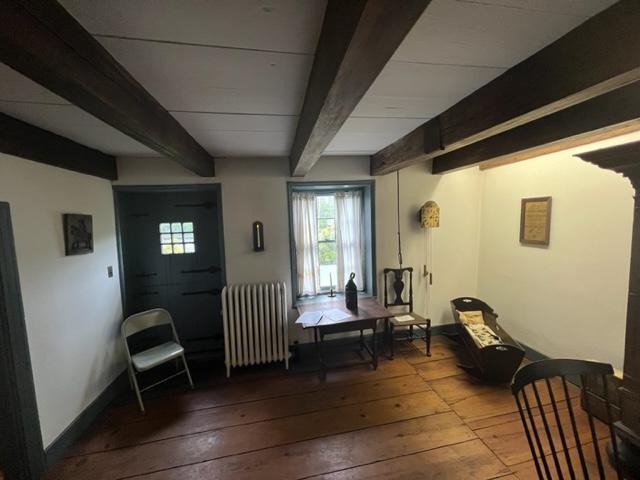
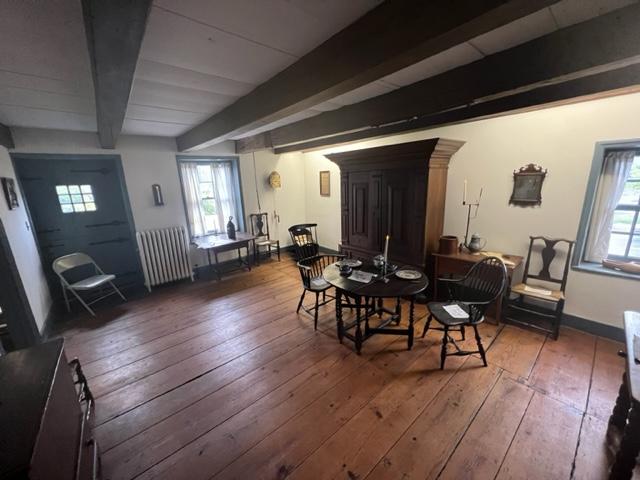
The Campbell-Christie House was used as the ‘pub’ for diners that night

Linda Russell & Company sang Christmas songs of the time and then talked in between about how Christmas was celebrated during the War years. She was a delight in her discussion and her and her daughter and their friend did a wonderful job.

The concert was entertaining, and the talk was interesting in the Van Steuben House

A sample of Linda Russell’s music

It seemed that while the Puritans put a damper on the Christmas holidays in New England the Dutch New Jersey and New York thoroughly enjoyed the holiday season after all their hard work during the Fall harvest months.

What was really nice was the Campbell-Christie House was open as a pub for dinner and light snacks and you could order things like Shepard Pie, Cheese & Onion Pie and Cake doughnuts and gingerbread for dessert while enjoying conversation by candlelight. It was an interesting and engaging history.

The Van Steuben House for the holidays was where the entertainment was that day

The house is nicely decorated for Christmas circa 1778

BCHS Xmas 2020 VI

The Campbell-Christie House at Christmas 2020 Historical Event

BCHS Xmasw 2020

Singer Linda Russell at the Christmas Tour Event at the BCHS 2020

Don’t miss their historic lectures and reenactments during the year. Check their website above for more activities.

https://revolutionarynj.org/event/sing-we-all-merrily-a-colonial-christmas-at-historic-new-bridge-landing-2/2019-12-15/2/

History of the Site:

BCHS Washington's Birthday X

The historic marker of the Campbell-Christie House

The Campbell-Christie House, an 18th century sandstone structure, is located in Historic New Bridge Landing State Park, River Edge. This historic building originally stood at the intersection of Henley Avenue & River Road, in New Milford, NJ. In 1977, in order to save it from demolition, Bergen County purchased and moved it south to this site next to the Hackensack River.

BCHS Washington's Birthday VIIII

The Christie Family Pub sign

The house was used again for a pub for the Christmas concerts that returned to the site in December 2022. The house was set up as a restaurant with a limited menu before and after the concerts. The light fare was catered in and the menu was similar to what people would have eaten at that time but with a modern twist. The food was really good.

The house was used again for a pub on Christmas 2022 for the concert night

The Campbell-Christie House as the Blackhorse Pub for Christmas dinner

My Shepard’s Pie meal for the Christmas concert at the Blackhorse Pub

The Dutch Sweets dessert plate at the Blackhorse Pub in the Campbell-Christie House Christmas 2022

Sandstone houses were built continuously from the Dutch colonization of the 17th century through the founding of the Republic and the early years of the 19th century. The Campbell-Christie House, an outstanding example of this early regional architecture, is a 5 bay, 4 room center all building with two rooms to either side and two interior chimneys. This stone house form seems to have been built mainly after the Revolution and up to the turn of the century. The front wall is built out of well-dressed local sandstone with inset wooden trapezoidal lintels and side composed of roughly coursed sandstone.

BCHS Washington's Birthday VIII

The Campbell-Christie House during Washington’s Birthday Celebration

Historic New Bridge Landing.jpg

The Historic New Bridge Landing Site

Jacob Campbell, at the time of his marriage in 1774 built this house along the road (now Henley Avenue) that led from Old Bridge to the Schraalenburgh Church. Historical evidence records that Campbell, a mason by trade, also ran a tavern in his household. In 1795, the house was sold to John Christie, a blacksmith, who continued as a tavern keeper. Jacob Brinkerhoff-Christie, manager of the Comfort & Lumber Company, eventually inherited this large valuable homestead farm property along the Hackensack River. His son. John Walter, born in the house in 1865, was a famous inventor who built and raced cars (at one time holding the world’s speed record), invented the automotive front-wheel drive and is known as the “father of the modern tank”.

Historic New Bridge Landing Park is located at the narrows of the Hackensack River. Because of its strategic site along a tidal waterway it has been an active area of settlement, trade and commercial activities for thousands of years. The construction of the “New Bridge” in 1744 accelerated development of the area. Because of the nearness to Manhattan, New Bridge Landing was a principal base of operation during the Revolutionary  War and considered an important strategic route, guarded by troops from both sides at different times. General George Washington, who made his headquarters in Zabriske’s house, led his soldiers in retreat across here on November 20, 1776, saving his troops from entrapment by advancing British troops.

On the Hackensack River’s west bank, near the bridge, is the Steuben House. Originally  constructed by Jan Zabriskie in 1753 and doubled in size around 1765, it has been referred to as to as among the five “great houses” of Colonial Bergen County. The third stone house is the 18th century Demarest House, moved to this site in 1956 and owned by the Demarest-Blauvelt Foundation. The Historic New Bridge Landing Park Commission, a partnership of the Bergen County Historical Society, Blauvelt-Demarest Foundation, the County of Bergen, New Jersey Division of Parks & Forestry, New Milford Borough, River Edge Borough and Teaneck Township, operates the New Bridge Landing site.

This site also contains the County-owned 1888-89 Pratt-type, “pony” truss, iron swing bridge, the oldest highway swing bridge in New Jersey. The Campbell-Christie House, along with the other two houses and the bridge, is on the State & National Register of Historical Place. It is the headquarters of the Bergen County Historical Society and furnished with the furniture and collection owned by the Society. Open year round. For the FCHS calendar of event or go to http://www.bergencountyhistory.org.

http://www.co.bergen.nj.us

Kevin Wright’s Lecture on the Site (2015)

(2015 Bergen County Division of Cultural & Historic Affairs)

The Bergen County Division of Cultural & Affairs received an operating support grant from the New Jersey Historical Commission, a division of the Department of the State.

Disclaimer: This information is taken directly form my pamphlet from the Bergen County Division of Cultural & Historic Affairs. The site holds it position in its participation in the Revolutionary War and should not missed. I give them full credit for this information. Please call them for more information.

The reenactment of the Historic Bridge attack during the American Revolution at the Bergen County Historical Society. I give the Historical Society full credit for this information.

The Christie Pub sign

The pub exhibit at the Campbell-Christie House