Tag: ny historic sites

The Vanderbilt Mansion & Estate National Historic Site                                                        4097 Albany Post Road                                                          Hyde Park, NY 12538

The Vanderbilt Mansion & Estate National Historic Site 4097 Albany Post Road Hyde Park, NY 12538

The Vanderbilt Mansion & Estate

National Historic Site

4097 Albany Post Road

Hyde Park, NY  12538

(845) 229-7770

http://www.nps.gov/vama

https://www.nationalparks.org/explore-parks/vanderbilt-mansion-national-historic-site

TripAdvisor Review:

https://www.tripadvisor.com/Attraction_Review-g60801-d105845-Reviews-Vanderbilt_Mansion_National_Historic_Site-Hyde_Park_New_York.html?m=19905

I have visited the Vanderbilt Estate many times over the years and every time I visit I learn something new about the family and about the property. It takes many visits to truly see the beauty of the house and grounds.
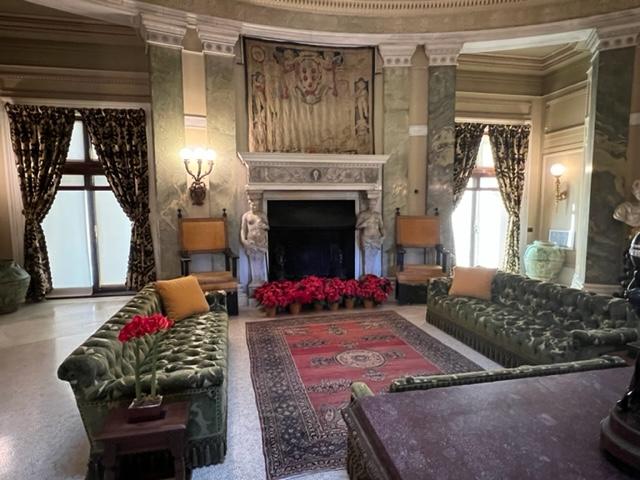
The Vanderbilt Mansion foyer on the first floor decorated for the holidays

I found the best time to visit is in the late Spring as the buds are coming in and Christmas time when the house is decorated for the holidays. It is quite spectacular. The holiday tour is amazing and after Thanksgiving, make a special trip to the Hudson River Valley and go mansion hopping as all the houses are decorated for the holidays.

The Christmas tree in the library of the Vanderbilt Mansion

The tour will take you to three floors of the house: the first floor with the living room, dining room, parlors, and studies. Then there is the second floor with Fredrick, Louise and the guest family and single women rooms. The last floor you will visit is the basement workrooms, servant quarters and kitchen.

On the first floor is the formal dining room and the library, the offices of both Fredrick and Louise for their social and business obligations and the formal receiving foyer of the home. Things were decorated for the Christmas holiday season and it gave a very festive appearance.

The Library was set up for the Christmas holidays

The other side of the Library for the Christmas holidays

The house was only used about four months out of the year, being used in the Spring and then again in the Fall from the end of September to right after Thanksgiving and then the family would go to New York City for the social season. After Louise’s death, Fredrick sold his other houses and moved here permanently. The house was used full time and Fredrick must have enjoyed his time here.

When she was alive, they used to have a very active social life and were active in local affairs. The formal dining room was used for parties and get togethers. For the holiday season, the room was decorated for a formal Christmas dinner.
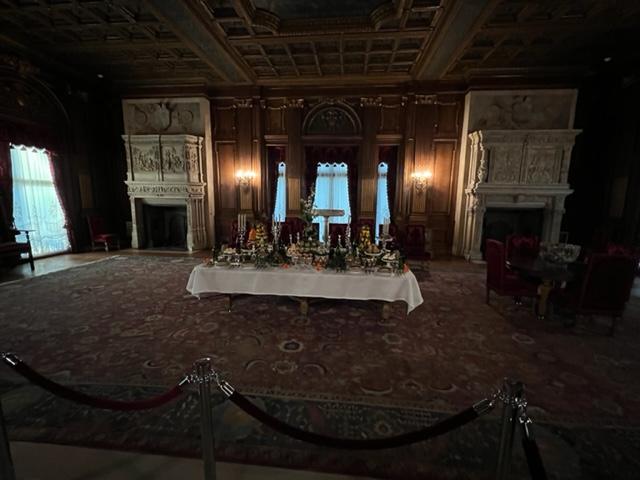
The Dining Room set for holiday dinner
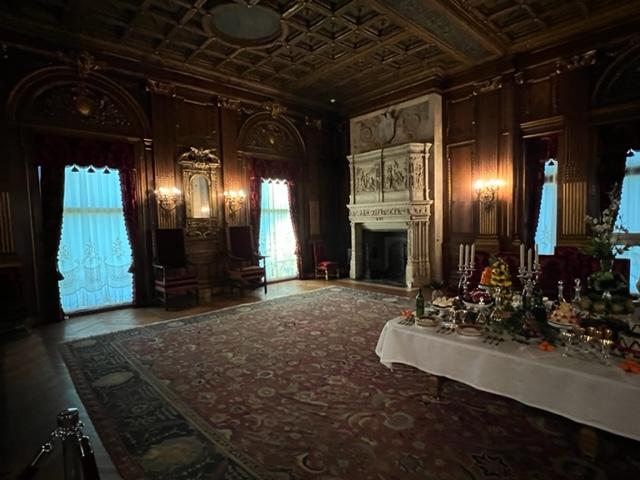
The beautiful fireplaces and paneling of the Dining Room

The Dining Room table set for the Christmas holidays

The formal staircase takes you up the to the bedrooms and the formal baths. The house was one of the first in the community to have electricity and hot and cold running water with all modern plumbing.

The stairs were wide and long due to the ladies dresses of the time

The artwork on the walls and landings was just breathtaking

The artwork on the landings and hallways is magnificent

The bedrooms on the second floor are as elaborate as the rest of the house. While Fredrick’s bedroom was very plain in comparison to Louise’s who designed her bedroom after Marie Antoinette’s that she saw at Versailles. The room has a railing around it.
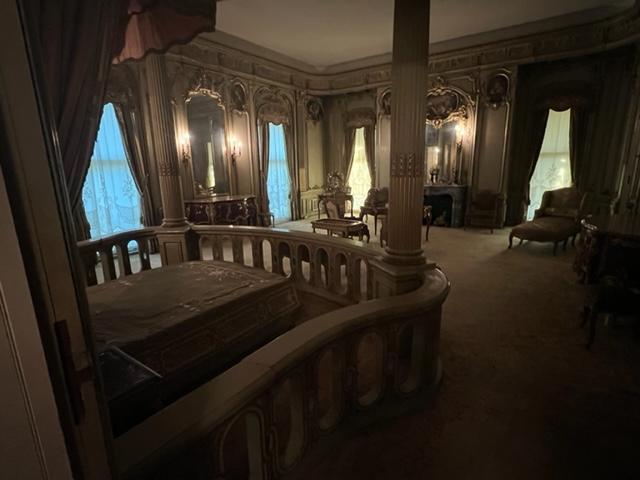
Louise’s Bedroom was based on what she saw in Europe.
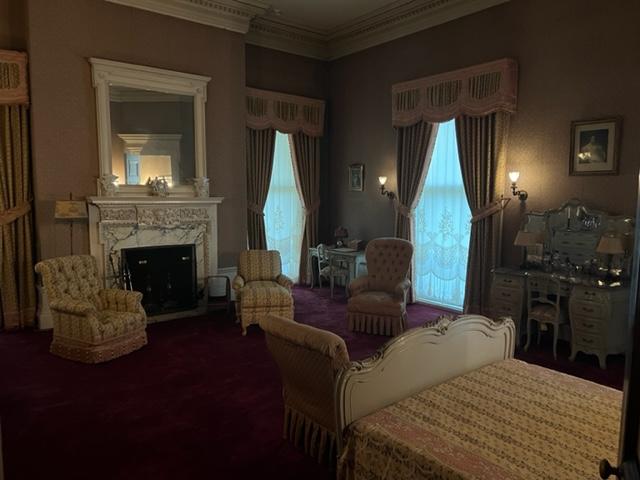
Fredrick’s bedroom is less formal
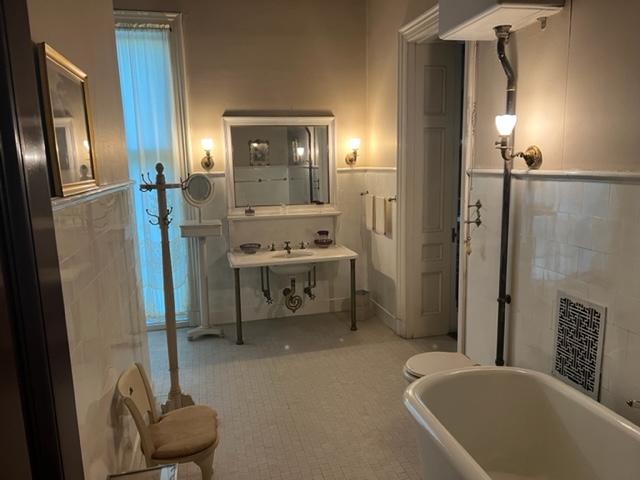
The Bathroom with its modern plumbing and lighting

The elaborate rooms of the Vanderbilt Mansion
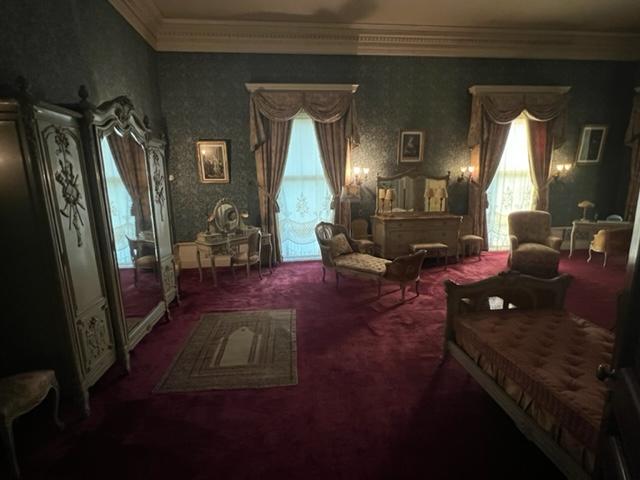
The household had a staff of over thirty people to attend to the household and grounds with their formal gardens. The kitchen staff had a well attended kitchen to work with and according to the tour guide, the staff was well treated at the Vanderbilt mansion. Fredrick was a good boss and provided well for his loyal staff.
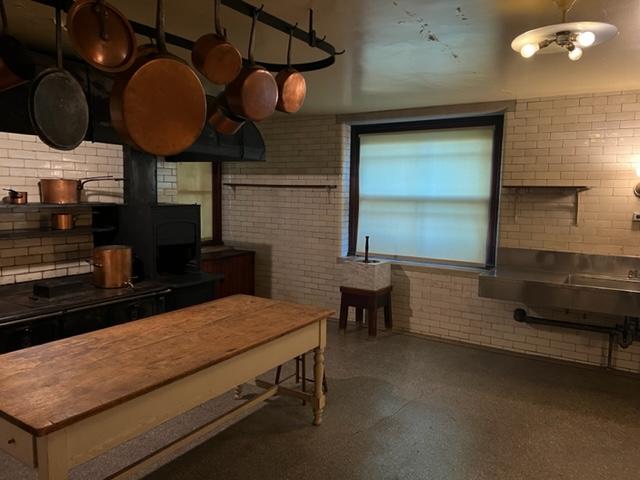
The basement kitchen of the Vanderbilt Mansion

Touring the Vanderbilt Mansion at the Christmas holidays is always a treat but if you miss it, you can go during the year and still the elaborate rooms and beautiful grounds during the summer months. Take time to walk around the extensive lawns and gardens.
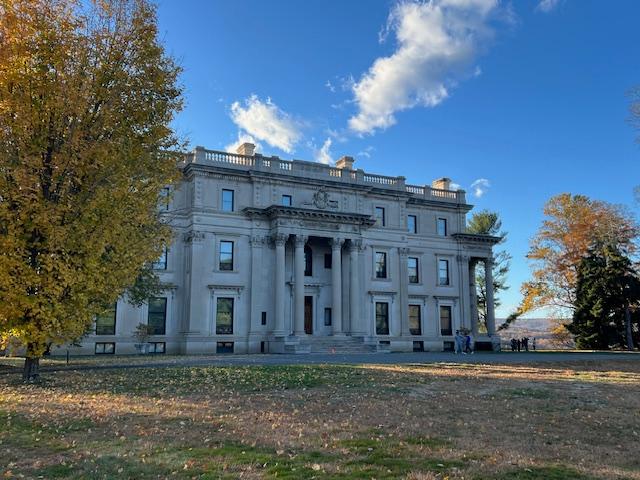
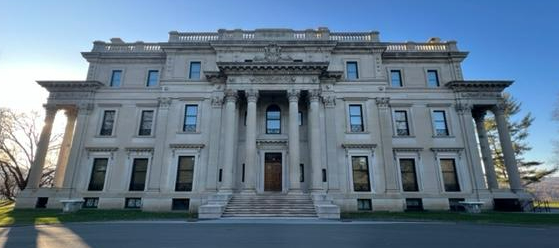
The Vanderbilt Mansion in the Fall of 2024

The Vanderbilt Estate in the Fall of 2024
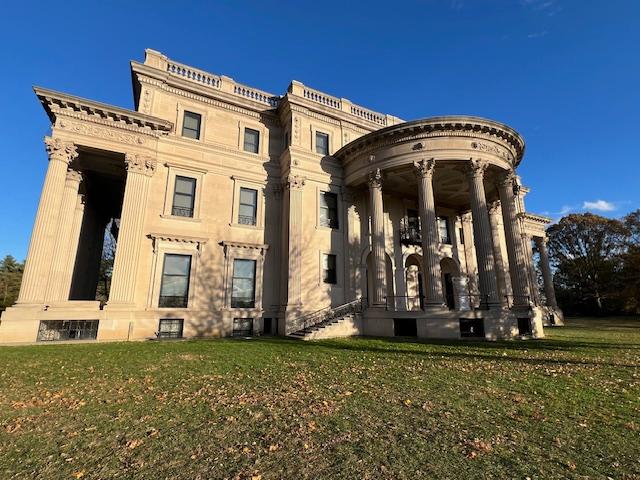
The back of the mansion facing the Hudson River
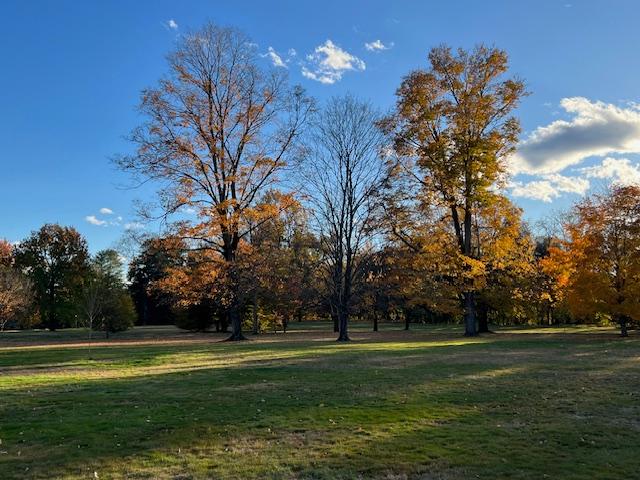
The estate grounds in the Fall of 2024

The estate in the Fall of 2024

History of the Vanderbilt Mansion:

The Gilded Age, the period following the Civil War to the turn of the century, was a time of unparalleled growth in industry, technology and immigration. Captains of industry, men like Cornelius Vanderbilt, Andrew Carnegie, J.P. Morgan, John D. Rockefeller and others who amassed unimaginable wealth, while the average annual income in the US was around $380, well below the poverty line.

The term “Gilded Age” was coined by Mark Twain and Charles Dudley Warner in their 1873 book, The Gilded Age: A Tale of Today. The term refers to the process of gilding an object with a superficial layer of gold to improve its appearance. Established millionaires viewed nouveau riche families like the Vanderbilt’s, who flaunted their wealth by building ostentatious  homes, throwing extravagant balls and using their money to buy social prominence, as gilded-all show, no substance.

Cornelius “Commodore” Vanderbilt (1794-1877) rose from poverty to become a shipping and railroad tycoon. He turned a 100 dollar loan from his parents into a multi-million dollar fortune and left the bulk of his money to his eldest son William.

William expanded the railroad operations doubling the Vanderbilt fortune in just eight years but his eight children lived lives of excess, extravagance and self-indulgence. They built 40 opulent mansions and country estates and entertained lavishly, largely depleting the family money.
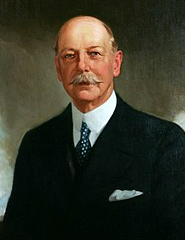
Fredrick William Vanderbilt later in life

In 1895, William’s son, Fredrick (1856-1938) and his wife, Louise (1854-1926) bought Hyde Park to use its their spring and fall country estate. McKim, Mead & White, America’s top architecture firm, designated the mansion in the neoclassical style with Beaux-Arts ornamentation and incorporated the latest innovations: electricity, central heating and indoor plumbing.

They added the Pavilion, a coach house, power station, gate houses, two new bridges over Crum Elbow Creek, boat docks, a railroad station and extensive landscaping. Many of the mansion’s contents were bought in Europe from wealthy families who had fallen on hard times. Furnishings and construction coast totaled around $2,250,000.

Louise Vanderbilt

Hyde Park was in many ways self-sustaining, providing food and flowers for the family’s needs here and at their other homes. When the Vanderbilt’s were in residence, as many as 60 staff worked here. Staff lived on or near the property and attended to the grounds and extensive farm. Personal staff traveled with the Vanderbilt’s and lived in the mansion with the family. Seasonal laborers were hired from the community and lived in the servants’ quarters.

The Vanderbilt Mansion in Hyde Park, NY in Fall 2024
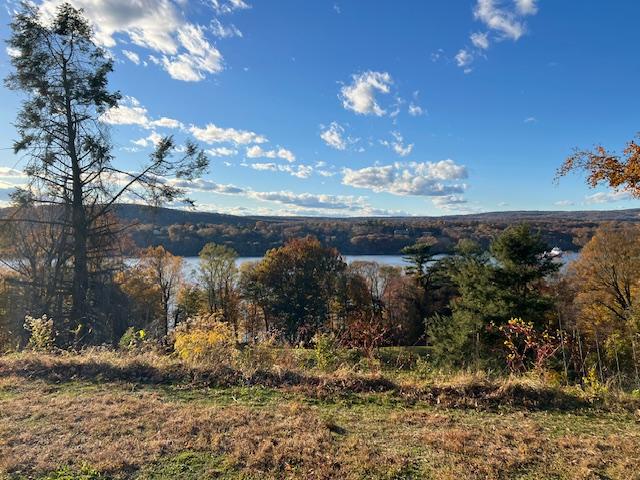
The Vanderbilt Estate in Fall 2024

Fredrick, a quiet man, preferred to avoid social occasions but Louise loved to entertain, throwing lavish weekend parties with horseback riding, golf , tennis and swimming followed by formal dinners and dancing.

When Louise died in 1926, Fredrick sold his other houses and returned to this estate for the last 12 years of his life. He was active in business, directing 22 railroads until his death in 1938. His estate totaled $76 million, over 1.2 billion today. Gilded Age estates like this flourished in the 1890’s until the income tax (1913), World War I (1914) and Great Depression (1930’s) made their upkeep all but impossible.

The couple had no children and left the Hyde Park mansion to Louise’s niece, Margaret Louise Van Alen, who tried to sell the estate but there were no buyers. Her neighbor, Franklin D. Roosevelt, suggested she donate the estate to the National Park Service as a monument to the Gilded Age. She agreed and the Vanderbilt Mansion National Historic Site opened to the public in 1940.

The farmlands were not part of the donation and remain in private hands. The lavish mansion and its contents remain virtually unchanged from the time the Vanderbilt’s lived here.

(The National Park Foundation pamphlet)

The Vanderbilt Family History:

1650: Jan Aertsen Van Der Bilt is the first Vanderbilt ancestor known to reside in American.

1794: Cornelius “Commodore” Vanderbilt born on Staten Island, New York City, to Cornelius and Phoebe Hand Vanderbilt.

1810: Cornelius borrows $100 from parents and buys first two-masted sailing barge to start a ferry service from Staten Island to Manhattan.

1817: Cornelius captains a steamship for Thomas Gibbons and assists in legal battle against steamship monopolies, opening the way for his own shipping business.

1821: William Henry Vanderbilt, one of 13 children and first son, born Cornelius and first wife Sophia.

1830’s-1840’s: Cornelius expands shipping empire, begins railroad management.

1841: William marries Maria Kissam. They have eight children.

1851: Cornelius’ Accessory Transit Company provides shorter, cheaper transportation from New York to San Francisco. He gains national prominence.

1856: Fredrick, sixth child, is born to William and Maria

1861-65: During the Civil War, Cornelius donates steamship to the Union Navy. Receives Congressional Gold Medal. Acquires and consolidates rail lines in the Northeast and Midwest.

1870’s: Cornelius consolidates two core companies, creating New York Central & Hudson Railroad. William slashes cost, increases efficiency, turning it into one of the most profitable large enterprises in America.

1871: Cornelius opens Grand Central Depot on 42nd Street, New York City, the largest train station in North America

1877: Cornelius dies. William inherits most of his father’s fortune, nearly $100 million, to great displeasure of his siblings.

1878: Fredrick graduates from Sheffield Scientific School (Yale). Marries Louise Anthony.

1885: William dies, leaving an estate of $195 million to his eight children.

1895: Fredrick and Louise purchase the Hyde Park estate.

1899: Grand Central Depot is enlarged and becomes Grand Central Station.

1904-13: The new Grand  Central Terminal (GCT) is built in sections on Depot site.  Design insures trains are not delayed.

1926: Louise dies.

1938: Fredrick dies, leave the Hyde Park estate to niece Margaret Louise Van Alen.

1940: Vanderbilt Mansion National Historic Site established.

1949: 65 million passengers pass through GCT, equivalent 40% of the American population.

1950: Glory days of rail travel end.

1967: GCT designated New York City landmark, saving it from demolition.

1968: New York Central merges with Pennsylvania Railroad to form Penn Central.

1970: Penn Central files for bankruptcy and is dissolved by the courts.

1994: Metro-North takes over the GCT operation and restores it to 1913 splendor.

(The National Park Foundation pamphlet)

A legacy of landscape design:

The estate’s landscape was first developed by Dr. Samuel Bard, who died here in 1821. In the European picturesque style, he planted exotic plants and probably the gingko tree, one of the continent’s oldest dating back to 1799. Bard’s son, William sold the to his father’s medical partner, Dr. David Hosack, who built the first formal gardens and greenhouses. After his death, the estate was broken up. Later Walter Langdon Jr. reunited the estate, laid out the formal garden’s and hired Boston architects to design a gardener’s cottage, tool houses and garden walls. These structures, the only ones to pre-date Vanderbilt ownership, still exists. Vanderbilt redesigned the formal gardens and planted hundreds of trees and shrubs. On weekends, Fredrick and Louise liked to walk through the gardens twice a day. Today the landscape, restored to its 1930’s appearance, encompassing five acres of tiered gardens, gravel paths, shady arbors, ornate statues and bubbling fountains.

(The National Park Foundation pamphlet)

Disclaimer: This information comes directly from the National Park Service pamphlet of the Vanderbilt Estate and I give the author full credit on the information. Please refer to the National Park System website for any further information on the site as the hours vary during the different times of the year.
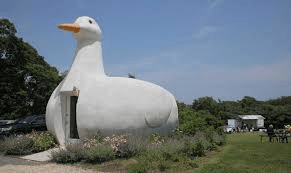
The Big Duck                                                      1012 Flanders Road                                     Flanders, New York 11901

The Big Duck 1012 Flanders Road Flanders, New York 11901

The Big Duck

1012 Flanders Road

Flanders, New York  11901

(631)852-3377

http://bigduck.org/

Open: Sunday-Saturday 10:00am-5:00pm

Fee: Free donations accepted

TripAdvisor Review:

https://www.tripadvisor.com/Attraction_Review-g754554-d3292234-Reviews-The_Big_Duck-Flanders_Long_Island_New_York.html?m=19905

The History of the Big Duck

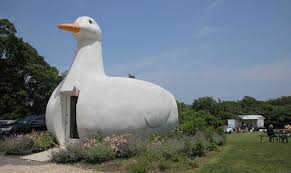
IN 1931, Riverhead duck farmer, Martin Maurer and his wife, Jeule, decided to construct a giant duck-shaped poultry shop. They hoped to sell the Pekin ducks they raised to passing motorists, who would surely be drawn to the striking form of the ‘big duck’ along Riverhead’s West Main Street. The Maurers envisioned this plan while vacationing in California where they are known to have visited a roadside coffee shop shaped like a giant coffee pot.

The Big Duck III

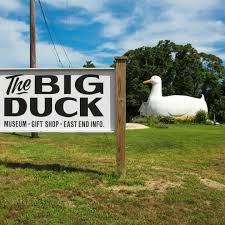
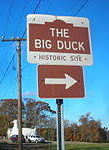
The historic sign

Seeking local assistance, the Maurers hired carpenter George Reeve and two eccentric stage show set designers, brothers William and Samuel Collins. A live duck tied with a string to their porch served as a model for the Collins’ design. Reeve studied the carcass of a cooked chicken in order to create a sturdy, bird-accurate, frame work for the building. Construction of The Big Duck had begun.

After The Big Duck’s wooden frame had been pieced together, wire mesh was attached. Cement was applied to the wire mesh with the assistance of Smith and Yeager Builders. The Big Duck was painted a lovely bright white, save the beak, of course, which was given its street-line orange color. The finishing touch was the placement of two Model-T taillights in The Big Duck’s head for eyes that would glow red at night. The Big Duck in its entirety measures 30 feet from beak to peaky tail, 15 feet from folded wing to folded wing and 20 feet from its base to the top of its head. As duck farms in the 1930’s were commonly known as duck ranches, Martin Maurer had his giant duck shop and business trademarked as The Big Duck Ranch.

The Big Duck II

The Big Duck roosted at The Big Duck Ranch on West Main Street till 1936. The Maurers’ had sold quite a few ducks from their unique shop and decided to relocate, Big Duck and all, to Route 24 in Flanders. The Flanders community welcomed The Big Duck with open arms and have cherished it since.

The Big Duck’s popularity grew and continues to grow steadily. When the land where The Big Duck rested was slated for development in 1987, Big Duck fans from all over joined Suffolk County in an effort to preserve The Big Duck. The Big Duck’s then current owners, Kia and Pouran Eshghi, generously donated The Big Duck to Suffolk County in December of 1987. The Big Duck was relocated to a nearby County Park. In 2007, since the former site had not been developed after all, the Big Duck was returned to the heart of Flanders.

The Big Duck is open to the public as a gift shop and museum. Visitors can browse historic photographs, antique postcards and published articles as well as photos of roadside architecture on display. Unusual duck merchandise or ‘duck-a-billia’ as well as other Long Island  gifts and handcrafted items are available for sale.

The Bid Duck

World Famous Duck Architecture

While The Big Duck is a well-known Long Island landmark, it has also lent its name to a specific style of roadside architecture. The architectural term, “duck” was coined by architects Robert Venturi and Denise Scott Brown in 1968. Duck buildings are highly sculptural forms which represent products or services available within as opposed to the more common ‘decorated sheds’ which are plain buildings whose functions are revealed by added signage.

Within Suffolk County’s Big Duck as with other architectural ducks, the building itself is the signage, a colossal, three dimensional, representational advertisement. Designed to mesmerize passing motorists and entice them ultimately to a purchase, ducks are fantastical while retaining their purely practical intentions. The Big Duck has become the most famous example of roadside architecture.

Another well-known architect named James Wines has proposed the Duck Design Theory, D.D.T., part of which states: ‘Form follows fantasy not function for architecture that cannot offer fantasy fails man’s need to dream.’

Long Island Duck Farms and its history:

How did the Pekin duck get to Long Island? According to legend, in 1870, a Long Island sailor traveled to China and returned with nine of the snowy-white, orange-beaked Pekin ducks. These ducks thrived on Long Island’s splendid waterways when shelter was provided them for the cold winters.

As Pekin duck meat was especially succulent, it marketing potential soon became evident to potential soon became evident to Long Islanders. Duck farms, sometimes known as duck ranches, sprang up all over Suffolk County, producing 60% of the nation’s ducks by 1969. Today that figure has dropped to below 15% due to escalating land values, increased production costs and environmental concerns.

Long Island duckling can still be found as a menu offering at the finest restaurants around the world.

The Big Duck Museum Store features many duck-inspired souvenirs. Find Big Duck t-shirts, caps, magnets, key chains, mugs, note cards, holiday ornaments and children’s items as well as other Duck-a-bilia. Also find many local products: Books on local history, Long Island seaside photography and artwork, hand-crafted items. calendars, post cards and much more.

Directions:

From Western Long Island:

From the LIE, exit 71 take Route 24 south through the Riverhead traffic circle. Cross Route 105 and continue 1 mile on Route 24 to The Big Duck on the left, right after Huntington Lane.

From the Sunrise Highway, take exit 64N (Riverhead), make a right onto Pleasure Drive, Flanders. At a right onto Pleasure Drive, Flanders. At the end, make a left onto Route 24. The Big Duck is on the right, after the access road to the Flanders Men’s Club.

From Eastern Long Island:

From the Sunrise Highway, take exit 65N, Riverhead and travel 5 miles on Route 24 to The Big Duck on the right after the access to the Flanders men’s Club.

Disclaimer: This information was taken directly from the Suffolk County Department of Parks, Recreation and Conservation Division of Historic Services pamphlet. The Big Duck is very unusual to visit and has bathroom facilities.


Franklin D. Roosevelt Four Freedoms Park             1 Four Freedoms Park                                Roosevelt Island, NYC 10044

Franklin D. Roosevelt Four Freedoms Park 1 Four Freedoms Park Roosevelt Island, NYC 10044

Franklin D. Roosevelt  Four Freedoms Park

1 Four Freedoms Park

Roosevelt Island, NYC, NY 10044

(212) 204-8831

Open: Sunday-Monday 9:00am-5:00pm/Tuesday Closed/Wednesday-Saturday 9:00am-5:00pm

Fee: Free

TripAdvisor Review:

https://www.tripadvisor.com/Attraction_Review-g60763-d3595273-Reviews-Franklin_D_Roosevelt_Four_Freedoms_Park-New_York_City_New_York.html?m=19905

The park on a sunny July day

Franklin D. Roosevelt Four Freedoms Park is the first memorial dedicated to the president in his home state of New York. Located on the southern tip of Roosevelt Island in New York City, it is the last work of Louis I. Kahn, an iconic architect of the 20th Century.

The interior of the park facing Roosevelt Island

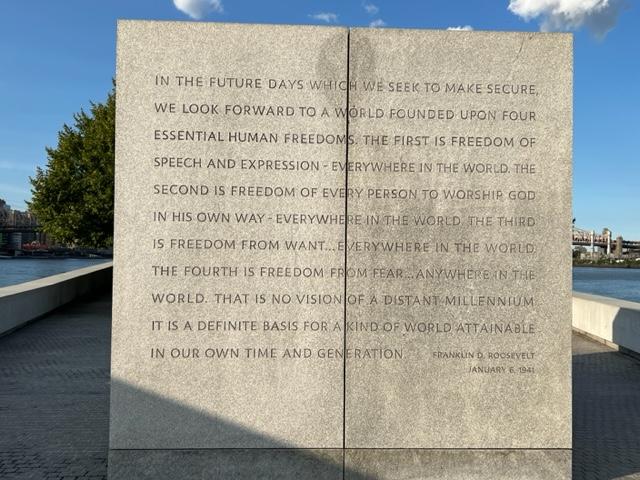
The memorial, which opened to the public in October 2012, celebrates the four freedoms, as pronounced in President Roosevelt’s famous January 6, 1941 State of the Union address: freedom of speech and expression, freedom of worship, freedom of want and freedom from fear. This has been prominently etched on the memorial.

FDR Four Freedoms Park

FDR Four Freedoms Park from a view

Our Mission:

As steward of this civic space, Four Freedoms Park Conservancy advances President Roosevelt’s legacy and inspires; educates and engages the public in the ideals of the four freedoms. The Conservancy does this by:

*Safeguarding the memorial as a space for inspired use.

*Fostering community and understanding.

*Igniting conversation about human rights and freedoms today.

The Four Freedoms that were the goals of the President

On January 6, 1941, President Franklin D. Roosevelt delivered his eighth State of the Union address, now known as the Four Freedoms speech. In his address, Roosevelt presented his vision for the world, “a world attainable in our own time and generation,” and founded upon four essential human freedoms: freedom of speech and expression, freedom of worship, freedom from want and freedom from fear.
Roosevelt’s call for human rights has created a lasting legacy worldwide, forming the basis for the Universal Declaration of Human Rights adopted by the United Nations in 1948.

For a richer of FDR, his legacy and the four freedoms, visit fdr4freedoms.org.

The view from Roosevelt Island of the Upper East Side

Franklin D. Roosevelt Island: A History

Originally called Minnahannock by Native Americans and Varkins Island  by the Dutch settlers, the island was acquired by the Blackwell family in the 1600’s, who renamed the land Blackwell Island. The Blackwells lived on and farmed it before selling it to the City of New York in 1828 for $30,000.

In the 19th Century, the island was used by the City for institutional facilities, including the Workhouse, Penitentiary, Lunatic Asylum, City Hospital and City Home and given the name Welfare Island in 1921. These institutions served the City until the 1930’s., before gradually being relocated to areas more easily accessible to public transportation.

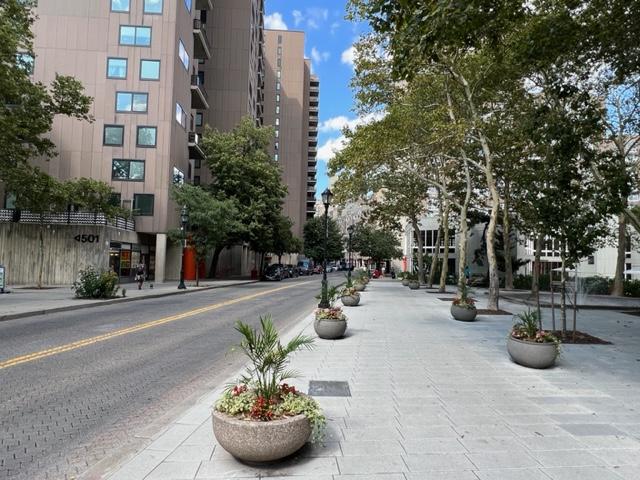
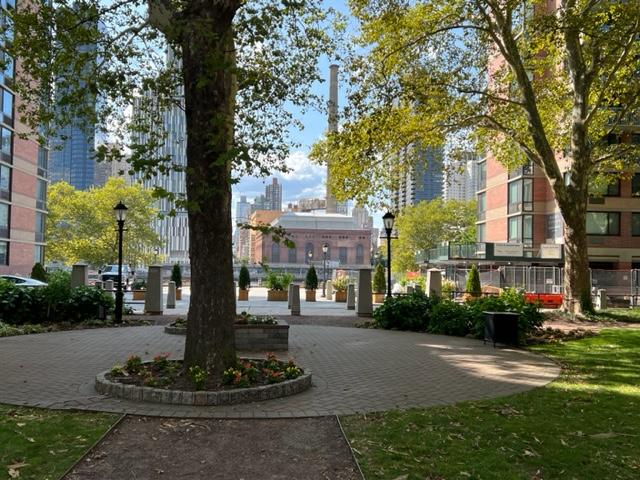
The Roosevelt Island Main Street

In 1969, this two-mile island was lease to the State of New York for 99 years. Under New York State’s Urban Development Corporation, Welfare Island  became a beacon for the affordable housing movement within the City. Construction of the Island community was completed in 1975 with four housing developments. In 1973, the island was renamed Franklin D. Roosevelt Island.

The Gardens in the Main Street of Roosevelt Island

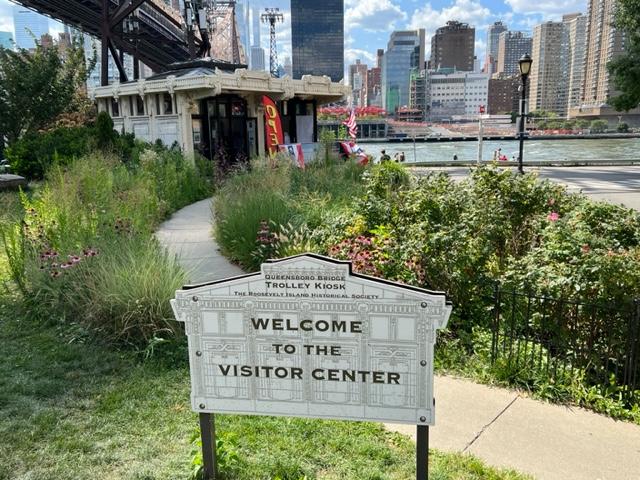
Today, Roosevelt Island has a small town feel with approximately 20 buildings and 14,00 residents. The island is home to six landmarked structures and proudly houses Four Freedoms Park, one of the original visions for the Island. To learn more, visit the Roosevelt Island Visitor Center at the Tram Plaza.

The Visitors Center at Roosevelt Island

(Judith Berdy, President, The Roosevelt Island Visitor Center)

A Memorial to Franklin D. Roosevelt

Nearly 40 years before the Park opened its gates to the public, Louis I. Kahn presented his vision for what would become Franklin D. Roosevelt Four Freedoms Park. It was a simple idea. “I had this thought,” Kahn said. “that a memorial should be a room and a garden.”

The FDR Hope Memorial

This was 1973. Less than a year later, Khan had died; Governor Nelson Rockefeller, who had announced the project with Mayor John  Lindsay, became Vice President of the country and the City of New York neared bankruptcy.

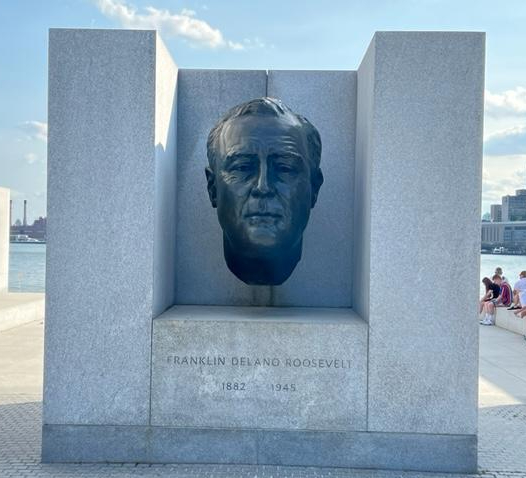
The bust of President Roosevelt

The future of the memorial seemed a fragile and tenuous dream. Yet, through the power and determination of a small but dedicated group, nearly four decades after Kahn completed his architectural design, Four Freedoms Park became the place he envisioned. In 2012, following 30 months of construction, the Park opened to the public. The Park is operated and maintained by Four Freedoms Park Conservancy in partnership with New York State Parks.

(Part of the New York State of Opportunity: Parks, Recreation and Historic Preservation)

I admired the FDR Hope Memorial in which the statue of the President reaches to a young girl with a disability herself. The statue offers encouragement to those with a disability and the power to persevere.

http://www.fdrhopememorial.org/

FDR faces the young girl

the young girl facing FDR

The statue was designed by artist and sculptor Meredith Bergmann, who herself was inspired by the photos and stories of the President (FDR Hope Memorial).

Artist Meredith Bergmann (Cooper Union Alumni Picture)

https://meredithbergmann.com/

Ms. Bergmann is an American born artist with BFA from The Cooper Union School of Art and attended Parsons School of Design and Wesleyan University. Her public works explore history, social justice, human rights and disabilities (Author’s bio).

Franklin D. Roosevelt Four Points Freedom Park is the first memorial dedicated to the president in his home state of New York. Located at the southern tip of Roosevelt Island in New York City. It is the last work of Louis I. Kahn, an iconic architect of the 20th century.

FDR Four Freedoms Park

The memorial, which opened to the public in October 2012, celebrates the four freedoms, as pronounced in President Roosevelt’s famous January 6, 1941, State of the Union address: freedom of speech and expression, freedom of worship, freedom from want and freedom from fear.

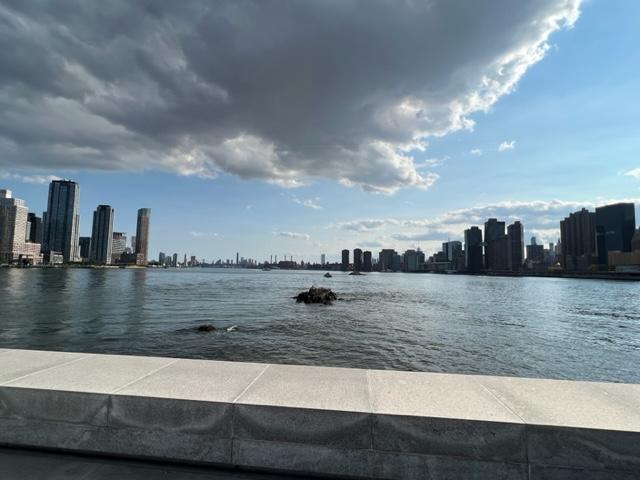
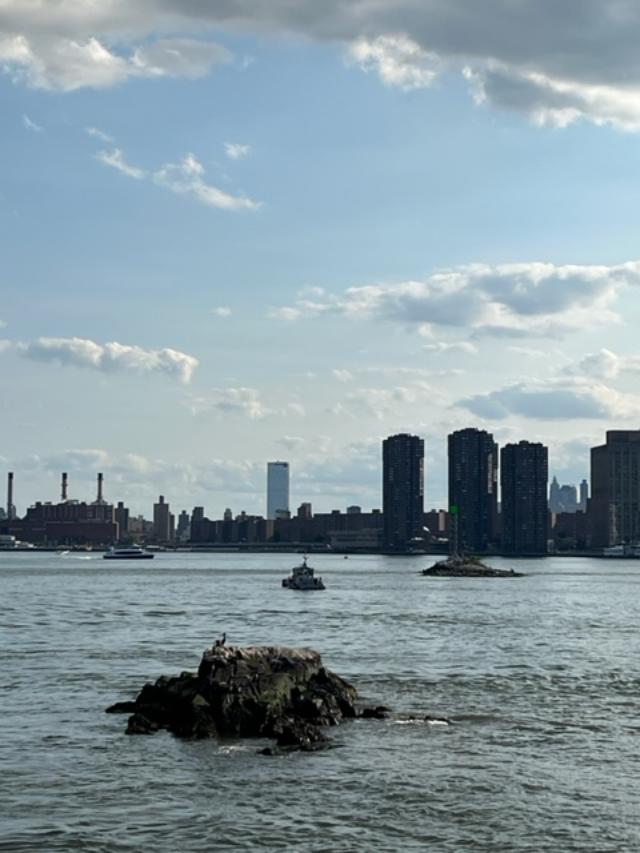
The skyline from the southern part of the park.

Disclaimer: this information was taken from the NYS Parks, Recreation and Historic Preservation pamphlet. Please call the park or email to check on opening times when in season.

The islands just south of the park.

Historic Old Dutch Church                                                      272 Wall Street                                                               Kingston, New York 12401

Historic Old Dutch Church 272 Wall Street Kingston, New York 12401

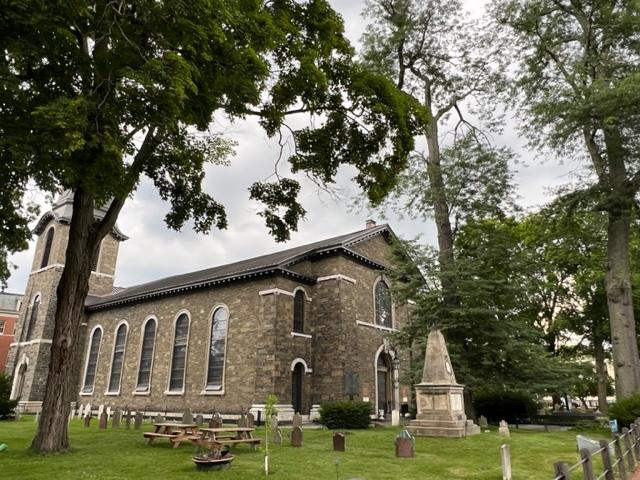
The Historic Old Dutch Church

272 Wall Street

Kingston, New York  12401

(845) 338-6759

Church office Hours 10:00am-3:00pm weekdays (845) 338-6759

http://www.olddutchchurch.org

info@olddutchchurch.org

*Note from the Blogger: this church is where every year the ‘Sinterklaas Committee’ has there annual fundraiser. The inside is beautifully decorated for the holidays and the food is wonderful. Check out the Sinterklaas Rhinebeck, NY website for more special events.

TripAdvisor Review:

https://www.tripadvisor.com/Attraction_Review-g48003-d7232701-Reviews-Old_Dutch_Church-Kingston_New_York.html?m=19905

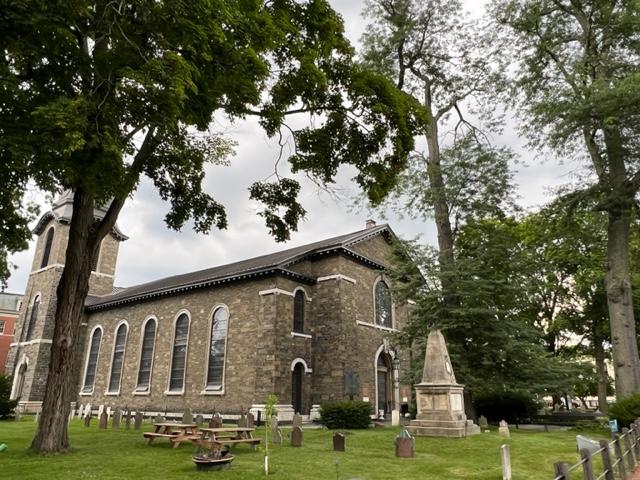
The Church during the Summer months

The Old Dutch Church cemetery during the day.

I recently attended the Annual “Cemetery Walk” of the Old Dutch Church in Kingston, NY, where they have actors playing famous people who are buried at the church.

The cemetery during the day

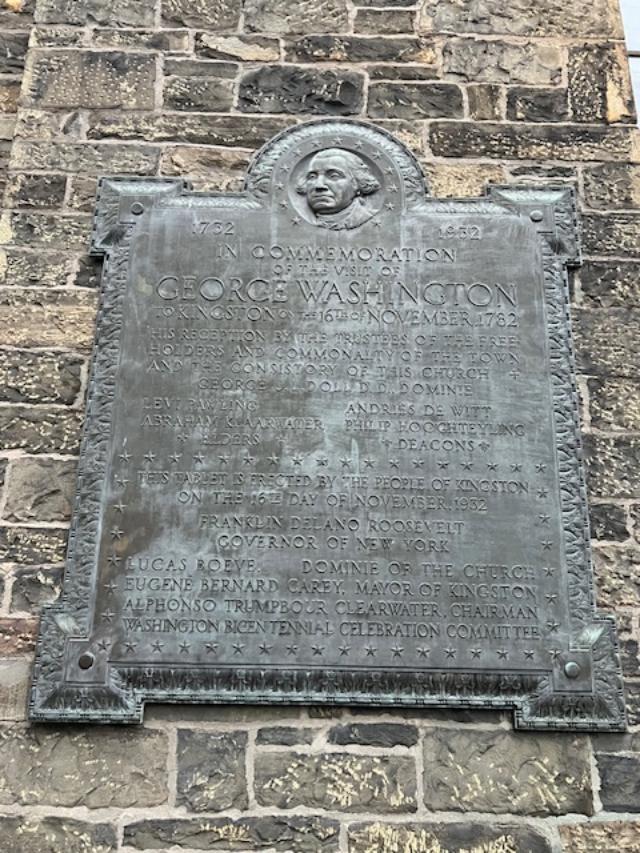
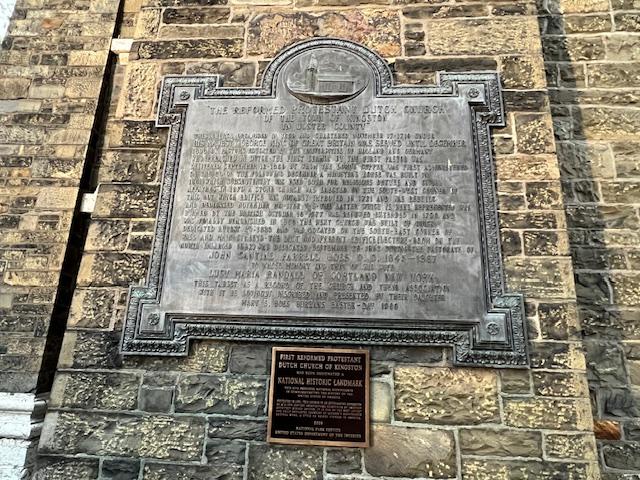
The historic plaques outside the entrance to the church

The historic plaque outside the entrance of the church

The Cemetery Walks during Halloween:

We went through the cemetery and one by one we met actors who played the roles of Sadie and Elsie Reher, whose family owned the bakery in the Kingston Roundout, Jenny, slave who was living in Upstate New York at the time of slavery in New York, Calvert Vaux, the famous landscape artist of Central and Prospect Park fame, who also designed many homes and buildings, Emily Chadbourne, the art collector, philanthropist and socialite. To round off the cast there was Rachel Hasbrouck, the landowners and Father Devine, a spiritual leader of the 1930’s.

The Cemetery Walk at the Old Dutch Church in Kingston, NY

We spent about fifteen minutes with each character and than would hear the cow bell and move onto the next character. It is a lot of walking around a cemetery in the dark and a few people could not handle it.

The graveyard is scary but inviting at night

The only problem with the event was that the actors took it upon themselves to relate their characters to modern times and what is going on in the world today and I did not take a tour to hear their political views. That put a damper on the evening. They are supposed to stay in the era their character was born into. The tour covered three centuries of residents of Kingston, NY.

The graveyard at night

Sinterklaas Fundraisers:

Take some time to come to the church during daylight hours and see the cemetery on your own time. It is very interesting and gives you a perspective on the role of the church from colonial to modern times.

I also had been up to the church many times for Sinterklaas fundraisers, where we were treated to Dutch “Sweets & Treats” along with a visit from Sinterklaas (Santa Claus). It was always a nice night of music and entertainment.

The Sinterklaas fundraiser “Sweets & Treats” used to be held at the Old Dutch Church in Kingston, NY.

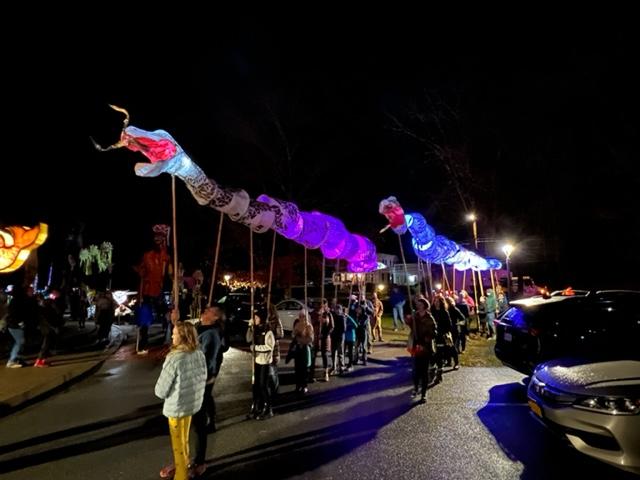
During the recent “Snowflake Festival” in 2022, the church was the host to many groups of fiddlers. The whole church was decked out for the Christmas holidays. Both inside and outside the church was decorated for the Christmas holiday season. It was just gorgeous.

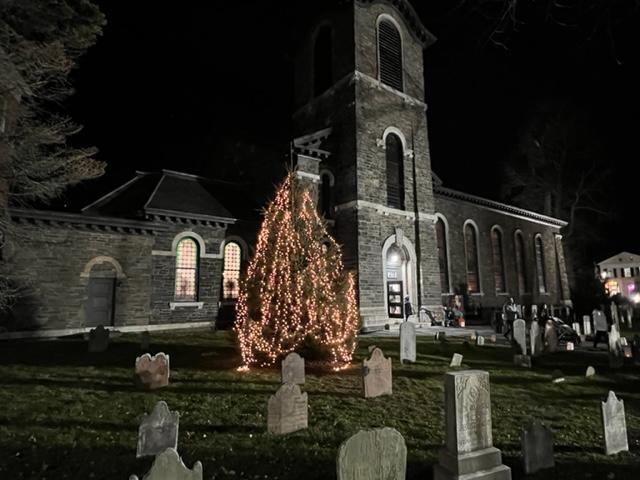
The front of the church during the Kingston Snowflake Festival in 2022

The Dutch Reformed Church’s Christmas tree was very traditional at the Snowflake Festival.

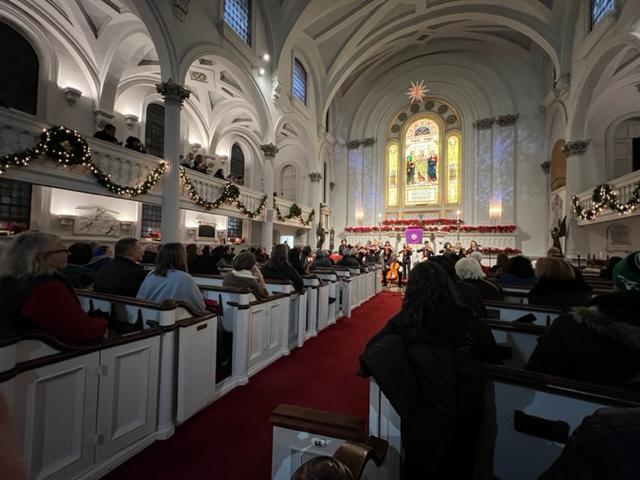
The fiddlers packed the church for the concert. It was nice to see the church during the Christmas holiday season which was decked out with traditional holiday decorations. The concerts were a lot of fun and the groups were excellent.

The fiddler groups entertained us that night

The History of the Old Dutch Church of Kingston, NY:

(from the church website)

The Front of the Old Dutch Church

Founded in 1659, the Old Dutch Church is often referred to as “Kingston’s Cathedral”. The present structure was designed by Minard LeFever and built in 1852. Architect Calvert Vaux said of this design, “I cannot change a thing without impairing the exquisite unity. It’s ideally perfect.”

The church and the cemetery

Organized in 1659:

*Sixth Oldest Reformed Church in North America.

The Old Dutch Church from the front

*Archives containing Baptism and Marriage Records dating back from 1660 to present.

*The Land on which the church stands was a gift from Peter Stuyvesant.

*Fifty Reformed Churches in the Hudson Valley, New Jersey and Pennsylvania trace their roots to Old Dutch Church, Kingston.

The War Memorial at the Old Dutch Church

*The ancient churchyard is the resting place of 1400 early settlers, including 77 Revolutionary War veterans and first New York Governor and two-time Vice-President, George Clinton.

The churchyard and the George Clinton grave

*Inside in the church: the magnificent Tiffany Window above the pulpit; bronze angels and the spectacular Moeller Organ.

*Visitation site of both Queen Juliana and Queen Beatrix of the Netherlands.

Tours and information talks given by Old Dutch Church guides are available by appointment.

Sunday Morning Worship: 10:30am

Old Dutch Church Kingston NY II

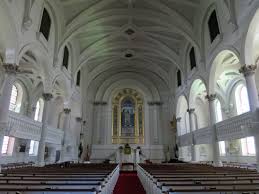
The inside of the church

The church during the recent ‘Kingston Snowflake Festival”

The Church during Christmas in 2024:

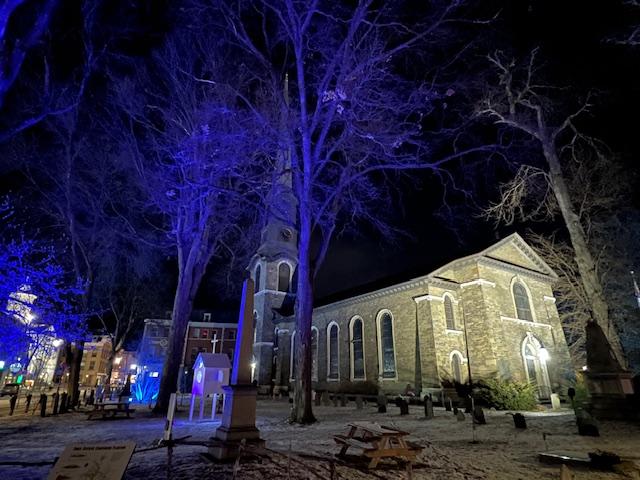
The church on a quiet evening during December 2024

The church decorated at Christmas time

The front of the church at night

*Disclaimer: this information was taken from the Old Dutch Church pamphlet. The church is the site of the annual fundraiser for the Sinterklaas festival every November. Please check out the Sinterklaas festival calendar every year for updates. The church cemetery is worth the visit alone with all the unique and historical people buried here.