Tag: NJ Historical Sites

Maywood Station Museum                                 269 Maywood Avenue                              Maywood, NJ 07607

Maywood Station Museum 269 Maywood Avenue Maywood, NJ 07607

Maywood Station Museum

269 Maywood Avenue

Maywood, NJ  07607

(201) 845-3323

http://www.maywoodstation.com

http://www.maywoodstation.com/

https://www.facebook.com/MaywoodStationMuseum/

Open: Times Vary; please check their website

Admission: Free

TripAdvisor Review:

https://www.tripadvisor.com/Attraction_Review-g46608-d2661796-Reviews-Maywood_Station_Museum-Maywood_New_Jersey.html?m=19905

The Maywood Railroad Museum at 269 Maywood Avenue

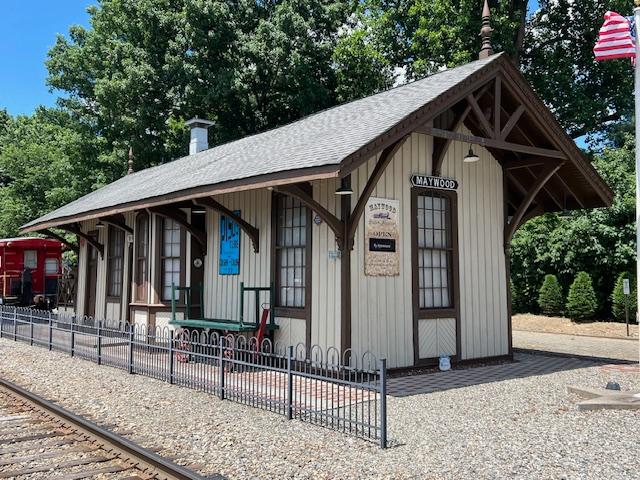
This National Registered restored 1872 New York, Susquehanna & Western railroad station, one of oldest in New Jersey, is located in the heart of Maywood, NJ. Restored by the Maywood Station Historical Committee and opened in September 25, 2004, it contains an extensive railroad museum and collection. The site also contains a restored caboose and engine.

The museum sign welcomes you

I visited the Maywood Station Museum when it was open recently and found a fascinating collection of railroad memorabilia, Maywood fire department history and early maps of the town of Maywood. It is a treasure trove of articles for people who like to study railroad history especially its growth in small towns, early stages of industry in the town and in New Jersey.
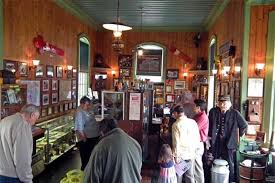
Maywood Station Museum IV

The inside of the station museum

There is a lot of items that show the history of rail service not just on the train but in the station as well. There are antique desks, phones, ticket takers, mailboxes, benches and pictures all from the turn of the last two centuries.

The Maywood Station Historical Committee (MSHC) division of New York, Susquehanna & Western Technical & Historical Society operates the Maywood Station Museum and is chartered as a tax-exempt, 501(c)3 non-profit, educational and historical organization with a mission to preserve our railroad and cultural heritage through restoration and preservation, historical awareness, archiving and interpretation, museum open houses, meetings and special events (Maywood Station Museum Committee).
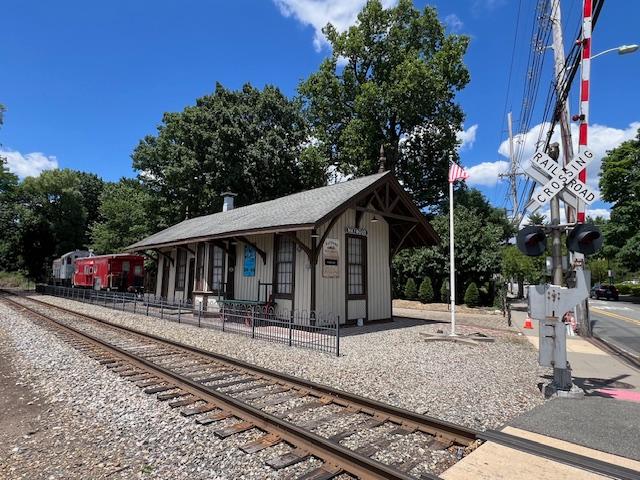
The museum complex

The museum is operated and staffed by the volunteer membership of the Maywood Station Historical Committee. The main focus of the museum is concentrated on the history of Maywood Station and the New York, Susquehanna & Western Railroad and the roles they played in the development of the Borough of Maywood and the surrounding area. The museum collection contains hundreds of photographs, displays, documents, maps and artifacts covering the histories of Maywood Station, the NYS&W and local railroads, the Borough of Maywood and the local region, which are changed periodically and designed to entertain and educate visitors of all ages as well as offer a virtual timeline to these subjects.
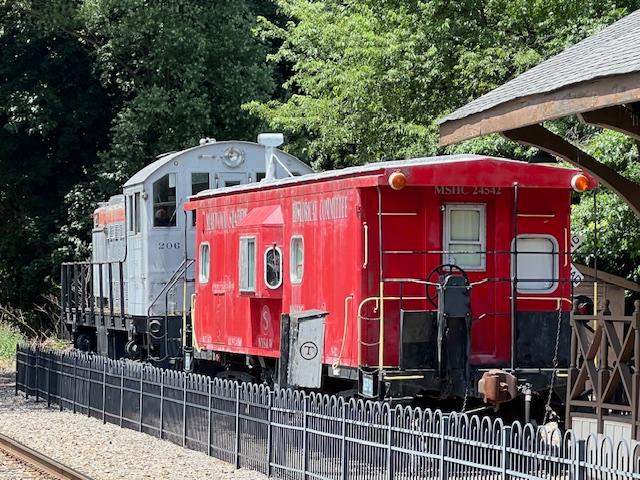
The Museum and Railroad Car

Maywood Station Museum is also the official site of the New York, Susquehanna & Western Technical & Historical Society’s (www.nyswths.org) archive, which contains thousands of drawings, maps, track diagrams, photos, timetables, documents and records covering the history of the New York, Susquehanna & Western Railroad (Wiki).

For those interested in historical buildings, meticulous care has been taken by the Maywood Station Historical Committee to show the museum in a historical context.  The museum features the original woodwork painted and stained in the original colors and original Maywood Station furnishings have been restored and displayed such as the potbelly stove, station agent’s desk, chairs, telegraph keys and freight scale. Victorian-period original light fixtures and sconces adorn the ceilings and walls. Additional items have been painstakingly reproduced to the exact original specifications of over one hundred years ago including the station benches and bay window area (Wiki).

The Maywood Station Museum collection includes a former Penn Central/Conrail N-12 class caboose, which was restored by Maywood Station Historical Committee members. Visitors to the Maywood Station Museum are invited to come aboard Caboose 24542 and view additional displays and an operating model train layout. The Maywood Station Museum collection also includes original New York, Susquehanna & Western Railroad ALCO Type-S-2 Locomotive #206, which has also been restored by Maywood Station Historical Committee members (Wiki).

On September, 10, 2009, NYS&W S-2 #206 was placed on the State of New Jersey Register of Historical Places. The locomotive was placed onto the National Register of Historical Places on March 19, 2010 (Wiki).

The History of Maywood Station:
Maywood Station Museum III

The Museum Logo

In 1871, the New Jersey Midland Railway, predecessor of today’s New York, Susquehanna & Western (NYS&W), began constructing a rail line between Newfoundland, NJ and Hackensack, NJ.  The line was part of a plan to connect with the New York & Oswego Midland (later New York, Ontario & Western) in Middletown, NY and provide rail service from the Great Lakes to New York Harbor. The residents of what would later become Maywood, which at the time was part of an area called Midland Township, saw the advantages of the new railroad and requested a stop be made.

At the time, approximately 13 homes with nearly 90 residents were in the boundaries of today’s Maywood. Soon afterward, construction of Maywood Station began. On March 11, 1872, the New Jersey Midland commenced operating trains on the new line and Maywood Station formally opened in the same paint colors you see it restored to today. Six passenger trains a day in each direction initially stopped at Maywood. It should be noted that for a brief period after that station opened, the station sign said “West Hackensack” but this removed due to the requests of local residents who wanted the station named “Maywood”, as the immediate area surrounding the station had then become known (Maywood Station Museum).

A station agent was employed and it is believed that the first agent was name George Sipley. The station agent handled passenger  baggage, freight shipments to and from the station, passenger ticketing and general functions in addition to performing the job of postmaster. In the 1872 to 1910 period, Maywood Station served as Maywood’s post office at various times when it wasn’t housed in a local merchant’s store. Another station agent/postmaster was Charles M. Berdan, who held this position in the late 1890’s into the early 1900’s. Mr. Berdan’s home was located directly across Maywood Avenue from the station and exists today. Maywood Station was also equipped with a telegraph so that the railroad could communicate between their stations and local residents could send messages around the world. The station also offered Wells Fargo and later, Railway Express Agency delivery services. These services lasted into the 1960’s (Maywood Station Museum).

When Maywood Station was built, it originally located on the south side of the current tracks. In 1893, the station was moved to its present location on the north side of the tracks due to the addition of a second set of tracks being constructed and a purchase of additional land by the railroad. At the time, several additional NYS&W stations along the line were similarly moved for the same reason. When the station was moved, it was jacked up onto the rails, the rails greased, spun around and slide approximately 30 feet closer to Maywood Avenue, then jacked up again and moved to its present  location. A new foundation was also added. It is interesting made at this time including the addition of a freight platform at the “new” rear of the station.

The Maywood, NJ Railroad Museum

The spot where Maywood Station was moved to originally included a passing siding where steam locomotives were stationed to be added, when necessary to help heavy freight trains on the several grades encountered heading west on the line. When the station was moved, the passing siding was cut back and one of the two switches was removed. The remaining trackage was then used to store freight cars, which were unloaded at the station. The siding started to the west of the station and ran 440 feet to near the rear freight platform of the station. The siding was last used in the early 1970’s and remnants of it can be seen today (Museum Station Museum).

In 1894, the approximate 1.1. square mile area that included Maywood Station, formerly part of Midland Township was incorporated as the Borough of Maywood. Also that year, the NYS&W expanded into western New Jersey and through its Wilkes-Barre & Eastern Railroad subsidiary, into the coal fields in the Pocono region of northeastern Pennsylvania. The rail line could now take a passenger from a ferry at New York City to a connection at Jersey City, NJ to almost Scranton, PA on its own rails. The added ease of transportation began to attract manufacturing to Maywood as well as a demand for new homes. In 1894, the total residents living in Maywood numbered approximately 300 but this was about to change (Maywood Station Museum).

New manufacturing and homes sprang up in the area surrounding the station and included such industry as Schaefer Alkaloids Company, Maywood Chemical Company and Maywood Art Tile Company. As these companies expanded so did Maywood’s population and by 1920 it numbered nearly 3000 (today Maywood has approximately 9,500 residents). The 1920’s also marked the height of passenger service provided by the NYS&W at Maywood Station. Thirteen passenger trains in each direction stopped at Maywood Station on a daily basis. Freight shipments continued to be delivered to the station and most of the local industry had their own rail sidings serving their plants. The NYS&W was enjoying a period of posterity and in 1920, a freight house addition was added to rear of Maywood Station and the exterior walls received a stucco finish over the existing boards and battens.

Stucco was in-vogue in the 1920’s and the NYS&W applied this material to several other stations on their line as well. In 1926, another round of various improvements were made at Maywood Station including the addition of interior men’s and women’s bathrooms, an 8-inch concrete floor installed to replace the wooden floor planking plus electrical and heating improvements. Unfortunately the Great Depression stuck in October 1929 and lasted well into the late 1930’s and the growth slowed dramatically.  In 1937, the NYS&W declared bankruptcy and shortly thereafter was spun off from its parent, the Erie Railroad, which had controlled it since 1898. Around the same time, Maywood Station’s bay window was removed due its deteriorating condition (Maywood Station Museum).

The newly independence NYS&W fought hard to survive and cut back certain services but at the same time tried innovative concepts like streamlined, self-propelled, rail passenger cars as a way of cutting costs while boosting efficiency. The railroad also quickly retired its steam locomotives and replaced them with more efficient diesel locomotives stating in 1941 and completed the program in 1947. During World War II, the fortunes of the NYS&W did improve with the wartime demands placed on America’s railroads. As in World War I, many of Maywood’s servicemen departed through Maywood Station, some never to return. By 1953, the NYS&W was solvent once again but only for a few more years. Faced with mounting losses from the passenger services it offered and America’s love affair with the automobile and a new interstate highway system, the railroad once again embarked on a period of reducing their passenger train schedules.

Losses continued and on June 30, 1966, the last passenger train called on Maywood Station as well as on the entire NYS&W, however the railroad continued to utilize the tracks at Maywood Station for their freight operations, which continues to prosper to this day. Shortly after the end of passenger service, the station was closed and was used by the NYS&W as maintenance base and for storage. Bill Spence served as Maywood Station’s last station agent. In the late 1970’s. Maywood’s Veterans of Foreign Wars (VFW) leased the station from the NYS&W to be used as a meeting hall. The VFW made a number of improvements including repainting the station, repairing cracked stucco, repairing the roof and maintaining the grounds. In the early 1990’s, the VFW moved out of the station and it remained unoccupied until June 2002, even thought the NYS&W attempted to lease it to another tenant during this period.

Faced with a pending order of demolition by the Borough of Maywood in early 2002 due to the deteriorating conditions of the station, a volunteer, 501C3 non-profit group named the Maywood Station Historical Committee Division of the New York, Susquehanna & Western Technical & Historical Society Inc. was formed on May 29, 2002 with a plan to restore the station and turn it into their museum. After several years of volunteer work to restore the station and create a museum, the group has successfully achieved their objectives and more, including placement of the station on both the National Register and State of New Jersey Register of Historic Places. The station now enjoys the notoriety as being one of the most impressive restoration projects and museum efforts to date in the State of New Jersey’s historical community (Maywood Station Museum).

I want to the thank the Maywood Station Museum for this interesting information and please check out their website at http://www.maywoodstation.com.

https://www.facebook.com/MaywoodStationMuseum/

Westwood Heritage Society Museum/Westwood Train Station Broadway and Westwood Avenue                                Westwood, NJ 07675

Westwood Heritage Society Museum/Westwood Train Station Broadway and Westwood Avenue Westwood, NJ 07675

Westwood Heritage Society Museum

Westwood Train Station

Broadway & Westwood Avenue

Westwood, NJ 07675

(201) 666-9682

http://www.westwoodheritage.org

https://www.facebook.com/hfwhalen/

Hours: The Second Saturday of every month; 10:00am-2:00 pm

Admission: Free

TripAdvisor Review:

I had visited the Westwood Heritage Society Museum during its one day opening in the month and no one was there to greet me. It seems that they closed at noon. I was able to walk around the train station’s main room and look around at all the old pictures of town, its history and the interesting facts of how the town grew

Westwood NJ Rail Station where the museum is located

The Westwood NJ Train Station is the home for the Westwood Heritage Society Museum

Many prestigious families of Bergen County, NJ have helped shape the town including members of the Demerest, Blauvelt, Wortendyke and Haring families. These early members of Bergen County Society have left their mark on the politics and construction of the current town. These names are part of the founding families of the town.

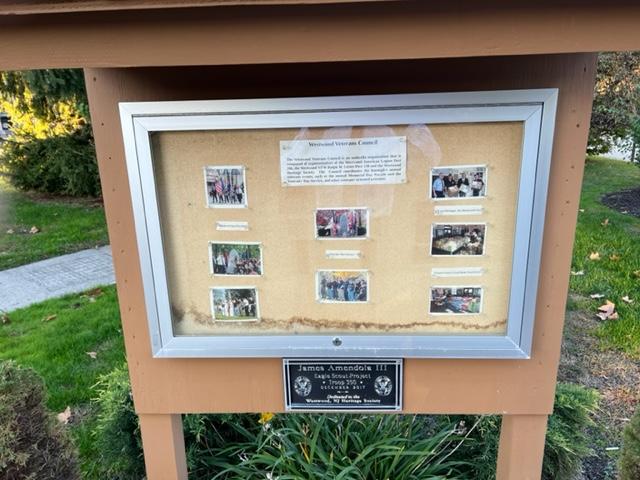
The sign in Veterans Park

There are displays of family life in town, life on the railroads, the history of how the railroad came to town, the growth of the town, residents of the town and a display on railroad conductor, Mr. Blauvelt himself.

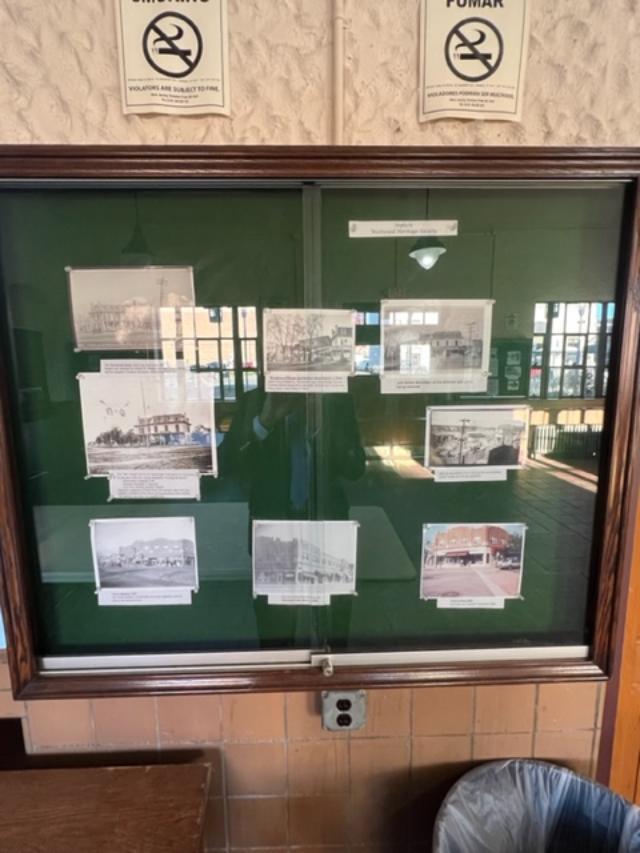
There are many sets of pictures in the display cases and there is an on-going slide show of pictures on the main wall of the terminal showing the past and present of the town.

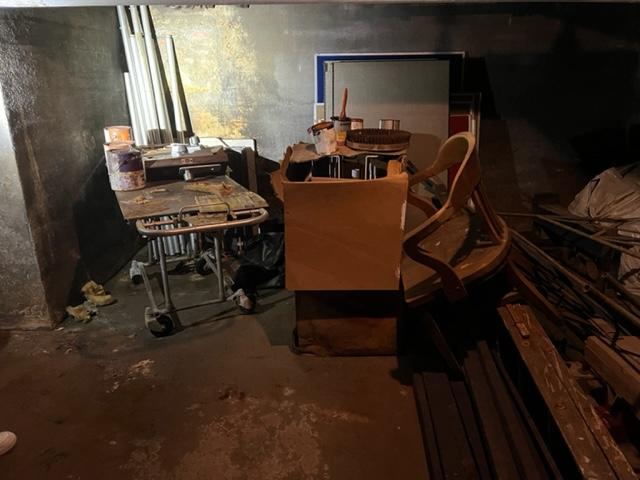
They let us tour the bomb shelter that is beneath the train station. This is interesting.

I recently toured the museum with my students on the second Saturday in November of 2022 and met with the members of the Westwood Heritage Society. They put all their displays out when the museum was open from 10:00am-12:00pm. There were some interesting things to see. There was the history of the businesses, schools, the fire and police department and town government. They had some interesting artifacts from Veterans of the Wars as well.

Displays of memorabilia at the museum

If you like the history of railroads into the new suburbs or are from Westwood and are interested in its history, this museum is worth coming to for the afternoon. Take time to walk along the tables and view all the artifacts. There are some interesting things to see.

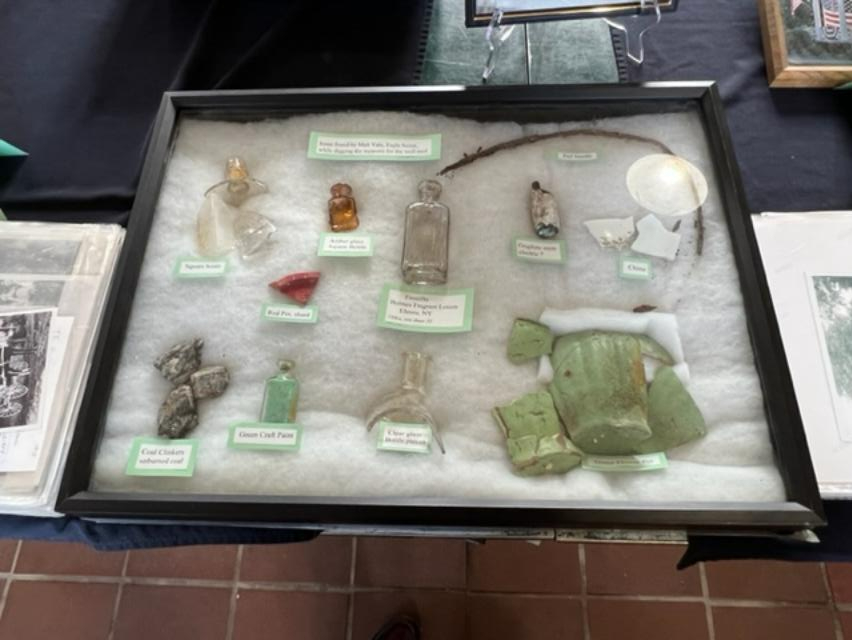
The glassworks of Westwood

Some of the items from the veterans of foreign wars.

Artifacts from the railroad

The main building of the train station is always open during business hours, so you will have plenty of time to look at all the displays. If you get there on the second Saturday of the month, you might get to talk with a member of the Heritage Society. It only takes about an hour to see all the displays.

The history of the town is in all these notebooks

History:

The Westwood Museum, which is housed in the Westwood Train Station building, was established and held its ‘Grand Opening’ on Memorial Day of 2002.

The Museum serves as an exhibit gallery for the numerous artifacts of Westwood’s past and records of its history that have been acquired or compiled by the Society.

Westwood Heritage Society Museum III

Historic Westwood, NJ

The Historic Displays that line the walls on the history of the town:

Historic homes and businesses of prominent members of the Westwood community

Historic Homes of Westwood

Historic businesses in Westwood

Prominent residents of Westwood, NJ

Historic Downtown Westwood NJ

The commercial we created for the Downtown Westwood, NJ for Bergecco-Parc Consulting Inc.

The Project for “It’s Wonderful in Westwood, NJ-Be a Tourist in your Own Town”:

https://mywalkinmanhattan.com/tag/exploring-downtown-westwood-nj

Zabriskie-Quackenbush House                                                421 Franklin Avenue                                                       Wyckoff, NJ 07481

Zabriskie-Quackenbush House 421 Franklin Avenue Wyckoff, NJ 07481

Zabriskie-Quackenbush House

421 Franklin Avenue

Wyckoff, NJ  07481

http://www.zabriskiehousewyckoffnj.org

https://www.wyckoff-nj.com/zabriskie-house-board-trustees

https://www.facebook.com/wyckoffzabriskiehouse

Open: Please check out their website for the dates when the house is open to the public.

TripAdvisor Review:

https://www.tripadvisor.com/Attraction_Review-g46945-d10359429-Reviews-The_Zabriskie_House-Wyckoff_New_Jersey.html?m=19905

I visited the Zabriskie House in May 2016 and 2019 for the Northwest Bergen History Coalition 6th Annual History Day. The house is left the way the last owner. Grace Zabriskie,  willed it to the town with all the original furnishings.

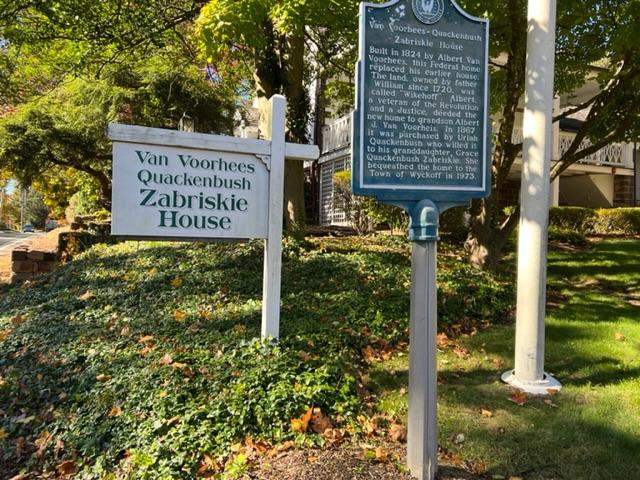
The historic signage

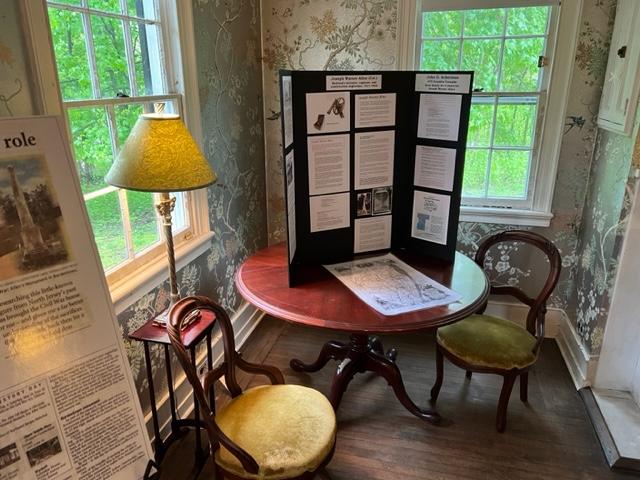
It has period furnishes, family heirlooms and antiques. The docents will take you on a tour of the house and show you where all the later additions were added and how they make up the whole house. As you walk through the house, you can see the difference in structure of the home plus how the last owner lived.

Zabriske House I

The Zabriske House in Wyckoff, NJ

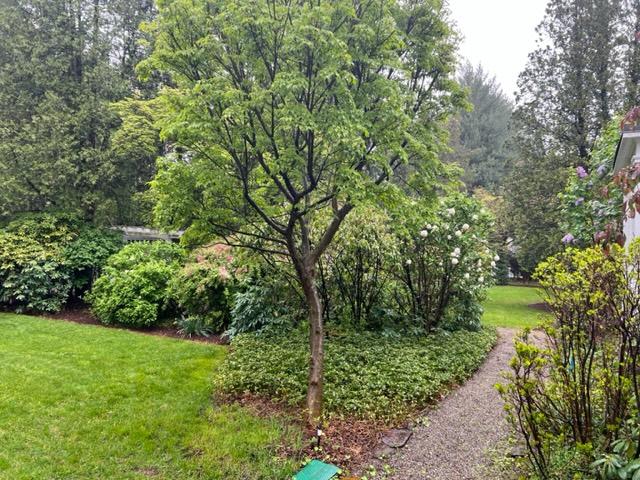
Don’t miss touring the gardens in the Spring as Mrs. Zabriskie worked with a Botanist to plant the gardens to bloom at different times. She planted it in stages so that she could entertain in them but still treated the gardens similar to the house as if you had to walk into a room. It is very nice and colorful in the Spring.

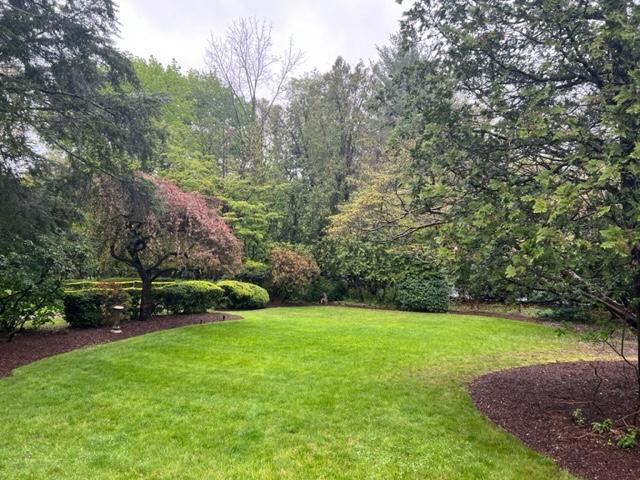
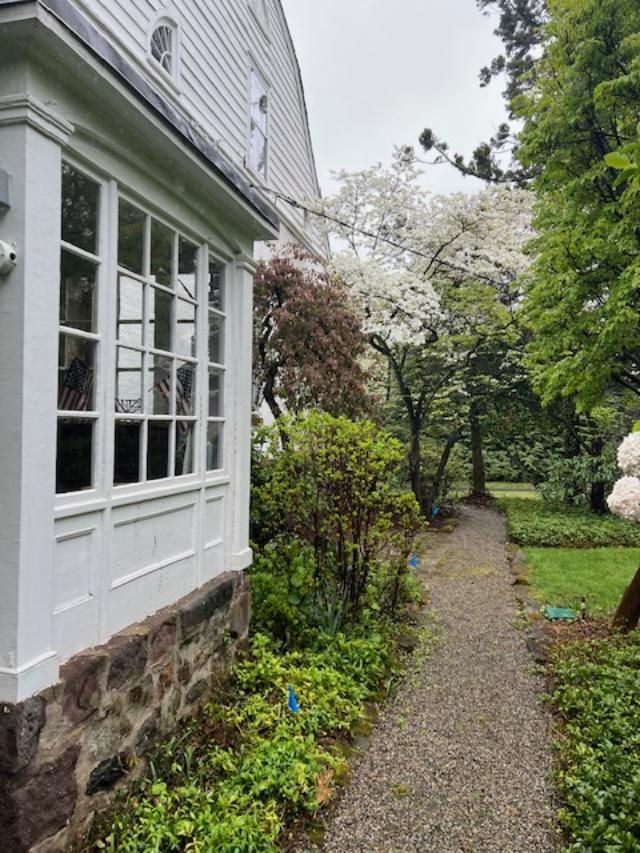
I have visited the house during the Northwest Bergen History Day and I was able to take a lot of pictures of the gardens next to the house on a rather gloomy day. The gardens were in full bloom in the middle of spring and the rain added a layer of beauty to the flowers and flowering bushes that lined the paths. They did a nice job maintaining the house.

On the terrace there are people to guide you through the house and docents to take tours. The ladies had a nice reception laid out for all of the people who came to visit.

The Van Voorhees-Quackenbush-Zabriskie House in the Fall of 2022

The original stone structure of the Van Voorhees-Quackenbush-Zabriskie House was built in 1730 by William Van Voorhees. It is believed to be the oldest house in Wyckoff, NJ. In 1824, William’s son, Albert, completed a major addition to the house in the classically Dutch colonial style. The original structure then became the dining room (NWBHC).

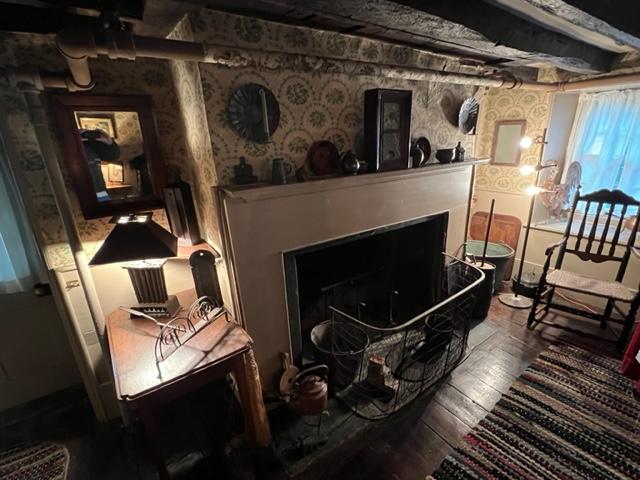
The historic part of the house from the 1700’s

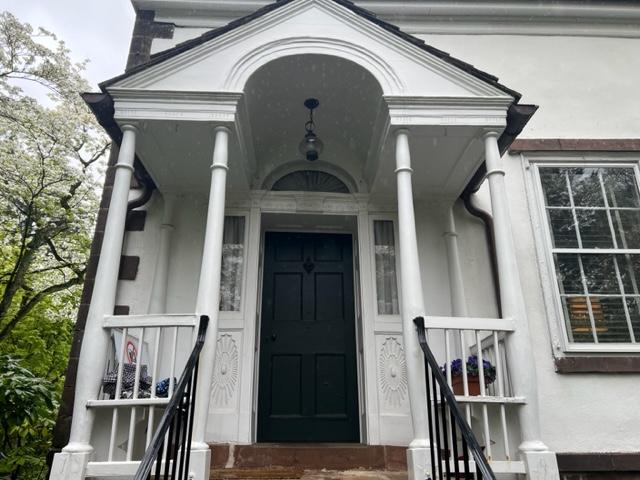
The entrance of the Zabriskie House

History of the House: (Taken from the Wyckoff History Page)

The Van Voorhees-Quackenbush-Zabriskie House has been a local landmark for over 275 years and is believed to be the oldest structure in the Town of Wyckoff, NJ. In 1720, William and John Van Voor Haze, yeoman of Bergen County, purchases 550 acres of land in what is now Wyckoff. The brothers were descended from Dutch settlers who emigrated from Holland in 1660 (Wyckoff History).

The historic part of the house

The first stone house was built circa 1730 by William. The land was cleared and the family farmed, raising table crops and staples such as grain, corn, potatoes and grapes. Over time, apple orchards and dairy farming became main occupations in the area. The Jersey Dutch were especially skilled at animal husbandry. They were considered the best farmers and gardeners in the American Colonies (Wyckoff History).

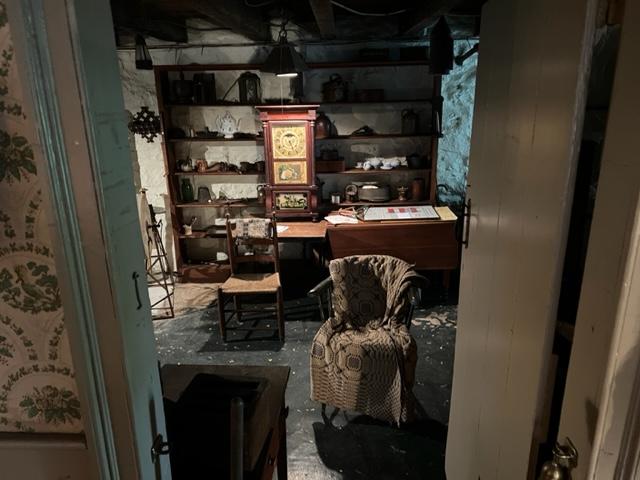
The historic kitchen in the original part of the house

There were only about 20 families in the area in 1775, when the house served as the village store and tavern. William’s son, Albert, served in the Militia in the Revolutionary War. The original stone structure later became the dining room of the house, when a large addition was added in 1824 by William’s son, Albert when he was 86 years old. He had just one son, John, but likely expanded the house for his nine grandchildren and their wives and children. Over the years, in addition to serving as a home, the house served as a not only home, tavern and store but also as a hotel and ballroom for area parties (Wyckoff History).

The gardens on the side of the house

The gardens in April 2023 on a gloomy day

The original 1730 house has a steeply pitched roof and overhanging eaves designed to protect the building and foundation from rain. It has a two piece “Dutch” door to allow ventilation while keeping animals outside. Inside is a five foot high fireplace which originally was the sole source of heat and was used for all cooking (Wyckoff History).

The pathways to the gardens to the side of the house

The lawn next to the house

The pathways next to the house

The pathway to the gardens

The much larger 1824 structure is three stories originally tall with a sub-basement. It contains four fire places, again for heat. It has two half and four quarter moon windows and two oval windows. There are four bedroom with pegs to hand clothes on (no closets then). Its exterior demonstrates the classic Dutch Gambrel roof with an upper 23 degree roof line and then a lower 45 degrees roof line. This beautiful design was developed by the Dutch in northern New Jersey and up the Hudson River and is found nowhere else in the world. The typical Dutch front porch has two benches on either side of the entrance (Wyckoff History).

The house in the Fall

The property left the Van Voorhees family in the mid-1800’s. In 1867, it was purchased by Uriah Quackenbush. Uriah and Keziah Quackenbush had one son, John, who died as a young adult. Grace Quackenbush was his only child and was two years old when he died. She was raised in the house by her grandparents, who left the property to her when they passed on, after Grace had married John Zabriskie (Wyckoff History).

The Zabriskie Pond across the street

During her lifetime, Grace modernized the house (including adding an indoor bathroom) and restored the appearance of the home using authentic period antique furniture and furnishings. She also created three beautiful formal gardens on the landscaped property with her friend, Mrs. Elizabeth Spencer, a botany major (Wyckoff History).

The house is considered one of the finest examples of American architecture in northern New Jersey. The current House Museum has been called one of the finest in New Jersey. In 1973, Mrs. Grace Q. Zabriskie, who was the last resident, willed the house and its antique furnishings to the Township of Wyckoff, when she died that year. The “Zabriskie” house belongs to everyone in Wyckoff to enjoy (Wyckoff History).

The Zabriskie Pond in the Fall of 2022

Please check out their website for when the house is open to the public.

John Fell House                                                                         475 Franklin Turnpike                                                           Allendale, NJ 07401

John Fell House 475 Franklin Turnpike Allendale, NJ 07401

John Fell House

475 Franklin Turnpike

Allendale, NJ  07401

(201) 783-8754

http://www.johnfellhouse.org

http://www.johnfellhouse.org/

http://www.johnfellhouse.org/history/

http://www.johnfellhouse.org/events/

Open: For special events and for corporate events. Please check their website for details.

TripAdvisor Review:

https://www.tripadvisor.com/Attraction_Review-g29737-d10356749-Reviews-The_John_Fell_House-Allendale_New_Jersey.html?m=19905

The John Fell House in April 2023 for the Northwest Bergen Historical Coalition event

I visited the John Fell House in May 2016 for the Northwest Bergen History Coalition 6th Annual History Day on “Day Forty-Three” of “MywalkinManhattan.com” blog site. The house is a stately home that sits at a busy point of the Franklin Turnpike, once the main artery of this part of Bergen County.

I was not too sure what this was as it was at the back of the house. I thought it might be a food cellar.

The only problem I found about visiting the John Fell home is that it is barely furnished. Most of these homes in Bergen County have furniture or heirlooms left by the family and this house is more used for entertaining. There are displays all over the house.

The backyard of the John Fell House in Allendale, NJ

The house is operated by the Concerned Citizens of Allendale and sits on 2.8 acres of land which includes the stately home, the Gothic Revival Barn, wetlands and old-growth trees. The house is across from the Celery Farm Bird Sanctuary, which was once part of the estate and is open to walkers year round (BCHS).

The front room of the John Fell Houser

The historic John Fell House is named in recognition of Founding Father, John Fell, a revolutionary war patriot, who purchased the property in 1766.

The Living Room at the Fell House in the late 1800’s addition

The house is located on the march route of Rochambeau’s army, on its way in 1781 to Yorktown, Virginia and the Seige of Yorktown that would decide the American Revolutionary War (Wiki).

The Music Room at the Fell House

The Living Room in the new addition of the house

The history of the Strawberry industry

The inside of the Fell House:

https://history.house.gov/People/Listing/F/FELL,-John-(F000065)/

John Fell (1721-1798) was an American merchant and jurist. He was born in New York City in 1721, he was engaged in overseas trade and has acquired a small fleet of ships by the time he moved to Bergen County, NJ in the 1760’s and lived at ‘Peterfield’, a home in present day Allendale, NJ (that is now known as the ‘John Fell House’) (Wiki).

The original part of the house from the 1700’s

The main room of the original 1700’s part of the house

The Living and Dining Room of the original house

The original fireplace in the older part of the house

The inside of the Fell House

He served as judge of the court of common please in Bergen County from 1766 to 1774. With the coming of the American Revolutionary War, he became chairman of Bergen County’s committee of correspondence and the committee of safety. He was Bergen County’s leading delegate to the Provincial Congress of New Jersey in 1775. In 1776, Fell was elected to a one-year term in the New Jersey Legislative Council representing Bergen County.

The antique dishware and tea pots in the kitchen at the John Fell House

The house is open for all sorts of special events and can be rented out. Please check out their website above for more details.