Tag: MoMA

Day Three Hundred and Sixty-Five Artist Party-Ruth Asawa-Member’s Night at the MoMA November 22nd, 2025

Day Three Hundred and Sixty-Five Artist Party-Ruth Asawa-Member’s Night at the MoMA November 22nd, 2025

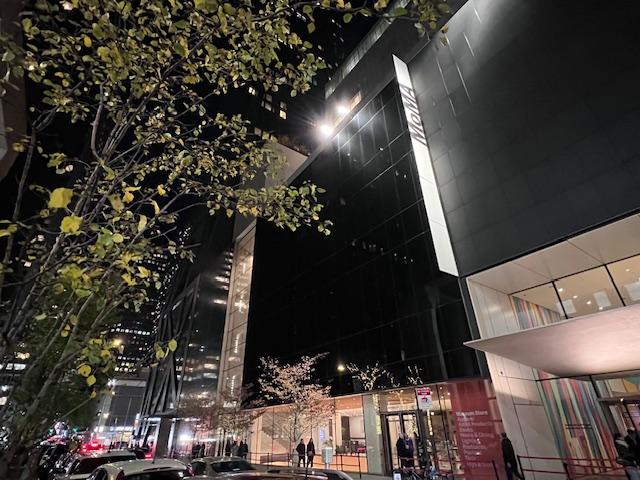
The front of the Museum of Modern Art on 11West 53rd Street

https://www.moma.org/

My review on TripAdvisor:

https://www.tripadvisor.com/ShowUserReviews-g60763-d105126-r1040038069-The_Museum_of_Modern_Art_MoMA-New_York_City_New_York.html?m=19905

There is always a lot of excitement when a new art exhibition is ready to open. It is even better when the museum opens it to its members first before the public gets a glimpse. It gives a chance to see the exhibitions before it opens to the public.

The long line of MoMA members waiting to get into the museum for the opening night of Artist Ruth Asawa’s exhibition

I noticed this year especially and right before Thanksgiving, all the museums are throwing open their doors for Member’s Nights. I have been invited to five Members Nights at museums all over the City. You can’t attend them all.

The excitement the museum creates for these evenings

Video of entering the museum at the start of the opening with 80’s Japanese Pop Music

I think in an economy like this, these Members Nights are one of the best ways to engage with the membership for both donations and renewals of memberships especially before the holiday season. Plus it gives the members a wonderful night out to see the exhibitions ahead of time and enjoy the evening after a long week at work.

The opening of the Ruth Asawa Retrospect
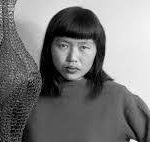
Artist Ruth Asawa

https://en.wikipedia.org/wiki/Ruth_Asawa

The biography of the artist and her works

https://www.moma.org/artists/21-ruth-asawa

Biography of Artist Ruth Asawa:

(from the Museum of Modern Art website)

Born on a farm in Southern California, Asawa began her arts education when she was a teenager and she and her family were among the thousands of persons of Japanese descent who were forcibly incarcerated by the US government during World War II. It was at the internment camp that Asawa began taking classes in painting and drawing. After her release, Asawa studied to be a teacher but was unable to get a license because of her Japanese heritage, so she enrolled at Black Mountain College, an experimental art school in North Carolina. Asawa took classes from and worked alongside fellow artists Josef AlbersRobert RauschenbergMerce Cunningham, and R. Buckminster Fuller. Black Mountain was also where she met her husband, the architect Albert Lanier.

I loved her wire woven sculptures.

The wire woven sculptures were the standouts of the exhibition

I thought these were a unique design

I liked here colorful paintings, these are of her child’s footprints. I loved the idea that her children were involved with the art

The patrons enjoying the art

The display of the wire art

The displays were impressive and graceful

The colorful faces looked tired

The look of nature in the wire art in the form of trees

I loved her works of food

At the end of the exhibition and the evening, I joined everyone on the main floor where the bar and gift shop were located. The main floor was the busiest part of the museum. I wondered if some of these people even went upstairs to see the exhibition or just stayed downstairs to socialize.

The main floor of the museum is always packed with people

Share in the excitement of the Membership opening

These evenings always get my mind off the stress of life. It is nice to just be in Midtown Manhattan and be in the moment. It is nice to see art, hear music and walk through the museum.
Day Three Hundred and Fifty-Five Private Members Morning ‘Oasis in the City’ tour at the MoMA                                                                          August 9th, 2025

Day Three Hundred and Fifty-Five Private Members Morning ‘Oasis in the City’ tour at the MoMA August 9th, 2025

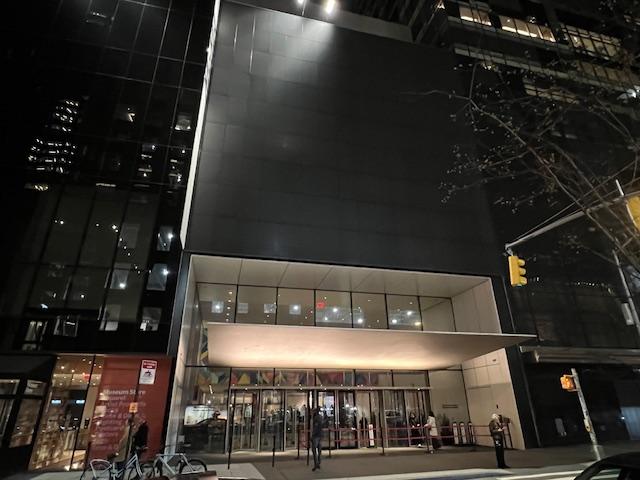
The entrance to the Museum of Modern Art 11West 53rd Street in New York City

https://www.moma.org/

My review on TripAdvisor:

https://www.tripadvisor.com/Attraction_Review-g60763-d105126-Reviews-The_Museum_of_Modern_Art_MoMA-New_York_City_New_York.html

The sign for the gardens

What I love about being a member of the museums in New York City is that there is an opportunity to see the museum in the early hours for private events. This morning I got up early to experience Manhattan on a spectacular sunny morning for the event ‘Oasis in the Garden’, a talk on the design, purpose and art in the MoMA outdoor garden.

We met inside the museum before the tour

Since the museum opened at 9:30am and there was no one at the museum at that hour, we had the outdoor garden to ourselves for almost an hour and a half.

The outdoor garden at the MoMA at 10:00am in the morning

Our tour guide led about fifteen of us through a history of the creation of the gardens, the purpose in the museum, its renovation in 2004 when I joined and the sculpture in the garden.

She also talked about taking her students here and that some of them wanted specific answers to what the art meant rather than forming their own opinion. It is funny how I see this in my own students.

What I liked about our tour group was that it was an older, very educated crowd of people who brought different opinions on how the art we were seeing should be thought about. From the time the artist created it to it modern interpretation by the ‘politically correct police’, I was amazed by the other members take on each piece of art.

The gardens are a refuge from the noise and crowds of the museum and the City

Video of the fountain

The Albert Giacometti ‘Talk Figure III’

Each piece of sculpture we touch upon was chosen specifically for the gardens and we talked about its place from when it was made to the modern interpretation and how they differ. Our first discussion was about the Albert Giacometti sculpture ‘Tall Figure III’. Some people talked about hunger and the stance on poverty. I asked if her students had different thoughts of the statue when it was made versus today.

She explained everything is seen differently through the artist’s eyes versus the modern I perception. It was hard to compare the two opinions without a debate. I thought today’s students needed to lighten up a little and stop taking art at face value and just enjoy it. The context of work over a hundred years ago is very different from how it can be looked at today.

We had time to talk and relax between art pieces and I swear the sound of the fountains relaxed me so much I almost feel asleep.

The fountains were so calming that morning

Video of the Japanese fountain

The August’s Rodin ‘St. John the Baptist Preaching’

We talked about the religious standpoint of the sculpture versus its place in modern society. I thought it was a naked guy hitchhiking. It’s funny how you see art.

The Jacques Lipchitz ‘Figure 1926-30’

With the ‘Figure’ many of the member talked about their interpretation of the modern take of Cubism and some members asked about whether these were arms and legs or something else.

The back of the gardens

The back of the gardens were so peaceful. I stood back from the tour so I could just hear the water rumble.

The Henry Moore sculpture ‘ The Family Group 1948-49

We discussed the modern family unit of today versus when the sculpture was created.

The back of the gardens

The Henri Matisse ‘The Back (III) 1913-16

The Aristide Maillol ‘The River’

We talked about the fall from God. One person said it looked like someone was tripping into the fountain. I thought that was clever.

The Jean Dubuffet ‘Study for Tower with Figures’

This was the last figure we discussed and we were asked as a group what was the first thing that came to our minds when we saw this. I said ‘Juxtaposed’. So much going on and a lot being said. We talked about children and their make up in the family unit. How they change things.

I have to say that I saw the art in a different light this morning. It was interesting to hear the artist’s interpretation versus what members thoughts were on what the art meant. I thought it was a good take away when we finished the tour. There were so many interesting opinions on the art. What I liked was the weather was so amazing, and it was so nice to be outside.

The garden as the public entered later that morning

I know I got a lot out of the tour. It’s always nice to see different points of view of what the art means and how we interpret it. This is why it is fun to be a member of the MoMA. It’s nice to see the museum when it is quiet and you can just take your time.

The gardens really are an “Oasis in the City”.

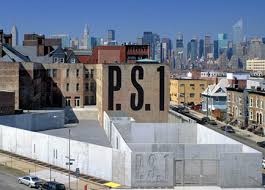
MoMA PS 1                                                            22-25 Jackson Avenue                                        Long Island City, New York, NY 11101

MoMA PS 1 22-25 Jackson Avenue Long Island City, New York, NY 11101

MoMA PS 1

22-25 Jackson Avenue

Long Island City, NY  11101

(718) 784-2084

https://momaps1.org/

Open: Sunday-Monday 12:00pm-6:00pm/Monday & Tuesday Closed/Wednesday-Saturday 12:00pm-6:00pm

Fee: Adults $10.00/Seniors & Students $5.00/Children Under 16 Free/Free to NYC Residents & MoMA members

My review on TripAdvisor:

https://www.tripadvisor.com/Attraction_Review-g48080-d107822-Reviews-MoMA_PS1-Long_Island_City_Queens_New_York.html?m=19905

I recently visited the MoMa PS 1 in Long Island City for a private members night and was really blown away by the exhibitions that I saw there. It is all contemporary art but really edgy, probably more innovative than some of the things in the main branch of the museum. Even the clientele was different. I was one of the oldest people there and I am in my early 50’s. There must have been three people older than me.

The museum is built into an old elementary school and with the rooms there some have been merged together for bigger exhibitions and others were smaller and showcased a newer artist or an individual work. The works from current artists are very unusual and I guess you have to like very contemporary art.

MoMA PS 1 exhibition

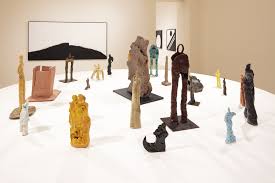
Some of the pottery from artist Simone Fattal “Works and Days”

I saw the work from artist Simone Fattal who is from Lebanon. I have to admit her works are eclectic. Her pottery looks like a third grader did it. I was not very impressed even though everyone oohhed and aahhed. It was very unusual.

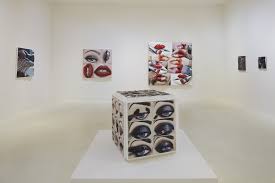
I also saw the work of artist Gina Beavers whose works have someone always looking at you. Her eye portraits were different but they reminded me of some of Salvatore Dali works of the 50’s. Her works look at you from every direction with a look of judgement.

MoMA PS 1 Exhibition II

Artist Gina Beavers works “The Life I Deserve”

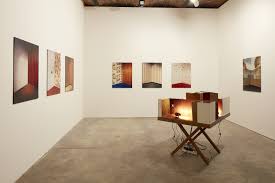
One exhibition which was loosely based on the movie “The Shining” by artist Julie Becker. The whole exhibition is made of works that looked like someone just left the room. There were creepy office set ups and hallways. The work was almost surreal itself by trying to confuse you and throw you off balance with her art.

MoMa PS 1 Exhibition III.jpg

Artist Jule Becker “I must Create a Masterpiece to pay the Rent”

I was able to quickly tour the whole museum which is not as big as its counterpart in Manhattan. It just has a different feel and direction to it.

What was nice about the evening was there was music outside for people to enjoy and there were hammocks that were art of a display at the entrance of the museum. It is a smaller museum that showcases the newer artists and gives them a voice. I have to say one thing is that the museum does fit into the neighborhood as Long Island City is going through a huge building boom and renovation/gentrification of the surrounding area. There is a lot of street art in the area and a lot of residents who look ‘bohemian’ to say the least. It was enlightening night of music and art.

History of MoMA PS 1:

MoMA PS 1 is one of the oldest and largest non-profit contemporary art institutions in the United States. An exhibition space rather than a collecting institution, MoMA PS 1 devotes its energy and resources to displaying the most experimental art in the world. A catalyst and an advocate for new ideas, discourses and trends in contemporary art, MoMA PS 1 actively pursues emerging artists, new genres and adventurous new work by recognized artists in an effort to support innovation in contemporary art. MoMA PS 1 achieves this mission by presenting its diverse program to a broad audience in a unique and welcoming environment in which visitors can discover and explore the work of contemporary artists. Exhibitions at MoMa PS 1 include artist’s retrospectives, site-specific installations, historically surveys, arts from across the United States and the world and a full schedule of music and performance programming.

MoMA PS 1 was founded by Alanna Heiss as the Institute for Art and Urban Resources Inc., an organization devoted to organizing exhibitions in underutilized and abandoned spaces across New York City. In 1976, it opened the first major exhibition in its permanent location in Long Island City, Queens with the seminal Rooms exhibition. An invitation for artists to transform the building’s unique spaces. Rooms established the MoMA PS 1 tradition of transforming the building’s spaces into site-specific art that continues today with long term installation by James Turrell, William Kentridge, Pipilotti Rist, Lawrence Weiner and others.

For the next twenty years, the building was used as studio, performance and exhibition spaces in support of artists from around the world. After a building-wide renovation, PS 1 Contemporary Art Center (now MoMA PS 1) reopened in 1997, confirming its position as the leading contemporary art center in New York. True to the building’s history and form, the renovation preserved much of the original architecture as well as most of its unique classroom-sized galleries.

In 2000, P.S. 1 Contemporary Art Center became an affiliate of The Museum of Modern Art to extend the reach of both institutions and combine MoMA PS 1’s contemporary mission with MoMa’s strength as one of the greatest collecting museums of modern art.

A true artistic laboratory, MoMa PS 1 aspires to maintain its diverse and innovative activities to continue to bring contemporary art to international audiences.

(This information was taken from the MoMA PS 1 website and I give them full credit for the information. Please see the web link above for more information).