Tag: littleshoponmainstreet.com

The Old Station Museum                                      171 Old Station Lane                                   Mahwah, NJ 07430

The Old Station Museum 171 Old Station Lane Mahwah, NJ 07430

The Old Station Museum

171 Old Station Lane

Mahwah, NJ  07430

(201) 512-0099

http://www.mahwahmuseum.org

http://mahwahmuseum.org/mahwah-history/old-station-timetable/

https://mahwahmuseum.org/the-old-station-museum/

*The Museum is currently closed for the season yet it was open for this event. It will reopen in late June. Admission to the museum is $3.00 per person over the age of 16 and is free for kids under 16 years of age.

TripAdvisor Review:
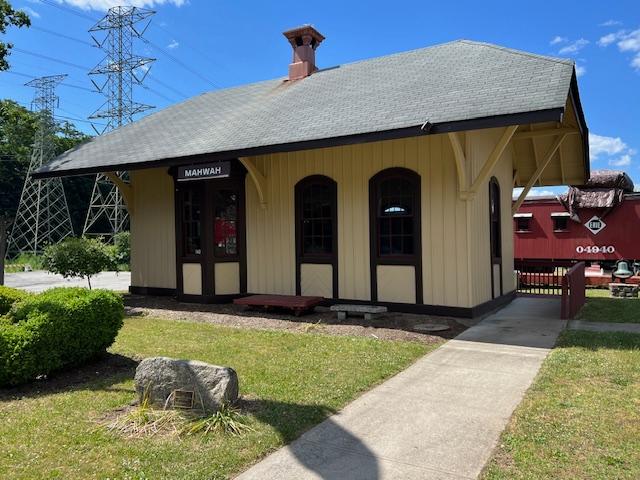
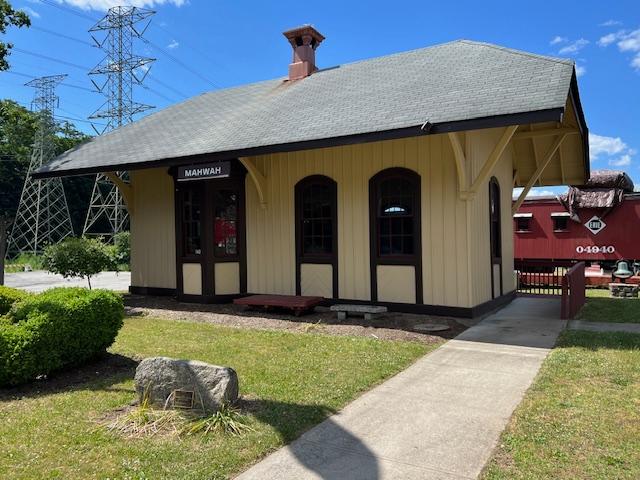
 The front of the Old Station Museum in Downtown Mahwah, NJ
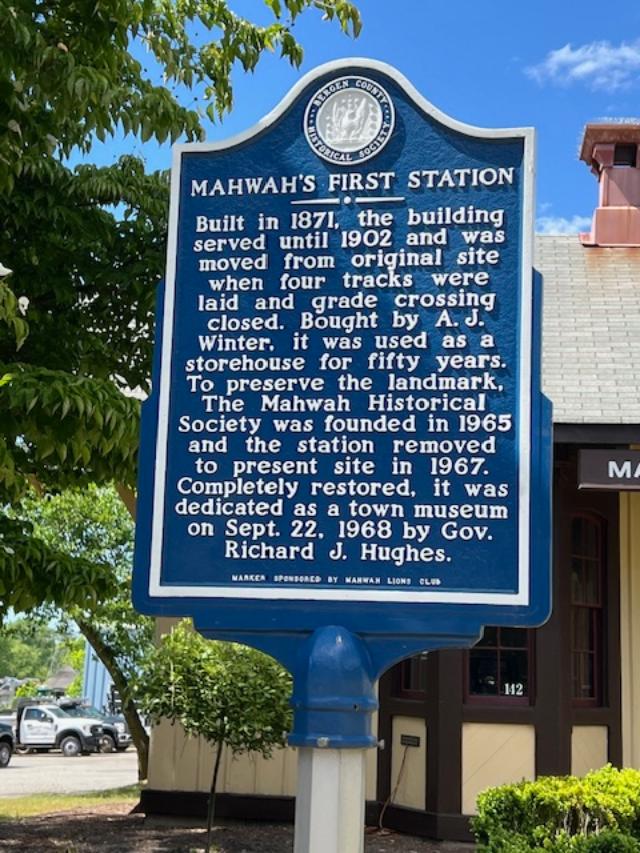
The historic Marker for the Old Train Station

As part of my tour on the Eighth Annual Northwest Bergen History Coalition Day, I visited the Old Station Museum, which is partnered with the Mahwah Museum (mentioned in this blog also) and its concentration is on the history of trains and the trains that serviced the area.
Old Station Museum VI

They had an interesting exhibition on the trains that used to run in the area before they consolidated years ago, the companies that ran them and a full train display (as well as there is a complete train set in the lower level of the Mahwah Museum that you should not miss. It will bring the kid out in you).
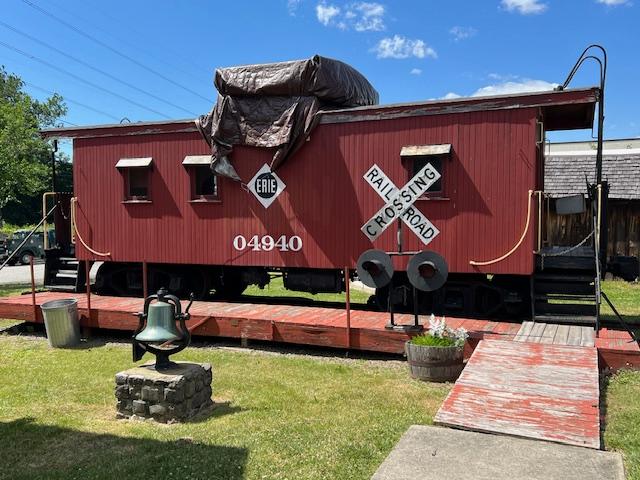
The Old Caboose in the back of the museum is open for touring in the summer months

One of the displays that I really liked was the Pullman Car exhibition of menus, china and other things that were used on the car to make service the best it could be. Like they mentioned in the display, food was a loss leader to the company which was made up in the ticket itself but it is what made the experience for the passenger. It what was brought them to the train in the first place. All I could keep thinking of was Eve Marie Saint in ‘North by Northwest’ when she was dining with Cary Grant.
Old Station Museum IV

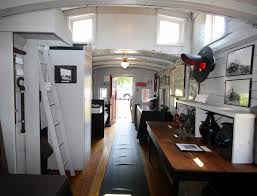
The inside of the Caboose at the Old Station Museum in Mahwah.

The best part of the museum is when you tour the museum’s caboose that is located in the back of the museum. There are displays of the men that worked the line and their role in the railroad as well as a display of their living conditions. With new technology the caboose went out of service and there are very few left now. You really see the caboose from inside out and its purpose on the train.
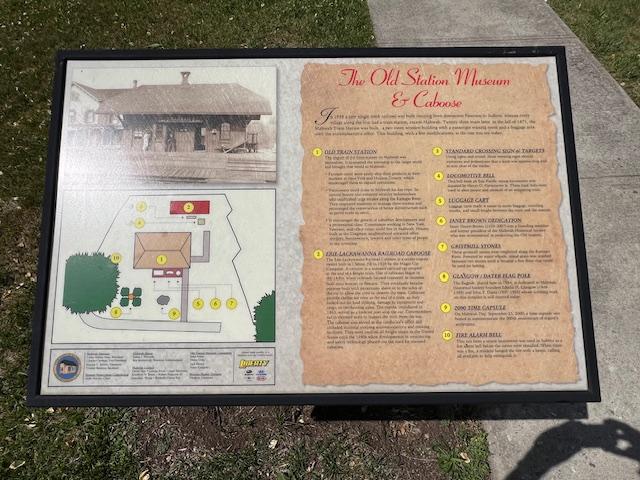
The historical sign in front of the museum

The exhibition at the station this season features several models built by former Mahwah resident, Hollis C. Bachmann. Mr. Bachmann constructed a model of N.Y.C. #999 and several other trolleys. We are fortunate to receive a donation of this balance of Mr. Bachmann’s collection from his niece, Kay Doody. Mr. Bachmann had built out model of the North Jersey Rapid Transit interurban car (trolley) that ran from Suffern to Paterson. You may remember seeing that model in our main museum building. It was constructed of tin cars, was two feet in length and included a detailed interior, having taken Mr. Bachmann six months to build. Please come by and see these really nicely detailed creations that are the offspring of that trolley.

The Old Station Museum established in 1967 is located in a building that was the original station on the Erie Railroad in Mahwah. It was rescued from destruction, first by the Winters family and later by the Mahwah Historical Society. It contains many interesting artifacts given to the museum by collectors of railroad memorabilia. It also features a 1929 Erie cupola caboose which has been recently restored. There is a scale model of the Erie system and photos of the early days of railroading in Mahwah and along the rest of the mainline.

In 1848, the Paterson and Ramapo Railroad was built through Mahwah to carry passengers and freight from New York City via Paterson  to the mainline of the Erie Railroad located in Suffern, New York. From there, connections could be made to upstate New York then Chicago and on to the west.

In 1871, the leaders of Mahwah petitioned the Erie to allow a stop at a new station in Mahwah. The 1871 station remained in service until 1904 when the Erie expanded to four tracks and raised the roadbed from the ground level. The second station remained until 1914 when it was destroyed by fire. The current station was built in 1914 and still serves commuters today.

Disclaimer: This information was taken directly from the museum’s website and I give them full credit for all of the work. The museum will be reopening in June so be on the lookout for more information on events at the museum. It is a great place for kids.


The Coney Island Museum                                 1208 Surf Avenue                                       Brooklyn, NY 11224

The Coney Island Museum 1208 Surf Avenue Brooklyn, NY 11224

The Coney Island Museum

1208 Surf Avenue

Brooklyn, NY  11224

(718) 372-5159

Open:

Summer: (June-Labor Day Weekend) Monday- Saturday 12:00pm-6:00pm/ Sunday 2:00pm-6:00pm

Fall/Winter/Spring: (September-May) Monday-Saturday 12:00pm-6:00pm/Sunday 2:00pm-6:00pm

Admission: $5.00 Adults/Members Free/Residents, Seniors & Children under 12 $3.00

http://www.coneyisland.com

https://www.coneyisland.com/event/coney-island-museum

TripAdvisor Review:

https://www.tripadvisor.com/Attraction_Review-g60827-d555621-Reviews-The_Coney_Island_Museum-Brooklyn_New_York.html?m=19905

The Coney Island Museum at 1208 Surf Avenue

The Coney Island Museum is an interesting place specializing in the history of Coney Island from the time of the Native American settlement to modern history. The history covers from the Dutch visiting the island for pleasure to the mid-1800’s and after the Civil War when time off and weekend pleasures became the rage.

The stretch of Surf Avenue where the museum is located.

The museum covers the history of the three great amusement parks, Steeplechase, Luna and Dreamland when they were all in their heyday until they all burned down or closed. This history includes the rise of Astroland and the current Luna Park.

The History of the Luxury Hotels of Coney Island

The History of the Amusement Parks:

Three great amusement parks dominated Coney Island in the early part of the last century with roots in the old Sea Lion Park and with the innovations and hope of Astroland and the rise of Luna Park again.

Sea Lion Park

Steeplechase Park

Luna Park

Dreamland Park

The rise of Astroland and the new Luna Park are showing signs of the rebirth of Coney Island.

The Astroland Exhibit at the museum

There is loads of memorabilia from all ages and all sorts of novelties from the rides such as the hall of mirrors, bumper cars and old cars and carts. Postcards from different eras also give an interesting look of the past so take time to look at each one.

The back galleries on the old amusement parks.

The history of some of the famous restaurants such as Child’s, Nathan’s and Feldman’s are discussed and their impact on the cuisine of Coney Island from the days of the clams to the revolution of the current hot dog.

The Child’s Restaurant artwork from the building.

The Feldman doors from the original restaurant

Some of the exhibitions cover the development of the area as a pleasure seeking attraction and as a luxury resort for wearied New Yorkers. What started as hotel resort and racing capital developed into an amusement area for the thrill seeking and for those who were looking for an escape for fun. It shows the growth and enhancement of the City reflected into the development of Coney Island itself mirroring what is happening in the City currently.

The amusements and bumper cars in the main gallery

The Bumper Car exhibit

Coney Island amusements

If you are interested in the history of Coney Island, then the Coney Island Museum is a nice was to spend the afternoon. There are tours daily and don’t forget to visit the Sideshow downstairs, which shows on the hour. The fee is $5.00.

The Mission of Coney Island USA:

Coney Island USA exists to defend the honor of America popular culture through innovative exhibitions and performances. Presenting and producing exciting new works, our approach is rooted in mass culture and the traditions of P.T. Barnum, dime museums, burlesque, circus sideshows, vaudeville and Coney Island itself. Preserving and championing a set of uniquely American visual and performing art  forms, we seek to create an international forum for cultural preservation and discourse and where Coney Island represents these impulses, we strive to make it once again a center for live art and entrepreneurial spirit (CIUSA).

The ‘Reinventing Coney Island’ exhibit

Coney Island USA operates a multi-arts center in a landmark building in the heart of Coney Island. We produce and present programming in three unique venues: the Coney Island Museum, Sideshows by the Seashore and the Shooting Gallery/Arts Annex. Serving both New York City and an international community that includes visitors to Coney Island and enthusiasts of various cultural forms, our signature activities include the Mermaid Parade, the Coney Island Circus Sideshow, the Coney Island Museum, Coney Island Film Festival and new theatrical work (CIUSA).

The Coney Island Wax Museum exhibit

The Wax Museum exhibit

In existence since 1980, Coney Island USA has developed and produces a number of different programs including some of New York City’s best loved summer programming, such as the Mermaid Parade and the Coney Island Circus Sideshow. Coney Island USA also operates the Coney Island Museum and produces Ask the Experts, Burlesque at the Beach, the Coney Island Hot Rod Festival, Congress of Curious Peoples, Funhouse Philosophers, Magic at Coney, The Mermaid Ball and the Coney Island Sideshow School. Coney Island USA also produces the Coney Island Film Festival in association with indiefilmpage.com (CIUSA).

The Mangel’s family history in the amusement industry.

The display of amusement offerings from the Mangel’s family company.

The Museum’s video:

Video on the Coney Island Museum

Disclaimer: This information on Coney Island USA was taken directly from their website. Don’t miss this wonderful piece of Coney Island history in one building and plan this as part of your trip to Coney Island along with the Cyclone, Nathan’s, the Wonder Wheel and the beach.

Also part of the museum is the Coney island Pinball Museum with classic pinball games to play and the Coney Island Museum bar, a great place to relax and have a drink. There is also the Coney Island Freak Show that is part of the museum and has several shows a day.

The Coney Island Pinball Museum

The Coney Island Pinball Museum is part of the Coney Island Museum

Some of the pinball machines in the museum.

The Coney Island Museum bar-the perfect place for a drink.

Greater Newark Conservatory                              32 Prince Street                                              Newark, NJ 07103

Greater Newark Conservatory 32 Prince Street Newark, NJ 07103

Greater Newark Conservatory

32 Prince Street

Newark, NJ   07103

(973) 642-4646

http://www.citybloom.org

https://www.citybloom.org/

Open: Please check the website for site and time listings

Fee: Free but donations accepted

My review on TripAdvisor:

https://www.tripadvisor.com/Attraction_Review-g46671-d16726541-Reviews-Greater_Newark_Conservancy-Newark_New_Jersey.html?m=19905

The Greater Newark Conservatory has been credited for much of the improvement in the City of Newark.

Newark Conservatory IV

Having three farms, it has given new life to empty lots, given school children a chance to experience urban farming and given suburbanites a taste of country life in the city all while improving the lives of its residents. Having attended the recent “Beds & Breakfast” gardening program put on every year, I can see the outreach that the Conservatory is trying to have on people outside the city.

Newark Conservatory V

The Beds & Breakfast Seminar is an annual event that covers things like sustainable farming, trips for growing and pruning plants and trees and cooking classes. In the era of COVID, we had the 2021 “Beds & Breakfast” virtually this year and it was really nice because we could attend the meetings via Zoom. It was very engaging and you could ask questions online.

In the warmer months, it is nice to walk along the gardens and admire all the fruits, vegetables and plants being grown here. They have other events as well like Summer Cocktail parties and Pot Lucks.

Greater Newark Conservatory

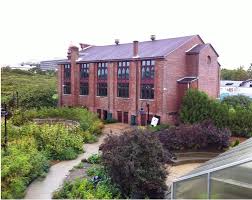
The gardens and the new Demo building

Another event I recently attending was the Conservatory’s October Fest, which was a small festival where the gardens on Prince Street were open to the public and local vendors were selling their wares at tables surrounding the main walk way of the garden. The Conservatory was also running their Youth Farm Stand as well with fresh vegetables from their ‘farm’. In 2021, they had a smaller event with vendor booths and music. It was funny to see so many people with masks in the cool weather.

Try to support the Youth Farm Stand at the Greater Newark Conservatory

In the future, there will be Pumpkin Patches by the farm and a small event for Halloween.

The History and Purpose of The Greater Newark Conservatory:

The Greater Newark Conservatory (GNC) is a non-profit organization headquartered in Newark, NJ with the state goal of promoting ‘environmental stewardship to improve the quality of life in New Jersey’s urban communities’. It offers programs for youth education, community greening and gardening, nutritional health, job training and prisoner re-entry (Wiki).

Founded in 1987, the Greater Newark’s Conservatory’s mission is to promote environmental stewardship to improve the quality of life in New Jersey’s urban communities. The 3.7 million Prudential Outdoor Learning Center, named in honor of a $750,000 grant from the Prudential Foundation, was completed in 2004 and has hosted more than 16,000 at risk inner city children for environmental education field trips since that time (Vince Baglivo, Star-Ledger 2010).

Newark Conservatory III

The Conservatory grounds

The first step toward making the new Center a reality was the purchase of the historic former synagogue/church building at 32-34 Prince Street in downtown Newark. Acquired by the City of Newark, the property included the building and the land that it occupies (Vince Baglivo, Star-Ledger 2010).

Educational Programs:

The Conservatory provides programs on youth education and nutritional health and cooking. In the Demonstration Kitchen program, participants are provided instruction on cooking with recipes having high nutritional value. The Newark Youth Leadership Program (NYLP) provides training to high school students in Newark through a year-round program on horticulture. The  program also includes a summer internship program where high school students are assigned to various department in the Conservatory in order to gain experience with career-related skills. The summer interns also receive training on finance, public speaking and nutrition (Wiki).

Urban Farming:

One Conservatory initiative is to bolster and support urban farms in the City of Newark. The urban farms were created with the purpose of offering low-cost and healthy foods in Newark. Participants also have the option of growing their food in one of 360 private plots. In 2011, the urban farms administered by the Conservatory generated 5,000 pounds of produce. The produce is sold in local farmers’ markets. Crops raised include arugula, beets and corn. Other related programs include raising chickens and maintaining a honey apiary (Wiki).

Newark Conservatory II

The gardens and grounds

Job Training:

The Conservatory is community partner for the City of Newark’s prisoner re-entry programs where job training is provided to ex-offenders through its ‘Clean and Green’ program. They include vacant lots in Newark, labor in maintaining urban farms and offering instruction to school groups on the basics of farming (Wiki).

Urban Environmental Center:

The Conservatory conducts its activities primarily at the Judith L. Shipley Urban Environmental Center, the Prudential Outdoor Learning Center and at its main education building. Many educational programs take place there as well. The center was named after Judith and Walter Shipley, who were major donors of the Conservatory. The Prudential Outdoor Learning Center is 1.5 acre site located on Prince Street in Newark and contains a series of outdoor exhibits and thematic gardens (Wiki).

Programming:

Four program areas: environmental education, community greening and gardening, advocacy for environmental justice and job training, are the focus of activities involving everyone from students to seniors (Vince Baglivo Star-Ledger 2010).

Community Greening:

The Community Greening Program addresses Newark’s deficit of quality preserved open space by enhancing existing community parks, creating new pocket parks, establishing greenways and improving neighborhoods with street trees, street side planted flower barrels and community gardens. The program works with Newark residents to transform neighborhoods with curbside flower barrels and lush community gardens on former vacant lots. These urban farms increase accessibility to food sources for urban residents by providing high quality, locally grown healthy food using natural pest control methods (Vince Baglivo Star-Ledger 2010).

https://www.tripadvisor.com/Attraction_Review-g46671-d16726541-Reviews-Greater_Newark_Conservatory-Newark_New_Jersey.html?m=19905

Disclaimer: I want to credit writer Vince Baglivo from the Star-Ledger “Greater Newark Conservatory: City’s best kept Secret” 2010 and Wikipedia (current) as well as the Greater Newark Conservatory for information on the site. Please call the above number for more information on upcoming programs.

The Hermitage Museum 335 North Franklin Avenue Turnpike Ho-Ho-Kus, NJ 07423

The Hermitage Museum

335 North Franklin Turnpike

Ho-Ho-Kus, NJ  07423

(201) 445-8311

http://www.thehermitage.org

http://www.thehermitage.org/

https://www.facebook.com/hermitagehhk/

Hours: Wednesday-Friday-10:00am-3:00pm/Saturday & Sunday-1:00pm-4:00pm

Fee: Adults: $7.00/AAA $6.00/Students & Seniors $4.00/Children $4.00/Children under 6 Free

Tours: 1:15pm/2:15pm/3:15pm

TripAdvisor Review:

https://www.tripadvisor.com/Attraction_Review-g46514-d10356697-Reviews-The_Hermitage-Ho_Ho_Kus_New_Jersey.html?m=19905

I have been to the Hermitage Museum many times for events and they do a nice job portraying the house in different periods at different times of the year. Both Christmas and Halloween at the homestead are always a treat.

The Hermitage at Christmas is very special.

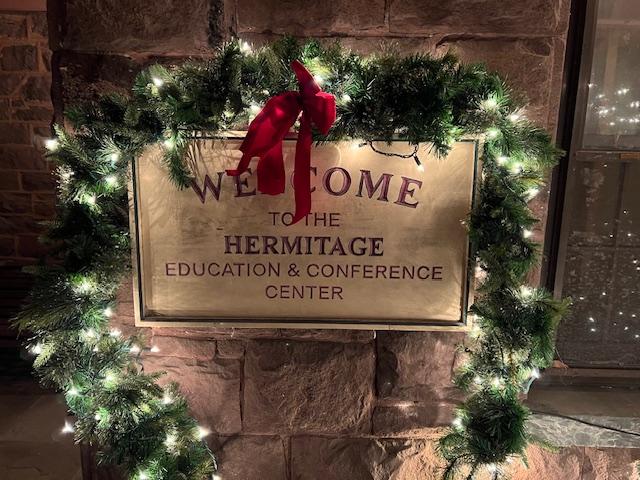
The front of the Visitors Center and Gift Shop at Christmas time.

I have taken the Haunted House tours during Halloween when The Hermitage hosts seances. Their medium was not that convincing and I did not believe a word he said. We took a tour around the house at midnight and that was interesting. The house can be quite spooky at midnight but then every house is spooky at midnight. I noticed the boards creaking and the wind blowing around the house but that’s what old houses do. The house does creak a lot and when the wind acts up you can jump. Still there was noting to convey to me that the place was haunted.

Hermitage at Halloween.jpg

The Hermitage is spooky at Midnight at Halloween.

The tour guides will go through how the family fortunes changed the way people lived in the house up to the 1970’s when the last family member died. Please don’t miss visiting the home during Halloween for their ‘Ghost tours’ . It can get quite spooky in the house at midnight with the wind hallowing and things creaking.

Things are much more cheerful at Christmas time when the house is decorated for the holidays. During the Revolutionary War, things were kept simple. There was church service in the morning and then a Christmas lunch and visits to family. It was not until the Victorian Age and the Industrial Revolution that things got more elaborate. Queen Victoria’s husband, King George came from Germany and brought with him Pagan traditions of evergreens, garland and greens all over the house to show life in the colder months of the year.

The tours of the house are $25.00 and very reasonable for a hourlong tour.

The house was decorated in 2018 for Christmas in the 1930’s during the Depression and it showed that people still decorated and gave presents in a more subdued way during this tough time.

The Hermitage keeps this tradition alive by decorating the house for the holidays. The entrance to the kitchen was kept simple but welcoming for visitors.

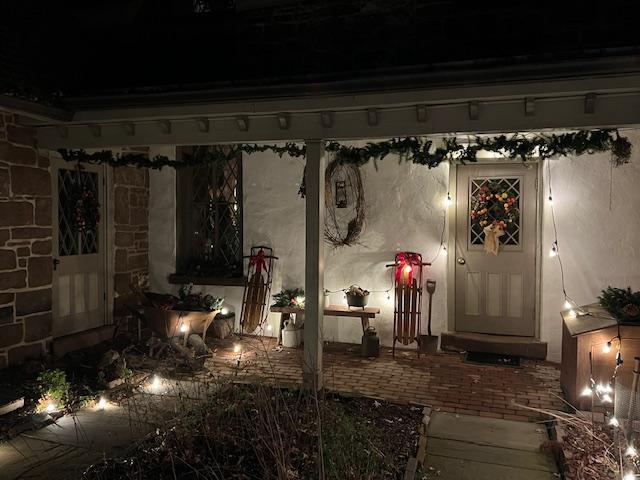
The decorations outside were kept simple with greens.

The outside of the house for the tour in 2023 was done in simple lights and greens but when it gets dark the magic of the holidays shows it beauty in the house. Each room is decorated for the holidays and there are all sorts of displays about Christmas, life at the Hermitage and elaborate displays of toys and gifts and meals that would have been served to the family at that time. There did not seem to be a nook or cranny that was missed and the house was just beautiful.

Getting ready for the holidays at the Hermitage.

The docent took us room by room and we got to see how the families lived at different times of the house’s history. We were allowed a glimpse into their daily lives at the holidays.

The Hermitage decorated for Christmas

In 2019, the house was decorated for the Victorian era and was done up quite elaborately. The Dining Room was set in the best china and silver with decorative poppers for Christmas lunch. The meal that day was one of the biggest and finest of the year with roasted oysters, roast turkey, sweet and mashed potatoes and many root vegetables.

The Hermitage is beautiful at Christmas time

The Living Room was decorated with an elaborate tree with lights and beautiful Christmas ornaments and there was garland all over the room leading into the hallway with more garland on the banister. The upstairs rooms were set with seasonal plants and clothing depicting the era. It looked like the family was going on an outing.

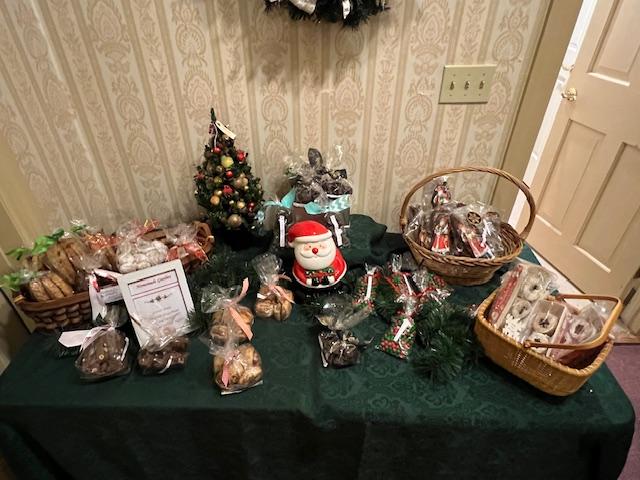
Sweets and Treats on sale and after the tours at Christmas time.

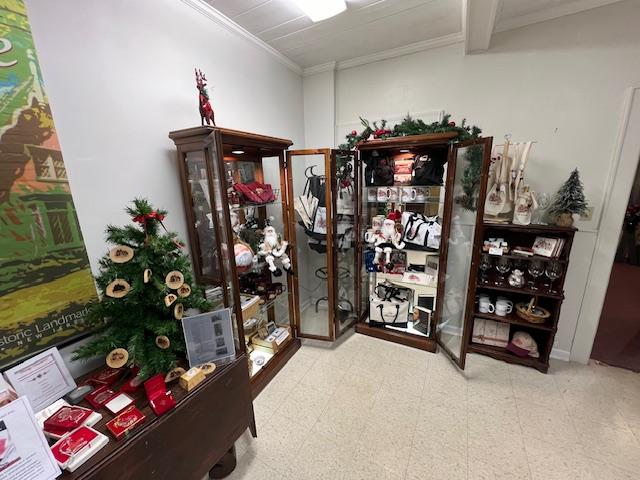
The Hermitage gift shop has amazing things at Christmas.

Touring the house at Christmas is always a treat as it was set up for a Victorian Christmas and the whole house was decorated inside and out. The pathways were set with luminaries and white lights and the porches were elaborately decorated.

The side of the house was decorated with white lights and luminaries.

The porch was decorated with an old fashioned sleigh

The front entrance to the house at Christmas.

The Hermitage Museum History:

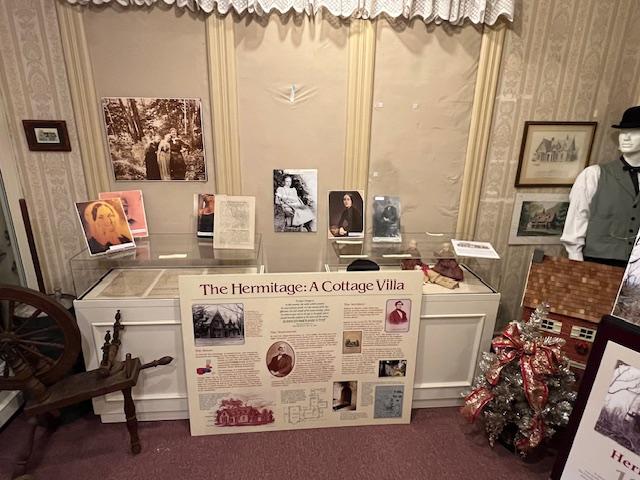
The Hermitage Museum in Ho-Ho-Kus, New Jersey is a charming and romantic mid-19th century Gothic Revival cottage. Surrounded by more than four acres of park land, the Hermitage is restored and furnished  to reflect the lifestyle and interests of the Rosencrantz family during the second half of the 19th century.

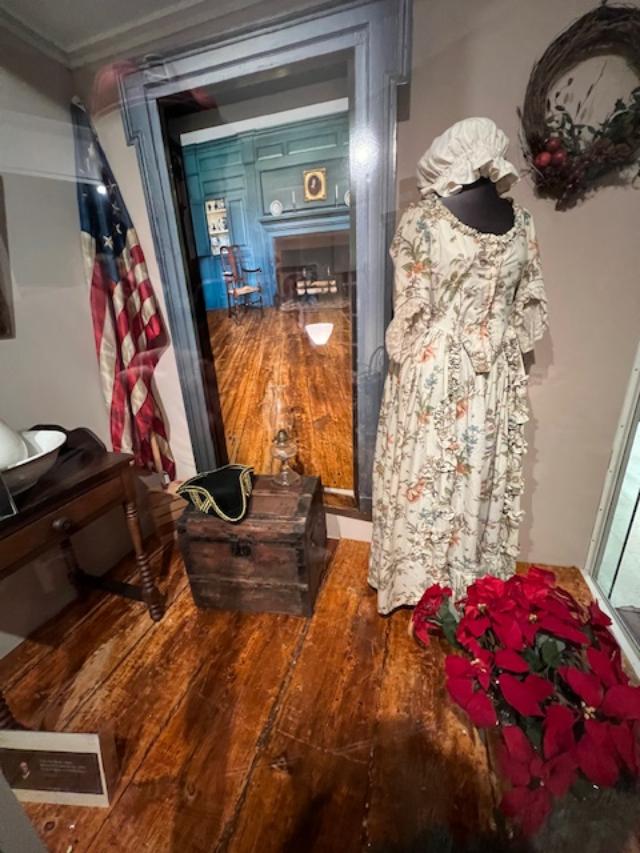
The Revolutionary War display.

The fourteen room home is built in the Gothic Revival architecture that surrounds the original Dutch American home built in the 1700’s. The original colonial estate was bought by Ann Barlow DeVisne, who  was from Manhattan, for herself and her five children.

The Rosencrantz Doll collection at the Hermitage.

One of the children, Theodosia Bartow Prevost, lived in the house with her husband, James Marcus Prevost. Major James Marcus Prevost fought on the side of the British during the Revolutionary War in battles in Georgia and North Carolina. Her husband would be later killed in the War.

The front of the house decorated for Christmas 2023.

During battle time with the British, Theodosia invited General Washington to stay at the house which he and his troops did in 1778. Theodosia welcomed all troops, both British and American to stay at the house during the war. In 1782, she married Aaron Burr, a soldier she had met during the war.  On top of her five children by her first marriage, she had another child with Aaron Burr named Theodosia. Theodosia Prevost-Burr died in 1794.

The original Ice House/Smoke House at night.

The house was then sold to the Rosencrantz family in 1807 and then the house was expanded from the Dutch tradition into the Gothic Revival addition between 1847-48 by noted architect, William H. Ranlett. The addition was at the request of Elijah Rosencrantz Jr.

The Revolutionary War display at the Hermitage.

The house was lived in by four generation of Rosencrantz’s. Elijah’s daughter, Mary Elizabeth, was born in the house in 1885 and lived there her entire life until 1970 when she fell ill. She left the house to the State of New Jersey as a National Historical site.

The history of the Hermitage display at the museum.

The Hermitage is special at the holidays

During Christmas time,  the house is decorated for the holidays. This year’s theme in 2018 is “Home for the Holidays: A 1930’s Christmas at the Hermitage”. The house is decorated at the time of the Great Depression and how people dealt with those times while still providing holiday cheer to their families. The decorations do not reflect Victorian times but more when times were tough and people had to watch their budgets.

The house was beautifully decorated for the holidays.

Even the gift shop offered cheerful items such as ornaments, collectables, small trees and elaborate gifts.

This cheerful Santa was on sale at the gift shop at the Hermitage. By the time I came back from the tour, he was sold.

Disclaimer: this information was taken directly from The Hermitage pamphlet and Wikipedia and Google. Please call the facility for information on special events.

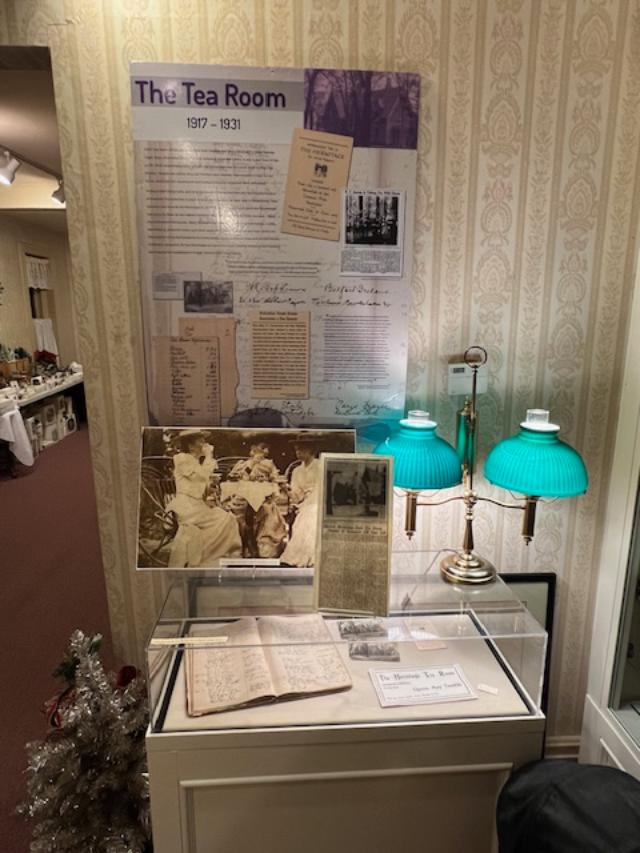
The Hermitage “Tea Room” exhibition where the family made money during the 1900’s -1930s.