Tag: Hudson River Valley

Clermont State Historic Site                          County Route 6                                    Germantown, NY 12526

Clermont State Historic Site County Route 6 Germantown, NY 12526

Clermont State Historic Site-New York Parks & Recreation

Route 6 (Off Route 9G)

Germantown, NY  12526

(518) 537-6622

https://parks.ny.gov/historic-sites/16/details.aspxhttp:/clermontstatehistoricsite.blogspot.comwww.friendsofclermont.org

https://www.friendsofclermont.org/

Open: April 11-October 31 Wednesday-Sunday 10:30am-4:00pm/November 1-

December 22/Saturday & Sunday 10:30am-3:00pm

Please call in advance due to seasons and weather conditions

Fee: Adults $7.00/Seniors and Adults $6.00/Children Under 12 and Members Free

My review on TripAdvisor:

https://www.tripadvisor.com/Attraction_Review-g47780-d263704-Reviews-The_Clermont_Mansion-Germantown_New_York.html?m=19905

Clermont Manor Estate off Route 9 in Clermont, NY

I enjoy coming up to Germantown to visit the Clermont Mansion at any time of the year especially at Christmas time. I came for a tour of Clermont in the Christmas season of 2019 (pre-COVID) to tour the home. The old mansions of the Hudson River Valley show their real beauty at this time of the year.

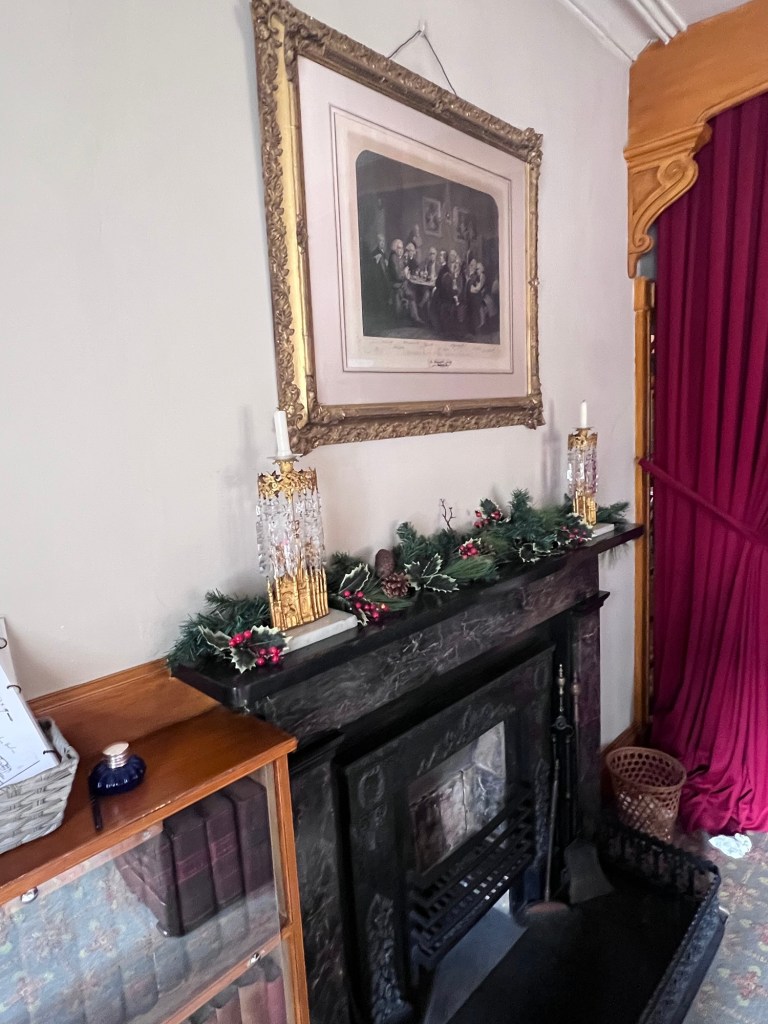
The Clermont Library decorated for Christmas

In 2020, the home closed like everything else for COVID and because of extensive renovations on the property and in the home, did not open again until June of 2023. I came up finally in July of 2023 for another tour of the home. The mansion looked very refreshed and bright on a blue, sunny afternoon. The grounds were in full bloom and everything looked so green.

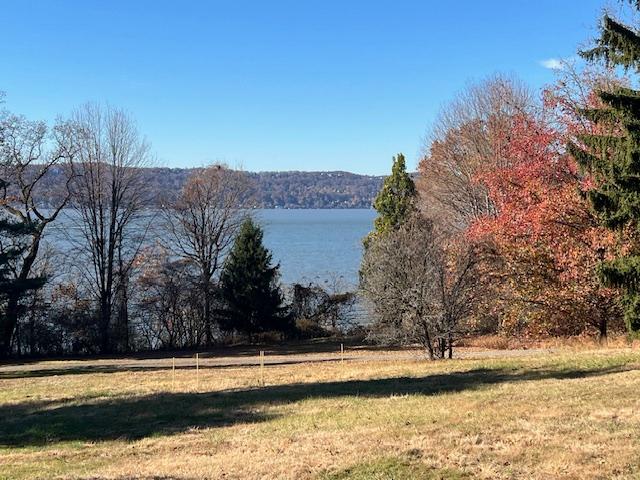
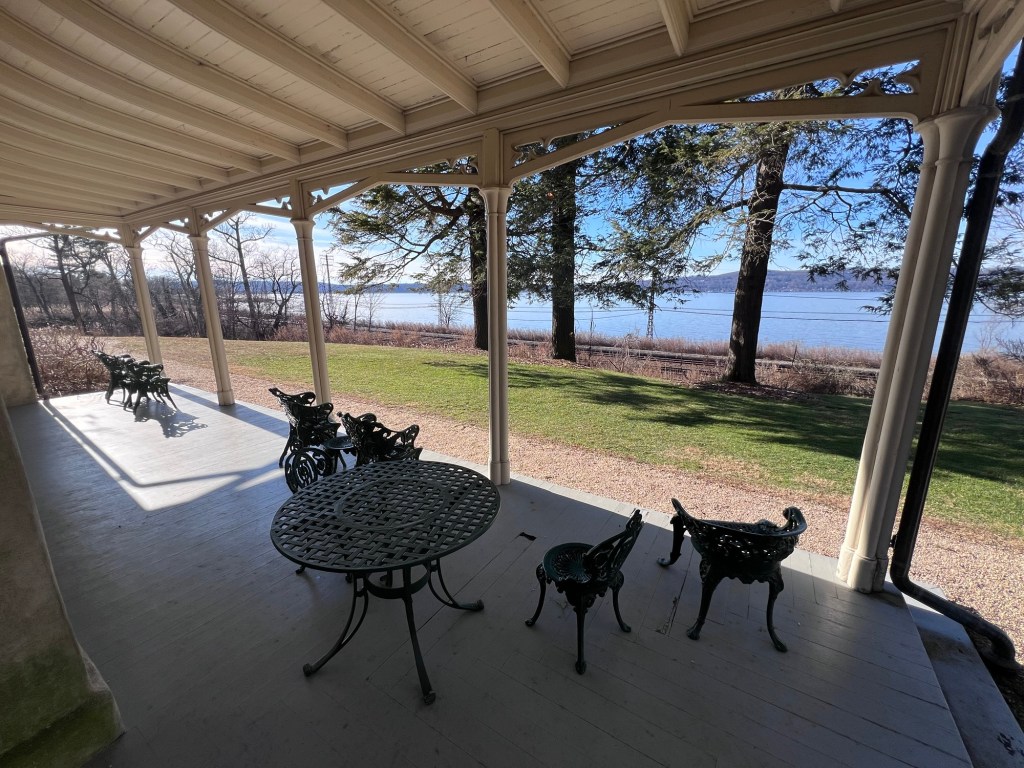
The views of the river when you arrive

Walking around Clermont is like walking through a history book. To think you are walking around the very rooms that family members who wrote the Declaration of Independence, were Governors and Ambassadors from our country and who owned most of Upstate New York lived is really incredible. The Livingston Family did so much for the United States in the formation of this country is a testament to the family.

Once you arrive at the Visitors Center and pay for your tour, you will have time to walk around the exhibition of the history of the family in the old stables. Here you will learn about the family who built and lived in this wonderful home. The family lived here for seven generations and like most families over time when the money depleted, they had to move out. The last daughter of the family, Honoria, sold the estate to the State of New York as a park. The upkeep got to be too much for the family.

The Visitor’s Center display on the family

The family story boards in the old stables

The history of the estate and the Livingston family in the Visitor’s Center

The history of the estate

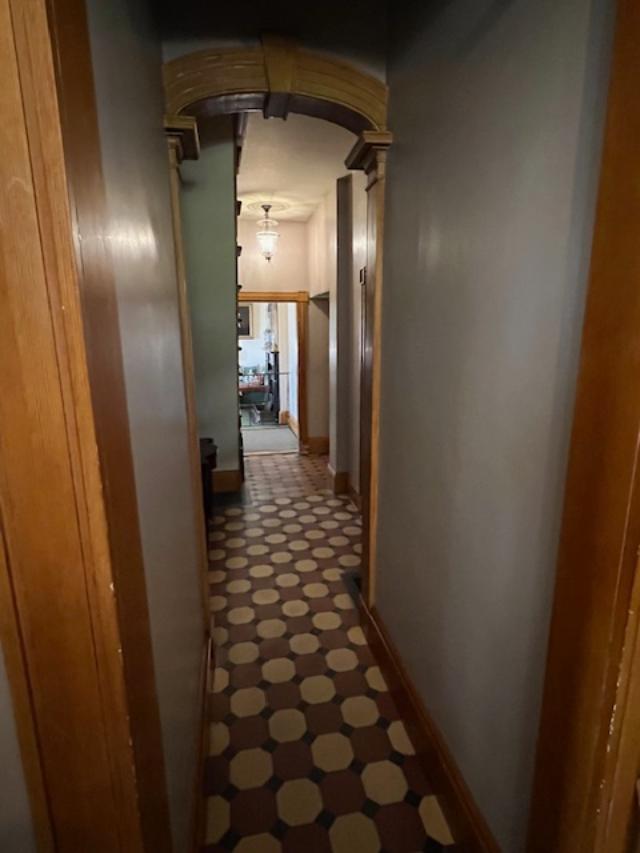
The tour 2019 was wonderful because of the one on one conversation I had with my tour guide, Molly. It was the same in 2023 when Aaron took me on a one on one tour of the mansion. We started in the entry hallway where the family hang many of the family portraits and the long hall lead to wonderful views of the Hudson River.

The Entrance Hall of Clermont

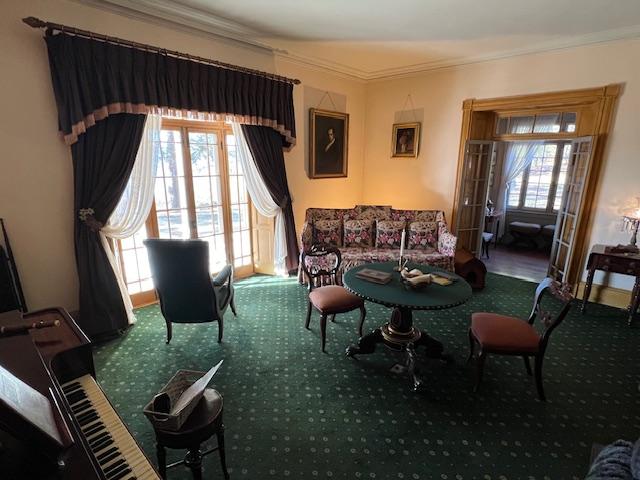
Just off to the right of the front entrance of the home (the front entrance faces the river not the back entrance where you start the tour) is the Receiving Room. This was the room in 2023 during my summer tour of the house. The Receiving Room is where guests would wait to be welcomed by family members or people would call on the family and leave their calling cards.

The Receiving Room was also used as a Music Room as well

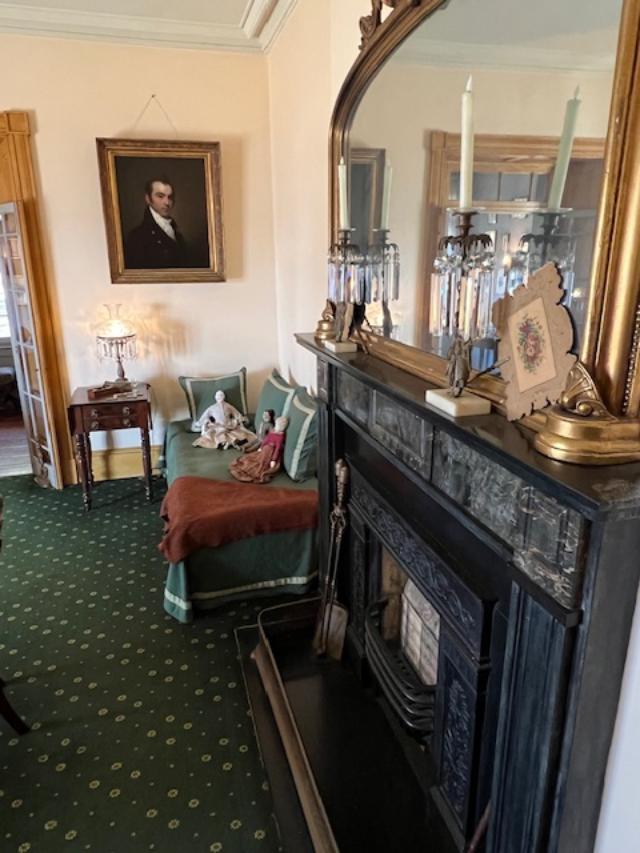
The Receiving Room was decorated for the holidays in 2019 with more beautiful views of the river and a very interesting clock on the mantle that there are only two in the world. This clock represented the first balloon launch in France and this was the clock where the balloon went up. In France was the other clock with the balloon going down. I thought that was pretty interesting.

Clermont III.jpg

The Balloon Clock on the mantle decorated for Christmas

Our next stop was the Library which seemed very homey and relaxing. It looked like a room that a family would want to spend their time in after a long day. The windows faced the river and the formal gardens at that time and let in a lot of light. The room was decorated with a elegant tree and looked like the family was ready to walk in and join us for the holidays.

The Library of Clermont

The Office/Library on the first floor

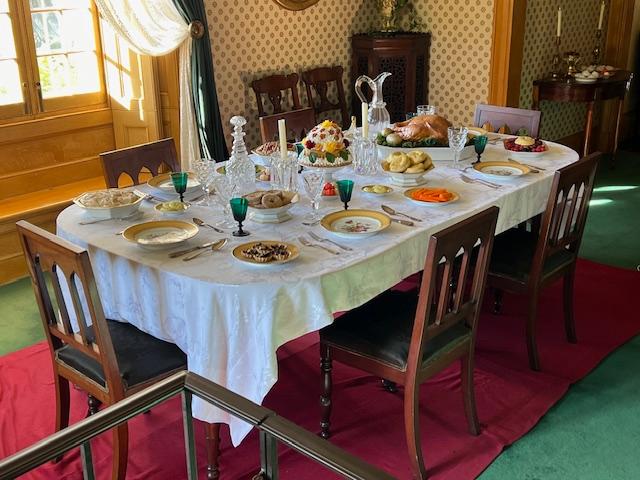
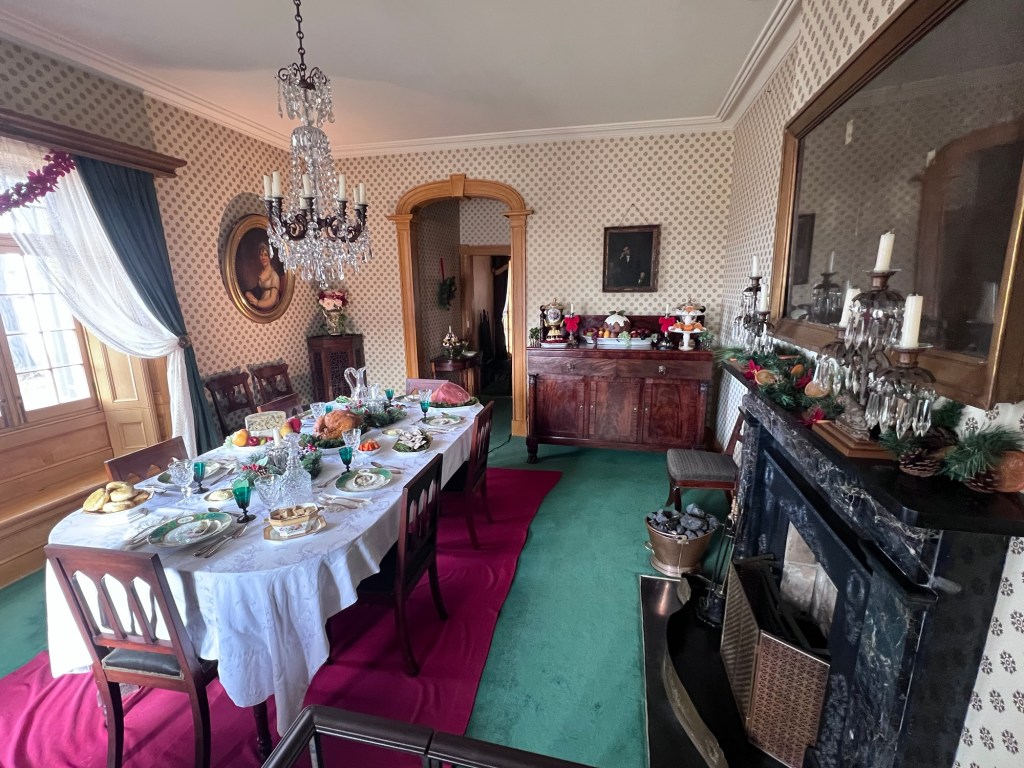
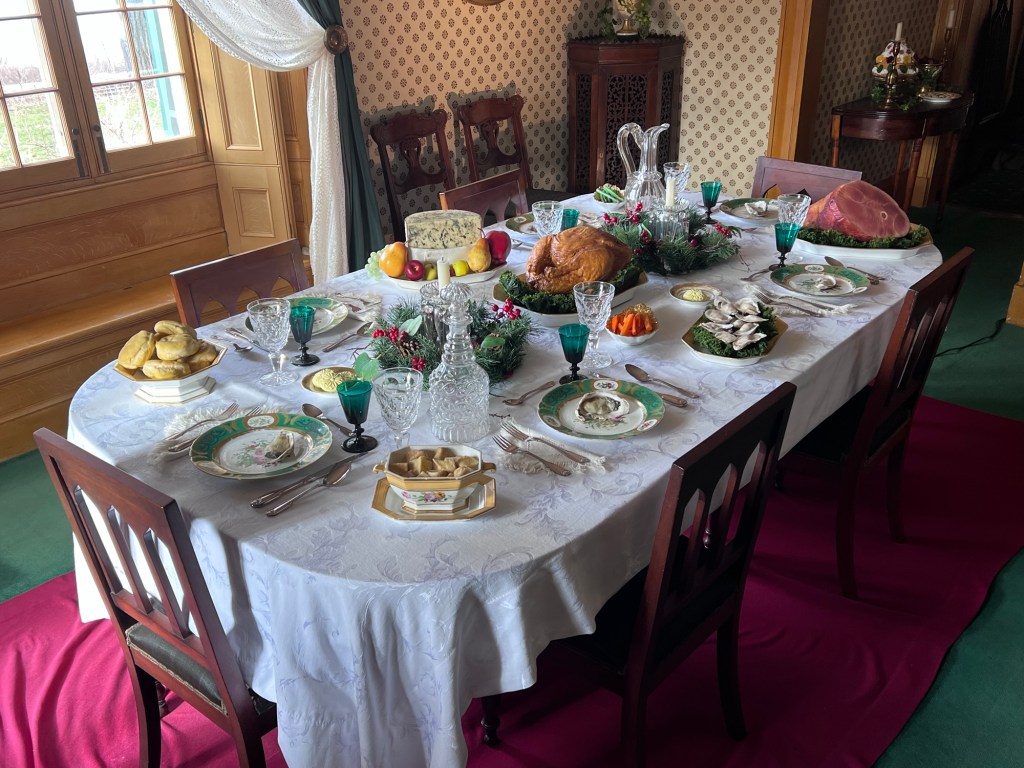
Next it was off to the formal Dining Room where the portraits of Margaret Beekman Livingston (a VERY distant relative of mine by marriage) and her husband, Robert Livingston hung. She had saved these along with the grandfather clock before her first house was burned by the British during the war years. It was set for Christmas lunch when the family would dine together.

Clermont V.jpg

The Clermont Dining Room is very elegant at Christmas. This is in 2019 (pre-COVID)

In the summer months, the room was pretty plain with no set up on the table. The Dining Room has just had some renovation work so the walls and ceiling looked really nice.

The Clermont Dining Room in the summer of 2023

The Dining Room portraits

Margaret Beekman Livingston’s Wedding portrait in the Dining Room

Robert Livingston’s Wedding portrait in the Dining Room

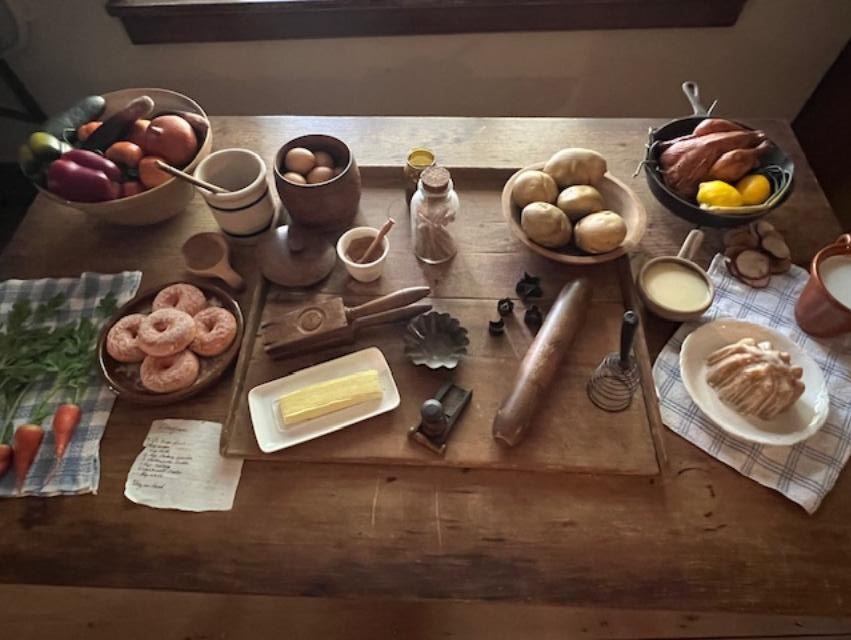
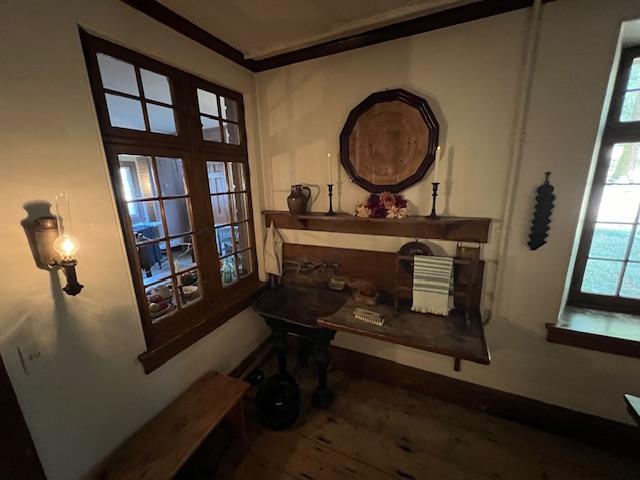
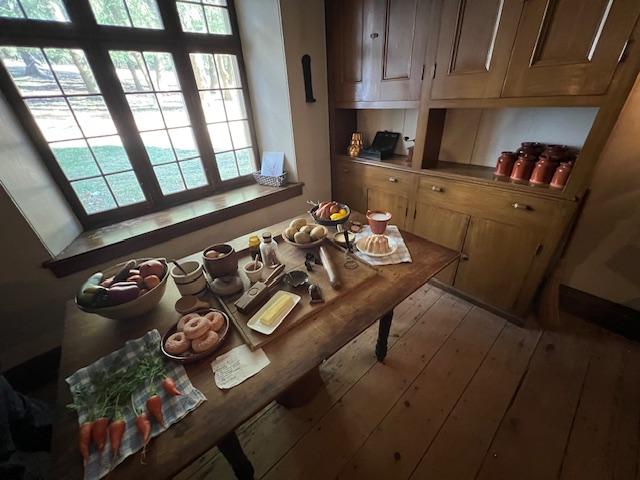
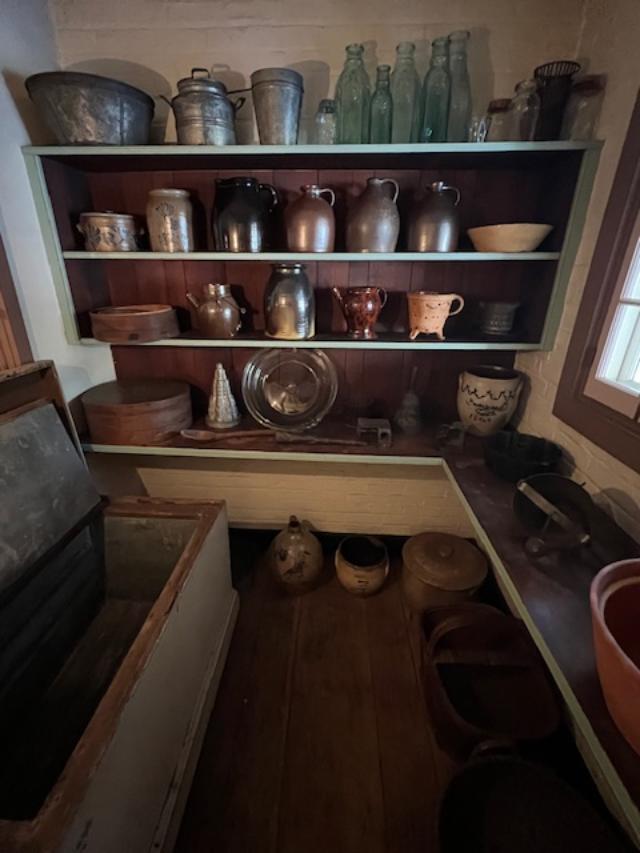
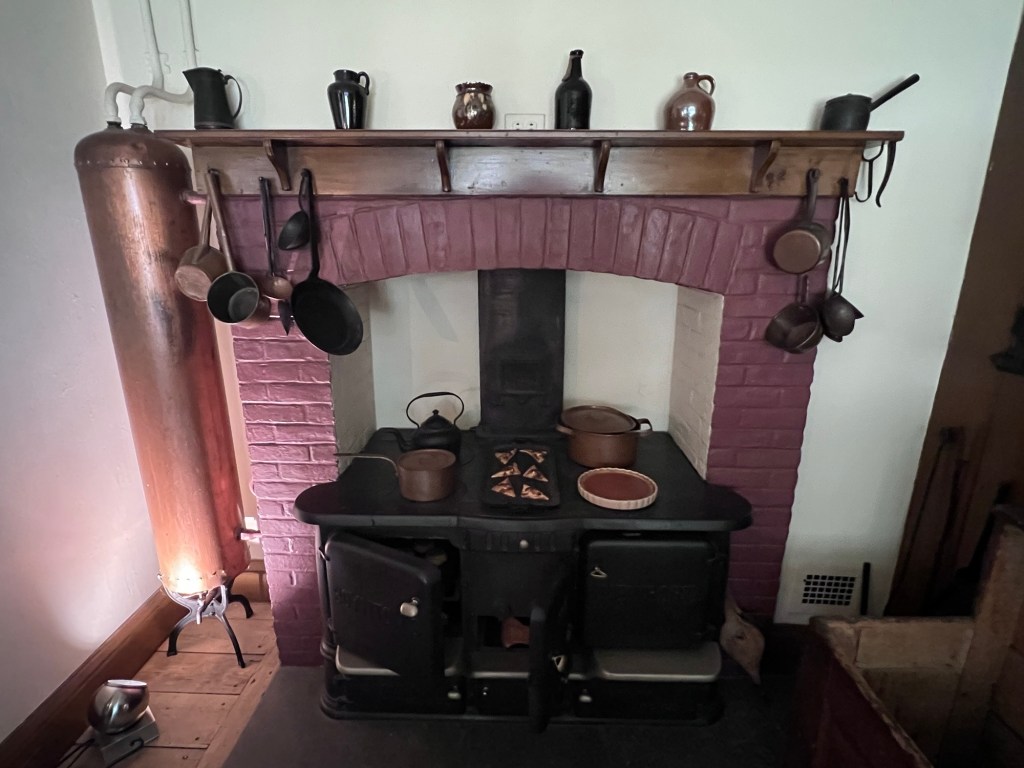
We also toured where the food was prepared and prepped from the kitchen to the Dining Room, which was all done in organized fashion. I was told by the tour guide that for the most part the family lived here year round unlike some of the other mansions who only lived here during certain times of the season.

The Kitchen at Clermont

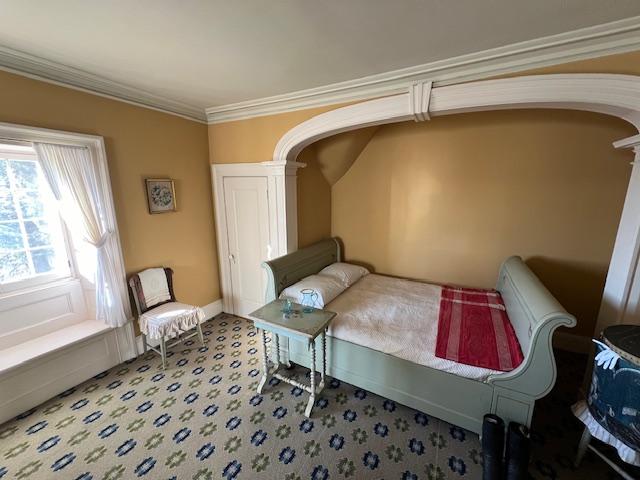
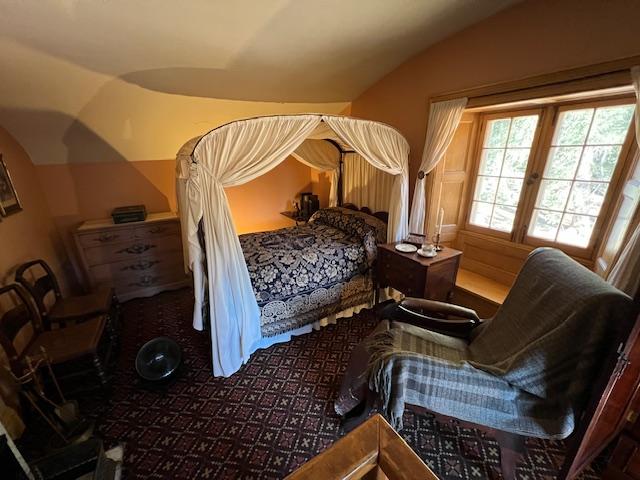
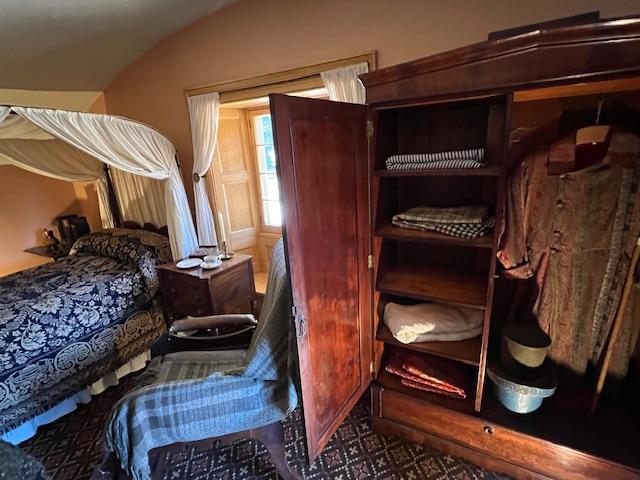
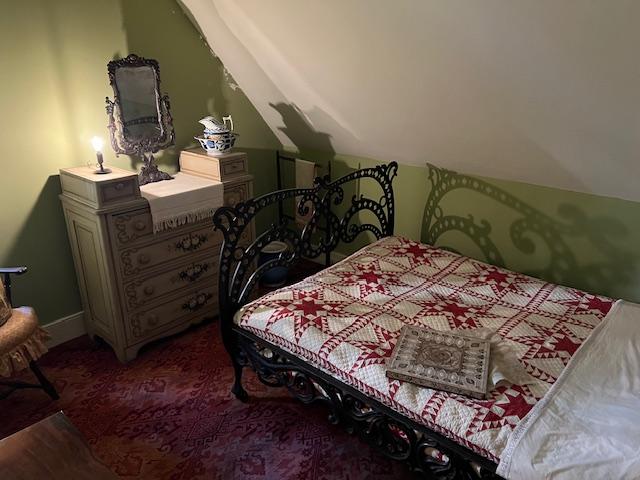
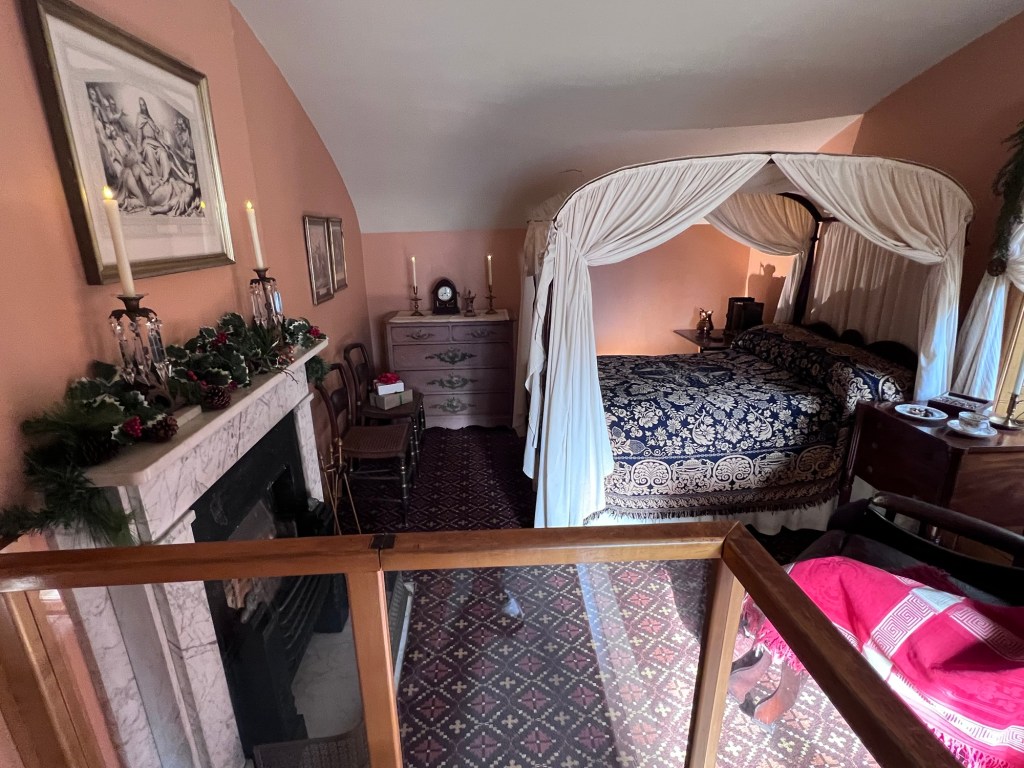
We took a walk upstairs to see the upstairs bedrooms and see where the third Mrs. Livingston lived. I thought it was interesting that she had two beds in her room in which neither was big enough to accommodate her. One was the main bed and the smaller one was a Day bed when she wanted to take a nap but did not want to mess up her main bed.

The last Mrs. Livingston’s bedroom until the 1960’s

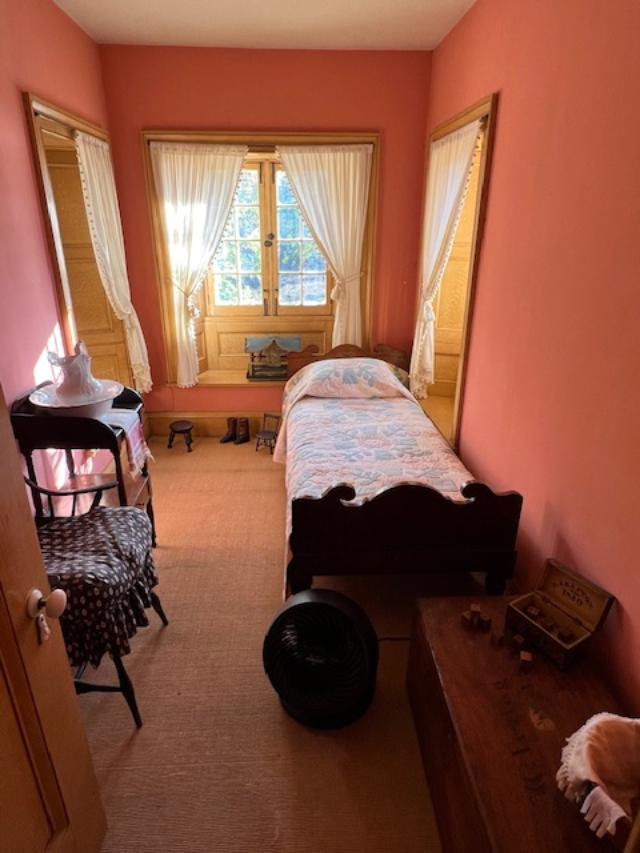
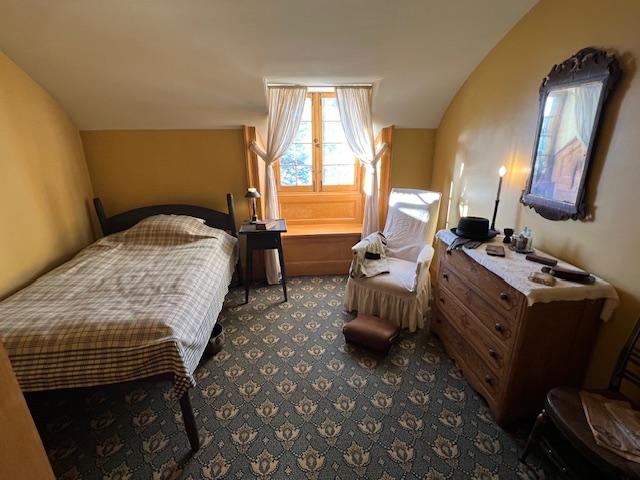
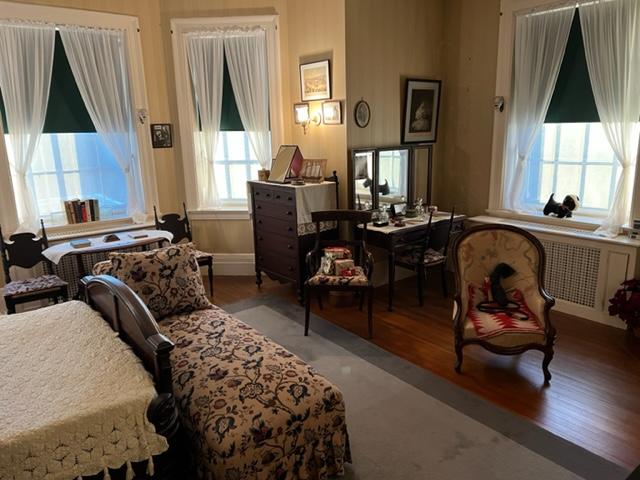
We then toured what had been Honoria’s and Alice’s bedroom when they were children and then became the Guest Room. It still looked like a Children’s Room.

The Daughter’s/Guest Bedroom

Then it was back down to the formal hallway for the end of the tour. The one thing I have to say about Clermont is that it looks like someone’s home not some grand mansion like the Mills or Vanderbilt mansions that looked like they for a moment time or only for a season. This family lived here all the time.

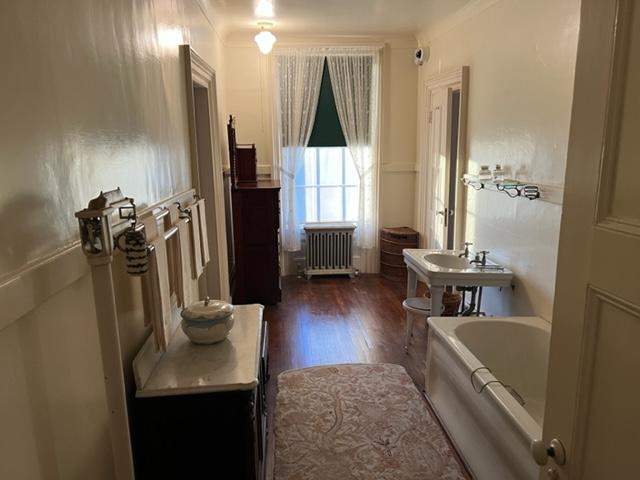
The upstairs bathroom was one of the remodeling features

The family lived here until the 1960’s when upkeep of the estate got to be too much for the family and it was sold to the state. The New York Park is now maintained by the New York State Park system.

The Gardens:

The formal gardens were in bloom when I got there that weekend. Since the house opened in June most of the Spring plantings were already gone but the Summer plantings were in full bloom. There were three gardens on the property, two of which had been brought back to nature, the Wilderness Garden and the South Spring Garden and then the Walled Garden was well maintained and planted.

The Wilderness Garden was well-maintained and planted with natural plants

The South Spring Garden

The South Spring Garden has given way to nature

The Walled Garden was the most formal of all the gardens

The Walled Garden

The Walled Garden

The Walled Garden

The Walled Garden

The Walled Garden

In the Fall, I went back up to Clermont for the Ghost Tour and the foliage was amazing, but the rain knocked a lot of it off. Still the colors were glorious.

Clermont in the Fall of 2023

The formal gardens in the Fall

The formal gardens in the Fall

The gardens in the Fall.

The I toured the rest of the estate and saw the ruins of the other mansion, Arryl, that is on the other side of the parking lot and then saw the ruins of the Old House and the Root Cellar.

The Ice House

The Root Cellar

The flowers by the Root Cellar

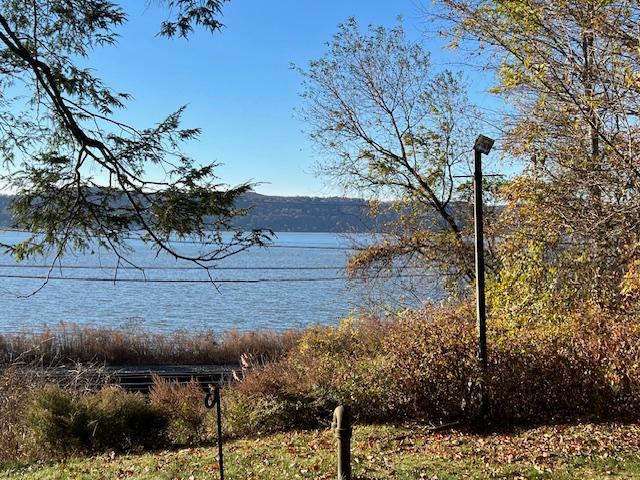
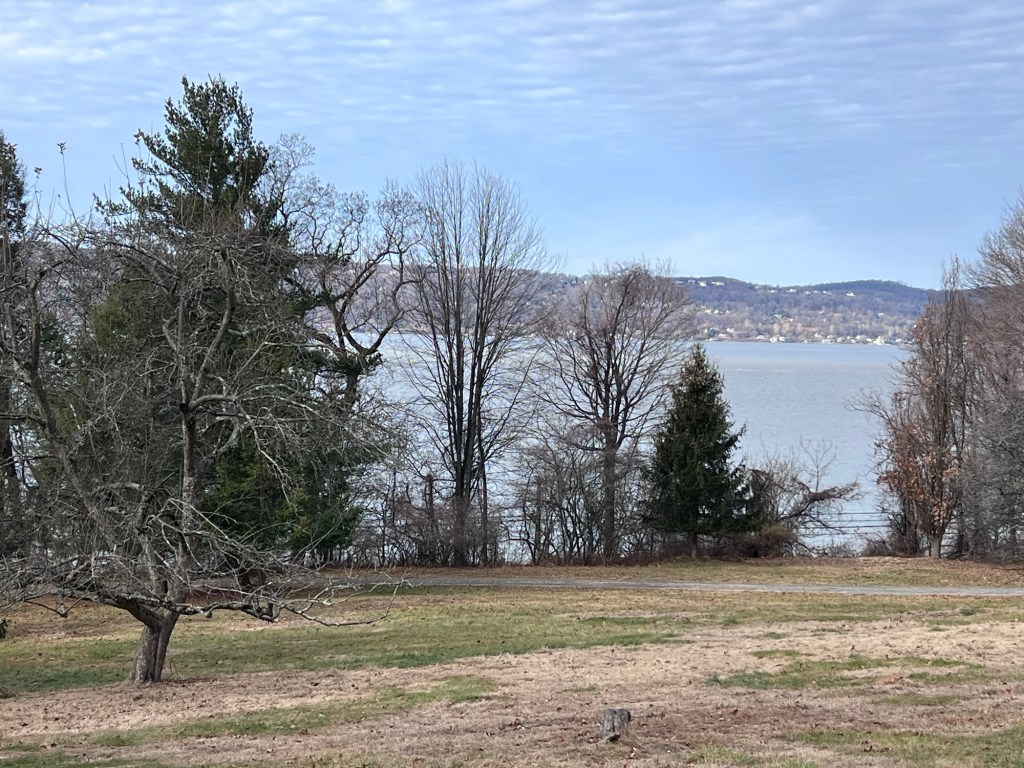
View of the Hudson River

The History of Clermont:

The name Clermont derives from “clear mountain” in French and was inspired by the view of the Catskill Mountains across the Hudson River from the estate.

The front of Clermont that faces the Hudson River

The estate was established by Robert Livingston following the death of his father, the first Lord of the Manor was inherited by the eldest son, Philip Livingston, 13,000 acres in the southwest corner later named Clermont was willed to Robert. The original house was built around 1740.

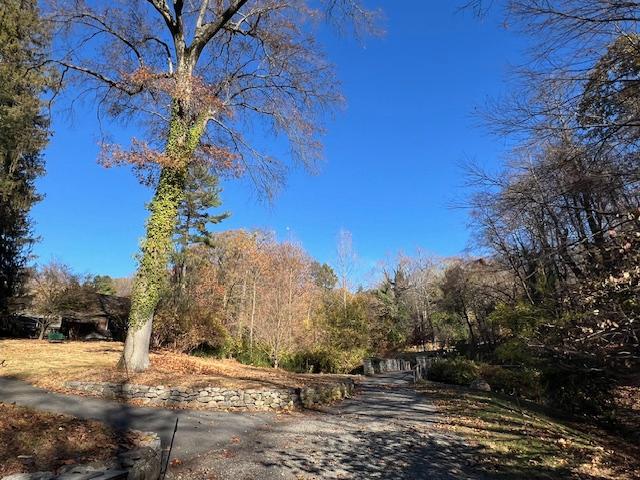
The path leading to the main house

Robert Livingston of Clermont died on June 27, 1775 and the estate passed to his son, Robert, who was known as ‘Judge Livingston’ to distinguish him from his father. Judge Livingston was a member of the New York General Assembly from 1759 to 1768, served as Judge of the admiralty court from 1760 to 1763 and was a delegate to the Stamp Act Congress of 1765. He married Margaret Beekman, daughter of Colonel Henry Beekman. Their son, Robert R. Livingston, later known as “Chancellor”, served on the committee that drafted the Declaration of Independence. Judge Robert died about six months after his father, on December 9, 1775.

Burning and  Rebuilding:

In October 1777, British ships sailed upriver from New York City in support of General John Burgoyne who was north of Albany. That same force had already stormed two forts in the Hudson Highlands and burned Kingston, New York. Major General John Vaughan led a raiding party to Clermont and burned Livingston’s home because of the family’s role in the rebellion.

The history of the ‘famous’ Robert’s of Clermont

Margaret Beekman Livingston rebuilt the family home between 1779 and 1782. Robert R. Livingston became the estate’s most prominent resident. Chancellor Livingston administered the oath of office to President General Washington, became Secretary of Foreign Affairs and negotiated the Louisiana Purchase.

Margaret Beekman Livingston

He also partnered with Robert Fulton in 1807 to create the first commercially successful steamboat on the Hudson River, the North River Steamboat (later known as the Clermont) which stopped at the house on its inaugural trip.

Robert Livingston in the famous Gilbert Sullivan painting.

The home’s final Livingston owners were John Henry Livingston and his wife, Alice. They added to the home and greatly valued the homes important historical role. The Livingston’s built second mansion on the property known as Arryl House, which burned down in 1909. The ruins of Arryl House are still visible at the south end of the property.

The burnt ruins of Arryl Mansion on the other side of the property.

The Arryl Mansion in the Fall of 2023

Alice Livingston was responsible for creating many of the landscaped gardens that are continued to this day. Following John Henry’s death, Alice turned the Mansion and property over to the State of New York in 1962 so that all the people of New York could enjoy it.

The landscaping around the old Ice House

The house is now a New York State Historic Site and was designated a United States National Historic landmark in 1972. It is a contributing property to another National Historic Landmark, the Hudson River Historic District. Although locate in the town of Clermont, its mailing address is in the nearby town of Germantown.

The views from the back of Clermont to the Hudson River

(This information is a combination from the Clermont Website and Wiki and I give them full credit for this information. Please check the website above for more information on the site and its activities through their Friends site.)

The Clermont Grounds

The Fall in the Hudson River Valley is one of the most brilliant times to visit and the foliage is so colorful. The constant rain knocked a lot of it down already but all around the house their were still signs of the reds, golds and oranges. I came up for the Ghost Tours which the mansion resumed this year to sold out crowds.

The Clermont Estate in the Fall.

The river front of the estate in the fall.

The Hudson River in all its glory.

The Ghost Tour of the estate:

The Ghost Tour took us on a tour through the house to meet the costumed characters throughout the mansion. The mansion was decorated for the Halloween and with the lights dimmed, it gave the house an eerie appearance to it.

When I arrived at the estate, the house loomed in the distance in its it glories with the golden colors of autumn.

Jack-a Lanterns lined the pathways and lit the way to the house.

We were greeted with fresh Apple Cider Doughnuts and Apple Cider from a local farm in Kingston, NY.

We were also treated to old fashioned Halloween candy with Mary Janes, Tootsie Rolls and other treats.

We started our tour at 7:00pm at twilight with the lanterns lit and the house waiting in the distance.

The hallway was decorated for Halloween.

First we met an embittered Robert Livingston (who over acted)

We stopped in the haunted Living Room to talk to the maid.

We met the ghost of Janet Livingston Montgomery in the Parlor.

Then it was off to the Dining Room to meet the last inhabitant of the house, Janet Livingston.

Margaret Beekman Livingston guarding the Dining Room.

On the way to the kitchen, we met Captain Kidd, the Livingston children and the last owners of the house on the way out the back door to end the tour. The whole tour took less than an hour.

We exited the house through the kitchen and out the door to a moon lit night with jack-a-lanterns taking us back to the Visitors Center. The night had fallen in the early evening at the mansion as we were the second to last tour of the evening and the moon had come out giving the sky a ominous and spooky look about it.

I visited again for the Christmas Open House in early December to see the decorations. I had not been there since 2018 and wanted to see how things had changed for the winter months. Everything was decked out for Christmas. The rooms were decorated but not in an over the top way as some of the other Hudson River homes.

The Clermont Estate at Christmas time.

The Clermont Estate at Christmas time.

The Front porch at Christmas time.

The Christmas tree on the porch.

Even the logs on the porch were decorated for the holidays.

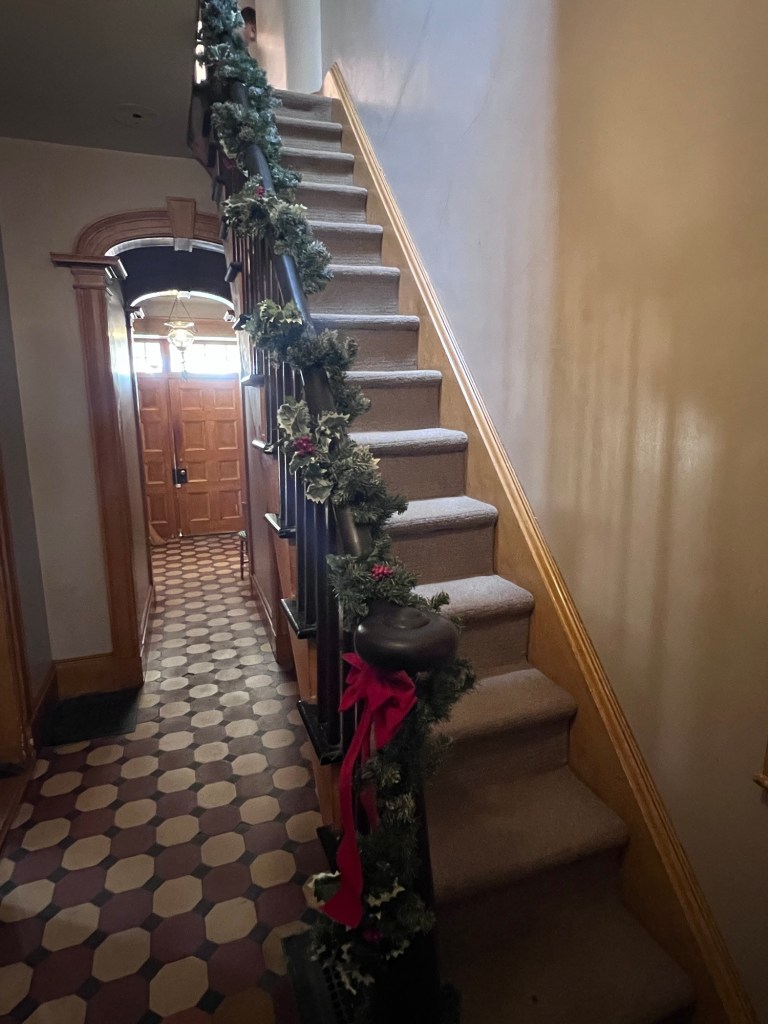
The entrance foyer from the stairs.

Upon entering the front door, you could see the beauty and simplicity of the Christmas holidays in the early 1800’s before Victorian traditions took over and the house was overdone with decorations. Garland, Holly and simple pine trees adorned the rooms and welcomed everyone to the Christmas Holiday Open House sponsored by the Friends of Clermont. The home was nicely decorated for the holidays circa 1840’s.

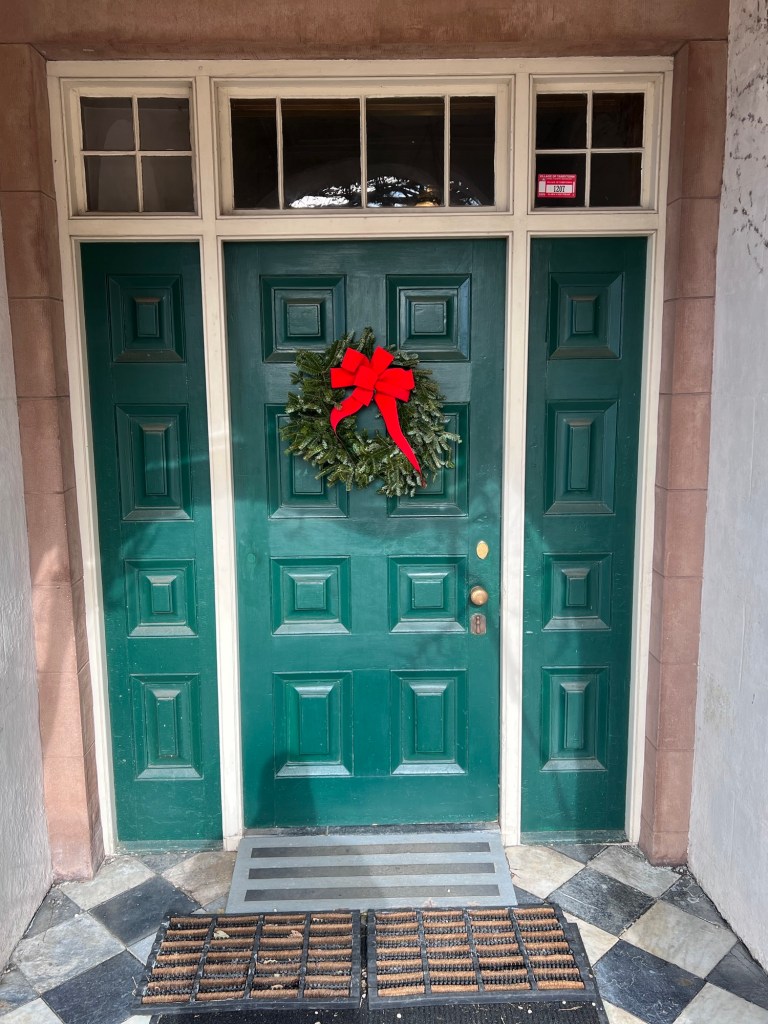
Entering the Front Door at Clermont at Christmas.

The wreath was beautiful on the door.

Livingston Painting in the foyer

The Sugar Spun Clermont Sculpture.

Painting in the Foyer of Robert Livingston

Portrait of Margaret Livingston in the Foyer.

The holiday display.

The Office of Clermont

The Table Top tree in the Office.

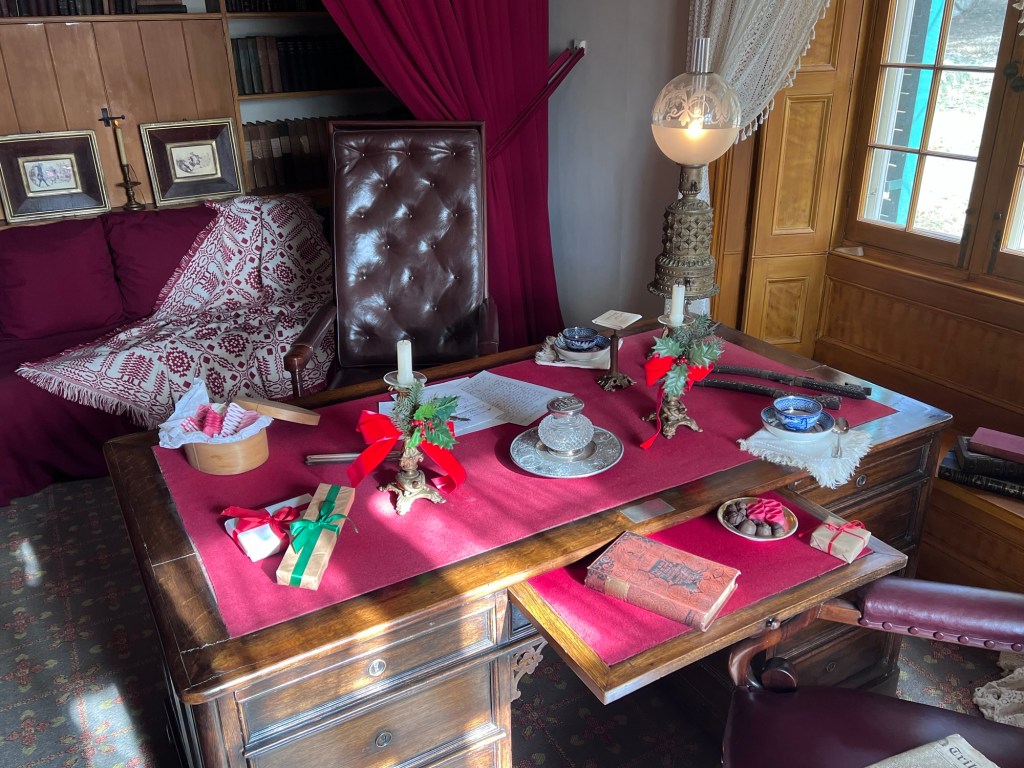
The Library was set for Christmas morning with a large tree, homemade presents from the family and a morning of Christmas cheer. The views from the windows would have shown the beautiful views of the river.

The Library at Clermont

The Clermont Library at Christmas time.

The Christmas tree in the library.

The Library decorations.

Library decorations.

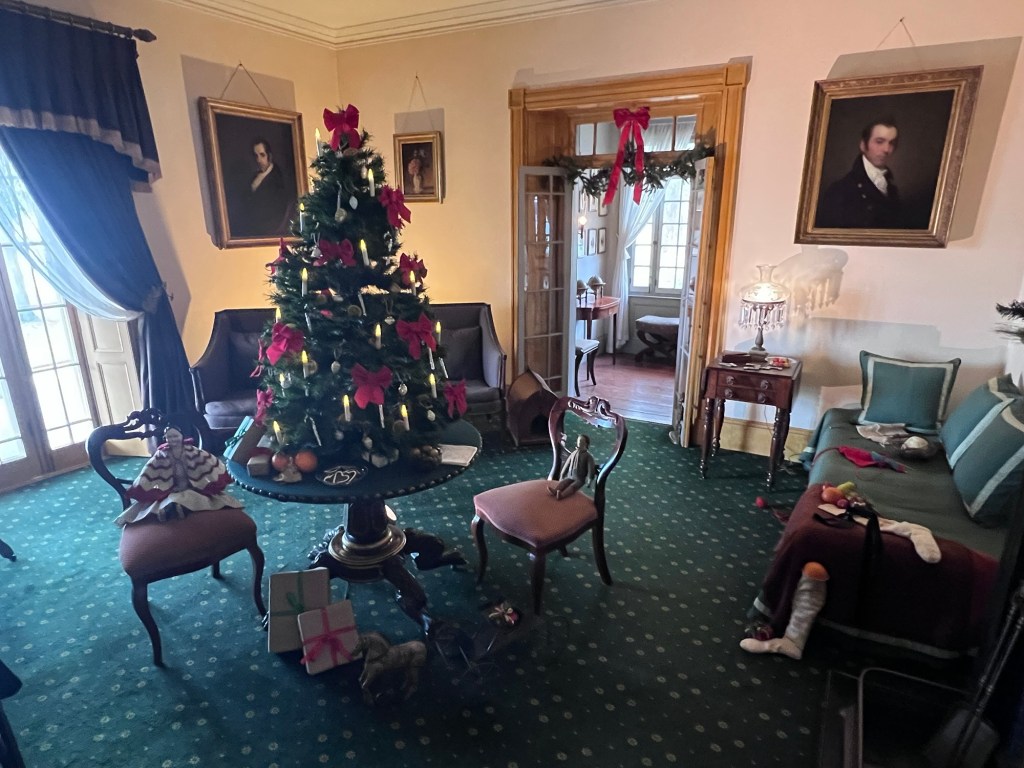
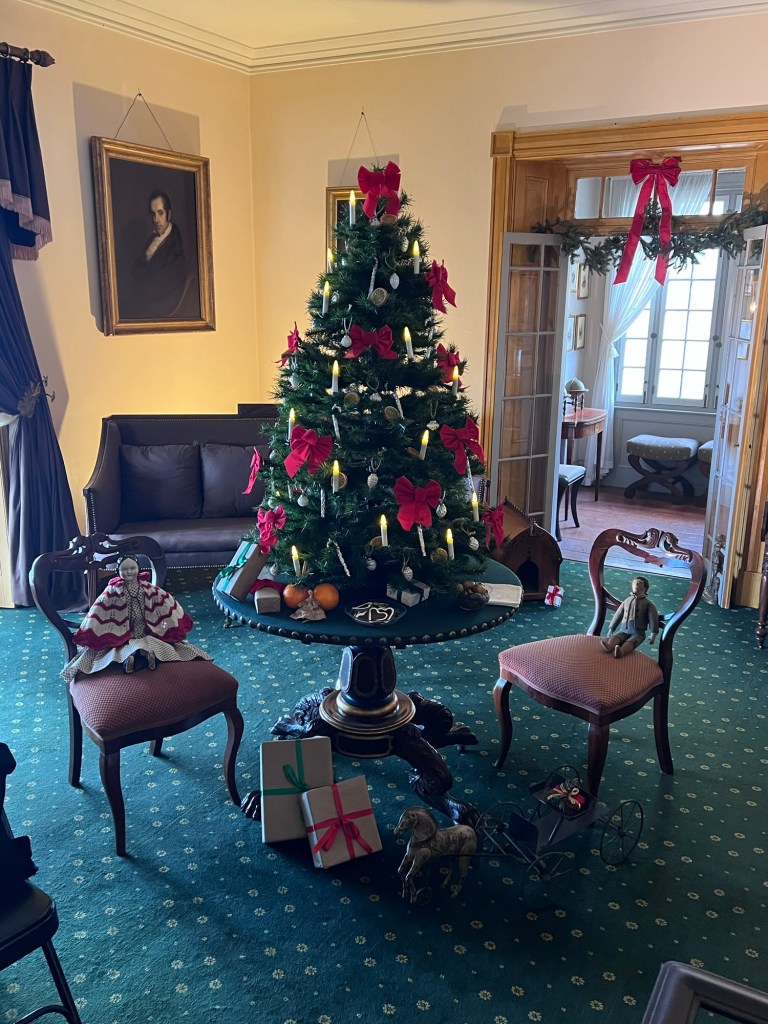
The Living Room was set for Afternoon Tea and for greeting guests who would have entered through the front door right off the main hallway.

The Living Room decorated for Christmas.

The Living Room was set for Afternoon Tea.

The portrait of Robert Livingston in the Living Room.

The portraits of Alida and Robert Livingston.

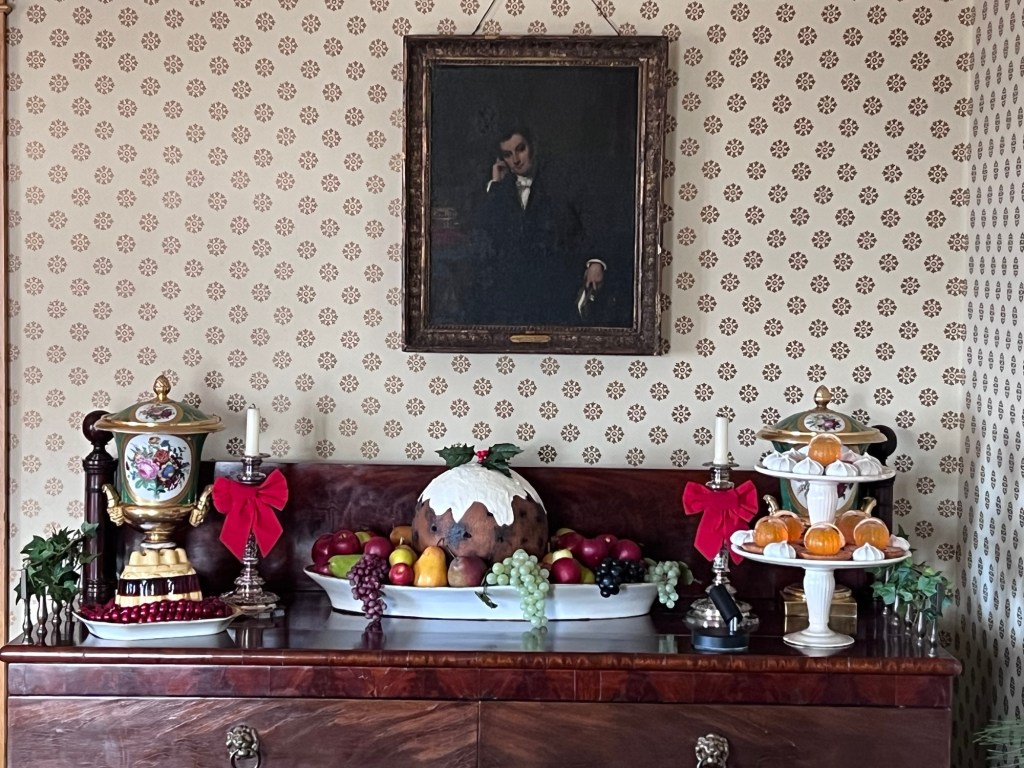
The Dining Room was not set for dinner but in anticipation of the holidays. The elegant runners, china, crystal and silver were off to the side awaiting the servants to set the table and prepare for Christmas dinner.

The Dining Room decorated for the holidays.

Holiday display in the Dining Room.

The Wedding Painting of Margaret Beekman Livingston in the Dining Room.

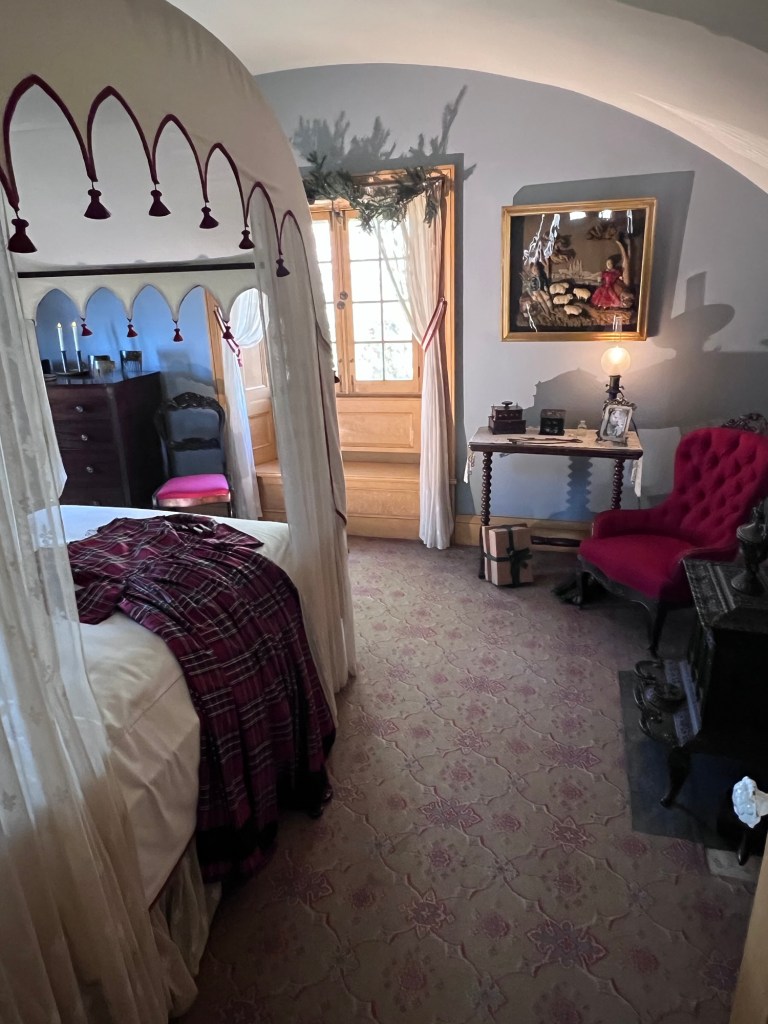
The family’s private bedrooms were decorated with garland and a small tree in the foyer.

Heading to the Second Floor of Clermont.

The view of the foyer from the upstairs.

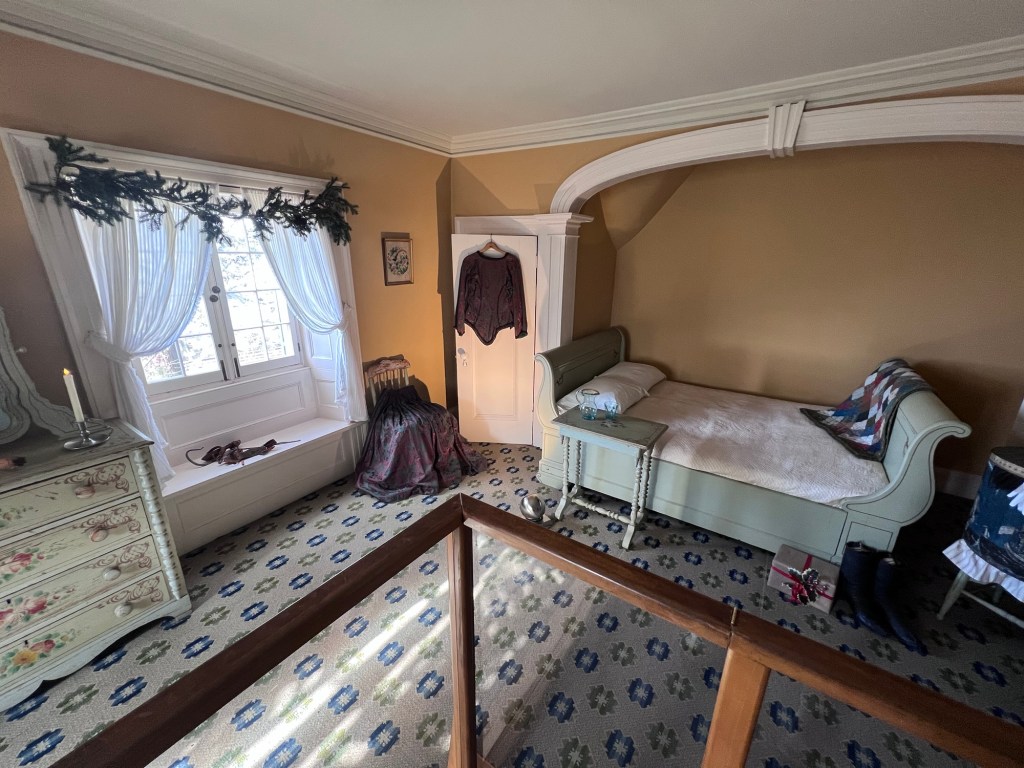
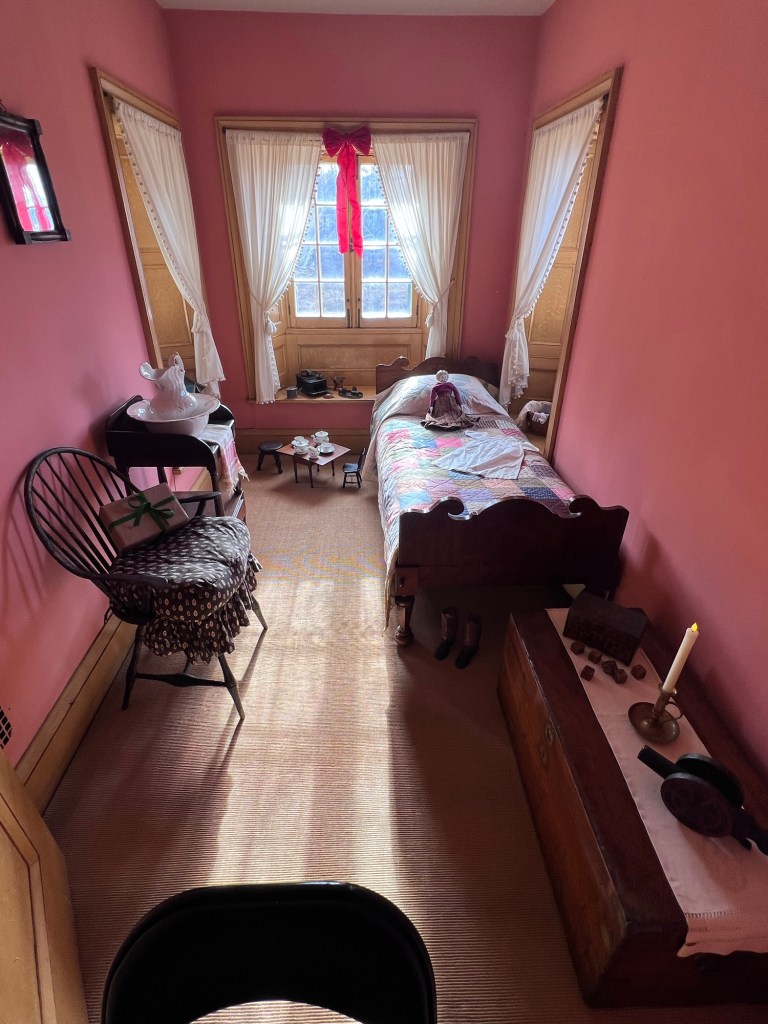
The Livingston girls Bedroom.

The Livingston girl’s doll adorns the room.

The Christmas tree in the upstairs Foyer outside the bedrooms.

The Gingerbread House display in the Foyer.

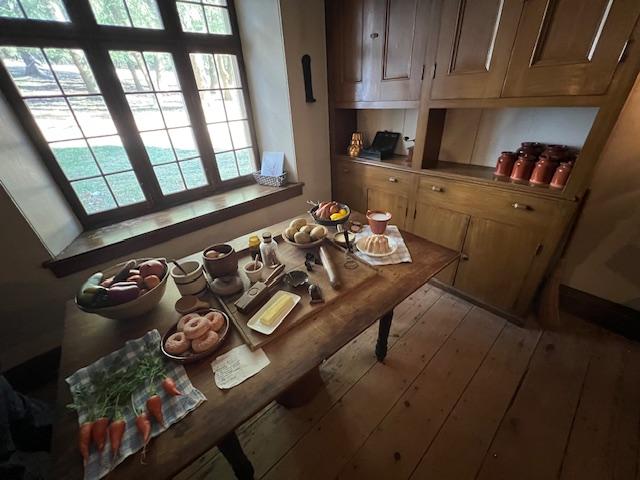
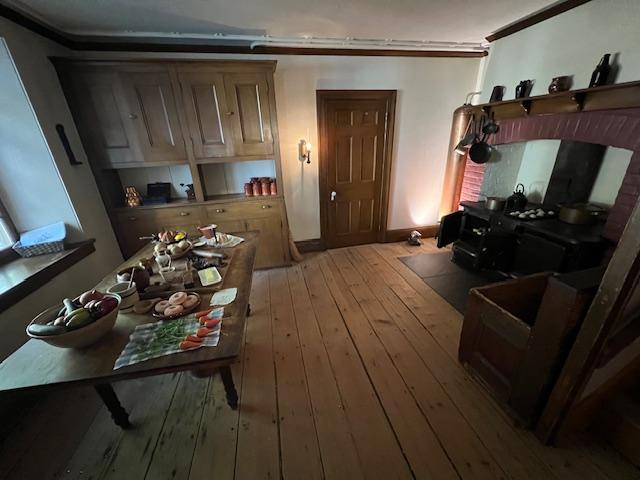
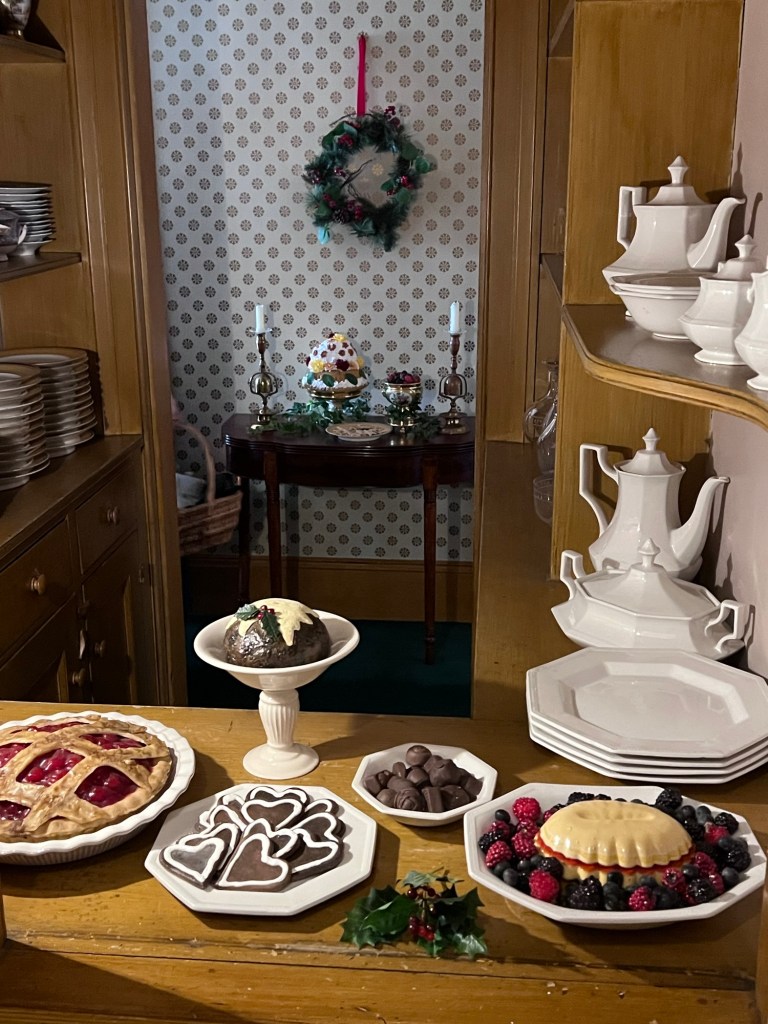
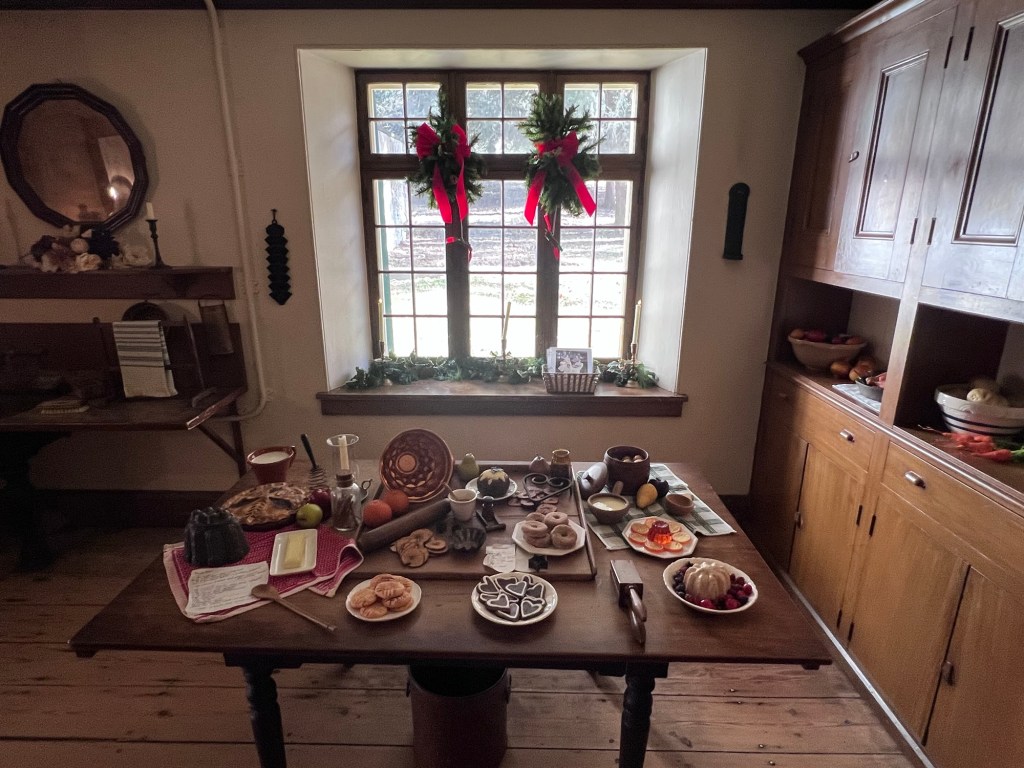
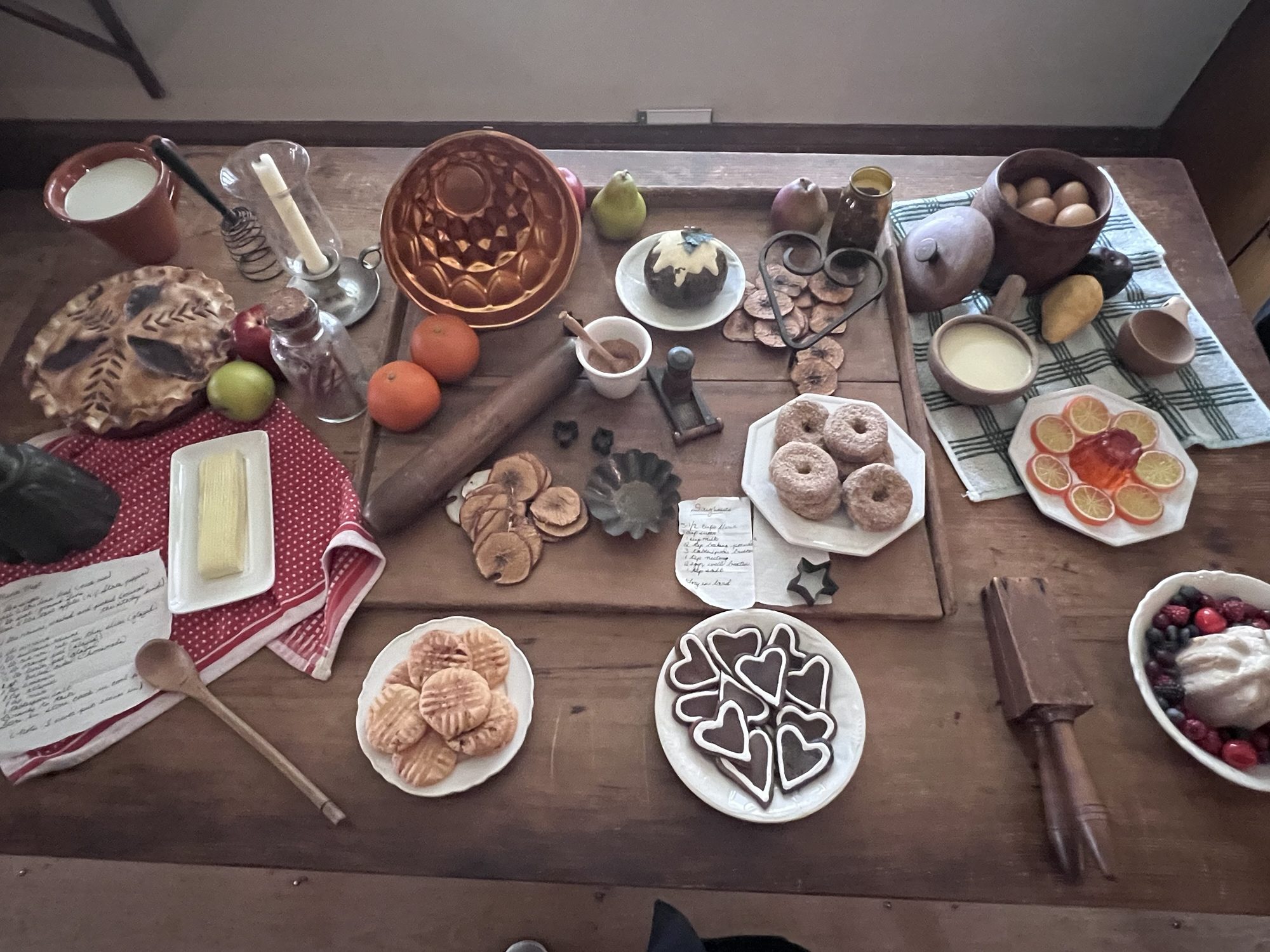
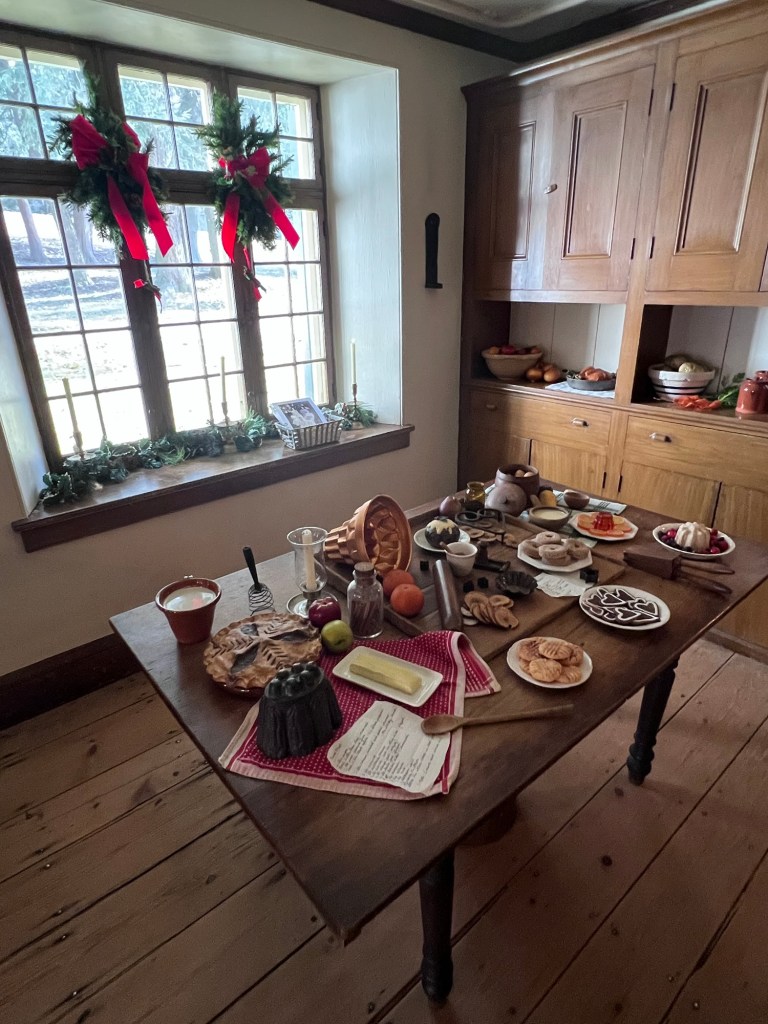
When touring the kitchen which is located to the side of the house, the counters and tables were filled with all the delicious foods that would have been served at Christmas. Roasts, Trifles, Cakes and Pies would have been served by the staff for holiday get togethers and dinners at the mansion.

The Kitchen staff preparing the family’s Christmas dinner feast.

Preparations for Christmas dinner for the family.

Preparing Christmas dinner in the kitchen at Clermont.

After the Christmas Open House tour was over, the Friends sponsored Marshmallow roasting on the front lawn of the mansion and refreshments and talks up at the Visitors Center.

Roasting Marshmallows over the firepit on the mansion’s grounds after the walking tour of the mansion.

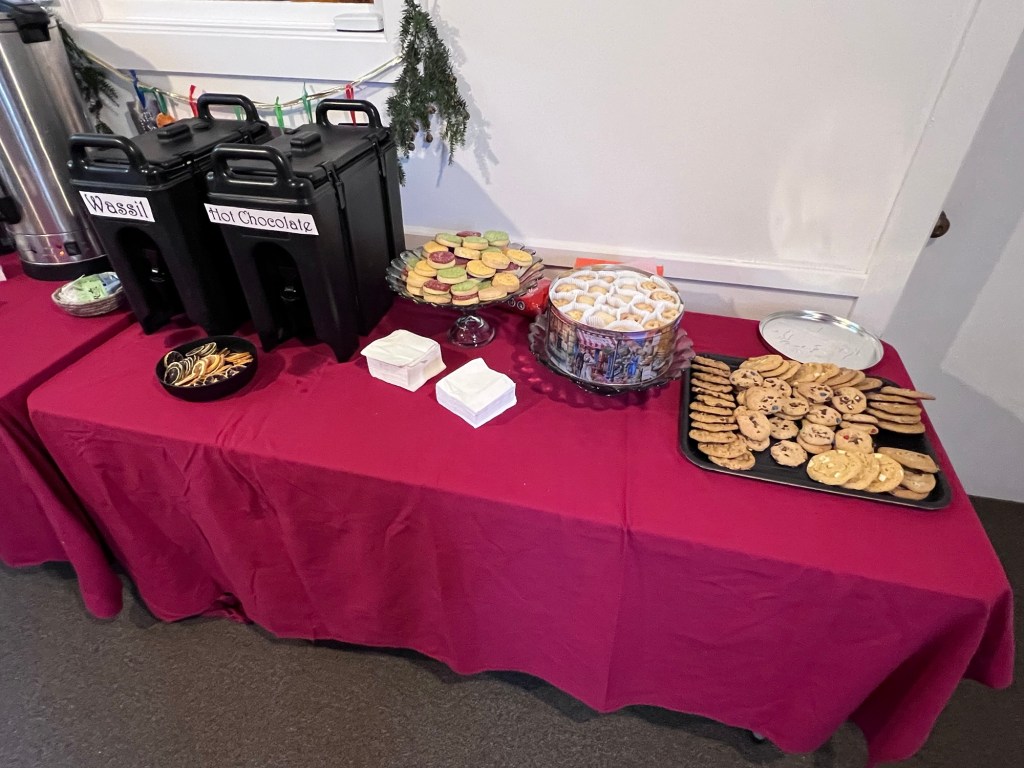
Christmas cookies, Apple Cider and Classic Candies in the Visitors Center ended the tour and the Open House for the day.

After the tour was over, I toured the gardens, which were dormant at the time and the grounds along the Hudson River. The views were just amazing and the gardens awaited the coming of the Spring when flowers would be blooming again.

Both the Open Houses at Halloween and at Christmas are a lot of fun and very special at Clermont. The Friends of Clermont do a nice job depicting the holidays and how the family would have celebrated them.

In the Summer of 2024, I took a special Garden Tour of the Livingston Gardens. A new Lead Gardener had been hired by the State of New York and she was starting to renovate the gardens. So we took a tour of the four gardens near the mansion. While we toured the estate grounds, we visited the South Spring Garden, the Walled Garden, the Children’s Garden and the Cutting Garden to see how they were progressing. The staff here is doing a good job bringing these gardens back to life to how Alice Livingston envisioned them.

The first was the South Spring Garden which is closest the house. This was built when the stairs to the side of the home were built and one of Alice Livingston’s first gardens.
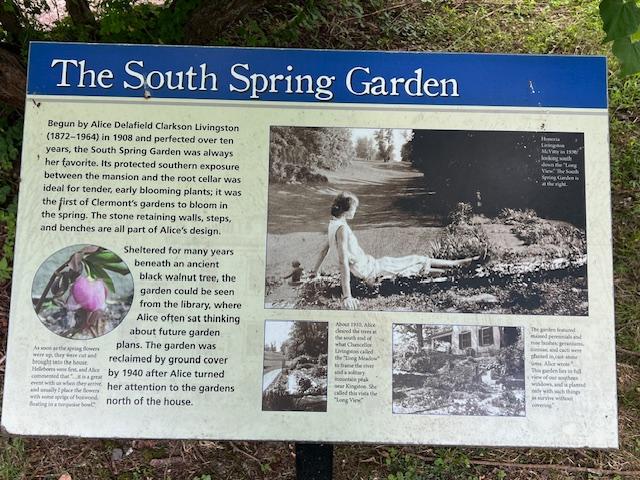
The South Spring Garden sign

The South Spring Garden in Summer 2023

The South Spring Garden being cleaned up in Summer 2024

The grown in wall of the South Spring Garden
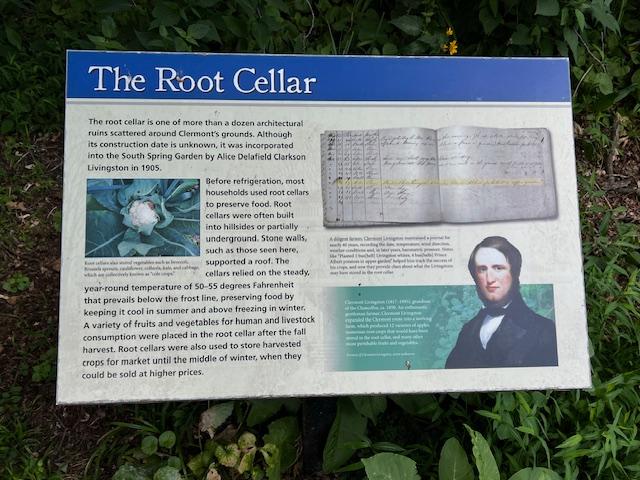
The Root Cellar sign

The Root Cellar remains by the South Spring Gardens

The flowers in the South Spring Gardens

The sign for the Walled Garden

The Walled Garden
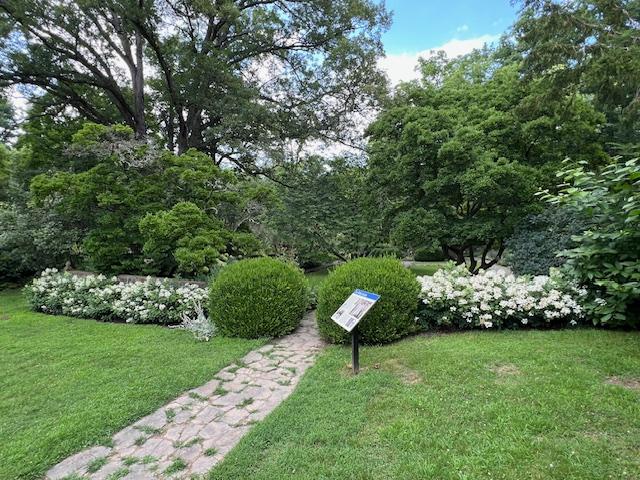
The Walled Garden
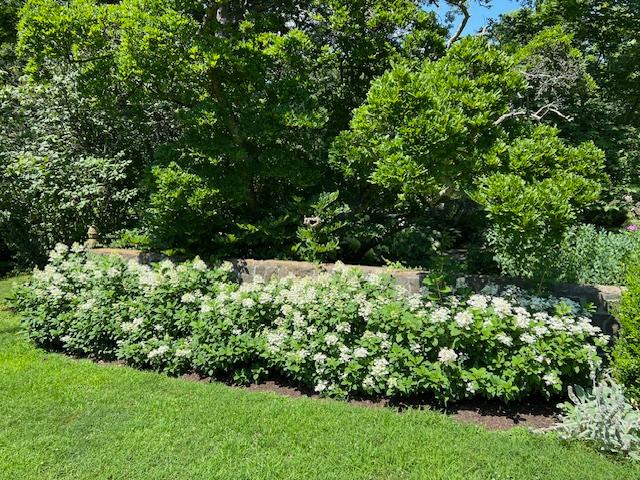
The Walled Garden

The Walled Garden

The Walled Garden Statuary

The Walled Garden

Then we visited the Wilderness Gardens that were just beyond these and they also had been brought back to life by the gardeners. This was to be a transition from the formal gardens to the woods.

The Wilderness Gardens:
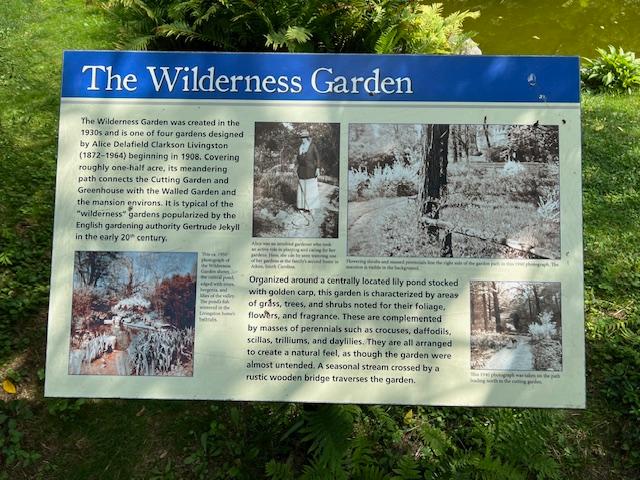
The Wilderness Gardens sign

The Wilderness Gardens
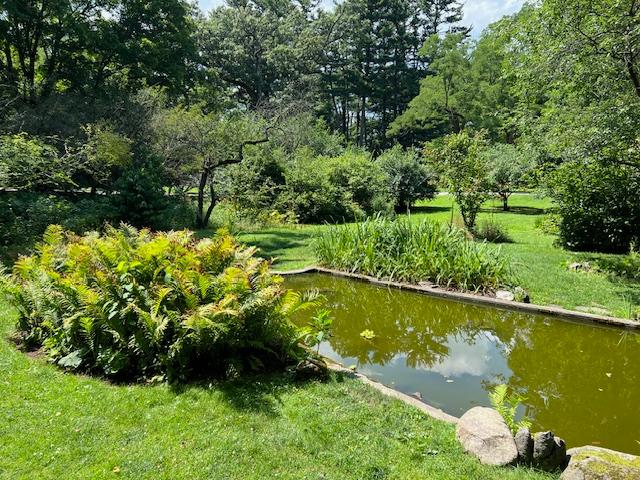
The Wilderness Gardens

The we visited the Children’s Garden and the Cutting Gardens which were the newest gardens on the estate. The Children’s Garden playhouse had just been renovated and the beds had been replanted.
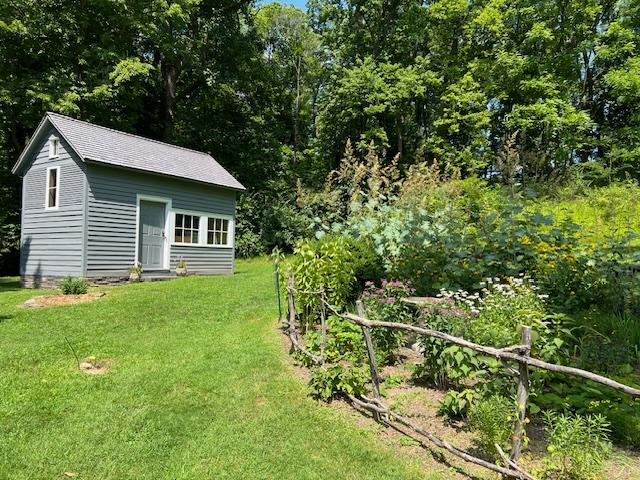
The Children’s Garden with the Children’s playhouse
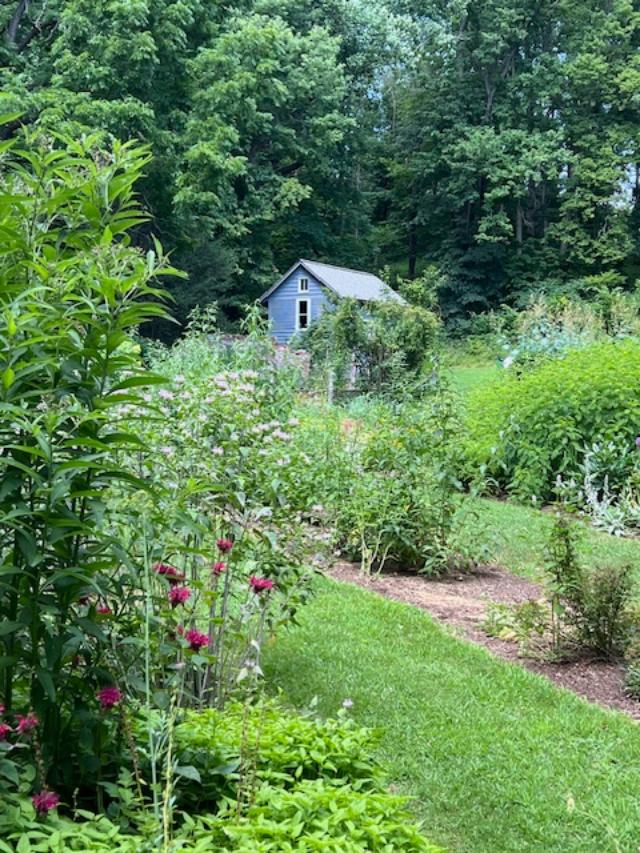
The Children’s Garden from the entrance

The Children’s Garden Garden

The Children’s Garden

The Cutting Gardens were created so that Alice Livingston could grow the types of flowers that would decorate the house at various points in the season. These gardens have been brought back to their original purpose and the flowers and assortments that have been planted are colorful and the fragrances are so nice. On a beautiful day, walking amongst the beds is so nice and relaxing.

The Cutting Garden

The Cutting Garden

The Cutting Garden

The Cutting Garden trellis

The bridge between the Walled Gardens and the Children’s and Cutting Gardens

The Gardens Tour was very informative. Alice Livingston’s love of flowers and how they accented the house were her pride and joy. The Cutting Garden were all the flowers that she used to decorate the house with and the Children’s Gardens taught her daughters responsibilities and knowledge of horticulture.

The biggest problem in recent years is how to maintain all these gardens. This takes a lot of effort and work to weed. plant and prune these beds and make them look nice. The new gardener hired by the State and her team of two staff and volunteers are doing a nice job cleaning out the old beds and replanting and pruning all the plants and bushes that were already there. You can tell by the pictures there is a lot more to do but the gardens are on their way back to their original look.

After touring the mansion at Christmas time in December 2023, I visited Downtown Germantown, which itself was decorated for the both holidays.

Downtown Germantown, NY decorated for the Christmas holidays.

Exploring Germantown, NY:

Downtown Germantown during the Christmas holidays.

Downtown Germantown at the Christmas holidays.

Downtown Germantown for the Christmas holidays and church service.

After the tour in July 2024 for the Summer Garden tour, I revisited Germantown again to see what it was like during the summer months. It is a very active and historical downtown with nice restaurants and shops, a wonderful gourmet grocery store and beautiful historical churches. It is a nice place to spend the weekend when touring the mansions in Columbia and Duchess Counties.

Germantown in the Summer of 2024:

Downtown Germantown, NY in the summer
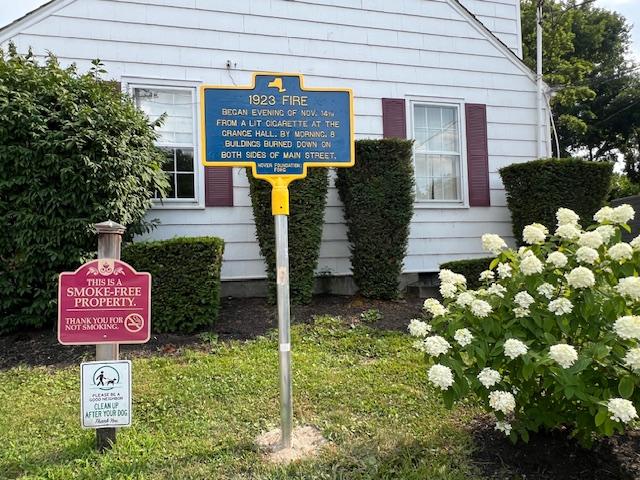
The town square and historical sign

The Inn downtown
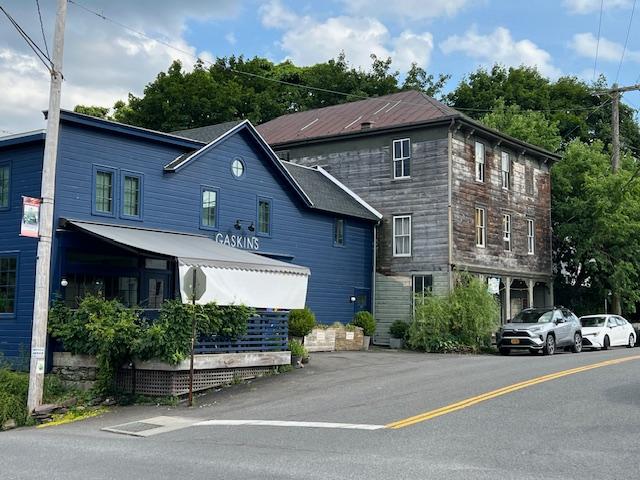
The restaurant row of Germantown with Gaskin’s in the background
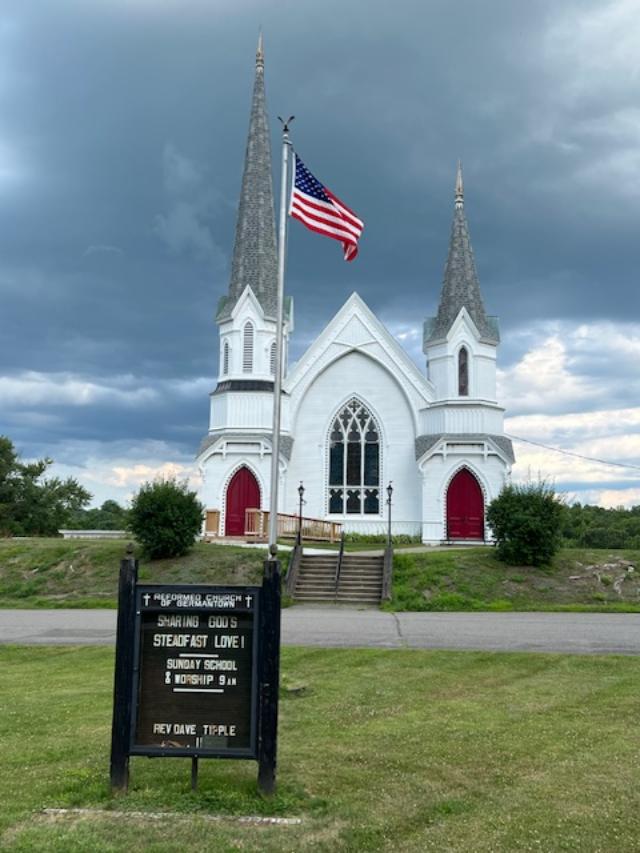
The Reformed Church of Germantown. For some reason the clouds started to roll in after a sunny day.

The church grounds across the street

Germantown is a small town that keeps changing as more people from the City move up to the Hudson River Valley. A lot of the buildings in town are becoming art galleries, furniture shops and new restaurants. With each season, there are more changes coming to the town.
Washington Irving’s Sunnyside                              3 West Sunnyside Lane                              Irvington, NY 10533

Washington Irving’s Sunnyside 3 West Sunnyside Lane Irvington, NY 10533

Washington Irving’s Sunnyside

3 West Sunnyside Lane

Irvington, NY  10533

(914) 591-8763

Admission: Please see their website

My review on TripAdvisor:

https://www.tripadvisor.com/Attraction_Review-g48720-d3680157-Reviews-Sunnyside-Tarrytown_New_York.html?m=19905

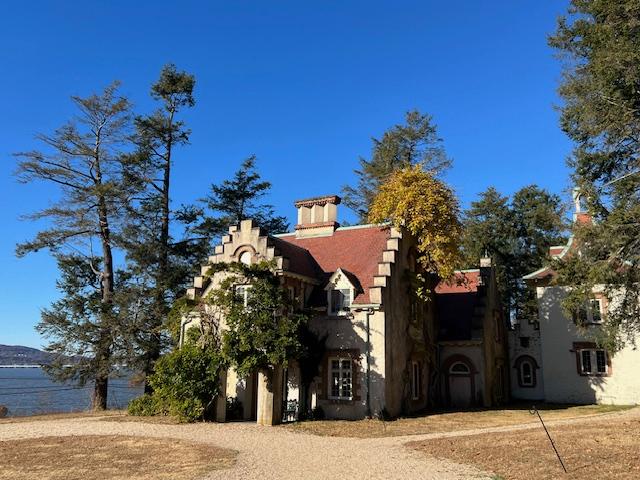
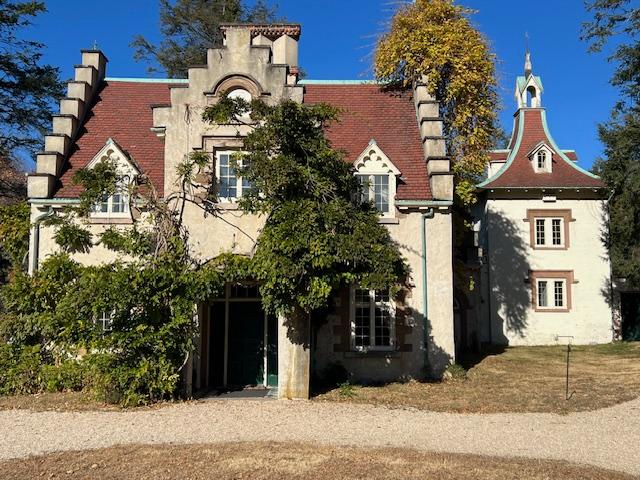
The front of Sunnyside in the Fall of 2024

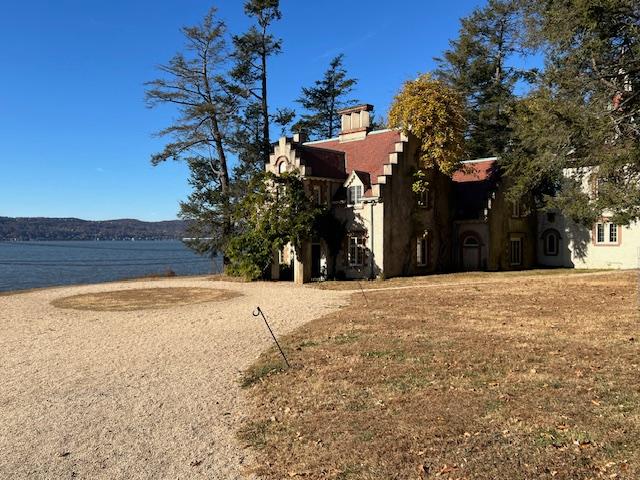
Washington Irving’s home, Sunnyside is open during the warmer months of the year, closing at the end of October. The house looks like a enchanted cottage with almost a fairy like appearance right on the banks of the Hudson River with the most spectacular views of the river valley and the Tappan Zee Bridge in the distance.

Sunnyside during the Fall of 2024

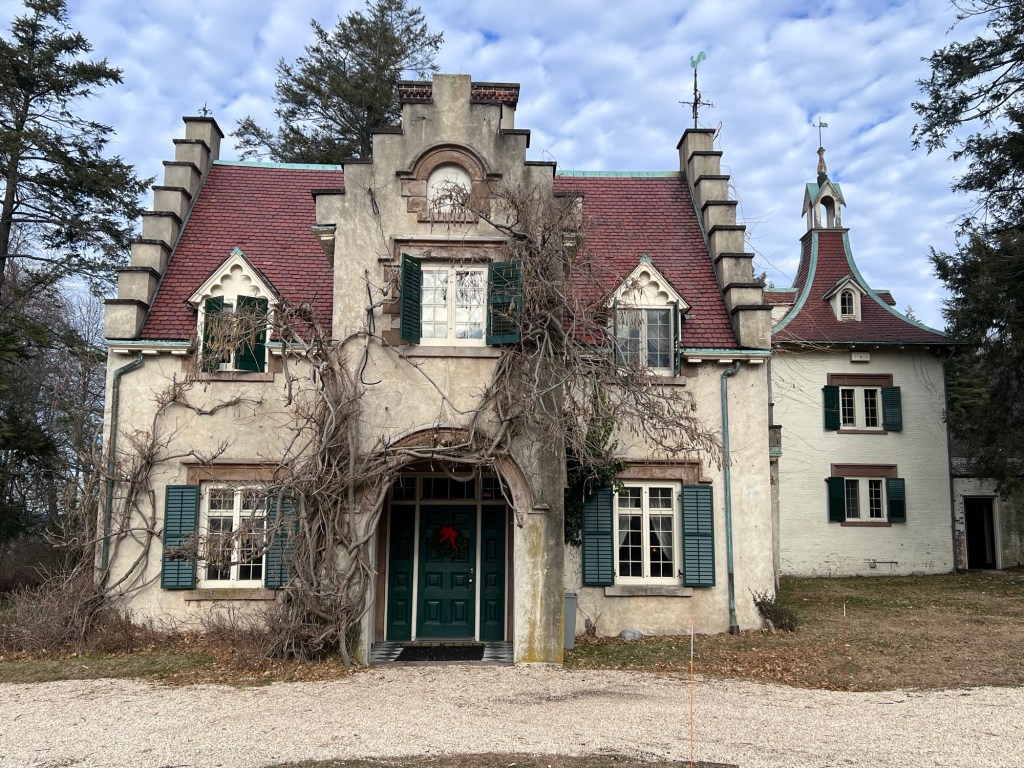
The house was designed by architect George Harvey and reflects the Dutch Colonial Revival, Scottish Gothic and Tudor Revival influences with wisteria growing up and around it and a jagged crow stepped gable.

The front of Sunnyside in the Fall of 2024

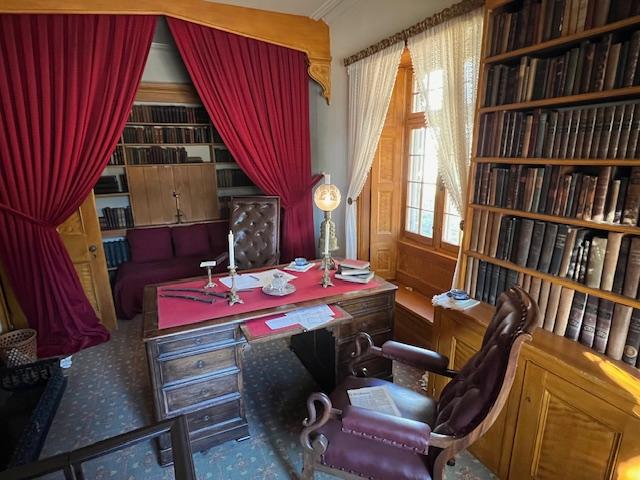
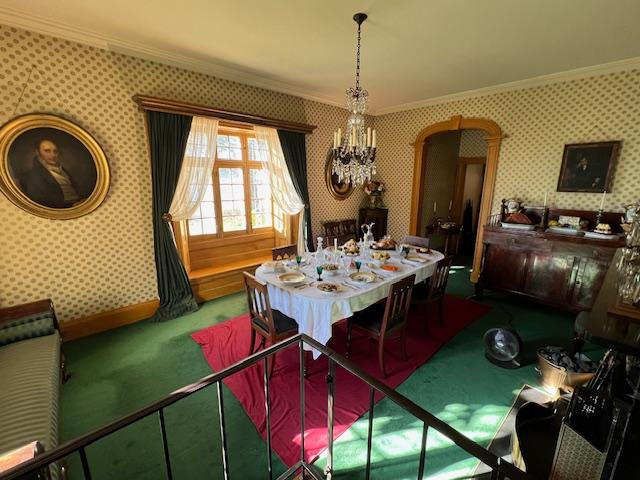
When walking through the home, you will see the study where Washington Irving conducted the business of the house and did his writing. To the other side of the house, you will see the living room and small dining room where the family used to entertain.

Washington Irving’s Study

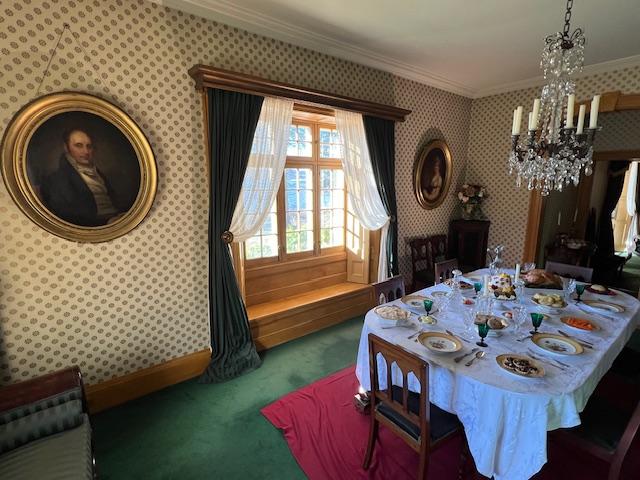
The Dining Room set for a formal lunch

The Dining Room in the Fall of 2024

The formal meal at the afternoon

The hallway between the Dining Room and the Living Room

The Living Room where the family gathered and entertained visitors

The Living Room of Sunnyside

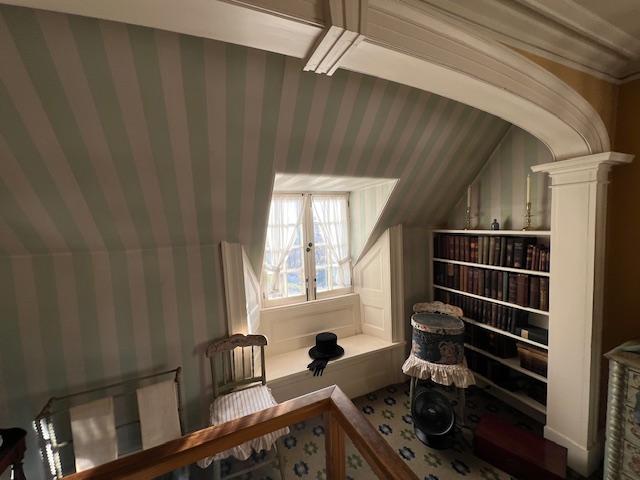
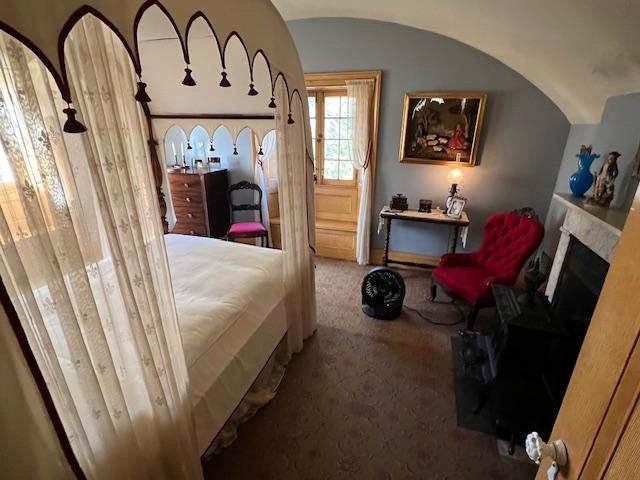
The upstairs contains small bedrooms where Washington Irving, his brother, Ebeneezer and his five nieces lived on and off when they were living at the house. Washington’s brother’s business had failed and the family came to live with him. Two of the nieces never married and ran the home for their uncle.

The Guest bedroom at Sunnyside

The Guest Bedroom

The Children’s Bedroom that catered to the little guests

The house is nicely furnished in the most modern decor of its time but is not an elaborate house. It is a home and not a weekend mansion and this ten acre estate was a once a  working farm. In the back of the house, there is an ice house and a barn show where the people who worked on the estate kept the house running.

Ebenezer’s daughter’s room

Ebenezer’s Room in Sunnyside; Ebenezer was Washington Irving’s Older Brother

Washington Irving’s bedroom

Washington Irving’s bedroom

The view of the river is one of the most spectacular in the Hudson River Valley as its at the widest part of the Hudson River. You can see the cliffs of New Jersey on the other side with views of Nyack and the Tappan Zee Bridge in the background.

The grounds of Sunnyside

The grounds of Sunnyside

During the Fall season there are all sorts of activities going on at the estate and the tours are a very interesting look at life at that time. The Kitchen staff ran the home for social calls and main family meals as well as all the things it took to run the household.

The Sunnyside Kitchen

The kitchen and pantry area

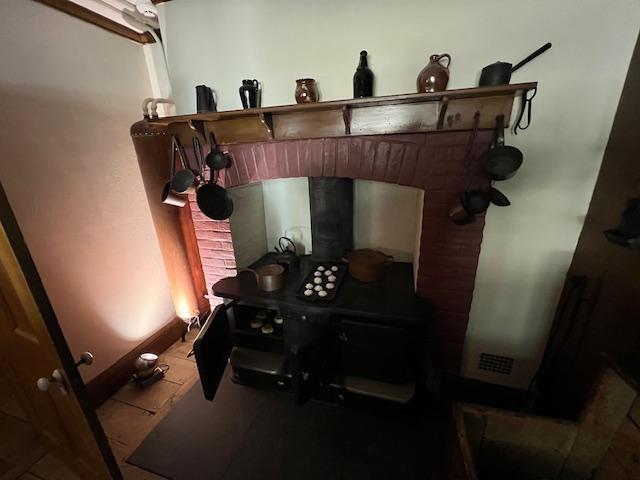
The stove in the kitchen

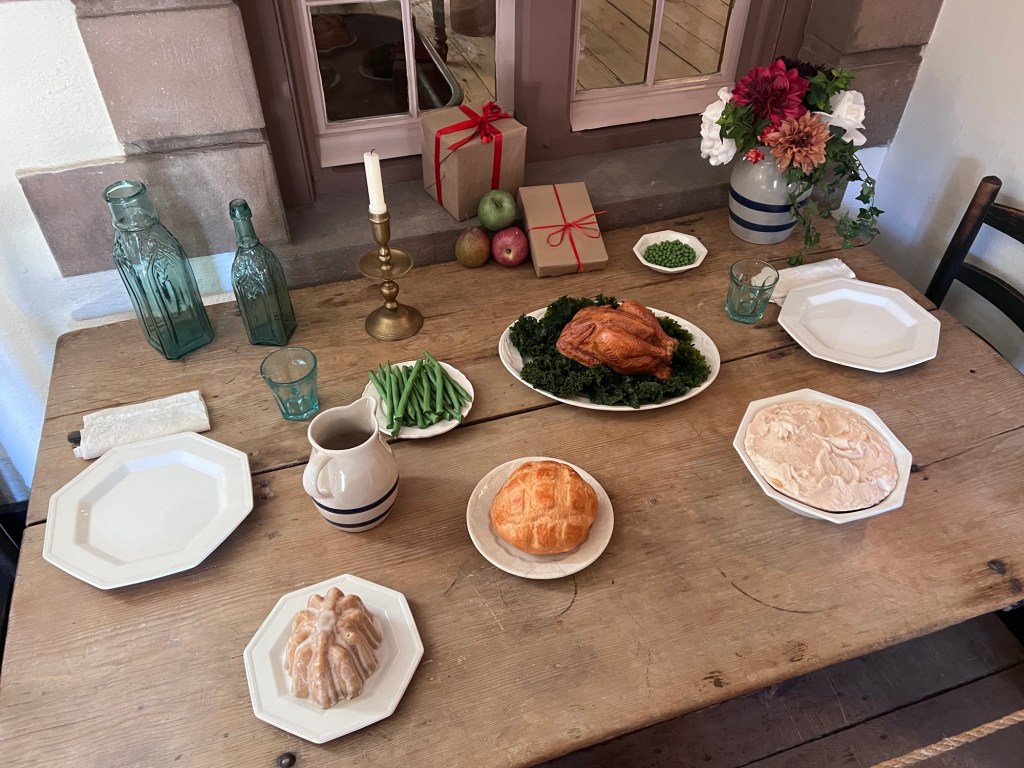
The delicious items that were prepared in the Country kitchen

The sink area of the kitchen

The Cooks Kitchen

The Pantry

The Linen Room

The Sewing Room for the family

The History of Sunnyside:

The estate was once the home of Wolfert Acker called Wolfert’s Roost and was part of the Manor of Philipsburg and this home was once a simple two room stone tenant farmhouse built around 1690.

The patio view from the back of the house

The property came into the hands of the Van Tassel family, who were married into the Eckert family and owned it until 1802. That year, 150 acres were deeded to the family of Benson Ferris, one time clerk of the Old Dutch Church of Sleepy Hollow, whose wife, Maria Acker, was a descendant of Wolfert Acker’s.

The grounds of Sunnyside

In 1832, Washington Irving visited his nephew, Oscar Irving, who lived near the old stone farmhouse and was looking for a home at the time. He purchased the property on June 7, 1835 and would add to the property.

The view of the house of the Hudson River

Irving wrote a story, “Wolfert’s Roost”, about Acker and the site. In a letter to his brother Peter, he described it as “a beautiful spot, capable of being made a little paradise…I have had an architect up there and shall build upon the old mansion this summer. My idea is to make a little nookery somewhat in the Dutch style, quaint but unpretending. It will be of stone.” He asked his neighbor to help him remodel the house and landscape the grounds in Romantic style adding a brook and waterfall.

The grounds of Sunnyside

The house became a major spot of people visiting the area to meet the author. In 1842, he was appointed to be the Ambassador of Spain and left the estate in the care of his brother and four daughters. He returned in 1846 and added to the home the ‘Spanish Tower” in 1847. This added four more bedrooms to the home.

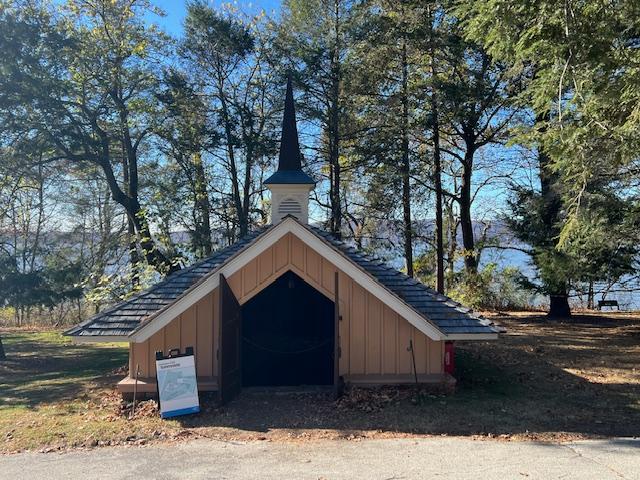
The Smokehouse

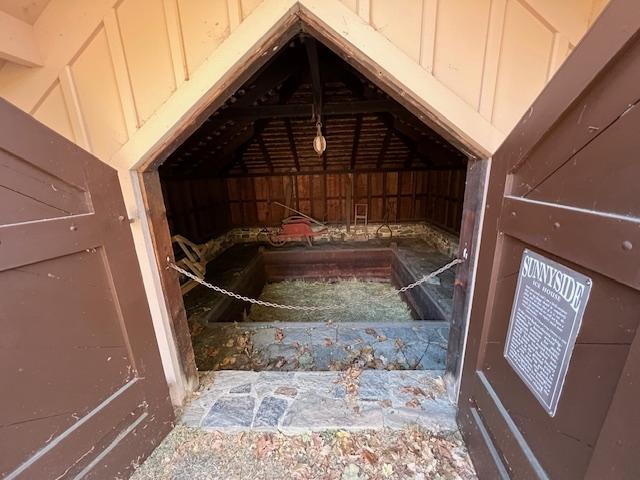
The Ice House at Sunnyside

The Ice House

The Fruit Cellar

Irving died in the house in 1859 of a heart attack at age 76.

The house was purchased from Louis Irving by John D. Rockefeller Jr. and was restored for historic preservation. It was opened to the public in 1947.

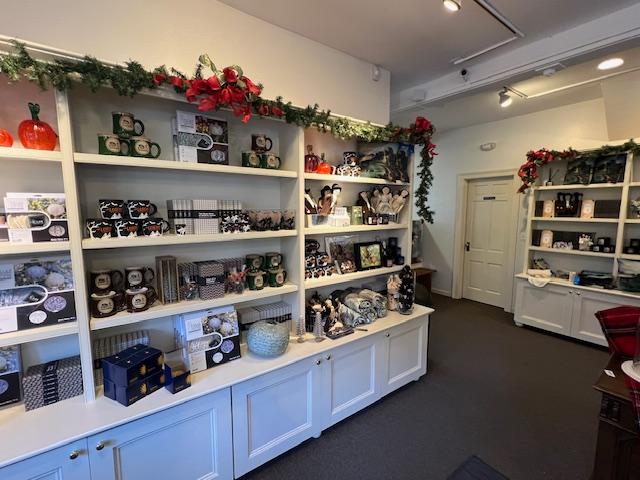
The grounds has a very nice gift shop

Bannerman Island Castle                                     POB 843                                                       Glenham, NY 12527

Bannerman Island Castle POB 843 Glenham, NY 12527

Bannerman Island Castle

POB 843

Glenham, NY 12527

(845) 831-1001

https://en.wikipedia.org/wiki/Pollepel_Island

Open: Please check the website as this is a seasonal location

Admission: Adults and Children 11 and Up $45.00/Children 11 and under $35.00

My review on TripAdvisor:

https://www.tripadvisor.com/ShowUserReviews-g47508-d2252346-r967185184-Bannerman_Castle-Cold_Spring_New_York.html?m=19905

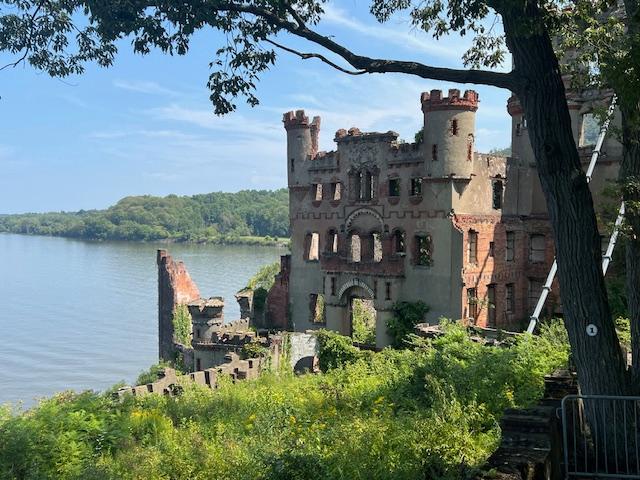
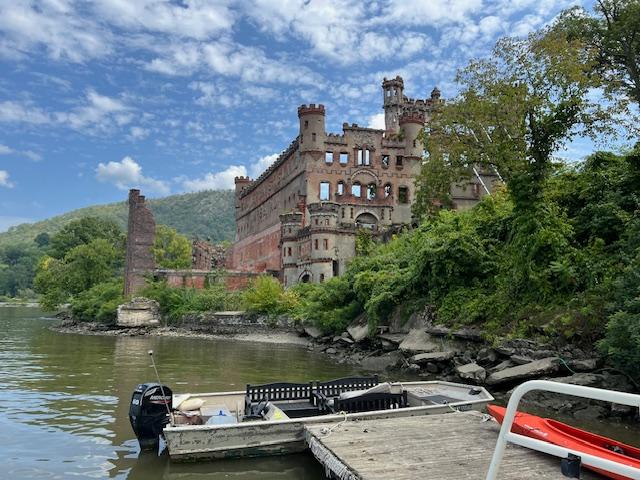
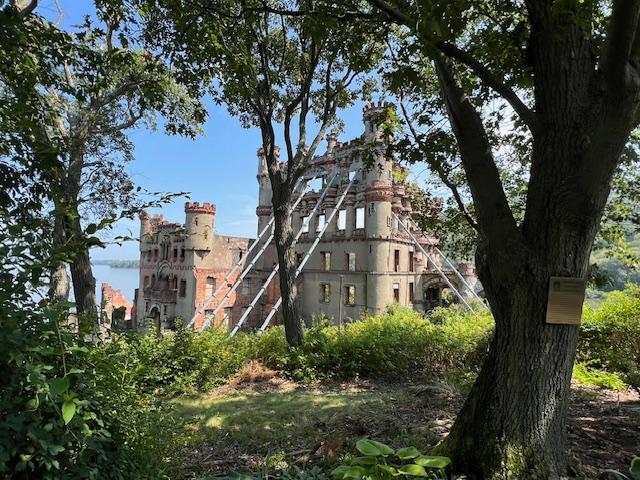
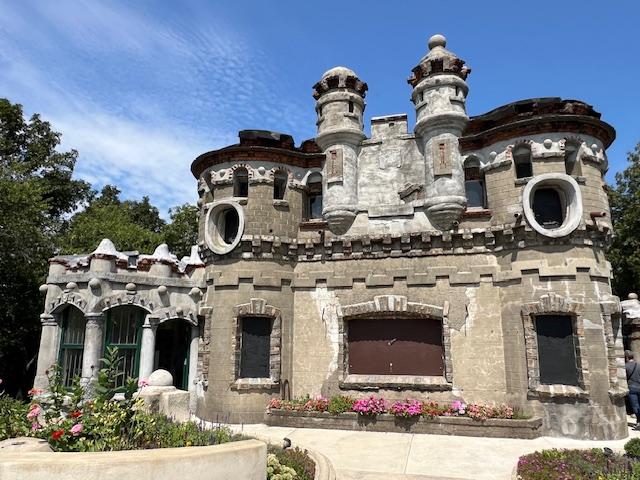
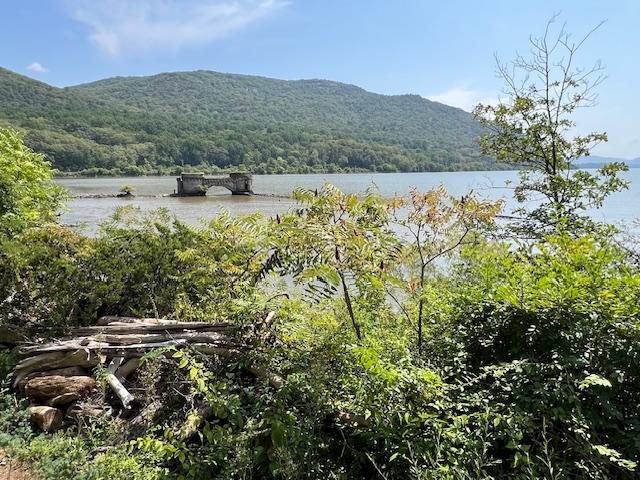
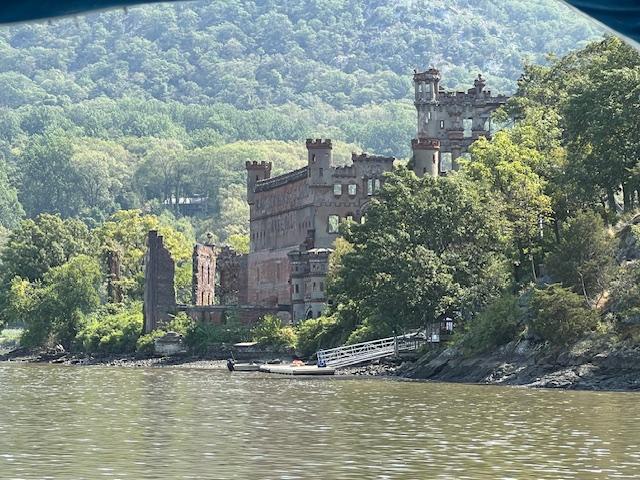
The mysterious Bannerman Castle sits on an island in the middle of the Hudson River

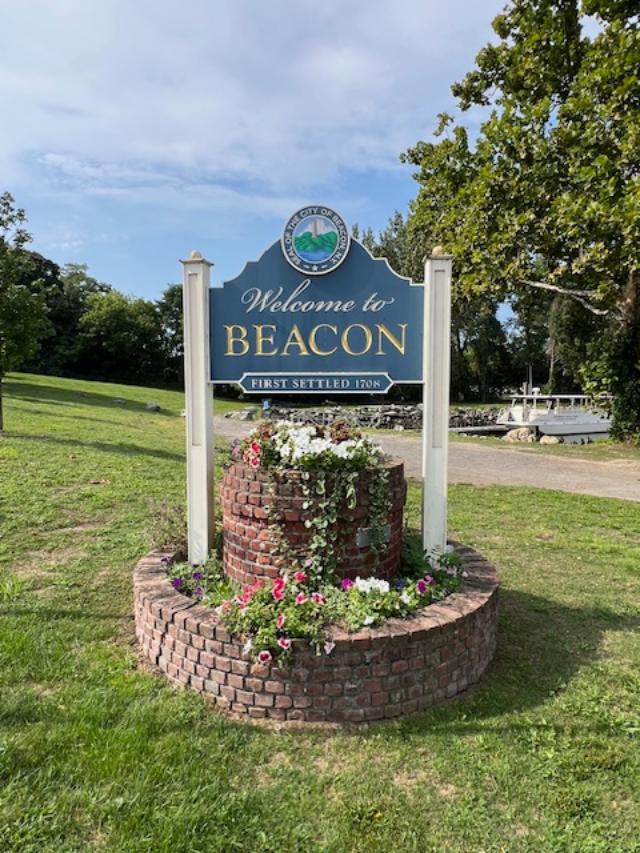
The welcoming sign by the riverfront

I recently visited Bannerman Island (Pollepel Island) just outside of Beacon, New York on a cool cloudy day and I highly recommend the twenty minute boat trip to this mysterious and scenic island. The only way to visit the island is by boat or kayak and the ride is very quick depending on the weather and the waves on the Hudson River.

The dock at the Beacon Railroad station at the beginning of the tour

The dockside and park at the Beacon park

The view of the docks before the tour

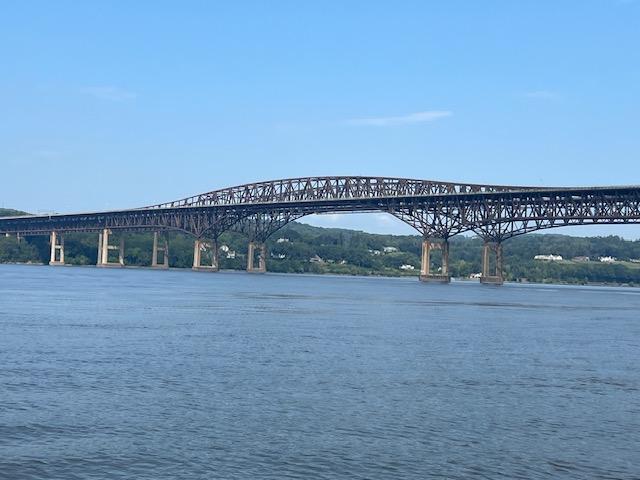
The view of the bridge near the park and part of the boat tour

Video of the boat ride out to the island:

Video of the boat ride out to the island:

Video of the boat ride out to the island:

Video of the boat ride out to the island:

Video of the boat ride out to the island:

Arriving at the dock on Bannerman Island after your boat ride

The historic sign of General Lafayette’s landing at this site in 1824

Once you get to the island, you are greeted by the tour guide and then have to walk up 74 steps from the harbor to the ridge of the island so this is NOT ADA compliant.  At the top of the stairs starts the path around the island. Our tour guide that lead the tour had been there since the tours started in 2004 and gave us many insights on the history of the island and its purpose to the Bannerman family.

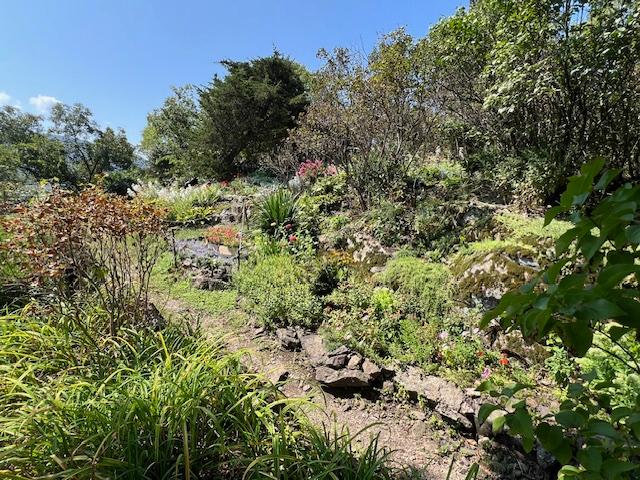
The gardens at the hillside as you walk up the stairs at Bannerman Island in the Summer of 2024

The first stop on the tour is the view of the ruins of the old Munitions Storage building

Our first stop was the Bannerman Munitions Storage facilities that were in the form of a castle that can be seen from the rail system up to Poughkeepsie, NY. For years I thought (as most people do) that this was a home but it was the Bannerman Munitions Warehouse for all the Army surplus items that Mr. Bannerman had brought up here from New York City. All the Military items were stored up here and the orders were fulfilled from this island.

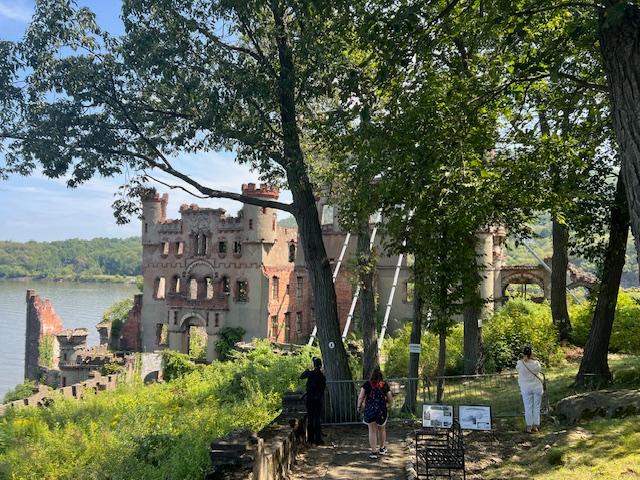
Walking by the ruins of the old castle

Walking by the castle on the pathway

The pathway by the river

Walking the pathway by the river

The company has not been in business since the early 60’s and when the children of the founder closed the company after the laws in the Federal Government changed to where private citizens could not sell explosive, it put a damper into operations. In 1967, the storage buildings were destroyed by fire and the compound was a shell of the former factory. The home was also abandoned at the top of the ridge when the family sold the island.

The Bannerman Island Munitions Storage Facility

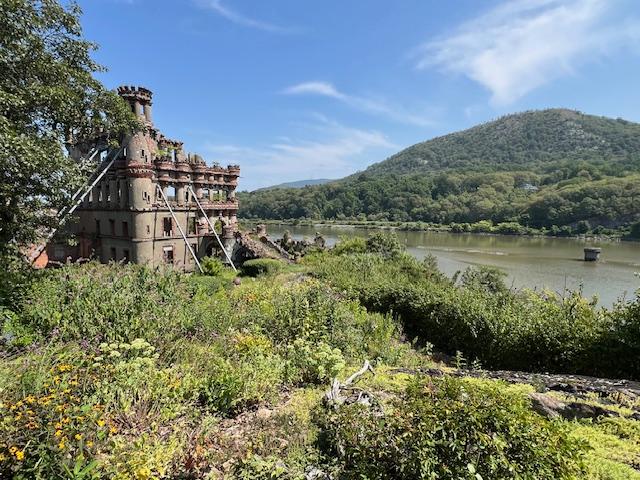
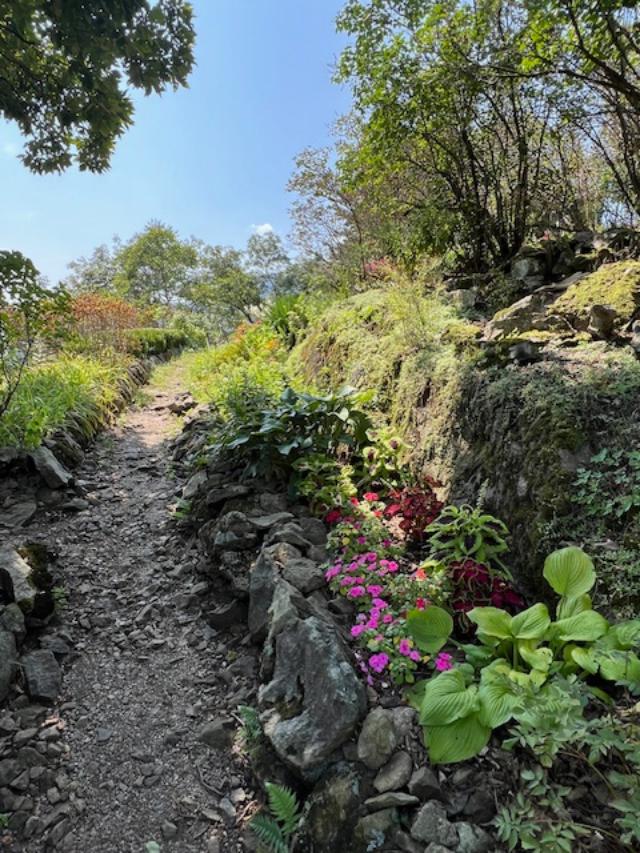
Once you leave the former storage facility which is now being held up by stilts because the structure is so weak, you will proceed up the path past the formal gardens that are planted along the trail. The local garden clubs now come to the island to replant Mrs. Bannerman’s formal gardens and beautify the island.

The gardens on the pathway to the house

The gardens along the pathway

The gardens

The gardens along the pathway to the house

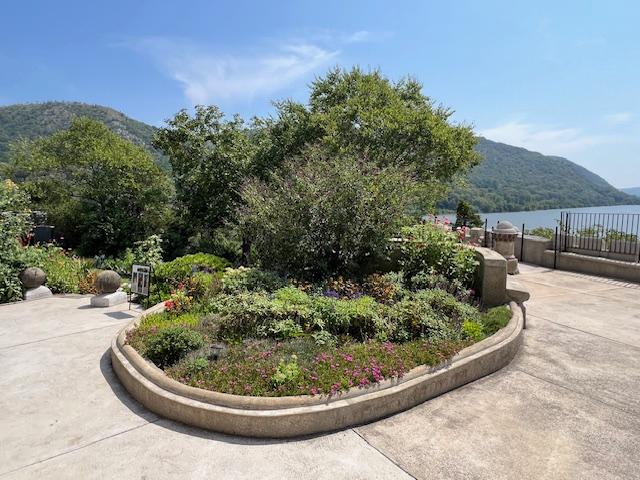
The gardens by the front of the house

The gardens by the front door of the Bannerman Mansion

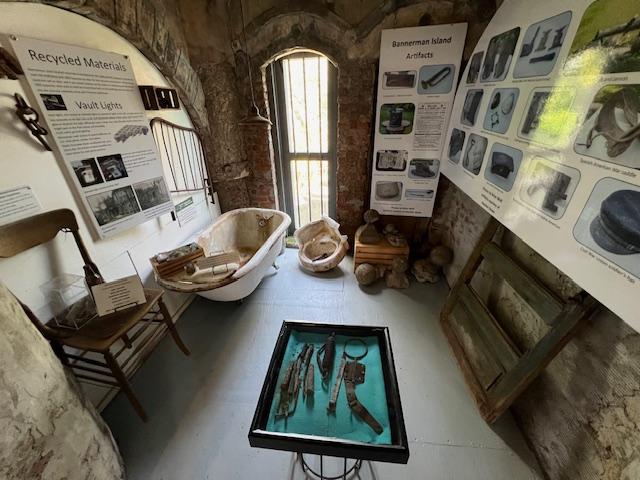
At the top of the point, there is the former home of the Bannerman family that is currently under renovation. It houses a quick tour of the family and there is a small gift shop inside. The porch area has the most amazing views of the Hudson River and the surrounding mountains. Here the Friends of Bannerman Island show movies in the warmer months and hold plays just outside the home. The last movie had been “Abbott and Costello Meet the Frankenstein”, which had been sold out according to the tour guide.

The Bannerman House and Gardens

The main room in the house

The old kitchen in the Bannerman home

The restoration of the house

The house restoration

When you leave the house, there are two paths that you can follow around, one to Wee Bay at the bottom of the hill where you can see the beach and some of the river buildings. The other is the Red Trail around the hill of the island that takes you to the top of the hill to see spectacular views and back to the dock where you will pick up the boat. I suggest good walking shoes and patience. The Wee Bay trail is past the gardens. You take the trail down to the beach.

The pathway to the beach

The Bannerman sign before you head down the hill

The signs to Wee Bay Beach

The Wee Bay path tour

The Wee Bay path tour

The Wee Bay path tour

The views of the river from the Wee Path tour

The Wee Bay beach at the bottom of the trail

The beauty of the beach at the bottom of the hill

The docking buildings by the beach

Wee Bay Beach

The view from the beach

The view of the River buildings

I headed back to the top of the trail by the house and continued the walk around the house to walk the Red Trail on the other side of the house. I have to admit this is not for the faint hearted and you had better like hiking because it is not easy.

The beginning of the trails by the main house

The Red Trail gardens

The Red Trail by the house

The trail at the highest point on the Red Trail

The end of the Red Trail

The end of the trail by the castle

As you exit the tour, you will be heading down another flight of stairs to go back to the harbor. Please watch out for poison ivy! It is all over the place. Then it is back on the boat to the Beacon harbor. The tour guide gives you plenty of time to take pictures.

The view of Mount Beacon on the Hudson River

Finishing the tour and back to the boat

The tours are finished at the end of October and will reopen again in the Spring. You must book on line for the tours through the State website and the boats only hold 44 people so be sure to book in advance of when you want to go.

In 2019, I had lucked out in that three people did not show up for the 2:00pm tour and I was able to pay cash for the trip. In 2024 I booked online which is what I suggest.

For the views alone it is well worth the trip

 The view of Downtown Beacon when you return to the dock

The boat awaited the next group who were at the dock when we returned

The view of the parks when you return

History of Bannerman Castle on Pollepel Island:

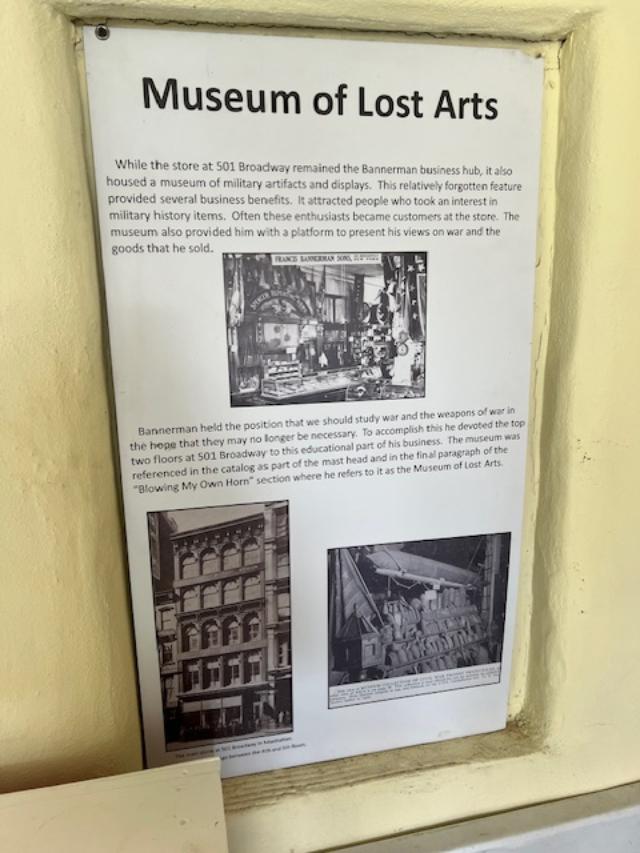
Bannerman Castle was built from 1901-1918 by Frank Bannerman IV as a warehouse to store his collection of antique military equipment from the Spanish American and Civil Wars. Bannerman was the father of the Army Navy Store. His  world famous catalogue of military equipment became the “go to” source for collectors.

The ruins of the Bannerman Castle

The island housed seven structures that formed the Scottish baronial castle, including workers apartments, a summer residence and beautiful trails and gardens. A great fire in 1969 destroyed the interiors and left the shells you see today. Bannerman island opened for tours in 2004.


History of Francis Bannerman VI:

(from the parks website)

Francis Bannerman VI was born on March 24th, 1851 in Northern Ireland and emigrated to the United States in 1854. The family moved to Brooklyn, NY and began a military surplus business by the Brooklyn Navy Yard purchasing army surplus after the Civil War. The family continued to grow the business by buying weapons directly from the Spanish Government before it evacuated Cuba and then purchased 90% of the munitions auctioned off by the Federal Government that had been capture by American forces at the close of the Spanish-American War.

The family bought the island in 1900 to store the surplus items to their growing business. The warehouse in New York was too small and too dangerous to keep in the City anymore and they could keep their inventory isolated on the island.

Frank Bannerman IV

https://www.electricscotland.com/history/descendants/chap36.htm

https://www.findagrave.com/memorial/8048322/francis-bannerman

The castle was visible from the water and had a giant advertisement sign right on the arsenal “Bannerman’s Island Arsenal” created into the wall of the building. With the change in federal and state laws on selling military weapons and the sinking of the ferryboat that served the island by 1950, the island was abandoned. The island and its buildings were bought by New York State in 1967 and is now run by the New York State Office of Parks, Recreation and Historic Preservation.

(This information is a combination from Wiki and the island pamphlet)

I visited Downtown Beacon, NY when I was finished with the tour. I highly recommend the town to shop and eat lunch or dinner. Maybe just a drink by the river. It is really a nice town.
 Downtown Beacon in Summer 2024

Downtown Beacon, NY in the Summer of 2024

Downtown Beacon by the falls in the Summer of 2024

Home of Franklin D. Roosevelt (Springwood)-National Historic Site                                                                             4097 Albany Post Road                                                                   Hyde Park, NY 12538

Home of Franklin D. Roosevelt (Springwood)-National Historic Site 4097 Albany Post Road Hyde Park, NY 12538

Home of Franklin D. Roosevelt (Springwood)-National Historic Site

4097 Albany Post Road

Hyde Park, NY  12538

(845) 229-9115

http://www.nps.gov/hofr

https://www.nps.gov/hofr/index.htm

My review on TripAdvisor:

https://www.tripadvisor.com/Attraction_Review-g60801-d106611-Reviews-Franklin_Delano_Roosevelt_Home-Hyde_Park_New_York.html?m=19905

Springwood, the home of the Roosevelt family in Hyde Park, NY

I have visited the childhood home of Franklin Delano Roosevelt many times over the years. It is an interesting part of not just Hudson River Valley history but of American history.

Parts of the house were built in the late 1700’s and added on later by the families who lived in the house. Franklin D. Roosevelt’s father bought the house and continued to add on to it. Most of the estate is still intact as well as the homes that the President built separate from the main house to give he and his wife some privacy from his mother, Sara Delano Roosevelt, who owned the home until her death.

The entrance to Springwood was decorated for the holidays

Visiting Springwood is like a step back in time. Unlike the grand mansions of the Mill’s and Vanderbilt’s up and down Route 9, Springwood looks more like a home just on a larger scale. The self-guided tour takes you through the first story of the house which includes the dining room, living room, sitting rooms and offices of the President and of his mother, who ran the staff and the household.

The inside of Springwood as you enter the foyer which was decorated for Christmas

The house is done in dark woods, representing a time before the Victorian age when the Federalist look was in and the later additions represent the trends in Victorian style. The furnishings were functional and very homey not like the elaborate ‘over the top’ furnishes in some of the other mansions. The Roosevelt’s were old money Hudson River Valley compared to the Vanderbilt’s who money was earned after the Civil War and did not have to prove themselves to Upper Crust Society.

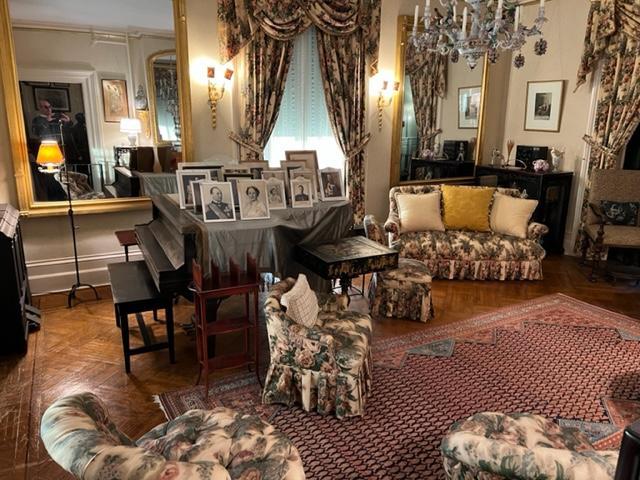
The Living Room/Parlor of the house where people would gather after dinner

I was impressed with the amount of sporting goods, stuffed animal species and just the general hominess of the house. It looked like someone still lived there. The downstairs area for the servants and the kitchen are functional and not huge. This is a house that was built for a family and for entertainment but not on the scale of the Astor’s or Vanderbilt’s. It ran for a growing family that lived in the house.

The Library and the Dining Room were decorated for Christmas as well as the foyer was decked with garland and bows. I am not sure how many times the family celebrated Christmas here being in the White House but I am sure that the family came home for the holidays. Mrs. Roosevelt, Franklin’s mother, ran the roost so the house functioned a certain way while she was alive.

Our first part of the self-guided tour was of the Living Room, Dining Room and Library on the first floor. The Living Room was smaller than most of the homes in this area again reflecting that the mansion was a home not a showplace. It was used all year long by Franklin’s family and was built to accommodate the growing family that he and Eleanor had created.

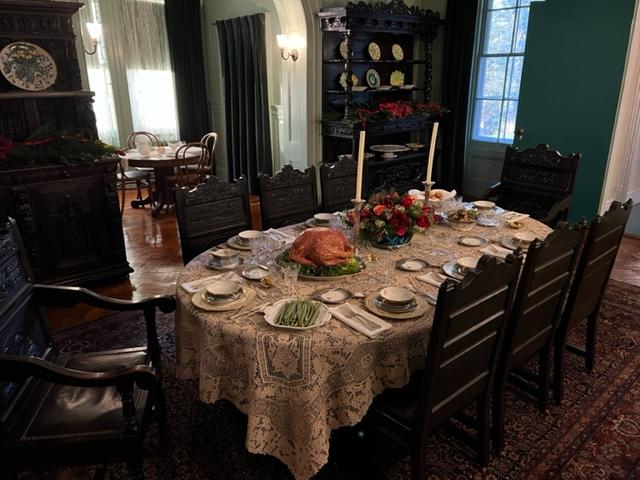
Th tour guide told us that the house was set up for Christmas the last year that FDR was alive and they had taken it from pictures and accounts that the family had done that year. The Dining Room had been set for Christmas lunch circa 1940’s with elaborate china and silver and even a children’s table so the kids would not be left out.

Christmas lunch at Springwood

The full Dining Room with the kids table in the background

The Library was decorated for the holidays as it had FDR’s last year alive and everything the site did was based on those pictures and accounts from family members.

The Library has gone through a full renovation and was decorated beautifully for the holidays

The Library was a very comfortable place to relax and socialize

The Christmas tree and the family presents in the Library

At the holidays when I visited in 2019, the house was going to be closed in April of 2020 for a full restoration and renovation of the lights, interior alarms and plumbing for about a year so the only Christmas decorations in the house was a tree in the library (the books had started to be removed from the shelves) and the formal dining room had been set for dinner. The rest of the mansion was in the process of being packed up so we didn’t get to tour it that time. During December 2022, the whole house was finally opened post-COVID and renovation and you could see it all in its glory.

Springwood at Christmastime

Even the upstairs bedrooms looked like any other American home at the time but a touch bigger. I could see by Eleanor’s room that she did not spend much time there. You can see where the adjustments were made when the President developed polio. I am glad that the man showed determination and did not let that stop him in his life. It proved to me that a disability limits you only if you let it.

The upstairs held the bedrooms of Mrs. Roosevelt, Franklin, Eleanor and the all the children. Each room was carefully cleaned and refreshed during the renovation so they look pristine now as if the family was still living there.

Eleanor Roosevelt’s Bedroom

Sara Roosevelt’s Bedroom

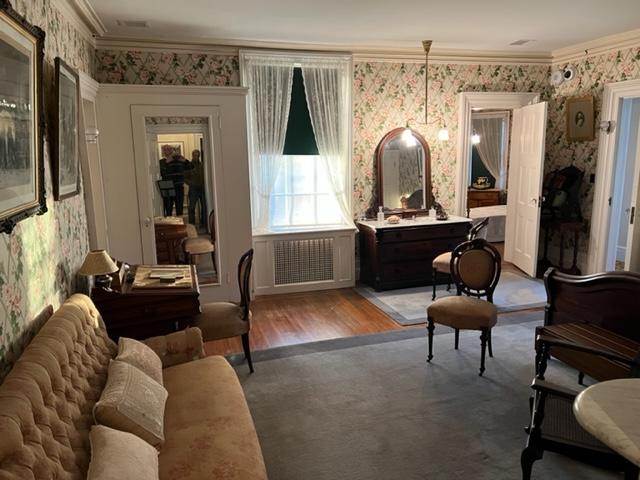
The Pink Room is where the King and Queen of England stayed when they visited the Roosevelts

The Pink Room where dignitaries stayed

Franklin Delano Roosevelt’s Bedroom

Franklin’s bedroom

The modern bathroom with indoor plumbing

There was a large household staff to take care of things on the estate and in the house. The kitchen was the last stop on the tour in the basement. There must have been a lot of action here with such a big household to feed.

The kitchen at Springwood

The kitchen at Springwood was a busy place with so many people in the household and visiting

The grounds were interesting. The formal rose gardens are beautiful when in season and the estate does have views of the river. On the grounds of the estate as well is the Presidential Library, Museum and the gravesites of the President and his wife, Eleanor. Thes are located in the Rose Gardens that they loved so much.

springwood estate

The Springwood Estate

The Stables were very elaborate and held the trophies and ribbons of the family’s champion horses. The stables are now long empty but still display all the glories of the past when this was still a working farm.

The Stables

The inside of the Stables

The only problem we faced on our visit in the Summer of 2019 was that the house was that a sweltering heat wave hit the Valley and the humidity hit 98 degrees. The house was boiling hot because they could not open the windows for fresh air and the whole house smelled musty and old. That is the bad part of all that wood trimming and paneling, it does smell when it is hot.

Still the ranger talked about the history of the house and the role it played not just with the government influence during WWII but at the holidays and how Sara Delano Roosevelt had influence on her family.

Still it was an interesting tour that takes about 45 minutes and is an important part of the foundation of a very important family.

History of FDR at Springwood:

Franklin’s father, James Roosevelt purchased the 110 acre estate in 1867 for $40,000. The property included a house overlooking the Hudson River and a working farm. FDR was born in the house on January 30, 1882, the only child of Sara and James Roosevelt. Growing up with a view of the majestic Hudson River, he developed a love of the river and the valley through which it flowed. By age eight, he was sailing the Hudson. As a young adult, racing his ice yacht “Hawk” was a favorite winter pastime.

Franklin accompanied his father on daily horseback rides. During these times, he became immersed in the land, its history and particularly the trees. In later years, he expanded his parents’ land holding to nearly 1,500 acres and planted over half a million trees. His interest in tree farming translated into a New Deal program, the Civilian Conservative Corps (CCC). The CCC provided jobs to unemployed men age 17-28. Over 10 years, enrollees planted over three billion trees and built over 800 parks nationwide.

Surrounded by the rich agricultural heritage of the Hudson Valley all his life, FDR felt a strong affinity with farmers. One of the first New Deal programs instituted during the Great Depression, the Agricultural Adjustment Act, was designed to help farmers retain their land. His subsistence homestead projects relocated poverty-stricken families into government subsidized rural communities that provided decent housing, cooperative work and farming and schools.

When Franklin Roosevelt married Eleanor Roosevelt in 1905, they resided in both at Hyde Park and their New York townhouse. Franklin and Eleanor had six children, one who died in infancy. FDR supervised the expansion and redesign of the house to accommodate his growing family and his political ambitions, ensuring it reflected the Dutch Colonial architecture of the Hudson Valley.

FDR contracted polio in 1921 and was paralyzed from the waist down. He held out hope for a cure but was never able to walk again unaided. The multi-level home was adapted to his needs with ramps along the short steps. The trunk lift, installed years before the onset of FDR’s polio became his transportation to the second floor.
In 1932, FDR was elected to the first of an unprecedented four terms as President of the United States. His presidency redefined the role of government in America, establishing programs designed to improve the lives of all Americans. These programs included Social Security, the Federal Deposit and Insurance Corporation, the Securities & Exchange Commission, the establishment of minimum wage and unemployment insurance.

During his 12 years as President, FDR led the nation through an economic crisis of enormous proportions and the Second World War. He continually returned to this home  he loved, seeking strength and relaxation. He entertained foreign dignitaries here including British Prime Minister Winston Churchill. In the small study, FDR and Churchill initiated a document known as the “Hyde Park Aide Memoire”, that outlined possible future uses of the atomic bomb.
On the afternoon of April 12, 1945, FDR died from a cerebral hemorrhage in Warm Springs, GA. He was laid to rest on April 15th in the rose garden here. One year after his death on April 12, 1946, the home was opened to the public. At the dedication, Eleanor Roosevelt said, “I think Franklin realized that people would understand the rest and peace and strength which he gained here and perhaps go away with some sense of healing and courage themselves.”

(Home of Franklin Delano Roosevelt National Historic Site pamphlet)

History of the Springwood:

The estate was part of the 1697 agreement of the English Crown that gave 220 square miles to a group of nine businessmen from New York City. To ensure that everyone had access to the river, the land was divided into “Water Lots”, one of which was deeded to William  Creed, one of the nine partners.

The central part of Springwood is believed to have been formed from a large farmhouse which was constructed around the year 1800 in the Federal style. In 1845, the estate was purchased by Josiah Wheeler, a merchant from New York City. Wheeler undertook a remodeling of the house, giving it a then fashionable Italianate style with a three story town at the south end as well as front and rear piazzas spanning the entire length of the house.

In 1866, the estate which has been reduced to one square mile, James Roosevelt bought the house and expanded the main house adding the servants wing, two more rooms and the carriage house. James Roosevelt passed away in 1900.

In 1915, FDR and his mother, Sara made the final additions and renovations to the house for the growing family and for entertaining political and family friends. Sara Roosevelt used the New York firm of Hoppin & Koen and doubled the size of the house by adding two large fieldstone wings (designed by FDR), a tower and a third story with a flat roof. The clapboard exterior of the house was replaced by stucco and most of the porch was replaced with a fieldstone terrace  with a balustrade and a small columned portico around the entrance. The inside layout of the house was redesigned also to accommodate FDR’s growing collections of books, paintings, stamps and coins.

The grounds were also changed with the planting of almost 400,000 trees all over the estate in a thirty year period. Today large portions  of the estate have been turned over to the Forestry Department of Syracuse University.

(Wiki)

Disclaimer: The history of the Springwood and of FDR are living there was taken from Wiki writings and the pamphlet of The Franklin Delano Roosevelt National Site and I give their writers full credit for the information. Please see the attachments from the National Park site for more information.