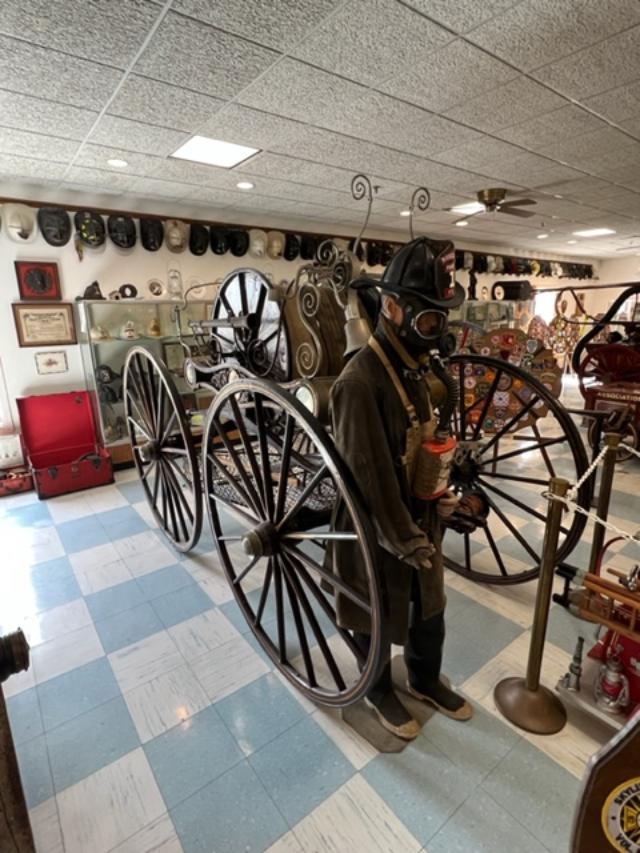
Located inside the Boonton New Jersey Firemen’s Home, The New Jersey Firemen’s Museum is an 8000 square feet, two story museum that houses steamers, ornate hose carts and antique fire trucks from all eras.
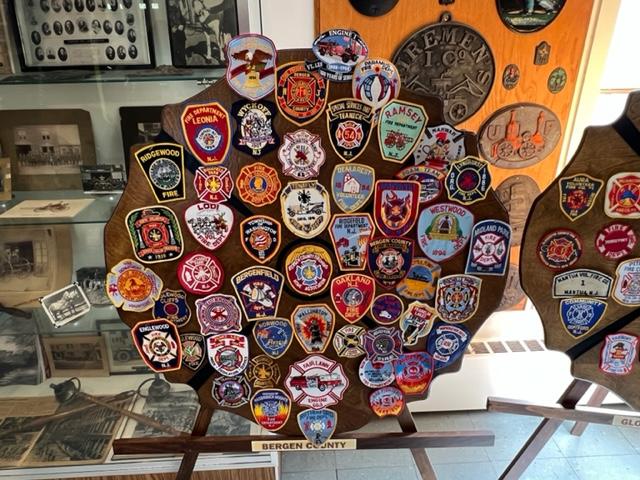
The museum was established in May of 1985 and is home to many fire department in New Jersey’s memorabilia. It seems like everyone fire department in the State of New Jersey is represented here with old fire department pictures, patches from the fire companies, fire trucks from all eras and pictures of department fires from all over the state.
Filling the cases is antique fire equipment, badges from officers in many departments, figurines of fire equipment and ribbons from conventions of the past. There are old fire buckets from the beginnings of the fire service, horns to sound the alarms from the turn of the last century and helmets that retired chiefs from many departments donated with much honor.
Many companies donated their department pictures from fires of their past that were fought with much bravery. People forget that this job is very dangerous and we have to watch ourselves in every step.
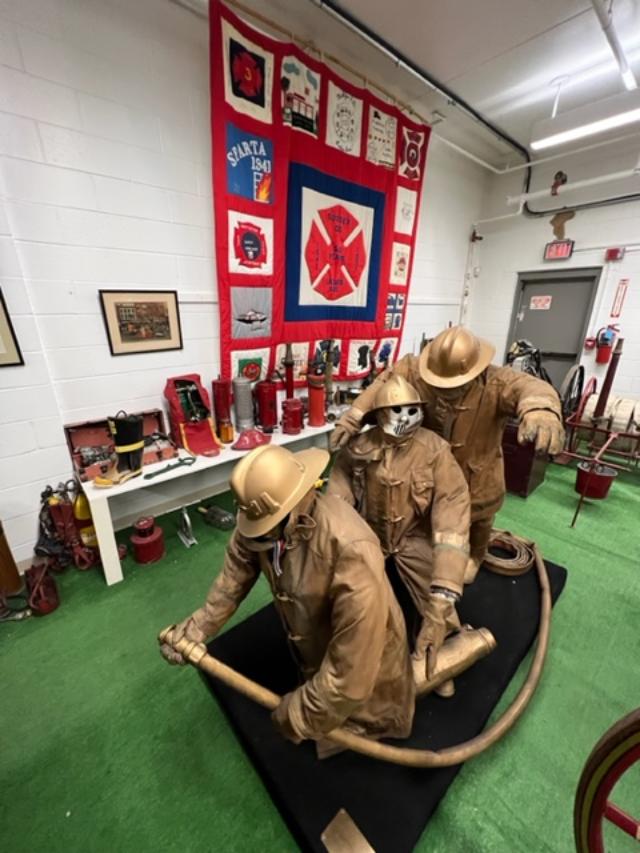
The fire trucks are from every era from the carts that were dragged by hand to horse drawn engines to the original steam engines that were introduced with the advent of technology. All of the equipment has been carefully restored and shined to almost new. Much care has been taken to show the transition of the fire service over the years.
The tours are on your own and the admission is free. You don’t have to be a fire fighter or visiting a resident here to visit the museum. If you are a serious fire buff or have children that are really into fire fighting or being a fireman, this museum will give you all sorts of perspectives on the fire service and its development not just in New Jersey but all over the county as well.
Don’t miss the memorial to the victims of 9/11 off to the side. It is very touching and shows the support of the fire service to the members of the FDNY and their families.
9/11 is still fresh in all our minds
It is a nice afternoon out. The museum is free to the public. These pictures are just a glimpse of the collection of the NJ Firemen’s Home Museum. It is two floors of donated equipment, memorabilia, awards, dedications and department antiques that are so well preserved. If you love the history of firefighting, this is the museum for you.
Hours: The Second Saturday of every month; 10:00am-2:00 pm
Admission: Free
TripAdvisor Review:
I had visited the Westwood Heritage Society Museum during its one day opening in the month and no one was there to greet me. It seems that they closed at noon. I was able to walk around the train station’s main room and look around at all the old pictures of town, its history and the interesting facts of how the town grew
Westwood NJ Rail Station where the museum is located
The Westwood NJ Train Station is the home for the Westwood Heritage Society Museum
Many prestigious families of Bergen County, NJ have helped shape the town including members of the Demerest, Blauvelt, Wortendyke and Haring families. These early members of Bergen County Society have left their mark on the politics and construction of the current town. These names are part of the founding families of the town.
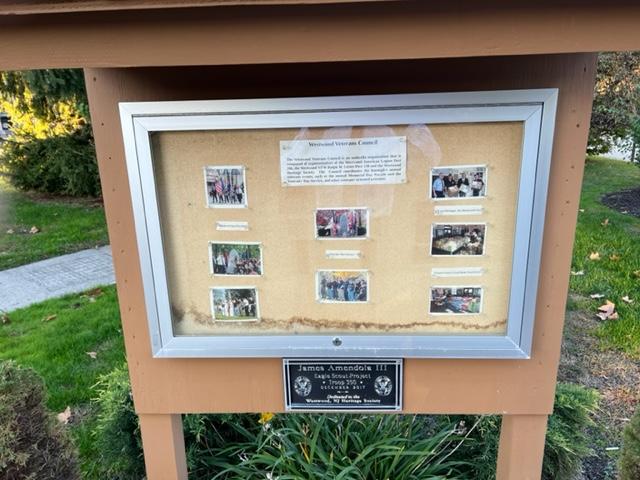
The sign in Veterans Park
There are displays of family life in town, life on the railroads, the history of how the railroad came to town, the growth of the town, residents of the town and a display on railroad conductor, Mr. Blauvelt himself.
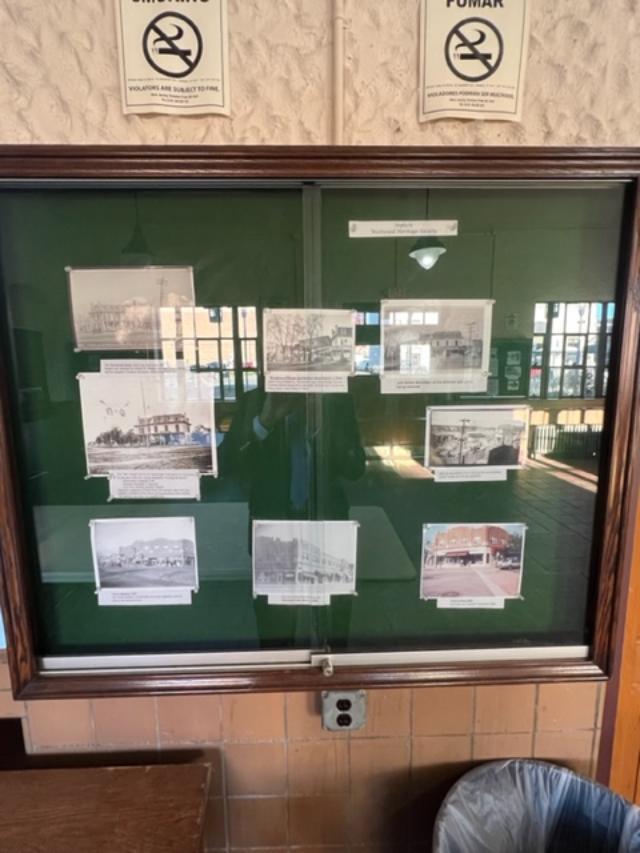
There are many sets of pictures in the display cases and there is an on-going slide show of pictures on the main wall of the terminal showing the past and present of the town.
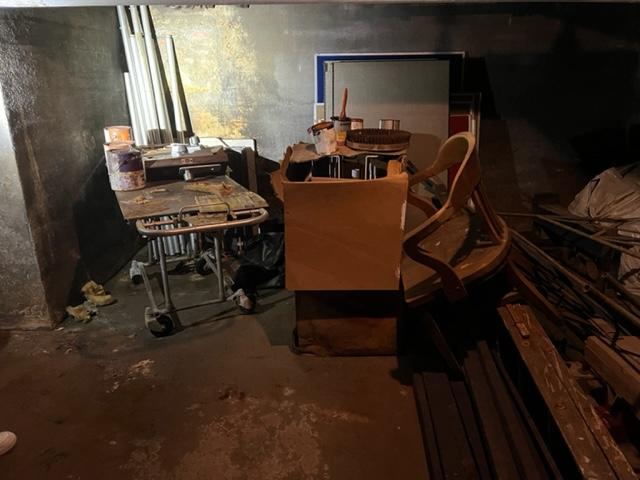
They let us tour the bomb shelter that is beneath the train station. This is interesting.
I recently toured the museum with my students on the second Saturday in November of 2022 and met with the members of the Westwood Heritage Society. They put all their displays out when the museum was open from 10:00am-12:00pm. There were some interesting things to see. There was the history of the businesses, schools, the fire and police department and town government. They had some interesting artifacts from Veterans of the Wars as well.
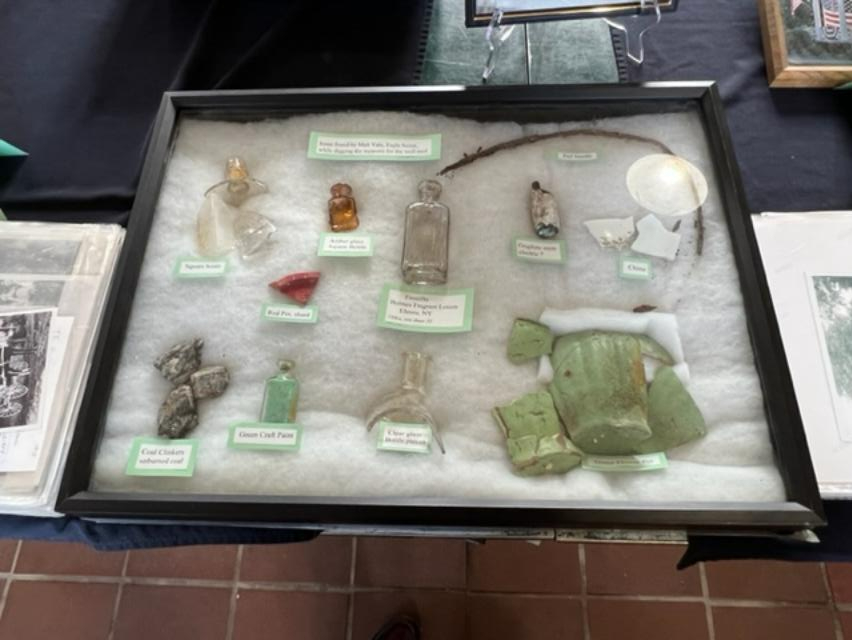
Displays of memorabilia at the museum
If you like the history of railroads into the new suburbs or are from Westwood and are interested in its history, this museum is worth coming to for the afternoon. Take time to walk along the tables and view all the artifacts. There are some interesting things to see.
The glassworks of Westwood
Some of the items from the veterans of foreign wars.
Artifacts from the railroad
The main building of the train station is always open during business hours, so you will have plenty of time to look at all the displays. If you get there on the second Saturday of the month, you might get to talk with a member of the Heritage Society. It only takes about an hour to see all the displays.
The history of the town is in all these notebooks
History:
The Westwood Museum, which is housed in the Westwood Train Station building, was established and held its ‘Grand Opening’ on Memorial Day of 2002.
The Museum serves as an exhibit gallery for the numerous artifacts of Westwood’s past and records of its history that have been acquired or compiled by the Society.
Historic Westwood, NJ
The Historic Displays that line the walls on the history of the town:
Historic homes and businesses of prominent members of the Westwood community
Historic Homes of Westwood
Historic businesses in Westwood
Prominent residents of Westwood, NJ
Historic Downtown Westwood NJ
The commercial we created for the Downtown Westwood, NJ for Bergecco-Parc Consulting Inc.
The Project for “It’s Wonderful in Westwood, NJ-Be a Tourist in your Own Town”:
I visited the Zabriskie House in May 2016 and 2019 for the Northwest Bergen History Coalition 6th Annual History Day. The house is left the way the last owner. Grace Zabriskie, willed it to the town with all the original furnishings.
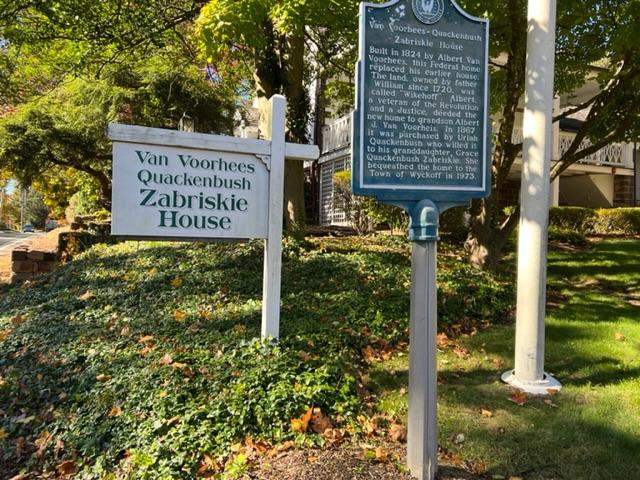
The historic signage
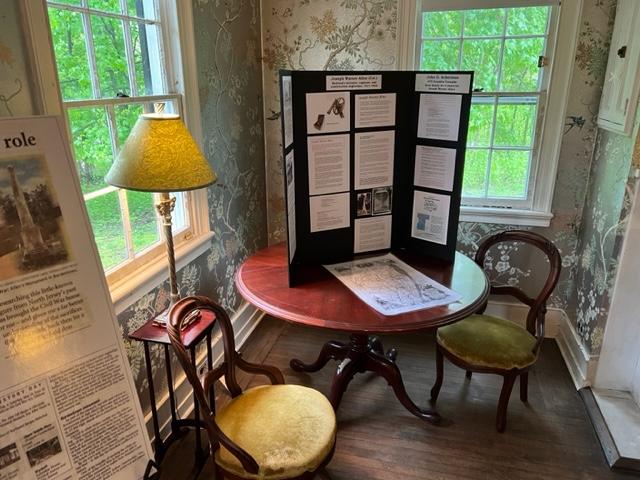
It has period furnishes, family heirlooms and antiques. The docents will take you on a tour of the house and show you where all the later additions were added and how they make up the whole house. As you walk through the house, you can see the difference in structure of the home plus how the last owner lived.
The Zabriske House in Wyckoff, NJ
Don’t miss touring the gardens in the Spring as Mrs. Zabriskie worked with a Botanist to plant the gardens to bloom at different times. She planted it in stages so that she could entertain in them but still treated the gardens similar to the house as if you had to walk into a room. It is very nice and colorful in the Spring.
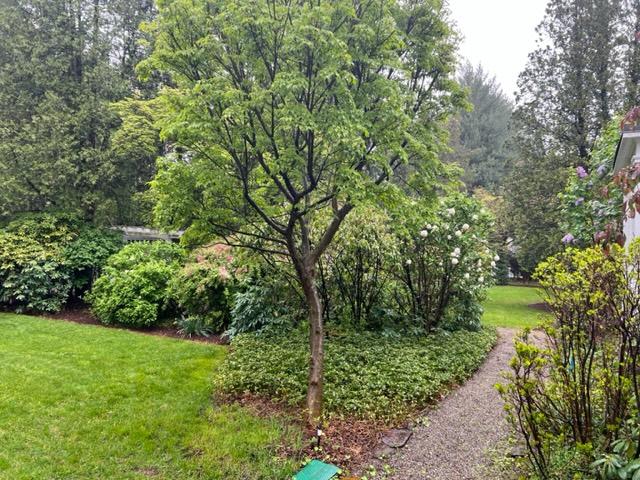
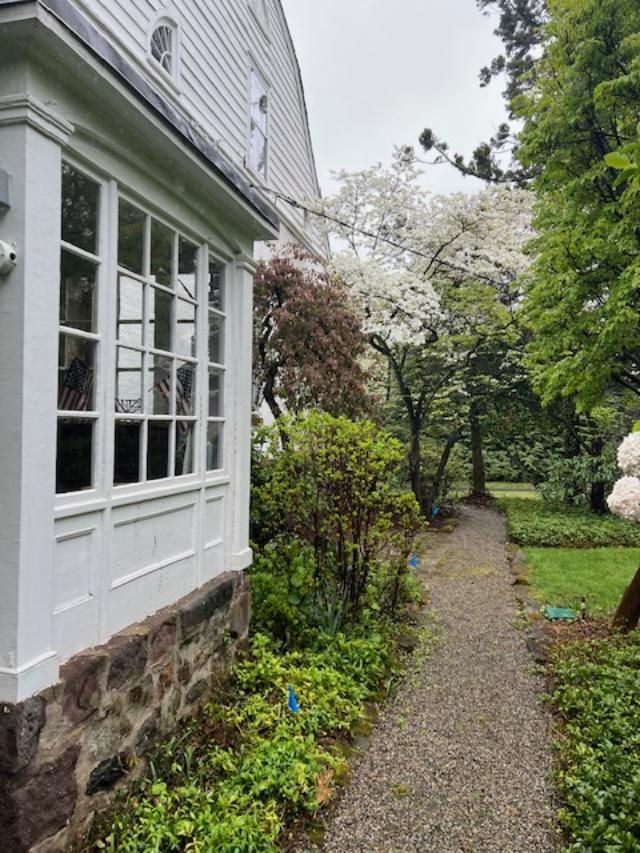
I have visited the house during the Northwest Bergen History Day and I was able to take a lot of pictures of the gardens next to the house on a rather gloomy day. The gardens were in full bloom in the middle of spring and the rain added a layer of beauty to the flowers and flowering bushes that lined the paths. They did a nice job maintaining the house.
On the terrace there are people to guide you through the house and docents to take tours. The ladies had a nice reception laid out for all of the people who came to visit.
The Van Voorhees-Quackenbush-Zabriskie House in the Fall of 2022
The original stone structure of the Van Voorhees-Quackenbush-Zabriskie House was built in 1730 by William Van Voorhees. It is believed to be the oldest house in Wyckoff, NJ. In 1824, William’s son, Albert, completed a major addition to the house in the classically Dutch colonial style. The original structure then became the dining room (NWBHC).
The historic part of the house from the 1700’s
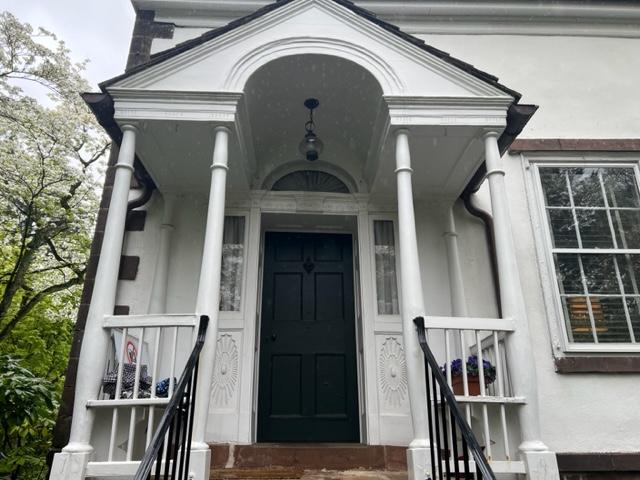
The entrance of the Zabriskie House
History of the House: (Taken from the Wyckoff History Page)
The Van Voorhees-Quackenbush-Zabriskie House has been a local landmark for over 275 years and is believed to be the oldest structure in the Town of Wyckoff, NJ. In 1720, William and John Van Voor Haze, yeoman of Bergen County, purchases 550 acres of land in what is now Wyckoff. The brothers were descended from Dutch settlers who emigrated from Holland in 1660 (Wyckoff History).
The historic part of the house
The first stone house was built circa 1730 by William. The land was cleared and the family farmed, raising table crops and staples such as grain, corn, potatoes and grapes. Over time, apple orchards and dairy farming became main occupations in the area. The Jersey Dutch were especially skilled at animal husbandry. They were considered the best farmers and gardeners in the American Colonies (Wyckoff History).
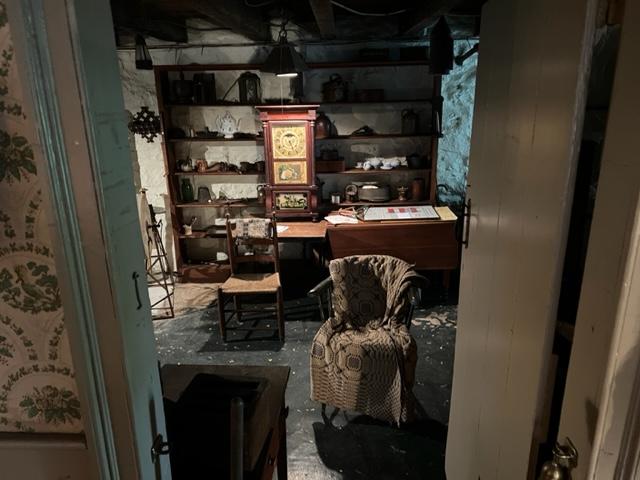
The historic kitchen in the original part of the house
There were only about 20 families in the area in 1775, when the house served as the village store and tavern. William’s son, Albert, served in the Militia in the Revolutionary War. The original stone structure later became the dining room of the house, when a large addition was added in 1824 by William’s son, Albert when he was 86 years old. He had just one son, John, but likely expanded the house for his nine grandchildren and their wives and children. Over the years, in addition to serving as a home, the house served as a not only home, tavern and store but also as a hotel and ballroom for area parties (Wyckoff History).
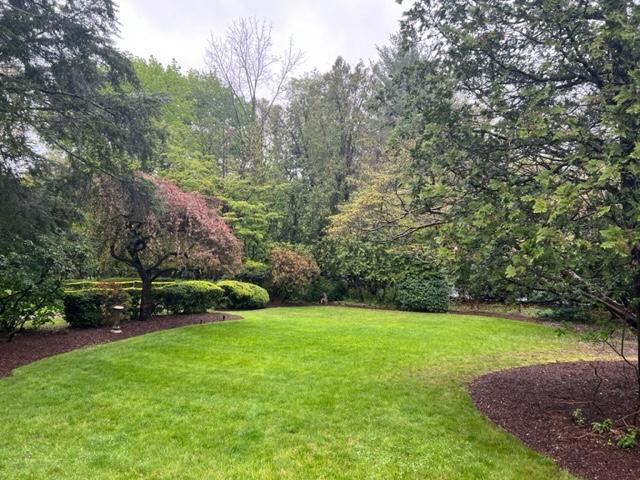
The gardens on the side of the house
The gardens in April 2023 on a gloomy day
The original 1730 house has a steeply pitched roof and overhanging eaves designed to protect the building and foundation from rain. It has a two piece “Dutch” door to allow ventilation while keeping animals outside. Inside is a five foot high fireplace which originally was the sole source of heat and was used for all cooking (Wyckoff History).
The pathways to the gardens to the side of the house
The lawn next to the house
The pathways next to the house
The pathway to the gardens
The much larger 1824 structure is three stories originally tall with a sub-basement. It contains four fire places, again for heat. It has two half and four quarter moon windows and two oval windows. There are four bedroom with pegs to hand clothes on (no closets then). Its exterior demonstrates the classic Dutch Gambrel roof with an upper 23 degree roof line and then a lower 45 degrees roof line. This beautiful design was developed by the Dutch in northern New Jersey and up the Hudson River and is found nowhere else in the world. The typical Dutch front porch has two benches on either side of the entrance (Wyckoff History).
The house in the Fall
The property left the Van Voorhees family in the mid-1800’s. In 1867, it was purchased by Uriah Quackenbush. Uriah and Keziah Quackenbush had one son, John, who died as a young adult. Grace Quackenbush was his only child and was two years old when he died. She was raised in the house by her grandparents, who left the property to her when they passed on, after Grace had married John Zabriskie (Wyckoff History).
The Zabriskie Pond across the street
During her lifetime, Grace modernized the house (including adding an indoor bathroom) and restored the appearance of the home using authentic period antique furniture and furnishings. She also created three beautiful formal gardens on the landscaped property with her friend, Mrs. Elizabeth Spencer, a botany major (Wyckoff History).
The house is considered one of the finest examples of American architecture in northern New Jersey. The current House Museum has been called one of the finest in New Jersey. In 1973, Mrs. Grace Q. Zabriskie, who was the last resident, willed the house and its antique furnishings to the Township of Wyckoff, when she died that year. The “Zabriskie” house belongs to everyone in Wyckoff to enjoy (Wyckoff History).
The Zabriskie Pond in the Fall of 2022
Please check out their website for when the house is open to the public.
The John Fell House in April 2023 for the Northwest Bergen Historical Coalition event
I visited the John Fell House in May 2016 for the Northwest Bergen History Coalition 6th Annual History Day on “Day Forty-Three” of “MywalkinManhattan.com” blog site. The house is a stately home that sits at a busy point of the Franklin Turnpike, once the main artery of this part of Bergen County.
I was not too sure what this was as it was at the back of the house. I thought it might be a food cellar.
The only problem I found about visiting the John Fell home is that it is barely furnished. Most of these homes in Bergen County have furniture or heirlooms left by the family and this house is more used for entertaining. There are displays all over the house.
The backyard of the John Fell House in Allendale, NJ
The house is operated by the Concerned Citizens of Allendale and sits on 2.8 acres of land which includes the stately home, the Gothic Revival Barn, wetlands and old-growth trees. The house is across from the Celery Farm Bird Sanctuary, which was once part of the estate and is open to walkers year round (BCHS).
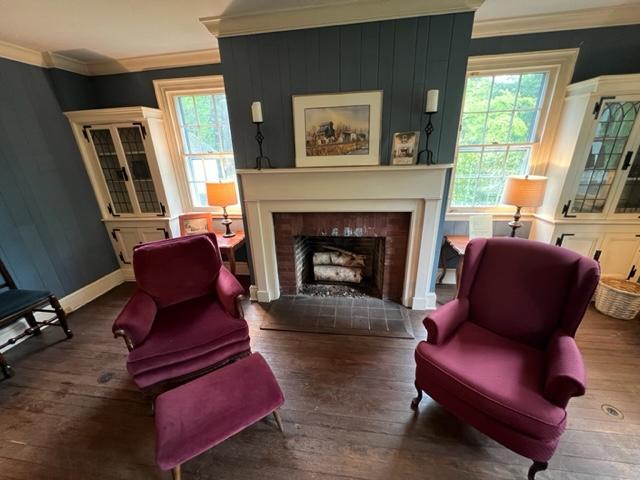
The front room of the John Fell Houser
The historic John Fell House is named in recognition of Founding Father, John Fell, a revolutionary war patriot, who purchased the property in 1766.
The Living Room at the Fell House in the late 1800’s addition
The house is located on the march route of Rochambeau’s army, on its way in 1781 to Yorktown, Virginia and the Seige of Yorktown that would decide the American Revolutionary War (Wiki).
John Fell (1721-1798) was an American merchant and jurist. He was born in New York City in 1721, he was engaged in overseas trade and has acquired a small fleet of ships by the time he moved to Bergen County, NJ in the 1760’s and lived at ‘Peterfield’, a home in present day Allendale, NJ (that is now known as the ‘John Fell House’) (Wiki).
The original part of the house from the 1700’s
The main room of the original 1700’s part of the house
The Living and Dining Room of the original house
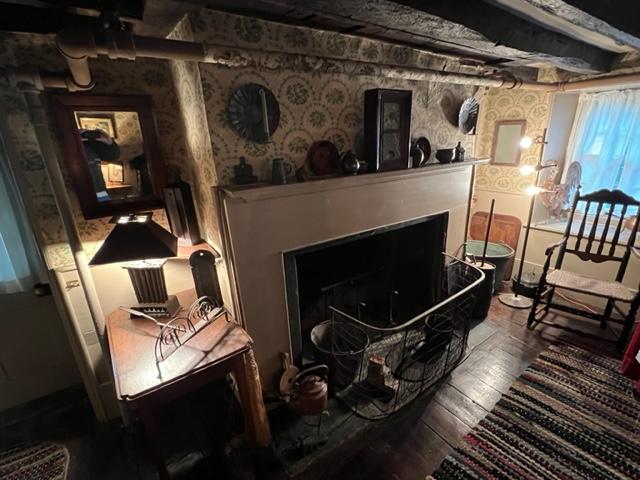
The original fireplace in the older part of the house
The inside of the Fell House
He served as judge of the court of common please in Bergen County from 1766 to 1774. With the coming of the American Revolutionary War, he became chairman of Bergen County’s committee of correspondence and the committee of safety. He was Bergen County’s leading delegate to the Provincial Congress of New Jersey in 1775. In 1776, Fell was elected to a one-year term in the New Jersey Legislative Council representing Bergen County.
The antique dishware and tea pots in the kitchen at the John Fell House
The house is open for all sorts of special events and can be rented out. Please check out their website above for more details.






















 Visiting a Museum: The Unique, Unusual, Obscure and Historical