Tag: Historical Sites

Lefferts Historic House                                         452 Flatbush Avenue                                  Brooklyn, NY 11225

Lefferts Historic House 452 Flatbush Avenue Brooklyn, NY 11225

Lefferts Historic House

452 Flatbush Avenue

Brooklyn, NY  11225

https://en.wikipedia.org/wiki/Lefferts_Historic_House

Open: Sunday 12:00pm-5:00pm/Monday-Wednesday Closed/Thursday-Saturday 12:00pm-5:00pm

Admission: Suggested $3.00 fee towards the renovation of the house

My review on TripAdvisor:

https://www.tripadvisor.com/Attraction_Review-g60827-d103505-Reviews-Lefferts_Homestead-Brooklyn_New_York.html?m=19905

Leffert’s Homestead in Prospect Park, Brooklyn

I have visited the Lefferts Historic House a few times when visiting the Brooklyn Botanical Gardens, The Brooklyn Museum and the Prospect Park Zoo, all of which are in the same cultural district of the neighborhood. The house is located near the entrance of Prospect Park just behind the Brooklyn Botanical Garden and right next to the zoo and the carousel.

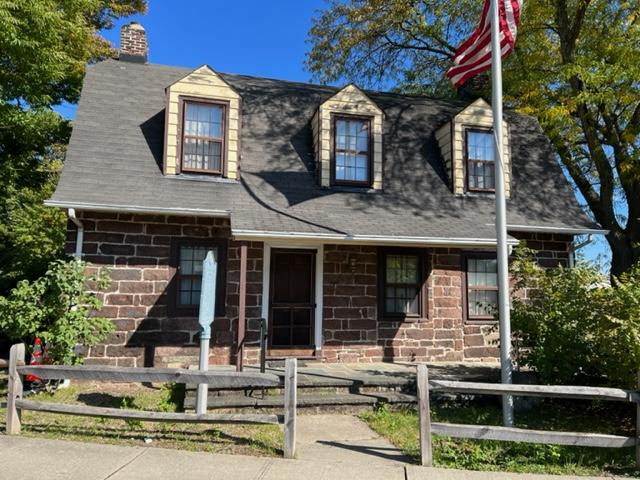
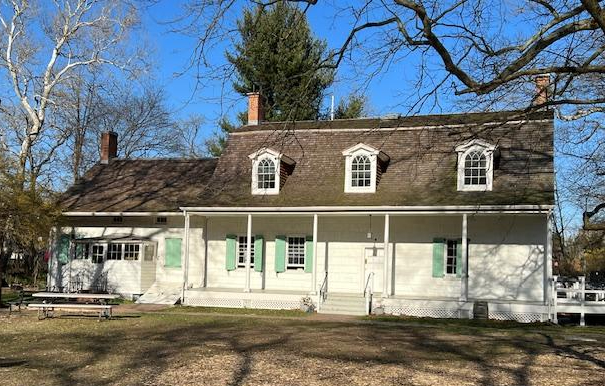
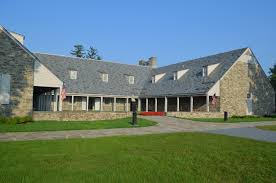
The Lefferts Homestead in 2023

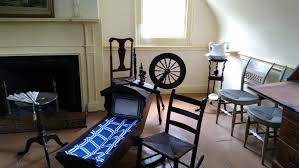
The house sits on a plot of the park to give it the look of the house when it sat in a rural setting in Brooklyn about twelve blocks away. When walking into the house, there are a few rooms that are furnished and have period pieces in them to show what the house must have looked like in the late 1700’s and early 1800’s. Most of the house is used for touring and for groups doing projects and games. You can’t go upstairs anymore. The house will be going through a renovation soon so watch the website for more information on that.

Lefferts Historic House II.jpg

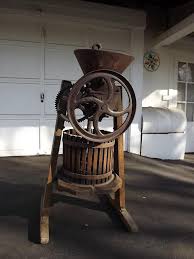
The historic objects of the house

The outside of the house has wooded grounds with a working garden, an outside oven and historic objects that bring the period back to tourists and residents alike of what life must have been like when it was a working farm. When in season, you can walk amongst the vegetable and flower gardens and talk to the docents about the history of the house.

The grounds of the Lefferts Homestead with the stables and smokehouse

The house is part of the Historic House Trust and part of the Prospect Park Alliance.

History of the Lefferts Historic House:

The Lefferts family was one of the original settlers in Brooklyn with Lefferts Pieterson buying 58 acres of land here in 1687 and built the original homestead on that property. In 1776, the house was destroyed by American troops before the Battle of Brooklyn so that the British could not use it. The house was rebuilt in 1783 by one of his descendants (Prospect Park Alliance).

Lefferts Historic House III

The Lefferts Family

The current house was the home of Continental Army Lieutenant Pieter Lefferts and was built in 1783. It was originally located on Flatbush Avenue near Maple Street. When Pieter died the house was passed onto his son, John and then when John passed, the house was inherited by his daughter, Gertrude Lefferts Vanderbilt. The house was lived in by four generations of the Lefferts family.

The Lefferts Homestead

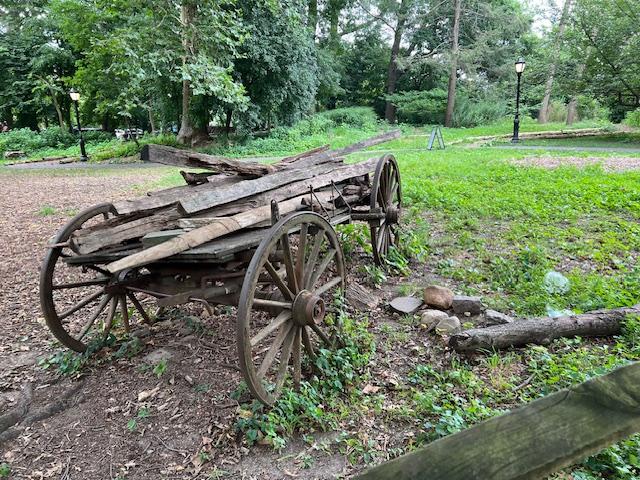
The cart on the front of the property

With impending development of the area around the house at the end of the 19th century, John Lefferts estate offered to donate it to the City on the condition that house be moved to City owned property for historic preservation and protection. It was opened as a museum in 1920 by the Fort Green Chapter of the Daughters of the American Revolution (Wiki).

The history of the house

The house is currently used as a Children’s Museum and Cultural site and open year-round.

The Lefferts House in the winter 2024.

The Arnault/Bianchi House                                  111 First Street                                                 Wood Ridge, NJ 07075

The Arnault/Bianchi House 111 First Street Wood Ridge, NJ 07075

The Arnault/Bianchi House

The Wood Ridge Historical Society

111 First Street

Wood Ridge, NJ  07075

https://en.wikipedia.org/wiki/Fridolin_Arnault_House

Open: Please check out their website; only for special events

Fee: Donations accepted

My review on TripAdvisor:

https://www.tripadvisor.com/Attraction_Review-g46937-d17154691-Reviews-The_Arnault_Bianchi_House-Wood_Ridge_New_Jersey.html?m=19905

I recently visited the Arnault/Bianchi House for a historic lecture by an actress who portrayed Amelia Earhart. It was an interesting afternoon of listening to the actor keep in character and describe her life just before her flight around the world. After the show, the actor was available for conversation with the audience and there was a light lunch after the performance. I thought this was a nice touch to end the afternoon.

The second time I visited the house, it was for the 125th Anniversary Celebration and the Society had all sorts of artifacts out on display. They had the history of the schools, fire department and the police department. They had old council pictures as well as pictures of World War II veterans who fought in the war who lived in town.

There was a also a nice display of the Curtis Wright Plant that once stood at the edge of town and its part in the war effort. There were all sorts of pictures and documents on display of the factory when it was in full function.

After walking the three rooms of artifacts, there was a light reception with cookies, tea and coffee.

The History of the Arnault/Bianchi House:

The town of Wood Ridge, NJ,  where the Arnault/Bianchi House is located has made a commitment for the house to be used for cultural events and hands on programs such as poetry readings and author visits.

The house was built in the 1880’s  by one of Wood Ridge’s founding father’s, French wine merchant, Fridolin Arnault. The Frenchman used  to sell his Bordeaux blends on Fifth Avenue in New York City. His relatives, Rudolphe and Annick Proust, traveled from Paris last year to visit the ‘country house’ of their uncle (The Wood Ridge Historical Society).

The second owner was designer Joseph Briggs, Louis Tiffany’s right hand man. Briggs  is responsible for the stained-glass  window designs  at the Church of St. Paul’s and Resurrection in Wood-Ridge. He eventually sold the house to the Bianchi’s . Not much is known about the Bianchi family (The Wood Ridge Historical Society).

Arnault House II.jpg

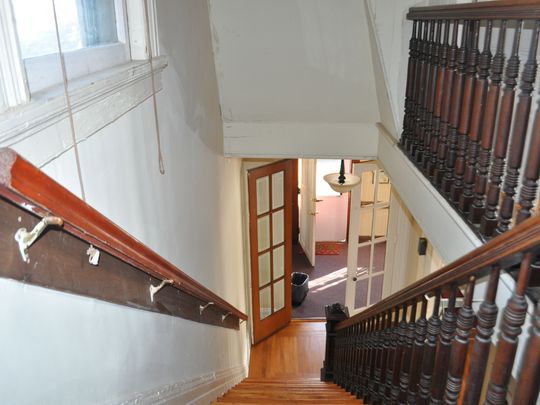
The inside of the house.

The backyard features gardens, meticulous landscaping, enough lawn space for a a grand social affair reminiscent of the Great Gatsby, benches, decorative stone and the exterior buildings the outhouse and carriage house. The second and third floors are not open to the public and are used for storage and the home still needs some repairs. In most of the lower floors are period furnishes and art work (The Wood Ridge Historical Society).

Please watch the papers and the town’s website for future events.


Franklin D. Roosevelt Presidential Library and Museum                                 4079 Albany Post Road                                                                    Hyde Park, NY 12538

Franklin D. Roosevelt Presidential Library and Museum 4079 Albany Post Road Hyde Park, NY 12538

Franklin D. Roosevelt Presidential Library and Museum

4079 Albany Post Road

Hyde Park, NY  12538

(800) FDR-VISIT

Open: Sunday-Saturday 9:00am-5:00pm/Open to 6:00pm April-October

Closed Thanksgiving, Christmas and New Year’s Day

https://fdrlibrary.org/

My review on TripAdvisor:

https://www.tripadvisor.com/Attraction_Review-g60801-d105844-Reviews-Franklin_D_Roosevelt_Presidential_Library_and_Museum-Hyde_Park_New_York.html?m=19905

Admission: $20.00 for both the museum and house.

I have visited the FDR Library over the summer  for two separate days along with visiting the Vanderbilt Mansion after the tour. It takes about two days to really look through the museum as there is so much to see and read that it can be over-whelming. If you don’t know much about Franklin Roosevelt you will definitely learn it here.

You will learn more about the family at the house tour but here you will learn of the policies of the Presidency, the acts and laws that he put in place and their effect on the county. It outlines why the policy was put in place and the effects on the American people. It was interesting to see how the policies like Social Secretary, Welfare and the Banking regulations are still in affect today.

Each room is another discussion in policy with things leading to the war and it effects on bring us out of the Great Depression. Also the attributes leading to the treaties after the war was finished.

FDR Library

The FDR Library

My recommendation it to take two days and at least an hour and a half each day to visit the museum and break it down into rooms as it can be a lot to take in on one visit. Couple the trip up with a visit to his house, Springwood and learn how the house played a big part in his politics.

About the Museum:

For information about the Museum, Archives, Education and Public Programs and the Henry A. Wallace Center call (800) FDR-VISIT or go to http://www.fdrlibrary.org.

Membership:  Membership forms a vital base of support for many of the Library’s key initiatives. To learn about the benefits of a membership and to become a FDR Presidential Library and Museum member today, please visit http://www.fdrlibrary.org or call (845) 486-1970.

The Roosevelt Institute:

The Franklin and Eleanor Roosevelt Institute is dedicated to informing new generations of the ideas and achievements of Franklin and Eleanor Roosevelt through programs, events and publications. With offices in Hyde Park, New York and New York City, the Institute enjoys a special relationship with the Franklin D. Roosevelt Presidential Library and Museum. It also works  across the country to nurture leaders in public service inspired by the models of Franklin and Eleanor Roosevelt, through a network of 100 progressive college campus-based think thank organizations that include more than 10,000 student members. In the years ahead, the Institute plans to play an even stronger role in nurturing and advancing progressive people and ideas. It will also continue its unique and important relationship with the Franklin D. Roosevelt Presidential Library and Museum.

The Museum:

As he planned his presidential library, FDR took care to include space for a museum to display his many personal treasures. An avid collector, the President has spent a lifetime gathering extensive collections ranging from stamps and coins to rare books and ship models.

When the FDR Museum opened June 30, 1941, it featured elaborate displays of these collections and the many gifts the Roosevelt’s had received from governments and individuals.

FDR Library III

Displays in the Library

Today, the Museum continues to display items from the President’s personal collections. But there are also extensive state of the art exhibits where visitors can experience the lives and times of Franklin and Eleanor Roosevelt.

After a privileged childhood on the banks of the Hudson River, FDR entered politics only to endure illness and a lifetime of paralysis after a heroic battle with polio. As President, he led America out of the greatest economic depression in its history and guided the Allied Powers to victory in World War II.

Eleanor Roosevelt improved the lives of millions as a reformer, teacher, journalist, political activist, First Lady, advocate for the underprivileged and as delegate to the United Nations, champion for the Universal Declaration of Human Rights. Today the woman known as the “First Lady of the World” continues to inspire new generations.

Experience the powerful story of these two extraordinary individuals in the Museum’s permanent exhibits. Rare documents and fascinating artifacts bring you face to face with history. Immersive audiovisual programs and interactive displays take visitors vividly into the past. A special “Behind the Scenes” area gives a look inside museum and archives storage rooms to see even more of the Library’s collection. And the Museum’s special exhibitions gallery offers changing exhibits on a regular basis. Repeat visitors will always find something new to see.

FDR Library II

Displays in the Library

Archives and Research:

FDR was the first president to give his papers to the American people and they form the core of the Library’s research archives. Since that original gift, the Library has acquired additional important collections related to the Roosevelt era, including the three million page archive of Eleanor Roosevelt. Today the Roosevelt Library houses 17 million pages of manuscript materials in some  400 distinct collections; 51,000 books including FDR’s own personal collection of over 22,000 volumes and 150,000 photographs, negatives and audiovisual items. The Library conducts one of the busiest research operations in the entire Presidential Library system and is used by several thousand on-site and remote researchers each year.

Education and Public Programs:

The Franklin D. Roosevelt Presidential Library and Museum conducts educational programs designed for K-12, college and university students, teachers and adult learners based on the Library’s documentary, audiovisual and museum collections. Programs include on and off site classroom workshops, museum programs and teacher development seminars.

Public programs include the annual reenactment of a World War II “USO Show and Bivouac” over Memorial Day Weekend, the Roosevelt Reading Festival in June and a Children’s Book Festival in December. The Library’s website http://www.fdrlibrary.org has over one million visitors each year including researchers using the digital archive, teachers and students exploring educational resources and those visiting FDR’s interactive daily calendar through our affiliated Pare Lorentz Center http://www.parelorentzcenter.org.

FDR Presidential Library

The FDR Library

Disclaimer: This information was taken directly from the Franklin D. Roosevelt Library and Museum pamphlet and I give their writers full credit on the information. Please check out their website on Admissions as they do change.


Visiting Stone Street in Lower Manhattan September 2017, November 2019 and April 2024

Visiting Stone Street in Lower Manhattan September 2017, November 2019 and April 2024

Visiting Stone Street in Lower Manhattan:

As part of my tour of Historic Bars and Pubs on Day One Hundred and Thirteen with the Cornell Club on May 9th, 2018, we toured the famous ‘Stone Street’ one of the original paved streets of Manhattan. You will not find architecture or pavings like this left in New York City. Here and there are streets or buildings that represent these times during the early to mid-1800’s but they are few and scattered in remote spots all over the island. Here the street still represents a different era of Manhattan.

Stone Street IV

The stores in the 90’s had been either boarded up or were used but in horrible shape. During the business hours not too many people inhabited this area of Lower Manhattan and it was ignored. The neighboring South Street Seaport was being transformed in the mid 80’s into a type of historic theme park and entertainment center by the Rouse Corporation. It put these old neighborhoods back into vogue and people started to return again.

Over time, especially after 9/11 and the changes in downtown Manhattan, the street is now home to many trendy bars and restaurants and a hang out for the downtown business crowd. During the recent walking tour, the place was hopping with people spilling out of restaurants, ordering drinks during happy hour and eating pizza at the local pizzeria.

During ‘Happy Hour’ after work, the place is mobbed with people milling around having a good time. The tables toward the end of the street are filled with tourists taking pictures and at one end of the street is the famous “India House” and at the other is the Frances Tavern where George Washington gave his troops his farewell address.

Stone Street’s India House

It is not only a historical neighborhood but loaded with things to see and do. The buildings which were once in horrible shape have been brought back to life and repositioned to use for the meals and entertainment. It is interesting to see how a neighborhood comes back in full circle in a 150 years.

The Stone Street dining area in the warmer months.

History of the area:

Stone Street is a short street in Manhattan’s Financial District. It originally ran from Broad Street to Hanover Square but was divided into two sections by the construction of the Goldman Sachs building at 85 Broad Street in the 1980’s. Today the cluster of historic buildings along Stone, South William, Pearl Streets and Coenties Alley form the Stone Street Historic District.

Fire of 1835 III

The area burned during the Fire of 1835

Stone Street is one of New York’s oldest streets. It was originally known by its Dutch name, Hoogh Staet (High Street). In 1632, the Dutch West India Company built the first commercial brewery in North America there. Around 1656, Hoogh Straet was shifted about twenty to twenty-five feet to align it with Brouwer Street, the extension of Hoogh Straet west of the Gracht and which in 1658 became the first paved street in Nieuw Amsterdam. Following the British conquest of the colony, the name Hoogh Straet was translated to High Street. It was then called Duke Street for the Duke of York during most of the 18th century. Leveled in 1771 and 1790, it was renamed Stone Street in 1794 because of it’s cobblestone paving as New Yorkers abandoned reminders of British Rule.

Fire of 1835

The Fire of 1835

The street’s stores and loft were built for dry-goods merchants and importers, shortly after the Great Fire of 1835, which destroyed many remnants of New Amsterdam. Most buildings were used as storage. The building at 57 Stone Street was rebuilt in 1903 by C.P.H, Gilbert in Dutch Colonial Revivial architecture at the behest of the owner, Amos F. Eno as son of Amos R. Eno. The buildings to the back on South William 13-23 also were reconstructed in the Dutch revival style, evoking New Amsterdam.

Stone Street at night

Today is a busy series of bars and restaurants.

Following many decades of neglect, a joint partnership between the Landmarks Preservation Commission and other city agencies, the Alliance for Downtown New York and Stone Street owners has transformed Stone Street from a derelict back alley into one of Downtown’s liveliest scenes. Restored buildings, granite paving, bluestone sidewalks and period lights set the stage for the half dozen restaurants and cafes, whose outdoor tables are very popular on warm summer nights.

The eastern portion of the street and the surrounding buildings have been protected since 1996 by the New York City Landmarks Preservation Commission as the Stone Street Historic District and is pedestrian only. The historic district is now populated by several restaurants and bars and has a outdoor dining when the weather permits. The India House historic landmark is located at the Hanover Square end of the street.

(This information was taken directly from Wikipedia and I give them full credit)