I made a special trip to Beach Haven, NJ recently to visit the NJ Maritime Museum which had gotten some interesting write ups online. The museum covers many aspects of the maritime history of Long Beach Island and the surrounding Jersey Shore and the State of New Jersey.
The NJ Maritime Museum at 528 Dock Road in Beach Haven, NJ.
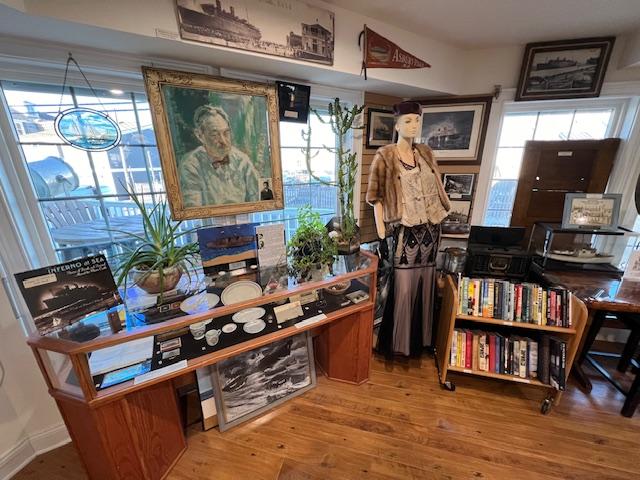
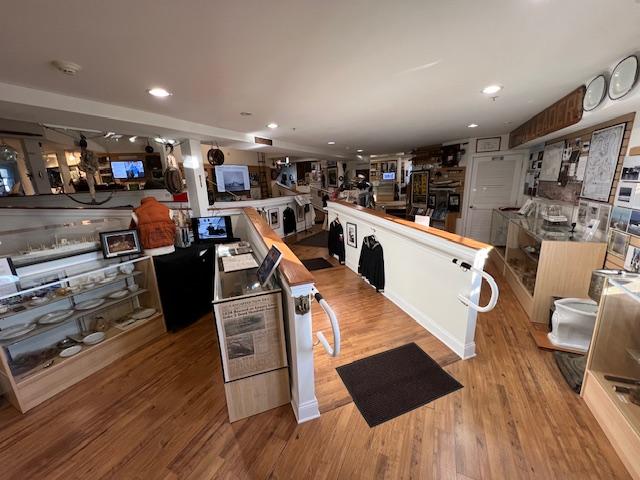
Each of the rooms are packed with pictures, artifacts and explanations of all the events. The front room has a lot of information of ship wrecks, both local and from all over the state.
The Front Galleries of the NJ Maritime Museum.
There is a large story board of the 1916 Shark attacks that inspired the book and movie, “Jaws” including the clippings from the paper and pictures of the cemetery where the victims were buried. It was a very detailed display of the incident.
The front section of the museum has the display of the “Morro Castle” fire.
In the back room of the first floor the room is dedicated to the 1934 “Morro Castle” luxury liner disaster where incompetence from the crew and staff lead to the burning of the ocean liner on its way back from Havana to New York at the height of the Depression and twenty years after the Titanic Disaster. The displays included menus, artifacts from the ship, witness accounts and a movie on the disaster being shown in a loop.
The Morro Castle Fire exhibition.
Natural disasters are covered as well with storms that have reeked havoc to the Jersey Shore over the last hundred years including the recent Hurricane Sandy which was the perfect storm. The pictures show the disaster that have hit Long Beach Island and the rebuilding over the years.
The history of Diving exhibition on the second floor.
There is a lot of local history with pictures of the all the luxury resorts that used to be on the island and its role in the development of the area as an early resort town through the railroads as well as the history of the local “Women’s Surf Fishing Club” and pictures of the club members over the years.
The second floor galleries.
The second floor is dedicated to the local Coast Guard history and rooms full of artifacts from local shipwrecks and the history of the local maritime history and fishing industry.
The Andrea Dora exhibition on the second floor.
The New Jersey Maritime history is in full display here
For such a small museum, the museum is packed with all sorts of interesting information on the New Jersey Shore line.
The History of the NJ Maritime Museum:
On a 1983 episode of the television program “Prime Time”, Jim O’Brien did a segment on New Jersey Shipwreck Diving, interviewing Bob Yates and Deb Whitecraft. During that interview, Deb spoke of her quest for knowledge about different wrecks and New Jersey maritime disasters. She also stated that she had started collecting this information and other items pertaining to New Jersey Maritime History and that she hope to one day have a place to display her collection. On July, 3rd, 2007, Deb’s lifelong ambition came to fruition when the Museum of New Jersey Maritime History opened its doors.
In the years between the program and the museum opening, Deb actively pursued her quest, working with other New Jersey maritime historians and amassing a sizable collection of shipwreck files and artifacts. This collection comprised almost all of the museum’s material when it opened. In the years since it opened, the museum has grown at amazing rate, thanks to the donations and loans from the diving community and the public in general.
The second floor galleries.
Although the museum was built entirely with private funds, it is now a registered non-profit entity and deed restricted to remain so. It operates entirely on donations and is staffed by a small group of dedicated volunteers. The museum is open all year long, Friday through Sunday in the off-season and seven days a week during the summer.
(NJ Maritime Website History)
The NJ Maritime Museum Mission:
The Museum of New Jersey Maritime History Inc. is a museum and research facility organized exclusively for educational purposes within the meaning of Section 501(c)(3) of the Internal Revenue Code. The corporation’s educational purposes include, among other things, providing a facility for the public display of historic maritime artifacts, books and documents. The display of such collections, preserved and exhibited under professional museum standards will encourage maritime research and promote the education of the public about New Jersey’s rich maritime history.
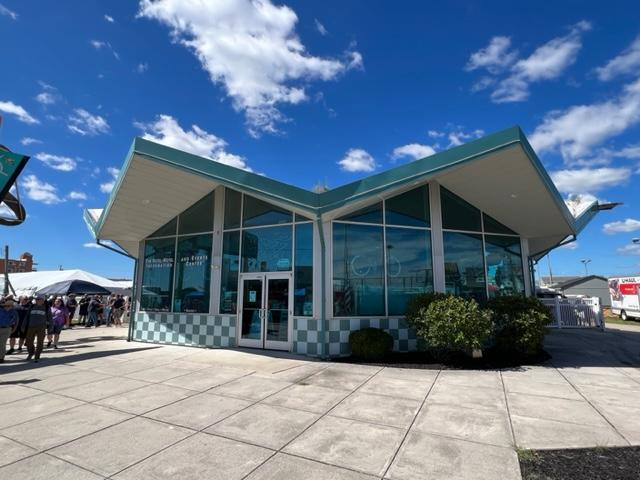
The Doo Wop Preservation League Museum at 4500 Ocean Avenue.
I visited the Doo Wop Preservation League Museum when I was visiting Wildwood, NJ for the Firemen’s Convention. They were sponsoring the DJ on the stage behind the museum. It was easy to miss the museum with all the fire equipment around it and hundreds of firemen milling around.
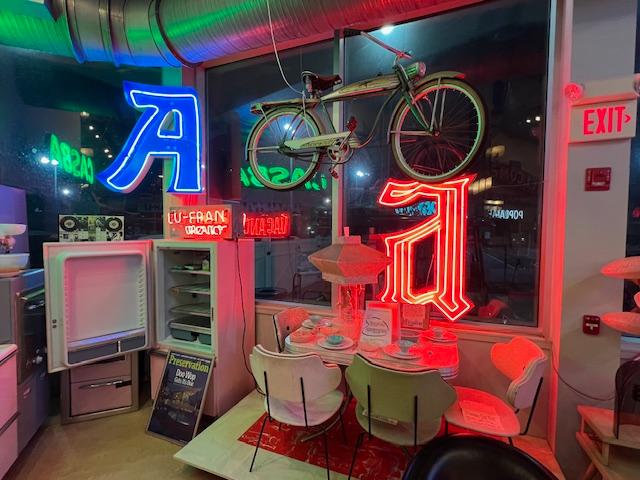
The neon signs in front of the Doo Wop Museum.
The old neon hotel signs outside the museum
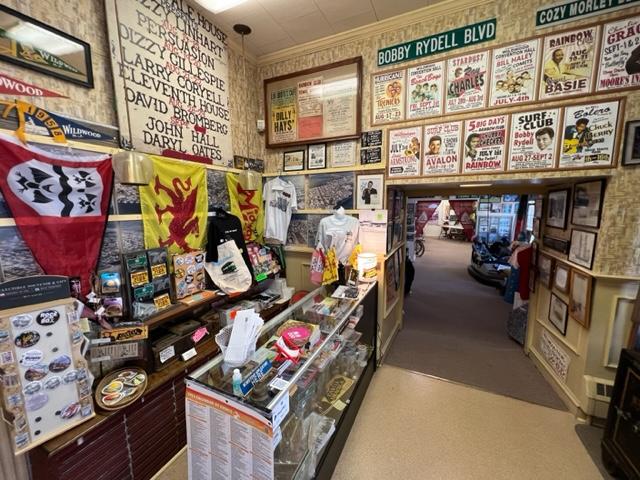
Once inside, this small museum is a treasure trove of history of the resort motels that once lined the beaches of Wildwood, Wildwood Crest and North Wildwood. As time rolls on, many of these old motels, hotels and restaurants are giving way to condos, newer homes and new chain hotels changing the landscape of Wildwood.
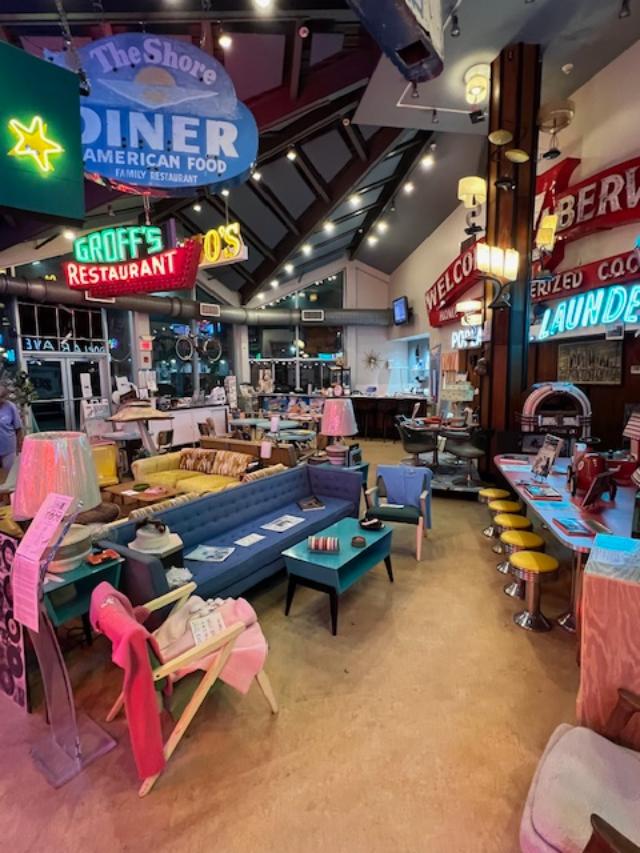
The inside of the gallery of the museum
It is bringing it into modern times with newer looks with shiny advertisements and lots of neon lights which was the trend at the time when these motels were created after WWII.
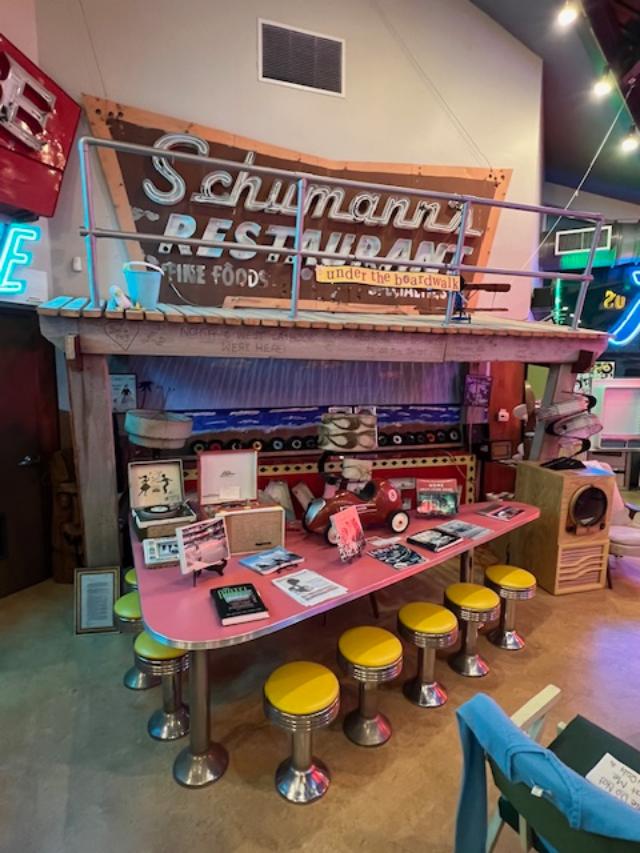
The restaurant section of the Doo Wop Museum
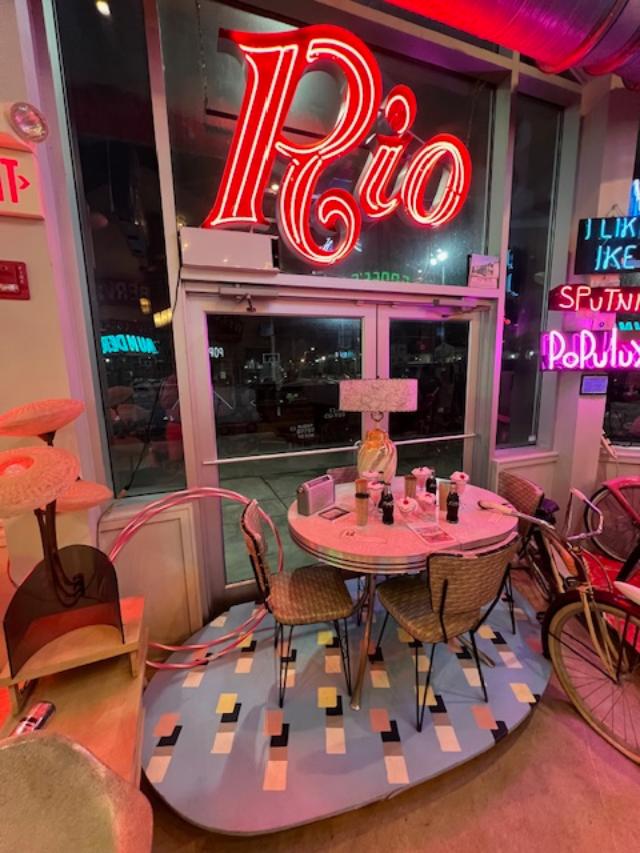
When many of these motels are torn down, the establishments donate old furnishes, decorative objects and signs from the outside to the museum. The outside of the museum is decorated with signs of businesses that are now closed, there neon lights still shining but for a different purpose. These somewhat gaudy and over-grandised signs and looks were of a time of great optimism and travel. Since the middle and working class families did not have the money to travel to these exotic places, something similar was created for them in the Wildwoods bringing that look to the Jersey shore.
The restaurant section of the Doo Wop Museum
The neon room of the 1950’s
When talking to the curators , a couple that ran the museum said that the museum represents the change in décor used after WWII when they used the neon lights and steel from the war into the signs and lighting of the new resorts. It was a unique style of the late 1950’s and 60’s, when these materials were plentiful and motel owners were getting creative to bring in the rising middle class tourists that could not afford the trips to Hawaii and Miami Beach. These owners brought these themes to Wildwood with a creative twist. Check out the signing and furniture that lines the walls and dining set ups of the museum.
The old neon signs of the hotels in Wildwood, NJ.
The museum is small and takes only about an hour to walk through. Each of the vignettes are designed as its own room with furnishings from old hotels and motels like tables, chairs, lamps and ashtrays in one corner, in another are stools, a jukebox and menus from a 50’s or 60’s style restaurant or items used at the time like bicycles or scooters.
The interesting preservation by the museum shows all over
The History of the Doo Wop Museum:
The Doo Wop Preservation League was founded in 1997 as a 501C3 to preserve the 1950’s and 60’s architectural styles of the Wildwood’s. Doo Wop style is a combination of Space Age dreams of the late 60’s and the exotic seaside tropics of recently opened South Seas Islands like Hawaii which became out 50th State in 1959. The Polynesian look was very ‘in’ at this time as most people could not afford to go but wanted to replicated for them.
The signs of the museum beacon visitors.
The museum is housed in the 1960’s ‘Space Age’ restaurant “The Surfside” that was saved from the wrecking ball and moved to this spot right across the Convention Center and the Boardwalk. On Tuesdays and Thursdays when in season (i.e. Warmer Months), there are bus tours offered by the museum. The museum’s goal is catalogue the remaining businesses in town that still keep their look of the era (Museum website and The Wildwooder Newspaper).
Don’t miss the museum tours:
The best part is that the museum is free (donation suggested) and you can take your time for a self-guided tour of the museum.
Open: July and August Sunday-Saturday 10:00am-4:00pm/June & September Saturday & Sunday 12:00pm-4:00pm. Special Appointments can be made at other times of the year and the museum is open for special events held by the town and for the holidays.
Fee: Adults: $5.00 donation/Children under 12 years old Free
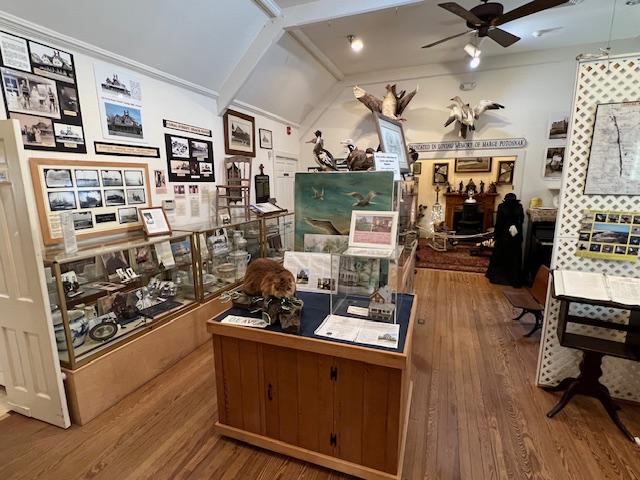
This seasonal museum is a ‘must see’ on Long Beach Island when visiting the town of Beach Haven. It is the perfect rainy day place to visit. The museum covers all aspects of the history of the island from its time when the Native Americans lived and fished here to the coming of the English. The museum shows in pictures and artifacts how the island was developed into a Summer resort retreat catering to middle class and wealthy tourist mostly from Philadelphia.
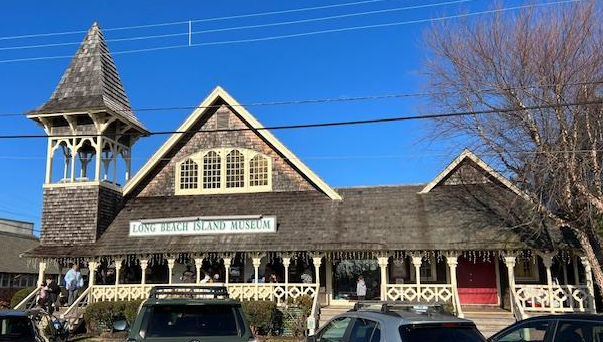
The Long Beach Island Historical Society at 129 Engleside Avenue.
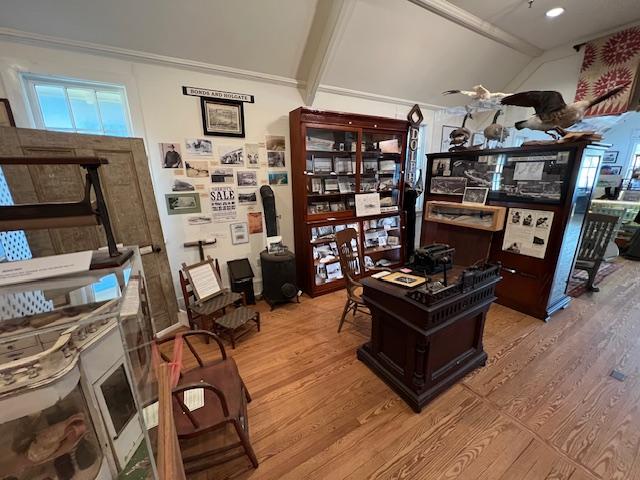
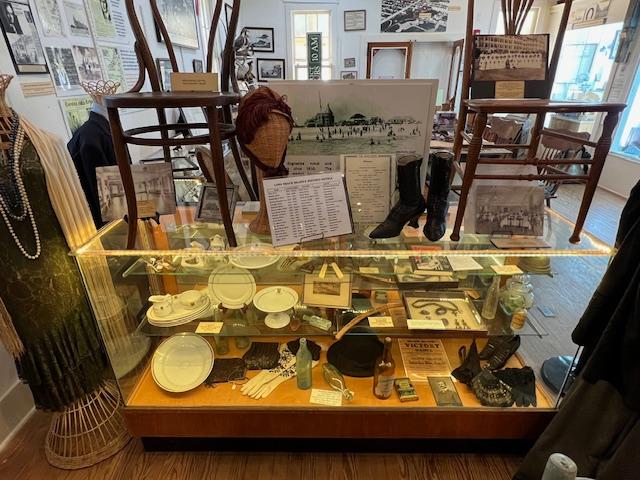
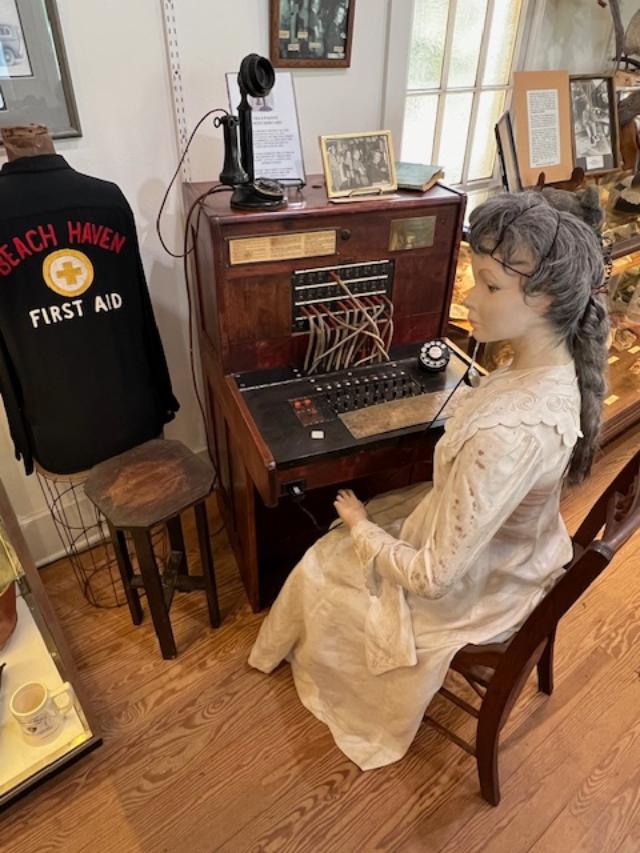
The artifacts range from arrowheads and fishing equipment that the Native Americans left behind to a recent discovery of an old wooden boat created by the Leni-Lenape tribe. The museum describes in detail life in the Victorian Age on the island with a series of pictures of the old resort hotels, most of which have burned down over the last 100 years, to artifacts that from this time including china, silver and menus from the hotels. There is also a creation of a Victorian room, a telephone operator office, rail office and a children’s toy display from that time.
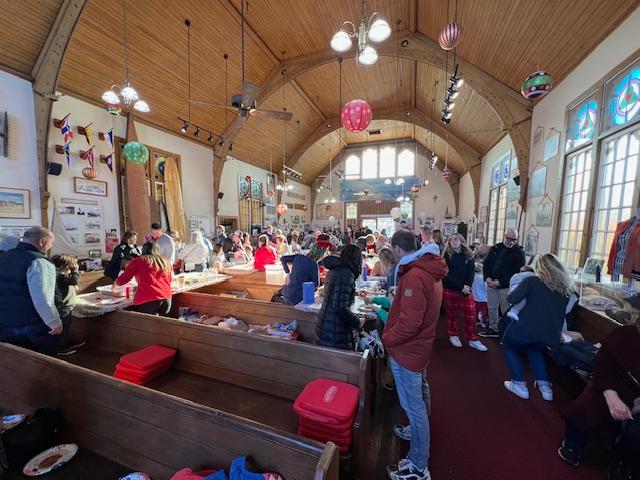
The Front Room of the museum during the Elf Workshop in 2023.
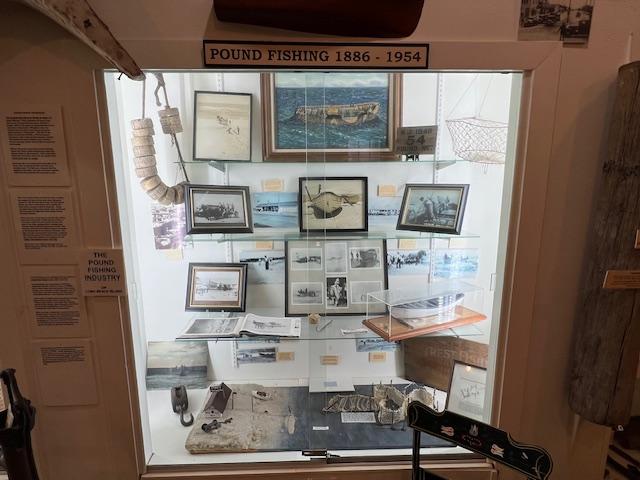
This is an interesting display of the fishing industry on the island as well. There is all sorts of equipment that has been used over the last 100 years and the progress that has been made in the industry. There are exhibits on the whaling industry and its lasting affects on the island.
The nautical display at the Long Beach Historical Society.
There is also the story of the shifting of the tides and the disappearance of Tucker’s Island, a small island to the south of Long Beach Island that has since disappeared underwater due to the shift in the currents. Each area of the museum contains interesting pieces of the island’s past and you should take the time to look at each section carefully.
The disappearance of Tuckerton Island and the rise of the railroads in the area.
For such a small museum, it is packed with interesting facts and a fascinating story of the development of the New Jersey shoreline and the role it is playing in our ever changing life down the shore.
The Lucy Evelyn exhibition.
Pound Fishing at the museum.
The back room display with the history of the community.
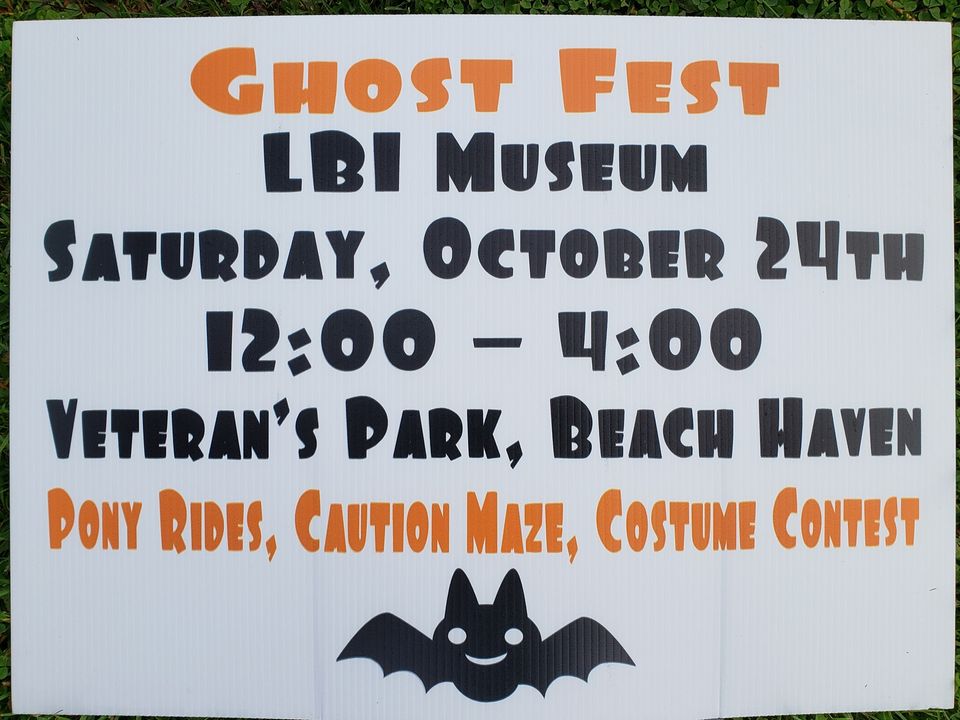
I stopped in for a recent special event that the Society was having to celebrate Halloween. The museum was having an ‘Ghost Fest-Open House” event for families and what a nice program they had for the kids and their family members that was socially distanced and safe.
The ‘Ghost Fest’ Halloween Festival at the museum.
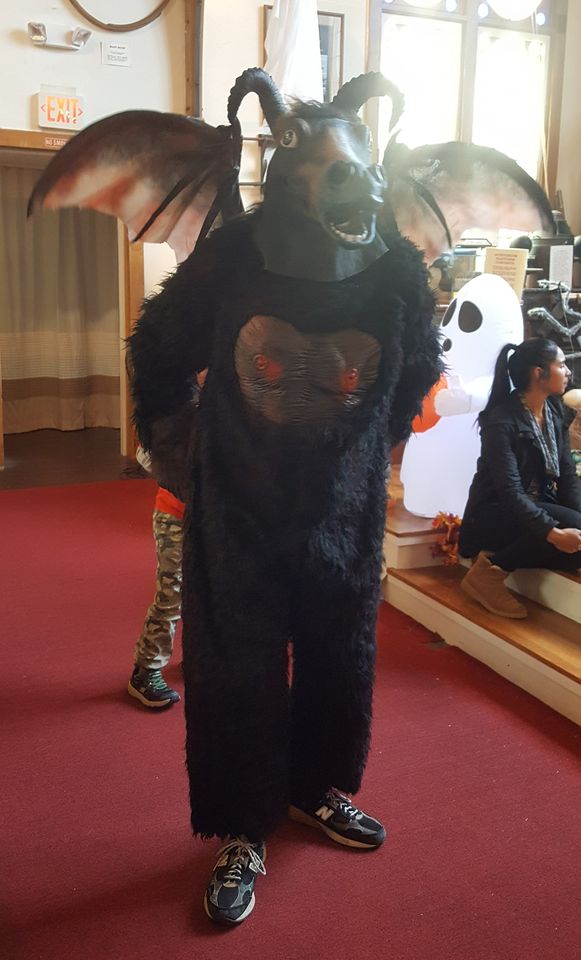
There were pony rides, a maze to explore, marshmallow toasting by the fire to make smores, corn hole tossing, games of chance, a gift store for the kids and even a costume parade with the “Jersey Devil” which the kids seemed to get a kick out of when he came out.
The Jersey Devil lead the Halloween Parade
There were also self-guided tours of the museum which were a lot of fun as well as people were coming in and out looking at the holiday displays. It was a nice that the museum had a safe program for the patrons and members of the community.
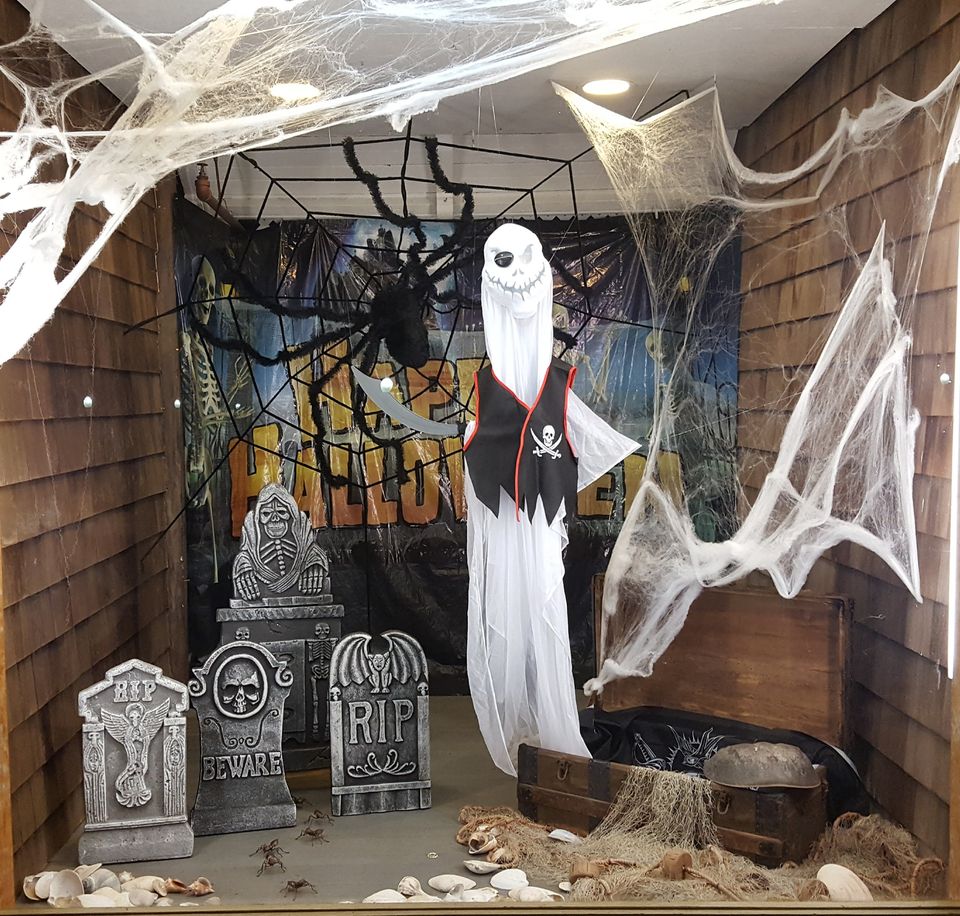
The Museum was decked out for Halloween
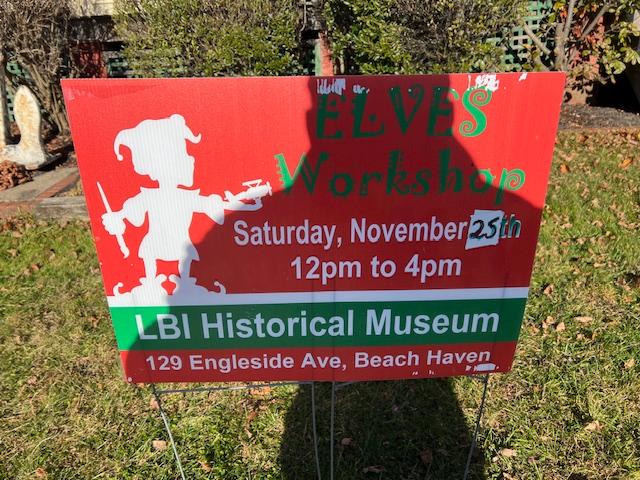
In November of 2021, the museum had the nicest little Christmas festival. They had tables around the front hall of the museum called “The Elves Workshop” with stations that the kids could create arts and crafts for the Christmas holidays with cookie decorating, gingerbread house creating and making a jewel covered Christmas tree among other things. The museum was decorated for the upcoming holidays.
Santa is on his way to Long Beach Island is the front display of the museum
The community involved in the Christmas activities.
From 4:00pm to 6:00pm that evening, the participants went the park across the street to roast marshmallows and Smores over open fire pits while Christmas music played in the background and the gazebo was lit with Christmas lights as it got dark. It was quite a site.
The Museum really puts you in the Christmas spirit with events like these.
It really put you in the holiday spirit.
The Christmas window at the Historical Society.
Mission Statement:
The Long Beach Island Historical Association collects, preserves and interprets the history of Long Beach Island through its educational programs, guest lecturers, walking tours, special events and an ever growing research center. The museum, situated at the center of Beach Haven’s Historic District, showcases 24 exhibits which include over 450 photographs and hundreds of artifacts for the sole purpose of encouraging the public to not only understand out island’s rich history but also to appreciate the people and events who helped in shaping its character (Museum Website).
The front section of the historical society.
History of the Museum and Town:
Before the colonial period the native Lenape tribes in the local area travelled in wooden dugout canoes to the island seasonally, to escape the heat, fish, gather clams to eat and shells for jewelry and trade. The early local colonists used the barrier islands much the same, seasonally to fish, whale (semi-permanent campus were established as early as 1690), gather salt hay, bayberry & beach plum and make sea salt.
The Victorian Room display.
The Victorian Room display.
As the settlers became more established, ports such as Clamtown (later Tuckerton) were established about 1700 on the mainland and roads improved. Cattle were grazed on Tucker’s Island by 1735. Permanent seasonal accommodations were built on the island for men coming to fish and hunt; such as the Philadelphia Company House (started as Horners in 1815, became Bonds from 1851-1909) near Tuckers Island just south of what is now called Holgate and the Mansions of Health in Surf City (1822-1850). There was a “boarding hotel” at Barnegat inlet from about 1820 and the first manned lighthouse was built at the inlet in 1834. A manned lighthouse was built on Tucker’s Island in 1848, where a community, later called Sea Haven was springing up.
The hotel display and the office displays.
The island’s “modern” history begins as the railroads reached south to Toms River and Barnegat; with the Tuckerton Railroad reaching Manahawkin and Tuckerton by 1872. The railroad allowed visitors (and goods needed for comfortable living) to reach the shore quickly and also allowed for shore products to be shipped to Philadelphia & New York all year. The first year-round life-saving stations were were established in 1871. Land Development companies laid out Beach Haven in 1872 and Barnegat City (now Barnegat Light) in 1878, with sailboats and steam launches begin used to transfer visitors and goods from mainland railroad to the island. The Parry House, Engleside and later the Baldwin hotels. were built in Beach Haven and the Oceanic & Sunset in Barnegat City.
The Tuckerton & Long Beach Land & Improvement Co. principals were also major stockholders in the Baldwin Locomotive Co., the Tuckerton Railroad and the Pennsylvania Railroad. After they and their wealthy Philadelphia friends built houses in Beach Haven, the PRR was convinced to build a railroad trestle to LBI which opened in 1886 (abandoned 1935) leading to an extended property boom from the 1880’s-1920’s, especially in Beach Haven. Other smaller communities such as: Spray Beach (1889), Beach Haven Terrace, Brant Beach, Surf City (Inc. in 1899) and Harvey Cedars (Inc. in 1894) were established along the railroad.
The hotel display of objects.
Although most of the houses built were still seasonal, the presence of the railroad (and later the 1914 automobile bridge) made permanent business & year round living on the island feasible. Census records show that the island’s permanent population was 33 people in 1880, increasing to 522 in 1910 and 1827 in 1930.
The Toy display at the museum.
After the Depression of the 1930’s and the Second World War, development resumed in the “Cape Cod” period 1846-1962; assisted by the completion of the Garden State Parkway to Manahawkin in 1954 and the opening of the four-lane causeway (to replace the old two-lane wooden bridge) in 1956. The 1962 storm and early 70’s economic problems temporarily delayed development. By the late 70’s, the island was essentially “built out”. Most recent building boom of the period 1980-2007 consists of teardown/replacement of existing homes.
The telephone operator.
Because of early erosion in Barnegat City, Surf City and elsewhere and the extensive tear-downs of the 1980’s and 1990’s, the majority of the surviving 19th century and early 20th century structures on LBI are in Beach Haven. The Beach Haven Historic District (running from 5th to Chatsworth, east of Bay Avenue/LBI Boulevard) was created in 1983 in response to the increasing loss of historic structures and conflicting building styles. As of 2012, it is the only historic district on LBI.
The Shark Attack in 1916.
(From the Museum website: I give full credit to the Long Beach Island Historical Association Museum for this information)
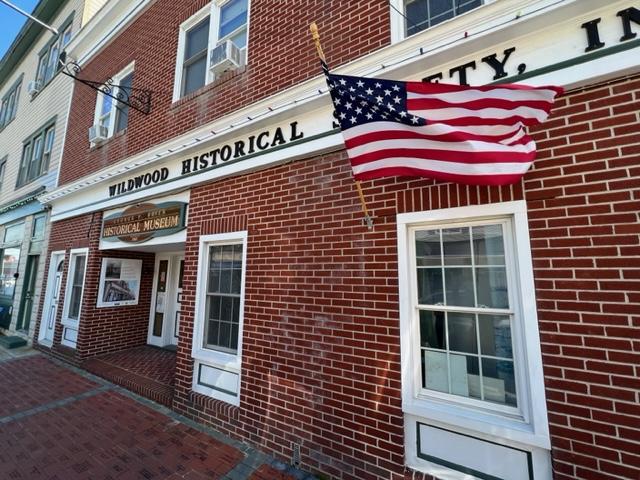
The Wildwood Historical Society at 3907 Pacific Avenue
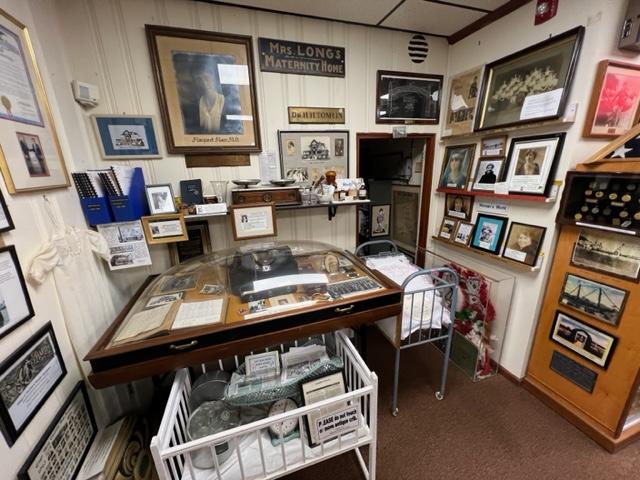
I visited the Wildwood Historical Society George F. Boyer Museum (See review on TripAdvisor) when I was visiting Wildwood, NJ for a convention. It was a gloomy morning, and the museum is open from 9:00am-2:00pm. It is the perfect place to visit on a rainy day at the beach. When I revisited the museum in the summer of 2023, the museum was crowded with members of the fire service and their families visiting after the convention meetings.
The Front Gallery
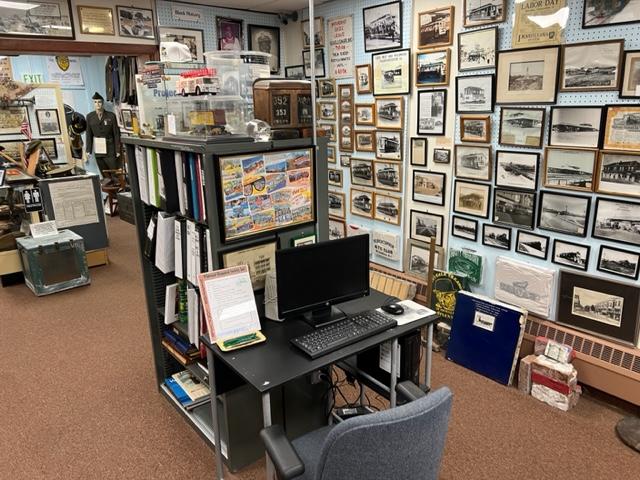
The central gallery on the Wildwood businesses.
The back gallery of the museum
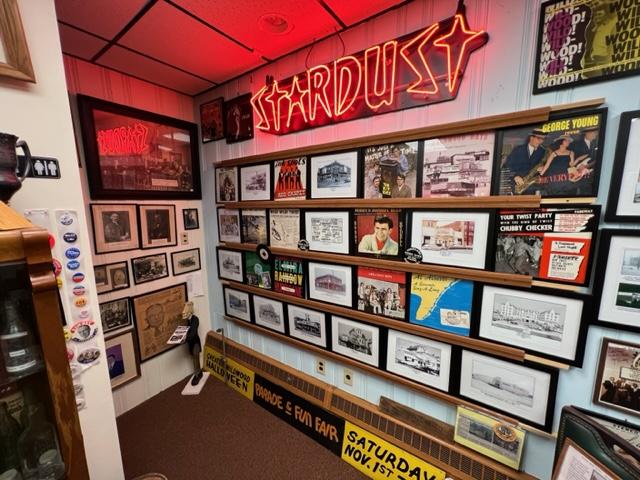
The museum is a treasure trove of artifacts of the history of the three towns, North Wildwood, Wildwood and Wildwood Crest. The history covers the original inhabitants when the Native Americans lived and fished in the area, the rise as a resort community especially its heyday in the 1950’s and 60’s as a solid middle class resort town and an extensive history of the police, fire department and schools as well as the town and its council people.
The Military display
The Fire display at the museum.
The fisherman’s display at the museum.
The doctor’s office display at the museum.
Each room of the museum is stacked with information, artifacts in case lines and the walls are lined with books, manuscripts and albums. The school history shows how integration worked even as far back as the turn of the last century and the development of the school system. There were books of graduation pictures, sporting events and band involvement.
The high school and public-school display.
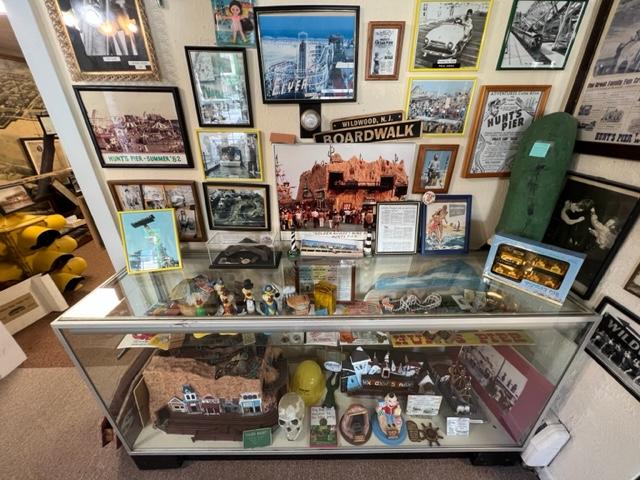
There is a very interesting display of firefighting pictures especially of the amusement fires of the past and the rebuilding of the parks and piers. Take time to look at the artifacts in the hallways and pictures of the development of the parks. There are interesting pieces saved from the old parks.
The Dracula’s Castle display before the big fire at the park.
The Dracula’s Castle display
The Amusement Park and Dracula’s Castle display at the museum.
The artifacts from Dracula’s Castle
The display by Dracula’s Castle
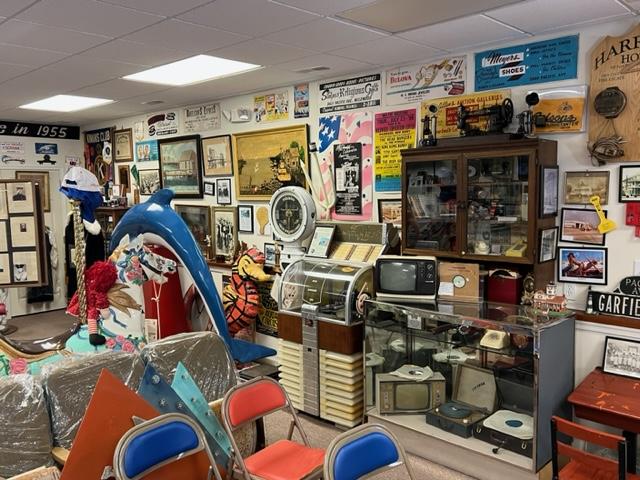
There is even a section of restaurant menus and dishware from the well-known establishments of the past and many pictures of the hotels and motels of the ages. It showed how it went from a Victorian resort to the modern times of the sixties theme motels with art deco architecture. There was a real change after the war to a more middle-class customer who was depending on the automobile instead of the train system.
Popular businesses of the past
The Wildwood businesses of the past.
Artifacts from businesses from Wildwood’s past from restaurants to hotels.
There is also a large section on the old amusement piers with pictures and artifacts from the old “Dracula’s Castle” park that burned down in the early 2000’s. There are signs, old tickets, small ride cars and prizes from the games from the piers. There is extensive detail to the display, and you have to look at all the pictures of the amusements at various points of history.
The Amusement gallery by Dracula’s Castle
The Amusement Park display of artifacts in fun and interesting. The museum admits they were lucky to save these items.
The “Dracula’s Castle Fire” was one of the biggest in Wildwood history.
Plan about two hours as you will lose track of time when looking at all the pictures and displays. It is a little packed in here but there is so much to see and take time to watch their videos which are fascinating and informative on the history of the town of Wildwood.
Artifacts and pictures from the old amusement parks that were once part of Wildwood’s glory.
Who was founder George F. Boyer:
George F. Boyer was born in Philadelphia in 1904. He came to Wildwood around 1932 and earned his living as a butcher, a merchant and a fireman. His real local fame, however, came from his role as the City of Wildwood’s first and only official historian. While serving with Wildwood fire department in 1959, he came across the stump of a tree (now known as the “W” tree) in the old city hall.
Running down the origin of the tree, sparked a tsunami of information as he talked to local residents and researched and collected old records. One thing led to another and in January of 1962, Boyer was appointed in the city’s newly established historical commission and became the first president of the Wildwood Historical Society.
The Wildwood music and ‘Doo Wop’ display.
The entertainer Mario Lanza exhibit when he used to visit here with his parents
Tireless in his efforts to collect and preserve local artifacts, Boyer spoke to school and church groups as well as civic organizations, urging them to “act now. To gather those irreplaceable links with the past and preserve them for generations to come.”
A model of Wildwood in the Business Gallery at the museum.
Founded by Boyer, Wildwood’s first historical museum opened in 1963, on the second floor of the Municipal Building in October 1976, the City of Wildwood honored Boyer for his “long and devoted service” by renaming the museum, the George F. Boyer Historical Museum.
The museum sits proudly in Downtown Wildwood.
He passed away a month later but his legacy lives on. The museum, now located at 3907 Pacific Avenue, continues to welcome visitors and locals alike, just as it did a half century ago under Boyer’s care.
Household items of the past.
The town bell
The non-profit museum is made possible thanks to volunteers who dedicate time to our cause. We always need volunteers. To learn about volunteering, drop in during our open hours, call us or fill the contact form on the website.
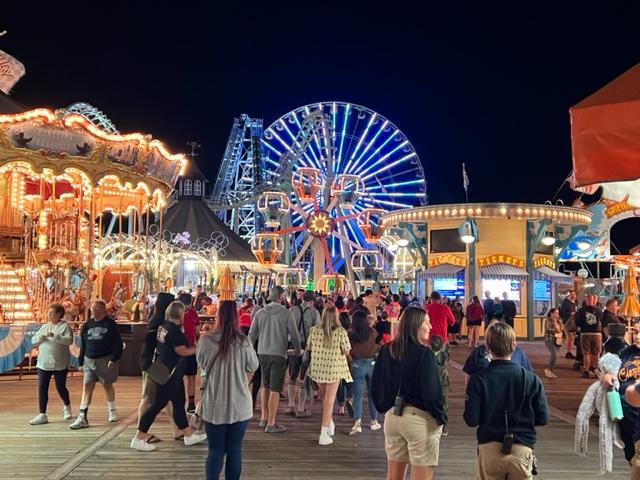
The Wildwood Boardwalk and amusements today.
Disclaimer: This information was taken directly from the History of the Wildwood Historical Museum website, and I give them full credit for the information. Remember that the museum has limited hours and the resort is seasonal so please call the above number for the times and dates when the museum is open.