Tag: Exploring Historic Bergen County NJ

Meadowlands Museum                                                               91 Crane Avenue                                                         Rutherford, NJ 07070

Meadowlands Museum 91 Crane Avenue Rutherford, NJ 07070

Meadowlands Museum

91 Crane Avenue

Rutherford, NJ  07070

Phone: (201) 935-1175

Email: meadowlandsmuseum@verizon.net

https://www.meadowlandsmuseum.com/

https://www.facebook.com/MMusRutherford/

Open: Most Wednesdays and Saturdays from 10:00am-4:00pm

TripAdvisor Review:

https://www.tripadvisor.com/Attraction_Review-g46796-d2403380-Reviews-Meadowlands_Museum-Rutherford_New_Jersey.html?m=19905

Both Curator & Chronicler

The entrance of the museum

The Meadowlands Museum is the main steward of the history and culture of the Meadowlands region and one of its leading storyteller.

The sign welcoming you

Its mission and collection, which resides in the Yereance-Berry House in southern Bergen County in Rutherford, NJ are distinctive and unique. The house too is a historic treasure and landmark and was built in 1804 by the Berry family, who were among the county’s earliest European settlers.

The front of the museum in the Spring of 2026

Rooms in the three-level American Dutch farmhouse are alive with permanent and temporary exhibits and sometimes include loaned objects from other museums and private collections.  Historical artifacts like archives and photographs are mingled with textiles, furniture, housewares and artwork.

The display on the history of area

There is even correspondence by the daughters of John Rutherfurd, a close confidant of George Washington.

The display in the local artifacts

The gardens outside in the Spring of 2016

Grounds include the William Carlos Williams Poetry Garden, which acknowledges the legacy of Rutherford’s most famous native and the town’s history as a cultural center.

The everyday products of the Meadowlands Museum

Founder in 1961 as the Rutherford Junior Museum by parents of school age children to help connect them to their community, the museum is staffed by professionals assisted by dedicated volunteers and involved trustees. Interns add to the rich resource of individuals who contribute to its present and future.

A recent commercial developed by my Business 101 Class for the Meadowlands Museum for the project “Rocking it in Rutherford: Being a Tourist in your own Town”

The location of the Yereance-Berry House suggests a colonial farm dating to 1740. The oldest house in south Bergen County in close to original condition, it was part of the Historic American Building Survey project of the 1930’s. The building is also listed on the state and national registers of historic places and the Bergen County Stone House Survey.

The Yereance-Berry House is the now the Meadowlands Museum

Affiliated organization include the American Alliance of Museums, American Association for State and Local History, Meadowlands Regional Chamber of Commerce, New Jersey Association of Museums and The National Trust for Historic Preservation.

Programming & Community Service:

Free and reasonably priced services for individuals, community groups, businesses, government bodies and educational institutions are available.

*Educational programs, lectures and traveling exhibits.

The ‘Historic Rutherford Homes’ exhibition at the museum in 2026

The Historic Homes exhibition

The Historic Homes exhibition

*Customized on and off site programs.

*Collaborative ventures with a wide range of partners.

*Assistance with academic research and other archival support.

Special Events:

Special events, which often are made possible by partnerships with businesses and other organizations, are an additional way for visitors of all ages to enjoy the museum. Public and private events occur on a regular or one-time basis; many are fundraisers. Call or email for a current calendar and sponsorship possibilities. The house hosts both permanent and special exhibits.

Our permanent exhibits include:

*Yereance Berry House: During the Spring of 2026.

The outside of the museum

*Pre-electric kitchen: This unique kitchen in the basement shows off the collection of equipment that would be used in the kitchen from the Civil War to the 1950’s. There are coffee grinders, whisks, wash boards and such. It showed how much effort was put into preparing the family meal through the ages.

The Farm Kitchen of Bergen County

The Farm Kitchen at the Turn of the Century

*Meadowlands Geology: there are all sorts of rocks and gems not just from the area but all over the state. There are two different rooms one of the specimens locally and there is a separate room for glowing stones. It is very interesting to see when the lights are out.

The Mineral Collection at the Meadowlands Museum

The fluorescent Zinc display

The Mining Display

*Mining in South Bergen: This is how the county has changed when we mined ore.

The Mining Display at the Meadowlands Museum

The Mining Display

The Mining Display

*19th century Laundry Room: The Laundry room that is located in the basement has many of the things our grandparents would have used. The washboards,  scrub bushes, old washing machines and ringers. Washing clothes was much harder back then.

The Wash Room of the Turn of the Century

*The wonderful Toy Exhibition of turn of the last century toys and from the 1960’s 70’s and 80’s. This contains Dolls, Board Games, play things and instruments:

The Toy Collection fascinates kids of all ages

The Factory Toys display

Meadowlands Museum Scarecrow Day III

The wonderful toy factory in Kearny, NJ that used to produce all these wonderful toys.

The Toy Display

The Toy Display

The Doll display

The Doll display

The ‘Brownies’ display in the Toy Room

*The Bergen County Farm display:

Farming in the County in the past

The Farm display

The home Spinning Wheel display

Spinning Wheel display

The new Turn of the Century Furnace display

*Horse elevator

Recent special exhibits have included:

*High school football

*Needlecraft

*Steampunk

*Medical Innovations

*Maps of the region

*Civil Rights

*Dr. Williams’ Babies

Dr. William’s display

Dr. Williams display

Dr. William’s display

Dr. William’s display

Dr. William’s display

*World War I

Special Events:

Scarecrow Day 2018:

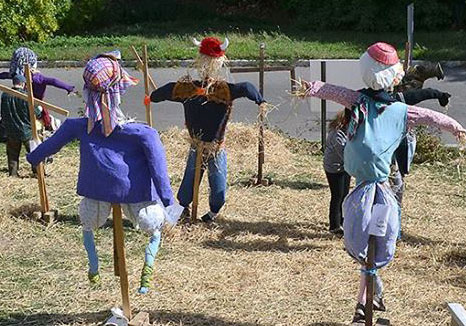
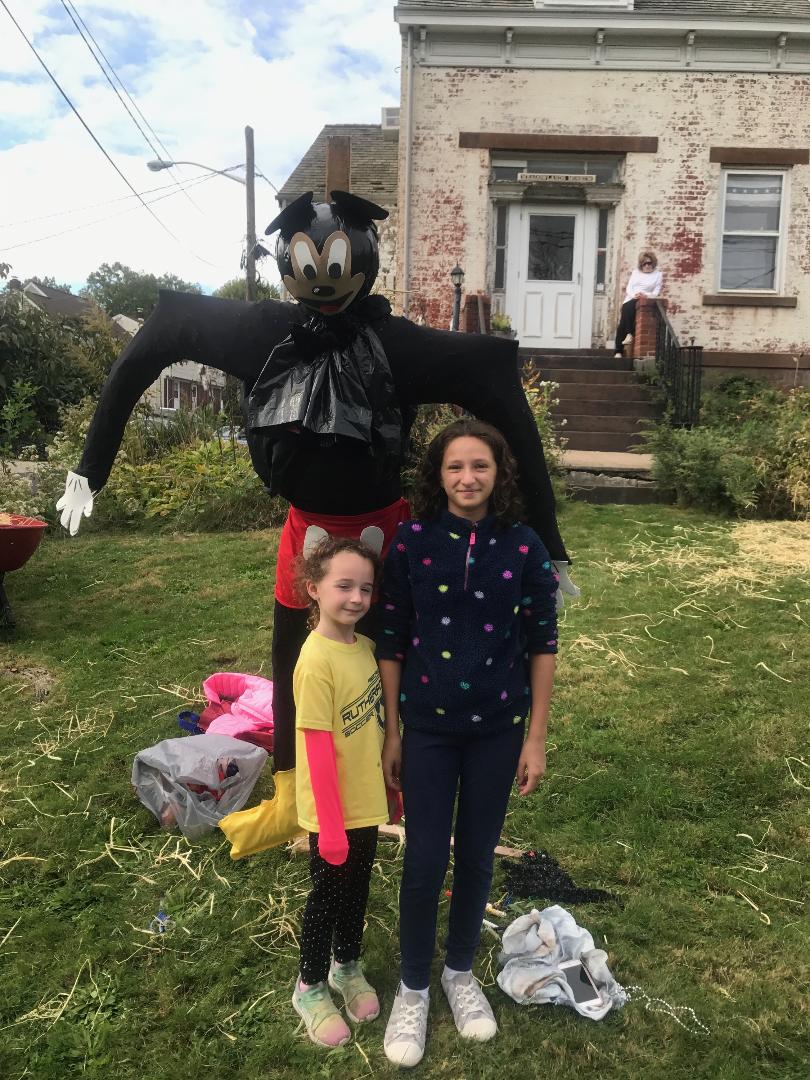
I went to the recent Scarecrow Day on October 20, 2018 where guests of the museum created their own scarecrows using their own creativity. All the scarecrows were lined up facing the street with their interesting clothes and accessories.

Each person got to use their own clothes and each one had its own style to it. It was fun watching the families show their creativity at this annual event.

Image result for scarecrow day at meadowland museum

Scarecrow Day at the museum in 2018

Meadowlands Museum Scarecrow Day

Scarecrow Day in 2021: the winners of the contest for best Scarecrow

I also stopped by for the Dutch Christmas decorations. The museum was decorated for the holidays with garland and trees. On December 1st, they had a Dutch Christmas festival (I could not attend) with food and entertainment.

Celebrating the Easter Holidays in 2026

Help tell the story…

(from the museum website)

Individuals who value the purpose and work of the Meadowlands Museum remain its inspiration and abiding spirit. Donations, memberships, sponsorship’s, grants and fundraisers are crucial elements of the museum’s financial well-being.

Admission to the museum is free but donations are greatly appreciated. Fees for events and other services vary. A personal letter to the appropriate person acknowledges a gift made in the name of an individual. Donations to provide for the buildings and grounds are valuable links to the future and a kind of giving that is among the museum’s top priorities.

Disclaimer: This information was taken directly from the Meadowlands Museum’s pamphlet. For information on the site, please call or email the museum for more information.

My Bergen Community College Team Project in 2022:

Bergecco-Parc Consulting Inc.-Rocking it in Rutherford:

My Business 101 class at Bergen Community College Lyndhurst branch visit in the Spring of 2022 for the project “Rocking it in Rutherford: Be a Tourist in your own Town”.

For Spring Semester in 2022, my Business 101-Introduction to Business class made a weekend visit to the Meadowlands Museum for the project “Rocking it in Rutherford-Be a Tourist in your own Town”. We were promoting the museum to increase tourism with a fundraiser and a barbecue. So on the weekend, I took my Team to the museum to tour it for extra credit. They ended up learning a lot about not just the museum but the history of Rutherford and Bergen County, NJ.

The project was promoting the Town of Rutherford for Domestic and Foreign Tourism and created a fundraiser and modernization of displays for the museum. This is a copy of the project, presentation and Commercials.

The Team Project “Rocking it in Rutherford: Be a Tourist in your own Town”:

Video’s of the Presentation:

The video presentation promoting the museum:

The Project showcased the museum in such a professional and creative way.

The Schoolhouse Museum-Ridgewood Historical Society                                                                  650 Glen Avenue                                                                Ridgewood, NJ 07450

The Schoolhouse Museum-Ridgewood Historical Society 650 Glen Avenue Ridgewood, NJ 07450

The Schoolhouse Museum-Ridgewood Historical Society

650 Glen Avenue

Ridgewood, NJ  07450

(201) 447-3242

RidgewoodHistoricalSociety@Verizon.net

Open: Sunday 2:00pm-4:00pm/Monday-Wednesday Closed/Thursday and Saturday: 1:00pm-3:00pm (please check the websites for changes in the schedule)

Admission: Donation $5.00

TripAdvisor Review:

https://www.tripadvisor.com/Attraction_Review-g46772-d10353516-Reviews-Schoolhouse_Museum-Ridgewood_New_Jersey.html?m=19905

The Ridgewood Schoolhouse museum:

The Front of the museum

The historical sign

The historic sign

The front of the building

I have visited this interesting small history museum a few times and they do a wonderful job in presenting their displays with interesting facts catering not just to a local crowd, but anyone interested in history and events.

The one-room schoolhouse, built in 1872, operated as a public school until 1905. It was part of the district school system formed in 1864 or 1865, which was geographically defined rather than by township. It was operated as School District No. 45. When the towns incorporated in 1894, that district system was dissolved, and the school became part of the Ridgewood school district.

The Ridgewood Schoolhouse Museum’s permanent collection

Tradition has it that the original land grant to the Dutch Reformed congregation from Pierre Fauconier and his daughter, Magdalena Valleau, stated that room should always be given upon the church land for a school. We know that a small school building opened in 1785. A second stone school was built in 1820 and eventually replaced by a frame structure in 1845.

Eventually the present schoolhouse was built in 1872 at a cost of $4600.00. It is likely that other schools existed on the church property from the time the church was built in 1735 to 1785, for the consistory assumed responsibility for education and the exact time when that responsibility was handed over to the public is not known.

The large bell summoned children from miles away to school each morning. The original belfry is gone but the bell stands in the entryway. It was used in other schools and a church after the school closed in 1905 but was returned to the historical society in 1977.

The original entry was divided into separate entrances and cloakrooms for boys and girls. The potbelly stove is original as are the windows and the two central lamps. The black boards around the room have been removed except for one behind the teacher’s platform.

There is a recreation of the old schoolhouse when you walk into the museum

When the Historical Society started the museum, the privy building was attached to the main building to provide more display area. In their special display area, they have an exhibition space for farming and a local comedian.

The schoolhouse display

In April 2018, they have a very interesting exhibition call “The Thread of Life” which tells the story of family’s progression in home life from the end of the Civil War until the beginning of the Depression and times changed between the Civil War and WWI. Between the Victorian Era, the sinking if the Titanic and the devastation of WWI, the baby boom of the teens and the ‘Roaring Twenties’ with the stock market built changed the attitudes.

The way of life for an entire generation until the Great Depression put a halt on it. You can see the changes of behavior in the displays of clothes and household decor. It is an interesting display.

A Morning Outfit during the Victorian Age

Union Army outfits and display for the “Civil War” artifacts

They also have an ongoing exhibition of farm equipment and a continuation of their “Farming in Bergen County” exhibition that just closed before this show. This is how farmers of Bergen County produced their crops.

Dutch items in the collection

The Blauvelt, Zabriskie and Haring families are known farming family names in Bergen County and were important in business and politics during the after the Revolutionary War.

The “Farming and Agricultural” display

Also, see their ‘Halloween Cemetery Walk” in my blog, “MywalkinManhattan.com” entry “This is Halloween” Day Ninety-Six, October 31, 2017. Don’t miss it this year!

Day Ninety-Six: This is Halloween-MywalkinManhattan.com:

https://wordpress.com/post/mywalkinmanhattan.com/7062

The Cemetery Walks in October are extremely popular

Don’t miss the “Here comes the Brides” exhibition that just opened up in May of 2019. It shows the history of formal wear for weddings along with accessories, menswear, invitations and even cakes toppers.

Schoolhouse Museum II.jpg

‘Here comes the Bride’ Exhibition 2019

In July of 2020, as Phase Three of the Opening in the State of New Jersey, the Museum is now open from 2:00pm-4:00pm for viewing with a new exhibition “A” is for Artistry: Celebrating Centuries of Art, Artists & Creativity”. The exhibit is a combination of local donated art and heirlooms from Ridgewood and the surrounding towns.

The Exhibition “A is for Artistry”

There are interesting displays of early photography and portrait painting as a way of preserving a persons’ image for the future. The use of oil painting, tin and then photo ‘sittings’ came in vogue as the technology changed.

Portraits were the form of imagetry before photography was invented

There was an interesting display of Children’s toys from the handmade farm toys of clay and corn husks to the fancier toys of bisque and cloth when imports and specialty toy stores were created for children’s playthings. They even had a collection of the famous “Punch & Judy Dolls”.

The Punch & Judy Dolls at the “A is for Artistry” exhibition

Children’s playthings over the last two hundred years

Another standout of the exhibition was the display from General Westervelt, a local citizen of Bergen County whose shipping expertise helped the North during the Civil War. His use of navigation and sailing was a detriment to the South and there was a $1000.00 bounty on his head. He died during the Civil War.

The “Object Lessons-Treasures that tell our Stories” exhibition

In 2022, when the Museum reopened after a long closure with COVID, they opened with two exhibitions: One was “Object Lessons-Treasures that tell our stories”, in which household objects, farming equipment and all sorts of artifacts from the pre-Revolution, Revolutionary War and Civil War periods were shown. It showed the progression that life took for families between the Revolutionary War and the beginnings of the Victorian Age.

“American Revolutionary War” display

They had local Dutch family heirlooms such as chests, cabinets, china, clothing and even documents. The average Dutch family kept their family linens, china, silver and bedding in a locked chest as these were valuable family luxuries that needed protection and proper care.

Dutch Chest with family items that were locked up.

There was a “Lincoln display” at the museum. They had a copy of the poster from the night that President Lincoln was assassinated at Ford Theater during the performance of “My American Cousin”. There was a family shot of the Lincoln family and items from the period.

The “Lincoln Display” that showed an original poster from “Our American Cousin” the night Abraham Lincoln was assassinated.

The other exhibition was “Toying with the Past: Antique Toys & Games”:

Toying with the Past was an interesting exhibition in that it showed how much toys have developed and changed over the years and how much they have stayed the same. There was a beautiful collection of china and bisque dolls, some that were made as playthings and others used as marketing tools to show women the latest fashions coming out of Europe. The dolls would be dressed in the dressmakers’ newest designs.

The Doll Collection is beautifully displayed

There were older versions of modern board games, everyday items like marbles and Jaxs. There were kitchen-based items that a little girl might be given to improve her domestic skills and there was even an early version of an “Easy Bake Oven”, with an electric oven that could be plugged in and boil water.

The items a young girl would receive to prepare her for homelife

Fancy rocking horses and dolls

Vehicles and Board Games that sparked children’s imagination

More dolls and vehicles over the last 100 years

There was also all sort of toys on wheels and rocking horses that could entertain a grumpy child for hours. They even had a selection of play clothes and school items to show what classroom work was like at the turn of the last century.

Childhood was changing for young people after the Civil War and during the Victorian Age

The Latest Exhibition that was on display in April 2023 was the “History of Hats” that replaced the Toy exhibiton:

Hats from all ages

Men’s hats through the ages

Military Hats

General’s Hat

Ladies bonnets

‘Fashion of the 1880’s’

Special Events and Lectures at the Museum:

Don’t miss their ‘Cemetery Walks’ during the day. I took one recently at the old Dutch Reformed Church and we discussed the history of the church, the location of the old church versus the building of the new one, which is why the cemetery looks the way it does and the locations of the tombstones as well as how time and advancement in carving went from sandstone, which fades and chips over time when to the production of granite and marble for future tombstones.

The Cemetery Walks in Valleau Cemetery across from the museum

The cemetery is filled with names famous and prominent in Bergen County and North Jersey history which includes participation in the wars and the building of Bergen County including the Westervelt’s, Van Riper’s, Haring’s, Zabriskie’s, Terhune’s, Demerest’s, Blauvelt’s and Tice’s families. It is a fascinating place to learn Bergen County history and its development.

Ridgewood Cemetery Tour

The Cemetery Tours that take place the week before Halloween are interesting as well. The paths of the Valleau Cemetery in Ridgewood are lined with candles and you follow the path with the town historian who takes you on a creepy tour of the famous dead residents of Ridgewood. These include prominent athletes, business people and local laborers. You pretty much tour about a third of the cemetery as you move from one tombstone to another met by costumed actors, who they themselves have to sit in the cemetery in the dark waiting for you. That is a horror movie into itself.

The Valleau Cemetery Walk and Lecture

The best part of the tour is you are greeted at the museum with a tour of the museum and a table laden with fresh apple cider and cider doughnuts that make the perfect refreshment on a cool fall evening. Make sure to take the 7:00pm tour when it is dark out and make the reservation well in advance as these tours fill up fast.

Taking the Cemetery Tours is interesting!

Don’t miss their upcoming tours for Halloween, Christmas and their lecture series.

Please check out the museum’s website for all their very original special programming.

The museum’s latest acquisition, a Native American on horseback

For the 2024 Northwest Bergen Historic Coalition Day, I visited the museum again and they were having an exhibition entitled “It’s Personal-100 years of obsolete Everyday Essentials”. It made me feel old when I saw a rotary phone, ink well and some of the other items that were in the exhibit. Some of them were from my generation and I do not consider myself old.

The sign from the “It’s Personal” exhibition.

The entrance to the Ridgewood Schoolhouse Museum for the “It’s Personal” exhibition

The Ridgewood Schoolhouse Museum “It’s Personal” exhibition.

The Ridgewood Schoolhouse Museum “It’s Personal” exhibition.

The Inkwell display at the “It’s Personal” exhibition to be replaced by the modern pen.

The Sewing Kit at the “It’s Personal” exhibition to be replaced by the modern sewing machine than by Ready to Wear clothing.

The Vanity which is still in use depending on the person in the “It’s Personal” exhibition.

The development of the phone and then the change to the modern cell phone in the “It’s Personal” exhibition.

The exhibition was interesting because its takes the modern perspective of the development of objects and their use over the last 100 years and show them with a modern twist on how times continue to change.

The Meaning of the name “Bergen” (Bergen County, NJ)

The Meaning of the name “Bergen” (Bergen County, NJ)

The name was originally applied to the village of Bergen, settled in 1660, which is not the area known as Jersey City Heights. Some earlier writers believed the name was derived from the City of Bergen, Norway. Others said it was named after the small town of Bergen in Northern Holland. Since Colonial New Jersey’s Bergen was a Dutch town founded and governed by a Dutch colony, the name was most likely derived from a town in Holland or a geographical description in the Dutch Language.

The name “Bergen”, originally derived from the word for “hill” in Norway, Belgium and the Netherlands, was applied to towns located in the hills. New Jersey’s Bergen, was originally a settlement on a hill. Therefore, the currently accepted theory is, that the geographical location of the original town is the most likely reason it was called Bergen The name “Bergen” was applied to the County, which was established in 1683.

Disclaimer: this information is taken directly to the pamphlet from the Bergen County Division of Cultural and Historic Affairs. It tells the story of the county we live in here in New Jersey

The Fritz Behnke Historical Museum of Paramus                330 Paramus Road                                      Paramus, NJ 07652

The Fritz Behnke Historical Museum of Paramus 330 Paramus Road Paramus, NJ 07652

The Fritz Behnke Historical Museum of Paramus

330 Paramus Road

Paramus, NJ  07652

(201) 445-1804

Home

Open: Sunday-1:00pm-5:00pm

Fee-Free with donations

TripAdvisor Review:

https://www.tripadvisor.com/Attraction_Review-g46712-d4973052-Reviews-Fritz_Behnke_Historical_Museum-Paramus_New_Jersey.html?m=19905

http://www.ParamusHistoricalMuseum.com

Driving Directions:

From Highway 17 & 4 proceed west on Route 4 approximately 1 mile to Paramus Road. Exit toward Ridgewood. Continue north through the traffic light. Pass a cemetery and a golf course. The museum is next on the right.

The front of the Fritz Behnke Historical Museum on 330 Paramus Road

I visited The Fritz Behnke Historical Museum of Paramus, NJ the other day after passing it for many years and found a smaller museum that told the history of Paramus, NJ. It has interesting displays on the agricultural past of the County of Bergen. Fred Behnke, the founder’s son, took me on the tour of his father’s masterpiece and I found the displays to be interesting and engaging.

The Grist Mill sign from the old mill

The Grist Mill pieces in the new display outside the museum

The sign that welcomes you to the museum

The Glacier Rock in the front of the museum

The farming hoe display in the front of the museum

He showed me equipment that had been in his family for generations and some of the Indian artifacts that his family had found on the property which gave more depth to the history of the property as it had been farmed by local Native American tribes.

The Fritz Behnke Historical Museum contains 2 floors of artifacts dating back to the early 1900’s when there were many farms in the Bergen County area.

Take the time to visit the basement and watch their history video. It is very interesting short on the history of the museum and the borough of Paramus. If you are from Bergen County and grew up here in the 70’s and 80’s, you will recognize a lot of the changes that have happened over the last forty years. It is a real reflection on the changes of Bergen County, NJ over the last 100 years. The museum is only open on Sunday’s so plan accordingly.

The Farming gallery in the basement in of the museum

The Behnke family farming equipment

The farming equipment on display for use on the farm

The farm crops and the recreation around the farm

The Egg Sorter and the Dairy industry for milking and bottles

The main floor had an exhibit of Police and Fire Department memorabilia, an being the exhibit displaying  the history of Bergen Pines County Hospital and a display of an old school room. This was Paramus during different eras.

The Paramus Fire Department

The Paramus Fire Department

The Police and Fire Department displays

The hospital display

The School room display from the turn of the century until today

There is an area showing household cleaning and laundry items, including one of the first electric washing machines, a duplicate of which is at the Smithsonian Museum. The kitchen area displays many old devices, used in cooking and includes an old ice box and a wood-burning stove as well as a early gas stove.

The Farmhouse kitchen

The Children’s Toy exhibition

The toys that have not changed over the years for children to enjoy

The Kids Room contains many old toys such as strap-on ice and roller skates, dolls, doll houses and cast metal farm tractors. In the parlor area there are old wind up phonographs and a church organ. In the corridors there are many photographs showing the Paramus of yesteryear.

The 1930’s items in the room

The room in the 1930’s and 40’s

The history of Paramus, NJ is explained at the museum

On the lower lever is an interesting 12-minute video presentations on the history of Paramus. There are also displays of woodworking, blacksmithing and farming. The farm display depicts the two distinct differences in Paramus farming that of the celery farms in the muck soil on the west side of town and vegetable farms in the brown soil on the east side of town. There are many different farming items displayed including an egg sorting machine and a shovel hand carved from one piece of wood.

The history of the radios and record player

More household items over time

The bottles and glass insulators from the top of telephone poles

Special Notes in History provided by the museum:

The History of Sprout Brook: Long before Route 17 was built through the center of Paramus, Sprout Brook also ran north to south through meadows and woodland, which abounded with wildlife. Beginning in the northwest, it rambled through the rich black soil or ‘muck’ that had once been a lake bottom.

The dark soil farm on one side of the brook

The Light Farm soil on the other side of the stream

As farmers discovered the rich soil, they dug ditches off the brook to irrigate their celery farms. At that time, Paramus was nationally known for its celery farm production. As the water flowed southeast, it bordered on higher ground called ‘upland’, which was also fertile soil conducive to growing a variety of vegetables like corn, tomatoes and cabbage.

The Sprout Brook history and farming

In the early Spring, the farmers planted their seed in greenhouses and waited until the last frost passed. The plants were then transported outside to the filed where they were cultivated and watered until they became mature enough to harvest. Produce was taken by horse and wagon and later by truck crossing the Hudson river via ferry board to the markets in New York City.

The colored eggs from different species of chickens

After all the produce was sold, they returned home late in the evening only to rise early the next morning to begin preparing the vegetables to take to market that night. It was a ‘family affair’ and farmers often helped each other with their harvests when extra hands were needed.

An early plow of an early design

During the 1940’s and 1950’s, roadside stand selling produce for extra income was common. Families driving through Paramus from New York City often frequented these produce stands along Route 4, Ridgewood Avenue, Paramus Road and Farview Avenue.

Items for life on the farm

The Farms of Bergen County, NJ

Sprout Brook is an integral part of the history of Paramus. It divided the Borough’s two school districts; the children living east of the Sprout Brook attended Farview School and Hackensack High School and those west of Sprout Brook attended Midland School and Ridgewood High School. In later years, two middle schools were built and appropriately named “Eastbrook” and “Westbrook”. In 1957, Paramus High School was built bringing the town together in one school. Voting districts were also determined by residents living east and west of Sprout Brook.

The Paramus High School Display

History of the Lenape Indians: The Indians of Bergen County, the Lenni Lenape Indians settled in the area for many reasons. The climate was ideal all year so they could survive during the winter months. Also the Ramapo Mountains made an ideal place to live. The shale rock overhangs were like caves that provided protection from the weather. There was abundant water in the area from the Hackensack and Saddle Rivers, Sprout Brook and many ponds that provided good fishing and navigation.

The Lenape Native American display

The wild animals in the area came to drink at these waterways thus providing great opportunities for hunting. The land was also fertile, which made for good farming such as corn (or Maize) and other root crops. These crops attracted many birds such as quail, pheasant and of course, the wild turkey which hare still in the area today.

Our early settlers traded with the Indians. Mrs. Lawrence, the one room school teacher was of Indian descent. As the early farmers in the area plowed their fields, they found arrowheads, tomahawks and grinding stones. The Lenni Lenape called this area “Perapepus”, which meant rich or fertile land. Through the years, the name changed several times until it became Paramus.

The museum also has the history of the Paramus Fire and Police Departments as well as the early Bergen Pines Hospital.

The history of the Police and Fire Departments

The Military display

There was also a wonderful display of old businesses in Bergen County. For many residents who grew up in the area will recognize from the 1960’s and 1970’s. There were menus, dishes and meal set ups on display reminding us of dining from that era.

Businesses from Paramus and from Bergen County

Businesses in Paramus and Bergen County, NJ

The new “Fireplace Hamburger” display for the well-known restaurant that closed during COVID

*This little gem of a museum is only open one day a week but can be opened to accommodate groups so please call the museum for details. The museum is free to the public but please leave a donation to help with the costs of the museum. It is well worth the trip if you like the history early farming communities or want the know the history of Bergen County.

The Paramus Quilt display

The “Whatchamacallit” display

My Marketing Class at Bergen Community College Project promoting the museum:

The Blog on the whole project:

In October of 2024, I partnered with the museum to a Destination Tourism project to assist the museum in targeting to a new visitor with new Digital Marketing. I thought the museum had a lot of potential that had not been tapped into and thought this would be the perfect challenge to for the students to give the museum a fresh perspective.

I made an appointment with the staff at the museum and asked if they would partner with me for a Marketing project and they gladly accepted.

I arranged the class to have a field trip to the Behnke Museum during class time but I also arranged an extra credit trip the Sunday before so the students could get a glimpse of the museum ahead of time.

My class on their field trip to the Behnke Museum in Paramus, NJ

Then during class time we took a more formal tour of the museum with the founder’s son, Fred Behnke and his Volunteer Board, who gave us a better perspective of the museum.

The students at the Behnke Museum during our field trip

The class getting the tour from the founder’s son, Fred Behnke

After the tour was over, our class took a group picture

I had the students write a paper on their thoughts of improving the museum and the broke them into groups based on their thoughts. They had one week to put their game plan together and then they presented it to myself and the museum.

This is their presentation:

The Student Consultants had a week to put the Presentation together and create a commercial to promote the museum and their PowerPoint on their ideas to create excitement at the museum. Here is their project Presentation and PowerPoint on the project. Please remember that they had seven days to do this.

The PowerPoint:

https://drive.google.com/file/d/1atn7BlTHfG88tND0P8fU1yNzmEpFrEG4/view?usp=gmail

The Video of the Presentation:

https://www.youtubeeducation.com/watch?v=krZNmHevETA

The Team Picture after the Behnke Museum Presentation to the Museum Volunteer Staff:

The Bergecco-Parc Consulting Inc. Paramus Team for the Behnke Museum

The Behnke Museum Volunteer Staff was impressed with the students ideas and thought there was a lot good ideas that they can use.

Commercial Group One:

Commercial Group Two:

Marketing Commercial Team Two:

Commercial Group Three:

Marketing Commercial Team Three:

Commercial Group Four:

I could see by the reaction of the museum that they were please with the project and I hope it helps them in the future. It really is a great museum.