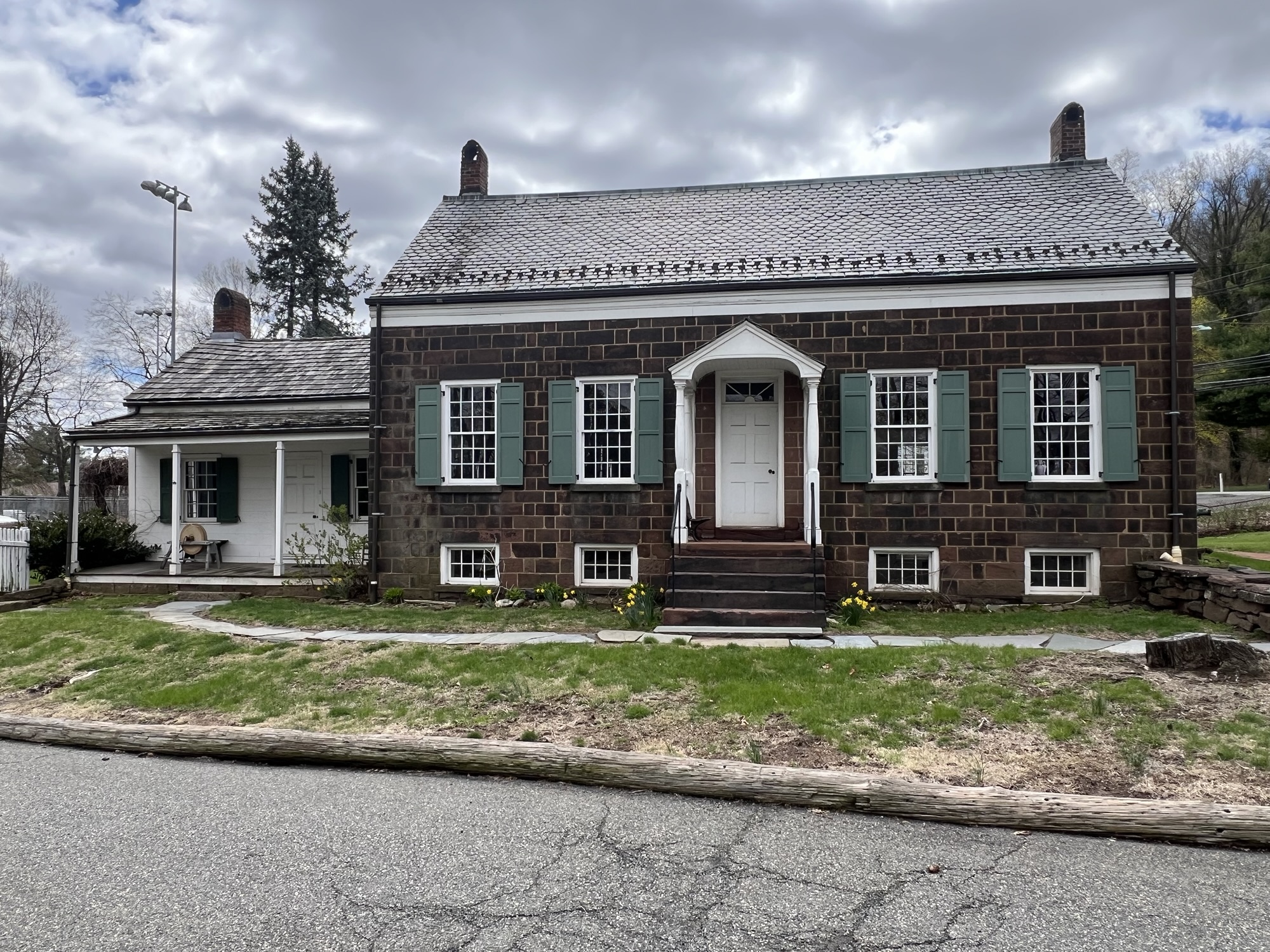
The front of the Hamilton House in the early Spring
I visited the Hamilton House Museum this afternoon which is right down the road from Montclair State College and sits at the border of the Clifton-Montclair border. The interesting part of the house location is that it still sits the farm land of the Van Wagoner Family but the house was moved from its location to the current one because of the building of Route 46 in 1973.
The front of the house in the Spring
When talking with curator, the house is going through a transition from the City of Clifton ownership to the County of Passaic Historical Society’s site. They are currently cataloging every piece in the house and putting it online. They want to view the collection to see what they can work with within the home.
Each room represents a different time in the history of the house. There is a living room from the Victorian age, the kitchen is from the late 1700’s to the early 1800’s and the dining room is from the mid-1800’s. These rooms are furnished to represent a certain time in the house.
There will be many revisions in the future for the house so there are some changes on the way. The upstairs is currently being used for storage and there will be revision there as well. I got a quick tour of the rooms with the curator and he said there will be more changes in the future as they catalog each piece. The grounds are currently being replanted.
The Hamilton House Museum sits at the Clifton and Montclair border
The house is one of the last examples of early 19th century stone houses in Passaic County. The house was built in 1817 by John and Ann Vreeland and then passed to the Van Wagoner family. It changed hands a few times until 1856 when the Hamilton Family bought the house (no relationship to Alexander Hamilton). The house remained in the Hamilton Family until 1972 when the last living relative died and no one in the family wanted possession of the house (Tour Guide & Wiki).
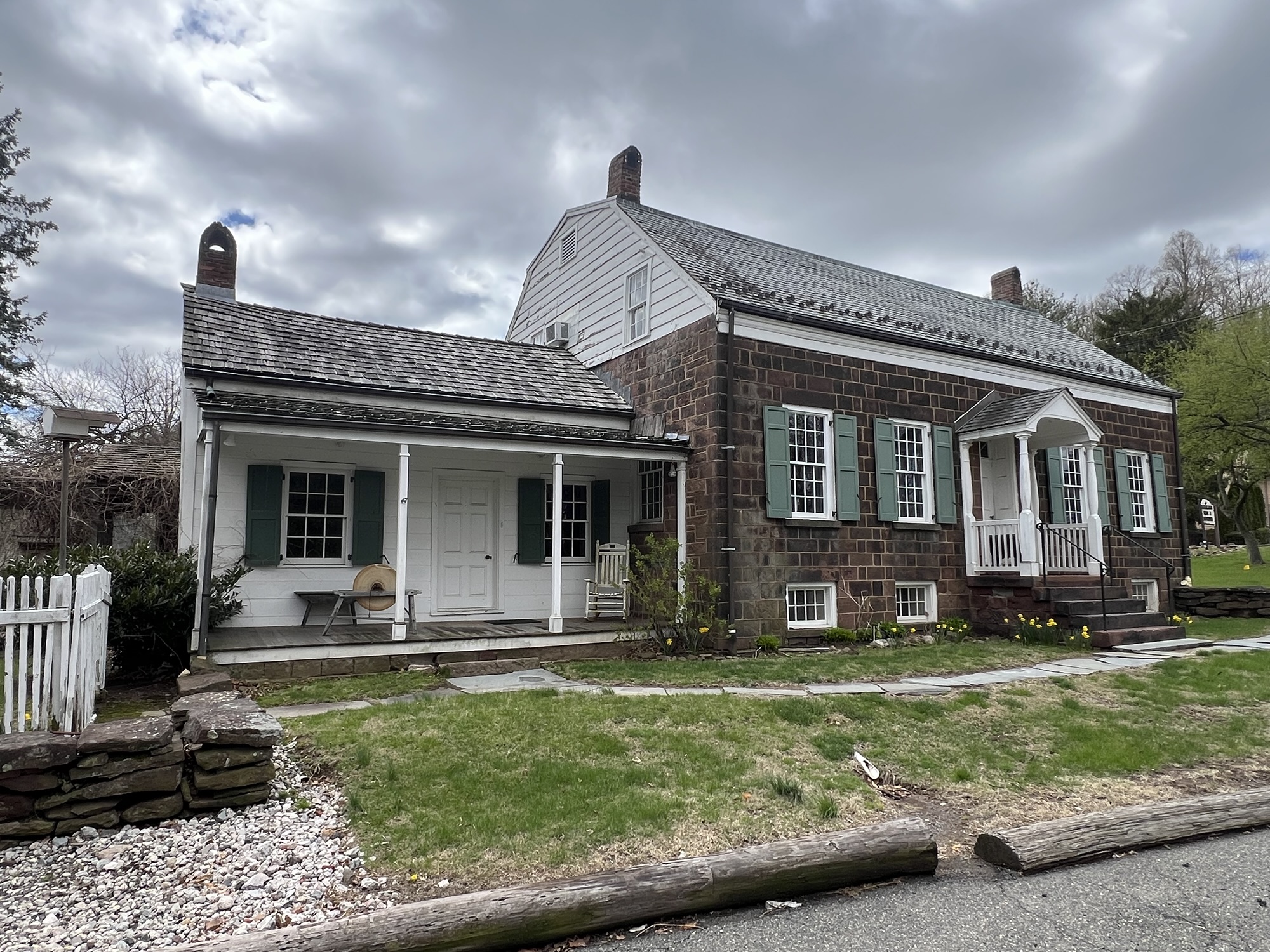
The oldest section of the house
That’s when the City of Clifton bought the house from the family of its historic value. The house was added to the National Register of Historic Places on May 13th, 1982 (Wiki).
The outside grounds of The Hamilton House Museum
The Grape Arbor on the grounds of the Hamilton House
History of the Hamilton House:
(taken from the City of Clifton website)
This 18th Century Dutch gambrel-roofed homestead was once the home of the Van Wagoner and Hamilton families. This basic of the house does not greatly differ from its Dutch antecedents.
The sturdy one and one half story cut sandstone structure, flanked by a grainery, spring-house and gardens reflects almost two hundred years of American history. It brings back memories of an uncluttered horizon with farms, orchards, fresh brooks, forest full of game and filled with scent of wildflowers.
Hamilton House & the Clifton Community:
Although the City of Clifton was incorporated in 1917, a community had existed since 1679. Prior to 1917, the area was known as Acquackanonk Township and included parts of : Little Falls, Passaic, Paterson and West Paterson.
The Indian Chief Captahem deeded 11,000 acres to the early Dutch settlers on the shores of the Passaic River. Predominately rural, this sparsely populated village thrived and grew.
The farmhouse was presented to the City of Clifton by the developers of the late Henry Hamilton. The Hamilton family had bought the 96 acre property in 1856 and for over 100 years until the death of Mr. Hamilton in 1970, it had been the family home.
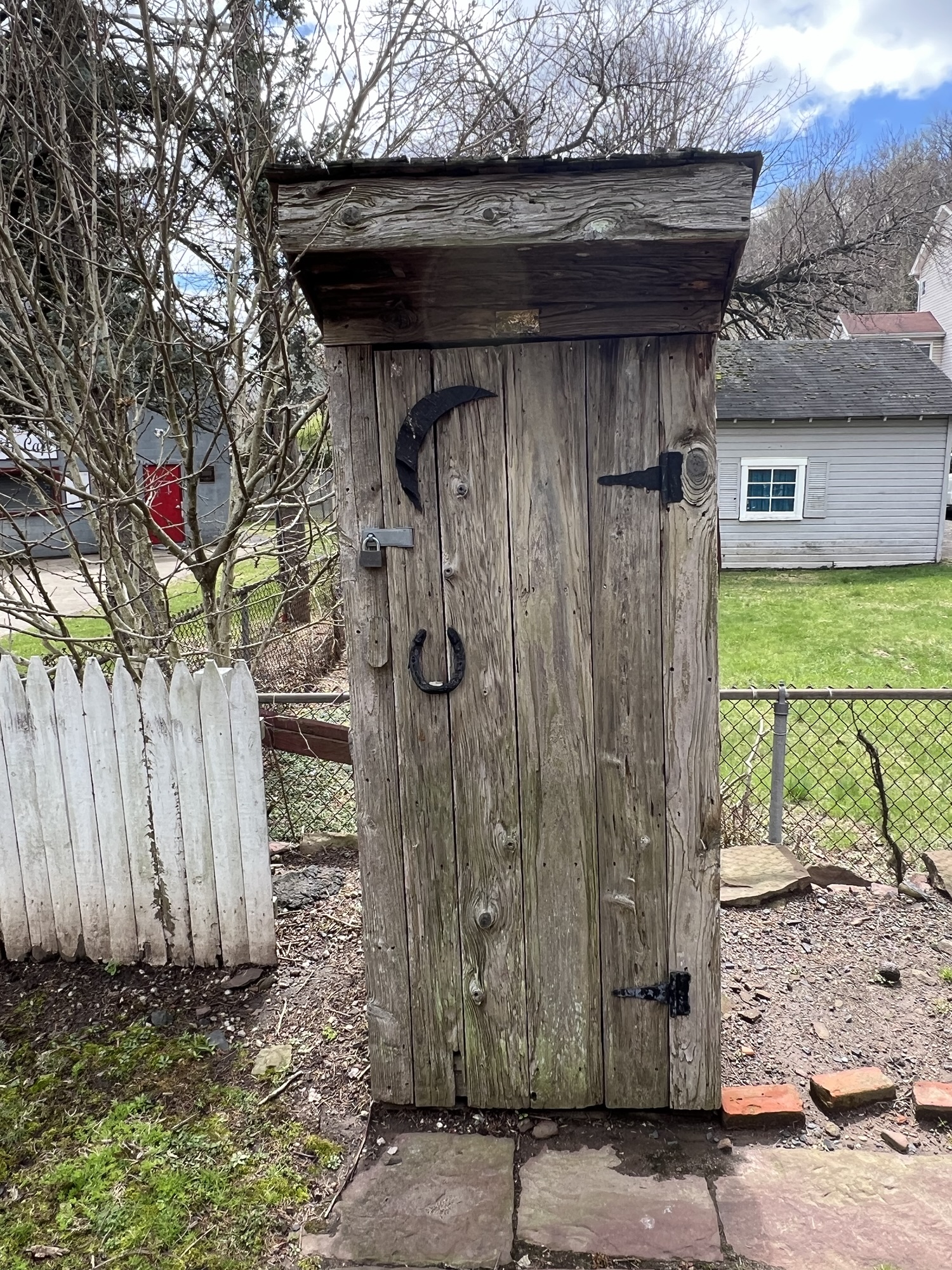
The old outhouse in the back of the property
Current Location and Future Plans:
The house was moved to its present location in Surgent Park in 1973. Infinite plans have been taken with examination and documentation of the building’s structural elements. Extensive research has been conducted including the records and treasured memories of Miss Caroline Hamilton as well as: Artifacts, Deeds, Manuscripts, Maps, Photographs and Wills.
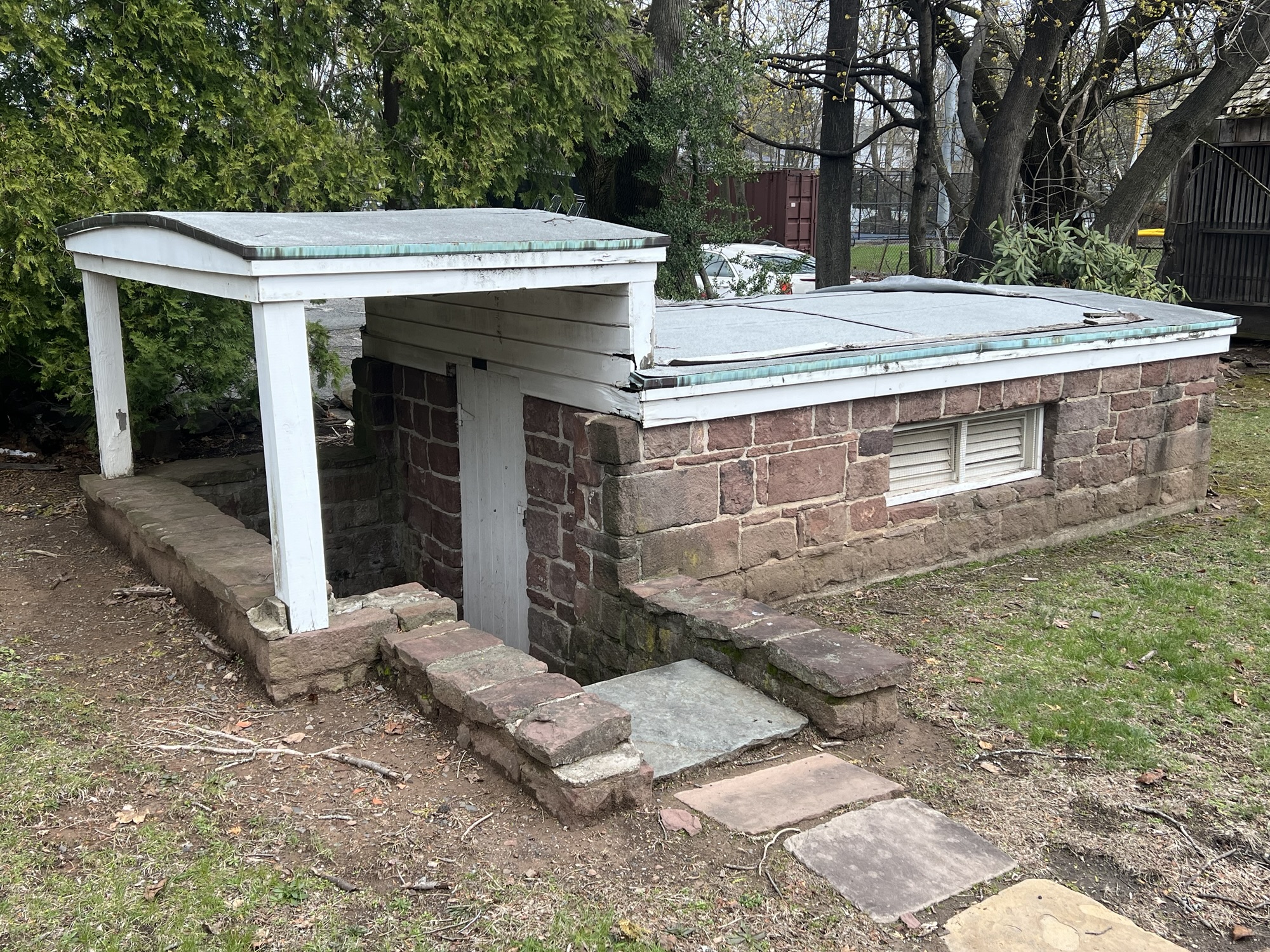
The old Ice House on the property
Scheduling Tours:
The museum is opened for tours on Sunday from 2:00pm-4:00pm (except on holidays). The house is going through a transition right now with the change over.
Open: Sunday 11:00am-5:00pm/Monday 11:00am-6:00pm/ Tuesday and Wednesday Closed/Thursday-Saturday 11:00am-6:00pm
Café and Shops have various hours. Please check the website for these.
Fee: General $22.00/Seniors (65 and Older) $16.00/Students and Educators $12.00/Children under 12 are not admitted and Children under 16 years old must be accompanied by an adult. The museum is open on First Fridays from 6:00pm-9:00pm. Please visit the website for more information.
I visited the Neue Galerie for the first time after passing the building on the way to the Metropolitan Museum of Art. This interesting little gallery space has some interesting pieces to see and many decorative objects in the cases.
The gallery space for special exhibitions on the third floor was closed when I visited and being an educator, I got a half price discount off the educator rate was a nice deal.
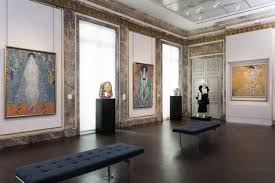
It was a thrill to finally see the famous Gustav Klimt painting of the “Woman in Gold” that had been such a controversial piece during the Nazi occupation in Germany. It’s beautiful detail work was very innovative then. After all the fighting over the painting it is nice to see that the family sold it to the museum to share it with the world. The gallery where the painting hangs has more works by Gustav Klimt and you can see the extent of his work along the walls of the gallery.
The ‘Woman in Gold’
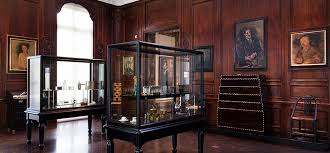
The side galleries are full of all sorts of objects of art for the home such as chairs, silverware, dishware, clocks and decorative objects. There was a lot of items that still are contemporary in their fashion. The back gallery on the second floor is full of paintings by various German artists.
The Decorative Objects Gallery
The whole museum you can see in about an hour when the special galleries are closed. There is also Cafe Sabarsky on the main floor, a Viennese cafe the serves German food like sausages, salads and pastries. The restaurant is a little over-priced for what it is.
History of the Neue Galerie New York:
Neue Galerie New York is a museum devoted to early twentieth-century German and Austrian art and design. Located in a landmark mansion built in 1914 by the architectural firm of Carrere & Hastings, the museum offers a diverse program of exhibitions, lectures, films, concerts and other events. The second floor galleries are dedicated to a rotating selection of fine and decorative art from Vienna circa 1900, including work by fine artists Gustav Klimt, Egon Schiele and Oskar Kokoschka and decorative artists Josef Hoffmann, Koloman Moser and Adolf Loos. The third-floor galleries present German fine and decorative art of early twentieth century, including work by Max Beckmann, Ernest Ludwig Kirchner, Paul Klee and Marcel Breuer. The third floor is also the site for special exhibitions that focus on key individuals and movements, articulating a more complete vision of twentieth-century German and Austrian art (Neue Galerie New York History).
The Gustav Klimt Gallery
Neue Galerie New York was conceived by two men who enjoyed a close friendship over a period of nearly thirty years: art dealer and museum exhibition organizer Sege Sabarsky and businessman, philanthropist and art collector Ronald S. Lauder. Sabarsky and Lauder shared a passionate commitment to Modern German and Austrian art and dreamed of opening a museum to showcase the finest examples of this work. After Sabarsky died in 1996, Lauder carried on the vision of creating Neue Galerie New York as a tribute to his friend (Neue Galerie New York History).
The German art collection represents various movements of the early twentieth century: the Blaue Reiter and its circle (Vasily Kandinsky, Paul Klee, August Macke, Franz Marc, Gabriele Munter) the Brucke (Erich Heckel, Ernest Ludwig Kirchner, Hermann Max Pechstein, Karl Schmidt-Rottluff), the Bauhaus (Lyonel Feininger, Paul Klee, Laszio Moholy-Nagy, Oskar Schlemmer), the Neue Schlichkeit (Otto Dix, George Grosz, Christian Schad) as well as applied arts from the German Werkbund (Peter Behrens) and the Bauhaus (Marianne Brandt, Marcel Breuer, Ludwig Mies van der Rohe, Wilheim Wagenfeld) (Neue Galerie New York History).
Cafe Sabarsky located in a spectacular wood-paneled room on the ground floor has become a favorite spot for New Yorkers. Operated by acclaimed chef Kurt Gutenbrunner, it evokes the great fin-de-siecle cafes of Vienna. The Book Store fills the former library of the mansion and specializes in publications on fine art and architecture from Germany and Austria. The Design Store features objects based on original works by Marianne Brandt, Josef Hoffman, Adolf Loos and other major designers of the era (Neue Galerie New York).
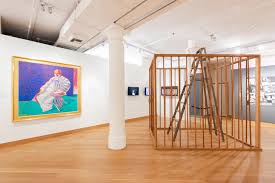
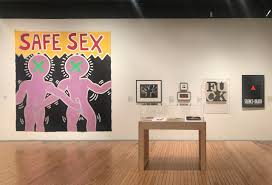
I recently visited the Leslie-Lohman Museum to see the second half of the “Art After Stonewall” exhibition that I saw at the Grey Gallery at New York University. The art is from just before the Gay Rights Movement just before the Stonewall Uprising and into the depths of the AIDS crisis of the early to mid-80’s.
It was interesting to see the perspective of people ‘coming out’ after the suppression of the 50’s and early 60’s and the wanting to conform to societies standards. People gravitated to the cities to find themselves and found an embracing community that was not always accepted by the status quo of the City. It was that suppression building up on conformity to be a certain type person that lead to riots, that being tired of being harassed all the time.
‘Art After Stonewall’ (picture of Devine)
There was a lot of lesbian art and the changes women felt at the time. Some was the changes in attitude and some of it was militant to the way the outside community treated these women. It was interesting to see the changes in less than a decade of how people saw themselves and the changes that people were capable of making.
‘Art After Stonewall’
The show closed on July 21st, 2019 but there are more shows in the future. The best part of the museum is that they have a suggested donation so if you do not have a lot of money it is a nice way to spend the afternoon and then explore SoHo and Chinatown.
History of the Leslie-Lohman Museum:
We can trace the origins of the Leslie-Lohman Museum back to the civil rights movement of the late 1960’s. In the moment of the Woodstock Music and Art Fair and the Stonewall Inn Uprising, gay art collectors Charles Leslie and Fritz Lohman presented their first exhibition in their SoHo loft in the summer of 1969. This weekend show featured downtown gay artists and was a complete success in attracting over 300 visitors-it because a seminal moment in the history of the Leslie-Lohman Museum and LGBTQ arts and culture.
In the midst of the 70’s gay liberation movement, our founders continued to collect and display the work of gay artists in various storefronts in SoHo while advocating for the preservation of the neighborhood, its unique architecture and the nascent community of artists living and working in its spacious lofts. Finally, settling in a basement gallery at 127-B Prince Street, this space became host to many art exhibitions and various cultural programs.
During the AIDS pandemic of the 80’s, Charles and Fritz created a refuge for ailing artists and their work. Along with providing care and lodging for them, they rescued the work of dying artists from families who, out of shame ignorance, wanted to destroy it. This led to the creation of the Leslie-Lohman Art Foundation in 1987 and to its ever-expanding collection of art. Through perseverance against the federal government, averse to approving a “gay art” organization, the foundation was finally granted tax-exempt in 1990.
Today, thanks to the hard work of generations of activities and artists, our community has gained greater visibility. However, the fight for our rights is not over. The foundation has transitioned into a museum that aims to preserve LGBTQ cultural identity and build community, reclaim scholarship from a queer artists and cultural workers. As we continue to stand at the intersection of art and social justice, we act as a cultural hub for LGBTQ individuals and their communities.
I am finding more and more that the university art galleries are mounting very interesting and clever exhibitions and some as edgy as their large museum counterparts. I recently attended the ‘Art After Stonewall’ exhibition which is created as a two part exhibition with the Leslie-Lohman Museum of Gay and Lesbian Art to showcase the post Stonewall riots to the beginning of the AIDS crisis.
“Art After Stonewall” exhibition
The exhibition was an interesting mix of pictures, video, graphic paintings and posters and documentary work combined to show the mood of the times. Some of the most impressive works came from clips of documentaries on Andy Warhol’s ‘Factory Movies’, and the documentaries on ‘Tongues Untied’ and ‘Paris is Burning’ about the gay crisis about men of color and the racism that they faced even within the Gay Community.
The East Village Art Community from the 1980’s “Art After Stonewall”
Some of the photos of then fringe neighborhoods are funny to see as they have been gentrified beyond what anyone could have thought thirty years ago from the early 1980’s. The East Village of back then and of today are world’s apart.
The College did a good job mounting the show and telling the story that is both humorous and sad at the same time. Also, the Grey Gallery is small so you can get through the exhibition in about an hour.
The Grey Gallery exhibition “Art After Stonewall” This is a Keith Haring poster.
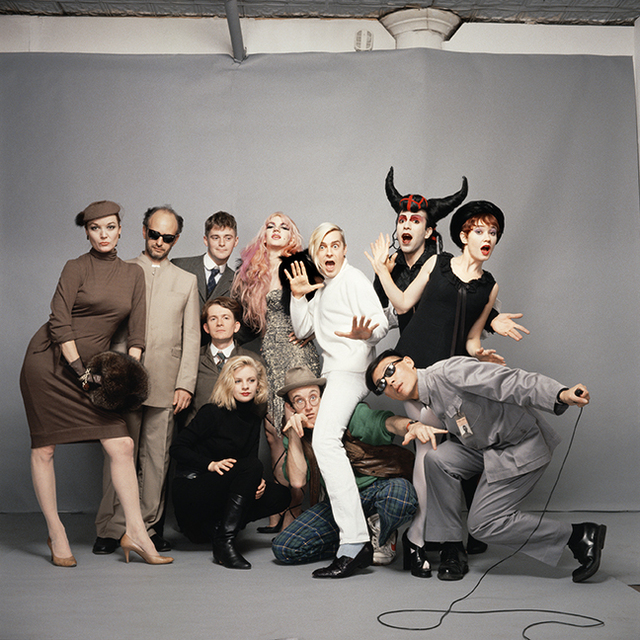
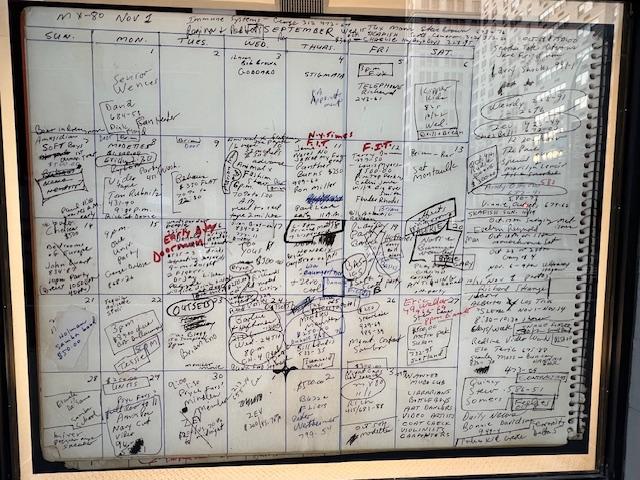
The most recent exhibition that I visited “Mudd Club 1978-1983: The Stephen Mass Papers” and the people who had visited the club at that time.
The Broadway Windows of the “The Mudd Club” exhibition in the NYU Broadway building.
In collaboration with NYU Fales Library and Special Collections, 80WSE Gallery presents an exhibition featuring materials from The Stephen Mass Papers, focusing on the legendary Mudd Club venue in New York City (1978-1983) through photographs and extensive notes. Located at the street-level Broadway Windows gallery and Project Space, the exhibition materializes the file structures of the archive and select visual documents contained within the collection.
The Broadway Windows of “The Mudd Club”.
The archival extracts provide rare insight into an important epicenter of downtown art, music, fashion, and culture at a transitional point in New York City and American life marked by rapid urban gentrification and the dawn of The Reagan Era. Within this atmosphere, post-punk musicians, independent designers, contemporary artists, and celebrities coalesced to animate the Mudd Club ‘cabaret’.
The Broadway windows of the “The Mudd Club”.
Acquired by Fales in 2019, the Stephen Mass Papers spans 16.75 Linear Feet in 24 manuscript boxes, 3 half manuscript boxes, 2 small flat boxes, 2 oversize flat boxes, 1 media box, 1 oversize folder in shared housing, and 1 sound reel in shared housing, including 33.92 Megabytes in 167 computer files, 1 sound tape reels , 1 videocassettes (u-matic), 10 audiocassettes, and 6 film reels.
The Broadway Windows of the “Mudd Club”.
“Stephen Mass is an entrepreneur who co-founded the Mudd Club located at 77 White Street in downtown New York City in 1978 along with art curator Diego Cortez and Anya Phillips. The venue became a focal point of the downtown music, art, and cultural scene in the late 20th century, showcasing the intersections of popular and avant-garde performance culture, gender and sexuality, celebrity culture, music, visual art, fashion, film, and nightlife.
The opening sign from the Grey Gallery on the NYU Campus.
The Stephen Mass Papers (inclusive dates 1940-2019, bulk dates 1978-2009) documents the founding and operation of the Mudd Club in New York City, Mass’s other entrepreneurial ventures in New York, and his nightclubs and restaurants in Berlin, as well as his personal life and family history. Consisting of both paper and electronic formats, the collection includes extensive notebooks and notes containing the planning and working notes for Mass’s various endeavors, financial and legal documents, promotional materials for events (such as posters, flyers, and newsletters), ephemera (differentiated from promotional material, as promotional material Mass collected from other clubs or organizations), press coverage, and photographic materials such as prints, negatives, and slides.”
The Grey Gallery exhibition of the “Mudd Club 1978-1983: The Stephen Mass Papers”.
—Fales Library and Special Collections
The Fales Library & Special Collections comprises 350,000 volumes of book and print items, over 11,000 linear feet of archive and manuscript materials, and about 90,000 audiovisual elements.
In 2024, the Grey Gallery moved to its new home at 18 Cooper Square and has a whole new contemporary look to it.
The history of the Grey Gallery on the NYU Campus.
Works from the permanent collection at the new “Grey Gallery” at 18 Cooper Square.
The front of the gallery for the “Americans in Paris” exhibition
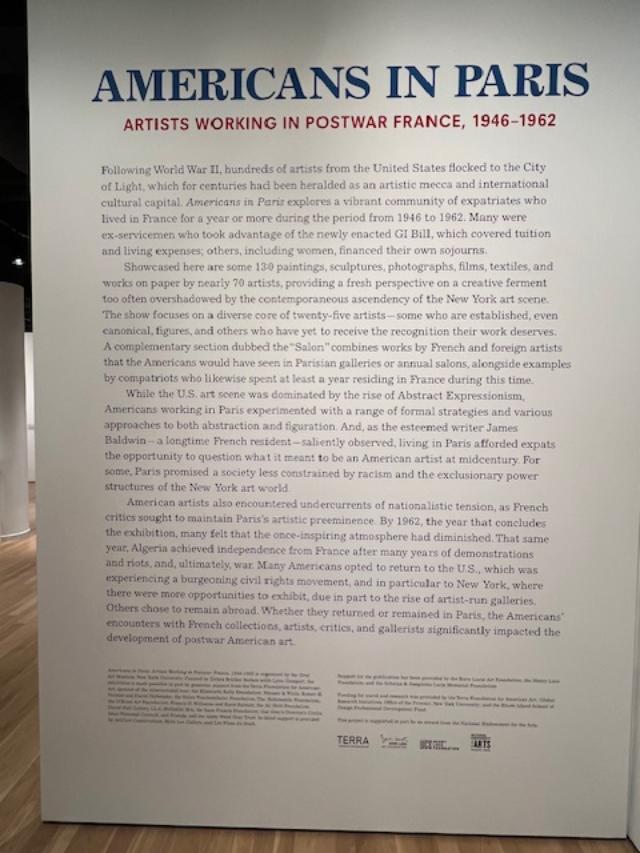
I was invited to a new exhibition open to students at NYU “American’s in Paris”, an exhibition of American artists who had been living and creating their art in the City of Lights after WWII until the 1960’s.
The sign for the “American in Paris” exhibition.
The entrance to the new Grey Galleries.
The back Galleries for the “Americans in Paris” exhibition.
The works of the artist “Kimber Smith” in the “American in Paris” exhibition.
The exhibition “American’s in Paris” with artist Joan Mitchell’s work.
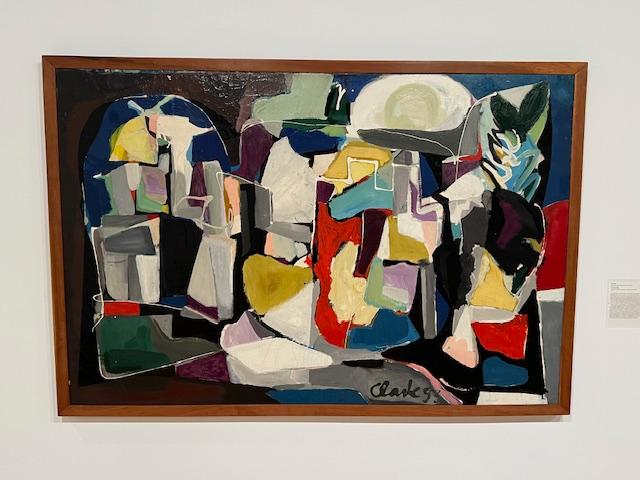
The exhibition “American’s in Paris” work by artist Ed Clark.
The works of artist Henry Cousin’s in the exhibition “American’s in Paris”.
The galleries of the Grey Art Galleries
Peter Saul’s “Man in Electric Chair”
“Man in Electric Chair”
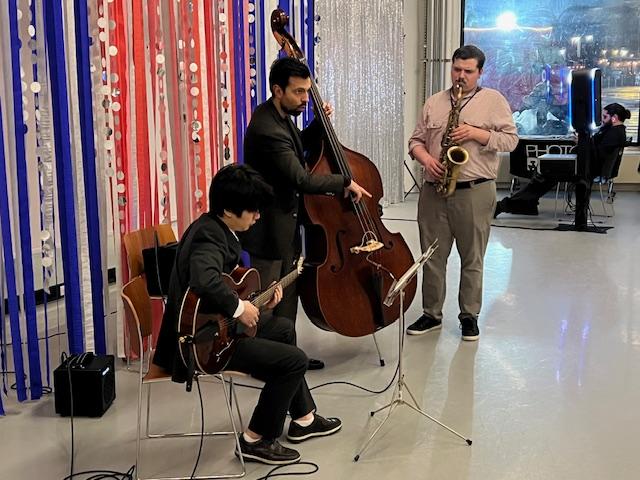
The Jazz band entertaining us at the opening of the “Americans in Paris” exhibition.
As an Alumnus of NYU, I now come for the exhibitions and just enjoy myself. I came in for the newest exhibition.
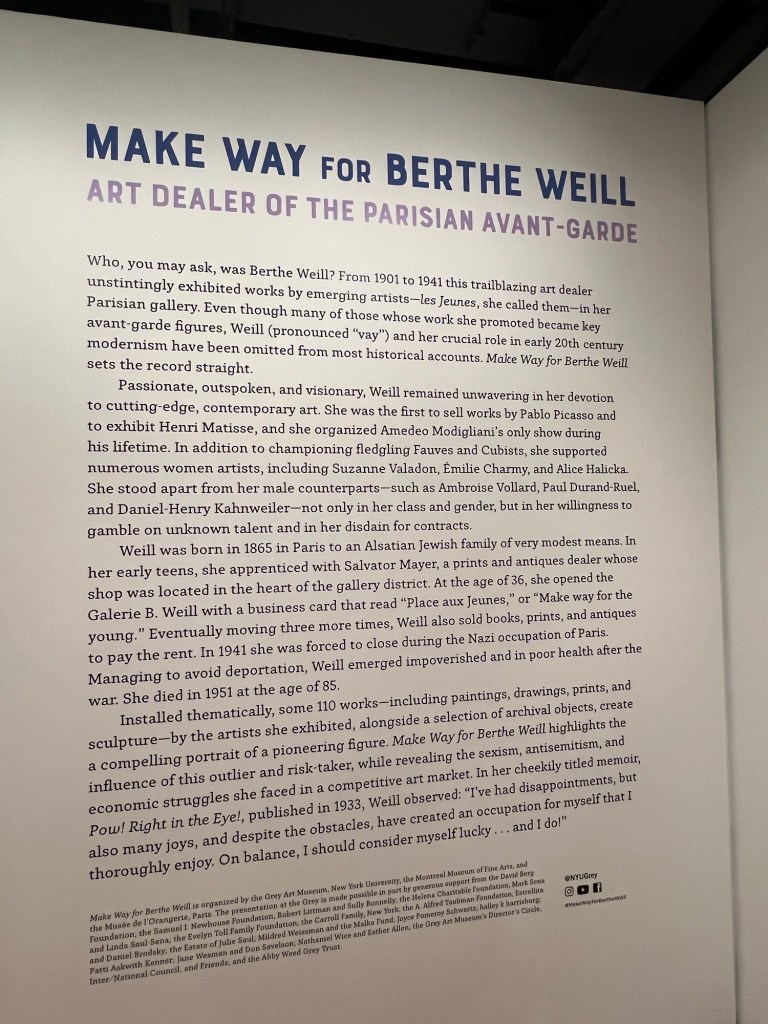
The exhibition in 2024 was “Make Way for Berthe Weill”: Art Dealer of the Parisian Avant-Garde
The main sign from the exhibition
(from the Grey Gallery website)
Make Way for Berthe Weill: Art Dealer of the Parisian Avant-Garde surveys the groundbreaking career of the first woman modern art dealer. Berthe Weill (1865–1951) championed many fledgling masters of modern art early on—such as Pablo Picasso, Henri Matisse, and Amedeo Modigliani—as well as numerous others who did not achieve wide acclaim. Yet her role in early 20th century modernism has been omitted from most historical accounts.
The exhibition will feature some 110 paintings, drawings, prints, and sculpture—many of which were shown at her gallery during the first four decades of the 20th century. Examining Weill’s contributions to the history of modernism as a gallerist, a passionate advocate of contemporary art, and a Jewish woman, it brings to light the remarkable achievements of a singular figure who overcame sexism, antisemitism, and economic struggles in her quest to promote emerging artists (From the NYU-Grey Gallery website).
The timeline of her career
The gallery that night
The art featured were artists promoted by the art dealer
The artwork by female artist Emilie Charmy
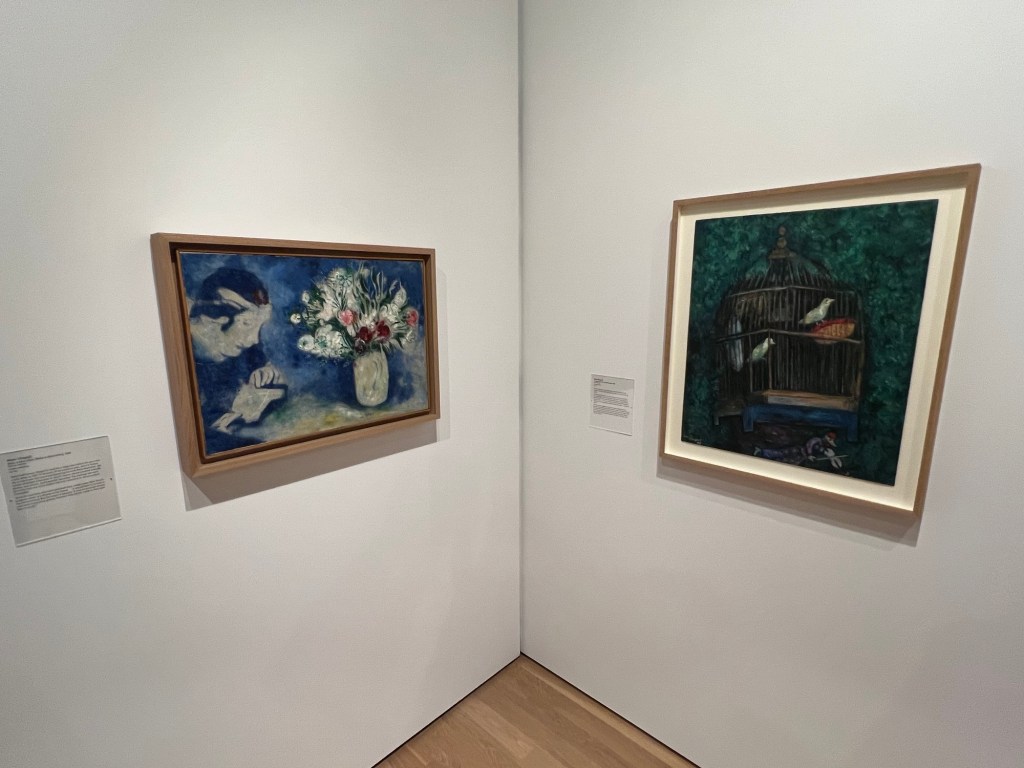
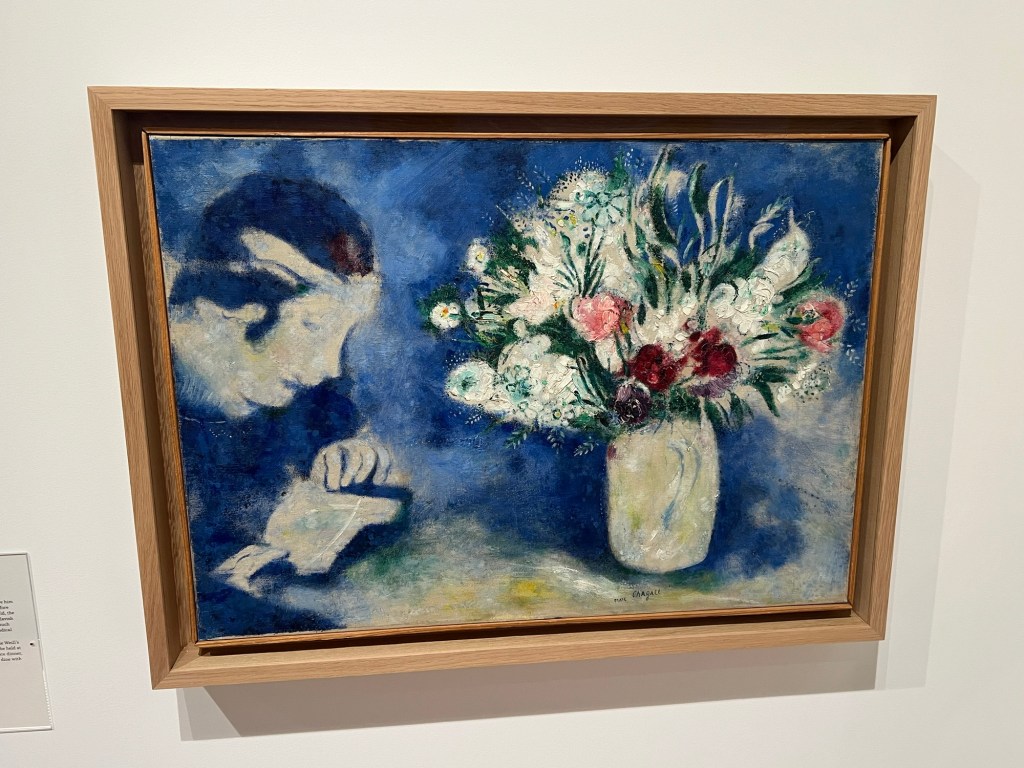
The work by artist Mark Chagall
One of my favorite pieces in the show by Mark Chagall
The Mission of the Grey Art Gallery:
The Grey Art Gallery is New York University’s fine arts museum, located on historic Washington Square Park in New York City’s Greenwich Village. As a university art museum, the Grey Art Gallery functions to collect, preserve, study, document, interpret and exhibit the evidence of human culture. While these goals are common to all museums, the Grey distinguishes itself by emphasizing art’s historical, cultural and social contexts, with experimentation and interpretation as integral parts of the programmatic planning. Thus, in addition to being a place to view the objects of material culture, the Gallery serves as a museum-laboratory in which a broader view of an object’s environment enriches our understanding of its contribution to civilization (NYU Grey Gallery History)
The History of the Grey Art Gallery at New York University:
The Grey Art Gallery is located within New York University’s Silver Center-the site of NYU’s original home, the legendary University Building (1835-1892). Winslow homer, Daniel Huntington, Samuel Colt, George Innes and Henry James all lived and worked there, as did Professor F.B.Morse, who established the first academic fine arts department in America on the site now occupied by the Grey Art Gallery.
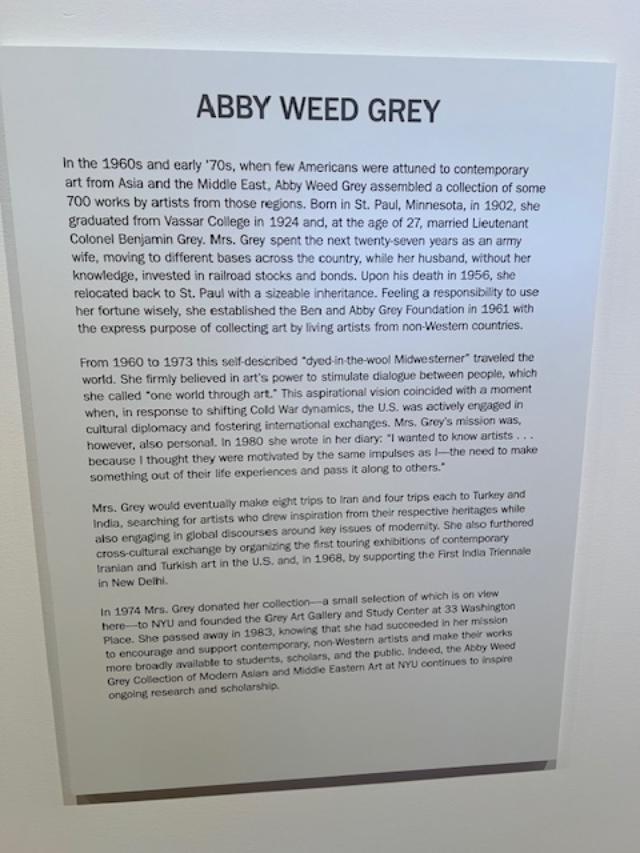
Demolished in 1892, the original building was replaced by the Main Building (renamed the Silver Center in 2002). Here was located, from 1927 to 1942, A. E. Gallatin’s Museum of Living Art, NYU’s first art museum and the first institution in this country to exhibit work by Picasso, Leger, Miro, Mondrian, Arp and members of the American Abstract Artists group. Gallatin aspired to create a forum for intellectual exchange, a place where artists would congregate to acquaint themselves with the latest developments in contemporary art. In 1975, with a generous gift from Mrs. Abby Weed Grey, the Museum’s original space was renovated, office and a collection storage facility were added and the doors were reopened as the Grey Art Gallery (Museum history).
Exhibitions organized by the Grey Art Gallery encompass aspects of all the visual arts: painting, sculpture, drawing and printmaking, photography, architecture and decorative arts, video, film and performance. In addition to originating its own exhibitions, some of which travel throughout the United States and abroad, the Gallery hosts traveling exhibitions. Award-winning scholarly publications, distributed worldwide are published by the Grey Art Gallery. In conjunction with its exhibitions, the Grey also sponsors public programs including lectures, symposia, panel discussions and films (Museum history).
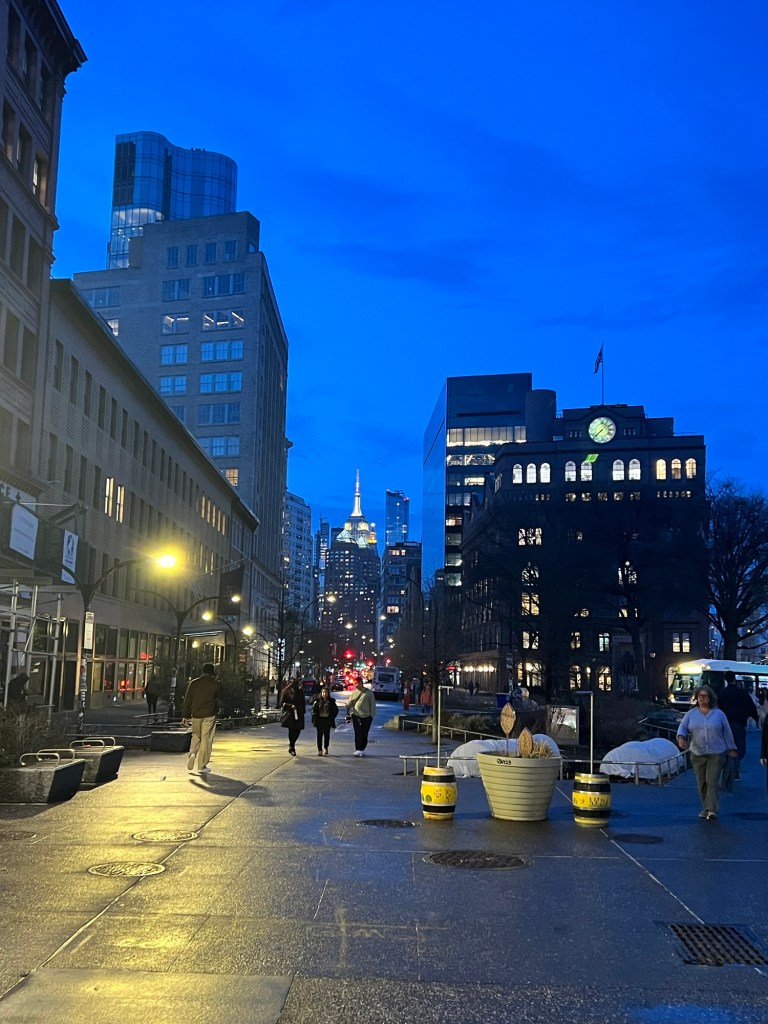
The new Gallery is at 18 Cooper Square.
(This was taken from the Museum’s website).
Enjoying a evening at the Grey Gallery
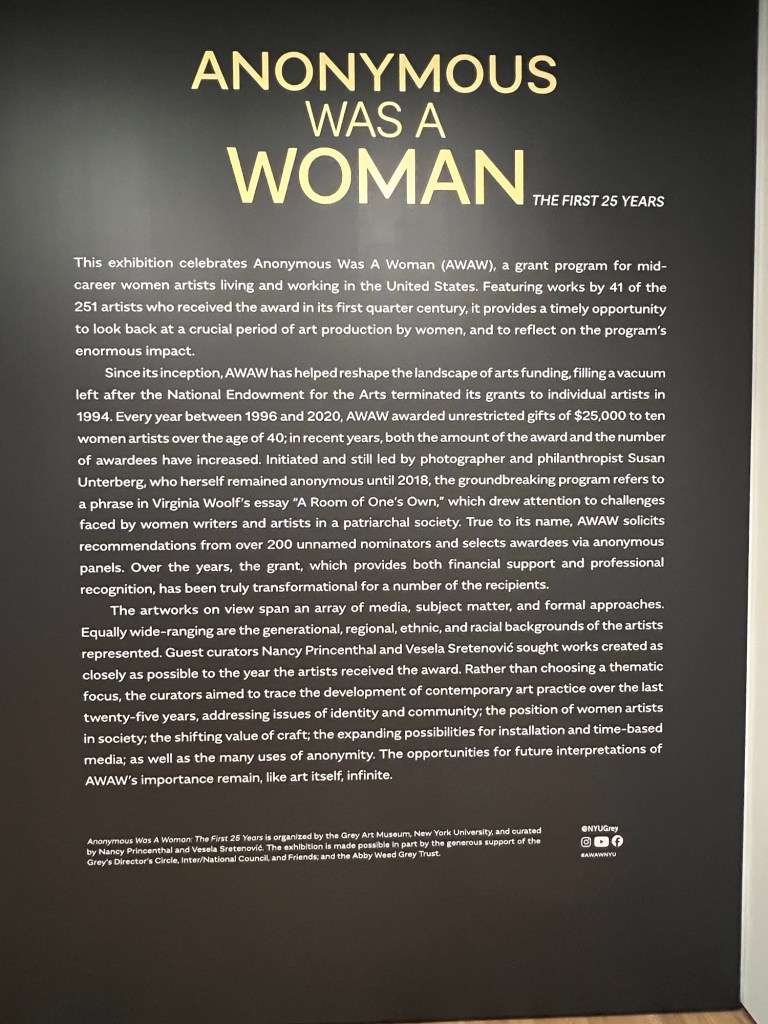
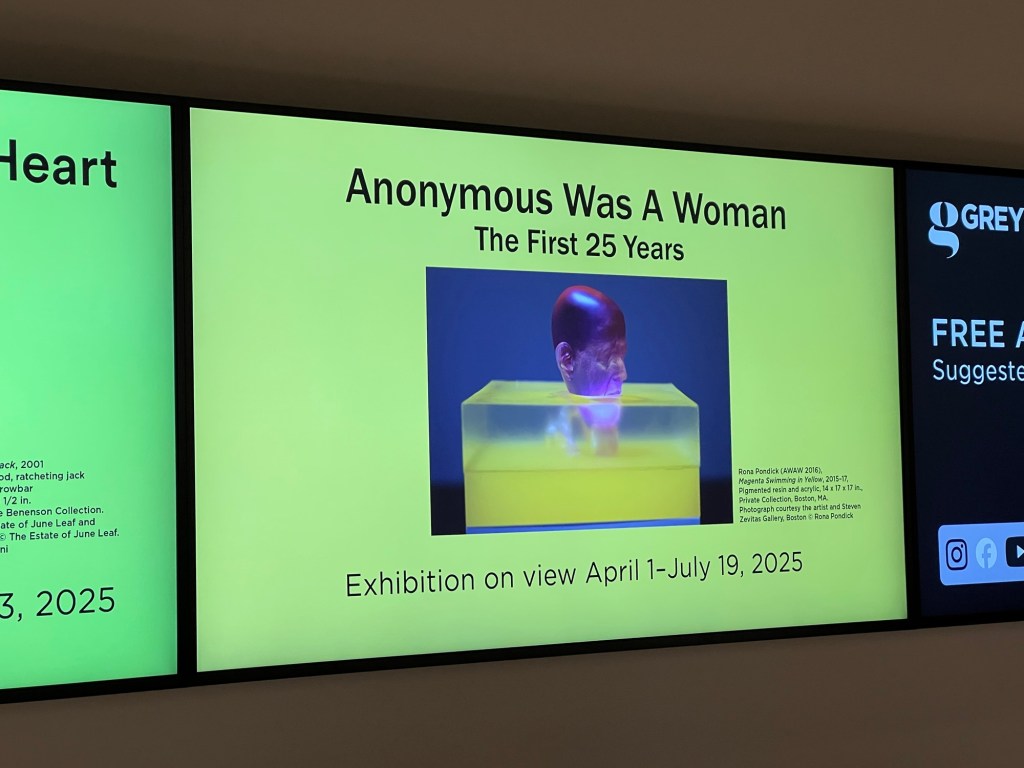
The new exhibition in the spring of 2025 was ‘Anonymous was a Woman’ , an execution on the ‘Anonymous was a Woman’s and the great programs effects on mid-Career female artists in the Unit.
The information sign in the front gallery
The entrance of the gallery the night of the exhibition
The entrance to the Grey Art Museum
This was the sign inside for the exhibition
The inside gallery at the start of the show showcasing the collection on display
The main gallery at Grey Gallery
These were the pieces from the show that I found most impressive:
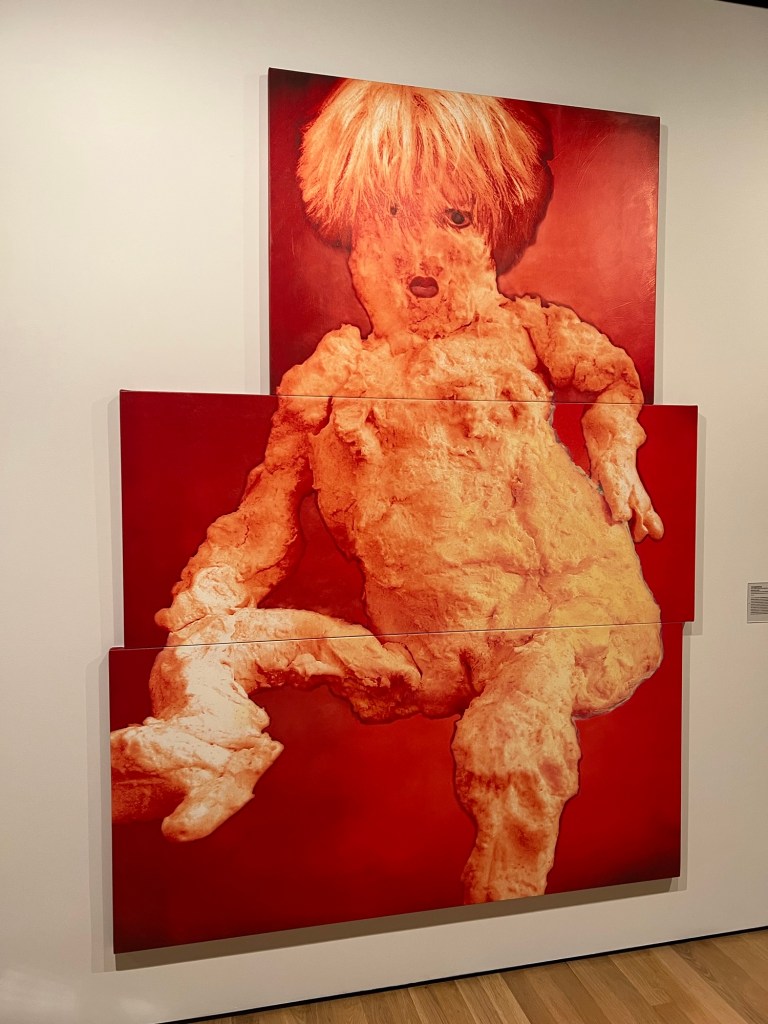
One of the more unusual paintings from the exhibition ‘Monalisa’ by artist Ida Applebroog
The sign for ‘Monalisa’ by Artist Ida Applebroog
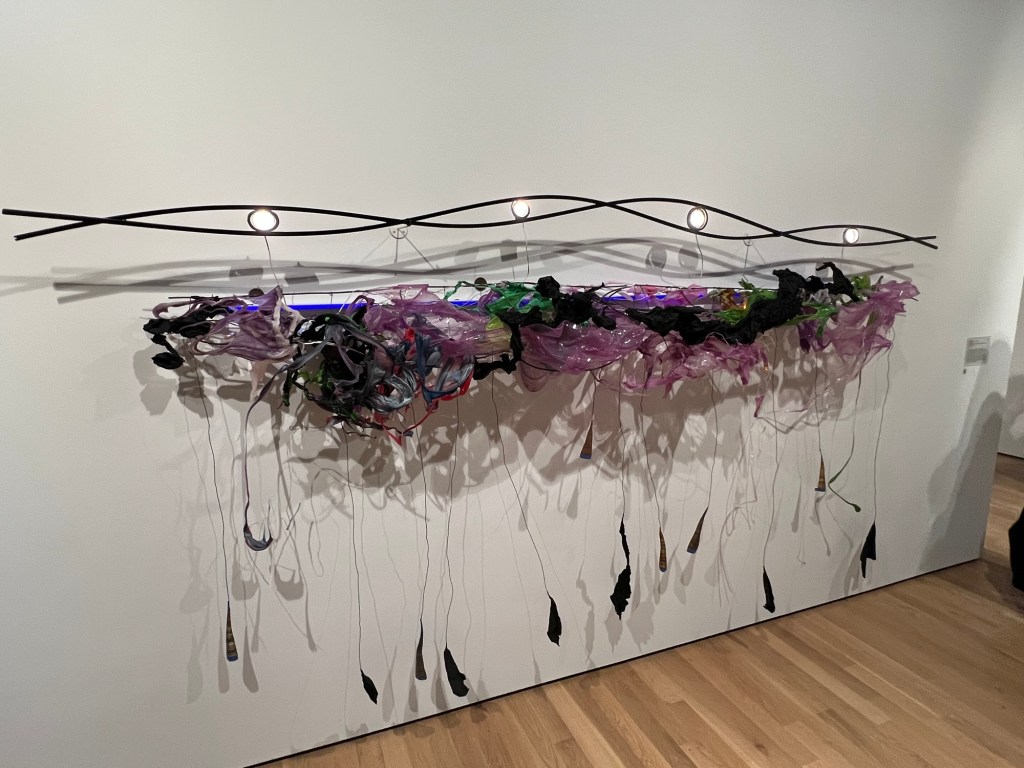
The sculpture ‘Rom’s Delhi’ by artist Judy Pfaff
The sign for ‘Rom’s Delhi’
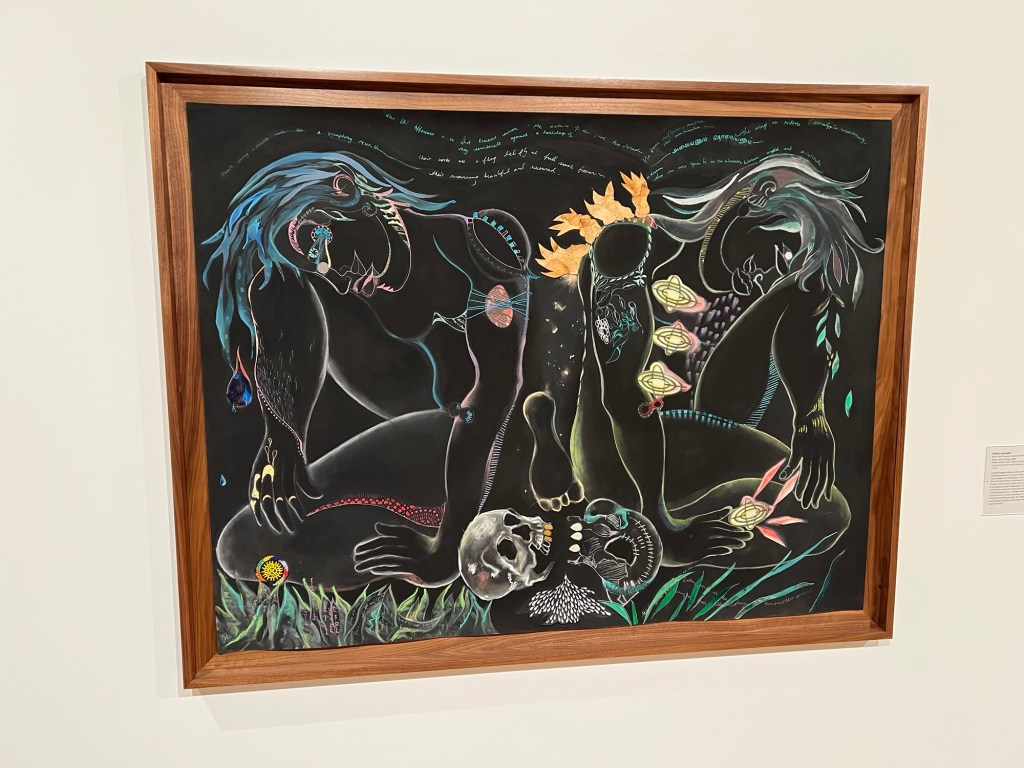
The painting ‘Svati: Now and Then’ by Artist Chita Ganesh
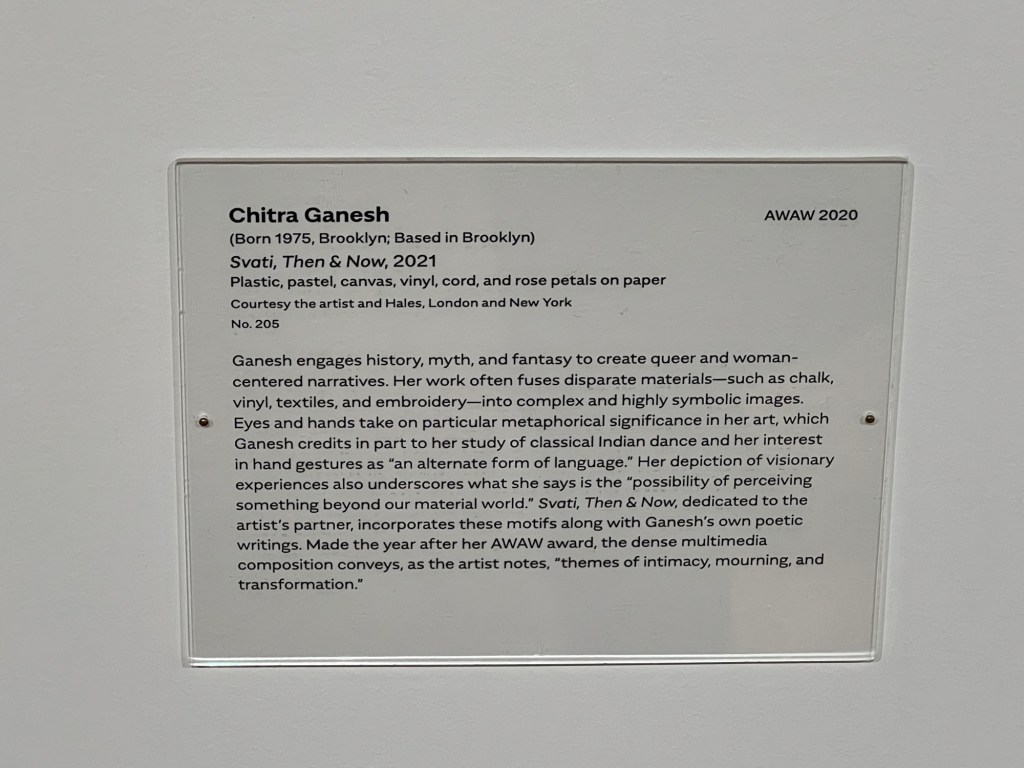
The sign for ‘Svanti: Now and Then’
The sculpture ‘Untitled #1242’ by Artist Petah Coyne
The sign for the sculpture
The sculpture ‘Bones 2000’ by Artist Polly Apfelbaum
The sign for the sculpture
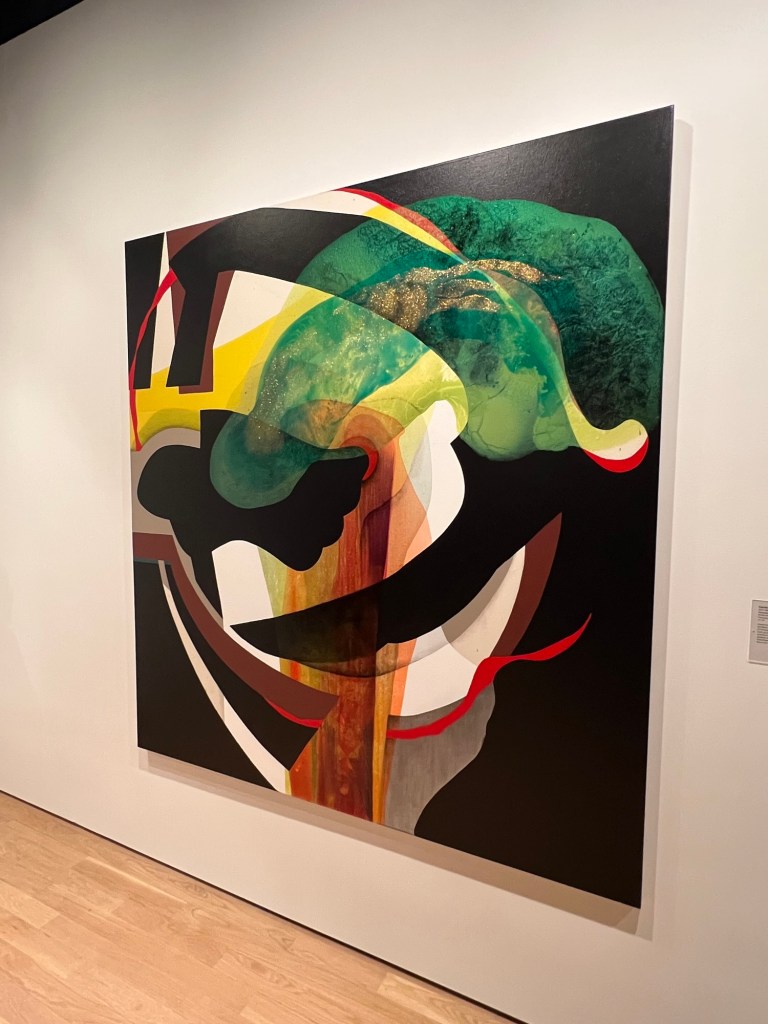
The painting ‘Flamethrower’ by Artist Carrie Moyer
The sign for the painting
The crowd at the end of the evening at the
‘Opening Night’
This unusual sculpture in the middle of the room
Astor Court at the end of the evening at the Grey gallery
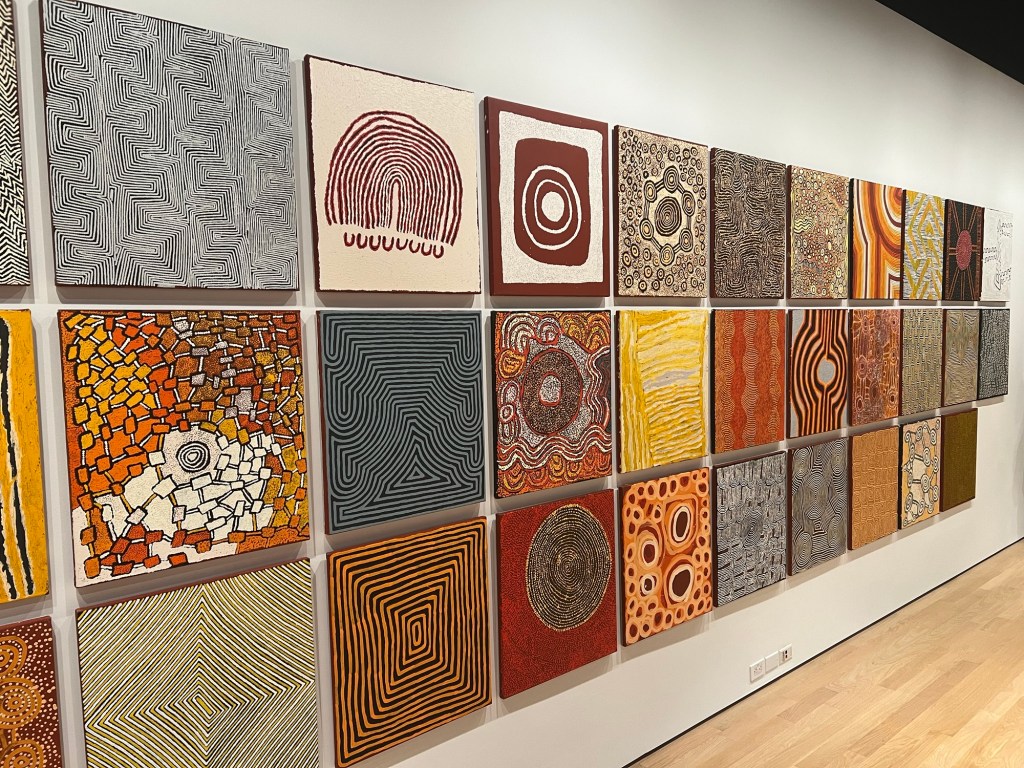
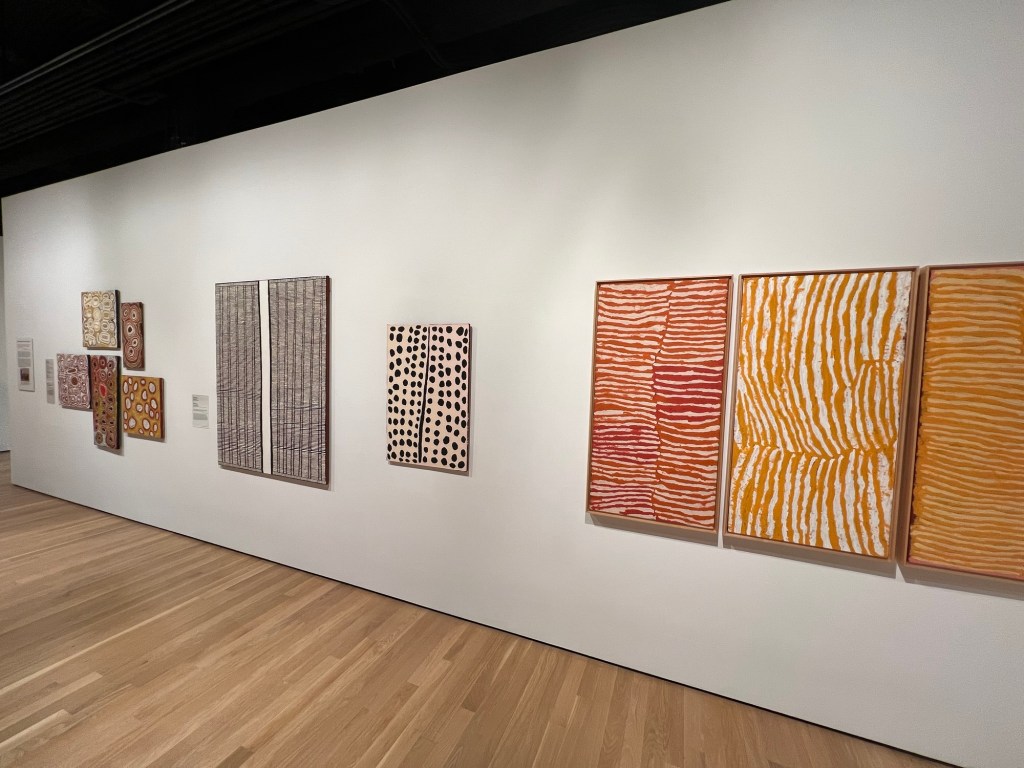
I recently attended the ‘Irrititja Kuwaiti Tjungu‘ exhibition on Aboriginal art. It was a very interesting look at Native Art from Australia. This exhibition opened in February of 2026 and the artists were in attendance to talk about their works.
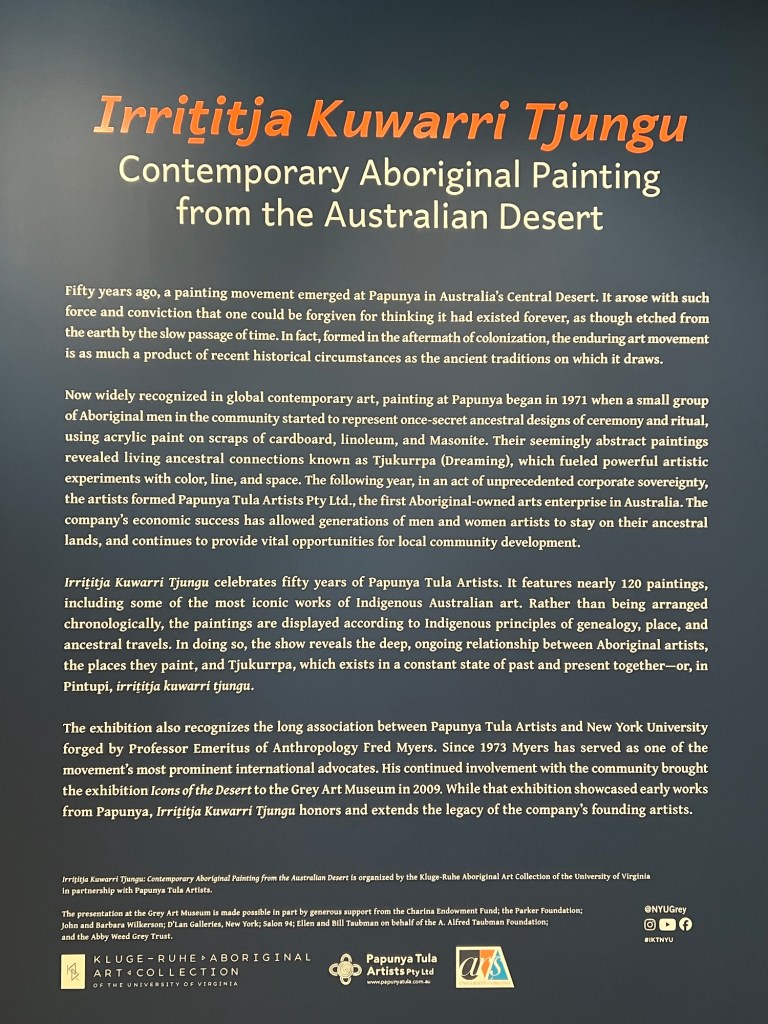
Irriṯitja Kuwarri Tjungu celebrates fifty years of Papunya Tula Artists. It features nearly 120 paintings, including some of the most iconic works of Indigenous Australian art. Rather than being arranged chronologically, the paintings are displayed according to Indigenous principles of genealogy, place, and ancestral travels. In doing so, the show reveals the deep, ongoing relationship between Aboriginal artists, the places they paint, and Tjukurrpa, which exists in a constant state of past and present together—or, in Pintupi, irrititja kuwarri tjungu.
The exhibition also recognizes the long association between Papunya Tula Artists and New York University forged by Professor Emeritus of Anthropology Fred Myers. Since 1973 Myers has served as one of the movement’s most prominent international advocates. His continued involvement with the community brought the exhibition Icons of the Desert to the Grey Art Museum in 2009. While that exhibition showcased early works from Papunya, Irrititja Kuwarri Tjungu honors and extends the legacy of the company’s founding artists.
The promotion sign for the exhibition
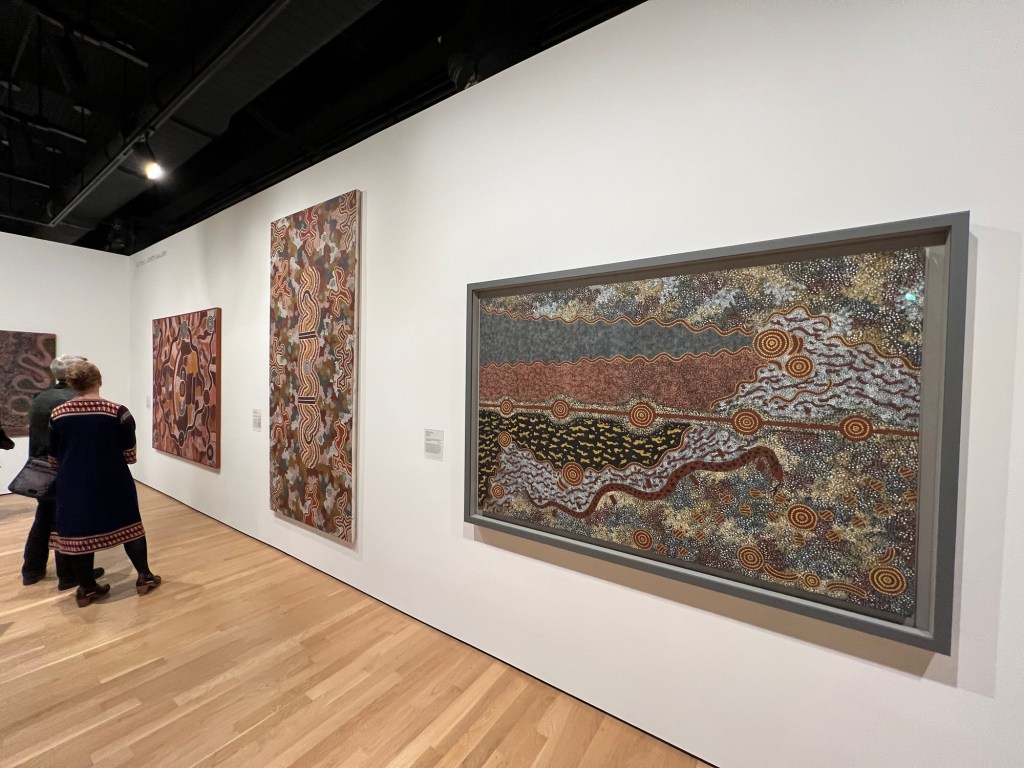
The art exhibition in the main gallery
Some of the works in the main gallery
(from the NYU/Grey Gallery website):
Fifty years ago, a painting movement emerged at Papunya in Australia’s Central Desert. It arose with such force and conviction that one could be forgiven for thinking it had existed forever, as though etched from the earth by the slow passage of time. In fact, formed in the aftermath of colonization, the enduring art movement is as much a product of recent historical circumstances as the ancient traditions on which it draws.
Now widely recognized in global contemporary art, painting at Papunya began in 1971 when a small group of Aboriginal men in the community started to represent once-secret ancestral designs of ceremony and ritual, using acrylic paint on scraps of cardboard, linoleum, and Masonite. Their seemingly abstract paintings revealed living ancestral connections known as Tjukurrpa (Dreaming), which fueled powerful artistic experiments with color, line, and space. The following year, in an act of unprecedented corporate sovereignty, the artists formed Papunya Tula Artists Pty Ltd., the first Aboriginal-owned arts enterprise in Australia. The company’s economic success has allowed generations of men and women artists to stay on their ancestral lands, and continues to provide vital opportunities for local community development.
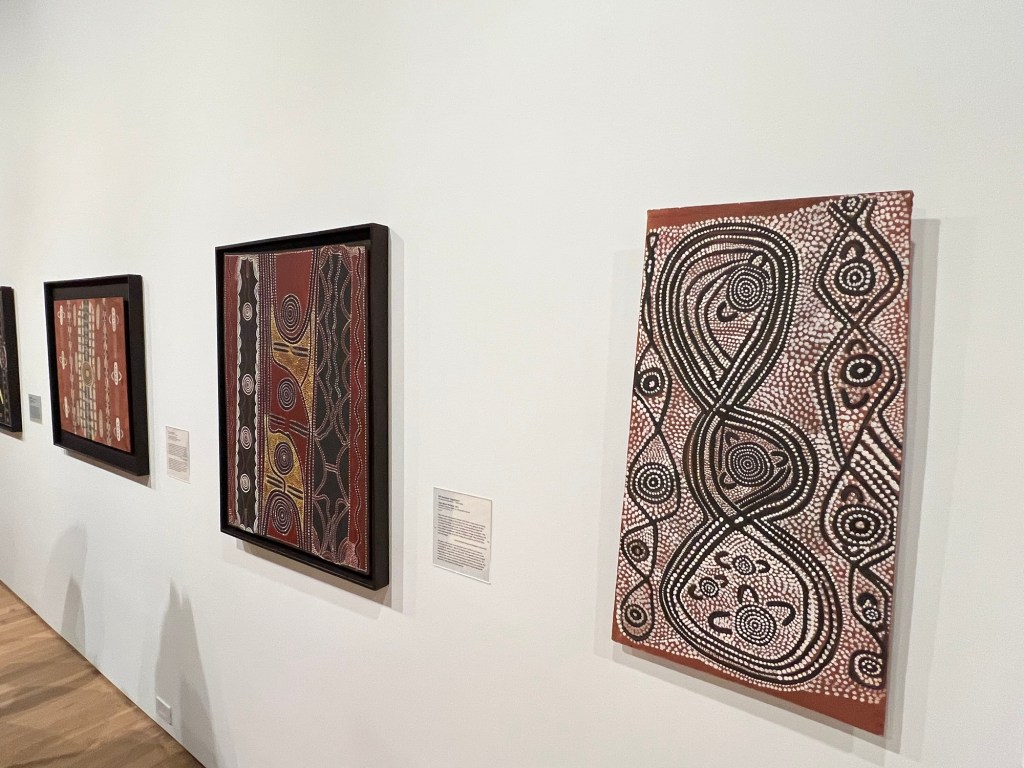
These were some of my favorite pieces of art from the exhibition:
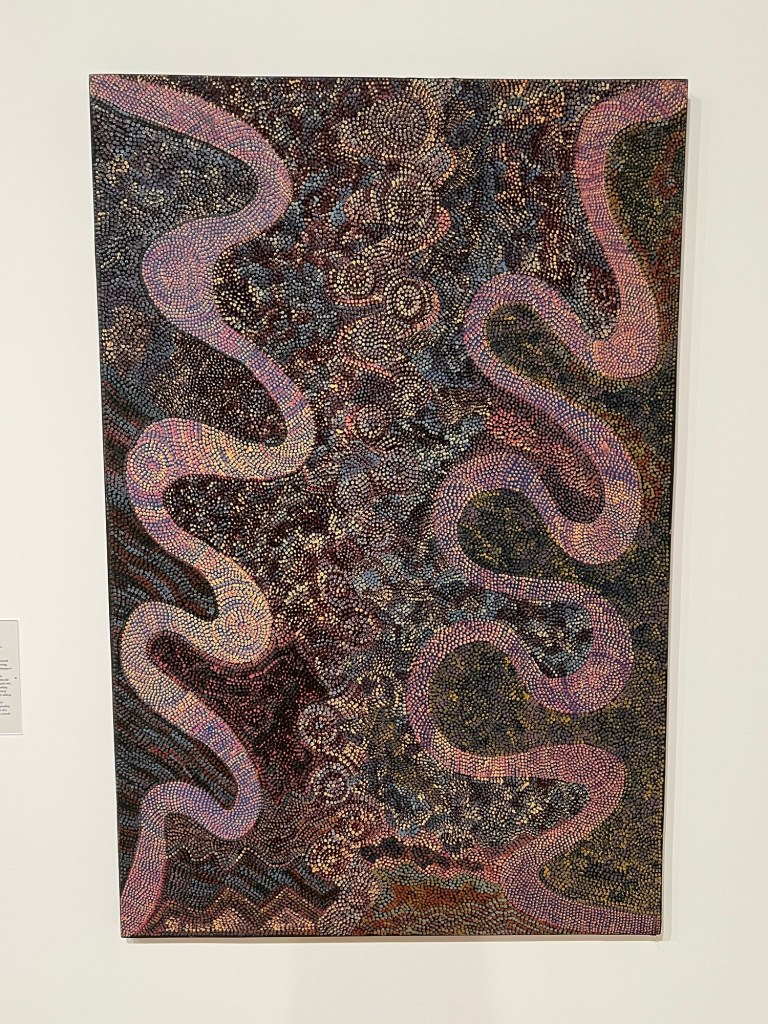
One of the pieces I admired in the exhibit
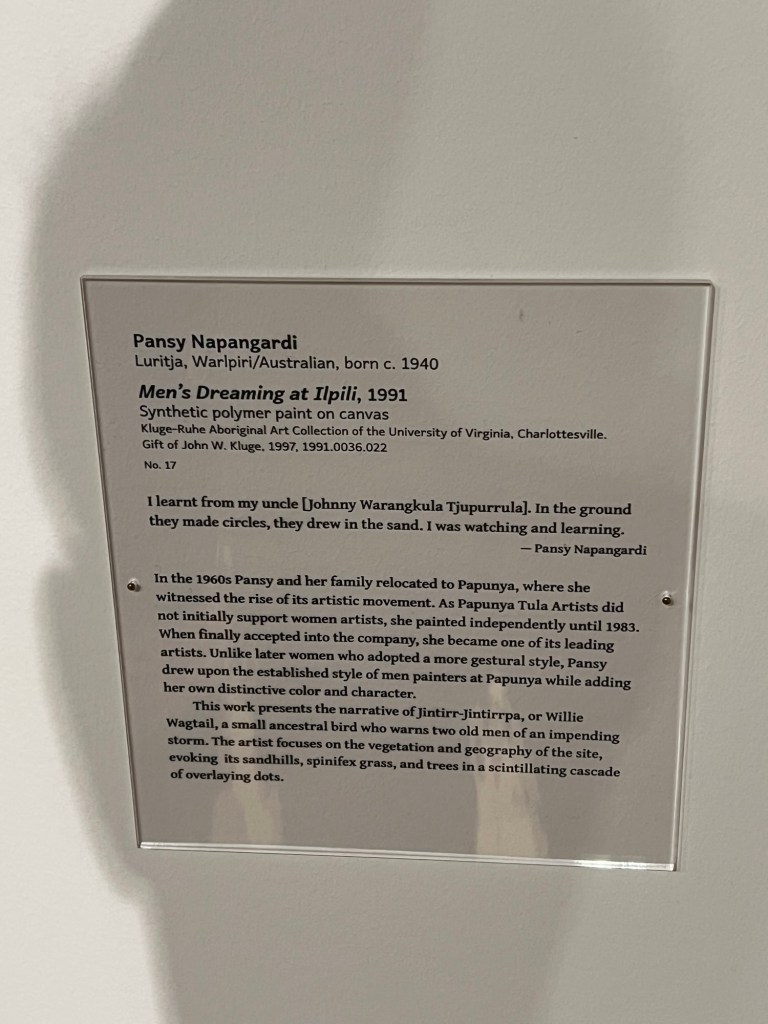
‘The Men’s Dreaming at Iloilo’
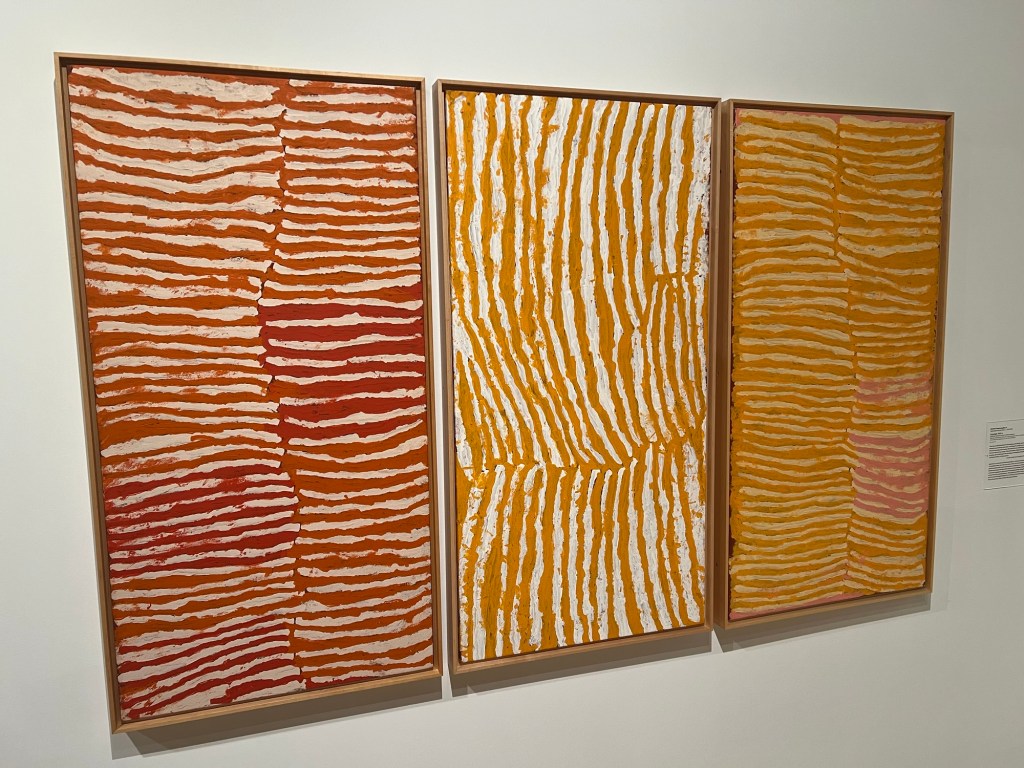
I thought this colorful work was interesting
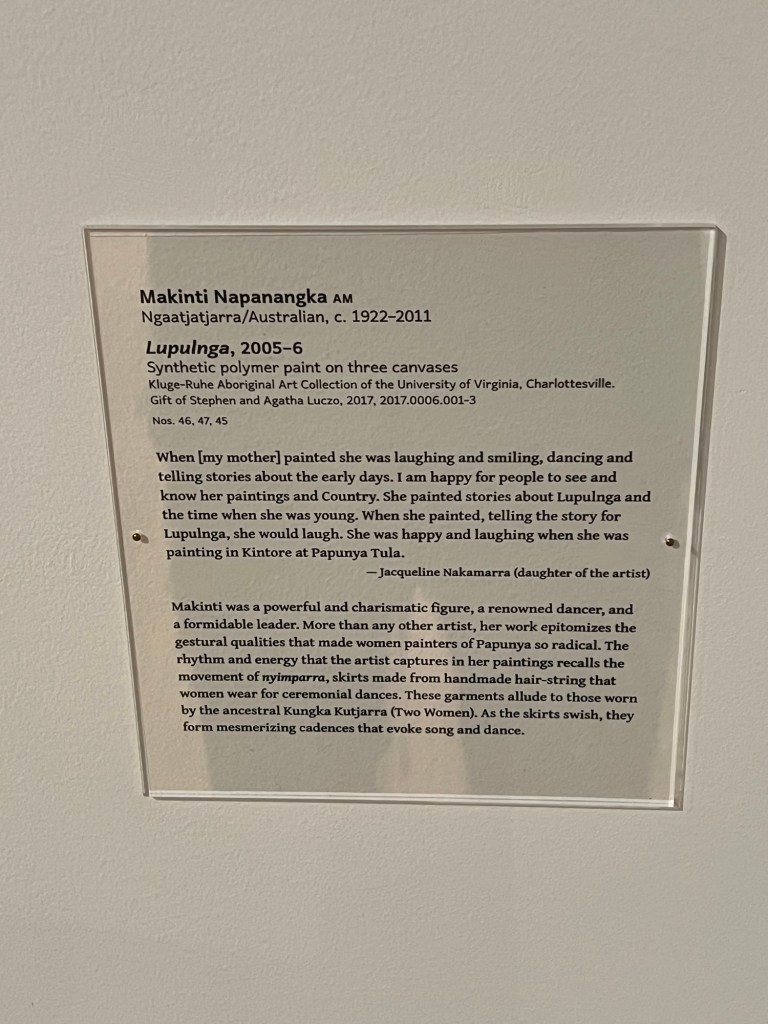
The work ‘Lupuinga’
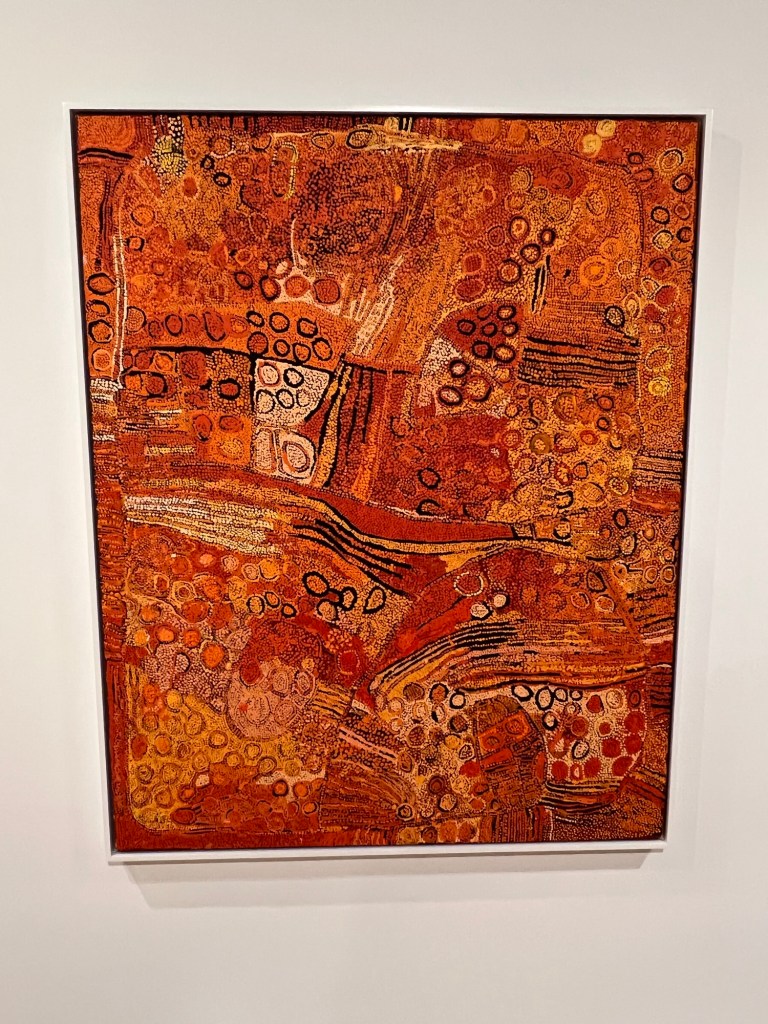
I loved the powerful colors of this painting
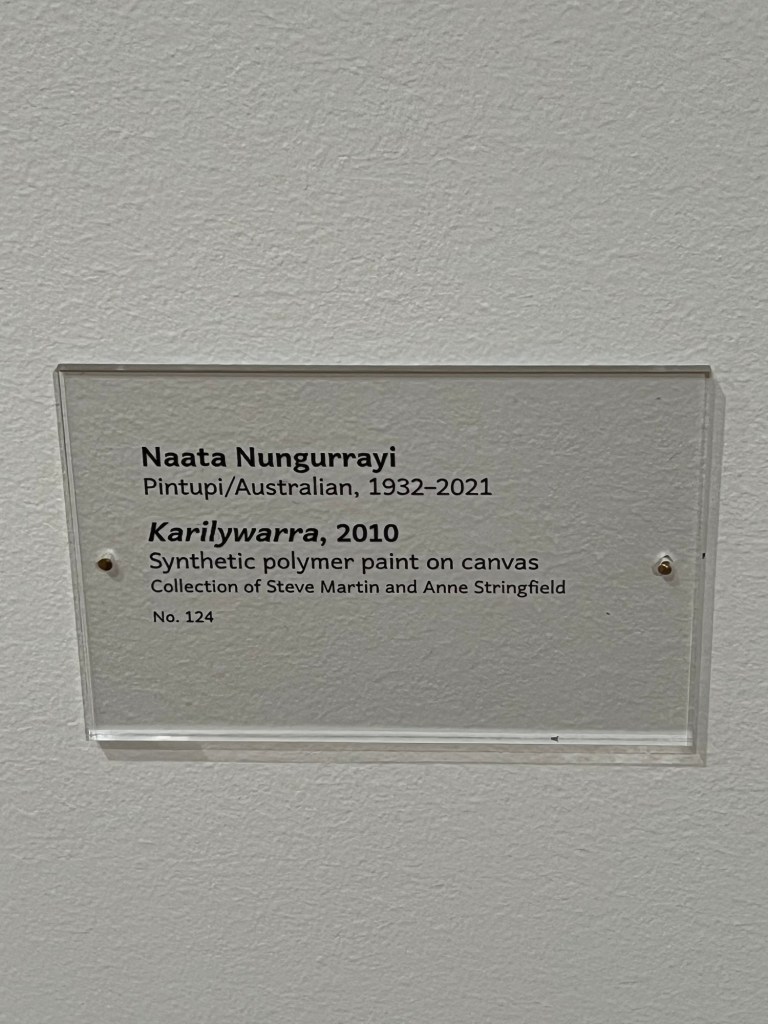
The ‘Karilywarra’ work is very colorful
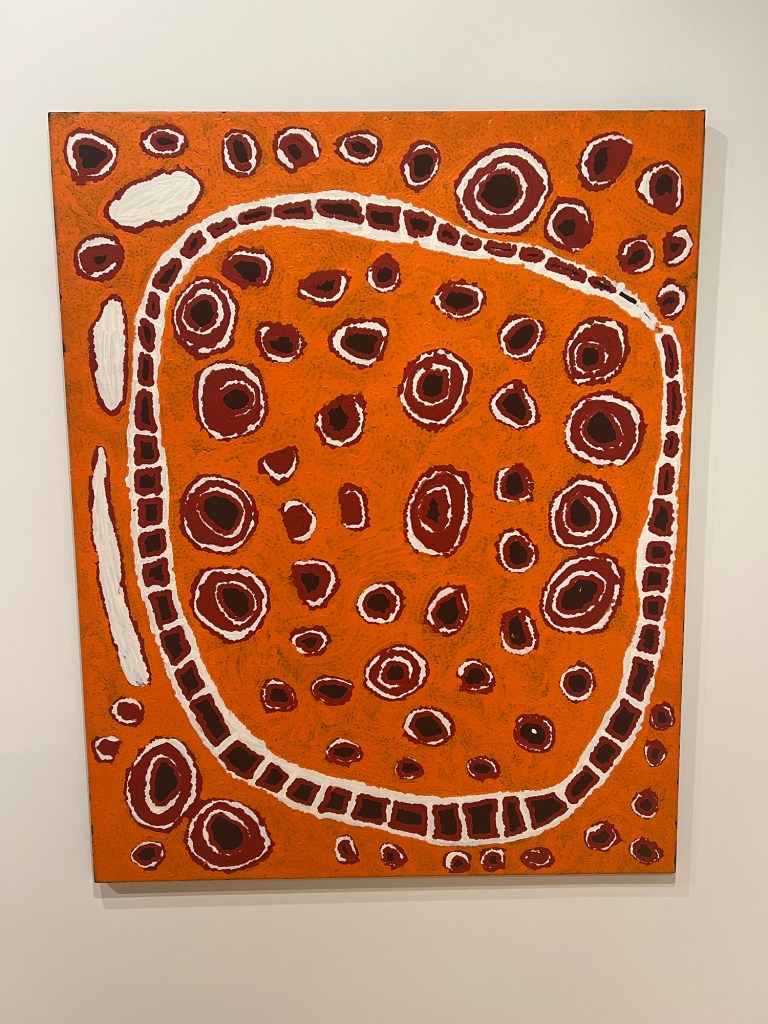
This painting I thought would be interesting in textiles
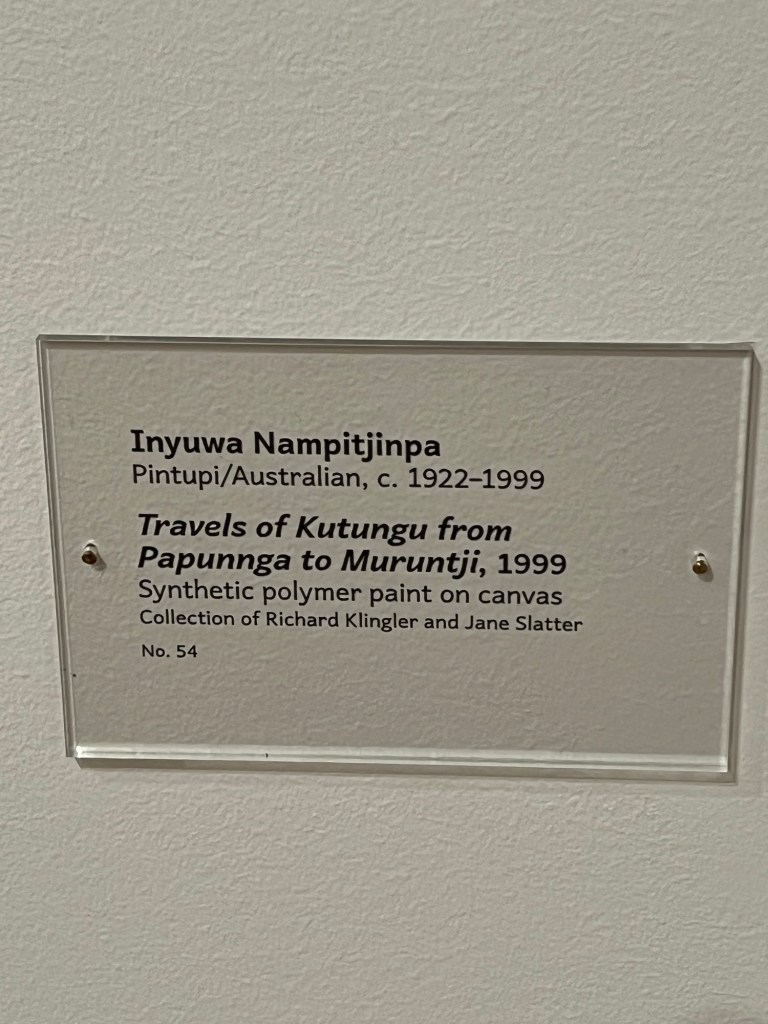
The painting ‘Travels of Kutungu from Papunnga to Muruntji’






























 Visiting a Museum: The Unique, Unusual, Obscure and Historical