Tag: Decorated Christmas Mansions

Washington Irving’s Sunnyside                                     3 West Sunnyside Lane                              Irvington, NY 10533

Washington Irving’s Sunnyside 3 West Sunnyside Lane Irvington, NY 10533

Washington Irving’s Sunnyside

3 West Sunnyside Lane

Irvington, NY  10533

(914) 591-8763

Admission: Please see their website

Open: Please check the website for seasonality

My review on TripAdvisor:
https://www.tripadvisor.com/Attraction_Review-g48720-d3680157-Reviews-Sunnyside-Tarrytown_New_York.html?m=19905

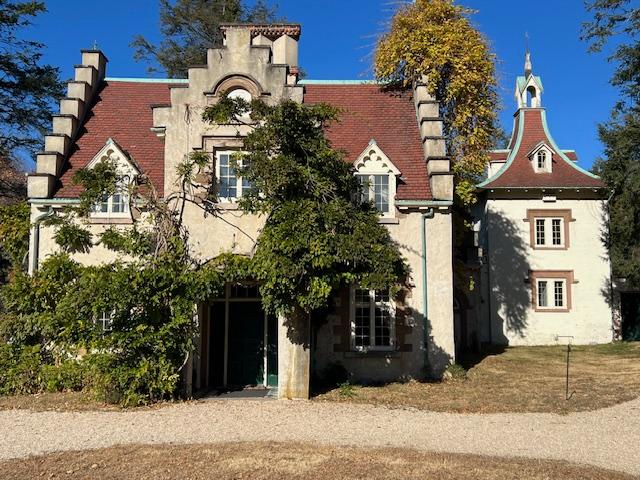
The front of Sunnyside in the Fall of 2024

Washington Irving’s home, Sunnyside is open during the warmer months of the year, closing at the end of October. The house looks like a enchanted cottage with almost a fairy like appearance right on the banks of the Hudson River with the most spectacular views of the river valley and the Tappan Zee Bridge in the distance.
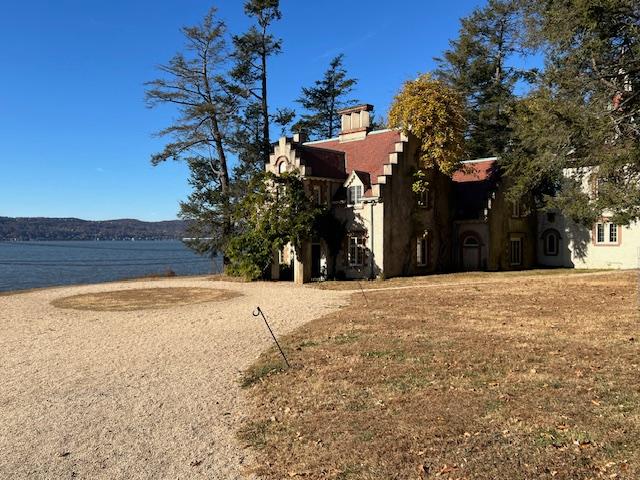
Sunnyside during the Fall of 2024

The house was designed by architect George Harvey and reflects the Dutch Colonial Revival, Scottish Gothic and Tudor Revival influences with wisteria growing up and around it and a jagged crow stepped gable.
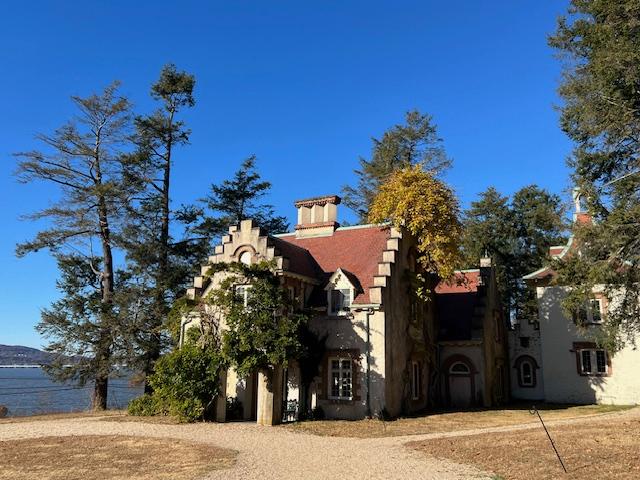
The front of Sunnyside in the Fall of 2024

When walking through the home, you will see the study where Washington Irving conducted the business of the house and did his writing. To the other side of the house, you will see the living room and small dining room where the family used to entertain.
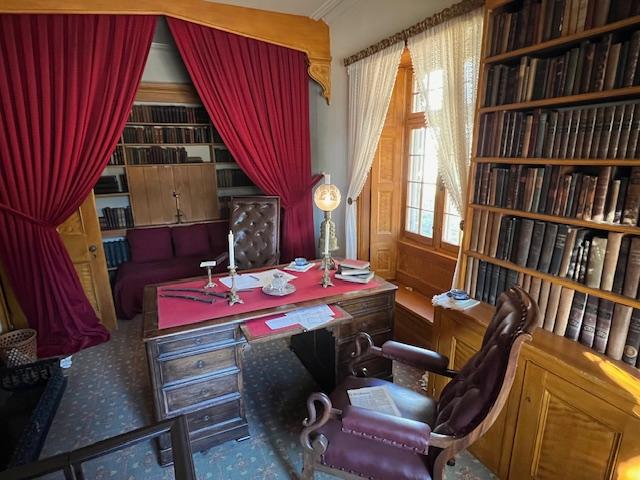
Washington Irving’s Study
The Dining Room set for a formal lunch
The Dining Room in the Fall of 2024
The formal meal at the afternoon
The hallway between the Dining Room and the Living Room
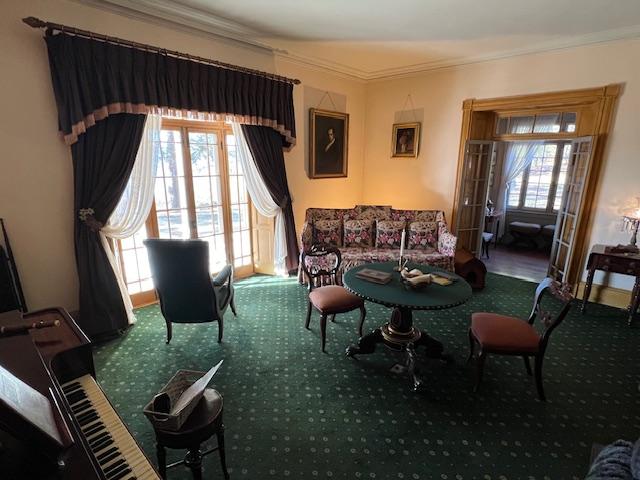
The Living Room where the family gathered and entertained visitors
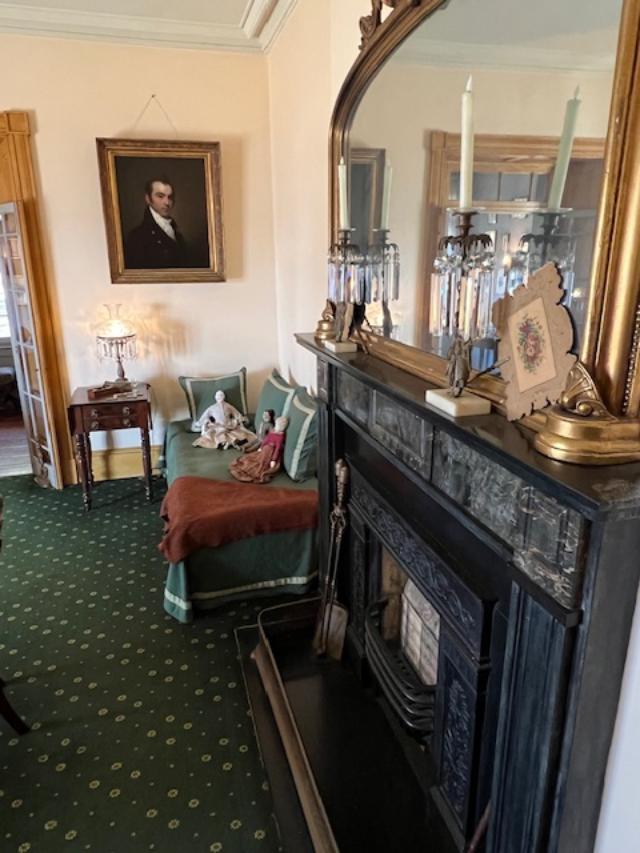
The Living Room of Sunnyside

The upstairs contains small bedrooms where Washington Irving, his brother, Ebeneezer and his five nieces lived on and off when they were living at the house. Washington’s brother’s business had failed and the family came to live with him. Two of the nieces never married and ran the home for their uncle.
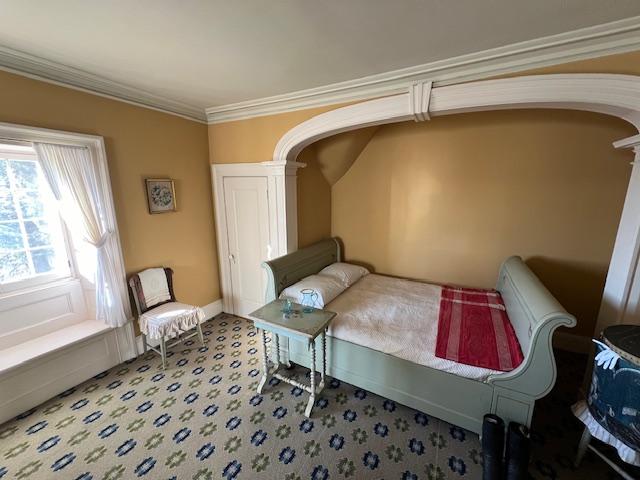
The Guest bedroom at Sunnyside
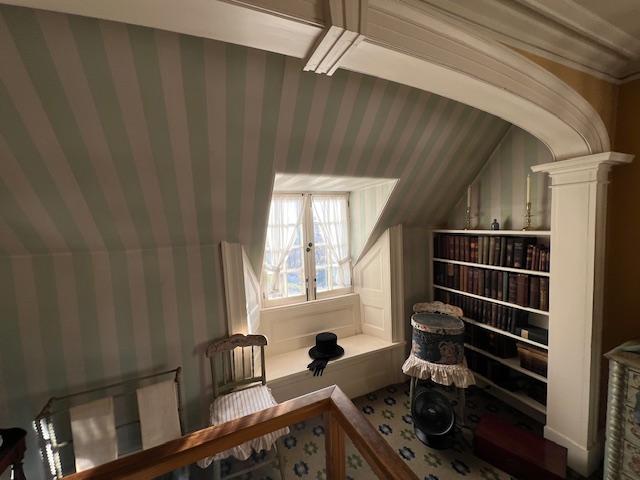
The Guest Bedroom
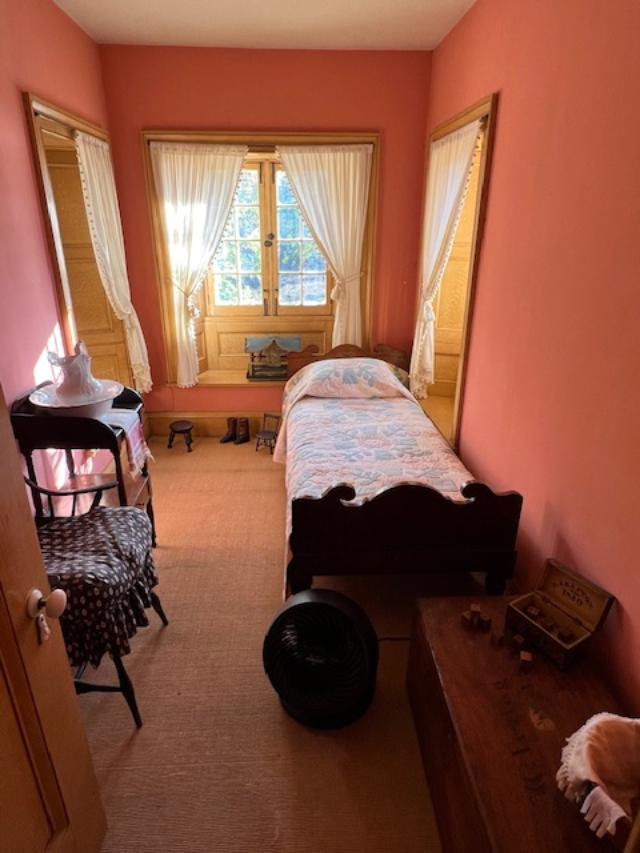
The Children’s Bedroom that catered to the little guests

The house is nicely furnished in the most modern decor of its time but is not an elaborate house. It is a home and not a weekend mansion and this ten acre estate was a once a  working farm. In the back of the house, there is an ice house and a barn show where the people who worked on the estate kept the house running.
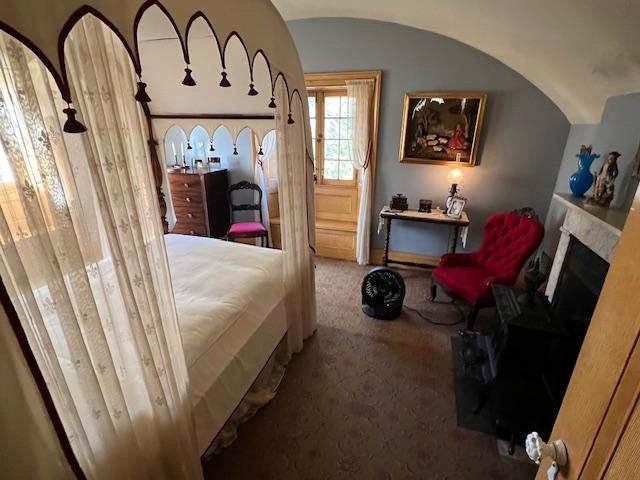
Ebenezer’s daughter’s room
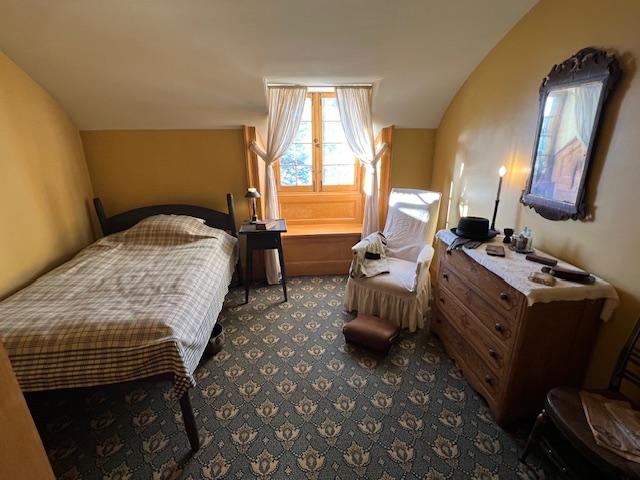
Ebenezer’s Room in Sunnyside; Ebenezer was Washington Irving’s Older Brother
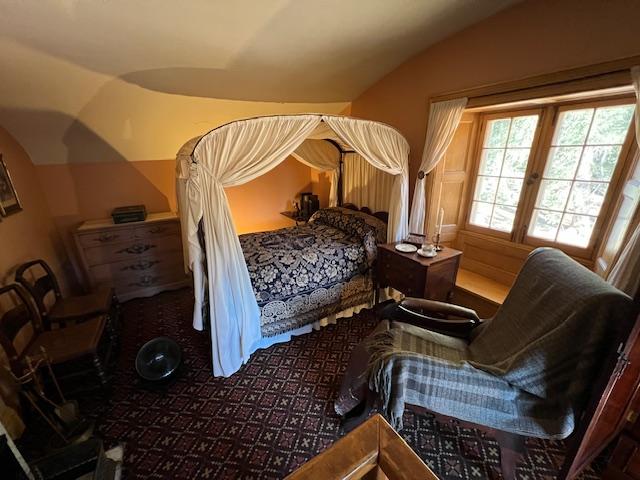
Washington Irving’s bedroom
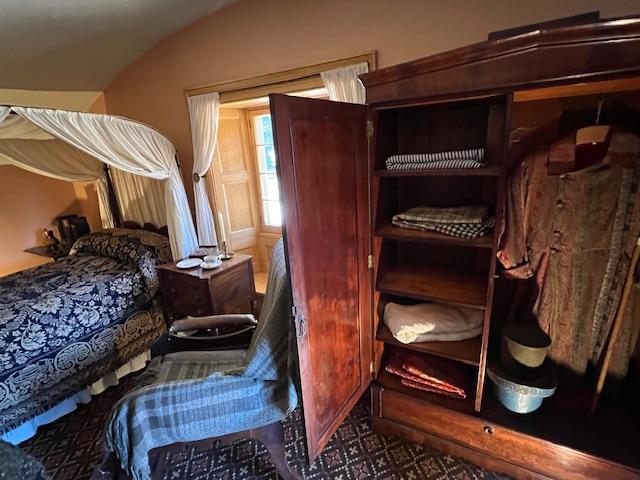
Washington Irving’s bedroom

The view of the river is one of the most spectacular in the Hudson River Valley as its at the widest part of the Hudson River. You can see the cliffs of New Jersey on the other side with views of Nyack and the Tappan Zee Bridge in the background.
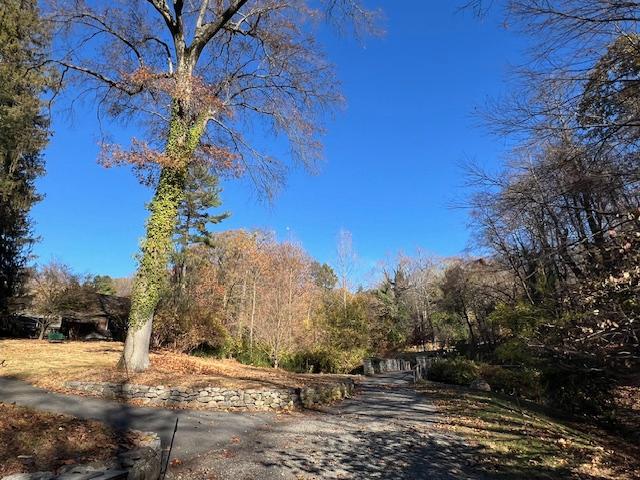
The grounds of Sunnyside
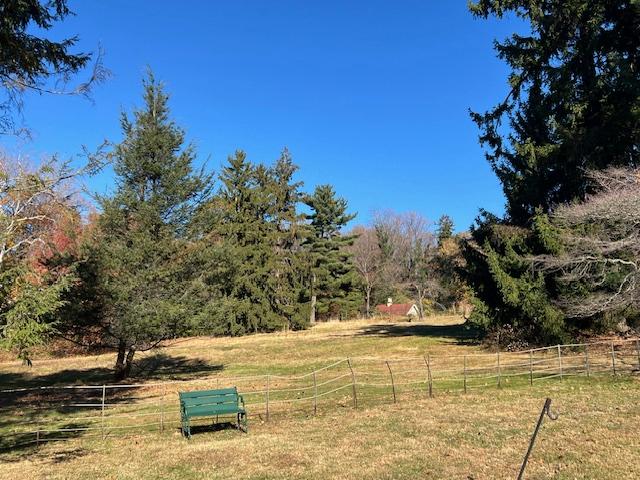
The grounds of Sunnyside

During the Fall season there are all sorts of activities going on at the estate and the tours are a very interesting look at life at that time. The Kitchen staff ran the home for social calls and main family meals as well as all the things it took to run the household.
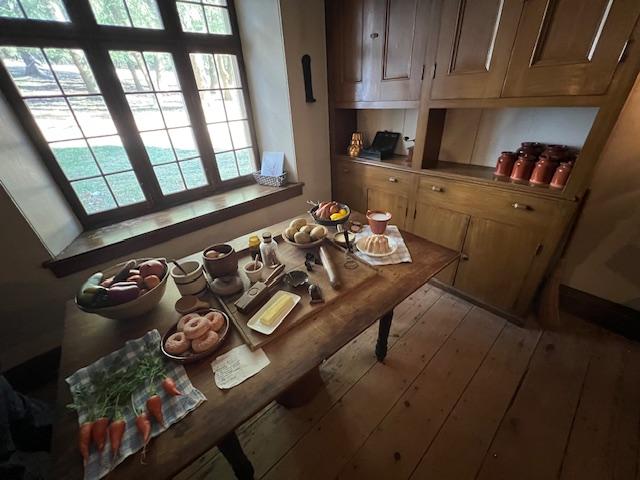
The Sunnyside Kitchen
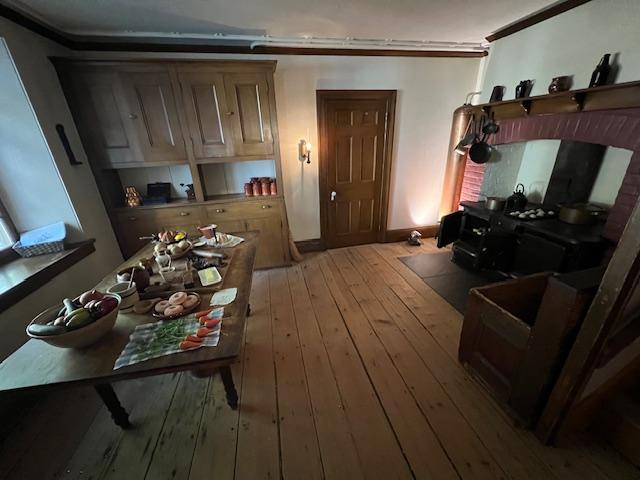
The kitchen and pantry area
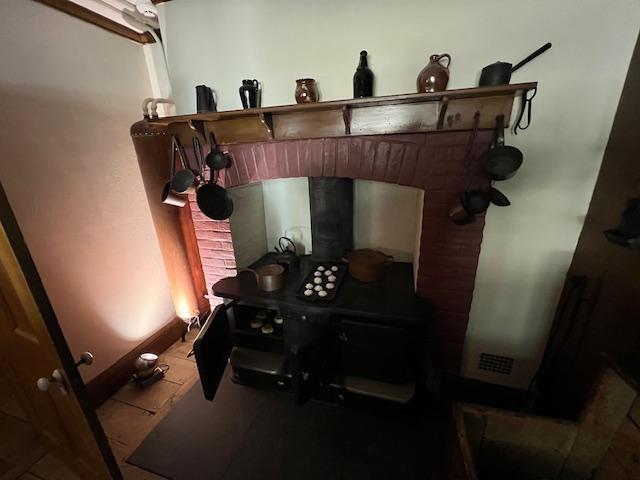
The stove in the kitchen
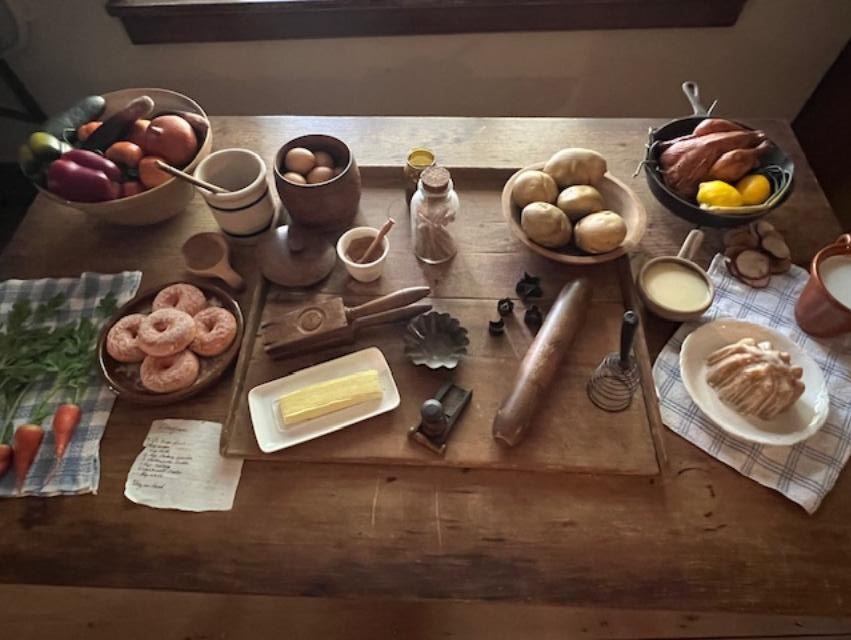
The delicious items that were prepared in the Country kitchen
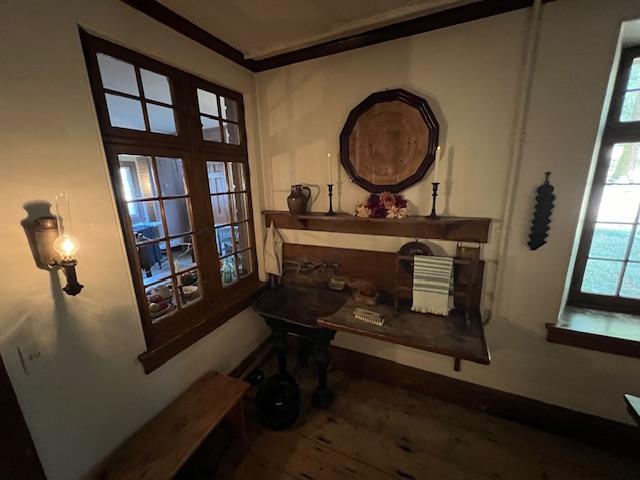
The sink area of the kitchen
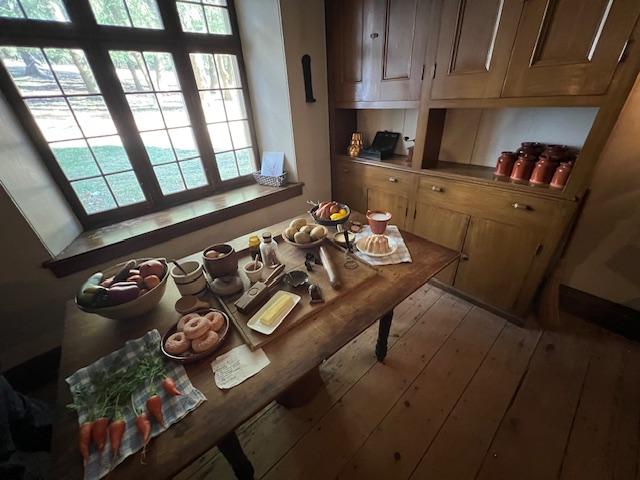
The Cooks Kitchen
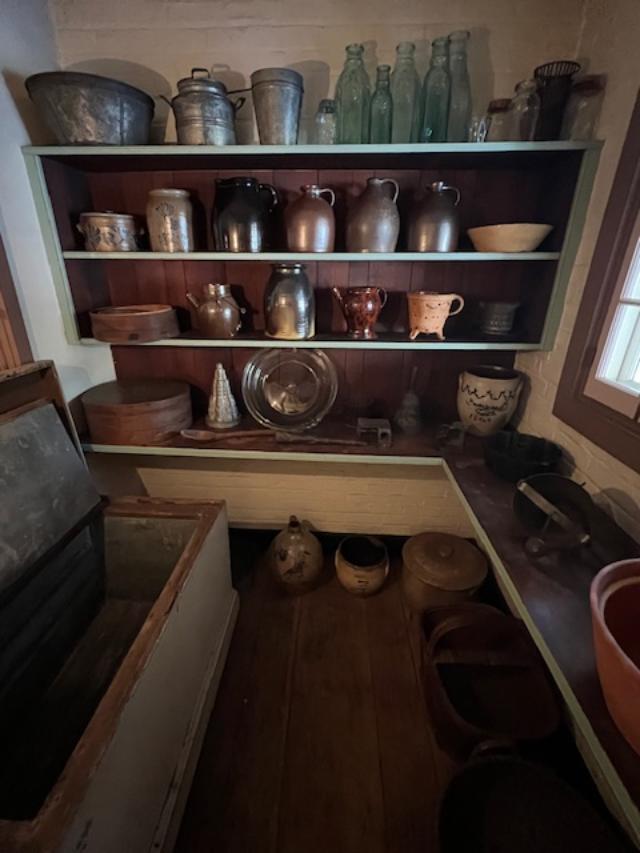
The Pantry
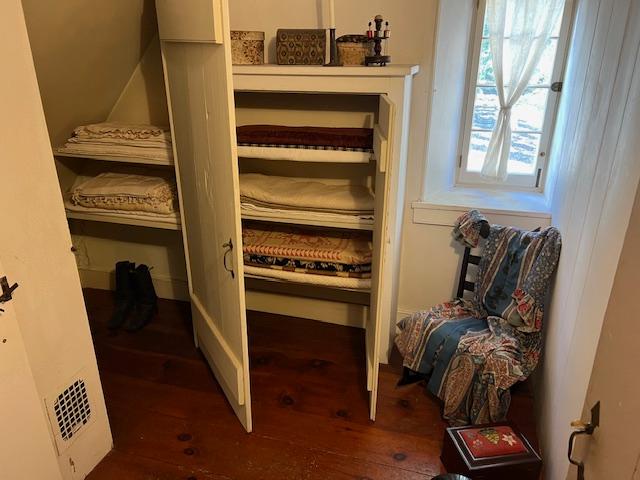
The Linen Room
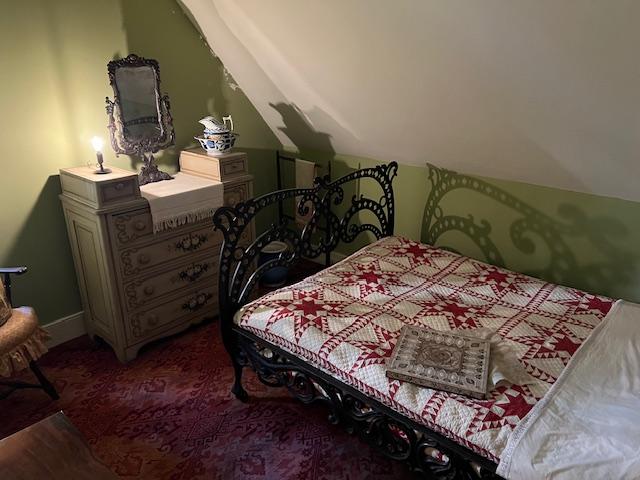
The Sewing Room for the family

The History of Sunnyside:

The estate was once the home of Wolfert Acker called Wolfert’s Roost and was part of the Manor of Philipsburg and this home was once a simple two room stone tenant farmhouse built around 1690.
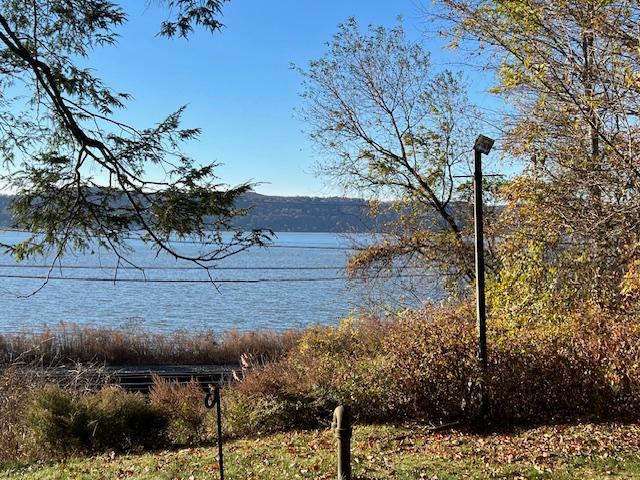
The patio view from the back of the house

The property came into the hands of the Van Tassel family, who were married into the Eckert family and owned it until 1802. That year, 150 acres were deeded to the family of Benson Ferris, one time clerk of the Old Dutch Church of Sleepy Hollow, whose wife, Maria Acker, was a descendant of Wolfert Acker’s.
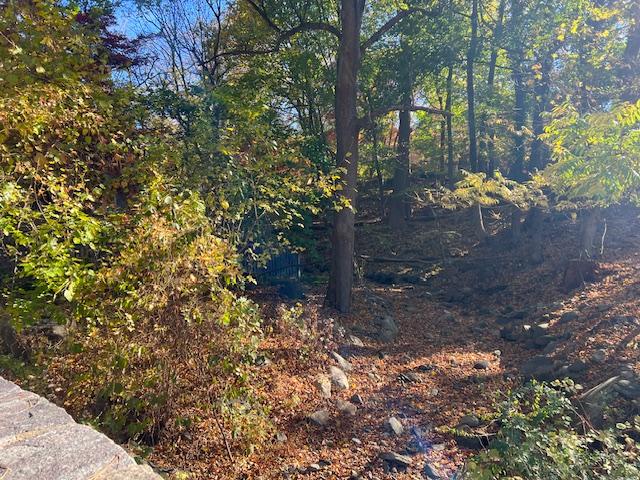
The grounds of Sunnyside

In 1832, Washington Irving visited his nephew, Oscar Irving, who lived near the old stone farmhouse and was looking for a home at the time. He purchased the property on June 7, 1835 and would add to the property.
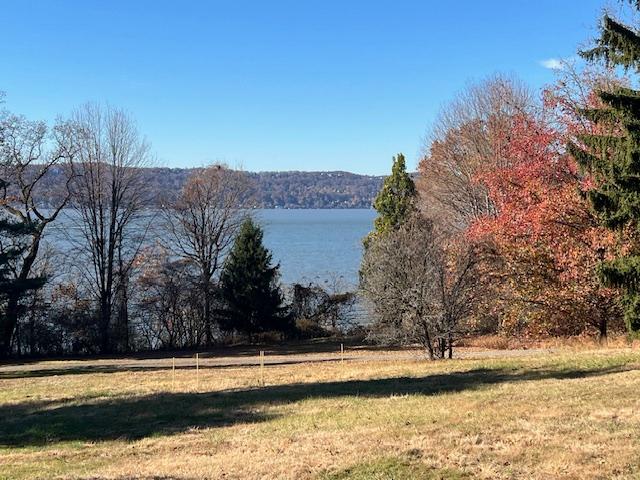
The view of the house of the Hudson River

Irving wrote a story, “Wolfert’s Roost”, about Acker and the site. In a letter to his brother Peter, he described it as “a beautiful spot, capable of being made a little paradise…I have had an architect up there and shall build upon the old mansion this summer. My idea is to make a little nookery somewhat in the Dutch style, quaint but unpretending. It will be of stone.” He asked his neighbor to help him remodel the house and landscape the grounds in Romantic style adding a brook and waterfall.
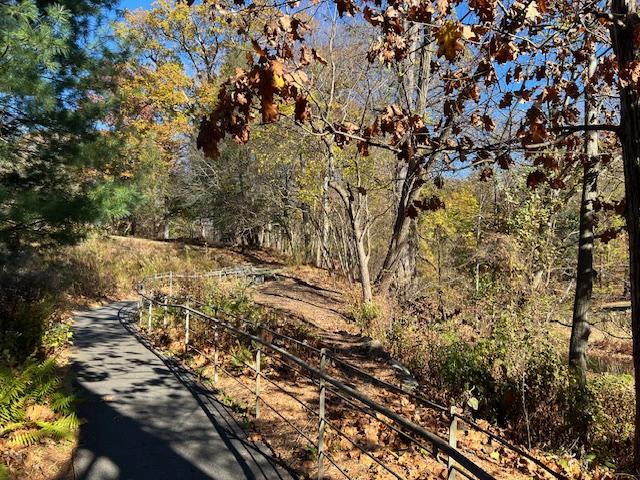
The grounds of Sunnyside

The house became a major spot of people visiting the area to meet the author. In 1842, he was appointed to be the Ambassador of Spain and left the estate in the care of his brother and four daughters. He returned in 1846 and added to the home the ‘Spanish Tower” in 1847. This added four more bedrooms to the home.
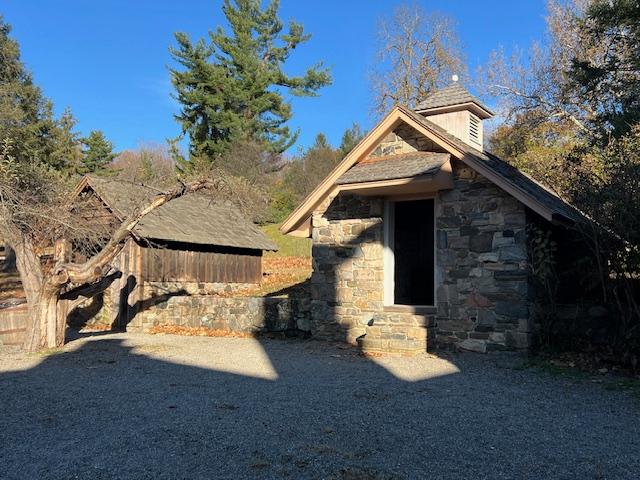
The Smokehouse
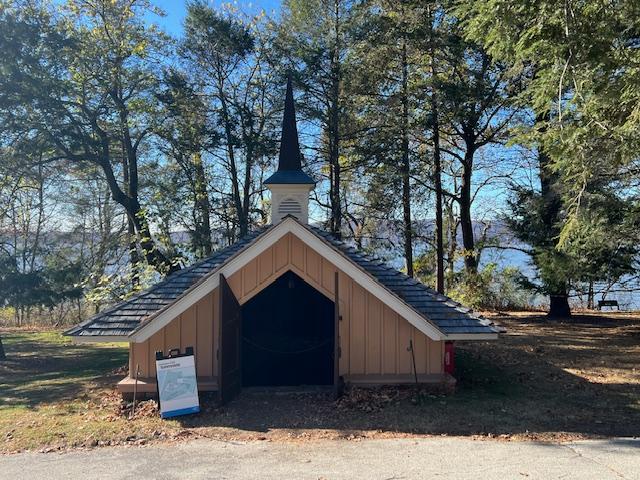
The Ice House at Sunnyside
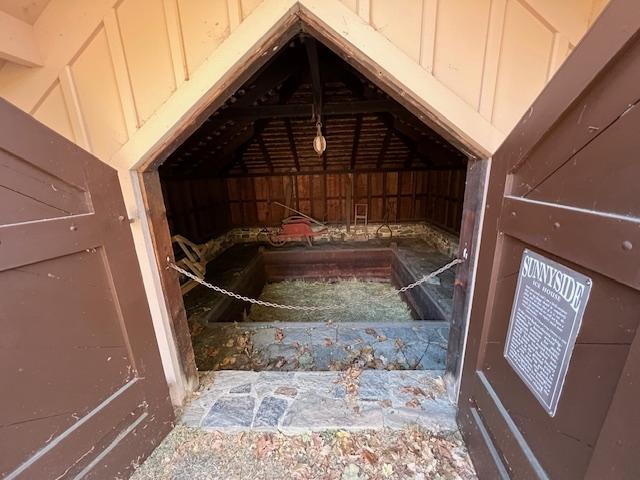
The Ice House
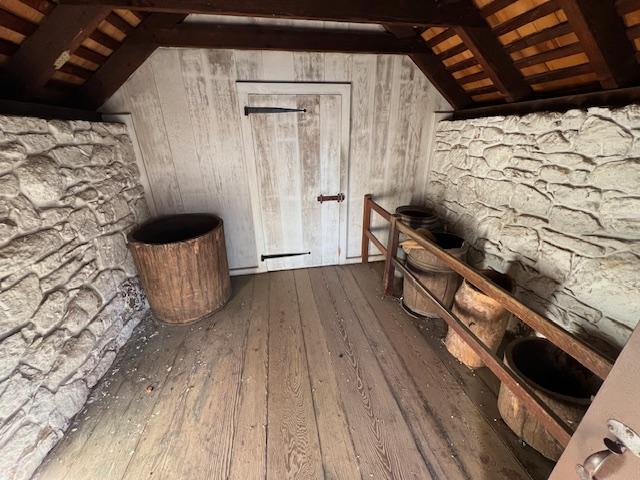
The Fruit Cellar

Irving died in the house in 1859 of a heart attack at age 76.

The house was purchased from Louis Irving by John D. Rockefeller Jr. and was restored for historic preservation. It was opened to the public in 1947.
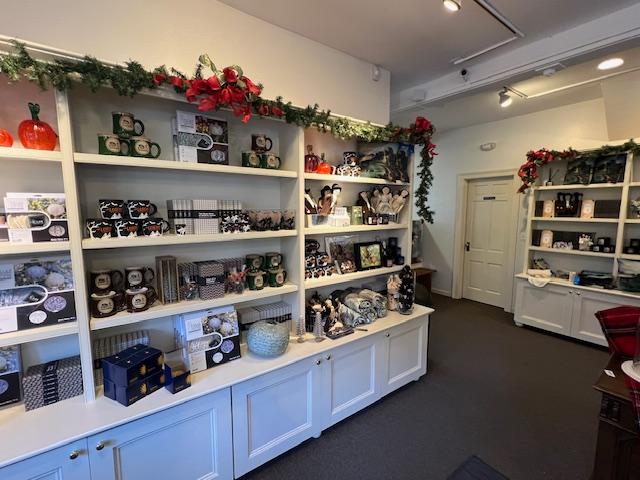
The grounds has a very nice gift shop

In 2025, I visited Sunnyside during the holidays to see what Christmas would have been like in the pre-Civil War era. These were not the elaborate times of the Victorian era but still the life of an Upper Middle Class families who celebrated the spirit of the holiday.

I visited the estate for a special Victorian event with refreshments, creating crafts and a special open tour of the home decorated for the Christmas holidays.
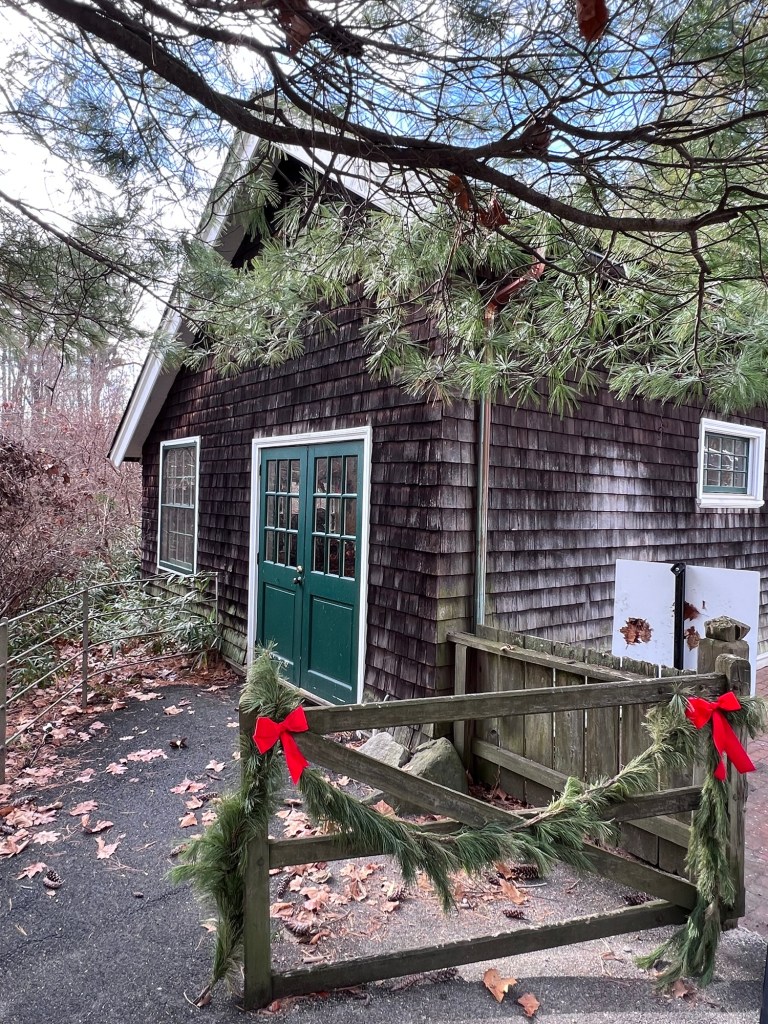
The property decorated during the holidays
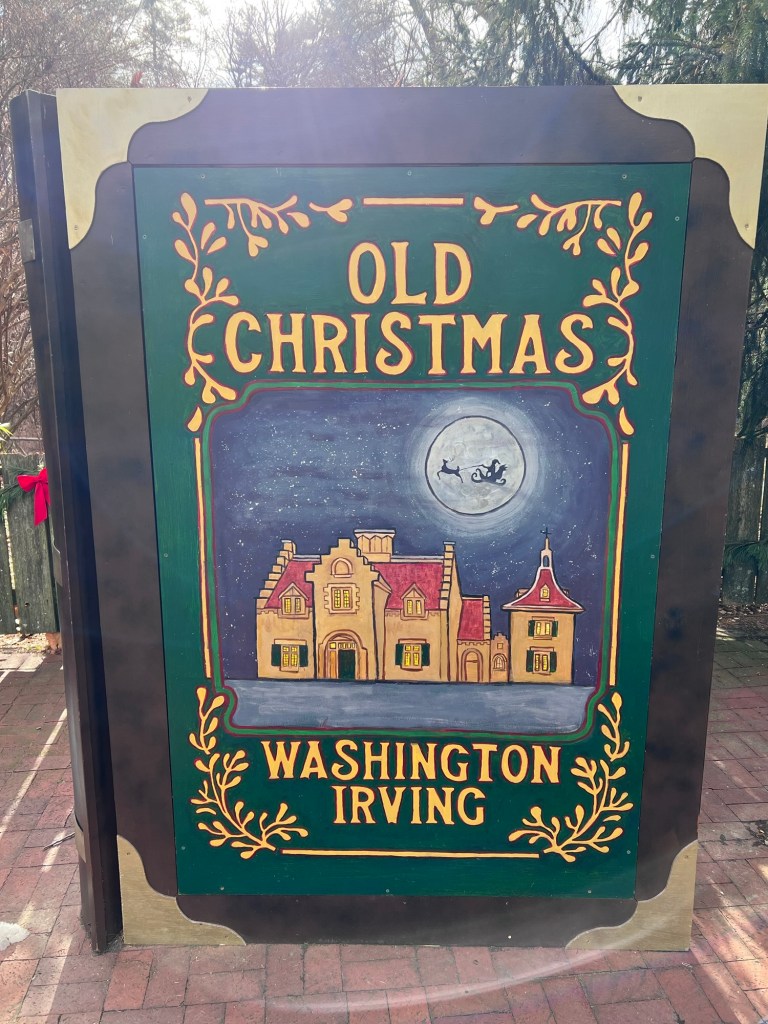
The holiday events at the estate
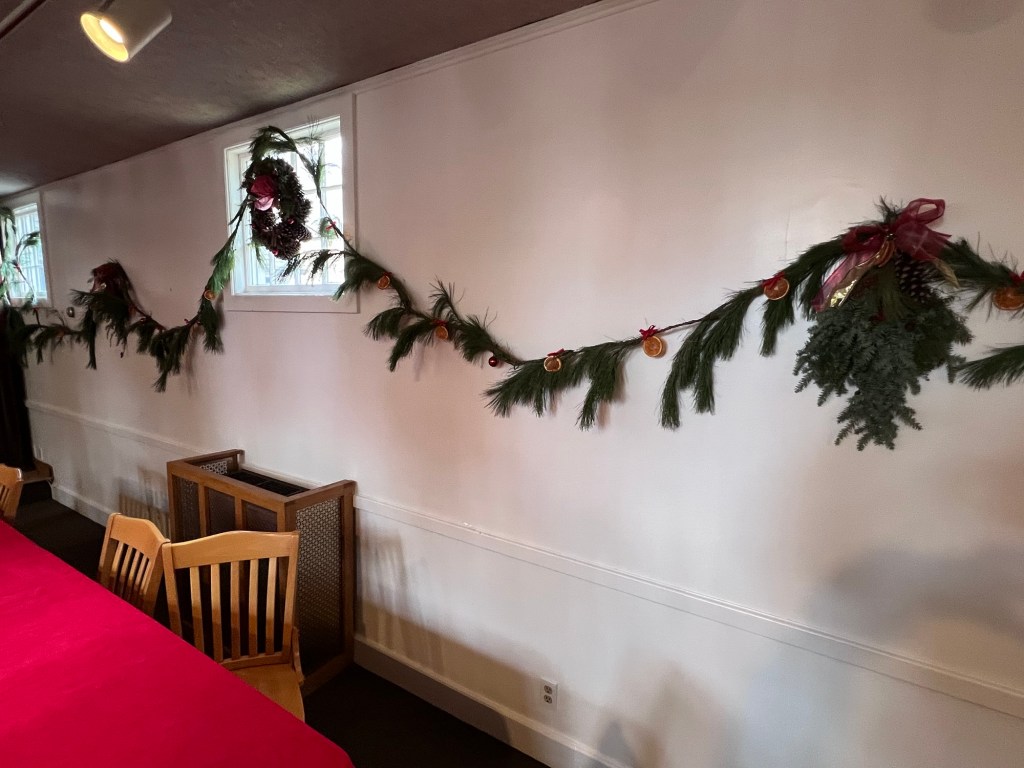
The meeting room was decorated for the holidays for refreshments and good conversation
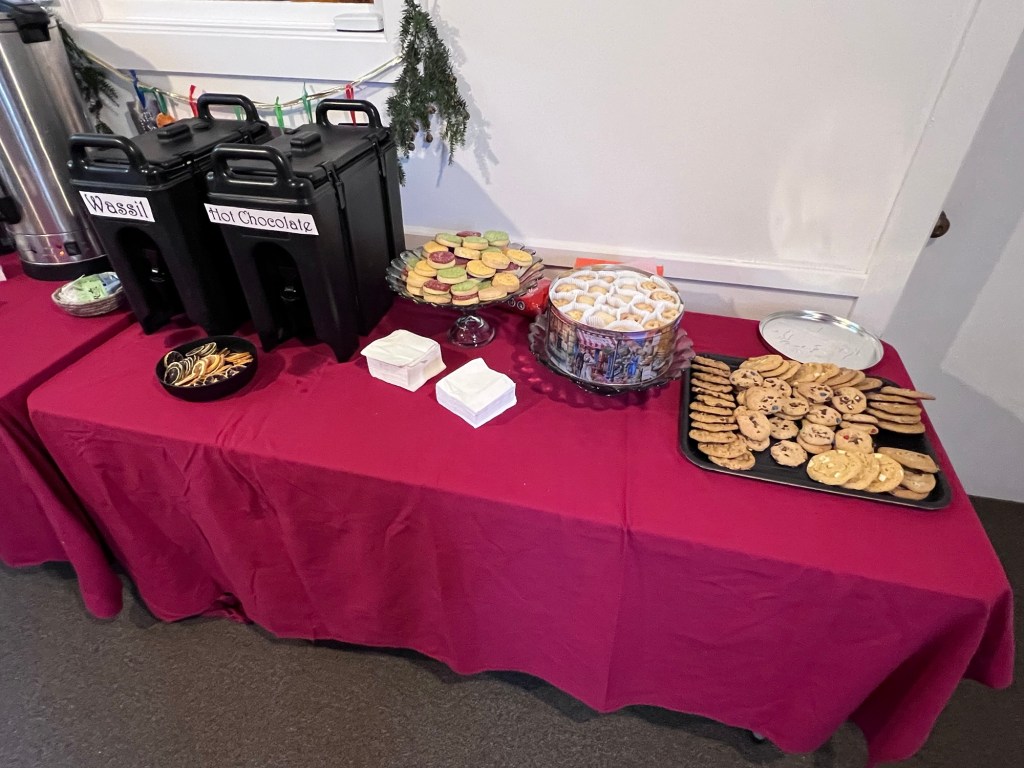
The refreshments at the Open House included cookies, candies, Hot Cider Wassil and Hot Chocolate and Tea
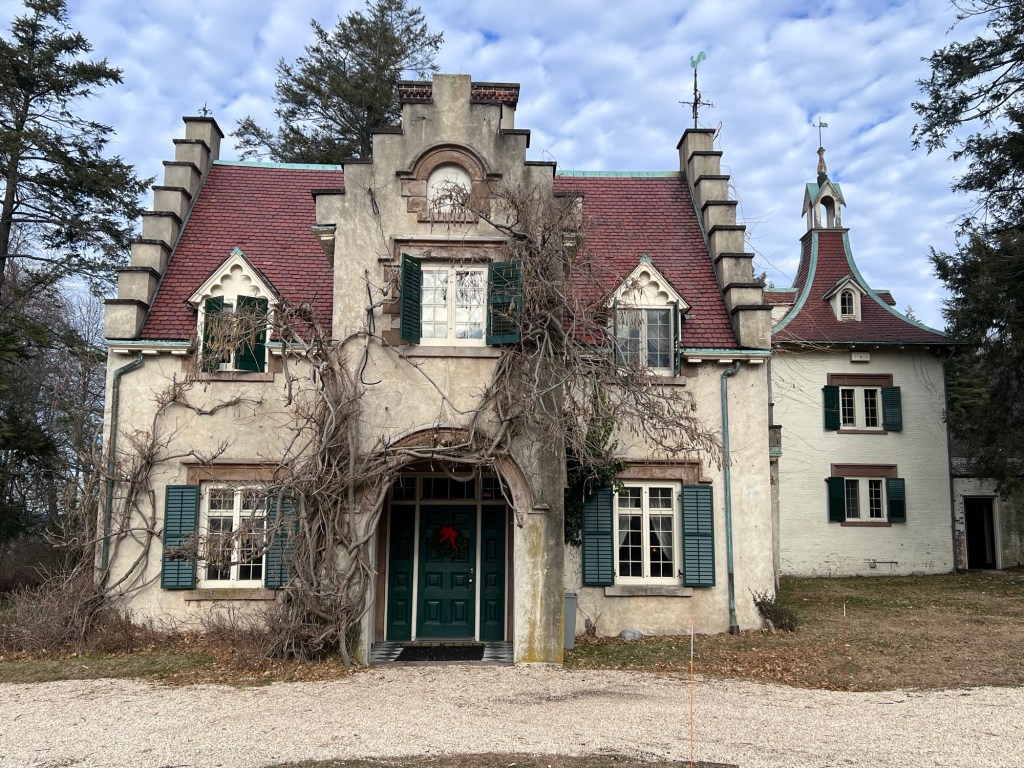
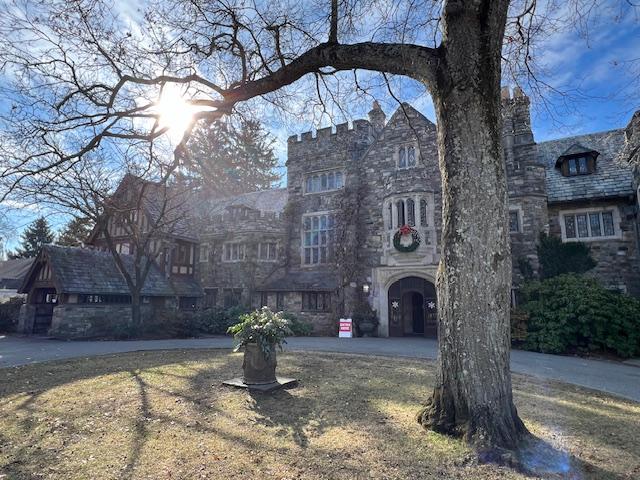
Sunnyside at Christmas time
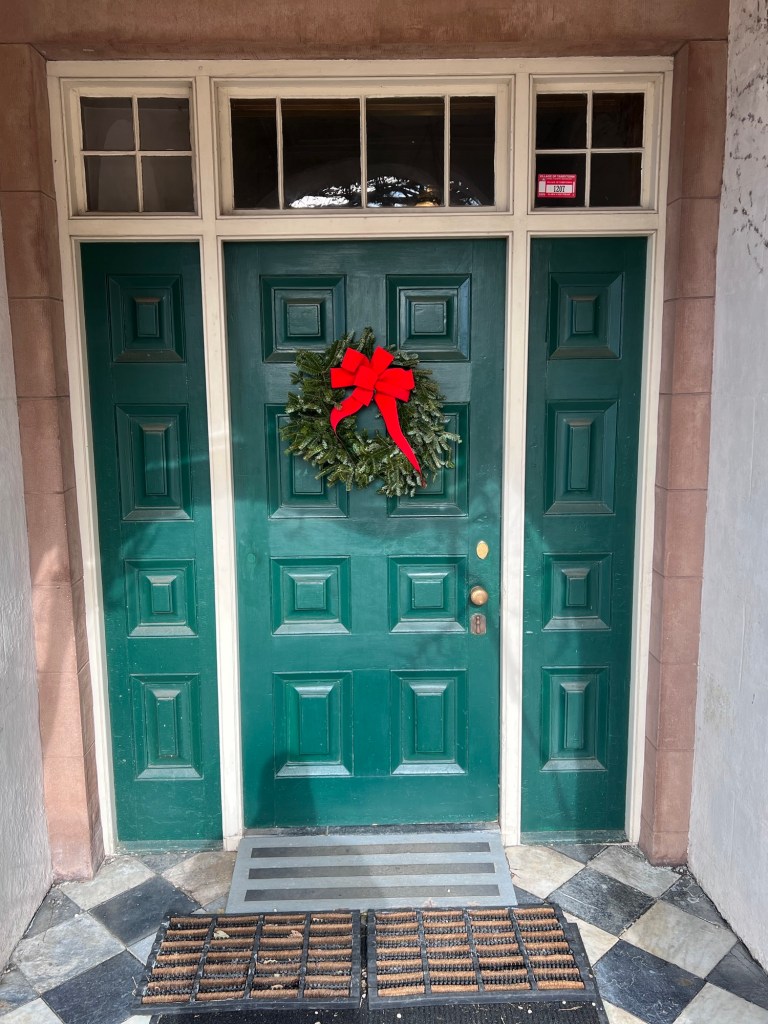
The Sunnyside front door at the holidays
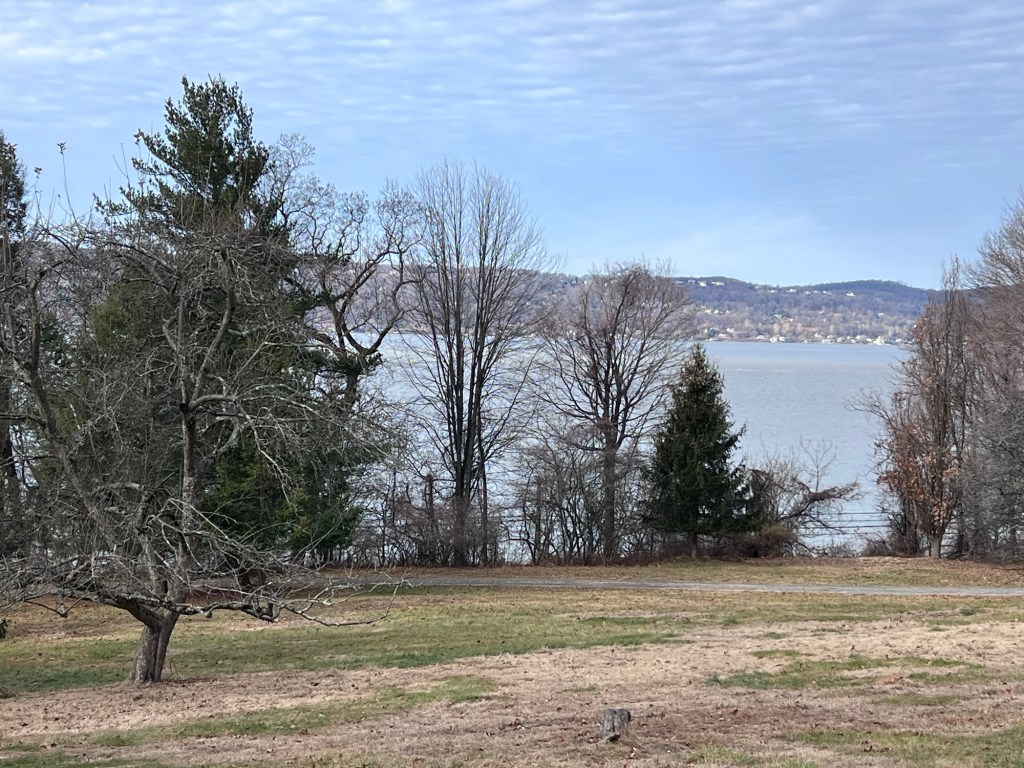
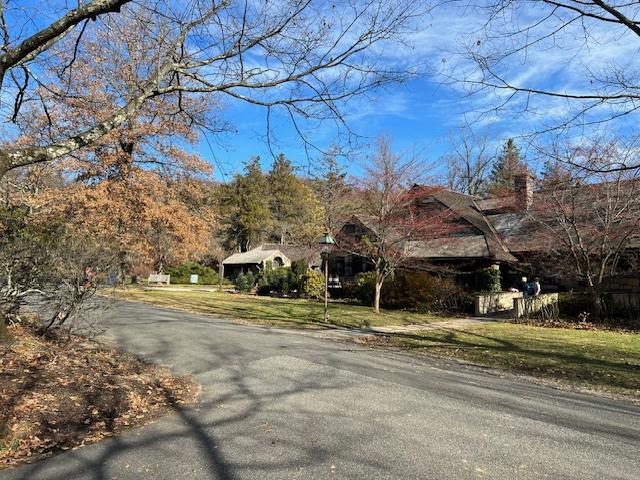
The beautiful view of the estate overlooking the Hudson River

When you enter the house, the first room to the left is the office of Washington Irving. There was a bed in the room for last night work and the room decorated for the holidays.
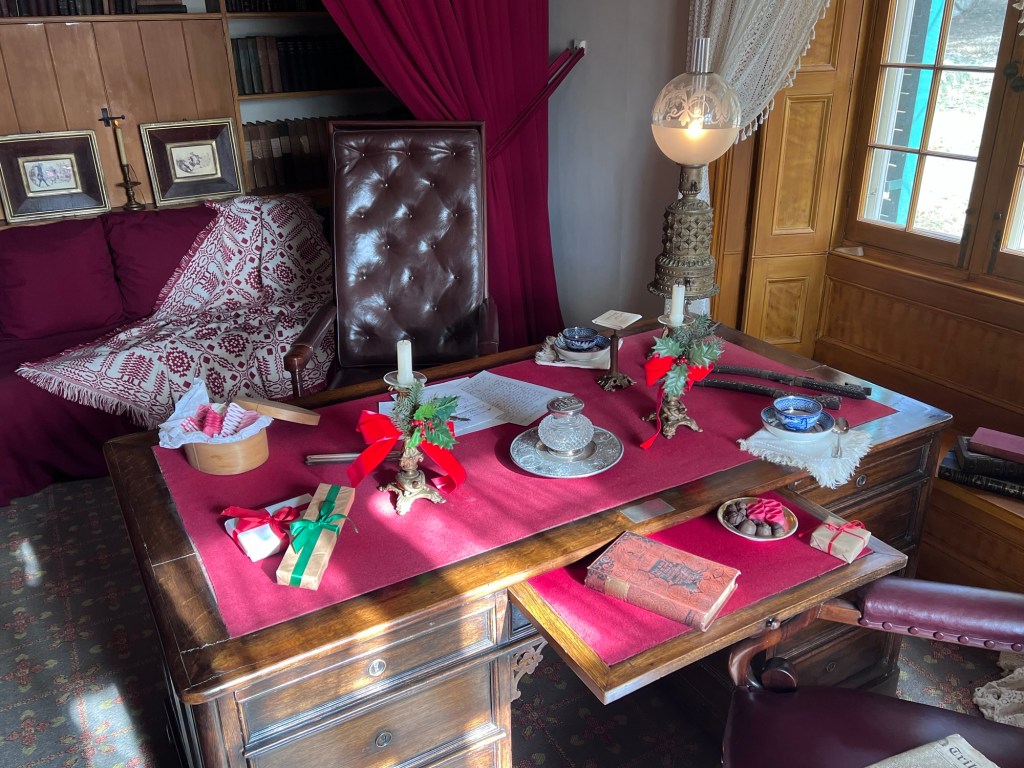
Washington Irving’s office during the holidays
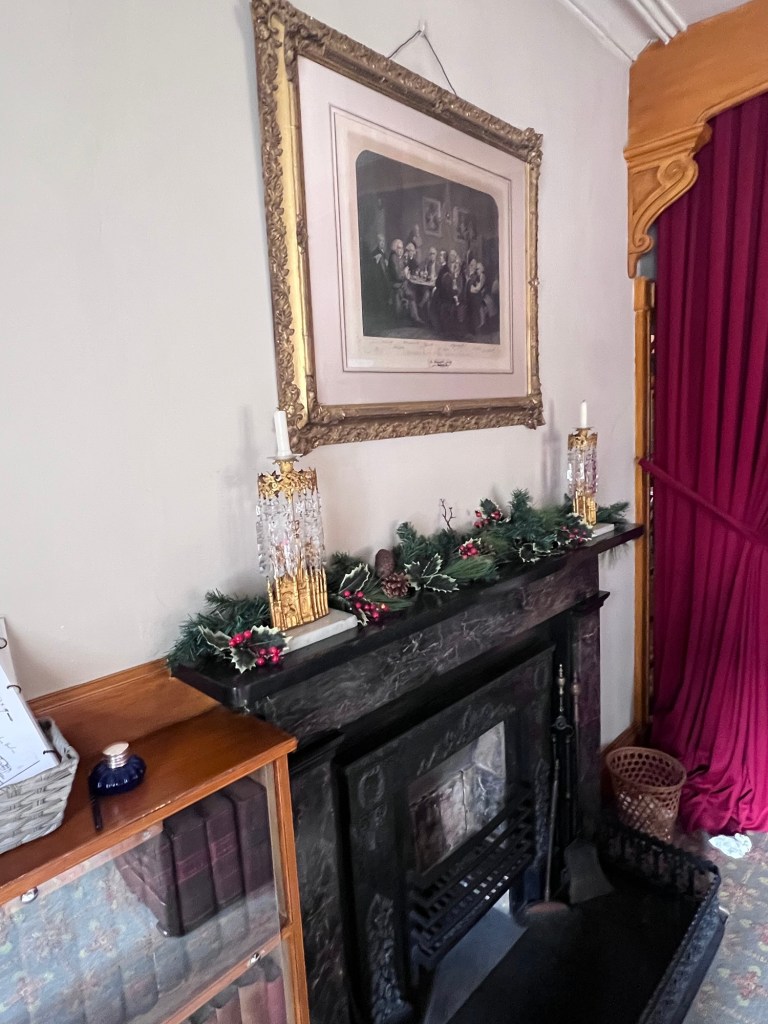
The fireplace in the author’s office

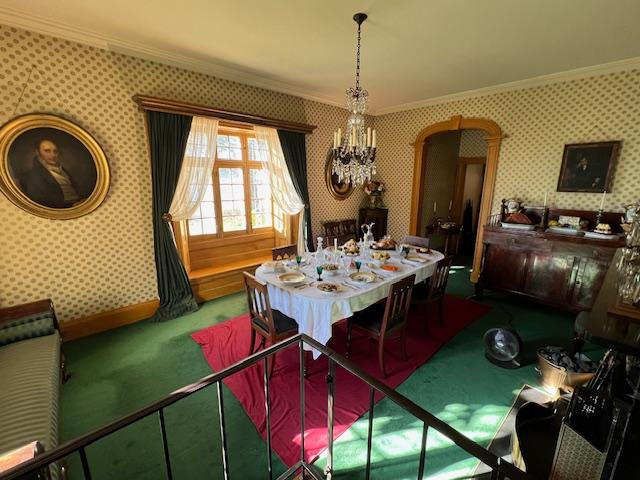
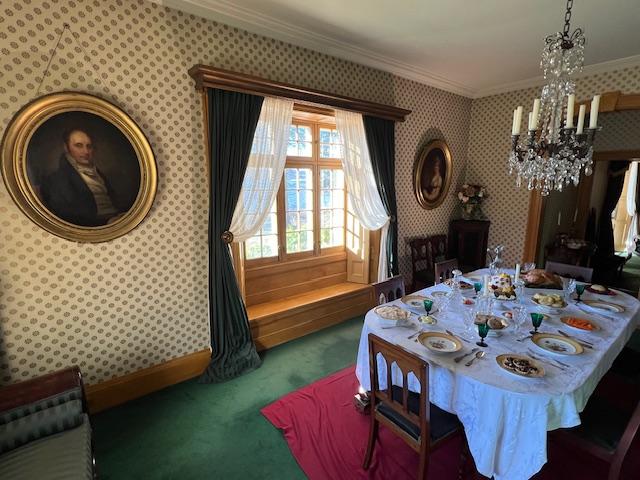
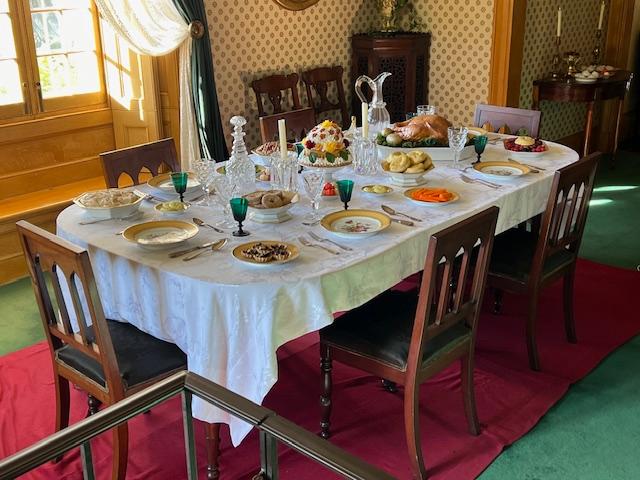
Nothing says entertaining than the dining room with a holiday lunch set with family china and all the delicacies of the time.
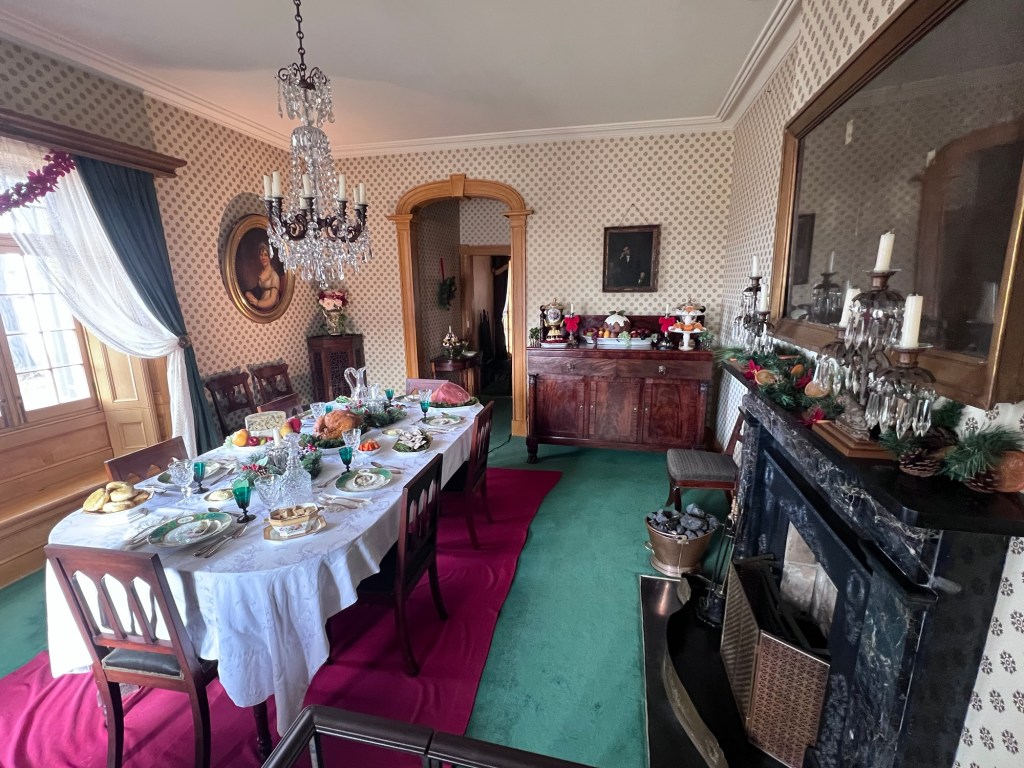
The Dining Room set for a holiday lunch
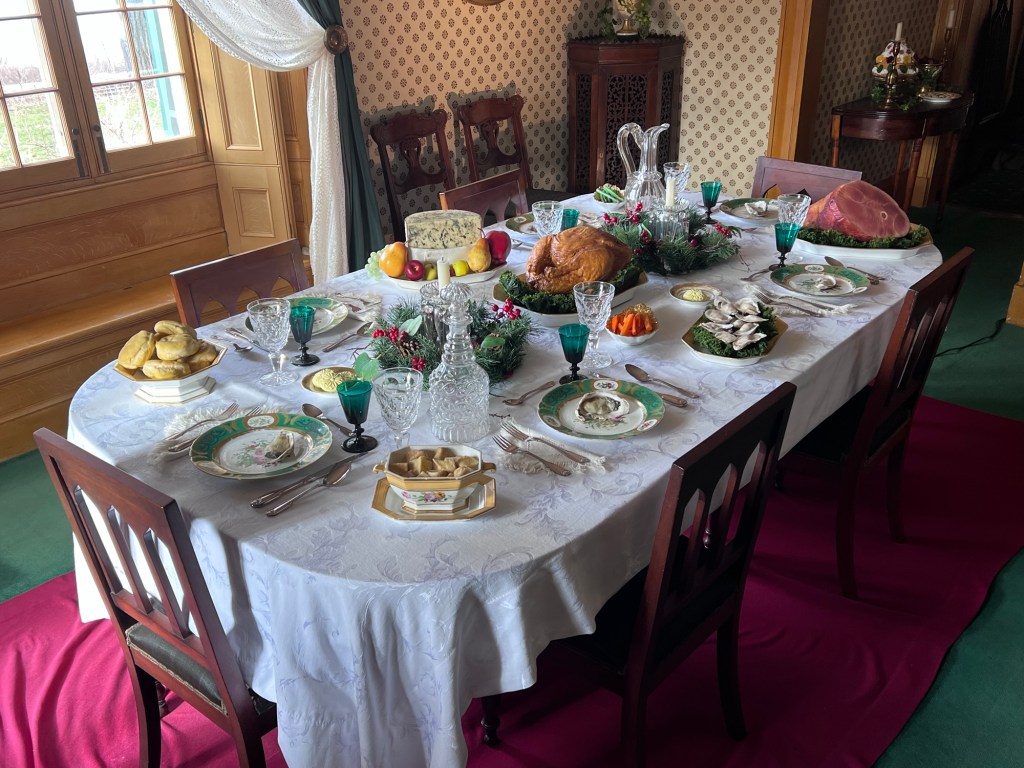
The Dining Room table set for Christmas lunch
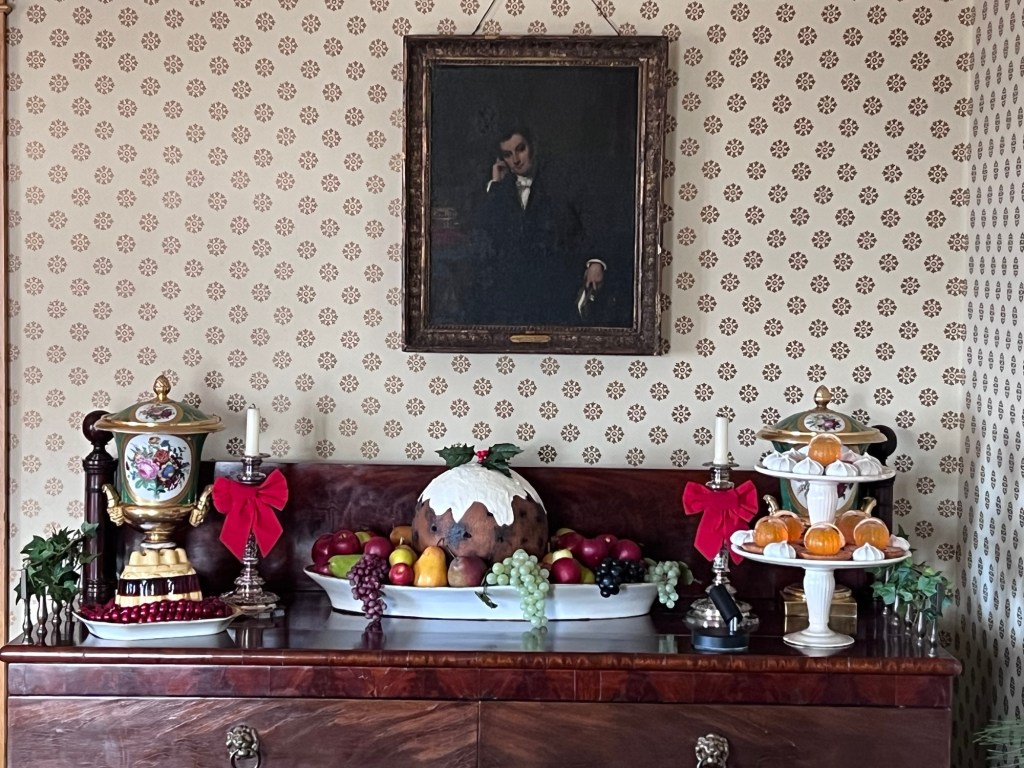
The Christmas desserts showcasing the Christmas pudding
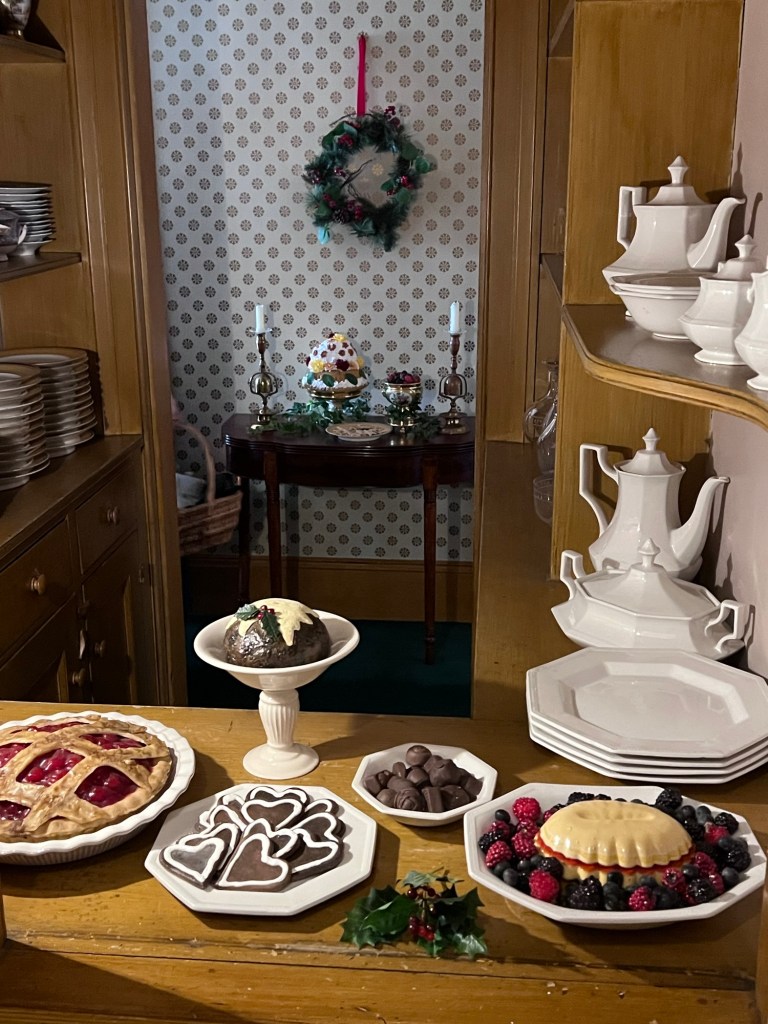
The pantry set for Afternoon Tea
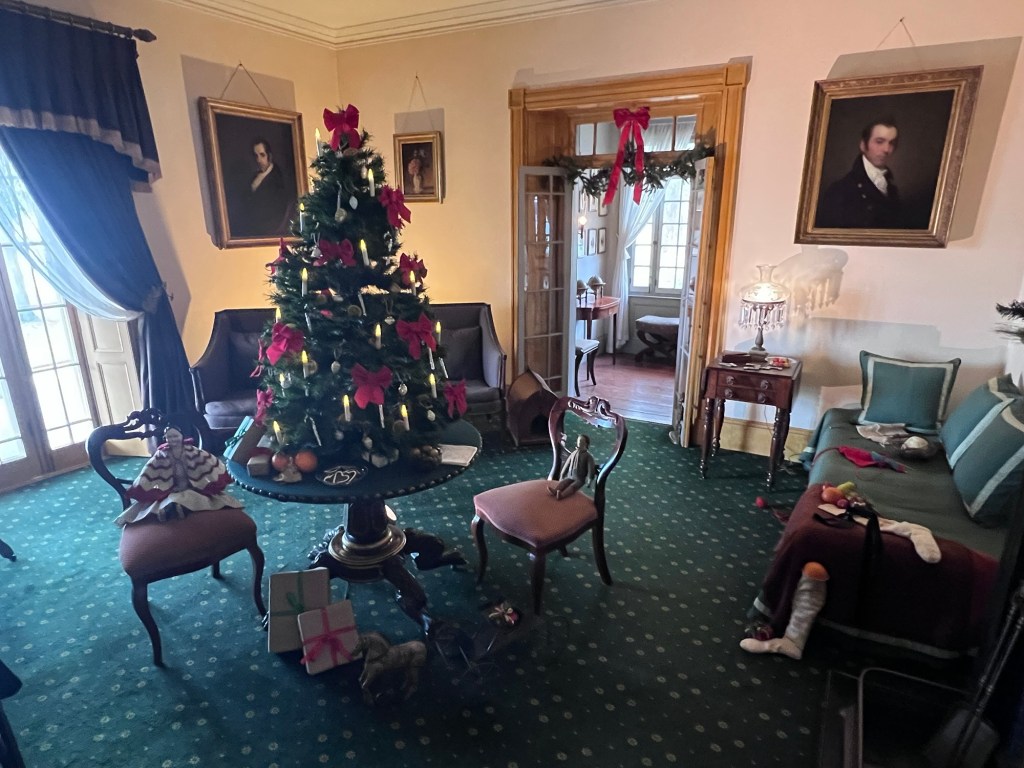
The Living Room decorated for the holidays with a Table tree, fashionable for the times.
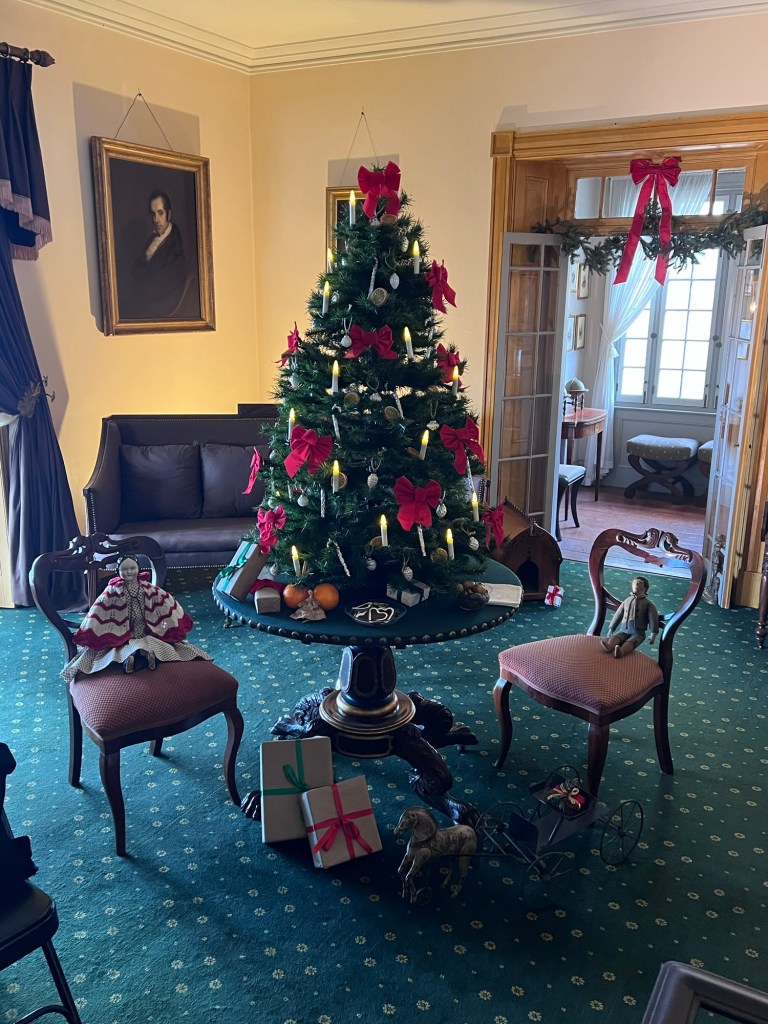
The Table tree in the Living Room
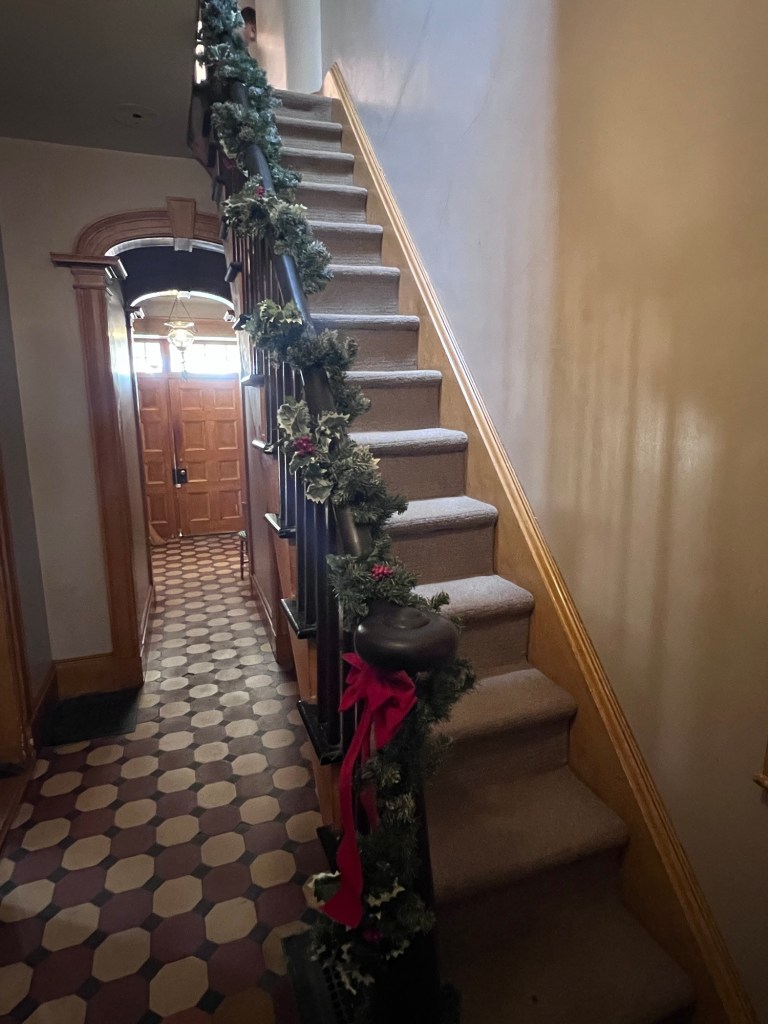
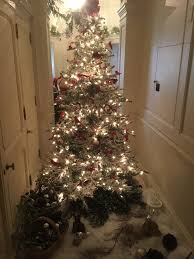
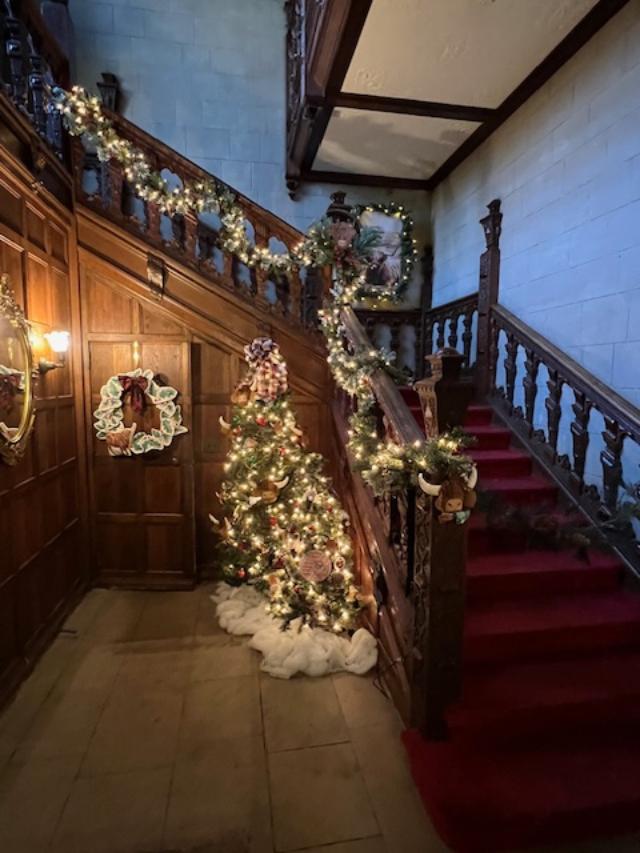
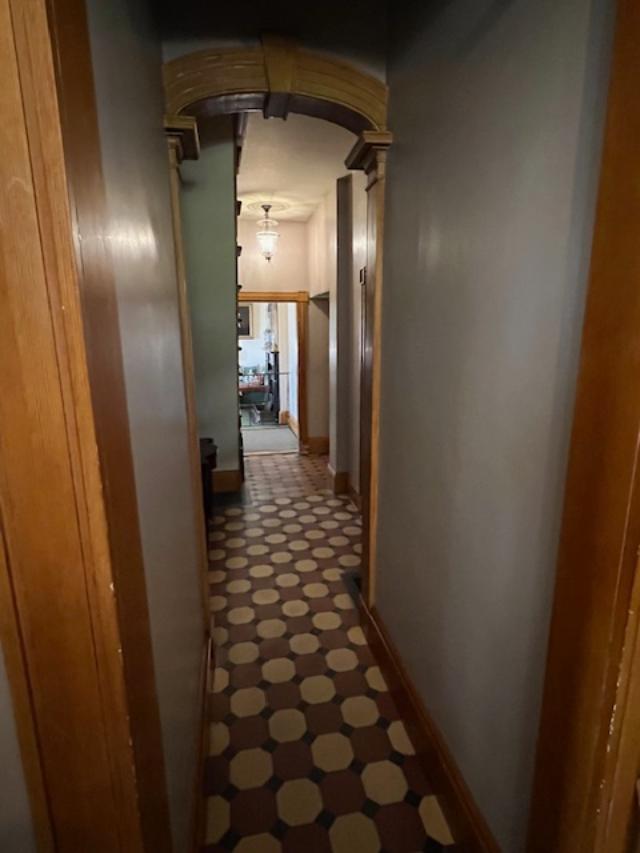
The hallway and stairs decorated for the holidays
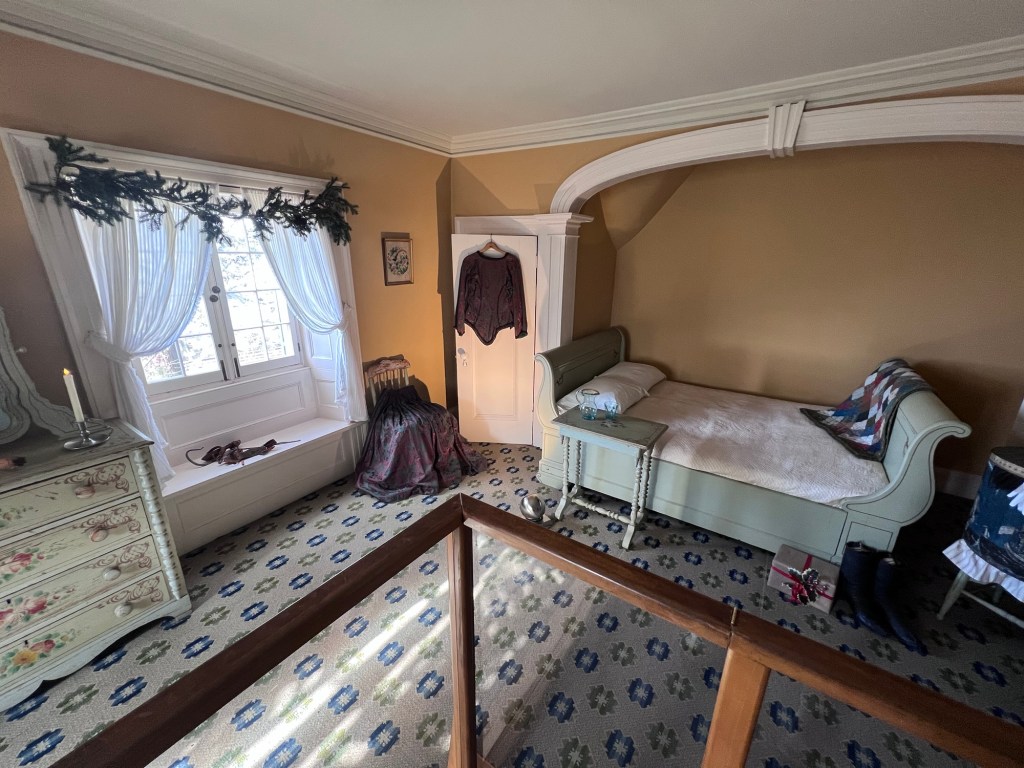
The French inspired bedroom
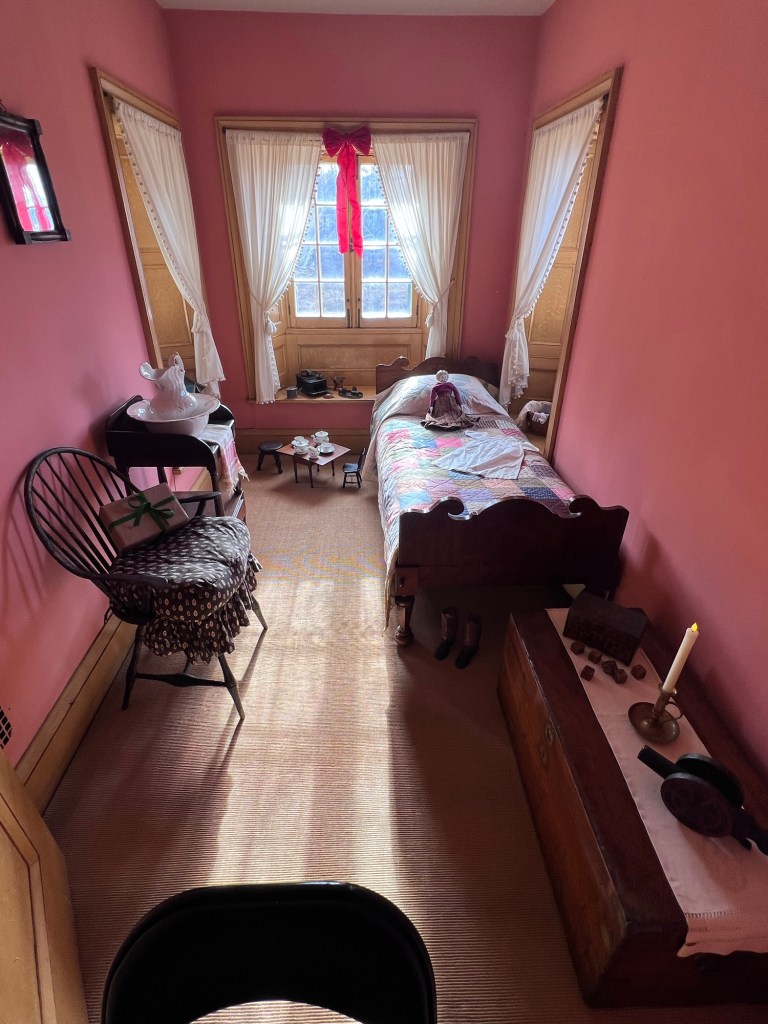
The Children’s room of a visiting niece
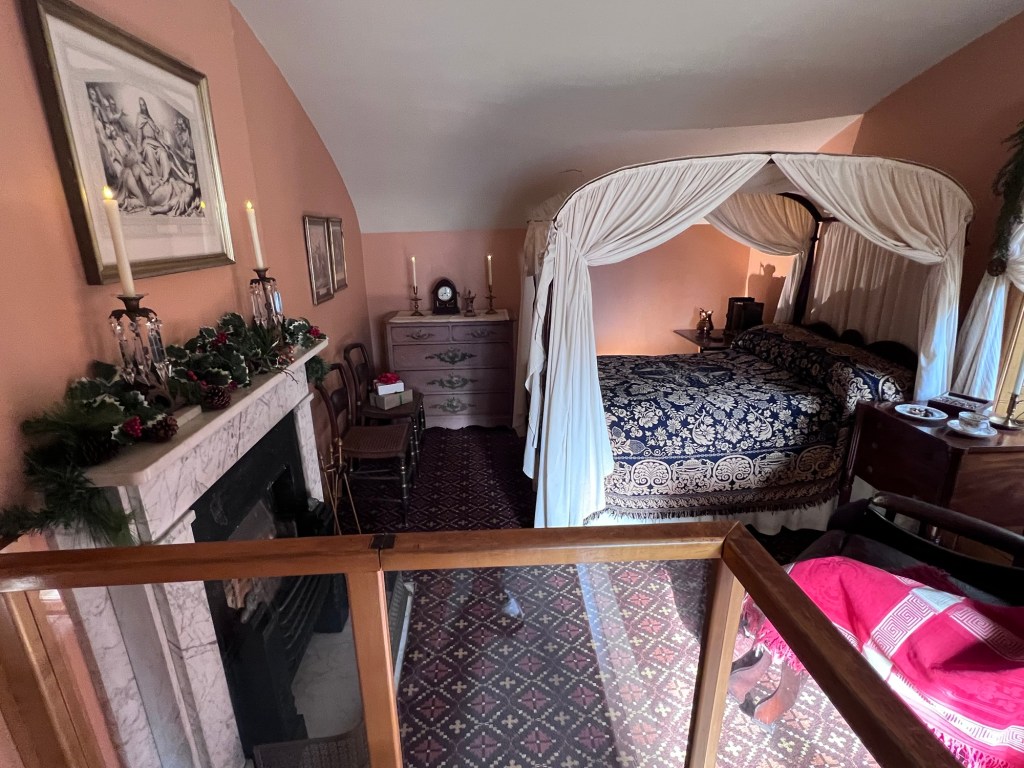
Washington Irving’s bedroom
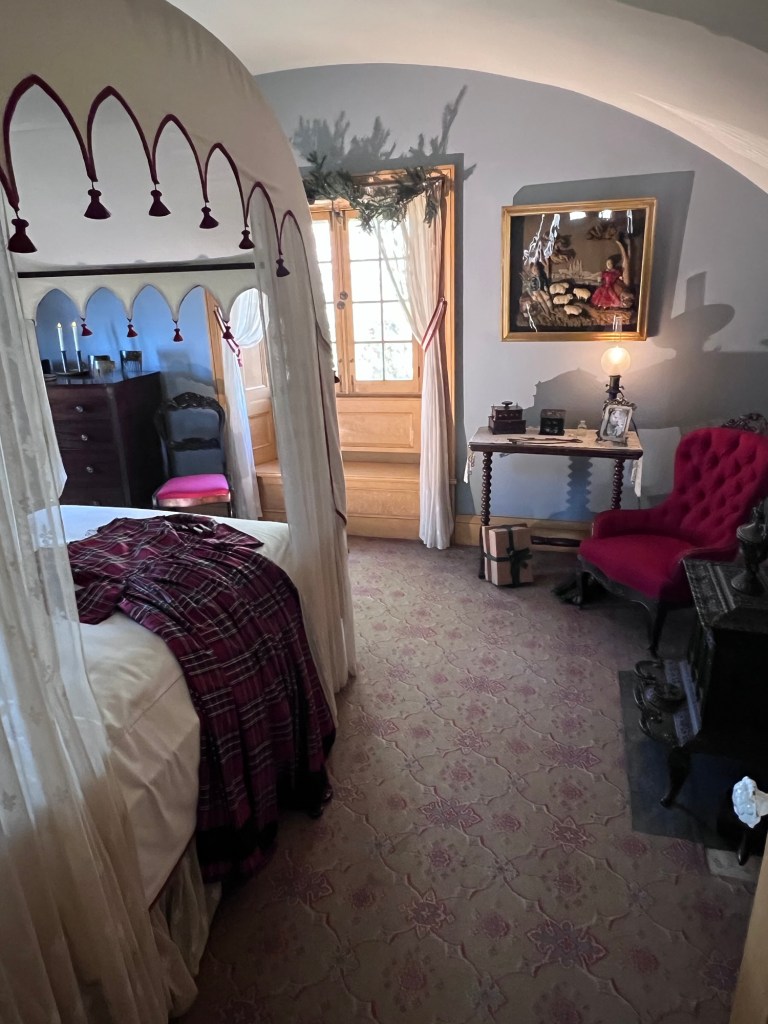
The niece’s bedroom of those that lived with him

My last part of the tour led to the behind the scenes of how the household runs with the kitchen, washrooms and sewing room.
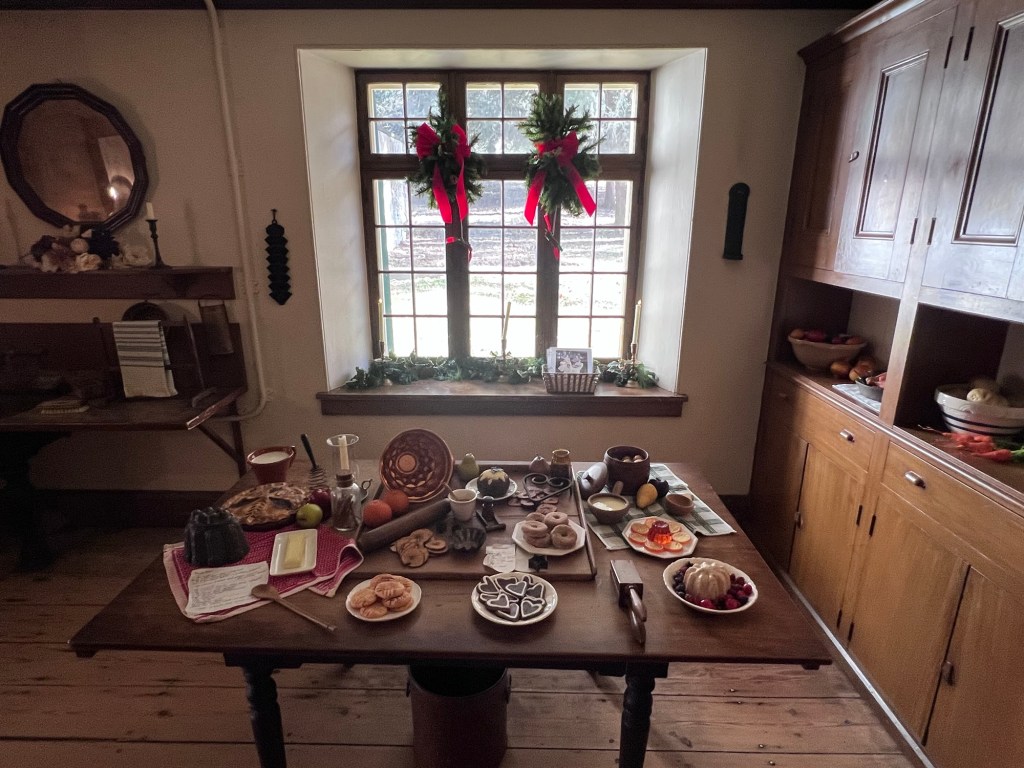
The Christmas dinner being prepared for the family
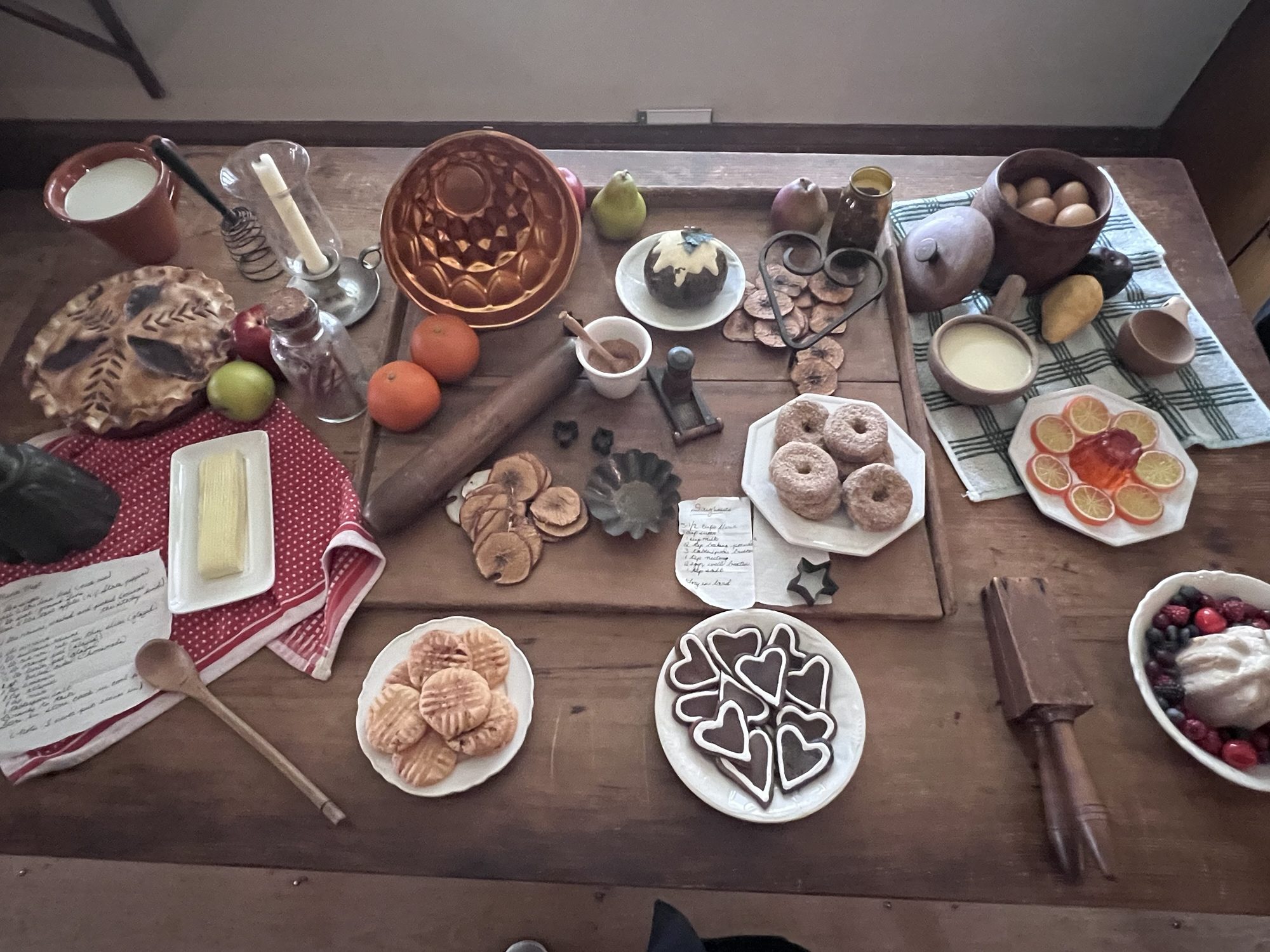
The delicious foods prepared for the family meals including cookies, pies and a favorite treat, doughnuts
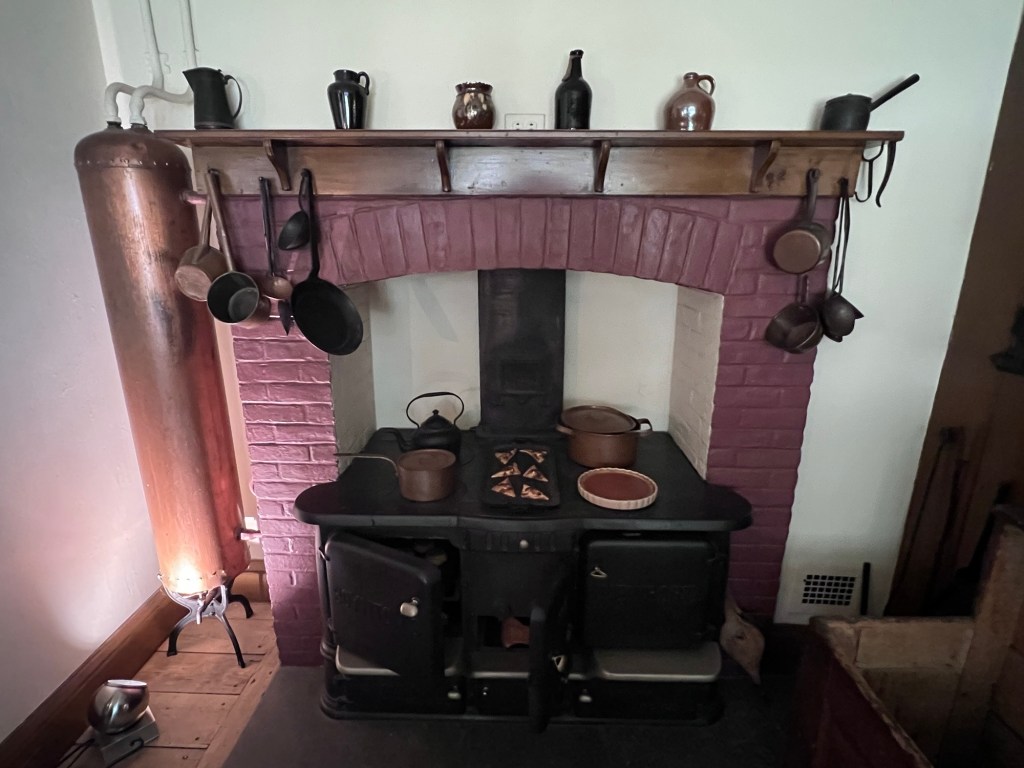
The kitchen stove where all the family meals were cooked
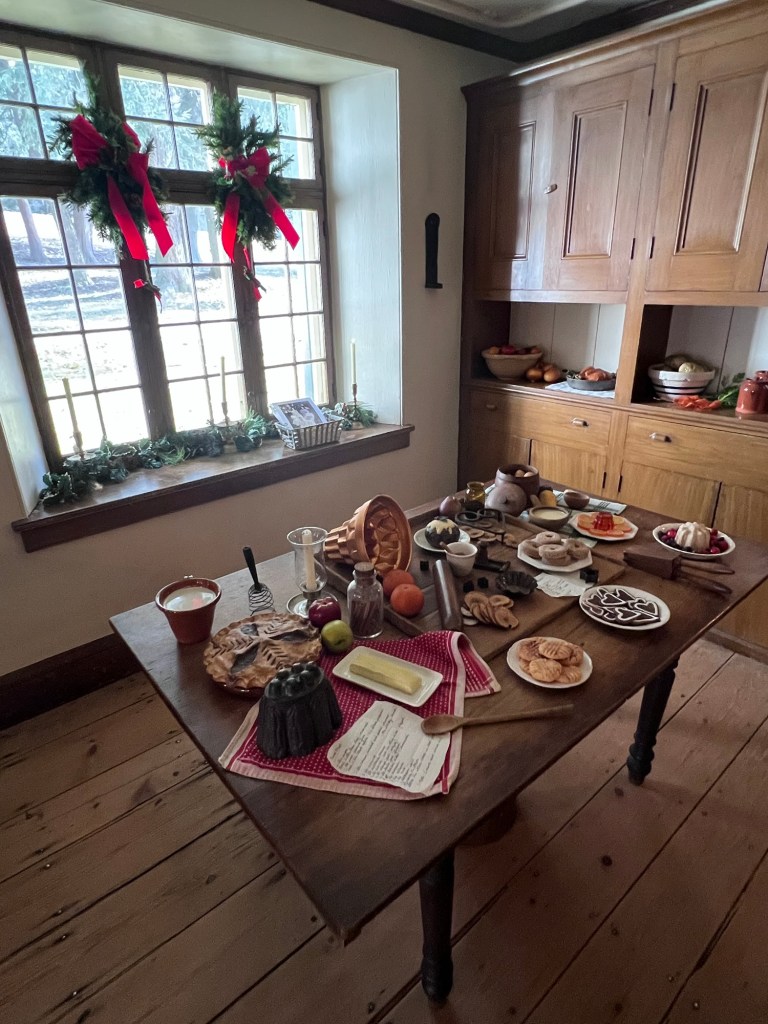
The house kitchen is decorated for the holidays
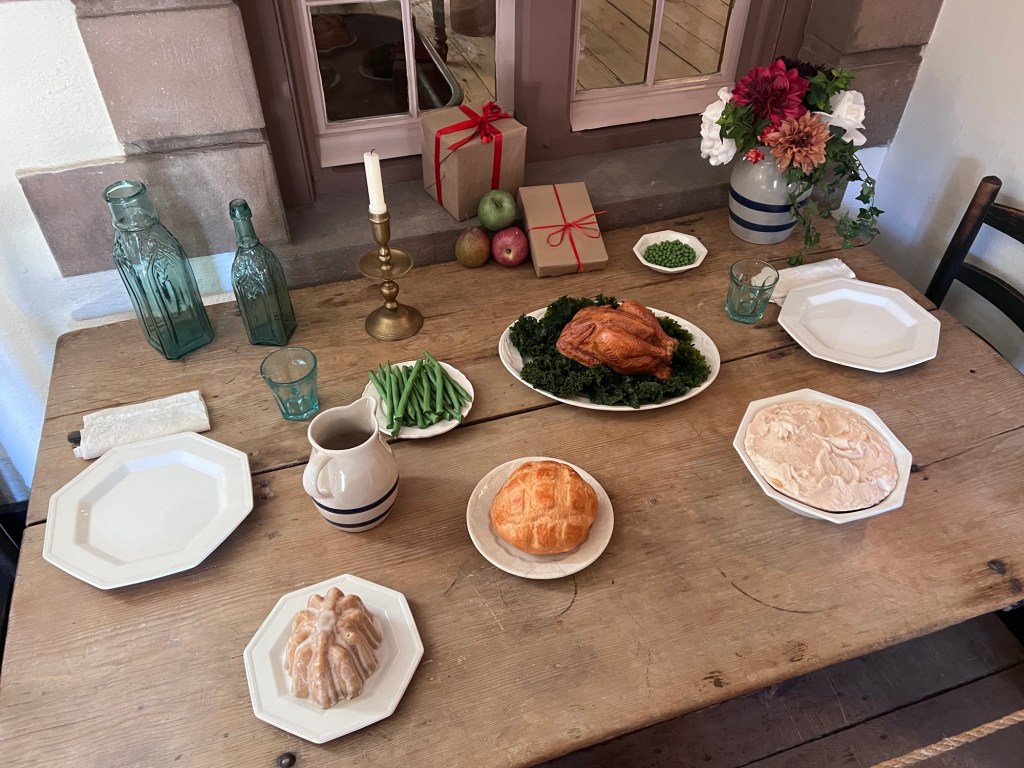
The staff holiday dinner was less elaborate but still very festive
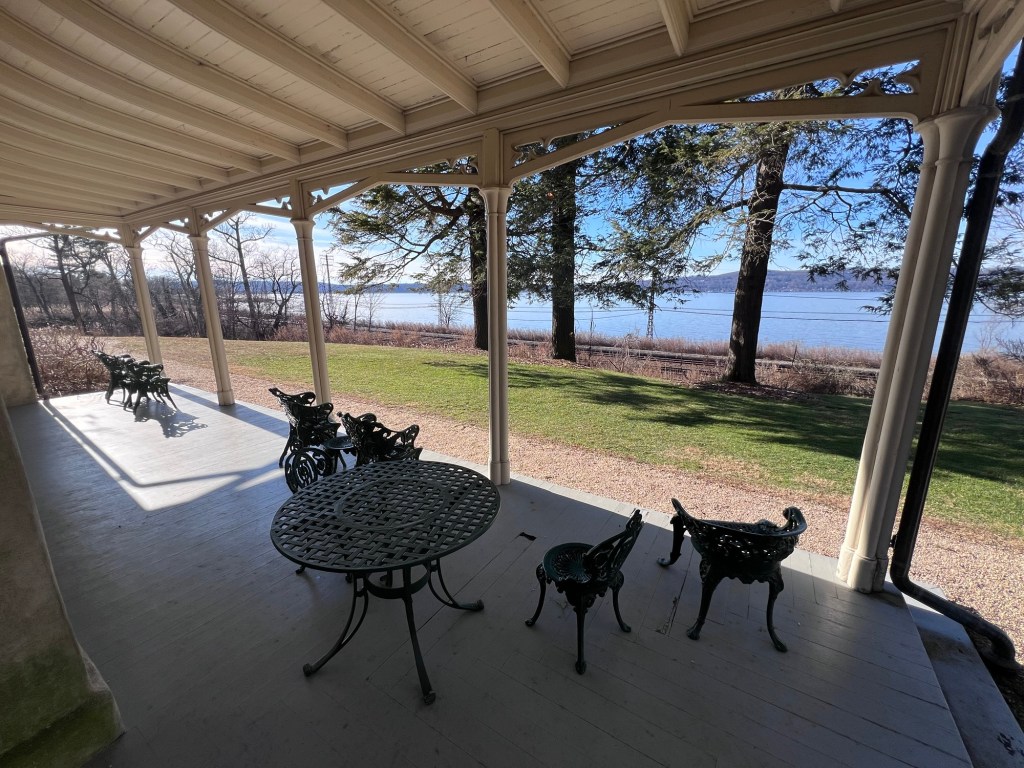
The patio off the kitchen overlooking the Hudson River

After the tour was over, I joined other guests making crafts such as Christmas crackers, creating ornaments and making pumices, the oranges studded with clovers.
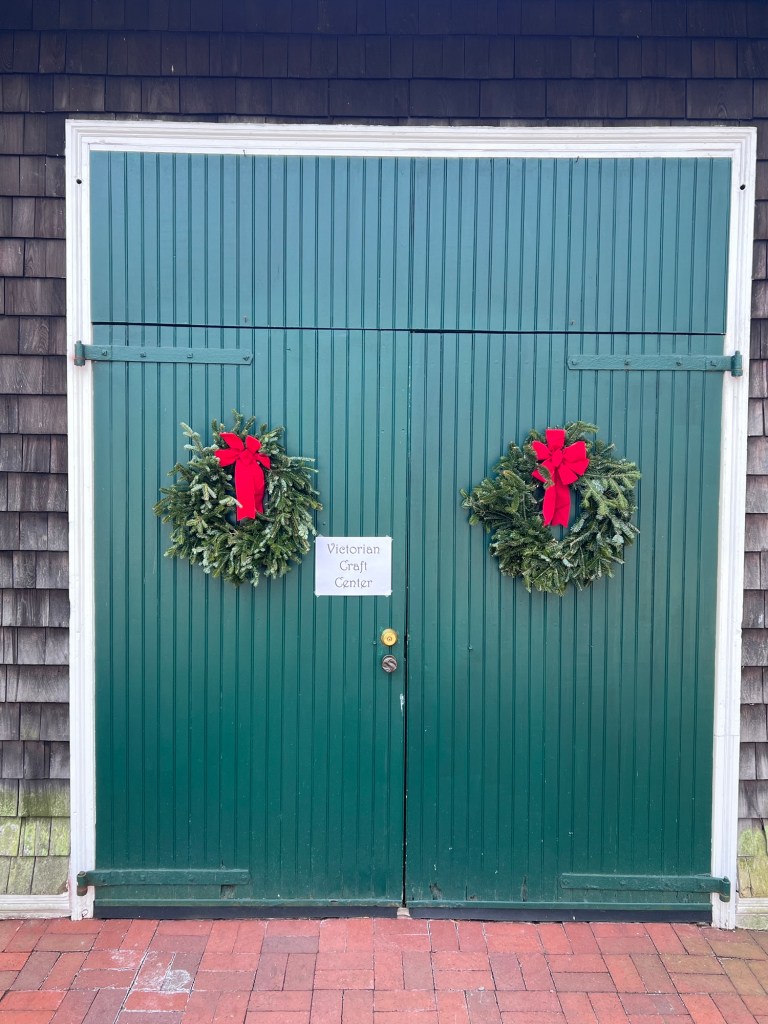
The festive barn where crafts were created
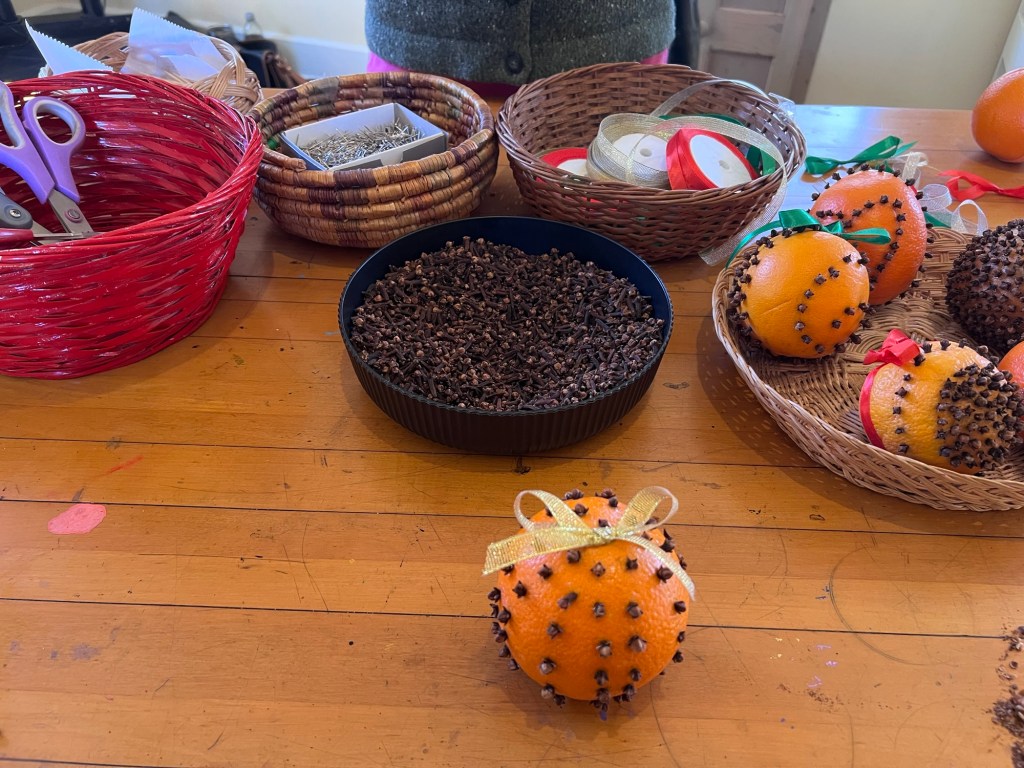
Me making my pumice for the holidays

Visiting Sunnyside during the holidays is a special trip to the past to join the Irving family in their celebration. Not as elaborate as some of the Victorian mansions of the Hudson River Valley but a look at a family whose celebration was similar to our own. Their traditions are the basis of our own of food, family and fun.
Van Cortlandt Manor                                                                  5 Riverside Avenue                                                           Croton-on-the-Hudson, NY 10502

Van Cortlandt Manor 5 Riverside Avenue Croton-on-the-Hudson, NY 10502

Van Cortandt Manor

5 Riverside Avenue

Croton-on-the-Hudson, NY  10502

(914) 366-6900

Open: See website for seasonal hours

My review on TripAdvisor (Manor and Pumpkin Blaze):

https://www.tripadvisor.com/Attraction_Review-g47560-d116391-Reviews-Van_Cortlandt_Manor-Croton_on_Hudson_New_York.html?m=19905

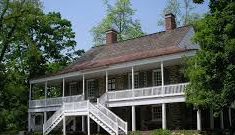
A trip to the Van Cortlandt Manor in Croton-on-the-Hudson is an interesting step back into the Colonial history of this country. During the summer, there is an interesting walking tour of the home offered usually from the end of July to Labor Day. Then the house is closed to prepare for the huge ‘Pumpkin Blaze’ during the months of October and November and then the house is shut down until the spring.

The house tour is interesting because it shows the home as a working farm and place of commerce for the family. This was not a weekend home for the family working in the City but crops being grown for shipping, vibrant gardens that supplied the house and a small tavern for travelers along the Albany Post Road as well as a place for shipping goods down the rivers.

van-cortlandt-manor-1.jpg

Van Cortlandt Manor

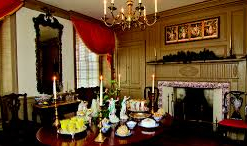
The home is furnished in the most modern furnishings of the time and you can see how the house reflected the needs of the family at that time. It was more of a home than a luxurious place to entertain. The furnishes are practical, very in fashion of the time and nicely decorated.
van-cortlandt-manor-ii.jpg

The Dining Room

The tour of the kitchens and storage areas show that even in what was the modern era was not such easy living without servants. The estate was somewhat self-contained with animals and provisions being raised on the land and there is even an area where fabric such as flax and cotton where spun and made into clothing.

Van Cortlandt Manor III.jpg

The kitchen dining area

The upstairs bedrooms show that the linens were under lock and key even with the servants and that the rooms were well-appointed and comfortable. A lot of the family heirlooms still reside in the house and it gives you a perfect look at what life must have been like when the family lived here.

Don’t miss the gardens as well. Some have been over-grown because of the lack of volunteers but still you can see the beauty of the flowers and trees around the house. The house sits right on the cross between the Croton and Hudson rivers and even though it is now grown in, you can see that the house stood at one of the busiest sections of Upstate commerce.

The Pumpkin Blaze-Hudson Valley Historical Association:

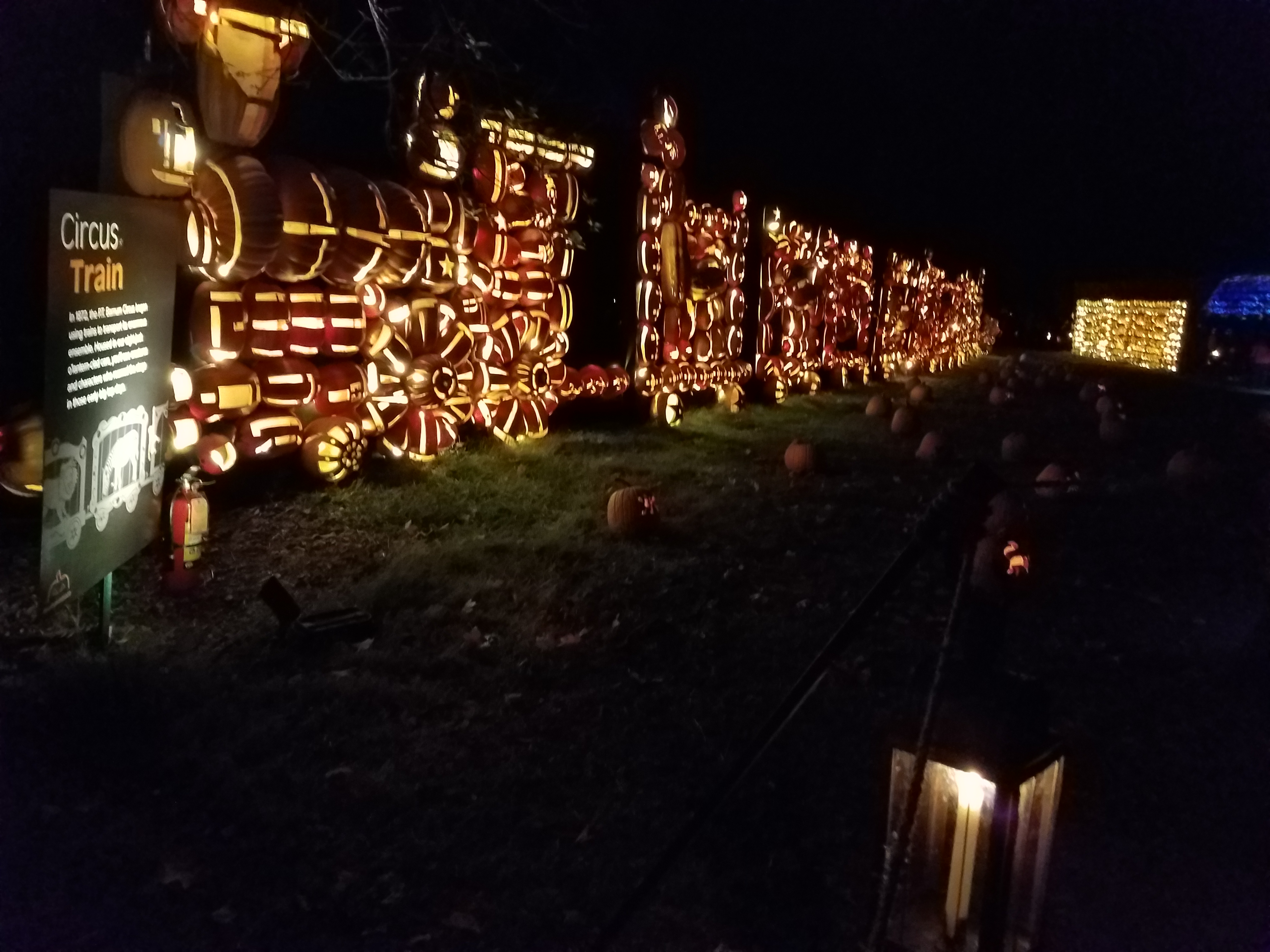
During the months of Halloween, there are thousands of pumpkins that line the walks and beautiful displays to see along the paths of the estate and the river. This event is sponsored by the Hudson Valley Historical Association and is one of their biggest fundraisers. Don’t miss this annual event every fall.

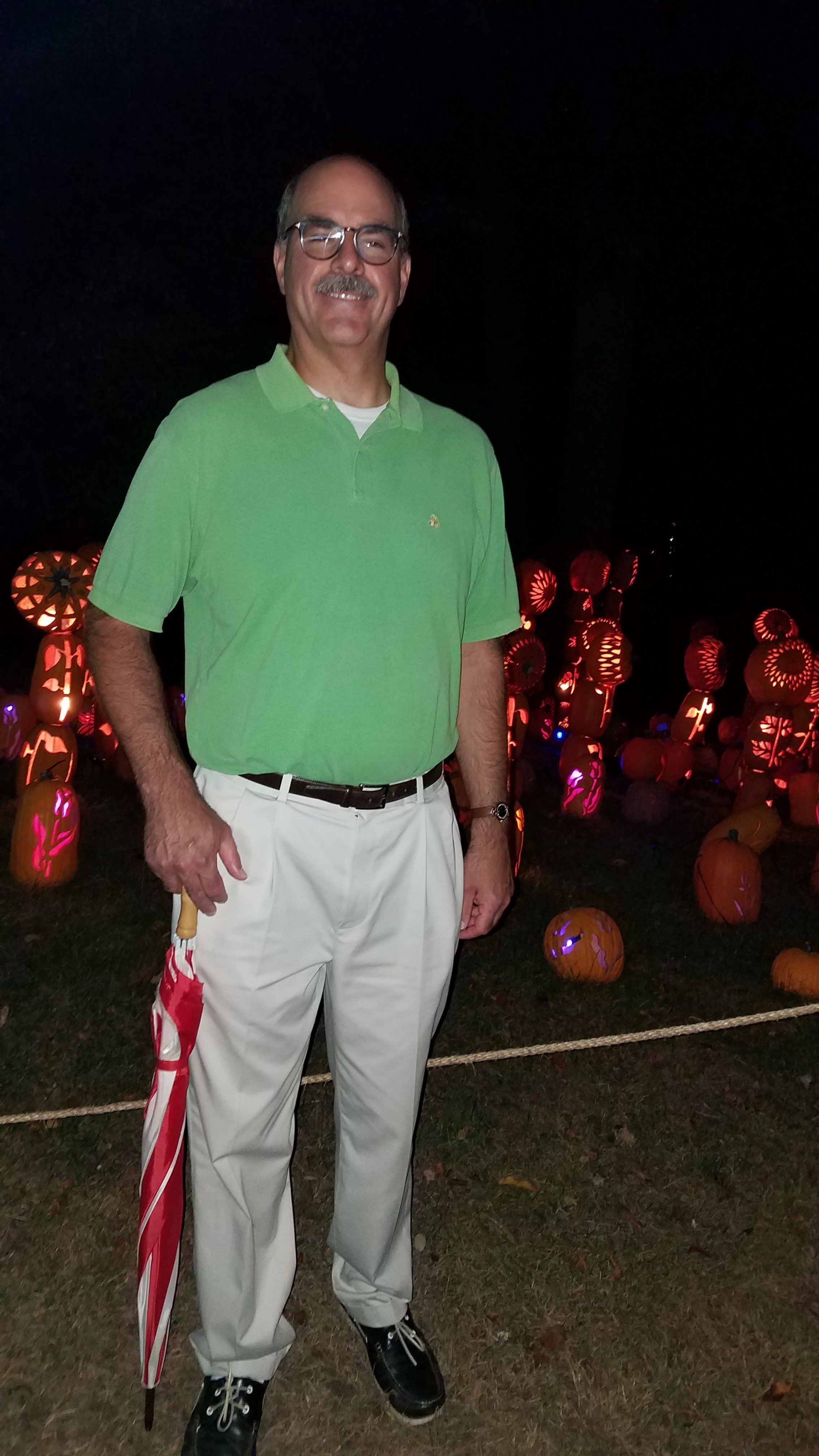
The Blaze is amazing!

The Pumpkin Blaze in 2019:

371.jpg

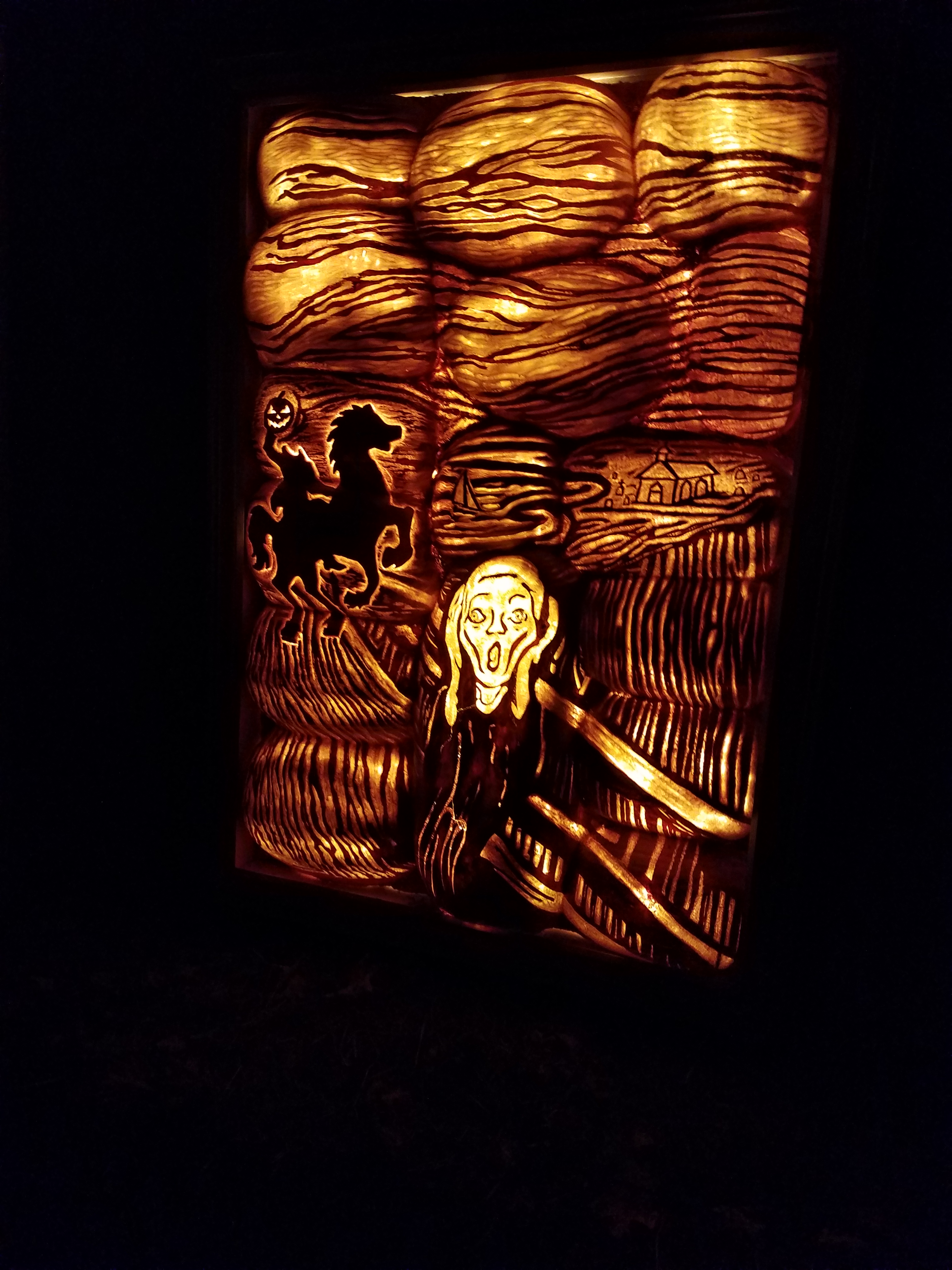
Some pictures from the MoMA Pumpkin Museum:

368

Their version of “The Scream”:

366
393

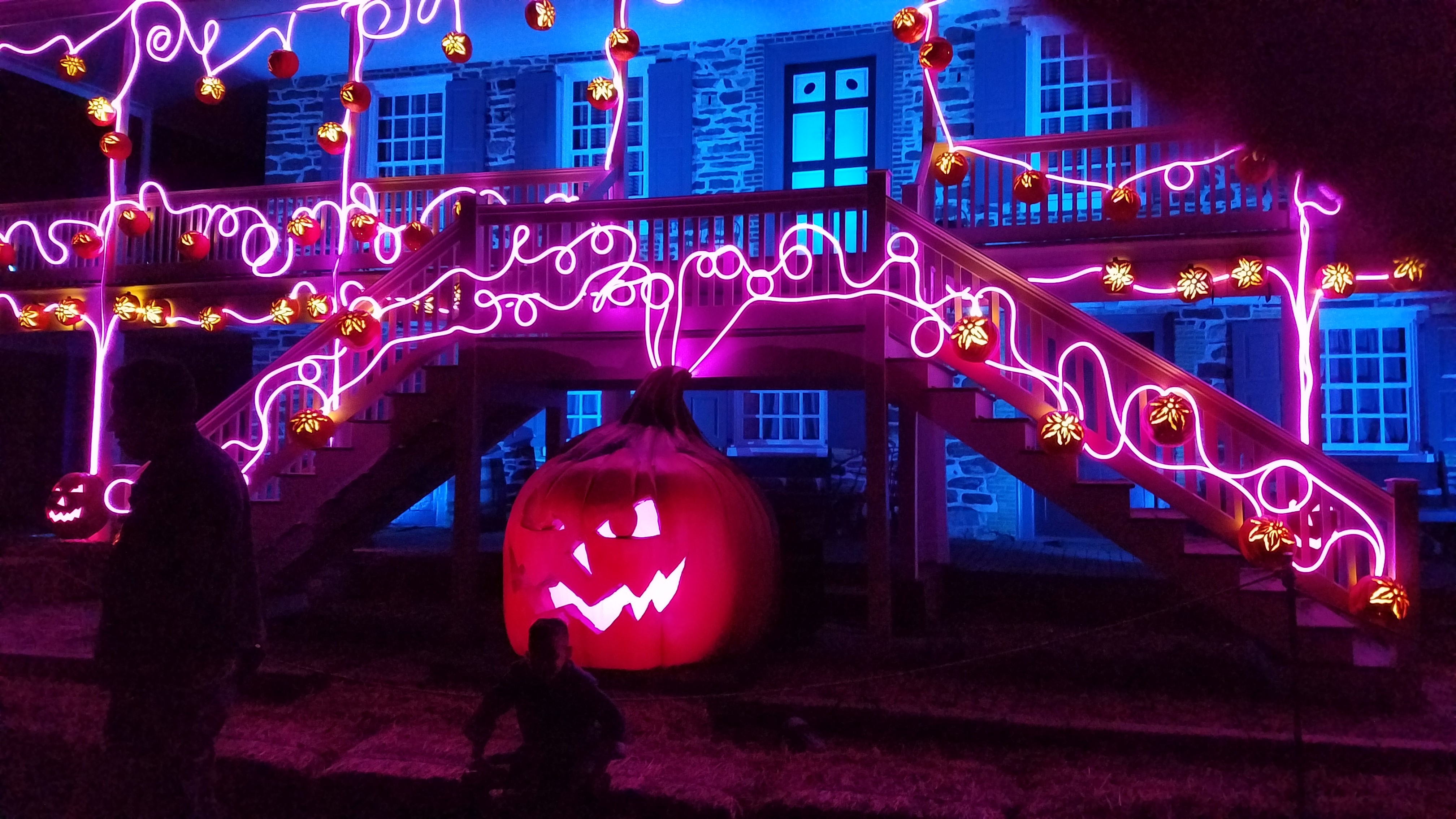
The Van Cortlandt Manor ablaze with lights and sounds

406

Justin Watrel at the Pumpkin Blaze

412

My Aunt and I at the Pumpkin Blaze in 2019

The Pumpkin Blaze in 2022:

Entering the Pumpkin Blaze in 2022

Pumpkins greeting you in all shapes and sizes

The Pumpkin Planetarium at the Pumpkin Blaze

Pumpkin Bee Hive

The “Terror Zee Bridge” at the Pumpkin Blaze

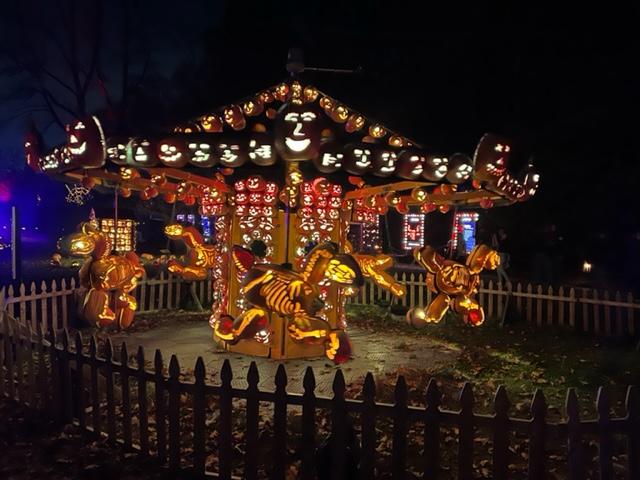
The Pumpkin Carousel

The Pumpkin Fire Services

The Headless Horseman is the theme of many October festivals in the Hudson River Valley

The History of the Van Cortlandt Manor:

By Royal Charter, Van Cortlandt Manor was originally a 86,000 acre tract granted as a patent to Stephanus Van Cortlandt in 1697 by King William III, stretching from the Hudson River on the west to the first boundary line between the Province of New York and the Colony of Connecticut, on the east, twenty English miles in length by ten miles in width in shape nearly a rectangular parallelogram forming, “The Manor of Cortlandt”.

The massive holding was acquired by direct purchase from the Indians, in part by Stephanus van Cortlandt, a native born Dutch gentleman of New York and in part by others whose titles he subsequently bought, this tract together with a small tract on the west side of the Hudson River opposite the promontory of Anthony’s Nose, which he also purchased from the Indians.

The Manor House was built sometime before 1732 but was not any owner’s principal residence until a grandson, Pierre Van Cortlandt, moved there in 1749. At the time the manor house was on a 1000 acre portion of the original tract.

Pierre brought his family to the estate in 1749 and established the manor into it most vibrant days, according to some. During this period, the manor was operating an apple orchard, dairy farm, a bee house, a kiln, a tavern and a carpenter and blacksmith shops. Van Cortlandt Manor was a self-sustaining community while Pierre and his family resided in the estate. At this time, tensions leading to the Revolutionary War were building and the manor would become a place of wartime retreat.

Pierre sided with the colonies and the manor was used to assist the Continental Army, using its resources to make food and supplies. Pierre was involved with military legislature and his son Philip was a soldier for the Continental Army. Eventually Pierre and his family vacated the manor in the thick of war. The manor was ransacked by the British Army and left in poor standing. Philip, becoming a brigadier general by the war’s end, returned and along with his sister, Catherine, brought the manor back to working order.

Van Cortlandt Manor became an essential stop on the route from New York to Albany in the years that followed the war. The mills were once again thriving and provided the community and travelers with food, supplies and lodging. Pierre and his wife did not return until 1803 once the manor was in full working order again. The manor was passed down in the family until it was sold to a non-relative, Otis Taylor in 1945. By this time, the property had lost its luster and was not the flourishing estate it had once been.
In 1953, John D. Rockefeller Jr. purchased the property and began restoring the manor to previous prominence. In 1961, Van Cortlandt Manor became registered as a National Historic Landmark.

Disclaimer: This information on the history of the house was provided by Wiki and I give them full credit on the information.

Places to Eat:

Located in the ShopRite Mall next to the Blaze:

The food at New Happy Garden in the Shoprite Mall is excellent and you can sit down in the restaurant. It is the perfect place for lunch or dinner before or after the Blaze. Their Lo Mein and General Tso’s Chicken are excellent. Please read my reviews on TripAdvisor.

New Happy Garden

440 South River Side Avenue

Croton on the Hudson, NY  10520

(914) 271-7888/8268

https://www.menupix.com/westchester/restaurants/3212099/Dong-Happy-Garden-Menu-Croton-On-Hudson-NY

Open: Sunday 12:00pm-9:00pm/Monday Closed/Tuesday-Saturday 11:00am-10:00pm

My review on TripAdvisor:

https://www.tripadvisor.com/Restaurant_Review-g47560-d4616434-Reviews-Dong_Happy_Garden-Croton_on_Hudson_New_York.html?m=19905

Skylands Manor-New Jersey Botanical Garden      5 Morris Road                                           Ringwood, NJ 07456

Skylands Manor-New Jersey Botanical Garden 5 Morris Road Ringwood, NJ 07456

Skylands Manor-New Jersey Botanical Garden

5 Morris Road

Ringwood, NJ  07456

(973) 962-9370

http://www.ringwoodmanor.org/Victorian-Christmas.html

Open: Check website for details

Fee: Check the website for details

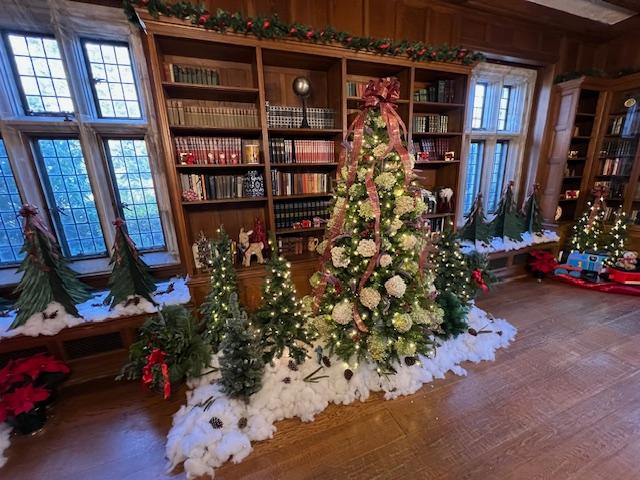
The Skylands Manor at Christmas time.

Note: The Skylands Manor is decorated for the holidays during the first week of December and only for one weekend as it used for a banquet facility the rest of the time and as a hotel. The first weekend of December is when local Gardening groups are assigned one room to decorate and they have one week to put it together, display their ideas and explain how they did it to the public.

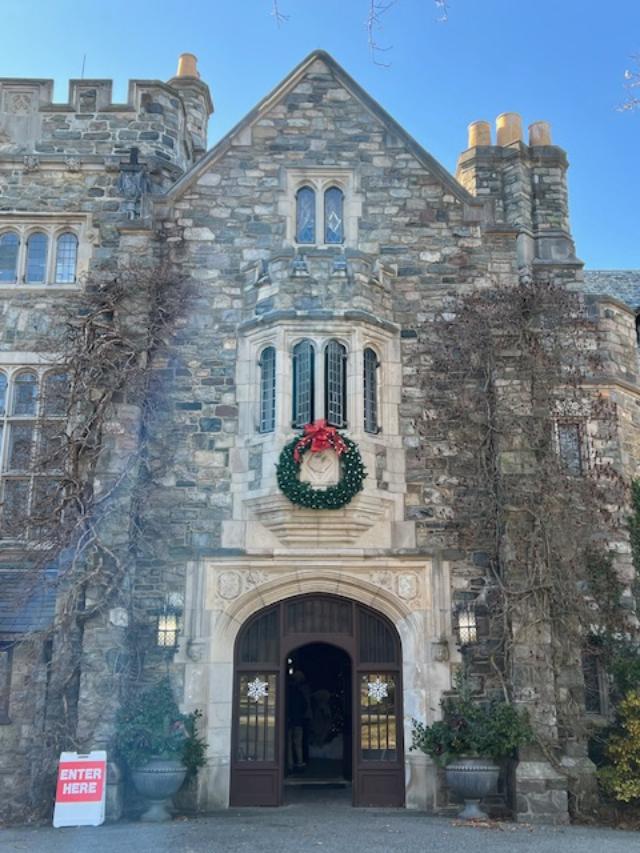
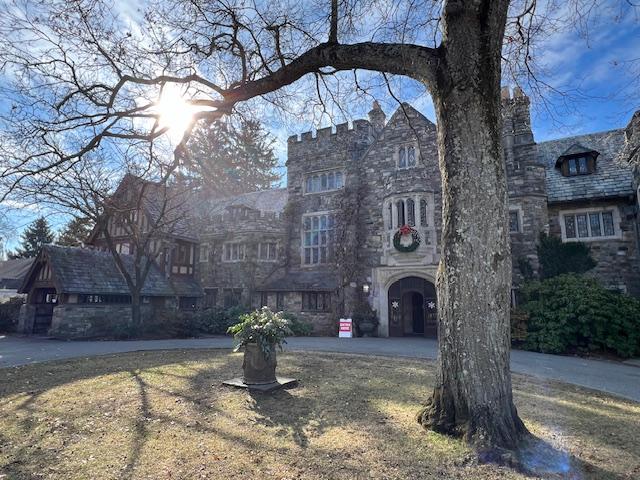
The front of the Skylands Manor during Christmas time.

The best day to go is the Thursday afternoon opening as it is the quietest day of the four day event with Saturday being the busiest. The best time on Thursday to come is in the morning.

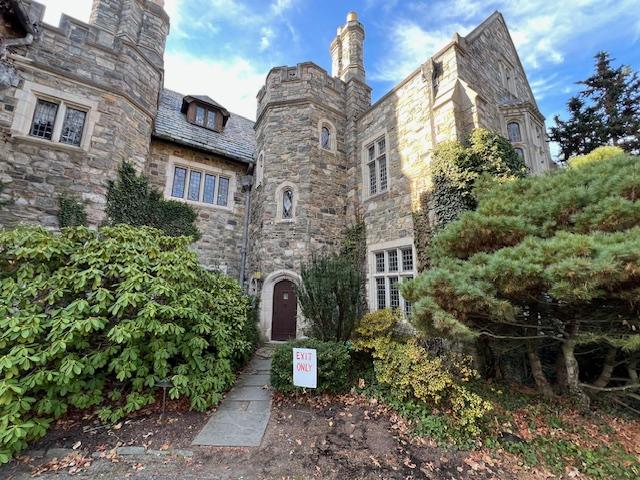
The side entrance to the Skylands Manor.

My review on TripAdvisor:

https://www.tripadvisor.com/Hotel_Review-g46774-d1140628-Reviews-The_Castle_at_Skylands_Manor-Ringwood_New_Jersey.html?m=19905

In 2018:

skylands manor ii

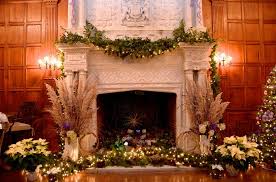
Each of the eleven rooms that were decorated for the event were amazing each with their own decor, docents and gardeners and theme to the room. The Entrance Hall was elegant with its garland and potted plants, the Octagon Hall used its space wisely with a series of trees and hot house flowers. The women who decorated it had a phenomenal sense of space.

skylands manor iii

The Teaneck Garden Club did a great job decorating the Library with an elegant Christmas Tree and vintage ornaments. Some of the gardeners also came in vintage clothing of the area.

skylands manor iv

Each room had its own personality and was a combination of Christmas decorations and holiday plants.

The Manor home decorated for Christmas.

In 2019:

In 2019, the decorations were not as elaborate as the previous two years. The snow storm before the event may have put a damper on a few of the groups decorating. Still the best day to visit the manor is Thursday afternoon as it is the quietest time and you can take the best pictures.

The two best rooms in the manor in 2019 were the Entrance Hall and Grand Staircase decorated by the Magnificent Seven, a group of volunteers whose theme was ‘The Secret Life of Gnomes’ and the trees and staircases were studded with gnomes, large and small, on the trees and wreathes surrounding the stairs.

The other room that was very impressive was the Center Hall whose theme was the “Enchanted Forest, full of little fairies and painted rocks and jeweled winged ornaments. When you looked at the detail work of the trees and table displays you could see the work that went into the decor. Each little fairy on the stands and trees had immense detail and took a lot of time. This display was done by the Friends of Laurelwood Arboretum in Wayne, NJ.

Skylands Manor 2019.jpg

Skylands Manor in 2019

The rest of the rooms in the manor were really pared down from 2018 and did not have the same elaborate details to them. The Library and Study did not have half of the display items that they did in the past.

The Carriage House on the estate.

The Carriage House was used as a restaurant and a gift shop during the event.

The fee to enter the home is still $10.00. The carriage house is being used for a cafe with Chicken Salad sandwiches and hot dogs with toppings. There are all sorts of crafts for sale.

The Carriage House for Lunch.

The menu at the pop-up restaurant at the Skylands Manor.

Watch the calendar for 2024 in early December for the next display.

The Display in 2023:

It was just breathtaking!

This was the first time I had visited the mansion

I was able to visit on Thursday morning and the crowds were very small. This is the best time to come to the Skylands Manor.

The front door leading inside of the house.

The house looked amazing as usual and because I came the first day in the morning, it was the perfect time to visit the manor while the crowds were away.

The entrance to the self-guided walking tour of Skylands Manor.

The tour was really spectacular in 2023. The whole house was decorated so beautifully.

The entrance to the house was decorated by the Passaic County Parks and Recreation. This display was based on the magic of the Scottish Highlands.

After passing through the entrance of the house, it was off to the Ladies Parlor of the home and the decorations of the Garden Club of Teaneck. Then off to the Dining Room that was decorated by the Master Gardeners of Bergen County.

The Dining Room was just breathtaking.

The Dining Room was festive with lots of lit Christmas trees.

The Dining Room was quite elaborate.

The Master Gardeners of Bergen County were very detail orientated with their display spreading the Christmas cheer as you entered the house. The next room was the Breakfast Room with beautiful sunlight coming into the room and views of the gardens that are dormant at this time.

The theme of the Breakfast Room was that of enchanted forests with sacred fairy springs and moss covered meadows. The Breakfast Room was decorated also by the Master Gardeners of Bergen County.

A beautiful view of the Breakfast Room done by the Master Gardeners of Bergen County.

The decorations of the Breakfast Room were quite elaborate.

The side of the Breakfast Room.

As I left the Breakfast Room, I entered The Center Hall where the many faucets of Robert Burns, the Scottish author of “My Heart is in the Highlands” themed room was decorated by the Ringwood Garden Club.

The Center Hall of the manor house.

The Center Hall led to the back porch that was decorated by the Demarest Garden Club.

The Back Porch of the house just off the Center Hall.

The room was done with the theme “We wish you Blythe Yule as you enter a pastoral view of Holidays in the Highlands”.

The next room I visited the was The Great Hall, which is a Jacobean style interior designed to impress with its arched beams, paneled walls and spectacular stained glass windows (Skylands pamphlet).

The Great Hall Christmas tree

The Great Hall by the stained glass window.

The Great Hall decorations by the fireplace off to the side.

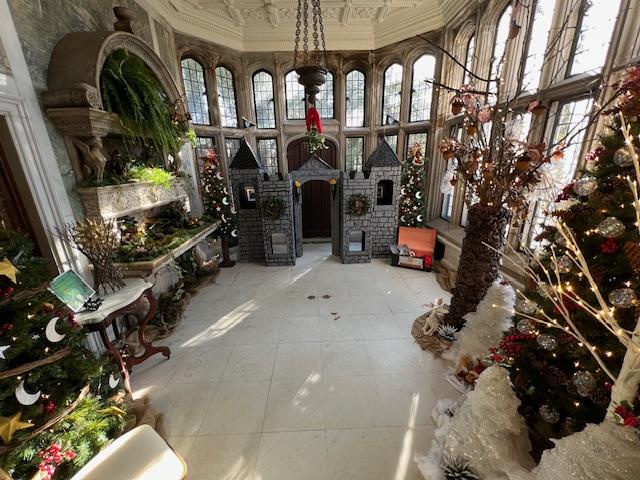
I next walked through The Octagonal Hall, that is the transition room between The Great Hall and The Withdrawing Room/Living Room. This was transformed into a boutique lounge with custom made furniture and decor. Festive pops of pattern and color create a merry, modern vibe (Skylands pamphlet). The Octagonal Hall was designed by Stephanie Graham and Diane Simon.

The entrance to the Octagonal Hall

The decorations of The Octagonal Hall

The statuary in the room beautifully embellished.

The Living Room was decorated to celebrate a Hip Highland Holiday and transformed into a boutique lounge with custom made furniture and decor. The Living Room/Withdrawing Room was designed by local artists Nicole Cohen (Teaneck), Brenda Gallagher (Upper Saddle River) and Lisa Williamson (Ridgewood).

The Living Room in full view.

We were joined by the Winter Queen in the Living Room who was roaming around the manor home engaging with all the guests who attended that morning.

A modern twist to the Christmas tree in the Living Room.

The display by the stained glass windows.

The festive trees of the Living Room

Transitioning out of the Living Room into the The Study, this room with its window seat is the perfect place to curl up with a good book or share stories of Christmas on a snowy afternoon. The study was designed by artist Linda Karen.

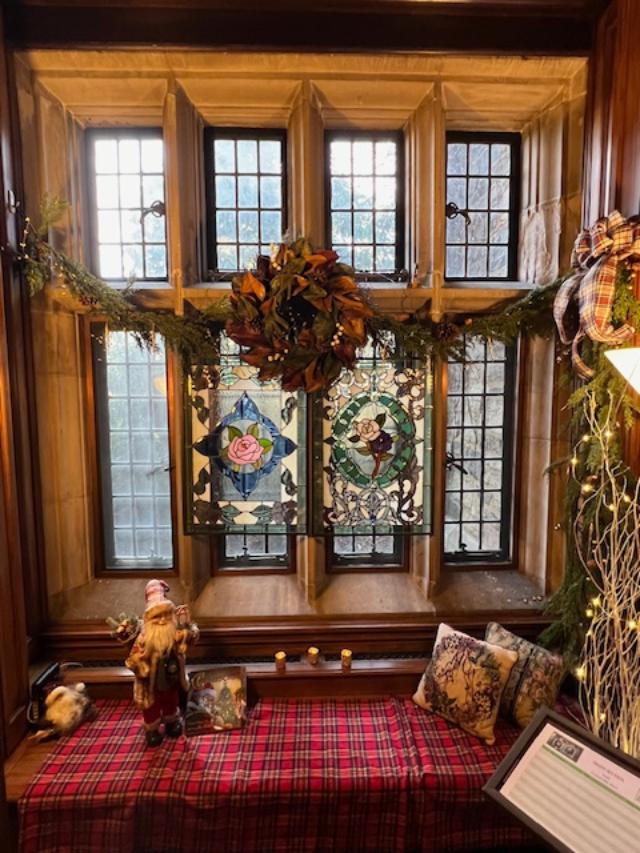
The window seat in The Study.

The dark wood paneling of The Study.

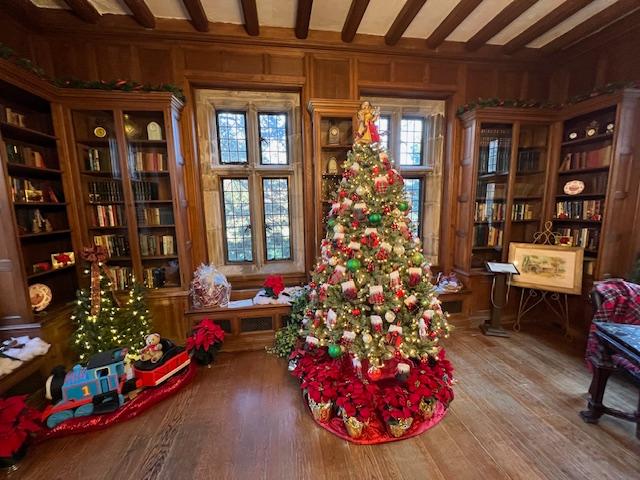
The last room on the tour was The Library that is resplendent with the holiday tree decorated with hundreds of lights and a myriad of ornaments representing the Scottish heritage of its owners (Skylands pamphlet). This room was designed by the Master Gardeners of Passaic County.

The Library at the Skylands Manor decked out for the holidays.

The Library in full view.

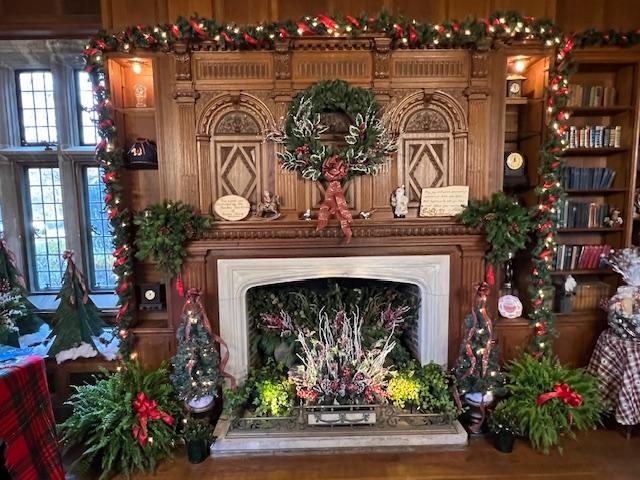
The fireplace in The Library is beautifully decorated for the holidays.

The Library in all its Christmas glory.

The Living Room was the last decorated room in the manor home for the holidays. I exited by the back door and then explored the grounds and the dormant gardens and look out areas of the estate that must look quite spectacular in the Spring and Summer months. I headed back to the Carriage House to look at the menu and explore the gift shop. This display is only open the first weekend of December and then for the rest of the year, the manor house is used for banquets and meetings and as a B & B. Until next year.

The front of the Carriage House where the restaurant and gift shop were located during the event.

History of the Skylands Manor & People:

The entrance to the manor that morning.

Clarence McKenzie Lewis bought Skylands in 1922 from the estate of Francis Lynde Stetson, who founded Skylands in 1891. Mr. Lewis was educated in England and Germany. While he was there, his widowed mother, Helen Forbes Lewis married William Salomon, founder of the New York banking house. Upon his return, Lewis attended Columbia University, where he received a Civil Engineering degree in 1898. In 1908, he married and bought a country place in Mahwah; it was there that Lewis became interested in horticulture.

The front of the manor home.

Helen Lewis Salomon, the mother of Clarence Lewis, was widowed in 1919. Not only thereafter, she and her bereaved son agreed to a joint project; she wanted a Tudor-style showplace; he wanted plants and gardens. Mrs. Salomon worked closely with the architect on Skylands Manor but she died in 1927 before its completion.

The entrance to the Walled Gardens.

John Russell Pope (1874-1937) “an architect born to work, in the grand style” was educated at City College, Columbia University, the American Academy in Rome and the Ecole des Beaux Arts in Paris. He trained under Bruce Price, the master builder of Tuxedo Park. Pope designed many outstanding public buildings, such as the Jefferson Memorial and the National Gallery of Art.

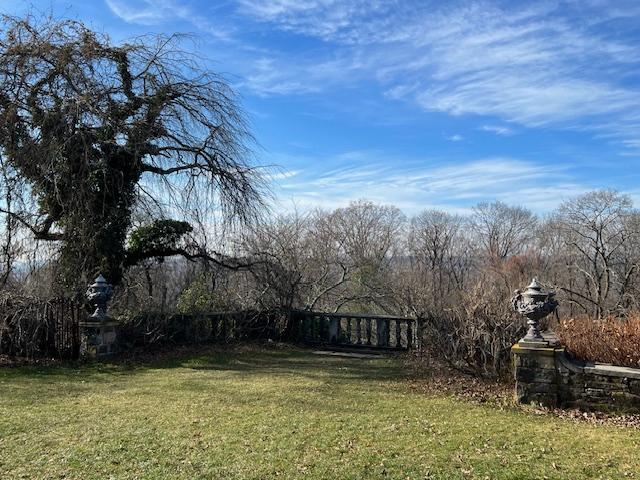
The estate gardens overlooking the mountains and the valley below.

Tutor Architecture originated in England in the late Gothic period and continued to be popular into the Renaissance. It features half-timbering on the exterior, crenelated walls, large groups of rectangular windows, oriel or bay windows and intricate chimney complexes The interiors usually had large central halls, wood paneling, molded plaster ceilings and elaborately carved staircases. Tudor Revival became a popular style for the elegant country houses of wealthy Americans.

The estate grounds.

The builder of Skylands was the Elliot C. Brown Co., of New York City, which also built the country homes of Franklin Delano Roosevelt at Hyde Park and E. Roland Harriman (Arden House).

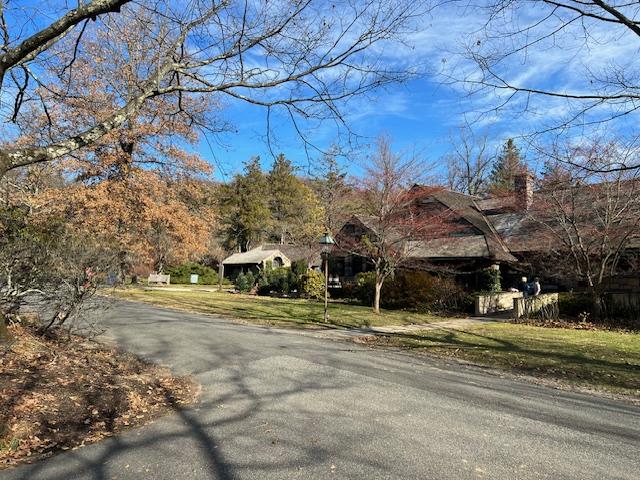
The house as you enter the drive.

Samuel Yellin (1885-1940) decorative metal designer and craftsman, who performed to call himself “the blacksmith”, fashioned the lanterns. electrical fixtures, lamps, gate, and spiral staircase rail for Skylands Manor.

The side of the estate that afternoon in the late fall.

Native Granite for the exterior walls of Skylands was quarried at Pierson Ridge above Emerald Pond in the eastern part of the property in Bergen County.

Mrs. Salomon purchased a collection of antique Stained Glass Medallions from an English collector. The 16th century German, Bavarian and Swiss panes were set in leaded windows by Heinegke & Smith of New York City.

The entrance to the Botanical Garden.

Disclaimer: This information on the details of the history of Skylands Manor was taken directly from their pamphlet and I give them full credit for it. Please call the manor for times that it is open as it is used a banquet/catering facility and a B & B.

Ringwood Manor-A New Jersey State Park      1304 Sloatsburg Road                             Ringwood, NJ 07456

Ringwood Manor-A New Jersey State Park 1304 Sloatsburg Road Ringwood, NJ 07456

Ringwood Manor-A New Jersey State Park

1304 Sloatsburg Road

Ringwood, NJ  07456

Phone: (973) 962-7031/Fax: (973) 962-2247

http://www.ringwoodmanor.org

http://www.ringwoodmanor.org/

http://www.ringwoodmanor.org/tours.html

Fee: Adults $3.00/Children 6-12 $1.00/Children 5 and under Free

Donation for the holidays: $10.00

Open: Please see website for details during the seasons.

Review on TripAdvisor:

https://www.tripadvisor.com/Attraction_Review-g46774-d9564482-Reviews-Ringwood_Manor-Ringwood_New_Jersey.html?m=19905

I have visited the Ringwood Manor during the Christmas holidays over the last four years and it keeps getting better. Each room in the house is tastefully decorated for the holidays. The West Milford Garden Club does an excellent job decorating every year and in the post-COVID environment, it is nice to see such a beautiful and well thought out display for Christmas.

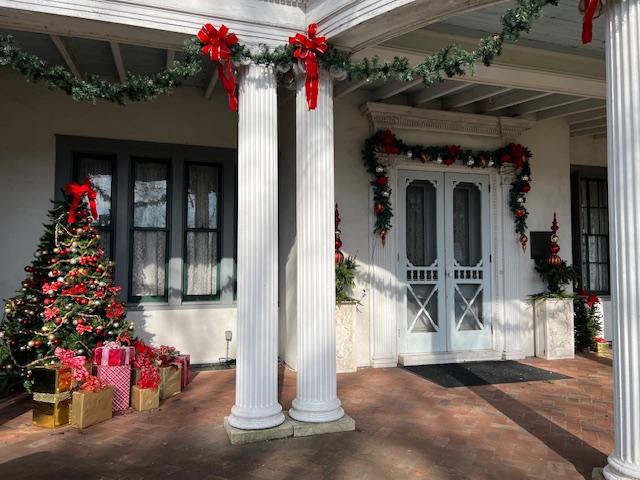
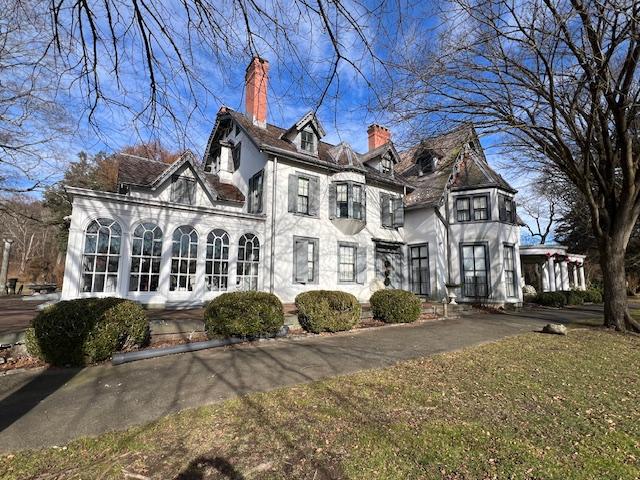
The outside of the house was decorated with garland and ribbons and welcomed visitors with Christmas cheer.

The entrance of Ringwood Manor.

The entrance to the estate.

The patio of Ringwood Manor.

The outside of the house was tastefully decorated in garland and bows.

The decorated front door on the Ryerson side of Ringwood Manor.

The decorated carriage house.

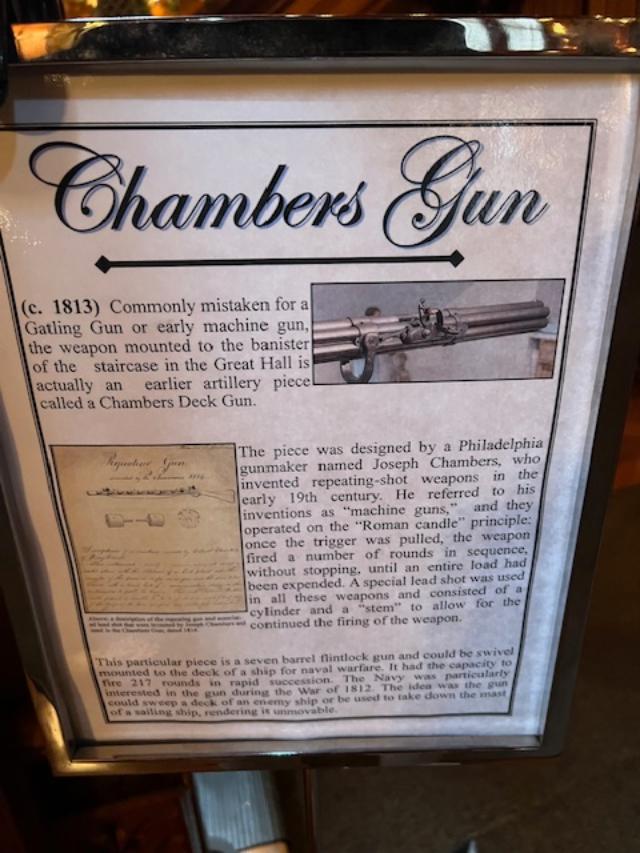
When you walk into the home, the first rooms is decorated tastefully around a collection of antique guns and hunting equipment. The Great Hall was decorated with garland and ornaments with a large tree in the corner.

The Great Hall of the Ringwood Manor when you enter for Christmas.

The Great Hall upon entering.

The Chamber Gun display.

The Chamber Gun display in the Great Hall of Ringwood Manor.

The Great Hall fireplace decorated for the holidays.

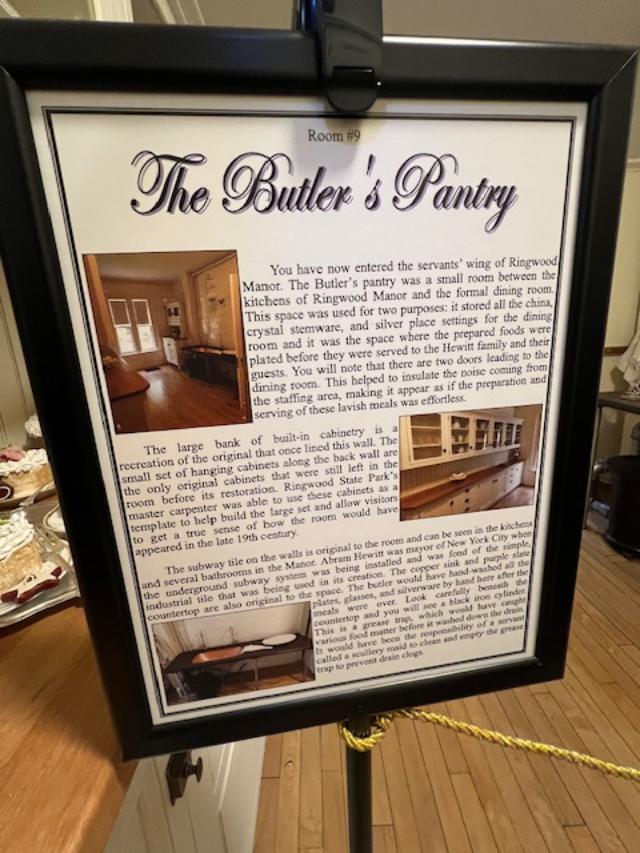
The formal dining room was set for Christmas dinner for the family after church. The elegant china was set on the table with poppers and small Christmas gifts for the guests. The side boards were set with the dinner entrees and sides for the family meal. There was a little discussion of how the Hewitt family would entertain during the holidays and in 2019 and in 2023, they opened up the kitchen and Butler’s pantry for touring.

The Hallway leading to the formal Dining Room.

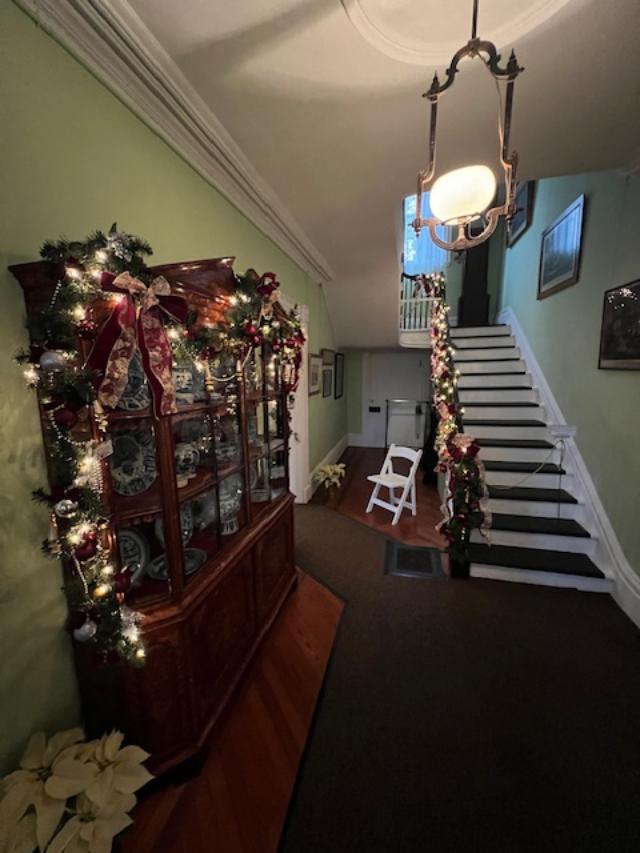
The decorated staircase in the Great Hall

The Great Hall hallway

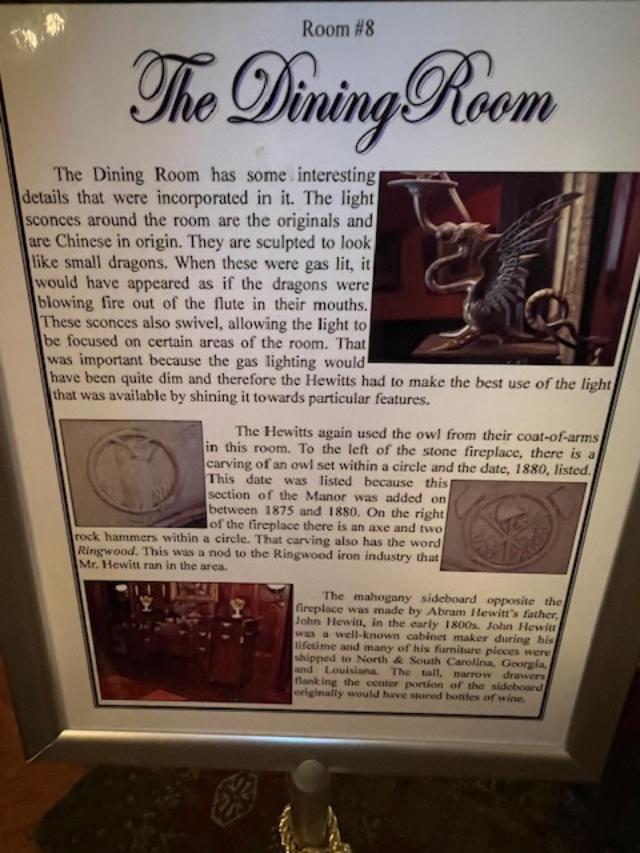
The Dining Room sign

The Dining Room at the Ringwood Manor.

The Dining Room set for Christmas dinner.

Dining Room set for Christmas dinner beautifully.

The details of the Dining Room

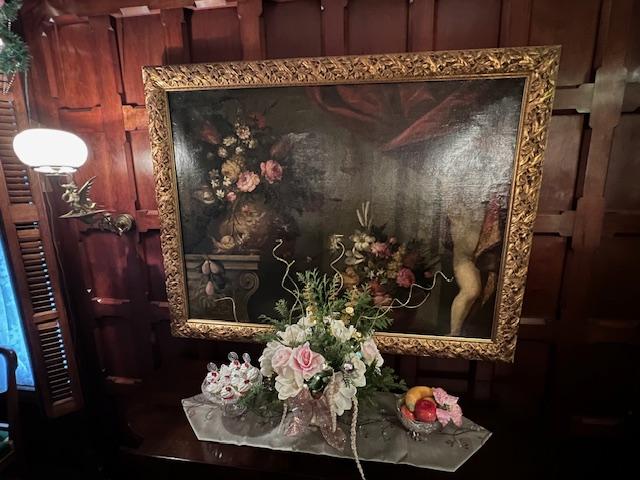
The Dining Room paintings and details.

Preparing for the holidays in the Dining Room

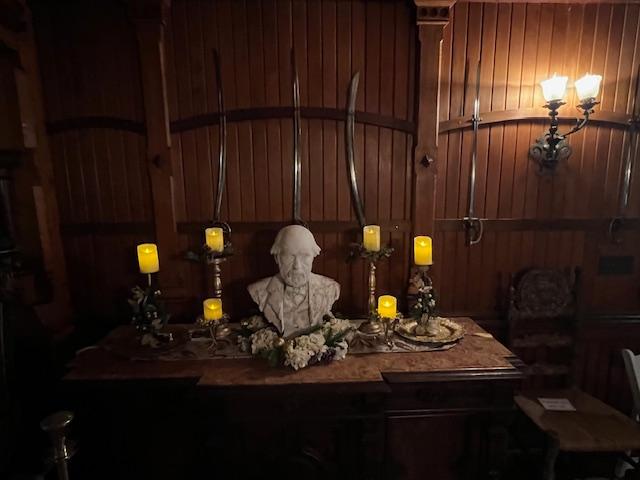
The statuary of the Dining Room

The lighting fixtures of the Dining Room.

Each room was set for the holidays with garlands, trees and decorations. As it was explained to me on another house tour during the holidays, the Victorians would normally only decorate one or two rooms for the holidays and not the whole house. The whole house might be decorated based on the wealth of the family and the amount of servants to take care of the home. Needles would have to cleaned up and the trees would have to be attended to on a daily basis.

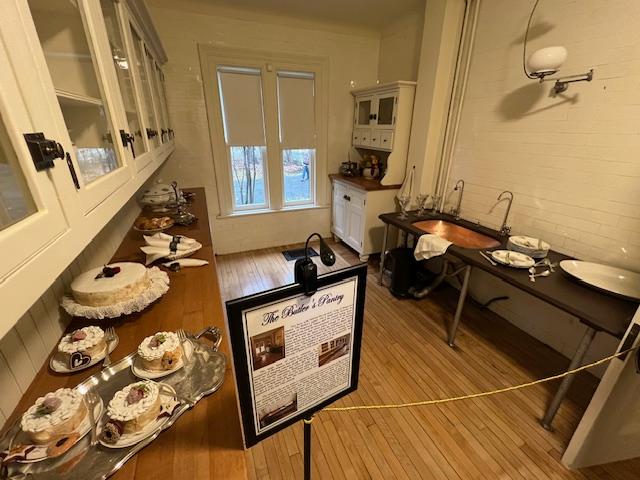
the Butler’s Pantry just off the Dining Room

The Butler’s Pantry in preparation for Christmas dinner

The Christmas treats in the Butler’s Pantry.

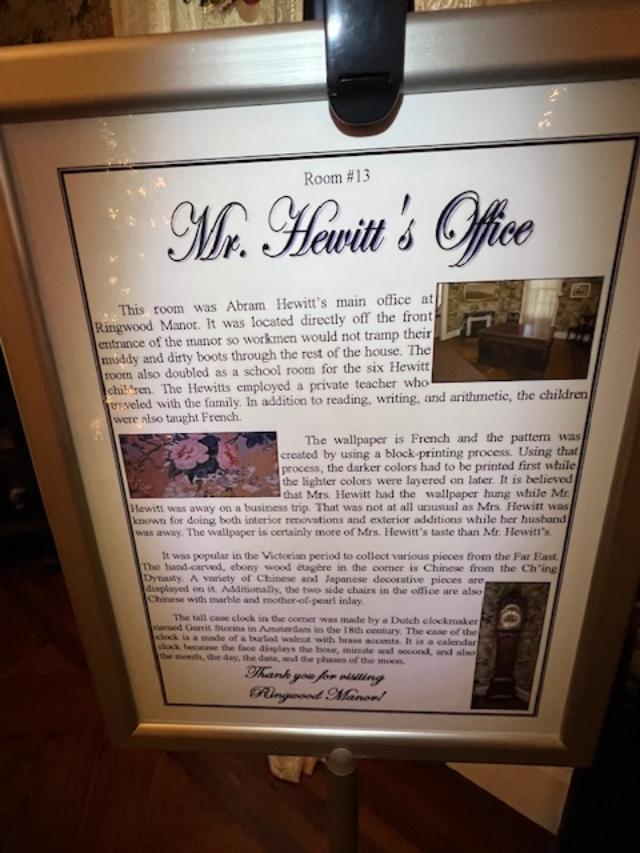
I then walked back through the house and passed by the Office on my way to the social rooms of the first floor. The office is where business was taken care by Mr. Hewitt when he was in residence.

Mr. Hewitt’s Office decorated for Christmas

Mr. Hewitt’s office at Christmas time.

The Christmas tree in Mr. Hewitt’s office.

Before I left this part of the house, I passed the Breakfast Room which is just off the Dining Room. It had beautifully decorated for a Christmas breakfast.

The Breakfast Room sign

The Breakfast Room was decorated with desserts and sweets for the Christmas holidays.

The Breakfast Room beautifully decorated for the holidays.

The Breakfast Room for a Christmas feast.

The Christmas tree in the Breakfast Room.

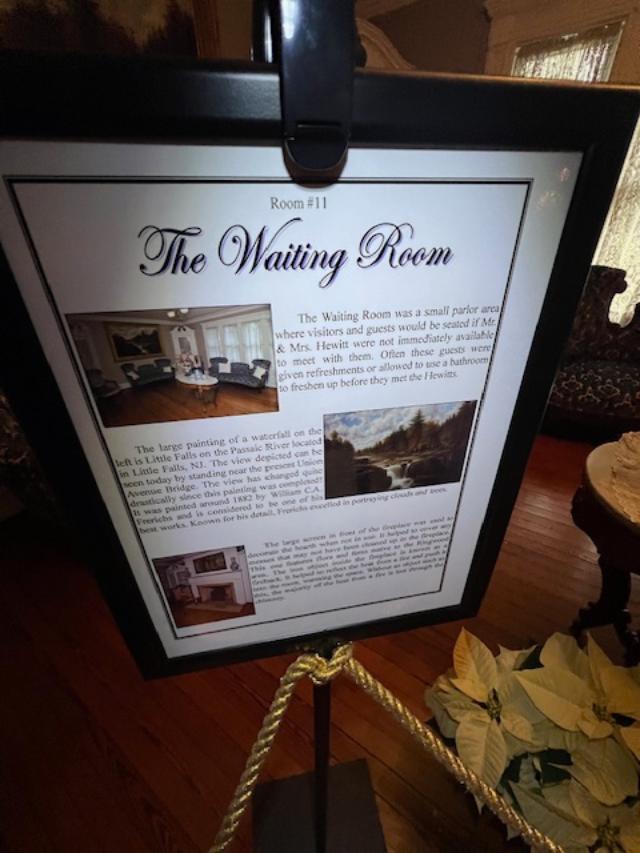
Before entering the Great Hall, I visited the Receiving Room, where guests waited until dinner was served.

The Waiting Room

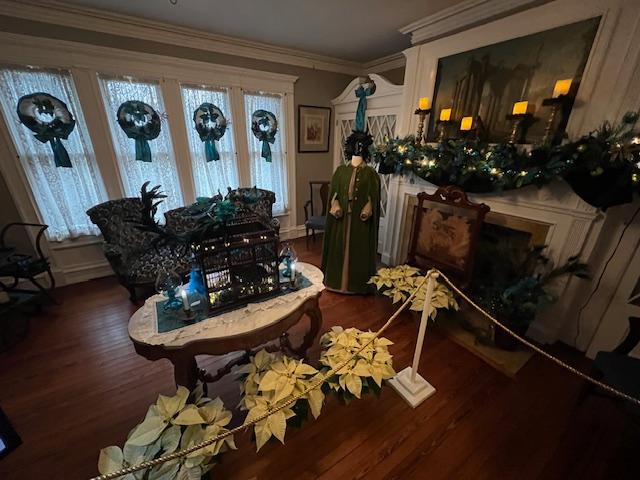
The Waiting Room was for guests to relax and wait for Mr. & Mrs. Hewitt.

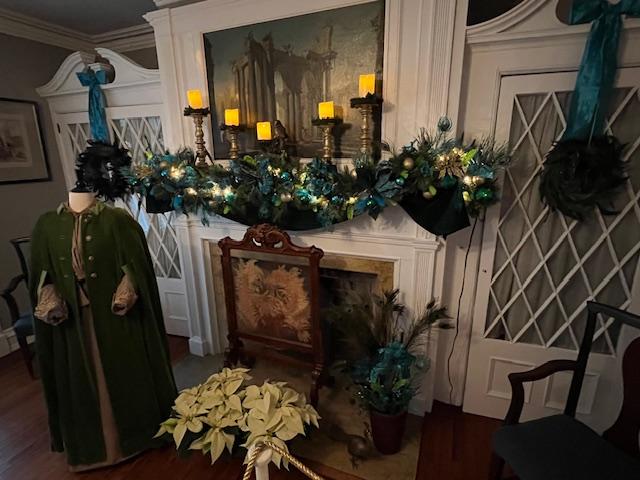
The Waiting Room fireplace is nicely decorated.

The ‘Birdcage’ in the Waiting Room

Passing through the Great Hall again, I entered what had once been the original Ryerson House built in the early 1800’s. The first room on the tour of this side of the house was the French Drawing Room decked out for the holidays. This room was used by the ladies after dinner was over to converse and get away from their husbands, who would have still been in the dining room.

French Drawing Room, the “Withdrawing” room.

The French Drawing Room

The French Drawing Room in all its Christmas glory.

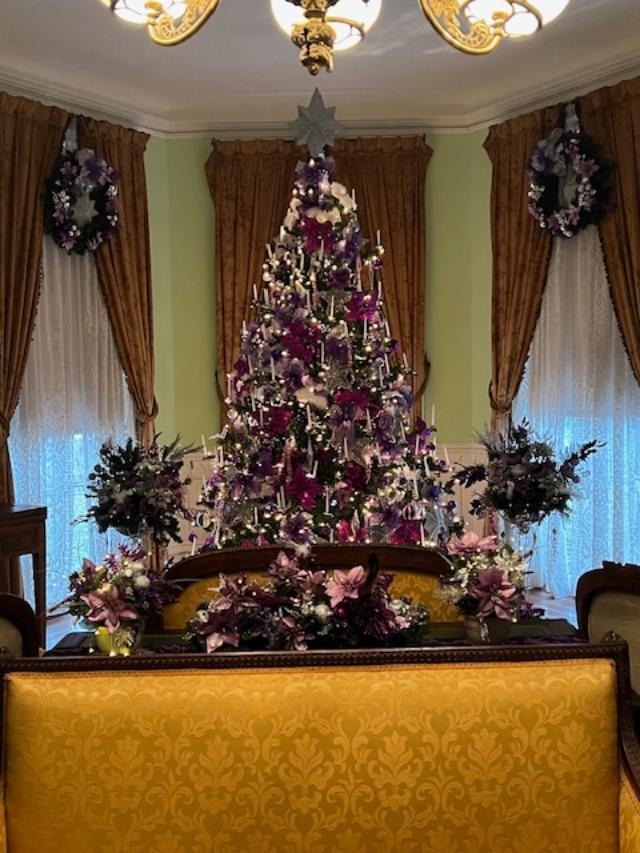
The Christmas tree in the French Drawing Room

The fireplace in the French Drawing Room.

On the other side of the house is the original Ryerson mansion that was added on by the Hewitt’s when they bought the house. The older house had the original moldings and windows from the early 1800’s and that side of the house had a different feel to it starting with the original entrance and staircase.

The Ryerson Staircase and foyer sign

The Ryerson Staircase and foyer

The decorated Ryerson staircase.

One of the nicest rooms that was decorated was the screened in porch. Here there was a tree set with presents, hot house flowers and garland lining the room. The sunlight shined throughout the room and the decorations sparkled.

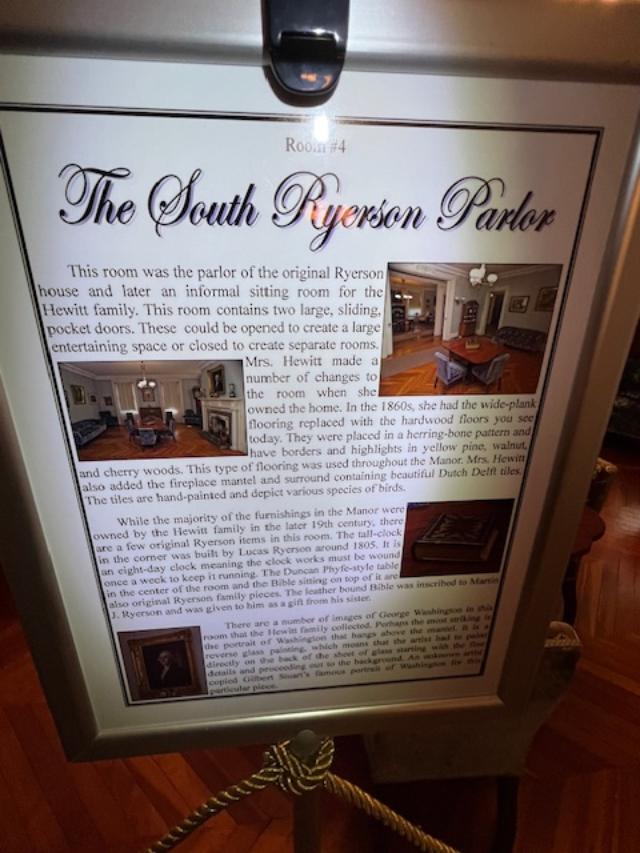
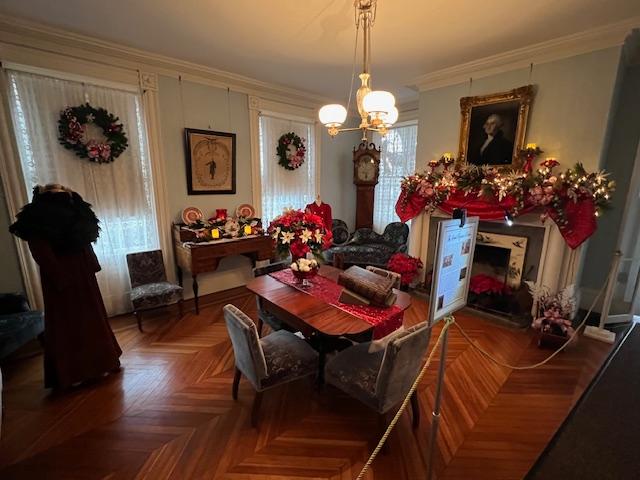
The South Ryerson Parlor

The South Ryerson South Parlor

The fireplace in the South Parlor.

The latest addition to the house was the screened in porch, The Glass Piazza, of the house which was used in the summer months for rest and relaxation. The screen in porch was beautifully decorated for the holidays with all sorts of Christmas trees and decorations.

The Glass Piazza, the screened in porch of the main house.

The Glass Piazza decked out at Christmas time.

The doll mini tea service in the Glass Piazza.

The Glass Piazza set for tea at the holidays.

The Glass Piazza at Christmas time.

The beautiful Christmas tree in the Glass Piazza in 2023.

When you leave the Glass Piazza, you enter the original part of the house again with the North Ryerson Parlor. This room was used by the family for less formal affairs but it was still decked out of the holidays.

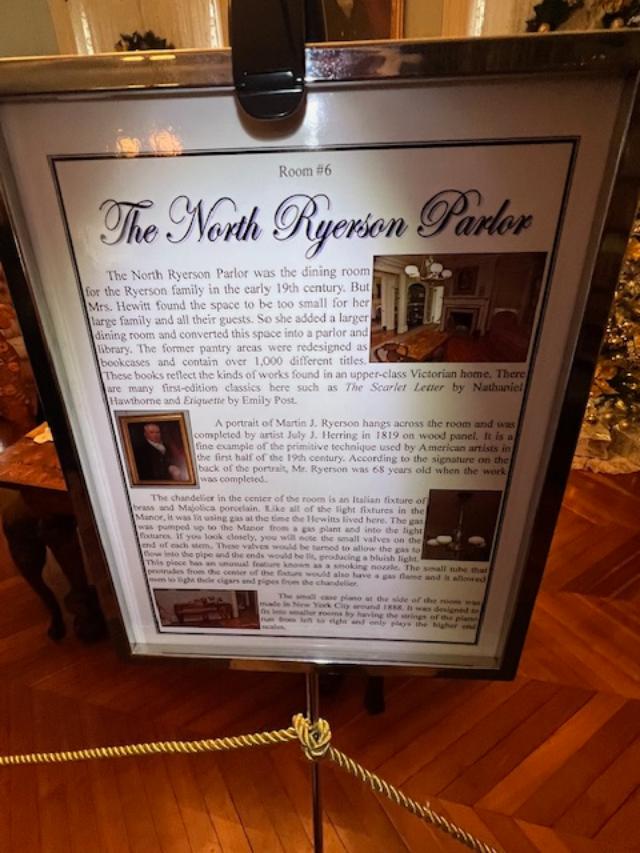
The North Ryerson Parlor

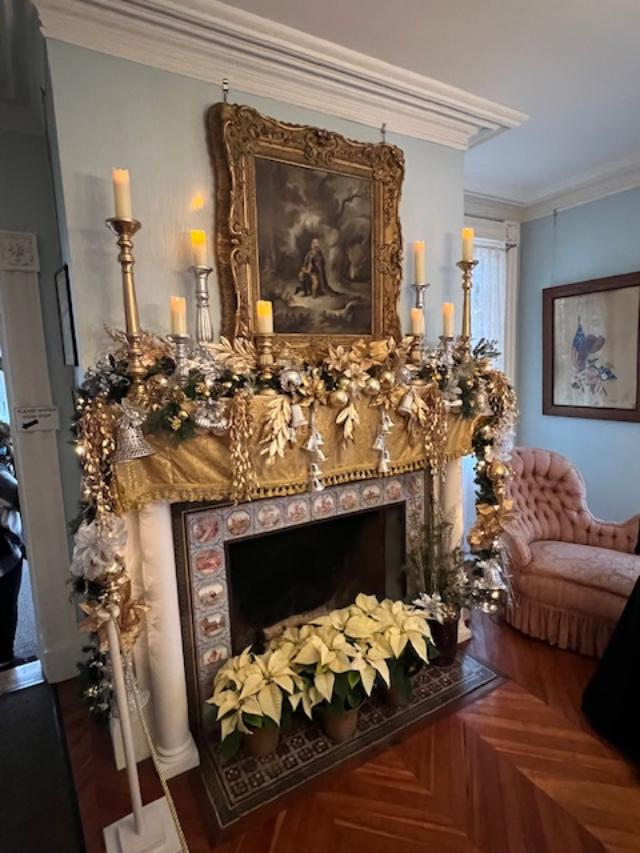
The Ryerson North Parlor decorated for tea.

The Ryerson North Parlor fireplace decorated for Christmas time.

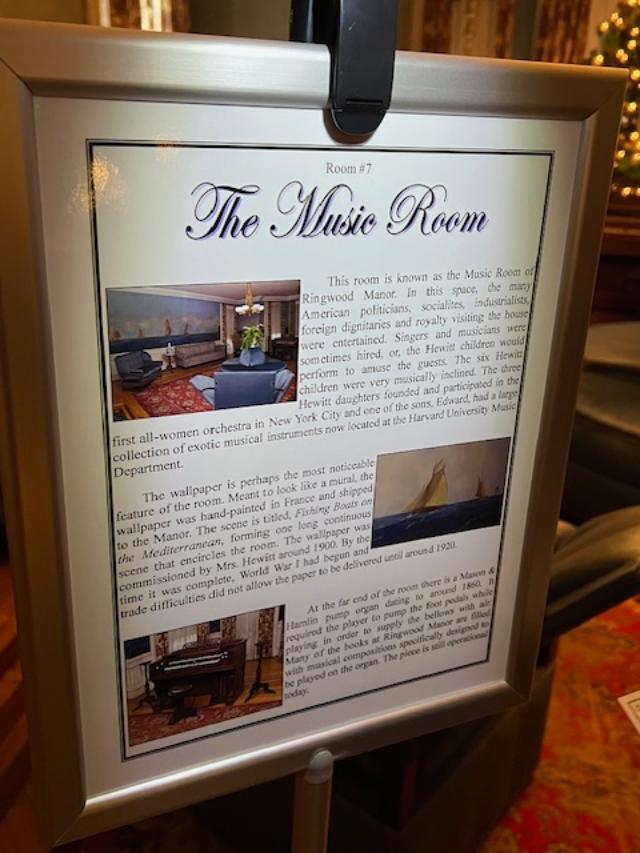
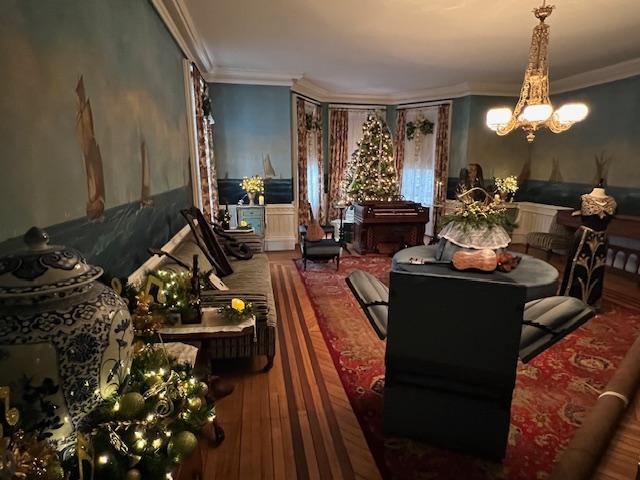
The last room I visited on the tour was the Music Room in the original Ryerson House. The room was used by both the Ryerson’s and the Hewitt’s for social occasions and the Hewitt’s were all musically inclined.

The Music Room at the Ringwood Manor

The Music Room at the Ringwood Manor.

The Music Room at the Ringwood Manor.

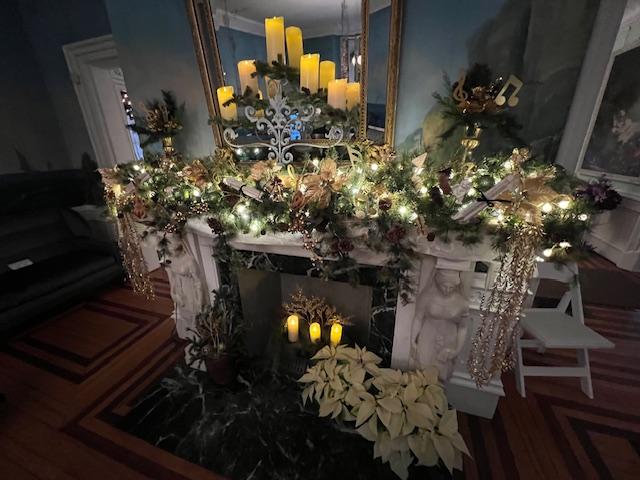
The fireplace in the Music Room decked out for the holidays.

The Music Room during Christmas time.

Each room had a docent to explain the decor or what the room’s use had been in the family’s time. A visitor can roam the house at their leisure and see the rooms as many times as they want. There is also a gift shop in a room off the formal dining room that contains some beautiful Christmas crafts for sale by the Women’s Club of New Milford. Some of these women are very creative and sell the most amazing Christmas ornaments made of glitter, wood, branches, walnuts and moss.

Ringwood Manor Christmas 2019 II

The Gift Shop in the old Carriage House was filled with homemade goodies and handmade crafts and ornaments.

The decor of the home changes over time and there are different things to see every year. The barn also on the property as you drive in has more artwork and crafts. In the Gardener’s Shed next to the house, the Society has a small cafe with sandwiches, desserts and coffee/tea/hot chocolate.

The Carriage House was used as a gift shop and a place to get something to eat.

The tour of Ringwood Manor is wonderful during the holiday season and the rest of the house opens up during the warmer months of the year.

History of the House:

This 582 acre historic site is open to the public year round. The historic house museum, Ringwood Manor is open Wednesday to Sundays year round.

History of 19th Century Manor House and Landscape:

The present manor house was begun by Martin J. Ryerson in 1807. He and his sons controlled not only the iron mines and forges on the property but also operated productions at four other locations in the area. The Ryerson family resided in their 10 room Federal style home for almost 50 years.

The entrance to the historical home.

In 1853, the Ryerson’s house and property were purchased by business partners Peter Cooper and his son in law Abram S. Hewitt. The 22,000 acre ironworks and the Ryerson’s home were purchased for a sum of $100,000. Their company, Cooper-Hewitt & Company, grew to be the fifth largest corporation in the United States. The Hewitt’s, one of the most influential and wealthiest families of the 19th century, fell in love with the Ringwood estate.

The expanded Ringwood Manor estate in the winter months.

Ringwood manor at the holidays.

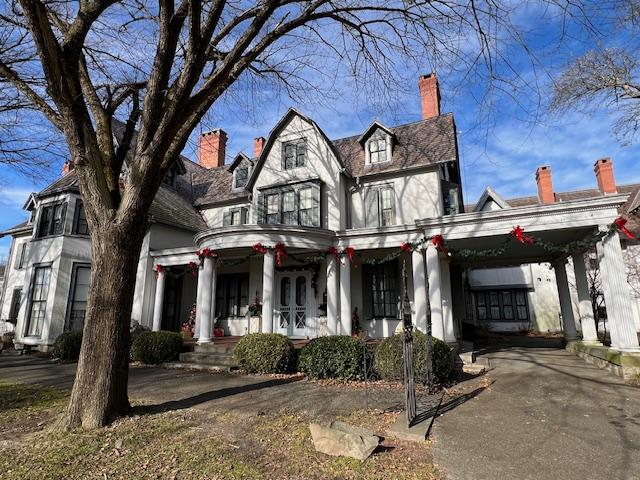
They decided to make this site of their summer home, naming it The Forges and Manor of Ringwood. They enlarged the home of the Ryerson’s, constructing major additions or renovations in 1864, 1875, 1900 and 1910. The completed 51 room house is 226.5 feet long and features 28 bedrooms, 24 fireplaces and 13 bathrooms and more than 250 windows. The house was built in an eclectic style, typical of the Victorian period. In 1875, the Manor House was an excellent example of the Gothic Revival style of architecture. By 1900, the Hewitt’s changed the exterior facade to its present appearance, adding the neo-classical portico and columns of the front porch and affixing white stucco to the exterior walls. The furnishings of the house reflect the varying tastes and styles of the family and time period.

Ringwood Manor during the holidays.

The formal gardens surrounding the Manor House were developed by Mrs. Hewitt and her daughter, Eleanor around 1900. Their design was influenced by the Hewitt’s many trips overseas. The gardens possess a mysterious old world charm that captivates visitors as they enjoy the serenity of reflecting pools and the progression of blooms from early spring to late fall. Placed throughout the garden are French and Italian statuary and garden ornaments as well many interesting architectural items from New York City acquired while Abram Hewitt served as Mayor and Congressman. Examples of these features include columns from the old New York Life building, gates from the Astor family’s home and gate posts from Columbia College. Relics from the iron company that are found on the grounds include a trip hammer and anvil, cog wheel and a Dictator-class mortar the base of which was created by the Hewitt’s company and used at the Battle of Vicksburg in Mississippi during the Civil War.

History of Ringwood, NJ:

Colonial Ringwood:

Long before the Forges & Manor of Ringwood existed this property was occupied by the Native American people. Prehistoric artifacts found on the grounds confirm their inhabitants back to the Archaic and Woodlands periods. Living in a hunting and farming paradise, these Munsee-speaking Lenape peoples dwelled at the head of the Topompock or Ringwood River Valley. This paradise attracted colonial prospectors, who by 1740, came for the iron ore found in the ground. Recognizing the rich magnetite ores, Cornelius Board settled here in 1739 and first utilized the property for iron mining. He was followed shortly thereafter by the Ogden family who established the Ringwood Company and built the first blast furnace here in 1742.

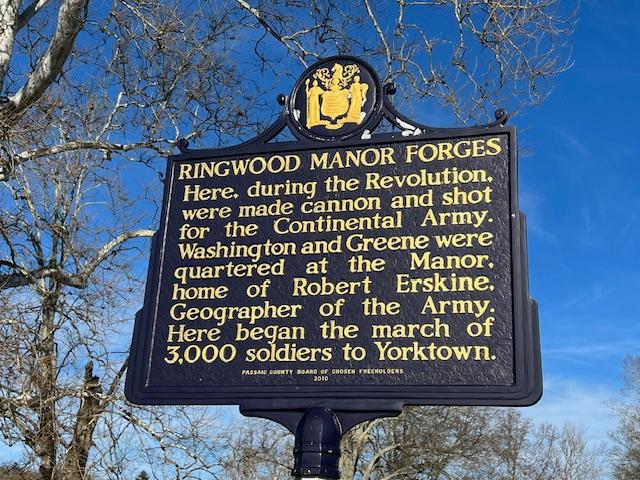
After twenty years of production, a German promoter, Peter Hasenclever, organized the American Iron Company to exploit the resources in colonial North America, purchasing the Ringwood area in 1764. He would also develop forges at Long Pond and Charlotteburg but made Ringwood the center of his iron empire. Hasenclever established iron plantations and developed the production of flax and timber across 50,00 acres of land stretching through New Jersey and New York, from present day Butler to New Foundland and Nova Scotia. The iron was said to have been “the best iron in the American colonies.” Robert Erskine, the last ironmaster of the American Iron Company, was sent from England in 1771 and would manage the company during the Revolutionary War.

(History of Ringwood, NJ)