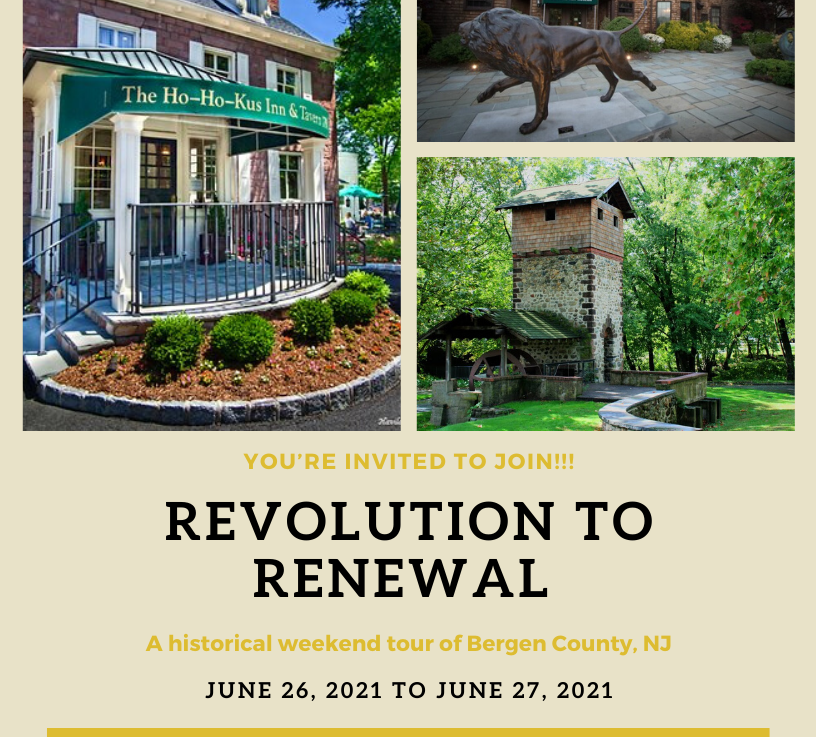
To all your history buffs, please visit Bergen County, NJ for interesting experience of visiting our historical sites and restaurants. Check out our Team Project from Bergecco-Parc Consulting Inc. “From Revolution to Renewal-A Historical Tour of Bergen County”.
Professor Justin Watrel, CEO & Co-Founder Bergecco-Parc Consulting Inc.
I had the most interesting semester for Spring Term at the college where I work. Everything started off fine. We had classes in the the afternoon, good discussions on Marketing and had a very successful Team Project marketing the Lyndhurst Snack Shop, the new Bulldog Cafe, for business (See Day One Hundred and Fifty-Nine in MywalkinManhattan.com):
I had just handed out the next Team Project, “From Revolution to Renewal: Exploring the Historic Bergen County”, a major tourism project I wanted to the students to work on for the remainder of the semester the week before the break. I had the students to break up into groups and get to know one another and get their game plans…
Bergen County Department of Parks, Division of Cultural and Historic Affairs
Court Plaza South
21 Main Street, Room 203 W
Hackensack, N.J. 07601-7000
Survey of the Early Stone Houses of Bergen County:
One of the most important early American building types is that of the pre-1840 stone house built in areas with Dutch Cultural affiliation. Bergen County is unique in the abundance, variety and architectural quality of these early stone houses, although adjacent areas of New Jersey and New York have some of the type.
Materials and methods remained constant but the house which were built from the time of Dutch colonization in the 17th century vary in size, plan and stylistic detail. Bergen County’s surviving early stone houses many located along major thoroughfares, provide county residents with tangible links to the formation years of the County, State and Nation.
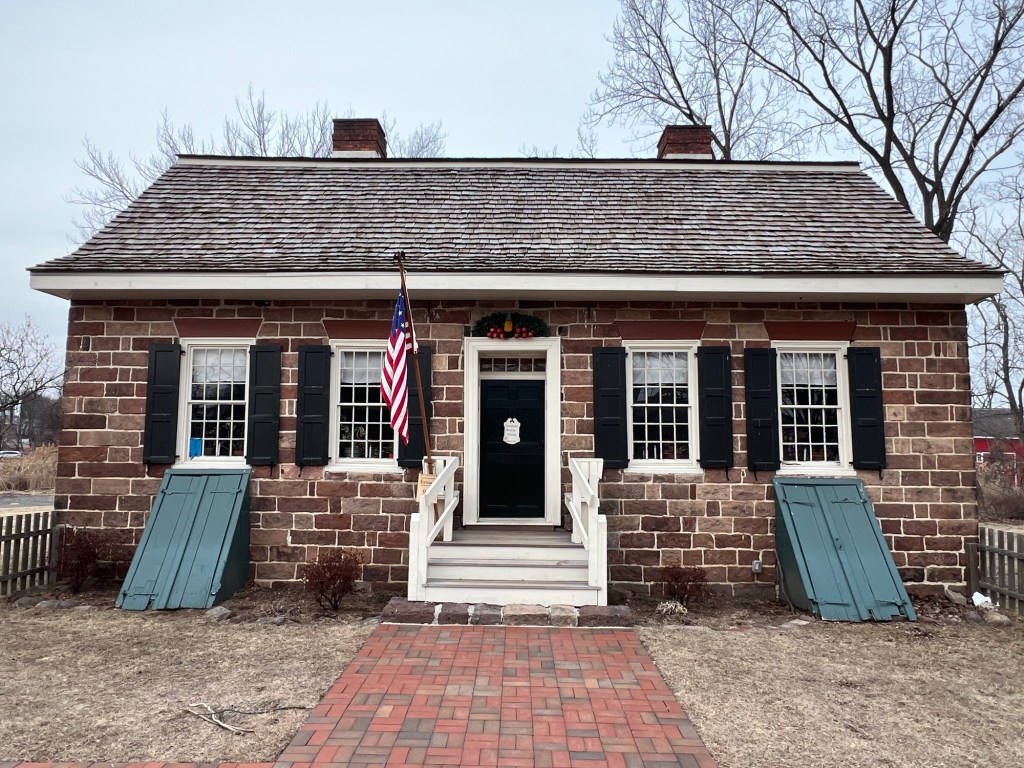
The Campbell-Christi House at New Bridge Landing/Bergen County Historical Society
The Survey of Early Stone Houses of Bergen County conducted in 1978-79 identified and recorded 230 of these early houses. Of these, 208 retained sufficient architectural integrity to be placed as a thematic group on the New Jersey Register of Historic Places in 1983, 1984 and 1985. A clear recognition of the houses importance is given by inclusion on these Registers, which are the State’s and Nation’s official lists of cultural resources worthy of preservation.
For inclusion in the Stone House Survey a building has to have at least two first story walls of pre-1840 stonework. The stone used in constructing the houses varies according to what as locally available. Many of the houses have reddish-brown sandstone walls but in the north-western section of the county rougher local fieldstone was utilized. Some houses have exterior walls of various types of stone and in some brick or frame exterior walls appear with stone ones. Frequently front facades display finer masonry work than do sides and rear. Usually the houses are 1 1/2 stories in height and have gable or gambrel roofs, sometimes with sweeping overhangs. Often there are side wings.
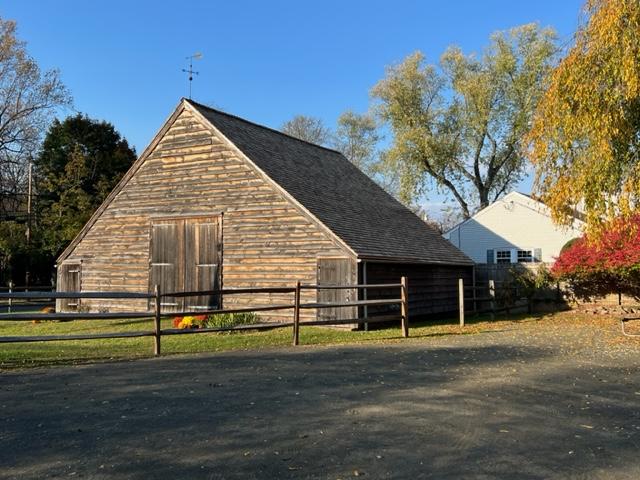
Wortendyke Barn in Oakland, NJ
The Wortendyke Homestead across the street from the barn.
Examples of the house-type are commonly called “Dutch Colonial.” This name most frequently applied to gambrel-roofed houses is a misnomer. Most of the houses were erected in the early 19th century, long after New Jersey passed from Dutch control in 1664. They date to a time when Anglo-American culture was being assimilated into Bergen’s Dutch cultural base. The typical stone house of the Colonial Period in Bergen County is a simple gable-roofed building.
Because they have been continuous use since they were constructed, many early stone houses have been modified and embellished. Often these changes in themselves have architectural distinction and are important to Bergen’s 19th and 20th century architectural history. Even when altered, the basic form and fabric of the original stone dwellings are usually recognizable and the houses are part of the county’s earliest architectural heritage.
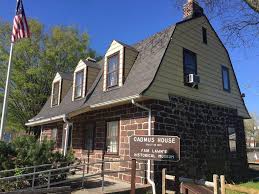
Cadmus House in Fairlawn, NJ
The Stone House survey was sponsored by the Bergen County Board of Chosen Freeholders, the Bergen County Historic Sites Advisory Board and the Division of Cultural and Historic Affairs. It was prepared by the Office of Albin H. Rothe, A.I.A. Claire K. Tholl did the field survey. The survey was made possible by a grant-in-aid from the Office of New Jersey Heritage, Division of Parks and Forestry, N.J. Department of Environmental Protection and matched by funds from the Bergen County Board of Chosen Freeholders.
The report for the Survey of the Early Stone Houses, with background text and inventory forms for houses, may be consulted at the Division of Cultural and Historic Affairs between 9:00am and 4:30pm weekdays.
Hopper House in Upper Saddle River, NJ
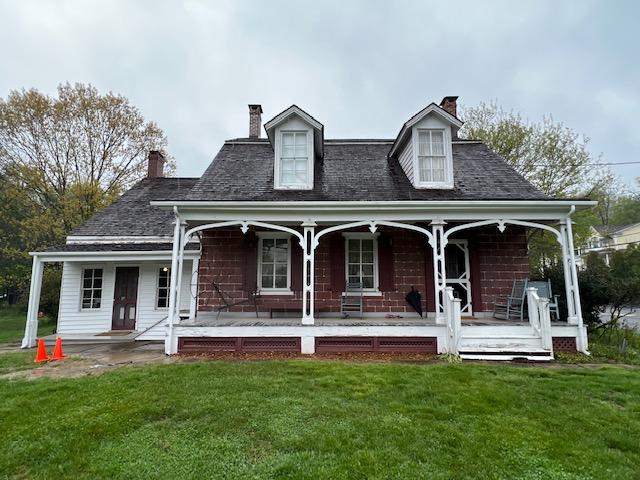
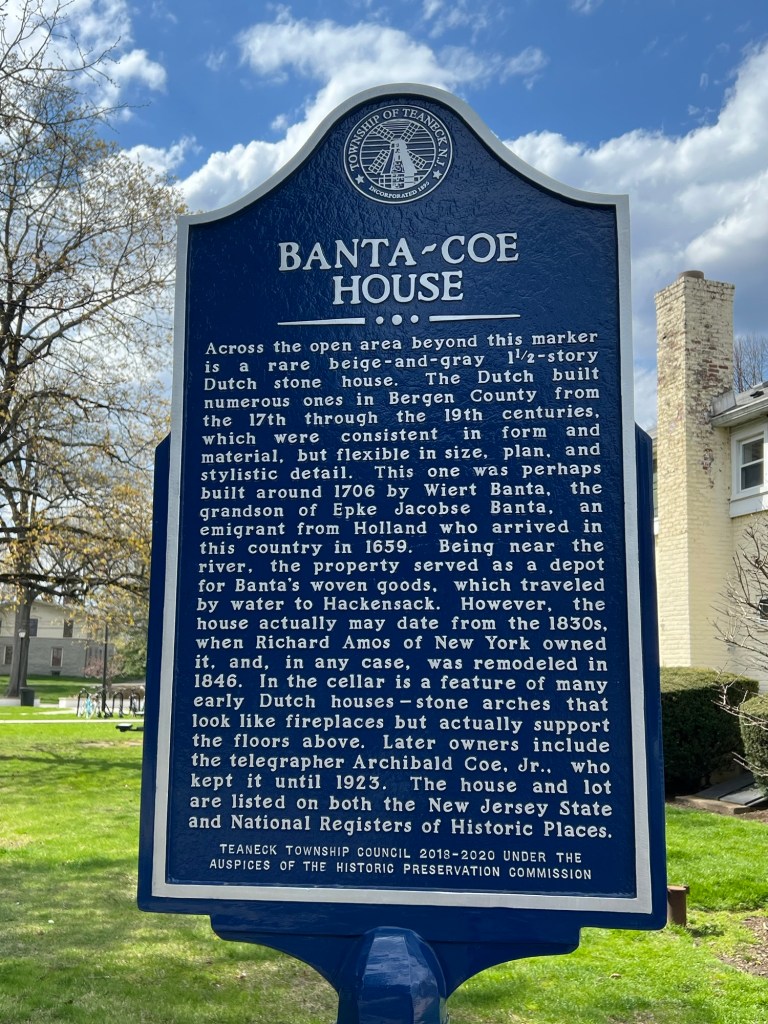
The Banta-Coe House on the Fairleigh Dickinson University campus
The Banta-Coe House prominently faces the Hackensack River
Disclaimer: This information was taken directly from the Bergen County Department of Parks, Division of Cultural and Historic Affairs pamphlet and I give them full credit for this information. Please contact the Department for more information on the subject.
The Meadowlands Museum is the main steward of the history and culture of the Meadowlands region and one of its leading storyteller.
The sign welcoming you
Its mission and collection, which resides in the Yereance-Berry House in southern Bergen County in Rutherford, NJ are distinctive and unique. The house too is a historic treasure and landmark and was built in 1804 by the Berry family, who were among the county’s earliest European settlers.
The front of the museum in the Spring of 2026
Rooms in the three-level American Dutch farmhouse are alive with permanent and temporary exhibits and sometimes include loaned objects from other museums and private collections. Historical artifacts like archives and photographs are mingled with textiles, furniture, housewares and artwork.
The display on the history of area
There is even correspondence by the daughters of John Rutherfurd, a close confidant of George Washington.
The display in the local artifacts
The gardens outside in the Spring of 2016
Grounds include the William Carlos Williams Poetry Garden, which acknowledges the legacy of Rutherford’s most famous native and the town’s history as a cultural center.
The everyday products of the Meadowlands Museum
Founder in 1961 as the Rutherford Junior Museum by parents of school age children to help connect them to their community, the museum is staffed by professionals assisted by dedicated volunteers and involved trustees. Interns add to the rich resource of individuals who contribute to its present and future.
A recent commercial developed by my Business 101 Class for the Meadowlands Museum for the project “Rocking it in Rutherford: Being a Tourist in your own Town”
The location of the Yereance-Berry House suggests a colonial farm dating to 1740. The oldest house in south Bergen County in close to original condition, it was part of the Historic American Building Survey project of the 1930’s. The building is also listed on the state and national registers of historic places and the Bergen County Stone House Survey.
The Yereance-Berry House is the now the Meadowlands Museum
Affiliated organization include the American Alliance of Museums, American Association for State and Local History, Meadowlands Regional Chamber of Commerce, New Jersey Association of Museums and The National Trust for Historic Preservation.
Programming & Community Service:
Free and reasonably priced services for individuals, community groups, businesses, government bodies and educational institutions are available.
*Educational programs, lectures and traveling exhibits.
The ‘Historic Rutherford Homes’ exhibition at the museum in 2026
The Historic Homes exhibition
The Historic Homes exhibition
*Customized on and off site programs.
*Collaborative ventures with a wide range of partners.
*Assistance with academic research and other archival support.
Special Events:
Special events, which often are made possible by partnerships with businesses and other organizations, are an additional way for visitors of all ages to enjoy the museum. Public and private events occur on a regular or one-time basis; many are fundraisers. Call or email for a current calendar and sponsorship possibilities. The house hosts both permanent and special exhibits.
Our permanent exhibits include:
*Yereance Berry House: During the Spring of 2026.
The outside of the museum
*Pre-electric kitchen: This unique kitchen in the basement shows off the collection of equipment that would be used in the kitchen from the Civil War to the 1950’s. There are coffee grinders, whisks, wash boards and such. It showed how much effort was put into preparing the family meal through the ages.
The Farm Kitchen of Bergen County
The Farm Kitchen at the Turn of the Century
*Meadowlands Geology: there are all sorts of rocks and gems not just from the area but all over the state. There are two different rooms one of the specimens locally and there is a separate room for glowing stones. It is very interesting to see when the lights are out.
The Mineral Collection at the Meadowlands Museum
The fluorescent Zinc display
The Mining Display
*Mining in South Bergen: This is how the county has changed when we mined ore.
The Mining Display at the Meadowlands Museum
The Mining Display
The Mining Display
*19th century Laundry Room: The Laundry room that is located in the basement has many of the things our grandparents would have used. The washboards, scrub bushes, old washing machines and ringers. Washing clothes was much harder back then.
The Wash Room of the Turn of the Century
*The wonderful Toy Exhibition of turn of the last century toys and from the 1960’s 70’s and 80’s. This contains Dolls, Board Games, play things and instruments:
The Toy Collection fascinates kids of all ages
The Factory Toys display
The wonderful toy factory in Kearny, NJ that used to produce all these wonderful toys.
The Toy Display
The Toy Display
The Doll display
The Doll display
The ‘Brownies’ display in the Toy Room
*The Bergen County Farm display:
Farming in the County in the past
The Farm display
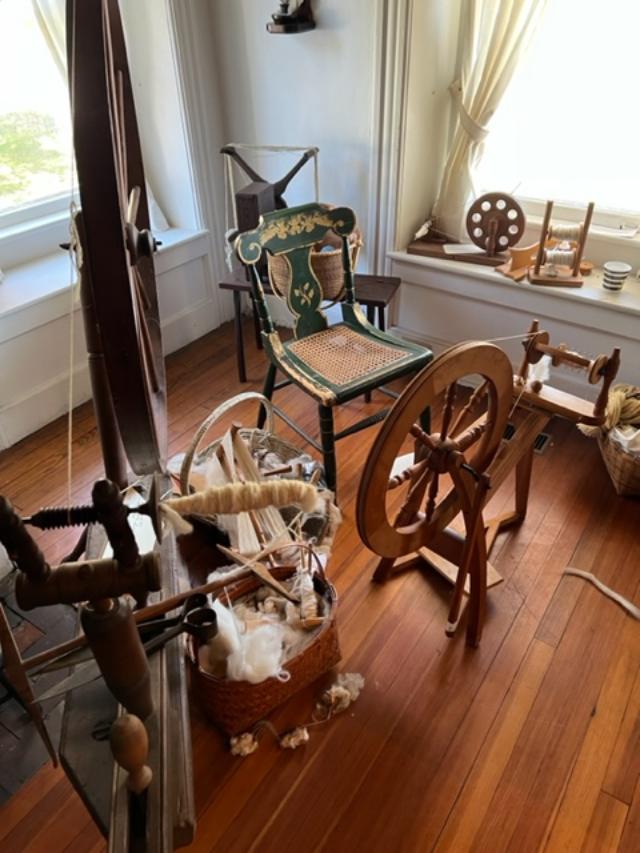
The home Spinning Wheel display
Spinning Wheel display
The new Turn of the Century Furnace display
*Horse elevator
Recent special exhibits have included:
*High school football
*Needlecraft
*Steampunk
*Medical Innovations
*Maps of the region
*Civil Rights
*Dr. Williams’ Babies
Dr. William’s display
Dr. Williams display
Dr. William’s display
Dr. William’s display
Dr. William’s display
*World War I
Special Events:
Scarecrow Day 2018:
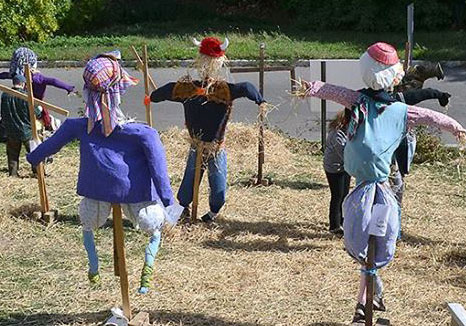
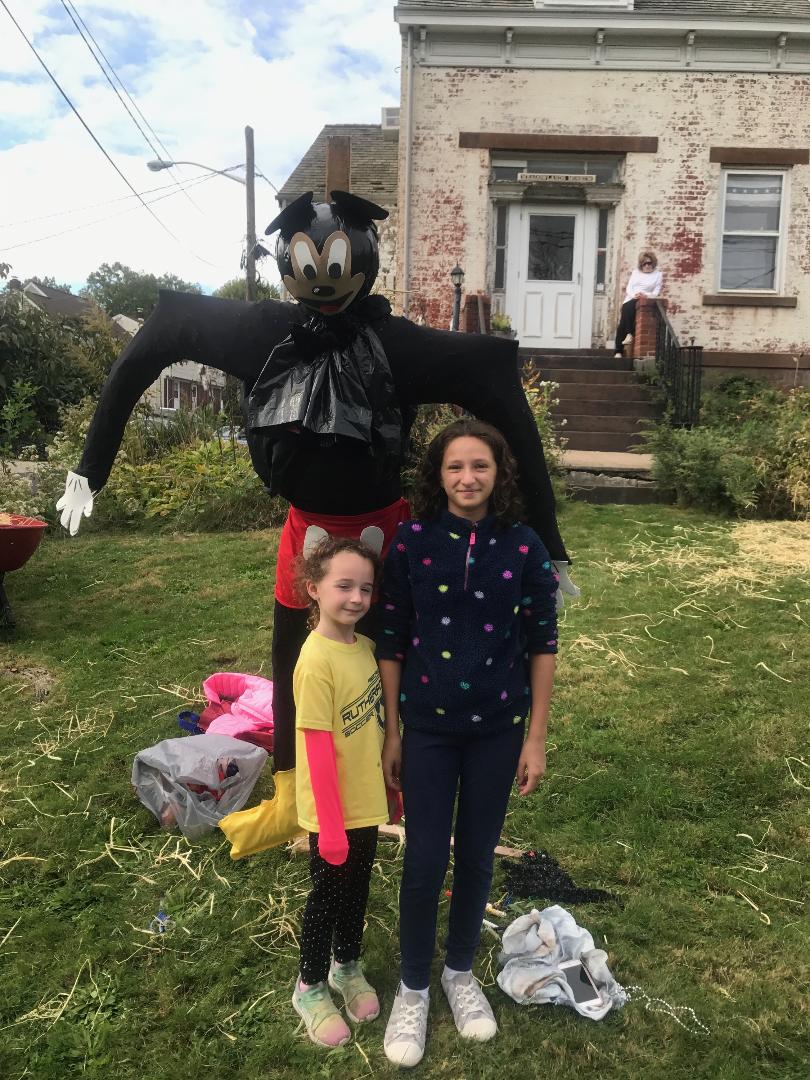
I went to the recent Scarecrow Day on October 20, 2018 where guests of the museum created their own scarecrows using their own creativity. All the scarecrows were lined up facing the street with their interesting clothes and accessories.
Each person got to use their own clothes and each one had its own style to it. It was fun watching the families show their creativity at this annual event.
Scarecrow Day at the museum in 2018
Scarecrow Day in 2021: the winners of the contest for best Scarecrow
I also stopped by for the Dutch Christmas decorations. The museum was decorated for the holidays with garland and trees. On December 1st, they had a Dutch Christmas festival (I could not attend) with food and entertainment.
Celebrating the Easter Holidays in 2026
Help tell the story…
(from the museum website)
Individuals who value the purpose and work of the Meadowlands Museum remain its inspiration and abiding spirit. Donations, memberships, sponsorship’s, grants and fundraisers are crucial elements of the museum’s financial well-being.
Admission to the museum is free but donations are greatly appreciated. Fees for events and other services vary. A personal letter to the appropriate person acknowledges a gift made in the name of an individual. Donations to provide for the buildings and grounds are valuable links to the future and a kind of giving that is among the museum’s top priorities.
Disclaimer: This information was taken directly from the Meadowlands Museum’s pamphlet. For information on the site, please call or email the museum for more information.
My Bergen Community College Team Project in 2022:
Bergecco-Parc Consulting Inc.-Rocking it in Rutherford:
My Business 101 class at Bergen Community College Lyndhurst branch visit in the Spring of 2022 for the project “Rocking it in Rutherford: Be a Tourist in your own Town”.
For Spring Semester in 2022, my Business 101-Introduction to Business class made a weekend visit to the Meadowlands Museum for the project “Rocking it in Rutherford-Be a Tourist in your own Town”. We were promoting the museum to increase tourism with a fundraiser and a barbecue. So on the weekend, I took my Team to the museum to tour it for extra credit. They ended up learning a lot about not just the museum but the history of Rutherford and Bergen County, NJ.
The project was promoting the Town of Rutherford for Domestic and Foreign Tourism and created a fundraiser and modernization of displays for the museum. This is a copy of the project, presentation and Commercials.
The Team Project “Rocking it in Rutherford: Be a Tourist in your own Town”:
I have been to many special events at the Garretson Forge & Farm over the years, but COVID had put a stop to many of them since 2020. The farm is now back and running beautifully with the help of their roster of volunteers and master gardeners manning the grounds both in the front and back of the homestead.
In previous years when I have visited, I have toured the home visiting the indoor kitchen and display room that is the oldest part of the house which was built in 1719.
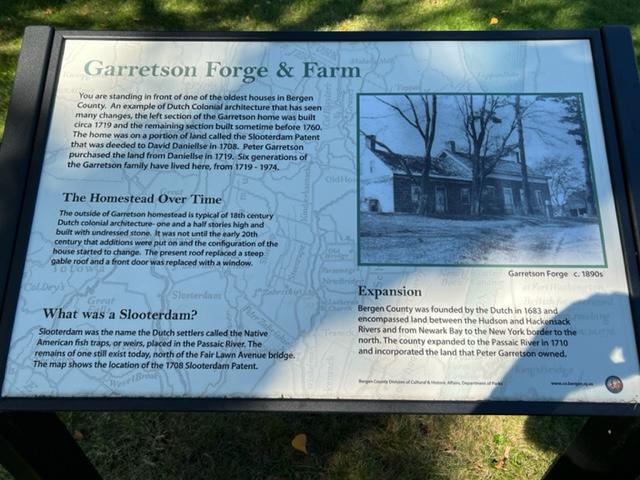
The signage in front of the house
The kitchen of the Garretson Forge is from the original structure of the house.
The kitchen
The cooking utensils at the Garretson Forge kitchen
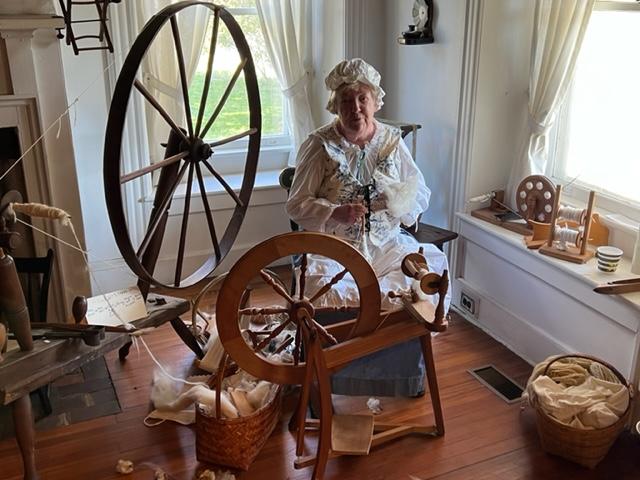
The spinning at the Garretson Forge farm was part of life
The newer part of the house where spinning takes place and where you can see examples of Dutch furniture with chest for clothing and a rope bed, where the expression ‘sleep tight don’t let the bedbugs bite’ comes from. You had to tighten a rope bed with a key to tighten the ropes at night and the mattresses were either made from straw or if you were lucky, goose feathers.
The newer part of the home with the upstairs dormers was built in 1760.
The upstairs is the newest addition to the house
The Upstairs
The Garretson Family tree
Inside the original part of the home is the family tree of the Garretson family who lived in the house for six generations from 1719 to 1972 when the last of the Garretson line, the husband of the wife who was a direct descendant died and the home was bought by a developer. The also have a collection of Presidential signatures that are kept under lock and key at night.
The Presidential Signature Room
The Living Room fireplace is right off the Signature Room
The kitchen in the original 1719 part of the home is decorated with period utensils, herbs and vegetables for drying and all the things you would need to prepare food for the long winter. These things would have been placed in the fruit cellar.
The Herb Garden right off the kitchen
The water pump and herb garden are right in back of the kitchen
Outside the home during the recent Harvest Festival that I attended in October 2022, you can visit all sorts of farming equipment, sleds, and hoes for using on the farm to grow plants.
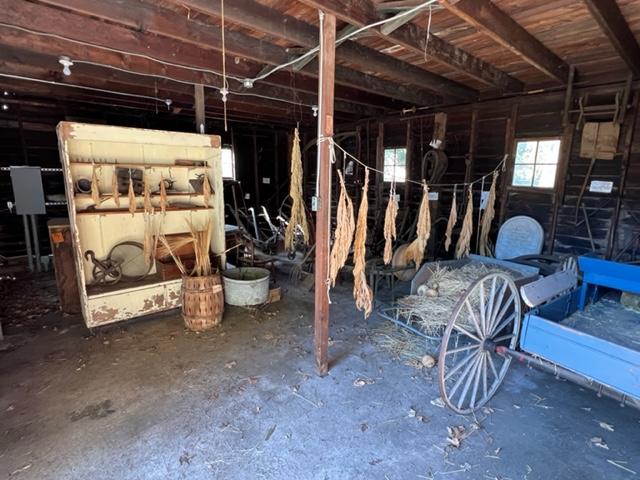
The barn has herbs drying for the season and foods being stored. This along with farm equipment. These items have been brought from all over Bergen County.
The Fall Festival 2022 on October 9th, 2022
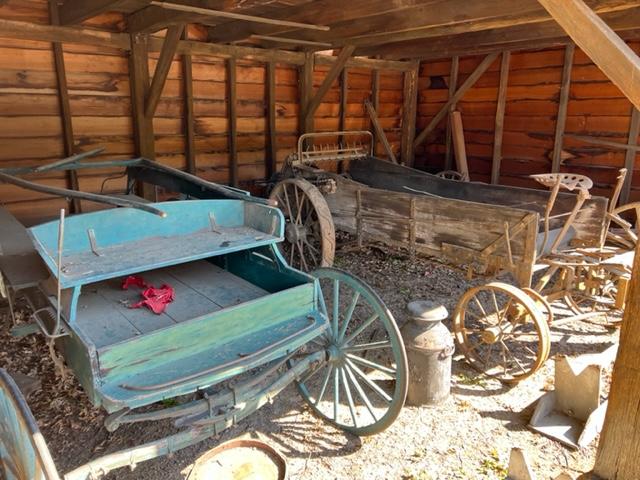
The other barn had period carriages and even a dairy vehicle delivery of milk and eggs to homes. There were items drying out in the barn for basketmaking and even in the back the tombstone of an original member of the family.
The Barn Vehicles
The barn equipment
The backyard of the home is an extensive number of plantings that the Master Gardeners maintain and many of the items grown on the property go to a foodbank in Paterson, NJ. I thought that was a very nice donation to give especially these days. I was able to walk through what was left of the vegetables and fruits that had not either been picked or went through their growing cycle.
Items drying in the barn
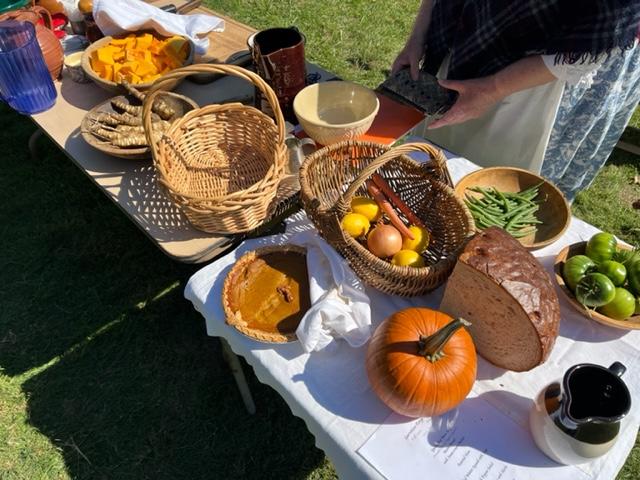
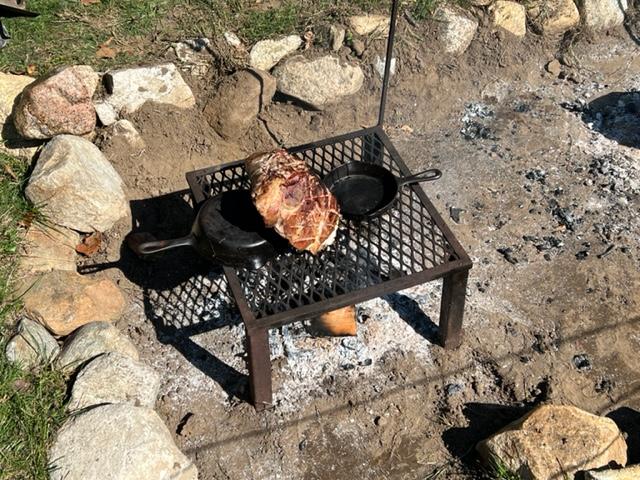
Activities at the Harvest Festival included making colonial dishes from original recipes including a roasting ham on the fire, pumpkin pie, chopped vegetables for stew and a stew that was cooking on the fire.
The bounty of Fall in Colonial America
Unfortunately, we were not able to sample these delicious looking items because of a food license but everything looked really good. They had everything laid out on the table as the ladies explained to me how things were cooked back then.
Roasting meats on the fire a traditional way
Here and there were tables of items for sale including snacks, crafts and vintage decorative items for the home. This helps raise money for the maintenance of the house.
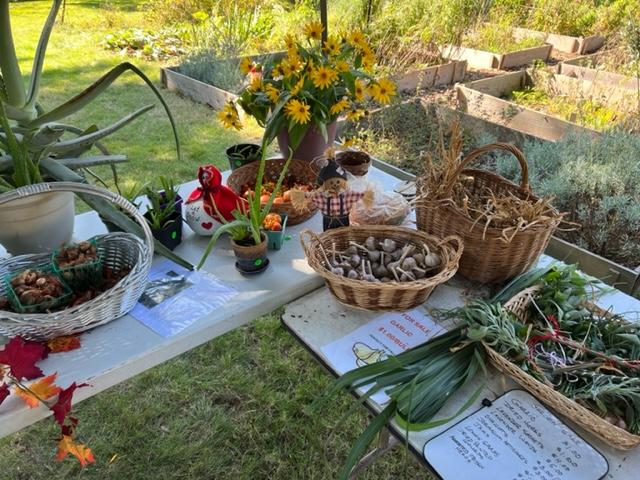
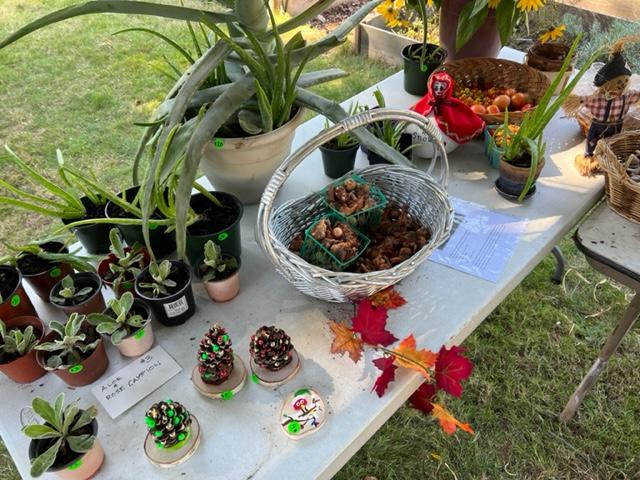
There was also a plant sale where items grown on the property were being sold for people’s decorative gardens.
Before I left, the master gardener explained to me that the Chinese Chestnut Tree in the back of the property was a documented tree and was one of the oldest and largest in the State of New Jersey. They are not too sure who planted it years ago.
Their Harvest Festival was a lot of fun and there were lots to do for families with small children. This takes place every October.
In December I took a special tour of the farmhouse during the holiday season when the forge was decorated for the Sinterklaas event and the Christmas holiday season. I was very lucky that the President of the organization gave me a private tour of the house and gardens. The house had been very busy for the Christmas season.
During the time of the Dutch, homes would not have been as decorated for the holidays as they would during the Victorian Age with trees and massive amounts of decorations. Around the time of the Revolutionary War, ‘greens’ would have decorated the home to bring ‘life’ back into the home during the long winter months. So things like pine, holly and mistletoe would have decorated the house.
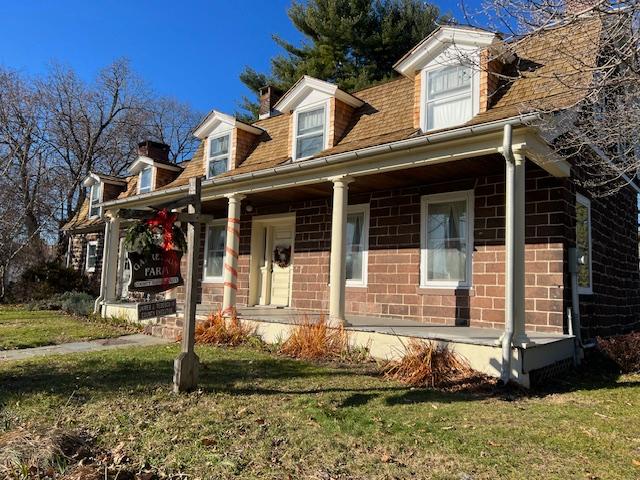
The front of the house for the holiday season.
The front of the house at Christmas time.
The entrance to the house decorated in bows and garland.
The entrance to the house decked in garland, bows and fruit during the holiday season.
Entering the house from the back door.
The entrance to the back door decked out for the holidays.
The entrance to the historic farmhouse.
During the holiday season, the New Jersey Dutch citizens would celebrate “Sinterklaas”, the Dutch Christmas festival in which Sinterklaas (Santa Claus) would bring good little children toys and sweets. During the first week of December, the farmhouse has the traditional “Dutch Christmas Festival” in which children can visit with Sinterklaas and enjoy music and holiday treats.
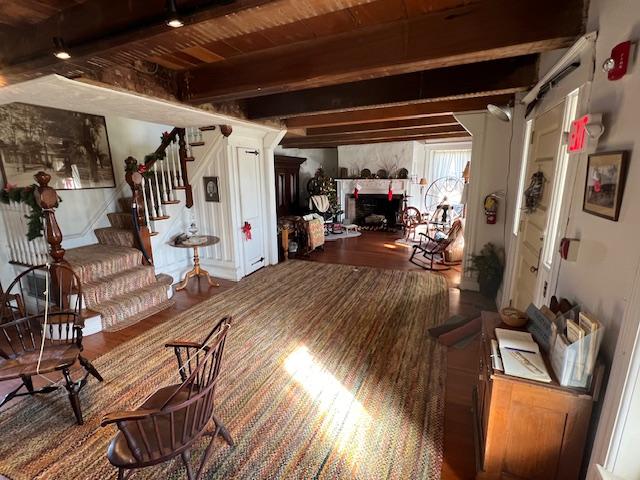
The front hallway decorated for the Dutch Festival.
The Dutch Kitchen ready for the holidays.
The kitchen getting ready for the holidays.
The back fireplace during the Christmas holidays.
The main room of the Dutch Farmhouse during the Christmas holidays.
The banister was decorated in garland and bows.
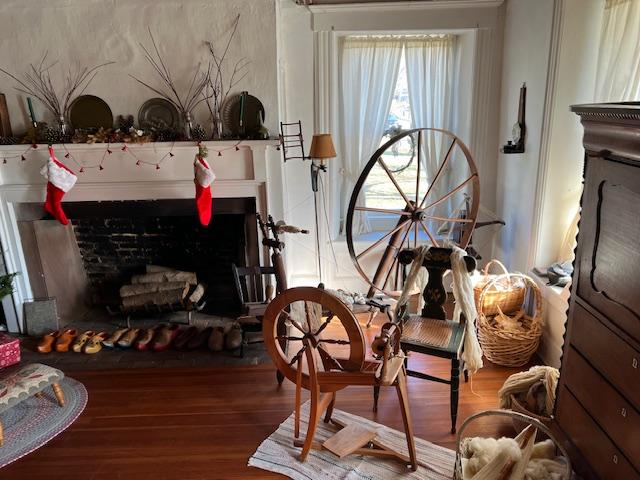
The Spinning Wheel and fireplace during the festivities.
Where Sinterklaas engages the small children at the event.
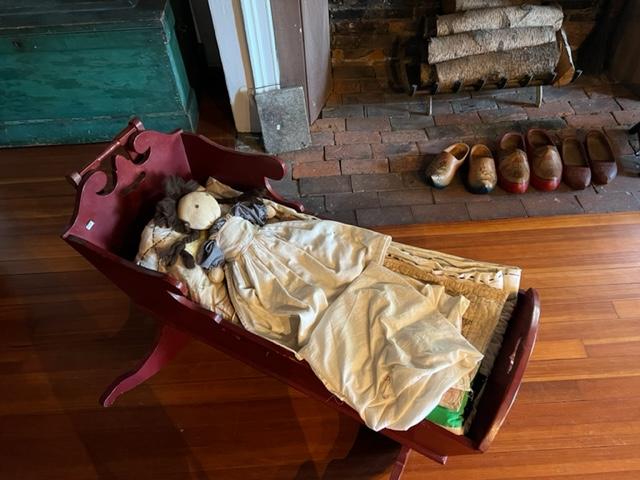
The stockings and wooden shoes which would have been filled with candy and toys by Sinterklaas for good little girls and boys. The Christmas tree would have come in Victorian times along with the presents in the later part of the 1870’s and 80’s with the rise of Queen Victoria.
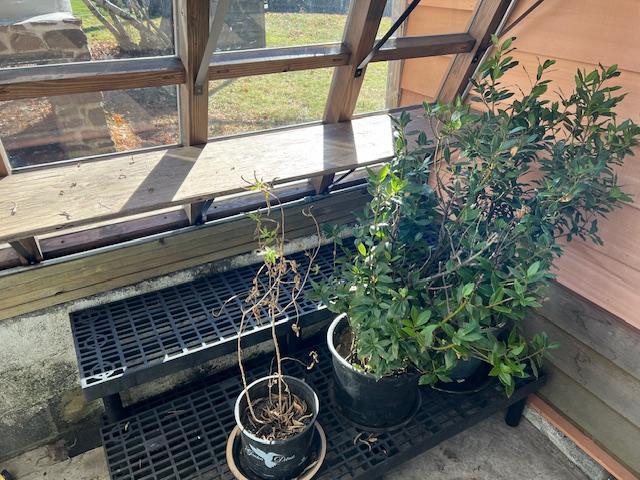
As we exited the house at the end of the tour, the President took me on a tour of the greenhouse that was attached to the house. This is where all the new plants and saplings were being grown during the winter months.
The Greenhouse is attached to the main house.
The decorated window box just outside the kitchen of the farmhouse.
We passed through the gardens that were now dormant for the holidays but would be sprouting in about four months.
During the Revolutionary War and the take over of the English, Christmas would have meant church services on Christmas Day and a light luncheon in the afternoon. Things like gift giving, entertainment and music would have been later in the 1800’s as the ‘Puritan influence’ would have prevailed at this time with little merriment during the holidays.
After the Civil War and the rise of the Industrial Revolution did Christmas get more elaborate and festivities became more colorful. You see this in different stages of the house. The forge is open for the “Sinterklaas Festival” the first week of December every year.
In the Spring, I attended “Pea Day”, the first planting of the gardens took place in March of 2024. The volunteers were cleaning the beds out and planting the first fruits and vegetables that could survive in the cool weather. It gave us a chance to see how things were planted on the farm during the different seasons.
The front of the Garretson Forge & Farm during the last days of Winter.
The property during the late Winter months.
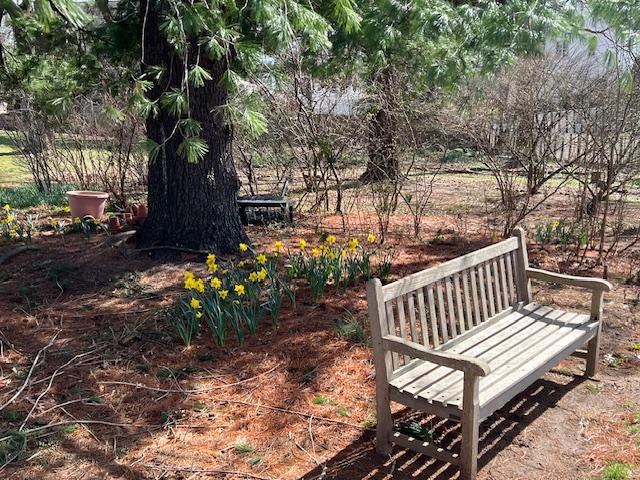
The daffodils were in full bloom on the property.
Cleaning up the property during the late Winter months.
The volunteers planting the beds during “Pea Day”.
The volunteers planting the beds during “Pea Day”.
The students of Bergen Community College learning about the Garretson Forge.
“Pea Day” gave us a chance to see the property and see how the plantings of the farm were timed with the seasons. It also gave the students a chance to see what the farm looked like and understand its logistics.
The farm on “Pea Day”.
The History of Garretson Forge & Farm:
Garretson Forge & Farm is one of the oldest historic sites in Bergen County, New Jersey. Settled in 1719, this Dutch Colonial homestead was home to six generations of the Garretson family. Their homestead remains a rare surviving example of a simple farming life that was prevalent in the 1700’s and 1800’s. It now functions as a living museum and a working farm, preserving our colonial past and agricultural heritage.
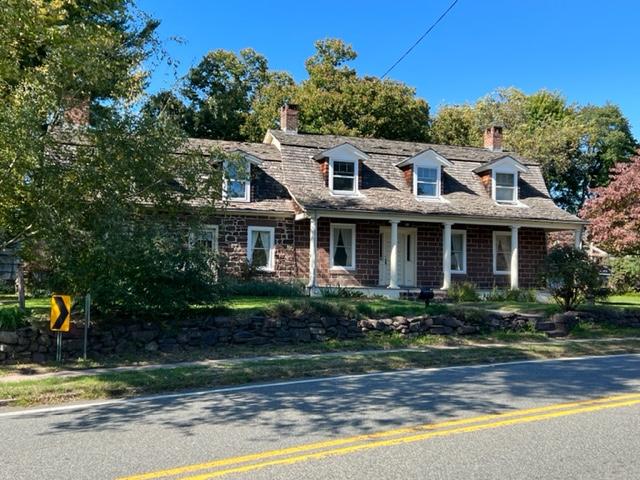
The front of the Garretson Forge on River Road in Fair Lawn, NJ.
The Property:
Located along an old Native American trail, about a mile north of Garretson Lane, is one of the original farms in Slooterdam, owned by the Dutch family of Peter Garretson. Today, more than 300 years later, the trail has come to be known as River Road, Garretson Lane is now called Broadway and Slooterdam has evolved into Fair Lawn, yet the original farmhouse and remaining grounds are still referred to as the Garretson Homestead.
In the 17th century, New Jersey was divided into the Provinces of East and West Jersey by its English proprietors, Lords Berkeley and Carteret. These lands were then sold to a group of Quakers headed by William Penn. By 1692, part of East Jersey, known as the Saddle River Tract, had been divided into large lots, one of which was sold to the Stillwell family.
The Garretson homestead stand on a portion of land that was acquired in 1708 by David Daniellse from the Stillwell family. A copy of the original propriety deed signed by King George of England and the Lenni Lenape Chief, Spotted Tail and granting the land to David Daniellse, is hanging in the homestead. The original property was bounded on the west by the Passaic River and on the east by the Saddle River. Peter Garretson purchased the property from Mr. Daniellse in 1719.
After Peter Garretson’s death, title to the land was passed from one generation to the next. From time-to-time parcels of the tract were sold. The present site consists of 1.84 acres along River Road.
The beauty of the Garretson Forge Farm in the Fall
The Homestead:
The house is an example of Dutch Colonial architecture which is charismatic of Bergen, Passaic and Hudson Counties.
One and one-half stories high and built about 1719 of rubble and undressed stone, the current kitchen wing is considered by most to be the homestead. It features a large open-hearth fireplace typical of Flemish design of the late 1600’s. On a late nineteenth-century photograph of the house, remnants of a brick beehive oven can be seen on the outer wall.
Farming equipment outside the barn
In 1760, the larger section of the house was built using dressed stone. The sandstone blocks were held together with mortar made of river mud mixed with straw and hogs hair. It was under this section that fragments of clay pipes (c1720) were uncovered.
The farmhouse on River Road in Fairlawn, NJ
The Farmhouse
Extensive renovations were made to the house in 1902. The present gambrel roof replaced a steep gable roof; a front door was replaced with a window; an inner stairway to the basement replaced cellar hatches. A large center Victorian stairway to the second floor was also built and the open-hearth fireplaces were enclosed in the Victorian style. A large pillared porch was also added.
An early nineteenth century carriage house still stands on the property along with a large barn and several smaller outbuildings, the oldest of which is a small wooden structure built circa 1800 in the Dutch barn style.
The barn and carriage house
The Garretson Family:
The history of the Garretson family in America began in 1660 with the emigration of Gerrit Gerritse, his wife, Annetje Hermansse and their son, Gerrit from Wageningen, Gelderland (Netherlands). They arrived in New Amsterdam and proceeded to the town of Bergen, where in 1668, Gerrit (Sr) bought from Philip Carteret, eight parcels of land. The family resided in what is now the Communipaw section of Jersey City, where Gerrit died in October of 1696. His wife died on September 7, 1696.
Some of Gerrit Gerritse’s children took the name Van Wagenen, while others retained that of Garretson, from the name of their father. The descendants of Gerrit Gerritse, going by the surname of Garretson, Van Wegenen and Van Wagoner are today numerous throughout Bergen and Hudson Counties.
Mary Garretson’s Tombstone is located in the barn
Peter Garretson, grandson of the elder Gerrit Gerritse, purchased the Slooterdam Patent from David Daniellse in 1719. The house was built shortly afterwards. Six generations of the Garretson family resided on the farm until the death of Mary Garretson Brocker in 1950. Her widower, Feenix Brocker, remained at the homestead and continued farming until 1974.
The Gardens:
Originally a homestead farm, subsistence and market crops were grown from the early 1700’s through the early 1970’s by the Garretson family.
The back of the house
Today, the gardens at Garretson continue an agricultural tradition. A variety of heirloom vegetables, all open-pollinated are grown in the kitchen garden using organic and sustainable practices. Produce in season is donated to a local emergency food pantry. An extensive herb garden contains over 75 types of medicinal and culinary herbs that were grown in the seventeen and eighteen hundreds.
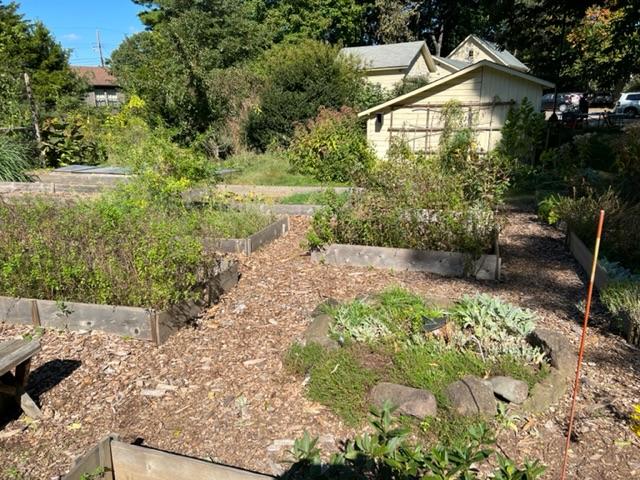
The Garretson farm gardens behind the house are tended to by the master gardeners.
Garretson’s Butterfly Garden provides host plants and nectar sources for many different kinds of butterflies. Since 2005, Garretson has been certified by Monarch Watch as a Monarch Waystation (monarch habitat).
The Children’s Garden at Garretson abounds in spring ephemeral wildflowers, bulbs and ferns. In the heat of summer its offers a welcome place to sit in the shade. Gardeners have been restoring native plants to this woodland area.
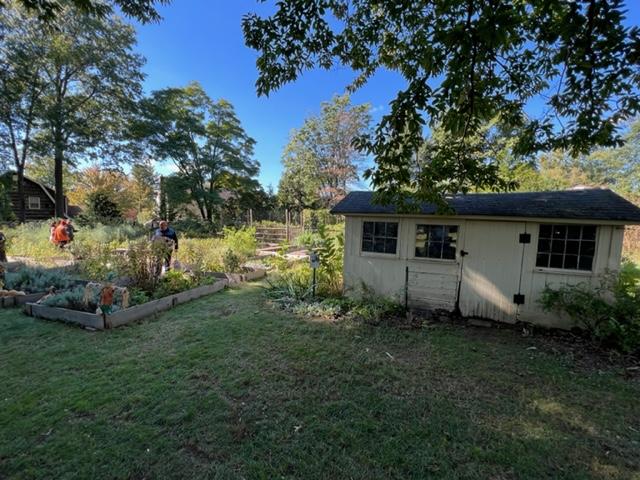
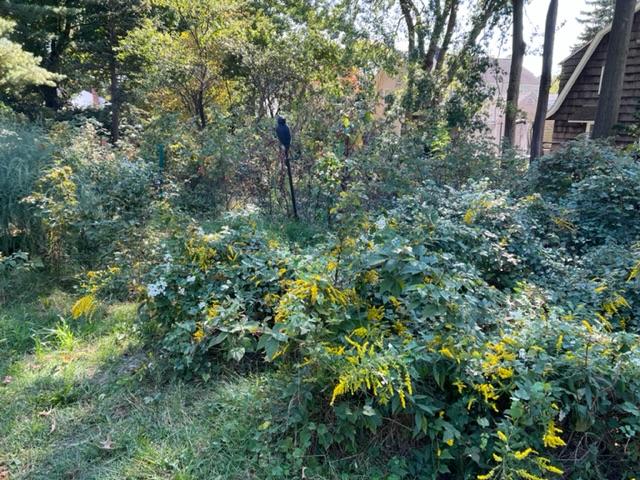
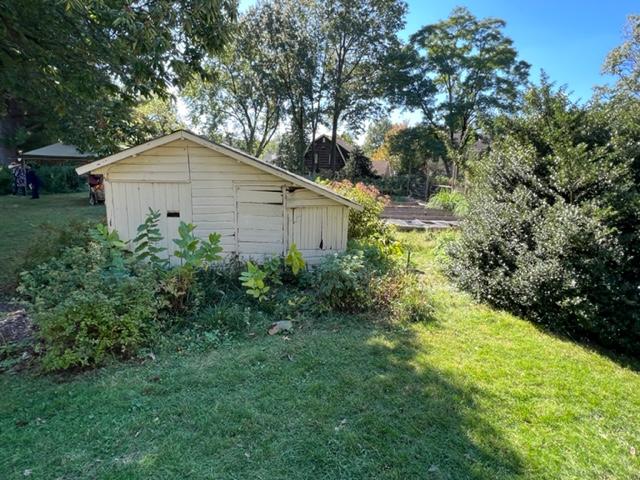
The garden sheds behind the house
Many of the garden volunteers are Rutgers-trained Master Gardeners who have done their community service at Garretson and who give back to the community and Bergen County Master Gardener Program by training new gardeners at Garretson.
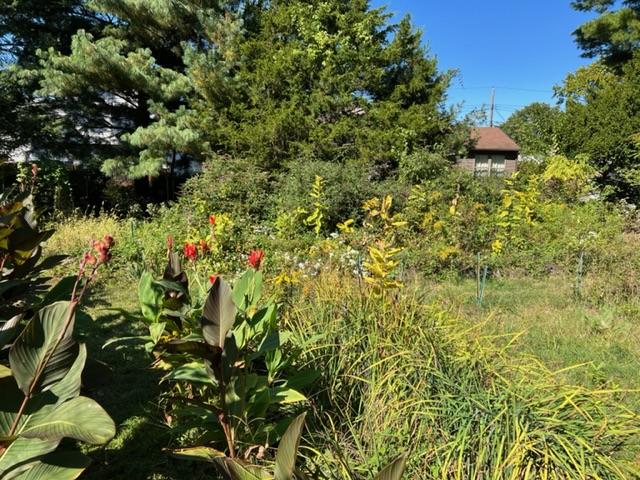
The gardens at the Garretson Forge farms behind the house
Garretson Forge and Farm Restoration Inc.:
The Garretson property was sold in 1974 to a private builder for residential value, community members became interested in acquiring the property for preservation. This led to the founding of the Garretson Forge and Farm Restoration Inc. in 1974 for the purpose of raising funds for the purchase. Through the efforts of the organization, the community at large and government agencies, the necessary funds were raised for the acquisition of the property.
GFFR Inc. continued to raise funds to maintain the site and to restore the kitchen to its eighteenth-century design. Money was also used to purchase artifacts and articles related to Garretson history.
The open kitchen at the Garretson Farm
In 1977, ownership of the property was accepted by the Freeholders of Bergen County. Now a county historical site, the Garretson homestead continues to be administered by the members of Garretson Forge and Farm Restoration Inc.
GFFR Inc. is a volunteer organization whose mission is to preserve and maintain the Garretson homestead, keeping it open to the public; to educate the greater community about local and state history; to foster environmentally sustainable agricultural practices and biodiversity.
Programs and Special Events:
Throughout the year, Garretson Forge and Farm offers.
Living history events:
*The Spring Festival celebrating colonial life and crafts in the 1700’s.
*The Fall Festival celebrating the harvest and the 1800’s farm.
Fall Festival 2022
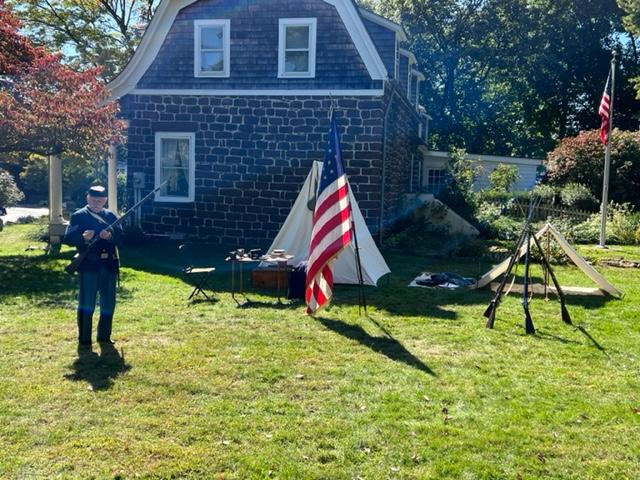
Civil War Activities at the Garretson Forge
Civil War activities at the Fall Festival
Spinning wool and cloth making at the Fall Festival
*Dutch Christmas presenting a traditional Dutch celebration with the homestead decorated in Victorian style.
The house decorated for the Sinterklaas and Christmas festivals.
The house decorated for the Christmas holidays.
Educational Programs:
The Map and Signature galleries
*School Tours
Children’s toys at the Garretson Forge
*Open House and garden tours
*Lectures on the environment and on local history.
The Signature and Map Collection at Garretson Forge
*The Master Gardener Program
*Organic/sustainable gardening
*Garden and craft workshops
*The annual Butterfly Festival for families.
Community Service Programs:
*Eagle Scout Projects
*Community Seed Bank
*Seasonal produce donations to local food banks.
For more information on events, please check out the website:
The Bergen County Division of Cultural & Historic Affairs received an operating support grant from the New Jersey Historical Commission, a division of the Department of State.
Disclaimer: This information is taken directly from the pamphlet from the Garretson Forge & Farm. For more information on the site, please call the above numbers or email them.
In the Spring Semester of 2023, my Introduction to Business class at Bergen Community College in Paramus, NJ created a project to promote the Garretson Forge & Farm for Destination Tourism. It was an extensive project creating new programs, new advertising and promoting the site with commercials and walking tours.
I think a lot of these historical sites do not get the attention they deserve and with the 250 Anniversary of the Revolutionary War happening in two years, these wonderful sites needed to be showcased. They needed to dusted off, revamped and a fresh perspective was needed to tell their story. This is where the project for the “The Bergen 250: Tourism at the Garretson Forge & Farm” came from.
The project “Bergecco-Parc Consulting Inc. presents “Bergen 250-Touring the Garretson Forge & Farm”:
That and the tour the former President gave me during the holiday season when I begged to see the Christmas decorations for the Sinterklaas celebrations were still up. I needed pictures for my blog, “VisitingaMuseum.com” and “MywalkinManhattan.com”.
My blog on Touring the Garretson Forge & Farm on VisitingaMuseum.com:
When I toured the home during the holidays, I approached them on using the home as a future project and she seemed to like the idea. This is where the partnership for the project came from.
Our first visit to the site was on “Pea Day” in March 2024 for an extra credit assignment to start the project off so that the students could see the grounds and experience the farm and its attributes.
Visiting the Garretson Forge & Farm in Fair Lawn, NJ for “Pea Day”
Visiting the farm house and gardens on “Pea Day”
The volunteers planting at the Garretson Forge & Farm on “Pea Day”.
Observing the Master Gardeners and Volunteers on “Pea Day”.
The students coming in on their day off to attend “Pea Day”
Everyone took turns getting their hands dirty on “Pea Day”
We also had a special field trip to the Garretson Forge & Farm on class day so that everyone could tour the farm and the farmhouse. Outside “Pea Day”, it was the first time anyone in my class had ever visited the site.
We started the tour on a rather gloomy night. We had just had a rain storm but that did not stop our visit. Our whole class attended the trip (it is a mandatory part of both the project and the class) and it was a interesting tour for all of us.
Our host was the President of the Friends group that helps raise money for the site. We started the tour after the rain storm with a trip through the barns to see some of the old farm equipment. The were some interesting artifacts that included farm plows and horse drawn articles to carriages and sleds.
Then we toured the gardens where the volunteers had just finished the plantings of the summer fruits and vegetables. The President explained that the fruits and vegetables that were grown here were donated to a soup kitchen in Paterson. I thought this was a great idea.
Then were toured the farmhouse, which I had just been to for a private tour during the holidays. The kitchen was set up for a harvest meal now and I explained to some of the students how food was cooked back then in the hearth.
Then we toured the small museum and looked at the family tree, where generations of Garretson’s had lived. Our last stop on the tour of the farmhouse was the main living room where the Sinterklass event was held and many of the talks on domestic life on the farm.
This is where we concluded the tour and many students asked questions about life at that period of time. After the tour was over, I took the students out to dinner as part of their Team Building. It is important for the students to get to know one another.
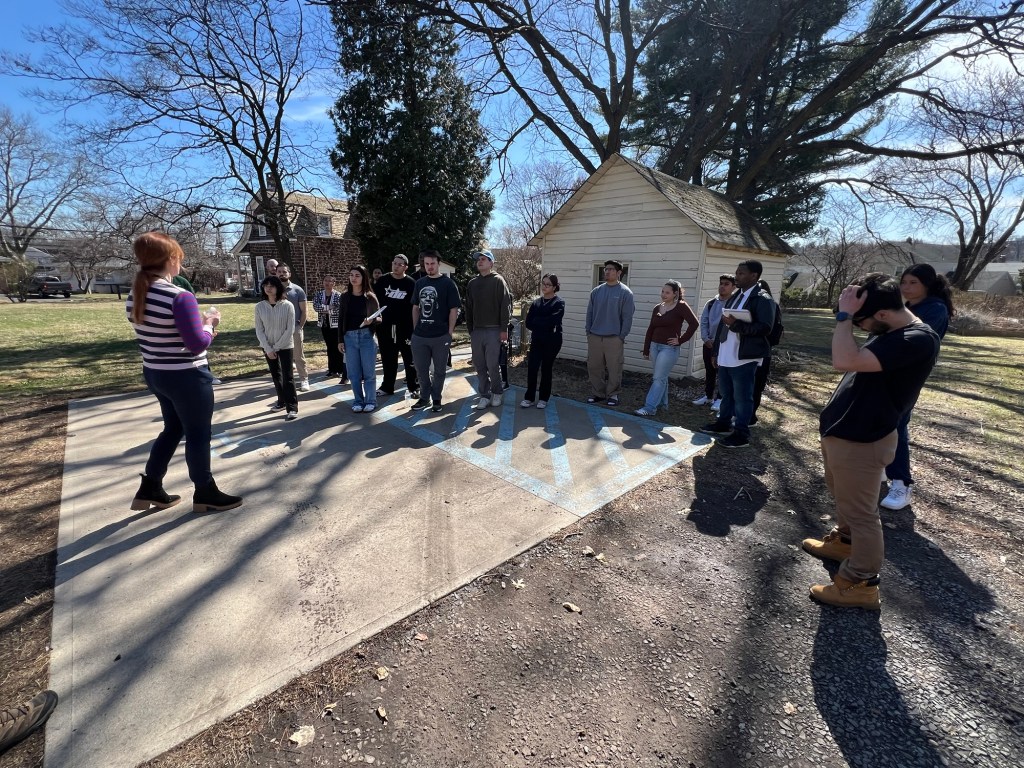
The start of the tour near the barns.
Our tour of the grounds, the barns and life on the farm.
The grounds near the second barn. Touring the gardens at twilightTour of the kitchen.
Discussing the expression “Sleep tight don’t let the bed bugs bite” and where it came from.
Discussion on the second floor.
The second floor had been added on years later.
Discussion on farm living.
Discussing the furnishings and how the farmhouse ran as a farm and a home.
Continuing our discussion of life on the farm.
Talking about life on the farm.
The Bergecco-Parc Consulting Inc. tour of the site.
Our group shot with President of the Garretson Forge & Farm April Barth.
After the tour was over, I took my class to Bella Vita Pizzeria in Fair Lawn, NJ for their first Corporate dinner and Team building exercise. The dinner was wonderful, and the pizza was excellent. It really warmed us up after a cold night of touring and the students seemed to enjoy getting to know each other over a hot pizza dinner.
Bella Vita Pizzeria at 1761 River Rd A, Fair Lawn, NJ 07410:
My Teams dining together at a “Corporate” pizza dinner.
The company Team dining together that night.
The aspect of dining together is an important part of the Team Building exercise and you can tell by the pictures that my students enjoyed it.
The next few weeks were preparing the project for the presentation. We had a visit from Vivian Davis, who I had known for years from working in the Division of Disability Services when she was one of our speakers. She now was running the “Bergen 250: The 250th Anniversary of the Revolutionary War in Bergen County” and we had incorporated part of this in the project. I had given her a copy of the project and she came into the class to discuss what she was planning and the significance of the Revolutionary War had on the towns in Bergen County. It was a real history lesson on some of the towns in Bergen County and some of the historical homes and sites in Bergen County.
This project was a bit more intense than my morning class. While they designed the rigors of the Bergen Room Bistro, my evening class was putting together an entire game plan of Revolutionary War events for the ‘Bergen 250’.
I had the students working on an Independence Day event, a Children’s Walking tour of the property, a Mid Summer dinner with a Revolutionary War themed dinner, a continuation of the Sinterklaas event that would extend visiting the decorations in the house another two weekends and then a new Digital Marketing campaign for the site with a commercials and posters.
The night of the presentation on April 24th, it all came to life. The students each showed the PowerPoints with their ideas, menus and commercials to promote the site. They really had some interesting ideas.
Finishing the evening with my Student Consultants was great. The students were so excited to finish and I have to admit it was quite the journey for me too. It was a lot of work (and money) to pull this event off but it went by well. The Board of the Garretson Forge & Farm really seemed to enjoy it and asked lots of questions.
Vivian Davis, who is running the “Bergen 250″ asked the most important question of the night, if I was to run all of these events, would your age group come?” This got the students thinking and one said, “We are a busy group with college and work. If you want our age group to come, you are going to have to cater to things we like.” I thought that was fair and gave her something to think about as well.
We then took our Board picture. I am always so proud of my Student Executive Consultants. They come dressed for work.
The Bergecco-Parc Consulting Inc. “Bergen 250″: Garretson Forge & Farm” Executive Team.
I want to thank my President of the Team Project, President TJ Fischer and SVP of Operations Camila Alvarado and the entire Team of Vice-Presidents, Team Leaders and Team Members for tackling this very difficult and very detailed job of promoting this wonderful historical site with such detail.
The questions on the project were excellent and direct and audience was very impressed by how thorough the project was done that evening. To all my Student Consultants, you did an excellent job!
Great Work!
New Historic Project for 2025:
To Celebrate the “Bergen 250: the Two Hundredth Anniversary of the Revolutionary War in Bergen County”, we are creating a new project with a series of special events and meals at different historical sites in Bergen County. It gives these sites a fresh approach to new visitors.
Our class toured the site and I tried to showcase this site to another Team of students to reimagine it.
We were joined by County Historian Vivian Davis who led the tour to my students
We toured the grounds and gardens where a Country Afternoon Tea would be planned in the backyard of the home with a house and garden tour and plant sale.
My class toured the historic kitchen
We then toured the historic room with the homes past and the family tree
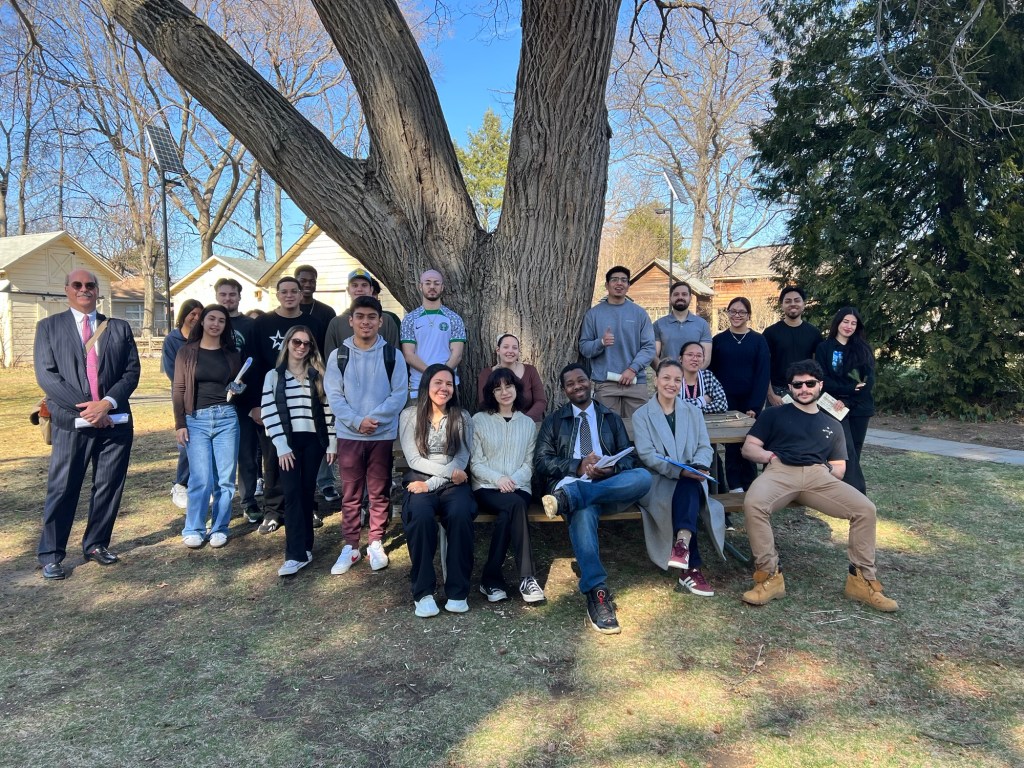
The Bergecco-Parc Consulting 250 Team in the backyard of the Garretson Forge & Farm
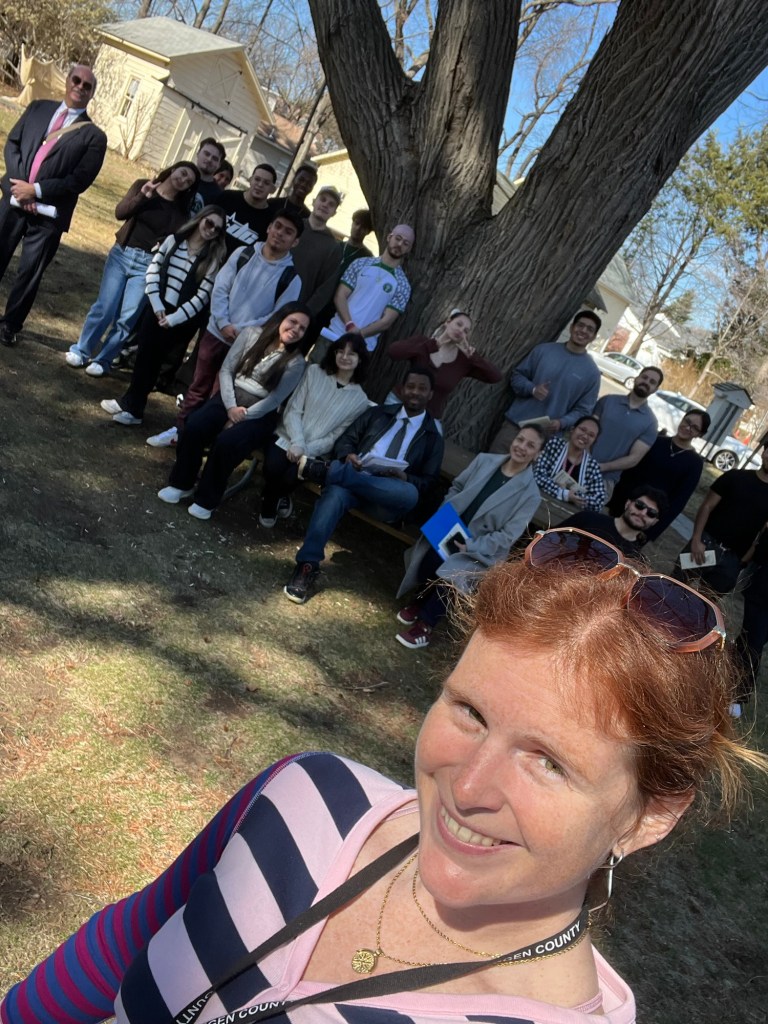
Our selfie with Vivian
The end of our tour that afternoon
It was another successful in the field by Bergecco- Parc Consulting Inc.





































 Visiting a Museum: The Unique, Unusual, Obscure and Historical