

Kearney House (Blackledge-Kearney House)
Alpine Landing
Alpine, NJ 07624
(201) 768-1360 ext. 108
https://www.njpalisades.org/kearney.html
Open: Most weekends & holiday afternoons from May to October
Fee: Free
My review on TripAdvisor:

The Kearny House in the Fall of 2024
I took my first trip down to the Kearney House in Alpine, NJ and was able to walk the grounds, visit the Alpine Landing and see the amazing views of New York and of the Hudson River. This spot gives you breathtaking views upstream of the surrounding Hudson River. The house was closed but the vegetable gardens were full of late Fall produce and the gardens could have used some weeding. I will have to wait until the house opens up again.
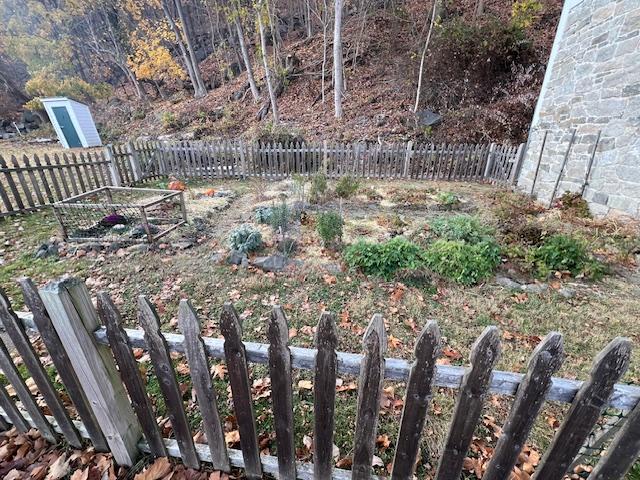
The Vegetable Garden in the Fall of 2024 at the Kearny House
I recently visited the Kearny House of their Fall event “Punch & Pie at Mrs. Kearny’s Tavern”. That was an interesting night. First let me say that it is pitch black in that park. The Alpine Basin has no lights in the park and you will be in the dark the whole trip down the hill. I had a minor incident travelling down the hill so take it slow.

The Kearny House at dusk in the Fall of 2024

The Historic sign for the Kearny House at the Alpine Landing
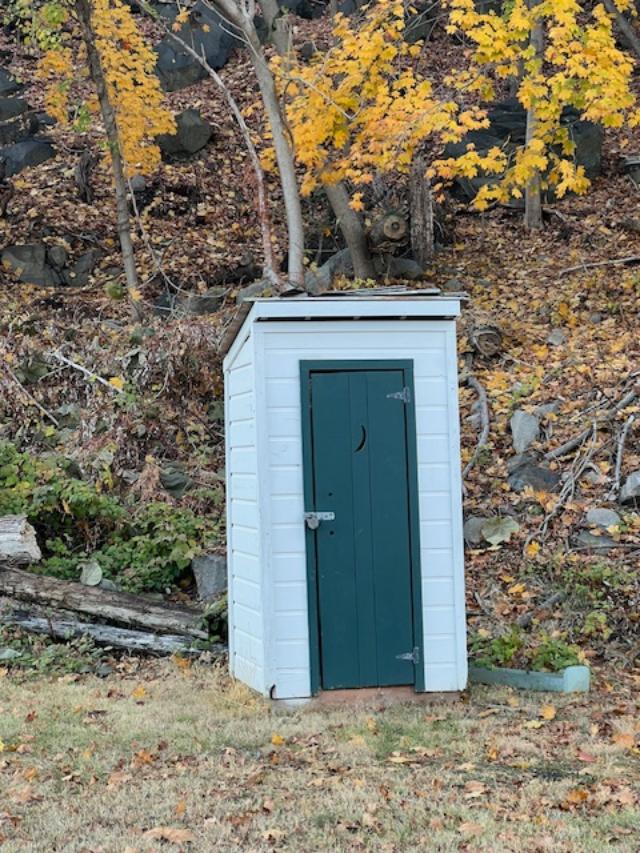
The outhouse on the grounds
Once I was down for the event, it was interesting and fun night. Tavern musician, Thaddeus MacGregor, entertained us with all sorts of songs for the evening and there was storytelling by the gentleman who runs the historical site.

Tavern musician, Thaddeus MacGregor, performing at the Kearny House for the “Thanksgiving Music and Hot Cider” event
There was a candlelight tour of the house, so we got to see the second level with the upstairs bedroom, the attic area which really was drafty and the room above the new addition that is used for storage. The area was once heated by fireplaces and since the downstairs had a fire lit, the whole house was nice and warm. They had once of the original rope beds that had been tied and antique toys.
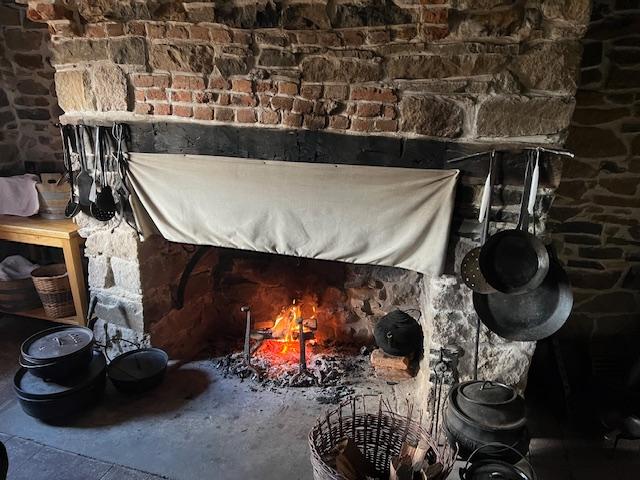
The hearth of the kitchen keeps everyone warm as the stones warm the house

The Dining Room table in the during the “Hot Cider” party
The first floor had the fireplace lit and the whole room was illuminated by candles which made the room very warm and cosy. It was interesting to see one of these homes that has no electricity and how it operates. It must have been very interesting to live at time.

The Dining Room during the day
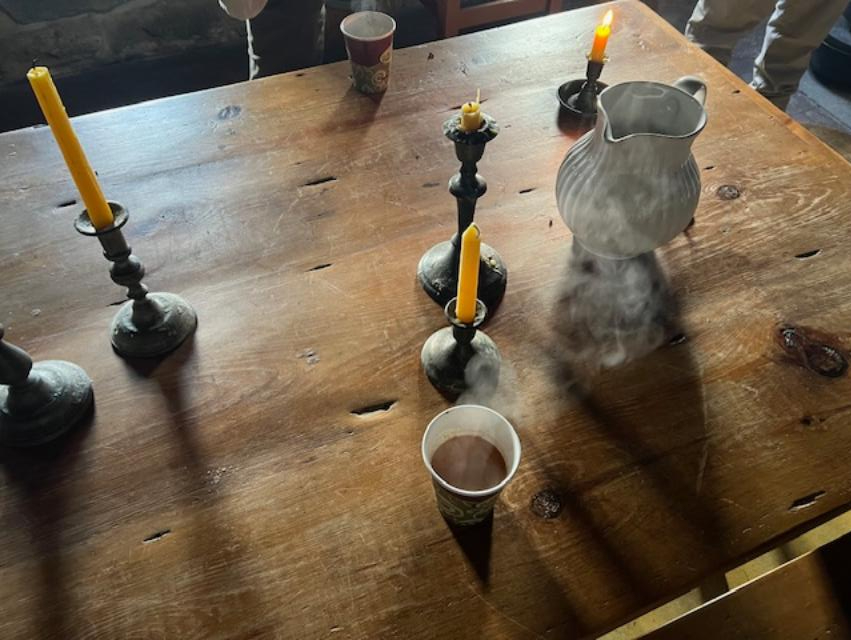
The delicious hot cider at the Thanksgiving event at the house

The Dining Room at the Kearny House
What calmed me down after a long night was the delicious homemade pies that they served at the event. They had a strawberry rhubarb and apple that were just delicious. So flaky and filled the freshest fruit. It really cheered me up. They also had cheeses, roasted peanuts and a hot spiced cider to drink. I could have used something stiffer but it was still nice to drink and had the most wonderful flavor. Overall it was a nice night of desserts and snacks and good storytelling and the view of New York City was incredible.

The house illuminated by candlelight during the afternoon in the Fall
Do not venture into this park at night! Please take it slow down the hill to the landing. My suggestion is to do a dry run when it is light out so you know where you are going.
The History of the Kearney House:
(I credit this to the Kearney House pamphlet and Wiki)
The Kearney House was built in the 1760’s by the Blackledge family and was the home of Maria Blackledge, who was the daughter of Benjamin Blackledge, who lived in the home with her husband, Daniel Van Sciver.
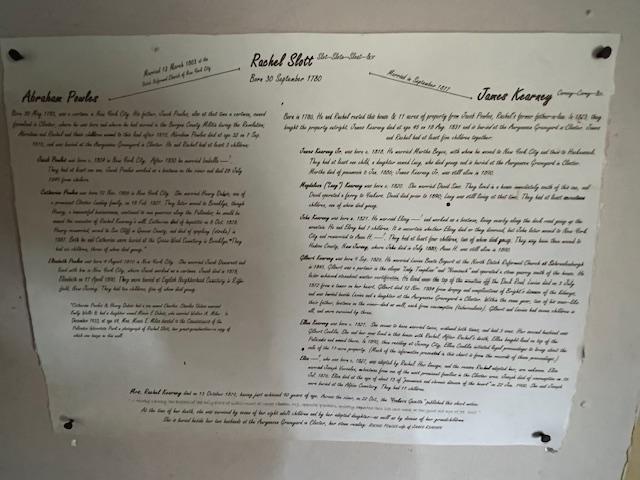
The Kearny Family tree
Maria Blackledge father, Benjamin Blackledge, was an educator and public official, who taught Dutch citizens the “Kings English”. He was the first clerk of Harrington Township, NJ and served as Justice of the Peace and Judge of the County Court of Common Pleas and elected to the assembly of Bergen County, NJ. Mr. Blackledge’s wife, Caroline Tallman (Cathalyntie Tallema), was the daughter of Dowe Hermanszen Tallema and Maritie Haring, of the prominent Haring family of which Harrington, NJ was named after (Wiki).

Mrs. Kearny’s portrait inside the house
The house was built in this location when the farmers of Closter, NJ built the Closter Dock Road through a pass in the cliffs to the Hudson River so they could deliver their goods to New York City. The house was most likely built to be a dockmaster’s house to supervise the busy river landing.

The Blackledge-Kearney House when it was on the waterfront
The house was purchased in 1817 by James and Rachel Kearney. With them were their three children from Rachel’s first husband, Abraham Powles, who died two years earlier. James and Rachel then had five children of their own. Rachel also adopted a daughter.

They had thought that General Cornwallis had used the home as his headquarters but they found this was not true
Mr. Kearney died in 1831 and Mrs. Kearney used the home as a tavern. The northern part of the house was expanded in 1840 to house the tavern part of the building. Besides offering food and spirits, Mrs. Kearney’s tavern served as a meeting place for the captains and crews of the sailing vessels that arrived and departed daily from the docks here and for the local workforce of quarrymen, dock workers and tradesmen.

The Upstairs bedroom gallery
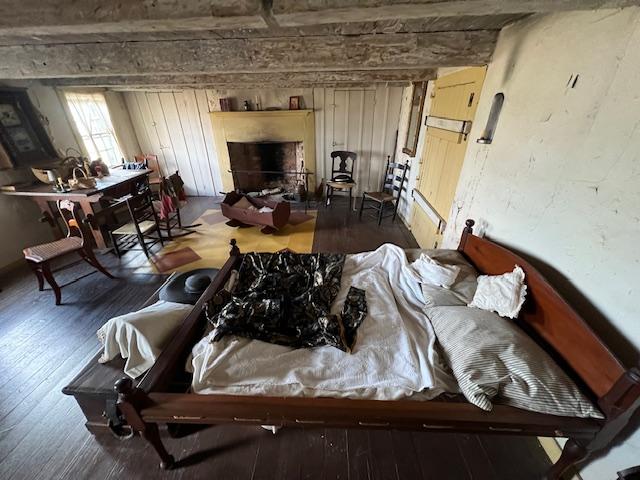
The upstairs bedroom gallery

The upstairs room in the new addition may have been for lodgers staying at the tavern.
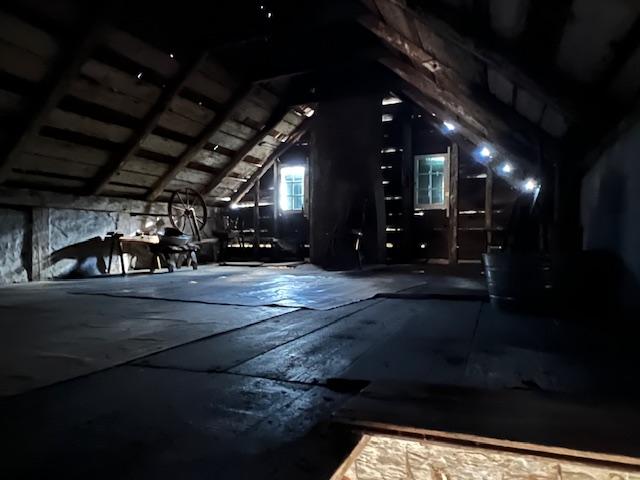
The Kearney House Attic room that was used for her children
The Palisades Interstate Park Commission bought the house in 1907 after Rachel’s death in 1897 and in 1909 had the big porch built as a grandstand for a dedication ceremony for the new park. Through the 1920’s, the Commission used the house as a police station. The house is now open to the public on select weekends and holidays for touring and special events.
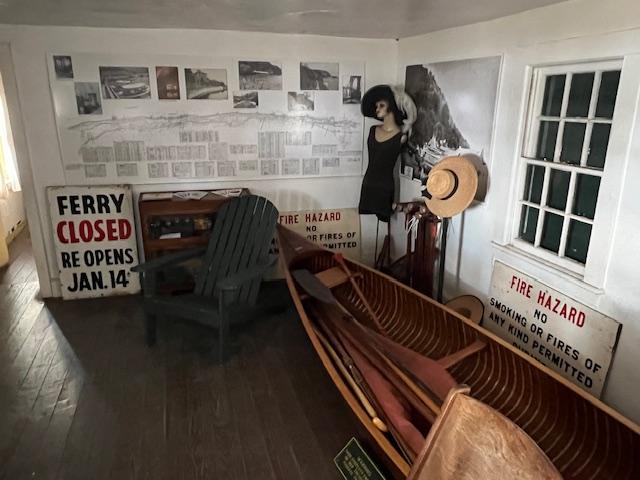
The upstairs bedroom gallery with artifacts from the park
The property offers beautiful views of Yonkers, NY and the Bronx and from the Alpine Landing especially in the coming Fall, amazing views of the foliage and of the cliffs surrounding the Hudson River.
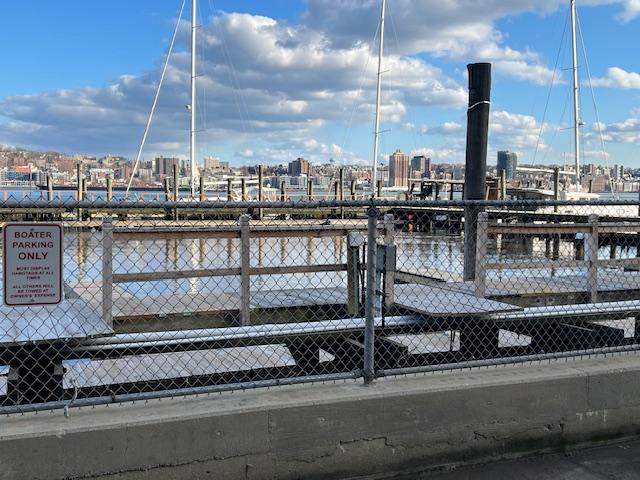
Alpine Boat Basin by the Kearney House
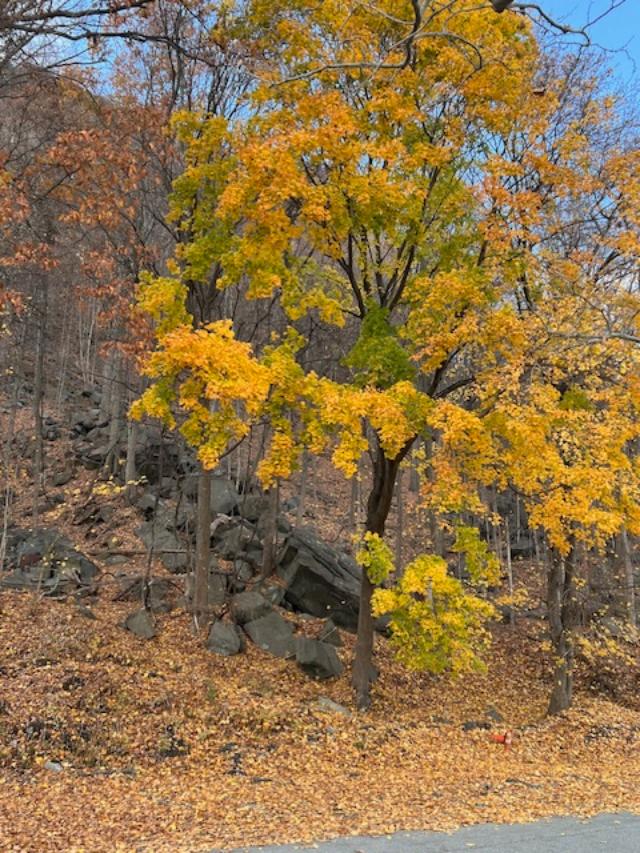
The Alpine Park in the Fall of 2024
The Summer of 2025:
In the summer months, the house was open on Thursday nights for music, games, and summer refreshments. The event ‘Behind the Times at Mrs. Kearney’s Tavern’, was an evening of touring the house and grounds, musically entertainment on the lawn and story telling to end the evening.

Entering the Palisades Interstate Park

The Hudson Riverside and beach area

The park on the Hudson River
The park is breathtaking in the summer months, and everything was lush and in bloom. The views of New York clear as day and the boat basin was busy with people entertaining on their boats and coming in and out of the small harbor.

The park during the Summer of 2025

The park in full bloom that evening

The history of the Kearney House history

The Kearney House and lawn area
The Kearney House was open this evening for one of their many Summer special events. All the windows were open to take advantage of the cool breeze and air the house out on this hot July evening.

The Kearney House from the front lawn

The house getting ready to arriving guests

The tiny barn shed off to the side of house

The waterfall in the back of the house

The tiny shed and hilly woods behind the house

The side of the house and the vegetable garden

The garden with vegetables and herbs
The Vegetable Garden was growing all sorts of vegetables and herbs of the time period and some flowers as well.

The outhouse on the property

The river view of the house

The front of the house with the windows open for river breezes

The inside of the house was cool and welcoming. The hosts of the event had both icy water and Lemonade for guests and slices of sweet watermelon. We were welcomed and offered our choice of beverages and then just relaxed and enjoyed our refreshments that cooled us down for the evening.

Our hostess graciously greeted us and welcomed us to the house

The kitchen set for guests to the tavern

Enjoying summer refreshments

Talking with other guests
It was so nice to just sit back and relax and enjoy the cool breezes coming off the Hudson River. The lemonade really hit the spot.

The cool breezes from the back window
After my snack in the tavern, I toured the upstairs. The two upstairs bedrooms are Mrs. Kearney’s bedroom and the guest room on the other side of the hall.

Mrs. Kearney’s bedroom

The guest room was once used for visitors now holds all their artifacts

This bathing beauty greets you on the second floor
The attic area was far too hot to tour but I had visited it last winter after I had attended visited for a post holiday tour. I did get to tour the upstairs patio and enjoy the breezes outside.

The patio on the second floor

What a view of the river!

The view as the entertainment was about to start

Outside, Thaddeus McGregory started his concert on the front lawn
Thaddeus McGregory singing ‘ Beautiful Dreamer’
Then the Revolutionary War era games took place out on the lawn outside the lawn.

The lawn outside the Kearney house

The beautiful flowers in the lawn

The actors playing ‘ Toss Across’
A video of the games
It was a very nice evening outside with cool breezes and the seeing the concert.

The outside gardens in front of the home

The outside of home

The views from the home of the Hudson River at twilight














 Visiting a Museum: The Unique, Unusual, Obscure and Historical