Category: Small Museums and Galleries in NYC

Bronx Museum of the Arts                                   1040 Grand Concourse                                        The Bronx, NY 10456

Bronx Museum of the Arts 1040 Grand Concourse The Bronx, NY 10456

The Bronx Museum of the Arts

1040 Grand Concourse

The Bronx, NY  10456

(718) 681-600

http://www.bronxmuseum.org/

Open: Sunday 11:00am-6:00pm/Monday & Tuesday Closed/Wednesday-Saturday 11:00am-6:00pm

Fee: Free

My review on Tripadvisor:

https://www.tripadvisor.com/Attraction_Review-g47369-d312012-Reviews-Bronx_Museum_of_the_Arts-Bronx_New_York.html?m=19905


I recently had some time to visit the Bronx Museum of the Arts when I was visiting Yankee Stadium recently for a football game. The museum is right down the road on the Grand Concourse. It is an impressive little museum.

I had wanted to see the exhibit “Art Versus Transit: 1977-1987” by artist Henry Chalfant who had recorded the graffiti art on the subway cars during the late 70’s into the early 1980’s. This is before the subway investing in the new subway cars that could be cleaned by hosing them off.

Bronx Museum II.jpg

“Art versus Transit: 1977-1987”

The art was interesting as it was an expression of the times just when Hip-Hop was becoming popular and the City was going through the financial crisis. The artist did a good job capturing the times. Not only do we see the art but the music and dance as well of the time.

Bronx Museum III.jpg

Subway Art

The other exhibition that I saw was “The Life and Times of Alvin Baltrop” which displayed the artist’s interpreted that Gay Community and the beginnings of the AIDS crisis. It was an another interesting perspective of the times of New York City.

Mission and Background:

The Bronx Museum of the Arts is a contemporary art museum that connects diverse audience to the urban experience through its permanent collection, special exhibitions and education programs. Reflecting the borough’s dynamic communities. The Museum is the crossroad where artists, local residents, national and international visitors meet.

Today an internationally recognized cultural destination. The Bronx Museum of the Arts is committed to presenting new ideas and voices in a global context and making contemporary art a vital, relevant experience. For the past four decades, the Bronx Museum has presented hundreds of changing exhibitions featuring works by culturally diverse and under-represented artists from a spectrum of levels. Exhibition have investigated themes of special interest to the Bronx community while exploring the interplay between contemporary art and popular culture.

A permanent collection of over 2000 artworks in all visual media preserves and documents artists who are not typically represented within traditional museum collections by showcasing work by artists of African, Asian and Latin American ancestry, as well as artists for who the Bronx has been critical to their development. The Museum provides direct support to artists through Artist in the Marketplace, which nurtures the work of 35  emerging artists each year and providers professional development seminars culminating in a multi-site biennial exhibition and catalog.

The Museum’s education department empowers students from grades K-12 by offering a variety of programs that inspire academic proficiency visual literacy and critical thinking. Through the Group Visits Program, students are exposed to the Museum’s works during single-session tours lead by teaching artists. Through In-School Partnerships. Museum educators work with school teachers to encourage scholastic excellence through the application of arts education techniques in addition, the Museum’s Teen Council Program helps Bronx high-school students build applied arts and media skills as they create a variety of visual and text-based materials.

(Bronx Museum of the Arts Mission-Website)

History:

The Museum opened on May 11, 1971, in a partnership between the Bronx Council on the Arts, which was founded in 1961 and the Metropolitan Museum of Art. The opening coincided with a borough-wide “Bronx Day” event. The first exhibit consisted of 28 paintings from the Met’s collection. The Museum was first housed in the first floor rotunda of the Bronx County Courthouse. Additional galleries were located in the Bronx’s Co-op City, Bedford Park and Allerton neighborhoods. In its first 12 years of operation, the museum held over 350 exhibitions.

In 1982, the city purchased a vacant synagogue at 165th Street and the Grand Concourse as a new location for the museum. The new location opened to the public in May 1983 in conjunction with “Bronx Week”, which succeeded “Bronx Day”. The new space was inaugurated with an exhibition of twentieth artwork. It consisted of paintings, photographs and prints borrowed from the Met.

In February 2004, construction began on a $19 million expansion project that doubled the museum’s size 33.000 square feet. The expansion opened in October 2006. In 2008, a arts center was added to accommodate educational programs for local schoolchildren and their families. The Museum no longer charges fees since 2012.

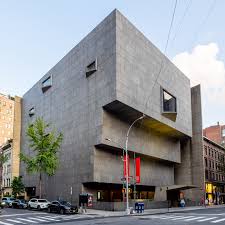
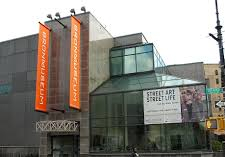
Bronx Museum

The Bronx Museum of Art and its additions

The original design was by Simon B. Zelnick in 1961 and the extensions were designed by Castro-Blanco, Piscioneri & Feder in 1988 and a second addition in 2006 by Arquitectonica.

(The Bronx Museum WIKI)


Institute for the Study of the Ancient World/  New York University                                                        15 East 84th Street                                             New York, NY 10028

Institute for the Study of the Ancient World/ New York University 15 East 84th Street New York, NY 10028

Institute for the Study of the Ancient World/New York University

15 East 84th Street

New York, NY  10028

(212) 992-7800/Fax (212) 992-7809

http://www.isaw.nyc.edu

My review on TripAdvisor:

https://www.tripadvisor.com/Attraction_Review-g60763-d1572637-Reviews-Institute_for_the_Study_of_the_Ancient_World-New_York_City_New_York.html?m=19905

I just happened to stumble across this museum on the way back from the Metropolitan Museum of Art and saw that they were having an exhibition entitled “A Wonder to Behold: Craftsmanship and the Creation of Babylon’s Ishtar Gate”. The exhibition is on the craftsman who created the ‘Ishtar Gate’ and the ‘Processional Way’ in the Ancient City of Babylon.

Institute of Ancient Studies IV

Glazed brick art from the ‘Processional Way’

The small exhibition contains many examples of clay bricks that were used to build the decorative walls and pathways, artwork from the ‘Processional Way’ were displayed as well as smaller decorative art pieces from the time period.

Institute of Ancient Studies III

Some of the works in the exhibition

The exhibition also showed tablets from the time period, information on the digs on the site of Babylon and some of the recorded history of the civilization.

institute-of-ancient-studies-ii.jpg

There are interesting tablets on display

For two small rooms of gallery space, the Institute for the Study of the Ancient World covers a lot of information on the time period. One nice thing about the museum is that you can see the whole exhibit in less than an hour and they do have a very nice gift shop.

The History of the Museum:

The Institute for the Study of the Ancient World is a center for advanced scholarly research and graduate education, which aims to encourage particularly the study of the economic, religious, political and cultural connections between ancient civilizations. It offers both doctoral and postdoctoral programs with the aim of training a new generation of scholars who will enter the global academic community and become intellectual leaders.

In effort to embrace a truly inclusive geographical scope while maintaining continuity and coherence, the Institute focuses on the shared and overlapping periods in the development of cultures and civilizations around the Mediterranean basin and across central Asia to the Pacific Ocean. The approaches of anthropology, archaeology, geography, geology, history, economics, sociology, art history, digital humanities and the history of science and technology are as integral to the enterprise as the study of texts, philosophy and the analysis of artifacts. The Institute’s Director and permanent faculty determine particular directions of research but both historical connections and patterns as well as socially illuminating comparisons will always be central to its mission.

The public presence matches its vision, engaging both the public and scholars worldwide in the work and findings of its scholarly community. Exhibitions, public lectures, publications, digital resources and other programs reflect the Institute’s ideal of study that bridges disciplines and ancient peoples.

The creation of the Institute for the Study of the Ancient World at New York University has its roots in the passion that Shelby White and Leon Levy had for the art and history of the ancient world, which led them to envision an Institute that would offer an unshuttered view of antiquity across vast stretches of time and place. It was founded in 2006 with funding from the Leon Levy Foundation.

Areas of specialty among the museum’s faculty include the Greco-Roman world, the Ancient Near East, Egypt, Central Asia and the Silk Road, East Asian art and archaeology, Late Antiquity and the early Middle Ages, ancient science and digital humanities.

Disclaimer: This information was taken from the museum’s website and I give them full credit for it.

New York Aquarium                                              602 Surf Avenue                                         Brooklyn, NY 11224

New York Aquarium 602 Surf Avenue Brooklyn, NY 11224

New York Aquarium

602 Surf Avenue

Brooklyn, NY 11224

(718) 265-3474

http://www.nyaquarium.com

https://nyaquarium.com/

Open: Sunday & Saturday 10:00am-5:30pm/Monday-Friday 10:00am-5:00pm

Fee: Adults $25.00/Children $20.00/Seniors $27.00 (see their website for more details on pricing and times)

My review on TripAdvisor:

https://www.tripadvisor.com/Attraction_Review-g60827-d107414-Reviews-New_York_Aquarium-Brooklyn_New_York.html?m=19905

The New York Aquarium at 602 Surf Avenue.

The aquarium entrance at the boardwalk.

The aquarium’s outside tanks with sea lions, otters and penguins.

The penguins were very entertaining that afternoon.

The otter just ignored us. They just played amongst themselves.

I have been to the NY Aquarium many times since it reopened after Hurricane Sandy and there have been many positive improvements in both the facility and the service. The new Ocean Wonders: Shark! exhibition which has opened up giving an interesting look at the underwater world of the many different types of sharks that dominate the deep.

The Shark Exhibit

The Shark exhibition

The sharks and string rays

It is not just a display but also a commentary on the conditions of the deep and the treatment of sharks around the world. There contributions as bottom dwellers cleans our oceans and benefits other fish. It was shocking what the treatment is of these animals in Asia when strip these animals of their fins for soup. I like how professionally the aquarium shows this in their displays and videos and doesn’t preach but offer solutions to the problem.

The entrance to the new shark tanks.

That and walking through the tanks themselves in the darkened rooms with music makes for a fascinating and almost ominous trip into the ocean behind the walls with the sharks and other mammals and fish swim past you. There is also a small tunnel that you can climb under to watch the fish swim on top of you and past you.

The tropical fish exhibition

In the Conservation Hall, you will learn all about the fish that dominate and keep our reefs vibrant and what happens when pollution takes over and kills them. Again the aquarium displays this in a positive way, shows how the animals keep the reefs healthy. I point out that there are a lot of colorful fish on display and it is fun to watch the small children yell out to them.

The coral reef exhibition

The Coral Reef Exhibition

The fish in the Coral tanks

There is a wonderful seal show during the day that you should not miss especially in the warmer months when you can sit in the stands and watch them perform with their trainers. They are more Native New Yorkers than most humans having been born at the aquarium and showing their own pride in their home and abilities.

The Sea lion show at the aquarium is very popular.

The Sea lion show

The Sea lion show

The new “Spineless” exhibition shows all the jelly fish and related species.

The “Spineless” exhibition

The beautiful jelly fish at the aquarium.

The “Spineless” exhibition

The different creatures of the deep.

The Jellyfish tank

The Jellyfish are amazing to look at in the tank

There were all sorts of tanks displaying many different types of tropical fish and corals that are exotic and very much endangered. We are beginning to destroy their habitants.

The fish habitats

As part of the new building there are also several new eating establishments at the aquarium including the new Oceanside Grill that I have not visited yet (it was closed on my last visit) as well as The New York Bite food truck (which was also not opened). The most impressive restaurant is the Oceanview Bites on the second floor of the Ocean Wonders building. This beautiful new restaurant has an interesting but somewhat routine menu with prices usual to an aquarium but offer the most spectacular views of the ocean and of Coney Island. Do not miss just walking up to the restaurant in the circular pathway for the views alone.

The NY Aquarium is a treat in of itself and a great excuse to visit Coney Island. Don’t miss the rest of the island’s amusements and museums while you are there.

New York Aquarium V.jpg

The NY Aquarium

History of the New York Aquarium:

(this information is provided by a combination of the NY Aquarium and Wiki and I give them full credit for the information)

The New York Aquarium is the oldest continually operating aquarium in the United States, having opened in Castle Garden in Battery Park in Manhattan in 1896. Since 1957, it has been located on the Reigelmann Boardwalk in Coney Island. The aquarium is operated by the Wildlife Conservation Society (WCS) as part of its integrated system of four zoos and one aquarium, most notably the Bronx Zoo. It is accredited by the Association of Zoos and Aquariums (AZA).

The sea lion tanks

As part of the WCS, the aquarium’s mission is to save wildlife and wild places worldwide through science, conservation action, education and inspiring people to value nature.

The facility occupies 14 acres and boasts 266 species of aquatic wildlife. Its mission is to raise public awareness about issues facing the ocean and its inhabitants with special exhibitions, public events and research. The New York Seascape program, based out of the aquarium, is WCS’s local conservation program designed to restore healthy populations of marine species and protect New York waters, which are vital to the area’s economic and cultural vitality.

The penguin tank

The Penguin exhibition on the outside

On June 6, 1957, the Aquarium opened at its new location in Coney Island. The new site of the New York Aquarium is the home of the WCS New York Seascape program, the society’s research and conservation program focusing on nearby rivers, harbor and ocean from Cape May, NJ to Montauk, Long Island.

The new “Shark” exhibition tunnel

The Shark Tank

The aquarium kept an orca briefly in 1968 and a narwhal in 1969. Both reportedly died of possible pneumonia. The aquarium’s beluga whales were transferred to the Georgia Aquarium in 2007 as part of a breeding program. In September 2011, the aquarium named its new electric eel Wattson and in March 2012, it launched a sea horse breeding program.

In October 2006, the New York Aquarium announced the finalists to a competition to develop a more inviting and visually prominent exterior for the aquarium. In March 2007, the winning design by firms WRT and Cloud 9 was selected, which featured an enclosure resembling a whale over the aquarium. However, in March 2008 that concept was scrapped due to concerns over a new exhibit based on sharks was announced. The massive 784,000 US gallon exhibition, Ocean Wonders: Sharks! was originally scheduled to break ground in November 2012 and open in 2015.

A penguin ready to take a dive.

However, the New York Aquarium was significantly damaged by Hurricane Sandy in October 2012, which severely flooded the facility and shut down power. A small group of WCS staff who remained onsite during the hurricane were able to save 90% of the animals in the collection. As a result, the exhibition opened June 30, 2018, becoming the first major exhibition at the New York Aquarium to open after Hurricane Sandy.

The Shark tank’s fish display

Disclaimer: this history of the NY Aquarium is taken from Wiki and I give them full credit for this information.

The Sculptures in the NY Aquarium in 2024:

These sculptures were at NY Aquarium by Washed Ashore

The sign for Leo the Jellyfish

The Leo the Jellyfish sculpture

The Angus the Longhorn Cowfish sculpture sign

The Angus the Longhorn Cowfish sculpture

The Nora the Salmon sculpture sign

The Nora the Salmon sculpture

The Maggie and Charlotte Adele Penguins

The Maggie and Charlotte Adele Penguins sculpture

The Chompers the Tiger Shark

The Chompers the Tiger Shark sculptures

The Penguin sculpture

The artworks were all made of items that were thrown in the ocean and plastics that are thrown in the ocean. Washed Ashore created these works to show what is thrown in ocean and how it affects the wildlife in the oceans.

Cooper-Hewitt Smithsonian Design Museum              2 East 91st Street                                                New York, NY 10128

Cooper-Hewitt Smithsonian Design Museum 2 East 91st Street New York, NY 10128

Cooper-Hewitt Smithsonian Design Museum

2 East 91st Street

New York, NY  10128

(212) 849-8400

Home

Open: Sunday-Saturday 10:00am-6:00pm

Fee: Adults $18.00/People with Disabilities & Seniors $10.00/Children Under 18 Free/Students $9.00. Check the prices online as they change.

My review on TripAdvisor:

https://www.tripadvisor.com/Attraction_Review-g60763-d106188-Reviews-Cooper_Hewitt_Smithsonian_Design_Museum-New_York_City_New_York.html?m=19905


Cooper Hewitt Museum II.jpg

The Second Floor Design floor

I recently visited the Cooper-Hewitt Smithsonian Design Museum for the first time. I can’t believe that all those years visiting the Met just down the road I had never stopped in the museum to take a peak. I went into see the “Nature-Cooper Hewitt Design Triennial” exhibition that was showing on all three floors of the museum. It was an interesting look on how nature plays a role in design and there is a beauty in the unusual shapes and colors that nature provides us.

Cooper Hewitt Museum IV.jpg

Third Floor studio

The first floor was composed of design found in nature. You will see blood samples that move and shiver, electric movements and the role of it in nature and how plants and animals can be shown in simplest terms. On the second floor, you will see the prints in clothing and in home décor and see how color and design enhance beauty in an every day environment. The third floor will show more home décor and design objects.

Cooper Hewitt Museum III.jpg

The First Floor Elements

What is unique about the museum is how the mansion was converted into display areas and the use of the interior was blended into fabric of the museum. Take time to look at the areas around the staircases to admire the ceiling and the walls. It must have been a very grand home in its day.

Cooper Hewitt Museum V.jpg

The stairs of the mansion

Purpose of the Museum:

The Cooper Hewitt Smithsonian Design Museum is a design museum located in the Upper East side’s Museum Mile in Manhattan. It is the only museum in the United States devoted to historical and contemporary design. Its collections and exhibitions explore approximately 240 years of design aesthetic and creativity. In June 2014, the museum changed its name from Cooper-Hewitt, National Design Museum to Cooper Hewitt, Smithsonian Design Museum and reopened to the public that December (Wiki).

Cooper Hewitt Museum.jpg

History of the Museum: (Provided by Wiki)

The Cooper-Hewitt Museum was founded in 1896. It was originally named Cooper Union Museum for the Arts of Decoration and it fell under the wing of the Cooper Union for the Advancement of Science and Art. In 1895, the granddaughters of Peter Cooper, Sarah Cooper Hewitt, Eleanor Garnier Hewitt and Amy Hewitt Green, asked the Cooper Union for a space to create a Museum for the Arts of Decoration. The museum would take its inspiration from the Musee des Arts Decoratifs, Paris. The museum would serve as a place for Cooper Union students and professional designers to study decorative arts collections. Cooper Union trustees provided the fourth floor of the Foundation Building. It opened in 1897. It was free and open three days a week (Wiki).

The museum and the art school started to distance themselves from on another in regards to programming. Other departments of the Cooper Union were making financial demands and the Cooper Union announced that they would close the museum. This led to the museum being closed on July 3, 1963. Public outcry was strong against the closing. A committee to Save the Cooper Union Museum was formed by Henry Francis Du Pont (Wiki).

The American Association of Museums developed a case study about the future of the museum. Negotiations then began between the Cooper Union and the Smithsonian Institution. On October 9, 1967, Smithsonian Secretary S. Dillon Ripley and Daniel Maggin, the chair of the Board of Trustees signed an agreement turning over the collection and library of the museum to the Smithsonian. On May 14, 1968, the New York Supreme Court transferred to the Smithsonian and the museum was renamed the Cooper-Hewitt Museum of Design. The following year, 1969, it was renamed as the Cooper-Hewitt Museum of Decorative Arts and Design. In October of that year, Lisa Taylor became the Director (Wiki).

The museum, which was the first Smithsonian museum outside of Washington DC, moved to its home at the Andrew Carnegie Mansion in 1970. The Mansion was renovated and the museum opened to the public on October 7, 1976 with the exhibition “Man transFORMs”. A conservation laboratory was opened in July 1978. The Samuel H. Kress Foundation funded the lab and it focuses on textile and paper conversation. Lisa Taylor retired in 1987 and in 1988 Dianne H. Pilgrim took her place as Director. In 1994, the museum’s name was changed again to Cooper-Hewitt, National Design Museum. Pilgrim retired from the museum in 2000. In 2000, Paul W. Thompson became Director. On June 17, 2014, the museum’s name was changed again to Cooper Hewitt, Smithsonian Design Museum. A new graphic identity, wordmark and new website was launched on this day. This identity was designed by Eddie Opara (Wiki).

The building is located in the Andrew Carnegie Mansion. The Georgian style mansion was built over the course of years 1899 to 1902 and has sixty rooms. The home served as not only the home for Andrew Carnegie, his wife and daughter but also as his office for his philanthropic work after his retirement. The mansion was designed by  Babb, Cook & Willard. It was the first private residence in the United States to have a structural steel frame. It was the first home in New York to have an Otis elevator (Wiki).