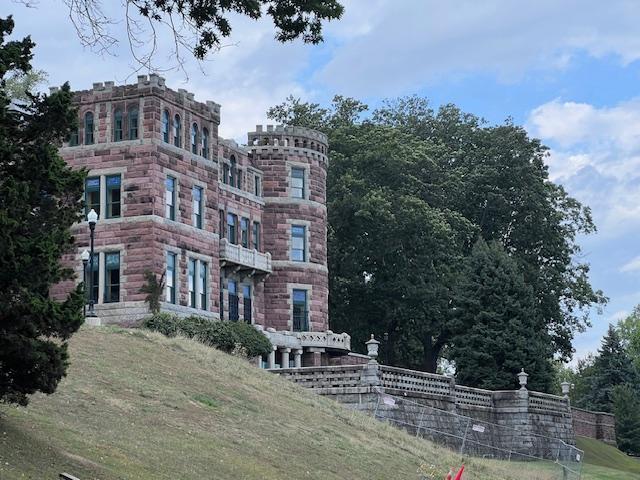
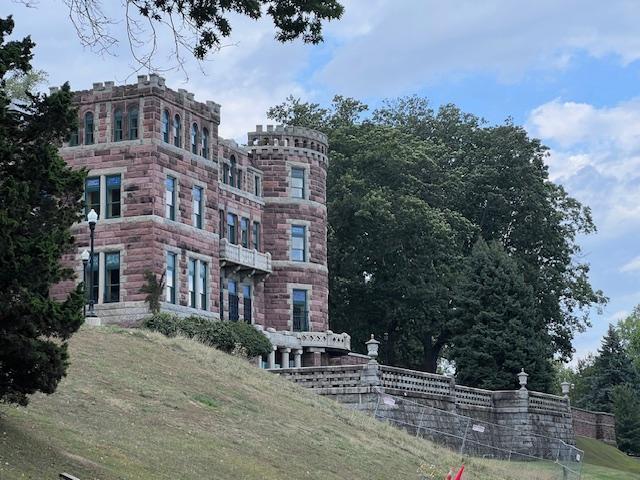
I have visited Lambert Castle a few times, most recently to see the Christmas decorations before they were taken down for the season. I found out from one of the director’s that they had not been put back up since their Holiday Bazaar back in November. I had seen them the year before and they had been very impressive.
Lambert Castle during the renovation in 2025
Right now the Castle is decorated for the Annual Christmas Craft Bazaar and it is just loaded with handmade crafts for the Christmas holidays. There are three floors of crafts and then on the third floor, there is a small restaurant to relax and look over the court of the house. After the bazaar in 2019, the Castle will close for a much needed five year renovation.
The Lambert Castle Christmas Bazaar 2019
I had a chance to visit the floors when they were not decorated for the holidays . The first floor is set up as if the family still lived there with the Billiards Room, Dining Room, Sitting Room, Music Room and Atrium still set as the family resided there. There is period furniture and decorations in all the first floor rooms to give a feel of what it must have been like to live there at that period.
The view of Lambert Castle from the second floor
The second floor galleries hold the collection of the Passaic County Historical Society with all sorts of objects, signs and historical items from all eras of the collection. You are able to see the footprint of the living quarters of the family.
The stained glass windows
The third floor at the time I was there was dedicated to the work of an Italian stone worker and artist who migrated and lived and worked in Paterson.
It is a very interesting way to see life at the turn of the last century in Paterson and the home offers a beautiful view of the City of Paterson and New York in the distance. I have never seen the grounds in the Spring but I am sure that they are quite lovely.
The view alone is worth the visit.
Don’t miss this virtual tour of the Castle and await until the renovations are done to visit again.
Bergecco-Parc Consulting Inc. commercial on Lambert Castle in 2019.
Bergecco-Parc Consulting Inc. Project: “Take me back to Paterson, NJ”.
Catholina Lambert was born in 1834 in Goose Eye, England. In 1851 at the young age of 17, Lambert left home to seek his fortune in the “Land of Opportunity” that was America. After several successful ventures in the silk industry, Lambert decided to build a home that would be reminiscent of the castles he recalled from his boyhood in England. In 1892, he built his own castle on Garret Mountain in Paterson, NJ, then known as the “Silk, City of the New World.”
Catholina Lambert
Lambert’s home was built to showcase his elaborate art collection of fine European and American paintings and sculpture. At one time, his collection was so vast that it was considered to be “the nucleus of an American Louvre.” In 1913, Lambert fell into debt and his fortune started to dwindle. As a result, he was forced to mortgage the Castle and eventually sell much of his art collection. The proceeds allowed him to live comfortably in the Castle until his death at age 89 in 1923.
After Lambert’s death, his son, Walter sold the Castle to the City of Paterson, which later sold it to the County of Passaic. Today the Castle is still owned by the County and serves as the headquarters of the Passaic County Historical Society. The Society, a private not for profit organization, owns the historical artifacts and works of art.
Catholina Lambert and Company
The home and the museum, exist as a reminder of a bygone era and as a tribute to the great accomplishment of the Castle’s creator. Although most of the furnishings today are not original to the Lambert’s home, they represent period furnishings that would have been found in the Castle during the Lambert era.
For more information about the rooms and decor, visit The Lambert Castle Blog at:
The Passaic County Historical Society is a private non-profit educational organization founded in 1926 and dedicated to cultivation of interest in the history and culture of Passaic County and former home of silk magnate Catholina Lambert was built in 1892. The Castle is owned by the County of Passaic and has been the home to the Society since 1934.
Library & Archives:
Located in the lower level of the Castle is the Elizabeth A. Beam Memorial Historical Research Library, operated by the Passaic County Historical Society. Here scholarly researchers, genealogists and historical enthusiasts may find books, manuscripts, maps, photographs, genealogy records and other information that reveals the history of Passaic County. Access to the library is included with regular admission to Lambert Castle.
Membership:
The Society depends upon the support of its membership as well as museum admission to sustain its important mission. Please consider becoming a member and helping to preserve the history of Passaic County.
The Second Floor Galleries:
The Castles’s second floor has several exhibition galleries, each presenting a different historical display from the Society’s collections. To the right of the fireplace on the walls of the second floor balcony is an exhibition of works by noted Paterson artist Julian Rix. On the opposite side are portraits of notable Passaic County residents and a collection of historic engravings of the Passaic Falls. Behind the fireplace are the Lambert’s private rooms. To the left, in the former sitting room and bedroom of Mr. Lambert, are the Curiosities and Local Folk Art galleries and the famous Brass Dog Sculpture that served for many years as an advertising sign for a tinsmith’s shop in nineteenth-century Paterson. In the adjacent room, the former bedroom of Mrs. Lambert, is the Local History Gallery which features historical images of prominent businesses and people.
The Third Floor Exhibition Gallery:
The Third floor of Lambert Castle is reserved for changing or seasonable exhibitions.
Disclaimer: This information comes directly from the Passaic County Historical Society & Museum pamphlet and I give them full credit of it. Rather than transcribing the whole pamphlet with the description of rooms, I attached their website and blog on WordPress.com for more detailed viewing.
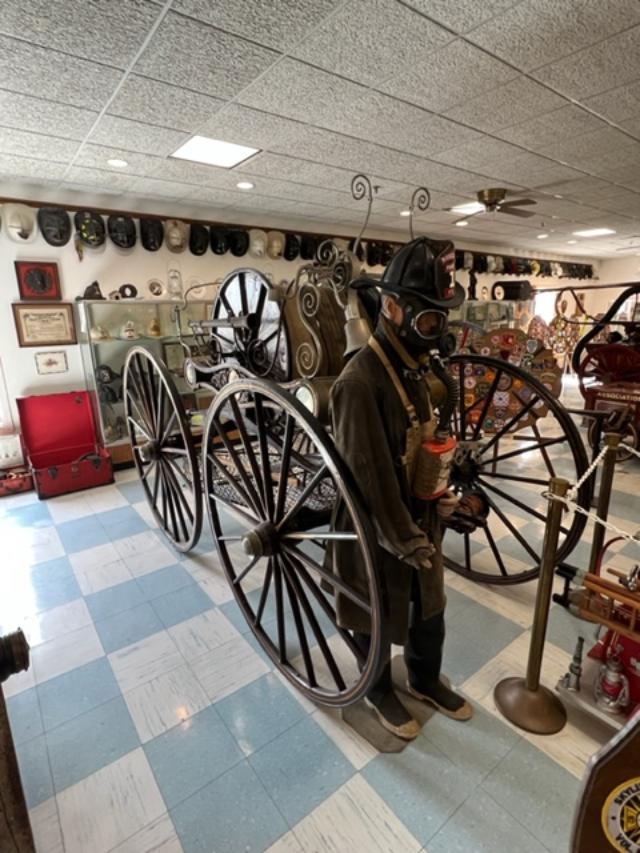
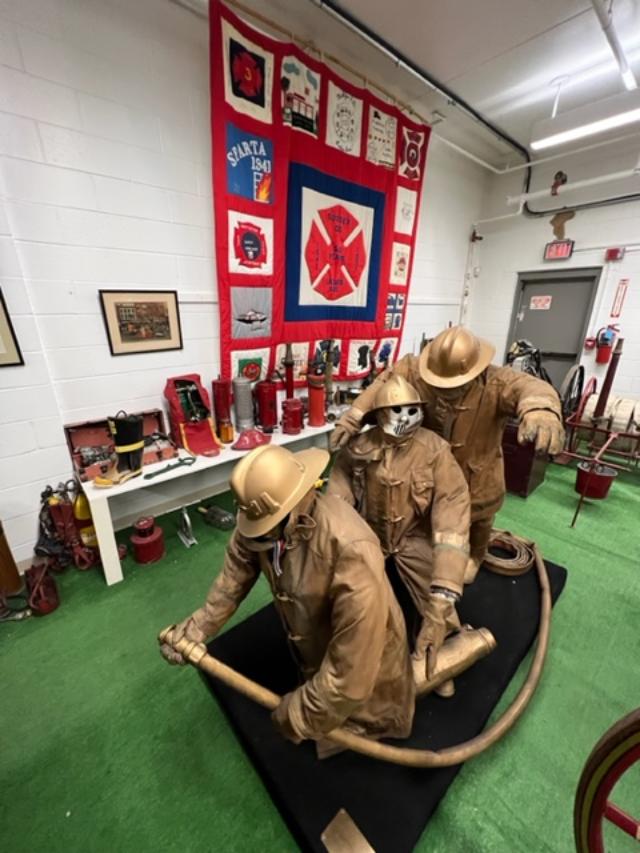
Located inside the Boonton New Jersey Firemen’s Home, The New Jersey Firemen’s Museum is an 8000 square feet, two story museum that houses steamers, ornate hose carts and antique fire trucks from all eras.
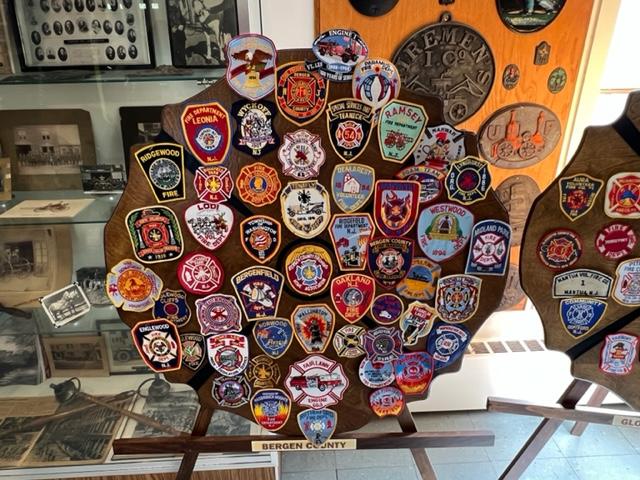
The museum was established in May of 1985 and is home to many fire department in New Jersey’s memorabilia. It seems like everyone fire department in the State of New Jersey is represented here with old fire department pictures, patches from the fire companies, fire trucks from all eras and pictures of department fires from all over the state.
Filling the cases is antique fire equipment, badges from officers in many departments, figurines of fire equipment and ribbons from conventions of the past. There are old fire buckets from the beginnings of the fire service, horns to sound the alarms from the turn of the last century and helmets that retired chiefs from many departments donated with much honor.
Many companies donated their department pictures from fires of their past that were fought with much bravery. People forget that this job is very dangerous and we have to watch ourselves in every step.
The fire trucks are from every era from the carts that were dragged by hand to horse drawn engines to the original steam engines that were introduced with the advent of technology. All of the equipment has been carefully restored and shined to almost new. Much care has been taken to show the transition of the fire service over the years.
The tours are on your own and the admission is free. You don’t have to be a fire fighter or visiting a resident here to visit the museum. If you are a serious fire buff or have children that are really into fire fighting or being a fireman, this museum will give you all sorts of perspectives on the fire service and its development not just in New Jersey but all over the county as well.
Don’t miss the memorial to the victims of 9/11 off to the side. It is very touching and shows the support of the fire service to the members of the FDNY and their families.
9/11 is still fresh in all our minds
It is a nice afternoon out. The museum is free to the public. These pictures are just a glimpse of the collection of the NJ Firemen’s Home Museum. It is two floors of donated equipment, memorabilia, awards, dedications and department antiques that are so well preserved. If you love the history of firefighting, this is the museum for you.
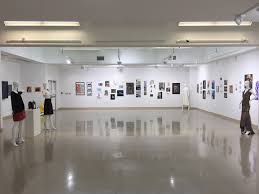
I never realized until just recently that we have an art gallery on the Bergen Community College campus. I have been teaching here since 2013 and just found out about this little ‘gem’ that is tucked in the second floor of West Hall.
This wonderful little gallery can be accessed on the Main Campus of Bergen Community College and is open to the public for viewing. The Art students of Bergen Community College show their works in student shows and the Retailing students show their work outside the Gallery.
Gallery Curator Professor Tim Blunk
The Gallery is a reasonably sized space and viewing the Gallery Bergen takes a reasonable amount of time that is not over-whelming. It is a nice way to spend the afternoon when visiting the campus.
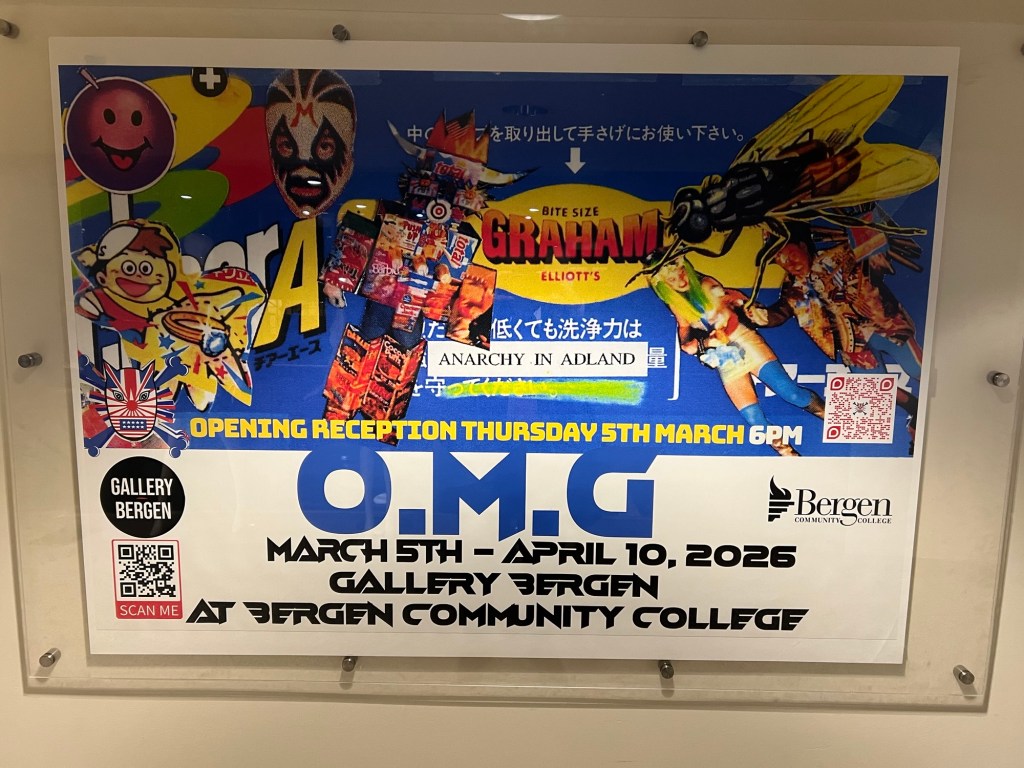
Please visit the Bergen Community College for future shows. This is the artist Graham Elliott show in 2026.
Gallery Bergen recently showed, “Belongings: Photographs at the Borders of Citizenship” exhibition which is showing the works of Dorothea Lange, Ansel Adams and Clem Albers (1942) and Tamara Merino (2018). This exhibition pairs two sets of photographic records, two tragic experiences of people on two sides of the US border, separated by seventy-five years in America’s cultural and political struggle over who belongs and who doesn’t (Bergen Gallery Press Release).
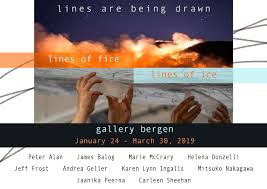
A former exhibition was “Lines of Fire/Lines of Ice” . This exhibition is art being presented to get us to think of our effects on nature. The Gallery Bergen is presenting art that might help us change our views of ourselves in the world (Curator).
Curator’s Statement:
“It is 2019. Fires advance; glaciers retreat. Oceans rise; deserts spread. The Homo sapiens population grows exponentially; entire species of fish, mollusks, insects, amphibians and birds perish each day. Lines are being redrawn on the surface of the earth-lines that can be seen from space. Yes these same lines are often blurred or erased when viewed through the lens of ideology”-Tim Blunk, Curator.
See Performance Artist Jaanika Peerna perform the ‘Glacier Elegy’ similar to the one she did at opening night.
The Gallery is curated by Professor Tim Blunk, Director Gallery Bergen.
In April 2019, the Student Art Show is going on in the Gallery. This was where students were showing off their end of the semester projects.
Student Show at Gallery Bergen
A former show by Hackensack-based artist Lauren Bettini, whose exhibition “On the Mend” was an exploration of the female body, displaying themes of “Women’s work” through accounts of women who bear scars, both physically and emotionally. This unique installation utilizes the entirely of the gallery, literally tying together embroidery of surgical procedures are “mended” through the appearance of the physical act of sewing. The exhibition is a platform to celebrate the beauty of their altered bodies while women stand strong together to share their stories.
It is an interesting take on what we endure in life and how we sometimes hide it from society.
“On the Mend” Exhibition Summer 2019
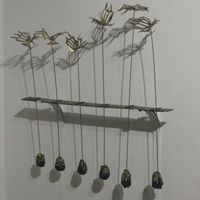
The mounted three-dimensional castings of woman’s hands are used to symbolize a movement of women joining together, sharing their stories and helping each other heal. This platform to honor women who have survived medical surgeries, celebrates the beauty of their altered bodies and pays homage to centuries of women who have created are in the form of sewing and embroidering (Gallery Bergen Promotional packet).
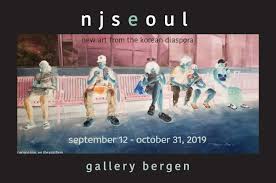
The recent ‘NJSeoul: New Art from the Korean Diaspora’ that opened for the Fall of 2019. The show was a combination of paintings, pictures and visual art from five different Korean artists. The show also features video art and interesting short films.
New show from September 12th-October 31st 2019
Some information of the Exhibition on Studio Bergen
The exhibition that opened for the Fall semester 2019 is the ‘(Pro) Found Objects’, the Bergen Community College Faculty Exhibition. The exhibition features works from 19 different Professor/Artists whose work includes statuary, photos, paintings, video art and clothing construction.
This painting is by Professor Juan Leon
This painting is by artist Juan Leon
This painting is by Professor Ada Goldfeld
The opening night on November 14th 2019 featured a performance by the Music Department and a performance by the head of the Drama Department from the upcoming show “I do, I do”. Then everyone had time to look over the art before a light reception at the end of the evening.
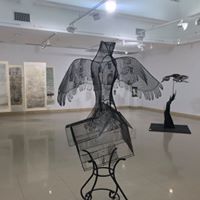
Opening in the Spring of 2020, Gallery Bergen is featuring “Ornithology: Patterns of Flight” that features birds in flight, sound and behavior. I saw the exhibition as man’s perception of birds at play and at rest and our concept of aviation in terms to humans. How do we communicate with the natural world, if we can and how do we relate as humans to the natural world.
‘Moche-Bird Runner’ by Susan Haviland
The art was everything from visual to video and showed the artist’s interpretation of the bird world. This was my favorite piece in the show.
‘Ashes to Gold’ by Caroline Bergonzi
Each artist had a unique take on their art.
‘Deep Song’ by Susan Haviland
During the musical performance part of the opening, one of the artist’s in the exhibition teamed up with another musician and performed their concept of birds in flight. To that our Dance Department created a performance that encompassed the whole gallery.
Our Adjunct Dance Professor’s performed that night
Professor Justin Watrel at Gallery Bergen Opening
Here I am admiring the art that night. It was a wonderful exhibition. The Gallery Openings are an interesting night of art and music. The receptions are not bad either. Our Culinary Department does a nice job with appetizers and desserts.
This time lapse on YouTube is from the opening night of ‘Patterns of Flight’ at Bergen Community College
With the Gallery Bergen closed with campus being closed, Curator Tim Blunk created this YouTube video “20Big20: Quarantine and Protest” on the pandemic and racial strife:
Another exhibition that the College has is BCCAnimation:
In the era of COVID, Gallery Bergen has created new exhibitions via YouTube. This is for the new “Black Lives Matter @BCC: Photographs from the Live Protest”:
These are photos from all over the country during the Summer of 2020 protests.
Gallery Bergen recently hosted the Student Exhibition 2021 virtually:
The creative approach to Gallery Bergen in the era of COVID keeps us active.
When Gallery Bergen reopened in 2021, the first big exhibition was “The Ramapough Nation: Excavating Identity”, the art of the nation.
The exhibition featured works by local Native American artists.
The exhibition contained visual arts by local indigenous artists, panel discussions (see Facebook page) and gallery talks.
The new exhibition that recently opened in the Fall 2021 is “Zoom Out: Works from Bergen Community College Artists”, a faculty show of works from the professors from the art department.
“Zoom Out” exhibition
Works from the Opening Night:
The opening night of “Zoom Out” with works in the visual arts
The “Zoom Out” exhibition was a selection of faculty works in the visual arts, painting, graphics and sculpture. One professor created an interesting piece of video art reworking the movie “Psycho” by Alfred Hitchcock.
The video creation on the movie “Psycho”
New Works from “Zoom Out”
Work by curator and Professor Tim Blunk
In the Spring of 2022, Gallery Bergen has exhibited “Art in History: the photographers of the Great Depression”, with photos from the Depression era of the 1930’s. It was a heart-breaking display of a very dark time in our country’s history. I could see that many people don’t realize that this was only 80 years ago. It gave a view into the lives ordinary people whose lives were affected by the falling economy. Lives were upended by things like the Stock Market Crash and the Dust Bowl.
“Art in History: the photographers of the Great Depression” exhibition
The photographers were part of the WPA where people from the arts part of the government program were to keep artisans working during the Great Depression. The works are a heartbreaking reminder of how fast life can change.
I was lucky that I got to sit in on Professor Tim Blunk’s class that afternoon for the lecture on the exhibition. It is scary how much these students didn’t learn in high school about this time. What amazed me was that how much this is still going on not just all over the world but in our own state as well. I have travelled to parts of the New Jersey that remind me of these pictures.
The BCC Student Art Show 2022 was the first time in two years the students got to showcase their work in the Gallery
Asian Awareness Month in 2022 brought interesting speakers and engaging movies to Gallery Bergen.
The lectures and independent films were very interesting and brought wonderful conversations to Gallery Bergen during the celebrated month of April.
In June of 2022, I attended the opening of the “Reflection/Refraction/Manhattan: Photographs by Jin Hong Kim” exhibition at Gallery Bergen, celebrating this local Korean-American photographer/artist. Each of the works was from a section of Manhattan from the Hudson Yards to Midtown to Lower Manhattan giving a almost surrealist look at the City in the Post-COVID era. It was as if the artist asked us to look at Manhattan again from a different lense or perspective.
The new exhibition by local photographer Jinhong Kim
Each of the pictures looked as one patron said, “like something that Salvador Dali might do.” It gave buildings in Manhattan movement and asked us to look at them a second time.
The Exhibition “Pulse: Resonating Earth” by artist Poramit Thantapalit is very engaging and fascinating to walk through.
From the Gallery Bergen Website:
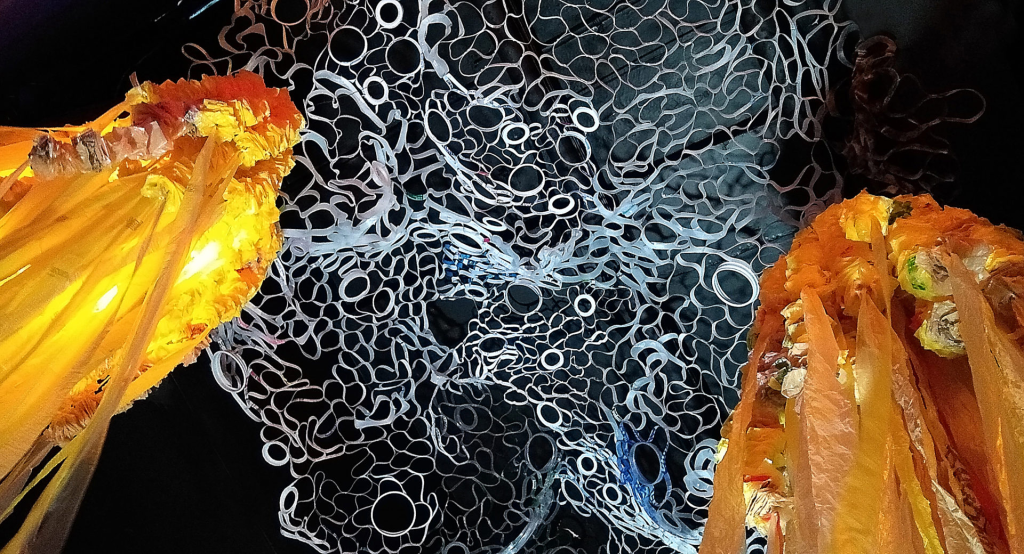
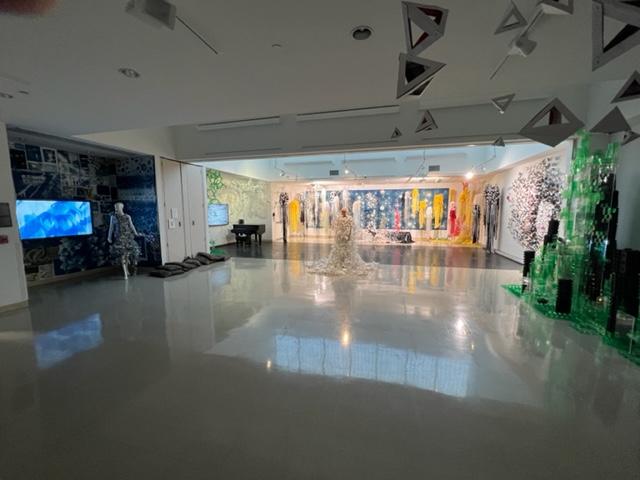
During the fall of 2022, Gallery Bergen will be transformed into an aquatic installation by Thai artist Poramit Thantapalit. His medium is trash – as in found plastic bottles, plastic bags, and other refuse that might have as easily found its way into the Hackensack River, a landfill, or the Great Pacific Garbage Patch. Instead, Poramit breathes life into these materials, shaping luminous organic sculptures that undulate and pulse from the ceiling and wall. They make the viewer forget their origins in their newly aggregated forms.
There is a genre referred to as eco-art, or “trash art,” but this is something very different. “Jackson Pollock painted with house paint, but he wasn’t a house painter,” says Gallery Bergen director and curator Tim Blunk. “Poramit’s deft artistic hand and his understanding of transforming quantity into quality creates work that transcends its materials.” PULSE: Resonating Earth will be embellished with several performance events, including the scheduled opening gala on September 22 and its closing on December 8. Both will include dance performance pieces by BCC faculty member Lynn Needle and her Art of Motion Dance Theatre and Steinway pianist Carolyn Enger. The opening will include excerpts from Needle’s work, The Poseidon Project – An Aquatic Myth – a suite with live music and dance, including narrated choreographed sections, each connecting to aquatic myth, legend, and nature.
Pictures from the Exhibition:
Story from the exhibition on Land Acknowledgement.
The exhibition:
All the art displays of Poramit Thantapalit’s work in Gallery Bergen
Picture One:
Beautiful works
Picture Two:
Picture Three:
Picture Five:
Picture Six:
The colorful interactive art of Gallery Bergen in 2022 of artist Poramit Thantapalit
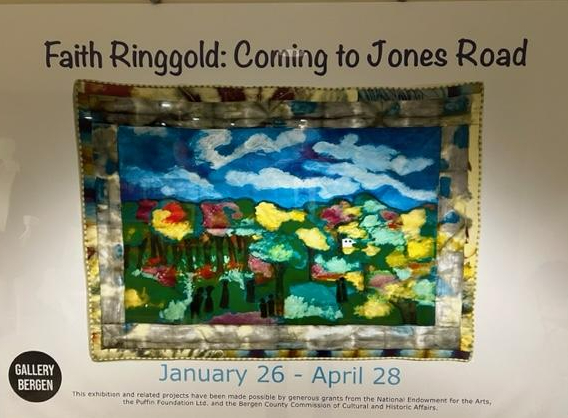
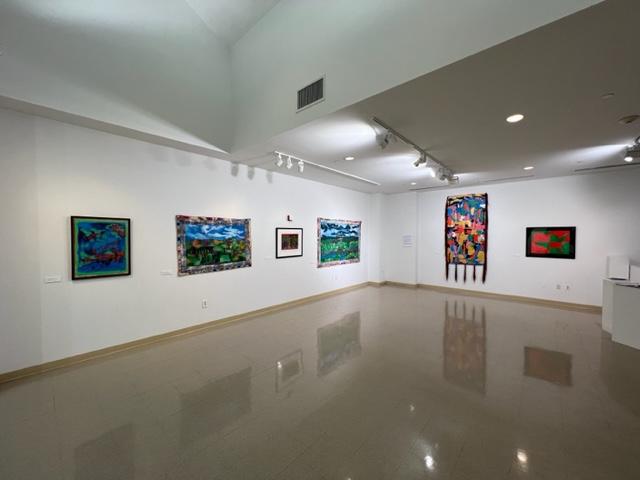
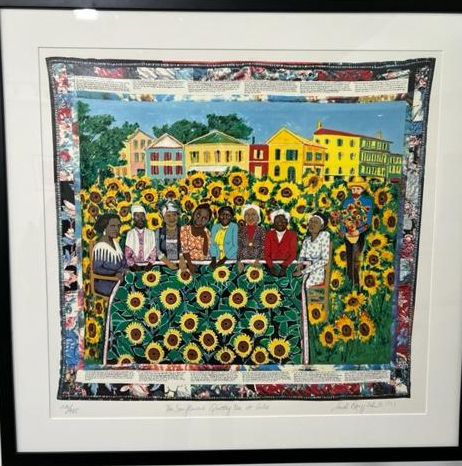
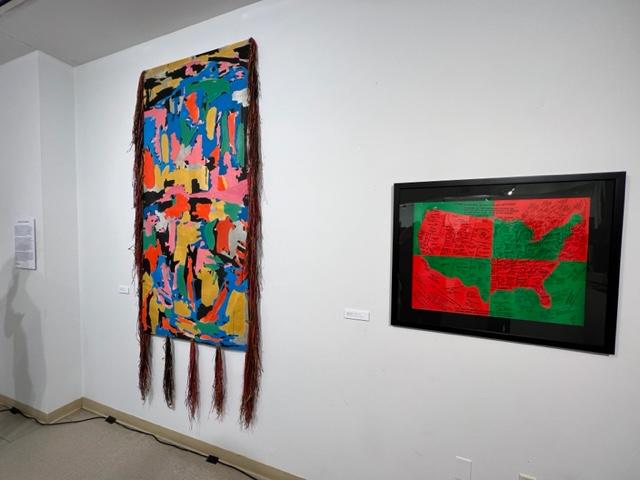
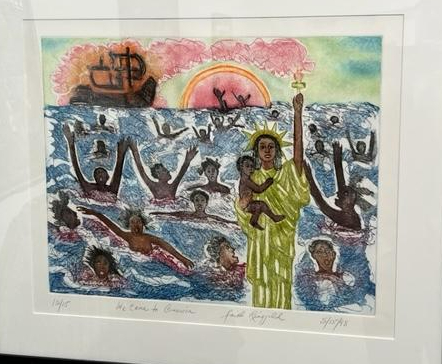
The Faith Ringgold: Coming to Jones Road-Her Exhibition on moving to Englewood, NJ
These were the works by the artist when she moved from Harlem to New Jersey.
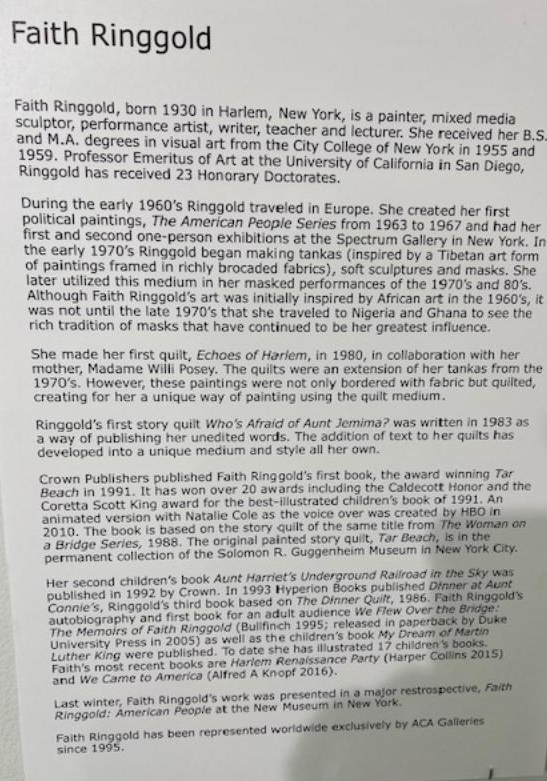
The artist bio with the exhibition.
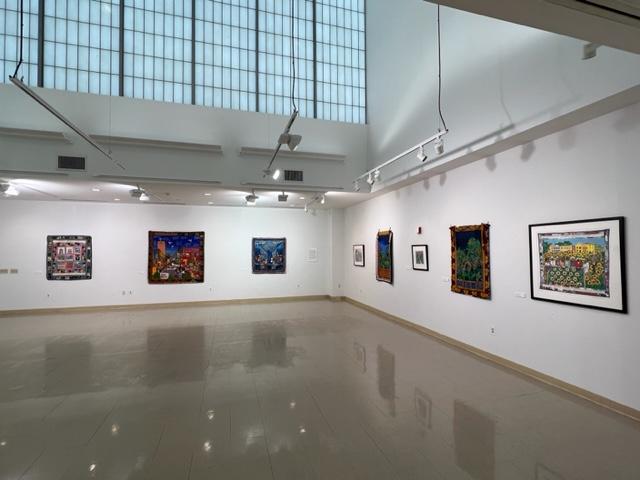
The Exhibition in Gallery Bergen
The Exhibition in Gallery Bergen
Her work based on the George Washington Bridge
Another interesting work
The Gallery Opening of “Faith Ringgold-Coming to Jones Street” at Gallery Bergen
Some of the works in the exhibition
“We come to America” by Faith Ringgold
More works in Gallery Bergen
The Theme of “Coming to Jones Road”
The new exhibition “The Cup Flows Over: Art from the Soul of Iran” starting in October 2023 and runs through the end of November 2023:
The Art from the soul of Iran.
Gallery Bergen: September 21 – November 21, 2023
(From the Gallery Bergen Website)
In Munich, Germany:
Glockenbachwerkstatt Community Center with events at the Bellevue di Monaco Cultural Center in Munich, Germany:
October 24 – December, 2023
Works from “The Cup Flows over: Art from the Soul of Iran” exhibition
Gallery Bergen announces the opening of a collaborative exhibition of contemporary Iranian artist to take place this fall in two locations – its own gallery on the campus of Bergen Community College in Paramus, NJ and the Bürgerhaus Glockenbachwerkstatt (Glockenbach Townhouse Workshop) located in Munich, Germany. The Cup Flows Over: Art from the Soul of Iran features work by prominent artists such as Berlin-based Parastou Forouhar, younger Iranian artists living and working in California and Berlin, as well as artists living in Iran. The choice of two separate venues divided between Europe and the US speaks directly to the reality of the Iranian diaspora.
Art works from the “The Cup Flows Over: Art from the Soul of Iran”
This exhibition seeks to move beyond the headlines to explore the ongoing and historic struggles of immigration and the diaspora experience, of merging with and simultaneously changing the culture of newly adopted countries. The artists make use of a variety of media including film, video, photography, fabric work and installation while invoking ancient Persian texts to describe their new realities.
Art works from “The Cup Flows Over: Art from the Soul of Iran”
The title comes from an ancient Persian ghazal by the renowned lyric poet Hafez (c. 1365):
“Last night I took my troubles to
The Magian sage whose keen eyes see
A hundred answers in the wine
Whose cup he, laughing, showed to me.
I questioned him, “When was this cup
That shows the world’s reality
Handed to you?” He said, “The day
Heaven’s vault of lapis lazuli
Was raised, and marvelous things took place
By Intellect’s divine decree,
And Moses’ miracles were made
And Sameri’s apostasy.”
He added then, “That friend they hanged
High on the looming gallows tree—
His sin was that he spoke of things
Which should be pondered secretly,
The page of truth his heart enclosed
Was annotated publicly.”
BY HAFEZ
TRANSLATED BY DICK DAVIS
Anonymous work from “The Cup Flows Over: Art from the Soul of Iran” exhibition.
In the art of Iran, reality’s cup overflows.
The curators are organizing several livestreamed events that will connect the two spaces with live music, poetry and discussion. Opening receptions and events are planned for September 21 at Gallery Bergen (US) and for the Bürgerhaus Glockenbachwerkstatt on October 24.
Art works from “The Cup flows Over: Art from the Soul of Iran”.
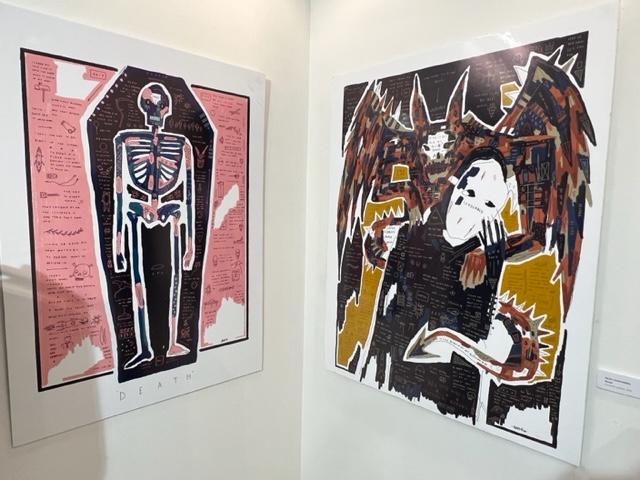
The paintings “Death” and “Devil’s Confrontation” by artist Raven.
The Bürgerhaus Glockenbachwerkstatt (Glockenbach Townhouse Workshop) is located in the cultural and artistic heart of Munich. The “Glocke” is a popular community center with childcare, workplaces, art studios, and a neighborhood café. It is around the corner from the Bellevue di Monaco, a residential and cultural center for refugees. The Bellevue offers diverse culture programming ranging from panel discussions on topics of migration and diversity to films from and about the home countries of their guests, to theater plays and concerts presenting artists from all over the world (Gallery Bergen Website).
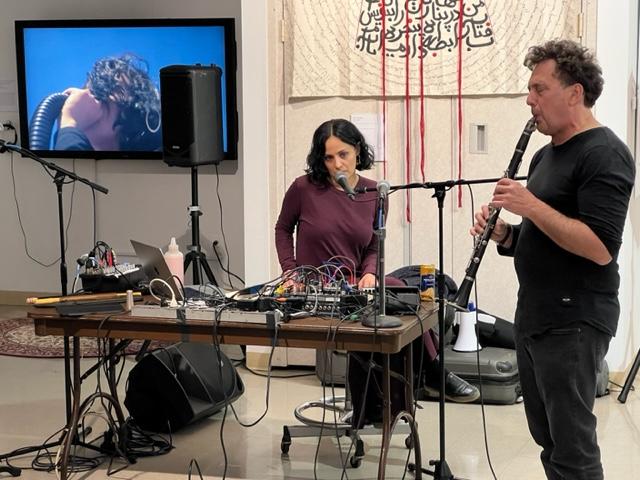
Performance artist Sholeh Asgary and artist David Rothenberg performing “Shabah e Baad”.
As part of the exhibition, Iranian-American sound/performance artist Sholeh Asgary and ECM recording artist/clarinetist David Rothenberg performed on November 3rd, 2023. In the performance of ‘Shabah e Baad’ (Ghost Winds), Asgary vocalizes recordings of water bodies transcribed into notation for voice with the help of electronics and synthesizers for notes beyond human capability (Gallery Bergen press release).
Performance artist Sholeh Asgary and artist David Rothenberg performing “Shabah e Baad”.
Art works from “The Cup Flows Over: Art from the Soul of Iran”
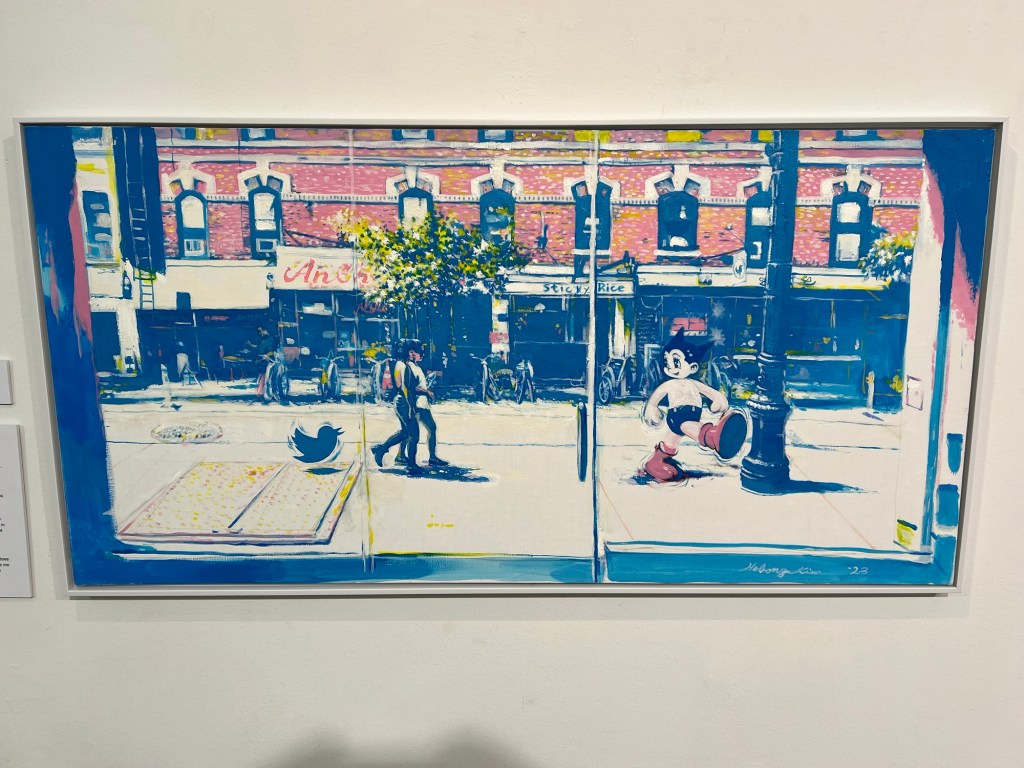
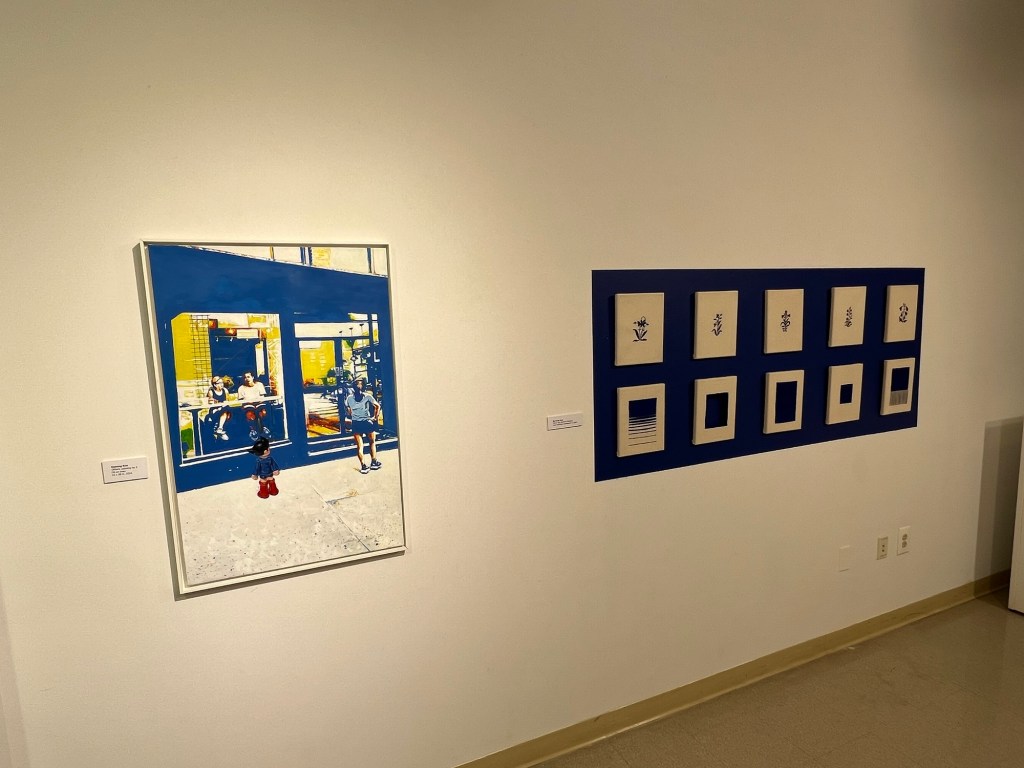
The exhibition in February to April 2024 is “Arrivals/Departures EAST80WEST: The Bicoastal realities of Immigration”. The exhibition’s theme is based on seven contemporary artists from both the West and East coasts that are connected by US interstate 80 and how they examine the bicoastal realities of new immigrants to the United States.
The “Arrivals/Departures East80West: The Bicoastal realities of Immigration”.
The “Arrivals and Departures” exhibition gallery.
Native American art
The exhibition was fascinating in that it looked at different perspectives of how immigration has happened whether forced or not. I think back to European immigration in the 1600 and 1700’s and how this affected the Americas to what is happening today.
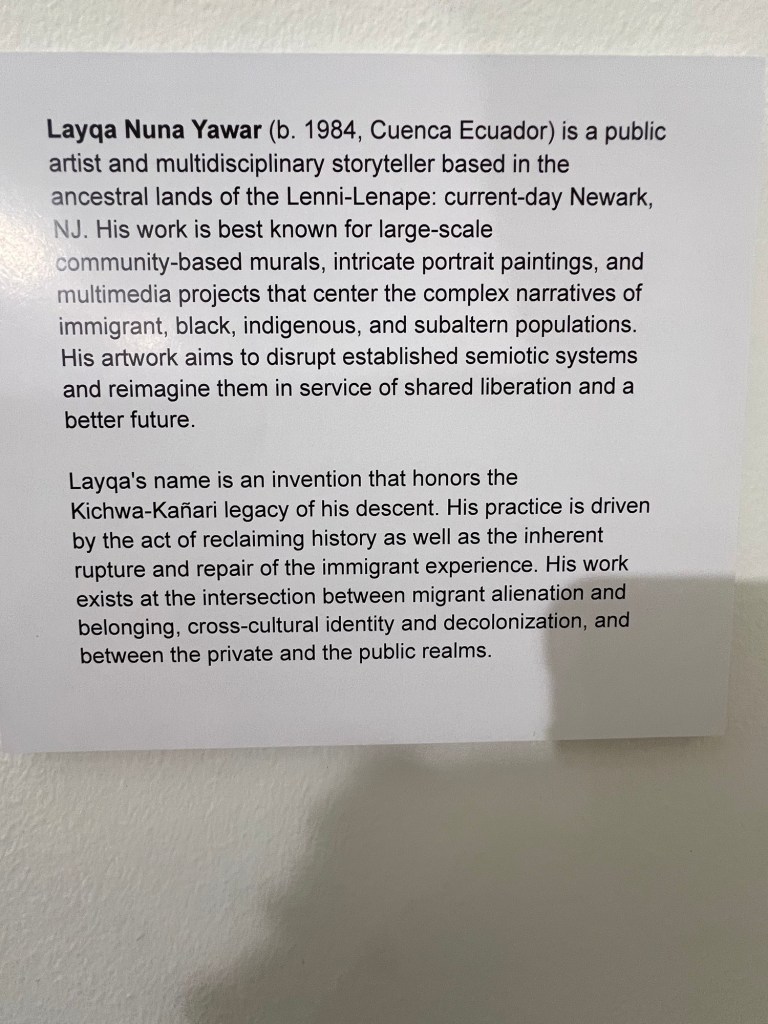
The Yamar Paintings
The biography of Layqo Nuna Yawar and his work.
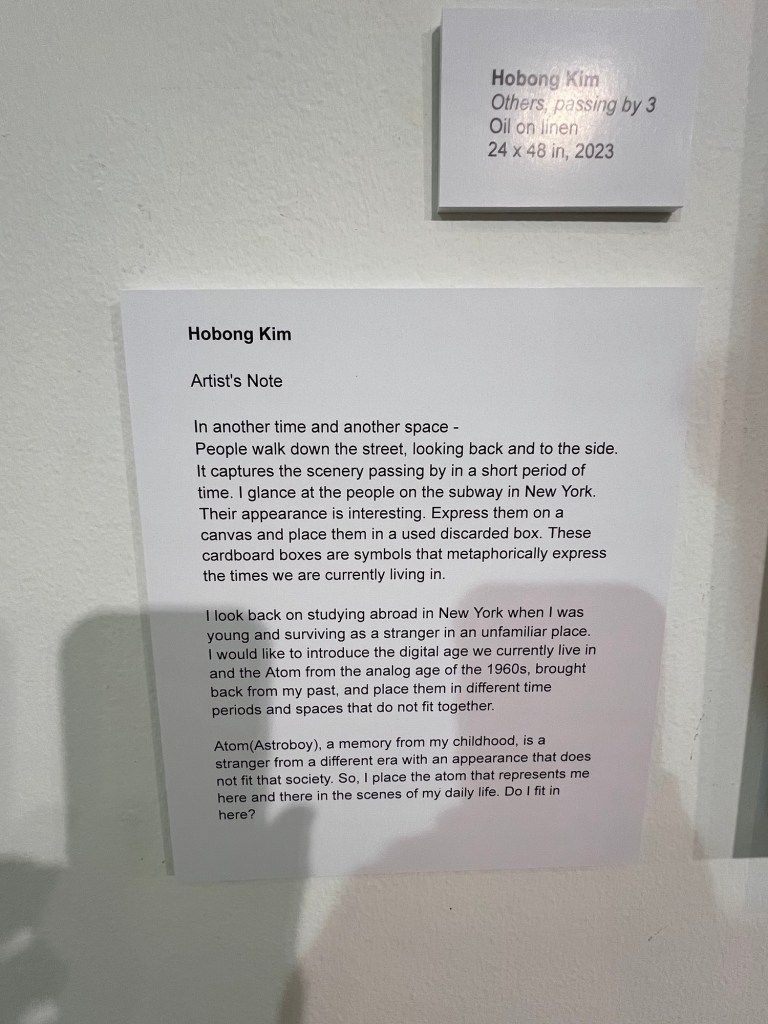
New York scenesThe biography of Hobong Kim
The works of Hobong Kim.
Street scenes by Hobong Kim
The exhibition explored different elements of how environment changes us and shapes us.
Migrant farmers and workers
The exhibition also explores their sense of place in the scheme of life.
More work by Hobong Kim
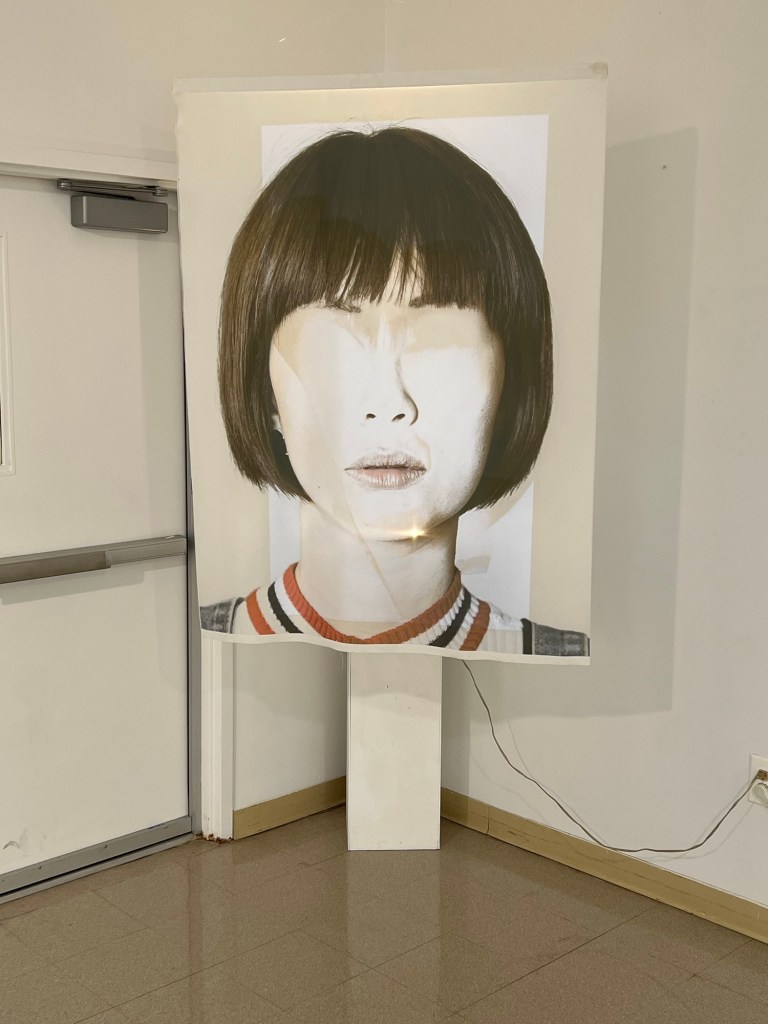
Do we erase part of ourselves.
Who are you?
It delves into a place of self. What an interesting aspect of life. How much of yourself do you have to give up to fit in?
The exhibition makes you think about this.
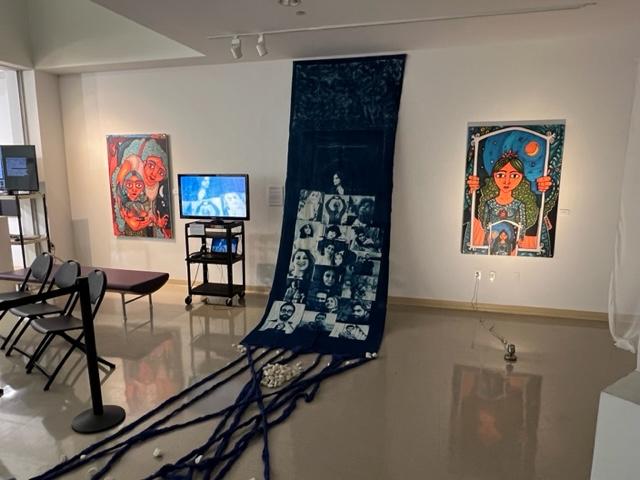
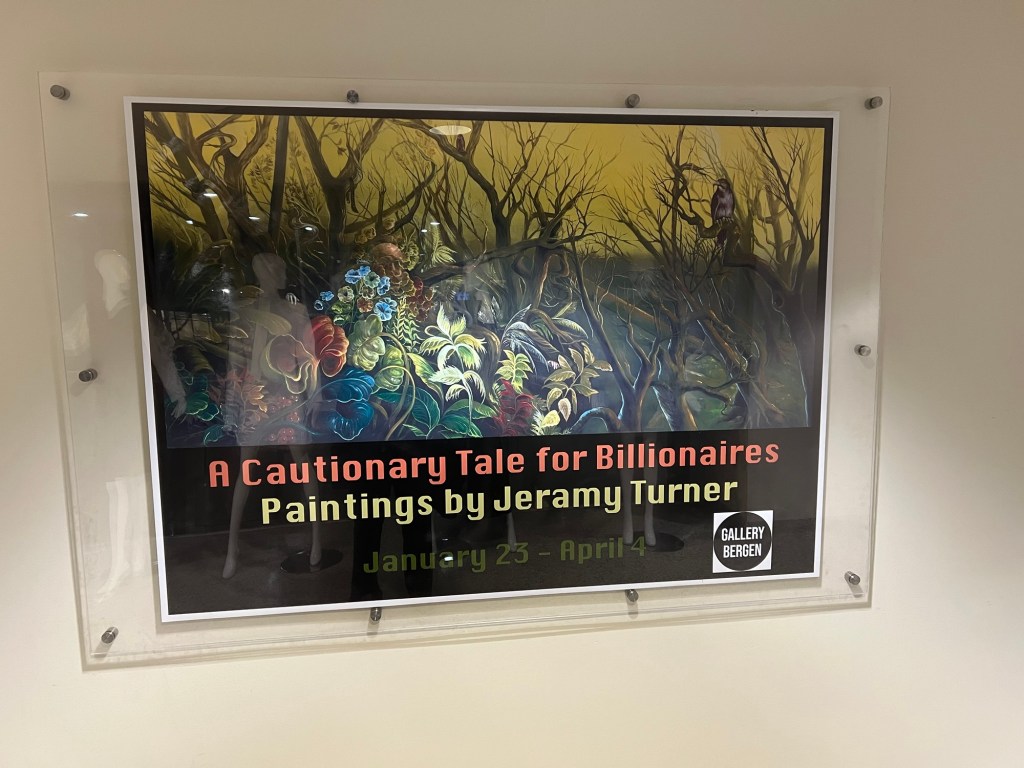
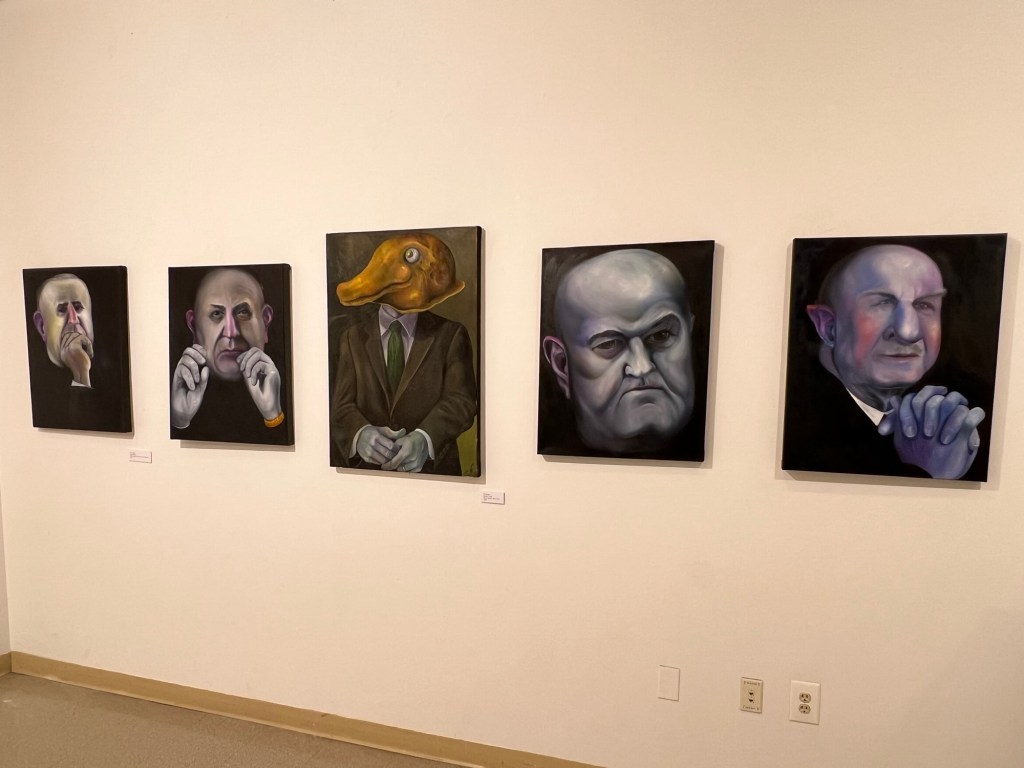
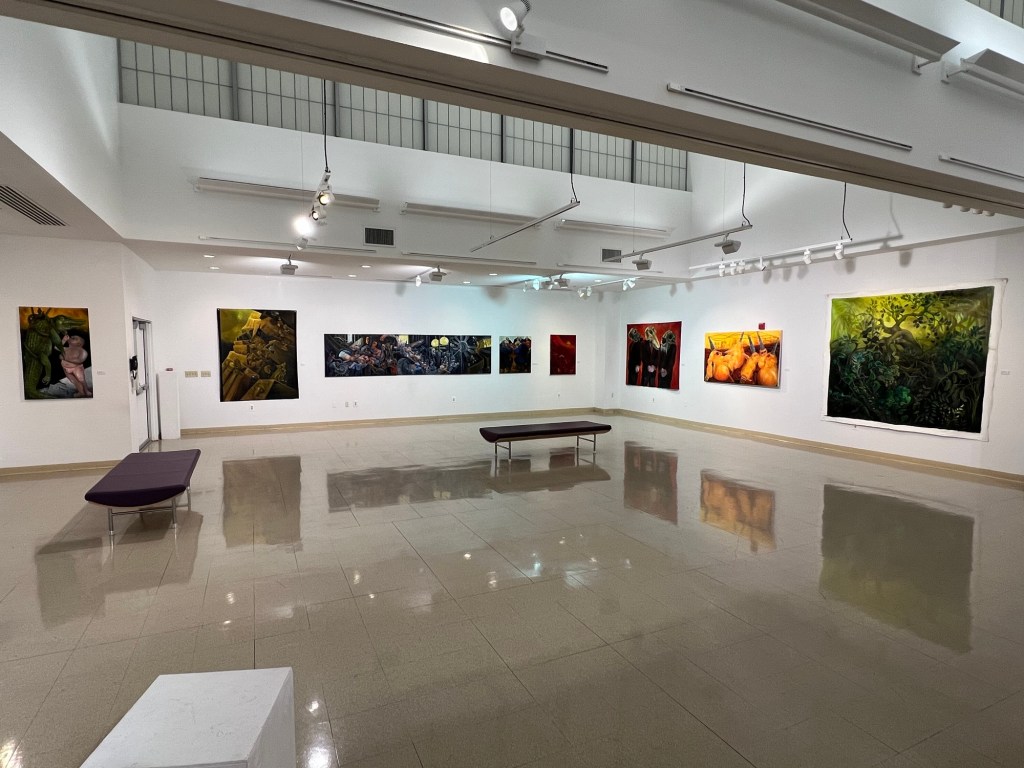
The latest exhibition is by artist Jeramy Turner ‘A Cautionary Tale for Billionaire’s” that opened on January 23rd, 2025.
Jeramy Turner is an American born self-taught painter. In the beginning of 1986 as an attempt to create films, one frame at a time. They were large-scaled to emulate the screen in a movie theater. She began with the intention of using visual art as a tool of protest. Her paintings are most often depictions of capitalists’ vulnerability. Her work often features animals, as symbols of forces of resistance, and terrified bankers (Artist bio)
‘The CEOs” paintings showing the dark side of business
Gallery Bergen on the Bergen Community College campus in Paramus, NJ
The painting ‘Wage Earner’
The sign for “Wage Labor”
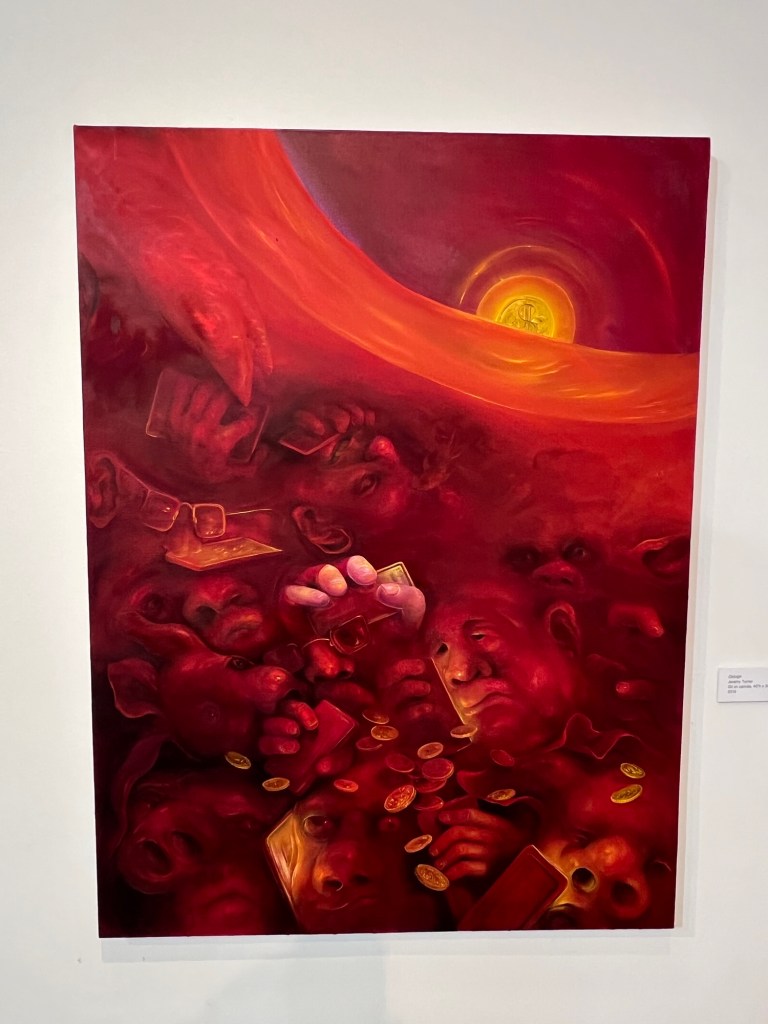
The painting “Deluge”
The sign for “Deluge”
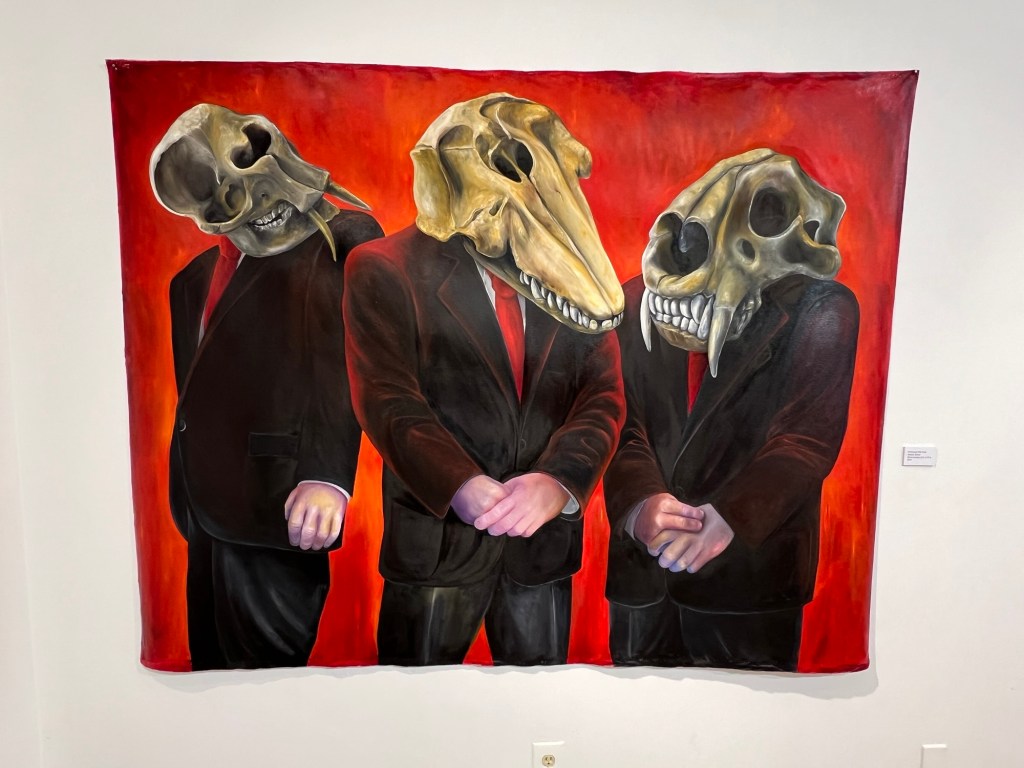
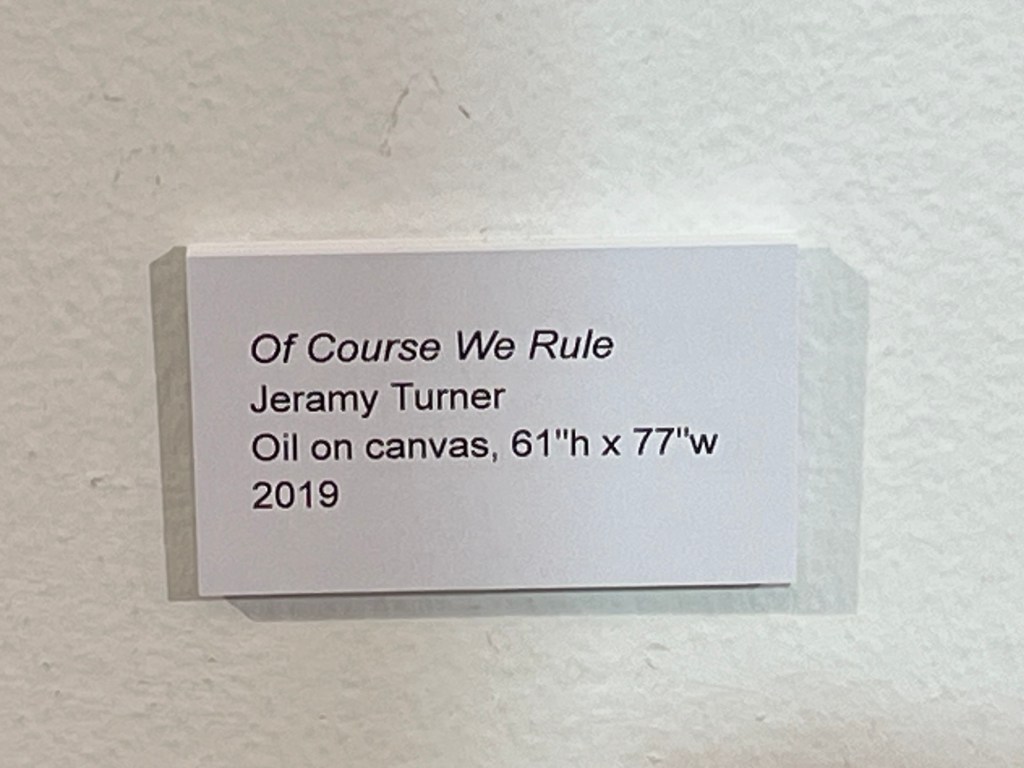
The painting “Of Course We Rule”
The sign for “Of Course We Rule”
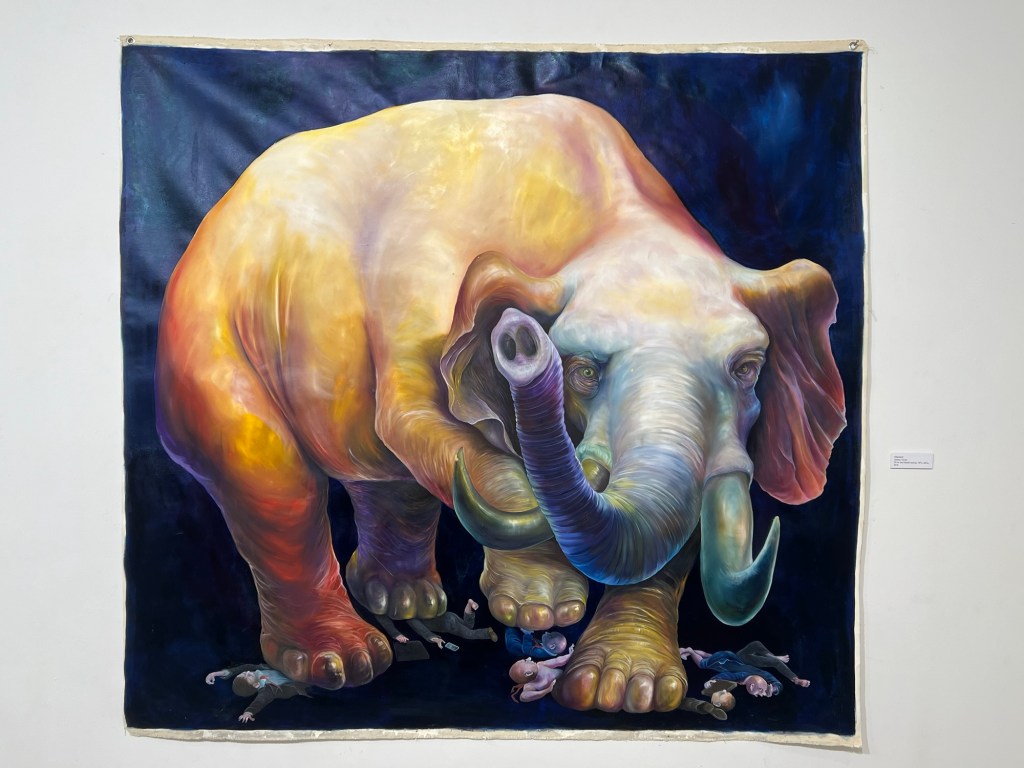
The painting “Elephant”
The sign for “Elephant”
The painting “Crash”
The sign for “Crash”
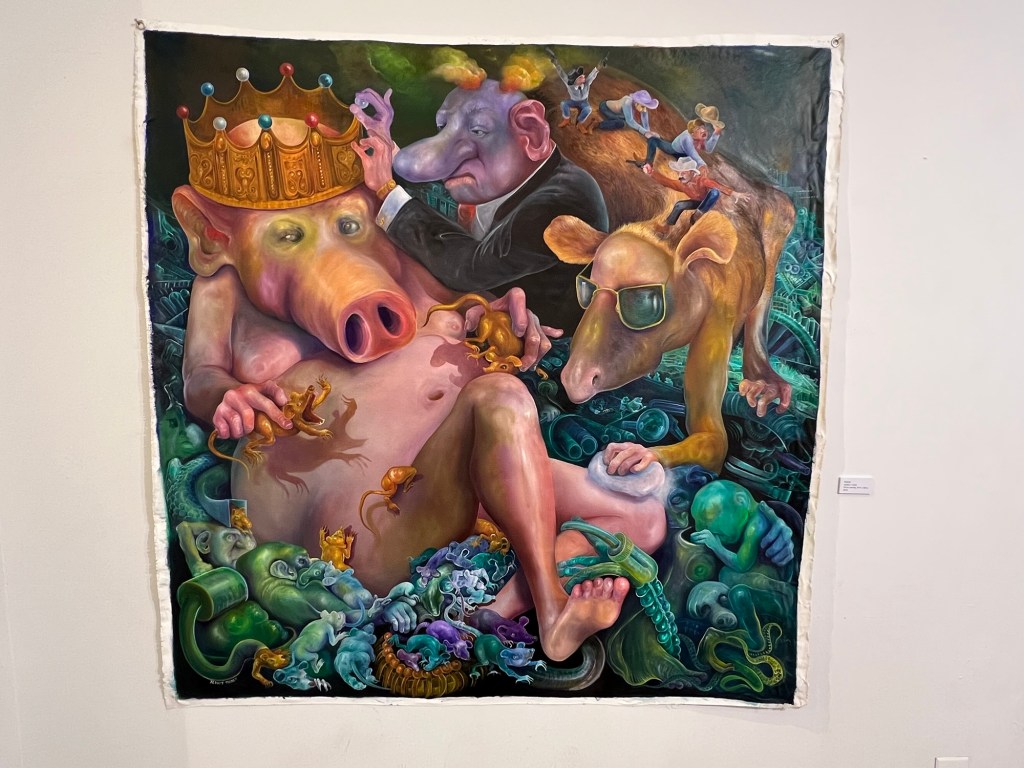
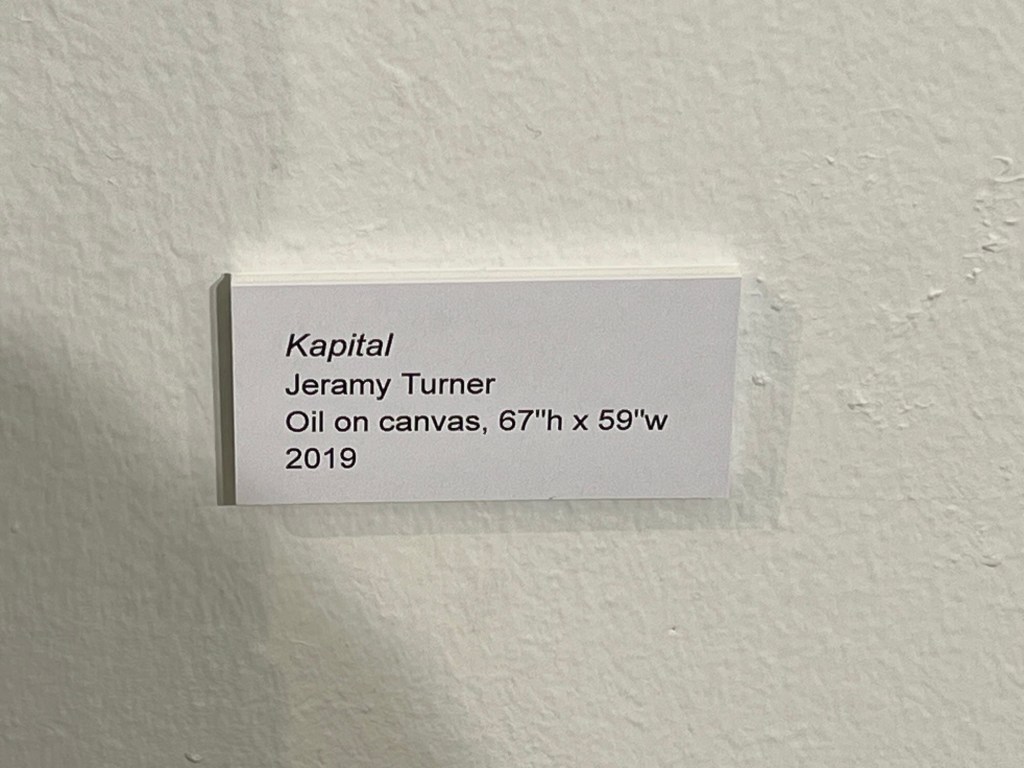
The painting “ Kapital”
The sign for “Kapital”
A view of the gallery display for the Jeramy Turner Show for “A Cautionary Tale for Billionaires”
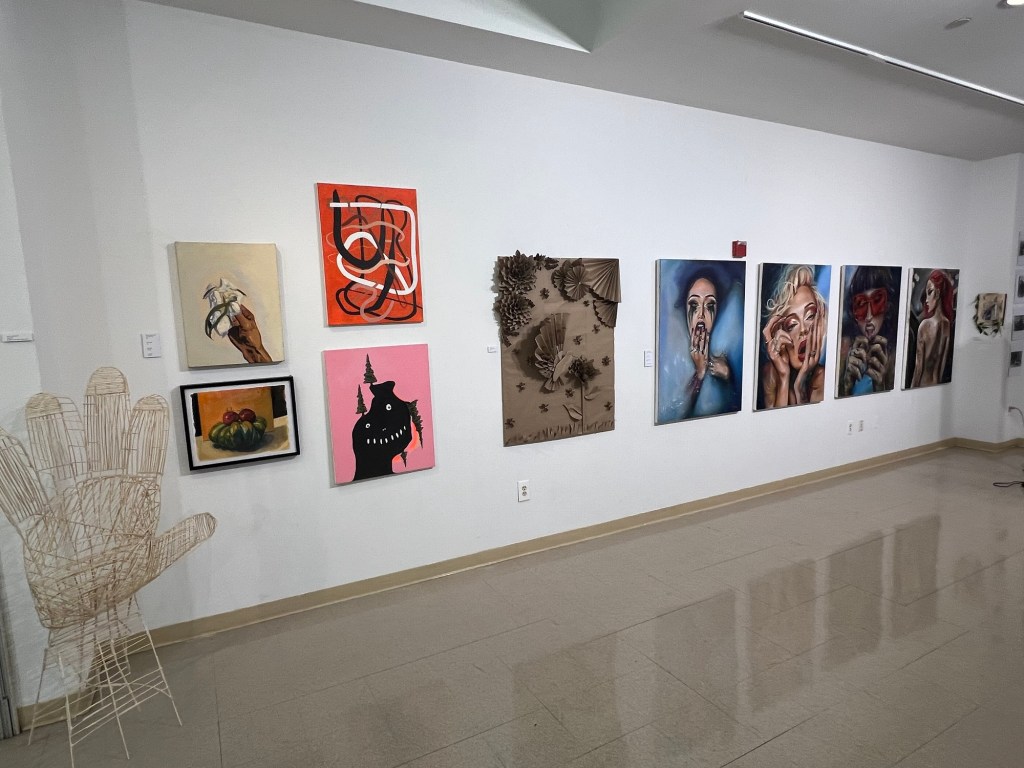
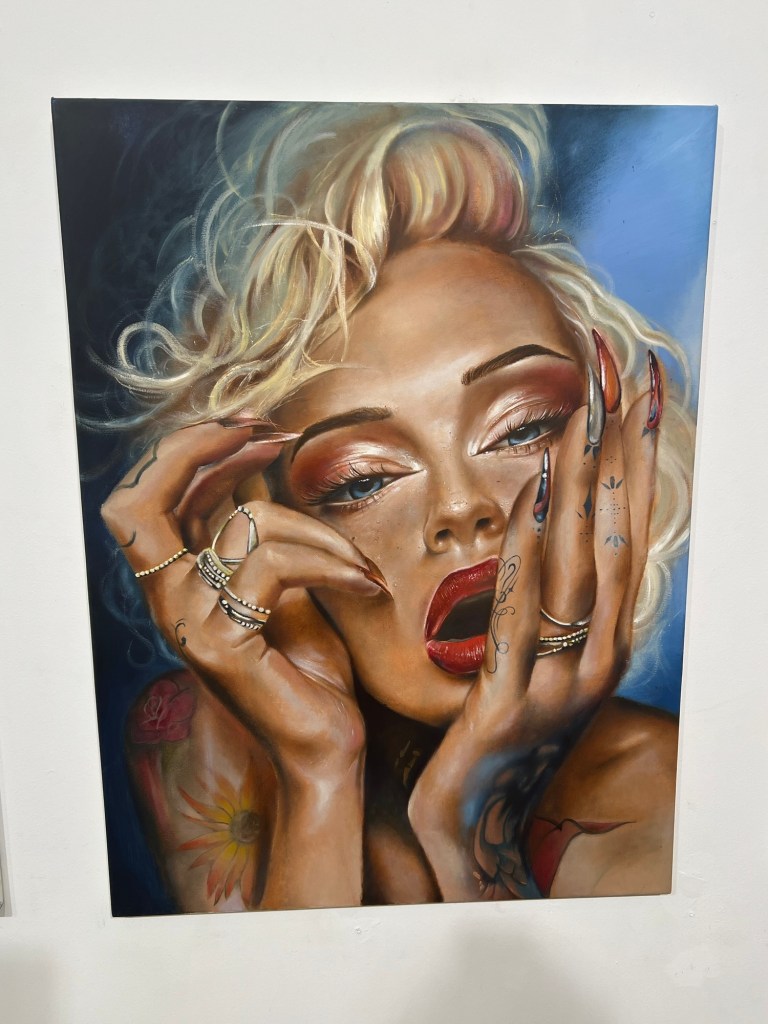
In the Spring of 2025, Gallery Bergen had its Spring Student show and there was some interesting art to see. It was a wonderful Opening on April 24th, 2025.
The Bergen Institute for the Creative Arts (BICA), Fashion at Bergen, and Gallery Bergen:
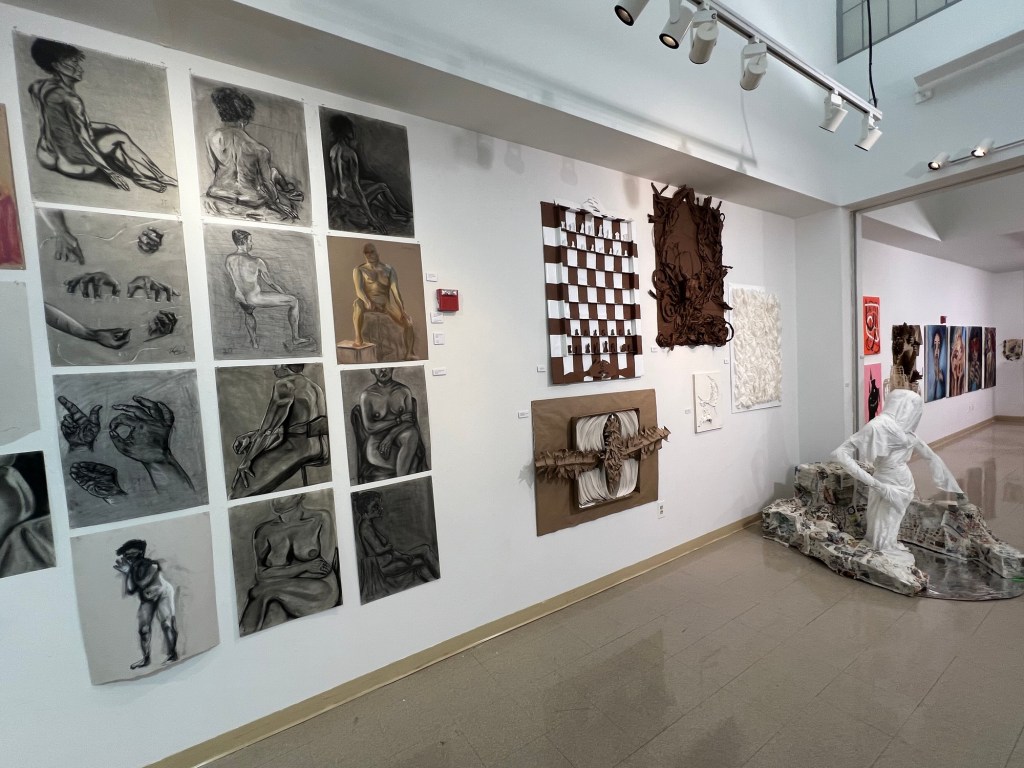
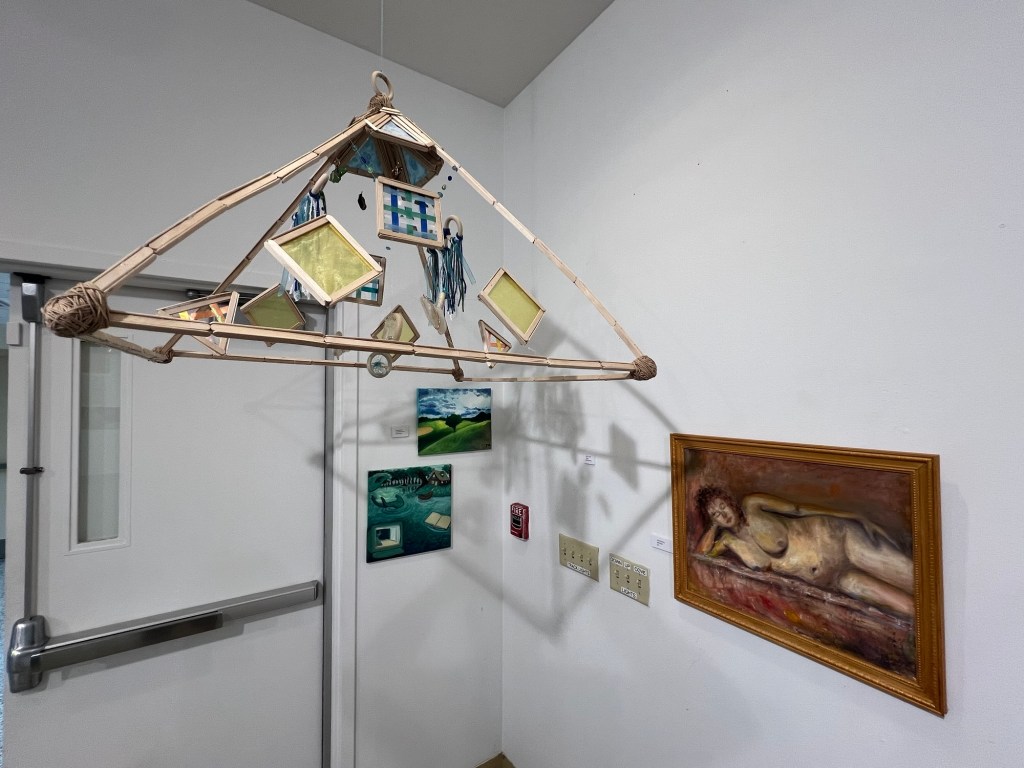
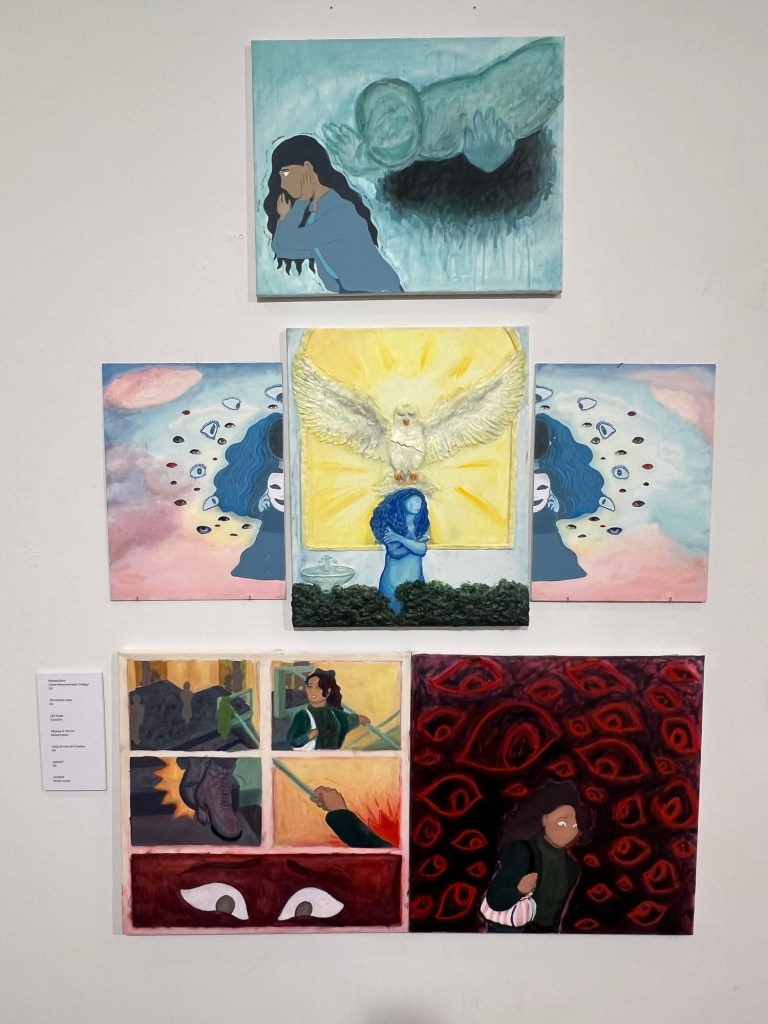
Gallery Bergen presents its annual BCC Student Art Expo 2025 at Gallery Bergen (3rd Floor, West Hall) from April 24 through May 2. The college community and public are invited. All artistic media from BCC students and the Institute for Learning in Retirement are represented, including fashion design, painting, 2D and 3D design, animation, sculpture, and photography.
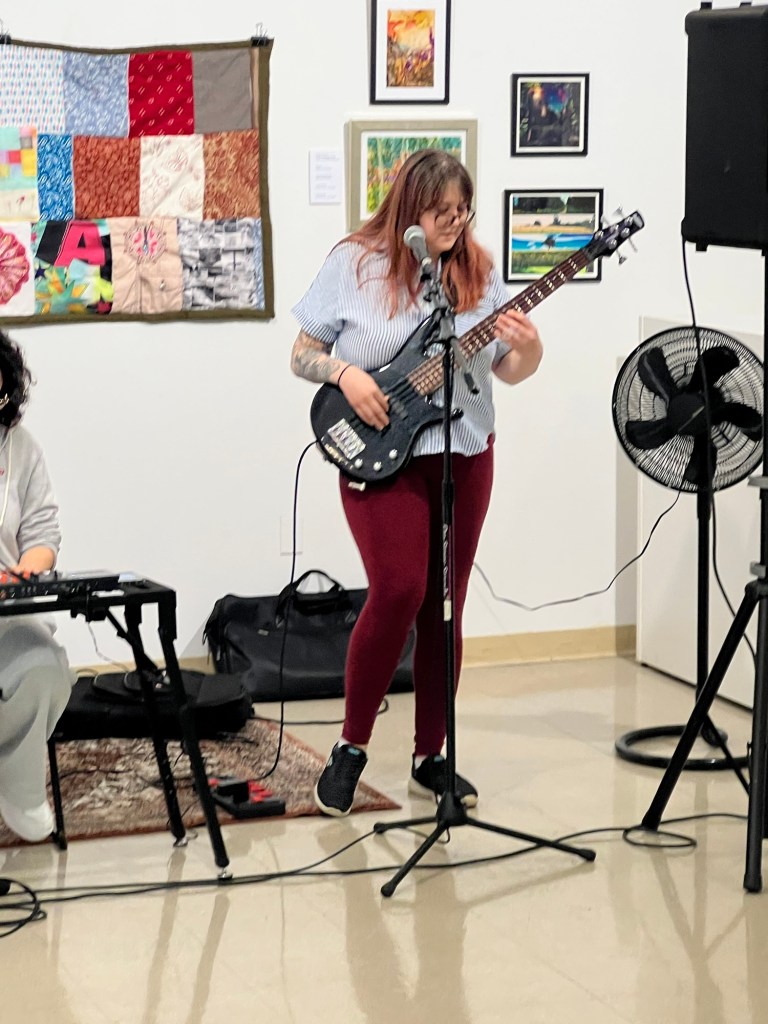
The reception featured hors d’oeuvres by the Culinary Arts program with a live music performances by BCC music graduates, Kurley Skeletons.
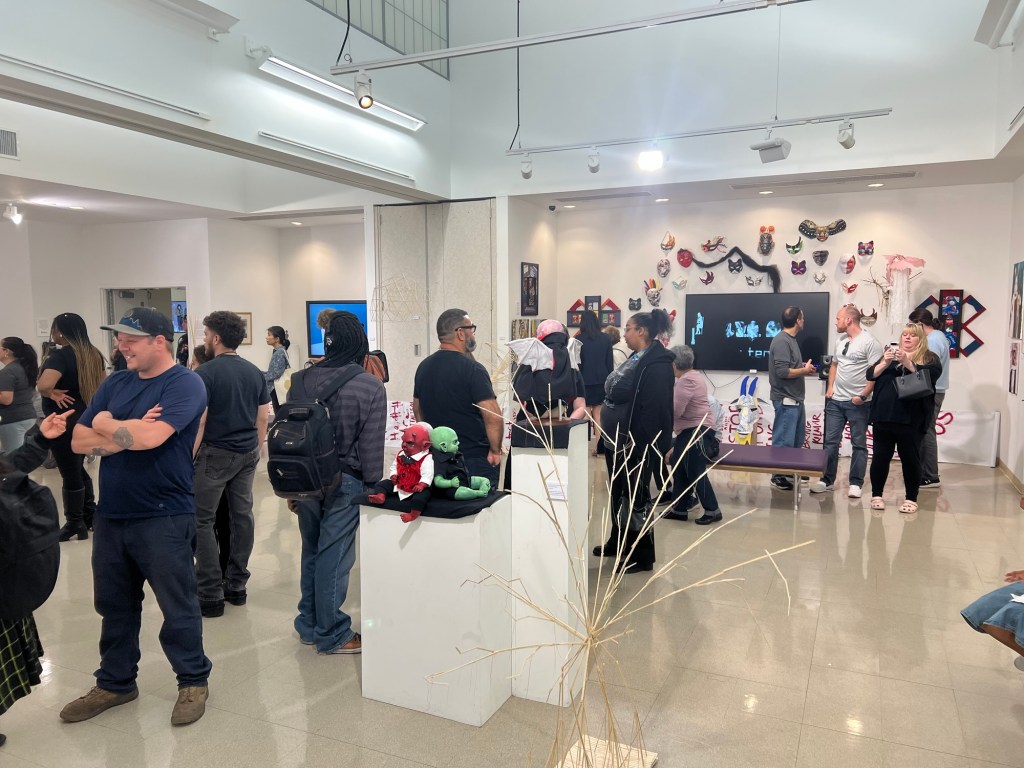
The Gallery Bergen Student Spring 2025
The Spring 2025 Student show
The Spring 2025 Student show
The Student Show has some unique pieces of art that can be admired and debated. Really take time to admire the students works.
Spring 2025 Student show
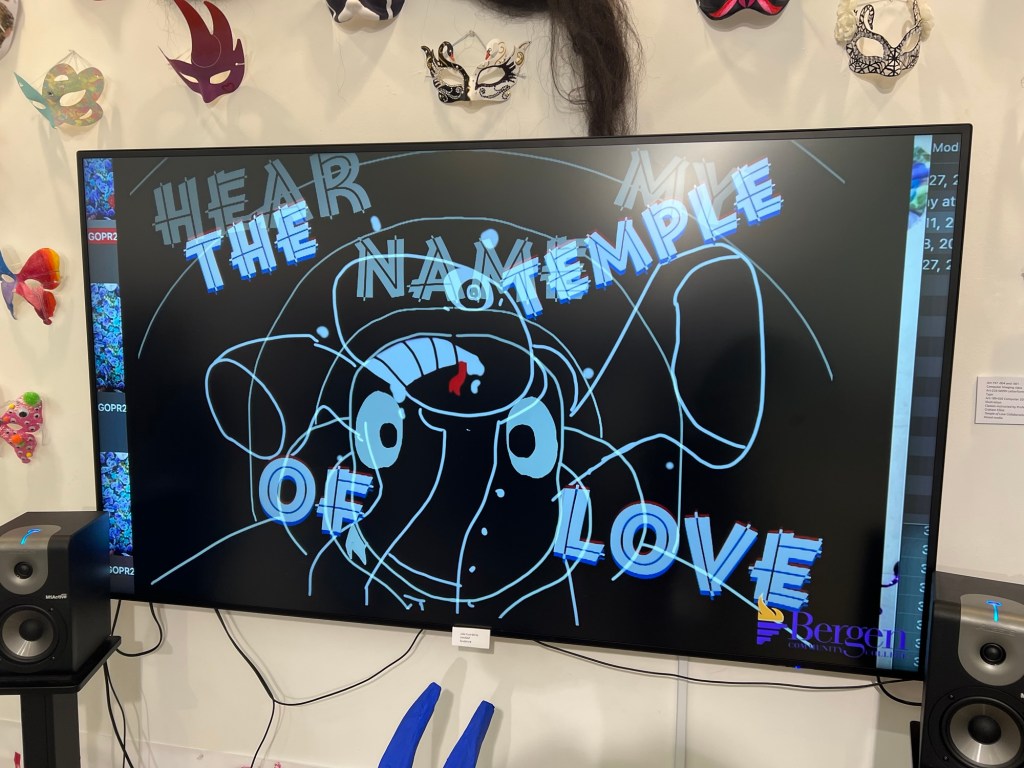
These were some of the standouts that I enjoyed at the show with my favorite being ‘Temple of Love’ video which I thought was very clever.
The Spring 2025 Student show
The Spring 2025 Student show
The Spring 2025 Student show
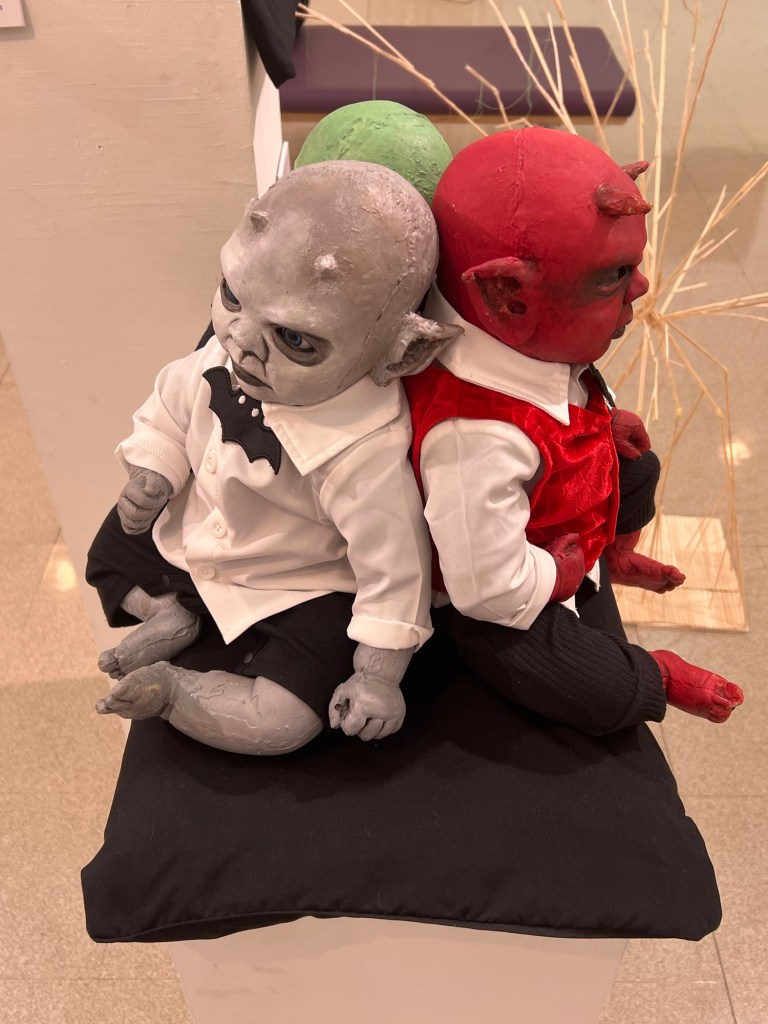
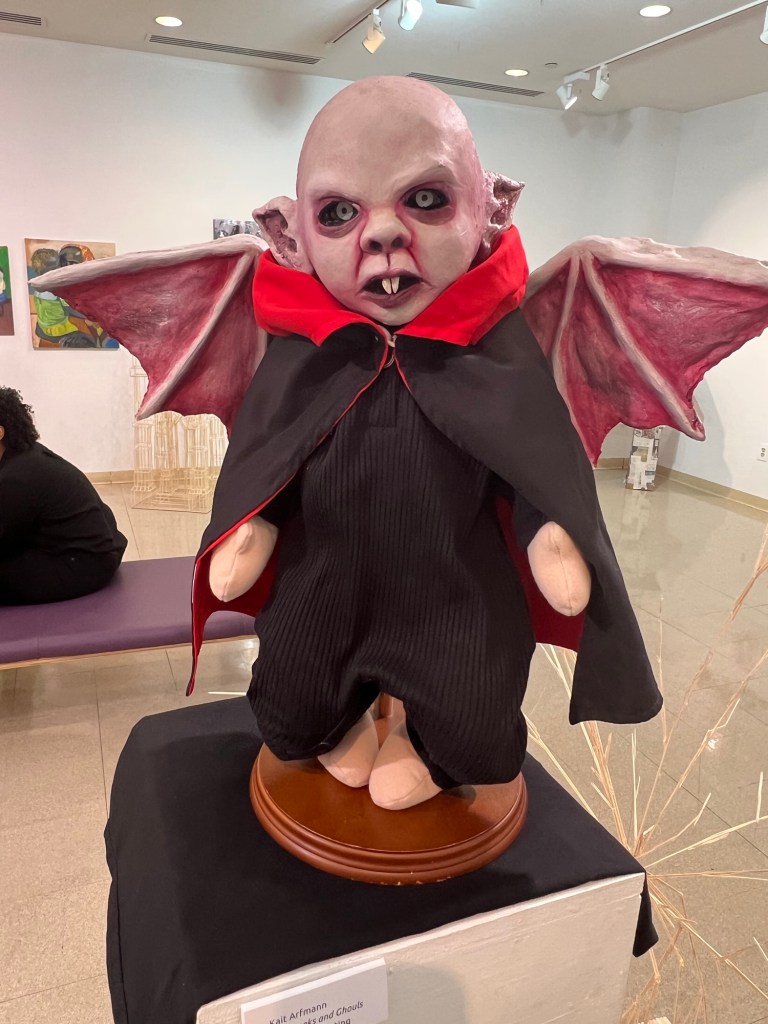
“Little Demons”, one of my favorite pieces at the show.
“Little Demons” sculpture
The “Little Demons” sculpture
The Spring 2025 Student Show
The interesting nudes
The back part of the Gallery
The back part of the museum
The Spring 2025 Student show
The “Harvey” painting
One of the most interesting works at the show was the art music video “Temple of Love” by artist Graham Elliott.
The “Temple of Love” video
The art surrounding them”Temple of Love” video
The “Temple of Love” video”, my favorite piece of the show.
The sculpture “Vibrant Vito Guest” below the video
That evening to close out the Opening was the band ‘Kurly Skelatons’, who had graduated from Bergen Community College a few years ago.
The concert was interesting as the music contemporary and rhythmic.
At the end of the evening, there was a light reception and we enjoyed being outside on the patio over looking the golf course.
The patio view
Watching ‘The Temple of Love’ again
It was a nice crowd that evening
The Spring 2025 Student Show offered interesting art and music and equally interesting visuals. The students did a nice job.
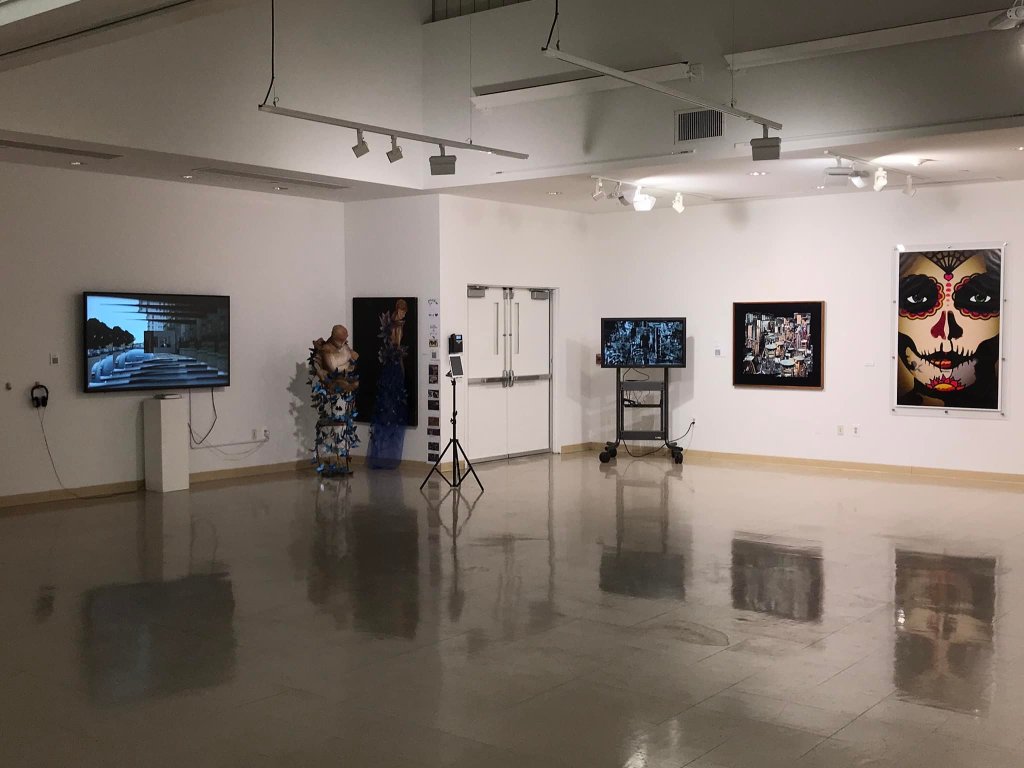
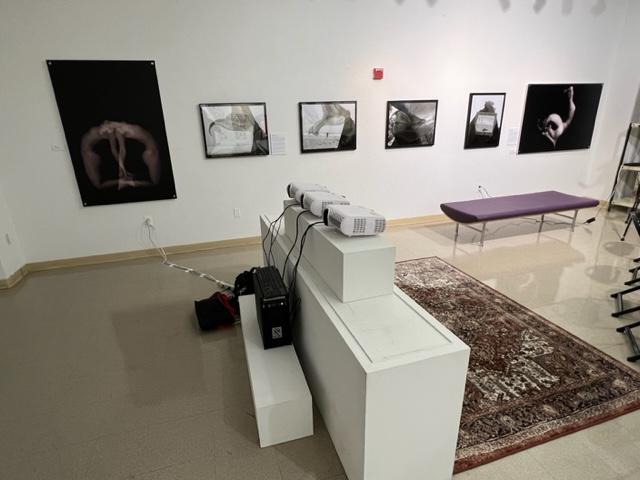
In the Fall of 2025, Gallery Bergen featured the exhibition of Artist Gregg Bormann entitled ‘Personal Effects’. The exhibit featured work by the artist based on Hollywood works that featured the dark and macabre. The works included clips of films done in video collage and surrealist works based on film scenes.
“The full exhibition “I’m Laughing at Clouds”
“Eyes without a Face”
The reception after the opening
It was an interesting take on the movie magic of these films.
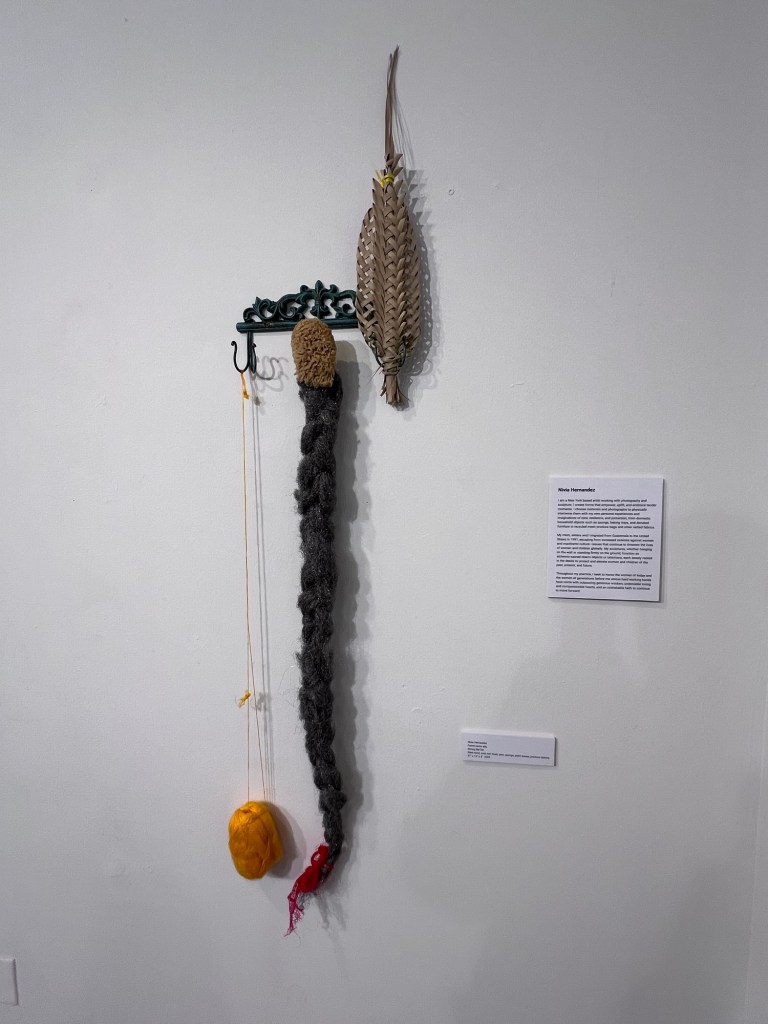
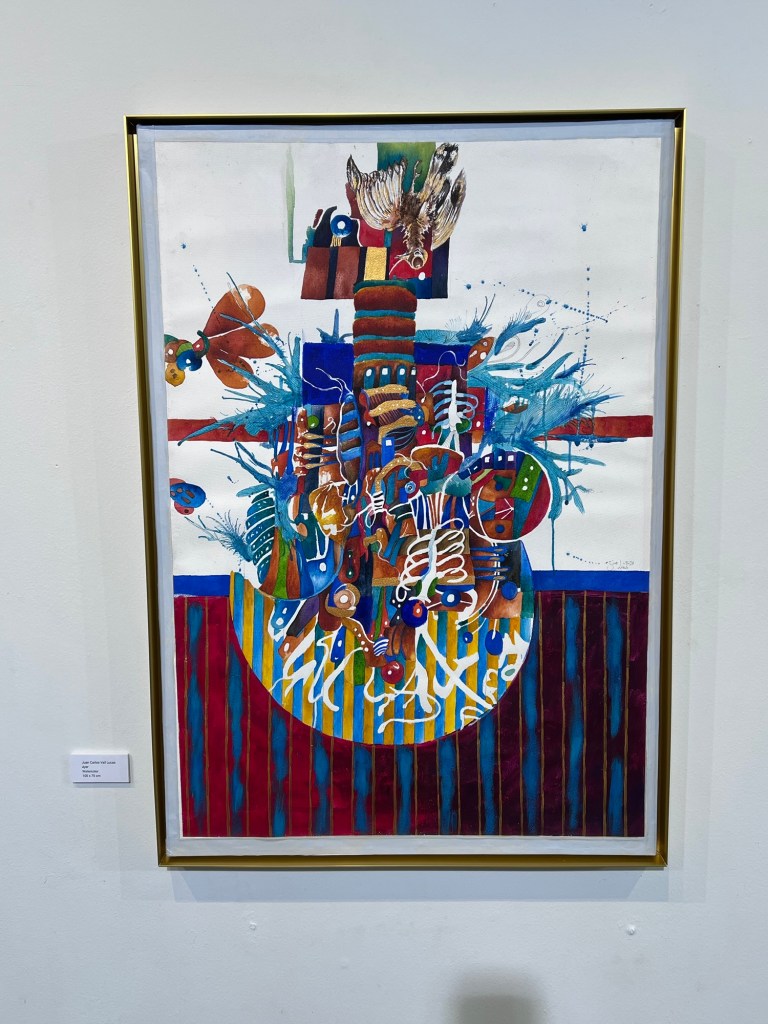
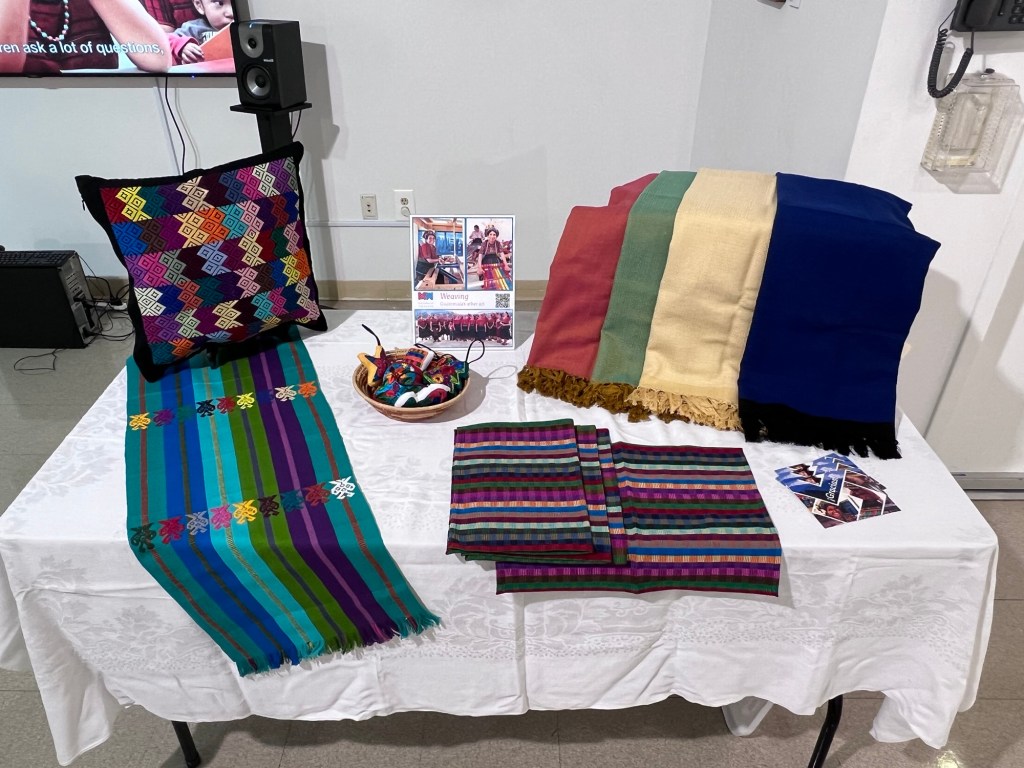
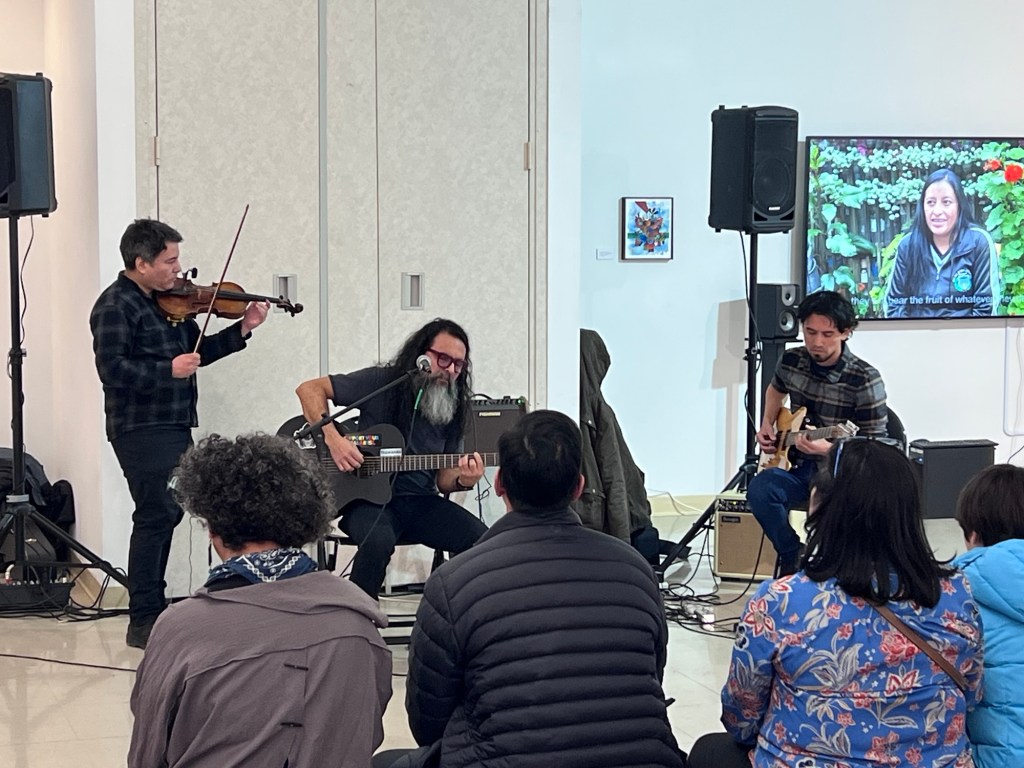
In the Fall of 2025, Gallery Bergen exhibited ‘Tesla’s de Solidaridad: Art & Connection to Guatemala ‘, an exhibition of local Guatemalan artist, mostly from Jersey City.
The promotion poster
The exhibition was a celebration of works by Guatemalan artists who live in the United States, especially in the New York City area.
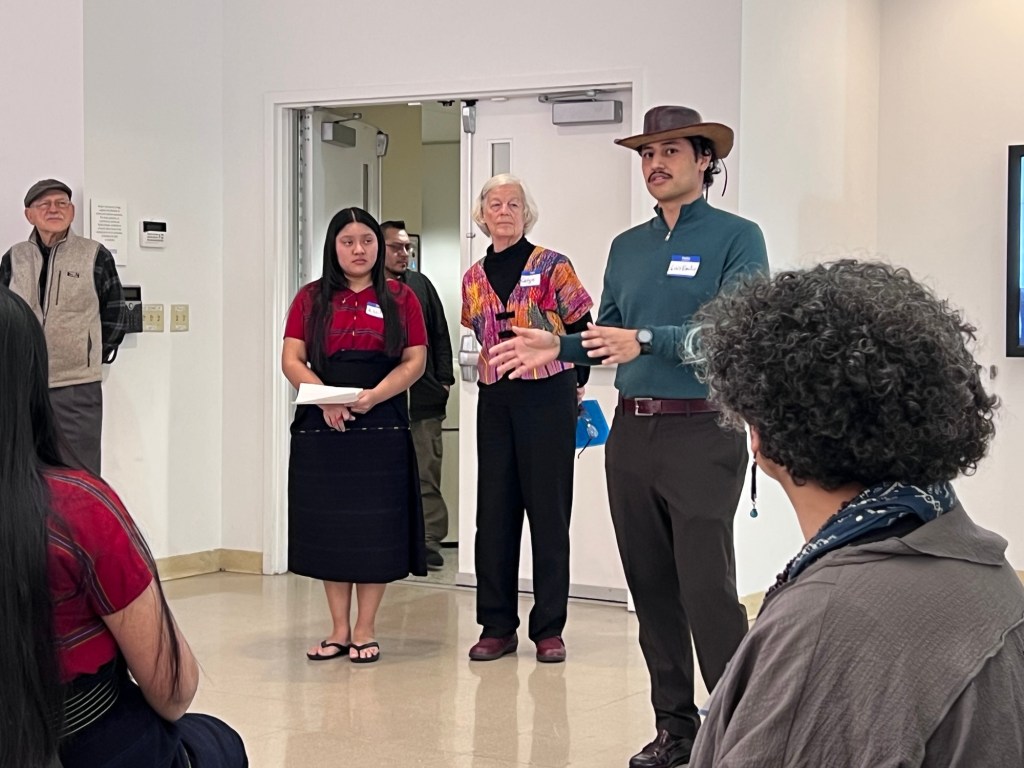
The gallery opening
Works by artist Lucas Emilio Romero
Artist Lucas Emilio Romero explaining his works at the show
Work by artist Nivia Hernandez
Works by artist Juan Carlos Vail Lucas
The work ‘Ayer’
The crafts of Guatemala
A local jazz band played at the opening with lyrics in Spanish.
The Jazz band performing
Gallery Bergen
The Jazz performance at Gallery Bergen the night of the Opening of the Exhibition

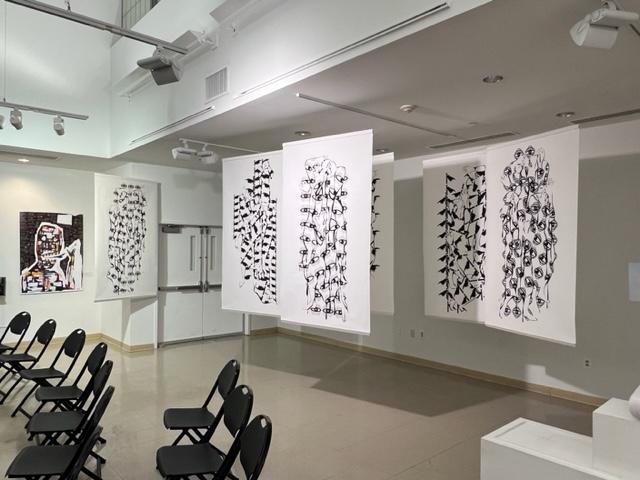
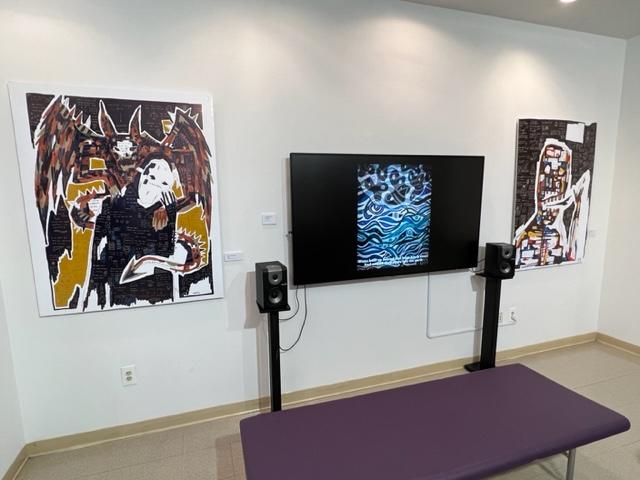
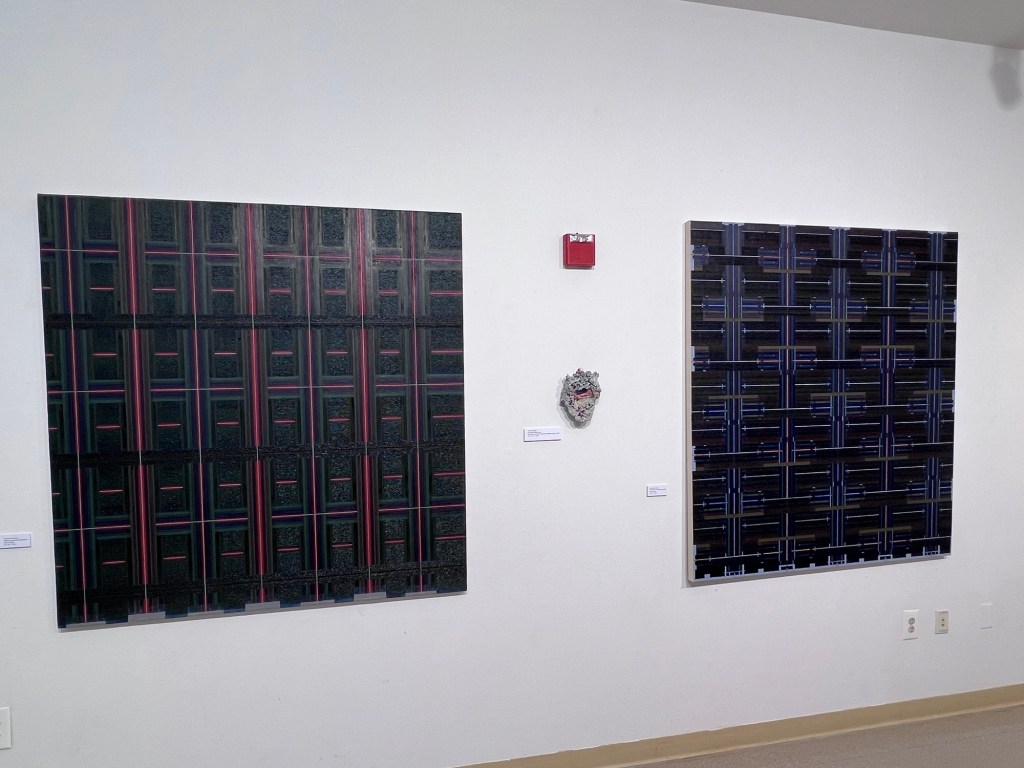
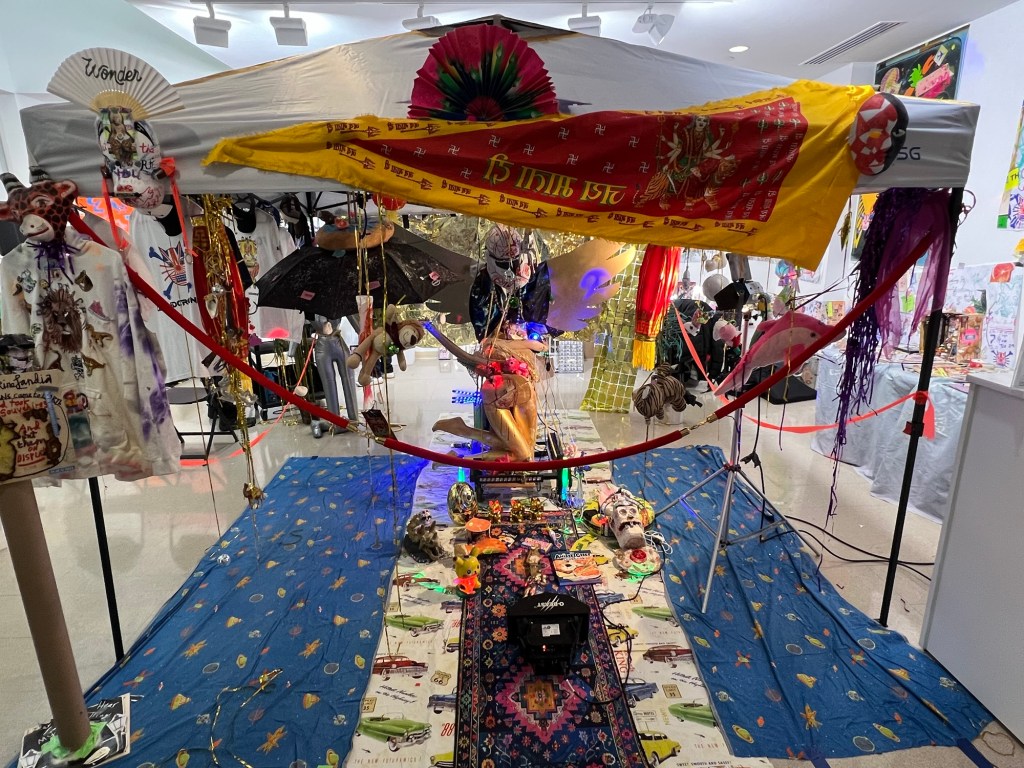
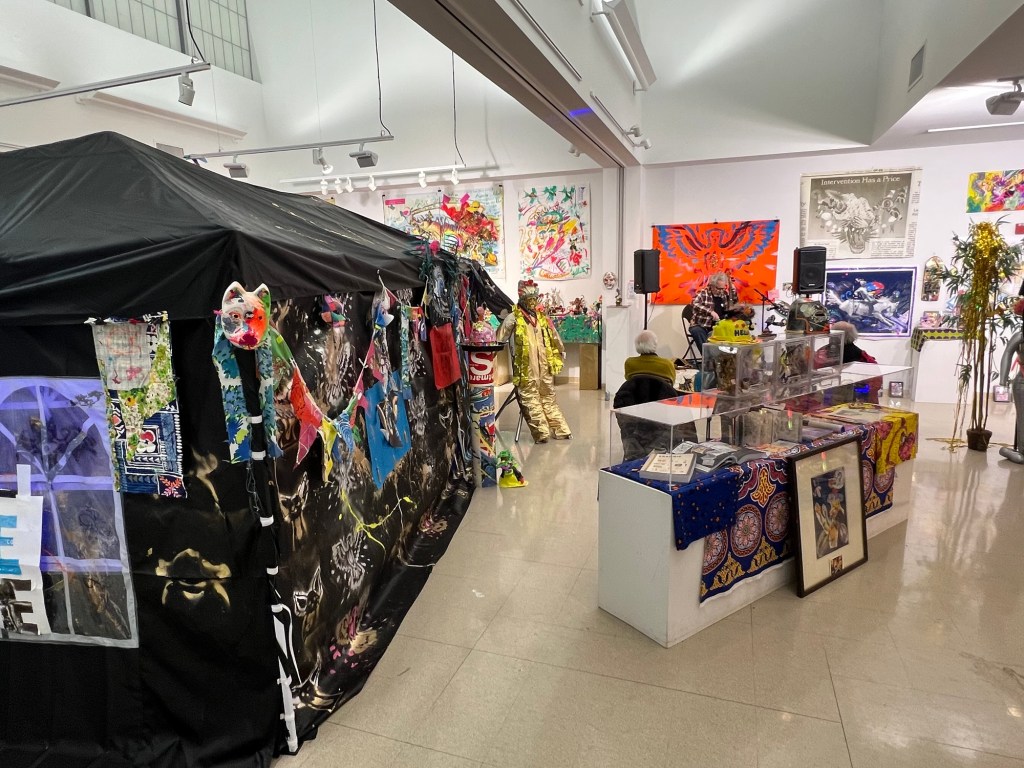
One of the biggest shows of 2026 was faculty member Graham Elliott’s one man show. It was a splash of art that was a cross between Basquiat and Warhol. It was colorful and playful and engaging.
The sign for the gallery opening
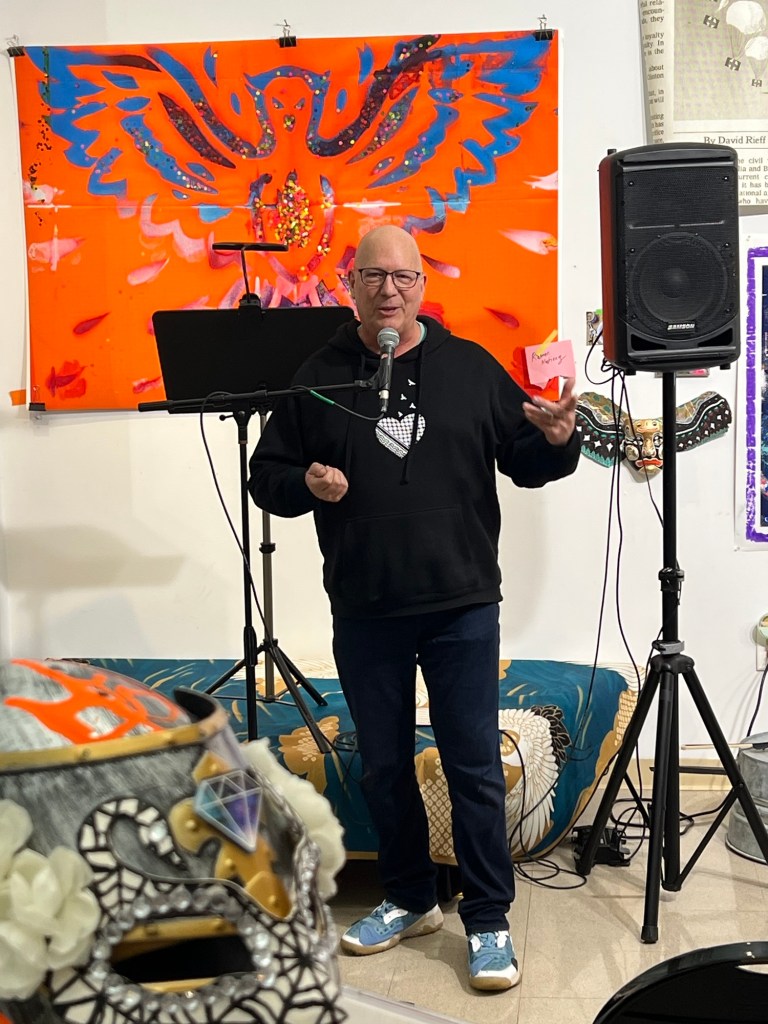
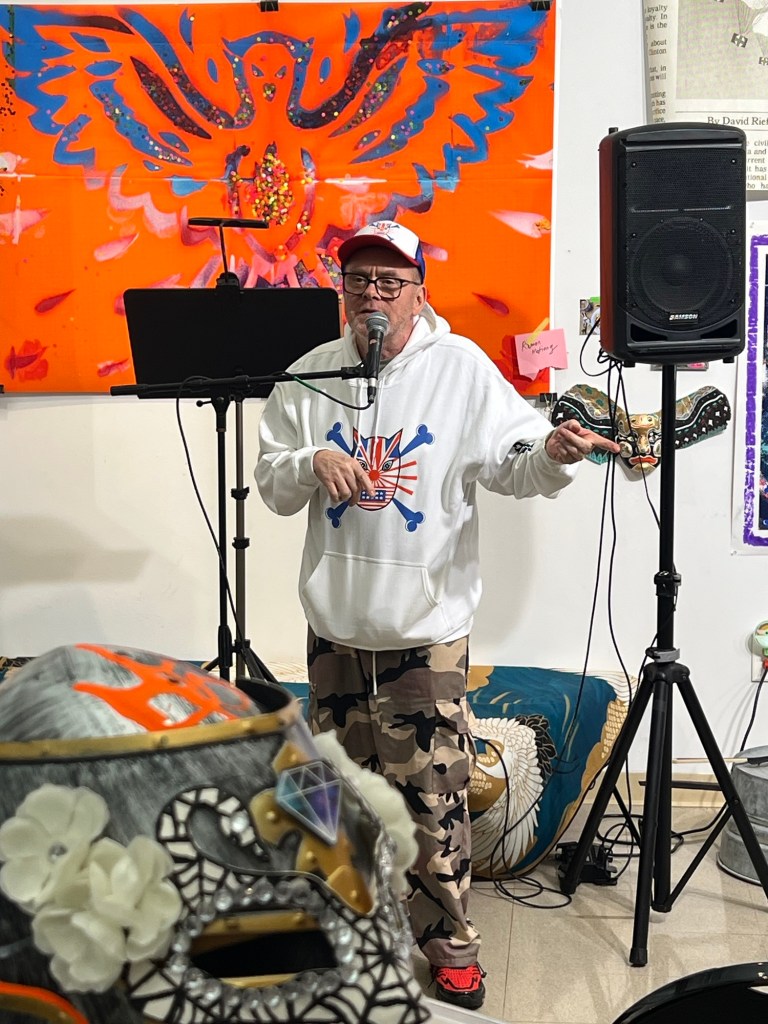
Artist Graham Elliott opening the show
The artist giving his opening remarks at the show. This one man show was a combination of his personal At ex and that of his students.
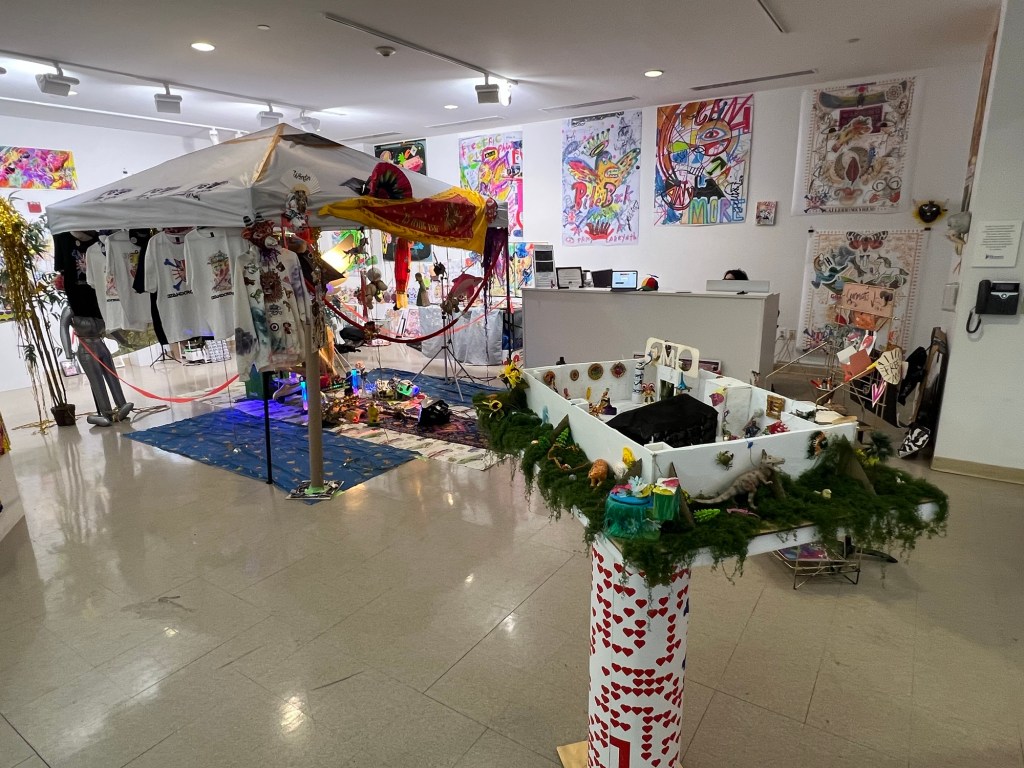
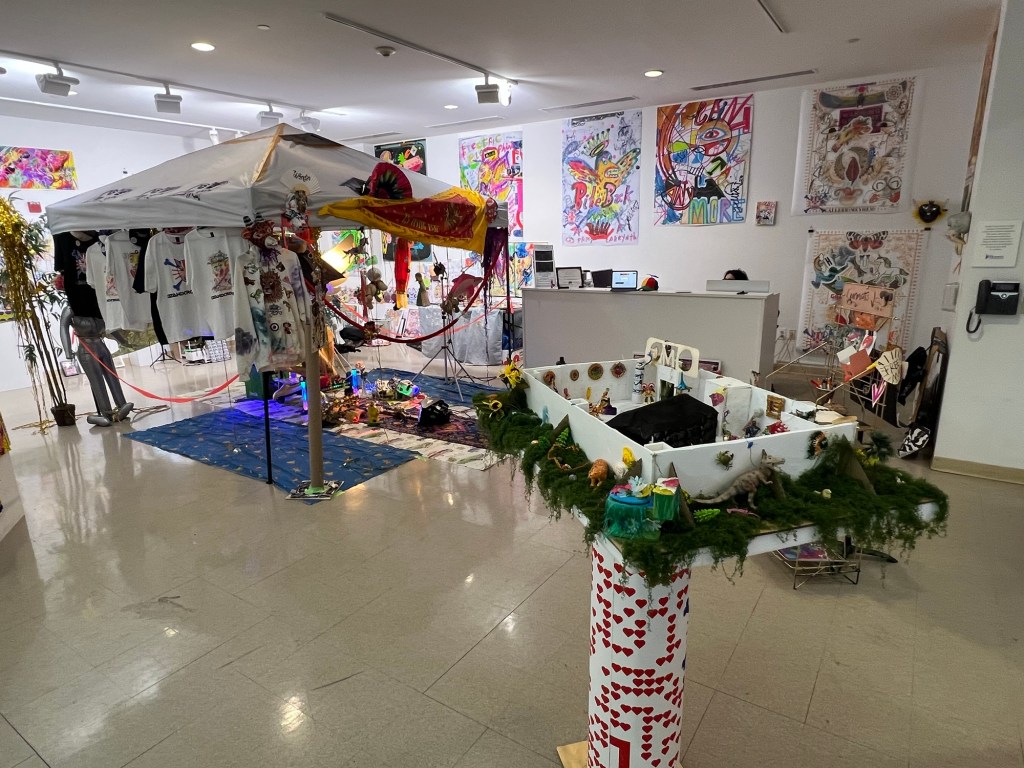
The entrance to the Gallery for the opening of the Graham Elliott show
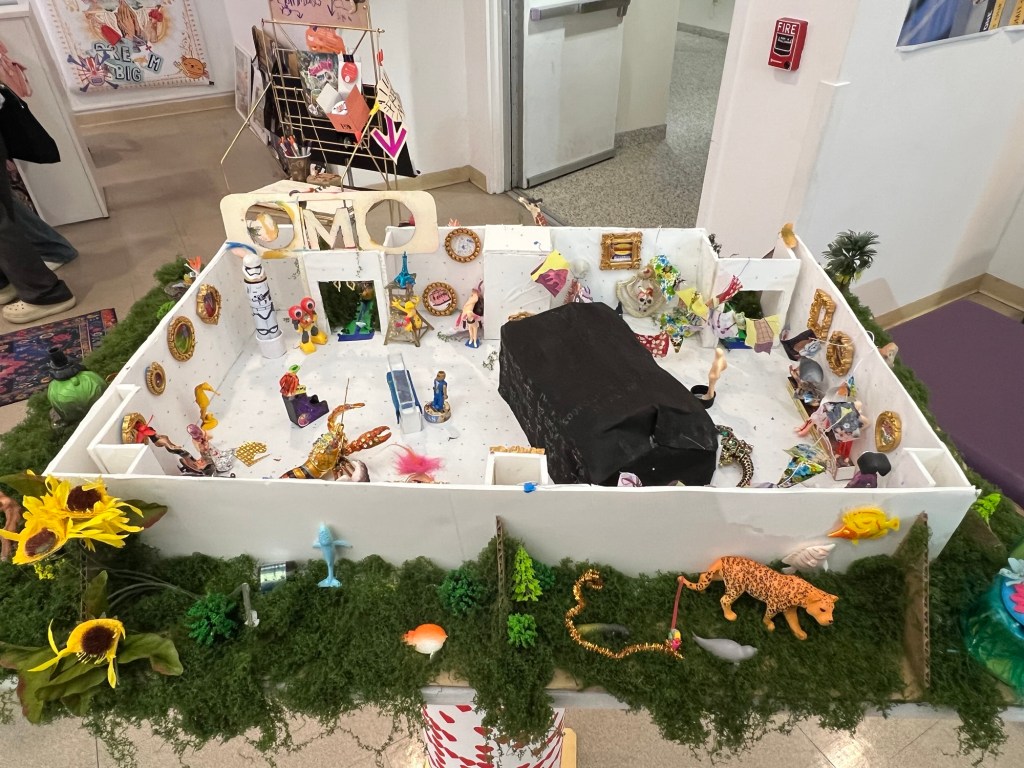
One of the interactive pieces in the front
The front tent filled with artwork
The center of the exhibit with the exhibition
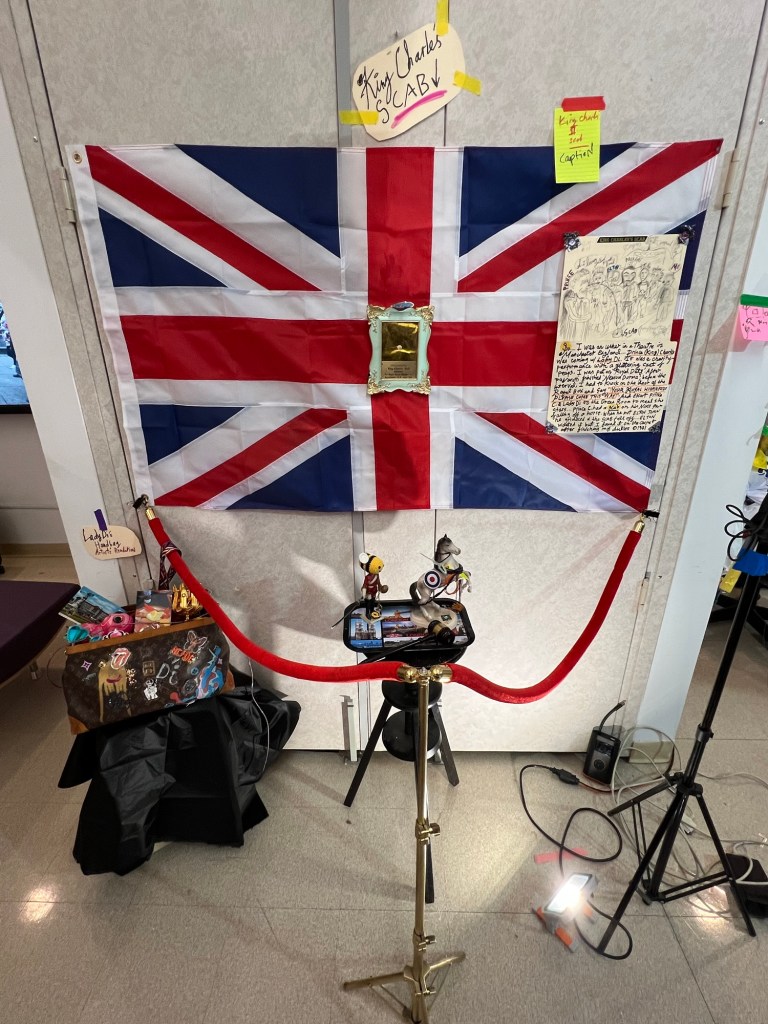
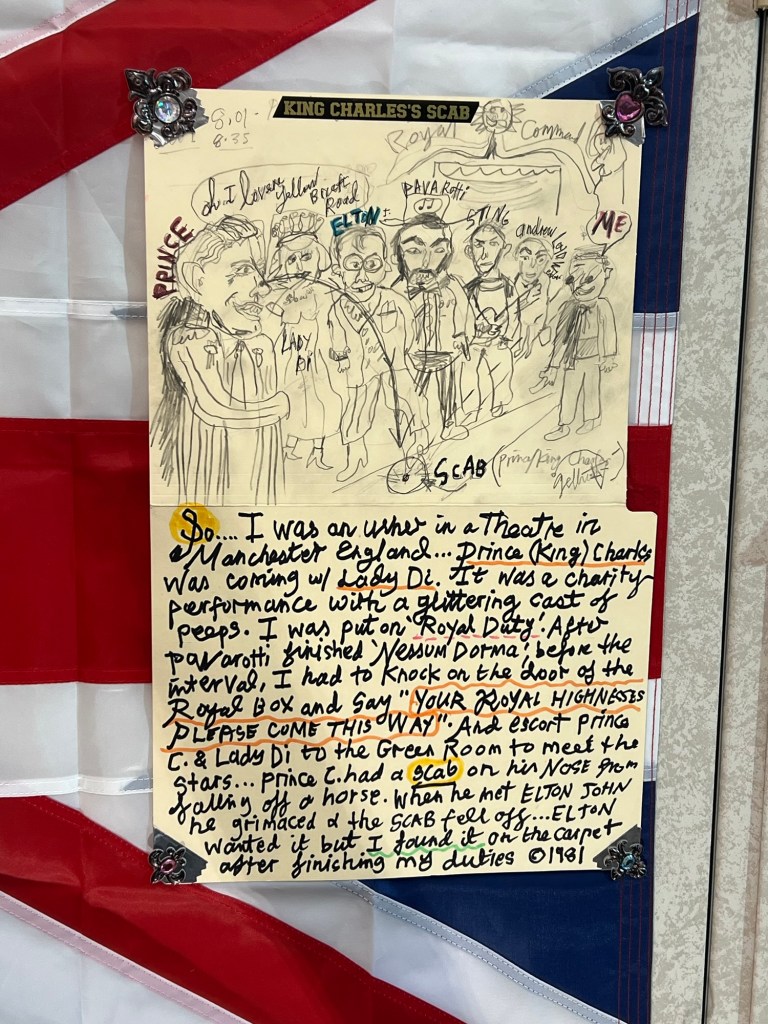
One of the most interesting and odd pieces of art featured the scab of Prince Charles. I thought this was unique.
The Scab of King Charles
The write up as part of the exhibition
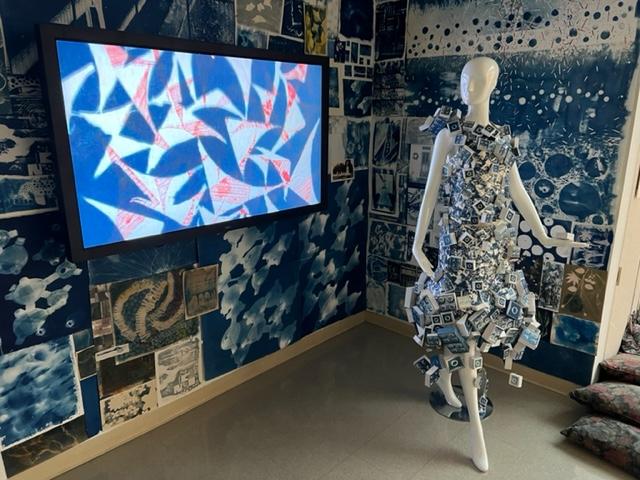
The video art and sculpture of the exhibition
This has to be one of the most engaging and energetic exhibitions that I have seen in a long time. Try to visit Gallery Bergen while the exhibition is going on.
Originally designed as his own home, today the James Rose Center serves as the headquarters of a non-profit educational foundation, the mission of which is to improve the environment through research, education, preservation and design.
I recently toured the James Rose House with members of the Ridgewood Historical Museum. We had a lecture on the house and James Rose’s work in the industry as an architect and the other projects he had worked on over the years before his death in 1991.
The lecture was followed by a tour of the house with the group and then a small lecture and tour with the guide. We got to see the whole house, what he was trying to achieve in the design and the renovation work on the house as it is in pretty bad shape. The materials that were used to build the house were not the best quality and have rotted over the years. There is a lot of restoration work on the house that is needed.
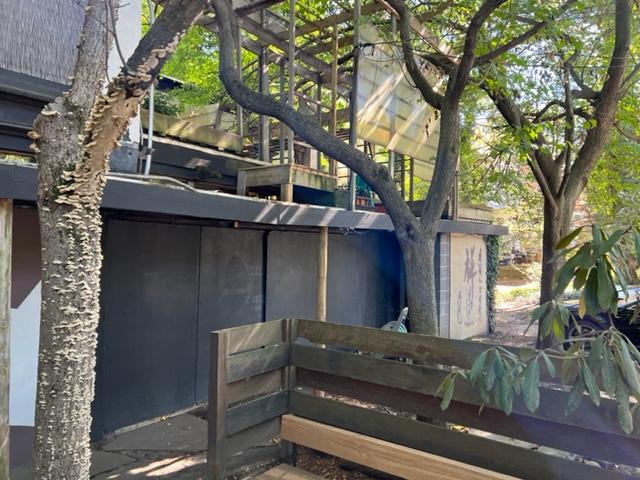
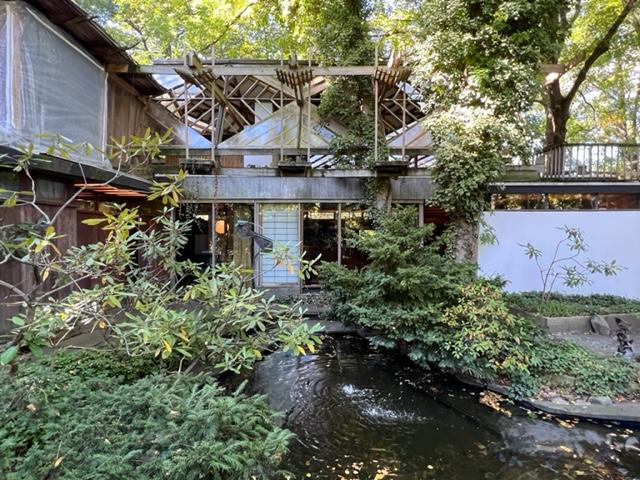
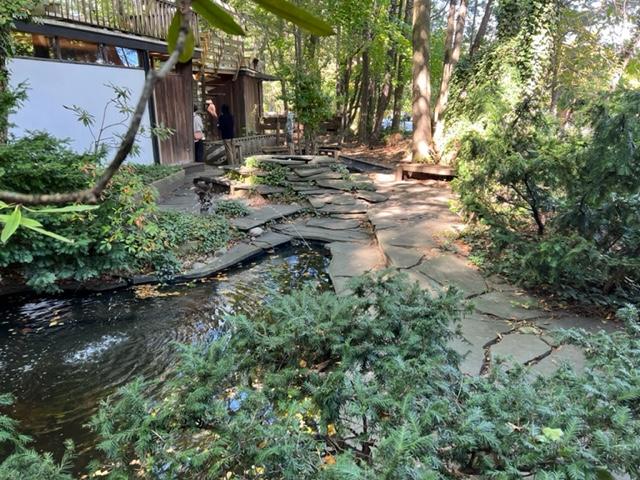
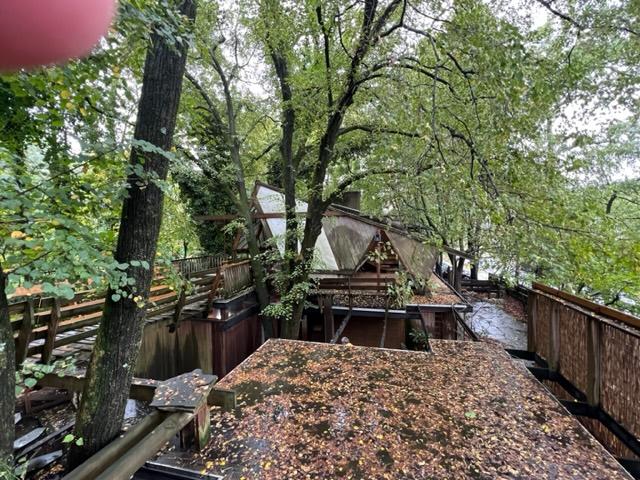
We were able to walk all around the house and what struck me was the use of nature in the design of the house. He used the trees and brook on the property to achieve the aesthetic of the design of the house but over the years it has been used against it as the trees have either grown too big around the house or have died, in which one did and caused thousands of dollars of damage on the house. Still, it was an interesting tour of how the house was used as a studio and a family home for him, his mother and unmarried sister.
History:
James Rose (1913-1991) was a maverick landscape architect whose rebellious nature caused one writer to refer him as the “James Dean of Landscape Architecture.” Here Rose created a unique work of art fusing modern sculpture, architecture and landscape into a single unified place for living.
(Information from the Center’s pamphlet)
For its unique modern spatial language, its expression of an alternative approach to conventional post war suburban residential development and as the constantly changing laboratory of one of landscape architecture’s most inventive minds, the Ridgewood home of James Rose is one of the twentieth century’s most important landscapes.
The Front of the house
The Vision:
Rose began the design while in Okinawa during World War II with a model he made from scrapes found in construction battalion headquarters. “I wanted the spaces flowing easily from one to another, divided for privacy and for convenience.” Rose wrote in 1943. “I wanted the arrangement flexible and varied. Most of all, I wanted all this integrated with the site in a design that seemed to grow, to mature and to review itself as all living things do.”
The Reality:
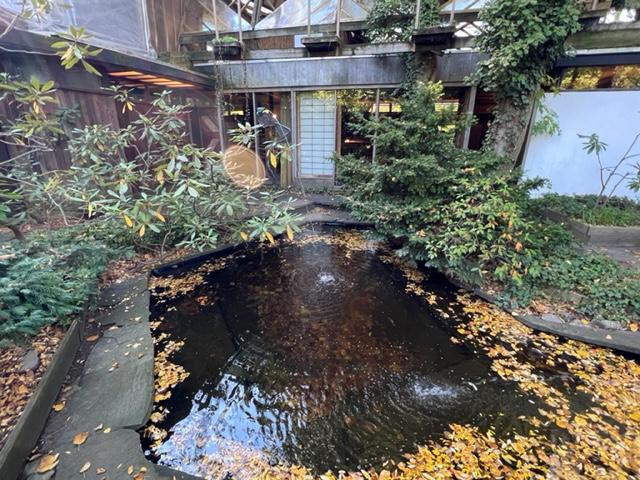
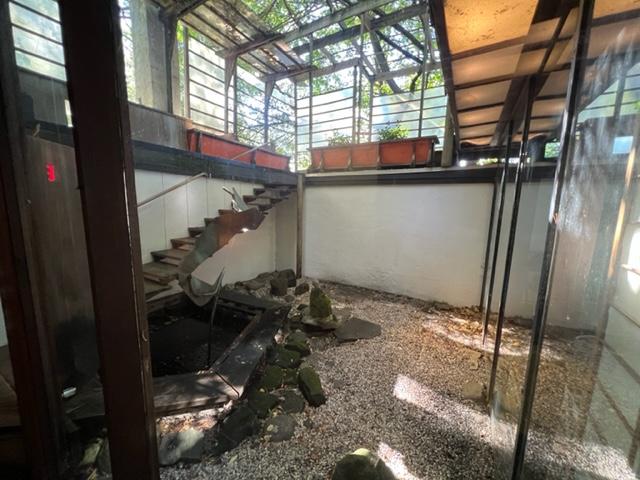
Constructed in 1953, Rose described his home as a “tiny village” build on an area half the size of a tennis court. It was a composite of three buildings-a main house for his mother, a guesthouse for his sister and a studio for himself. This experimental landscape achieves a fusion of indoors and outdoors perhaps unequaled by other leading designers of this time. Rose later described it as “neither landscape nor architecture, but both; neither indoors, nor outdoors but both.”
The Metamorphosis:
It was conceived to accommodate rapid twentieth century charge. “I decided to go at the construction as you might a painting or sculpture.” Rose wrote. “I set the basic armature of walls and roofs and open spaces to establish their relationships but left it free in detail to allow for improvisation. In that way it would never be “finished,” but constantly evolving from one stage to the next-ametamorphosis,” Rose wrote, “such as we find commonly in nature.”
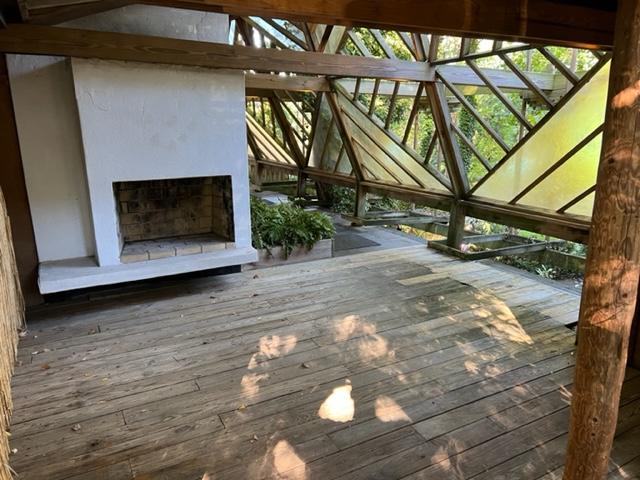
Consistent with this, the design changed dramatically during the almost forty years Rose lived here. From 1961, when Rose was invited by the Japanese government to participate in a World Design Conference (WoDeCo), he founded a mirror to his modern American design sensibility in the ancient culture of Japan. In changes such as the addition of the roof garden and zendo in the early 1970’s a fusion of ancient East and modern West is effected as Rose compares the filigrees of plant forms to the filigrees of structure. “In the bare architecture outline is a pattern of organic (rather than cosmetic) decoration and an inter division of space.”
The Reincarnation:
Unfortunately in the eighties this remarkable design, built to accommodate rapid growth went into rapid disrepair. Neglect, fire and water damage threatened complete destruction until a foundation was established by Rose, Dean Cardasis and a few of Rose’s close friends was formed just before Rose’s death in 1991. In 1993 the rehabilitation of this important property began and continues to this day. The site serves students, scholars and the general public in its new life as the James Rose Center for Landscape Architectural Research and Design.
The rehabilitation reversed rampant deterioration of the previous decade. Support systems were revamped. Fire damage was repaired. The leaking roof was rebuilt and Rose’s roof garden was reconstructed. Salvageable wood was reconditioned and woven with new lumber. Garden pools were rebuilt and important planting edges re-established. Murals and other original artwork were reconditioned. Through the center’s ongoing efforts, Rose’s enduring creation has entered a new stage of its metamorphosis from which it will continue to evolve.
But it remains consistent with its origins as a important modern work and serves the same larger purpose it always had for Rose to pose for us elemental questions about the nature of design. “Change is the essence,” Rose observed. “To reveal what is always there is the trick. The metamorphosis is seen minute by minute, season by season, year by year. Through this looking glass, ‘finish’ is another word for death.”
(Ridgewood-James Rose Center History)
James Rose, landscape theorist, author and practitioner
Along with Garrett Eckbo and Dan Kiley, James C. Rose was one of the leaders of the modern movement in American landscape architecture. Rose was only five years old when his father died and with his mother and older sister, moved to New York City from rural Pennsylvania. He never graduated from high school (because he refused to take music and mechanical drafting) but nevertheless managed to enroll in architecture courses at Cornell University. A few years later he transferred as a special student to Harvard University to study landscape architecture. He was soon expelled from Harvard in 1937 for refusing to design landscapes in the Beaux Arts manner.
The design experiments for which he was expelled served as a basis for a series of provocative articles expounding modernism in landscape design, published in 1938 and 1939 in Pencil Points magazine (now Progressive Architecture). Subsequently Rose authored many other articles, including a series with Eckbo and Kiley as well as four books which advance both the theory and practice of landscape architecture in the twentieth century.
Rose was employed briefly in New York City in 1941 as a landscape architecture by Tuttle, Seelye, Place and Raymond where he worked on the design of a staging area to house thirty thousand men to Camp Kilmer, New Jersey. For a short time, Rose had a sizable practice of his own in New York City but he quickly decided that large-scale public and corporate work would impose too many restrictions on his creative freedom and devoted most of his post WWII career to the design of private gardens.
Fusion of indoor and outdoor space:
In 1953, he began building one of his most significant designs, the Rose residence in Ridgewood, New Jersey. Rose conceived of the design while stationed in Okinawa, Japan in 1943. He made the first model from scraps found in construction battalion headquarters. After construction, the design was published in the December 1954 issue of Progressive Architecture, juxtaposed to the design for a traditional Japanese house built in the garden of the Museum of Modern Art in New York City; the article cites Rose’s design for its spatial discipline. The design clearly expresses Rose’s idea of fusion between indoor and outdoor space as well as his notion that modern environmental design must be flexible between indoor and outdoor space as well as his notion that modern environmental design must be flexible to allow for changes in the environment as well as in the in the lives of its users.
Practice based on improvisation:
From 1953 until his death, Rose based an active professional practice in his home. Like Thomas Church and many others. Rose practiced a form of design/build because it gave him control over the finished work and allowed him to spontaneously improvise with the sites of his gardens. As a result of this, most examples also exist in Connecticut, Florida, Maryland, California and abroad.
.
Establishment of a landscape research and design study center:
James C. Rose was one of the most colorful figures in twentieth century landscape design. While skeptical of most institutions during his lifetime he served as guest lecturer and visiting critic at numerous landscape architecture and architecture schools. Before he died he set in motion an idea which had been in his mind for forty years; the establishment of a landscape research and design study center and created a foundation to support the transformation of his Ridgewood residence for this purpose. Rose died in his home in 1991 of cancer.































































 Visiting a Museum: The Unique, Unusual, Obscure and Historical