I put my walk of the Garment District on hold as many of the museums are having their Private Members nights before the holidays get into the full swing. It gives the members a chance to really enjoy the museums before the City gets crazy with tourists and people are beginning to return to the City.
My first event that I attended was “The Met After Hours” event. It was a well-attended event that members were able to explore the first floor at their own leisure for three hours.
It really was a wonderful night. First it was a warm and clear evening and you could see the stars because it gets dark at 5:00pm. We as members got to the museum before 5:00pm and waited in a long line by the Member’s Entrance on…
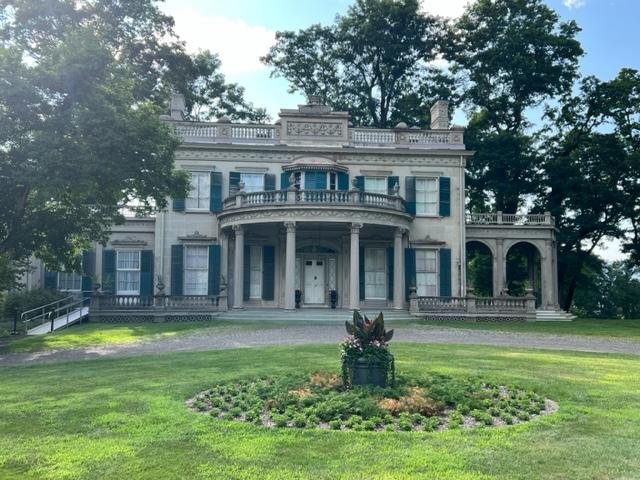
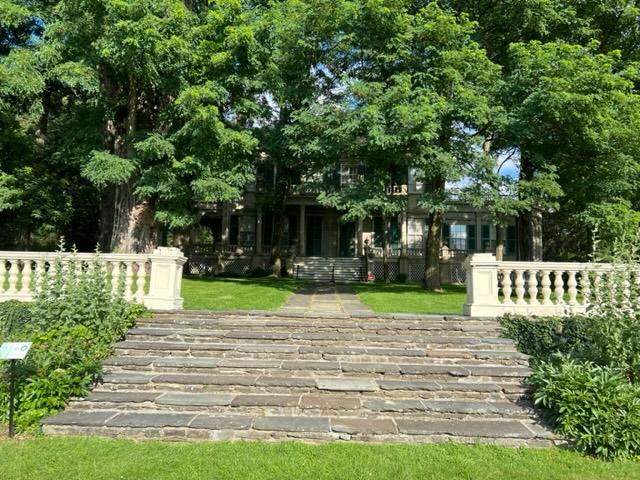
The front of Montgomery Place in the summer of 2023
On a recent trip to the Hudson River Valley for Fall events I took a tour of Bard Campus to visit their campus and tour Montgomery Place which the college bought from the Hudson River Historical Society in 2016. It is now part of the campus and you can tour the grounds but not the inside of the house.
The back of Montgomery Place
Montgomery Place on the Bard College Campus
Before 2016 when the house was owned by the Historic Hudson Valley Society, who used to have tours of the mansion. When the family sold the mansion and all its contents to the Society, they left the house untouched when they moved out you got to see how the Livingston family lived not just in current times but with all the historical furniture that came with the house.
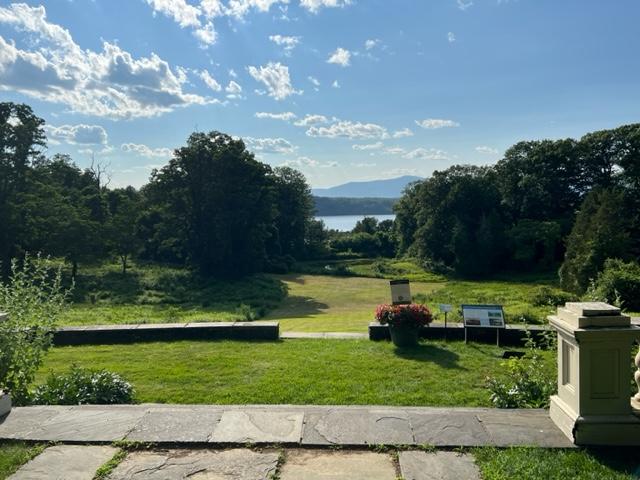
The view from the house to the Hudson River
The gardens from the back of the house
The former tour used to take you through each room that had antique furniture and decorations but much of the house had been modernized over the years. Older furnishings had either been conserved or slipcovered because of age. Since the house has been sold to Bard College, you can only tour the house by appointment only through the college.
The mansion’s portico overlooking the Hudson River
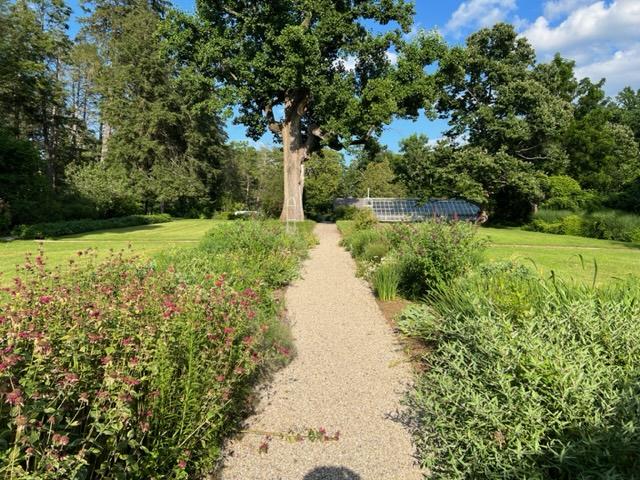
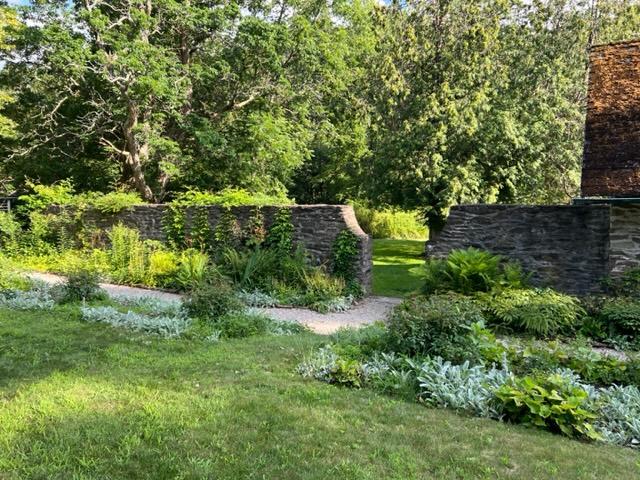
The grounds are still impressive. During the Spring, the formal gardens next to the house are in full bloom and the last time I had taken a tour there, the gardens were being maintained by a local garden club.
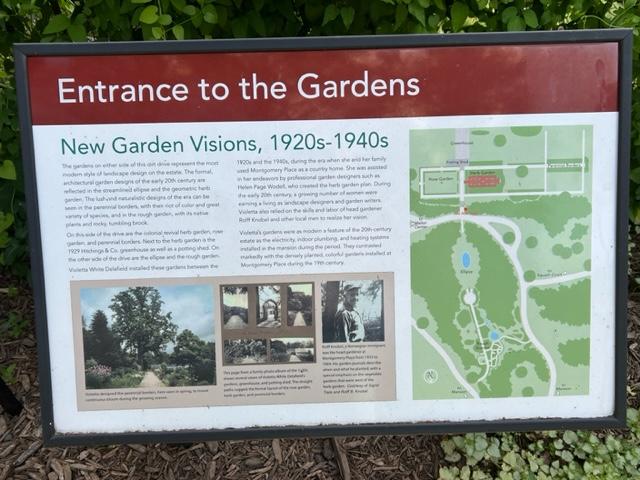
The entrance to the Montgomery Place gardens
There were flower beds, herb gardens and cutting gardens on top of the flowing lawns from the house to the river. The gardens are broken into three different sections: the Eclipse Gardens, the Wilderness Gardens and the Walled Gardens. Each of them connects to the other and some have returned to their natural state over time and care of them.
The Montgomery Place Gardens are changing from Summer to Fall
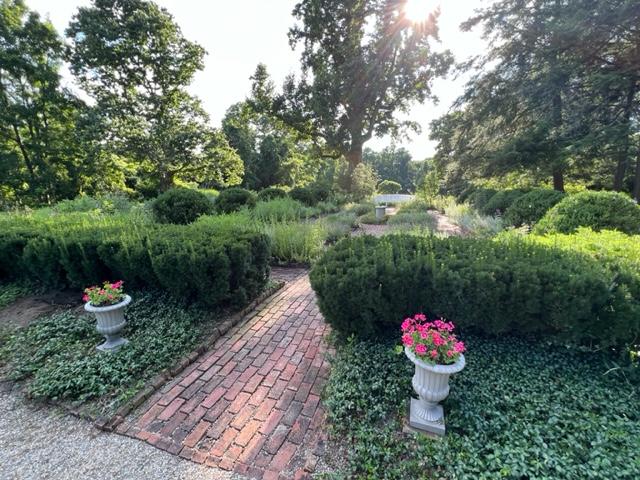
Pathways through the gardens
The gardens were developed over time from Louise Livingston’s day to her daughter, Clara Livingston Barton and her husband building on them the to Delafield family, who were the last owners of the house maintaining and adding to them.
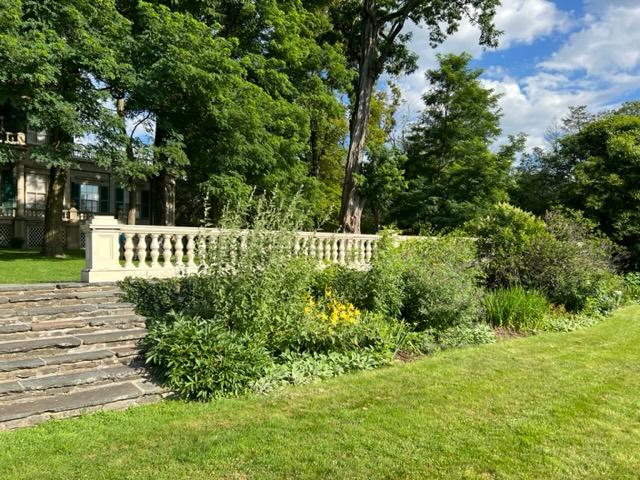
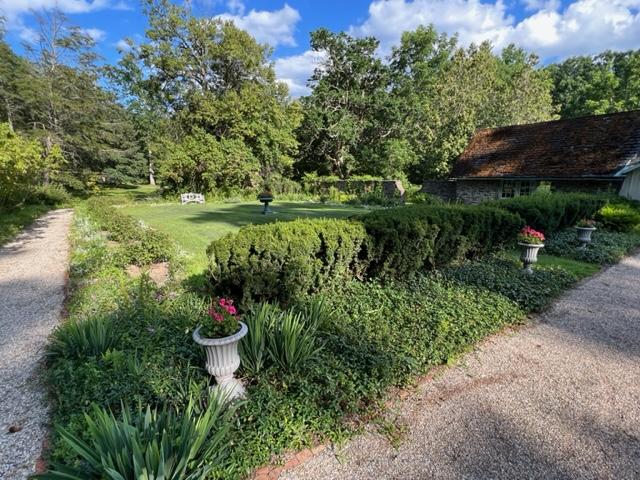
The formal gardens
The Garden Sign of the Ellipse and Rough Gardens
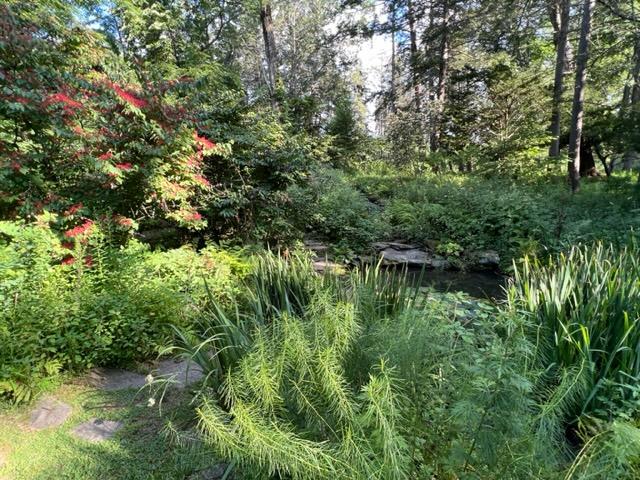
The Rough Garden
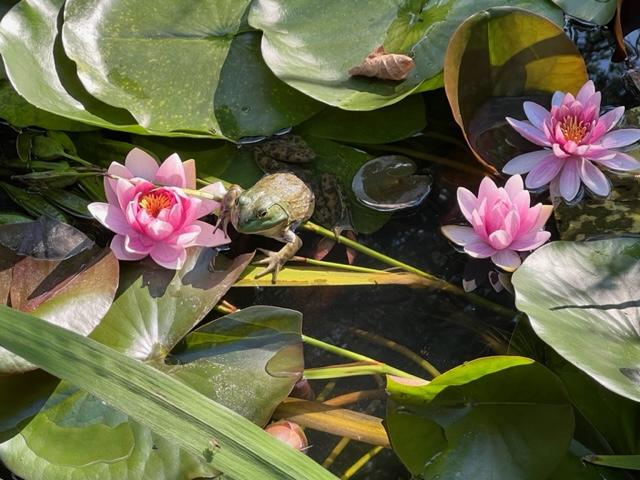
The Rough Garden was in full bloom with lotus and frogs all over the pond
The Ecllipse Garden has gone back to nature in comparison to the garden’s original plans
In the Fall on a recent visit, most of the gardens had been cut back with a few seasonal flowering bushes still showing color. The trees surrounding the house were turning a gold hue while the lawn that had been freshly cut was still emerald green. The house while a little worn from the outside still looked like it was ready to receive guests for the Fall season in the Hudson River Valley. The views from the back of the house are breathtaking from the window views of the Hudson River and the paths leading to it.
The Garden sign
In the Summer of 2023, the mansion grounds are open until dusk for people to walk around the estate and visit the gardens. The gardens were in bloom with summer flowers and plantings. The Rough Garden with it ponds were full of frogs who were making all sorts of noise. I had not seen a frog in the wild in many years and you just don’t see those and turtles anymore in the woods. The mansion is still not open except by appointment through the college.
The formal gardens in the summer of 2023
The grounds are well maintained but there is more detail in the maintenance of the gardens that are needed. They could use some weeding with all the crabgrass coming into the beds. Still the gardens are breathtaking on a warm sunny day and make quite an impression. They must have been something when the family maintained them with their gardeners.
the beauty of the formal gardens
There are all sorts of hiking trails to the Sawkill River and through the forests, a trail down to the Hudson River and tours of the property. The grounds are open from dawn to dusk and there is plenty of parking by the Visitor’s Center along with a history of the estate.
The property had been home Native Americans for at least 5,000 years as a seasonal hunting ground. The Dutch settled in the area in the late 18th century using the Saw Kill River for various mills.
In the late 1770’s, Janet Livingston Montgomery purchased from Abraham Van Benthuysen 242 acres of land on the Hudson River after the death of her husband General Richard Montgomery at the Battle of Quebec. She moved into the home they built after the Revolutionary War. She later had plans made for a Federal style mansion on the riverfront property she bought and moved into her new home, Chateau de Montgomery, in 1805. She established a working farm with the help of friends who gave her tree samples (Wiki).
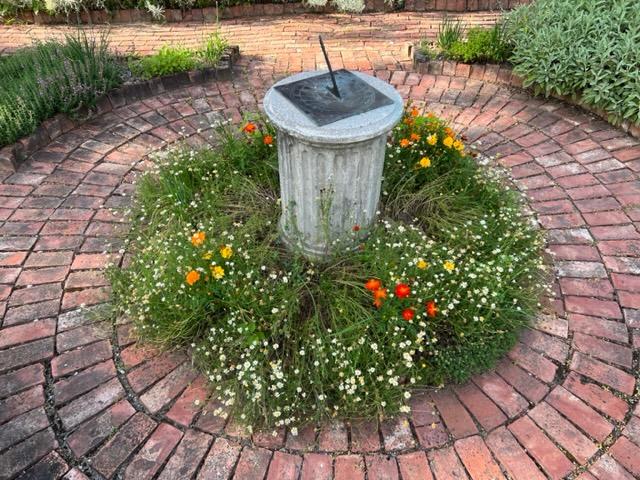
The Sun Dial in the Walled Garden during the summer of 2023.
Upon her death in 1828, the mansion was inherited by her brother, Edward Livingston. He had spent his summers vacationing here with his wife, Louise. They renamed the estate ‘Montgomery Place’. He died the next year and his wife, Louise hired Alexander Jackson Davis to convert the mansion into a more ornate villa. Two wings and exterior decoration were added at this time of the renovation. With the help of Andrew Jackson Downing, a friend of Louise’s and mentor to Davis, she developing the landscapes. Her daughter, Cora Barton worked with the architect on designing garden and conservatory (Wiki).
The front of the mansion
The back of the mansion from the grassy gardens facing the Hudson River
Upon Louise’s death in 1860, Cora and her husband hired Davis again to build some the earlier outbuildings including Coach House, Swiss Cottage and farmhouse and then extended the landscaping to turn the estate into more ‘pleasure grounds’ and have a separation from the farming operations.
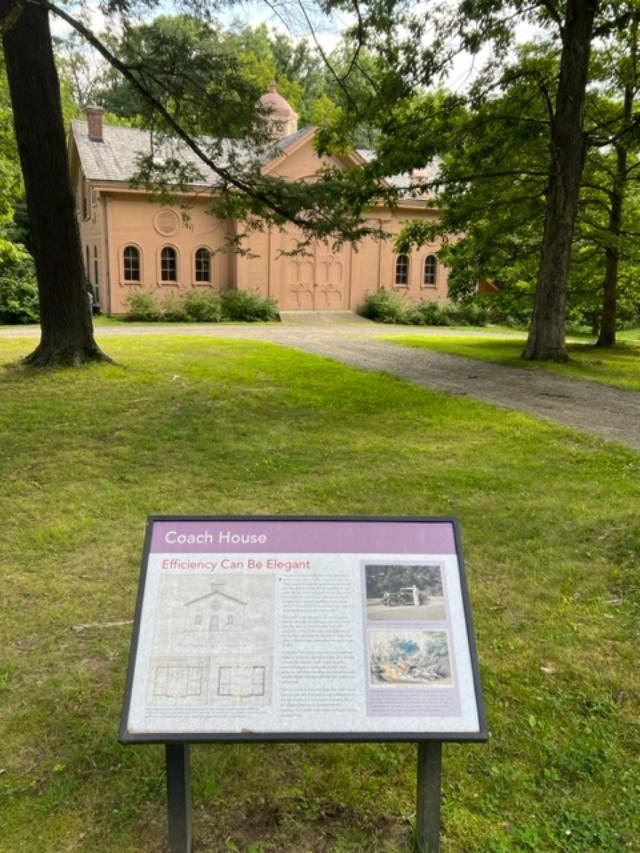
The Coach House for Carriages and then cars
The house then passed on to another relative in 1921, John Ross Delafield who added heating and modern plumbing to the house. He and his wife also extended the gardens on the estate as well (Wiki). The gardens had more ornate features to them.
The “Walled Gardens” to the right of the mansion
Upon his death, his son John White Delafield inherited the house and they opened two corporations to own and operate the property.
The expansion of the gardens
In 1981, the estate was sold to the Historic Hudson Valley, the historical society. After an extensive renovation, the house was designated a National Historic Landmark in 1992 and it was bought by Bard College in 2016 who is its current owner (Wiki).
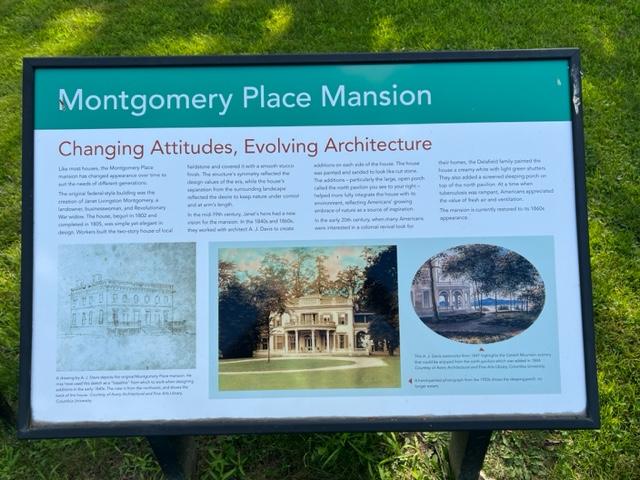
The Montgomery Place Mansion sign and the evolution of the home.
The Sea Isle City Museum is located inside the Sea Isle Library at 4800 Central Avenue just off Downtown Sea Isle City, NJ
On a recent trip of touring the small towns of the Jersey shore, I set out to visiting many of the historical societies that tell the histories of these towns and how they have progressed from small Native American fishing villages to the resort and residential towns of today. Each of these museum has their own unique focus to how they tell their story.
The entrance of the museum from the hallway of the library
The Sea Isle City Museum at 4800 Central Avenue is located in the back of the Municipal Building right next to the Sea Isle City Library. This small museum that is manned by volunteers is packed with local historical artifacts, pictures and exhibitions of the items in the museum. You have to walk to the back of the building to find the museum just off the library entrance.
The entrance of the museum
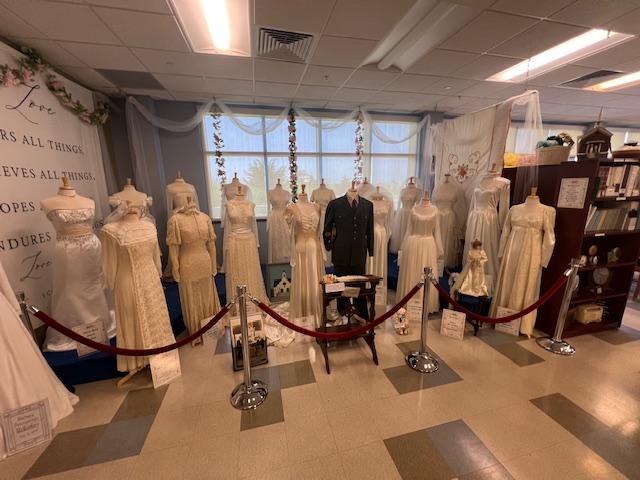
When you walk into the museum, you are greeted by an exhibition of ‘Wedding Dresses through the Ages’, created by curator the late Marie Thompson Stafford, which shows various styles of wedding dresses from 1880 until current day that were worn by brides from Sea Isle City, NJ. Each dress was accompanied in most cases by the owner on her wedding day and gives a unique view of the changing of styles over the last century.
“Wedding Dresses through the Ages”
The back part of the museum is broken down into sections. Part of the museum is an on-going library of the history of the families have lived in town over the generations. What I thought was interesting about this was that each family had their own notebook binder to contribute family history and pictures of the family events. They could update their notebook by coming into the Historical Society and personally adding to the book. There have been 30 years of donations to the museum according to the volunteers.
The main gallery of the museum
The family history binders and the hat collection of the museum
There were also shelves of books on the Sea Isle City School district, the fire department, the police department and the Municipal departments of the town. These featured old pictures of the departments, artifacts over the years and documents of what happened in the town.
The Sea Isle City Police Department history
The Sea Isle City Fire Department history
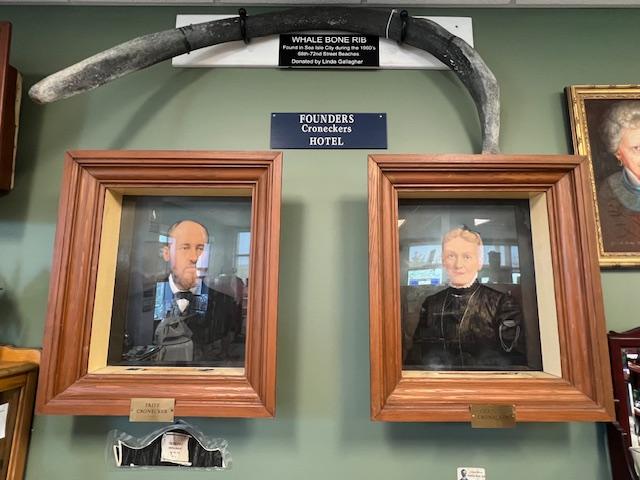
There was a section on the old hotels and restaurants of Sea Isle City at the turn of the last century until today. Various clapboard Victorian hotels used to line the shores here but many had succumbed to either fires or beach erosion. Several of the old restaurants like Cronecker’s Restaurant had just closed over time.
The founders of the Croneckers Hotel
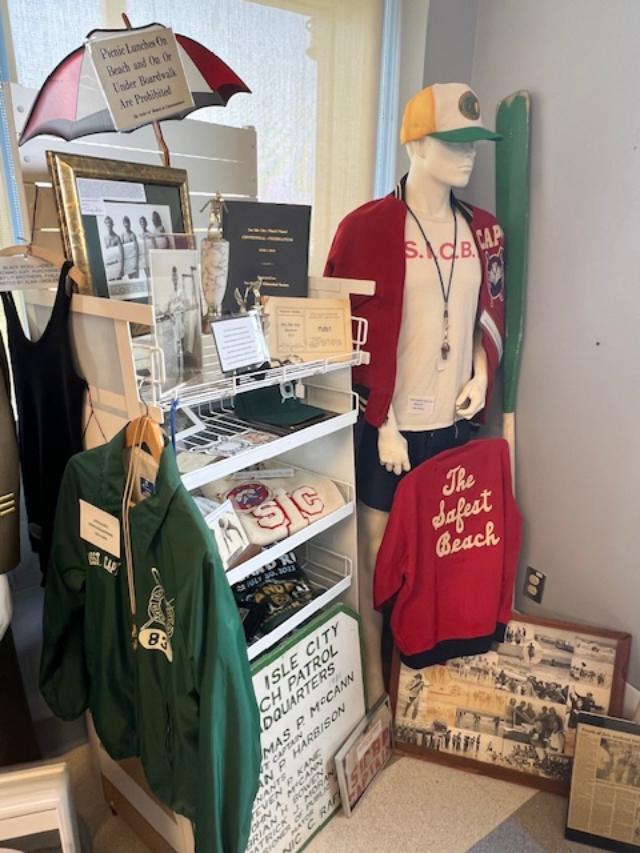
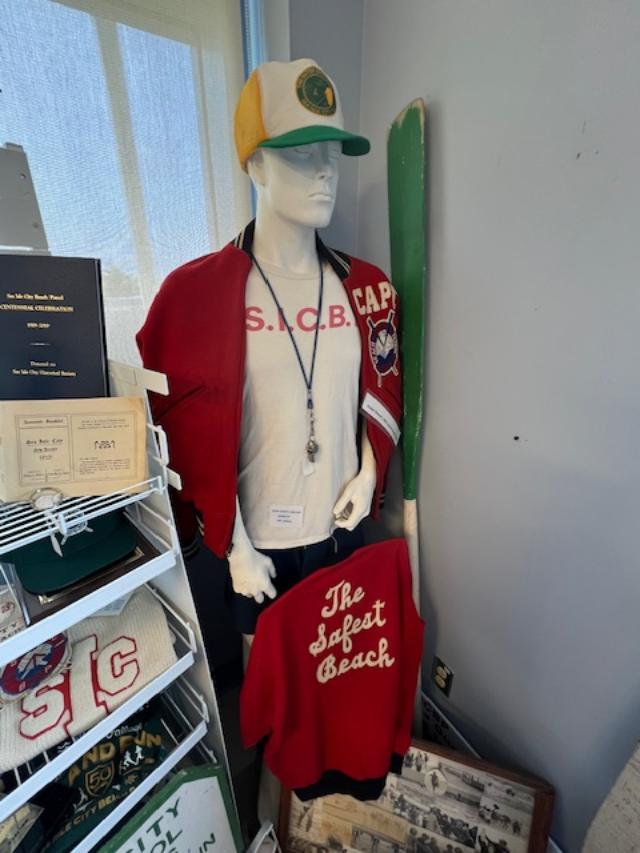
There was an interesting exhibition on the Sea Isle City Beach Patrol and the members who made up the squad. This is a very important part of the culture of the shore towns and their competitions are a very big deal. You can see the bragging rights of the towns over decades of summers. These lifeguards take their jobs very seriously.
The Beach Patrol display
The Beach Patrol exhibit
Another exhibition was the “Armed Forces in Sea Isle City” and the EMS Armed Patrol. This small exhibition showed the uniforms and items used by the squads who lived in Sea Isle City. It showed the contributions of a small town.
The Military display at the museum
In one corner, there was a display of kitchen wares from the turn of the last century featuring all sorts of kitchen gadgets, an old oven and stove and various household items like an old washing machine that show how things have changed over the year but not by much. We have just modernized what was once considered old.
The kitchen of the past exhibition
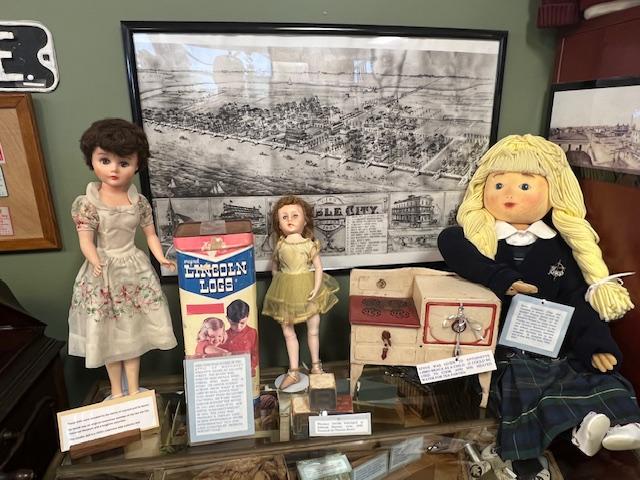
There was an interesting exhibition on Toys through time with all sorts of games, books and dolls that children used up until the 1960’s. It still resonates with me the idea of ‘creative play’ when I see these old dolls and how mature they looked. The board games also challenged the mind the way no cellphone will to a young person.
The Toy display
The toy collection at the museum
The dolls of the museum’s collection
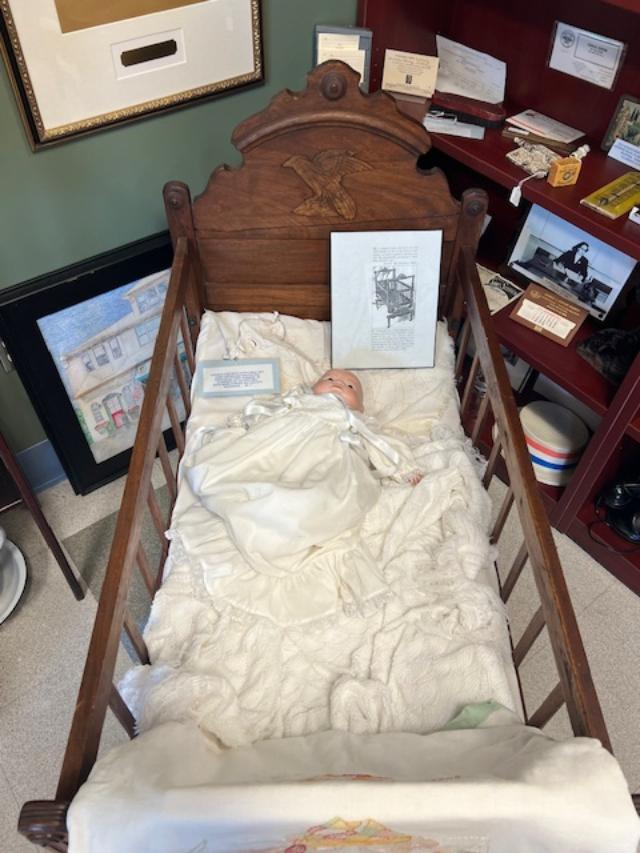
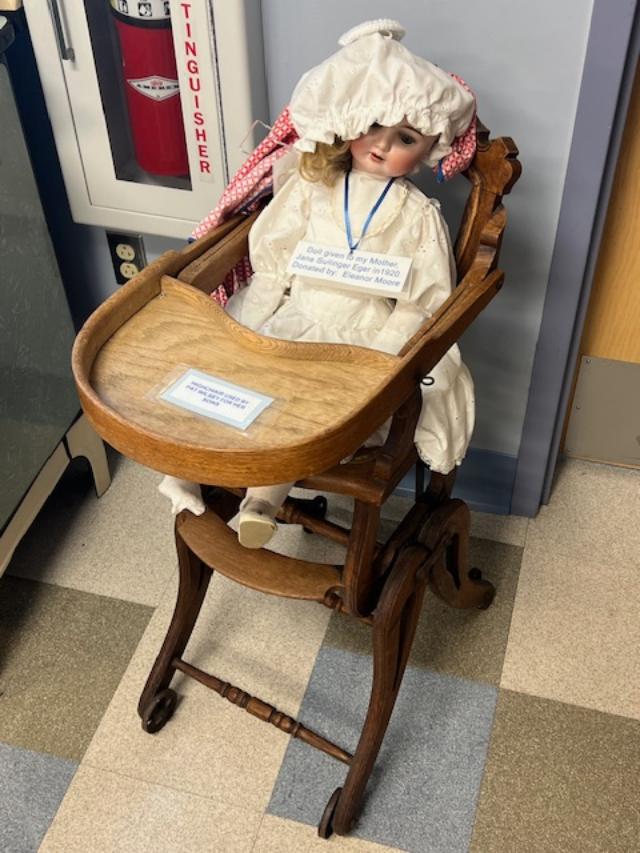
This cute baby doll stood out in the museum
The last exhibit I looked at was the town history of Sea Isle City by founder Charles K Landis, who the main street of the town is named after who helped create the town in 1882. He also founded Vineland, NJ. This was a small display of pictures and artifacts of the early settlement.
The history of the town of Sea Isle City, NJ
The Carousel Horse on display
The 1924 Bathing Beauty Contest reminded me of the last scene of ‘The Shining’
Outside the museum is a protected area for the Diamondback Terrapin Turtle as their Nesting Grounds. According to one of the docents, they breed during the Spring and lay their eggs by the shore so the area has to be protected from humans and other wild animals.
The Terrapin preserve outside the museum
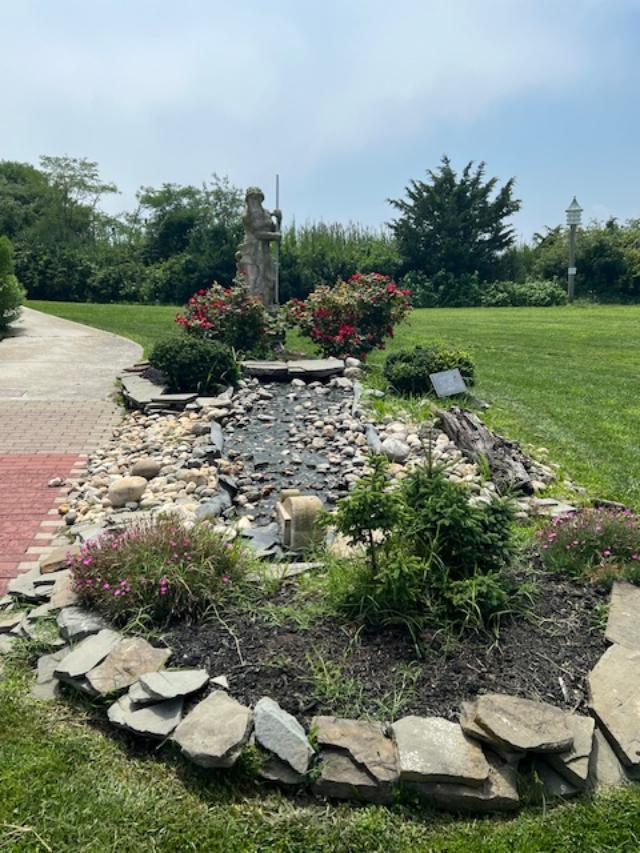
Also outside to the side of the building is the Memorial Garden with its seasonal plantings, small waterfall and statue of Neptune. The Garden is located adjacent to the Historical Museum and offers a quiet and relaxing place to enjoy the natural area that surrounds it. You can purchase a paver to help support the museum and to proudly display your family or loved one’s name on our “Memory Lane Walkway”.
The Sea Isle Historical Museum Memorial Garden located to the side of the museum
The Garden in the Summer of 2024
The gardens in full bloom in the Summer of 2024
This wonderful little gem of museum is open during the week and is free to the public. They are always docents and volunteers around to answer questions.
History of the Sea Isle Historical Society:
(from the Sea Isle City Historical Museum website)
In 1982, Sea Isle City celebrated the 100th Anniversary of its founding, an occasion which led to the creation of the Sea Isle City Historical Society and Museum. The museum formally opened on January 26th, 1983 in a temporary space in the city public school and moved 17 months later to a building behind the former City Hall. Harriet Reardon Bailey was elected first president and also served as its Curator for thirty years.
One of the stained glass windows from a local church
In 1990, Michael Stafford was elected President. Mike guided the museum through its next 25 years of growth and recognition in the community, resulting in the many displays and programs described throughout the website. The museum moved to larger quarters at 4208 Landis Avenue in 1995 and subsequently in 2011 to its present modern facility as part of the Sea Isle City Library building. Since his retirement in 2014, Mike Stafford has been succeeded by Mike McHale and then by our current President, Abby Powell.
One of the stained glass windows from a local church in the Judeo-Christian theme
Our Facility:
The museum is designed with an open floor plan to allow easy access as you move from exhibit to exhibit. We also provide an area to sit and conduct research, take notes or simply browse through our many articles, books and thousands of photographs. The museum features a unique bridal gown display, more than 200 family albums generated by the families themselves as well as an abundance of artifacts related to Sea Isle and the surrounding area.
Our Mission:
To acquire, preserve, display, celebrate and promote archives and artifacts relevant to the development of our unique cultural heritage and to delight, inspire and educate present and future generations about the story of Sea Isle City, NJ. The Sea Isle City Historical Society and Museum is a certified 501C3 nonprofit organization.
Our Vision:
To be an inviting, informative, educational and innovative community resource that is recognized and respected as the place for exploring and celebrating the rich cultural heritage of Sea Isle City and the surrounding areas.
The Pfeiffer Memorial Garden:
The sign in the gardens
The Memorial Garden began many years ago at the Pfeiffer’s home in Sea Isle City. In 1996, existing memorial pavers and the statue of Neptune were installed in the Sea Isle City Historical Museum’s Memorial Garden at 4208 Landis Avenue. A formal dedication of the garden tool place on July 8, 2001. In 2001, the Memorial Garden received the coveted Sea Isle Beautification Award.
The garden
On August 4, 2012, the garden was dedicated at its new museum home at 4800 Central Avenue. Today, a project is nearly completed to enhance the garden with new landscaping, a diamondback turtle protection station and an active water feature which represents the flow of Sea Isle’s history from the past, to the present and onto the future.
The gardens
On April 27th, 2016, the enhanced Memorial garden was formally dedicated to or past President, Mike Stafford and his late wife, Marie, both of whom did so much to nurture and grow the Historical Museum to what it is today.
I have been to the South Street Seaport dozens of times over the years and can’t believe that I never noticed this memorial dedicated to those lost in the Titanic disaster. I was visiting the Seaport recently after finishing another walk down the length of Broadway for my blog, “MywalkinManhattan.com” and was walking past the Seaport on my way to Chinatown. Something about it this time caught my attention and I stopped to look at the dedication of this small lighthouse.
It was really touching to see that the people from the 1912 disaster were not forgotten in New York City, its ultimate destination. This was the work of Molly Brown, the ‘Unsinkable Molly Brown’ from the movie. She wanted to be sure that the people who survived were never forgotten. The small lighthouse structure sits at the entrance to the main part of the seaport on an island just off the cobblestone walkway into the complex.
The Memorial plaque on the lighthouse
The tower that it was originally placed a top of the Seamen’s Church Institute Building and it was put up for sale and demolished in 1965 and the small lighthouse memorial was donated to the South Street Seaport Museum. It was placed in its current location in 1976 (Friends of the Lighthouse).
The little lighthouse is a touching reminder of Manhattan’s connection to the event over 100 years ago. Try not to miss it when you are visiting the Seaport.
The history of the Titanic Memorial Lighthouse:
(This is from the Friends of the Titanic Memorial Lighthouse website)
On April 15th, 1913, one year after the sinking of the Titanic, the Titanic Memorial Lighthouse and Time Ball, mounted atop the Seamen’s Church Institute, were dedicated to honor the passengers, officers and crew who perished in the tragedy. The dedicatory service opened with a hymn and prayer and then Rt. Rev. David h Greer, Bishop of New York, read the following lines of dedication:
“To the glory of Almighty God and in loving memory of those passengers, officers and crew who lost their lives in the foundering of the steamship, Titanic, on April 15, 1912, I, David Hummell Greer, Bishop of New York and president of the Seamen’s Church Institute of New York, do solemnly dedicate the Titanic Memorial Lighthouse Tower. As its light by night shall guide pilgrims and seafaring men from every clime into this port, so may they follow Him who is the Light of Life across the waves of this troublesome world to everlasting life and looking at noon toward this place to note the time of day, may they remember that our days pass as the swift ships and in view of the shortness and uncertainty of human life, strive to fulfill their duty well as the beat preparation for Eternity. Amen.”
The Titanic Memorial Lighthouse exhibited a fixed green light that could be seen throughout New York harbor and down as far as Sandy Hook. Five minutes before noon each day, a time ball would be hoisted to the top of a steel rod mounted atop the lighthouse and dropped at the stroke of twelve as indicated over the wires from Washington DC. According to The Lookout, the magazine of the Seamen’s Church Institute, the Titanic Memorial Lighthouse would be a much needed daily reminder for ‘in a busy, carless city the average person so soon forgets’.
The Seamen’s Church Institute was established in 1834 and had announced plans for its new twelve story headquarters at South Street and Coenties Slip in Lower Manhattan several years before the loss of the Titanic. The Flemish style building was meant to reflect new York’s Dutch origins and was to be crowned by a tower whose beacon would welcome incoming seamen. The cornerstone for the building was laid one day after the sinking of the Titanic and a week later the institute announced the lighthouse atop their building would be a memorial to the victims of the tragedy.
























 Visiting a Museum: The Unique, Unusual, Obscure and Historical