The Van Bushkirk Burial Ground behind the residence at 45 East Saddle River Road
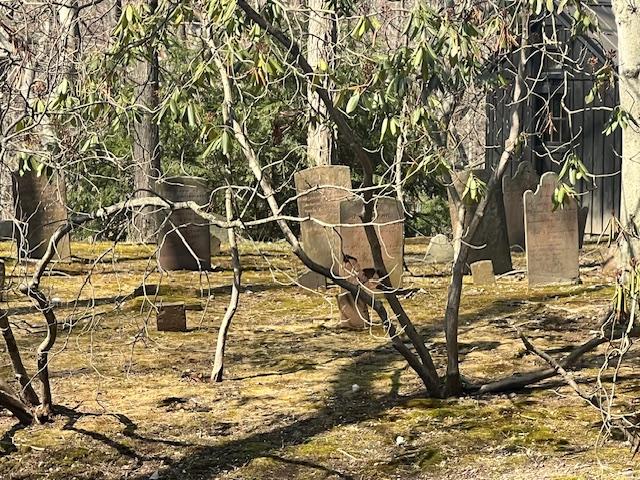
The Van Bushkirk Burial Ground is part of the history of Saddle River, NJ’s early settlement period. The burial ground has about 40 tombstones that are arched and shaped. These are some of the first residents both of Saddle River and Bergen County, NJ.
The burial ground lies next to a creek off East Saddle River Road and can only be accessed by going through private property of the residents living at 45 East Saddle River Road. Please do not enter without permission of the owner of the home. These pictures were taken with a long distance camera from the street.
The Van Bushkirk Burial Ground at 45 East Saddle River Road
The History of Saddle River:
(from the Saddle River Town website):
In 1675, Lenni Lenape tribal leaders sold a large amount of land on the Eastern side of the Saddle River (known as Werimus) to Albert Zabriskie. In 1708, Zabriskie sold this tract of land to Thomas Van Buskirk. The first house in Saddle River was built by the Van Buskirk family in 1709. The original Van Buskirk homestead still stands at 164 East Saddle River Road across from Borough Hall.
In 1709, the Lenni Lenape sold the land on the west side of the Saddle River to the English as part of the Ramapo Tract. Property on the west side of the Saddle River was acquired from this Tract throughout the 1700’s. The Ackerman Family was the most prolific buyer of these early Saddle River parcels and first settled on the West side of the Saddle River in 1745 when Johannes Ackerman acquired 245 acres.
The graves of George and Margaret Achenbach
Saddle River continued to grow and populate during the 18th century. Families such as the Van Buskirk’s, the Ackerman’s, the Achenbach’s, the Hopper’s, the Zabriskie’s, the Stilwell’s and the Baldwin’s farmed and developed the area.
The grave of George Achenbach
The first of many Saddle River mills was built in 1714 and the first school was constructed in 1720. Another early 18th century business was the blacksmith shop operated by the Ackerman family. Over the years, these 1st families built the quintessential “Old Dutch Homesteads” from actual sandstone that was found in town.
The Revolutionary War era tombstones
The Revolutionary War was a horrendous time for the residents of Saddle River. The townsfolk had spent the entire 18th century developing the area into a well established community and all growth essentially stopped during the war. Since the Jersey Dutch initially considered the revolution to be an English issue, it was particularly shocking when the fighting came to their backyards. From December 1776 until the end of the war, both American and British forces traveled through Saddle River and many times set up camp in the center of town.
Residents were in constant fear of the British employed Hessian soldiers who would terrorize families by raiding the houses for food and then burning the fields before leaving. Although no major battles took place in Saddle River, there were small skirmishes to fend off raids and the Blue Mill on East Saddle River Road was destroyed. Even George Washington, the future father of our country, passed through Saddle River on multiple occasions and tradition has him staying overnight at the Ackerman Homestead on the East road.
When the Revolutionary War ended, Saddle River residents picked up right where they left off in terms of community and industry development. The Ackerman’s built a Foundry on what is now Waterford Gardens. Tice and Berdan both opened stores in town and the Bulls Head Tavern opened its doors to weary travelers in 1802. Old mills were re-opened and new ones such as Van Riper’s Saw Mill and Basket Factory were established. The post war growth continued for decades and culminated in the 1820s with the construction of the Zion Lutheran Church in 1821 and a new schoolhouse behind the church in 1825.
The worn tombstones in the cemetery
History of the Van Bushkirk family in Bergen County during the Revolutionary War:
(From the Bergen County Historical Society website):
Loyalists in Bergen County came from all backgrounds, religions and economic classes. At the beginning of the war, a number were officers in the militia, the military force composed of all able-bodied males maintained by each province, and later the states. The lieutenant colonel of the militia was John Zabriskie of New Bridge. Zabriskie understood the sentiments of many of his neighbors, particularly those of Abraham Van Buskirk, whose property was directly across the bridge in Teaneck. Van Buskirk was a surgeon in the militia under Zabriskie, and with whom he served on Bergen County’s Committee of Correspondence, an entity established to keep in touch with other New Jersey counties and the events occurring there.
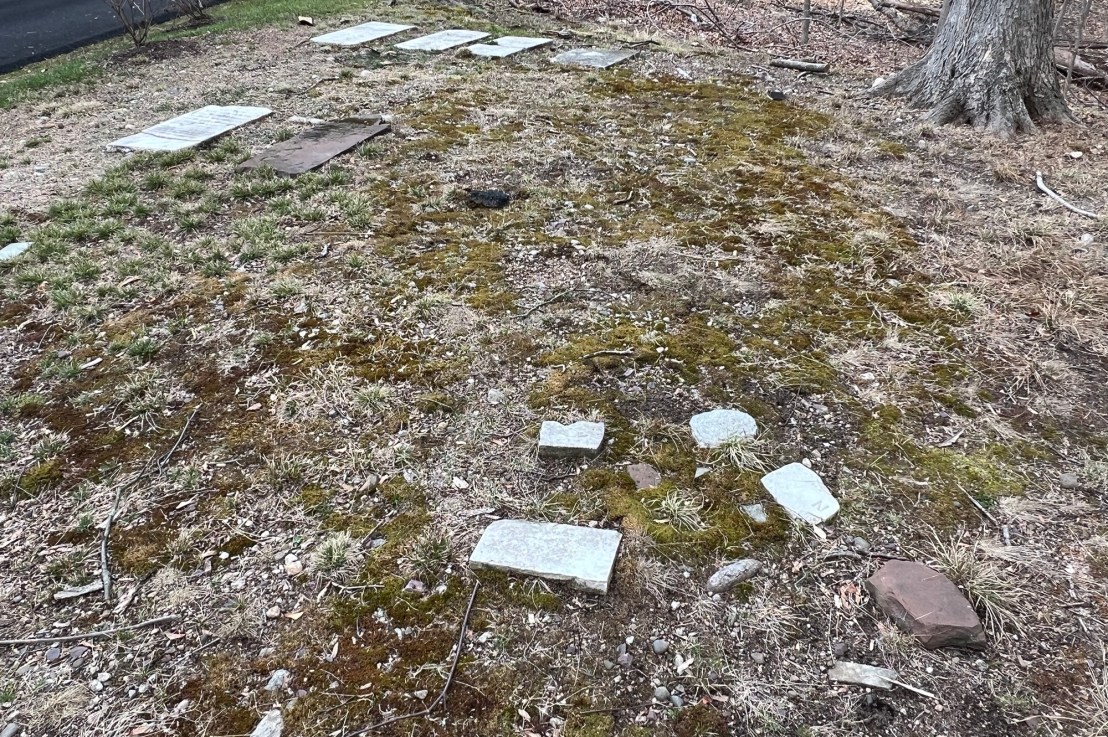
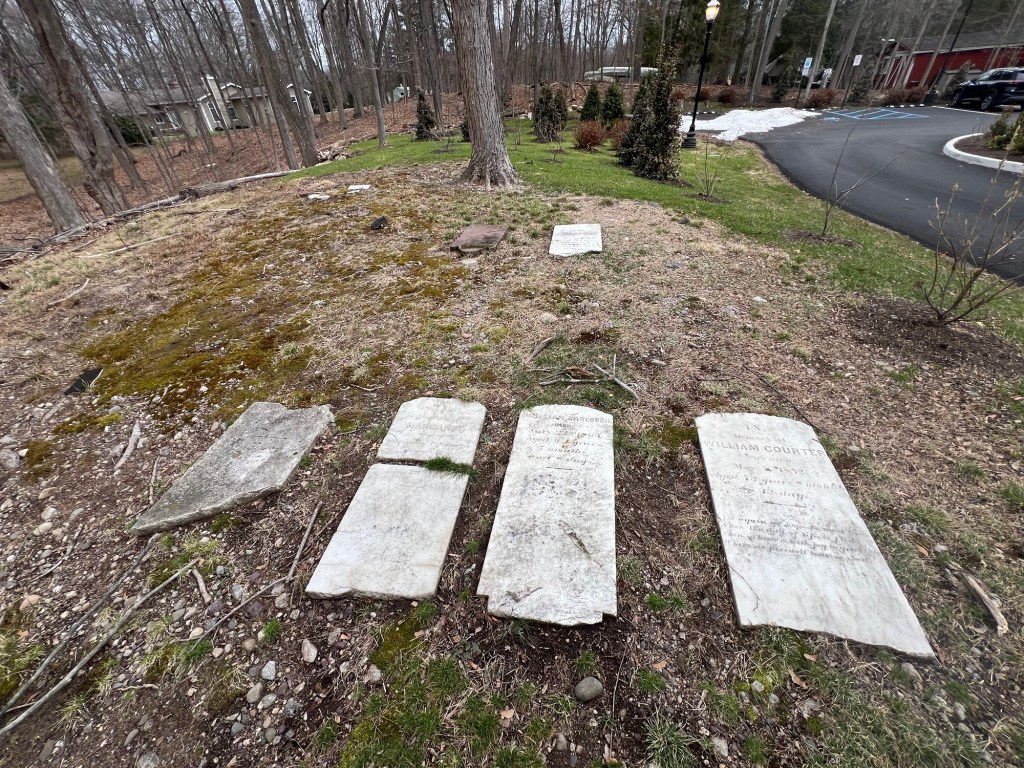
The Sturr Family Cemetery sits on a bend of the driveway of the Chabad Jewish Center of Northwest Bergen County and is a small cemetery that once sat on the edge of the J.H, Sturr farm.
The Sturr Family Cemetery
The farmhouse of the Sturr Family sits on the lot across the street from the cemetery property. This is located on a small buff on what was the edge of the farm.
The Sturr Family cemetery tombstones
The tombstones of the Courter and Carlouch family members
The grave of William Courter
The only visible tombstones that are left in the cemetery are an Ackerman family member, Anny Ackerman and members of the Courter and the Carlouch family’s (who must have married into the family).
The Ackerman family tombstones (the one to the right was unreadable)
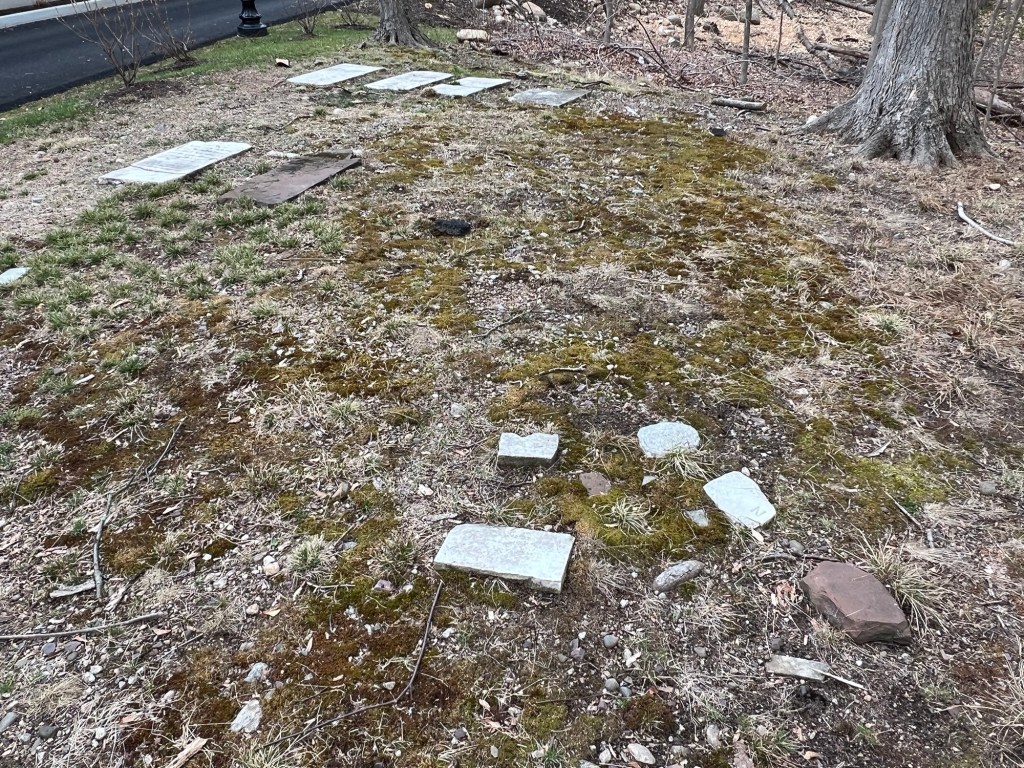
The other tombstones are broken and no one is sure who is buried where in the cemetery.
The History of the Cemetery:
(From Find a Grave website)
The cemetery is located in Franklin Township, Bergen County, New Jersey, on what was once the family farm of J.H. Sturr. As of October 1991 only 6 markers were still remaining.
The Sturr Family Cemetery in full view
History of the House:
(From the Franklin Lakes Municipal Website)
H. Sturr House or Blue Meadow Farm Built 1860 378 Pulis Avenue, Block 1510, Lot 8 Franklin Lakes, New Jersey 07417
The Sturr House – also known as Blue Meadow Farm -is a handsome and little altered example of mid 19th century vernacular architecture which incorporates several stylistic elements such as gable returns and frieze area of the early 19th century Greek Revival style. The Borough of Franklin Lakes lists the erection year of the house as 1860.
The façade of this 2 ½ story house consists of clapboard. The front porch has five bays with square posts and a rectangular entrance door with rectangular sidelights. Two tall 1st story windows are on one side of the porch. A single hitching post with iron rings sits in front of the porch stairs. The building has a frieze area with linear design. Semi-circular headed louvered vents are in all gable ends. The rear of the house has a one story wing. There is a detached garage to the west side of the house as well as a round frame well. Further west of the house is a stable which has been extensively remodeled and converted into a residence in recent times. The house combined with associated structures is a significant remnant of the large farmsteads which ones dotted the Borough’s landscape prior to the recent suburban housing boom.
History of the Family:
(From the Franklin Lakes Municipal website)
This Sturr house and the nearby more altered house at 402 Pulis Avenue were duplicate structures and were probably built around the same time by members of the Sturr family. The 19th century Sturr family was descended from Conraedt Sturr who purchased 190 acres of land in this area with John Coeter from Robert Livingston in 1793.
The non-extant homestead and mill was located at present-day 930 Old Mill Road. It is known that Henry Sturr, the son of Conraedt, had a fanning mill at this location in 1850. In a will dated 1852 he bequeathed his property and mill to his grandsons John, Henry, and Daniel (Maria Braun – 1976 page 26 & 27).
The property along Pulis Avenue upon which these houses are situated was probably included in this will since the homes were built around the mid-19th century. Future deed research is recommended to identify the original builder and the construction date of the house (1861: H. Sturr, 1876 Estate of H.M. Sturr). Presently the house is privately owned and occupied.
Who says there’s nothing to do in the cold months? It all depends on how much you want to bundle up and enjoy the outdoors.
The last weekend of the ‘Monet & Venice’ showing at the Brooklyn Museum brought me out to Brooklyn on a sunny but chilly Saturday afternoon recently. I knew there would be crowds at the Brooklyn Museum as everyone was probably thinking of doing the same (at the end of the visit I found this to be true) so I got to the museum by noon and got tickets to the first slot open at 2:30pm.
Since I had a couple of hours until my tour of the exhibit, I decided to tour the Brooklyn Botanic Garden next door. There were no walking tours that day and the gardens were under a foot of snow from the recent storm. There was a quiet beauty of all the snow and the way it fell and shined in the sun all over the gardens. There were no lines or crowds (like the recent lightshow a few weeks earlier), so I had the gardens pretty much to myself.
The first stop on my walk was the Japanese Gardens, which has I had visited recently for the lightshow and experienced the fantastic musical display. The pond now sat under snow and ice and still it was impressive looking.
Walking through the Brooklyn Botanic Garden next to the Japanese Gardens
The Japanese Gardens in the early afternoon
The inside of the Japanese Gardens in the middle of winter. It was such a spectacular view of the pond.
The beauty of the snow covered pool
Another view of the Garden
I never realized how beautiful the Japanese Gardens were in the winter. The sun shines so nicely on the snow covered trees. It was just as beautiful snow covered as it is in the Spring and Summer when the garden is in full bloom.
The fountain in the Shakespeare Garden
I then walked through the entire gardens stopping in various gardens to see what they looked like topped with snow. My first stop was the Shakespeare Gardens and I marveled at the elegance of the snow covered fountain I like so much in the Spring. The variety of the colors of this garden are waiting just under the snow for the warmer months.
The view of the snow covered gardens
I then walked around the paths to the back of the gardens along the watershed lawns that were under a foot of snow and still impressive.
Daffodil Hill in the winter. In two months this will be covered by hundreds of brightly colored daffodils
The Magnolia tree court and sun dial
In the Spring, this is my favorite part of the garden with the hues of pinks and whites of the Magnolia trees and the yellows of the daffodils.
My favorite fountain just off the Magnolia Court on the stairs leading to the Lotus polls
The snow covered fountains by the Lotus pools
The snow covered Lotus pools shined in the sun
I then got out of the cold weather and entered into the warmth of the Tropical Garden Collection. This series of gallery of plants is a series of greenhouses at various degrees of temperatures that display a series of themed gardens. They don’t just display plants but also keep you warm in a cold day.
The indoor tropical gardens
The Tropical Garden collection
The first room I visited wasabi the Bonsai Museum room. The temperature controlled room was perfect for a stroll.
The Bonsai museum
These beautiful tiny well pruned trees lined the tables with their elegance and been so well maintained.
The Bonsai trees lining the tables in the galleries
The beautiful bonsai
The flowering bonsai
The beautifully shaped bonsai
The Cherry blossom bonsai in the middle of the winter
The other trees in the gallery
The video tour of one side of the Bonsai Gallery:
The video tour of one side the Bonsai Gallery:
My video of the gallery tour
The Tropical Room
The tropical room
I then toured the Tropical Garden collection with its series of flowering plants and palms. It was so nice and warm inside and a break from the cool temperatures outside.
A video tour of the Tropical Gallery:
The walk is amazing
The Tropical Room
Colorful tropical flowers line the walkway in the dead of winter
The blooming Lotus
The real White Lotus
I then walked through the second tropical room in the rain forest and there were more beautiful plants to see and experience. There was a wedding garden shoot going on so I was not able to tour the complex.
The flowering tiers of plants in the Tropical room
The flowering plants in the Tropical gallery
The beautiful violets
I then began the tour of the Desert Gallery and the beauty and warmth of the room made me very happy.
The Birds of Paradise in bloom
Along the walls of the gallery, more flowering plants were placed.
Flowers in bloom in the winter
The climate controlled Desert collection was filled with cactus and other plantings the defied the weather. They have a pretty extensive collection of desert flowers and cactus in the room.
The Desert Collection gallery
The flowering cactus family
Walking back through the rainforest
Walking back through the Desert Gallery before exiting to tour the snow covered gardens
Video tour of the Desert Gallery:
There was still a foot of snow on the ground when I visited the gardens that day, which did not make it popular with people wanting to visit the gardens but I found a quiet elegance in just walking the paths and admiring the snow covered plantings. It was like they were waiting to awake again in the near future.
I walked through the gardens which while under a blanket of snow still offered the most beautiful views. I was one of the few people walking through the gardens that afternoon so it was quiet and you could just enjoy watching nature.
Walking past the Children’s Garden in the Winter
Walking over the bridge in the Watershed lawn
I saw this little squirrel holding on to the tree looking cold
The geese feeding on the Watershed lawn
The Cherry Blossom lawn in the winter
The Rose Garden Fountain in the winter
Walking through the Cherry Blossom lawn
Walking back through the Magnolia garden
Taking one last walk around the Lotus Pools
Before I left the gardens that afternoon, I stopped in the Gift Shop for some warmth and see the items they were carrying. They have such beautiful selection of flowers and gifts and the perfect place to warm up on a cold day. Everything is so colorfully displayed.
The Gift Shop at the Brooklyn Botanic Garden
Everything was in full bloom and really colorful
Everything was so beautifully displayed here
Before I left for the Brooklyn Museum to start my 2:30 pm tour, I stopped at one of my favorite sandwich shops down the road from the museum, Bahn Mai Place at 824b Washington Avenue for lunch. I love their sandwiches and drinks.
I ordinarily try a restaurant a few times before I recommend it for my dining website, DiningonaShoeStringinNYC@Wordpress.com, but I had the most amazing sandwich for dinner a few years ago and I had to share this place with the world.
There are also all sorts of rice dishes on the menu, Pho (soups) and salads on the menu as well most priced around $10.00. On the Beverage menu, there is a selection of Hot, Iced and Milk drinks to choose from as well as a selection of Bubble teas and smoothies.
One sandwich I can recommend on a cold day is the Grilled Chicken Banh Mai. I had the sandwich with a mild hot sauce on a cold wintery day. The warm bun and crunchy fresh vegetables with the spicy sauce really warmed me up on a cold afternoon in Brooklyn.
The Grilled Chicken Bahn Mi with a mild spicy sauce
The grilled chicken with fresh veggies
The mild spicy sauce really brings out the flavor of the grilled meat. With a little plumb and chili sauces, it really brings out the flavor of the sandwich.
The chicken was spicy and moist
It was the perfect lunch
The service was very quick and very friendly. The woman who made my sandwich pushed my order ahead of someone else’s who ordered the same thing as me so I could be on my way which I thought was very nice of her.
After lunch, it was off to the Brooklyn Museum and the tour of the ‘Monet & Venice’ exhibition. I was so lucky that I got to the museum early and got the tickets. The show was completely sold out by the time I left.
The museum was seriously packed that afternoon, not just for the show but all over the museum. I have been coming here for over twenty years and I had never seen it so packed. Every floor was filled with people.
Claude Monet once claimed that Venice was “too beautiful to be painted,” a challenge he embraced by creating an extraordinary sequence of works depicting the Italian city. Monet and Venice is the first exhibition to focus on Monet’s luminous Venetian paintings—a radiant yet underexplored chapter in the artist’s late career—since their debut in 1912 (Brooklyn Museum website).
New York’s largest museum show dedicated to Monet in over 25 years, the exhibition features more than 100 artworks, books, and ephemera. Two masterpieces, the Brooklyn Museum’s own Palazzo Ducale and The Grand Canal, Venice from the Fine Arts Museums of San Francisco, are presented alongside selections from throughout Monet’s career—including 19 of his Venetian paintings (Brooklyn Museum website).
The artist’s singular vision of Venice is also set in dialogue with portrayals of the city by renowned artists such as Canaletto, Paul Signac, John Singer Sargent, and Pierre-Auguste Renoir. Where others focused on Venice’s busy streets and canals, Monet’s interpretation is hauntingly devoid of human presence. Instead, he captures the interplay of architecture with color and light, enveloping viewers in the city’s distinctive atmosphere. Sonic installations by Niles Luther, the Museum’s composer in residence, and other immersive elements will further transport you to this fabled place (Brooklyn Museum website).
Walking through the galleries admiring the art
These were some of my favorite pieces from the show. These also were a favorite of Monet himself to the City of Venice.
The paintings of the Grand Canal
The views along the coastline of Italy
One of Monet’s famous ‘Water Lilly’ collection
Views from the Grand Canal
Walking around the gallery
Another view of the Grand Canal
I could not believe how packed the exhibition got behind me as I double backed through the gallery on the way out. Not only did the crowds grow in the exhibition but the line outside the exhibition was over a hundred deep and wrapped around three galleries on the Fifth Floor. It was so busy on the floor, I decided to walk around other exhibitions.
My favorite painting in the American Wing of the Mountain House Hotel in the Catskills
Then I walked down to the Middle Eastern Wing with the Assyrian and Egyptian Art, one of personal favorites in the museum. Unlike the Met, the Egyptian Wing of the museum is not overwhelming and is easier to view as the exhibits are not as packed with artifacts.
I started first admiring the Assyrian panels of the genies gracing the walls of the famous palace. It blows my mind that these are almost over a thousand years old.
The panels of genies along the walls of the old palace
The panels of genies along the walls
The different versions of genies along the walks
I have been visiting the Egyptian Wing of the museum since I attended the opening of the renovation with my father over a decade ago. It has an iconic entrance to the wing of the museum.
The entrance to the Egyptian Wing of the Brooklyn Museum
Walking through the Egyptian Galleries
Admiring the art on the wall
Walking through the Mummy display
The details on the Mummy coffin
Finishing the tour of the Egyptian galleries
I had a nice time at both the Brooklyn Botanic Gardens and at the Brooklyn Museum. There is more than enough to see and do at both cultural locations in the heart of Brooklyn.
It was a wonderful walk around neighborhood and even with all the snow on the ground, it was easy to maneuver around the sidewalks and streets. The snow may have covered the ground but was a backdrop for the beauty that it displayed. The recent storm did not keep us inside but brought us outside to see how it looked and enjoy its beauty.
I love the holidays in New York City. There are so many Christmas themed events to go to and decorated homes to visit. One of my favorite tours is at the Met Cloisters for their Christmas themed walking tours that take place from December through early January.
The Cloisters Museum & Gardens: A Branch of The Metropolitan Museum of Art
To finish my weekend of holiday festivities before the Epiphany, I took the annual Christmas walking tour of the Met Cloisters. The museum hosts an interesting walking tour of the history of the holidays during the Medieval era. Each tour has a different theme to it. There is the history of Christmas in that era, the use of plants and flowers in the decorating of the religious sites and the historic significance of the visit of the Three Kings.
Each tour guide incorporates the artwork, architecture and plants into the discussion. On average you will have about forty people on the tour.
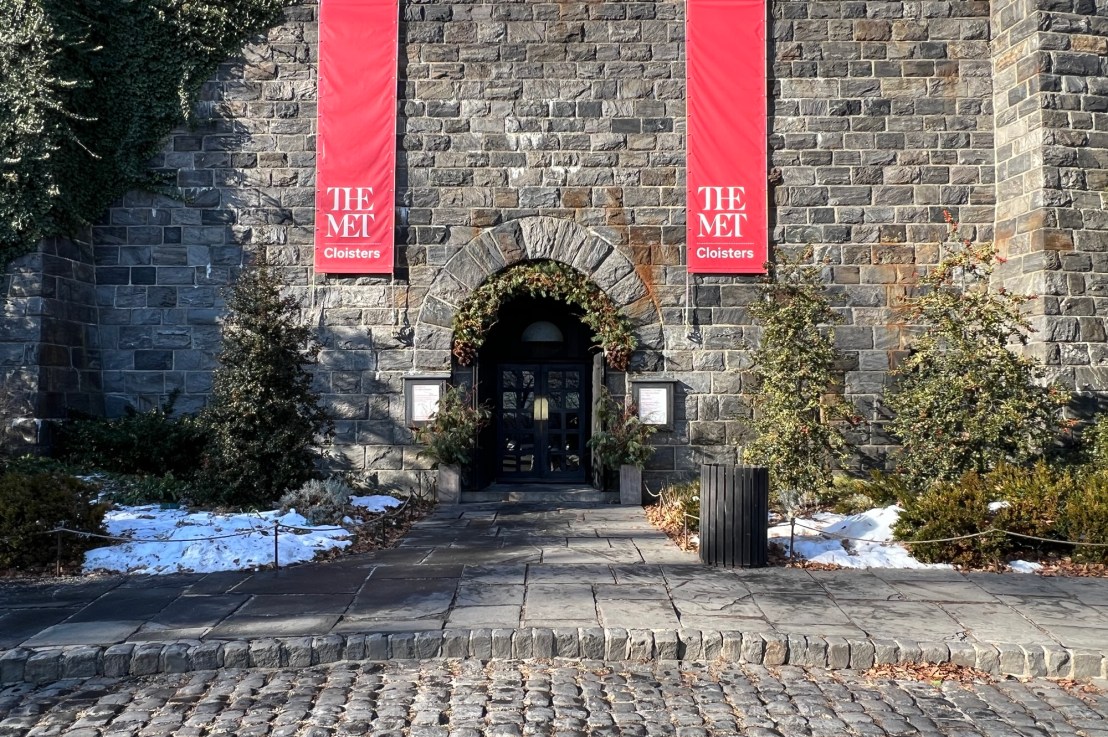
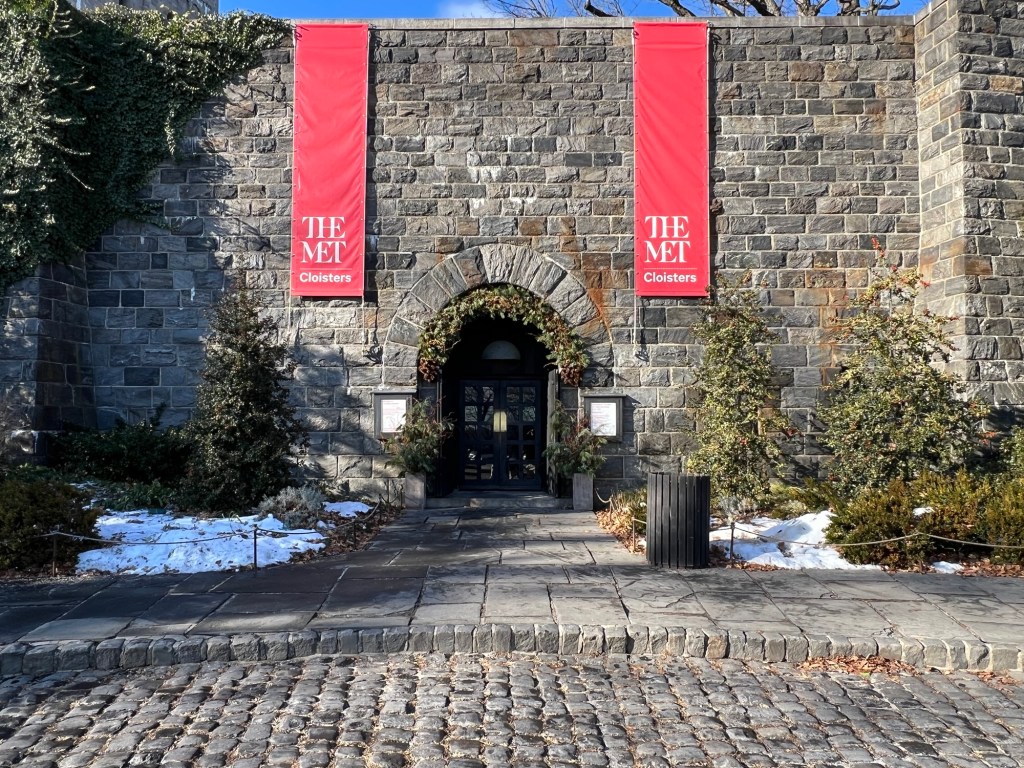
The entrance of the Cloisters decorated for the holidays
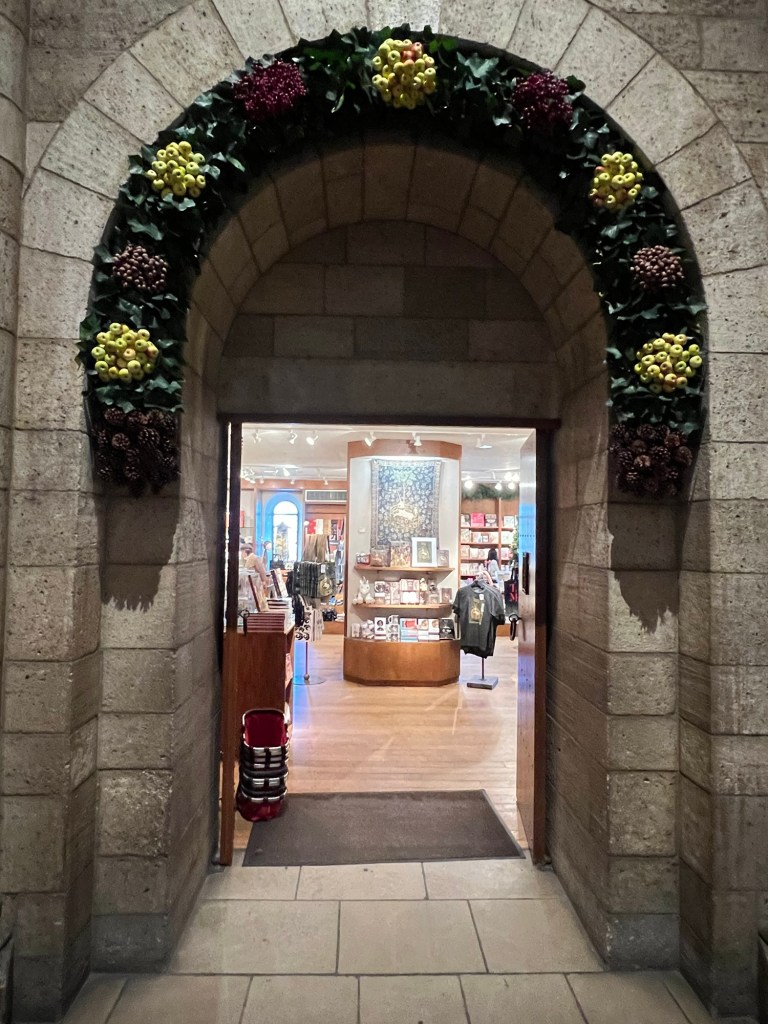
The entrance of the gift shop decorated for the holidays
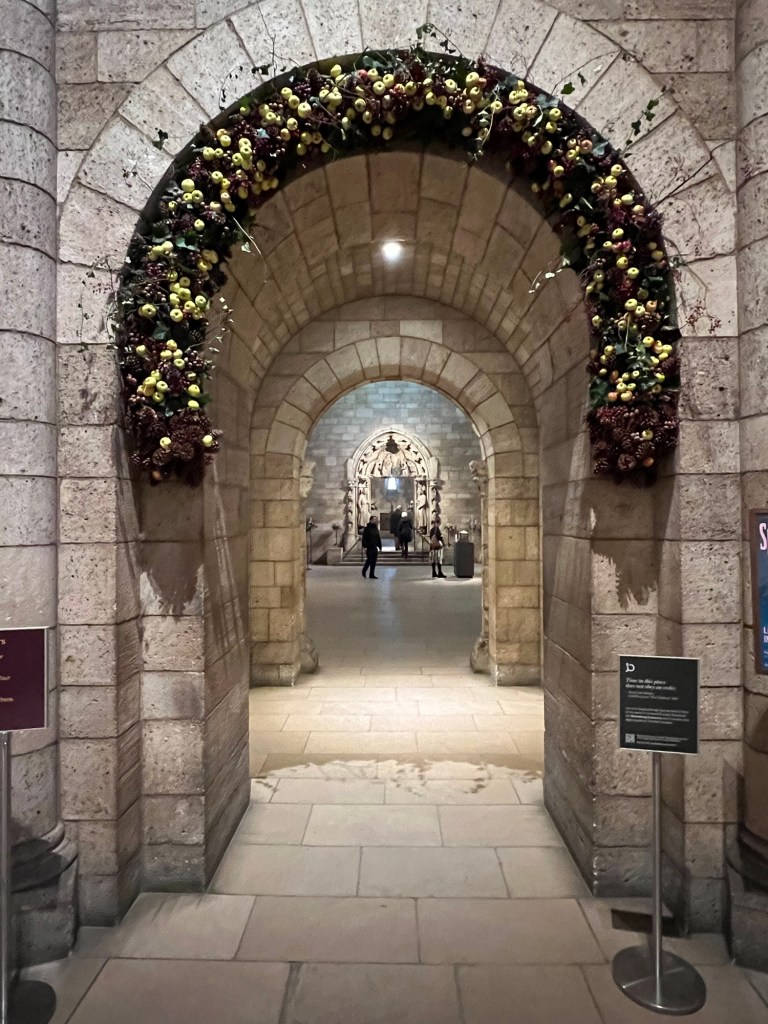
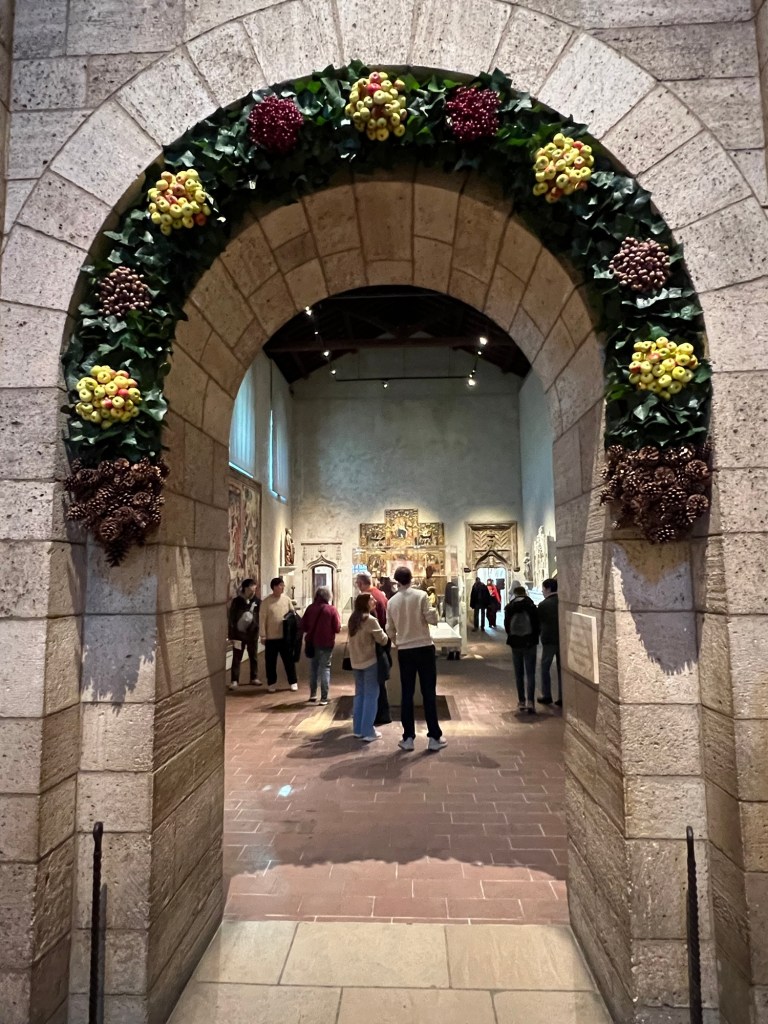
The archways were decorated with seasonal plants and fruits. I read online that the volunteers went into Fort Tyron Park and collected ivy from the wild to decorate the museum. Every day the museum is open during the holidays these are replaced on a daily basis.
The entrance to the galleries decorated for the holidays
We started the tour with a discussion of plants that once decorated churches and ministries
With the change in attitude towards the Christmas holidays during the Middle Ages and its incorporation into church traditions, decorating for the holidays came back into style. The use of holly, evergreen and mistletoe became part of the Christmas tradition and to justify the decorating, they were related to Christian symbols.
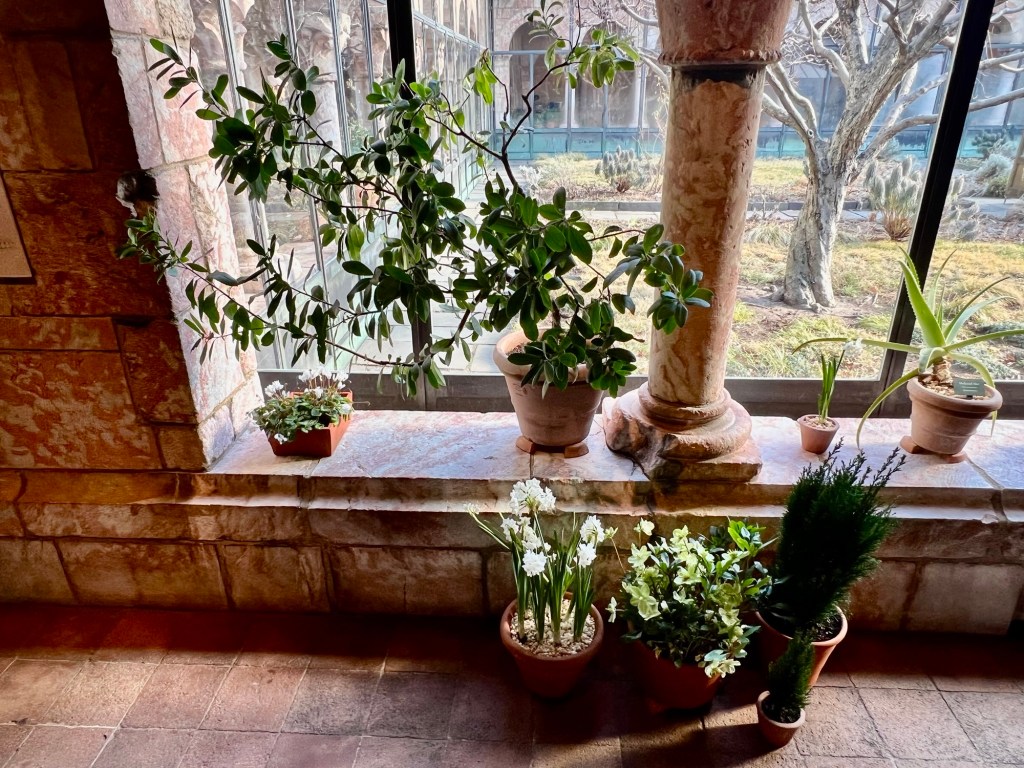
The beauty of the life plants in winter
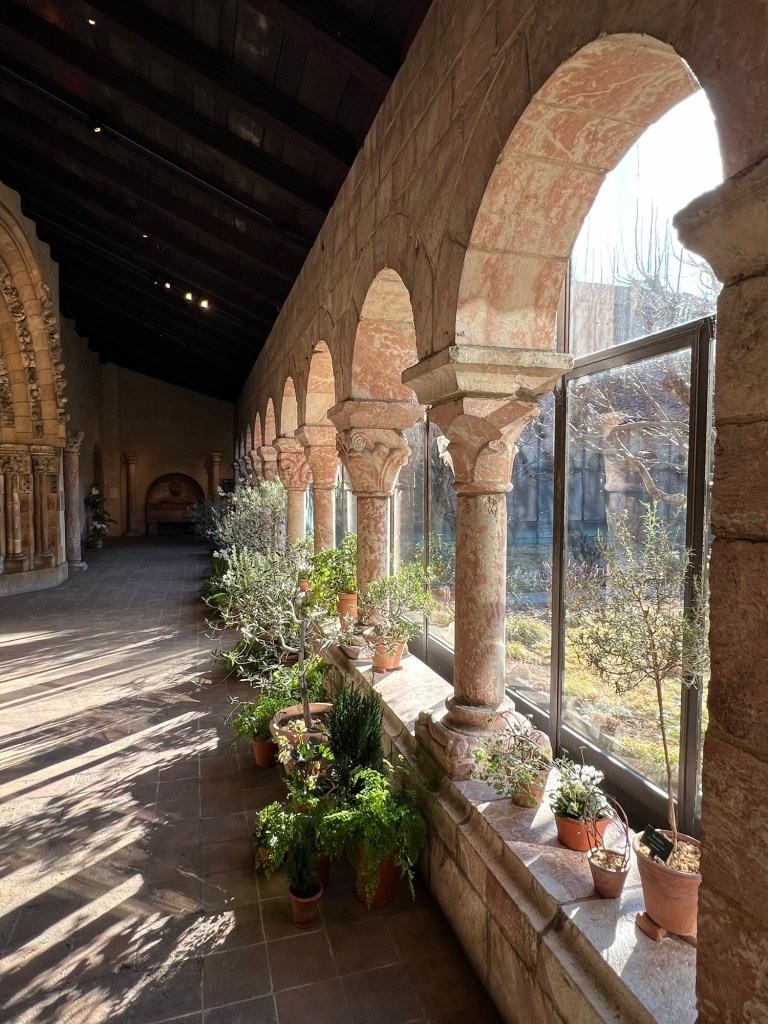
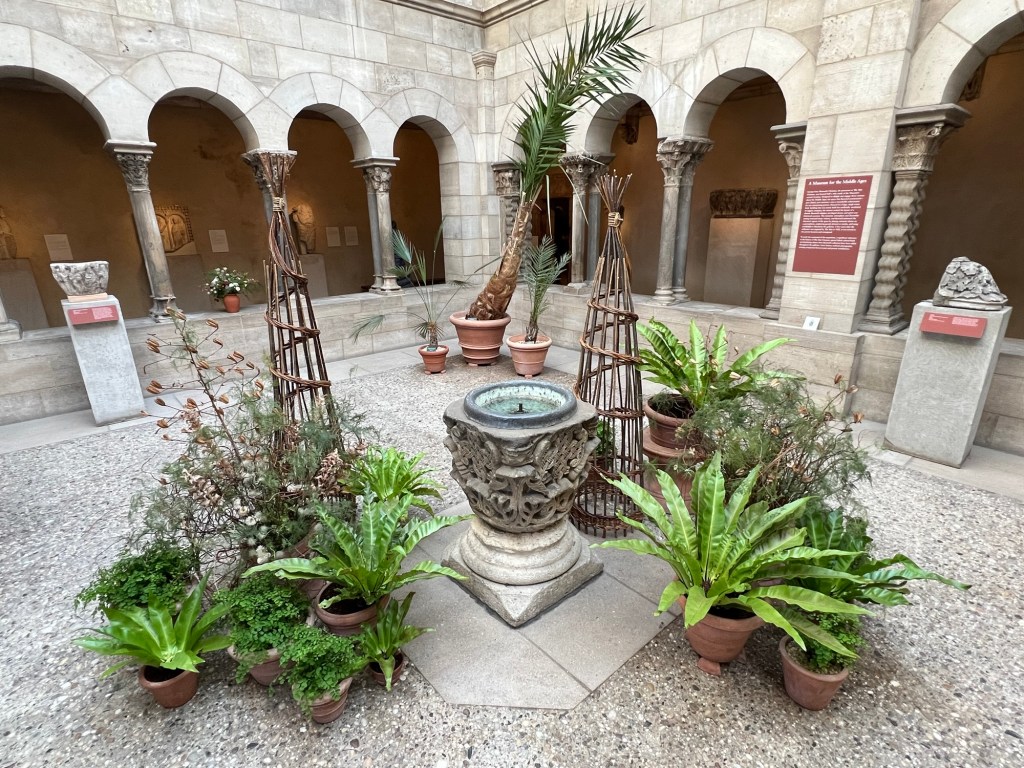
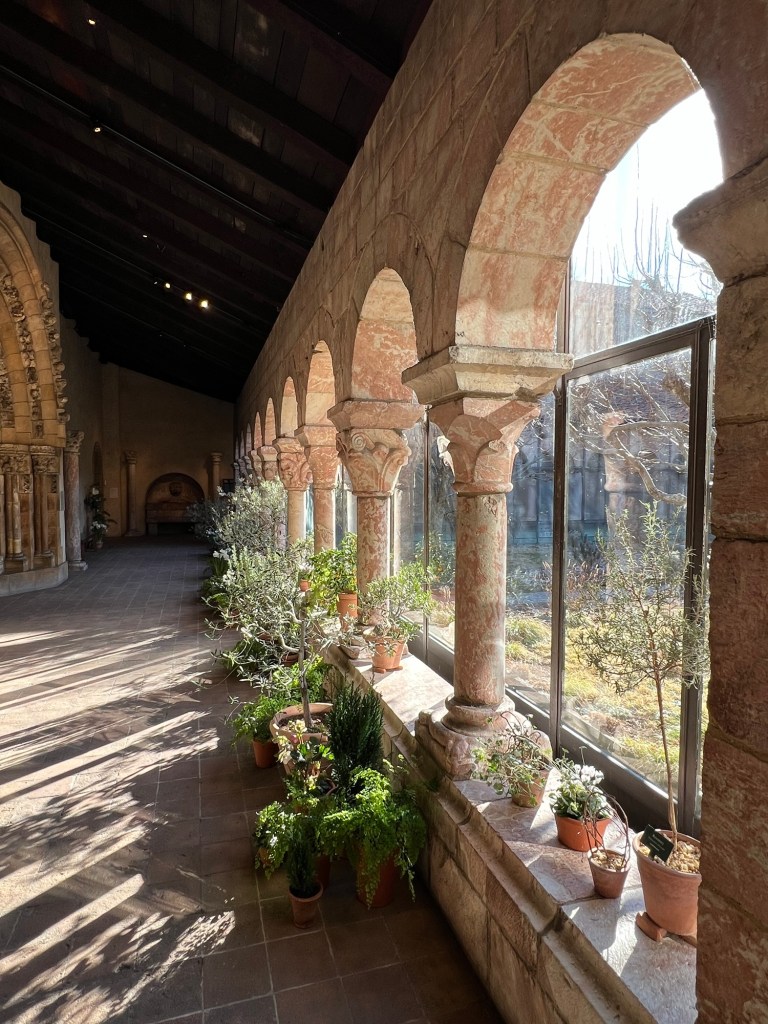
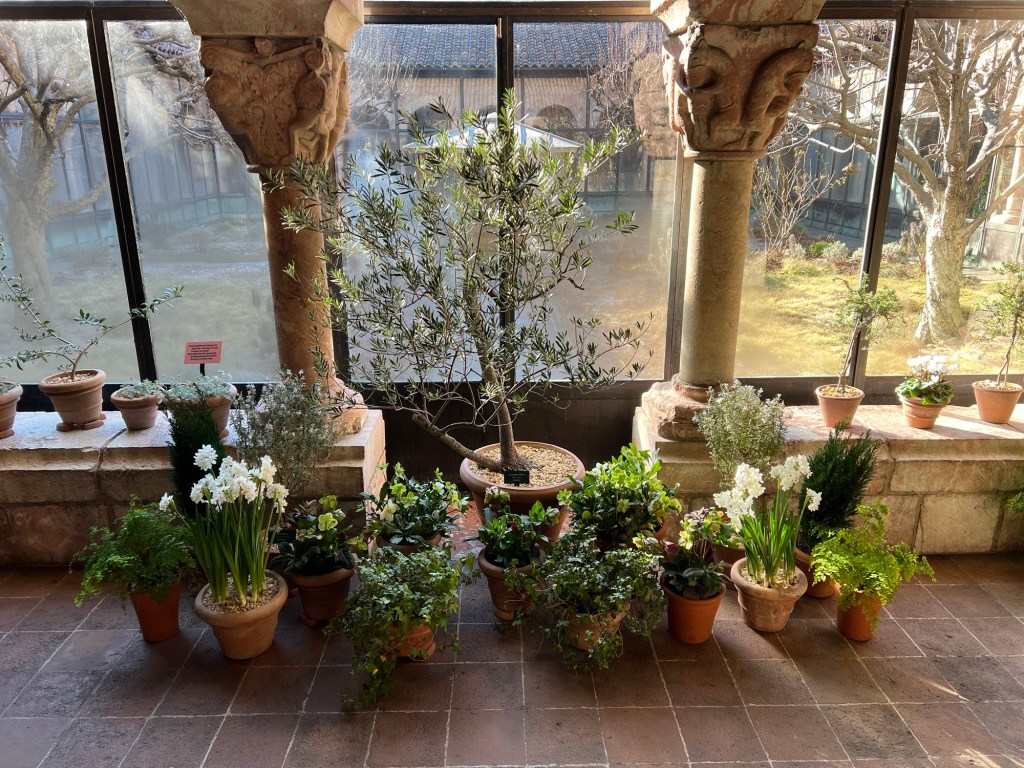
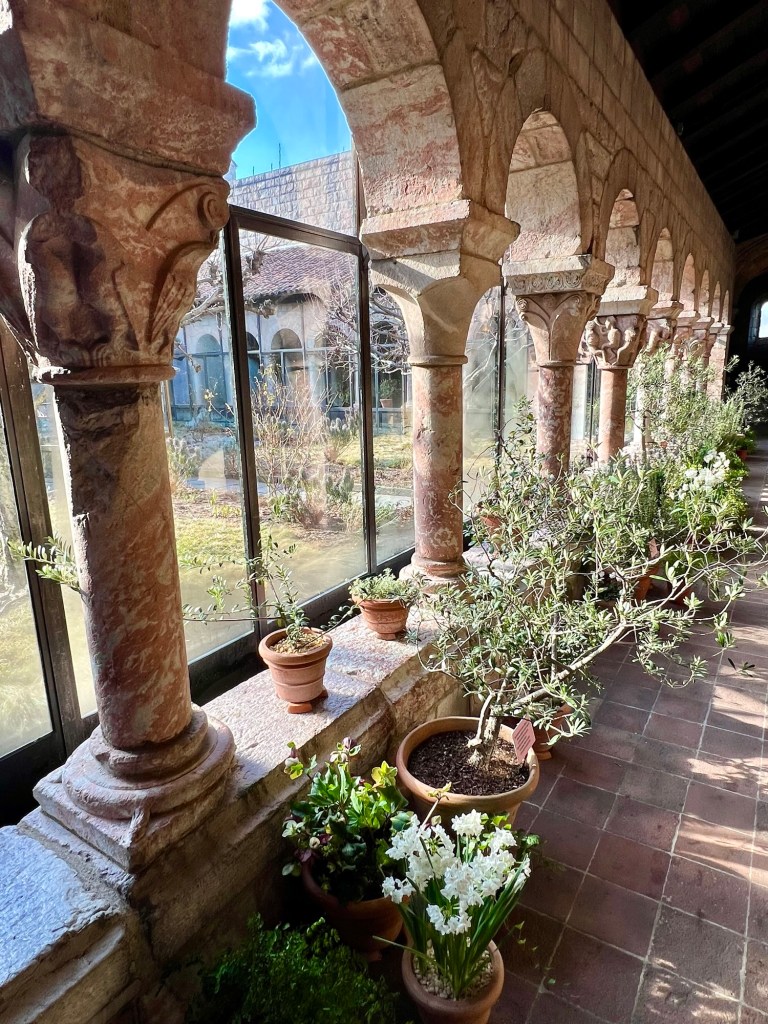
Each of the Cloisters were lined with fresh greens and potted plants giving each of the Cloisters its own special mood.
One of the Cloisters bright with plants
The stairs leading into the chapel decorated for the holidays
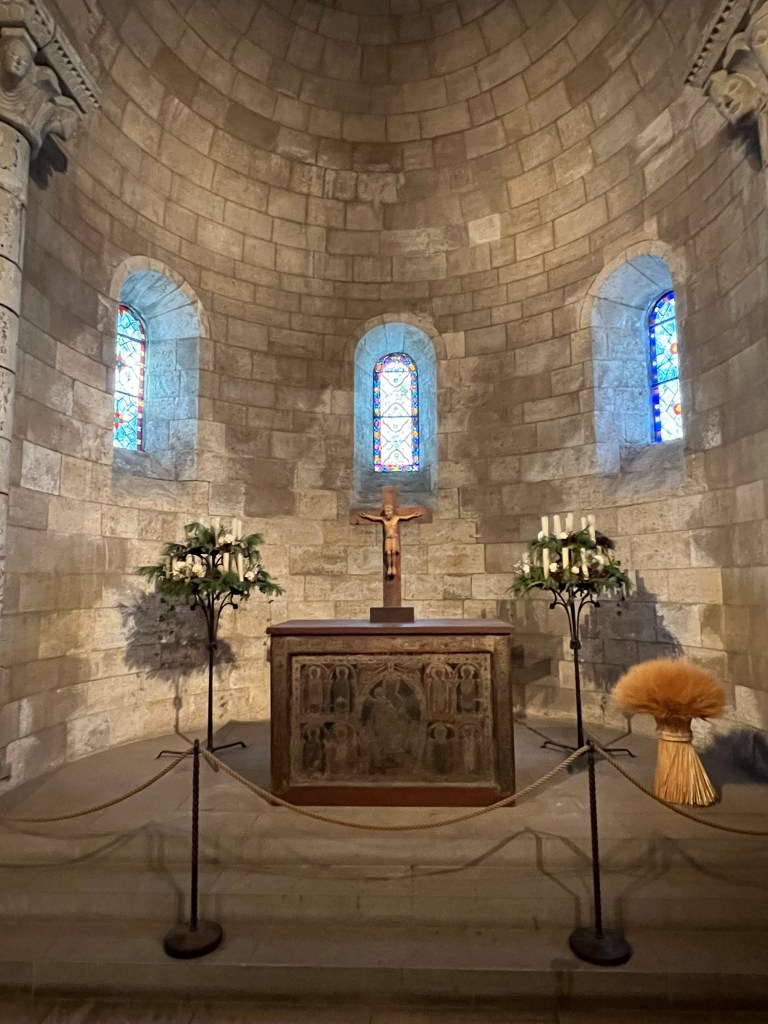
The chapel on the main floor decorated for the holidays
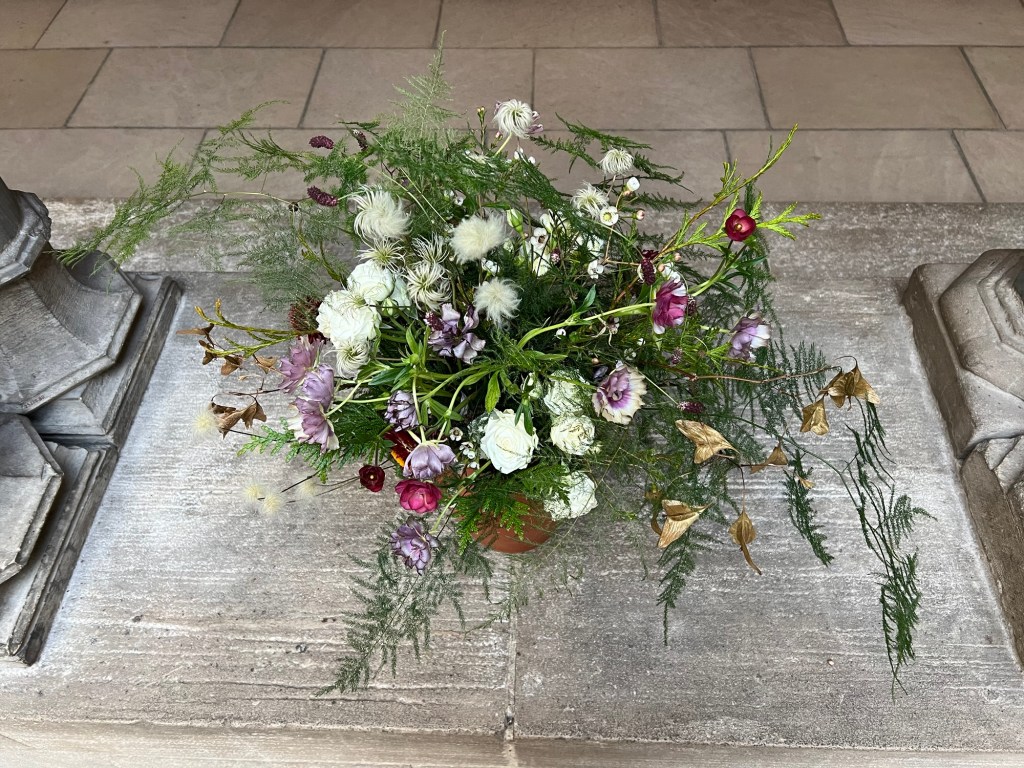
The colorful floral displays lining the window sills of the chapel
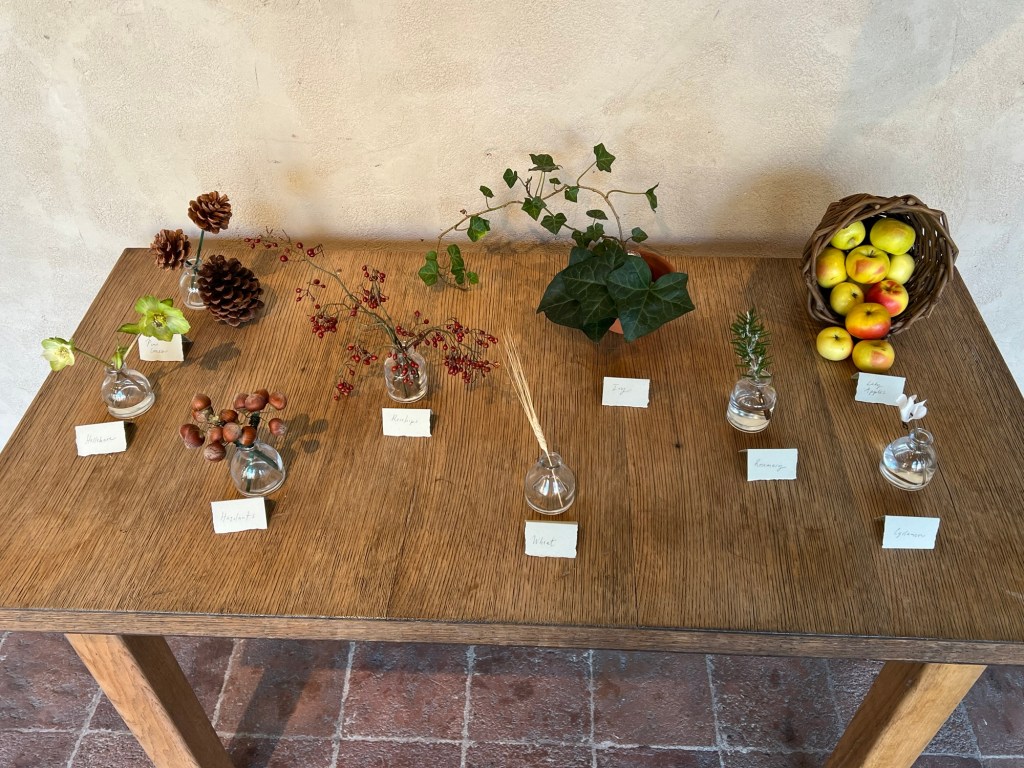
This led to a discussion about what each plant, flower and fruit meant in the Christian tradition, a clever way to justify decorating and celebrating during the holidays. Ivies, pine, winter flowers and even late season apples not only lined places of worship but gave a festive look and district smell to these buildings. A symbol of life in the cold winter months while they waited for the arrival of Spring.
The plant types that decorated the houses of worship
The flowers and plants lining the chapel
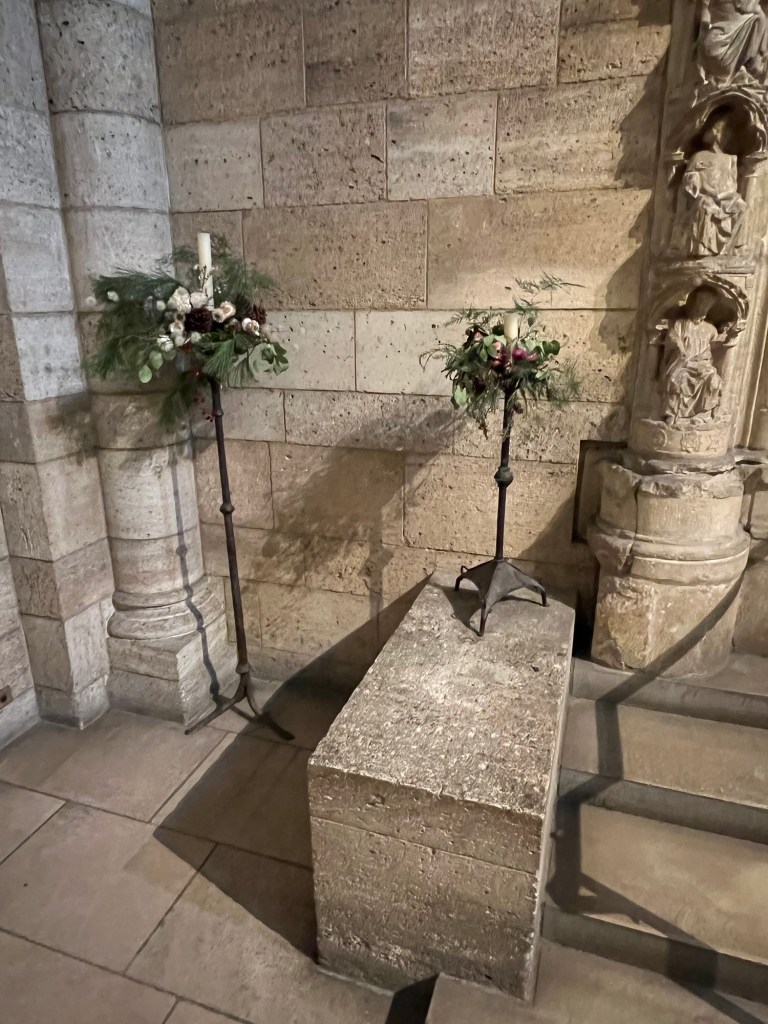
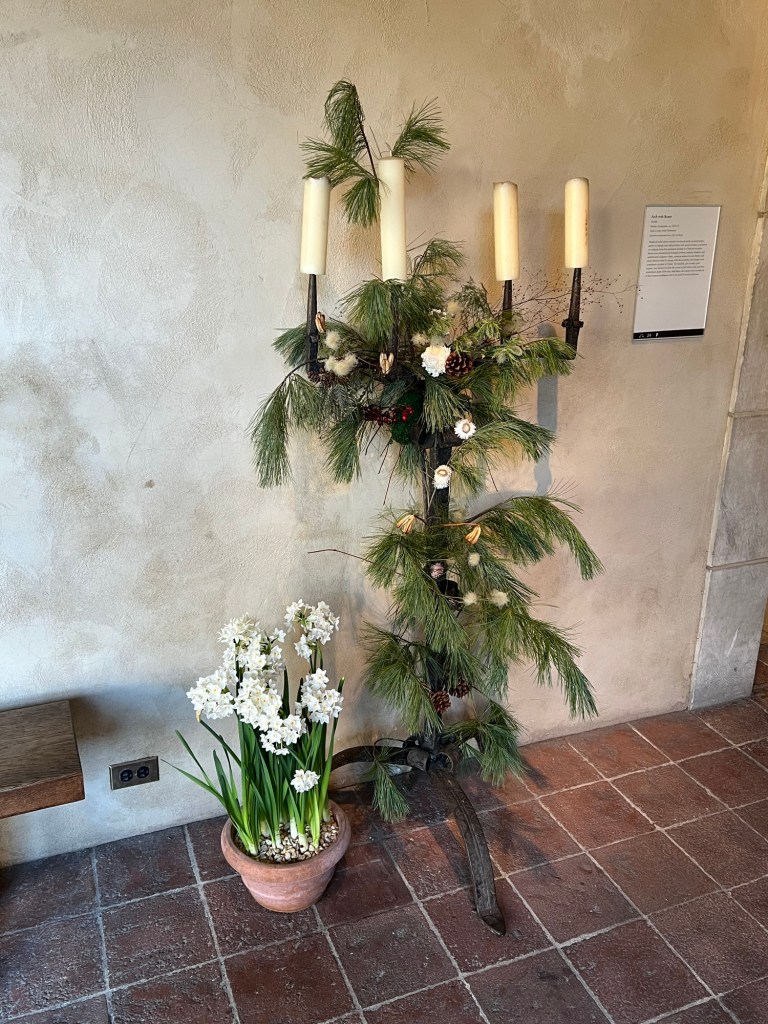
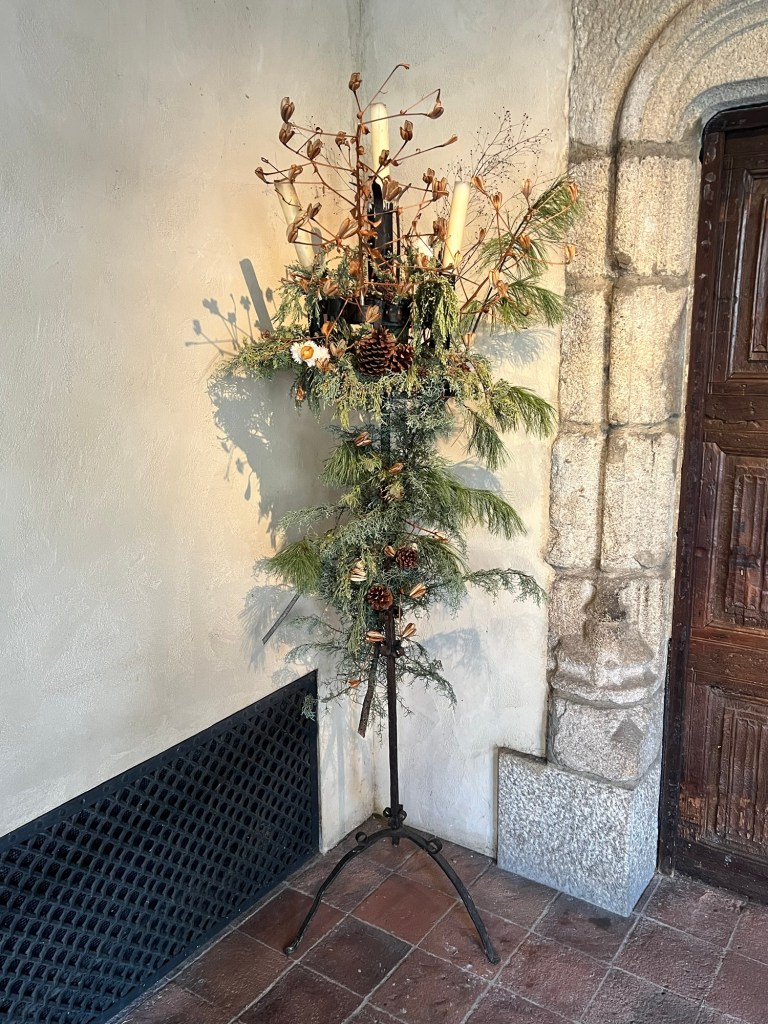
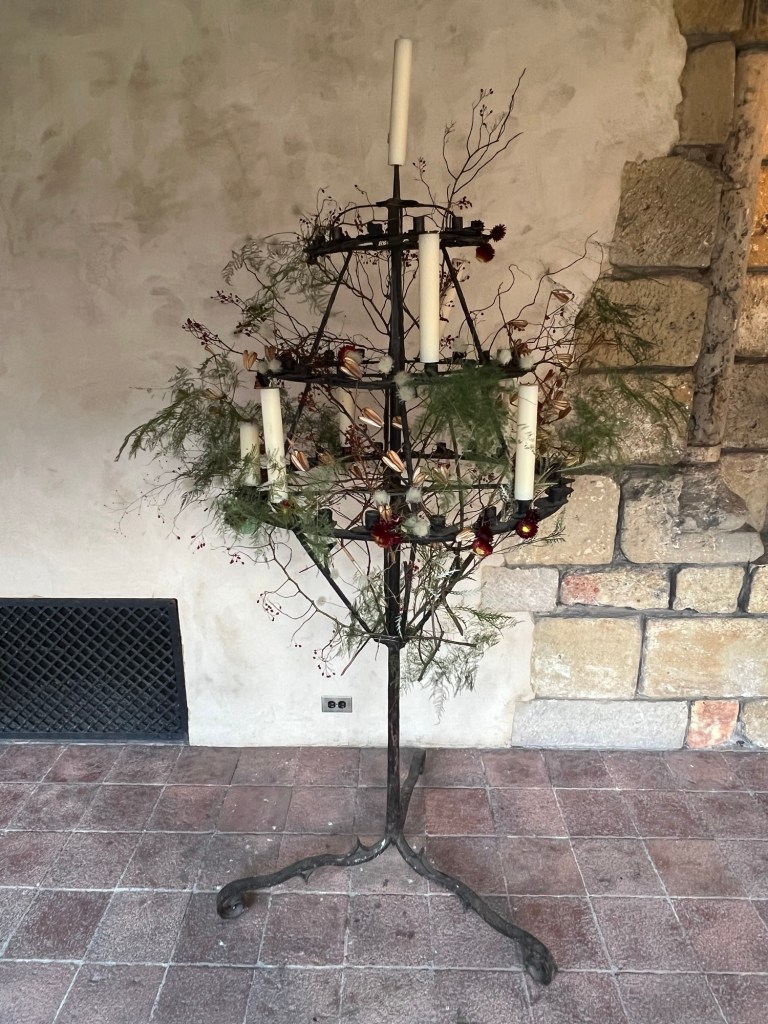
The decorative candle stands lining the walls of the chapel
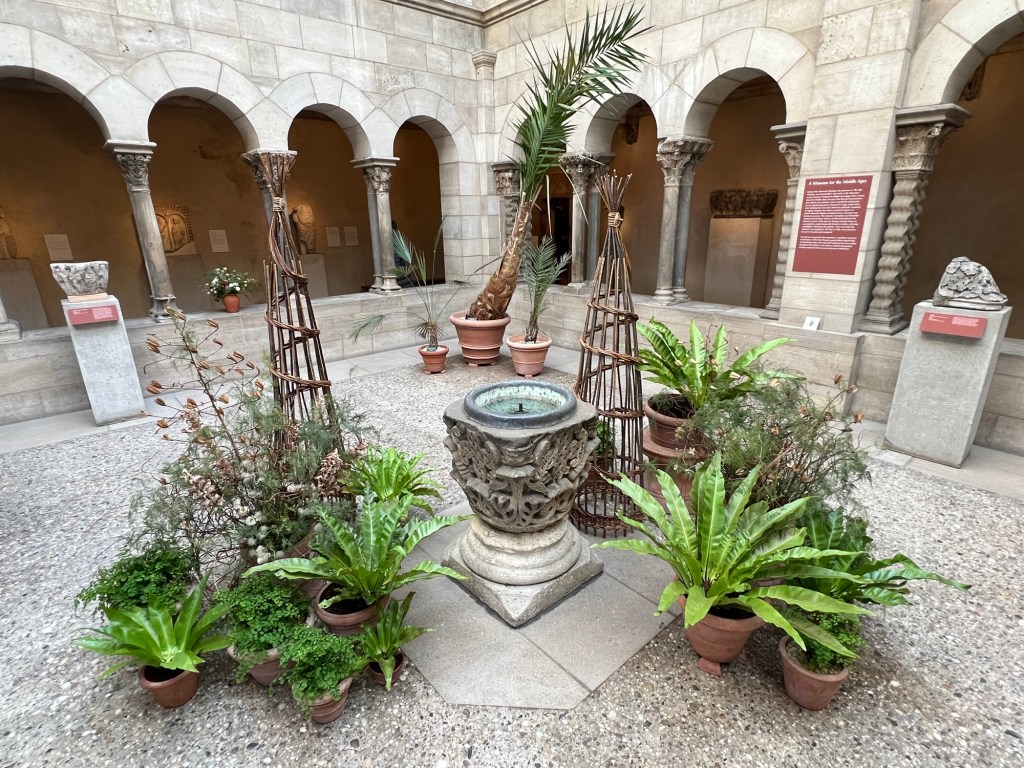
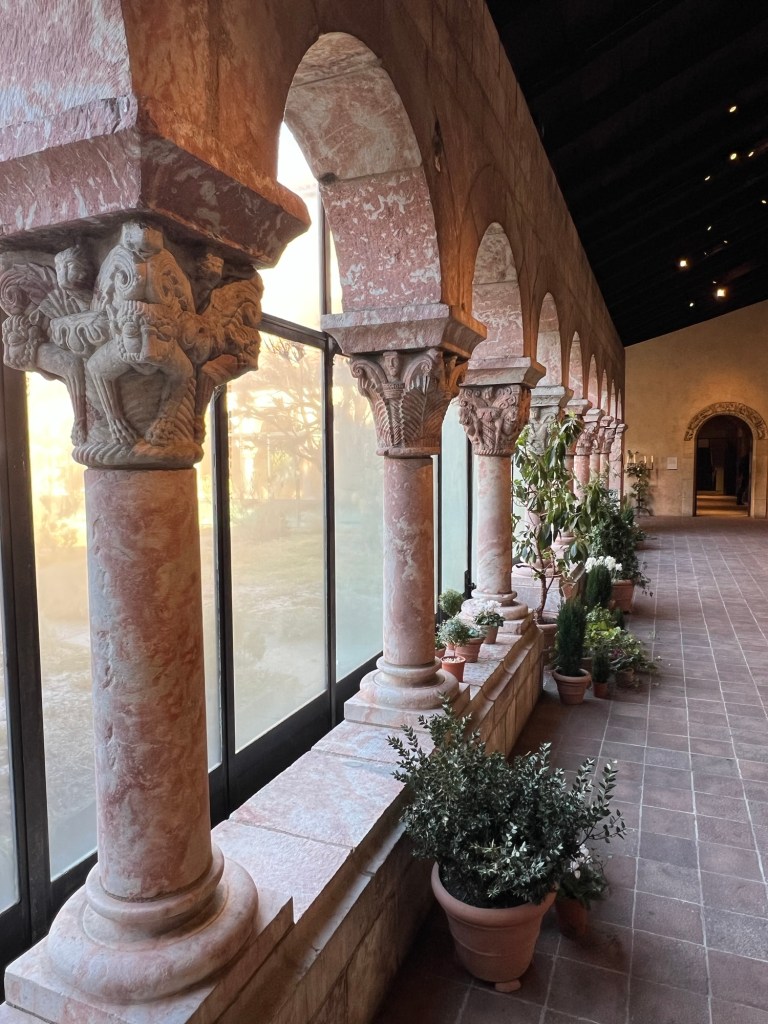
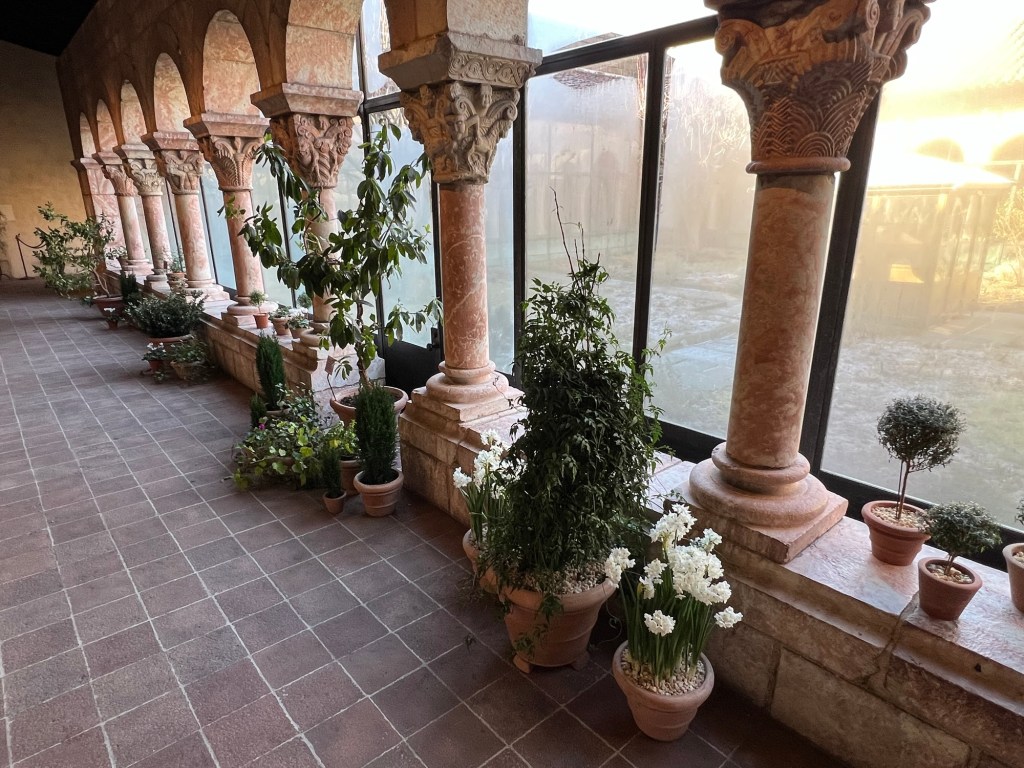
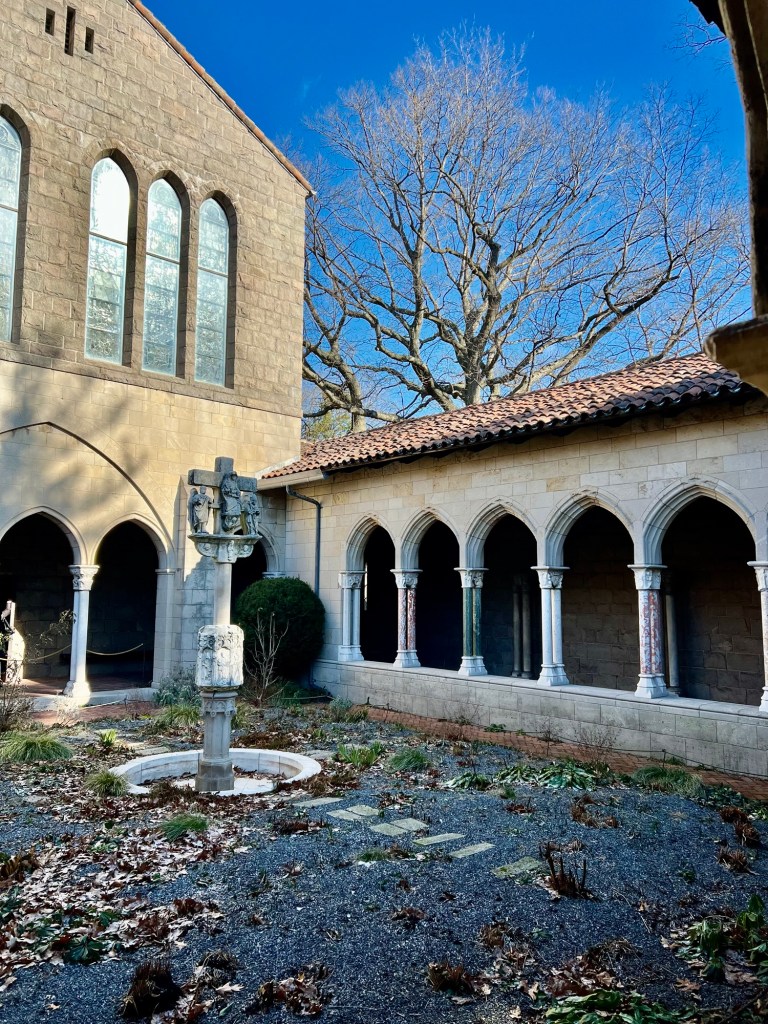
We then toured the main Cloister, closed for the Winter but was lined with plants, flowers and greens brighting every corner of the building. These were examples of plants and flowers that would have decorated these halls at the holidays.
Walking the halls of the Cloisters
Touring the halls of the Cloisters with flowers and plants to celebrate the season
Walking the halls of the Cloisters
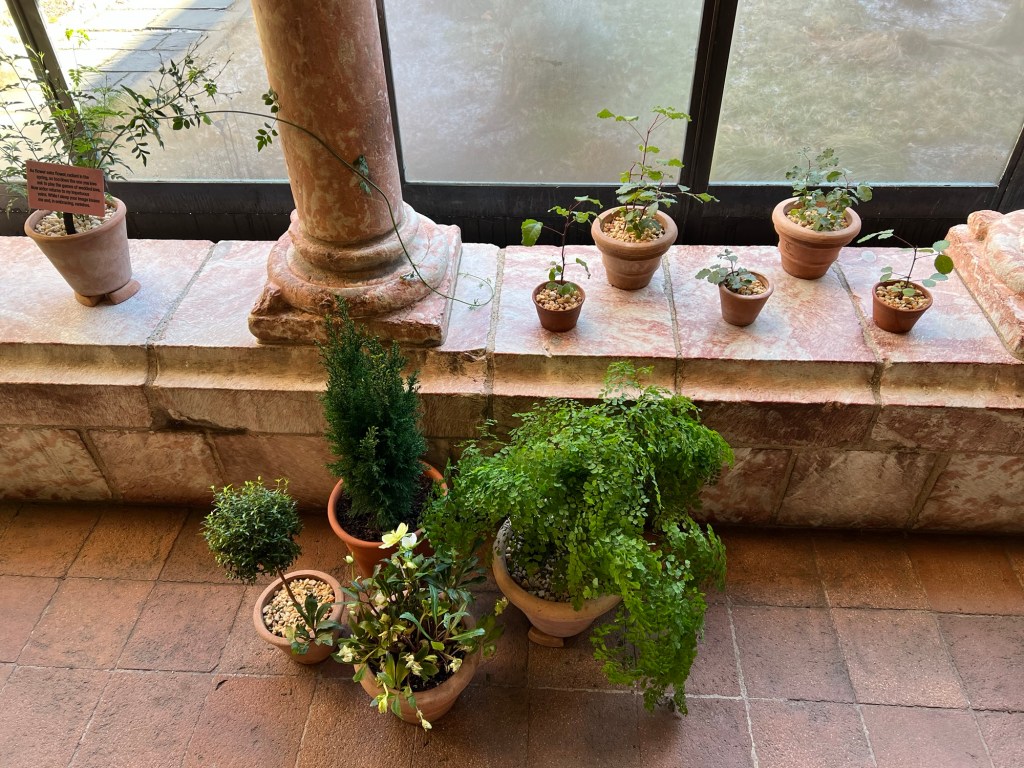
The flowering plants of the Cloisters
The flowering plants and vines that would have decorated churches in Medieval times
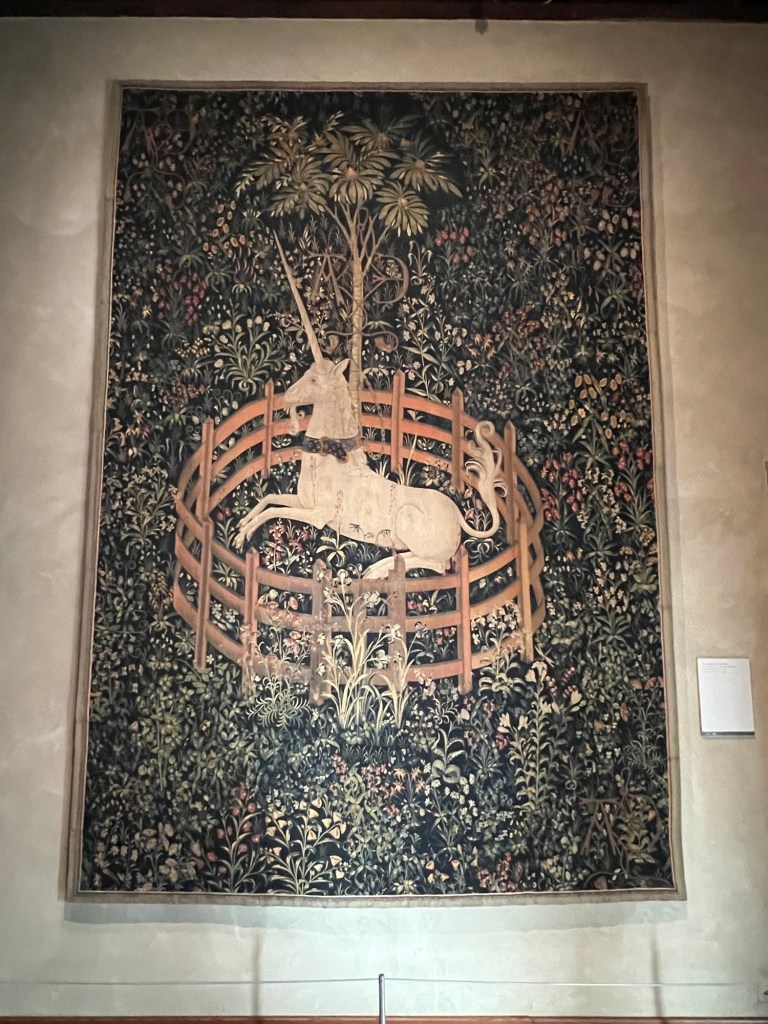
We then toured the Tapestry Room and discussed the use of plants in art form and the use of the detail as symbolism in art. These tapestries were meant to cover the drafty walls of palaces and bring in color and decoration to the stone walls.
The famous ‘Hunt of the Unicorn’ tapestry
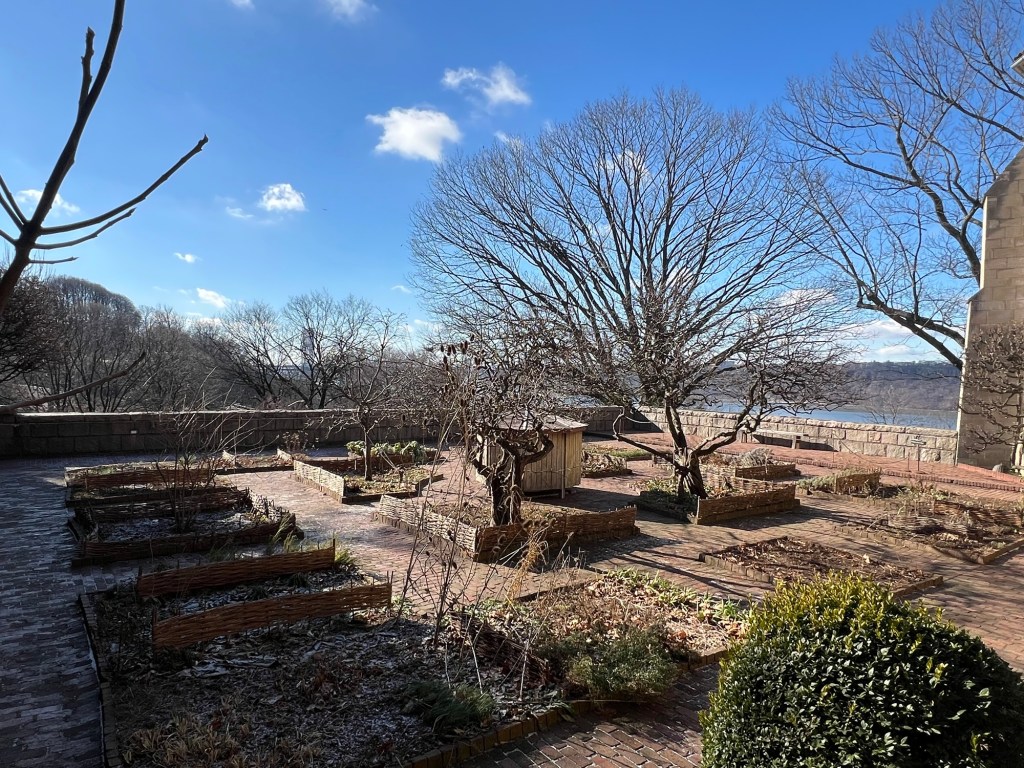
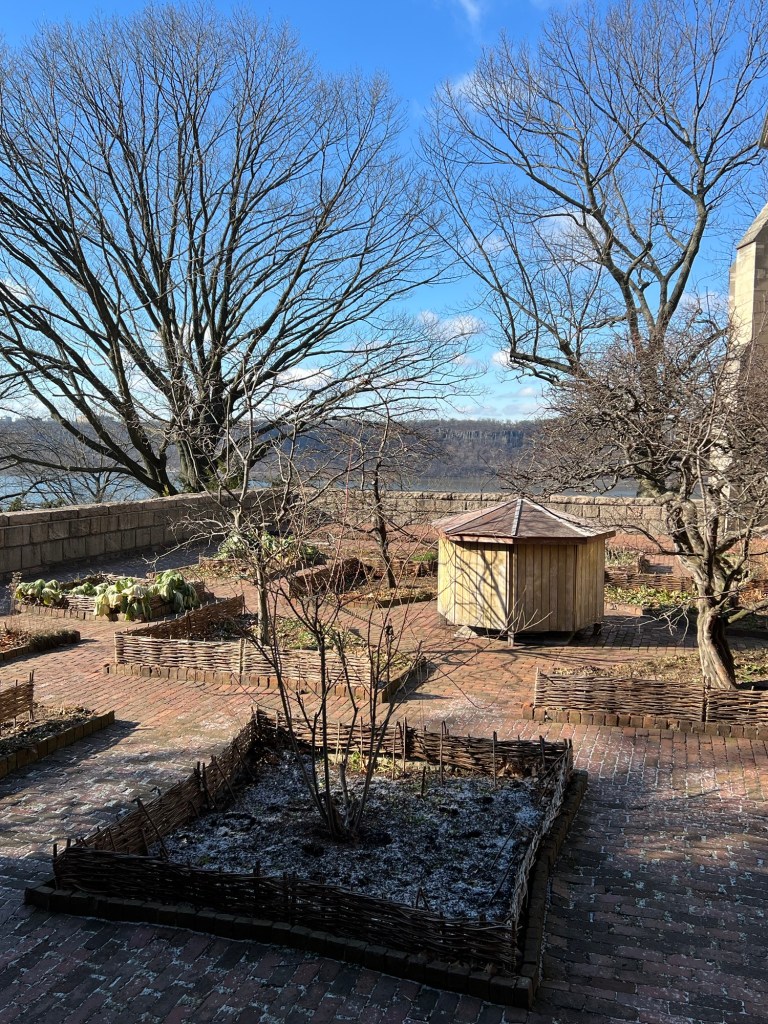
We then took a detour to the outside gardens that are enjoying their winter slumber. These gardens were used by the cloisters for food, medicines and decorative use. They will start coming to life in a few months.
The Cloisters Gardens
The garden terrace over looking the Hudson River
The terrace gardens in the winter waiting to come to life
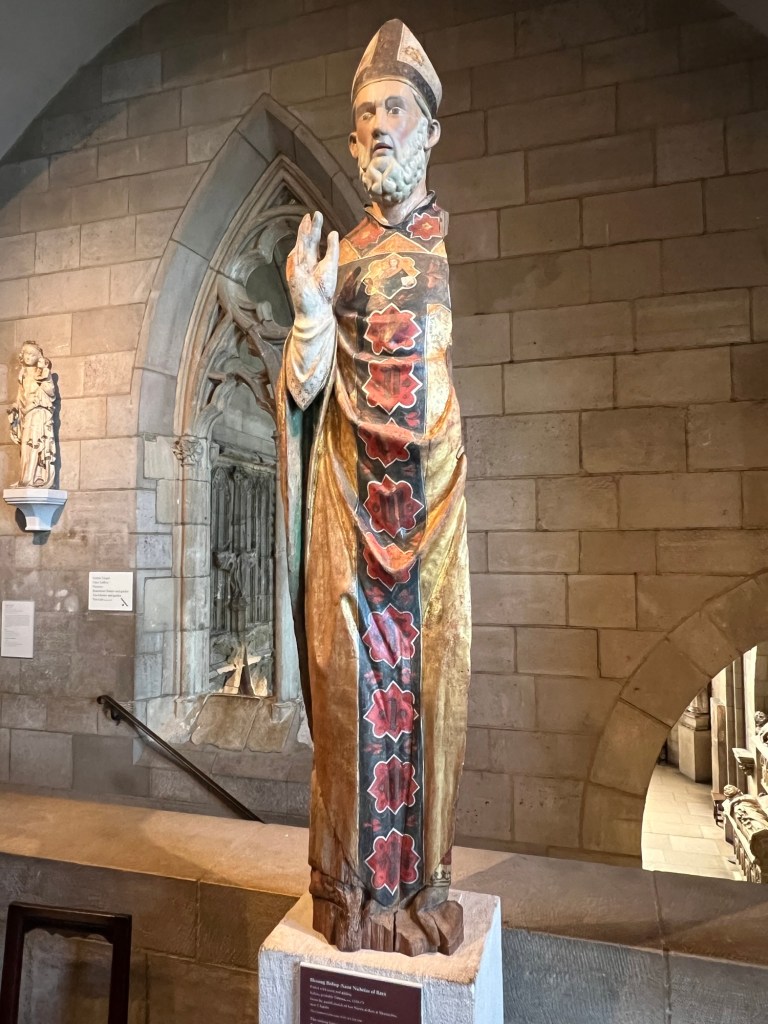
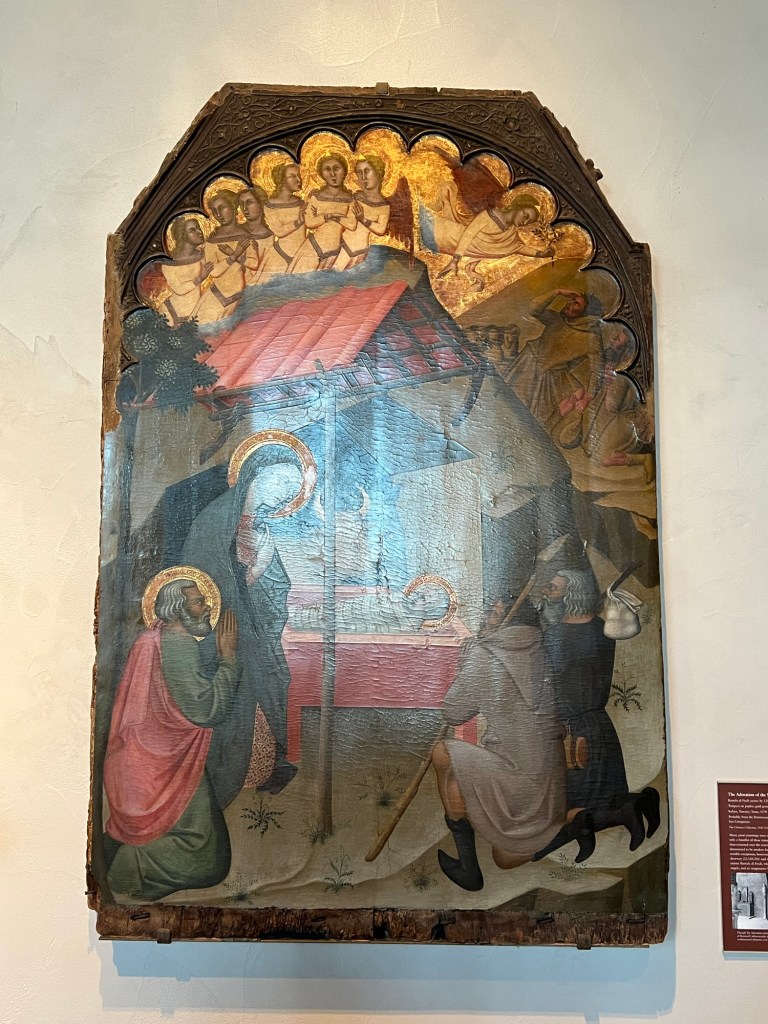
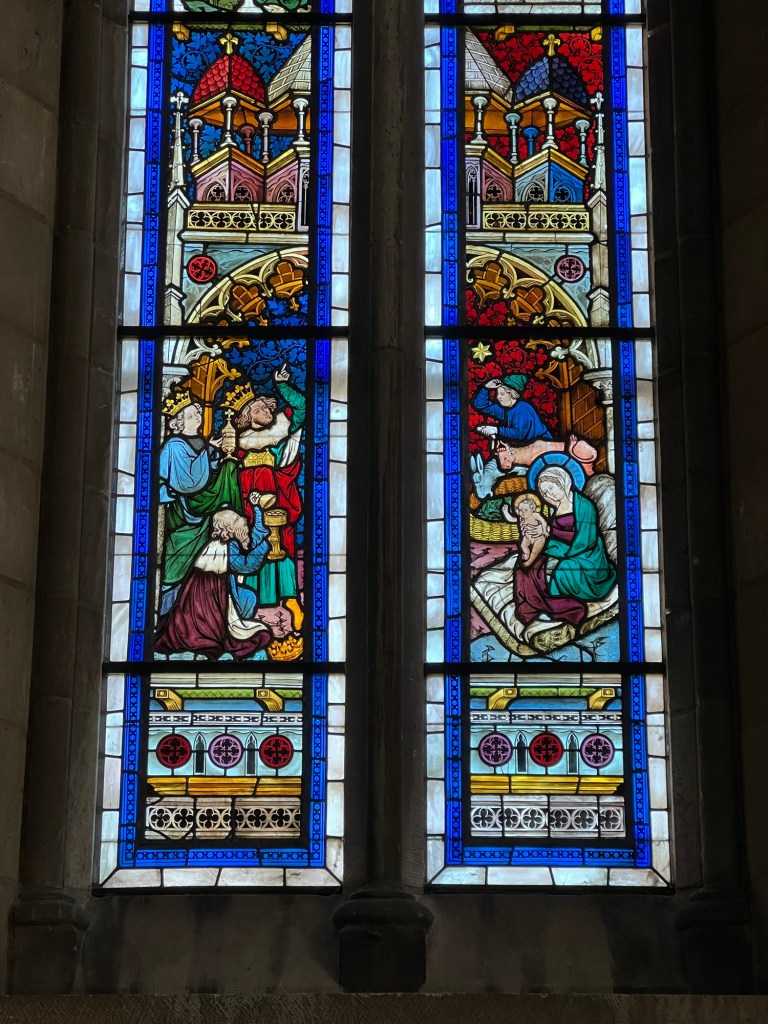
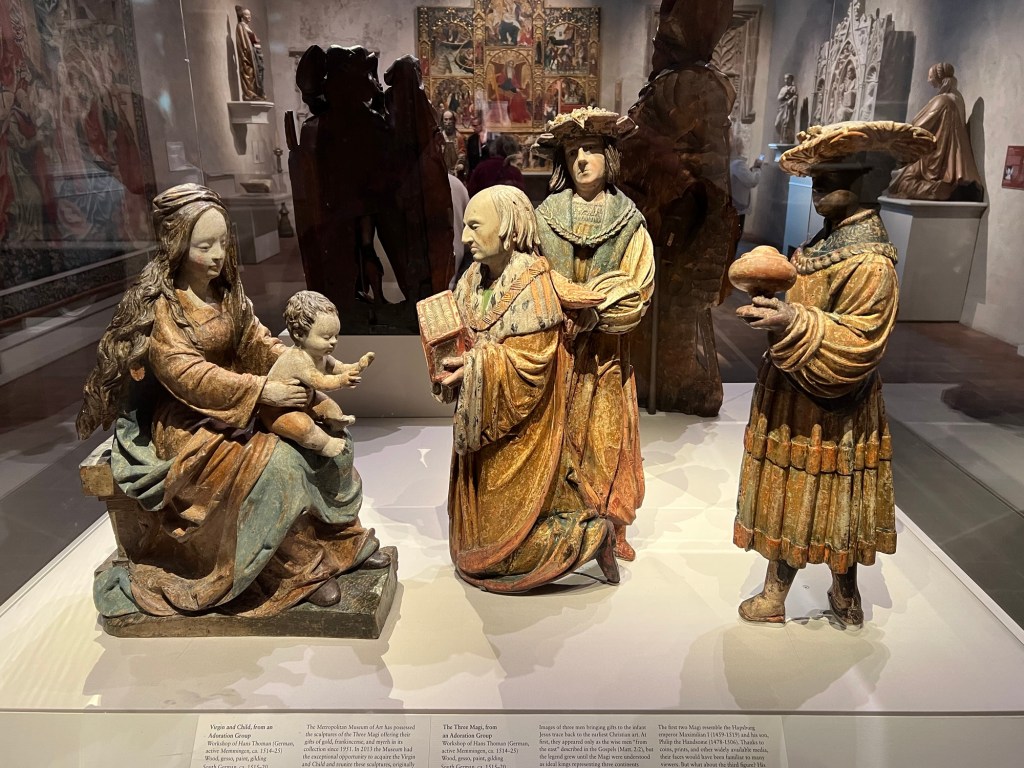
Then we went back inside for a discussion of the Three Kings and the Epiphany and its symbolism in art at the Cloisters. These are some of the works featured on the ‘Christmas Tide’ tour to symbolize that visit.
Some of the woodwork from that era
The Visitation of the Three Kings
The Visitation of the Three Kings depicted in stained glass
The Visitation of the Three Kings depicted in statuary
We visited the last of the Cloisters and discussed some of the plants in the collection
We were admiring the plants and flowers
A candelabra in the hallway of the Cloisters
As I exited the building that afternoon, there were potted plants at the entrance of the Cloisters. It was a real treat to walk around the building at the holidays.
The potted plants outside the entrance of the museum
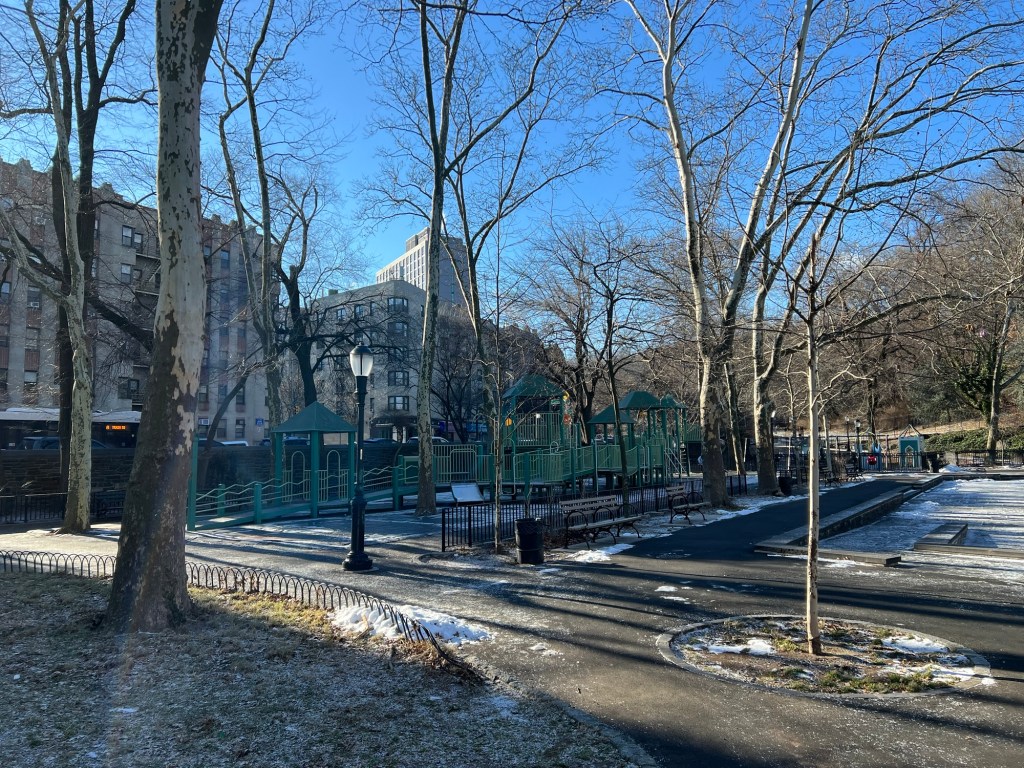
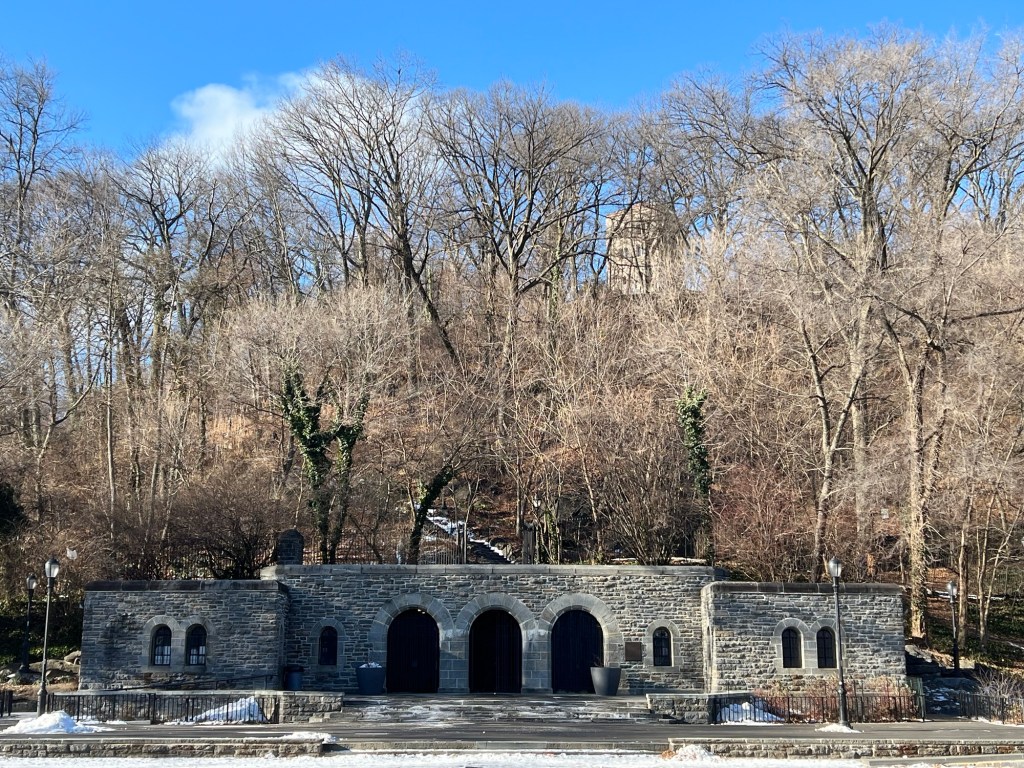
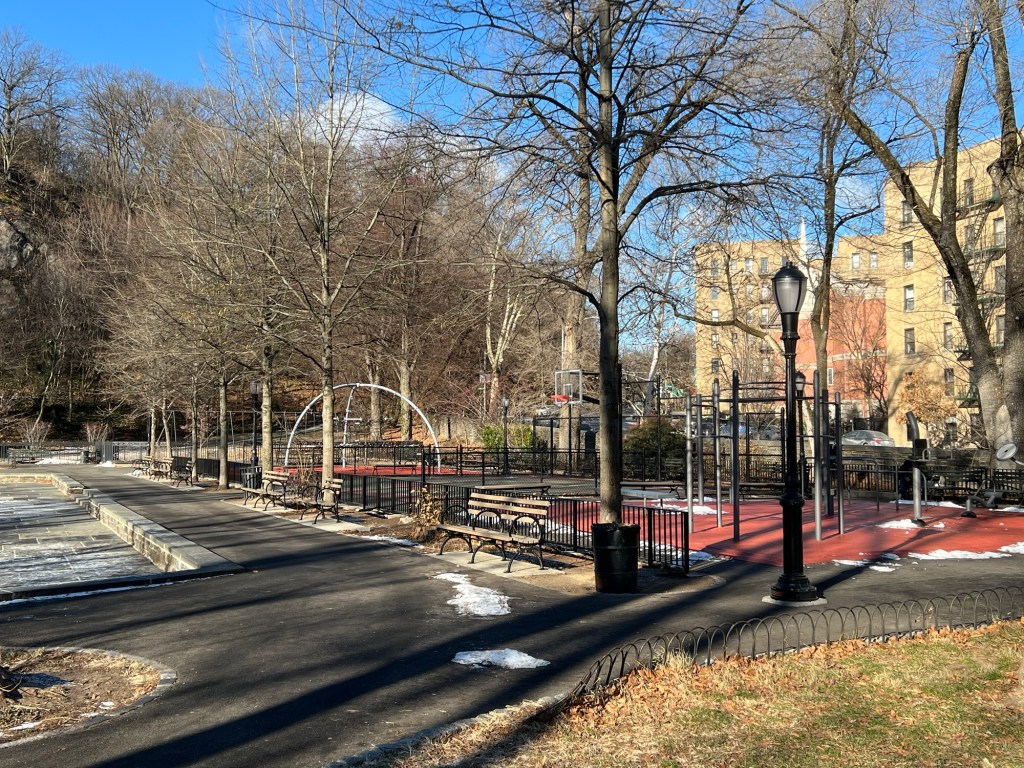
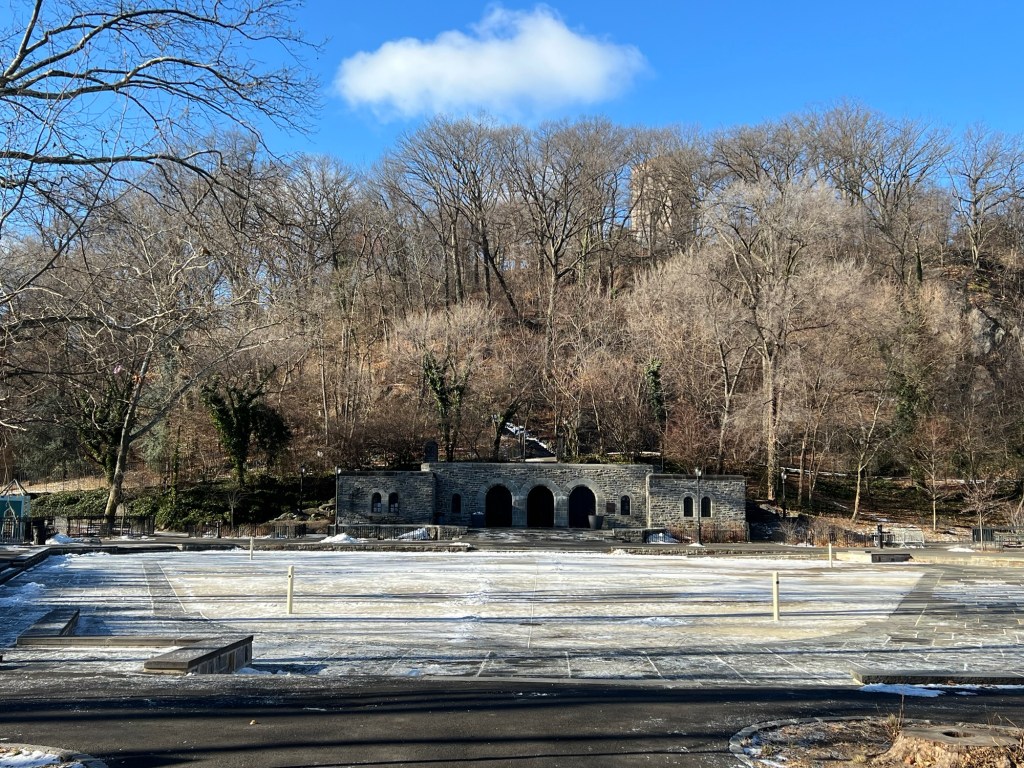
On my way down the stairs and out the door to Fort Tryon Park, I took another walk down the stone steps and walked through Ann Loftus Park. This popular playground was quiet this time of year, awaiting the Spring and the wonderful warm afternoons ahead.
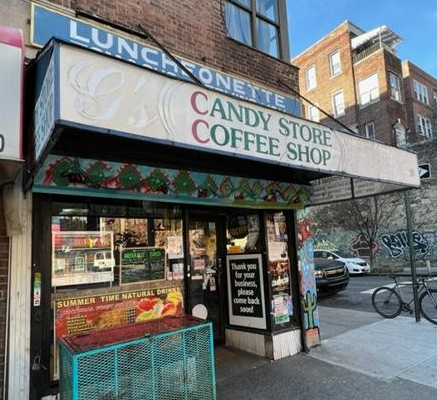
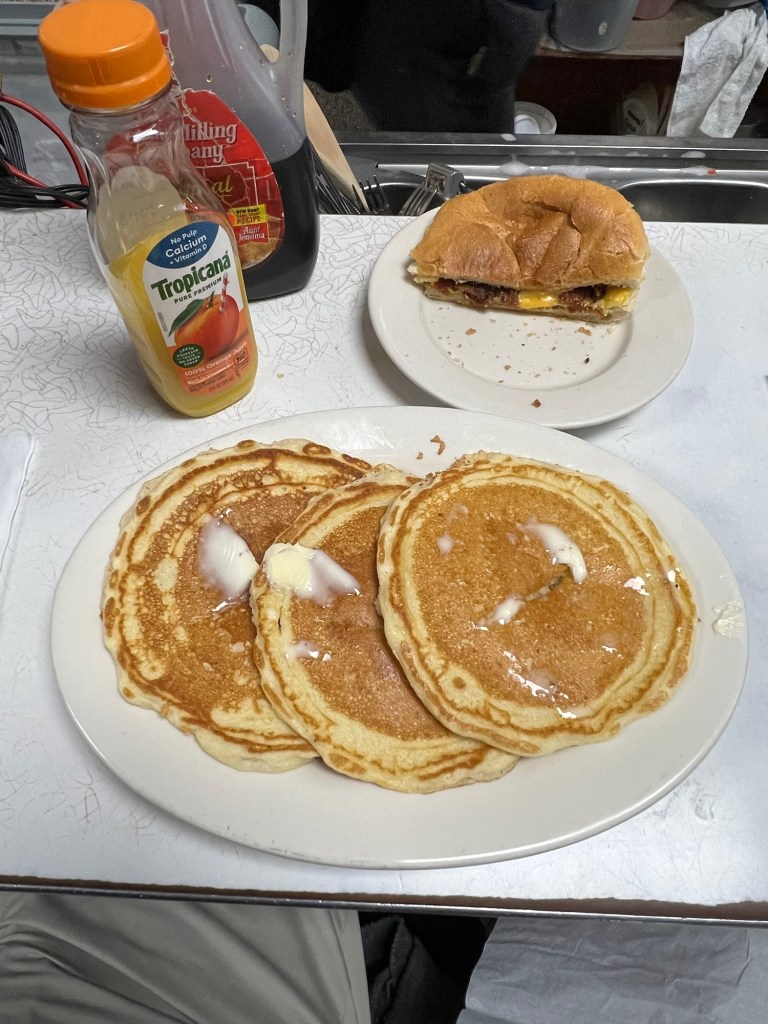
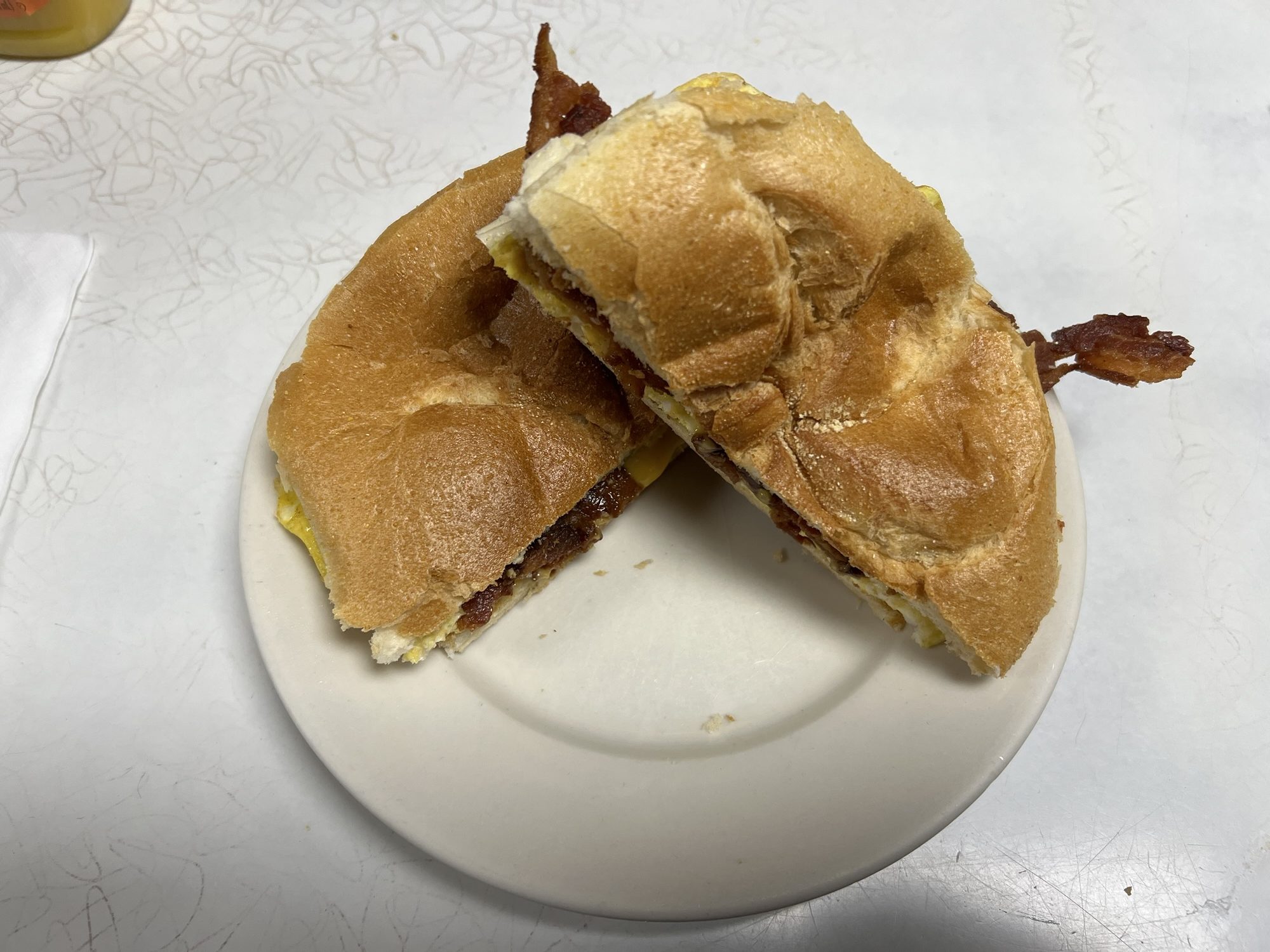
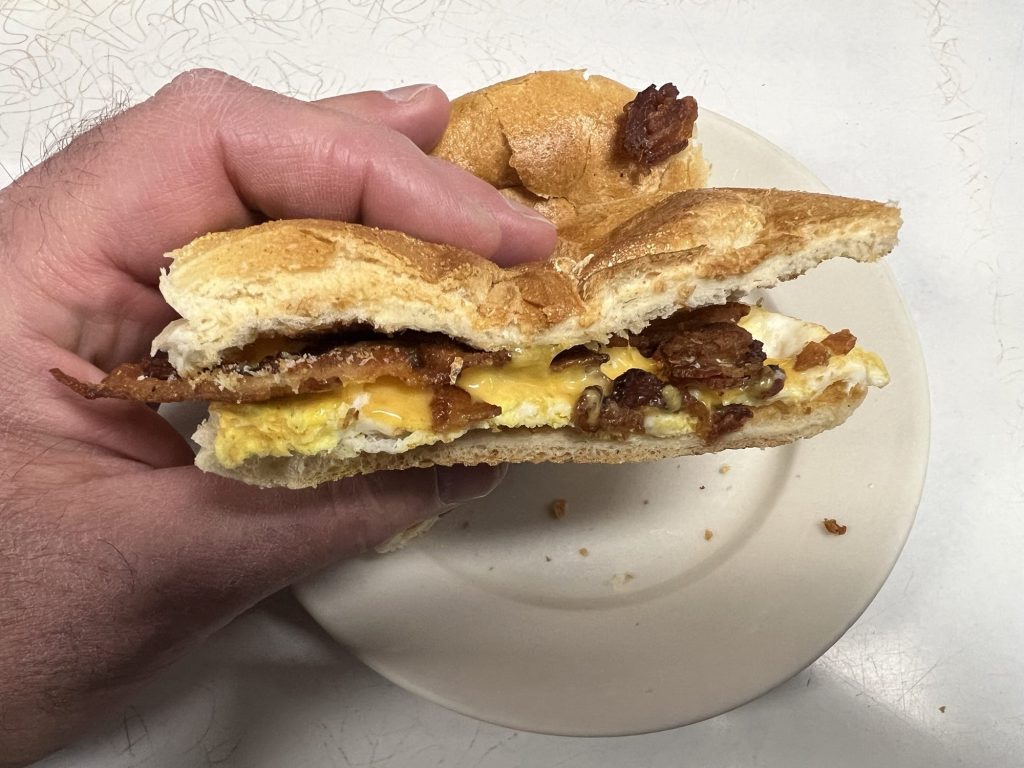
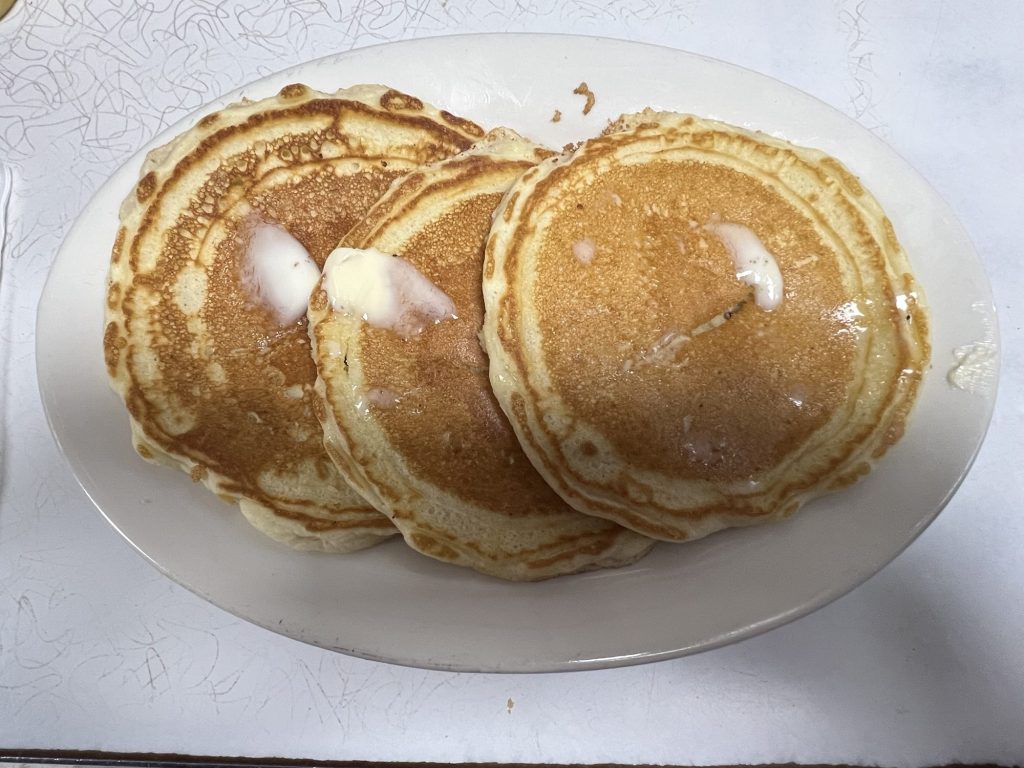
I love coming for breakfast at G’s Coffee Shop after a tour of The Cloisters. The food and service of this small ‘hole in the wall’ diner is wonderful. The meals are so reasonable and when you dine at the counter, you can watch the food cooked right in front of you. I had a wonderful Bacon, Egg and Cheese sandwich with a side of golden pancakes. What a great meal on a cold winter morning.
The Bacon, Egg and Cheese sandwich
The breakfast sandwiches here are so good
The pancakes were wonderful. The perfect comfort food on a winter day.
It was a really great tour and it was fun to walk around the neighborhood through the parks and seeing all the post Christmas decorations. Inwood is a really beautiful section of Manhattan with lots to do and see. It is the perfect place to spend the Christmas break.







 Visiting a Museum: The Unique, Unusual, Obscure and Historical