Category: Historic Libraries

Beach Haven Library & Museum                                    219 North Beach Avenue                                               Beach Haven, NJ 08008

Beach Haven Library & Museum 219 North Beach Avenue Beach Haven, NJ 08008

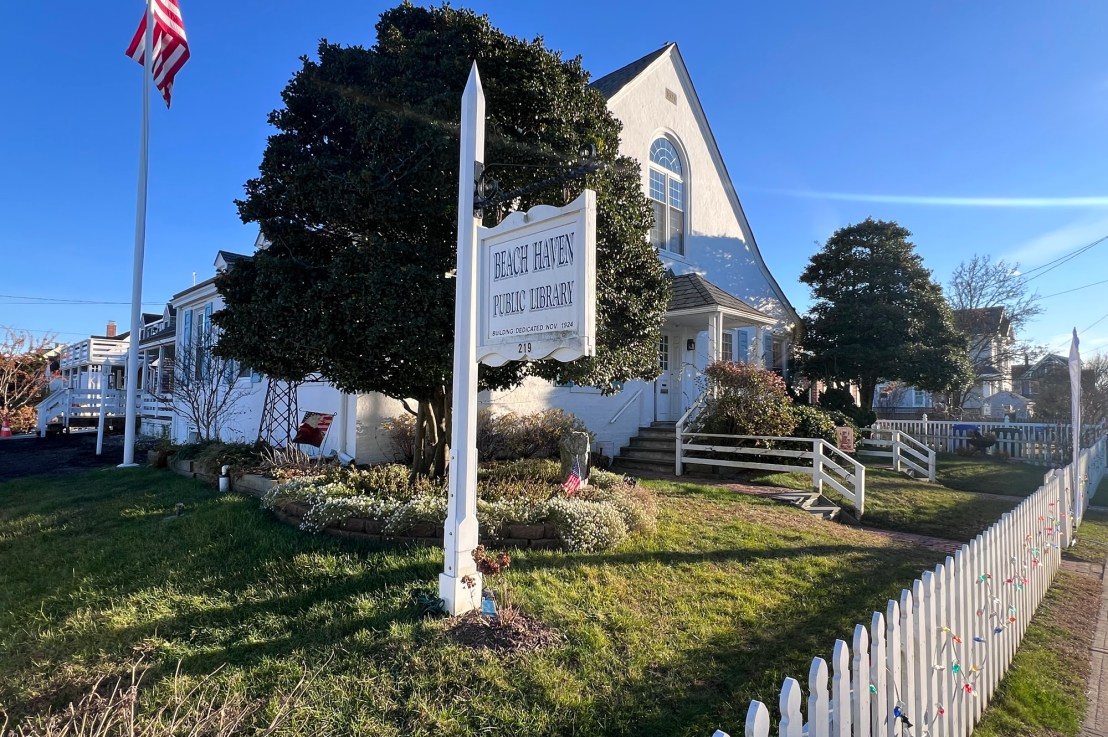
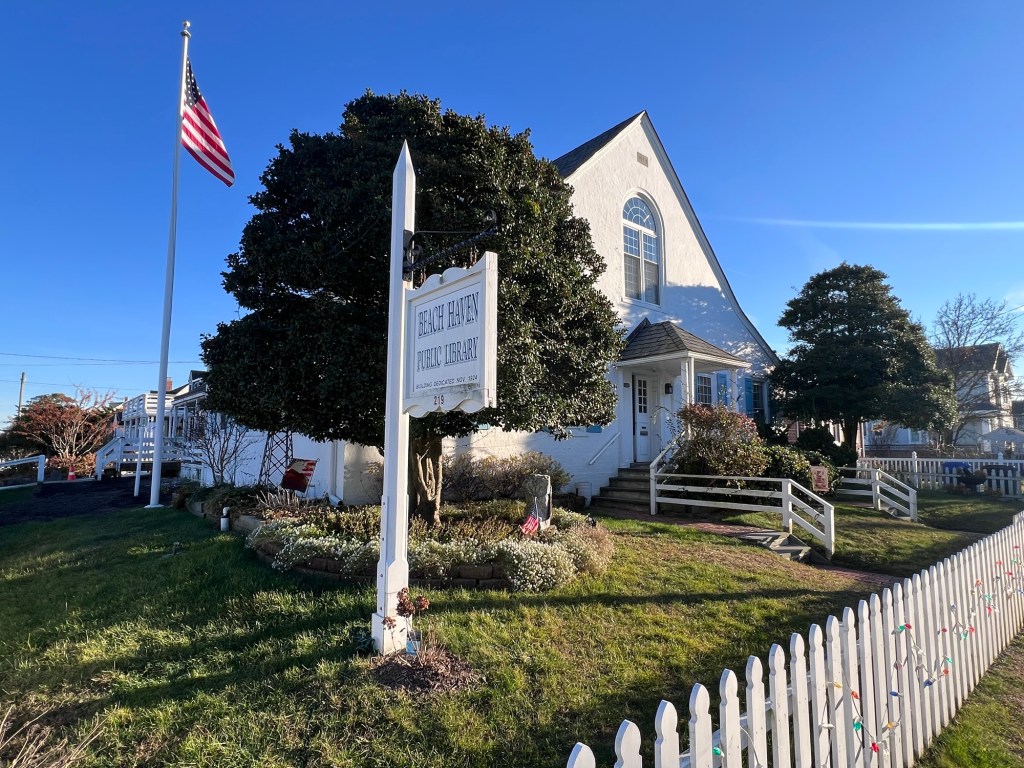
The library at 219 North Beach Haven Avenue

https://www.beachhavenlibrary.org/

https://www.instagram.com/bhpl1924/

My review on TripAdvisor:
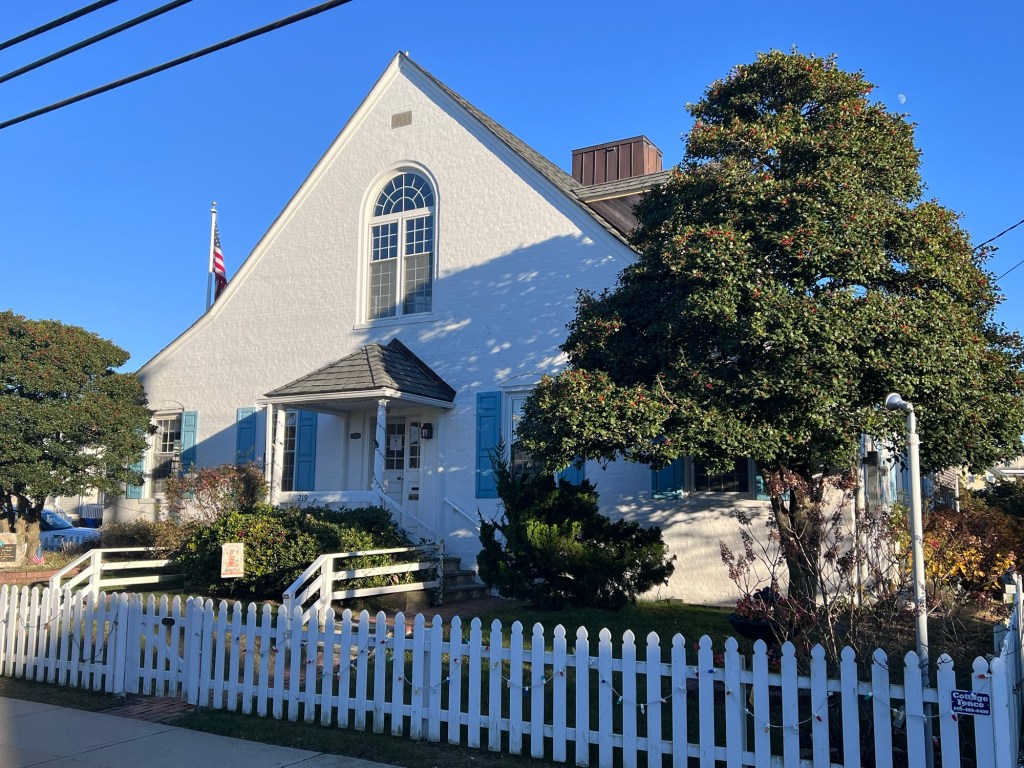
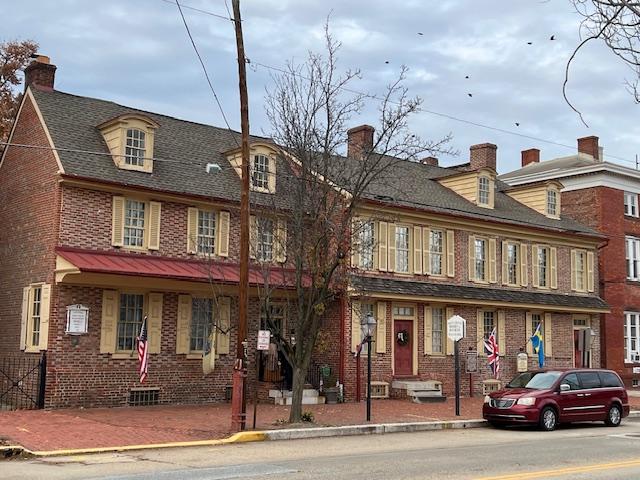
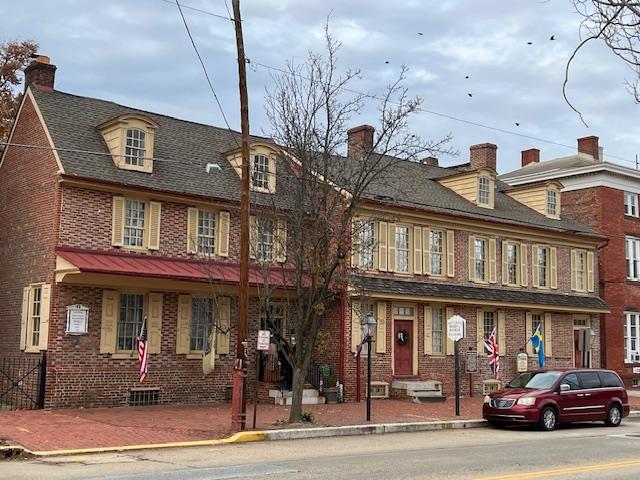
The front of the library and museum in the Fall of 2025
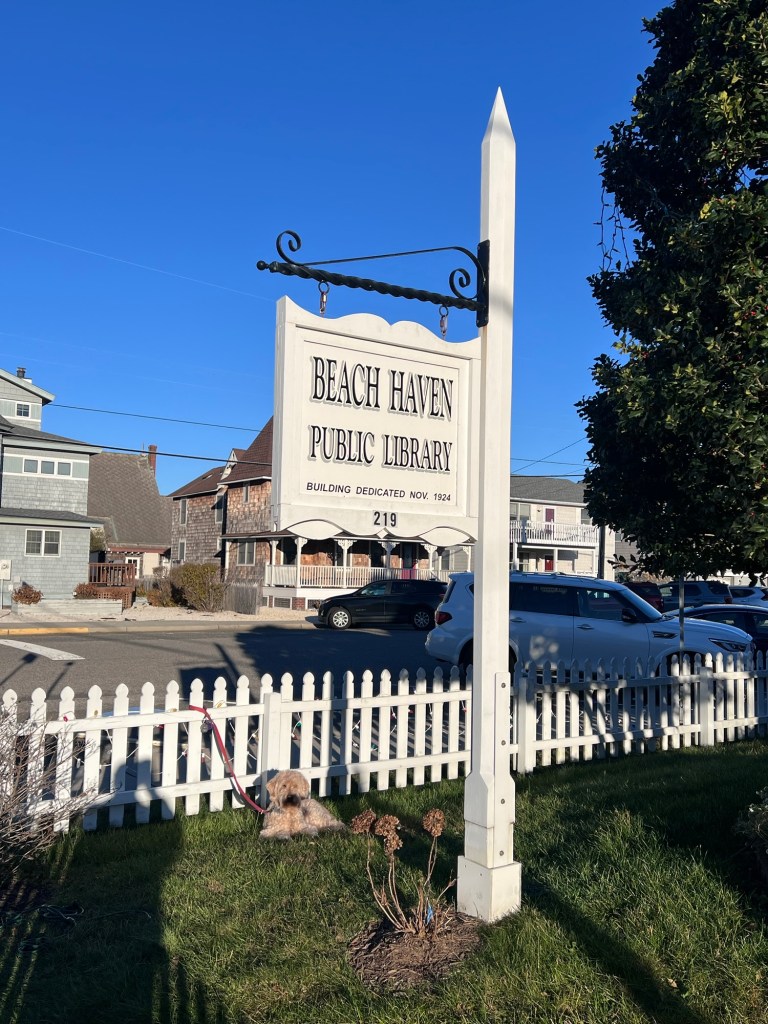
The historic sign

I recently visited the Beach Haven Library and Museum in Beach Haven during the holiday season and discovered a historical library with a rich history in both the community and on Long Beach Island.
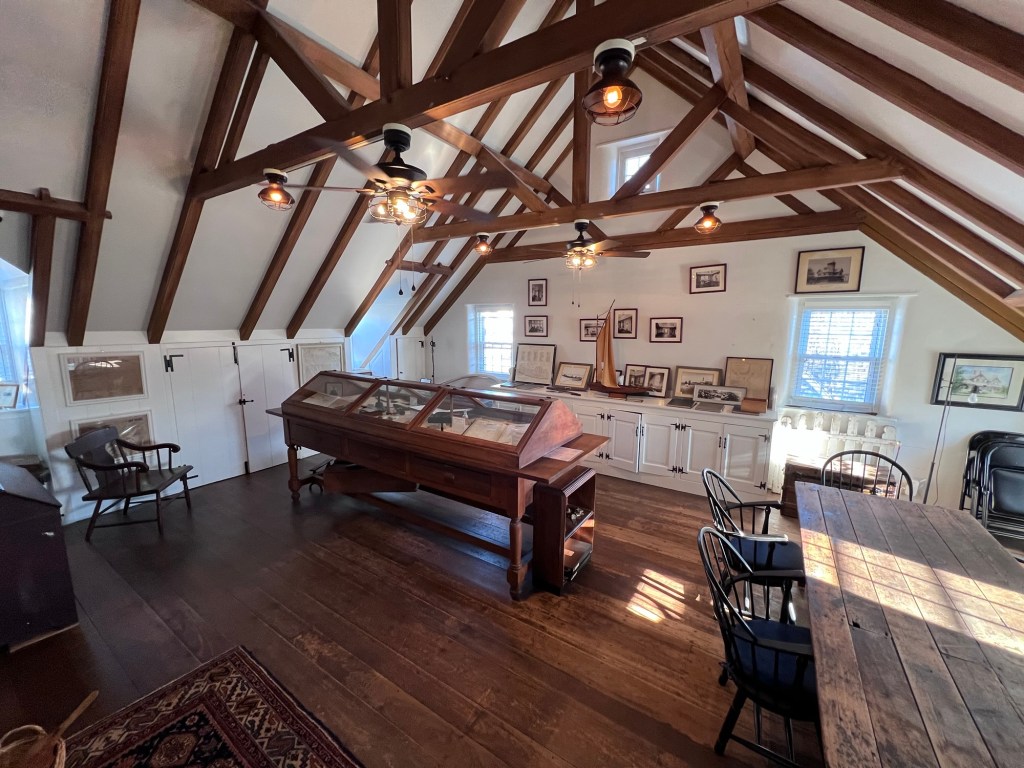
The museum on the second floor

On the second floor of the library is the history room of the Beach Haven Library that contains a collection of historic artifacts and ledgers from hotels and businesses on the island. Each of the case lines tells a different story of the community from the grand hotels that once lined the shore and have since disappeared to the lives of the families that once called the island home. When I talked with one of the librarians, she told me that estates from the area donate these items to the library and this has established their collection.
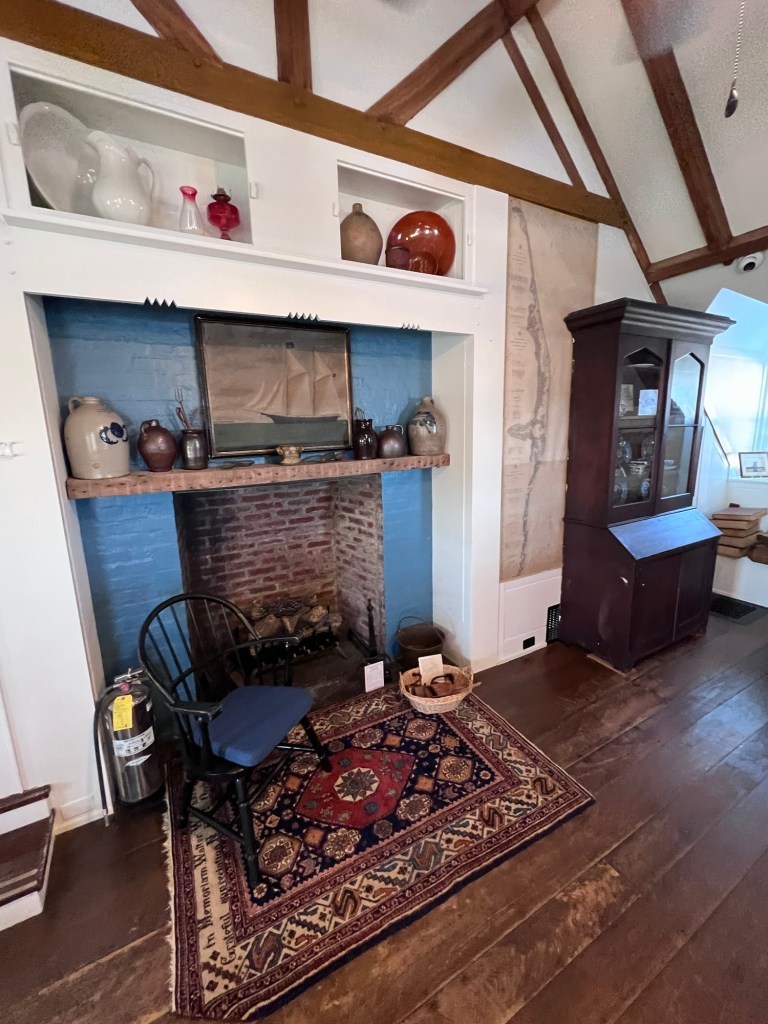
The second floor fireplace
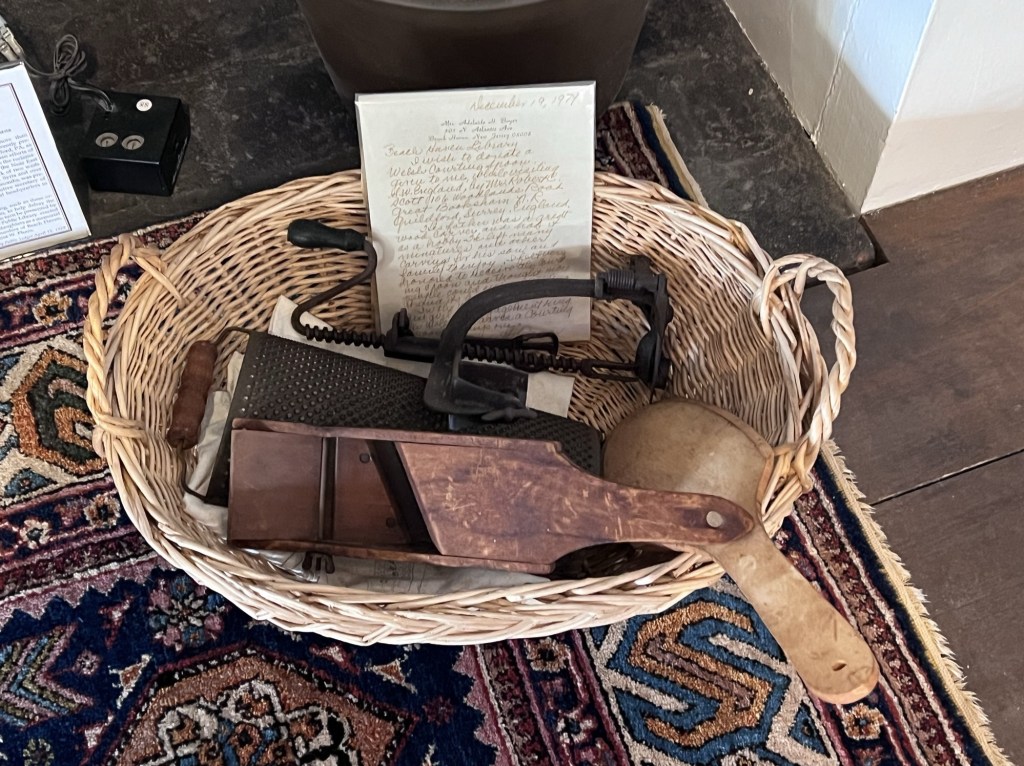
The antique kitchen equipment

The second floor of the library has another fireplace where vintage pottery and kitchen items are on display. There are also decorative pieces of pottery lining the shelves.
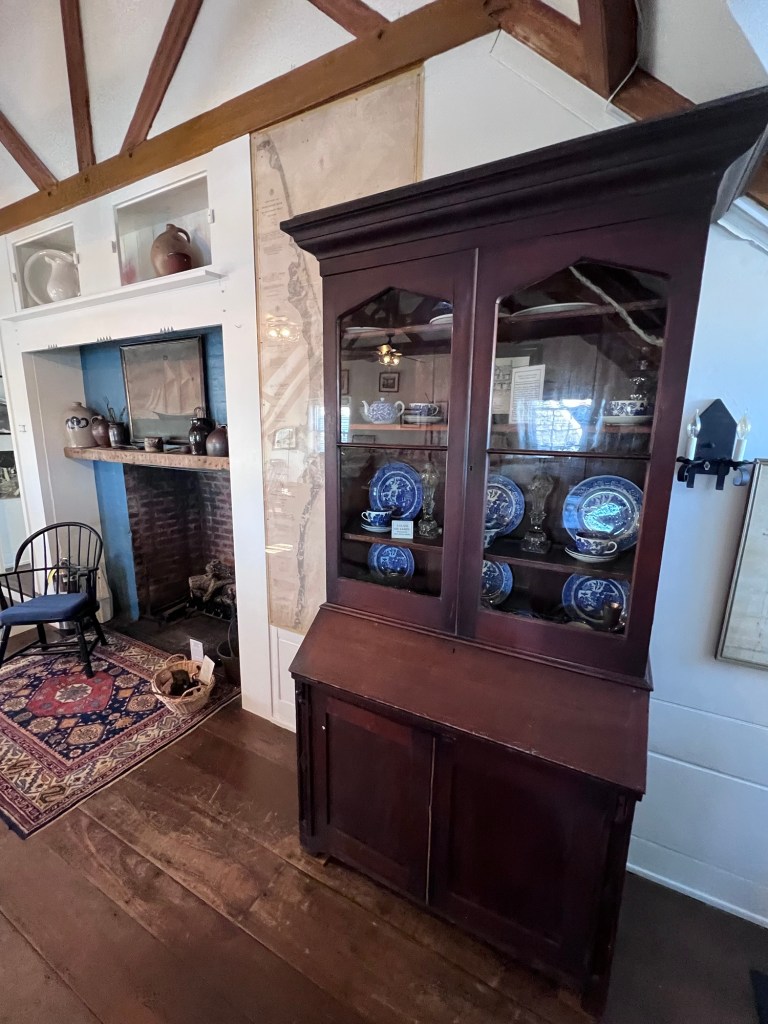
Historic China inside the Emily Lloyd Wilson Secretarial desk. Her father designed the Baldwin Hotel in Beach Haven.
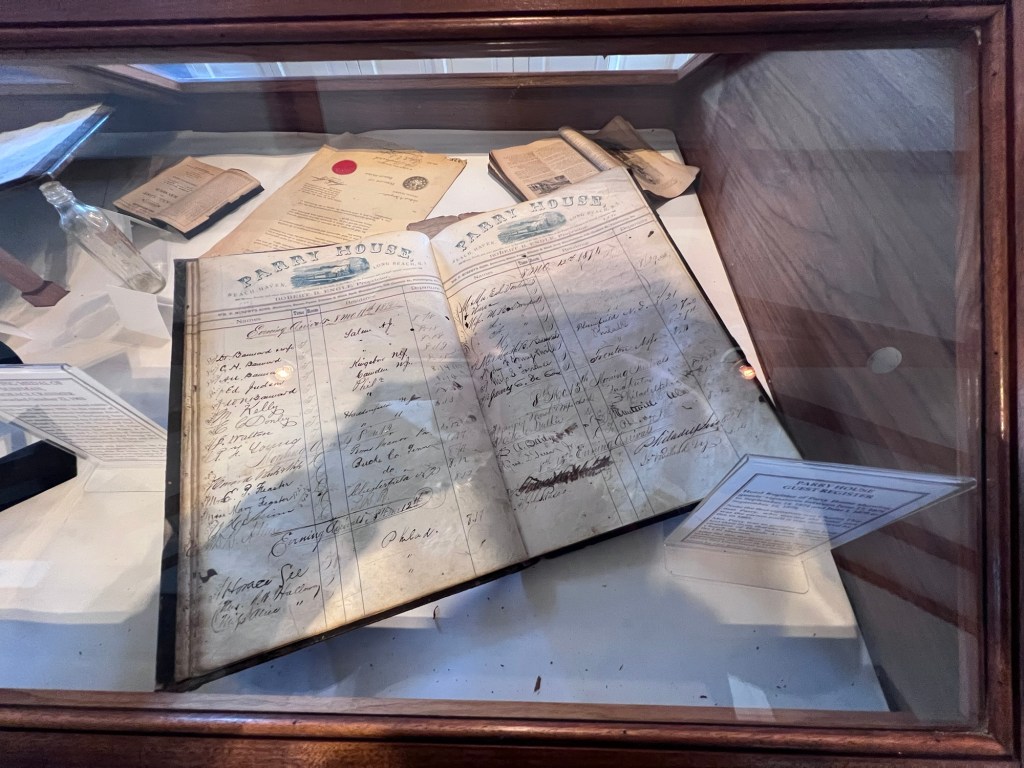
The historic ledger from the Parry Hotel

The library has another fireplace where extensive collection of hotel ledgers and artifacts.
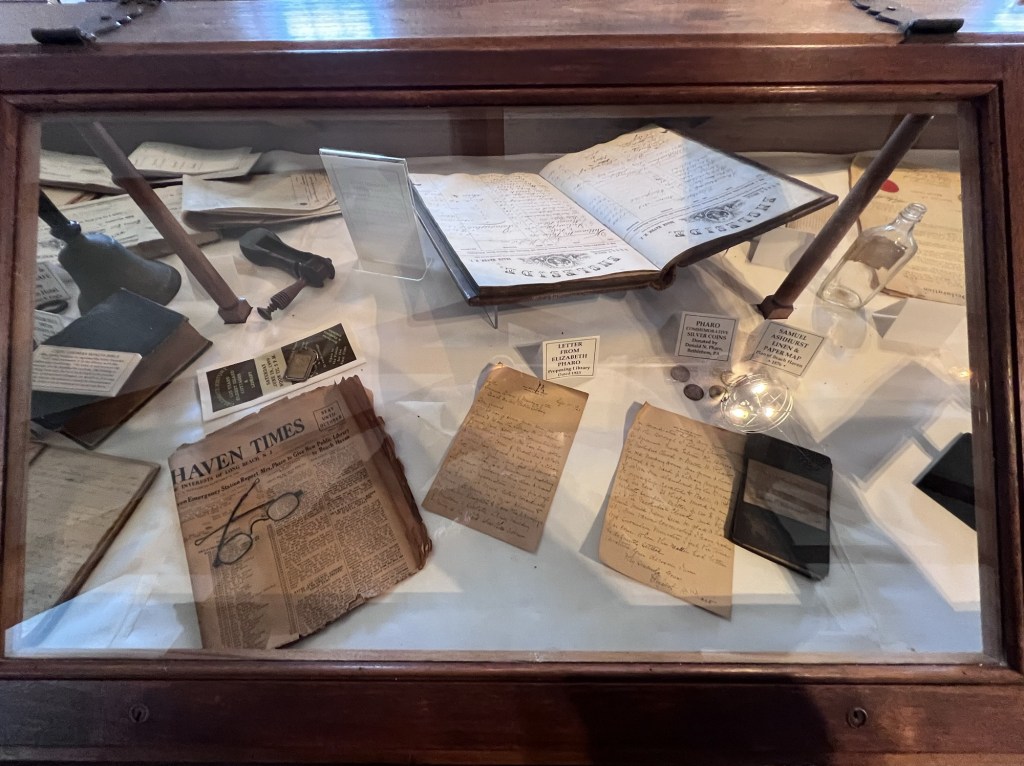
Letters from Elizabeth Pharo proposing the Library in 1923

Short History of the Library:

(From the library pamphlet)

Mrs. Pharo presented to the library board a proposal to build the library entirely at her own expense. She contacted Philadelphia architect, R. Brognard Okie to design the library. He chose the model of a Pennsylvania Farmhouse. The library was completed in the Fall of 1924. The museum is now over a hundred years old.
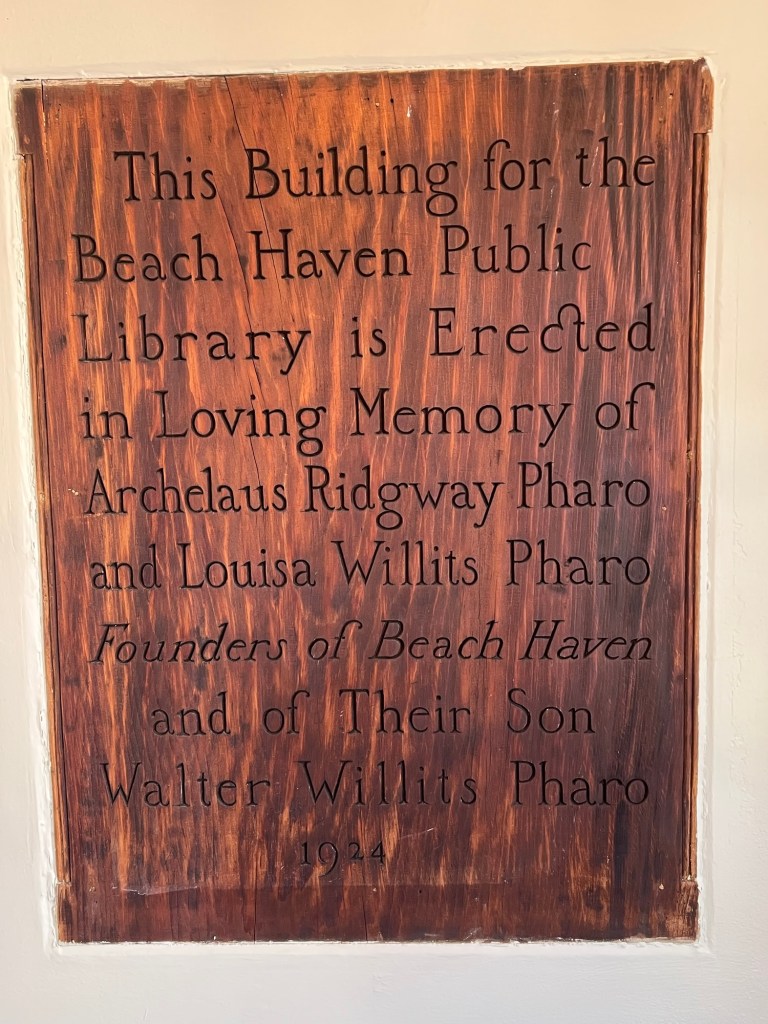
The dedication to Elizabeth Pharo, who dedicated the museum.
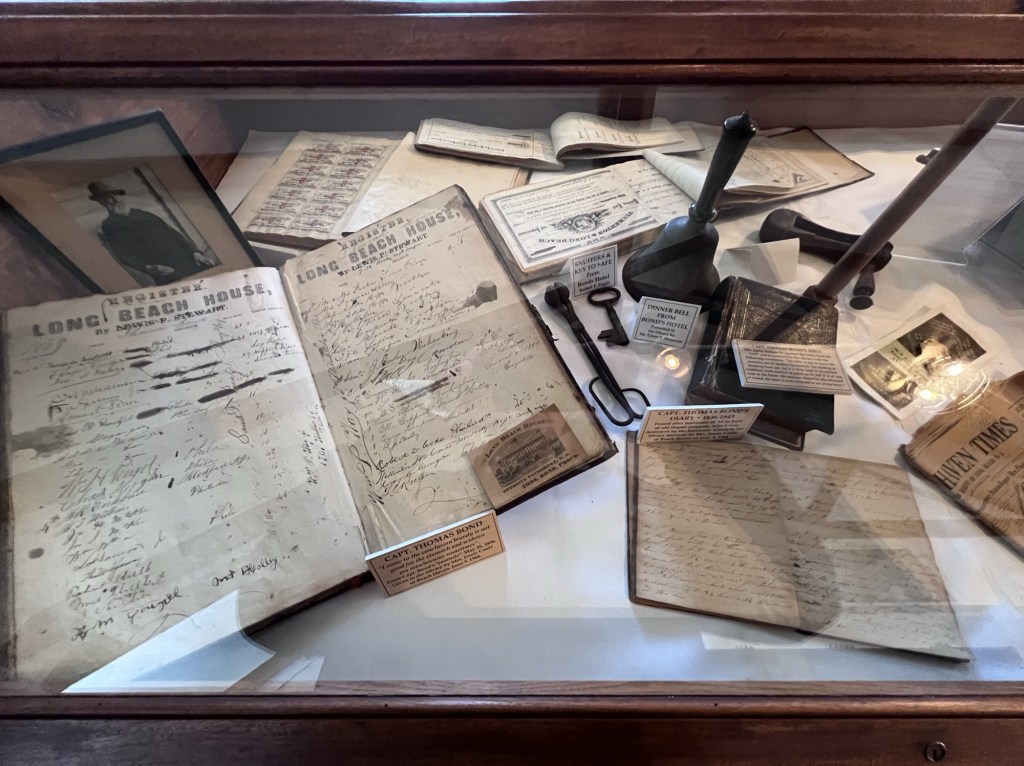
The Long Beach Island House Guest Ledger and historic items from the historic Bond Hotel

The records of the past resort town Long Beach Island used to be with guests coming from New York City, Philadelphia and beyond.
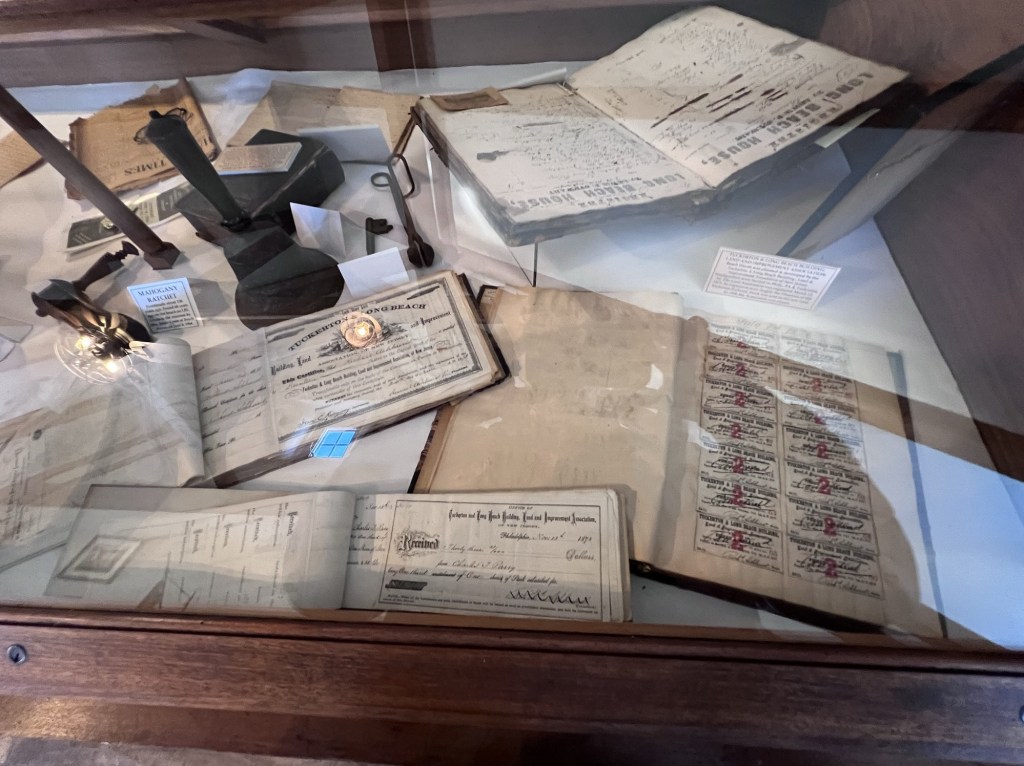
Historic items from the Tuckerton & Long Beach Building Land and Improvement Association
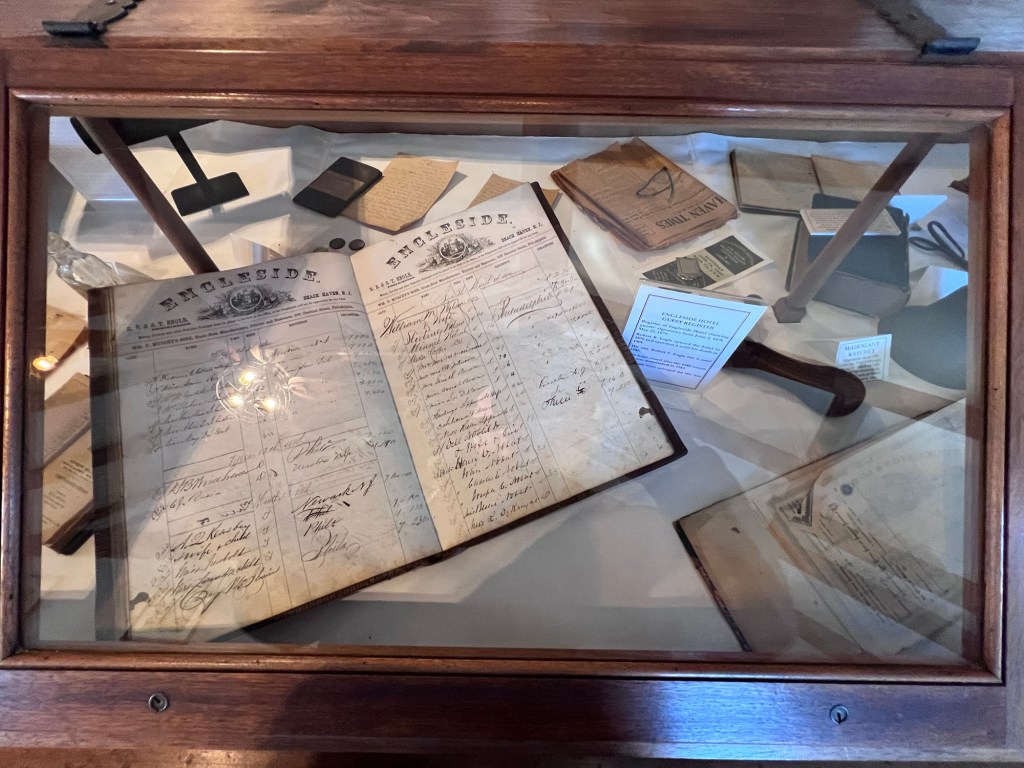
The Engleside Hotel ledger and items from the hotel
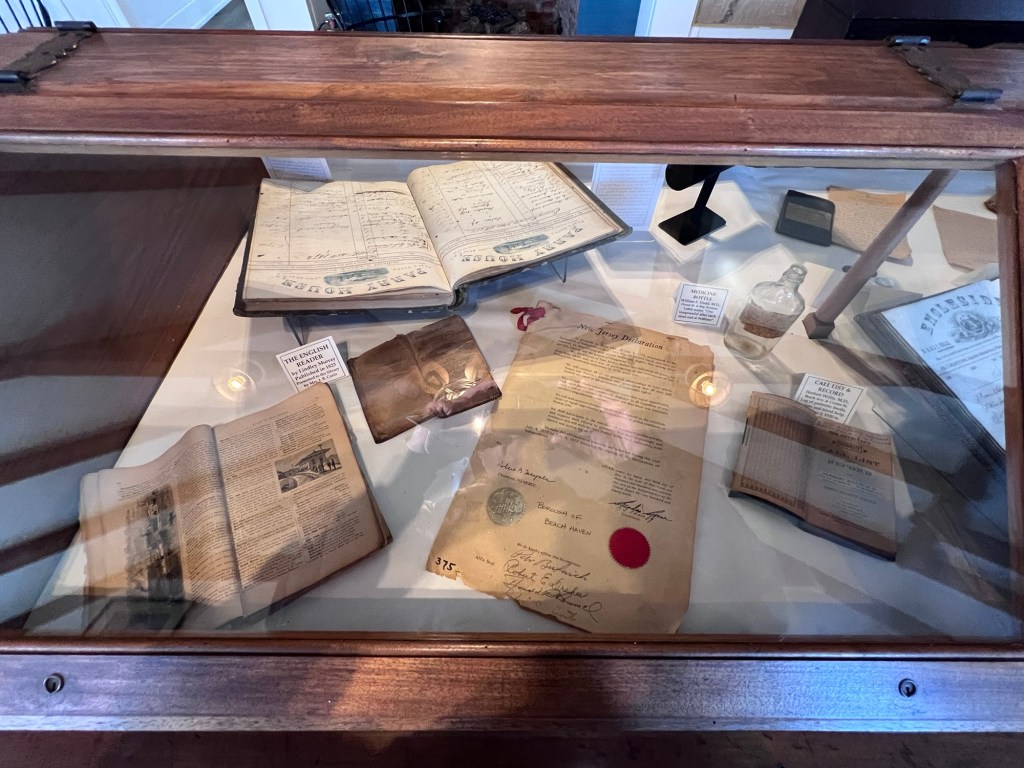
The New Jersey Declaration towards the Declaration of Independence
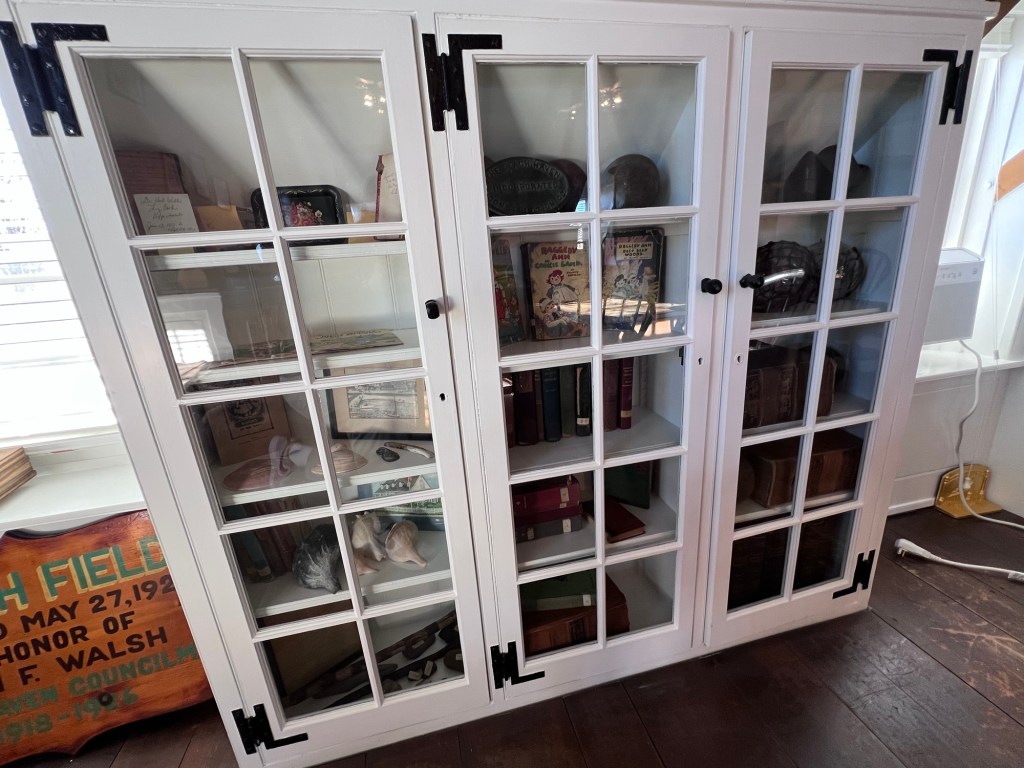
Historic books and periodicals

The library has an interesting collection of vintage and antique books that have been donated to the collection.
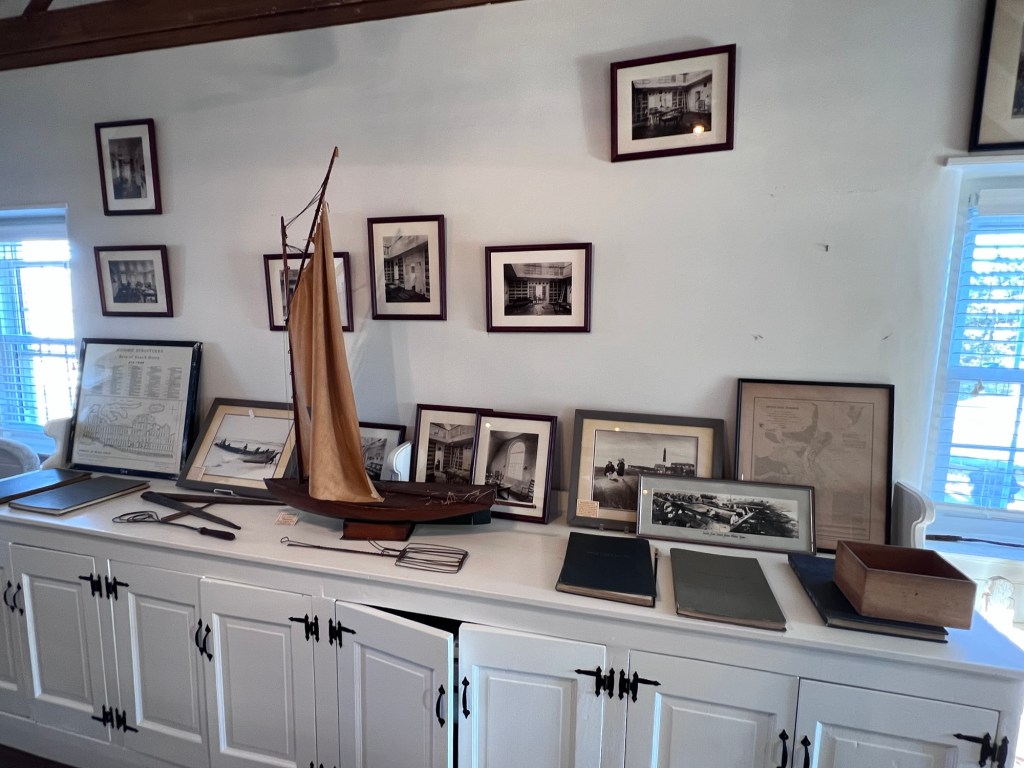
Photo display on historic sites in Beach Haven and pictures of the original library

Some of the pictures are from the old library and the artifacts come from ships ground ashore. The library has a diverse collection of items to view.
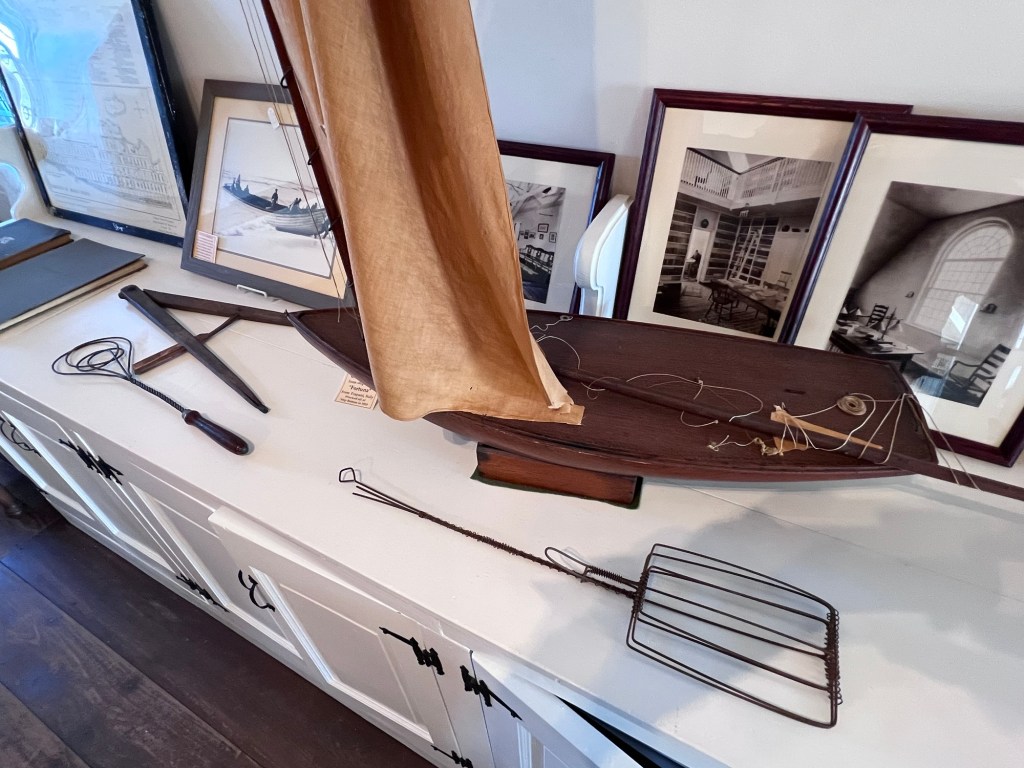
The Compass from the historic shipwreck ‘Fortuna’ that wrecked off Ship Bottom in 1910 and historic boat
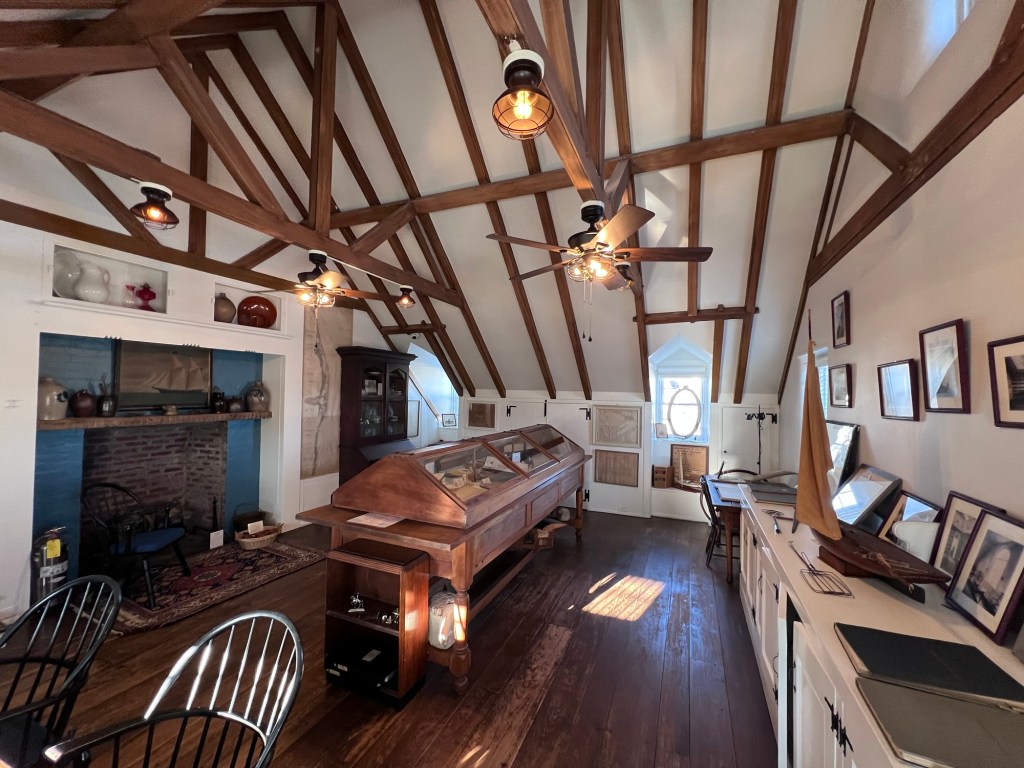
The second floor museum gallery holds the diverse collection of artifacts
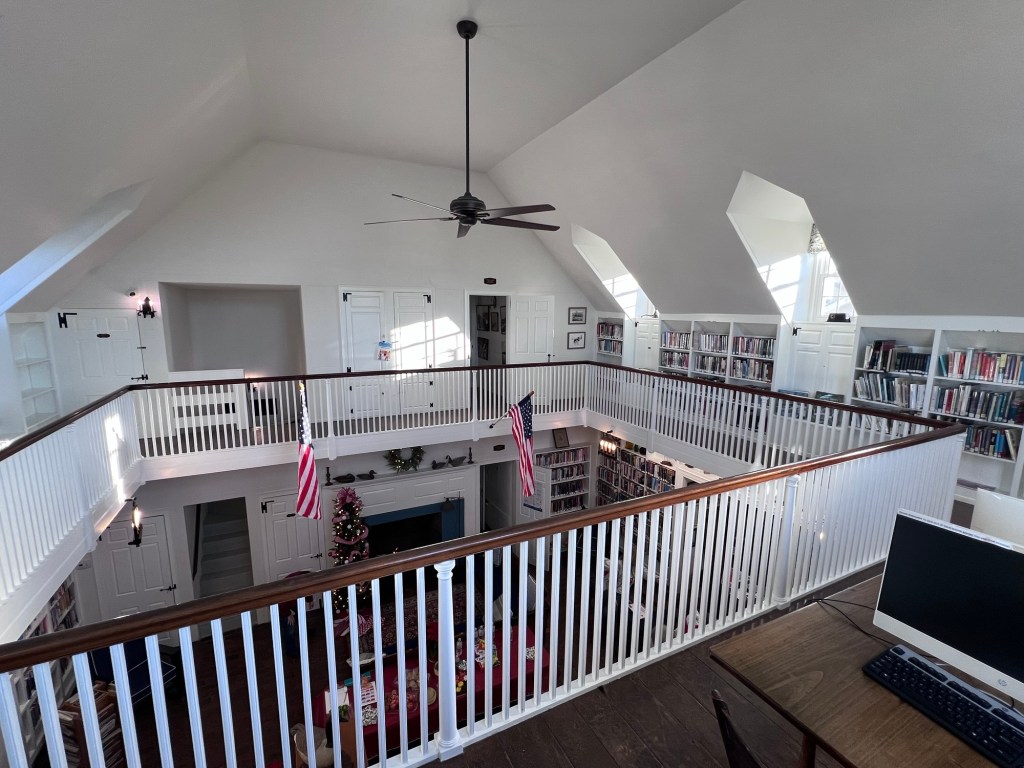
The second floor of the 1928 building
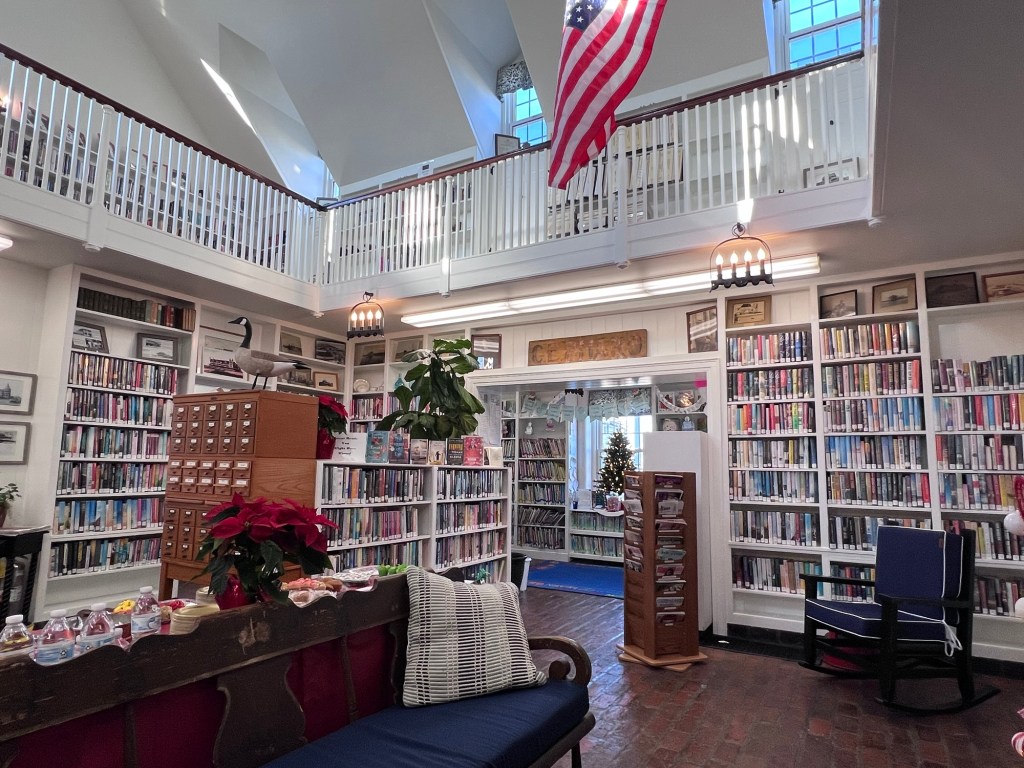
The first floor of the library has all sorts of historical artifacts along the walls

The Holiday Kickoff in 2025:

I visited during the library’s Holiday Open House with games, trivia and activities. There was also live music in the afternoon. It was a way that the library gives back to the community. It was a nice family event with good food and nice conversation with people from the community.
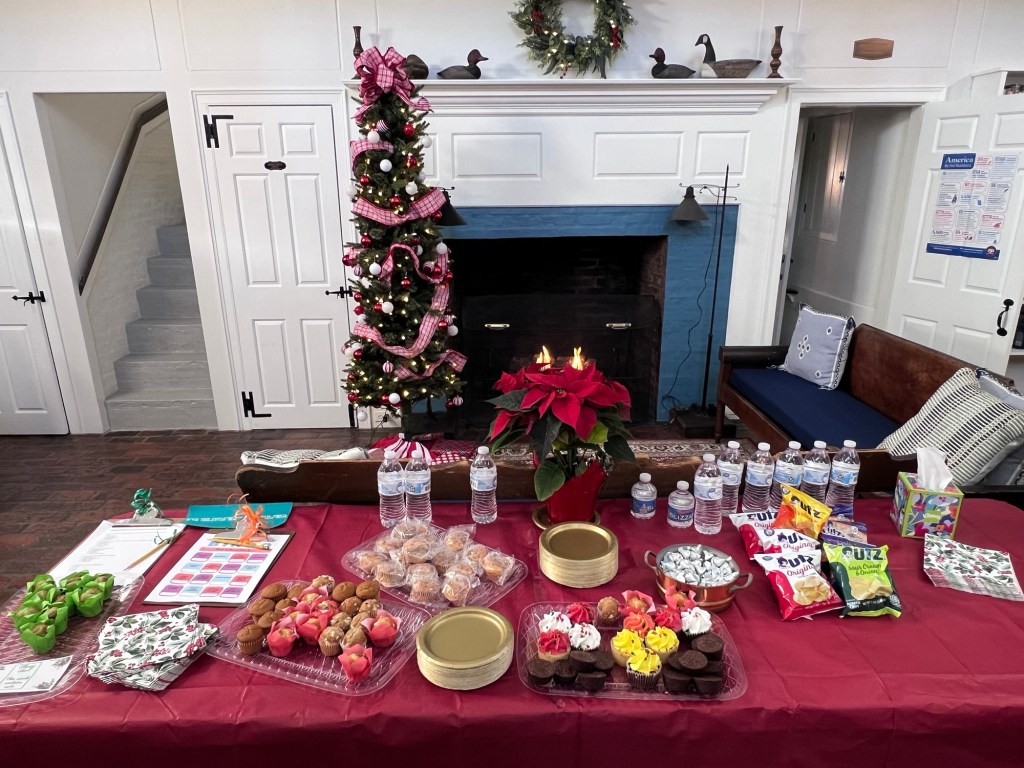
The Holiday Open House
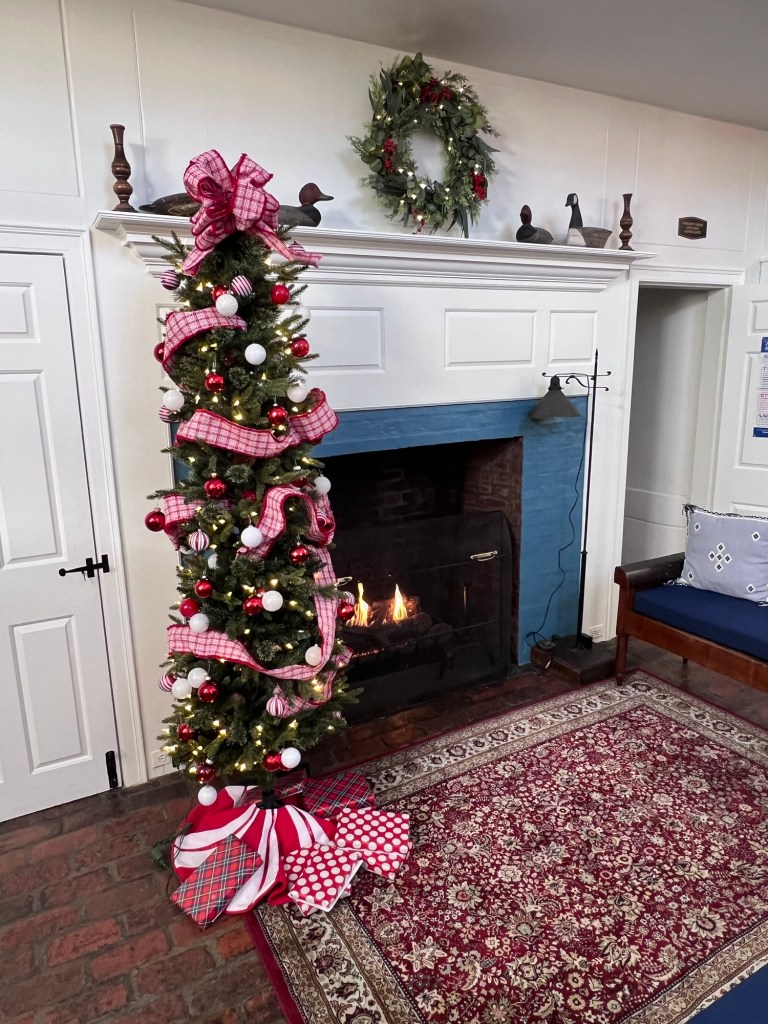
The fireplace was going when I was talking to the librarians

It was a very nice family event where patrons families could relax, have something to eat and play games with their children. The Liberians could not have been more friendly and engaging with the public.
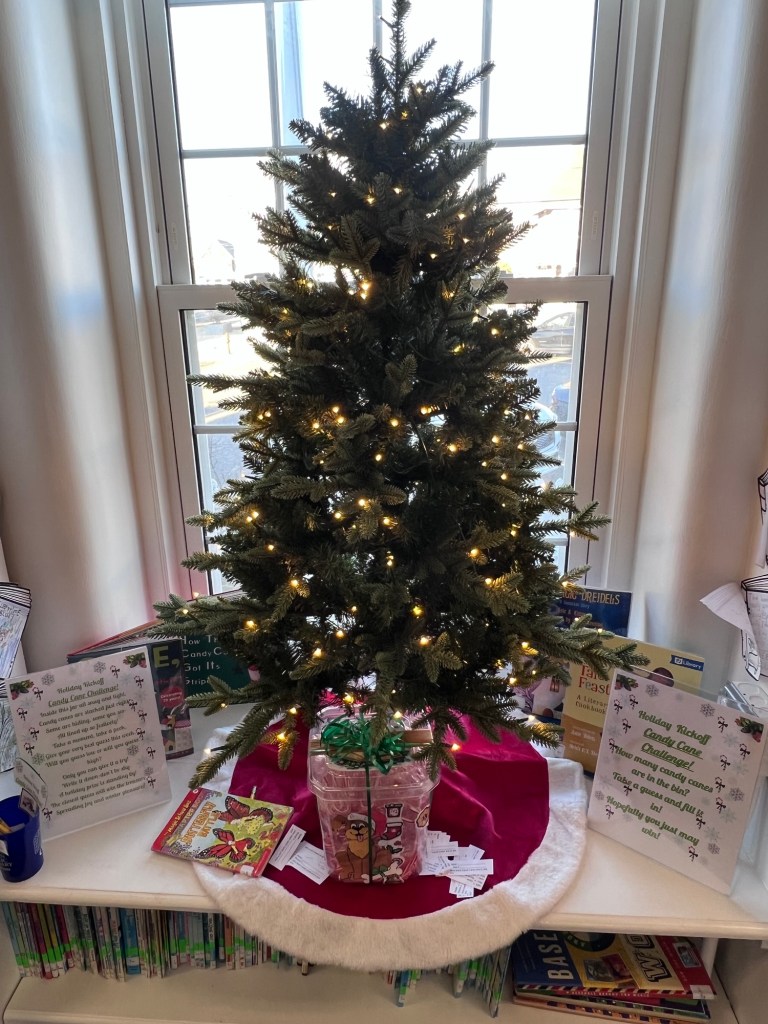
The Children’s Room had a holiday challenge

The museum is a rare gem tucked not just on the second floor but along the shelves and tables of the entire historic library giving visitors a chance to see all these historic artifacts mixed in with the library book collection.

The History of the Beach Haven Library:

(from the library website)

Attempts to establish a library in Beach Haven had begun as early as the 1880’s with a gift of books for the town’s children by Dr. Edward Williams. Williams, along with Charles Parry of the Parry House and the Baldwin Hotel, was a partner in the Baldwin Locomotive Works. The library collection was first housed in the home of Samuel Copperthwaite on Engleside Avenue. It was later moved into one of the Sunday School rooms of the Kynett Methodist Church, which had been built in 1890.

After the old Quaker Meeting House was donated to the town by Walter Pharo, the Reverend Alexander Corson of the Methodist Church began work, with the help of his wife, to turn the former Meeting House into a viable library. By the time they left in 1908, it was well on its way.

In 1923, Walter’s widow, Elizabeth Pharo, presented the library’s board of trustees with a proposal to build, entirely at her own expense, a new library for the town. It would be sited two blocks away from the Methodist church on a corner lot which she owned at Third Street and Beach Avenue. The library would be dedicated to the memory of her husband’s parents, Archelaus Ridgway Pharo and Louisa Willits Pharo–the founders of Beach Haven–as well as to her late husband Walter. 

Mrs. Pharo contracted R. Brognard Okie, one of Philadelphia’s finest architects, to design the new library. He chose as his model a Pennsylvania farmhouse–not an early lifesaving station, as some believed. Unlike a traditional farmhouse, however, it would be constructed entirely of brick and steel and include several stunning features: three working fireplaces, a vaulted ceiling, and an interior balcony encircling the first floor.

Tons of concrete were poured and steel girders for the new, two-story structure were already up by the spring of 1924 on the southeast corner of Beach Avenue at Third Street. Okie moved to Beach Haven to supervise every step of the construction, which was all done by local builder Floyd Cranmer. Ten railcar loads of bricks were used to build the solid outer walls and it was soon evident that the town was to have the finest library on the New Jersey coast.

As the library neared completion in the late fall of 1924, its beauty was already drawing praise. Every window in the structure was framed with long shutters of pale green, which gleamed against the white brick exterior. A sweeping, multi-dormered black roof added a grace seldom seen in a public building. Surrounded by a low, white picket fence and later, a well-kept green lawn, it added an incomparable dignity to what, in that time period, was the town’s main street, Beach Avenue.

There are two large colonial-style working fireplaces on the first floor. One is in the main room and the other is behind it in the long back room on the ocean side of the library. Today this room houses the Mystery collection and its solid, ten-foot table makes it useful as a meeting room. In the early years, however, it served a different function–it was designated as the men’s reading room, and there male patrons could sit in large comfortable chairs to read magazines and newspapers. It was well lit by two tall French windows and it opened out onto the screened porch on the north side.

The main reading room with its vaulted ceiling is encircled with a balcony reached by a spiral stone staircase, its steps topped with thick slabs of slate. The balcony flooring is of oak, as are all of the spindles in the railings. The upstairs walls are lined with books. One great window on the west side rises ten feet to the ceiling. The rest are all set into dormers. On the east wall behind the upstairs balcony there is a door where one may step down into a well-furnished little museum with high, beamed ceilings and a huge stone fireplace. It is filled with old hotel registers, deeds, diaries, photographs and other mementos of Beach Haven’s vibrant history.

The Beach Haven Public Library is a prime architectural treasure on Long Beach Island and a direct link to a colorful past that is the town’s most precious heritage. Mrs. Elizabeth Pharo’s gift to the town, itself now almost 100 years old, is as stunning as the day it was built. The taxpayers who support it are proud of its status as the only independent library in Ocean County and have chosen to keep it that way.
Kearny Museum at the Kearny Library                                   318 Kearny Avenue                                                   Kearny, NJ 07032

Kearny Museum at the Kearny Library 318 Kearny Avenue Kearny, NJ 07032

Kearny Museum at the Kearny Library

318 Kearny Avenue

Kearny, NJ 07032

(201) 998-2666

Open: Sunday-Tuesday Closed/Wednesday 5:00pm-6:30pm/Thursday-Friday Closed/Saturday 10:00am-12:30pm

My review on TripAdvisor:

https://www.tripadvisor.com/ShowUserReviews-g46536-d33058185-r1001224452-Kearny_Museum_At_The_Kearny_Library-Kearny_New_Jersey.html?m=19905

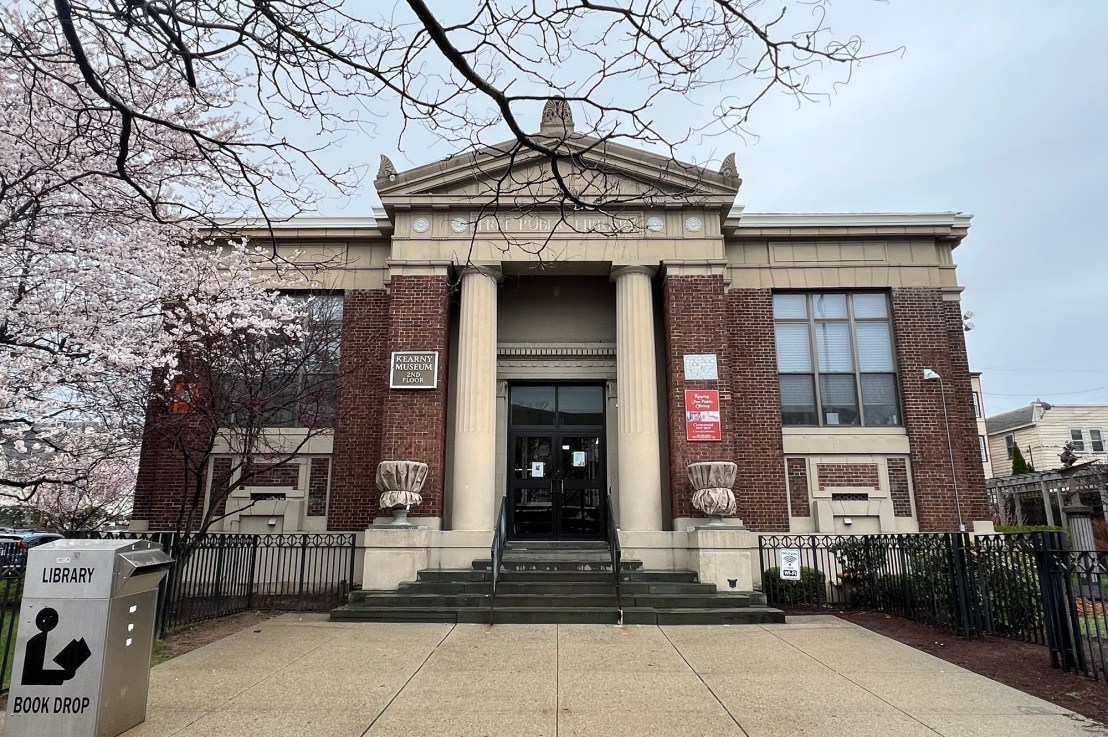
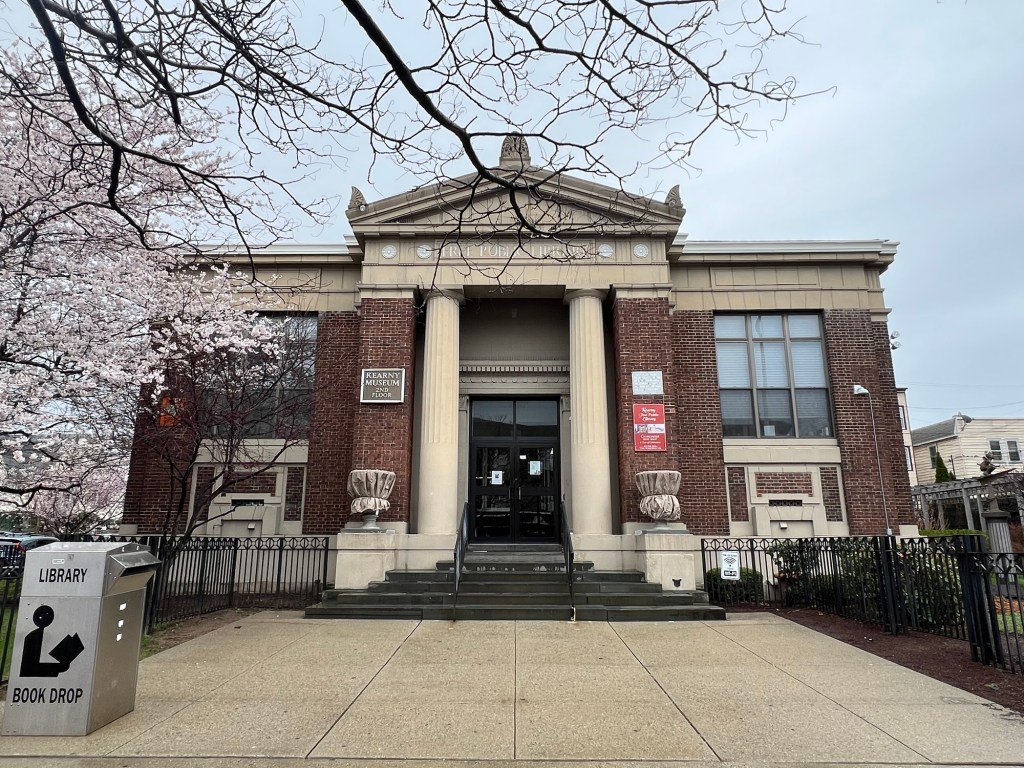
The front of the Kearny Library at 318 Kearny Avenue

The library during the early spring

The historic marker of the library

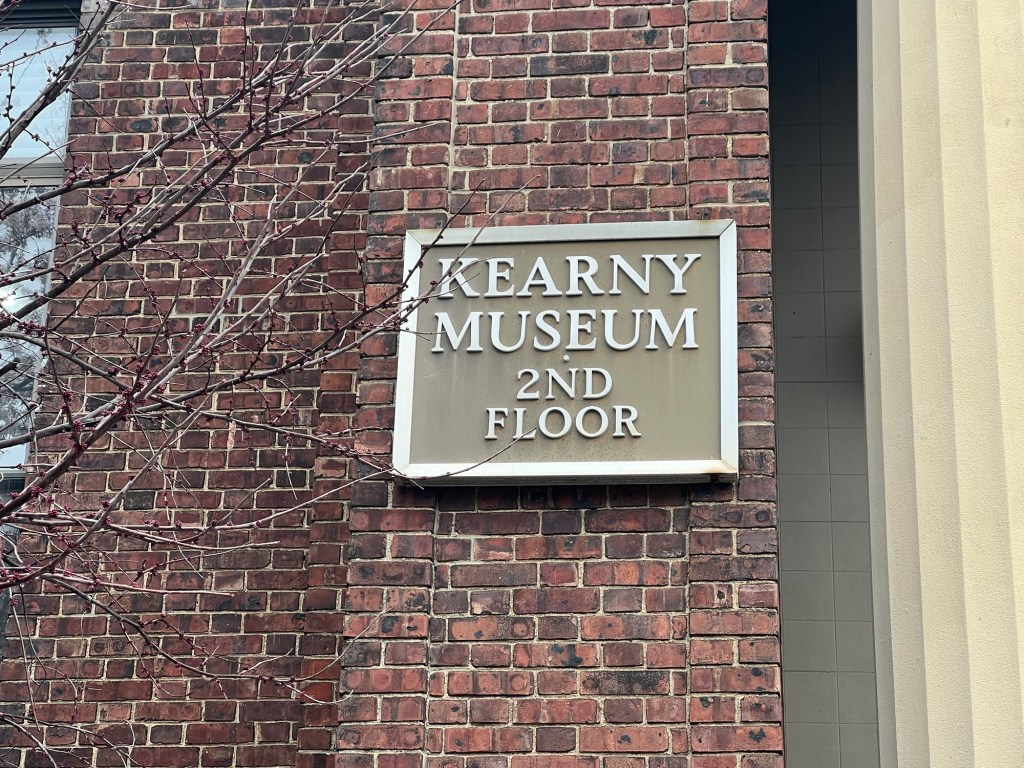
The outside sign of the museum

The History of the Museum and Mission:

(from the museum website)

The Kearny Museum, on the upper floor of the Kearny Public Library, is a history museum that houses local displays about the town. The collection includes photographs, articles of clothing, and war memorabilia from the town’s history.

Special attention is given to Civil War hero Major General Philip Kearny Jr. for whom the town is named.  This includes a display of furniture from his Belle Grove home, donated by his granddaughter and second wife. The museum also includes a full collection of Kearny High School yearbooks.

The museum has a collection of antique clothes and accessories, representing town life between 1850 and 1960, which were donated or are on loan by townspeople.

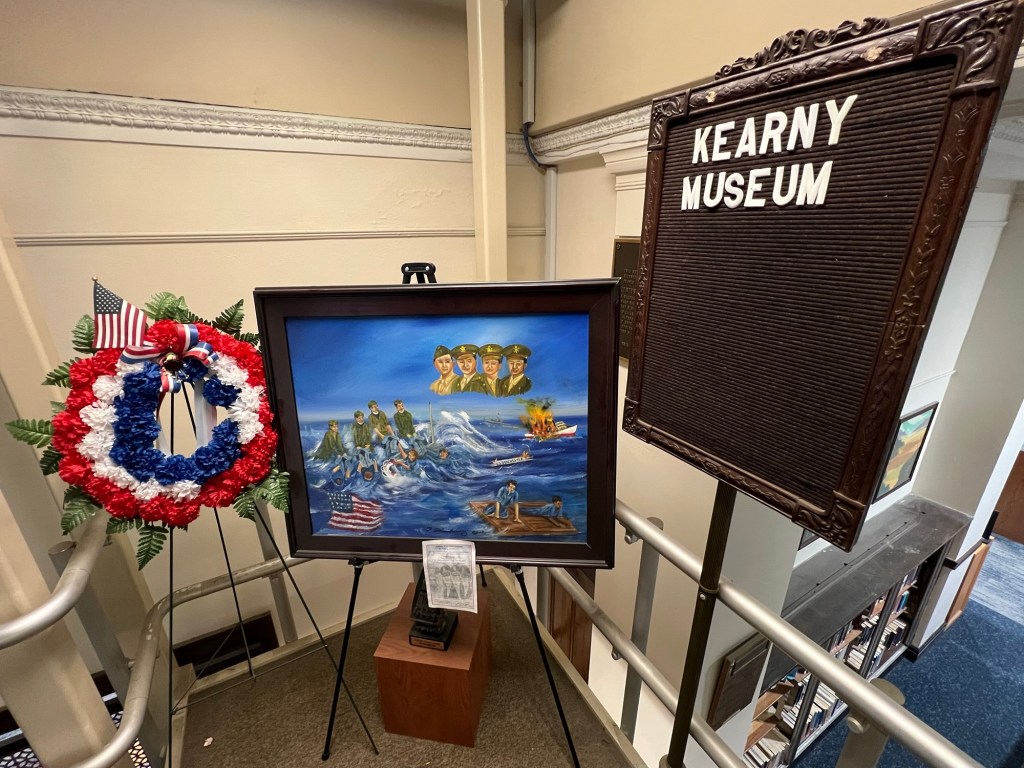
The entrance of the Kearny Museum on the second floor of the Kearny Library

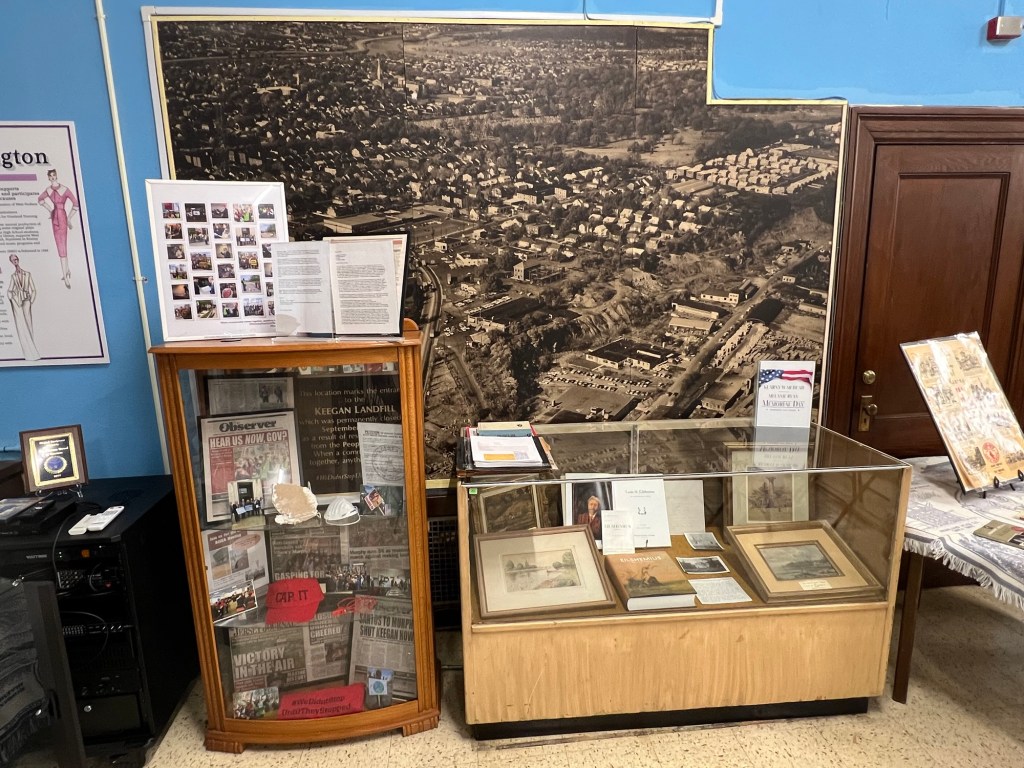
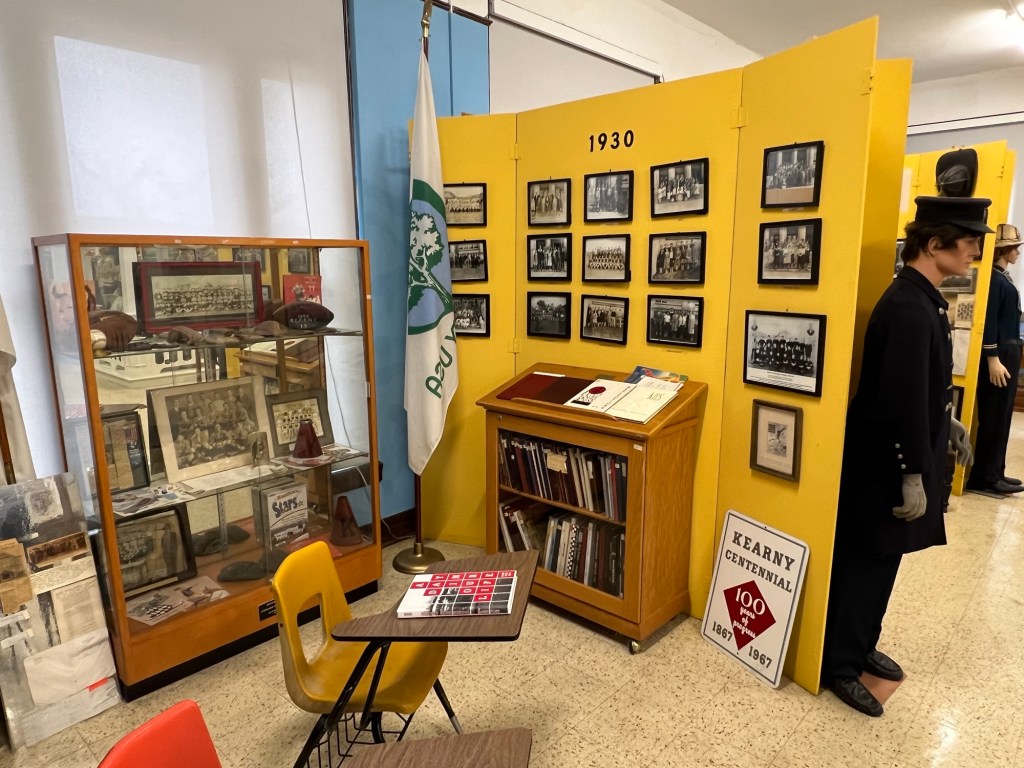
The main gallery of the museum with historical pictures of the town

The history of the community of businesses and organizations

The history of St. Cecilia School

The library docent explained that this statue of a soldier had been boxed up and hidden for years

Town artifacts from the schools and town organizations

Memorabilia from town organizations

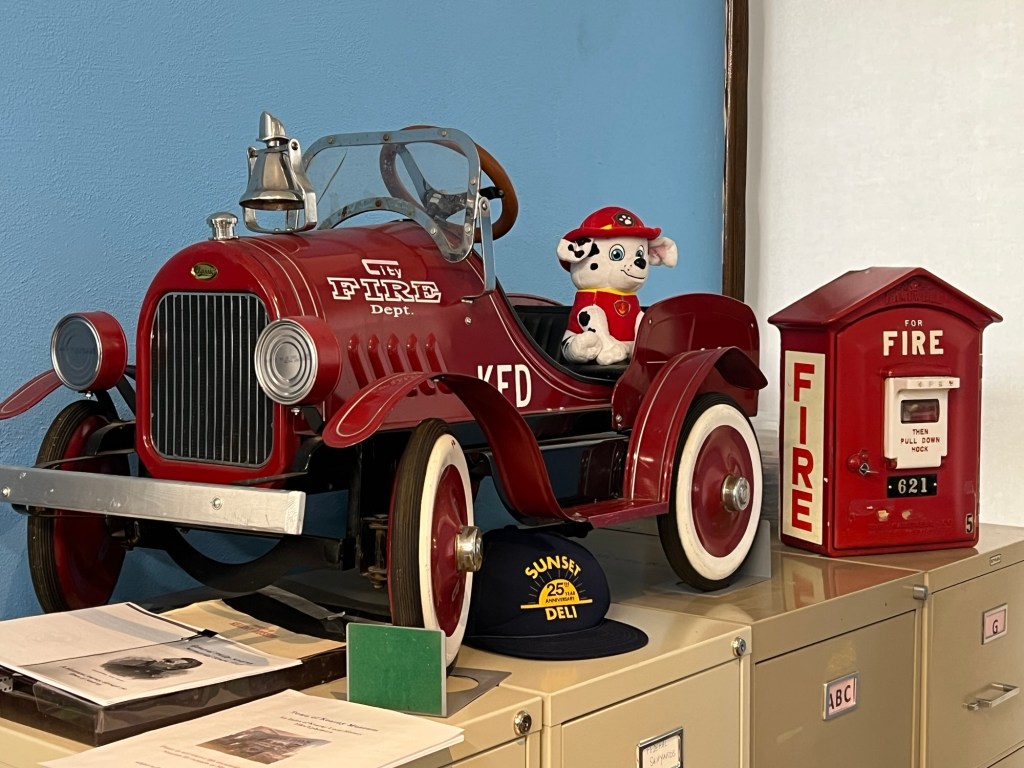
Display of firematic items

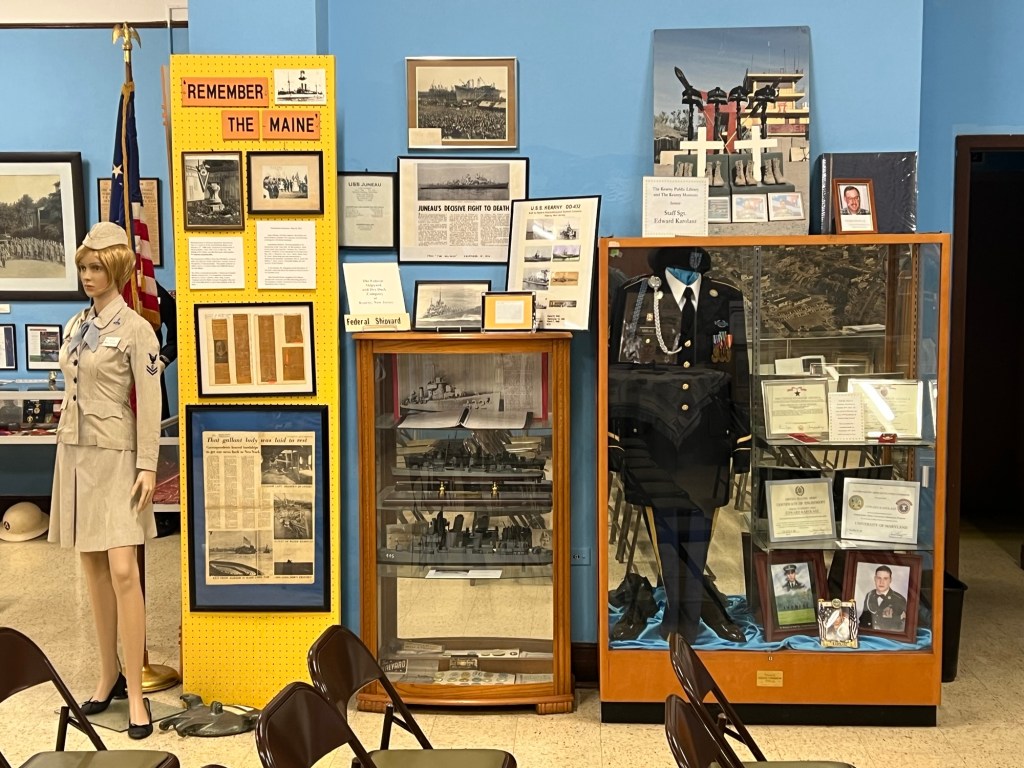
The displays included a large exhibit of military items, uniforms, artifacts donated from local veterans and newspaper clippings

The display covered all branches of the military

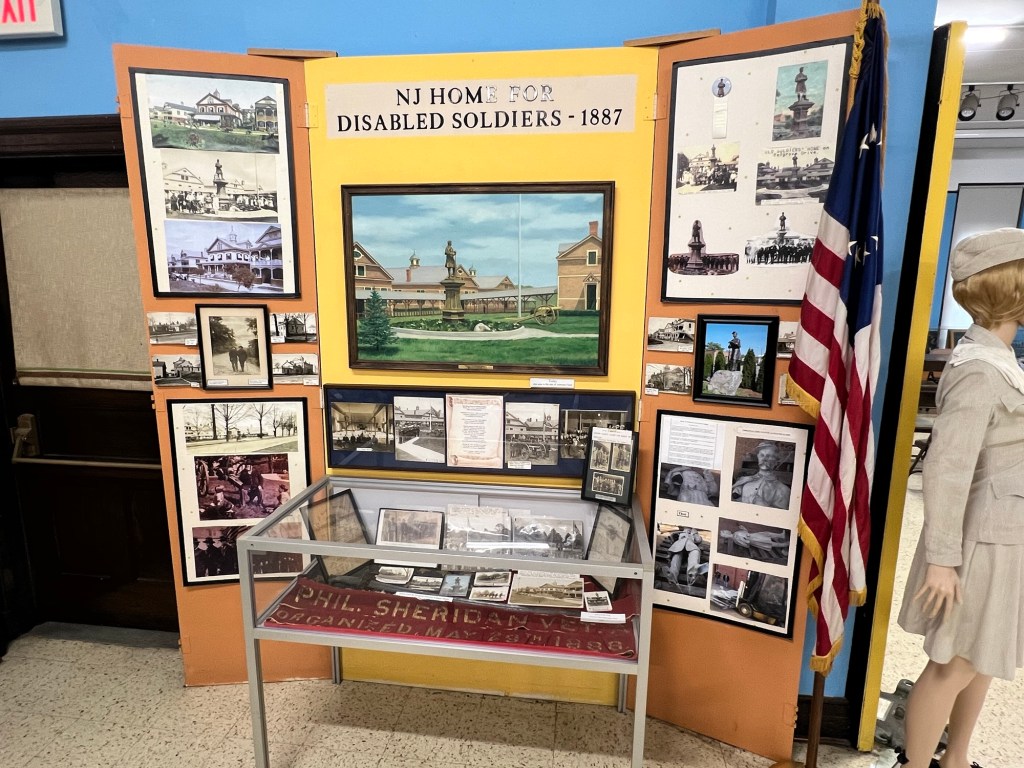
This exhibit was interesting of the old New Jersey home for Disabled Soldiers that no longer exists. This home for VFW was once located in the town.

The Library Directors video on the Disabled Home for Soldiers:

(from the museum website)

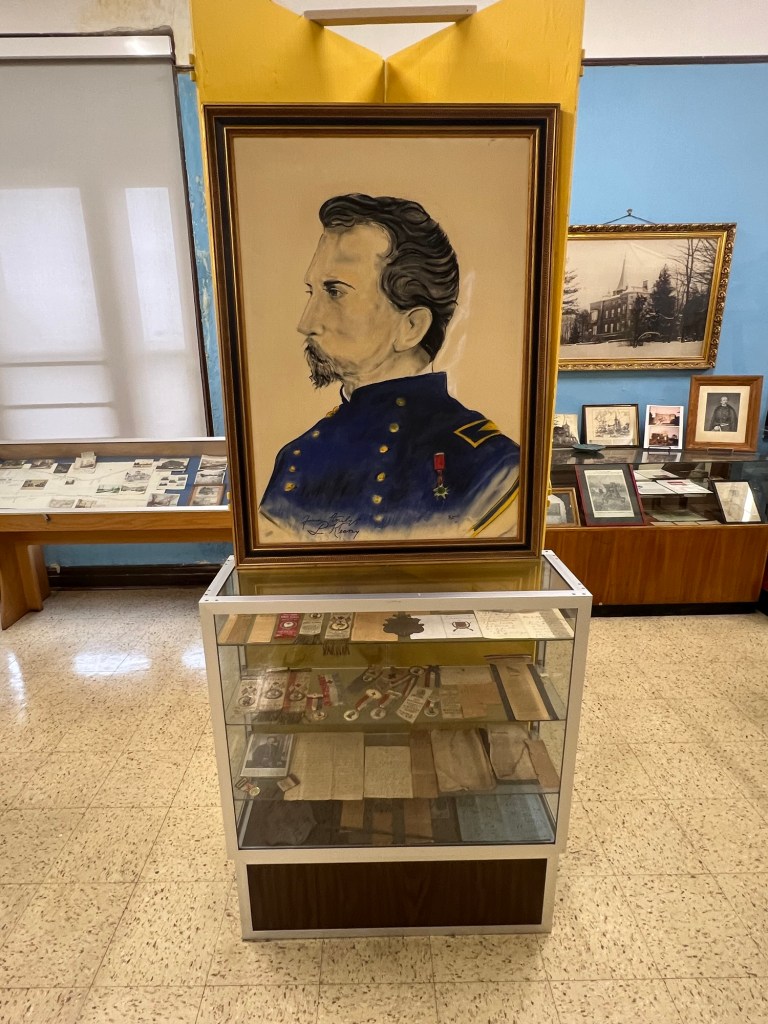
The next display on Major General Philip Kearny whom the town is named after

The General’s information

Major General Philip Kearny

https://en.wikipedia.org/wiki/Philip_Kearny

https://www.battlefields.org/learn/biographies/philip-kearny

The display on Major General Kearny was quite extensive and had many artifacts of his accomplishments including pictures and press clippings.

Library Director’s Video on the General:

(from the museum website)

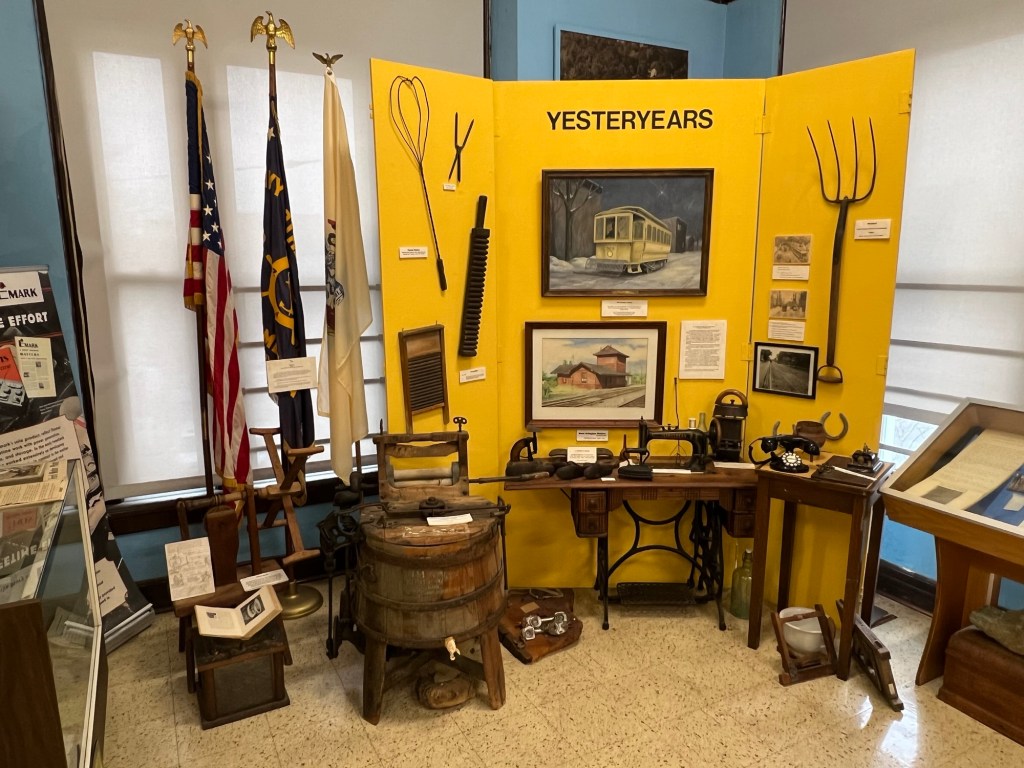
The next exhibit describes Kearny’s past as a rural farming community. This included farm equipment and household items found in a home in the turn of the last century.

Kearny’s past

A closer look at our rural past and how things have changed in the past 100 years

The town has a rich history in the fire and police services and the exhibits show the progress that these departments have made over the last several decades.

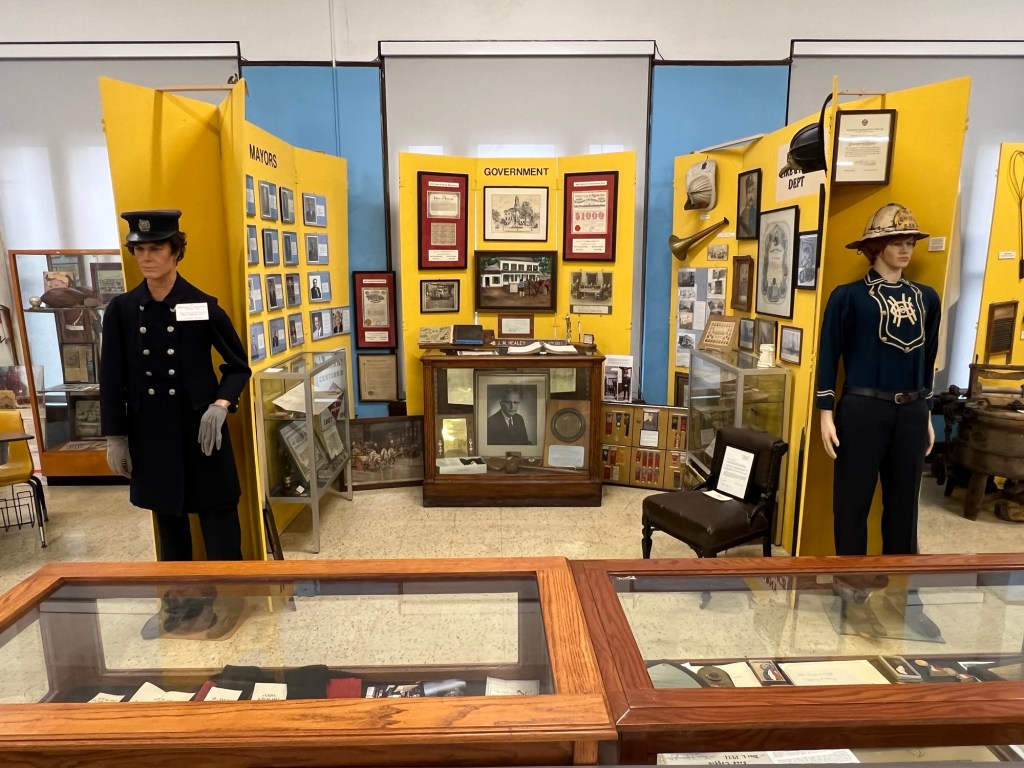
The display on the Kearny Fire and Police Departments

The artifacts in the Kearny Police and Fire exhibitio

The display of old Class A uniform

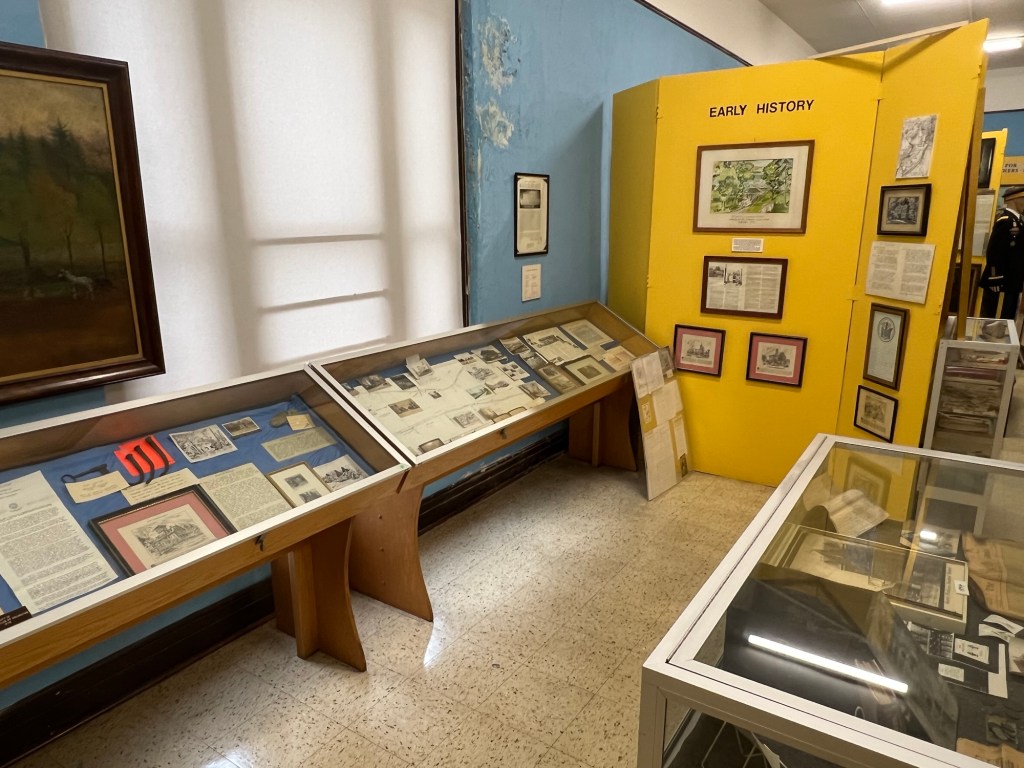
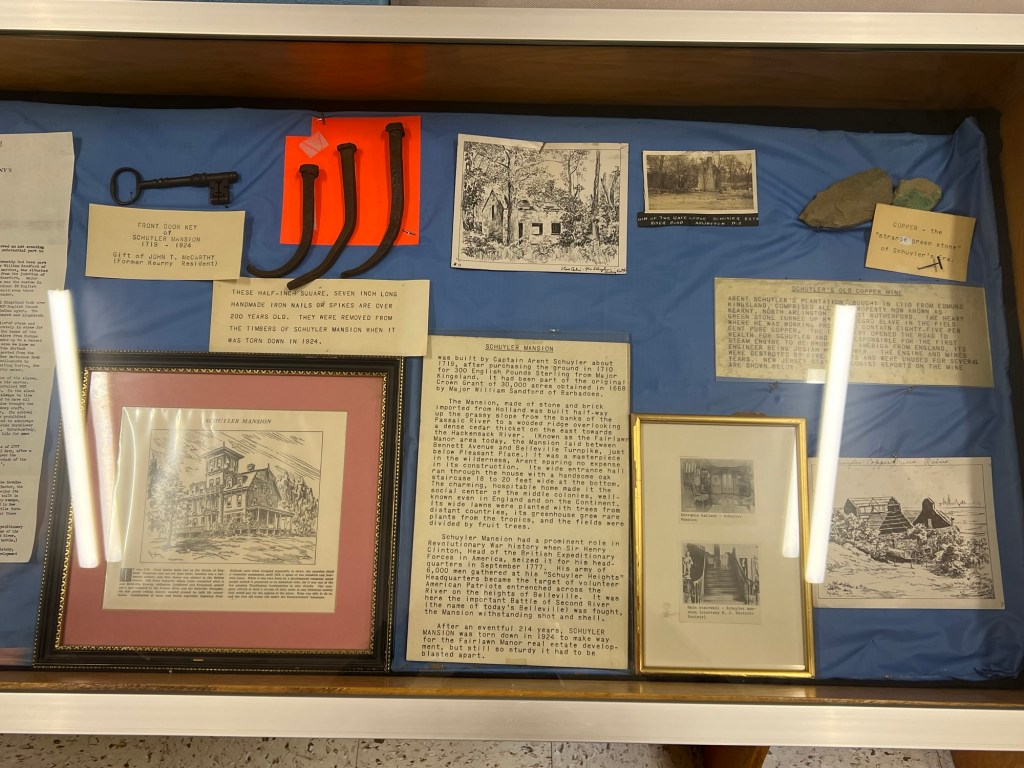
The early founding of the town was displayed in the next exhibit with artifacts and items from the early history before Kearny’s founding.

The Early History of the region

Items from early Lenape tribes to the founding of the railroads in the region

The role of the development of the early government to modern times was nicely displayed along with the history of each Mayor in the town’s history.

The history of the local government in Kearny, NJ

This lead back to the General’s role as a local hero and the founding name of the current town of Kearny, NJ.

A closer look at the General’s history

More history on General Kearny

The museum has a collection of items from local residents and town ‘hero’s’ whose collections are now part of the museum.

Stanley ‘Buck’ Brookes sports collection

There is also a collection of ‘old’ families of the Kearny region before the town was founded. This display is for early resident, William Sanford.

The artifacts from the William Sanford estate

The museum has an extensive display on the town’s school system and the changes it gone through over the past hundred years.

The school system in the 1920’s and 1930’s

The history of the town’s schools with band uniforms and graduation dresses

The Library Director’s video on the Kearny School System:

(from the museum website)

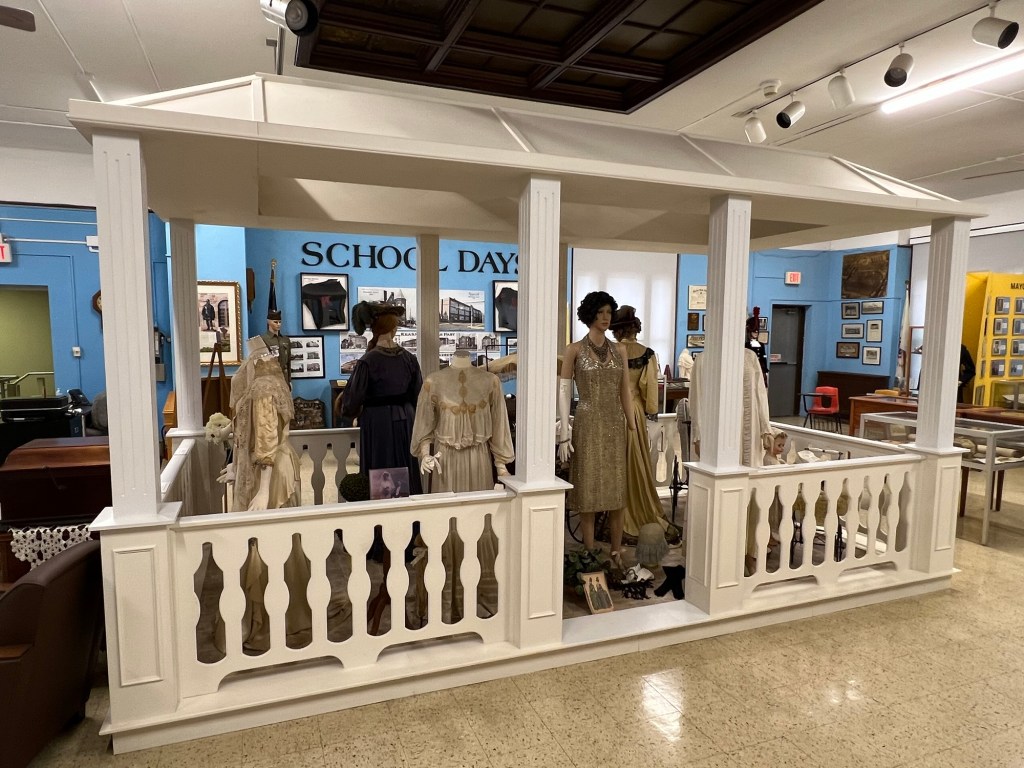
Artifacts from ‘School Days’ at the Kearny Public Schools

With the formation of the town schools and department, the town’s role in the growth of this part of New Jersey led to new industries being developed.

The history and development of industry in town

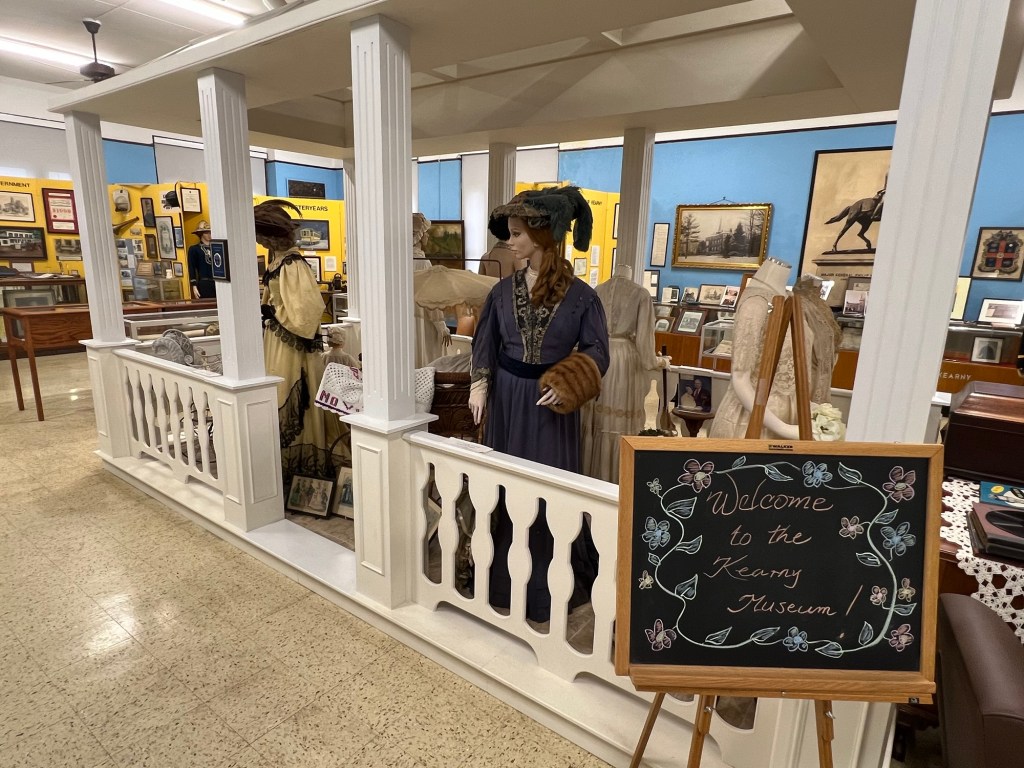
The center of the museum was reserved for a display of ‘Fashion’ through the ages. The display contains all sorts of gowns and wedding dresses through the last hundred and fifty years.

The ‘History of Fashion’ display

The various gowns, coats and tea dresses on display

Gowns from the 1920’s and 1930’s

Gowns from the 1920’s

Gowns from the turn of the last century

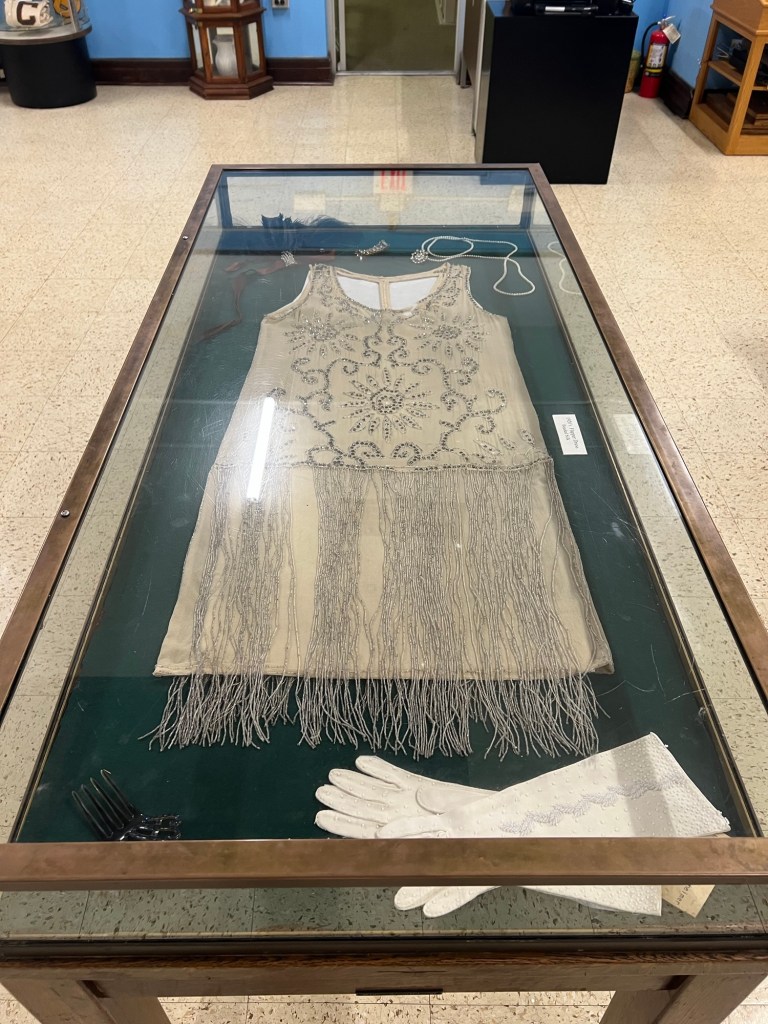
Flapper gown and accessories from the 1920’s

The museum has an extensive display of items that not just cover the history of the town and of its founding and development but of every day life of its citizens. This is all tucked away on the second floor of their local branch of the Kearny Library.

The Kearny Library is the home of the Kearny Museum

What is nice about the Kearny Library is that it sits in the middle of a very vibrant downtown filled with an array of restaurants and bakeries. I walked the downtown after my visit to the museum.

I came across O Pao Quente D’Avenida at 244 Kearny Avenue. This wonderful bakery had an assortment of Spanish and Italian pastries at very reasonable prices.

The bakery ‘O Pao Quente D’Avenida’ (Avenue of Warm Bread) at 244 Kearny Avenue

https://www.facebook.com/pages/O-Pao-Quente-D-Avenida/118731094806654

My review on TripAdvisor:

https://www.tripadvisor.com/ShowUserReviews-g46536-d33058168-r1001223975-O_Pao_Quente_D_avenida-Kearny_New_Jersey.html?m=19905

The selection of pastries were extensive and looked so delicious that I could barely choose between them.

The selection of pastries at the bakery included cakes, cream pastries and cream filled flips.

It was a tough choice but I chose the flip filled with Dulce Leche filling. Talk about delicious. I munched on it while exploring several blocks of the downtown.

The pastry flip with Dulce Leche filling and a sugary topping

It was a nice way to spend the afternoon. You have to explore the rest of the library and its beautiful historical building.

The Donald & Barbara Tober Exhibit Room/Conrad N. Hilton Library-The Culinary Institute of America Campus 1946 Campus Drive                                                               Hyde Park, NY 12538

The Donald & Barbara Tober Exhibit Room/Conrad N. Hilton Library-The Culinary Institute of America Campus 1946 Campus Drive Hyde Park, NY 12538

The Donald & Barbara Tober Exhibition Room/Conrad N. Hilton Library-The Culinary Institute of America Campus

1946 Campus Drive

Hyde Park, NY 12538

(845) 452-9600

https://library.culinary.edu/ciaexhibits

Open: When the library is open. Please check the website.

Admission: Free

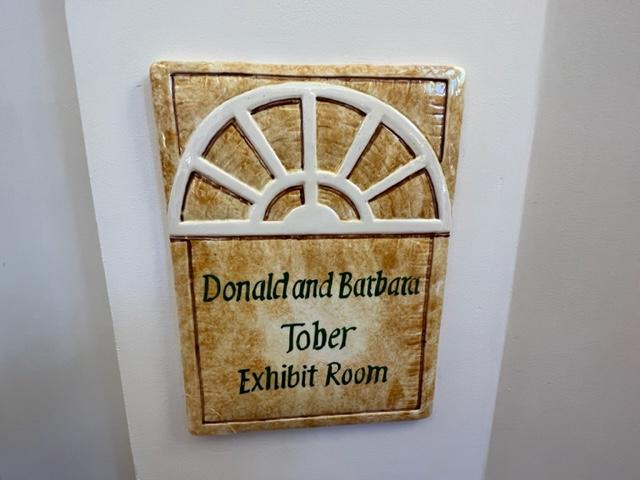
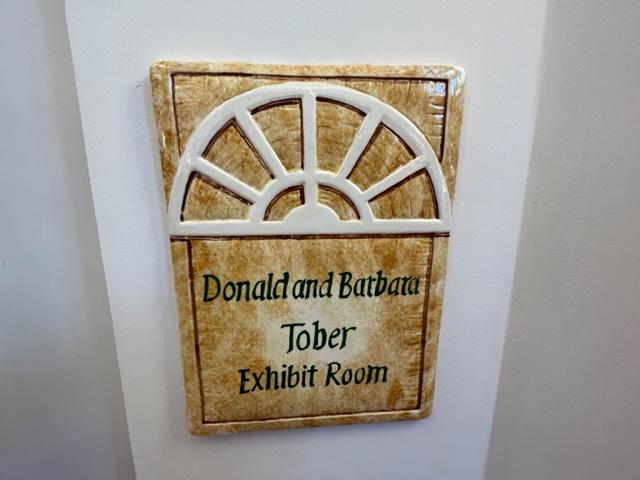
The Donald & Barbara Tober Exhibit Room plaque inside the Conrad N. Hilton Library hallway

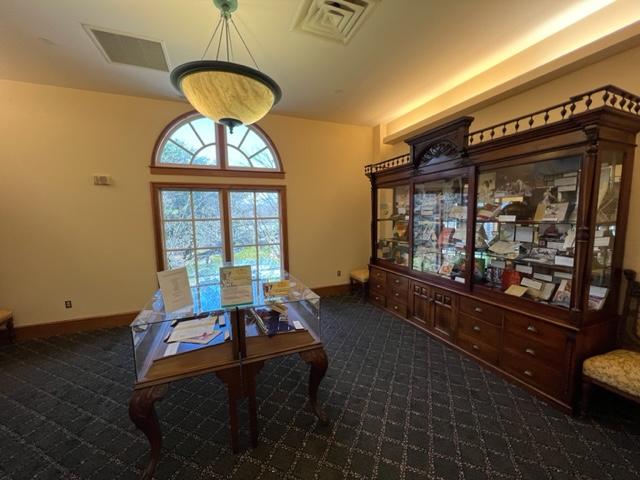
The Donald and Barbara Tober Exhibit Room is on the main floor of the Conrad N. Hilton Library. The exhibit room is open to the CIA community and to the public. The exhibition room has ongoing displays of culinary themed exhibits that cover topics involving the culinary world and food service. This is run by both the college and by students. It is not quite a museum but more of a display room of artifacts that are held by the Conrad N. Hilton Library and its archives.

The Hallway exhibition

The Hallway exhibition

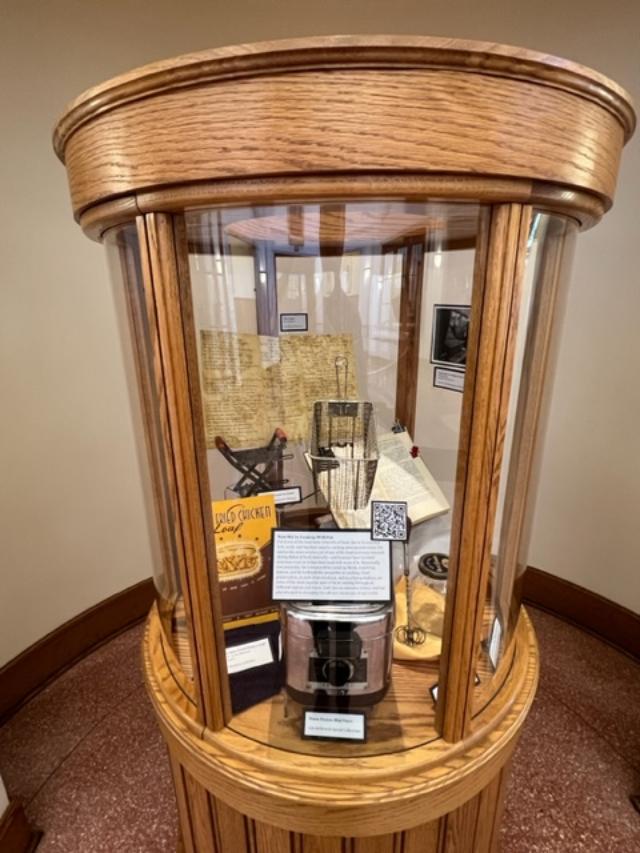
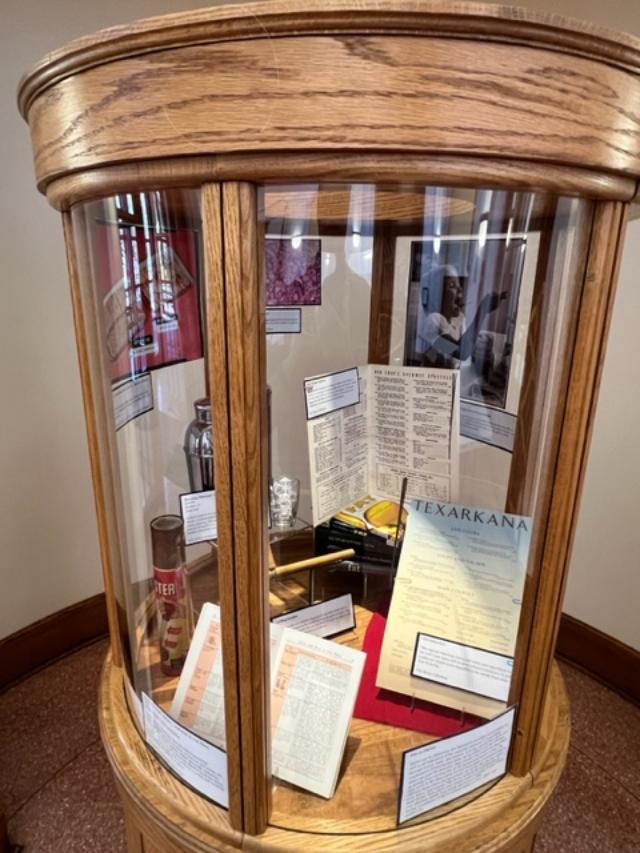
The two display cases are in the main entrance of the Conrad N. Hilton Library and hold more of the exhibition. These are displays of industry pamphlets and flyers plus menus and equipment.

The library exhibition of China pieces

The Menu Collection:

The Tober Room Exhibition space

The CIA’s menu collection began in the small library at the New Haven campus and was used as a reference tool by the culinary students.  By 1978, then in Hyde Park, the library had amassed a file of over 3,000 menus which were openly available to students and used regularly in their studies.  These menus still remain in the collection and are known as the “Original CIA Menu Collection.” They provided the foundation for the growing menu collection that was later added to by many prominent menu collectors and friends of the CIA.

Seth Bradford and Edward S. Dewey Menu Collection

Roland Chenus Menu Collection

Craig Claiborne Menu Collection

Roy Andries de Groot Menu Collection

This collection of nearly 800 menus, acquired by the CIA in 1984, were collected by the culinary writer and critic, Baron Roy Andries de Groot (1910-1983), during the course of editing his column, “A Moveable Feast,” for Esquire Magazine. The menus date primarily from the 1960s and 1970s and are from major U.S. cities (many from New York City), as well as Canada, France, Belgium, Spain, Puerto Rico, Hong Kong, and Thailand. Some menus include supplemental materials, as well as annotations by de Groot or his staff noting the date of visit, names of other guests, the chef’s name, and his evaluations and/or ratings.

Herbert Ernest Menu Collection

In 1987, Herbert Ernest donated to the CIA over 300 menus collected by his father, Semy Ernest. The menus date from 1889-1977 and include menus from restaurants and clubs in New York City, Boston, Indianapolis, Los Angeles, and San Francisco; international menus from France and Germany; and several menus from on board the Santa Magdalena ocean liner. This collection is rich in pre-1920 menus.

Greenebaum Menu Collection

The Greenebaum Menu Collection was donated to the CIA by Henry Greenebaum in 1989.  Greenebaum’s father, Michael H. Greenebaum, started the collection and it was continued by his two sons, Henry and Richard. It includes menus from 1905-1988, many international and many from railroads and ships.  Several menus are signed by the chef or proprietor.

Auguste Guyet Menu Collection

Donated to the CIA in 1989, this personal menu collection from Chef Auguste Guyet includes over 200 menus, mostly from France. The earliest are a Restaurant Julien special event menu and a Waldorf-Astoria wine list for the 27th annual banquet of the Hotel Association of New York City, both from 1906.

Bruce P. Jeffer Menu Collection

Bruce P. Jeffer donated his collection of 2,500 menus to the CIA in 2013. Jeffer, a California lawyer and wine connoisseur, began collecting menus during his travels as a child. The menus date from 1950s-1990s. Much of the collection is international menus from over 70 countries on 6 continents. A selection of these were featured in an exhibit in the Conrad N. Hilton Library in August 2013.

George Lang Menu Collection

George Lang, restaurateur and author, donated his personal collection of over 3,000 menus to the CIA in 1989. Many of these menus are international, including often under-represented countries such as Australia, Cuba, Hong Kong, Hungary and the Philippines. Although most menus date from 1950s-1970s, the earliest two menus are from Hotel Knickerbocker in New York City, 1907.

Vinnie Oakes Menu Collection

In 2000, Vinne Oakes donated his collection of over 200 menus to the CIA. The collection is strong in menus from restaurants in Nevada, as well as ship menus from the 1960s.

John Edward Oxley Menu Collection

Chapman S. Root Menu Collection

The Chapman S. Root Menu Collection of nearly 10,000 menus was donated by The Root Company in 2000. The largest collection recieved so far, it includes menus from almost every state (strongest in California, Florida and Nevada), and several foreign countries. The bulk of the menus date from 1960s-1980s, although the earliest are from 1878. Over 3,000 U.S. Railroad menus are an important highlight of the collection.

Chapman S. Root’s grandfather, Chapman J. Root, designed the classic green, ridged Coca-Cola bottle in 1915. At his grandfather’s death in 1945, Chapman S. Root inherited Associated Coca-Cola Bottling Plants, Inc. He traveled a great deal, mostly by car or train, and amassed an enormous menu collection. Friends, knowing of his interest, also contributed to his collection.

Jacob Rosenthal Menu Collection

Jacob Rosenthal, former president of the Culinary Institute of America, donated nearly 500 menus to the CIA menu collection. The bulk of these menus are from food and wine societies in the 1960s-1970s, including Confrerie des Chevaliers du Tastevin, Confrerie de la Chaine des Rotisseurs, and the International Food & Wine Society.  Also of note are several international menus from the 1930s-1950s.

Smiley Family Menu Collection

The Smiley Family Menu Collection was donated to the CIA in 1982 and 1993, a gift of Mohonk Mountain House. (The Smiley family are the founders and proprieters of the Mohonk Mountain House in upstate New York.) Three generations of Smileys traveled the world, by land and by sea, and collected menus along the way. This collection is rich in pre-1920 menus; menus from historically world-renowned resorts including Laurel-in-the-Pines (Lakewood, N.J.), Haverford Court (Pennsylvania) and Hotel Colonial and Royal Vicotoria Hotel (Nassau, Bahamas); beautifully-illustrated ship menus; and a selection of early menus from Mohonk Mountain House.
Lois Westfall Menu Collection

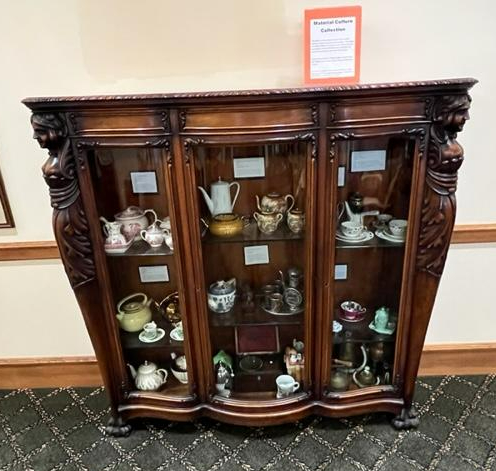
The display case in the main library showcases the collection of China and Silverware and decorative objects that are in the collection.

The Tober Room exhibition on “Fat” at the Conrad N. Hilton Library on the CIA campus

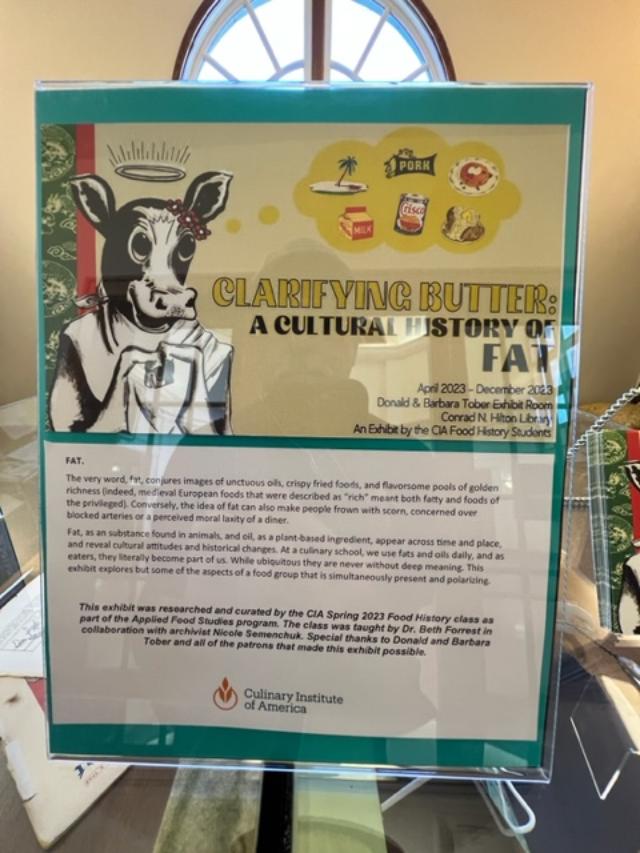
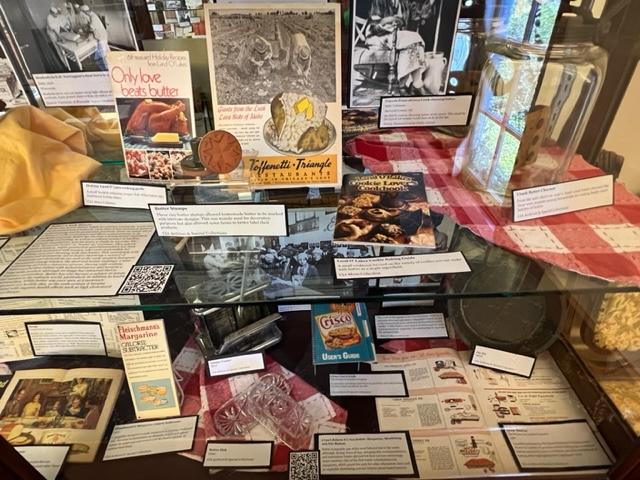
The exhibition that they were showing when I came up to visit was “Clarifying Butter: A Cultural History of Fat”. There were a lot of recipes, objects and equipment to make butter, understand the use of fats in cooking, recipes, menus and corporate information.

The description of the exhibition:

FAT. The very word, fat, conjures images of unctuous oils, crispy fried foods and flavorsome pools of golden richness (indeed, medieval European foods that were described as “rich” meant both fatty and foods of the privileged). Conversely, the idea of fat can also make people frown with scorn, concerned over blocked arteries or a perceived moral laxity of a diner.

Fat. as an substance found in animals and oil, as a plant based ingredient, appear across time and place and reveal cultural attitudes and historical changes. At a culinary school, we use fats and oils daily and as eaters, they literally become part of us. While ubiquitous they are never without deep meaning. This exhibit explores but some of the aspects of a food group that is simultaneously present and polarizing.

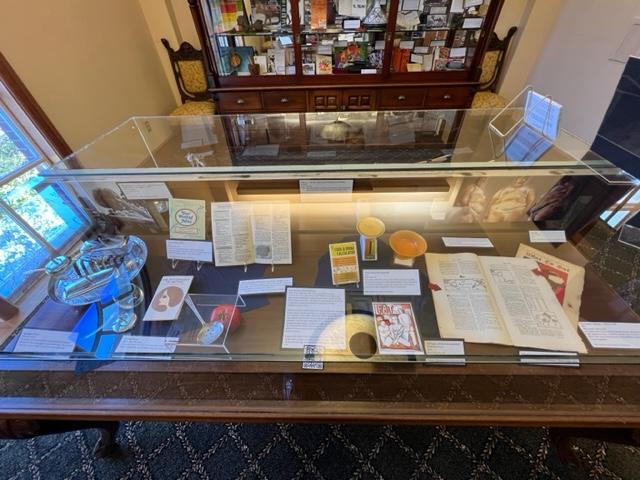
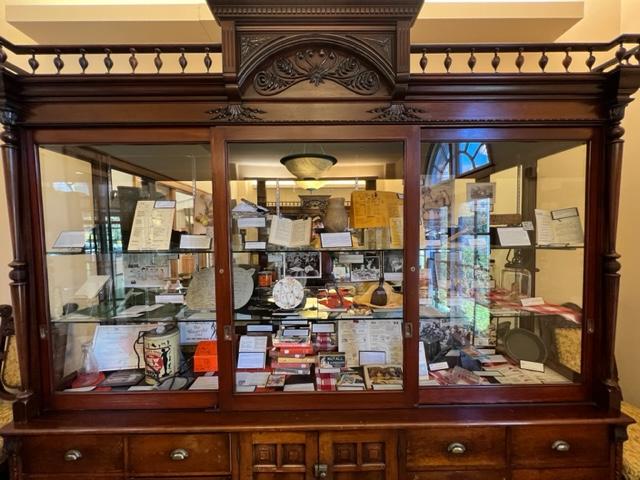
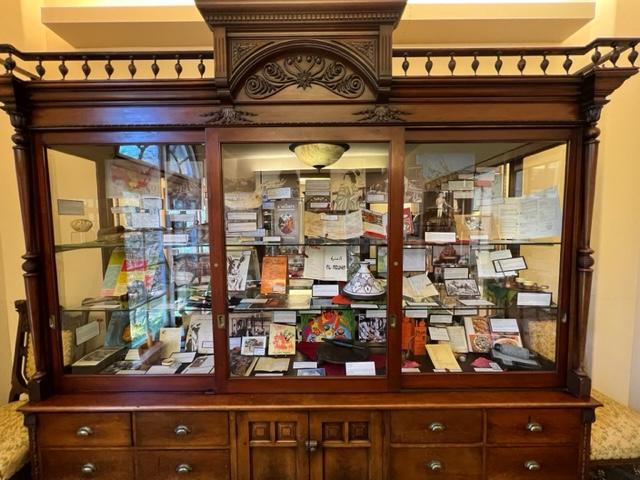
Both the two display cases and the middle display case were set with all sorts of information through the ages of the subject of fat, fried foods and items used to produce and make them.

The Display Cases in the Tober Room

The Display Cases in the Tober Room

The exhibitions here are very detailed and display over a hundred years of culinary arts research. The displays are revolving every quarter. The room is off to the right of the entrance to the library and is open for free to the public. It is a wonderful way to learn the aspects of food than in one of the best culinary libraries in the world.

A close up shot of the display case.

Day Two Hundred and Forty Visiting the Historical Sites of Southern New Jersey in Cumberland, Cape May and Salem Counties-A Local Journey on Father’s Day Weekend                                                             June 18th-19th, 2022

Day Two Hundred and Forty Visiting the Historical Sites of Southern New Jersey in Cumberland, Cape May and Salem Counties-A Local Journey on Father’s Day Weekend June 18th-19th, 2022

Grab your tour book and get in the car to visit all these wonderful sites. There is so much to see and do in Historical Southern New Jersey!

The Salem Historical Society

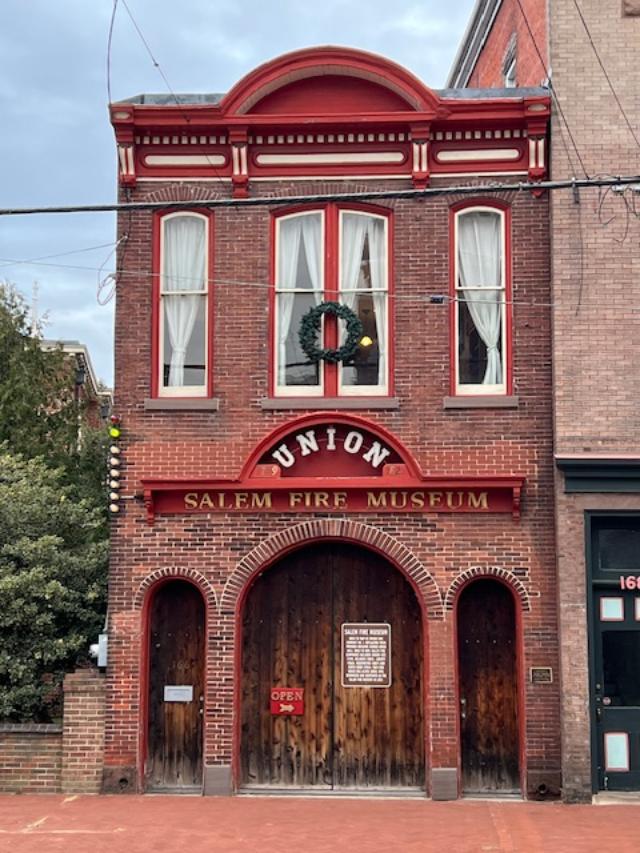
The Salem Fire Museum

jwatrel's avatarmywalkinmanhattan

The one thing I refuse to do on Father’s Day is to spend the day at the cemetery. I know that is some people’s idea of honoring one’s family members but it is not mine. I went on Friday and paid my respects to my father (whom this blog is dedicated to) and spent time remembering some of the good times we had in past. I dropped some cut flowers from our gardens (some of which he planted) and said a small prayer. Then I left.

My idea of honoring my father and spending Father’s Day with him is to do something that we would have shared together. We were always running around somewhere and exploring something new and doing something fun. That is how I wanted to honor him. By being active and giving him a toast at Sunday dinner.

I had gotten a pamphlet on the historical sites…

View original post 8,238 more words