Category: Historic Homes of New York City

Sara Delano Roosevelt Memorial House             47-49 East 65th Street                                        New York, NY 10065

Sara Delano Roosevelt Memorial House 47-49 East 65th Street New York, NY 10065

Sara Delano Roosevelt Memorial House

47-49 East 65th Street

New York, NY  10065

(212) 650-3174

Roosevelt House History

Sara Delano Roosevelt Library

Open: To Groups on Fridays and Saturdays and to individuals on Saturdays 10:00am/12:00pm/2:00pm

Fee: Free to Individuals/Donations welcome-Groups tours are $100.00 for up to five people with an additional $15.00 fee per person. There is also an administration fee of $25.00 for groups over 20 people.
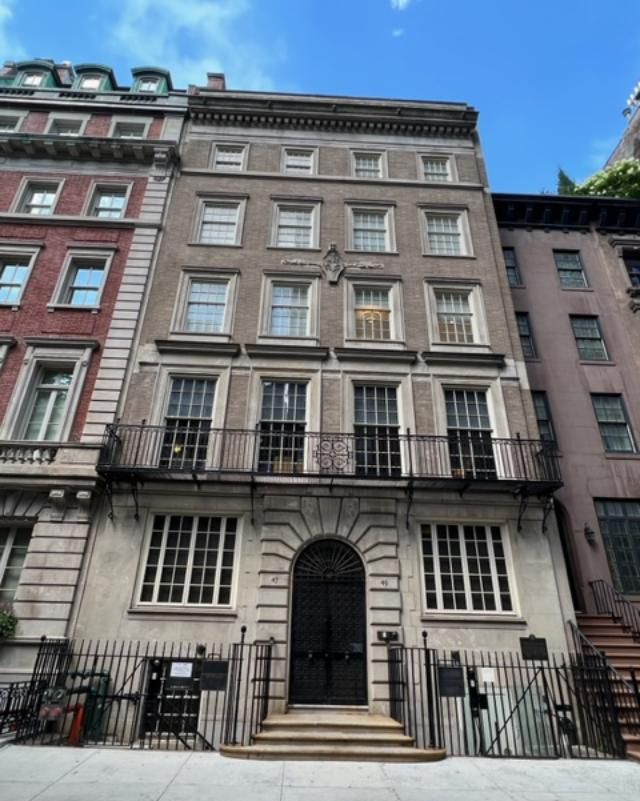
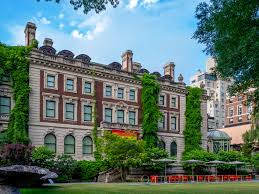
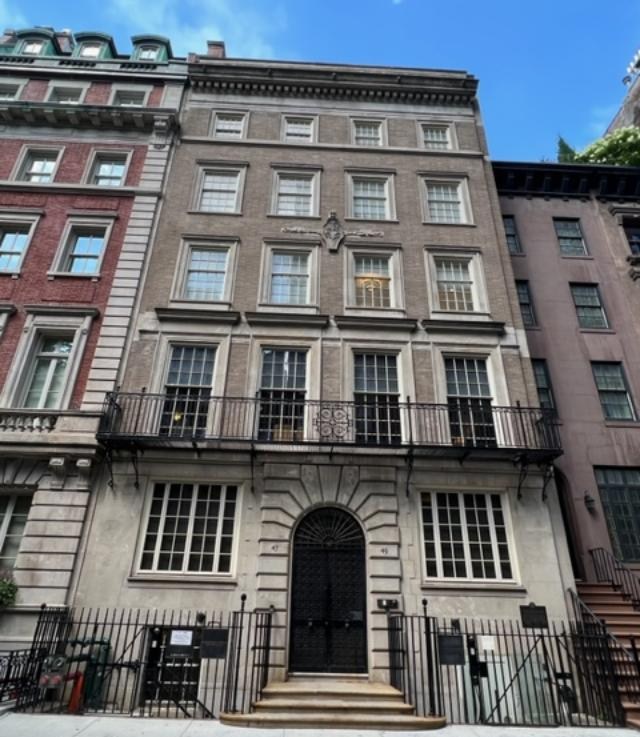
The Sara Delano Roosevelt Home at 47-49 East 65th Street

It is amazing what you discover when you are walking around the Upper East Side of Manhattan. I was exploring the Streets of the Upper East Side for my blog, ‘MywalkinManhattan’ and when walking around the Hunter College Campus came across the Sara Delano Roosevelt Memorial House at 47-49 East 65th Street.

This beautiful brownstone was built as a wedding present to Franklin Delano Roosevelt and his wife, Eleanor and their future family by his mother Sara Delano Roosevelt. It was their New York City residence until they moved to the White House. His mother continued to use the house until her death in 1941 when the home was sold to Hunter College.

Tours are available when the building is open (Hunter College is currently closed) and you can tour the whole house. The home was listed on the National Register of Historic Places in 1980.

History of the Sara Delano Roosevelt Memorial House:

The Neo-Georgian townhouse was designed by architect Charles A. Platt for Sara Ann Delano Roosevelt in 1907. It originally held “two mirror-image residences with a single facade and entrance. Each floor had its own front reception room with a welcoming fireplace. Rear parlous could be combined through sliding doors
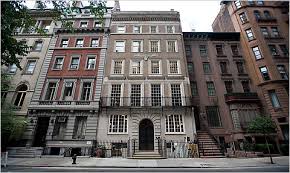
The mansion at 47-49 East 65th Street on the Upper East Side

The house was given to the Roosevelt’s by Franklin’s mother as a wedding gift for them. The house originally two homes and Franklin’s mother had doors put in place so she could enter their part of the home whenever she wanted. The house was used by Sara Ann Delano Roosevelt from its completion in 1908 to her death in 1941 and intermittently by the Roosevelts until the sale to Hunter College in 1943.
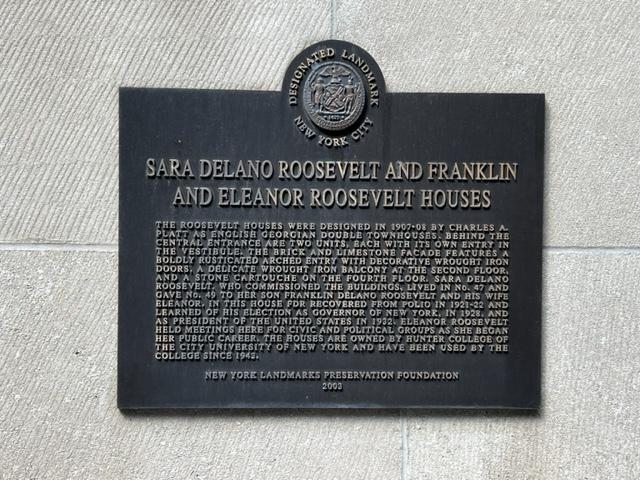
The house historical marker

After his mother’s death in 1941, President Roosevelt and his wife placed the house up for sale and a non-profit consortium was organized to purchase the house on behalf of Hunter College.
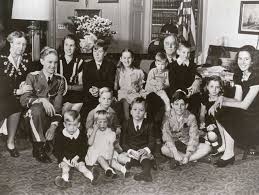
Sara Delano Roosevelt House IV

The Extended Roosevelt family

The house was closed in 1992 and reopened in 2010 after an $18 million renovation. Leslie E Robertson Associates was the structural engineers on this renovation. The building is currently used by Hunter College as the Roosevelt House Public Policy Institute at Hunter College or just known as the Roosevelt House.
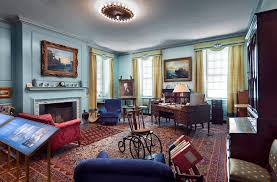
Sara Delano Roosevelt House

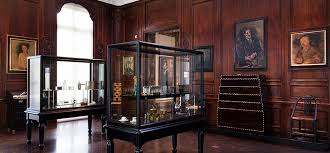
The inside of the house’s museum

(Disclaimer: This information was from Wiki and I give them full credit for the History of the Roosevelt House).

Video’s Related to the House on YouTube:

Visiting the Roosevelt House:

The History of the House:

Day One Hundred and Twenty Eight-The Victorian Christmas Walking Tour of the Ladies Shopping Mile with the Cornell Club December 15th, 2018

Day One Hundred and Twenty Eight-The Victorian Christmas Walking Tour of the Ladies Shopping Mile with the Cornell Club December 15th, 2018

To all of you history buffs and readers who like architecture, take this Victorian Walking Tour I took last Christmas. It really shows how the City keeps changing.

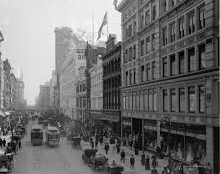
Ladies Shopping Mile in it’s heyday

The Ladies Shopping Mile today

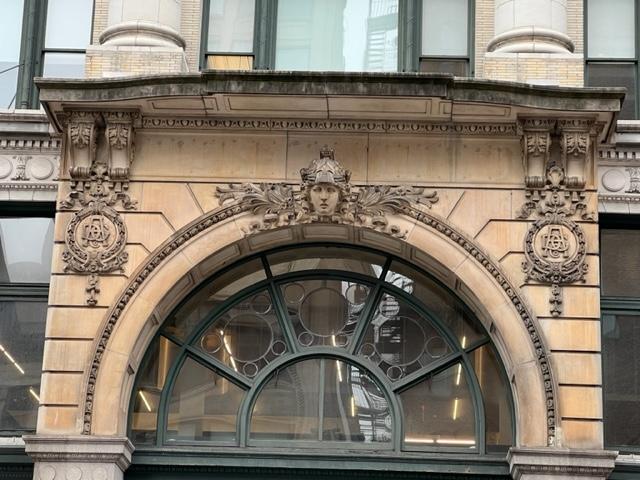
The beauty of the architecture of these stores. This is the Adams Dry Goods store.

jwatrel's avatarmywalkinmanhattan

On Saturday, December 15th, I met with other members of the Cornell Club to travel back to the Victorian Era and learn about the traditions of the Christmas past. We explored the Gramercy Park, Union Square and lower Sixth Avenue sections of the City to visit where a New York Victorian Christmas would be celebrated and honored.

We would be walking the old “Ladies Shopping Mile” that had been built up right after the Civil War when the disposable income  for Middle and Upper Middle Class residents had increased after the Civil War and people wanted to spend their money at the newly built department stores, shops and restaurants.  The Industrial Revolution was in full swing and shopping had changed with the development of the department store.

The tour took us past brownstones, parks, restaurants and old department stores that line the streets of Manhattan between East and West 21st Street…

View original post 4,032 more words

Cooper-Hewitt Smithsonian Design Museum              2 East 91st Street                                                New York, NY 10128

Cooper-Hewitt Smithsonian Design Museum 2 East 91st Street New York, NY 10128

Cooper-Hewitt Smithsonian Design Museum

2 East 91st Street

New York, NY  10128

(212) 849-8400

Home

Open: Sunday-Saturday 10:00am-6:00pm

Fee: Adults $18.00/People with Disabilities & Seniors $10.00/Children Under 18 Free/Students $9.00. Check the prices online as they change.

My review on TripAdvisor:

https://www.tripadvisor.com/Attraction_Review-g60763-d106188-Reviews-Cooper_Hewitt_Smithsonian_Design_Museum-New_York_City_New_York.html?m=19905


Cooper Hewitt Museum II.jpg

The Second Floor Design floor

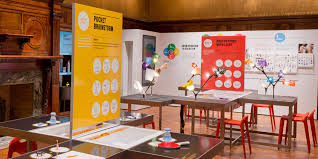
I recently visited the Cooper-Hewitt Smithsonian Design Museum for the first time. I can’t believe that all those years visiting the Met just down the road I had never stopped in the museum to take a peak. I went into see the “Nature-Cooper Hewitt Design Triennial” exhibition that was showing on all three floors of the museum. It was an interesting look on how nature plays a role in design and there is a beauty in the unusual shapes and colors that nature provides us.

Cooper Hewitt Museum IV.jpg

Third Floor studio

The first floor was composed of design found in nature. You will see blood samples that move and shiver, electric movements and the role of it in nature and how plants and animals can be shown in simplest terms. On the second floor, you will see the prints in clothing and in home décor and see how color and design enhance beauty in an every day environment. The third floor will show more home décor and design objects.

Cooper Hewitt Museum III.jpg

The First Floor Elements

What is unique about the museum is how the mansion was converted into display areas and the use of the interior was blended into fabric of the museum. Take time to look at the areas around the staircases to admire the ceiling and the walls. It must have been a very grand home in its day.

Cooper Hewitt Museum V.jpg

The stairs of the mansion

Purpose of the Museum:

The Cooper Hewitt Smithsonian Design Museum is a design museum located in the Upper East side’s Museum Mile in Manhattan. It is the only museum in the United States devoted to historical and contemporary design. Its collections and exhibitions explore approximately 240 years of design aesthetic and creativity. In June 2014, the museum changed its name from Cooper-Hewitt, National Design Museum to Cooper Hewitt, Smithsonian Design Museum and reopened to the public that December (Wiki).

Cooper Hewitt Museum.jpg

History of the Museum: (Provided by Wiki)

The Cooper-Hewitt Museum was founded in 1896. It was originally named Cooper Union Museum for the Arts of Decoration and it fell under the wing of the Cooper Union for the Advancement of Science and Art. In 1895, the granddaughters of Peter Cooper, Sarah Cooper Hewitt, Eleanor Garnier Hewitt and Amy Hewitt Green, asked the Cooper Union for a space to create a Museum for the Arts of Decoration. The museum would take its inspiration from the Musee des Arts Decoratifs, Paris. The museum would serve as a place for Cooper Union students and professional designers to study decorative arts collections. Cooper Union trustees provided the fourth floor of the Foundation Building. It opened in 1897. It was free and open three days a week (Wiki).

The museum and the art school started to distance themselves from on another in regards to programming. Other departments of the Cooper Union were making financial demands and the Cooper Union announced that they would close the museum. This led to the museum being closed on July 3, 1963. Public outcry was strong against the closing. A committee to Save the Cooper Union Museum was formed by Henry Francis Du Pont (Wiki).

The American Association of Museums developed a case study about the future of the museum. Negotiations then began between the Cooper Union and the Smithsonian Institution. On October 9, 1967, Smithsonian Secretary S. Dillon Ripley and Daniel Maggin, the chair of the Board of Trustees signed an agreement turning over the collection and library of the museum to the Smithsonian. On May 14, 1968, the New York Supreme Court transferred to the Smithsonian and the museum was renamed the Cooper-Hewitt Museum of Design. The following year, 1969, it was renamed as the Cooper-Hewitt Museum of Decorative Arts and Design. In October of that year, Lisa Taylor became the Director (Wiki).

The museum, which was the first Smithsonian museum outside of Washington DC, moved to its home at the Andrew Carnegie Mansion in 1970. The Mansion was renovated and the museum opened to the public on October 7, 1976 with the exhibition “Man transFORMs”. A conservation laboratory was opened in July 1978. The Samuel H. Kress Foundation funded the lab and it focuses on textile and paper conversation. Lisa Taylor retired in 1987 and in 1988 Dianne H. Pilgrim took her place as Director. In 1994, the museum’s name was changed again to Cooper-Hewitt, National Design Museum. Pilgrim retired from the museum in 2000. In 2000, Paul W. Thompson became Director. On June 17, 2014, the museum’s name was changed again to Cooper Hewitt, Smithsonian Design Museum. A new graphic identity, wordmark and new website was launched on this day. This identity was designed by Eddie Opara (Wiki).

The building is located in the Andrew Carnegie Mansion. The Georgian style mansion was built over the course of years 1899 to 1902 and has sixty rooms. The home served as not only the home for Andrew Carnegie, his wife and daughter but also as his office for his philanthropic work after his retirement. The mansion was designed by  Babb, Cook & Willard. It was the first private residence in the United States to have a structural steel frame. It was the first home in New York to have an Otis elevator (Wiki).


Neue Galerie New York                                      1048 Fifth Avenue                                               New York, NY 10028

Neue Galerie New York 1048 Fifth Avenue New York, NY 10028

Neue Galerie New York

1048 Fifth Avenue

New York, NY  10028

(212) 628-6200

neuegalerie.org

@neugalerieny

Open: Sunday 11:00am-5:00pm/Monday 11:00am-6:00pm/ Tuesday and Wednesday Closed/Thursday-Saturday 11:00am-6:00pm

Café and Shops have various hours. Please check the website for these.

Fee: General $22.00/Seniors (65 and Older) $16.00/Students and Educators $12.00/Children under 12 are not admitted and Children under 16 years old must be accompanied by an adult. The museum is open on First Fridays from 6:00pm-9:00pm. Please visit the website for more information.

My review on TripAdvisor:

https://www.tripadvisor.com/Attraction_Review-g60763-d258699-Reviews-Neue_Galerie-New_York_City_New_York.html?m=19905


I visited the Neue Galerie for the first time after passing the building on the way to the Metropolitan Museum of Art. This interesting little gallery space has some interesting pieces to see and many decorative objects in the cases.

The gallery space for special exhibitions on the third floor was closed when I visited and being an educator, I got a half price discount off the educator rate was a nice deal.

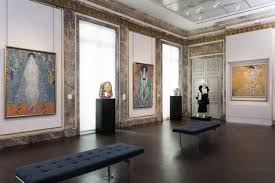
It was a thrill to finally see the famous Gustav Klimt painting of the “Woman in Gold” that had been such a controversial piece during the Nazi occupation in Germany. It’s beautiful detail work was very innovative then. After all the fighting over the painting it is nice to see that the family sold it to the museum to share it with the world. The gallery where the painting hangs has more works by Gustav Klimt and you can see the extent of his work along the walls of the gallery.

Neue Gallery II

The ‘Woman in Gold’

The side galleries are full of all sorts of objects of art for the home such as chairs, silverware, dishware, clocks and decorative objects. There was a lot of items that still are contemporary in their fashion. The back gallery on the second floor is full of paintings by various German artists.

neue Gallery IV.jpg

The Decorative Objects Gallery

The whole museum you can see in about an hour when the special galleries are closed. There is also Cafe Sabarsky on the main floor, a Viennese cafe the serves German food like sausages, salads and pastries. The restaurant is a little over-priced for what it is.


History of the Neue Galerie New York:

Neue Galerie New York is a museum devoted to early twentieth-century German and Austrian art and design. Located in a landmark mansion built in 1914 by the architectural firm of Carrere & Hastings, the museum offers a diverse program of exhibitions, lectures, films, concerts and other events. The second floor galleries are dedicated to a rotating selection of fine and decorative art from Vienna circa 1900, including work by fine artists Gustav Klimt, Egon Schiele and Oskar Kokoschka and decorative artists Josef Hoffmann, Koloman Moser and Adolf Loos. The third-floor galleries present German fine and decorative art of early twentieth century, including work by Max Beckmann, Ernest Ludwig Kirchner, Paul Klee and Marcel Breuer. The third floor is also the site for special exhibitions that focus on key individuals and movements, articulating a more complete vision of twentieth-century German and Austrian art (Neue Galerie New York History).

The Gustav Klimt Gallery

Neue Gallery III


Neue Galerie New York was conceived by two men who enjoyed a close friendship over a period of nearly thirty years: art dealer and museum exhibition organizer Sege Sabarsky and businessman, philanthropist and art collector Ronald S. Lauder. Sabarsky and Lauder shared a passionate commitment to Modern German and Austrian art and dreamed of opening a museum to showcase the finest examples of this work. After Sabarsky died in 1996, Lauder carried on the vision of creating Neue Galerie New York as a tribute to his friend (Neue Galerie New York History).

The German art collection represents various movements of the early twentieth century: the Blaue Reiter and its circle (Vasily Kandinsky, Paul Klee, August Macke, Franz Marc, Gabriele Munter) the Brucke (Erich Heckel, Ernest Ludwig Kirchner, Hermann Max Pechstein, Karl Schmidt-Rottluff), the Bauhaus (Lyonel Feininger, Paul Klee, Laszio Moholy-Nagy, Oskar Schlemmer), the Neue Schlichkeit (Otto Dix, George Grosz, Christian Schad) as well as applied arts from the German Werkbund (Peter Behrens) and the Bauhaus (Marianne Brandt, Marcel Breuer, Ludwig Mies van der Rohe, Wilheim Wagenfeld) (Neue Galerie New York History).

Cafe Sabarsky located in a spectacular wood-paneled room on the ground floor has become a favorite spot for New Yorkers. Operated by acclaimed chef Kurt Gutenbrunner, it evokes the great fin-de-siecle cafes of Vienna. The Book Store fills the former library of the mansion and specializes in publications on fine art and architecture from Germany and Austria. The Design Store features objects based on original works by Marianne Brandt, Josef Hoffman, Adolf Loos and other major designers of the era (Neue Galerie New York).