Category: Exploring the Island of Manhattan

Long Beach Island Historical Association Museum            129 Engleside Avenue                                      Beach Haven, NJ 08008

Long Beach Island Historical Association Museum 129 Engleside Avenue Beach Haven, NJ 08008

Long Beach Island Historical Association Museum

129 Engleside Avenue

Beach Haven, NJ  08008

(609) 492-0700

http://www.lbimuseum.com/

Open: July and August Sunday-Saturday 10:00am-4:00pm/June & September Saturday & Sunday 12:00pm-4:00pm. Special Appointments can be made at other times of the year and the museum is open for special events held by the town and for the holidays.

Fee: Adults: $5.00 donation/Children under 12 years old Free

My review on TripAdvisor:

https://www.tripadvisor.com/Attraction_Review-g46292-d11444615-Reviews-Long_Beach_Island_Historical_Museum-Beach_Haven_Long_Beach_Island_New_Jersey.html?m=19905

This seasonal museum is a ‘must see’ on Long Beach Island when visiting the town of Beach Haven. It is the perfect rainy day place to visit. The museum covers all aspects of the history of the island from its time when the Native Americans lived and fished here to the coming of the English. The museum shows in pictures and artifacts how the island was developed into a Summer resort retreat catering to middle class and wealthy tourist mostly from Philadelphia.
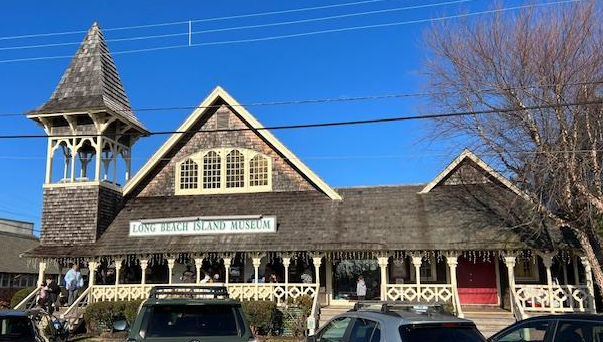
The Long Beach Island Historical Society at 129 Engleside Avenue.

The artifacts range from arrowheads and fishing equipment that the Native Americans left behind to a recent discovery of an old wooden boat created by the Leni-Lenape  tribe. The museum describes in detail life in the Victorian Age on the island with a series of pictures of the old resort hotels, most of which have burned down over the last 100 years, to artifacts that from this time including china, silver and menus from the hotels. There is also a creation of a Victorian room, a telephone operator office, rail office and a children’s toy display from that time.

The Front Room of the museum during the Elf Workshop in 2023.

This is an interesting display of the fishing industry on the island as well. There is all sorts of equipment that has been used over the last 100 years and the progress that has been made in the industry. There are exhibits on the whaling industry and its lasting affects on the island.
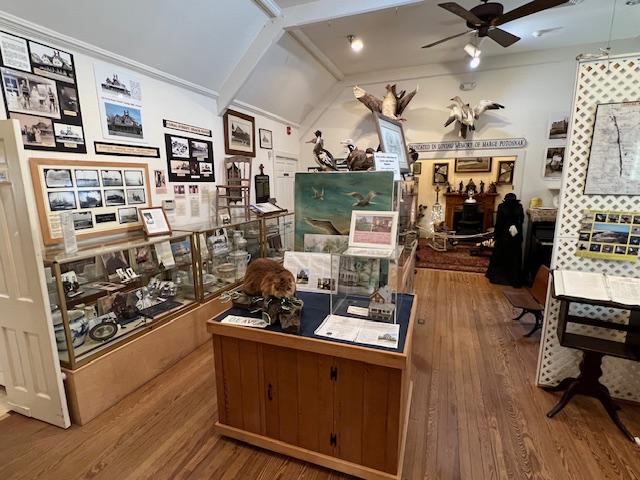
The nautical display at the Long Beach Historical Society.

There is also the story of the shifting of the tides and the disappearance of Tucker’s Island, a small island to the south of Long Beach Island that has since disappeared underwater due to the shift in the currents. Each area of the museum contains interesting pieces of the island’s past and you should take the time to look at each section carefully.

The disappearance of Tuckerton Island and the rise of the railroads in the area.

For such a small museum, it is packed with interesting facts and a fascinating story of the development of the New Jersey shoreline and the role it is playing in our ever changing life down the shore.

The Lucy Evelyn exhibition.
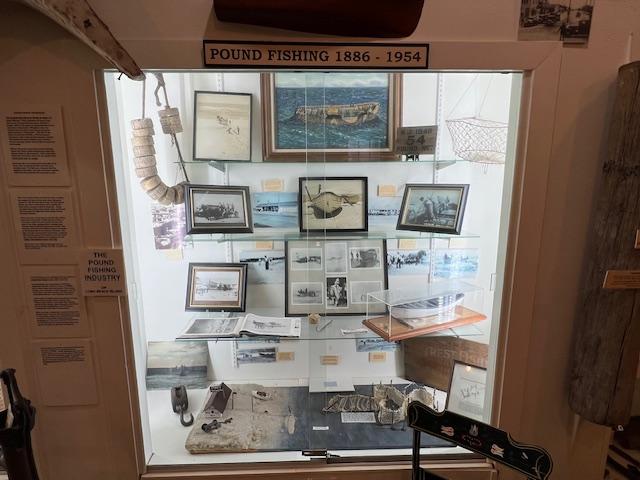
Pound Fishing at the museum.

The back room display with the history of the community.

I stopped in for a recent special event that the Society was having to celebrate Halloween. The museum was having an ‘Ghost Fest-Open House” event for families and what a nice program they had for the kids and their family members that was socially distanced and safe.
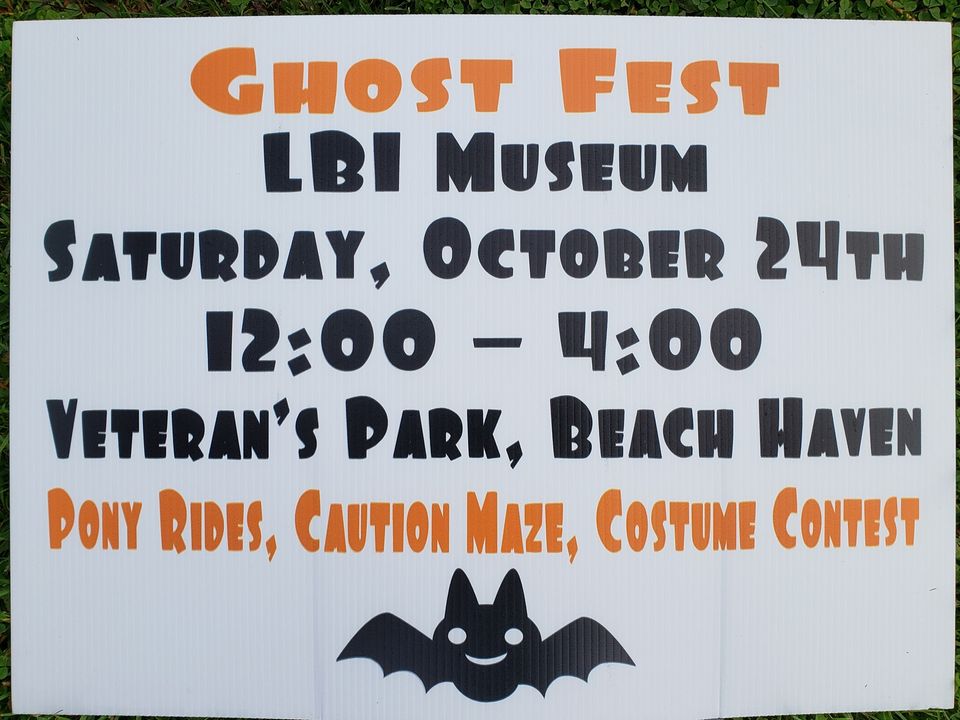
The ‘Ghost Fest’ Halloween Festival at the museum.

There were pony rides, a maze to explore, marshmallow toasting by the fire to make smores, corn hole tossing, games of chance, a gift store for the kids and even a costume parade with the “Jersey Devil” which the kids seemed to get a kick out of when he came out.
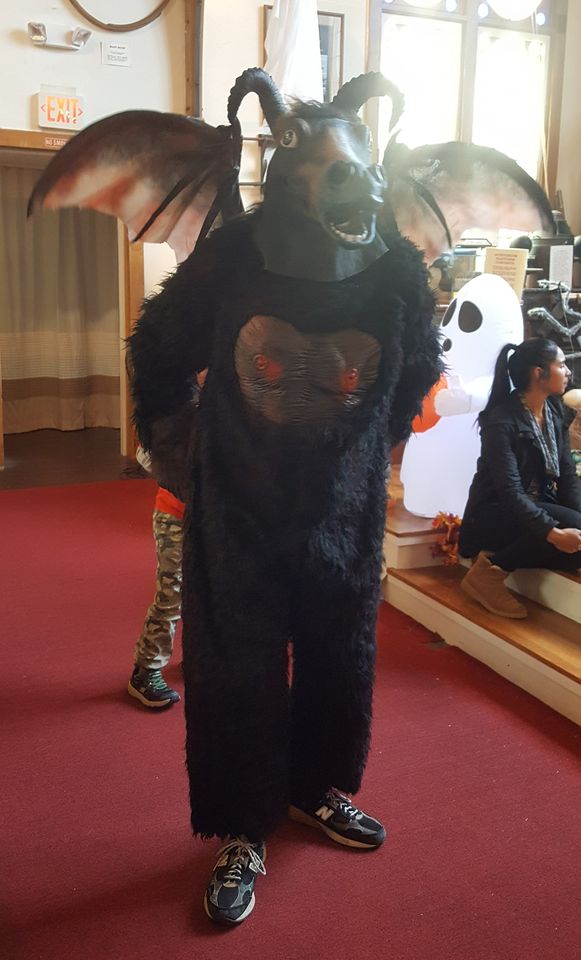
The Jersey Devil lead the Halloween Parade

There were also self-guided tours of the museum which were a lot of fun as well as people were coming in and out looking at the holiday displays. It was a nice that the museum had a safe program for the patrons and members of the community.
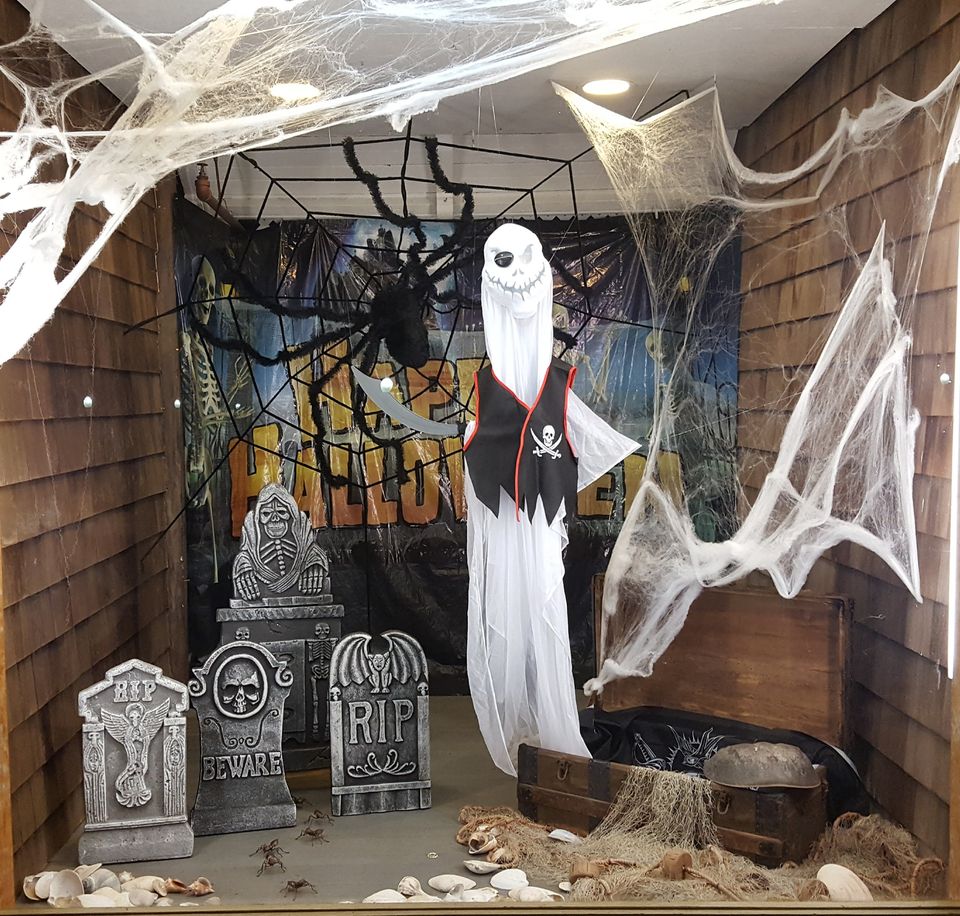
The Museum was decked out for Halloween

In November of 2021, the museum had the nicest little Christmas festival. They had tables around the front hall of the museum called “The Elves Workshop” with stations that the kids could create arts and crafts for the Christmas holidays with cookie decorating, gingerbread house creating and making a jewel covered Christmas tree among other things. The museum was decorated for the upcoming holidays.
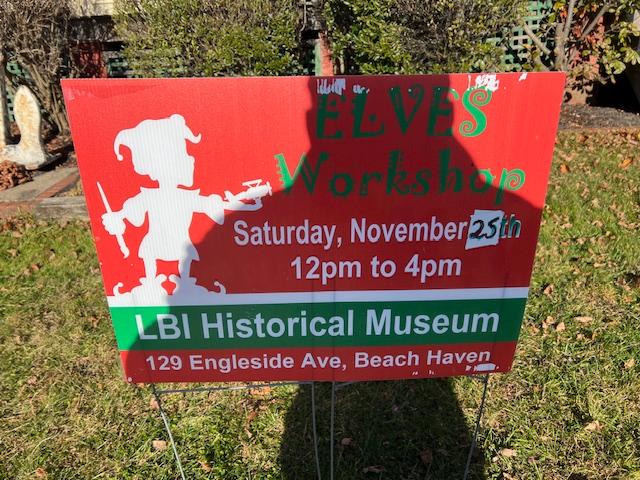
Santa is on his way to Long Beach Island is the front display of the museum
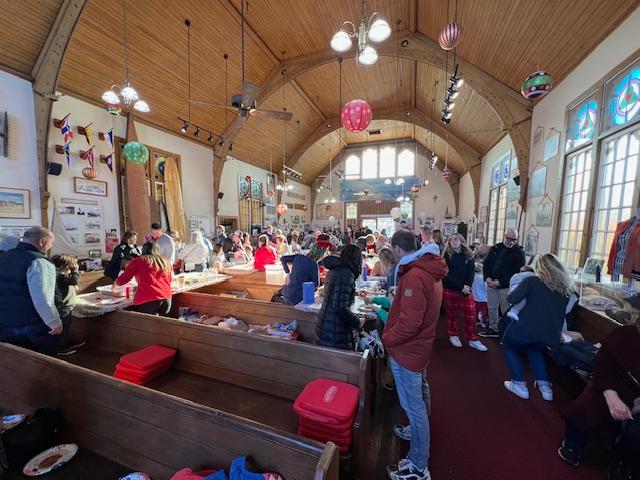
The community involved in the Christmas activities.

From 4:00pm to 6:00pm that evening, the participants went the park across the street to roast marshmallows and Smores over open fire pits while Christmas music played in the background and the gazebo was lit with Christmas lights as it got dark. It was quite a site.

The Museum really puts you in the Christmas spirit with events like these.

It really put you in the holiday spirit.

The Christmas window at the Historical Society.

Mission Statement:

The Long Beach Island Historical Association collects, preserves and interprets the history of Long Beach Island through its educational programs, guest lecturers, walking tours, special events and an ever growing research center. The museum, situated at the center of Beach Haven’s Historic District, showcases 24 exhibits which include over 450 photographs and hundreds of artifacts for the sole purpose of encouraging the public to not only understand out island’s rich history but also to appreciate the people and events who helped in shaping its character (Museum Website).

The front section of the historical society.

History of the Museum and Town:

Before the colonial period the native Lenape tribes in the local area travelled in wooden dugout canoes to the island seasonally, to escape the heat, fish, gather clams to eat and shells for jewelry and trade. The early local colonists used the barrier islands much the same, seasonally to fish, whale (semi-permanent campus were established as early as 1690), gather salt hay, bayberry & beach plum and make sea salt.

The Victorian Room display.

The Victorian Room display.

As the settlers became more established, ports such as Clamtown (later Tuckerton) were established about 1700 on the mainland and roads improved. Cattle were grazed on Tucker’s Island by 1735. Permanent seasonal accommodations were built on the island for men coming to fish and hunt; such as the Philadelphia Company House (started as Horners in 1815, became Bonds from 1851-1909) near Tuckers Island just south of what is now called Holgate and the Mansions of Health in Surf City (1822-1850). There was a “boarding hotel” at Barnegat inlet from about 1820 and the first manned lighthouse was built at the inlet in 1834. A manned lighthouse was built on Tucker’s Island in 1848, where a community, later called Sea Haven was springing up.
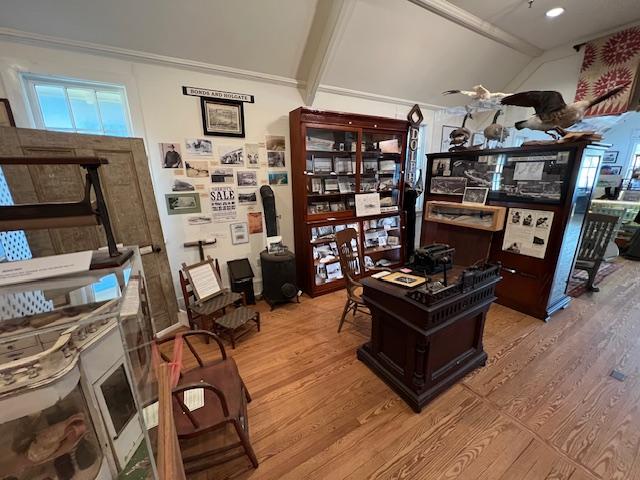
The hotel display and the office displays.

The island’s “modern” history begins as the railroads reached south to Toms River and Barnegat; with the Tuckerton Railroad reaching Manahawkin and Tuckerton by 1872. The railroad allowed visitors (and goods needed for comfortable living) to reach the shore quickly and also allowed for shore products to be shipped to Philadelphia & New York all year. The first year-round life-saving stations were were established in 1871. Land Development companies laid out Beach Haven in 1872 and Barnegat City (now Barnegat Light) in 1878, with sailboats and steam launches begin used to transfer visitors and goods from mainland railroad to the island. The Parry House, Engleside and later the Baldwin hotels. were built in Beach Haven and the Oceanic & Sunset in Barnegat City.

The Tuckerton & Long Beach Land & Improvement Co. principals were also major stockholders in the Baldwin Locomotive Co., the Tuckerton Railroad and the Pennsylvania Railroad. After they and their wealthy Philadelphia friends built houses in Beach Haven, the PRR was convinced to build a railroad trestle to LBI which opened in 1886 (abandoned 1935) leading to an extended property boom from the 1880’s-1920’s, especially in Beach Haven. Other smaller communities such as: Spray Beach (1889), Beach Haven Terrace, Brant Beach, Surf City (Inc. in 1899) and Harvey Cedars (Inc. in 1894) were established along the railroad.
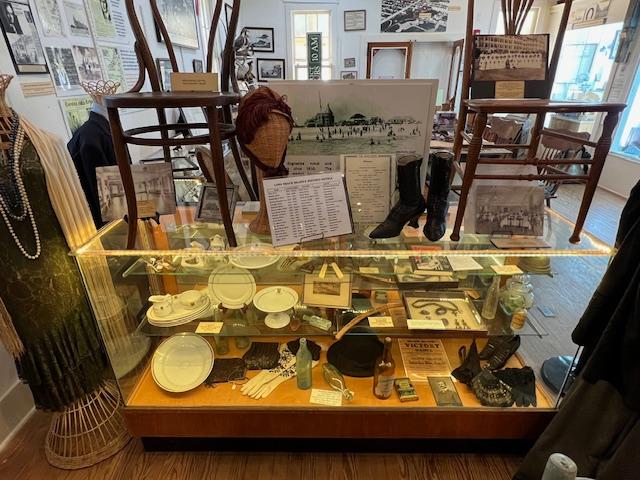
The hotel display of objects.

Although most of the houses built were still seasonal, the presence of the railroad (and later the 1914 automobile bridge) made permanent business & year round living on the island feasible. Census records show that the island’s permanent population was 33 people in 1880, increasing to 522 in 1910 and 1827 in 1930.

The Toy display at the museum.

After the Depression of the 1930’s and the Second World War, development resumed in the “Cape Cod” period 1846-1962; assisted by the completion of the Garden State Parkway to Manahawkin in 1954 and the opening of the four-lane causeway (to replace the old two-lane wooden bridge) in 1956. The 1962 storm and early 70’s economic problems temporarily delayed development. By the late 70’s, the island was essentially “built out”. Most recent building boom of the period 1980-2007 consists of teardown/replacement of existing homes.
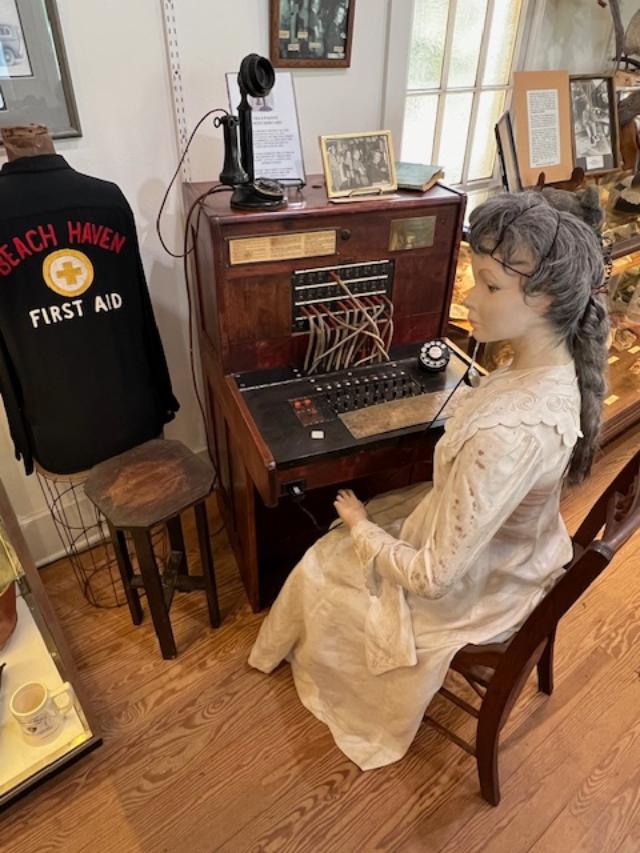
The telephone operator.

Because of early erosion in Barnegat City, Surf City and elsewhere and the extensive tear-downs of the 1980’s and 1990’s, the majority of the surviving 19th century and early 20th century structures on LBI are in Beach Haven. The Beach Haven Historic District (running from 5th to Chatsworth, east of Bay Avenue/LBI Boulevard) was created in 1983 in response to the increasing loss of historic structures and conflicting building styles. As of 2012, it is the only historic district on LBI.

The Shark Attack in 1916.

(From the Museum website: I give full credit to the Long Beach Island Historical Association Museum for this information)

Firefighting Museum of Dutchess County                             P.O. Box 2435                                                                      Poughkeepsie, NY 12601

Firefighting Museum of Dutchess County P.O. Box 2435 Poughkeepsie, NY 12601

Firefighting Museum of Dutchess County

(Antique Firehouse & Firefighting Museum)

P.O. Box 2435

Poughkeepsie, NY  12601

https://dchsny.org/firemuseum/

https://www.facebook.com/DutchessCountyFirefightingMuseum/

My review on TripAdvisor:

The new home of the Dutchess Firefighting Museum at the Dutchess County Fairgrounds

I recently visited the Dutchess County Fair in August of 2024 and discovered that they finally built the new Firefighting Museum of Dutchess County in the Century Village complex of the fairgrounds. This will only be open when the fairgrounds are open. It replaced the tent display that had been part of the fair since 2022.

The old tent museum that was a temporary display

The Firefighting Museum of Dutchess County (Dutchess County Firefighting Museum) is finally open and houses all the memorabilia and artifacts for fire companies all over Dutchess County. I met fire fighters from companies all over Dutchess County who are dedicated in showing the history of their departments and of fire fighting over the years. The museum had just opened in August 2024 so all the displays have not been mounted yet. They should be ready for future events at the fairgrounds.

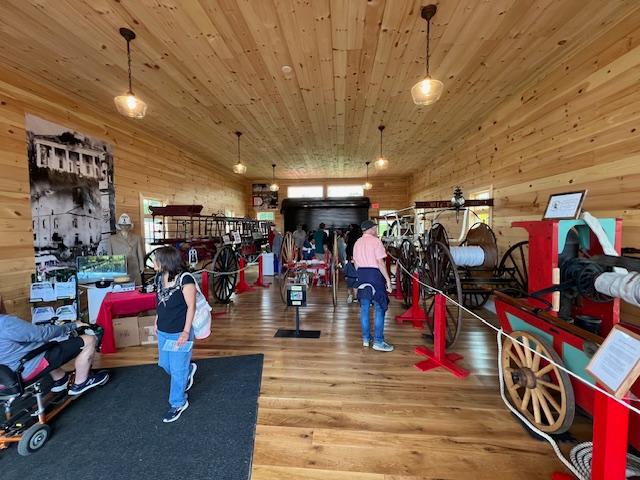
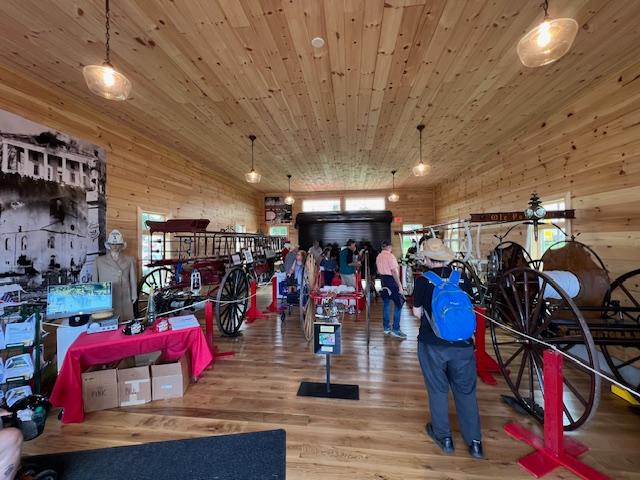
The firefighting equipment of the museum visited by many firefighters from the area and their families

The Dutchess County Fairgrounds Management had proposed to build them a new building on the Fair Grounds with the stipulation that it remain open when the fair grounds are being used and closed when they are not being used. It will be part of the Century Museum Village & Collectors Association to include a reproduction of a late 19th Century firehouse and museum of firefighting memorabilia.

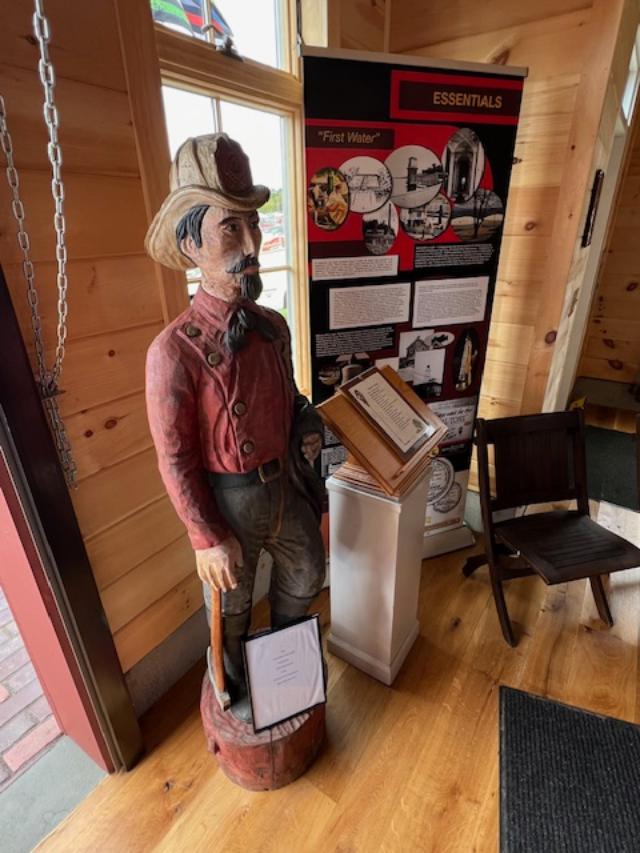
Firefighting artifacts at the front of the museum

The Parade Celebration cart with uniform for parades.

Firefighting artifacts at the new museum

The antique firehouse will join the Pleasant Valley Railroad Station, the Mount Ross Schoolhouse, the Washington Hollow Fair Judging Gazebo and the Century Museum.

Dutchess County Firefighter Museum II

Dutchess County Firefighters Museum logo

The new museum has an interesting combination of equipment, medals, horns and firefighting objects from the 1800 and 1900’s. It really is an interesting way to see how firefighting from the past relates to today and how much really has not changed. There were three different pieces of equipment on display: an old Ladder Truck from the 1890’s, a pumper from 1902 and an old hose bed that must have been around 1896.

The Pine Plains FD Ladder Truck

The old pumper on display

The handheld hose bed

There were old fire horns used long before traditional fire whistles and modern pagers, firefighting ribbons and awards, old buckets and hoses for moving water and lots of pictures of old fires. The members were explaining to me that they take the objects out at all sorts of town and county functions to promote the museum.

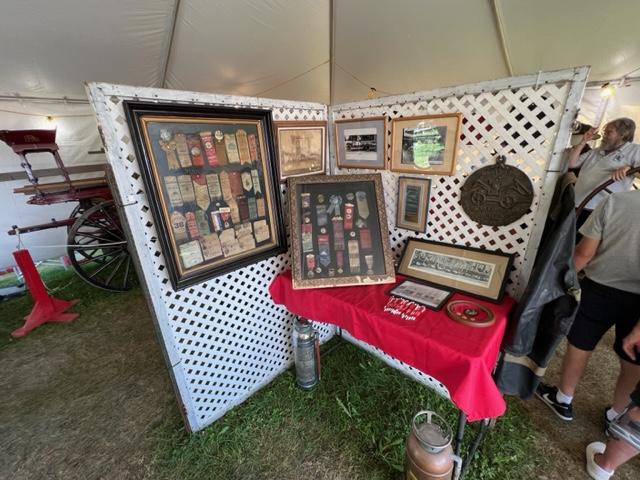
Old Fire Medallions from the old fire insurance days when these were placed on the houses

The roll call of fire fighting in Poughkeepsie, NY

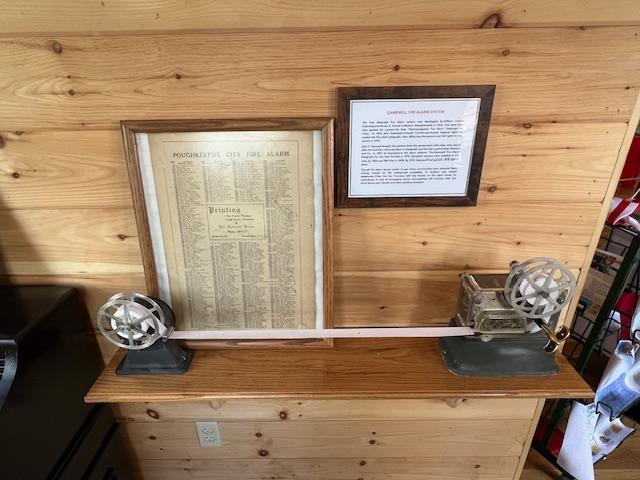
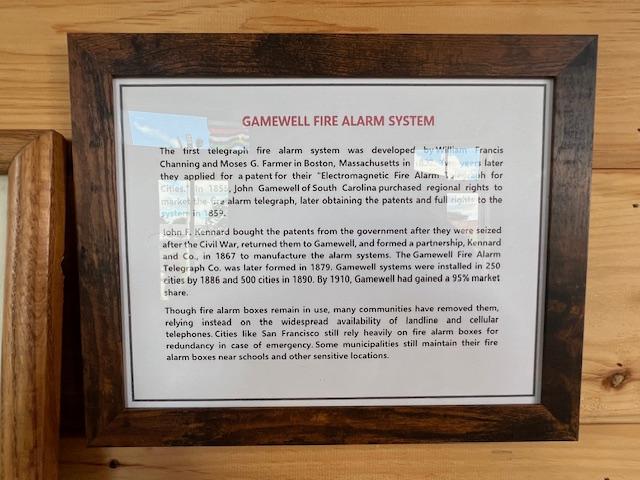
The Gamewell Fire Alarm System

History of the Dutchess County Firefighting Museum:

(from the museum pamphlet)

The Dutchess County Agricultural Society Inc. (DCAS) and the Century Museum Village & Collectors Association will be growing The Antique Village, located on the Dutchess County Fairgrounds which will include a reproduction of a late 19th Century Firehouse and museum of Firefighting memorabilia.

Firehouse artifacts in the museum

The Antique Firehouse will join the Pleasant Valley Railroad Station, the Mt. Ross Schoolhouse, Washington Hollow Fair Judging Gazebo and the Century Museum.

This grouping of special buildings on the Fairgrounds has been dedicated to preserving life in the late 1800’s in Dutchess County and sharing it with the over 500,000 visitors to the Dutchess County Fairgrounds over the course of the year.

The awards of the fire service from the old museum that will be displayed at the new museum soon

The Firehouse Project Research and artifact collection is underway, and the Fairgrounds is committed to adding to Dutchess County’s Fire Service history.

The project cost is $300,000 and was raised from funds all over Dutchess County, NY. This year’s fair the association was proud to open this museum as part of the Century Village on the fairgrounds.

The history of the Dutchess County Fire Service on video.

Special Firefighting “Coins” have been minted commemorating different fire stations, historic Dutchess County firefighting events and the dream of the Antique Fire Station and Museum. You can be a part of this exciting project by purchasing coins or making a tax-deductible donation.

The fire truck in front of the museum at the Dutchess County Fairgrounds

Disclaimer: This information is taken directly from the Antique Firehouse & Firefighting Museum of the Dutchess County Fair Grounds, and I give them full credit for it. The above picture is of the original proposed design for the museum and will be changed once the new building is built.

The new museum will house many more exhibitions in the future

Japan Society 333 East 47th New York, NY 10017

Japan Society

333 East 47th Street

New York, NY  10017

(212)  832-1155

https://www.japansociety.org

Open: Monday-Friday 10:00am-6:00pm/Saturday & Sunday Closed

Fee: Depends on the event; See the website

The front of the Japan Society on 333 West 47th Street.

I recently visited the Japan Society for the ‘Japan Cuts’ film festival 2019 to see four films as part of the festival. I had visited the Society years ago for a ‘Monsters’ exhibition which coincided with the dropping of the Atom Bomb. It was told to me during the tour of the exhibition that the Godzilla movies were the Japanese reaction to the dropping of the bombs and the effects of nuclear was on nature.

Japan Society III.jpg

The inside lobby  of the Japan Society

This time around it was a little more upbeat. I went to see new films by Japanese directors who are looking at contemporary culture a little more differently that film makers of the past. I was most impressed with “Dance with Me”, a light weight musical that reminded me of 1960’s musicals that came out in the United States and “Whole” about Japanese who come from mixed backgrounds and their role in society. It was nice to sit back and watch the films and participate in the Q & A’s.

Japan Society Film Festival

My favorite scene from “Dance with Me” “Happy Valley”

It was also nice to walk around the building to see the indoor gardens and pools that are located in the lobby area of the building. The building does have a feeling of Ying and Yang. There will be more exhibitions in the Fall.

Japan Society IV.jpg

The inside of the lobby of the Japan Society

The opening film “Dance with Me”

The Q & A at Japan Cuts for “Dance with Me”:

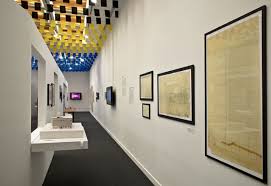
I recently visited the Japan Society for the “Made in Tokyo” exhibition on the development of architecture in the City of Tokyo between the 1962 and the 2020 Olympic Games. The exhibition showed the development and progress of the City since the bombings in WWII and how the City has rethought  the building and rebuilding of the City since.

Japan Society V

“Made in Tokyo”

Just like in the United States old department stores and office buildings are finding new use and older buildings in fringe and outside rural areas are becoming tech hubs. It was interesting so see how they were reworking old turn of the last century buildings and homes as incubators for the ‘computer age’.

Japan Society VII

The “Made in Japan” exhibition is closing at the Japan Society on January 26th, 2020. If you like the history of architecture this is an exhibition not to be missed.

Japan Society VI

The “Made in Tokyo” exhibition at the Japan Society

I recently went to the Japan Society for the screening of the famous movie, “Ringu” which is the original version of the American film, “The Ring”. It is rarely shown, and you can’t find it on YouTube or in the local libraries, so it was a treat to see this film. It was also the first time I had been in the museum since COVID closed everything down and it was nice to visit again.

Guess what I found on YouTube the next morning: “Ringu” the comparison:

Still, it was nice to go to the museum again and just relax for the evening.

The Trailer of “Ringu”

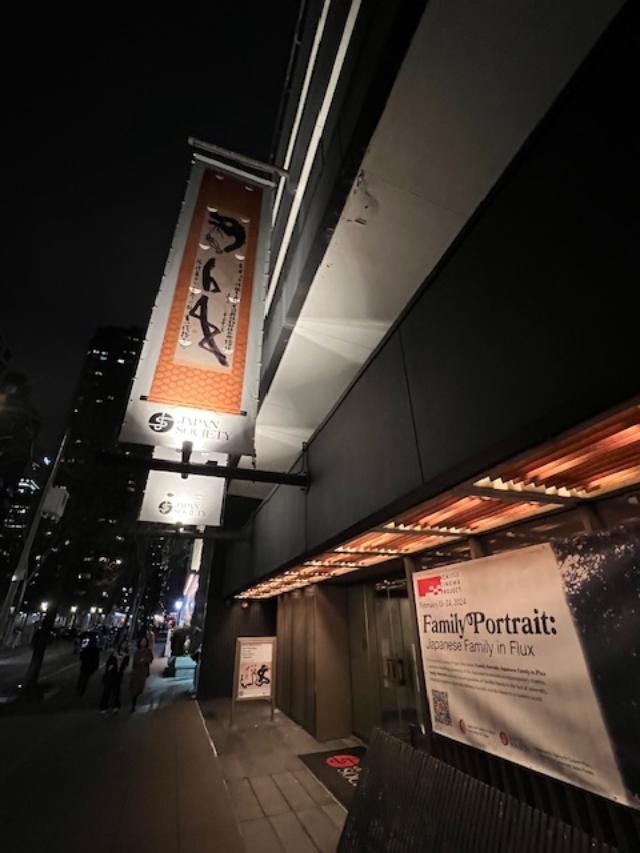
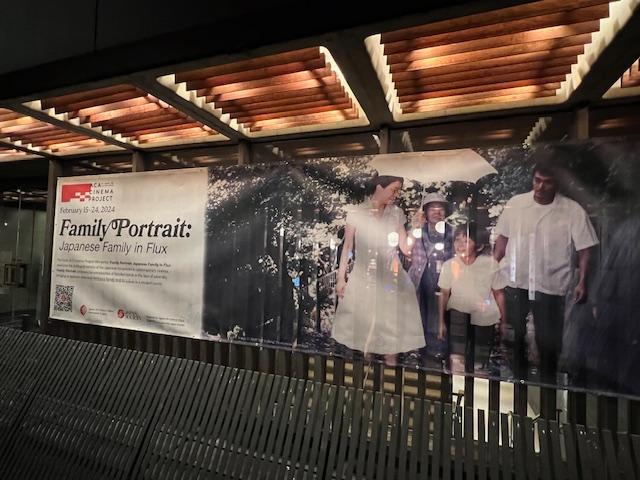
I recently went to see the “Family Portrait: Japanese family in Flux Series” in 2024 on some of the more contemporary films of Japan from the 1980’s and 90’s that are outside the studio system. These films dealt with real issues that most studio films don’t want to touch. I saw a film about a woman with terminal cancer and all the secrets of her past came out and the problems she had to face when the end was coming. Many twists and turns. The films dealt with these issues in a mature way and the series was very successful.

The sign for this amazing series of films.

The Japan Society mission:

The Japan Society is a non-profit organization formed in 1907 to promote friendly relations between the United States and Japan. Its headquarters, the youngest landmark building in New York was designed by Junzo Yoshimura and opened in 1971 at 333 East 47th Street near the United Nations. With a focus on promoting “arts and culture, public policy, business, language and education,” the organization has regularly held events in its many facilities including a library, art gallery and theater since its opening. After suspending all activities during World War II, Japan Society expanded under the leadership of John D. Rockefeller III (Wiki).

History:

In 1907, Tamemoto Kuroki and Goro Ijuin were chosen to represent Japan at the Jamestown Exposition. They attended a welcome dinner in New York with Japanese ambassador to the United States, Shuzo Aoki, where there was talk of forming an organization to promote US-Japan relations in the city. Two days later at a luncheon held by Kuroki, Japan Society was born. The organization would be run by Aoki, then Honorary President of the Japan Society of the UK and John Huston Findley.

Japan Society spent the next forty years hosting events in honor of Japanese royalty, giving annual lectures on a wide range of topics and presenting art exhibits that drew in thousands of New Yorkers. In 1911, Lindsay Russell, another founding member of the society and later president, met with Emperor Meiji and spent his visit to Japan encouraging more societies to form there and throughout the United States.

Japan Society was soon incorporated under New York law and finally found a home near one of Russell’s work offices, though it continued to relocate throughout its history before its current headquarters was opened in 1971. At this time, Japan Society and its members began to express interest in improving teaching about Japan in the United States. The organization began sponsoring trips to the country, publishing books and sent a report to the Department of Education about the portrayal of Japan in American textbooks.

It remained active during World War I, operating as it had for the last seven years but the organization became more political when it began associating with the Anti-Alien Legislative Committee, an advocacy group that spoke out against yellow peril. Russell and Hamilton Holt, another founding member used the organization’s publication to defend all of Japan’s actions at the time. Unbeknownst to anyone at the time, even one of Japan Society’s writers secretly worked for the Japanese government with the task of improving Japan’s imagine in the United States. The organization eventually realized the dangers of taking sides and by 1924 stopped publishing any political commentary.

By the 1930’s, membership had dropped significantly due to financial difficulties and the Second Sino-Japanese War. Following the attack on Pearl Harbor in 1941, Henry Waters Taft immediately resigned as president after serving  from 1922 to 1929 and again from 1934. Russell also stepped down as one of Japan Society’s directors. All activities were suspended and would not resume until the Treaty of San Francisco was signed in 1951.

John D. Rockefeller III served as president from 1952 to 1969 and then as Chairman of the Board until his death in 1978.  He accompanied John Foster Dulles on his trip to Japan that eventually led to the signing of the 1951 treaty. Rockefeller, a supporter of the Institute of Pacific Relations, who visited Japan in 1929 during one of its conferences, wanted to contribute to bettering US-Japan relations after the war and believed there needed to be non-governmental organizations like Japan Society in each country in order for such friendly relations to exist.

Under Rockefeller’s leadership, Japan Society expanded and talk began to find a permanent headquarters for it. It shared offices with another Rockefeller-led organization, Asia Society but as the two organizations continued to grow during the 1960’s,  it became increasingly clear that Japan Society needed its own building. After receiving donations from Rockefeller and other members, construction began on “Japan House” in 1967. Designed by Junzo Yoshimura, whose work also includes Asia Society’s headquarter, it became the first building in New York of contemporary Japanese architecture. On September 13, 1971, it was finally opened to the public after a ceremony attended by Prince Hitachi. He echoed Russell’s first words about Japan Society, calling for “closer people-to-people” contact between countries.

Japan Society II

Japan Society building

(This information was taken from Wiki and I give them full credit for the information. I also included information of Japan Society).

Hamilton-Van Wagoner House Museum                     971 Valley Road                                              Clifton, NJ 07013

Hamilton-Van Wagoner House Museum 971 Valley Road Clifton, NJ 07013

Hamilton-Van Wagoner House Museum

971 Valley Road

Clifton, NJ  07013

(973) 744-5707

https://www.cliftonnj.org/256/Hamilton-House-Museum

Open: Sunday 9:00am-5:00pm/Monday & Tuesday Closed/Wednesday-Saturday 9:00am-5:00pm

Fee: Suggested Donation $5.00

My review on TripAdvisor:

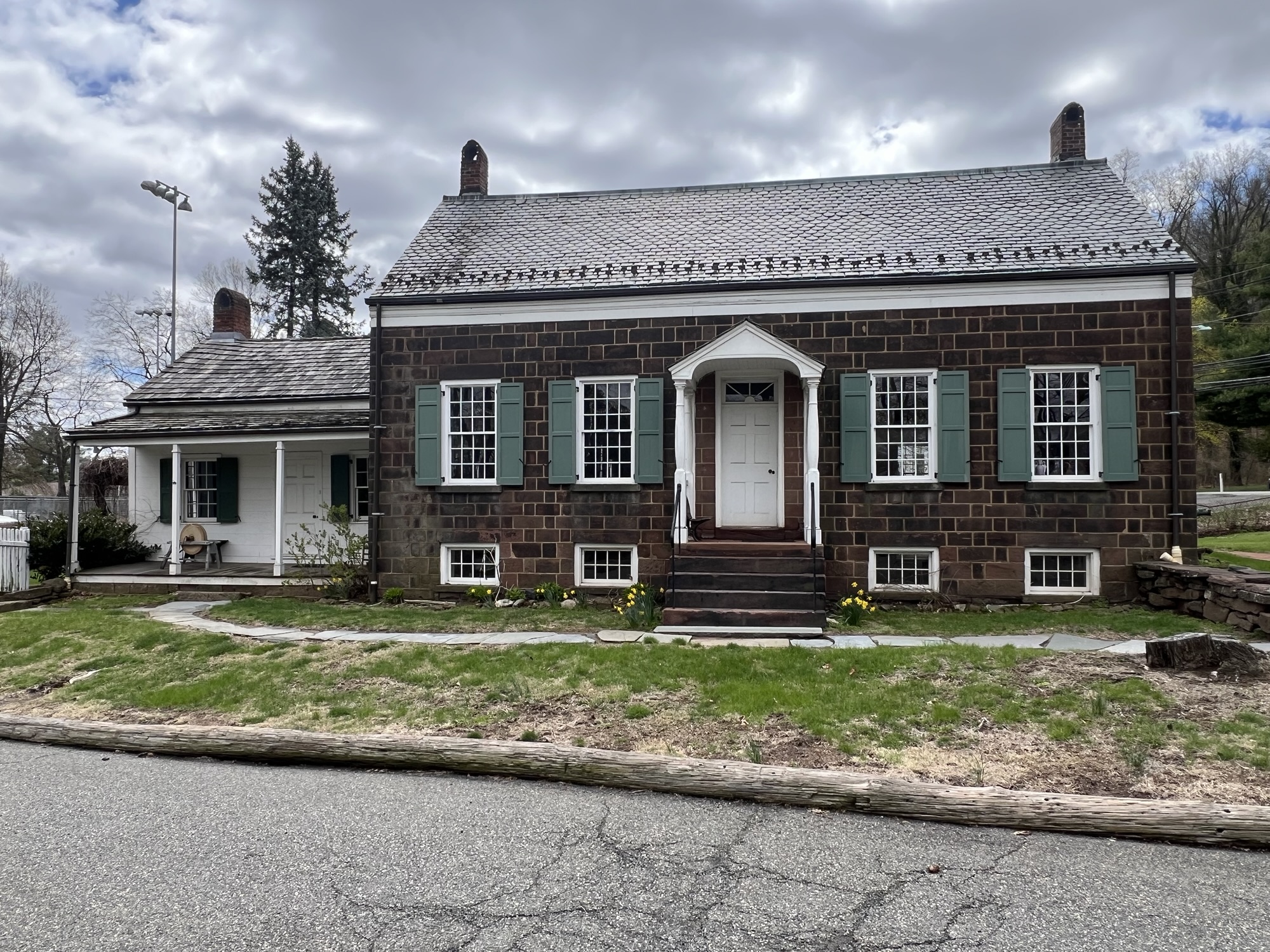
 The front of the Hamilton House in the early Spring

I visited the Hamilton House Museum this afternoon which is right down the road from Montclair State College and sits at the border of the Clifton-Montclair border. The interesting part of the house location is that it still sits the farm land of the Van Wagoner Family but the house was moved from its location to the current one because of the building of Route 46 in 1973.

The front of the house in the Spring

When talking with curator, the house is going through a transition from the City of Clifton ownership to the County of Passaic Historical Society’s site. They are currently cataloging every piece in the house and putting it online. They want to view the collection to see what they can work with within the home.

Each room represents a different time in the history of the house. There is a living room from the Victorian age, the kitchen is from the late 1700’s to the early 1800’s and the dining room is from the mid-1800’s. These rooms are furnished to represent a certain time in the house.

There will be many revisions in the future for the house so there are some changes on the way. The upstairs is currently being used for storage and there will be revision there as well. I got a quick tour of the rooms with the curator and he said there will be more changes in the future as they catalog each piece. The grounds are currently being replanted.

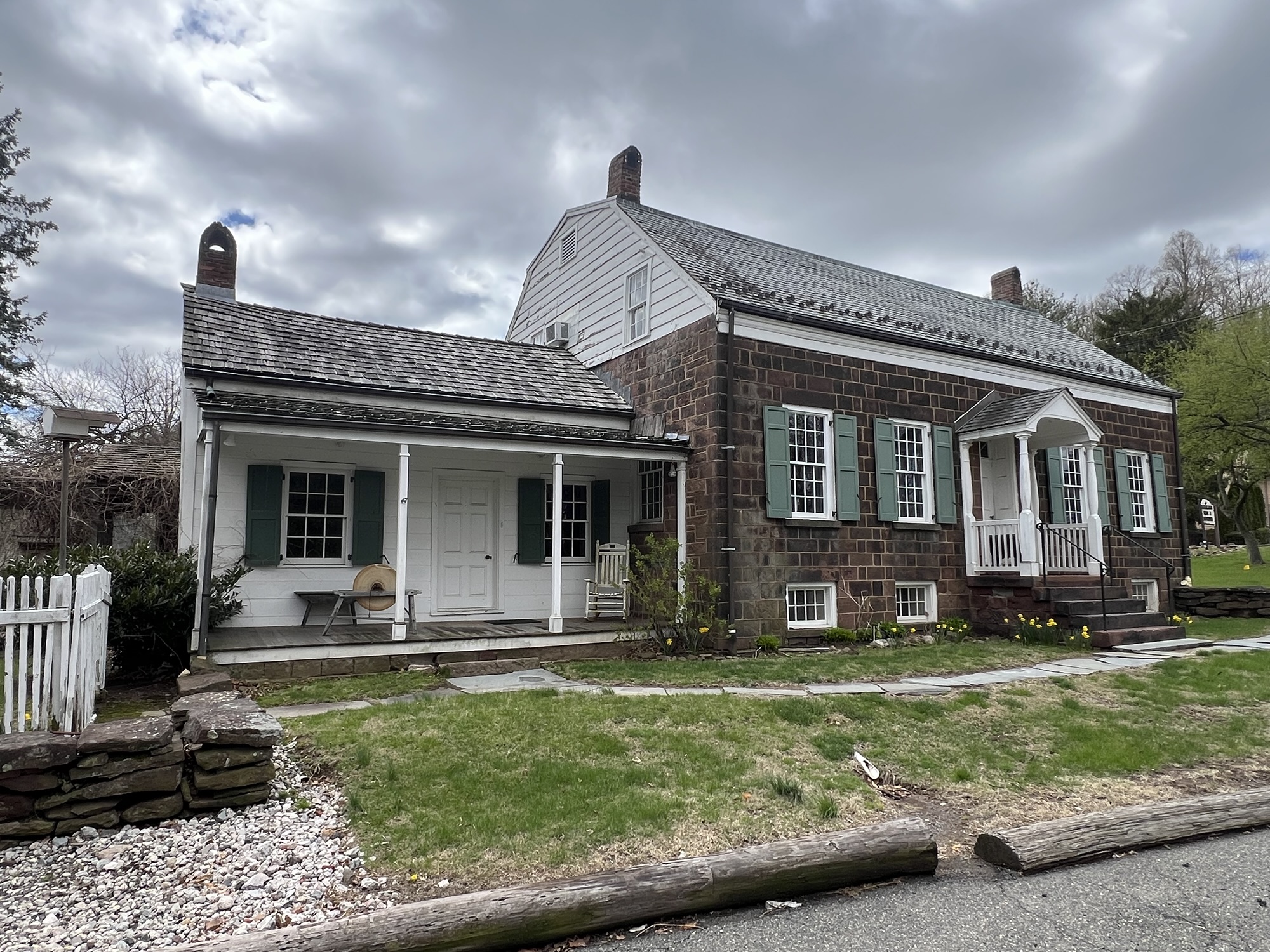
The Hamilton House Museum sits at the Clifton and Montclair border

The house is one of the last examples of early 19th century stone houses in Passaic County. The house was built in 1817 by John and Ann Vreeland and then passed to the Van Wagoner family. It changed hands a few times until 1856 when the Hamilton Family bought the house (no relationship to Alexander Hamilton). The house remained in the Hamilton Family until 1972 when the last living relative died and no one in the family wanted possession of the house (Tour Guide & Wiki).

The oldest section of the house

That’s when the City of Clifton bought the house from the family of its historic value. The house was added to the National Register of Historic Places on May 13th, 1982 (Wiki).

The outside grounds of The Hamilton House Museum

The Grape Arbor on the grounds of the Hamilton House

History of the Hamilton House:

(taken from the City of Clifton website)

This 18th Century Dutch gambrel-roofed homestead was once the home of the Van Wagoner and Hamilton families. This basic of the house does not greatly differ from its Dutch antecedents.

The sturdy one and one half story cut sandstone structure, flanked by a grainery, spring-house and gardens reflects almost two hundred years of American history. It brings back memories of an uncluttered horizon with farms, orchards, fresh brooks, forest full of game and filled with scent of wildflowers.

Hamilton House & the Clifton Community:

Although the City of Clifton was incorporated in 1917, a community had existed since 1679. Prior to 1917, the area was known as Acquackanonk Township and included parts of : Little Falls, Passaic, Paterson and West Paterson.

The Indian Chief Captahem deeded 11,000 acres to the early Dutch settlers on the shores of the Passaic River. Predominately rural, this sparsely populated village thrived and grew.

The farmhouse was presented to the City of Clifton by the developers of the late Henry Hamilton. The Hamilton family had bought the 96 acre property in 1856 and for over 100 years until the death of Mr. Hamilton in 1970, it had been the family home.

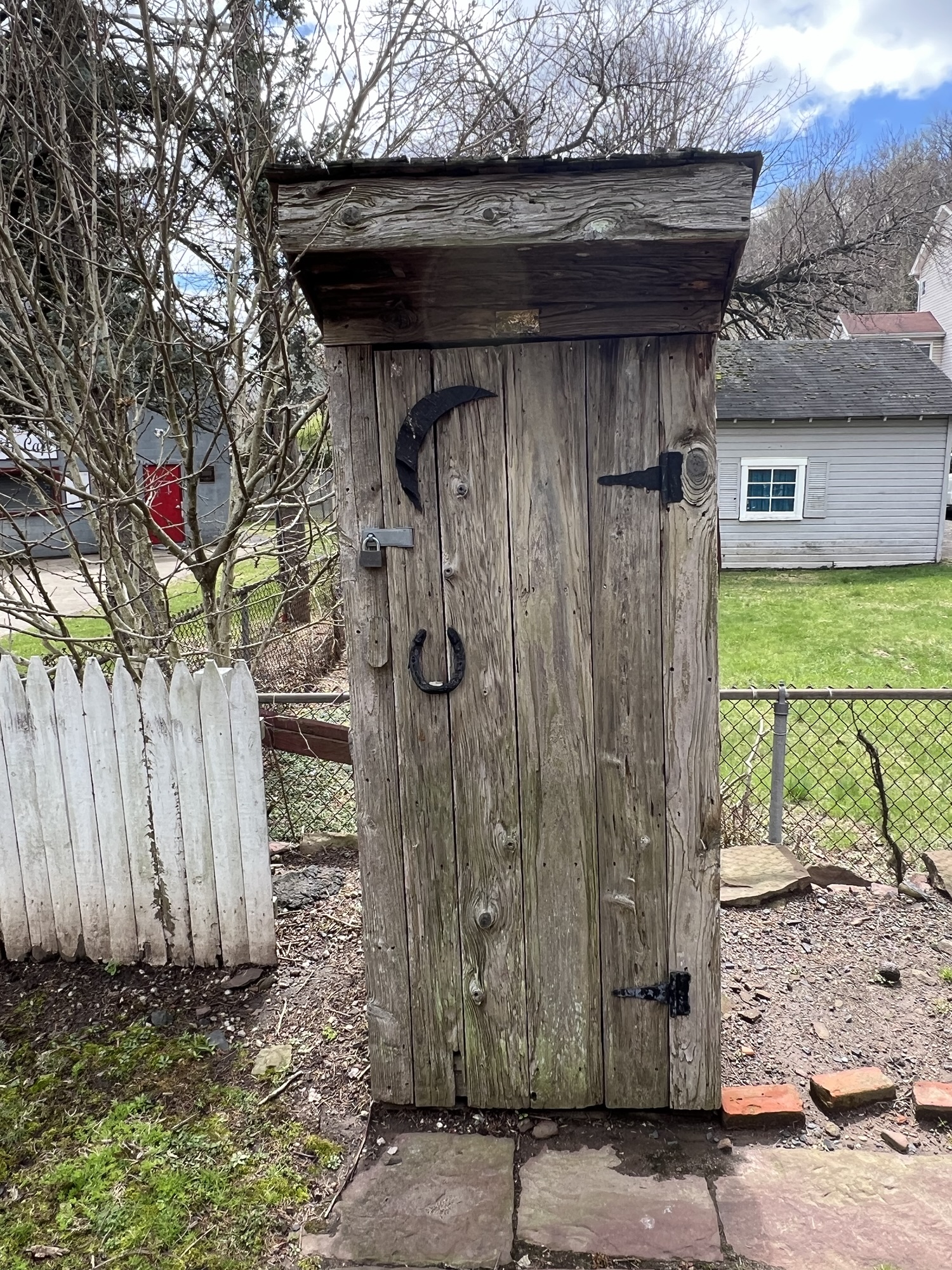
The old outhouse in the back of the property

Current Location and Future Plans:

The house was moved to its present location in Surgent Park in 1973. Infinite plans have been taken with examination and documentation of the building’s structural elements. Extensive research has been conducted including the records and treasured memories of Miss Caroline Hamilton as well as: Artifacts, Deeds, Manuscripts, Maps, Photographs and Wills.

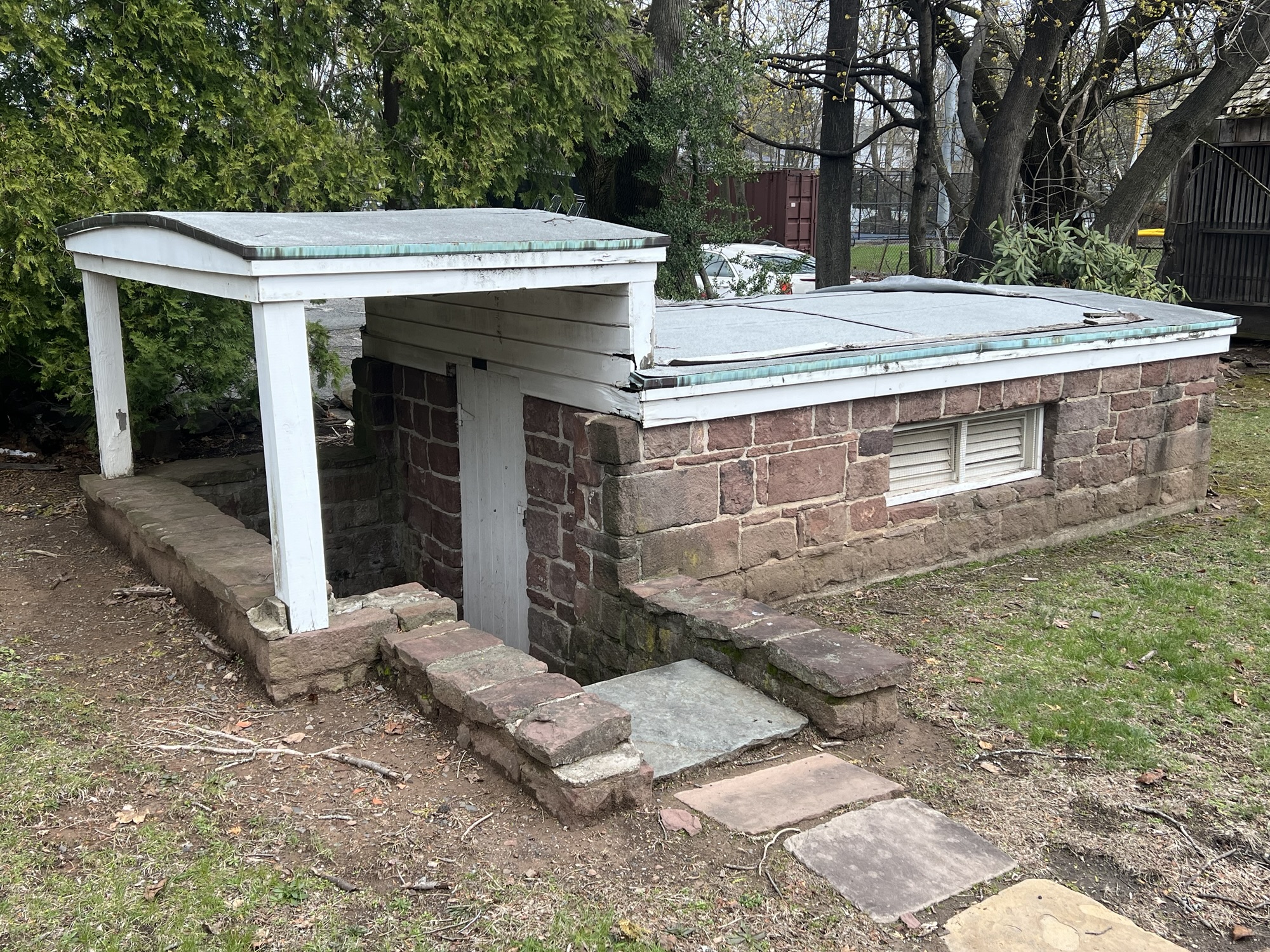
The old Ice House on the property

Scheduling Tours:

The museum is opened for tours on Sunday from 2:00pm-4:00pm (except on holidays). The house is going through a transition right now with the change over.