Open: Seasonal when school is open and only at certain times of the year
Fee: Free-check in with the security guard
The High School of Art & Design at 245 East 54th Street
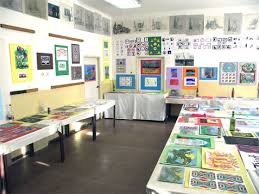
I passed the High School of Art & Design when I was touring the Turtle Bay neighborhood in Manhattan for my blog, MywalkinManhattan.com. The school was open during the Spring Break and some of the kids were in the school were taking classes. The security guard let me walk around and then he asked me would I like the see the art gallery. I said sure and I was able to explore the John B. Kenny Gallery.
John B. Kenny was Ceramist and an administrator who saved the school and created the school with three other artists in 1936. He founded the school with artists Henry Cordes, Mildred Harston and Jerod Magon.
The Mission of the High School of Art & Design is to inspire, educate and fully prepare our gifted students to become exceptional artists. Through a unified curriculum that incorporates a broad spectrum of disciplines integrating art, technology and academics, our students are prepared to go on to college and careers with industry-standard mastery in the major of their choice.
With a commitment to promoting strong ethical values and professional demeanor, we strive to foster a sense of community among our students, staff and parents. We are dedicated to engendering student’s productive, creative and innovative participation in the world of visual arts as concerned and caring citizens of the global community (School Mission Statement).
The Gallery is full with Alumni and student art and it revolves at various times of the year. It is a nice size gallery full of interesting art. There was a combination of sculpture, painting and paper sculpture in the gallery.
The John B. Kenny Gallery is very interesting
I was only able to spend a short time in the gallery but it is a hidden gem tucked in the side of the main entrance and just talk to the security guards at the front of the school and they will let you tour on your own.
I love Fort Tryon Park in Upper Manhattan. It is one of the most beautiful parks in New York City. It is a park of rolling hills, stone paths that hug the hills, interesting garden that are ablaze when in season, shady tree sitting areas and is home to many playgrounds and the Cloisters Museum which is part of the Metropolitan Museum of Art. It has so much to offer a visitor coming into Manhattan from exploring the woods that line the path to looking at interesting art at the museum. This 67 acre park is one of the interesting and complex in New York City.
A city view of the beauty of the park by the Hudson River
The view from The Cloisters by the Hudson River
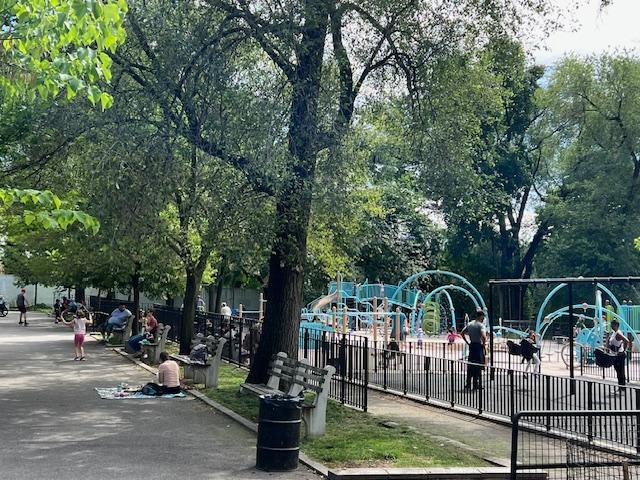
When you enter the park from Inwood by Broadway, you enter through Ann Loftus Park which is named after a local community leader and is one of the popular parks with kids and families in the area. In the summer months, the fountains and water fixtures are going strong and the kids run around them while the parents lie under shade trees talking to one another.
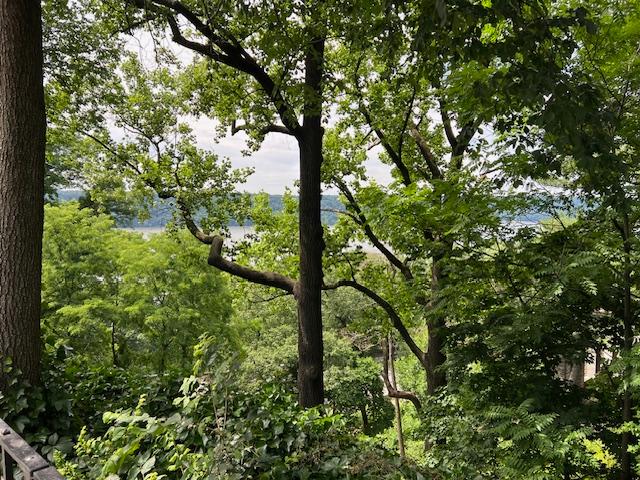
When taking the path from Ann Loftus Park and winding up the hills of woods and rock formations is the Hudson River looming in the distance with spectacular views of the Palisades and the large cliffs of Fort Lee, NJ on the other side.
The bathrooms in Ann Loftus Playground
The history of the park
Anne Susan Cahill Loftus biography:
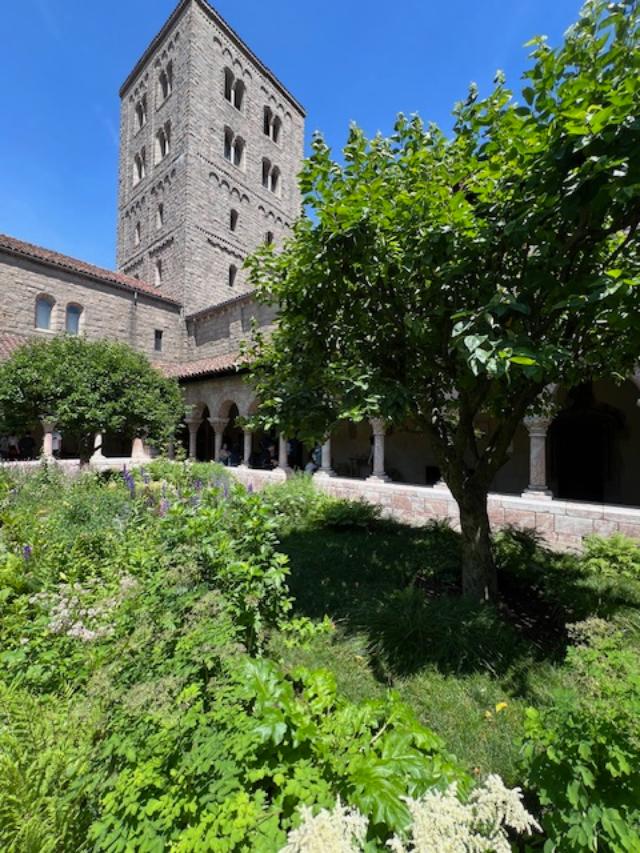
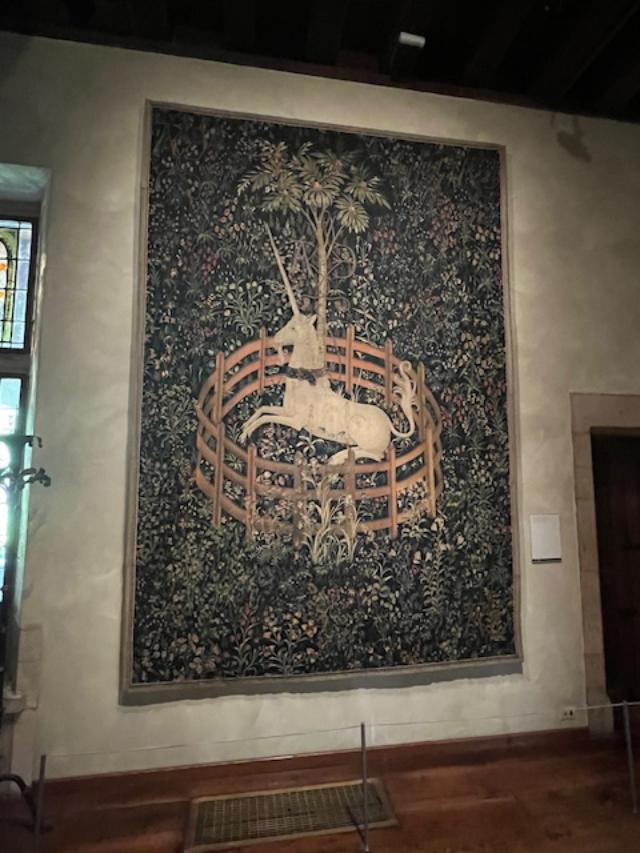
At the top of hill like a crown jewel is the Medieval Galleries of the Metropolitan Museum of Art’s Cloisters Museum. Filled with all the Met’s collections of Religious and Medieval art set into themes of old churches, stained glass windows, flowered courtyards and vistas of the river, it is the perfect place to wonder around.
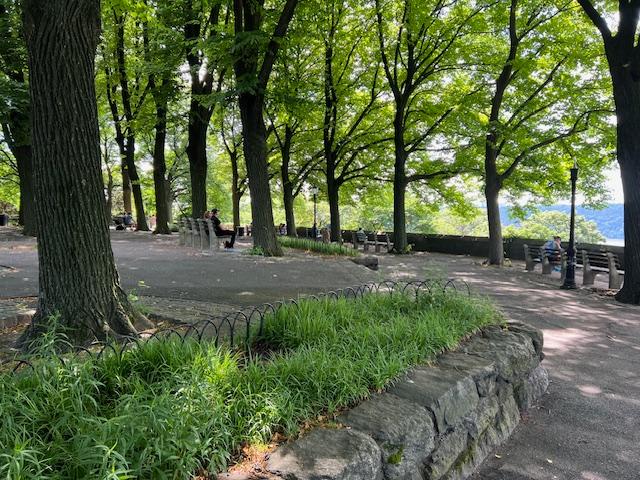
As you pass the Cloisters and walk further in to the park, there is still so much more to see and do. The Linden Terrace overlooks the Hudson River with its large shade trees over head and its stone benches to sit and just look in the distance or read a book. This was the site of the original Fort Tryon and is the highest location in the park.
Linden Terrace is a nice place to relax and read a book
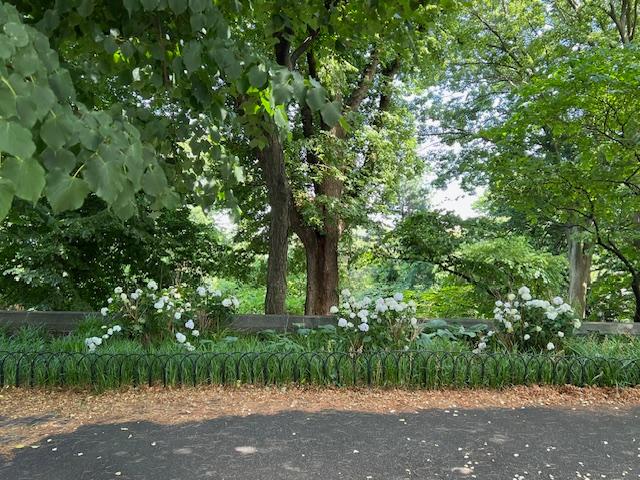
The flowers by the Linden Terrace
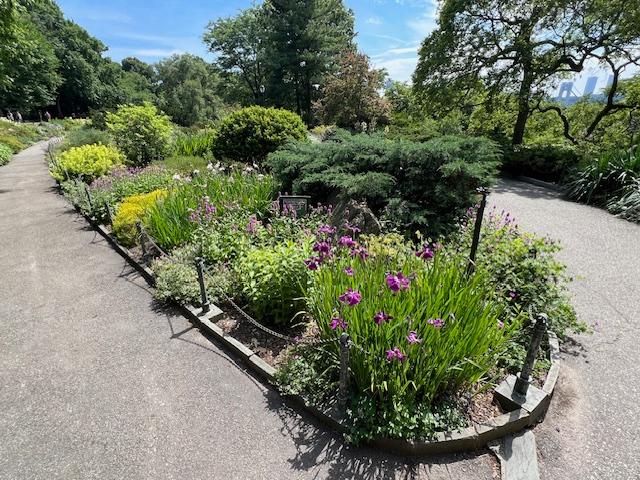
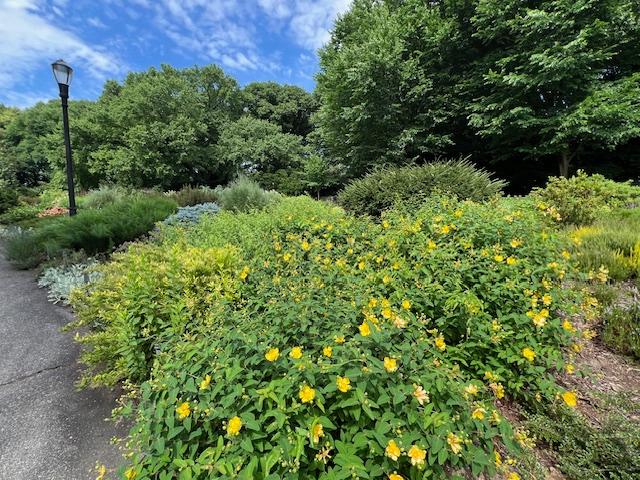
Further down in the other entrance of the park is Heather Garden, a large path of flowers , bushes and trees with benches lining it. The garden was the Olmstead Brothers when the park was taking shape and is a beautiful place to walk in the Spring and Summer months when the park is in full bloom.
The stairs leading to the Linden Terrace
The plaque for Fort Tryon
The anniversary plaque
The Stan Michels Promenade
The Heather Garden in the front
The Heather Garden was recently remodeled to follow the original design by the Olmstead Brothers.
The Heather Gardens
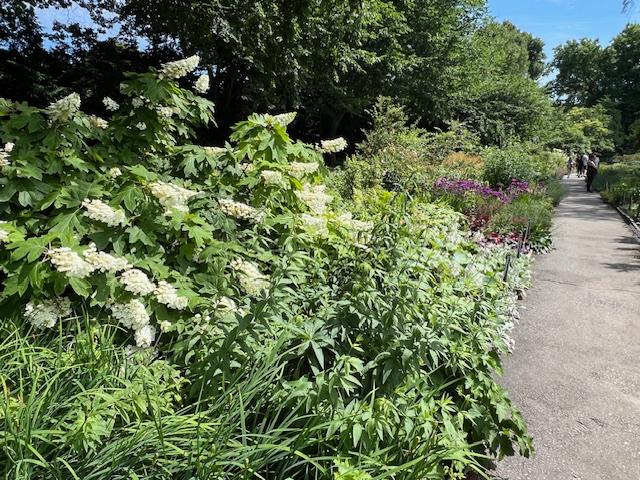
The Heather Gardens in full bloom
The Gardens facing the George Washington Bridge
The Gardens in full view
There is even a terrace restaurant in the middle of the park, the New Leaf Cafe (See review on TripAdvisor-Closed in 2018) which sits off to the side of the Corbin Circle on the other side of the park. The food is over-rated and very expensive. The last time I ate there the menu was pretty standard. It is a great to take out of towners who want a view of something. It is not worth the trip. The views are nice and in the summer months it is pretty but the food and service are standard.
The New Leaf Cafe in Fort Tyron Park (Closed in 2018)
The park has so much to offer in all months of the year especially in the Spring and Summer.
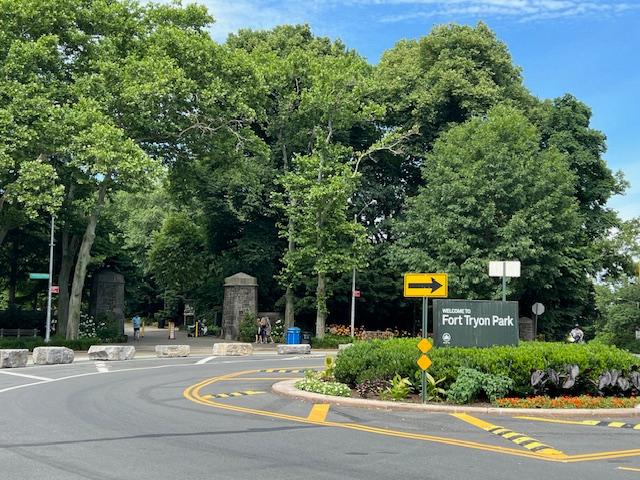
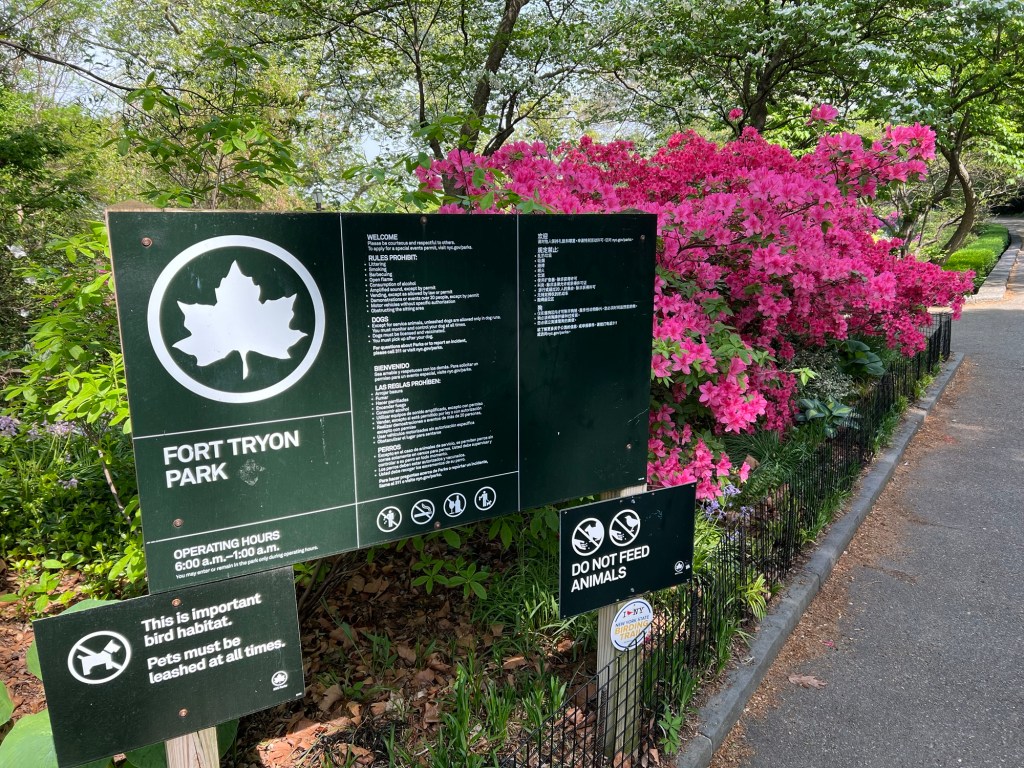
The entrance to Fort Tryon Park
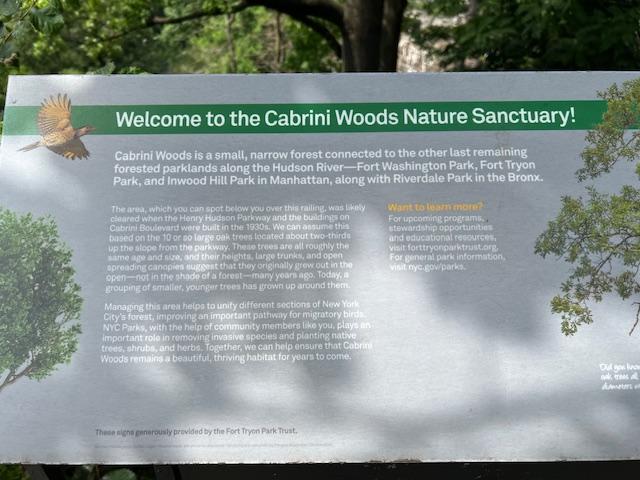
Cabrini Woods Nature Sanctuary in the front of the park
The Cabrini Sanctuary in the Spring 2024
History of Fort Tryon Park:
The area was known by the local Lenape Indians as Chquaesgeck and by the Dutch settlers as Lange Bergh (Long Hill). During the Revolutionary War, the Battle of Fort Washington was fought on this site. The park is built on a high formation of Manhattan schist with igneous intrusions and glacial striations from the last Ice Age (Wiki).
The gardens in the Fort Tryon Park
John D. Rockefeller Jr. bought up most the land in 1917, which by that point had been old estates, to create Fort Tryon Park. He hired the Olmstead Brothers firm, under the direction of Fredrick Law Olmstead Jr., the son of the designer of Central Park, to design the park and James W. Dawson to create a planting plan. Mr. Rockefeller also bought the collection of Medieval art from sculptor George Gray Barnard and it was the cornerstone of The Cloisters Museum which was built in 1939 (Wiki).
The Fort Tryon gardens in full bloom
The stairs in the park
Through the years the park has seen its ups and downs especially in the 1970’s and 80’s with the decline of finances in New York City. There were extensive renovations when finances got better in the late 90’s and parts of the park were fully renovated. The Fort Tyron Park Trust, a non-profit organization was founded in 1998 to help maintain the park (Wiki).
When I walked through the park on the recent Great Saunter walk in 2025, they rerouted us through the park when the Riverwalk was closed for renovation. The park was in full bloom and it was the most spectacular day for a visit.
The entrance of the park on that sunny afternoon
The beautiful colorful tulips at the entrance of the park
The colorful gardens were in full bloom
Everyone was routed through the park on the way to Inwood Park for our rest stop. What I found strange was that the park was so beautiful in full bloom and people were not stopping to relax and just enjoy the views. The gardens were amazing and so colorful.
I stopped to look at the beautiful rock garden
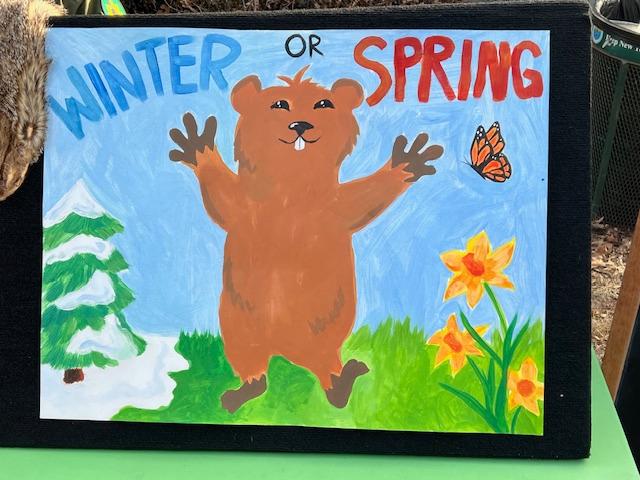
I thought this was so clever. One of the volunteers made this sign up which was so funny!
We walked through the park on our way through the park on the way to Inwood Park.
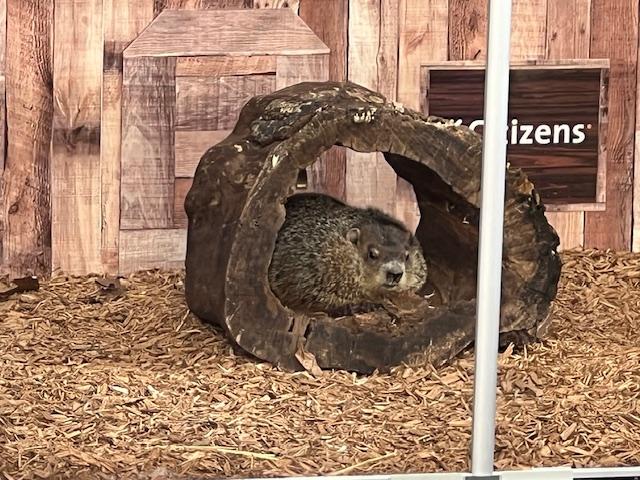
I had planned to go out to Punxsutawney, PA again for Groundhog’s Day but the weather really turned this year. There was an Arctic Vortex (or whatever they are calling it this week) and the weather plunged in Pennsylvania. It was going to be 20 degrees on Groundhog’s Day (that meant 0 degrees that night) and raining when I would drive home on Sunday and I thought that would be over doing it for me.
I later saw that it did go up to 38 degrees that day in Punxsutawney, higher than expected but the overnight Friday night into Saturday was 4 degrees and sorry but the thought of standing in Gobbler’s Knob for five and a half hours in that weather was too much. I did that in 2016 in 30 degrees and that was bad enough. I will wait until next year.
I enjoy coming up to Germantown to visit the Clermont Mansion at any time of the year especially at Christmas time. I came for a tour of Clermont in the Christmas season of 2019 (pre-COVID) to tour the home. The old mansions of the Hudson River Valley show their real beauty at this time of the year.
The Clermont Library decorated for Christmas
In 2020, the home closed like everything else for COVID and because of extensive renovations on the property and in the home, did not open again until June of 2023. I came up finally in July of 2023 for another tour of the home. The mansion looked very refreshed and bright on a blue, sunny afternoon. The grounds were in full bloom and everything looked so green.
The views of the river when you arrive
Walking around Clermont is like walking through a history book. To think you are walking around the very rooms that family members who wrote the Declaration of Independence, were Governors and Ambassadors from our country and who owned most of Upstate New York lived is really incredible. The Livingston Family did so much for the United States in the formation of this country is a testament to the family.
Once you arrive at the Visitors Center and pay for your tour, you will have time to walk around the exhibition of the history of the family in the old stables. Here you will learn about the family who built and lived in this wonderful home. The family lived here for seven generations and like most families over time when the money depleted, they had to move out. The last daughter of the family, Honoria, sold the estate to the State of New York as a park. The upkeep got to be too much for the family.
The Visitor’s Center display on the family
The family story boards in the old stables
The history of the estate and the Livingston family in the Visitor’s Center
The history of the estate
The tour 2019 was wonderful because of the one on one conversation I had with my tour guide, Molly. It was the same in 2023 when Aaron took me on a one on one tour of the mansion. We started in the entry hallway where the family hang many of the family portraits and the long hall lead to wonderful views of the Hudson River.
The Entrance Hall of Clermont
Just off to the right of the front entrance of the home (the front entrance faces the river not the back entrance where you start the tour) is the Receiving Room. This was the room in 2023 during my summer tour of the house. The Receiving Room is where guests would wait to be welcomed by family members or people would call on the family and leave their calling cards.
The Receiving Room was also used as a Music Room as well
The Receiving Room was decorated for the holidays in 2019 with more beautiful views of the river and a very interesting clock on the mantle that there are only two in the world. This clock represented the first balloon launch in France and this was the clock where the balloon went up. In France was the other clock with the balloon going down. I thought that was pretty interesting.
The Balloon Clock on the mantle decorated for Christmas
Our next stop was the Library which seemed very homey and relaxing. It looked like a room that a family would want to spend their time in after a long day. The windows faced the river and the formal gardens at that time and let in a lot of light. The room was decorated with a elegant tree and looked like the family was ready to walk in and join us for the holidays.
The Library of Clermont
The Office/Library on the first floor
Next it was off to the formal Dining Room where the portraits of Margaret Beekman Livingston (a VERY distant relative of mine by marriage) and her husband, Robert Livingston hung. She had saved these along with the grandfather clock before her first house was burned by the British during the war years. It was set for Christmas lunch when the family would dine together.
The Clermont Dining Room is very elegant at Christmas. This is in 2019 (pre-COVID)
In the summer months, the room was pretty plain with no set up on the table. The Dining Room has just had some renovation work so the walls and ceiling looked really nice.
The Clermont Dining Room in the summer of 2023
The Dining Room portraits
Margaret Beekman Livingston’s Wedding portrait in the Dining Room
Robert Livingston’s Wedding portrait in the Dining Room
We also toured where the food was prepared and prepped from the kitchen to the Dining Room, which was all done in organized fashion. I was told by the tour guide that for the most part the family lived here year round unlike some of the other mansions who only lived here during certain times of the season.
The Kitchen at Clermont
We took a walk upstairs to see the upstairs bedrooms and see where the third Mrs. Livingston lived. I thought it was interesting that she had two beds in her room in which neither was big enough to accommodate her. One was the main bed and the smaller one was a Day bed when she wanted to take a nap but did not want to mess up her main bed.
The last Mrs. Livingston’s bedroom until the 1960’s
We then toured what had been Honoria’s and Alice’s bedroom when they were children and then became the Guest Room. It still looked like a Children’s Room.
The Daughter’s/Guest Bedroom
Then it was back down to the formal hallway for the end of the tour. The one thing I have to say about Clermont is that it looks like someone’s home not some grand mansion like the Mills or Vanderbilt mansions that looked like they for a moment time or only for a season. This family lived here all the time.
The upstairs bathroom was one of the remodeling features
The family lived here until the 1960’s when upkeep of the estate got to be too much for the family and it was sold to the state. The New York Park is now maintained by the New York State Park system.
The Gardens:
The formal gardens were in bloom when I got there that weekend. Since the house opened in June most of the Spring plantings were already gone but the Summer plantings were in full bloom. There were three gardens on the property, two of which had been brought back to nature, the Wilderness Garden and the South Spring Garden and then the Walled Garden was well maintained and planted.
The Wilderness Garden was well-maintained and planted with natural plants
The South Spring Garden
The South Spring Garden has given way to nature
The Walled Garden was the most formal of all the gardens
The Walled Garden
The Walled Garden
The Walled Garden
The Walled Garden
The Walled Garden
In the Fall, I went back up to Clermont for the Ghost Tour and the foliage was amazing, but the rain knocked a lot of it off. Still the colors were glorious.
Clermont in the Fall of 2023
The formal gardens in the Fall
The formal gardens in the Fall
The gardens in the Fall.
The I toured the rest of the estate and saw the ruins of the other mansion, Arryl, that is on the other side of the parking lot and then saw the ruins of the Old House and the Root Cellar.
The Ice House
The Root Cellar
The flowers by the Root Cellar
View of the Hudson River
The History of Clermont:
The name Clermont derives from “clear mountain” in French and was inspired by the view of the Catskill Mountains across the Hudson River from the estate.
The front of Clermont that faces the Hudson River
The estate was established by Robert Livingston following the death of his father, the first Lord of the Manor was inherited by the eldest son, Philip Livingston, 13,000 acres in the southwest corner later named Clermont was willed to Robert. The original house was built around 1740.
The path leading to the main house
Robert Livingston of Clermont died on June 27, 1775 and the estate passed to his son, Robert, who was known as ‘Judge Livingston’ to distinguish him from his father. Judge Livingston was a member of the New York General Assembly from 1759 to 1768, served as Judge of the admiralty court from 1760 to 1763 and was a delegate to the Stamp Act Congress of 1765. He married Margaret Beekman, daughter of Colonel Henry Beekman. Their son, Robert R. Livingston, later known as “Chancellor”, served on the committee that drafted the Declaration of Independence. Judge Robert died about six months after his father, on December 9, 1775.
Burning and Rebuilding:
In October 1777, British ships sailed upriver from New York City in support of General John Burgoyne who was north of Albany. That same force had already stormed two forts in the Hudson Highlands and burned Kingston, New York. Major General John Vaughan led a raiding party to Clermont and burned Livingston’s home because of the family’s role in the rebellion.
The history of the ‘famous’ Robert’s of Clermont
Margaret Beekman Livingston rebuilt the family home between 1779 and 1782. Robert R. Livingston became the estate’s most prominent resident. Chancellor Livingston administered the oath of office to President General Washington, became Secretary of Foreign Affairs and negotiated the Louisiana Purchase.
Margaret Beekman Livingston
He also partnered with Robert Fulton in 1807 to create the first commercially successful steamboat on the Hudson River, the North River Steamboat (later known as the Clermont) which stopped at the house on its inaugural trip.
Robert Livingston in the famous Gilbert Sullivan painting.
The home’s final Livingston owners were John Henry Livingston and his wife, Alice. They added to the home and greatly valued the homes important historical role. The Livingston’s built second mansion on the property known as Arryl House, which burned down in 1909. The ruins of Arryl House are still visible at the south end of the property.
The burnt ruins of Arryl Mansion on the other side of the property.
The Arryl Mansion in the Fall of 2023
Alice Livingston was responsible for creating many of the landscaped gardens that are continued to this day. Following John Henry’s death, Alice turned the Mansion and property over to the State of New York in 1962 so that all the people of New York could enjoy it.
The landscaping around the old Ice House
The house is now a New York State Historic Site and was designated a United States National Historic landmark in 1972. It is a contributing property to another National Historic Landmark, the Hudson River Historic District. Although locate in the town of Clermont, its mailing address is in the nearby town of Germantown.
The views from the back of Clermont to the Hudson River
(This information is a combination from the Clermont Website and Wiki and I give them full credit for this information. Please check the website above for more information on the site and its activities through their Friends site.)
The Clermont Grounds
The Fall in the Hudson River Valley is one of the most brilliant times to visit and the foliage is so colorful. The constant rain knocked a lot of it down already but all around the house their were still signs of the reds, golds and oranges. I came up for the Ghost Tours which the mansion resumed this year to sold out crowds.
The Clermont Estate in the Fall.
The river front of the estate in the fall.
The Hudson River in all its glory.
The Ghost Tour of the estate:
The Ghost Tour took us on a tour through the house to meet the costumed characters throughout the mansion. The mansion was decorated for the Halloween and with the lights dimmed, it gave the house an eerie appearance to it.
When I arrived at the estate, the house loomed in the distance in its it glories with the golden colors of autumn.
Jack-a Lanterns lined the pathways and lit the way to the house.
We were greeted with fresh Apple Cider Doughnuts and Apple Cider from a local farm in Kingston, NY.
We were also treated to old fashioned Halloween candy with Mary Janes, Tootsie Rolls and other treats.
We started our tour at 7:00pm at twilight with the lanterns lit and the house waiting in the distance.
The hallway was decorated for Halloween.
First we met an embittered Robert Livingston (who over acted)
We stopped in the haunted Living Room to talk to the maid.
We met the ghost of Janet Livingston Montgomery in the Parlor.
Then it was off to the Dining Room to meet the last inhabitant of the house, Janet Livingston.
Margaret Beekman Livingston guarding the Dining Room.
On the way to the kitchen, we met Captain Kidd, the Livingston children and the last owners of the house on the way out the back door to end the tour. The whole tour took less than an hour.
We exited the house through the kitchen and out the door to a moon lit night with jack-a-lanterns taking us back to the Visitors Center. The night had fallen in the early evening at the mansion as we were the second to last tour of the evening and the moon had come out giving the sky a ominous and spooky look about it.
I visited again for the Christmas Open House in early December to see the decorations. I had not been there since 2018 and wanted to see how things had changed for the winter months. Everything was decked out for Christmas. The rooms were decorated but not in an over the top way as some of the other Hudson River homes.
The Clermont Estate at Christmas time.
The Clermont Estate at Christmas time.
The Front porch at Christmas time.
The Christmas tree on the porch.
Even the logs on the porch were decorated for the holidays.
The entrance foyer from the stairs.
Upon entering the front door, you could see the beauty and simplicity of the Christmas holidays in the early 1800’s before Victorian traditions took over and the house was overdone with decorations. Garland, Holly and simple pine trees adorned the rooms and welcomed everyone to the Christmas Holiday Open House sponsored by the Friends of Clermont. The home was nicely decorated for the holidays circa 1840’s.
Entering the Front Door at Clermont at Christmas.
The wreath was beautiful on the door.
Livingston Painting in the foyer
The Sugar Spun Clermont Sculpture.
Painting in the Foyer of Robert Livingston
Portrait of Margaret Livingston in the Foyer.
The holiday display.
The Office of Clermont
The Table Top tree in the Office.
The Library was set for Christmas morning with a large tree, homemade presents from the family and a morning of Christmas cheer. The views from the windows would have shown the beautiful views of the river.
The Library at Clermont
The Clermont Library at Christmas time.
The Christmas tree in the library.
The Library decorations.
Library decorations.
The Living Room was set for Afternoon Tea and for greeting guests who would have entered through the front door right off the main hallway.
The Living Room decorated for Christmas.
The Living Room was set for Afternoon Tea.
The portrait of Robert Livingston in the Living Room.
The portraits of Alida and Robert Livingston.
The Dining Room was not set for dinner but in anticipation of the holidays. The elegant runners, china, crystal and silver were off to the side awaiting the servants to set the table and prepare for Christmas dinner.
The Dining Room decorated for the holidays.
Holiday display in the Dining Room.
The Wedding Painting of Margaret Beekman Livingston in the Dining Room.
The family’s private bedrooms were decorated with garland and a small tree in the foyer.
Heading to the Second Floor of Clermont.
The view of the foyer from the upstairs.
The Livingston girls Bedroom.
The Livingston girl’s doll adorns the room.
The Christmas tree in the upstairs Foyer outside the bedrooms.
The Gingerbread House display in the Foyer.
When touring the kitchen which is located to the side of the house, the counters and tables were filled with all the delicious foods that would have been served at Christmas. Roasts, Trifles, Cakes and Pies would have been served by the staff for holiday get togethers and dinners at the mansion.
The Kitchen staff preparing the family’s Christmas dinner feast.
Preparations for Christmas dinner for the family.
Preparing Christmas dinner in the kitchen at Clermont.
After the Christmas Open House tour was over, the Friends sponsored Marshmallow roasting on the front lawn of the mansion and refreshments and talks up at the Visitors Center.
Roasting Marshmallows over the firepit on the mansion’s grounds after the walking tour of the mansion.
Christmas cookies, Apple Cider and Classic Candies in the Visitors Center ended the tour and the Open House for the day.
After the tour was over, I toured the gardens, which were dormant at the time and the grounds along the Hudson River. The views were just amazing and the gardens awaited the coming of the Spring when flowers would be blooming again.
Both the Open Houses at Halloween and at Christmas are a lot of fun and very special at Clermont. The Friends of Clermont do a nice job depicting the holidays and how the family would have celebrated them.
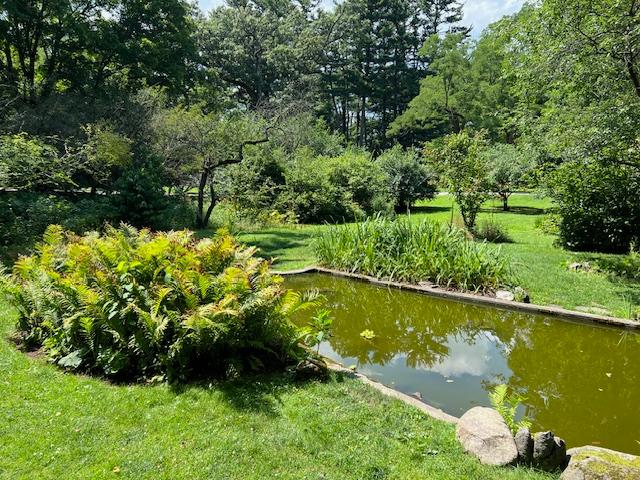
In the Summer of 2024, I took a special Garden Tour of the Livingston Gardens. A new Lead Gardener had been hired by the State of New York and she was starting to renovate the gardens. So we took a tour of the four gardens near the mansion. While we toured the estate grounds, we visited the South Spring Garden, the Walled Garden, the Children’s Garden and the Cutting Garden to see how they were progressing. The staff here is doing a good job bringing these gardens back to life to how Alice Livingston envisioned them.
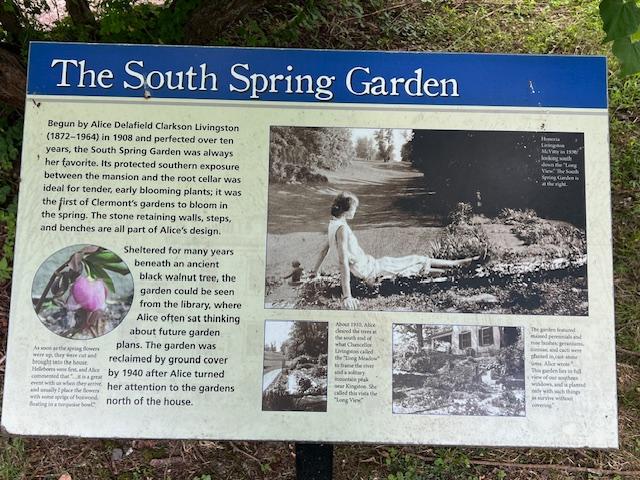
The first was the South Spring Garden which is closest the house. This was built when the stairs to the side of the home were built and one of Alice Livingston’s first gardens.
The South Spring Garden sign
The South Spring Garden in Summer 2023
The South Spring Garden being cleaned up in Summer 2024
The grown in wall of the South Spring Garden
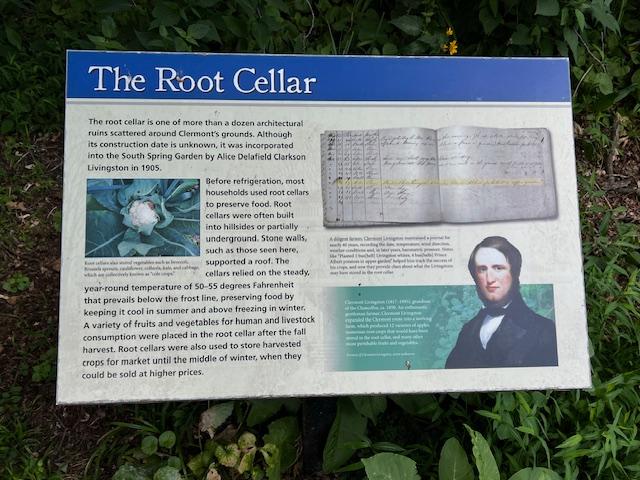
The Root Cellar sign
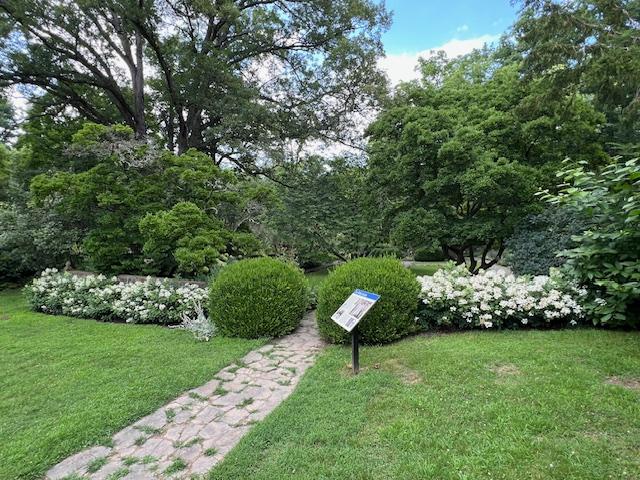
The Root Cellar remains by the South Spring Gardens
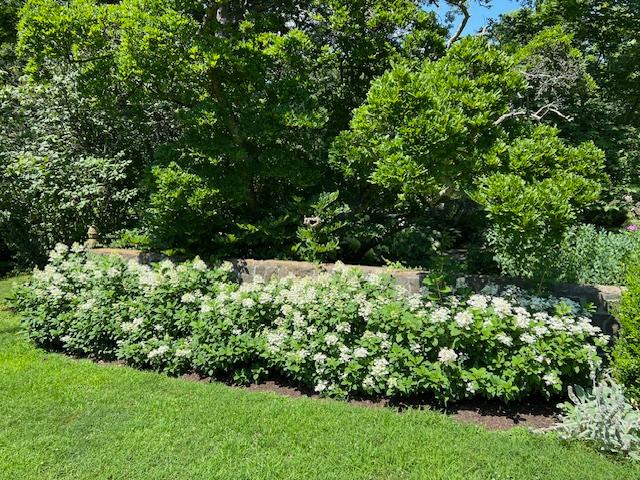
The flowers in the South Spring Gardens
The sign for the Walled Garden
The Walled Garden
The Walled Garden
The Walled Garden
The Walled Garden
The Walled Garden Statuary
The Walled Garden
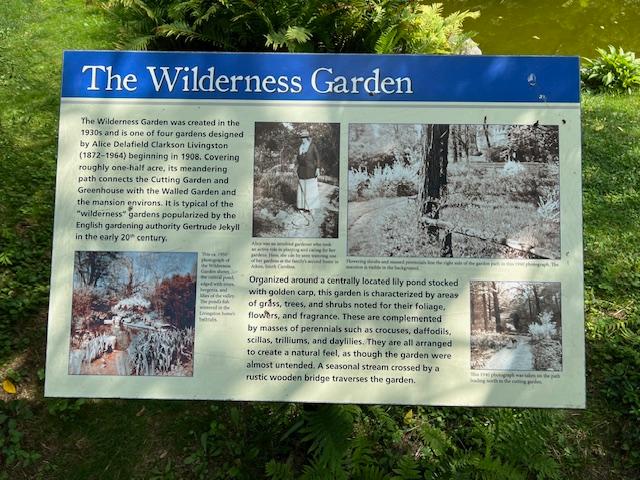
Then we visited the Wilderness Gardens that were just beyond these and they also had been brought back to life by the gardeners. This was to be a transition from the formal gardens to the woods.
The Wilderness Gardens:
The Wilderness Gardens sign
The Wilderness Gardens
The Wilderness Gardens
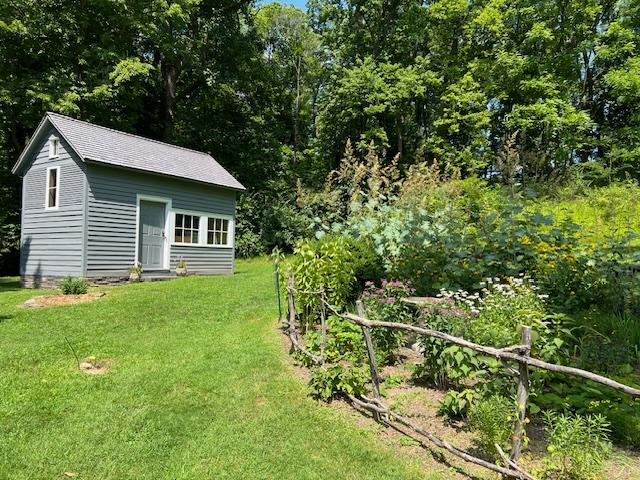
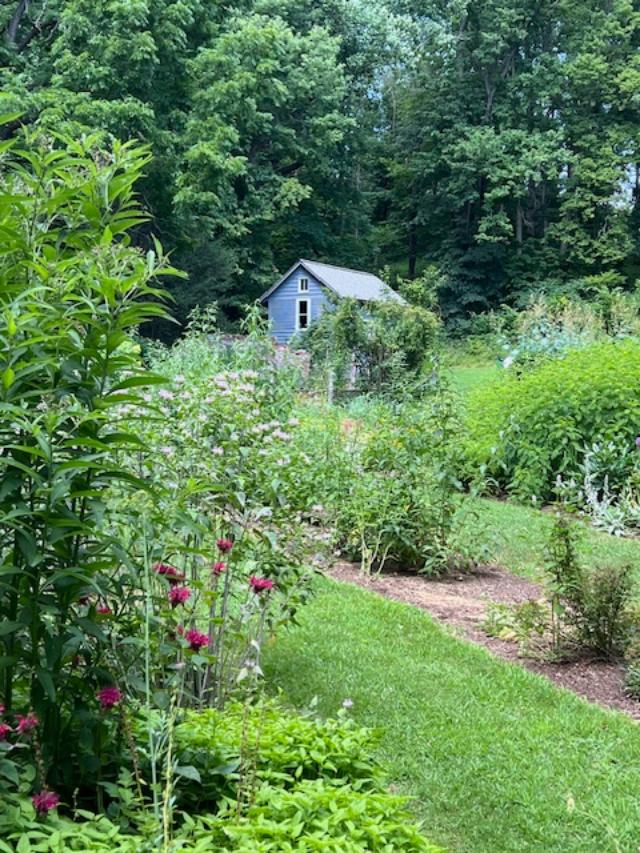
The we visited the Children’s Garden and the Cutting Gardens which were the newest gardens on the estate. The Children’s Garden playhouse had just been renovated and the beds had been replanted.
The Children’s Garden with the Children’s playhouse
The Children’s Garden from the entrance
The Children’s Garden Garden
The Children’s Garden
The Cutting Gardens were created so that Alice Livingston could grow the types of flowers that would decorate the house at various points in the season. These gardens have been brought back to their original purpose and the flowers and assortments that have been planted are colorful and the fragrances are so nice. On a beautiful day, walking amongst the beds is so nice and relaxing.
The Cutting Garden
The Cutting Garden
The Cutting Garden
The Cutting Garden trellis
The bridge between the Walled Gardens and the Children’s and Cutting Gardens
The Gardens Tour was very informative. Alice Livingston’s love of flowers and how they accented the house were her pride and joy. The Cutting Garden were all the flowers that she used to decorate the house with and the Children’s Gardens taught her daughters responsibilities and knowledge of horticulture.
The biggest problem in recent years is how to maintain all these gardens. This takes a lot of effort and work to weed. plant and prune these beds and make them look nice. The new gardener hired by the State and her team of two staff and volunteers are doing a nice job cleaning out the old beds and replanting and pruning all the plants and bushes that were already there. You can tell by the pictures there is a lot more to do but the gardens are on their way back to their original look.
After touring the mansion at Christmas time in December 2023, I visited Downtown Germantown, which itself was decorated for the both holidays.
Downtown Germantown, NY decorated for the Christmas holidays.
Downtown Germantown during the Christmas holidays.
Downtown Germantown at the Christmas holidays.
Downtown Germantown for the Christmas holidays and church service.
After the tour in July 2024 for the Summer Garden tour, I revisited Germantown again to see what it was like during the summer months. It is a very active and historical downtown with nice restaurants and shops, a wonderful gourmet grocery store and beautiful historical churches. It is a nice place to spend the weekend when touring the mansions in Columbia and Duchess Counties.
Germantown in the Summer of 2024:
Downtown Germantown, NY in the summer
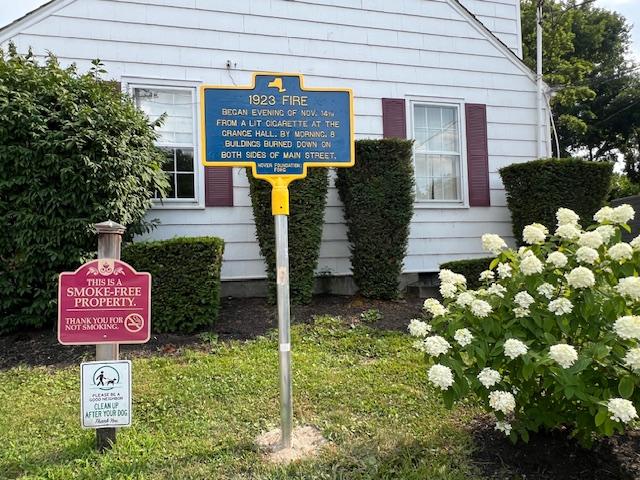
The town square and historical sign
The Inn downtown
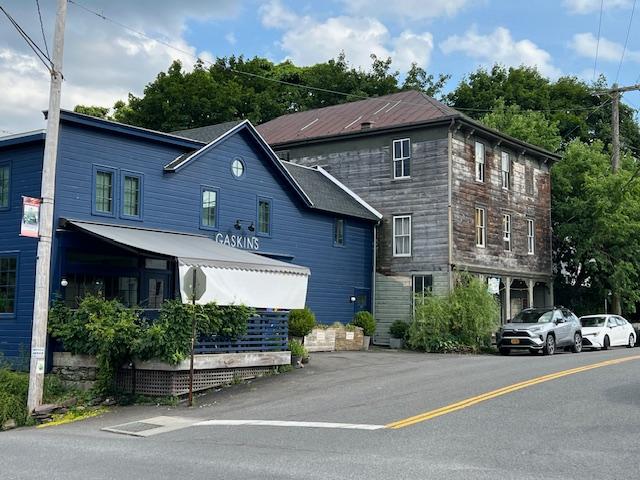
The restaurant row of Germantown with Gaskin’s in the background
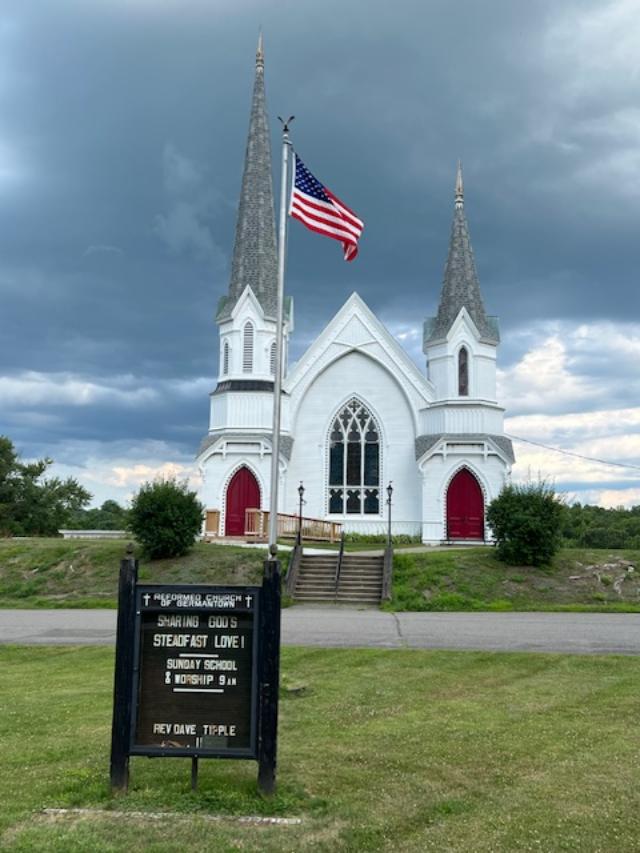
The Reformed Church of Germantown. For some reason the clouds started to roll in after a sunny day.
The church grounds across the street
Germantown is a small town that keeps changing as more people from the City move up to the Hudson River Valley. A lot of the buildings in town are becoming art galleries, furniture shops and new restaurants. With each season, there are more changes coming to the town.






























 Visiting a Museum: The Unique, Unusual, Obscure and Historical