Category: Exploring Historic Hudson River Valley

Dia: Beacon                                                               3 Beekman Street                                           Beacon, NY 12508

Dia: Beacon 3 Beekman Street Beacon, NY 12508

Dia: Beacon

3 Beekman Street

Beacon, NY  12508

(845) 440-0100

https://www.diaart.org/visit/visit/diabeacon-beacon-united-states

https://www.diaart.org/visit/visit

Open: Sunday & Monday 11:00am-6:00pm/ Closed Tuesday & Wednesday/Thursday-Saturday 11:00am-6:00pm

Fee: General Admission $20.00/Seniors $18.00/Students $12.00/Children 11-5 $5.00/Free to Children under 12

My review on TripAdvisor:
https://www.tripadvisor.com/Attraction_Review-g47291-d273538-Reviews-Dia_Beacon-Beacon_New_York.html?m=19905

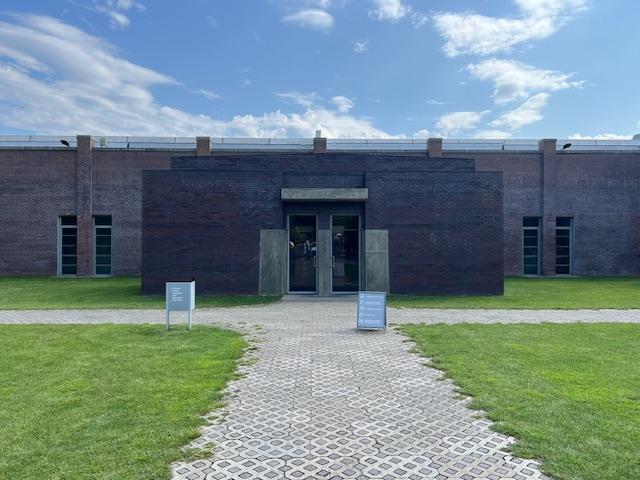
 The front of the Dia: Beacon

I visited the Dia: Beacon in Beacon, NY many times and I have to say that is an interesting space to display art and the pieces themselves make a statement. The museum is sited on thirty-one acres on the banks of the Hudson River and is adjacent to ninety acres of riverfront parkland. The museum is located in a former printing plant built in 1929 by Nabisco (National Biscuit Company) (Wiki). The space square footage gives the museum the opportunity to display larger statement pieces of well known artists.

The history of the Dia: Beacon:

(from the museum website)

The Dia: Beacon presents Dia Art Foundation’s collection of art from the 1960’s to the present as well as special exhibitions, performances and public programs. The Dia invited artist Robert Irwin to conceive the master plan for a twenty-century museum that retained the original character of the factory’s interior spaces, Irwin also designed seasonally changing garden throughout the surrounding landscape. Following the renovation, the Dia: Beacon was added to the National Register of Historic Places (Dia: Beacon Museum).

Dia Art Foundation:

(from the museum website)

Founded in 1974, Dia Art Foundation is committed to advancing, realizing and preserving the vision of artists. In addition to Dia: Beacon, Dia maintains a constellation of iconic, permanent artworks and installations in New York City, the American West and Germany (Dia Museum). 

Each of the galleries are devoted one artist’s work and these galleries make their own statements. There is also a really nice bookstore and gift shop on the extension of the museum and small restaurant.

It is nice to just walk around in your own time and visit each of the galleries. Plan about two hours to see the whole museum. It is an interesting place to see contemporary art in a gallery that is devoted to one artist at a time. The outside grounds of the museum and the parking lot makes it own statement. There is not much parking so plan on getting there early or later in the afternoon.

The museum has clean lines and big halls and a minimalist landscaping

The one thing about the Dia is that the works are quite large and pack a bold statement.  The museum uses a combination of both American and Foreign artists and their works make a bold statement. The museums galleries are large and airy and can show larger works of art. The museum shows many of the artists largest pieces of work.

The inside of the Dia: Beacon’s large galleries
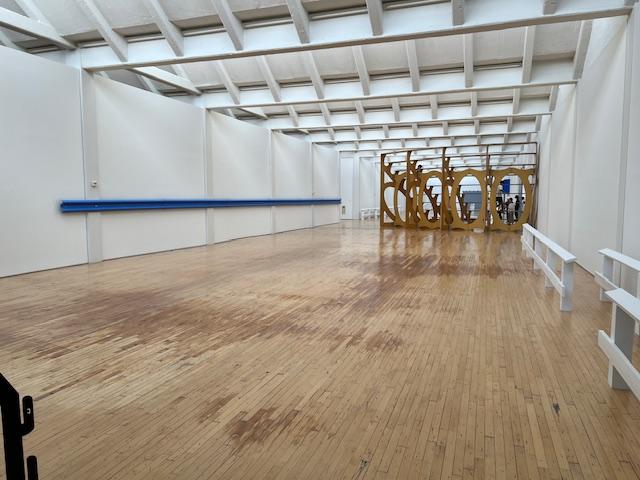
These larger pieces were interactive

Inside the museum, many contemporary artists are featured each season. Many of their larger works were featured in their galleries. While the shows rotate collections of many artists, these were the pieces that stood out to me on my visits to the museum over the years.

The Artists I most admired and their works that most stood out to me:

Artist Louise Bourgeois has displayed some interesting sculptures that dominate the upper floors. One of the most fascinating pieces was that of a large spider that dominates the corner of the floor.
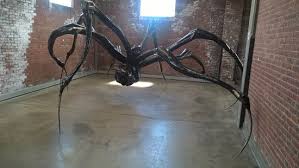
Dia Beacon II

This Louise Bourgeois work is a rather creepy piece of art like something out of the movie “It”.

https://en.wikipedia.org/wiki/Louise_Bourgeois

https://diaart.org/collection/collection/bourgeois-louise-crouching-spider-2003-l-2007-012

In Bourgeois’s works on view in these galleries, organic formations fuse with the inorganic materiality of the media in which they are rendered, be it marble, wood, or bronze. The artist’s repertoire of materials spans traditional media and new textures, such as latex and synthetic resin. In her work, representation often entails the creation of a surrogate for the body and its suffering organs (Dia: Beacon museum website).

Artist Dan Flavin has some interesting light sculptures on display along the walls and floors of the gallery. Things are made of long fluorescent lights of various colors.

Dia IV

Artist Dan Flavin’s light sculptures

https://en.wikipedia.org/wiki/Dan_Flavin

After 1963 Flavin’s work was composed almost entirely of light, in the form of commercially available fluorescent tubes in ten colors (blue, green, pink, red, yellow, ultraviolet, and four whites) and five shapes (one circular and four straight fixtures of different lengths). Initially arranging these fixtures in varying autonomous configurations, Flavin increasingly made work in relation to architecture, such as his monumental barriers that physically block a passageway or segment of a space with light (The Dia: Beacon museum website).

In the main gallery as you walk in are the large geometric shapes of artist Charlotte Posenenske who created these pieces in various colors and shapes. These pieces line the floors and walls.

Dia III

The geometric shapes of Artist Charlotte Posenenske

https://en.wikipedia.org/wiki/Charlotte_Posenenske

https://www.diaart.org/exhibition/exhibitions-projects/charlotte-posenenske-exhibition

Embracing reductive geometry, repetition, and industrial fabrication, she developed a form of mass-produced sculptural Minimalism that addressed the pressing socioeconomic concerns of the decade by circumventing the art market and rejecting established formal and cultural hierarchies. Posenenske employed playful conceptual devices to oppose compositional hierarchy and invite the collaborative engagement of the public in the continual reconfiguration of her variable sculptures (The Dia: Beacon website).

Artist Andy Warhol has one of his largest works displayed in the main gallery on the first floor.

The artist Andy Warhol gallery

https://en.wikipedia.org/wiki/Andy_Warhol
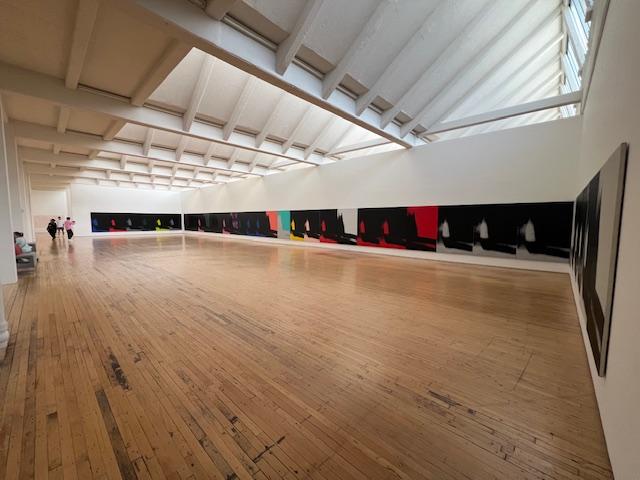
The large Andy Warhol piece

What I loved about the work by Warhol was the continuous colorful pattern of the work and the way it wrapped around the room. The pattern took form in many colors and showed consistency and balance.

A single painting in multiple parts, Shadows is one of Warhol’s most abstract works, yet one that cohesively synthesizes key elements of his practice, including film, painting, photography, and screen-printing. Originally commissioned by Dia and acquired in 1979 for a solo exhibition at 393 West Broadway in New York, Shadows includes a total of 102 canvases; the final number of canvases on view in each installation is determined by the dimensions of an existing exhibition space (The Dia: Beacon museum website).

Artist Senga Nengudi Gallery

https://www.sengasenga.com/

American artist Senga Nengudi had a some interesting works on display, one resembling melted ‘freeze pops’, which I thought was rather clever. Her large works took liquid forms and were colorful and spontaneous. These large works had lots of color and looked whimsical and fun.

One of Artist Senga Nengudi works

I thought this was a large ‘freeze pop’

One of her non-liquid works

Made of everyday materials such as vinyl, water, nylon, sand, dry-cleaning bags, lint, paper, and tape, Nengudi’s installations are at once proxies for bodies and sites for performance. The works accommodate a variety of cultural references from African, Japanese, and South Asian rites to Western avant-garde art. Characteristic of her openness to multiplicity, the artist, born Sue Ellen Irons, has assumed pseudonyms that inflect her creative identities as sculptor (Senga Nengudi), painter (Harriet Chin), photographer (Propecia Leigh), and writer (Lily Bea Moor) (The Dia: Beacon museum website).

Some of the other works that I liked as I walked around the museum:

Displayed on the first floor of the Dia: Beacon

Another interesting work on the first floor

The large galleries and open air space give patrons a chance to walk around the works and really get a feel for what the artists are trying to express. You really get to see the art up close and that is why I like the way they display their art. We can engage with each piece and develop our own meaning from it.

The grounds and the proximity to the river gives the museum a picturesque spot. It is nice to walk around the lawn on a warm day and enjoy the paths around the museum. The museum also has a very interesting gift shop featuring many books and gifts. The small restaurant can be pricey but offers a place for a light lunch or a quick snack.
 

Historic Huguenot Street                                       81 Huguenot Street                                            New Paltz, NY 12561

Historic Huguenot Street 81 Huguenot Street New Paltz, NY 12561

Historic Huguenot Street

81 Huguenot Street

New Paltz, NY  12561

(845) 255-1889

http://www.huguenotstreet.org

info@huguenotstreet.org

My review on TripAdvisor:

https://www.tripadvisor.com/Attraction_Review-g48245-d288641-Reviews-Historic_Huguenot_Street-New_Paltz_New_York.html?m=19905

Plan your visit:

For current information on guided tours, group tour reservations, school groups, special events or accessibility, call (845) 255-1660 or visit http://www.huguenotstreet.org.

The history of Slavery in the area

App:

Our free Walking Tour mobile app features histories of the houses on the street with archival photos as well as photos of the house interiors and the collection pieces within. Mobile users can download the app on both the App Store and Google Play.

The entrance to the site

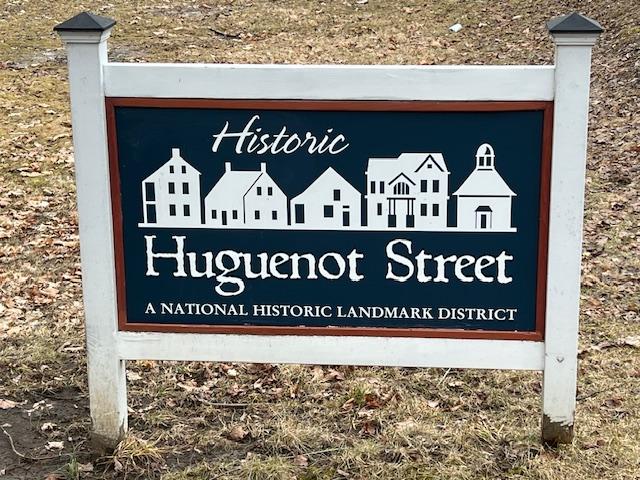
The historic sign at the entrance

History of the site:

At our 10 acre National Historic Landmark District, visitors experience more than 300 years of history through the lens of a French Huguenot community as it evolved over time. Guided tours begin with an introduction to the pre-colonial Munsee Esopus landscape dating back 7000 years and the religion, culture and architecture of New Paltz’s earliest European settlers and enslaved Africans. The experience continues as guests visit fully furnished houses reflecting unique human narratives and changing tastes across the Colonial and Federal periods, through the Gilded Age and into the early 20th century.

(Promotional Materials)

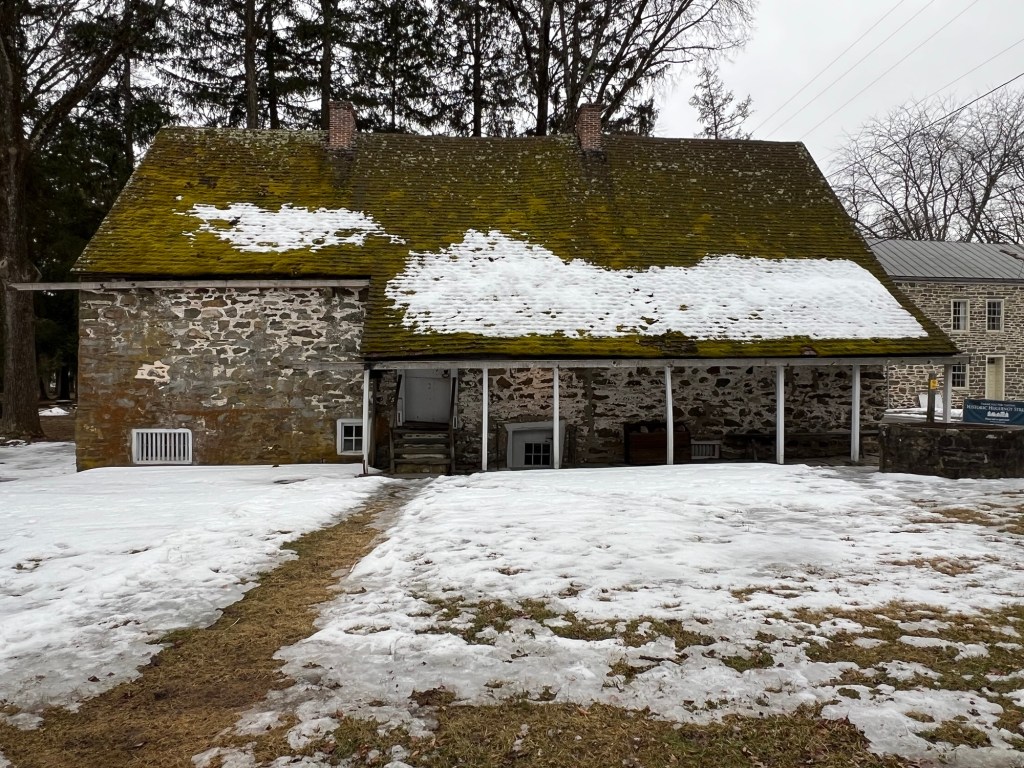
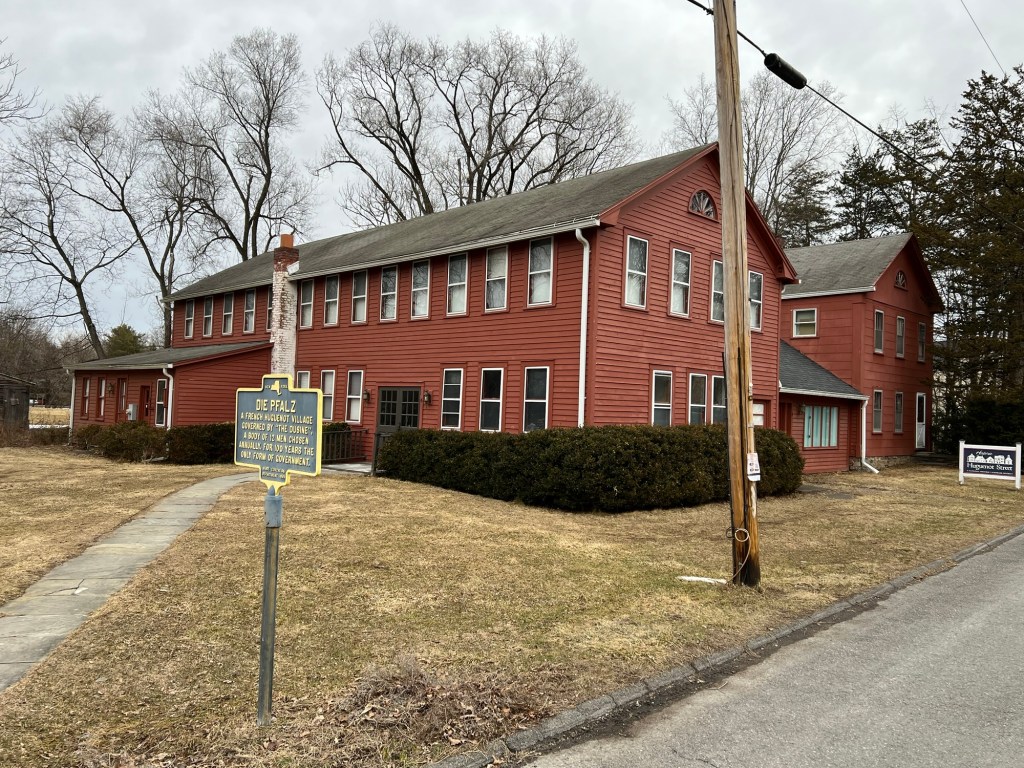
I visited Historic Huguenot Street one afternoon after visiting here about five years earlier during the holidays. The houses are easy to tour and the street is blocked so that you can walk amongst the houses.  There are tours every half hour when the site is open. Here you can tour inside the houses instead of just the grounds. On a nice day, it is interesting to look over the architecture of the homes.

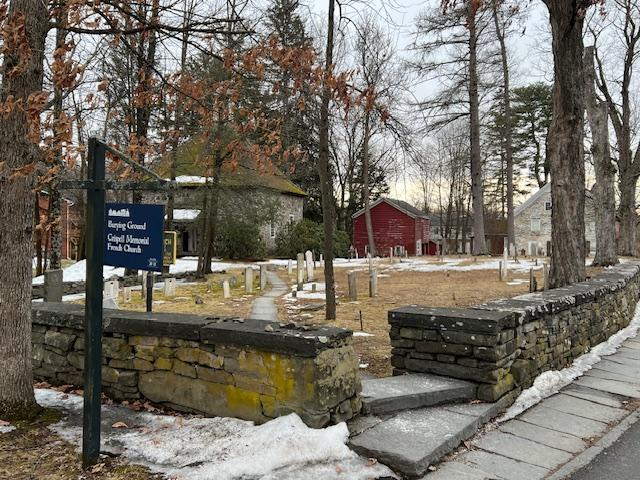
Make sure that you take time to look at the historical cemetery by the church at the end of the block. Some of the original settlers are buried here. It is also nice to tour around the Waykill River.
Take the extra time to visit the gift shop and see the information video on the site and look over the literature of the site.

The area has a pretty interesting history.

The map of the site

History of the Huguenot Street Historic District:

The site is owned and operated by Historic Huguenot Street (HHS), which was founded in 1894. In 1899, Historic Huguenot Street purchased the Jean Hasbrouck House as the first house museum on the street. In the 1950’s and 60’s, the organization and related family associations purchased most of the remaining stone houses in the district and subsequently opened them as museums. These acquisitions were funded in large part by descendants of the original Huguenot founders. Their family associations play a key role in supporting the institution today.

The Individual Houses:

Bevier-Elting House:

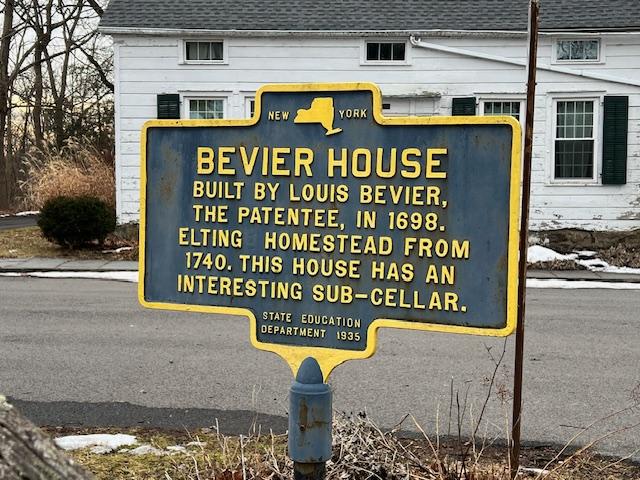
Dating to the early 18th century, the house was originally a one room building built with the narrow or gable end facing the street-then the prevailing style of the low countries of Northern Europe. Two expansions were built later as was a small cellar that was used to house African slaves. The house was built by the Beiver family, one of the founding families and subsequently sold to the Dutch Elting family.

The Historic Marker

Abraham Hasbrouck House:

https://www.huguenotstreet.org/hasbrouck

The Abraham Hasbrouck House

The Hasbrouck House at Christmas

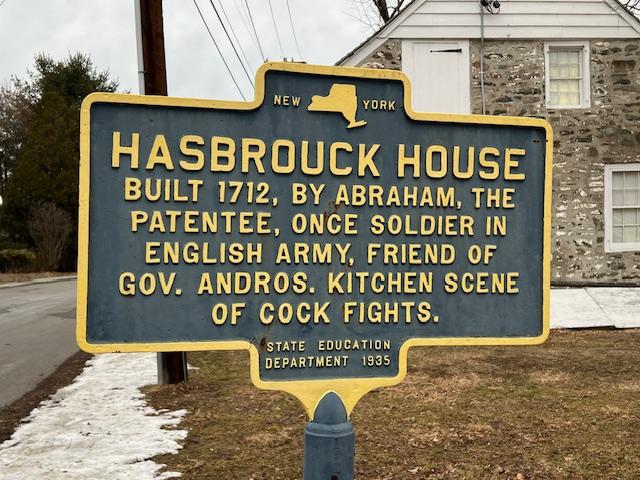
The structure as the Abraham Hasbrouck House was built in three phases in the 1720’s and 30’s. The first of the house-the center room-was constructed in 1721 by Daniel Hasbrouck, the son of Abraham Hasbrouck the patentee. The date 1721 is based on recent dendrochronology, which is a process by which wooden structural members are dated. This house represents a New World innovation in Dutch-style architecture. The initial houses in the Dutch region of New York, such as New Amsterdam, Albany and Kingston were built in the tradition of Dutch cities with the gable-ends to the street, which conserves street frontage. The basic structure of the house consists of a series of H-bents which spread the weight of the house across the entire expanse. The original one room house exhibited several defining elements of Dutch architecture, the jambless fireplace being the principal and most recognized feature in the house. Recently re-opened to the public in July 2012 following a restoration and reinterpretation focusing on the life of Widow Wyntje.

The Abraham Hasbrouck House Historic Marker

Jean Hasbrouck House:

https://en.wikipedia.org/wiki/Jean_Hasbrouck_House

The Jean Hasbrouck House

The Jean Hasbrouck House at Christmas time

Also built in 1721 by Jean’s son Jacob (and perhaps incorporating elements of an early home built by New Paltz founder Jean Hasbrouck), this home is an excellent example of Hudson Valley Dutch architecture and the showpiece of Historic Huguenot Street. A National Historic Landmark in its own right, it boasts the only remaining original jambless fireplace of any of the Huguenot Street houses and is one of the few surviving examples in what was formerly the New Netherland.

In 2006, the north wall of the house was carefully dismantled, repaired and reconstructed. Reproduction Dutch-style casement windows were installed. Interior restoration followed, resulting in a house that is an excellent example of how a comfortable family in the region lived in the mid-18th century.

Jean Hasbrouck House Historic Marker

DuBois Fort:

https://www.huguenotstreet.org/visitor-information

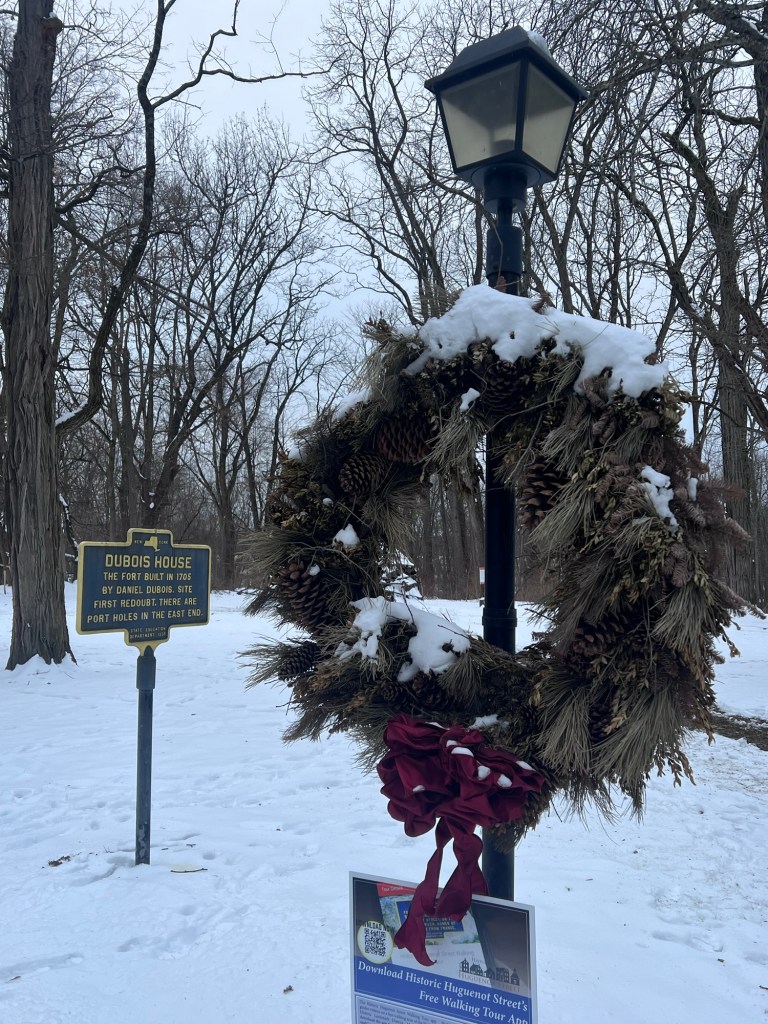
The DuBois House/Fort

The DuBois House at Christmas time

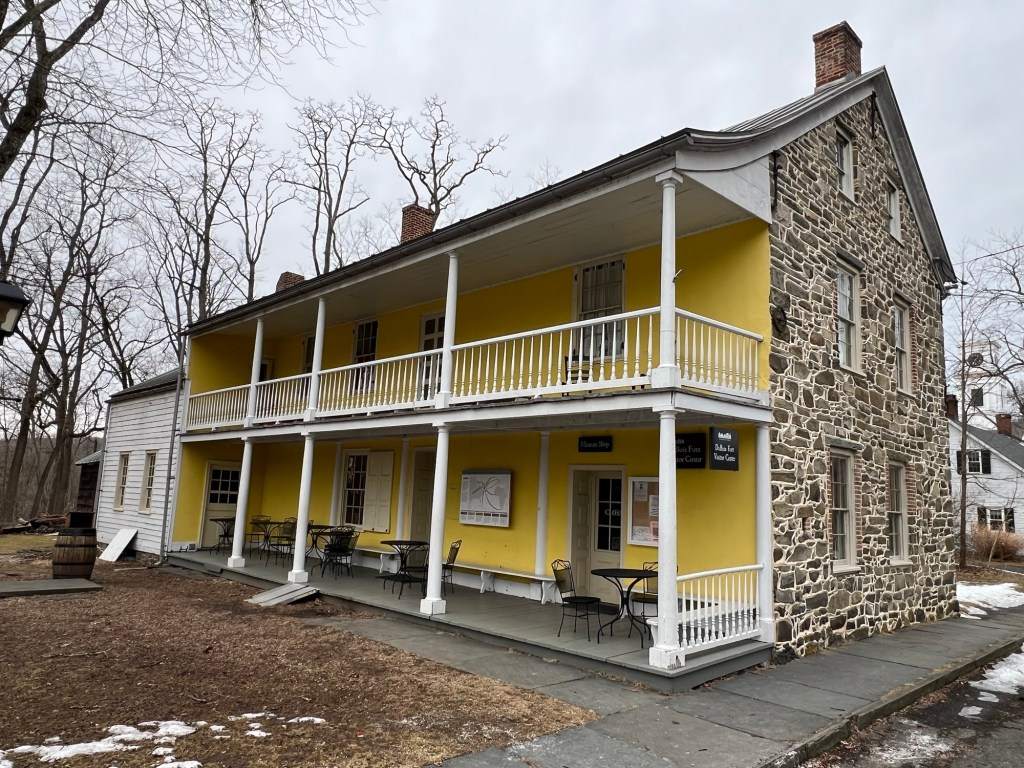
Built circa 1705 for the DuBois family, it might have served as a fortified place for the small community if needed. Originally a smaller 1 1/2 story structure, this building was expanded to its current size in the late 1830’s. Some historians and antiquarians believe that the presence of “gun ports” made it a fort but there is no evidence of the presence of any such portholes before the 19th century. The DuBois Fort currently serves as the orientation center and gift shop as well as a location for special events. Guest can purchase their admission tickets and memberships at this building. Over the last 300 years, it has also been used as a residence and a restaurant.

The DuBois House historic marker

Freer House:

https://www.huguenotstreet.org/freer

https://home.cc.umanitoba.ca/~sfreer/huguenot.html

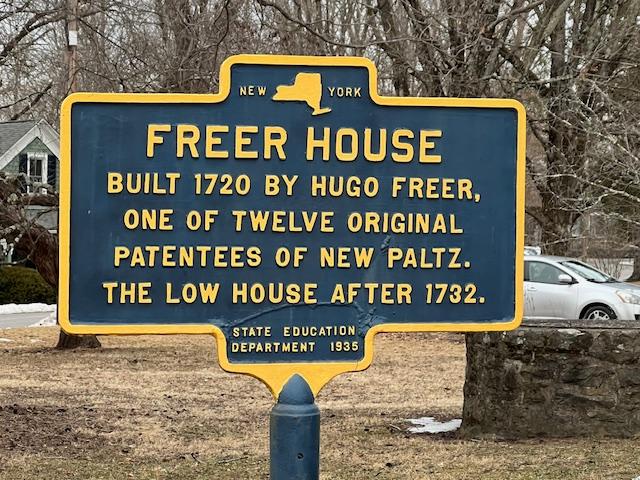
The Freer House

The Freer House at Christmas time

The Freer House is one of the six 18th century stone houses owned by Historic Huguenot Street. It was altered in various points in its approximately 250 years of occupancy with its most recent major alterations occurring in 1943 when it was purchased by Rev. John Wright Follette, a direct descendant of it s original builder, Hugo Freer. Over the years, the interior was modernized into a 20th century idea of a colonial home. This structure is not currently open to the public.

The Freer House Historic Marker

Deyo House:

https://www.huguenotstreet.org/deyo

https://cdm16694.contentdm.oclc.org/digital/collection/elting/id/375

The Deyo House

The original portion of the house was built around 1720 by Patentee Pierre Deyo. It began as a one room house was subsequently expanded to two rooms and ultimately to three when a stone addition was added off the rear by Pierre’s grandson Abraham. Circumstances for this house changed dramatically when at the height of the Colonial Revival movement, two descendants of Pierre Deyo, Abraham and Gertrude Brodhead, inherited the house.

The Deyo House at Christmas

Wanting to live on the street of their ancestors but also wanted a modern, gracious home that reflected their affluence, the Brodheads partially dismantled the original stone house and build a grand Queen Anne home around it in 1894. They also significantly changed their surrounding property in essence changing a small village farm into a handsomely appointed and landscaped mini estate.

The house passed out of Deyo family ownership in 1915. It was a private home until 1971, when it was purchased by the Deyo-Family Association and donated in order to be opened to be opened to the public as a house museum. The home was most recently restored in 2003 and features circa 1915 interiors.

The patentee Pierre Deyo died in 1700, so couldn’t have built the house in 1720 as stated. Per the plaque mounted outside the house it was built in 1692.

The Deyo House Historic marker

Crispell Memorial French Church:

https://www.huguenotstreet.org/crispell

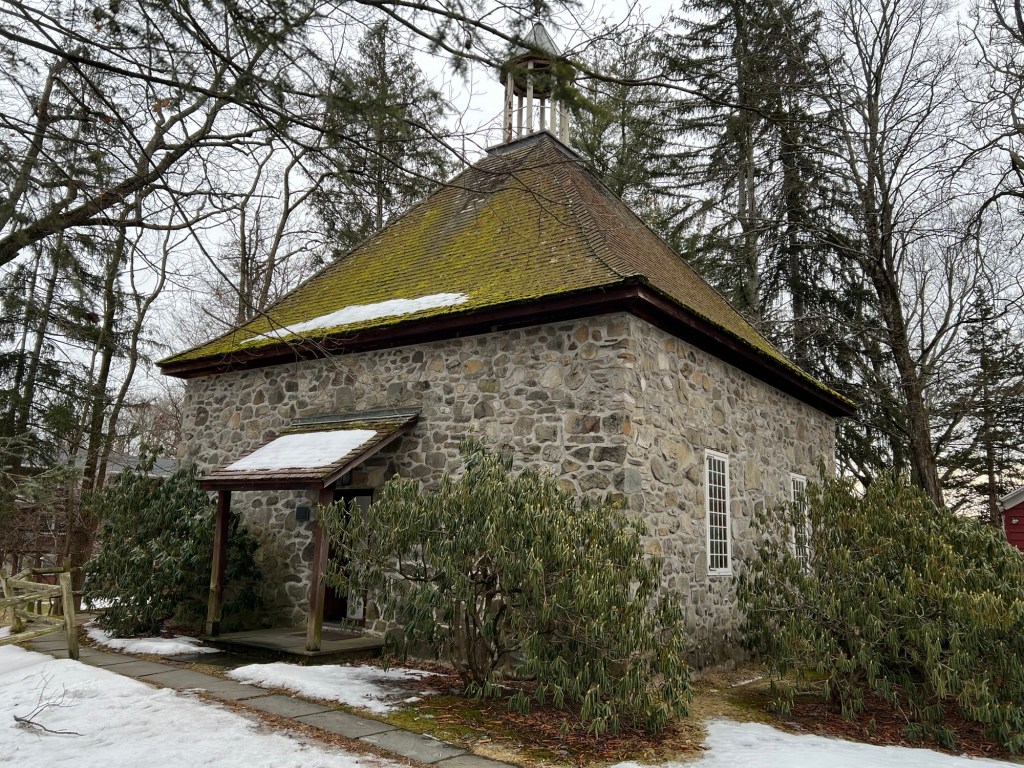
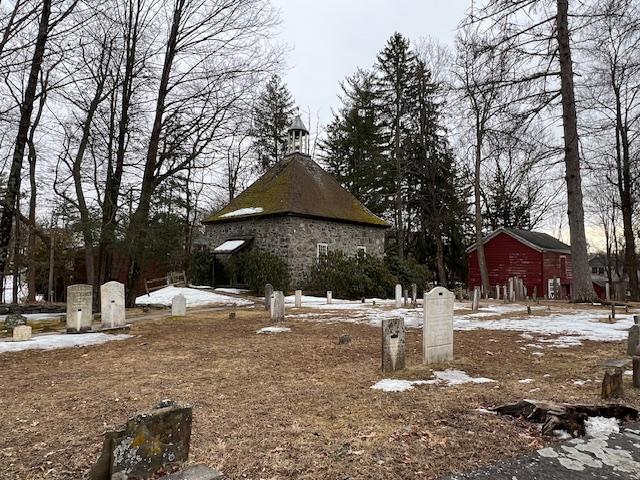
Since the community’s founding, there have been four sanctuaries built on what is today called Huguenot Street. The French-speaking Protestants who settled in New Paltz built their first church in 1683-a simple log building. This was replaced in 1717 with a straightforward, square stone building that reflected the permanence of the settlement. This existing building in the burying ground is a highly conjectural reconstructed of the 1717 building near its original location.

The Historic Walloon Church

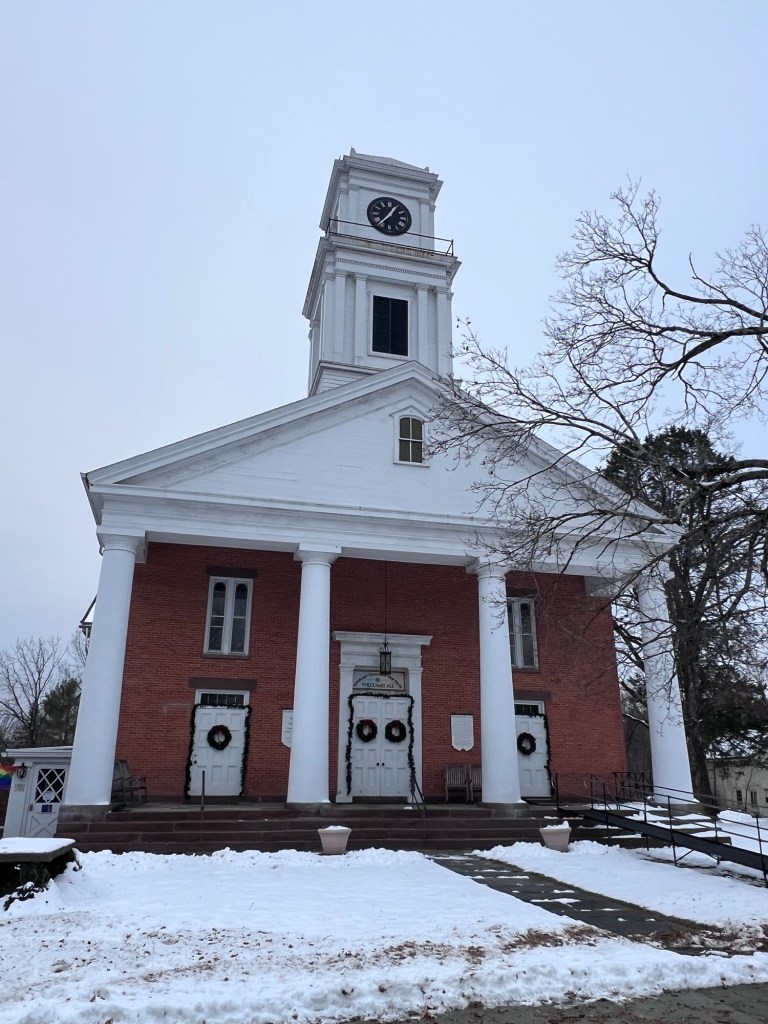
As the New Paltz community increased in size throughout the 18th century, a larger church became necessary. A second stone church was built down the street in 1772. When it became too small, it was demolished and replaced by a third church built in 1839. This church survives today and is home to an active Reformed congregation.

The Church and the graveyard

The reconstructed church is named in honor of Antoine Crispell, one of the twelve founders or patentees of New Paltz and a direct ancestor of Franklin Delano Roosevelt. It was built as the result of a fundraising campaign led by the Crispell Family Association. The Crispell Family Foundation opted to create this reconstruction church in their ancestor’s honor. It was completed in 1972.

The 1717 church was designed to reflect Reform thinking; the pulpit was placed in a central location and the pews were placed so that everyone could see and hear more equally. This expressed the concept that each person had a direct relationship with God, rather than one mediated through a church hierarchy.

LeFevre House:

https://www.huguenotstreet.org/lefevre

https://www.townofnewpaltz.org/historic-preservation-commission/news/the-josiah-p-lefevre-house-generations-of-history

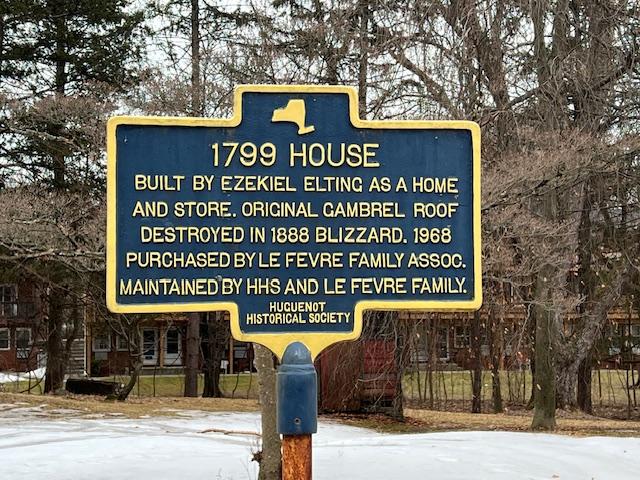
Built int 1799 by Ezekiel Elting, a prosperous merchant who was born in the Bevier-Elting House, this stone and brick building is quite different from the earlier stone houses on Huguenot Street. Its Georgian-style architecture reflects the transition of New Paltz from a French and Dutch settlement to an Anglo-American community and increasing refinement in architecture in this period as settlements matured. The house shows the changes in architectural style from the early 18th century. This house reflects the several changes in the society and home life of New Paltz in the early 19th century.

The Elting-LeFevre Historic Marker

Deyo Hall:

https://www.poughkeepsiejournal.com/story/news/local/2014/12/09/dateline-deyo-hall-history/20146611/

https://www.facebook.com/deyohall/

Deyo Hall

Formerly a glass factory, Deyo Hall is the site of event and meeting facilities and public restrooms. Collections storage is housed in this building.

The New Paltz Historic Market

Roosa House Library and Archives:

https://mapcarta.com/W304906815

Located in the Roosa House, the Library and Archives at Historic Huguenot Street is a research facility devoted primarily to the history and genealogy of the Huguenot and Dutch settlers of the Hudson Valley. It also functions as a general repository for local history, regardless of ethnicity or religious persuasion. The collections consist of family genealogies, church, cemetery and bible records, wills and deeds, census records, genealogical periodicals, county histories and publications relating to Huguenot ancestry. Genealogists, local historians and other interested parties can access the collections by appointment. The colorful paint replicates the original colors of the house in 1891.

Native American presence on Huguenot Street:

Historians and archaeologist have learned more about the continuing relations between the Esopus, the original inhabitants of the area and the Huguenots. Some results of research can be found at the HHS site at “Relations between the Huguenots of New Paltz, NY and the Esopus Indians (http://www.huguenotstreet.org/library_archives/exhibits_research/Indian_affairs.html). The “Before Hudson” exhibit, currently on view at the DuBois Fort Visitor Center, shows some of the highlights of archaeological excavation in our area with artifacts dating back 6,000-8,000 years ago.

Historic Huguenot Street III.jpg

Indian Wigwam

Christmas at Historic Huguenot Street:

https://www.huguenotstreet.org/holiday

Historic Huguenot Street Christmas

(This information from the homes is from Wiki

The Presbyterian Church during the Christmas season

Home of Franklin D. Roosevelt (Springwood)-National Historic Site                                                                             4097 Albany Post Road                                                                   Hyde Park, NY 12538

Home of Franklin D. Roosevelt (Springwood)-National Historic Site 4097 Albany Post Road Hyde Park, NY 12538

Home of Franklin D. Roosevelt (Springwood)-National Historic Site

4097 Albany Post Road

Hyde Park, NY  12538

(845) 229-9115

http://www.nps.gov/hofr

https://www.nps.gov/hofr/index.htm

My review on TripAdvisor:

https://www.tripadvisor.com/Attraction_Review-g60801-d106611-Reviews-Franklin_Delano_Roosevelt_Home-Hyde_Park_New_York.html?m=19905

Springwood, the home of the Roosevelt family in Hyde Park, NY

I have visited the childhood home of Franklin Delano Roosevelt many times over the years. It is an interesting part of not just Hudson River Valley history but of American history.

Parts of the house were built in the late 1700’s and added on later by the families who lived in the house. Franklin D. Roosevelt’s father bought the house and continued to add on to it. Most of the estate is still intact as well as the homes that the President built separate from the main house to give he and his wife some privacy from his mother, Sara Delano Roosevelt, who owned the home until her death.

The entrance to Springwood was decorated for the holidays

Visiting Springwood is like a step back in time. Unlike the grand mansions of the Mill’s and Vanderbilt’s up and down Route 9, Springwood looks more like a home just on a larger scale. The self-guided tour takes you through the first story of the house which includes the dining room, living room, sitting rooms and offices of the President and of his mother, who ran the staff and the household.

The inside of Springwood as you enter the foyer which was decorated for Christmas

The house is done in dark woods, representing a time before the Victorian age when the Federalist look was in and the later additions represent the trends in Victorian style. The furnishings were functional and very homey not like the elaborate ‘over the top’ furnishes in some of the other mansions. The Roosevelt’s were old money Hudson River Valley compared to the Vanderbilt’s who money was earned after the Civil War and did not have to prove themselves to Upper Crust Society.

The Living Room/Parlor of the house where people would gather after dinner

I was impressed with the amount of sporting goods, stuffed animal species and just the general hominess of the house. It looked like someone still lived there. The downstairs area for the servants and the kitchen are functional and not huge. This is a house that was built for a family and for entertainment but not on the scale of the Astor’s or Vanderbilt’s. It ran for a growing family that lived in the house.

The Library and the Dining Room were decorated for Christmas as well as the foyer was decked with garland and bows. I am not sure how many times the family celebrated Christmas here being in the White House but I am sure that the family came home for the holidays. Mrs. Roosevelt, Franklin’s mother, ran the roost so the house functioned a certain way while she was alive.

Our first part of the self-guided tour was of the Living Room, Dining Room and Library on the first floor. The Living Room was smaller than most of the homes in this area again reflecting that the mansion was a home not a showplace. It was used all year long by Franklin’s family and was built to accommodate the growing family that he and Eleanor had created.

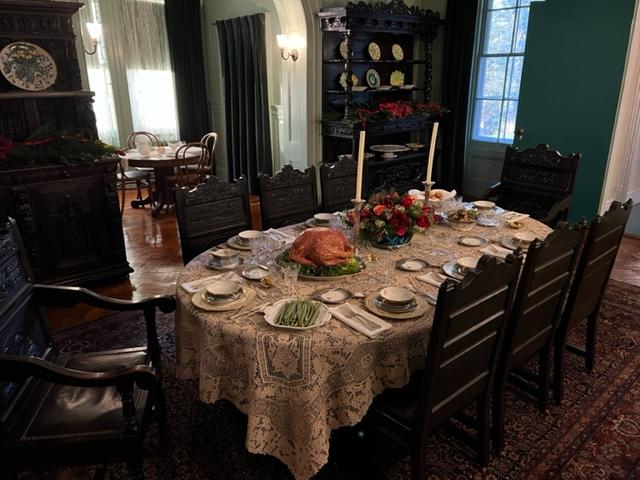
Th tour guide told us that the house was set up for Christmas the last year that FDR was alive and they had taken it from pictures and accounts that the family had done that year. The Dining Room had been set for Christmas lunch circa 1940’s with elaborate china and silver and even a children’s table so the kids would not be left out.

Christmas lunch at Springwood

The full Dining Room with the kids table in the background

The Library was decorated for the holidays as it had FDR’s last year alive and everything the site did was based on those pictures and accounts from family members.

The Library has gone through a full renovation and was decorated beautifully for the holidays

The Library was a very comfortable place to relax and socialize

The Christmas tree and the family presents in the Library

At the holidays when I visited in 2019, the house was going to be closed in April of 2020 for a full restoration and renovation of the lights, interior alarms and plumbing for about a year so the only Christmas decorations in the house was a tree in the library (the books had started to be removed from the shelves) and the formal dining room had been set for dinner. The rest of the mansion was in the process of being packed up so we didn’t get to tour it that time. During December 2022, the whole house was finally opened post-COVID and renovation and you could see it all in its glory.

Springwood at Christmastime

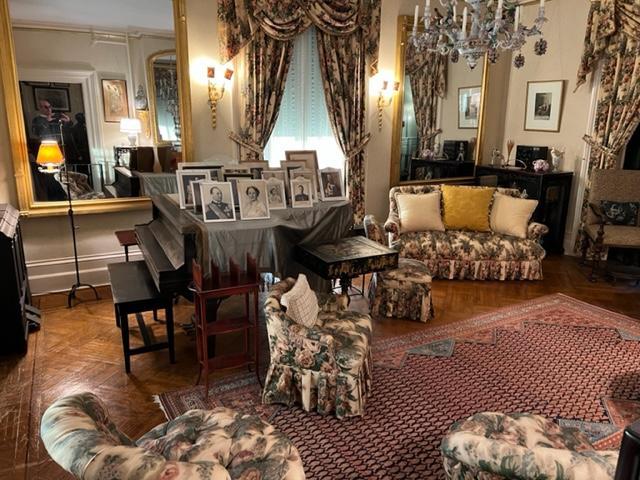
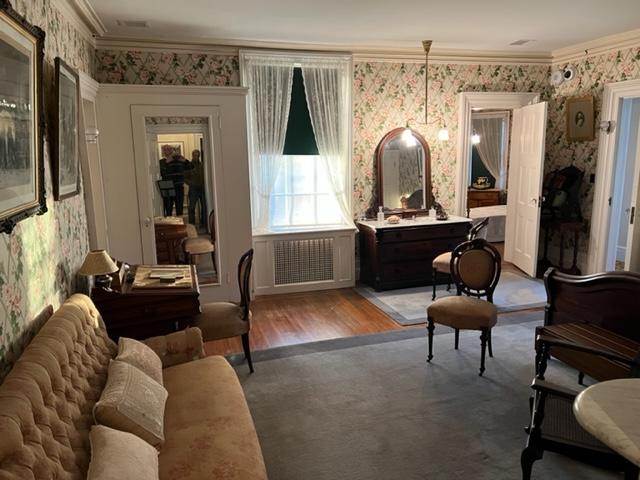
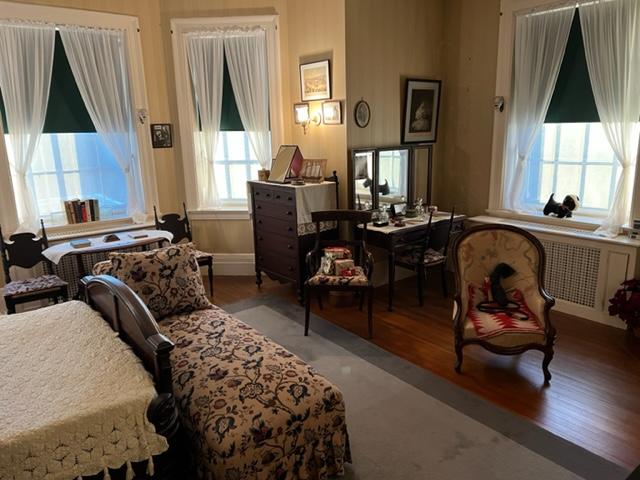
Even the upstairs bedrooms looked like any other American home at the time but a touch bigger. I could see by Eleanor’s room that she did not spend much time there. You can see where the adjustments were made when the President developed polio. I am glad that the man showed determination and did not let that stop him in his life. It proved to me that a disability limits you only if you let it.

The upstairs held the bedrooms of Mrs. Roosevelt, Franklin, Eleanor and the all the children. Each room was carefully cleaned and refreshed during the renovation so they look pristine now as if the family was still living there.

Eleanor Roosevelt’s Bedroom

Sara Roosevelt’s Bedroom

The Pink Room is where the King and Queen of England stayed when they visited the Roosevelts

The Pink Room where dignitaries stayed

Franklin Delano Roosevelt’s Bedroom

Franklin’s bedroom

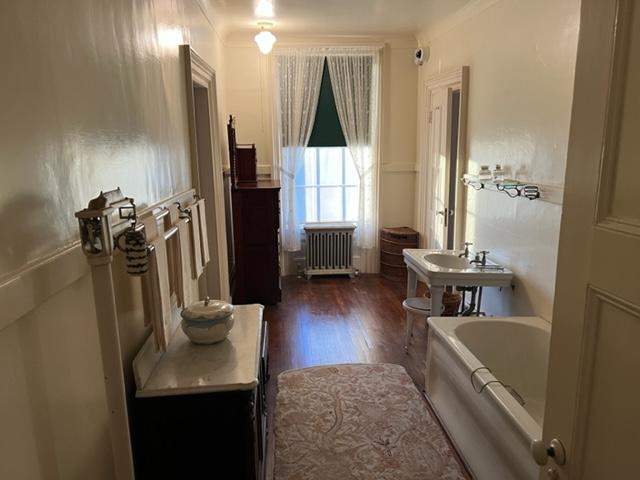
The modern bathroom with indoor plumbing

There was a large household staff to take care of things on the estate and in the house. The kitchen was the last stop on the tour in the basement. There must have been a lot of action here with such a big household to feed.

The kitchen at Springwood

The kitchen at Springwood was a busy place with so many people in the household and visiting

The grounds were interesting. The formal rose gardens are beautiful when in season and the estate does have views of the river. On the grounds of the estate as well is the Presidential Library, Museum and the gravesites of the President and his wife, Eleanor. Thes are located in the Rose Gardens that they loved so much.

springwood estate

The Springwood Estate

The Stables were very elaborate and held the trophies and ribbons of the family’s champion horses. The stables are now long empty but still display all the glories of the past when this was still a working farm.

The Stables

The inside of the Stables

The only problem we faced on our visit in the Summer of 2019 was that the house was that a sweltering heat wave hit the Valley and the humidity hit 98 degrees. The house was boiling hot because they could not open the windows for fresh air and the whole house smelled musty and old. That is the bad part of all that wood trimming and paneling, it does smell when it is hot.

Still the ranger talked about the history of the house and the role it played not just with the government influence during WWII but at the holidays and how Sara Delano Roosevelt had influence on her family.

Still it was an interesting tour that takes about 45 minutes and is an important part of the foundation of a very important family.

History of FDR at Springwood:

Franklin’s father, James Roosevelt purchased the 110 acre estate in 1867 for $40,000. The property included a house overlooking the Hudson River and a working farm. FDR was born in the house on January 30, 1882, the only child of Sara and James Roosevelt. Growing up with a view of the majestic Hudson River, he developed a love of the river and the valley through which it flowed. By age eight, he was sailing the Hudson. As a young adult, racing his ice yacht “Hawk” was a favorite winter pastime.

Franklin accompanied his father on daily horseback rides. During these times, he became immersed in the land, its history and particularly the trees. In later years, he expanded his parents’ land holding to nearly 1,500 acres and planted over half a million trees. His interest in tree farming translated into a New Deal program, the Civilian Conservative Corps (CCC). The CCC provided jobs to unemployed men age 17-28. Over 10 years, enrollees planted over three billion trees and built over 800 parks nationwide.

Surrounded by the rich agricultural heritage of the Hudson Valley all his life, FDR felt a strong affinity with farmers. One of the first New Deal programs instituted during the Great Depression, the Agricultural Adjustment Act, was designed to help farmers retain their land. His subsistence homestead projects relocated poverty-stricken families into government subsidized rural communities that provided decent housing, cooperative work and farming and schools.

When Franklin Roosevelt married Eleanor Roosevelt in 1905, they resided in both at Hyde Park and their New York townhouse. Franklin and Eleanor had six children, one who died in infancy. FDR supervised the expansion and redesign of the house to accommodate his growing family and his political ambitions, ensuring it reflected the Dutch Colonial architecture of the Hudson Valley.

FDR contracted polio in 1921 and was paralyzed from the waist down. He held out hope for a cure but was never able to walk again unaided. The multi-level home was adapted to his needs with ramps along the short steps. The trunk lift, installed years before the onset of FDR’s polio became his transportation to the second floor.

In 1932, FDR was elected to the first of an unprecedented four terms as President of the United States. His presidency redefined the role of government in America, establishing programs designed to improve the lives of all Americans. These programs included Social Security, the Federal Deposit and Insurance Corporation, the Securities & Exchange Commission, the establishment of minimum wage and unemployment insurance.

During his 12 years as President, FDR led the nation through an economic crisis of enormous proportions and the Second World War. He continually returned to this home  he loved, seeking strength and relaxation. He entertained foreign dignitaries here including British Prime Minister Winston Churchill. In the small study, FDR and Churchill initiated a document known as the “Hyde Park Aide Memoire”, that outlined possible future uses of the atomic bomb.

On the afternoon of April 12, 1945, FDR died from a cerebral hemorrhage in Warm Springs, GA. He was laid to rest on April 15th in the rose garden here. One year after his death on April 12, 1946, the home was opened to the public. At the dedication, Eleanor Roosevelt said, “I think Franklin realized that people would understand the rest and peace and strength which he gained here and perhaps go away with some sense of healing and courage themselves.”

(Home of Franklin Delano Roosevelt National Historic Site pamphlet)

History of the Springwood:

The estate was part of the 1697 agreement of the English Crown that gave 220 square miles to a group of nine businessmen from New York City. To ensure that everyone had access to the river, the land was divided into “Water Lots”, one of which was deeded to William  Creed, one of the nine partners.

The central part of Springwood is believed to have been formed from a large farmhouse which was constructed around the year 1800 in the Federal style. In 1845, the estate was purchased by Josiah Wheeler, a merchant from New York City. Wheeler undertook a remodeling of the house, giving it a then fashionable Italianate style with a three story town at the south end as well as front and rear piazzas spanning the entire length of the house.

In 1866, the estate which has been reduced to one square mile, James Roosevelt bought the house and expanded the main house adding the servants wing, two more rooms and the carriage house. James Roosevelt passed away in 1900.

In 1915, FDR and his mother, Sara made the final additions and renovations to the house for the growing family and for entertaining political and family friends. Sara Roosevelt used the New York firm of Hoppin & Koen and doubled the size of the house by adding two large fieldstone wings (designed by FDR), a tower and a third story with a flat roof. The clapboard exterior of the house was replaced by stucco and most of the porch was replaced with a fieldstone terrace  with a balustrade and a small columned portico around the entrance. The inside layout of the house was redesigned also to accommodate FDR’s growing collections of books, paintings, stamps and coins.

The grounds were also changed with the planting of almost 400,000 trees all over the estate in a thirty year period. Today large portions  of the estate have been turned over to the Forestry Department of Syracuse University.

(Wiki)

Disclaimer: The history of the Springwood and of FDR are living there was taken from Wiki writings and the pamphlet of The Franklin Delano Roosevelt National Site and I give their writers full credit for the information. Please see the attachments from the National Park site for more information.

Van Cortlandt House Museum in Van Cortlandt Park at Broadway & West 246 Street                                              Bronx, NY 10471

Van Cortlandt House Museum in Van Cortlandt Park at Broadway & West 246 Street Bronx, NY 10471

Van Cortlandt House Museum

Van Cortlandt Park at Broadway & West 246 Street

Bronx, NY  10471

(718) 543-3344

infor@vchm.org

Open: Tuesday-Friday 10:00am-4:00pm/Saturday & Sunday 11:00am-4:00pm

Admission: $5.00 for Adults/$3.00 for Seniors & Students/Children under 12 are free/General Admission is free on Wednesdays. Guided and group tours are available.

Review on TripAdvisor:

https://www.tripadvisor.com/Attraction_Review-g47369-d103501-Reviews-Van_Cortlandt_House-Bronx_New_York.html?m=19905

The Van Cortlandt House:

Welcome:

Van Cortlandt House during Christmas time

The entrance of the Van Cortlandt House decorated for the Revolutionary era Christmas

I visited the Van Cortlandt House Museum for the their Annual Christmas Decorated House event. The mansion was decorated for Christmas in the 1700’s so it was not overdone as it would during the Victorian times. The front of the house entrance was done with sprays of holly, mistletoe above the door and garlands of pine around the banister and fireplaces. The windows had candles in them and the dining room was set for Christmas luncheon in post-Revolutionary War era.

Van Cortlandt House VI.jpg

Van Cortlandt House for Christmas is Post-Revolutionary War in 2019

The entrance hall welcomes you to a Revolutionary era holiday season

While most of the house is represented during the Dutch era with floors with no rugs, vintage furniture and decorations and the second and third floors are set for family entertainment. The first floor is set for entertaining for the holidays with the formal dining room, family parlor and the formal living room for games and dancing. The formal dining room was the only room decorated post-Revolutionary War era.

van cortlandt mansion xmas ii

Van Cortlandt Mansion at Christmas 1800’s

The current entrance to the house from the back of the building

Until the Victorian era, Christmas was a more religious affair with church service in the morning and luncheon in the afternoon. Things were formal and less elaborate. The acts of gift giving, sleigh rides, tree decorating and card giving came during the affluence of Queen Victoria’s reign in the post Civil-War era. This is the reason why the house is decorated so simply and elegantly.

Dining Room set for Christmas lunch circa 1780’s

In 2019, the site celebrated the holidays with a Sinterklaas, a Dutch Christmas celebration, a candlelight tour and a reading from Santa Claus. Please check their website for more information on future events. The house was closed for most of the COVID years and nothing had been planned. The house was open in December of 2022 for touring again for the holidays but was not decorated as much as in the past.

In 2022, when the house reopened after a long period of COVID, the self-guided tours were back and you could tour the house at your own pace ($5.00 donation) and tour the three floors of furnished rooms. You can see how the family lived from the three generations that lived in the residence.

The tour starts at the front hallway where guests would be received for formal affairs and for business meetings with the head of the household.

You would be greeted by servants at the entrance of the home

On either side of the front hallway is the East and West Parlors where you would be directed where the family would receive you. The West Parlor would have been used for business calls and more informal meetings when meeting with the Van Cortlandt family. The family’s wealth would be on display with fine furniture, china and bric-a-brac that would show off the family’s merchant roots and business.

The West Parlor

The West Parlor decorated for Christmas

The East Parlor on the other side of the entranceway would have been used for more formal affairs. The East Parlor is where the family would formally entertain guests with dancing, music and card playing. This is where long evenings of entertaining would take place and the family would enjoy their holiday celebrations.

The East Parlor

The East Parlor decorated for the Christmas holidays

The Dining Room was toward the back of the hallway and was decorated in the Empire Design of the late 1700’s to early 1800’s. The look is very similar to styles used today and the wallpaper is a copy from one of the styles used by the family that was imported in from France. The table was set for Christmas luncheon circa the late 1780’s.

The Dining Room

The Dining Room at the Van Cortlandt House

There are two sets of stairs to the second level of the house where the family bedrooms were located. There was the formal stairs and then there was the stairs that the servants used to go from floor to floor so that they would not be seen.

The steps upstairs to the second floor

On the second floor of the home are the bed chambers of the family. The main bedrooms for the family were located here and then the nursery and servants quarters were located on the Third floor of the home.

The West Chamber:

The bedroom

The ‘Washington Bedroom’ in the Van Cortlandt House

The East Chamber Bedroom:

The Bedroom:

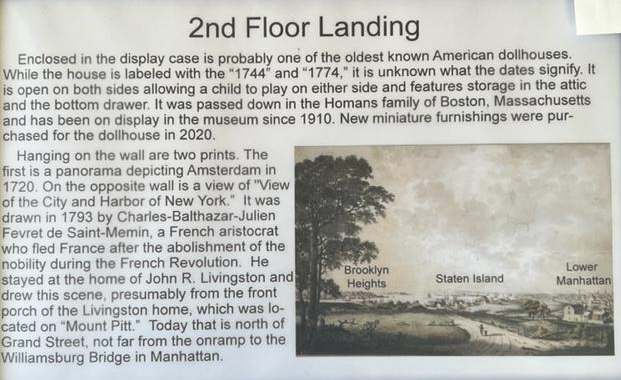
The Landing of the stairs to the third floor lead to the Nursery, an additional guest room and the enslaved servants quarters. These were kept out of site from the other members of the household. It is a reminder of the pecking order of the household and the conditions that people lived under at this time.

The Second Floor Landing leads to the nursery and servants quarters

The Dutch Chamber was formerly a guest room that is used to show life in early Colonial New York City:

The Dutch Chamber:

The Dutch Chamber shows early life in Colonial America

The Second Floor Setup:

The Nursery:

The nursery set up room:

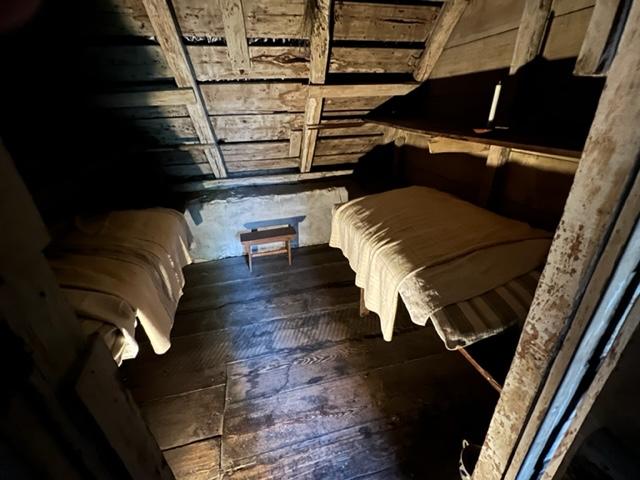
The servants quarters were to the back of the house and were not the most glamorous place to live in the house. There were drafty and not insulated. The amount of time a servant would be here would have been minimal.

The servants quarters:

The servants quarters:

History of the Van Cortlandt’s:

The Van Cortlandt House Museum, also known as Fredrick Van Cortlandt House or Van Cortlandt House, is the oldest surviving building in New York City’s borough of The Bronx. The Georgian style house, begun in 1748, was build of fieldstone by Fredrick Van Cortlandt (1699-1749) on the plantation that had been owned and farmed by his family since 1691. Fredrick intended the house to be a home for him and his wife, Francis Jay and daughters, Anna Maria, 14 and Eve, 13. His sons, Augustus, 21 and Fredrick, 19, were not intended to be permanent residents of the house.

Sadly, Fredrick died before the new house was completed. In his will written in 1759, Fredrick left the house to his son, James Van Cortlandt (1726-1781) and a lifetime tenancy to his widow, Francis Jay Van Cortlandt (1701-1780).

Van Cortlandt House IV.jpg

The Van Cortlandt House gardens in the Summer

The Van Cortlandt’s were a mercantile family prominent in New York affairs. Fredrick’s father, Jacobus, established a thriving wheat growing and processing business on the plantation including a grist mill for processing the wheat into flour and a fleet of shallow draft boats to carry the flour from the south end his lake down Tibbet’s Brook and out to the Harlem and Hudson Rivers to market. During the Revolutionary War, the house was used by Rochambeau, Lafayette and Washington.

(From History of Van Cortlandt House and Museum)

In 1887, after 140 years of occupancy by the Van Cortlandt family and the community of plantation workers, the property was sold to the City of New York and made a public parkland. Before the house became a museum, it saw a variety of uses including as a temporary police precinct house and as a dormitory for ranch hands responsible for taking care of a herd of buffalo.

Van Cortlandt House historic marker

By 1895, The National Society of Colonial Dames in the State of New York expressed their interest in restoring the house as a museum open to the public. There was only one obstacle keeping the Colonial Dames from this important project, there was no provision in the New York State Law allowing the stewardship of a publicly owned building by a private organization. Undaunted, the first Society President, Mrs. Townsend, took the Society’s cause to Albany where on May 22, 1896 in the 199th session of the New York Legislature, Chapter 837 was approved by the governor and passed by a 3/5 majority to become law.

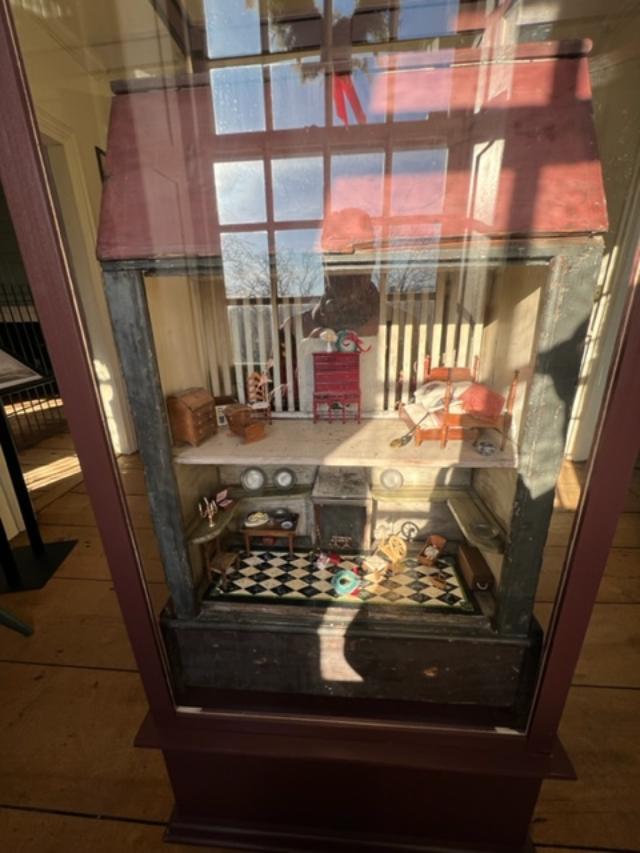
The Van Cortlandt House dollhouse

After nearly a year if repairs and restoration, Van Cortlandt House Museum was opened to great fanfare on May 25th of 1897. The original license agreement grained custody of the house to the National Society of Colonial Dames in the State of New York for a period of 25 years at a ‘peppercorn’ rent of $1.00 per year. Although the Society no longer pays the city rent, they remain, to this day as dedicated to Van Cortlandt House as they were in 1896.

Van Cortland Park.jpg

Van Cortlandt Park in the Summer Months

In 1967, Van Cortlandt House was added to the National Register of Historic Places and was designated a National Historic Landmark in 1967. The house was declared a New York City Landmark on March 15, 1966, recognizing the historic and architectural importance of both the exterior and interior.

(From the Van Cortlandt House Museum NSCDNY)

The Van Cortlandt House gardens during the winter of 2022

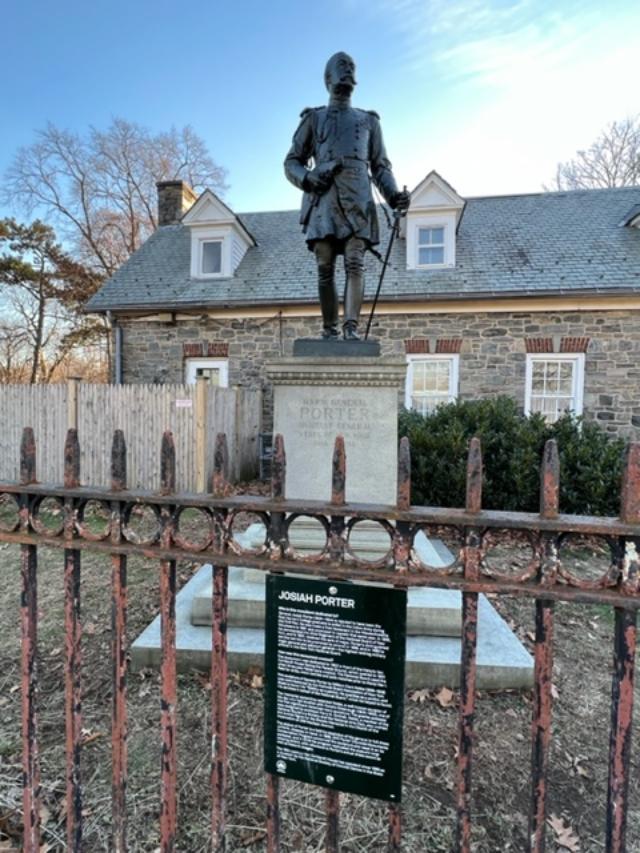
The General Porter Statute in front of the house