I have visited the Ringwood Manor during the Christmas holidays over the last four years and it keeps getting better. Each room in the house is tastefully decorated for the holidays. The West Milford Garden Club does an excellent job decorating every year and in the post-COVID environment, it is nice to see such a beautiful and well thought out display for Christmas.
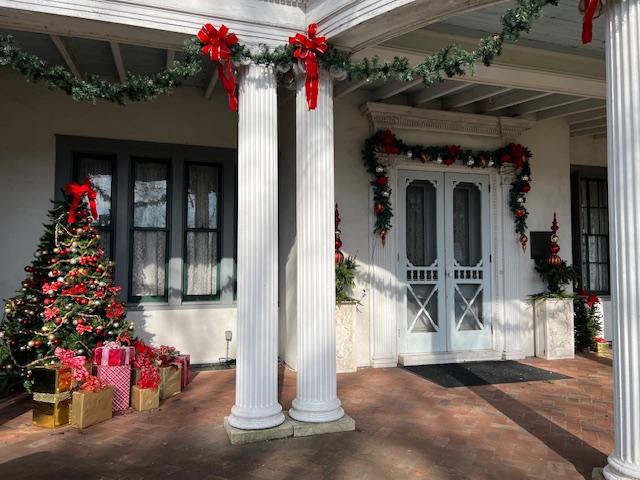
The outside of the house was decorated with garland and ribbons and welcomed visitors with Christmas cheer.
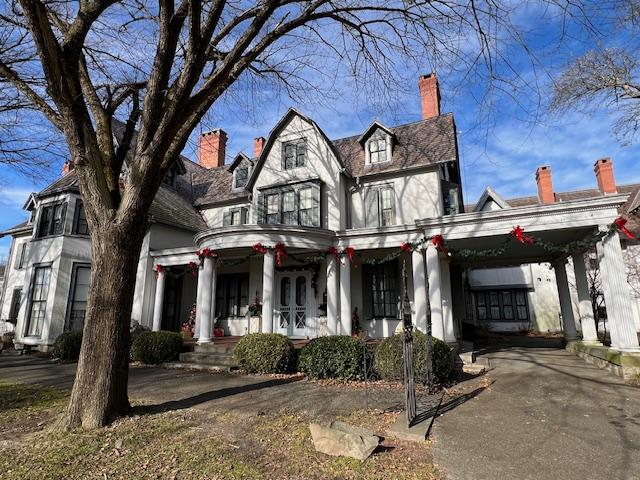
The entrance of Ringwood Manor.
The entrance to the estate.
The patio of Ringwood Manor.
The outside of the house was tastefully decorated in garland and bows.
The decorated front door on the Ryerson side of Ringwood Manor.
The decorated carriage house.
When you walk into the home, the first rooms is decorated tastefully around a collection of antique guns and hunting equipment. The Great Hall was decorated with garland and ornaments with a large tree in the corner.
The Great Hall of the Ringwood Manor when you enter for Christmas.
The Great Hall upon entering.
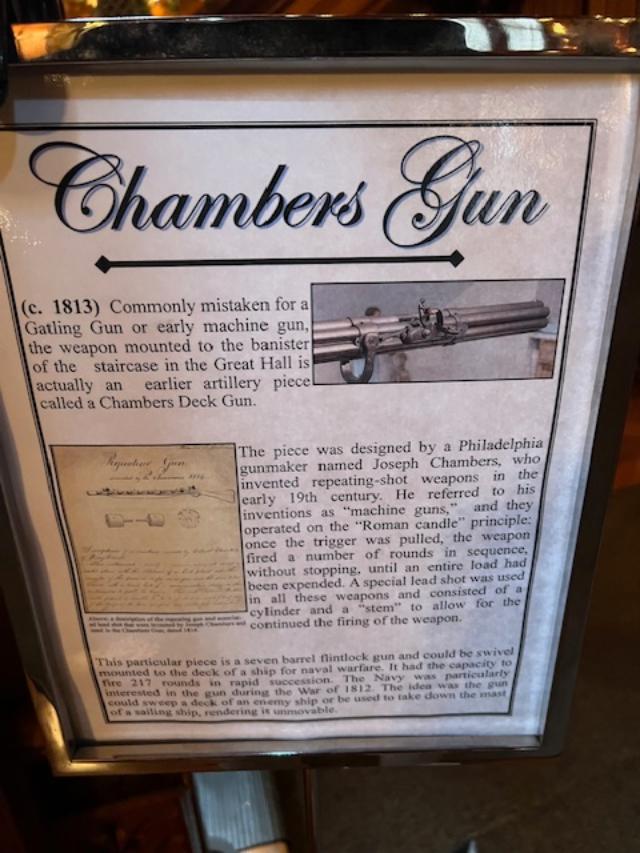
The Chamber Gun display.
The Chamber Gun display in the Great Hall of Ringwood Manor.
The Great Hall fireplace decorated for the holidays.
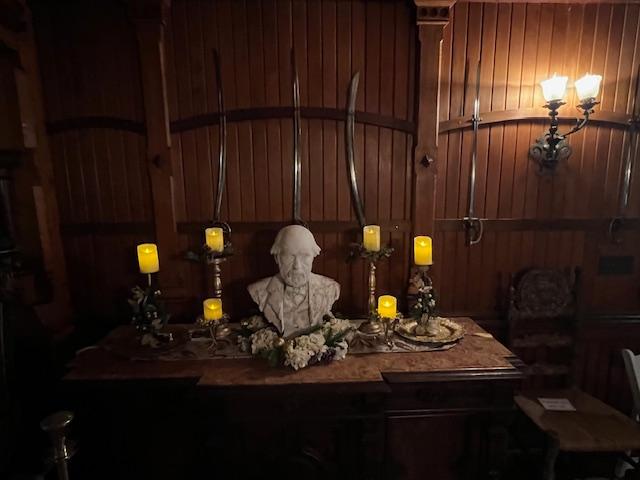
The formal dining room was set for Christmas dinner for the family after church. The elegant china was set on the table with poppers and small Christmas gifts for the guests. The side boards were set with the dinner entrees and sides for the family meal. There was a little discussion of how the Hewitt family would entertain during the holidays and in 2019 and in 2023, they opened up the kitchen and Butler’s pantry for touring.
The Hallway leading to the formal Dining Room.
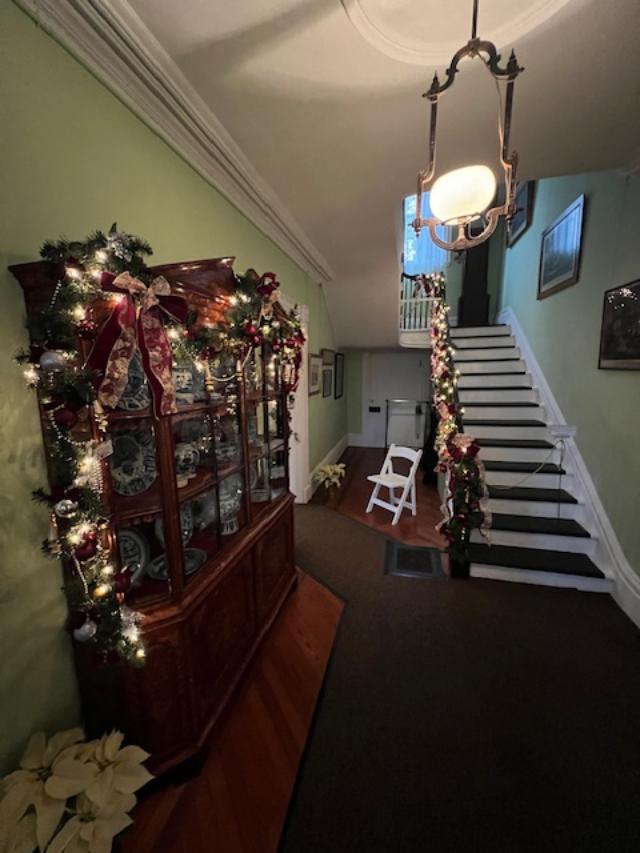
The decorated staircase in the Great Hall
The Great Hall hallway
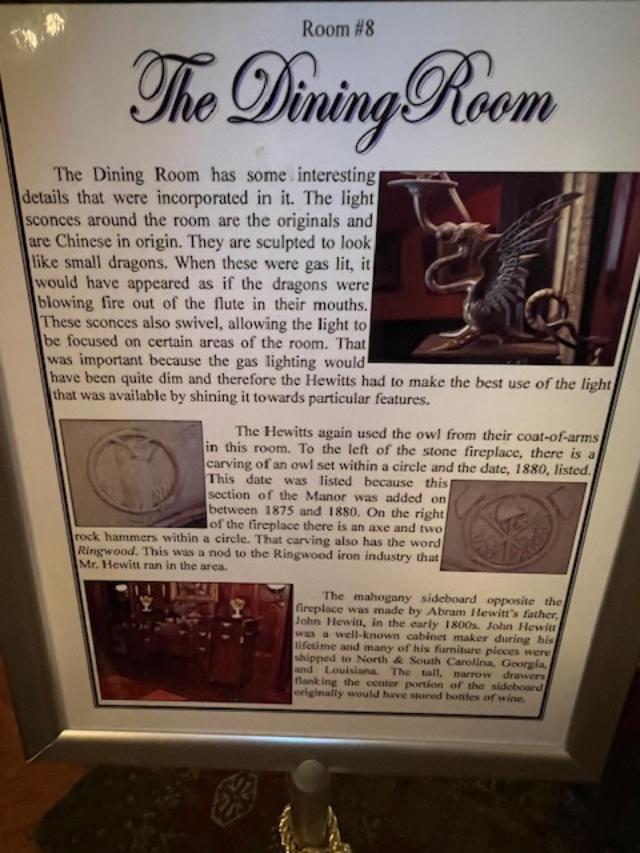
The Dining Room sign
The Dining Room at the Ringwood Manor.
The Dining Room set for Christmas dinner.
Dining Room set for Christmas dinner beautifully.
The details of the Dining Room
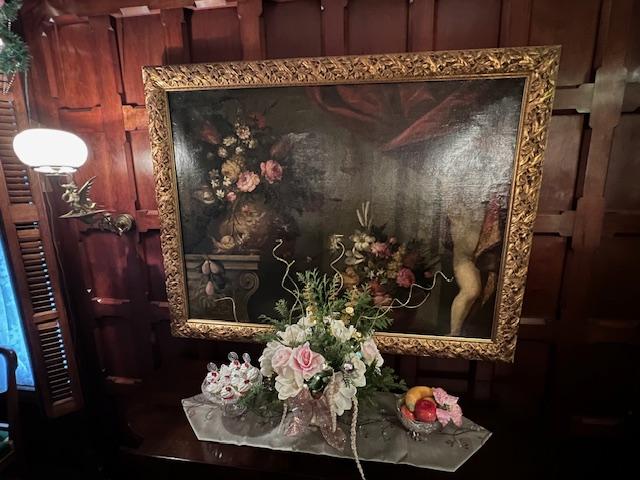
The Dining Room paintings and details.
Preparing for the holidays in the Dining Room
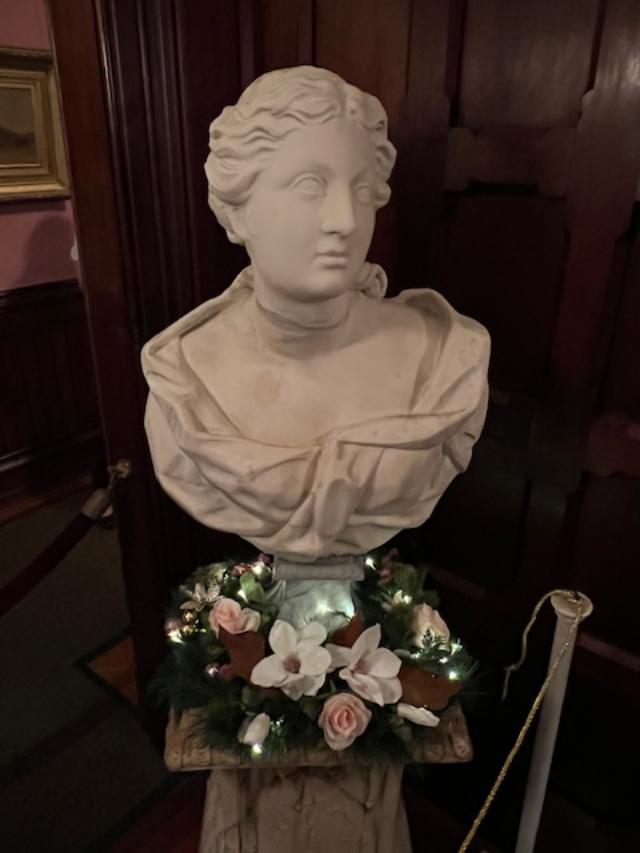
The statuary of the Dining Room
The lighting fixtures of the Dining Room.
Each room was set for the holidays with garlands, trees and decorations. As it was explained to me on another house tour during the holidays, the Victorians would normally only decorate one or two rooms for the holidays and not the whole house. The whole house might be decorated based on the wealth of the family and the amount of servants to take care of the home. Needles would have to cleaned up and the trees would have to be attended to on a daily basis.
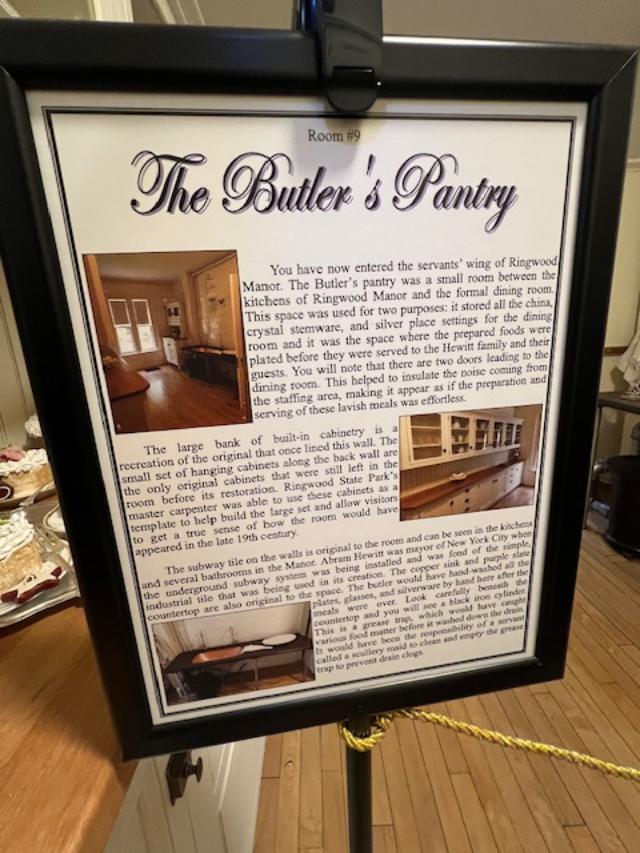
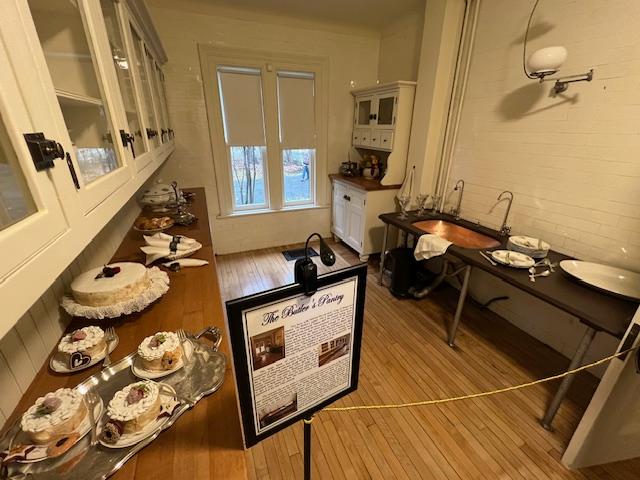
the Butler’s Pantry just off the Dining Room
The Butler’s Pantry in preparation for Christmas dinner
The Christmas treats in the Butler’s Pantry.
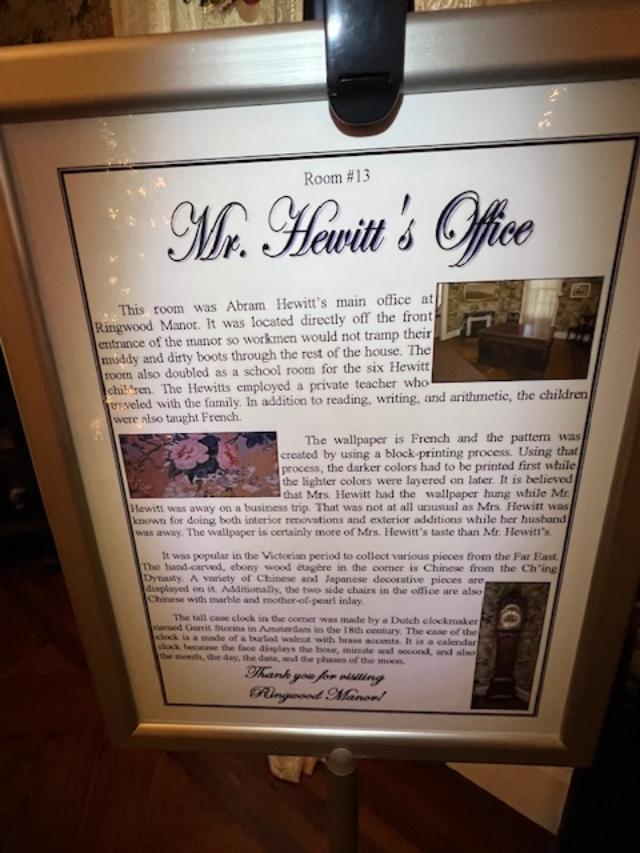
I then walked back through the house and passed by the Office on my way to the social rooms of the first floor. The office is where business was taken care by Mr. Hewitt when he was in residence.
Mr. Hewitt’s Office decorated for Christmas
Mr. Hewitt’s office at Christmas time.
The Christmas tree in Mr. Hewitt’s office.
Before I left this part of the house, I passed the Breakfast Room which is just off the Dining Room. It had beautifully decorated for a Christmas breakfast.
The Breakfast Room sign
The Breakfast Room was decorated with desserts and sweets for the Christmas holidays.
The Breakfast Room beautifully decorated for the holidays.
The Breakfast Room for a Christmas feast.
The Christmas tree in the Breakfast Room.
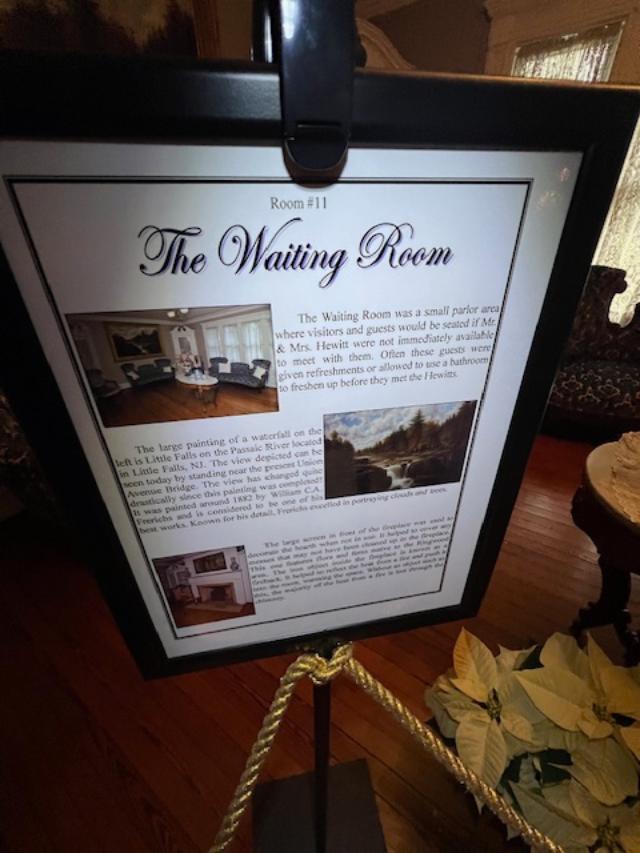
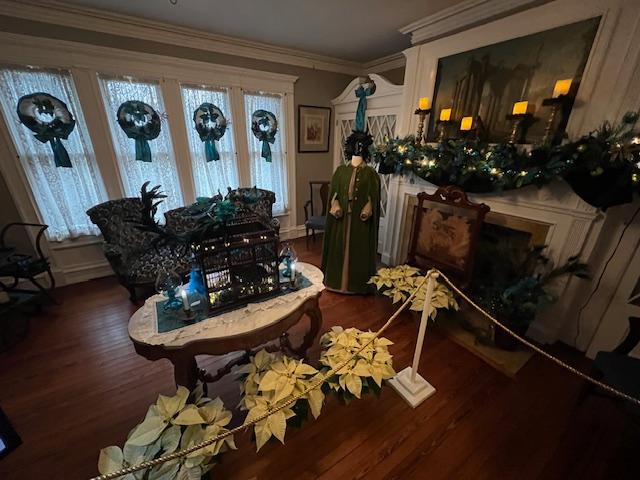
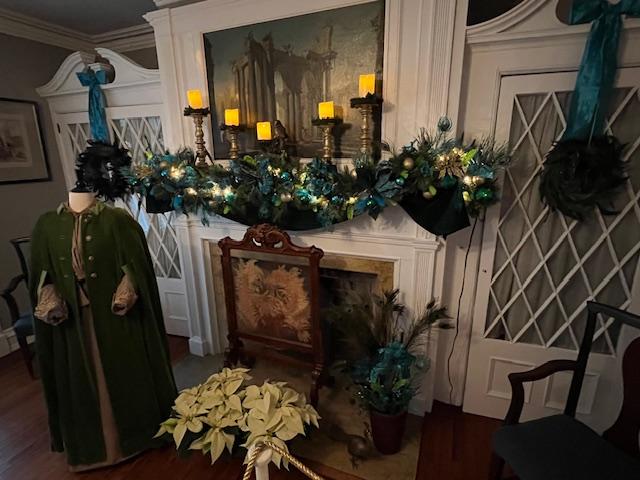
Before entering the Great Hall, I visited the Receiving Room, where guests waited until dinner was served.
The Waiting Room
The Waiting Room was for guests to relax and wait for Mr. & Mrs. Hewitt.
The Waiting Room fireplace is nicely decorated.
The ‘Birdcage’ in the Waiting Room
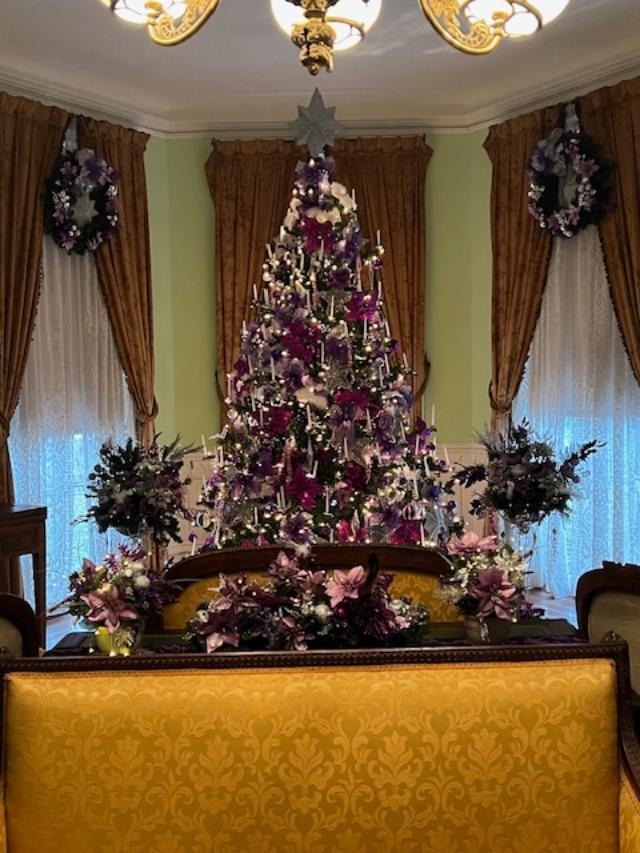
Passing through the Great Hall again, I entered what had once been the original Ryerson House built in the early 1800’s. The first room on the tour of this side of the house was the French Drawing Room decked out for the holidays. This room was used by the ladies after dinner was over to converse and get away from their husbands, who would have still been in the dining room.
French Drawing Room, the “Withdrawing” room.
The French Drawing Room
The French Drawing Room in all its Christmas glory.
The Christmas tree in the French Drawing Room
The fireplace in the French Drawing Room.
On the other side of the house is the original Ryerson mansion that was added on by the Hewitt’s when they bought the house. The older house had the original moldings and windows from the early 1800’s and that side of the house had a different feel to it starting with the original entrance and staircase.
The Ryerson Staircase and foyer sign
The Ryerson Staircase and foyer
The decorated Ryerson staircase.
One of the nicest rooms that was decorated was the screened in porch. Here there was a tree set with presents, hot house flowers and garland lining the room. The sunlight shined throughout the room and the decorations sparkled.
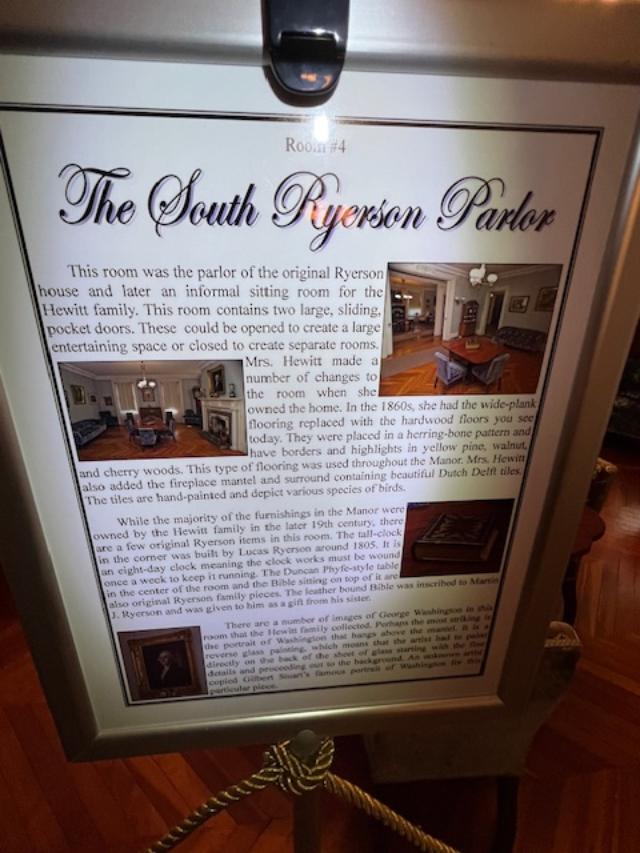
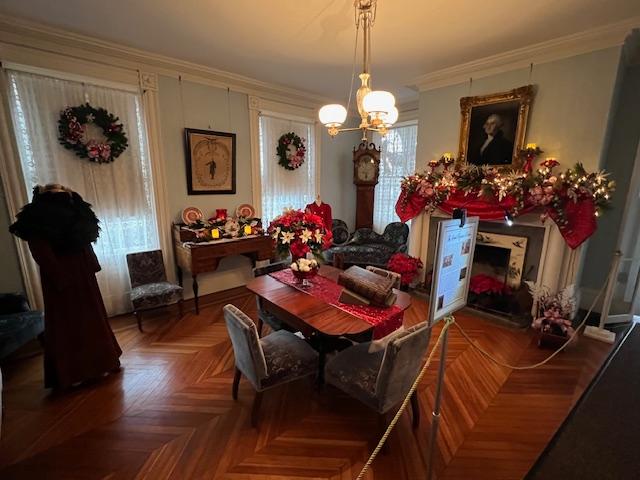
The South Ryerson Parlor
The South Ryerson South Parlor
The fireplace in the South Parlor.
The latest addition to the house was the screened in porch, The Glass Piazza, of the house which was used in the summer months for rest and relaxation. The screen in porch was beautifully decorated for the holidays with all sorts of Christmas trees and decorations.
The Glass Piazza, the screened in porch of the main house.
The Glass Piazza decked out at Christmas time.
The doll mini tea service in the Glass Piazza.
The Glass Piazza set for tea at the holidays.
The Glass Piazza at Christmas time.
The beautiful Christmas tree in the Glass Piazza in 2023.
When you leave the Glass Piazza, you enter the original part of the house again with the North Ryerson Parlor. This room was used by the family for less formal affairs but it was still decked out of the holidays.
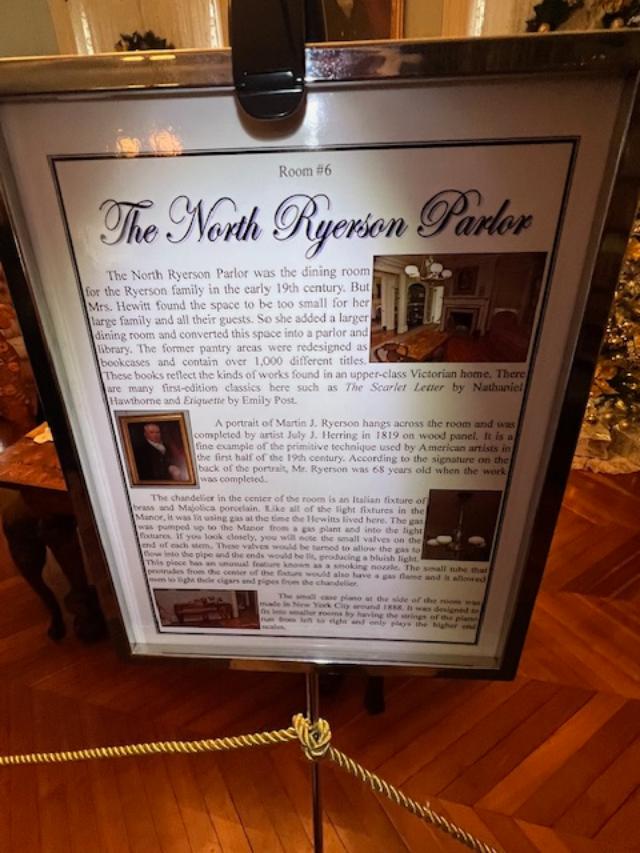
The North Ryerson Parlor
The Ryerson North Parlor decorated for tea.
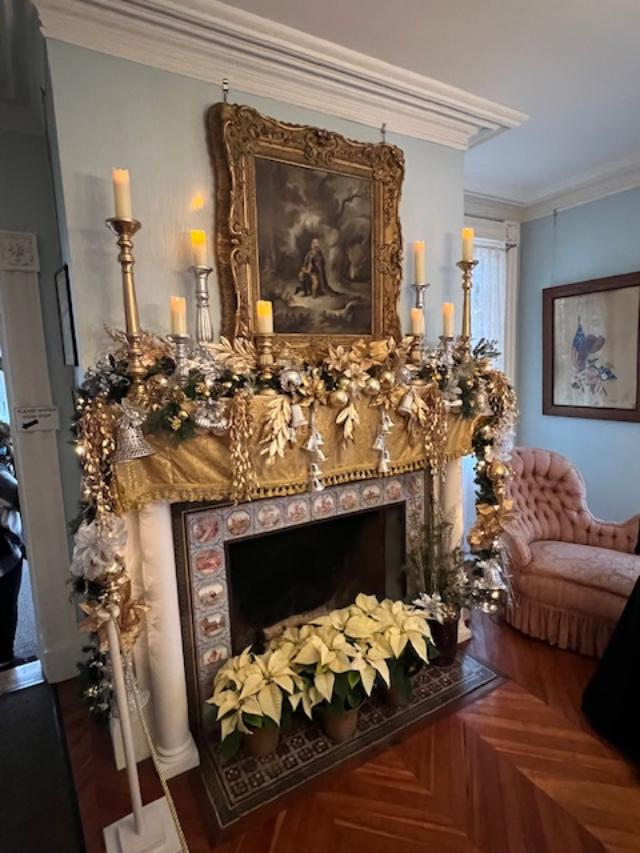
The Ryerson North Parlor fireplace decorated for Christmas time.
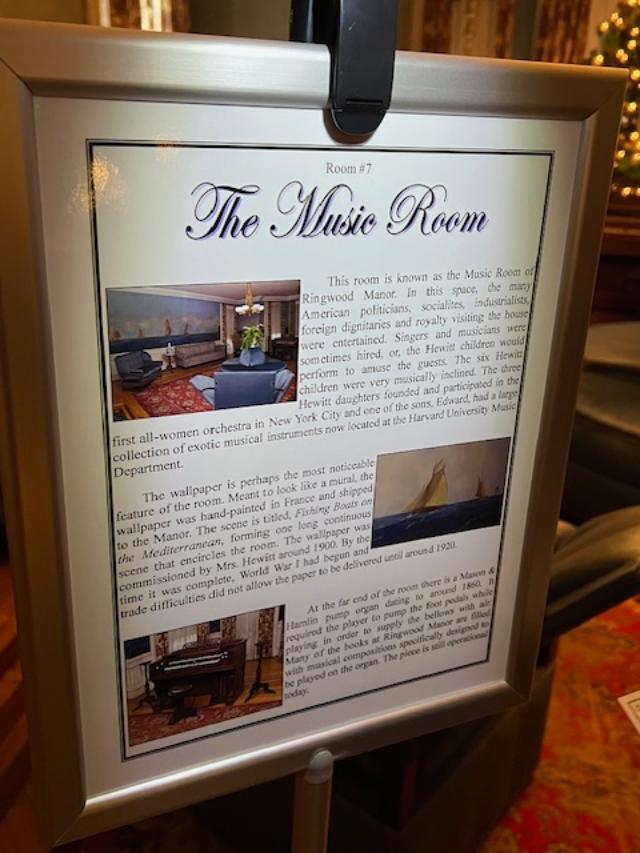
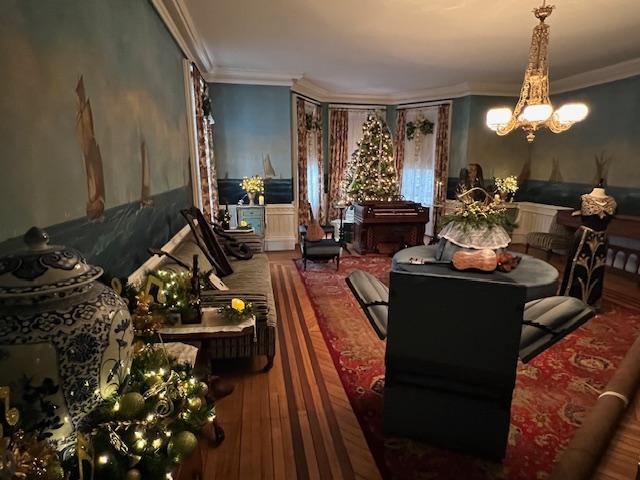
The last room I visited on the tour was the Music Room in the original Ryerson House. The room was used by both the Ryerson’s and the Hewitt’s for social occasions and the Hewitt’s were all musically inclined.
The Music Room at the Ringwood Manor
The Music Room at the Ringwood Manor.
The Music Room at the Ringwood Manor.
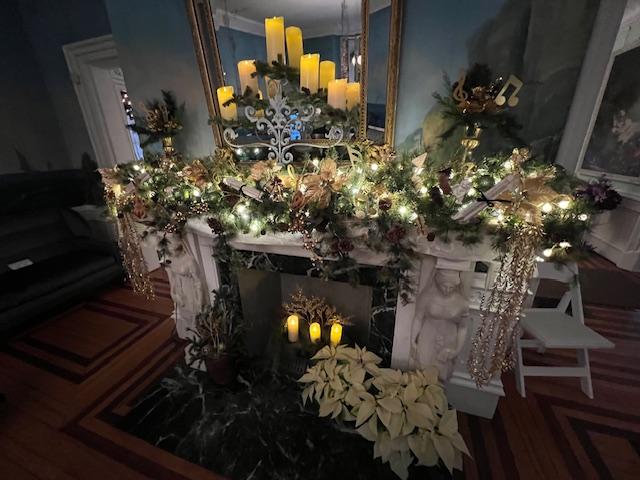
The fireplace in the Music Room decked out for the holidays.
The Music Room during Christmas time.
Each room had a docent to explain the decor or what the room’s use had been in the family’s time. A visitor can roam the house at their leisure and see the rooms as many times as they want. There is also a gift shop in a room off the formal dining room that contains some beautiful Christmas crafts for sale by the Women’s Club of New Milford. Some of these women are very creative and sell the most amazing Christmas ornaments made of glitter, wood, branches, walnuts and moss.
The Gift Shop in the old Carriage House was filled with homemade goodies and handmade crafts and ornaments.
The decor of the home changes over time and there are different things to see every year. The barn also on the property as you drive in has more artwork and crafts. In the Gardener’s Shed next to the house, the Society has a small cafe with sandwiches, desserts and coffee/tea/hot chocolate.
The Carriage House was used as a gift shop and a place to get something to eat.
The tour of Ringwood Manor is wonderful during the holiday season and the rest of the house opens up during the warmer months of the year.
History of the House:
This 582 acre historic site is open to the public year round. The historic house museum, Ringwood Manor is open Wednesday to Sundays year round.
History of 19th Century Manor House and Landscape:
The present manor house was begun by Martin J. Ryerson in 1807. He and his sons controlled not only the iron mines and forges on the property but also operated productions at four other locations in the area. The Ryerson family resided in their 10 room Federal style home for almost 50 years.
The entrance to the historical home.
In 1853, the Ryerson’s house and property were purchased by business partners Peter Cooper and his son in law Abram S. Hewitt. The 22,000 acre ironworks and the Ryerson’s home were purchased for a sum of $100,000. Their company, Cooper-Hewitt & Company, grew to be the fifth largest corporation in the United States. The Hewitt’s, one of the most influential and wealthiest families of the 19th century, fell in love with the Ringwood estate.
The expanded Ringwood Manor estate in the winter months.
Ringwood manor at the holidays.
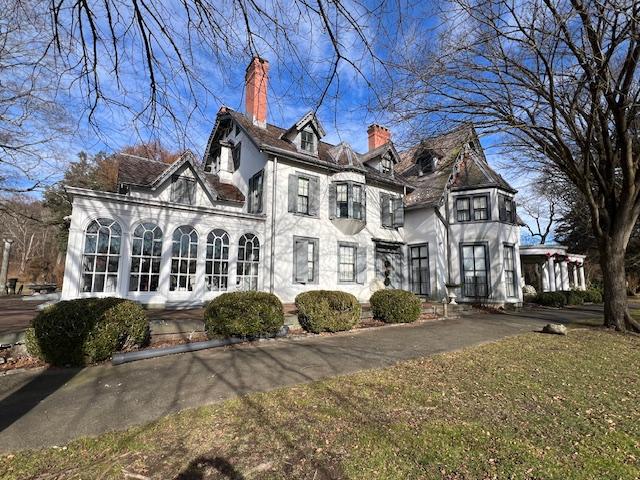
They decided to make this site of their summer home, naming it The Forges and Manor of Ringwood. They enlarged the home of the Ryerson’s, constructing major additions or renovations in 1864, 1875, 1900 and 1910. The completed 51 room house is 226.5 feet long and features 28 bedrooms, 24 fireplaces and 13 bathrooms and more than 250 windows. The house was built in an eclectic style, typical of the Victorian period. In 1875, the Manor House was an excellent example of the Gothic Revival style of architecture. By 1900, the Hewitt’s changed the exterior facade to its present appearance, adding the neo-classical portico and columns of the front porch and affixing white stucco to the exterior walls. The furnishings of the house reflect the varying tastes and styles of the family and time period.
Ringwood Manor during the holidays.
The formal gardens surrounding the Manor House were developed by Mrs. Hewitt and her daughter, Eleanor around 1900. Their design was influenced by the Hewitt’s many trips overseas. The gardens possess a mysterious old world charm that captivates visitors as they enjoy the serenity of reflecting pools and the progression of blooms from early spring to late fall. Placed throughout the garden are French and Italian statuary and garden ornaments as well many interesting architectural items from New York City acquired while Abram Hewitt served as Mayor and Congressman. Examples of these features include columns from the old New York Life building, gates from the Astor family’s home and gate posts from Columbia College. Relics from the iron company that are found on the grounds include a trip hammer and anvil, cog wheel and a Dictator-class mortar the base of which was created by the Hewitt’s company and used at the Battle of Vicksburg in Mississippi during the Civil War.
History of Ringwood, NJ:
Colonial Ringwood:
Long before the Forges & Manor of Ringwood existed this property was occupied by the Native American people. Prehistoric artifacts found on the grounds confirm their inhabitants back to the Archaic and Woodlands periods. Living in a hunting and farming paradise, these Munsee-speaking Lenape peoples dwelled at the head of the Topompock or Ringwood River Valley. This paradise attracted colonial prospectors, who by 1740, came for the iron ore found in the ground. Recognizing the rich magnetite ores, Cornelius Board settled here in 1739 and first utilized the property for iron mining. He was followed shortly thereafter by the Ogden family who established the Ringwood Company and built the first blast furnace here in 1742.
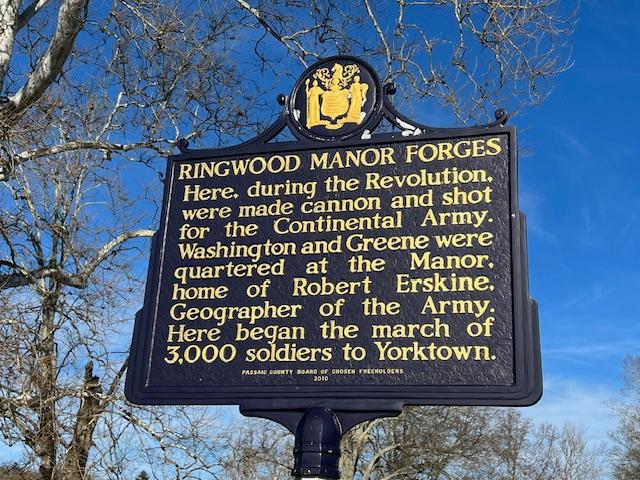
After twenty years of production, a German promoter, Peter Hasenclever, organized the American Iron Company to exploit the resources in colonial North America, purchasing the Ringwood area in 1764. He would also develop forges at Long Pond and Charlotteburg but made Ringwood the center of his iron empire. Hasenclever established iron plantations and developed the production of flax and timber across 50,00 acres of land stretching through New Jersey and New York, from present day Butler to New Foundland and Nova Scotia. The iron was said to have been “the best iron in the American colonies.” Robert Erskine, the last ironmaster of the American Iron Company, was sent from England in 1771 and would manage the company during the Revolutionary War.
I never realized until just recently that we have an art gallery on the Bergen Community College campus. I have been teaching here since 2013 and just found out about this little ‘gem’ that is tucked in the second floor of West Hall.
This wonderful little gallery can be accessed on the Main Campus of Bergen Community College and is open to the public for viewing. The Art students of Bergen Community College show their works in student shows and the Retailing students show their work outside the Gallery.
Gallery Curator Professor Tim Blunk
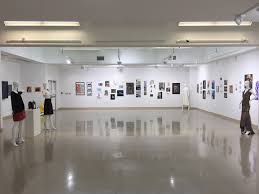
The Gallery is a reasonably sized space and viewing the Gallery Bergen takes a reasonable amount of time that is not over-whelming. It is a nice way to spend the afternoon when visiting the campus.
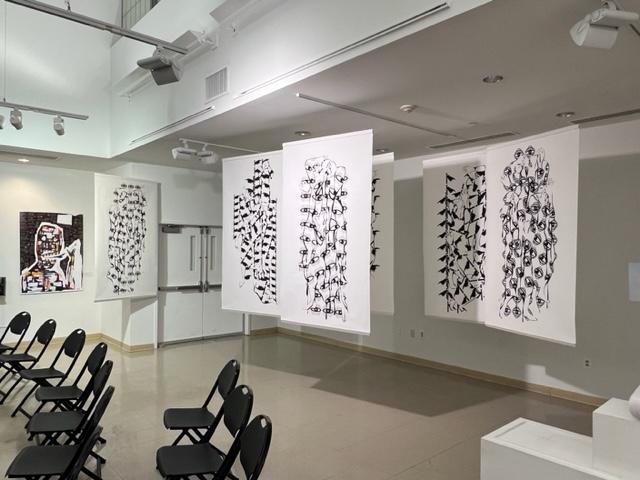
Please visit the Bergen Community College for future shows. This is the artist Graham Elliott show in 2026.
Gallery Bergen recently showed, “Belongings: Photographs at the Borders of Citizenship” exhibition which is showing the works of Dorothea Lange, Ansel Adams and Clem Albers (1942) and Tamara Merino (2018). This exhibition pairs two sets of photographic records, two tragic experiences of people on two sides of the US border, separated by seventy-five years in America’s cultural and political struggle over who belongs and who doesn’t (Bergen Gallery Press Release).
A former exhibition was “Lines of Fire/Lines of Ice” . This exhibition is art being presented to get us to think of our effects on nature. The Gallery Bergen is presenting art that might help us change our views of ourselves in the world (Curator).
Curator’s Statement:
“It is 2019. Fires advance; glaciers retreat. Oceans rise; deserts spread. The Homo sapiens population grows exponentially; entire species of fish, mollusks, insects, amphibians and birds perish each day. Lines are being redrawn on the surface of the earth-lines that can be seen from space. Yes these same lines are often blurred or erased when viewed through the lens of ideology”-Tim Blunk, Curator.
See Performance Artist Jaanika Peerna perform the ‘Glacier Elegy’ similar to the one she did at opening night.
The Gallery is curated by Professor Tim Blunk, Director Gallery Bergen.
In April 2019, the Student Art Show is going on in the Gallery. This was where students were showing off their end of the semester projects.
Student Show at Gallery Bergen
A former show by Hackensack-based artist Lauren Bettini, whose exhibition “On the Mend” was an exploration of the female body, displaying themes of “Women’s work” through accounts of women who bear scars, both physically and emotionally. This unique installation utilizes the entirely of the gallery, literally tying together embroidery of surgical procedures are “mended” through the appearance of the physical act of sewing. The exhibition is a platform to celebrate the beauty of their altered bodies while women stand strong together to share their stories.
It is an interesting take on what we endure in life and how we sometimes hide it from society.
“On the Mend” Exhibition Summer 2019
The mounted three-dimensional castings of woman’s hands are used to symbolize a movement of women joining together, sharing their stories and helping each other heal. This platform to honor women who have survived medical surgeries, celebrates the beauty of their altered bodies and pays homage to centuries of women who have created are in the form of sewing and embroidering (Gallery Bergen Promotional packet).
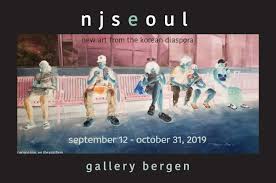
The recent ‘NJSeoul: New Art from the Korean Diaspora’ that opened for the Fall of 2019. The show was a combination of paintings, pictures and visual art from five different Korean artists. The show also features video art and interesting short films.
New show from September 12th-October 31st 2019
Some information of the Exhibition on Studio Bergen
The exhibition that opened for the Fall semester 2019 is the ‘(Pro) Found Objects’, the Bergen Community College Faculty Exhibition. The exhibition features works from 19 different Professor/Artists whose work includes statuary, photos, paintings, video art and clothing construction.
This painting is by Professor Juan Leon
This painting is by artist Juan Leon
This painting is by Professor Ada Goldfeld
The opening night on November 14th 2019 featured a performance by the Music Department and a performance by the head of the Drama Department from the upcoming show “I do, I do”. Then everyone had time to look over the art before a light reception at the end of the evening.
Opening in the Spring of 2020, Gallery Bergen is featuring “Ornithology: Patterns of Flight” that features birds in flight, sound and behavior. I saw the exhibition as man’s perception of birds at play and at rest and our concept of aviation in terms to humans. How do we communicate with the natural world, if we can and how do we relate as humans to the natural world.
‘Moche-Bird Runner’ by Susan Haviland
The art was everything from visual to video and showed the artist’s interpretation of the bird world. This was my favorite piece in the show.
‘Ashes to Gold’ by Caroline Bergonzi
Each artist had a unique take on their art.
‘Deep Song’ by Susan Haviland
During the musical performance part of the opening, one of the artist’s in the exhibition teamed up with another musician and performed their concept of birds in flight. To that our Dance Department created a performance that encompassed the whole gallery.
Our Adjunct Dance Professor’s performed that night
Professor Justin Watrel at Gallery Bergen Opening
Here I am admiring the art that night. It was a wonderful exhibition. The Gallery Openings are an interesting night of art and music. The receptions are not bad either. Our Culinary Department does a nice job with appetizers and desserts.
This time lapse on YouTube is from the opening night of ‘Patterns of Flight’ at Bergen Community College
With the Gallery Bergen closed with campus being closed, Curator Tim Blunk created this YouTube video “20Big20: Quarantine and Protest” on the pandemic and racial strife:
Another exhibition that the College has is BCCAnimation:
In the era of COVID, Gallery Bergen has created new exhibitions via YouTube. This is for the new “Black Lives Matter @BCC: Photographs from the Live Protest”:
These are photos from all over the country during the Summer of 2020 protests.
Gallery Bergen recently hosted the Student Exhibition 2021 virtually:
The creative approach to Gallery Bergen in the era of COVID keeps us active.
When Gallery Bergen reopened in 2021, the first big exhibition was “The Ramapough Nation: Excavating Identity”, the art of the nation.
The exhibition featured works by local Native American artists.
The exhibition contained visual arts by local indigenous artists, panel discussions (see Facebook page) and gallery talks.
The new exhibition that recently opened in the Fall 2021 is “Zoom Out: Works from Bergen Community College Artists”, a faculty show of works from the professors from the art department.
“Zoom Out” exhibition
Works from the Opening Night:
The opening night of “Zoom Out” with works in the visual arts
The “Zoom Out” exhibition was a selection of faculty works in the visual arts, painting, graphics and sculpture. One professor created an interesting piece of video art reworking the movie “Psycho” by Alfred Hitchcock.
The video creation on the movie “Psycho”
New Works from “Zoom Out”
Work by curator and Professor Tim Blunk
In the Spring of 2022, Gallery Bergen has exhibited “Art in History: the photographers of the Great Depression”, with photos from the Depression era of the 1930’s. It was a heart-breaking display of a very dark time in our country’s history. I could see that many people don’t realize that this was only 80 years ago. It gave a view into the lives ordinary people whose lives were affected by the falling economy. Lives were upended by things like the Stock Market Crash and the Dust Bowl.
“Art in History: the photographers of the Great Depression” exhibition
The photographers were part of the WPA where people from the arts part of the government program were to keep artisans working during the Great Depression. The works are a heartbreaking reminder of how fast life can change.
I was lucky that I got to sit in on Professor Tim Blunk’s class that afternoon for the lecture on the exhibition. It is scary how much these students didn’t learn in high school about this time. What amazed me was that how much this is still going on not just all over the world but in our own state as well. I have travelled to parts of the New Jersey that remind me of these pictures.
The BCC Student Art Show 2022 was the first time in two years the students got to showcase their work in the Gallery
Asian Awareness Month in 2022 brought interesting speakers and engaging movies to Gallery Bergen.
The lectures and independent films were very interesting and brought wonderful conversations to Gallery Bergen during the celebrated month of April.
In June of 2022, I attended the opening of the “Reflection/Refraction/Manhattan: Photographs by Jin Hong Kim” exhibition at Gallery Bergen, celebrating this local Korean-American photographer/artist. Each of the works was from a section of Manhattan from the Hudson Yards to Midtown to Lower Manhattan giving a almost surrealist look at the City in the Post-COVID era. It was as if the artist asked us to look at Manhattan again from a different lense or perspective.
The new exhibition by local photographer Jinhong Kim
Each of the pictures looked as one patron said, “like something that Salvador Dali might do.” It gave buildings in Manhattan movement and asked us to look at them a second time.
The Exhibition “Pulse: Resonating Earth” by artist Poramit Thantapalit is very engaging and fascinating to walk through.
From the Gallery Bergen Website:
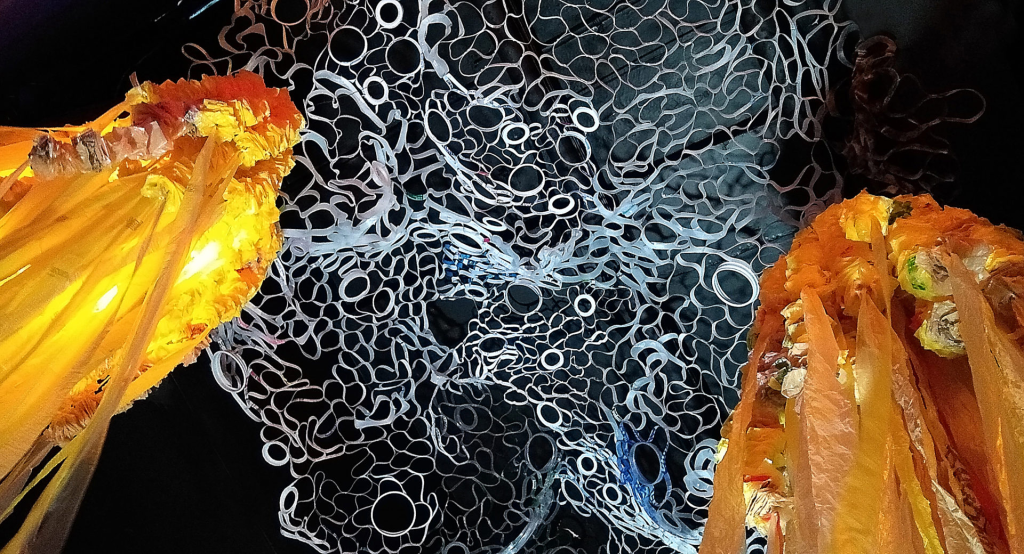
During the fall of 2022, Gallery Bergen will be transformed into an aquatic installation by Thai artist Poramit Thantapalit. His medium is trash – as in found plastic bottles, plastic bags, and other refuse that might have as easily found its way into the Hackensack River, a landfill, or the Great Pacific Garbage Patch. Instead, Poramit breathes life into these materials, shaping luminous organic sculptures that undulate and pulse from the ceiling and wall. They make the viewer forget their origins in their newly aggregated forms.
There is a genre referred to as eco-art, or “trash art,” but this is something very different. “Jackson Pollock painted with house paint, but he wasn’t a house painter,” says Gallery Bergen director and curator Tim Blunk. “Poramit’s deft artistic hand and his understanding of transforming quantity into quality creates work that transcends its materials.” PULSE: Resonating Earth will be embellished with several performance events, including the scheduled opening gala on September 22 and its closing on December 8. Both will include dance performance pieces by BCC faculty member Lynn Needle and her Art of Motion Dance Theatre and Steinway pianist Carolyn Enger. The opening will include excerpts from Needle’s work, The Poseidon Project – An Aquatic Myth – a suite with live music and dance, including narrated choreographed sections, each connecting to aquatic myth, legend, and nature.
Pictures from the Exhibition:
Story from the exhibition on Land Acknowledgement.
The exhibition:
All the art displays of Poramit Thantapalit’s work in Gallery Bergen
Picture One:
Beautiful works
Picture Two:
Picture Three:
Picture Five:
Picture Six:
The colorful interactive art of Gallery Bergen in 2022 of artist Poramit Thantapalit
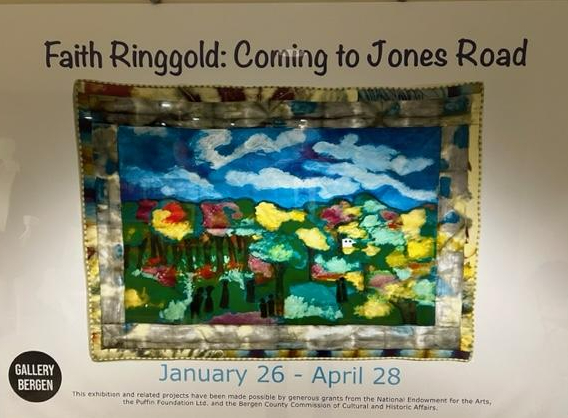
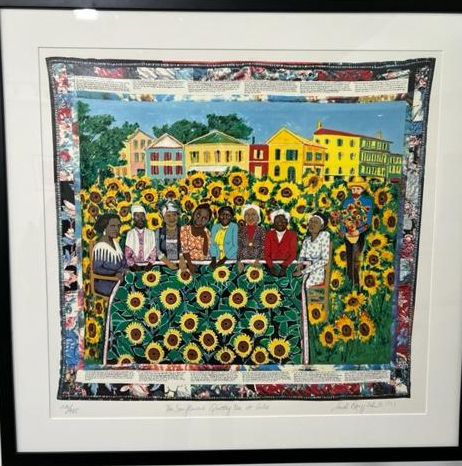
The Faith Ringgold: Coming to Jones Road-Her Exhibition on moving to Englewood, NJ
These were the works by the artist when she moved from Harlem to New Jersey.
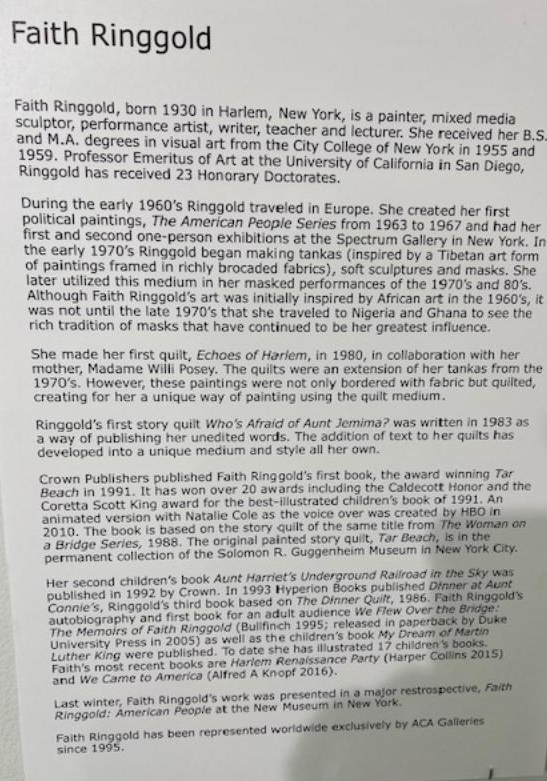
The artist bio with the exhibition.
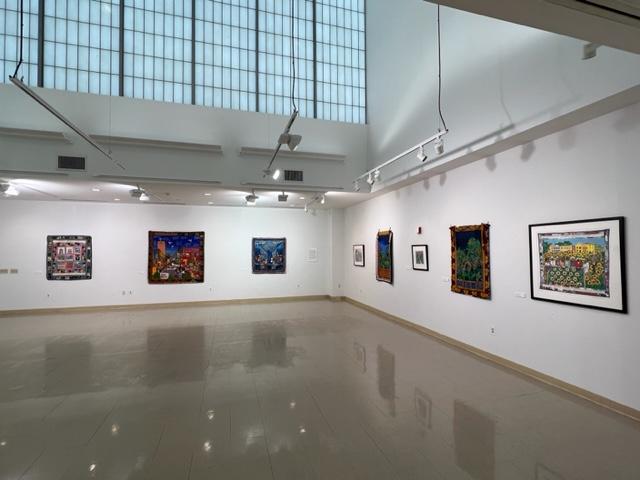
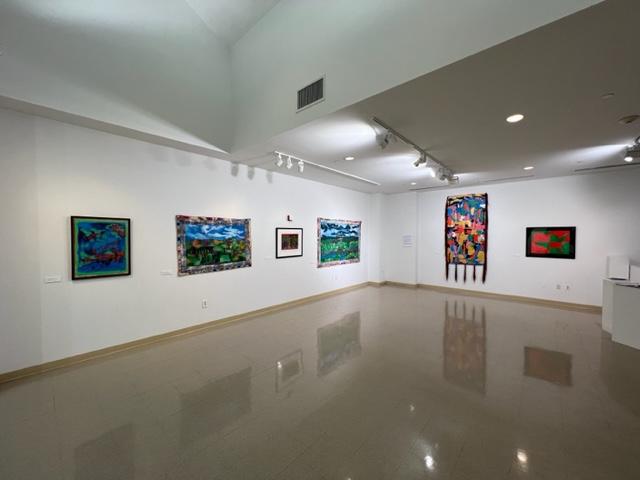
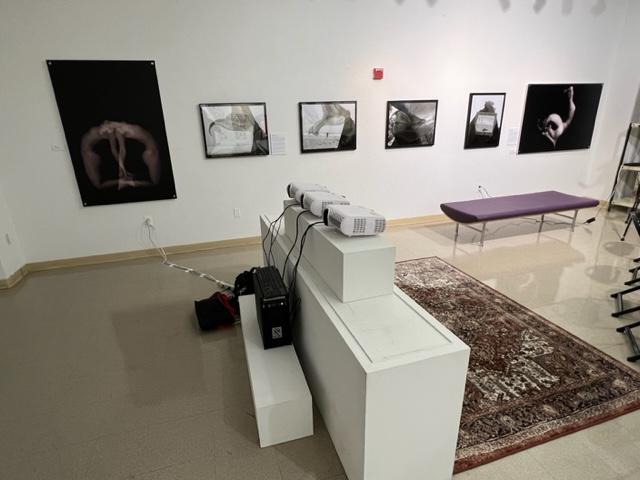
The Exhibition in Gallery Bergen
The Exhibition in Gallery Bergen
Her work based on the George Washington Bridge
Another interesting work
The Gallery Opening of “Faith Ringgold-Coming to Jones Street” at Gallery Bergen
Some of the works in the exhibition
“We come to America” by Faith Ringgold
More works in Gallery Bergen
The Theme of “Coming to Jones Road”
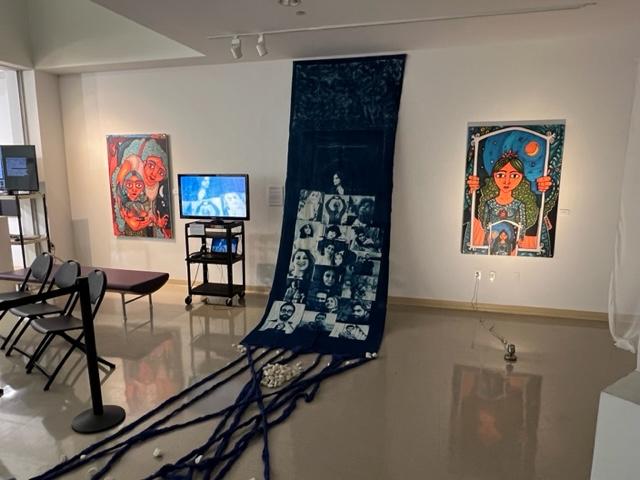
The new exhibition “The Cup Flows Over: Art from the Soul of Iran” starting in October 2023 and runs through the end of November 2023:
The Art from the soul of Iran.
Gallery Bergen: September 21 – November 21, 2023
(From the Gallery Bergen Website)
In Munich, Germany:
Glockenbachwerkstatt Community Center with events at the Bellevue di Monaco Cultural Center in Munich, Germany:
October 24 – December, 2023
Works from “The Cup Flows over: Art from the Soul of Iran” exhibition
Gallery Bergen announces the opening of a collaborative exhibition of contemporary Iranian artist to take place this fall in two locations – its own gallery on the campus of Bergen Community College in Paramus, NJ and the Bürgerhaus Glockenbachwerkstatt (Glockenbach Townhouse Workshop) located in Munich, Germany. The Cup Flows Over: Art from the Soul of Iran features work by prominent artists such as Berlin-based Parastou Forouhar, younger Iranian artists living and working in California and Berlin, as well as artists living in Iran. The choice of two separate venues divided between Europe and the US speaks directly to the reality of the Iranian diaspora.
Art works from the “The Cup Flows Over: Art from the Soul of Iran”
This exhibition seeks to move beyond the headlines to explore the ongoing and historic struggles of immigration and the diaspora experience, of merging with and simultaneously changing the culture of newly adopted countries. The artists make use of a variety of media including film, video, photography, fabric work and installation while invoking ancient Persian texts to describe their new realities.
Art works from “The Cup Flows Over: Art from the Soul of Iran”
The title comes from an ancient Persian ghazal by the renowned lyric poet Hafez (c. 1365):
“Last night I took my troubles to
The Magian sage whose keen eyes see
A hundred answers in the wine
Whose cup he, laughing, showed to me.
I questioned him, “When was this cup
That shows the world’s reality
Handed to you?” He said, “The day
Heaven’s vault of lapis lazuli
Was raised, and marvelous things took place
By Intellect’s divine decree,
And Moses’ miracles were made
And Sameri’s apostasy.”
He added then, “That friend they hanged
High on the looming gallows tree—
His sin was that he spoke of things
Which should be pondered secretly,
The page of truth his heart enclosed
Was annotated publicly.”
BY HAFEZ
TRANSLATED BY DICK DAVIS
Anonymous work from “The Cup Flows Over: Art from the Soul of Iran” exhibition.
In the art of Iran, reality’s cup overflows.
The curators are organizing several livestreamed events that will connect the two spaces with live music, poetry and discussion. Opening receptions and events are planned for September 21 at Gallery Bergen (US) and for the Bürgerhaus Glockenbachwerkstatt on October 24.
Art works from “The Cup flows Over: Art from the Soul of Iran”.
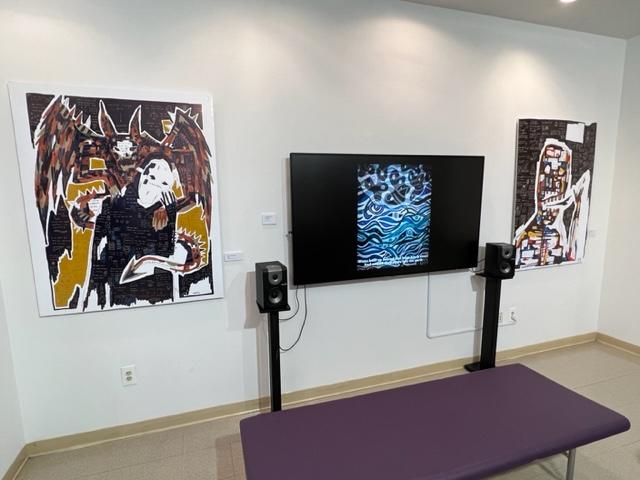
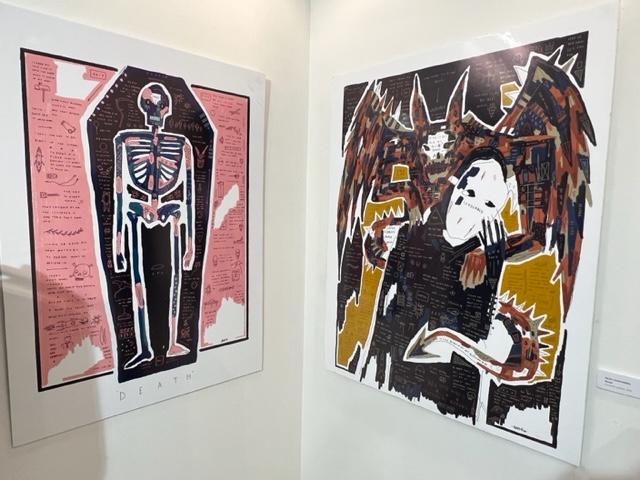
The paintings “Death” and “Devil’s Confrontation” by artist Raven.
The Bürgerhaus Glockenbachwerkstatt (Glockenbach Townhouse Workshop) is located in the cultural and artistic heart of Munich. The “Glocke” is a popular community center with childcare, workplaces, art studios, and a neighborhood café. It is around the corner from the Bellevue di Monaco, a residential and cultural center for refugees. The Bellevue offers diverse culture programming ranging from panel discussions on topics of migration and diversity to films from and about the home countries of their guests, to theater plays and concerts presenting artists from all over the world (Gallery Bergen Website).
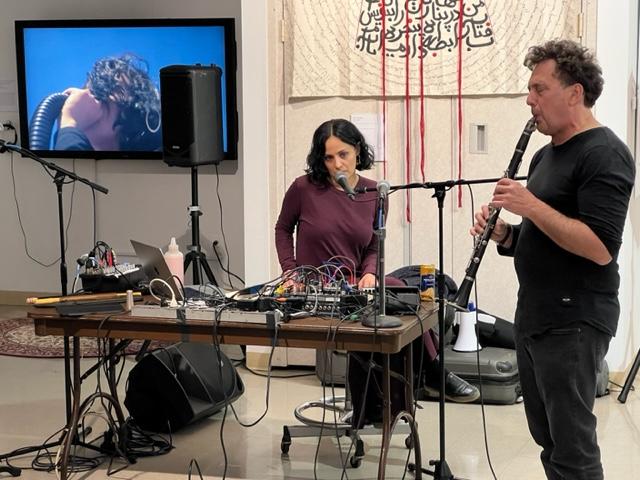
Performance artist Sholeh Asgary and artist David Rothenberg performing “Shabah e Baad”.
As part of the exhibition, Iranian-American sound/performance artist Sholeh Asgary and ECM recording artist/clarinetist David Rothenberg performed on November 3rd, 2023. In the performance of ‘Shabah e Baad’ (Ghost Winds), Asgary vocalizes recordings of water bodies transcribed into notation for voice with the help of electronics and synthesizers for notes beyond human capability (Gallery Bergen press release).
Performance artist Sholeh Asgary and artist David Rothenberg performing “Shabah e Baad”.
Art works from “The Cup Flows Over: Art from the Soul of Iran”
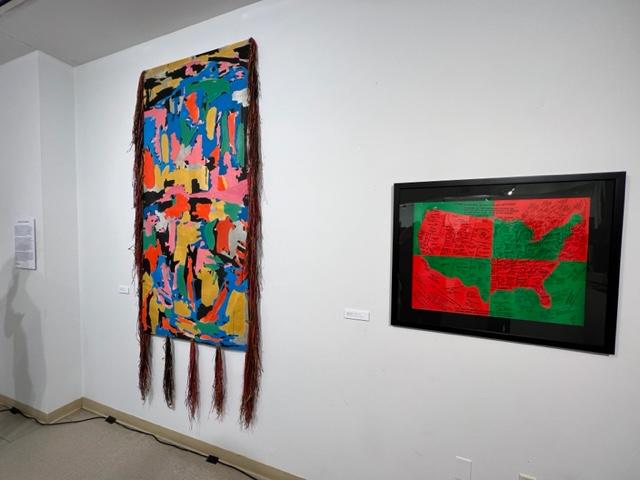
The exhibition in February to April 2024 is “Arrivals/Departures EAST80WEST: The Bicoastal realities of Immigration”. The exhibition’s theme is based on seven contemporary artists from both the West and East coasts that are connected by US interstate 80 and how they examine the bicoastal realities of new immigrants to the United States.
The “Arrivals/Departures East80West: The Bicoastal realities of Immigration”.
The “Arrivals and Departures” exhibition gallery.
Native American art
The exhibition was fascinating in that it looked at different perspectives of how immigration has happened whether forced or not. I think back to European immigration in the 1600 and 1700’s and how this affected the Americas to what is happening today.
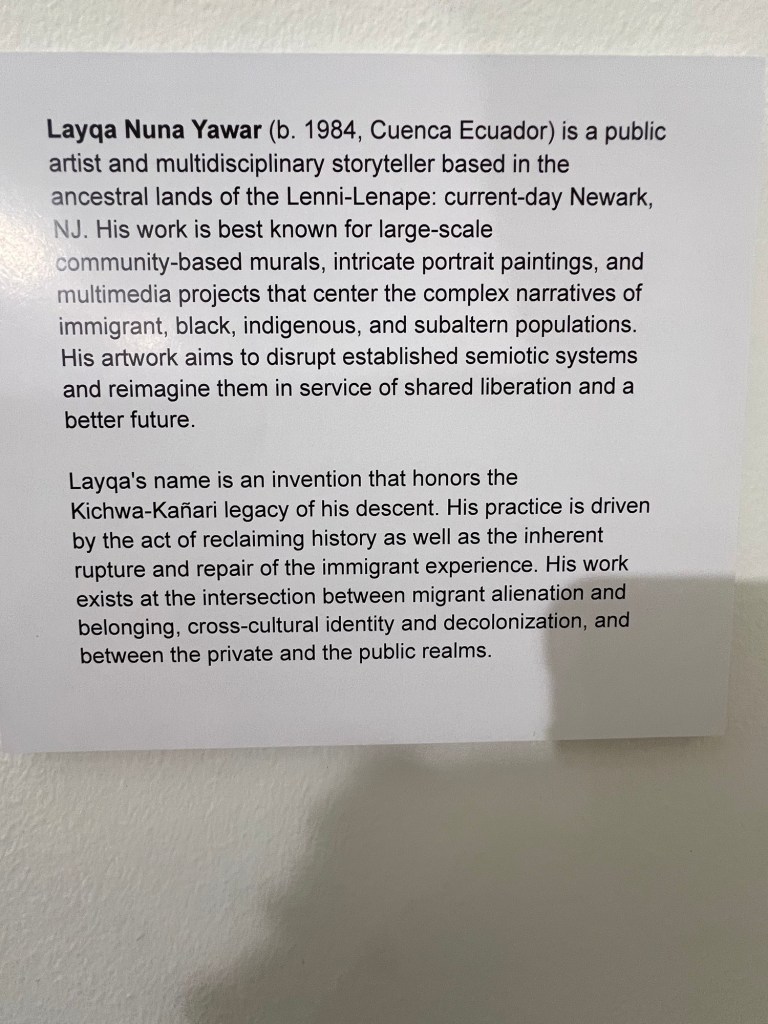
The Yamar Paintings
The biography of Layqo Nuna Yawar and his work.
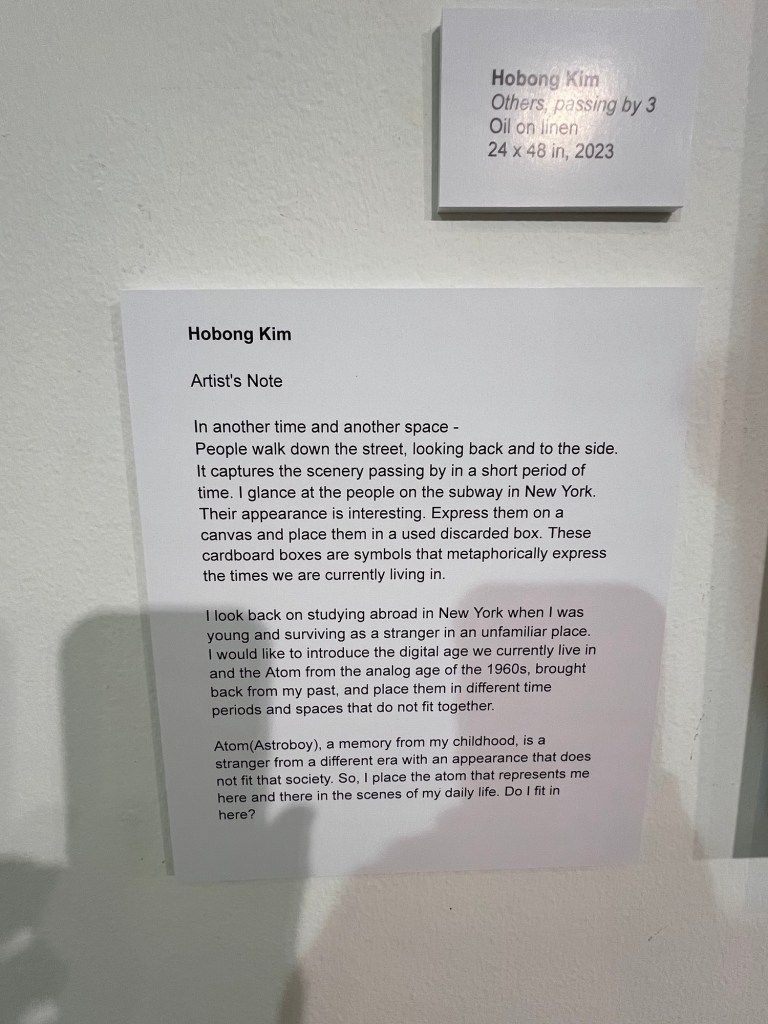
New York scenesThe biography of Hobong Kim
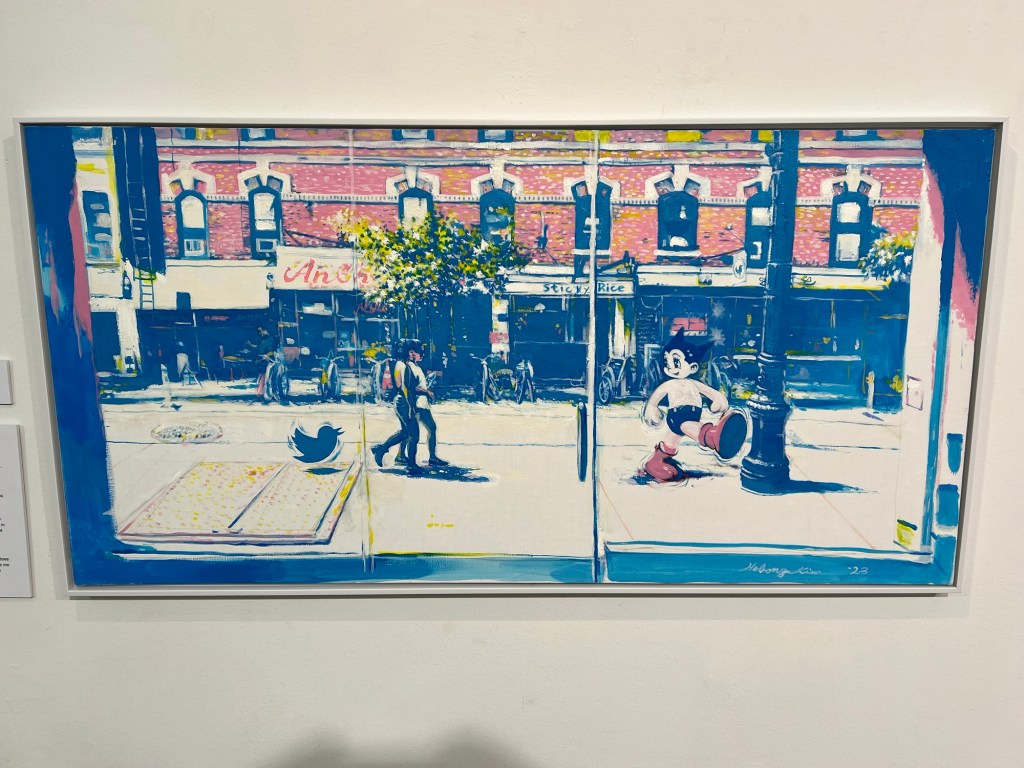
The works of Hobong Kim.
Street scenes by Hobong Kim
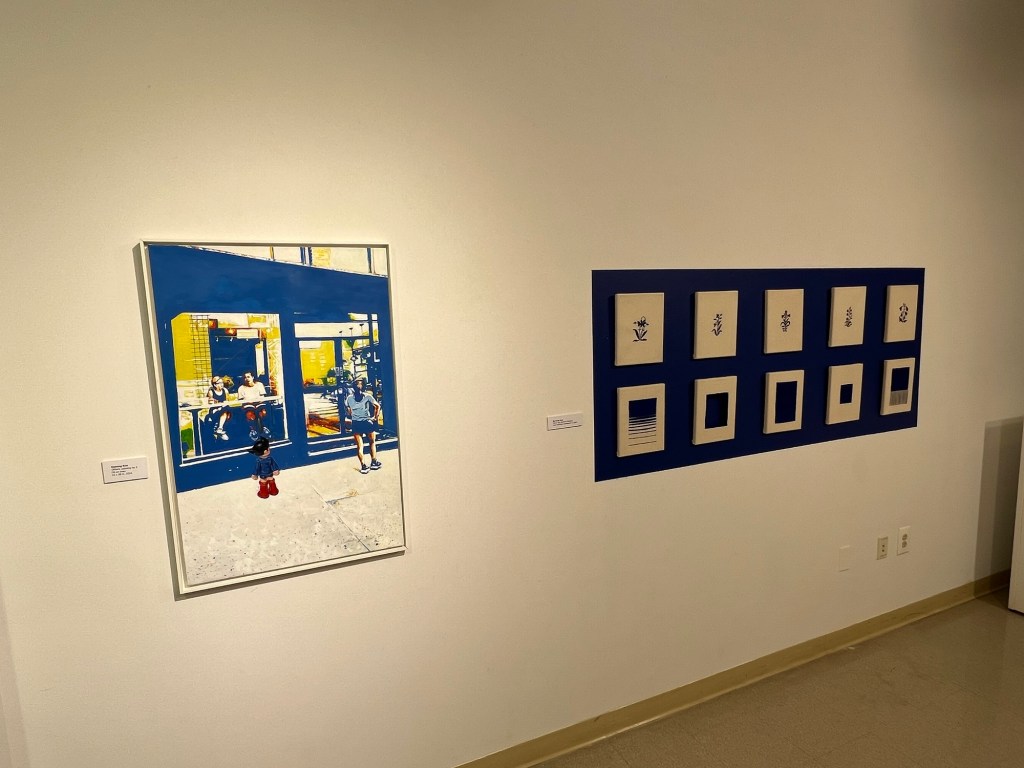
The exhibition explored different elements of how environment changes us and shapes us.
Migrant farmers and workers
The exhibition also explores their sense of place in the scheme of life.
More work by Hobong Kim
Do we erase part of ourselves.
Who are you?
It delves into a place of self. What an interesting aspect of life. How much of yourself do you have to give up to fit in?
The exhibition makes you think about this.
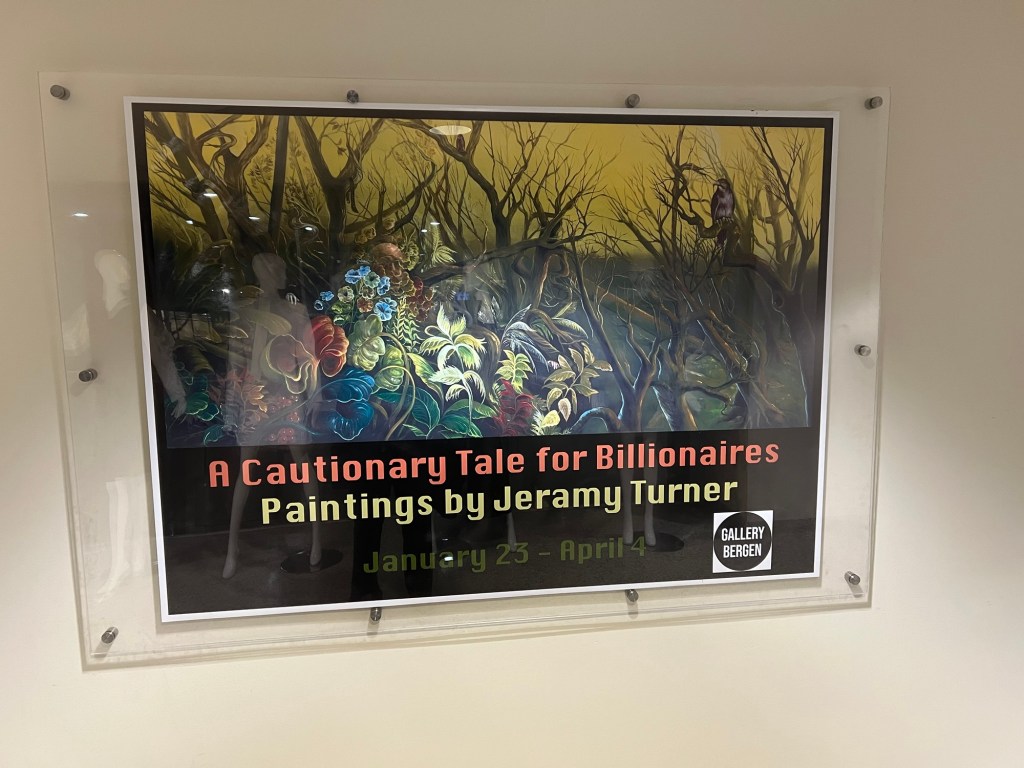
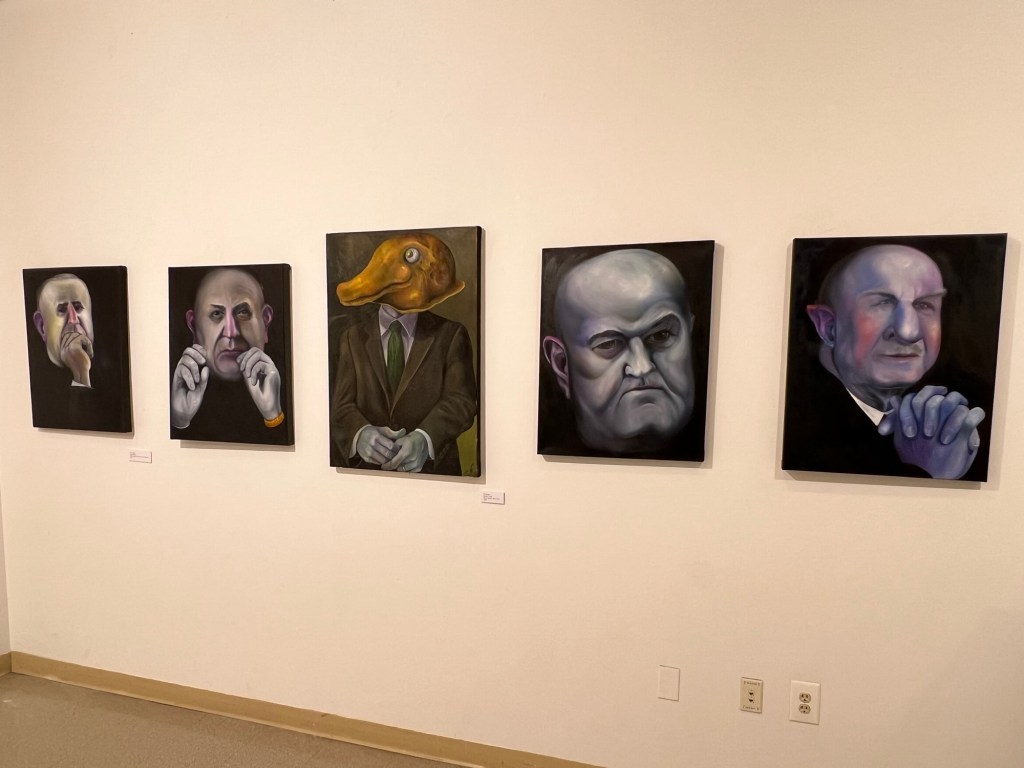
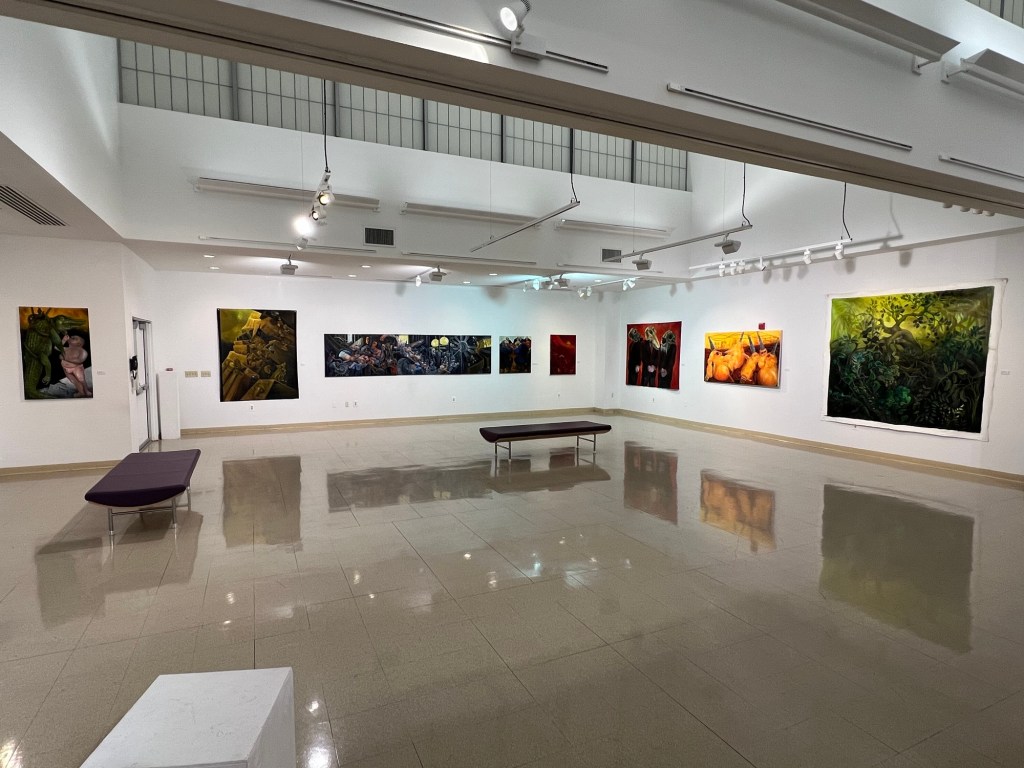
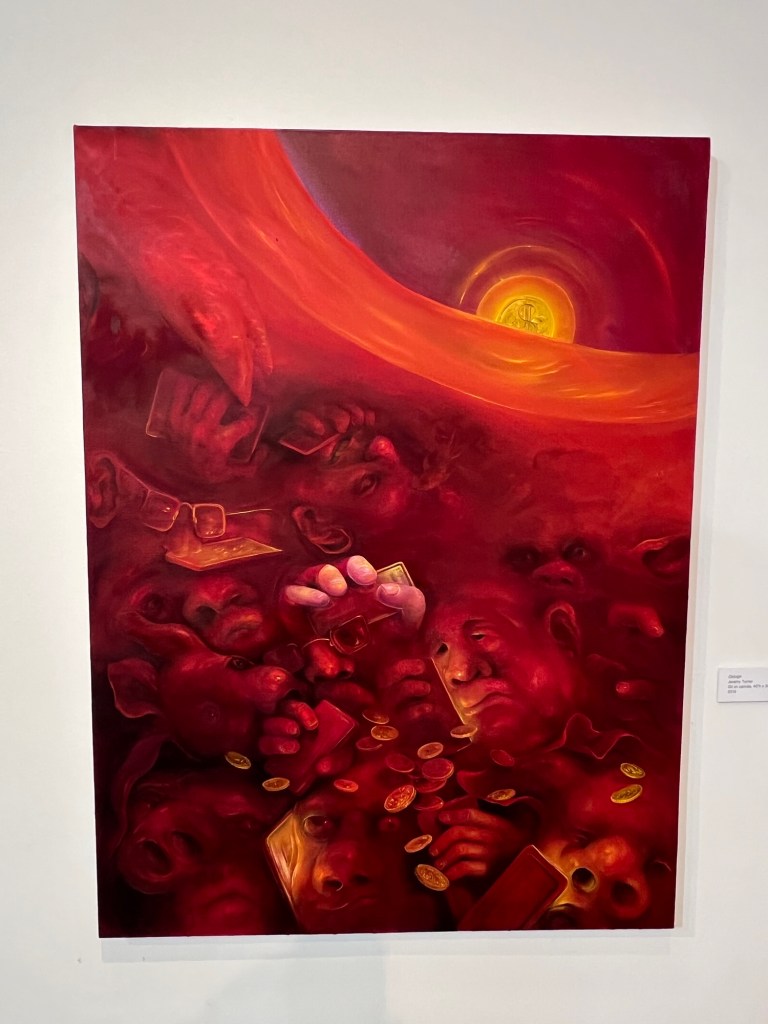
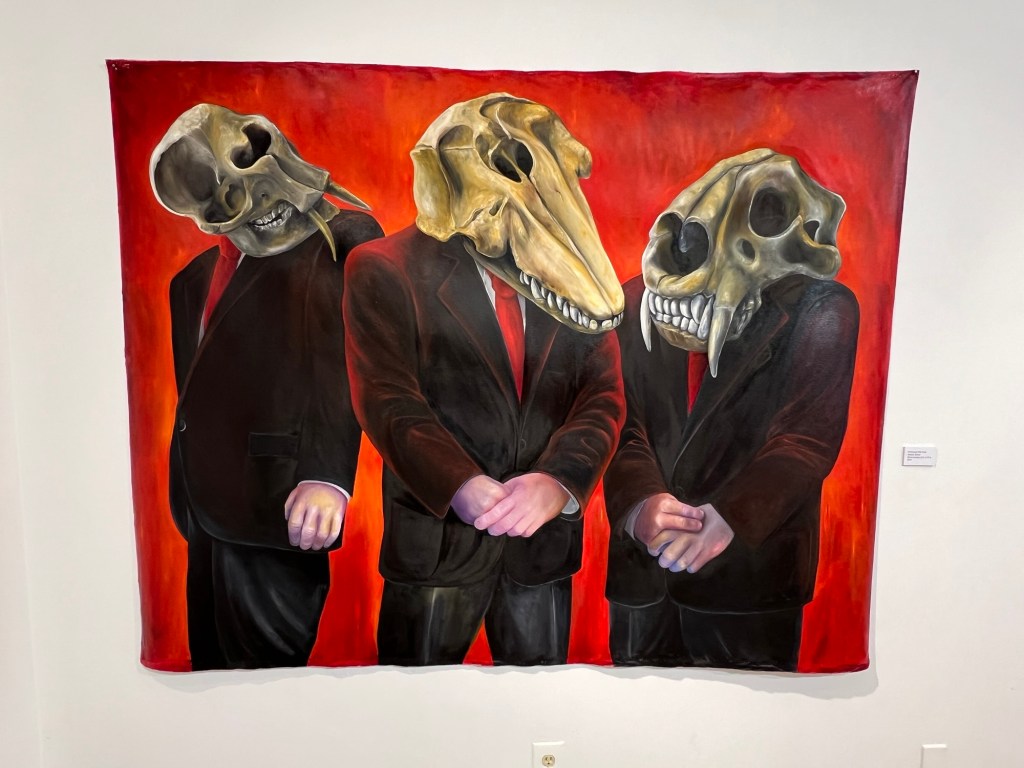
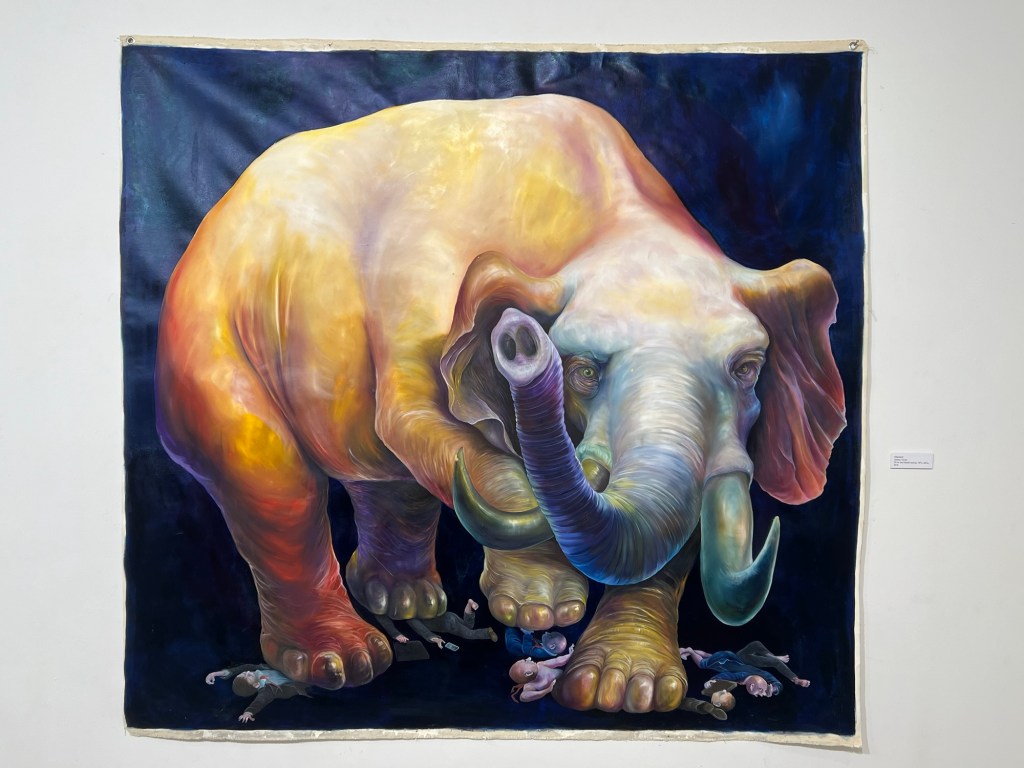
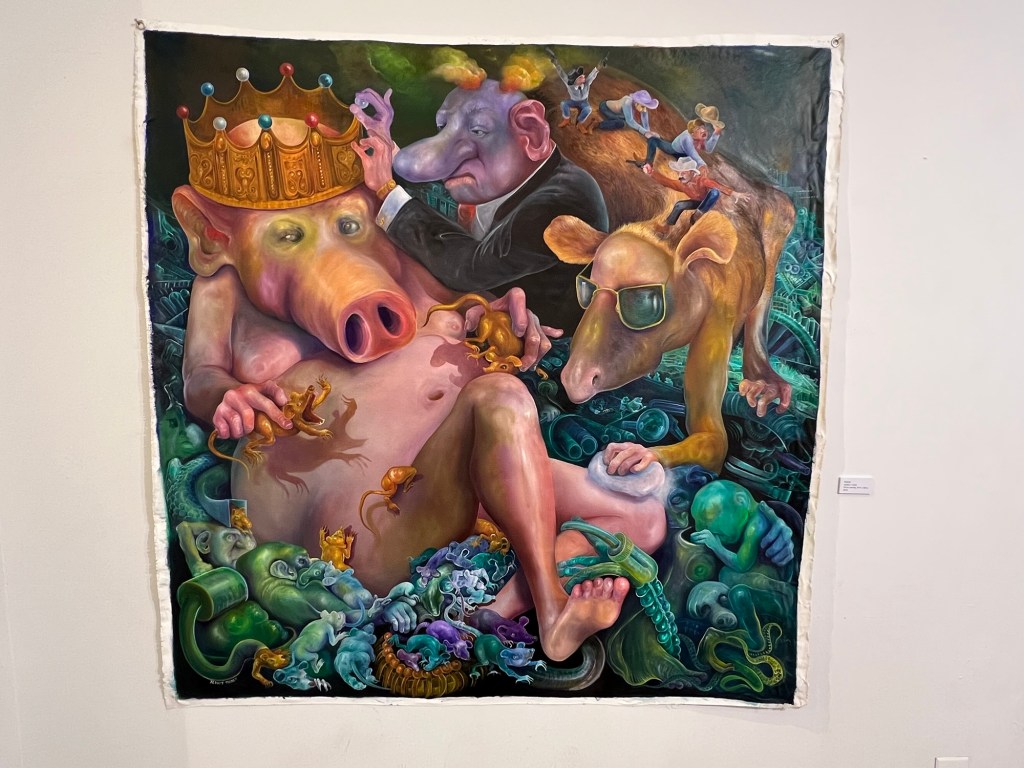
The latest exhibition is by artist Jeramy Turner ‘A Cautionary Tale for Billionaire’s” that opened on January 23rd, 2025.
Jeramy Turner is an American born self-taught painter. In the beginning of 1986 as an attempt to create films, one frame at a time. They were large-scaled to emulate the screen in a movie theater. She began with the intention of using visual art as a tool of protest. Her paintings are most often depictions of capitalists’ vulnerability. Her work often features animals, as symbols of forces of resistance, and terrified bankers (Artist bio)
‘The CEOs” paintings showing the dark side of business
Gallery Bergen on the Bergen Community College campus in Paramus, NJ
The painting ‘Wage Earner’
The sign for “Wage Labor”
The painting “Deluge”
The sign for “Deluge”
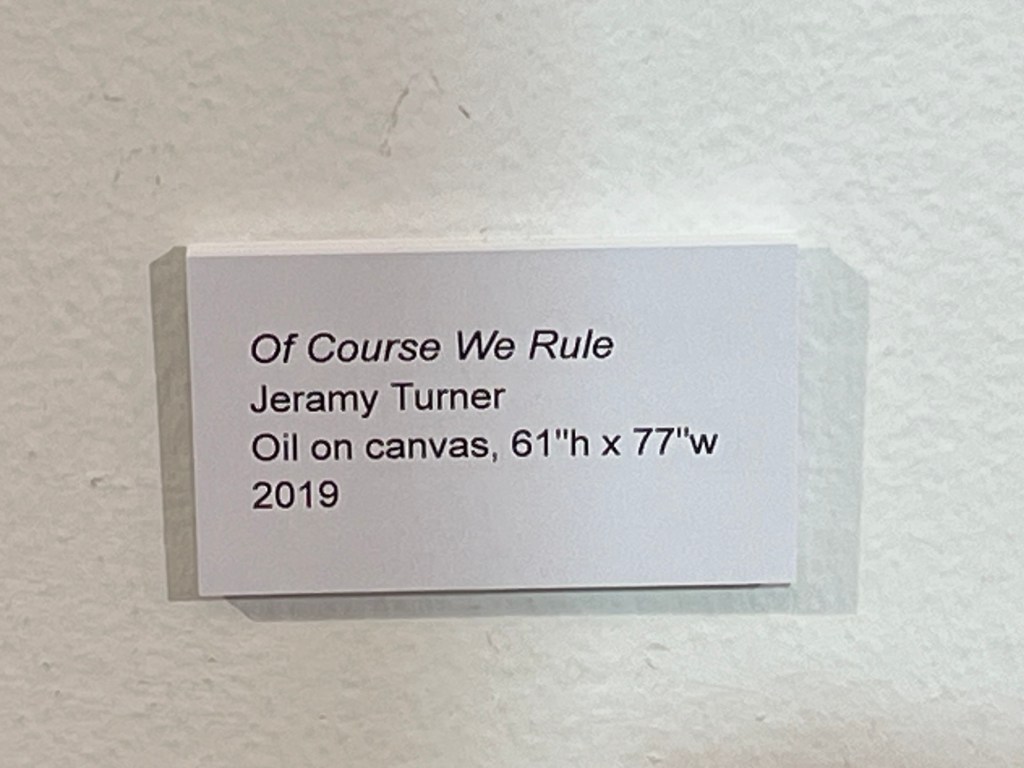
The painting “Of Course We Rule”
The sign for “Of Course We Rule”
The painting “Elephant”
The sign for “Elephant”
The painting “Crash”
The sign for “Crash”
The painting “ Kapital”
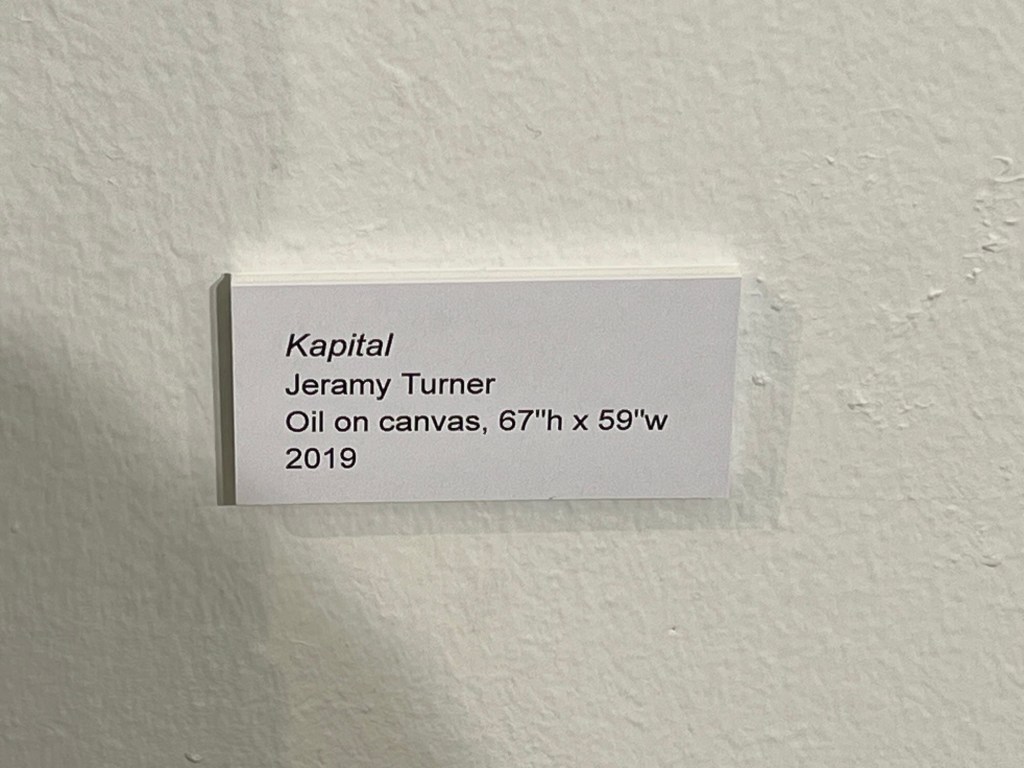
The sign for “Kapital”
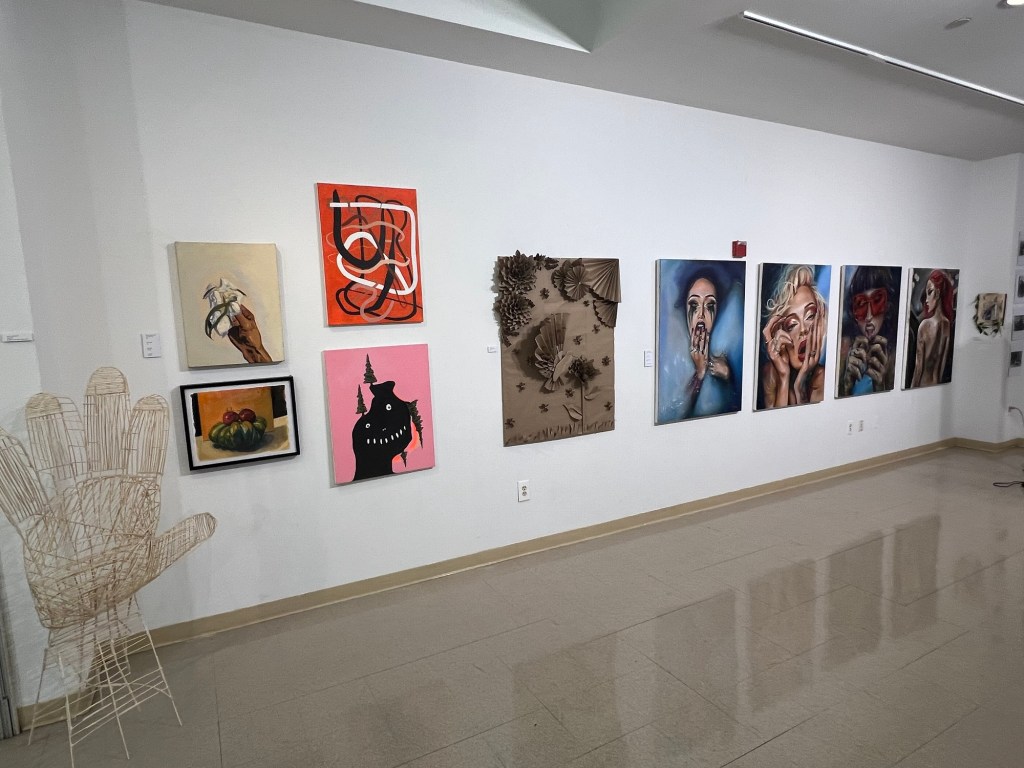
A view of the gallery display for the Jeramy Turner Show for “A Cautionary Tale for Billionaires”
In the Spring of 2025, Gallery Bergen had its Spring Student show and there was some interesting art to see. It was a wonderful Opening on April 24th, 2025.
The Bergen Institute for the Creative Arts (BICA), Fashion at Bergen, and Gallery Bergen:
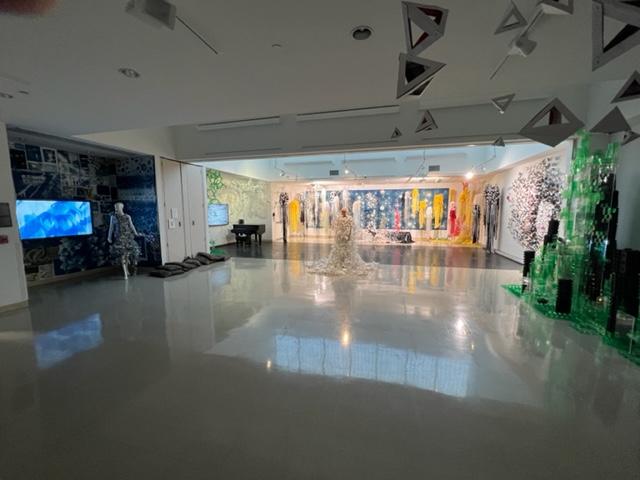
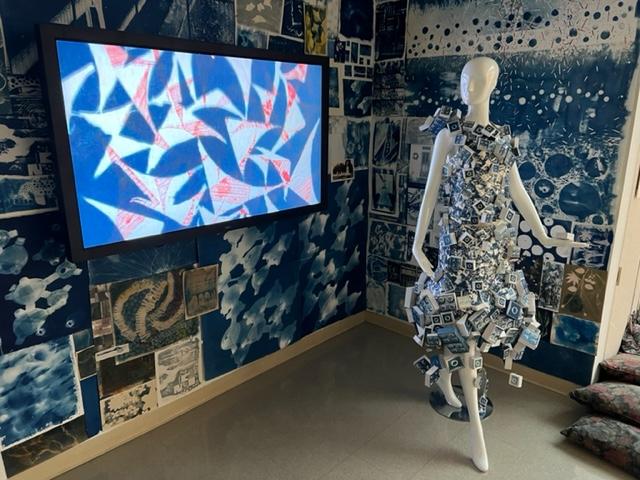
Gallery Bergen presents its annual BCC Student Art Expo 2025 at Gallery Bergen (3rd Floor, West Hall) from April 24 through May 2. The college community and public are invited. All artistic media from BCC students and the Institute for Learning in Retirement are represented, including fashion design, painting, 2D and 3D design, animation, sculpture, and photography.
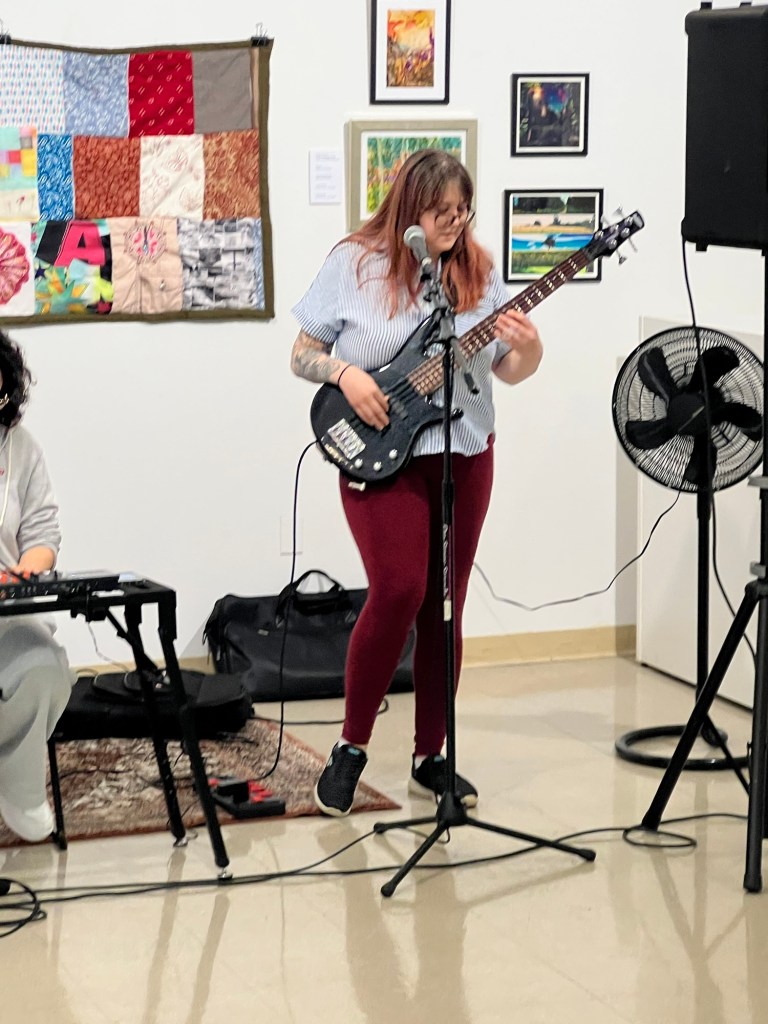
The reception featured hors d’oeuvres by the Culinary Arts program with a live music performances by BCC music graduates, Kurley Skeletons.
The Gallery Bergen Student Spring 2025
The Spring 2025 Student show
The Spring 2025 Student show
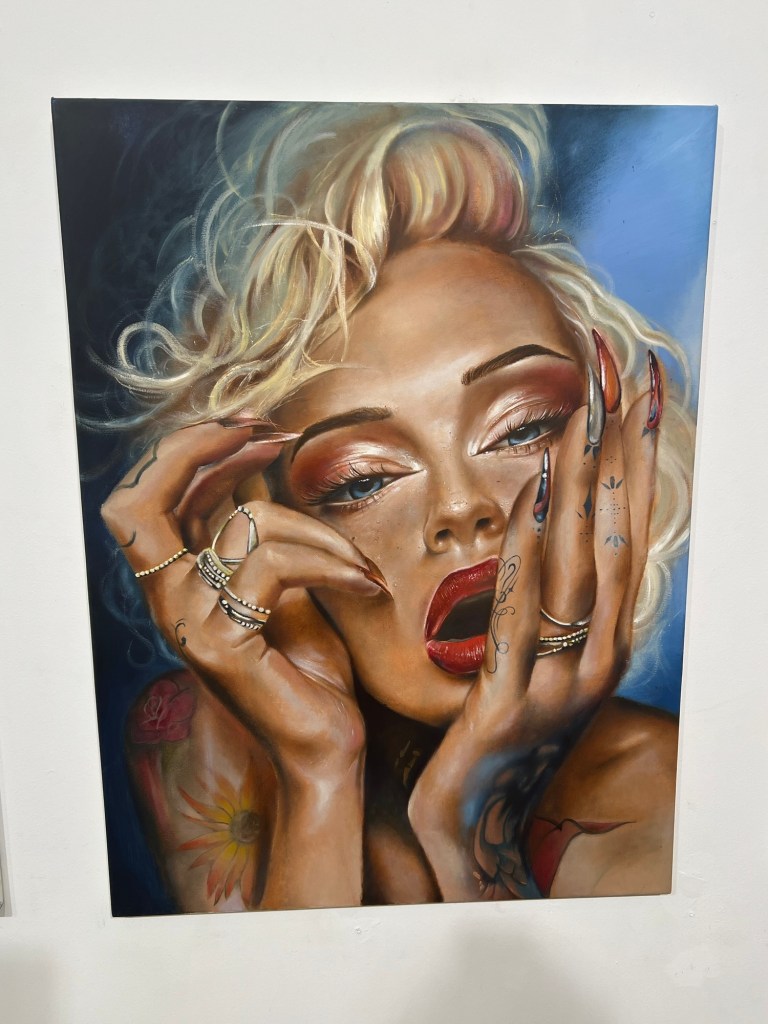
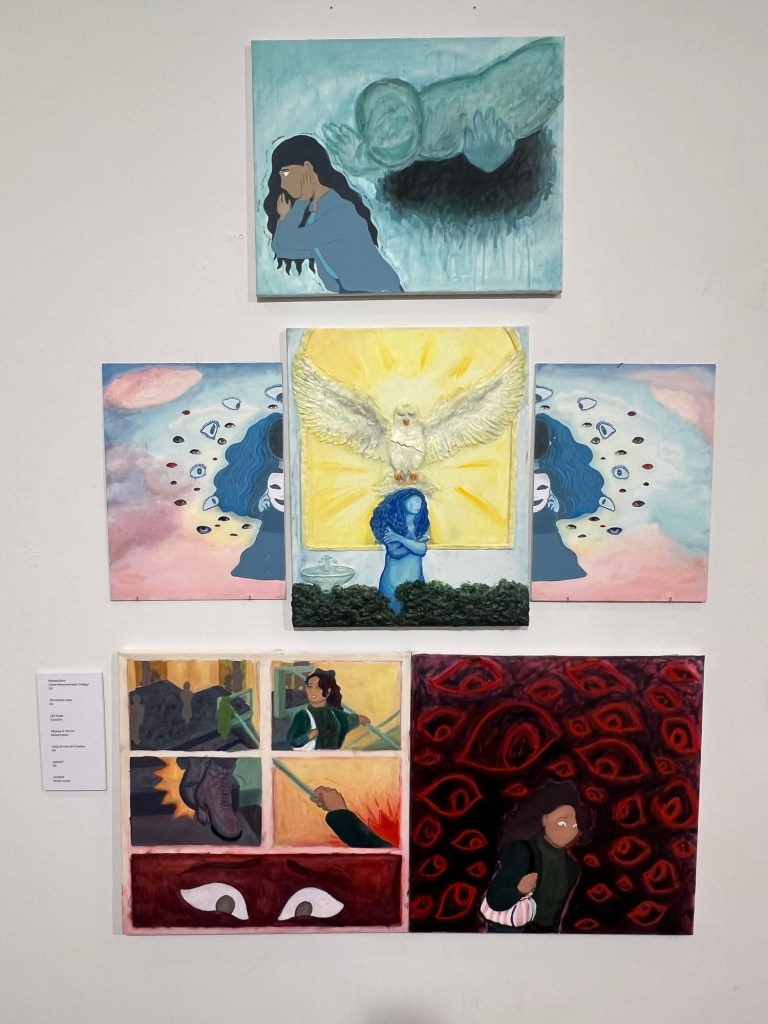
The Student Show has some unique pieces of art that can be admired and debated. Really take time to admire the students works.
Spring 2025 Student show
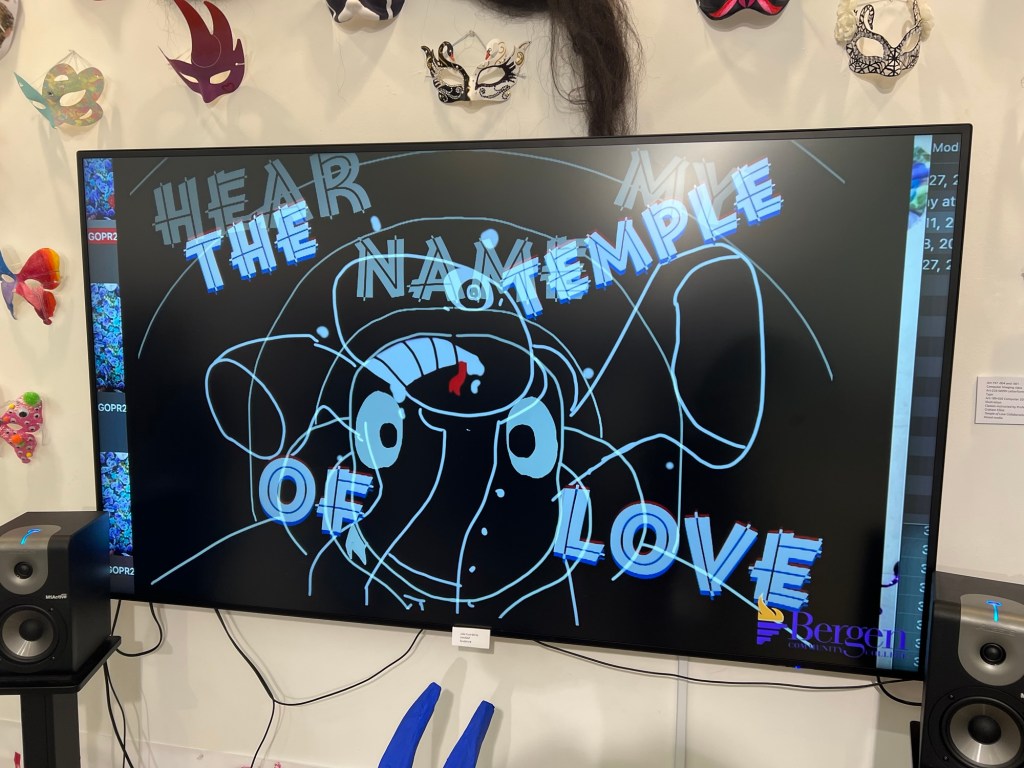
These were some of the standouts that I enjoyed at the show with my favorite being ‘Temple of Love’ video which I thought was very clever.
The Spring 2025 Student show
The Spring 2025 Student show
The Spring 2025 Student show
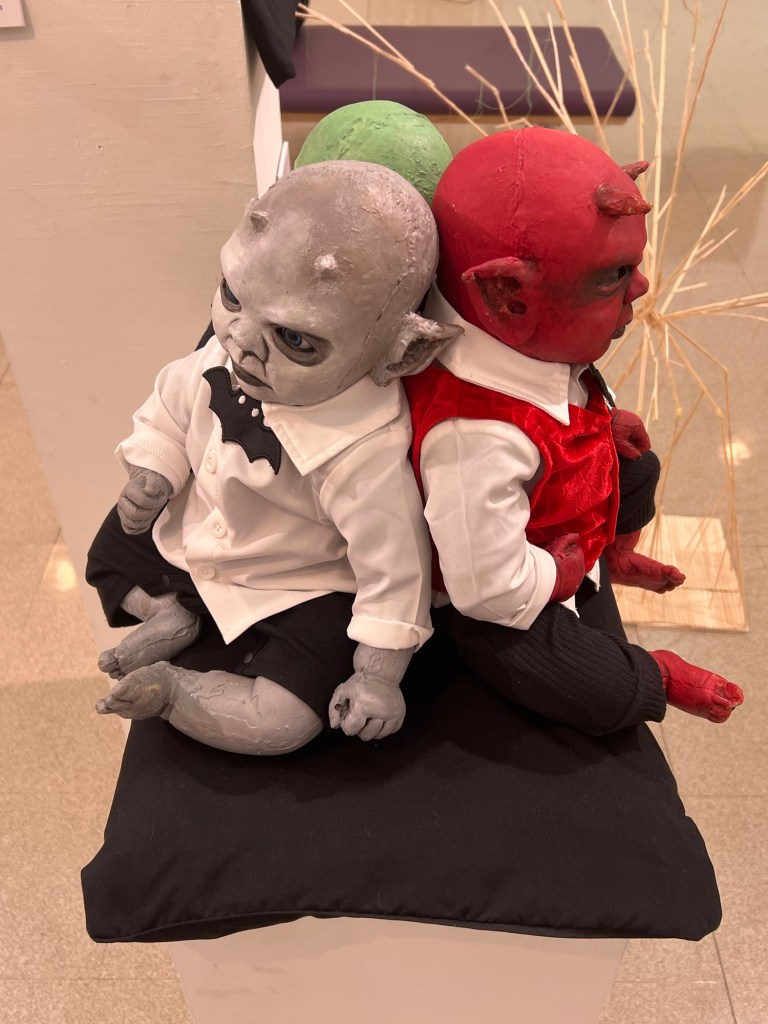
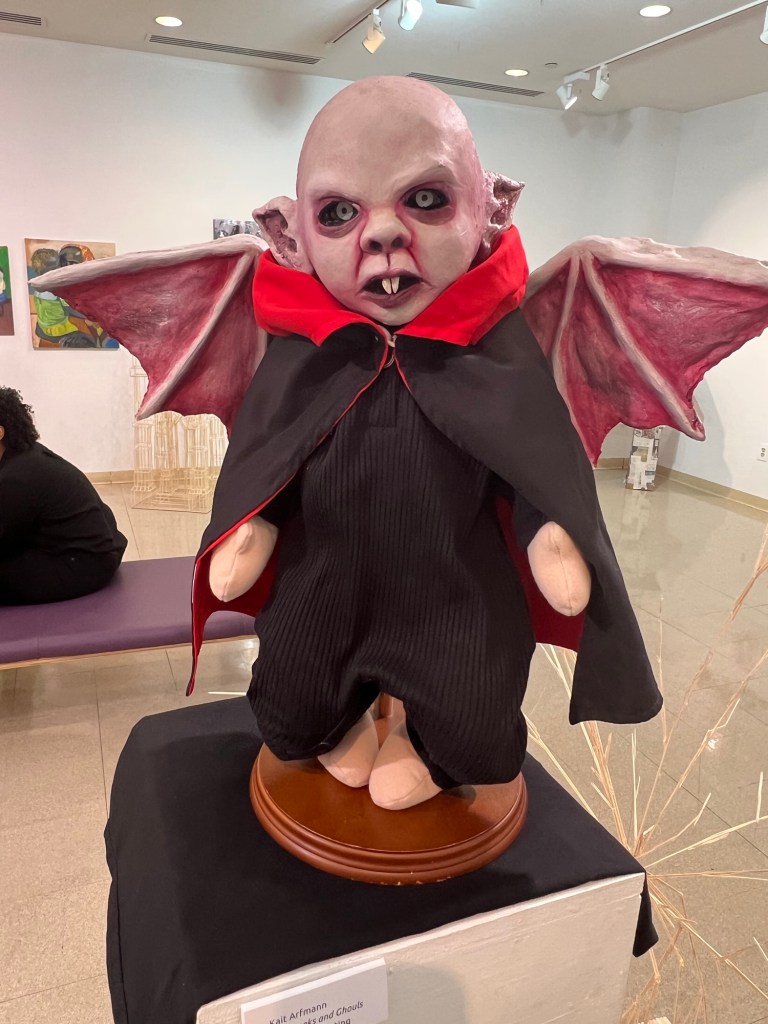
“Little Demons”, one of my favorite pieces at the show.
“Little Demons” sculpture
The “Little Demons” sculpture
The Spring 2025 Student Show
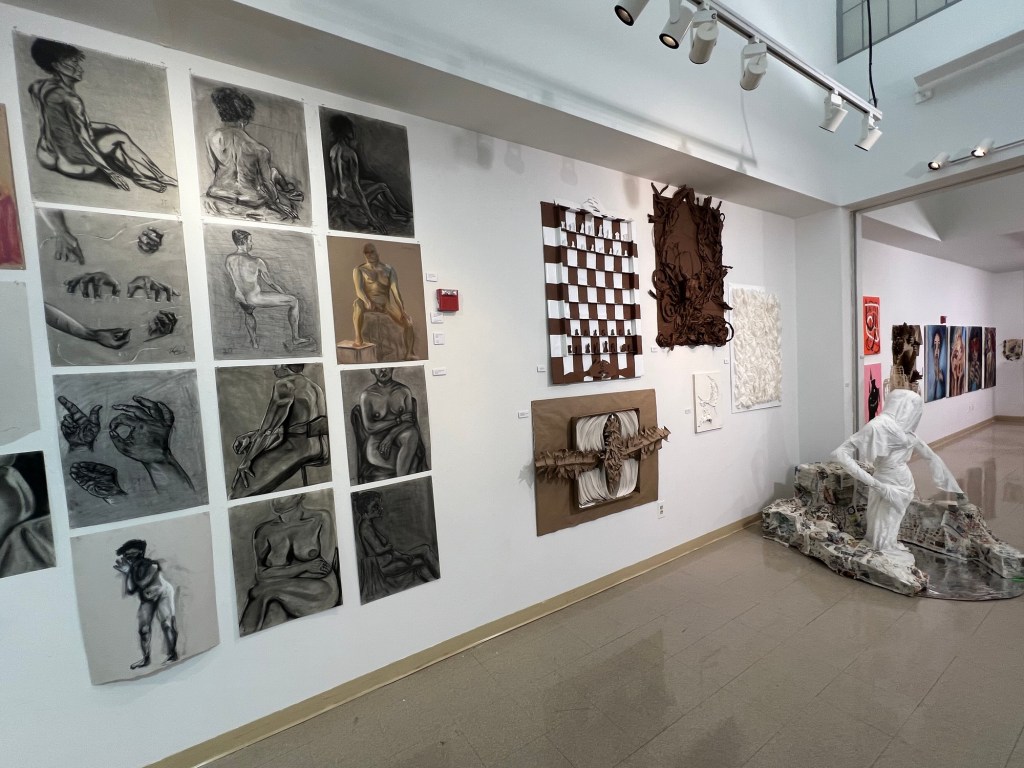
The interesting nudes
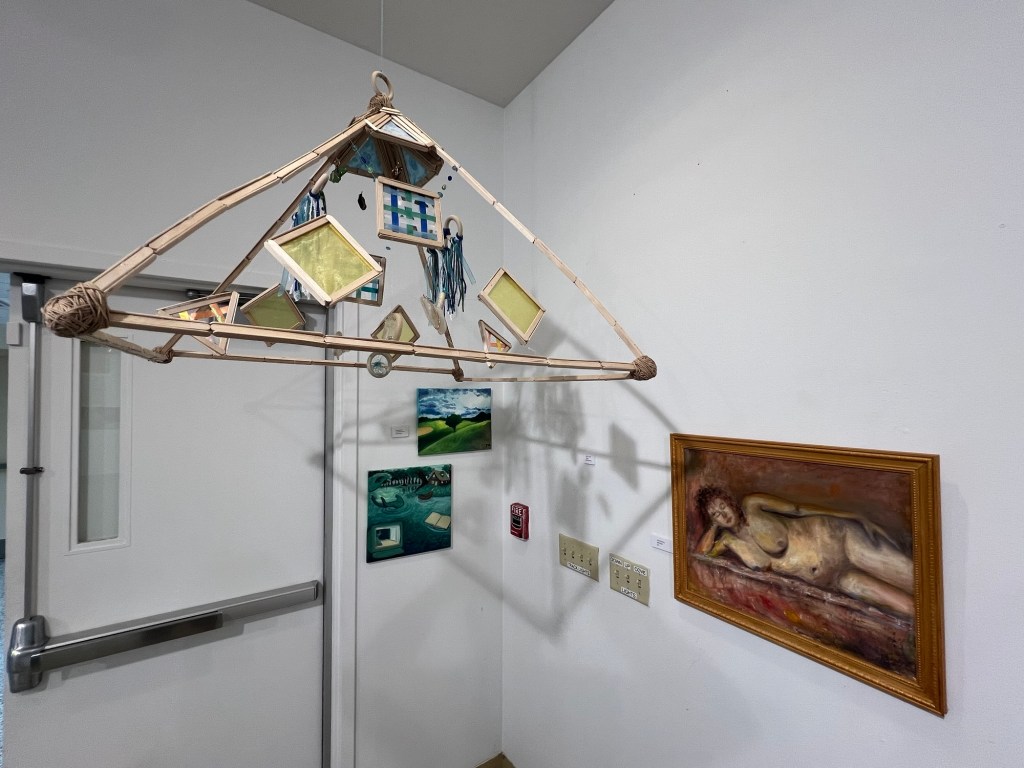
The back part of the Gallery
The back part of the museum
The Spring 2025 Student show
The “Harvey” painting
One of the most interesting works at the show was the art music video “Temple of Love” by artist Graham Elliott.
The “Temple of Love” video
The art surrounding them”Temple of Love” video
The “Temple of Love” video”, my favorite piece of the show.
The sculpture “Vibrant Vito Guest” below the video
That evening to close out the Opening was the band ‘Kurly Skelatons’, who had graduated from Bergen Community College a few years ago.
The concert was interesting as the music contemporary and rhythmic.
At the end of the evening, there was a light reception and we enjoyed being outside on the patio over looking the golf course.
The patio view
Watching ‘The Temple of Love’ again
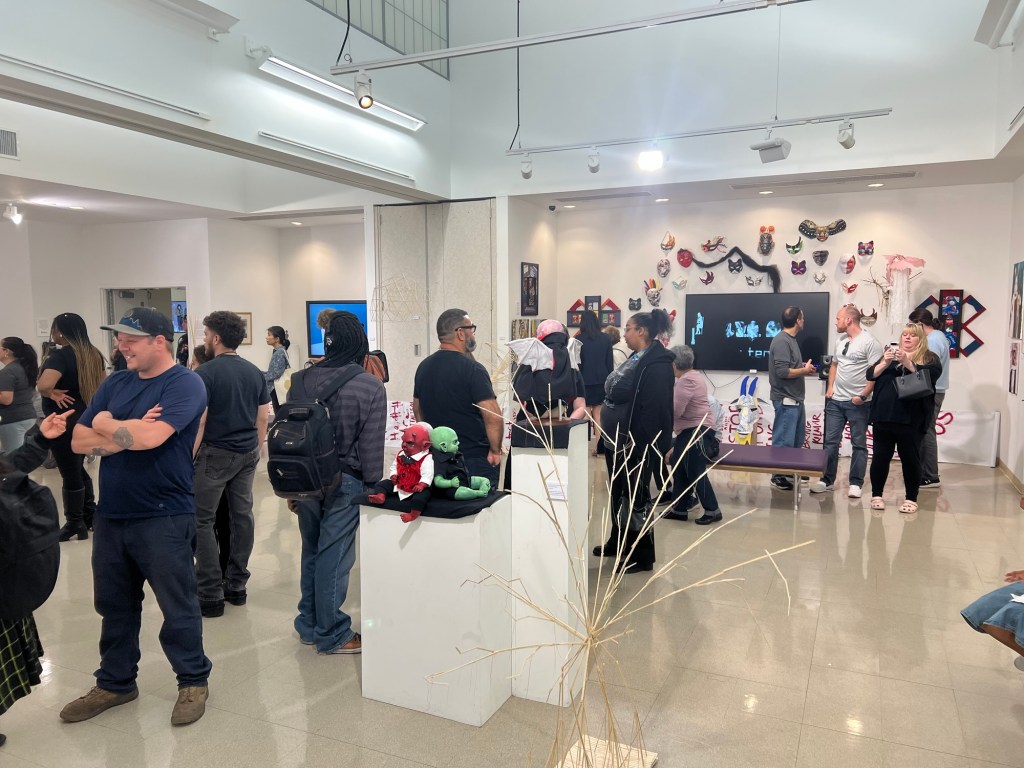
It was a nice crowd that evening
The Spring 2025 Student Show offered interesting art and music and equally interesting visuals. The students did a nice job.
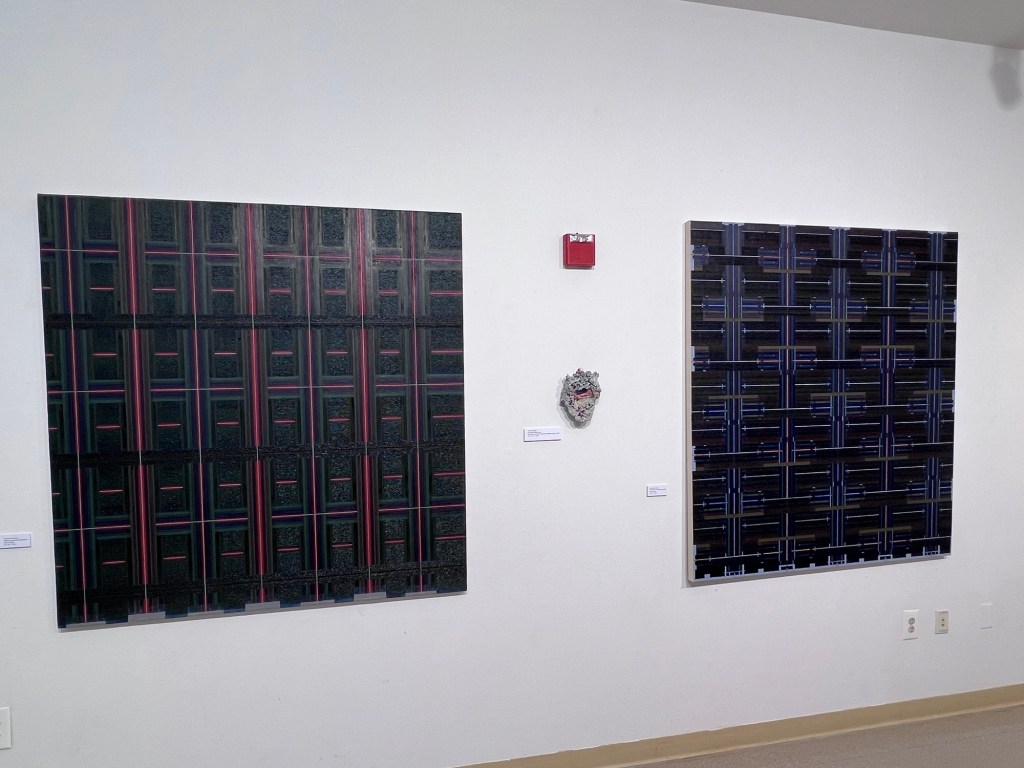
In the Fall of 2025, Gallery Bergen featured the exhibition of Artist Gregg Bormann entitled ‘Personal Effects’. The exhibit featured work by the artist based on Hollywood works that featured the dark and macabre. The works included clips of films done in video collage and surrealist works based on film scenes.
“The full exhibition “I’m Laughing at Clouds”
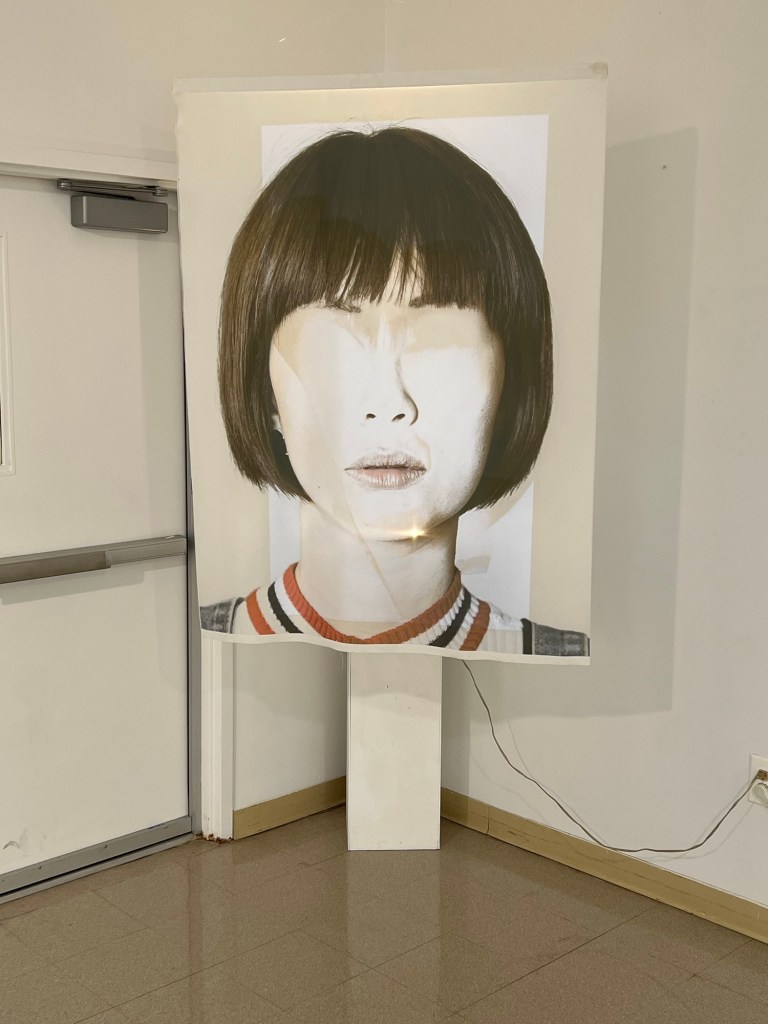
“Eyes without a Face”
The reception after the opening
It was an interesting take on the movie magic of these films.
In the Fall of 2025, Gallery Bergen exhibited ‘Tesla’s de Solidaridad: Art & Connection to Guatemala ‘, an exhibition of local Guatemalan artist, mostly from Jersey City.
The promotion poster
The exhibition was a celebration of works by Guatemalan artists who live in the United States, especially in the New York City area.
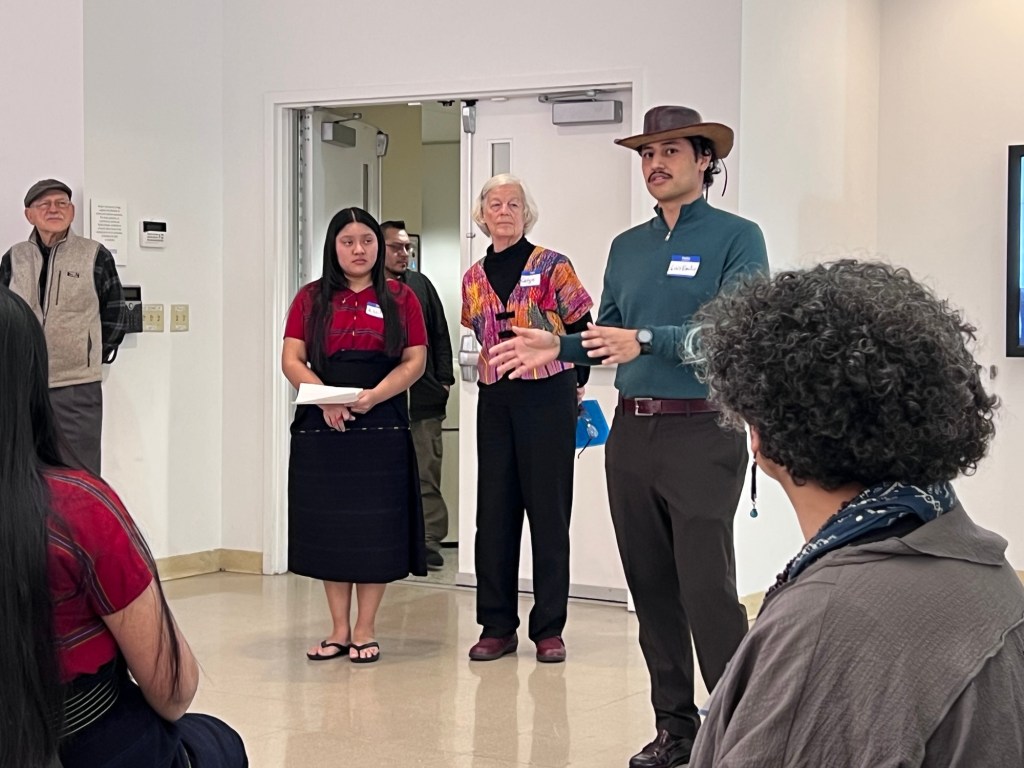
The gallery opening
Works by artist Lucas Emilio Romero
Artist Lucas Emilio Romero explaining his works at the show
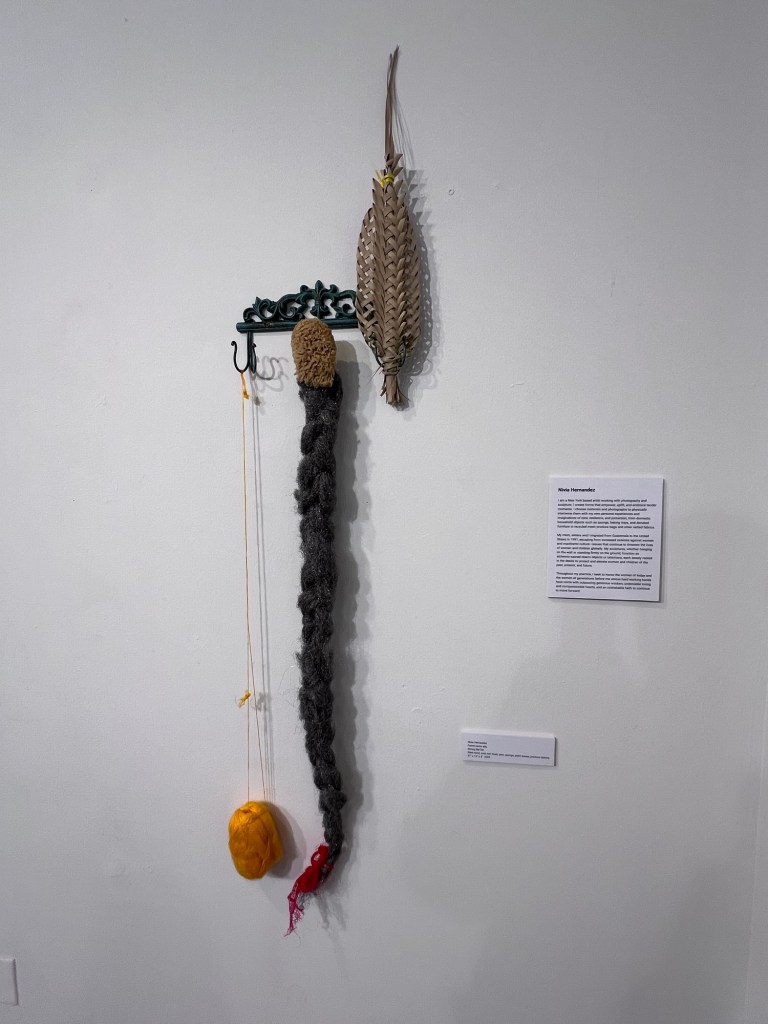
Work by artist Nivia Hernandez
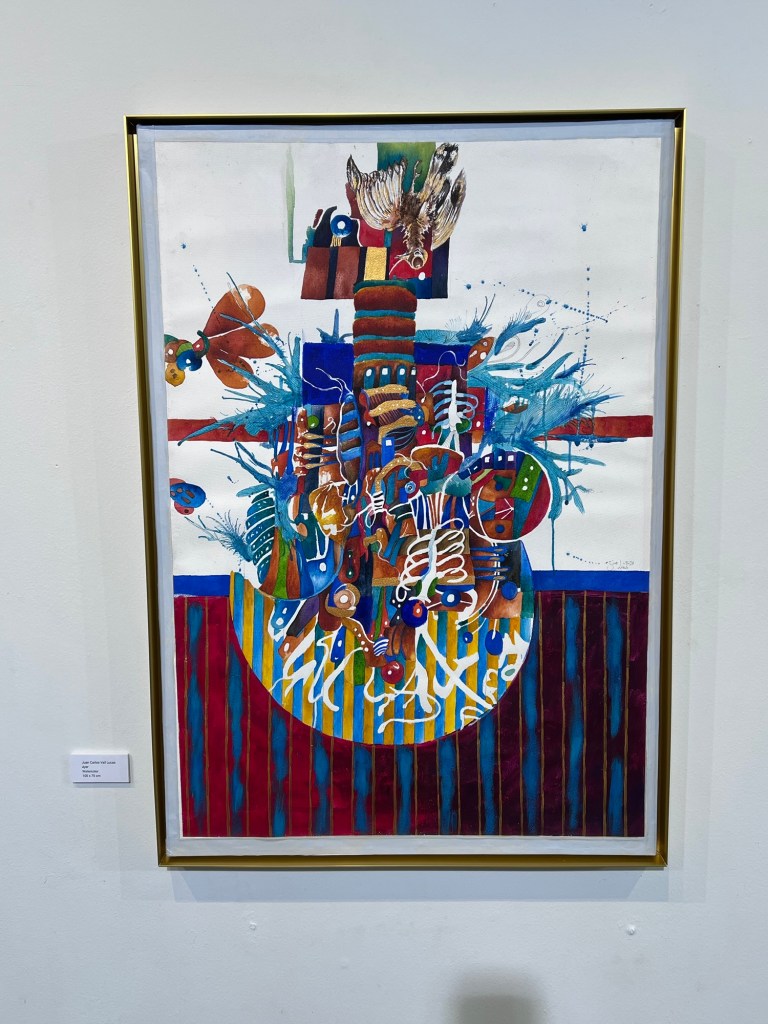
Works by artist Juan Carlos Vail Lucas
The work ‘Ayer’
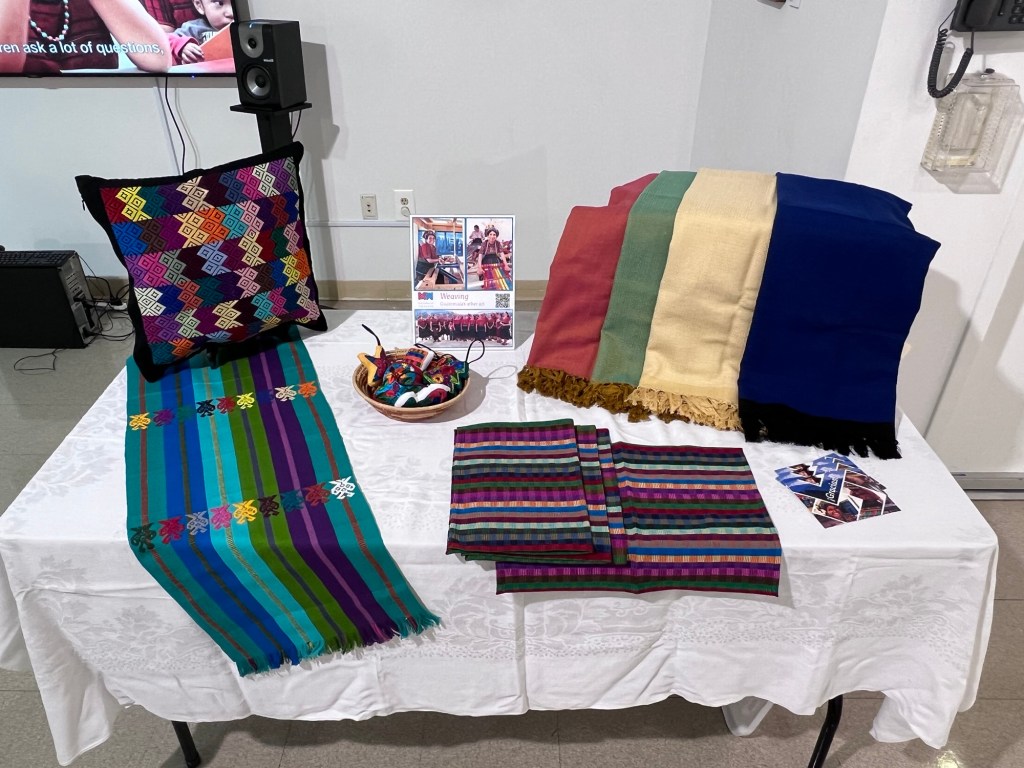
The crafts of Guatemala
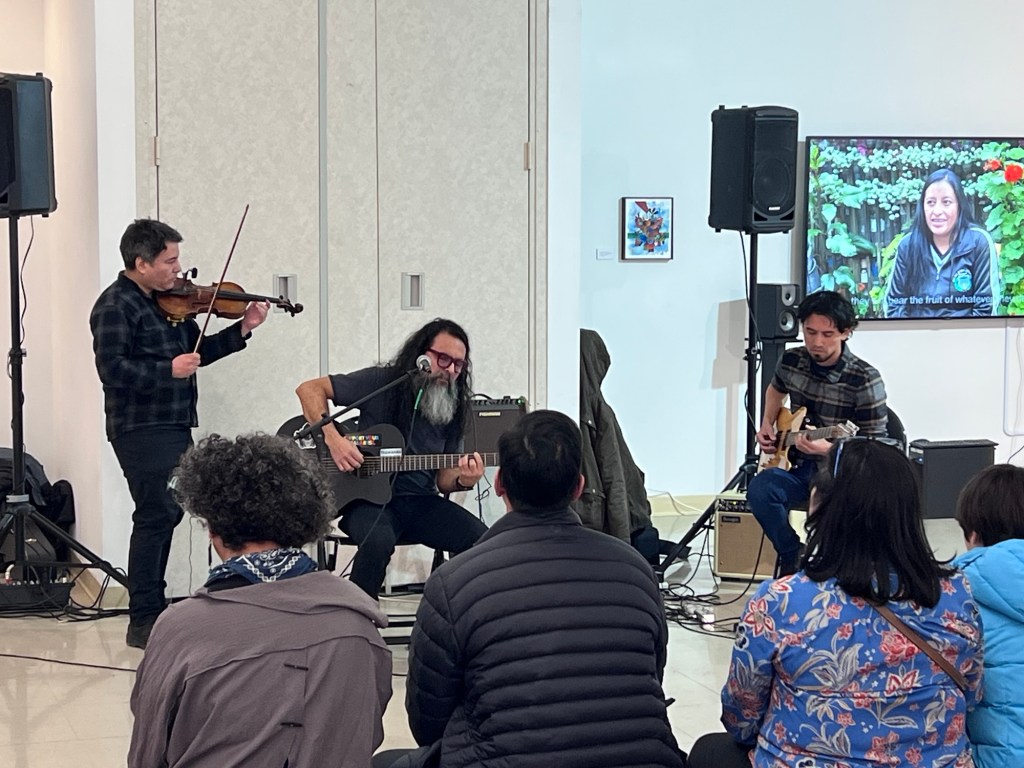
A local jazz band played at the opening with lyrics in Spanish.
The Jazz band performing
Gallery Bergen
The Jazz performance at Gallery Bergen the night of the Opening of the Exhibition

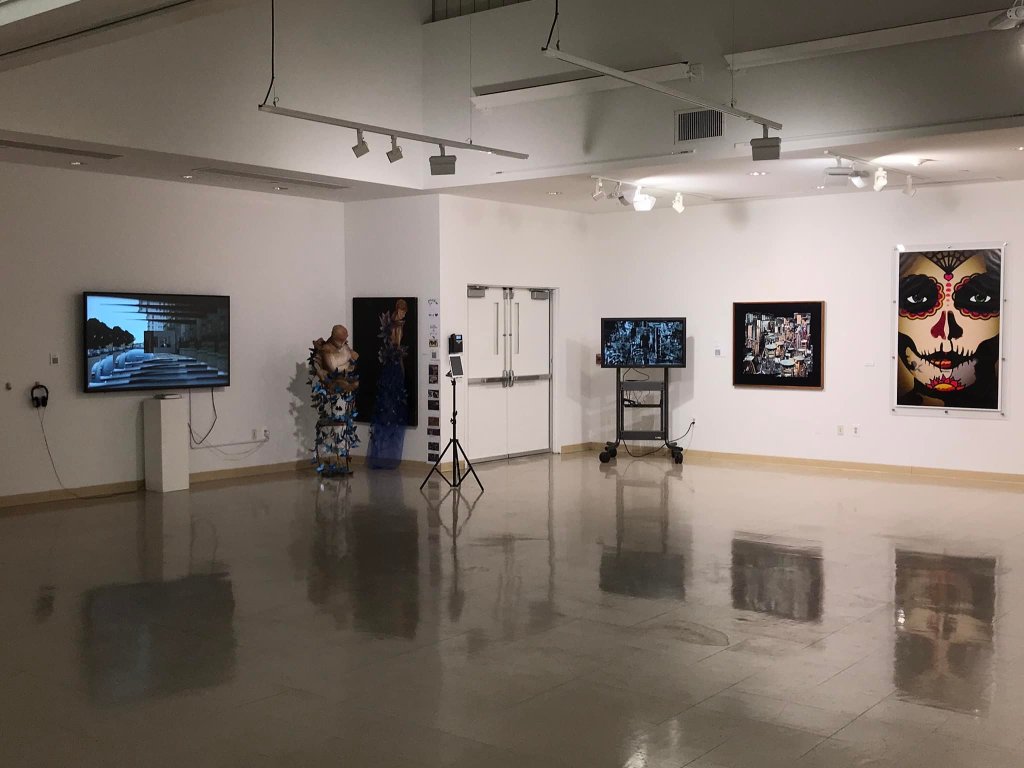
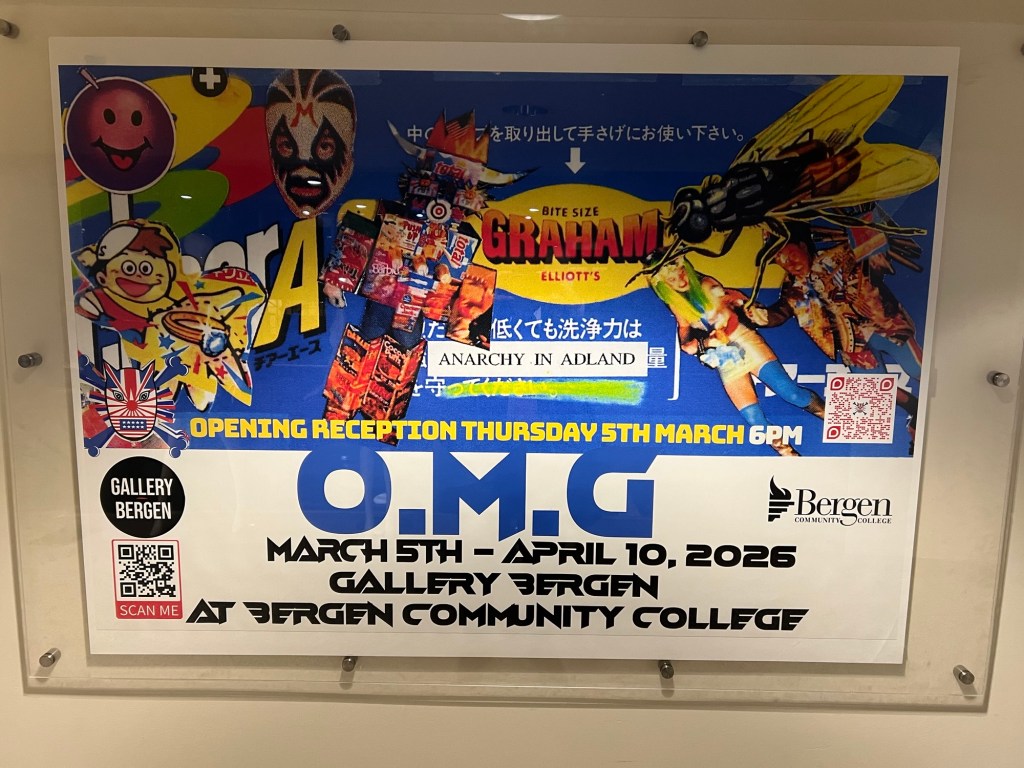
One of the biggest shows of 2026 was faculty member Graham Elliott’s one man show. It was a splash of art that was a cross between Basquiat and Warhol. It was colorful and playful and engaging.
The sign for the gallery opening
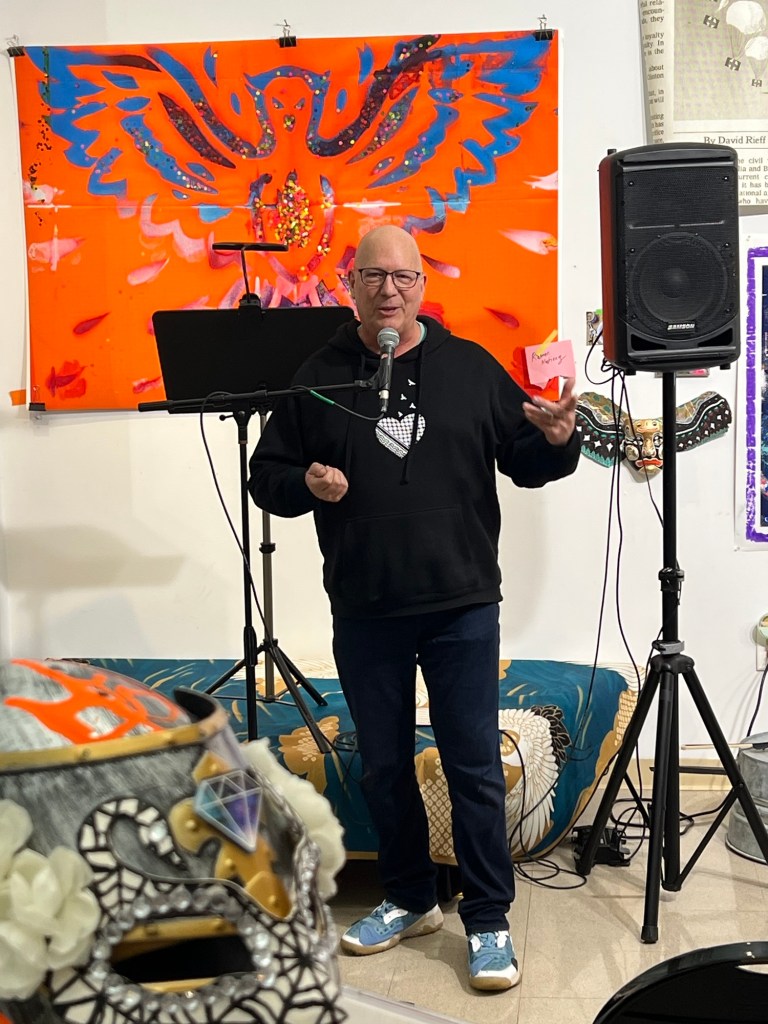
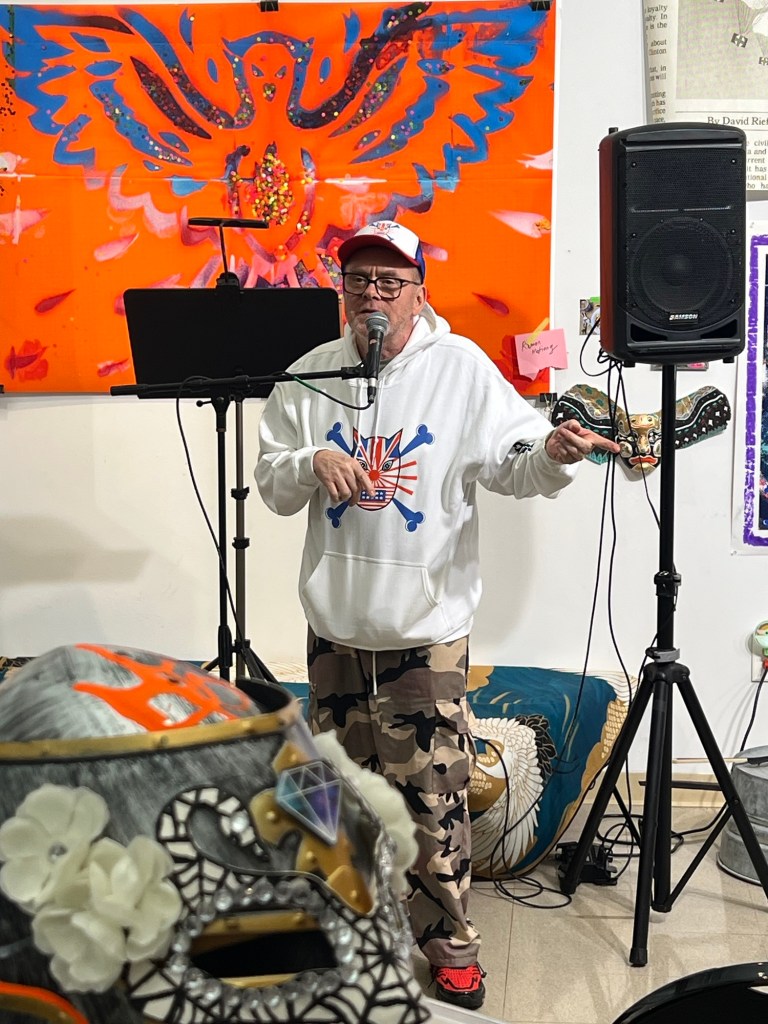
Artist Graham Elliott opening the show
The artist giving his opening remarks at the show. This one man show was a combination of his personal At ex and that of his students.
The Graham Elliott Show at Gallery Bergen:
(from the Gallery Bergen website)
The work of Bergen Community College visual arts faculty member, illustrator and motion graphics artist Graham Elliott will appear in Gallery Bergen this month. The exhibition “OMG! Graham Elliott” will open with a public reception on Thursday, February 26 at 6 p.m. in Gallery Bergen, the College’s art exhibition space located on the third floor of West Hall at its main campus in Paramus (400 Paramus Road). The opening reception will feature performances by flutist Carl Aude and cellist The Modesto Kid and refreshments prepared by the College’s culinary students.
“‘OMG!’ embraces play, humor and improvisation as serious artistic strategies, inviting viewers into a space where curiosity, obsession and sustained looking are treated with care and rigor,” Gallery Bergen Director Timothy Blunk said. “Graham Elliott’s work is disarmingly playful, yet purposeful – using accumulation, motion, and wit as engines for reflection rather than distraction. The exhibition reveals how whimsy is not the opposite of depth, but one of its most precise and enduring tools.”
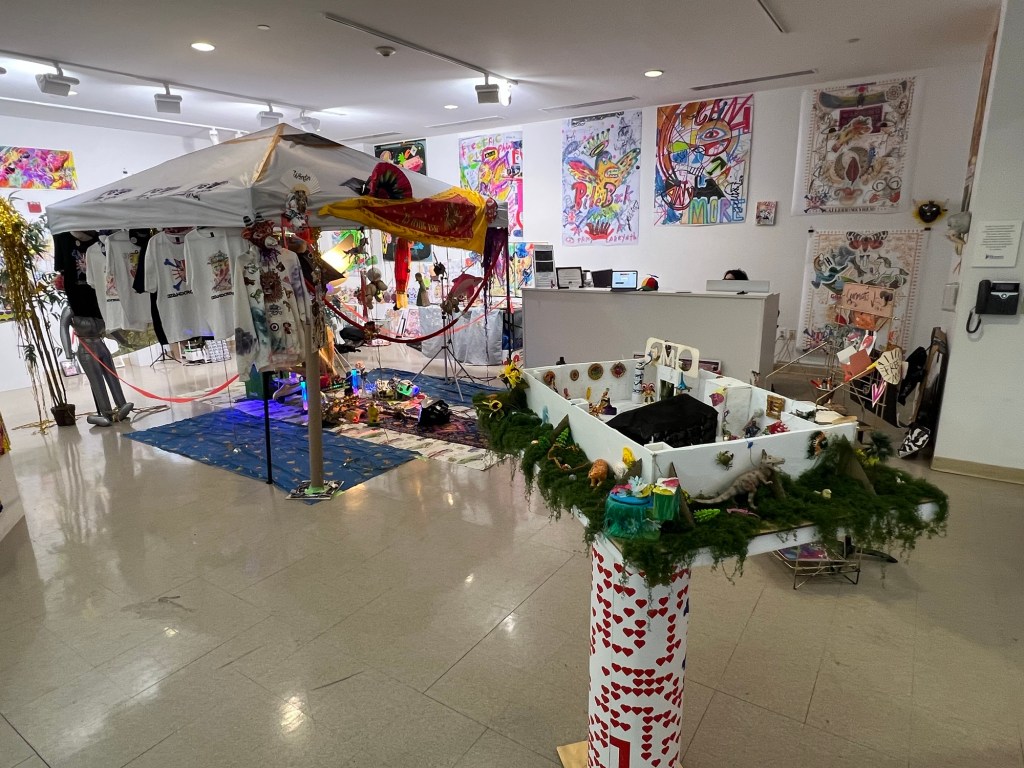
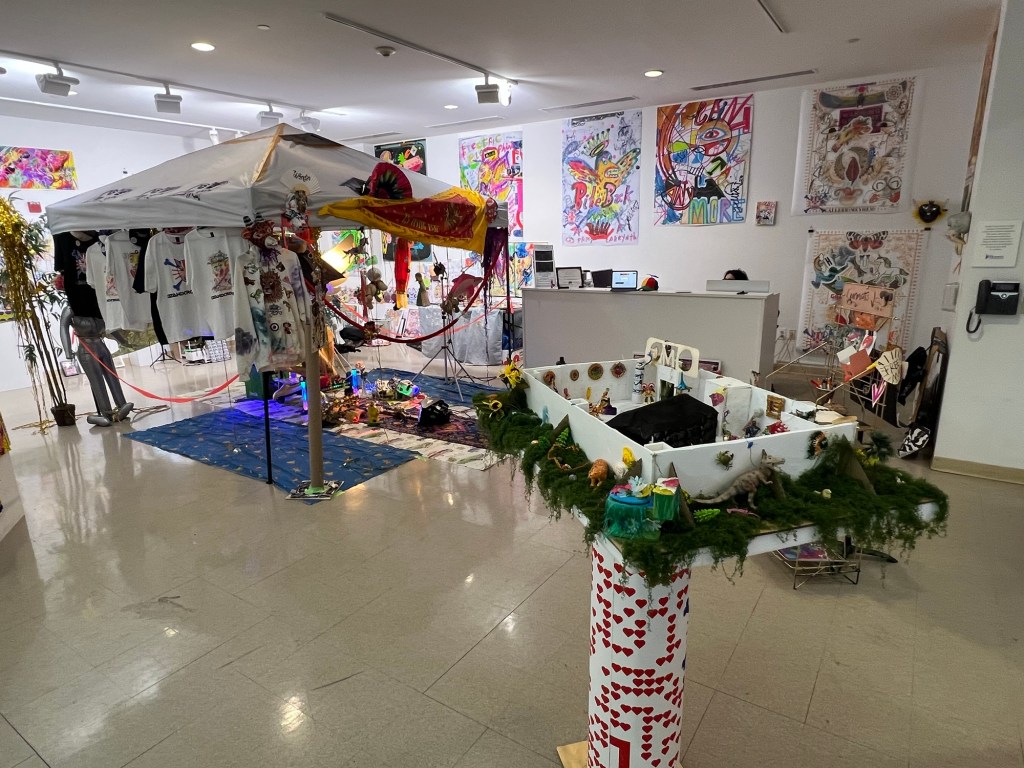
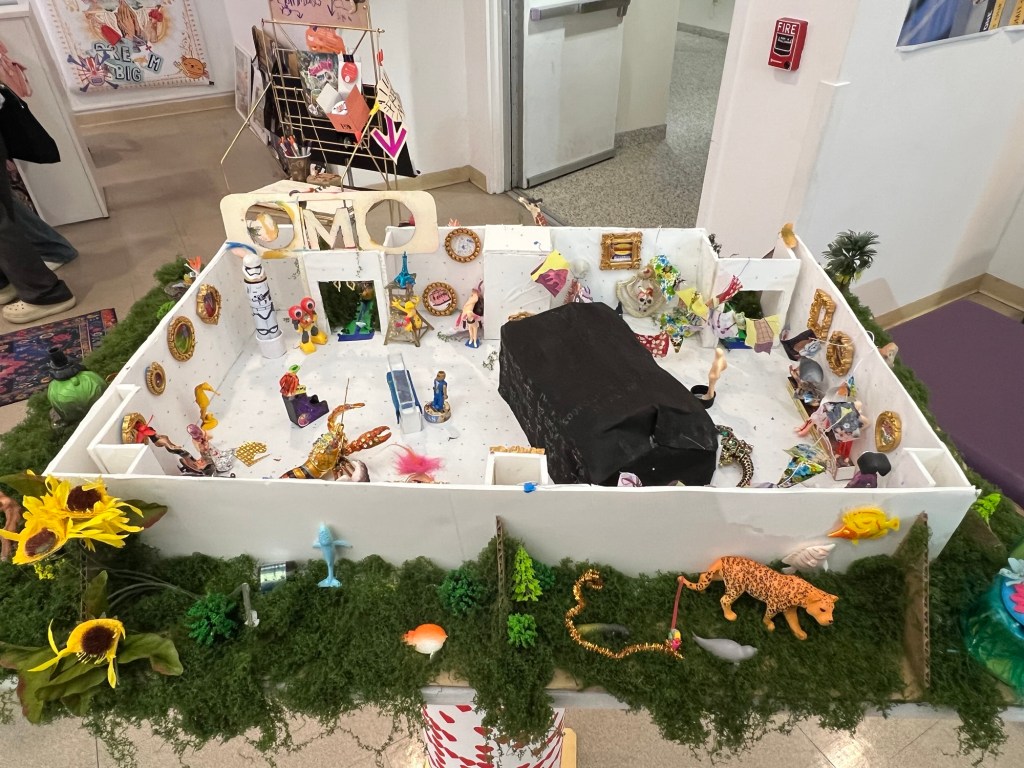
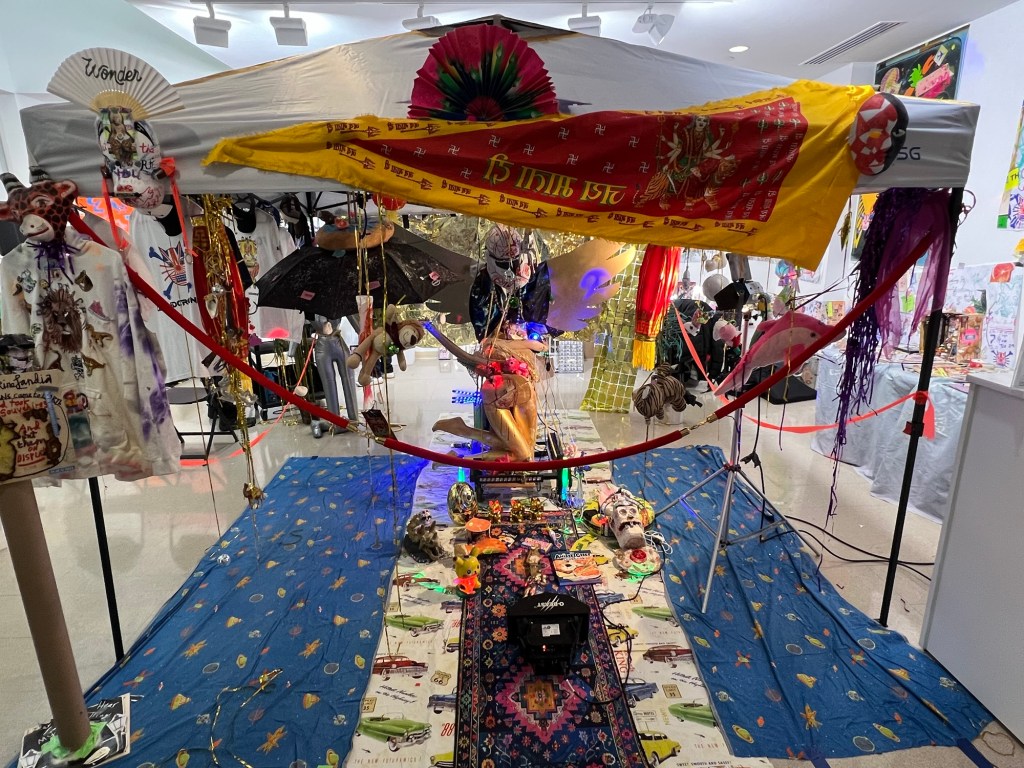
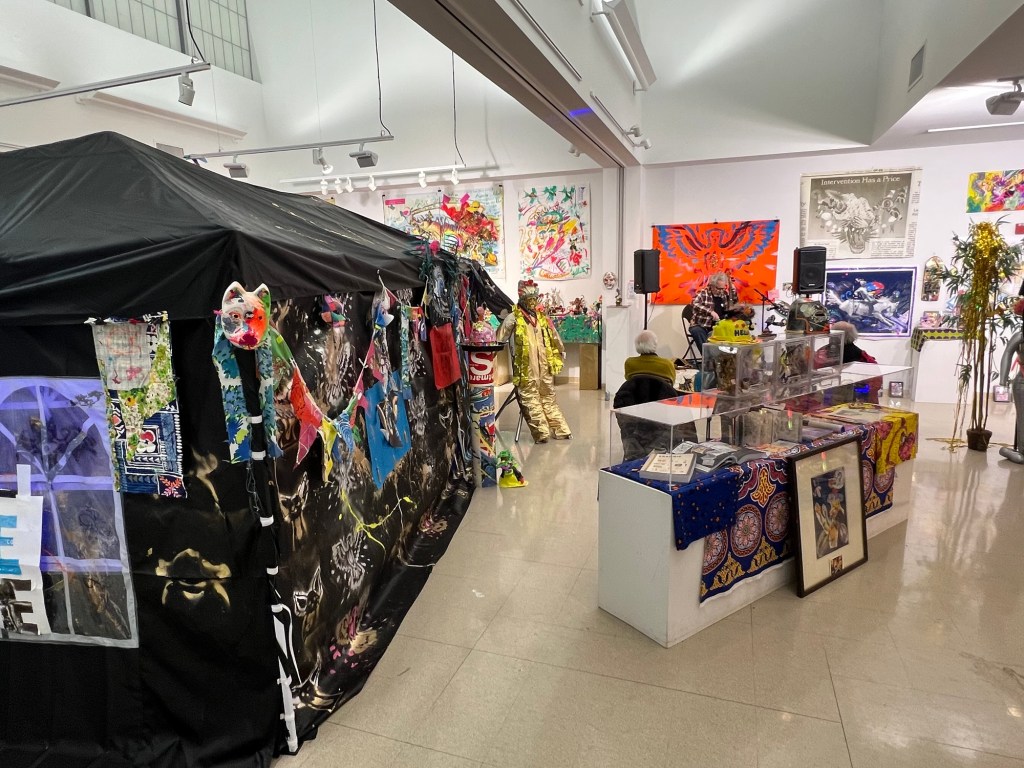
“OMG” will feature two tents inside the gallery to house “shrines” to lost keys, sketchbooks, projections, “wall books,” installations, looped motion graphics and videos. Some pieces include collaborations with Graham’s former and current Bergen students.
“My work meets at the intersection of many art forms: illustration, graphic design, advertising, animation, sculpture, collage, film and storytelling all feeding off each other as if all the animals in a zoo were released and were hanging out, partying,” Elliott said. “I think the process can be more interesting than the finished product.”
During his career, Elliott designed some of the first motion graphics for MTV, illustrated for publications such as The New York Times and collaborated with the Rolling Stones. He has worked for Saatchi and Saatchi, Nickelodeon and the School of Visual Arts in New York. He joined Bergen’s faculty in 2023.
The entrance to the Gallery for the opening of the Graham Elliott show
One of the interactive pieces in the front
The front tent filled with artwork
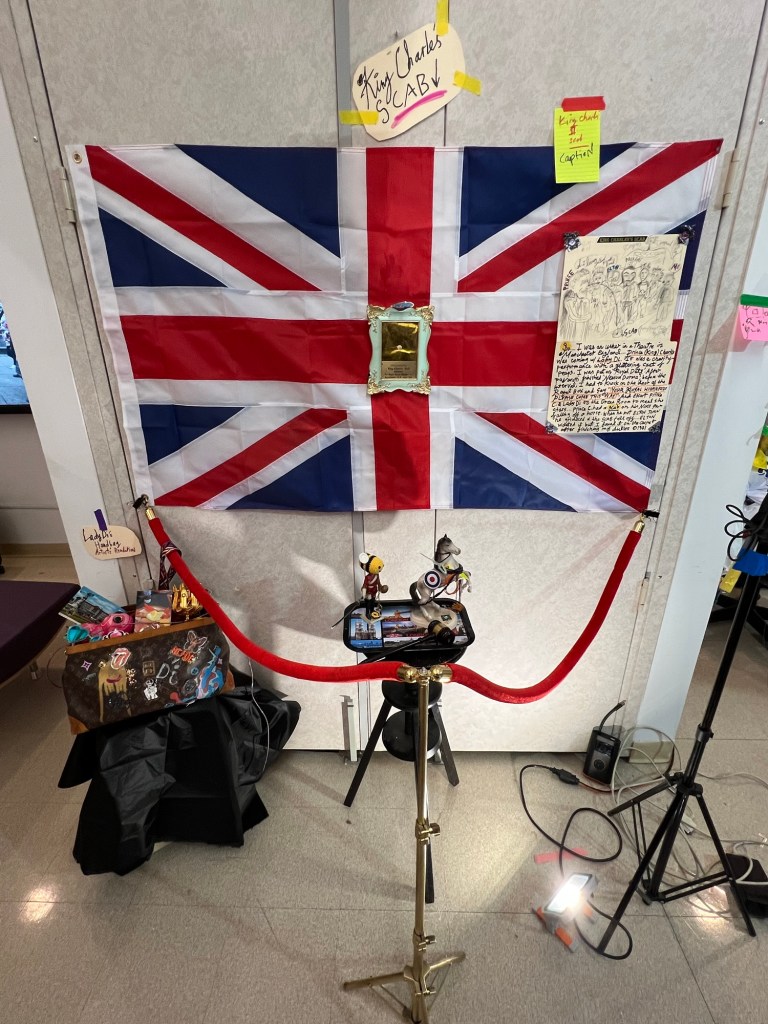
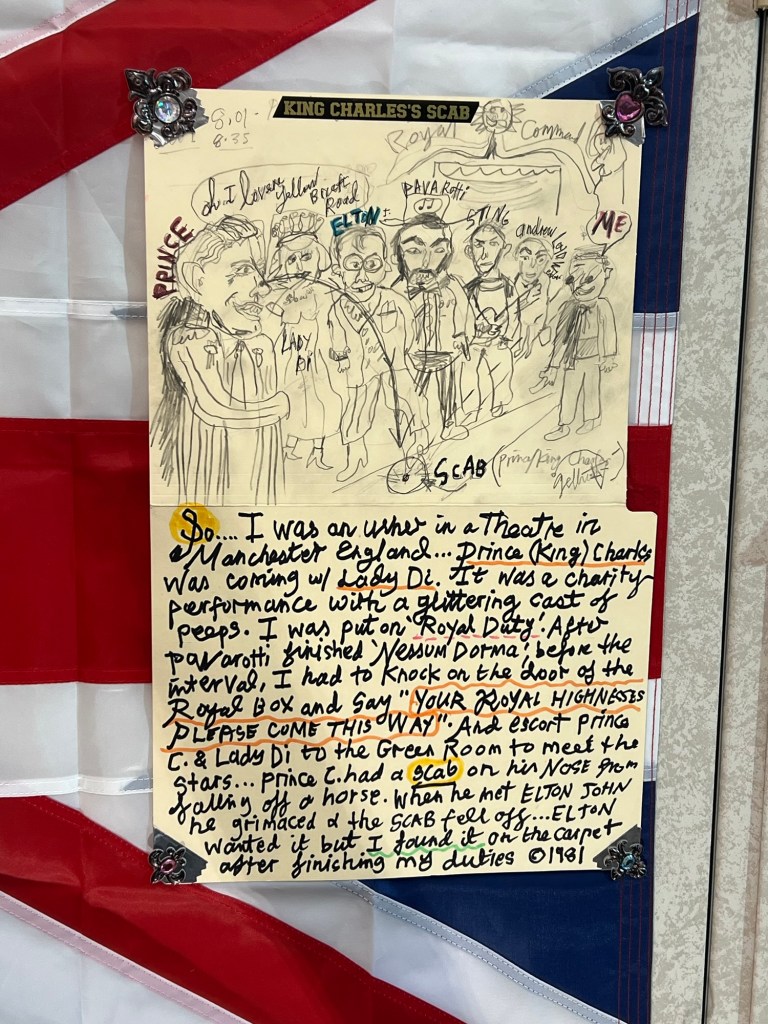
The center of the exhibit with the exhibition. One of the most interesting and odd pieces of art featured the scab of Prince Charles. I thought this was unique.
The Scab of King Charles
The write up as part of the exhibition
The figurines
The figurines
The paintings
The paintings
The paintings
The diagram
The sculptures
The musician Carla Auld played the flute that night
Carla Auld playing one of her favorite pieces
The Student Show in Spring 2025 “Material Reality”:
The Spring Semester ended with the undergraduate students at Bergen Community College in Paramus, NJ exhibition of their selections for the Annual Student show, “Material Reality”, which features their final projects for the period. Students were on hand that evening to explain their works and talk about what they hoped to achieve with their careers. It was followed by a reception in the students honor.
The sign for the Student Art Show “Material Reality”
The inside of Gallery Bergen on the night of the Opening of the show “Material Reality”
The inspired works of the show
Close up shot of the artwork
The video art of the show
The video art of the show
The contemporary student works
The contemporary works of the students
The sunflower themed works I thought were the most clever and original in the show.
The sunflower works of the Student show
The sunflower inspired works
My favorite work of the show
My other favorite work
The reception that followed was a lot of fun. Our Culinary Arts students created the menu of wraps, meatballs, noodle cups, pastries and fresh fruits. Trust me, nothing goes to waste here.
The Reception foods provided by the Culinary Department
The students did a nice job at the Spring 2026 Student Show!
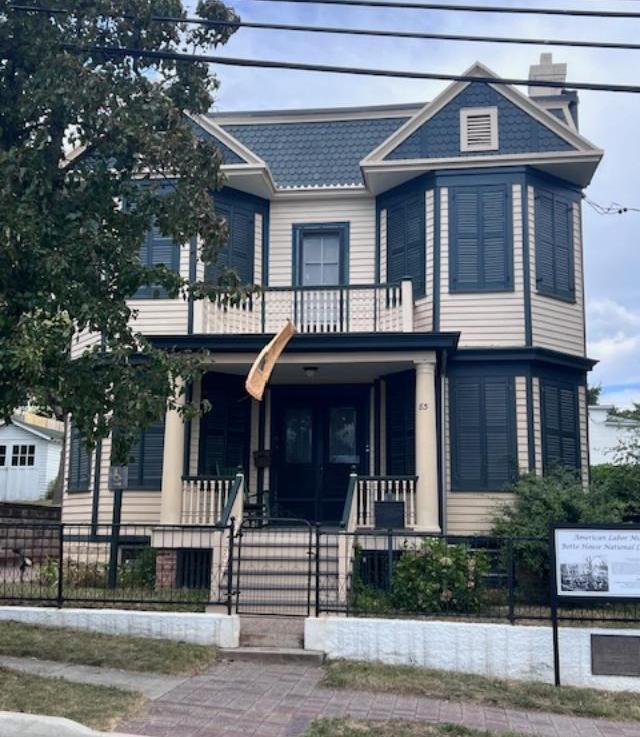
I recently visited The American Labor Museum/Botto House National Landmark for the afternoon and learned a lot about the American Labor Union formations and the rights we now take for granted.
A group of us took the tour of the Botto House and learned of its history and its place in the Paterson Silk Strikes of 1913. The first floor which serves as the meeting room has pictures of the Paterson Silk Strike which lasted just over five months and since the Mayor of Paterson at the time would not let the strikers meet, the Botto’s agreed to let the strikers meet at their home which at the time was in a isolated section of Haledon.
The history of the Silk Strike in Paterson
The Mayor of Haledon was sympathetic to the Union cause and let them meet in the town. Their house was situated in the middle of a field so that the strikers could gather around the home and listen to speakers.
The Botto House during the Paterson Silk Strikes
From their balcony, speakers could talk to the strikers and keep everyone abreast of the situation. Here people gathered and picnicked together and worked together to get their rights heard.
From the main display room, you will tour the home of Pietro and Maria Botto. First stop is the kitchen where Mrs. Botto ran her household. She made extra money selling food to the strikers and arranging meals for Mr. Botto’s co-workers. The family family did what it could to make money for the family.
Mrs. Botto’s kitchen
The sink area
Here she made meals for her family, did her jarring and preserving and the washing was done. Then a tour of the dining room, bedroom and the palour area where the family met and greeted people. The upstairs was formerly two apartments that were built to help ‘pay the bills’.
The Botto House Kitchen
The upstairs is now the display space where a display on the Dock Workers Union is currently being shown. We got to stand on the second floor balcony where so many speeches were made.
The backyard area
We took the back stairs to the backyard where the family had the grape arbor, root cellar where the preserves were kept and the boccie ball court. It seemed the family was very social at the time and self-sufficient.
The root cellar and Vineyard
Things turned bad for the family when both Mr. And Mrs. Botto both passed away two years after the strike. The strike could have taken its toll on the family or the fact that Mr. Botto could not find a job after the strike was over. No one knows.
It is an interesting tour of how one family opened their home to an important cause and it made a difference in the success of the strike and getting it resolved.
The history of the Botto’s:
The museum headquarters was the home of an immigrant family of industrial workers whose story is a fascinating one. In many ways, the telling of their saga is a doorway for museum visitors to step through and make connections with their own ethnic backgrounds.
The European Heritage:
Pietro and Maria Botto hailed from the region of Biella, Piedmonte, Italy. This area, at the foothills of the Alps, was a leading textile producer of linen and wool. The mountainous area was home to a fiercely independent people who, for centuries, wove cloth in their homes on looms which they owned.
The Industrial Revolution forced weavers to give upon cottage-based production to seek employment in large shops or mills. the displacement of workers by mechanized looms and weavers’ lack of economic independence caused people in Biella (as in other European textile areas where Paterson’s workforce originated) to embrace new ideas about worker rights and to be a vocal workforce wherever they roamed.
Pietro decided to leave Italy because he was made eligible for a second draft into the army at the recently united Kingdom of Italy (Italy had quadrupled its army at that time to strengthen unification and to acquire African colonies). A skilled weaver who also painted church interiors, Pietro brought his wife, Maria and daughter, Albina (born 1889) on the long voyage to America in 1892.
The Botto’s settled in crowded West Hoboken, New Jersey (today’s Union City), where they worked in silk mills for 15 years until they had saved enough money to afford a home for their growing family. The family now included three more daughters, Adelia (born 1894), Eva (born 1895) and Olga (born 1899). In 1908, the Botto’s moved to Haledon, a tiny community, growing up along the streetcar line from Paterson, where many other country folk from Biella had already settled.
The Botto’s home became a focal point for a dramatic slice of history in 1913 when the epic Paterson Silk Strike broke out. Pietro was on strike with 24,000 fellow silk workers when massive and constant arrests forced the workers to consider the independent borough of Haledon as a location for great outdoor rallies. Mayor William-Brueckmann guaranteed the safety of the workers and Pietro offered his home as a meeting place for the strikers.
The Botto’s courageous stand allowing their home to be so closely identified with the strike stemmed from a belief in the rights of the common man. During the strike, Pietro and his family played host to the social and labor leaders who were the idols of the working person at that time. After the strike, the family had to very circumspect about employment in the mills, with one of the daughters denying her family name to avoid blacklisting by an employer.
The large house and spacious hillside gardens are a tribute to the family’s combined labor. Pietro and his daughters worked 10-12 hour days, 5 1/2 days a week in the mills. The eldest daughter began mill work at age 11 and the youngest at age 13.
On Sundays, the usual day of rest, the girls helped their mother serve patrons of the resort aspect of the property. Maria ran a large household, feed boarders during the week and the scores of people on Sunday and did piecework from mills; she died in 1915 at the age of 45.
Pietro lived until 1945, a beloved father and grandfather to a growing clan.
History of the House and Land:
The house in Haledon, NJ
The total environment of the Botto House National Historic Landmark reflects the ethic origin of this family of silk workers from the Piedmonte (Biella) area of Italy and the development of housing in early streetcar suburbs. It is representative of the sensitive use of small landholdings in American urban areas by various European immigrant groups.
The Botto family purchased Block X, Lots 38, 39 and 40 in 1907 from Alexander King, a real estate speculator. King himself purchased a large parcel of land from the Cedar Cliff Land Company, a group of Paterson industrialist and business leaders who were quick to see the advantages of selling cheap land to workers in Haledon. The completion of a horse-drawn trolley line in 1872 allowed for expansion of residential and recreational areas outside of the City of Paterson, a major American industrial center.
The Botto House sign
(Information from American Labor Museum: Botto House National Landmark, a Brief History)
The Period Rooms:
The Front Hall
The front entrance hall light fixture is original to the house. One of the restoration tasks yet to be carried out is the replacement of embossed wallpaper on the walls which was made to look like the carved leather coverings in the homes of the rich.
The front hallway
The Kitchen:
The kitchen was a major center of activity in the household. The large coal and gas range dominates the room. It was used as a heating source as well as for cooking foods. A table provided the space for food preparation; a cupboard stored pots, pans and dishes; an icebox kept food items cold (the root cellar, located in the garden was also used for cold food storage) and a sink for dishes and a tub for laundry utilities indoor plumbing-certainly a recent innovation for working class households.
The kitchen
Even with the convenience of indoor plumbing and the gas range, the kitchen was the scene of virtual non-stop labor for Maria Botto and her daughters. In addition to meals prepared for the family, the Botto’s fed a noon meal to extra people during the week, there were workmen without families, who rented rooms and come from the mills for a hot dinner.
On Sundays, the Botto women prepared food for as many as 100 people who came to recreate on the property. This, of course, provided on additional income for the family.
The Botto family’s foodways reflected their home region of Biella, Piedmonte, Italy. Piedmontese cooked scorned tomato sauce, preferring wine and chicken broth to accompany such staple foods as polenta (corn meal), risotto (rice) and tortellini, a pasta. Generally, rosemary, sage, and other herbs were used in cooking and grown outside in the garden. The herbs also had medicinal uses.
The kitchen sinks
Some of the artifacts placed around the kitchen are the copper put used to cook polenta (purur), meat grinder, fish scale, orange juice squeezer, coffee grinder (from a German immigrant household), rug beater, mousetrap and wall calendars which were used by working people as decorations.
The Botto women were generally charged with kitchen duties. Maria Botto hired a German woman to do the wash. One special job was reserved for Pietro, stirring the polenta and cutting it with a string.
The Dining Room:
The dining room was another work area for the family. Here the family and the ‘boarders’ dined. Here Maria ‘picked’ silk on a frame, located in the corner of the room under the window, examining the bolts of broadsilk brought from the mill for imperfections.
The Dining room
This was another task to bring income to the household. Maria used the sewing machine to make clothes. The table reflects a setting for the family and ‘boarders’, placed with dishes, silver-plated utensils and a condiment set.
The Dining Room
The sideboard, table chairs and sewing machine are family pieces. The lighting fixtures in this room as in the rest of the house were powered by gas. As is typical in the area, paintings were hung by string from a picture rail as the walls were made of plaster.
The Sideboard
The small painting shows sheep, which provide the wool upon which textile manufacture was based, against the backdrop of the Alps. The large sketched portrait of Pietro Botto in later years was produced by his grandson and professional artist, Richard Botto. On the side of the room hang pictures of the Botto daughters in their wedding attire.
The Dishes in the sideboards
The Bedroom:
This room, which was actually the girls bedroom has been recreated to resemble where Maria and Pietro slept. The dresser is set with brushes, combs and mirrors that are from the period. The Botto’s slept in a brass bed.
The bedroom at the home
Swimsuits and other clothing hang in the wardrobe. A travelling trunk rests on the floor next to the wardrobe. Next to the window hangs a photograph of Mr. and Mrs. Guala of Biella, Italy. Next to the wardrobe hangs the elaborately framed photograph of Adalgiso Valle of Paterson, NJ, a jacquard card cutter.
The Bedroom
The Parlor:
The most formal room in the house, the parlor was used for guests, weddings and wakes. Dominating is the oak mantle with its columns and mirror top. It surrounds a fireplace where, in the winter, a gas heater was attached to a pipe behind the hearth. The clock had to be wound every day and chimes on the half-hour.
The parlor
The photographs on the shelf are Maria’s sisters in Italy (right) and the three eldest Botto daughters (left). Members of the Bocchio family of Biello, Italy are pictured in the photograph to the left of the mantle.
The Parlor and decorations
The furnishings in the house
Other Rooms:
The area making up the library on the first floor was a sitting room and bedroom for the family. The Botto daughters rented the two apartments upstairs when they first married and started their families and other non-family members served as renters through the years. The bathroom on the first floor is the approximate size of the original but today has modern fixtures and is not meant to be part of the restoration.
(From the American Labor Museum/Botto House National Landmark)
The Labor Day display of the Union history:
Labor display
Labor Display
History of Paterson:
The City of Paterson was founded in 1792 as America’s first planned industrial city. Alexander Hamilton, Elias Boudinot and other members of The Society for the Establishment of Useful Manufactures chose the Great Falls of the Passaic River as the ideal site for a manufacturing center. The Falls provided water power, while the river provided transportation upstream and down.
During the 19th Century, Paterson flourished. It became known as “Silk City” and “The City” with an Arm of Iron in a Sleeve of Silk for the silk mills and locomotive works that made their homes here. Immigrants flocked to the city at first from England, Switzerland. Germany and France and later from Southern and Eastern Europe. Many found jobs in the mills and a few took their place among the captions of industry.
(Mill Worker…Mill Owner-Botto House Museum)
The gift shops
Disclaimer: This information was taken directly from The American Labor Museum/Botto House National Landmark pamphlets. This museum is one of the few historical sites dealing with the Labor Unions in the United States and plays a huge role in workers rights today.
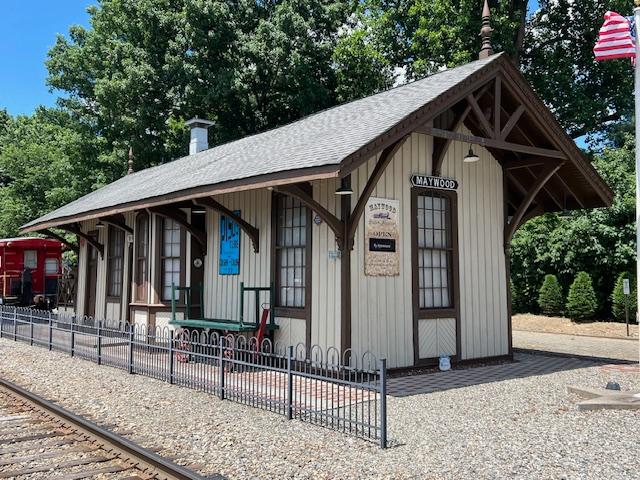
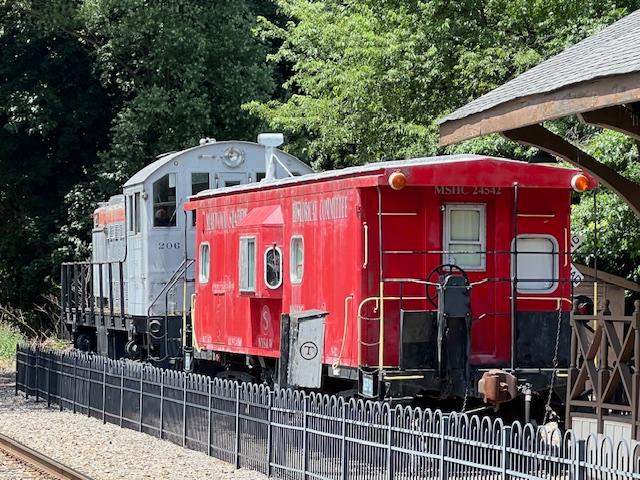
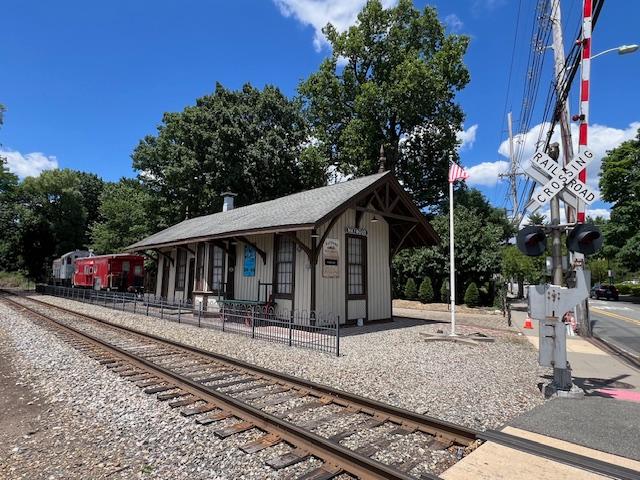
This National Registered restored 1872 New York, Susquehanna & Western railroad station, one of oldest in New Jersey, is located in the heart of Maywood, NJ. Restored by the Maywood Station Historical Committee and opened in September 25, 2004, it contains an extensive railroad museum and collection. The site also contains a restored caboose and engine.
The museum sign welcomes you
The side of the museum where materials are dropped off
I visited the Maywood Station Museum when it was open recently and found a fascinating collection of railroad memorabilia, Maywood fire department history and early maps of the town of Maywood. It is a treasure trove of articles for people who like to study railroad history especially its growth in small towns, early stages of industry in the town and in New Jersey.
The inside of the station museum
There is a lot of items that show the history of rail service not just on the train but in the station as well. There are antique desks, phones, ticket takers, mailboxes, benches and pictures all from the turn of the last two centuries.
The train ticket collection
The Maywood Station Historical Committee (MSHC) division of New York, Susquehanna & Western Technical & Historical Society operates the Maywood Station Museum and is chartered as a tax-exempt, 501(c)3 non-profit, educational and historical organization with a mission to preserve our railroad and cultural heritage through restoration and preservation, historical awareness, archiving and interpretation, museum open houses, meetings and special events (Maywood Station Museum Committee).
The train artifacts
The History of the Museum:
(From the Museum website)
The museum is operated and staffed by the volunteer membership of the Maywood Station Historical Committee. The main focus of the museum is concentrated on the history of Maywood Station and the New York, Susquehanna & Western Railroad and the roles they played in the development of the Borough of Maywood and the surrounding area. The museum collection contains hundreds of photographs, displays, documents, maps and artifacts covering the histories of Maywood Station, the NYS&W and local railroads, the Borough of Maywood and the local region, which are changed periodically and designed to entertain and educate visitors of all ages as well as offer a virtual timeline to these subjects.
The Museum and Railroad Car
Maywood Station Museum is also the official site of the New York, Susquehanna & Western Technical & Historical Society’s (www.nyswths.org) archive, which contains thousands of drawings, maps, track diagrams, photos, timetables, documents and records covering the history of the New York, Susquehanna & Western Railroad (Wiki).
Train documents and other artifacts
For those interested in historical buildings, meticulous care has been taken by the Maywood Station Historical Committee to show the museum in a historical context. The museum features the original woodwork painted and stained in the original colors and original Maywood Station furnishings have been restored and displayed such as the potbelly stove, station agent’s desk, chairs, telegraph keys and freight scale. Victorian-period original light fixtures and sconces adorn the ceilings and walls. Additional items have been painstakingly reproduced to the exact original specifications of over one hundred years ago including the station benches and bay window area (Wiki).
The Station Master’s desk
The Maywood Station Museum collection includes a former Penn Central/Conrail N-12 class caboose, which was restored by Maywood Station Historical Committee members. Visitors to the Maywood Station Museum are invited to come aboard Caboose 24542 and view additional displays and an operating model train layout. The Maywood Station Museum collection also includes original New York, Susquehanna & Western Railroad ALCO Type-S-2 Locomotive #206, which has also been restored by Maywood Station Historical Committee members (Wiki).
On September, 10, 2009, NYS&W S-2 #206 was placed on the State of New Jersey Register of Historical Places. The locomotive was placed onto the National Register of Historical Places on March 19, 2010 (Wiki).
The History of Maywood Station:
The Museum Logo
In 1871, the New Jersey Midland Railway, predecessor of today’s New York, Susquehanna & Western (NYS&W), began constructing a rail line between Newfoundland, NJ and Hackensack, NJ. The line was part of a plan to connect with the New York & Oswego Midland (later New York, Ontario & Western) in Middletown, NY and provide rail service from the Great Lakes to New York Harbor. The residents of what would later become Maywood, which at the time was part of an area called Midland Township, saw the advantages of the new railroad and requested a stop be made.
At the time, approximately 13 homes with nearly 90 residents were in the boundaries of today’s Maywood. Soon afterward, construction of Maywood Station began. On March 11, 1872, the New Jersey Midland commenced operating trains on the new line and Maywood Station formally opened in the same paint colors you see it restored to today. Six passenger trains a day in each direction initially stopped at Maywood. It should be noted that for a brief period after that station opened, the station sign said “West Hackensack” but this removed due to the requests of local residents who wanted the station named “Maywood”, as the immediate area surrounding the station had then become known (Maywood Station Museum).
A station agent was employed and it is believed that the first agent was name George Sipley. The station agent handled passenger baggage, freight shipments to and from the station, passenger ticketing and general functions in addition to performing the job of postmaster. In the 1872 to 1910 period, Maywood Station served as Maywood’s post office at various times when it wasn’t housed in a local merchant’s store. Another station agent/postmaster was Charles M. Berdan, who held this position in the late 1890’s into the early 1900’s. Mr. Berdan’s home was located directly across Maywood Avenue from the station and exists today. Maywood Station was also equipped with a telegraph so that the railroad could communicate between their stations and local residents could send messages around the world. The station also offered Wells Fargo and later, Railway Express Agency delivery services. These services lasted into the 1960’s (Maywood Station Museum).
The Railroad buckles
When Maywood Station was built, it originally located on the south side of the current tracks. In 1893, the station was moved to its present location on the north side of the tracks due to the addition of a second set of tracks being constructed and a purchase of additional land by the railroad. At the time, several additional NYS&W stations along the line were similarly moved for the same reason. When the station was moved, it was jacked up onto the rails, the rails greased, spun around and slide approximately 30 feet closer to Maywood Avenue, then jacked up again and moved to its present location. A new foundation was also added. It is interesting made at this time including the addition of a freight platform at the “new” rear of the station.
The Maywood, NJ Railroad Museum
The spot where Maywood Station was moved to originally included a passing siding where steam locomotives were stationed to be added, when necessary to help heavy freight trains on the several grades encountered heading west on the line. When the station was moved, the passing siding was cut back and one of the two switches was removed. The remaining trackage was then used to store freight cars, which were unloaded at the station. The siding started to the west of the station and ran 440 feet to near the rear freight platform of the station. The siding was last used in the early 1970’s and remnants of it can be seen today (Museum Station Museum).
The train sections on displays in the back of the museum
In 1894, the approximate 1.1. square mile area that included Maywood Station, formerly part of Midland Township was incorporated as the Borough of Maywood. Also that year, the NYS&W expanded into western New Jersey and through its Wilkes-Barre & Eastern Railroad subsidiary, into the coal fields in the Pocono region of northeastern Pennsylvania. The rail line could now take a passenger from a ferry at New York City to a connection at Jersey City, NJ to almost Scranton, PA on its own rails. The added ease of transportation began to attract manufacturing to Maywood as well as a demand for new homes. In 1894, the total residents living in Maywood numbered approximately 300 but this was about to change (Maywood Station Museum).
The rails next to the museum
New manufacturing and homes sprang up in the area surrounding the station and included such industry as Schaefer Alkaloids Company, Maywood Chemical Company and Maywood Art Tile Company. As these companies expanded so did Maywood’s population and by 1920 it numbered nearly 3000 (today Maywood has approximately 9,500 residents). The 1920’s also marked the height of passenger service provided by the NYS&W at Maywood Station. Thirteen passenger trains in each direction stopped at Maywood Station on a daily basis. Freight shipments continued to be delivered to the station and most of the local industry had their own rail sidings serving their plants. The NYS&W was enjoying a period of posterity and in 1920, a freight house addition was added to rear of Maywood Station and the exterior walls received a stucco finish over the existing boards and battens.
Station equipment
Stucco was in-vogue in the 1920’s and the NYS&W applied this material to several other stations on their line as well. In 1926, another round of various improvements were made at Maywood Station including the addition of interior men’s and women’s bathrooms, an 8-inch concrete floor installed to replace the wooden floor planking plus electrical and heating improvements. Unfortunately the Great Depression stuck in October 1929 and lasted well into the late 1930’s and the growth slowed dramatically. In 1937, the NYS&W declared bankruptcy and shortly thereafter was spun off from its parent, the Erie Railroad, which had controlled it since 1898. Around the same time, Maywood Station’s bay window was removed due its deteriorating condition (Maywood Station Museum).
The newly independence NYS&W fought hard to survive and cut back certain services but at the same time tried innovative concepts like streamlined, self-propelled, rail passenger cars as a way of cutting costs while boosting efficiency. The railroad also quickly retired its steam locomotives and replaced them with more efficient diesel locomotives stating in 1941 and completed the program in 1947. During World War II, the fortunes of the NYS&W did improve with the wartime demands placed on America’s railroads. As in World War I, many of Maywood’s servicemen departed through Maywood Station, some never to return. By 1953, the NYS&W was solvent once again but only for a few more years. Faced with mounting losses from the passenger services it offered and America’s love affair with the automobile and a new interstate highway system, the railroad once again embarked on a period of reducing their passenger train schedules.
The Station Master Desk
Losses continued and on June 30, 1966, the last passenger train called on Maywood Station as well as on the entire NYS&W, however the railroad continued to utilize the tracks at Maywood Station for their freight operations, which continues to prosper to this day. Shortly after the end of passenger service, the station was closed and was used by the NYS&W as maintenance base and for storage. Bill Spence served as Maywood Station’s last station agent. In the late 1970’s. Maywood’s Veterans of Foreign Wars (VFW) leased the station from the NYS&W to be used as a meeting hall. The VFW made a number of improvements including repainting the station, repairing cracked stucco, repairing the roof and maintaining the grounds. In the early 1990’s, the VFW moved out of the station and it remained unoccupied until June 2002, even thought the NYS&W attempted to lease it to another tenant during this period.
Faced with a pending order of demolition by the Borough of Maywood in early 2002 due to the deteriorating conditions of the station, a volunteer, 501C3 non-profit group named the Maywood Station Historical Committee Division of the New York, Susquehanna & Western Technical & Historical Society Inc. was formed on May 29, 2002 with a plan to restore the station and turn it into their museum.
The back of the museum
After several years of volunteer work to restore the station and create a museum, the group has successfully achieved their objectives and more, including placement of the station on both the National Register and State of New Jersey Register of Historic Places. The station now enjoys the notoriety as being one of the most impressive restoration projects and museum efforts to date in the State of New Jersey’s historical community (Maywood Station Museum).
Train lanterns
I want to the thank the Maywood Station Museum for this interesting information and please check out their website at http://www.maywoodstation.com.





















































































 Visiting a Museum: The Unique, Unusual, Obscure and Historical