Category: Dedicated to Warren Watrel

Easton Tower                                                        Red Mill Road Route 4 & Saddle River Road                           Paramus, NJ 07652

Easton Tower Red Mill Road Route 4 & Saddle River Road Paramus, NJ 07652

The Easton Tower

Red Mill Road

Route 4 & Saddle River Road

Paramus, NJ  07652

http://www.co.bergen.nj.us

http://bergencountyhistory.org/Pages/redmill.html

Open: Dawn to Dusk

Fee: Free

TripAdvisor Review:

https://www.tripadvisor.com/Attraction_Review-g46712-d12591227-Reviews-Easton_Tower-Paramus_New_Jersey.html?m=19905

The back of the Easton Tower

The historic marker on the back of the tower

I recently visited the Easton Tower on a beautiful sunny day and it really is a treat to see. It is located on the Saddle River Bike Path, so you can access it from the other side of the park and park on that side of the road for easy access. After seeing the tower, take a walk up and down the Saddle River Bike Path. It is really beautiful to follow the river on a nice day. It is really picturesque and a wonderful place to take pictures and enjoy nature.

The historic Red Mill Marker

This information is provided by the Bergen County Division of Cultural and Historic Affairs:

The Easton Tower is a unique historic site in Bergen County, NJ. This stone and wood frame structure was built along the Saddle River in 1900 as part of a private landscaped park in the Arcola area Paramus. Surrounded by busy NJ roadways, it is now adjacent to the County’s Saddle River Bikeway.
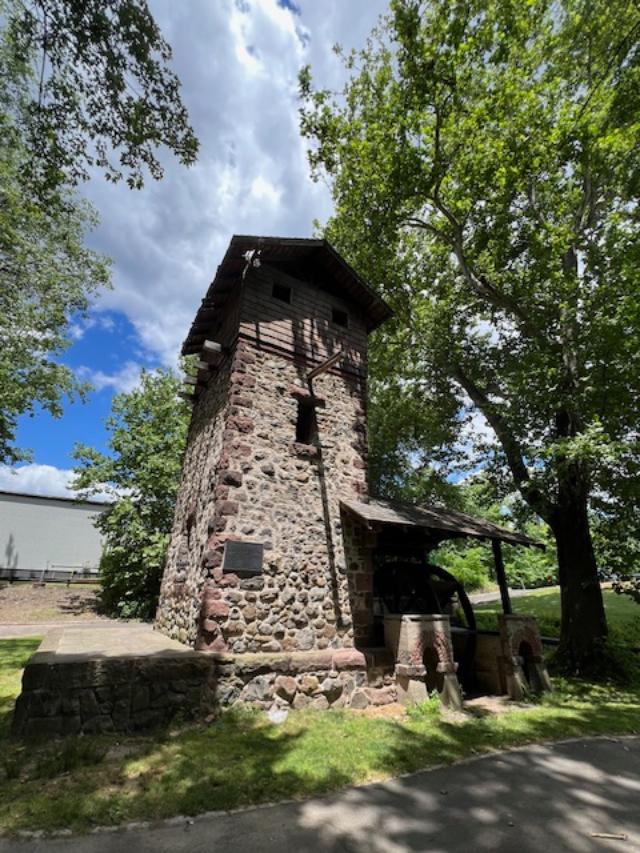
The front of the tower on the bike path

The tower sits near the Saddle River in the Saddle River Park

Once used to pump water to irrigate and provide a scenic setting for the estate of Edward Easton, it is a 20 foot rectangular, stone-masonry tower topped with a wood-frame structure and a wood-shingle, gabled roof. On the side is a large wood water wheel, which is under a wood-shingle roof.  The architect Henry Ihnen designed it.
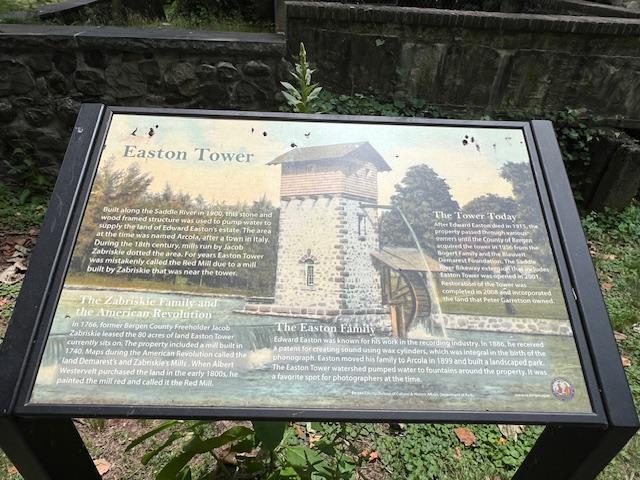
Easton Tower historical information sign

In the 18th century, this area along the Saddle River and near the heavily used Albany Post Road, was the location of many mills. Jacob Zabriskie, a Bergen County Freeholder during the Revolutionary War had leased the 80 acre mill site around 1766 and in 1771 acquired the mill that had been built in the 1740’s. Revolutionary maps identify it as “Demarest’s and Zabriskie’s Mills.”

The Easton Tower in Saddle River Park

Over time it was rebuilt or expanded and in the early 1800’s painted red by its owner Albert Westervelt. It is at this time it  acquired the “Red Mill” name often mistakenly applied to Easton Tower. By the 1800’s, the mill had fallen into disrepair and was demolished circa 1894.

The inside of the tower
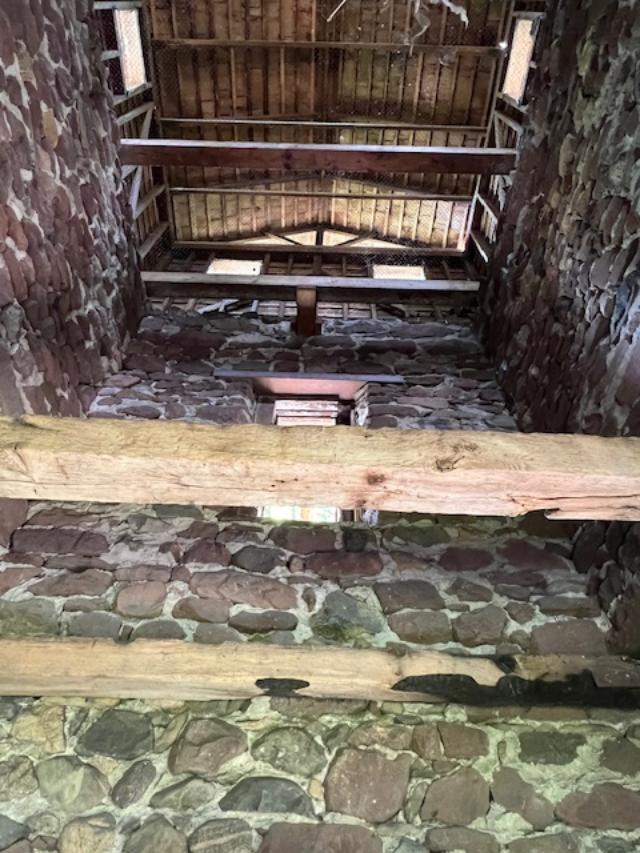
The Easton Tower inside

In 1899, Edward D. Easton (1856-1915), bought this almost 48 acre site, which included the mill pond and dam. The area was called “Arcola”. Easton’s father, a teacher, had originally brought his young  family to this area and suggested the name for the new settlement after a town in Italy. Edward Easton was a notable figure in American technological history. He started out as a stenographer, reporter and then a court stenographer In Washington DC, covering many famous trials in the 1880’s. After the 1886 patent was granted for the method of engraving sound by incising wax cylinders, Easton went on to make his fortune in the recording industry. He was a founder and eventually president of the Columbia Phonograph Company, which became one of the three major recording companies at the turn of the twentieth century.

The Easton Tower from the back

After opening an office in New York City, Eaton relocated his family from Washington DC to Arcola. He had a large house built on his property and commissioned the design of a landscaped park. The tower, to be built neat the site of the old Red Mill was a functioning structure pumping water to several fountains. There were also rustic bridges, lakes and expansive lawns. The tower was a favorite of photographers and appears in many contemporary postcards. People came from miles around to this beautiful spot to take boat rides and walks and in the winter, ice skate near the tower. Sources list the Easton home and park as having been used in early silent films.

After Easton’s death in 1915, the property went through various owners. In 1931,  construction of the Route 208 connection with Route 4 at “the Old Mill at Arcola” provided access to the recently opened George Washington Bridge. This destroyed sections of the landscaped park and isolated the tower. In 1940, the 1.26 acres site was sold at a sheriff’s sale to Clyde A. Bogert. The County acquired the tower from the Bogerts and the Blauvelt-Demarest Foundation in 1956. In 1967, the Bergen County Park Commission dedicated the tower. Easton Tower was placed on the State and National Register of Historic Places and in 2008 was completely restored by the County. It can be viewed from the Saddle River Bikeway and visited year round.

Disclaimer: This information is taken from the Bergen County Division of Cultural and Historic Affairs (C) 2015 pamphlet. The Bergen County Division of Cultural & Historic Affairs received an operating support grant from the New Jersey Historical Commission, a division of the Department of State.

Special Note: I visited the site recently and it is hard to get to by car. It is located right off Saddle River Road and it is off on a odd bend in the road. It is a quick turn to the right so pay attention to the directions.

 

The Bergen County Zoo in Van Saun Park          216 Forest Avenue                                       Paramus, New Jersey 07652

The Bergen County Zoo in Van Saun Park 216 Forest Avenue Paramus, New Jersey 07652

The Bergen County Zoo in Van Saun Park

216 Forest Avenue

Paramus, NJ  07652

(201) 634-3100

http://www.co.bergen.nj.us/bc.parks/

Open: Sunday-Saturday-10:00am-4:30pm/Please check the website during the off seasons

Fee: Bergen County Resident: $4.00 Adults/$2.00 Child/$1.00 Seniors/Child under 3 Free/Non-Bergen County Resident $8.00 Adult/$5.00 Child/$2.00 Seniors-Disabled/Children under 3 and Active Military free

TripAdvisor Review:

https://www.tripadvisor.com/Attraction_Review-g46712-d652710-Reviews-Bergen_County_Zoological_Park-Paramus_New_Jersey.html?m=19905

The entrance sign to the zoo

I went to the Bergen County Zoo for the first time in eight years and I have to say it has not changed much since I was a little kid. There have been some improvements and displays that look different but the feel of the zoo is very much the same as it was when I was eight and visiting with my cousins who lived in the area.

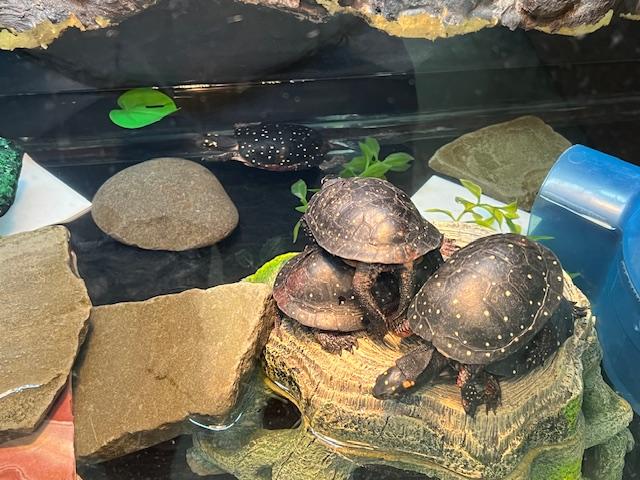
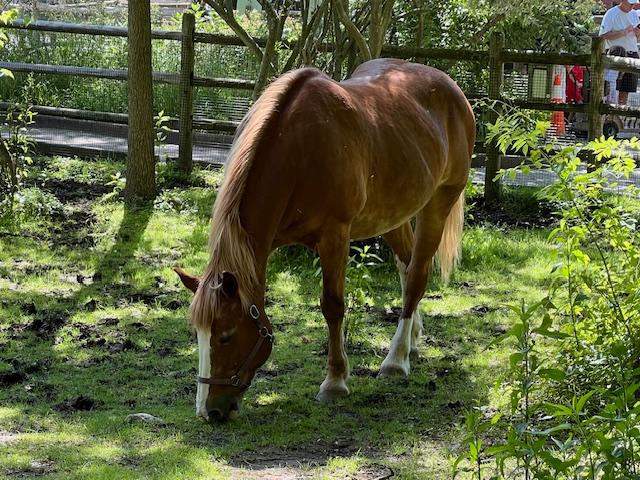
Still I like the appeal of the this zoo. It has a very family friendly feel about it. They still have the same entrance, gift shop and train service around the zoo. The Discovery Center has reptiles, snakes, turtles and lizards as it did before and the barnyard exhibition is still interesting. The cows, horses and goats still look at you with an inquisitive look, like they were jaded by looking at humans.

It is a great place to spend the afternoon with small children and teenagers who are interested in animals. They have also added food trucks to the entrance of the zoo for more food selections.

The Zoo History and Happenings (2022):

The Bergen County Zoo has been enjoyed by thousands of people over the years and has many fans. Every season, hundreds of families walk through the doors of the zoo to enjoy the afternoon out, visit the animals and ride the train around the park. What started as a duck pond and reserve in Van Saun Park in the 1960’s has morphed over time to the current zoo.

The entrance to the Bergen County Zoo

The 1980’s saw a tremendous change in the animal collection. The first birth of an endangered species in our zoo’s history occurred in 1982 with the birth of a Brown Lemur. Numerous species, many endangered were added including Ocelots, Red Brocket Deer, Mountain Lions and Snowy Owls among others. Births of Ocelots, Brocket Deer and Spider Monkeys occurred throughout the second half of the 80’s .

Bergen County Zoo II

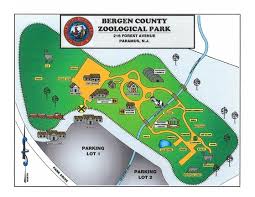
The Zoo Map

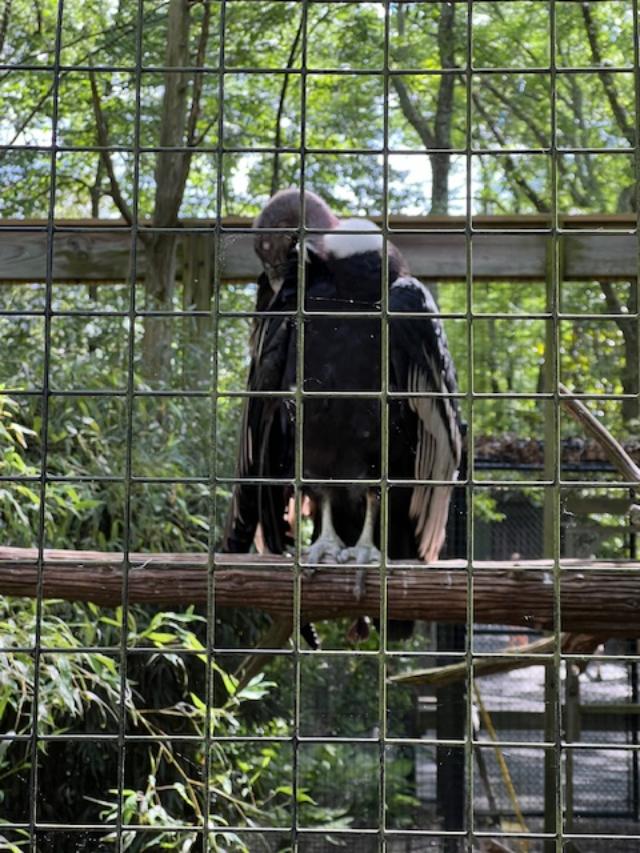
As the zoo moved through the 1990’s,  many changes continued to occur. The zoo’s commitment to wildlife conservation strengthened  and more endangered species were added to the collection including Andean Condors, Golden Lion Tamarins, Goeldi’s Monkeys and Galapagos Tortoises.

Andean Condors exhibit

The Golden Lion Tamarin.

Goeldi’s Monkey Exhibit

The Galapagos Turtles

Additional areas were renovated, providing exciting opportunities for our visitors to view and learn about many new species. Major projects completed in the 1990’s area as follows:

Projects:

Mountain Lion Exhibit (completed 4/90)

North American Plains Exhibit (completed 10/92)

Master Plan (completed 06/93)

Bergen Dutch Farmyard (completed 10/94)

South American Exhibit Areas (completed 10/96)

Zoo Entry Complex (completed 08/99)

Efforts to secure alternative funding sources became fruitful in the 1990’s with over $200,000 in federal grants received. In addition, local businesses and corporations increased their support of various zoo activities through cash and in-kind contributions.

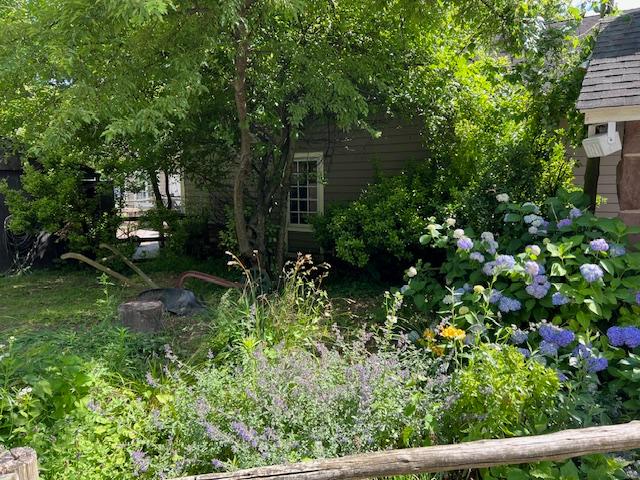
The Zoo gardens at the entrance.

Additionally a new entry complex was developed including new ticketing facilities, a new train station, gift shop and entry plaza. New and exciting special events were also developed including Holiday Lights and Zoo Boo, the most heavily attended event in zoo history. Educational programming was significantly re-developed, providing opportunities for our area residents to explore the zoo and learn about wildlife in new and innovative ways.

The Zoo Keepers Office in the front of the Zoo.

Another significant milestone for the zoo was the development of a comprehensive master plan. This planning tool was created to identify the future needs of the zoo and its visitors as well as provide an organized and orderly schedule of development.

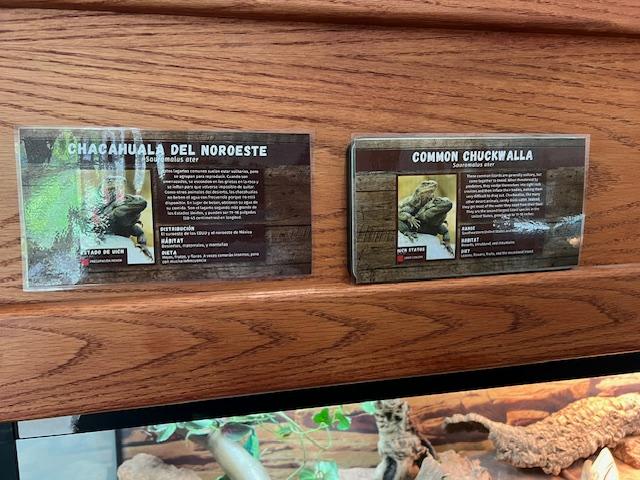
The Discovery Zone with the reptile exhibits

The Lizard Case

The Turtle case

As the 21st Century began, zoo development continued to advance. Several major projects were undertaken including a new state-of-art Animal Care Center, an Outdoor Demonstration Area for public programming and an Education/Discovery Center. All of these projects enhance the experience of our visitors, while furthering the zoo’s mission of wildlife conservation and public education.

The Waterfall at the Zoo

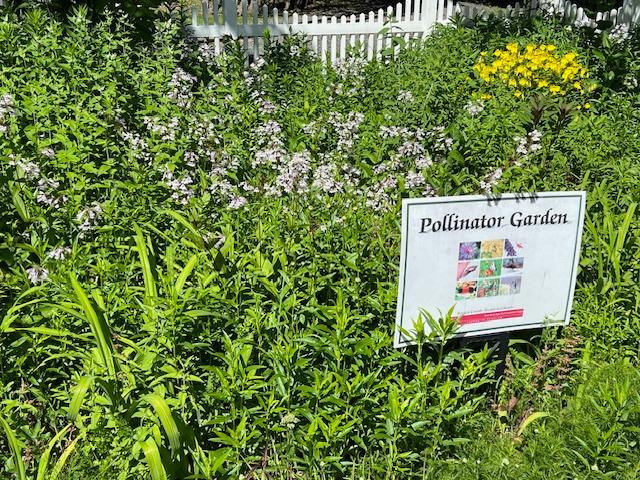
The Pollinator Garden

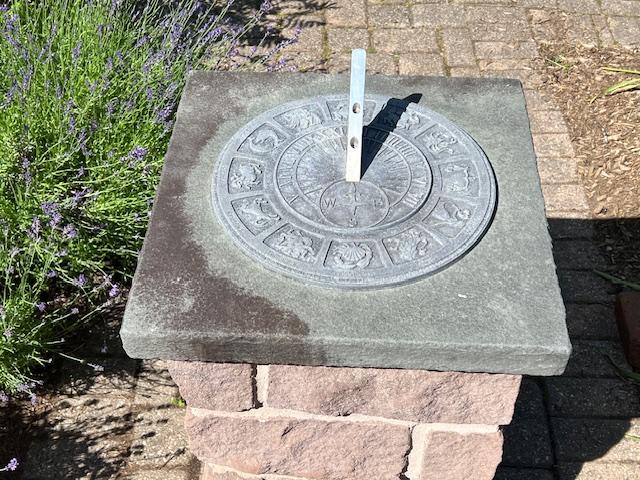
The Sundial in the Garden

Additionally, the zoo took a major step in support of conservation by establishing an annual field conservation grant program. The program provides financial support to researchers conducting field work in North and South America. Also, the zoo’s original master plan was formally revisited and determined to be no longer effective. As a result, a new plan was developed to assist the zoo in its development strategies over the next 20 years.

The Ostrid Habitat

In 2007, we moved forward with a Coati exhibition replicating an abandoned adobe. To address the needs of our keepers, we built a holding facility in 2008 for our alligators at their exhibit, therefore eliminating annual roundup of alligators. With the decline in the economy, the zoo has directly been affected. Funds for construction of new exhibits have been put on hold and fixing existing structures is taking priority. A new Neotropical songbird exhibit opened in 2009, adding new birds to our collection.

Birds at play

A larger guanaco exhibit was built at the far end of the zoo utilizing empty pasture space in 2010. In 2011, we had some dramatic effects caused by severe weather and significant personal changes, including the resignation of our zoo director of over 30 years, a change in the board of the Friends of the Bergen County Zoo Inc. and a new director of parks. So we start another chapter in our history.

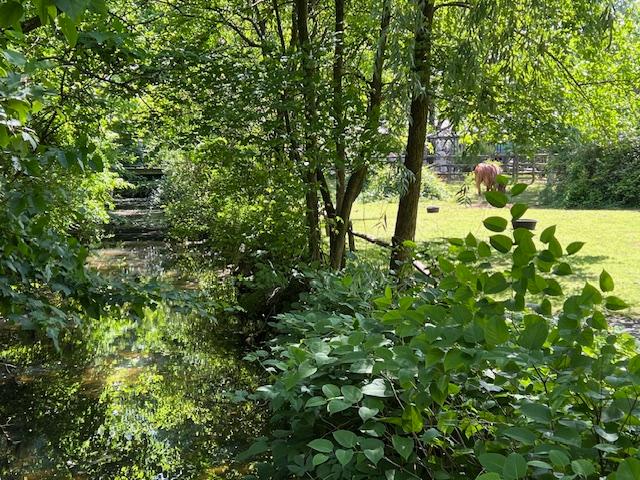
Horse Pasture and stream in the zoo

The horse grazing in the pasture

In the last five years, the zoo has had many changes. New Tamarin exhibit was constructed in 2013, two buildings constructed to replace the single outdated structure. Replacement of one of our bridges in the zoo, a wood bridge was replaced with a wider concrete bridge with decorative railings and new light posts.

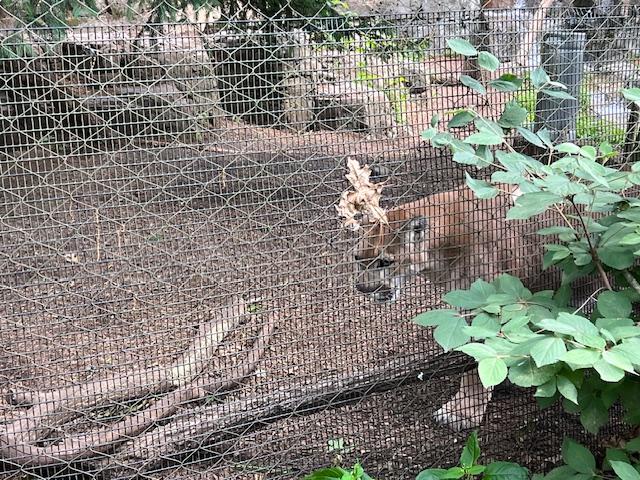
The Mountain Lion exhibition

The removal of our seasonal outdoor exhibit support structure in 2015 so we can prepare for an interactive barn which will be open all year round by the end of 2017. In 2015,  one of the best features we added was the new overflow parking lot. This lot will vastly improve our visitors parking experience as it replaces our old overflow parking,  which was a muddy field with many walking hazards.

The Barn and the Barnyard exhibition

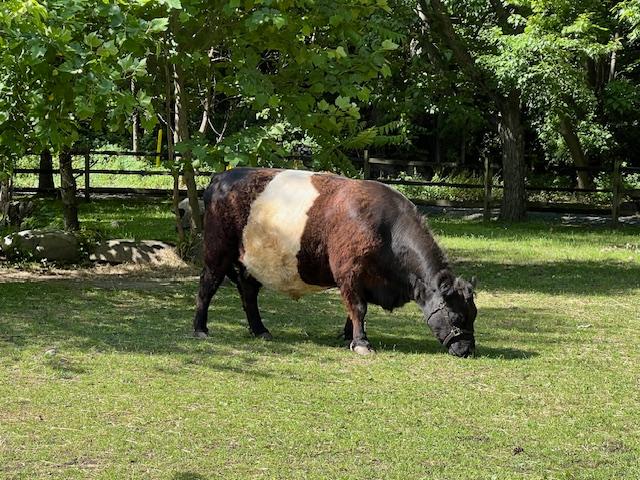
Farm cow gazing

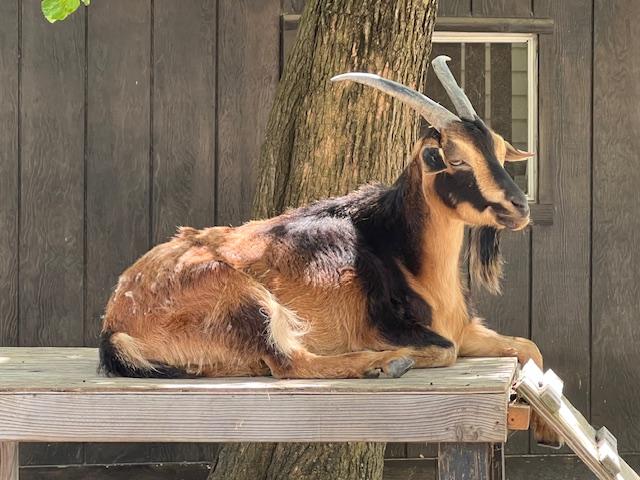
One of the goats relaxing by the barn

Also, 2015 was milestone year marking 25 years as an Accredited Institution of the AZA, for a small zoo this is truly an accomplishment. In light of this, in 2016 a new Master Plan was developed with Jones & Jones and new county administration so we have a new direction for future projects.

The Elk and Bison Exhibit

This plan includes the construction of a new prairie dog exhibit and bison & elk viewing area (to open in the spring of 2017). This will provide more opportunities for schools and our education department to conduct classes related to our exhibits of eagles, prairie dogs and the bison & elk.

The Prairie Dog exhibit in 2024

(This annotated history of the Bergen County Zoo was provided by the staff of the zoo).

The Bergen County Zoo is an accredited member of The Association of Zoos and Aquariums.

Beginning with November 1st, the Bergen County Zoo will be free of admission. The weather during the late fall and winter months does not allow for the majority of the animal collection to be view able to the public (see the above Animal Collection link for further details). Admission to the zoo will resume in May of 2017-forms of payment are cash and credit only. The admission fee schedule is listed below. Please note that in order to receive BC Resident rates, proof of residency is required at the admission ticket window.

Mountain Lion den

Amphitheater:

In July and August, live animal shows are held daily in our outdoor amphitheater, which is located behind the Tamarin Exhibit. Shows are free with zoo admission and seating is first-come, first-served. Daily shows with time frames can be seen as you enter the zoo.

Train/Carousel:

Cost: $1.50 (cash only)

The train and carousel operate from mid-April to mid-November (approximately). Hours are typically from 10:00am-5:00pm unless otherwise specified (weather permitted) with the last ticket being sold at 4:30pm and the last ride at 4:45pm.

The lines of people waiting for the next train ride

Schedule for the train and the carousel, for the week of June 11th-June 17th are as follows:

Train: Sunday, Monday, Tuesday, Wednesday, Thursday, Friday and Saturday

Carousel: Sunday, Tuesday (opens at 1:00pm), Wednesday, Thursday, Friday and Saturday.

Pony Rides:

The Pony Ride concession operates from April through October. Currently, the vendor is Ironside Farms, they can be reached at (201) 835-0932.

The Sundial and Gardens

Disclaimer: this information was directly from the Bergen County Parks Site and can change at any time. Please call the zoo for more information.

The Bergen County Court House                           10 Main Street                                        Hackensack, New Jersey 07601

The Bergen County Court House 10 Main Street Hackensack, New Jersey 07601

The Bergen County Court House: Hackensack, New Jersey

10 Main Street

Hackensack, NJ 07601

(201) 221-0700

https://www.co.bergen.nj.us/component/rseventspro/location/16-bergen-county-courthouse

Open: Monday-Friday-8:30am-4:30pm

*Call about touring the facility when court is in session.

The Historic Courthouse at 10 Court Street in Hackensack, NJ.

The Bergen County Justice Complex (including the Bergen County Court House) was placed on the New Jersey and National Registers of Historic placed on November 22, 1982 and January 11, 1983 respectively. The Register nomination referred to the building’s significance as “important to the judicial of the Bergen County Justice Complex-the Court House, the Jail (now called the ‘Old Jail’), and the Administration Building-were the work of important architects and all possessed architectural quality and interesting examples of early 20th century technology.

The Historic marker

Designed by James Riely Gordon, in the Beaux Art style reflecting monuments of classical Rome and Italian Renaissance, the Court House incorporated rich materials including marble and bronze. With a dome modeled on the U.S. Capital, it incorporated other art forms including painting, sculpture and stained glass. The exterior contains many sculptures including the female statue of “Enlightenment Giving Power” on the dome’s cupola. The dome’s interior is decorated with Tiffany stained glass panels. Three of the courtrooms have elaborate stained glass skylights fabricated by the famous Lamb Studios. Some of the courtrooms also contain large murals painted in the 1930’s by artists working for the Federal Art Project of the Works Project Administration.

The Hackensack Green, Courthouse and Dutch Reformed Church and Cemetery.

The other side of The Green from the Courthouse.

The symbolic value of the Court House was recognized when it was built in 1910-1912. A local newspaper, The Hackensack Republican, wrote on July 7, 1910 that the courts “stand for the protection of rights, for the redressing of wrongs and for the punishment of crime. There are the great safeguards of the freedom of the people…Hence we build these courthouses as temples of justice-substantial, ornate and commodious as the appropriate form for the great duties which are here to exercised”.

Bergen County Court House 1715-1912 with the historic cemetery in the distance.

First Court House 1715: The Court House was combined jail and courthouse built on the site of three blocks south of the present County Administration  Building. It was located in an area known as Quacksack, later becoming part of the southern portion of Hackensack. It was built of stone laid up by two of the freeholders, John Stagg and Ryer Ryerson.

Second Court House 1734: This Court House, built on “land near the Dutch Church by Hackensack River.” was probably on or adjacent to the Green in Hackensack and closer to the river than the site of the current courthouse. It burned in 1780 during the Revolutionary War in the British raid of Hackensack.

Third Court House 1780: The 1780 Court House was something of a temporary structure built during the Revolutionary War away from Hackensack. It was a log building with the courthouse and jail housed under one roof, erected at “The Ponds” (Present day Oakland) in northwest Bergen County.

Fourth Court House 1786: The fourth Court House was built on a site “about 100 feet east of Main Street,” Hackensack where present day Bridge Street connects with Main Street (southern side of Bridge Street) fronting on the river. It was built on land bought from Peter Zabriskie, who lived in the magnificent Mansion House which faced the Green.

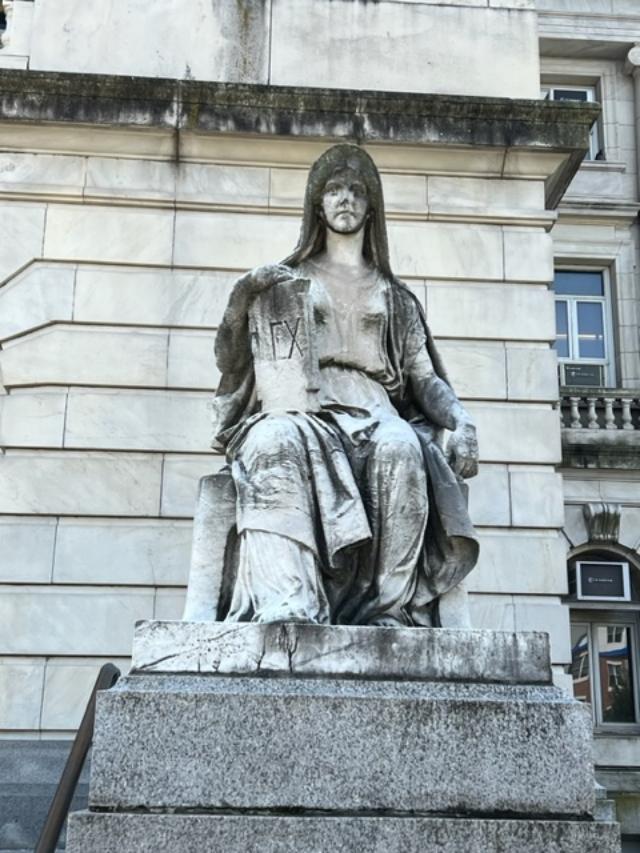
The unique statues that flank the front of the courthouse.

Fifth Court House 1819: The Fifth Court House was a brick structure built on the site of the present courthouse on land deeded to the county by Robert Campbell, a prominent Hackensack attorney and son of Archibald Campbell, whose tavern on the west side of Main Street faced the Green. Campbell specified that the land was deeded for the use of the county. If used for any other purpose, it was to revert to Campbell’s heirs. It was torn down in January 1912 when the present courthouse building had been completed on the side behind it and to its west.

The other statue that flanks the Green.

Sixth Court House 1912: The present Court House was designed by James Riely Gordon (1863-1937), a prominent architect responsible for the design of about 70 courthouses and two state capitals. The cornerstone was laid July 6, 1910 and was built by John T. Brady & Company of New York. Completed in February 1912 at the cost of $1,617,000, it was the subject of considerable investigation and lawsuits due to charges that there was over-payment of funds as well as added costs, which became the basis for political battles.

For Justice Center information: contact http://www.judiciary.state.nj.us/bergen/

http://www.co.bergen.nj.us

2015 Bergen County Division of Cultural and Historic Affairs

The Bergen County Division of Cultural & Historic Affairs received an operating support grant from the New Jersey Historical Commission, a division of the Department of State.

*Disclaimer: This information was taken directly from the Bergen County Division of Cultural & Historical Affairs pamphlet. Please refer to the website for tours and other information on visiting the site as it is a working courthouse. Please check the website and email or call before you visit.

The Washington Spring Van Saun Park                                        A Bergen County Historic Site                                                           216 Forest Avenue                                      Paramus, NJ 07652

The Washington Spring Van Saun Park A Bergen County Historic Site 216 Forest Avenue Paramus, NJ 07652

The Washington Spring: A Bergen County, NJ Historic Site

Van Saun County Park

216 Forest Avenue

Paramus/River Edge, NJ 07652

https://www.co.bergen.nj.us/parks-recreation-areas/washington-spring

Open: Please check the website for the seasonality of the park

*Located in Van Saun Park at the entrance.

My review on TripAdvisor:

 The historic marker of the Washington Spring

The Washington Spring, a 1/2 area within Van Saun County Park, is associated with General George Washington and the movement of his Continental Army through this area of Bergen County during the Revolutionary War.

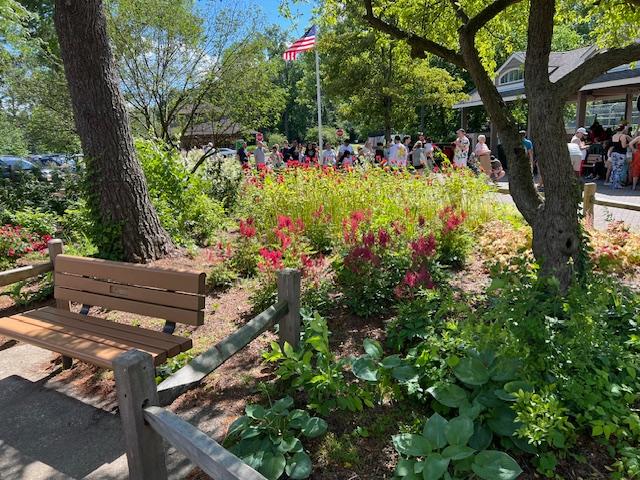
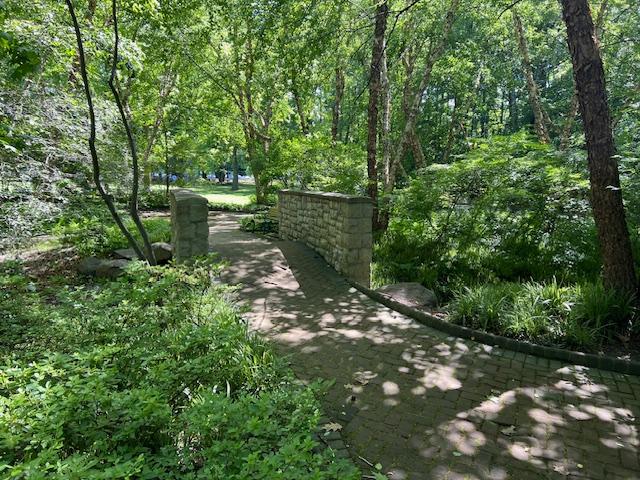
The small section of Van Saun County Park is one of the more quieter places to visit and one of its most historical. The pathways work their way around the springs and the plantings and flowers are especially nice in the early to late Spring months. It really is a beautiful walk.

The entrance to the Washington Spring

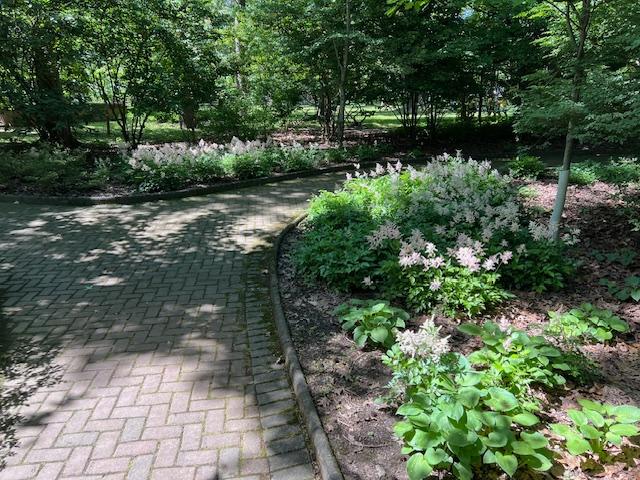
The pathways in bloom

History of the Washington Spring:

The hollow between hills known as “Slukup” until it was changed to the more pleasant-sounding “Spring Valley” in 1832. In the Dutch Frisan language “slukup” described a boggy area. The local Banta family was from Friesland in northern Holland and one of the area’s earliest settlers. Natural springs feed the streams in this area that flow through Van Saun  Pond and eventually into the Hackensack River. The park’s land was part of 300 acres owned by Albert Zabriskie in 1686. In 1695, he sold 224 acres to Jacob Van Saun of New York City.

The spring running through the garden area.

The road to Slukup, now Howland Avenue, served as the border between Jacob Van Saun’s farm to the south and son-in-law Christian Dederer’s farm to the north. Hendrick C. Banta, who owned a cider mill in the Steenrapie area (River Edge), lived west of the Mill Creek that flows through the park.

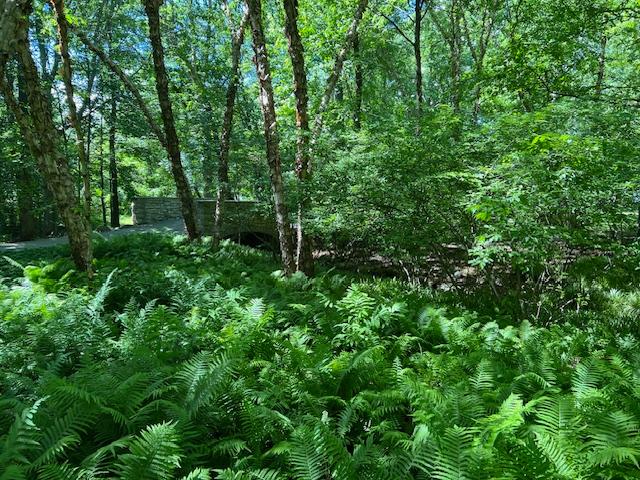
Ferns along the pathways

On September 4, 1780, General Washington moved the troops of the Continental army, numbering approximately 14,000 into a strategic encampment west of the Hackensack River between New Bridge in the south and Kinderkamack to the north in Steenrapie. They were part of the defense to challenge the British military stronghold on Manhattan and prevent any intervention with the landing of allied French troops in Rhode Island. Hendrick Banta reportedly sold a barrel of cider to these troops “every other day”. His 10 year old son, Cornelius, reportedly saw General Washington on his horse three times. During one of these sightings the General was watering his horse at the spring, giving rise to the name “Washington Spring”.

The Washington Spring pathways

On September 17th, General Washington, General Knox and the Marquis de Lafayette, who was headquartered at the northern end of the encampment in the area known as “Soldier Hill” in Oradell, left for Hartford, Connecticut to meet the recently arrived French commanding officers. The rest of the Continental Army decamped on September 20th.

Sitting area and monument in the Washington Springs

The Bergen County Park Commission was created in November 1946 and in 1987 because the Division of Parks. Recreation and Cultural Affairs. Van Saun Park, whose 140 acres include Washington Spring, was created in 1957. Also, within the park is the Bergen Zoological Park, that opened in 1960. Open year round during park hours and is surrounded by accessible pathways.

Spring time in the Washington Springs

Explore the Pathways into the Springs

http://www.co.bergen.nj.us

The spring running through the woods

The Spring area, which is right off the parking lot leading to the zoo, is beautifully landscaped with benches, pathways and flowering plants like azaleas, rhododendrons and flowering trees. In the early spring, the look around the Spring is quite colorful and picturesque. It is a nice way to spend the afternoon, walking quietly around the paths and see where the General once watered his horse. The entrance of the Spring is under plants but becomes a stream further down. Another part of the great history of Revolutionary War and the part New Jersey played in winning the war.

The spring running through the woods

*Disclaimer: this information is taken directly from the Bergen County Division of Cultural & Historic Affairs pamphlet. The Spring is part of Van Saun Park as you drive in and watch for the signs. It really is a beautifully landscaped part of the park and its historical influence in the war should not be missed. (2015 Bergen County division of Cultural and Historic Affairs.  The Bergen County Division of Cultural & Historic Affairs received an operating grant from the New Jersey Historical Commission, a division of the Department of State.
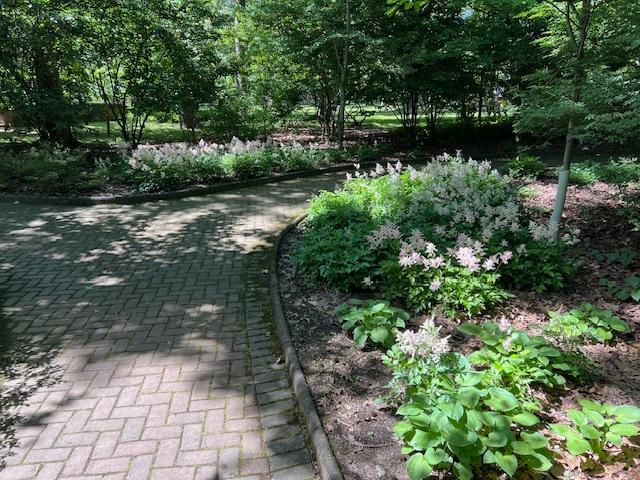
There is a real beauty and quietness to the Washington Spring.