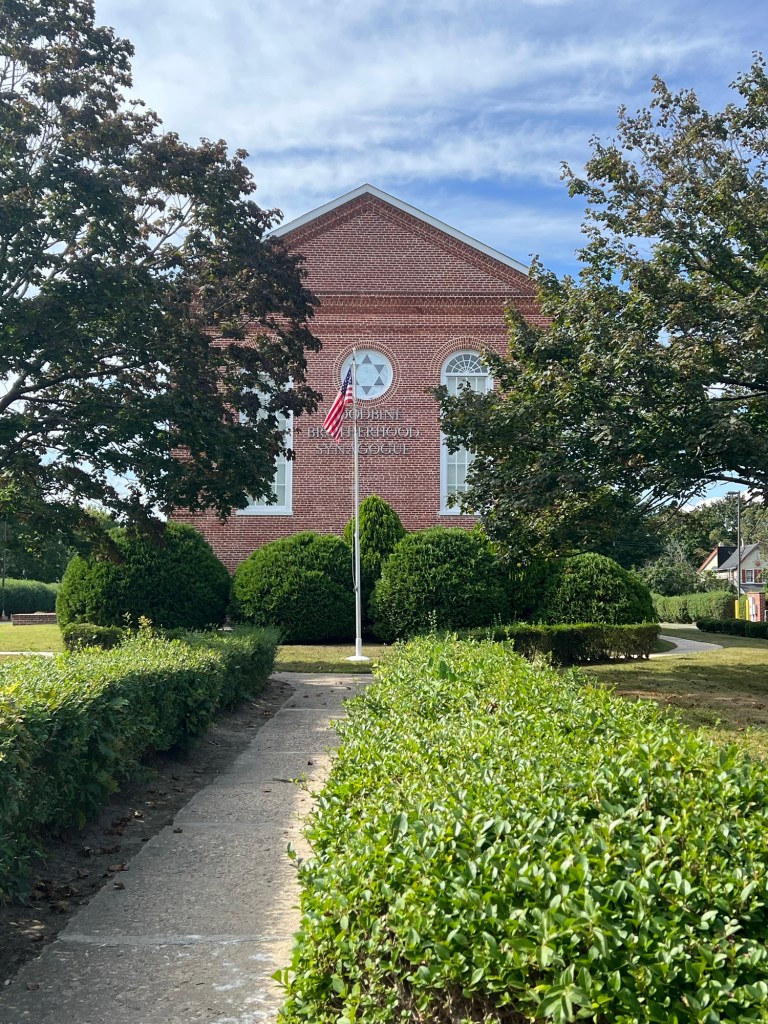
The front of the Sam Azeez Museum of Woodbine Heritage
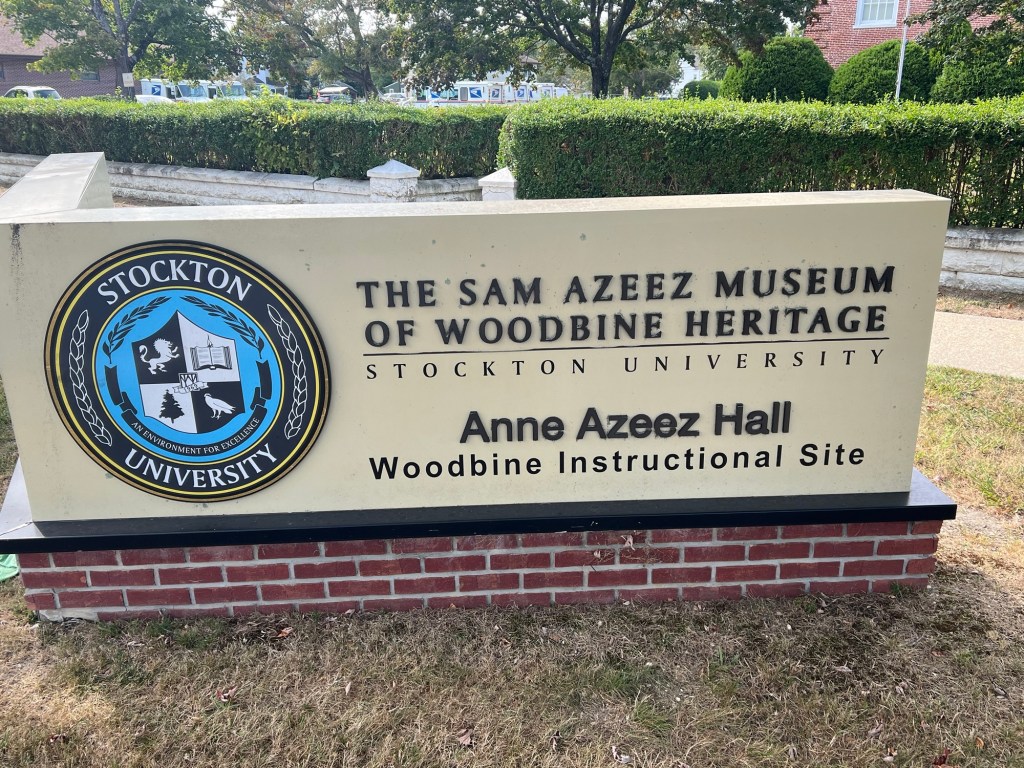
The entrance sign that welcomes you
The History of the Sam Azzez Woodbine Museum:
(from the museum’s website):
The Sam Azeez Museum of Woodbine Heritage is an independent non-profit charitable organization preserving the unique history of Woodbine, NJ.
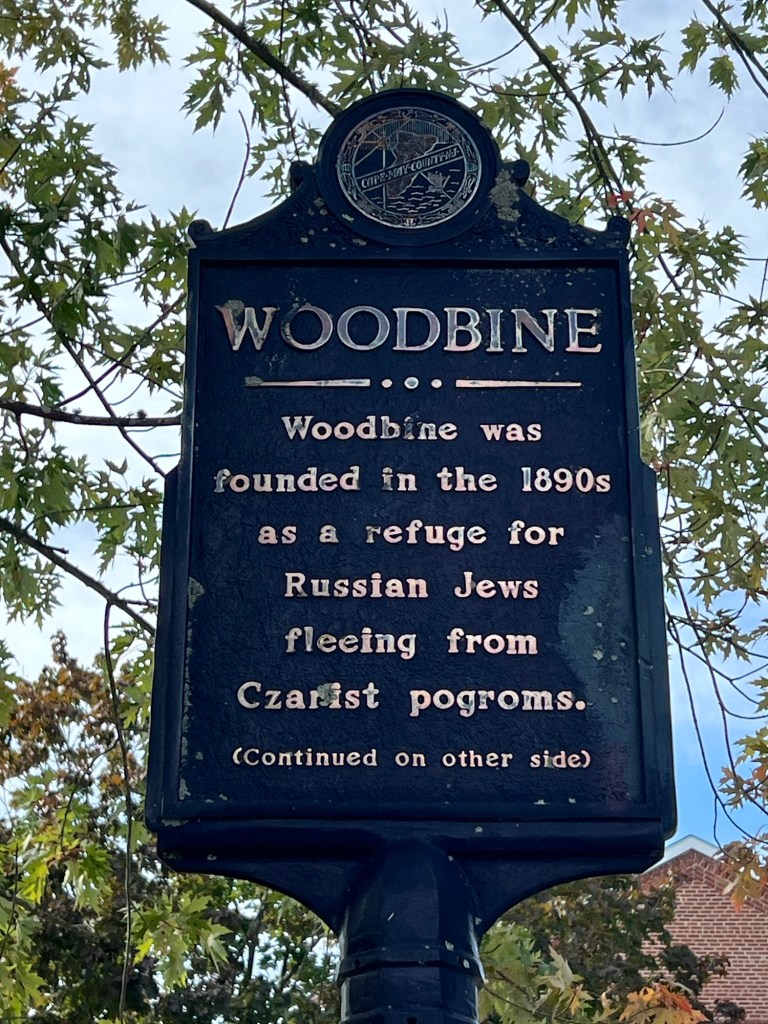
Established in the 1890’s through Baron de Hirsch’s philanthropy, Woodbine began as an agricultural colony for Russian Jewish immigrants seeking freedom denied in their homeland. As poor soil conditions limited farming, Woodbine evolved into Cape May County’s manufacturing center while maintaining founding values of education, religion and inclusion.
The museum occupies the historic Woodbine Brotherhood Synagogue, listed on the Natural Register of Historic Places. The restored sanctuary hosts special services, while the Brotherhood Hall houses exhibitions including the community-contributed Collective Memory Wall.
The historical significance of of the Town of Woodbine
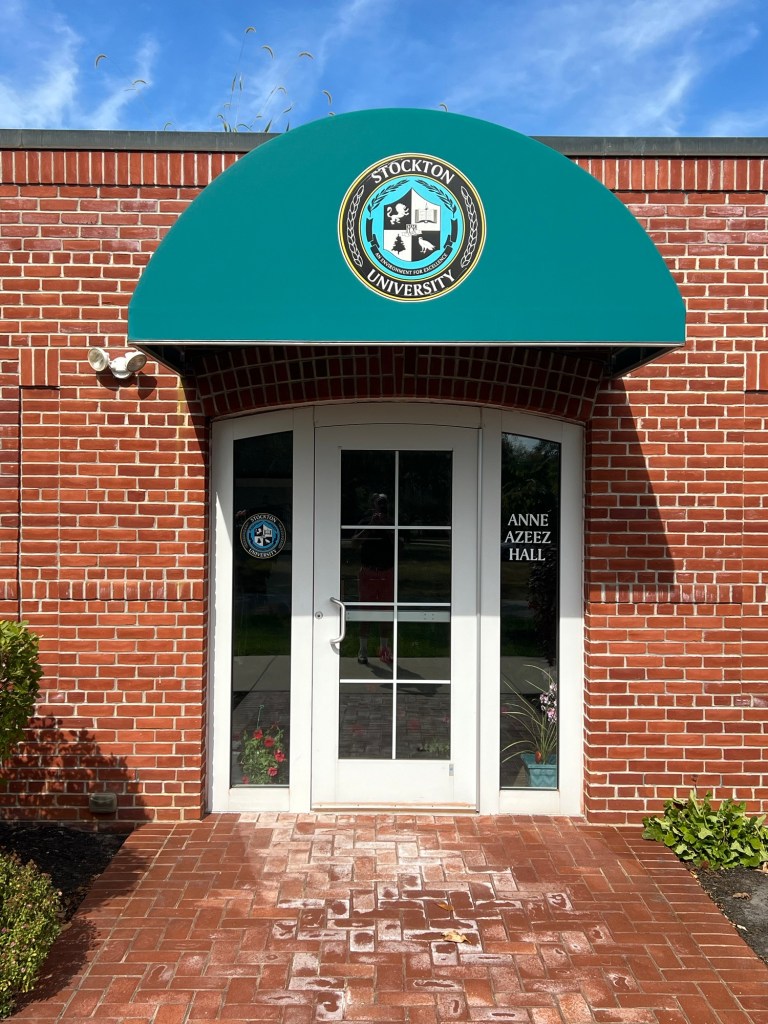
The entrance to the museum
The museum is another interesting look at New Jersey history and the development of the immigrant story of assimilation into American society.
I was given a personal tour by the Assistant Curator and she explained the resettlement of Russian Jewish immigrants by a wealthy patron into this South Jersey community.
The main gallery of the museum
The panels tell the story of how these community came into being and how these people built a community through agricultural and eventually manufacturing and small businesses that supported the community around it. It established a town that was self sustaining and grew to the community center.
The panels show the growth of Woodbine as a community
The residents established their own sports teams, community organizations and civic groups like the councils and fire and police departments.
The records of the many town organizations of Woodbine
Display of one of the first families to settle in Woodbine
Display of the religious faith of the community
One of the most touching displays is of survivors of the concentration camps during the holocaust. These pictures represent these women as children and them today.
The display of the women who survived the camps
The history of the community and the growth of diverse businesses in Woodbine
Creating and building the Synagogue in the community
On the second floor of the building is the old synagogue of the community which is only used during the high holidays. This is used by descendants of the community and family members of theirs.
The inside of the synagogue on the second floor of the building
The front of the temple
The chandelier is original to the temple
The space was being prepared for the Jewish New Year and the crowd of people who would be attending.
The Memorial Wall
The traditions of the religion being practiced in the community
The self-government of the community
Still the younger generation was all American and wanted to assimilate into society with an all American past time of things like baseball.
The Woodbine youth baseball team
The uniform of the old baseball team for youths in the town
The last display is of the famous alumni who once lived in the community. These are the men and women who once lived here and went on after all odds to do great things and make our country better.
The Hall of Fame
The museum I thought had a bit of an identity crisis as I really did not know what the museum was about.
I was pleasantly surprised to find an interesting part of New Jersey history I had never known. It just goes to show you how a museum can educate you with just one visit. The Assistant curator said there will be more to come in the future.
Galleries at Fairleigh Dickinson University-University Hall
1000 River Road
Teaneck, NJ 07666
(201) 692-2801
Open: Sunday Closed/Monday-Friday 10:00am-5:00pm
Admission: Free but donations accepted
My review on TripAdvisor:
University Hall on the Fairleigh Dickinson Campus 1000 River Road
The entrance to the museum
The entrance to the Art Gallery
I recently visited the Galleries at Fairleigh Dickinson University and I walked through the new exhibition of being featured by artists Cordelia Barney and Makenna Savnik who are local artists to New Jersey. This was an interesting gallery with walls lined with whimsical art.
The Galleries Museum is located on the first floor of the University Building next to the art Department.
The works by the artists lined the walls
The history of the Arts Department at Fairleigh Dickinson University:
(from the University website)
In September 2018, Fairleigh Dickinson University inaugurated the School of the Arts, a robust center of learning for students who seek arts training grounded in a real-world framework. Today, the School of the Arts is a thriving and exciting community fostering talented students and faculty who are dedicated to a wide variety of artistic expression.
School of the Arts students participate in an innovative curriculum that combines a strong liberal arts education, hands-on creative work, valuable opportunities for internships, and an integrated new approach to arts entrepreneurship.
Outstanding and nationally recognized artists and authors empower our students to reach their full creative potential through speaking engagements, workshops, art shows, and performances. School of the arts students are connected to a network of professional mentors and colleagues who help jump-start their careers. Our Florham Campus features a beautiful and inspiring landscape where students can collaborate across disciplines and flourish while the Metro Campus is located closely to Manhattan. Graduates will be equipped to thrive in today’s — and tomorrow’s — complex interconnected world.
The art works by artist Cordelia Barnet were whimsical and fun with bright colors and inviting patterns. These were the works that stood out in her part of the exhibition.
‘The Flags that Represent Us’ by artist Cordelia Barnet
The sign for the art
The work ‘How would Botticelli See Me?’
The sign for the art
Cordelia Barnet also did an interesting collection of works with Cats as a theme. These were the ones that stood out to me.
The work ‘Hold up the Pinnacle’
The sign for the event
The work ‘Sleeping with the Fishes’
The sign for the work
The works on the other side of the Gallery were by artist Makenna Savnik. Her works were interesting in the repeated symbols and characters she created.
Open: When the library is open. Please check the website.
Admission: Free
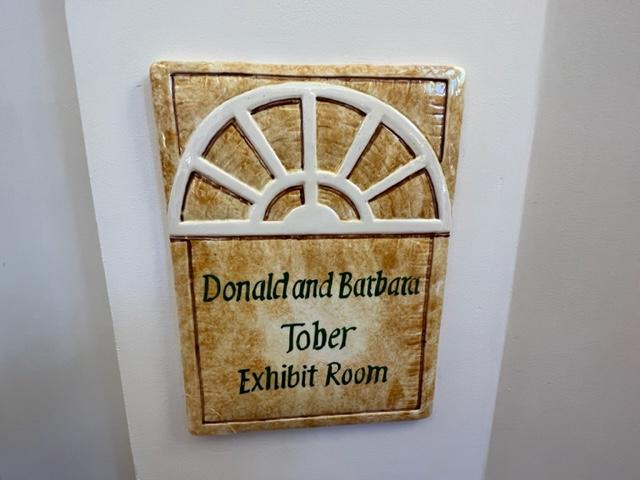
The Donald & Barbara Tober Exhibit Room plaque inside the Conrad N. Hilton Library hallway
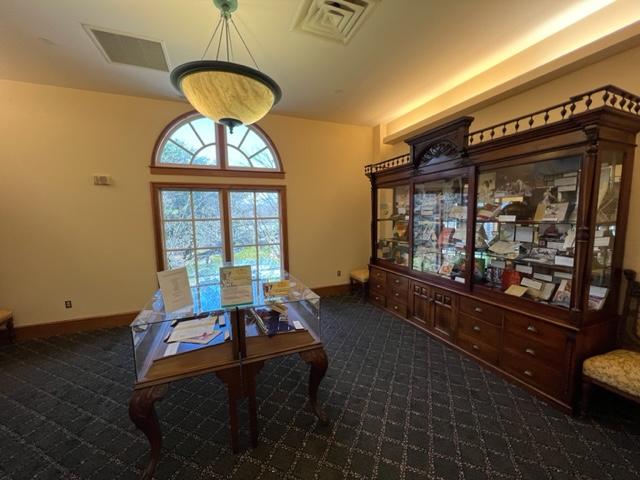
The Donald and Barbara Tober Exhibit Room is on the main floor of the Conrad N. Hilton Library. The exhibit room is open to the CIA community and to the public. The exhibition room has ongoing displays of culinary themed exhibits that cover topics involving the culinary world and food service. This is run by both the college and by students. It is not quite a museum but more of a display room of artifacts that are held by the Conrad N. Hilton Library and its archives.
The Hallway exhibition
The Hallway exhibition
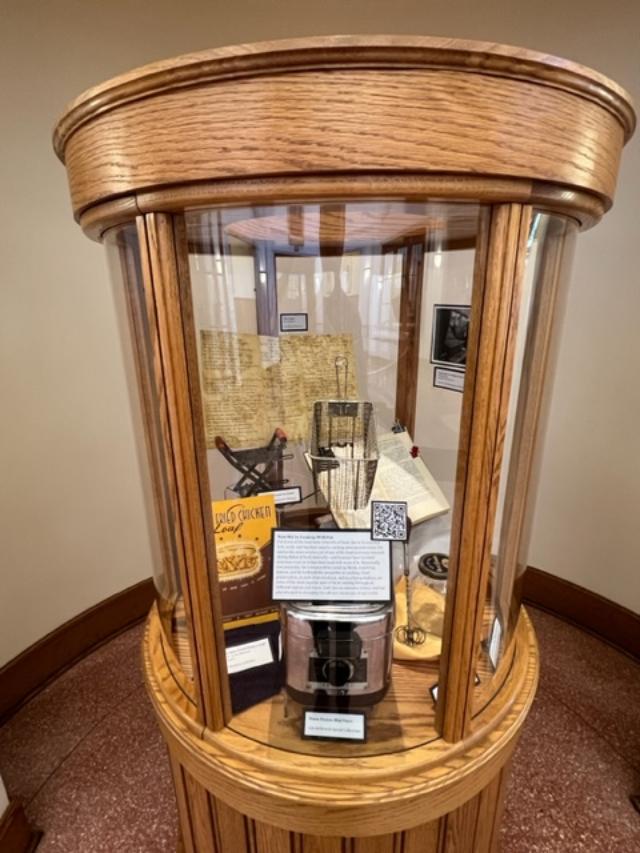
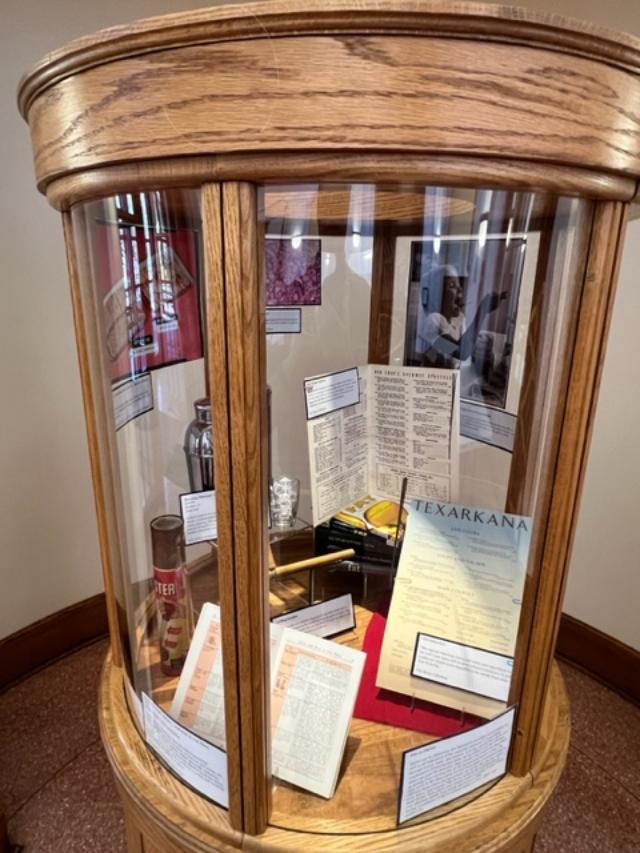
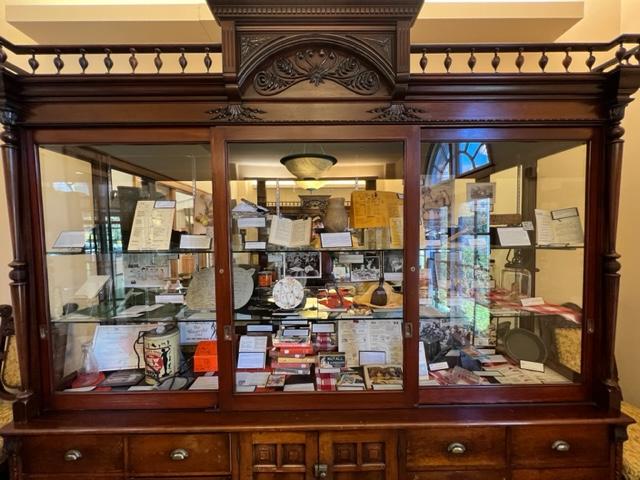
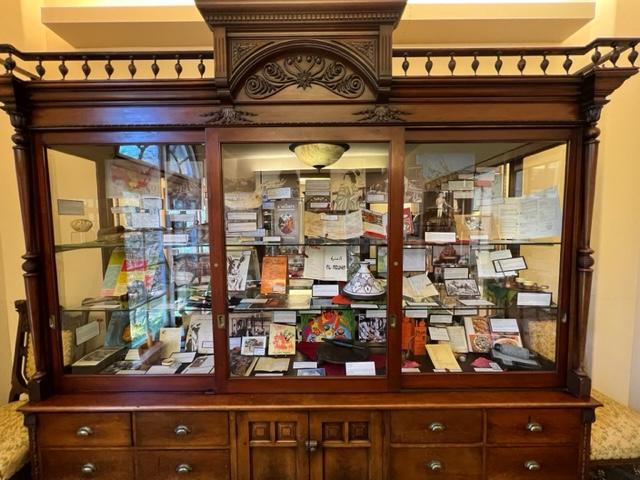
The two display cases are in the main entrance of the Conrad N. Hilton Library and hold more of the exhibition. These are displays of industry pamphlets and flyers plus menus and equipment.
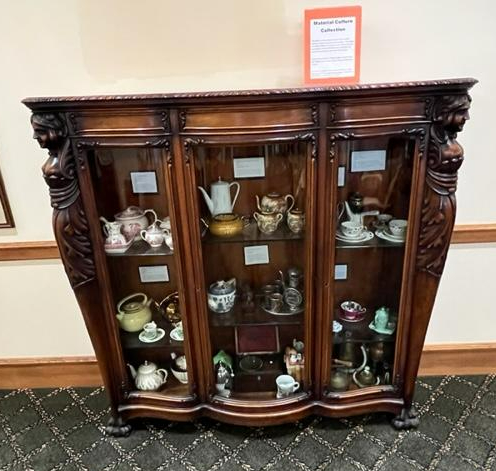
The library exhibition of China pieces
The Menu Collection:
The Tober Room Exhibition space
The CIA’s menu collection began in the small library at the New Haven campus and was used as a reference tool by the culinary students. By 1978, then in Hyde Park, the library had amassed a file of over 3,000 menus which were openly available to students and used regularly in their studies. These menus still remain in the collection and are known as the “Original CIA Menu Collection.” They provided the foundation for the growing menu collection that was later added to by many prominent menu collectors and friends of the CIA.
This collection of nearly 800 menus, acquired by the CIA in 1984, were collected by the culinary writer and critic, Baron Roy Andries de Groot (1910-1983), during the course of editing his column, “A Moveable Feast,” for Esquire Magazine. The menus date primarily from the 1960s and 1970s and are from major U.S. cities (many from New York City), as well as Canada, France, Belgium, Spain, Puerto Rico, Hong Kong, and Thailand. Some menus include supplemental materials, as well as annotations by de Groot or his staff noting the date of visit, names of other guests, the chef’s name, and his evaluations and/or ratings.
In 1987, Herbert Ernest donated to the CIA over 300 menus collected by his father, Semy Ernest. The menus date from 1889-1977 and include menus from restaurants and clubs in New York City, Boston, Indianapolis, Los Angeles, and San Francisco; international menus from France and Germany; and several menus from on board the Santa Magdalena ocean liner. This collection is rich in pre-1920 menus.
The Greenebaum Menu Collection was donated to the CIA by Henry Greenebaum in 1989. Greenebaum’s father, Michael H. Greenebaum, started the collection and it was continued by his two sons, Henry and Richard. It includes menus from 1905-1988, many international and many from railroads and ships. Several menus are signed by the chef or proprietor.
Bruce P. Jeffer donated his collection of 2,500 menus to the CIA in 2013. Jeffer, a California lawyer and wine connoisseur, began collecting menus during his travels as a child. The menus date from 1950s-1990s. Much of the collection is international menus from over 70 countries on 6 continents. A selection of these were featured in an exhibit in the Conrad N. Hilton Library in August 2013.
George Lang, restaurateur and author, donated his personal collection of over 3,000 menus to the CIA in 1989. Many of these menus are international, including often under-represented countries such as Australia, Cuba, Hong Kong, Hungary and the Philippines. Although most menus date from 1950s-1970s, the earliest two menus are from Hotel Knickerbocker in New York City, 1907.
Vinnie Oakes Menu Collection
In 2000, Vinne Oakes donated his collection of over 200 menus to the CIA. The collection is strong in menus from restaurants in Nevada, as well as ship menus from the 1960s.
The Chapman S. Root Menu Collection of nearly 10,000 menus was donated by The Root Company in 2000. The largest collection recieved so far, it includes menus from almost every state (strongest in California, Florida and Nevada), and several foreign countries. The bulk of the menus date from 1960s-1980s, although the earliest are from 1878. Over 3,000 U.S. Railroad menus are an important highlight of the collection.
Chapman S. Root’s grandfather, Chapman J. Root, designed the classic green, ridged Coca-Cola bottle in 1915. At his grandfather’s death in 1945, Chapman S. Root inherited Associated Coca-Cola Bottling Plants, Inc. He traveled a great deal, mostly by car or train, and amassed an enormous menu collection. Friends, knowing of his interest, also contributed to his collection.
Jacob Rosenthal, former president of the Culinary Institute of America, donated nearly 500 menus to the CIA menu collection. The bulk of these menus are from food and wine societies in the 1960s-1970s, including Confrerie des Chevaliers du Tastevin, Confrerie de la Chaine des Rotisseurs, and the International Food & Wine Society. Also of note are several international menus from the 1930s-1950s.
The Smiley Family Menu Collection was donated to the CIA in 1982 and 1993, a gift of Mohonk Mountain House. (The Smiley family are the founders and proprieters of the Mohonk Mountain House in upstate New York.) Three generations of Smileys traveled the world, by land and by sea, and collected menus along the way. This collection is rich in pre-1920 menus; menus from historically world-renowned resorts including Laurel-in-the-Pines (Lakewood, N.J.), Haverford Court (Pennsylvania) and Hotel Colonial and Royal Vicotoria Hotel (Nassau, Bahamas); beautifully-illustrated ship menus; and a selection of early menus from Mohonk Mountain House.
The display case in the main library showcases the collection of China and Silverware and decorative objects that are in the collection.
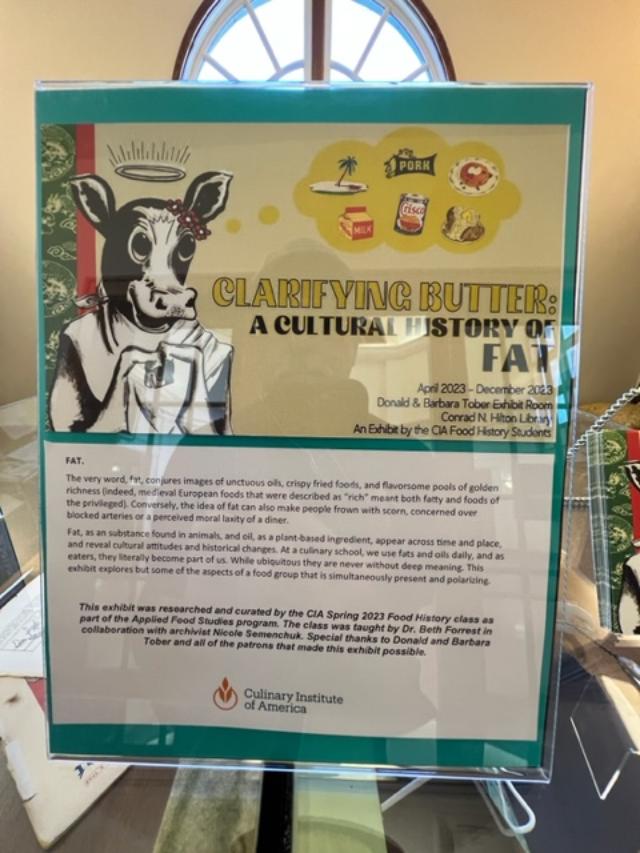
The Tober Room exhibition on “Fat” at the Conrad N. Hilton Library on the CIA campus
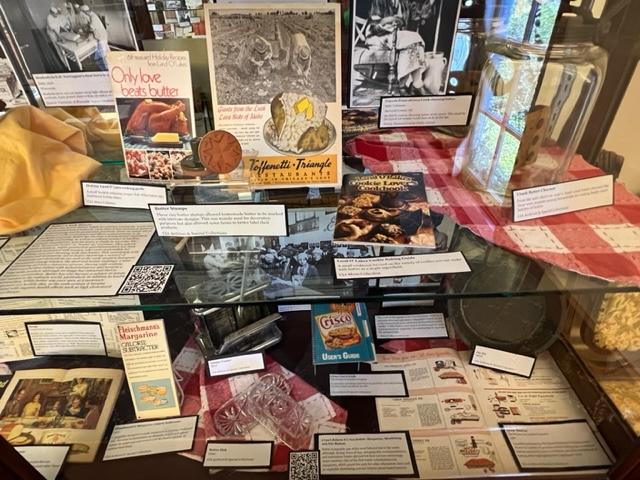
The exhibition that they were showing when I came up to visit was “Clarifying Butter: A Cultural History of Fat”. There were a lot of recipes, objects and equipment to make butter, understand the use of fats in cooking, recipes, menus and corporate information.
The description of the exhibition:
FAT. The very word, fat, conjures images of unctuous oils, crispy fried foods and flavorsome pools of golden richness (indeed, medieval European foods that were described as “rich” meant both fatty and foods of the privileged). Conversely, the idea of fat can also make people frown with scorn, concerned over blocked arteries or a perceived moral laxity of a diner.
Fat. as an substance found in animals and oil, as a plant based ingredient, appear across time and place and reveal cultural attitudes and historical changes. At a culinary school, we use fats and oils daily and as eaters, they literally become part of us. While ubiquitous they are never without deep meaning. This exhibit explores but some of the aspects of a food group that is simultaneously present and polarizing.
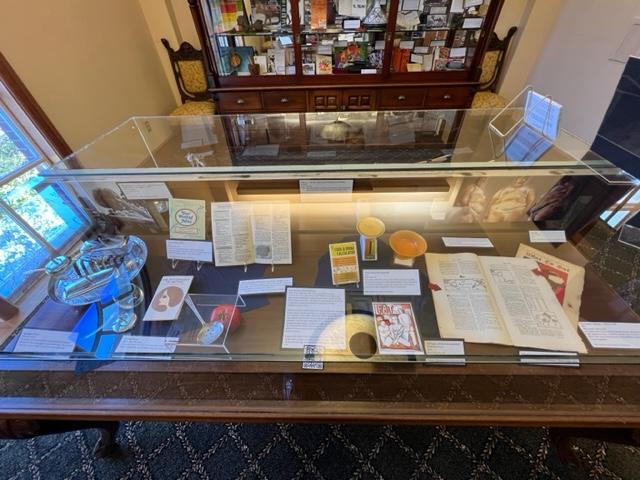
Both the two display cases and the middle display case were set with all sorts of information through the ages of the subject of fat, fried foods and items used to produce and make them.
The Display Cases in the Tober Room
The Display Cases in the Tober Room
The exhibitions here are very detailed and display over a hundred years of culinary arts research. The displays are revolving every quarter. The room is off to the right of the entrance to the library and is open for free to the public. It is a wonderful way to learn the aspects of food than in one of the best culinary libraries in the world.
The entrance to the Art & Design Gallery at FIT at 227 West 27th Street
The exhibition space showcases the work of students, faculty, and distinguished alumni, as well as invited guest artists. This new gallery space is located at the entrance of the Pomerantz main building and the back room exhibition space. This features smallers theme shows and showcases the talents of the FIT professors, professionals and Alumni. The shows are constantly rotating offering a fresh approach to contemporary art.
The Current Exhibition:
Creative Industry: The Alumni Journey Lobby and Gallery
Diverse in medium, this exhibition spotlights the career trajectories of several illustrious FIT alumni, highlighting their innovations and interesting journeys through the creative industries. Co-curated by Troy Richards, dean for the School of Art and Design, and Alumni Relations’ Kseniya Baranova, the work on display features photography, fashion, video, weaving, wallpaper, graphic design, and painting.
“Unconventional Minds at Work: 15 Years of HUE, The FIT Alumni Magazine
The showcased art designs
Artwork “Matter 2008” by artist Susanne Tick
The sign of artist Susanne Tick’s work
Artwork from “Unconventional Minds at Work”
Artwork from “Unconventional Minds at Work”
Artwork from “Unconventional Minds at Work”
Resurgence: The Ingenuity of Artisan Work and Hand-crafted Objects Lobby and Gallery
‘Resurgence’ showcases the ingenuity of artisan work and hand-crafted objects from textiles, jewelry, and decorative accessories. Contributors to this show include FIT alumni, faculty, and students, as well as finalists from the 2022 Global Eco Artisan Awards, a recognition given by the AGAATI Foundation.
Artwork of “Resurgence”
The Gallery at FIT during one of the current exhibitions
The latest exhibition is on the A. Beller & Company clothing line. The designs on display are from 1900-1930 and many of the designs are from the ‘flapper’ era.
The A. Beller & Company exhibition
The A. Beller & Company designs.
The Bio on the manufacturer
The A. Beller & Company designs from 1910-1930.
The A. Beller & Company designs from 1910-1930.
The A. Beller & Company designs from 1910-1930.
The A. Beller & Company designs from 1910-1930.
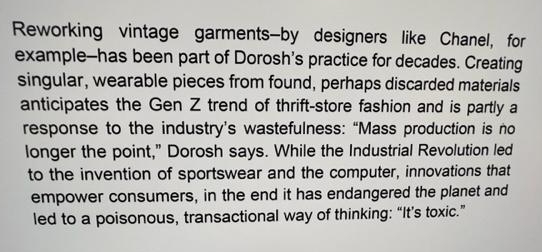
The museum also did a piece on how Generation Z is reworking vintage clothing designs and reworking them into modern clothing.
The Generation Z gallery of designs.
The write up on reworking of vintage clothing.
Some of the clothing designs.
The new exhibition in September 2023 was “The Unwearable Art” exhibition:
With the tag line “A fashion line no one would dare wear.”
The fashions were very unusual to say the least but unique in every way.
The entrance to the gallery.
“Today-I’m Wearing Uncertainty”
the “Today-I’m Wearing Uncertainty” design sign.
“Today-I’m Wearing Flare Intensity”
The “Today-I’m Wearing Flare Intensity” sign.
“Today-I’m Wearing Something Life Threatening.”
The sign “Today-I’m Wearing Something Life Threatening”
“Today-I’m Wearing Physical Pain”
The sign for “Today-I’m Wearing Physical Pain”
The “Wearing Uncertainty” exhibition offers a different look at fashion, and it’s influences on costumes.
The new “Squishables” exhibition at the Gallery at FIT focuses on therapeutic stuffed animals with themes that the students created as teams. Each one has several colorful soft animals and figures with it. It is a colorful and whimsical display. The exhibition shows how plush toys become an essential tool in coping with anxiety, stress, grief and isolation a person might feel at a time of their lives. This exhibition opened in May of 2024.
The sign on the new exhibition “Squishable”.
The “Unicorn Cafe” display.
The “Under the Sea” display.
The “Graveyard” Halloween display.
The “Alchemy Lab” display.
The “Farm” display.
The “Squishables” Gallery exhibition.
The new exhibition “Squishables” is based on a therapeutic stuffed animal that is created by the students.
The “Denim Devine” exhibition is the Senior Project of the graduates.
The “Denim Devine” exhibition in 2024. This exhibition was created by graduating students to design a wardrobe that was made of entirely of denim. These are their original designs and creations.
The “Denim Devine” entrance.
The winners of the “Denim Devine” exhibition.
The “Denim Devine” display.
The back gallery of “Denim Devine”.
I loved this Disney inspired dress in the exhibition.
One of my favorite dresses from the exhibition.
Another very original design in the exhibition.
Another original design that I liked in the exhibition.
The picture boards for the exhibition and other exhibitions.







 Visiting a Museum: The Unique, Unusual, Obscure and Historical