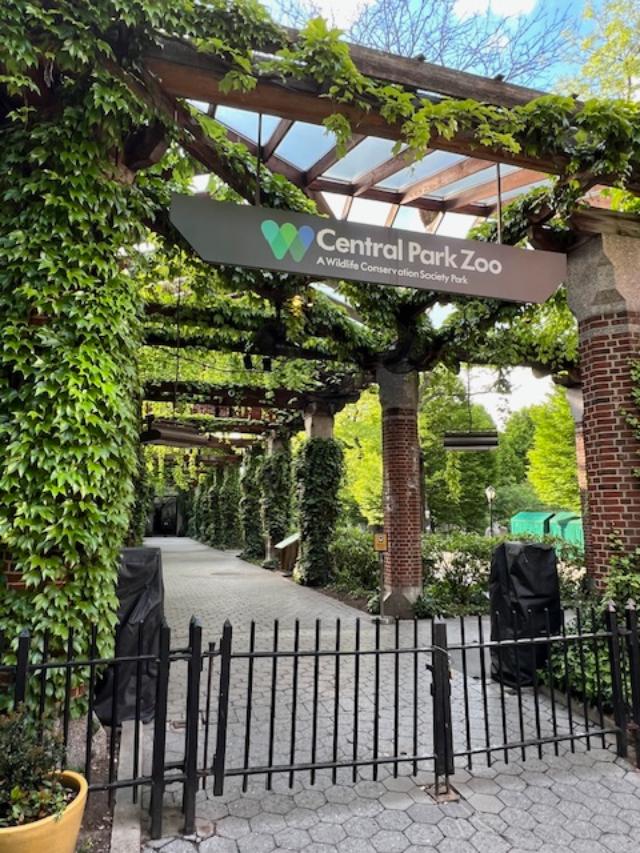
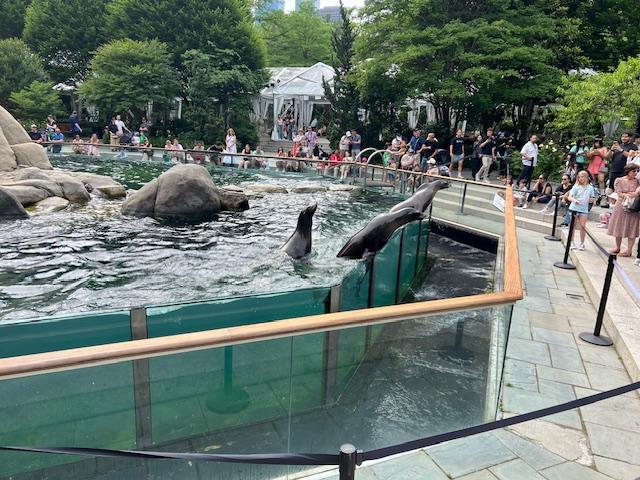
I love coming to the Central Park Zoo when I am visiting the Upper East Side. The zoo is a nice to just relax and reflect from the hustle and bustle of the City. On a quiet midweek day, there is nothing like going to the 2:00pm seal feeding at all times of the year. The seals get so excited and the humans like seeing the seals in their playful mood.
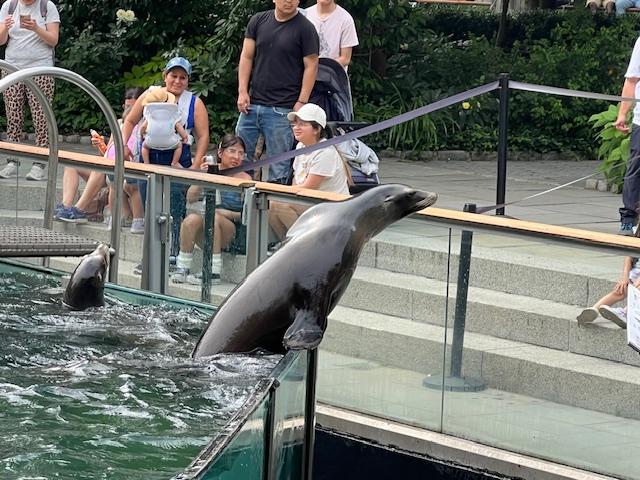
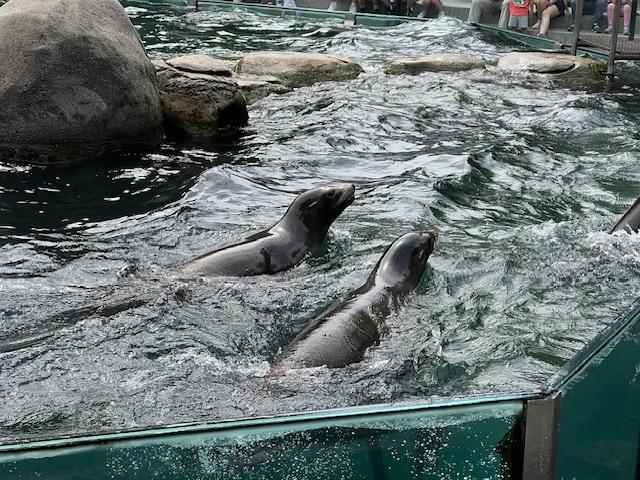
The seals can be very friendly and don’t mind humans around.
The seals like to reach out for attention.
The zoo is small so touring it will only take about an hour or so to see all the exhibitions. You have a choice of seeing the monkeys, the birds, the seals and the penguins. They finally moved the polar bear out of the zoo a few years ago and he always looked so bored with his life. He would give you a look like ‘get me out of here’.
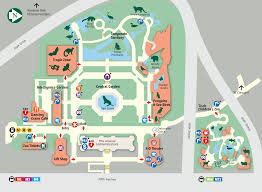
The Central Park Zoo is set up with different exhibitions.
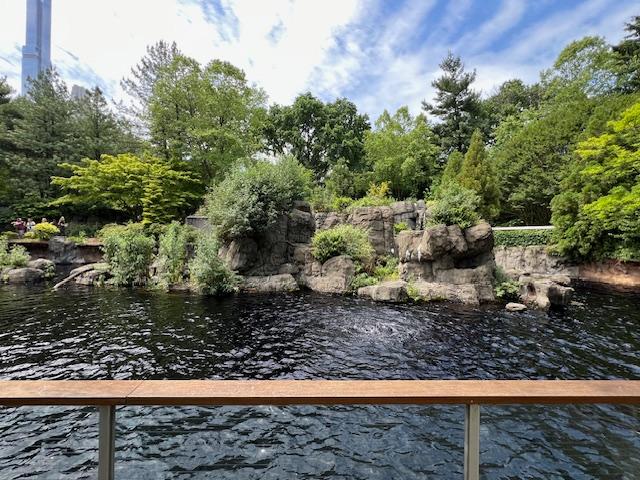
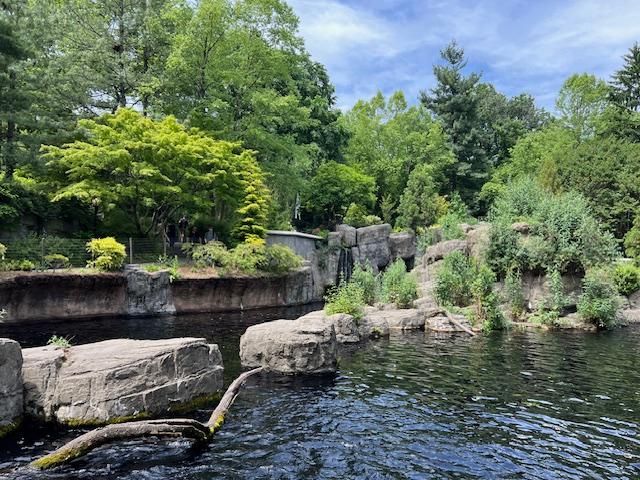
The smaller animals like the monkeys and the penguins look like they are having more fun in their enclosed homes with more room to move around. They always look at us as visitors in an amusing way like why are we so interested in them. It is an interesting interaction with the animals there to see their reaction to us.
The Monkey Island
The Monkey Island with the monkeys hiding that afternoon.
There is also more birds, amphibians and bats to see in other exhibitions around the zoo and smaller outside areas to view the smaller animals such as pandas and leopards that have finally been given space to roam around.
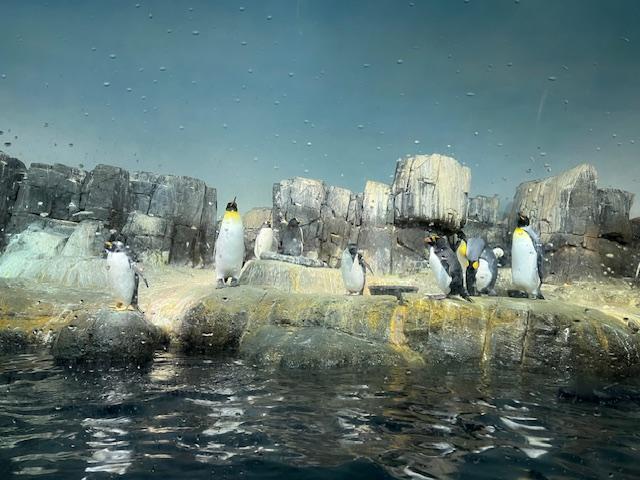
The Penguins are very playful all day long.
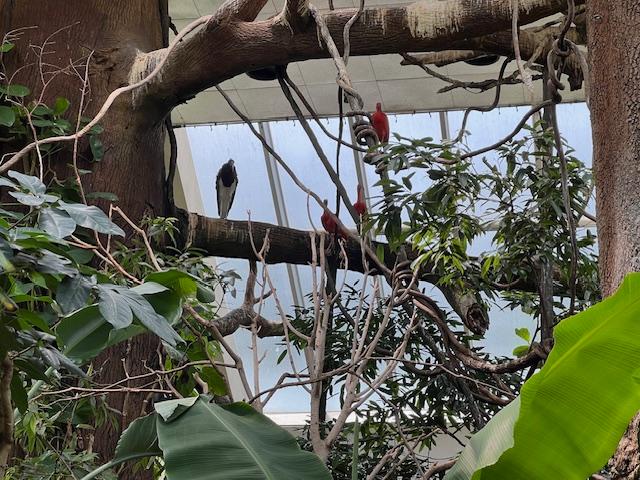
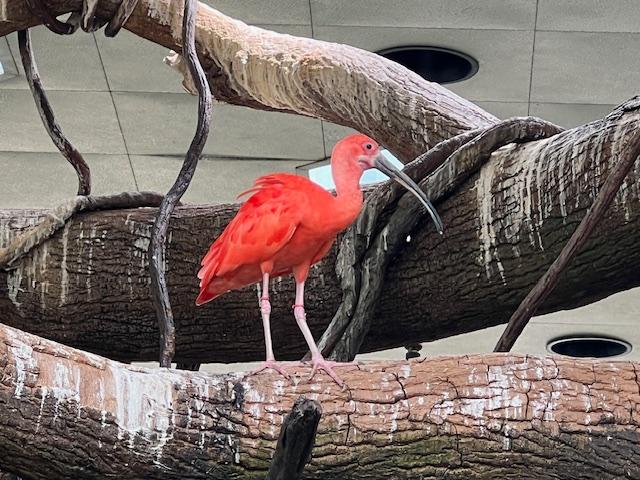
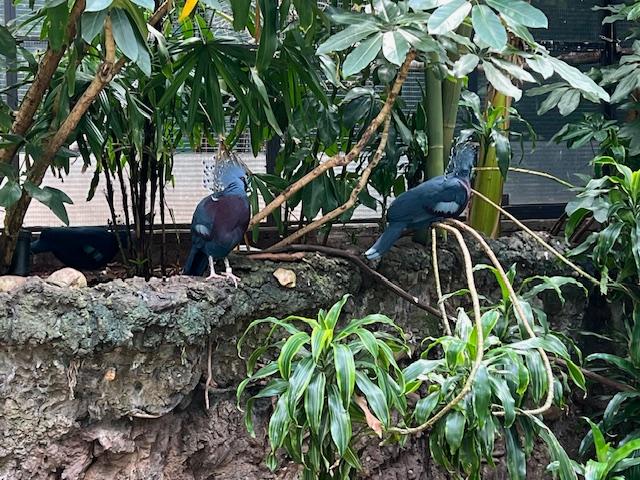
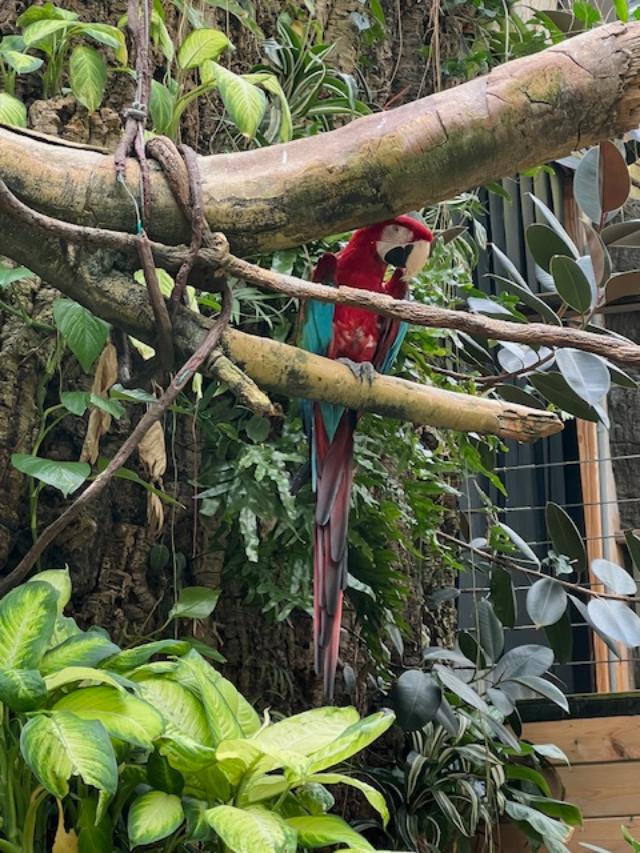
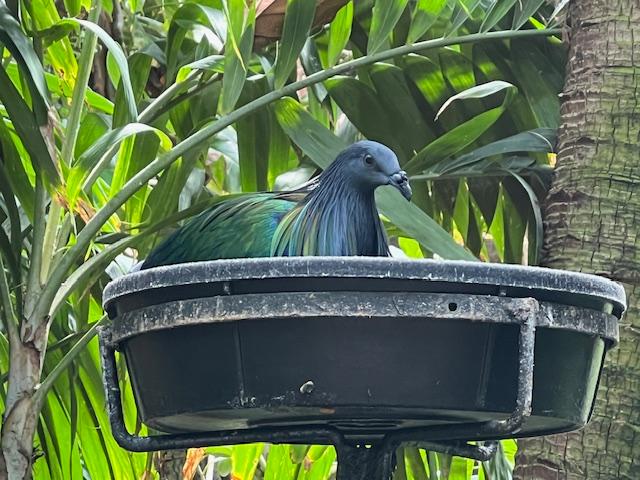
The Bird Sanctuary is another popular section of the zoo. There are all sorts of rare and exotic birds to see and watch in a copy of their native habitat. I thought they looked a little bored seeing the same birds day after day.
The birds have a lot of space to fly around but seemed a bit bored.
The pink Heron
The Bird Sanctuary
The parrot seemed a little bored.
The Birds feeding themselves.
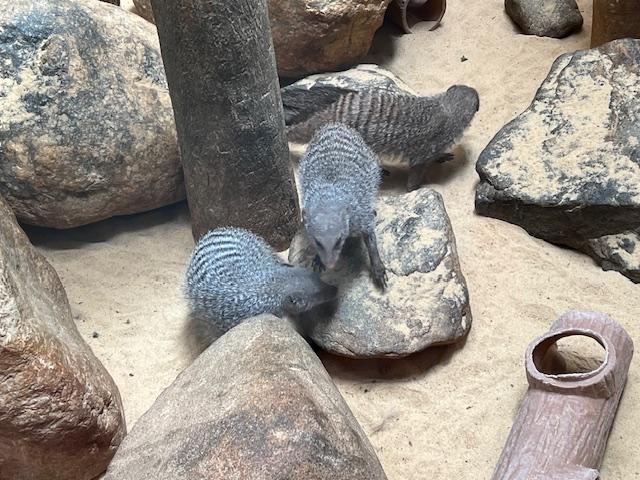
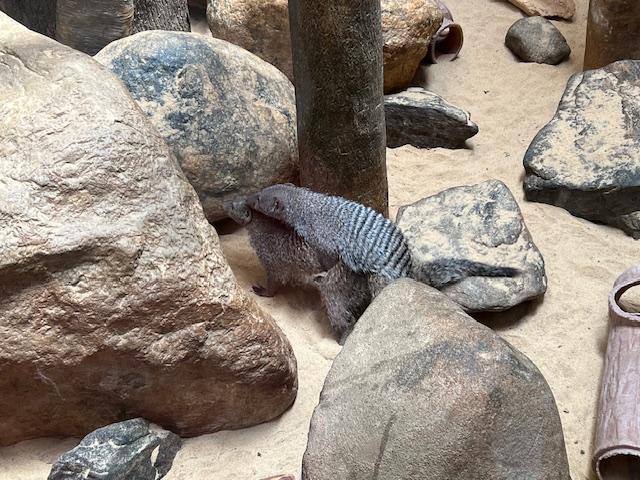
In the small animal exhibition, the mongooses were putting on quite a show for all of us. It looked liked they were mating in front of the crowd.
The mongooses running around.
These two looked like they were mating.
It is a nice walk around the zoo and the perfect way to spend a sunny afternoon.
There is also a nice gift shop just outside the zoo and the Dancing Crane Cafe is the zoo restaurant which is over-priced and the food the few times I have tried it was mediocre. It is not like the cafe up at the Bronx Zoo that was pretty decent.
Don’t miss the hourly concert at Delacorte Clock when the animal sculptures dance to the music played. It is such an enjoyable experience.
History of the Zoo:
The Zoo was not originally part of the layout for Central Park when designed by Fredrick Law Olmstead and Calvert Vaux. A small menagerie developed on the edge of the park with exotic animals that had been donated to the park starting with a bear cub tied to a tree in 1859 and a monkey in 1860. Other animals came later including cranes, a peacock and a goldfish.
The original menagerie
In 1860, the American Zoological and Botanical Society wanted to create a zoo somewhere in New York City. In 1864, the zoo received a formal charter, making it the second publicly owned zoo behind the Philadelphia Zoo. Though a formal zoo had not yet been created, the menagerie, with its free admission and good location made it the most popular attraction in Central Park.
By the 1930’s, the menagerie had become run down and was not sufficient to hold the animals. In 1834, Mayor Fiorello La Guardia hired Robert Moses to head the unified Parks Department and a new more formal zoo was created. The new zoo was opened on December 2nd, 1934 and by 1936 over six million people had visited the zoo.
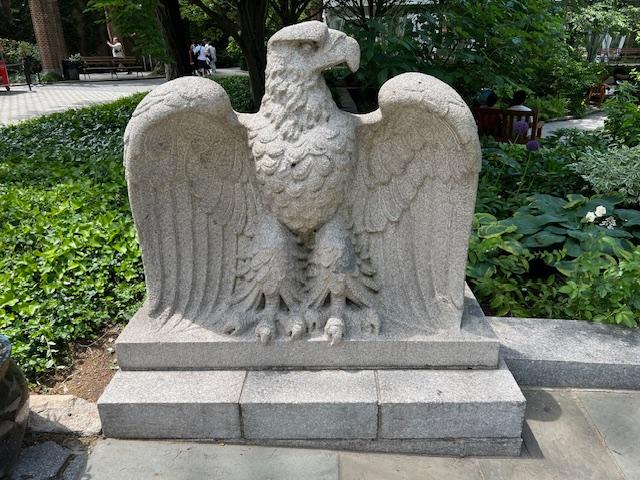
The eagle statues dotted the zoo.
By 1967, the zoo was again falling apart due to years of negligence and budget cuts. New York City’s fiscal crisis had affected the Parks System and conditions had gone downhill. In 1980, The Wildlife Conservatory (the former NY Zoological Society) signed a fifty year agreement in April of that year and started a renovation of the zoo from 1982 to its opening in 1988.
When the Zoo opened in August of 1988, the concept of the zoo had changed. The Wildlife Conservation Society had taken over the Queens Zoo, the Prospect Park Zoo in Brooklyn and already had possession of the Bronx Zoo and the direction of the society was toward conservation and care of animals while the Prospect Zoo was to be used as a Children’s Zoo and the Queens Zoo would concentrate on North American animals. The Children’s Zoo next to the Central Park Zoo went through its own renovation in the late 1990’s and is now called the Tisch Children’s Zoo after businessman, Laurence Tisch who had donated most of the money for the renovation.
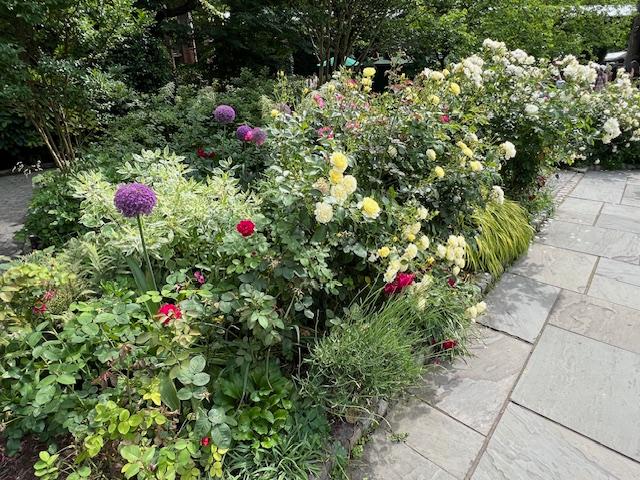
The gardens make a big impact around all the exhibitions.
(This information was taken from both Wiki and the Central Park Zoo History)
The zoo has the most amazing view of Central Park South. This neighborhood lines the southern part of the park.
The entrance of the Bronx Zoo from the original entrance by Astor Court
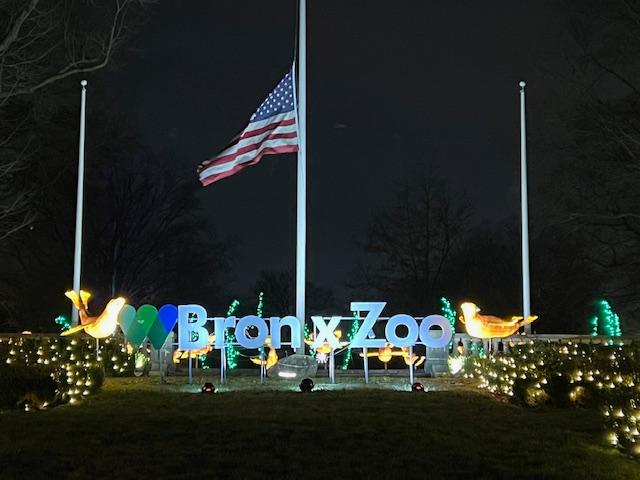
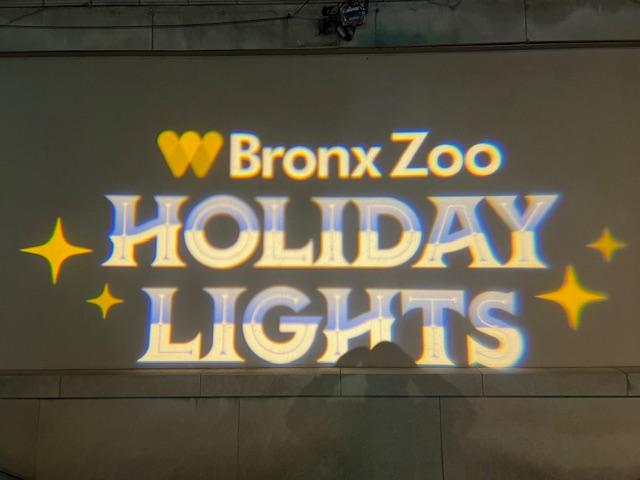
The 125th Sign by the “Holiday Lights” event that evening
I have been coming to the Bronx Zoo since I was five years old, and I never really thought it changed that much over the years. I recently went to a Private Members Night last Fall (See Day One Hundred and in MywalkinManhattan.com) and realized that I had not been there since they opened the Congo Gorilla Forest exhibition and that was in the late 90’s. I had not been in the zoo for over twenty years. A lot has changed since I visited back in 1997. A lot of new exhibitions have opened and renovations made.
My blog on the Private Members Night at the Bronx Zoo on MywalkinManhattan.com:
The Zoo covers about 265 acres of the park in the middle of The Bronx. I took the time to walk all through the park and visiting all the exhibitions, riding on the train and on the monorail system looking over all the animals in their natural habitats set up by the zoo.
I revisited the Congo Gorilla Forest, the Worlds of Birds and Reptiles, exploring the African Plains that I rode past on the monorail system and walked through Jungle World. I really got to visit the park in more detail than I ever had before.
The one thing I really liked about the Zoo was I had never noticed the architecture of the buildings and fountains that I had passed when I was younger and had a real appreciation for them. Most had been around the turn of the last century when the philosophy of looking at animals was different. The graceful stone buildings have beautiful animal carvings all over them.
The Monkey House Building in the old section of the zoo
The best part was since it was a rather gloomy night out there were not that many members in the zoo so I got to ride the rides and walk through the Tree Top Maze with crowds behind me rushing the experience.
I finished the evening visiting the new Dinosaur exhibition and that was creepy. There were dinosaur replications hiding in the woods making sounds and looking at you as you passed. It had been a very popular exhibition that summer.
The Dinosaur display
For dinner that evening, I enjoyed the Dancing Crane Cafe, the main restaurant in the zoo. I was impressed that the food was really good. It was mostly kid staples like pizza and chicken fingers but everything was really fresh, and everything was cooked for us. I returned again for the “Holiday Lights” event in 2024, and the food was just as good as the first time (so many patrons online complain about this restaurant, and I think it very good for what it is).
The outside of the Dancing Crane Cafe during the holiday season at the Bronx Zoo
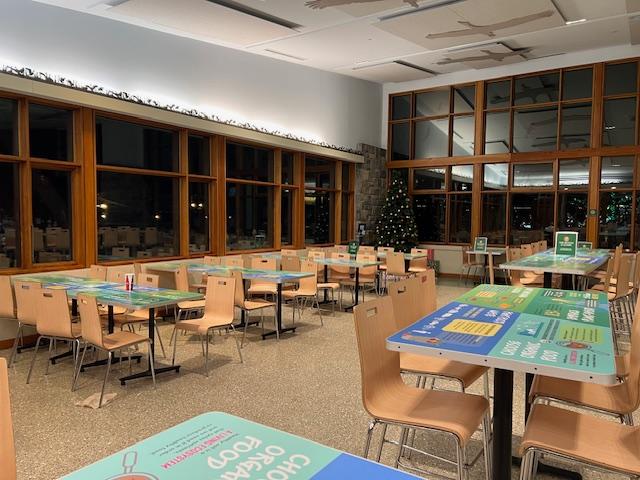
The inside of the Dancing Crane Cafe at holiday time
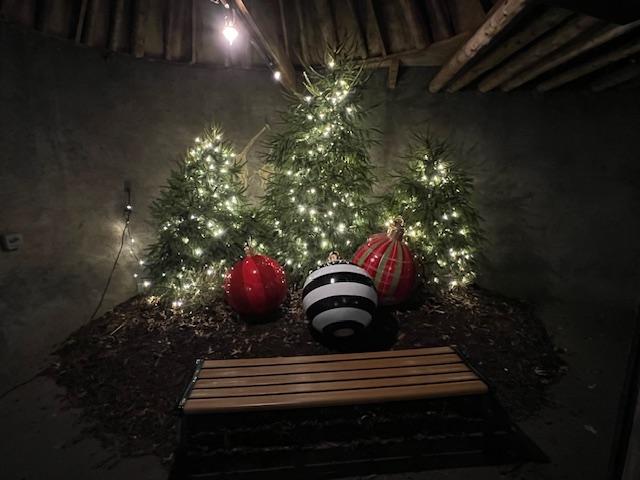
The Christmas tree at the Dancing Crane during the “Holiday Lights” event
I had the Chicken Fingers with French Fries, and it was a nice sized portion. The chicken was a generous portion that was almost a whole breast. The restaurant is pricey but every once in a while, it is a treat. The one thing I have to say about the place is the food is consistent and for a zoo it is pretty good. I thought the quality was excellent.
My Chicken Fingers dinner was really good
The Chicken was so well fried and tasted really good
The Fries were really good as well
I looked over the zoo with a fresh pair of eyes without the throngs of visitors that you normally see there. I enjoyed looking over the animals in a more natural habitat that a lot of zoos don’t offer.
The holiday display at the Bronx Zoo in 2024
The Holiday display in 2024 at the Bronx Zoo
Recently the Zoo has brought back the “Holiday Lights” event for the holidays. I was able to attend the last night of the event on a Sunday night and it was pretty special. In the era of COVID, it really cheered me up. In 2024, I visited the last weekend that the event took place, and it was nice to tour the park after hours and not a lot of people be there. The best time to come to this event is after Christmas. I came the last weekend it was open, and it was the best time to come with no crowds and plenty of time to walk around the park in the dark to enjoy the displays.
Almost all of the Zoo was decorated with lights and there was Christmas music playing the whole night. Even though the holidays had passed it still put me back into the mood.
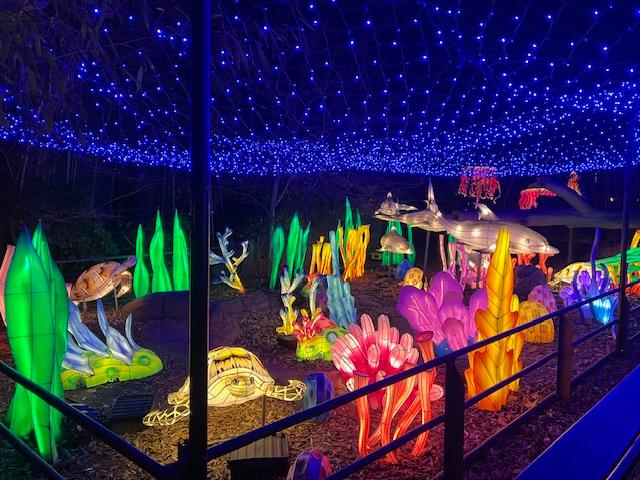
The nautical display at the Bronx Zoo “Holiday Lights”
The Nautical scenes of the display
The “African” exhibit at the “Holiday Lights” event
The giraffes in the “African” event
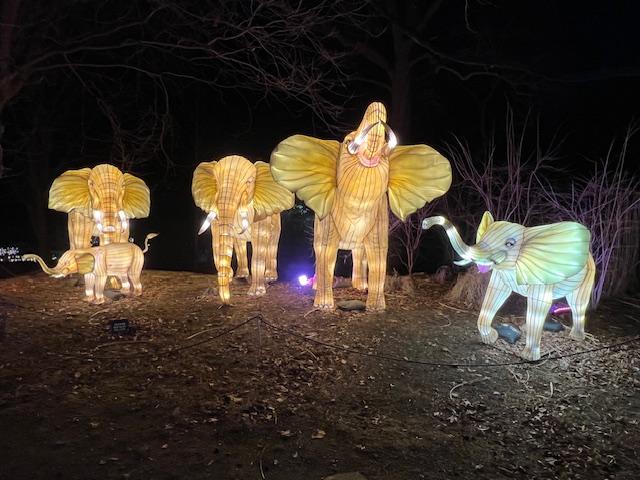
The Elephants in the “African” section
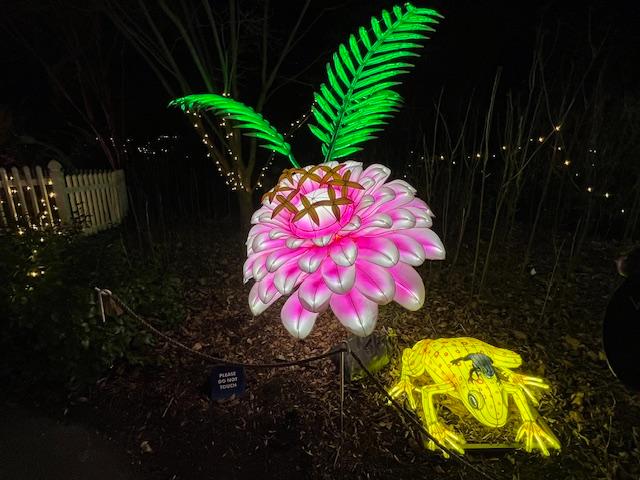
The colorful frog in the “Magical Forest”
The colorful flowers in the “Magical Forest” at “Holiday Lights”
The forest of flowers
More Flowers
The tribe of Moose at the “Holiday Lights” event
Flock of Parrots in the woods
Path of Rhinos on display
Mother and baby frogs
The Frog family on display
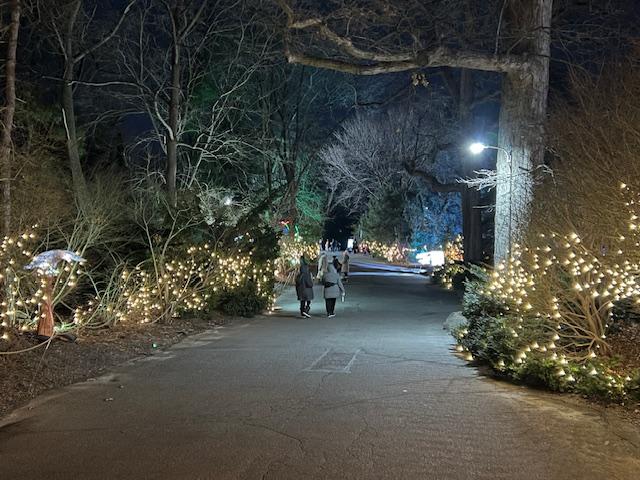
Each of the trails had lighted tunnels that were a sensory excitement to walk through especially as it got darker.
The Circular tunnel
The other lighted tunnel offered a wonder in lights to walk through
All the trees were adorned with white lights and each of the sections of the park were decorated with a theme.
The Snowflake display in the park
There were elephants wondering through the paths, seals and penguins swimming through their displays and all sorts of tinkling snowmen and animals like bears, lions, tigers and giraffes lining the paths.
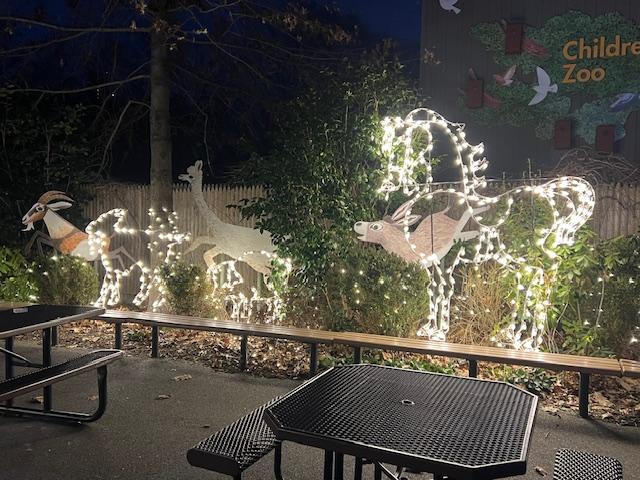
Various animals in white lights
The lightshow paths were lined with all sorts of light
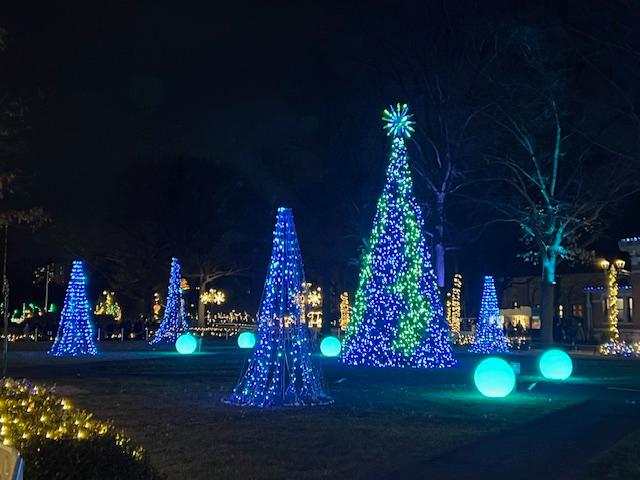
The “Magical Musical Christmas Tree” and show at the “Holidays Lights” event
The musical show that takes place on a continuous basis. You have to see this show once. It is amazing show!
The nicest section that I almost missed was the musical Christmas tree in the old section of the park and the zebras on stilts.
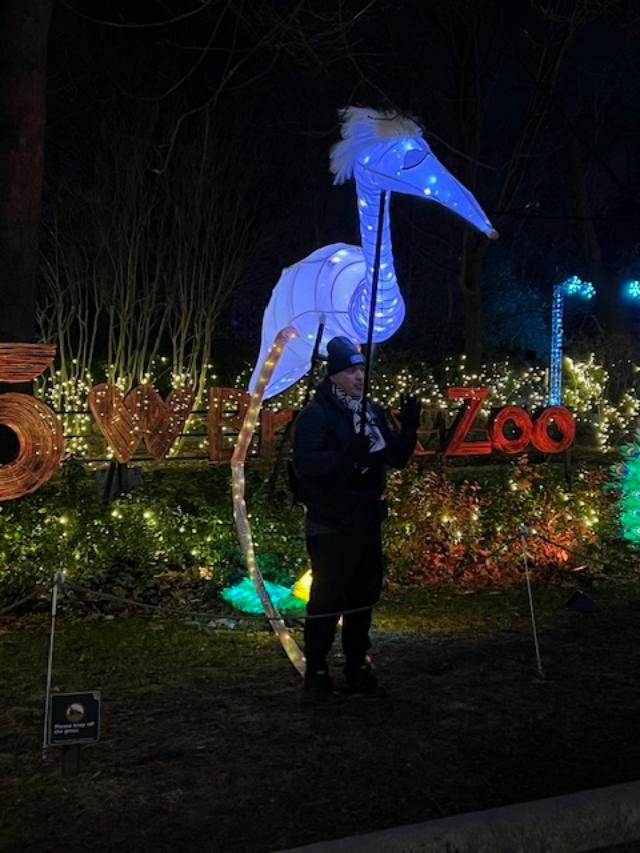
The Illuminated puppets at the zoo during the “Holidays Lights” event
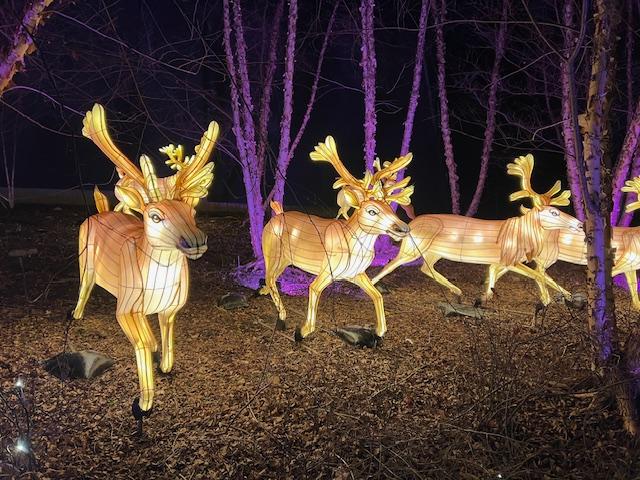
The original section of the park was decorated with multiple lights with contemporary Christmas music playing in the background. There were birds flying, reindeer being chased and seals leading the way for other animals.
The entrance of the zoo that evening
I was finally able to ride the Bug Carousel which was a little hokey but a lot of fun. I could see why the kids like it so much. There were plenty of adults who were also enjoying the complimentary ride. There was ice sculpture demonstrations, comics performing and all of the food outlets and gift shops were open to a somewhat limited crowd. We had timed tickets, so the crowd was rather small for such a big event.
The Rockefeller Fountain and Astor Court decorated for the holidays
The Totem Pole lit up and decorated for the holidays
I got there by 6:15pm and the park display was open until 9:30pm. By the time I left for the evening at 9:00pm, the park crowd had really thinned out and there were very few people walking around. Still it was nice to walk around and feel I had the whole park to myself. It was getting cool that evening but still a nice night to walk around. I will have to remember this for next year.
Leaving for the evening of the Lightshow at the Bronx Zoo for “Holiday Lights”
The History of The Bronx Zoo:
In 1895, a group made up of members of the Boone and Crockett Club founded the New York Zoological Society with the purpose of founding the zoo. The architectural team of Heins & LaFarge designed the original permanent buildings as a series of Beaux-Arts pavilions grouped around the sea lion pool.
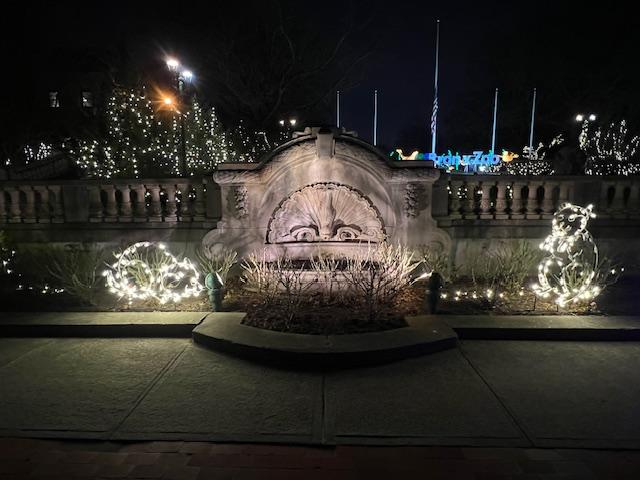
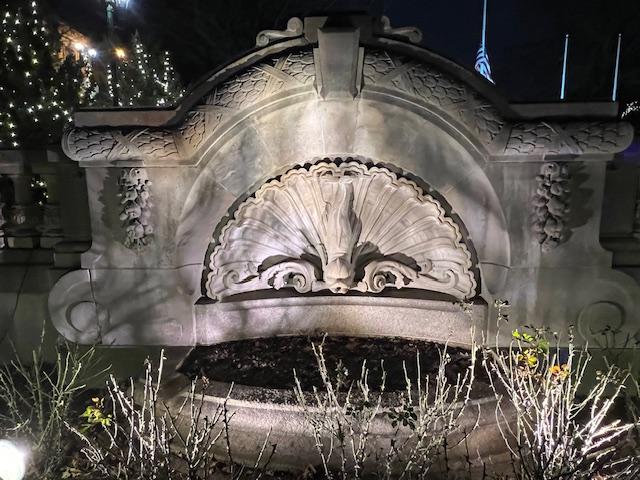
The Astor Court Fountain during the “Holiday Lights” event
The Fountain at night
Jellyfish display by Astor Court
The Jellyfish lightshow inside one of the buildings
The Rockefeller Fountain was bought to the park in 1902 from another part of the park. It had been built in 1872 and was moved to the front of the zoo by the Rockefeller family and is now surrounded by a series of gardens as you enter the park from the parking lot.
The Rockefeller Fountain in Astor Court the night of “Holiday Lights”
When the zoo opened, it featured 843 animals in twenty-two exhibitions around the park. The zoo has been home to many exotic animals many being the first of their kind in a zoo. At various times in its history, the park has featured Komodo Dragons, Andean flamingos and a Sumatran rhinoceros.
Today the park is run by the Wildlife Conservation Society and is accredited by the Association of Zoos and Aquariums. The main exhibitions are the Congo Gorilla Forest, Jungle World, the Wild Asia Monorail, Madagascar!, Tiger Mountain, the African Plains, the World of Birds, the World of Reptiles and the Zoo Center. There are also various restaurants and snack shops throughout the park (that were closed the evening I went there), a carousel and a playground.
The Bronx Zoo Gift Shop the night of “Holidays Lights”
(This information on the park comes from Zoo history and Wiki)
I love Fort Tryon Park in Upper Manhattan. It is one of the most beautiful parks in New York City. It is a park of rolling hills, stone paths that hug the hills, interesting garden that are ablaze when in season, shady tree sitting areas and is home to many playgrounds and the Cloisters Museum which is part of the Metropolitan Museum of Art. It has so much to offer a visitor coming into Manhattan from exploring the woods that line the path to looking at interesting art at the museum. This 67 acre park is one of the interesting and complex in New York City.
A city view of the beauty of the park by the Hudson River
The view from The Cloisters by the Hudson River
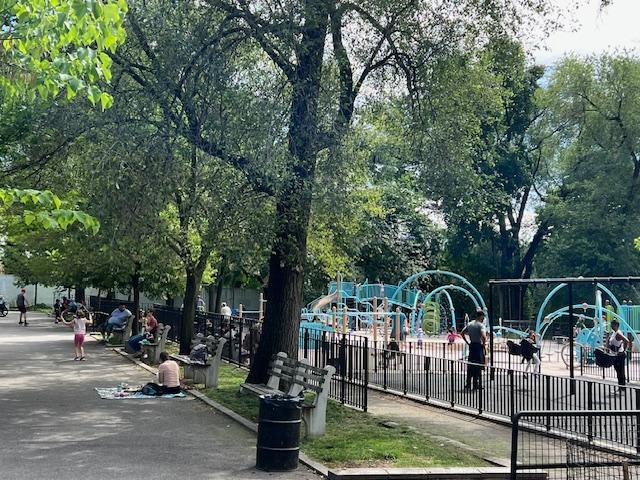
When you enter the park from Inwood by Broadway, you enter through Ann Loftus Park which is named after a local community leader and is one of the popular parks with kids and families in the area. In the summer months, the fountains and water fixtures are going strong and the kids run around them while the parents lie under shade trees talking to one another.
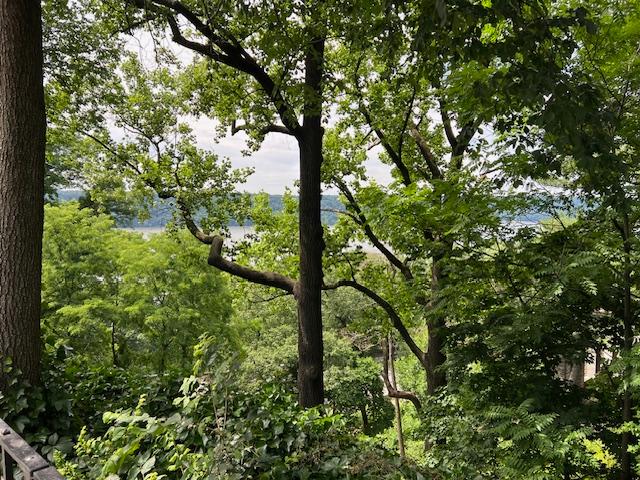
When taking the path from Ann Loftus Park and winding up the hills of woods and rock formations is the Hudson River looming in the distance with spectacular views of the Palisades and the large cliffs of Fort Lee, NJ on the other side.
The bathrooms in Ann Loftus Playground
The history of the park
Anne Susan Cahill Loftus biography:
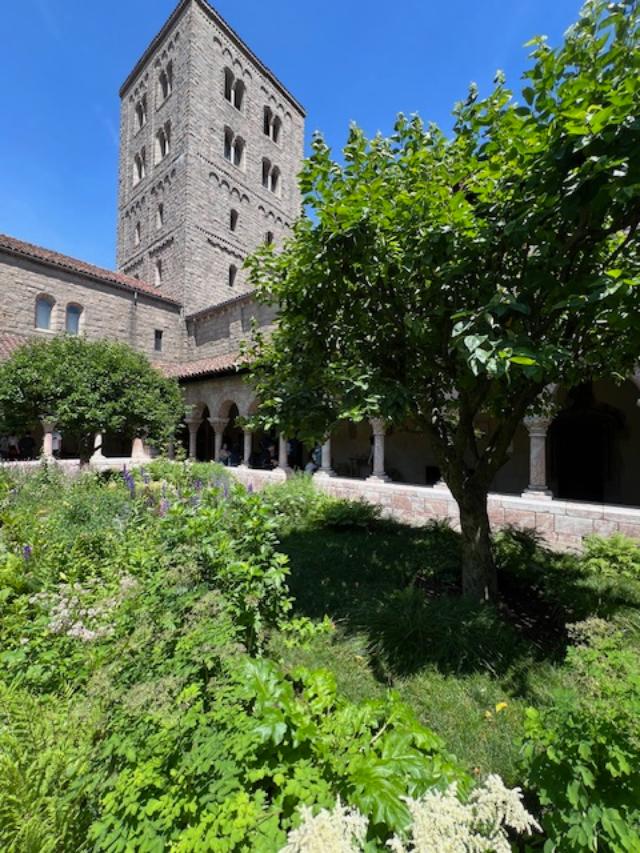
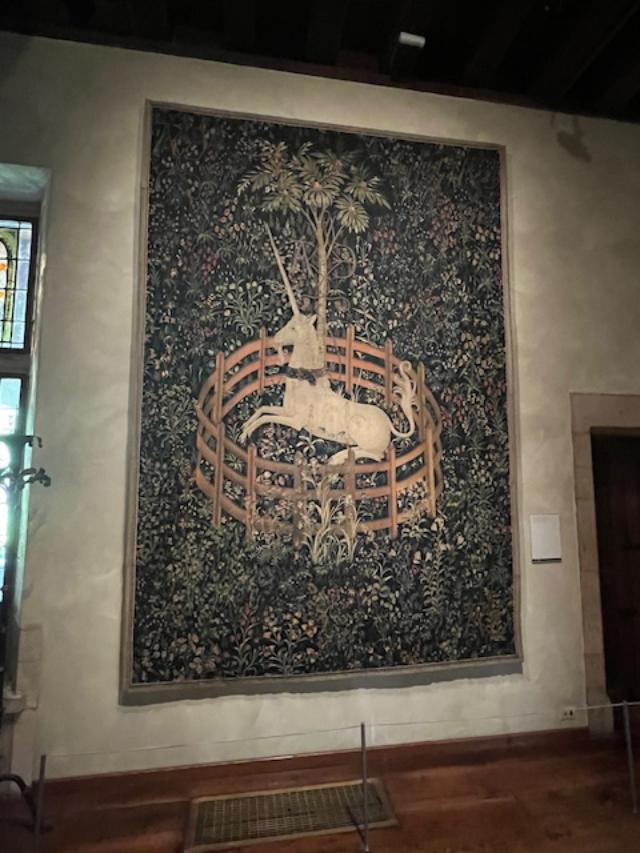
At the top of hill like a crown jewel is the Medieval Galleries of the Metropolitan Museum of Art’s Cloisters Museum. Filled with all the Met’s collections of Religious and Medieval art set into themes of old churches, stained glass windows, flowered courtyards and vistas of the river, it is the perfect place to wonder around.
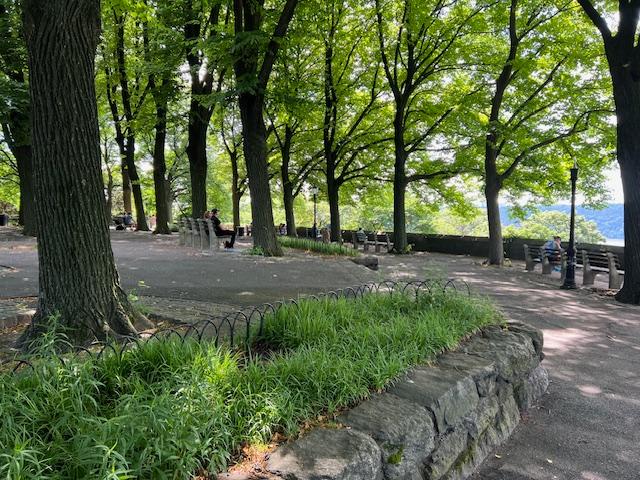
As you pass the Cloisters and walk further in to the park, there is still so much more to see and do. The Linden Terrace overlooks the Hudson River with its large shade trees over head and its stone benches to sit and just look in the distance or read a book. This was the site of the original Fort Tryon and is the highest location in the park.
Linden Terrace is a nice place to relax and read a book
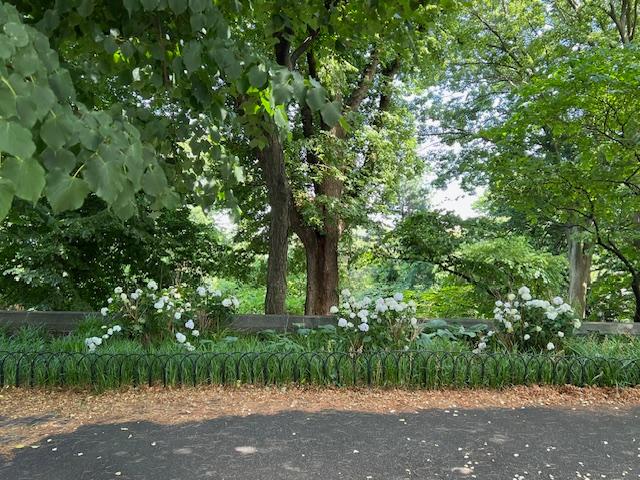
The flowers by the Linden Terrace
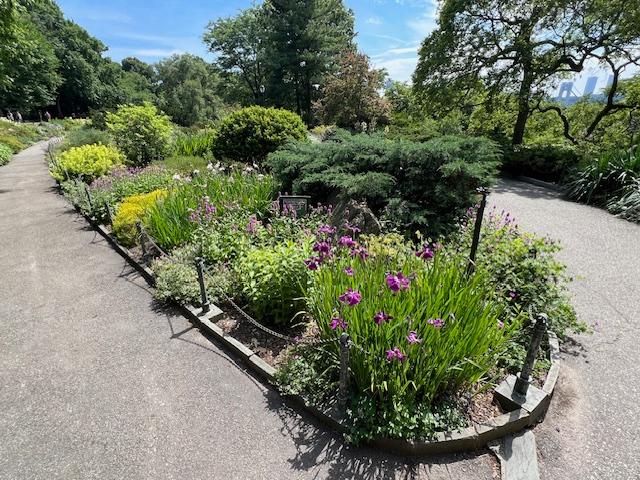
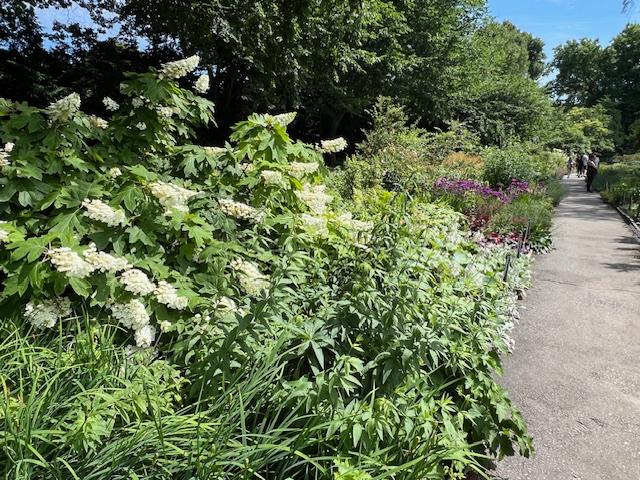
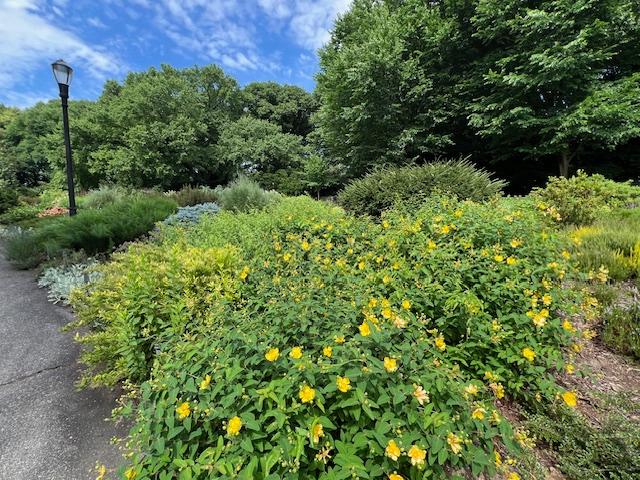
Further down in the other entrance of the park is Heather Garden, a large path of flowers , bushes and trees with benches lining it. The garden was the Olmstead Brothers when the park was taking shape and is a beautiful place to walk in the Spring and Summer months when the park is in full bloom.
The stairs leading to the Linden Terrace
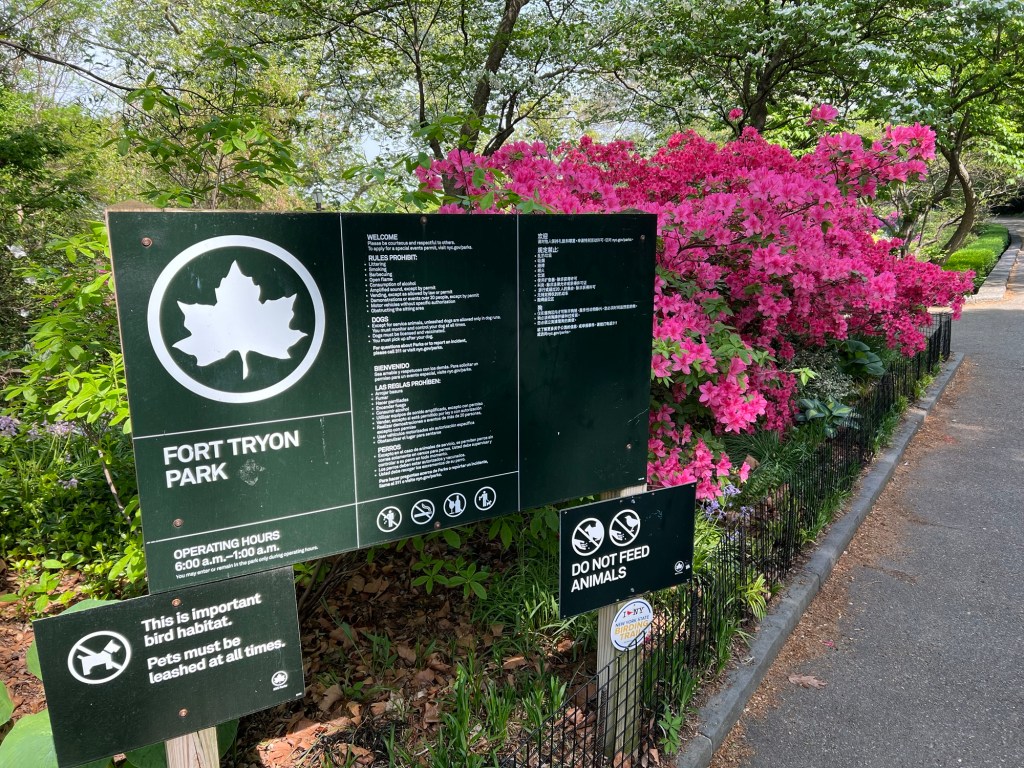
The plaque for Fort Tryon
The anniversary plaque
The Stan Michels Promenade
The Heather Garden in the front
The Heather Garden was recently remodeled to follow the original design by the Olmstead Brothers.
The Heather Gardens
The Heather Gardens in full bloom
The Gardens facing the George Washington Bridge
The Gardens in full view
There is even a terrace restaurant in the middle of the park, the New Leaf Cafe (See review on TripAdvisor-Closed in 2018) which sits off to the side of the Corbin Circle on the other side of the park. The food is over-rated and very expensive. The last time I ate there the menu was pretty standard. It is a great to take out of towners who want a view of something. It is not worth the trip. The views are nice and in the summer months it is pretty but the food and service are standard.
The New Leaf Cafe in Fort Tyron Park (Closed in 2018)
The park has so much to offer in all months of the year especially in the Spring and Summer.
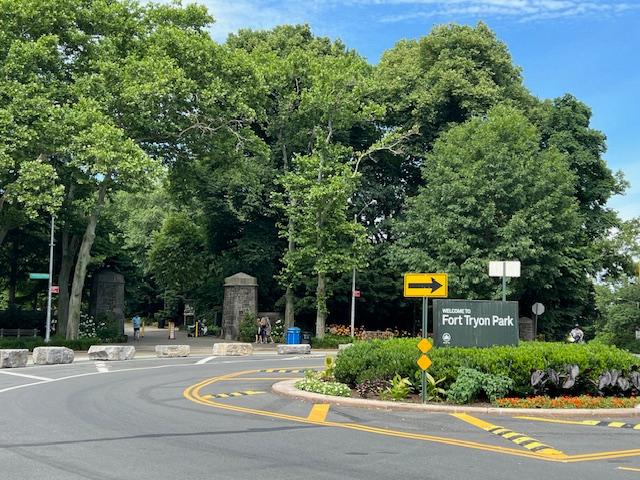
The entrance to Fort Tryon Park
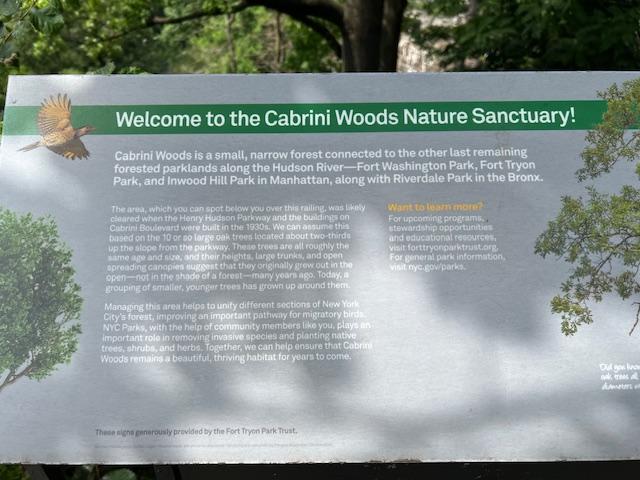
Cabrini Woods Nature Sanctuary in the front of the park
The Cabrini Sanctuary in the Spring 2024
History of Fort Tryon Park:
The area was known by the local Lenape Indians as Chquaesgeck and by the Dutch settlers as Lange Bergh (Long Hill). During the Revolutionary War, the Battle of Fort Washington was fought on this site. The park is built on a high formation of Manhattan schist with igneous intrusions and glacial striations from the last Ice Age (Wiki).
The gardens in the Fort Tryon Park
John D. Rockefeller Jr. bought up most the land in 1917, which by that point had been old estates, to create Fort Tryon Park. He hired the Olmstead Brothers firm, under the direction of Fredrick Law Olmstead Jr., the son of the designer of Central Park, to design the park and James W. Dawson to create a planting plan. Mr. Rockefeller also bought the collection of Medieval art from sculptor George Gray Barnard and it was the cornerstone of The Cloisters Museum which was built in 1939 (Wiki).
The Fort Tryon gardens in full bloom
The stairs in the park
Through the years the park has seen its ups and downs especially in the 1970’s and 80’s with the decline of finances in New York City. There were extensive renovations when finances got better in the late 90’s and parts of the park were fully renovated. The Fort Tyron Park Trust, a non-profit organization was founded in 1998 to help maintain the park (Wiki).
When I walked through the park on the recent Great Saunter walk in 2025, they rerouted us through the park when the Riverwalk was closed for renovation. The park was in full bloom and it was the most spectacular day for a visit.
The entrance of the park on that sunny afternoon
The beautiful colorful tulips at the entrance of the park
The colorful gardens were in full bloom
Everyone was routed through the park on the way to Inwood Park for our rest stop. What I found strange was that the park was so beautiful in full bloom and people were not stopping to relax and just enjoy the views. The gardens were amazing and so colorful.
I stopped to look at the beautiful rock garden
I thought this was so clever. One of the volunteers made this sign up which was so funny!
We walked through the park on our way through the park on the way to Inwood Park.
Open: Sunday-Monday 9:30am-5:00pm (closes 4:00pm between November and January 5th) The house is only open between April and the beginning of January.
Fee: Adults $18.00/Seniors $15.00/Children (5-18) $9.00/Children (under 5 years old) Free (This is for house and Garden/Garden tours are different and depend on the season. Please check the website)
My review on TripAdvisor:
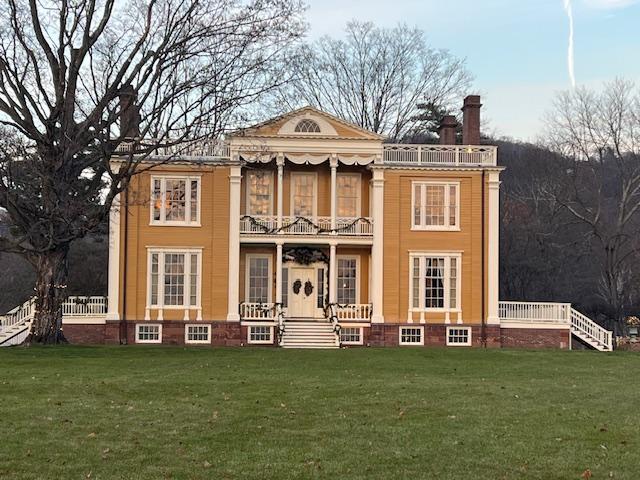
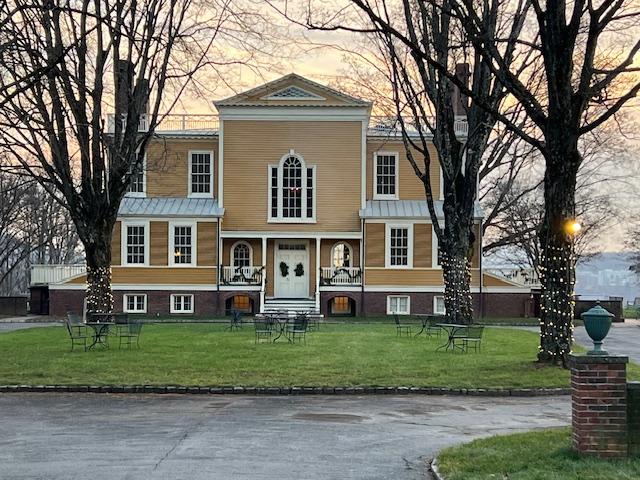
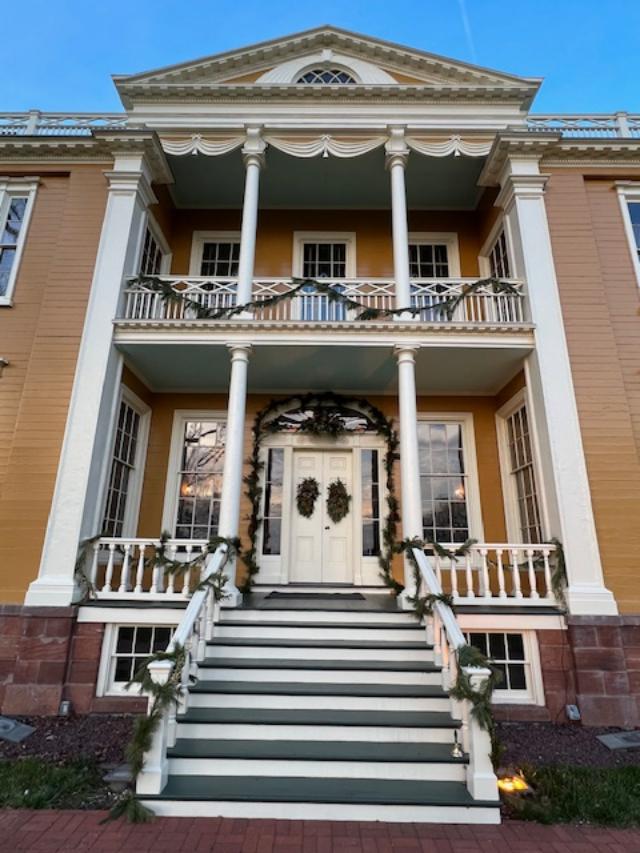
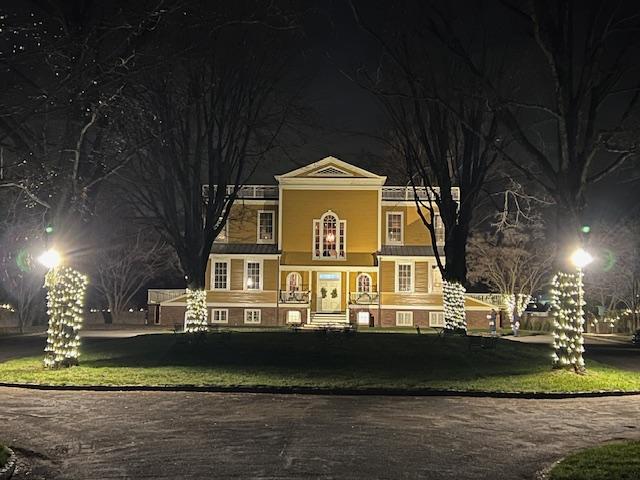
The front of Boscobel during Christmas time.
the back of the house at Christmas time.
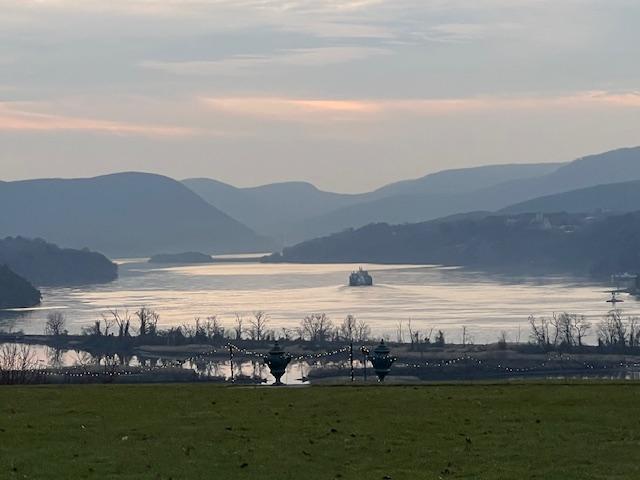
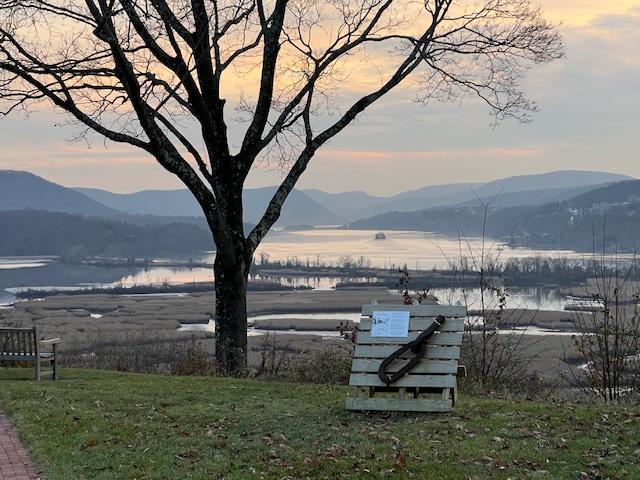
The view from the back of the house of the Hudson River.
The view from the back of the house at twilight.
Entering the house for the evening “Candle Light” walking tour.
I recently visited the Boscobel House and Garden for their Christmas decorations and for a tour of the house at the holidays. Like most houses of its time period (the house was built in 1806), it was Post-Revolutionary War and the decorations would not have been that lavish as in the Victorian times. In 2023, the house had “Evening Hours” where you could take a self-guided tour and then come back to the Visitors Center for pastries, candy and hot drinks of Apple Cider and Hot Chocolate. These were the best nights to attend. For $25.00, you got to take your time in each room and talk with a docent about the history of the house.
The Grand Hallway display Boscobel
The floral displays in the Grand Hallway were amazing.
The Boscobel Grand Staircase in the Great Hall.
When you enter the house from the front entrance, you enter the Grand Hall with its winding staircase decorated in garland, flowers and lights. The Grand Hall was also once used for balls and informal dances. Decorated for the holidays, the Great Hall was dazzling for the Christmas holiday season.
The Great Hall decorated to the hilt for the holidays.
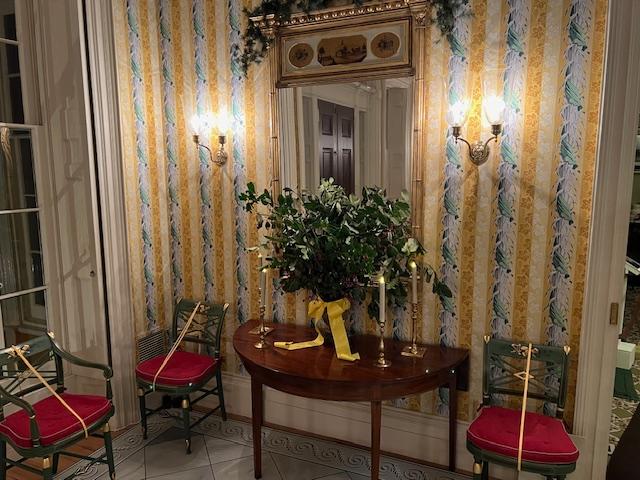
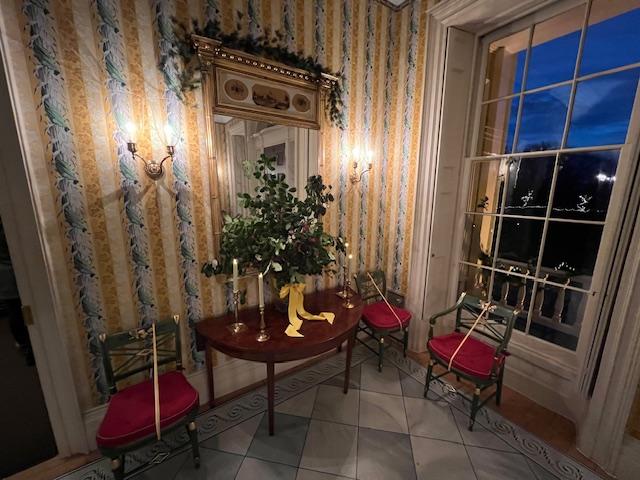
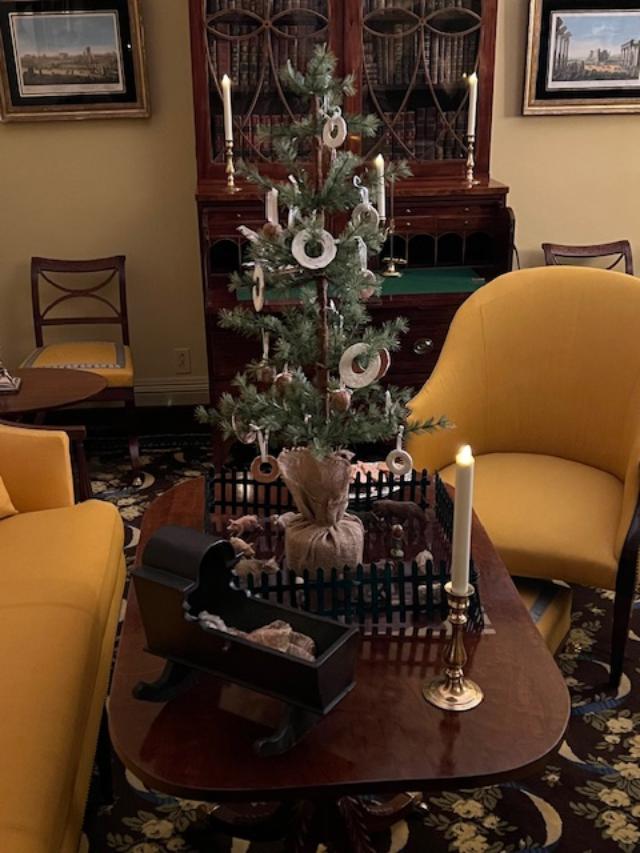
The house was tastefully decorated with garlands and mistletoe along the archways inside the foyer and with holly and mistletoe inside the house. Some of the tables were set for afternoon tea and entertaining in the Front Drawing Room and there was a small table Christmas tree which were just coming into vogue after the War of 1812. The Front Drawing Room was also set for entertaining as would be done in the holidays months in the later 1800’s.
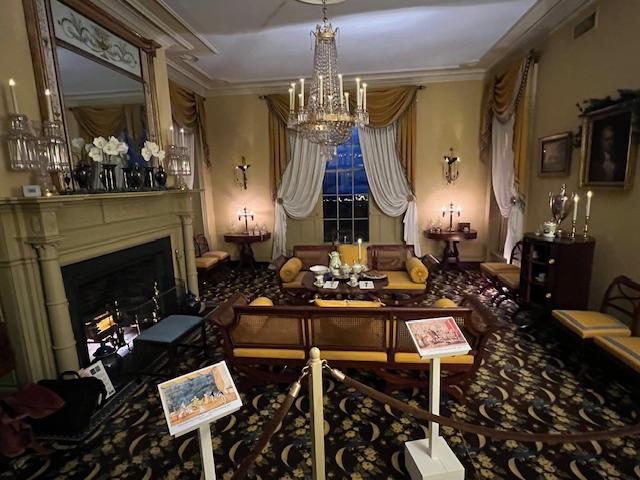
The Front Drawing Room just off the Great Hall.
The Front Drawing Room set for tea during the holidays.
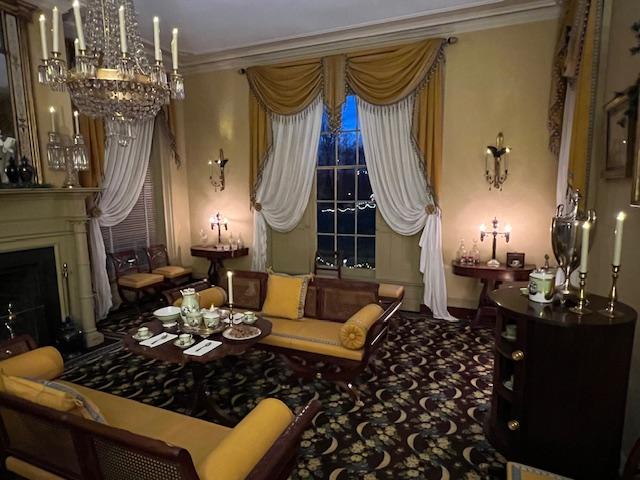
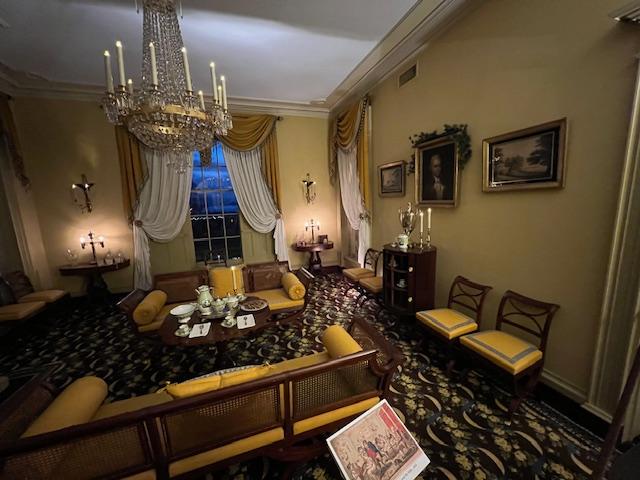
The Front Drawing Room
The Front Drawing Room is where guests would be received when they entered the house. They would be entertained until the Dyckman’s were ready to greet visitors. Tea and refreshments would be served here while they waited. After the guests would be received, if they were going to stay for the afternoon or evening, they would move to the Back Drawing Room for games, entertainment and conversation before moving on to the Dining Room for the main meal.
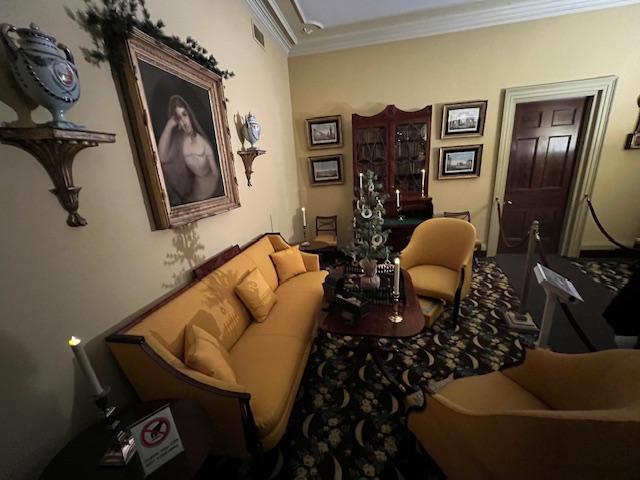
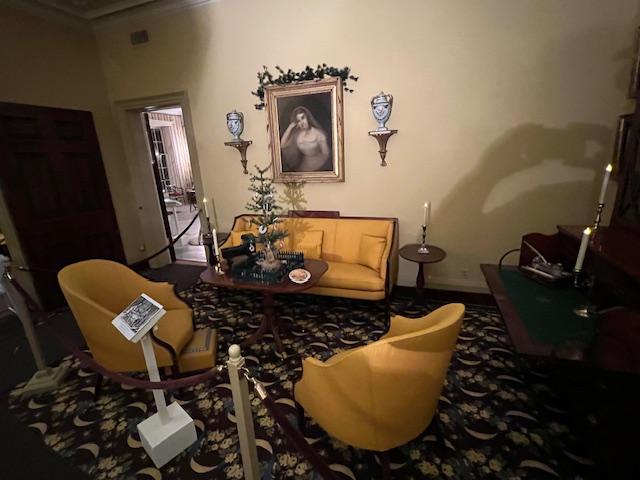
The Drawing/Music Room is where Mrs. Dyckman would have received guests and where informal entertaining would have happened. There was also musical instruments and player music boxes on display.
The Back Drawing Room with the Table tree.
The Back Drawing Room with the portrait of Mrs. Dyckman.
The Table Top tree in the Back Drawing Room.
Our tour guide, Sam, was fantastic and I hope when you tour the house he is your guide. I was impressed with his knowledge of the house and of the Dyckman family. I had not realized that they were related to the Dyckman Farmhouse family in Inwood (See my review and write ups on the Dyckman Farmhouse here on VisitingaMuseum.com and MywalkinManhattan.com: https://wordpress.com/post/visitingamuseum.com/771)
He told the story of Mr. Dyckman, who had the house built, how he made his fortune, how he died young without ever living in the house and then his son and his wife dying around the same time. The son-in-law then squandered the fortune with a series of bad investments and the house was foreclosed. It sat empty and was falling apart until a group of local citizens saved it. The house is now back in its full beauty and furnished in period furnishings to reflect the time that the house was built. The tour then guides you from the Front and Back Drawing Rooms to the Main Dining Room, where the real entertaining would take place.
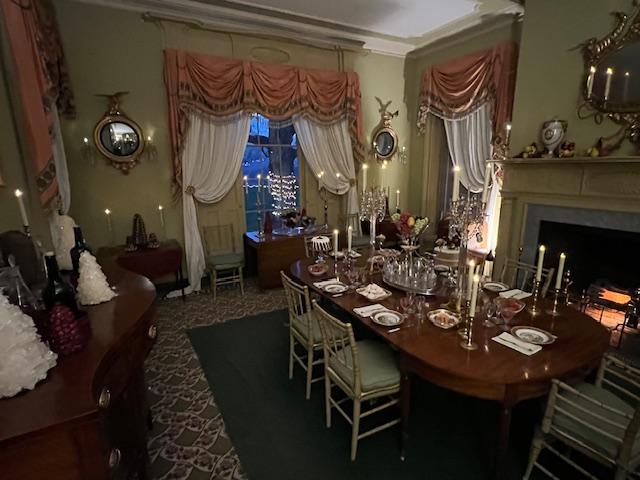
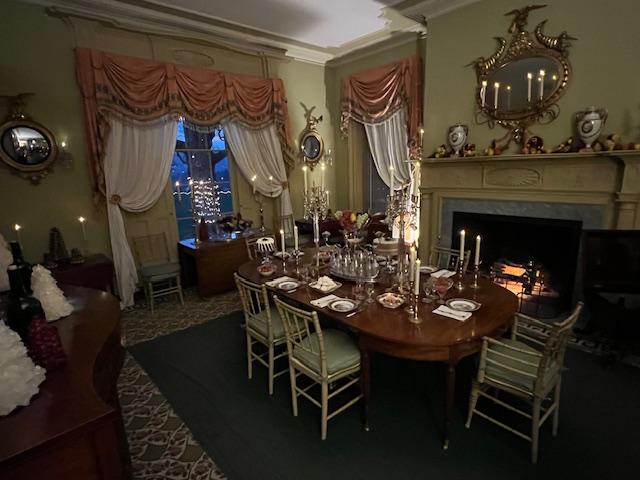
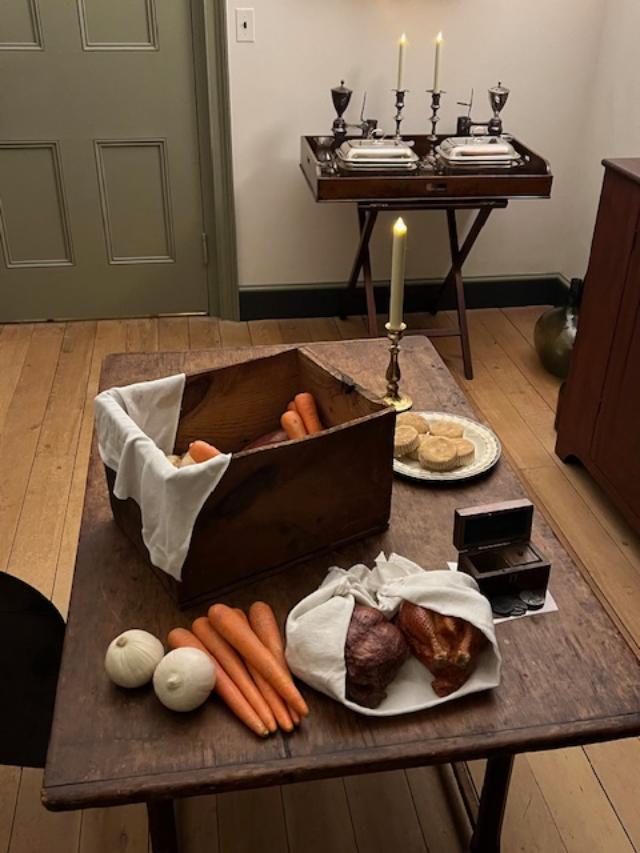
The Main Dining Room was set for a Christmas dinner circa 1830’s and 40’s with the elaborate dishes, crystal and silver and laded with the foods of the holiday season. Meals would take several hours and many courses and would be accompanied by good conversation and maybe some music.
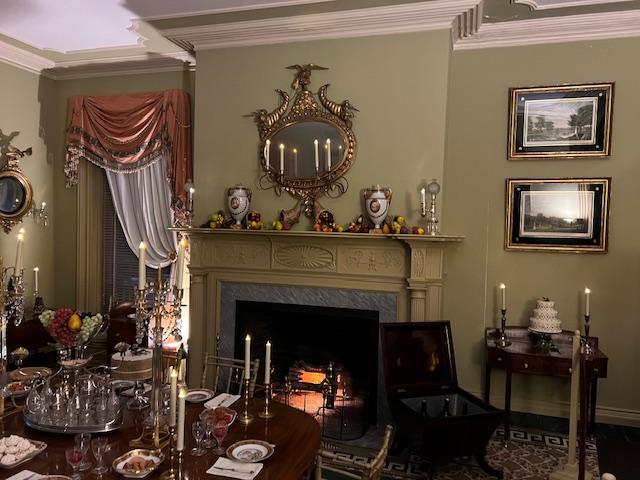
The Formal Dining Room’s table was set for a holiday dinner. The candles had been lit (they were electric) and the room had a warm glow to it. The windows must have let in natural light so earlier meals must have been quite nice when in the summer months the sun shined inside the room. There was custom made china set on the places and there was family silver next to it. The side boards were made by Sheraton and the cut glass had been imported from England.
The formal Dining Room set for Christmas dinner.
Another view of the Dining Room.
The fireplace in the Dining Room decorated for the holidays.
The Christmas desserts for dinner in the Dining Room at Boscobel.
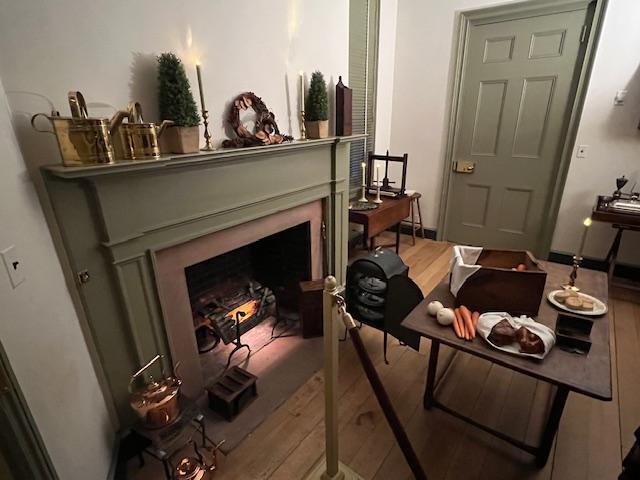
In the back of the Dining Room was the dumbwaiter and the service area, The Warming Room, where items would be finished once they came up from the basement kitchen. They would be plated, decorated and served from this area and the timing would have had to be precise so the food did not arrive cold into the Dining Room.
The Warming Room where meals would be finished before serving.
Items to be served at meals in the Warming Room.
We then toured the back areas of the Warming Room, where all the food would have finished and plated. The room had all sorts of gadgets to keep the plates warm and where all the silver and china would have been kept. After the tour of the downstairs was finished, it was time to climb the Grand Staircase to the rooms in the second floor of the home.
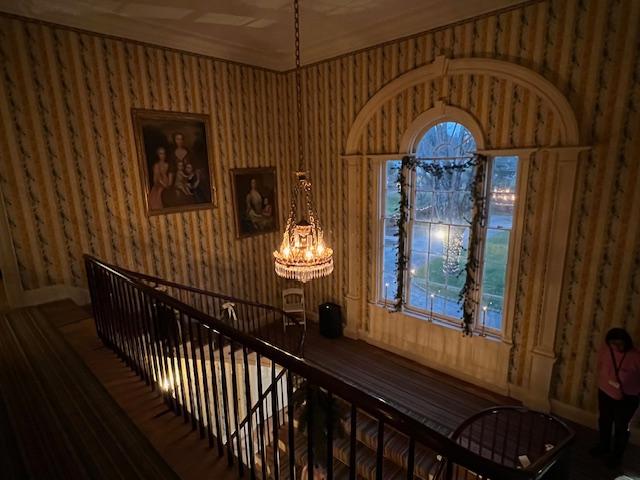
The Grand Staircase to the second floor bedrooms.
The other side of the Grand Staircase.
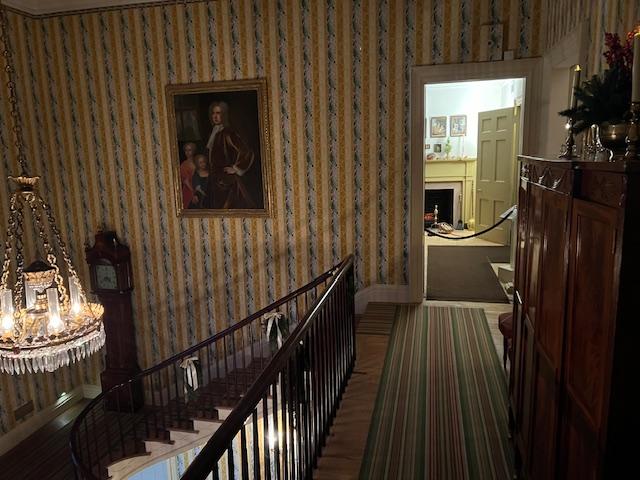
The second floor Landing at the top of the steps is where all the bedrooms were concentrated.
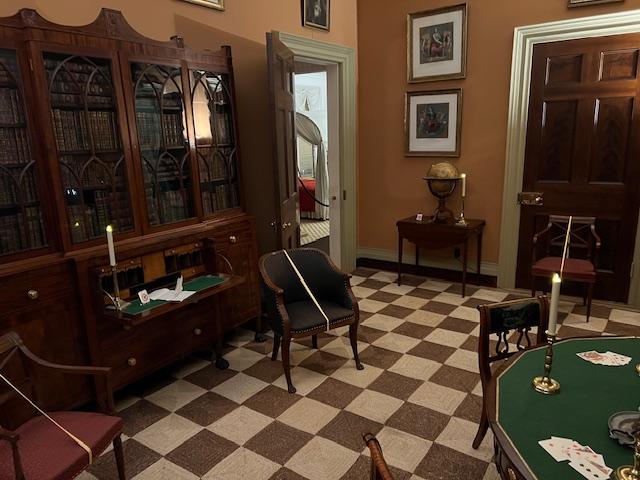
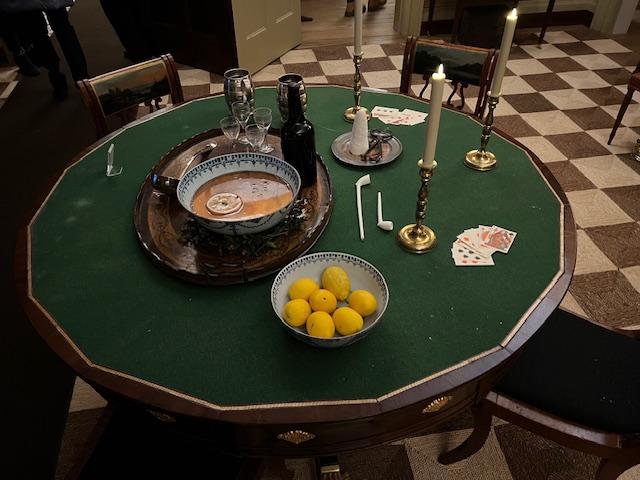
The Card Table at the top of the Landing in Boscobel.
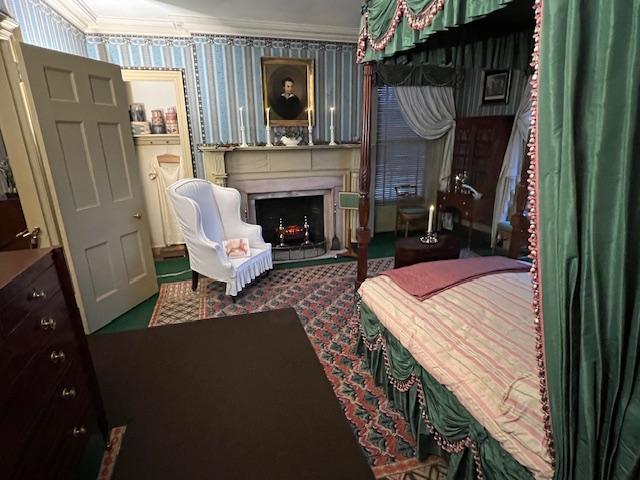
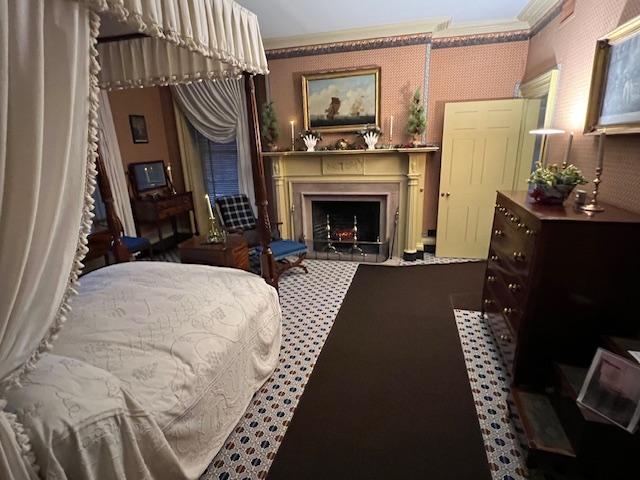
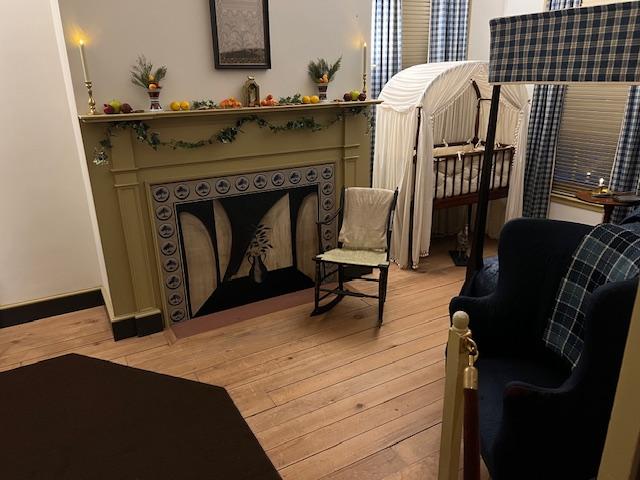
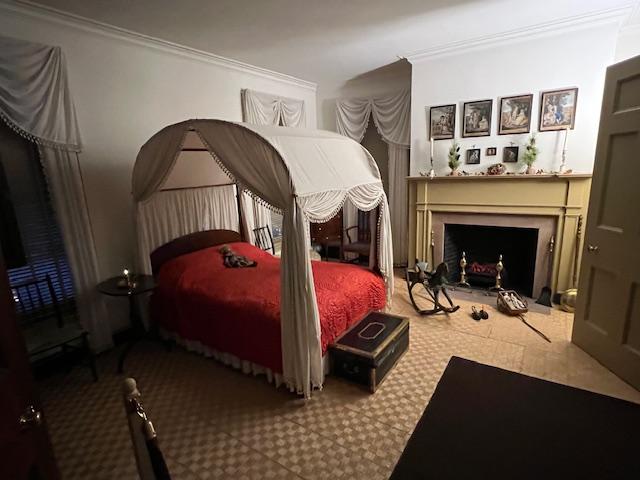
We then toured the upstairs bedrooms, where we learned the family would have ‘camped out’ in for the cold winter months. I was surprised to learn that the whole front of the house was closed off and the upstairs bedrooms would have been sealed off with fireplaces to keep them warm and the cloth hangings around the bed to keep out the drafts. Both mother and son’s bedrooms were nicely furnished with period furniture.
The Mrs. Dyckman’s bedroom at Boscobel.
Peter Dyckman’s Room on the second floor
Peter Dyckman’s Room at Christmas time.
Sills Dyckman’s Room with the nursery.
Sill’s Dyckman’s Room at Christmas time.
The guest room
The Guest Room at Christmas time.
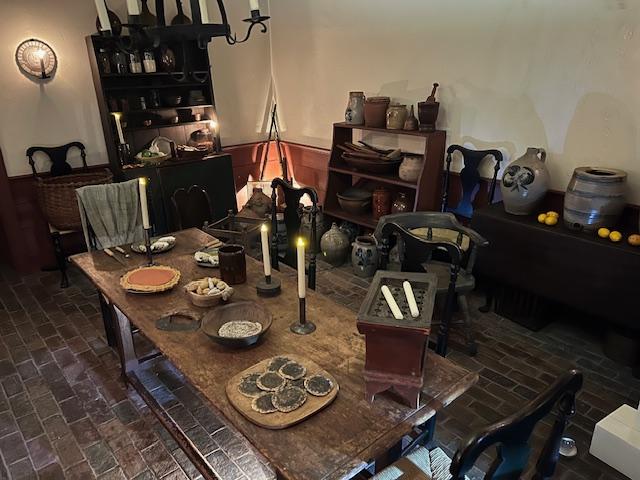
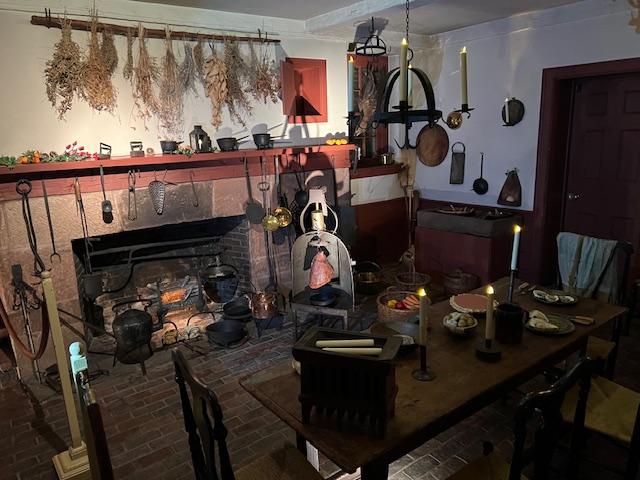
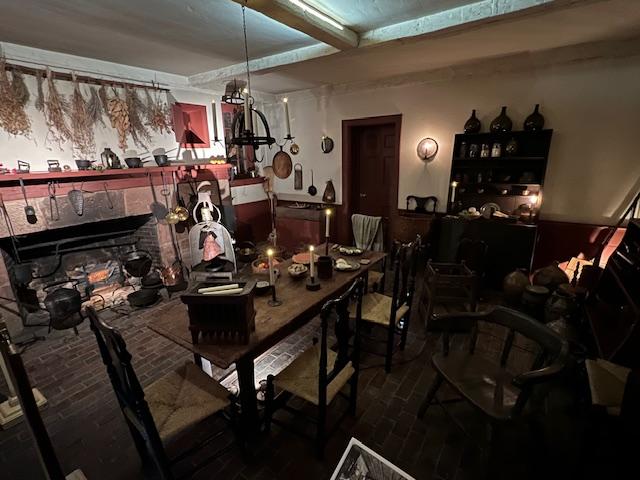
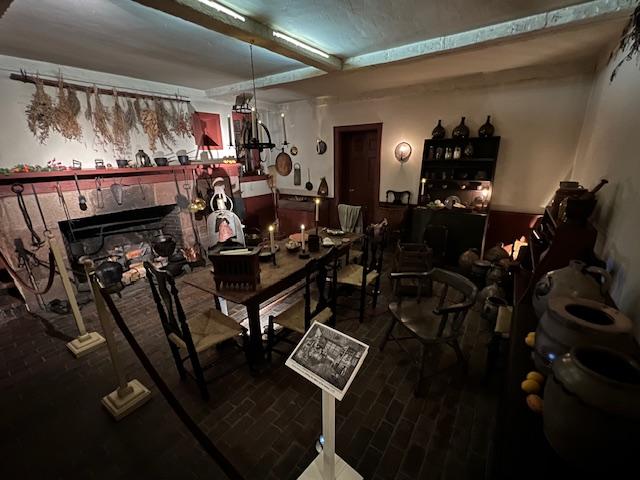
Our last stop was the kitchen in the basement back area of the house where all the food would have been prepared and brought up to the Butler’s Pantry. There were all sorts of kitchen equipment for roasting, baking and boiling. You could tell that it was not easy work cooking these elaborate meals without the modern conveniences that we take for granted today. These cooks had a tougher time with the stoves and fireplaces as a source of cooking.
The Dyckman kitchen preparing Christmas dinner.
The Dyckman basement kitchen during the holidays.
The kitchen during the Christmas
The Dyckman Kitchen where the servants were preparing a holiday dinner.
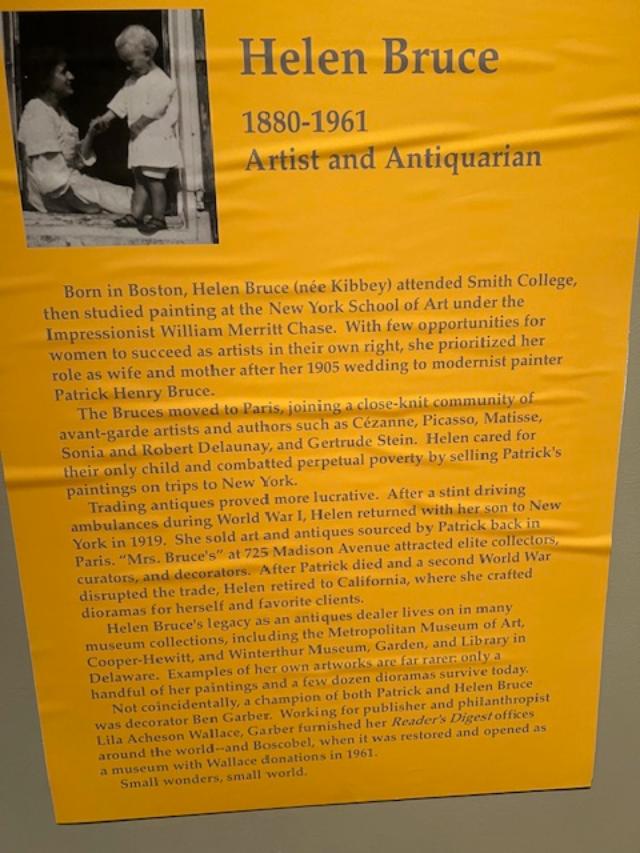
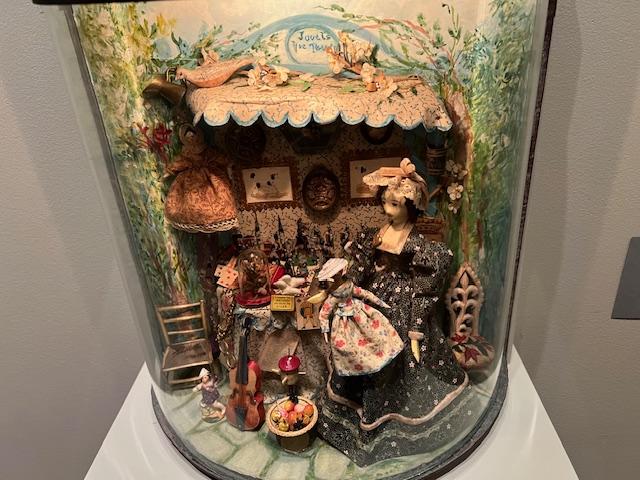
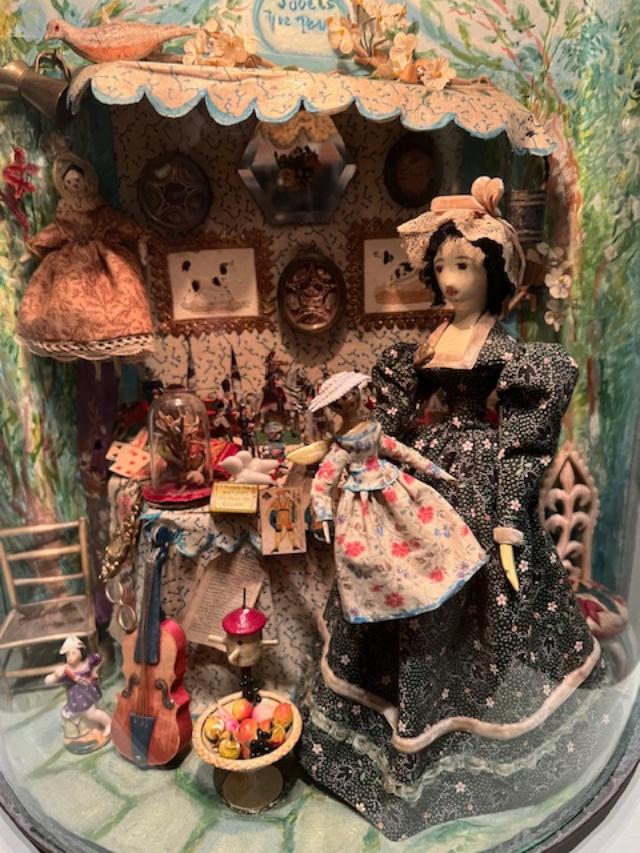
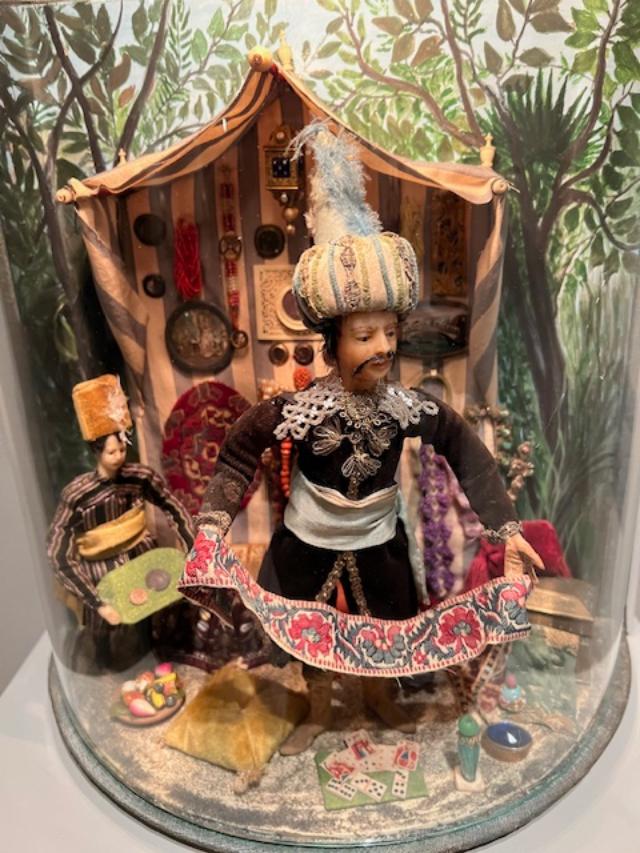
In the lower level gallery, there was an exhibition of miniature displays by artist Helen Bruce. She created these tiny diorama’s that are on display. She was quite clever in the details.
Bio on Artist Helen Bruce
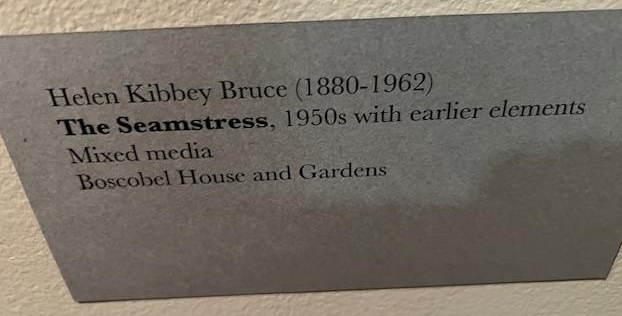
‘The Seamstress’ by Helen Bruce
‘The Seamstress’ by Helen Bruce
‘The Toy Shop’ by Helen Bruce
“The Toy Shop” by artist Helen Bruce.
“The Rug Merchant” Artist Helen Bruce.
“Seamstress” by artist Helen Bruce.
The gallery was lined with a series of these diorama’s and each was very detailed in their appearance.
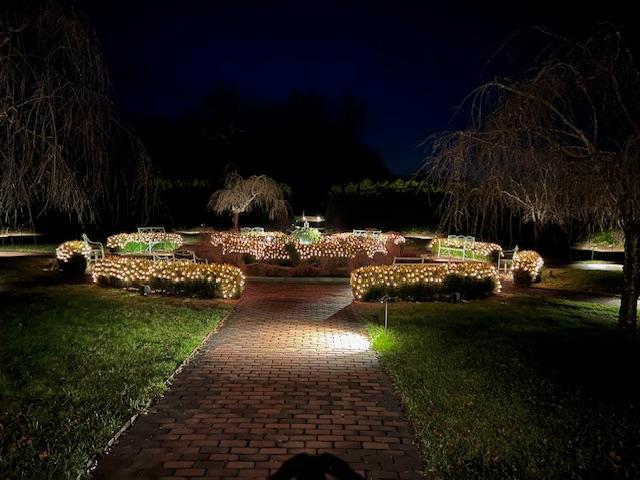
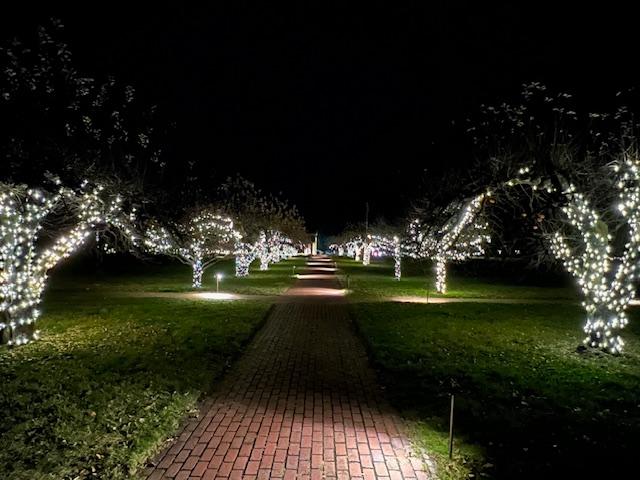
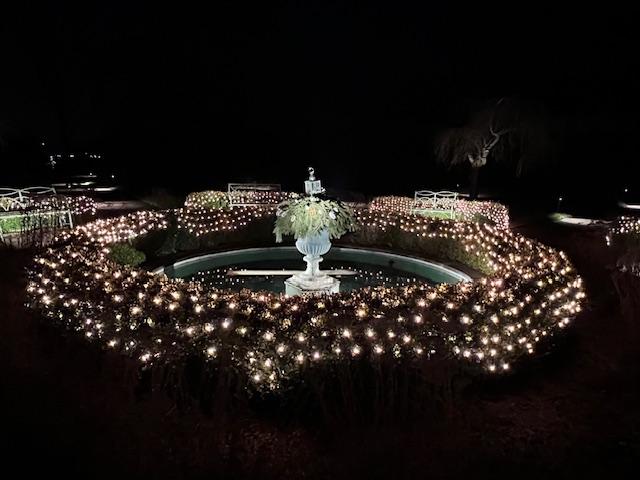
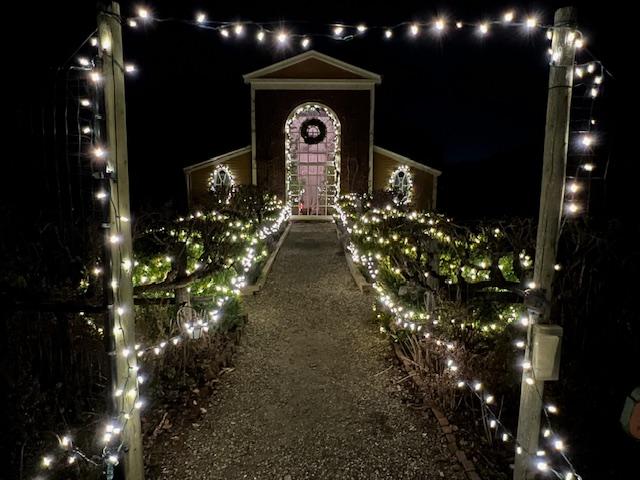
After the self-guided tour was over, I was able to walk around the property and see the gardens. At night the gardens were all lit with Christmas lights and the trellises were done with garland.
Boscobel’s Gardens at night during Christmas.
The walkway through the gardens.
The fountain at Boscobel is decorated to the hilt.
The Herb Garden at night.
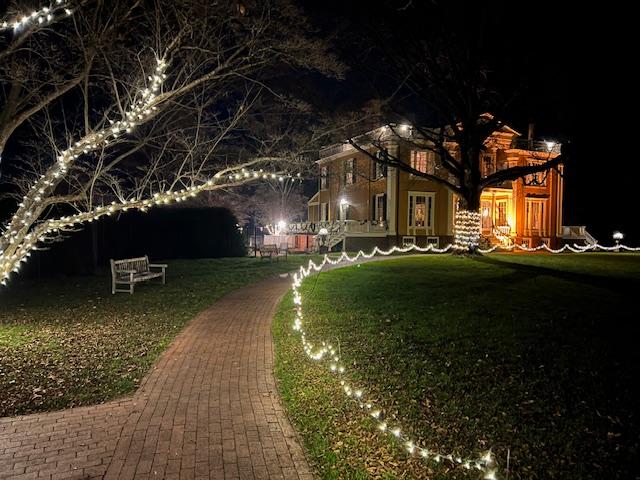
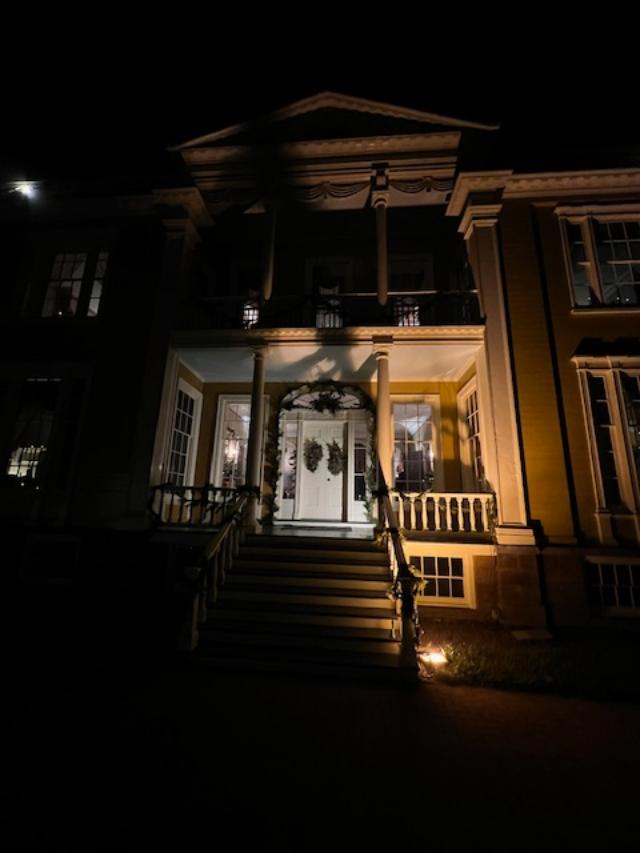
The Front of Boscobel at night.
The front of Boscobel at night when I left the house.
The back of the house on the way back to the Gift Shop.
When I toured the house in 2019, what I thought was a nice touch at the end of the tour in the kitchen area was that Sam served us cold apple cider and small gingerbread men which I thought was special keeping with the house’s tradition of a place of entertainment. I thought it was gracious and very much welcome.
When I went to the evening Open House in 2023, the gift shop was serving refreshments when we returned from our self-guided tour. They were serving Hot Chocolate, Hot Apple Cider, Doughnuts, cakes, cookies and Christmas candy while we walked around the Visitors Center.
The Gift Shop at Christmas time.
The Gift Shop at Christmas time.
It really was an interesting tour and I will have to return in the summer months.
History of Boscobel House & Gardens:
States Morris Dyckman was a descendant of a German-Dutch family whose roots in New York stretched back to 1662. During the American Revolution, he was a Loyalist serving as a clerk in the British army’s Quartermaster Department. In 1779, he accompanied his quartermaster superiors to England and for the next decade he rebutted the government allegations that the quartermasters had engaged in profiteering. (As the keeper of the department’s ledgers, he well knew how they had fattened their purses, assets Dyckman’s biographer James Thomas Flexner). The officers were eventually cleared, largely because of Dyckman’s testimony. They rewarded him with an annuity.
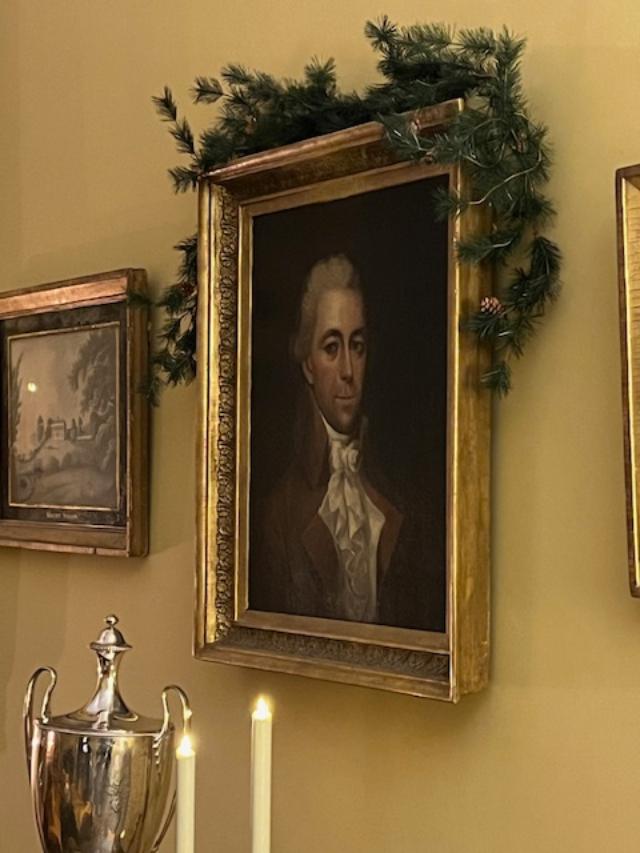
The portrait of States Dyckman in the Front Drawing Room.
Dyckman returned to America in 1789 after a general amnesty of Loyalists had been declared. Five years later, he married Elizabeth Corne, a member of a distinguished New York family and 21 years his junior. Dyckman returned along to England in 1800 to settle problems with the payment of his annuity. The trip lasted nearly four years but was a success. He returned a rich man worth more than seven million dollars today. Before he left England, he bought many items for the house including silver, china, glass and books for his library.
The architect for the house was unknown but records show that Mr. Dyckman had some influence in the design of the house. Mr. Dyckman died in 1806 at age 51 and the house had only had the foundation finished at time. His 30 year old wife, Elizabeth finished the house in 1808 with the help of her husband’s cousin, William Vermilyea. She furnished the house and added to its inventory. She and her son, Peter lived in the house upon finishing it. She lived in the house until her death in 1823 and her son, Peter died the following year in 1824 at age 27. The house stayed in the family until about 1899 and then was foreclosed on. According to the guide, the house had not been updated at that point and was falling apart. The house had a series of absent owners over the next few years and then sat empty. It was bought by Westchester County in 1924 and the grounds were turned into a park.
Boscobel House & Gardens in winter
In 1945, the park was acquired by the Veterans Administration for a hospital and the owners took care of the exterior for a time. By 1954, the house was considered an excess on the budget and was being sold for $35.00 for demolition.
The house was saved by Historian Benjamin West Frazier and some friends of his who raised about $10,000 to have the house moved and dismantled to save ‘this treasure’. The house was stored in pieces until 1955, when Lila Acheson Wallace, the co-founder of Readers Digest became involved in the project.
She purchased the land that the house now sits on and devoted her time and money to have the house restored and worked with the curators of the Metropolitan Museum of Art, where she was a donor to help restore the house into its period design with landscaped gardens and period furniture. In 1959, she commissioned the firm of Innocenti & Webel to create the gardens that surround the house. The house opened to the public in 1961.
(This information was taken from the Boscobel Museum Booklet and I give them full credit for the information)

















































 Visiting a Museum: The Unique, Unusual, Obscure and Historical