The Bronx Zoo
2300 Southern Boulevard
The Bronx, NY 10460
(718) 367-1010
Open: Monday-Friday 10:00am-5:00pm/Saturday & Sunday 10:00am-5:30pm
Fee: Members Free/Adults-Full Experience $39.95/Senior Full Experience $34.99/Child (3-12) $29.99/Child (under 3) Free
My review on TripAdvisor:
My review on TripAdvisor for the “Holiday Lights Festival”:
Places to Eat:
The Dancing Crane Cafe
Inside the Zoo
My review on TripAdvisor:
These experiences at the Bronx Zoo cover various Members Nights and visiting the Zoo at Christmas time for the Holiday Lights event. Each were written at different times of the year.
My blog on the Private Members Night at the Bronx Zoo 2022 on MywalkinManhattan.com:
https://wordpress.com/post/mywalkinmanhattan.com/9545
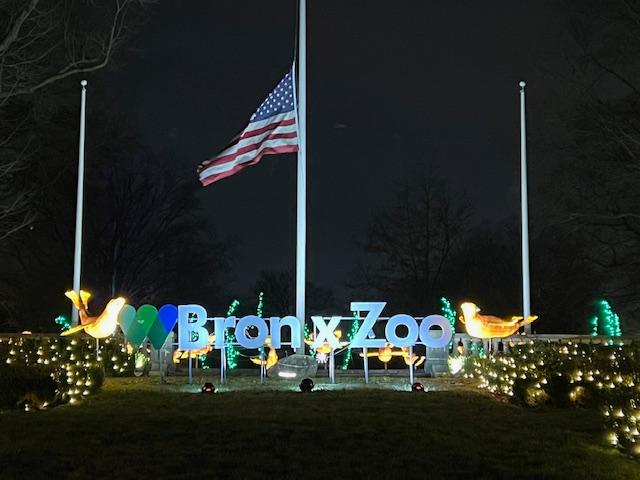
The entrance of the Bronx Zoo from the original entrance by Astor Court

The 125th Sign by the “Holiday Lights” event that evening
I have been coming to the Bronx Zoo since I was five years old, and I never really thought it changed that much over the years. I recently went to a Private Members Night last Fall (See Day One Hundred and in MywalkinManhattan.com) and realized that I had not been there since they opened the Congo Gorilla Forest exhibition and that was in the late 90’s. I had not been in the zoo for over twenty years. A lot has changed since I visited back in 1997. A lot of new exhibitions have opened and renovations made.
When you get off of the subway at West Farms Square/East Tremont stop for the zoo that leads to the Asian Gate, you are greeted by these beautiful and colorful glass murals of contemporary scenes of animals from the zoo by artist Naomi Campbell. These interesting panels show different points of the zoo.
The artwork mosaics at the subway station:
https://www.mta.info/agency/arts-design/collection/animal-tracks
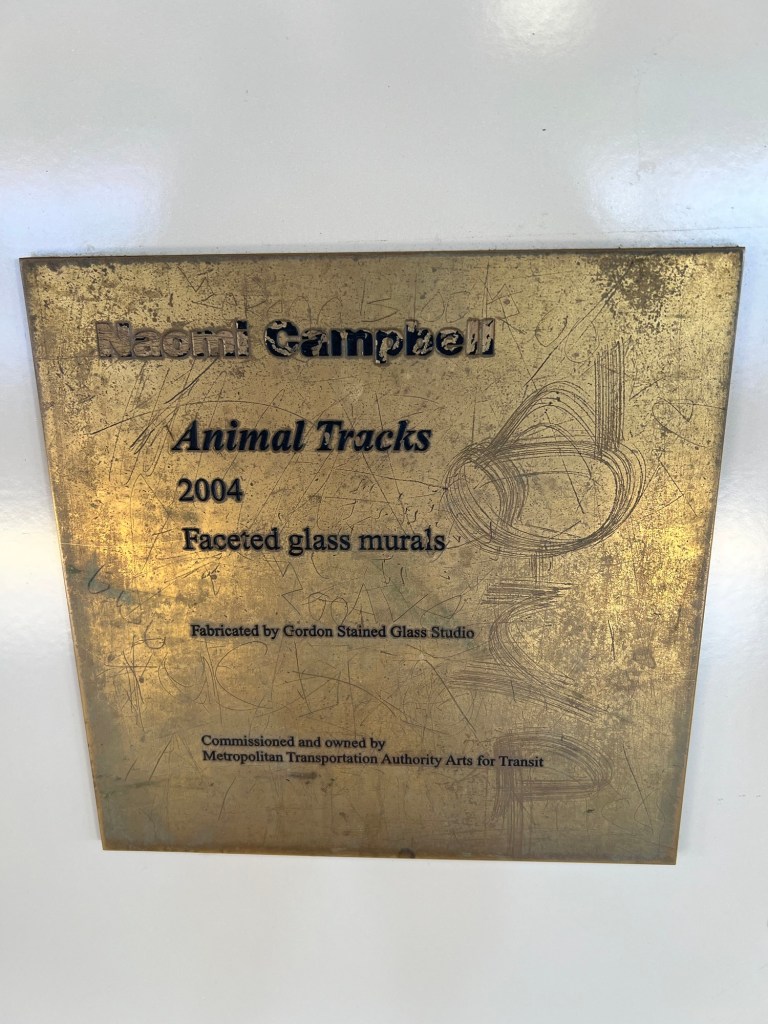
‘Animal Tracks’ was created by artist Naomi Campbell

Artist Naomi Campbell
https://www.naomicampbellartprojects.com
https://www.instagram.com/naomi.campbell.7334/?hl=en
Artist Naomi Campbell is as a Canadian born artist who graduated from the Champlain College in Quebec and from the Art Students League of New York. She is known for her paintings, drawings and print making. Her sculptures are known for action and movement (MTA NYC website).
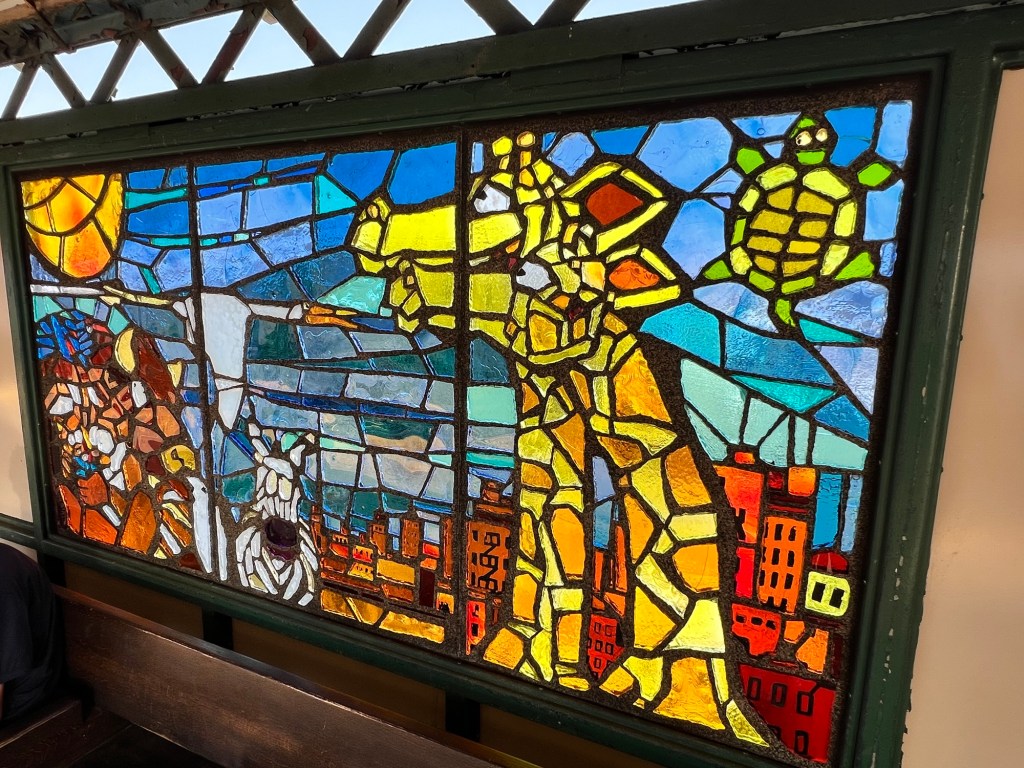
Panel One
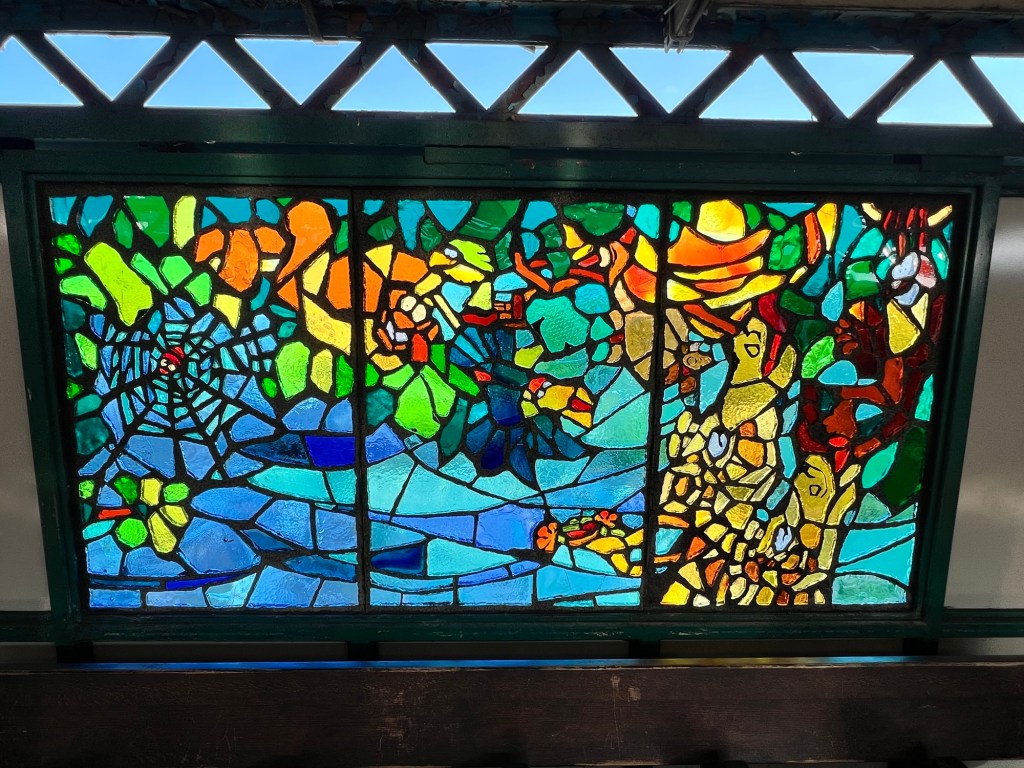
Panel Two
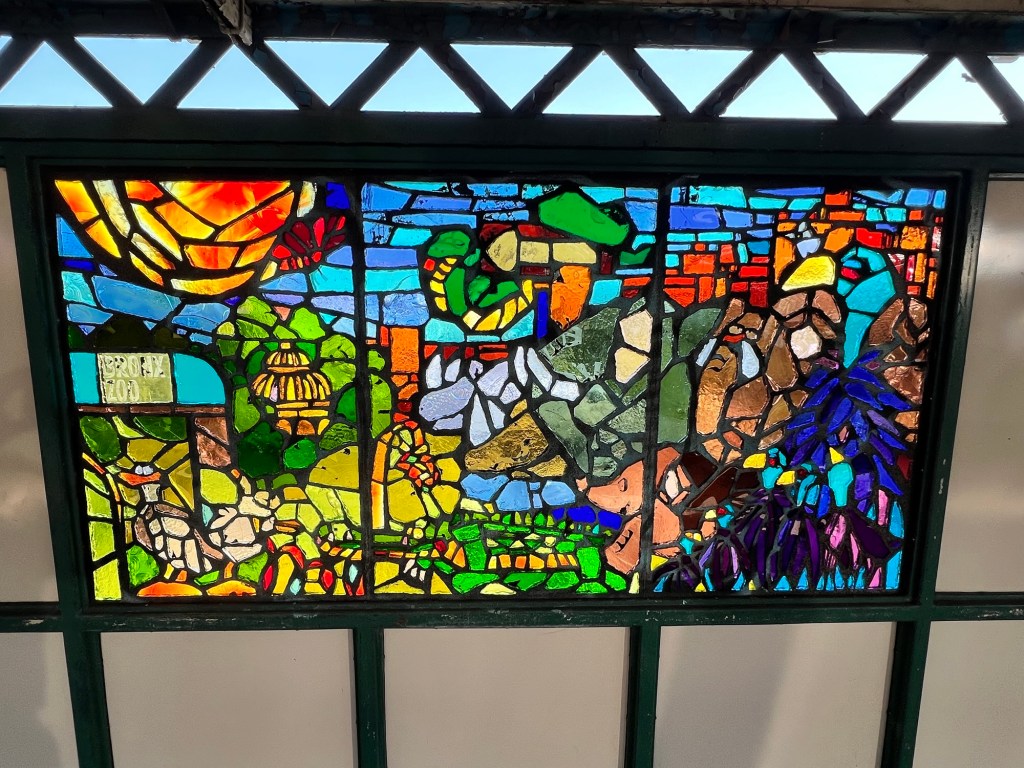
Panel Three
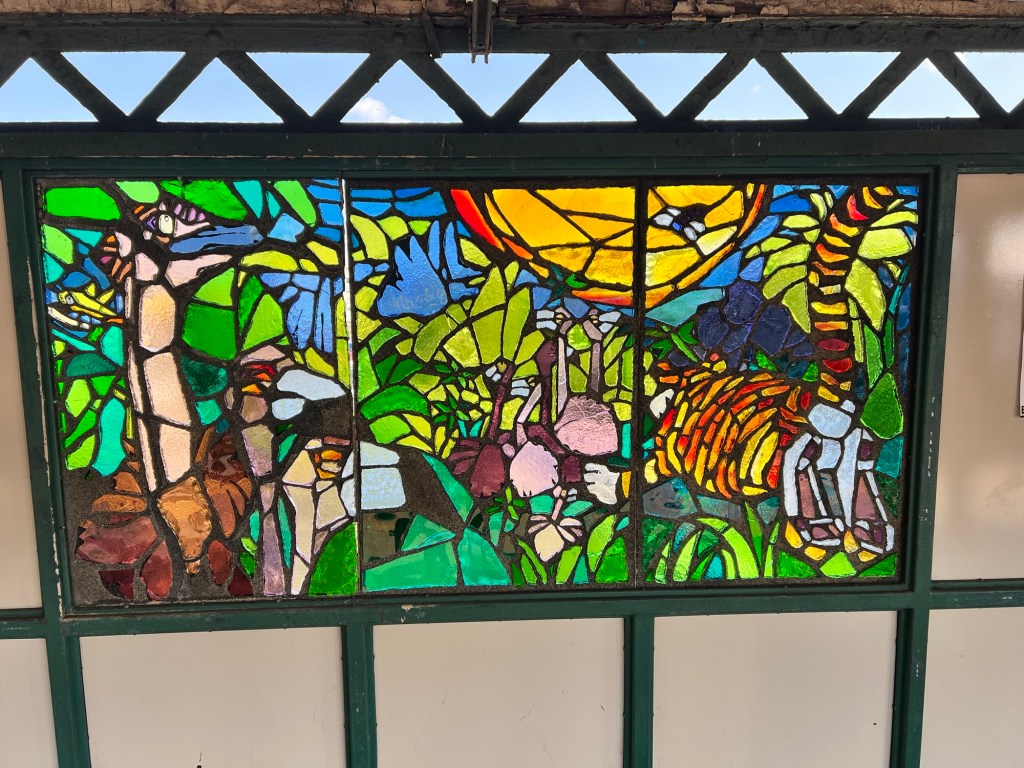
Panel Four
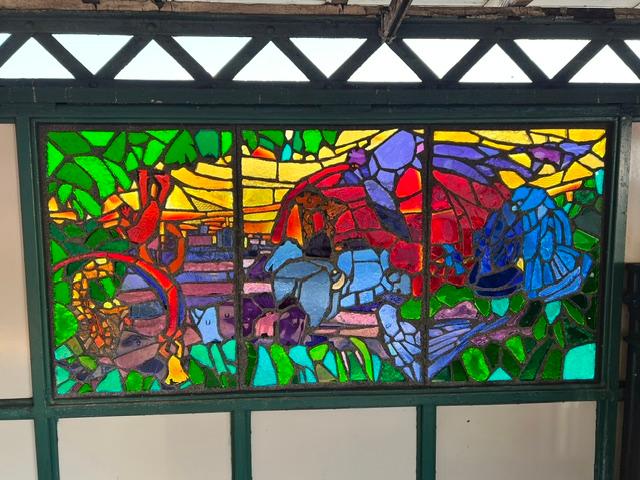
Panel Five
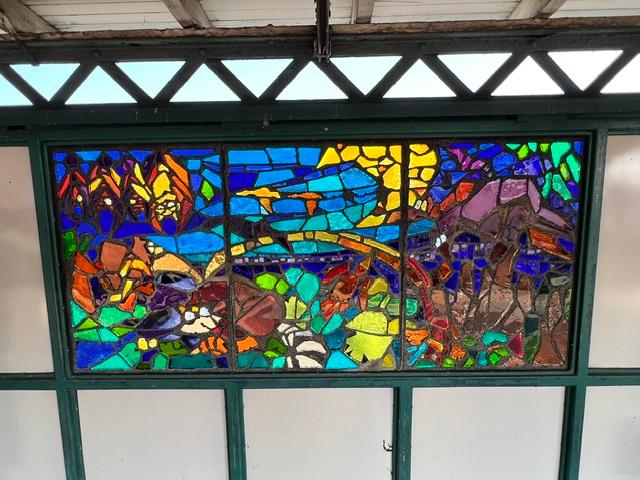
Panel Six
My After just finishing Turtle Bay and my next start of the walk in East Midtown, I took the night off and had been invited to a private members night at the Bronx Zoo. Having been occupied by my responsibilities on the fire department for the last six years and always being the night of our department meeting I always had to miss the event. Since I am no longer Secretary of the Department, I decided to attend this year.

The entrance of the zoo
On a rather overcast Thursday night I took the subway up to the Bronx for the event (I was smart in calling first to be sure it was still happening and Membership said it was).
I had not taken the subway this far up to the Bronx in years and was amazed at all the changes. The South Bronx has been on a building spree for the last twenty years and it shows with all the new apartment buildings springing up all over the place. I have not seen this much new construction since walking around West End Avenue in Manhattan.
I was not sure where to get off on the subway and forgot to ask when asking the best way to get to the zoo. I just took the Number 2 train up to the Bronx and got off at the Bronx Park stop. That was interesting. I thought that the subway would drop me off closer to the entrance but this took me to the other side of the park and I had to walk around. Did I feel like a fish out of water.
I was in the middle of an Arabic neighborhood where everyone totally ignored me. I guess that was the interesting part of it was feeling invisible. It was mostly made up of small businesses with lots of restaurants and bakeries in the area. Walking down 180th Street from the subway finally got me to the entrance to the zoo.
I had not been to the Bronx Zoo in about twenty years, not since the Congo Exhibit opened so it was a treat for me. The only problem with Member’s Night was the threat of rain as it had been cloudy all day but that did not damper the crowds that came into the zoo. For the most part, there have been many changes to the zoo over the years and the philosophy of raising animals in captivity has changed so the exhibits have changed with it.
The only problem I saw was that many of the animals looked bored or contained. Almost like a nursing home for the wild. The zoo does need to look at the displays more to see how the animals are reacting to it. I have to say though, the zoo really has done a nice job with the new displays and done a good job with keeping them well-feed and happy.

The Bronx Zoo Map
I started my night in the Jungle World exhibition. This glassed in exhibit is home to birds, insects and monkeys all of which are a tad bit small for the animals. There was a lot packed into a small space. It was an interesting to see the animals in a somewhat realistic environment but still I saw the looks on the monkeys faces and they looked bored. I think they should pair this exhibit down with less mammals and give the animals left more space. It is fascinating how they expect something to live in such small quarters.

The monkeys still do there own thing
It was more fun when I got to the monorail and got to see animals in a larger more realistic habitat. Here they had room to move around. Even so they way the animals looked at us passing by I don’t know who was looking at who. The ride was interesting as each animal lived in its own place to live and roam.

The pathways during the summer months
We had a guide who took us past herds of deer, a lion den, two rhinos who were playing amongst each other and bison who were going about their business. I liked this exhibition because it gives these animals a realistic home with room to move around.

The Grevy’s Zebra
We got to make stops at each of the habitats and the speaker gave us a little talk about each animal, how it has adapted to New York weather and you get to see how each animal interact with each other.

The Zebras were dining when I got there
Once I was off the monorail, I took the path down to the Treetop Adventure exhibition where you get to climb all through the obstacles of rope bridges and ladders. That was a lot of fun keeping up with the teenagers who were racing through the maze. I climbed up rope ladders, crossed rope bridges and climbed through barrels to the top of every stop.

Walking the paths of the Congo Jungle
It was fun to see how the age groups handled each section of it. The toughest part was climbing through the last circular tube because it is meant for little kids and I had to crawl on all four to get through but I went through the whole thing like a pro. It seemed to impress the little kids.

The Treetop Maze was a lot of fun to climb
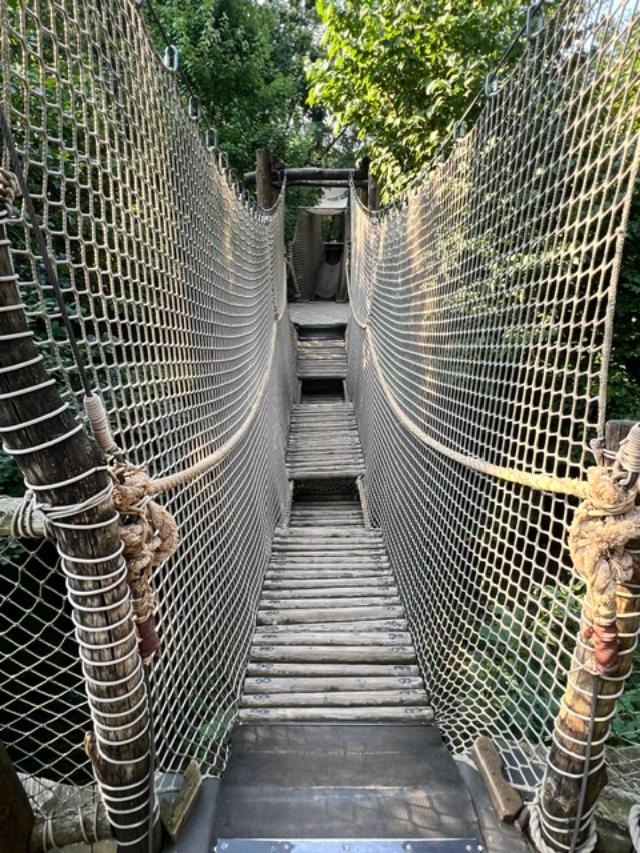
The rope bridge
From the Treetop Adventure I traveled east down the path to the World of Birds exhibition and got to see many different species of birds. There was a nice assortment of exotic birds from all over the world in their jungle habitat. Each section of the exhibit was dedicated to a different species from all corners of the globe.

The World of Birds
After the World of Birds, I passed Tiger Mountain and looked at the tiger that looked at all of us and the poor thing looked bored. I think the humidity was getting to him but unlike the other visitors I did not want to arouse him because by the end of the day he looked tired.
The next part of the pathway took me to the Bear exhibition in which all the bears looked very playful and they looked like they were ignoring us and were have a good time amongst themselves. What I liked about this exhibit was that there was plenty of room for the bears to move around and engage with nature. The mother bear looked like she was having fun with the cubs.

The Congo Village
I then walked through Somba Village, which I guess was the zoo’s take on an African village. Everything was closed that evening maybe because of the crowd or because the weather was not that nice and the zoo figured that the weather might keep people away. As I passed the buildings I did not realize that it was a gift shop and a snack shop.

Congo Gorilla Forest
I next visited the Congo Gorilla Forest for the first time since it opened over twenty years earlier. The exhibit has several different species of gorilla and monkey each in their own encampments. The area is large and is furnished with all sorts of trees, rocks and water placements that make the habitat more real for the mammals. For the most part I saw the gorillas just go about their day walking with each other and taking care of each other. It was nice that the zoo created an environment where the mammals felt right at home. There was lots of room to move around.

Congo Gorilla Forest
After visiting the Congo Gorilla Forest, I went to see what was open for dinner. The Dancing Crane Cafe that was located in the older section of the zoo. The restaurant was packed with families that I did not want to bother eating then and since it was getting late wanted to see the Dinosaur Walk and the Sea Lion Tank before the end of the evening.

The Dancing Crane courtyard
When I got to the Sea Lion Tank at the Astor Court, the sea lions were in the pool splashing around showing off to all the patrons who were watching them swim. They are so used to people watching them they just swam and dove around us. I thought they waved to us.

The seals taking a rest by the end of the evening
The entrance to the older section of the Zoo:
The main entrance of the zoo facing the Fordham Road entrance is the original zoo that was built in 1907. This is where the original animal buildings were located that are now used for administration purposes. These buildings are some of the original buildings when the park opened after 1899.
These graceful stone buildings were built by the firm of Heins & Lafarge and the Rockefeller Fountain was donated by William Rockefeller. It had been built by Biagio Catella in 1872 and moved to the park in 1903.

The Rockefeller Fountain built by Biagio Catella

This is the Monkey House

The Bird House

The Lion House

The Elephant House

The Elephant House
Don’t miss walking around Astor Court after visiting the sea lions. These buildings are a real treat if you love architecture and detailed stone work. Each building has its own unique look to it and the animals grace the buildings where they used to live at a time when animals were just an amusement instead of living breathing animals who needed living space. Still the Victorians knew how to design a building.

Astor Court
I walked along the gardens near the fountain and by Astor Court while the band set up for a family concert for the families. As the sky threatened, the families got ready for the concert. I decided to visit the Dinosaur Safari Walk before the park closed.

The Dinosaur exhibition
This was very interesting as they movable Dinosaurs in the natural habitat placed here and there along the walk by species.

These animals move and roar
The dinosaurs winked, moved and roared around us giving me the creepy feeling that I was in the movie ‘Jurassic Park’. As I walked through the exhibit, I watched as they moved around and lifted their heads up to look at us. I thought it was very clever and in our case Thank God they were not real.

Don’t miss the ‘Dinosaur Safari’ before it closes

On the way back from the walk, I stopped to admire all the buildings once again that surrounded Astor Court. Really look up and see the detail work of the stone animals. The artisans did a wonderful job with the craftsmanship and the intricate details.

The Rhino Statute by Astor Court
While everyone else was enjoying the concert, I made the trip back to The Dancing Crane Cafe (See Review on TripAdvisor) for dinner. It was around 7:00 pm when I got to the restaurant and that and the gift shop were still busy. I have to say for a zoo restaurant I was pretty impressed by the food. It is standard children’s menu with hamburgers, chicken fingers and individual pizza.

The Dancing Crane Cafe
I had the Chicken Fingers and French Fries combination dinner with a Coke ($11.99 with a 10% membership discount). They were delicious. Perfectly cooked with just the right amount of breading and perfectly deep fried where they crisp on the outside and moist and juicy on the inside.
Usually these things are sitting under a heat lamp dried out but here the restaurant was so busy that every thing was freshly cooked and delicious. I indulged in an Individual Pizza.

The pizza was pretty impressive. It just came out of the oven and the sauce had the perfect spiced taste.

The pizza at Dancing Crane Cafe is really good
It was fun to sit by the window and watch the flamingos in the pool next to the restaurant or just watch the other members trying to calm their kids down before the zoo closed for the evening.

The Dining Room at the Dancing Crane Cafe
As the last of members and their families came into the restaurant for dinner, the Bug Carousel was going in full force and packed with kids and their parents trying to get one last ride in before the park closed. I could not believe the prices of everything and how much was extra when you visit the zoo but that is the nice part of being a member of the Wildlife Conservatory. Everyone once in a while there is a nice member perk.
Even though it was a somewhat gloomy night, I had a ball walking around the zoo and enjoying the company of other members who were also having a good time with their families. It is nice to see that my membership is making a difference.

The pools at the zoo
For Members Nights, I enjoyed the Dancing Crane Cafe, the main restaurant in the zoo. I was impressed that the food was really good. It was mostly kid staples like pizza and chicken fingers but everything was really fresh, and everything was cooked for us.
The Bronx Zoo Members Night 2026:
On August 13th, 2026, the Wildlife Conservatory and the Bronx Zoo held their Annual Members Night at the Zoo. It was a warm and sunny evening, perfect for touring the zoo. The park was in full bloom and the animals seemed very happy to see us. The zoo opened for members at 4:00pm and I arrived at 5:00pm ready to really tour the park. The best part was that since it was during the week, most people did not arrive until after 6:00pm, so I was able to go on the Tree Top Trail and the Monorail around the zoo when the crowds were small. It was really nice to experience the zoo when there no crowds of people.

The Asian Entrance to the Zoo

The gardens to the entrance to the zoo
I entered through the Asian Gate entrance which is closest to the subway entrance from and I was greeted by a friendly staff and colorful gardens that were reaching their Summer peak.

One of the zoo sculptures from the movie “Congo”
All the animals were outside at this time of the day and most were eating their dinners all over the park. As I passed each animals home, they just went about their evening like I was not even there. Every once in a while one would stare back but for the most part, they looked like they were going about their day.

The camels were being fed when we entered the zoo
The first thing I did when I arrived for Member’s Night was ride the monorail to see the bulk of the zoo. I had not been on this for years. What is nice about coming to Member’s Night is that all the rides and attractions are free to the members. All we had to do is show our pins. Even during regular days, there is a discount but you still have to pay a small fee to get on the rides.

The start of the monorail
The rail conductor introduced himself and then we were off touring the zoo, moving past each area of the park at a reasonable speed so we could see the animals in their homes. Our first area that we passed was Patty, the elephant, who was relaxing and cooling herself off. Then we passed the rhinos who were doing the same. It seemed the animals were all watering themselves down from the heat.

Patty the elephant on the tour

The rhinos bathing themselves
Passing the Bronx River, I felt like we were touring a foreign country. You would have never known we were in the Bronx. I had never seen the river this beautiful or natural before. The park must do a good job in maintaining it cleanliness and keeping it natural looking.

The Bronx River flows through the zoo

Wild goats guarding their part of the park

There were three different types of deer on the tour
After I got off the monorail after my world tour of the zoo, I toured through Somba Village near the Congo Exhibition. This area is where all the animals native to Africa are located and the zoo does an interesting job in trying to recreate their natural habitat for a zoo based in the Bronx.

Sombo Village in the zoo
I passed a peacock while walking in this part of the park. He walked around like he owned the place. Everyone was trying to get him to open up his tail.

The peacock walking down the paths
The first part of this side of the park was the Giraffe field. This was one of the first exhibitions at a zoo where these large animals had room to move and interact with plenty of space.

The Giraffe exhibition

The giraffes passing one another
I then took the Tree Top Walk through the top of the park. I had not done this in years and you do have to be in shape to walk through all these rope bridges. You will make a lot of twists and turns and have to have balance when you walk through this maze of rope bridges and paths.

The Tree Top Path

Walking down the rope and wood bridges

Moving through the paths

The first stop on the path

Finishing through the path pretty quickly

The small obstacles of the path
I visited the Congo Exhibition next, which was interesting because I remember coming here with my father when it first opened in the 1990’s. It really does feel like you have entered another world. Even when you enter the path to go into the exhibit, it is like entering a clearing in Africa.

The entrance to the Congo exhibition

Entering the exhibition

Entering the Congo exhibition

The Baboon I first saw looked tired
I then entered the heart of the exhibition where a variety of mammals lived with baboons, monkeys, gorillas and apes either staring back at us or just amused that we were watching them while watching us. I am beginning to realize there is not much difference in the reactions between us and them.

The sign for the large Congo exhibition

Walking through the entrance city a few

Watching the bamboos move around

He looked like he was praying

Then the gorilla made an appearance

He just looked at us
I left the Congo exhibition and walked to the middle of the park where the Dancing Crane Cafe was located and decided to have dinner while it was still early. I figured it would be crowded later with families and decided to eat earlier in the evening.
Before I got to the restaurant, I had to pass the Pink Flamingos in their pond. This is located just behind the restaurant which sits in the background to the left.

The Pink Flamingo Pond before you get to the restaurant

They were content eating and talking amongst themselves
For a zoo/park restaurant, I really like the quality and selection of the food at the Dancing Crane Cafe. In the four times I have eaten here, I have never had a bad meal. You will be surprised that for a public cultural spot, the food is very good, the portion sizes are comparable to the price and the service is always friendly and welcoming. I enjoy talking to the staff at the restaurant.

The Dancing Crane Cafe inside the park
https://bronxzoo.com/plan-your-visit/dining/dancing-crane

The inside of the restaurant
I was in the mood for a double Cheeseburger and Fries and it looked so good at the counter. I picked one up with a Coke. There is nothing better than a burger and Coke on a hot evening (See my review on TripAdvisor).

My dinner on Member’s Night was the perfect early evening meal

The Double Cheeseburgers here are so good!

So are the fries
After dinner before I explored the rest of the park, I stopped to ride the Bug Carousel just around the corner from the restaurant. The line was short as everyone looked like they were heading to dinner. As I left the cafe, a lot of families were arriving for dinner.

The Bug Carousel just before we started
I hate to admit this but I love carousels. I do not care what age we are because I love the lights and sounds and just the sheer fun watching other people especially the kids (and the big kids like me) have such a good time. The music and sounds of laughter make the ride fun.

The insect riders are so beautifully designed
After the ride was over, I headed to the older part of the Zoo and walked around Astor Court. I love these old buildings with their beautifully carved stone motifs and the Victorian architecture. This part of the zoo shows how the philosophy of zoos have changed over the years. The natural habitat instead of just showcasing the animals leads to a more prosperous life for the animals in captivity.

The entrance to Astor Court
The History of Astor Court:
https://www.bcausa.com/bronx-zoo
(from the Building Conservative Associates website)
Originally known as the New York Zoological Society, the Bronx Zoo opened its doors to the public on November 8, 1899, and for more than 120 years, it has been one of New York City’s major cultural attractions. BCA has been involved in several projects at the Bronx Zoo (Bcausa.com website).
Astor Court
Astor Court, the historic center of the Zoo, consists of raised, landscaped terraces, two grand stairs leading up to the Court, and an ensemble of the Zoo’s original Beaux-Arts buildings sited around the central Sea Lion pool. Five of the limestone, brick, and terra-cotta buildings were constructed to designs by the noted architectural firm of Heins & La Farge between 1899 and 1910; the sixth building was designed by the architect Henry D. Whitfield in 1922. The formal neo-classical plan of the Court is symmetrical and longitudinal. One of the few intact examples in New York City of the City Beautiful movement to survive from the early twentieth century, Astor Court is a designated New York City historic landmark (Bcausa.com website).
This project involved the complete rehabilitation of Astor Court to restore historic elements and make modifications to bring the Court to contemporary standards. BCA was the restoration consultant, overseeing the restoration design. BCA conducted a conditions assessment, performed investigative probes and field tests, and developed construction documents for the restoration scope. BCA performed preservation design review of new elements and also provided construction administration services (Bcausa.com website).

The detailed Rhino cornerstone

The Elephant details around the entrance
My first stop was the seal tank where tired seals lounged on the rocks, most were sleeping and ignoring us staring at them.

The seals were relaxing that evening

They just stared at us
What I like best about visiting in Astor court is the architecture and the beautiful stonework. This is the most historical section of the zoo.

The original entrance to the zoo

The Bronx Zoo sign

The beautiful stone entrance

The fountains always remind me of the old Luna Park in Coney Island. They are now used as gardens.

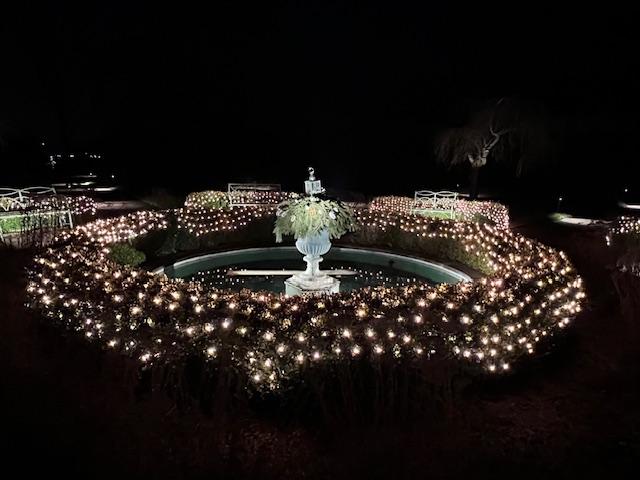
The elegant fountain made more festive at Christmas time
Rockefeller Fountain
https://www.bcausa.com/bronx-zoo
(from the Bcausa.com website)
The Rockefeller Fountain was designed by the Italian sculptor Biagio Catella and constructed in 1872; originally it stood in the Piazza Cavour in Lake Como, Italy. William Rockefeller bought the fountain and gave it to the Zoo, where it was installed in 1903. Today the fountain, a New York City landmark, is sited in the gardens just inside the Fordham Road Gate (Bcausa.com website).

The old Monkey House now used for exhibits

The detail work at the Monkey House building

The old Bird House

The details on the Bird House

The old Lion House

The details on the Lion House
Lion House
https://www.bcausa.com/bronx-zoo
(from the Bcausa.com website)
The Lion House, located at the southwest corner of Astor Court, was designed by Heins & LaFarge and completed in 1903. Constructed of limestone, terra cotta and Roman iron spot brick with a copper roof, it is a designated New York City landmark (Bcausa.com website).
This project involved a complete rehabilitation of the exterior envelope. As the historic preservation and conservation consultant, BCA conducted archival research, performed a hands-on conditions assessment of the historic fabric, designed and oversaw probes, conducted field and laboratory materials testing, performed preservation design review, created restoration construction documents and provided construction administration services for the masonry restoration work (Bcausa.com website).

The stone eagle holding guard at the entrance of Astor Court to the complex

The colorful gardens as you exit this side of Astor Court
I finished my evening around 6:30pm as the zoo was closing for the evening (Members Night ending at 7:00pm). The last sculpture I saw as I exited the zoo was the totem pole at the exit of the zoo. This had been lit with festive lighting at the holidays.

The totem pole in the Asian section of the Bronx Zoo
It was another wonderful Member’s Night at the Bronx Zoo and this time I had the time to enjoy all aspects of the park. I never had the time to ride the Carousel or walk the Treetop Walk during a Members Night. It was a fun evening. Until next Summer. I can’t wait for the Christmas Light Display.
Holiday Lights at the Bronx Zoo 2024:
I returned again for the “Holiday Lights” event in 2024, and the food was just as good as the first time (so many patrons online complain about this restaurant, and I think it very good for what it is).

The outside of the Dancing Crane Cafe during the holiday season at the Bronx Zoo
https://bronxzoo.com/plan-your-visit/dining/dancing-crane
My review on TripAdvisor:

The beautiful Green Tree outside the restaurant
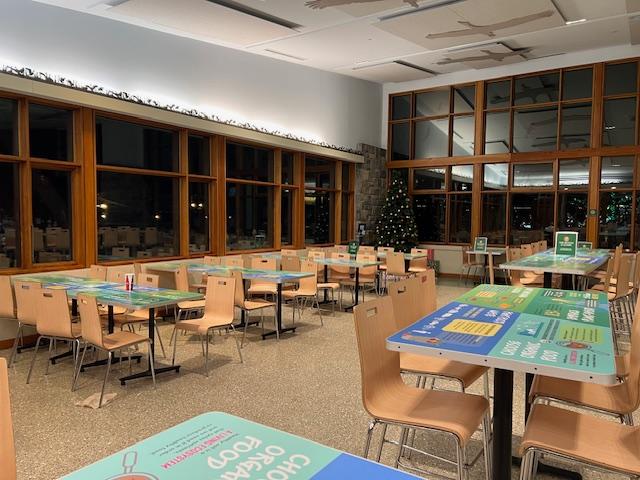
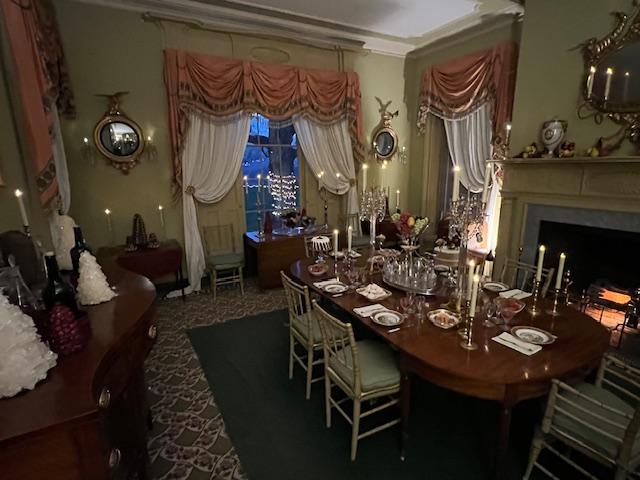
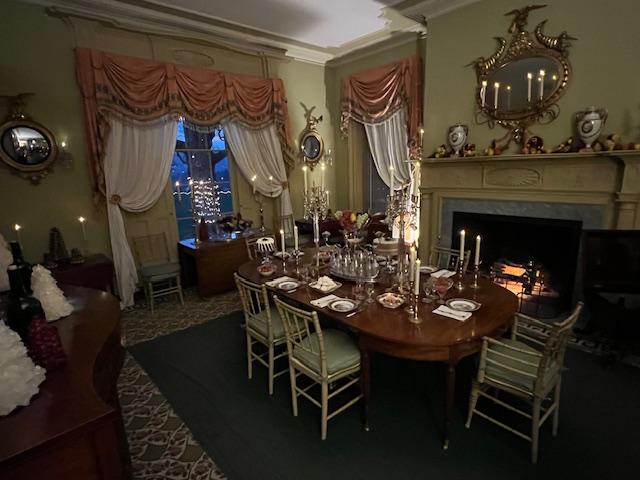
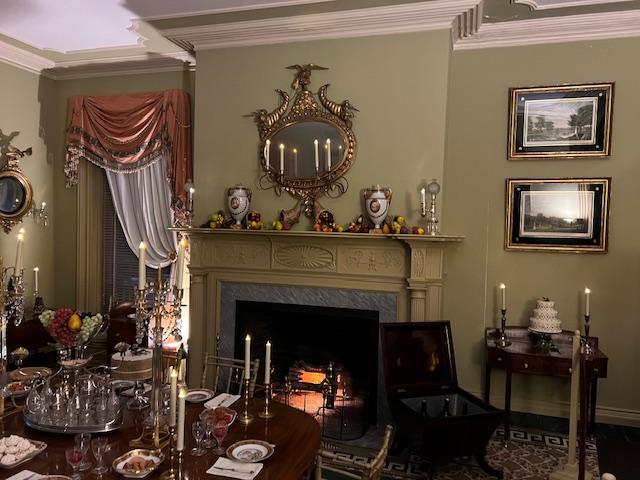
The inside of the Dancing Crane Cafe at holiday time

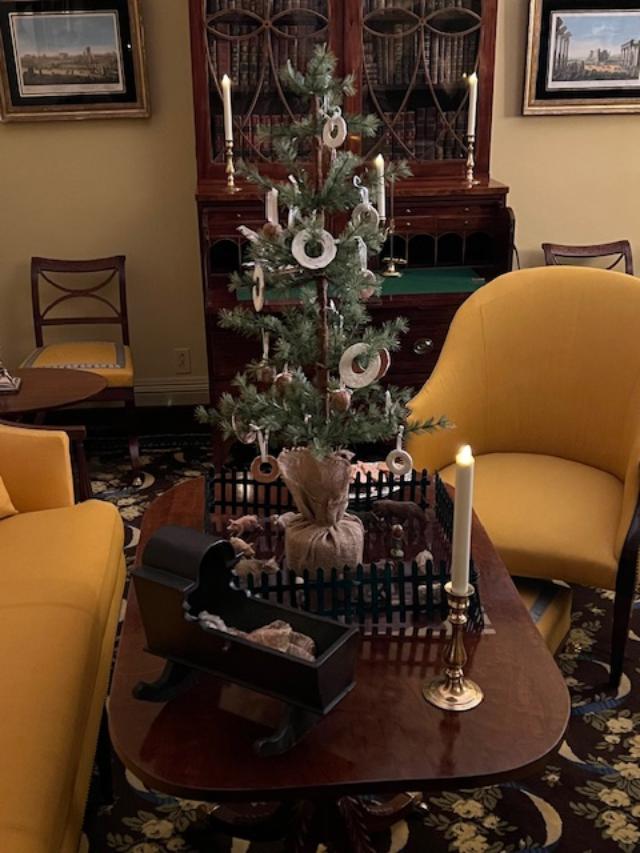
The Christmas tree at the Dancing Crane during the “Holiday Lights” event
I had the Chicken Fingers with French Fries, and it was a nice sized portion. The chicken was a generous portion that was almost a whole breast. The restaurant is pricey but every once in a while, it is a treat. The one thing I have to say about the place is the food is consistent and for a zoo it is pretty good. I thought the quality was excellent.

My Chicken Fingers dinner was really good

The Chicken was so well fried and tasted really good

The Fries were really good as well
I looked over the zoo with a fresh pair of eyes without the throngs of visitors that you normally see there. I enjoyed looking over the animals in a more natural habitat that a lot of zoos don’t offer.

The holiday display at the Bronx Zoo in 2024
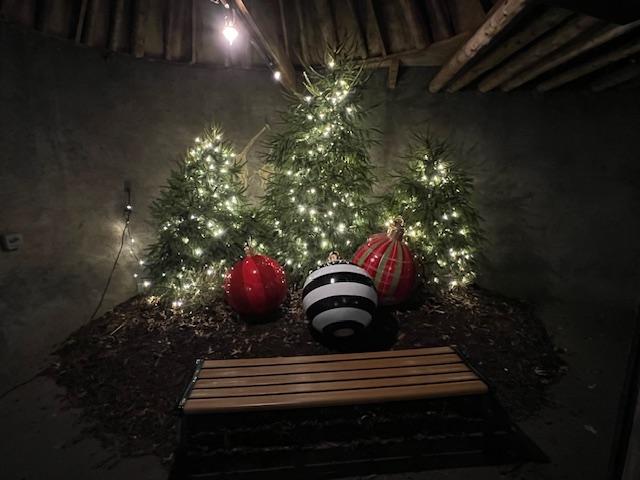
The Holiday display in 2024 at the Bronx Zoo
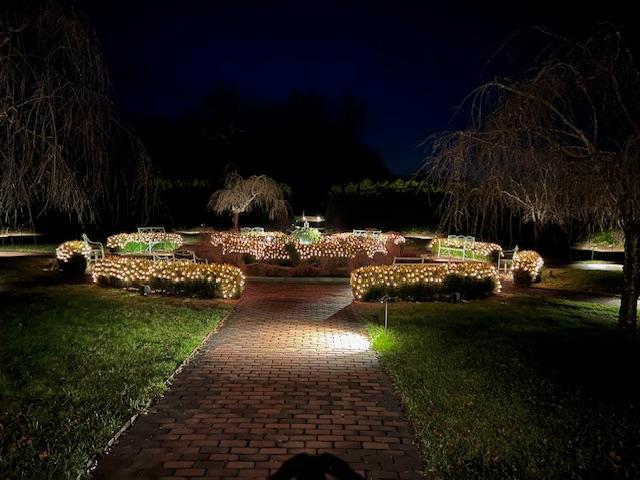
Recently the Zoo has brought back the “Holiday Lights” event for the holidays. I was able to attend the last night of the event on a Sunday night and it was pretty special. In the era of COVID, it really cheered me up. In 2024, I visited the last weekend that the event took place, and it was nice to tour the park after hours and not a lot of people be there. The best time to come to this event is after Christmas. I came the last weekend it was open, and it was the best time to come with no crowds and plenty of time to walk around the park in the dark to enjoy the displays.
Almost all of the Zoo was decorated with lights and there was Christmas music playing the whole night. Even though the holidays had passed it still put me back into the mood.

The nautical display at the Bronx Zoo “Holiday Lights”
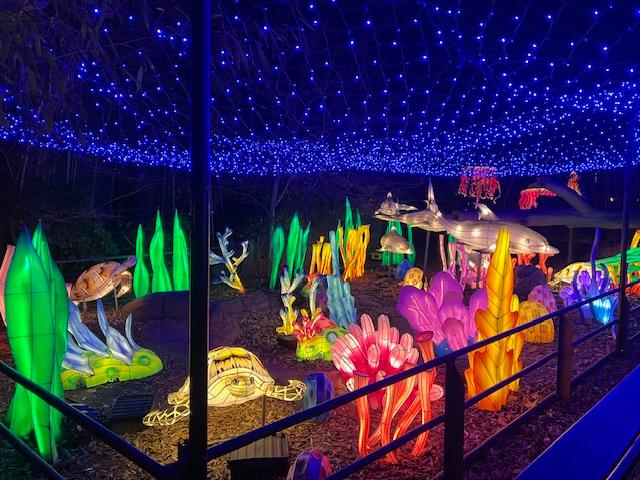
The Nautical scenes of the display

The “African” exhibit at the “Holiday Lights” event

The giraffes in the “African” event
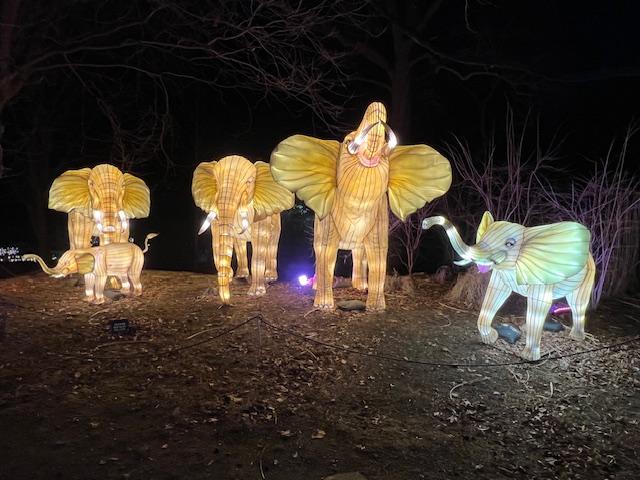
The Elephants in the “African” section

The colorful frog in the “Magical Forest”

The colorful flowers in the “Magical Forest” at “Holiday Lights”

The forest of flowers

More Flowers
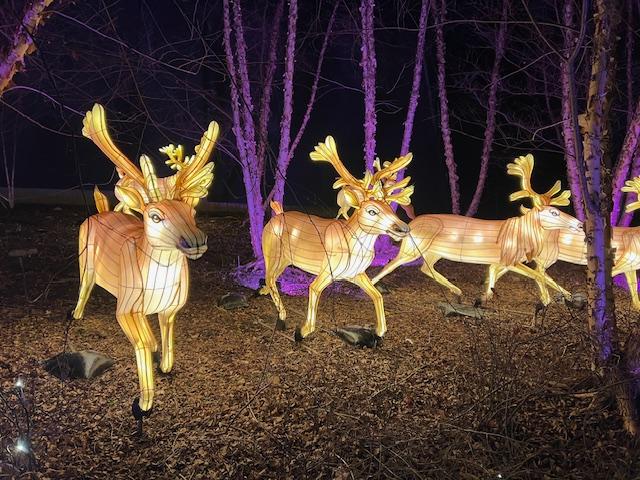
The tribe of Moose at the “Holiday Lights” event

Flock of Parrots in the woods

Path of Rhinos on display
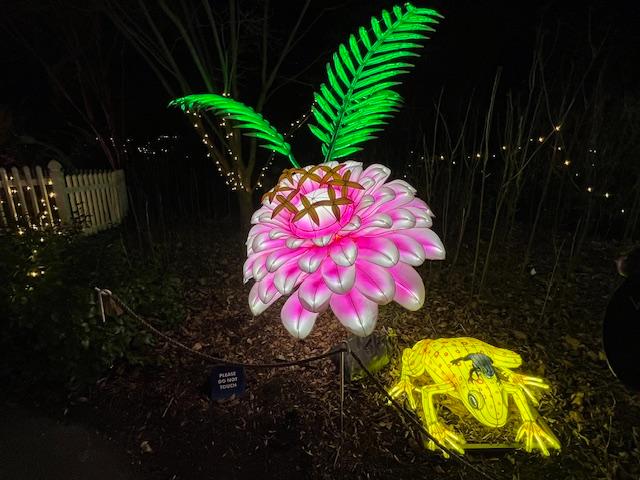
Mother and baby frogs

The Frog family on display
Each of the trails had lighted tunnels that were a sensory excitement to walk through especially as it got darker.

The Circular tunnel

The other lighted tunnel offered a wonder in lights to walk through
All the trees were adorned with white lights and each of the sections of the park were decorated with a theme.

The Snowflake display in the park
There were elephants wondering through the paths, seals and penguins swimming through their displays and all sorts of tinkling snowmen and animals like bears, lions, tigers and giraffes lining the paths.
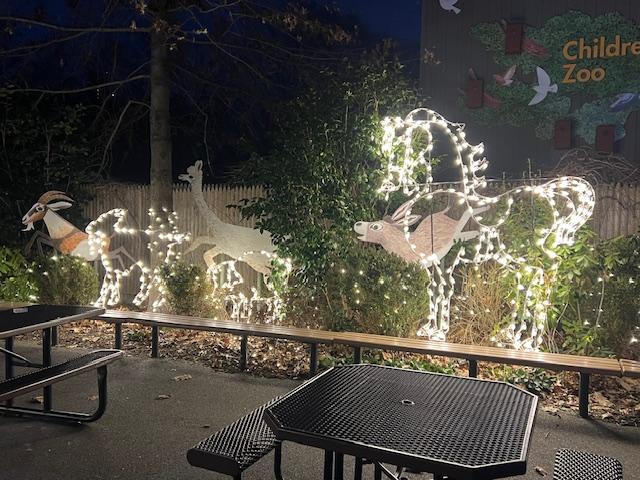
Various animals in white lights

The lightshow paths were lined with all sorts of light

The “Magical Musical Christmas Tree” and show at the “Holidays Lights” event
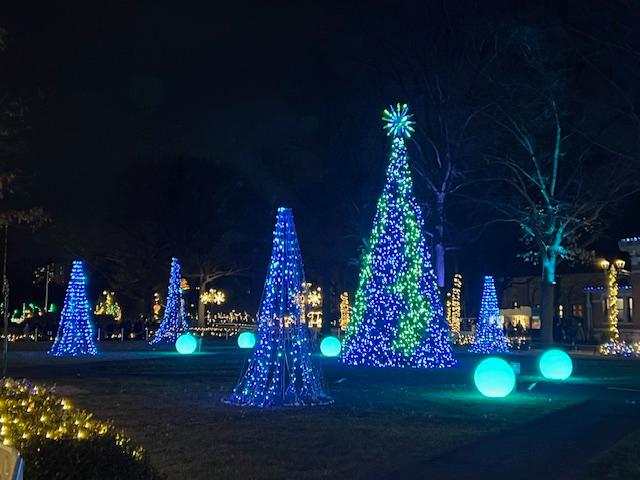
The musical show that takes place on a continuous basis. You have to see this show once. It is amazing show!
The Video on the show:
The Video on the show:
The Video on the show:
The nicest section that I almost missed was the musical Christmas tree in the old section of the park and the zebras on stilts.
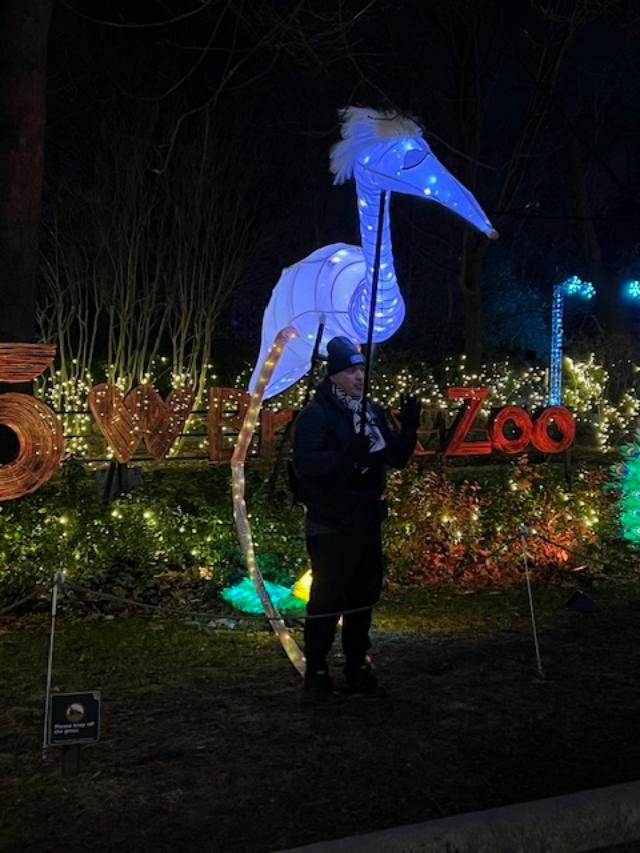
The Illuminated puppets at the zoo during the “Holidays Lights” event
The original section of the park was decorated with multiple lights with contemporary Christmas music playing in the background. There were birds flying, reindeer being chased and seals leading the way for other animals.

The entrance of the zoo that evening
I was finally able to ride the Bug Carousel which was a little hokey but a lot of fun. I could see why the kids like it so much. There were plenty of adults who were also enjoying the complimentary ride. There was ice sculpture demonstrations, comics performing and all of the food outlets and gift shops were open to a somewhat limited crowd. We had timed tickets, so the crowd was rather small for such a big event.

The Rockefeller Fountain and Astor Court decorated for the holidays

The Totem Pole lit up and decorated for the holidays
I got there by 6:15pm and the park display was open until 9:30pm. By the time I left for the evening at 9:00pm, the park crowd had really thinned out and there were very few people walking around. Still it was nice to walk around and feel I had the whole park to myself. It was getting cool that evening but still a nice night to walk around. I will have to remember this for next year.
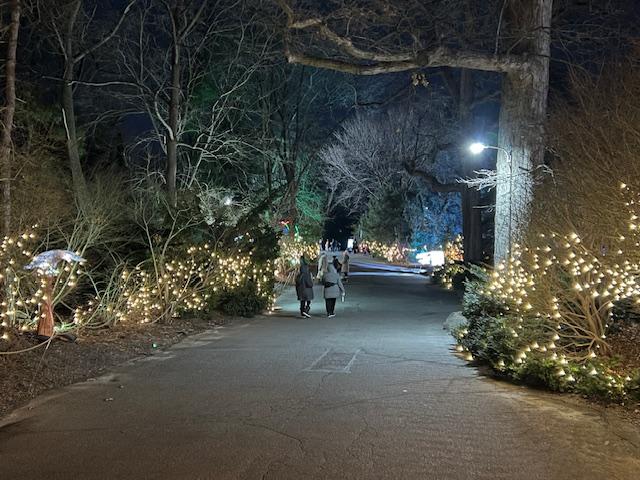
Leaving for the evening of the Lightshow at the Bronx Zoo for “Holiday Lights”
The History of The Bronx Zoo:
In 1895, a group made up of members of the Boone and Crockett Club founded the New York Zoological Society with the purpose of founding the zoo. The architectural team of Heins & LaFarge designed the original permanent buildings as a series of Beaux-Arts pavilions grouped around the sea lion pool.
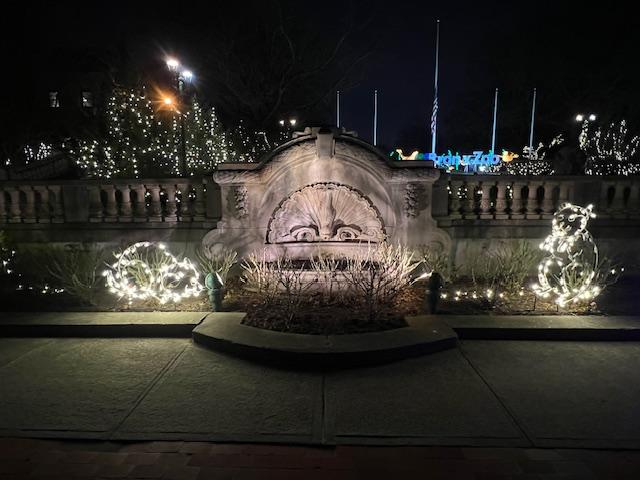
The Astor Court Fountain during the “Holiday Lights” event
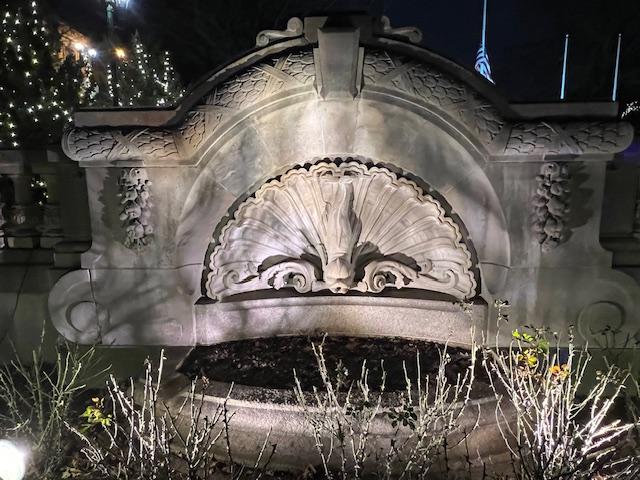
The Fountain at night

Jellyfish display by Astor Court

The Jellyfish lightshow inside one of the buildings
The Rockefeller Fountain was bought to the park in 1902 from another part of the park. It had been built in 1872 and was moved to the front of the zoo by the Rockefeller family and is now surrounded by a series of gardens as you enter the park from the parking lot.

The Rockefeller Fountain in Astor Court the night of “Holiday Lights”
When the zoo opened, it featured 843 animals in twenty-two exhibitions around the park. The zoo has been home to many exotic animals many being the first of their kind in a zoo. At various times in its history, the park has featured Komodo Dragons, Andean flamingos and a Sumatran rhinoceros.
Today the park is run by the Wildlife Conservation Society and is accredited by the Association of Zoos and Aquariums. The main exhibitions are the Congo Gorilla Forest, Jungle World, the Wild Asia Monorail, Madagascar!, Tiger Mountain, the African Plains, the World of Birds, the World of Reptiles and the Zoo Center. There are also various restaurants and snack shops throughout the park (that were closed the evening I went there), a carousel and a playground.

The Bronx Zoo Gift Shop the night of “Holidays Lights”
(This information on the park comes from Zoo history and Wiki)
At any time of the year, the Bronx Zoo is a lot of fun!