Tag: vistingamuseum.com

Hamilton-Van Wagoner House Museum                     971 Valley Road                                              Clifton, NJ 07013

Hamilton-Van Wagoner House Museum 971 Valley Road Clifton, NJ 07013

Hamilton-Van Wagoner House Museum

971 Valley Road

Clifton, NJ  07013

(973) 744-5707

https://www.cliftonnj.org/256/Hamilton-House-Museum

Open: Sunday 9:00am-5:00pm/Monday & Tuesday Closed/Wednesday-Saturday 9:00am-5:00pm

Fee: Suggested Donation $5.00

My review on TripAdvisor:

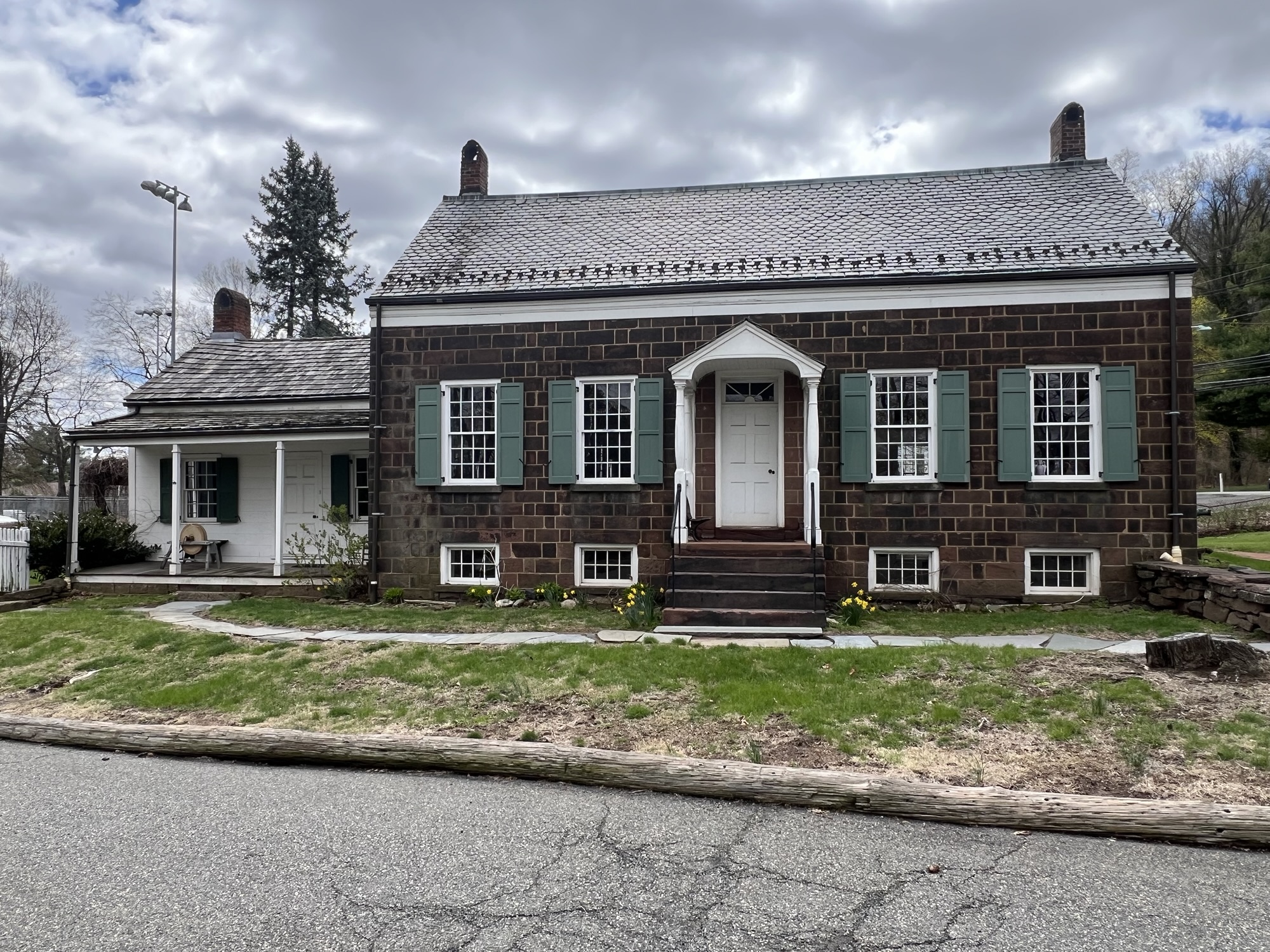
 The front of the Hamilton House in the early Spring

I visited the Hamilton House Museum this afternoon which is right down the road from Montclair State College and sits at the border of the Clifton-Montclair border. The interesting part of the house location is that it still sits the farm land of the Van Wagoner Family but the house was moved from its location to the current one because of the building of Route 46 in 1973.

The front of the house in the Spring

When talking with curator, the house is going through a transition from the City of Clifton ownership to the County of Passaic Historical Society’s site. They are currently cataloging every piece in the house and putting it online. They want to view the collection to see what they can work with within the home.

Each room represents a different time in the history of the house. There is a living room from the Victorian age, the kitchen is from the late 1700’s to the early 1800’s and the dining room is from the mid-1800’s. These rooms are furnished to represent a certain time in the house.

There will be many revisions in the future for the house so there are some changes on the way. The upstairs is currently being used for storage and there will be revision there as well. I got a quick tour of the rooms with the curator and he said there will be more changes in the future as they catalog each piece. The grounds are currently being replanted.

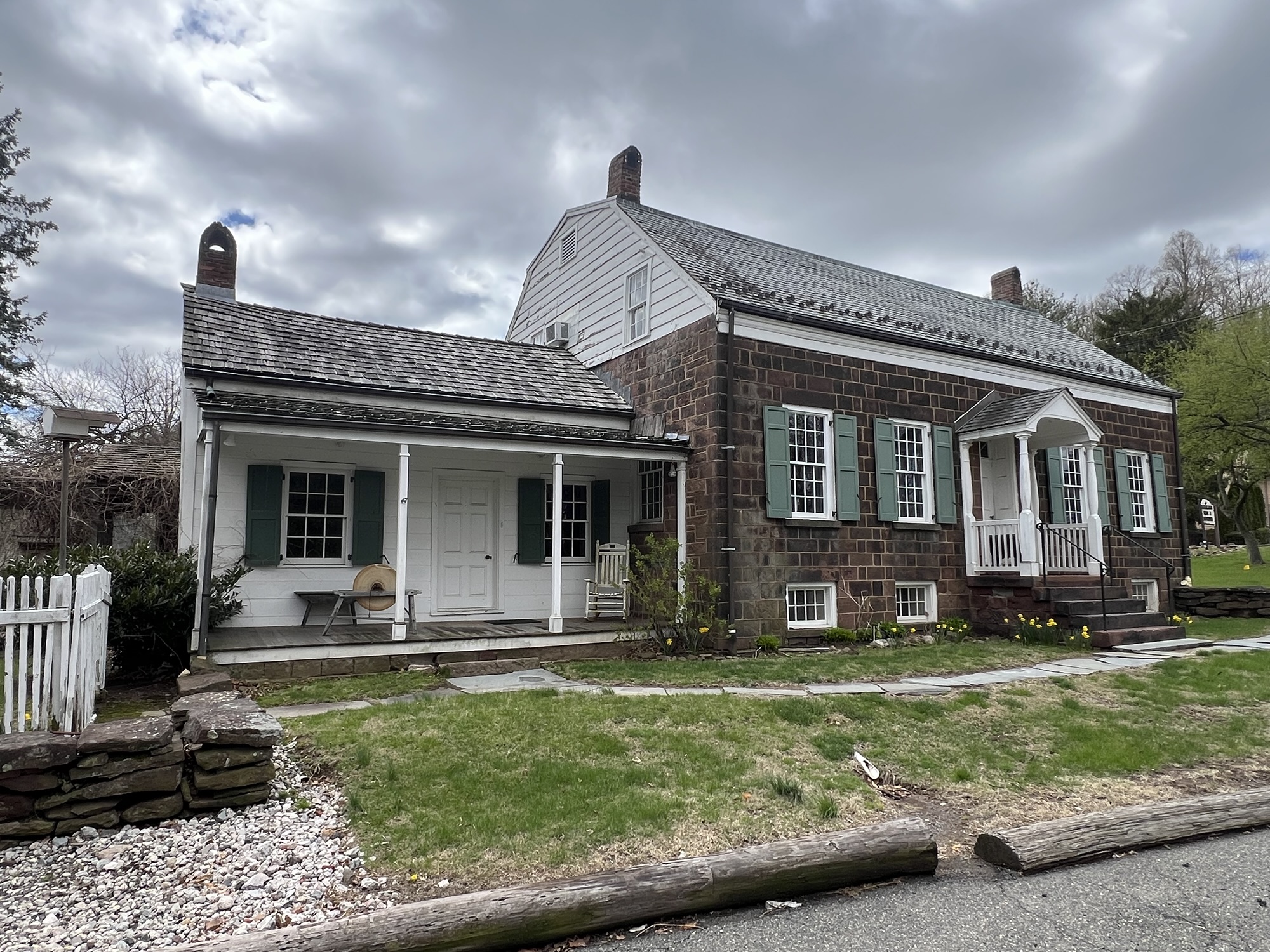
The Hamilton House Museum sits at the Clifton and Montclair border

The house is one of the last examples of early 19th century stone houses in Passaic County. The house was built in 1817 by John and Ann Vreeland and then passed to the Van Wagoner family. It changed hands a few times until 1856 when the Hamilton Family bought the house (no relationship to Alexander Hamilton). The house remained in the Hamilton Family until 1972 when the last living relative died and no one in the family wanted possession of the house (Tour Guide & Wiki).

The oldest section of the house

That’s when the City of Clifton bought the house from the family of its historic value. The house was added to the National Register of Historic Places on May 13th, 1982 (Wiki).

The outside grounds of The Hamilton House Museum

The Grape Arbor on the grounds of the Hamilton House

History of the Hamilton House:

(taken from the City of Clifton website)

This 18th Century Dutch gambrel-roofed homestead was once the home of the Van Wagoner and Hamilton families. This basic of the house does not greatly differ from its Dutch antecedents.

The sturdy one and one half story cut sandstone structure, flanked by a grainery, spring-house and gardens reflects almost two hundred years of American history. It brings back memories of an uncluttered horizon with farms, orchards, fresh brooks, forest full of game and filled with scent of wildflowers.

Hamilton House & the Clifton Community:

Although the City of Clifton was incorporated in 1917, a community had existed since 1679. Prior to 1917, the area was known as Acquackanonk Township and included parts of : Little Falls, Passaic, Paterson and West Paterson.

The Indian Chief Captahem deeded 11,000 acres to the early Dutch settlers on the shores of the Passaic River. Predominately rural, this sparsely populated village thrived and grew.

The farmhouse was presented to the City of Clifton by the developers of the late Henry Hamilton. The Hamilton family had bought the 96 acre property in 1856 and for over 100 years until the death of Mr. Hamilton in 1970, it had been the family home.

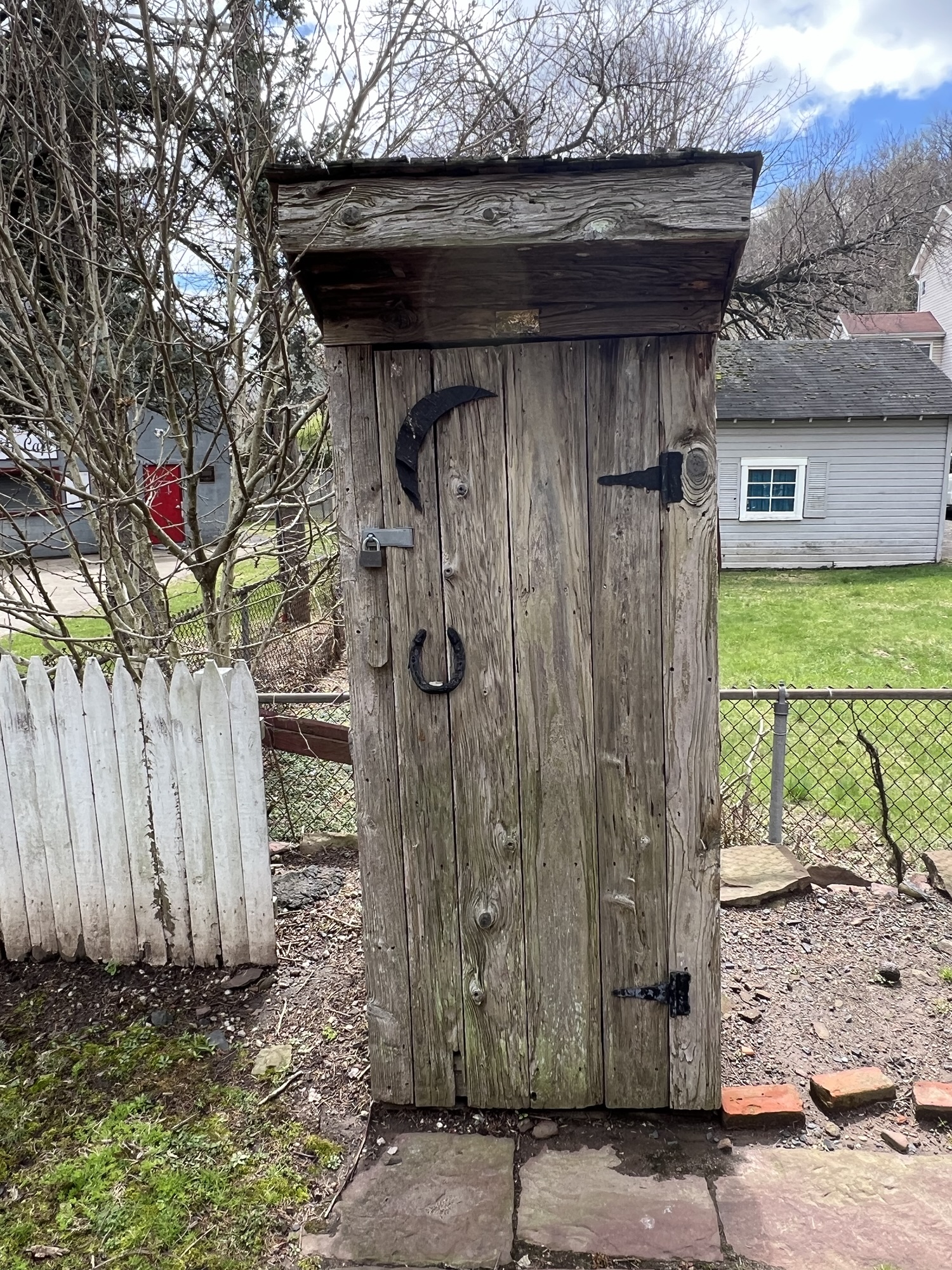
The old outhouse in the back of the property

Current Location and Future Plans:

The house was moved to its present location in Surgent Park in 1973. Infinite plans have been taken with examination and documentation of the building’s structural elements. Extensive research has been conducted including the records and treasured memories of Miss Caroline Hamilton as well as: Artifacts, Deeds, Manuscripts, Maps, Photographs and Wills.

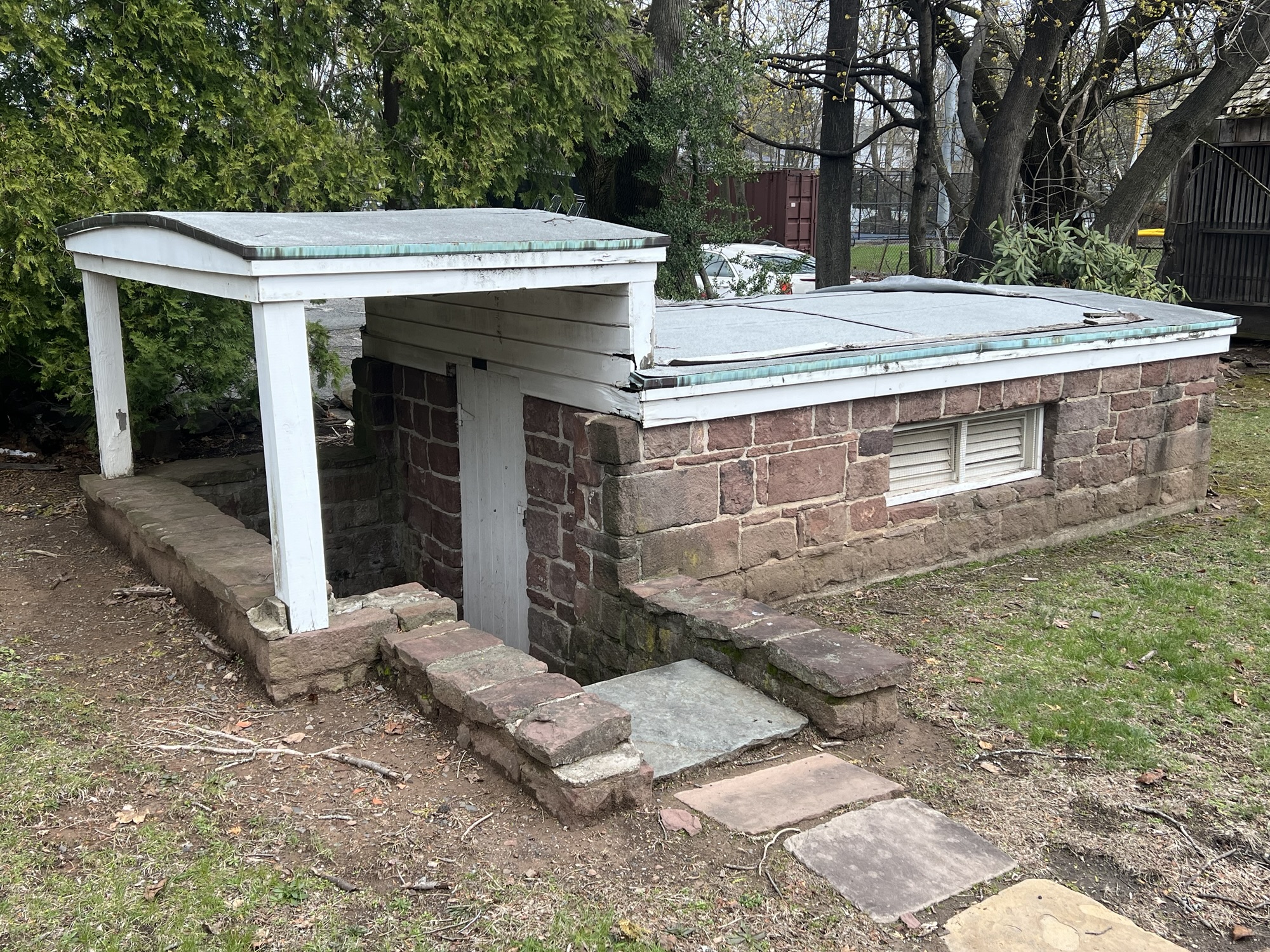
The old Ice House on the property

Scheduling Tours:

The museum is opened for tours on Sunday from 2:00pm-4:00pm (except on holidays). The house is going through a transition right now with the change over.


Dia: Beacon                                                               3 Beekman Street                                           Beacon, NY 12508

Dia: Beacon 3 Beekman Street Beacon, NY 12508

Dia: Beacon

3 Beekman Street

Beacon, NY  12508

(845) 440-0100

https://www.diaart.org/visit/visit/diabeacon-beacon-united-states

https://www.diaart.org/visit/visit

Open: Sunday & Monday 11:00am-6:00pm/ Closed Tuesday & Wednesday/Thursday-Saturday 11:00am-6:00pm

Fee: General Admission $20.00/Seniors $18.00/Students $12.00/Children 11-5 $5.00/Free to Children under 12

My review on TripAdvisor:

https://www.tripadvisor.com/Attraction_Review-g47291-d273538-Reviews-Dia_Beacon-Beacon_New_York.html?m=19905

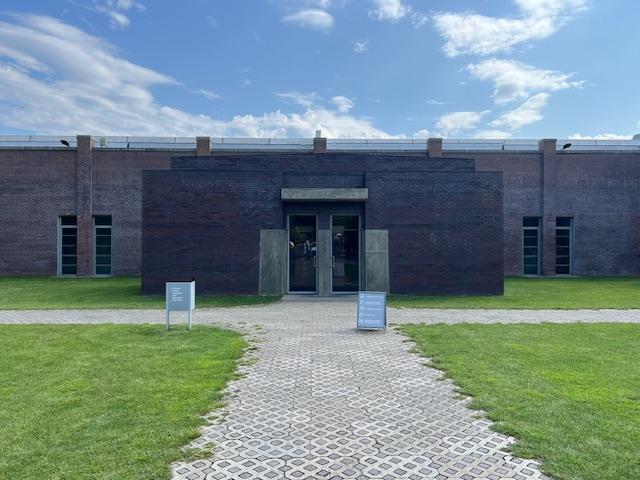
 The front of the Dia: Beacon

I visited the Dia: Beacon in Beacon, NY many times and I have to say that is an interesting space to display art and the pieces themselves make a statement. The museum is sited on thirty-one acres on the banks of the Hudson River and is adjacent to ninety acres of riverfront parkland. The museum is located in a former printing plant built in 1929 by Nabisco (National Biscuit Company) (Wiki). The space square footage gives the museum the opportunity to display larger statement pieces of well known artists.

The history of the Dia: Beacon:

(from the museum website)

The Dia: Beacon presents Dia Art Foundation’s collection of art from the 1960’s to the present as well as special exhibitions, performances and public programs. The Dia invited artist Robert Irwin to conceive the master plan for a twenty-century museum that retained the original character of the factory’s interior spaces, Irwin also designed seasonally changing garden throughout the surrounding landscape. Following the renovation, the Dia: Beacon was added to the National Register of Historic Places (Dia: Beacon Museum).

Dia Art Foundation:

(from the museum website)

Founded in 1974, Dia Art Foundation is committed to advancing, realizing and preserving the vision of artists. In addition to Dia: Beacon, Dia maintains a constellation of iconic, permanent artworks and installations in New York City, the American West and Germany (Dia Museum). 

Each of the galleries are devoted one artist’s work and these galleries make their own statements. There is also a really nice bookstore and gift shop on the extension of the museum and small restaurant.

It is nice to just walk around in your own time and visit each of the galleries. Plan about two hours to see the whole museum. It is an interesting place to see contemporary art in a gallery that is devoted to one artist at a time. The outside grounds of the museum and the parking lot makes it own statement. There is not much parking so plan on getting there early or later in the afternoon.

The museum has clean lines and big halls and a minimalist landscaping

The one thing about the Dia is that the works are quite large and pack a bold statement.  The museum uses a combination of both American and Foreign artists and their works make a bold statement. The museums galleries are large and airy and can show larger works of art. The museum shows many of the artists largest pieces of work.

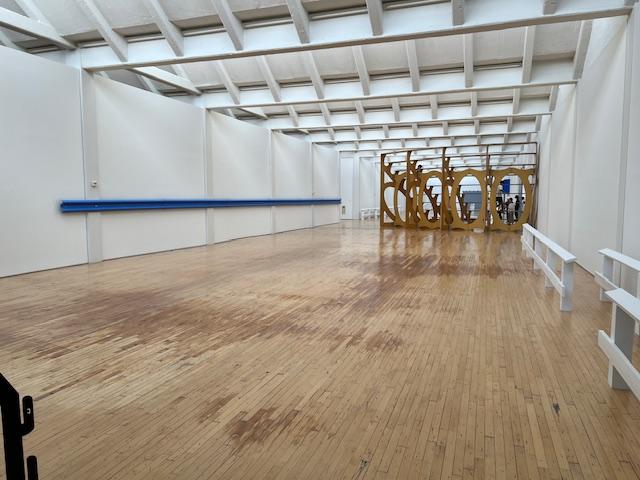
The inside of the Dia: Beacon’s large galleries

These larger pieces were interactive

Inside the museum, many contemporary artists are featured each season. Many of their larger works were featured in their galleries. While the shows rotate collections of many artists, these were the pieces that stood out to me on my visits to the museum over the years.

The Artists I most admired and their works that most stood out to me:

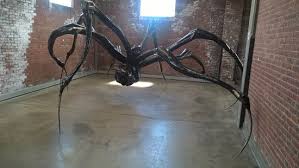
Artist Louise Bourgeois has displayed some interesting sculptures that dominate the upper floors. One of the most fascinating pieces was that of a large spider that dominates the corner of the floor.

Dia Beacon II

This Louise Bourgeois work is a rather creepy piece of art like something out of the movie “It”.

https://en.wikipedia.org/wiki/Louise_Bourgeois

https://diaart.org/collection/collection/bourgeois-louise-crouching-spider-2003-l-2007-012

In Bourgeois’s works on view in these galleries, organic formations fuse with the inorganic materiality of the media in which they are rendered, be it marble, wood, or bronze. The artist’s repertoire of materials spans traditional media and new textures, such as latex and synthetic resin. In her work, representation often entails the creation of a surrogate for the body and its suffering organs (Dia: Beacon museum website).

Artist Dan Flavin has some interesting light sculptures on display along the walls and floors of the gallery. Things are made of long fluorescent lights of various colors.

Dia IV

Artist Dan Flavin’s light sculptures

https://en.wikipedia.org/wiki/Dan_Flavin

After 1963 Flavin’s work was composed almost entirely of light, in the form of commercially available fluorescent tubes in ten colors (blue, green, pink, red, yellow, ultraviolet, and four whites) and five shapes (one circular and four straight fixtures of different lengths). Initially arranging these fixtures in varying autonomous configurations, Flavin increasingly made work in relation to architecture, such as his monumental barriers that physically block a passageway or segment of a space with light (The Dia: Beacon museum website).

In the main gallery as you walk in are the large geometric shapes of artist Charlotte Posenenske who created these pieces in various colors and shapes. These pieces line the floors and walls.

Dia III

The geometric shapes of Artist Charlotte Posenenske

https://en.wikipedia.org/wiki/Charlotte_Posenenske

https://www.diaart.org/exhibition/exhibitions-projects/charlotte-posenenske-exhibition

Embracing reductive geometry, repetition, and industrial fabrication, she developed a form of mass-produced sculptural Minimalism that addressed the pressing socioeconomic concerns of the decade by circumventing the art market and rejecting established formal and cultural hierarchies. Posenenske employed playful conceptual devices to oppose compositional hierarchy and invite the collaborative engagement of the public in the continual reconfiguration of her variable sculptures (The Dia: Beacon website).

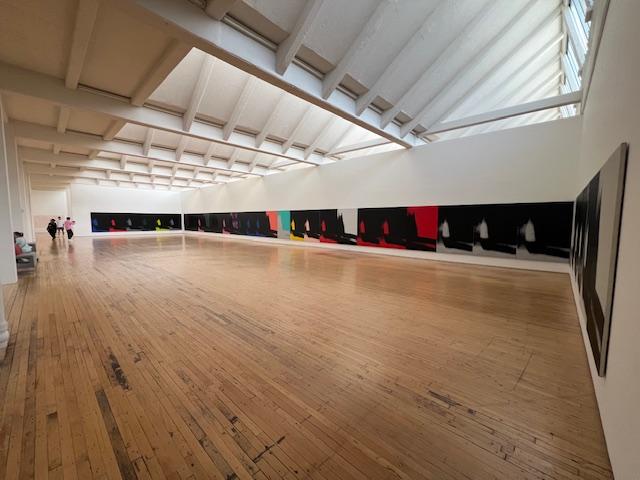
Artist Andy Warhol has one of his largest works displayed in the main gallery on the first floor.

The artist Andy Warhol gallery

https://en.wikipedia.org/wiki/Andy_Warhol

The large Andy Warhol piece

What I loved about the work by Warhol was the continuous colorful pattern of the work and the way it wrapped around the room. The pattern took form in many colors and showed consistency and balance.

A single painting in multiple parts, Shadows is one of Warhol’s most abstract works, yet one that cohesively synthesizes key elements of his practice, including film, painting, photography, and screen-printing. Originally commissioned by Dia and acquired in 1979 for a solo exhibition at 393 West Broadway in New York, Shadows includes a total of 102 canvases; the final number of canvases on view in each installation is determined by the dimensions of an existing exhibition space (The Dia: Beacon museum website).

Artist Senga Nengudi Gallery

https://www.sengasenga.com/

American artist Senga Nengudi had a some interesting works on display, one resembling melted ‘freeze pops’, which I thought was rather clever. Her large works took liquid forms and were colorful and spontaneous. These large works had lots of color and looked whimsical and fun.

One of Artist Senga Nengudi works

I thought this was a large ‘freeze pop’

One of her non-liquid works

Made of everyday materials such as vinyl, water, nylon, sand, dry-cleaning bags, lint, paper, and tape, Nengudi’s installations are at once proxies for bodies and sites for performance. The works accommodate a variety of cultural references from African, Japanese, and South Asian rites to Western avant-garde art. Characteristic of her openness to multiplicity, the artist, born Sue Ellen Irons, has assumed pseudonyms that inflect her creative identities as sculptor (Senga Nengudi), painter (Harriet Chin), photographer (Propecia Leigh), and writer (Lily Bea Moor) (The Dia: Beacon museum website).

Some of the other works that I liked as I walked around the museum:

Displayed on the first floor of the Dia: Beacon

Another interesting work on the first floor

The large galleries and open air space give patrons a chance to walk around the works and really get a feel for what the artists are trying to express. You really get to see the art up close and that is why I like the way they display their art. We can engage with each piece and develop our own meaning from it.

The grounds and the proximity to the river gives the museum a picturesque spot. It is nice to walk around the lawn on a warm day and enjoy the paths around the museum. The museum also has a very interesting gift shop featuring many books and gifts. The small restaurant can be pricey but offers a place for a light lunch or a quick snack.


The Wyckoff Historical Society                                              The Barbershop next to the Pond                                               Wyckoff, NJ 07481

The Wyckoff Historical Society The Barbershop next to the Pond Wyckoff, NJ 07481

The Wyckoff Historical Society

The Shop next to the Pond

Wyckoff, NJ  07481

http://www.wyckoffhistory.org

Hours: Please check the website above

Fee: Please check their website

My review on TripAdvisor:

The Wyckoff Historical Society was established to research, preserve and educate about the rich history of Wyckoff, NJ. The organization was founded in 1974 and is incorporated. Recent programs included a walking tour of Wyckoff.

The Society recently restored the old Wyckoff barbershop that was donated to them and now sits on the town property by the Zabriskie Pond and the historic Zabriskie Home. Inside the building houses all sorts of local artifacts, farm tools and vintage furniture along with historic photos of the town of Wyckoff, NJ.

The little building sits right on the Zabriskie Pond.

The Zabriskie Pond in Wyckoff, NJ

History of the Museum:

This 1890’s structure was recorded as being a barbershop in 1905 when it was owned by John Lawrence, who worked for the railroad by day and cut hair at night. It was also a cobbler shop for several years and again a barbershop. The building was on Main Street and Everett Avenue relocating to its current home and donated to the Wyckoff Historical Society by resident and member, Sebastian Gaeta.

The farming display at the Barbershop Museum

The history of the building

The building was neglected for several years and was restored several times, most recently in the summer of 2018 by the society including a full paint job of the interior and exterior and refinishing the bare floors.

The barber chair from the old barber shop

On display are artifacts from Russell Farms, a barber chair from longtime Wyckoff barber, Frank Muscara, a 1905 child’s dress, Lenape artifacts, a Hoosier cabinet and photographs.

The Native American Collection

Artifacts from Wyckoff’s past

Artifacts from old businesses in Wyckoff and the surrounding areas

The tiny museum has a display of its own history as a barbershop on the Main Street of Wyckoff, NJ and how the building served as a local center for its citizens. It was eventually moved as times changed and became the museum it is today telling the story of the Town of Wyckoff, NJ.

The history and movement of the building when it left its original location

The history of the barbershop

The history of the building and the barbershop and of Wyckoff, NJ

Where the building was located in Wyckoff, NJ

Please check their website for opening dates.

The beauty of the Zabriskie Pond on a fall day in 2022. The area is just beautiful.

The Zabriskie Pond in Wyckoff, NJ

Disclaimer: This information was taken directly from the Wyckoff Historical Society pamphlet and I give them full credit for the information. Please email them for more information.

Thomas Edison National Historical Park, Laboratory Complex and Glenmont                   211 Main Street                                                  West Orange, NJ 07052

Thomas Edison National Historical Park, Laboratory Complex and Glenmont 211 Main Street West Orange, NJ 07052

The Thomas Edison National Historical Park

211 Main Street

West Orange, NJ  07052

(973) 736-0550

https://www.nps.gov/edis/index.htm

Open: Sunday 10:00am-4:00pm/Closed Monday-Tuesday/Wednesday-Saturday 10:00am-4:00pm

Note: There are renovations going on at the site so please call ahead to check on hours and fees.

The Thomas Edison National Historical Park, Laboratory Complex and Glenmont home are a step back in time when machines were run by belts and pulleys and music was played on phonographs. Where to the passerby, the buildings betray little evidence of the industries they once started. Discover where America’s greatest inventor changed our world forever.

The Laboratory site Complex contains:

  1. Visitor Center (Restrooms & Gift shop)
  2. Chemistry Laboratory
  3. Chemical Storage and Pattern Shop
  4. Metallurgical Laboratory
  5. Main Laboratory
  6. Powerhouse
  7. Blacksmith Shop
  8. Building 11
  9. Vault 12
  10. Black Maria
  11. Water Tower
  12. Vault 32
  13. Vault 33
  14. Building 35 (Maintenance Facility)

Park Information:

The Laboratory Complex is open Wednesday through Sunday. The Glenmont Estate is open Friday, Saturday and Sunday. Glenmont tickers are limited and are distributed on a first-come, first-serve basis from the Laboratory Visitor Center. Please call for specific hours.

Fees:

Entrance Fee-$10 (Under 16 years old free)

Optional Laboratory Audio Tour-$5

Park Annual Pass-$40

Inter-agency Passes Accepted

Group Reservations: Call 973-736-0550 ext. 33

Filming and Photography: Call 973-736-0550 ext. 50

Corporate Events: Call 973-736-0550 ext. 50

For more Information: http://www.nps.gov/edis (973) 736-0550 ext. 11

Calendar of Events: http://www.nps.gov/edis/planyourvisit/events/htm

*Thomas Edison National Historical Park Facebook.

Directions to Glenmont:

*Please respect the privacy of our neighbors by driving directly to and from Glenmont.

Directions to Glenmont:

*Put your pass on the dashboard of your car

*Right out of the parking lot

*Right at the first light and stop at the gatehouse

*Go up Park Way

*Right onto Glen Avenue

*Left onto Honeysuckle Road

*Right into paved parking lot

*Tour begins in front of the home

*Restrooms located in Potting Shed/Visitor Center

*Information is taken from National Park Service, US Department of the Interior, Thomas Edison National Historical Park, West Orange, New Jersey.

My review on TripAdvisor:

https://www.tripadvisor.com/Attraction_Review-g60796-d1023095-Reviews-Thomas_Edison_National_Historical_Park-West_Orange_New_Jersey.html?m=19905

I had visited the Laboratories of Thomas Edison and it is very interesting to tour the floors of inventions. There are very innovative items that I never knew he invented, things like talking dolls and many household items for the kitchen and home.

Edison National Site.jpg

Another room they showed was his private office where he did most of his personal work and spent his sleeping hours when working at the laboratory. Each of the rooms show how and at what stages of the invention process that each object.

Edison National Site II.jpg

Glenmont, the family home, can be a musty place in the colder months. The house smells like it is old. It needed a good airing out. The period furniture are very interesting. The house is full of Victorian elegance but it needs a good renovation. The walls and ceilings  need some plastering and the home needs a good deep cleaning. Still it is interesting that for all their prestige, they still lived more like an upper middle class family.

The history Edison National Historical Park:

Thomas Edison National Historical Park preserves Thomas Edison’s laboratory and residence, Glenmont, in Llewellyn Park in West Orange in Essex County, NJ. These were designed, in 1887, by Henry Hudson Holly. For more than 40 years, the laboratory had a major impact on the lives of people worldwide. Out of the West Orange laboratories came the motion picture camera, improved phonographs, sound recordings, silent and sound movies and the nickel-iron alkaline electric storage battery (Wiki).

Edison’s home was designated as the Edison Home National Historic Site on December 6, 1955. The laboratory was designated as Edison Laboratory National Monument on July 14, 1956. On September 5, 1962, the 21 acre site containing the home and the laboratory were designated the Edison National Historic Site and overseen by the National Park Service. On March 30, 2009, it was renamed Thomas Edison National Historical Park, adding “Thomas” to the title in hopes to relieve confusion between the Edison sites in West Orange and Edison, NJ. Following extensive renovations of the laboratory complex, there was a grand reopening on October 10, 2009 (Wiki).

Historic Glenmont Mansion:

Thomas Edison resided at Glenmont, his 29 room Victorian mansion, for over half his lifetime. Its architect, Henry Hudson Holly, is considered to be the father of the Queen-Anne style architectural movement in the United States. Holly’s crowning achievement, Glenmont, was part of a working estate which presently contains six outbuildings including a barn and a greenhouse. Examples of Thomas Edison’s poured concrete structures, the auto garage and the potting shed are also still in existence. (Wiki).

Glenmont

Thomas Edison’s Home “Glenmont”

The interior of the fully furnished Victorian home is a rare example of Pottier & Stymus interiors, a New York decorating firm that lost the majority of its records in a catastrophic warehouse fire in the year 1888. Glenmont’s interiors display rare examples of the firm’s modern Gothic style furniture suites and also include decorative arts objects chosen by the company to outfit this home in Victorian style. The Edison family appreciated the original interiors, consequently making only minimal changes to the home’s decoration during their residency (Wiki).

Glenmont’s period rooms reflect examples of the era’s Eastlake style and Aesthetic Movement style interiors. The first floor library boasts hand stenciled walls in flat, stylized floral patterns with a ceiling of distemperment. Tall case cabinets store leather bound volumes. The decorative arts collection at Glenmont ranges from major works of art and sculpture to everyday objects. The collection, consisting of 40,000 items, includes remarkable examples of Hudson River School artists and antiques (Wiki).

Glenmont II

Examples of more utilitarian items include the Edison china collection, still housed in the historic Butler’s Pantry, the household linen collection, family toiletry items, books and household receipts that detail purchases made by the Edison family.  These vouchers reveal to us the Edison’s choice of household products and their spending habits (Wiki).

Disclaimer: The above information on the history of the house and labs came from Wiki and I give the format full credit for the information. The above information also comes from the National Parks Services pamphlet and I give them full credit for the Visitor’s information.