Tag: Smile! Your Visiting New Jersey!

Maywood Station Museum                                                                    269 Maywood Avenue                                                                     Maywood, NJ 07607

Maywood Station Museum 269 Maywood Avenue Maywood, NJ 07607

Maywood Station Museum

269 Maywood Avenue

Maywood, NJ  07607

(201) 845-3323

http://www.maywoodstation.com

http://www.maywoodstation.com/

https://www.facebook.com/MaywoodStationMuseum/

Open: Times Vary; please check their website

Admission: Free

TripAdvisor Review:

https://www.tripadvisor.com/Attraction_Review-g46608-d2661796-Reviews-Maywood_Station_Museum-Maywood_New_Jersey.html?m=19905

The Maywood Railroad Museum at 269 Maywood Avenue

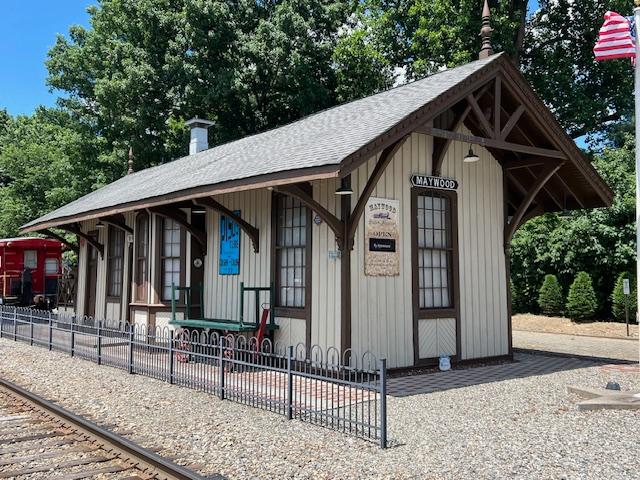
This National Registered restored 1872 New York, Susquehanna & Western railroad station, one of oldest in New Jersey, is located in the heart of Maywood, NJ. Restored by the Maywood Station Historical Committee and opened in September 25, 2004, it contains an extensive railroad museum and collection. The site also contains a restored caboose and engine.

The museum sign welcomes you

The side of the museum where materials are dropped off

I visited the Maywood Station Museum when it was open recently and found a fascinating collection of railroad memorabilia, Maywood fire department history and early maps of the town of Maywood. It is a treasure trove of articles for people who like to study railroad history especially its growth in small towns, early stages of industry in the town and in New Jersey.

The inside of the station museum

There is a lot of items that show the history of rail service not just on the train but in the station as well. There are antique desks, phones, ticket takers, mailboxes, benches and pictures all from the turn of the last two centuries.

The train ticket collection

The Maywood Station Historical Committee (MSHC) division of New York, Susquehanna & Western Technical & Historical Society operates the Maywood Station Museum and is chartered as a tax-exempt, 501(c)3 non-profit, educational and historical organization with a mission to preserve our railroad and cultural heritage through restoration and preservation, historical awareness, archiving and interpretation, museum open houses, meetings and special events (Maywood Station Museum Committee).

The train artifacts

The History of the Museum:

(From the Museum website)

The museum is operated and staffed by the volunteer membership of the Maywood Station Historical Committee. The main focus of the museum is concentrated on the history of Maywood Station and the New York, Susquehanna & Western Railroad and the roles they played in the development of the Borough of Maywood and the surrounding area. The museum collection contains hundreds of photographs, displays, documents, maps and artifacts covering the histories of Maywood Station, the NYS&W and local railroads, the Borough of Maywood and the local region, which are changed periodically and designed to entertain and educate visitors of all ages as well as offer a virtual timeline to these subjects.
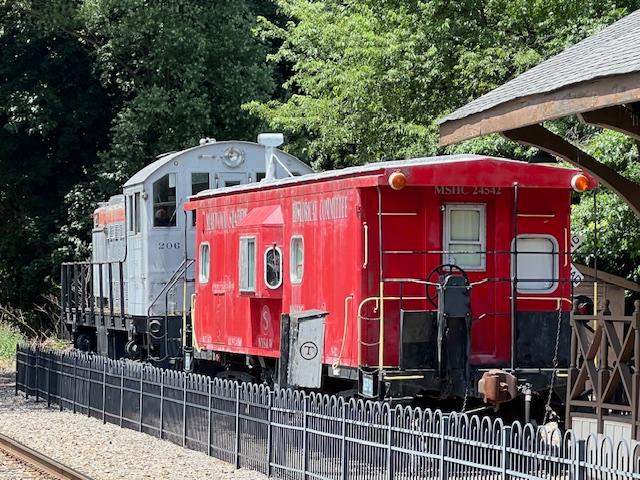
The Museum and Railroad Car

Maywood Station Museum is also the official site of the New York, Susquehanna & Western Technical & Historical Society’s (www.nyswths.org) archive, which contains thousands of drawings, maps, track diagrams, photos, timetables, documents and records covering the history of the New York, Susquehanna & Western Railroad (Wiki).

Train documents and other artifacts

For those interested in historical buildings, meticulous care has been taken by the Maywood Station Historical Committee to show the museum in a historical context.  The museum features the original woodwork painted and stained in the original colors and original Maywood Station furnishings have been restored and displayed such as the potbelly stove, station agent’s desk, chairs, telegraph keys and freight scale. Victorian-period original light fixtures and sconces adorn the ceilings and walls. Additional items have been painstakingly reproduced to the exact original specifications of over one hundred years ago including the station benches and bay window area (Wiki).

The Station Master’s desk

The Maywood Station Museum collection includes a former Penn Central/Conrail N-12 class caboose, which was restored by Maywood Station Historical Committee members. Visitors to the Maywood Station Museum are invited to come aboard Caboose 24542 and view additional displays and an operating model train layout. The Maywood Station Museum collection also includes original New York, Susquehanna & Western Railroad ALCO Type-S-2 Locomotive #206, which has also been restored by Maywood Station Historical Committee members (Wiki).

On September, 10, 2009, NYS&W S-2 #206 was placed on the State of New Jersey Register of Historical Places. The locomotive was placed onto the National Register of Historical Places on March 19, 2010 (Wiki).

The History of Maywood Station:
Maywood Station Museum III

The Museum Logo

In 1871, the New Jersey Midland Railway, predecessor of today’s New York, Susquehanna & Western (NYS&W), began constructing a rail line between Newfoundland, NJ and Hackensack, NJ.  The line was part of a plan to connect with the New York & Oswego Midland (later New York, Ontario & Western) in Middletown, NY and provide rail service from the Great Lakes to New York Harbor. The residents of what would later become Maywood, which at the time was part of an area called Midland Township, saw the advantages of the new railroad and requested a stop be made.

At the time, approximately 13 homes with nearly 90 residents were in the boundaries of today’s Maywood. Soon afterward, construction of Maywood Station began. On March 11, 1872, the New Jersey Midland commenced operating trains on the new line and Maywood Station formally opened in the same paint colors you see it restored to today. Six passenger trains a day in each direction initially stopped at Maywood. It should be noted that for a brief period after that station opened, the station sign said “West Hackensack” but this removed due to the requests of local residents who wanted the station named “Maywood”, as the immediate area surrounding the station had then become known (Maywood Station Museum).

A station agent was employed and it is believed that the first agent was name George Sipley. The station agent handled passenger  baggage, freight shipments to and from the station, passenger ticketing and general functions in addition to performing the job of postmaster. In the 1872 to 1910 period, Maywood Station served as Maywood’s post office at various times when it wasn’t housed in a local merchant’s store. Another station agent/postmaster was Charles M. Berdan, who held this position in the late 1890’s into the early 1900’s. Mr. Berdan’s home was located directly across Maywood Avenue from the station and exists today. Maywood Station was also equipped with a telegraph so that the railroad could communicate between their stations and local residents could send messages around the world. The station also offered Wells Fargo and later, Railway Express Agency delivery services. These services lasted into the 1960’s (Maywood Station Museum).

The Railroad buckles

When Maywood Station was built, it originally located on the south side of the current tracks. In 1893, the station was moved to its present location on the north side of the tracks due to the addition of a second set of tracks being constructed and a purchase of additional land by the railroad. At the time, several additional NYS&W stations along the line were similarly moved for the same reason. When the station was moved, it was jacked up onto the rails, the rails greased, spun around and slide approximately 30 feet closer to Maywood Avenue, then jacked up again and moved to its present  location. A new foundation was also added. It is interesting made at this time including the addition of a freight platform at the “new” rear of the station.
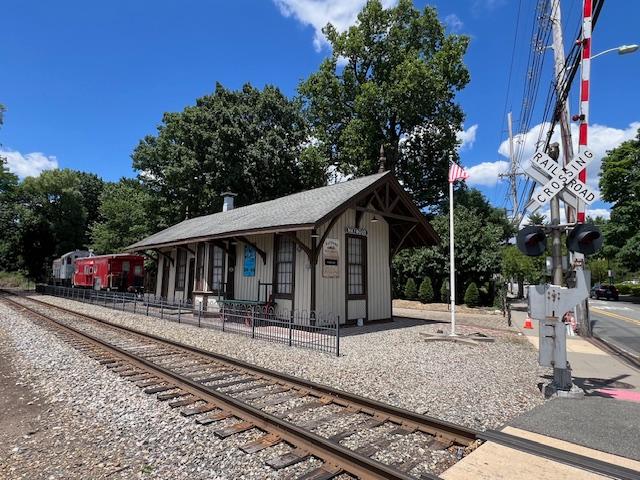
The Maywood, NJ Railroad Museum

The spot where Maywood Station was moved to originally included a passing siding where steam locomotives were stationed to be added, when necessary to help heavy freight trains on the several grades encountered heading west on the line. When the station was moved, the passing siding was cut back and one of the two switches was removed. The remaining trackage was then used to store freight cars, which were unloaded at the station. The siding started to the west of the station and ran 440 feet to near the rear freight platform of the station. The siding was last used in the early 1970’s and remnants of it can be seen today (Museum Station Museum).

The train sections on displays in the back of the museum

In 1894, the approximate 1.1. square mile area that included Maywood Station, formerly part of Midland Township was incorporated as the Borough of Maywood. Also that year, the NYS&W expanded into western New Jersey and through its Wilkes-Barre & Eastern Railroad subsidiary, into the coal fields in the Pocono region of northeastern Pennsylvania. The rail line could now take a passenger from a ferry at New York City to a connection at Jersey City, NJ to almost Scranton, PA on its own rails. The added ease of transportation began to attract manufacturing to Maywood as well as a demand for new homes. In 1894, the total residents living in Maywood numbered approximately 300 but this was about to change (Maywood Station Museum).

The rails next to the museum

New manufacturing and homes sprang up in the area surrounding the station and included such industry as Schaefer Alkaloids Company, Maywood Chemical Company and Maywood Art Tile Company. As these companies expanded so did Maywood’s population and by 1920 it numbered nearly 3000 (today Maywood has approximately 9,500 residents). The 1920’s also marked the height of passenger service provided by the NYS&W at Maywood Station. Thirteen passenger trains in each direction stopped at Maywood Station on a daily basis. Freight shipments continued to be delivered to the station and most of the local industry had their own rail sidings serving their plants. The NYS&W was enjoying a period of posterity and in 1920, a freight house addition was added to rear of Maywood Station and the exterior walls received a stucco finish over the existing boards and battens.

Station equipment

Stucco was in-vogue in the 1920’s and the NYS&W applied this material to several other stations on their line as well. In 1926, another round of various improvements were made at Maywood Station including the addition of interior men’s and women’s bathrooms, an 8-inch concrete floor installed to replace the wooden floor planking plus electrical and heating improvements. Unfortunately the Great Depression stuck in October 1929 and lasted well into the late 1930’s and the growth slowed dramatically.  In 1937, the NYS&W declared bankruptcy and shortly thereafter was spun off from its parent, the Erie Railroad, which had controlled it since 1898. Around the same time, Maywood Station’s bay window was removed due its deteriorating condition (Maywood Station Museum).

The newly independence NYS&W fought hard to survive and cut back certain services but at the same time tried innovative concepts like streamlined, self-propelled, rail passenger cars as a way of cutting costs while boosting efficiency. The railroad also quickly retired its steam locomotives and replaced them with more efficient diesel locomotives stating in 1941 and completed the program in 1947. During World War II, the fortunes of the NYS&W did improve with the wartime demands placed on America’s railroads. As in World War I, many of Maywood’s servicemen departed through Maywood Station, some never to return. By 1953, the NYS&W was solvent once again but only for a few more years. Faced with mounting losses from the passenger services it offered and America’s love affair with the automobile and a new interstate highway system, the railroad once again embarked on a period of reducing their passenger train schedules.

The Station Master Desk

Losses continued and on June 30, 1966, the last passenger train called on Maywood Station as well as on the entire NYS&W, however the railroad continued to utilize the tracks at Maywood Station for their freight operations, which continues to prosper to this day. Shortly after the end of passenger service, the station was closed and was used by the NYS&W as maintenance base and for storage. Bill Spence served as Maywood Station’s last station agent. In the late 1970’s. Maywood’s Veterans of Foreign Wars (VFW) leased the station from the NYS&W to be used as a meeting hall. The VFW made a number of improvements including repainting the station, repairing cracked stucco, repairing the roof and maintaining the grounds. In the early 1990’s, the VFW moved out of the station and it remained unoccupied until June 2002, even thought the NYS&W attempted to lease it to another tenant during this period.

Faced with a pending order of demolition by the Borough of Maywood in early 2002 due to the deteriorating conditions of the station, a volunteer, 501C3 non-profit group named the Maywood Station Historical Committee Division of the New York, Susquehanna & Western Technical & Historical Society Inc. was formed on May 29, 2002 with a plan to restore the station and turn it into their museum.

The back of the museum

After several years of volunteer work to restore the station and create a museum, the group has successfully achieved their objectives and more, including placement of the station on both the National Register and State of New Jersey Register of Historic Places. The station now enjoys the notoriety as being one of the most impressive restoration projects and museum efforts to date in the State of New Jersey’s historical community (Maywood Station Museum).

Train lanterns

I want to the thank the Maywood Station Museum for this interesting information and please check out their website at http://www.maywoodstation.com.

https://www.facebook.com/MaywoodStationMuseum/

The front of the museum where materials
Gethsemane Cemetery                                                                   Between Summit Place & Liberty Street north of Route 46                                                             Little Ferry, NJ 07643

Gethsemane Cemetery Between Summit Place & Liberty Street north of Route 46 Little Ferry, NJ 07643

Gethsemane Cemetery

Between Summit Place & Liberty Street

(with entrance on Summit Place north of Route 46)

Little Ferry, NJ  07643

Hours: Secured historic site: Open by appointment only.

Contact: (201) 336-7267

Call for accessibility information.

http://www.co.bergen.nj.us/parks

Free admission

My review on TripAdvisor:

The three times I have visited the Gethsemane Cemetery, it was a very quiet place to reflect on the people who are buried here. Located by a stretch of Route 46 West, you would hardly notice it was there. Sitting on a small hill above the highway lies some of our Counties most prominent Black citizens as well as just ordinary people and freed slaves who were denied entry into other church cemeteries. They were interned here in their own cemetery.

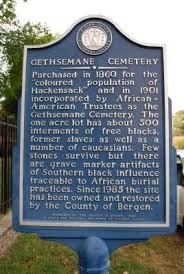
Gethsemane Cemetery is located west of the Hackensack River in southwest Bergen County on a one acre sandy hill located in Little Ferry, NJ. The 1860 deed of sale identifies it as a “burial ground for the colored population of the Village of Hackensack.” In 1901, it was turned over to seven African-American trustees and incorporated as Gethsemane Cemetery.

Gethsemane Cemetery IV

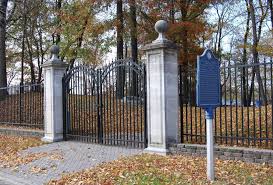
The entrance to the Gethsemane Cemetery in Little Ferry, NJ

Although there are only 50 graves stones, the graves of over 500 people have been documented, including that of Elizabeth Dulfer, who was born a slave (c 1790), freed in 1822 and died in 1880. She became one of the wealthiest business owners and landholders in Bergen County. Three Civil War veterans, Peter Billings, Silas M. Carpenter and William Robinson are also buried here.

Gethsemane Cemetery II

Gethsemane Cemetery figured the center of controversy surrounding the burial of Samuel Bass, sexton of Hackensack’s First Baptist Church. When he died on January 22, 1884, his family wanted to bury him in the Hackensack Cemetery but was refused due to his race. Mr. Bass was then buried in Gethsemane Cemetery.

New Jersey Governor, Leon Abbett, protested the denial: “The Legislator should see that the civil and political rights of all men, whether white or black are protected…It ought not be tolerated in this State that a corporation whose existence depends on the Legislature’s will…should be permitted to make a distinction between a white man and a black man.” Two months later in March 1884, New Jersey’s “Negro Burial Bill” was passed desegregating cemeteries in New Jersey.

In 1985, Bergen County acquired the neglected cemetery and dedicated it as a County Historic Site. It was entered into the New Jersey and National Registers of Historic Places in 1994 for the historical significance it played in the enactment of N.J.’s early Civil Rights legislation and for containing evidence of West African burial customs.

Gethsemane Cemetery

The County of Bergen marker

In 2003, the county celebrated the dedication of new meditation areas and historic interpretive panels that tell Gethsemane’s story and lists the names of 515 people known to be buried here.

Gethsemane Cemetery III

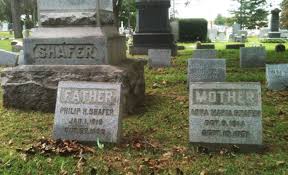
The cemetery markers

New mediation areas and historic panels tell the story of the cemetery and list the names of 515 people who were buried here.

My International Marketing class at Bergen Community College recently did a complete study and marketing plan for the “Bergen250” on the Revolutionary War veterans buried at graveyards and cemeteries all over Bergen County, NJ:

The project:

For a Mapping of all the historic graveyards and cemeteries, I had the students visit all the sites that the Daughters of the American Revolution had researched and I had the students find all the locations, photo the tombstones and create a bio on each of the veterans. I enclosed a copy of their work above.

My blog on the historic graveyards and cemeteries of Bergen County:

https://visitingamuseum.com/tag/historic-cemeteries-of-bergen-county

The cemetery is open only a few times a year to the public for special holidays and events. I came for the Juneteenth Celebration of the emancipation of slavery from the Union on June 19th. There was an independent tour on your own of the cemetery and the panels. If you had any questions, there are County representatives to guide you through.

The Gethsemane Cemetery in the Fall

(Information taken from the Bergen County Parks System guide).

Disclaimer: This information was taken directly from the Bergen County Parks Directory. Please call or email the above information for more details on visiting the cemetery. It can be opened for private tours.

The Van Allen House/Oakland Historical Society                                                                  3 Franklin Avenue & Route 202                                     Oakland, NJ 07436

The Van Allen House/Oakland Historical Society 3 Franklin Avenue & Route 202 Oakland, NJ 07436

The Van Allen House

Oakland Historical Society

3 Franklin Avenue & Route 202

Oakland, NJ  07436

(201) 337-9652

Open: Seasonally; please check their website

http://www.oaklandhistoricalsociety.org

http://www.oaklandhistoricalsociety.org/

TripAdvisor Review:

https://www.tripadvisor.com/Attraction_Review-g46693-d10359401-Reviews-The_Van_Allen_House-Oakland_New_Jersey.html?m=19905

The Van Allen House in 2023 during the next History Coalition

I visited the Van Allen House on my first trip on the Northwest Bergen History Coalition 6th Annual History Day tour of Upper Bergen County in 2016 and in 2019. It is mentioned on ‘Day Forty-Three’ of my blog, ‘MywalkinManhattan.com’. It had been my last stop of the day. The historic home is currently closed due to renovations on the house and will open in the Fall of 2019.

The Van Allen House during the renovation in 2023 with the added dormers

Of all my stops that day, I found that the Van Allen House was in need of a renovation. From the outside, it is very quaint. On the inside, the house needed a lot of fixing up and restoration work. The upstairs had water marks all over the ceilings. The gardens also needed some serious weeding and planting. IN 2023, the renovations of the upstairs had been completed and the home was replastered and painted. Most of the artifacts were stored in a few rooms that were being finished.

The kitchen is as you enter the home

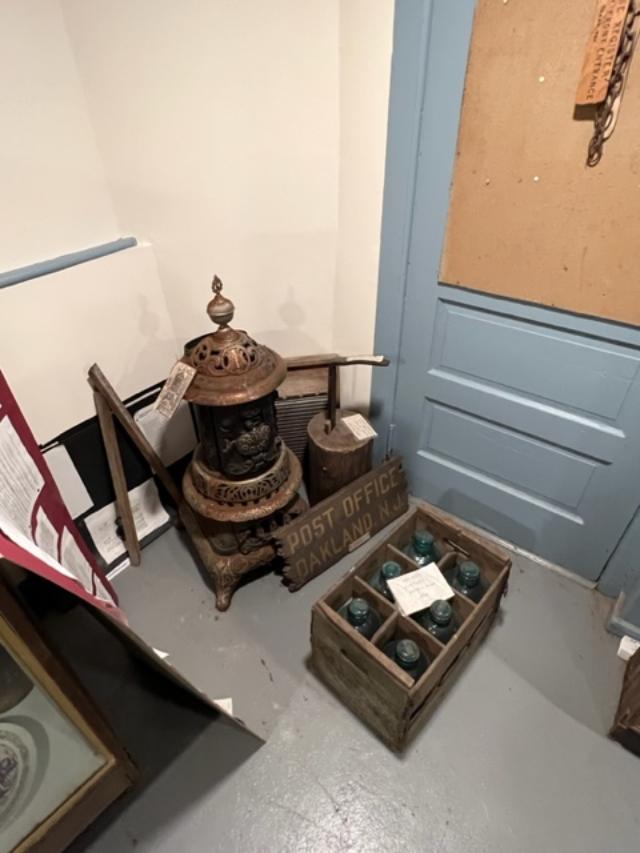
During the renovation, a lot of the artifacts were being stored in the addition to the house that took place in the early 1800’s. Many of the things that had been donated were showcased in this room off the kitchen and shows the wide variety of the society’s collection. There were all sorts of items from the home, decorative pieces and a variety of things that would have been used at the house as it being a working farm. There were also many Native American artifacts.

Some of the artifacts in the downstairs room

Artifacts in the room downstairs

Household items donated to the society

More household items of the Van Allen House

More artifacts of the Van Allen House Collection

The vast array of items in the downstairs addition of the house will be used all over the house once the renovation is completed sometime in the next two years. There was still a lot to do around the house. There had been so much damage to the house over the years that it needed a major renovation.

The upstairs had been finished with the addition of the domers which a few of the society members had said that these were not part of the original house. They can debate about it but the house looks really nice with them and makes the house look realistic. Still from what the people said that they were not part of the original design.

You could see the vast improvement in the house over the last three years and the extent of the work that had been done already. All the outstairs rooms had been plastered and painted. The rooms looked very modern,

The upstairs has been nicely restored

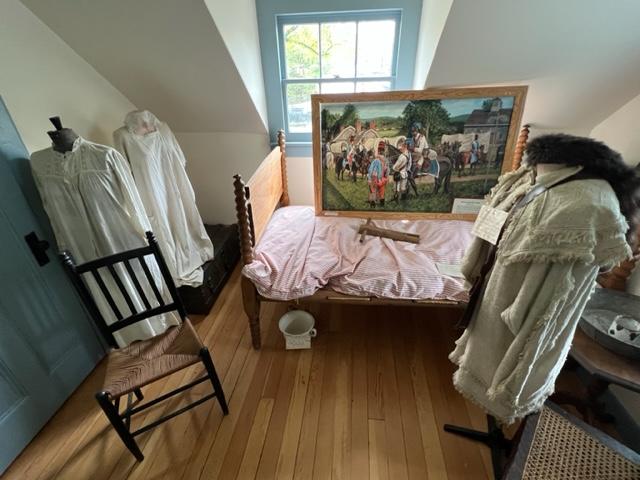
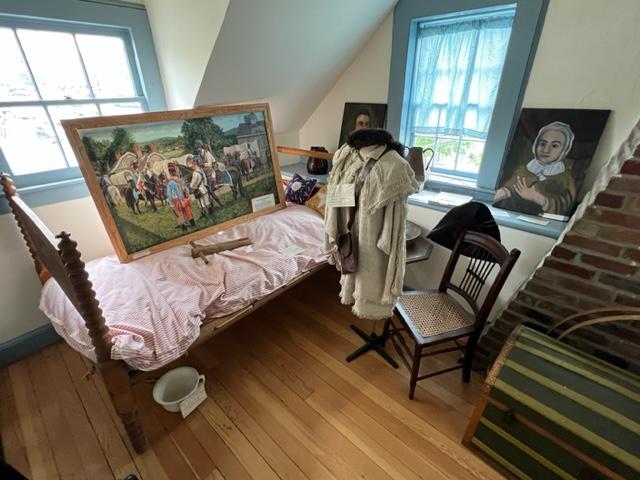
The upstairs rooms now house many of the home furnishings of the collection along with clothes and personal items of families that have donated them over the years. The upstairs is just finishing the renovation so things will have to be organized in the future but at least you can see the things that the Historical Society has in the collection.

Household items in the collection upstairs

Clothing and bedding items at the Van Allen House

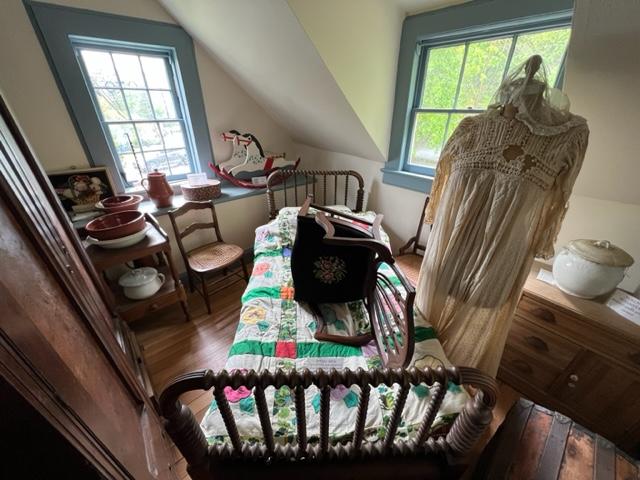
The smaller bedroom of the Van Allen House

One of the best things of the house is its gift shop. It has some of the most unusual handmade gifts that it was worth the trip out to the house. One of the members makes handmade cloth dolls for $5.00 that are just quaint and make a beautiful gift.

The Oakland Historical Society, who operates the house, was putting a lot of time and effort in the renovations of the house and their volunteers I was told would be working on the gardens. Either way, it is an interesting house to visit and it is steeped in history.

The upstairs beams leading to the bedrooms

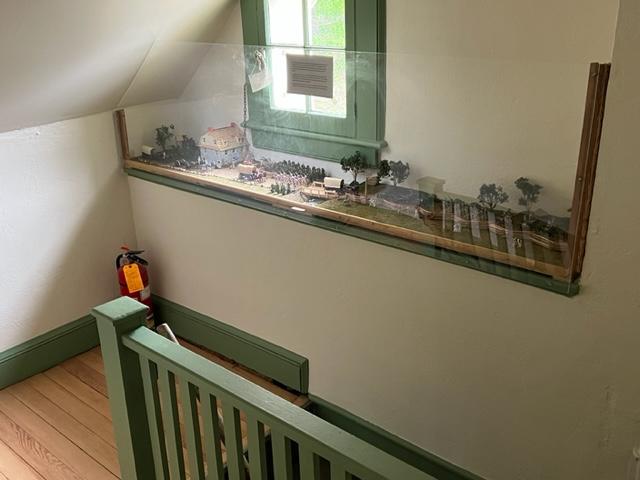
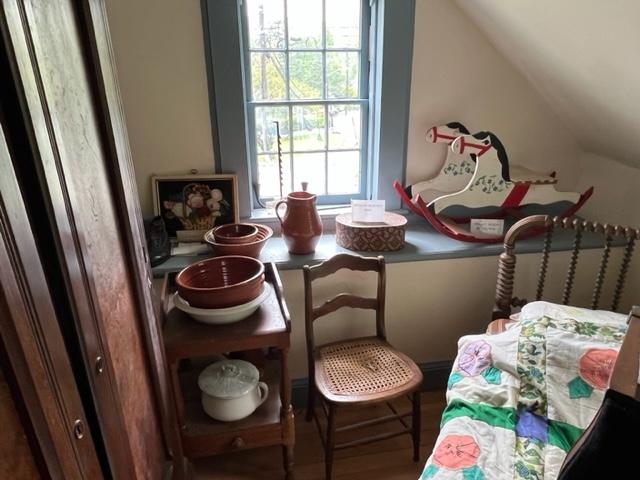
The toy collection at the top of the stairs

The History of the Van Allen House:

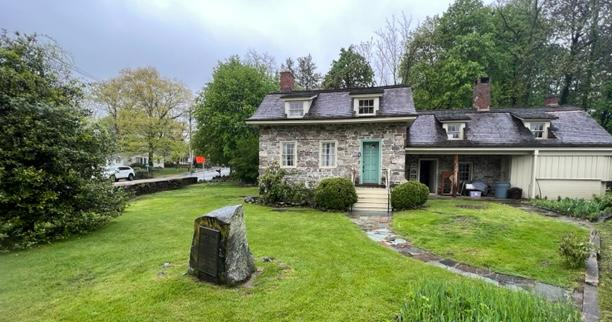
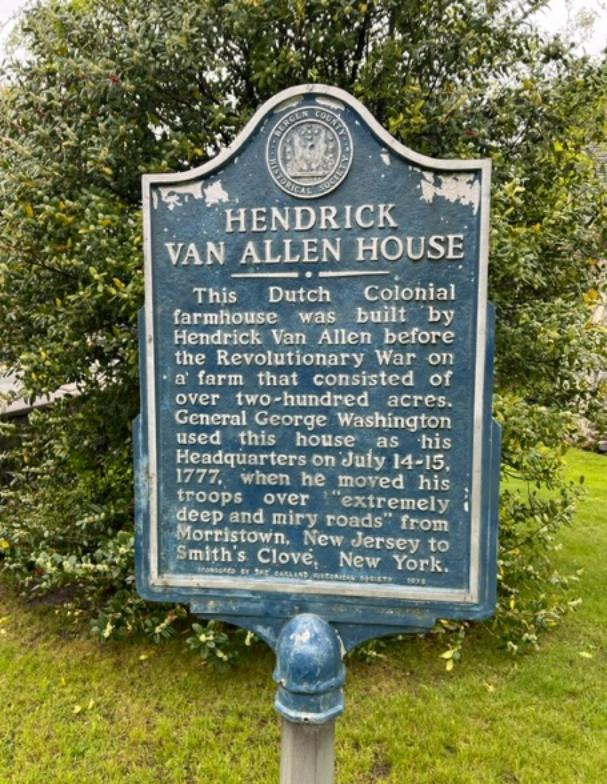
The Van Allen House was built around 1740 as the home of farmer Hendrik Van Allen. During the Revolutionary War, it served as the headquarters for George Washington on July 14, 1777. At the time, he moving his troops from Morristown, NJ to New York (Wiki).

In 1778 and 1779, Bergen County used the house as a court. Edward Day Page, a dairy farmer, businessman and Oakland’s second mayor, owned the house as well as the northern fourth of Oakland in the late nineteenth and early twentieth century (Wiki).

Household items at the Van Allen House

It was saved  from demolition by the Oakland Historical Society with aid from the Woman’s Club of Oakland. It is now maintained as a museum displaying colonial Dutch life. The house was added to the National Register of Historic Places on July 24, 1973. There were several branches of the family in the Paterson, Passaic and Bergen Counties in New Jersey (Wiki).

Items in the family collection

The Oakland Historical Society:

The mission of the Oakland Historical Society (Oakland, NJ) is to bring to life and help maintain the history of the Borough of Oakland by activating and preserving especially the Van Allen House site, with the Vygeberg Farm Office Building and by keeping a museum there showing living displays and memories of Oakland’s past. We support living displays and memories of Oakland’s past. We support the Borough’s efforts to continue and complete the renovations of both buildings with the help of the Bergen County Office of Historic Preservation (OHS).

The Children’s bedroom at the Van Allen House

During the year we offer opportunities from people to visit the Van Allen House and experience local life as it was in the 18th and 19th Centuries on a farm settlement in northern New Jersey. The Lenni-Lenape Indians are known to have used the path which followed the Ramapo River Valley north and south and has now become an interstate roadway, Route 202, which goes from Maine south into Maryland and beyond. Copies of letters George Washington wrote at the House are available there during open-houses, usually the 3rd or 4th Sunday afternoon many months during the year. Please check our events page to see when the house will be open (OHS).

The Van Allen House on that gloomy Saturday morning

The site also has a building from 1902, built by Edward Page, one of the industrialists who settled along Route 202 to develop agricultural for the growing cities of Northern New Jersey, such as Paterson or Newark (OHS).

The Van Allen House Marker

The house was really interesting to visit during the Northwest Bergen Historical Coalition. The docents were really nice and they gave some interesting insights about the family and the house itself.

The Christmas holiday event celebrating Sinterklaas and the Dutch Christmas:

The outside of the house decorated for Christmas

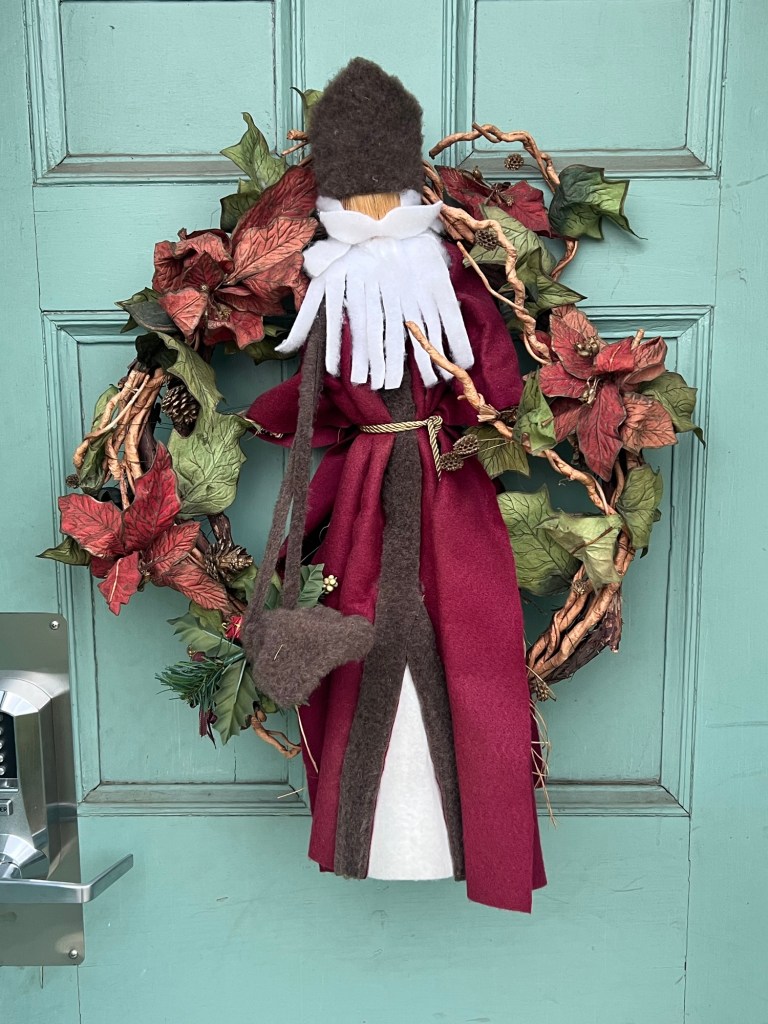
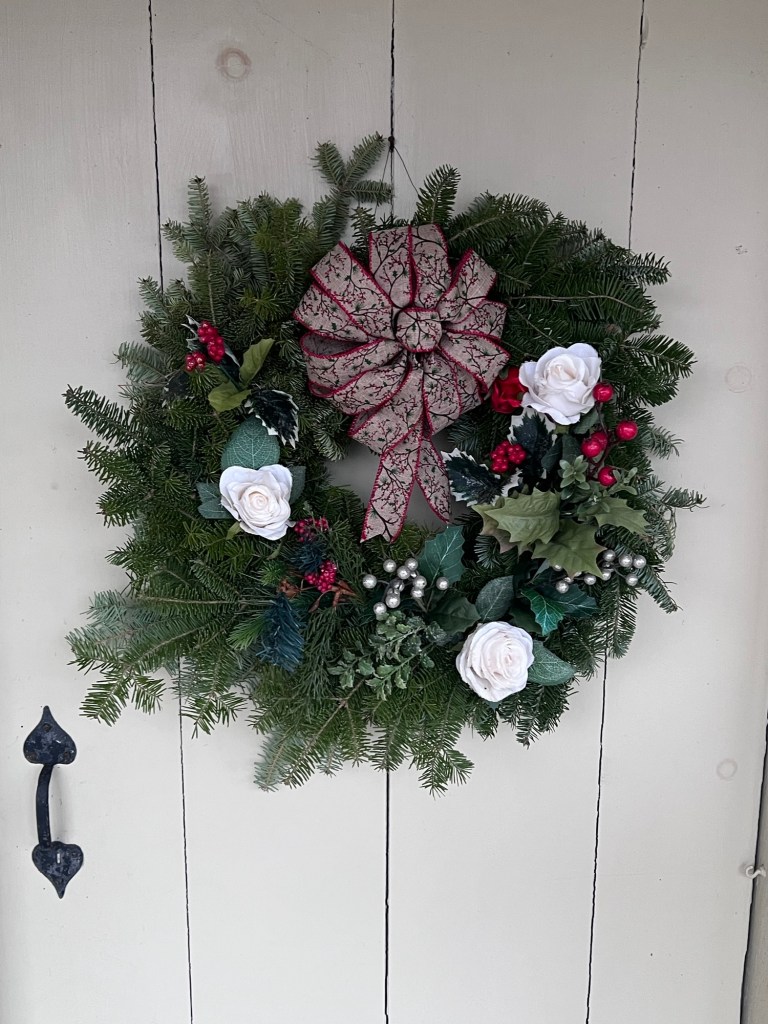
The front door wreath

The wreath

In December of 2025, I visited the historical site for the Sinterklaas celebration for the Christmas season. It was a nice festival with making in the hearth and gingerbread man decorating for the kids. These were delicious.

Baking in the hearth

Decorating gingerbreadmen

Indulging in freshly baked gingerbreamen

There was a woman playing Christmas songs on the harpsichord to the group of patrons in the main room of the house and an old fashioned Christmas tree decorated for the holidays.

The colonial woman playing the harpsichord

The performance

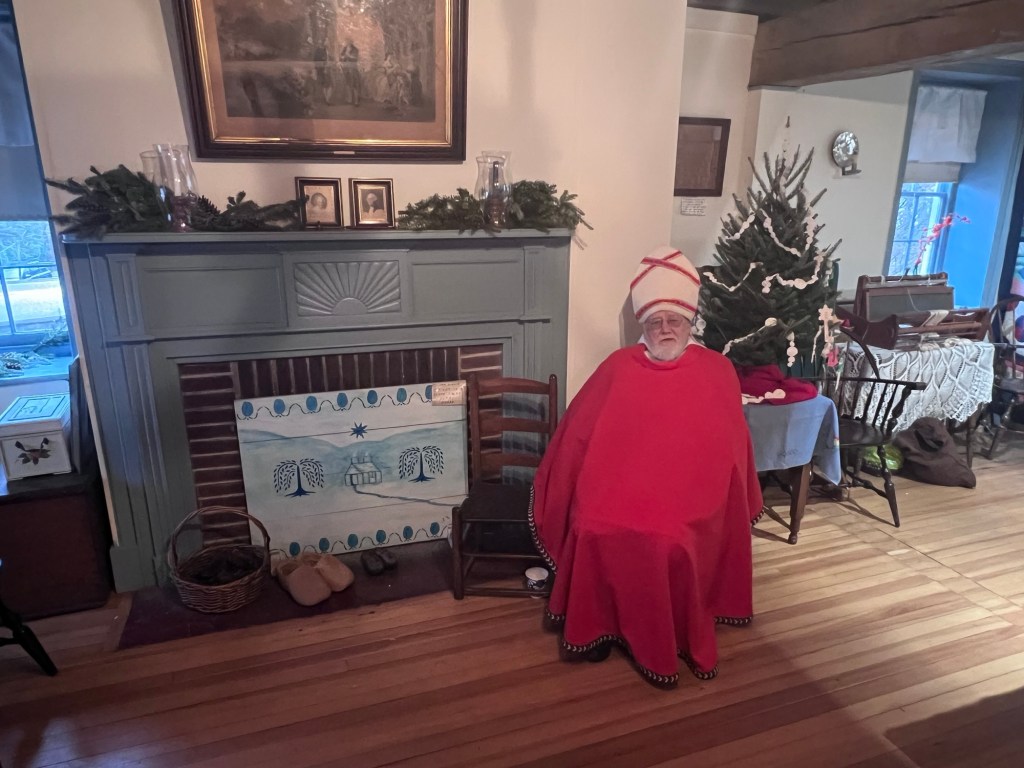
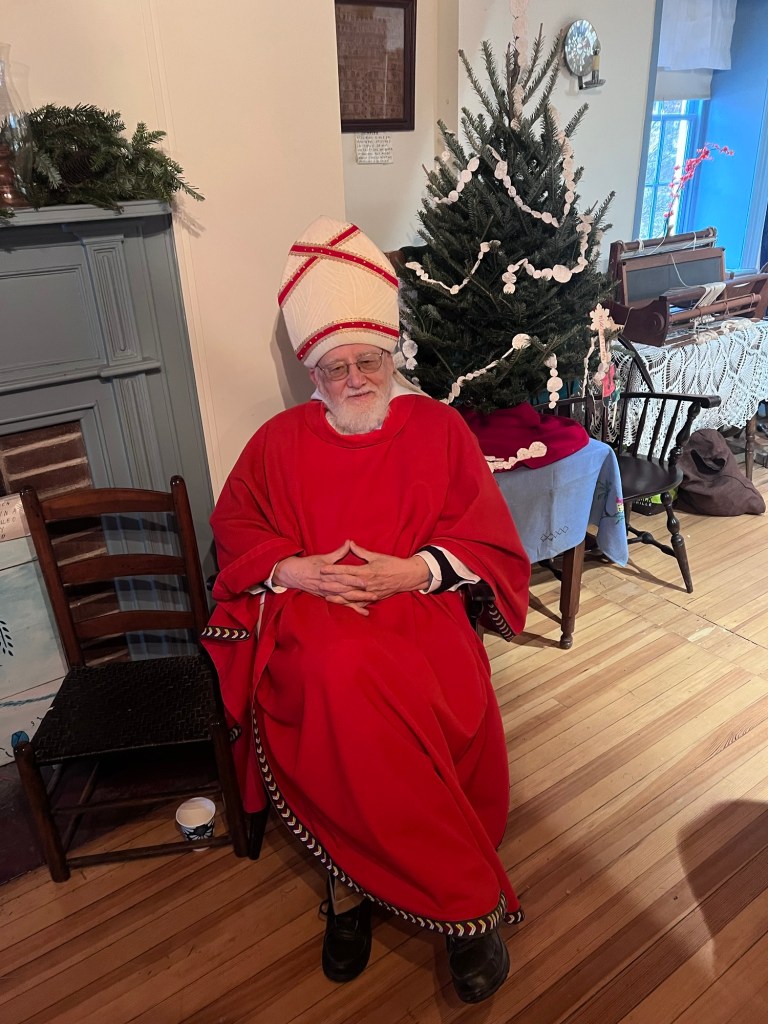
Sinterklaas, the Dutch version of Santa Claus was on hand to talk to the children and give out well wishes to everyone.

Sinterklaas talking to the guests

The jolly man greeting all of us

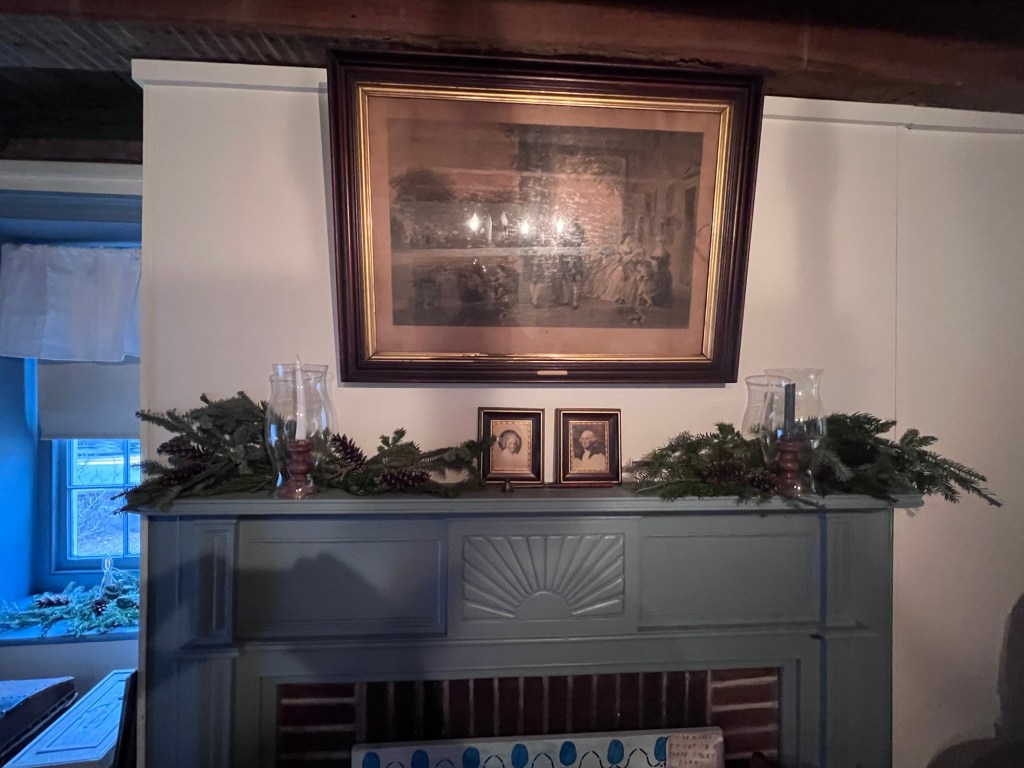
The house both inside and out was decorated for the Christmas holidays and had that early colonial look about it. Back then things were not as elaborate as the Victorian era and were simple pines, green and berries.

The simple table tree

The pines and greens decorating the mantle

The wonderful artifacts that are part of the collection

In the gift shop area there were very reasonably priced handmade dolls and ornaments made by one of the members. These one of a kind pieces are a perfect gift for the holidays. These are a very special gift for a lucky child.

The handmade items in the gift shop area

The grounds of the house and outside doors were decorated with wreaths and greens as well.

The wreath outside the Dutch doors

It was a nice event and the perfect way to start the holiday season. These Oakland Historical Society did a nice job with popular family event. It was a nice way to start the holiday season. The house was beautifully decorated for the season and the Society was planning all sorts of events for the Spring.

The “Brides and Mother’s” exhibition and tour of the home in May of 2026:

I went to visit the Van Allen House for a special exhibition they were having during Mother’s Day of 2026 entitled “Brides and Mothers”, a show displaying the bridal mementos of residents of Oakland, NJ.

The exhibition of “Brides and Mothers”

Family wedding pictures

George and Martha Washington marriage

The Washington’s pictures

Family bridal pictures of local residents

Some of the bridal gowns from the exhibition

The bridal gown and accessories of a local resident

The Spoon Collection hanging on the wall

The Bridal and baby items including blankets and dolls

The baby items for a new family

One of the antique China dolls from the exhibit

The wedding pictures and announcements of local couples, mostly from the 1960’s and 70’s

The display of wedding gowns and hats plus some children’s items

The hats on display

A closer look at the wedding gowns

The bridal gown on display with a wedding registration

The very fancy wedding registration

After touring the exhibition and talking with the docents on the display, I toured the rest of the museum whose displays were being remounted by the current board members.

The refreshed historical kitchen

The historic kitchen

The history of the Cast-iron stove

The display of farm equipment

The antique voting box from Oakland, NJ

The antique toy display

After touring the rest of the displays in the house, I visited their small gift shop filled with home cloth dolls and glass pieces that were stamped with George Washington’s face.

The beautiful handmade dolls

The glass coasters

I then had enough time to tour the grounds on this beautiful afternoon. Some of the volunteers were cleaning up the gardens while I was there and the lawn had been freshly cut.

The front of the Van Allen House in the Spring of 2026

The side lawn and woods on the outside

The steam and bridge on the side of the property

Historic memorial on the edge of the property of the Red Oak Freedom tree that used to be there

The historic sign outside the house with its history

Another historic sign outside the house

The entrance of the house during the Spring of 2026

The front of the house in the Spring of 2026

The outside of the house was in full bloom in the Spring of 2026 and the grounds were nicely landscaped. It really was a nice tour.

The Hopper-Goetschius Museum                                                   363 East Saddle River Road                                                          Upper Saddle River, NJ 07458

The Hopper-Goetschius Museum 363 East Saddle River Road Upper Saddle River, NJ 07458

The Hopper-Goetschius Museum

363 East Saddle River Road

Upper Saddle River, NJ  07458

(201) 327-8644

Open: Please check website for seasonal openings

http://www.usrhistoricalsociety.org

https://www.facebook.com/pages/Hopper-Goetschius-House/131274536912683

TripAdvisor Review:

https://www.tripadvisor.com/Attraction_Review-g46882-d14048029-Reviews-Hopper_Goetschius_Museum-Upper_Saddle_River_New_Jersey.html?m=19905

The Hopper-Goetschius House Museum

Northwest Bergen History Coalition History Day/Summer Open House 2026:

I visited the Hopper-Goetschius House Museum during the 8th Annual Northwest Bergen History Coalition History Day. I had never been here before and it is a real treat. There are many buildings on the property to visit on top of the house and the fact that this was someone’s house into the 1980’s is pretty interesting.

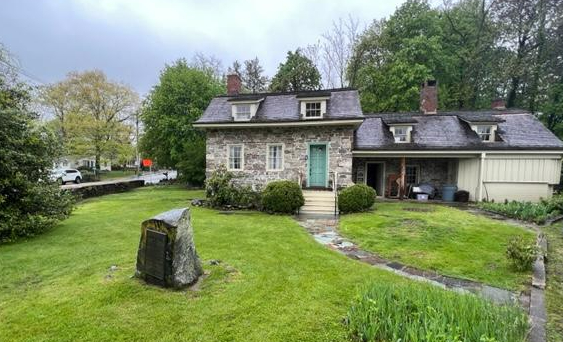
The historic marker in front of the house

The Hopper property in July 2026 for the Weekend Open House

The Gris Mill wheel

The historical tree stump

The historical plaque

The property in the Summer of 2026

Christmas Open House December 2019:

The house still holds many secrets. The best part of the tour of the house is the secret stairs in the kitchen that lead to the old second floor. This  can only accessed behind a panel that leads to a narrow set of steps. You can see it from the new second floor from the top floor.

I attended Holiday Celebration on December 8th, 2019 and it was a beautiful sunny day for an outside event.  It was a really nice afternoon. They had a visit with Santa at the Dutch barn which was decorated with trees surrounding him and presents and a decorated Dutch sleigh. In the schoolhouse, there were all sorts of games and talks to enjoy.

hopper-goetschius-museum-christmas.jpg

Santa in the Dutch Barn at the Hopper museum

In the outside kitchen, there were chestnuts and fresh popcorn being made that you could munch on while walking around enjoying the festivities and the smells of the cooking food were mouthwatering. The gentleman doing the cooking was doing a demonstration on how the food was cooked and the amount of time it took to make things.

hopper-goetschius-museum-christmas-ii.jpg

The outside buildings still had a bit of snow left

The inside of the house was decorated for the Victorian holidays with a nicely decorated tree in the Living Room and garland all over the place. There was a Victorian music box playing songs and a reading of “The Night Before Christmas” being read on the hour.

In the kitchen of the oldest part of the house, they served hot cider and homemade Christmas cookies of all kinds. They were also selling fresh homemade jam that one of the members made. The kitchen was decorated for the holidays as well. There was an open tour of the house and it was fun to see the upstairs decorated with all sorts of Victorian toys and dolls. The fee was a $5.00 donation and it happens every first week of December at the site.

The Hopper House kitchen

The house is a treasure trove of period furniture and family items and on the property there is a schoolhouse, a barn, a blacksmith shop and an outhouse. During the Summer months, the house is open for special tours on the weekends and in the Fall, they have a Harvest Festival and Christmas holiday events. The house is run and operated by the Upper Saddle River Historical Society.

The antique toys in the upstairs bedroom

In April of 2023, I returned to the Hopper-Goetschius House for the Northwest Bergen History Coalition Day for the event. It was a gloomy day with mist and rain but that did not put a damper on the event. There were lots of activities going on in each of the buildings.

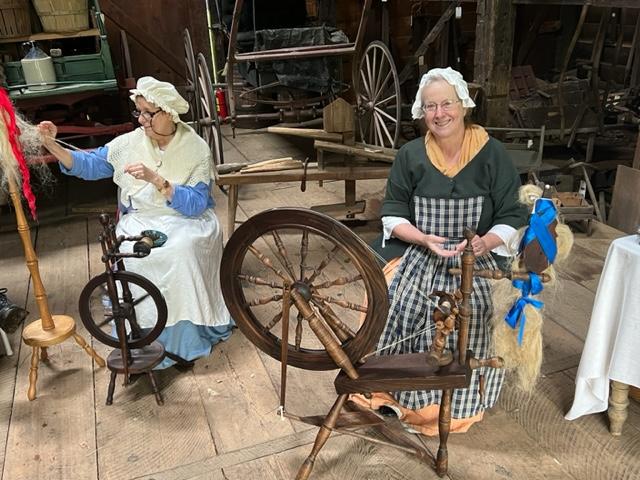
My first stop was at the barn where the ladies were doing a demonstration on spinning thread and we had a conversation of where the expression “Pop goes the weasel” came from (from the spun threat reaching its max and then the machine made a ‘pop’ sound). The ladies were demonstrating the way women spun yarn and made clothes and the work that it entailed.

The yarn spinning demonstration at the Hopper Barn

The ladies explaining how the spinning works

‘Pop goes the weasel’, the weasel at the Van Riper-Tice Barn

When I left the barn, I went over to the school house building to see what was going on. A very bored volunteer took up all my time and would not leave me alone. She had to read from a script and take me all over the house. I just wanted to get out of there. Thank God another person walked in so that I could escape and see the rest of the property.

The Ramsey House was moved to the property to save it from destruction and the society has done a good job transform it to a turn of the century classroom. This is a surprising display in many historical societies as I am sure that people have donated so much of their childhood mementos.

The Ramsey House schoolroom

The schoolroom

The teacher’s seat at the school room. Nothing has really changed.

The farm artifacts at the Ramsey House schoolhouse

After the tour of the Ramsey House, I took the tour of the main house again and its secrets. The Hopper House is a very interesting home as the owner did not want plumbing in the house. Up until 1963, she still used the well. She was forced by her nephew to get a modern bathroom. I thought this was strange that the woman did not want a bathroom. She still used the outhouse into the 1960’s.

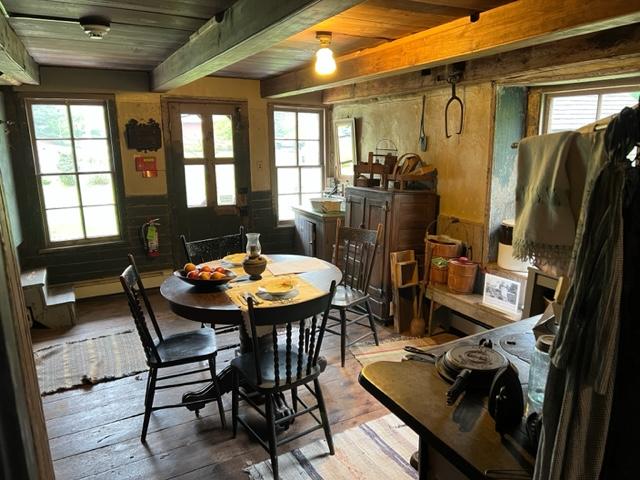
The Hopper House kitchen

The home is decorated with all sorts of beautiful antique furnishes and decorations. The house is so well organized and the volunteers do such a nice job telling its story especially at the holidays. I visited all the rooms where the volunteers explained its purpose.

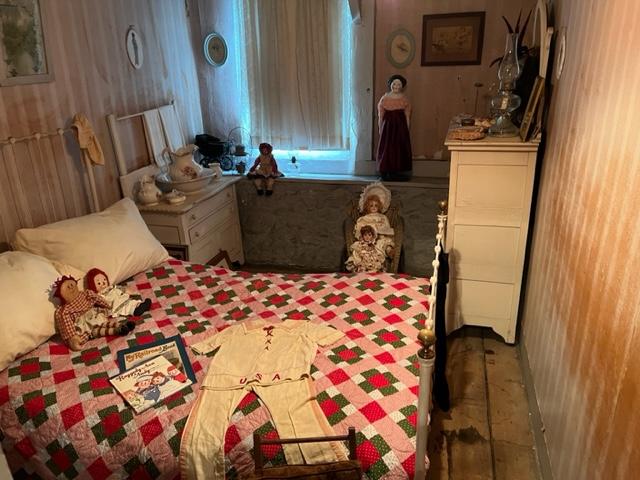
The bedroom upstairs

Bedroom Two

Bedroom Three in the upstairs loft of the house

My last part of the tour was visiting the Smokehouse right behind the house.

The Smokehouse during the Summer Open House

Inside the kitchen during the Open Kitchen

The inside of the Smokehouse

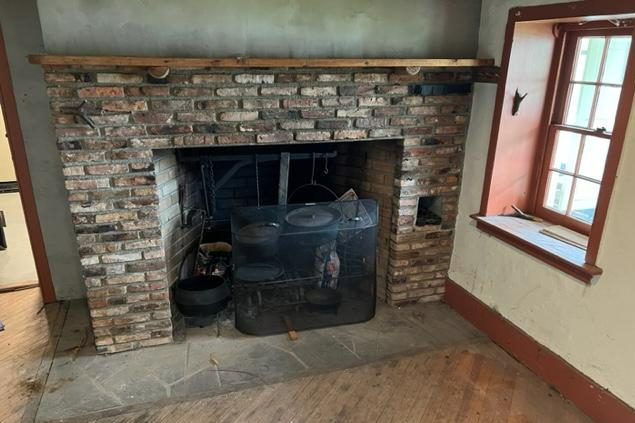
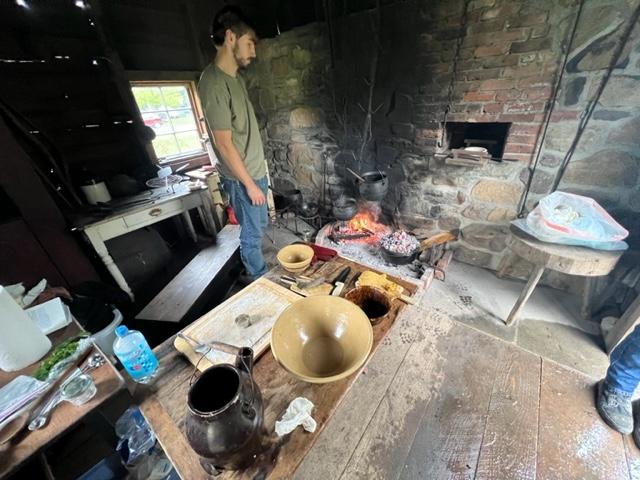
The volunteers were cooking corn bread, homemade potato soup and biscuits in the fireplace. It was interesting to see how food was cooked on the farm in the days before modern kitchens.

The two volunteers working there were so happy to see someone. They told me that no one wanted any soup. On a cold rainy and misty day, I was taking them up on it and it was really good! Talk about warming you up.

The Smoke House on the Hopper estate was cooking away that afternoon

The volunteers were making breads, biscuits and soup that afternoon that warmed me up

The delicious Potato Kale Soup warmed me up on this rainy day

The delicious Corn Bread was cooked with bacon fat and tasted so good! I munched on most of this.

I finished eating and talking with the volunteers about all cooking they were doing. They told me that they were following the recipes that were from the late 1700’s that would have been cooked at the farmhouse at that time. It was a really interesting conversation we had on cooking. It was nice to eat something as well. I was starved at this point.

After the meal, I left to go to the next site. I felt for these volunteers. The Hopper House is off the beaten tract and they must have not gotten the visitors that the other homes had seen. Still it was a wonderful visit with members who care so much about the house and its grounds.

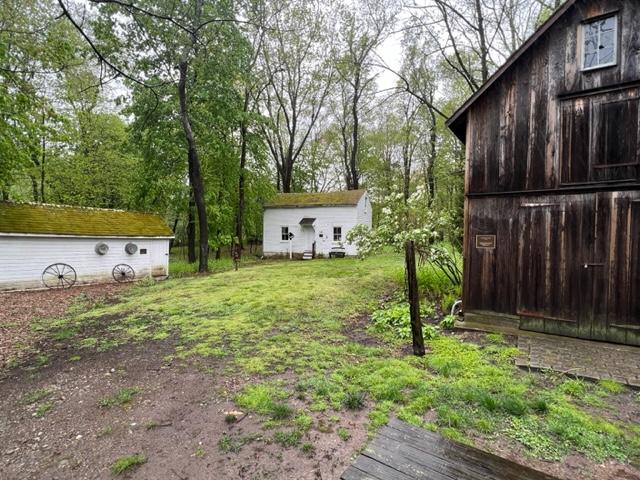
The Hopper estate with the barn, school house and ice house in the distance during the Northwest Bergen Historical Coalition Day

The Hopper House entrance hall

The Hopper-Goetschius house on the corner of Lake Street and East Saddle River Road dates back to 1739. Built by the Hopper family, it is the oldest remaining house in Upper Saddle River. We know it existed in 1739 because it was recorded in surveyor Charles Clinton’s journal and possible it is older.

The picture of Steven Goetschius and his wife,

The other family pictures on the table in the parlor

Rosalie Fellows Bailey in her book on pre-Revolutionary Dutch houses, says it was marked as the home of Gerrit Hoppa on a rough sheepskin map made about 1713.

The Goetschius family, the second owners of the house

The house underwent several changes in the mid 1800’s. The large central chimney with back to back fireplaces was removed. Probably, with more modern forms of heating available such as wood stoves, the fireplace seemed a bit old-fashioned and the owners took it out. Besides, they wanted to use the entrance hall as a room, so the stairway along the east wall was removed and a central staircase added where the fireplaces had once been. The dormers were added in the Victorian era.

The Hopper house in 2023

The Hoppers farmed the land and had a lot of it by today’s standards. The property extended from the Saddle River (Lion’s Park) up the hill almost to Montvale and up the East Road to where Creative Gardens was located.

The antique dolls at the Hopper House bedrooms

(From the Society website)

In 1814, the house became the home of the Reverend Stephen Goetschius of the Old Stone Church. It remained in the Goetschius family for a century and a half, always a place of central importance in town as Stephen Goetschius, the great-great grandson of the Reverend Stephen, served as the borough clerk for over 40 years and conducted his town business from the east room of the house (SRHS.com).

The Hopper House Living Room

The house was without running water until Stephen’s death in 1962. Until improvements were made at that time, Steve’s wife, Lizzie, as those before her, carried water from the well for washing, cooking and shoveled coal for heat (SRHS.com).

The Hopper House Kitchen

The kitchen in the new section of the house

In 1985, the Hopper-Goetschius house was presented to the Borough of Upper Saddle River by Clinton and Grace Carlough. Lizzie Goetschius, the last resident of the house was Clint Carlough’s aunt. The house today serves as a museum, run by the Upper Saddle River Historical Society and offers the public historically related events throughout the year (SRHS.com).

The Hopper House Living Room

The back bedroom Dutch wardrobe

The Patriotic Display for the ‘Bergen 250’

(Upper Saddle River Historical Society)

The Hopper House property also contains:

*The Privy or Outhouse that was in use at the Hopper-Goetschius House until 1962 when plumbing was installed in the house.

The Outhouse

Hopper House estate with all the important buildings in the Summer of 2026

*The Ramsey Sayer House was moved to the grounds in 1999 to become part of the museum complex. This is the oldest existing from house in Upper Saddle River, a good example of a tenant house common on farms in this area. The Ramsey Sayer house belonged to William Ramsey, the grandfather of Kate Fisher Goetschius, mother of Steve Goetschius, who lived in the Hopper Goetschius house for many years.

The Ramsey-Sayre House now serves as the makeshift schoolhouse

The schoolhouse at the turn of the last century

The Native American artifact collection at the Schoolhouse

*The Van Riper-Tice Barn was erected about 1800 by the Van Riper Family on their farm on West Saddle River Road (near the Cultural Center). It was later owned for many years by Harmon Tice.

The Dutch American barn in the Summer of 2026

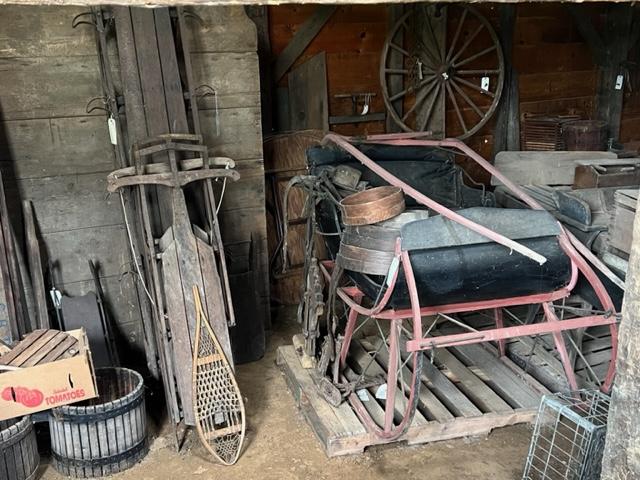
Sleighs and buggies and outdoor equipment

In 1989, it was scheduled to be demolished to make way for a development, the Historical Society dismantled it, moved it to the Museum ground and had it restored and rebuilt on its present location.

The inside of the Van Riper-Tice Barn at the Hopper House estate

Winter transportation at the barn

Transportation and farming equipment

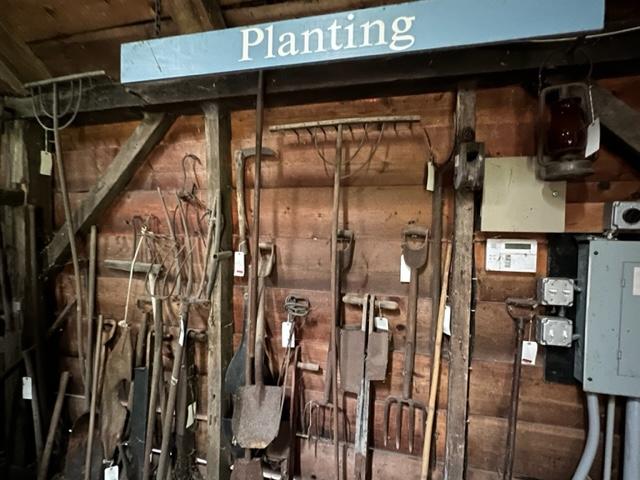
The farming equipment display

More farming equipment

The displays of wool at the Van Riper-Tice Barn

The display of waffle irons

The Apple Cider Press that the Tice and Van Ripper families were so well known for making especially at Thanksgiving

*Snake Fence: a zig-zag fence of split rails once common in this area was added in the property north of the Van Riper Tice barn. The project was completed in 2001 with the help of Will Mazzuto and the vision of John Kroner and Joanne Lombardo.

The Hopper House estate

The Blacksmith Shop

The blacksmith doing a demonstration

The Upper Saddle River Historical Society:

The Upper Saddle River Historical Society was organized in 1977 to collect, preserve and distribute the history of the Upper Saddle River area. The Society is also responsible for the management and restoration of the Hopper-Goetschius House Museum located at 245 Lake Street, Upper Saddle River, NJ.

The Historical Society has over 500 members and is host to nearly 2000 museum visitors each year. The Society holds program meetings throughout the year along with special events such as a Spring Concert, a wonderful Harvest Fair in the fall and an Old Time Holiday Open House in December, featuring mulled cider with chestnuts roasting on an open fire.

The Museum is open for tours every Sunday during July & August from 2:00pm-4:00pm or by appointment. For group or individual tours contact: Althea Gardner @ (201) 327-7807 or Kay Yeoman @(201) 327-2236.

Hopper-Goetschius House Museum Restoration Fund Drive

USR Historical Society.org

Hopper Genealogy Info. http://www.reetree.com

(Upper Saddle River Historical Society)

Disclaimer: This information was taken directly from the Upper Saddle River Historical Society website. Please check the site for the hours and days it is open.