I was in Upstate New York visiting Cooperstown to see the Baseball Hall of Fame and when I finished, I travelled up the road to see the Fenimore Art Museum. What a unique museum packed with interesting art from all aspects of the medium.
The Portrait Collection
The Lady in White
The middle level of the museum specialized in early American works and paintings from the Hudson River School. Across the hall was the history of the Cooper family who once owned all the land in the area, developed it to the town known as Cooperstown as a planned community.
The collection of Folk Art Paintings
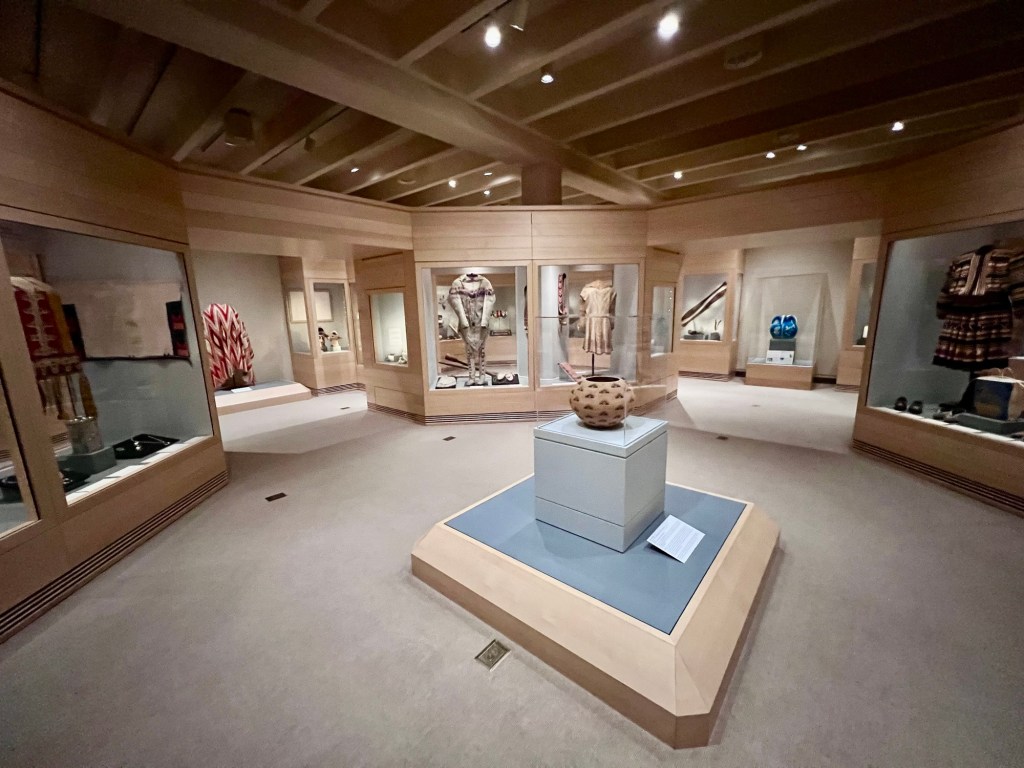
The lower level was dedicated to the Thaw Collection of American Indian Art which was pretty extensive.
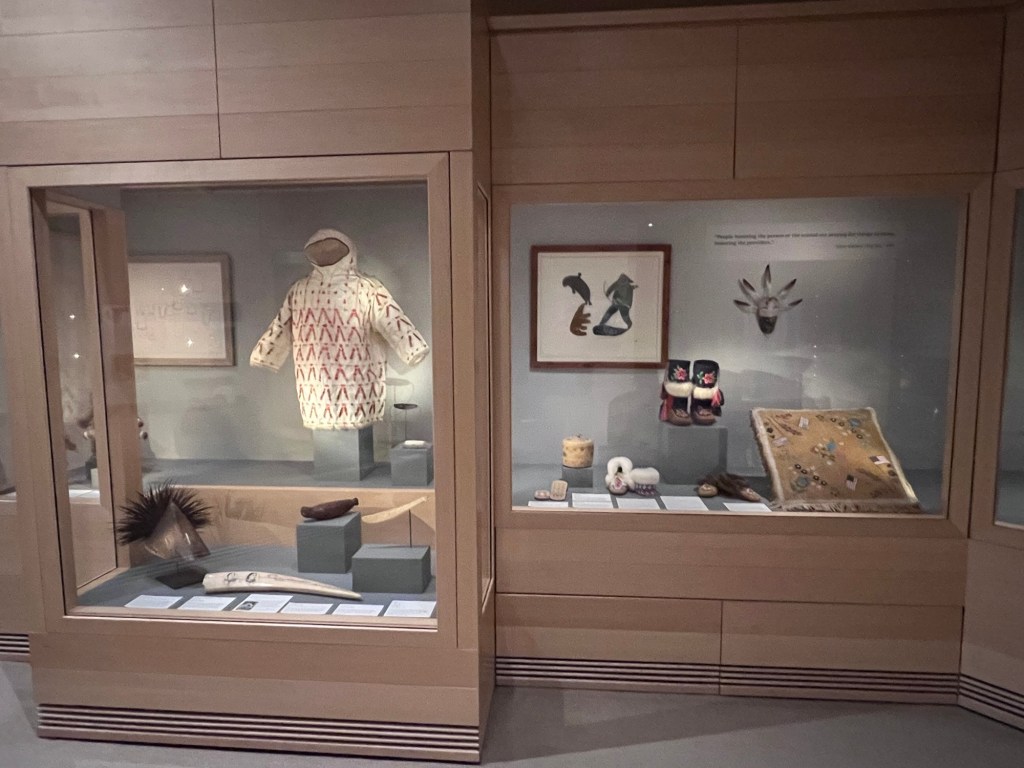
The clothing from the Native American display from the Thaw Collection
The Thaw Collection gallery
I liked the collection of spiritual masks that could scare away any evil spirit. The collection of small dolls and icons makes you wonder how they if ever captured any spirits. Their collection of clothing was interesting too.
The Thaw Collection
The Thaw Native American Collection
The ‘Looking Back’ exhibition
The paintings in the exhibit
One of my favorite paintings from this exhibit (note-some of the buildings in this painting from 1860 still exist).
The upper floor in 2025 was the exhibition of the ‘’Calvin and Hobbes’ cartoon. I loved this comic strip when it was out and found myself laughing the whole time.
The opening of the Calvin and Hobbes exhibition in 2025
Exploring Calvin and Hobbes revisits the beloved comic strip created by Bill Watterson from 1985 to 1995. This exhibit explores his mastery of the comic strip art form through engaging characters, thoughtful writing, and creative layouts.
The exhibition features original Calvin and Hobbes daily and Sunday strips as well as specialty pieces by Watterson from his collection of more than 3,000 originals housed at the Billy Ireland Cartoon Library & Museum at The Ohio State University. Calvin and Hobbes appeared in 2,400 newspapers worldwide at the height of its popularity. Watterson won the National Cartoonists Society’s prestigious Reuben Award for “Outstanding Cartoonist of the Year” in both 1986 and 1988.
The History of the Fenimore Art Museum:
The Fenimore Art Museum originated as the New York State Historical Association, founded in 1899 by New Yorkers who were interested in promoting greater knowledge of the early of the state. They hoped to encourage original research, to educate general audiences by means of lectures and publications to mark places of historic interest with tablets or signs and to start a library and museum to hold manuscripts, paintings and objects associated with the history of the state.
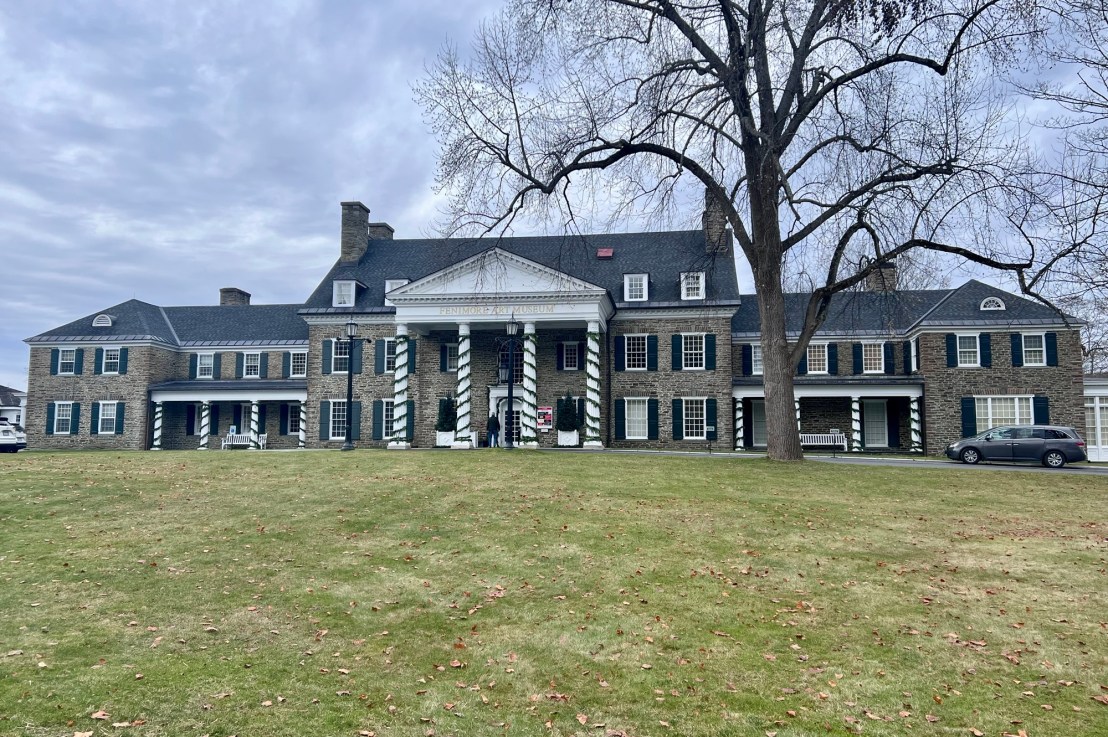
The Fenimore Art Museum in the Fall of 2025
In 1939, Stephen Carlton Clark, offered the organization a new home in the village of Cooperstown, NY. Clark, an avid collector, took an active interest in expanding the holdings of the Association and in 1944 donated Fenimore House, one of his family’s properties, to be used as a new headquarters and museum. The impressive neo-Georgian structure was built in the 1930’s on the site of James Fenimore Cooper’s early 19th century farmhouse on the shore of Otsego Lake, Coopers Glimmerglass.
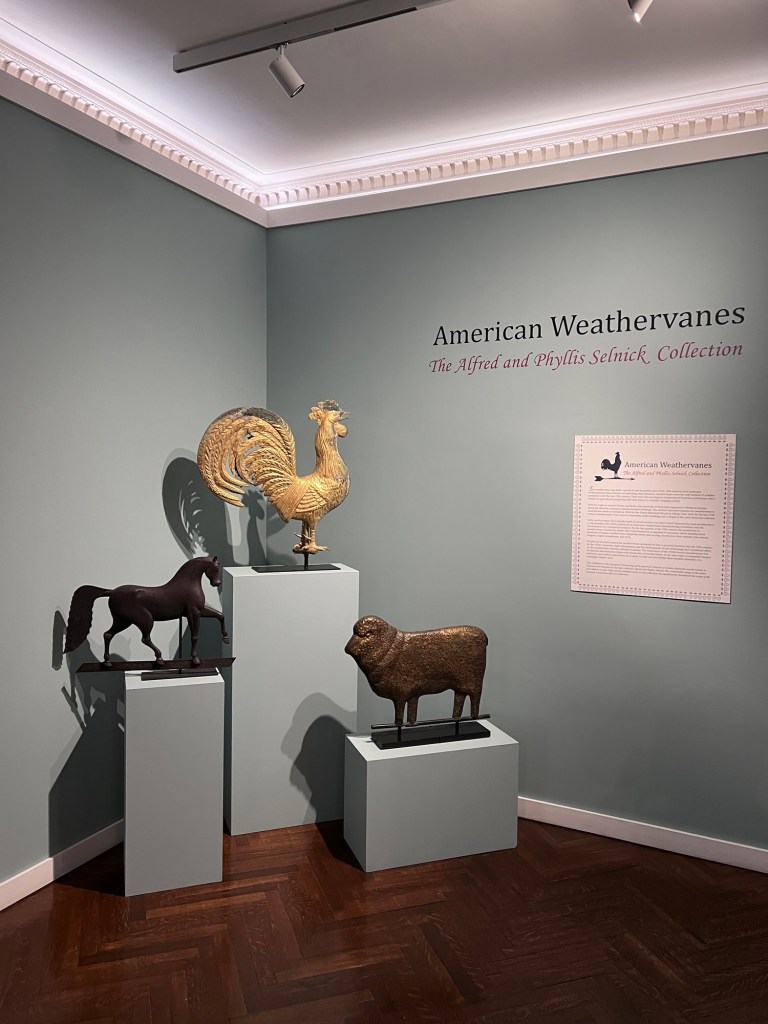
The Weathervane Collection
Fenimore House was large enough to have both extensive galleries as well as an office and library space. The collections and programs continued to expand and a separate library building was constructed in 1968.
The Cigar Store Indian
In 1995, a new 18,000 square foot wing was added to the Fenimore House to accommodate the Eugene and Clare Thaw Collection, which is one of the nation’s premier collections of American Indian Art. In 1999 in recognition of our world class collections, we renamed the Fenimore House to the Fenimore Art Museum.
The Collection includes The Thaw Collection of American Indian Art, Fine Art & Folk Art, Photography and the Research Library.
Early American Portrature
Mission:
Preserving-Engaging-Educating
Fenimore Art Museum is dedicated to welcoming and connecting people to our shared cultural heritage through exhibitions and programs that engage that engage, delight and inspire.
(This information comes from the Fenimore Art Museum’s website and I give them full credit for it)
The ‘Humming Bee’ portrait
This was one of my favorite paintings in the collection when I visited in 2025.
I recently spent my afternoon at the Senate House and Museum in Kingston, NY taking a tour of the museum and the House next door. The Senate House itself had just finished its renovation and the gardens were in full bloom in 2023. It was a quiet afternoon, and I was the only patron for most of the afternoon. The grounds were full of beautiful foliage and flowers, so it was nice to walk around the grounds.
The Senate House story board
The Senate House had just reopened in 2023 after almost a four year renovation and because of the closure during COVID. The grounds are very pretty and well-landscaped and the outside has had a lot done to the gardens. The house was built for merchant Abraham Van Gaasbeek and his family. It stayed in the family for generations.
The Senate House at 296 Fair Street
We were able to tour the inside of the house and see the renovations that the State of New York made on this important structure. The home has been renovated by the state but the tour guide told us not with the historical integrity it should have had. It was not to the total interpretation of the life in the house. Still, it told the story about the people that lived there.
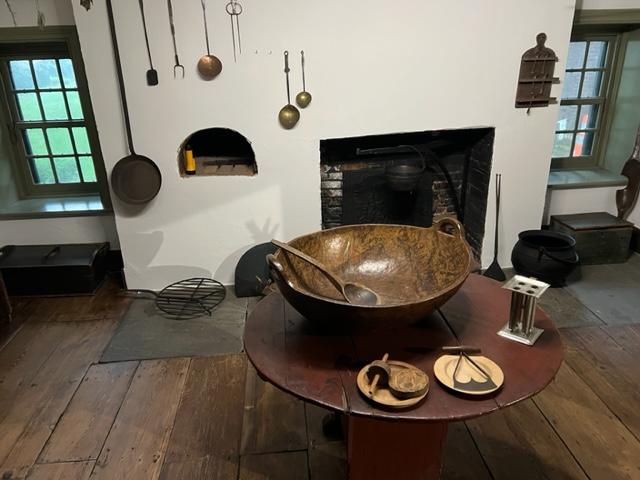
The Senate House Kitchen
Here you see the beehive oven, the working fireplace and many household items including waffle makers, cookie molds and candle making tools. The daily household tasks would be time consuming.
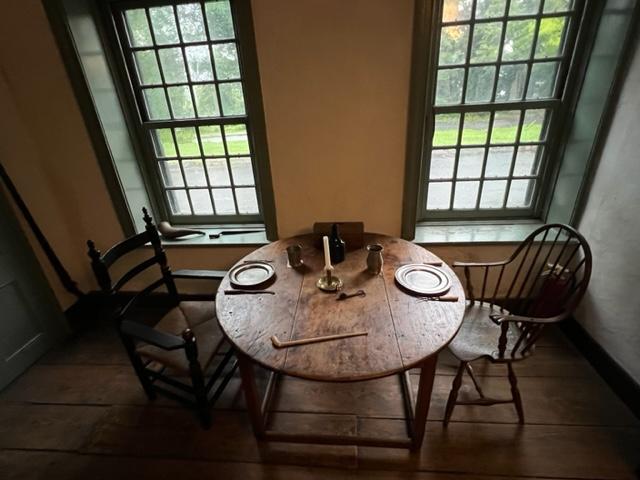
The Dining Space
The bedroom
In the original part of the house, the dining space and bedroom would be in a one room section of the home and as the family got larger, the house was added on to on both sides.
The Parlor
The Parlor was the fanciest room in the house with the best furnishings, decorations and a place of social interactions with guests. This rooms was for adult use at that time.
The Meeting Room for the leaders in change.
This was the room where plans by the patriots were made that changed the course of New York and the rest of the country. Now that the Senate House home is open again, you get a feel for what these people must have went through in developing the country during the Revolutionary War years.
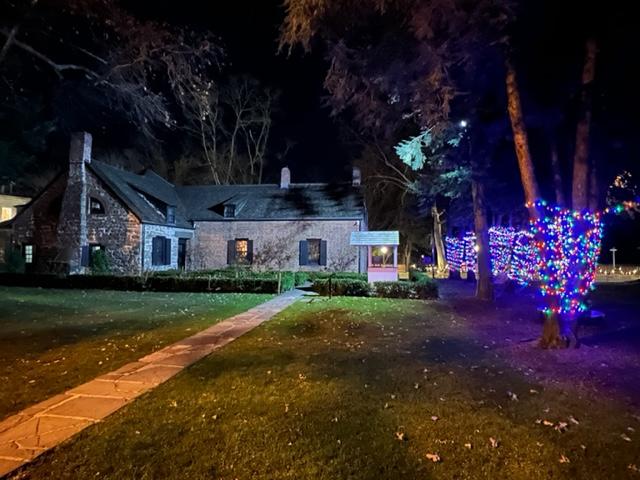
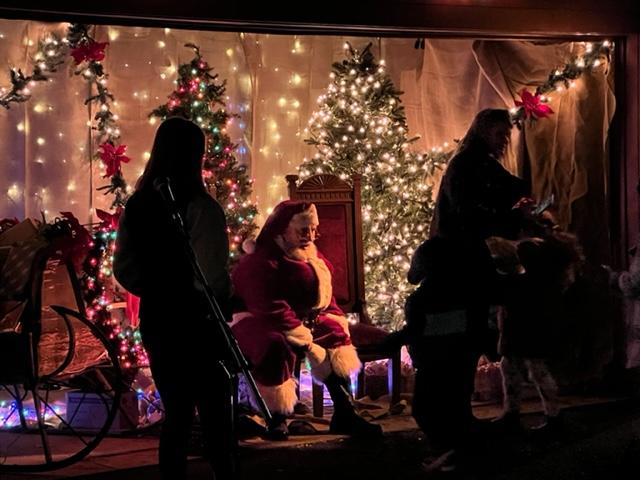
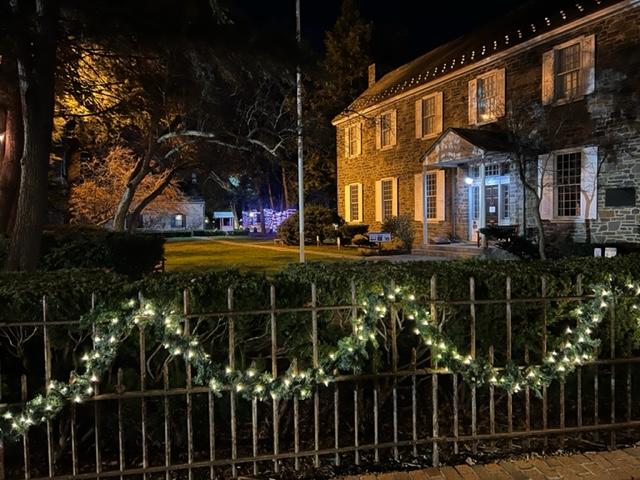
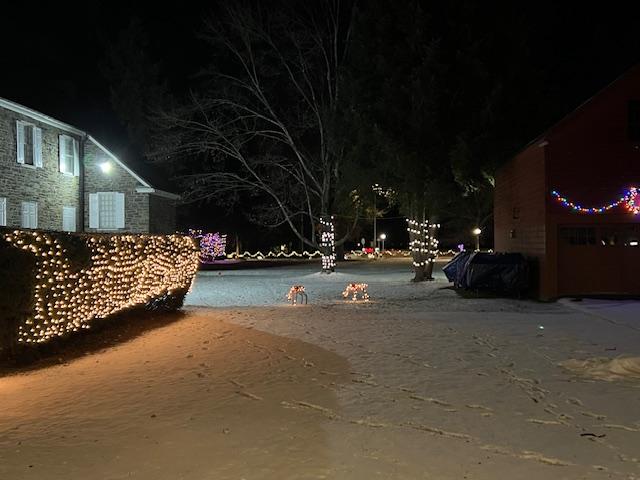
When I visited the Senate House at the holidays for the “Snowflake Festival”, it was still closed for renovation but the grounds were open for touring, music and for a visit with Santa. It was a magical night on the grounds of the historical site and people had a nice time that evening. The grounds and the other buildings were decked out for the holidays.
The Senate House decked out for the Christmas holidays at the “Kingston Snowflake Festival” in 2022
The Senate House property decorated for the Kingston Snowflake Festival in 2022
Santa’s visit at the Senate House property in 2022
The history of the Kingston Stockade section of the city.
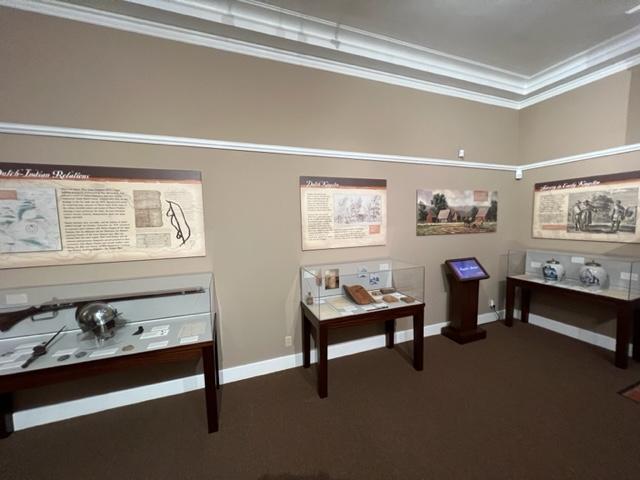
The main part of the park is the Senate House Museum, which is broken into three sections. The right side of the museum is the history of the City of Kingston and the matching artifacts. There is a description of manufacturing, merchant class and its military prominence. Here I learned about the growth of Kingston and its founding, its strategic spot on the Hudson River in the early colony, its role as diplomats to the Native Americans, which was not so pleasant and its growth after the war.
The first floor exhibitions on early life in Kingston
The history of the City of Kingston is described with the Native American settlements and the trade with the Dutch, the unsettling relationships that the two groups had with each other, the War years, the growth of industry and trade in early New York and manufacturing in the area.
The Native American exhibition
Early manufacturing and life in Kingston
The Artist’s sign
The Vanderlyn Exhibition of artist John Vanderlyn’s art
Artist John Vanderlyn’s works are featured on this part of the museum.
The left side of the museum is dedicated to the locally born artist, John Vanderlyn. His paintings line the walls of the museum of the artist at different stages of his career. His work was ahead of its time for the area, and it was noted in the collection that he forced himself to commission portraits to survive. His works advanced for the time because of his studying abroad now line the walls of the best museums in the country.
The exhibition of John Vanderlyn’s portraits
Artist John Vanderlyn’s bio in the museum
Members of the extended Vanderlyn family portraits
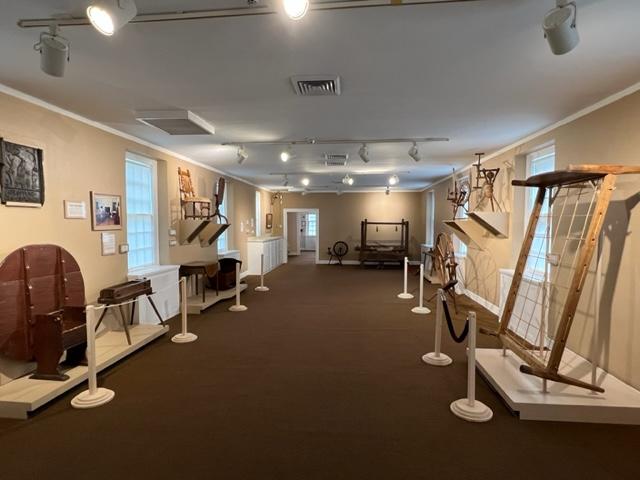
The second floor holds the furniture that is not historically correct with the Senate House and comes from different time periods. There is furniture, beds and chairs, spinning wheels, chamber pots and all sorts of accessories for the home and their uses in everyday life. Vintage furnishings with explanations on their use are a big part of the exhibit.
Artifacts from the past are displayed here
The everyday items used to spin material and create clothing
The Loughran House next door houses more of the furniture of the house and has a new exhibition “Back to the Future: The Evolution of Senate House”. This houses artifacts from the house.
The Senate House property during the “Kingston Snowflake Festival” in 2022
The Senate House property during Christmas 2024
The Senate House property during Christmas 2024
History of the Senate House:
(From Wiki/Office of Parks, Recreation and Historic Preservation pamphlet)
Amidst the turmoil of a British military invasion in the fall of 1777, the elected representations of rebellious New Yorkers met in Kingston to form a new state government. While convened in Kingston in September and October, New York’s first Senate met in the simple stone house of merchant Abraham Van Gaasbeek.
Here they adopted a system comprising of a senate, assembly, governor and judiciary that still exists today. Every one of the assembled delegates risked his life and property by being so openly disloyal to the Crown. Indeed, all were forced to flee for their lives when the British attacked and burned Kingston on October 16th.
While convened in Kingston in September and October, New York’s first Senate met in the simple stone house of Abraham Van Gaasbeek, a prosperous merchant trader who had suffered financial losses as a result of the war and personal losses in the recent deaths of his wife, Sara, his daughter and infant granddaughter. It was Sara’s grandfather, Wessel Ten Broeck, who built the original section of the house in 1676.
At first called Wiltwyck, Kingston was the third “city” established in the Dutch Colony of New Netherland. Planned and developed by the Dutch Governor Peter Stuyvesant in 1656, the town was renamed Kingston after the colony was seized by the English in 1664.
Wessel Ten Broeck’s one room Dutch style house was enlarged by succeeding owners in the 18th century. Each change reflected the increasing fortunes of the Ten Broeck/Van Gaasbeek family and demonstrated a gradual acceptance of English styles and customs over the persistent influence of the early Dutch. Kingston at the time of the American Revolution was still a noticeably “Dutch” town and most of its citizens supported the American cause. British Major General John Vaughan justified his destruction of the city because it was a “nursery for almost every villain in the country.”
In 1887, to recognize Senate House’s role in the formation of New York State, New York State acquired the property, which quickly became a vital community museum. A two-story Museum Building was constructed in 1927 to house and display the site’s burgeoning collection. Among its treasures are: major works by John Vanderlyn and other members of the Vanderlyn family of Kingston. The museum also includes the site’s popular new exhibit: “Kingston Stockage: New Netherlands’ Third City,” discussing Kingston’s early history.
(New York State Park History)
The Kingston Stockade: The City’s formation from the beginning
Springwood, the home of the Roosevelt family in Hyde Park, NY
I have visited the childhood home of Franklin Delano Roosevelt many times over the years. It is an interesting part of not just Hudson River Valley history but of American history.
Parts of the house were built in the late 1700’s and added on later by the families who lived in the house. Franklin D. Roosevelt’s father bought the house and continued to add on to it. Most of the estate is still intact as well as the homes that the President built separate from the main house to give he and his wife some privacy from his mother, Sara Delano Roosevelt, who owned the home until her death.
The entrance to Springwood was decorated for the holidays
Visiting Springwood is like a step back in time. Unlike the grand mansions of the Mill’s and Vanderbilt’s up and down Route 9, Springwood looks more like a home just on a larger scale. The self-guided tour takes you through the first story of the house which includes the dining room, living room, sitting rooms and offices of the President and of his mother, who ran the staff and the household.
The inside of Springwood as you enter the foyer which was decorated for Christmas
The house is done in dark woods, representing a time before the Victorian age when the Federalist look was in and the later additions represent the trends in Victorian style. The furnishings were functional and very homey not like the elaborate ‘over the top’ furnishes in some of the other mansions. The Roosevelt’s were old money Hudson River Valley compared to the Vanderbilt’s who money was earned after the Civil War and did not have to prove themselves to Upper Crust Society.
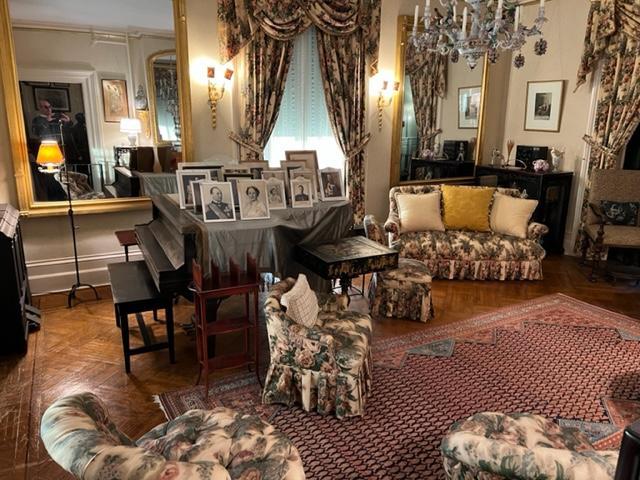
The Living Room/Parlor of the house where people would gather after dinner
I was impressed with the amount of sporting goods, stuffed animal species and just the general hominess of the house. It looked like someone still lived there. The downstairs area for the servants and the kitchen are functional and not huge. This is a house that was built for a family and for entertainment but not on the scale of the Astor’s or Vanderbilt’s. It ran for a growing family that lived in the house.
The Library and the Dining Room were decorated for Christmas as well as the foyer was decked with garland and bows. I am not sure how many times the family celebrated Christmas here being in the White House but I am sure that the family came home for the holidays. Mrs. Roosevelt, Franklin’s mother, ran the roost so the house functioned a certain way while she was alive.
Our first part of the self-guided tour was of the Living Room, Dining Room and Library on the first floor. The Living Room was smaller than most of the homes in this area again reflecting that the mansion was a home not a showplace. It was used all year long by Franklin’s family and was built to accommodate the growing family that he and Eleanor had created.
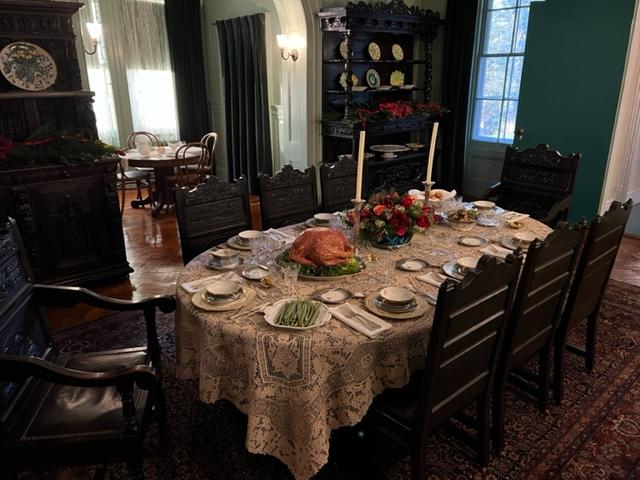
Th tour guide told us that the house was set up for Christmas the last year that FDR was alive and they had taken it from pictures and accounts that the family had done that year. The Dining Room had been set for Christmas lunch circa 1940’s with elaborate china and silver and even a children’s table so the kids would not be left out.
Christmas lunch at Springwood
The full Dining Room with the kids table in the background
The Library was decorated for the holidays as it had FDR’s last year alive and everything the site did was based on those pictures and accounts from family members.
The Library has gone through a full renovation and was decorated beautifully for the holidays
The Library was a very comfortable place to relax and socialize
The Christmas tree and the family presents in the Library
At the holidays when I visited in 2019, the house was going to be closed in April of 2020 for a full restoration and renovation of the lights, interior alarms and plumbing for about a year so the only Christmas decorations in the house was a tree in the library (the books had started to be removed from the shelves) and the formal dining room had been set for dinner. The rest of the mansion was in the process of being packed up so we didn’t get to tour it that time. During December 2022, the whole house was finally opened post-COVID and renovation and you could see it all in its glory.
Springwood at Christmastime
Even the upstairs bedrooms looked like any other American home at the time but a touch bigger. I could see by Eleanor’s room that she did not spend much time there. You can see where the adjustments were made when the President developed polio. I am glad that the man showed determination and did not let that stop him in his life. It proved to me that a disability limits you only if you let it.
The upstairs held the bedrooms of Mrs. Roosevelt, Franklin, Eleanor and the all the children. Each room was carefully cleaned and refreshed during the renovation so they look pristine now as if the family was still living there.
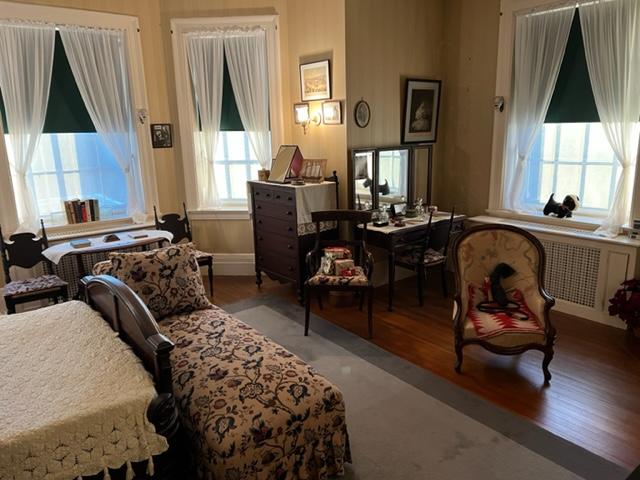
Eleanor Roosevelt’s Bedroom
Sara Roosevelt’s Bedroom
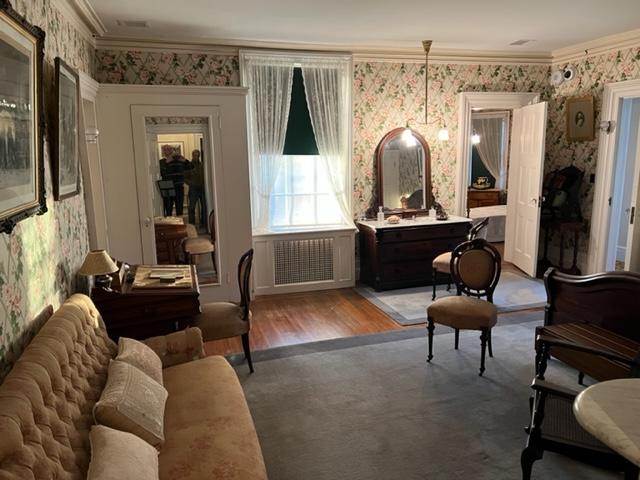
The Pink Room is where the King and Queen of England stayed when they visited the Roosevelts
The Pink Room where dignitaries stayed
Franklin Delano Roosevelt’s Bedroom
Franklin’s bedroom
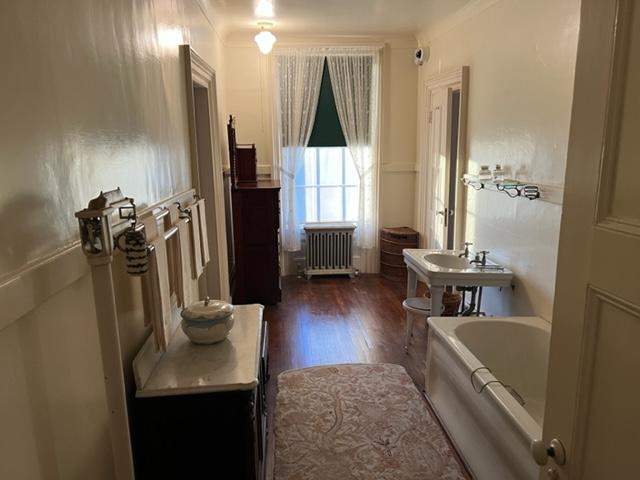
The modern bathroom with indoor plumbing
There was a large household staff to take care of things on the estate and in the house. The kitchen was the last stop on the tour in the basement. There must have been a lot of action here with such a big household to feed.
The kitchen at Springwood
The kitchen at Springwood was a busy place with so many people in the household and visiting
The grounds were interesting. The formal rose gardens are beautiful when in season and the estate does have views of the river. On the grounds of the estate as well is the Presidential Library, Museum and the gravesites of the President and his wife, Eleanor. Thes are located in the Rose Gardens that they loved so much.
The Springwood Estate
The Stables were very elaborate and held the trophies and ribbons of the family’s champion horses. The stables are now long empty but still display all the glories of the past when this was still a working farm.
The Stables
The inside of the Stables
The only problem we faced on our visit in the Summer of 2019 was that the house was that a sweltering heat wave hit the Valley and the humidity hit 98 degrees. The house was boiling hot because they could not open the windows for fresh air and the whole house smelled musty and old. That is the bad part of all that wood trimming and paneling, it does smell when it is hot.
Still the ranger talked about the history of the house and the role it played not just with the government influence during WWII but at the holidays and how Sara Delano Roosevelt had influence on her family.
Still it was an interesting tour that takes about 45 minutes and is an important part of the foundation of a very important family.
History of FDR at Springwood:
Franklin’s father, James Roosevelt purchased the 110 acre estate in 1867 for $40,000. The property included a house overlooking the Hudson River and a working farm. FDR was born in the house on January 30, 1882, the only child of Sara and James Roosevelt. Growing up with a view of the majestic Hudson River, he developed a love of the river and the valley through which it flowed. By age eight, he was sailing the Hudson. As a young adult, racing his ice yacht “Hawk” was a favorite winter pastime.
Franklin accompanied his father on daily horseback rides. During these times, he became immersed in the land, its history and particularly the trees. In later years, he expanded his parents’ land holding to nearly 1,500 acres and planted over half a million trees. His interest in tree farming translated into a New Deal program, the Civilian Conservative Corps (CCC). The CCC provided jobs to unemployed men age 17-28. Over 10 years, enrollees planted over three billion trees and built over 800 parks nationwide.
Surrounded by the rich agricultural heritage of the Hudson Valley all his life, FDR felt a strong affinity with farmers. One of the first New Deal programs instituted during the Great Depression, the Agricultural Adjustment Act, was designed to help farmers retain their land. His subsistence homestead projects relocated poverty-stricken families into government subsidized rural communities that provided decent housing, cooperative work and farming and schools.
When Franklin Roosevelt married Eleanor Roosevelt in 1905, they resided in both at Hyde Park and their New York townhouse. Franklin and Eleanor had six children, one who died in infancy. FDR supervised the expansion and redesign of the house to accommodate his growing family and his political ambitions, ensuring it reflected the Dutch Colonial architecture of the Hudson Valley.
FDR contracted polio in 1921 and was paralyzed from the waist down. He held out hope for a cure but was never able to walk again unaided. The multi-level home was adapted to his needs with ramps along the short steps. The trunk lift, installed years before the onset of FDR’s polio became his transportation to the second floor.
In 1932, FDR was elected to the first of an unprecedented four terms as President of the United States. His presidency redefined the role of government in America, establishing programs designed to improve the lives of all Americans. These programs included Social Security, the Federal Deposit and Insurance Corporation, the Securities & Exchange Commission, the establishment of minimum wage and unemployment insurance.
During his 12 years as President, FDR led the nation through an economic crisis of enormous proportions and the Second World War. He continually returned to this home he loved, seeking strength and relaxation. He entertained foreign dignitaries here including British Prime Minister Winston Churchill. In the small study, FDR and Churchill initiated a document known as the “Hyde Park Aide Memoire”, that outlined possible future uses of the atomic bomb.
On the afternoon of April 12, 1945, FDR died from a cerebral hemorrhage in Warm Springs, GA. He was laid to rest on April 15th in the rose garden here. One year after his death on April 12, 1946, the home was opened to the public. At the dedication, Eleanor Roosevelt said, “I think Franklin realized that people would understand the rest and peace and strength which he gained here and perhaps go away with some sense of healing and courage themselves.”
(Home of Franklin Delano Roosevelt National Historic Site pamphlet)
History of the Springwood:
The estate was part of the 1697 agreement of the English Crown that gave 220 square miles to a group of nine businessmen from New York City. To ensure that everyone had access to the river, the land was divided into “Water Lots”, one of which was deeded to William Creed, one of the nine partners.
The central part of Springwood is believed to have been formed from a large farmhouse which was constructed around the year 1800 in the Federal style. In 1845, the estate was purchased by Josiah Wheeler, a merchant from New York City. Wheeler undertook a remodeling of the house, giving it a then fashionable Italianate style with a three story town at the south end as well as front and rear piazzas spanning the entire length of the house.
In 1866, the estate which has been reduced to one square mile, James Roosevelt bought the house and expanded the main house adding the servants wing, two more rooms and the carriage house. James Roosevelt passed away in 1900.
In 1915, FDR and his mother, Sara made the final additions and renovations to the house for the growing family and for entertaining political and family friends. Sara Roosevelt used the New York firm of Hoppin & Koen and doubled the size of the house by adding two large fieldstone wings (designed by FDR), a tower and a third story with a flat roof. The clapboard exterior of the house was replaced by stucco and most of the porch was replaced with a fieldstone terrace with a balustrade and a small columned portico around the entrance. The inside layout of the house was redesigned also to accommodate FDR’s growing collections of books, paintings, stamps and coins.
The grounds were also changed with the planting of almost 400,000 trees all over the estate in a thirty year period. Today large portions of the estate have been turned over to the Forestry Department of Syracuse University.
(Wiki)
Disclaimer: The history of the Springwood and of FDR are living there was taken from Wiki writings and the pamphlet of The Franklin Delano Roosevelt National Site and I give their writers full credit for the information. Please see the attachments from the National Park site for more information.