Tag: NY Museums

Dia: Beacon                                                               3 Beekman Street                                           Beacon, NY 12508

Dia: Beacon 3 Beekman Street Beacon, NY 12508

Dia: Beacon

3 Beekman Street

Beacon, NY  12508

(845) 440-0100

https://www.diaart.org/visit/visit/diabeacon-beacon-united-states

https://www.diaart.org/visit/visit

Open: Sunday & Monday 11:00am-6:00pm/ Closed Tuesday & Wednesday/Thursday-Saturday 11:00am-6:00pm

Fee: General Admission $20.00/Seniors $18.00/Students $12.00/Children 11-5 $5.00/Free to Children under 12

My review on TripAdvisor:
https://www.tripadvisor.com/Attraction_Review-g47291-d273538-Reviews-Dia_Beacon-Beacon_New_York.html?m=19905

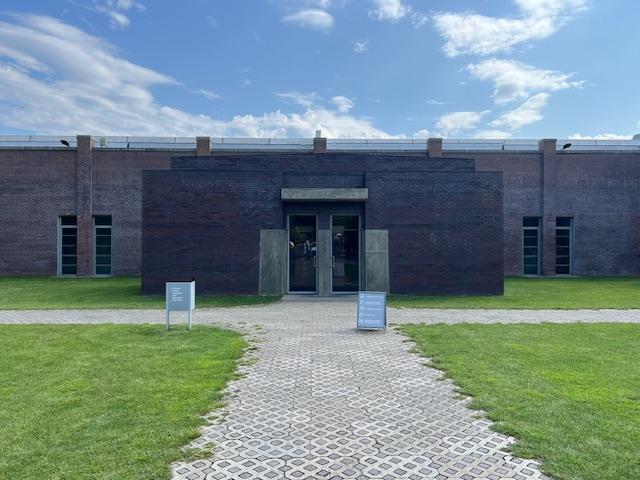
 The front of the Dia: Beacon

I visited the Dia: Beacon in Beacon, NY many times and I have to say that is an interesting space to display art and the pieces themselves make a statement. The museum is sited on thirty-one acres on the banks of the Hudson River and is adjacent to ninety acres of riverfront parkland. The museum is located in a former printing plant built in 1929 by Nabisco (National Biscuit Company) (Wiki). The space square footage gives the museum the opportunity to display larger statement pieces of well known artists.

The history of the Dia: Beacon:

(from the museum website)

The Dia: Beacon presents Dia Art Foundation’s collection of art from the 1960’s to the present as well as special exhibitions, performances and public programs. The Dia invited artist Robert Irwin to conceive the master plan for a twenty-century museum that retained the original character of the factory’s interior spaces, Irwin also designed seasonally changing garden throughout the surrounding landscape. Following the renovation, the Dia: Beacon was added to the National Register of Historic Places (Dia: Beacon Museum).

Dia Art Foundation:

(from the museum website)

Founded in 1974, Dia Art Foundation is committed to advancing, realizing and preserving the vision of artists. In addition to Dia: Beacon, Dia maintains a constellation of iconic, permanent artworks and installations in New York City, the American West and Germany (Dia Museum). 

Each of the galleries are devoted one artist’s work and these galleries make their own statements. There is also a really nice bookstore and gift shop on the extension of the museum and small restaurant.

It is nice to just walk around in your own time and visit each of the galleries. Plan about two hours to see the whole museum. It is an interesting place to see contemporary art in a gallery that is devoted to one artist at a time. The outside grounds of the museum and the parking lot makes it own statement. There is not much parking so plan on getting there early or later in the afternoon.

The museum has clean lines and big halls and a minimalist landscaping

The one thing about the Dia is that the works are quite large and pack a bold statement.  The museum uses a combination of both American and Foreign artists and their works make a bold statement. The museums galleries are large and airy and can show larger works of art. The museum shows many of the artists largest pieces of work.

The inside of the Dia: Beacon’s large galleries
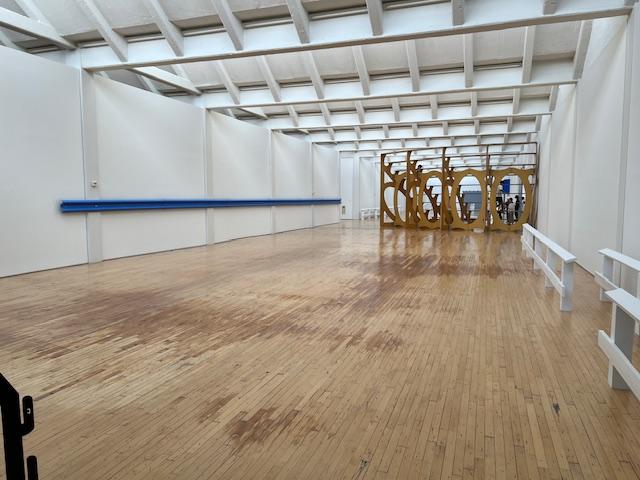
These larger pieces were interactive

Inside the museum, many contemporary artists are featured each season. Many of their larger works were featured in their galleries. While the shows rotate collections of many artists, these were the pieces that stood out to me on my visits to the museum over the years.

The Artists I most admired and their works that most stood out to me:

Artist Louise Bourgeois has displayed some interesting sculptures that dominate the upper floors. One of the most fascinating pieces was that of a large spider that dominates the corner of the floor.
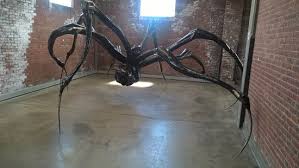
Dia Beacon II

This Louise Bourgeois work is a rather creepy piece of art like something out of the movie “It”.

https://en.wikipedia.org/wiki/Louise_Bourgeois

https://diaart.org/collection/collection/bourgeois-louise-crouching-spider-2003-l-2007-012

In Bourgeois’s works on view in these galleries, organic formations fuse with the inorganic materiality of the media in which they are rendered, be it marble, wood, or bronze. The artist’s repertoire of materials spans traditional media and new textures, such as latex and synthetic resin. In her work, representation often entails the creation of a surrogate for the body and its suffering organs (Dia: Beacon museum website).

Artist Dan Flavin has some interesting light sculptures on display along the walls and floors of the gallery. Things are made of long fluorescent lights of various colors.

Dia IV

Artist Dan Flavin’s light sculptures

https://en.wikipedia.org/wiki/Dan_Flavin

After 1963 Flavin’s work was composed almost entirely of light, in the form of commercially available fluorescent tubes in ten colors (blue, green, pink, red, yellow, ultraviolet, and four whites) and five shapes (one circular and four straight fixtures of different lengths). Initially arranging these fixtures in varying autonomous configurations, Flavin increasingly made work in relation to architecture, such as his monumental barriers that physically block a passageway or segment of a space with light (The Dia: Beacon museum website).

In the main gallery as you walk in are the large geometric shapes of artist Charlotte Posenenske who created these pieces in various colors and shapes. These pieces line the floors and walls.

Dia III

The geometric shapes of Artist Charlotte Posenenske

https://en.wikipedia.org/wiki/Charlotte_Posenenske

https://www.diaart.org/exhibition/exhibitions-projects/charlotte-posenenske-exhibition

Embracing reductive geometry, repetition, and industrial fabrication, she developed a form of mass-produced sculptural Minimalism that addressed the pressing socioeconomic concerns of the decade by circumventing the art market and rejecting established formal and cultural hierarchies. Posenenske employed playful conceptual devices to oppose compositional hierarchy and invite the collaborative engagement of the public in the continual reconfiguration of her variable sculptures (The Dia: Beacon website).

Artist Andy Warhol has one of his largest works displayed in the main gallery on the first floor.

The artist Andy Warhol gallery

https://en.wikipedia.org/wiki/Andy_Warhol
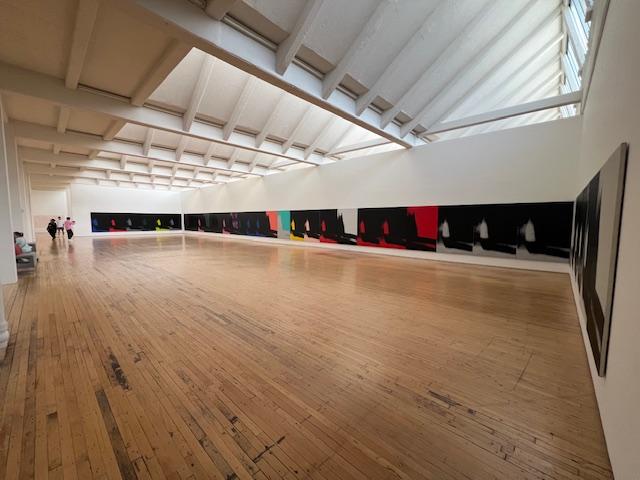
The large Andy Warhol piece

What I loved about the work by Warhol was the continuous colorful pattern of the work and the way it wrapped around the room. The pattern took form in many colors and showed consistency and balance.

A single painting in multiple parts, Shadows is one of Warhol’s most abstract works, yet one that cohesively synthesizes key elements of his practice, including film, painting, photography, and screen-printing. Originally commissioned by Dia and acquired in 1979 for a solo exhibition at 393 West Broadway in New York, Shadows includes a total of 102 canvases; the final number of canvases on view in each installation is determined by the dimensions of an existing exhibition space (The Dia: Beacon museum website).

Artist Senga Nengudi Gallery

https://www.sengasenga.com/

American artist Senga Nengudi had a some interesting works on display, one resembling melted ‘freeze pops’, which I thought was rather clever. Her large works took liquid forms and were colorful and spontaneous. These large works had lots of color and looked whimsical and fun.

One of Artist Senga Nengudi works

I thought this was a large ‘freeze pop’

One of her non-liquid works

Made of everyday materials such as vinyl, water, nylon, sand, dry-cleaning bags, lint, paper, and tape, Nengudi’s installations are at once proxies for bodies and sites for performance. The works accommodate a variety of cultural references from African, Japanese, and South Asian rites to Western avant-garde art. Characteristic of her openness to multiplicity, the artist, born Sue Ellen Irons, has assumed pseudonyms that inflect her creative identities as sculptor (Senga Nengudi), painter (Harriet Chin), photographer (Propecia Leigh), and writer (Lily Bea Moor) (The Dia: Beacon museum website).

Some of the other works that I liked as I walked around the museum:

Displayed on the first floor of the Dia: Beacon

Another interesting work on the first floor

The large galleries and open air space give patrons a chance to walk around the works and really get a feel for what the artists are trying to express. You really get to see the art up close and that is why I like the way they display their art. We can engage with each piece and develop our own meaning from it.

The grounds and the proximity to the river gives the museum a picturesque spot. It is nice to walk around the lawn on a warm day and enjoy the paths around the museum. The museum also has a very interesting gift shop featuring many books and gifts. The small restaurant can be pricey but offers a place for a light lunch or a quick snack.

 

Nicholas Roerich Museum                                    319 West 107th Street                                        New York, NY 10025

Nicholas Roerich Museum 319 West 107th Street New York, NY 10025

Nicholas Roerich Museum

319 West 107th Street

New York, NY  10025

(212) 864-7752

Open: Monday: Closed/Tuesday-Friday: 12:00pm-4:00pm/Saturday-Sunday: 2:00pm-5:00pm

Closed: Major holidays

Admission: Admission is free, though donations are welcome.

http://www.roerich.org

http://www.roerich.org/

TripAdvisor Review:

https://www.tripadvisor.com/Attraction_Review-g60763-d136141-Reviews-Nicholas_Roerich_Museum-New_York_City_New_York.html?m=19905

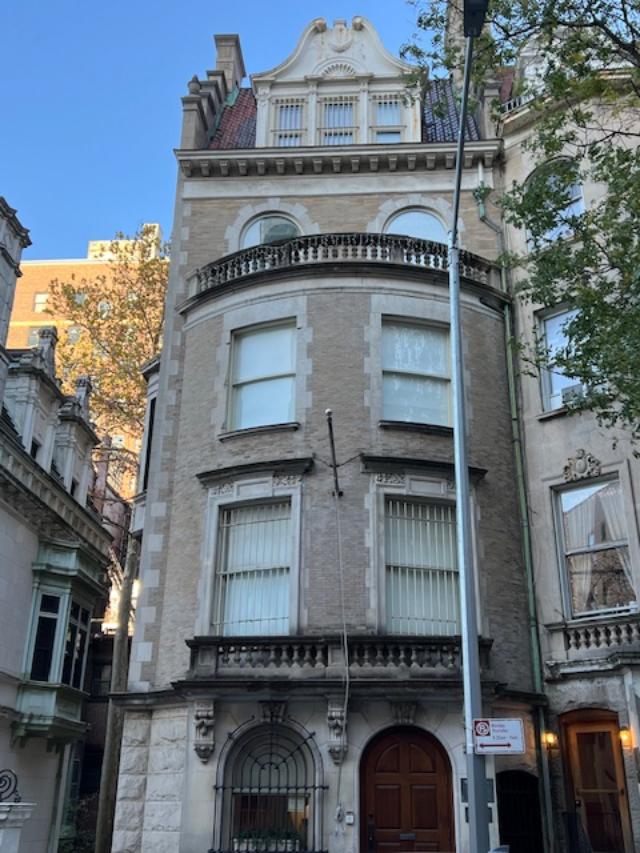
The front of the museum

This small museum in the Upper West Side neighborhood of Manhattanville is easy to miss. It is in a small brownstone on West 107th Street right near Riverside Drive. You can see the plaque for the museum to the right of the building and there is a side door to get in. The admission is free but they do ask for a donation if you can do it.

The museum is a specialty collection of the works of the former owner of the house and artist Nicholas Roerich. They are mostly landscapes and religious themed that cover three floors of the museum. It takes about an hour to an hour and a half  to see all the floors. A nice touch they had in the afternoon that I was there was a piano player whom you could hear play throughout the brownstone. When you go, it will be a pleasant afternoon where you are not fighting the crowds of the larger museums.

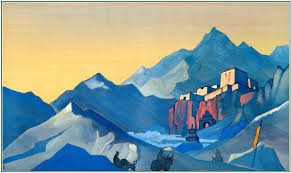
Nicholas Roerich

Artist Nicholas Roerich

The Nicholas Roerich Museum was founded in 1949 to house a permanent collection of over two hundred paintings by the Russian-born artist, poet, philosopher and humanitarian, Nicholas Roerich. The museum also houses a library of books and maintains an archive and a collection of artifacts relating to the areas of Roerich’s interests (Museum guide).

The Mission of the Museum:

The mission of the Nicholas Roerich Museum is essentially a narrow one: to make available to the public the full range of Roerich’s accomplishments. These, however, are not narrow; they cover the realms of art, science, spirituality, peacemaking and more. Because Roerich’s  activities ranged widely, so do the museum’s.

Nicholas Roerich Museum I

The Museum Collection:

Nicholas Roerich is known first and foremost as a Russian-born artist. His paintings, of which there are thousands around the world, explore the mythic origins, the natural beauty and the spiritual strivings of humanity and of the world. The museum houses approximately two hundred of these works and keeps most of them permanently on display for visitors who come from around the world. Indeed, for many of these visitors, the museum is a destination of great importance; the paintings speak to them of their own inner yearnings and possible fulfillment. For them, Roerich’s paintings are a kind of teaching-about spiritual development about culture and its role in human life and about opportunities for the achievement of peace in a fractious world.

Nicholas Roerich Museum II

Publications & Booklist:

The museum also keeps in print a number of books by and about Roerich and his life and work and a substantial stock of postcards and reproductions of his paintings. These too are seen by many as more than just prints; they are hung in homes with a degree of appreciation that is not often given to such things.

Cultural Events:

In addition to these functions, the museum also maintains an active schedule of cultural activities.  It was Roerich’s fervent belief that the role of cultural development in the peace and evolution of the world is fundamental and that it is therefore the responsibility of those who work in creative and cultural fields to strive always for that peace and evolution and for those goals to be the chief impulses guiding their creative work. Information about these ideas is always available.

The Roerich Pact & the Banner of Peace:

The museum sustains an ongoing effort to spread public awareness of the intermingled roles of peace and culture and the ways in which each sustains the other. Information and materials about The Roerich Pact and the Banner of Peace are always available. Throughout this century of wars and national struggles, the yearning of the public for ways of achieving peace has been great; the ideas of the Pact and the Banner provide a welcome answer to those yearnings.

As Roerich’s ideas become better known around the world, attendance at the Museum grows and requests for information and materials about him and his art and social achievements increase.

*This information is from the Museum’s website.

Disclaimer: This information was taken from a combination of the museum’s website and from the biography of the artist.


The Frances Lehman Loeb Art Center/Vassar College                                                                  124 Raymond Avenue                                             Poughkeepsie, NY 12604

The Frances Lehman Loeb Art Center/Vassar College 124 Raymond Avenue Poughkeepsie, NY 12604

The Frances Lehman Loeb Art Center/Vassar College

124 Raymond Avenue

Poughkeepsie, NY  12604

(845) 437-5632

fllac.vassar.edu

https://fllac.vassar.edu/

blogs.vassar.edu/fllaceducation

Open: Sunday 1:00pm-5:00pm/Monday Closed/Tuesday-Saturday 10:00am-5:00pm

TripAdvisor Review:

https://www.tripadvisor.com/Attraction_Review-g48443-d2419076-Reviews-Frances_Lehman_Loeb_Art_Center_at_Vassar_College-Poughkeepsie_New_York.html?m=19905

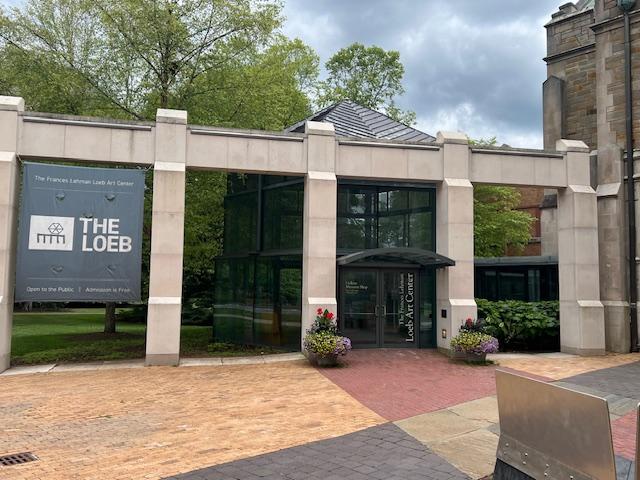
The Loeb Museum at Vassar College

Visiting The Frances Lehman Loeb Art Center is a wonderful afternoon out. Its best to park in the North Campus parking lot. You can walk the campus on a nice day down to the museum and enjoy the campus architecture. The campus is straight out of an Ivy League handbook. The museum is located by the front gate of the campus, and you can tour the whole museum in about two hours comfortably.

Take time to walk the Art Garden next to it and they have a really nice little downtown off North Campus to wonder around the restaurants and shops. See my review of Pizzeria Bacio Ristorante at 7 Collegeview Avenue near North Campus. The food is excellent!

The Art Sculpture Garden at the Loeb Museum

The Frances Lehman Loeb Art Center opened in 1864 as the Vassar College Art Gallery. The founding members of the college’s Board of Trustees understand art to be an integral part of the academic experience. Vassar therefor became the first college or university in the United States to include an art museum as part of its original plan. Since its inception, the museum has remained a significant part of the Vassar experience.

The Contemporary Galleries at the Loeb Museum

The Frances Lehman Loeb Art Center is a cultural destination both for the Vassar College community and for visitors from the region and around the world who are attracted by the breadth and quality of the art on view. It is unique to the region in its combination of stellar temporary exhibitions and an ongoing installation of the permanent collection that features art through the ages, from ancient Egypt to the present.

Ancient Art gallery with items from Egypt, Greece and Rome.

The collection began with an initial gift from Matthew Vassar of 3,800 works of art, including an important group of Hudson River School paintings and British watercolors. Today, the Art Center’s collection has grown to over 18,000 works of art that span antiquity to the present. Notable holdings include the Warburg Collection of Old Master prints and a wide range of works by major European and American twentieth-century painters, including Georgia O’Keeffe, Pablo Picasso, Jackson Pollock, Joan Miro, Mark Rothko and Andy Warhol.

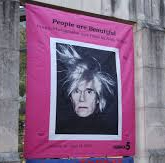
The Andy Warhol exhibition was being shown on my first trip to the museum

https://www.vassar.edu/theloeb/publications/people-are-beautiful-prints-photographs-and-films-andy-warhol

I went to the museum recently before the closing of the “Beyond the Threshold: Tibetan Contemporary Art” and “Mastery and Merit: Art from the Jack Shear Collection” and got to view the galleries before they closed for the evening. Admittingly I am no expert of Buddhist art, but the Jack Shear collection gave you a perspective on the religion.  The art portrayed Buddha in many forms as Divine. The contemporary works were very interesting as it delved into what modern Tibetans all over the world see in the form of current happenings, playing off other famous works of art (such as the modern version of the Mona Lisa) and a contemporary take on the Buddha. 

The modern take on Buddha from a contemporary perspective

https://www.vassar.edu/theloeb/exhibitions/beyond-threshold-tibetan-contemporary-art

The shows revolve on a continual basis and there are shows being mounted at various times of the year.

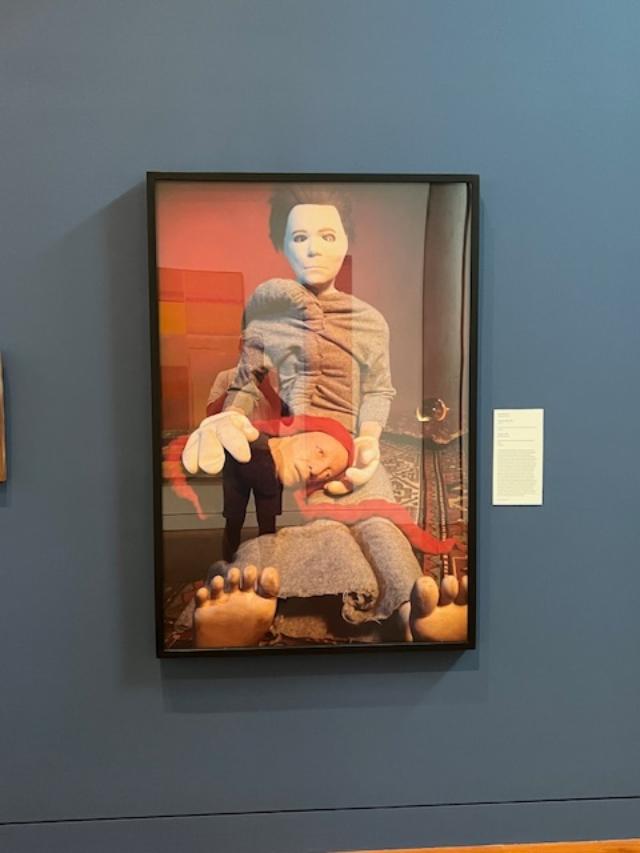
Cindy Sherman Art in the collection

The Art Center is housed in a building designed by Cesar Pelli and completed in 1993. The Hildegarde Krause Baker, class of 1911, Sculpture Garden includes works by Frank Stella, Gaston Lachaise and Anthony Caro, among others.

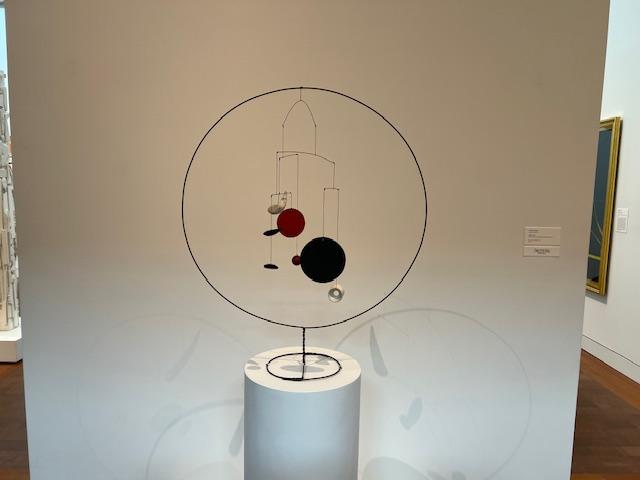
The Alexander Calder work “Mobile” in the collection

Tourism information on the museum:

There are tours for School Groups, Adult Groups, Individuals and Self-Guided for individuals. Please call the museum for more information on this. A centerpiece of the Loeb’s programming is Late Night at the Loeb, held weekly on Thursday evenings. Programming for Late Night is spearheaded by the Loeb Student Committee who organize activities and offerings for students and the general public.

There are creative happens every week. You can also join as a member and there are opportunities to volunteer at the museum.  To learn more about both of these, please call (845) 437-5237.

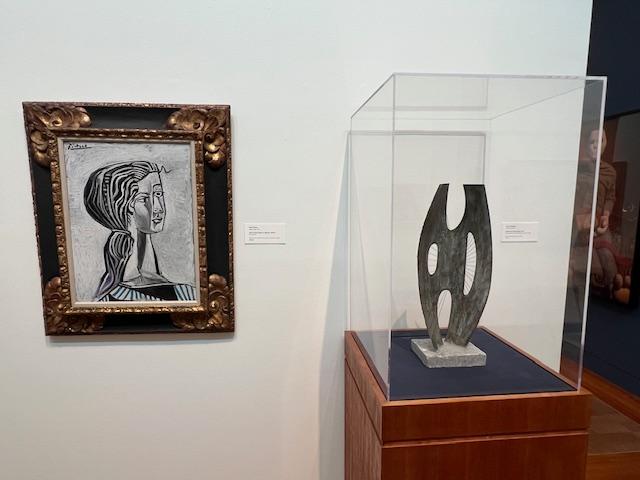
The famous Picasso is to the left

Disclaimer: This information about the museum came from the museum pamphlets. Please call the above numbers for more information or email them. It is a great afternoon out to just tour the museum and then walk around the campus on a nice day.

The “Stokers of the Earth” painting by Roberto Matta

“Stokers of the Earth” sign

The Big Duck                                                      1012 Flanders Road                                     Flanders, New York 11901

The Big Duck 1012 Flanders Road Flanders, New York 11901

The Big Duck

1012 Flanders Road

Flanders, New York  11901

(631)852-3377

http://bigduck.org/

Open: Sunday-Saturday 10:00am-5:00pm

Fee: Free donations accepted

TripAdvisor Review:

https://www.tripadvisor.com/Attraction_Review-g754554-d3292234-Reviews-The_Big_Duck-Flanders_Long_Island_New_York.html?m=19905

The History of the Big Duck

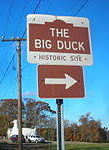
IN 1931, Riverhead duck farmer, Martin Maurer and his wife, Jeule, decided to construct a giant duck-shaped poultry shop. They hoped to sell the Pekin ducks they raised to passing motorists, who would surely be drawn to the striking form of the ‘big duck’ along Riverhead’s West Main Street. The Maurers envisioned this plan while vacationing in California where they are known to have visited a roadside coffee shop shaped like a giant coffee pot.

The Big Duck III

Seeking local assistance, the Maurers hired carpenter George Reeve and two eccentric stage show set designers, brothers William and Samuel Collins. A live duck tied with a string to their porch served as a model for the Collins’ design. Reeve studied the carcass of a cooked chicken in order to create a sturdy, bird-accurate, frame work for the building. Construction of The Big Duck had begun.

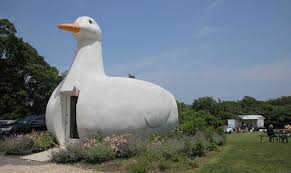
After The Big Duck’s wooden frame had been pieced together, wire mesh was attached. Cement was applied to the wire mesh with the assistance of Smith and Yeager Builders. The Big Duck was painted a lovely bright white, save the beak, of course, which was given its street-line orange color. The finishing touch was the placement of two Model-T taillights in The Big Duck’s head for eyes that would glow red at night. The Big Duck in its entirety measures 30 feet from beak to peaky tail, 15 feet from folded wing to folded wing and 20 feet from its base to the top of its head. As duck farms in the 1930’s were commonly known as duck ranches, Martin Maurer had his giant duck shop and business trademarked as The Big Duck Ranch.

The Big Duck II

The Big Duck roosted at The Big Duck Ranch on West Main Street till 1936. The Maurers’ had sold quite a few ducks from their unique shop and decided to relocate, Big Duck and all, to Route 24 in Flanders. The Flanders community welcomed The Big Duck with open arms and have cherished it since.

The Big Duck’s popularity grew and continues to grow steadily. When the land where The Big Duck rested was slated for development in 1987, Big Duck fans from all over joined Suffolk County in an effort to preserve The Big Duck. The Big Duck’s then current owners, Kia and Pouran Eshghi, generously donated The Big Duck to Suffolk County in December of 1987. The Big Duck was relocated to a nearby County Park. In 2007, since the former site had not been developed after all, the Big Duck was returned to the heart of Flanders.

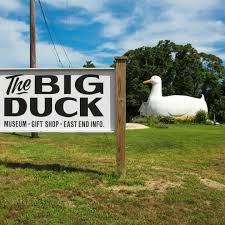
The Big Duck is open to the public as a gift shop and museum. Visitors can browse historic photographs, antique postcards and published articles as well as photos of roadside architecture on display. Unusual duck merchandise or ‘duck-a-billia’ as well as other Long Island  gifts and handcrafted items are available for sale.

The Bid Duck

World Famous Duck Architecture

While The Big Duck is a well-known Long Island landmark, it has also lent its name to a specific style of roadside architecture. The architectural term, “duck” was coined by architects Robert Venturi and Denise Scott Brown in 1968. Duck buildings are highly sculptural forms which represent products or services available within as opposed to the more common ‘decorated sheds’ which are plain buildings whose functions are revealed by added signage.

Within Suffolk County’s Big Duck as with other architectural ducks, the building itself is the signage, a colossal, three dimensional, representational advertisement. Designed to mesmerize passing motorists and entice them ultimately to a purchase, ducks are fantastical while retaining their purely practical intentions. The Big Duck has become the most famous example of roadside architecture.

Another well-known architect named James Wines has proposed the Duck Design Theory, D.D.T., part of which states: ‘Form follows fantasy not function for architecture that cannot offer fantasy fails man’s need to dream.’

Long Island Duck Farms

How did the Pekin duck get to Long Island? According to legend, in 1870, a Long Island sailor traveled to China and returned with nine of the snowy-white, orange-beaked Pekin ducks. These ducks thrived on Long Island’s splendid waterways when shelter was provided them for the cold winters.

As Pekin duck meat was especially succulent, it marketing potential soon became evident to potential soon became evident to Long Islanders. Duck farms, sometimes known as duck ranches, sprang up all over Suffolk County, producing 60% of the nation’s ducks by 1969. Today that figure has dropped to below 15% due to escalating land values, increased production costs and environmental concerns.

Long Island duckling can still be found as a menu offering at the finest restaurants around the world.

The Big Duck Museum Store features many duck-inspired souvenirs. Find Big Duck t-shirts, caps, magnets, key chains, mugs, note cards, holiday ornaments and children’s items as well as other Duck-a-bilia. Also find many local products: Books on local history, Long Island seaside photography and artwork, hand-crafted items. calendars, post cards and much more.

Directions:

From Western Long Island:

From the LIE, exit 71 take Route 24 south through the Riverhead traffic circle. Cross Route 105 and continue 1 mile on Route 24 to The Big Duck on the left, right after Huntington Lane.

From the Sunrise Highway, take exit 64N (Riverhead), make a right onto Pleasure Drive, Flanders. At a right onto Pleasure Drive, Flanders. At the end, make a left onto Route 24. The Big Duck is on the right, after the access road to the Flanders Men’s Club.

From Eastern Long Island:

From the Sunrise Highway, take exit 65N, Riverhead and travel 5 miles on Route 24 to The Big Duck on the right after the access to the Flanders men’s Club.

Disclaimer: This information was taken directly from the Suffolk County Department of Parks, Recreation and Conservation Division of Historic Services pamphlet. The Big Duck is very unusual to visit and has bathroom facilities.