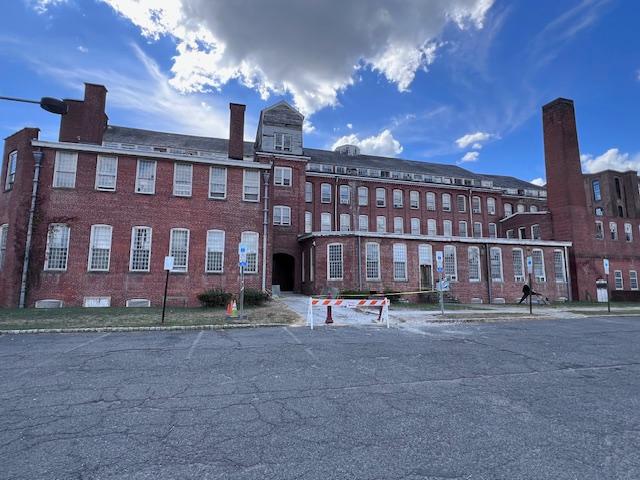
Tag: NJ

Sterling Hill Mine Museum                                    30 Plant Road                                        Ogdensburg, NJ 07439

Sterling Hill Mine Museum 30 Plant Road Ogdensburg, NJ 07439

Sterling Hill Mine Museum

30 Plant Road

Ogdensburg, New Jersey  07439

(973) 209-7212

https://www.sterlinghillminingmuseum.org/

https://www.sterlinghillminingmuseum.org/take-a-tour

Open: Sunday 9:30am-3:30pm/Monday-Friday  9:00am-3:30pm/Saturday 9:30am-3:30pm/Check the schedule on their website outside of July and August. The tour is usually 1:00pm.

Tours: 10:00am & 1:00pm

Fee: Adults $20.00/Seniors (65+) $14.00/Children 4-12 $13.00/Children under 4 Free

My TripAdvisor Review:
https://www.tripadvisor.com/Attraction_Review-g46702-d584517-Reviews-Sterling_Hill_Mining_Museum-Ogdensburg_New_Jersey.html?m=19905

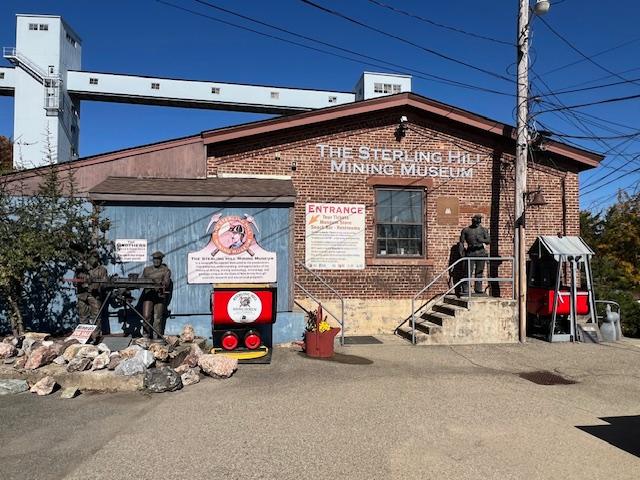
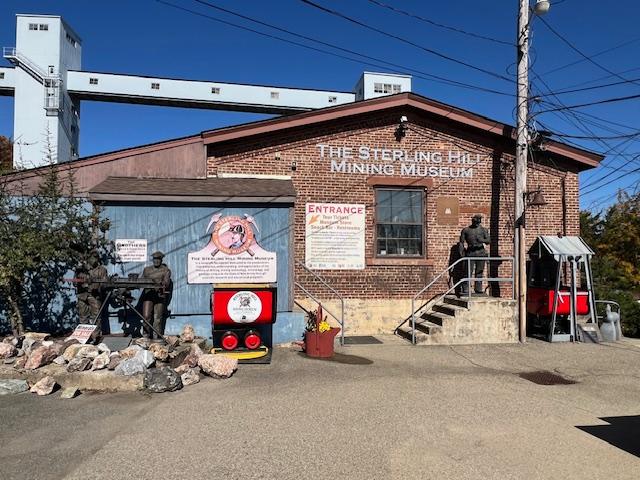
 The front of the museum

 The front of the museum 

The front of the museum

I visited the Sterling Mining Museum when visiting Sussex County to learn more about New Jersey’s Mining past. The Sterling Mine was once a big source of zinc in the United States until it became cheaper to mine it elsewhere. There is still zinc in the mines. The mining stopped in 1985 and the mine was closed in 1986.

The statues of the miners greet you at the beginning of the tour

Statues of the miners at work

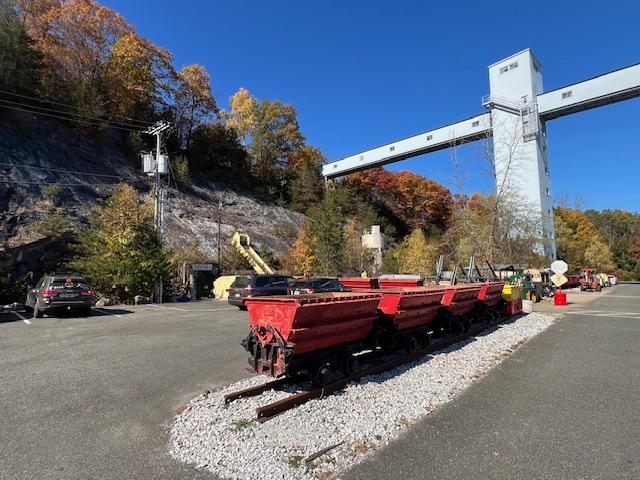
Mining equipment outside the museum

Tours at the museum vary by the time of the year and during the summer months there are two tours, one at 10:00am and one at 1:00pm and the tours take two hours with time to visit the gift shop and the restaurant at the beginning and end of each tour. Everything shuts down after the last tour around 3:15pm so plan your visit accordingly. Take some time though to visit the Gift Shop and have a snack at the Snack Bar, which was open until 3:30pm when I visited in October 2024.

The Zobel Hall Museum part of the tour:

Arriving late for the tour, I started in the downstairs museum section which has the original lockers for the miners and their daily equipment, specimens of minerals and ores that have been found in the mine and elsewhere in the country. There are Native American artifacts and fossils of dinosaur tracks, bones and fragments of sea life. There are also many antiques from the Victorian age to the 1960’s to look at and items like detonators to show the items used to do the mining.
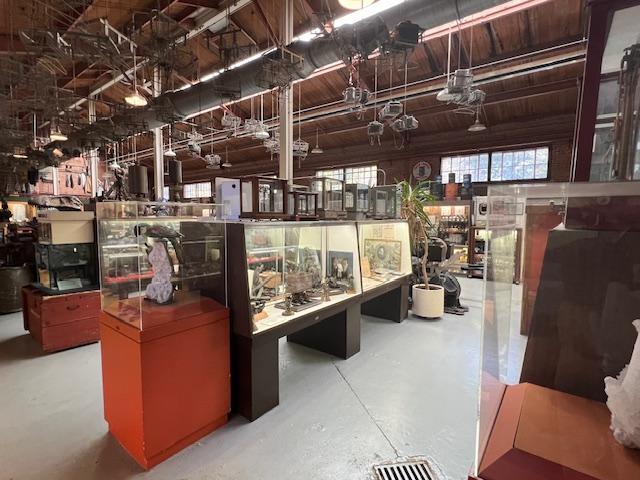
The museum main gallery
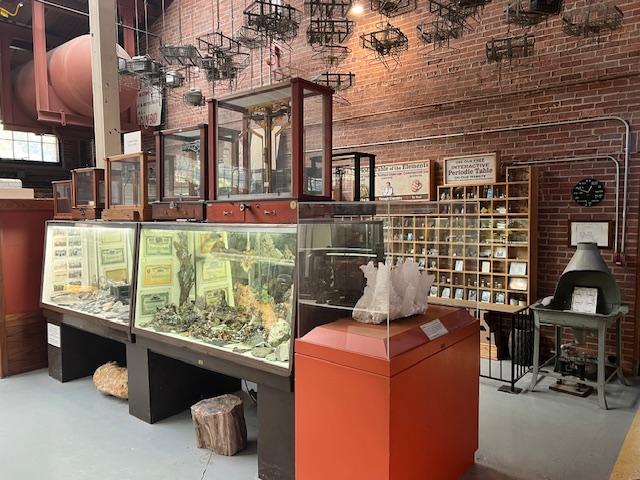
The museum’s main gallery

The museum used to be the workers changing room and this locker display is homage to the working days of the mines

Mining equipment displayed at the museum
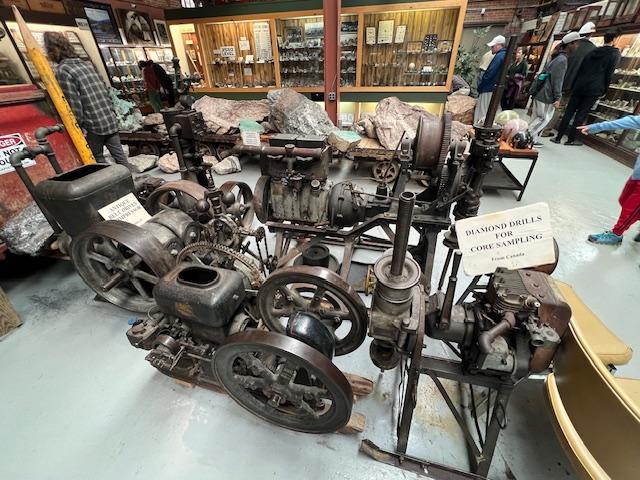
Mining equipment on display at the museum
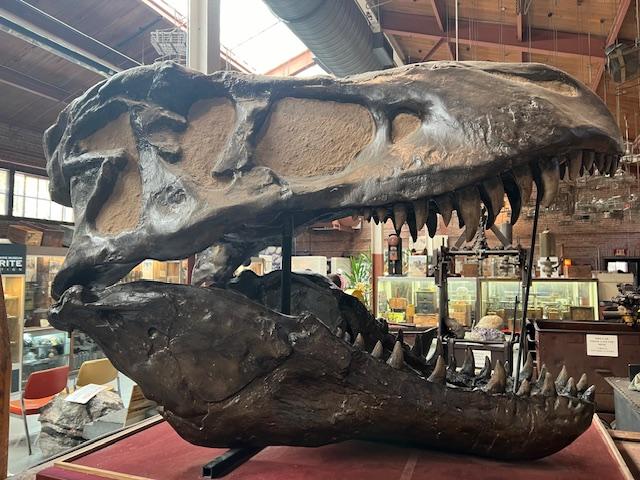
A dinosaur head at the museum

Various fossils at the museum
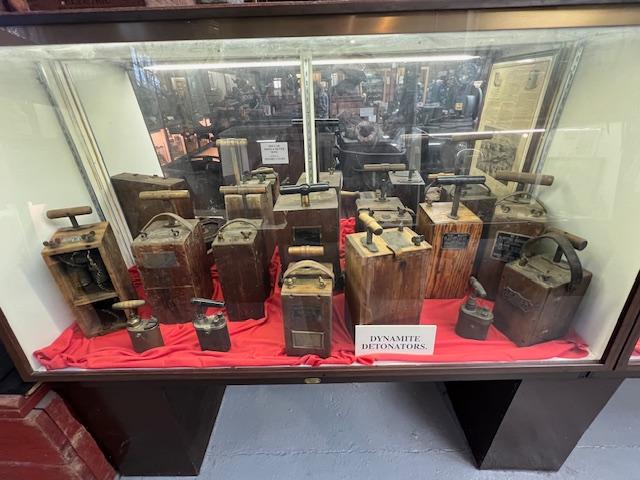
Detonators on display at the museum

Gold and Fools Gold on display at the museum in a large safe

The Meteorite display with pieces from all over the country
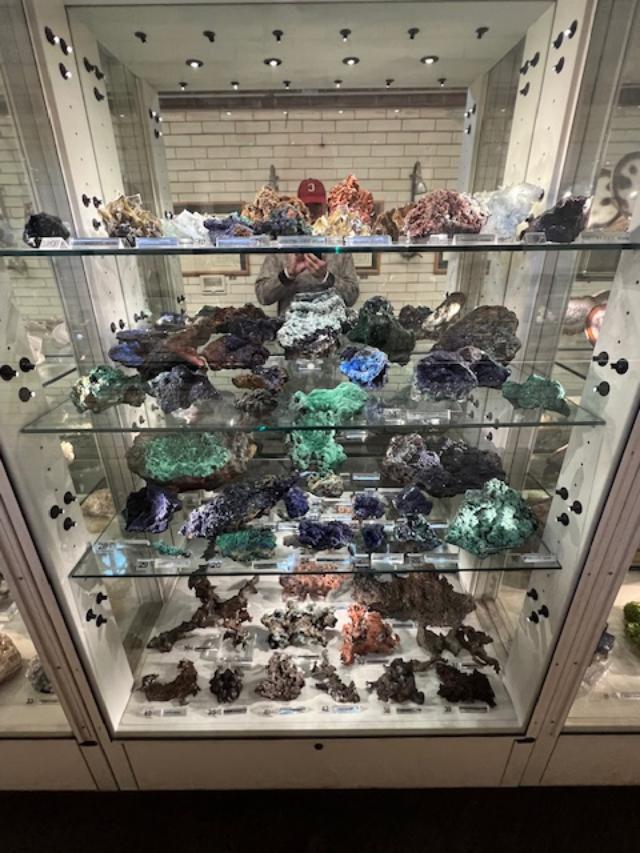
The Minerals display is a big part of the back part of the museum

The Minerals display
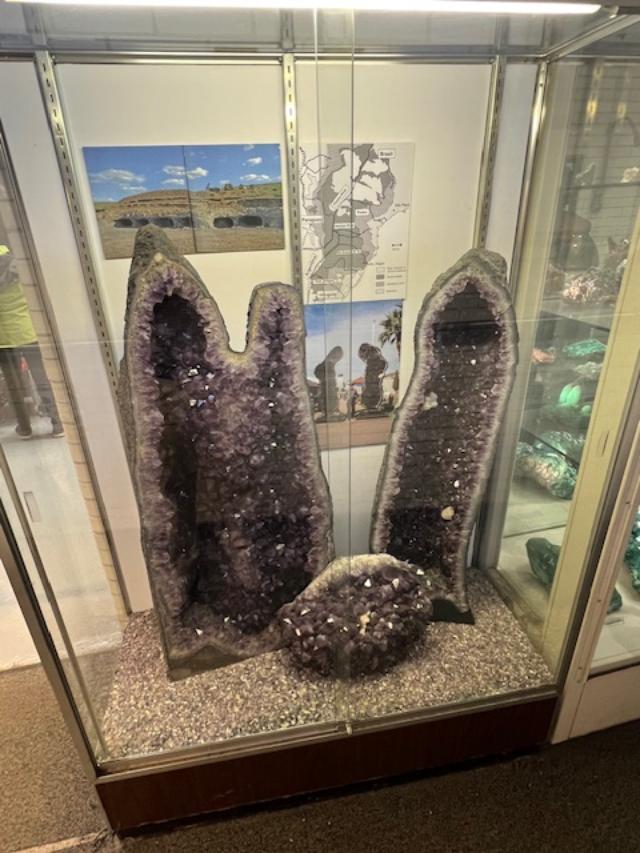
The Amethyst Display

The Mine sample display

The Miner Supervisor’s office in the museum

The second part of the tour will take you outside to see the outer workings of the mine and how things moved around. There are mining carts and transports, equipment to more the ore for washing and to market. There is a silent eeriness about the mine like someone just shut off the power and then walked away.
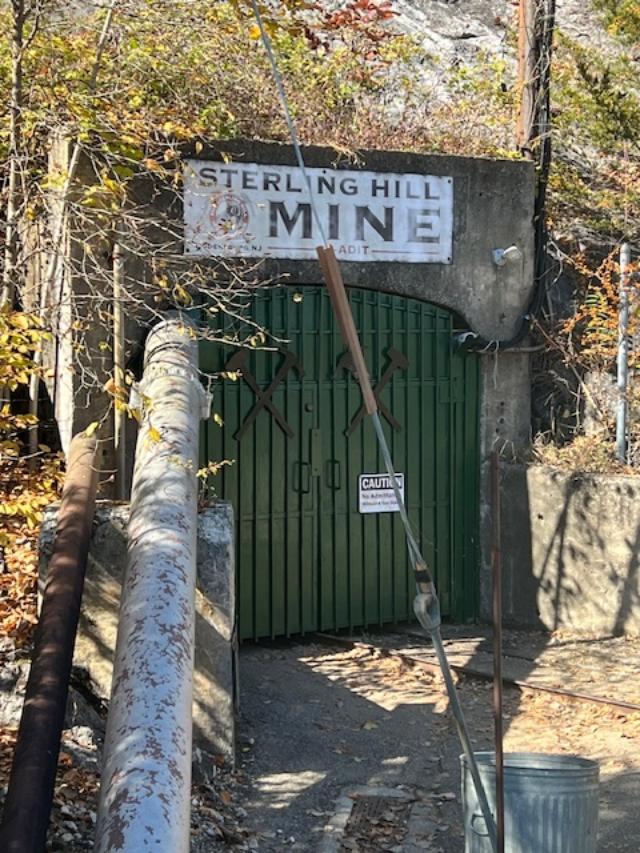
The entrance to the mine before you start the tour

The best part of the tour is of the mine itself. You will tour the tunnels where the miners worked, see in the tunnels when mining was done by hand instead of machine. where the mining cars moved and how the miners got from one level to another to work and the dangerous conditions of the work as a miner. You will travel down tunnels and see the inner workers of a foreman’s office down in the mines and how the system of ‘tag out’ works for accountability.

The mine tour as you enter the beginning of the mine

At the end of the tour you will be taken to the tunnel of illumination and when the tour guide dims the lights, you will see the tunnel come to life in color as the minerals radiate with color.
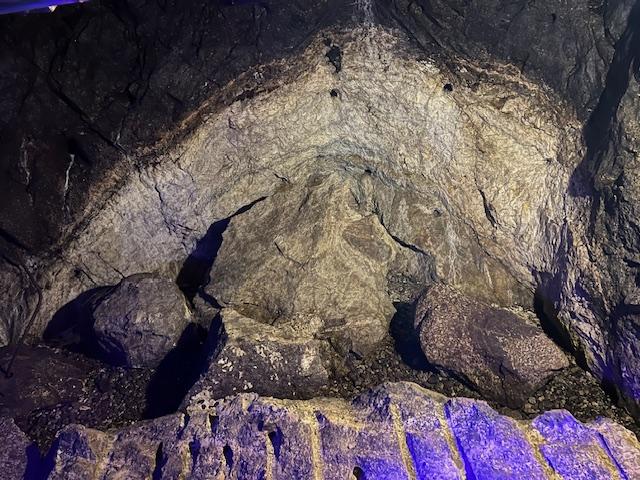
The Rainbow Tunnel before it gets lit

The magic begins when the room goes dark

In another cave the ceiling lightshow is amazing

I would not recommend this tour to anyone with a walking disability or who has to use a stroller with children. It is a lot of walking and very difficult to maneuver around the tunnels. I know they say it is accessible but I saw so many couples struggling through the tunnel you have to do it at your own discretion.

The mining movement from tunnel to tunnel
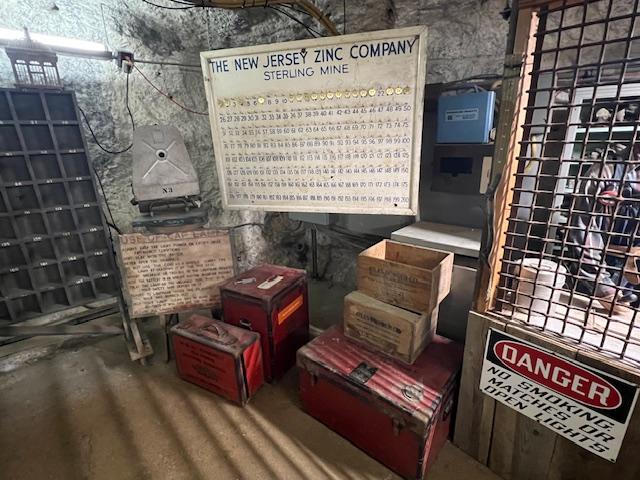
The ‘Tag Out’ system inside the mine
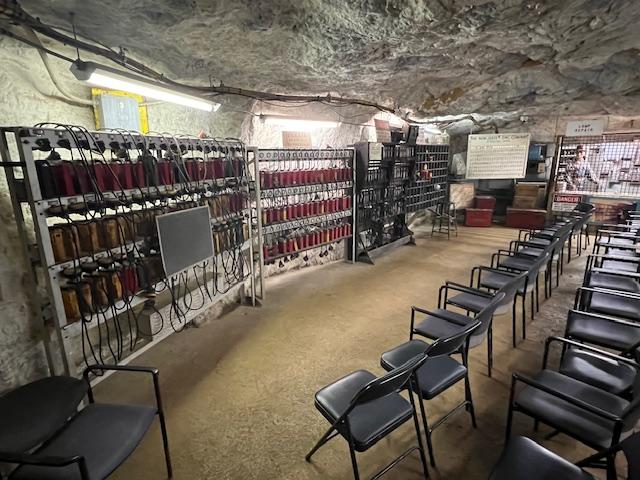
The “Tag Out” room inside the mine

Mining equipment inside the mines

You end the tour with a view of the indoor lake inside the mine shaft.

 The indoor lake inside the mine

Mission Statement of the Museum:

(From the Museum Pamphlet)

Our mission is to tell  the story of the Sterling Mine and to inspire lifelong learning  about earth sciences, engineering and the responsible use of the earth’s nonrenewable resources.
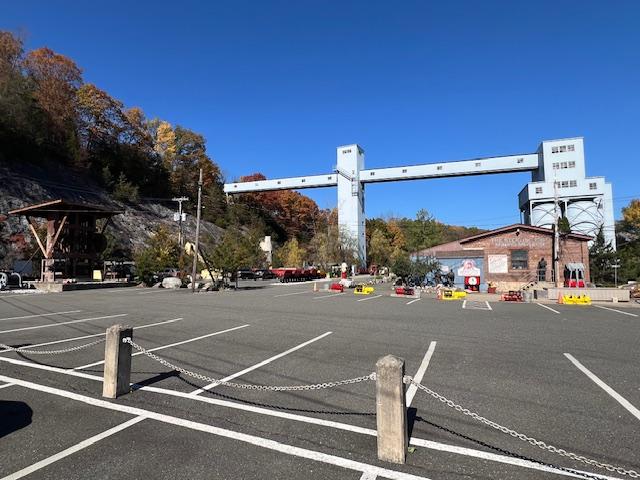
The outside of the mine

Additional information on the Mission Statement:

(From the Museum Pamphlet)

Since the crafting of this mission statement the museum has broadened its focus considerably. We are concerned not just with the metallic resources that most people think of when they hear the word “mining” but with commodities taken from the Earth-bulk rock taken from our quarries, sand and clay excavated from surface pits and oil and  gas obtained by drilling. These commodities constitute the raw materials from which almost everything else, our house, cars, highways and bridges, computers, on and on are made.
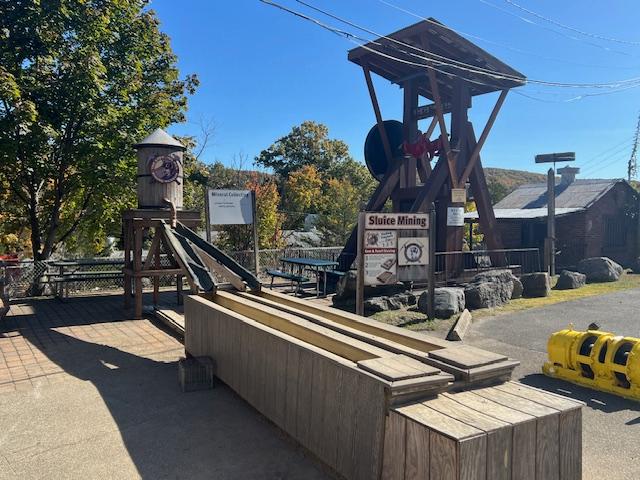
Slush Machine outside the entrance to the museum

As an institution we are neither pro-mining nor anti-mining. Instead, we are a museum about mining, again with that word used in its broadest possible context. We teach not only how mined materials are produced but also the many uses to which mined materials are put and we place special emphasis on the environmental and societal consequences of resource extraction.  Alternatives to mining such as recycling and the use of alternative materials are highlighted as well.
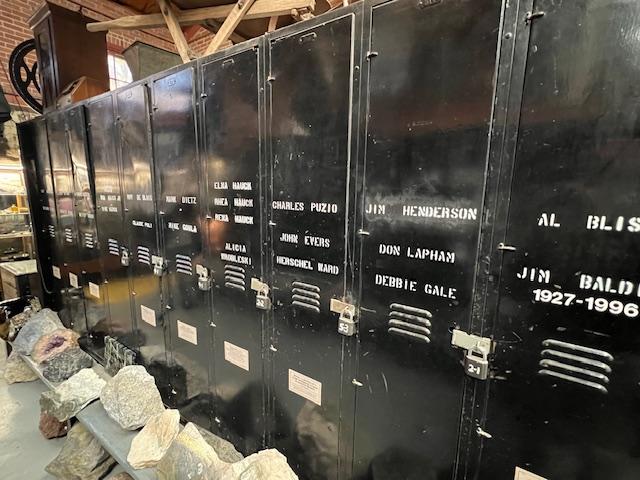
Mine lockers in the museum

The Snack Shop and Gift Shop:

At the end of the tour, be sure to visit the gift shop and the snack shop for a quick meal and to look at the gifts and minerals on display and for sale. Make sure to try one of the Pasties, a meat pie that the miners used to have for lunch, at the snack shop. They are really good.
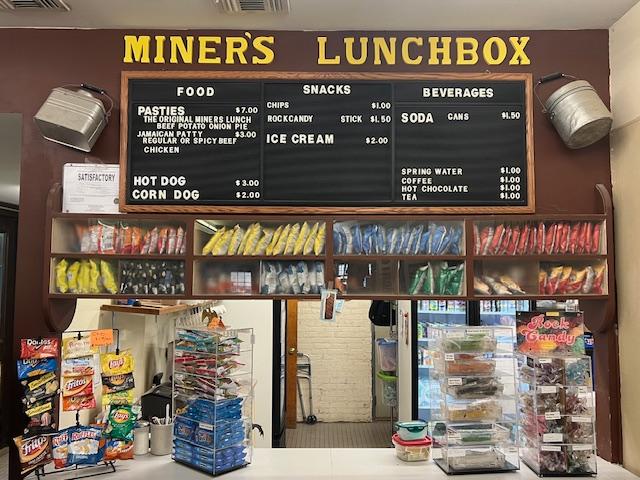
The Miner’s Lunchbox Snack Shop at the museum

The Meat ‘Pastie’, which is filled with ground beef, potatoes and onions
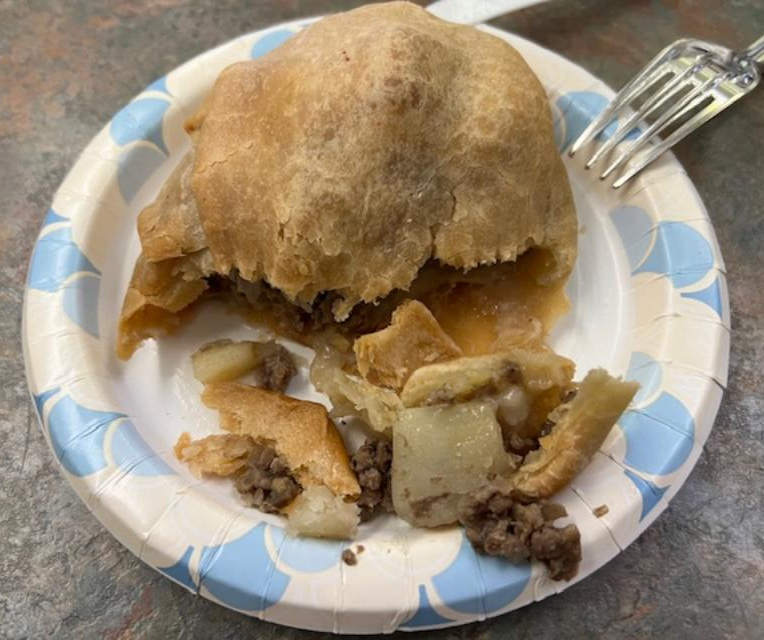
The inside of this delicious snack! It was really good

The gift shop has an array of tee shirts, books and gifts for sales. The walls are lined with minerals for sale.

The Gift Shop
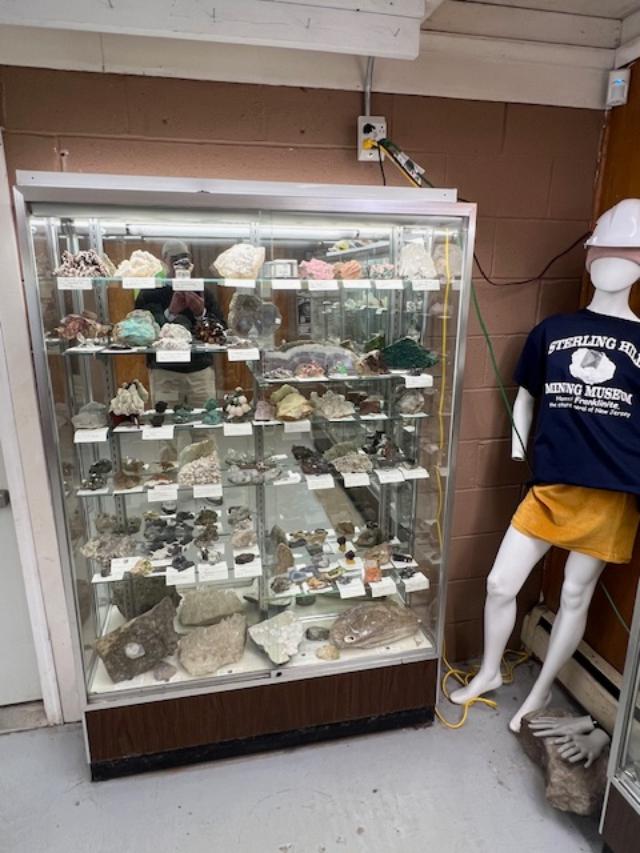
Minerals on sale at the gift shop

What the organization does:

*We inspire students to pursue careers in science and engineering.

*We inspire people to be thoughtful and responsible stewards of our environment.

*We are committed to preserved our historic facility, rock and mineral samples, artifacts and records to support research and foster understanding of this unique geologic area.

*We promote an understanding of human involvement in our environment and how science and technology relate to that connection.
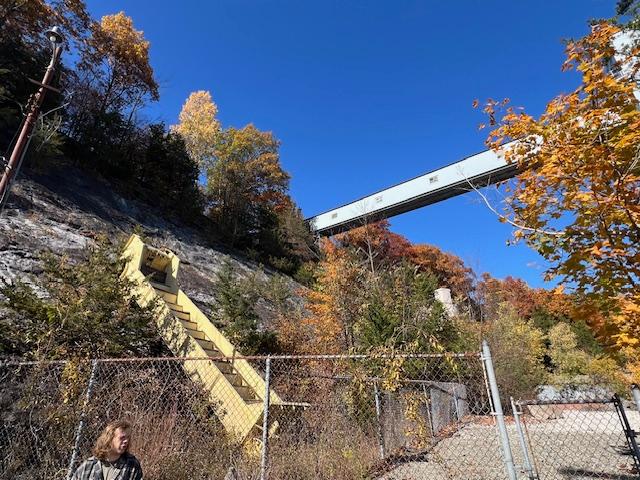
The outside of the museum at the Mine site

The Sterling Hill Mine History:

The Sterling Hill Mine is a former iron and zinc mine that was last working underground mine in New Jersey when it closed in 1986. It became a museum in 1989.

Mining began at the site in the 1630’s, when it was mistakenly thought to be a copper deposit. George III of the United Kingdom granted the property to William Alexander, titled Lord Stirling. Stirling sold it to Robert Ogden in 1765. It went through several owners until the various mines were combined into the New Jersey Zinc Company in 1897. The mine closed in 1986 due to a tax dispute with the town, which foreclosed for back taxes in 1989 and auctioned the property to Richard and Robert Hauck for $750,000. It opened as a museum in August 1990.

The ore bodies at the Sterling Hill Mine lie within a formation called the Reading Prong massif; the ores are contained with the Franklin Marble. This was deposited as limestone in a Precambrian oceanic rift trough. It subsequently underwent extensive metamorphosis during the Grenville orogeny, approximately 1.15 billion years ago. In the area of the Franklin and Sterling Hill mines, 357 types of minerals are known to occur; these make up approximately 10% of the minerals known to science. Thirty five of these minerals have not been found anywhere else. Ninety one of the minerals are fluoresce.

There are 35 miles of tunnels in the mine going down 2,065 feet below the surface on the main shaft and 2,675 feet of the lower shaft. As of 2017, other than the very top of the mine the entire lower section has been flooded due to underground water table and hence longer accessible. The mine remains at 56 degrees F constantly (Wiki).

The inner workings of the mine on display

(This information on the mine was taken from both Museum brochure and Wiki and I give each full credit both the information on the mine and the museum). 


The Sterling Hill Mining Museum Promotional Video:


 Promotional Video

 The History of the Mining in New Jersey


I want to thank YouTube and The Sterling Hill Mining Museum for these videos on the museum.

The Greater Cape May Historical Society                         6531/2 Washington Street                                                      Cape May, NJ 08204

The Greater Cape May Historical Society 6531/2 Washington Street Cape May, NJ 08204

The Greater Cape May Historical Society

6531/2 Washington Street

Cape May, NJ  08204

(609) 884-9100

http://www.capemayhistory.org/

http://www.capemayhistory.org/about-us.html

Open: Colonial House Museum hours:

Wednesday-Saturday, 1:00pm-4:00pm June 15th-September 15th

Open during Victorian Weekend in October. Special exhibits at Halloween and Christmas.

My review on TripAdvisor:

https://www.tripadvisor.com/Attraction_Review-g46341-d286395-Reviews-The_Colonial_House-Cape_May_Cape_May_County_New_Jersey.html?m=19905

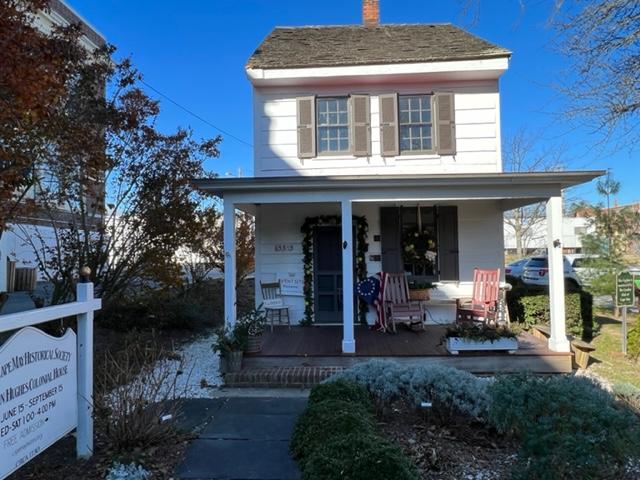
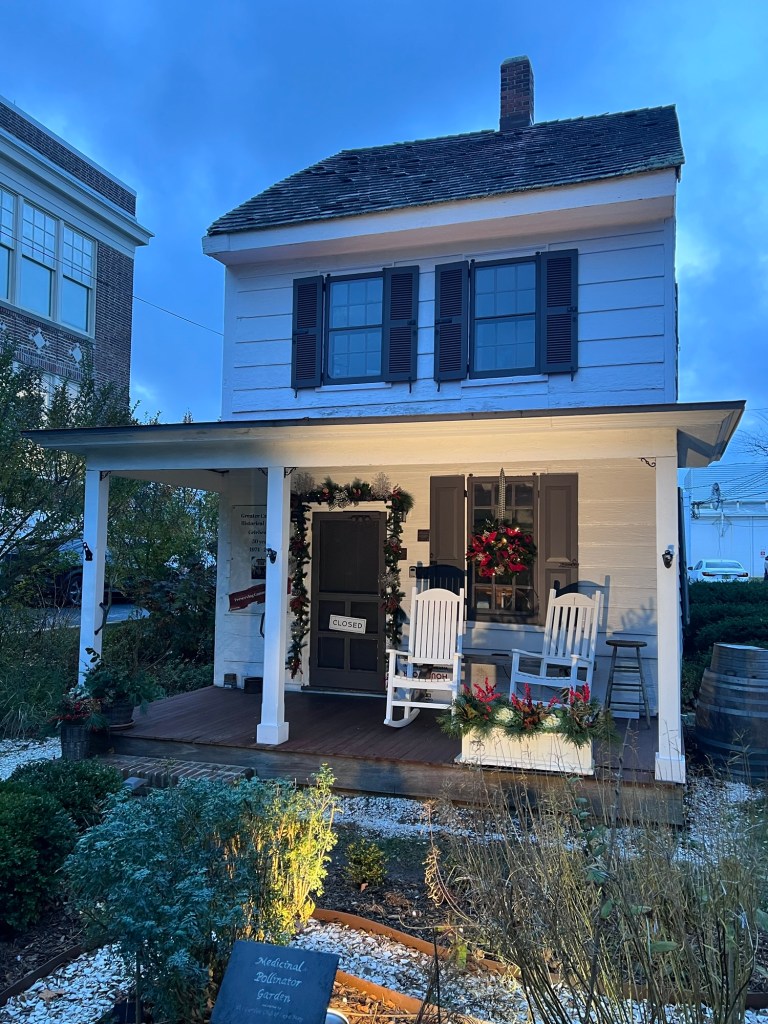
The Historical Society at Christmas time.

The Cape May Historical Society in the summer of 2023.

What an interesting visit I had to the Cape May Historical Society’s Memucan Hughes Colonial House. This tiny museum is only open between June 15th-September 15th and after that only for special events.

It is an fascinating little home that was built somewhere between 1730 to 1760. The original house no one is too sure if it had been built for the original owner or had been there and added on to as the records for the age of the house are unclear.

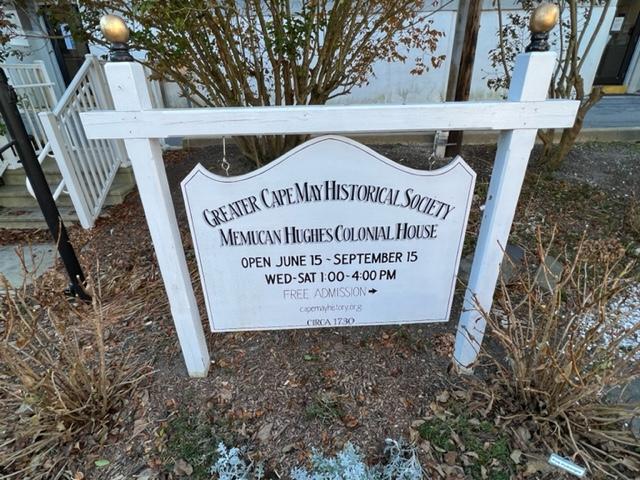
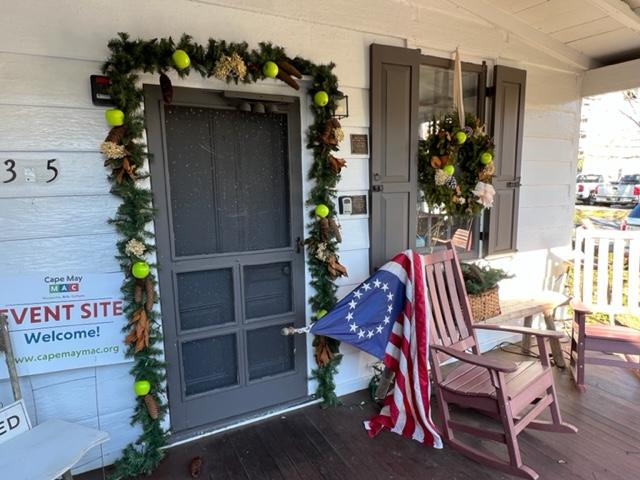
The welcoming sign at Christmas

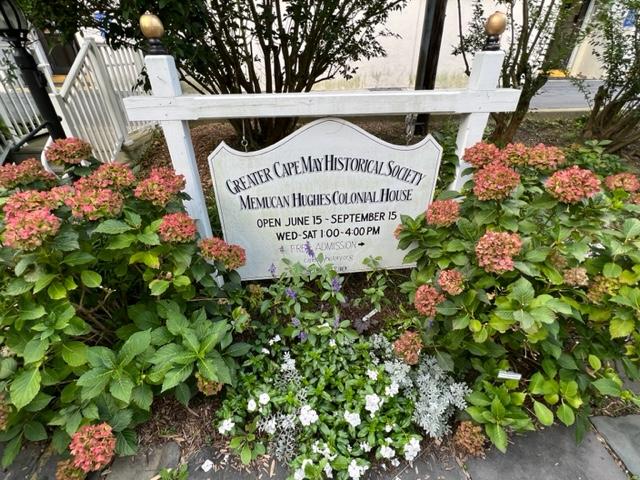
The sign in the summer of 2023.

The home consists of two small downstairs room filled with period furniture and decorations and there is an upstairs with three small rooms that have just opened up to the public. The front room Mr. Hughes used as a tavern that he kept open until almost the 1800’s. He had catered to a growing whaling industry that needed some form of entertainment in this quiet town that was isolated from the rest of the state.

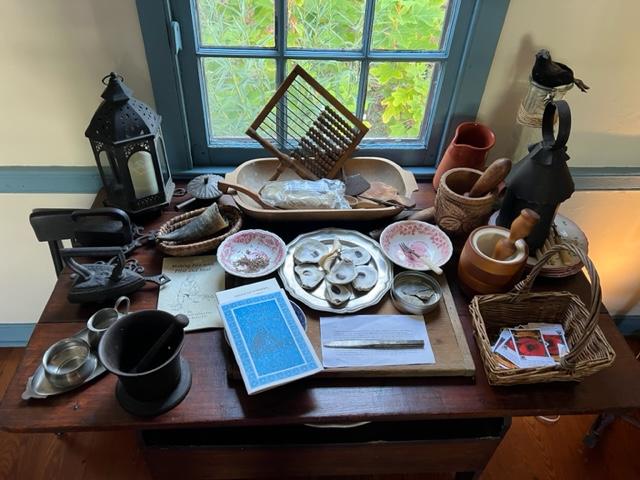
The Pub in the front room of the house for meals and conversation.

The Front Room of the house served as a pub for visiting travelers.

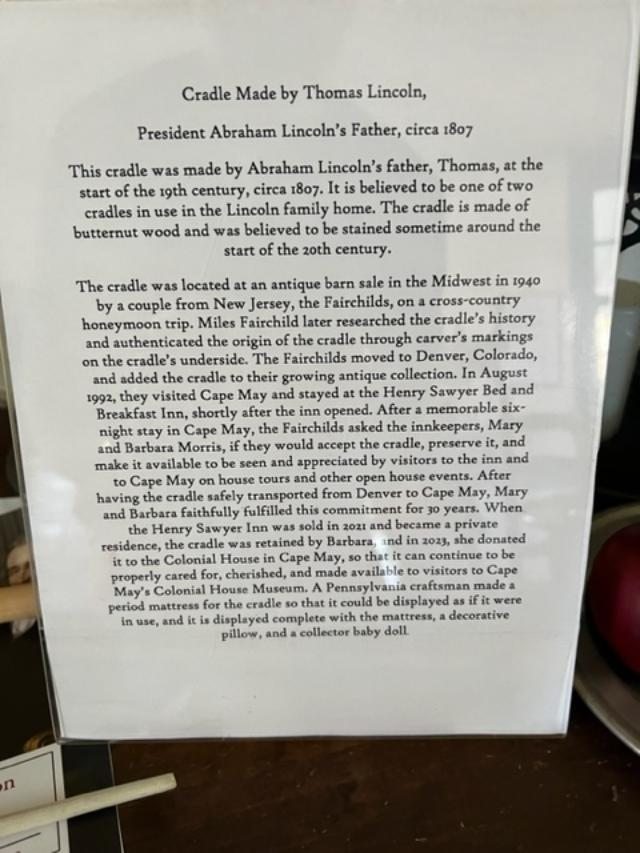
The room was set up for dining and amusements. The Lincoln Crib is in the background.

The Lincoln crib was built by Abraham Lincoln’s father.

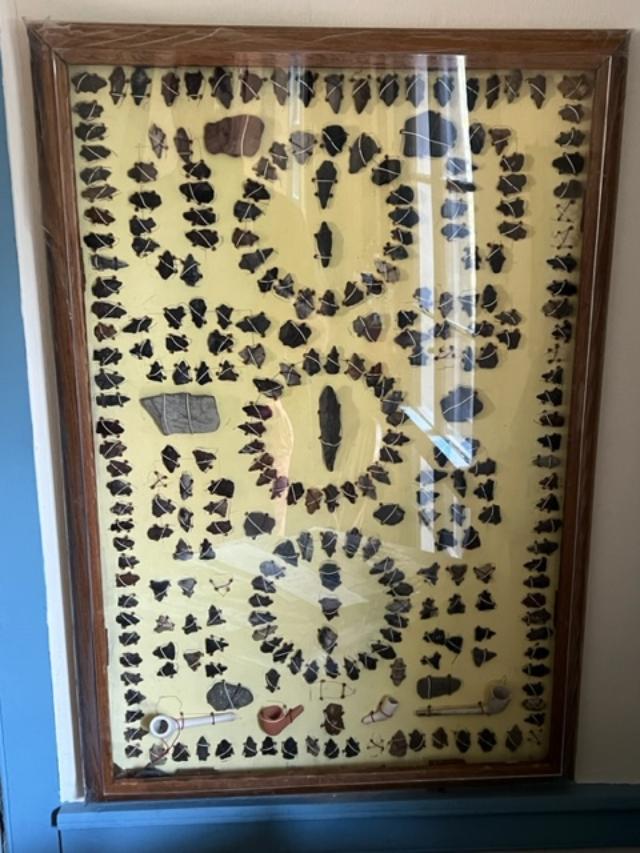
The Arrowhead and Pipe collection in the Pub Room.

The front of the house is decorated as tavern to greet guests. There were tables filled with games and items that would have catered to the trade but still you knew you were in someone’s home. There are vintage card tables, board games and some household items.

The Living room at the Cape May Historical Society

The back room is a closed off kitchen with a fireplace and spinning wheels and wash tubs, all the things to run a household. There were also children’s toys, kitchen and garden gadgets and family items to personalize the house.

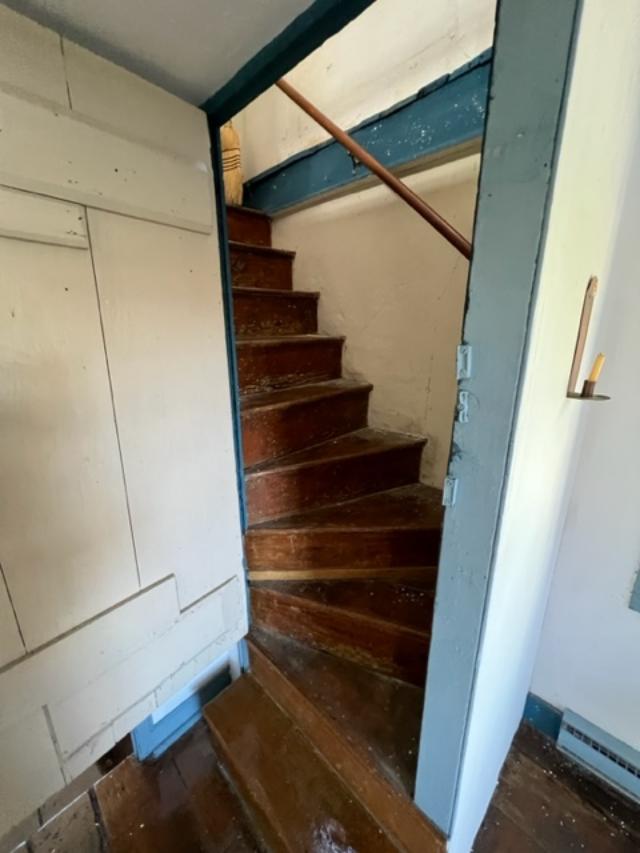
The narrow stairs lead to the upper bedrooms and the attic loft.

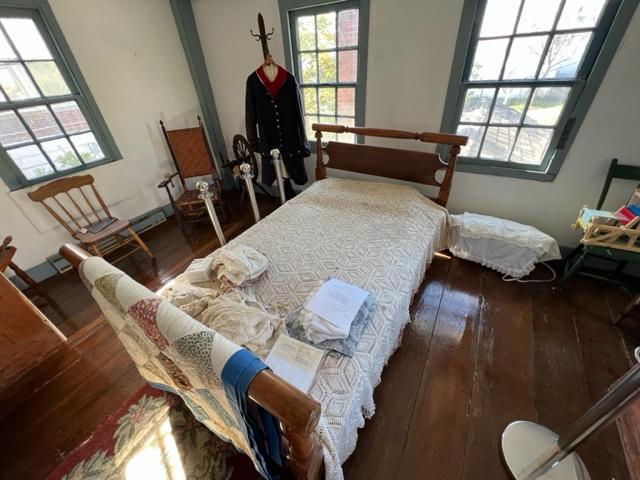
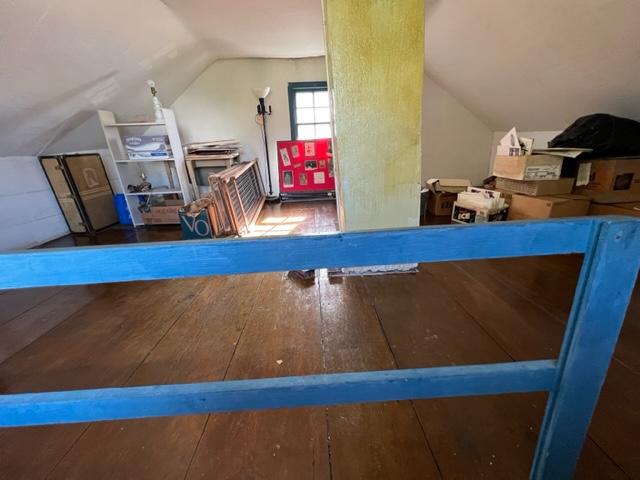
The upstairs bedrooms and the attic room were open in the summer of 2023, and I got to see the whole house. The upstairs is supposedly haunted, but I did not see anything. What I did see was how large the house really was and why the family of eight were able to live in this small house.

The upstairs bedroom

The upstairs bedroom

The attic loft room was supposed to be haunted but I saw nothing.

During the Victorian Age, the family came into a more prosperous life and built the big house in the front of the home.

The Hughes mansion in the Victorian times sits right in front of the old house and is now a B & B

The Hughes family lived in the house until the Victorian age and then they built the house on the front of the property and moved the smaller house to the back of the grounds. The house had been moved three times since its original location on the main road a few blocks away.

The tour itself is only about a half hour long and the guides do a nice job explaining the history of the house. On the gloomy day I visited, the museum was very busy with people visiting the house and with its connection to colonial history and the popularity of the musical, “Hamilton”, it is making it a popular destination when visiting Cape May.

History of the Museum:

The sign outside the house

The mission of the Greater Cape May Historical Society is to collect, preserve, document, interpret and share the history of Greater Cape May and to enhance the appreciation of that history through the Society’s historic site, The Colonial House Museum, collections, research, exhibitions, educational programs and publications.

The Hughes family home during the Christmas Holiday season 2022

All are invited to visit the Colonial House Museum, a 1700’s era house. The house was moved to its present site next to City Hall when the Hughes Family built the grand Victorian that is now a Bed & Breakfast.

The Hughes family home of the 1700’s at Christmas time.

The house decorated for the holidays in 2025

Th Ed front of the house decorated for the holidays

Come visit us and see the House as it was with a Tavern Room and a Common Room when it was owned by Memucan Hughes. On display are period furnishings and other period household items.

The Hughes family home of the late 1800’s

The Society presents an annual exhibit dedicated to an unique chapter of Greater Cape May History along with special events for Halloween and Christmas.

Disclaimer: This information was taken directly from the Greater Cape May Historical Society’s pamphlet, and I give them full credit for it. Please call the above number for more information and selected openings.

The Cape May Historical Society in the summer of 2023.

The Cadmus House: Fair Lawn Museum                               14-01 Politt Drive                                                                     Fair Lawn, NJ 07410

The Cadmus House: Fair Lawn Museum 14-01 Politt Drive Fair Lawn, NJ 07410

The Cadmus House: The Fair Lawn Museum

14-01 Politt Drive

Fair Lawn, NJ  07410

(201) 796-7692

http://www.cadmushouse.org

https://www.facebook.com/profile.php?id=133299403367223

http://www.fairlawn.org/content/203/267/521.aspx

https://www.co.bergen.nj.us/discovering-history/cultural-historic-sites

Open: Check the Fair Lawn Town Website

Fee: Free to the public

My review on TripAdvisor:

https://www.tripadvisor.com/Attraction_Review-g46430-d17707566-Reviews-Cadmus_House-Fair_Lawn_New_Jersey.html?m=19905

I visited the Cadmus House today and it is a very interesting look back on the history of Dutch Bergen County and the town of Fair Lawn, NJ.

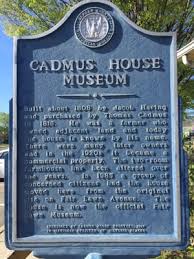
The Marker

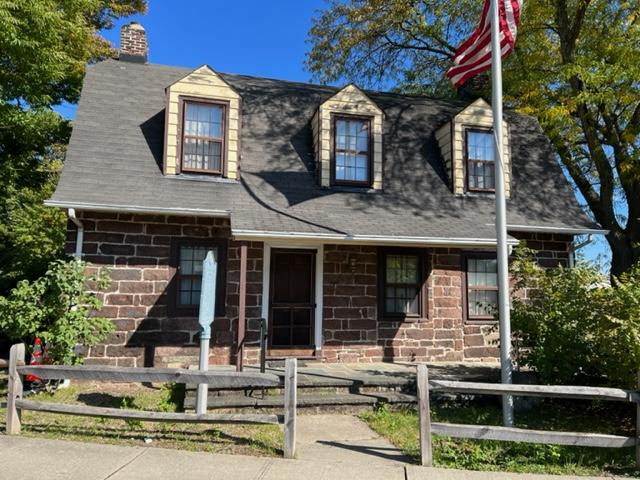
The Cadmus House Museum

Jacob Haring: Bergen County resident

https://www.wikitree.com/wiki/Haring-684

http://trees.wmgs.org/getperson.php?personID=I108461&tree=Schirado

The Cadmus House was built in 1808 by landowner Jacob Haring and his wife, Margarat. It was originally a two room farmhouse when it was built on their extensive farm land. The Harings’ sold the house to Abraham and Harmones Van Derbeek in 1815 and they turned around and sold the house to Thomas Cadmus and his  wife, Margaret in 1816 and the name stuck from there.

Cadmus House

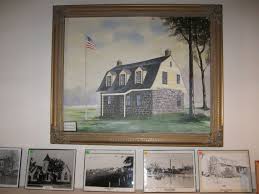
The Haring house originally and then it had a gable and second floor built in the late 19th century

More information on the Haring Family from the novel “A Dutch Family for the Middle Colonies” by author Firth Haring:

https://books.google.com/books/about/A_Dutch_Family_in_the_Middle_Colonies_16.html?id=hAZ5AAAAMAAJ

Over the years, the house had had many owners and many uses. Before the house was moved in 1985 to its current location, it served as a real estate office at that time. When they were building new construction on the spot, the house was saved by a group of concerned Fair Lawn residents to preserved the town’s past and it was turned into the Cadmus House-Fair Lawn Museum.

The house is broken down into different themed rooms. The downstairs rooms are devoted to the Fair Lawn’s past with pictures of old homes that used to line the streets of the neighborhood. There are pictures of old farms and farm houses, relics from town such as arrowheads, farming equipment and old farm house decor such as ice boxes and apple presses for cider.

Cadmus House II

Pictures of Fair Lawn’s past

In the room that once served as a dining room, there are period Dutch items that would be needed to run a household or a business.

Cadmus House Cider Press.jpg

The apple press which was a big part of the farming community in Bergen County

The upstairs rooms have different displays. One room is devoted to Victorian living with furniture and bedroom decors along with dolls and cribs. The other room is dedicated to the history of the Fair Lawn Fire and Police Departments as well as memorabilia from Fair Lawn High School such as trophies, yearbooks and old films of football games.

There is plenty of parking in the front of the house and the parking lot is shared with the railroad station next door. The house is only open the third Sunday of each month and it is closed for the months of July and August.

If you want to take a glimpse of Bergen County’s past Colonial, Victorian, Motor Age or current, the Cadmus House will give you a perspective on living in Bergen County in the past into current times.

The house now sits by the train station in Fairlawn, NJ

The Paterson Museum                                             2 Market Street                                            Paterson, NJ 07501

The Paterson Museum 2 Market Street Paterson, NJ 07501

The Paterson Museum

2 Market Street

Paterson, NJ  07501

(973) 321-1260

Open: Monday-Friday 10:00am-4:00pm/Sunday-Sunday 12:30pm-4:30pm

Fee: Free

http://www.thepatersonmuseum.com/

http://www.patersonmuseum.com

https://www.patersonnj.gov/department/?structureid=16

My review on TripAdvisor:

https://www.tripadvisor.com/Attraction_Review-g46718-d2704664-Reviews-Paterson_Museum-Paterson_New_Jersey.html?m=19905

The front of the museum

The Paterson Museum is an interesting museum of the history of the City of Paterson, NJ. The museum is broken into different sections of the City’s history. The museum discusses from the time that the Lenape Indians lived in the area to the rise of colonization and then to how it developed into the Silk City  through city planning and placement. The museum covers the history of the City of Paterson in the industrial Age as well with the rise of the Silk Industry, the Wright Airplane Factory, the Colt Revolver and the growth of the hospital industry in the City.

Paterson Fire Department

The Public Safety exhibition

Paterson Steam Engine

Take time to look at the live displays of minerals, Native American artifacts, old fire department equipment and the life and times of its native son, Lou Costello.

The inside of the Paterson Museum

The nice part of this museum is that the parking is free, it can be toured in about two to three hours and it is walking distance to the Paterson Falls and to Little Peru restaurants. It is also free.

The Paterson Falls up the road

Little Peru down the road

The Introduction:

The Welcome Center

The Paterson Museum offers a ‘History within History’ experience. Located inside the former erecting shop if the Rogers Locomotive & Machine Works, the museum, presents a glimpse of the rich history and the many factors that gave rise to Paterson, New Jersey: “America’s First Planned Industrial City.”

From the natural wonders and the first inhabitants of the land that lay below and above the ground to the vital role Paterson played in setting of our nation’s industrial course. Through the museum’s exhibits. you’ll find out why Paterson was known for more than a century as the “Silk City.”

Silk City

You’ll discover that Paterson was at the forefront of locomotive, submarine and airplane engine development. And that’s just the beginning of our story. By the time you finish your visit, you will want to learn more about this city that surrounds the Great Falls.

The Exhibitions:

Paterson Residents: There are exhibitions on such celebrity natives as Lou Costello and his life after living in Paterson are shown in detail.

The Lou Costello exhibition

The Lou Costello exhibition

Baseball players, football players and actors have shown against all odds and color barriers they found success in the world with Paterson being their roots.

Sports in Paterson, NJ

The Silk Industry

Silk City: The history of Paterson as ‘Silk City’ features winders, warpers and power-looms that produced beautiful fabrics. How the Falls and the location of the City of Paterson played its part in the garment industry at the turn of the last century. Not just in the silk industry but also in other companies like the Wright Aeronautical Corporation and the their time as a manufacturer in Paterson.

The Paterson Fire Department

The Paterson Fire and Police Departments: The history and development of both the Paterson Police and Fire Departments are told through pictures, stories, uniforms and equipment through the ages. There are many turn of the last century fire trucks in the museum.
World War Exhibition: The museum has a wonderful exhibition on the history of Paterson and the role it played in the World Wars. There are all sorts of uniforms, munitions and stories to tell.

The War years

The Veterans exhibition

Geographical: There is a whole side exhibition of gems and minerals both native and from all over the country at the museum and a full display of native New Jersey stone formations. There is also a discussion of how the Falls played such an important role inf the development not just of the City of Paterson but of New Jersey as well.

The Minerals

Alexander Hamilton Exhibit: The history and life of Alexander Hamilton is told from the time he was born in the Caribbean to his coming to the United States, his marriage and his rise through the ranks of the government. There is how he helped develop the banking industry and paying of the government debts to his fall from grace and his eventual fatal duel with Aaron Burr.

The Alexander Hamilton exhibit

Lenape Indian Culture: The Lenape Native American culture is shown how the tribes developed, lived, worked and hunted and gathered to create the society that was in place before colonization.

The Lenape exhibit

There are all sorts of tools, displays on their regions of living, language, housing (there is a recreation of a Tee Pee here), that native wardrobe and a complete display of tools and arrow heads. It is a very detailed account of life as a Lenape Indian.

Lenape Exhibition at the Paterson Art Museum

The Lenape Indian exhibition

The Lenape exhibition

The museum shows the history not just of Paterson but of the surrounding areas and how growth of the City of Paterson made an impact on the region.

The history of Paterson, NJ

The history of Paterson, NJ

The history of Paterson, NJ at 109 years old