Tag: LittleShoponMainStreet@Wordpress.com

John Fell House                                                                         475 Franklin Turnpike                                                           Allendale, NJ 07401

John Fell House 475 Franklin Turnpike Allendale, NJ 07401

John Fell House

475 Franklin Turnpike

Allendale, NJ  07401

(201) 783-8754

http://www.johnfellhouse.org

http://www.johnfellhouse.org/

http://www.johnfellhouse.org/history/

http://www.johnfellhouse.org/events/

Open: For special events and for corporate events. Please check their website for details.

TripAdvisor Review:

https://www.tripadvisor.com/Attraction_Review-g29737-d10356749-Reviews-The_John_Fell_House-Allendale_New_Jersey.html?m=19905

The John Fell House in April 2023 for the Northwest Bergen Historical Coalition event

I visited the John Fell House in May 2016 for the Northwest Bergen History Coalition 6th Annual History Day on “Day Forty-Three” of “MywalkinManhattan.com” blog site. The house is a stately home that sits at a busy point of the Franklin Turnpike, once the main artery of this part of Bergen County.

I was not too sure what this was as it was at the back of the house. I thought it might be a food cellar.

The only problem I found about visiting the John Fell home is that it is barely furnished. Most of these homes in Bergen County have furniture or heirlooms left by the family and this house is more used for entertaining. There are displays all over the house.
The backyard of the John Fell House in Allendale, NJ

The house is operated by the Concerned Citizens of Allendale and sits on 2.8 acres of land which includes the stately home, the Gothic Revival Barn, wetlands and old-growth trees. The house is across from the Celery Farm Bird Sanctuary, which was once part of the estate and is open to walkers year round (BCHS).

The front room of the John Fell Houser

The historic John Fell House is named in recognition of Founding Father, John Fell, a revolutionary war patriot, who purchased the property in 1766.

The Living Room at the Fell House in the late 1800’s addition

The house is located on the march route of Rochambeau’s army, on its way in 1781 to Yorktown, Virginia and the Seige of Yorktown that would decide the American Revolutionary War (Wiki).

The Music Room at the Fell House

The Living Room in the new addition of the house

The history of the Strawberry industry

The inside of the Fell House:

https://history.house.gov/People/Listing/F/FELL,-John-(F000065)/

John Fell (1721-1798) was an American merchant and jurist. He was born in New York City in 1721, he was engaged in overseas trade and has acquired a small fleet of ships by the time he moved to Bergen County, NJ in the 1760’s and lived at ‘Peterfield’, a home in present day Allendale, NJ (that is now known as the ‘John Fell House’) (Wiki).

The original part of the house from the 1700’s

The main room of the original 1700’s part of the house

The Living and Dining Room of the original house

The original fireplace in the older part of the house

The inside of the Fell House

He served as judge of the court of common please in Bergen County from 1766 to 1774. With the coming of the American Revolutionary War, he became chairman of Bergen County’s committee of correspondence and the committee of safety. He was Bergen County’s leading delegate to the Provincial Congress of New Jersey in 1775. In 1776, Fell was elected to a one-year term in the New Jersey Legislative Council representing Bergen County.

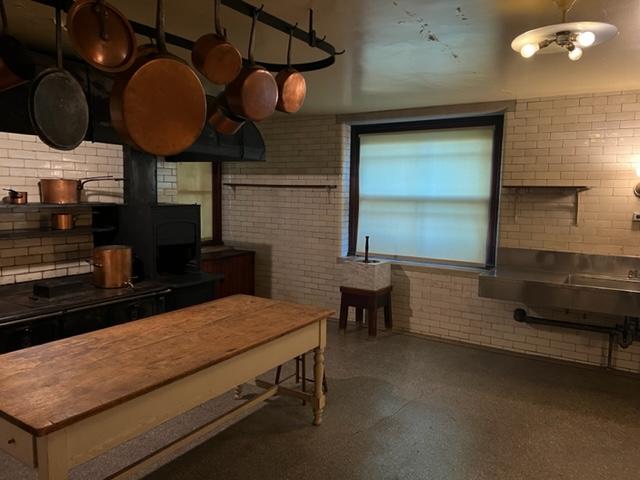
The antique dishware and tea pots in the kitchen at the John Fell House

The house is open for all sorts of special events and can be rented out. Please check out their website above for more details.

The Hopper-Goetschius Museum                                                   363 East Saddle River Road                                                          Upper Saddle River, NJ 07458

The Hopper-Goetschius Museum 363 East Saddle River Road Upper Saddle River, NJ 07458

The Hopper-Goetschius Museum

363 East Saddle River Road

Upper Saddle River, NJ  07458

(201) 327-8644

Open: Please check website for seasonal openings

http://www.usrhistoricalsociety.org

https://www.facebook.com/pages/Hopper-Goetschius-House/131274536912683

TripAdvisor Review:

https://www.tripadvisor.com/Attraction_Review-g46882-d14048029-Reviews-Hopper_Goetschius_Museum-Upper_Saddle_River_New_Jersey.html?m=19905

The Hopper-Goetschius House Museum

Northwest Bergen History Coalition History Day/Summer Open House 2026:

I visited the Hopper-Goetschius House Museum during the 8th Annual Northwest Bergen History Coalition History Day. I had never been here before and it is a real treat. There are many buildings on the property to visit on top of the house and the fact that this was someone’s house into the 1980’s is pretty interesting.

The historic marker in front of the house

The Hopper property in July 2026 for the Weekend Open House

The Gris Mill wheel

The historical tree stump

The historical plaque

The property in the Summer of 2026

Christmas Open House December 2019:

The house still holds many secrets. The best part of the tour of the house is the secret stairs in the kitchen that lead to the old second floor. This  can only accessed behind a panel that leads to a narrow set of steps. You can see it from the new second floor from the top floor.

I attended Holiday Celebration on December 8th, 2019 and it was a beautiful sunny day for an outside event.  It was a really nice afternoon. They had a visit with Santa at the Dutch barn which was decorated with trees surrounding him and presents and a decorated Dutch sleigh. In the schoolhouse, there were all sorts of games and talks to enjoy.

hopper-goetschius-museum-christmas.jpg

Santa in the Dutch Barn at the Hopper museum

In the outside kitchen, there were chestnuts and fresh popcorn being made that you could munch on while walking around enjoying the festivities and the smells of the cooking food were mouthwatering. The gentleman doing the cooking was doing a demonstration on how the food was cooked and the amount of time it took to make things.

hopper-goetschius-museum-christmas-ii.jpg

The outside buildings still had a bit of snow left

The inside of the house was decorated for the Victorian holidays with a nicely decorated tree in the Living Room and garland all over the place. There was a Victorian music box playing songs and a reading of “The Night Before Christmas” being read on the hour.

In the kitchen of the oldest part of the house, they served hot cider and homemade Christmas cookies of all kinds. They were also selling fresh homemade jam that one of the members made. The kitchen was decorated for the holidays as well. There was an open tour of the house and it was fun to see the upstairs decorated with all sorts of Victorian toys and dolls. The fee was a $5.00 donation and it happens every first week of December at the site.

The Hopper House kitchen

The house is a treasure trove of period furniture and family items and on the property there is a schoolhouse, a barn, a blacksmith shop and an outhouse. During the Summer months, the house is open for special tours on the weekends and in the Fall, they have a Harvest Festival and Christmas holiday events. The house is run and operated by the Upper Saddle River Historical Society.

The antique toys in the upstairs bedroom

In April of 2023, I returned to the Hopper-Goetschius House for the Northwest Bergen History Coalition Day for the event. It was a gloomy day with mist and rain but that did not put a damper on the event. There were lots of activities going on in each of the buildings.

My first stop was at the barn where the ladies were doing a demonstration on spinning thread and we had a conversation of where the expression “Pop goes the weasel” came from (from the spun threat reaching its max and then the machine made a ‘pop’ sound). The ladies were demonstrating the way women spun yarn and made clothes and the work that it entailed.

The yarn spinning demonstration at the Hopper Barn

The ladies explaining how the spinning works

‘Pop goes the weasel’, the weasel at the Van Riper-Tice Barn

When I left the barn, I went over to the school house building to see what was going on. A very bored volunteer took up all my time and would not leave me alone. She had to read from a script and take me all over the house. I just wanted to get out of there. Thank God another person walked in so that I could escape and see the rest of the property.

The Ramsey House was moved to the property to save it from destruction and the society has done a good job transform it to a turn of the century classroom. This is a surprising display in many historical societies as I am sure that people have donated so much of their childhood mementos.

The Ramsey House schoolroom

The schoolroom

The teacher’s seat at the school room. Nothing has really changed.

The farm artifacts at the Ramsey House schoolhouse

After the tour of the Ramsey House, I took the tour of the main house again and its secrets. The Hopper House is a very interesting home as the owner did not want plumbing in the house. Up until 1963, she still used the well. She was forced by her nephew to get a modern bathroom. I thought this was strange that the woman did not want a bathroom. She still used the outhouse into the 1960’s.

The Hopper House kitchen

The home is decorated with all sorts of beautiful antique furnishes and decorations. The house is so well organized and the volunteers do such a nice job telling its story especially at the holidays. I visited all the rooms where the volunteers explained its purpose.

The bedroom upstairs

Bedroom Two

Bedroom Three in the upstairs loft of the house

My last part of the tour was visiting the Smokehouse right behind the house.

The Smokehouse during the Summer Open House

Inside the kitchen during the Open Kitchen

The inside of the Smokehouse

The volunteers were cooking corn bread, homemade potato soup and biscuits in the fireplace. It was interesting to see how food was cooked on the farm in the days before modern kitchens.

The two volunteers working there were so happy to see someone. They told me that no one wanted any soup. On a cold rainy and misty day, I was taking them up on it and it was really good! Talk about warming you up.

The Smoke House on the Hopper estate was cooking away that afternoon

The volunteers were making breads, biscuits and soup that afternoon that warmed me up

The delicious Potato Kale Soup warmed me up on this rainy day

The delicious Corn Bread was cooked with bacon fat and tasted so good! I munched on most of this.

I finished eating and talking with the volunteers about all cooking they were doing. They told me that they were following the recipes that were from the late 1700’s that would have been cooked at the farmhouse at that time. It was a really interesting conversation we had on cooking. It was nice to eat something as well. I was starved at this point.

After the meal, I left to go to the next site. I felt for these volunteers. The Hopper House is off the beaten tract and they must have not gotten the visitors that the other homes had seen. Still it was a wonderful visit with members who care so much about the house and its grounds.

The Hopper estate with the barn, school house and ice house in the distance during the Northwest Bergen Historical Coalition Day

The Hopper House entrance hall

The Hopper-Goetschius house on the corner of Lake Street and East Saddle River Road dates back to 1739. Built by the Hopper family, it is the oldest remaining house in Upper Saddle River. We know it existed in 1739 because it was recorded in surveyor Charles Clinton’s journal and possible it is older.

The picture of Steven Goetschius and his wife,

The other family pictures on the table in the parlor

Rosalie Fellows Bailey in her book on pre-Revolutionary Dutch houses, says it was marked as the home of Gerrit Hoppa on a rough sheepskin map made about 1713.

The Goetschius family, the second owners of the house

The house underwent several changes in the mid 1800’s. The large central chimney with back to back fireplaces was removed. Probably, with more modern forms of heating available such as wood stoves, the fireplace seemed a bit old-fashioned and the owners took it out. Besides, they wanted to use the entrance hall as a room, so the stairway along the east wall was removed and a central staircase added where the fireplaces had once been. The dormers were added in the Victorian era.

The Hopper house in 2023

The Hoppers farmed the land and had a lot of it by today’s standards. The property extended from the Saddle River (Lion’s Park) up the hill almost to Montvale and up the East Road to where Creative Gardens was located.

The antique dolls at the Hopper House bedrooms

(From the Society website)

In 1814, the house became the home of the Reverend Stephen Goetschius of the Old Stone Church. It remained in the Goetschius family for a century and a half, always a place of central importance in town as Stephen Goetschius, the great-great grandson of the Reverend Stephen, served as the borough clerk for over 40 years and conducted his town business from the east room of the house (SRHS.com).

The Hopper House Living Room

The house was without running water until Stephen’s death in 1962. Until improvements were made at that time, Steve’s wife, Lizzie, as those before her, carried water from the well for washing, cooking and shoveled coal for heat (SRHS.com).

The Hopper House Kitchen

The kitchen in the new section of the house

In 1985, the Hopper-Goetschius house was presented to the Borough of Upper Saddle River by Clinton and Grace Carlough. Lizzie Goetschius, the last resident of the house was Clint Carlough’s aunt. The house today serves as a museum, run by the Upper Saddle River Historical Society and offers the public historically related events throughout the year (SRHS.com).

The Hopper House Living Room

The back bedroom Dutch wardrobe

The Patriotic Display for the ‘Bergen 250’

(Upper Saddle River Historical Society)

The Hopper House property also contains:

*The Privy or Outhouse that was in use at the Hopper-Goetschius House until 1962 when plumbing was installed in the house.

The Outhouse

Hopper House estate with all the important buildings in the Summer of 2026

*The Ramsey Sayer House was moved to the grounds in 1999 to become part of the museum complex. This is the oldest existing from house in Upper Saddle River, a good example of a tenant house common on farms in this area. The Ramsey Sayer house belonged to William Ramsey, the grandfather of Kate Fisher Goetschius, mother of Steve Goetschius, who lived in the Hopper Goetschius house for many years.

The Ramsey-Sayre House now serves as the makeshift schoolhouse

The schoolhouse at the turn of the last century

The Native American artifact collection at the Schoolhouse

*The Van Riper-Tice Barn was erected about 1800 by the Van Riper Family on their farm on West Saddle River Road (near the Cultural Center). It was later owned for many years by Harmon Tice.

The Dutch American barn in the Summer of 2026

Sleighs and buggies and outdoor equipment

In 1989, it was scheduled to be demolished to make way for a development, the Historical Society dismantled it, moved it to the Museum ground and had it restored and rebuilt on its present location.

The inside of the Van Riper-Tice Barn at the Hopper House estate

Winter transportation at the barn

Transportation and farming equipment

The farming equipment display

More farming equipment

The displays of wool at the Van Riper-Tice Barn

The display of waffle irons

The Apple Cider Press that the Tice and Van Ripper families were so well known for making especially at Thanksgiving

*Snake Fence: a zig-zag fence of split rails once common in this area was added in the property north of the Van Riper Tice barn. The project was completed in 2001 with the help of Will Mazzuto and the vision of John Kroner and Joanne Lombardo.

The Hopper House estate

The Blacksmith Shop

The blacksmith doing a demonstration

The Upper Saddle River Historical Society:

The Upper Saddle River Historical Society was organized in 1977 to collect, preserve and distribute the history of the Upper Saddle River area. The Society is also responsible for the management and restoration of the Hopper-Goetschius House Museum located at 245 Lake Street, Upper Saddle River, NJ.

The Historical Society has over 500 members and is host to nearly 2000 museum visitors each year. The Society holds program meetings throughout the year along with special events such as a Spring Concert, a wonderful Harvest Fair in the fall and an Old Time Holiday Open House in December, featuring mulled cider with chestnuts roasting on an open fire.

The Museum is open for tours every Sunday during July & August from 2:00pm-4:00pm or by appointment. For group or individual tours contact: Althea Gardner @ (201) 327-7807 or Kay Yeoman @(201) 327-2236.

Hopper-Goetschius House Museum Restoration Fund Drive

USR Historical Society.org

Hopper Genealogy Info. http://www.reetree.com

(Upper Saddle River Historical Society)

Disclaimer: This information was taken directly from the Upper Saddle River Historical Society website. Please check the site for the hours and days it is open.

Nicholas Roerich Museum                                                                       319 West 107th Street                                                                                  New York, NY 10025

Nicholas Roerich Museum 319 West 107th Street New York, NY 10025

Nicholas Roerich Museum

319 West 107th Street

New York, NY  10025

(212) 864-7752

Open: Monday: Closed/Tuesday-Friday: 12:00pm-4:00pm/Saturday-Sunday: 2:00pm-5:00pm

Closed: Major holidays

Admission: Admission is free, though donations are welcome.

http://www.roerich.org

http://www.roerich.org/

TripAdvisor Review:

https://www.tripadvisor.com/Attraction_Review-g60763-d136141-Reviews-Nicholas_Roerich_Museum-New_York_City_New_York.html?m=19905

The front of the museum

This small museum in the Upper West Side neighborhood of Manhattanville is easy to miss. It is in a small brownstone on West 107th Street right near Riverside Drive. You can see the plaque for the museum to the right of the building and there is a side door to get in. The admission is free but they do ask for a donation if you can do it.

The gallery on the second floor

The museum is a specialty collection of the works of artist Nicholas Roerich. They are mostly landscapes and religious themed that cover three floors of the museum.

The is a beauty to all his works especially the ones concentrated in the Himalayas with their colorful and spiritual themes.

The artist’s portrait of his mother on the third floor

It takes about an hour to an hour and a half  to see all the floors. A nice touch they had in the afternoon that I was there was a piano player whom you could hear play throughout the brownstone. When you go, it will be a pleasant afternoon where you are not fighting the crowds of the larger museums.

The art pieces enlighten you and I felt gave you a sense of hope.

(The following information is from the museum website)

Artist Nicholas Roerich

(From the museum website)

The Nicholas Roerich Museum was founded in 1949 to house a permanent collection of over two hundred paintings by the Russian-born artist, poet, philosopher and humanitarian, Nicholas Roerich. The museum also houses a library of books and maintains an archive and a collection of artifacts relating to the areas of Roerich’s interests (Museum guide).

The Mission of the Museum:

The mission of the Nicholas Roerich Museum is essentially a narrow one: to make available to the public the full range of Roerich’s accomplishments. These, however, are not narrow; they cover the realms of art, science, spirituality, peacemaking and more. Because Roerich’s  activities ranged widely, so do the museum’s.

The second floor galleries

The Museum Collection:

Nicholas Roerich is known first and foremost as a Russian-born artist. His paintings, of which there are thousands around the world, explore the mythic origins, the natural beauty and the spiritual strivings of humanity and of the world.

One of the more spiritual paintings in the collection

The museum houses approximately two hundred of these works and keeps most of them permanently on display for visitors who come from around the world. Indeed, for many of these visitors, the museum is a destination of great importance; the paintings speak to them of their own inner yearnings and possible fulfillment. For them, Roerich’s paintings are a kind of teaching-about spiritual development about culture and its role in human life and about opportunities for the achievement of peace in a fractious world.

The second floor galleries

The beautiful landscapes on the second floor

Publications & Booklist:

The museum also keeps in print a number of books by and about Roerich and his life and work and a substantial stock of postcards and reproductions of his paintings. These too are seen by many as more than just prints; they are hung in homes with a degree of appreciation that is not often given to such things.

The gallery on the first floor with some of the more religious works

Cultural Events:

In addition to these functions, the museum also maintains an active schedule of cultural activities. 

The second floor galleries

It was Roerich’s fervent belief that the role of cultural development in the peace and evolution of the world is fundamental and that it is therefore the responsibility of those who work in creative and cultural fields to strive always for that peace and evolution and for those goals to be the chief impulses guiding their creative work. Information about these ideas is always available.

The second floor gallery with Asian themed art

The Roerich Pact & the Banner of Peace:

The museum sustains an ongoing effort to spread public awareness of the intermingled roles of peace and culture and the ways in which each sustains the other. Information and materials about The Roerich Pact and the Banner of Peace are always available.

The patronage of the museum through the Katherine Campbell-Stibbe Foundation

Throughout this century of wars and national struggles, the yearning of the public for ways of achieving peace has been great; the ideas of the Pact and the Banner provide a welcome answer to those yearnings.

The history of the museum through the years

As Roerich’s ideas become better known around the world, attendance at the Museum grows and requests for information and materials about him and his art and social achievements increase.

The gift shop on the first floor. The director of the museum even sells honey from the beehives on top of his building.

*This information is from the Museum’s website.

Disclaimer: This information was taken from a combination of the museum’s website and from the biography of the artist.

The first floor galleries

The National Jazz Museum in Harlem                    58 West 129th Street, Ground Floor                  New York, NY 10027

The National Jazz Museum in Harlem 58 West 129th Street, Ground Floor New York, NY 10027

The National Jazz Museum in Harlem

58 West 129th Street, Ground Floor

New York, NY  10027

http://www.jazzmuseuminharlem.org

http://jazzmuseuminharlem.org/

https://www.facebook.com/nationaljazzmuseum/

(212) 348-8300

Suggested donation of $10.00 but whatever you can give.

Open: Sunday-Monday: 11:00am-5:00pm/Tuesday-Wednesday Closed/Thursday-Saturday: 11:00am-5:00pm

Fee: Free with Donation

Founded in 1997

Transportation: Subway 2 or 3 to 125th Street and then walk up to 129th Street

TripAdvisor Review:

https://www.tripadvisor.com/Attraction_Review-g60763-d6953125-Reviews-The_National_Jazz_Museum_in_Harlem-New_York_City_New_York.html?m=19905

I came across this little museum when I was touring Central Harlem. This museum is more like a small gallery and it is dedicated to the history of jazz in Harlem. The front section is set up like someone in Harlem’s salon with furniture from the era and sheet music from the artists. The look is based on ‘Rent Parties’ that people used to have to bring their friends over to help pay the monthly rent. The back section of the museum is dedicated to jazz and related music with a sitting area and pictures all over the wall of different era’s including the new artists of today. Jazz music plays throughout.

National Jazz Museum in Harlem

The Mission of the Museum:

The National Jazz Museum in Harlem, a Smithsonian Affiliate,  preserves, promotes and presents jazz by inspiring knowledge, appreciation and celebration of jazz locally, nationally and internationally.

It is the thriving center for jazz that stimulates hearts and minds and reaches out to diverse audiences to enjoy this quintessential American music. The museum was founded in 1997 by Leonard Garment, Counsel to two U.S. Presidents and an accomplished jazz saxophonist, Abraham D. Sofaer, a former U.S. District Judge, who gave the initial gift in honor of his brother in law, Richard J. Scheuer and matching funds from the Upper Manhattan Empowerment Zone.

National Jazz Museum in Harlem II

Displays inside the museum

The Museum is committed to keeping jazz present and exciting in the lives of a broad range of audiences: young and old, novice and scholar, artist and patron, enthusiast and curious listener. From its new location in the center of Harlem, the Museum serves the local community and welcomes visitors from across the U.S. and internationally.

The National Jazz Museum in Harlem’s vision is to establish a permanent home in Harlem for collections, programs and performances that stimulate creativity and excitement about the past, present and future of jazz and its artists (The Jazz Museum in Harlem vision statement-pamphlet).

In 2013, an exciting new era began for the Museum. We created and implemented a new strategic plan that made education central to our mission. The Museum now offers year-round educational programs for students of all ages. We also developed a new membership program with exclusive content and benefits to reach out to the worldwide jazz community.

National Jazz Museum of Harlem

The inside of the National Jazz Museum of Harlem

In 2015, after 15 years at the East Harlem location, we moved to 58 West 129th Street in Central Harlem. Our new space is designed to give our visitors an immersive jazz experience, in the heart of what has become Harlem’s new cultural and entertainment district. The ultimate, long-term goal is to secure a permanent home in Harlem with space enough to showcase Harlem’s vast contributions to jazz, American music and world history.

Each year, the Museum produces and presents more than 80 free programs in New York City, engaging hundreds of professional jazz artists and reaching nearly 20,000 people from around the world. The Museum is a hub for live performances, exhibitions and educational programs. It is also home to our widely acclaimed Savory Collection, which includes more than 100 hours of live recordings of jazz legends made from New York City radio broadcasts aired between 1935 and 1941 (Wiki site and Museum website).

National Jazz Museum of Harlem III

The current exhibition is Vi*bra*tion: The history of Jazz from Louis Armstrong to Miles Davis: Their Work and Harlem Air Shaft (large musical manuscripts on the wall).

The Leadership of the Museum is under musicians Jonathan Batiste, Co-Artistic Director and Christian McBride, Co-Artistic Director.