
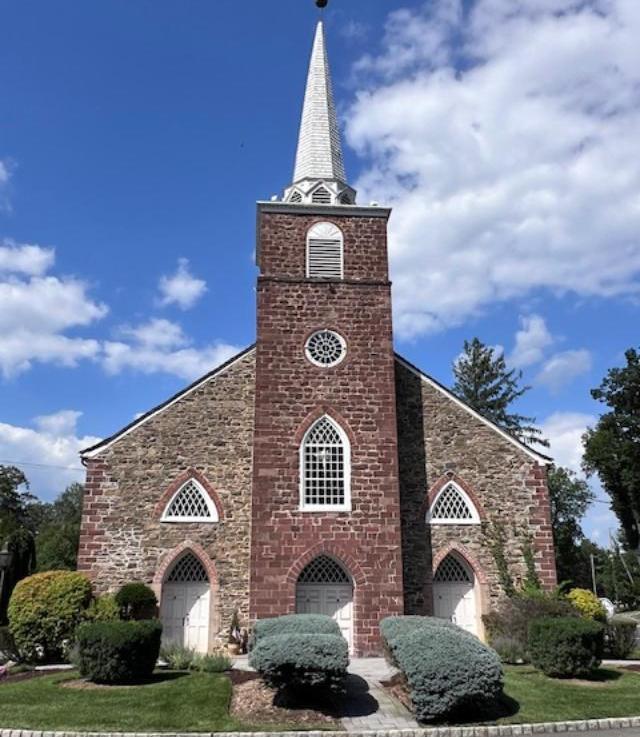
Ramapo Reformed Church
100 Island Road
Mahwah, NJ 07430
(201) 529-3075
https://ramaporeformedchurch.org/home
Open: Sunday 10:00am-12:00pm
My review on TripAdvisor:
https://www.tripadvisor.com/Profile/R4960NKjustinw/photo/819672582?m=19905

The Ramapo Reformed Church at 100 Island Road

The historic sign of the history of the church

The church in the summer
The history of the Ramsey Reformed Church:
(from the Ramapo Reformed Church website)
Formerly The Ramapo Meeting House was organized in 1785 and built in 1798
In 1713, a small group of eleven German Lutheran families settled at the “Island,” so named because of extensive marshlands surrounding high, dry land. They formed a congregation in 1715, and c. 1720 built a log church. Prior to 1739, they built a larger, frame church.
Dutch, French, English and Scottish settlers of the Reformed faith came to the Island about mid-century and attended church in Paramus, 10 miles distant. In 1785, they organized The Ramapo Dutch Reformed Congregation at Ramapough in Bergen County.
After the Revolutionary War (1776-1783), the first task of the new nation was to repair the damages of war and neglect. Neither the Lutheran nor the Reformed congregation at the Island had sufficient means to build a new church. In spite of having fought on opposing sides during the War, they agreed to jointly repair and use the old Lutheran church. The arrangement was so successful that in 1798, they agreed to build the present church together.
Construction began on June 4th, and was finished in November. The last items purchased were “one lock and two keys” on December 12, 1798. The two congregations shared the church for fifty years until 1848, when the Lutherans sold their interest and moved to Airmont, NY and established the present Christ Evangelical Lutheran Church.
As soon as its doors opened to the public in 1798, the new Ramapough Meeting House became the heart of the daily activities. Social gatherings and civic meetings were held here all week long, and personal and official notices were posted on the doors. But on the Sabbath (from sundown Saturday to sundown Sunday) the building became a sacred place.
Ramapough – or Bellgrove, as it was called at this time – had four mills, several blacksmith shops, a general store, a stagecoach stop, and U.S. Post Office, one of the earliest in New Jersey (1797). The old Kings Highway of 1703 or Ramapough Road (Island Road) was part of the ancient 150-mile Albany Post Road from Paulus Hook (Jersey City) to Albany, NY. Dobbin & Tustin, est. 1797, ran a passenger and mail stage line on this road, right past the door of the Ramapough Meeting House.
In 1798, when pews and people were smaller, the Meeting House held 385 people. (Today, it holds 250). Though the old box-type pews are gone from the sanctuary, the gallery seats above still exist. The Island Church held an important place in the railroad hamlet of Mahwah throughout the 1800s. It was known simply as the Community Church until the 1950s, when suburbanization brought many other faiths to Mahwah.
One of the earliest public schools in the area, c. 1815, was operated on the church property until 1906, when the church sold land to the Township for the Commodore Perry School. In the cemetery is a roadbed of the old Kings Highway.
The Ramapo Reformed Church is the oldest public building in Mahwah, and a repository of more than 200 years of local and regional history. It is the older of only two remaining frame Federal-period churches in Bergen County, and is on the National Register of Historic Places.

The modern church sign
I walked through this quiet and reserved graveyard in search of ghosts from the past. The graveyard at the Ramapo Reformed Church, like many of these former Dutch churches, are steeped in memories of the past.

The historic graveyard in the back of the church
In the unique graveyard are the places of rest of many of the first families of Bergen County, NJ who not just shaped the county, but the State of New Jersey and the United States as well.

The oldest part of the graveyard surrounds the church
While the names Haring, Christie, Blauvelt, Demarest, Ramsey, Sutherland, Fox, Hopper, Van Ripper, DeBaun, Terhune and Tice may not similar to most people, to a generation of us were the names of farming families in Bergen County.

The Hopper Family plot
https://www.usrhistoricalsociety.org/families
https://www.hhkborough.com/home/hopper-zabriskie-family-cemetery

Another branch of the Hopper family
Their farms supplied us with fresh fruits and vegetables when in season and places for us to go during Halloween and Thanksgiving for our baked goods and much needed apple cider.

The Suffern family plot
https://www.wikitree.com/genealogy/SUFFERN
The 1980’s real estate boom put an end to many of these traditions but those names still live in the memories of an older generation. We see some of these traditions still hold tight at Demarest Farms in Hillsdale where hayrides and apple cider and fritters are still part of that experience.

The Goetschius family plot
https://sites.rootsweb.com/~njhudson/bio_goetschius_family.html
https://bergencountyhistory.catalogaccess.com/people/17462
https://dutchgenie.net/GSBC-familyfiles/familyfiles/g0/p463.htm
For this trip though, I was in search of graves of our brave veterans of the American Revolution and in the faded tombstones surrounding the church, I found most of them.

The oldest part of the graveyard wraps itself around the church or faces the road, which at one time must have been a country lane.

Some of the oldest families from the community are buried closest to the church building

The graveyard is filled with family plots of most of the first families of the area once surrounded by old fences.
The graveyard is full of families and their memories. In some parts of the graveyard, family plots are organized by generations. To so the progression of mother and father to their children and grandchildren. The history of these families is in the rows of names and the intermarriages of all these families to one another.

The Fox family plot, where one of the members of the family was a veteran of the Civil War
https://www.familysearch.org/ms/search/catalog/2366042

The Ramsey family plot

The Ramsey family plot

The grave site of Peter Ramsey, who the town of Ramsey was named after
https://ancestors.familysearch.org/en/K4FS-R7L/peter-j.-ramsey-1804-1852
Peter J. Ramsey was born on 23 November 1804, in Bergen, New Jersey, United States. He married Margaret Hopper in 1828, in Hohokus Township, Bergen, New Jersey, United States. They were the parents of at least 4 sons and 5 daughters. He died on 10 May 1852, in Ramapo, Bergen, New Jersey, United States, at the age of 47, and was buried in Mahwah Township, Bergen, New Jersey, United States (Family Search.org).
Closer to the church, I discovered the graves of our brave soldiers from the Revolutionary War whom I had been searching for.

The grave of John Suffern, who fought in the Revolutionary War and whose family the County of Suffern was named after
https://ancestors.familysearch.org/en/MT85-8B1/john-suffern-1741-1836
https://www.wikitree.com/wiki/Suffern-60
When John Suffern was born on 23 November 1741, in County Antrim, Ireland, his father, William Suffern, was 27 and his mother, Margaret Templeton, was 19. He married Mary Myers on 1 January 1766, in Burlington, New Jersey, British Colonial America. They were the parents of at least 7 sons and 4 daughters. He lived in Rockland, New York, United States in 1820 and Ramapo, Rockland, New York, United States in 1830. He died on 11 November 1836, in Suffern, Ramapo, Rockland, New York, United States, at the age of 94, and was buried in Ramapo Reformed Church Cemetery, Mahwah Township, Bergen, New Jersey, United States (Familysearch.org).

The graves of John Suffern and his wife

The Christie family plot, where John and James Christie who fought in the war were buried

The graves of John Christie and his wife
https://ancestors.familysearch.org/en/L2SY-CNW/john-w-christie-1754-1815
When John W Christie was born on 7 May 1754, in Schraalenburgh, Bergen, New Jersey, British Colonial America, his father, William James Christie, was 33 and his mother, Catalijntje Demarest, was 32. He married Annatie Hannah Brinkerhoff about 1773, in New Barbadoes Township, Bergen, New Jersey, United States. They were the parents of at least 4 sons and 8 daughters. He died on 11 September 1815, in Bergen, New Jersey, United States, at the age of 61, and was buried in Bergenfield, Bergen, New Jersey, United States (Familysearch.org).

The graves of James Christie and his wife
https://ancestors.familysearch.org/en/LKRF-61W/james-willem-christie-1744-1817
https://ancestors.familysearch.org/en/M56X-DYC/james-christie-1746
When James Willem Christie was born on 20 August 1744, in Bergen, New Jersey, British Colonial America, his father, William James Christie, was 24 and his mother, Catalijntje Demarest, was 22. He married Maria Banta about 1772, in Schraalenburgh, Bergen, New Jersey, British Colonial America. They were the parents of at least 5 sons and 5 daughters. He died on 23 July 1817, in Bergenfield, Bergen, New Jersey, United States, at the age of 72 (Familysearch.org).

The grave of Lawrence Sutherland another Revolutionary War Veteran
https://ancestors.familysearch.org/en/LHNH-3RV/lawrence-sutherland-1763-1846
https://www.wikitree.com/wiki/Sutherland-2841
When Lawrence Sutherland was born on 12 June 1763, in Harrington Township, Bergen, New Jersey, United States, his father, James Sutherland, was 21 and his mother, Marietje, was 19. He married Elizabeth Sutherland in 1786, in New Hampstead, Rockland, New York, United States. They were the parents of at least 2 sons and 3 daughters. He died on 9 October 1846, in New Hampstead, Rockland, New York, United States, at the age of 83, and was buried in Mahwah Township, Bergen, New Jersey, United States (Familysearch.org).

The Terhune family plot
https://freepages.rootsweb.com/~batrhune/genealogy/Early%20Dutch%20Family%20Ties/page04.htm
https://en.wikipedia.org/wiki/Terhune_House_(Wyckoff,_New_Jersey)
https://freepages.rootsweb.com/~batrhune/genealogy/Early%20Dutch%20Family%20Ties/page29.htm

The grave of John DeBaun and Matilda Van Belget

The Haring family plot of John and Elizabeth Haring
https://www.wikitree.com/genealogy/HARING

The graves of John and Elizabeth Tice
https://en.wikipedia.org/wiki/Tice_Farms

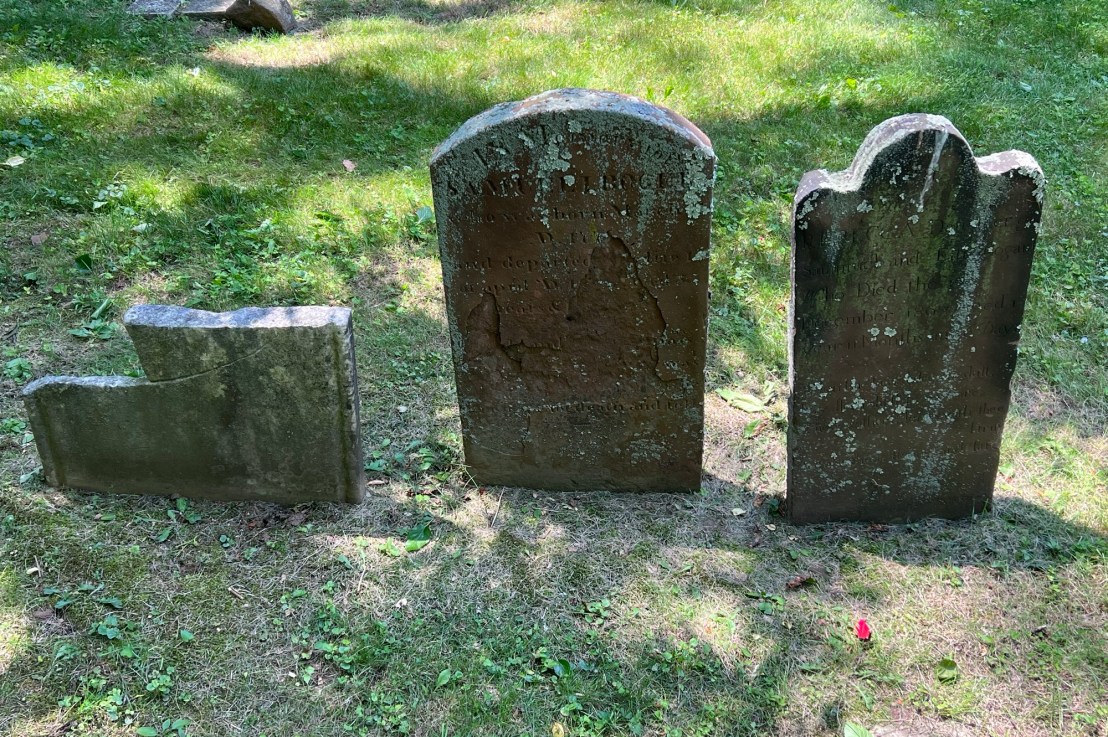
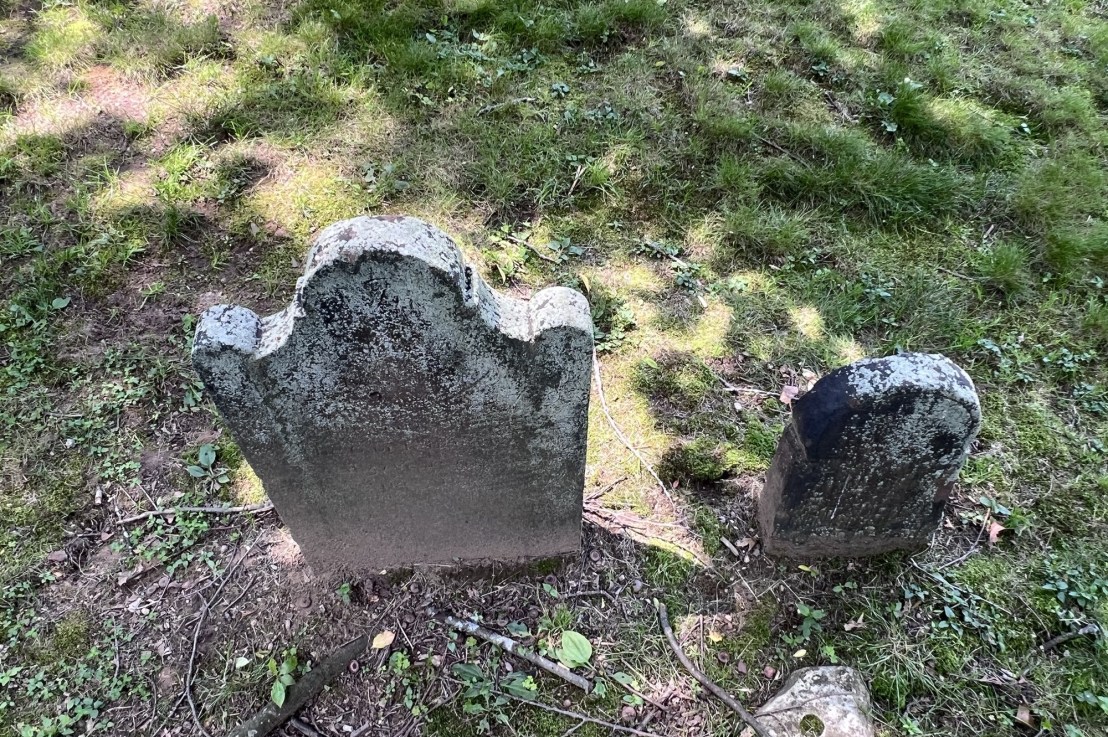
The historic family tombstones

The Ackerman family plot
https://www.njgsbc.org/files/familyfiles/g0/p10.htm
https://www.wikitree.com/genealogy/ACKERMAN

The graves of John Straut and his wife, Susan Evers Straut
There are a million stories to be told in this graveyard and it is interesting to know their families stories

The family plots in the graveyard






 Visiting a Museum: The Unique, Unusual, Obscure and Historical