The entrance to the Gallery is at 1 East 53rd Street
The Dragon that guards the door of the gallery.
I came across this little gallery full of Public School K-12 art when walking around the Upper East Side for my walking project, “MywalkinManhattan.com” This small gallery space in the lobby of 1 East 53rd Street has a revolving exhibition of works from students in schools all over New York City.
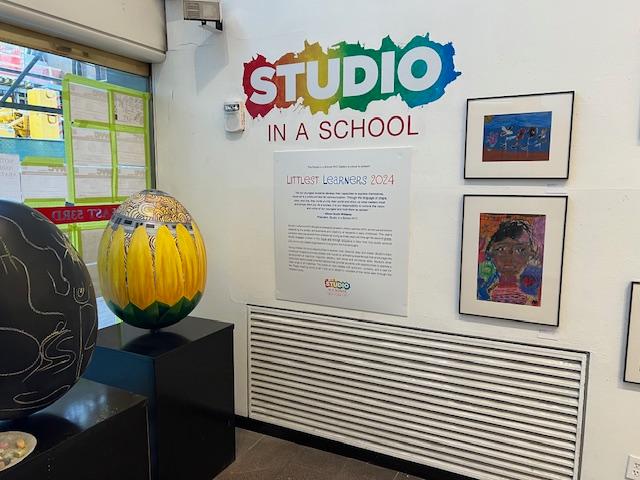
The revolving art at the Studio in a School Gallery is unique.
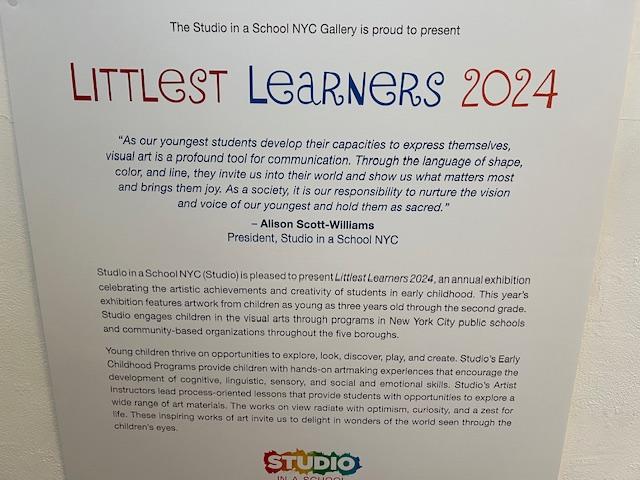
The Littlest Learners 2024 exhibition.
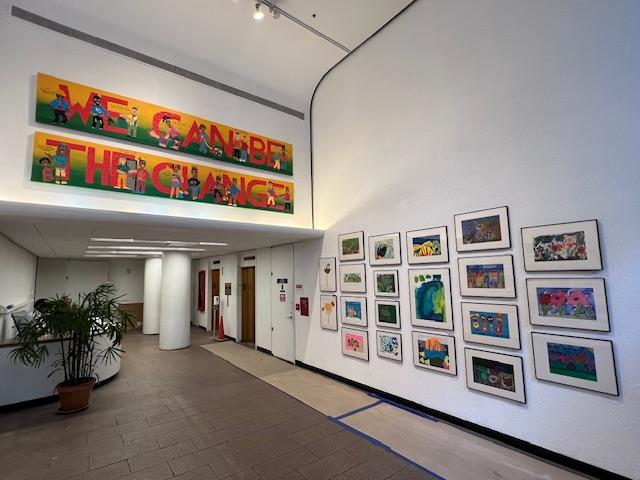
The art gallery revolves its art at different times of the year and you get to see the students creativity. There are paintings, sculptures and paperwork objects. It is amazing to see the talent the students have at all ages.
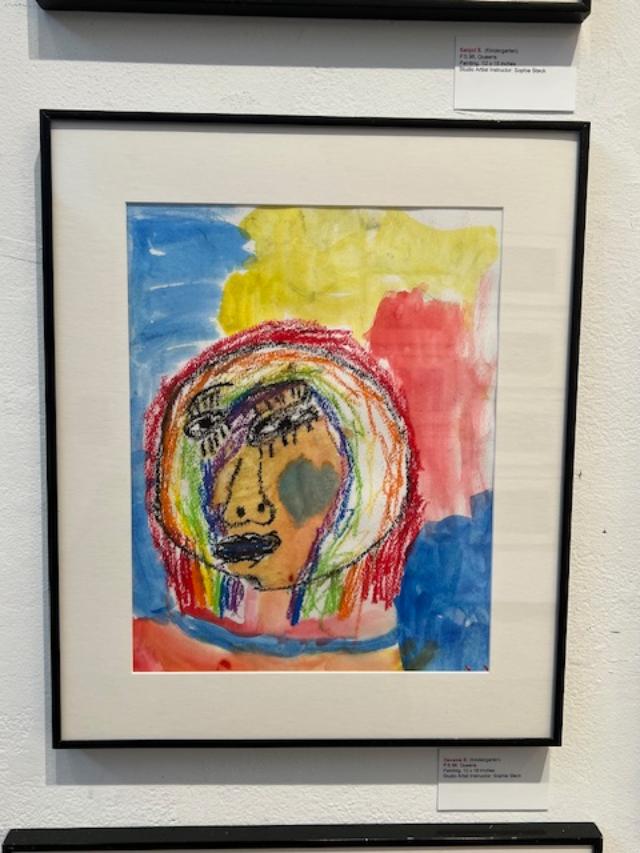
“These kids have talent “Littlest Learners Exhibition 2024”
“Littlest Learners Exhibition” gallery work. Like a Picasso.
“The Littlest Learners” exhibition
The best part of the gallery is that it is free. Just don’t try to go past the security guards at the desk and you will be fine. Take time to look at the over-hanging paper sculptures. They are very unique. Almost like a surrealist kite.
The “Littlest Learners” exhibition was wonderful. It was like visiting a modern art gallery of contemporary works. The 2024 exhibition was colorful, creative and delightful.
What is also nice is that it is free and only takes about 45 minutes to get through the whole gallery so it is a nice place to visit on a rainy day or on lunch hour.
Congratulations to the student artists.
History of the Studio in a School:
Studio in a School fosters the creative and intellectual development of New York City youth through quality visual arts program, directed by arts professionals. The organizer also collaborates with and develops the ability of those who provide or support arts programming and creative development for youth both in and outside of schools.
Studio in a School serves young people by integrating the visual arts into teaching and learning and provides professional development for artists and teachers.
In 1977, during a financial crisis in New York City, public school arts education budgets were dramatically cut. In response, Agnes Gund, philanthropist and President Emerita of The Museum of Modern Art, founded Studio in a School.
Today, under Ms. Gund’s leadership, together with the support of many, our programs continue to thrive, bringing visual arts education taught by professional artists to students in New York City and beyond. We fulfill out mission through two divisions: the NYC Schools Program, offering programs for students in Pre-K through high school and the Studio Institute, which shares professional learning, partnership programs, arts internships and research grants in local and national forums.
It’s such a nice little gallery of student artwork.
Disclaimer: This information was taken from the Studio in a School website and I give them full credit for the information.
I love Fort Tryon Park in Upper Manhattan. It is one of the most beautiful parks in New York City. It is a park of rolling hills, stone paths that hug the hills, interesting garden that are ablaze when in season, shady tree sitting areas and is home to many playgrounds and the Cloisters Museum which is part of the Metropolitan Museum of Art. It has so much to offer a visitor coming into Manhattan from exploring the woods that line the path to looking at interesting art at the museum. This 67 acre park is one of the interesting and complex in New York City.
A city view of the beauty of the park by the Hudson River
The view from The Cloisters by the Hudson River
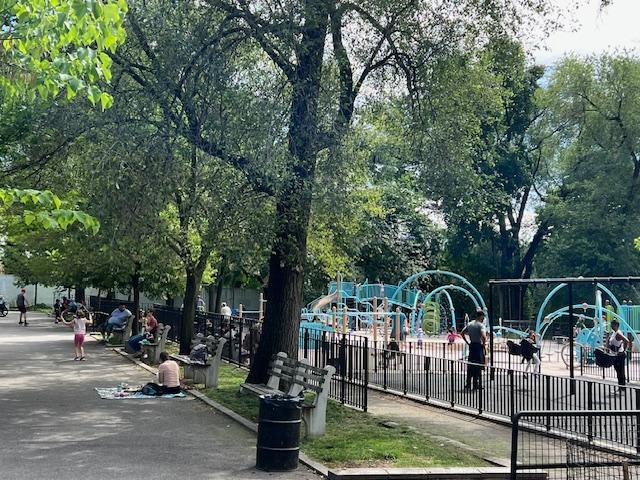
When you enter the park from Inwood by Broadway, you enter through Ann Loftus Park which is named after a local community leader and is one of the popular parks with kids and families in the area. In the summer months, the fountains and water fixtures are going strong and the kids run around them while the parents lie under shade trees talking to one another.
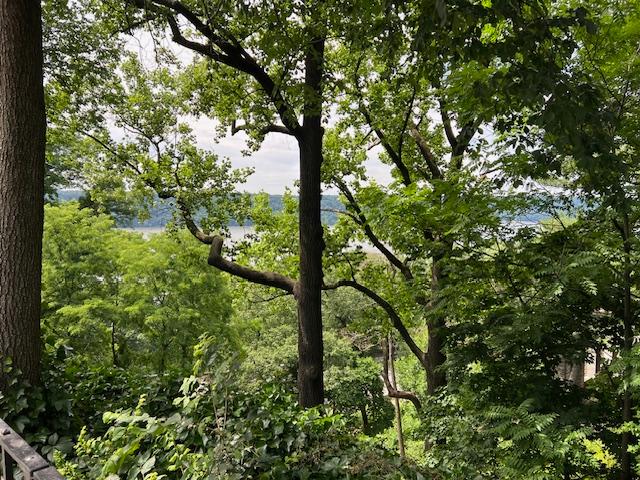
When taking the path from Ann Loftus Park and winding up the hills of woods and rock formations is the Hudson River looming in the distance with spectacular views of the Palisades and the large cliffs of Fort Lee, NJ on the other side.
The bathrooms in Ann Loftus Playground
The history of the park
Anne Susan Cahill Loftus biography:
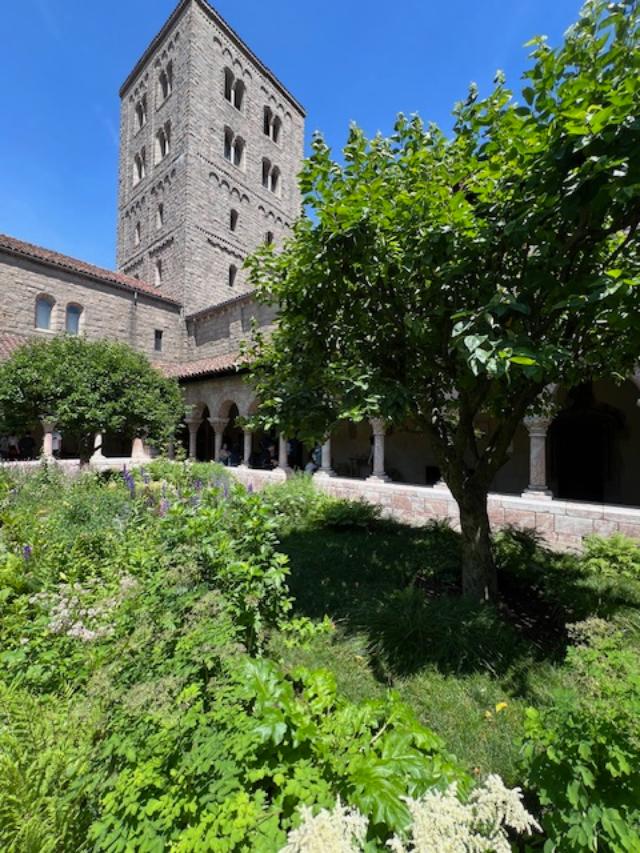
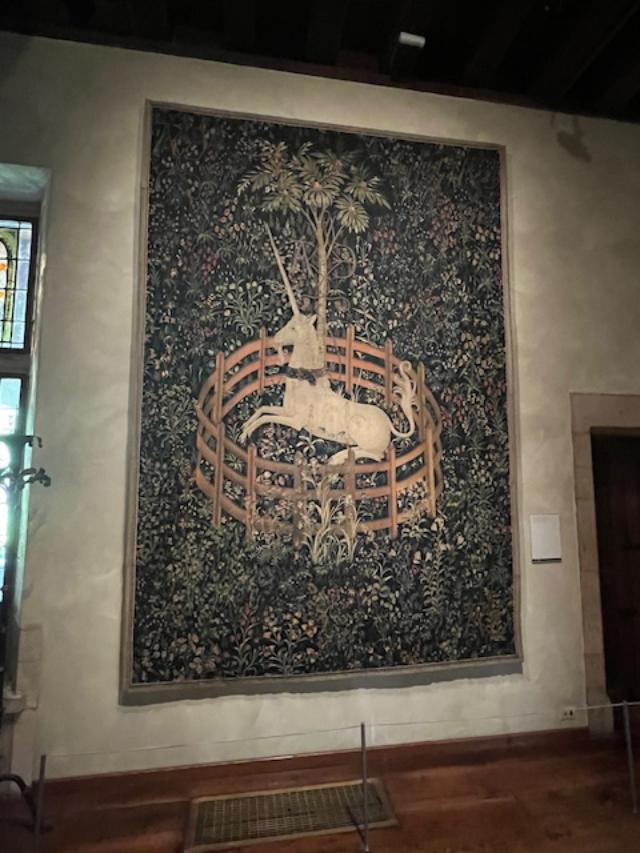
At the top of hill like a crown jewel is the Medieval Galleries of the Metropolitan Museum of Art’s Cloisters Museum. Filled with all the Met’s collections of Religious and Medieval art set into themes of old churches, stained glass windows, flowered courtyards and vistas of the river, it is the perfect place to wonder around.
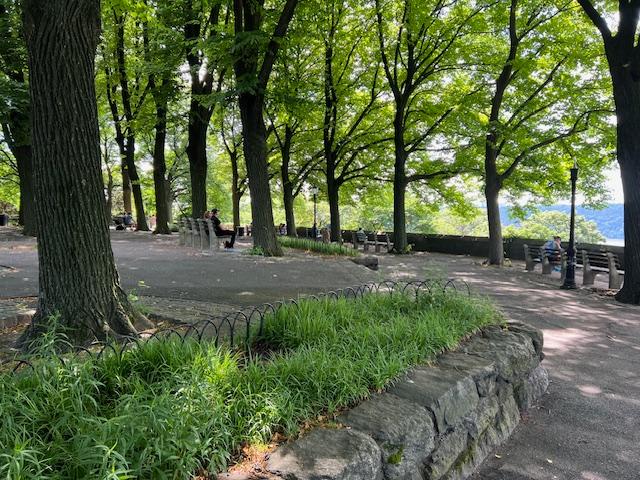
As you pass the Cloisters and walk further in to the park, there is still so much more to see and do. The Linden Terrace overlooks the Hudson River with its large shade trees over head and its stone benches to sit and just look in the distance or read a book. This was the site of the original Fort Tryon and is the highest location in the park.
Linden Terrace is a nice place to relax and read a book
The flowers by the Linden Terrace
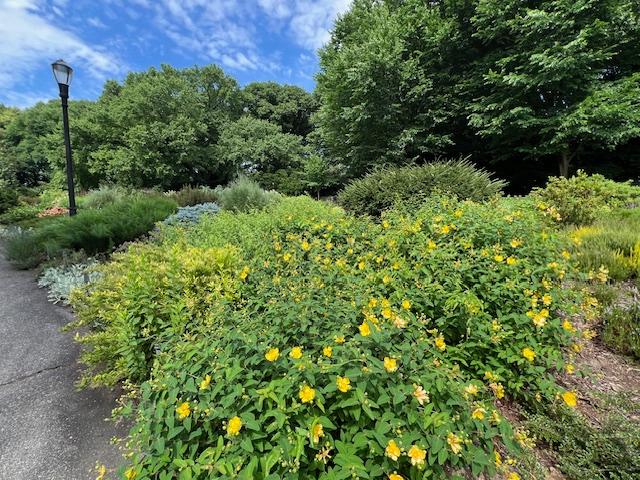
Further down in the other entrance of the park is Heather Garden, a large path of flowers , bushes and trees with benches lining it. The garden was the Olmstead Brothers when the park was taking shape and is a beautiful place to walk in the Spring and Summer months when the park is in full bloom.
The stairs leading to the Linden Terrace
The plaque for Fort Tryon
The anniversary plaque
The Stan Michels Promenade
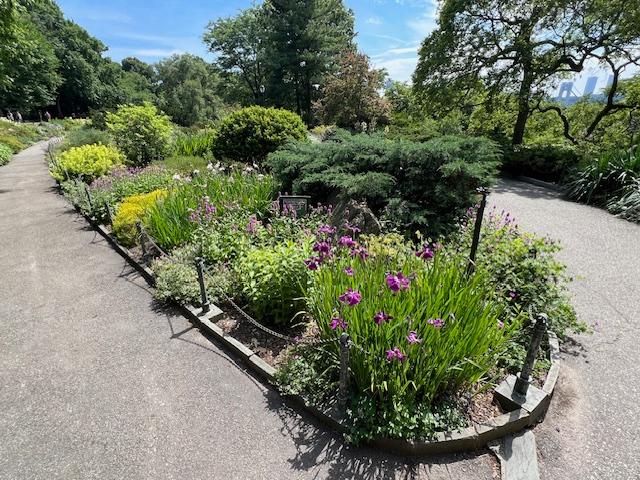
The Heather Garden in the front
The Heather Garden was recently remodeled to follow the original design by the Olmstead Brothers.
The Heather Gardens
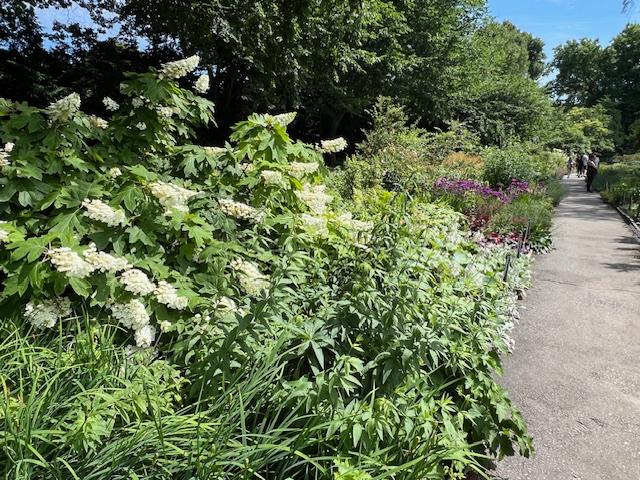
The Heather Gardens in full bloom
The Gardens facing the George Washington Bridge
The Gardens in full view
There is even a terrace restaurant in the middle of the park, the New Leaf Cafe (See review on TripAdvisor-Closed in 2018) which sits off to the side of the Corbin Circle on the other side of the park. The food is over-rated and very expensive. The last time I ate there the menu was pretty standard. It is a great to take out of towners who want a view of something. It is not worth the trip. The views are nice and in the summer months it is pretty but the food and service are standard.
The New Leaf Cafe in Fort Tyron Park (Closed in 2018)
The park has so much to offer in all months of the year especially in the Spring and Summer.
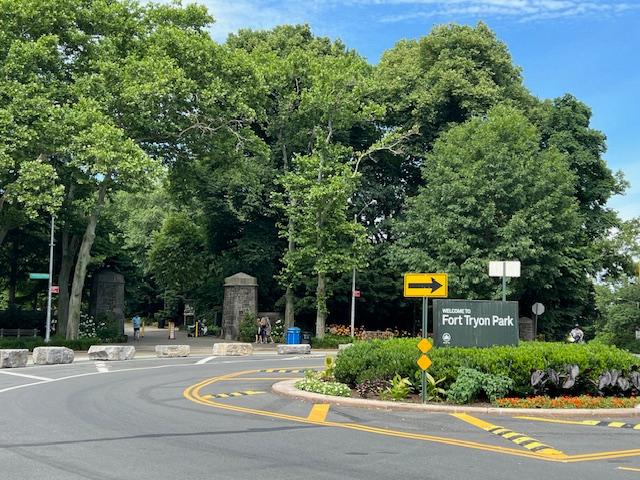
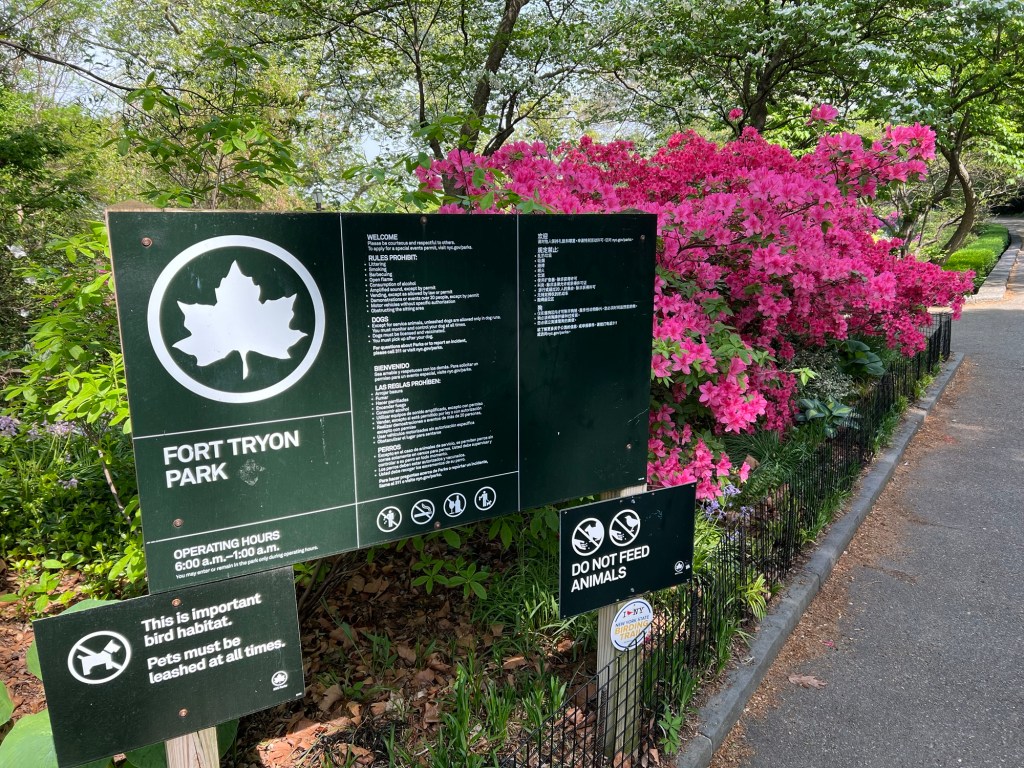
The entrance to Fort Tryon Park
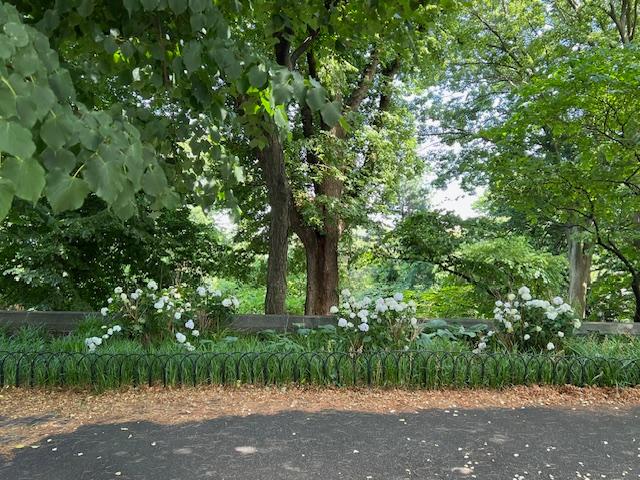
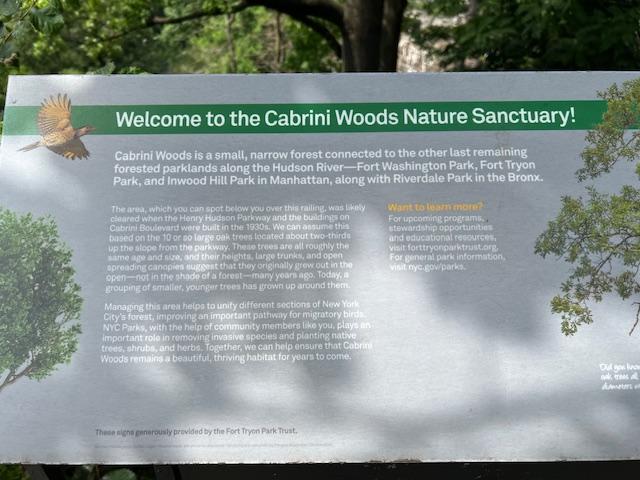
Cabrini Woods Nature Sanctuary in the front of the park
The Cabrini Sanctuary in the Spring 2024
History of Fort Tryon Park:
The area was known by the local Lenape Indians as Chquaesgeck and by the Dutch settlers as Lange Bergh (Long Hill). During the Revolutionary War, the Battle of Fort Washington was fought on this site. The park is built on a high formation of Manhattan schist with igneous intrusions and glacial striations from the last Ice Age (Wiki).
The gardens in the Fort Tryon Park
John D. Rockefeller Jr. bought up most the land in 1917, which by that point had been old estates, to create Fort Tryon Park. He hired the Olmstead Brothers firm, under the direction of Fredrick Law Olmstead Jr., the son of the designer of Central Park, to design the park and James W. Dawson to create a planting plan. Mr. Rockefeller also bought the collection of Medieval art from sculptor George Gray Barnard and it was the cornerstone of The Cloisters Museum which was built in 1939 (Wiki).
The Fort Tryon gardens in full bloom
The stairs in the park
Through the years the park has seen its ups and downs especially in the 1970’s and 80’s with the decline of finances in New York City. There were extensive renovations when finances got better in the late 90’s and parts of the park were fully renovated. The Fort Tyron Park Trust, a non-profit organization was founded in 1998 to help maintain the park (Wiki).
When I walked through the park on the recent Great Saunter walk in 2025, they rerouted us through the park when the Riverwalk was closed for renovation. The park was in full bloom and it was the most spectacular day for a visit.
The entrance of the park on that sunny afternoon
The beautiful colorful tulips at the entrance of the park
The colorful gardens were in full bloom
Everyone was routed through the park on the way to Inwood Park for our rest stop. What I found strange was that the park was so beautiful in full bloom and people were not stopping to relax and just enjoy the views. The gardens were amazing and so colorful.
I stopped to look at the beautiful rock garden
I thought this was so clever. One of the volunteers made this sign up which was so funny!
We walked through the park on our way through the park on the way to Inwood Park.
The Met Breuer is an interesting museum. When it was opened, the museum wanted to have more of focus in recent contemporary artists. The Metropolitan Museum of Art had been known for emphasis in the classical and ancient arts and its collections of art that covered the centuries. Even though it has a very impressive Contemporary Art Collection in the main building at 1000 Fifth Avenue, it was not one of their stronger collections. The Museum of Modern Art had been known more for that. The opening of the Met Breuer was going to change that by showing more of the permanent collection and traveling shows with cutting edge artists of the Twentieth and Twenty-First Century.
I have been to the museum several time for private Member’s Nights and most recently in March 2020 for the Gerhard Richter exhibition “Gerhard Richter: Painting After All” (the exhibition just opened as the New York City closed down for the viral outbreak).
The artist who was born in Germany and raised during the outbreak of World War II began his career as an artist in the 1960’s. He was accepted into the Academy of Arts in the 1950’s and his career has spanned many different mediums and concepts of art as shown in the exhibition.
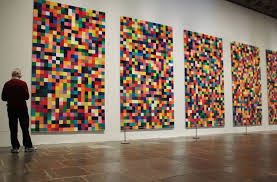
The abstract works of artist Gerhard Richter
Artist Gerhard Richter in his studio
The Membership was able to walk four of the floors of the artists work and join in discussions with the curators and docents on duty. Each floor that evening was dedicated to a different concept of the artist’s work.
The exhibition has only opened to the membership before the museum shut down due to the virus outbreak.
On the bottom floor basement area of the museum is the restaurant, Florence, named after Florence Whitney, a patron of the museum after which was named after her family. The restaurant which has a very contemporary and expensive menu was packed that night. The restaurant offers nice views of neighborhood street level and has a very nice bar.
On the main floor of the museum is a small gift shop.
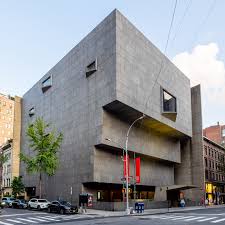
The lobby of the Met Breuer
The History of The Met Breuer:
The Met Breuer was the brainchild of philanthropist Leonard Lauder in 2008 when it was announced that the Whitney Museum was moving to a new building downtown. The agreement was signed between the Met and the Whitney for the new museum in 2011.
Gerhard Richter’s work on the third floor of the museum
The Met Breuer opened in March of 2016 in the building that was formerly occupied by the Whitney Museum of American Art. The building was designed by architect Marcel Breuer and completed in 1966. The building was updated by architects Beyer, Blinder Belle in 2014 for the Met.The works of the Met Breuer come from the Metropolitan Museum of Art’s collection and are both monographic and thematic exhibitions.
In 2018, the Met announced that it would be leaving the building in 2020 and that the Frick Collection would be moving in on a temporary basis for the renovation of their building starting in 2020.
(This information was provided by both the Met Breuer History and Wiki)
To all of you history buffs and readers who like architecture, take this Victorian Walking Tour I took last Christmas. It really shows how the City keeps changing.
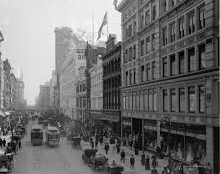
Ladies Shopping Mile in it’s heyday
The Ladies Shopping Mile today
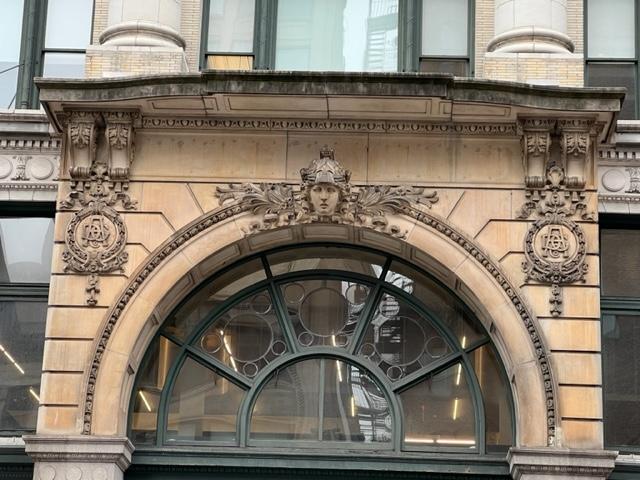
The beauty of the architecture of these stores. This is the Adams Dry Goods store.
On Saturday, December 15th, I met with other members of the Cornell Club to travel back to the Victorian Era and learn about the traditions of the Christmas past. We explored the Gramercy Park, Union Square and lower Sixth Avenue sections of the City to visit where a New York Victorian Christmas would be celebrated and honored.
We would be walking the old “Ladies Shopping Mile” that had been built up right after the Civil War when the disposable income for Middle and Upper Middle Class residents had increased after the Civil War and people wanted to spend their money at the newly built department stores, shops and restaurants. The Industrial Revolution was in full swing and shopping had changed with the development of the department store.
The tour took us past brownstones, parks, restaurants and old department stores that line the streets of Manhattan between East and West 21st Street…




















 Visiting a Museum: The Unique, Unusual, Obscure and Historical