Admission: Free, the gates are open across from the baseball field.
My review on TripAdvisor:
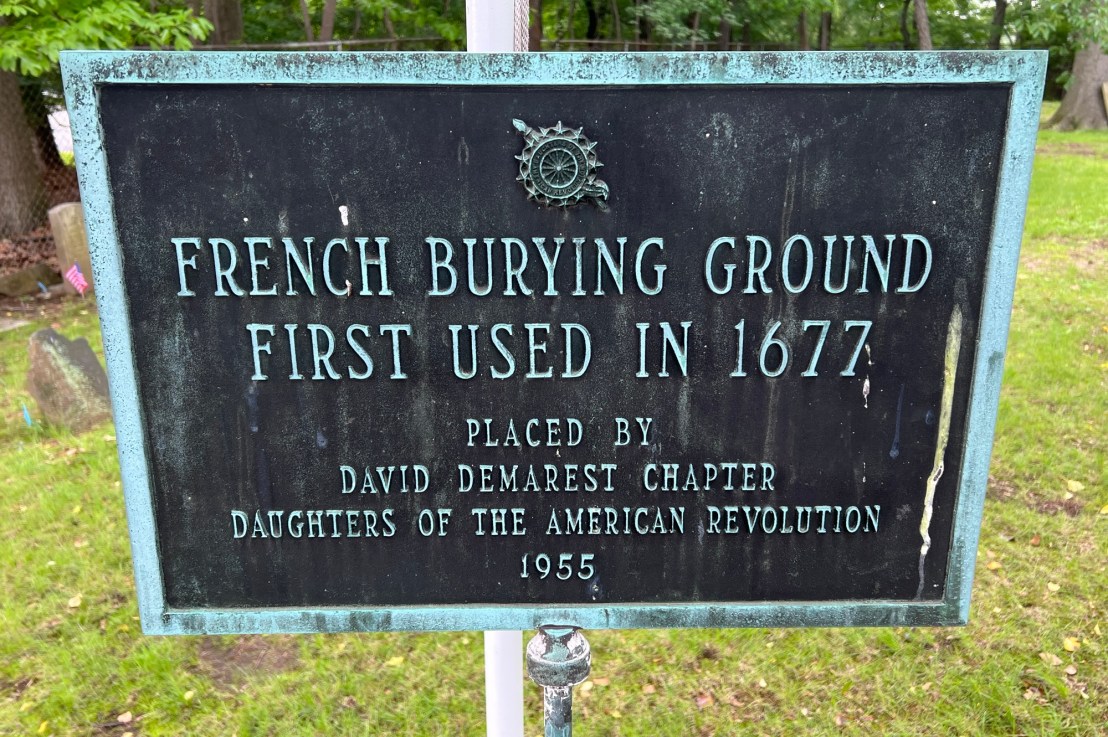
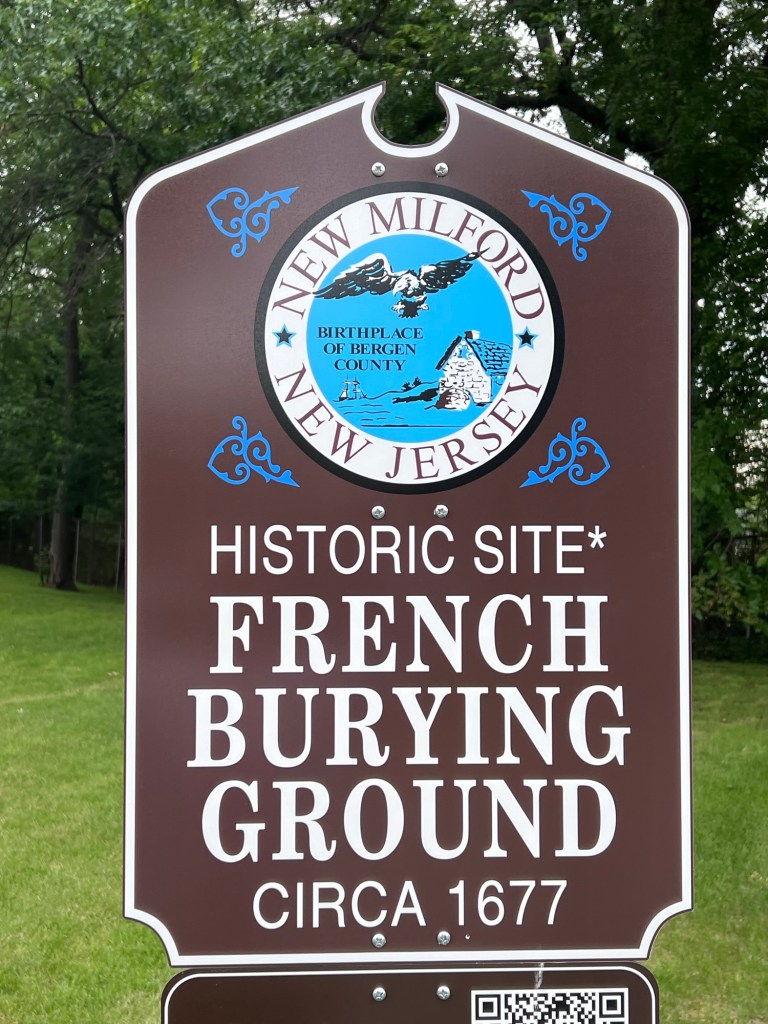
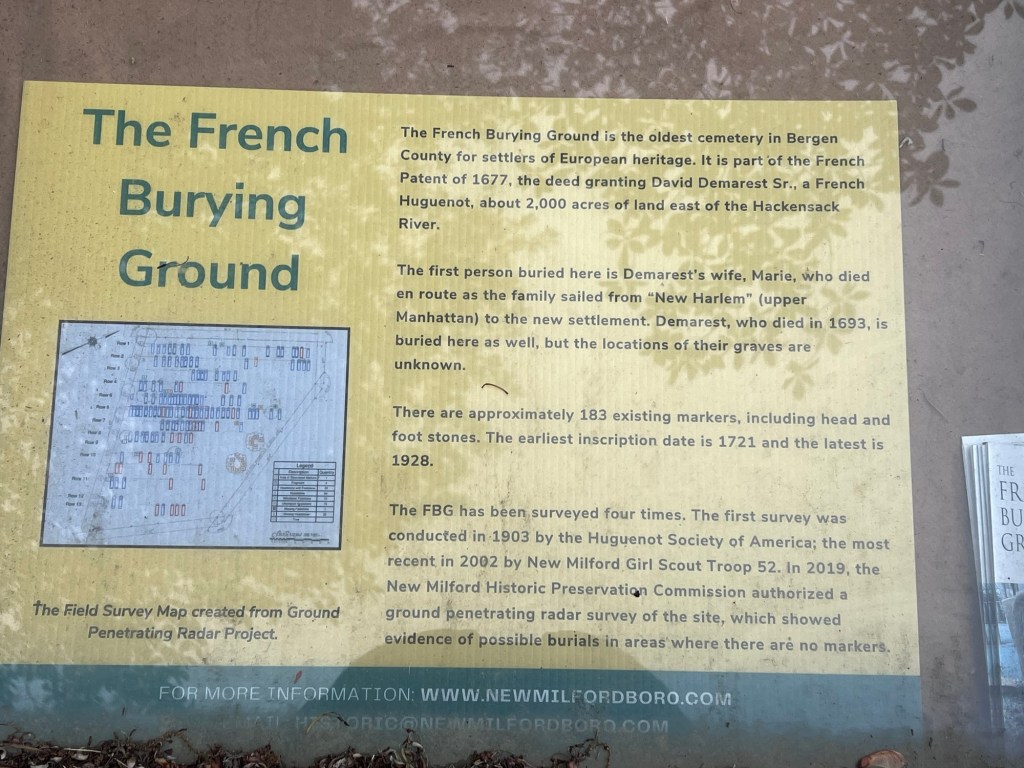
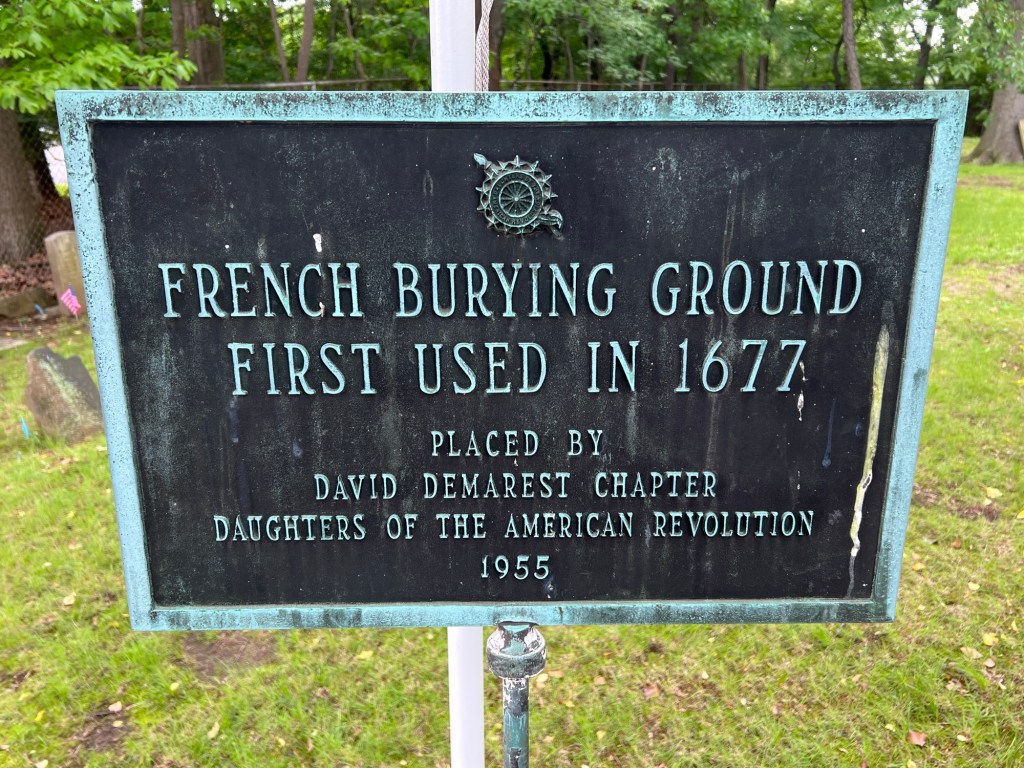
The sign for the French Burying Ground
The historic marker in the front of the cemetery
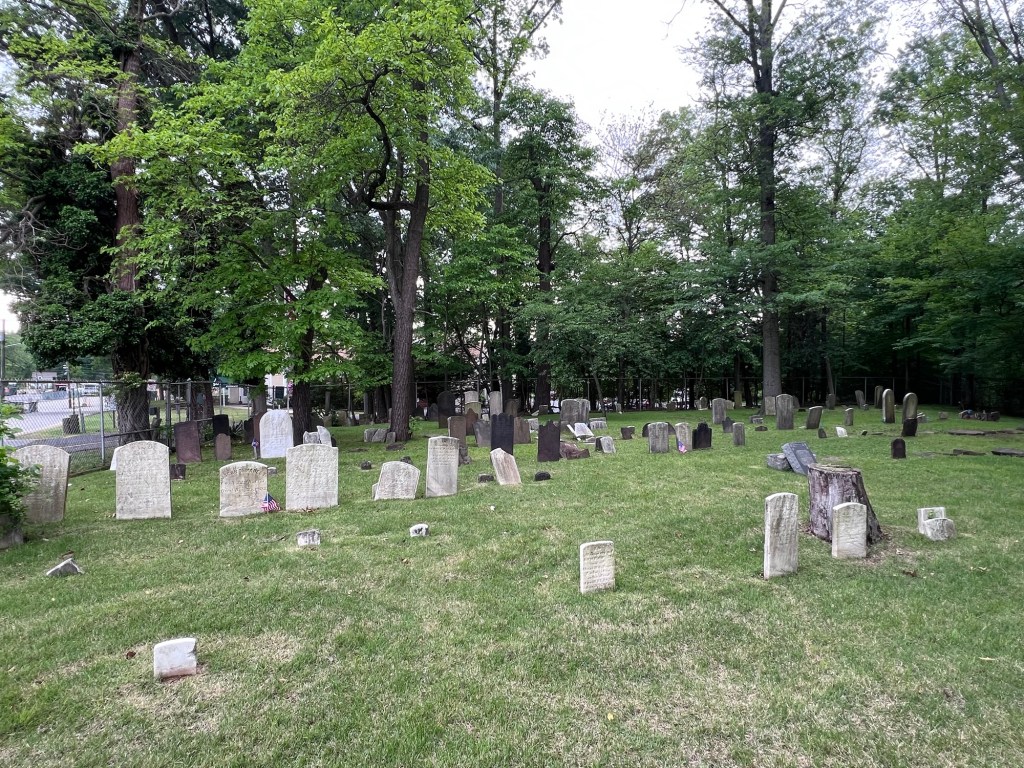
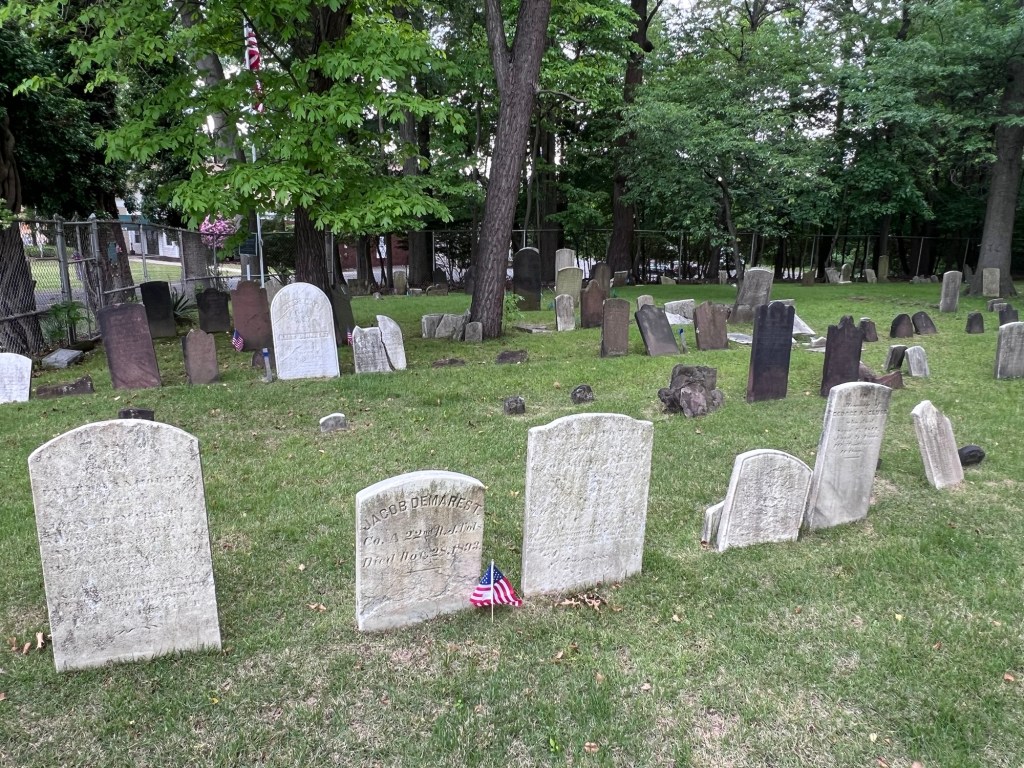
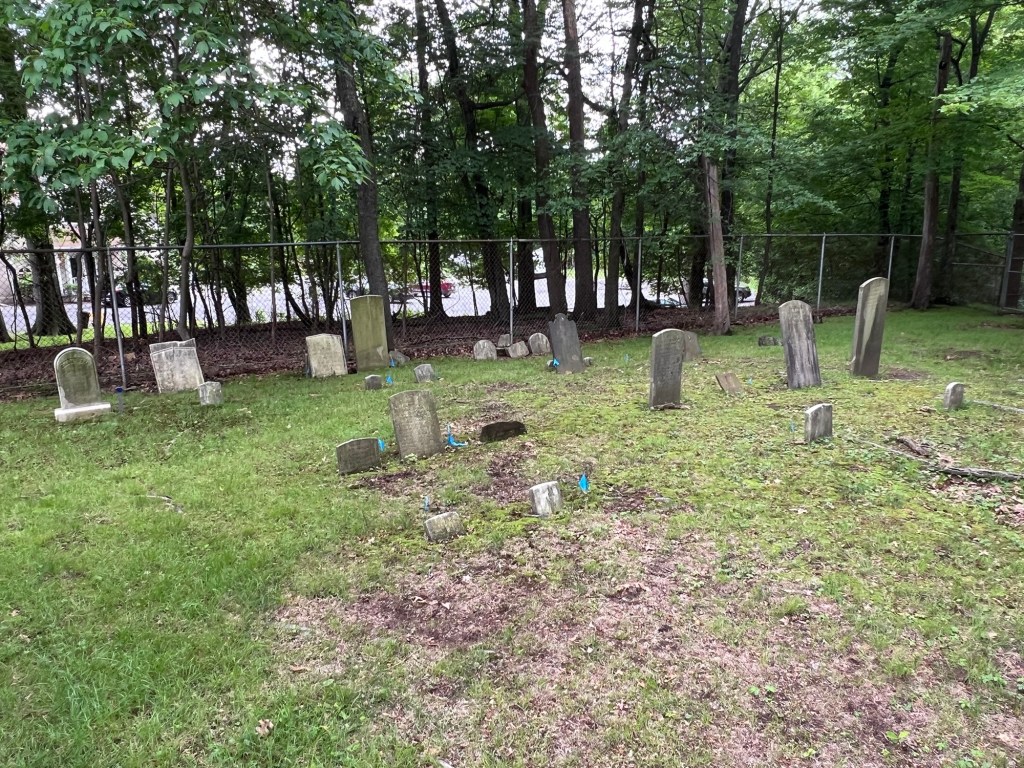
The French Burying Ground
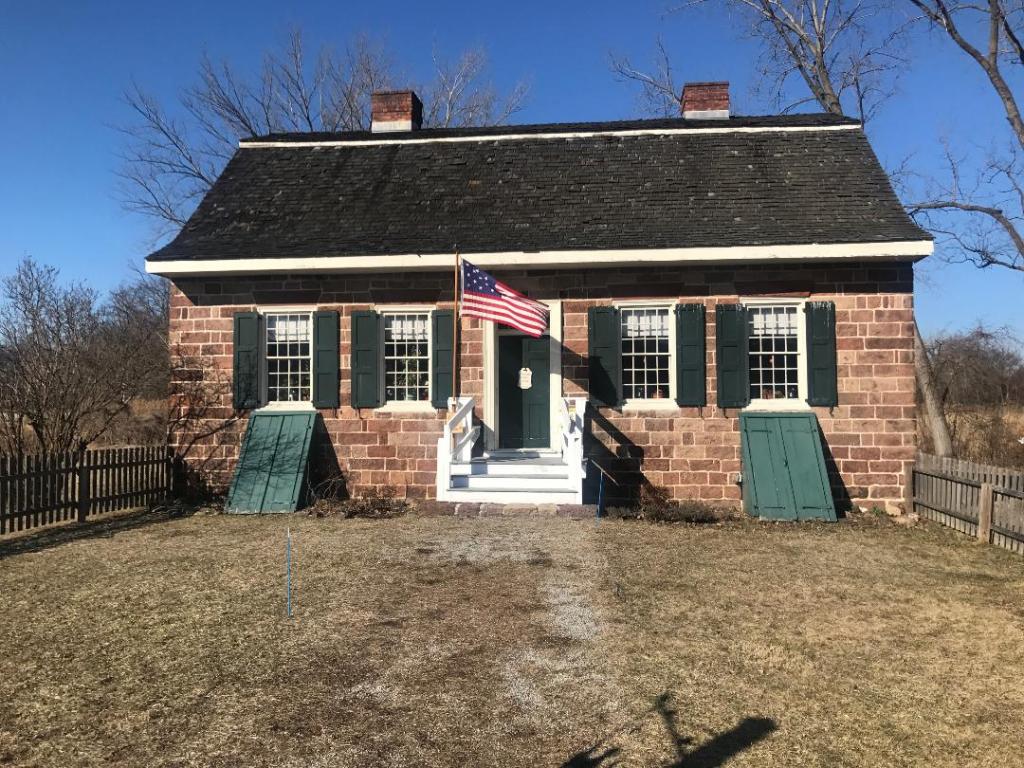
The French Ground is a small historic cemetery once sat next to the French Church and the David Demarest House, that has since been moved to the Bergen County Historical Society site.
The Demarest House at the Bergen County Historical Society
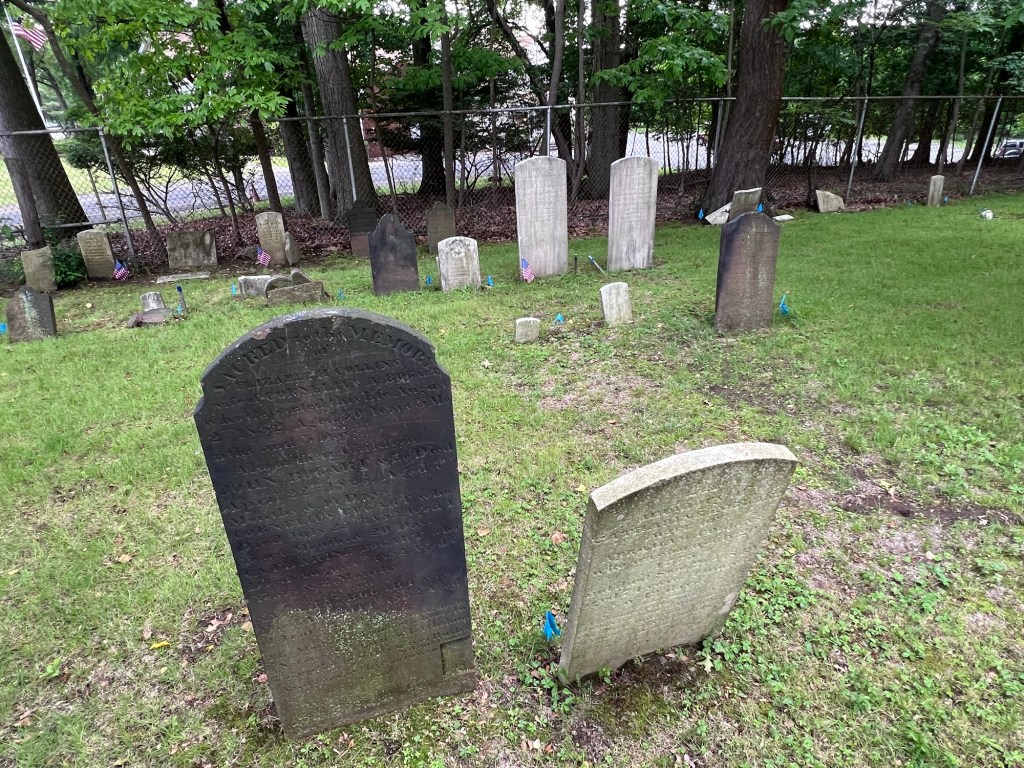
The graves of members of the Bogert, Demarest and Christi families
The History of the French Burying Ground:
(from the New Jersey Historic Trust)
Thought to be oldest cemetery in Bergen County, the French Huguenot-Demarest Cemetery was established in 1677 as the final resting place for prominent French Huguenot and Dutch settlers in the eighteenth and nineteenth centuries. David Demarest purchased approximately 2,000 acres of land along the east bank of the Hackensack River from Native Americans in 1677 to establish a colony of French-Huguenots.
The cemetery is all that remains of the original French-Huguenot colony and has more than four dozen descendants of Demarest family buried on site. The Borough of New Milford acquired the property in 2018 and has been working closely with the New Milford Historic Preservation Commission to plan for its restoration and future interpretation.
The French Burying site sign
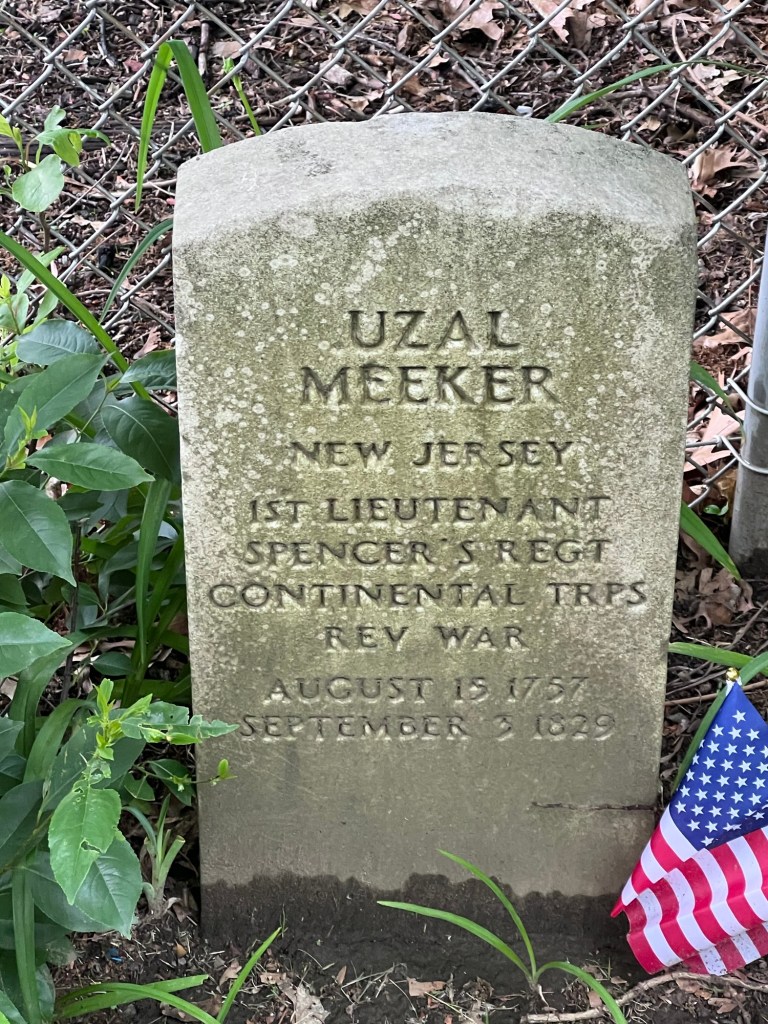
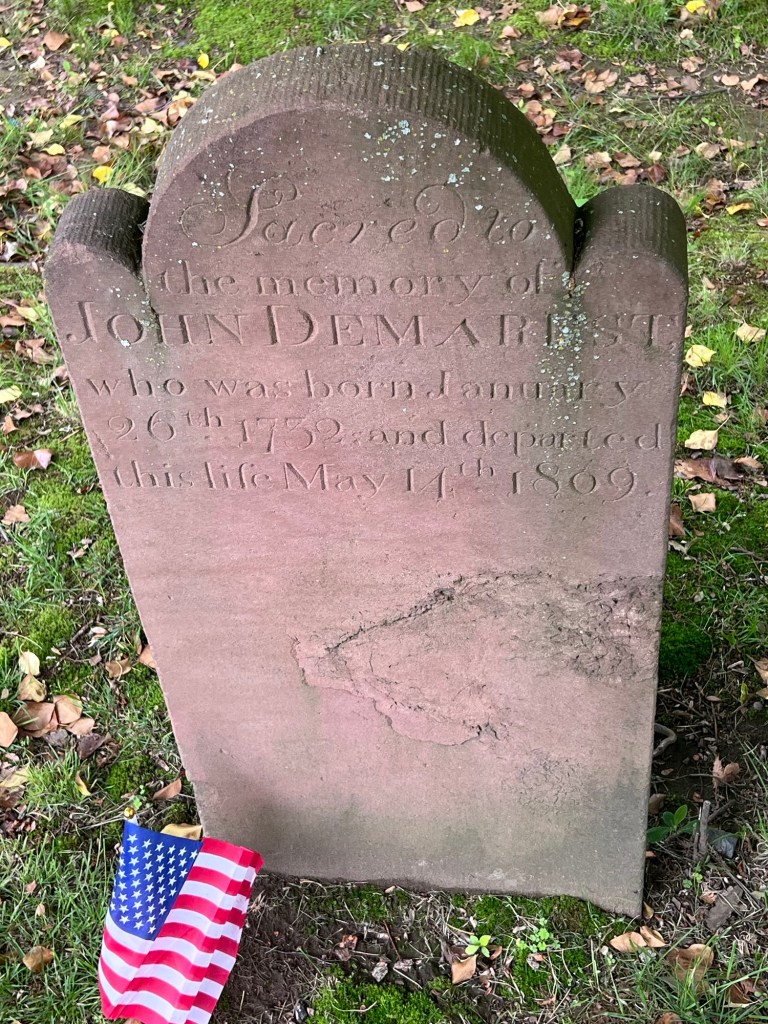
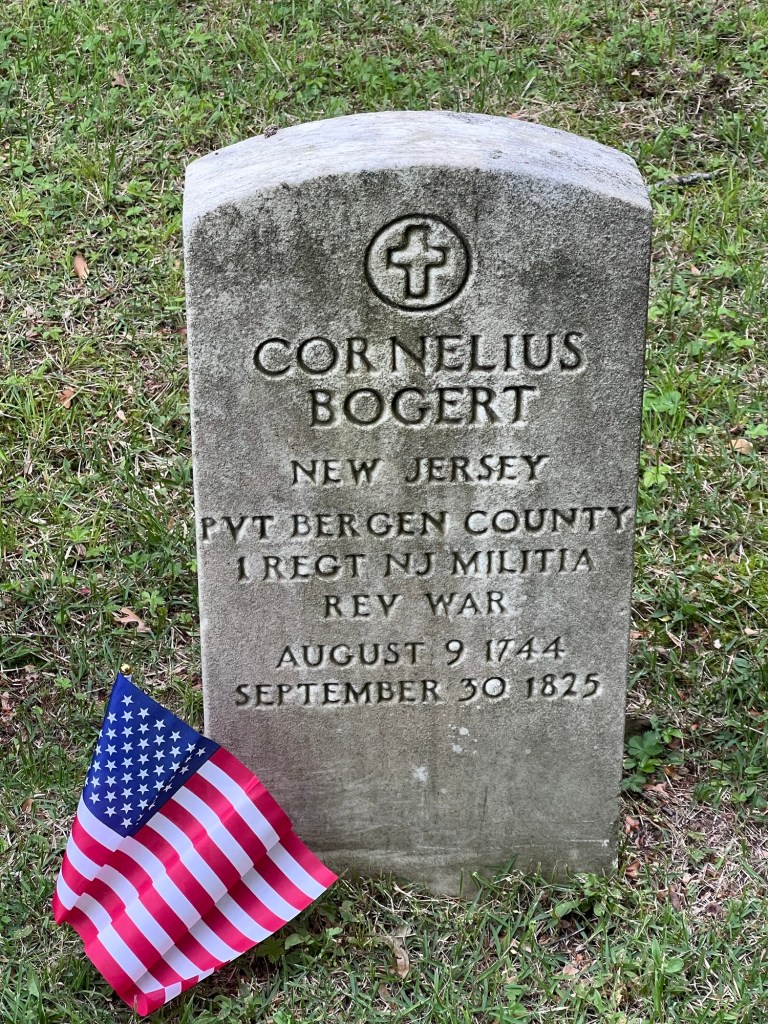
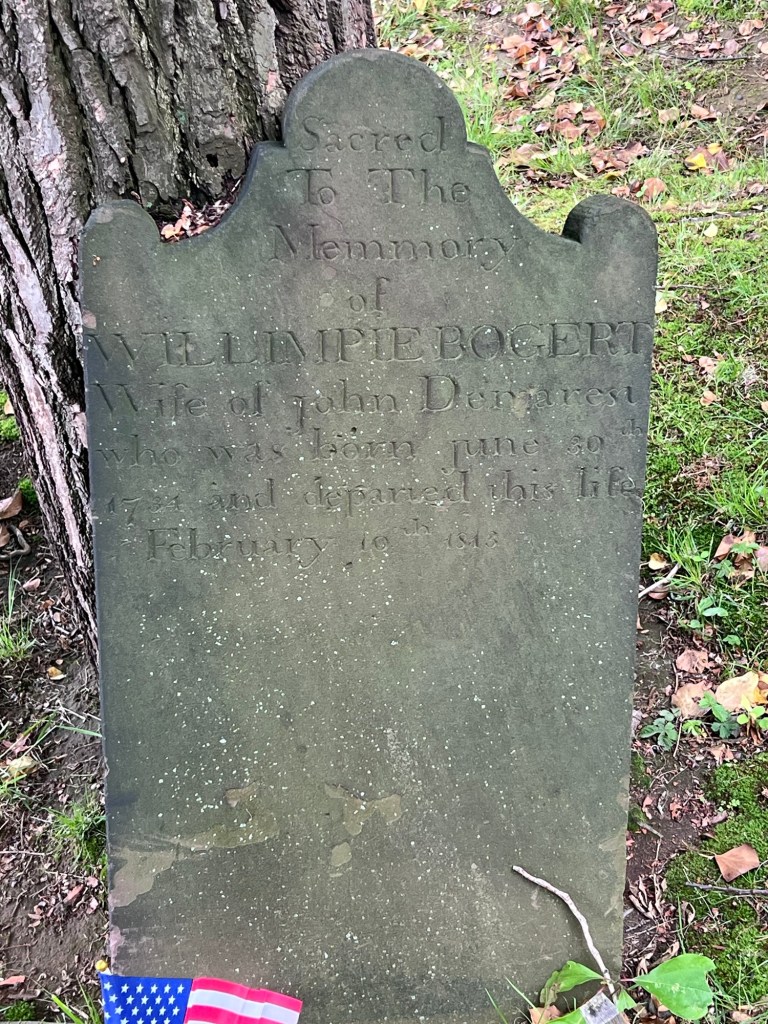
The cemetery (technically a graveyard since there was a church once here) is the final resting place of many of Bergen Counties Revolutionary War veterans as well as many prominent families including the Demarest, the Bogert and the Christie families. These were some of the founding families of Bergen County.
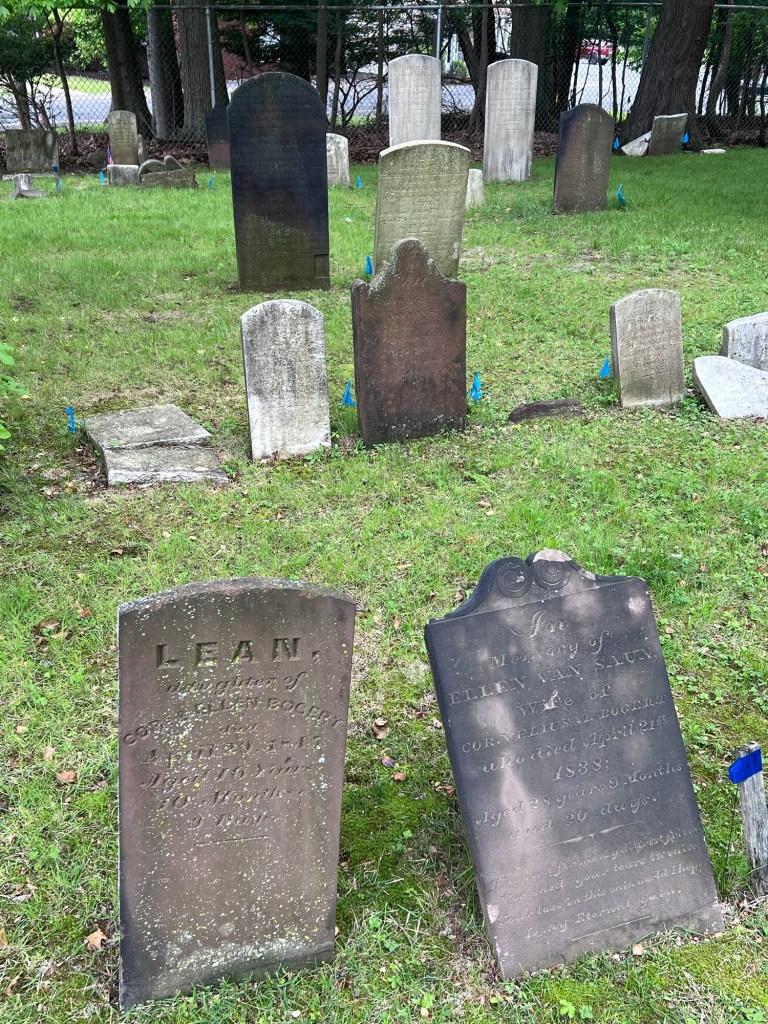
The graves of the prominent Bogert and Van Saun families
The cemetery has a quiet elegance about it with the many different styles of tombstones and the sheer history of these families and their contributions to the creation of our country.
The historical marker notes the cemetery was first used in 1677 after an agreement with the Native Americans
The back part of the cemetery
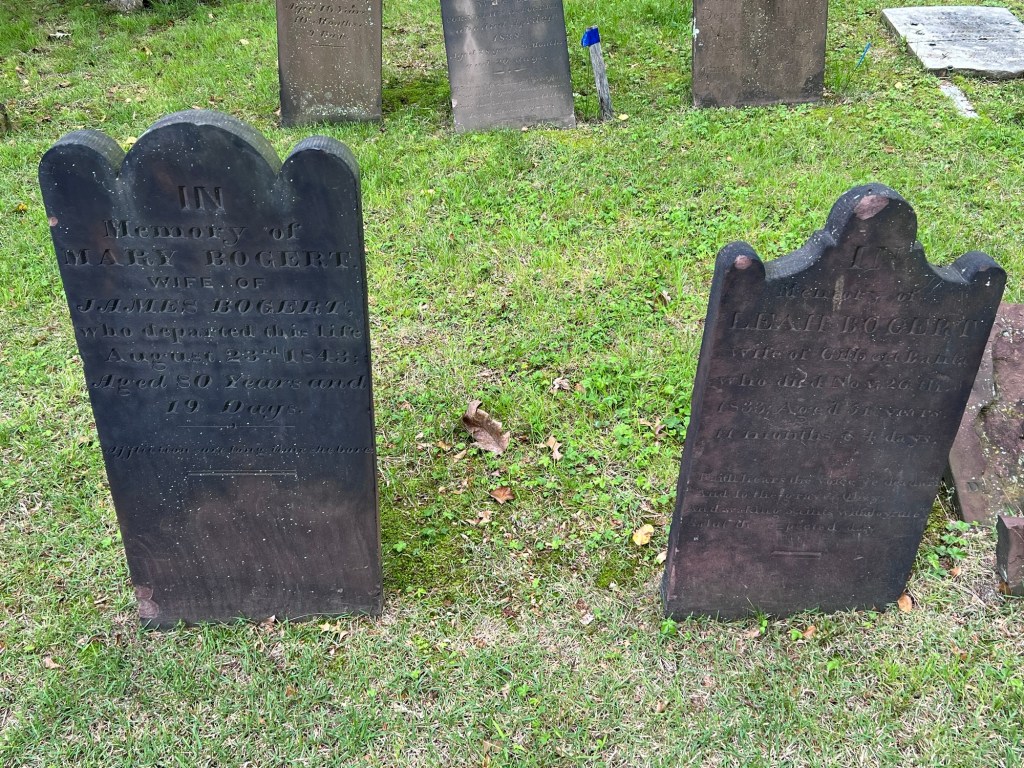
Members of the Bogert family
Members of the prominent Bogert family
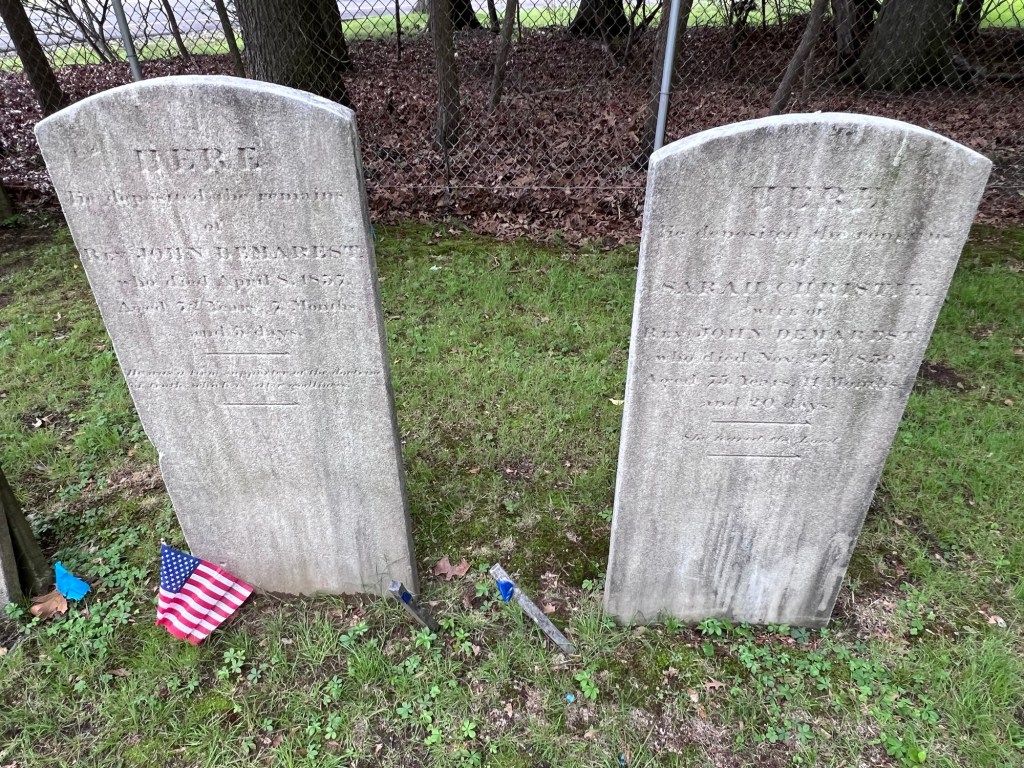
Members of the prominent Demarest family with Revolutionary War veteran Reverend John Demarest
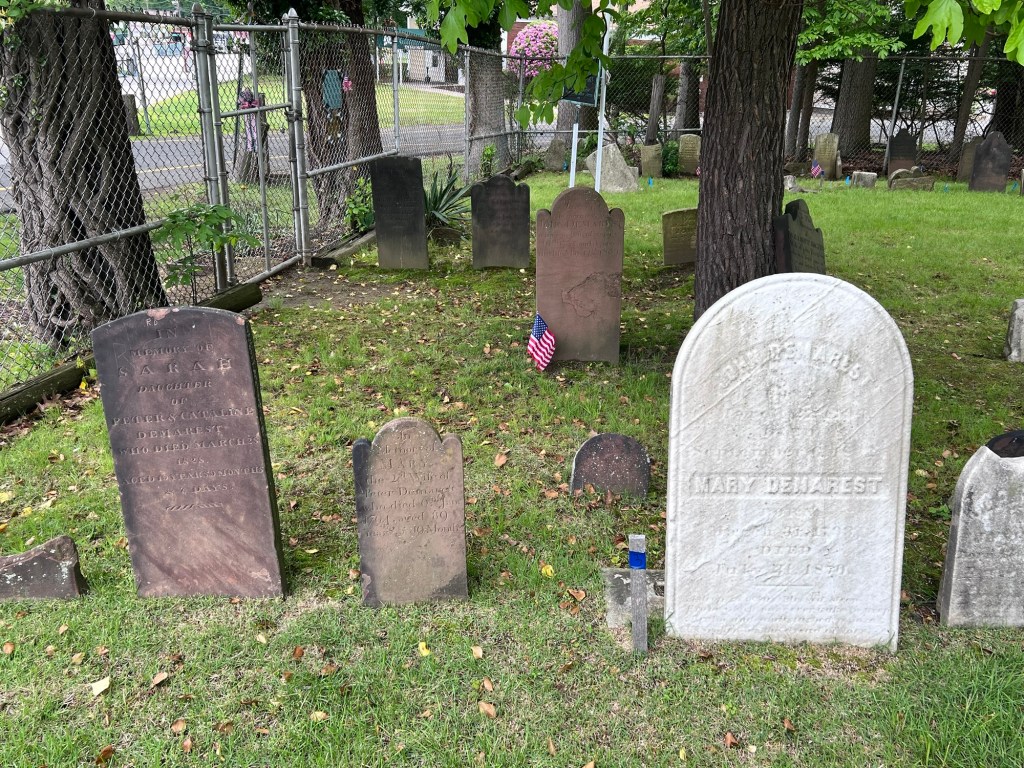
Members of the prominent Demarest family
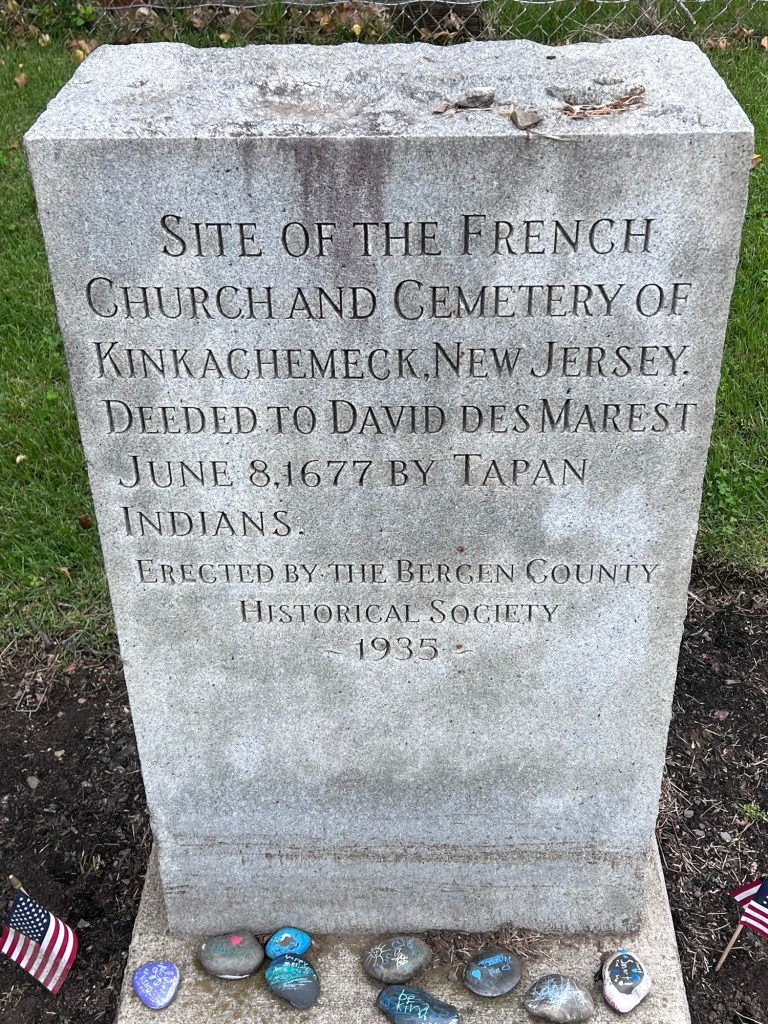
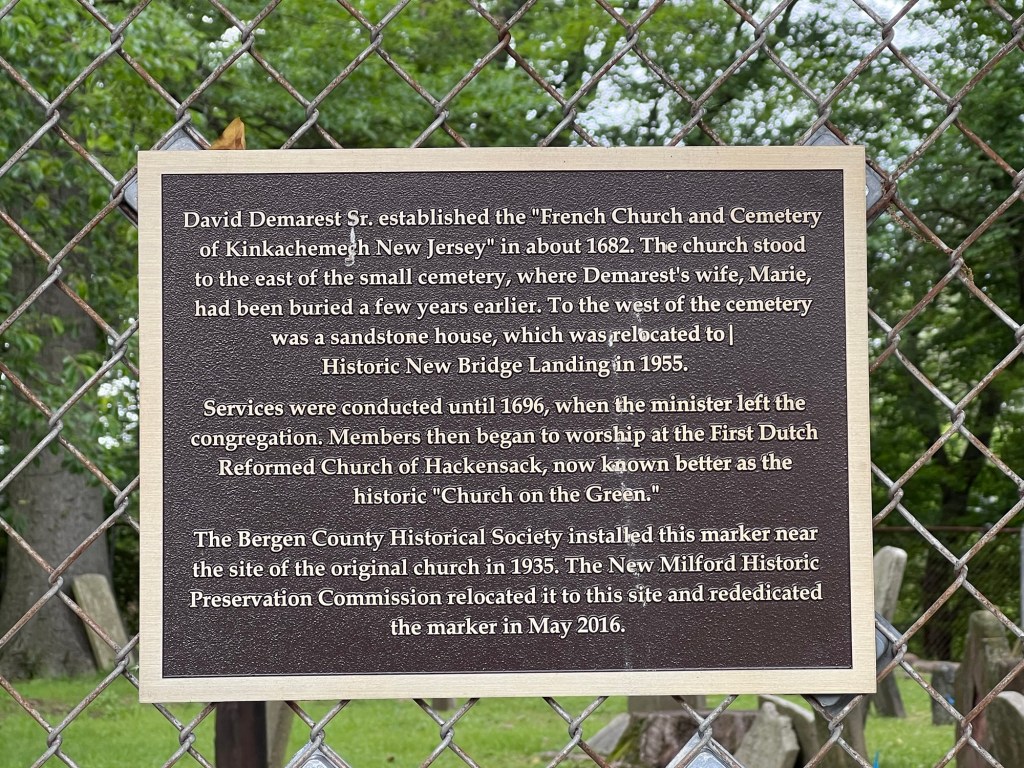
The historic marker of the original church site
There are many of the veterans of the Revolutionary War buried at the site some of which survived the battles and went on to have productive lives in their communities.
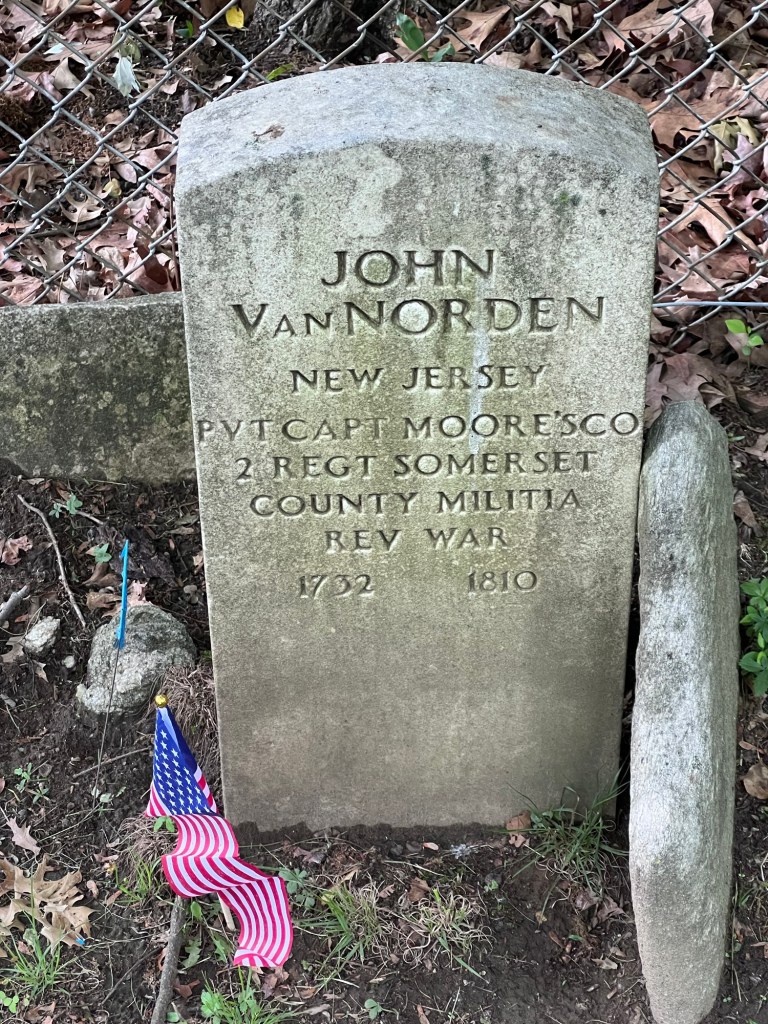
Veteran John Van Norden
Veteran Uzal Meeker
Veteran John Demarest
Veteran Cornelius Bogert
Veteran Willimpie Bogart Demarest
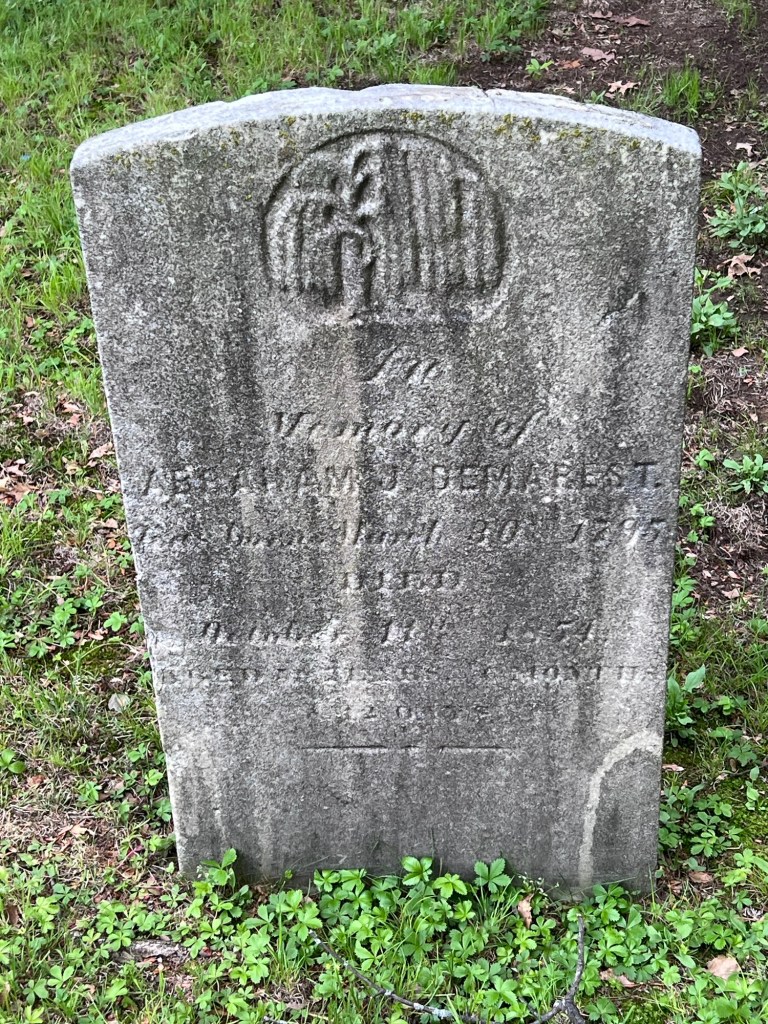
The grave of Patriot Abraham Demarest
This cemetery, like the rest of the small cemeteries and graveyards that dot Bergen County show the history and significance of these families contributions of the residents of early Bergen County and how they shaped the founding of this country.
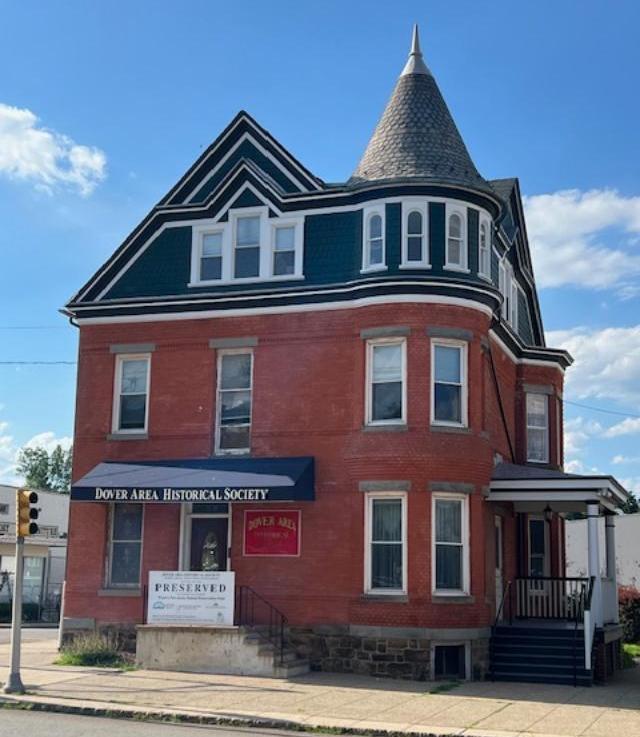
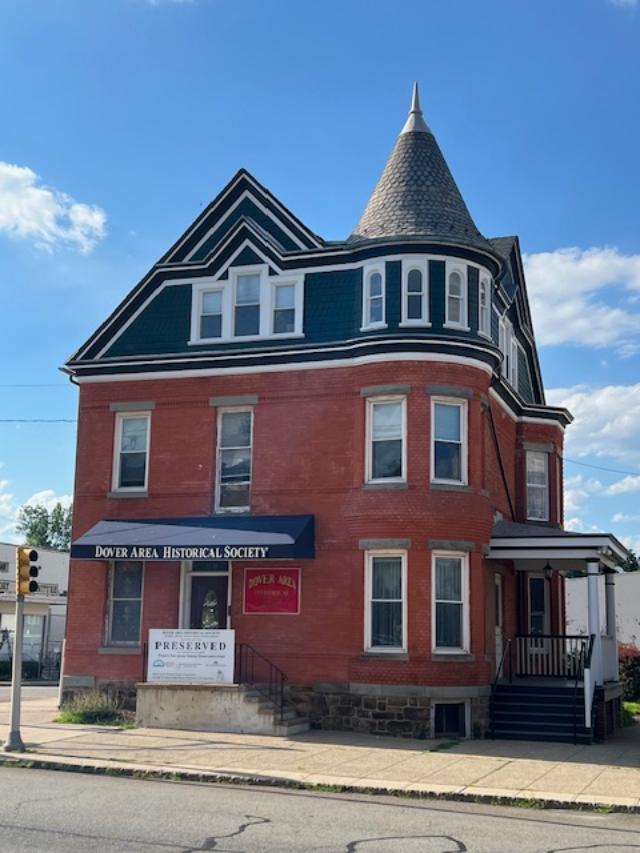
The Dover Area Historical Society at 55 West Blackwell Street
I visited the museum on a private tour during Memorial Day and got to see all three floors of the former doctor’s home, Dr. Condict, whose practice was once on the first floor of the home.
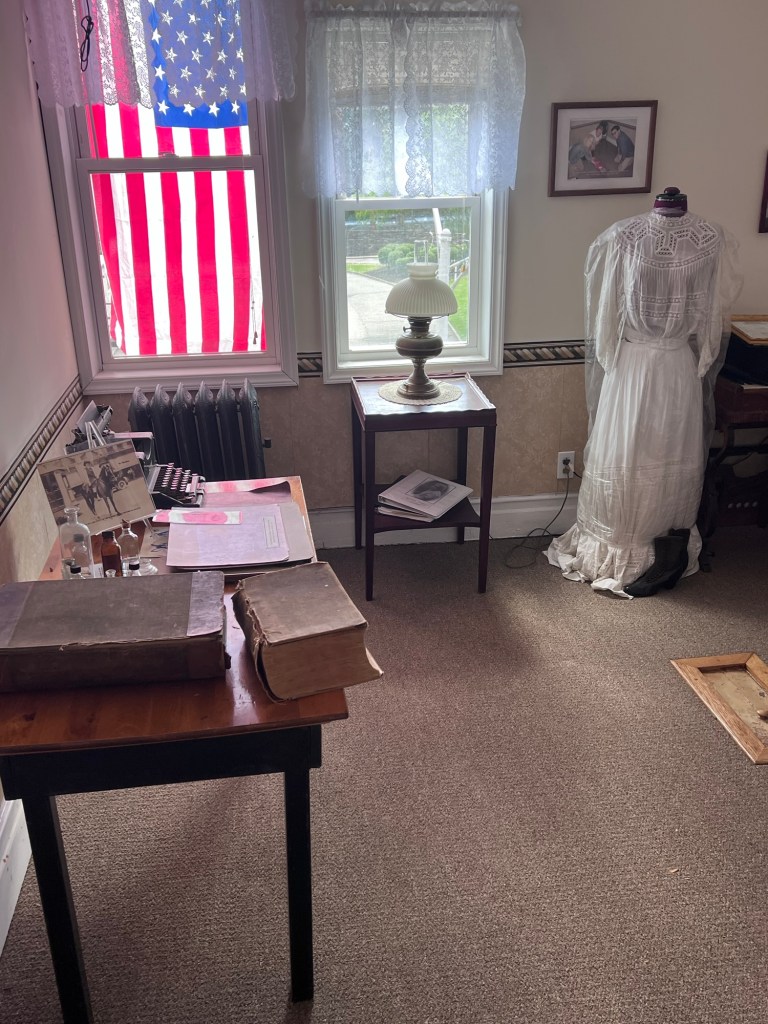
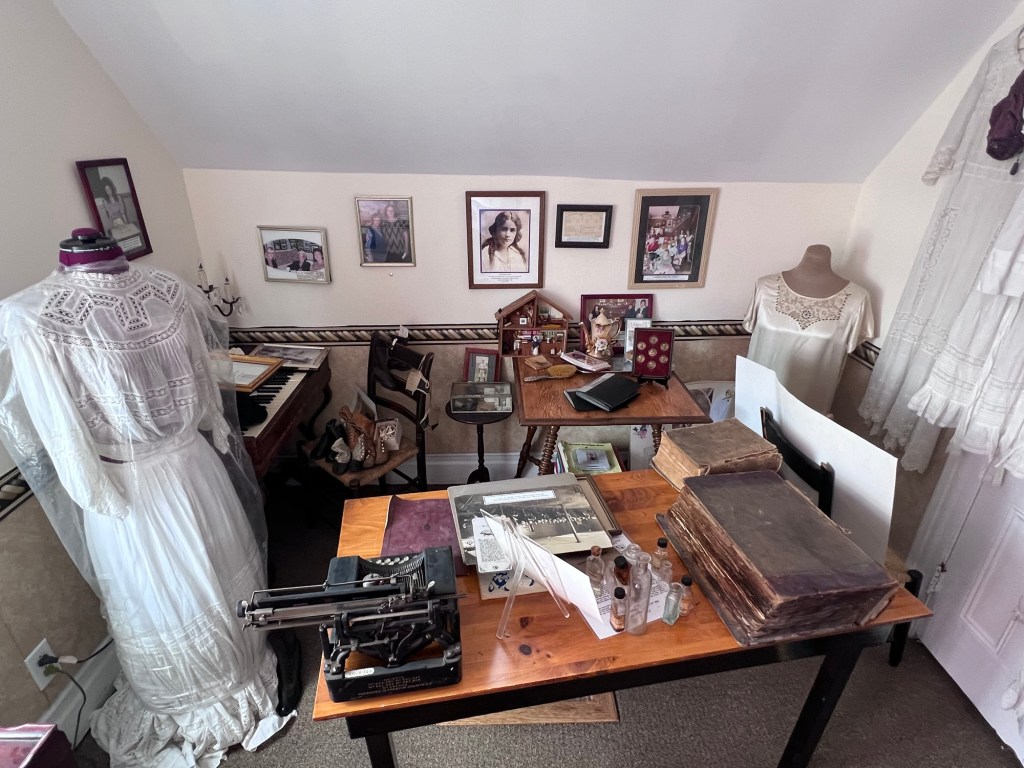
Several rooms in the house on the second and third floors of the old home were going through renovations when I was visiting or exhibitions were going to be remounted, so the museum was in transition when I visited.
The first floor of the museum was dedicated to the town history with exhibitions of the Army/Navy members of the community for Memorial Day.
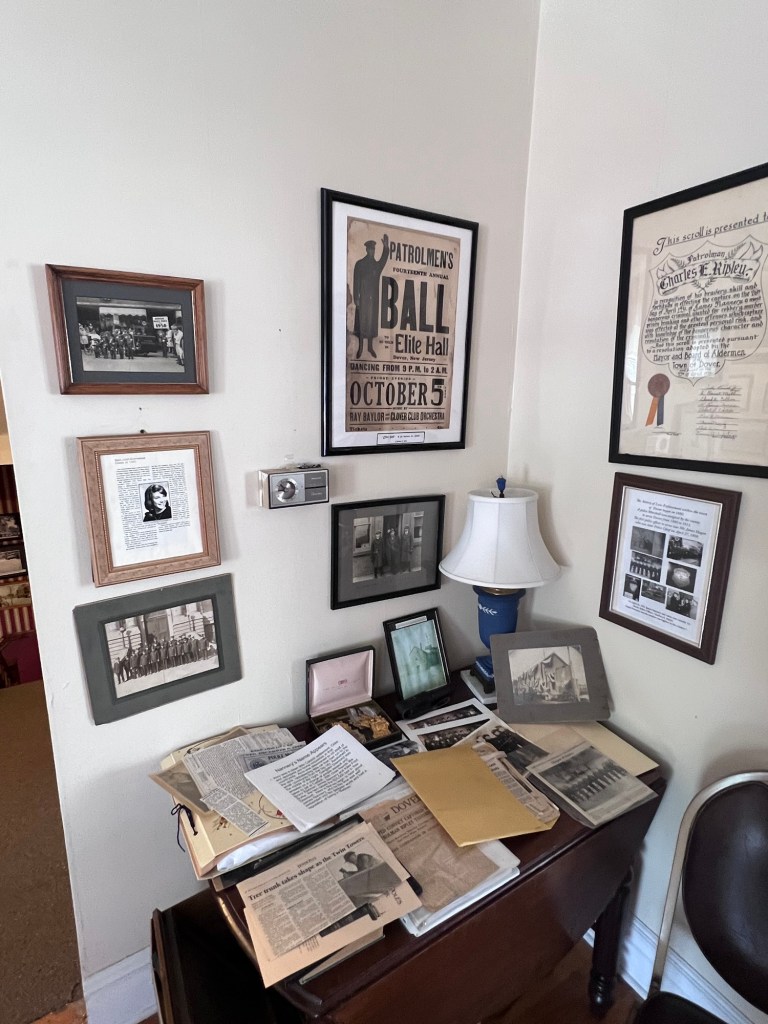
There was an exhibit of the historical buildings that line the downtown area and the neighborhood surrounding the downtown.
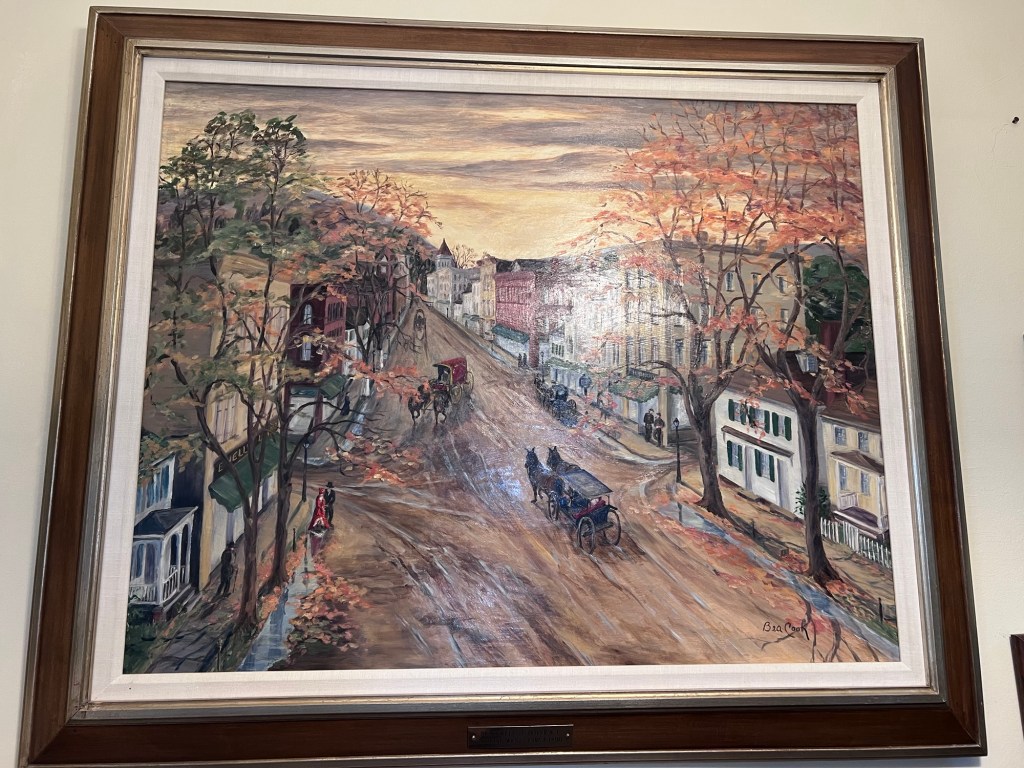
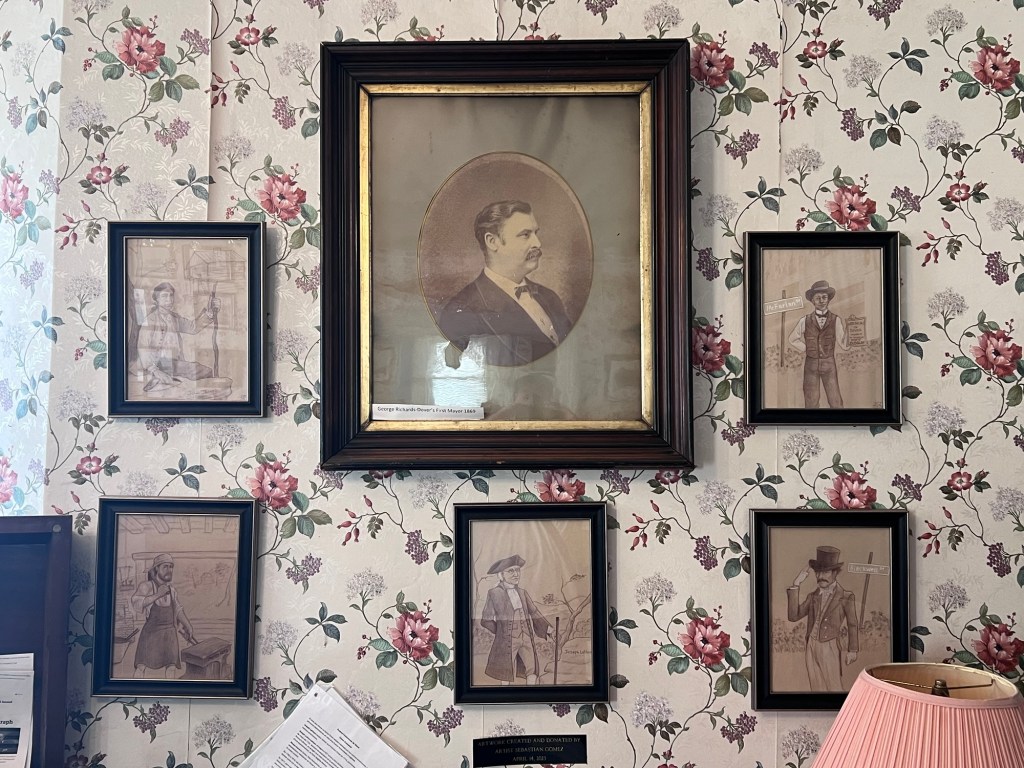
There were pictures of local leaders of the past and an exhibition by local painter, Bea Cook
Artist Bea Cook’s biography
The collection of the art from the artist on what Dover, NJ looked like during the early part of the last century. She gives a creative look at the day to day life of people whose lives started to change after the opening of the Morris Canal and affluence started to take hold in this former farming community.
A painting of Downtown Dover in the 1800’s
Local leaders and the former Mayor of Dover
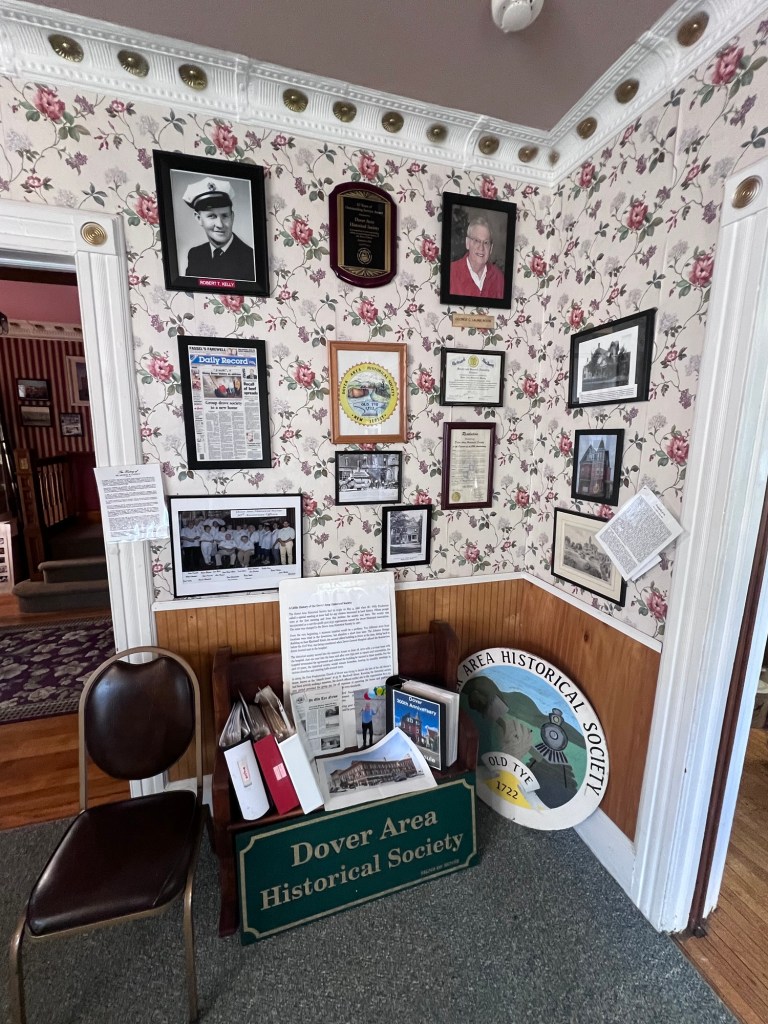
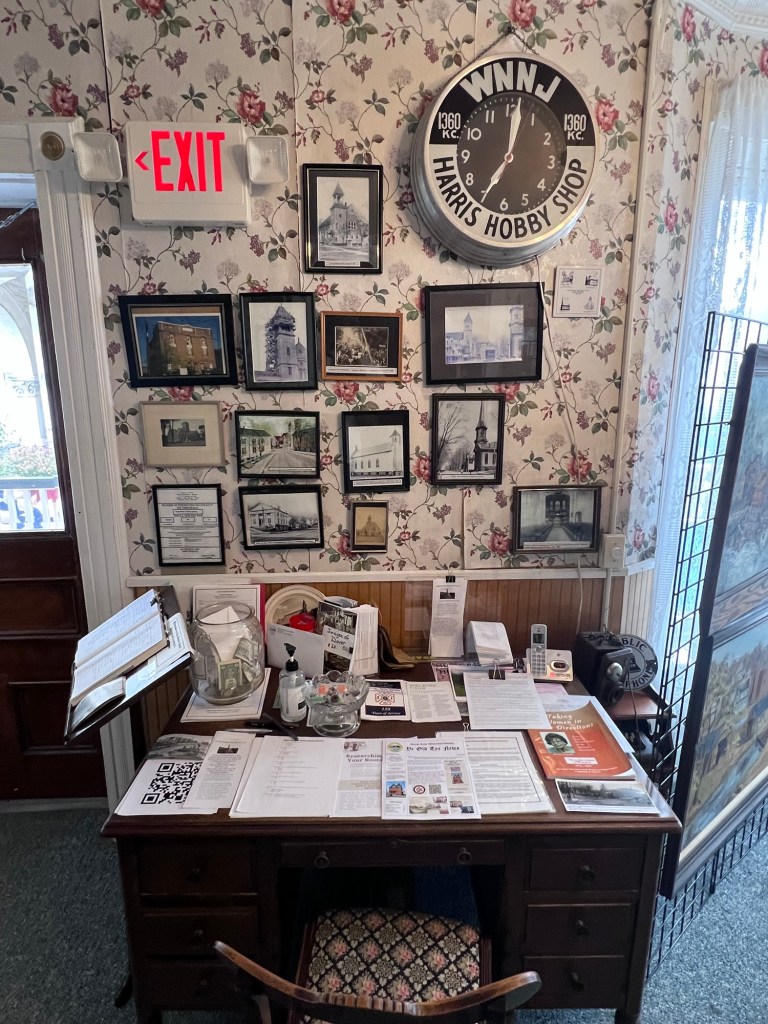
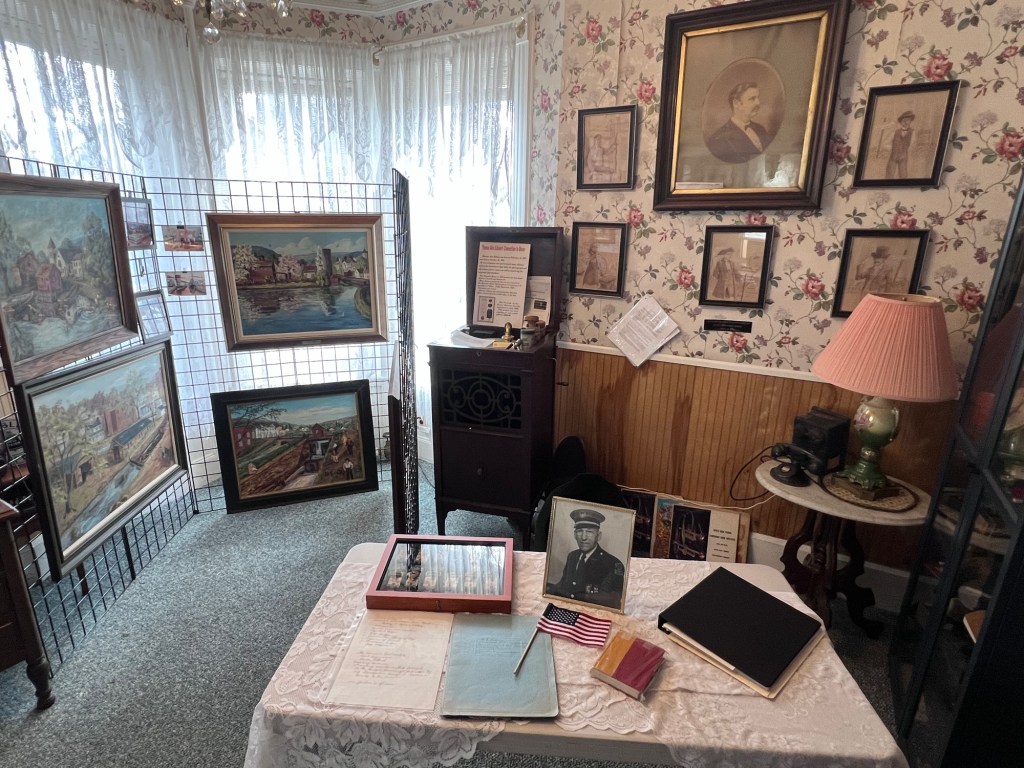
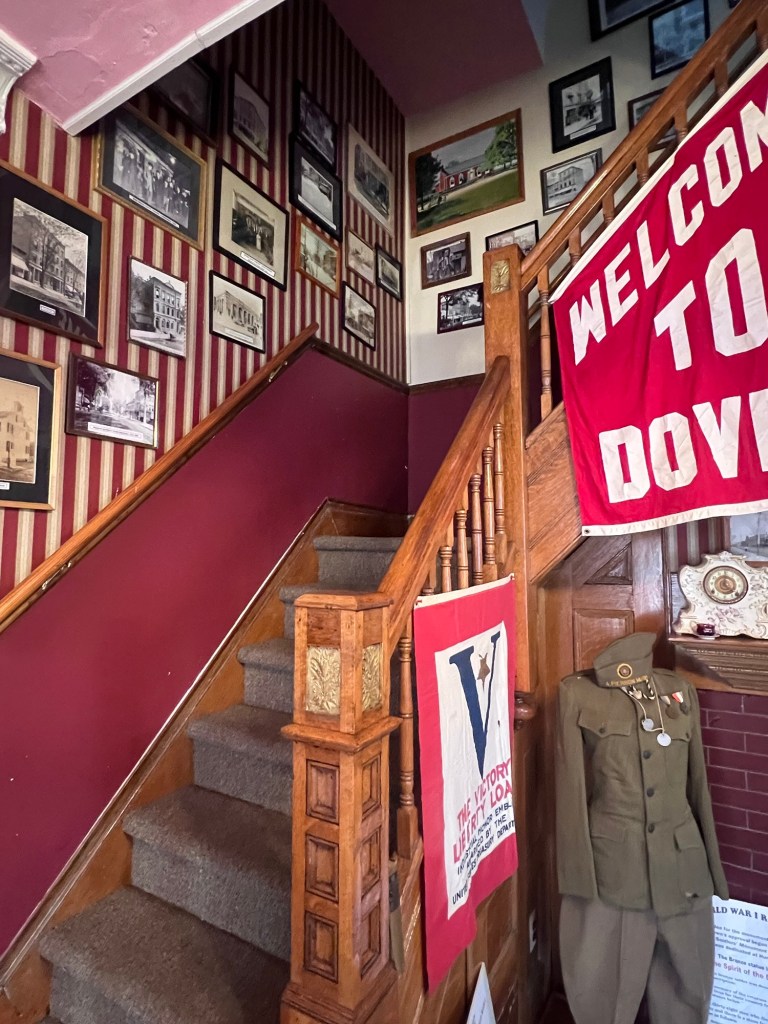
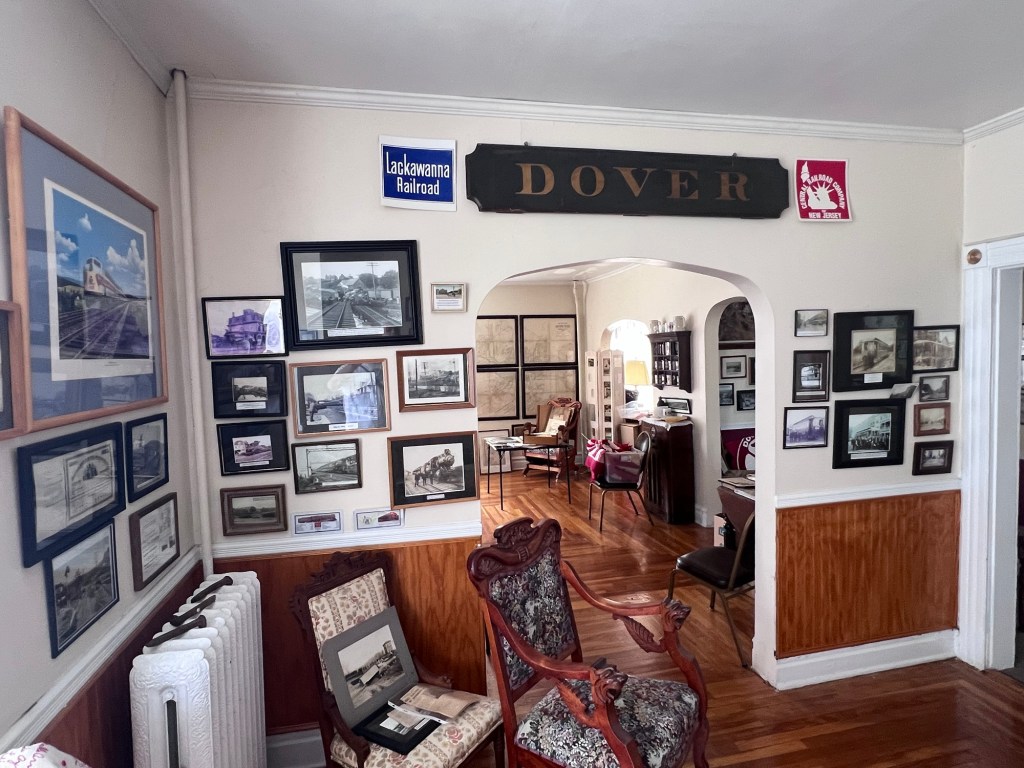
The former foyer by the front door of the house held a local uniform and pictures lines the walls of what the downtown looked like in the late 1800’s to the 1920’s.
The display for Memorial Day Weekend in May 2025
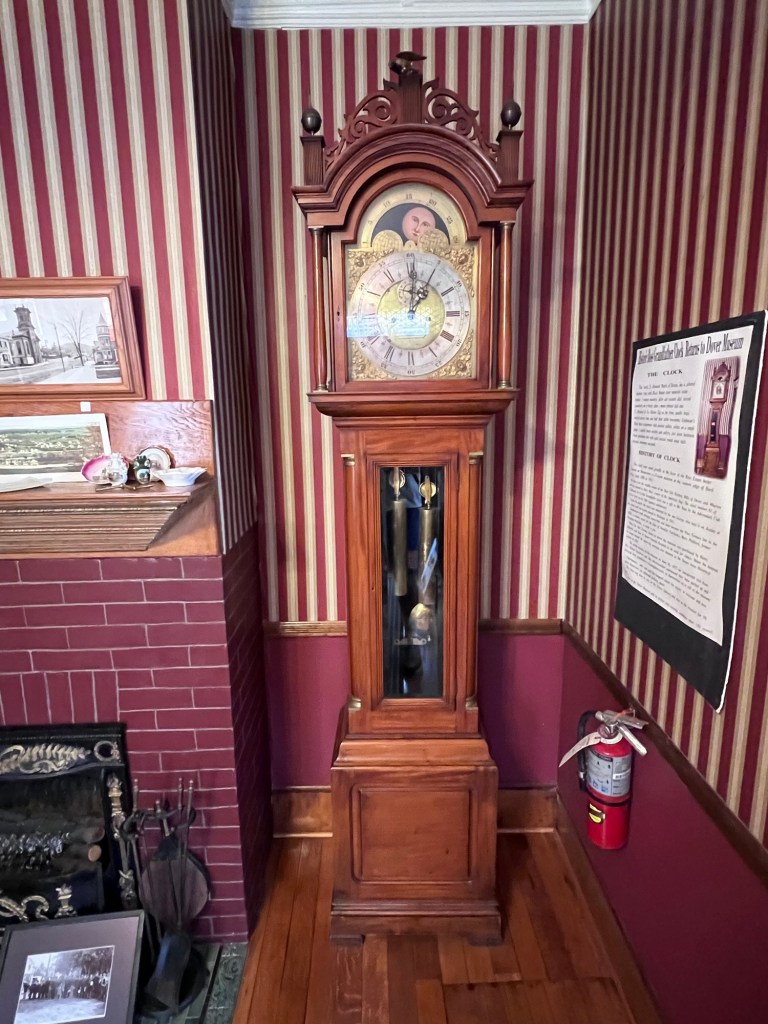
The Grandfather clock in the foyer with its beautiful celestial details.
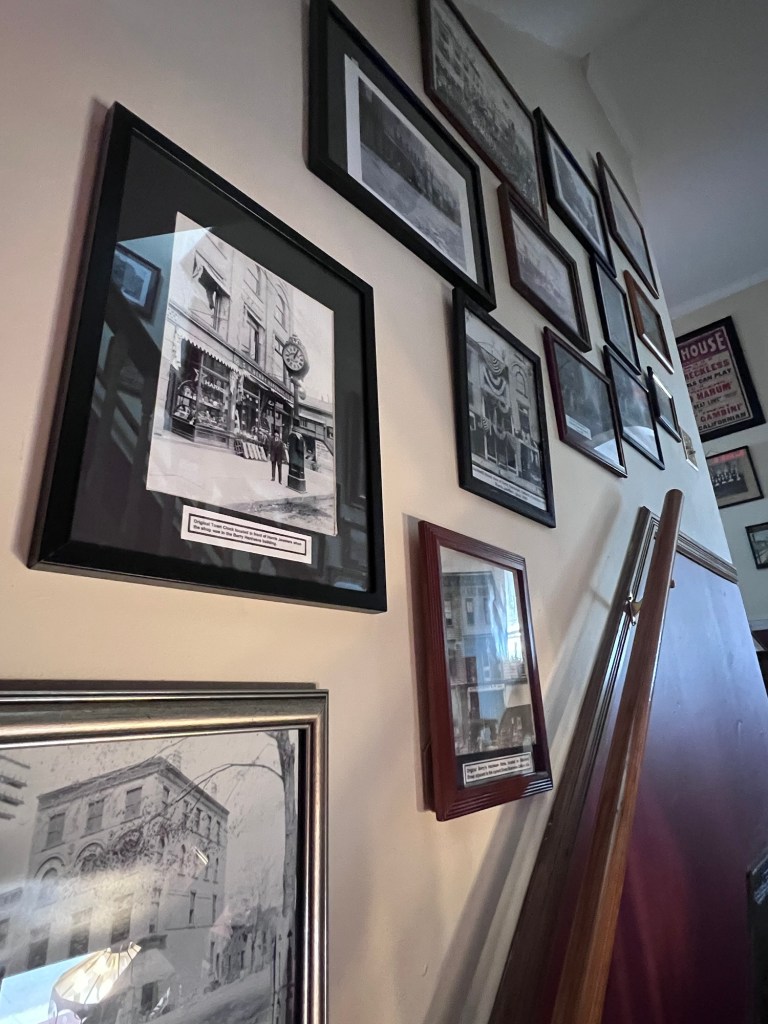
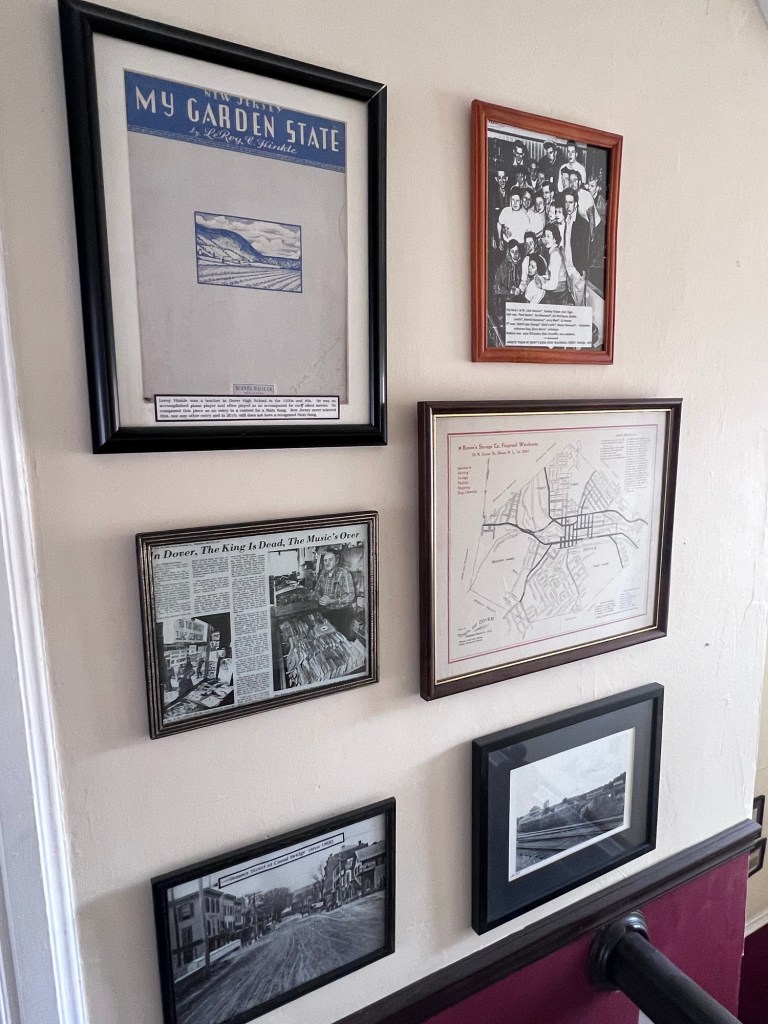
The foyer and the stairs leading to the second floor are lined with photos of Dover through the last 100 years.
Photos of former businesses that once lined the downtown area
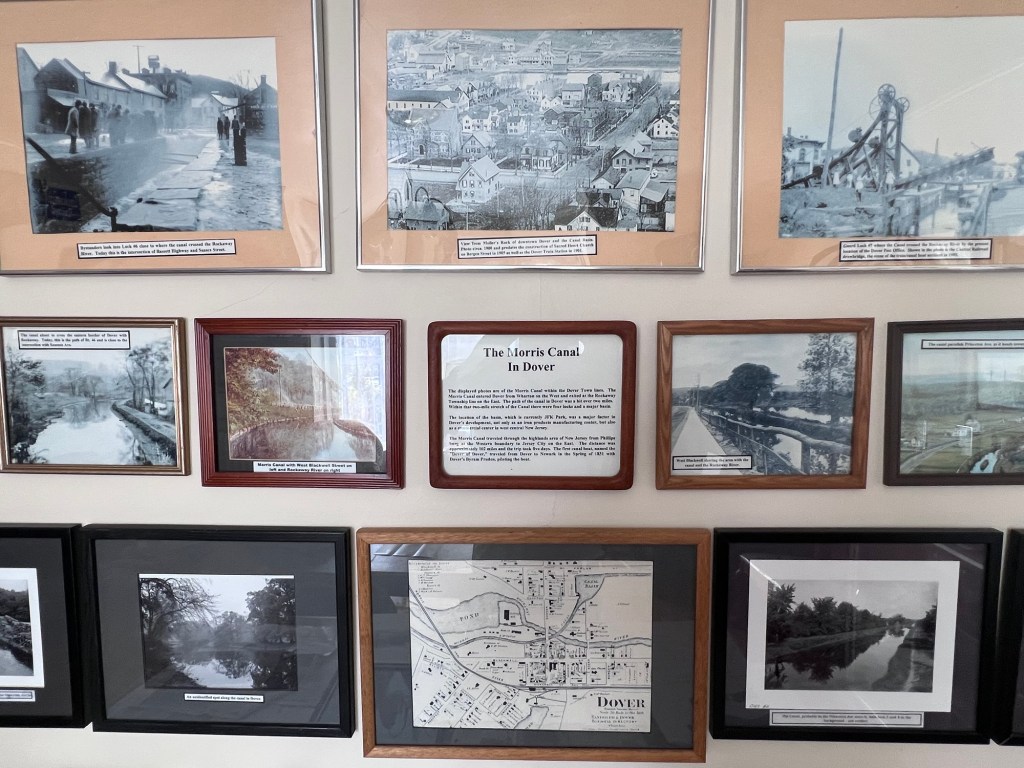
The upstairs galleries are lined with pictures on the growth of the town with the opening of the Morris Canal and the moving of crops and consumer goods from the rural areas to the cities like New York City and Newark.
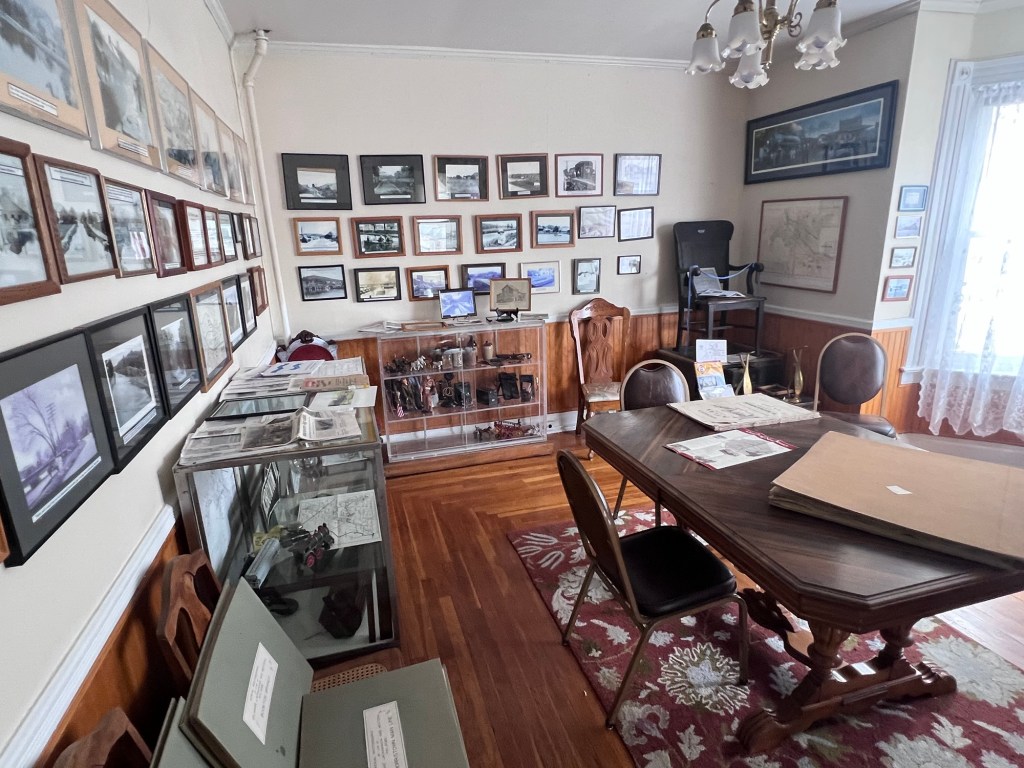
The main gallery on the second floor of the history of the growth of the community is organized with pictures and artifacts of the era.
The growth of the community with the coming of the canal
The second floor galleries are filled with items displaying the rapidly changing community. As the more products were being sold to the cities, that affluence translated living in this area of the state.
The changes of the town with the opening of the canal and immigration to the area.
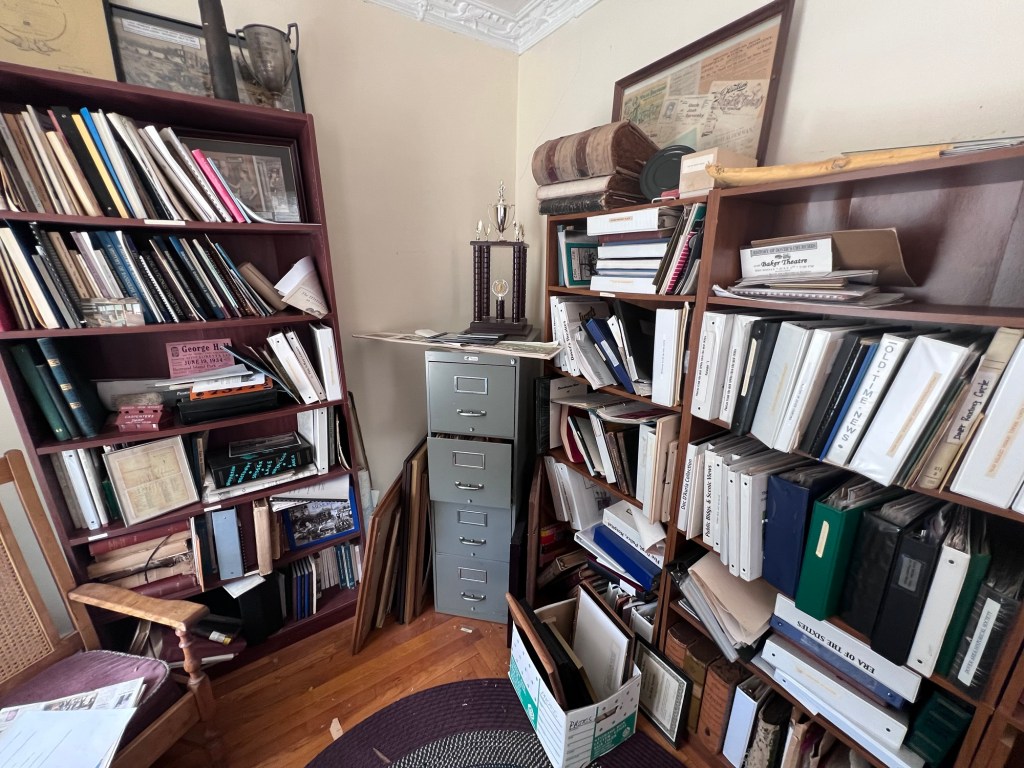
The second floor Library of town records and community information was being organized when I visited.
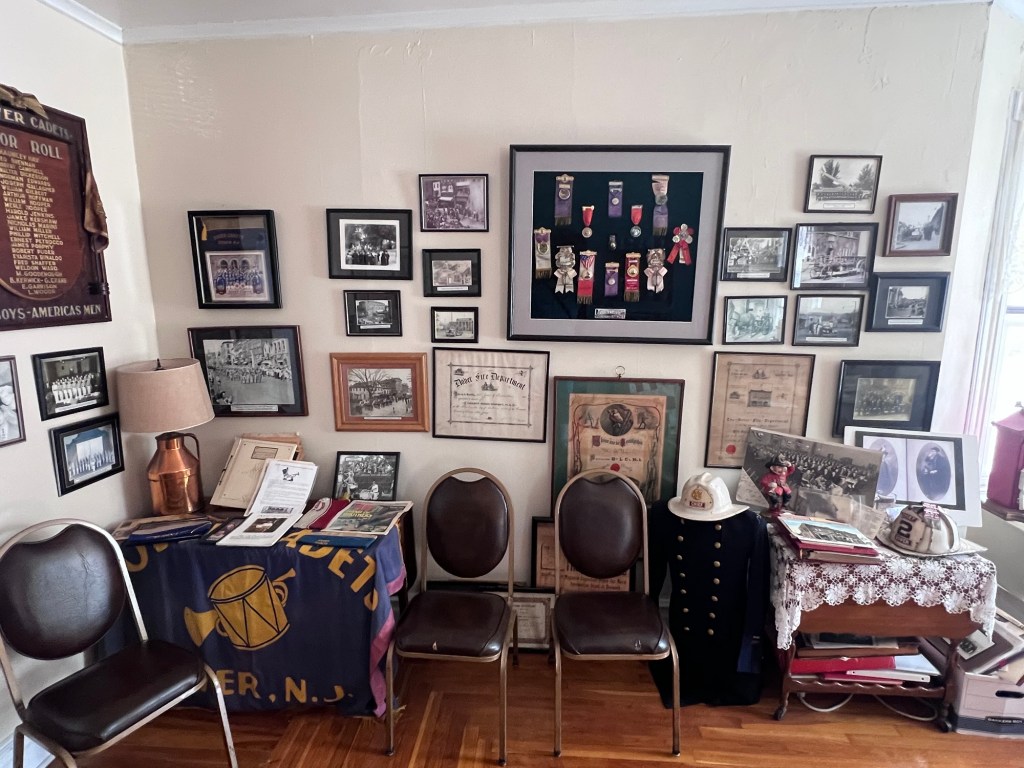
The history of the Dover Fire Department was on display on the second floor
On the third floor of the home, there are two rooms under renovation, one of which will be dedicated to the growing Hispanic population of the current community and their contributions to the town.
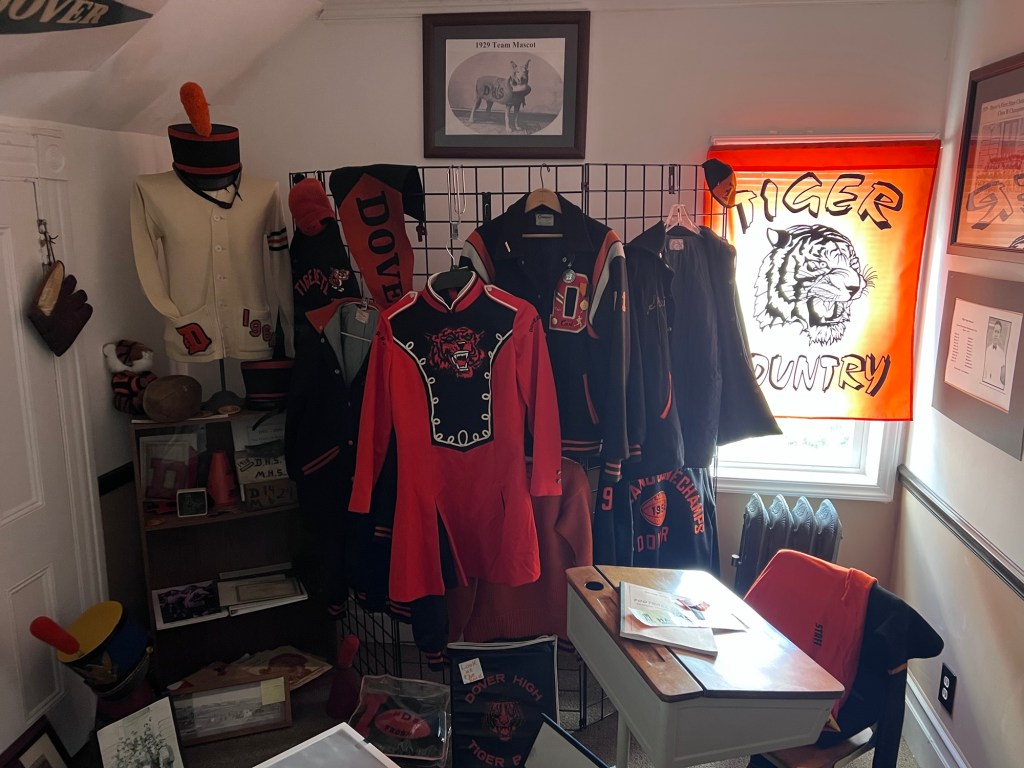
The other room right now is dedicated to the high school marching band and many artifacts from over the years.
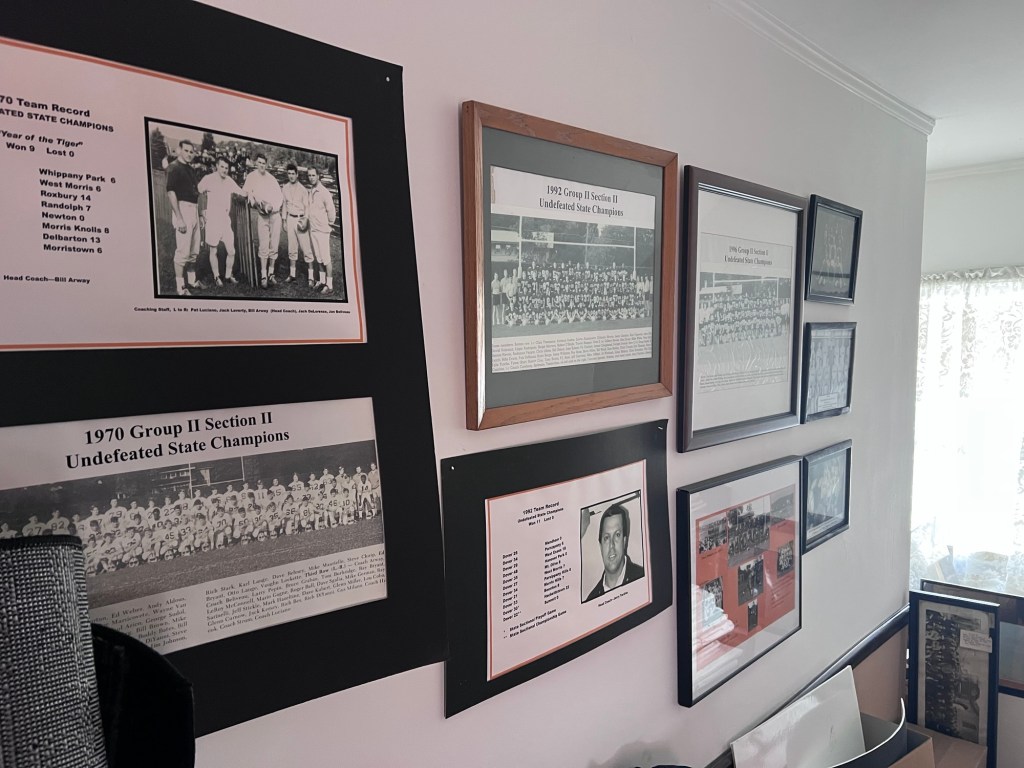
High school history and pictures
History of the area
The Dover Area Historical Society:
As I headed back down, I read the history of the town and of the Dover Area Historical Society.
The history of the Society
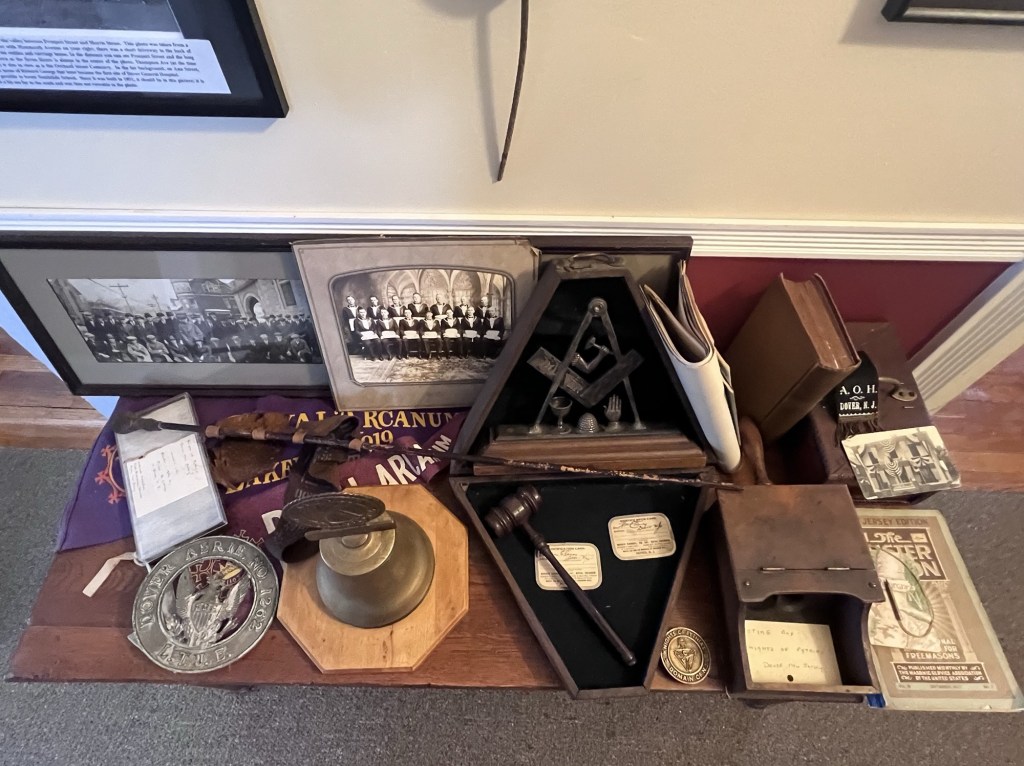
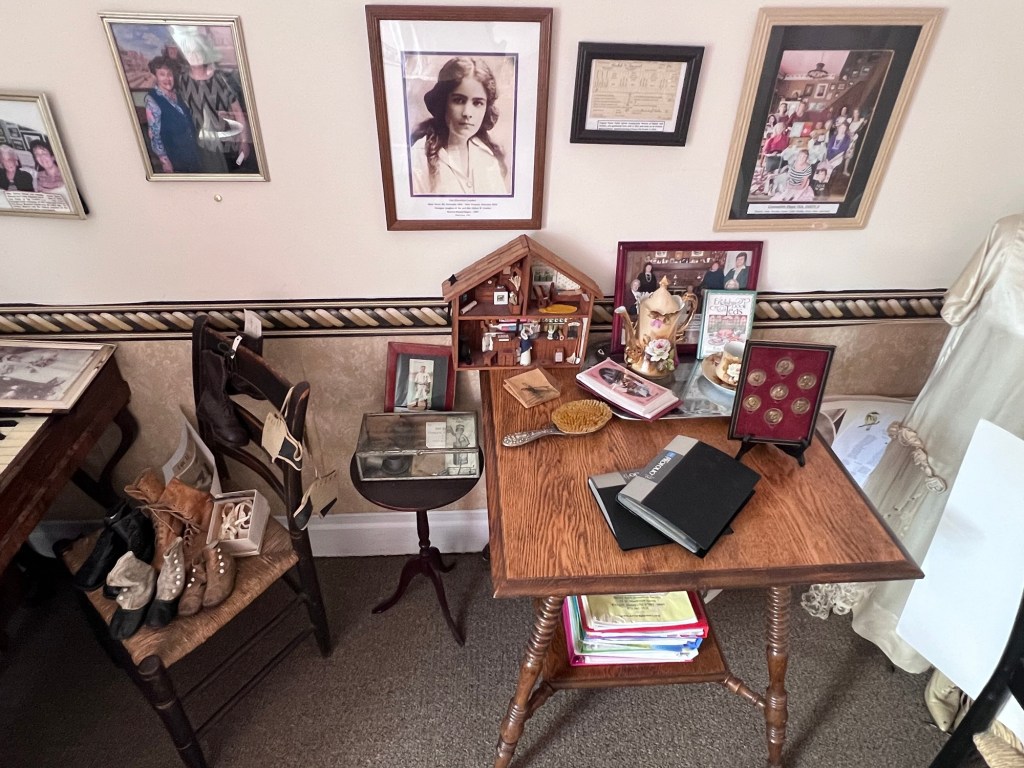
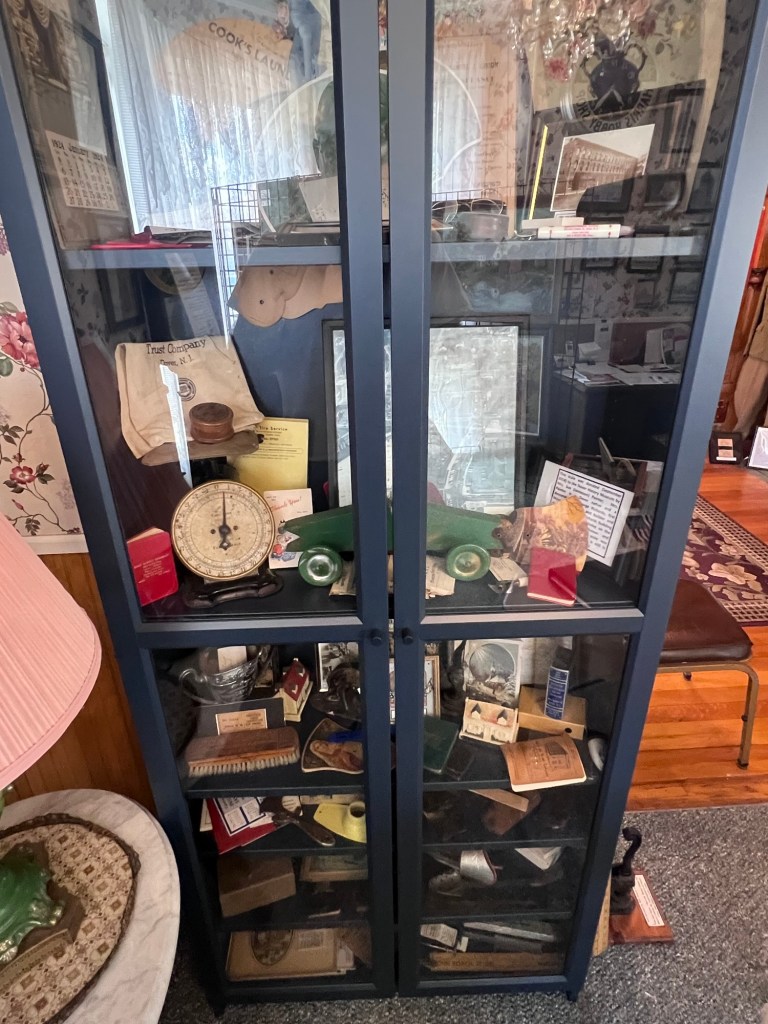
More town artifacts on the first floor
The History of the Dover Area Historical Society:
(From the Dover Area Historical Society website)
The Dover Area Historical Society had its origin on May 4, 1966 when Mr. Willy Pederson called a special meeting at town hall for any citizens interested in local history. Fifteen people were at the first meeting and from this nucleus the society was born. The society was incorporated as a not-for-profit 501(c)(3) organization named the Dover Historical Association. The name was changed to the Dover Area Historical Society in 1967.
From the very beginning, a museum location would be a problem. Two different store front locations were tried in the downtown, but abandon a short time later. The Johnson Storage Building on East Blackwell Street, the second oldest building in Dover at the time, dating back to before the Civil War, was being considered when Dover General Hospital offered the Bonnieview Estate located next to the hospital.
The Bonnieview mansion was built in 1876 for Alpheus Beemer and his wife Margaret. Mr. Beemer established a silk mill and Hurd Park and was the founder of the Nation Union Bank of Dover. Upon his death, the widow sold the property to Edwin Ross in 1885, a descendant of Betsy Ross, designer of the American Flag.
In the early part of the 20th century, Bonnieview becamse the popular Pine Terrance Inn, a gracious country retreat visited by such notables as President Grover Cleveland, Mary Pickford, Douglas Fairbanks and well known personalities of the day. With the onset of Prohibition, the estate was sold to Harry Schwarz who later sold it to Dover General Hospital.
The historical society moved into the mansion house on June 18, 1970 with a 10-year lease with the hospital. Just one year into the lease and after over $30,000 in repairs and renovations, the hospital terminated the agreement and ordered the building be vacated in three months. For the next 27-years, the historical society would remain homeless, hosting its monthly meetings in various churches and meeting halls around town.
In 2004, the First Memorial Presbyterian Church of Dover was trying to decide the fate of the old doctor’s house, known as the “church house” at 55 W. Blackwell Street. Knowing the historical society had been actively seeking a museum, the church offered to site to the organization for a 25-year period provided the group pay for all expenses of operating the house and performed repairs and renovations bringing the house up to town standards.
Today, many of our programs meet at 7:00 pm the museum house the third Tuesday of each month and some programs, including walking tours and other events meet on other days at appropriate times. Our trustees and officers usually hold a business meeting at the museum on the third Wednesday of each month. The museum house is open to the public for self guided tours from 6:30 to 8:00 pm on the evenings when the monthly business meetings are held. Check our calendar for scheduled meetings and events by clicking on “Calendar” in the black strip under the header on this page and follow the links. Anyone wishing to become a member or wanting further information can call the society at 973-361-3525. Please leave a message and we will return your call.
It was an interesting tour of the Society, with each floor covering a different aspect of the history and growth of the town. You can see how the area changed from a sleepy farming community to a bustling town with the coming of the canal system to even more changes with the automobile, the World Wars and immigration to both the country and to the community. Several displays are being worked on so there will be more to experience and see when you visit in the future.
Walking Downtown Dover, NJ:
After touring the museum, I walked Downtown Dover, NJ and got to see all the wonderful stores and restaurants to visit. It really is a beautiful downtown area.
The current downtown with the historical society in the background to the right.
After I toured the museum and the grounds, I walked Downtown Dover. There are a lot of interesting Colombian and Mexican restaurants that line the Main Street of Dover.
I stopped at Pan Pizza Bakery at 27 East Blackwell Street for some lunch. What a wonderful selection of hot and cold items to choose from.
I ordered a Chicken and Potato Empanada, a Mango jelly doughnut and a Papas Rellanes, a Chicken and Potato dumpling. Everything was delicious. There is a wonderful selection of baked items to choose from.
My lunch that afternoon, the Empanada, the Papas Rellanes and the sugary Mango doughnut
The Chicken Empanada
These were really good
The Chicken and Potato Papas Rellenes
These were a meal onto themselves
The Mango doughtnut
The Mango doughnut was sweet and sugary
The selection is excellent and the prices are very fair
After a trip to the Dover Area Historical Society, I highly recommend a trip to the Pan Pizza Bakery for a snack. Then continue your walk around town. There are so many different shops and restaurants to experience in this vibrant and quirky downtown.
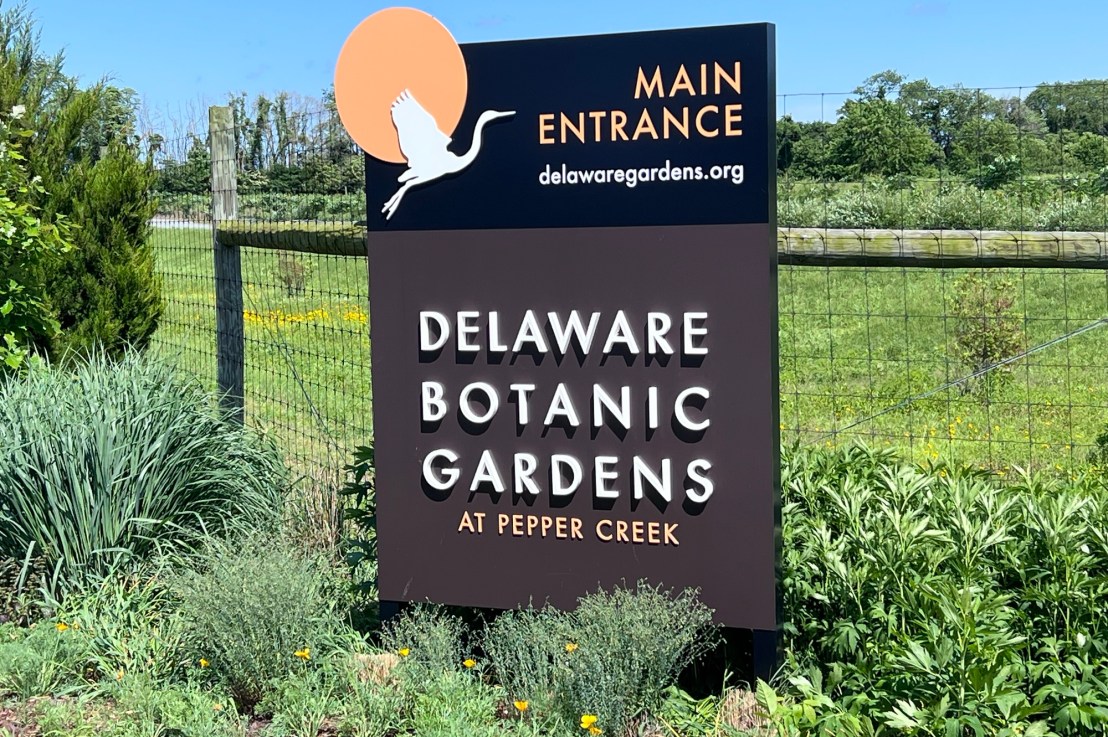
The entrance of the Gardens at 30220 Piney Neck Road
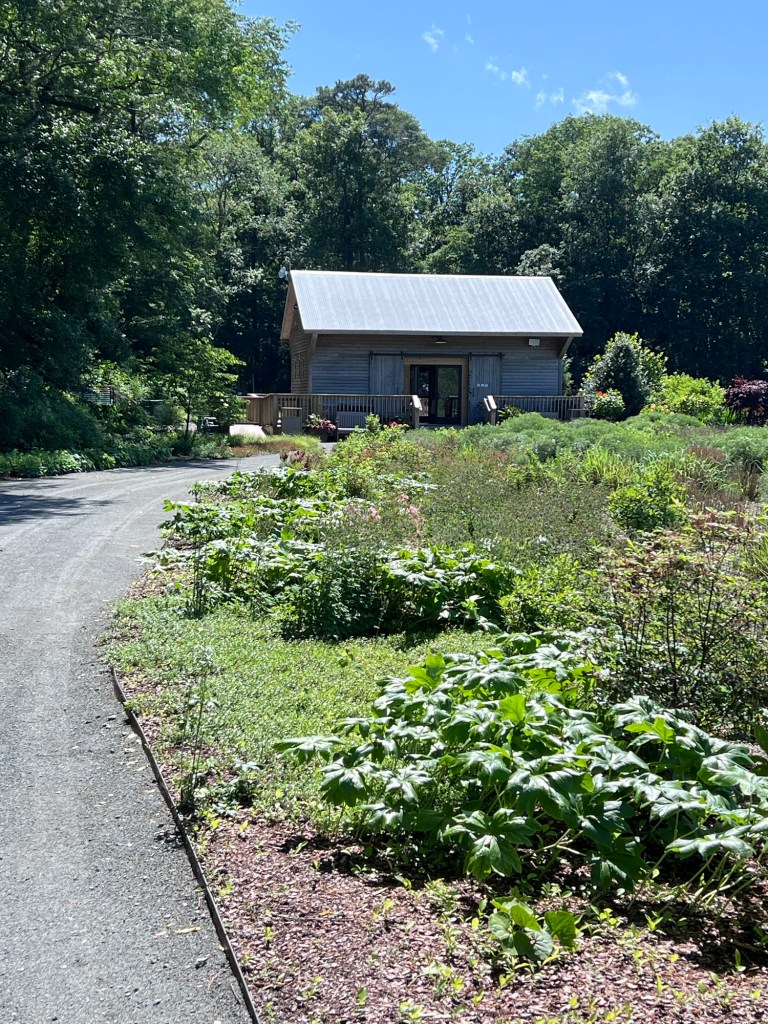
Starting the tour at the new visitors center
The water catch bastion which helps stop flooding and erosion
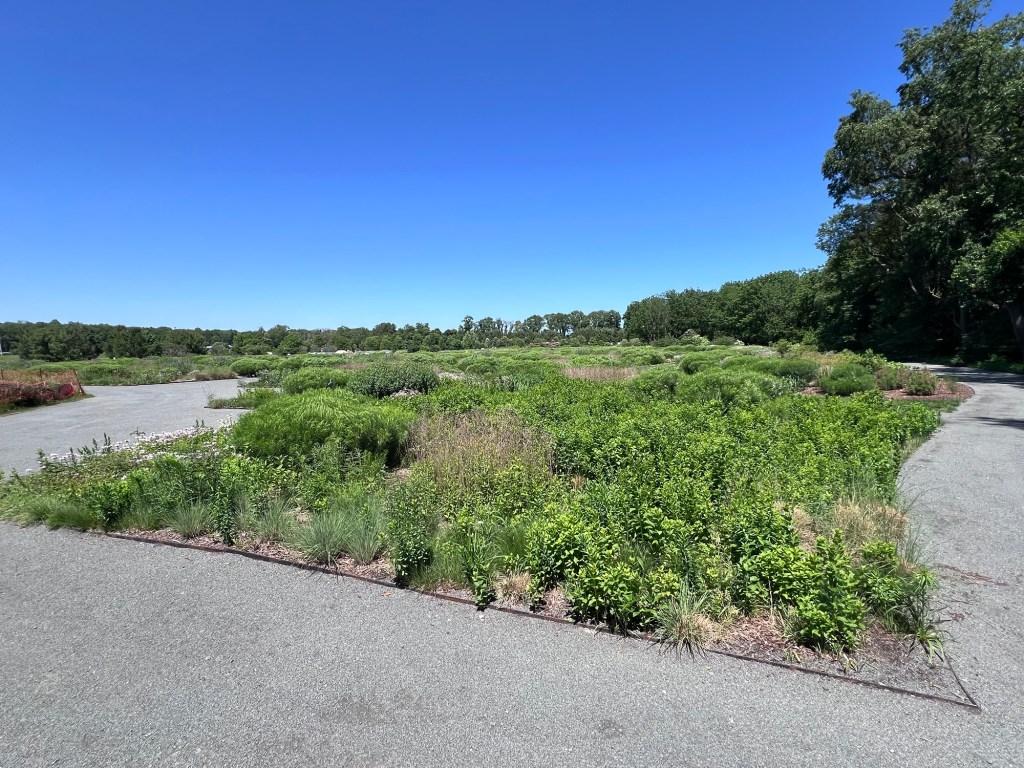
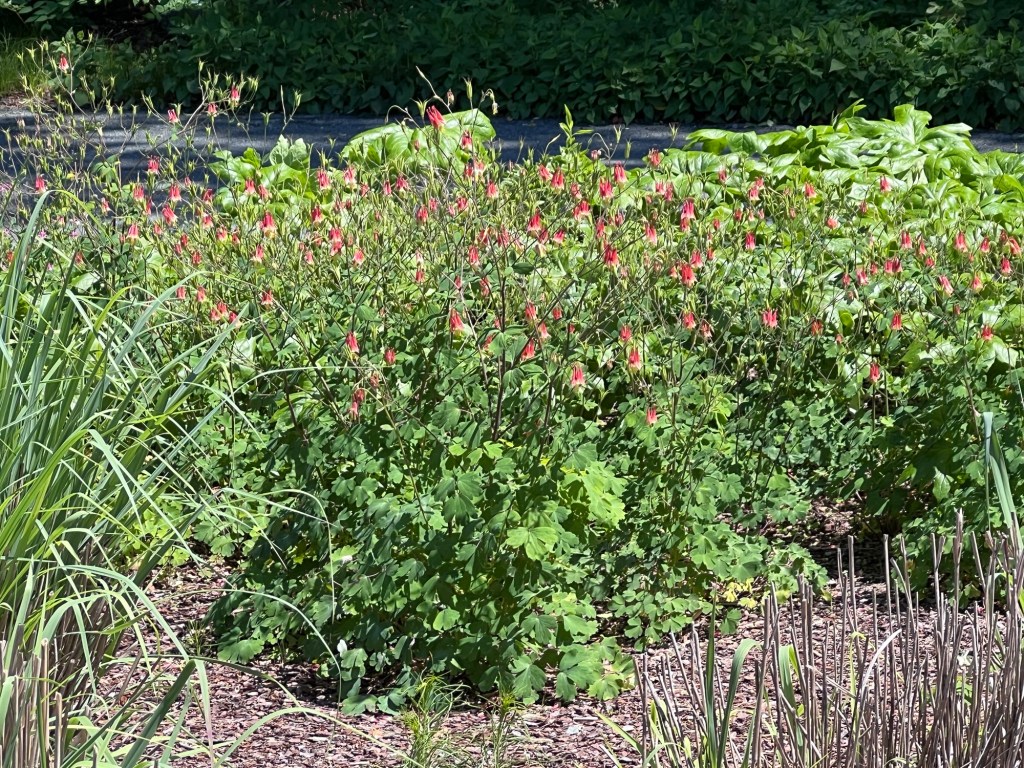
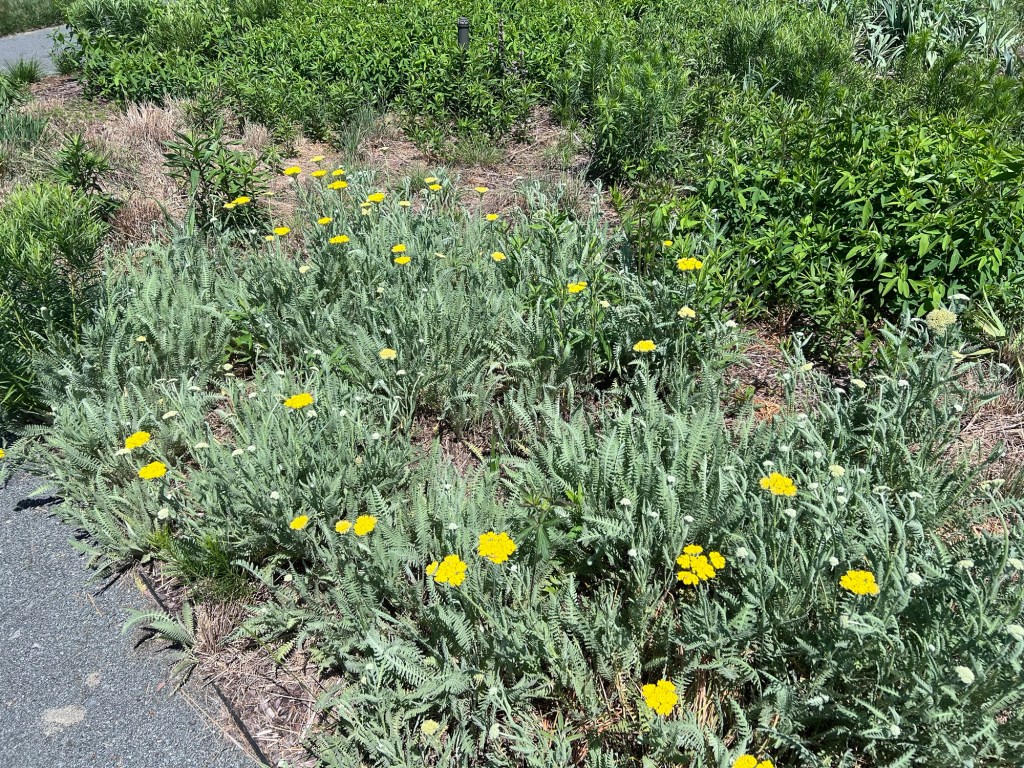
The Botanic Garden’s Meadow area with grasses and flowers the Piet Oudolf Meadow
The Meadows area right behind the Visitors Center
The West Woodland Edge sign on the edge of the Meadows
The colorful plantings along the paths
The colorful flowers along the paths
View of the Meadows
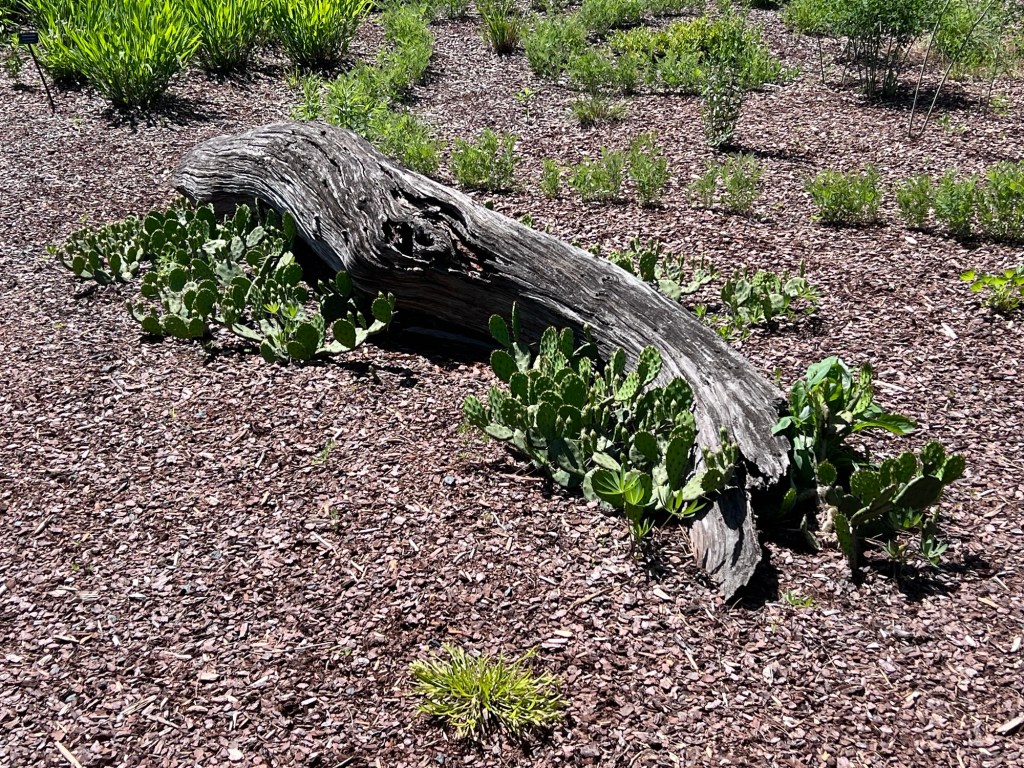
The Cactus Garden in the Meadows
The Inland Dunes sign in the Inland Dunes Garden
The Inland Dunes in full color
Once you leave the Meadows area with its grasses and flowers to the pathways into the woods that line the inlet.
History and Makeup of the Gardens:
(From the Garden website):
Three topographical attributes of the 37-acre site guide the gardens and buildings: a 25-acre flat uplands plateau highlighted by an innovative meadow created by world famous plantsman Piet Oudolf, a 12.5-acre sloped woodlands with freshwater wetlands, and 1,000 feet of waterfront with tidal wetlands on Pepper Creek.
The garden adds to the former farmland thousands of new trees, shrubs, vines, and herbaceous perennials, primarily native, that thrive in the coastal plain. All of the garden galleries, especially the Woodland Gardens and the Meadow, are hospitable environments for native and migratory birds.
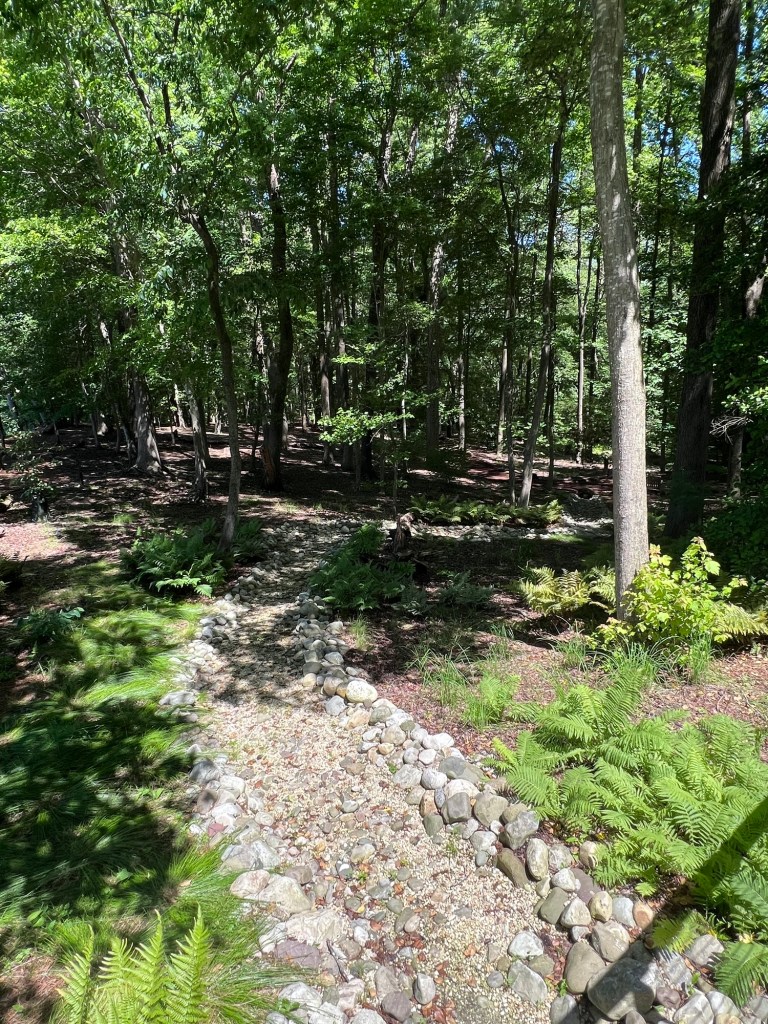
The pathway into the Woodlands Gardens, a 26 acre natural garden
The fireplace in the woods
The Woods Gardens:
(From the Garden website):
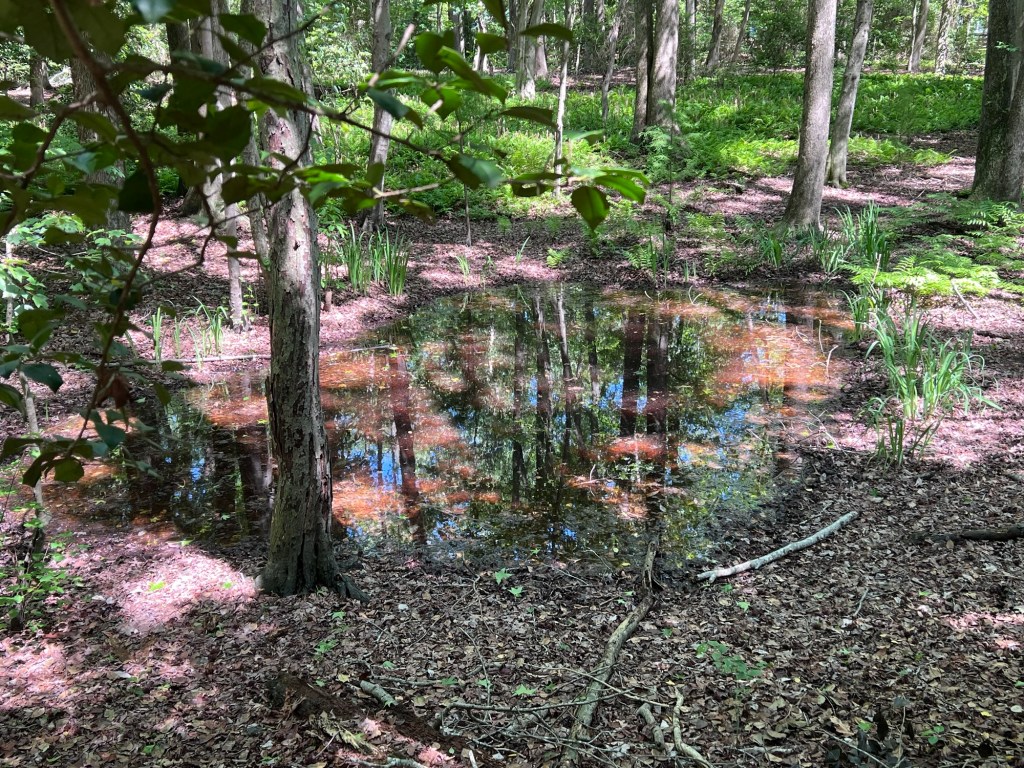
The garden’s most striking natural feature is a relatively undisturbed, heavily canopied, stratified forest, whose 12.5 acres stretch along the site’s southern boundary and slope gently down to the 1,000-foot frontage on Pepper Creek. The forested wetlands offer natural venues for ferns and moss and showcase the unique plants and wildlife that thrive in this moist habitat.
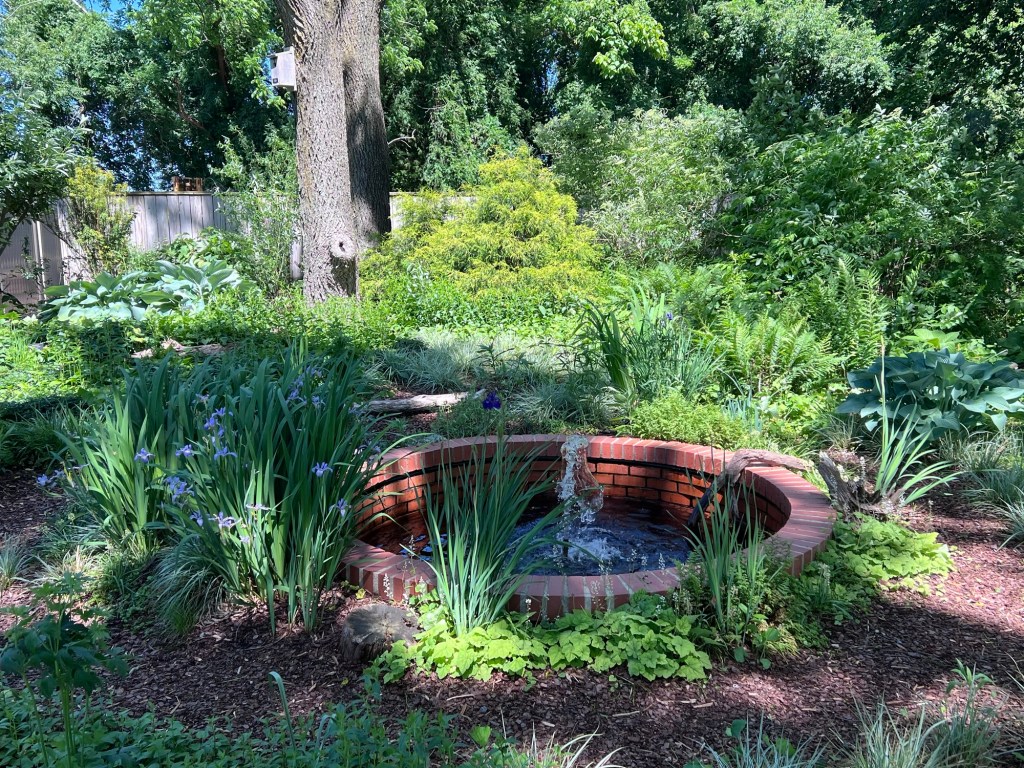
The landscaped fountain at the beginning of the pathways
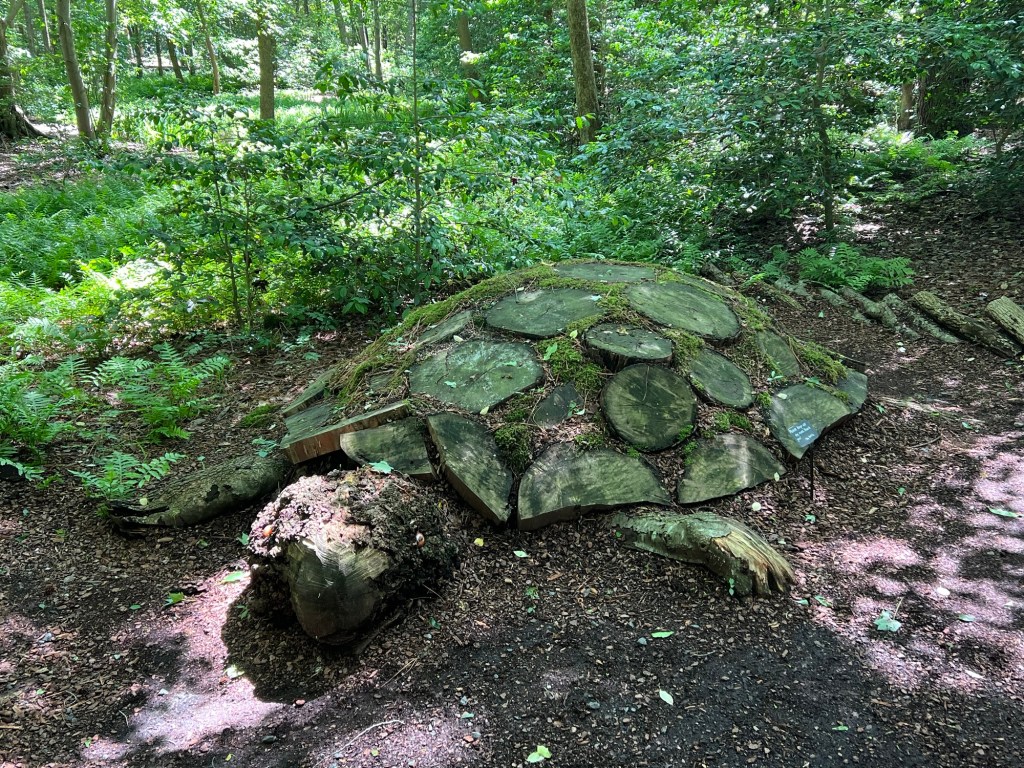
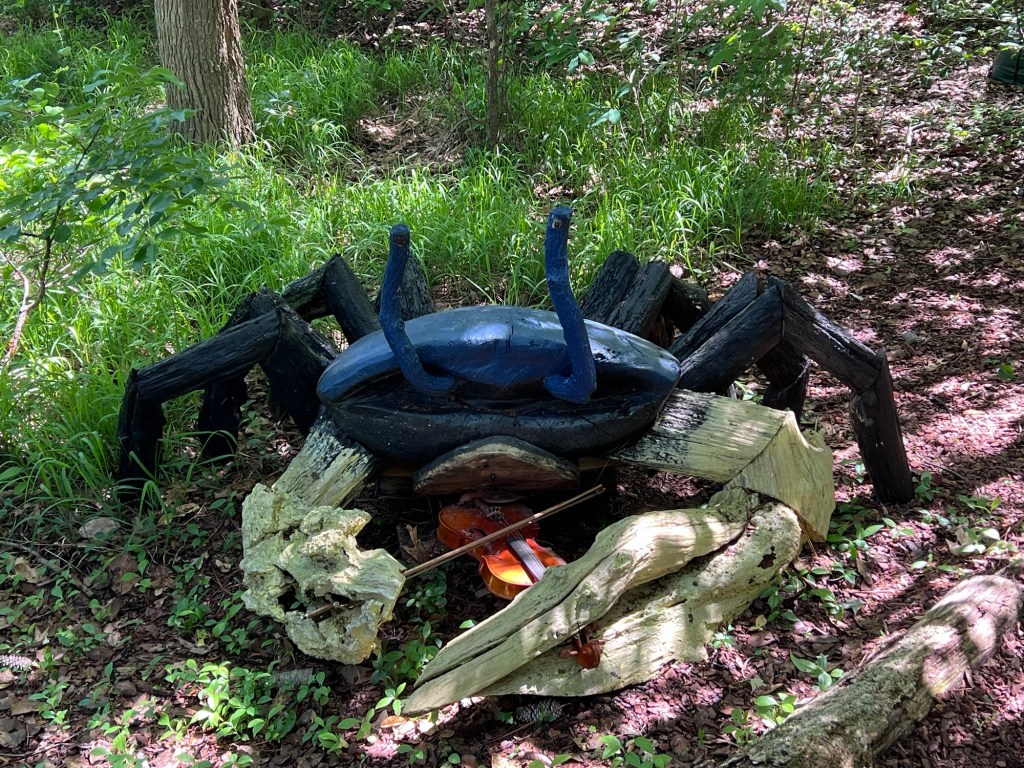
As you walk down and around the pathways, there are a series of sculptures in the shape of animals and reptiles that give a whimsical look at Mother Nature.
The Snail
The Turtle
The Blue Crab
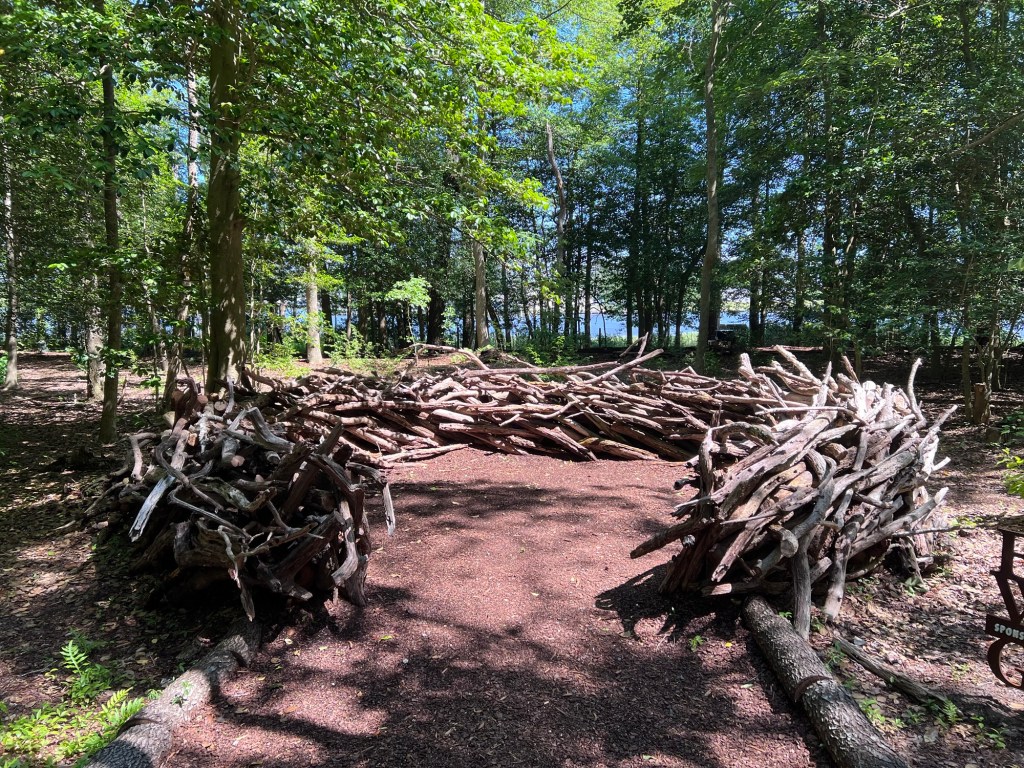
The Fairy Ring where students will meet while touring the Gardens
The pathways leading to the Inlet and the Observation decks
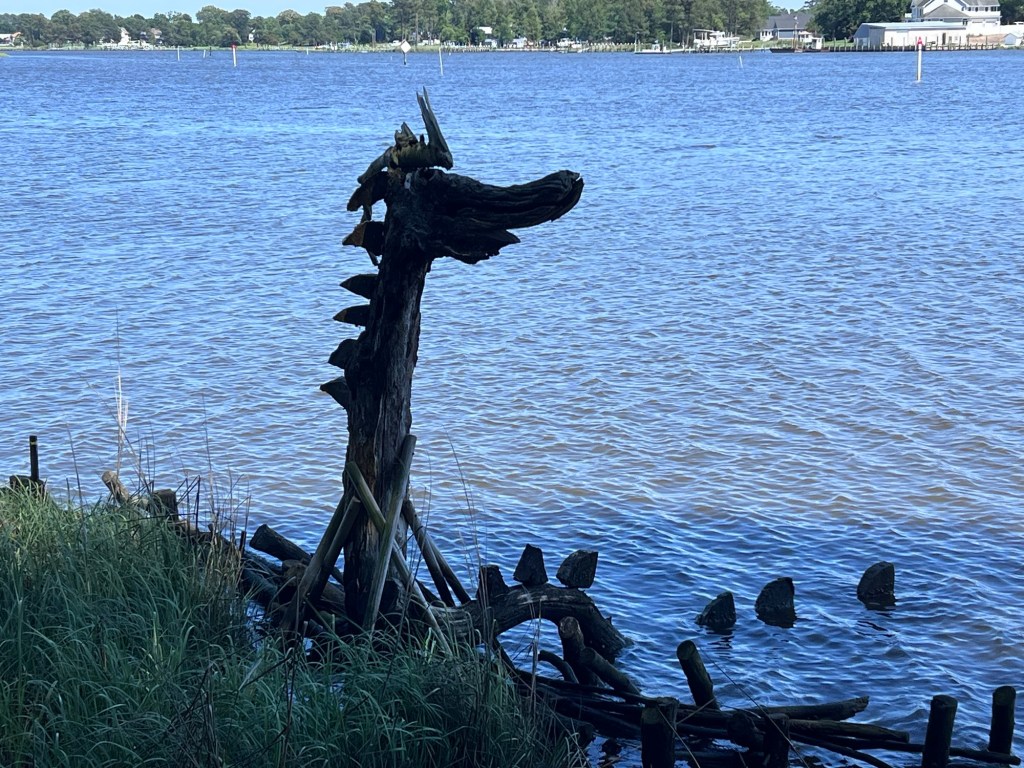
The Sea Serpent sculpture in the Inlet at Pepper Creek, a mixture of Salt and Fresh water
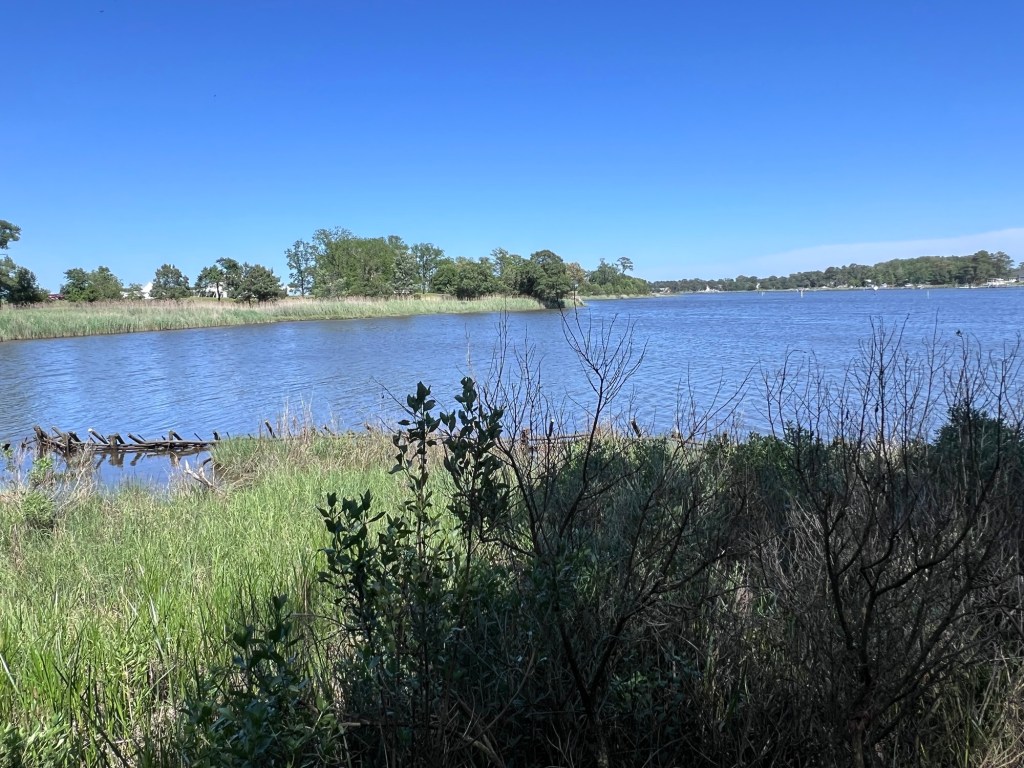
The Pepper Creek Inlet and the Living Shoreline trying prevent erosion around the Inlet
The Pepper Creek Inlet Garden area:
(From the Garden website):
At the Woodlands’ 1,000 feet of shoreline, Pepper Creek is a briny mix of salt water and fresh water. The eight-mile-long creek originates near the Cypress Swamp in southern Delaware, 3 miles north of the Delaware-Maryland state line. It flows from the DBG shoreline into the Indian River Bay.
The sign for the Living Shoreline and a natural way of preventing erosion around the Inlet.
While I was on the Observation Deck, a Heron flew in and started feeding. Even when he was feeding, he looked so graceful.
The Heron looking for his prey
The Pepper Creek Inlet and the shores
As I walked back down the paths, there was another Fairy Ring meeting spot for people to meet.
The Fairy Ring for Children’s meetings
As I walked through the woods admiring nature, I came across a camel who was taking a break at the bridge. These sculptures are very creative and fun.
The Camel at the Bridge
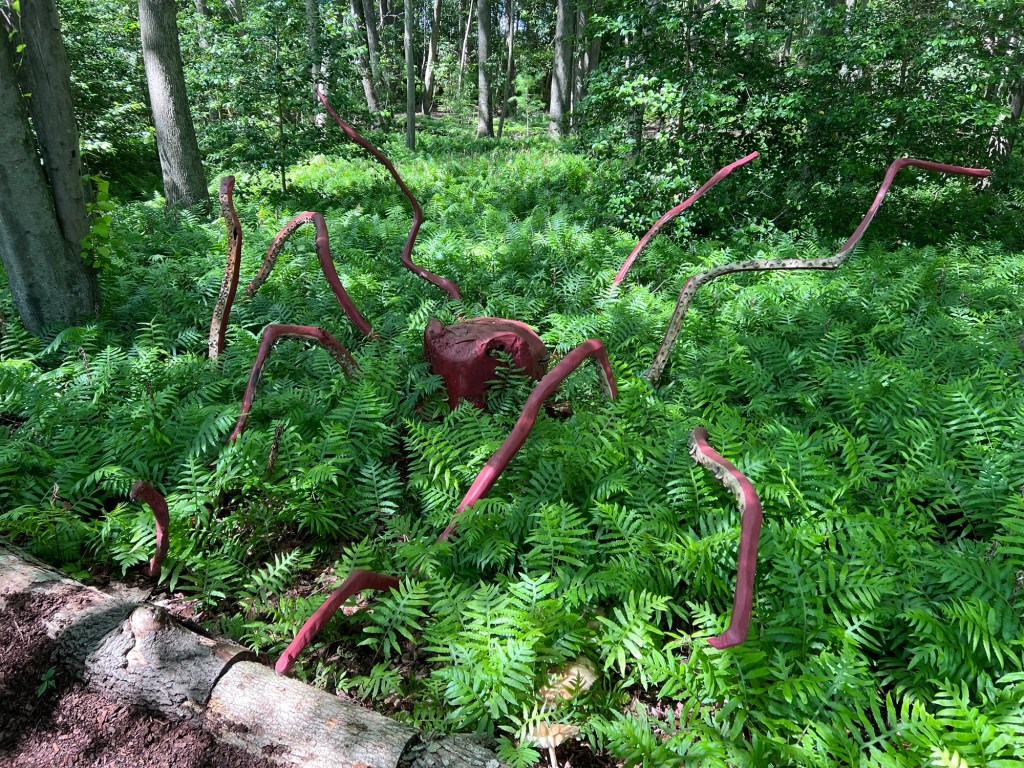
The Octopus
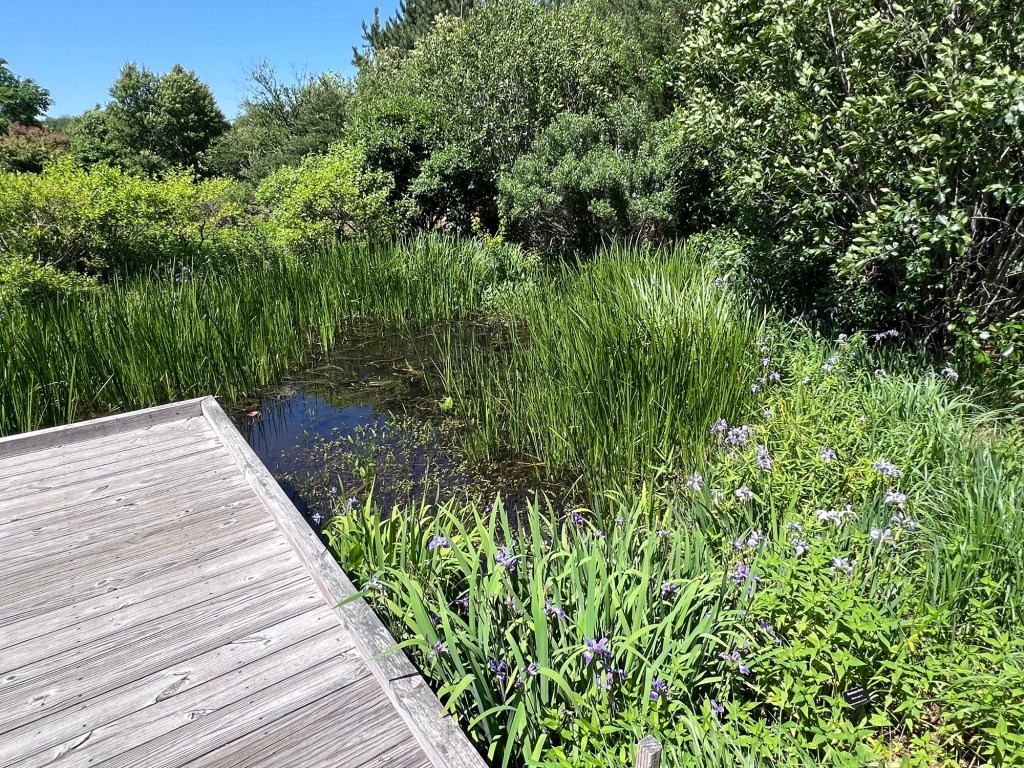
I passed more of the Marsh while walking around the paths that have been kept natural.
The Marshes
The Wizard
Unusual tall trees
Medusa standing guard
The Lizard
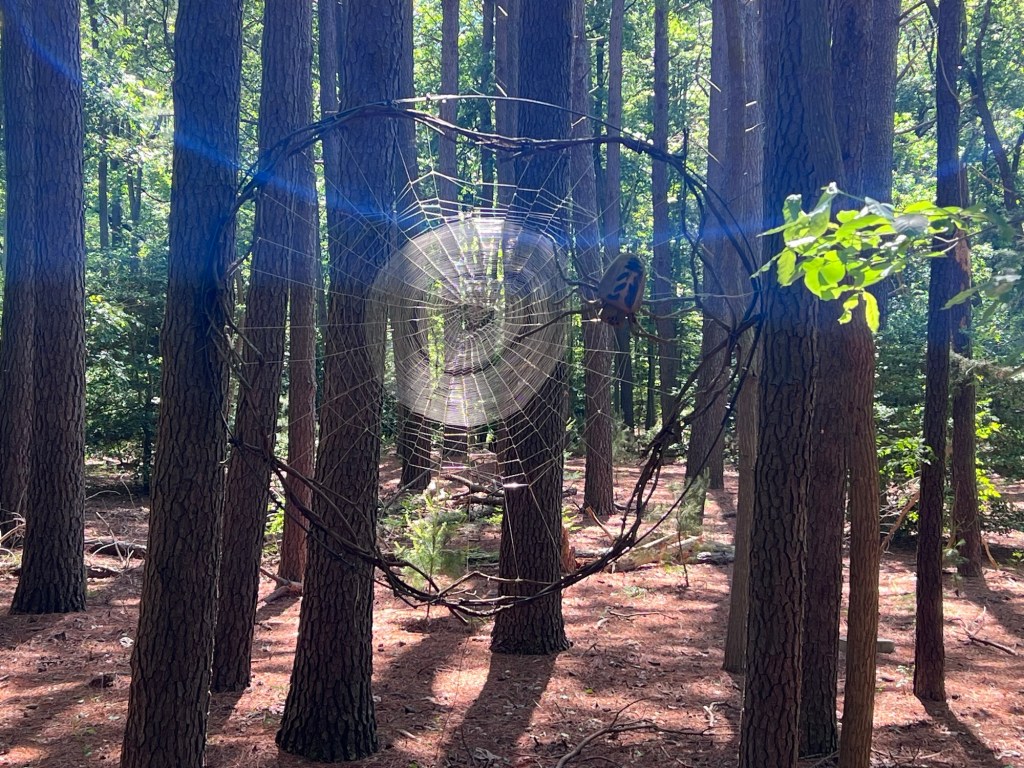
The Spider’s web
The Pines with the Spiders web in the middle
Then I exited the path nearest to the Visitor’s Center
After I left the main part of the woods, I walked around the gift shop and then exited to the Parking lot.
The Colorful painting on the path to the parking lot
The Rhyne Garden sits between the main garden and the parking lot that serves as a catch basin for rain water.
The colorful flowers and grasses that now line the catch basin
Exiting the Gardens after a wonderful visit
After I finished at the Gardens, I headed back down Route 26 East back to the beach. I came across Bonkey’s Ice Cream & Snoballs at 44 Atlantic Avenue in Ocean View. The colorful sign drew me in and the excellent homemade ice cream kept me there for almost an hour.
Bonkey’s Ice Cream & Snoballs at 44 Atlantic Avenue in Ocean View, DE
The ice cream is amazing here. I had the Double Double which is four large scoops of ice cream for $7.00.
The flavors I chose were Banana Wafer, Lemon Blueberry, Blue Moon and Cotton Candy. The taste of these homemade ice creams were wonderful, creamy and flavorful.
It was nice to sit outside on the shaded seating on the lawn on a nice day and enjoy my sundae. It was a nice day and I wanted to enjoy it.
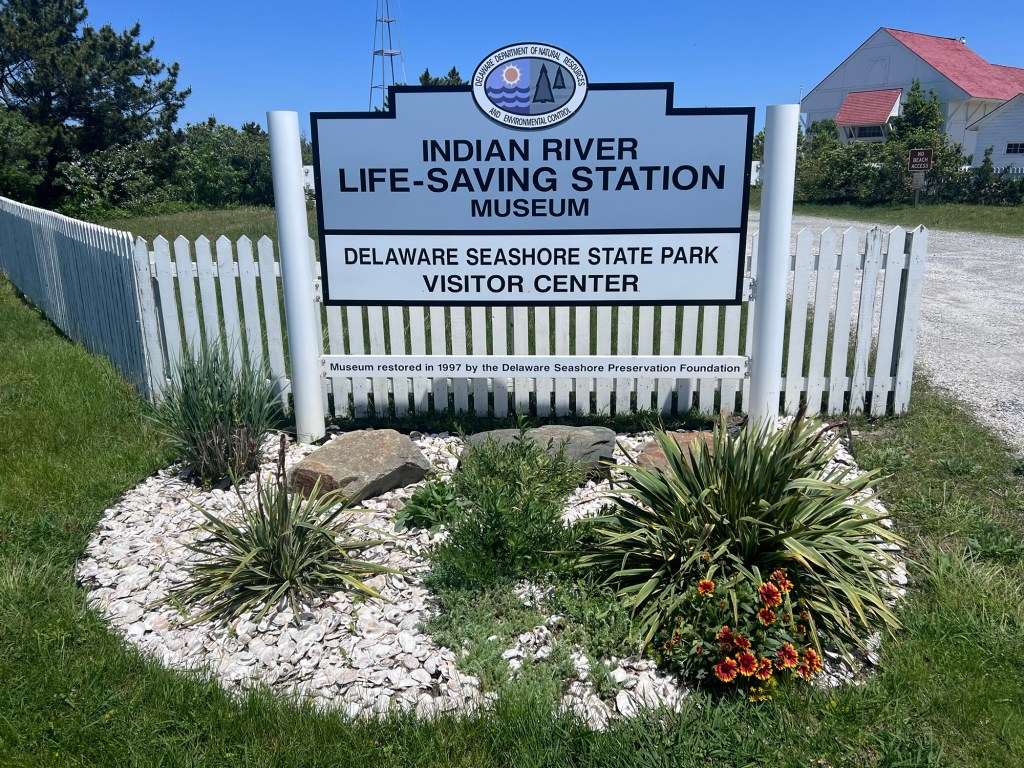
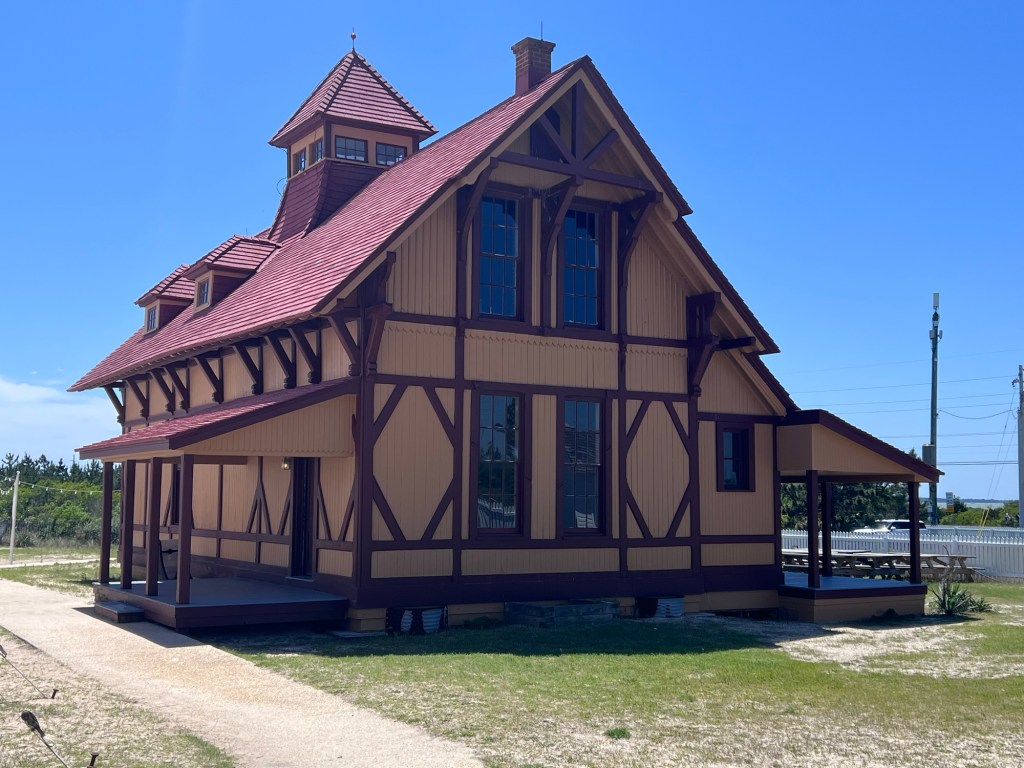
The front of the Indian River Life Saving Museum at 25039 Coastal Highway
History of the Indian River Life Saving Station:
(From the Delaware State Park website)
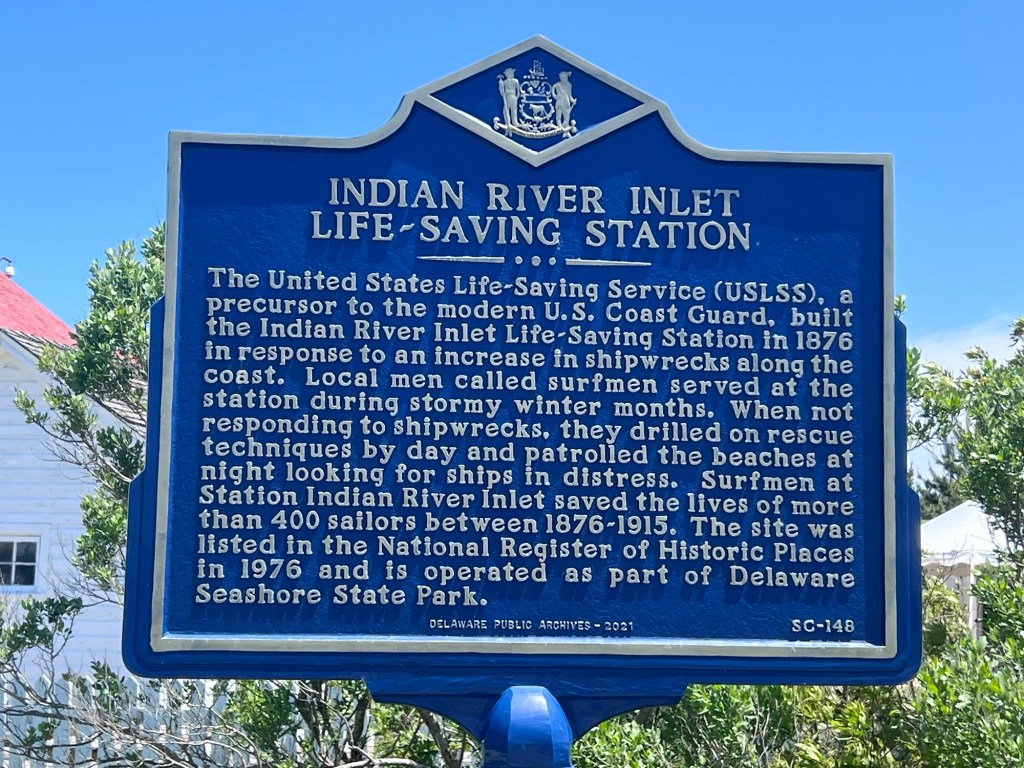
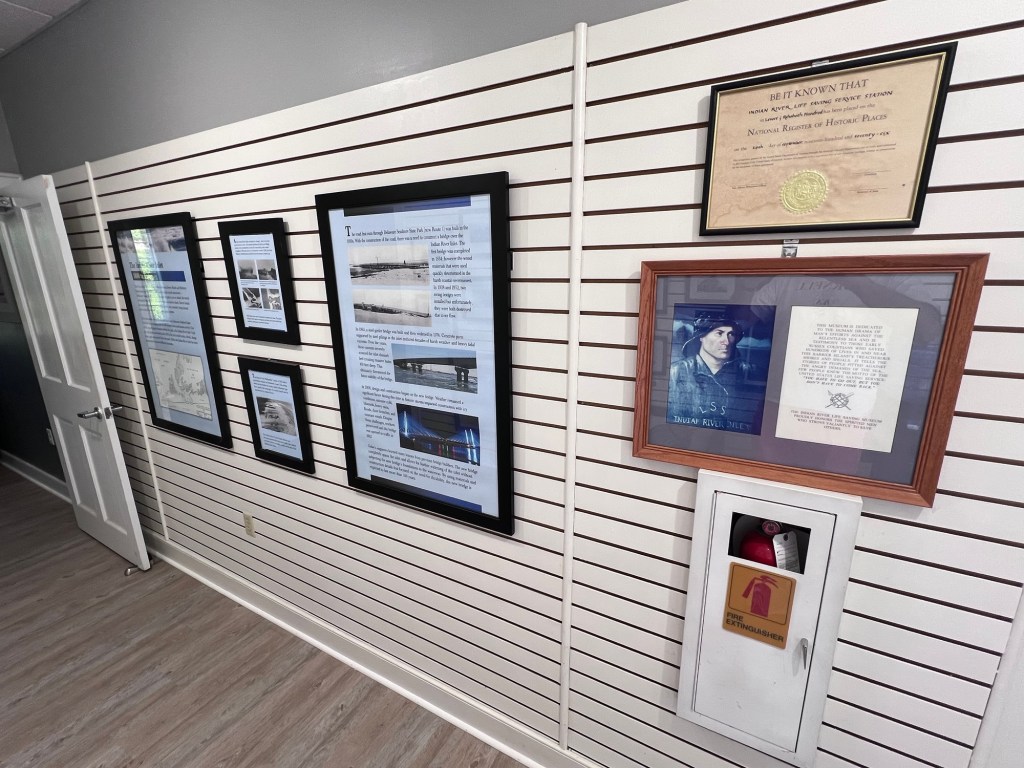
The original Indian River Life-Saving Station was built in 1876 for use by the United States Lifesaving Service, a government organization created to respond to the alarming number of shipwrecks along the coastlines of the United States and the precursor to today’s U. S. Coast Guard. The Life Saving Station today is a maritime museum that honors these courageous sailors and the rich history of their deeds. Listed on the National Registry of Historic Places, it is a must visit piece of Delaware history.
The front of the historical sign describing the park
The recent History of the Museum:
(From the Delaware State Park website)
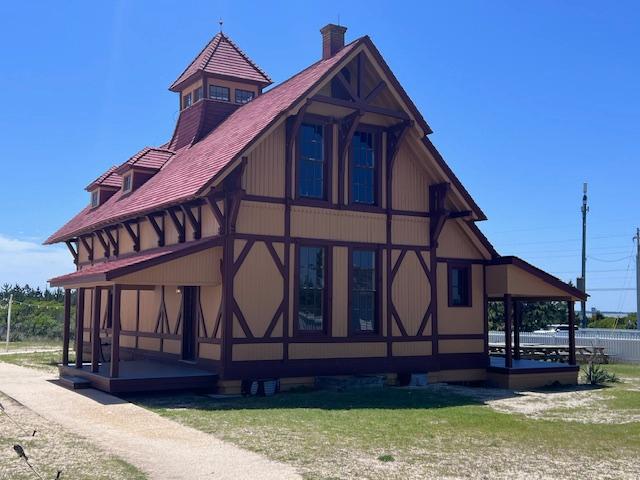
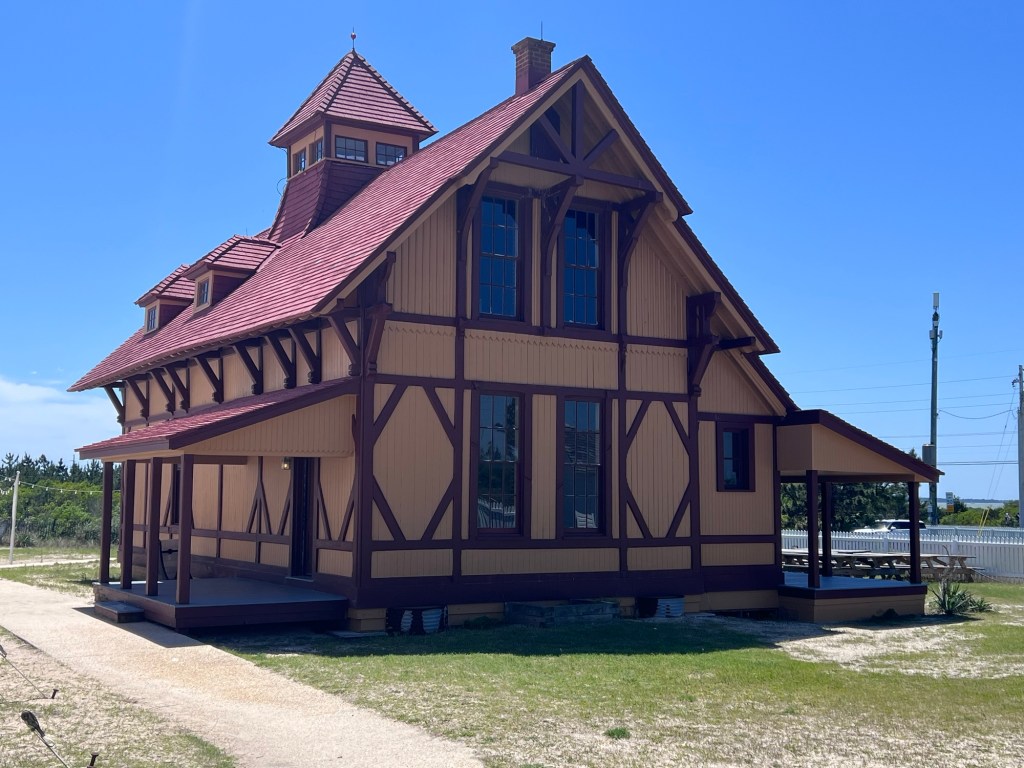
The building was first located 400 feet closer to the shore, but a sand dune began to form around it almost as soon as it was finished. It was moved to its present location in 1877, and today has been meticulously restored to its 1905 appearance, complete with diamond-shaped trim. The museum is listed in the National Register of Historic Places.
The entrance of the museum
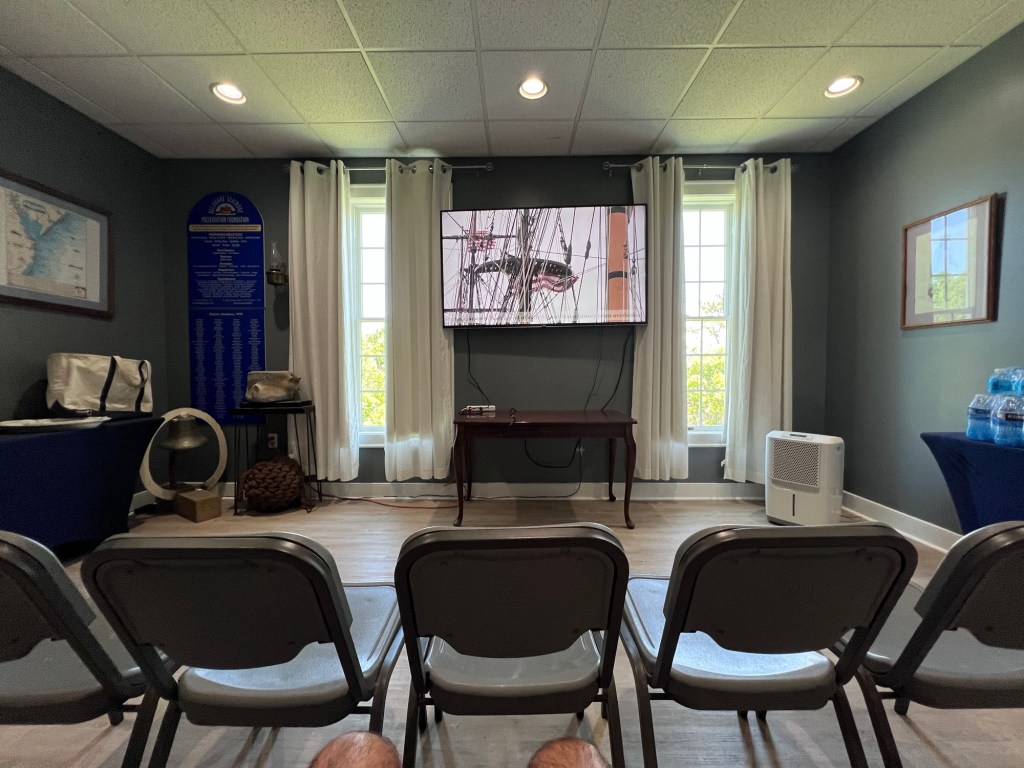
The Screening Room in the Visitors Center where you learn about the Life Saving Center
I started my tour of the Indian River Life Saving Museum at the Visitors Center with a quick video of the history of the building and the men who lived and worked here. The organization was the precursor to the modern Coast Guard. What I thought was interesting is that the way of rescuing people has not changed that much since the 1800’s. It has modernized with equipment and knowledge but the process is still similar to what it was then.
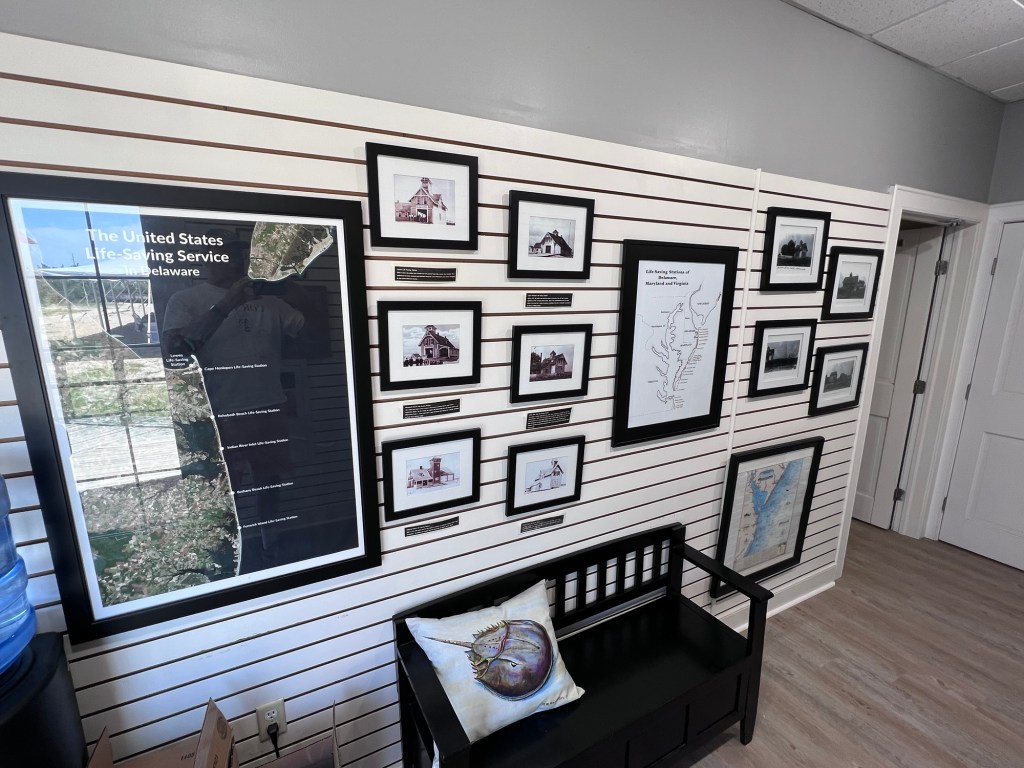
The Screening Room lined with historical pictures
The Screening Room lined with pictures of the history of the area
You can take two audio tours as you start to tour the station building just by calling into your phone, one of the exterior and one of the interior, room by room. Each room and many objects have a number assigned to them and you can listen to a description of the subject matter.
The Rescue Saving Station from the exterior. The building has a Queen Ann design.
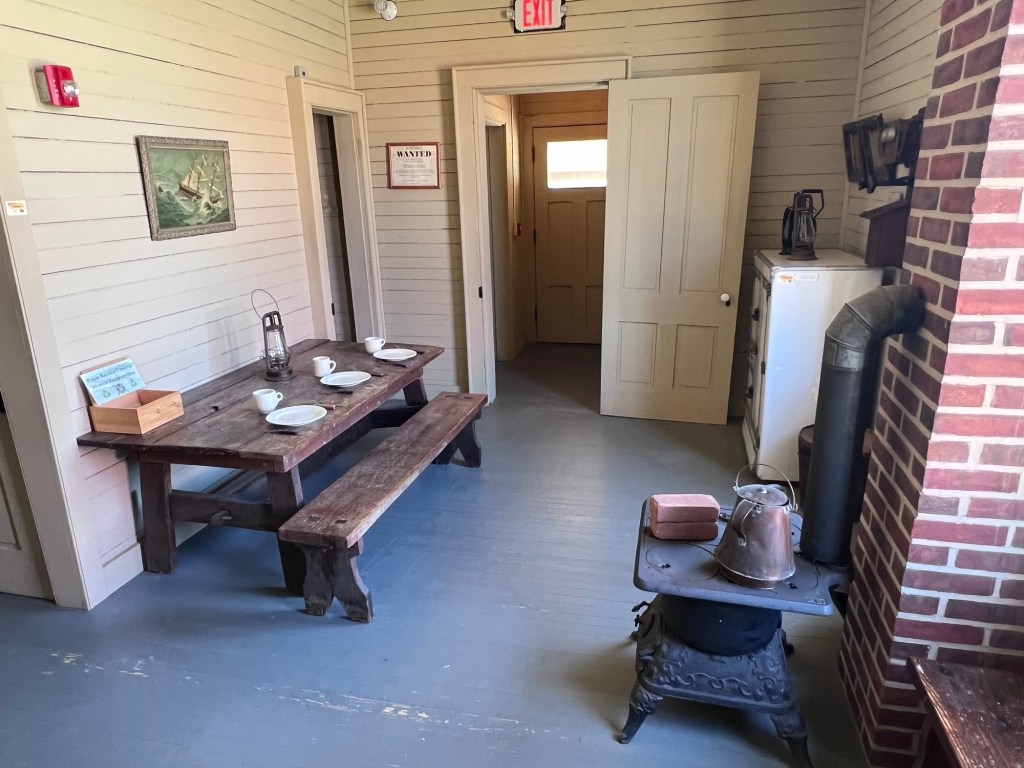
The first room you enter is the kitchen area where all meals were prepared and the men ate their meals. These men could not leave the facility because of the hours and type of work required, supplies were brought in and stored in this area.
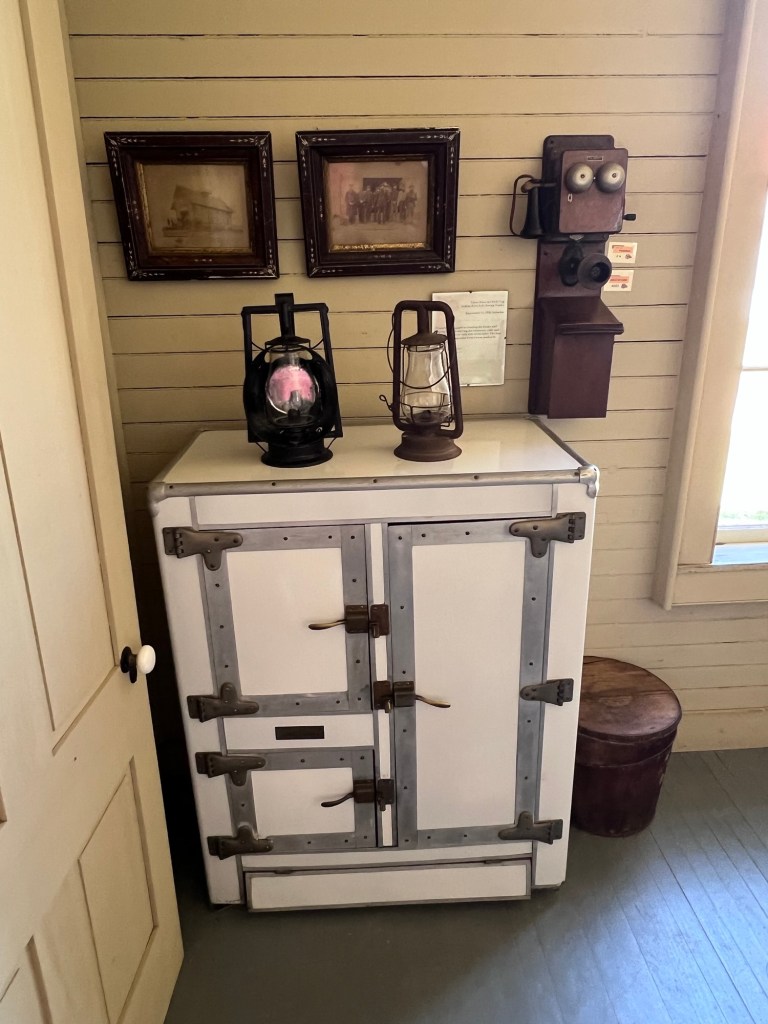
The old ice box where foods were stored
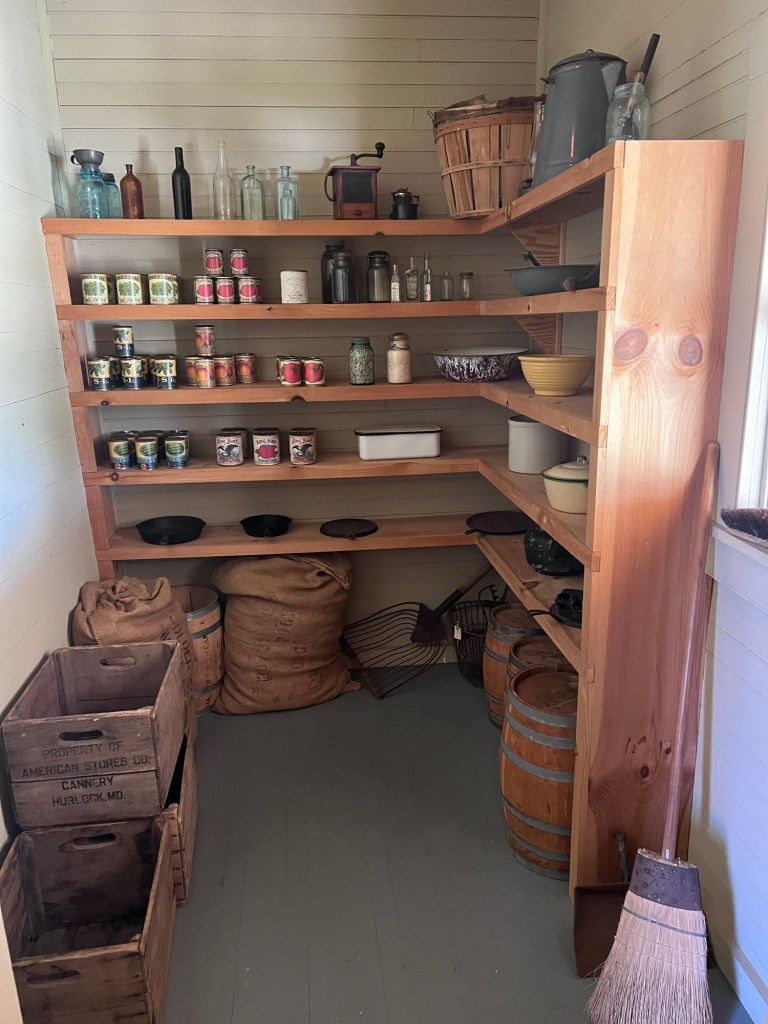
The pantry area where all the dry goods were stored
For recreation, the men read, entertained themselves with music and conversation. This room was used for recreation purposes and some down time for the staff.
The first floor downstairs room was used for entertainment and recreation during the downtimes
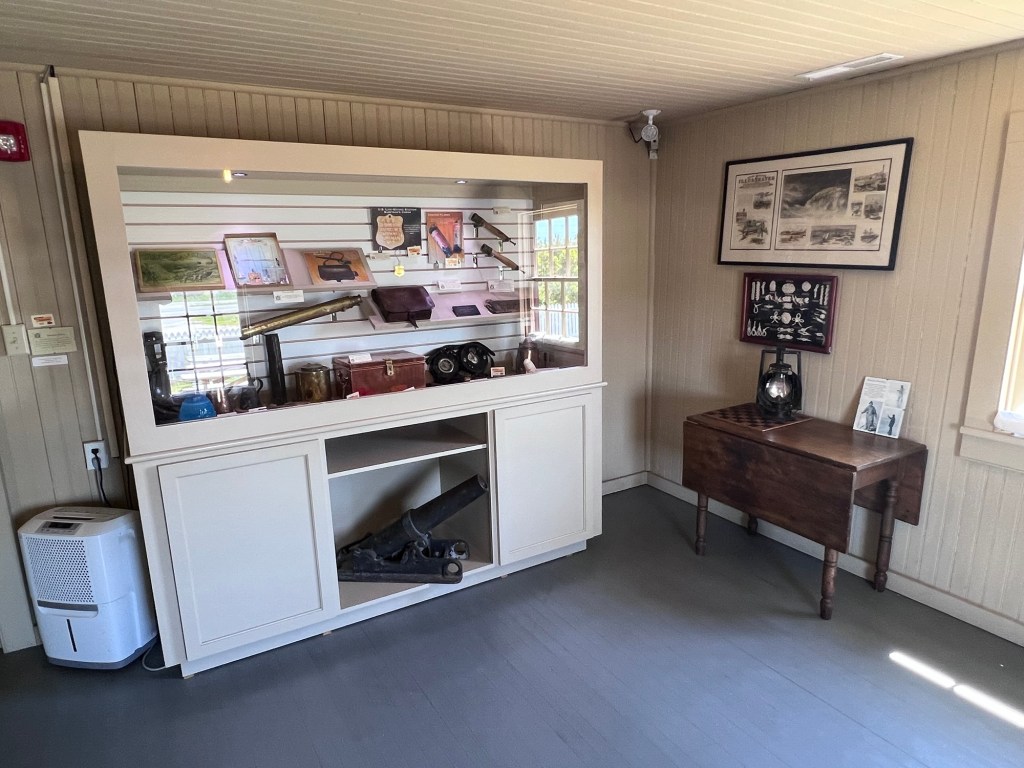
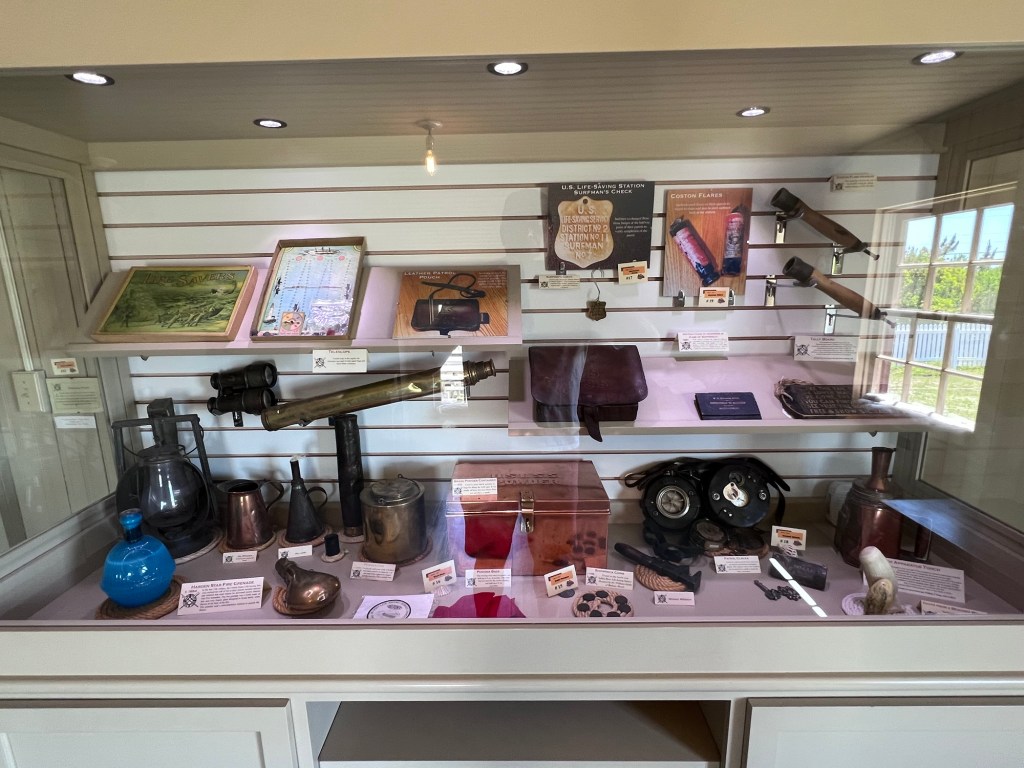
Old equipment and relics on display in the main room
Old equipment used at the station house
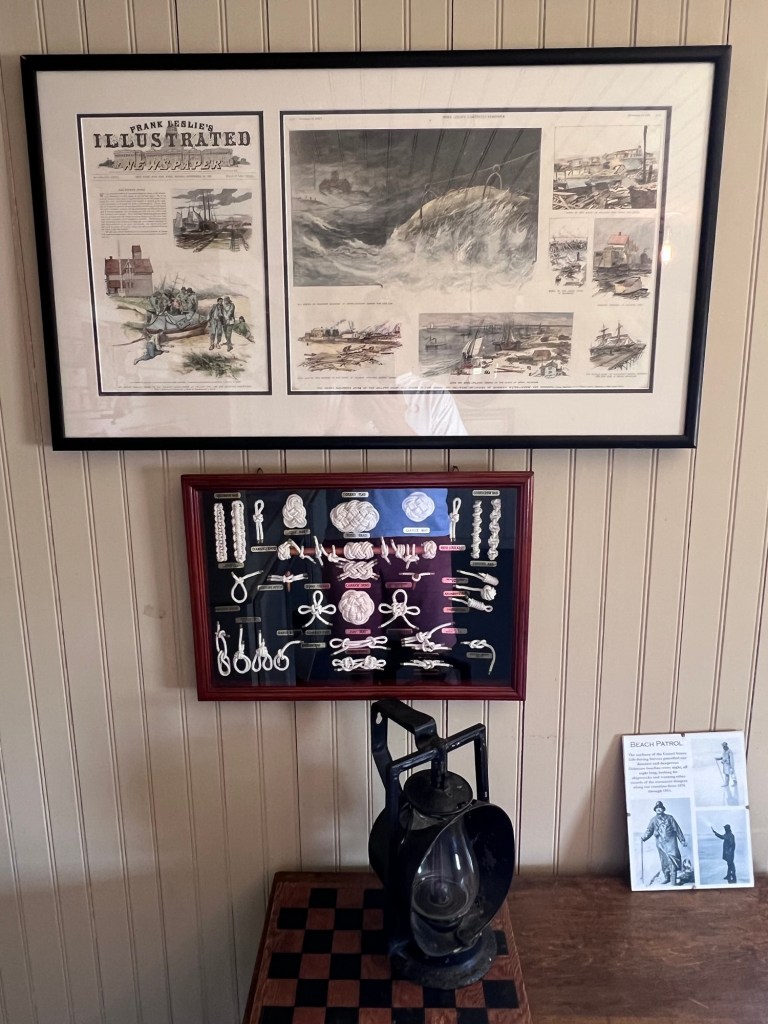
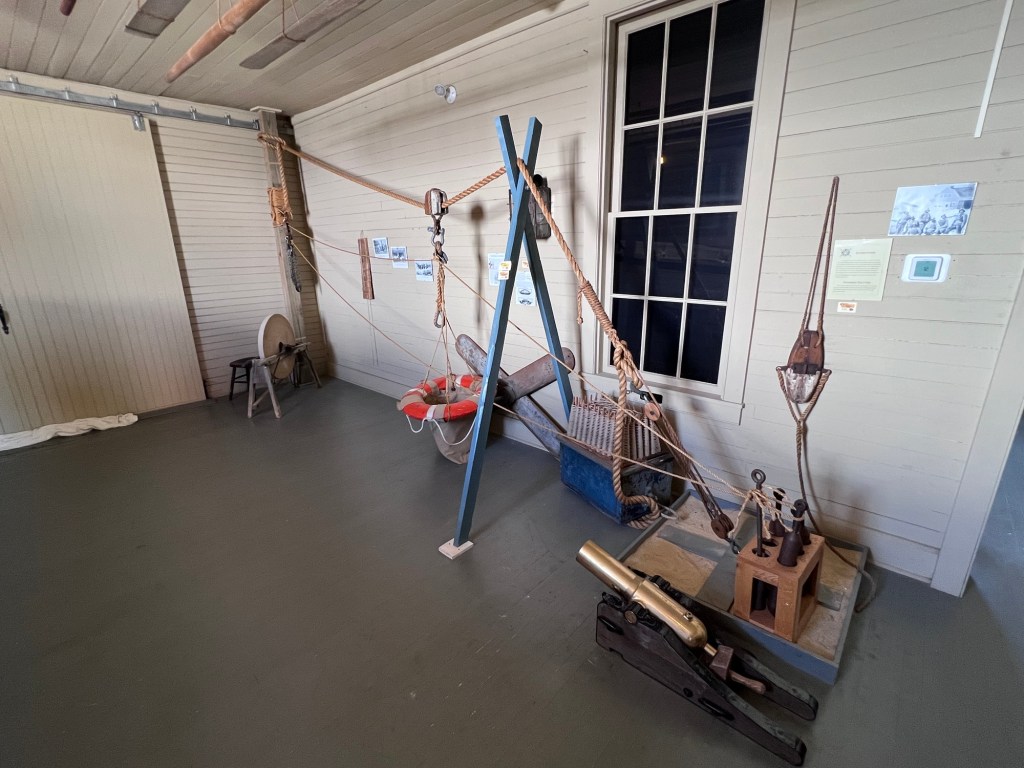
Methods of tying ropes and nautical rescues illustrated
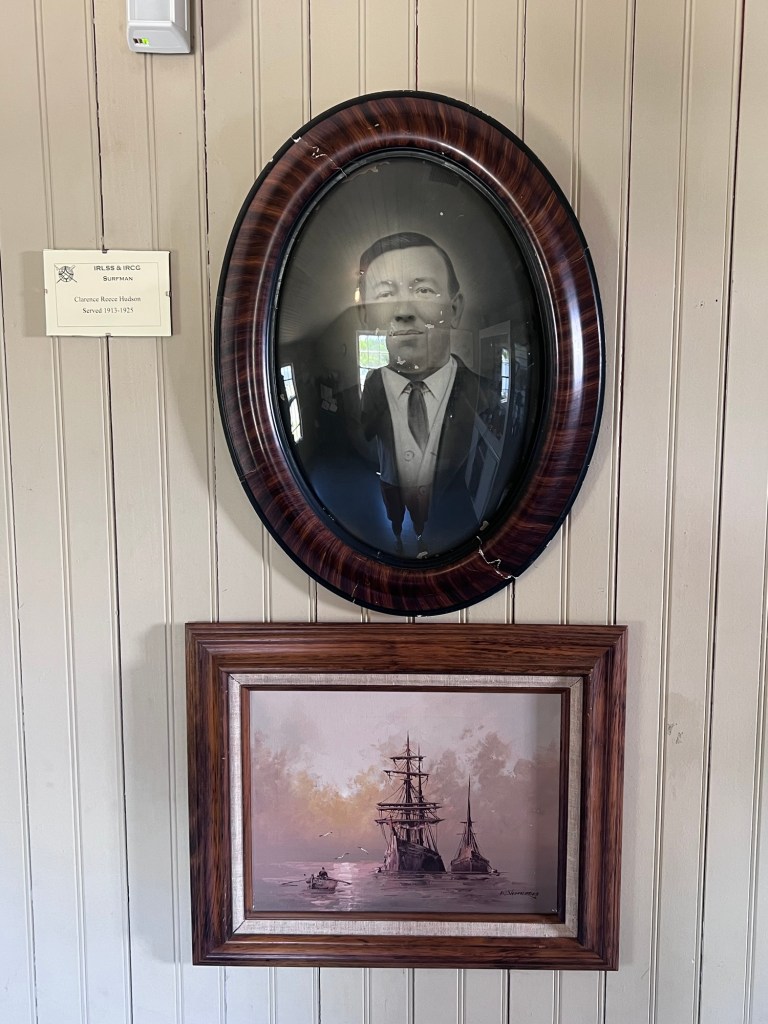
Portrait of one of the old station masters
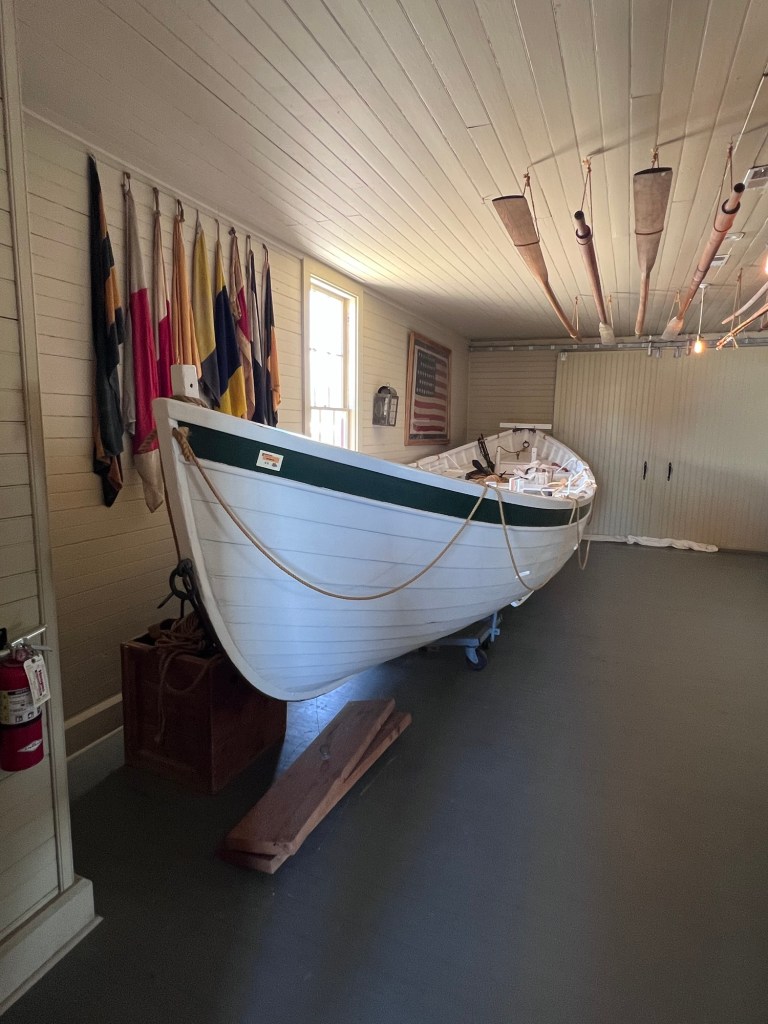
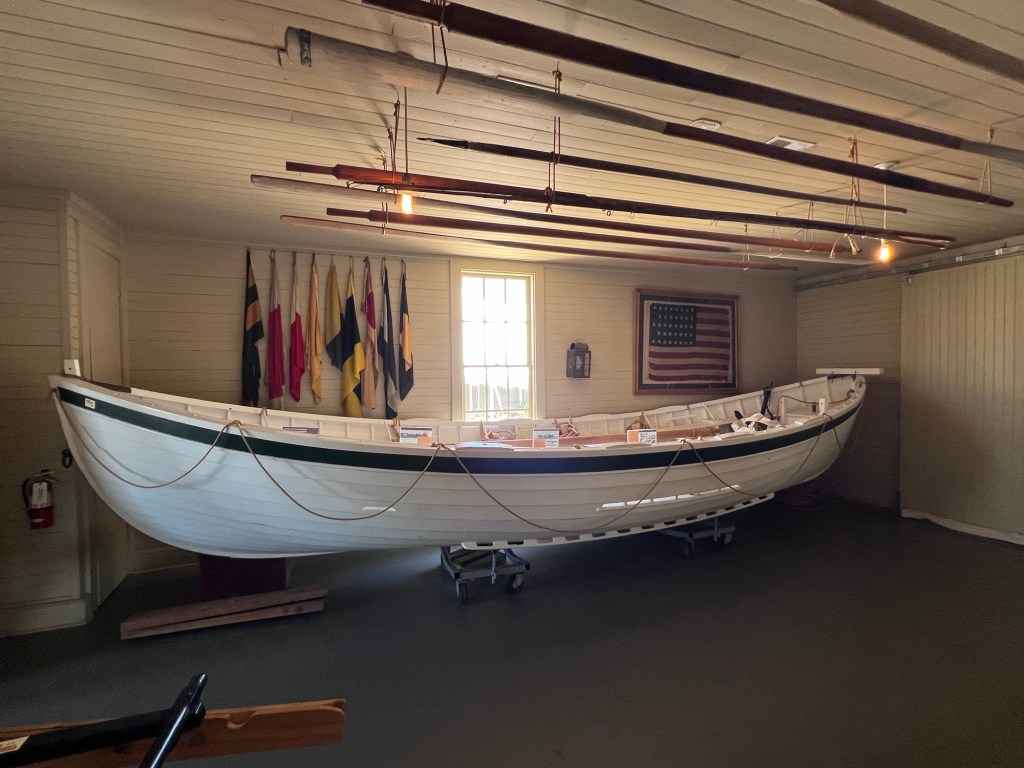
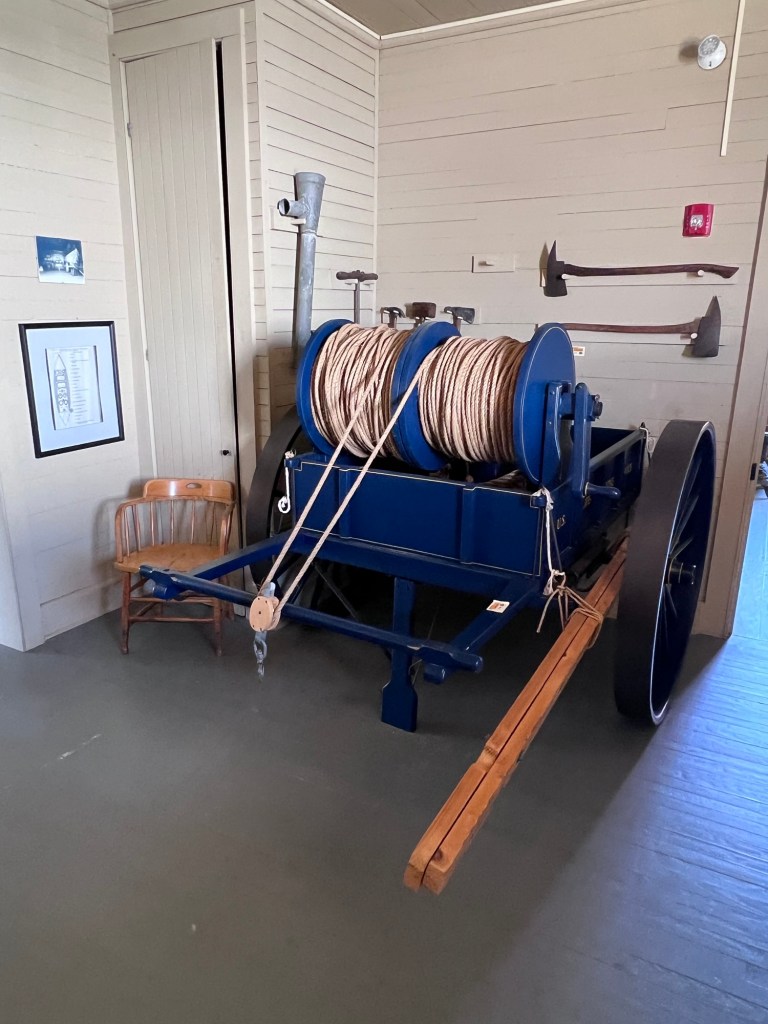
The main room held all the rescue equipment used to save both people and property. This included all the boats, ropes, pulleys and buckets for rescue.
The main rescue boat and paddles
The rescue boat used by the station to save people and cargo
Ropes and wenches to save and pull in damaged vessels
The bucket rescue method
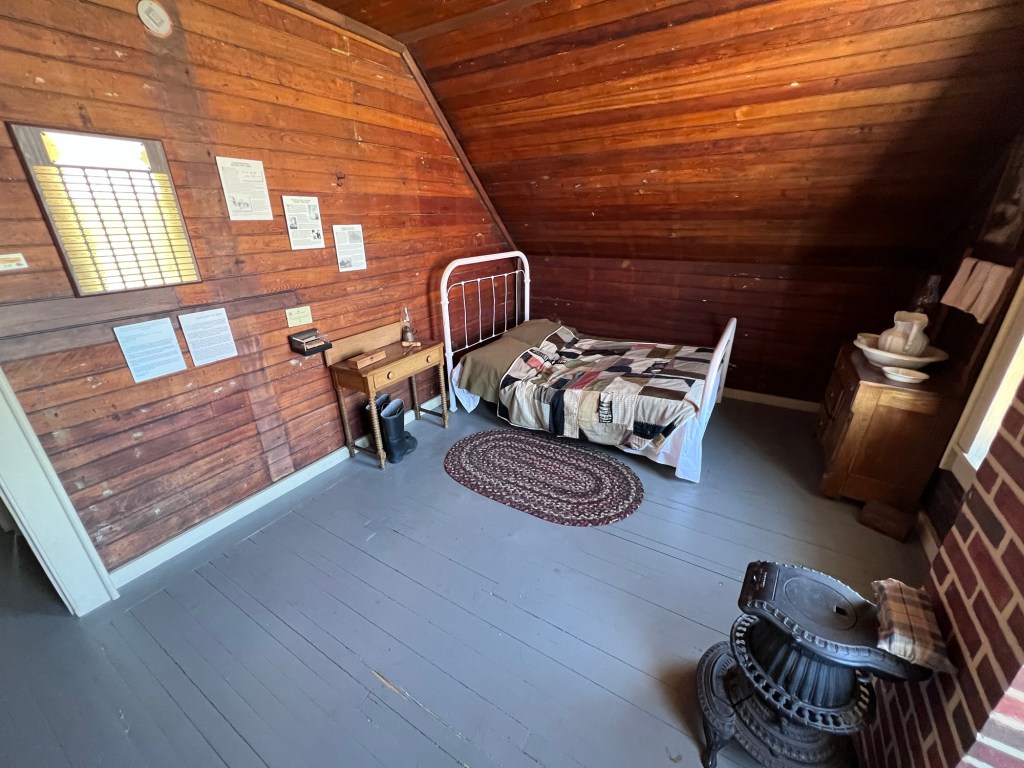
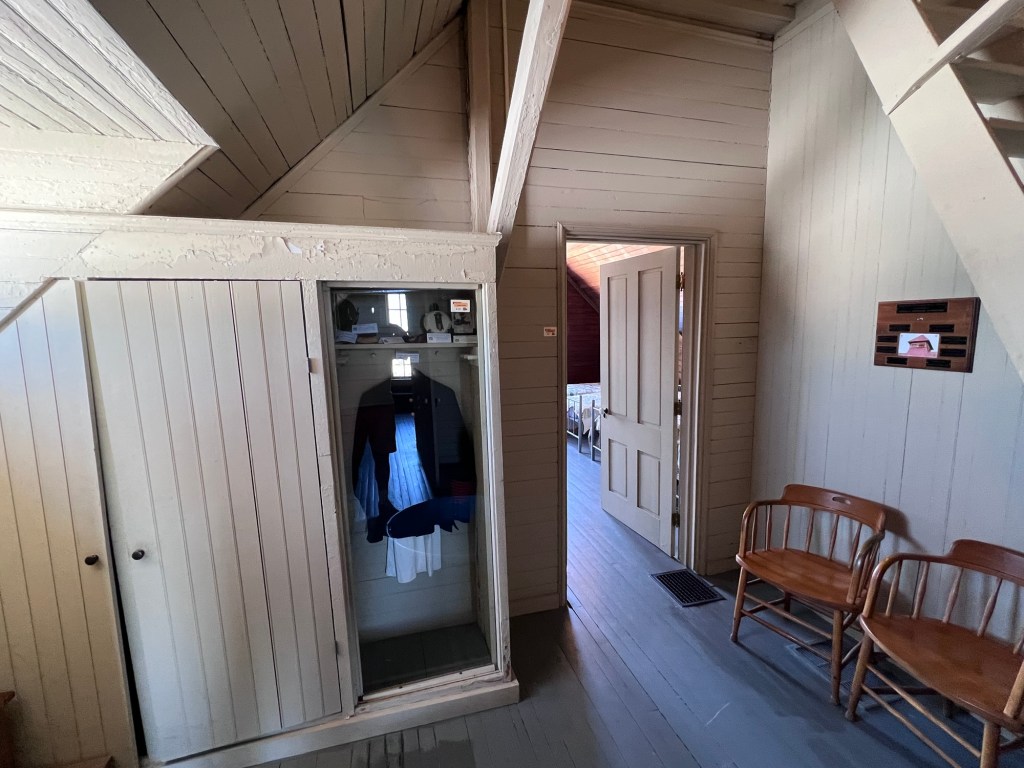
The second floor contained the living quarters. Since the Team worked in shifts, pretty much no one left the building except for small breaks. The men slept in shifts with one man working night duty in four hour intervals to watch the shore for wrecks.
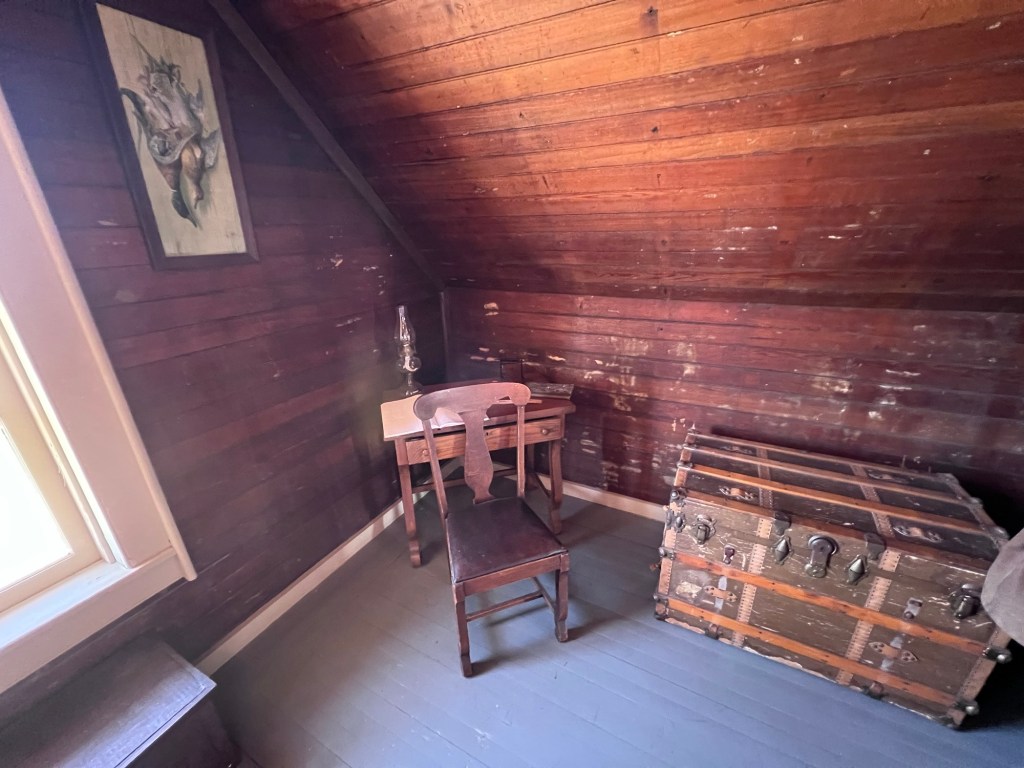
The living quarters for the station master
The small office in the room
The men slept on one room with the window facing the sea in a dorm like setting. The room was equipped with natural light and a view of the sea to watch over the coastline.
The bedroom of the men on duty
The bedroom
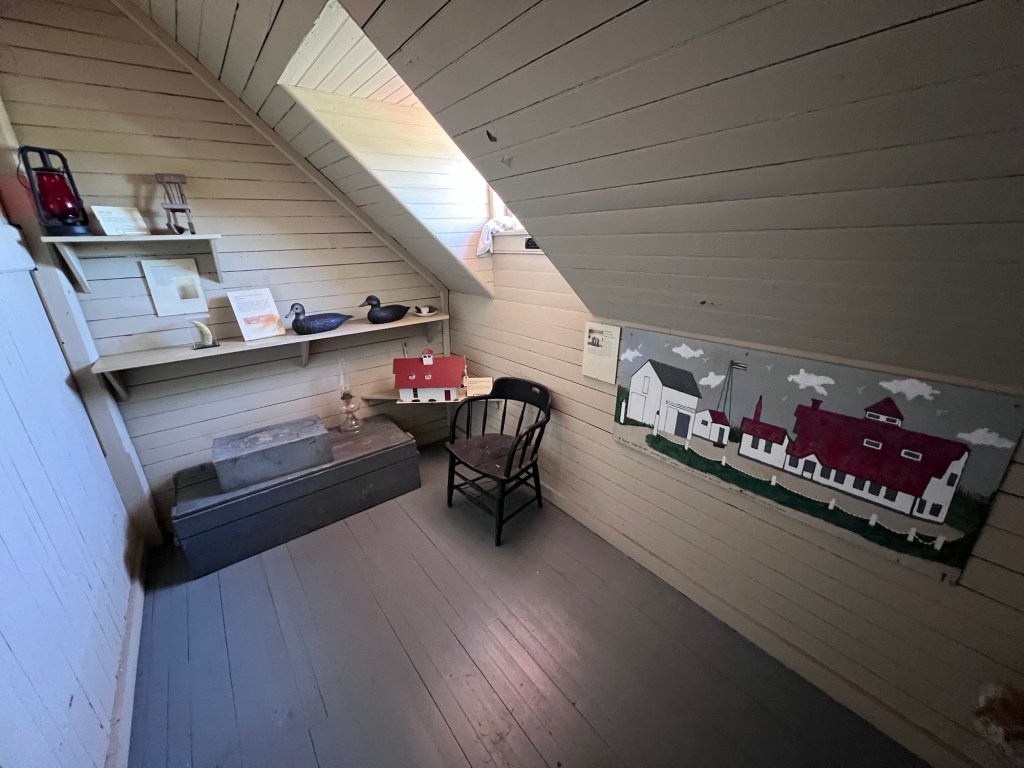
Separate room for private time
The locker storage area where each man’s personal items
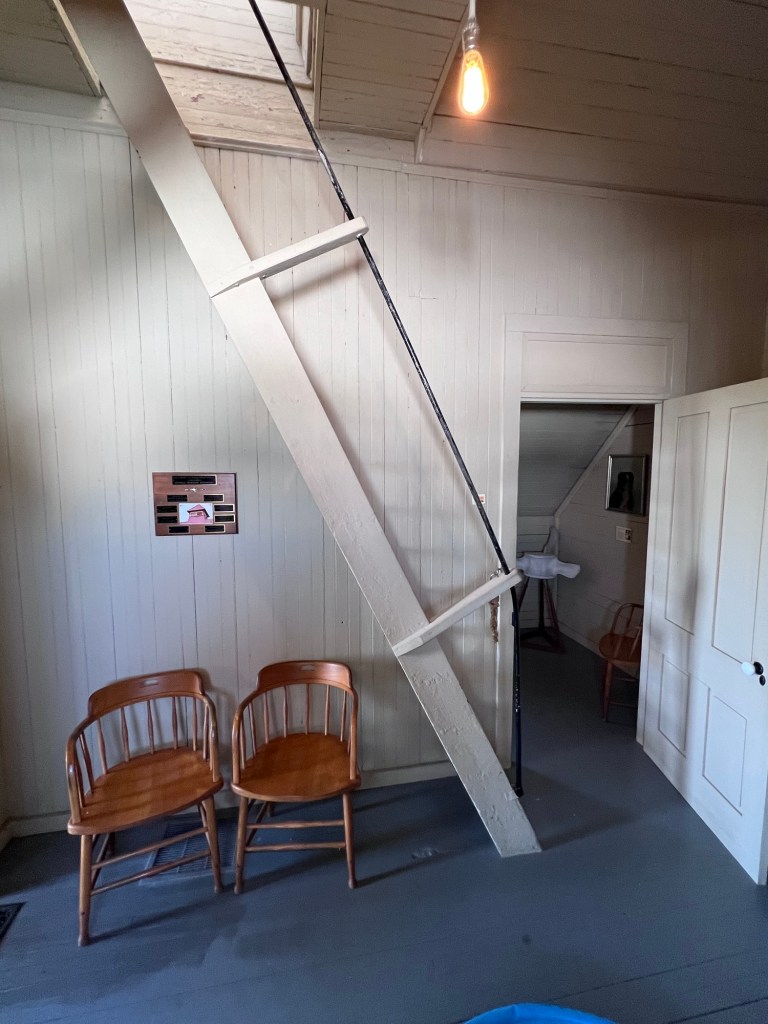
The stairs leading to the portico for lookout duties
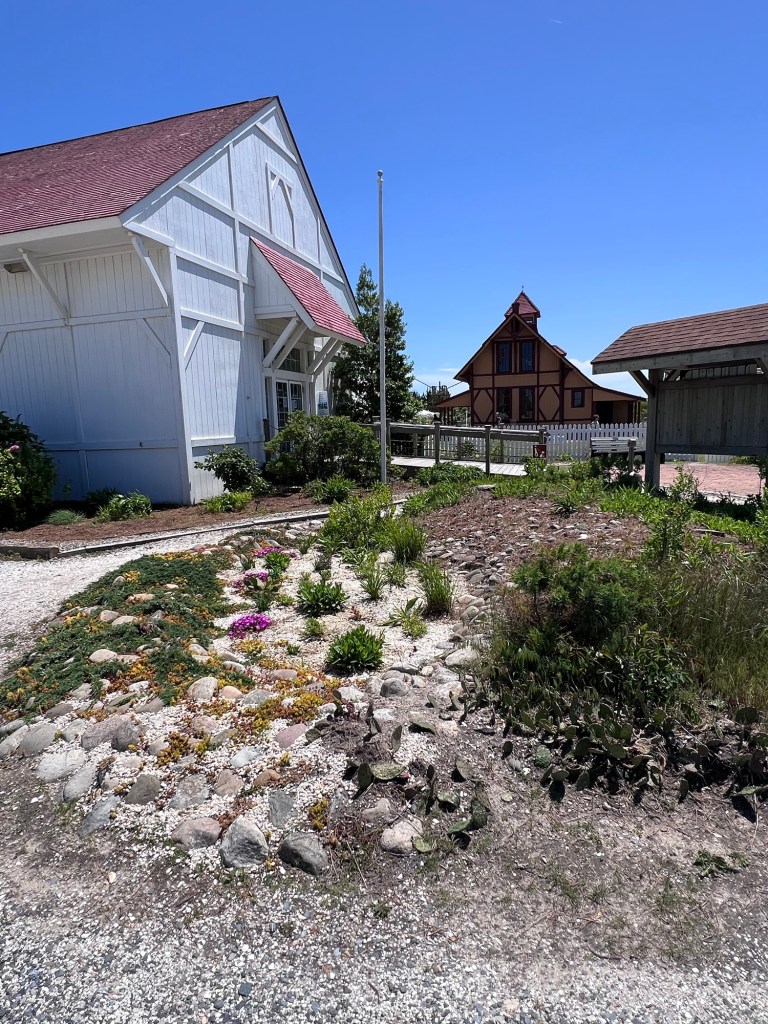
The grounds of the Rescue Saving complex and its location near the beach.
The tour was a lot of fun and gives you a glance of the heroism and isolated life of these men must have been back then. Today there are things like rotations and vacations, opinions that some of the men back then did not seem to have. Still these brave, well trained men kept the beaches and the oceans safe for many seafarers.






























 Visiting a Museum: The Unique, Unusual, Obscure and Historical