Category: Small Museums and Galleries in New Jersey

The Wyckoff Historical Society                                              The Barbershop next to the Pond                                               Wyckoff, NJ 07481

The Wyckoff Historical Society The Barbershop next to the Pond Wyckoff, NJ 07481

The Wyckoff Historical Society

The Shop next to the Pond

Wyckoff, NJ  07481

http://www.wyckoffhistory.org

Hours: Please check the website above

Fee: Please check their website

My review on TripAdvisor:

The Wyckoff Historical Society was established to research, preserve and educate about the rich history of Wyckoff, NJ. The organization was founded in 1974 and is incorporated. Recent programs included a walking tour of Wyckoff.

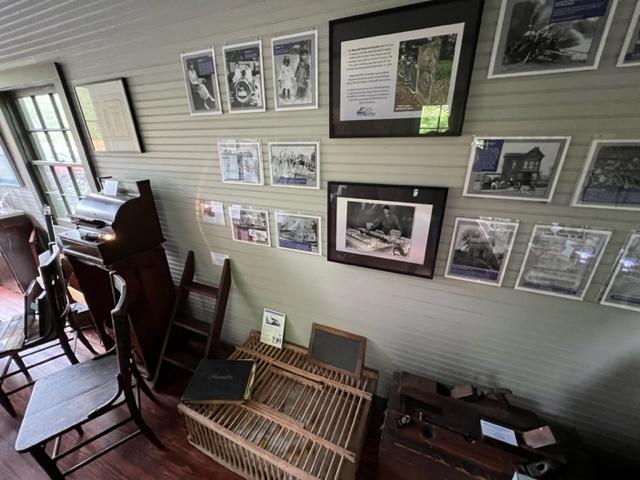
The Society recently restored the old Wyckoff barbershop that was donated to them and now sits on the town property by the Zabriskie Pond and the historic Zabriskie Home. Inside the building houses all sorts of local artifacts, farm tools and vintage furniture along with historic photos of the town of Wyckoff, NJ.

The little building sits right on the Zabriskie Pond.

The Zabriskie Pond in Wyckoff, NJ

History of the Museum:

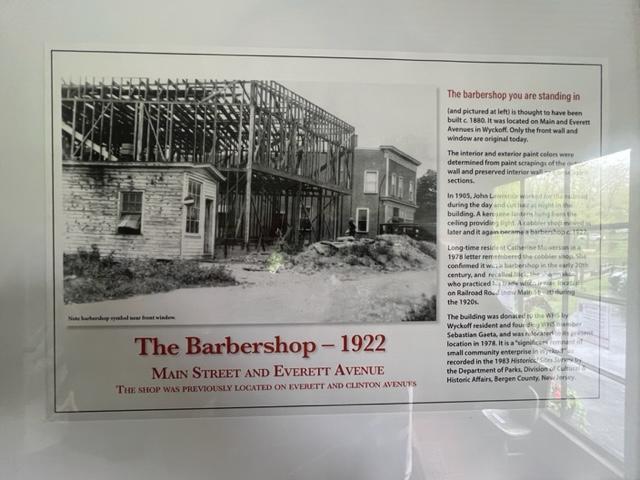
This 1890’s structure was recorded as being a barbershop in 1905 when it was owned by John Lawrence, who worked for the railroad by day and cut hair at night. It was also a cobbler shop for several years and again a barbershop. The building was on Main Street and Everett Avenue relocating to its current home and donated to the Wyckoff Historical Society by resident and member, Sebastian Gaeta.

The farming display at the Barbershop Museum

The history of the building

The building was neglected for several years and was restored several times, most recently in the summer of 2018 by the society including a full paint job of the interior and exterior and refinishing the bare floors.

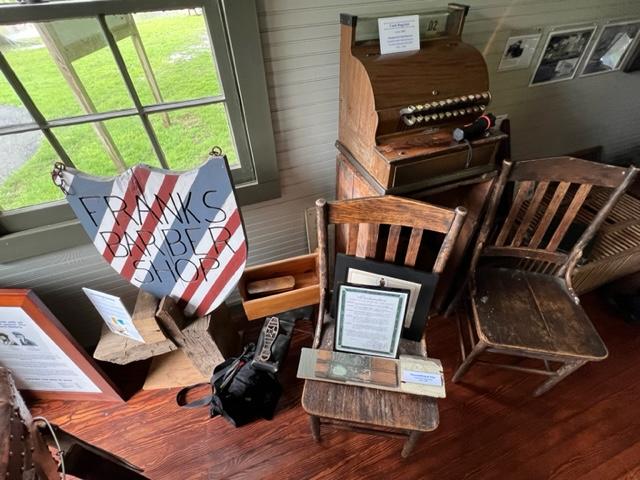
The barber chair from the old barber shop

On display are artifacts from Russell Farms, a barber chair from longtime Wyckoff barber, Frank Muscara, a 1905 child’s dress, Lenape artifacts, a Hoosier cabinet and photographs.

The Native American Collection

Artifacts from Wyckoff’s past

Artifacts from old businesses in Wyckoff and the surrounding areas

The tiny museum has a display of its own history as a barbershop on the Main Street of Wyckoff, NJ and how the building served as a local center for its citizens. It was eventually moved as times changed and became the museum it is today telling the story of the Town of Wyckoff, NJ.

The history and movement of the building when it left its original location

The history of the barbershop

The history of the building and the barbershop and of Wyckoff, NJ

Where the building was located in Wyckoff, NJ

Please check their website for opening dates.

The beauty of the Zabriskie Pond on a fall day in 2022. The area is just beautiful.

The Zabriskie Pond in Wyckoff, NJ

Disclaimer: This information was taken directly from the Wyckoff Historical Society pamphlet and I give them full credit for the information. Please email them for more information.

Thomas Edison National Historical Park, Laboratory Complex and Glenmont                   211 Main Street                                                  West Orange, NJ 07052

Thomas Edison National Historical Park, Laboratory Complex and Glenmont 211 Main Street West Orange, NJ 07052

The Thomas Edison National Historical Park

211 Main Street

West Orange, NJ  07052

(973) 736-0550

https://www.nps.gov/edis/index.htm

Open: Sunday 10:00am-4:00pm/Closed Monday-Tuesday/Wednesday-Saturday 10:00am-4:00pm

Note: There are renovations going on at the site so please call ahead to check on hours and fees.

The Thomas Edison National Historical Park, Laboratory Complex and Glenmont home are a step back in time when machines were run by belts and pulleys and music was played on phonographs. Where to the passerby, the buildings betray little evidence of the industries they once started. Discover where America’s greatest inventor changed our world forever.

The Laboratory site Complex contains:

  1. Visitor Center (Restrooms & Gift shop)
  2. Chemistry Laboratory
  3. Chemical Storage and Pattern Shop
  4. Metallurgical Laboratory
  5. Main Laboratory
  6. Powerhouse
  7. Blacksmith Shop
  8. Building 11
  9. Vault 12
  10. Black Maria
  11. Water Tower
  12. Vault 32
  13. Vault 33
  14. Building 35 (Maintenance Facility)

Park Information:

The Laboratory Complex is open Wednesday through Sunday. The Glenmont Estate is open Friday, Saturday and Sunday. Glenmont tickers are limited and are distributed on a first-come, first-serve basis from the Laboratory Visitor Center. Please call for specific hours.

Fees:

Entrance Fee-$10 (Under 16 years old free)

Optional Laboratory Audio Tour-$5

Park Annual Pass-$40

Inter-agency Passes Accepted

Group Reservations: Call 973-736-0550 ext. 33

Filming and Photography: Call 973-736-0550 ext. 50

Corporate Events: Call 973-736-0550 ext. 50

For more Information: http://www.nps.gov/edis (973) 736-0550 ext. 11

Calendar of Events: http://www.nps.gov/edis/planyourvisit/events/htm

*Thomas Edison National Historical Park Facebook.

Directions to Glenmont:

*Please respect the privacy of our neighbors by driving directly to and from Glenmont.

Directions to Glenmont:

*Put your pass on the dashboard of your car

*Right out of the parking lot

*Right at the first light and stop at the gatehouse

*Go up Park Way

*Right onto Glen Avenue

*Left onto Honeysuckle Road

*Right into paved parking lot

*Tour begins in front of the home

*Restrooms located in Potting Shed/Visitor Center

*Information is taken from National Park Service, US Department of the Interior, Thomas Edison National Historical Park, West Orange, New Jersey.

My review on TripAdvisor:

https://www.tripadvisor.com/Attraction_Review-g60796-d1023095-Reviews-Thomas_Edison_National_Historical_Park-West_Orange_New_Jersey.html?m=19905

I had visited the Laboratories of Thomas Edison and it is very interesting to tour the floors of inventions. There are very innovative items that I never knew he invented, things like talking dolls and many household items for the kitchen and home.

Edison National Site.jpg

Another room they showed was his private office where he did most of his personal work and spent his sleeping hours when working at the laboratory. Each of the rooms show how and at what stages of the invention process that each object.

Edison National Site II.jpg

Glenmont, the family home, can be a musty place in the colder months. The house smells like it is old. It needed a good airing out. The period furniture are very interesting. The house is full of Victorian elegance but it needs a good renovation. The walls and ceilings  need some plastering and the home needs a good deep cleaning. Still it is interesting that for all their prestige, they still lived more like an upper middle class family.

The history Edison National Historical Park:

Thomas Edison National Historical Park preserves Thomas Edison’s laboratory and residence, Glenmont, in Llewellyn Park in West Orange in Essex County, NJ. These were designed, in 1887, by Henry Hudson Holly. For more than 40 years, the laboratory had a major impact on the lives of people worldwide. Out of the West Orange laboratories came the motion picture camera, improved phonographs, sound recordings, silent and sound movies and the nickel-iron alkaline electric storage battery (Wiki).

Edison’s home was designated as the Edison Home National Historic Site on December 6, 1955. The laboratory was designated as Edison Laboratory National Monument on July 14, 1956. On September 5, 1962, the 21 acre site containing the home and the laboratory were designated the Edison National Historic Site and overseen by the National Park Service. On March 30, 2009, it was renamed Thomas Edison National Historical Park, adding “Thomas” to the title in hopes to relieve confusion between the Edison sites in West Orange and Edison, NJ. Following extensive renovations of the laboratory complex, there was a grand reopening on October 10, 2009 (Wiki).

Historic Glenmont Mansion:

Thomas Edison resided at Glenmont, his 29 room Victorian mansion, for over half his lifetime. Its architect, Henry Hudson Holly, is considered to be the father of the Queen-Anne style architectural movement in the United States. Holly’s crowning achievement, Glenmont, was part of a working estate which presently contains six outbuildings including a barn and a greenhouse. Examples of Thomas Edison’s poured concrete structures, the auto garage and the potting shed are also still in existence. (Wiki).
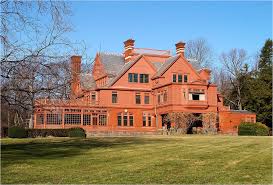
Glenmont

Thomas Edison’s Home “Glenmont”

The interior of the fully furnished Victorian home is a rare example of Pottier & Stymus interiors, a New York decorating firm that lost the majority of its records in a catastrophic warehouse fire in the year 1888. Glenmont’s interiors display rare examples of the firm’s modern Gothic style furniture suites and also include decorative arts objects chosen by the company to outfit this home in Victorian style. The Edison family appreciated the original interiors, consequently making only minimal changes to the home’s decoration during their residency (Wiki).

Glenmont’s period rooms reflect examples of the era’s Eastlake style and Aesthetic Movement style interiors. The first floor library boasts hand stenciled walls in flat, stylized floral patterns with a ceiling of distemperment. Tall case cabinets store leather bound volumes. The decorative arts collection at Glenmont ranges from major works of art and sculpture to everyday objects. The collection, consisting of 40,000 items, includes remarkable examples of Hudson River School artists and antiques (Wiki).

Glenmont II

Examples of more utilitarian items include the Edison china collection, still housed in the historic Butler’s Pantry, the household linen collection, family toiletry items, books and household receipts that detail purchases made by the Edison family.  These vouchers reveal to us the Edison’s choice of household products and their spending habits (Wiki).

Disclaimer: The above information on the history of the house and labs came from Wiki and I give the format full credit for the information. The above information also comes from the National Parks Services pamphlet and I give them full credit for the Visitor’s information.

The Arnault/Bianchi House                                  111 First Street                                                 Wood Ridge, NJ 07075

The Arnault/Bianchi House 111 First Street Wood Ridge, NJ 07075

The Arnault/Bianchi House

The Wood Ridge Historical Society

111 First Street

Wood Ridge, NJ  07075

https://en.wikipedia.org/wiki/Fridolin_Arnault_House

Open: Please check out their website; only for special events

Fee: Donations accepted

My review on TripAdvisor:

https://www.tripadvisor.com/Attraction_Review-g46937-d17154691-Reviews-The_Arnault_Bianchi_House-Wood_Ridge_New_Jersey.html?m=19905

I recently visited the Arnault/Bianchi House for a historic lecture by an actress who portrayed Amelia Earhart. It was an interesting afternoon of listening to the actor keep in character and describe her life just before her flight around the world. After the show, the actor was available for conversation with the audience and there was a light lunch after the performance. I thought this was a nice touch to end the afternoon.

The second time I visited the house, it was for the 125th Anniversary Celebration and the Society had all sorts of artifacts out on display. They had the history of the schools, fire department and the police department. They had old council pictures as well as pictures of World War II veterans who fought in the war who lived in town.

There was a also a nice display of the Curtis Wright Plant that once stood at the edge of town and its part in the war effort. There were all sorts of pictures and documents on display of the factory when it was in full function.

After walking the three rooms of artifacts, there was a light reception with cookies, tea and coffee.

The History of the Arnault/Bianchi House:

The town of Wood Ridge, NJ,  where the Arnault/Bianchi House is located has made a commitment for the house to be used for cultural events and hands on programs such as poetry readings and author visits.

The house was built in the 1880’s  by one of Wood Ridge’s founding father’s, French wine merchant, Fridolin Arnault. The Frenchman used  to sell his Bordeaux blends on Fifth Avenue in New York City. His relatives, Rudolphe and Annick Proust, traveled from Paris last year to visit the ‘country house’ of their uncle (The Wood Ridge Historical Society).

The second owner was designer Joseph Briggs, Louis Tiffany’s right hand man. Briggs  is responsible for the stained-glass  window designs  at the Church of St. Paul’s and Resurrection in Wood-Ridge. He eventually sold the house to the Bianchi’s . Not much is known about the Bianchi family (The Wood Ridge Historical Society).

Arnault House II.jpg

The inside of the house.

The backyard features gardens, meticulous landscaping, enough lawn space for a a grand social affair reminiscent of the Great Gatsby, benches, decorative stone and the exterior buildings the outhouse and carriage house. The second and third floors are not open to the public and are used for storage and the home still needs some repairs. In most of the lower floors are period furnishes and art work (The Wood Ridge Historical Society).

Please watch the papers and the town’s website for future events.


The Paterson Museum                                                                              2 Market Street                                                                              Paterson, NJ 07501

The Paterson Museum 2 Market Street Paterson, NJ 07501

The Paterson Museum

2 Market Street

Paterson, NJ  07501

(973) 321-1260

Open: Monday-Friday 10:00am-4:00pm/Sunday-Sunday 12:30pm-4:30pm

Fee: Free

http://www.thepatersonmuseum.com/

http://www.patersonmuseum.com

https://www.patersonnj.gov/department/?structureid=16

My review on TripAdvisor:

https://www.tripadvisor.com/Attraction_Review-g46718-d2704664-Reviews-Paterson_Museum-Paterson_New_Jersey.html?m=19905

The front of the museum

The Paterson Museum is an interesting museum of the history of the City of Paterson, NJ. The museum is broken into different sections of the City’s history. The museum discusses from the time that the Lenape Indians lived in the area to the rise of colonization and then to how it developed into the Silk City  through city planning and placement. The museum covers the history of the City of Paterson in the industrial Age as well with the rise of the Silk Industry, the Wright Airplane Factory, the Colt Revolver and the growth of the hospital industry in the City.

Paterson Fire Department

The Public Safety exhibition

Paterson Steam Engine

Take time to look at the live displays of minerals, Native American artifacts, old fire department equipment and the life and times of its native son, Lou Costello.

The inside of the Paterson Museum

The nice part of this museum is that the parking is free, it can be toured in about two to three hours and it is walking distance to the Paterson Falls and to Little Peru restaurants. It is also free.

The Paterson Falls up the road

Little Peru down the road

The Introduction:

The Welcome Center

The Paterson Museum offers a ‘History within History’ experience. Located inside the former erecting shop if the Rogers Locomotive & Machine Works, the museum, presents a glimpse of the rich history and the many factors that gave rise to Paterson, New Jersey: “America’s First Planned Industrial City.”

From the natural wonders and the first inhabitants of the land that lay below and above the ground to the vital role Paterson played in setting of our nation’s industrial course. Through the museum’s exhibits. you’ll find out why Paterson was known for more than a century as the “Silk City.”

Silk City

You’ll discover that Paterson was at the forefront of locomotive, submarine and airplane engine development. And that’s just the beginning of our story. By the time you finish your visit, you will want to learn more about this city that surrounds the Great Falls.

The Exhibitions:

Paterson Residents: There are exhibitions on such celebrity natives as Lou Costello and his life after living in Paterson are shown in detail.

The Lou Costello exhibition

The Lou Costello exhibition

Baseball players, football players and actors have shown against all odds and color barriers they found success in the world with Paterson being their roots.

Sports in Paterson, NJ

The Silk Industry

Silk City: The history of Paterson as ‘Silk City’ features winders, warpers and power-looms that produced beautiful fabrics. How the Falls and the location of the City of Paterson played its part in the garment industry at the turn of the last century. Not just in the silk industry but also in other companies like the Wright Aeronautical Corporation and the their time as a manufacturer in Paterson.

The Paterson Fire Department

The Paterson Fire and Police Departments: The history and development of both the Paterson Police and Fire Departments are told through pictures, stories, uniforms and equipment through the ages. There are many turn of the last century fire trucks in the museum.

World War Exhibition: The museum has a wonderful exhibition on the history of Paterson and the role it played in the World Wars. There are all sorts of uniforms, munitions and stories to tell.

The War years

The Veterans exhibition

Geographical: There is a whole side exhibition of gems and minerals both native and from all over the country at the museum and a full display of native New Jersey stone formations. There is also a discussion of how the Falls played such an important role inf the development not just of the City of Paterson but of New Jersey as well.

The Minerals

Alexander Hamilton Exhibit: The history and life of Alexander Hamilton is told from the time he was born in the Caribbean to his coming to the United States, his marriage and his rise through the ranks of the government. There is how he helped develop the banking industry and paying of the government debts to his fall from grace and his eventual fatal duel with Aaron Burr.

The Alexander Hamilton exhibit

Lenape Indian Culture: The Lenape Native American culture is shown how the tribes developed, lived, worked and hunted and gathered to create the society that was in place before colonization.

The Lenape exhibit

There are all sorts of tools, displays on their regions of living, language, housing (there is a recreation of a Tee Pee here), that native wardrobe and a complete display of tools and arrow heads. It is a very detailed account of life as a Lenape Indian.

Lenape Exhibition at the Paterson Art Museum

The Lenape Indian exhibition

The Lenape exhibition

The museum shows the history not just of Paterson but of the surrounding areas and how growth of the City of Paterson made an impact on the region.

The history of Paterson, NJ

The history of Paterson, NJ

The history of Paterson, NJ at 109 years old