Category: Historic Sites of New York State

Fort Jay                                                       Governors Island                                                 New York City, NY 10004

Fort Jay Governors Island New York City, NY 10004

Fort Jay

Governors Island

New York, NY 10004

My review on TripAdvisor:

https://www.tripadvisor.com/Attraction_Review-g60763-d136072-Reviews-Governors_Island_National_Monument-New_York_City_New_York.html?m=19905

My review on MywalkinManhattan.com in 2018 and 2024:

https://wordpress.com/post/mywalkinmanhattan.com/7658
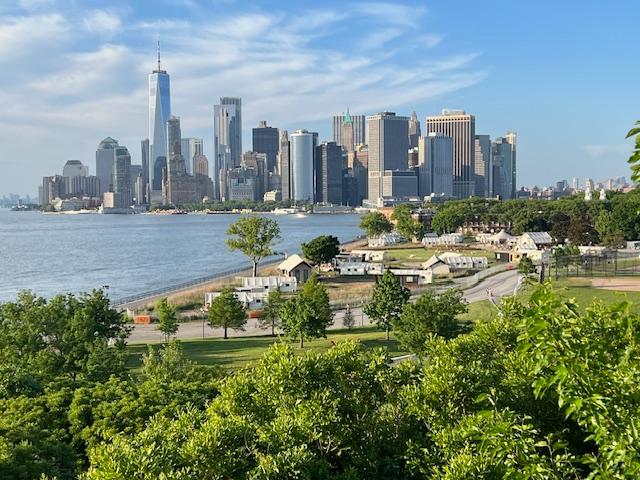
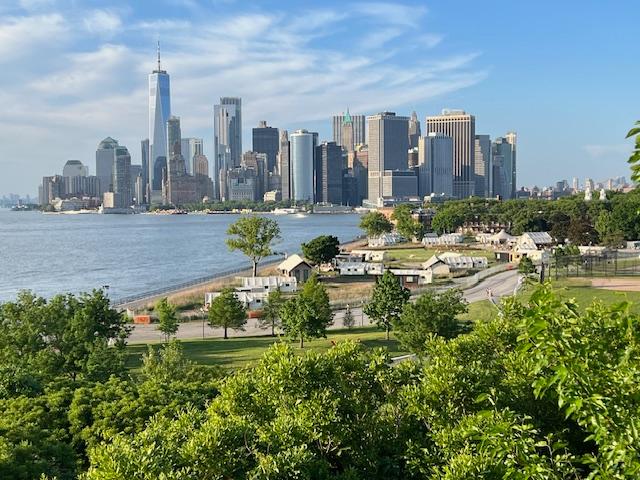
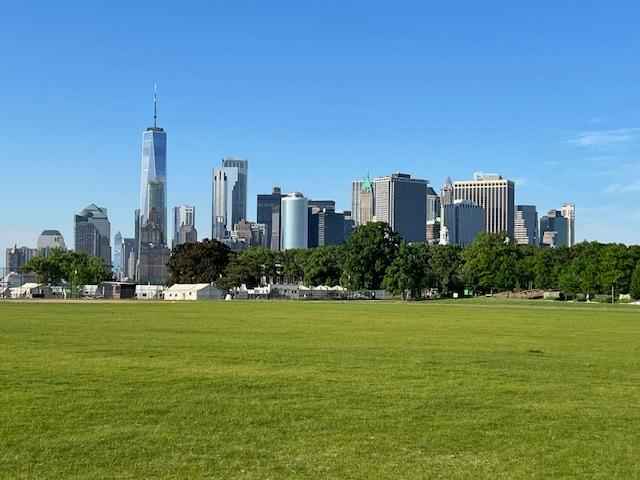
The view from the top of the hill on Governor’s Island.

When I was touring Governors Island for my blog, “MywalkinManhattan.com”, I explored the Fort Jay complex which is located on the northern end of the island just past Castle Williams. This fort is mostly in a state of ruin and is currently being restored at various stages all around the complex. The decorative entrance with its statuary is being cleaned and the entrance fixed on one side of the fort and the walls and some of the interior space is being repaired inside the fort.
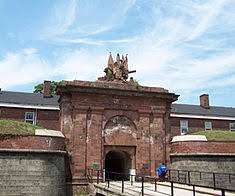
The main entrance to Fort Jay (currently under restoration)

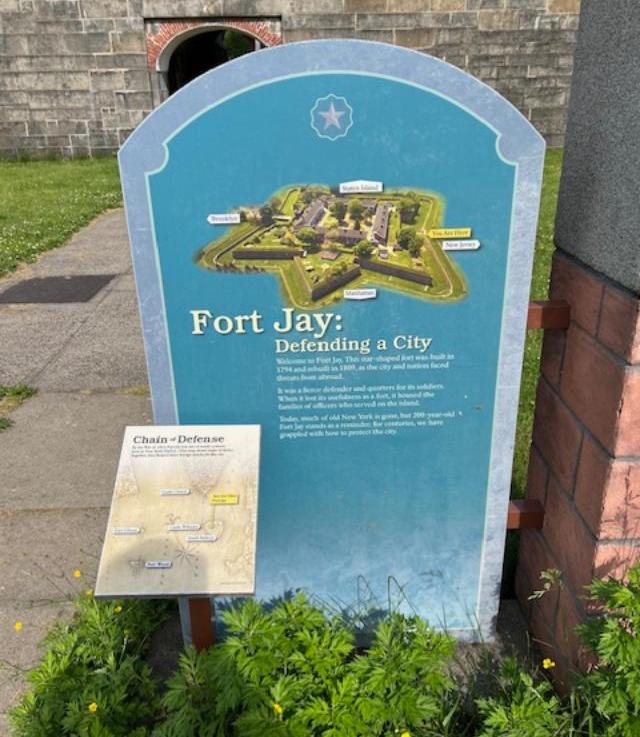
This fort and Castle Williams were built to protect the City of New York between the Revolutionary War and the War of 1812. After that these forts fell out of use as the times and technology changed .
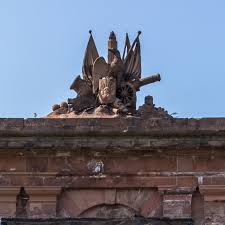
The decorative statuary is being repaired on the fort (currently under restoration)

Now the fort is used for art exhibitions in some of the interior hallways and grass has grown over most of the walkways. Still it is interesting to walk along the pathways near the walls of the fort and see how they were once used. It is interesting to see how far we have progressed in warfare.
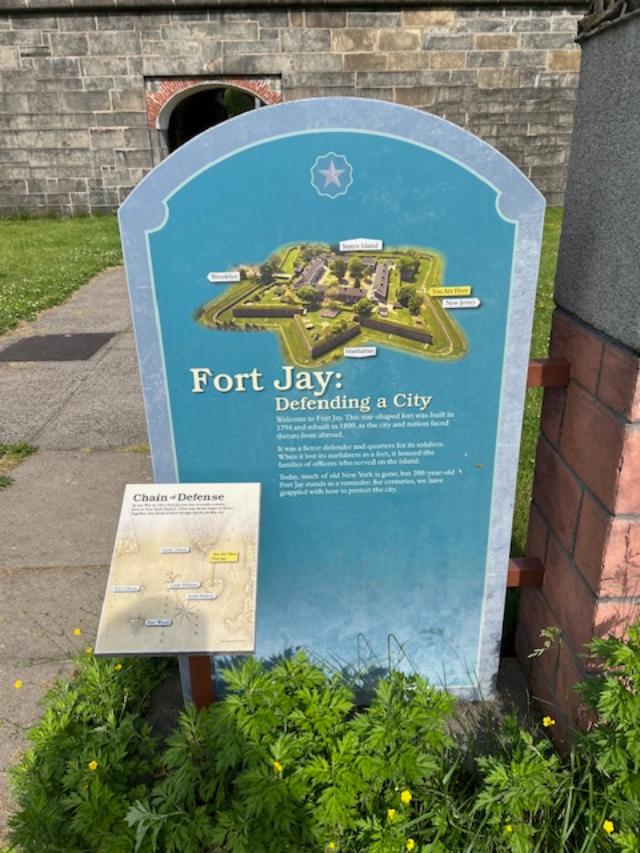
The entrance to Fort Jay

The History of Fort Jay:

Fort Jay is located on Governors Island in New York Harbor, one half-mile from the southern tip of Manhattan. No defensive works are known to have been erected on the island during its early history. Defensive earthen works were first erected on the highest point of Governors Island by Continental troops in 1775-76. The island and its fort were occupied by the British during the American Revolution until 1783, when it surrendered, along with several buildings to the Governor of New York.
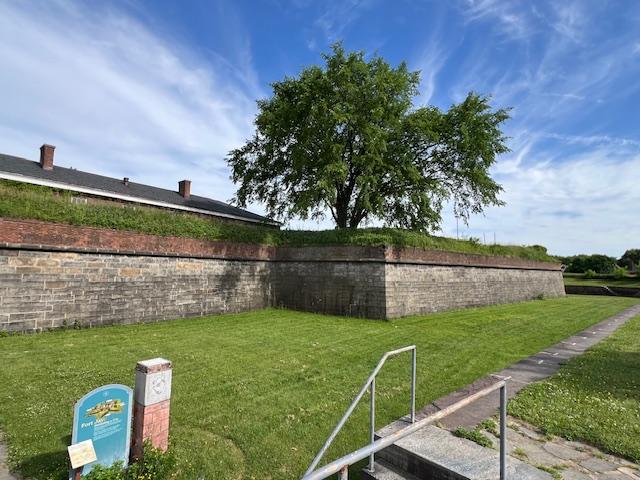
More than ten years passed before renewed tensions with Great Britain resulted in funding from both the New York Legislature and the United States Congress in 1794 to reconstruct the works on Governors Island. This part of a larger national effort to fortify ports that later became known as the First American System of coastal fortifications.

Design of the New York Harbor defenses was assigned to French engineer Charles Vincent. The works on Governors Island had been completed by 1796, described in January of that year by the Secretary of War as “a fort made of earth and two batteries under its protection, partly lined with brick masonry, two air furnaces, a large powder magazine and a barrack for the garrison.”
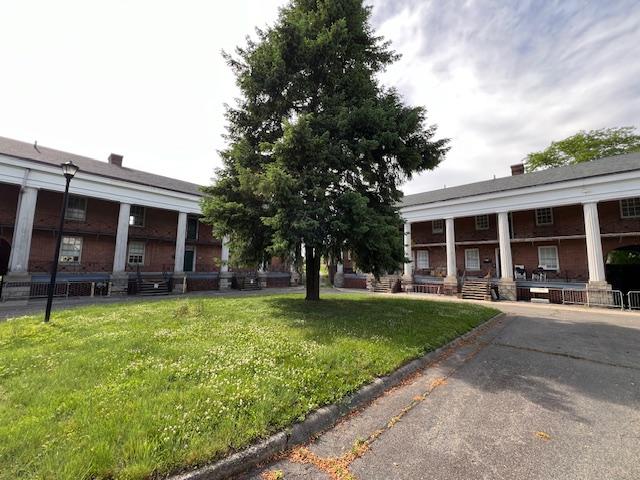
The inside of Fort Jay.

Fears of a French invasion in 1797 resulted in a second phase effort funded by additional appropriations to complete and enhance the coastal fortifications, including those on Governors Island. The fort is said to have acquired the name “Fort Jay” in 1798 for John Jay, then the Governor of New York State. Governors Island and its fort were conveyed to the federal government two years later in 1800, by an Act of the New York State Legislature.
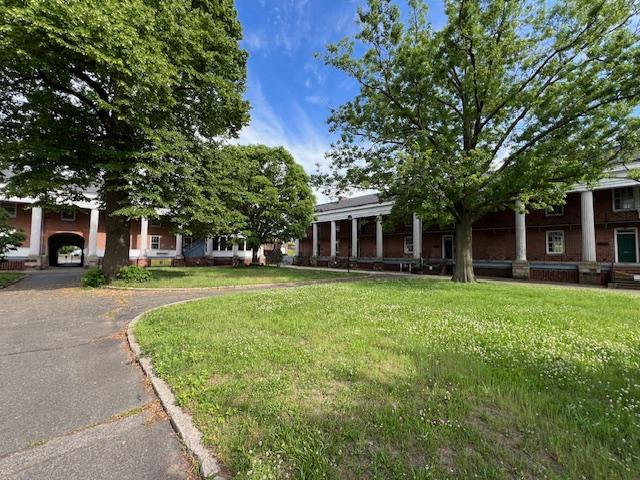
The inside of Fort Jay

A plan of the fort as it existed that year shows it as a four-bastioned form surrounded by a ditch with a parapet having 51 embrasures, a gate and bridge on the east side and a large magazine in the northeast bastion. The fort was still incomplete and incapable of defense in 1802 according to a written report, although it was then equipped with a “handsome Gateway with a Corps de Garde” or guardhouse, that survives today.

Fort Jay had fallen into ruinous condition by 1806 when a second national campaign to strengthen the coastal defenses of the country, now known as the Second American System of fortifications, was implemented. This effort differed from the first by employing American engineers and using more durable masonry construction.

The outside wall of the fort.

The engineer chosen to design and oversee the defenses of New York Harbor was Colonel Jonathan Williams, Chief Engineer of the Corps of Engineers and first Superintendent of the Military Academy at West Point. Reconstruction of Fort Jay, renamed Fort Columbus about this time, began in July 1806 and was completed by December 1809. The only components of the old fort judged worth saving were “the walled Counterscarp, the Gate, the Magazine and the Barracks,” according to Colonel Williams in a report dated November 1808.

The completed fort was described in a later report to Congress as “an enclosed pentagonal work, with four bastions of masonry, calculated for one hundred guns, fifty-five mounted with brick barracks for two hundred and thirty men, including officers. The earliest known plan of the completed fort is a plan by Joseph Mangin drawn in 1813.
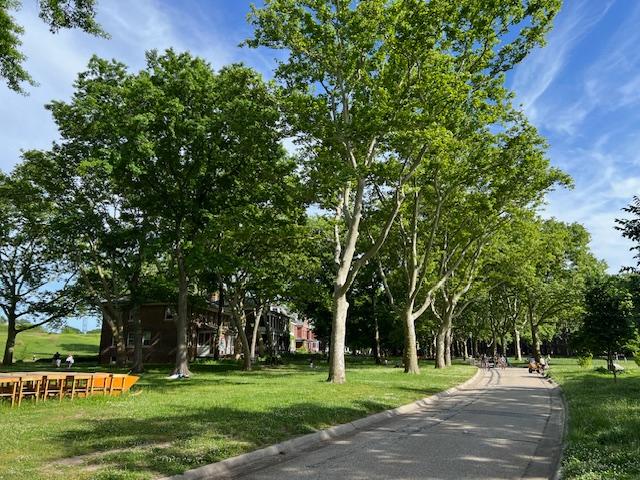
The walkway between the forts.

The first significant repairs and alterations were made to Fort Columbus in the 1830’s, resulting in the overall appearance of the fort as it exists today. The stone retaining walls were extensively rebuilt at this time, including the scarp that was faced with granite and topped with a new brickwork parapet. The old magazine in the northeast bastion was demolished and replaced by four new magazines erected in the north ravelin. Finally, the four existing brick were replaced by four new barracks with flanking triangular structures and outdoor courtyards.

Later changes have been made to the barracks by the U.S. Army over the years, including interior remodeling and replacement of the flat roofs with hipped roofs in 1855-57, incorporated of five of the triangular buildings as additions in the 1860’s and 1898-99 and reconfiguration of the buildings as officers’ apartments in 1921-22 and again in the 1930’s. Paint was stripped from the exterior brick buildings in the 1930’s, the sodded glacis of the fort was converted to recreational use as a golf course by 1940 and the flagstaff was moved from the northwest bastion to the north ravelin by 1953.
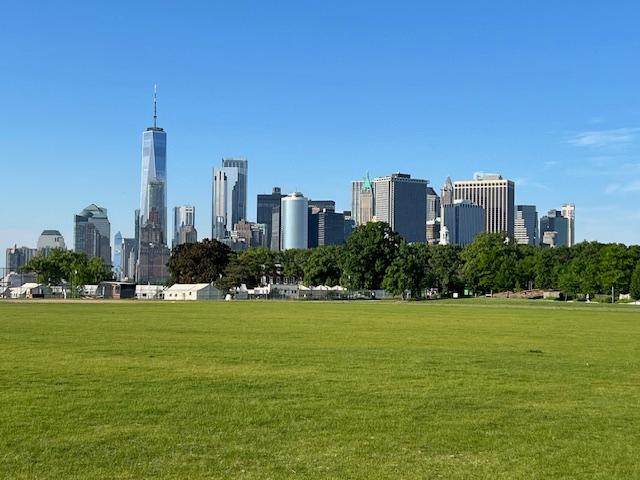
The lawn on Governor’s Island overlooking Lower Manhattan.

Jurisdiction of Governors Island passed from the U.S. Army to the U.S. Coastguard in 1966. Improvements made by the Coast Guard to Fort Jay, whose name was officially reinstated in 1904, included expansion of the golf course; remodeling of the barracks with new kitchens, bathrooms, heating and electrical systems and storm windows and doors and erection of chain-link fencing on the glacis. Fort Jay sat vacant with minimal upkeep since the closure of the Coast Guard in 1997.

Fort Jay was recorded by the Historic American Buildings survey in 1934 and in 1982-83. The fort was individually listed in the National Register of Historic Places in 1974. It was included in a National Historic Landmark District designated in 1985 and a New York Historic District designated in 1996. The fort is also located within the boundaries of the Governors Island National Monument, established by Presidential Proclamations in 2001 and 2003.

(This information I credit to the National Park System-Division of Culture website)
Castle Williams                                           Governors Island                                                 New York, NY 10004

Castle Williams Governors Island New York, NY 10004

Castle Williams

Governors Island

New York, NY 10004

(212) 825-3054
Open: Check the website. It varies by season

https://www.nps.gov/gois/learn/historyculture/castle-williams.htm

https://www.nps.gov/gois/planyourvisit/explore-castle-williams.htm

My review on TripAdvisor:

https://www.tripadvisor.com/Attraction_Review-g60763-d6952984-Reviews-Castle_Williams-New_York_City_New_York.html?m=19905

My trip to Governors Island on MywalkinManhattan.com in 2018 and 2024:

https://wordpress.com/post/mywalkinmanhattan.com/7658

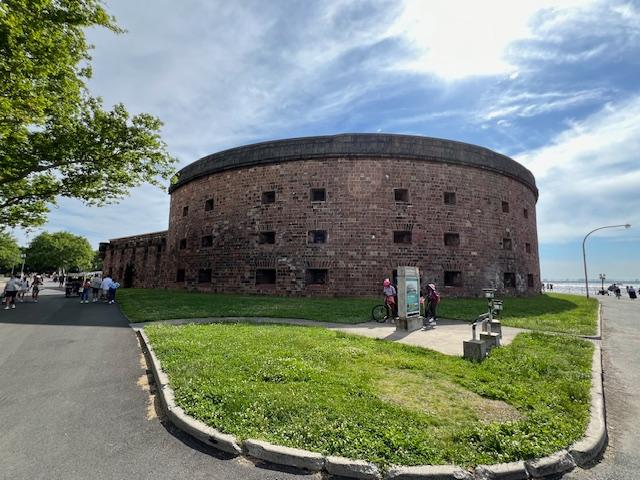
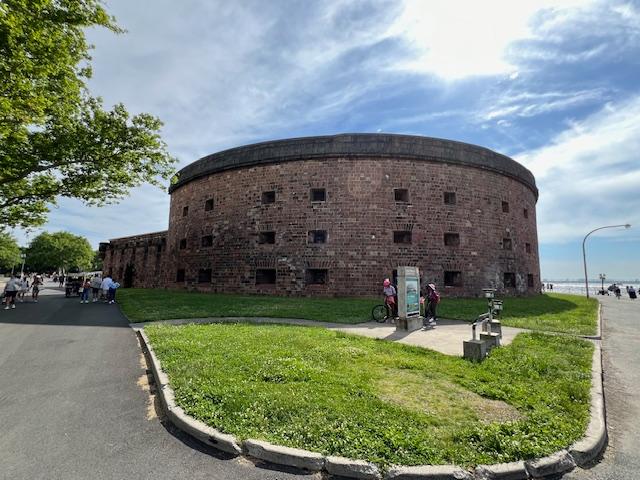
Castle Williams Fort as you enter from the main walkway

I have toured Castle Williams several times when visiting Governors Island over the last two years. The fort sits at a strategic site on the island facing Manhattan. The fort was originally built to protect New York City from the British during the War of 1812. The British knowing that the City had been fortified for battle never attacked New York.

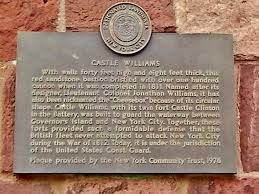
The historic plaque

The tour takes place twice a day for about an hour and you tour the first two levels of the fort. There are all sorts of signs around to show the history of the fort and its uses over the years. The one thing they don’t like is you touching the walls as the fort is still pretty fragile.

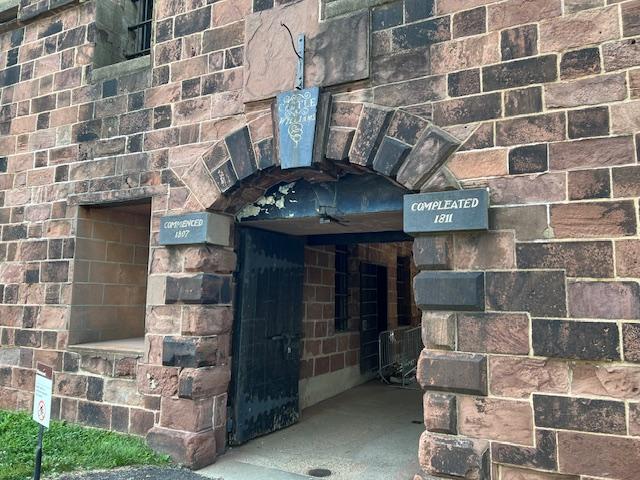
The entrance to this historic fort.

The nicest part of the tour is the observation deck at the top of the fort and the views of the Lower Manhattan skyline. It is a spectacular view of the harbor. You can see by the view why the fort was built where it was built and for its purpose before the War of 1812.

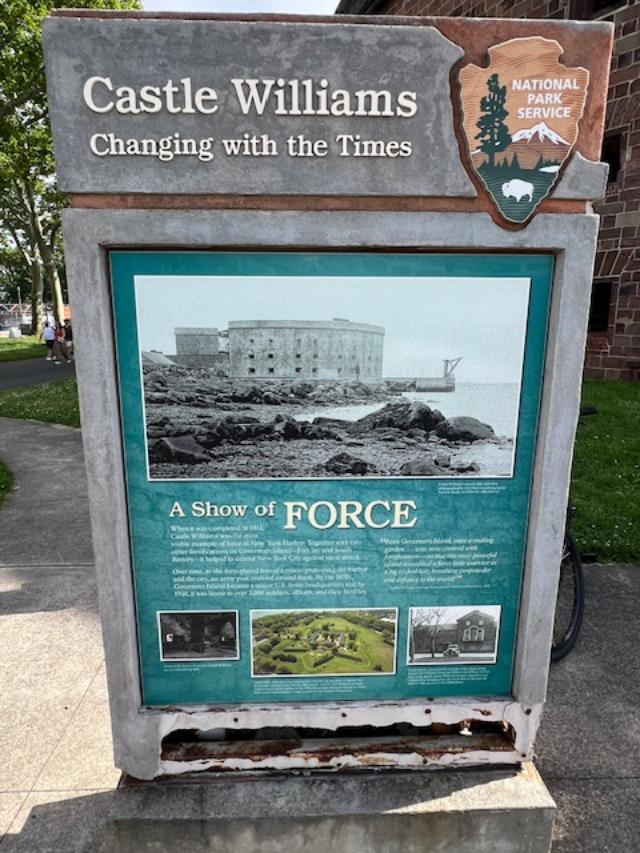
The sign welcoming you to the fort.

It really is a treat to see how fortifications mattered for cities in this time of history in this country.

The History of Castle Williams:

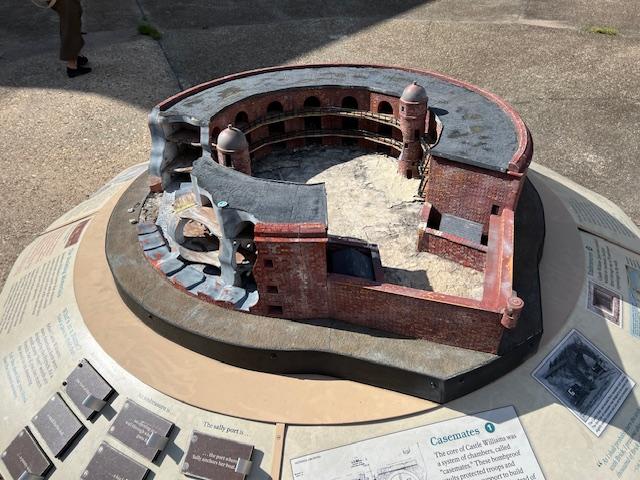
The model of Castle Williams inside the fort.

Castle Williams is a circular defensive work of red sandstone on the west point of Governors Island in New York Harbor. It was designed and erected between 1807 and 1811. It was designed by the Chief Engineer of the U.S. Army Corps of Engineers, Lieutenant Colonial Jonathan Williams for whom the fort was named after. It was considered a prototype for new forms of coastal fortification.

The fort from the outside

The castle was one component of a larger defensive system for the inner harbor that included Fort Jay and the South Battery on Governors Island, Castle Clinton at the tip of Manhattan, Fort Gibson at Ellis Island and Fort Wood, which is now the base of the Statue of Liberty on Liberty Island. This system of forts came to be known as the Second American System of coastal defense and existed to protect harbors like the one in New York from British interference with American Shipping.

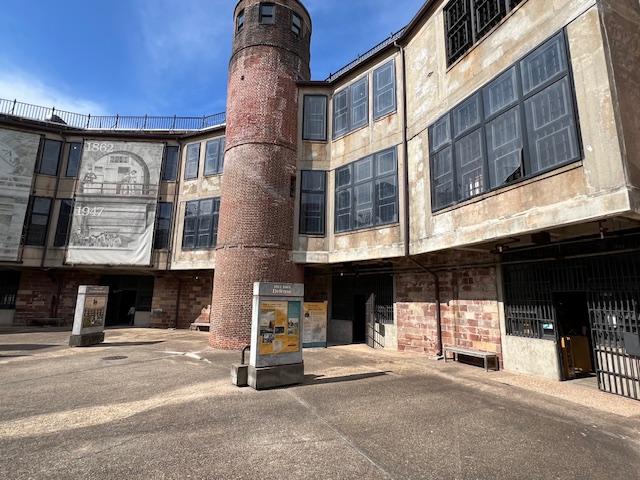
The inside courtyard of the fort.

Its usefulness as a fort began to end in the 1830’s, so Castle Williams subsequently served as barracks for the island’s garrison and new and transient troops. The castle was then remodeled by the U.S. Army for use as a prison in various forms during the Civil War and through the first half of the 20th Century.

In 1901, Secretary of War Elihu Root, who worked hard to modernize the Army, made a commitment to preserve the castle and overruled army leaders who wanted to demolish both it and Fort Jay. By 1903, the castle was fitted up as a model, state of art prison facility. In 1947, extensive renovations were carried out with the wooden catwalks replaced by concrete enclosed walk ways, hiding the beautiful stone arches on the third level and resulting in the industrial appearance of the courtyard today. Castle Williams ceased operations as a military prison in 1965 just before the U.S. Army left Governors Island.

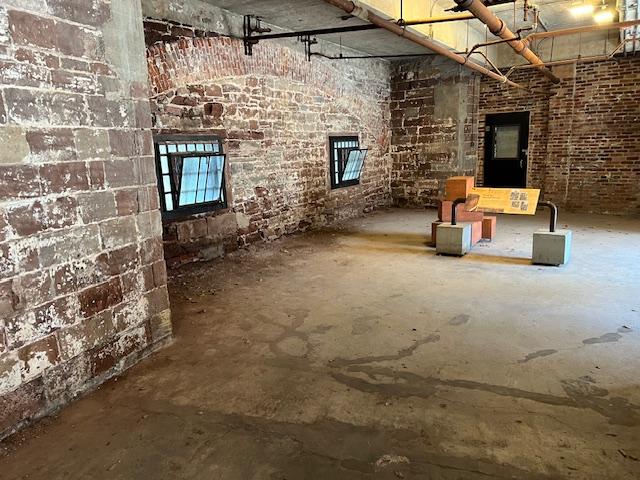
The inside of the prison cell.

The Castle again faced a demolition challenge as Coast Guard officials in Washington DC, who took control of Governors Island in 1966, wanted to demolish it. Instead, the castle was remodeled as a youth community center with a nursery, meeting rooms for Scouts and clubs, a woodworking shop, art studios, a photography laboratory and a museum. By the late 1970’s, the community center moved to another location and the fort became the grounds-keeping shop for the Coast Guard base.

Over time, the roof failed and broken windows allowed serious water damage to occur inside the castle. In the mid-1990s, the roof was replaced and new windows stopped further water damage to the structure but the interior remains closed until it can be made safe for public access. The National Park Service proposes to stabilize and restore the castle and eventually provide access to the roof, allowing the public to admire the harbor and the modern skyline of the great city (this has since opened on my last visit).

The view from the top of the hill on Governor’s Island.

Castle Williams was individually listed in the National Register of Historic Placed on July 31, 1972. It was recorded by the Historical American Buildings Survey in 1983. It was designated a National Historic Landmark in 1985 and the New York City Landmarks Historic District in 1996. It has been part of the Governors Island National Monument by Presidential Proclamations signed in 2001 and 2003.

(This information was provided by the National Park System Division of Cultural Affairs).

The lawn of Governor’s Island overlooking Lower Manhattan.

Sara Delano Roosevelt Memorial House             47-49 East 65th Street                                        New York, NY 10065

Sara Delano Roosevelt Memorial House 47-49 East 65th Street New York, NY 10065

Sara Delano Roosevelt Memorial House

47-49 East 65th Street

New York, NY  10065

(212) 650-3174

Roosevelt House History

Sara Delano Roosevelt Library

Open: To Groups on Fridays and Saturdays and to individuals on Saturdays 10:00am/12:00pm/2:00pm

Fee: Free to Individuals/Donations welcome-Groups tours are $100.00 for up to five people with an additional $15.00 fee per person. There is also an administration fee of $25.00 for groups over 20 people.

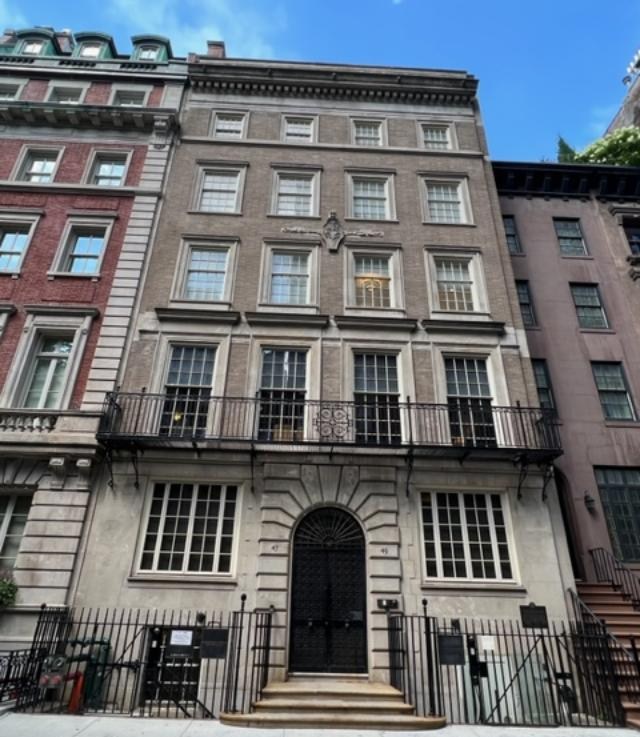
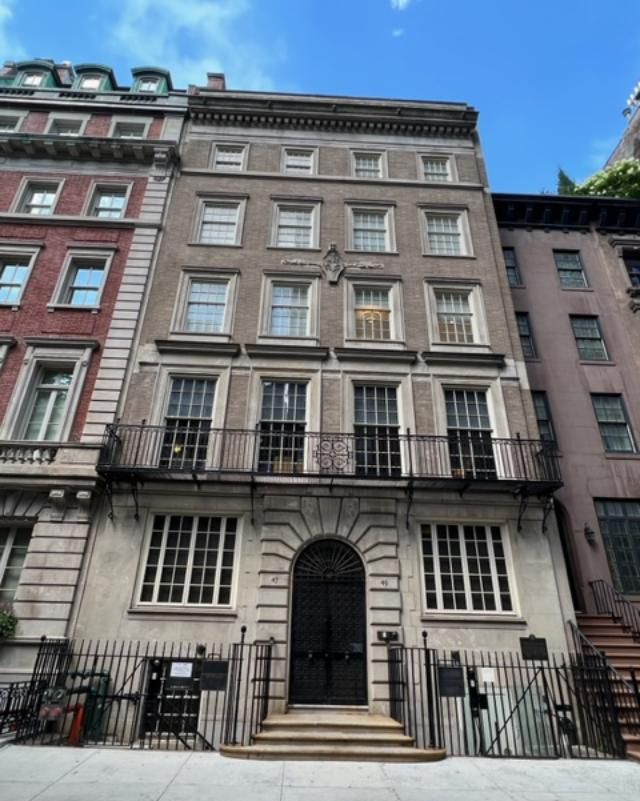
The Sara Delano Roosevelt Home at 47-49 East 65th Street

It is amazing what you discover when you are walking around the Upper East Side of Manhattan. I was exploring the Streets of the Upper East Side for my blog, ‘MywalkinManhattan’ and when walking around the Hunter College Campus came across the Sara Delano Roosevelt Memorial House at 47-49 East 65th Street.

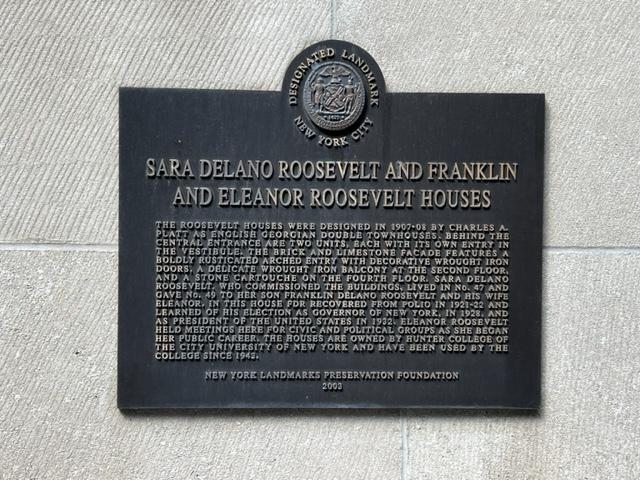
This beautiful brownstone was built as a wedding present to Franklin Delano Roosevelt and his wife, Eleanor and their future family by his mother Sara Delano Roosevelt. It was their New York City residence until they moved to the White House. His mother continued to use the house until her death in 1941 when the home was sold to Hunter College.

Tours are available when the building is open (Hunter College is currently closed) and you can tour the whole house. The home was listed on the National Register of Historic Places in 1980.

History of the Sara Delano Roosevelt Memorial House:

The Neo-Georgian townhouse was designed by architect Charles A. Platt for Sara Ann Delano Roosevelt in 1907. It originally held “two mirror-image residences with a single facade and entrance. Each floor had its own front reception room with a welcoming fireplace. Rear parlous could be combined through sliding doors

The mansion at 47-49 East 65th Street on the Upper East Side

The house was given to the Roosevelt’s by Franklin’s mother as a wedding gift for them. The house originally two homes and Franklin’s mother had doors put in place so she could enter their part of the home whenever she wanted. The house was used by Sara Ann Delano Roosevelt from its completion in 1908 to her death in 1941 and intermittently by the Roosevelts until the sale to Hunter College in 1943.

The house historical marker

After his mother’s death in 1941, President Roosevelt and his wife placed the house up for sale and a non-profit consortium was organized to purchase the house on behalf of Hunter College.

Sara Delano Roosevelt House IV

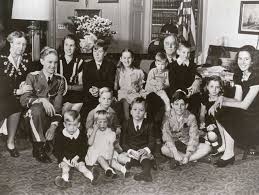
The Extended Roosevelt family

The house was closed in 1992 and reopened in 2010 after an $18 million renovation. Leslie E Robertson Associates was the structural engineers on this renovation. The building is currently used by Hunter College as the Roosevelt House Public Policy Institute at Hunter College or just known as the Roosevelt House.

Sara Delano Roosevelt House

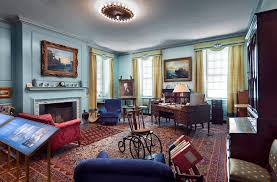
The inside of the house’s museum

(Disclaimer: This information was from Wiki and I give them full credit for the History of the Roosevelt House).

Video’s Related to the House on YouTube:

Visiting the Roosevelt House:

The History of the House:

Mesier Homestead & Museum-Wappinger’s Falls Historical Society 2 Spring Street Wappinger’s Falls, NY 12590

The Mesier Homestead & Museum-Wappinger’s Falls Historical Society

2 Spring Street

Wappinger’s Falls, NY  12590

(845) 632-1281

Open: Sunday 1:00pm-4:00pm/Check website for special events

Fee: Adult $10.00/Seniors $7.00/Children 7-18 $5.00/Members Free

https://www.wappingershistoricalsociety.org/

My review on TripAdvisor:

https://www.tripadvisor.com/Attraction_Review-g48799-d16919924-Reviews-Mesier_Homestead_and_Museum-Wappingers_Falls_New_York.html?m=19905

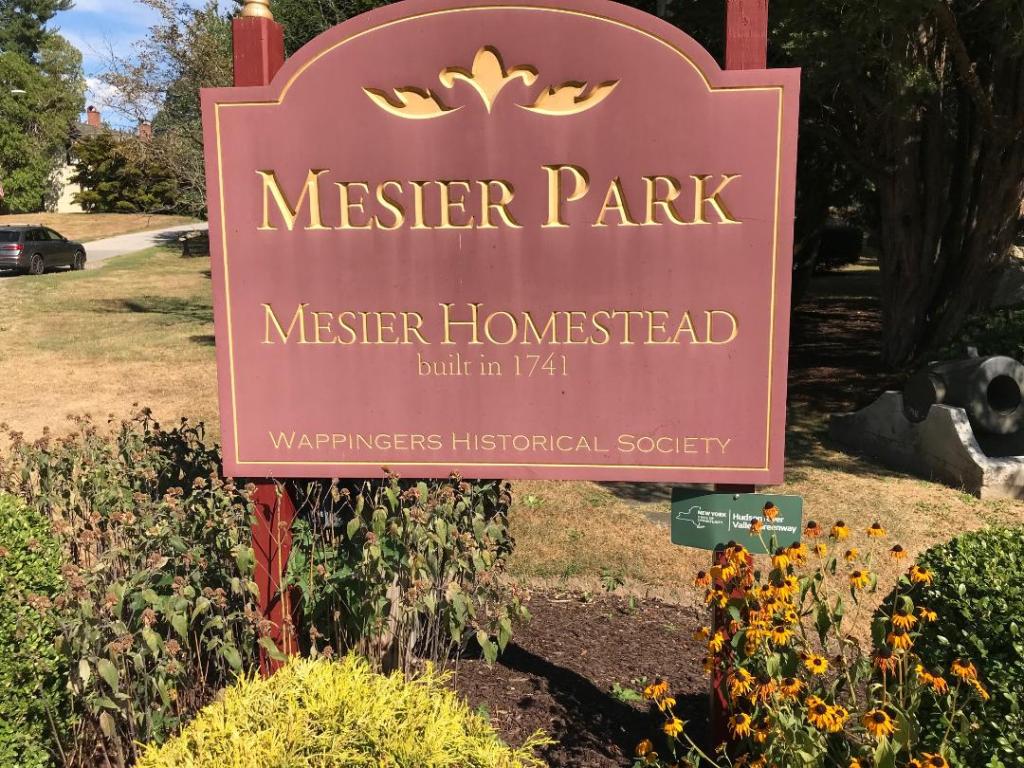
The entrance to Mesier Park where the Homestead is located

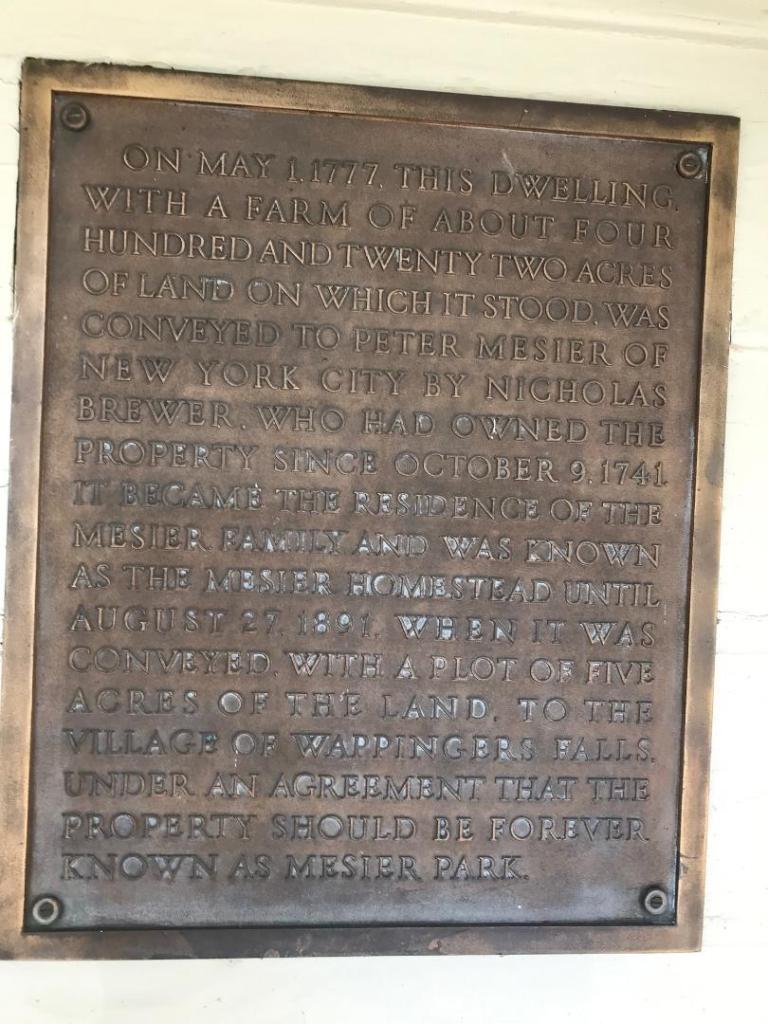
The plaque outside the home

I visited the Mesier Homestead recently and toured the home with a local docent. Home to four generations of the Mesier family, the house has been added onto since it was built in the mid-1700’s. The rooms are decorated with furnishings from the Victorian era and shows life as it may have been in the late 1880’s at the height of the Victorian era.

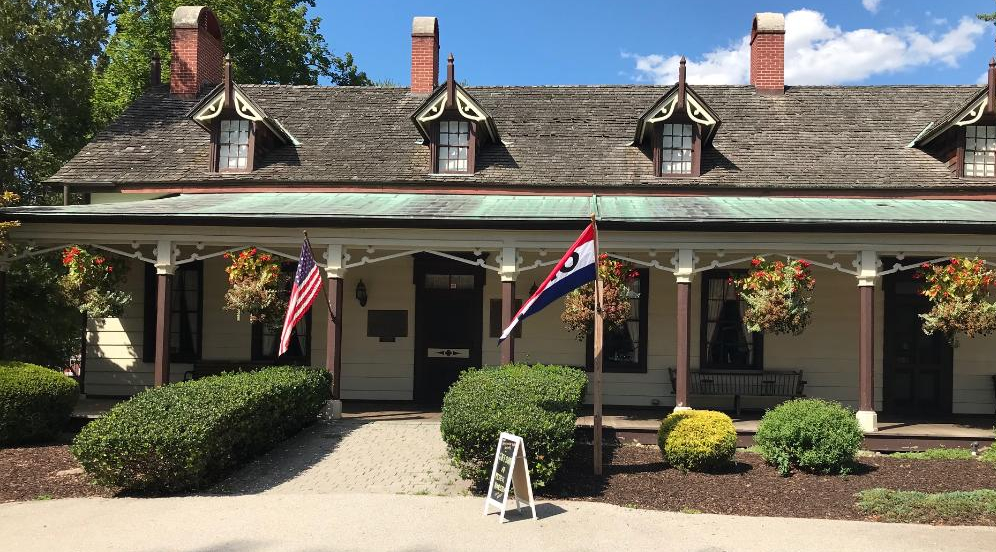
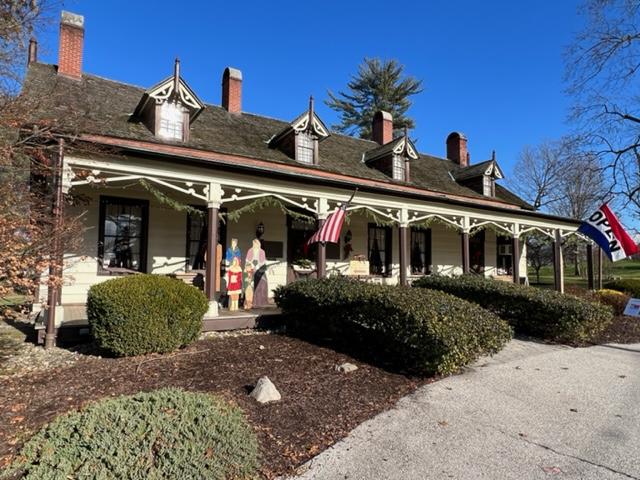
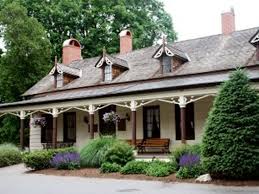
The Mesier Homestead in the summer months

The tour of the rooms shows how the home was added onto to meet the increased demands of a growing family and one of increasing affluence. The original home was added onto from the back to add service areas and work areas for the household.

The entrance to the Mesier Homestead

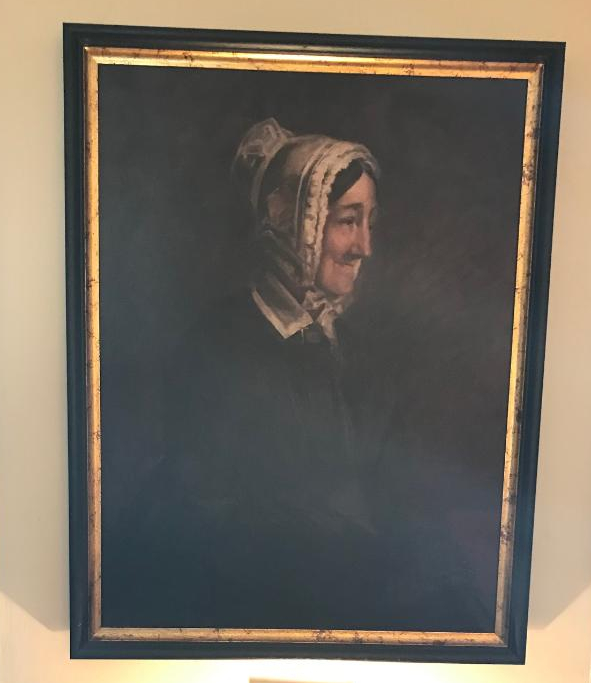
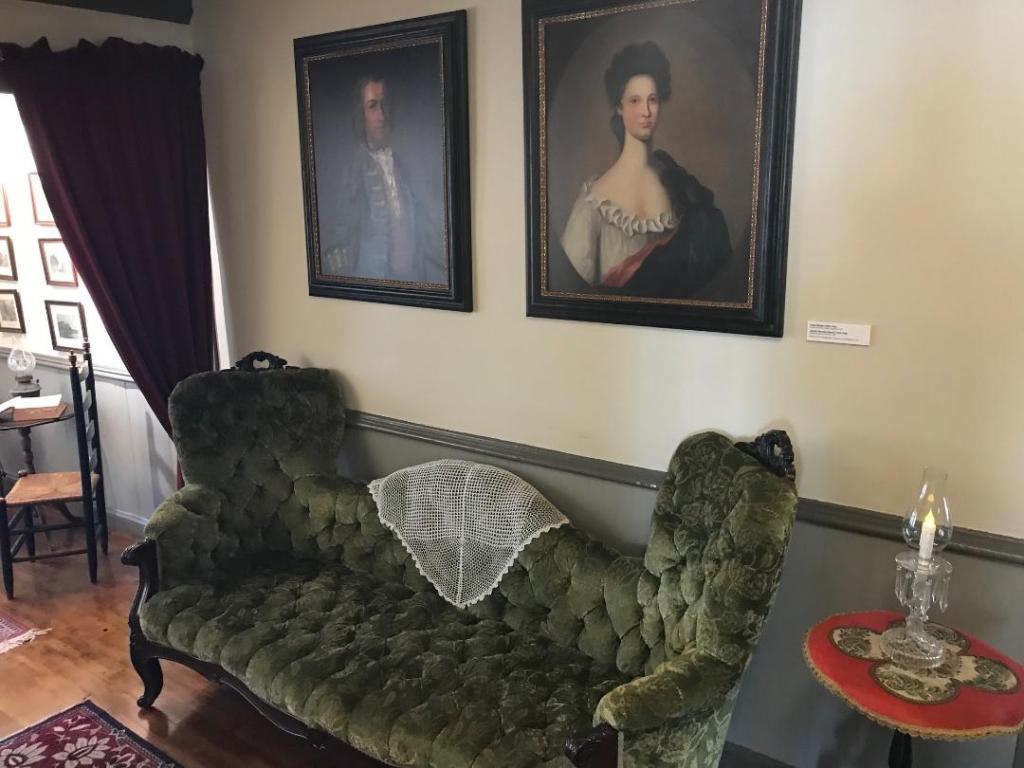
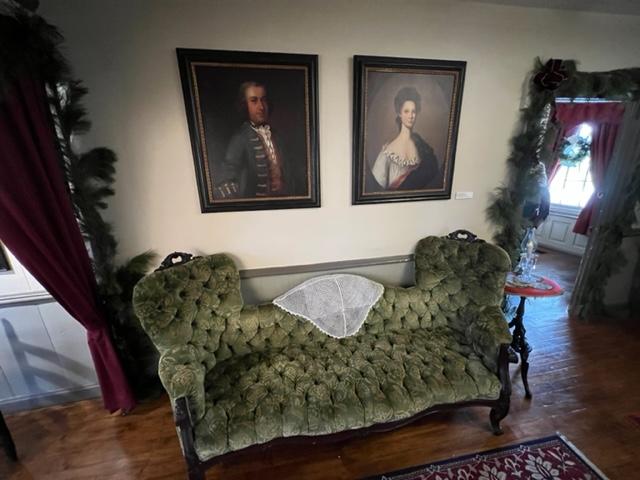
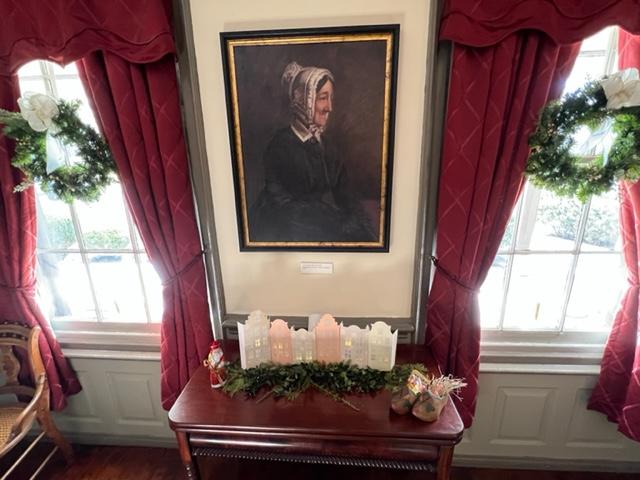
A portrait of Mrs. Mesier in the hallway

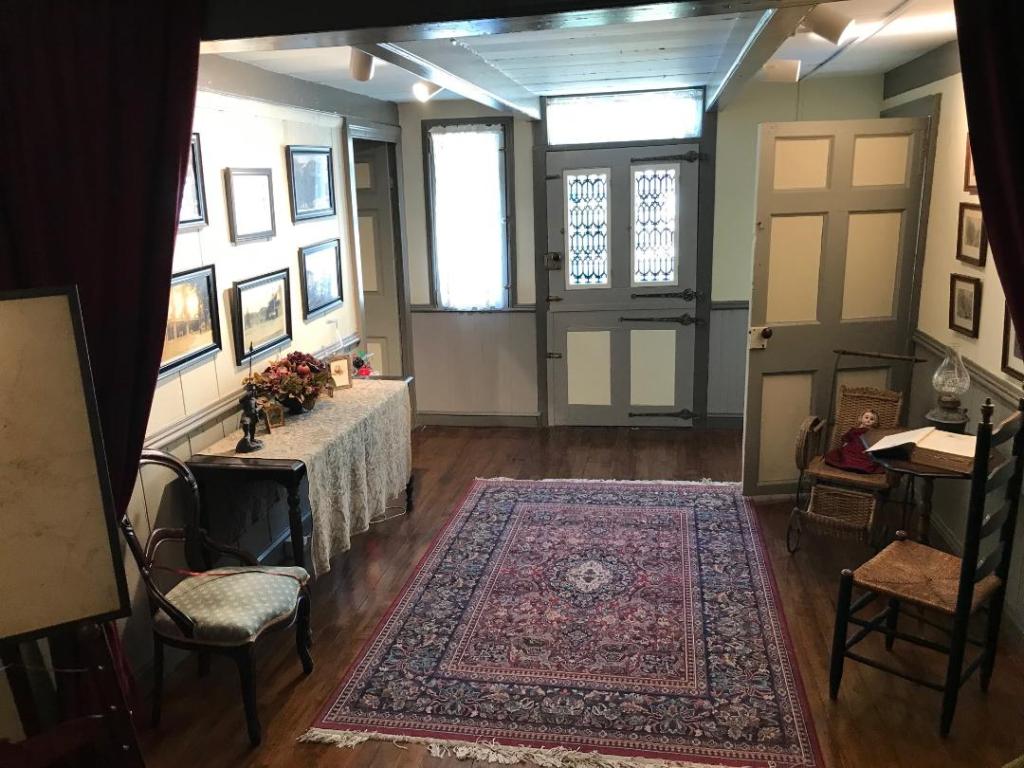
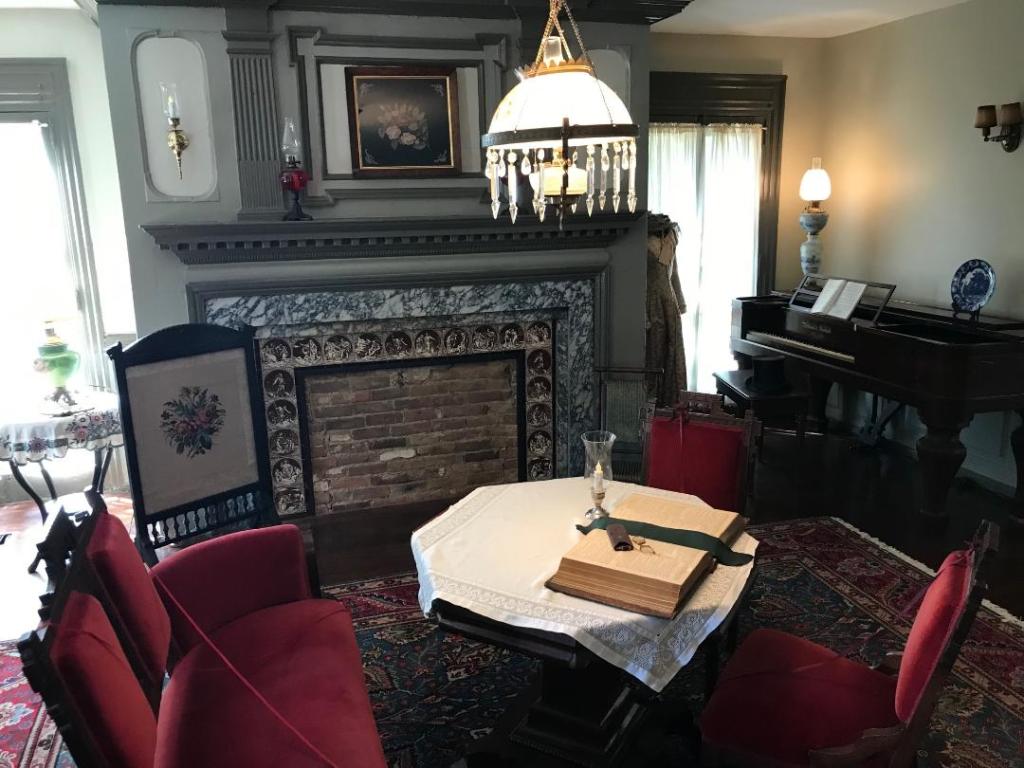
When you enter the foyer from the front door, there are reproductions of family portraits hallway that had served as the parlor of the original house. As the house expanded, this area became the formal entrance to the home. To the right of the foyer, there is the Living Room, where the Historical Society has uncovered one of the two fireplaces from the original home that once heated the rooms.

The reproductions of Mr. and Mrs. Mesier in the Living Room

During the late 1800’s, the son of the owner heightened the ceilings to get rid of the railroad ties that once decorated the ceiling. This gave the room a more modern look and showed the affluence of the family that could heat a home with heigh ceilings.

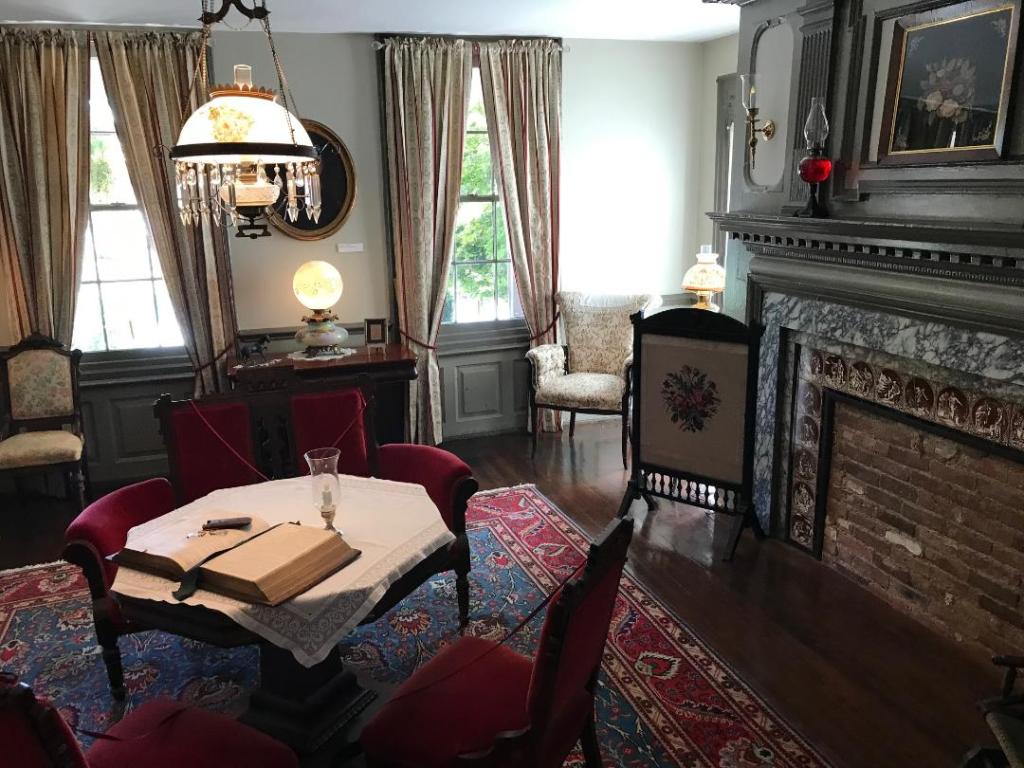
The Mesier Homestead Living Room

Another view of the Living Room

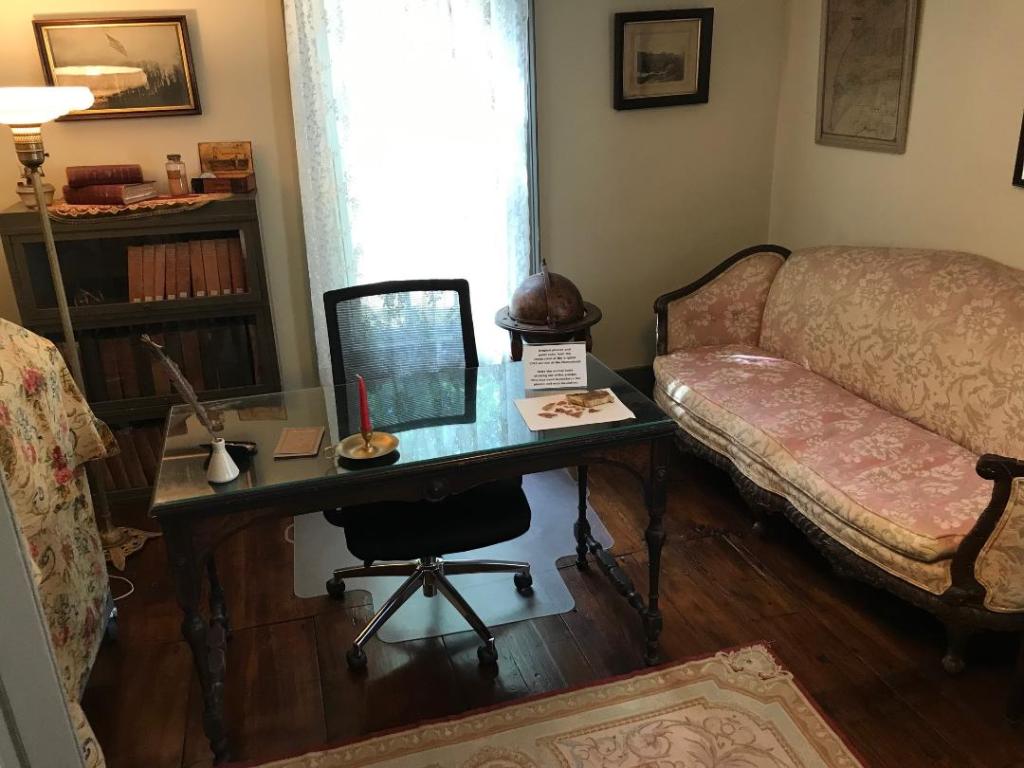
The room furnishings included family paintings, a then modern Victrola, ornated furniture and diagram of the family tree. The small steps led to a small office off the Living Room that was added onto with more family objects.

The Library and Office off the Living Room at the Mesier Homestead

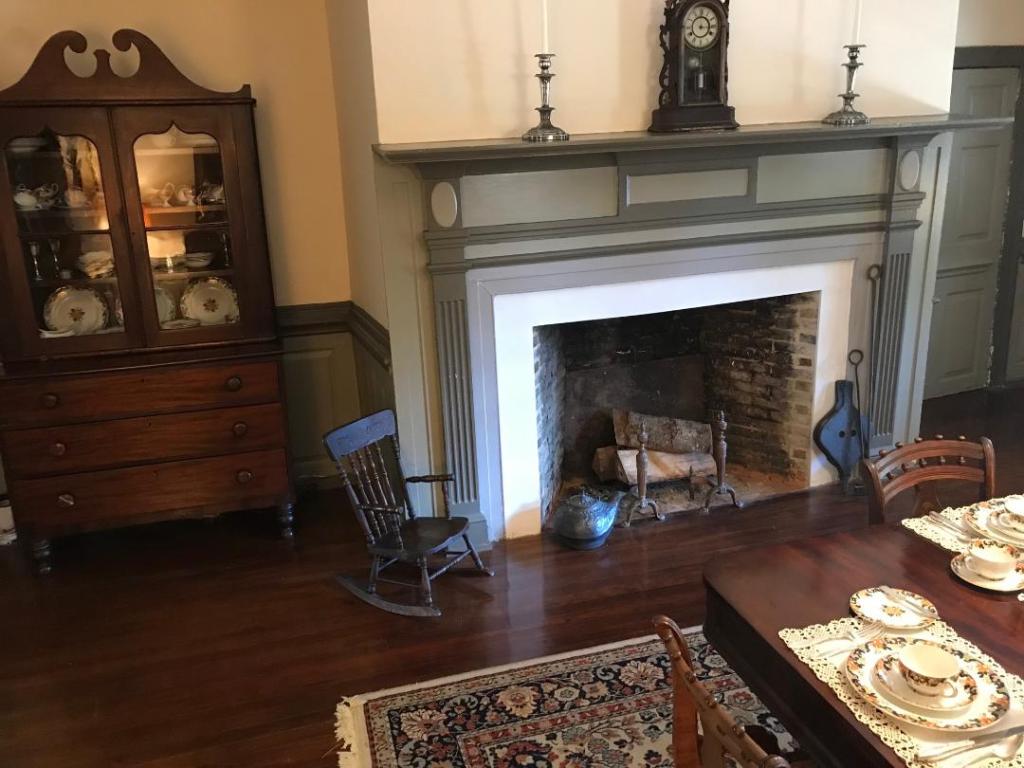
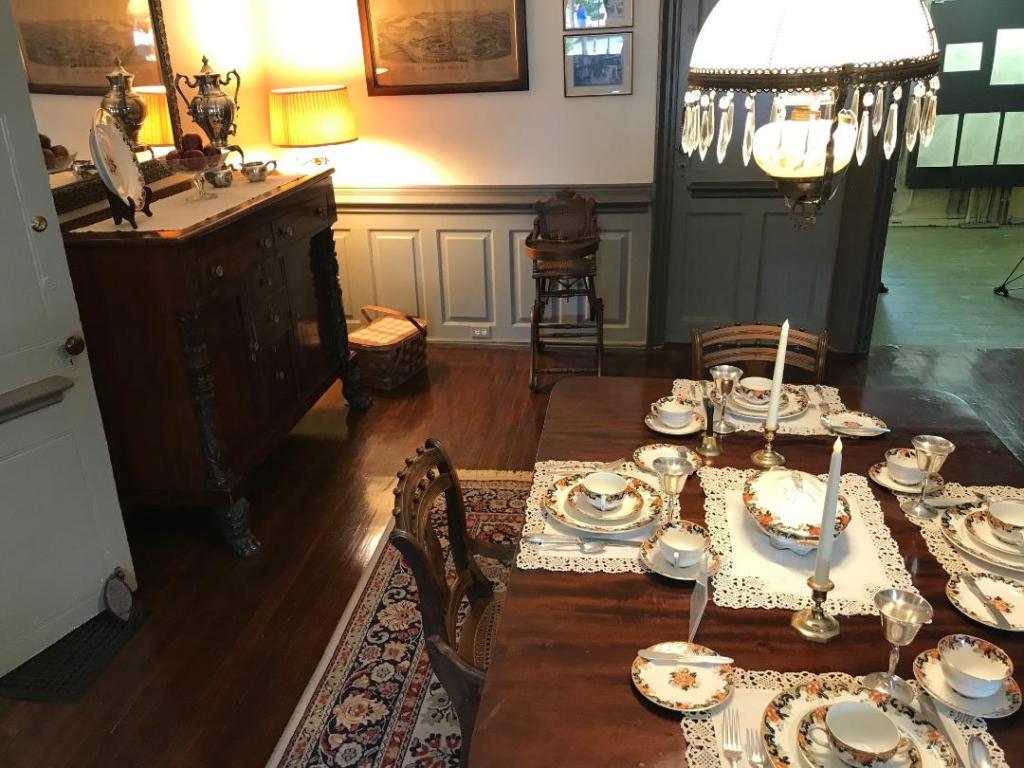
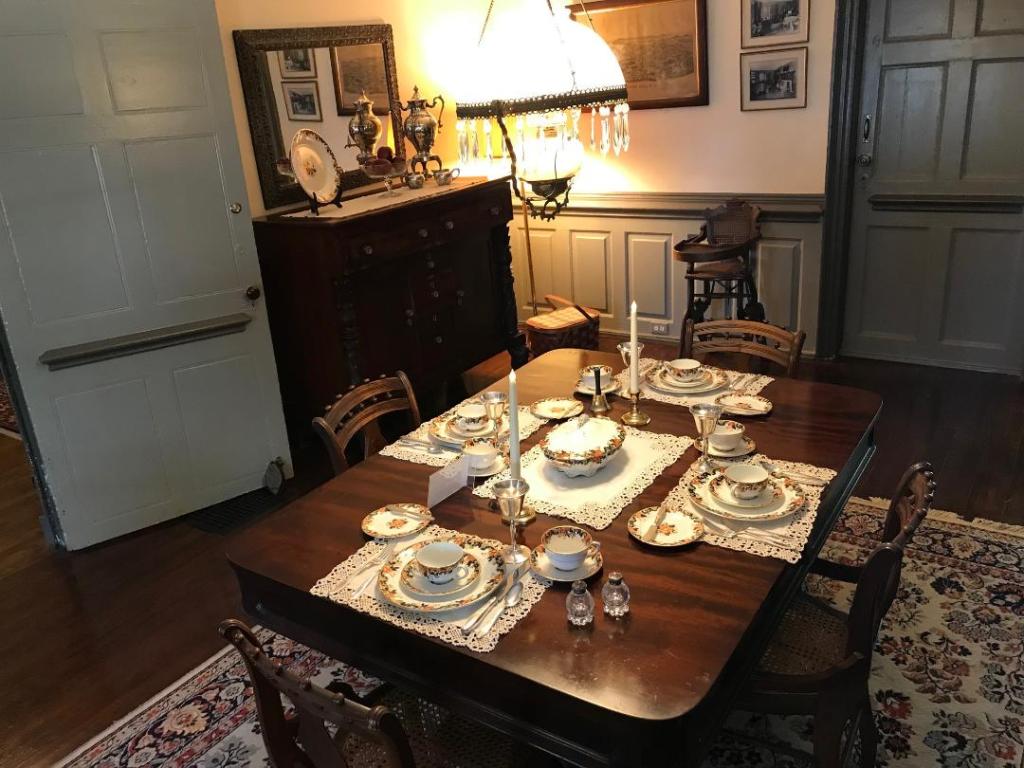
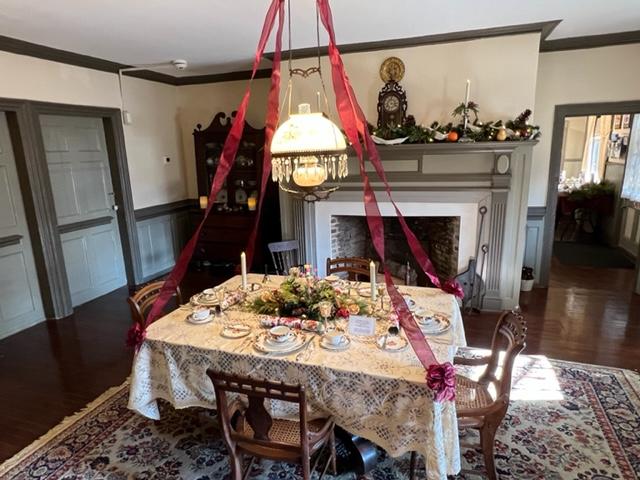
When you entered the room from the kitchen and the Butler’s Pantry where food was finished and readied to be served, a formally set Dining Room for dinner showed the family’s status in the community.

The Dining Room at the Mesier Homestead

The sideboard and the Dining Room table

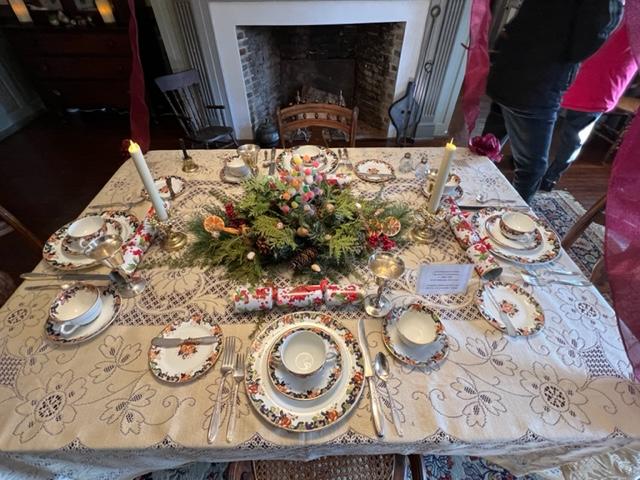
An ornate china set from England enhanced the table with fine linens that the family would have owned. A newly opened fireplace that had once heated the dining room was shown by a heating unit that would have been used in the Victorian age. All sorts of fine decorative objects lined the tables and shelves.

The Dining Room table is set for a fine dinner at the Mesier home

By the amount of space available for living and entertaining with the separate rooms for use in the home it showed how times were changing with the affluence of that time. The family would show off their fine things to show their status in the community.

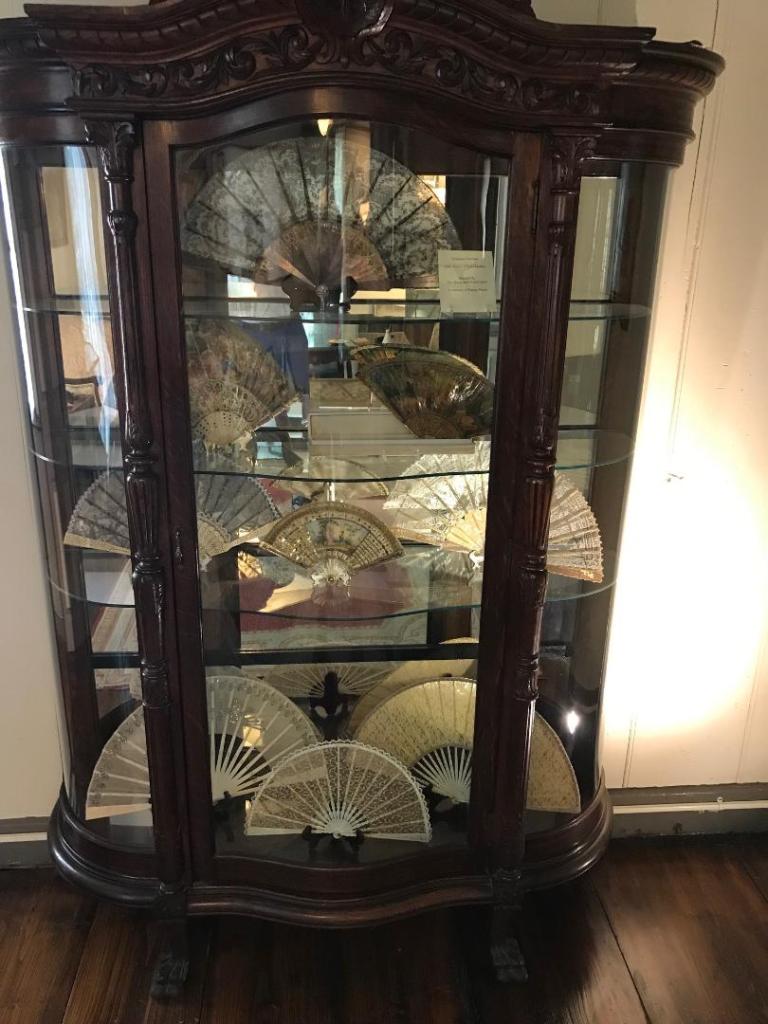
The Fan Collection from Victorian times

The second-floor tour is a view of the slave/then servants’ quarters and the two-family bedrooms. What I thought was interesting on the tour is how the family had to co-mingle in the bedrooms because of the number of children in the family and how mom and dad were not always alone. The rooms had to be expanded so that there was plenty of room for the growing family.

The Children’s bedroom on the second floor

The Adult’s bedroom on the second floor

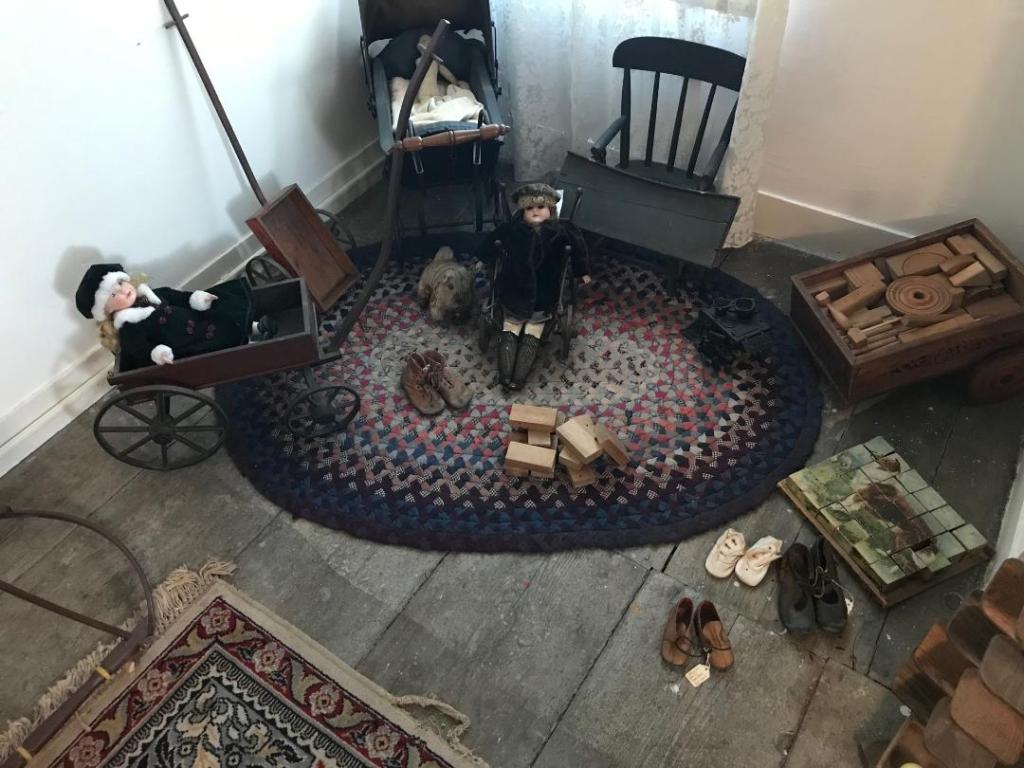
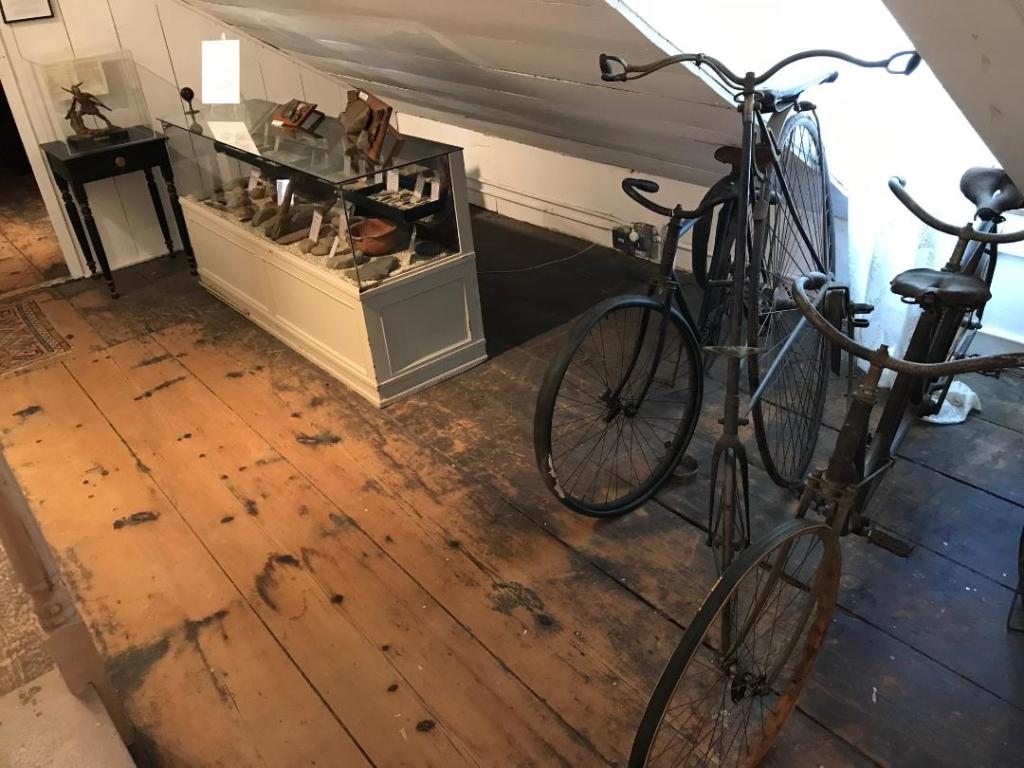
There were many family items in the house like clothing, children’s toys and playthings and items for recreation like bikes, ice skates and musical instruments of a time before TV, movies and radio. There were also items for spinning and making clothes.

Children’s toys during the Victorian Age reflected imagination and preparation for adulthood with blocks, dolls, kitchen items and other playthings to stimulate the mind.

Bicycles and Native American art on the second floor

During Victorian times, the way people shopped and carried themselves changed after the Civil War with the rise of department stores and the merchant class. Instead of making your clothes, you bought them at the store and there was protocol on how Victorians behaved and handled themselves in society regardless of class.

The care of grooming a Victorian woman had in her bedroom

Clothes in a Victorian bedroom
Clothing and accessories for the Victorian woman for dressing for the day

One of the rooms was also set up like a small school with original children’s desks and blackboards. There is even a Civil War era flag that was found in one of the local homes hanging in the room.

The tour guide also noted the drafts in the house before insulation was put in and the conditions of the time with weather effecting living conditions inside with drafts in the winter and heat in the summer through the roof plyboards. This was modern living at the time. The heat would radiate from the lower level of the house and the Dutch doors would let fresh air in the warmer months. These were modern in comparison to our modern homes. This was the interesting part of the home.

When I asked why the back rooms had not been renovated like the front of the house, our tour guide explained that the Meiser’s were a very devout family and even though they were affluent for the times, they were restrained and not showy like you would see in places like the Vanderbilt mansion. They would not have entertained like that on a grand scale. It was an interesting perspective that those things did not mean that much to these older families.

The original section of the homestead from 1742 is currently being renovated. This is the original hearth and oven of the kitchen.

The tour takes about an hour and is a fascinating step back in history of the way these families lived.

Recently the house was decorated for the Christmas holidays with garland, holly and fragrant oranges that once masked the household smells. They also gave the house a festive fragrance. These popular tours last through the holiday season.

Please check their website for a list of their activities.

The History of the Mesier Homestead:

The Mesier Homestead and surrounding property was sold to the Village of Wappinger’s Falls in 1891 with the understanding that it forever be known as Mesier Homestead and Mesier Park. The Wappinger’s Historical Society acquired full custodianship of the Homestead in 2007 and through ongoing fundraising efforts has been able to restore the Homestead to its present appearance.

The Mesier Homestead at Christmastime:

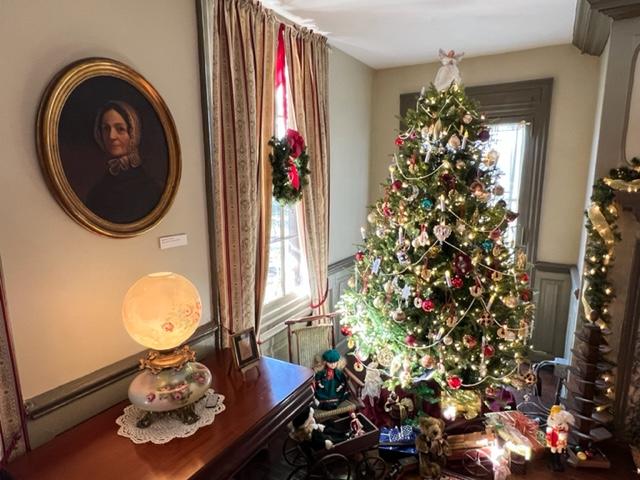
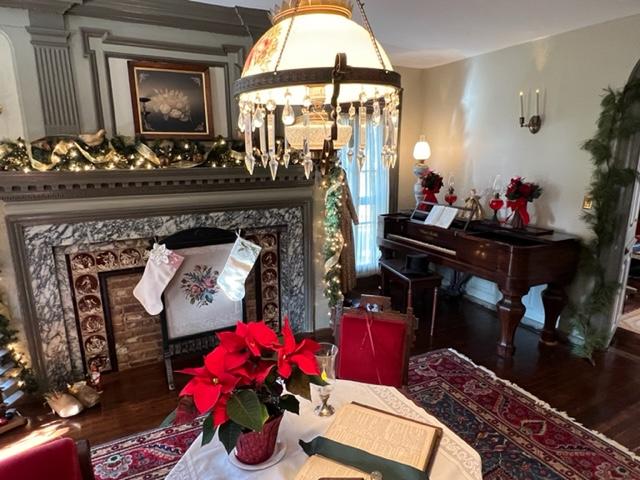
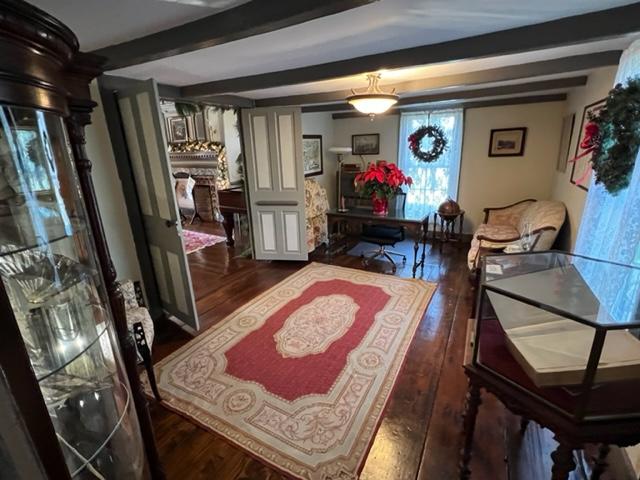
Christmas time at the Mesier Homestead is a festive and elegant affair of decorations and the home being set for a Christmas in the Revolutionary War era. The only difference is the the home has a Christmas tree which did not come into existence until the Victorian era.

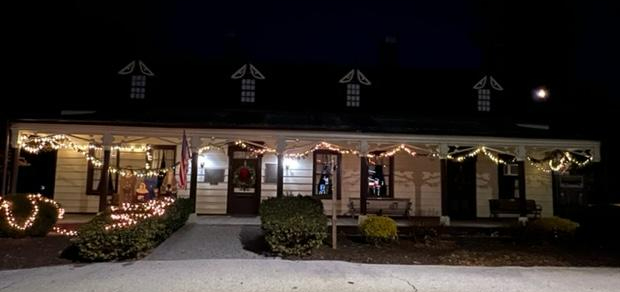
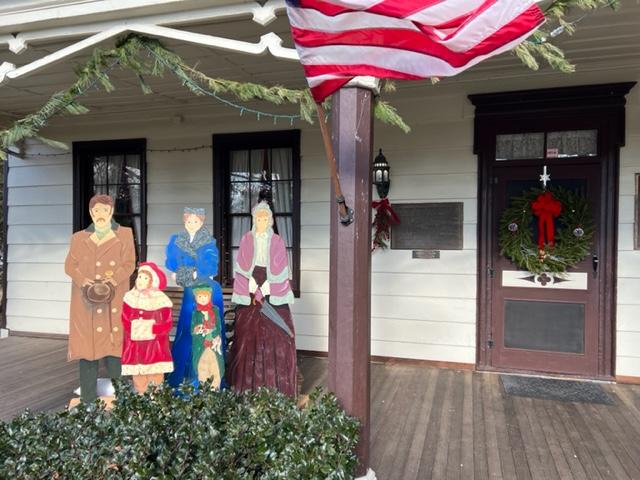
the outside of the home decorated with wreaths and garland

The Front Porch

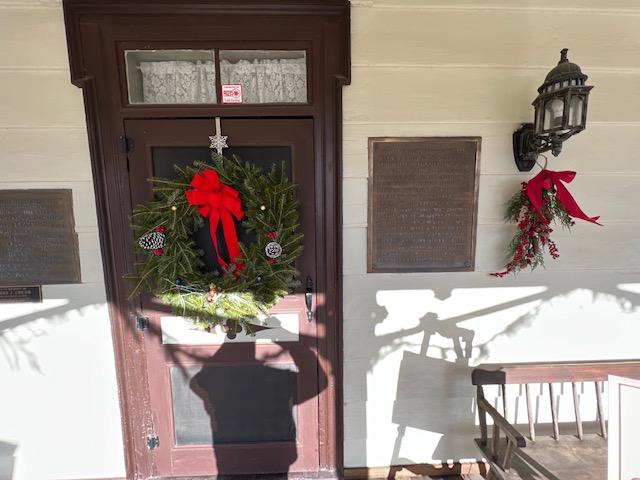
The front door with wreaths and garland

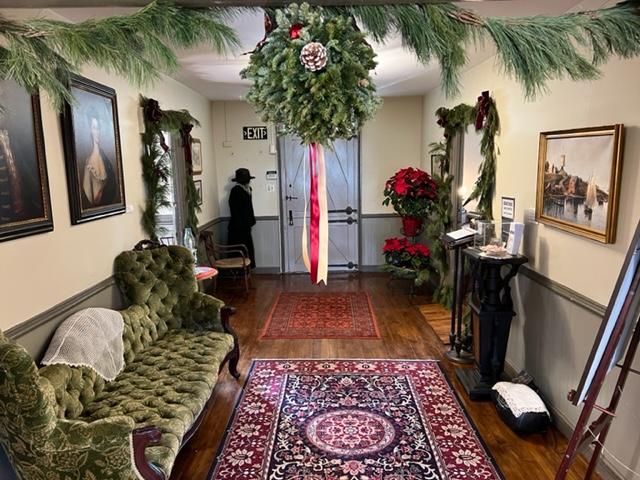
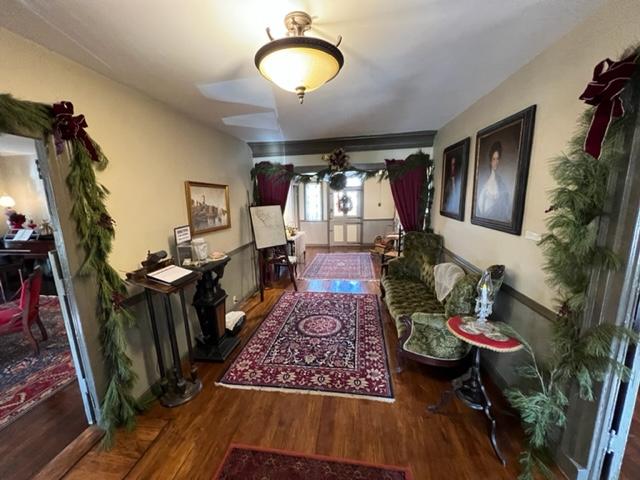
Entering the main hallway of the Mesier Home

The other end of the Hallway

Even the doors were festive with wreaths

The family portraits in the hallway were adorned with garland

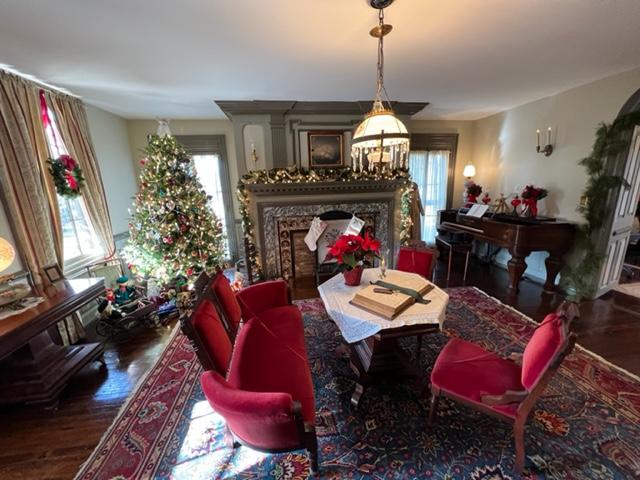
The Living Room was the centerpoint of the house on Christmas morning with children coming downstairs to see what Santa had left them in the later part of the 1890’s into the early 1900’s. The tree would have been the centerpiece of the room sparkling in Christmas morning and a place for the family to gather for the day. Nothing has changed in this tradition except electronics.

The Living Room was decorated for both a Victorian and Revolutionary Christmas

The Victorian Christmas tree was lit brightly for the holidays and added a festive touch to the room

The rest of the Living Room was set with flowers and garland

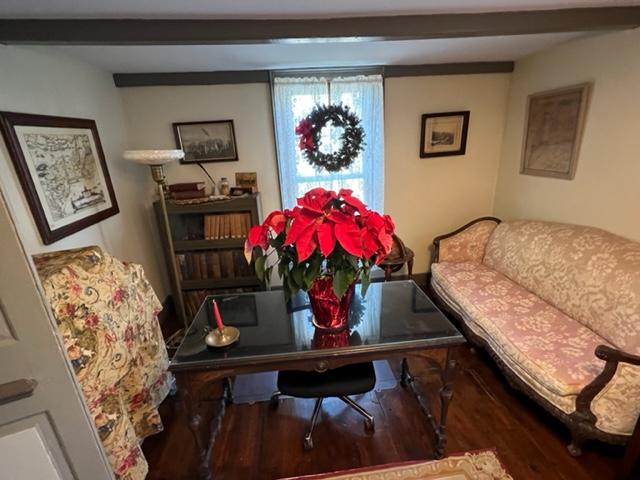
The Library was set with flowers and wreaths and made for a very welcoming environment. This would have been a quiet place on Christmas morning for the family with festivities all through the house.

The Library was simple decorated and elegant

The comfortable Library

Even so, the house was beautifully set with garland all over the mantels and doorways and the Dining Room was set for a formal Christmas lunch which would have been eaten after church. The concept of gift giving on the holidays also did not come about until the Victorian era as well. Still Christmas lunch had been part of the holiday tradition for years.

The Dining Room was set for an elegant Victorian Christmas lunch

Victorian china adorns the festive Christmas dinner table

The mantel in the Dining Room was adorned with garland and oranges which gave the room a wonderful fragrance of pine and citrus

The family portrait in the Dining Room got special attention

Mesier Homestead decorated for the Christmas holiday season

The Wappinger’s Falls Christmas tree is just outside the house

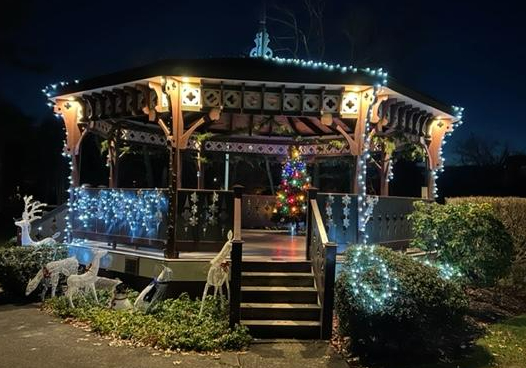
The bandstand outside the house was decorated to the hilt.

The History of the house:

The house itself is part of the ‘Rombout Patent’ of land that had been bought by the Dutch from the local Indian tribes by three prominent Dutch families. This section of the property was bought by Nicholas and Adolphus Brewer and contained 750 acres of land around the Falls area, and they built the first stone house in the village near present Mill Street. In 1742, the Brewers built a mill on the east side of Wappinger Creek.

Nicholas Brewer built the Mesier Homestead in 1741, which he sold in 1777 to Matthew Van Benschoten who in turn sold it to Peter Mesier, a merchant from New York City. In May 1777, soldiers and local residents attacked Peter Meiser’s house in Wappinger’s Falls, disputing the price of tea for sale in a small store inside the home. Mesier was a merchant from New York City and a Loyalist. The angry mob struck Mesier, beat his slaves and drank wine stored in the cellar. They also took the tea and left a small amount of money behind. The house was in the possession of the family for the next four generations (Wiki).

The organization’s goal for 2020 and beyond is to restore the original 1741 building so it can be a showcase of our Colonial history. Your membership, gifts and in-kind donations will help us maintain and restore this jewel of Wappinger’s Falls.

The Wappingers Historical Society Native American Collection:

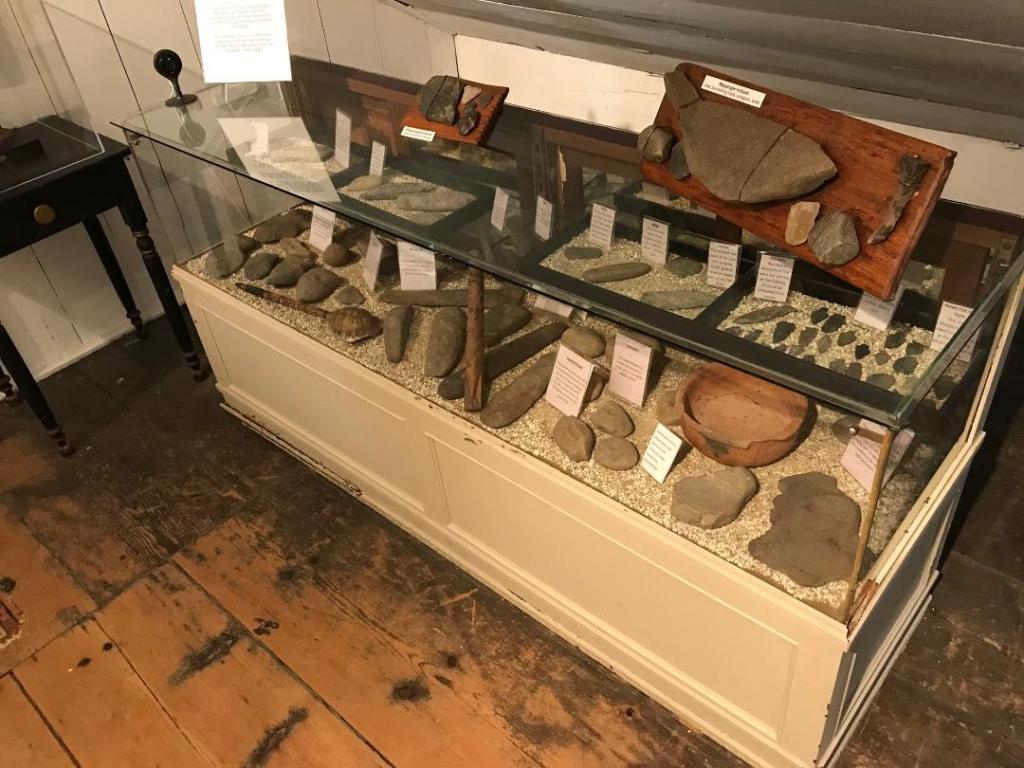
The Wappingers Historical Society is the curator of an extensive collection of Native American artifacts, many of which stem from the Stoneco/Clinton Point and Bowdoin Park area in the vicinity of the Town of Wappinger. This collection of artifacts was once considered to be the largest private collection in New York State.

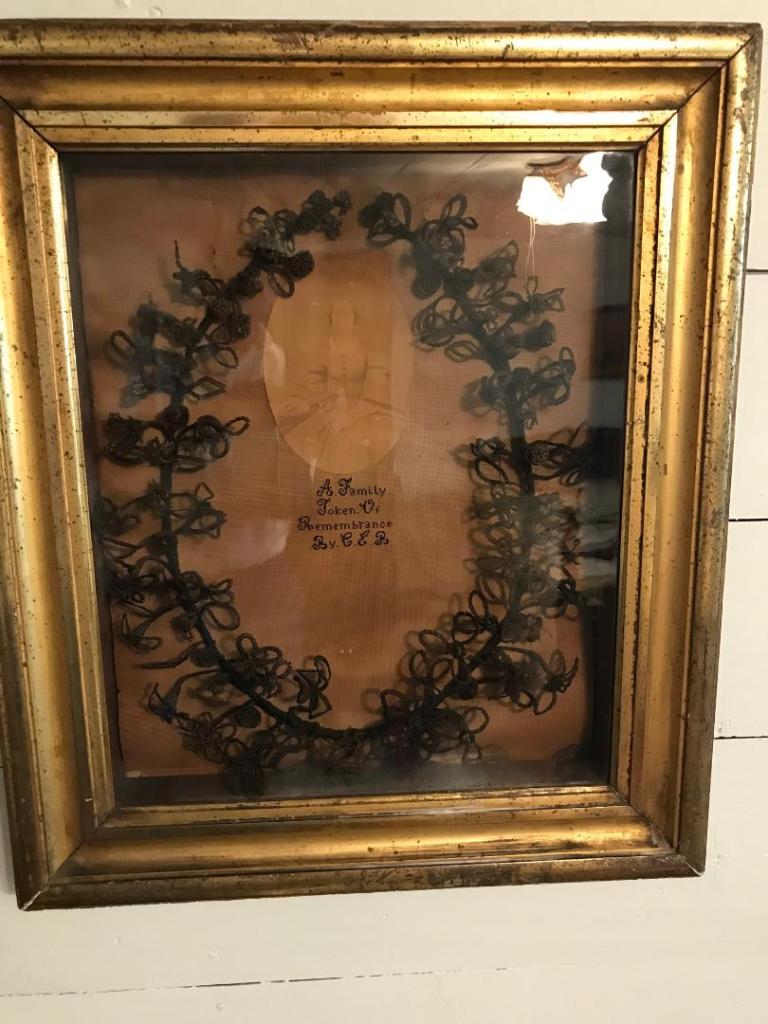
Victorian Hair art of the dead

It consists of over 2000 objects, many of which are projectile points (arrowheads and spear points). Some of these have been found to date back 8,500 years. Also included are tools such as scrapers, knives, axes and hatchets. A small portion of approximately 100 pieces of the collection is on display at the Mesier Homestead and can be seen as part of our guided tours.

The Native American collection is extensive at the Meiser House

The Mission of the Wappinger’s Falls Historical Society:

The Wappinger’s Historical is dedicated to preserving and promoting the history of the Town of Wappinger, the Village of Wappinger’s Falls and neighboring communities and to maintain the custodianship of the Mesier Homestead.

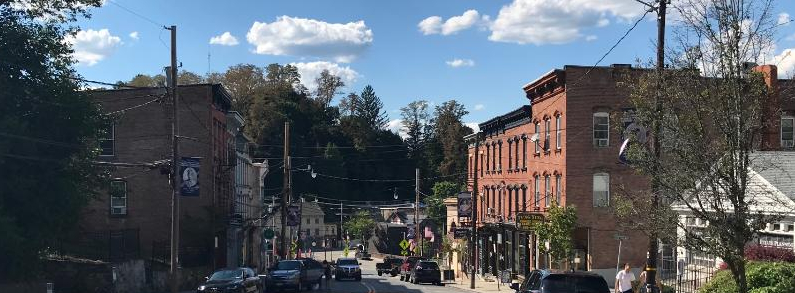
The beauty of Downtown Wappinger’s Falls, NY

When you are a member of the Wappinger’s Historical Society, you help:

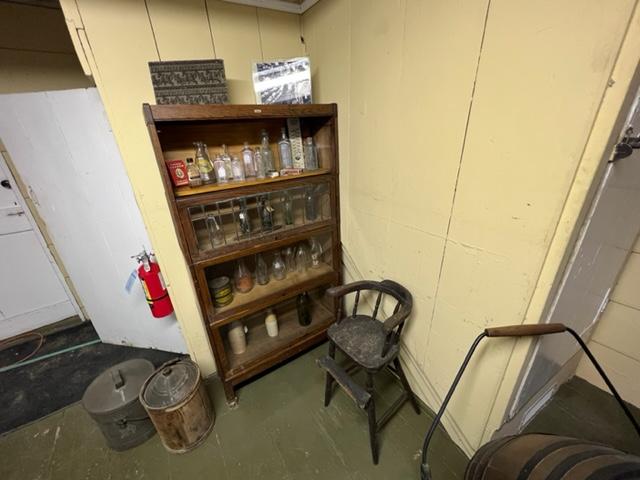
Storage area of the house

*Preserve and expand our archives, collections and library to actively chronicle the life of our hamlets, village and town for future generations.

*Develop and implement programs and exhibits so that people of all ages can better understand their connection to history.

*Safeguard our architectural heritage of the 1741 Mesier Homestead.

(This information was taken from the Wappinger’s Falls pamphlet, and I give them full credit for it)

Wappinger's Falls Historical Society

The Mesier Homestead in the summer months

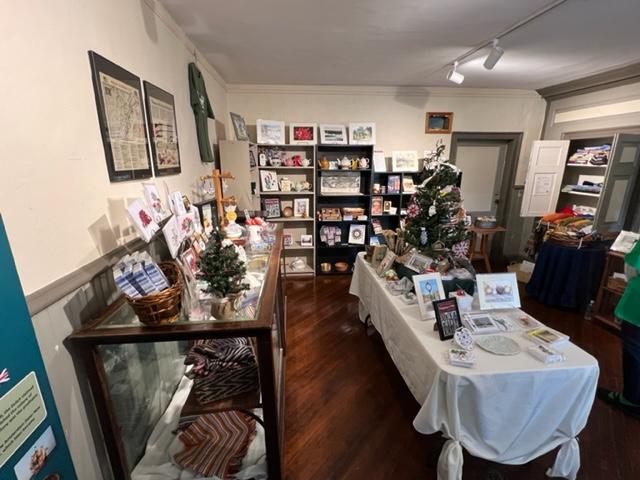
Their wonderful gift shop that should not be missed