Category: Exploring the Island of Manhattan

National Baseball Hall of Fame & Museum                      25 Main Street                                     Cooperstown, NY 13326

National Baseball Hall of Fame & Museum 25 Main Street Cooperstown, NY 13326

National Baseball Hall of Fame & Museum

25 Main Street

Cooperstown, NY 13326

(607) 547-7200

https://baseballhall.org/

Open: Sunday-Saturday 9:00am-5:00pm

Fee: Adults $30.00/Seniors (65+) $20.00/Veterans $18.00/Children 7-12 $15.00/Active Military-Children under 6-Members Free

My review on TripAdvisor:
https://www.tripadvisor.com/Attraction_Review-g47529-d102933-Reviews-National_Baseball_Hall_of_Fame_and_Museum-Cooperstown_Otsego_New_York.html?m=19905

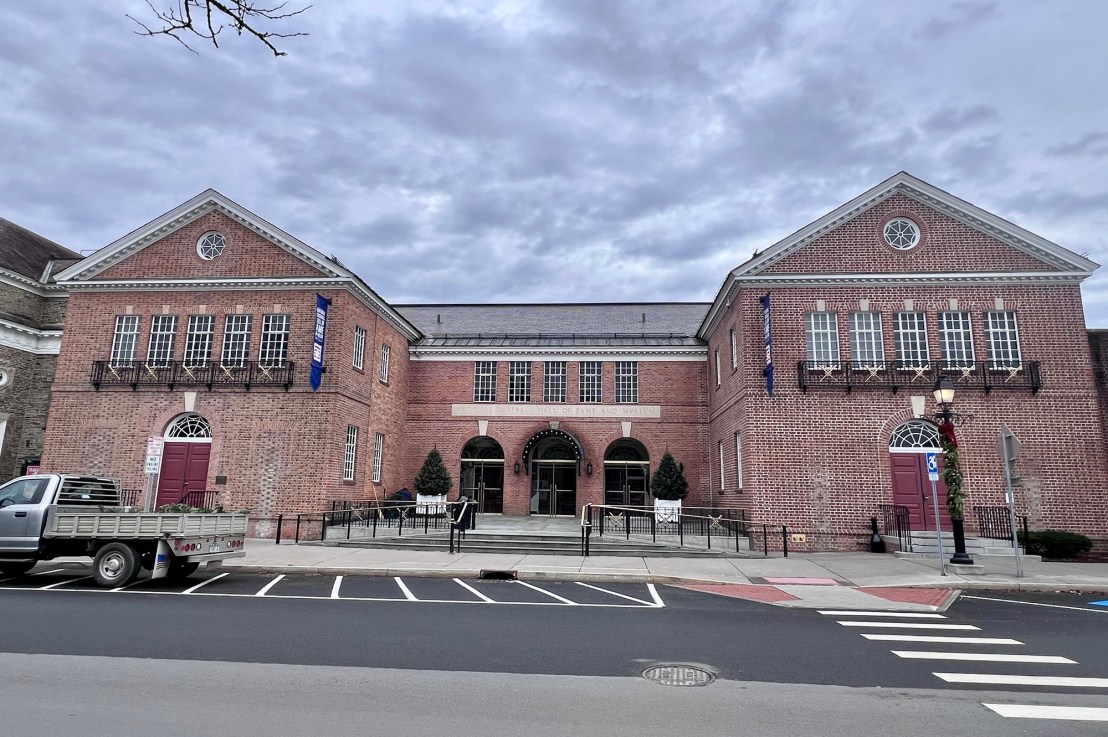
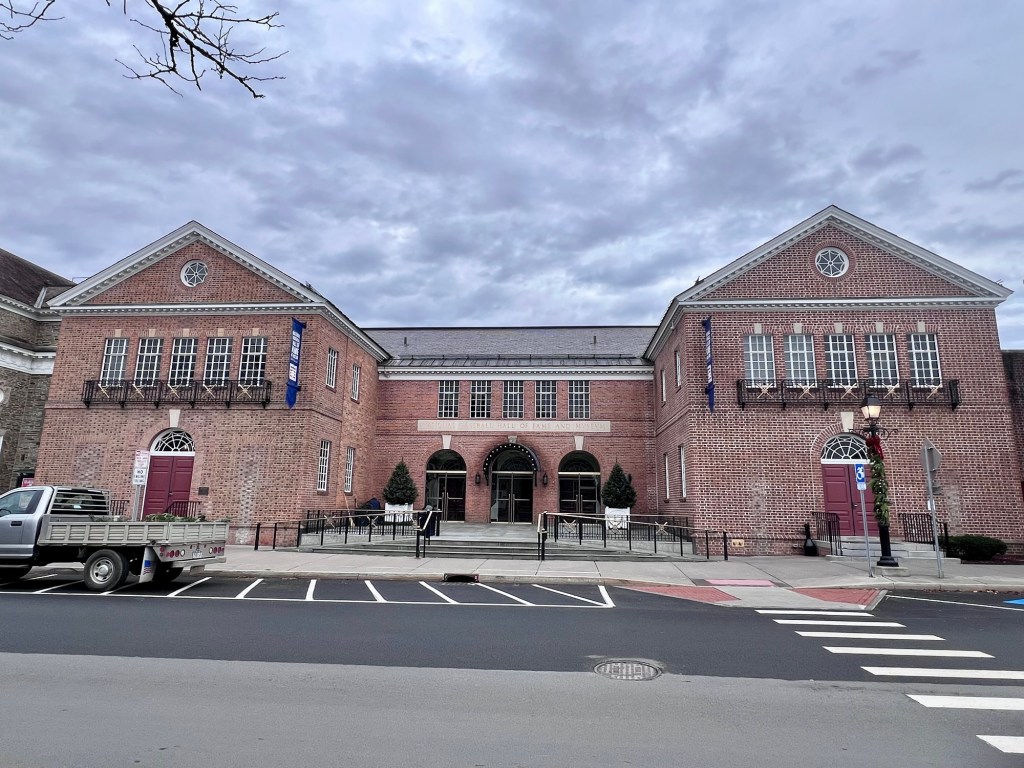
The National Baseball Hall of Fame at 25 Main Street

When visiting the National Baseball Hall of Fame be prepared to spend over two hours in the museum because there is so much to see. When I visited the museum recently they had just inducted Derek Jeter as one of its newer members so a lot of Yankee fans were swarming around the picture and the display.
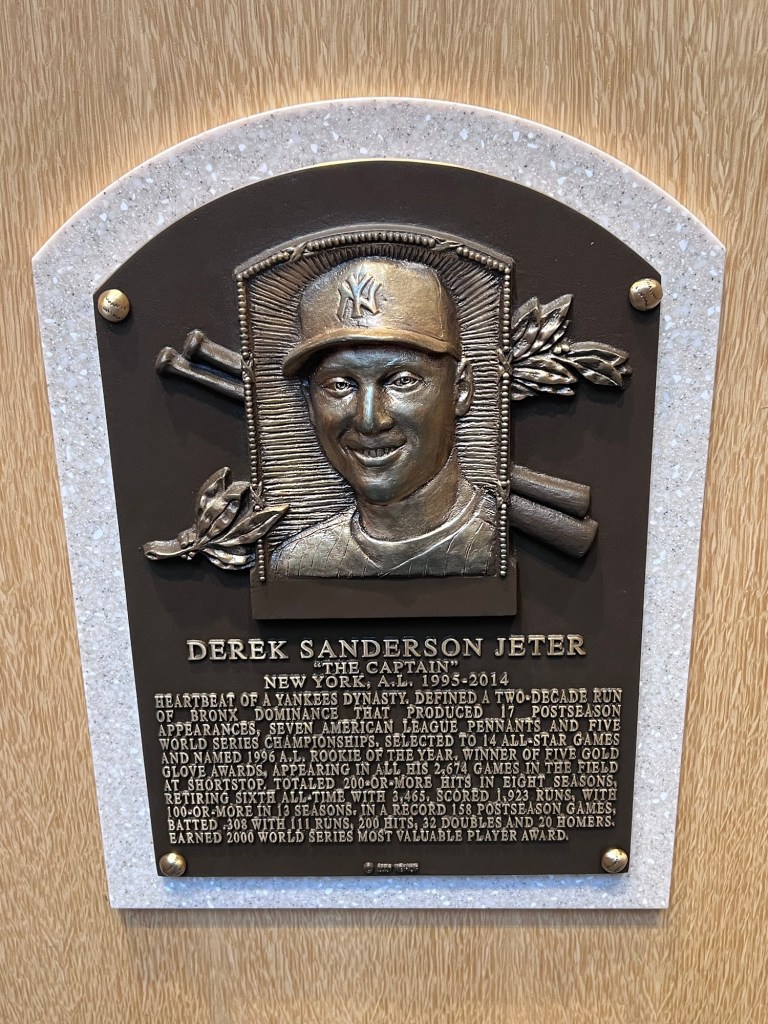
Derek “The Captain” Jeter being inducted into the Baseball Hall of Fame

The museum can be overwhelming if you don’t break it down to the part of the visit. I wanted to see the Hall of Fame plaques so I started there. All the players of the past were memorialized by the pictures on plaques with a small blurb about their careers and what team they wanted to be remembered by when they were inducted in.
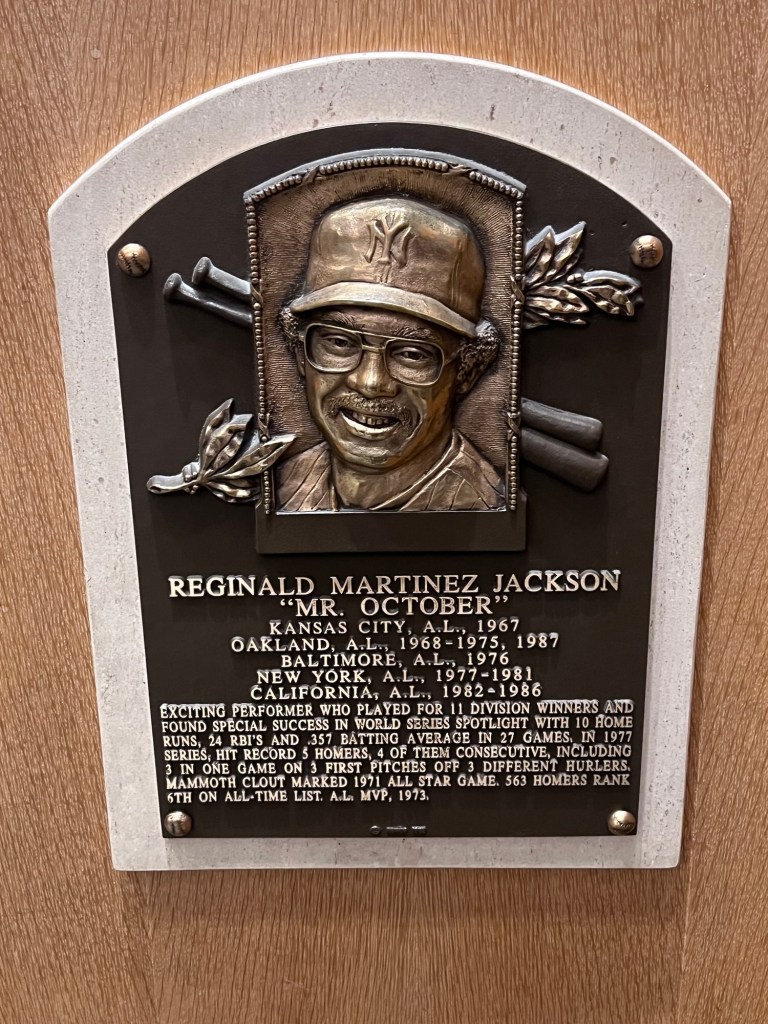
My hero, Reggie Jackson ‘Mr. October’

I was looking for Reggie Jackson, because I remember when “Mr. October” entered he said with pride that he was coming in as a Yankee. He was one of my hero’s of the 1970’s.
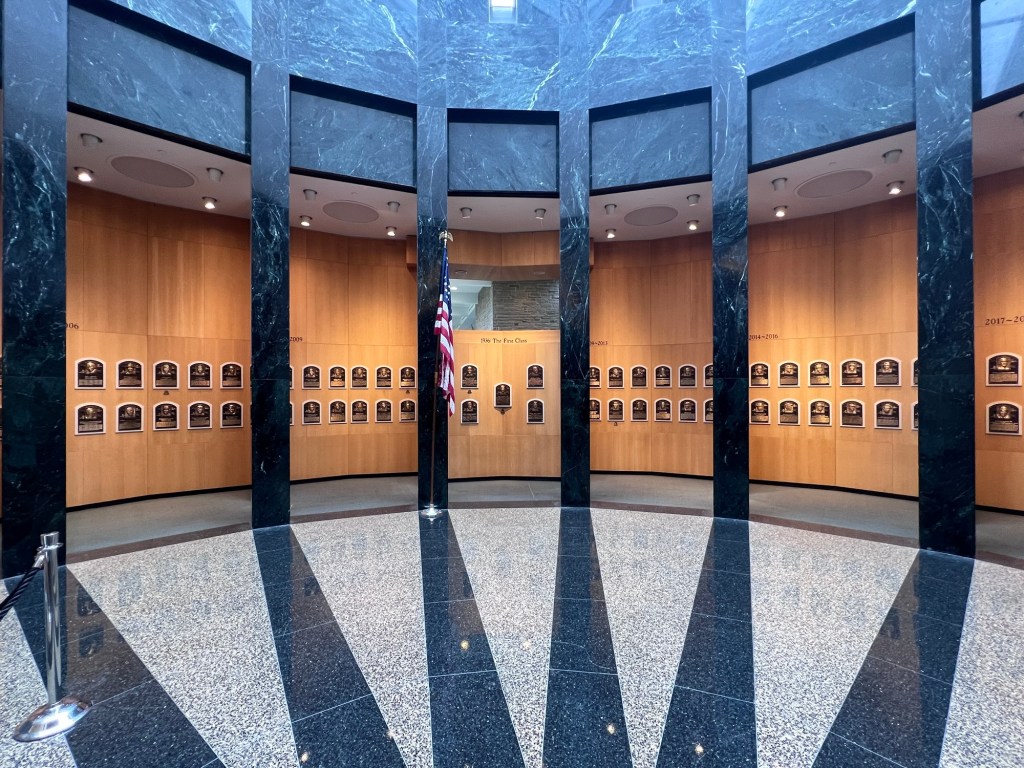
The Hall of Fame Plaque Wall
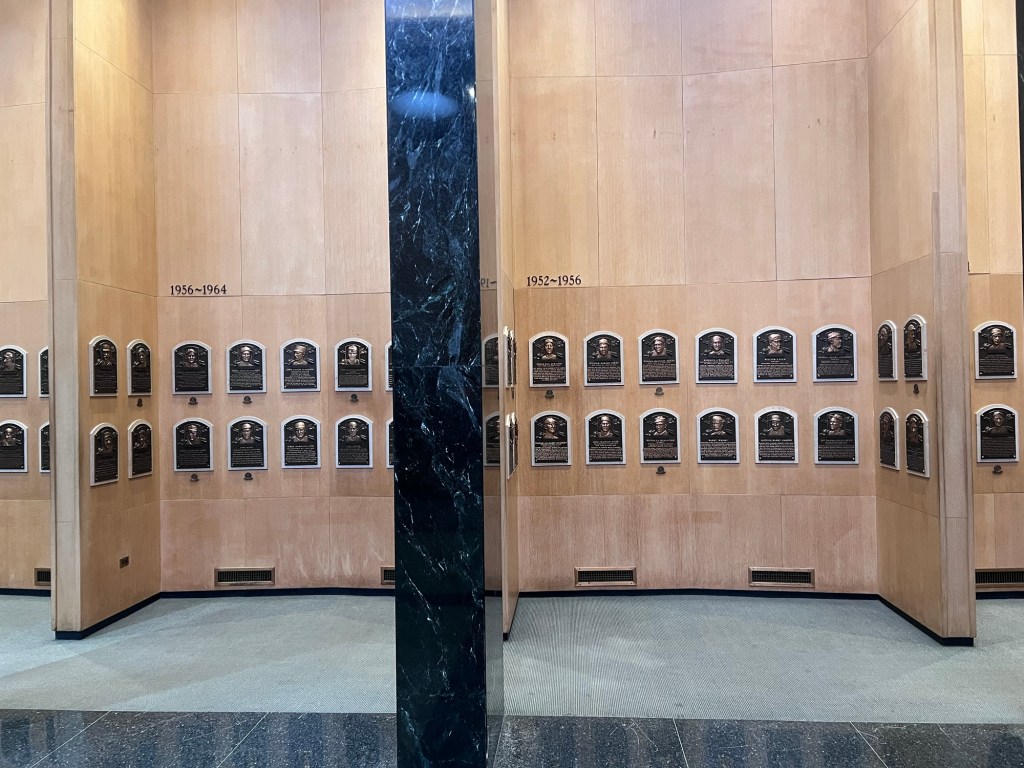
The Hall of Fame Gallery

The second floor is loaded with all sorts of baseball memorabilia from Hank Aaron’s uniforms, pictures and stats to a complete display of all of Babe Ruth’s career history from uniforms, stats, recordings, pictures and even his locker.
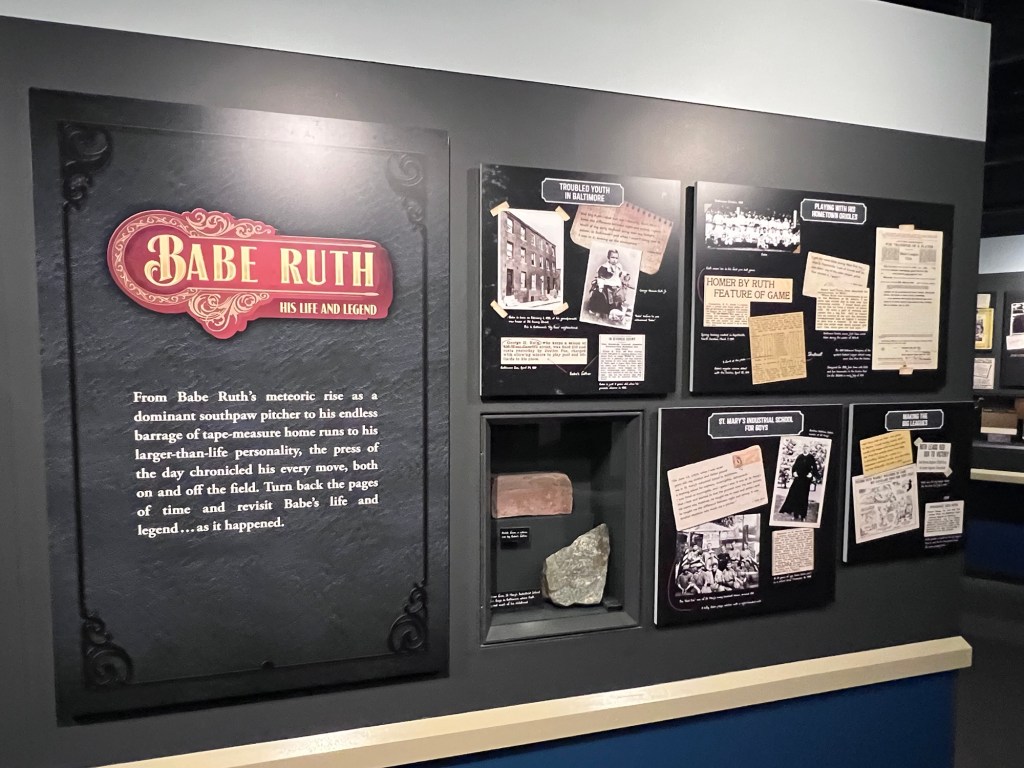
Babe Ruth display
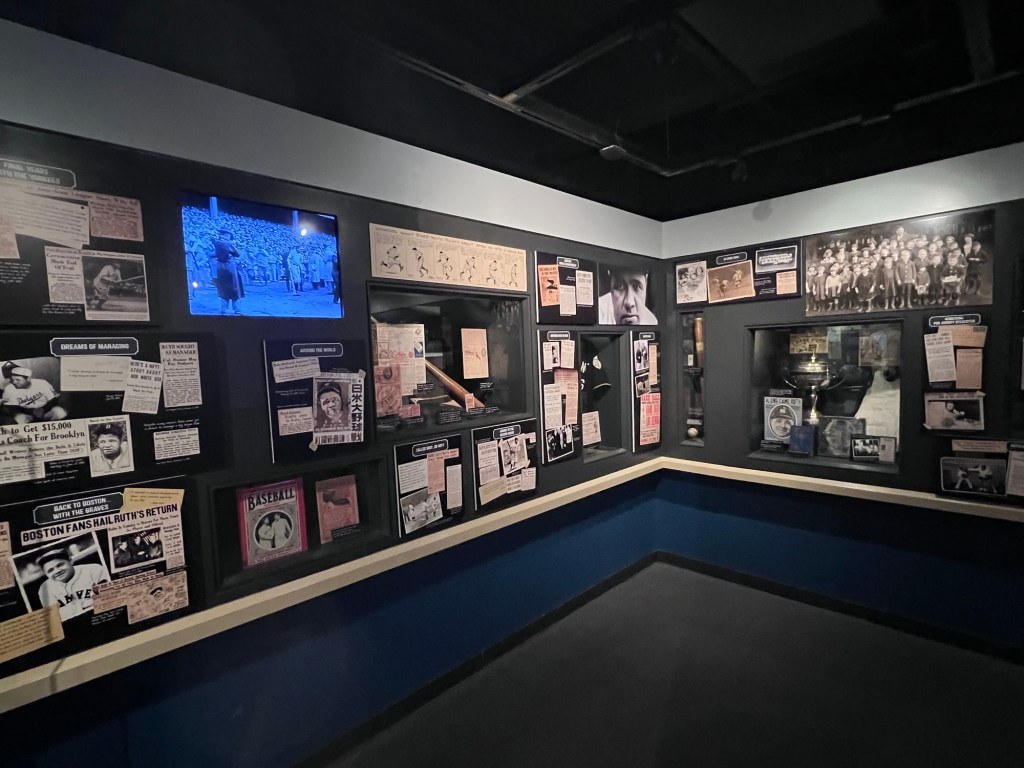
The Babe Ruth exhibit
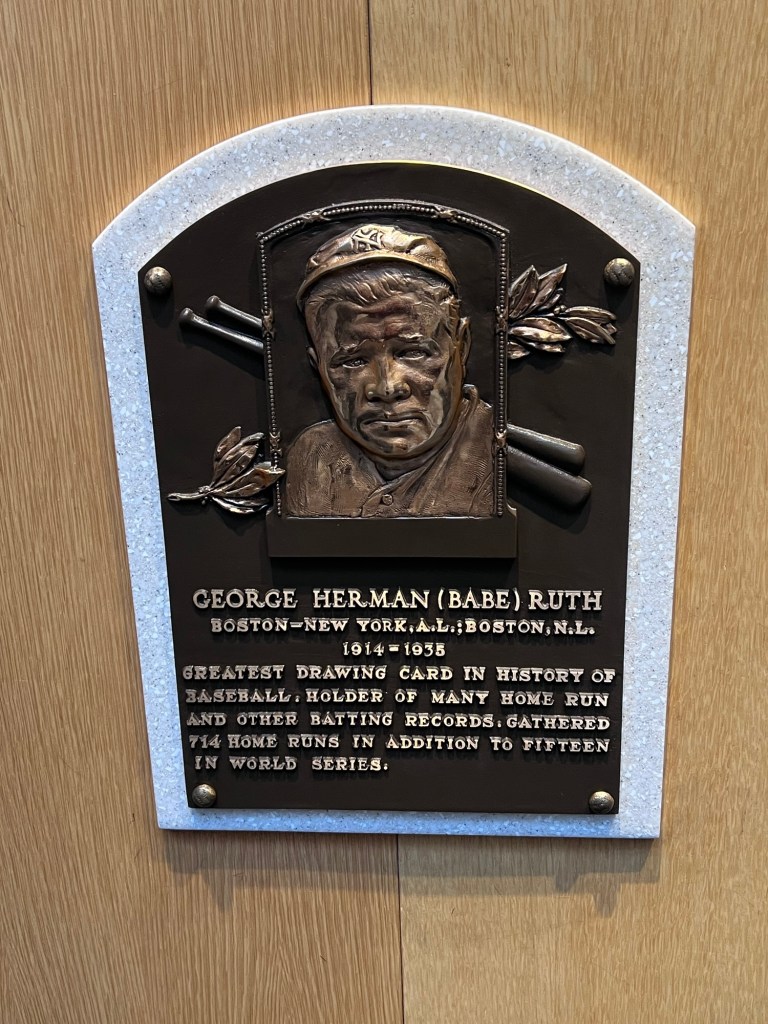
The Babe Ruth panel

Each display case represented the history of baseball and how it has progressed over the years. From the early Egyptians playing a similar sport with a bat and ball to the progression of cricket in the British Territories to modern day stickball in the cities, baseball keeps morphing and changing to modern times.
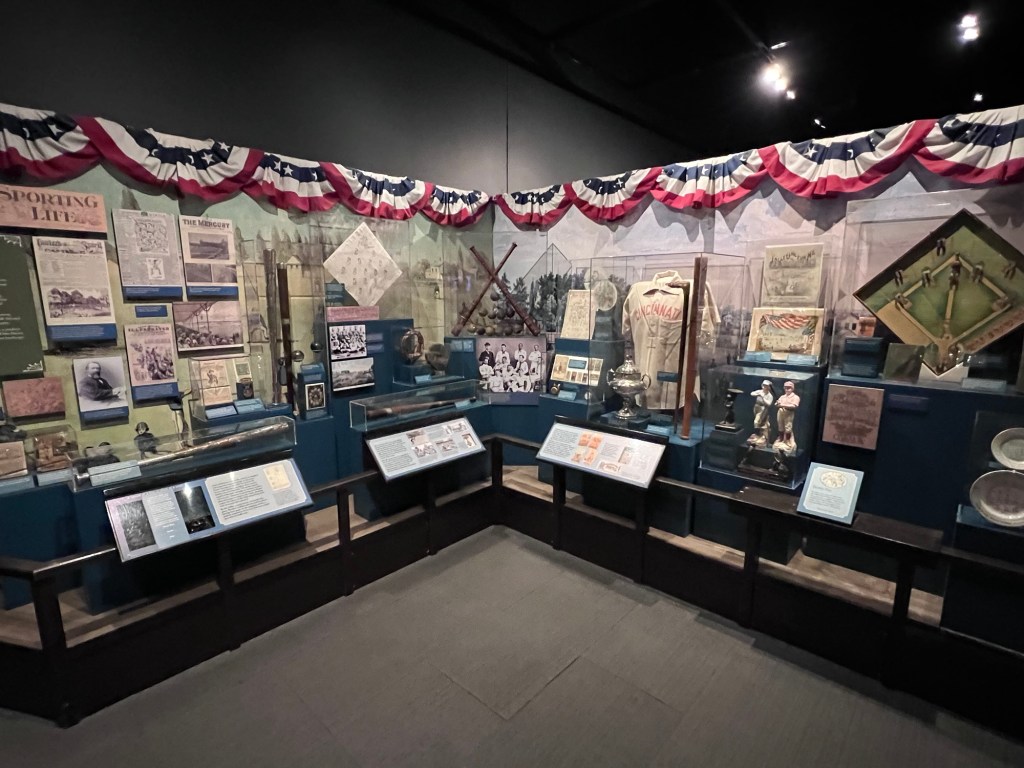
The history of Baseball
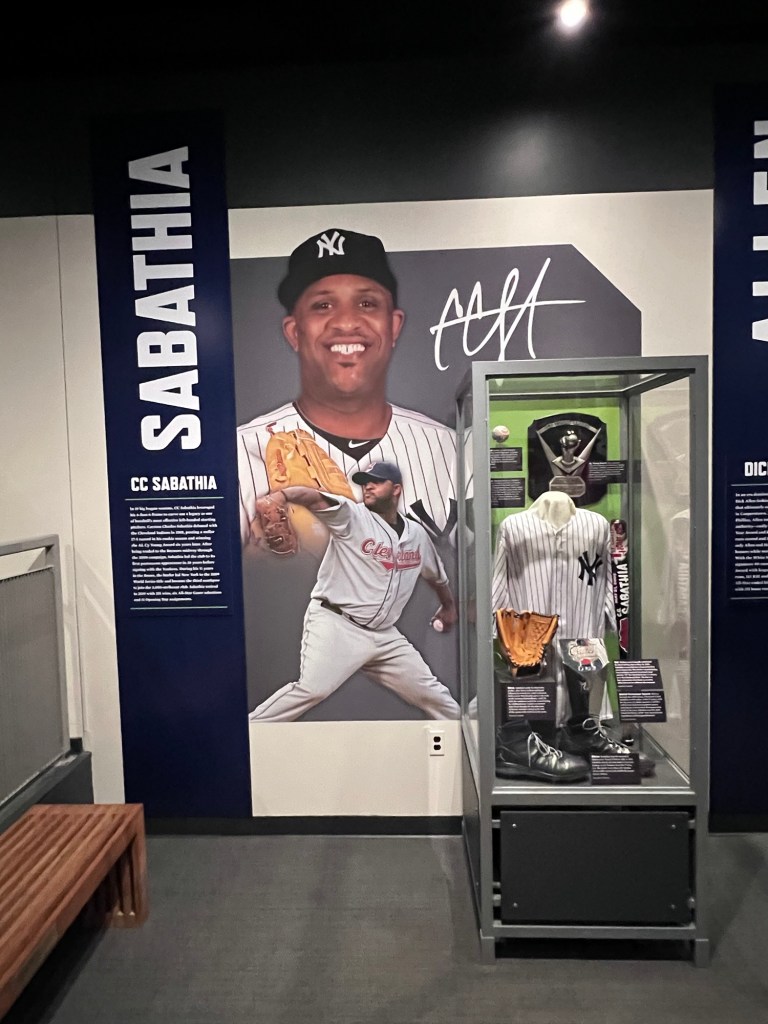
The CC Sabathia exhibit on his coming into the Hall of Fame

Many famous players have donated their entire collections to the museum so it was interesting to see their progression from the time they were young to the time of their retirement.
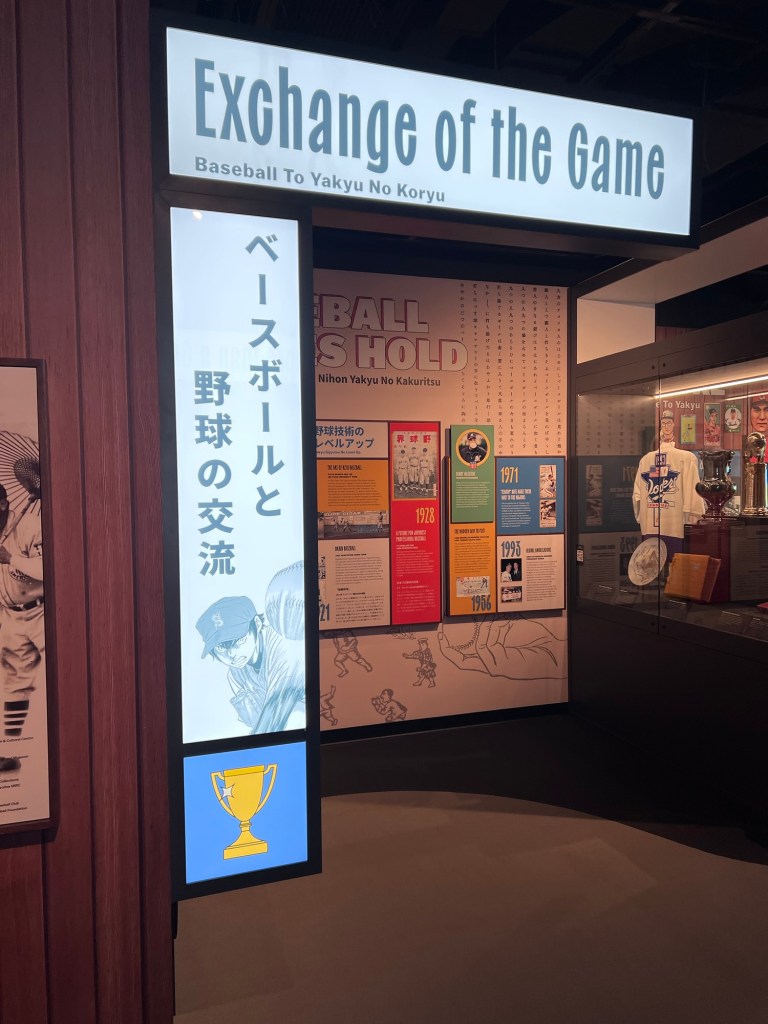
The Japanese baseball history

There are also collections of baseball cards, recordings and films, modern day artworks and even Hollywood’s take on baseball with posters like the “Field of Dreams” and “The Bad News Bears”. I was surprised how the lines between reality and the truth begin to blur in a museum like this.

What I was grateful to was the amount of items donated by the fans, wanting to part with something so valuable to them to share it with other fans.
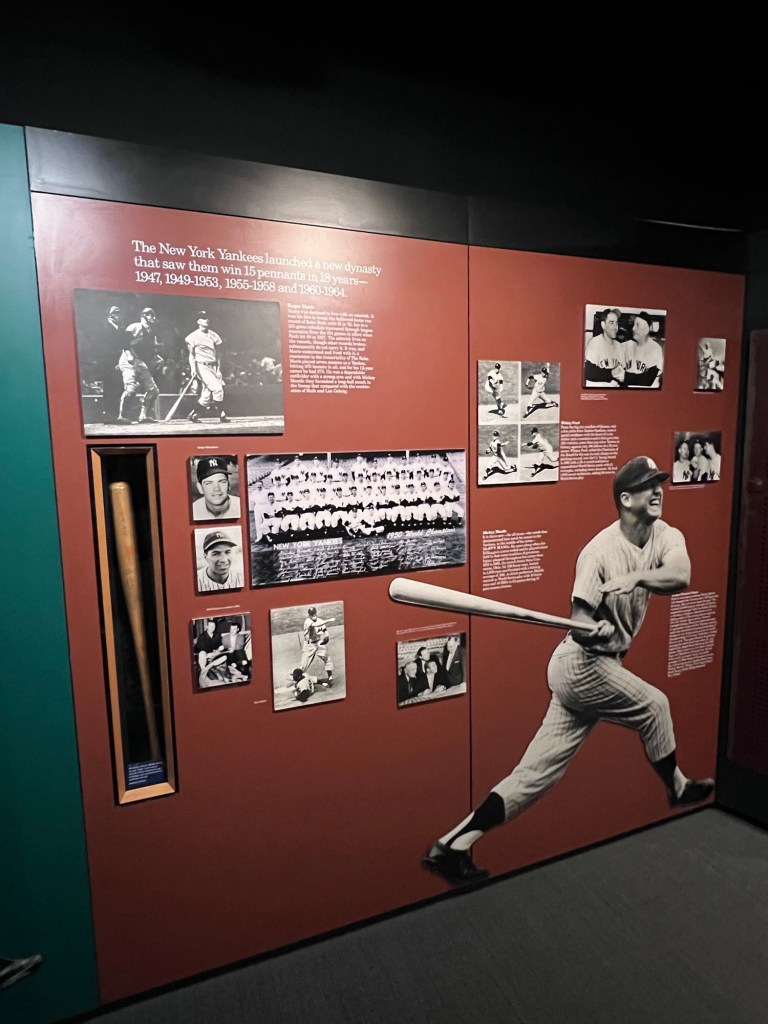
The NY Yankee dynasty

I have to say that the museum can be a little overwhelming at time since there is so much to see so plan on spending at least over two hours and break the visit into two days to really experience the museum especially if you are a true baseball fan at heart.

It is an amazing experience.
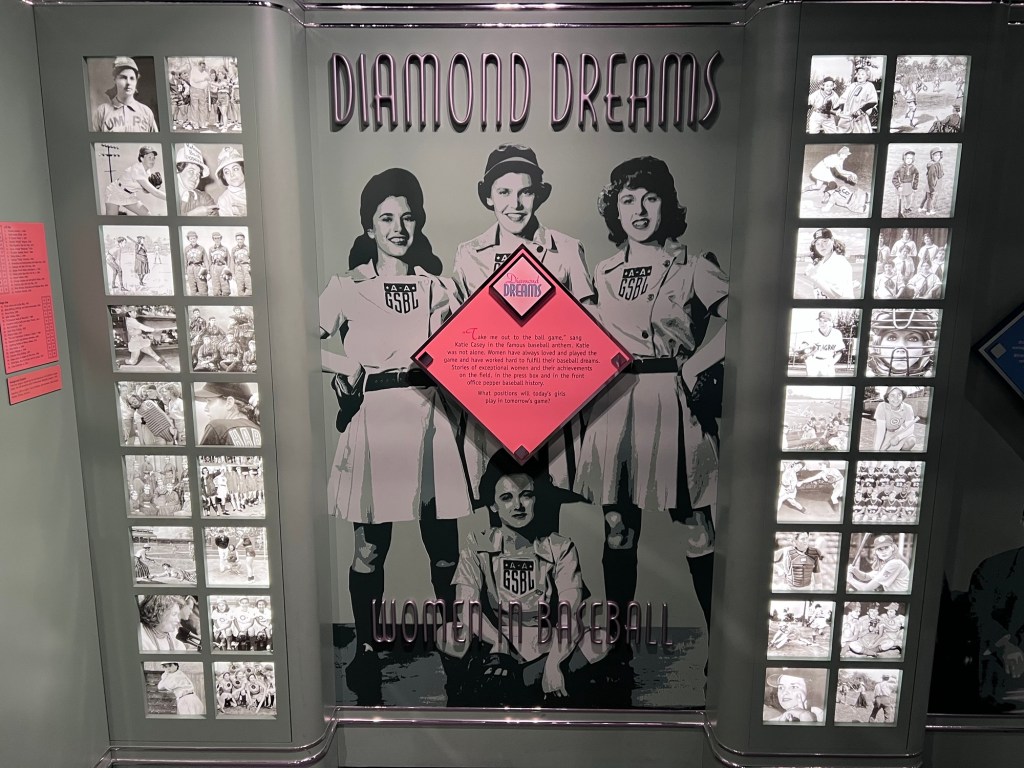
The Women’s League history
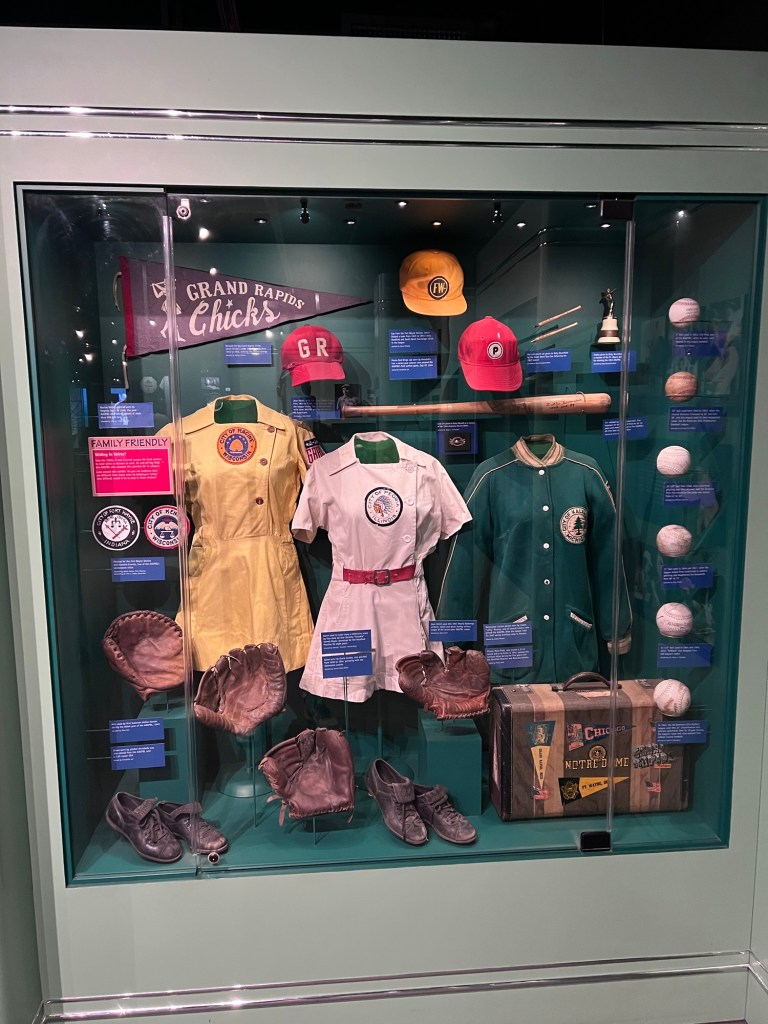
The outfits for Women’s Baseball League

History of the National Baseball Hall of Fame:

(From the museum website)

The Village is pure Americana, a one-stoplight town nestled between the Adirondacks and the Catskills in Central New York. It drew from the family of James Fenimore Cooper, whose father, William, founded the village, whose works of literature have become American standards.

And yet Cooperstown has become a synonym for “baseball”, thanks to a story about a Civil War general and the country’s love for a timeless game. By the last half of the 19th Century, baseball had become the National Pastime. The United States was a little more than 100 years old and baseball had evolved with the country. But there was no definitive answer as to the birth of the game.

Enter the Spalding Commission, a board created by sporting goods magnate and former player A. G. Spalding to establish the genesis of baseball. And after a few years of searching, they found their answer.

A plaque commemorating Major General Abner Doubleday was installed prior to the Hall of Fame’s opening on June 12th, 1939.(Homer Osterhoudt/National Baseball Hall of Fame and Museum).
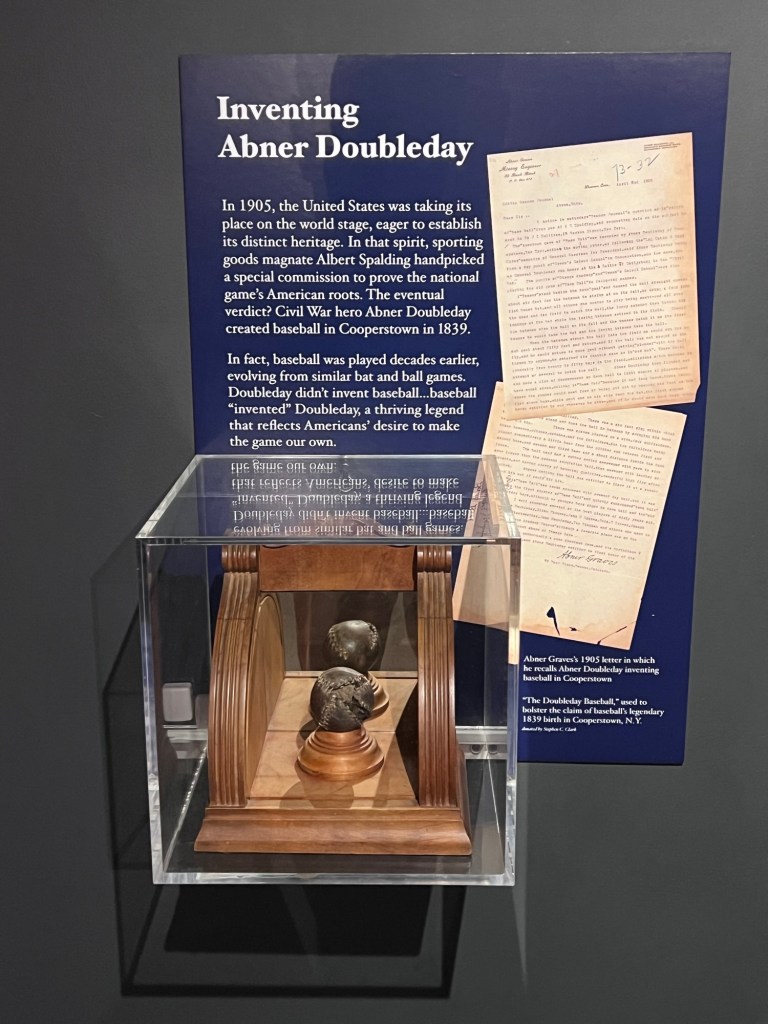
The Abner Doubleday display

Abner Graves, a mining engineer, proclaimed that Abner Doubleday, a decorated Union Army officer who fired the first shot of defense of Fort Sumter at the start of the Civil War and later served at the Battle of Gettysburg, invented baseball in 1839 in Cooperstown. That was good enough for the Spalding Commission, which came to its conclusion in 1907.

Three decades later, Cooperstown philanthropist Stephen C. Clark, seeking a way to celebrate and protect the National Pastime as well as an economic engine for Cooperstown, asked National League president Ford C. Frick if he would support the establishment of a Baseball Hall of Fame in Cooperstown. The idea was welcomed and in 1936 the inaugural Hall of Fame class of Ty Cobb, Walter Johnson, Christy Mathewson, Babe Ruth and Honus Wagner was elected.

Three years later, the Hall of Fame building officially opened in Cooperstown as all of baseball paused to honor what was called “Baseball’s Centennial” and as the first four Hall of Fame classes were inducted.

To mark the occasion, Time Magazine wrote: “The world will little note nor long remember what (Doubleday) did at Gettysburg but it can never forget what he did at Cooperstown.”

In the years since, The Doubleday Myth has been refuted. Doubleday himself was at West Point in 1839. Yet the Myth has become strong enough that the facts alone do not deter the spirit of Cooperstown.

The National Baseball Hall of Fame and Museum surely the most well-known sports shrine in the world, continues to thrive in the town where baseball’s pulse beats the strongest.

But in the following the opening of the Hall of Fame on June 12th, 1939, the Museum has become much more than just home to baseball’s biggest stars. The Hall of Fame is the keeper of the game.

The Hall of Fame’s collections contain more than 40,000 three demensional artifacts, such as bats, balls, gloves and uniforms donated by players and fans who want to see history preserved. The museum’s curators use the artifacts, whose number grows by about 400 a year, to tell the story of the National Pastime through exhibits.

The Museum itself is a melding of five buildings sewn together via several renovation and expansion programs. Today, the Museum easily accommodates more than 3000 visitors per day during the peak season.

The artifact collection is housed in climate-controlled rooms to protect the delicate, fabric and wood materials used in baseball. The Museum promises, in exchange for the donation of an artifact, to care for an item in perpetuity, which means the effects of temperature and humidity must be constantly regulated. The Museum’s first accessioned item was the “Doubleday Baseball”, which was discovered in a farmhouse in nearby Fly Creek, NY in 1935 and dates to the 19th Century.

Then in 1937, Cy Young, elected to the Hall of Fame that year in the second year of voting, generously donated several artifacts, including the 1908 ball from his 500th win and the 1911 uniform he wore with the Boston Braves. Young’s donations generated new offers from other players as well as fans.

Thousands of fans attended the opening of the Hall of Fame on June 12th, 1939 and that same year another Cooperstown tradition was started with the launch of the annual Hall of Fame game. For 70 years, the Hall of Fame game became an annual celebration of the game as two Major League Baseball teams played an annual exhibition contest at Doubleday Field in Cooperstown.

Though the game was discontinued in 2008, the legends live on with the advent of the Hall of Fame Classic, an annual event over Memorial Day Weekend featuring Hall of Famers and former major leaguers at historic Doubleday Field.

The field itself dates back to 1920 and the first grandstand was built in 1924. Thanks to Works Progress Administration money during the Great Depression, Doubleday Field was expanded again in 1934. Today, the field is occupied non-stop during the spring, summer and fall as high school athletes, collegiate summer league stars and recreational players savor the chance to play on hallowed ground.

The A. Bartlett Giamatti research Center is also part of the Museum experience and the Center’s Library contains more than three million documents on the history of baseball, ranging from reference books to the “Green Light Letter” sent by President Franklin D. Roosevelt to baseball commissioner Kenesaw Mountain Landis in January of 1942, urging Landis to keep baseball going during World War II. The National Baseball Hall of Fame Library also contains more than 250,00 baseball photographs and images.

As an educational institution, the Museum offers outreach programs for audiences of all ages. Through virtual classroom technology, Cooperstown is transported to school across the country with video-conference lessons featuring any one of 16 learning modules.
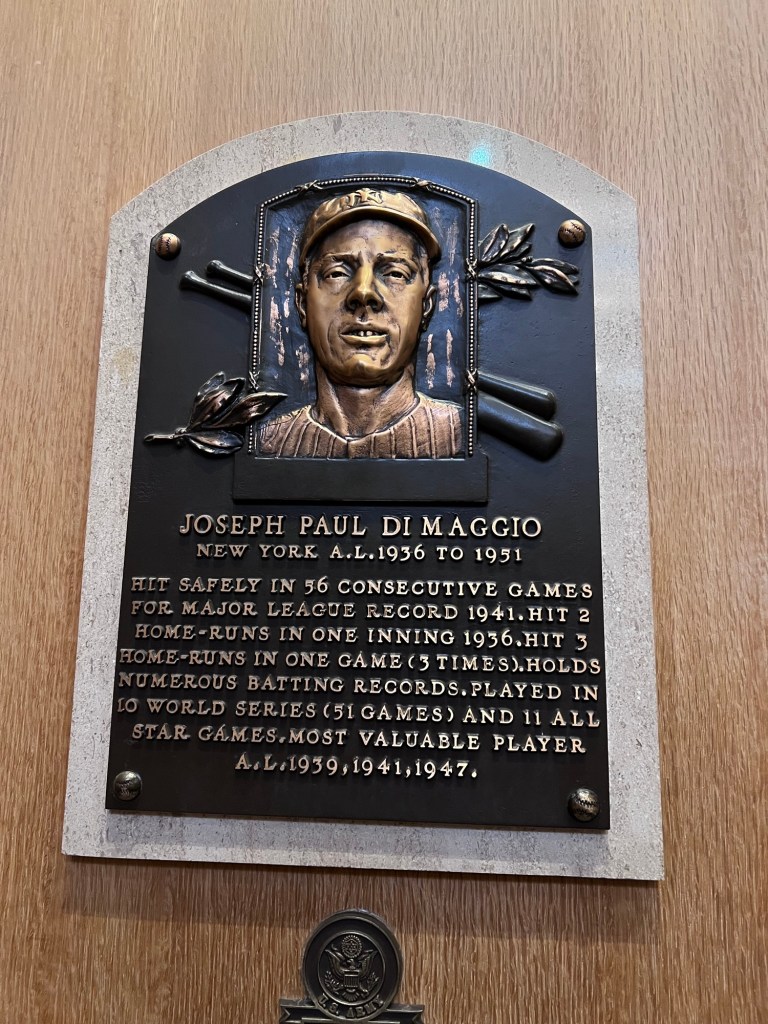
The Joe Di Maggie award

Mission of the Museum:

Preserving History, Honoring Excellence and Connecting Generations.

The National Baseball Hall of Fame and Museum is an independent, non-profit educational institution dedicated to fostering an appreciation of the historical development of baseball and its impact on our culture by collecting, preserving, exhibiting and interpreting its collection for a global audience as well as honoring those who have made outstanding contributions to our national pastime.
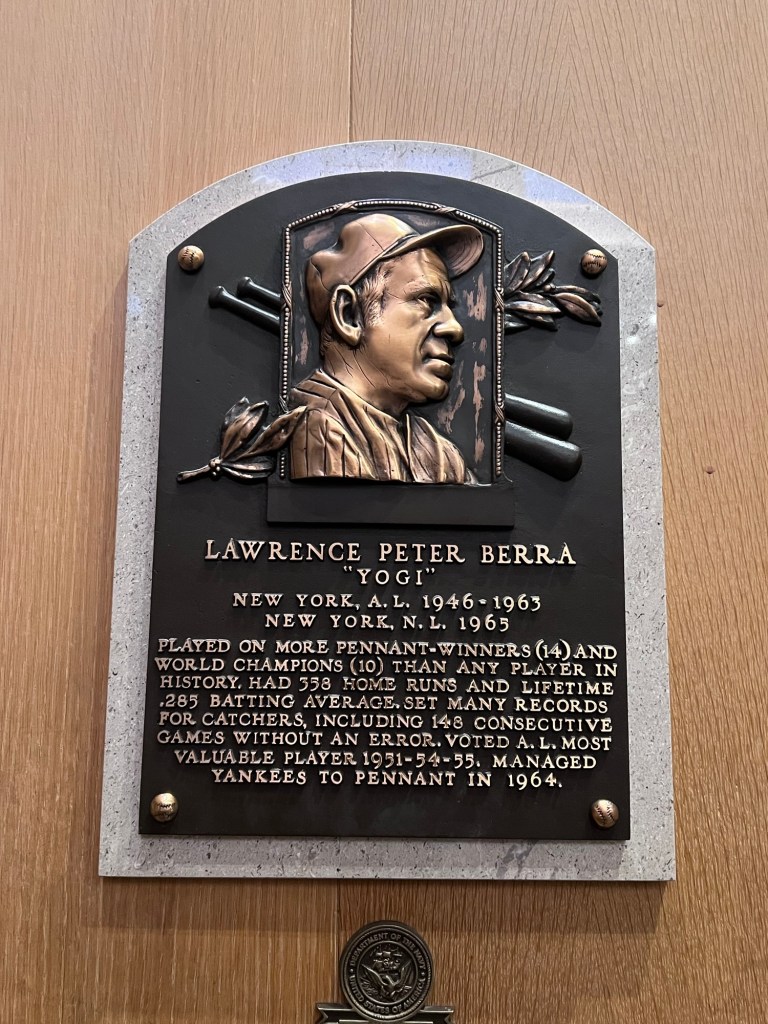
The Yogi Berra panel

The Hall of Fame’s mission is to preserve the sport’s history, honor excellence within the game and make a connection between the generations of people who enjoy baseball. Likewise the institution functions as three entities under one roof with a museum, the actual Hall of Fame and a research library. With these parts working together, the Museum is committed to fulfilling its mission by:

Collecting, through donations, baseball artifacts, works of art, literature, photgraphs, memorabilia and related materials which focus on the history of the game over time, its players and those elected to the Hall of Fame.

Preserving the collections by adhering to professional museum standards with respect to conservation and maintaining a permanent record of holdings through documentation, study, research, cataloging and publication.
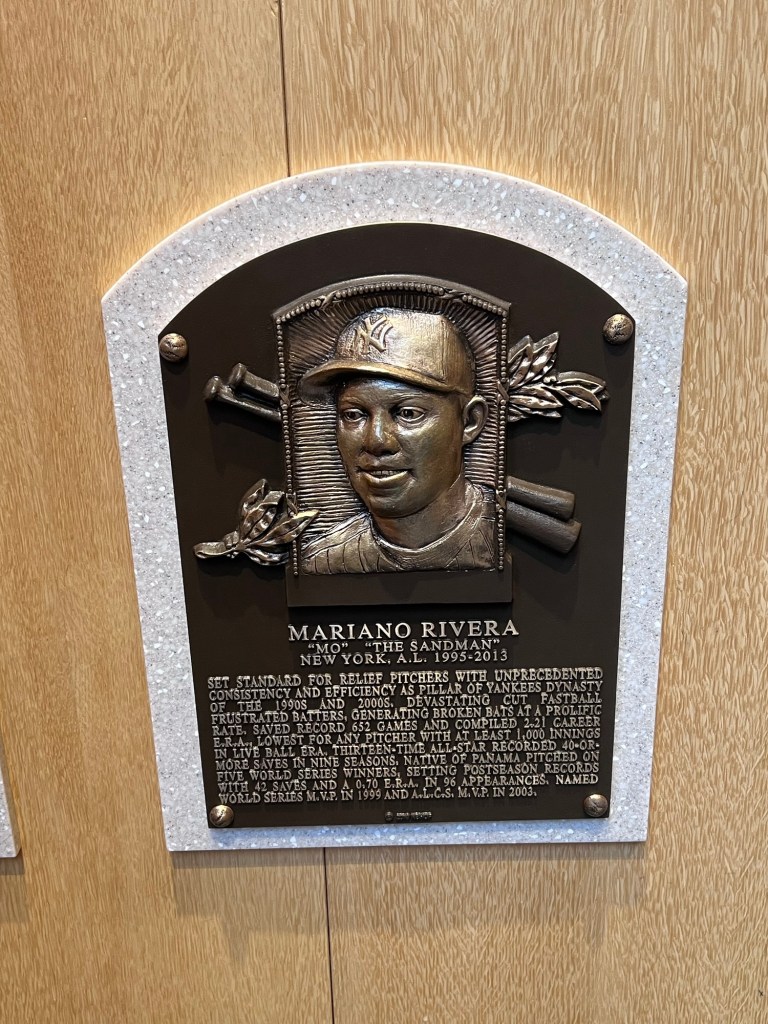
The Mariano Rivera plaque

Exhibiting material in permanent gallery space, organizing on-site changing exhibitions on various themes, with works from the Hall of Fame collectins or other sources, working with other individuals or organizations to exhibit loaned material of significance to baseball and providing related research facilities.

Interpreting artifacts its exhibition and education programs to enhance awareness, understanding and appreciation of the game fora diverse audience.
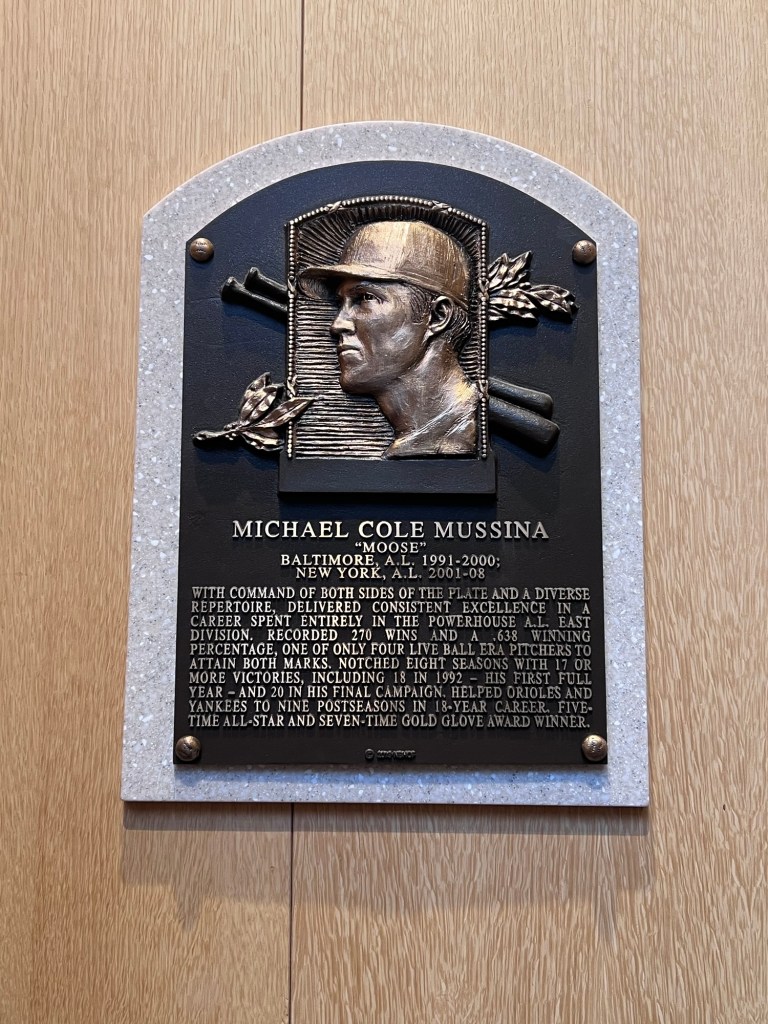
The Mike Mussina plaque

Honoring, by enshrinement, those individuals who had exceptional careers and recognizing others for their significant achievements.
Fenimore Art Museum                                         5798 NY-80                                          Cooperstown, NY 13326

Fenimore Art Museum 5798 NY-80 Cooperstown, NY 13326

Fenimore Museum

5798 NY-80

Cooperstown, NY 13326

(607) 547-1400

Open: Sunday-Saturday 10:00am-5:00pm (check hours during the seasons)

Admission: Adults (13+) $17.50/Children (12 and under) Free

My review on TripAdvisor:

https://www.tripadvisor.com/Attraction_Review-g47529-d103482-Reviews-Fenimore_Art_Museum-Cooperstown_Otsego_New_York.html?m=19905

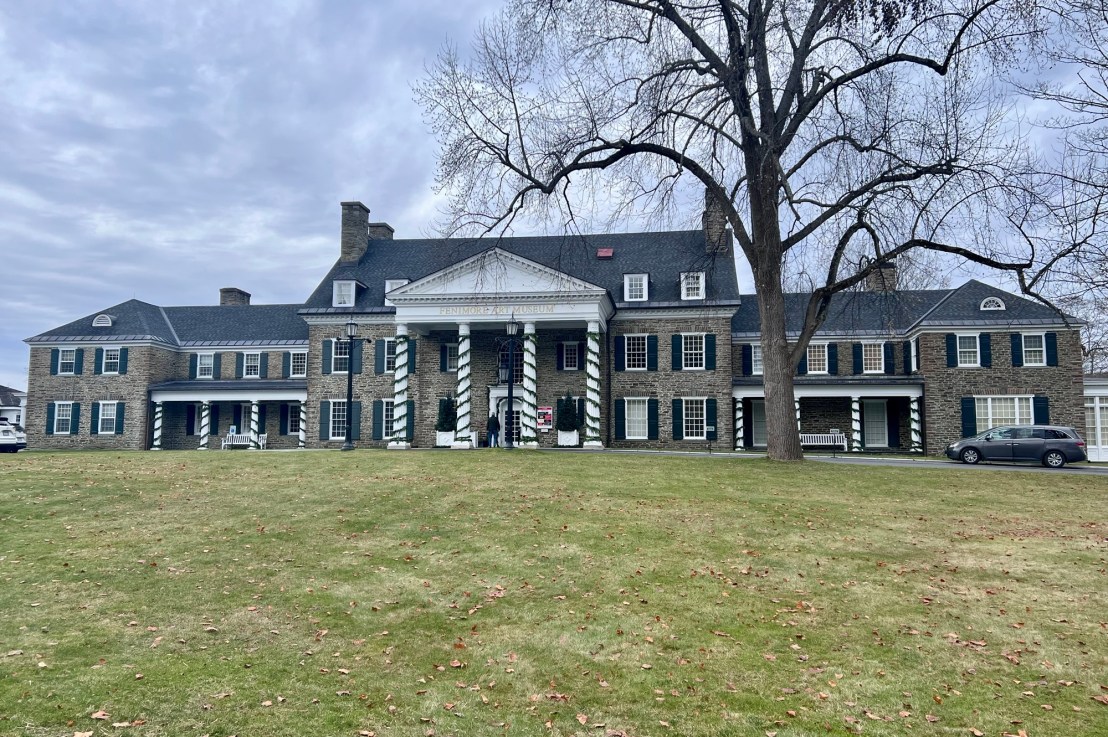
The Fenimore Museum at 5798 NY-80

The museum at the start of the holiday season

I was in Upstate New York visiting Cooperstown to see the Baseball Hall of Fame and when I finished, I travelled up the road to see the Fenimore Art Museum. What a unique museum packed with interesting art from all aspects of the medium.

The Portrait Collection

The Lady in White

The middle level of the museum specialized in early American works and paintings from the Hudson River School. Across the hall was the history of the Cooper family who once owned all the land in the area, developed it to the town known as Cooperstown as a planned community.

The collection of Folk Art Paintings

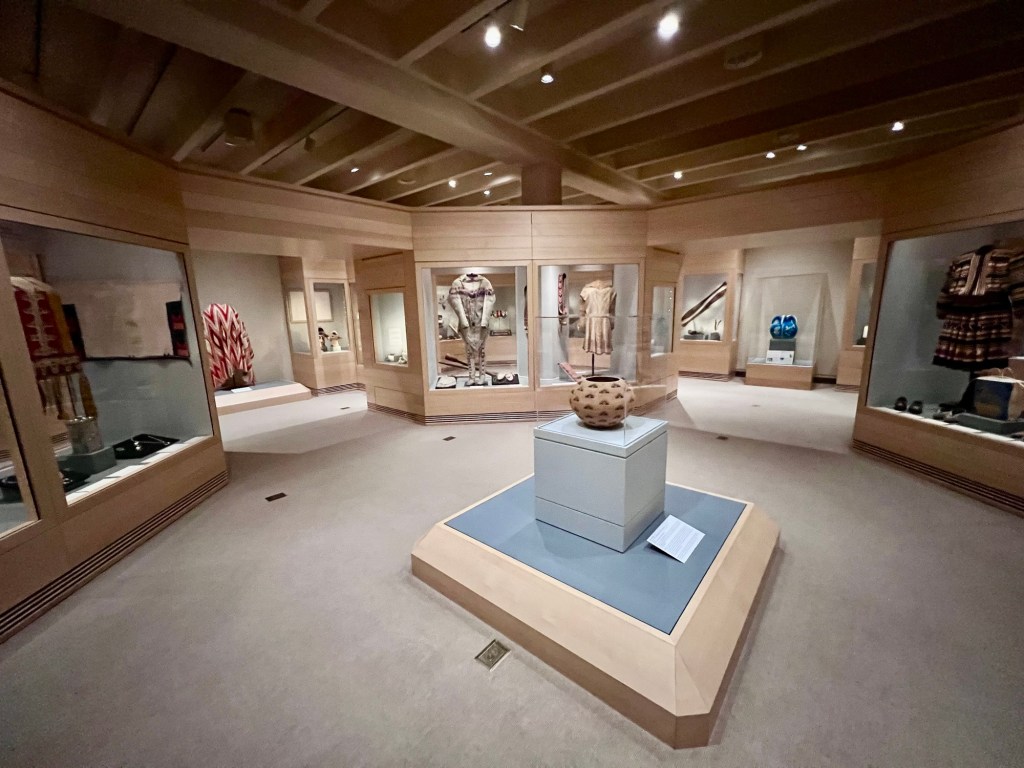
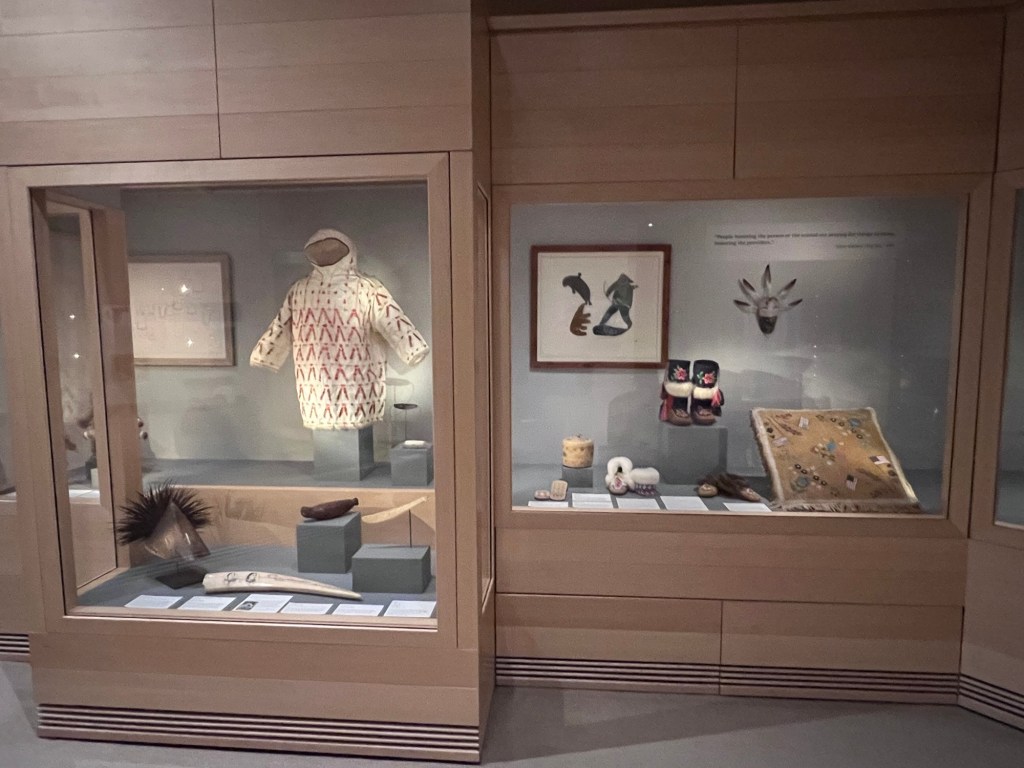
The lower level was dedicated to the Thaw Collection of American Indian Art which was pretty extensive.

The clothing from the Native American display from the Thaw Collection

The Thaw Collection gallery

I liked the collection of spiritual masks that could scare away any evil spirit. The collection of small dolls and icons makes you wonder how they if ever captured any spirits. Their collection of clothing was interesting too.

The Thaw Collection

The Thaw Native American Collection

The ‘Looking Back’ exhibition

The paintings in the exhibit

One of my favorite paintings from this exhibit (note-some of the buildings in this painting from 1860 still exist).

The upper floor in 2025 was the exhibition of the ‘’Calvin and Hobbes’ cartoon. I loved this comic strip when it was out and found myself laughing the whole time.

The opening of the Calvin and Hobbes exhibition in 2025

(From the Fenimore Art Museum website)

Exploring Calvin and Hobbes revisits the beloved comic strip created by Bill Watterson from 1985 to 1995. This exhibit explores his mastery of the comic strip art form through engaging characters, thoughtful writing, and creative layouts.

The exhibition features original Calvin and Hobbes daily and Sunday strips as well as specialty pieces by Watterson from his collection of more than 3,000 originals housed at the Billy Ireland Cartoon Library & Museum at The Ohio State University. Calvin and Hobbes appeared in 2,400 newspapers worldwide at the height of its popularity. Watterson won the National Cartoonists Society’s prestigious Reuben Award for “Outstanding Cartoonist of the Year” in both 1986 and 1988.

The History of the Fenimore Art Museum:

The Fenimore Art Museum originated as the New York State Historical Association, founded in 1899 by New Yorkers who were interested in promoting greater knowledge of the early of the state. They hoped to encourage original research, to educate general audiences by means of lectures and publications to mark places of historic interest with tablets or signs and to start a library and museum to hold manuscripts, paintings and objects associated with the history of the state.

The Fenimore Art Museum in the Fall of 2025

In 1939, Stephen Carlton Clark, offered the organization a new home in the village of Cooperstown, NY. Clark, an avid collector, took an active interest in expanding the holdings of the Association and in 1944 donated Fenimore House, one of his family’s properties, to be used as a new headquarters and museum. The impressive neo-Georgian structure was built in the 1930’s on the site of James Fenimore Cooper’s early 19th century farmhouse on the shore of Otsego Lake, Coopers Glimmerglass.

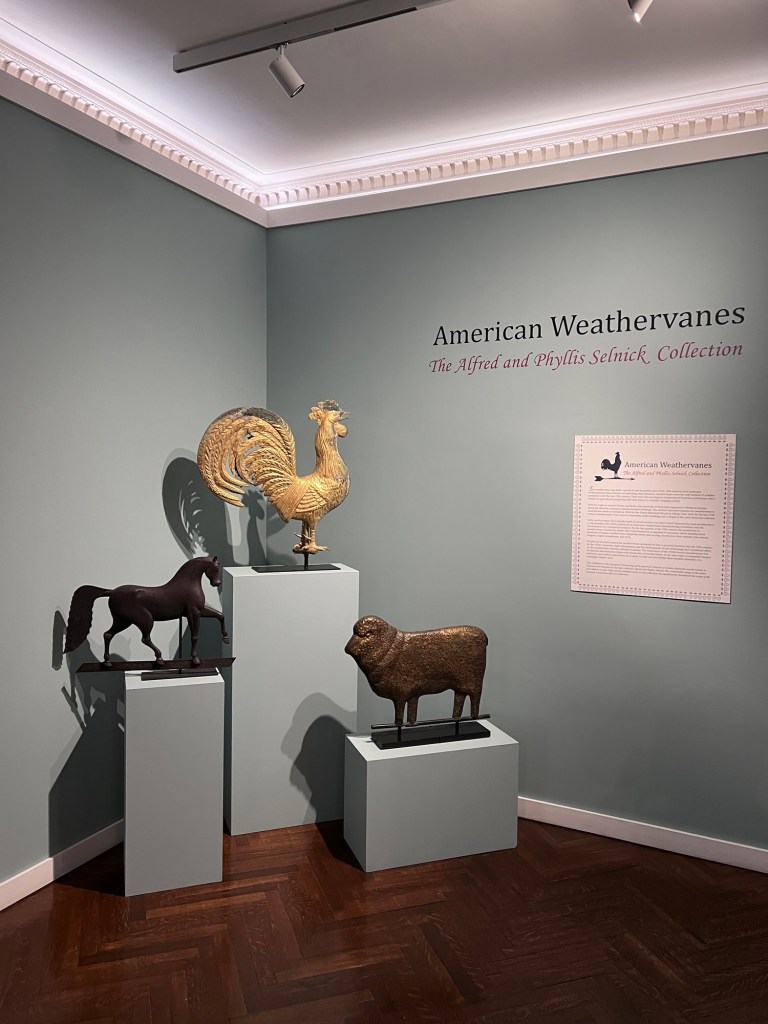
The Weathervane Collection

Fenimore House was large enough to have both extensive galleries as well as an office and library space. The collections and programs continued to expand and a separate library building was constructed in 1968.

The Cigar Store Indian

In 1995, a new 18,000 square foot wing was added to the Fenimore House to accommodate the Eugene and Clare Thaw Collection, which is one of the nation’s premier collections of American Indian Art. In 1999 in recognition of our world class collections, we renamed the Fenimore House to the Fenimore Art Museum.

The Collection includes The Thaw Collection of American Indian Art, Fine Art & Folk Art, Photography and the Research Library.

Early American Portrature

Mission:

Preserving-Engaging-Educating

Fenimore Art Museum is dedicated to welcoming and connecting people to our shared cultural heritage through exhibitions and programs that engage that engage, delight and inspire.

(This information comes from the Fenimore Art Museum’s website and I give them full credit for it)

The ‘Humming Bee’ portrait

This was one of my favorite paintings in the collection when I visited in 2025.

The Thaw Collection gallery

New Jersey Maritime Museum                                   528 Dock Road                                                 Beach Haven, NJ 08008

New Jersey Maritime Museum 528 Dock Road Beach Haven, NJ 08008

New Jersey Maritime Museum

528 Dock Road

Beach Haven, NJ 08008

(609) 492-0202

https://www.facebook.com/NJMaritimeMuseum/

Open: Sunday-Saturday 10:00am-4:00pm (Check by season)

My review on TripAdvisor:

https://www.tripadvisor.com/Attraction_Review-g46292-d1881647-Reviews-Museum_of_NJ_Maritime_History-Beach_Haven_Long_Beach_Island_New_Jersey.html?m=19905

I made a special trip to Beach Haven, NJ recently to visit the NJ Maritime Museum which had gotten some interesting write ups online. The museum covers many aspects of the maritime history of Long Beach Island and the surrounding Jersey Shore and the State of New Jersey.

The NJ Maritime Museum at 528 Dock Road in Beach Haven, NJ.

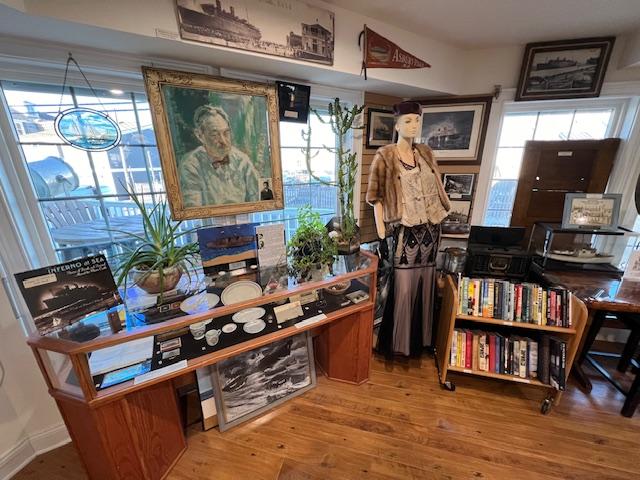
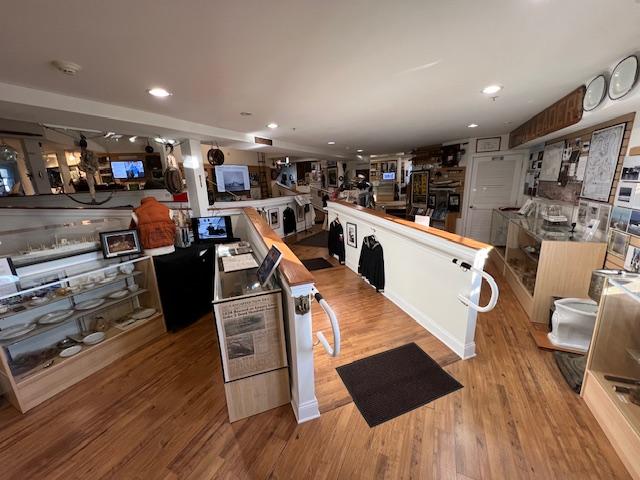
Each of the rooms are packed with pictures, artifacts and explanations of all the events. The front room has a lot of information of ship wrecks, both local and from all over the state.

The Front Galleries of the NJ Maritime Museum.

There is a large story board of the 1916 Shark attacks that inspired the book and movie, “Jaws” including the clippings from the paper and pictures of the cemetery where the victims were buried. It was a very detailed display of the incident.

The front section of the museum has the display of the “Morro Castle” fire.

In the back room of the first floor the room is dedicated to the 1934 “Morro Castle” luxury liner disaster where incompetence from the crew and staff lead to the burning of the ocean liner on its way back from Havana to New York at the height of the Depression and twenty years after the Titanic Disaster. The displays included menus, artifacts from the ship, witness accounts and a movie on the disaster being shown in a loop.

The Morro Castle Fire exhibition.

Natural disasters are covered as well with storms that have reeked havoc to the Jersey Shore over the last hundred years including the recent Hurricane Sandy which was the perfect storm. The pictures show the disaster that have hit Long Beach Island and the rebuilding over the years.

The history of Diving exhibition on the second floor.

There is a lot of local history with pictures of the all the luxury resorts that used to be on the island and its role in the development of the area as an early resort town through the railroads as well as the history of the local “Women’s Surf Fishing Club” and pictures of the club members over the years.

The second floor galleries.

The second floor is dedicated to the local Coast Guard history and rooms full of artifacts from local shipwrecks and the history of the local maritime history and fishing industry.

The Andrea Dora exhibition on the second floor.

The New Jersey Maritime history is in full display here

For such a small museum, the museum is packed with all sorts of interesting information on the New Jersey Shore line.

The History of the NJ Maritime Museum:

On a 1983 episode of the television program “Prime Time”, Jim O’Brien did a segment on New Jersey Shipwreck Diving, interviewing Bob Yates and Deb Whitecraft. During that interview, Deb spoke of her quest for knowledge about different wrecks and New Jersey maritime disasters. She also stated that she had started collecting this information and other items pertaining to New Jersey Maritime History and that she hope to one day have a place to display her collection. On July, 3rd, 2007, Deb’s lifelong ambition came to fruition when the Museum of New Jersey Maritime History opened its doors.

In the years between the program and the museum opening, Deb actively pursued her quest, working with other New Jersey maritime historians and amassing a sizable collection of shipwreck files and artifacts. This collection comprised almost all of the museum’s material when it opened. In the years since it opened, the museum has grown at amazing rate, thanks to the donations and loans from the diving community and the public in general.

The second floor galleries.

Although the museum was built entirely with private funds, it is now a registered non-profit entity and deed restricted to remain so. It operates entirely on donations and is staffed by a small group of dedicated volunteers. The museum is open all year long, Friday through Sunday in the off-season and seven days a week during the summer.

(NJ Maritime Website History)

The NJ Maritime Museum Mission:

The Museum of New Jersey Maritime History Inc. is a museum and research facility organized exclusively for educational purposes within the meaning of Section 501(c)(3) of the Internal Revenue Code. The corporation’s educational purposes include, among other things, providing a facility for the public display of historic maritime artifacts, books and documents. The display of such collections, preserved and exhibited under professional museum standards will encourage maritime research and promote the education of the public about New Jersey’s rich maritime history.
The museum is really interesting.

(NJ Maritime Museum pamphlet)

Barnegat Lighthouse State Park                                           208 Broadway                                             Barnegat, NJ 08006

Barnegat Lighthouse State Park 208 Broadway Barnegat, NJ 08006

Barnegat Lighthouse State Park

208 Broadway

Barnegat, NJ 08006

(609) 494-2016

https://www.state.nj.us/dep/parksandforests/parks/barnlig.html

Open: Sunday-Saturday 8:00am-8:00pm

Fee: Free off season/ Check Website

My review on TripAdvisor:

https://www.tripadvisor.com/Attraction_Review-g46285-d286497-Reviews-Barnegat_Lighthouse_State_Park-Barnegat_Light_Long_Beach_Island_New_Jersey.html?m=19905

I was able to visit the Barnegat Lighthouse State Park on a recent trip to Long Beach and what a beautiful park with wonderful views of the inlet and of the Atlantic Ocean.

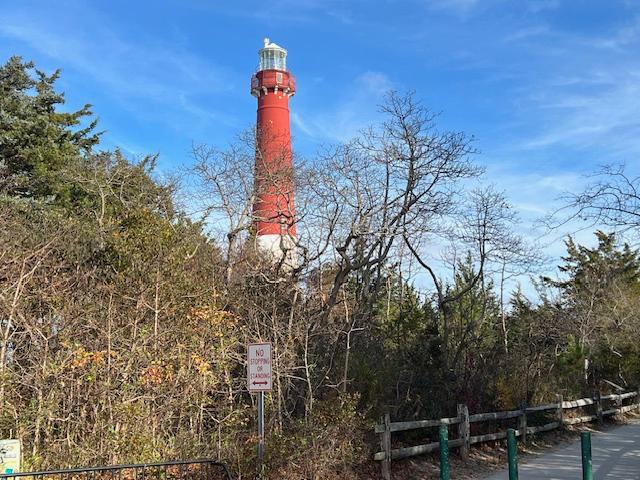
The Barnegat Lighthouse in the fall 2023.

The view of the lighthouse from the parking lot in the summer months

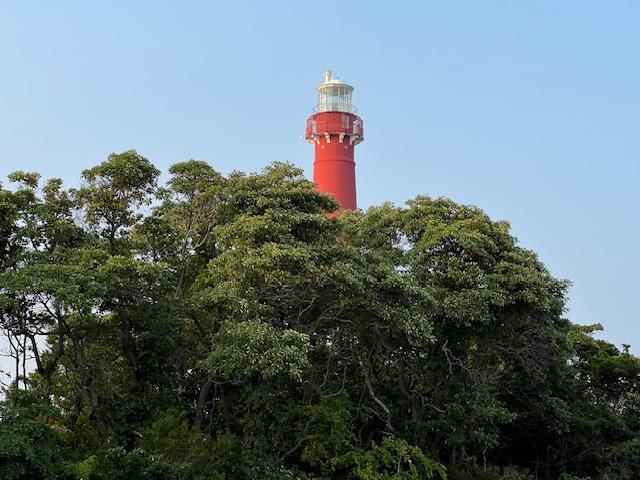
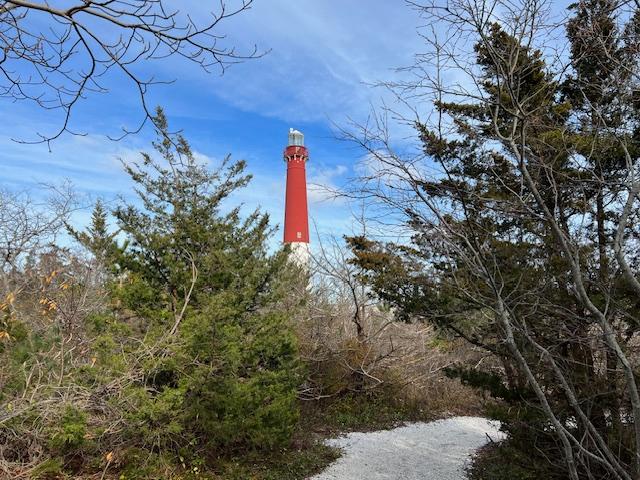
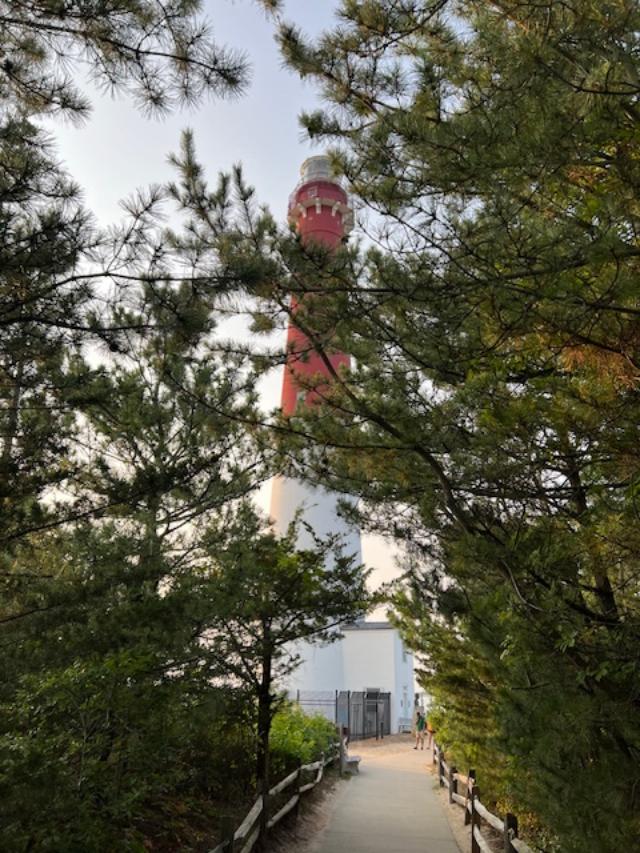
The lighthouse through the woods in the Summer of 2024

In 2020, the lighthouse was closed because of COVID so I had to wait in the future to climb the stairs which is noted for people who like to explore lighthouses but still you are able to admire the building from the outside. In the fall of 2023, the lighthouse was opened for limited hours during the fall after Labor Day weekend and I was able to climb all 216 stairs in ten minutes.

The Barnegat Lighthouse on the inlet side of the park

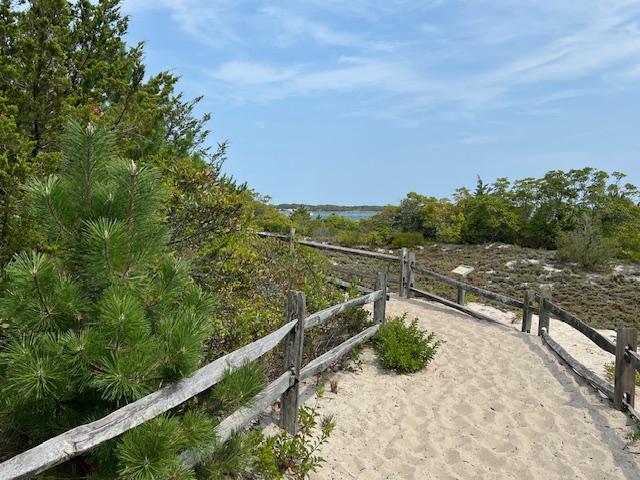
The paths around the dunes in the summer months

The beginning of the dunes in the winter months

The dunes in the summer months

The dunes in the fall

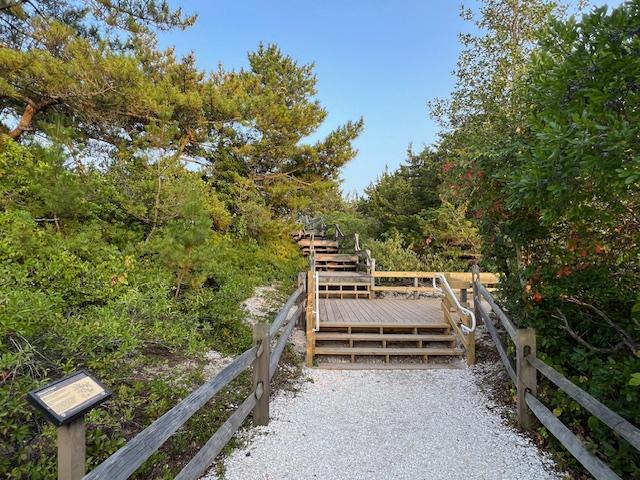
The beginning of the dunes path as you leave the lighthouse.

The start of the path in the summer months

The start of the path in the Summer of 2024

The pathway through the dunes

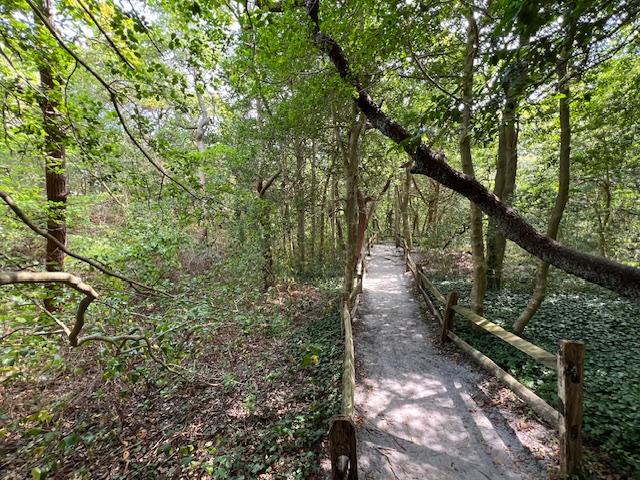
There is a walking path through the bush areas of dunes. In all season, you can admire the trees and what is left at this point of the season of flowering plants. It was interesting to read how these species survive the ocean and salt air. It is amazing how these plants can survive the storms and how they keep the beach from eroding.

The pathway through the Dunes

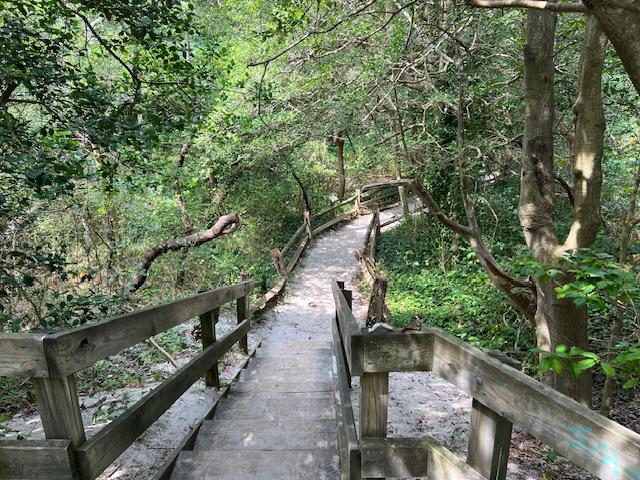
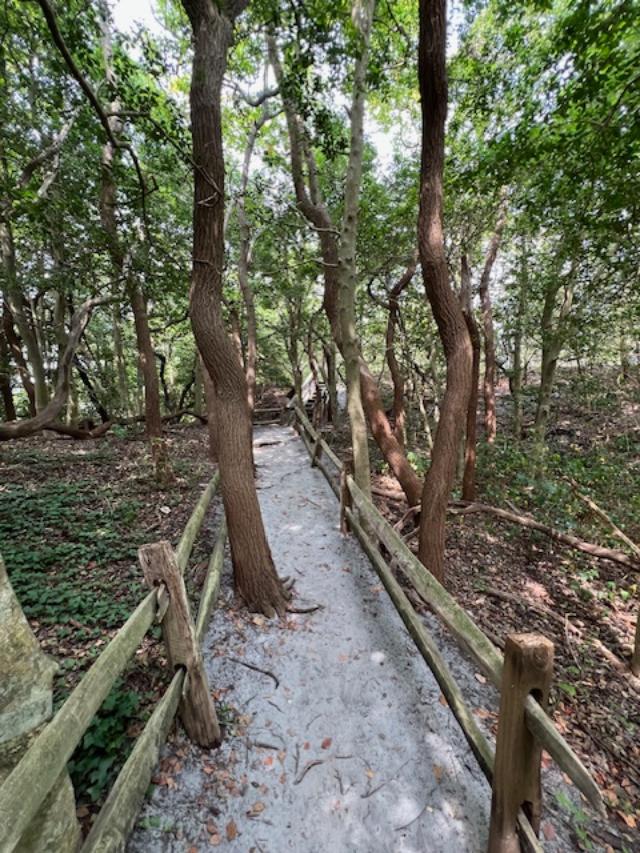
Path through the Dunes woods

The turn by the beaches

The Maritime Forest Trail is a 1/5 mile long, self-guided loop through one of the last remnants of maritime forest in New Jersey. The forest, which is dominated by black cherry, sassafras, eastern red cedar and American Holly, which is an important resting and feeding area for migratory birds on their long journey to and from their breeding areas (Park Literature).

The pathway through the dunes

The path in the summer months

Walking through the pathway

It is also the home for migrating birds. There were all sorts of ducks swimming around and there a a bird that looked like a crane who looked like it was getting vain from all the pictures that people were taking of it.
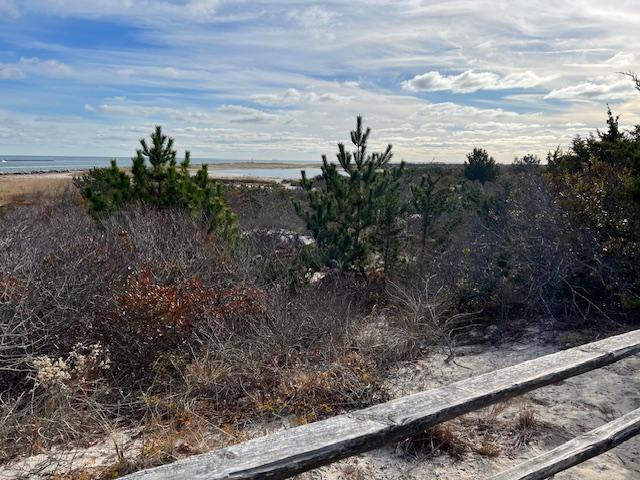
The pathway leading back to the lighthouse.

Walking through the pathways

The pathway from a distance

The Dunes woods at its thickest point

The Inlet Movement sign on the pathway

Exiting the woods

Exiting the woods near the entrance of the light house path

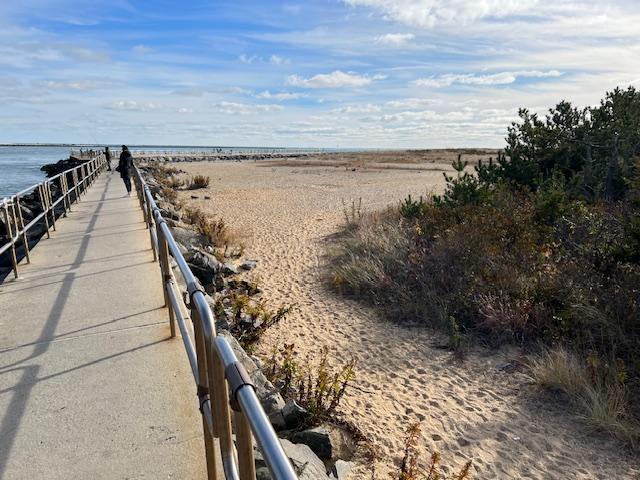
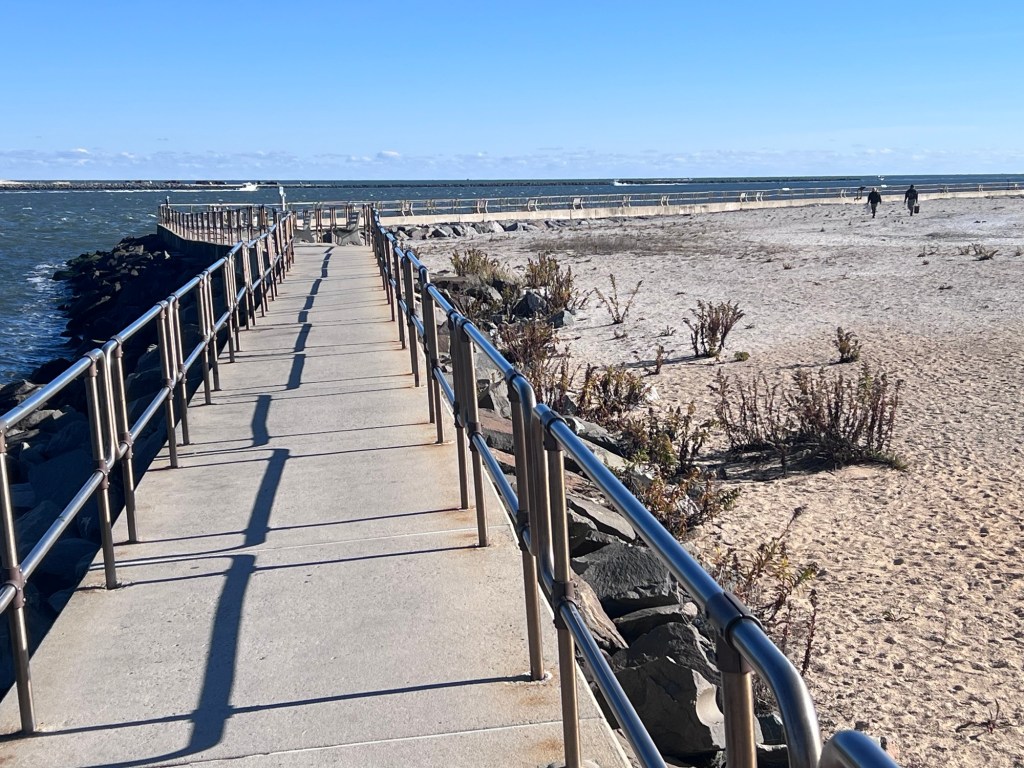
The park has a 1033 foot concrete walkway that the fisherman use and people were sitting along the benches watching people fish and boaters come and go from the inlet. The walkway was a nice place to see the waves crash along the sides of the park.

The lighthouse and the walkway.

The pathway out to the bunker

The pathway during the Summer of 2024

The bunker that protects the shoreline and the lighthouse.

The bunker and the lighthouse

Following the pathway to the bunker head

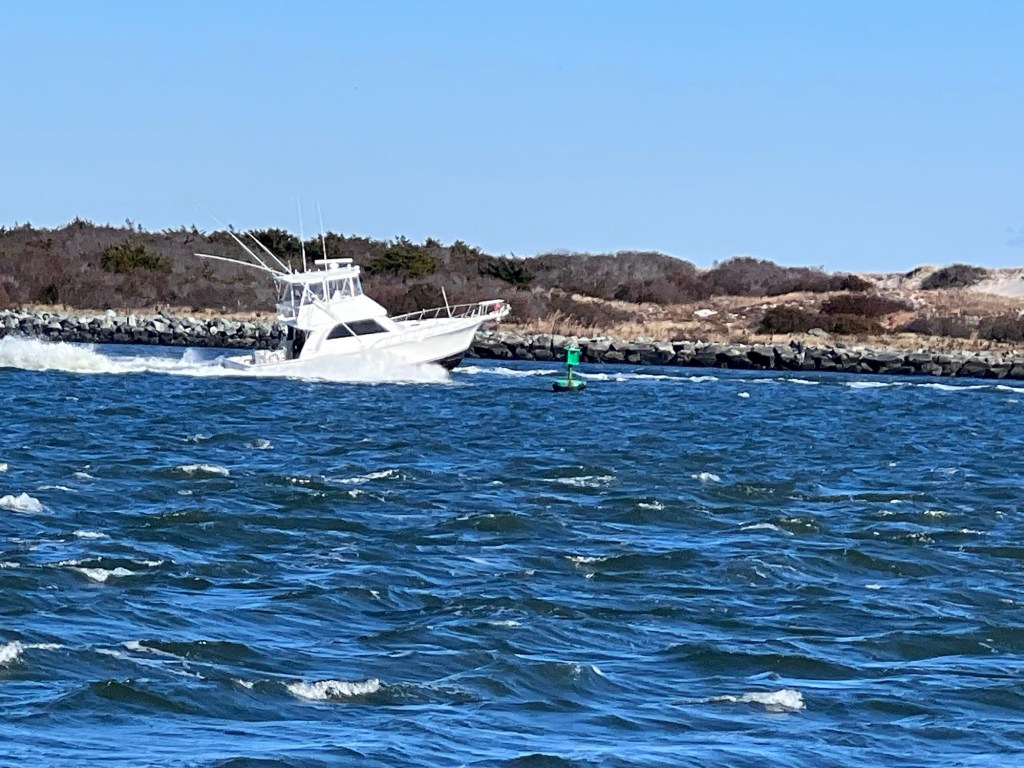
I just saw a lot of dumb people walking along the wet rocks with waves crashing by which is not smart. Still you got great views of Seaside Park and the Atlantic Ocean from this part of the park. It is fun watching the fisherman casting lines, sharing stories and the fishing boats in the distance go out to sea close to the beach.

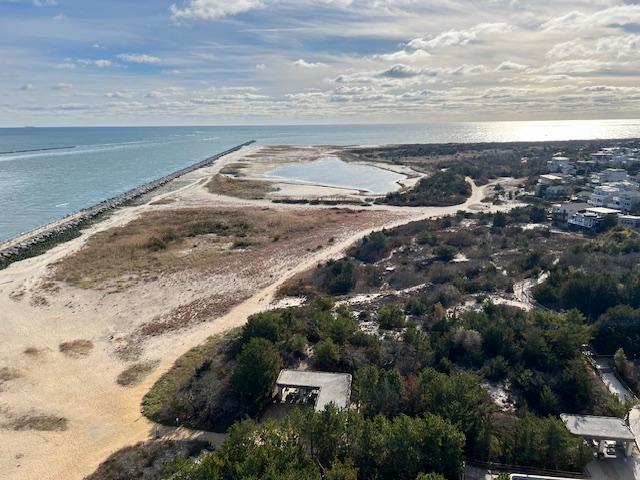
The view of the Barnegat inlet from the top of the lighthouse.

The boats on the inlet on a cool December day

The boats passing by

On a nice day take the time to walk through the nature trails and the dunes that face the ocean. It is a small but interesting trail with all sorts of native plants and a very nice description that the park gives you about each and their place at the shore. Each has a place with the wild life and the migration patterns for birds on their way to their next home. It shows what an important place that New Jersey serves for wildlife.

The inlet and dunes from the top of the lighthouse.

I revisited the park in November of 2021 and on a very windy day, the lighthouse was open and I finally made my way to the top. It was quite a hike up those narrow stairs on a extremely windy day but I made it to the top in about fifteen minutes. Along the way, there was small landings with sweeping views of the ocean.

The view of Barnegat Light from the Barnegat lighthouse in 2023.

Once to the top, there was a landing that surrounded the top of the lighthouse with views of the park and lagoon areas and the surrounding tip of the island. The strong winds prevented me from staying there too long plus there was not much space to move around and you felt like you were caged in but the views were spectacular. I made it down in ten minutes since there were only six other people there.

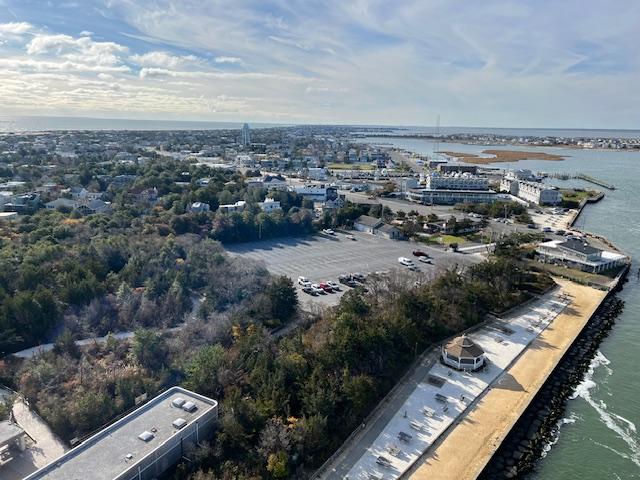
The view of all of Long Beach Island from the Barnegat Lighthouse in November 2023.

I finally got back to Long Beach Island in November of 2023 and was able to tour the lighthouse and the grounds again with time on my hands. The COVID restrictions had been long lifted and even in the off season the lighthouse was busy with people climbing to the top of it and taking pictures and then admiring the grounds.

The Barnegat Lighthouse from the approach.

It gave me a chance to really spend time inside the lighthouse, walking through the dunes pathway, exploring the bunker and the surrounding park. I also took time to admire the statuary and read the signs. During COVID when the lighthouse was open, you felt rushed not to be around anyone. Now I was able to converse with people as I walked up and down the stairs and in the park. Walking through the dunes you can just relax and enjoy nature in the quiet sense. It was nice of them to finally open the lighthouse where we could just enjoy it again.

The History of Barnegat Lighthouse State Park:

Barnegat Lighthouse State Park, located on the northern tip of Long Beach Island along the New Jersey Atlantic coastline, is one of New Jersey’s most recognized landmarks and a veteran of service to seafarers for 68 years. The park is easily accessible from the Garden State Parkway by taking exit 63 and following Route 72 east to Long Beach Boulevard northbound.

The Barnegat Lighthouse in the fall of 2023.

Park visitors can picnic, sunbathe, fish, bird watch, climb the historic lighthouse (post COVID), walk the Interpretive Center (post COVID) and enjoy the seashore. Swimming, however is not permitted. Barnegat Lighthouse is included as a maritime site on the New Jersey Heritage Trail Route (Barnegat Lighthouse State Park Pamphlet).

The Massacre of Long Beach during the Revolutionary War.

Barnegat Lighthouse stands on the south side of Barnegat Inlet, The inlet was named “Barendegat” or “Breakers Inlet” by early Dutch explorers because of the large cresting waves that made navigation difficult. The site of the lighthouse was considered on of the most important “change of course” points along the eastern seacoast for vessels sailing to New York from Europe. Sailors depended on Barnegat Lighthouse as a navigational aide to assist them in reaching their posts and to avoid the dangerous shoals that extended from the shore.

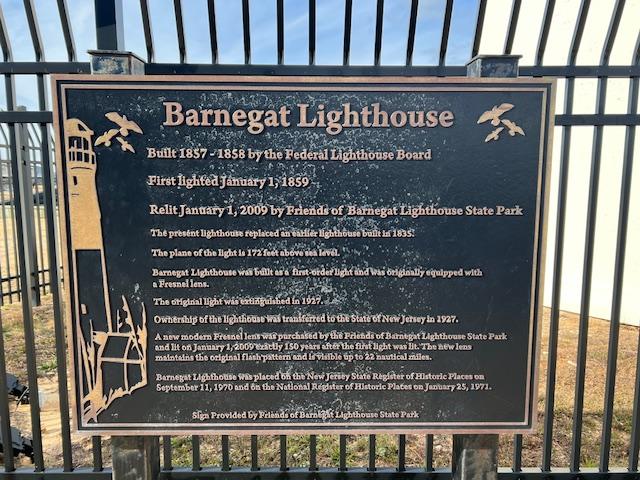
The historic marker at the lighthouse.

In 1834, the U.S. Congress appropriated $6,000 to establish a lighthouse as Barnegat Inlet. The lighthouse was completed and placed into service in July of 1835. At only 40 feet tall with a non-blinking light, the first lighthouse at Barnegat Inlet was a miserable failure doing little to reduce the number of shipwrecks. In 1856, guided by recommendations from then Lieutenant George G. Meade of the U.S. Army Bureau of Topographical Engineers, Congress appropriated another $60,000 to construct a “first class light” at Barnegat Inlet.

The Lieutenant George Meade statue outside the lighthouse.

Lieutenant Meade drew up the plans and Lieutenant W.S. Raynolds supervised the construction of the new lighthouse. On the night of January 1, 1859, the majestic new Barnegat Lighthouse was lit for the first time. Its first order Fresnel lens, at 175 feet above sea level was so powerful that it could be seen for 19 nautical miles.

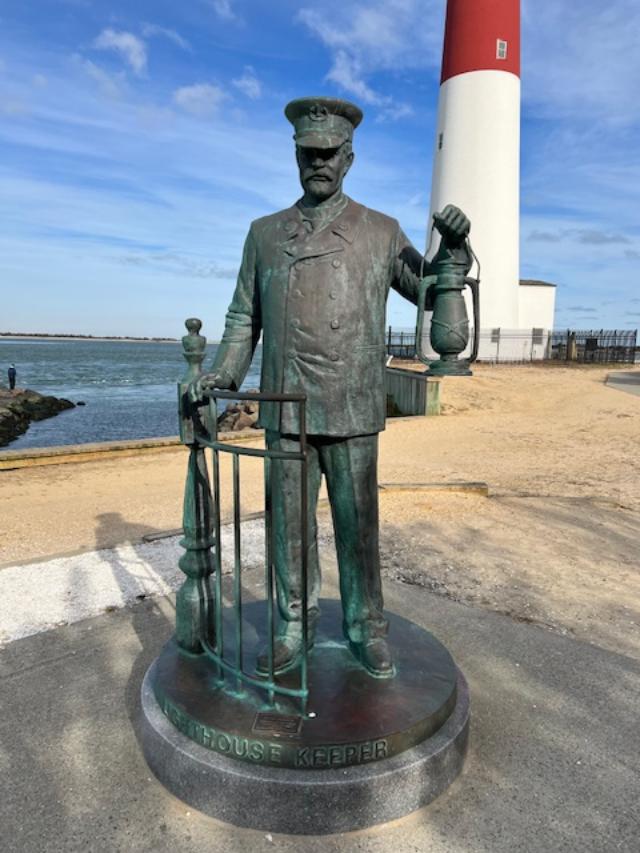
The Lighthouse keeper statute.

The Lighthouse keeper listing

The maritime plaque outside the pathways

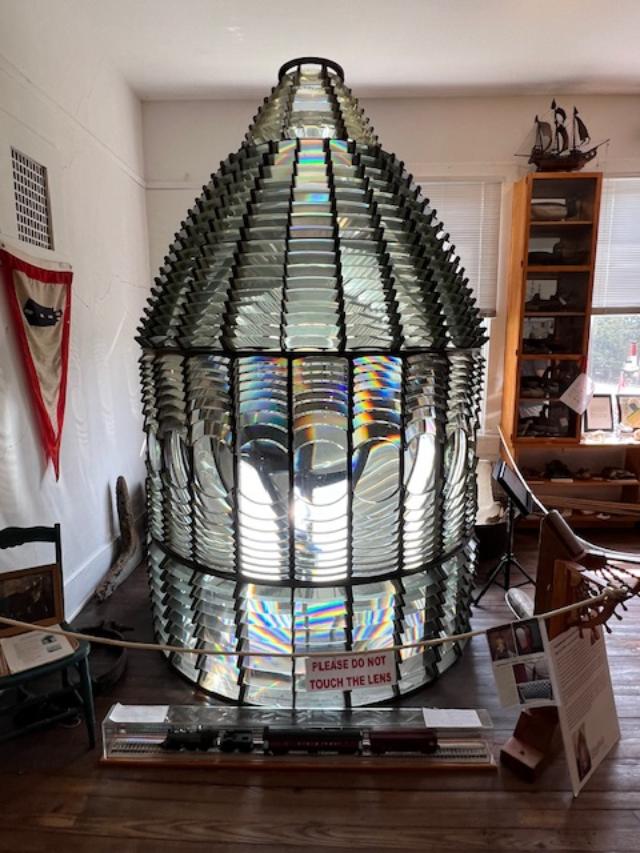
The lens was made in 1856 by Henri Le Paute of Paris, France from glass produced at the famous furnace at St. Gobian. The beehive-shaped Fresnel lens is six feet in diameter, ten feet high and is formed from over 1,000 separate glass prisms and twenty four bull’s eye lenses mounted in a brass frame.

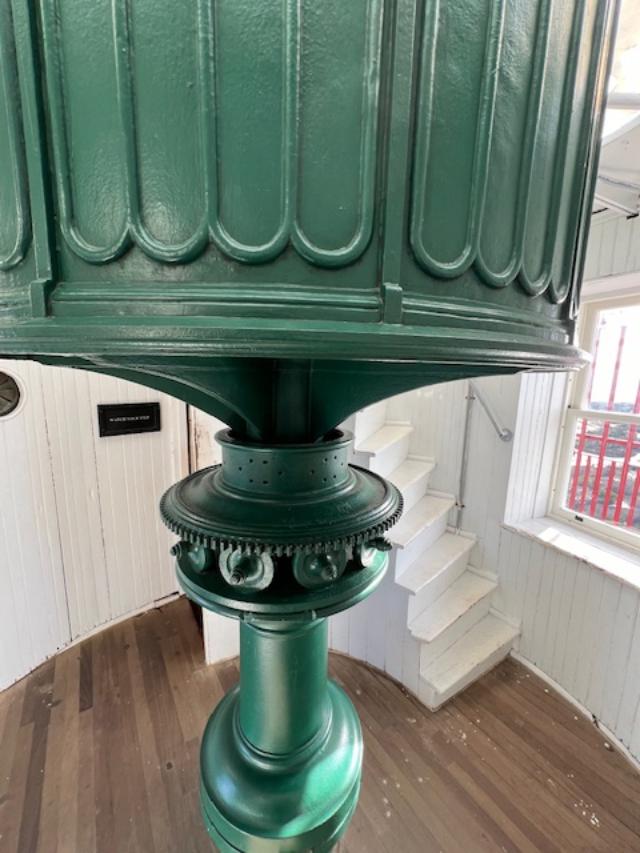
The lens frame at the top of the lighthouse.

It weighs nearly five tons. Today the lens is on display in the Barnegat Light Historical Museum on Central Avenue and 5th Street in Barnegat Light, New Jersey. For hours of operation, please call the museum at (609) 494-8578.

The lens at the Barnegat Light Museum around the corner from the lighthouse.

Turned by a clockwork mechanism, the lens rotated once every four minutes. The speed of the rotation and the 24 individual beams of light from the 24 bull’s eye lens gave Barnegat Lighthouse it’s characteristic” of one flash every ten seconds.

The old light is on display at the Barnegat Light Museum down the road

At the turn of the century, due to the encroaching sea and seemingly inevitable collapse, the Lighthouse Board considered abandoning Barnegat Lighthouse and replacing it with a lightship anchored off the coast. The popularity of the lighthouse as a landmark caused the Lighthouse Board to reconsider their plan and to erect temporary measures to hold back the sea. Later, local residents raised two thousand dollars to construct permanent jetties to protect the lighthouse.

In 1926, Barnegat Lighthouse and surrounding property were transferred from the Federal government to the State of New Jersey… to maintain this reservation for historical purposes and for the preservation of the lighthouse tower. The lighthouse was decommissioned and replaced by the Barnegat Lightship in 1927. Barnegat Lighthouse State Park opened to the public in 1957.

A bust of General George G. Meade was unveiled at the dedication ceremony in honor of his distinguished service during the Civil War as the Commanding General of Federal troops at the Battle of Gettysburg and for his role at Barnegat Lighthouse.

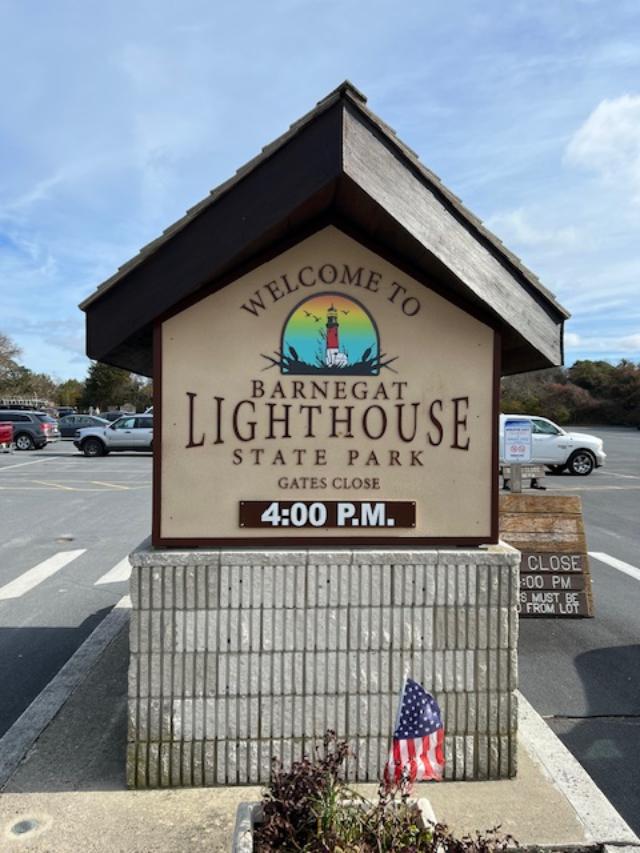
The sign that welcomes you to the park all year round.

Today, the beloved Barnegat Lighthouse is shining again thanks to the Friends of Barnegat Lighthouse State Park who purchased a new lens that casts a single beam visible up to 22 nautical miles. The new light was illuminated at a ceremony on January 1, 2009 exactly 150 years to the day that it was originally lit in 1859 with over 1200 people witnessing the lighthouse becoming an official aid to navigation once again.

The lighthouse and the park in its glory

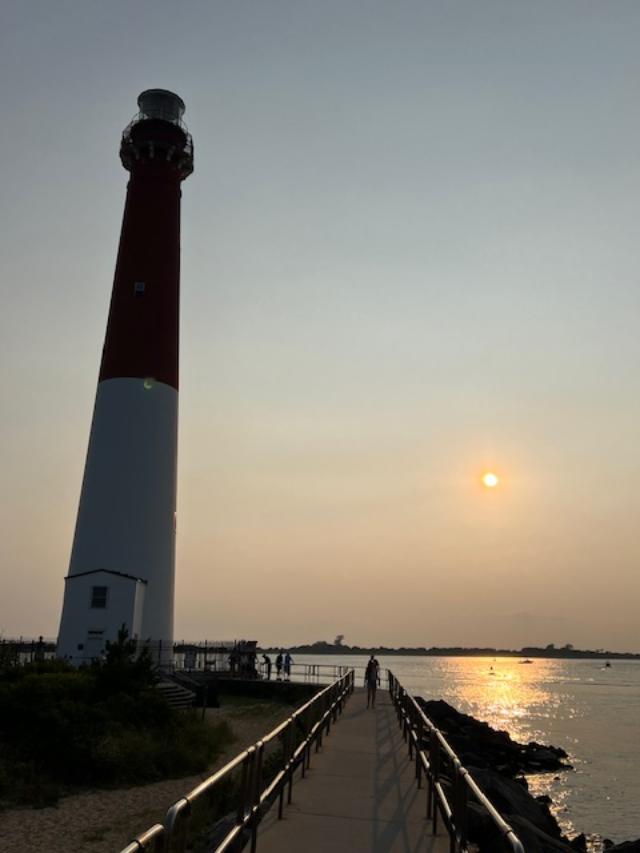
Sunset at the lighthouse

Sunset at the lighthouse

(This information comes from a combination of the Barnegat Lighthouse State Park pamphlet and website/Wiki-I give them full credit for the information provided).