Category: Exploring the Island of Manhattan

Somers Mansion                                                                                   1000 Shore Road                                                                            Somers Point, NJ 08244

Somers Mansion 1000 Shore Road Somers Point, NJ 08244

Somers Mansion

1000 Shore Road

Somers Point, NJ 08244

(609) 927-2212

https://www.nj.gov/dep/parksandforests/historic/somersmansion.html

Somers Mansion

Open: Sunday 9:30am-3:30pm/Monday-Friday Closed/Saturday 9:30am-3:30pm

Admission: Free

My review on TripAdvisor:

https://www.tripadvisor.com/ShowUserReviews-g46825-d5970174-r844645596-Somers_Mansion-Somers_Point_New_Jersey.html?m=19905

The Somers Mansion at 1000 Shore Road

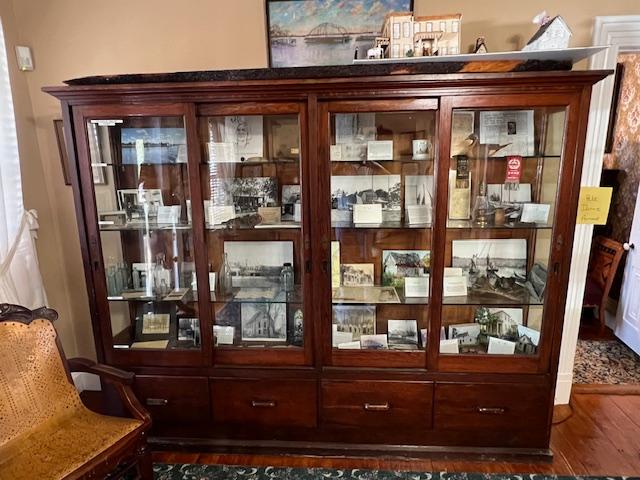
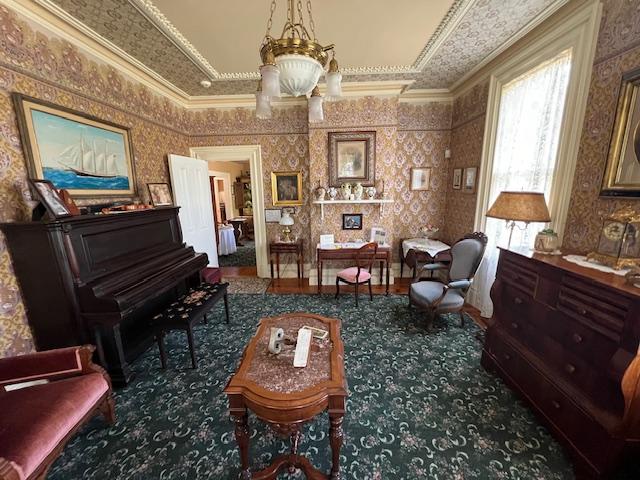
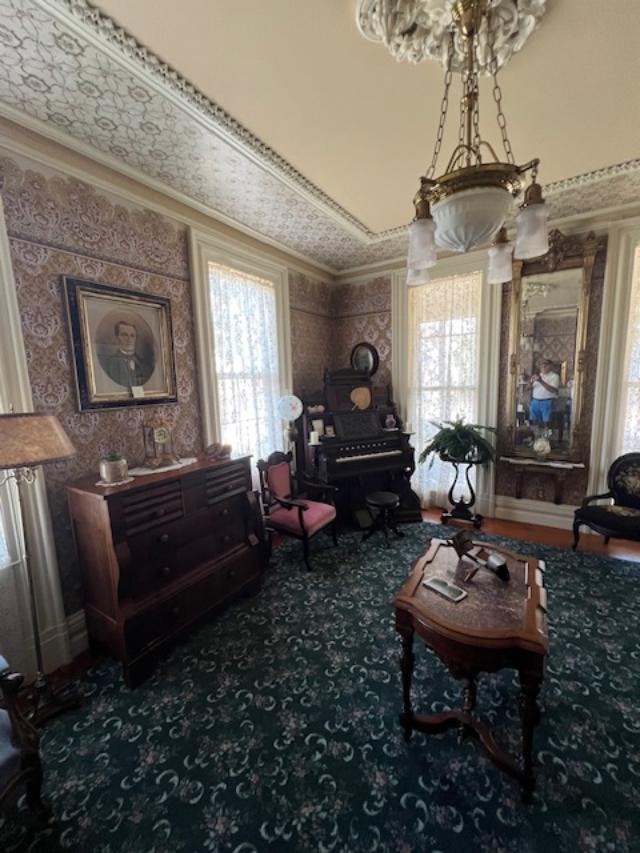
(There is no indoor picture taking allowed)

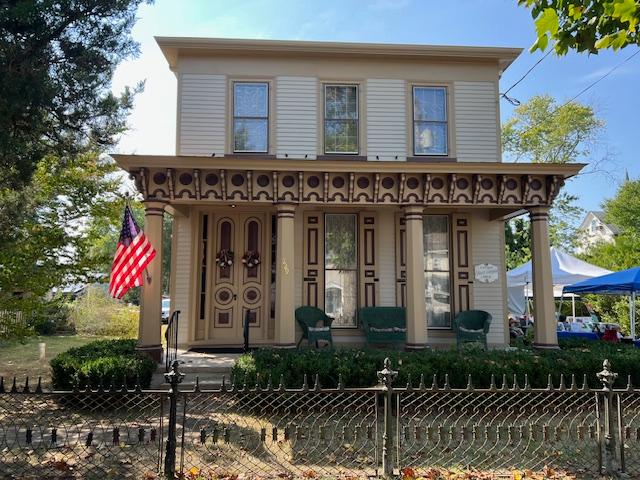
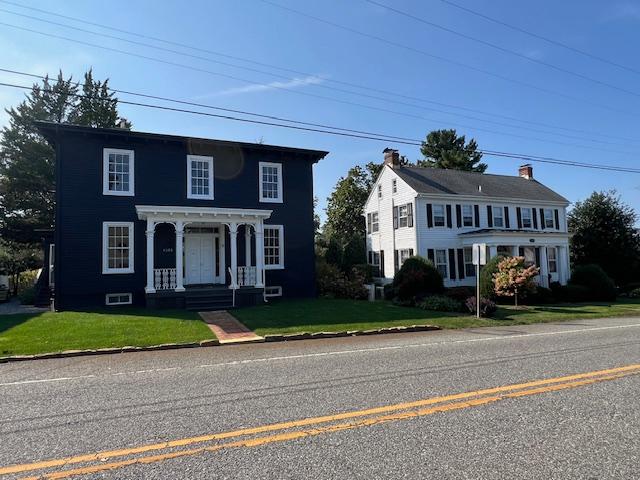
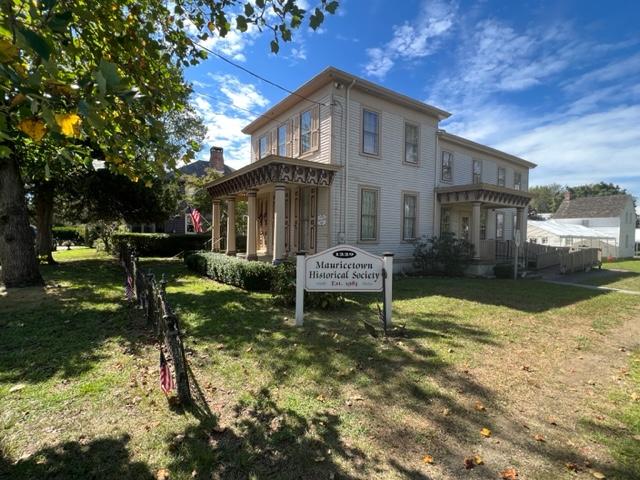
The mansion from the front

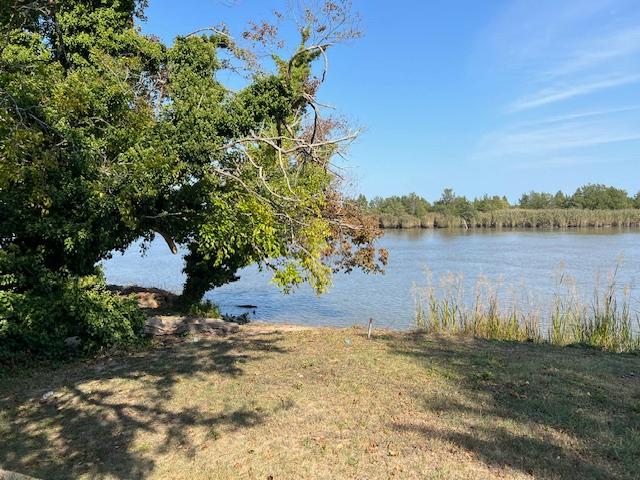
I visited the Somers Mansion, the three story former home to five generations of the Somers Family. The mansion sits on a buff overlooking the bay and the bridge to the barrier island where Ocean City is located. The original part of the house was built in 1725 and in 1920 the last family members moved from the home and deeded it to the town. The modern additions of the home have been stripped off so you see the original house.

The historic marker of the home when it was donated by the family

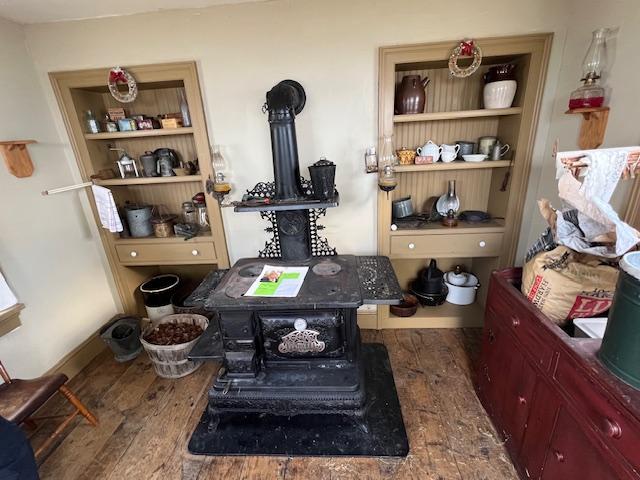
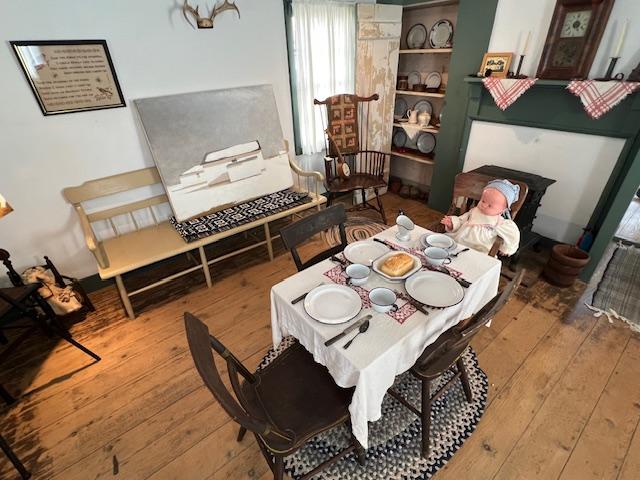
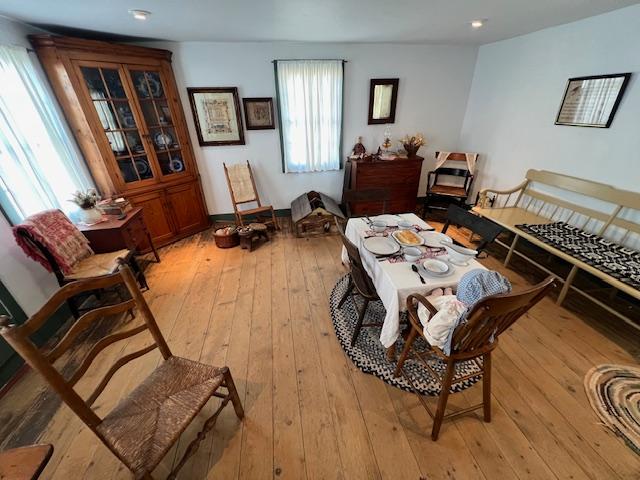
I have to say that I was very disappointed with the condition of both the house and of the rooms and displays inside the house. There was not much to see. The lower level of the home has the main room with the hearth known in most early homes as the “Keeping” or “Everything” room where all the cooking, household chores and socializing was done because of the warmth of the fire.
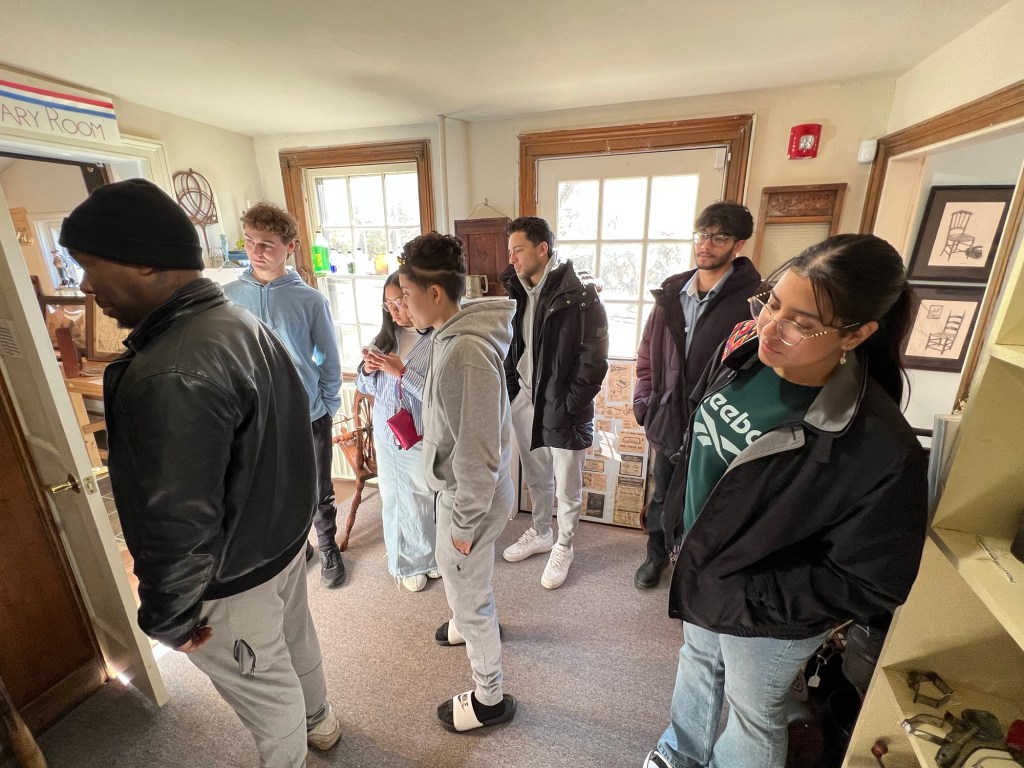
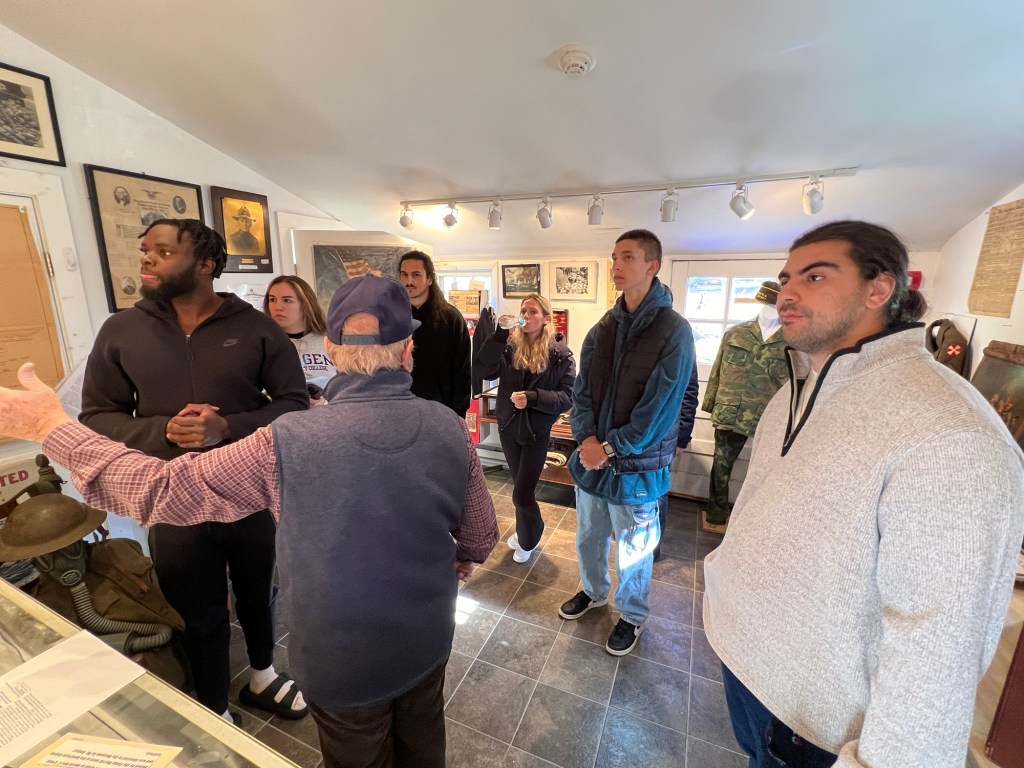
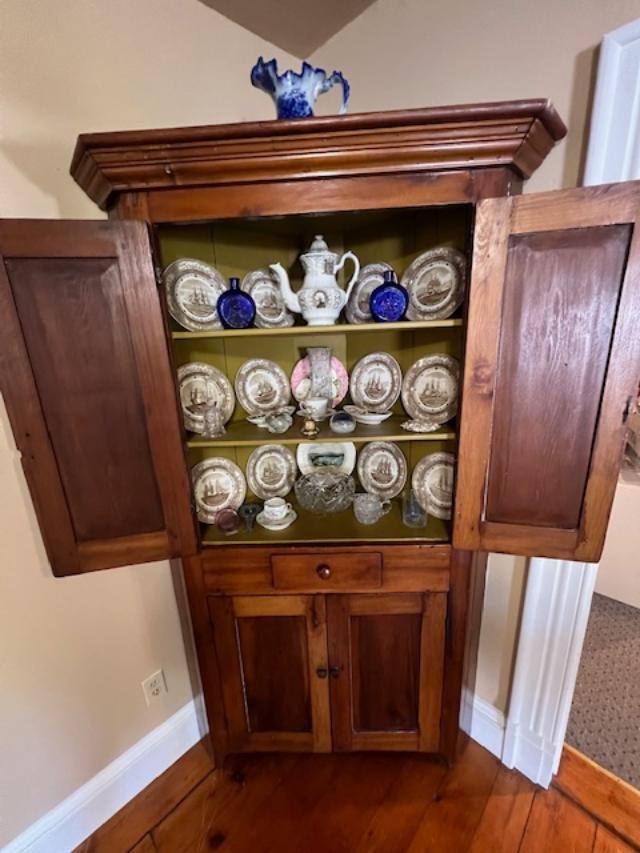
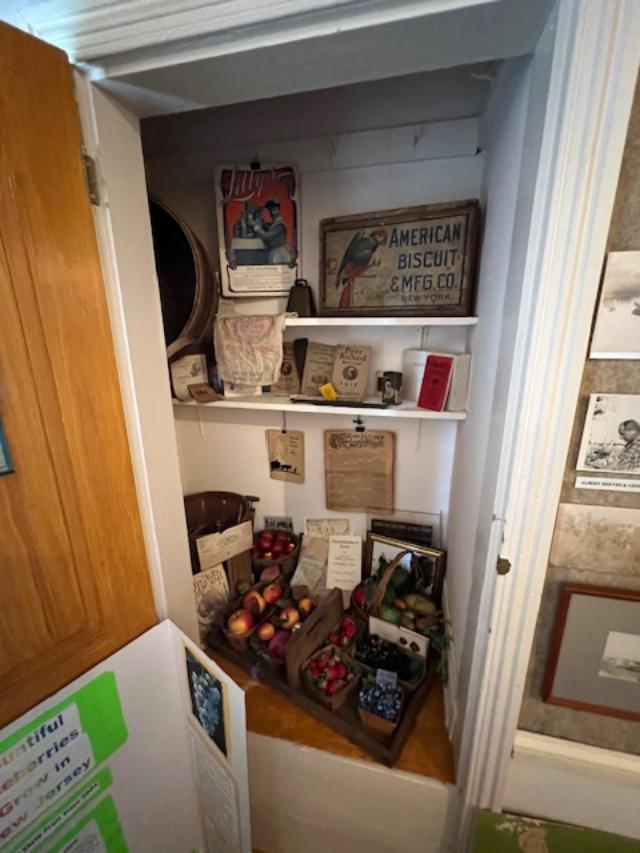
Here and there were pieces of furniture but nothing labeled or decorated to make the room look ‘period’. Just old furniture here and there to fill the space. Some of the original family china was in the cupboards built into the walls.
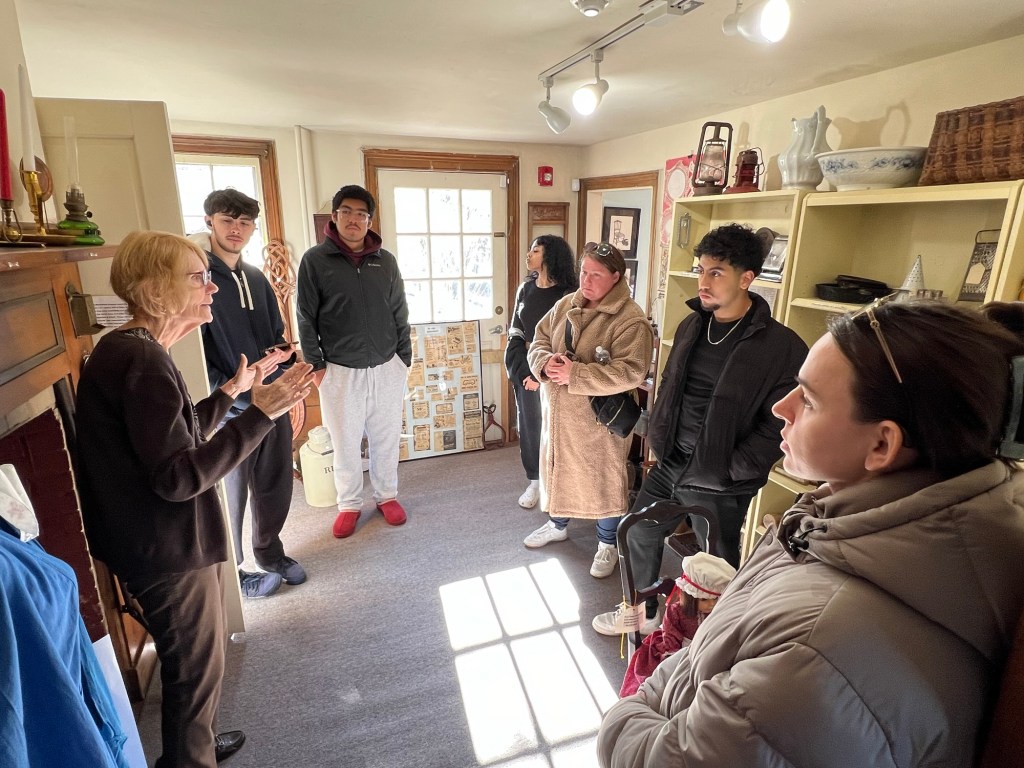
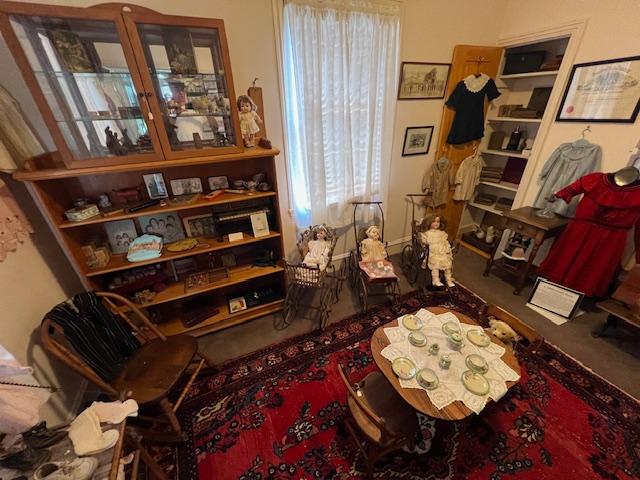
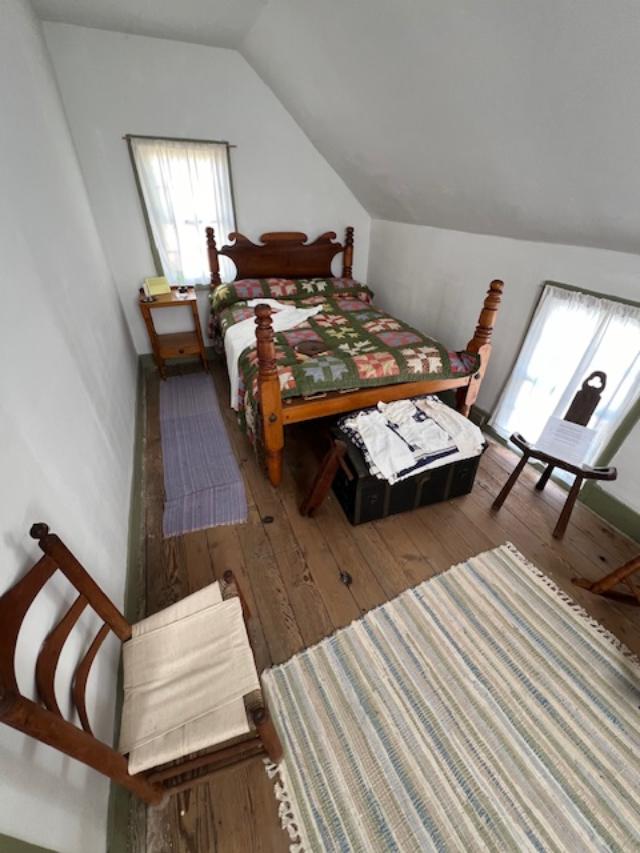
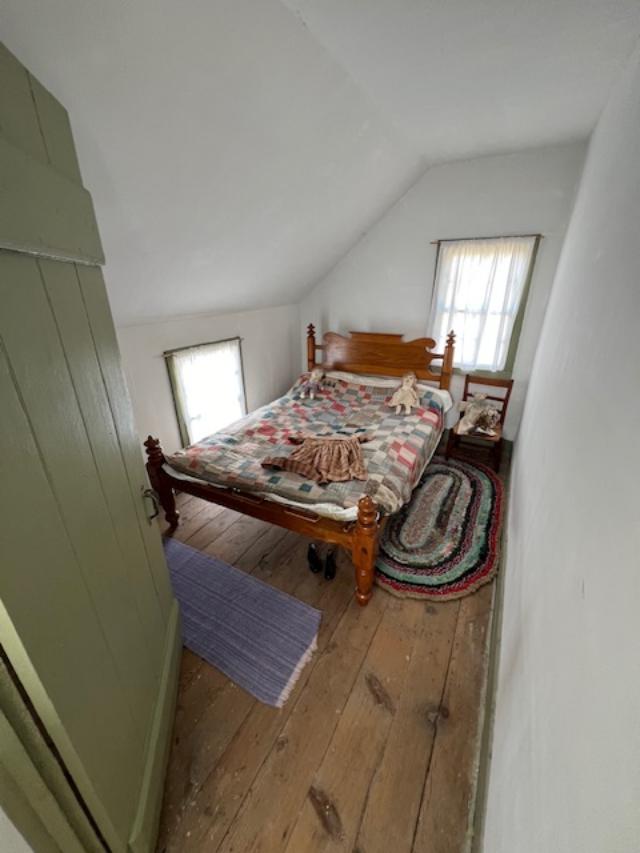
The upstairs which must be reached by a rope bannister lead up a narrow stairs to two upstairs bedrooms. The home is not handicapped safe. The front bedroom had a fireplace with a small side room that held spinning wheels and some children’s furniture. There was not much to see in the upstairs.

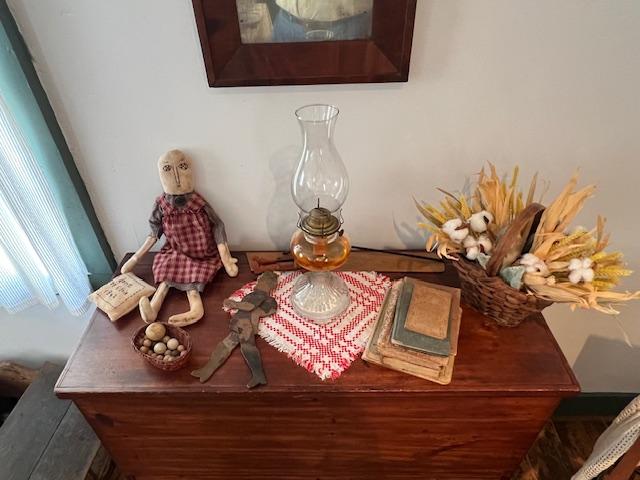
The tour guide did not offer much in the way of information on the house and the only period pieces of the Somers family that were left inside the house were a chest, a clock, some of the china that was in the side cabinents and a bedwarmer.

Outside the house the Somers Point Garden Club planted a period garden of fruits and vegetables on the back lawn and lead tours of the gardens.

The Somers Mansion Kitchen Garden

The Garden Club planted fruits and vegetables that would have been grown in the time periods of the late 1700’s to early 1800’s. You can walk amongst the beds to see the plantings.

Somers Mansion Kitchen Garden planted by the Garden Club

The whole tour takes less than a half hour and it is more impressive from the outside. You are also not allowed to take pictures of the house for security reasons.

The back of the mansion

The History of the Somers Mansion:

(From the NJ State Historical Site.com):

The mansion and surrounding city bear the name of the family who owned and occupied the house for 200 years.

The Somers Mansion, a three story home constructed of brick in the Flemish bond pattern, sits overlooking the Great Egg Harbor Bay at Somers Point. In the late 1600’s, the property which surrounds the mansion was acquired by John Somers, who operated a ferry service across The Great Egg Harbor Bay to Cape May. He referred to it as Somers Plantation and Somers Ferry and the surrounding settlement, the olders in what became Altantic County and then Somers Point in the mid-18th Century.

Master Commandant Richard Somers

https://en.wikipedia.org/wiki/Richard_Somers

http://www.richardsomers.org/

The mansion is considered to be the oldest existing house in Atlantic County, predating the County itself. His son, Richard, the first of the family to be born in New Jersey, built what is now referred to as the mansion by 1726. That year the local Society of Friends (Quakers) used the home for a meeting and memorialized it in their minutes, making the earliest recorded date of the home’s existence.

By the end of the 19th century, the mansion’s architecture had been added to and changed to reflect a Victorian style. The house remained in the Somers Family until 1937 when it was deeded by Florence Hayday Brooks and Lulu Hayday Smith, daughters of Hannah Hayday Somers to the Atlantic County Historical Society for the purpose of creating a permanent memorial to the Somers family.

In 1941, it was transferred to the State of New Jersey, dedicated on September 26th, 1942 and in the early 1940’s was restored to its colonial appearance as a Works Progress Administration (WPA) project. Laborers for the WPA both renovated the surviving furnishings and conducted a historical restoration, including the elimination of rooms and architectural details dating to the 19th century. The site was added to the National Register of Historic Places in 1970 and is now a State Historic site.

The Somers Family burial ground further down off Shore Avenue off New York Avenue

A Short History of Somers Point:

(From the Trail of Richard Somers pamphlet)

https://en.wikipedia.org/wiki/Somers_Point,_New_Jersey

Somers Point was originally settled by John Somers, an Englishman and practicing Quaker, who bought the land from Thomas Budd. Early names for the area were Somerset Plantation, Somers Ferry and Somers Plantation named after the first settlers in 1693. The land purchased originally covered all of Somers Point, part of Linwood and went into Egg Harbor Township. In the early years, it was part of Gloucester County, because Atlantic COunt had not yet been named.

The name “Somers Point” was adopted in 1750. It was a seafaring town and sloops, schooners and barges were built in the many shipyards located along the Greate Egg Harbor Bay, Greate Egg Harbor River and Patcong Creek.

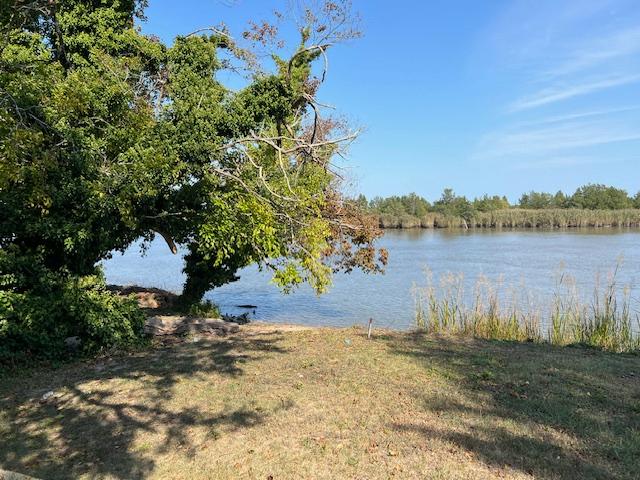
The estate overlooking the bay

The back of the mansion and gardens

The Sooy Boatworks was located on Shore Road and the completed ships were rolled on logs down Shore Road to Delaware Avenue and then down to the bay. Shipbuilding and life along the waterways was a very important part of life in early Somers Point.

The statue of Robert Somers in Robert Somers Park

Museum of the City of New York                                           1220 Fifth Avenue                                                                    New York, NY 10029

Museum of the City of New York 1220 Fifth Avenue New York, NY 10029

Museum of the City of New York

1220 Fifth Avenue

New York, NY 10029

(212) 534-1672

https://www.mcny.org/

https://www.facebook.com/MuseumofCityNY

Open: Sunday-Monday 10:00am-5:00pm/Tuesday-Wednesday Closed/Thursday 10:00am-9:00pm/Friday-Saturday 10:00am-5:00pm

Admission: Adults $20.00/Seniors over 65 $14.00 (with ID) and Children under 19 and Members are Free; please check website for updates.

My review on TripAdvisor:

https://www.tripadvisor.com/Attraction_Review-g48236-d15855802-Reviews-Museum_of_the_City_of_New_York-New_City_New_York.html?m=19905

The Museum of the City of New York at 1220 Fifth Avenue

I have been a member of the Museum of the City of New York for almost twenty years and what I love about the museum is that its concentration is to be everything about New York City and what makes the City so great. Its development from a Dutch Colony to the Modern Metropolis that it is today. It covers the history so well that they created a permanent display entitled “New York at its Core”, an extensive history of the City from its start as being colonized by the Lenape Indians as a fishing and hunting set of villages on the island.

The “New York at its Core” exhibition (MCNY)

Each display takes you through a different point in the history of the development of the City and how each era brought dramatic changes to the fabric of the City from immigration over the years to the fires that leveled the original City and the raise of Wall Street and the Arts to make New York City the Capital of the World. The almost bankruptcy of the City in 1975 to the attacks on 9/11 have really shaped the direction and change in the City to the COVID-19 pandemic reshaping it again. We see how New York City continues to survive. The exhibition is now updated to add the COVID pandemic to the fabric of what is happening in New York City now. This exhibition will continue to evolve over the coming years.

The entrance to “Timescapes”

The film “Timescapes” in the basement theater again tackles the issues of a changing City since its development and the City continues to morph over time. The movie narrated by Stanley Tucci tells the story of New York from the time of the Dutch settlement to the attacks of 9/11 and like “New York at its Core” the issues that come about after every event. The film is shown five times a day and do take the time to see it when visiting the museum.

A tiny clip of “Timescapes” from the Museum of the City of New York

Evening Talk and Film with the Talking Heads and the film “Stop Making Sense”

Just recently I attended a special event at the Museum to honor the Founding Members of the “Talking Heads” Chris Frantz and Tina Weymouth and their groundbreaking film “Stop Making Sense”. I was lucky to get tickets because the second I saw this on the museum listing I bought the tickets immediately. The event sold out quickly.

‘Talking Heads’ founders Chris Frantz and Tina Weymouth

The event was discussion with the creators of the group and how the Talking Heads emerged as a popular group through the 1980’s and 90’s. I have to admit that the two of them have not changed much but looking a bit older. They enchanted the audience with their time with the group and some new things they have in the works. After a quick Q & A, we watched their popular concert film “Stop Making Sense”.

We had such a good time at the event, the I wrote about it for my blog, “MywalkinManhattan.com”:

Day Two Hundred and Eight: Private Members nights at the New York Museums:

https://wordpress.com/post/mywalkinmanhattan.com/20227

On another recent trip, I visited the exhibition “New York New Music 1980-1986” which was an exhibition on the development of the music scene after the Disco era was over and the rise of MTV. You had a combination of Club Music, Hip Hop, New Wave and the English Wave from Australia and New Zealand coming into the United States plus a resurgence of Rock and Roll after years of the “Disco Duck”. The exhibition highlighted the music of Debbie Harry and Blondie, Run DMC, Cyndi Lauper and Madonna and the rise of music videos. The exhibition brought me back to my last years of high school and my college years as I remembered all these groups.

The “New York-New Music 1980-1986” exhibition

Over the years I have seen exhibitions on everything from the Bankruptcy exhibition of New York City and the rise of crime, the Gilded Era with Alice Claypoole Vanderbilt’s “Electric Light” dress that she wore to Alva Vanderbilt’s famous ball and the wonderful toy exhibitions of early playthings. I have also been to many lectures at the museum with guests such as former Brooklyn President Marky Markowitz.

In 2023, I visited the museum for the first time in months and was able to see the “Gingerbread House Bakeoff” exhibition of well-known and amateur bakers in New York City. The exhibition was a hold over from Christmas and it was interesting to see the detailed gingerbread houses that were on display.

There two that I really liked. One was of Madison Square Park at Christmas time and looked like the pictures I had just taken of the park.

Bryant Park at Christmas time in gingerbread

Christmas scene in New York City

The next exhibition I wanted to see before it closed was the “Food in New York” exhibition. It could have been a little more detailed than what I saw. I thought it was going to have more of the development and history of food in New York and how it pertains to today. It was more artwork related to modern food industry trends. It was interesting but not what I thought it was going to be.

‘Food in New York’ exhibition

Some of the artwork really stood out on the display. I like the Hispanic Ice Carts which you see all over Washington Heights and East Harlem during the warmer months.

Ice Cart “Pimp My Piragua” byt artist Miguel Luciano

Artist Miguel Luciano

“Twilight” by artist Suzanne Anker

The effects of pollination of crops and the loss of bees shown here.

Artist Suzanne Anker

The latest exhibition that I visited on a Members walking tour was the “New York Now: Home” exhibition that opened in the Spring of 2023. The exhibition is based on what the photographers perspective of what a ‘home’ is and how you live through it. There were photos of family events, life outside the home, what a family is, is it your birth family or friends that have become family? There were also some great shots of people taken during the COVID lockdown and how the home became the center point of their lives and sanity. Each photographer gave a different way of looking at these points.

‘New York Now: Home: A Photography Triennial’

The exhibition write up

There were many terrific artists displayed in the exhibition but these are the five that I thought stood out the most:

Photographer and Artist Anders Jones work on the loss of bodegas in his neighborhood due to gentrification.

Artist Anders Jones work at the Museum of the City of New York

http://www.andersphotography.net/

Artist and Photographer Maureen Drennan

Artist Maureen Drennan’s work

Artist Maureen Drennan

Artist Gail Halaban works

Artist Gail Halaban’s work is a peek hole into peoples lives

https://www.gailalberthalaban.com/

Artist Gail Halaban

Artist and Photographer Neil Kramer

Artist Neil Kramer’s work during the COVID lockdown and life with his mother and Ex-wife

Artist Neil Kramer

https://www.thepictorial-list.com/2021-photographers/neil-kramer

Artist and Photographer Paul Moakley

Artist Paul Moakley’s works

https://www.paulmoakley.com/

Artist Paul Moakley

I think the museum was looking for a more political and environmental view of food in New York City as opposed to the history and development. It still was an important issue. It also showed all the urban, community and roof gardens that are becoming part of the urban landscape. It is interesting how people are using space to grow food for the benefit of everyone. It was an interesting perspective.

Evening with Walt Stillman for the anniversary of the film, “Last Days of Disco”:

The museum also has a series of talks in movies shot around or about New York City. On a recent trip to the museum I attended the retrospect of director Walt Stillman and his 1998 film “The Last Days of Disco”, which had been a huge hit when it came out. The director talked about the change in times from the 1970’s to the 1980’s and the shift in behavior of the population. There was a moment of time when “Disco was King” and going out was all the rage after years of Vietnam era. Studio 54 led this charge and when it closed in 1980, the party was over.

In conversation with director Walt Stillman the night of the retrospect.

The original trailer for the film.
The Q & A at Lincoln Center for the 20th anniversary of the film.

The series of films deal with the subject matter of New York City and what makes it a special place.

I recently went to see the new Art Deco City-New York exhibition on a private tour. The curator for the show toured us through the era after WWI and during the Depression. Things got more simplistic and cleaner.

You had a youth revolution that wanted to get away from Victorian values and with the lack of resources and money during the Depression, everything became more clean lines, less embellishment and more modern looking.

The exhibit ‘Art Deco City New York’

The bulk of the exhibition came from the collection of Cosmetic owner, Ronald Lauder, who contributed his Art Deco post card collection. Years of collecting showed all of us the changes not just in architecture but attitudes in travel and living. Gone were the bulky and elaborate in was simplistic and clean designs with a fresh approach.

The main gallery with Art Deco post cards

This perspective was shown in the 1939 World’s Fair, where a look to the future showed optimism and a look at new possibilities.

The 1939 World’s Fair

The outfits of that era also represented women and their freedoms from the Victorian era and the excesses. Gone were the days of corsets and bustles and in was the freedom of movement to the modern working woman who have to work to support her family. This reflected in the social life too.

Dresses from the 1930’s

Rockefeller Center and the Empire State Building were the big projects of that era. It showed the optimism and show of the possibilities of the modern era during the Depression and kept people working.

Models of Rockefeller Center

The exhibition was very interesting and informative and shows up in the modern era today.

The latest exhibition I attended was “Songs of New York”, a tribute to the rich music scene of the five boroughs through the ages.

The Exhibition sign for “Songs of New York”

The exhibition delves into the rich history of everything from New Wave to Hip Hop to Rock and Jazz. The interactive exhibition has you stepping on a Borough symbol and you hear its rich history of music.

The interactive display on the third floor

The opening remarks from the curator at the opening night

The reception with drinks and snacks for members

Pictures from ‘Look Magazine’ from the collection

Photographs from Allan Tannenbaum

The career of Allan Tannenbaum

The photos of Janette Beckmann of the ‘Hip Hop’ scene with the start of the careers of LL Cool J and Run DMC

The exhibition packs a lot of information into a small space where the members were able to enjoy the music of New York City.

I went to an Educator’s Night for the new ‘Above Ground’ exhibition on the street art collection of Artist Matin Wong. The artist collected the street art of the 1980’s after the Crash of 1987 slowed the demand for this art.

The ‘Above Ground’ exhibition

The sign from the exhibition

The works in the exhibition

The work ‘Futura’

The sign for ‘Futura’

The works by artist Keith Haring

The works in the galleries were creative and colorful. These artists sending a message with their works.

The art of the exhibition

The art of the exhibition

The gallery displaying the works

The exhibition works were from the period of the mid to late 1980’s and these works Martin Wong bought after the Crash of 1987 to help sustain his artist friends whose sales dried for street art. The collection was donated to the museum after the artist’s passing in 1994 (Museum pamphlet).

Evening with Photographer, Ebet Roberts:

I recently returned to the museum for a special evening event for photographer Ebet Roberts

The special event for music photographer Ebet Roberts: The photographer, Ebet Roberts with the museum curator

The evening was a discussion of the artist’s works from the 1970’s and 80’s. What I thought was interesting is how she seemed to fall into it as an artist with newspapers interested in seeing her photographs.

The photographer’s poster for the event

One of her well known works of a musician couple from the 1970’s

The talk was very interesting as she fell into the profession of just taking pictures of bands while attending the events as reporting. Then the papers wanted to see what pictures she had taken. Liking how she captured the groups in a more human fashion, she continued to take more pictures. This led to private sessions and behind the scenes works, capturing the events before and after a concert. It was a very interesting talk.

Special Members Mornings:

I recently attending a Private Members Morning for the opening of the “Alice in New York” exhibition and to see “He Built this City”, the diorama of New York City. These mornings allow us special time to see all the exhibitions, take tours and for the kids, there are all sorts of activities.

‘Another Wonderland’ exhibition

(From the Museum website)

The Museum of the City of New York, in collaboration with New York City Health + Hospitals Arts in Medicine and the Laurie M. Tisch Illumination Fund, presents ‘Another Wonderland: Abram Champanier’s Alice Mural’ (MCNY.com)  

The exhibition celebrates the rescue and decades-long restoration of Alice of Wonderland Visiting New York, a major New Deal–era mural cycle created for the children’s ward at Gouverneur Hospital between 1938 and 1940.  Commissioned through the Works Progress Administration’s Federal Art Project, the sixteen-panel series reimagined Lewis Carroll’s beloved characters exploring 1930s New York City—from the subway and Brooklyn Bridge to Coney Island and Central Park—bringing color, fantasy, and joy to a space dedicated to healing (MCNY.com).

After decades of painstaking restoration, and along with two faithfully reproduced panels and a selection of archival photographs, the mural panels will be on view together for the first time in nearly fifty years. The exhibition also situates the mural within the broader story of the WPA and its role in transforming public spaces across New York City (MCNY.com). 

The entrance to the exhibition

The description of the exhibition

Alice and her friends leave the novel and arrive in the ‘Big Apple’

Alice and her friends on New York Harbor

They next visited that Statue of Liberty

Alice next took a trip in the subway. At least it wasn’t the 1970’s!

The next flew by the Empire State Building. All I could think about was the airplane scene in the movie ‘Flying Down to Rio’

The clip from “Flying Down to Rio”

They next took a trip on the Staten Island Ferry

Alice visits Coney Island

Taking a plane ride around New York City

Everyone gathering

Alice at the New York Public Library

The end of the exhibition when everyone returns to their books

Artist Abram August Champanier

https://www.askart.com/bio/Abram_August_Shampanier/10048802/Abram_August_Shampanier

https://www.mcny.org/exhibition/another-wonderland

The artist biography

The next exhibition I saw was ‘He built this City’: Jack Macken’s Model

The Exhibtion sign

Artist Joe Macken

https://news.artnet.com/art-world/joe-macken-museum-of-the-city-of-new-york-2755288

https://www.mcny.org/exhibition/he-built-city

(From the Museum of the New York website)

Queens-born artist Joe Macken began the project in 2004. Over the next 21 years, working first in Middle Village, Queens and later in Clifton Park, New York, he devoted himself to crafting a vast architectural portrait of the city he calls home. Built entirely by hand using everyday materials—including balsa wood, cardboard, and glue—the model spans 50 by 27 feet and comprises over 340 individual sections. It renders the city’s skyline, neighborhoods, and landmarks with remarkable precision, character, and imagination. Macken started with the Comcast Building at 30 Rockefeller Plaza, infusing its familiar form with details that signal his personal artistic vision (MCNY.com).

The model is on view in the Museum’s Dinan Miller Gallery, presented in an installation that balances close looking with an appreciation of the full scale of the model. In the gallery, we encourage you to use the provided binoculars to see the model in greater detail and to watch the video highlighting Macken’s hand-carved buildings. Weather permitting, access to view the north side of the model will be available through the North Terrace (MCNY.com).

The model of New York City

These are the types of events that make the museum unique and special.

Video on the Model by the Artist

The History of the Museum of the City of New York:

(From the Museum of the City of New York website/Wiki):

The Museum of the City of New York is a history and art museum that was founded in 1923 by Henry Collins Brown. The red brick building with marble trim was built between 1929-30 and was designed by architect Joseph H. Freedlander in the neo-Georgian style with statues of Alexander Hamilton and DeWitt Clinton by sculptor Adolph Alexander Weinman, which face Central Park from niches in the facade (Wiki).

The museum was originally located in Gracie Mansion, where available space was limited. One of the first exhibitions was “Old New York” in 1926. This took place in the Fine Arts Building on West 57th Street. The success of the project led to a search for a new, permanent headquarters for the museum (Wiki).

A design competition was held between five invited architects and the Colonial Revival design by Joseph H. Freelander was chosen. The City donated the site on Fifth Avenue and the funds for the construction of the museum was raised by public subscription. The original plans for the museum’s building were scaled back as a result of the Wall Street Crash of 1929. The building was finished and dedicated in 1932.

In 2000, there was talk by then Mayor Rudy Giuliani to move the museum to the historic Tweed Courthouse near City Hall but that was over-turned by the incoming Mayor, Michael Bloomberg. In protect the museum director, Robert R. McDonald resigned.

In coming new museum director, Susan Henshaw Jones, planned an extension to the museum and it was completed in 2008. The extension including renovating the existing gallery spaces and adding a new pavilion. New displays and a remounting of valuable artifacts were done to give the museum a refreshed look. In 2011, the Museum of the City of New York temporarily took over operation of the South Street Seaport Museum which itself reopened in 2012 (Wiki).

The museum has a collection of over 1.5 million objects including many items from the 19th and early 20th centuries including paintings, prints, costumes, decorative objects, furniture and an extensive collection of toys. There are also extensive collections of police and fire items as well as shop models, rare books and manuscripts (Wiki).

The Museum of the City of New York in the early Spring

Hanover Heritage Association/Whippany Burying Yard                                                                        325 Route 10 East                                     Whippany, NJ 07054

Hanover Heritage Association/Whippany Burying Yard 325 Route 10 East Whippany, NJ 07054

Hanover Heritage Association/Whippany Burying Yard

325 Route 10 East

Whippany, NJ 07054

https://www.hanovertownship.com/1396/Whippany-Burying-Yard

https://whippany.net/whippany-burying-yard

(973) 539-5355

Open: Check the website/Cemetery Hours

Admission: Check the website

My review on TripAdvisor:

https://www.tripadvisor.com/Attraction_Review-g46925-d23534409-Reviews-The_Whippany_Burying_Yard-Whippany_Morris_County_New_Jersey.html

The burial ground from a distance

On my last stop of touring Historic Morris County for the “Pathways for History ” event, I visited the Whippany Burial Yard at 325 Route 10 in Whippany.

The entrance to the burial grounds

The old cemetery is steeped in history as one of the oldest cemeteries in New Jersey and home to many Revolutionary and Civil War veterans. As we learned on the tour later on, the only people that can be buried there now are former Mayors of the Town of Whippany who have died.

The sign of the historical burials

The historical marker

The town historical plaque

Two of the founding families of the town have many family members buried here, the Tuttle’s who still have relatives living in the area and the Kitchel’s. The guide for the afternoon took us on an hour tour of the cemetery, pointing out prominent members of the war years including Timothy Tuttle (died 1754), a founding judge of Morris County, Keturah Tuttle Platt (died 1850), who was a Charter member of the First Presbyterian Church, Captain Timothy Tuttle (II of III-died in 1816), who was a member of George Washington’s First Regiment in the Continental Army, Samuel Tuttle (died in 1762) and Colonel Joseph Tuttle, a blacksmith and Deacon at the Presbyterian Church who served in the French & Indian War.

Joseph Tuttle’s gravesite

Joseph Tuttle’s grave

The historic marker

Joseph Tuttle Jr.’s gravesite

The Tuttle family plot from before and after the Revolutionary War

The Tuttle family plot after the Revolutionary War

The Kitchel family was prominently represented as well with Abraham Kitchel (died in 1741), who was one of the six original judges of Morris County and his wife Sarah, whose family was claimed to date back to Charlemagne, Emperor of France, Abigal Kitchel (died in 1768), Uzal Kitchel (died in 1813), a Militiaman in the American Revolution and his wife, Anna (died in 1815). Many of these people as well as their ancestors made major contributions to the growth of the surrounding community.

The graves by the old entrance

We were also given a lesson in the construction and care of the old tombstones, some of which were beyond repair. Some of the original grave sites were made from sandstone, marble and granite with granite becoming the popular choice later on. Here and there some of the tombstones were decorated with winged skulls or cherubs. These show morality images of the dead (Whippany Burial Yard pamphlet).

The Post family plot

We were also walking by the river that the graveyard sits on and were told that current erosion is affecting some of the grave sites. These might have to be moved in the future and the tour guide was not sure if any have been lost over the years. The old Presbyterian Church that sat on the site (built in 1718 and removed in 1755) has since disappeared and there is no trace of it now.

The Whippany Burial Yard has many different types of tombstones. This part of the cemetery faces the old Tuttle homestead

At the end of the tour, the guide explained to us that the old Tuttle House, dating back from the late 18th Century was just left to the town by its last owner to be preserved as a museum for the community. The Tuttle house will need a lot of work in the future.

The back of the cemetery facing the Tuttle Homestead

I ended my tour of the cemetery here as the graveyard was closing for the evening but planned on coming back in the future. There are more interesting things to see amongst the tombstones.

The Tuttle Homestead on Route 10 will be a museum in the future

The Tuttle House historical marker

History of the Whippany Burying Yard:

(From the Township of Whippany website/The Township of Hanover Landmark Commission):

The Brokaw Family tablet for care to this cemetery

The Whippany Burying Yard is the oldest graveyard in North Central New Jersey. It contains the oldest dated colonial artifacts in Morris County. It was established in 1718 before the United States was conceived before New Jersey was a state and before Morris County was founded. Two of Morris County’s first governing judges and many Revolutionary War soldiers are buried here.

The Tuttle family homestead

The three and a half acres of land was donated by John Richards for a “meeting house, schoolhouse, burying ground, training field and for public use. Mr. Richards was the first one buried here when he died in 1718. His grave is the oldest in Morris County, NJ.

The Mary Sheldron historical burial site

For the next 200 years, the burying yard was maintained by the members of the Presbyterian Church with which it was closely associated. In 1914, the Presbyterian Church elected trustees for a group that would be known as The Whippany Cemetery Association. They maintained the yard for the next sixty-one years.

The burial ground marker in the cemetery

The graveyard is legally, publicly owned but no particular entity or institution in named in the deed. The grantee is interpreted to be the “Christian friends and neighbors in Whippanong”. It was formally maintained and administered by the Whippany Cemetery Association until its maintenance and administration was transferred to the Township of Hanover in 1976 as an historical site. The Township gave the responsibility for the Burying Yard to its Landmark Commission, where it remains.

The back part of the Whippany Cemetery

The Burying Yard holds about 450 graves that include 11 veterans of the American Revolution, nine Civil War veterans. In 2011, the Burying Yard was listed on both the State and the National Register of Historic Places. When visiting the Yard, you can see that the gravestones are made out of three different materials: sandstone, marble and granite. Visitors can see a 300-year time span of various commemorative styles. The Burying Yard is also home to two prominent families in the area: The Tuttle’s and the Kitchel’s.

The family plots at the Whippany Cemetery

Some of the prominent members buried here are John Richards who was the schoolmaster who donated this land for public use, Abraham Kitchel who was an early settler from Newark, NJ and one of the six original judges of Morris County. Joseph Tuttle Sr., who was a blacksmith, had served as a Colonel of Morris County militia in the French and Indian War and Timothy Tuttle who was a Sergeant of the First Company under Captain Joseph Morris in Lord Sterling’s First Battalion of New Jersey’s First Regiment in Washington’s Continental Army.

The Tuttle House at 341 Route 10:

https://www.hmdb.org/m.asp?m=91152

The Tuttle House will be the future museum for Whippany, NJ

This 1796 National Register site is the house of Samuel Tuttle, the grandson of Joseph Tuttle, a Colonel in the Morris Militia. The Tuttle’s were among the first to setting in Hanover and they played an important role in its development.

The historic marker for the Tuttle Homestead

Whippany Railway Museum                                    1 Railroad Plaza                                         Whippany, NJ 07981

Whippany Railway Museum 1 Railroad Plaza Whippany, NJ 07981

Whippany Railway Museum

1 Railroad Plaza

Whippany, NJ 07981

(973) 887-8177

Front Page

https://www.facebook.com/WhippanyRailwayMuseum/

Open: Sunday 12:00pm-4:00pm/Monday-Saturday Closed/Seasonal

Admission: Please check the website for seasonality

My review on TripAdvisor:

https://www.tripadvisor.com/Attraction_Review-g46925-d3395271-Reviews-Whippany_Railway_Museum-Whippany_Morris_County_New_Jersey.html

The Whippany Railway Museum

I have to say that I was very impressed by the Whippany Railway Museum. It was not one of those usual train museums with bric-a-brac and posters and a uniform here and there. The museum building itself is a highly organized history of the rail system not just in New Jersey but all over the country. It showcases how New Jersey played a big role in the growth of the rail system and how transportation has changed over the last 100 years.

The museum welcoming you to the museum

The museum displays were highly organized and well documented with all sorts of equipment of how a train functions, lighting equipment for the outdoors, and indoor dining, menus and manners for a time when rail was a form of luxury travel. It shows the progression from just transportation for the movement of product to a sleek way to travel from destination to destination.

The Whippany Railway Museum at 1 Railroad Plaza

There are all sorts of everyday items that show how maintenance of the trains have changed over the years and the modernization of the railcars. They have a display on lighting that has changed over the years and the way that communication was done between the trains and the staff. Even the uniforms have not really changed too much over the years.

Race is touched on with the advancement of Blacks in the Pullman coaches as porters and later supervisors. There was even a discussion on the strikes for better pay and working conditions. I thought it was interesting about the discussion of being called a “George”, which was a term for George Pullman, the owner and developer of the luxury cars. It might have been meant as a compliment but came off as a slur. It showed a progression in the field that in some ways has not changed.

The historic railyard with all the cars you can visit

The museum also showed that rail life could be lonely and not the best in working conditions for anyone which is why the unions became so powerful in later years. It also showed the ingenuity of how the rails conquered the West and opened the country up for development. With each stop, towns developed, and populations have changed. You see how this has been affected even today as rail is not as popular as it once was, and these small towns are dying off.

The entrance to the museum

Where the museum really shines and where I saw the most pride is in the rail cars that have come to the yard over the years and have been carefully restored. The Southern Railway No. 385 built in 1907 for faster freight service, the Texaco Fireless Cooker No. 7240 built in 1937 for industrial switching duty and one of the newest steam locomotives still surviving, the U.S. Army No. 4039 built in 1942 for WWII service are just some of the cars on display (Whippany Railway Museum pamphlet).

The inside of the luxury car

The railcar that most impressed me was the Lackawanna Railroad Subscription Club Car No. 2454 that was once known as the “Millionaires Express” (Whippany Railway Museum). The mahogany paneled car carried businessmen from New York City through towns in the middle of New Jersey. What I thought was interesting was the people who rode it (Christie Todd Whitman’s father was a member) and the fact that you had to ‘buy’ the seat, which meant that no one could ever sit in ‘your chair’ if you were not there. This car ran for 72 years finally retiring out in 1984 (probably due to the recession and changing times).

The inside of the museum

I ended up spending about three hours at the museum due to a very detailed tour by one of the volunteers named Mike. He gave the most interesting hour-long tour of each car and how they were renovating it and carefully restoring each one to its historical integrity. He was so detailed and when the other volunteers chimed in with their stories as well, made it a fascinating tour of the whole yard.

When you are visiting the museum, allow time to take this every intensive and detailed tour of the museum grounds and just don’t concentrate on what’s inside the building. The museum spreads out all over the yards and take the time to explore each car and learn its history. It is an educating and fascinating way to spend the afternoon.

The museum modernizes:

The Whippany Museum under new directions

The History of the Whippany Museum:

(From the museum website)

The story of the Whippany Railway Museum began many years ago when the Morris County Central Railroad (MCC) first opened to the public on May 9th, 1965, at Whippany, NJ. On that exciting day a half-century ago, former Southern Railway steam locomotive No. 385 departed Whippany for Morristown, NJ with the MCC’s first trainload of over 400 passengers. At the end of the day over 1,500 people had traveled on a nostalgic trip into railroading’s colorful past. For the next 15 years until it ceased operations in 1980, the MCC would carry on this excellent tradition, leaving memories for untold hundreds of thousands of visitors that would last a lifetime.

The Morris County Central was founded by a New Jersey aerospace technician, the late Earle H. Gil, Sr. of Parsippany. His idea of running steam excursion trains was formed in the late 1950’s when conventional steam railroad operations were fading fast. Gil hoped that a financially successful heritage railroad would justify the great expense involved in keeping one of these magnificent machines alive.

Having acquired No. 385 in 1963 from the 16-mile-long Virginia Blue Ridge Railway (VBR) in rural Piney River, VA, the MCC ran an outstanding operation through the woodlands of suburban New Jersey. In 1966, Gil acquired another VBR steam locomotive, No. 4039 a former US Army 0-6-0 switcher that was soon added to the MCC’s roster of vintage steam-era equipment.

Threatened by development of the property alongside the Whippany Station, the Morris County Central RR saved the Whippany Freight House from demolition in June 1967 by having it moved across four sets of tracks to a site opposite the station building. Originally used by our predecessor organization, Morris County Central Railroad Museum, this classic railroad freight house is now the headquarters of the Whippany Railway Museum.

The Morris County Central was a fine example of what a conscientious group was able to accomplish, with moderate resources and good taste in the preservation of operating steam. It proved that trains, steam locomotives and haunting whistles continue to linger in the minds of the American public.

Fifty years on, the Whippany Railway Museum continues the tradition and proves that it is indeed possible to have a quality operation through much hard work by its dedicated group of volunteers and the tremendous support of the visiting public.

(From the Museum Pamphlet):

Here you can visit the restored, 1904 freight house with its outstanding collection of rail and transportation artifacts and memorabilia. There are dozens of historic railcars and exhibits on view. We are proud to feature the largest collection of American-built standard gauge steam locomotives displayed in New Jersey.

Marvel at one of the oldest steam locomotives in America, the Southern Railway No. 385 built in 1907 for fast freight service, Texaco Fireless Cooker No. 7240, built in 1937 for industrial switching duty and one of the newest stream locomotives still surviving, the U.S. Army No. 4039, built in 1942 for World War II service.