Category: Exploring Historic Ulster County NY

Empire State Railway Museum                                                          70 Lower 70 High Street                                                            Phoenicia, NY 12464

Empire State Railway Museum 70 Lower 70 High Street Phoenicia, NY 12464

Empire State Railway Museum

70 Lower 70 High Street

Phoenicia, NY 12464

(845) 688-7501

https://www.esrm.com/

https://en.wikipedia.org/wiki/Empire_State_Railway_Museum

Open: Sunday 10:00am-4:00pm/Monday-Friday Closed/Saturday 10:00am-4:00pm (the museum is seasonal and closes Columbus Day weekend until the next April)

Admission: Free but donations are accepted

My review on TripAdvisor:

https://www.tripadvisor.com/Attraction_Review-g48391-d587665-Reviews-Empire_State_Railway_Museum-Phoenicia_Catskill_Region_New_York.html

The front of the Empire State Railway Museum

The History of the Rail Station:

(From the museum pamphlet)

The Empire State Railway Museum is housed in the historic, restored Phoenicia Railway Station, which was built in 1899 and example of the stations built by the Ulster & Delaware Railroad.

From the 1800’s through the 1940’s, the steam locomotives of the Ulster & Delaware climbed the mountain grades bound for the grand hotels and boarding houses of the Catskills. The trains carried thousands of passengers over the years. This transportation system was instrumental in the region becoming famous. All the trains stopped at the Phoenicia Station. Beside the passenger trains, there were many freight trains carrying lumber, blue stone, dairy and agricultural products bound for New York City and beyond.

The History of the Museum:

(From the museum website)

Founded in 1960 and then moved to Phoenicia in 1983. The historic Phoenicia Station, built in 1899, allow visitors to view the three interior rooms of the building. Enjoy the unique architecture of the Waiting Room with its framed artwork, photographs and artifacts on display. Step into the Agent’s Office and view the diorama with the HO-scaled layout of the Ulster & Delaware Railroad as it was in the early 1900s, plus several other dioramas and antique telegraph equipment (The Empire State Railway Museum website).

The front of the museum station

The welcoming sign to the Museum in the Summer of 2026

The Mission of the Museum:

The Empire State Railway Museum’s mission is to preserve the history of the Catskill Mountain and surrounding railroads and their impact on our culture, society, economy and communities through education, interpretation, restoration and preservation of not only railroad records, photographs, equipment, cars and locomotives, but also that of the personal histories and recollections of those involved with and affected by the railroads (Empire State Railway Museum website).

The Rail Explorers Building

When I visited the museum for the first time, I started with a tour of the grounds where the tracks are still being used for recreation purposes by the bike business that runs on the tracks next to the museum.

The railway on the museum’s grounds

I then toured the caboose that has been restored and displayed outside where the trains used arrive from the City. The museum did a nice job with the restoration showing was life was like on the train lines back at the turn of the last century.

The caboose car at the museum

The caboose car was acquired recently is from the Leigh Valley, PA line and is from the 1940’s (Museum pamphlet).

The inside of the caboose

The view from the back of the caboose

The cooking area of the caboose

The views from the caboose of the railways

I then toured the barn where train cars were being restored. This was fascinating. The volunteers are restoring all these train pieces back to their original glory with a small staff of volunteers.

The barn where the train cars are being restored and renovated

The cars being renovated

The front of the locomotive

Fixing the locomotive equipment

The sides of the cars being restored

It was fascinating to see how these train cars were being cared for by a small army of people and for the many hours it takes to care for these train pieces.

The inside of the museum and the building once served as the train station bringing people from the City to the Hudson River Valley for recreation and tourism to the Grand Hotels. The original waiting room has a rustic opened ended look about it and still looks like it is ready to welcome people from the early 1900’s.

The inside of the old train station that serves as the gallery

I love how elaborate the main Waiting Room was with the dark woods and rustic appearance, which must have fascinated visitors to the hotels when they arrived.

The history of the train station

The hallway that leads to waiting rooms and the old offices

The artifacts from railways

The sides of the museum displayed all sorts of artifacts that would have been used on the lines for maintenance and construction. There is all sorts of lanterns and lights on the tables and shelves.

The train artifacts

Lanterns, spikes and oil cans used on the rail lines

The lanterns used on the rail lines by workers at the station

The signal lights used on the train lines

All around the museum, the history of the area is told in pictures from the turn of the last century. People arriving to the area, the construction of the rail lines, the development of the Grand Resorts and the functions of the trains. It was an interesting history of the affects of the railroads on rural areas.

The development on three rail industry in the area

The construction of the Ashoken Reservoir

The Grand Hotels that brought tourism to the area

The area once boast the Grand Hotels of the Catskills long before air travel. Once upon a time, this was only accessible to the wealthy by carriage but with the coming of the railroads, opened these resorts up to a larger clientele. The famous Mountain House Hotel and others are featured in this display.

A video discussions on the tools to repair the rails

Rail and tourism artifacts from the era

In the center of the museum, there was a display case of many artifacts used in the rail service. All sorts of tools of the trade, functions of the rails and memoribilia are displayed in these cases.

The museum artifacts in the displays cases

The display of the rail cars and movements

Servicing the railroad

The deeds and business of the railroad

The workings of the railroads

The old Brake Stand of the rail yard on display

Off to the side of the old Waiting Room was the Conductor’s old office, which was now another gallery of model trains. The displays showcased the old railroads and have all sorts of artifacts on the Conductor’s old office and life at the station.

The Conductor’s old office now the Model Train Room

The model of the old railways

The Conductor’s old desk

A picture of the old station

The pot belly stove that kept him warm in the colder months

At the end of the tour is a small gift shop and information area of other cultural sites to visit. There is all sorts of information about the area and other cultural sites in the area.

The Gift Shop

The information area

The museum is an interesting look at travel after the Civil War until after WWII when the area opened up to automobiles. Jet travel in the 1960’s changed the area again as families left these grand hotels and traveled to places like Florida and the Caribbean.

It is an interesting peek at the past and the volunteers really showcase all their restoration work.
The Town of Shandaken Historical Museum                                      26 Academy Street                                                                                Pine Hill, NY 12465

The Town of Shandaken Historical Museum 26 Academy Street Pine Hill, NY 12465

Shandaken Historical Museum

26 Academy Street

Pine Hill, NY 12465

(845) 254-4460

https://shandakennymuseum.org

Open: Sunday 10:00am-4:00pm/Monday-Thursday Closed/Friday-Saturday 10:00am-4:00pm

Admission: Free but donations are accepted

My review on TripAdvisor:

https://www.tripadvisor.com/ShowUserReviews-g48400-d12862963-r1076722006-Shandaken_Historical_Museum-Pine_Hill_Catskill_Region_New_York.html?m=19905

a

History of the Museum:

(from the museum website)

The Shandaken Historical Museum began as the second school house of Pine Hill, District #10. There were two school rooms on the second floor. Where the office of the museum is now located was the library. The rooms were divided by a cloak room used by both rooms. The room to the right was used by the upper grades.

When they started to send high school children to Fleischmanns High School their room was closed. The large room on the left them housed grades 1-8. Downstairs was the gym. On the west end was a stage that folded up against the wall. The stage was used for recitals and at Christmas time, a play was put on for the whole town. For most of the year it was the gym, the favorite sport was basketball (TSHS website).

The old school could tell some pretty good tales. It has housed a coat factory, a furniture stripping business, a community center, as a village building it held Boy Scout meetings, Red Cross gatherings as well as free vaccination clinics and is now the Town of Shandaken Historical Museum (TSHS website).

The museum sign that greets you outside

The Museum’s Mission:

The museum displays a fascinating collection of 19th and 20th Century tools, machinery, clothing, letters and artifacts relating to the Town of Pine Hill and the surrounding hamlets of Allaben, Big Indian, Bushnellsville, Chichester, Highmount, Mt. Pleasant, Mt. Tremper, Oliverea, Phoenicia, Pine Hill, Shandaken and Woodland.

The inside of the main gallery showcases the best of the surrounding hamlets. Each small town surrounding Pine Hill history is displayed town by town with artifacts from each community.

Pine Hill’s history is prominently displayed in the front starting with a display of an old classroom. It is amazing how things stay the same over the years.

Each of the displays have interesting details in all the artifacts that being showcased in each section. There are all sorts of photos, historical objects, artworks and personal affects of local citizens.

The classrooms of the past are similar to today

Local artifacts from the town

Each of the small hamlets surrounding Pine Hill had their own displays of artifacts ranging from local history, schools, fire and police departments, local events and residents and their day to day lives. Many of the residents from these communities have donated their or their family’s personal affects to the museum to build this collection.

When you visit some of these communities and look at the pictures on the wall, you can see in some cases not much has changed in these Upstate towns.

The display of artifacts from Pine Hill

https://www.centralcatskills.com/pine-hill

https://www.pinehillny.com/general-8

The display for the Town of Phoenicia

https://en.wikipedia.org/wiki/Phoenicia,_New_York

The artifacts from the Town of Phonecia

The Wedding ‘Morning’ Dresses from Phonecia

The display of Opera Singer Amelita Gaffi-Cicco, a star of the stage in the 1920’s

https://en.wikipedia.org/wiki/Amelita_Galli-Curci

The Town of Big Indian display

https://www.centralcatskills.com/big-indian

https://www.americancatskills.com/blog/2023/1/big-indian-in-the-catskills

https://www.iloveny.com/listing/big-indian-park/124196

The Town of Big Indian display

The Town of Mount Pleasant display

https://www.mtpleasantny.gov

https://en.wikipedia.org/wiki/Mount_Pleasant,_New_York

The Town of Allaben

https://www.catskillarchive.com/gazetteer/Allaben/index.htm

The museum celebrated the 250th Anniversary of the United States with an interesting display of the history of the Country and New York’s contributions.

The New York State display of the 250th Anniversary of the Country

The lower level of the museum is a reflection of life on the farm and an agrarian society from the turn of the last century. The funny part is that only being two hours out of New York City, many small towns in New York State still have that feel.

The lower level Farm Living Galleries

The first set of artifacts are dedicated to the home, family and faith. Everyday living to most families in the small farming communities of Upstate New York. These artifacts reflect homelife from the late 1880’s to the 1930’s.

Home and Living on the farm

The kitchen tools and equipment to run a household

The tools of the trade for the life in these rural communities was based on what they could grow and trade with other farmers. Before WWII, you can see the life of the rural housewife was tedious with growing, preserving, pickling, baking and canning for the winter months long before modern supermarkets and refrigeration. It was a lot more work to get meals on the table and took a lot of grit and a budget of both money and time.

The Baking and Jarring on the farm to prepare for the Winter Season

The workings of the farm kitchen

Children’s playthings and cribs

Children’s play was based around the household and work in the future.

The family and faith

The items in a household that make it function

The workings of the home and farm

Life and functions of the Upstate Farm

The communities of Upstate New York still have agriculture as a base and even though electronic gadgets still help, many of these ‘tools of trade’ are still being used. These are the tools that built the farming industry Upstate through the 1970’s.

Tools of the Trade

The farm tools

Farm and field equipment

The equipment of the Farm

Small businesses were part of the community and the druggist was very important

The museum touches on life in small and large Upstate New York towns and the challenges they still face in a economy where farming and tourism are dependent on the economy. Though many of these communities are only two hours outside New York City, they might as well be a world away.

The displays are an interesting look of how communities develop and how they sustain themselves over time and we can see how COVID and the transplants from New York City and beyond are still shaping these communities.

John Burrough’s Slabsides and Nature Sanctuary                                          500 Burroughs Drive                                                           West Park, NY 12493

John Burrough’s Slabsides and Nature Sanctuary 500 Burroughs Drive West Park, NY 12493

John Burrough’s Slabsides and Nature Sanctuary

500 Burroughs Drive

West Park, NY 12493

(845)384-6320

https://www.hudsonrivervalley.com/sites/John-Burroughs-Slabsides-/details

https://johnburroughsassociation.org/

Open: The Second and Forth Saturday of the month when in season. Please visit the website for the days open. The cabin is open from 12:00pm-4:00pm when in season.

My review on TripAdvisor:

The entrance to John Burroughs ‘Slabsides’

The entrance to Slabsides is located on a local country road off another local country road off Route 9. Use your Google Map carefully when visiting or you will miss the turn off. The parking lot is really small and holds only about eight cars so please make the turn around on the road above and park facing down from the parking lot (word of advice on parking).

The pathway from parking lot to the house is really beautiful and lush in the summer. It seemed more desolate in the cooler months and just empty. Still it is only about a five minute walk from the parking lot to the cabin.

The original cabin “Slabsides” from the pathway. This one room cabin was used by Naturalist John Burroughs as a home away from home to write and to think.

The lawn outside the cabin

The historic sign outside the cabin

The porch of Slabsides in the summer

John Burroughs work area inside the cabin and his kitchen

John Burroughs work station overlooked the woods and rock formations

The fireplace and resting area

The kitchen area in the back of the cabin

The bedroom and sleeping area of the cabin

The bedroom of the cabin

The pictures of Walt Whitman and John Burroughs in the bedroom

https://www.britannica.com/biography/John-Burroughs

https://exhibits.archives.marist.edu/s/marist-heritage-project/page/Esopus-Community-John-Burroughs

John Burroughs as a young man

https://johnburroughsassociation.org/about/about-john-burroughs

(From the John Burroughs website)

John Burroughs was one of the most popular authors of his day and is credited with creating the modern nature essay. Using easily understood prose, he described nature that was familiar and local, bringing the natural world to his readers. He encouraged them in the art of observation by sharing a sense of place and purpose in the land. Burroughs wrote more than three hundred articles published in leading magazines and in twenty-seven books over sixty years. Through his writings and friendships with influential leaders he had a profound impact on the emerging conservation movements.   

Born in the Catskill Mountains in 1837 he settled on a nine-acre fruit farm on the west bank of the Hudson River north of Poughkeepsie that he named “Riverby.” Poet Walt Whitman and Burroughs tramped through its surrounding woods during Whitman’s several visits, moving Burroughs to call these woods “Whitman Land.” In 1895 he purchased a nearby tract of land and built a two-story cabin as a place to write and entertain, calling it “Slabsides.”  

Though Burroughs was a writer particular to the Hudson Valley region, his travels were widely known and celebrated. In 1899 he joined the Harriman Expedition to Alaska and wrote the “Narrative” of the expedition. He accompanied Roosevelt into the wilderness of Yellowstone, telling the story in Camping & Tramping with Roosevelt, which provided the narrative for a segment of Ken Burns’s The National Parks. Burroughs also traveled to the Grand Canyon and Yosemite with John Muir and went on elaborate camping trips with his industrialist friends Henry Ford, Thomas Edison and Harvey Firestone. Accounts of these events are in Burroughs’ journal archived at Vassar College. 

Burroughs received honorary doctorates from Yale, Colgate, and the University of Georgia, and the Gold Medal of the American Academy of Arts and Letters.  

The ceiling of the cabin

The stairs to the upstairs loft

The cabin was small and is pretty much one full room with one or two walls partitioning the rooms. This seems more like a summer cabin. Still it had its charm.

We then finished the tour outside along the trails outside the cabin.

I admired the outside woods from the patio

(From the John Burroughs Association website)

The land around Slabsides informed many of his essays in which he described nature close at hand. Through works written here, John Burroughs inspired national leaders to preserve land and its wildlife and generations of readers to head out-of-doors. For nearly three decades Slabsides drew devoted readers and prominent friends. There are nearly seven thousand signatures in his Slabsides guest books. Among the early signers were ornithologists Frank Chapman and William Brewster, conservationist John Muir, leader of the Arts and Crafts movement Gustav Stickley, and his friends Theodore Roosevelt and Henry Ford, who gave him a series of three Ford cars. The young journalist Theodore Dreiser interviewed Burroughs at Slabsides.

The trail outside the cabin which Aldo served as the lawn when it is not full of vegetation from all the recent rain.

The trail signs

Looking down the trails outside the cabin

The rock formations outside the cabin on the trails

One last look back at the cabin before I left that morning

Walking along the trails outside back to the car

Walking along the trails bank to the car

Walking along the trails

Walking along the trails

The parking lot before I left that day

It was a wonderful private tour with Joan, who is the President of the organization. She explained who John Burroughs was, his significance in writing and his life. It was a very interesting tour.

The pathways were so beautiful and there is a full series of trails to follow throughout the property to explore.

Knox Headquarters State Historic Site                  289 Old Forge Hill Road                                     Vails Gate, NY 12584

Knox Headquarters State Historic Site 289 Old Forge Hill Road Vails Gate, NY 12584

Knox Headquarters State Historic Site

289 Old Forge Hill Road

Vails Gate, NY 12584

(845) 561-5498

https://parks.ny.gov/historic-sites/5/details.aspx

https://en.wikipedia.org/wiki/Knox%27s_Headquarters_State_Historic_Site

Open: Sunday-Saturday (Seasonal-Please see the website)

Admission: Free but donations are accepted

My review on TripAdvisor:

https://www.tripadvisor.com/Attraction_Review-g48760-d1174661-Reviews-Knox_s_Headquarters_State_Historic_Site-Vails_Gate_New_York.html

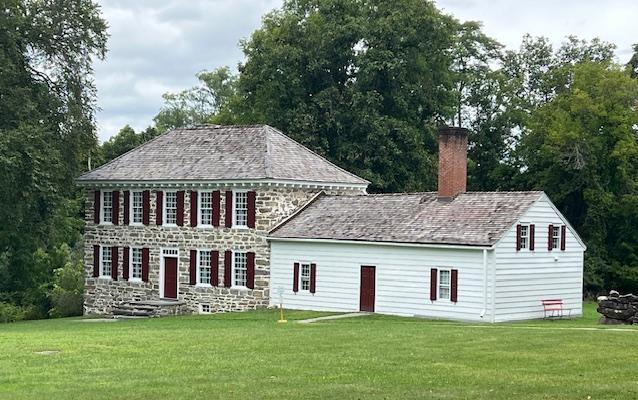
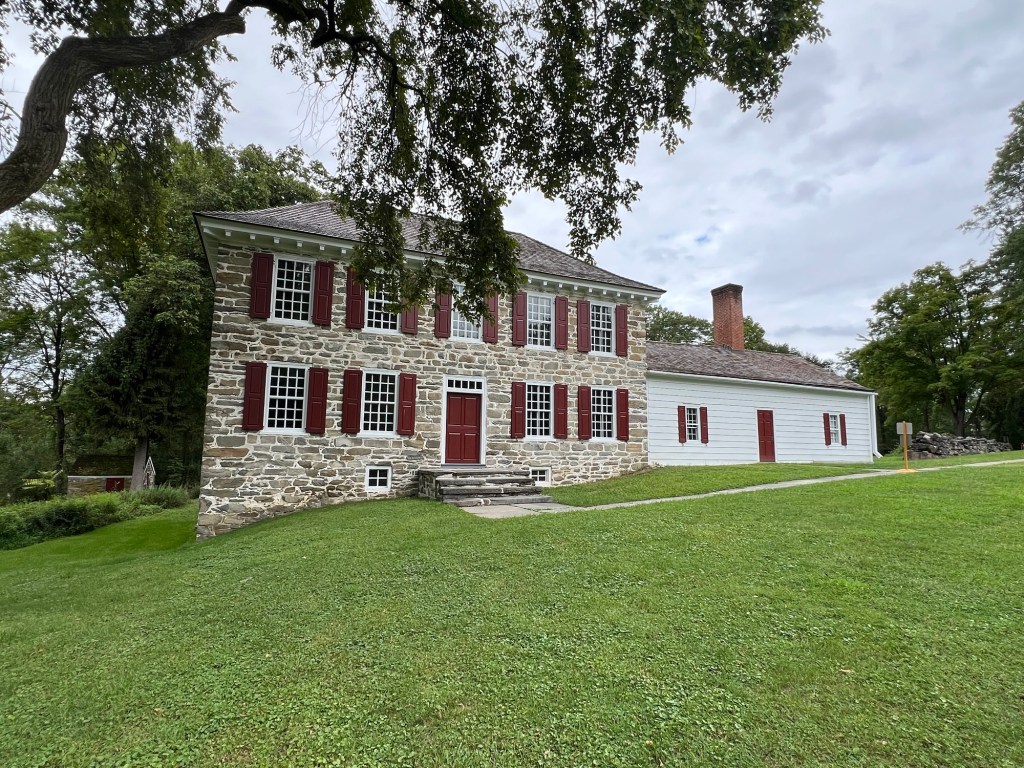
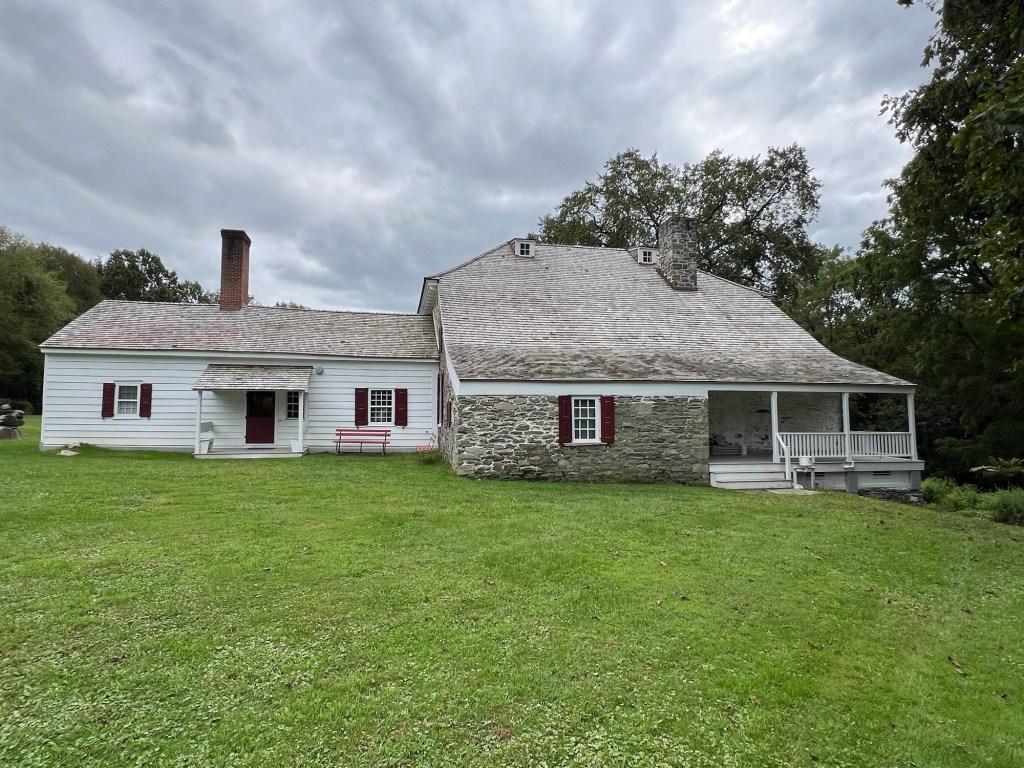
The Georgian side of the Elliott home

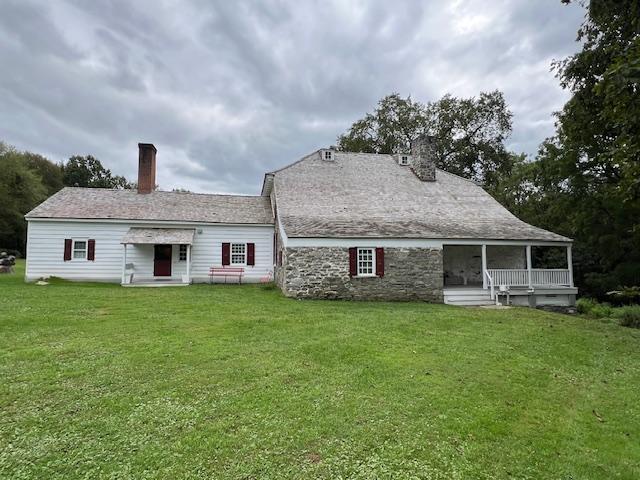
The Dutch style side of the home

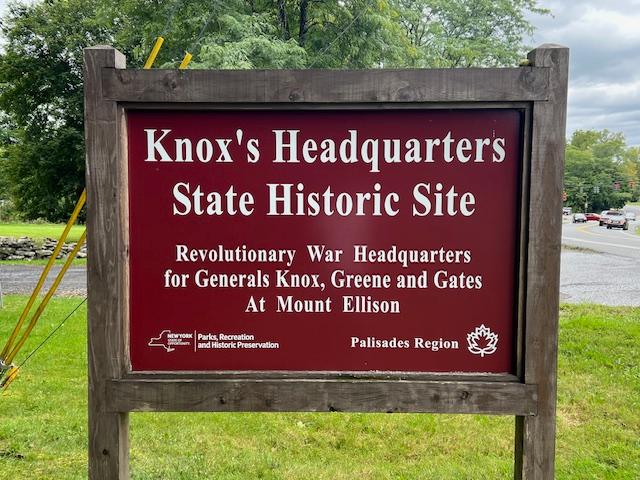
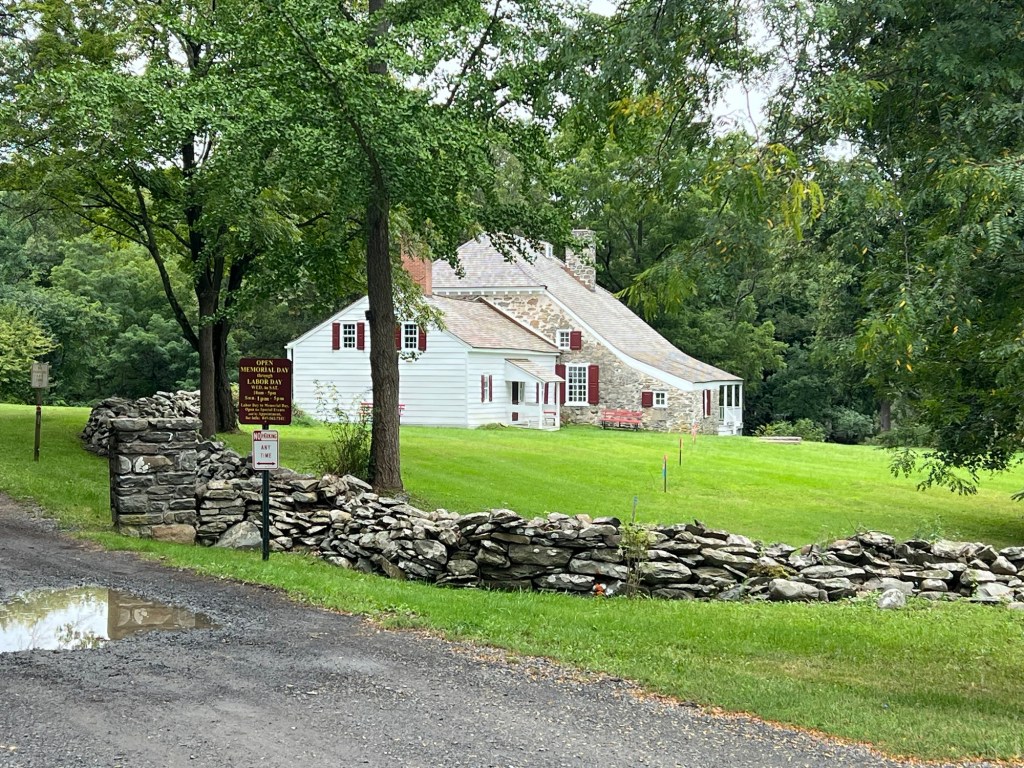
The sign welcoming you

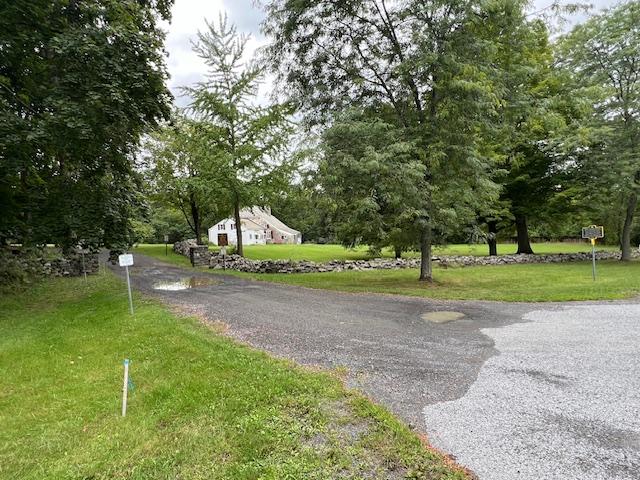
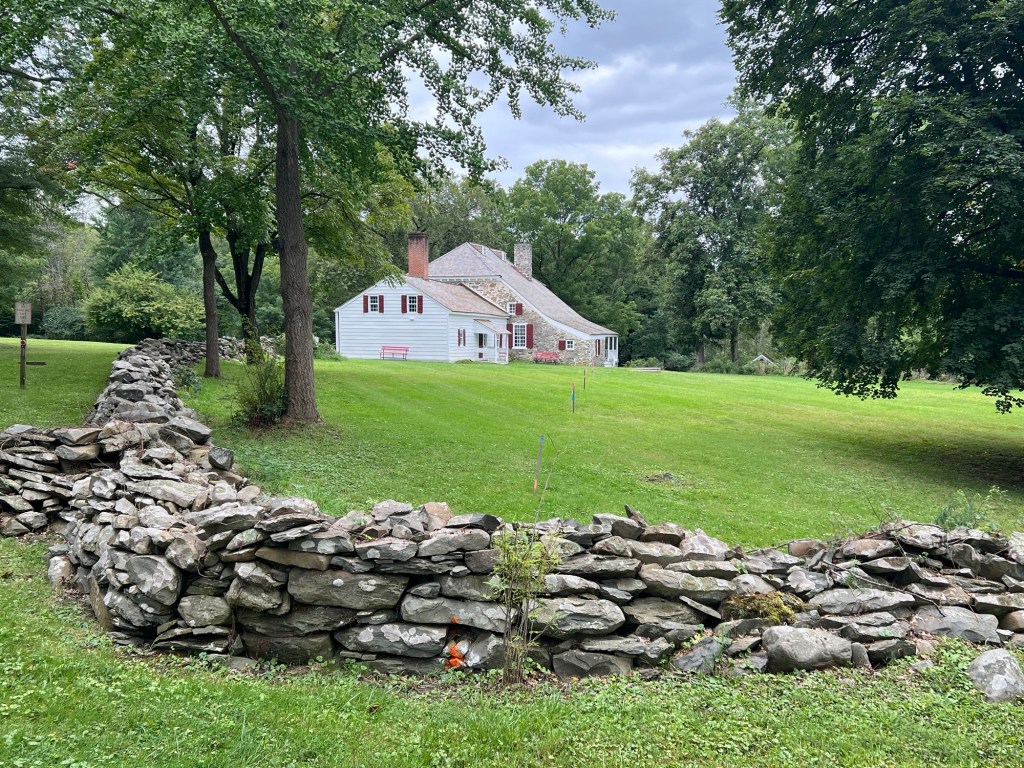
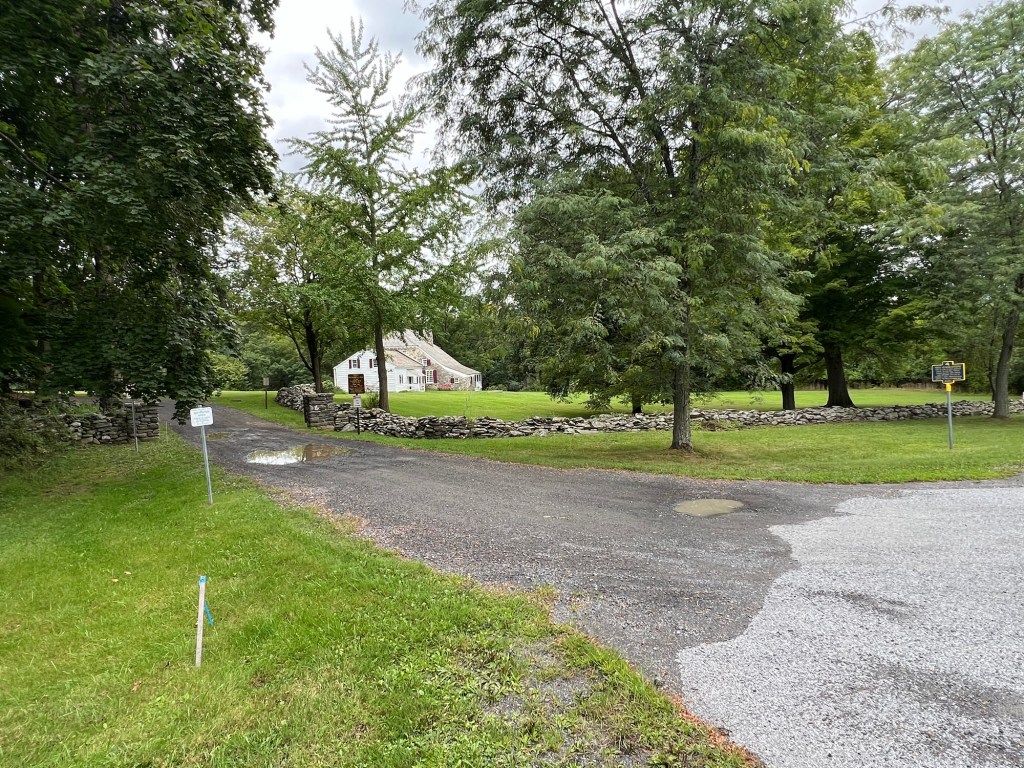
The estate from the road

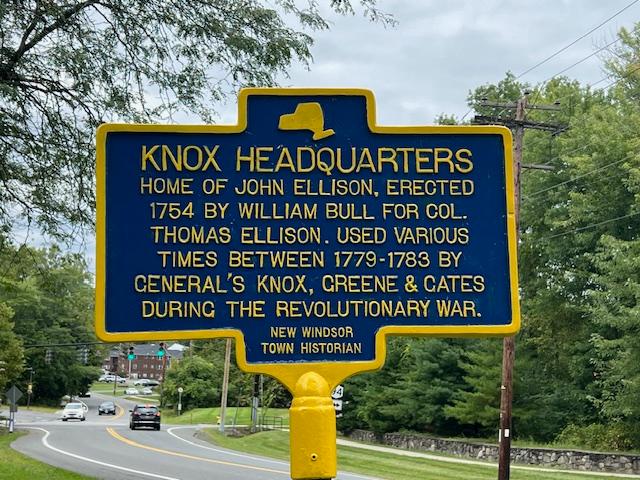
The historic sign outside the home

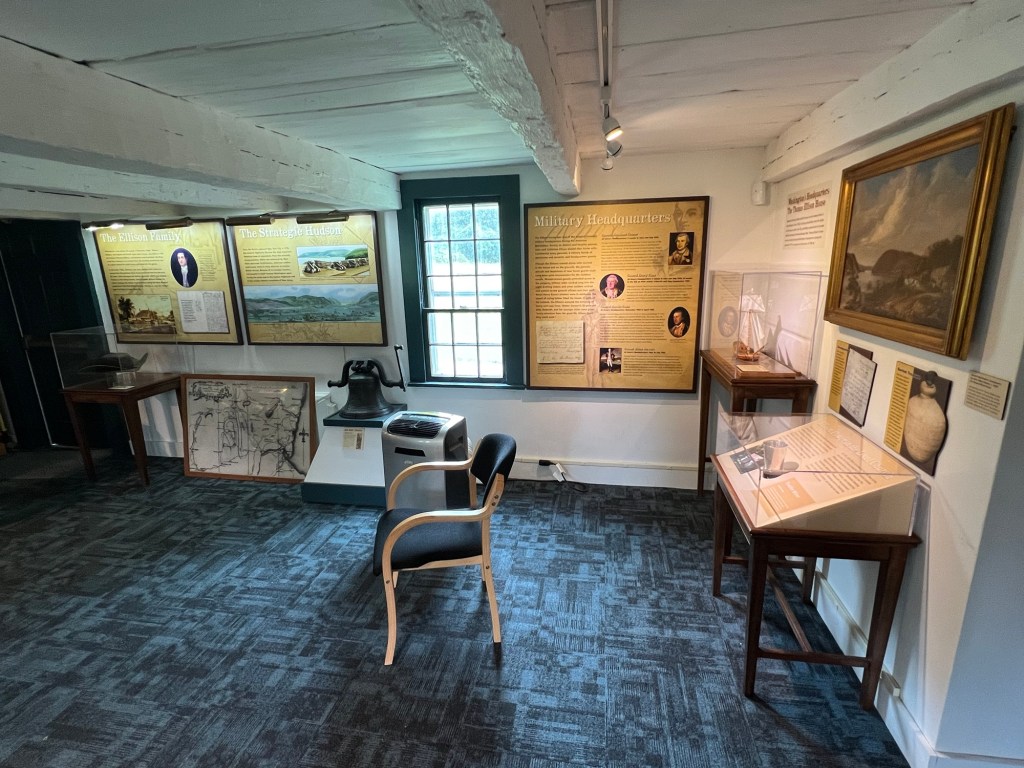
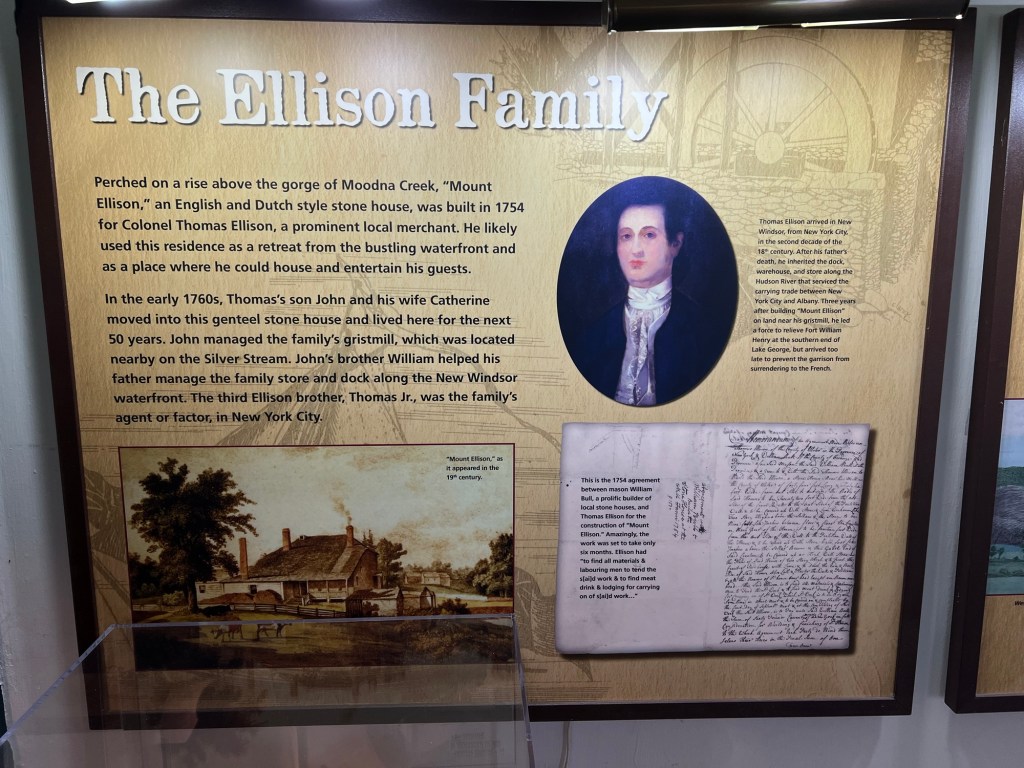
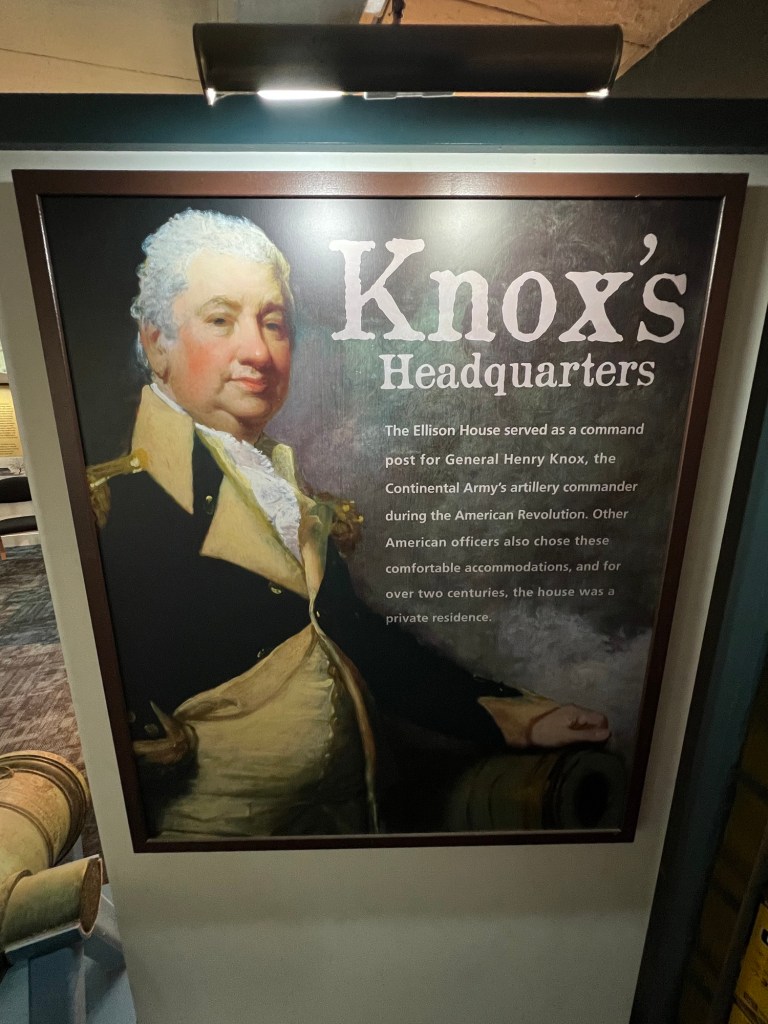
The Welcome Center tells the story of both the Ellison family and their war visitors, the Knox family.

The Ellison family history sign

The Knox family history sign

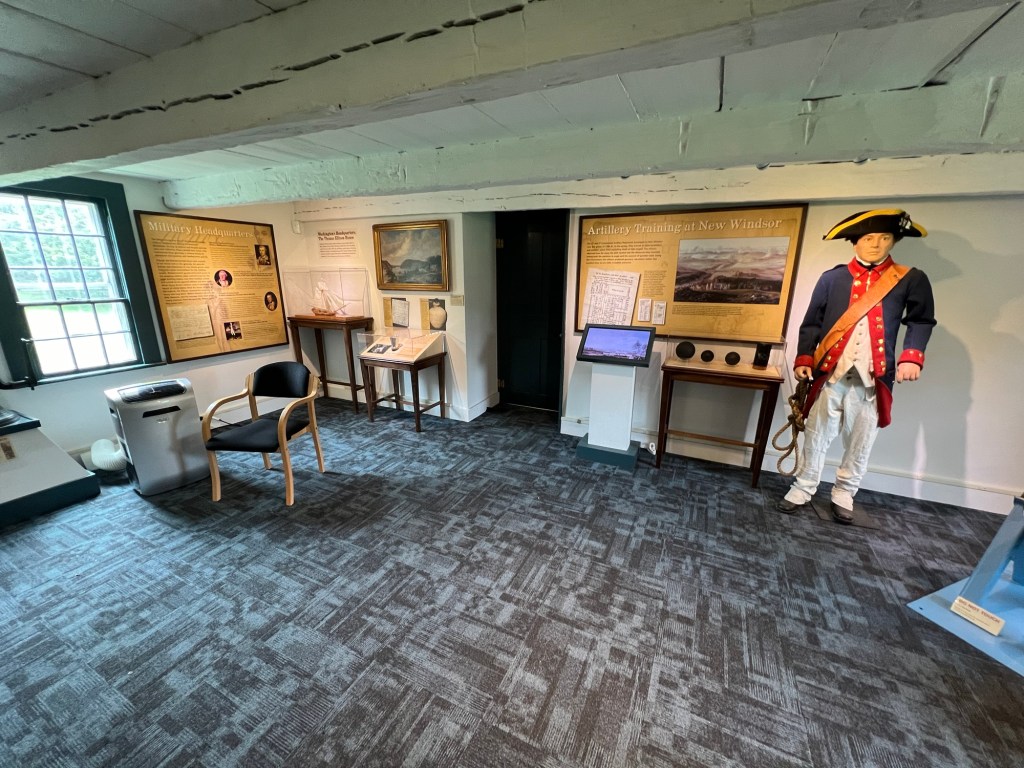
The family history in the Visitor’s Center

The tour of the house was very interesting. The house was built in three stages as the family grew and prospered over the generations. There was the original Dutch house which is the side of the house that faces the current road, the Georgian addition which faces the back of the house, where the original Kings Highway was located and the addition, where the Visitors Center was located.

My tour guide, Tiffany, explained there had been other additions to the home over the years but they had been removed for the historical integrity of the house.

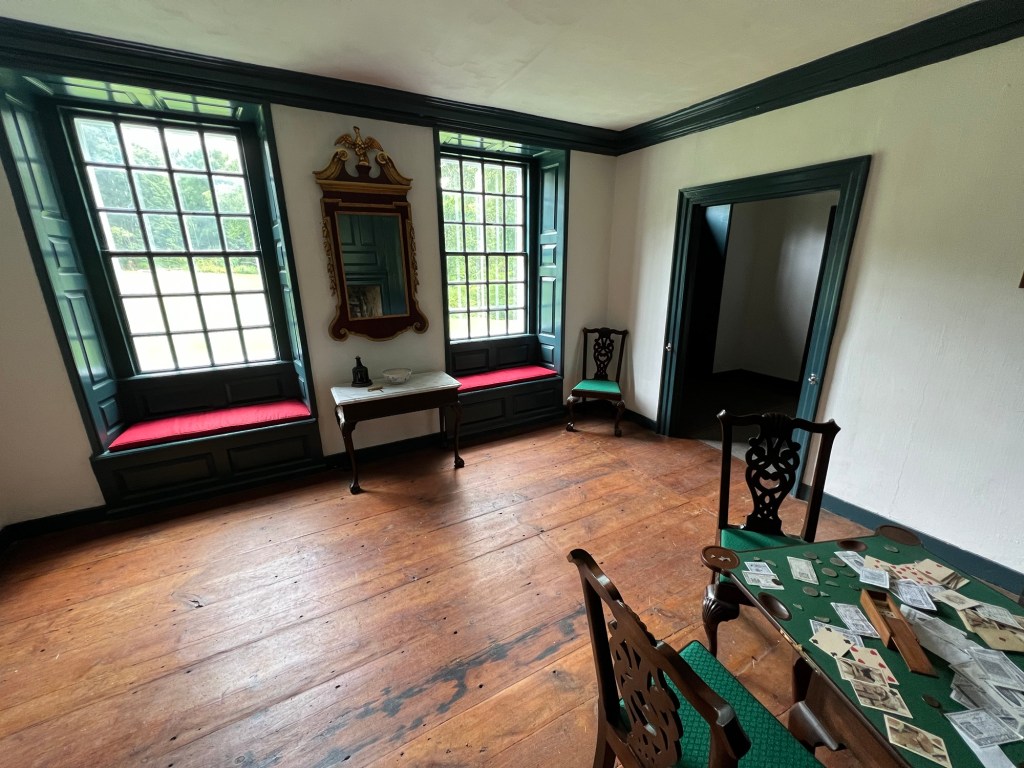
The Georgian addition of the home featured more rooms for socializing

The Georgian addition to the back of the home was built with the family fortunes. This included a spacious formal Parlor, Dining Room both with large window to let in natural light and high ceilings for circulation and to show the families affluence.

The large windows let in the natural light in the warmer months

Much of the furniture in the house was not original to it but was of the period. Here and there though there were pieces donated back to the house and gave it its historical dignity.

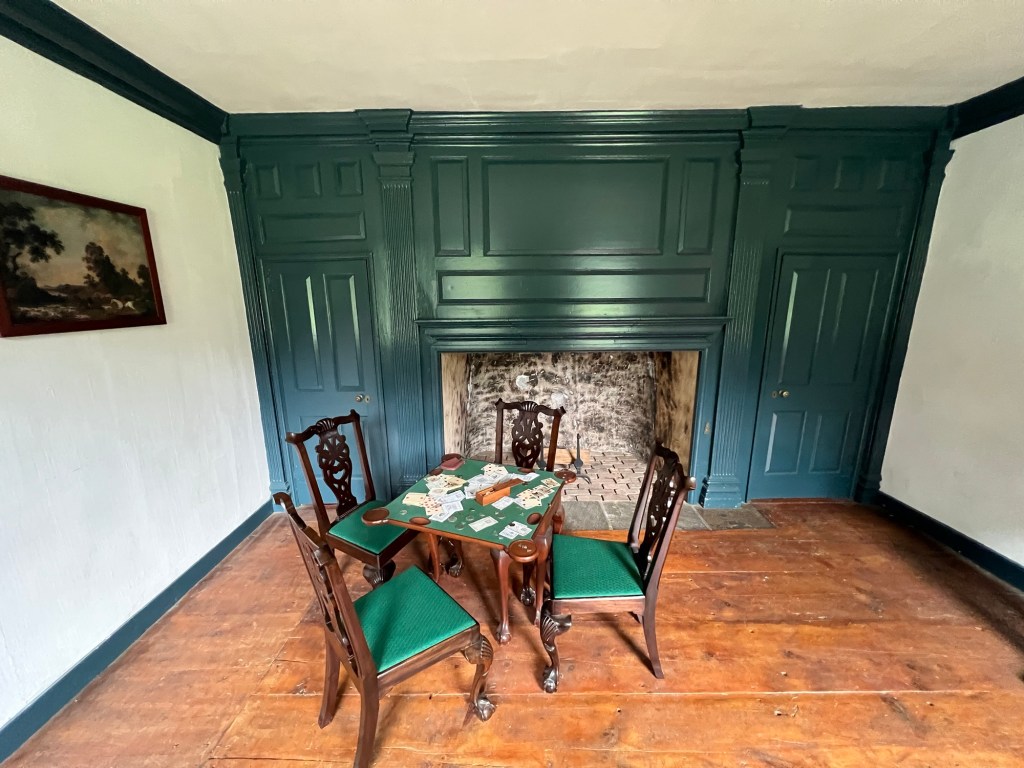
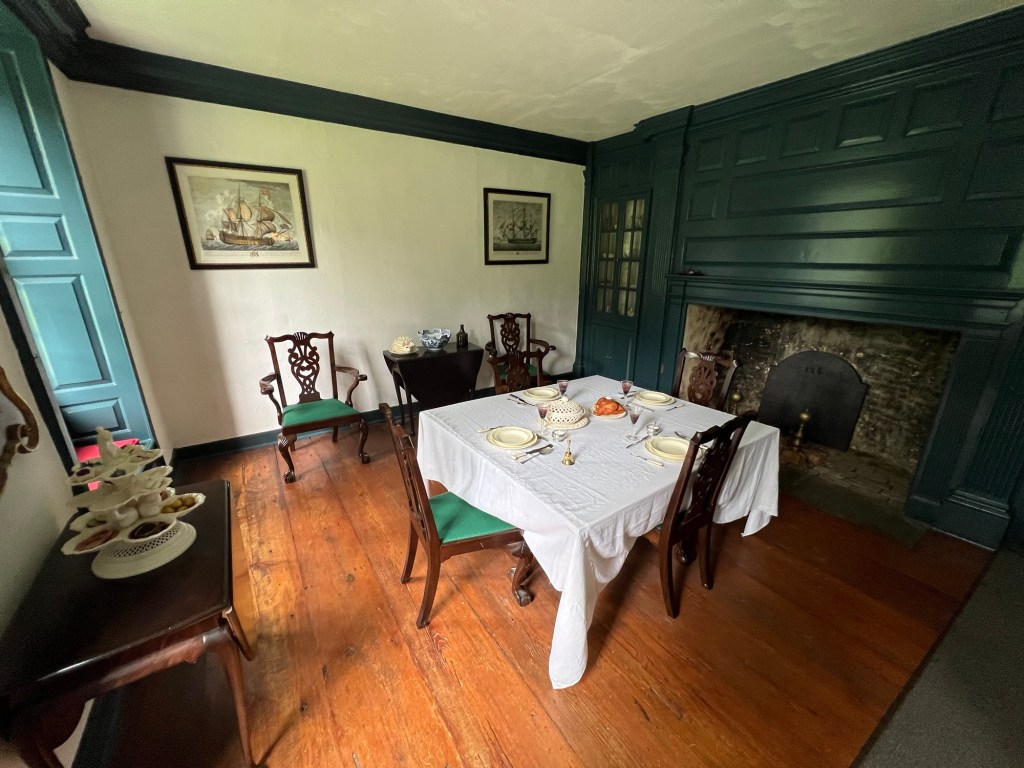
The formal dining room was used to impressi visitors with the large fireplace

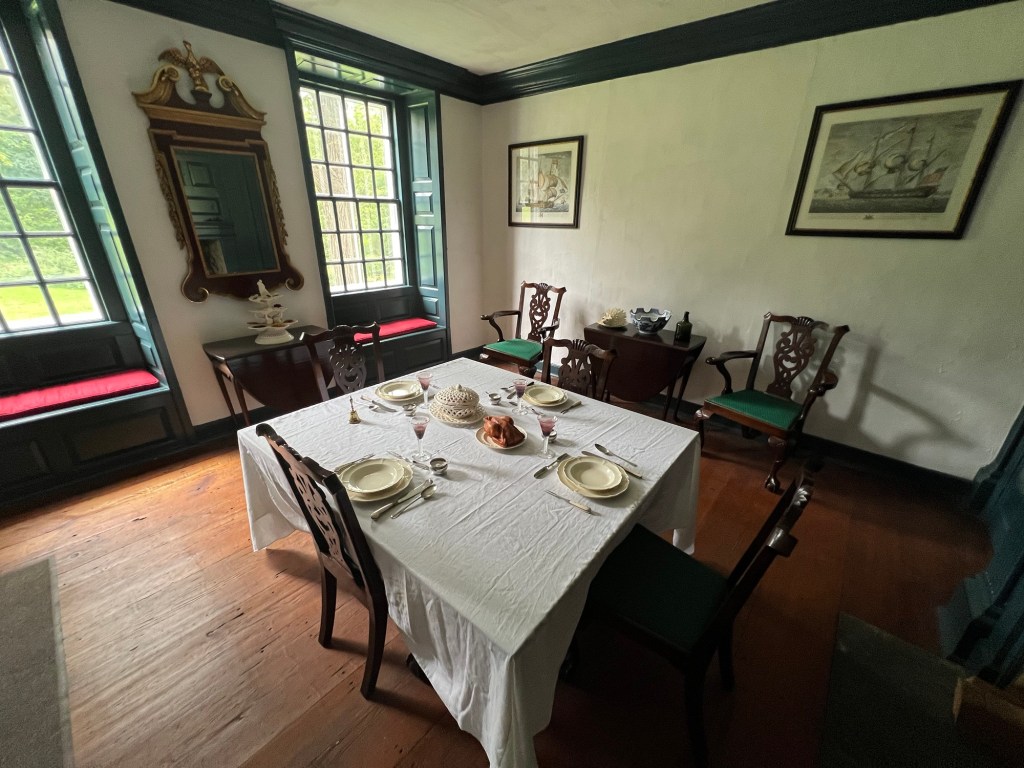
The Dining Room used for meals and formal entertaining was spacious yet cozy. There was room to move around but it was still intimate for conversation.

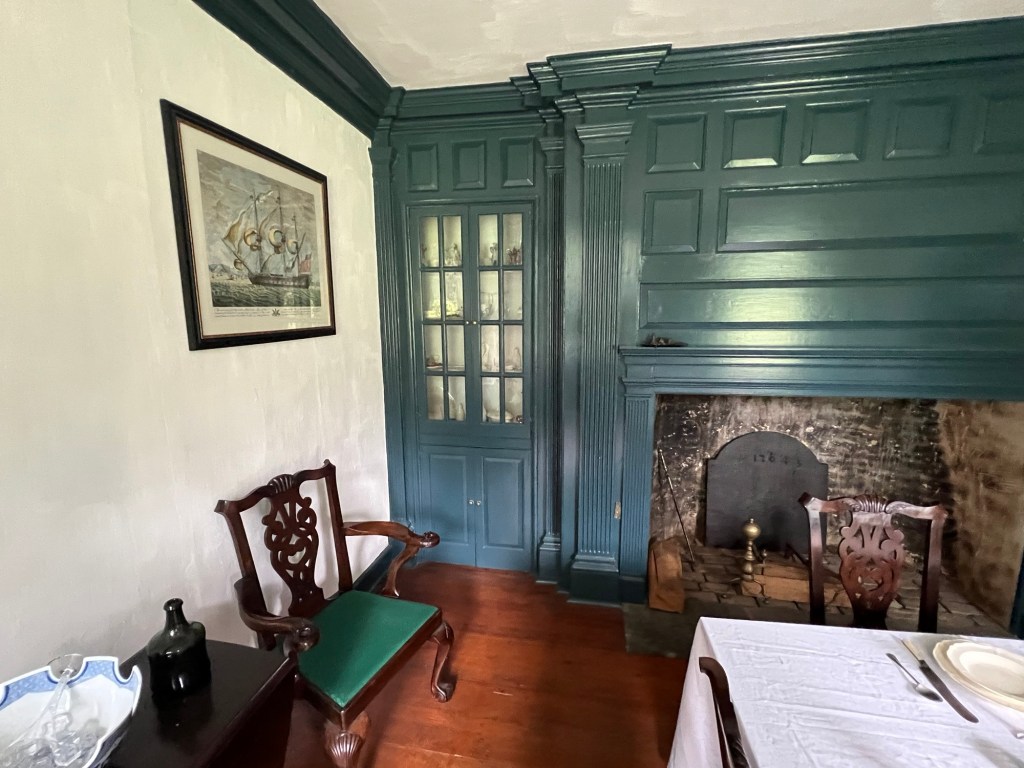
The room had built in China cabinets

The wood work contained china cabinets, storage for silver and family serving pieces. The large metal tombstone looking item in the fireplace was a metal slab meant for retaining heat for the room once the fire went down. This is how the room was kept warm in the colder months.

The natural light was perfect for late afternoon supper

Once you left these rooms for the front hallway, this led to the Dutch front portion of the house, once the living quarters and now was were the business office and storage for the family business was attended to during working hours.

The office of Mr. Ellison was in the front part of the original Dutch portion of the house

The rooms in the front section of the original house were separated from the formal part of the current back of the house. This is where Mr. Ellison and his son attended to business calls and stored their goods for shipping.

The storage room was probably a family bedroom for the original house

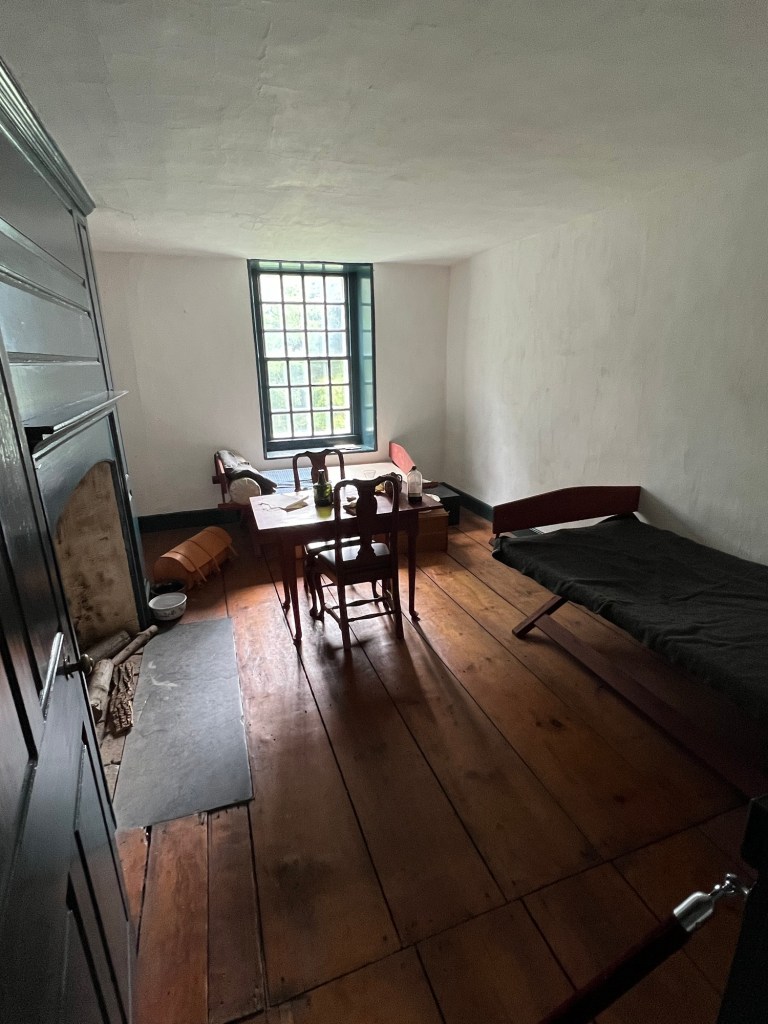
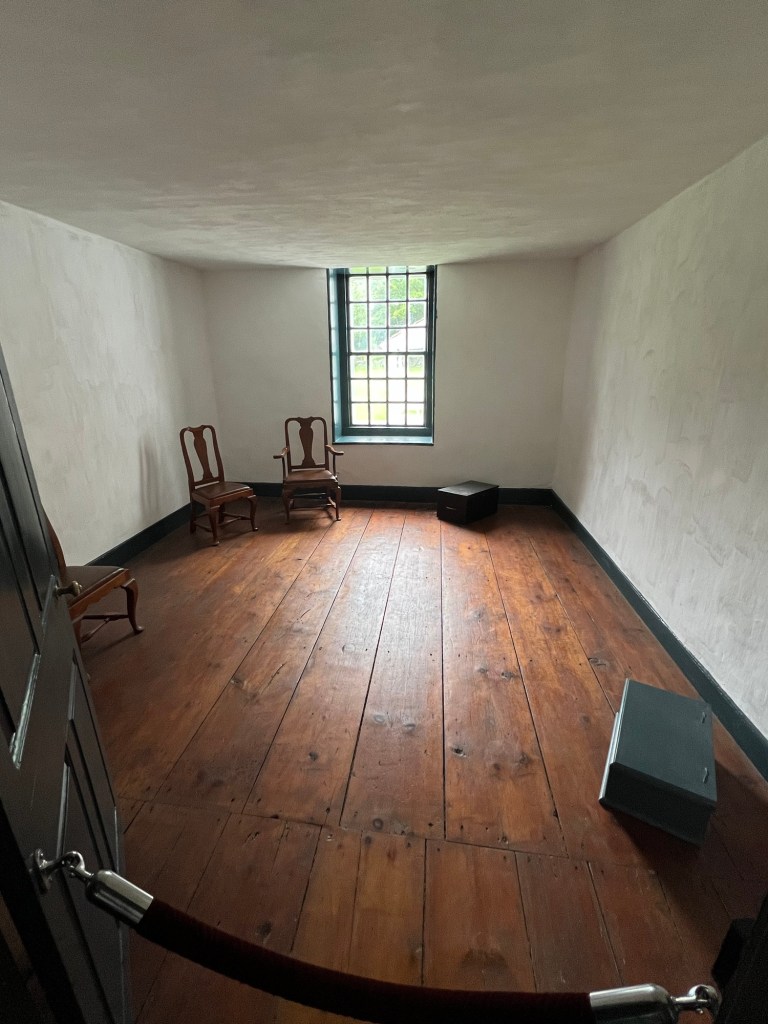
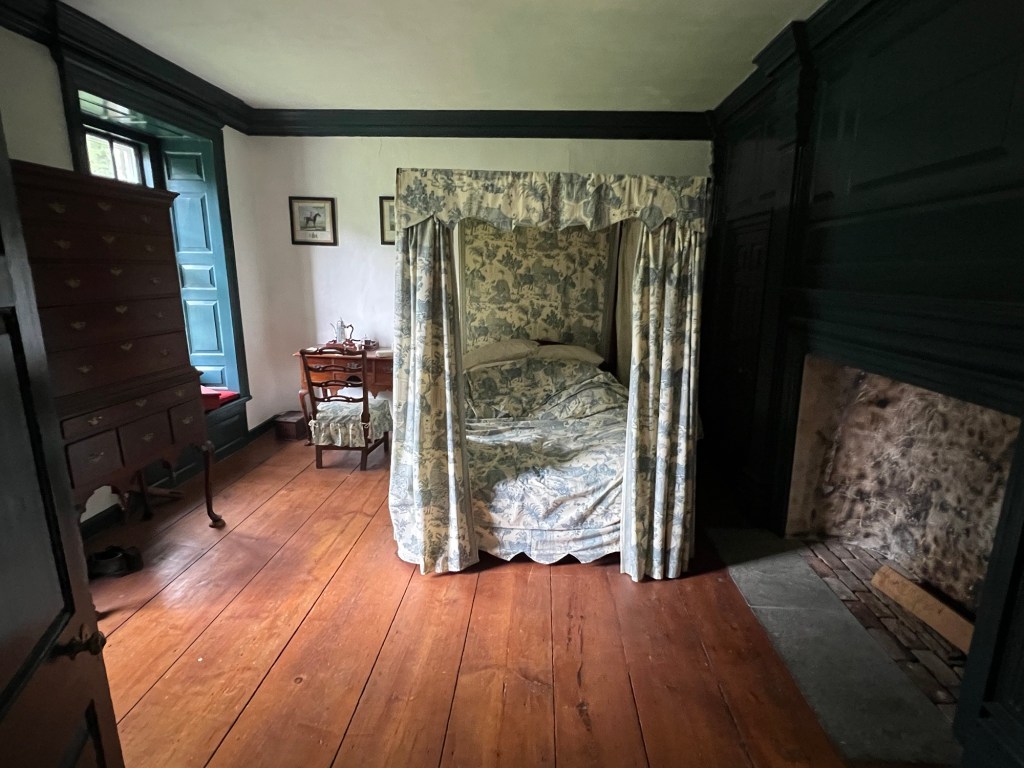
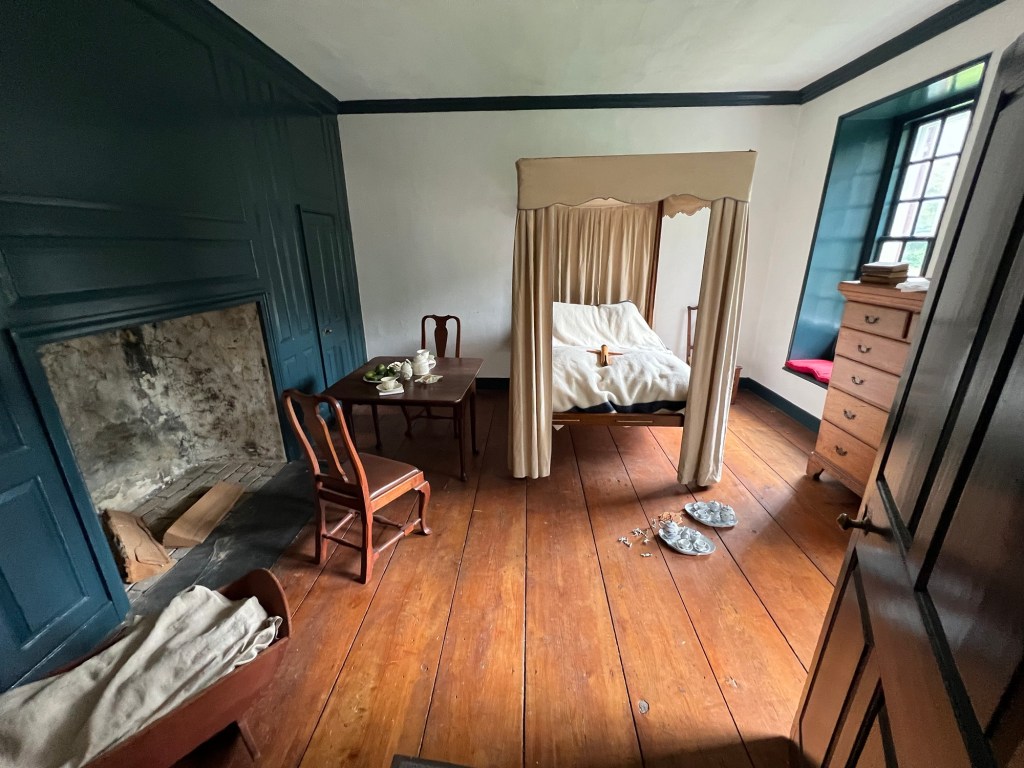
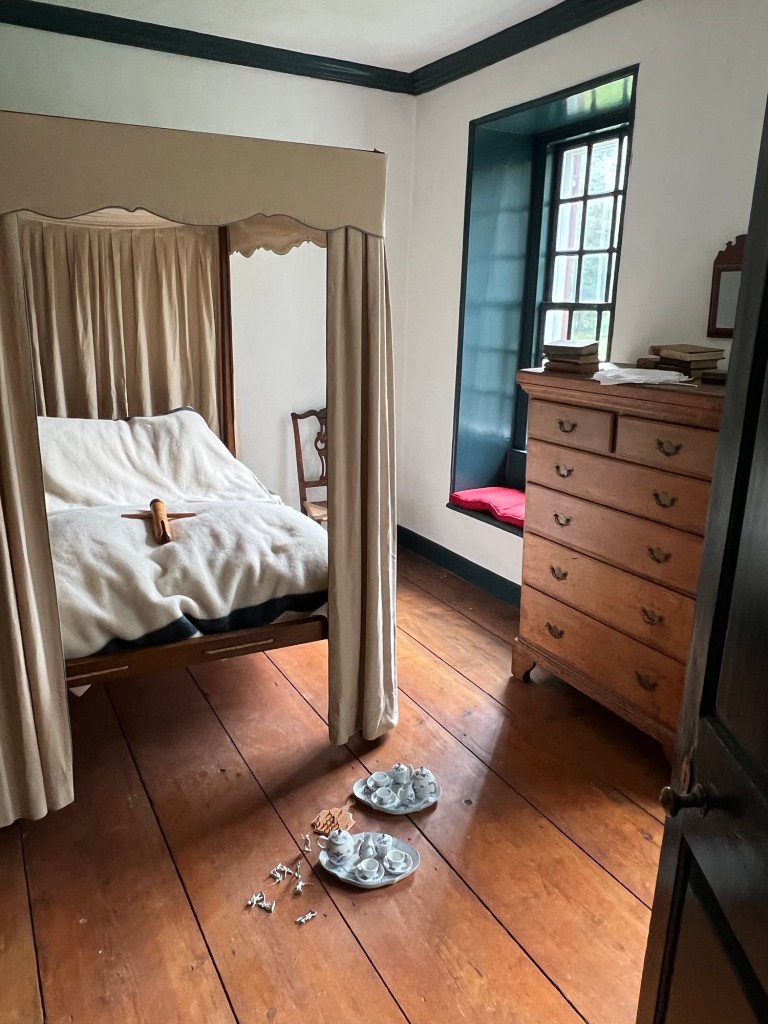
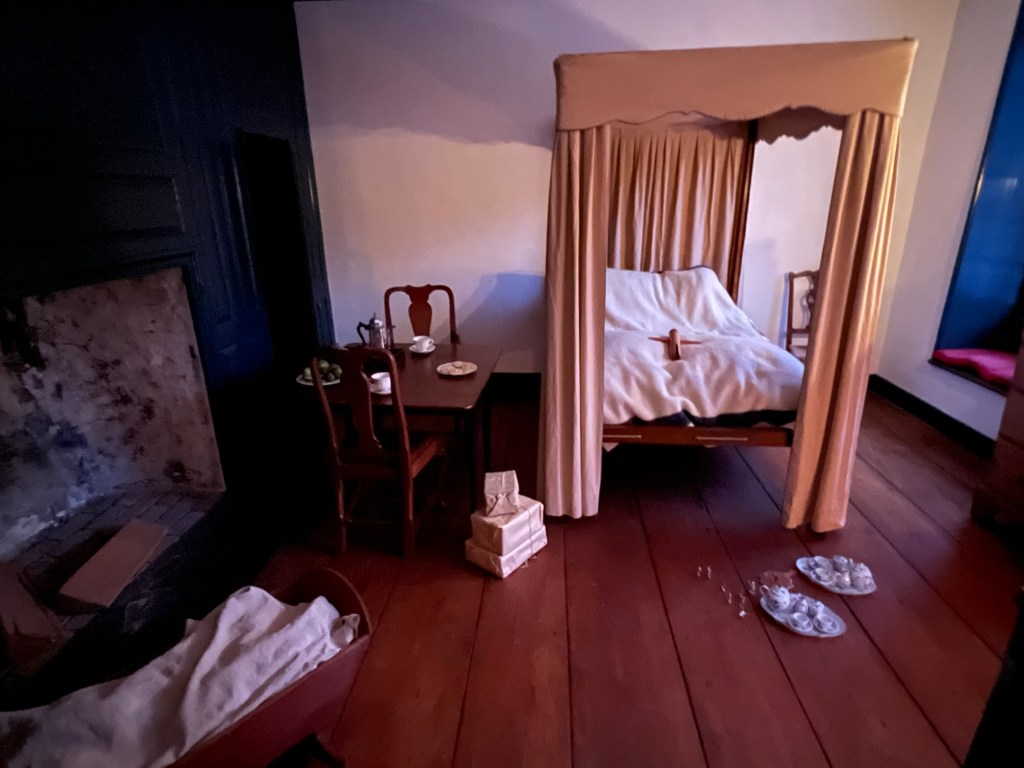
The trip upstairs was part of the addition of the house and contained two spacious bedrooms with high ceilings and large windows. When the Knox family joined the Ellison family during the encampment, each family had one bedroom for use. The Ellison’s did not have any children and the Knox’s had two small children, a small girl and an infant boy. From what the tour guide explained the Ellison’s welcomed them in the home and relations were very good with both couples, who welcomed the children into their home. It brought extra life to the house.

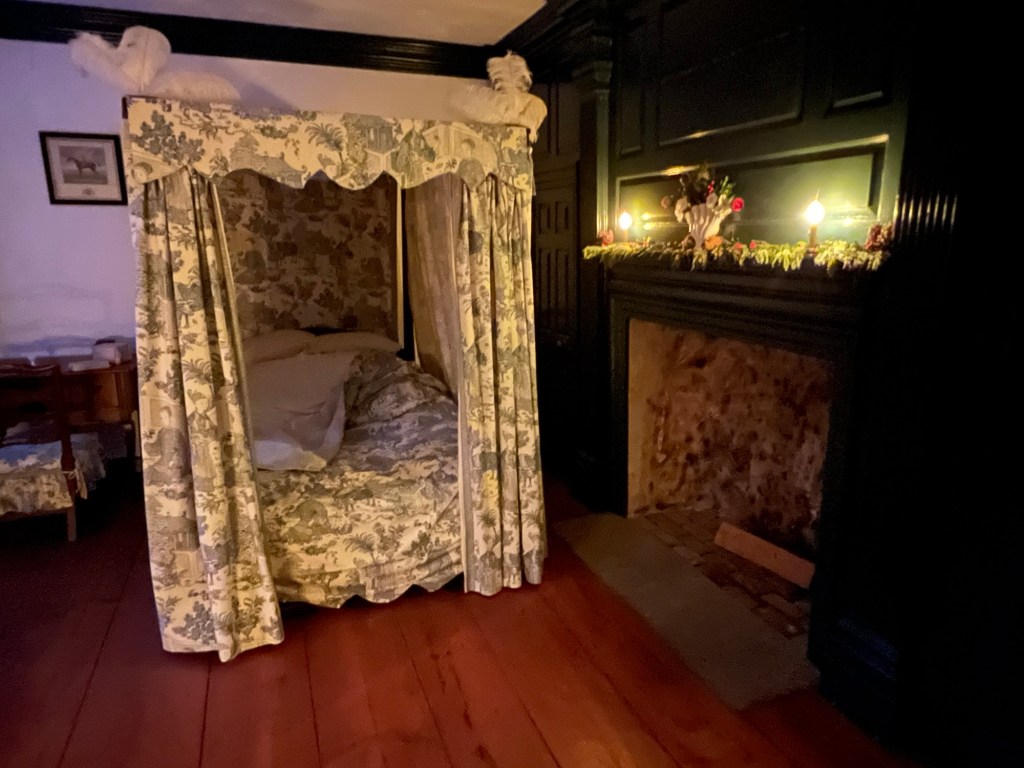
The formal bedroom of the Ellison’s would be the bigger room and more formal

The Knox family bedroom would have been not less elaborate with a small bed and crib for the children

The Knox’s bedroom for the family during the war years

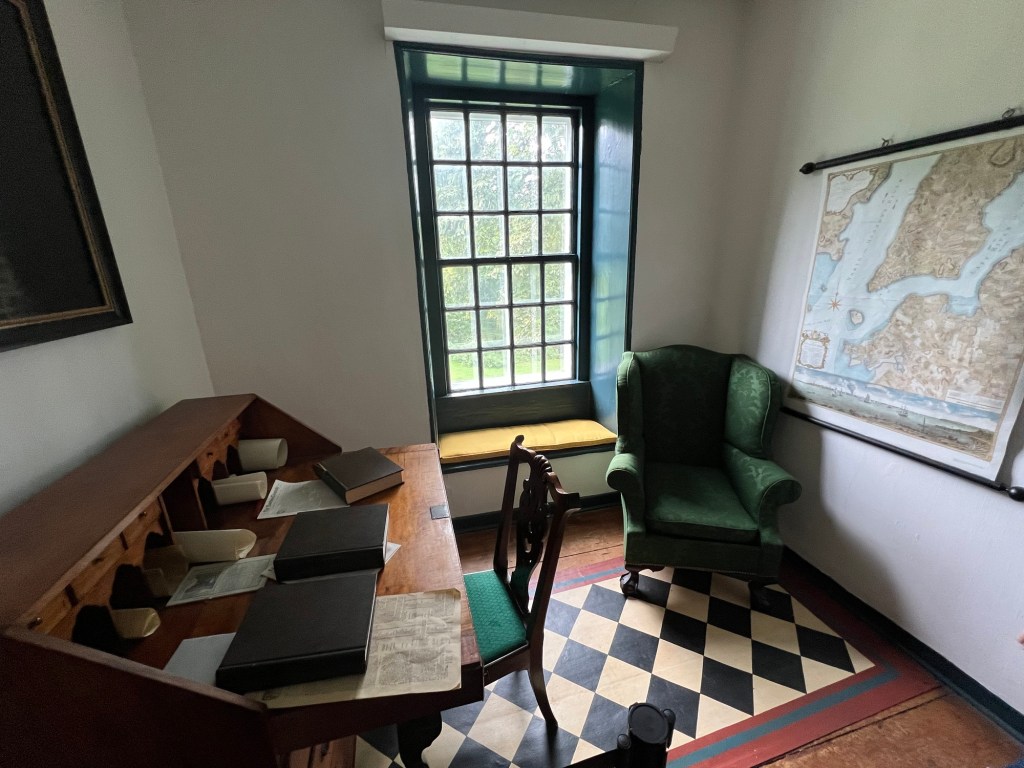
Mrs. Ellison kept her own office at the top of the stairs and this was reflective in the desk and table in the nook at the top of the stairs. The tour guide explained there had been a wall to provide privacy to Mrs. Ellison which had been removed over the years.

The office of Mrs. Ellison to run the household

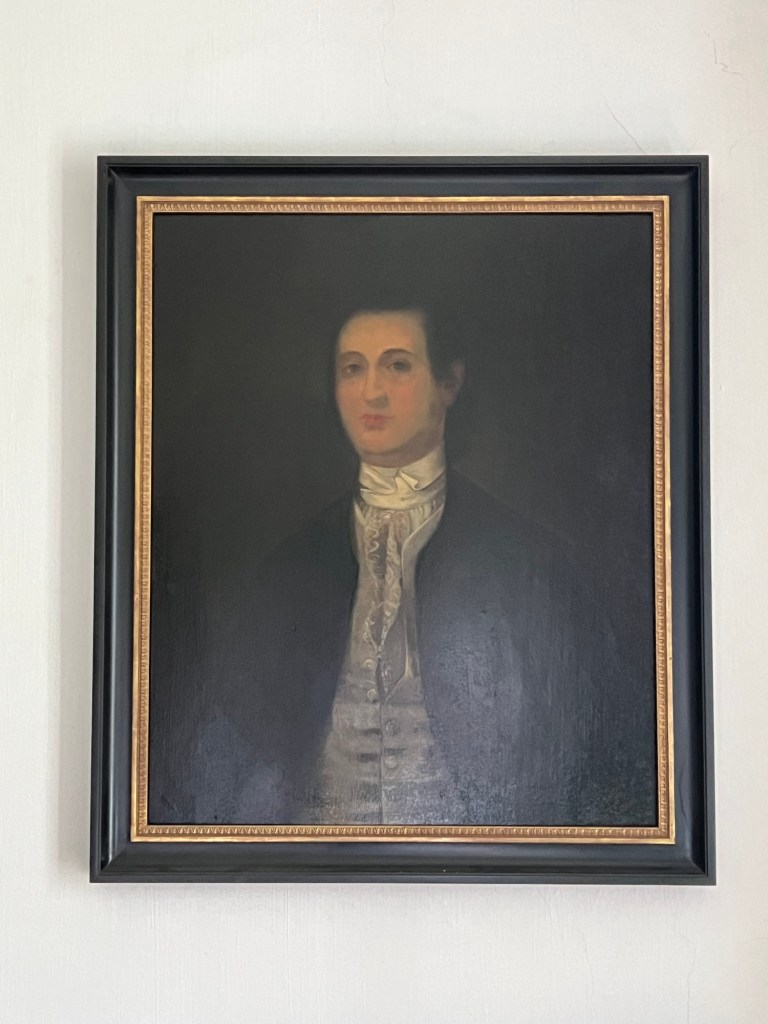
The office contained the family heirloom desk and a portrait of Mr. Ellison’s brother who was a General in the war.

The portrait of General Ellison, Mr. Ellison’s brother

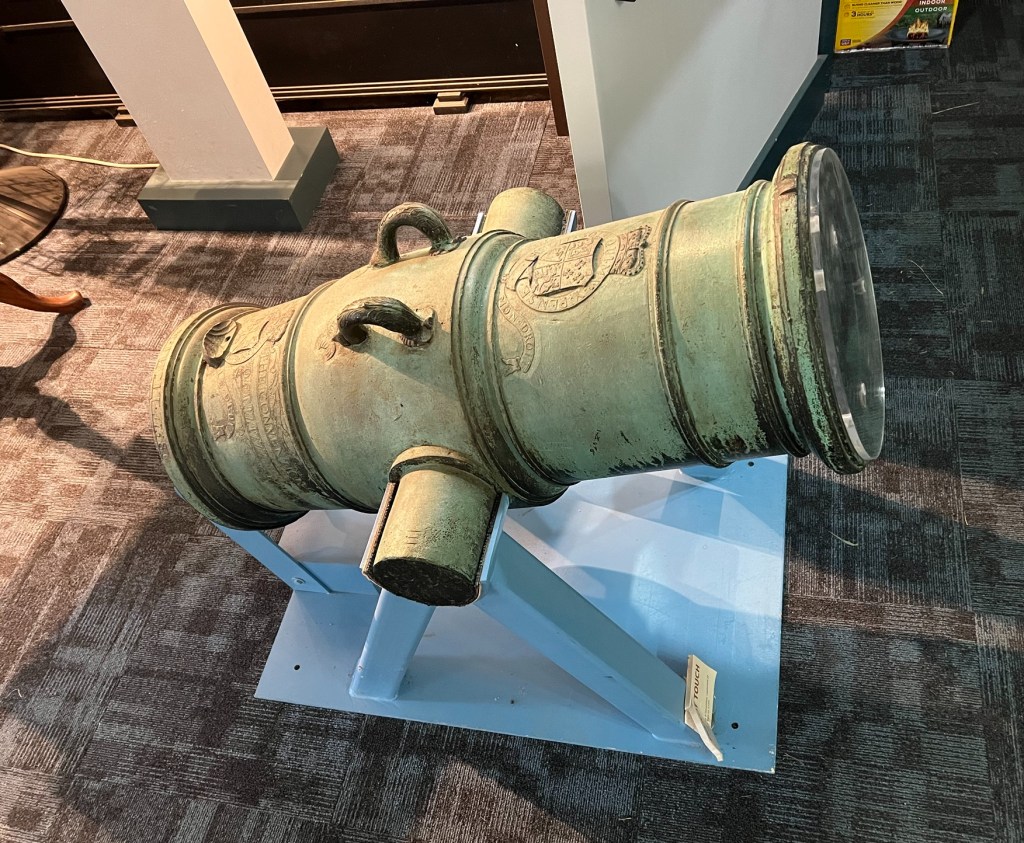
Part of the cannon

When I finished the tour of the house, my tour guide and walked around the Visitor Center room and she showed me some of the artifacts in the room including a small cannon the had been found. My tour guide suggested after we were done in the house a tour of the grounds. The King’s Highway had originally run in a different location that passed the front door of the Georgian side of the house. Also down by the stream were the ruins of the old grist mill.

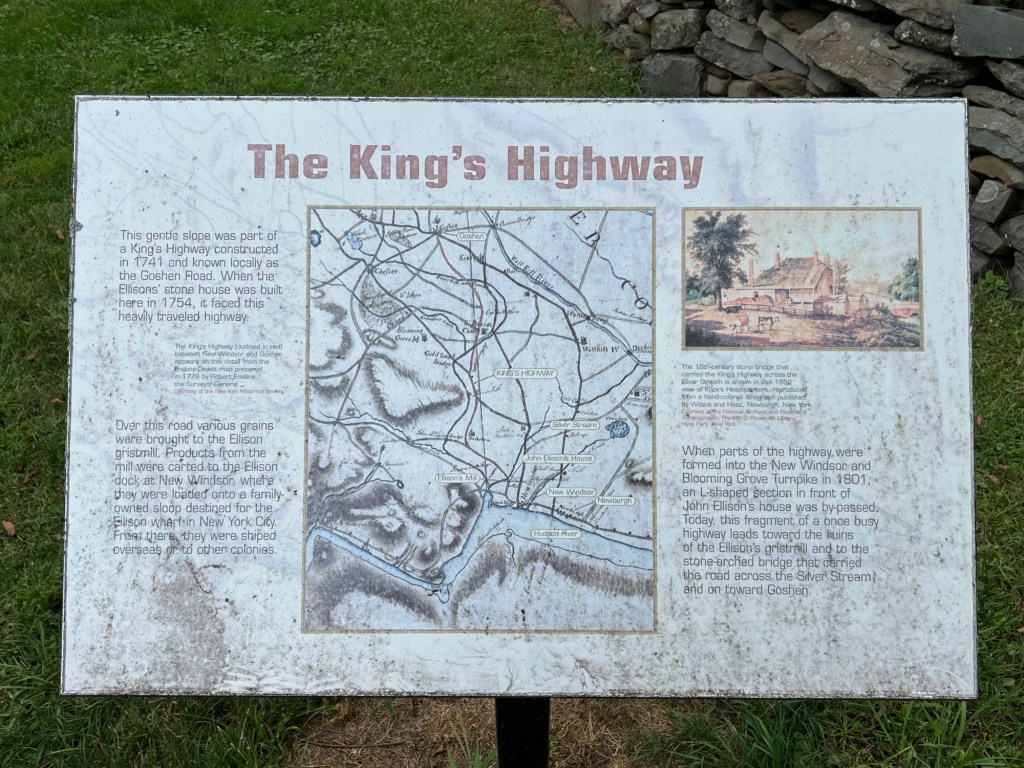
The map of the original King’s Highway when it passed in front of the home

The original front door of the Ellison home where the street was once located

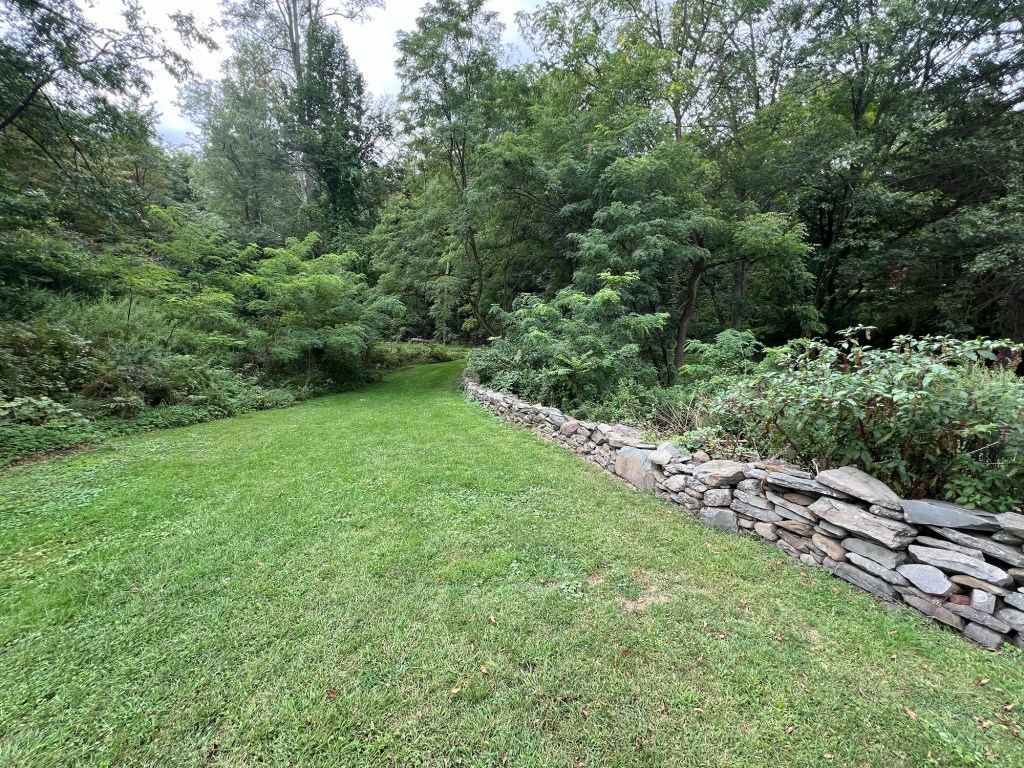
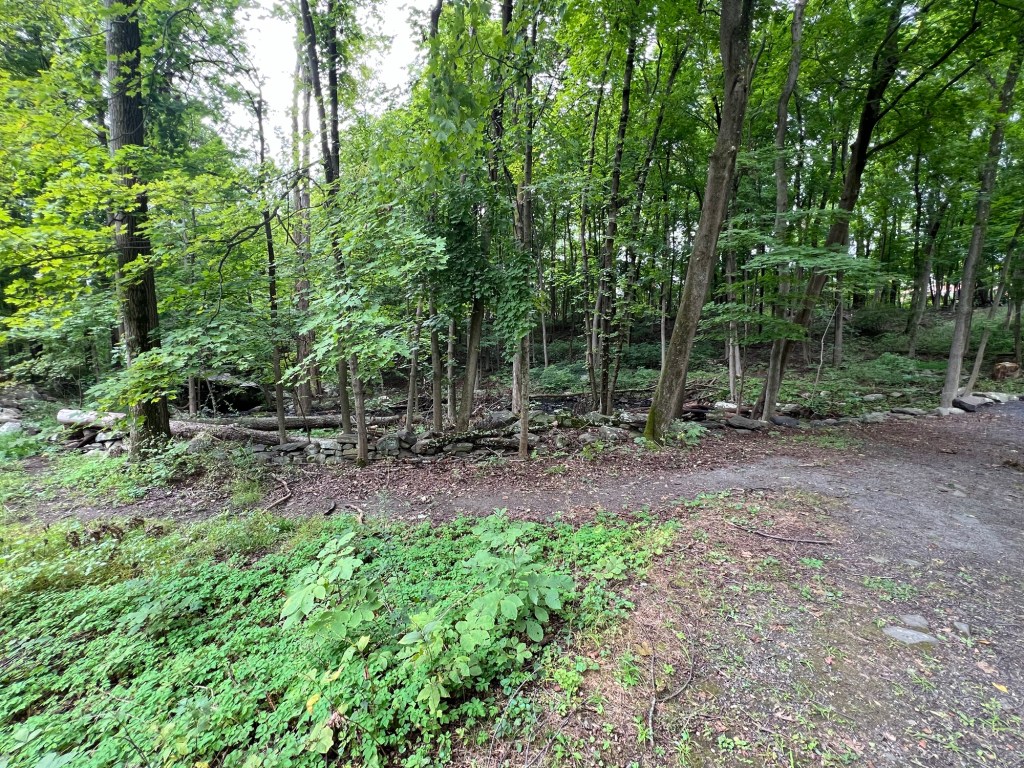
The stone wall is the marker of the original part of the road that passed by the home

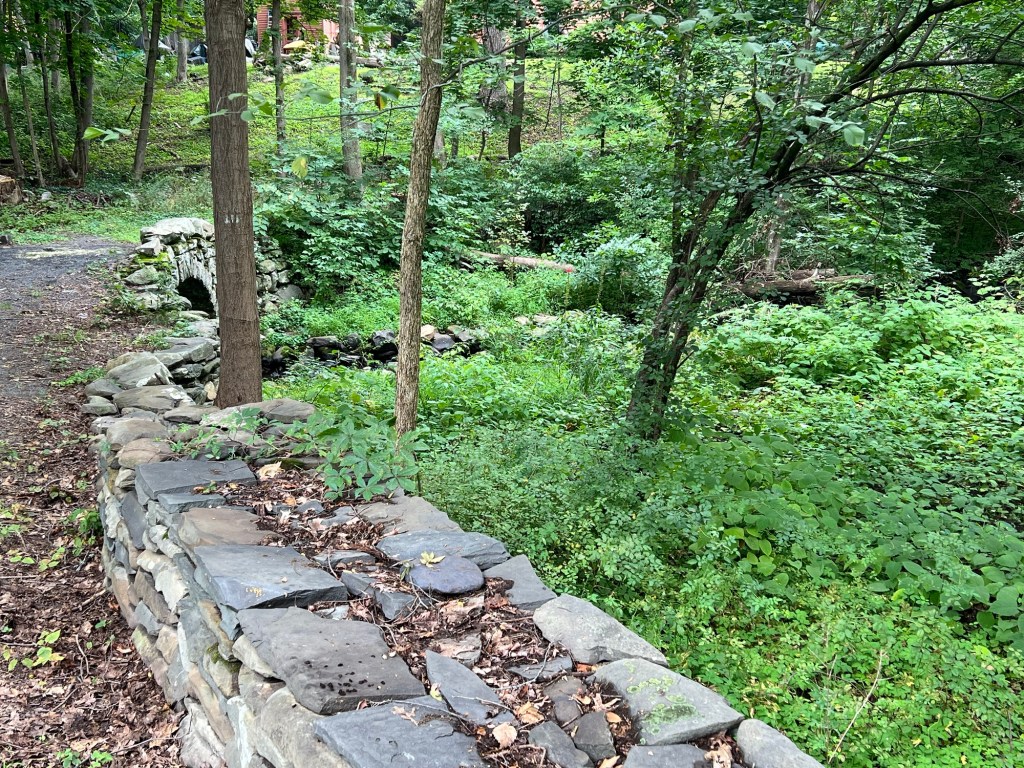
The highway path as it passed over the stone bridge

There was not much left of the family mill by the stream but the site did a nice job preserving the path of the highway and up keeping the stone bridge and grounds.

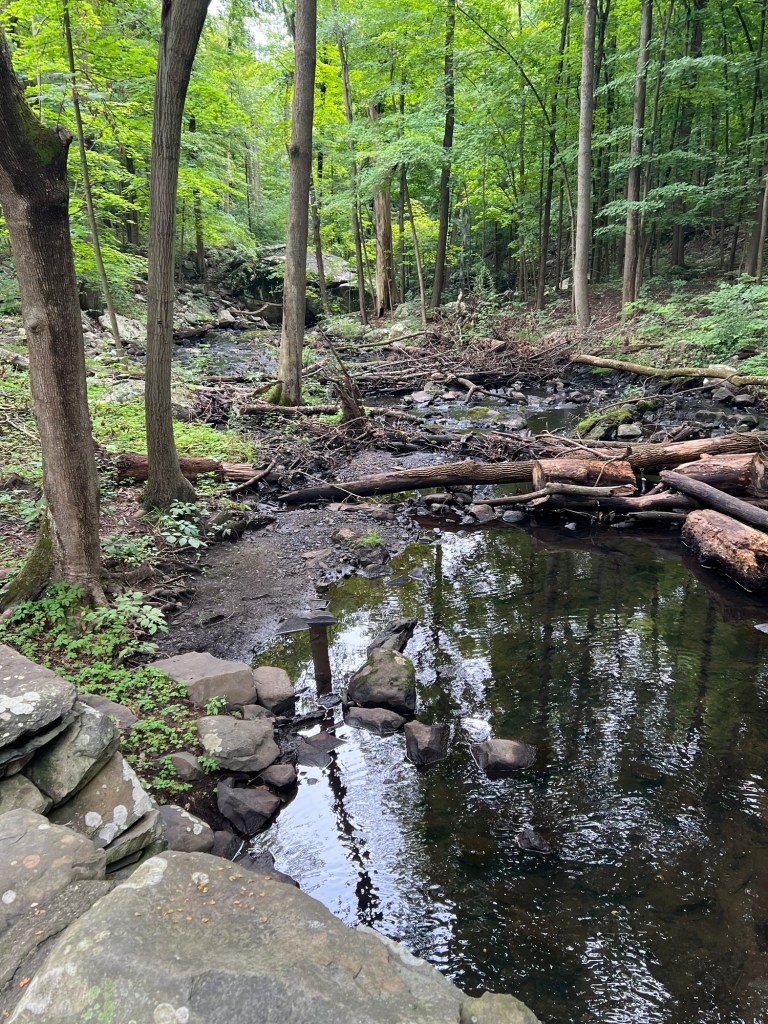
The woods area by the stream where the ruins of the old mill were located

The stream area

The stream area by the old mill

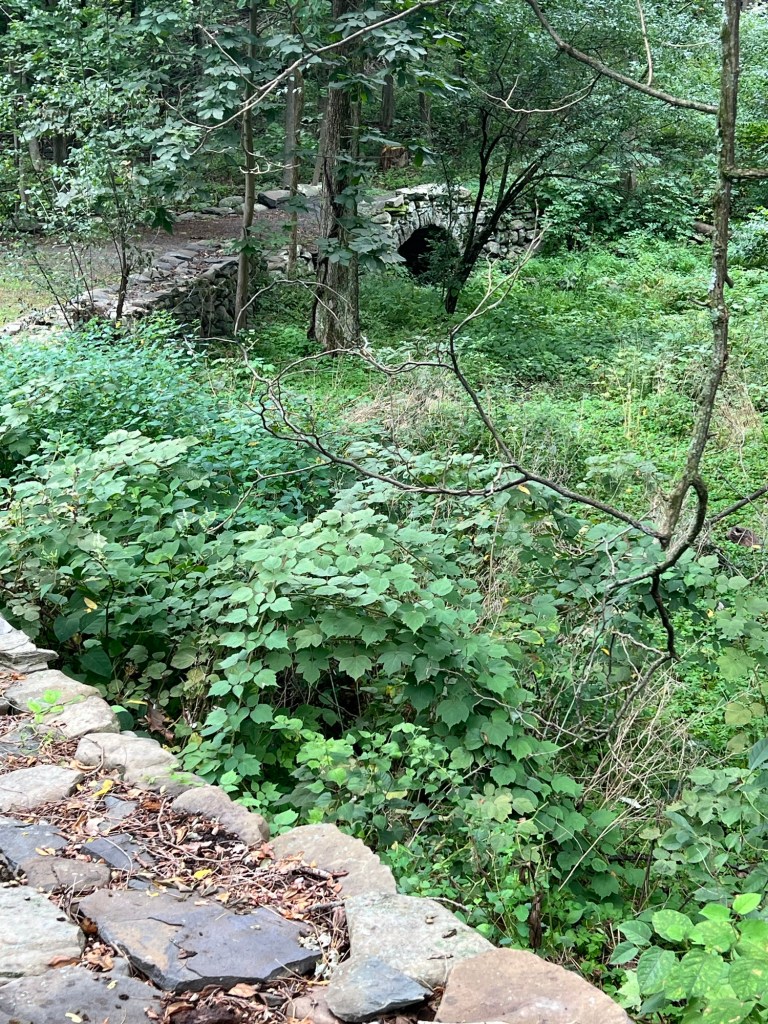
A better view of the old stone bridge

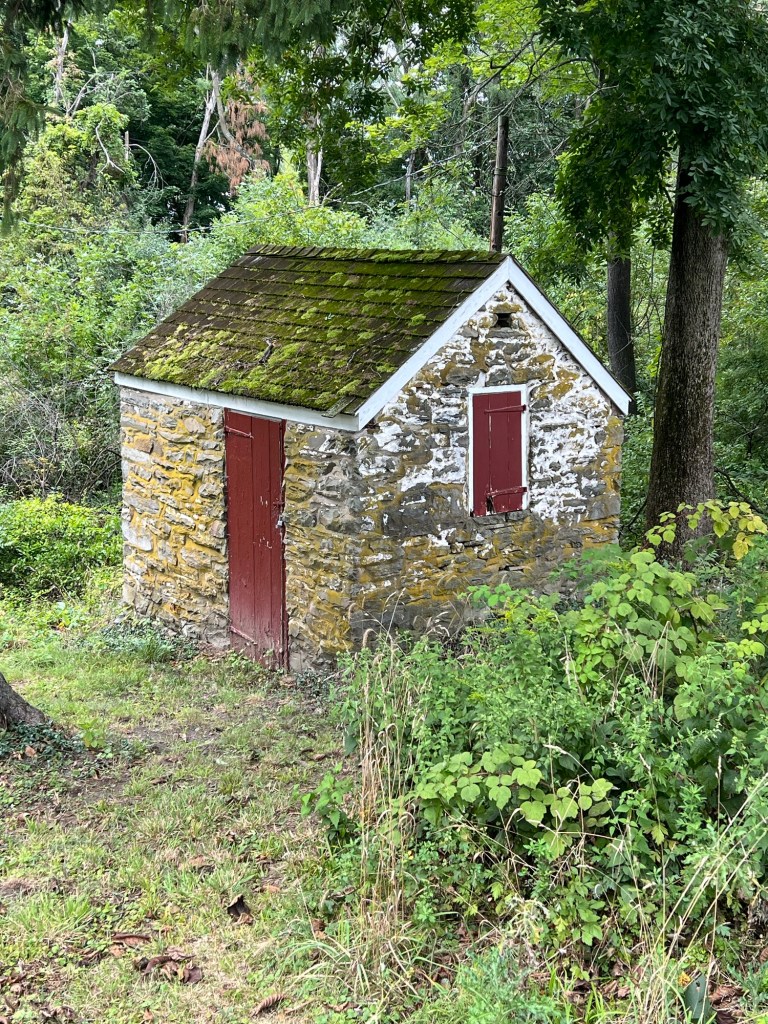
When I returned from the stream area (unfortunately leads to someone’s property on the other side of the stream), I walked the grounds of the home. There was a small smokehouse on the property to the side of the house.

The old smokehouse on the property

What was originally the back side of the house is now the front side of the house on the Dutch side of the home with the addition to the left

The view of the homestead from what is now the front of the street

The view of the house from the entrance when I was leaving

The front of the homestead as you enter an exit from the new direction of the home

I found the tour to be very informative and an interesting look on how two families shaped our history during the Revolutionary War.

*A special note that the house is seasonal and is closed from Labor Day until Memorial Day the next year and is only open for special events at Halloween and Christmas.

The Halloween Event:

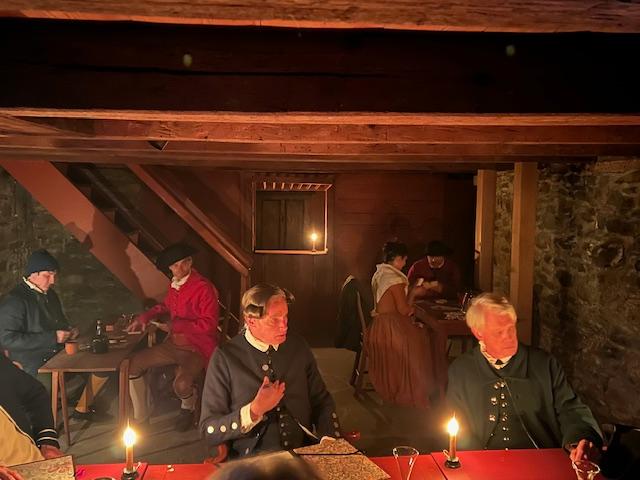
I attended the Halloween events at the Knox Headquarters when in the spirit of the 18th Century Gothic Literature, an author took us on a tour of treason and tides turning during New Windsor Cantonment and inside the Knox Headquarters. The ghosts of the past tried to find a traitor in the midst of the war.

Meeting the ghosts of the author and her characters on the site of the Knox family estate

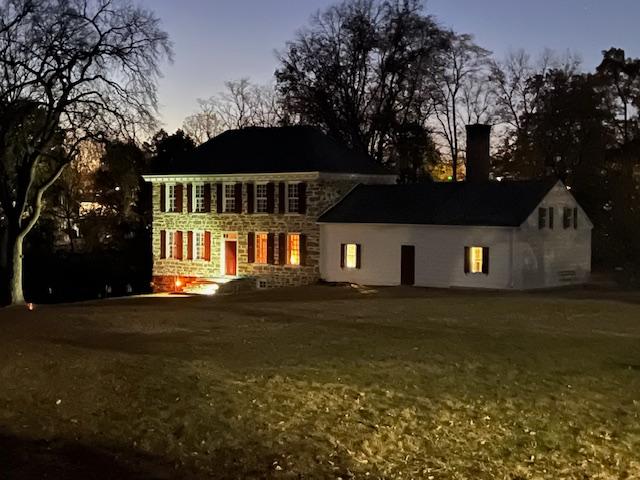
The Knox House lit for the Halloween holidays had a eerie look to it that night

The Ghosts trying to find a traitor in the ranks

The Ghosts of the past trying to find a traitor during the war

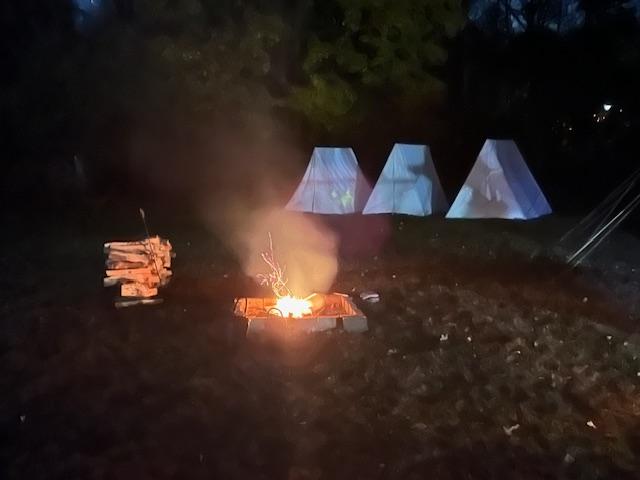
Leaving the Continental Army camp after the performance was over that evening

We walked the estate and followed the storyline with the actors. There were people on both sides of the war who thought they were right. It was an interesting Halloween event.

The History of the Ellison/Knox Site:

(from the New York State Parks, Recreation and Historical site)

On several occasions during the Revolutionary War, Major General Henry Knox, Commander of the America artillery, established his military headquarters at John Ellison’s 1754 Georgian-style house in Vails Gate. From October 1782 until the spring of 1783, as 7,000 soldiers and 500 “camp followers” were establishing winter quarters at the New Windsor Cantonment, and General Washington was lodged at Jonathan Hasbrouck’s house in Newburgh, New York, Major General Horatio Gates occupied the elegant home from which he commanded the cantonment. Here the army awaited the end of the Revolutionary War that became effective when Washington issued the cease fire orders on April 19, 1783.

For most of the 18th and into the 19th century, the Ellison family had important commercial dealings in milling and trade. From their mill, flour was shipped down the Hudson River to New York City and the West Indies. At present, remains of the mill, with traces of the underground raceway may be visited. Explore how the Ellison’s and other families of the mid-Hudson Valley lived 200 years ago.

The Christmas Open House event:

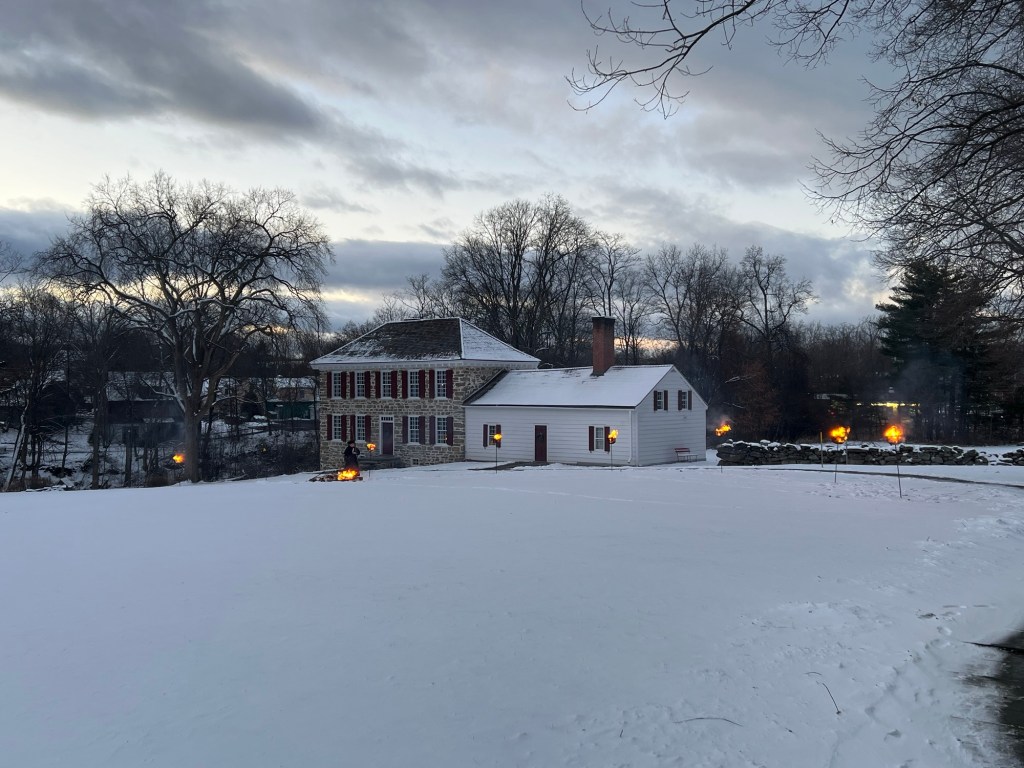
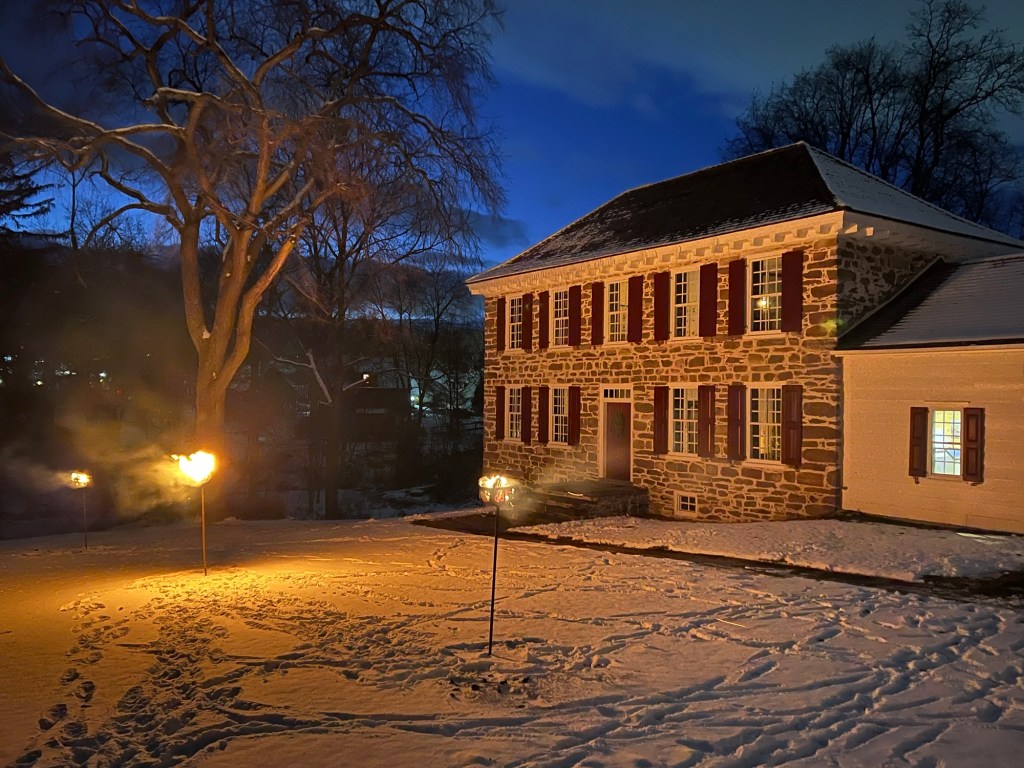
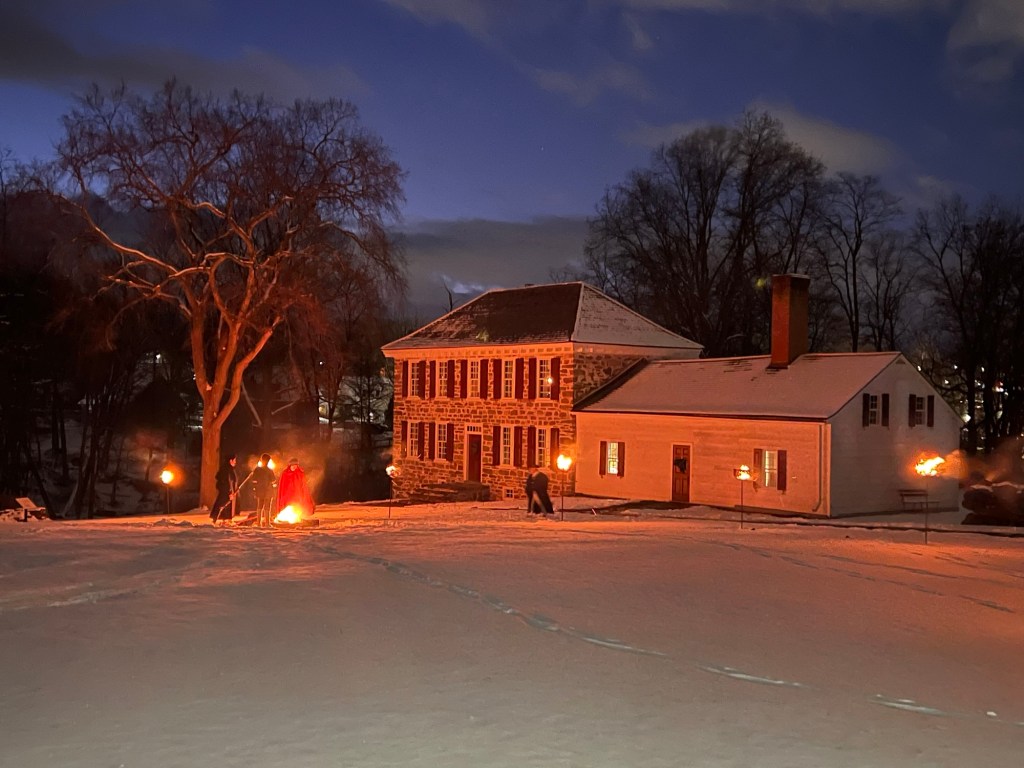
I returned to the Knox Headquarters again for their Colonial Christmas Open House in early December and that was a festive event. The snow had just fallen giving the house a very picturesque look to it.

The Knox/Ellison Home the day of the event

The estate looked so picturesque with the snow

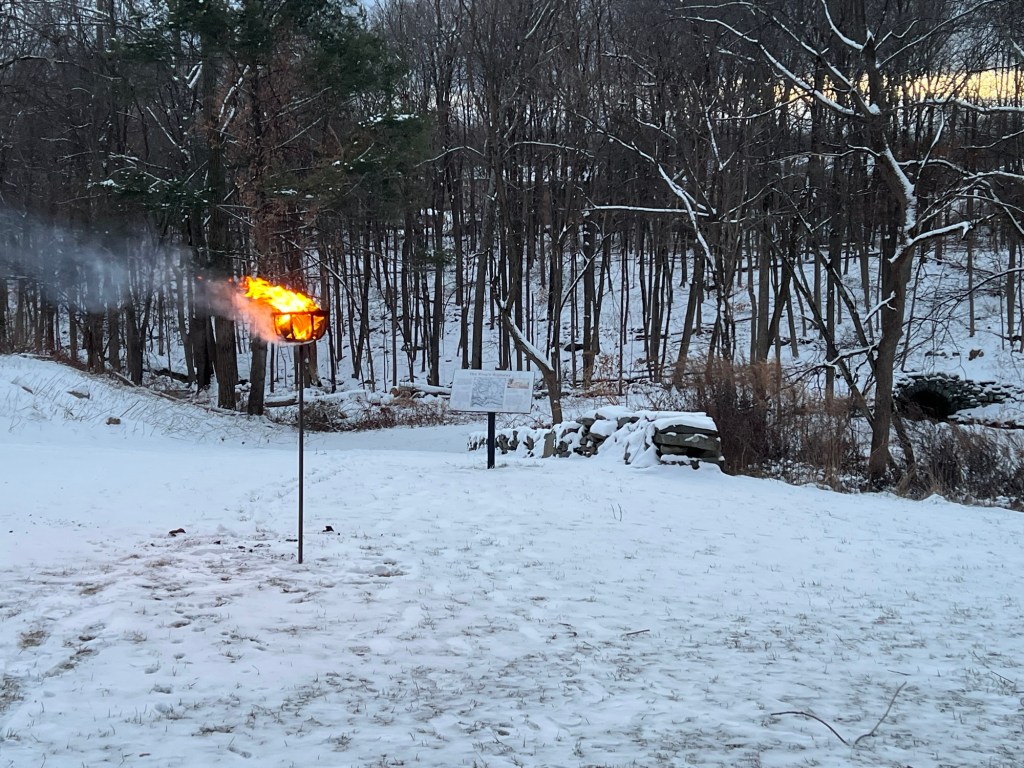
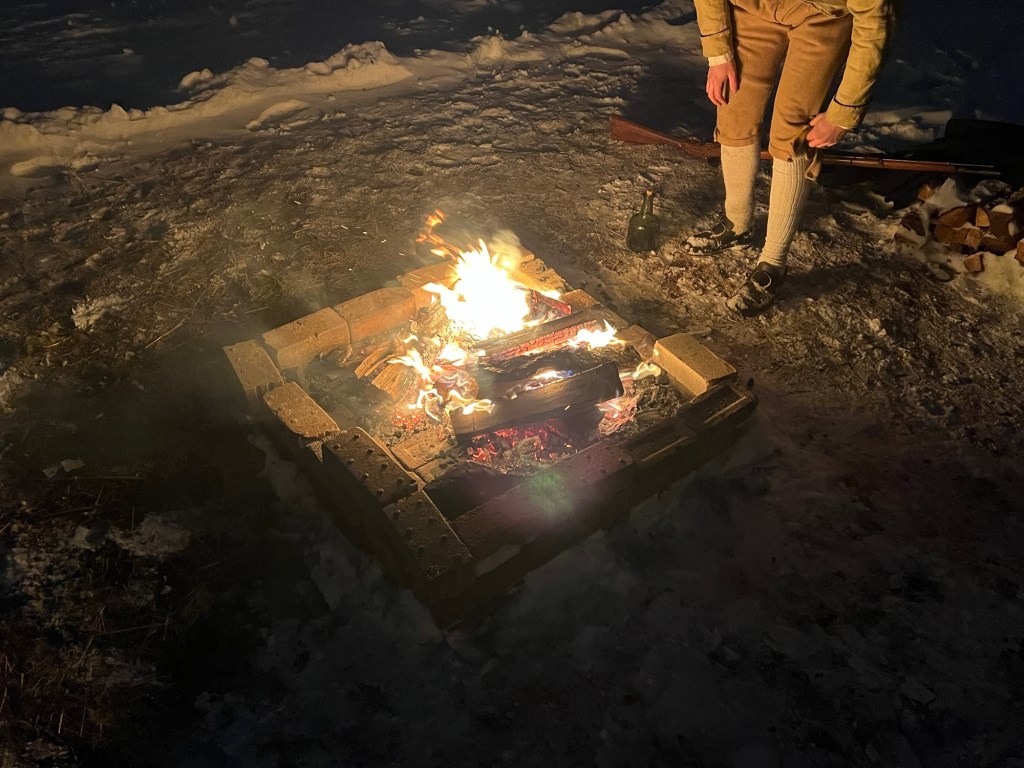
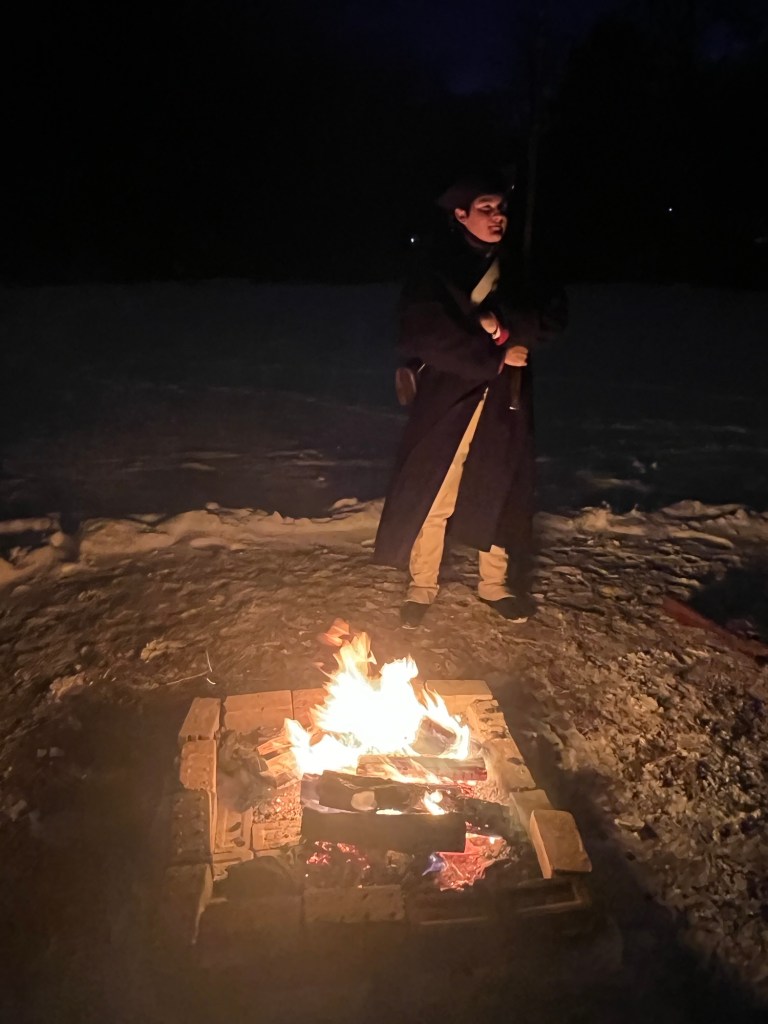
When I first arrived to the estate, it was still light out and they had just lit all the torches in front of the house. It really lit the pathways to the house. By the outside fire, a lone soldier stood guard, and he looked like he was freezing.

The torches that lit the paths

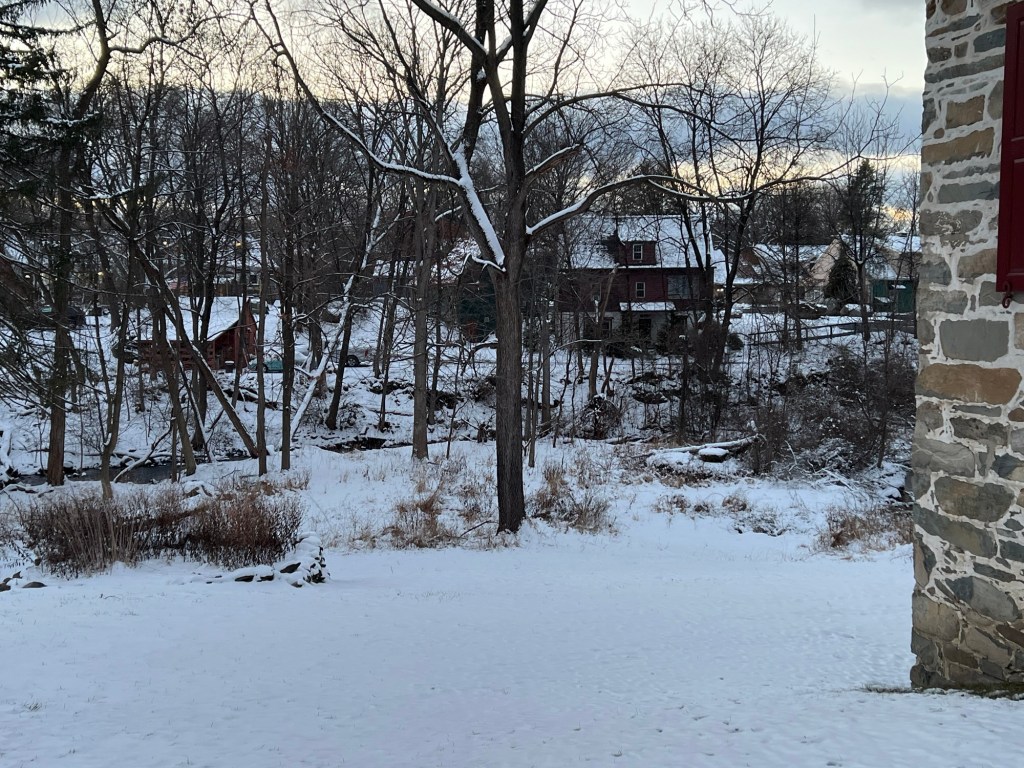
The snow gave the woods a festive early Christmas look

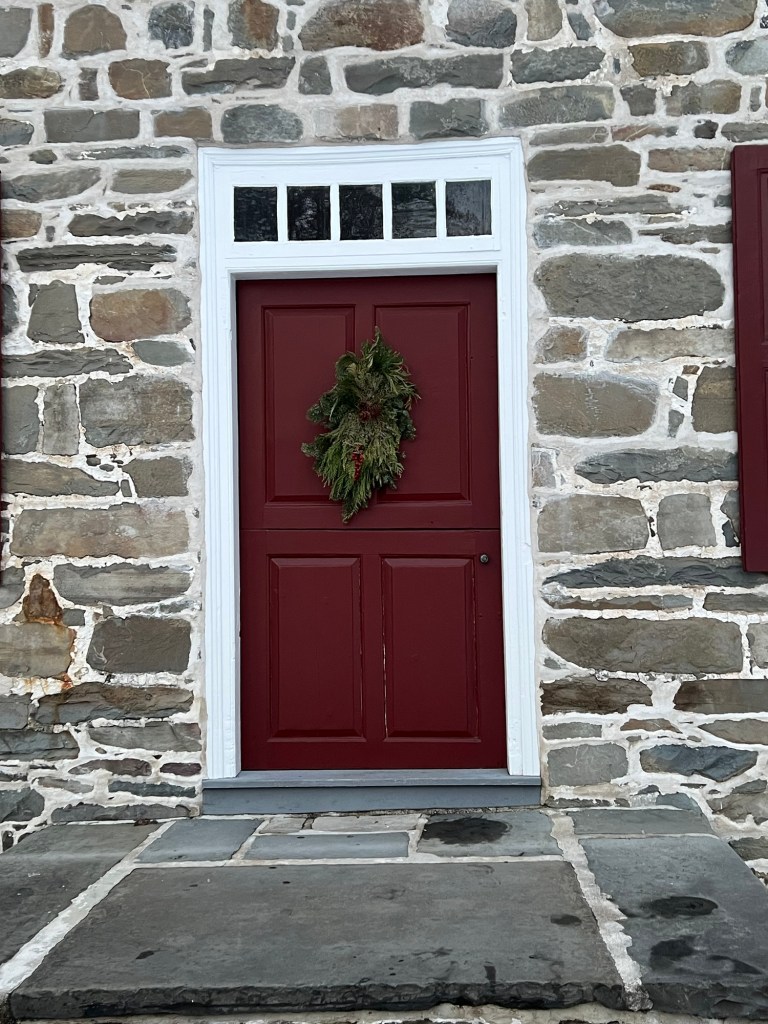
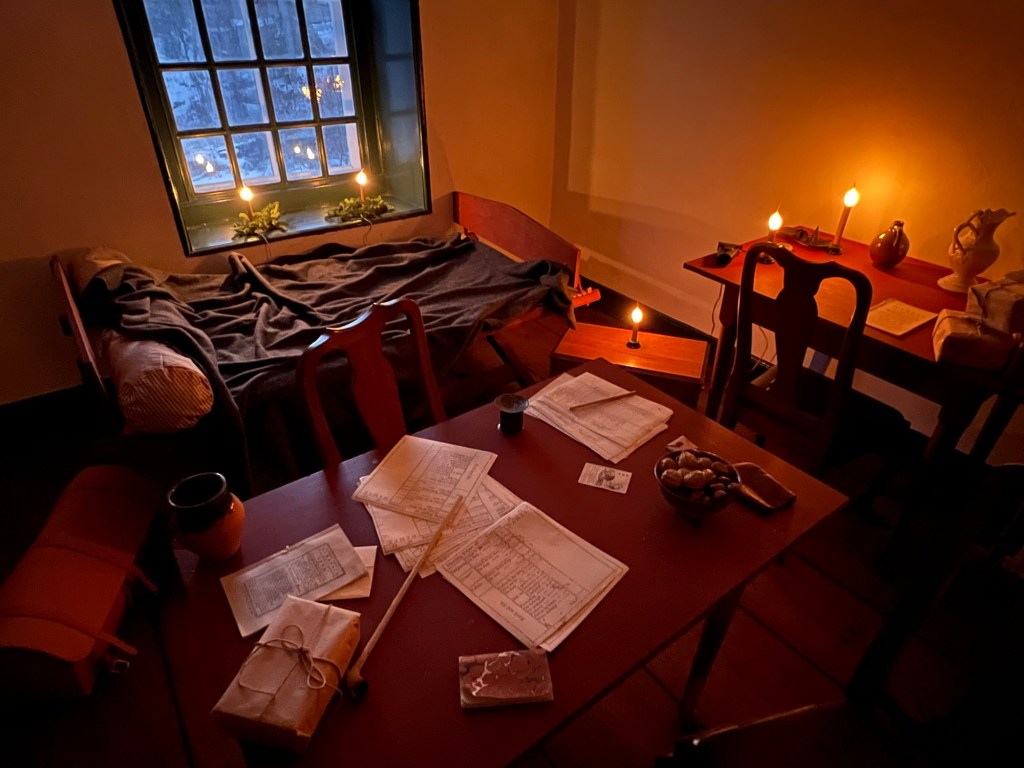
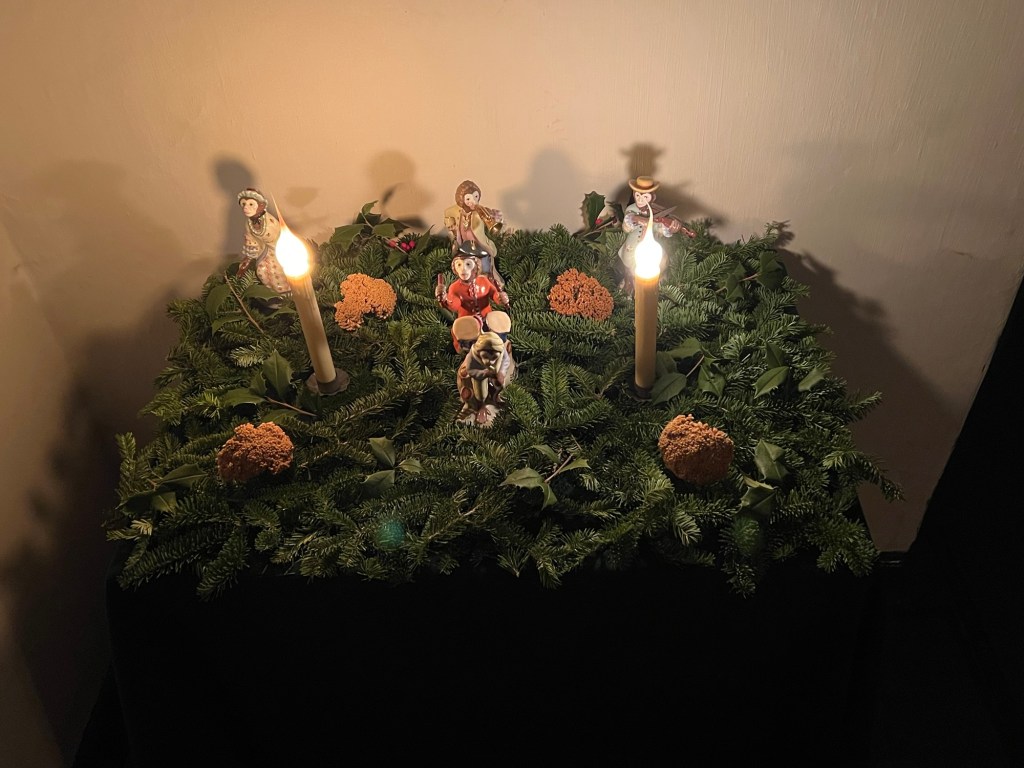
The house was decorated for a Colonial Christmas during the war years

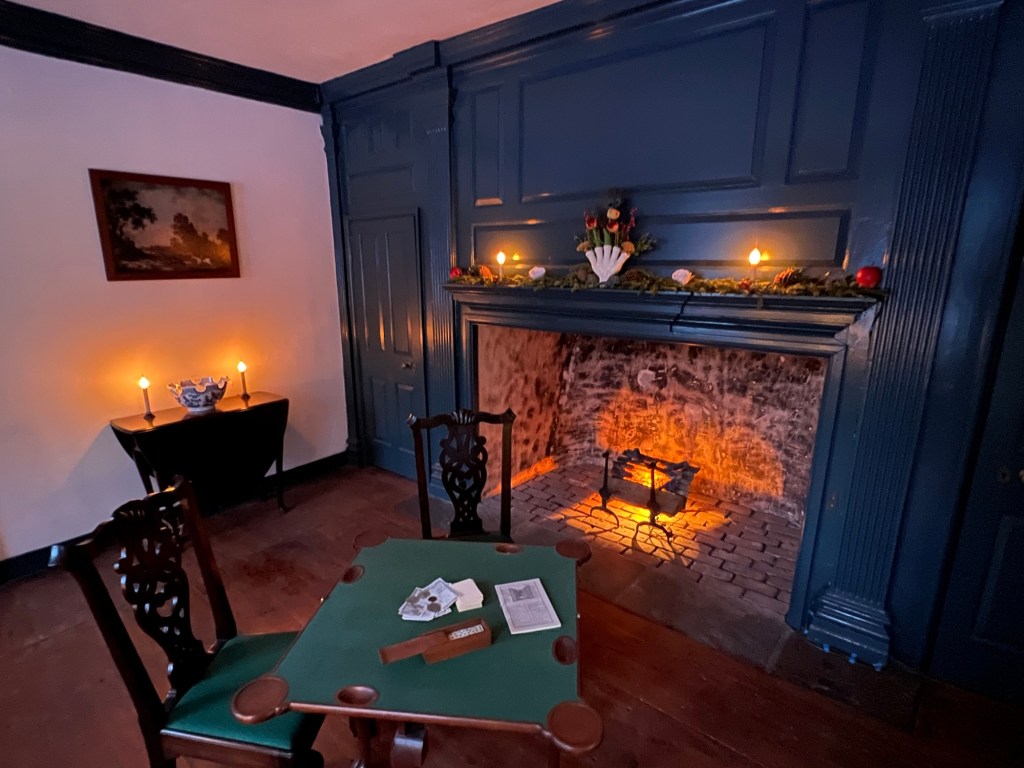
The Officers used the Living Room as an office and for entertainment

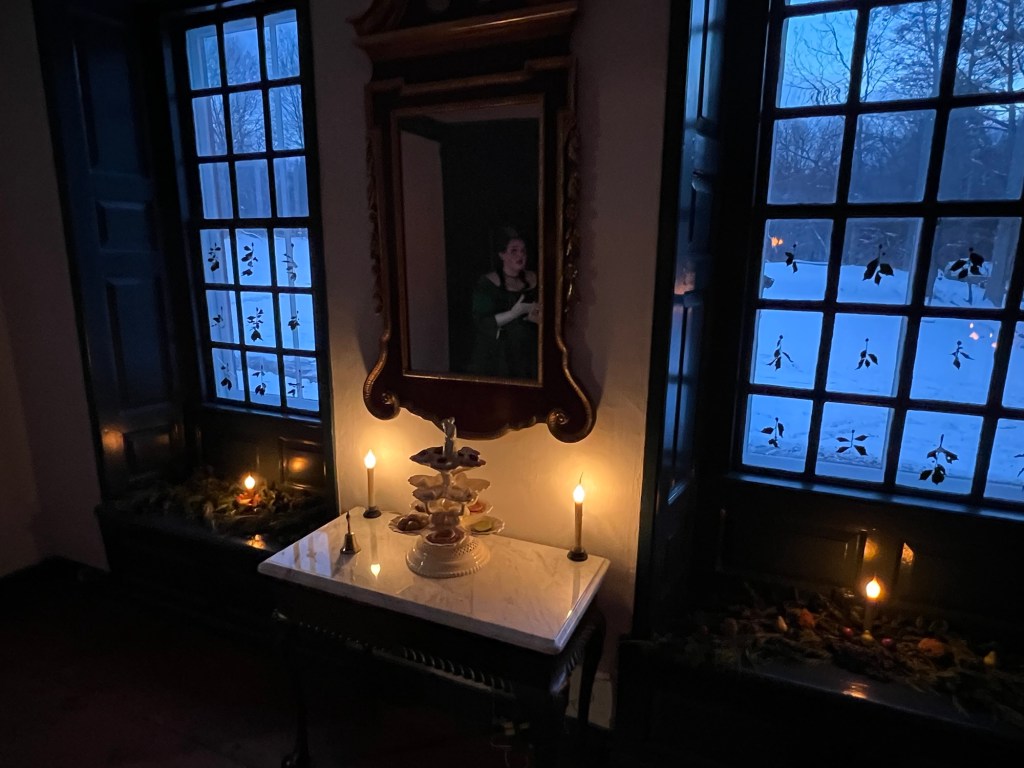
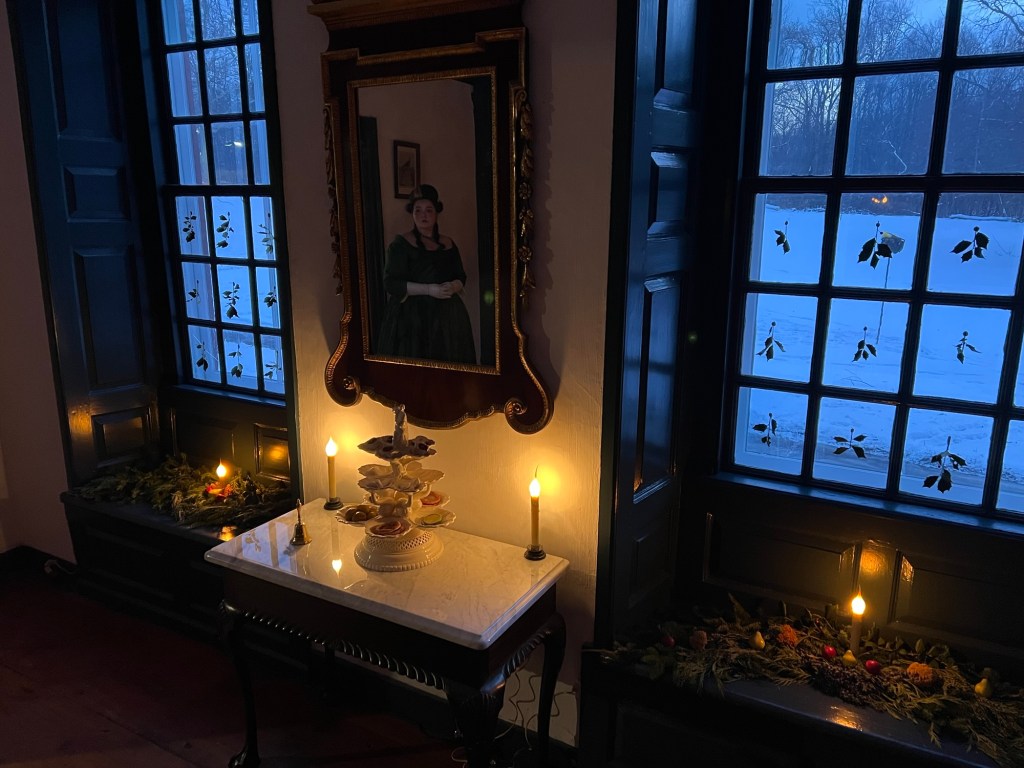
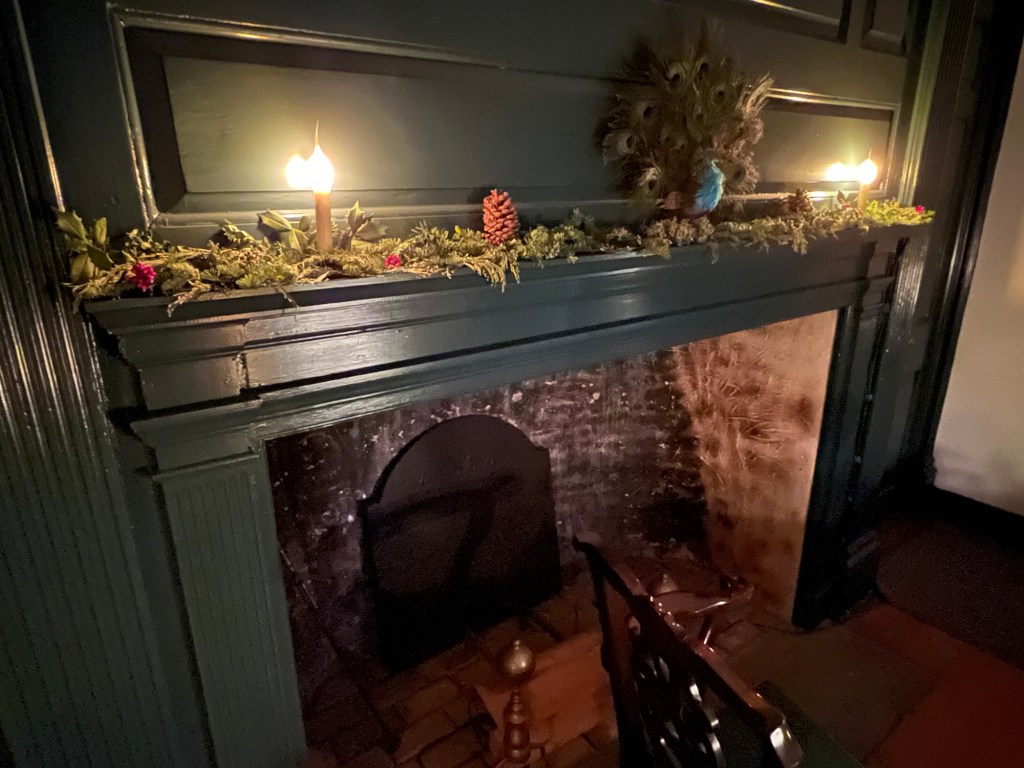
The hearth was beautifully decorated with garland and dried fruits

The mistress of the house talked and entertained me on my visit

The house had an eerie but festive feel about it that evening

The festive garland decorations in the Living Room

The decorations in both windows

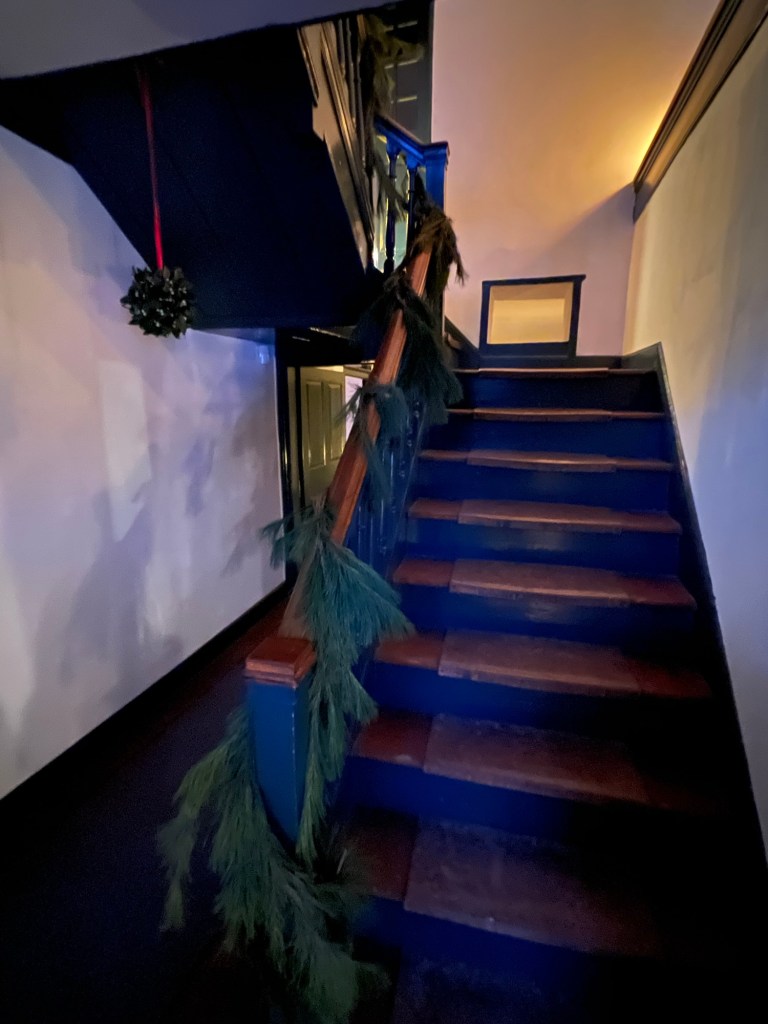
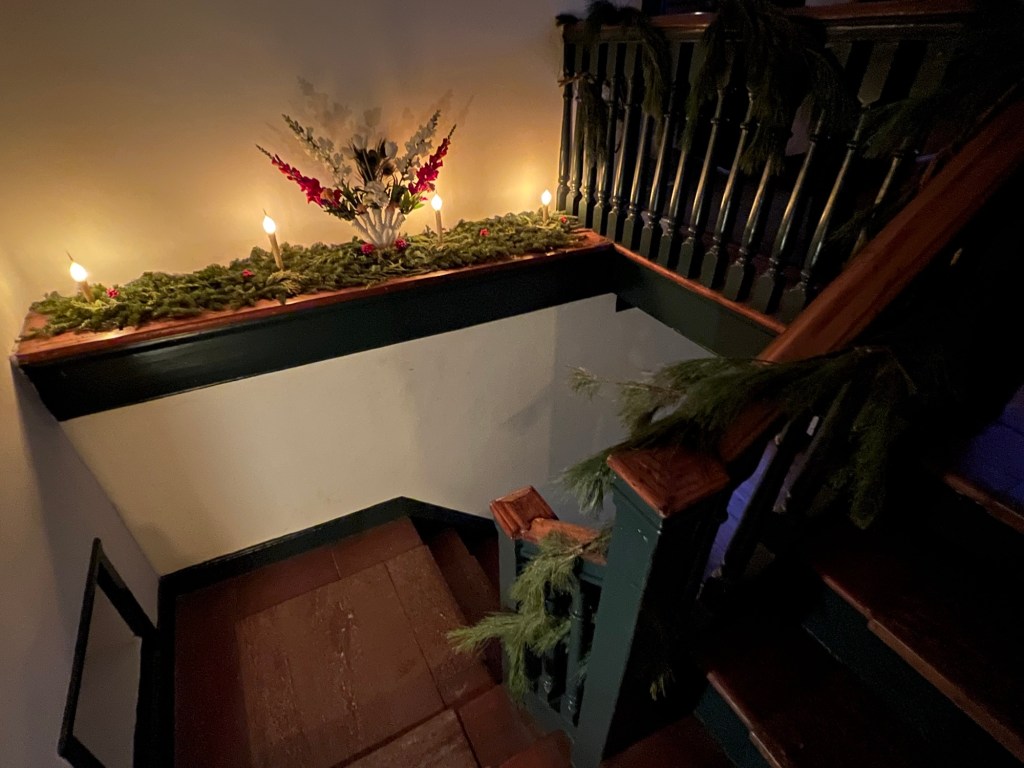
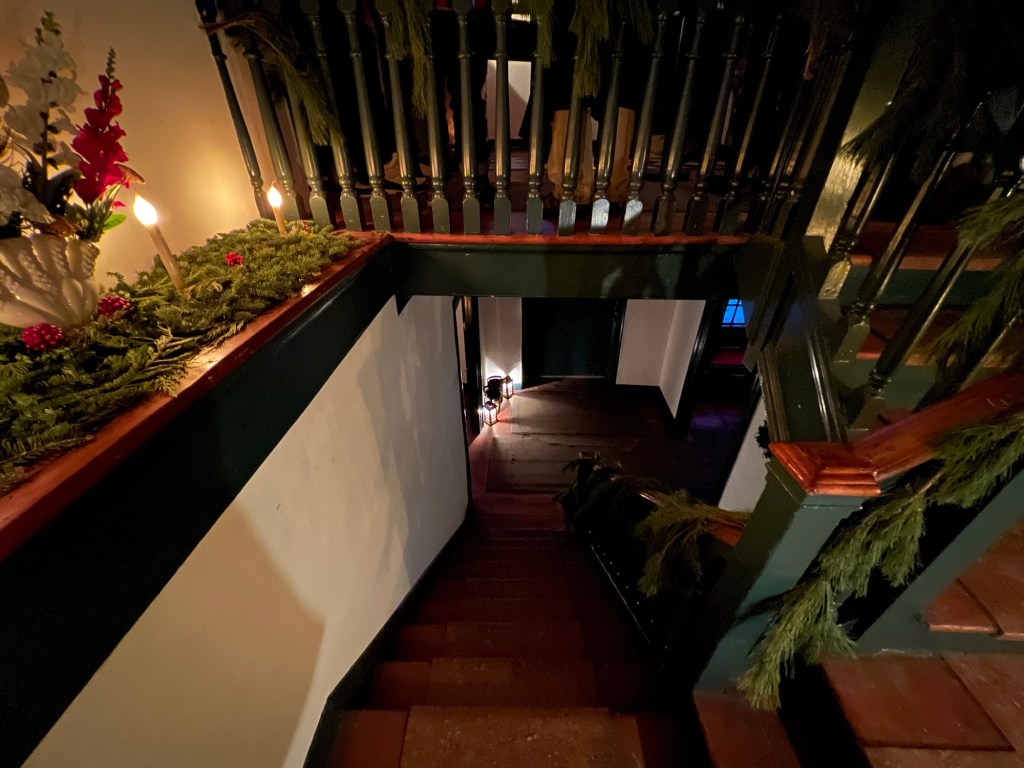
I passed the foyer where garland and misotle decorated the stairs

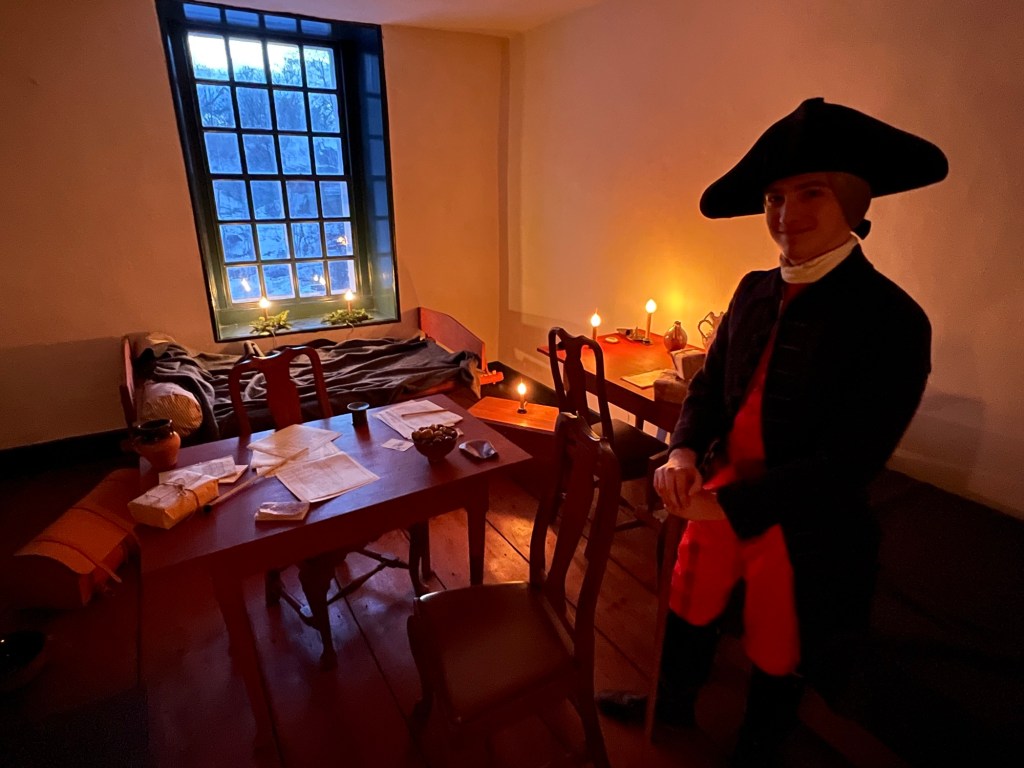
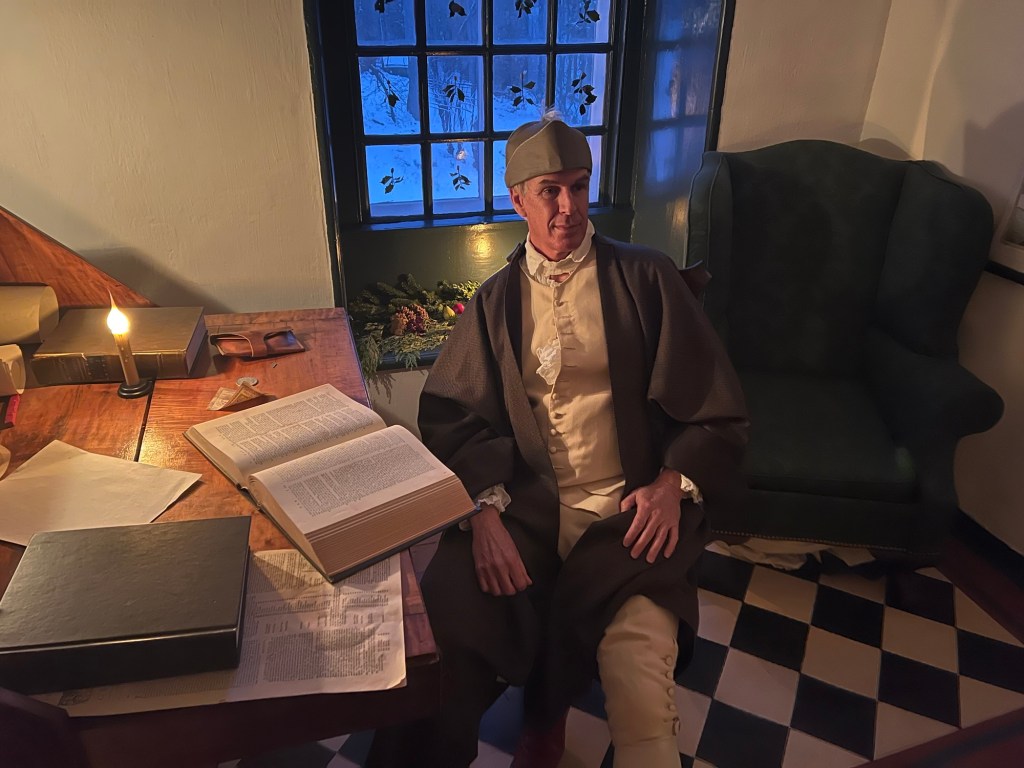
We were then entertained by visiting officers of the home in Mr. Ellison’s office who told us their stories of General Washington’s visit.

The Officers visit to visit the Generals

The office lit for a late night visit

The holiday decorations in the Office space

Then I took a trip upstairs where we were met by another officer who described the sleeping arrangements of both the Knox and Ellison families of this time of occupation.

The officers conversation with us

The decorations as we walked up the stairs

The bedroom decorated for the visit

The opposite bedroom used by the family

The staircase decorated for the holidays

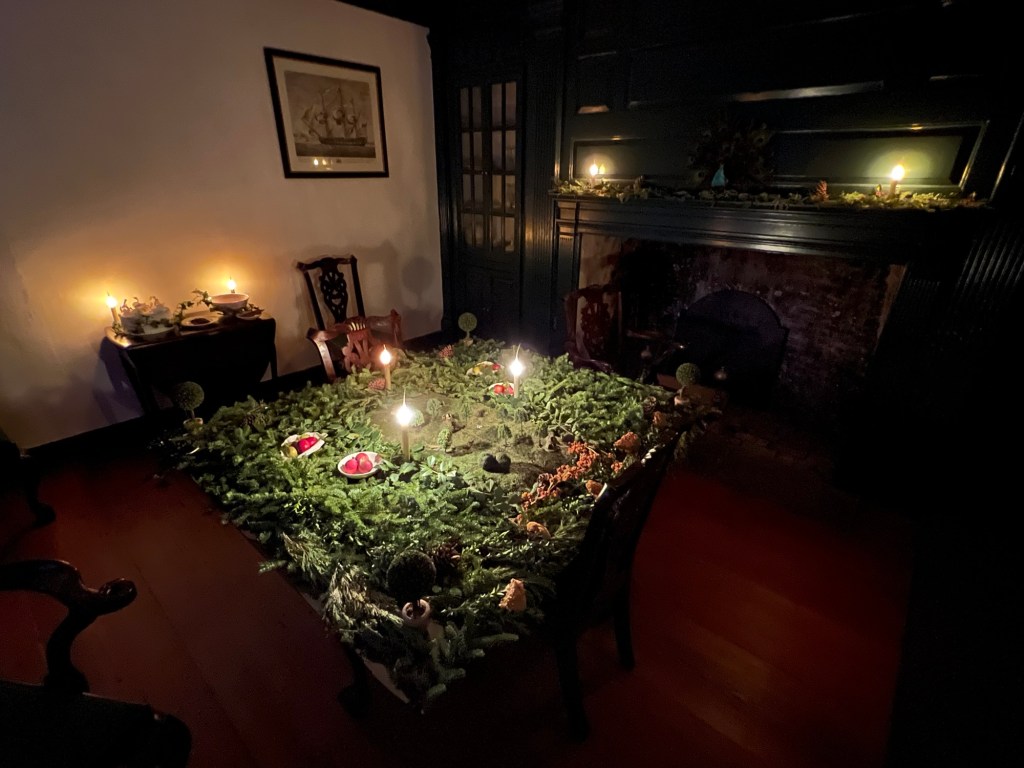
My last stop on the visit was to the Dining Room, where the last officer on the visit talked of Christmas dinner in the house during the war.

The officer explaining entertainment during the war

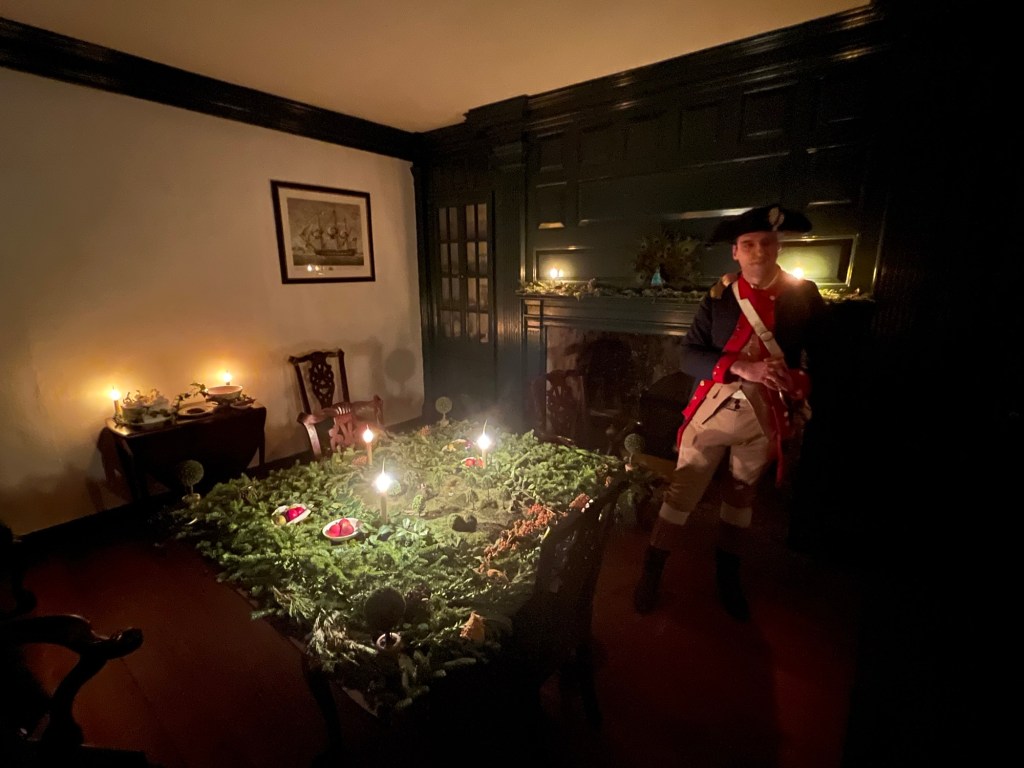
The Dining Room decorated for the Christmas holidays

The elaborate decorations in the room in the war years

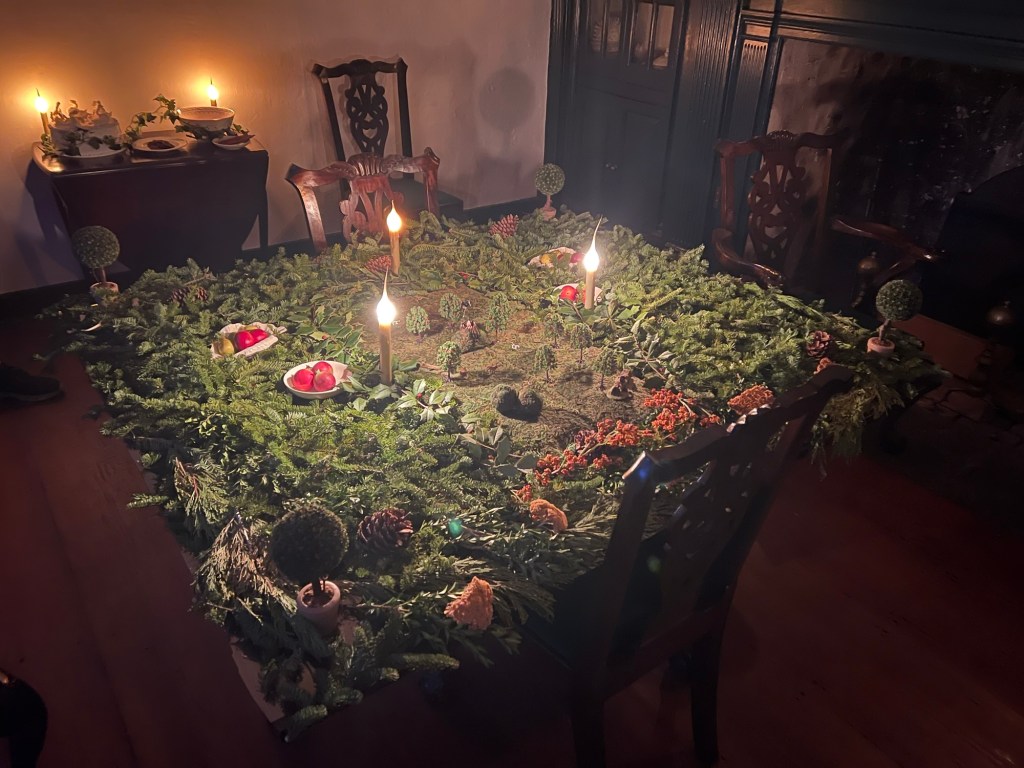
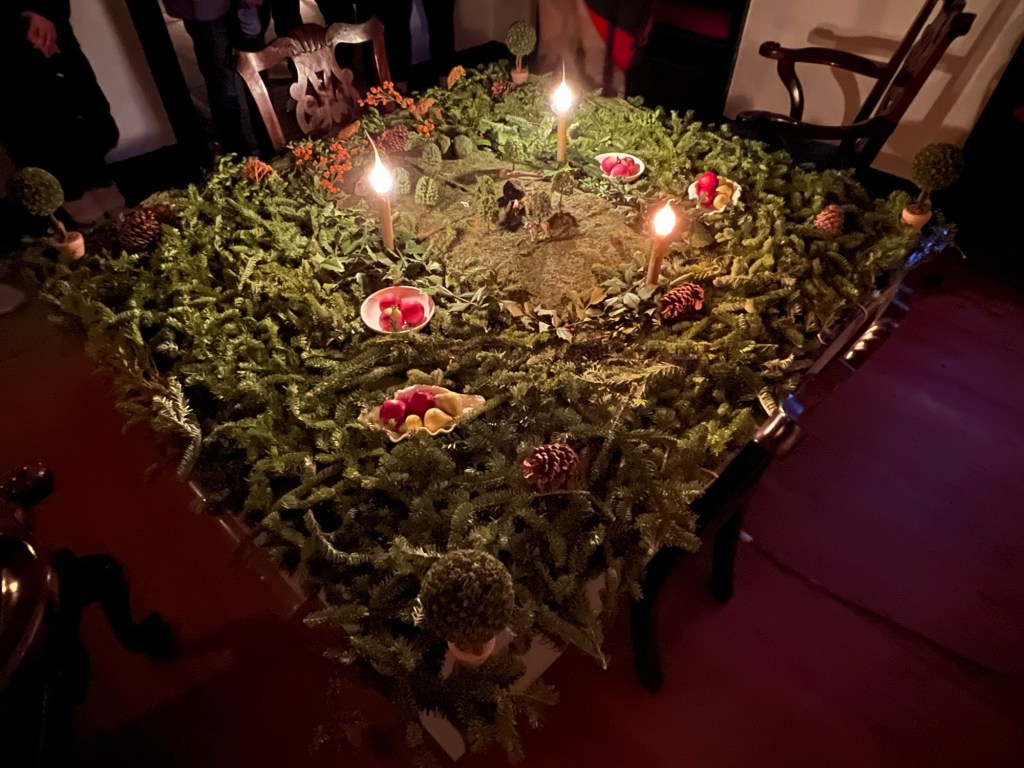
The creativity of the Dining Room table with the creative table decor

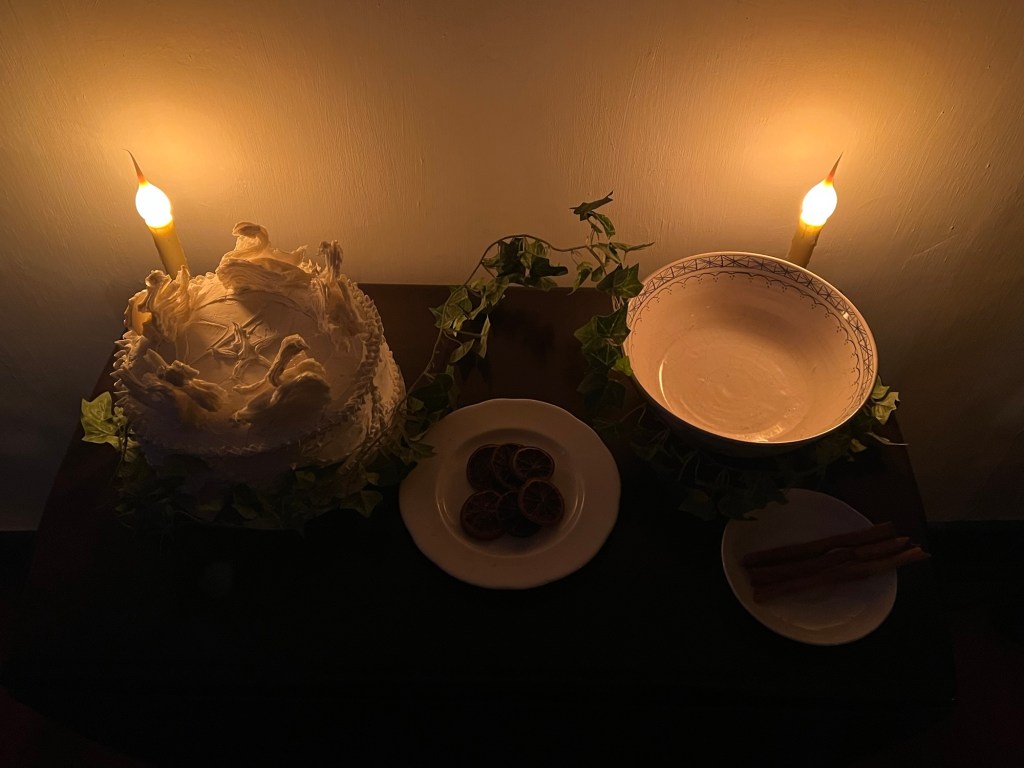
The elaborate holiday desserts

The officer explained entertainments during the war, the use of the elaborate decorations on the table and the foods that would have been eaten at the holidays. Plus, entertainment of a major officer would have been during the war years.

The garland and fruit decorations in the Fining room

The officer finished his talk on the holidays and then I left for the evening

The outside of the house with the torches lit to full extent

The fire outside to warm up

The officer outside looked so cold. Thank God he kept going inside to warm up

The house as I left for the evening

The torches as I left the property

The house from a distance

The glow of the house at the end of the evening

The event was wonderful and the enactment was fun but it got really cold outside at the end of the evening and by 6:00pm it got to be freezing. I left the estate and headed home . The Knox/ Ellison House closed for the season after this night.