The Hackensack Water Works building is closed for visiting and under renovation.
When I visited the day I went to see the Hackensack Water Works Building all you could see is the signs outside the building.
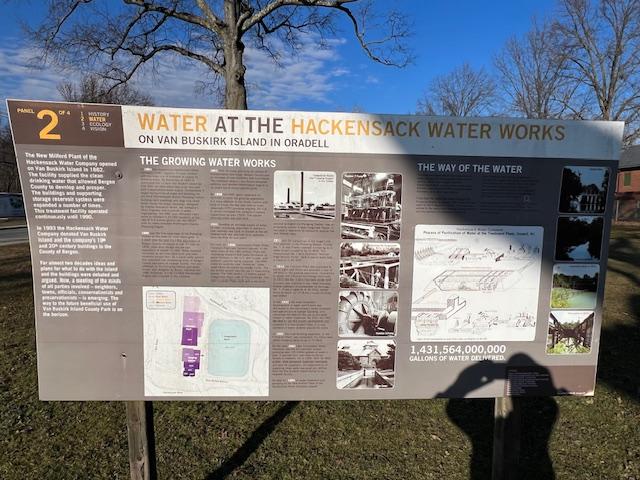
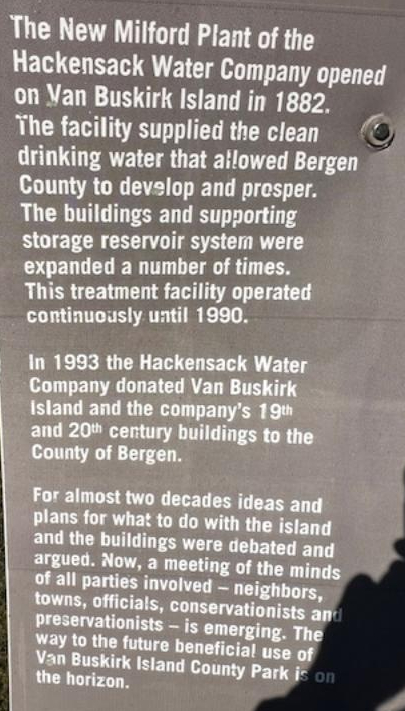
The information sign outside the Waterworks.
The layout of the pump station.
On an oxbow in the northern reaches of the Hackensack River is Oradell’s Van Buskirk Island, a man made island that did not exist until 1802. Created by the dams built for the local mills, this stretch of the Hackensack River was the highest point of navigable water on the river where schooners regularly carried goods to and from New York.
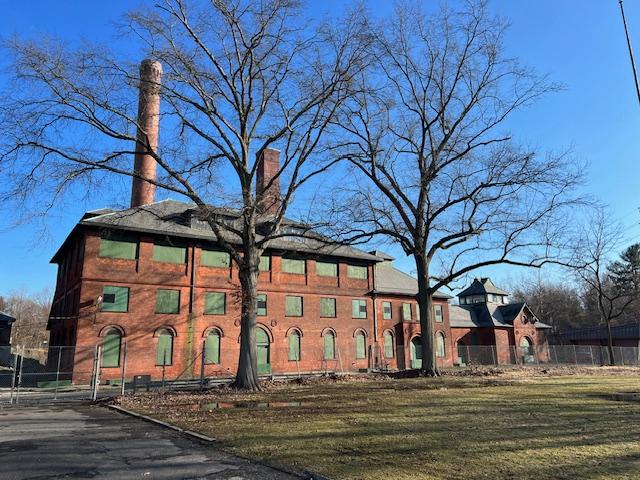
The Hackensack Water Works Building in full.
Now a part of the Bergen County Parks system, this almost 14 acre site contains the historic Romanesque brick buildings of the Hackensack Water Works. This is the oldest surviving representative of a water purification and delivery system from the late 19th and early 20th century period, crucial to the development of a modern, safe water supply that was critical to turn of the century metropolitan and suburban growth.
The Pump Station right side.
The left side of the Pump Station.
The Hackensack Water Works, in continuous operation from 1882 to 1990 is a rare example of later 19th and early 20th century water works architecture and engineering. The historic buildings include the 1882 Pumping Station, expanding five times from 1886-1911 and innovative 1905 Filtration House, expanded in 1912 and 1955. The Pumping Station contains a unique collection of steam pumping equipment representing over four decades of development of steam technology in the early 20th century, including a 1911 Allis Chalmers Vertical Triple Expansion Pump and a 1915 Allis Chalmers Centrifugal Pump. The plant also contains the 1905 coagulation basin and gatehouse and the 1911 intake and waste gates.
The inside of the Hackensack Water Works
This Bergen County Historic Site with its open space and park like setting is a living 100 year old timeline of technology from steam to electricity as well as a river site that represents the evolution of Bergen County from its pre-Revolutionary War saw and grist mills to the creation of pioneering water filtration technology so vital to the 20th Century development of towns and cities all over America. Not open to the public at this time.
The Bergen County Division of Cultural and Historic Affairs
The Bergen County Division of Cultural & Historic Affairs received an operating support grant from the New Jersey Historical Commission, a division of the Department of State.
Disclaimer: This information was taken directly from the Bergen County Division of Cultural and Historic Affairs handout. Please call the above number or email them for more information.
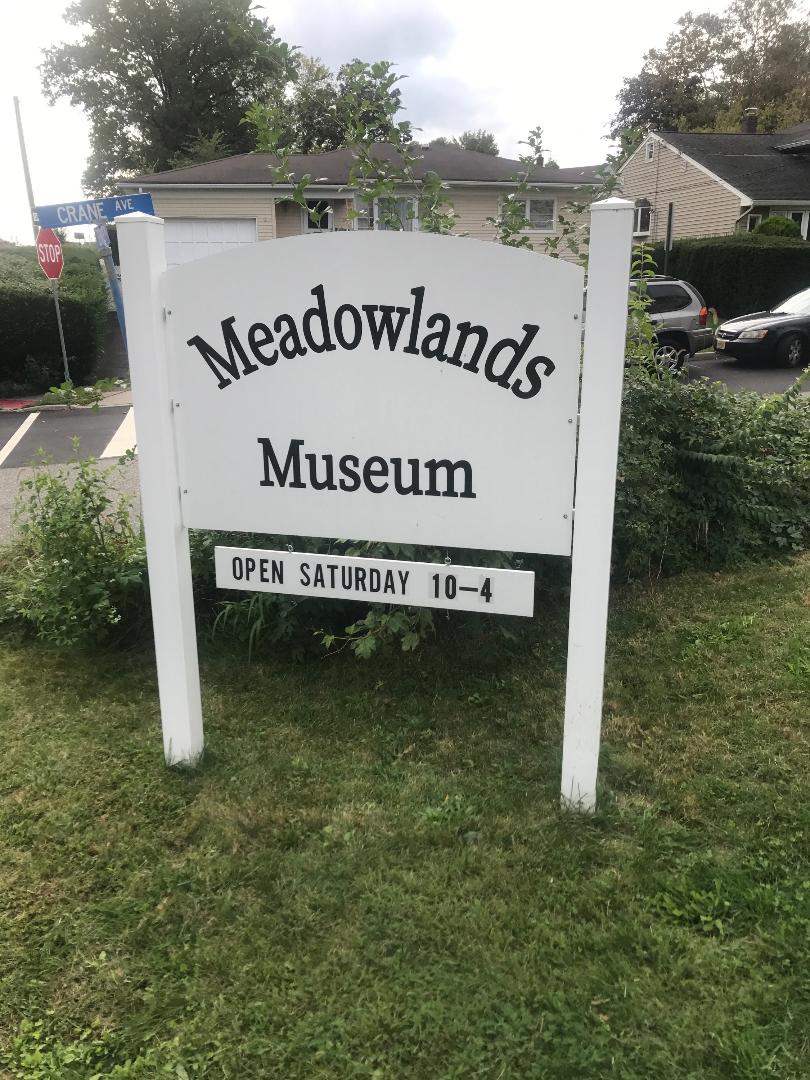
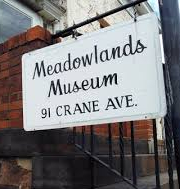
The Meadowlands Museum is the main steward of the history and culture of the Meadowlands region and one of its leading storyteller.
Its mission and collection, which resides in the Yereance-Berry House in southern Bergen County in Rutherford, NJ are distinctive and unique. The house too is a historic treasure and landmark and was built in 1804 by the Berry family, who were among the county’s earliest European settlers.
Rooms in the three-level American Dutch farmhouse are alive with permanent and temporary exhibits and sometimes include loaned objects from other museums and private collections. Historical artifacts like archives and photographs are mingled with textiles, furniture, housewares and artwork. There is even correspondence by the daughters of John Rutherfurd, a close confidant of George Washington. Grounds include the William Carlos Williams Poetry Garden, which acknowledges the legacy of Rutherford’s most famous native and the town’s history as a cultural center.
The everyday products of the Meadowlands Museum
Founder in 1961 as the Rutherford Junior Museum by parents of school age children to help connect them to their community, the museum is staffed by professionals assisted by dedicated volunteers and involved trustees. Interns add to the rich resource of individuals who contribute to its present and future.
A recent commercial developed by my Business 101 Class for the Meadowlands Museum for the project “Rocking it in Rutherford: Being a Tourist in your own Town”
The location of the Yereance-Berry House suggests a colonial farm dating to 1740. The oldest house in south Bergen County in close to original condition, it was part of the Historic American Building Survey project of the 1930’s. The building is also listed on the state and national registers of historic places and the Bergen County Stone House Survey.
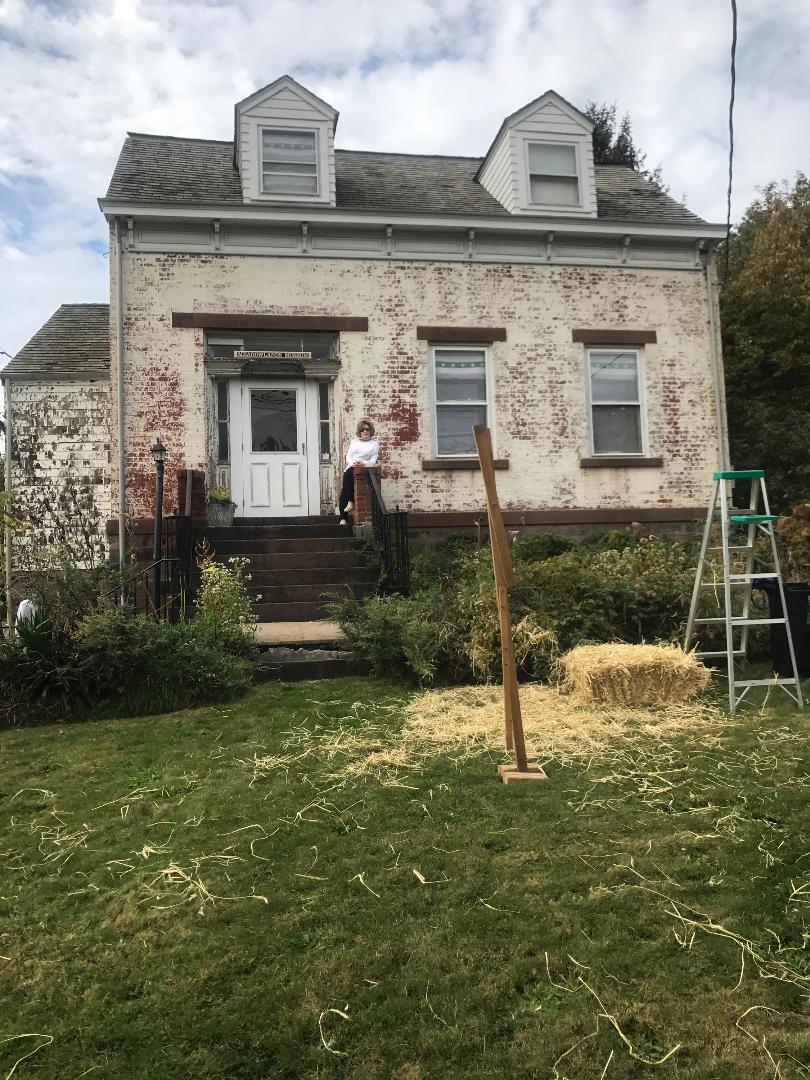
The Yereance-Berry House is the now the Meadowlands Museum
Affiliated organization include the American Alliance of Museums, American Association for State and Local History, Meadowlands Regional Chamber of Commerce, New Jersey Association of Museums and The National Trust for Historic Preservation.
Programming & Community Service:
Free and reasonably priced services for individuals, community groups, businesses, government bodies and educational institutions are available.
*Educational programs, lectures and traveling exhibits.
*Customized on and off site programs.
*Collaborative ventures with a wide range of partners.
*Assistance with academic research and other archival support.
Special Events:
Special events, which often are made possible by partnerships with businesses and other organizations, are an additional way for visitors of all ages to enjoy the museum. Public and private events occur on a regular or one-time basis; many are fundraisers. Call or email for a current calendar and sponsorship possibilities. The house hosts both permanent and special exhibits.
Our permanent exhibits include:
*Yereance Berry House on Scarecrow Day:
*Pre-electric kitchen: This unique kitchen in the basement shows off the collection of equipment that would be used in the kitchen from the Civil War to the 1950’s. There are coffee grinders, whisks, wash boards and such. It showed how much effort was put into preparing the family meal through the ages.
The Farm Kitchen of Bergen County
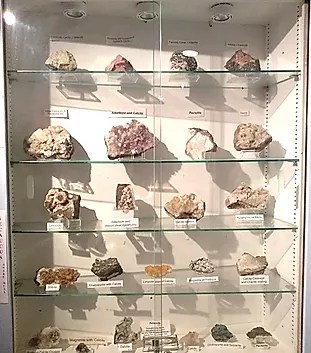
*Meadowlands Geology: there are all sorts of rocks and gems not just from the area but all over the state. There are two different rooms one of the specimens locally and there is a separate room for glowing stones. It is very interesting to see when the lights are out.
The Mineral Collection at the Meadowlands Museum
*Mining in South Bergen: This is how the county has changed when we mined ore.
The Mining Display at the Meadowlands Museum
*19th century Laundry Room: The Laundry room that is located in the basement has many of the things our grandparents would have used. The washboards, scrub bushes, old washing machines and ringers. Washing clothes was much harder back then.
*The wonderful Toy Exhibition of turn of the last century toys and from the 1960’s 70’s and 80’s. This contains Dolls, Board Games, play things and instruments:
The Toy Collection fascinates kids of all ages
The wonderful toy factory in Kearny, NJ that used to produce all these wonderful toys.
*Horse elevator
Recent special exhibits have included:
*High school football
*Needlecraft
*Steampunk
*Medical Innovations
*Maps of the region
*Civil Rights
*Dr. Williams’ Babies
*World War I
Special Events:
Scarecrow Day 2028
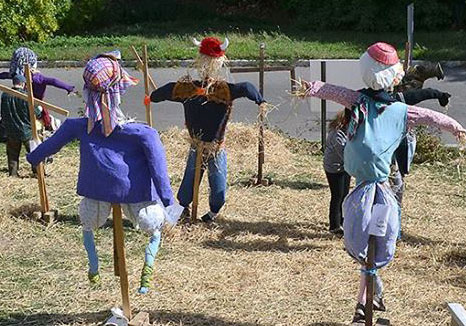
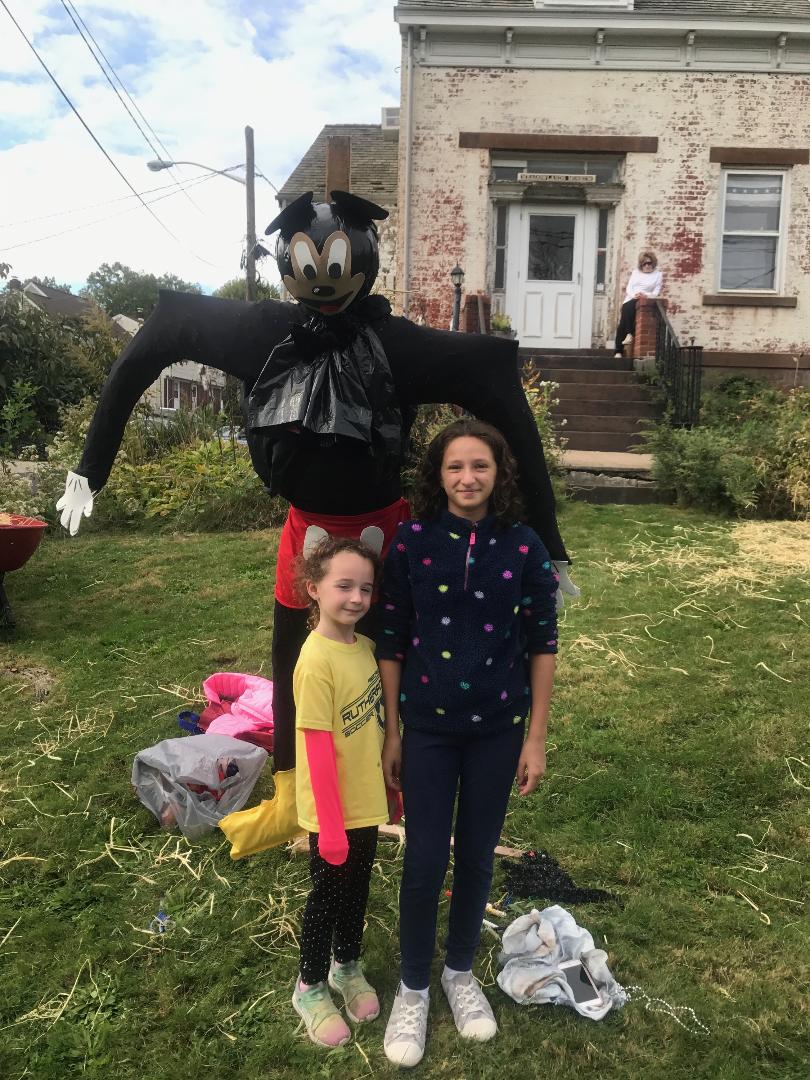
I went to the recent Scarecrow Day on October 20, 2018 where guests of the museum created their own scarecrows using their own creativity. All the scarecrows were lined up facing the street with their interesting clothes and accessories. Each person got to use their own clothes and each one had its own style to it. It was fun watching the families show their creativity at this annual event.
Scarecrow Day at the museum in 2018
Scarecrow Day in 2021: the winners of the contest for best Scarecrow
I also stopped by for the Dutch Christmas decorations. The museum was decorated for the holidays with garland and trees. On December 1st, they had a Dutch Christmas festival (I could not attend) with food and entertainment.
Help tell the story…
(from the museum website)
Individuals who value the purpose and work of the Meadowlands Museum remain its inspiration and abiding spirit. Donations, memberships, sponsorship’s, grants and fundraisers are crucial elements of the museum’s financial well-being.
Admission to the museum is free but donations are greatly appreciated. Fees for events and other services vary. A personal letter to the appropriate person acknowledges a gift made in the name of an individual. Donations to provide for the buildings and grounds are valuable links to the future and a kind of giving that is among the museum’s top priorities.
Disclaimer: This information was taken directly from the Meadowlands Museum’s pamphlet. For information on the site, please call or email the museum for more information.
Bergecco-Parc Consulting Inc.-Rocking it in Rutherford:
My Business 101 class at Bergen Community College Lyndhurst branch visit in the Spring of 2022 for the project “Rocking it in Rutherford: Be a Tourist in your own Town”.
For Spring Semester in 2022, my Business 101-Introduction to Business class made a weekend visit to the Meadowlands Museum for the project “Rocking it in Rutherford-Be a Tourist in your own Town”. We were promoting the museum to increase tourism with a fundraiser and a barbecue. So on the weekend, I took my Team to the museum to tour it for extra credit. They ended up learning a lot about not just the museum but the history of Rutherford and Bergen County, NJ.
The project was promoting the Town of Rutherford for Domestic and Foreign Tourism and created a fundraiser and modernization of displays for the museum. This is a copy of the project, presentation and Commercials.
The Team Project “Rocking it in Rutherford: Be a Tourist in your own Town”:
This interesting little ‘gem’ is located up on the hill next to Blauvelt Mansion and is easy to miss. You will see the signs as you drive past it.
Open: Wednesday, Thursday and Friday: 10:00am-4:00pm/Saturday and Sunday: 2:00pm-5:00pm
Fee: Free donations accepted
The Blauvelt Art Museum is funded by the Blauvelt-Demarest Foundation and is a member of the New Jersey Association of Museums, the Mid-Atlantic Association of Museums and the American Association of Museums.
The Blauvelt Art Museum was established in 1957 by the Blauvelt-Demarest Foundation, a legacy of the late Hiram Blauvelt, philanthropist, conservationist and collector. Through the contribution of his private wildlife art and big game collections, he hoped to promote the cultural value of wildlife art and the need for conservation of its subject and their habitats.
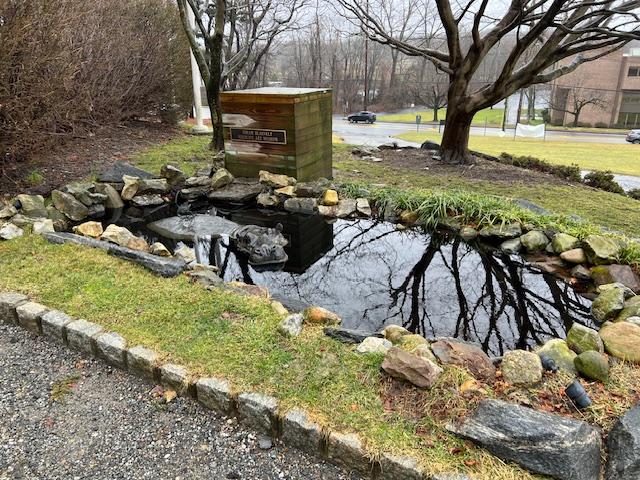
The fountain outside the museum
The entrance to the museum.
During the early part of the 20th Century, wildlife was believe to be abundant. Many dedicated conservationists, notable Theodore Roosevelt, gathered animals from their natural habitats for museums. The beauty of the animals could then be viewed by many.
The entrance to the museum.
Like Roosevelt, Hiram Blauvelt realized the value of his collection and wanted to share it with the public. It was his interest and desire to share his far ranging adventures, his stories of explorations and his collection of these animals. Hiram hoped to educate the coming generations to the diversity and beauty of the wildlife kingdom. He especially wanted to enlighten the public to the challenges we face to preserve the marvels of wildlife and their natural environments.
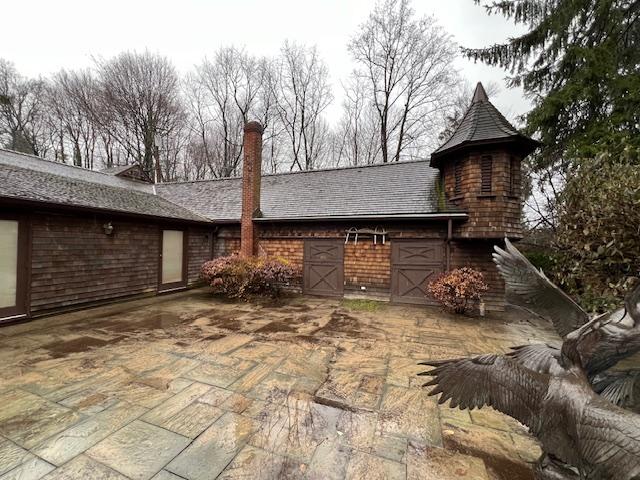
The interesting artwork by the carriage house of pelicans.
The Pelican art outside the museum.
Founded in 1957 as a natural history museum, it introduced students, scouts and youth groups to the need to support wildlife and habitats conservation. Visiting artists created drawings and paintings from close observations of the specimens.
Embracing Penguins outside the museum dedicated to Wildlife Art.
Twenty-five years later, the Board of Directors of the Blauvelt-Demarest Foundation decided that the original objectives would be best achieved by redesigning the museum to feature the works of contemporary wildlife artists, built on the artistic foundation of the Blauvelt’s early collection of works by Charles Livingston Bull (notably a resident of Oradell at one time), Carl Rungius and a complete Audubon Folio of birds of America.
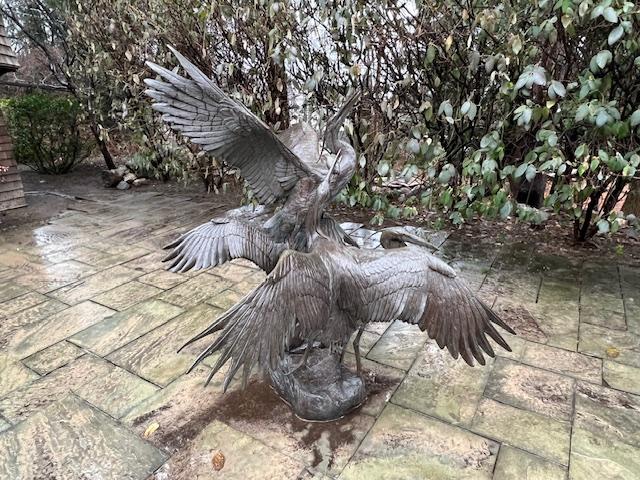
The interesting wildlife artwork just outside the museum.
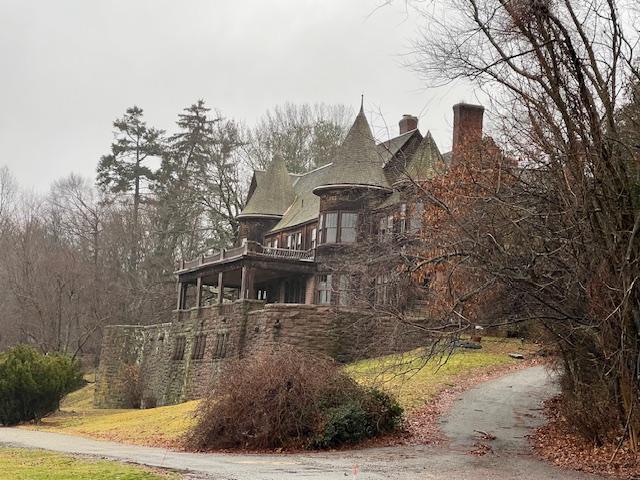
The Blauvelt Museum, located in an 1893 cedar shingle and turret carriage house, underwent extensive renovations to accommodate its new and expanded mission. The original carriage house was re-designed to include a large reception area, 4 mini galleries and museum offices, all with original materials from the historic building and preserving its aura.
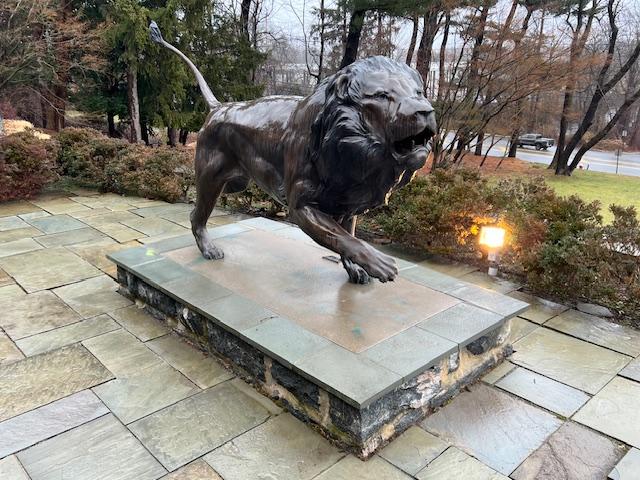
The Blauvelt Art Museum lion statue “Fides et Virtus” by artist Aaron Yount outside the museum.
Four new galleries were added, providing wall space for mounting museum quality flatwork and generous room for pedestals to hold creative sculpture. Substantial artificial lighting is augmented by natural light from the north.
High on a hill overlooking the Hackensack River, the Oradell Reservoir and parklands to the east, the entrance to the museum is through a curving stone and slate terrace, framed by large oak trees and other indigenous foliage, which serves as a natural sculpture garden.
The open air museum just outside the museum itself dedicated to wildlife art.
Many of its visitors today, accompanied by their children, are revisiting the museum which they first visited with their parents in past decades. The Blauvelt treasures their comments remarking on the greater beauties of its collections, while preserving the ambiance of their memories.
The inside galleries of the museum (from their Facebook page).
Artist in Residence:
The Blauvelt Art Museum established an Artist-in-Residence program in 1985. Artists were selected on the basis of their artistic ability and promise and on their commitment to the museum’s mission for the need for conservation to protect wildlife and their habitats. The museum provides a furnished home for the artist on the museum property, including a studio, painting supplies, etc. Artist-in-Residence have given lectures, led round table discussions, visited schools and demonstrated painting and drawing techniques.
The Carriage House from the outside.
The Current Exhibition (2018):
Artist Brian Jarvi’s African Menagerie is showing right now and the collection has some very interesting and detailed pieces on Mr. Jarvi’s visits to Africa. Don’t miss this exhibition!
The Blauvelt Museum is on the Blauvelt-Demarest Estate.
Disclaimer: This information was take directly from the pamphlet provided by the Blauvelt Art Museum. Please call the museum for any changes to their time schedule and don’t miss the current exhibition.
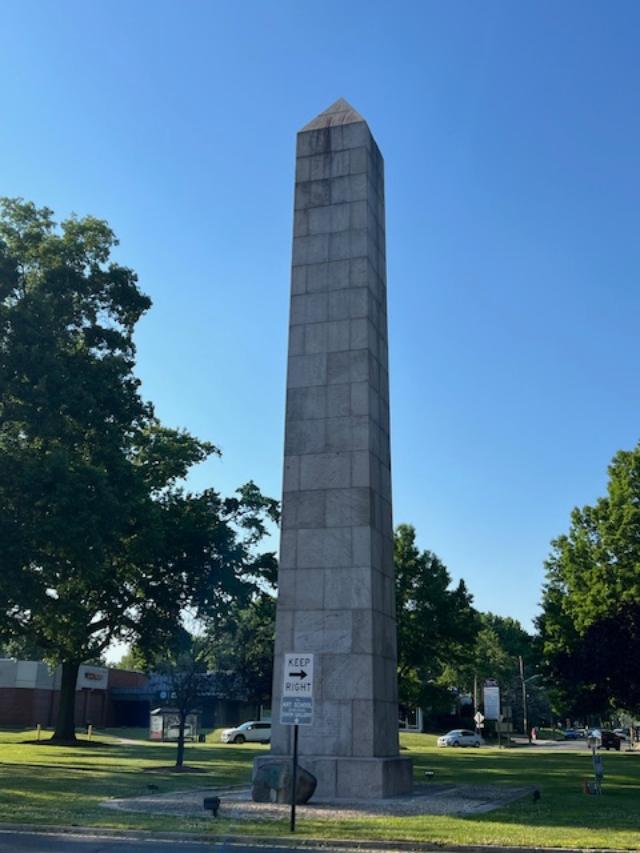
Camp Merritt Memorial Monument marks the center of an important World War I embarkation camp, where more than one million U.S. soldiers passed through on their way to and from the battlefields of Europe.
The Front of the Camp Merritt Memorial Site
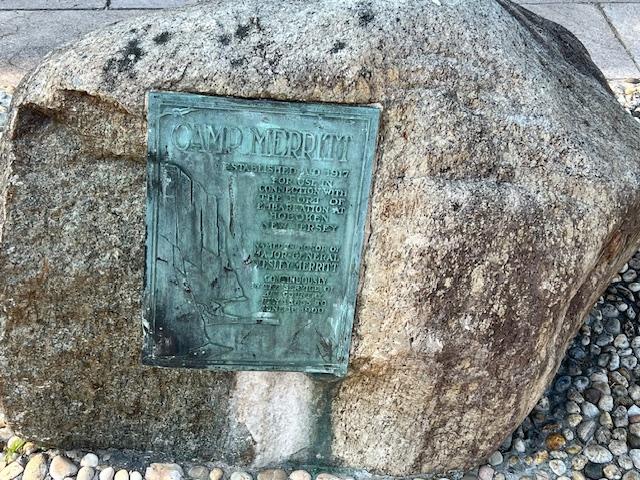
The inscription on the memorial
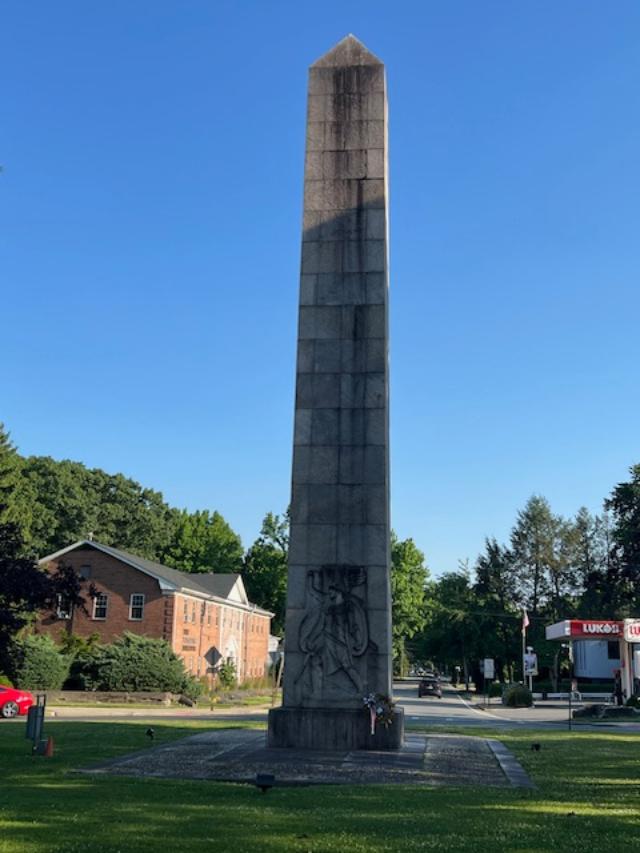
In August 1919, the Bergen County Freeholders purchased land for the monument from what was the approximate center of the camp at the intersection of Madison Avenue and Knickerbocker Road in Cresskill. In 1922, work on the shaft commenced. Modeled on the Washington Monument, the memorial is a 65′ high granite obelisk. On the base are the names of the 578 people who died in the camp, mostly as a result of the 1918 worldwide influenza epidemic.
The historic memorial facing the circle lawn
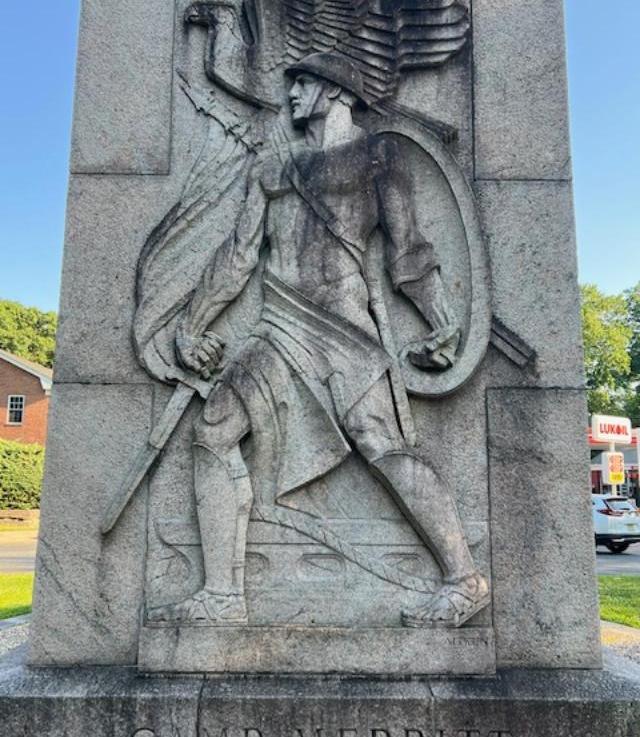
A large Art Deco style carved relief by the sculptor Robert Ingeroll Aitkin (1878-1949) shows a striding “doughboy” with an eagle flying overhead. Set into a large boulder is a copper plaque with a relief of the Palisades, illustrating that Camp Merritt was used as an area for embarkation, designed and made by the local artist Katherine Lamb Tait. In the ground is a three dimensional stone carving of the map of Camp Merritt.
Artist Robert Ingeroll Aitkin was an American born artist who studied at the California School of Design. He was known for his historical sculptures (Wiki).
The “Doughboy” on the back of the memorial
The troops training at the site during WWI
The Camp Merritt Monument was dedicated on May 30, 1924 by a number of state and federal dignitaries. General John J. “Black Jack” Pershing gave the dedicatory address to a crowd of 20,000 people. Camp Merritt, located midway between Cresskill and Dumont and 12 miles from Hoboken, received its first soldiers in October 1917. Originally called Camp Tenafly”, and covering an area that included Cresskill, Demarest, Dumont, Haworth and Tenafly, it was eventually named for General Wesley Merritt, a gallant Civil War officer who was in the service of his country from 1855 to 1900.
The historic marker sits before the memorial
Little publicity surrounded the camp as it was deemed vitally important to keep troop movements a secret. The soldiers would march with their heavy packs and supplies to the trains or over the Palisades to the Hudson River to board boats that would take them to their European-bound ships docked in Hoboken. The last soldier passed through in the beginning of 1920.
The map of the camp behind the memorial
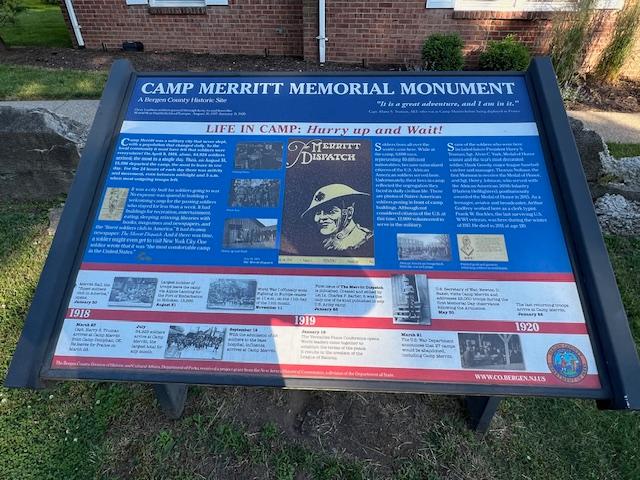
The camp was 770 acres in size and had a capacity of 42,000 men (two thousand of them officers). It was strategically built near major rail lines, facilitating the transport of soldiers to the camp. It contained 1300 buildings of all varieties. The base hospital alone was composed of 93 buildings. A staff of 300 nurses treated 55,000 sick men. 8000 men representing 40 different nationalities were nationalized in the Camp and made citizens of the US. Camp Merritt had its own newspaper, the Merritt Dispatch established and edited by Charles Philip Barber, which was the only printed record of the camp’s activities. The editor and staff of the Merritt Dispatch were the first to promote the idea of the monument.
Another view of the back of the memorial
After the camp was sold, it suffered three suspicious fires while the buildings were idle, each one worse than the last. The second fire in March of 1921 destroyed a hundred buildings. The third fire was the most spectacular, destroying almost all of what was left of the camp and detonating two stores of dynamite that had been stored for demolition purposes. Eighteen fire companies (including three from New York City, which came by way of the Dyckman Street Ferry) struggled to prevent the fires from spreading to adjacent homes. Other fire companies came from Tenafly, Closter, Bergenfield, Cresskill, Demarest, Teaneck, Hackensack and Palisades.
The Monument is located on the traffic circle and can be reached by foot and is illuminated at night.
The signs from around the circle describing the site:
Sign One:
Sign Two:
Sign Three:
Sign Four:
The closing of the site and purchase from Bergen County, NJ for development.
2015 Bergen County Division of Cultural and Historic Affairs
Disclaimer: This information was taken directly from a pamphlet from The Bergen County Division of Cultural Affairs & Historic Affairs in Bergen County, New Jersey. You must stop off on one of the side streets to see the monument and the information boards on the site are off to the west side of the circle. Try to walk around the monument on the circle itself to see the most detail.












 blauveltartmuseum.com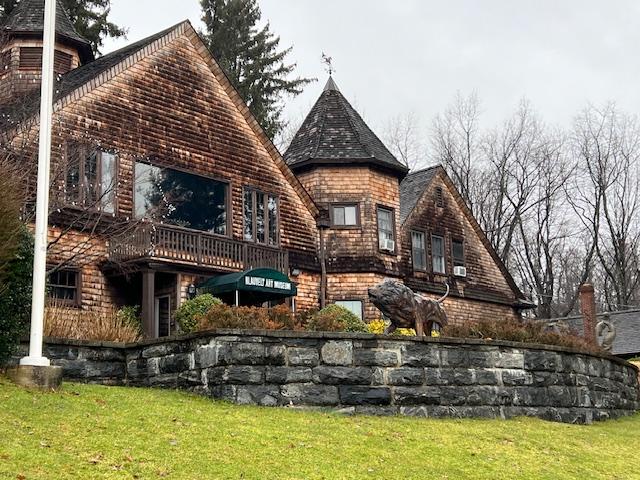













 Visiting a Museum: The Unique, Unusual, Obscure and Historical