A trip to Paterson, NJ to see the Great Falls is an experience. Surrounded by the old mill buildings that once powered the Silk Industry that made Paterson world renowned, the Falls has been turned into a part of the National Park Service.
The renovation has now been completed that includes new landscaping and a large parking lot. The surrounding park is as impressive as the Falls.
The information sign by the falls
When walking the park, it is breathtaking to see how the Passaic River approaches the drop and then the water hitting the bottom of the cliffs. It is an impressive site of the how the Ice Age still plays a role in ‘Mother Nature’ in current times.
Take time to walk through the park and travel over the bridges and through the landscaped parks to see the Falls through all angles. It is a spectacular park that does not get the credit it deserves. Paterson, NJ still has its issues but it does have a lot of gems too.
History of the Falls-The Formation and early history:
Geologically, the falls were formed at the end of the last Ice Age approximately 13,000 years ago. Formerly the Passaic River had followed a shorter course through the Watchung Mountains near present-day Summit. As the glacier receded, the river’s previous course was blocked by a newly formed moraine. A large lake, called Glacial Lake Passaic, formed behind the Watchung’s.
The Falls in the Summer
As the ice receded, the river found a new circuitous route around the north end of the Watchungs, carving the spectacular falls through the underlying basalt, which was formed approximately 200 millions years ago. The Falls later became the site of a habitation for Lenape Native Americans, who called this homeland, ‘Acquackanonk’ and later for Dutch settlers in the 1690’s (Wiki).
History of Powering a Free Economy:
The history and power of the Falls
The Great Fall of the Passaic River drove the imagination of a young Alexander Hamilton to harness the power of water to manufacturer goods in the United States. The story of Paterson and the Great Falls is on of national importance. Here in 1792, Hamilton founded America’s first planned city of industry and innovation, helping to spur what would become the world’s largest and most productive economy (US Parks.org).
After the Revolutionary War, Hamilton, the first Secretary of the Treasury, knew this country needed to be economically independent. He led the founding of Paterson and the Society for Establishing Useful Manufacturers (S.U.M.), New Jersey’s first corporation.
The S.U.M. constructed America’s first multitiered waterpower system to attract entrepreneurs and workers who would manufacture goods and develop new inventions. A system of water channels or raceways, the most significant power system of the day, diverted water from the Passaic River above the falls to mills along its route (US Parks.org).
The old Power Plant at the Paterson Falls
Paterson became the manufacturing hub for locomotives, textiles, silk finishing and dyeing, machines tools, paper, sailcloth, twine and airplane engines. By the mid-1800’s, the city was home to the largest producers of locomotives in this country and nearly half of the nation’s silk trade, earning Paterson the nickname “Silk City”. Paterson is also the birthplace of the Colt Revolver and the prototype for the first operable submarine (US Parks.org).
The formation of the Falls
The S.U.M. fulfilled the vision of its founder for more than 150 years, moving the United States from an agrarian, slave-based economy to one based in industry and freedom. Paterson attracted successive waves of immigrant entrepreneurs, skilled craftsmen and workers, the ‘diversity of talents’ Hamilton had hoped would be drawn to America. Immigrants still settle here to pursue their ‘American Dream’ and to weave their threads into the storied fabric of Silk City (US Parks.org).
Visiting Paterson Great Falls:
Welcome to America’s first planned city of industry and innovation. Begin your visit at Overlook Park. View the iconic Great Falls and a monument to Paterson’s founder, Alexander Hamilton. Cross McBride Avenue to the Welcome Center where you can visit the facilities, purchase a gift and learn about tours and programs.
The beauty of the Falls
To get a close look at the river that powered Paterson to prominence, follow the path behind the hydroelectric plant over the Passaic footbridge to Mary Ellen Kramer Park. From there you can peek into Hinchliffe Stadium, one of the few remaining stadiums that hosted Negro League Baseball.
Come back across the river, follow the short loop trail along Upper Raceway Park, ending at the Ivanhoe Wheelhouse. Walk across Spruce Street and visit the Paterson Museum, a park partner.
Exhibits include textile machinery, the first Colt firearms, steam locomotives and the first prototype of a submarine.
Regularly scheduled guided tours of the park are available during the summer season. From fall through late spring, reservations are required for all guided tours. You may also download a self-guided tour or smartphone app from our partner, the Hamilton Partnership at http://www.millmile.org.
Accessibility: We strive to make our facilities services and programs accessible to all. For information go to a visitor center, ask a ranger, call or check our website.
Firearms: For firearms regulations, check the park website.
Disclaimer: This information was taken from the National Parks Foundation pamphlet and I give the parks system full credit for the information. Please check out their blogs and website on the falls for more information on visiting the park. The parking lot is currently going through a renovation so call in advance of visiting the falls.
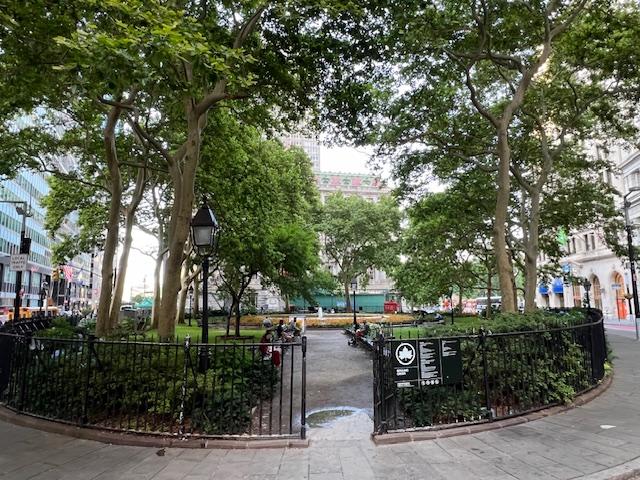
Bowling Green Park on the first day of summer 2024
I visited this wonderful park for my walking project, ‘MywalkinManhattan.com-Day 113-Walking the Historical Bars & Pubs of New York City’.
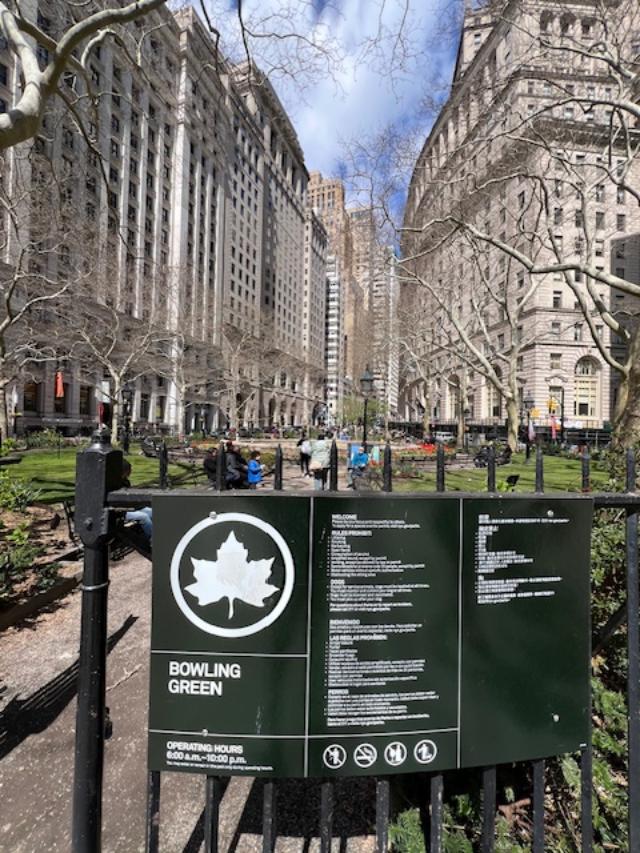
The entrance to the park.
This is one of the most fascinating parks in New York City and probably one the most historical in the shaping of the United States. Located on the grounds of the original Dutch settlement, this tiny park placed an important role in the confrontation of the Loyalist versus the Patriots when deciding who to support during the Revolutionary War.
The toppling of the King George Statue was the beginning of a new Republic. Along the historic fence which has been standing in the park since the late 1700’s are the markings where the tiny crowns were sawed off by the Patriots in defiance to the Crown.
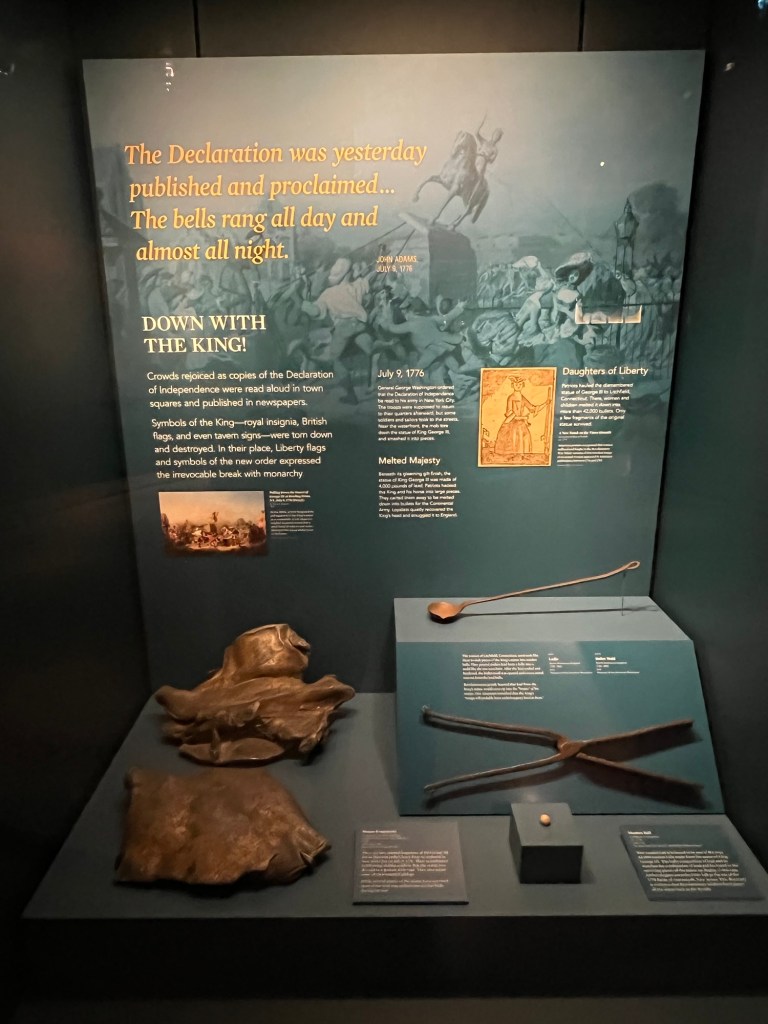
The toppling of the statute of King George (parts of the statue are at the Museum of the American Revolution in Philadelphia, PA-read my blog on this.)
The exhibit at the Museum of the American Revolution in Philadelphia on the King George Statue
Now it is a resting spot for tired tourists off the boats from Ellis and Liberty Islands and for Wall Street workers who need a nice place to eat their lunch. It is still a relaxing little park with tree lined paths and a beautifully landscaped fountain area. In the later summer, the flowers are still in bloom and the colorful highlights of the trees accent all sides of the park and keep it private. Even in this secrete setting it is mind boggling of the fact that people put their lives on the line to establish this country right from this tiny park.
Map of Lower Manhattan
Take time to walk through the cool paths of trees to the edges of the park, which are lines with historic buildings with decorative stone work and look at the beautiful statuary work on the old U.S. Custom House that now serves as the Museum of the American Indian. Take a quick tour of Stone Street just a few blocks away and see the development of the New York City after the Great Fire of 1823, which destroyed most of lower Manhattan.
Just at the tip of the norther part of the park is the famous statue of ‘Charging Bull’ a gift to the City by artist Arturo Di Modica to show the ‘strength of the American people’ and the now becoming famous statue of “Fearless Girl” by artist Kristen Visbal which was erected for International Women’s Day. Both statues have created quite the debate since they were both placed here in 1989 and 2017 and their fate is up to the City.
Take time to really see what all these symbols mean to the Bowling Green.
History of the Park:
The beauty of Bowling Green Park in the early morning hours.
The Bowling Green is New York City’s oldest park. According to tradition, this spot served as the council ground for Native American tribes and was the site of the legendary sale of Manhattan to Peter Minuit in 1626. The Dutch called the area “the Plain” and used it for several purposes including a parade ground, meeting place and cattle market. It marked the beginning of Heere Staat (High Street, now Broadway), a trade route which extended north through Manhattan and the Bronx. In 1686, the site was designated as public property, when the City Charter put all ‘waste, vacant, unpatented and unappropriated lands’ under municipal domain (NYC Parks.org).
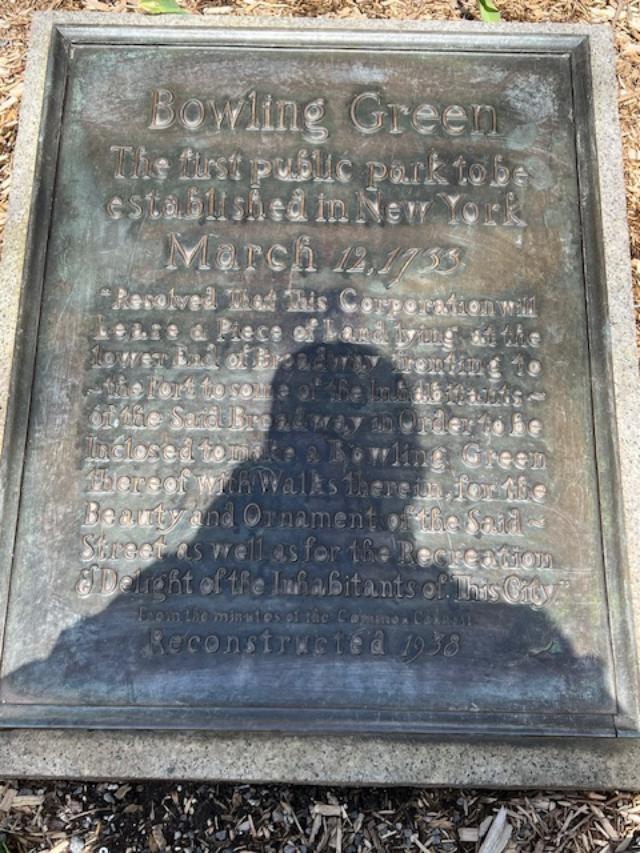
The historic marker for the park.
Bowling Green was first designated as a park in 1733, when it was offered for rent at the cost of one peppercorn per year. Lessees John Chambers, Peter Bayard and Peter Jay were responsible for improving the site with grass, trees and a wood fence “for the Beauty & Ornament of the Said Street as well as for the Recreation & delight of the Inhabitants of this City.”
A gilded lead statue of King George III was erected here in 1770 and the iron fence (now a New York City landmark) was installed in 1771. On July 9, 1776, after the first public reading in New York State of the Declaration of Independence, this monument was toppled by angry citizens who dragged it up Broadway, sent it Connecticut, melted it down and recast it as ammunition.
The exhibit at the Museum of the American Revolution in Philadelphia:
The pieces of the statue are on display at the Museum of the American Revolution in Philadelphia
The pieces of the statue
Portions of the statue are held by the Museum of the City of New York and the New York Historical Society (which also possesses musket balls made from the statue’s head) (NYC Parks.org).
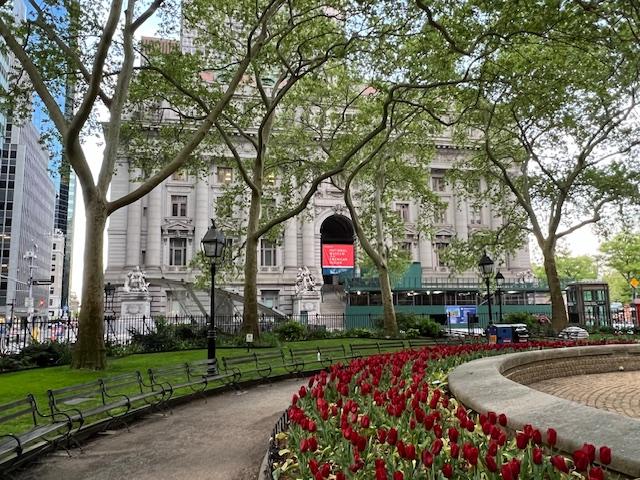
The park with the buildings in the background.
By the late 18th Century, Bowling Green was the center of New York’s most fashionable residential district, surrounded by rows of Federal-style townhouses. In 1819, the Common Council that neighbors could plant and tend the area in return for the exclusive use of the park by their families. By mid-century, shipping offices inhabited the old townhouses and the park was returned to more public use. Monuments installed in the park in the 19th century include two fountains (now gone) and a statue of New York’s early Mayor and later colonial Supreme Court Judge Abraham DePeyster (1896, by artist George Bissell). DePeyster was moved to nearby Hanover Square in 1976 and finally to Thomas Paine Park in 2014 (NYC Parks.org).
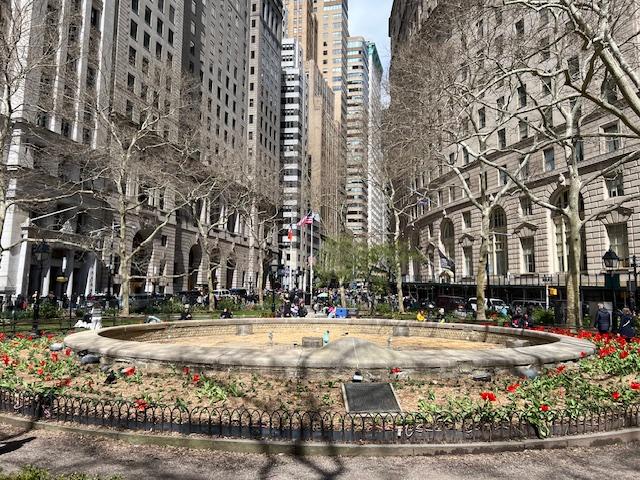
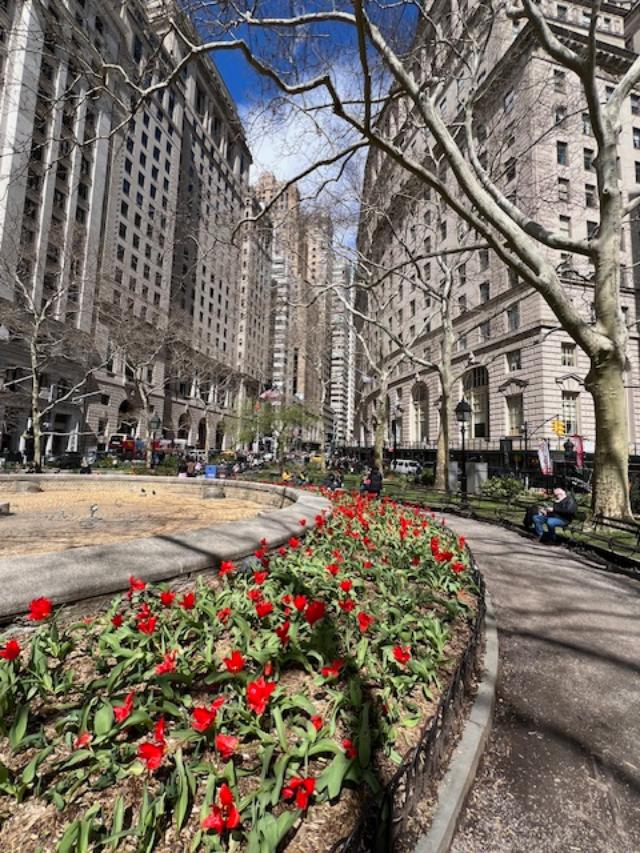
Bowling Green Park Spring 2024
Bowling Green Park Spring 2024.
In the first decade of the 20th Century, Bowling Green was disrupted by the construction of the IRT subway. The park was rebuilt as part of citywide improvements made in preparation for visitors to the 1939 World’s Fair. Renovations to Bowling Green included removing the fountain basin, relocating the interior walkways, installing new benches and providing new plantings. Mayor Fiorello LaGuardia, Parks Commissioner Robert Moses, members of the Board of Estimate and local businessmen participated in the rededication ceremony held on April 6, 1939. Despite unseasonable late snow, the ceremony included a demonstration of colonial era lawn bowling (NYC Parks.org).
The tulips at Bowling Green Park in Spring 2024.
A 1976-77 capital investment restored Bowling Green to its 18th century appearance. Improvements included the redistribution of subway entrances, the installation of new lampposts and benches and landscaping. Publisher and philanthropist George Delacourte (best known for the Alice in Wonderland statue in Central Park) donated the park’s central fountain (NYC Parks.org).
The Spring time flowers at the Bowling Green Park.
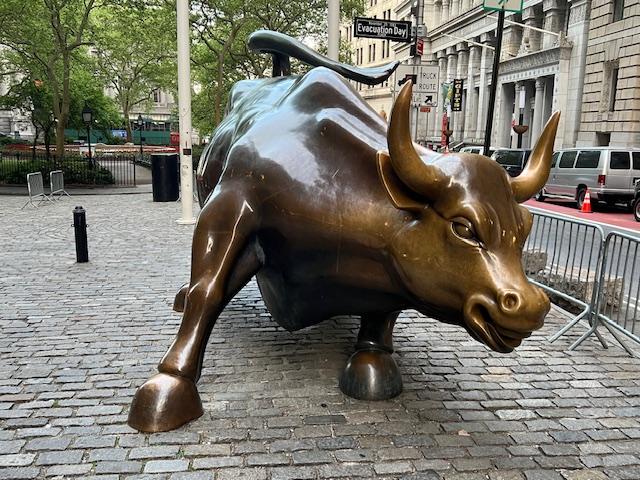
Since December of 1989, the statue of Charging Bull (1987-89) has been on display at the north end of the park. Its sculptor, Arturo Di Modica, says the three ton and a half bronze statue represents “the strength, power and hope of the American people for the future.” It has been linked to the property enjoyed by Wall Street in the past decade.
The park in the Summer of 2025
In 2004, the reconstruction of the park included new perimeter bluestones sidewalks and interior paths, landscaping, plantings and the re-sodding of the lawn. Antique-style gas lamps and hoof benches were also placed in the park with the addition of a new irrigation system for the parks fountain (New York Parks.org).
The “Charging Bull” sculpture.
Disclaimer: This information was taken directly from the New York City Parks.org site and I given them full credit for it. This is one of the special parks of the City so take some time to visit it while on your way to one of the other tourist sites or to Liberty Island or Ellis Island.
I have visited Branch Brook Park many times over the past thirty years and during the Annual Cherry Blossom the park is especially nice. The City of Newark still has the reputation as a rough place and parts of the City I still would not like to walk around in after dark (as are all cities). Branch Book is separated from the rest of the City and sits on the border of Newark sharing the park with the town of Belleville.
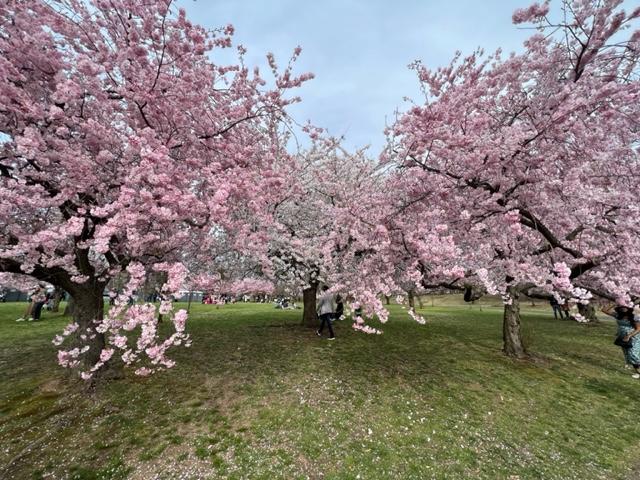
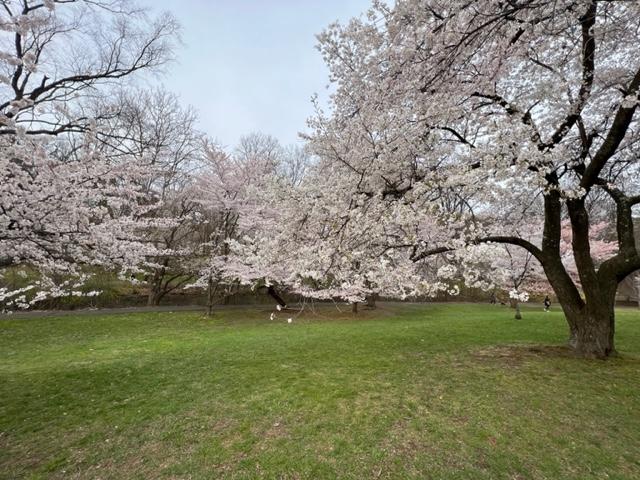
The Cherry Blossoms were in peak blooming today
The Cherry Blossom Festival, which takes place every Spring with the coming of the blooming of all of the Cherry Trees which cover the whole length of the park, is always anticipated by people all over the State of New Jersey. They bloomed a little late this year due to the unseasonably cold weather this year. It was snowing up to two weeks earlier so the buds opened later this year. In come cases, the peak of the blossoms came about two weeks late.
The Cherry Blossom Festival at Branch Brook Park goes on for the two weeks of the blooming of the trees
It was well worth it as spread over thirty two acres of land are over 2,000 cherry trees that bud every year at slightly different times due to the different species of plants. You day will start in the park at the Visitor’s Welcome Center located in the eastern section of the park, where you will read about the history of the park and have a chance to check into the activities of the annual Festival or just relax and go to the bathroom. The Visitor’s Center has just been renovated and is a nice starting point to walk around the park during the festival. There is a lot of public parking in this area and your car will be safe with all the people walking around.
The park was awash with colors
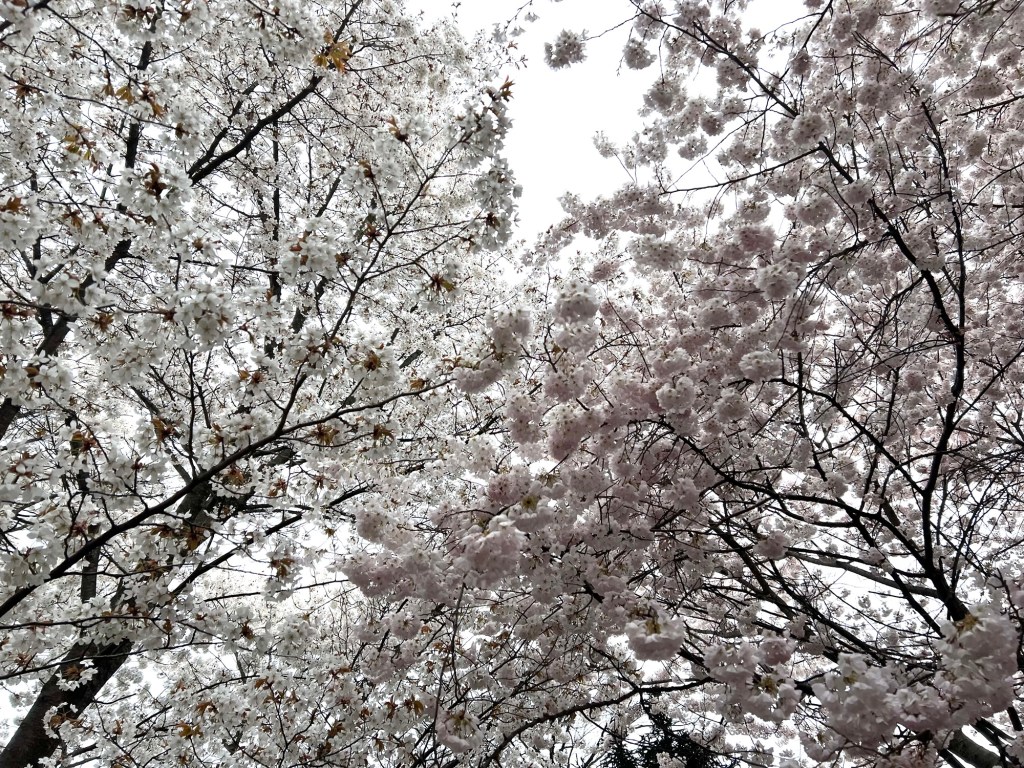
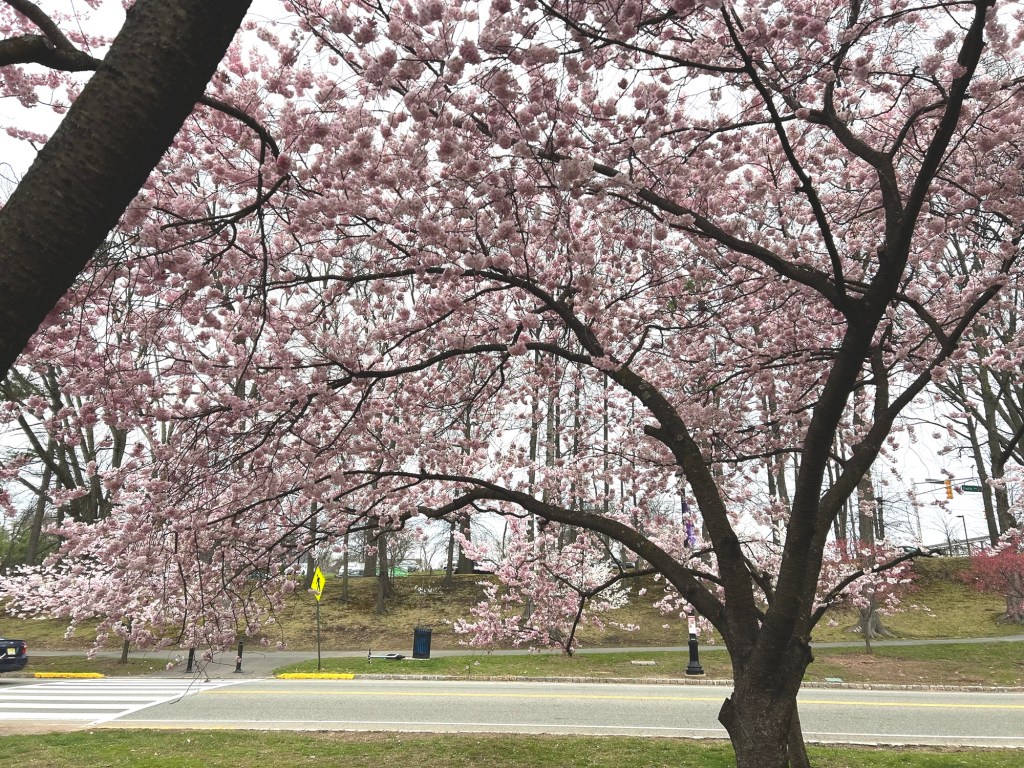
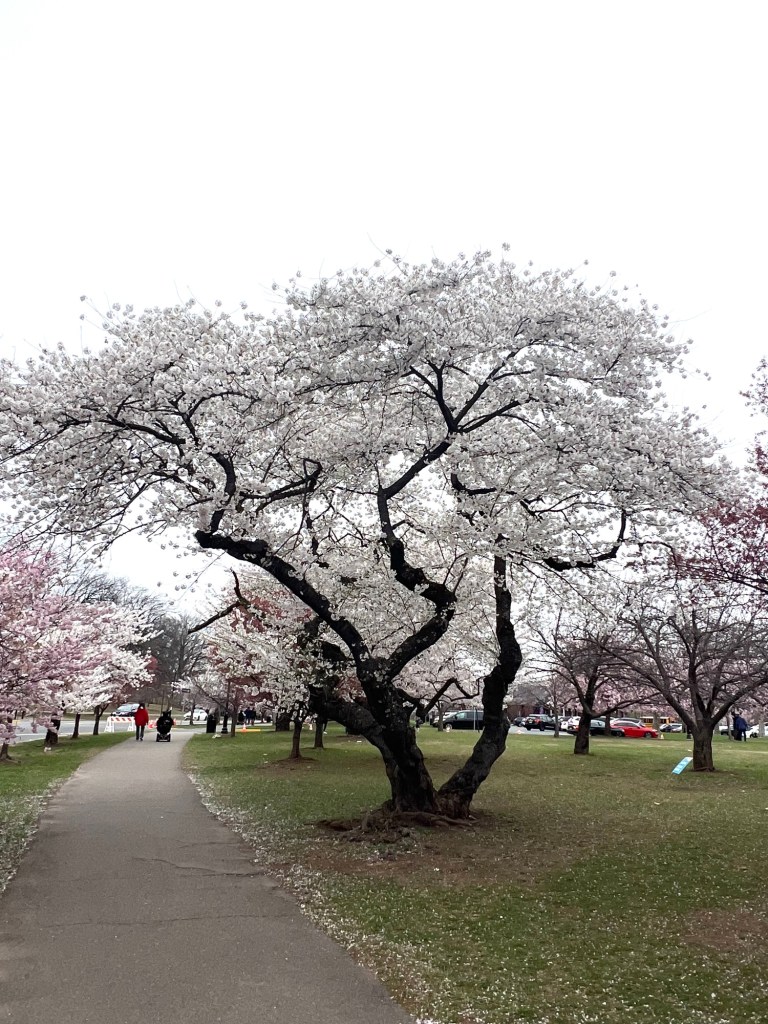
Walking among the paths of blossoming Cherry Trees is quite spectacular. It is Mother Nature showing here best with all sorts of hues of light and dark pink. It is something to walk around the trees as the petals in some cases rain down on you. Because the Festival is such a tradition with visitors some even wear their kimono’s or their wedding gowns in the park for pictures.
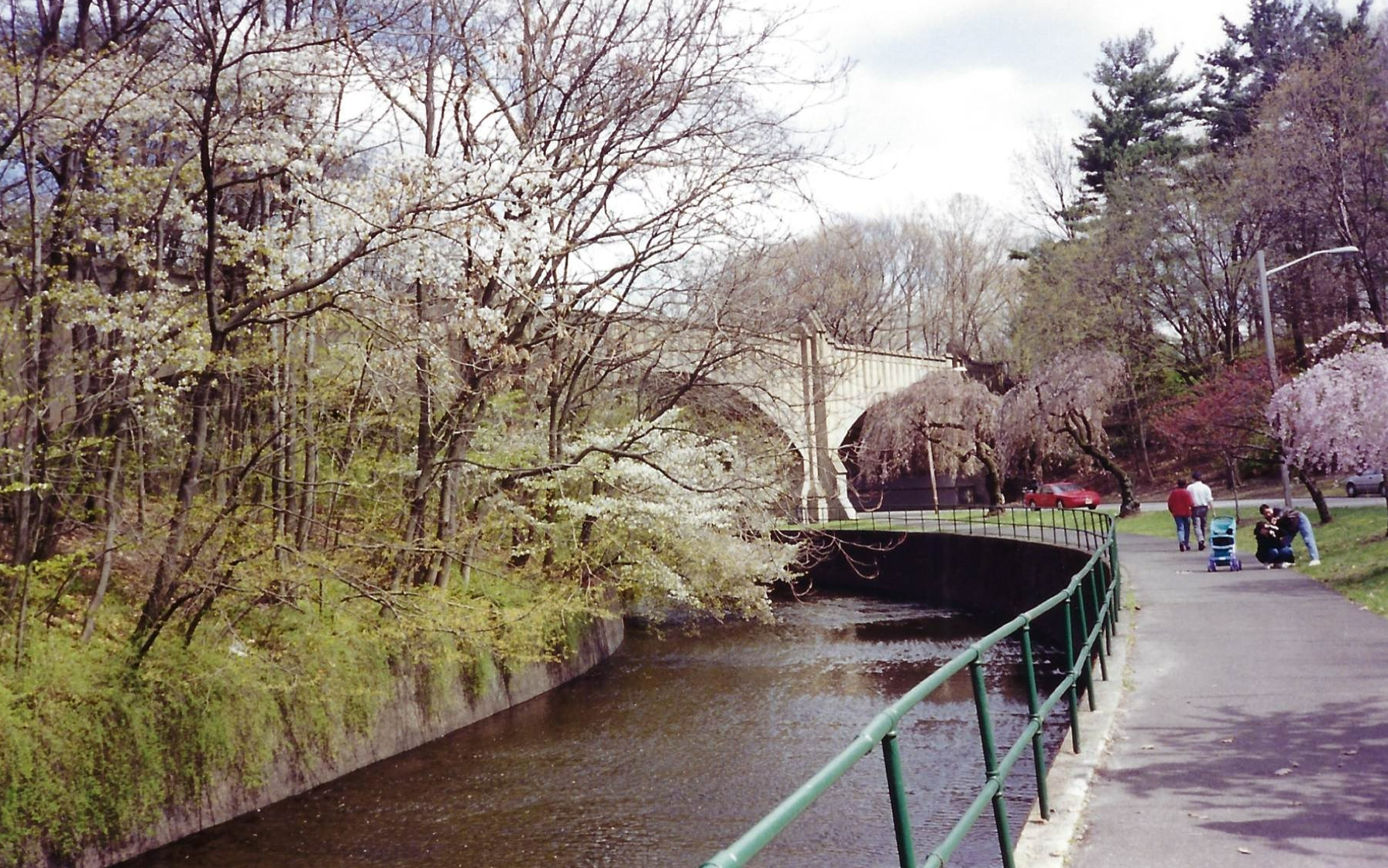
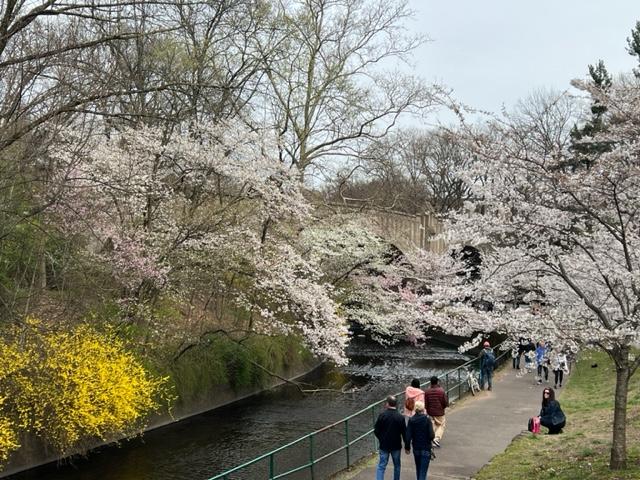
Walking along the stream that runs through the park
The park is in the process of a decade long renovation after years of neglect. The Branch Brook Park Alliance in partnership with Essex County Department of Parks, Recreation and Cultural Affairs, is working to restore the park’s historic design and adapt it to today’s lively use. Our park holds claim to many firsts: America’s first county park opened to the public; first to be listed on both the New Jersey and National Registers of Historic Places and the first to surpass Washington DC in the number and variety of cherry trees (Branch Brook Park Alliance).
Cherry Blossom Festival in Branch Brook Park Newark, NY 2010
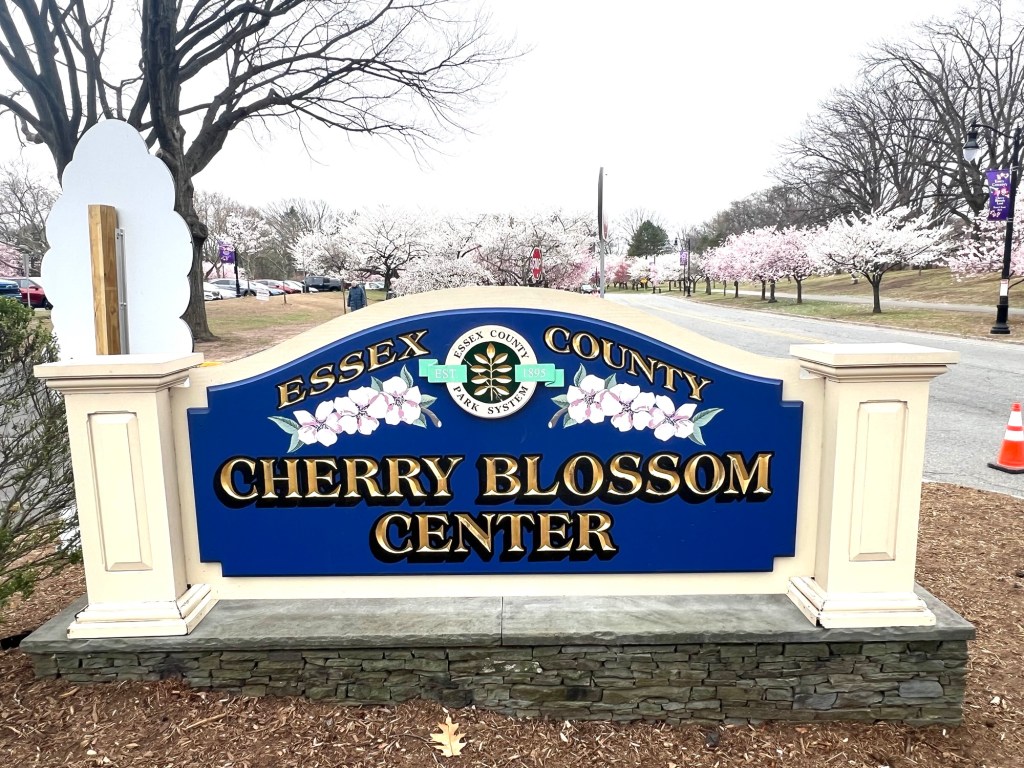
Completed projects set the stage for the park’s full restoration. The County has refurbished historic bridges, renovated the Cherry Blossom Welcome Center and created the Cherry Tree Memorial Grove to promote the “Susan G. Komen Race for a Cure”. Extensive plantings of cherry trees, soon to number 4,000, complement the park’s 78 other tree varieties. Restoration of historic sites include the Octagon Shelter and park entrance ways (Branch Brook Park Alliance).
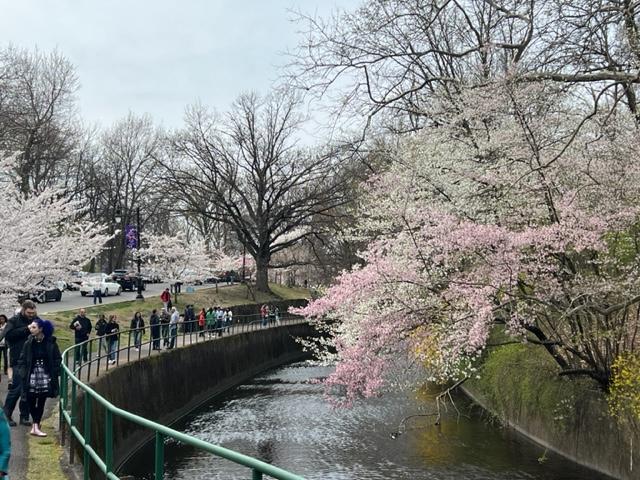
The views by the steam were especially beautiful in 2023
In 2022, the warmer weather that has been coming in earlier in the month keeps moving the blooming up a few weeks. The cherry blossoms seem to be flowering in the three main areas I visited, Newark, Brooklyn and Washington DC came out almost two weeks earlier than usual. With all the rains that we have had in the last three weeks have also done a number on the trees. Most lost their petals earlier than their planned festivals so even in DC they had their cherry blossom festival without cherry blossoms. When I came home from that celebration, even Newark was looking bare compared to my quick trip last weekend when you could not even enter the park. I think more people in these COVID days want to communicate with nature more than ever.
People were taking pictures by this spot for their weddings and parties
The Branch Brook Park lawn later in the day
When I visited the park in 2023, the place was mobbed with people. The Cherry Blossoms were at their full peak on April 8th, 2023 and I had never seen them this brilliant before. They were gorgeous and such colors of pink, white deep pink and the brilliant yellows from other flowering trees really complimented one another. Walking along the paths through this part of the park was a delight to the eyes.
The brilliance of the flowering trees
The only problem I saw was the visitors behavior towards the trees. People were climbing on the trees, pulling on the branches and tearing off the cherry blossoms. Either it is all the tourism classes that I am taking at NYU or I just am really noticing how obnoxious people are getting. There was so little respect towards nature. People were disrupting the very thing everyone came to see.
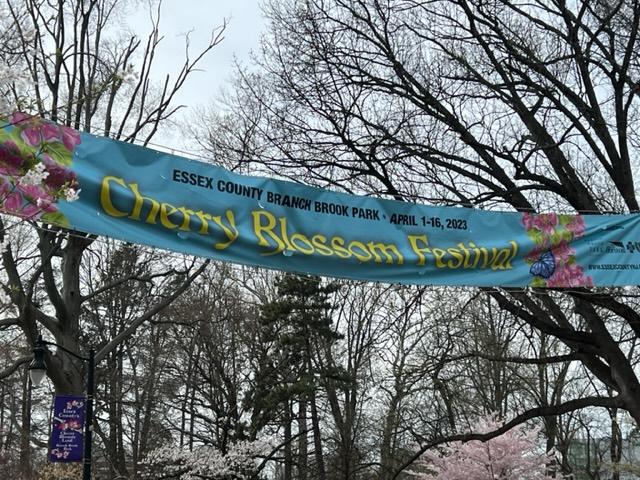
The Cherry Blossom Festival signs lined the park
Still I had a wonderful time and it was nice day to walk around and enjoy Branch Brook Park. It was just disappointing when the skies got cloudy and it got a little cooler. That did not stop people from lining the paths, walking their dogs and just enjoying the day out. I have never seen the park this vibrant before!
There was a nice crowd this afternoon at the park
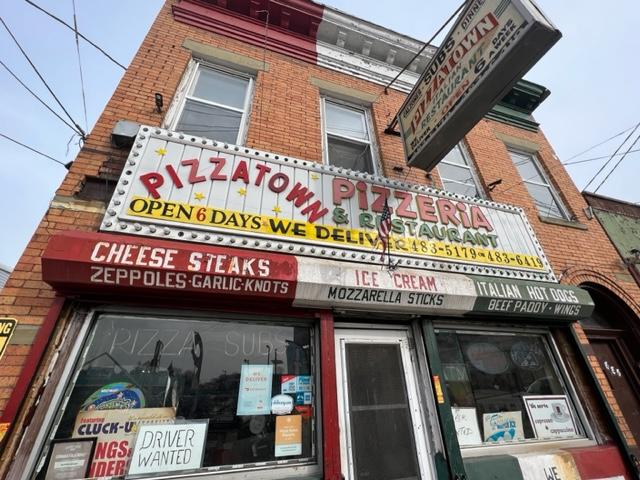
I was able to sneak out of the park for lunch and go to Pizzatown Pizzeria in Newark for lunch. This old pizzeria has been around since about the 1960’s and has the most amazing cheese pizza. I got for a slice when I am visiting the park. The restaurant is a holdover when this was still an Italian enclave (it is now more Spanish) but still popular with the locals.
Pizzatown Pizzeria & Restaurant at 883 Mount Pleasant Avenue in Newark, NJ
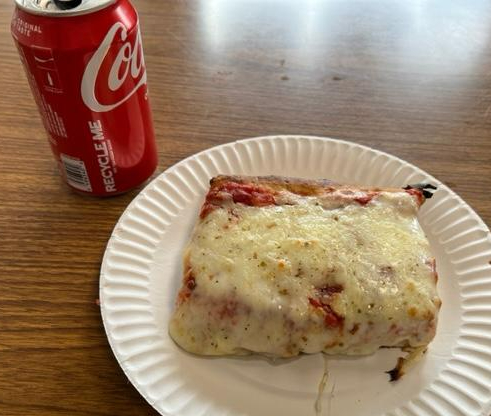
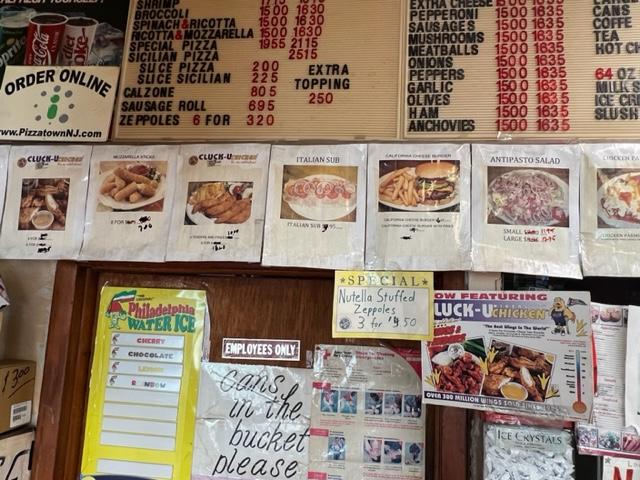
The place is really full of character and the best part is that the pizza is delicious! I always enjoy coming here for lunch or a snack. I had a slice of Sicilian pizza ($3.50) and a Coke and at $4.50 is was a reasonable lunch. This in comparison with the food trucks in the park which are much more expensive. I highly recommend it.
The Sicilian slice at Pizzatown in Newark, NJ
The inside of the restaurant is so old that is looks retro
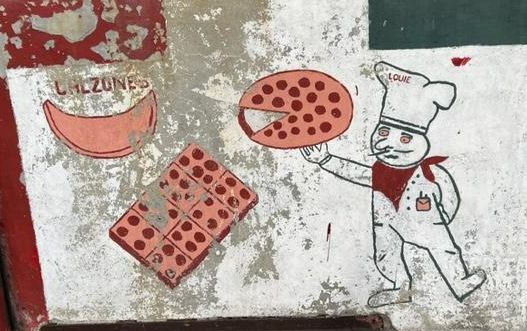
I like the painting on the restaurant. It’s classic.
It was a nice lunch and it gave me the energy to continue walking the length of the park further than I had before. Talk about getting some get pictures. As it got later, the crowds thinned out a bit more so there was more room to take some great shots.
It was a wonderful afternoon!
Branch Brook Park in its prime
The History of Branch Brook Park in Newark, NJ:
The Cherry Blossom Display at Essex County Branch Brook Park:
In 1928, Caroline Bamberger Fuld, after seeing the cherry trees in the Nation’s Capital, offered a gift of 2000 trees for Essex County Branch Brook Park. To showcase the park’s newly acquired Extension, the renowned Olmsted Brothers landscape architectural firm created a planting design using dark evergreen trees as a backdrop for the mix of white and pink cherry blossoms from varieties such as Higan, Yoshino and Kwanzan (Branch Brook Alliance).
The entrance to Branch Brook Park in Newark, NJ
After a 2004 inventory showed 1.000 cherry trees remaining, an ongoing initiative to replace and expand the collection was undertaken by Essex County Executive Joseph N. DiVincenzo Jr. and the Branch Brook Alliance. By 2016, the number of cherry trees was expanded to over 5,000. Cherry trees in 27 varieties now adorn all sections of the park, from the Southern Division at Clifton Avenue in Newark to the park’s Extension at Washington Avenue in Belleville (Branch Brook Park Alliance).
The History of Branch Brook Park (Branch Brook Park Alliance):
1862: The land we know now as Branch was then the property of the Newark Aqueduct Board. Much of that land was commandeered in July of 1862, at the outbreak of the Civil War; known as Camp Frelinghuysen, it was used as a training ground for New Jersey volunteers. Between 1862 and 1864, six regiments encamped there before fighting in every important battle from Antietam to Appomatox.
1867: The New Jersey State Legislature authorized a Newark Park Commission, with a mandate to locate grounds for a municipal park. Fredrick Law Olmsted, the famed landscape architect and designer of Central Park in New York, visited Newark and Essex County and recommended a site encompassing what is now Branch Brook Park, Olmsted and his partner, Calvert Vaux, envisioned Branch Brook Park to be a “grand central park” for the City of Newark. They understood that American cities of the 19th Century were growing quickly and changing rapidly. The parks they designed embodied their view that all people, regardless of their position in society, were entitled to fresh air, quiet places and the beauty that only nature can provide.
The colors were amazing in April of 2023
1889: The Newark Common Council donated 60 acres of the Aqueduct Board property surrounding the circular holding reservoir to “park use”. Known as Reservoir Park, the land was left undeveloped. Much of the surrounding neighborhoods were crowded with bleak, unhealthy tenements. To the north lay a dismal march known as Old Blue Jay Swamp.
1895: The Essex County Park Commission was formed to enable the creation of a county-wide park system, the first in the nation. The City of Newark transferred Reservoir Park, which would become the nucleus of Branch Brook Park to the Commission at ta cost of $350,687. The surrounding properties were acquired by the County while donations of land from prominent Newark families extend the park northward. The Ballantine Family donated 32 acres of their property and another 50 acres were given by Z.M. Keene, William A. Righter and the Messrs. Heller. John Bogart and Nathan Barrett were chosen to provide plans and advise on the development of the park. Their design was gardenesque in style, dominated by the geometrically patterned gardens and numerous architectural elements including arbors, viaducts, gazebos and shelters that shaped the park’s Southern Division.
The drive in the entrance of the park
1896: Demolition and grading began following Bogart and Barrett’s plans.
1898: Dissatisfied with Bogart and Barrett’s work, the Commission hired the Olmsted Brothers firm; John Charles Olmsted and Fredrick Law Olmsted Jr. were Fredrick Law Olmsted Sr’s nephew/stepson and son. While their work continued that naturalistic style of landscape design championed by their father, in Branch Brook Park, they were required to incorporate the elements of Bogart and Barrett’s plan that had already been constructed. This led to the Olmsted firm’s design concept consisting of three divisions: the Southern, from Sussex Avenue to Park Avenue, incorporating the elaborate ‘gardenesque’ elements from Bogart and Barrett’ the middle from Park Avenue to Bloomfield Avenue, which would be a transitional zone, mixing the exotic with the indigenous and as the culmination, the Northern Division, the largest and most naturalistic area of the park.
The views were spectacular in April of 2023
1900: The first Chrysanthemum Show was held in the newly constructed greenhouse in the Northern Division. This annual event brought thousands to the park every fall until 1969.
1903: The United Singing Societies donated the bust of composer Felix Mendelssohn they won in Baltimore, MD at that year’s ‘saengerfest’, the annual, nationwide German singing competition that generated excitement comparable to today’s Super Bowl.
1906: The gran boathouse, designed by the firm of Rossiter and Wright, was added to the southern end of the lake, replacing an earlier structure.
The crowds were large in April 2023
1916: The Essex County Park System build its Administration Building on the parkland that had been set aside to provide a view from Concourse Hill. Designed by New Jersey native Harold Van Buren Magonigle, the exterior has eight different shades of coarse-textured terra brick and expensive terra cotta reliefs especially notable around the main entrance. Under the wide overhang of the tile roof are colorful, allegorical decorations executed by Mrs. Edith Magonigle.
1924: Industrialist and philanthropist Harmon W. Hendricks, owner of a copper rolling mill on the Second River, donated his family home and the adjoining 23 acres to the north of Branch Brook Park. An additional 94 acres were acquired by the county to link Hendricks Field Golf Course and Belleville Park in an unbroken swath of green. This land included what was the first landing site for the U.S. Postal Service where bi-winged airplanes landed on a short field with bales of hay rimming the end of the runway to prevent accidents.
One of the side paths in April 2023
1927: Caroline Bamberger Fuld donates 2,000 Japanese flowering cherry trees to a display in Newark that would rival that in Washington DC. The Olmsted Brothers’ firm laid out the trees naturalistically on the tiered slopes along the narrow valley of the Second River, evoking the way the trees would be seen in Japan and distinguishing Branch Brook Park’s display from all others. Eventually the collection would grow to more than 3,000 trees.
1928: The Morris Canal that ran from Jersey City to the Delaware River and formed the park’s western boundary was abandoned and became the Newark City Subway. Now Newark Light Rail, there are six stops along the park that provide easy access by mass transit.
1940: The Rossiter and Wright boathouse was deemed unsafe and dismantled. A smaller building replaced the grand structure.
1956: More than 3,000 people attended the Fall Chrysanthemum Shoe in the greenhouses.
The crowds along the pathways at Branch Brook Park
1967: Riots broke out in Newark and devastated the community. Many buildings were burned, boarded up and sections of the city were deserted. The National Guard was called in to maintain order and bivouacs in Branch Brook Park, where Civil War volunteers mustered 100 years earlier.
1974: Community members rallied to save their beloved park and the Friends of Branch Brook Park was formed.
1976: The Newark Cherry Blossom Festival was established.
1980: Branch Brook Park was placed on the New Jersey Register of Historic Places.
1981: The Park was placed on the National Register of Historic Places.
1986: The Boathouse was destroyed by fire and replaced by a concrete block structure.
One of my favorite shots of the park in 2023
1999: Branch Brook Park Alliance (BBPA) was formed.
2002: BBPA hired Rhodeside & Harwell (RHI), nationally recognized landscape architects, to produce a Cultural Landscape Report, Treatment and Management Plan, to serve as a blueprint for the park’s restoration.
2003: The lake edge near the boat house in the Southern District was replanted to recreate the original Olmstead plan; this pilot project was designed by RHI and funded by BBPA.
2004: A tree inventory was conducted by BBPA as part of the Cultural Landscape Report and revealed that less than 1,000 cherry trees remained from the original gift of 2,000 trees and subsequent plantings.
2005: Responding to community interest, the first farmers’ market took place, along with other activities to help reactivate the park.
2006: BBPA, together with the Essex County, the North Ward Center and the Newark Boys and Girls Clubs developed the Middle Division ball fields, now home to 7,500 ballplayers annually.
A grant from the Essex County Recreation and Open Space Trust Fund enabled the first planting of what would total more than 3,000 new cherry trees over the next four years.
2007: The Ball fields in the Extension were redesigned and upgraded while the surrounding landscape is restored. The Cherry Tree Demonstration Project showed what a fully restored collection should look like with extensive companion plantings and appropriate hardscaping.
2008: The Octagon Shelter was reconstructed. The Waterway Rehabilitation Feasibility Study was completed, setting forth a path for the restoration of one of the park’s most salient features.
2009: Prudential Global Volunteer Day drew more than 300 participants from diverse sectors of the community. A Maintenance Plan for the park was completed and implementation begun at six volunteer days.
2010: Design work was completed for project that will transform western lake edge in the Southern Division. The rehabilitation of the Octagon Field House in the Middle Division was completed.
The Cherry Blossom Festival in Branch Brook Park, Newark, NJ 2010
(The History of Branch Brook Park in Newark, NJ by the Branch Brook Park Alliance)
Disclaimer: This information was taken from the Branch Brook Park Alliance and I give them full credit for their work. Don’t miss the Cherry Blossom Festival each Spring April/May depending on the weather.
Branch Brook Park in 2025:
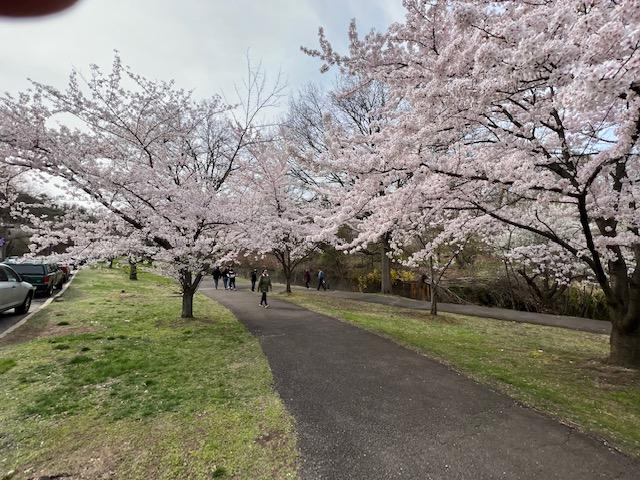
I had a chance after work on afternoon when the Cherry trees were in peak form. The park was quiet on a Thursday afternoon and was perfect time to walk around and see the beautiful trees.
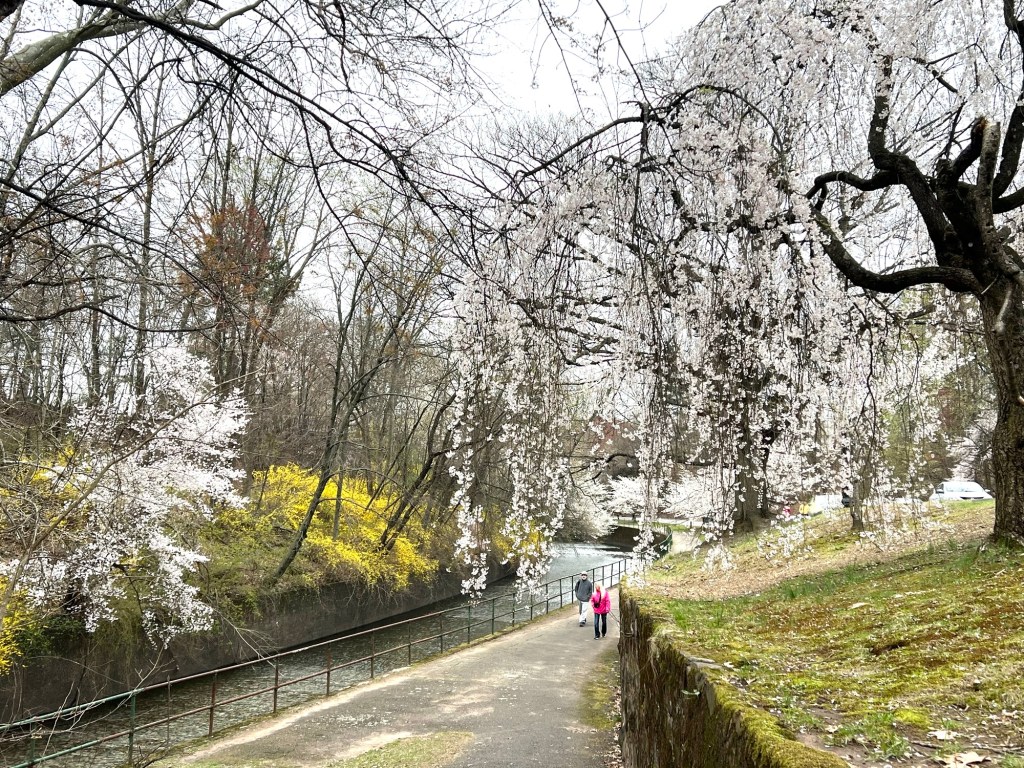
I walked along the paths on a gloomy afternoon where the rain always threatened us the whole time but I would not have wanted to miss this display.
The paths along the stream at Branch Brook Park
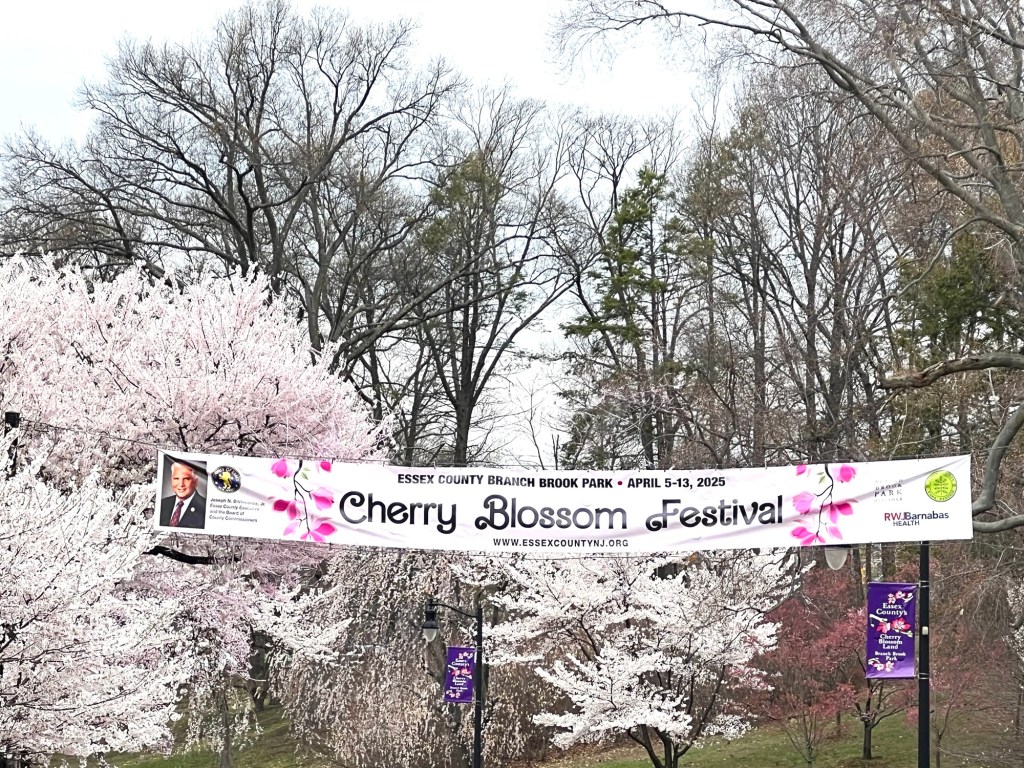
The start of the Cherry Blossom Festival in 2025
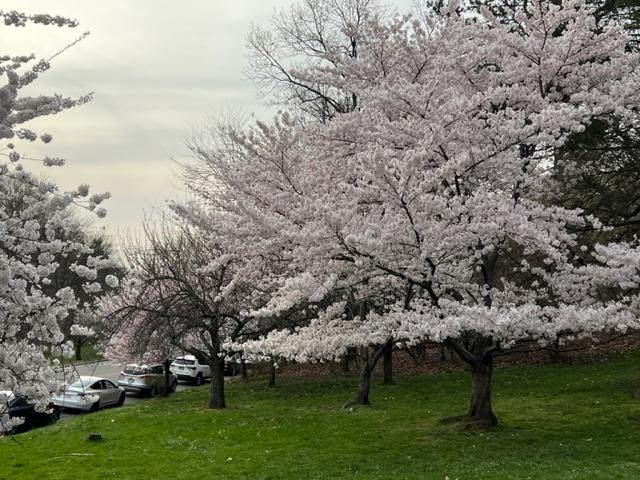
Branch Brook Park Cherry Blossom trees at peak in Spring 2025
The banners line the roads in the park for the festival and walking tours in 2025
The Cherry trees on a gloomy day
The Cherry Blossoms path
The beauty of the trees in 2025
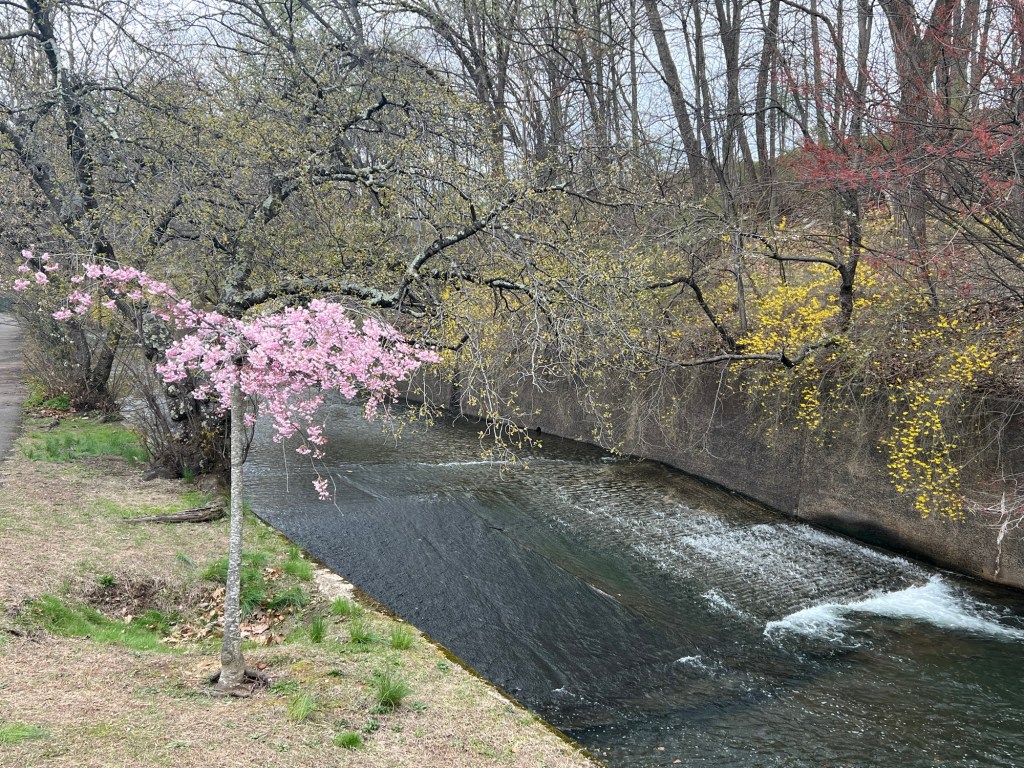
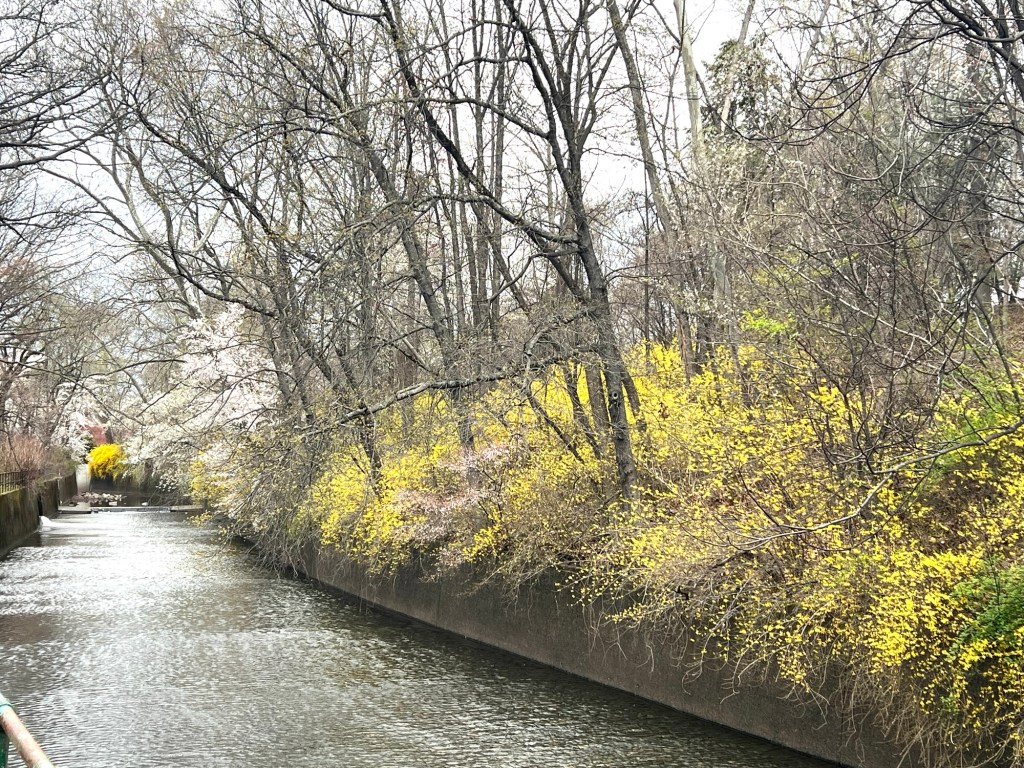
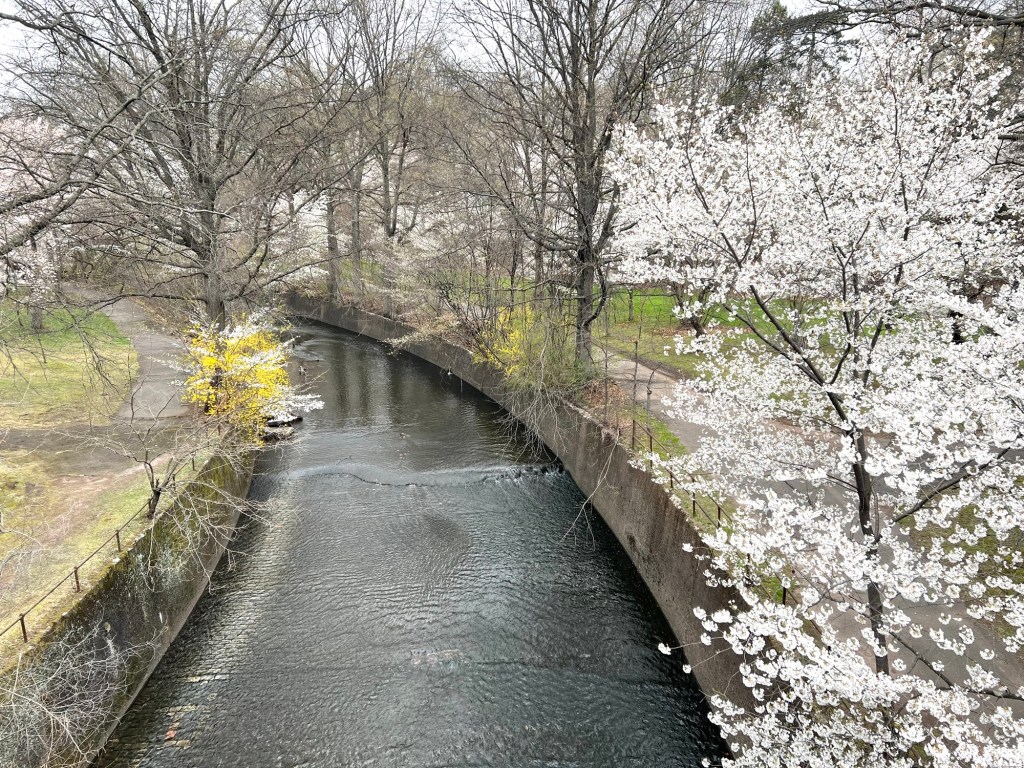
The river that runs through the park
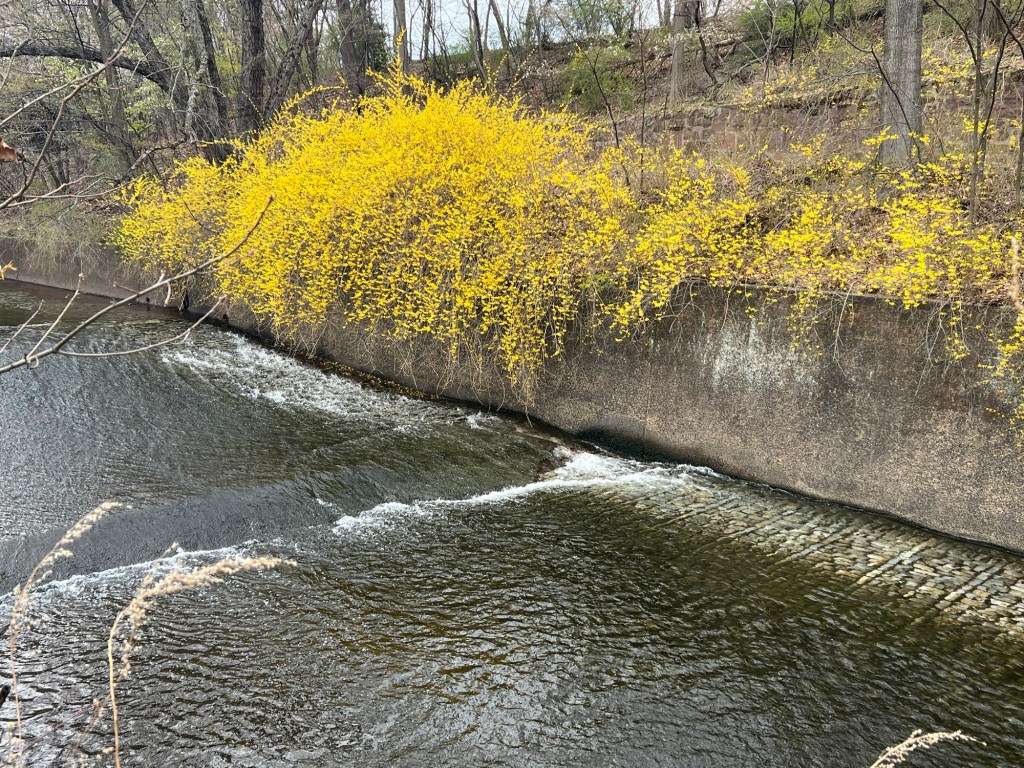
The water rushing through the park
The flowering plants in the park
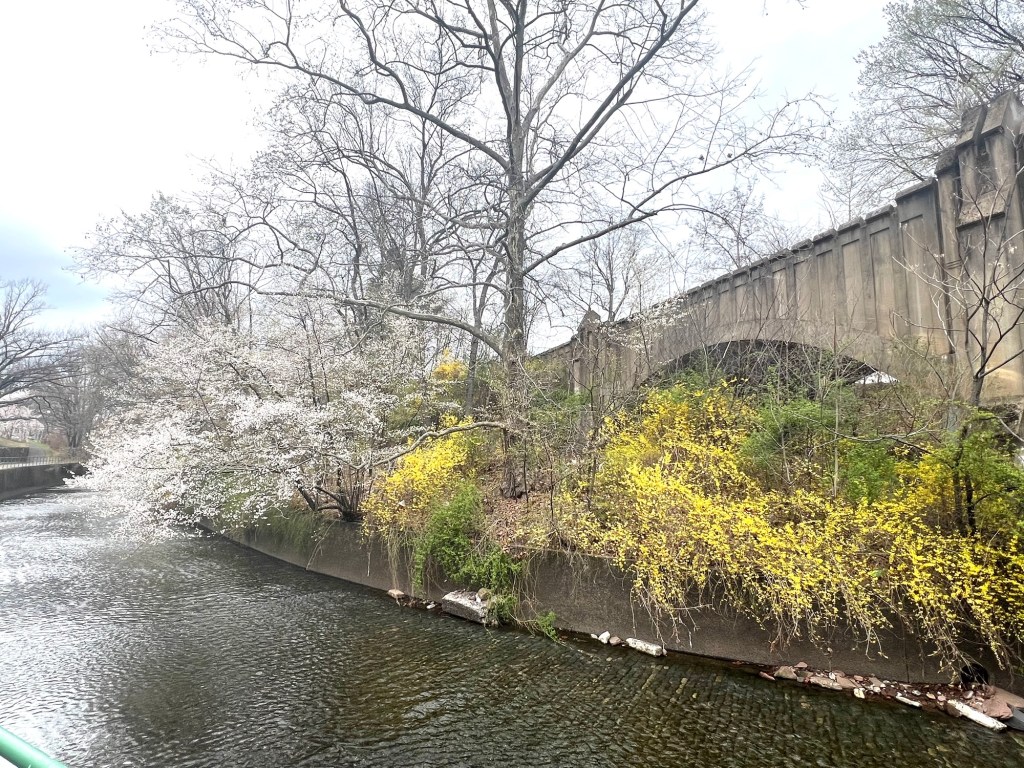
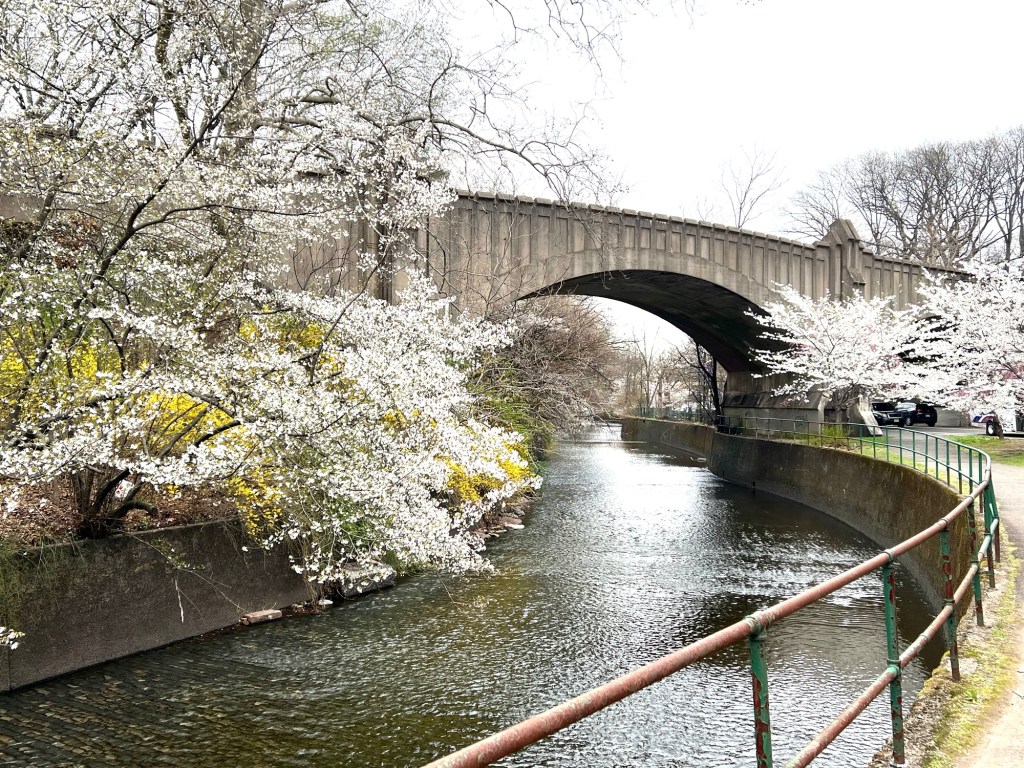
The bridge in the park
The flowering trees by the river
The paths along the river on a gloomy day
The flowering bushes along the river in 2025
The flowering trees around the river
Entering the core of the park
The County’s Cherry Blossom festival in 2025
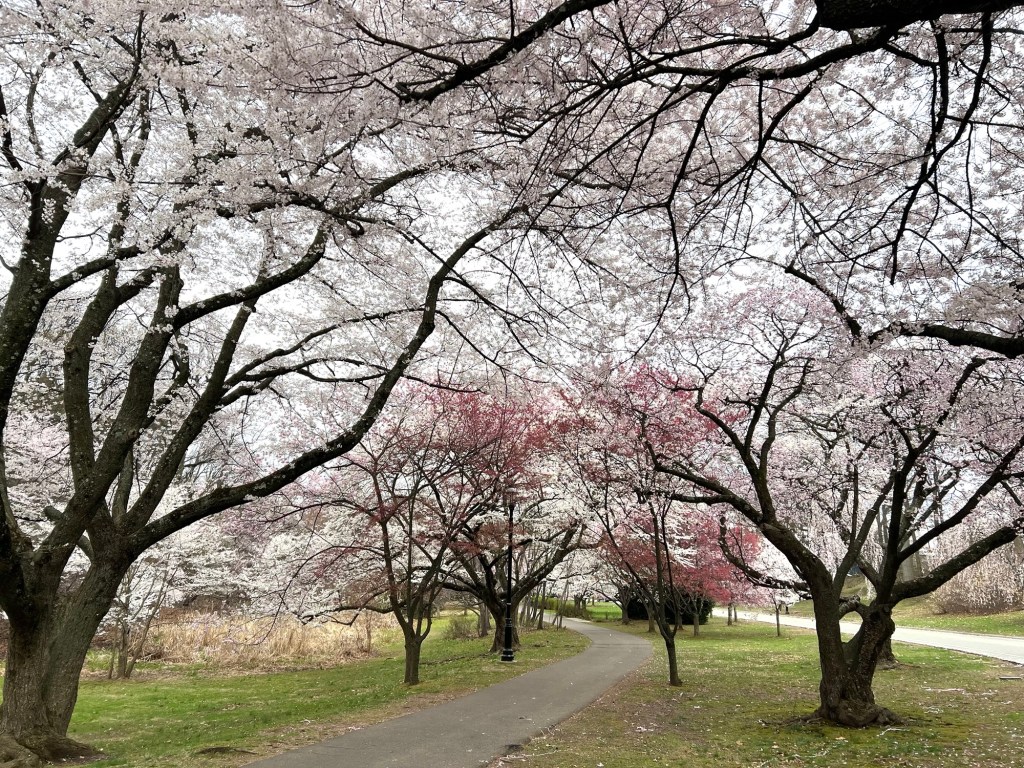
The beautiful trees along the paths
The flowering canopy
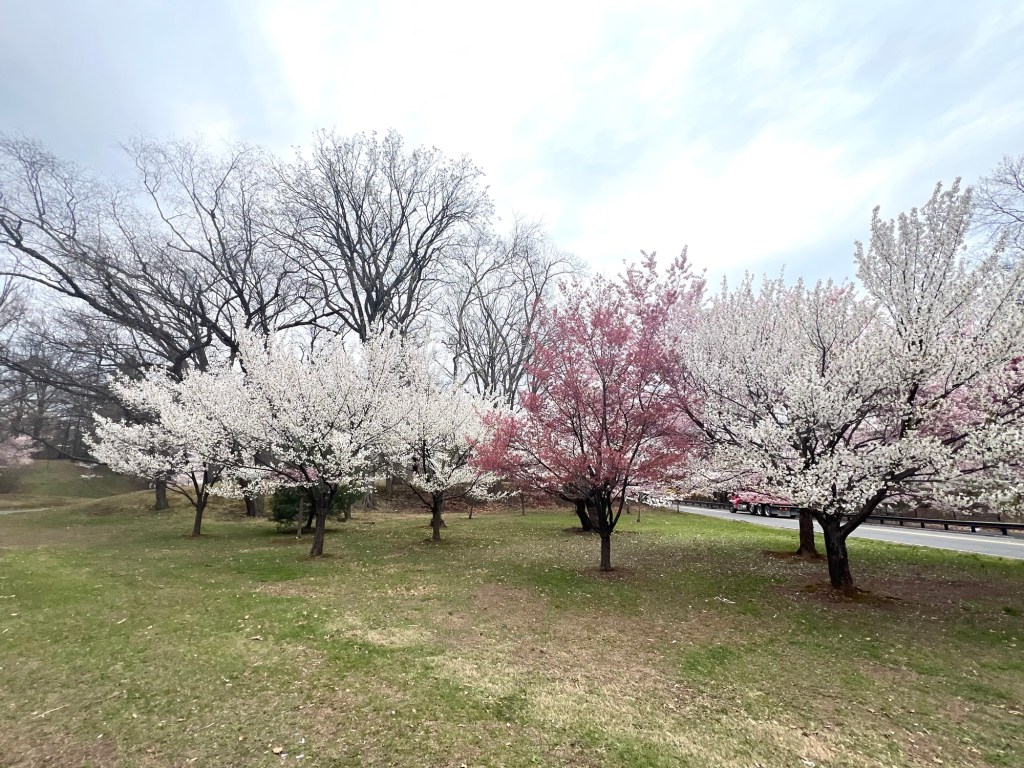
The flowering Cherry Trees in peak form
The flowering trees in the park
The core of the park in bloom
The pathway through the core of the park
The pathway in the park in full bloom
Entering the Visitors Center
The Cherry Blossom Visitors Center in the park
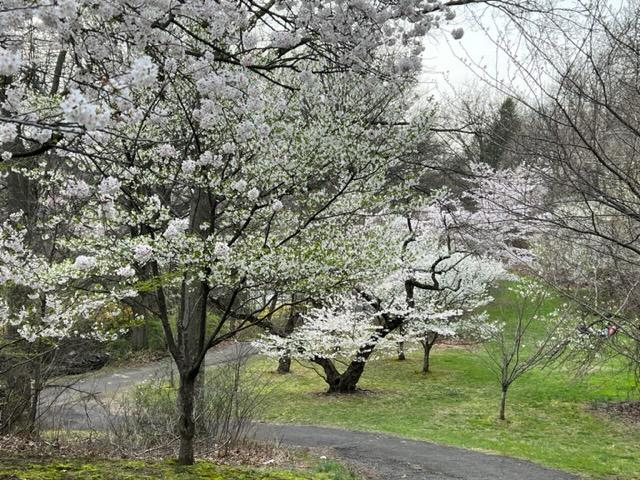
The unusual trees in Branch Brook Park
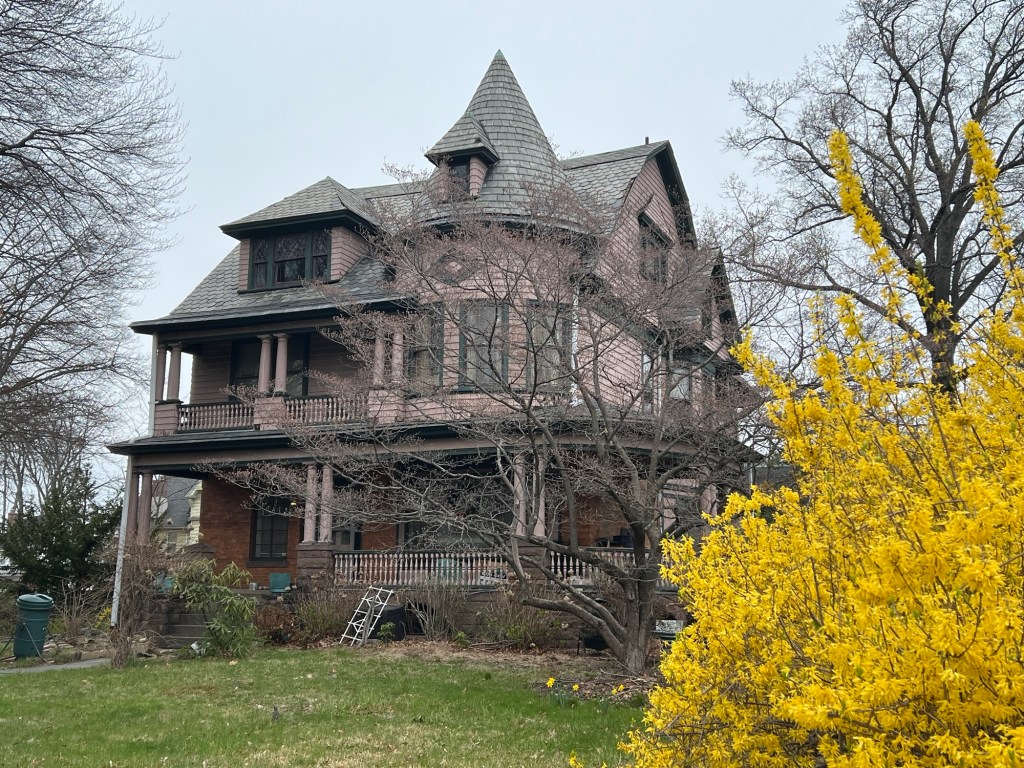
I even had time to really walk through this section of Newark and look at some of the old and beautiful mansions that dot this part of the park. With a little TLC, these houses will be spectacular again.
Walking through the Branch Brook Park neighborhood
The beautiful old mansions in the neighborhood
The walk back to the car
The pathway back along the river
It was so beautiful on a gloomy day
The walk back through the park
Even on a gloomy day the park was spectacular
Getting back to the car before it started to rain hard that afternoon
After the tour of Branch Brook Park in 2015, it was time for some lunch and I visited Rutt’s Hut at 417 River Road in Clifton, NJ.
I was in the mood for one of their Cheeseburgers and their Onion Rings
The cheeseburger was perfectly cooked
They give you a nice sized portion of Onion Rings
The burger hit the spot on a gloomy day
Going to the park on any type of day is spectacular. It is best when it is sunny and warm out. Still it is one of the most impressive displays of Cherry Blossoms in the country.
The Greater Newark Conservatory has been credited for much of the improvement in the City of Newark.
Having three farms, it has given new life to empty lots, given school children a chance to experience urban farming and given suburbanites a taste of country life in the city all while improving the lives of its residents. Having attended the recent “Beds & Breakfast” gardening program put on every year, I can see the outreach that the Conservatory is trying to have on people outside the city.
The Beds & Breakfast Seminar is an annual event that covers things like sustainable farming, trips for growing and pruning plants and trees and cooking classes. In the era of COVID, we had the 2021 “Beds & Breakfast” virtually this year and it was really nice because we could attend the meetings via Zoom. It was very engaging and you could ask questions online.
In the warmer months, it is nice to walk along the gardens and admire all the fruits, vegetables and plants being grown here. They have other events as well like Summer Cocktail parties and Pot Lucks.
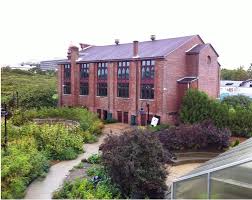
The gardens and the new Demo building
Another event I recently attending was the Conservatory’s October Fest, which was a small festival where the gardens on Prince Street were open to the public and local vendors were selling their wares at tables surrounding the main walk way of the garden. The Conservatory was also running their Youth Farm Stand as well with fresh vegetables from their ‘farm’. In 2021, they had a smaller event with vendor booths and music. It was funny to see so many people with masks in the cool weather.
Try to support the Youth Farm Stand at the Greater Newark Conservatory
In the future, there will be Pumpkin Patches by the farm and a small event for Halloween.
The History and Purpose of The Greater Newark Conservatory:
The Greater Newark Conservatory (GNC) is a non-profit organization headquartered in Newark, NJ with the state goal of promoting ‘environmental stewardship to improve the quality of life in New Jersey’s urban communities’. It offers programs for youth education, community greening and gardening, nutritional health, job training and prisoner re-entry (Wiki).
Founded in 1987, the Greater Newark’s Conservatory’s mission is to promote environmental stewardship to improve the quality of life in New Jersey’s urban communities. The 3.7 million Prudential Outdoor Learning Center, named in honor of a $750,000 grant from the Prudential Foundation, was completed in 2004 and has hosted more than 16,000 at risk inner city children for environmental education field trips since that time (Vince Baglivo, Star-Ledger 2010).
The Conservatory grounds
The first step toward making the new Center a reality was the purchase of the historic former synagogue/church building at 32-34 Prince Street in downtown Newark. Acquired by the City of Newark, the property included the building and the land that it occupies (Vince Baglivo, Star-Ledger 2010).
Educational Programs:
The Conservatory provides programs on youth education and nutritional health and cooking. In the Demonstration Kitchen program, participants are provided instruction on cooking with recipes having high nutritional value. The Newark Youth Leadership Program (NYLP) provides training to high school students in Newark through a year-round program on horticulture. The program also includes a summer internship program where high school students are assigned to various department in the Conservatory in order to gain experience with career-related skills. The summer interns also receive training on finance, public speaking and nutrition (Wiki).
Urban Farming:
One Conservatory initiative is to bolster and support urban farms in the City of Newark. The urban farms were created with the purpose of offering low-cost and healthy foods in Newark. Participants also have the option of growing their food in one of 360 private plots. In 2011, the urban farms administered by the Conservatory generated 5,000 pounds of produce. The produce is sold in local farmers’ markets. Crops raised include arugula, beets and corn. Other related programs include raising chickens and maintaining a honey apiary (Wiki).
The gardens and grounds
Job Training:
The Conservatory is community partner for the City of Newark’s prisoner re-entry programs where job training is provided to ex-offenders through its ‘Clean and Green’ program. They include vacant lots in Newark, labor in maintaining urban farms and offering instruction to school groups on the basics of farming (Wiki).
Urban Environmental Center:
The Conservatory conducts its activities primarily at the Judith L. Shipley Urban Environmental Center, the Prudential Outdoor Learning Center and at its main education building. Many educational programs take place there as well. The center was named after Judith and Walter Shipley, who were major donors of the Conservatory. The Prudential Outdoor Learning Center is 1.5 acre site located on Prince Street in Newark and contains a series of outdoor exhibits and thematic gardens (Wiki).
Programming:
Four program areas: environmental education, community greening and gardening, advocacy for environmental justice and job training, are the focus of activities involving everyone from students to seniors (Vince Baglivo Star-Ledger 2010).
Community Greening:
The Community Greening Program addresses Newark’s deficit of quality preserved open space by enhancing existing community parks, creating new pocket parks, establishing greenways and improving neighborhoods with street trees, street side planted flower barrels and community gardens. The program works with Newark residents to transform neighborhoods with curbside flower barrels and lush community gardens on former vacant lots. These urban farms increase accessibility to food sources for urban residents by providing high quality, locally grown healthy food using natural pest control methods (Vince Baglivo Star-Ledger 2010).
Disclaimer: I want to credit writer Vince Baglivo from the Star-Ledger “Greater Newark Conservatory: City’s best kept Secret” 2010 and Wikipedia (current) as well as the Greater Newark Conservatory for information on the site. Please call the above number for more information on upcoming programs.






































 Visiting a Museum: The Unique, Unusual, Obscure and Historical