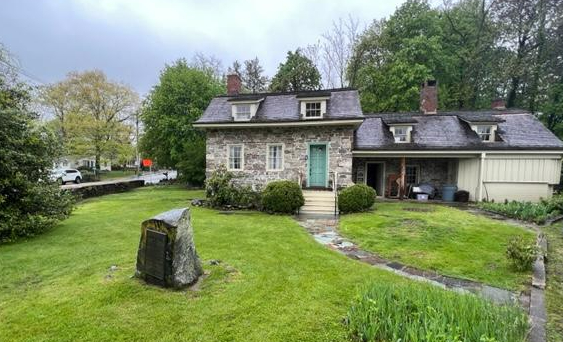
The John Fell House in April 2023 for the Northwest Bergen Historical Coalition event
I visited the John Fell House in May 2016 for the Northwest Bergen History Coalition 6th Annual History Day on “Day Forty-Three” of “MywalkinManhattan.com” blog site. The house is a stately home that sits at a busy point of the Franklin Turnpike, once the main artery of this part of Bergen County.
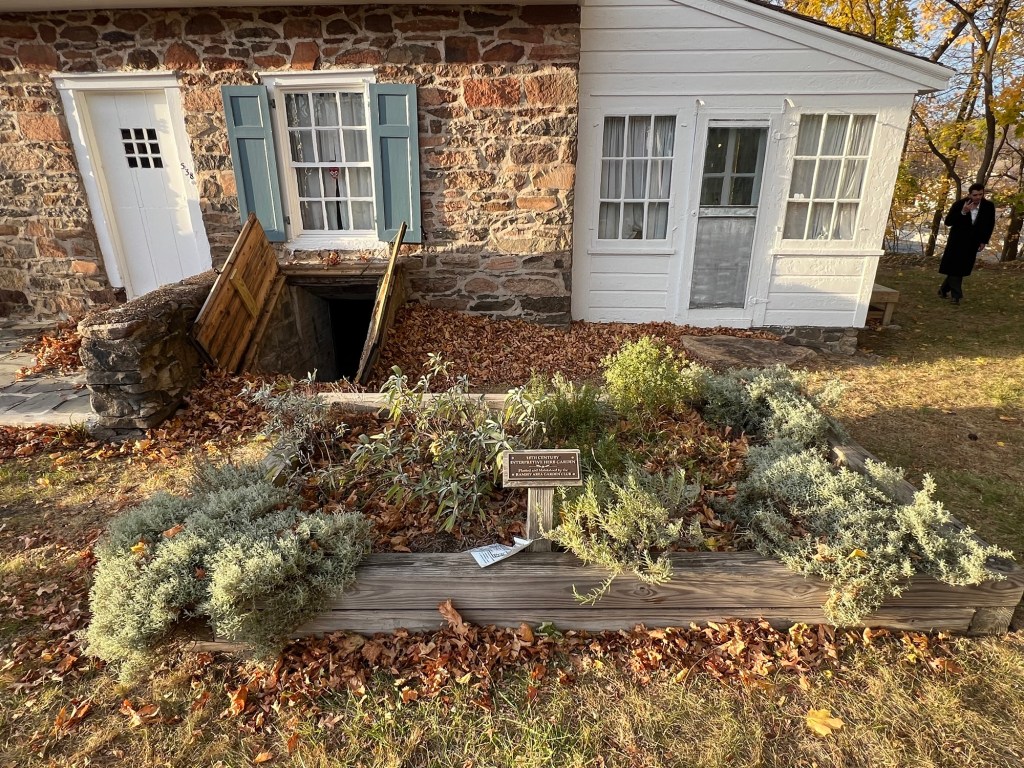
I was not too sure what this was as it was at the back of the house. I thought it might be a food cellar.
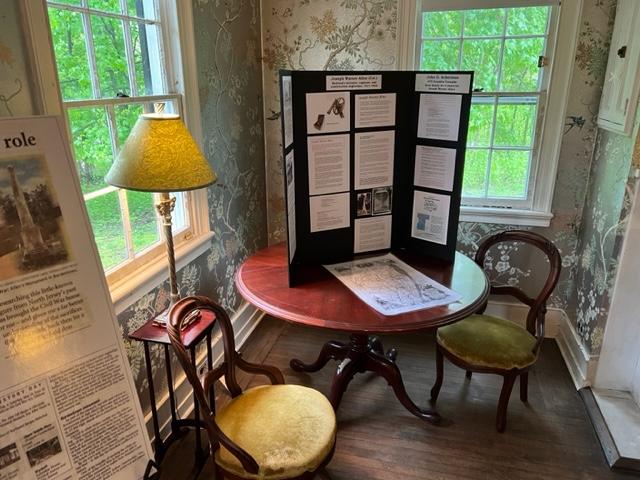
The only problem I found about visiting the John Fell home is that it is barely furnished. Most of these homes in Bergen County have furniture or heirlooms left by the family and this house is more used for entertaining. There are displays all over the house.
The backyard of the John Fell House in Allendale, NJ
The house is operated by the Concerned Citizens of Allendale and sits on 2.8 acres of land which includes the stately home, the Gothic Revival Barn, wetlands and old-growth trees. The house is across from the Celery Farm Bird Sanctuary, which was once part of the estate and is open to walkers year round (BCHS).
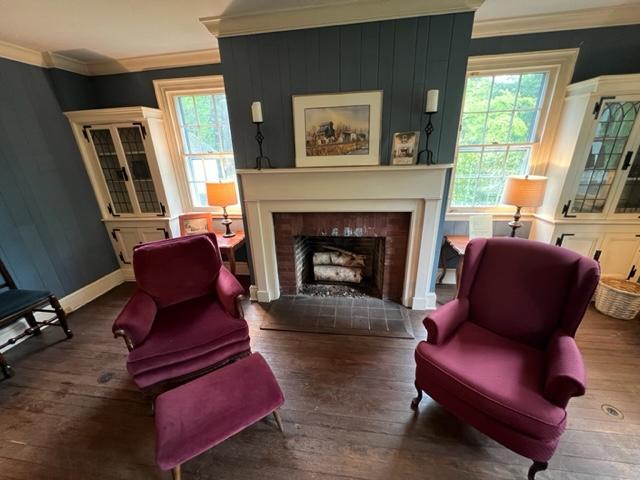
The front room of the John Fell Houser
The historic John Fell House is named in recognition of Founding Father, John Fell, a revolutionary war patriot, who purchased the property in 1766.
The Living Room at the Fell House in the late 1800’s addition
The house is located on the march route of Rochambeau’s army, on its way in 1781 to Yorktown, Virginia and the Seige of Yorktown that would decide the American Revolutionary War (Wiki).
John Fell (1721-1798) was an American merchant and jurist. He was born in New York City in 1721, he was engaged in overseas trade and has acquired a small fleet of ships by the time he moved to Bergen County, NJ in the 1760’s and lived at ‘Peterfield’, a home in present day Allendale, NJ (that is now known as the ‘John Fell House’) (Wiki).
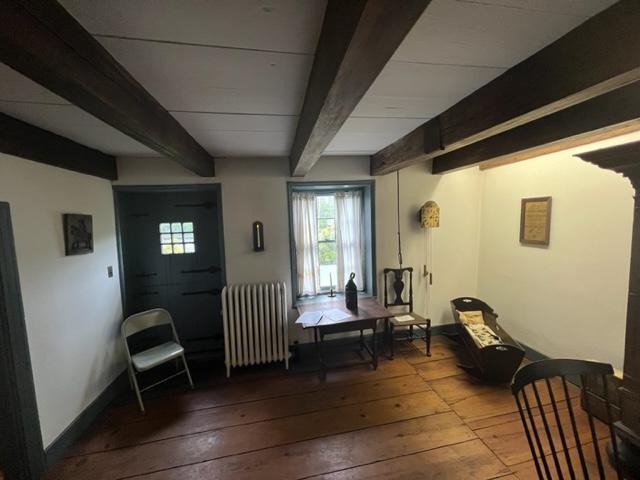
The original part of the house from the 1700’s
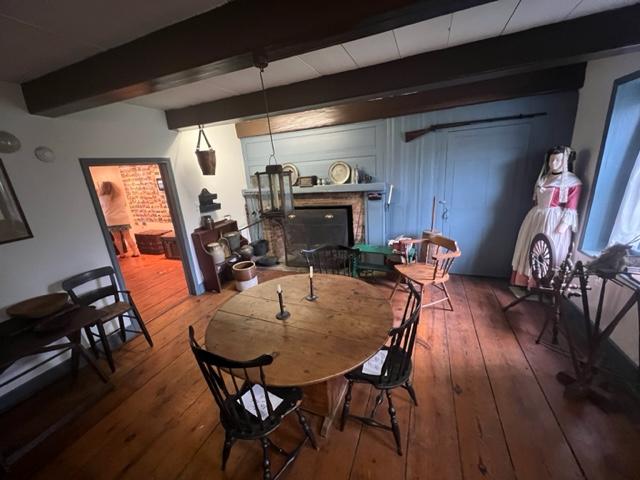
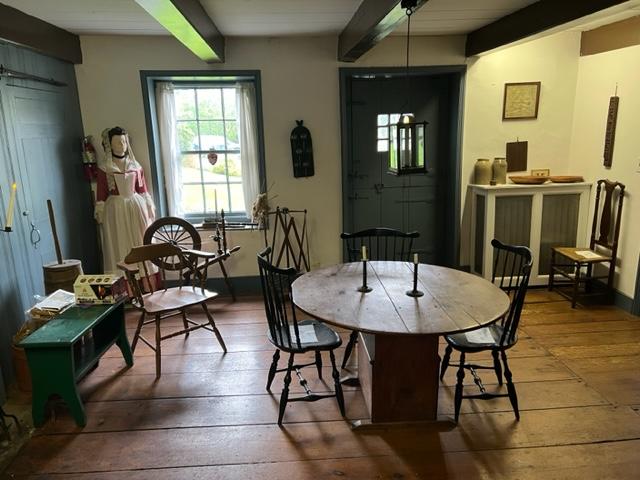
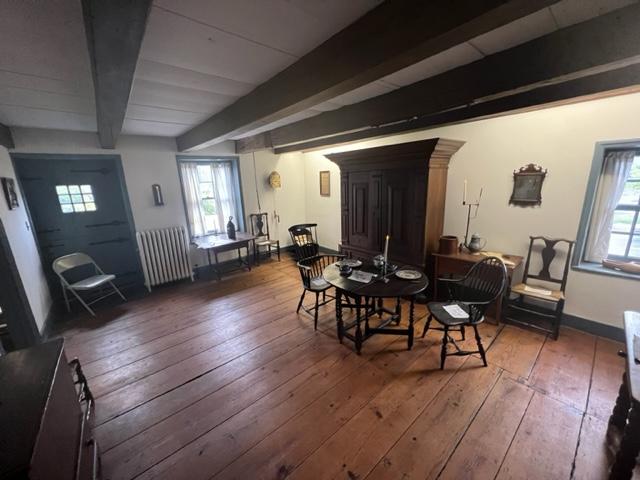
The main room of the original 1700’s part of the house
The Living and Dining Room of the original house
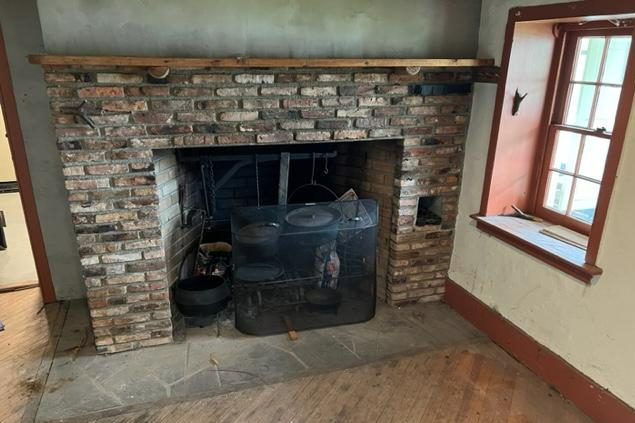
The original fireplace in the older part of the house
The inside of the Fell House
He served as judge of the court of common please in Bergen County from 1766 to 1774. With the coming of the American Revolutionary War, he became chairman of Bergen County’s committee of correspondence and the committee of safety. He was Bergen County’s leading delegate to the Provincial Congress of New Jersey in 1775. In 1776, Fell was elected to a one-year term in the New Jersey Legislative Council representing Bergen County.
The antique dishware and tea pots in the kitchen at the John Fell House
The house is open for all sorts of special events and can be rented out. Please check out their website above for more details.
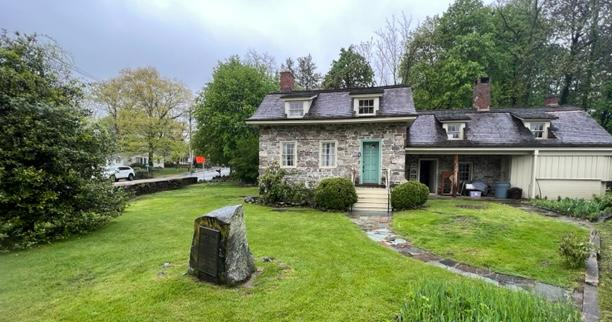
The Van Allen House in 2023 during the next History Coalition
I visited the Van Allen House on my first trip on the Northwest Bergen History Coalition 6th Annual History Day tour of Upper Bergen County in 2016 and in 2019. It is mentioned on ‘Day Forty-Three’ of my blog, ‘MywalkinManhattan.com’. It had been my last stop of the day. The historic home is currently closed due to renovations on the house and will open in the Fall of 2019.
The Van Allen House during the renovation in 2023 with the added dormers
Of all my stops that day, I found that the Van Allen House was in need of a renovation. From the outside, it is very quaint. On the inside, the house needed a lot of fixing up and restoration work. The upstairs had water marks all over the ceilings. The gardens also needed some serious weeding and planting. IN 2023, the renovations of the upstairs had been completed and the home was replastered and painted. Most of the artifacts were stored in a few rooms that were being finished.
The kitchen is as you enter the home
During the renovation, a lot of the artifacts were being stored in the addition to the house that took place in the early 1800’s. Many of the things that had been donated were showcased in this room off the kitchen and shows the wide variety of the society’s collection. There were all sorts of items from the home, decorative pieces and a variety of things that would have been used at the house as it being a working farm. There were also many Native American artifacts.
Some of the artifacts in the downstairs room
Artifacts in the room downstairs
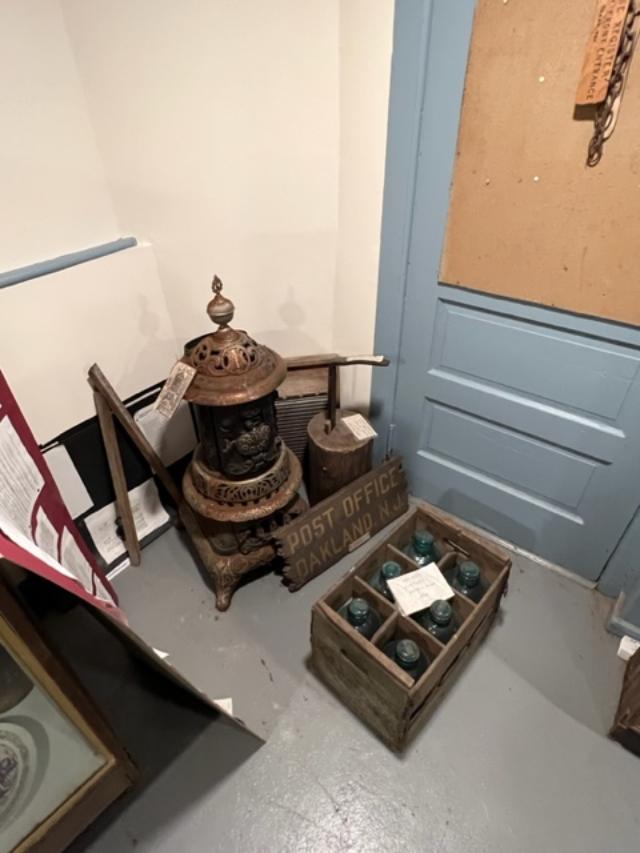
Household items donated to the society
More household items of the Van Allen House
More artifacts of the Van Allen House Collection
The vast array of items in the downstairs addition of the house will be used all over the house once the renovation is completed sometime in the next two years. There was still a lot to do around the house. There had been so much damage to the house over the years that it needed a major renovation.
The upstairs had been finished with the addition of the domers which a few of the society members had said that these were not part of the original house. They can debate about it but the house looks really nice with them and makes the house look realistic. Still from what the people said that they were not part of the original design.
You could see the vast improvement in the house over the last three years and the extent of the work that had been done already. All the outstairs rooms had been plastered and painted. The rooms looked very modern,
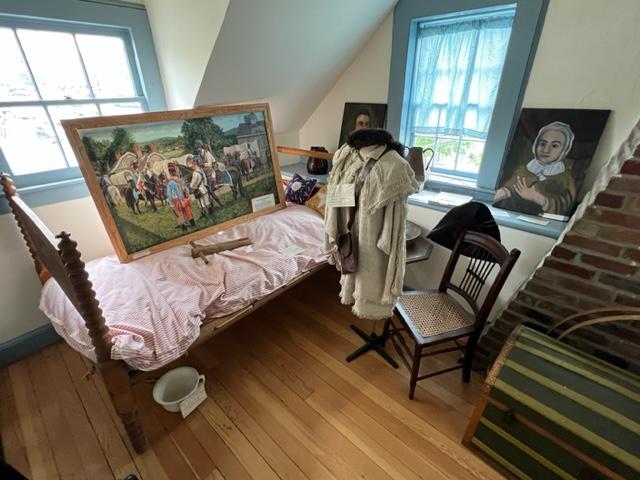
The upstairs has been nicely restored
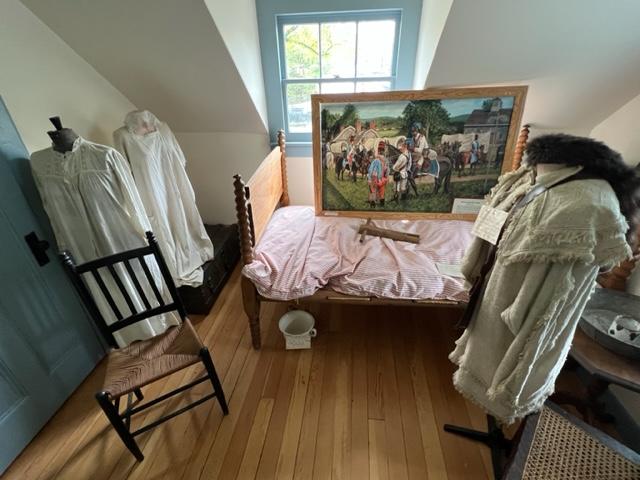
The upstairs rooms now house many of the home furnishings of the collection along with clothes and personal items of families that have donated them over the years. The upstairs is just finishing the renovation so things will have to be organized in the future but at least you can see the things that the Historical Society has in the collection.
Household items in the collection upstairs
Clothing and bedding items at the Van Allen House
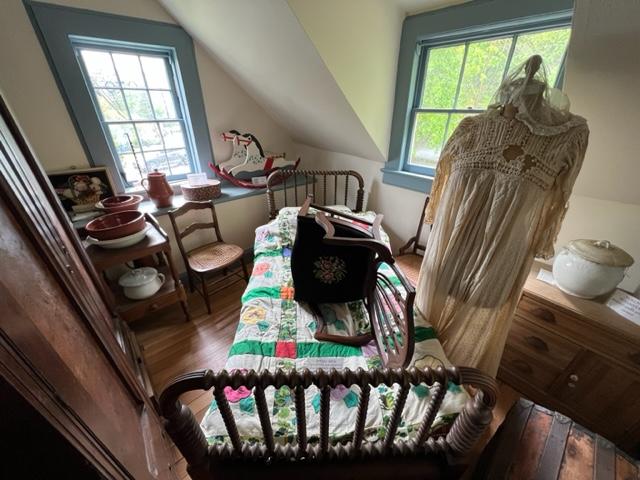
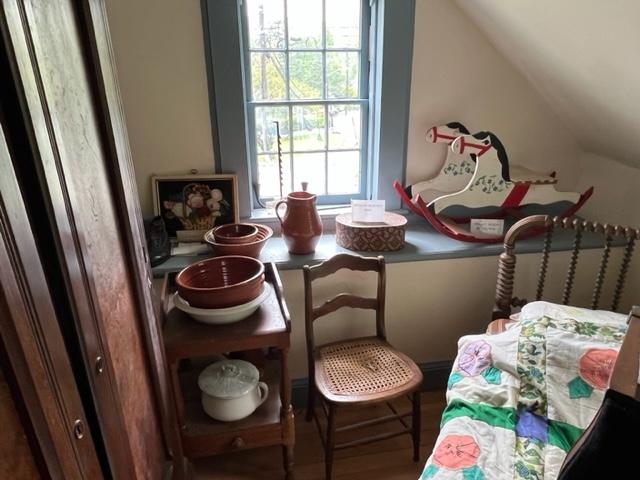
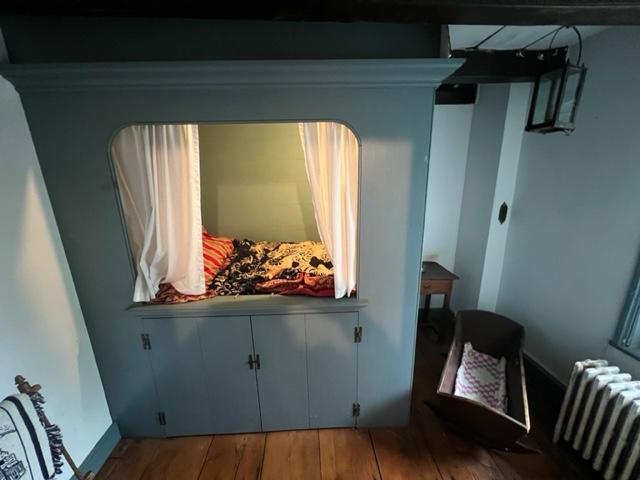
The smaller bedroom of the Van Allen House
One of the best things of the house is its gift shop. It has some of the most unusual handmade gifts that it was worth the trip out to the house. One of the members makes handmade cloth dolls for $5.00 that are just quaint and make a beautiful gift.
The Oakland Historical Society, who operates the house, was putting a lot of time and effort in the renovations of the house and their volunteers I was told would be working on the gardens. Either way, it is an interesting house to visit and it is steeped in history.
The upstairs beams leading to the bedrooms
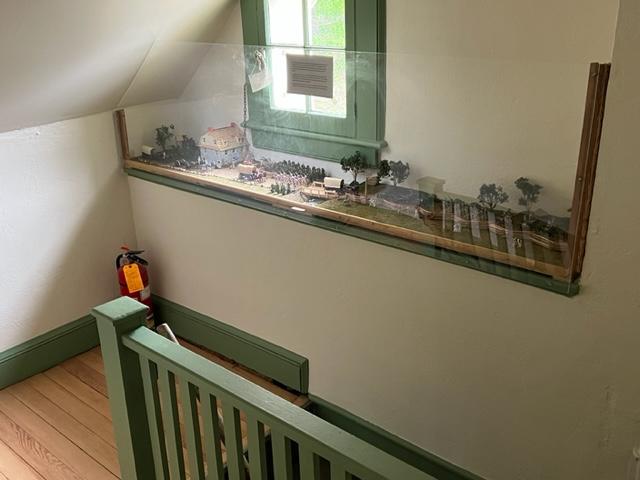
The toy collection at the top of the stairs
The History of the Van Allen House:
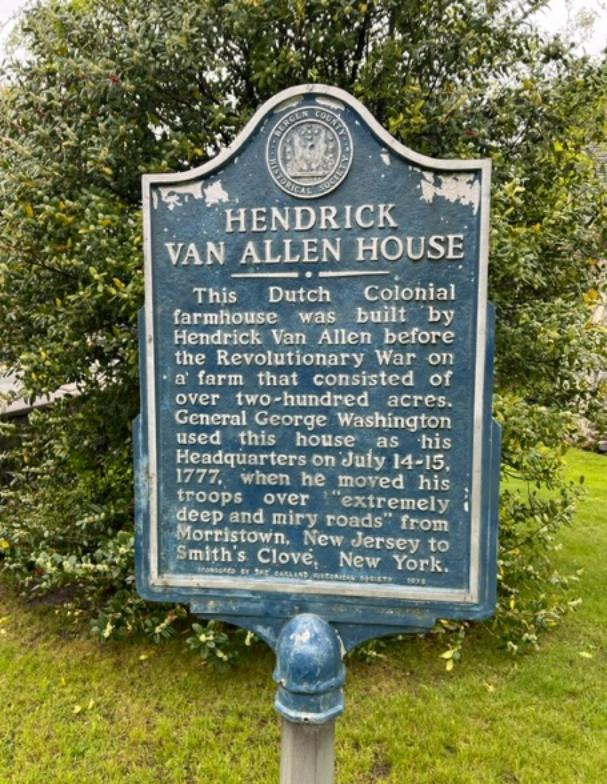
The Van Allen House was built around 1740 as the home of farmer Hendrik Van Allen. During the Revolutionary War, it served as the headquarters for George Washington on July 14, 1777. At the time, he moving his troops from Morristown, NJ to New York (Wiki).
In 1778 and 1779, Bergen County used the house as a court. Edward Day Page, a dairy farmer, businessman and Oakland’s second mayor, owned the house as well as the northern fourth of Oakland in the late nineteenth and early twentieth century (Wiki).
Household items at the Van Allen House
It was saved from demolition by the Oakland Historical Society with aid from the Woman’s Club of Oakland. It is now maintained as a museum displaying colonial Dutch life. The house was added to the National Register of Historic Places on July 24, 1973. There were several branches of the family in the Paterson, Passaic and Bergen Counties in New Jersey (Wiki).
Items in the family collection
The Oakland Historical Society:
The mission of the Oakland Historical Society (Oakland, NJ) is to bring to life and help maintain the history of the Borough of Oakland by activating and preserving especially the Van Allen House site, with the Vygeberg Farm Office Building and by keeping a museum there showing living displays and memories of Oakland’s past. We support living displays and memories of Oakland’s past. We support the Borough’s efforts to continue and complete the renovations of both buildings with the help of the Bergen County Office of Historic Preservation (OHS).
The Children’s bedroom at the Van Allen House
During the year we offer opportunities from people to visit the Van Allen House and experience local life as it was in the 18th and 19th Centuries on a farm settlement in northern New Jersey. The Lenni-Lenape Indians are known to have used the path which followed the Ramapo River Valley north and south and has now become an interstate roadway, Route 202, which goes from Maine south into Maryland and beyond. Copies of letters George Washington wrote at the House are available there during open-houses, usually the 3rd or 4th Sunday afternoon many months during the year. Please check our events page to see when the house will be open (OHS).
The Van Allen House on that gloomy Saturday morning
The site also has a building from 1902, built by Edward Page, one of the industrialists who settled along Route 202 to develop agricultural for the growing cities of Northern New Jersey, such as Paterson or Newark (OHS).
The Van Allen House Marker
The house was really interesting to visit during the Northwest Bergen Historical Coalition. The docents were really nice and they gave some interesting insights about the family and the house itself.
The Christmas holiday eventcelebrating Sinterklaas and the Dutch Christmas:
The outside of the house decorated for Christmas
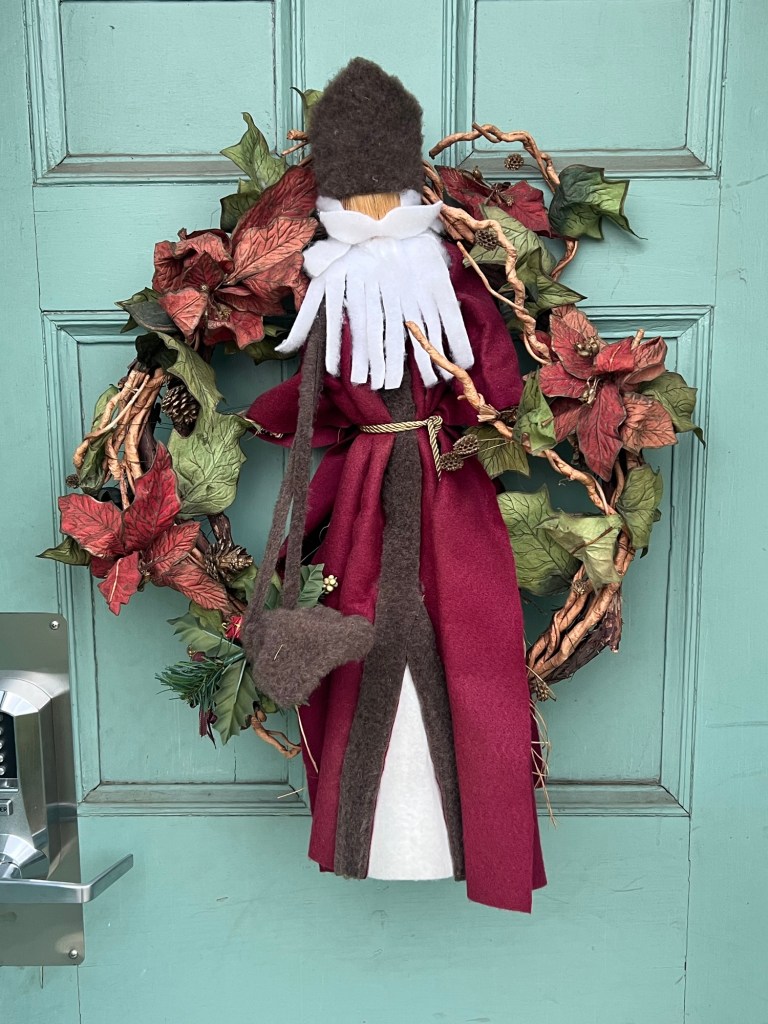
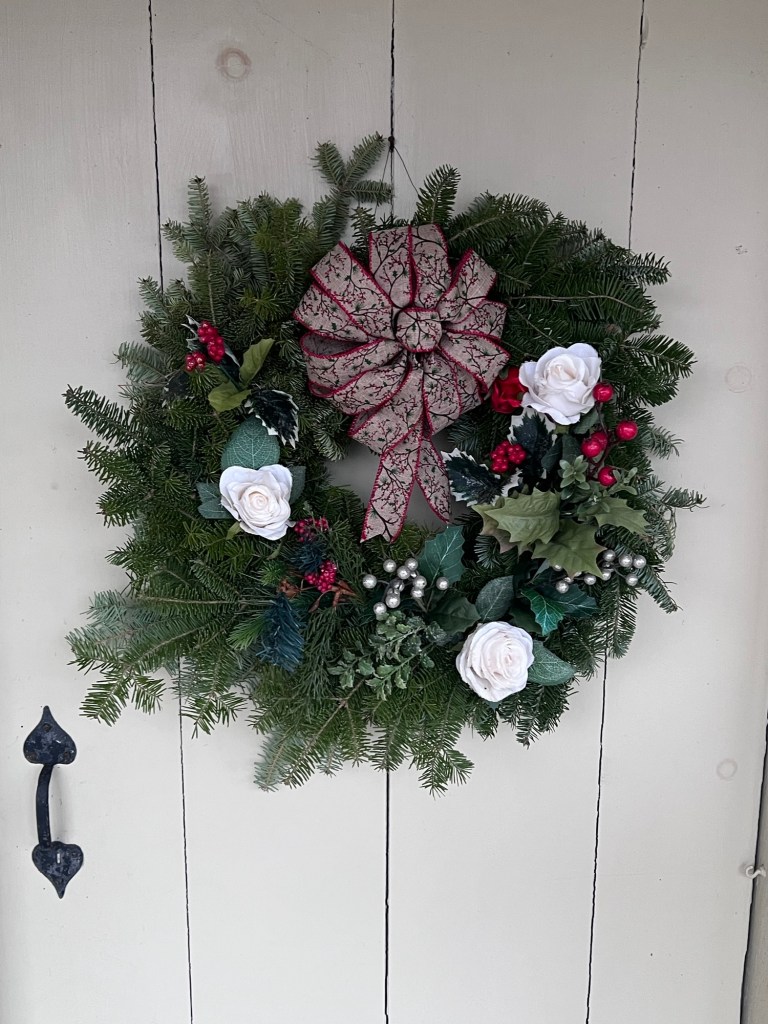
The front door wreath
The wreath
In December of 2025, I visited the historical site for the Sinterklaas celebration for the Christmas season. It was a nice festival with making in the hearth and gingerbread man decorating for the kids. These were delicious.
Baking in the hearth
Decorating gingerbreadmen
Indulging in freshly baked gingerbreamen
There was a woman playing Christmas songs on the harpsichord to the group of patrons in the main room of the house and an old fashioned Christmas tree decorated for the holidays.
The colonial woman playing the harpsichord
The performance
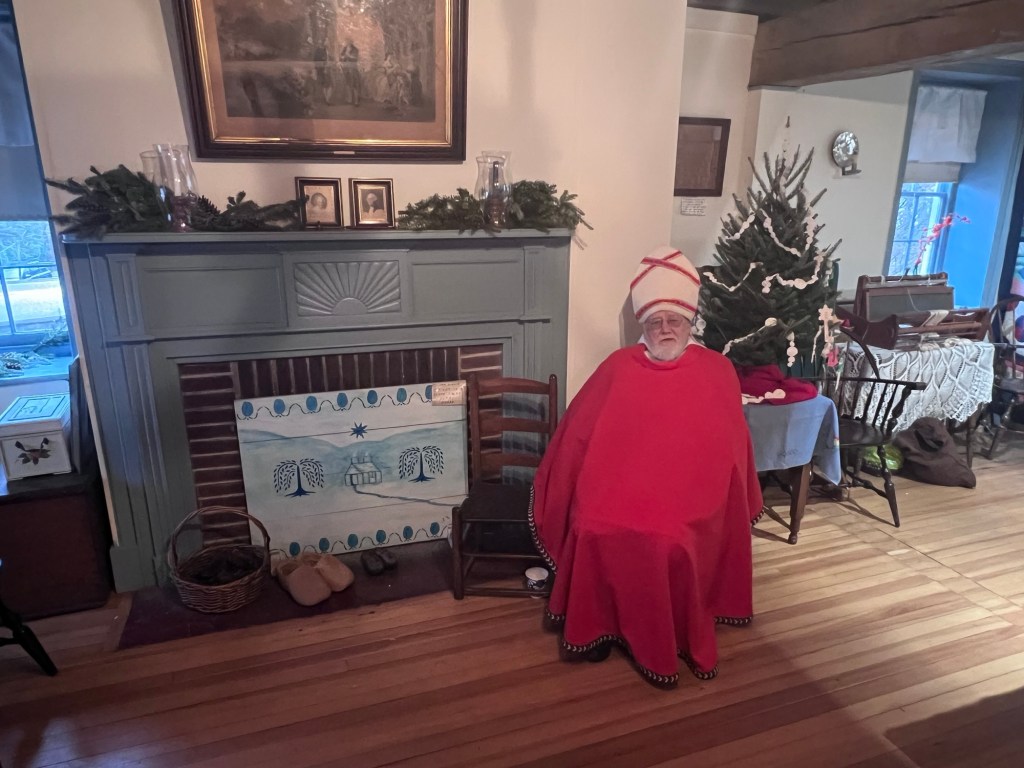
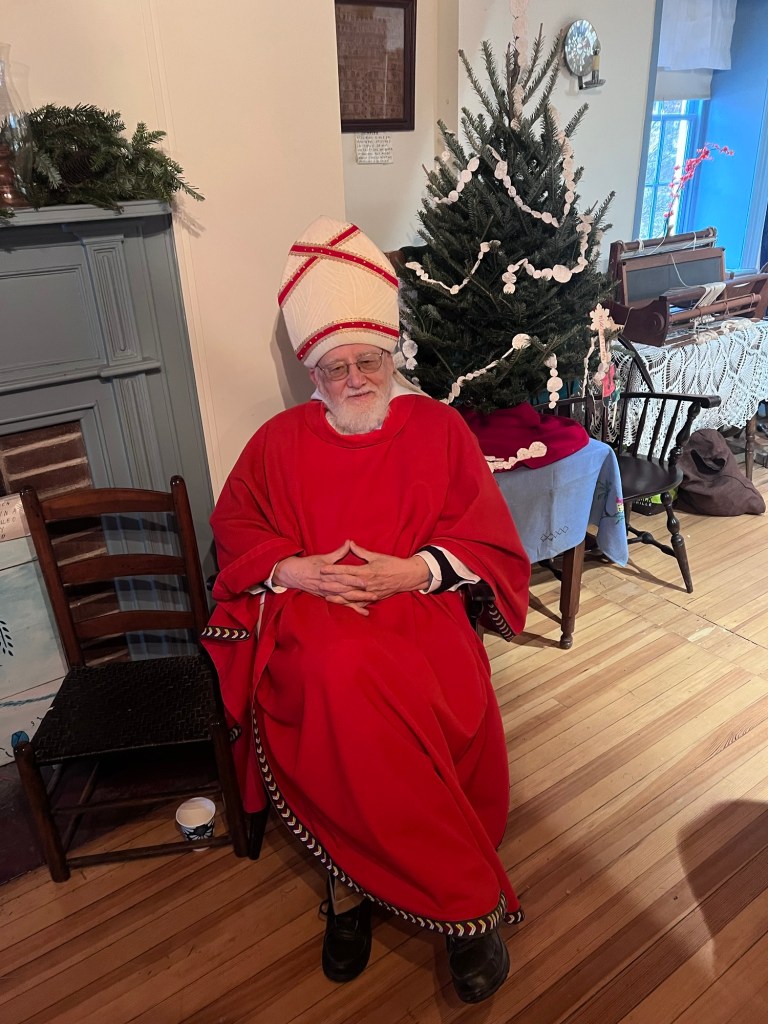
Sinterklaas, the Dutch version of Santa Claus was on hand to talk to the children and give out well wishes to everyone.
Sinterklaas talking to the guests
The jolly man greeting all of us
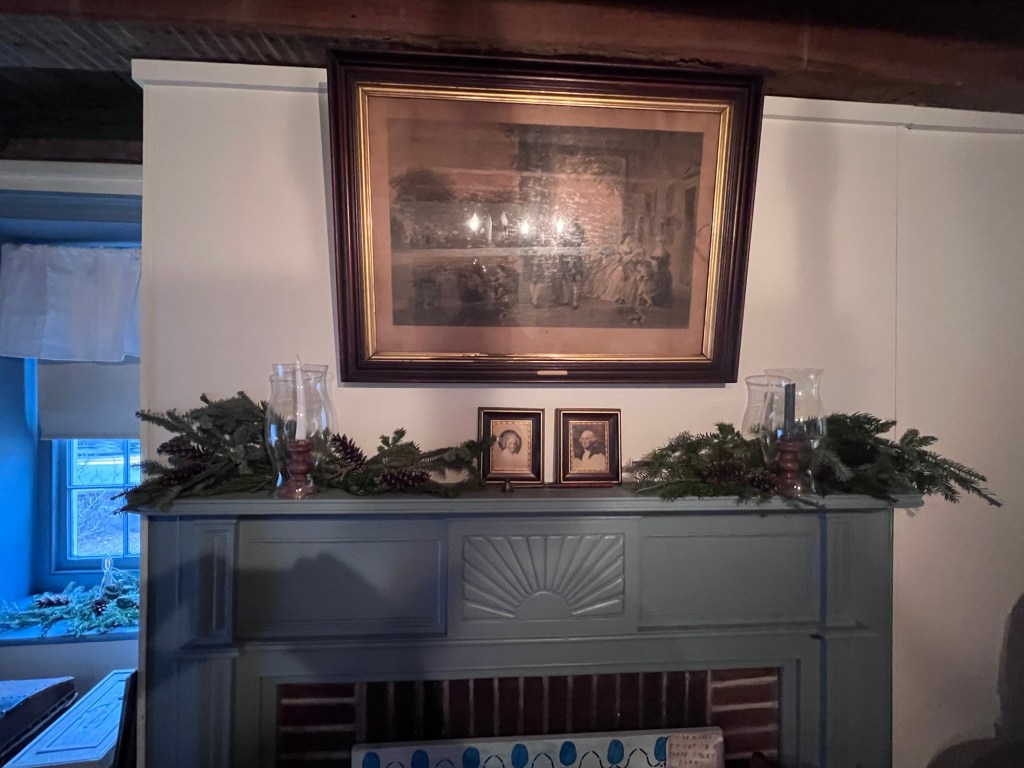
The house both inside and out was decorated for the Christmas holidays and had that early colonial look about it. Back then things were not as elaborate as the Victorian era and were simple pines, green and berries.
The simple table tree
The pines and greens decorating the mantle
The wonderful artifacts that are part of the collection
In the gift shop area there were very reasonably priced handmade dolls and ornaments made by one of the members. These one of a kind pieces are a perfect gift for the holidays. These are a very special gift for a lucky child.
The handmade items in the gift shop area
The grounds of the house and outside doors were decorated with wreaths and greens as well.
The wreath outside the Dutch doors
It was a nice event and the perfect way to start the holiday season. These Oakland Historical Society did a nice job with popular family event. It was a nice way to start the holiday season. The house was beautifully decorated for the season and the Society was planning all sorts of events for the Spring.
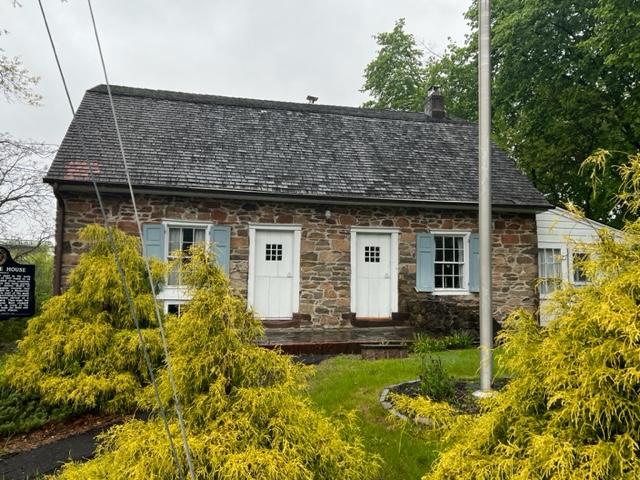
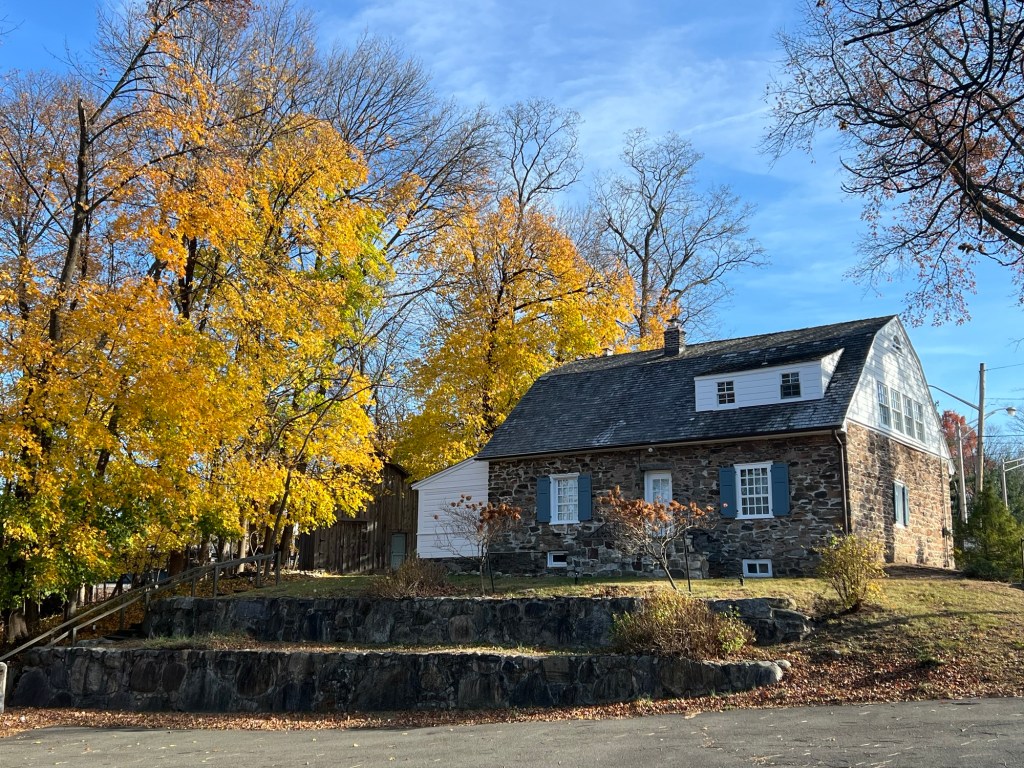
The Old Stone House in April 2023 for the Northwest Bergen History Day tours
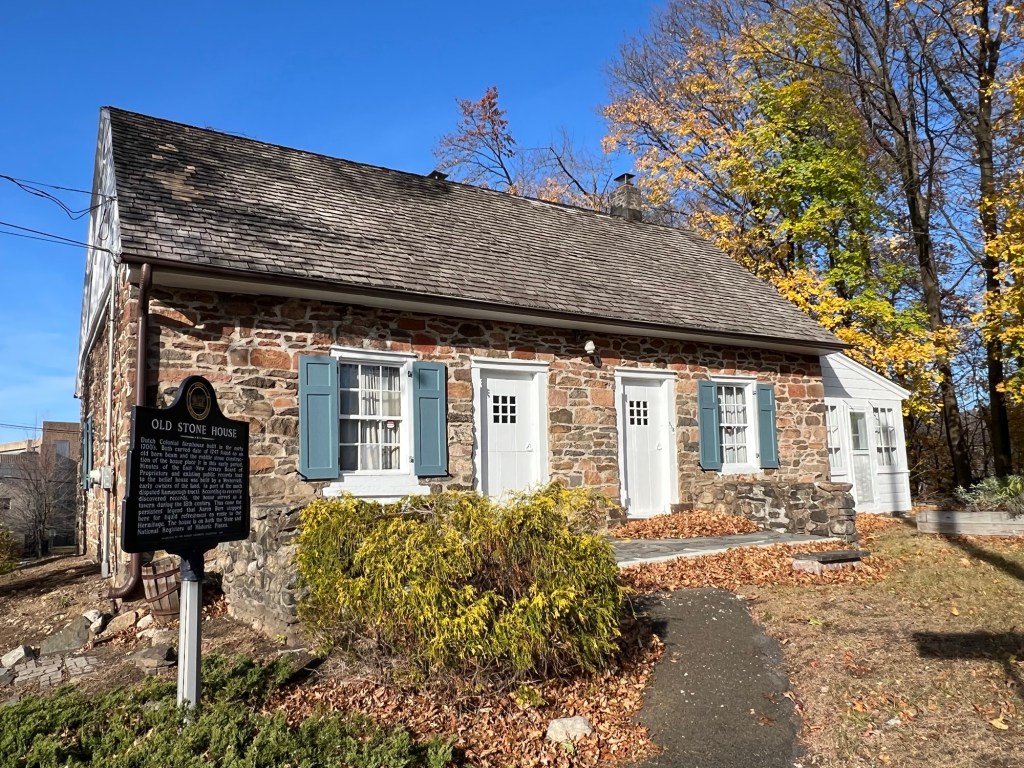
I visited ‘The Old Stone House’ during the Northwest Bergen History Coalition’s 8th Annual History Day. This Dutch stone farmhouse is one of the oldest buildings in Ramsey, NJ. It has been known as the Westervelt-Ackerson House to the families that built it and have lived in it in the past. The house is on the State and National Registers of Historic Places.
The house sits on a bluff that overlooks the highway but at one time was a 300 acre farm. The house’s furnishings on the first floor are period to the house with some of the original doors and windows of the house. There are still many original features in the house.
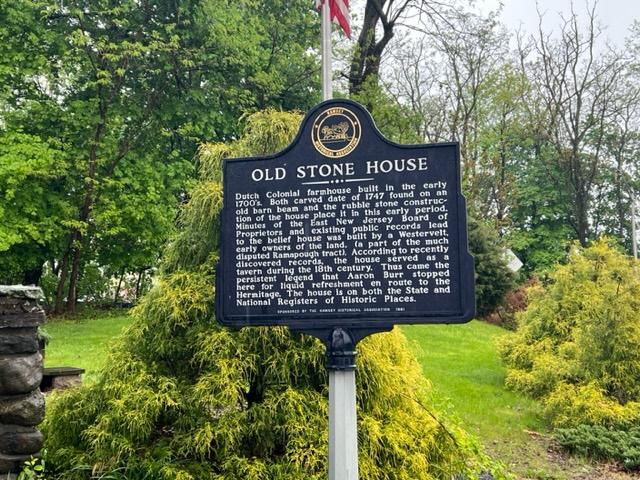
The Old Stone House signage
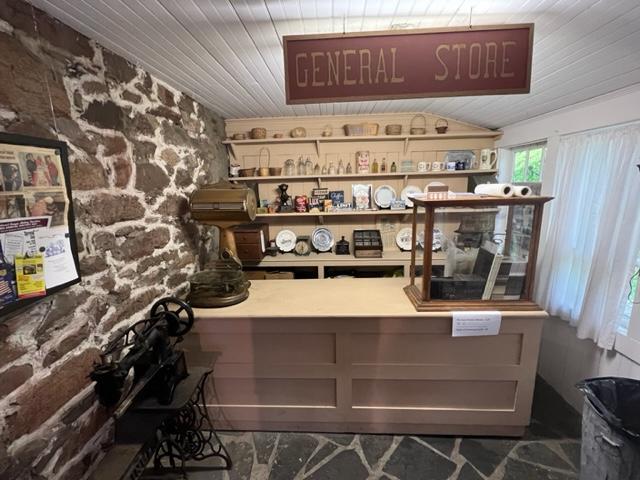
The first floor has a exhibit on the armed services and off to the side of the house which had once served as a antique shop to the last two owners of the house is a general store exhibition.
The General Store display on the first floor
The Armed Forces Display was very touching
The first floor is designed as most Dutch homes were at the time in the farming community. The kitchen was the center point of the home as a source of heating and cooking. The other rooms were connected so that the heat from the fireplace could spread through the home. It was simply furnished to reflect the life on the farm.
Another view of the Dining Room
As time went on and the family got more affluent, better furnishings were bought for the home. The house today reflects that home that would have been during the late 1700’s early 1800’s life on the farm.
The Old Stone House kitchen
The Old Stone House parlor
The Old Stone House Bedroom
The Old Stone House Living Room
Old Stone House Living Room
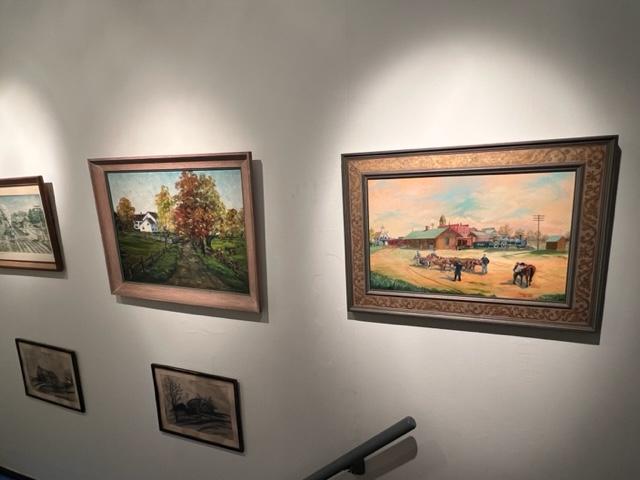
The upstairs painting and art collection
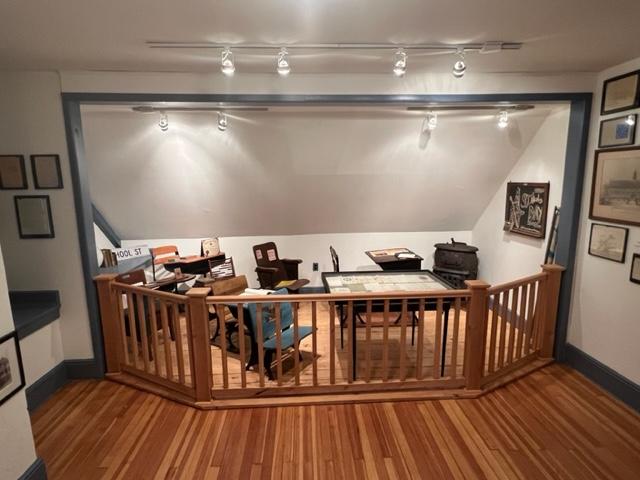
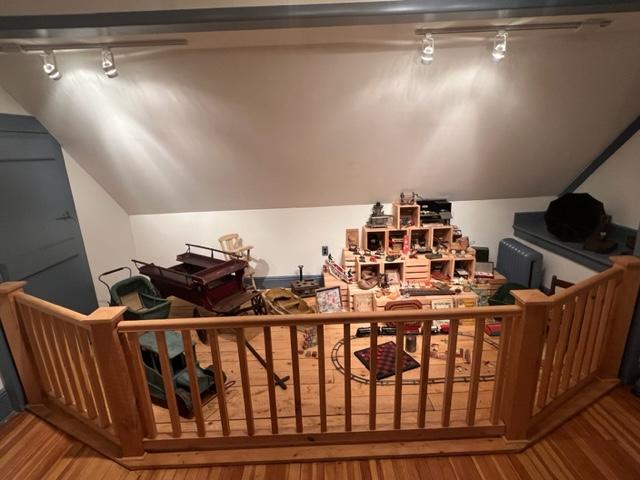
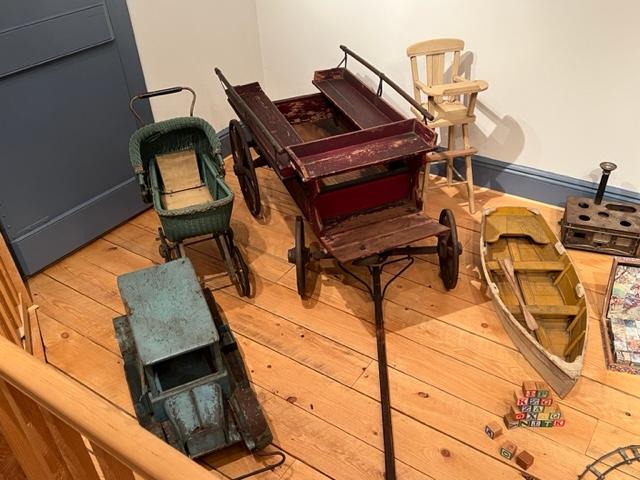
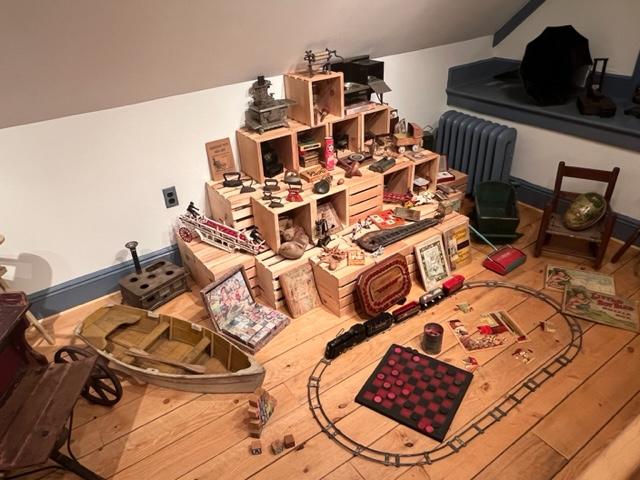
On the second floor are two children’s displays, one of toys and the other is set up like a school. There are period furnishings and children’s playthings in both rooms. The upstairs was finished off the house in the 1920’s.
The Old Stone House Schoolhouse display
The Old Stone House Toy Display
Antique Toys
Antique Toy Display
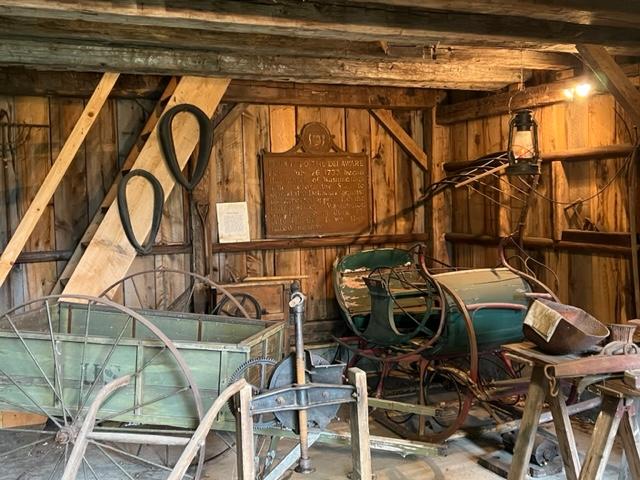
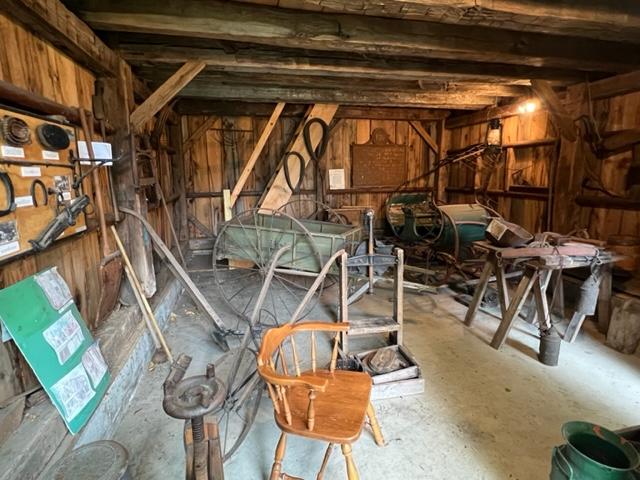
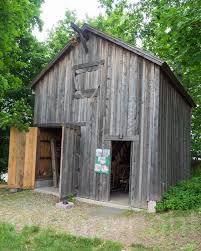
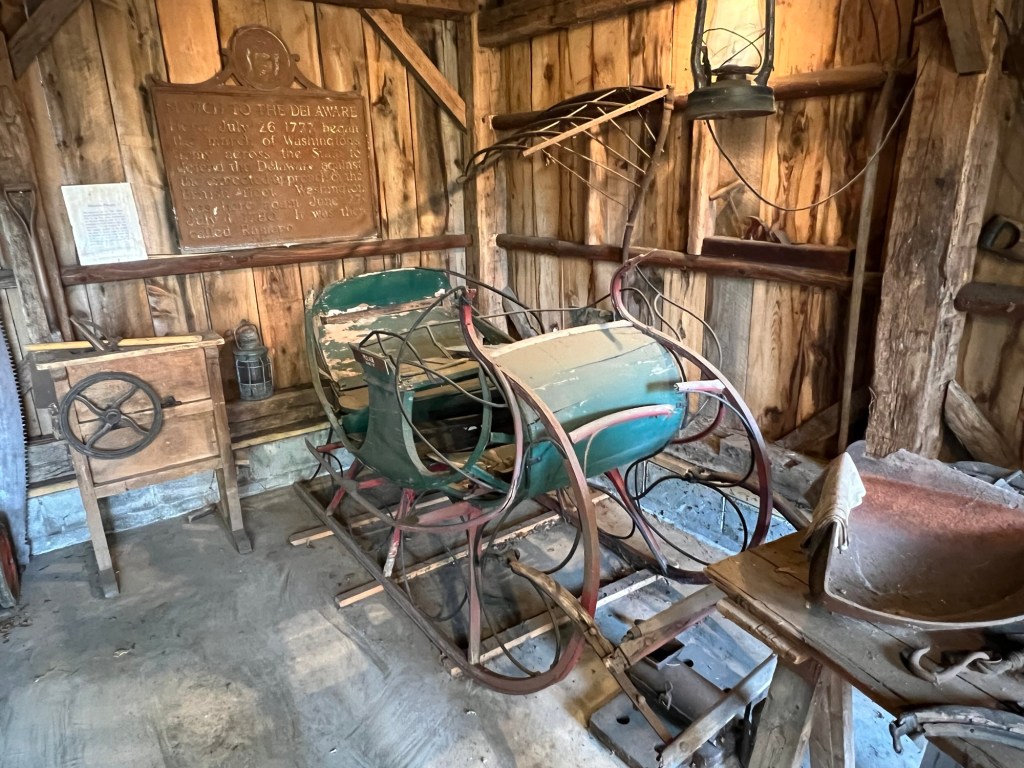
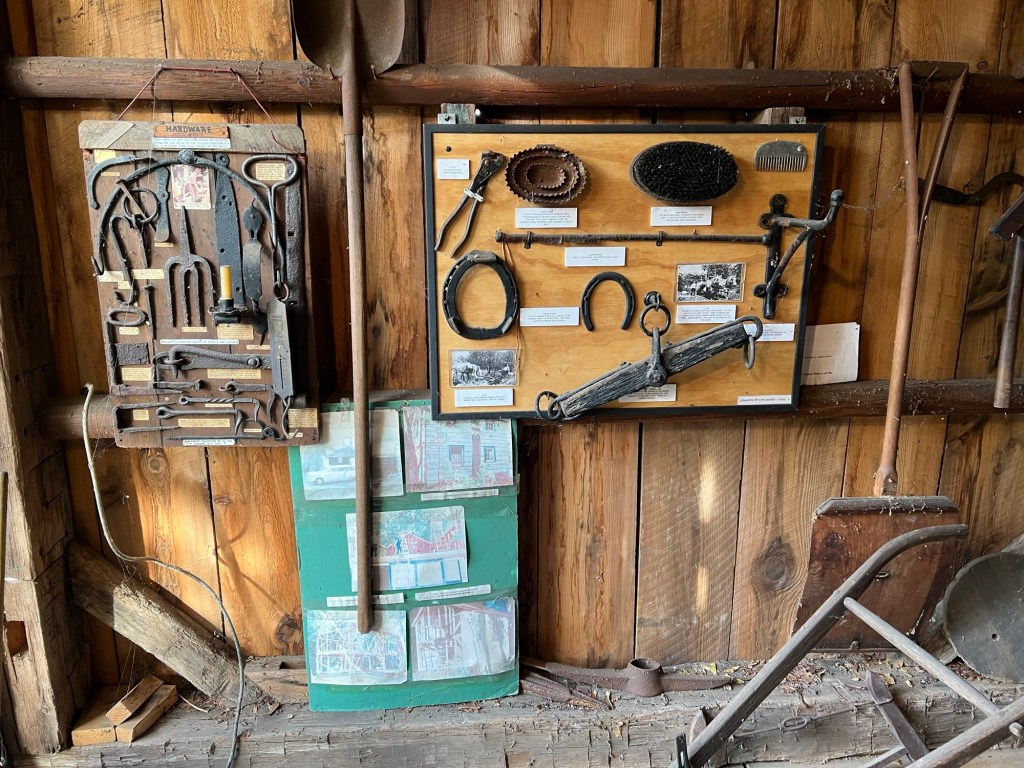
The barn off to the side of the house was moved to the property and holds a collection of period farm equipment.
The Old Stone House barn and farming equipment
The Old Stone House barn equipment
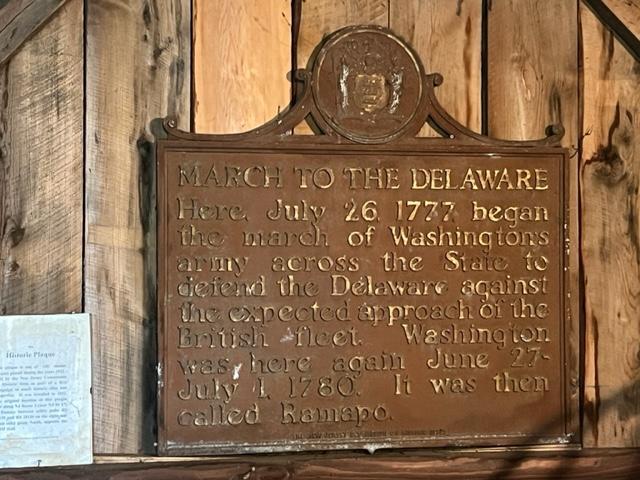
A historic marker in the barn
The house had been used as a private home for most of its history as well as a tavern during the late 1700 to early 1800’s. In the modern age, it was used as a antique store for the last two residents.
During the holidays, there is a big Christmas ‘Sinterklaas Festival’ (Dutch Christmas) that happens in early December.
The Old Stone House Barn
The History of the house:
(from the museum website)
The house has had many owners who have put their own touches to the ownership of the house. The original part of the house was built around 1746 by the original owner of the house, Jan Westervelt. This may have been part of the land leased to Uriah and Ruloff Westervelt in 1744. The land was part of the Ramapough Tract for the Proprietors and was from Peter Fauconier, one of its original purchasers (RHS).
The Ramapough Tract is situated between the Ramapo Mountains and the Saddle River. It was purchased from the Indians on November 18, 1709 and it was acknowledged by the Indians at Tappan before Cornelius Harring, the Justice of the Peace. The land was passed through the Westervelt family through the early 1800’s until it was sold outside the family in 1837.
From there the house had multiple owners until it was sold to the State of New Jersey in 1955 and is now leased to the borough of Ramsey for a dollar and is maintained by the Ramsey Historical Society.
The Old Stone House
My class promotion of the Borough of Ramsey for the project “It’s Razzling in Ramsey: Be a Tourist in your Own Town”:
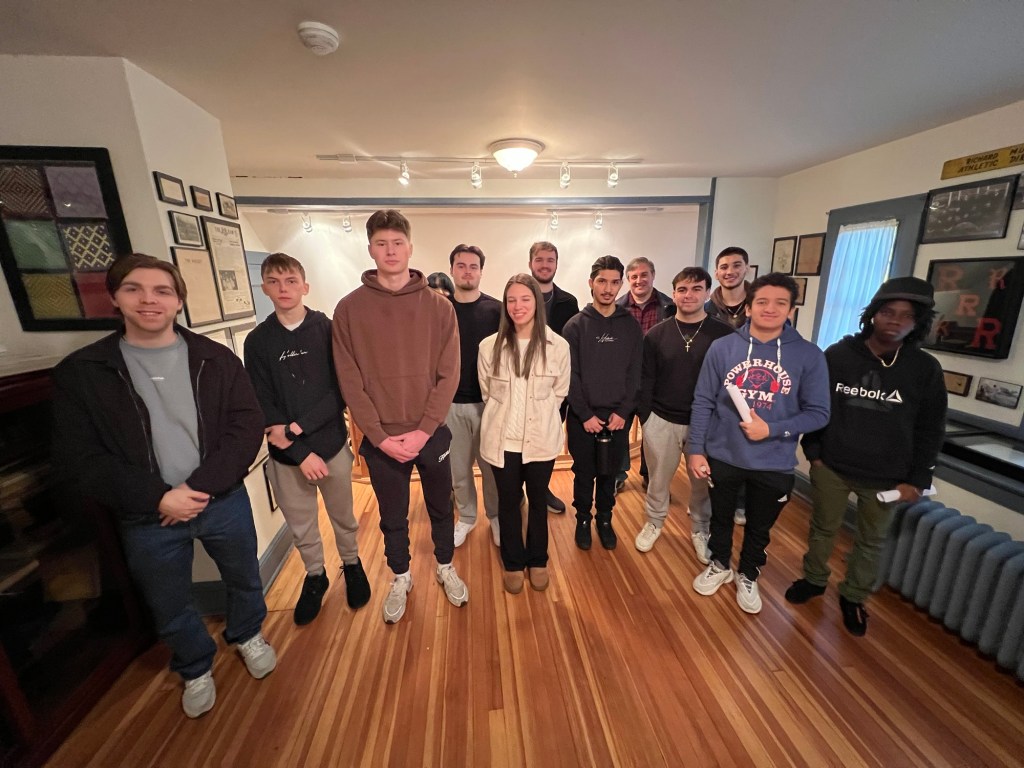
In the Fall of 2024, I created a Team Project with my students at Bergen Community College that promoted the Borough of Ramsey for Destination Tourism. Part of this project was a trip to the Old Stone House with the assistance of the Ramsey Historical Society, our class toured the museum and understood its rich history not just in Ramsey but in Bergen County.
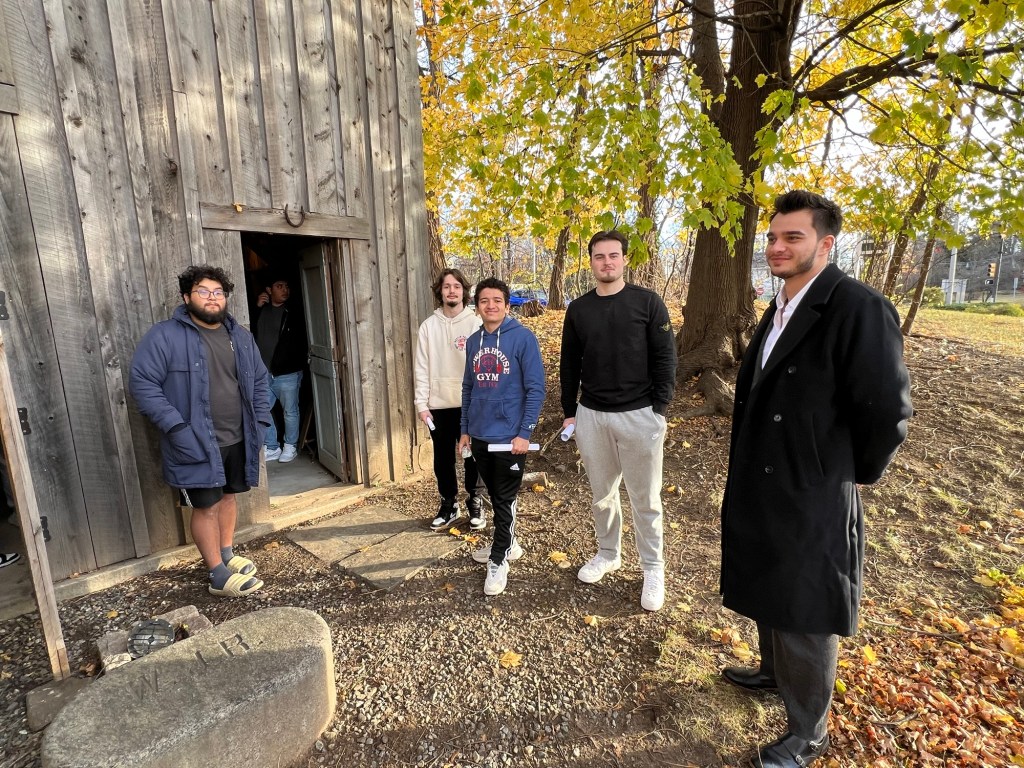
Touring the Old Stone House right before Thanksgiving
The Old Stone House from the street
The barn on the property
The President of the Ramsey Historical Society tour us on a tour of the barn, the grounds and then around the house. He explained the town’s past and its place from Colonial to modern times.
My students exploring the barn
Taking class pictures outside the barn
Touring inside the barn with its farm equipment and sleighs
Looking at the farm equipment from all ages
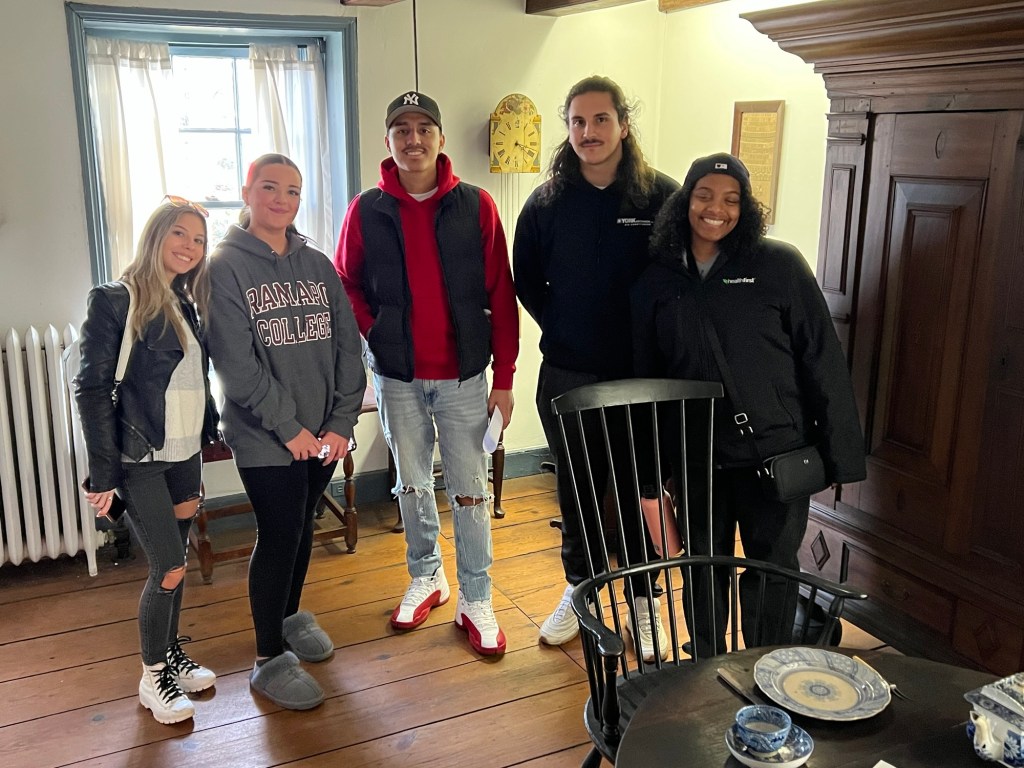
My students touring the Old Stone House
My students touring the museum
A group of my students touring the museum to promote it for tourism
The Historical Society even let us tour the basement
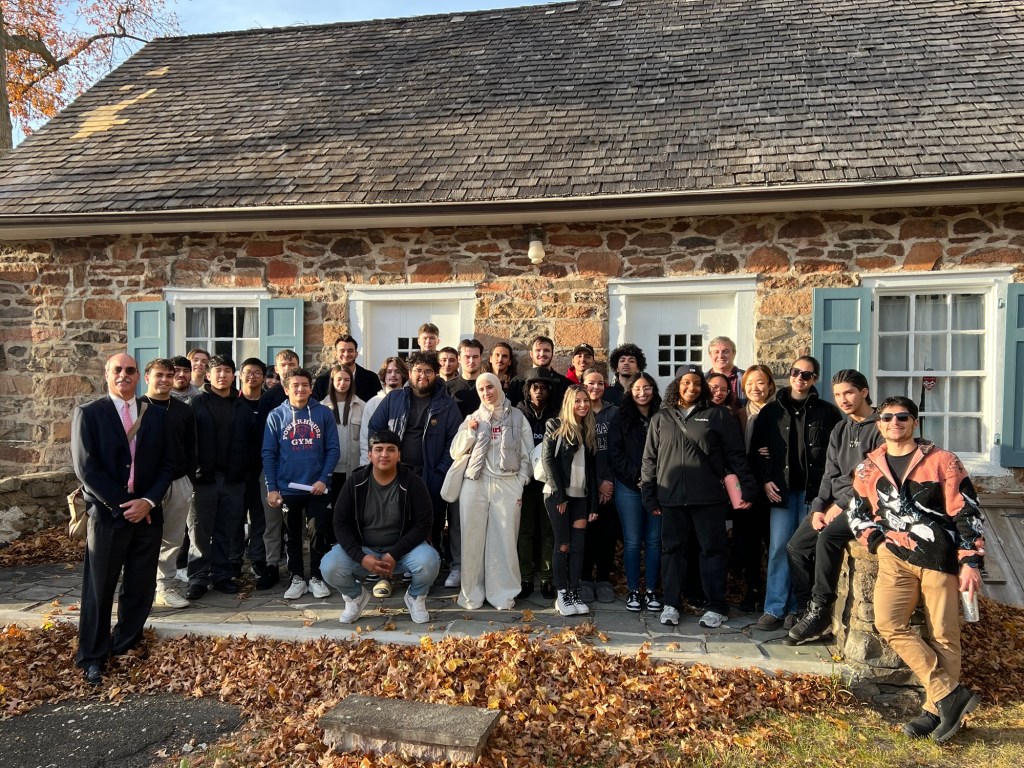
The Team group picture of all my students touring on the walking tour of the Old Stone House in November 2024.
They created the very funny and clever “Visit from Mr. Pumpkin” event for the project. Here is a link to the video:
The students did an excellent job on the project and you can see the whole present above through the blog and its links. It was the perfect showcase to this hidden gem of a museum.
The Video’s of the Presentation in Glen Rock City Hall.
Video One
City Hall Presentation December 2023
Video Two
Glen Rock City Hall Presentation December 2024
Video Three
Glen Rock City Hall Presentation of “I’m Glad I’m in Glen Rock, NJ” December 2023
The museum was given a Digital Marketing Campaign in the videos.
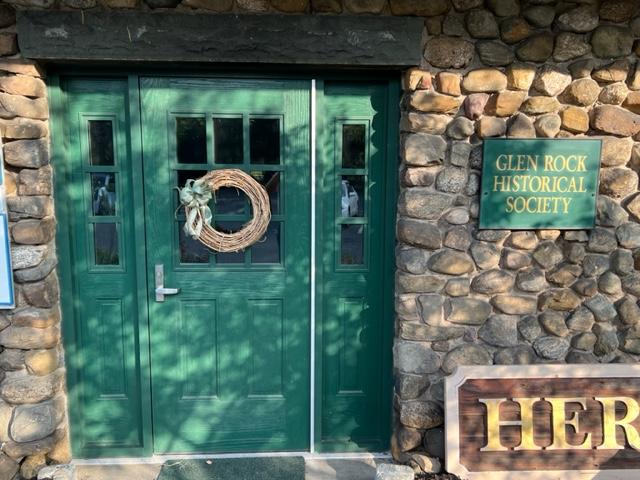
The Glen Rock Historical Society at the old train station.
I visited the Museum at the Station as my last stop on the Northwest Bergen History Coalition 8th Annual History Day tour. The station is managed by the Glen Rock Historical & Preservation Society and is housed inside the original 1905 Erie Main Line Train Station on Rock Road at the tip of downtown Glen Rock.
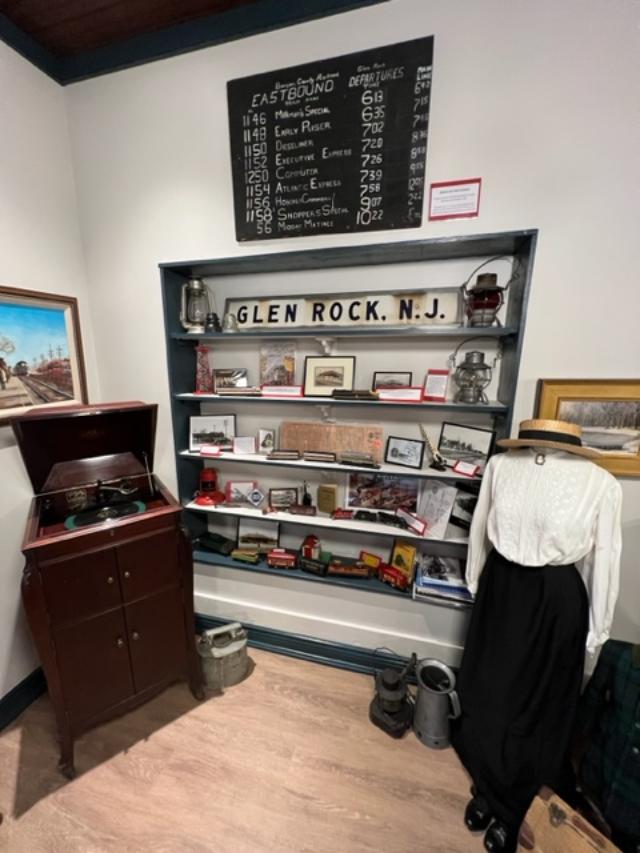
The Dispatch area of the Museum at the Station in Glen Rock, NJ
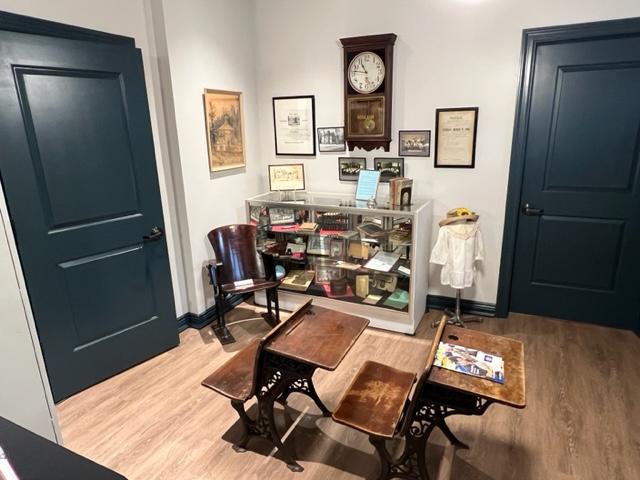
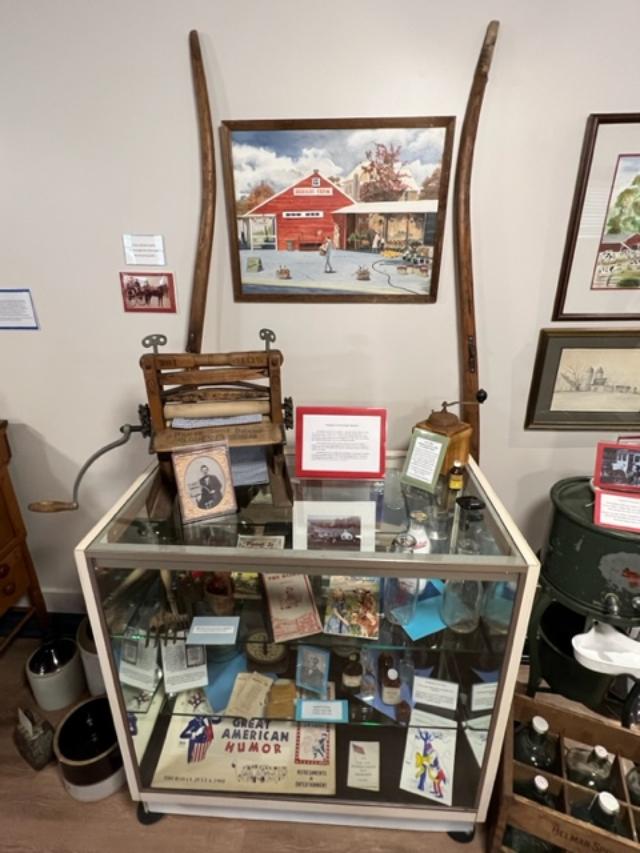
The station was at one time a destination and departure point for families and farmers, commuters and immigrants. There are permanent exhibits on the Erie Railroad’s past and artifacts from Glen Rock’s past including clothing, furniture, toys and farm equipment.
Some of the items they have on display are an interesting toy train collection by a local resident, an old Victrola with the accompanying records, period clothing donated from local residents and local artifacts from local residents.
Toys and school set up at the Museum at the Station
They had a small display for the day on how immigration shaped the town of Glen Rock and it grew on the transportation that was brought to this small town. The volunteer docents who operate the museum do a nice job with the tours and in describing all the artifacts on display.
The Museum at the Station in full view
Local historical items at the museum
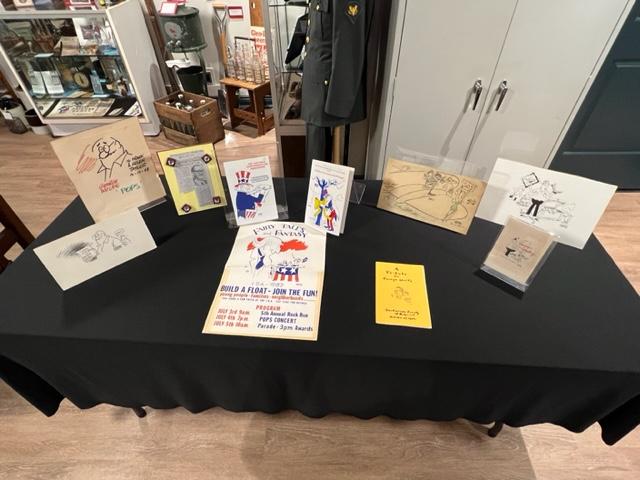
The museum was hosting an exhibition on the work of artist and cartoonist George Wolfe, who is best known for his jumbles cartoons. The artist had lived in New York City and then moved to Glen Rock in the 1970’s. His works were displayed all over the museum.
The sign for the “George Wolfe” exhibition
The work of artist and cartoonist George Wolfe at the Museum at the Station.
The original artwork of artist George Wolfe;
What is nice is that right down the road is the historic ‘Rock’ that Glen Rock is named for is a block down the road at the corner of Rock Road and Doremus Avenue. This historic landmark is a product of the its movement here in the last Ice Age. During the time of the Lenape Indian living in the area, it was considered sacred and used as a historic marker. During the Colonial era of the town, it was used as a gathering place.
The museum is open limited times of the month so please call in advance.
The history of Glen Rock at the Museum at the Station
History of the Museum:
The Museum at the Station is housed in the 1905 Glen Rock Main Line train station. The Erie Main Line was originally part of the Paterson-Ramapo Railroad that was one of the earliest railroads in New Jersey, coming through this area in 1842. The building now houses the Glen Rock Historical and Preservation Society.
Artifacts at the museum
The Borough was incorporated in 1894 and the Museum’s collection contains many artifacts, documents and photographs illustrating the history, growth and development of Glen Rock, NJ.
(From the Northwest Bergen History Coalition)
Disclaimer: This information was take directly from the Northwest Bergen History Coalition pamphlet and I give them full credit for the information. Please call or email the above numbers for more information.
(Please see my blogs under my site, “MywalkinManhattan.com”, ‘Days One Hundred & Nine’ and ‘Day Forty-Three’ for description of my touring days of the sites of Bergen County)
































 Visiting a Museum: The Unique, Unusual, Obscure and Historical