The Sturr Family Cemetery sits on a bend of the driveway of the Chabad Jewish Center of Northwest Bergen County and is a small cemetery that once sat on the edge of the J.H, Sturr farm.
The Sturr Family Cemetery
The farmhouse of the Sturr Family sits on the lot across the street from the cemetery property. This is located on a small buff on what was the edge of the farm.
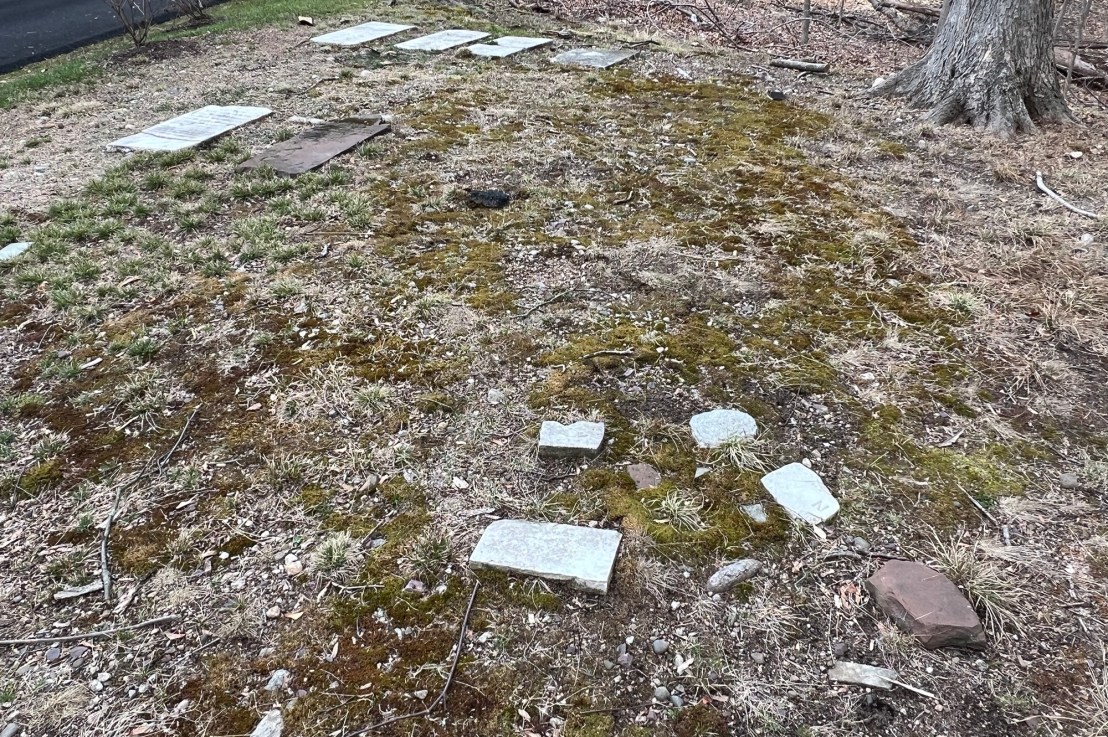
The Sturr Family cemetery tombstones
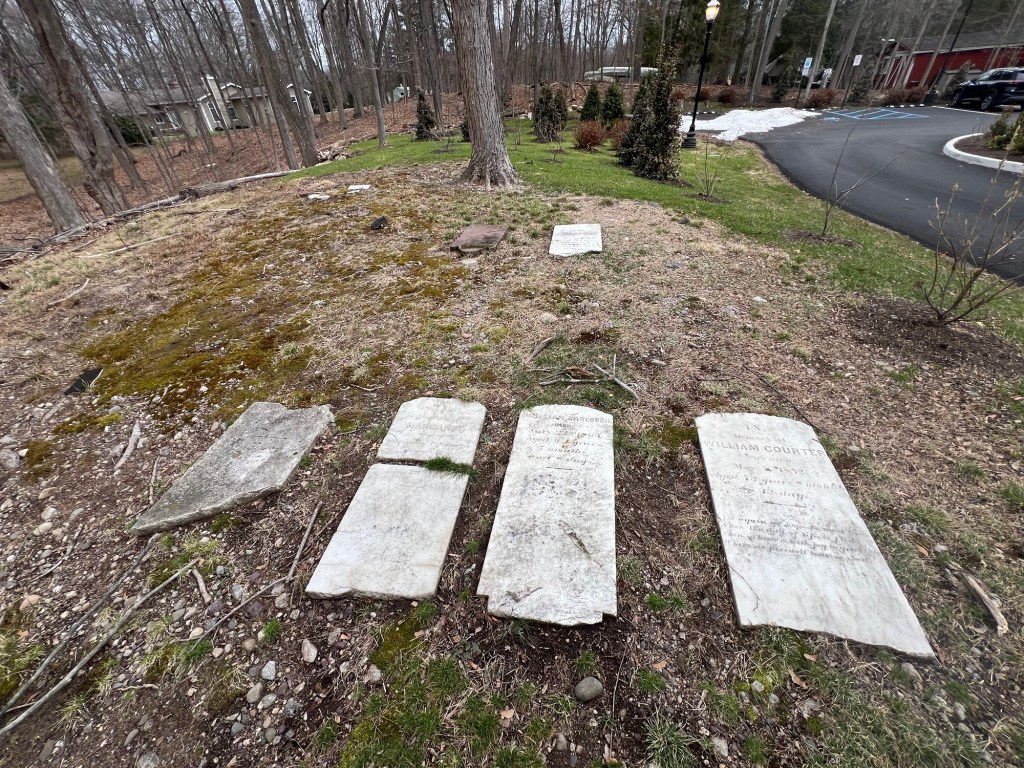
The tombstones of the Courter and Carlouch family members
The grave of William Courter
The only visible tombstones that are left in the cemetery are an Ackerman family member, Anny Ackerman and members of the Courter and the Carlouch family’s (who must have married into the family).
The Ackerman family tombstones (the one to the right was unreadable)
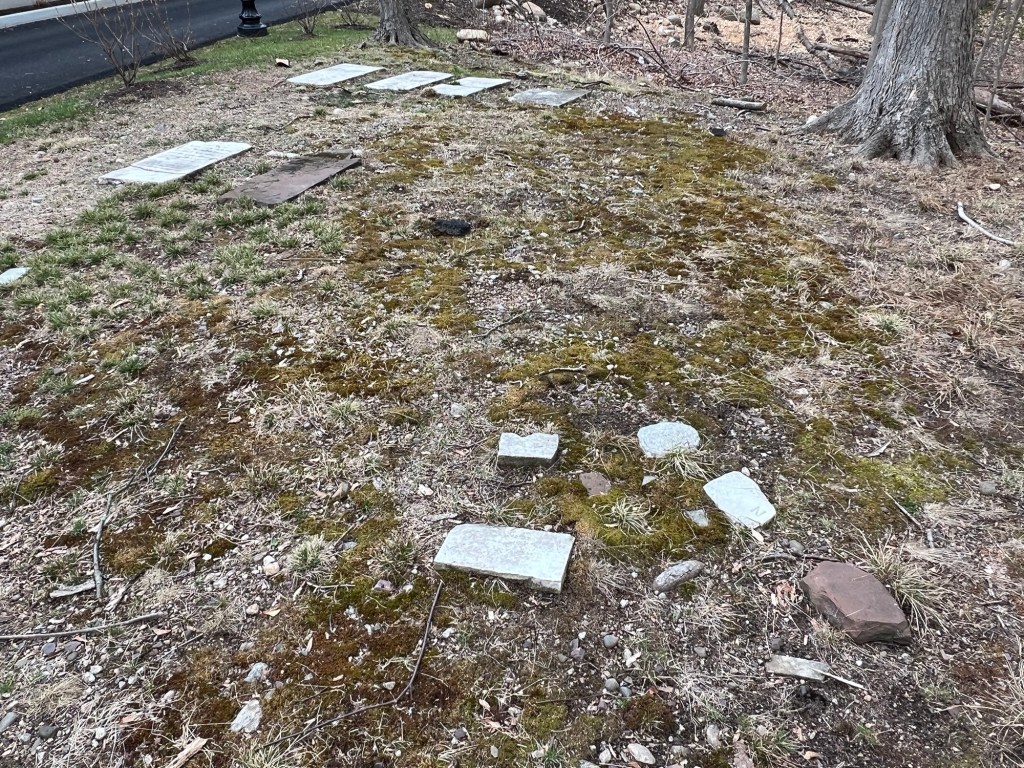
The other tombstones are broken and no one is sure who is buried where in the cemetery.
The History of the Cemetery:
(From Find a Grave website)
The cemetery is located in Franklin Township, Bergen County, New Jersey, on what was once the family farm of J.H. Sturr. As of October 1991 only 6 markers were still remaining.
The Sturr Family Cemetery in full view
History of the House:
(From the Franklin Lakes Municipal Website)
H. Sturr House or Blue Meadow Farm Built 1860 378 Pulis Avenue, Block 1510, Lot 8 Franklin Lakes, New Jersey 07417
The Sturr House – also known as Blue Meadow Farm -is a handsome and little altered example of mid 19th century vernacular architecture which incorporates several stylistic elements such as gable returns and frieze area of the early 19th century Greek Revival style. The Borough of Franklin Lakes lists the erection year of the house as 1860.
The façade of this 2 ½ story house consists of clapboard. The front porch has five bays with square posts and a rectangular entrance door with rectangular sidelights. Two tall 1st story windows are on one side of the porch. A single hitching post with iron rings sits in front of the porch stairs. The building has a frieze area with linear design. Semi-circular headed louvered vents are in all gable ends. The rear of the house has a one story wing. There is a detached garage to the west side of the house as well as a round frame well. Further west of the house is a stable which has been extensively remodeled and converted into a residence in recent times. The house combined with associated structures is a significant remnant of the large farmsteads which ones dotted the Borough’s landscape prior to the recent suburban housing boom.
History of the Family:
(From the Franklin Lakes Municipal website)
This Sturr house and the nearby more altered house at 402 Pulis Avenue were duplicate structures and were probably built around the same time by members of the Sturr family. The 19th century Sturr family was descended from Conraedt Sturr who purchased 190 acres of land in this area with John Coeter from Robert Livingston in 1793.
The non-extant homestead and mill was located at present-day 930 Old Mill Road. It is known that Henry Sturr, the son of Conraedt, had a fanning mill at this location in 1850. In a will dated 1852 he bequeathed his property and mill to his grandsons John, Henry, and Daniel (Maria Braun – 1976 page 26 & 27).
The property along Pulis Avenue upon which these houses are situated was probably included in this will since the homes were built around the mid-19th century. Future deed research is recommended to identify the original builder and the construction date of the house (1861: H. Sturr, 1876 Estate of H.M. Sturr). Presently the house is privately owned and occupied.
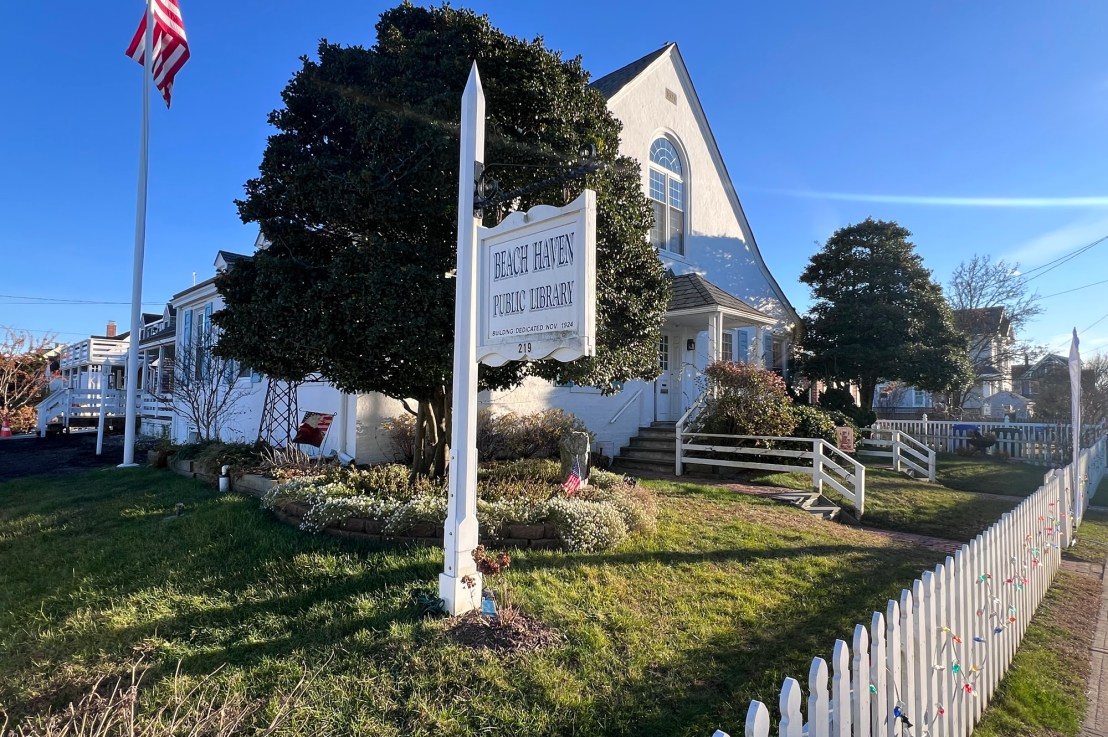
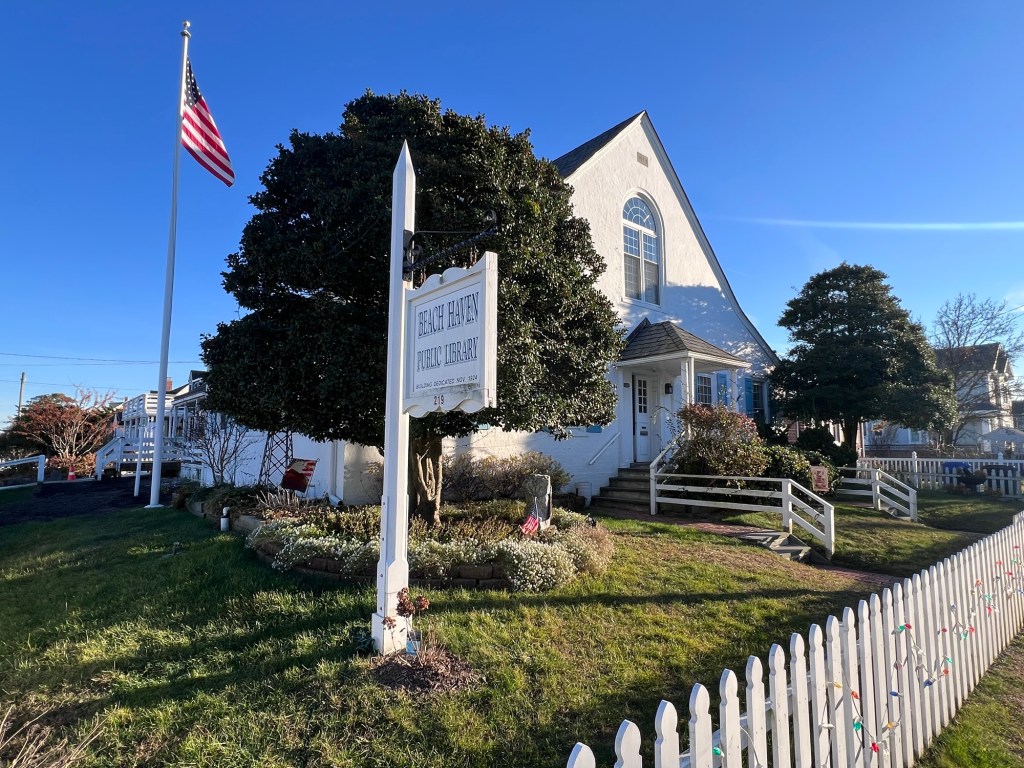
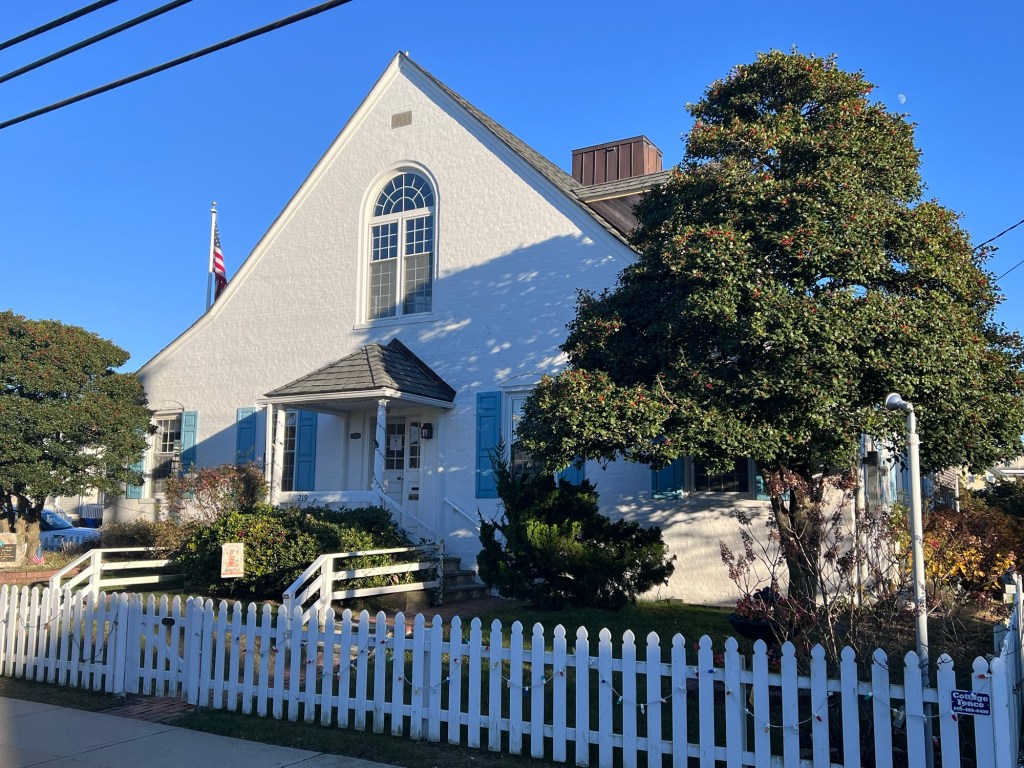
The front of the library and museum in the Fall of 2025
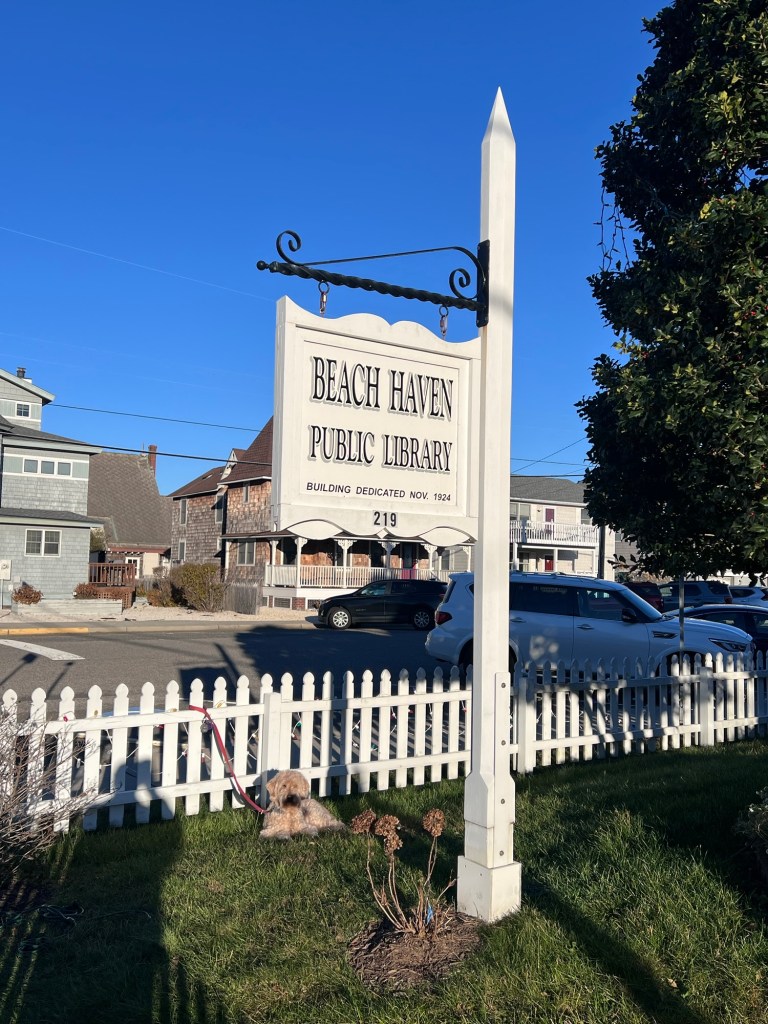
The historic sign
I recently visited the Beach Haven Library and Museum in Beach Haven during the holiday season and discovered a historical library with a rich history in both the community and on Long Beach Island.
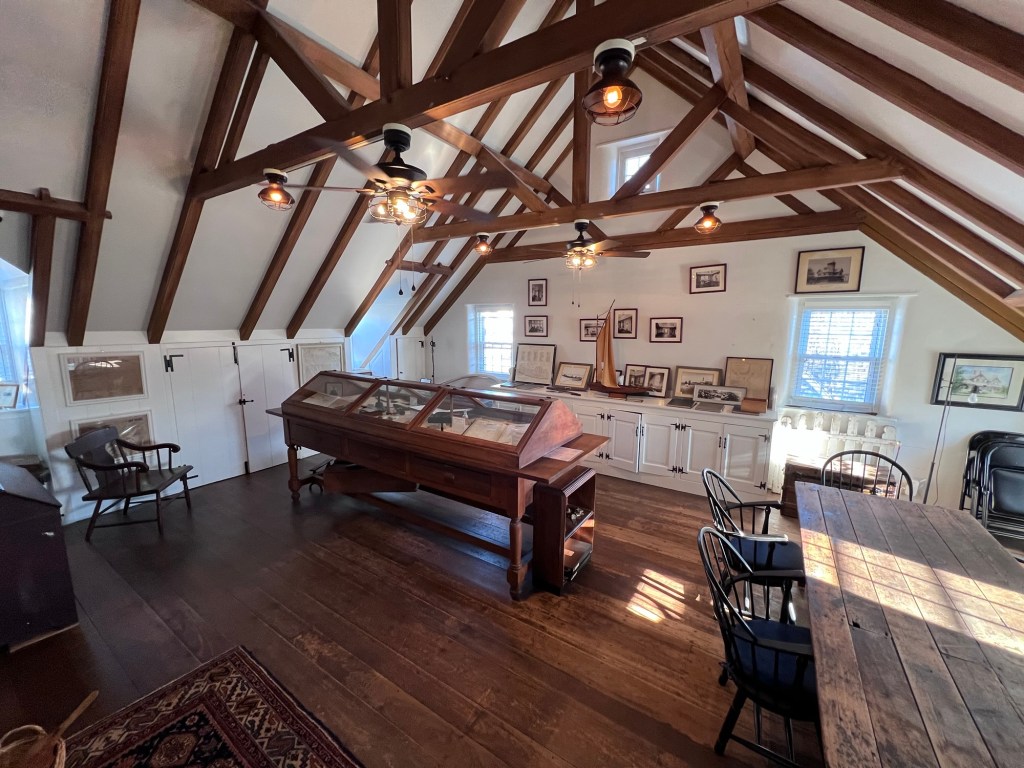
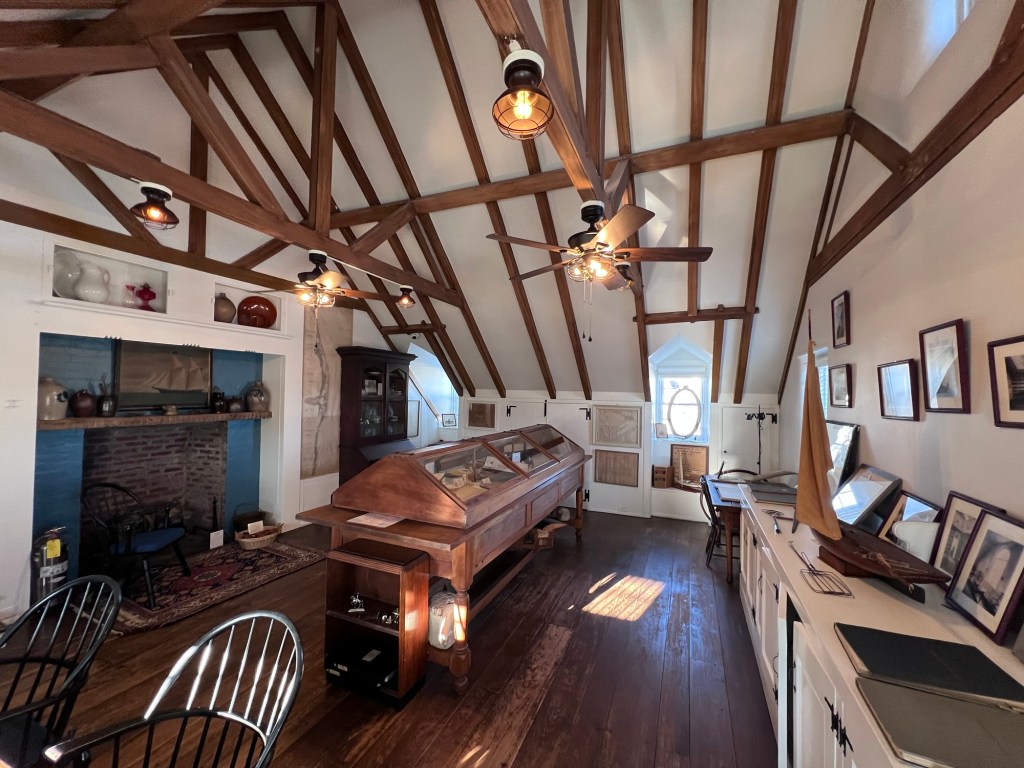
The museum on the second floor
On the second floor of the library is the history room of the Beach Haven Library that contains a collection of historic artifacts and ledgers from hotels and businesses on the island. Each of the case lines tells a different story of the community from the grand hotels that once lined the shore and have since disappeared to the lives of the families that once called the island home. When I talked with one of the librarians, she told me that estates from the area donate these items to the library and this has established their collection.
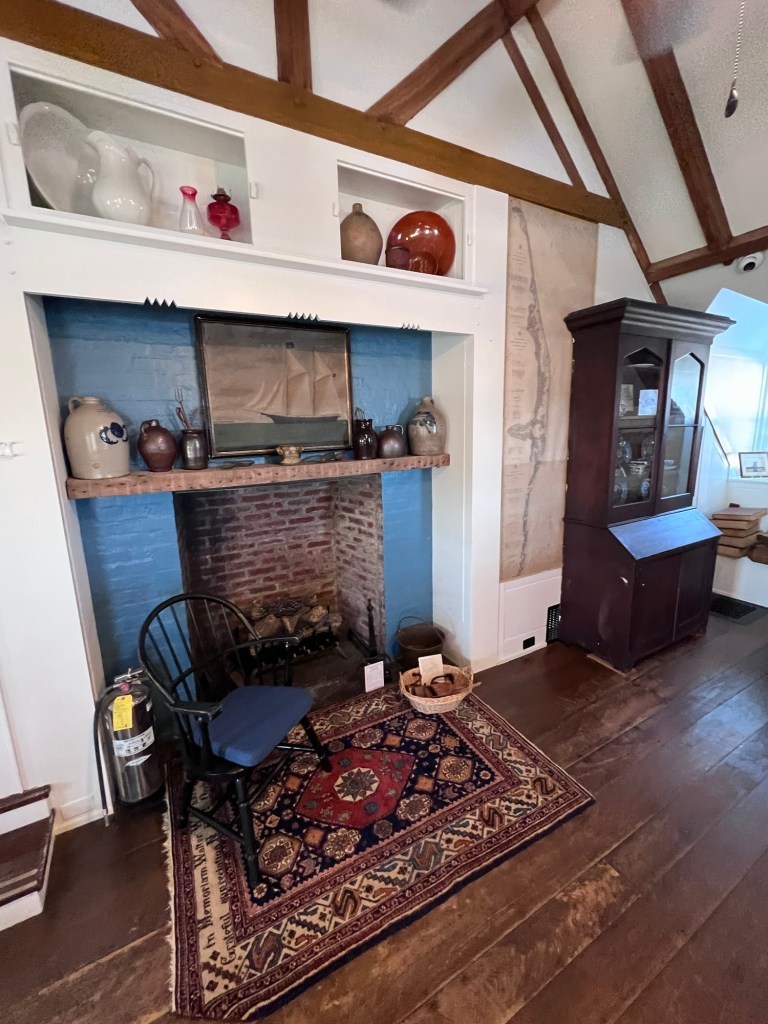
The second floor fireplace
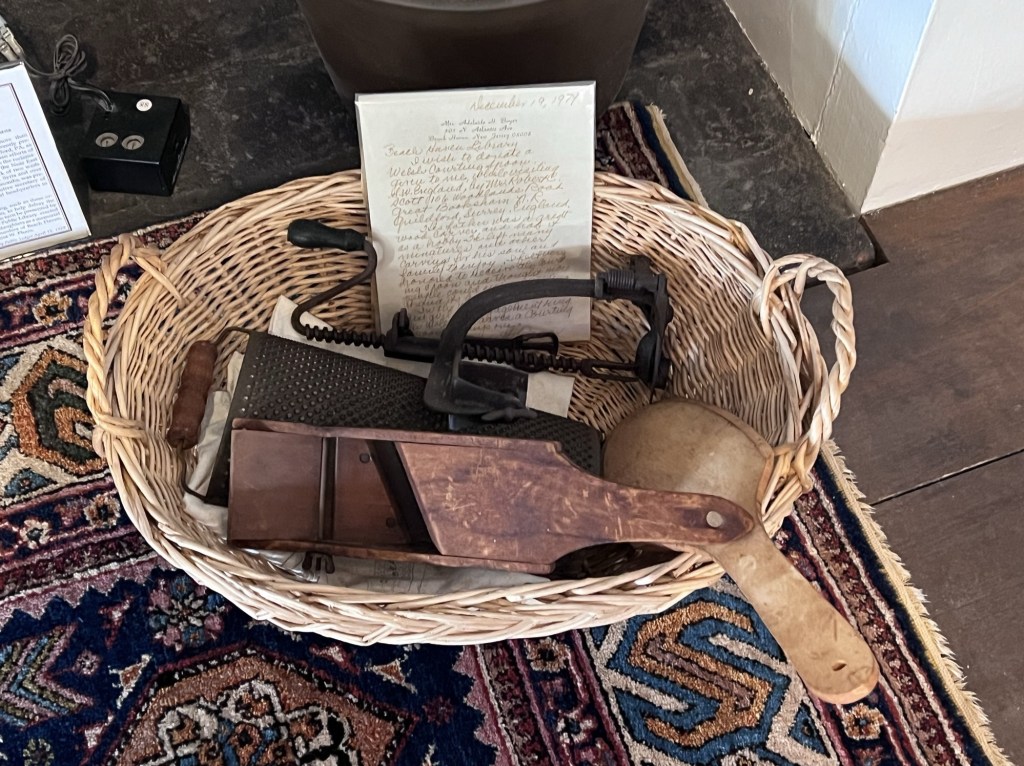
The antique kitchen equipment
The second floor of the library has another fireplace where vintage pottery and kitchen items are on display. There are also decorative pieces of pottery lining the shelves.
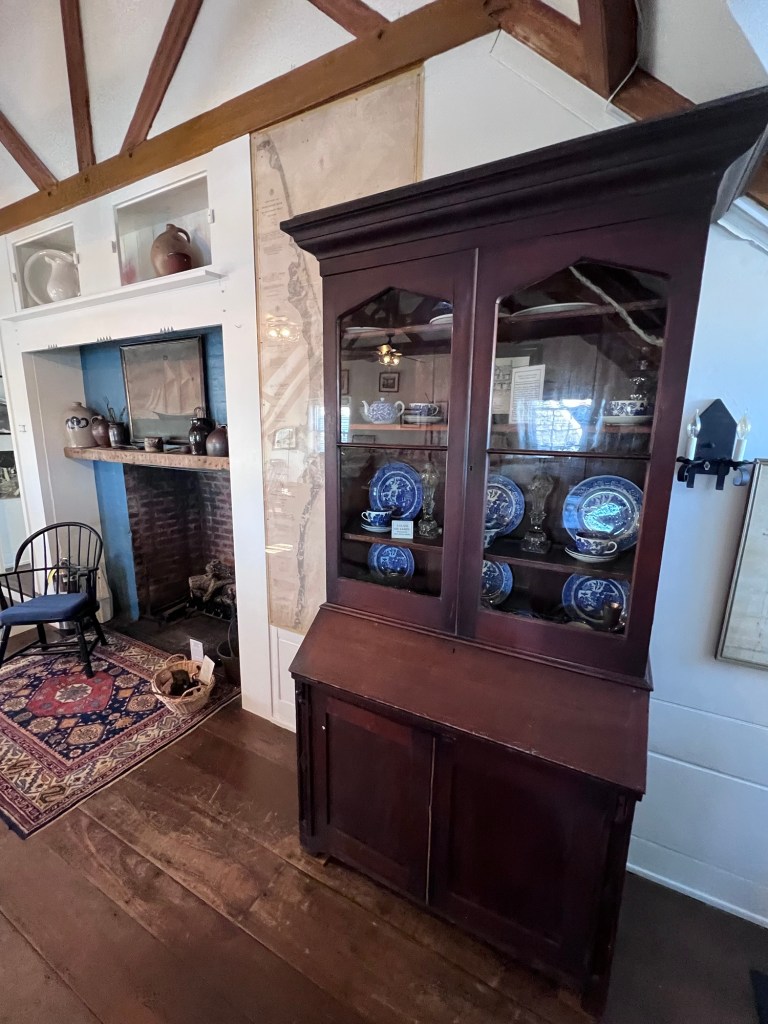
Historic China inside the Emily Lloyd Wilson Secretarial desk. Her father designed the Baldwin Hotel in Beach Haven.
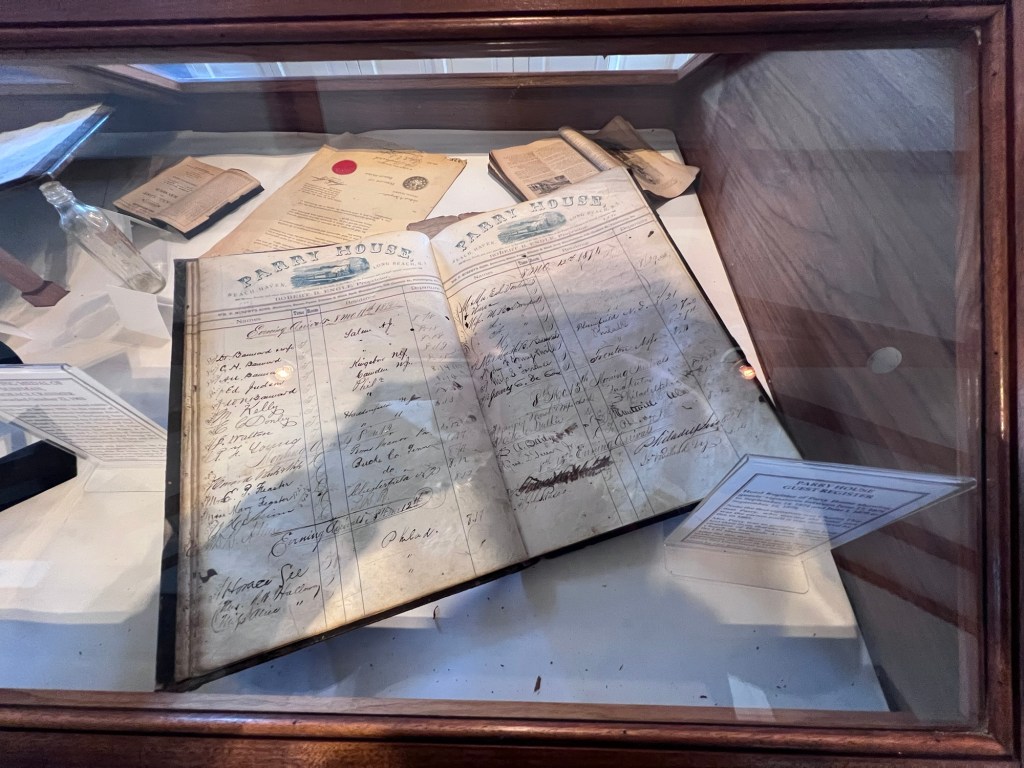
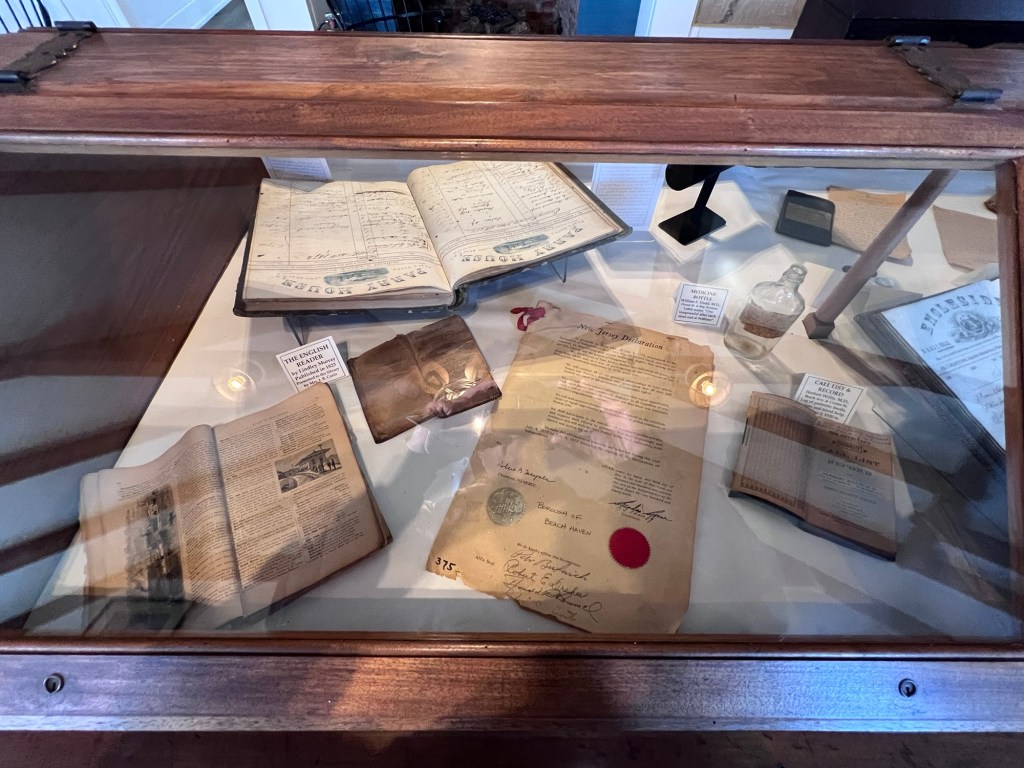
The historic ledger from the Parry Hotel
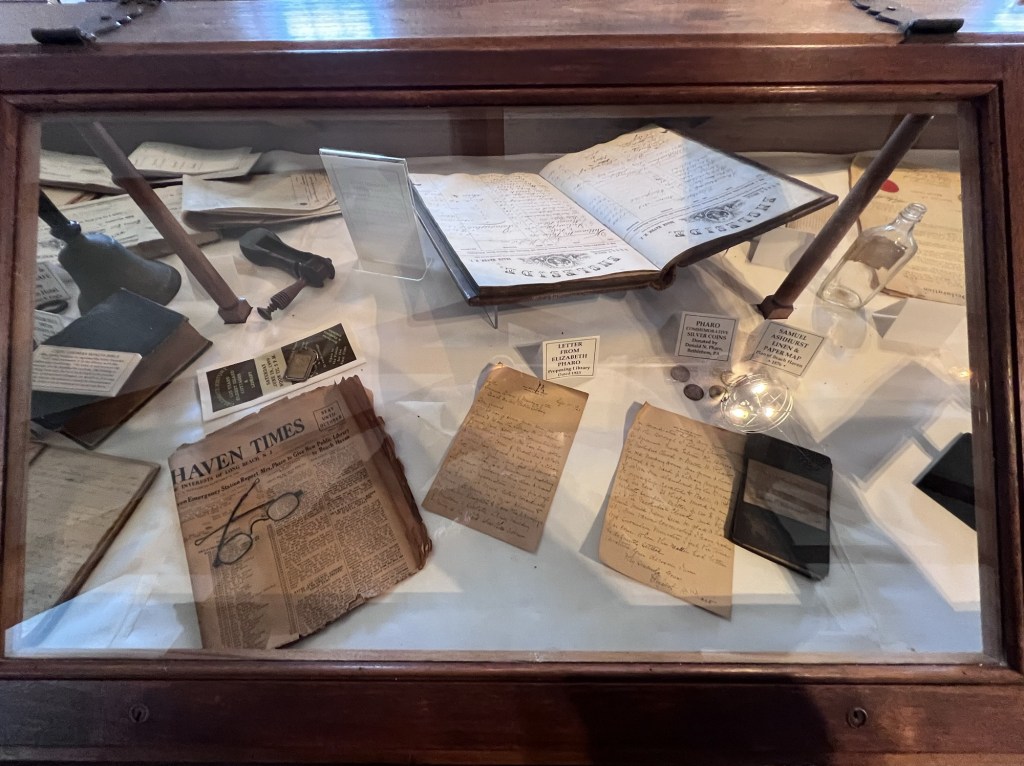
The library has another fireplace where extensive collection of hotel ledgers and artifacts.
Letters from Elizabeth Pharo proposing the Library in 1923
Short History of the Library:
(From the library pamphlet)
Mrs. Pharo presented to the library board a proposal to build the library entirely at her own expense. She contacted Philadelphia architect, R. Brognard Okie to design the library. He chose the model of a Pennsylvania Farmhouse. The library was completed in the Fall of 1924. The museum is now over a hundred years old.
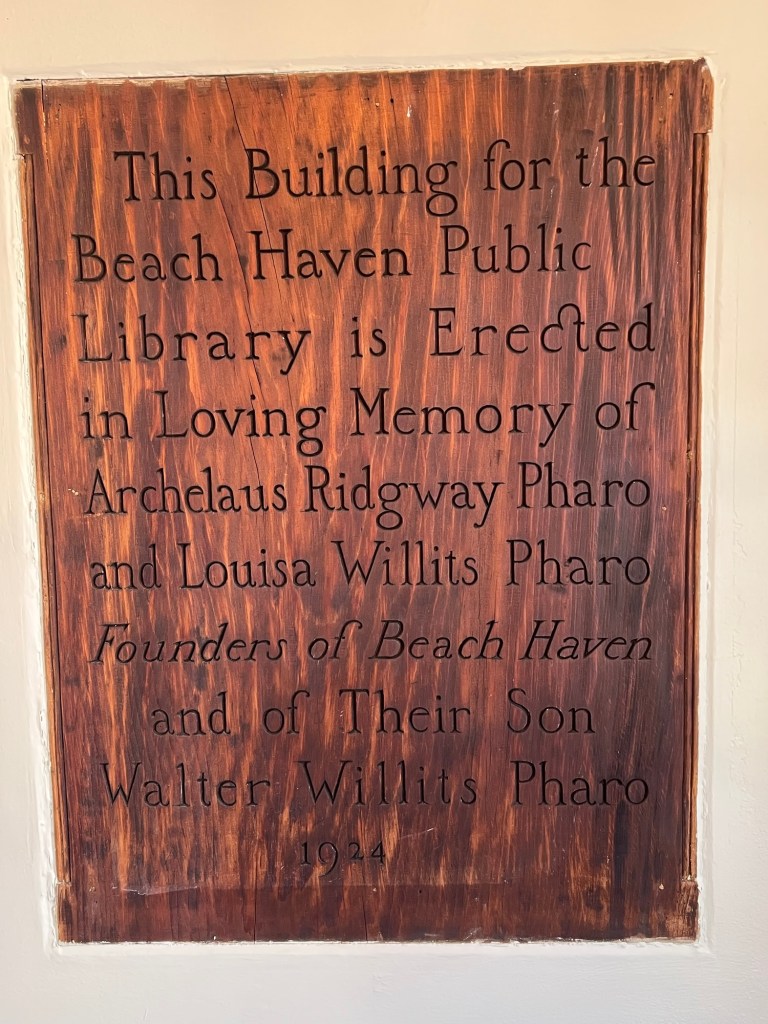
The dedication to Elizabeth Pharo, who dedicated the museum.
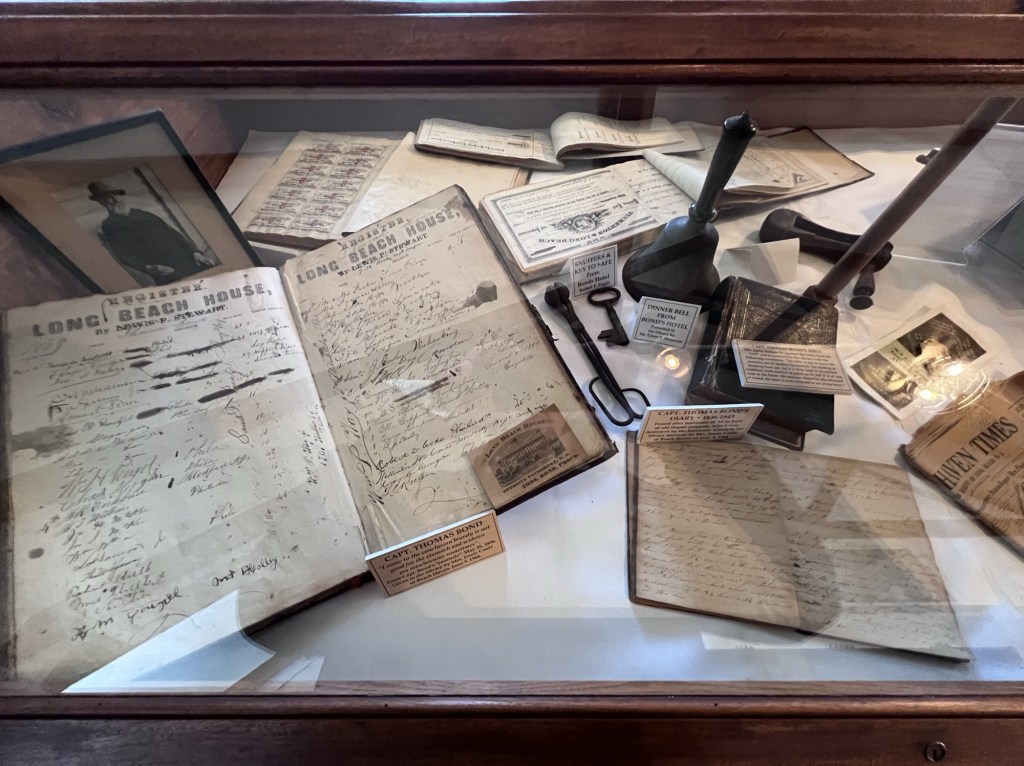
The Long Beach Island House Guest Ledger and historic items from the historic Bond Hotel
The records of the past resort town Long Beach Island used to be with guests coming from New York City, Philadelphia and beyond.
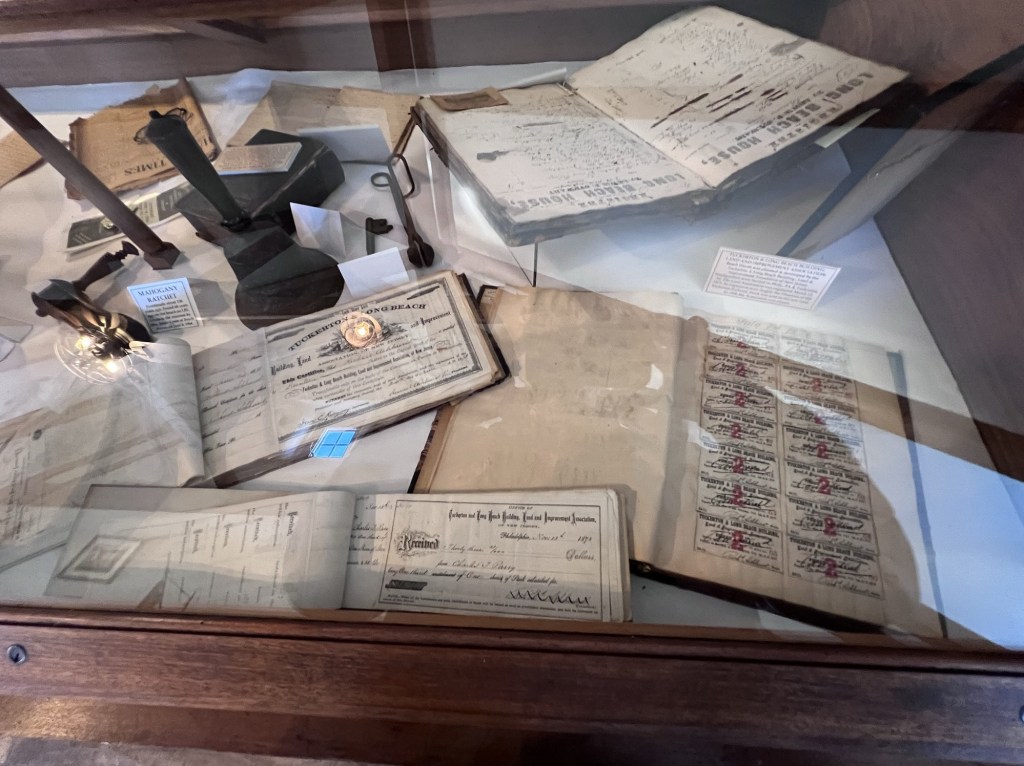
Historic items from the Tuckerton & Long Beach Building Land and Improvement Association
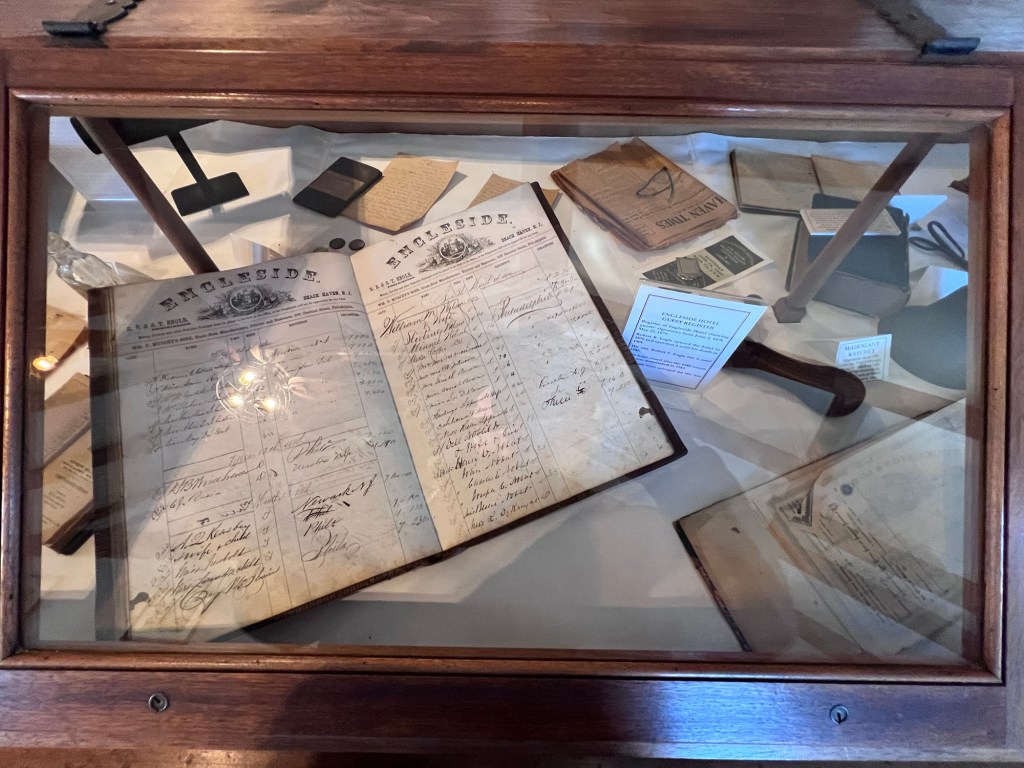
The Engleside Hotel ledger and items from the hotel
The New Jersey Declaration towards the Declaration of Independence
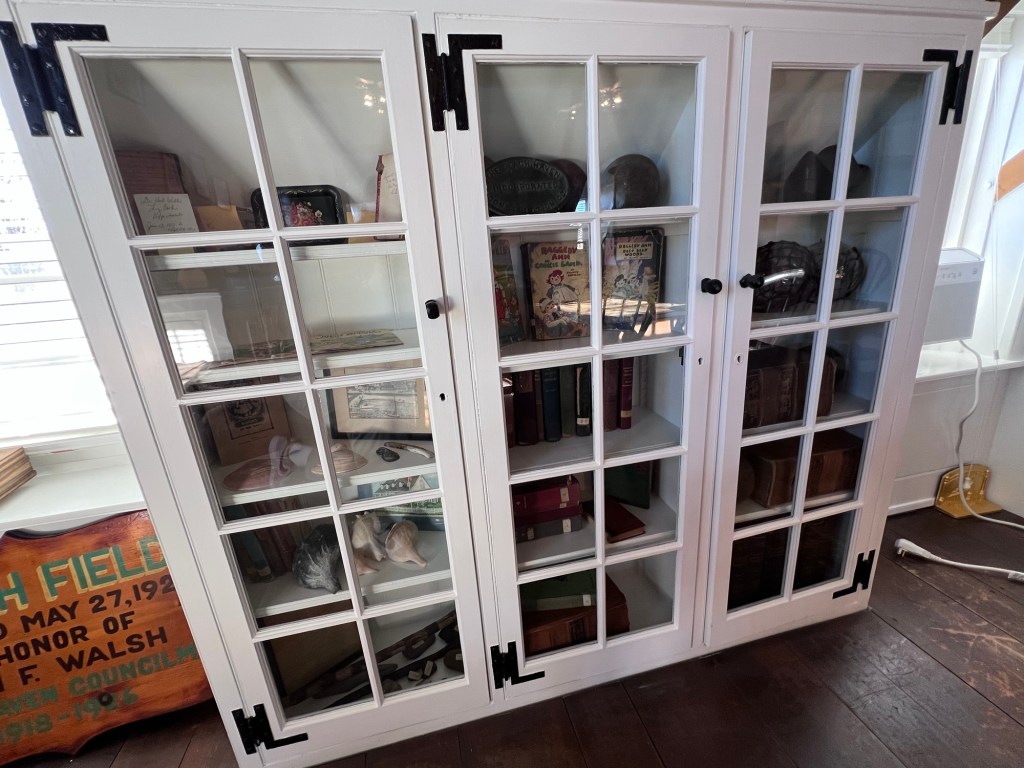
Historic books and periodicals
The library has an interesting collection of vintage and antique books that have been donated to the collection.
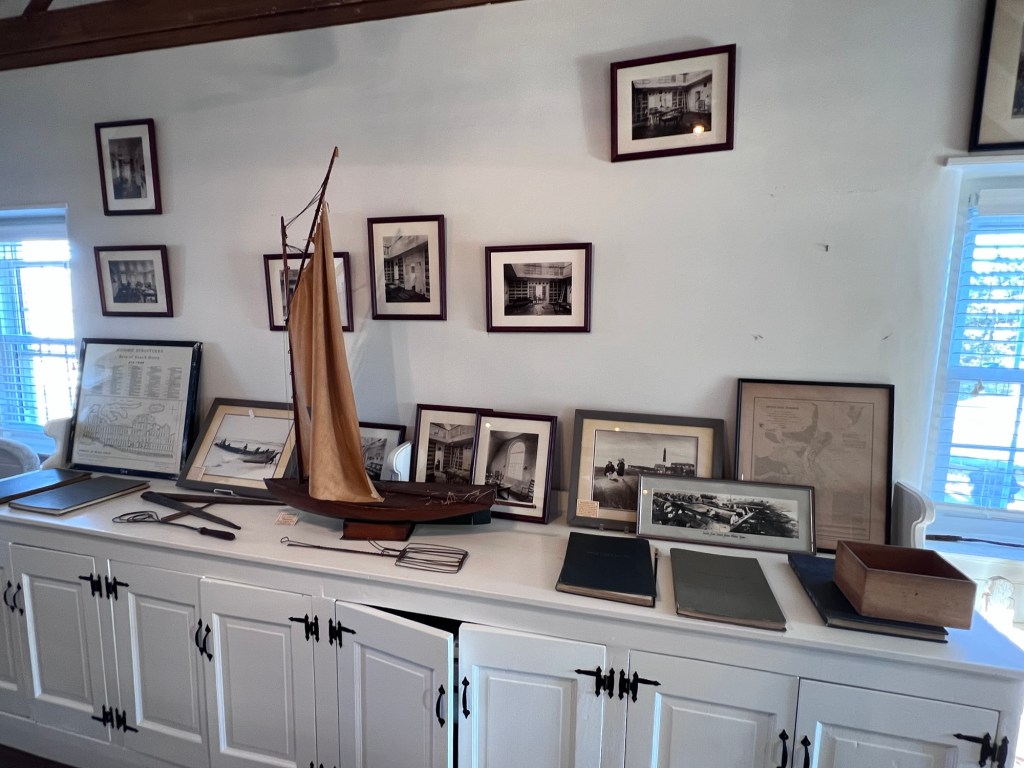
Photo display on historic sites in Beach Haven and pictures of the original library
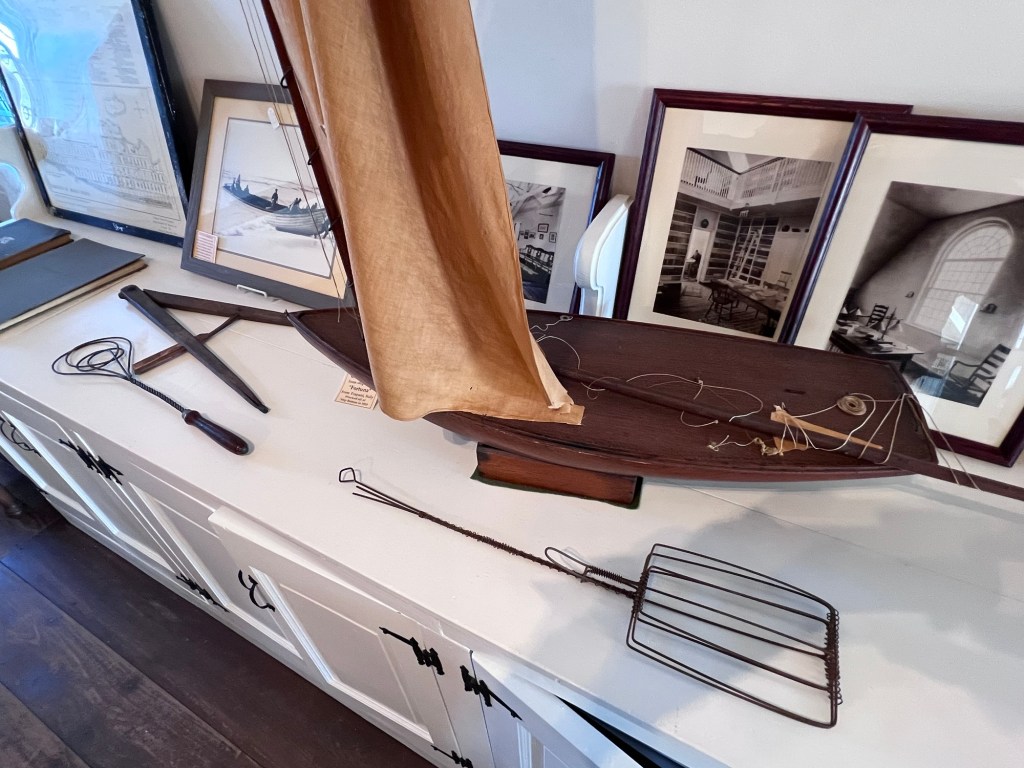
Some of the pictures are from the old library and the artifacts come from ships ground ashore. The library has a diverse collection of items to view.
The Compass from the historic shipwreck ‘Fortuna’ that wrecked off Ship Bottom in 1910 and historic boat
The second floor museum gallery holds the diverse collection of artifacts
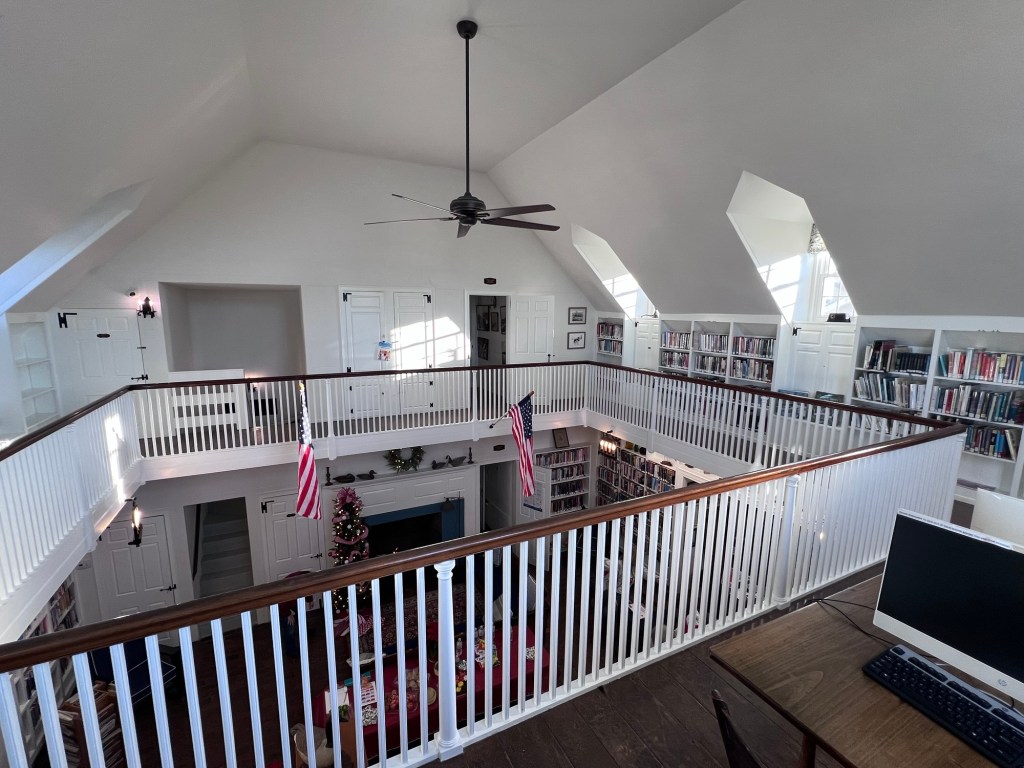
The second floor of the 1928 building
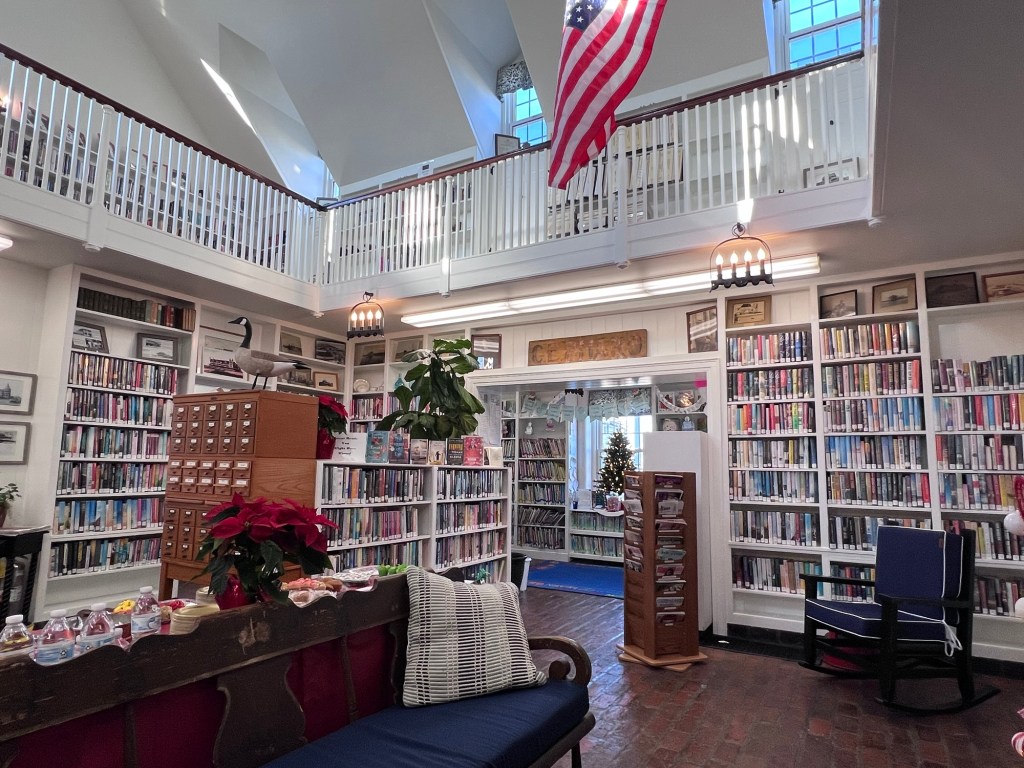
The first floor of the library has all sorts of historical artifacts along the walls
The Holiday Kickoff in 2025:
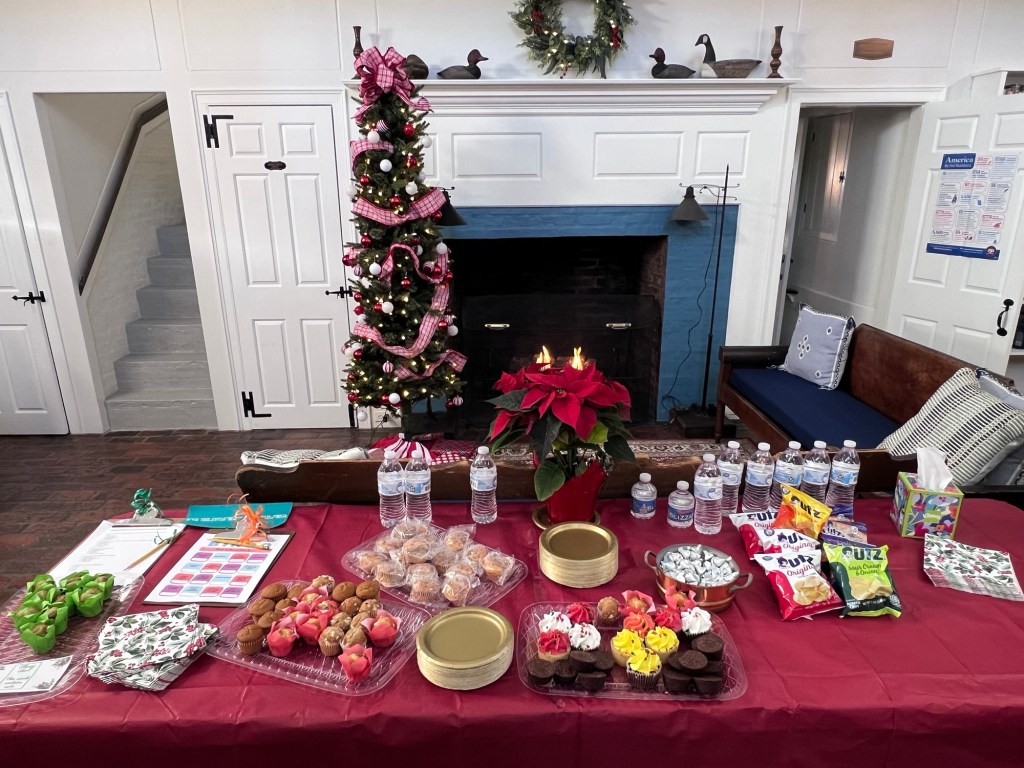
I visited during the library’s Holiday Open House with games, trivia and activities. There was also live music in the afternoon. It was a way that the library gives back to the community. It was a nice family event with good food and nice conversation with people from the community.
The Holiday Open House
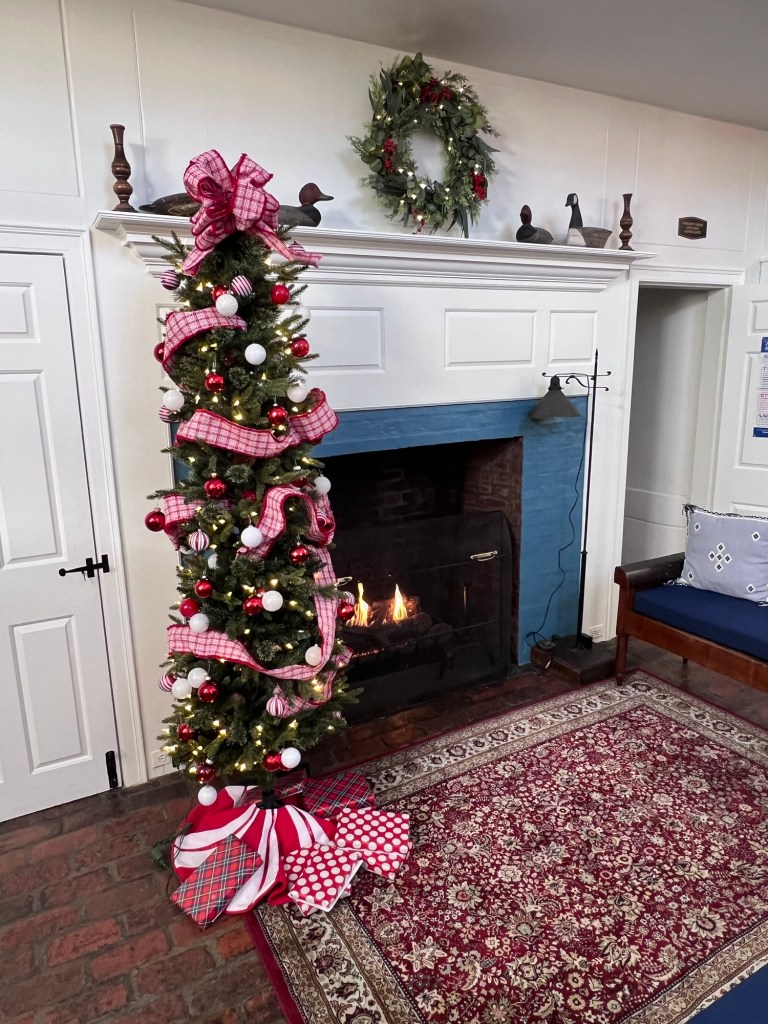
The fireplace was going when I was talking to the librarians
It was a very nice family event where patrons families could relax, have something to eat and play games with their children. The Liberians could not have been more friendly and engaging with the public.
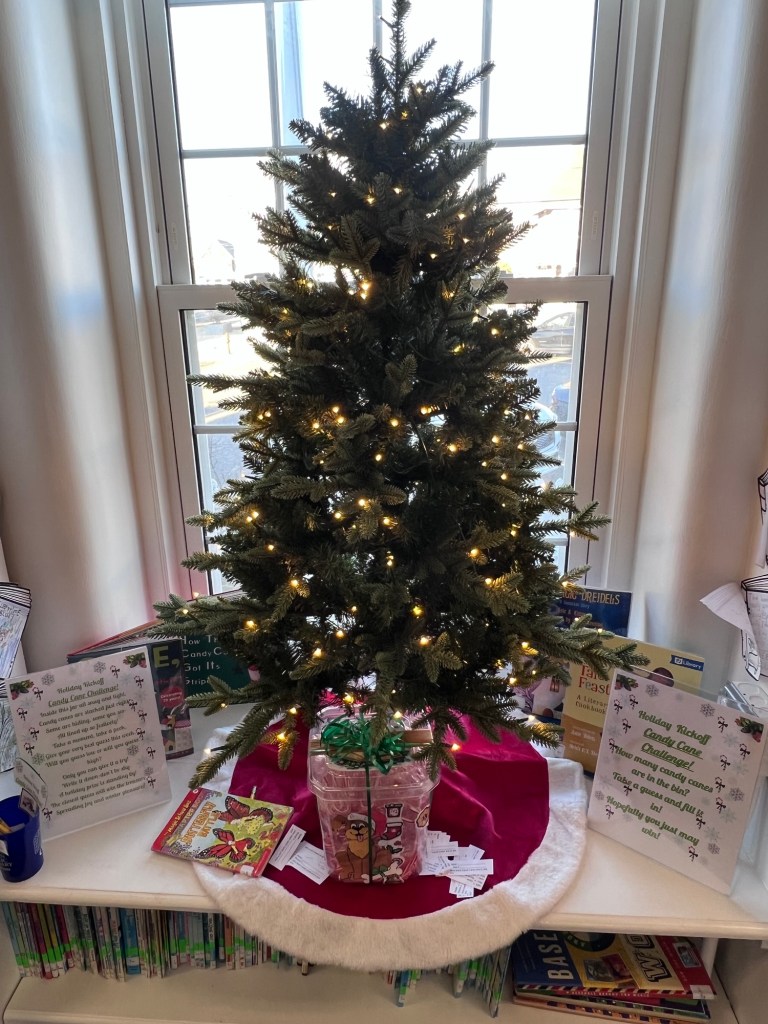
The Children’s Room had a holiday challenge
The museum is a rare gem tucked not just on the second floor but along the shelves and tables of the entire historic library giving visitors a chance to see all these historic artifacts mixed in with the library book collection.
The History of the Beach Haven Library:
(from the library website)
Attempts to establish a library in Beach Haven had begun as early as the 1880’s with a gift of books for the town’s children by Dr. Edward Williams. Williams, along with Charles Parry of the Parry House and the Baldwin Hotel, was a partner in the Baldwin Locomotive Works. The library collection was first housed in the home of Samuel Copperthwaite on Engleside Avenue. It was later moved into one of the Sunday School rooms of the Kynett Methodist Church, which had been built in 1890.
After the old Quaker Meeting House was donated to the town by Walter Pharo, the Reverend Alexander Corson of the Methodist Church began work, with the help of his wife, to turn the former Meeting House into a viable library. By the time they left in 1908, it was well on its way.
In 1923, Walter’s widow, Elizabeth Pharo, presented the library’s board of trustees with a proposal to build, entirely at her own expense, a new library for the town. It would be sited two blocks away from the Methodist church on a corner lot which she owned at Third Street and Beach Avenue. The library would be dedicated to the memory of her husband’s parents, Archelaus Ridgway Pharo and Louisa Willits Pharo–the founders of Beach Haven–as well as to her late husband Walter.
Mrs. Pharo contracted R. Brognard Okie, one of Philadelphia’s finest architects, to design the new library. He chose as his model a Pennsylvania farmhouse–not an early lifesaving station, as some believed. Unlike a traditional farmhouse, however, it would be constructed entirely of brick and steel and include several stunning features: three working fireplaces, a vaulted ceiling, and an interior balcony encircling the first floor.
Tons of concrete were poured and steel girders for the new, two-story structure were already up by the spring of 1924 on the southeast corner of Beach Avenue at Third Street. Okie moved to Beach Haven to supervise every step of the construction, which was all done by local builder Floyd Cranmer. Ten railcar loads of bricks were used to build the solid outer walls and it was soon evident that the town was to have the finest library on the New Jersey coast.
As the library neared completion in the late fall of 1924, its beauty was already drawing praise. Every window in the structure was framed with long shutters of pale green, which gleamed against the white brick exterior. A sweeping, multi-dormered black roof added a grace seldom seen in a public building. Surrounded by a low, white picket fence and later, a well-kept green lawn, it added an incomparable dignity to what, in that time period, was the town’s main street, Beach Avenue.
There are two large colonial-style working fireplaces on the first floor. One is in the main room and the other is behind it in the long back room on the ocean side of the library. Today this room houses the Mystery collection and its solid, ten-foot table makes it useful as a meeting room. In the early years, however, it served a different function–it was designated as the men’s reading room, and there male patrons could sit in large comfortable chairs to read magazines and newspapers. It was well lit by two tall French windows and it opened out onto the screened porch on the north side.
The main reading room with its vaulted ceiling is encircled with a balcony reached by a spiral stone staircase, its steps topped with thick slabs of slate. The balcony flooring is of oak, as are all of the spindles in the railings. The upstairs walls are lined with books. One great window on the west side rises ten feet to the ceiling. The rest are all set into dormers. On the east wall behind the upstairs balcony there is a door where one may step down into a well-furnished little museum with high, beamed ceilings and a huge stone fireplace. It is filled with old hotel registers, deeds, diaries, photographs and other mementos of Beach Haven’s vibrant history.
The Beach Haven Public Library is a prime architectural treasure on Long Beach Island and a direct link to a colorful past that is the town’s most precious heritage. Mrs. Elizabeth Pharo’s gift to the town, itself now almost 100 years old, is as stunning as the day it was built. The taxpayers who support it are proud of its status as the only independent library in Ocean County and have chosen to keep it that way.
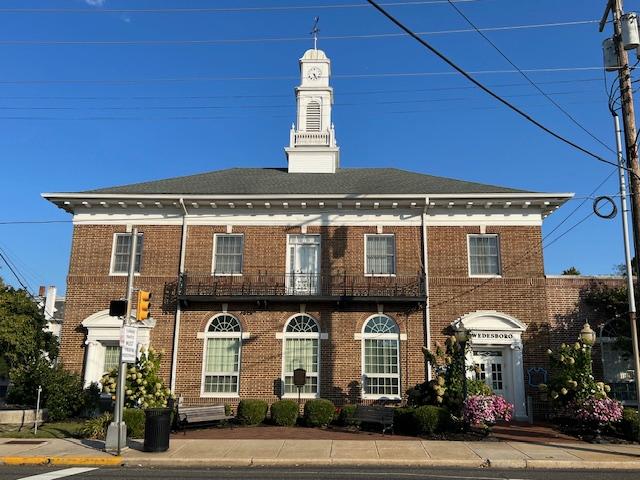
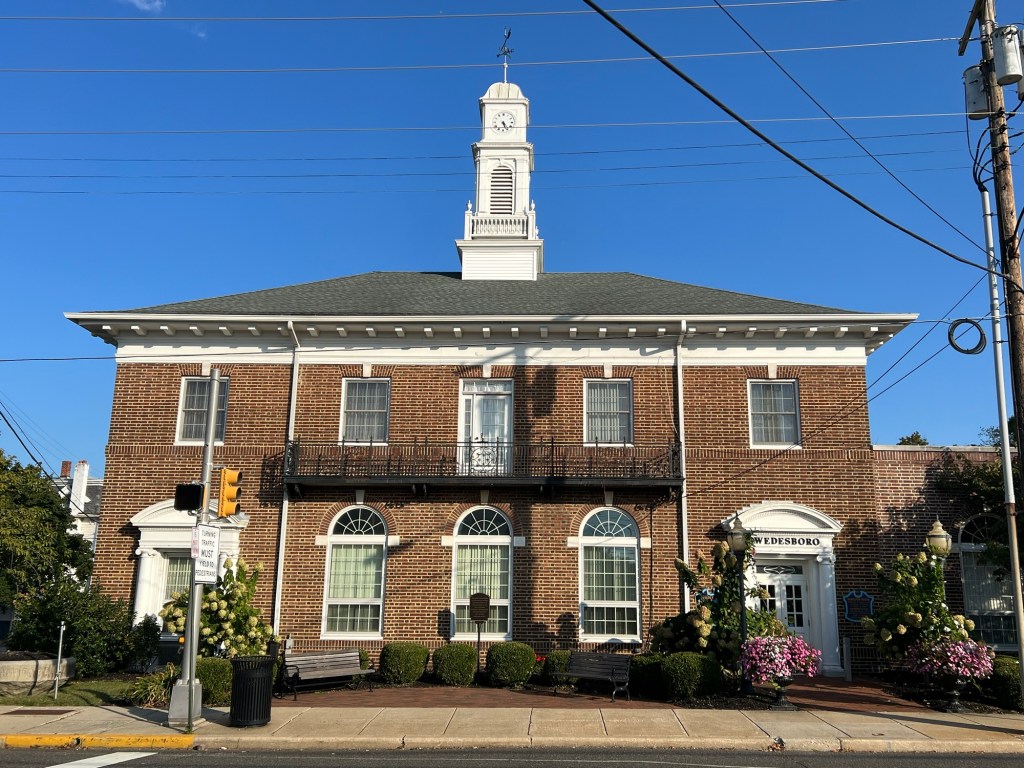
Swedesboro City Hall at 1500 Kings Highway in Swedesboro, NJ
Mission Statementof the Museum:
(from the Museum website)
The mission of the Swedesboro-Woolwich Historical Society shall be to collect and preserve the architectural, cultural, commercial and farming history of the Borough of Swedesboro and the Township of Woolwich through records, documents, photographs, artifacts, and other means with the purpose to promote and provide access to this history for current and future generations, encourage preservation and restoration of historic landmarks located both in the borough and township and provide educational programs, guided historical tours and exhibitions to a diverse population.
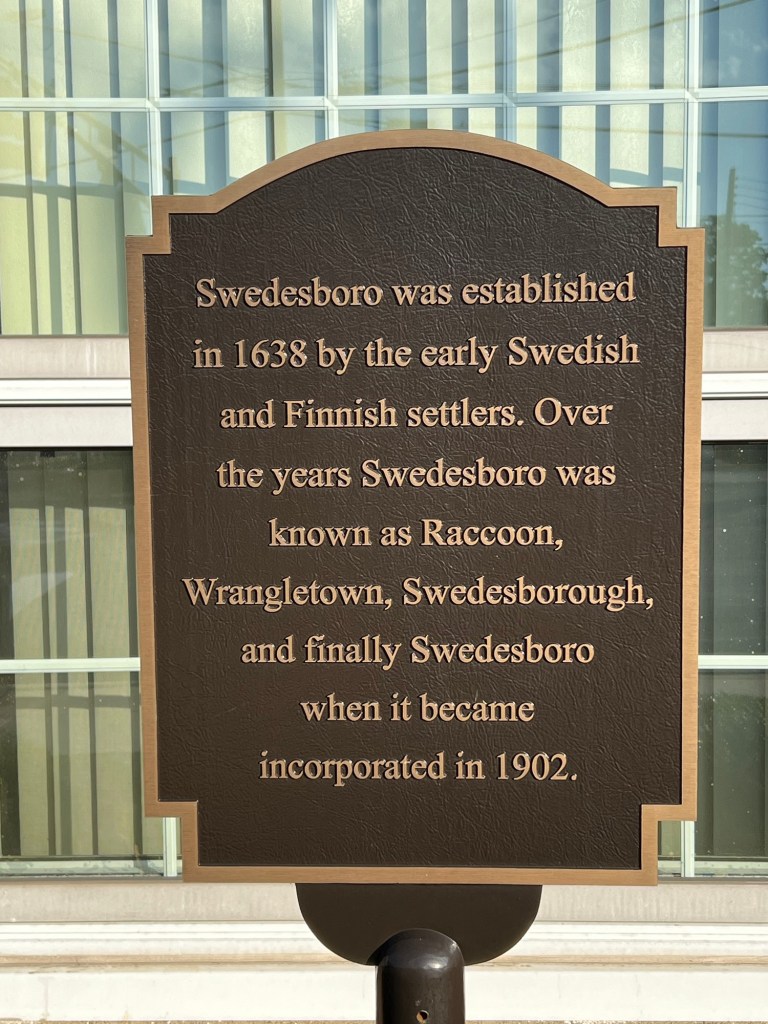
The historic marker in front of City Hall
The front gallery of town artifacts
I recently visited the Swedesboro Historical Society located in a gallery on the second floor of City Hall in Downtown Swedesboro. It is an interesting little museum with several small galleries each dedicated to a different theme of the history of the town.
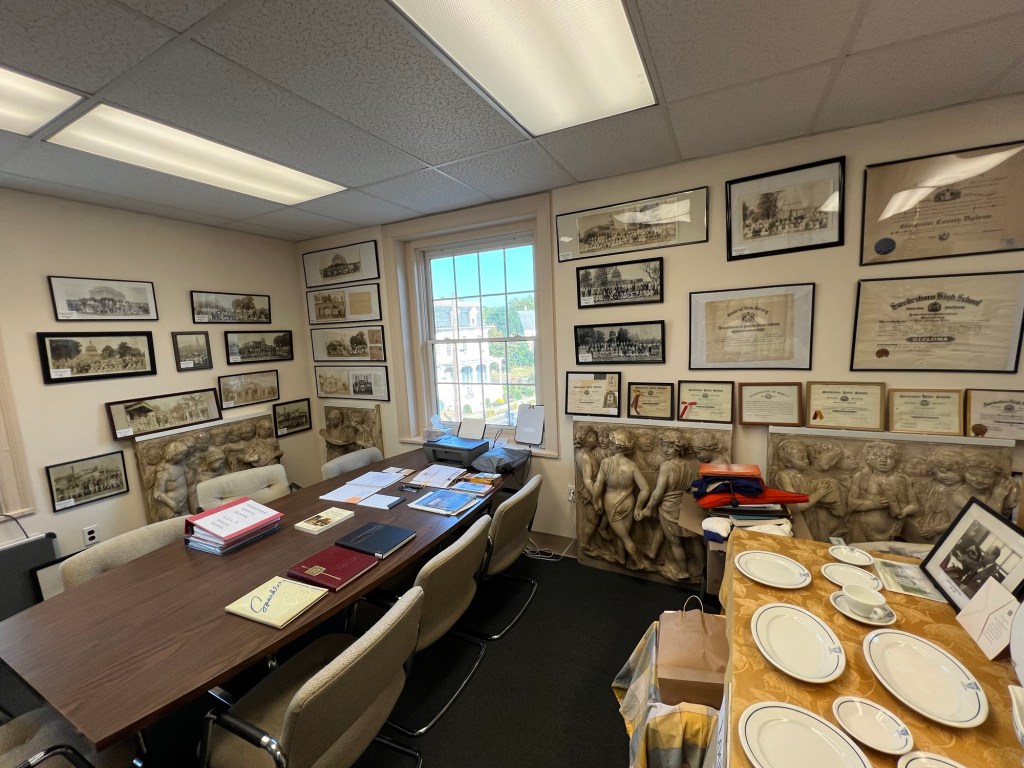
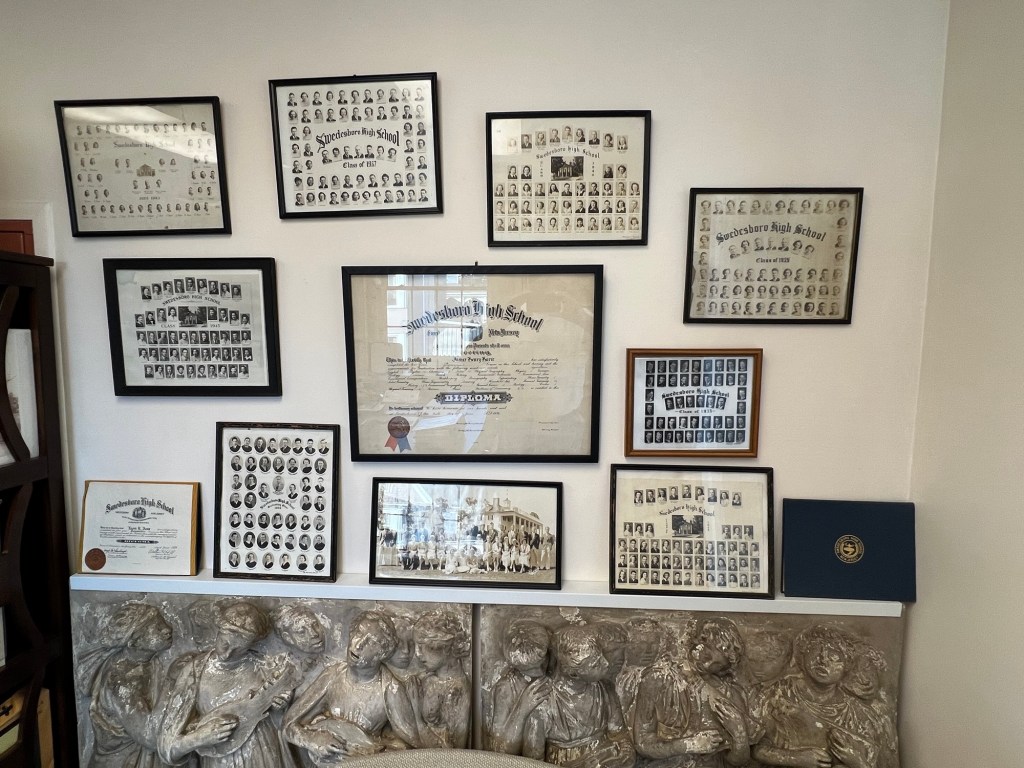
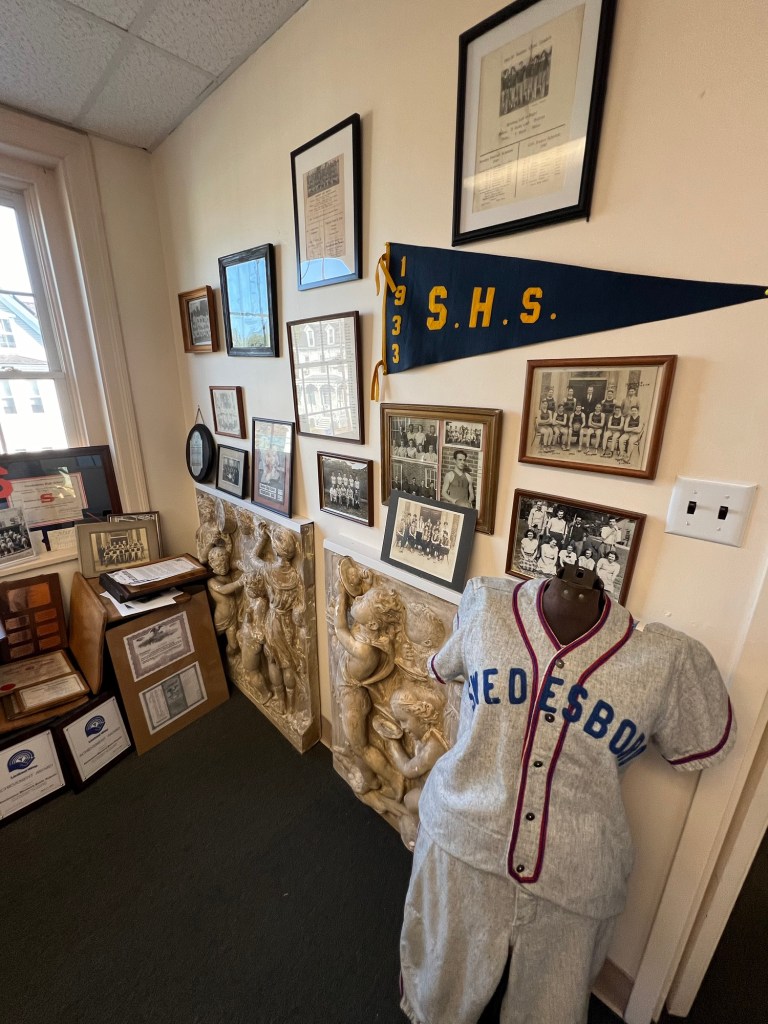
The gallery of Swedesboro High School memorabilia
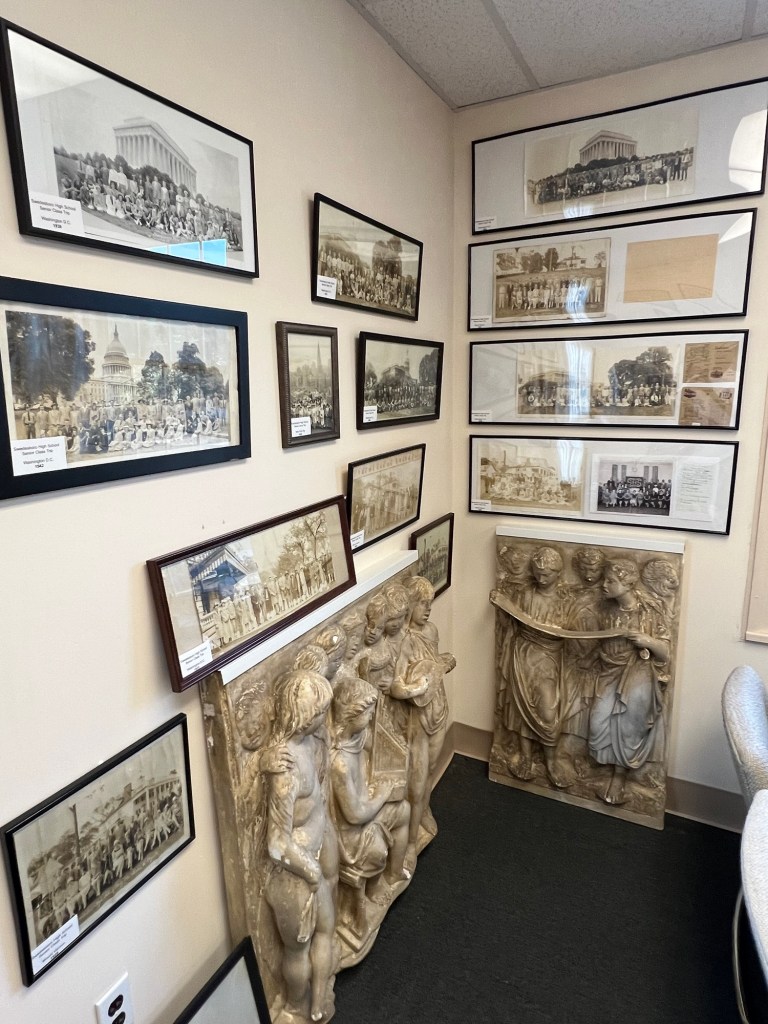
The large gallery to the back of the museum houses an extensive collection of artifact on the school system especially to Swedesboro High School. This includes yearbooks, pictures, trophies and other spirit related items that show the rich history of the town’s school system.
Class picture over the last 90 years
Composites from trips to Washington DC from the high school. Some were taken in front of the Capital and some from Mount Vernon. It depended on the year.
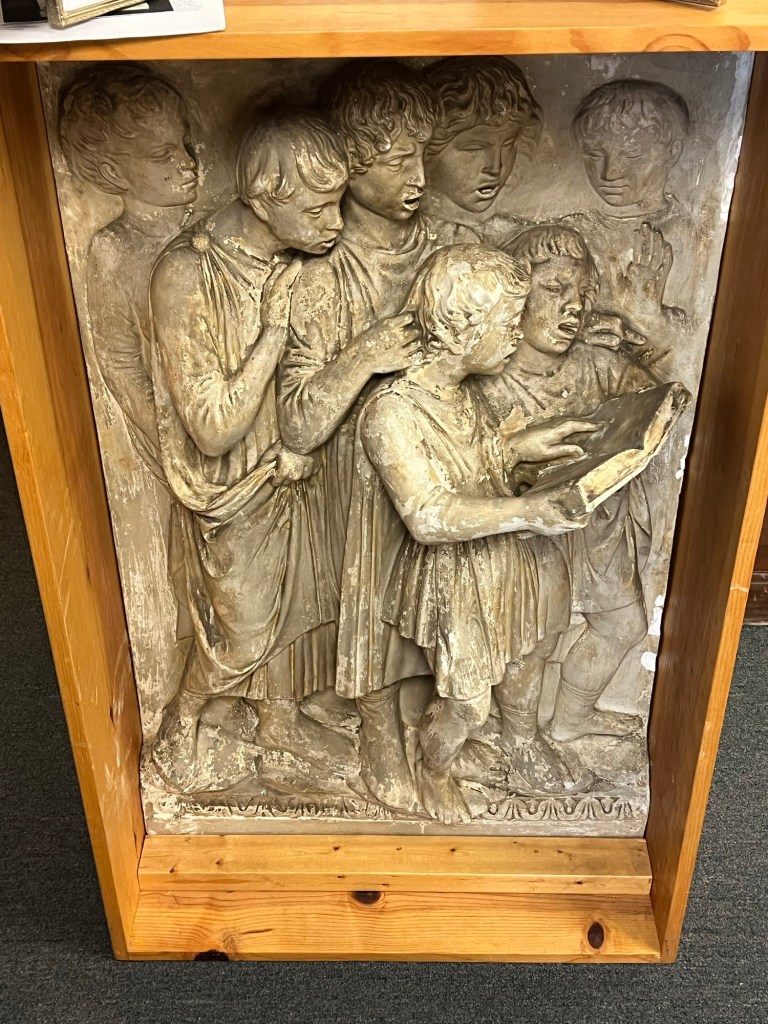
The Cantoria Friezes from the old high school
The Cantoria Friezes from the old Swedesboro High School (now the elementary school)
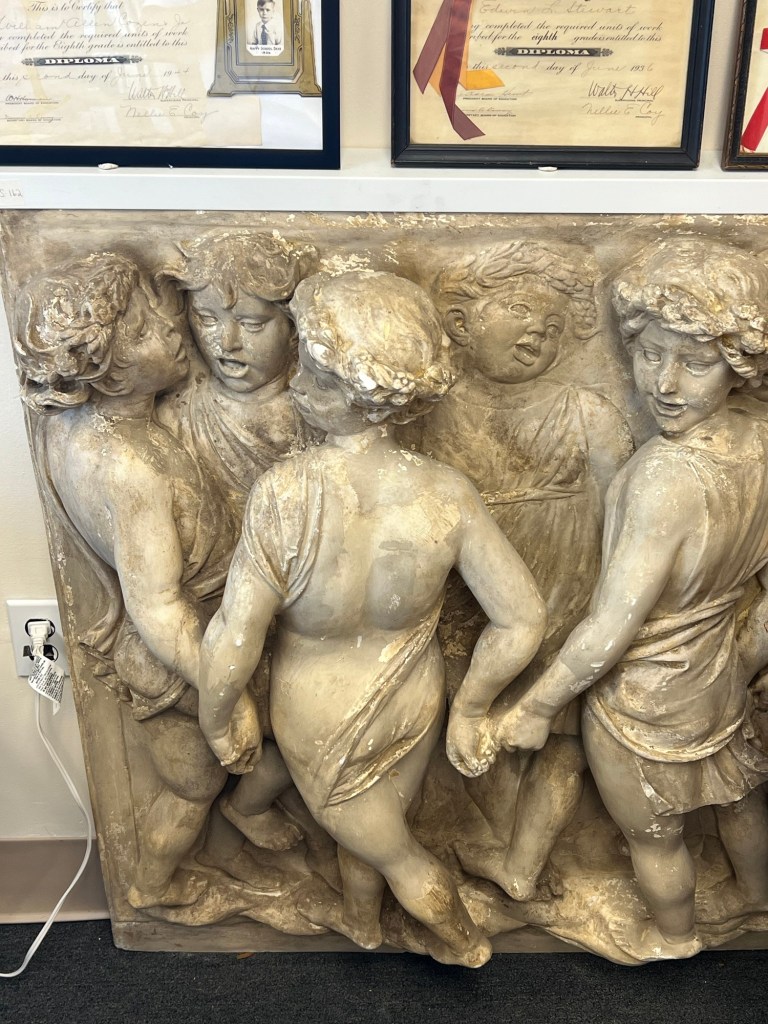
These paster friezes once lined the Swedesboro High School and were taken down during the school’s renovation. The theme was Education and you can see this with each characters look in the pursuit of a higher education. These are the highlight of the High School gallery.
These were original reproductions by artist Pietro Caproni of the ‘Cantoria Friezes’ and are based on masterpieces from museums all over Europe. These friezes were purchased by the school system as part of the furnishings for its opening in 1923. These were cast and housed in his Boston studio (Historical Society website).
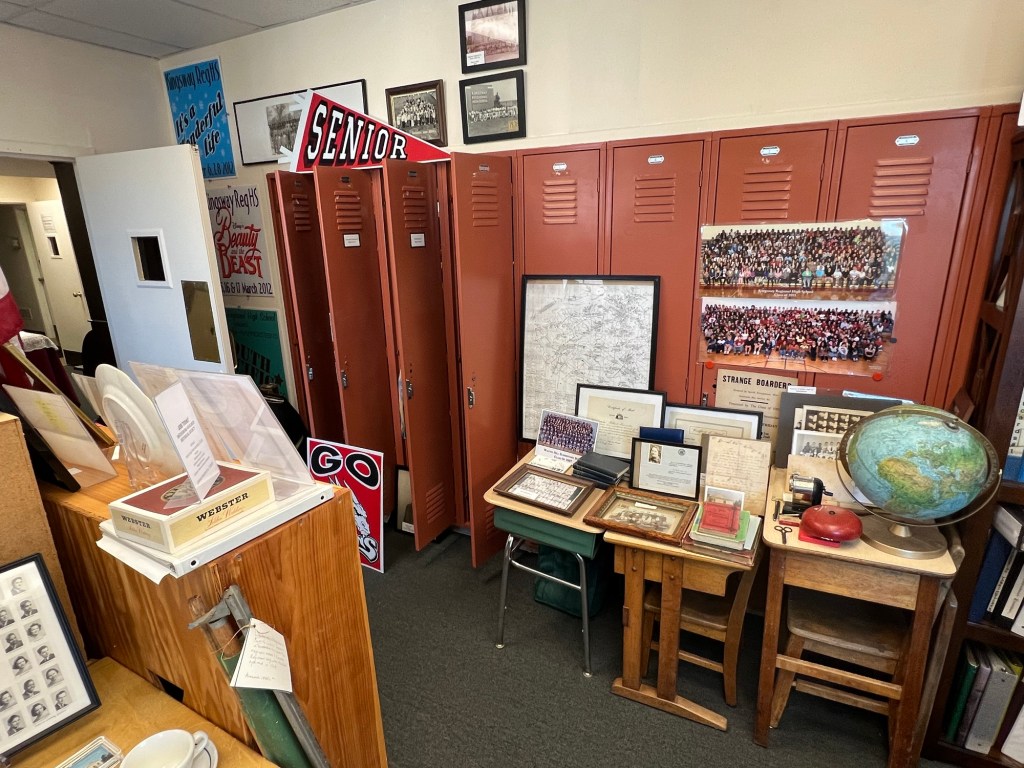
The former police department lockers make perfect props for high school artifacts
The museum is housed in what was once the old Swedesboro Police headquarters and the old lockers are the perfect backdrop for the museum’s extensive collection of school artifacts displayed in a classroom setting.
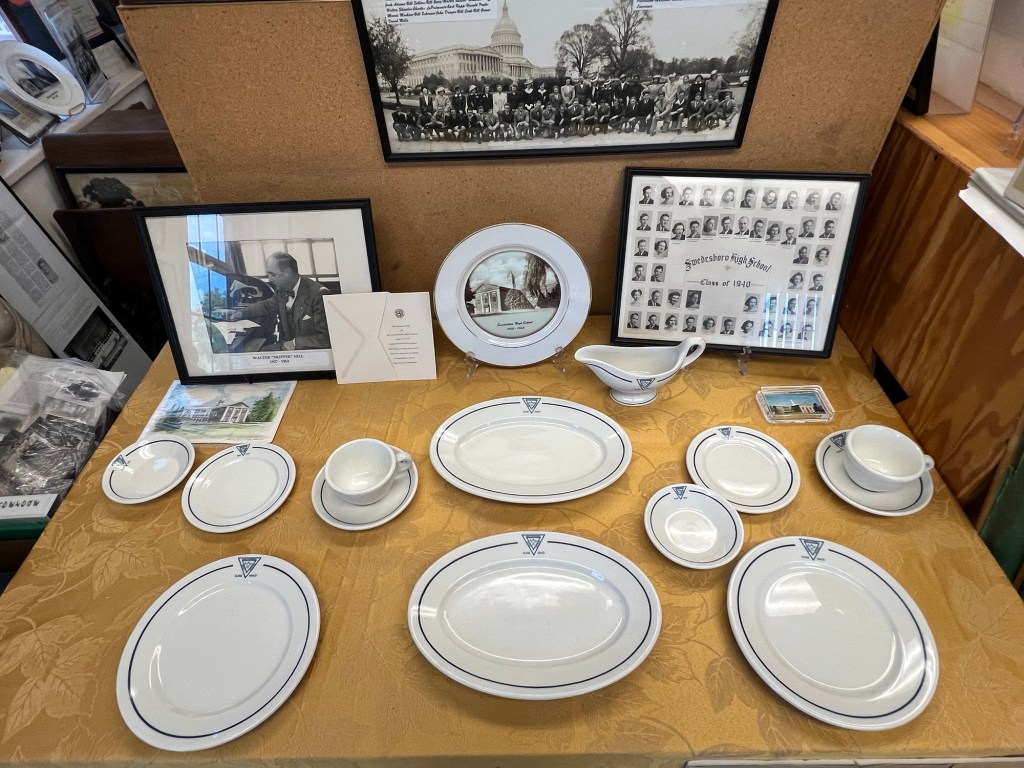
The Swedesboro High School China from the dining room
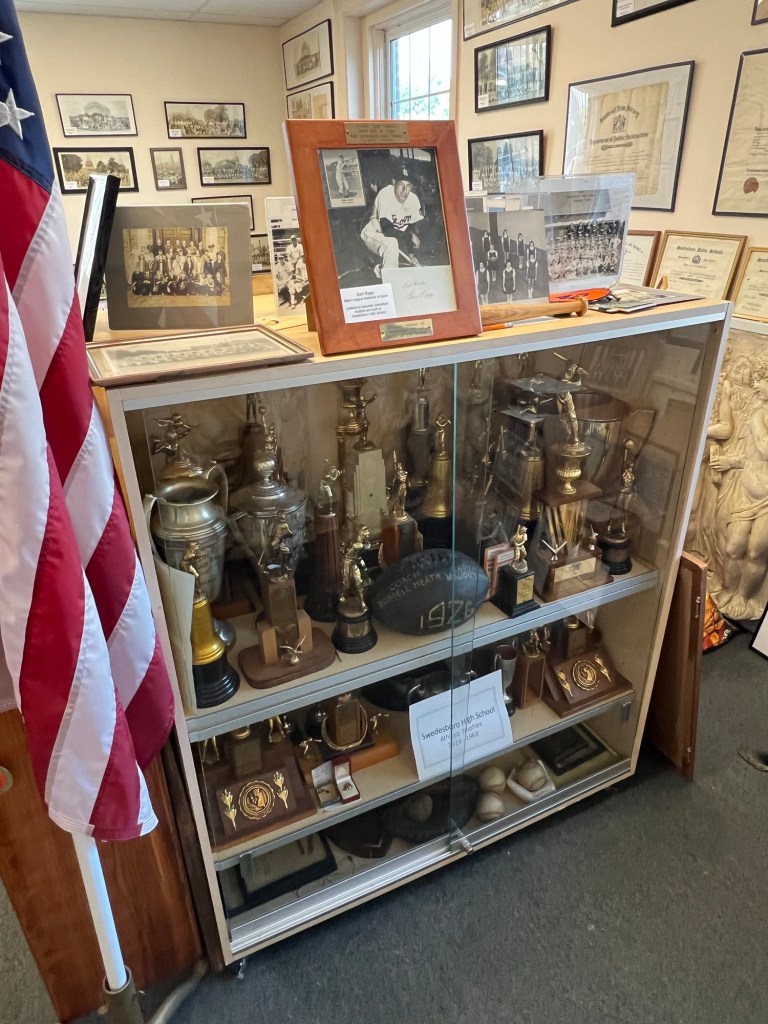
The Sports Department display
Trophies from the high school spanning 70 years
The next gallery is dedicated to town history and the business district. Many of the businesses have been long closed their memory lives on.
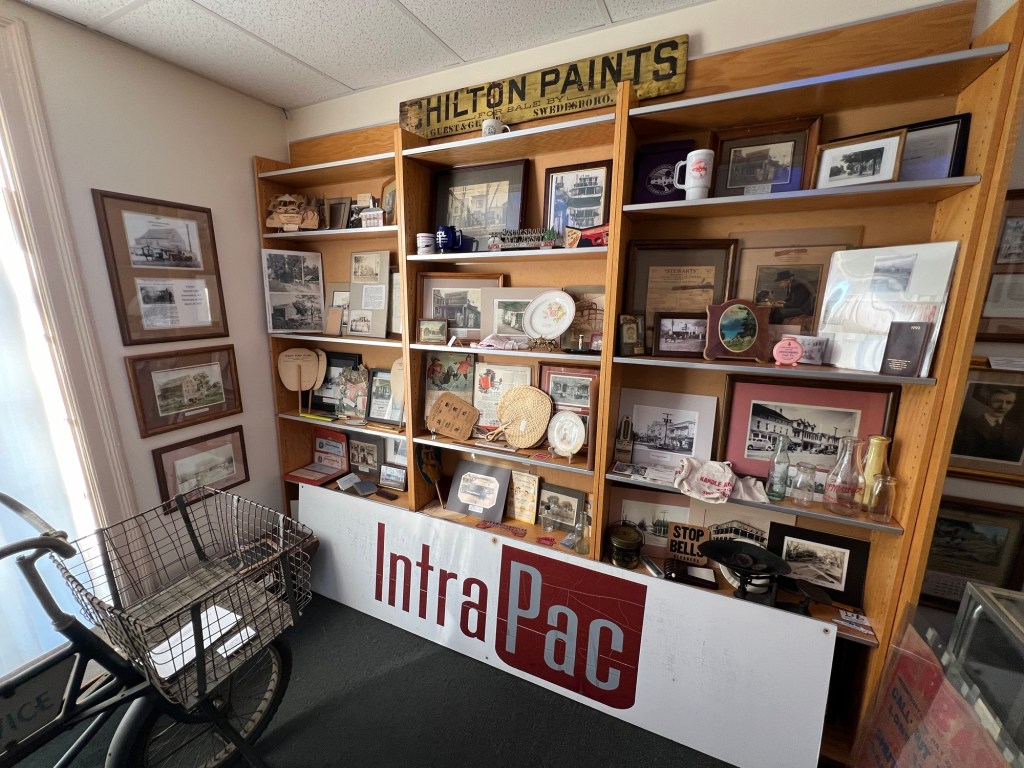
Memories and artifacts on businesses from the past
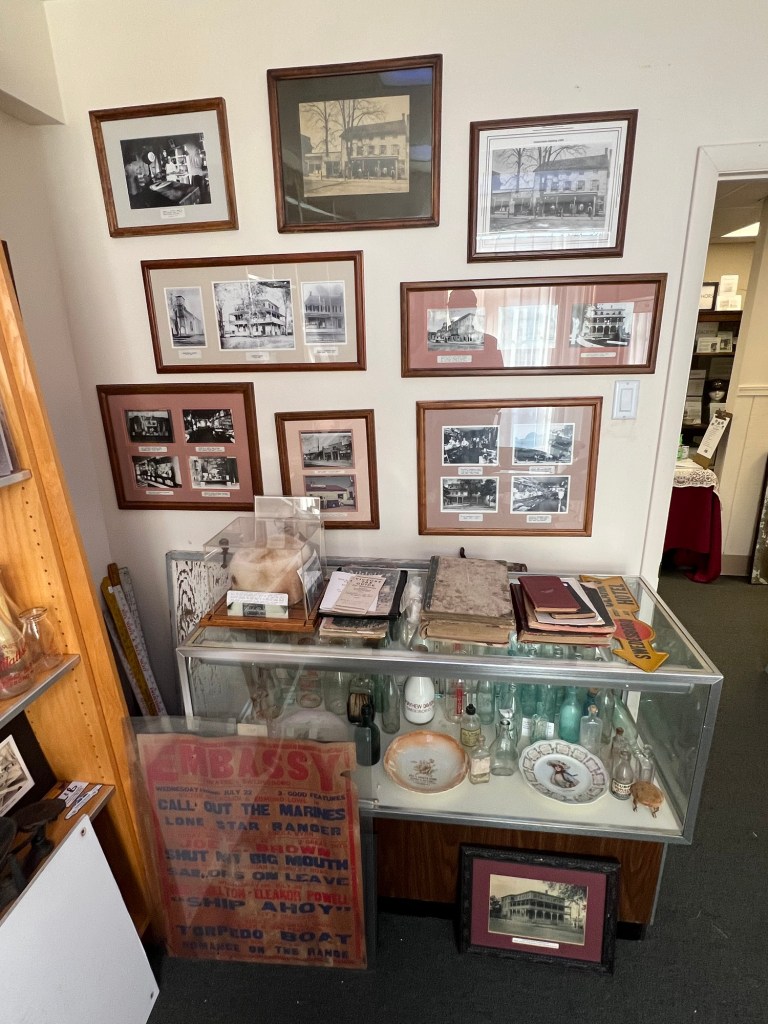
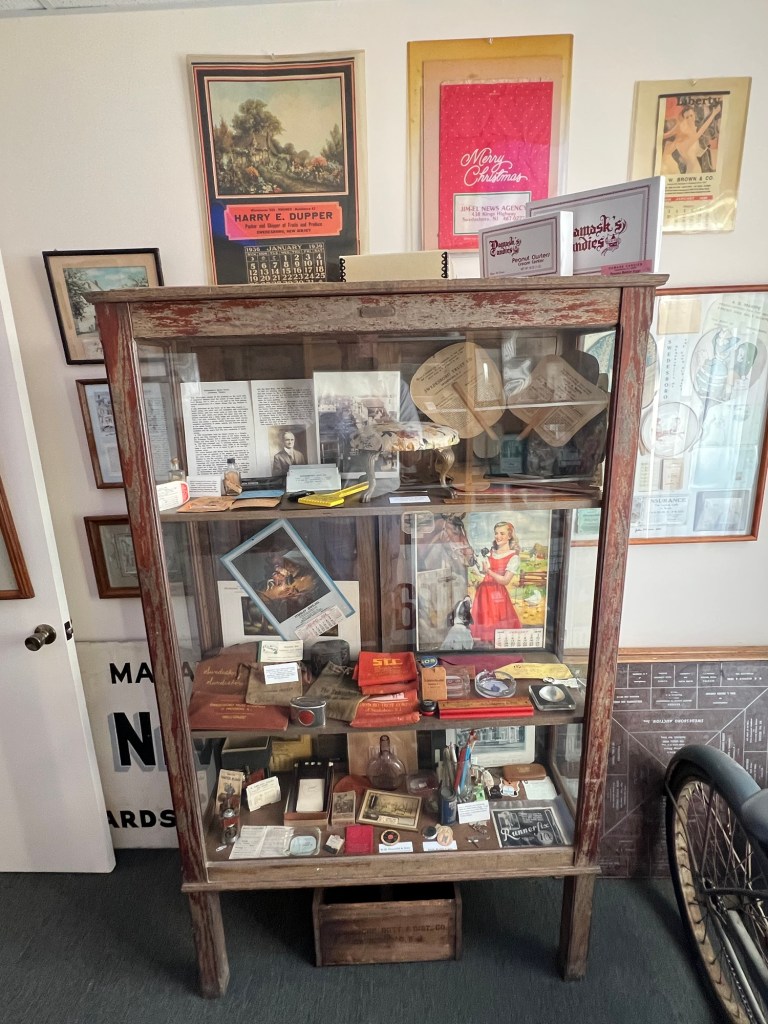
The museum has a large collection of items from the past from the business district showing how the town has changed and progressed from a farming community to a bedroom community of Philadelphia and New York City.
Pictures of businesses from the past and artifacts from a glass manufacturer whose business was in Swedesboro
Artifacts of businesses from the past
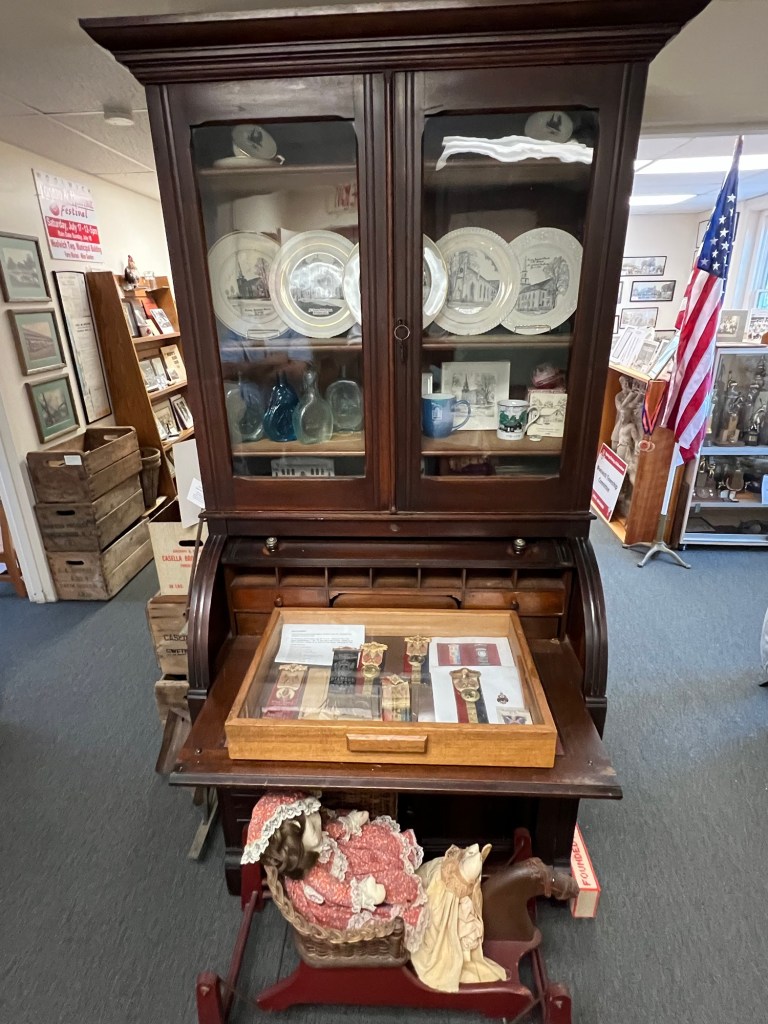
Commemorative plates from churches historic pieces of the town’s past
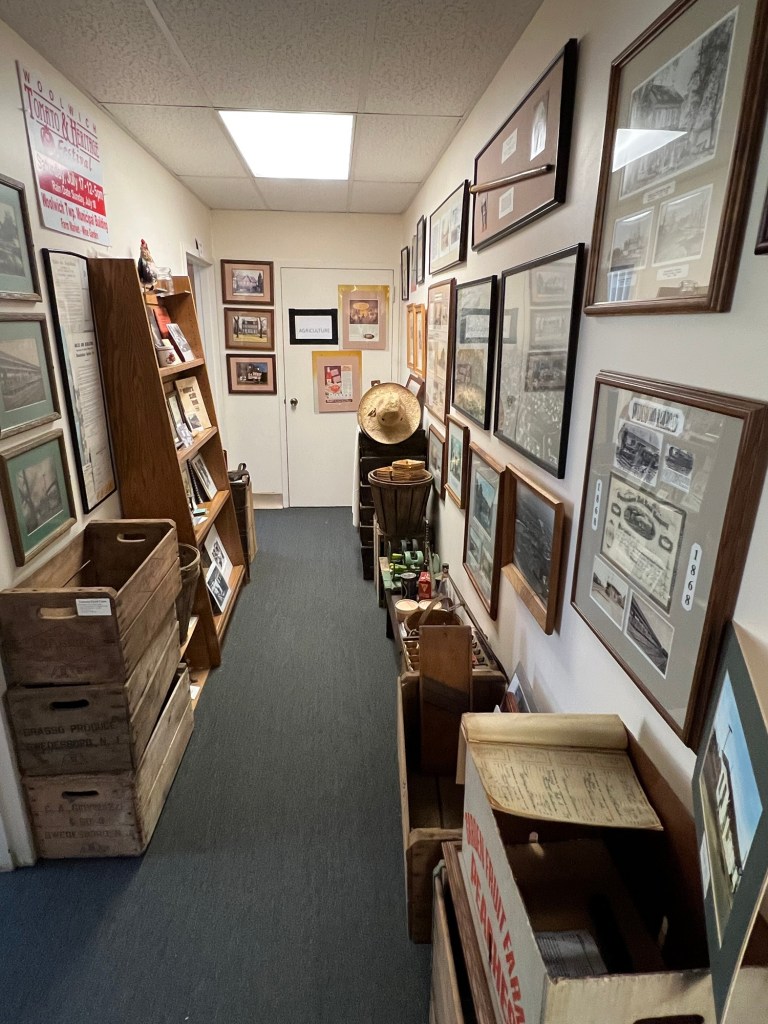
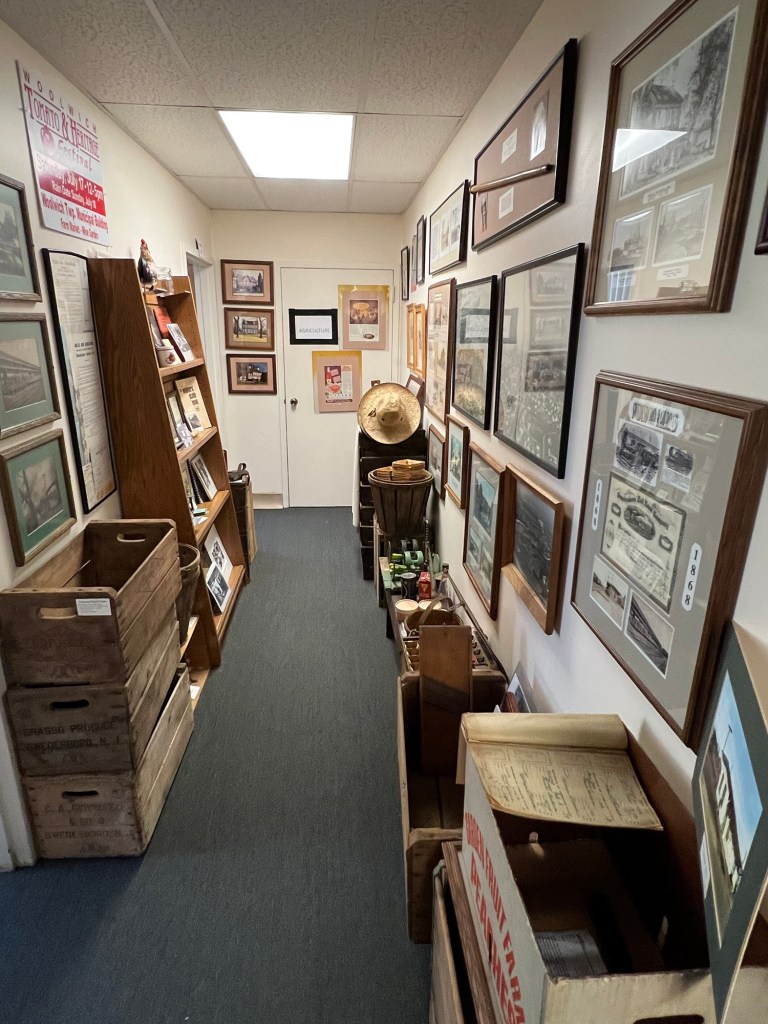
The back gallery hallway leading to the Swedish Room and the Everything room
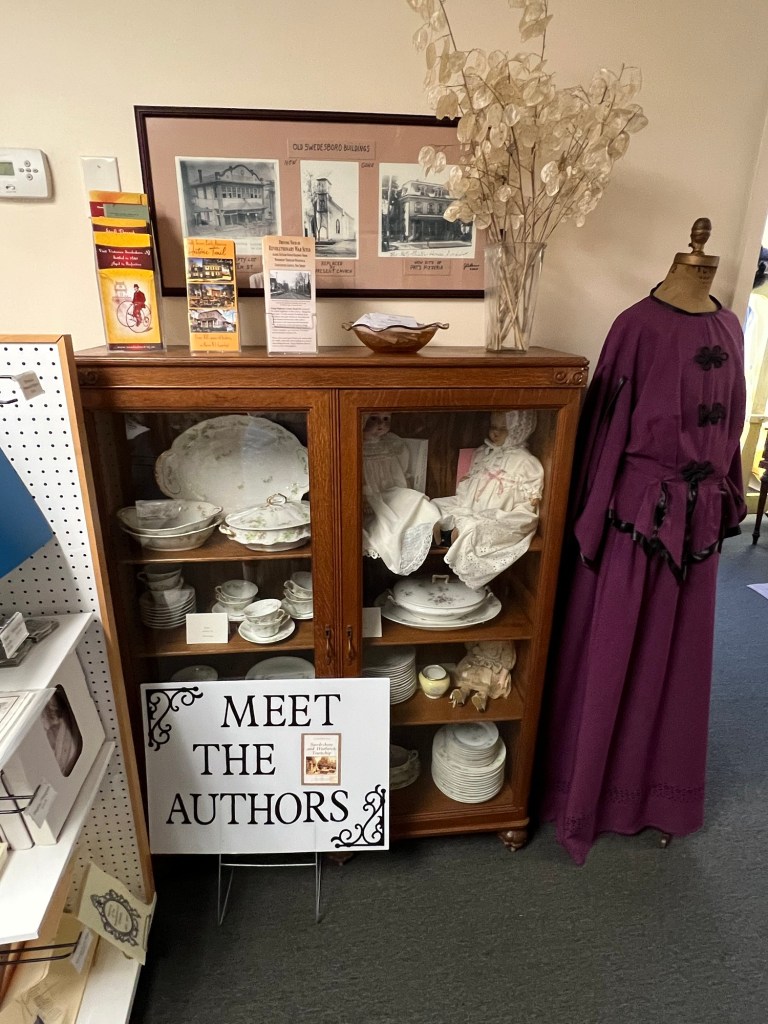
Family China from one of the member’s of the Society’s family and era dress
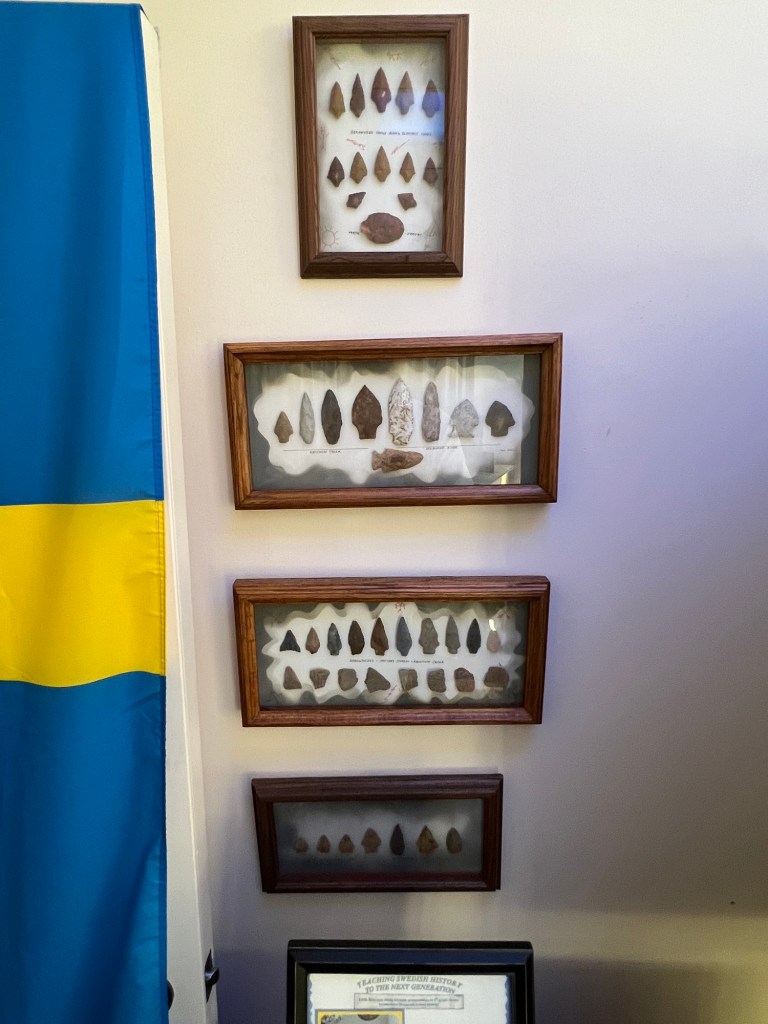
The Indian arrowheads found in town
The town being so close to the water and hunting grounds was a place many local tribes settled in the summer months this there was a large collection of arrowheads and other Native American artifacts. This shows the area influence of the Lenape tribes before the Revolutionary War in this area as a hunting and fishing ground.
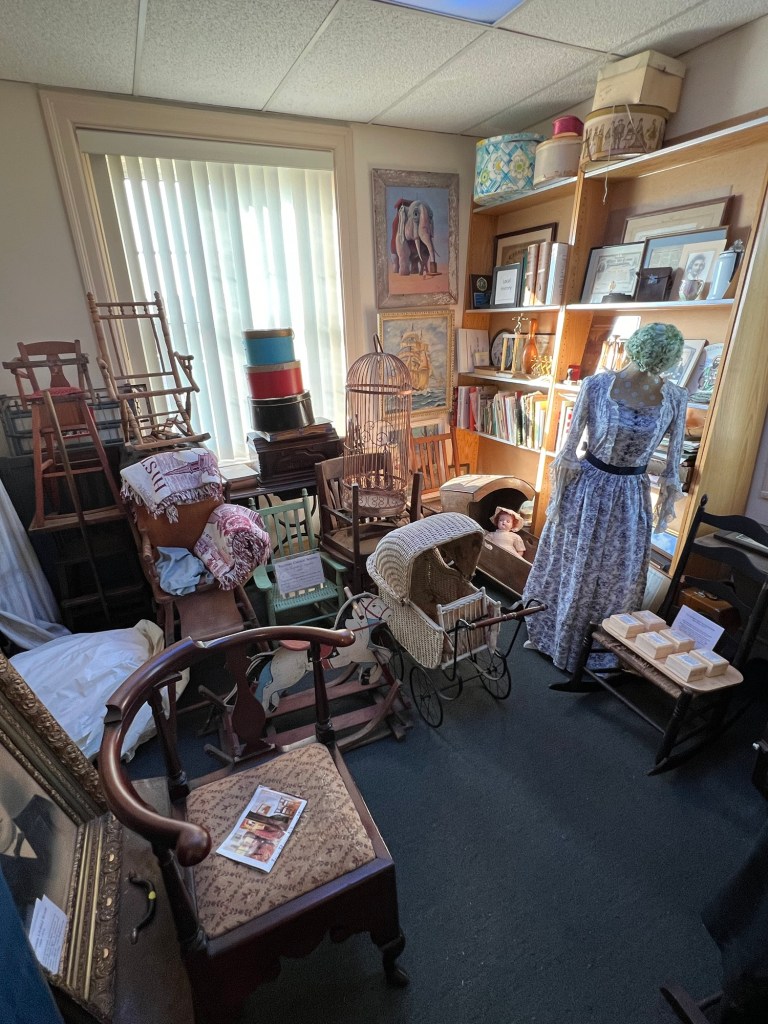
The ‘Everything Room’ where everything gets stored which does not have a home or display yet
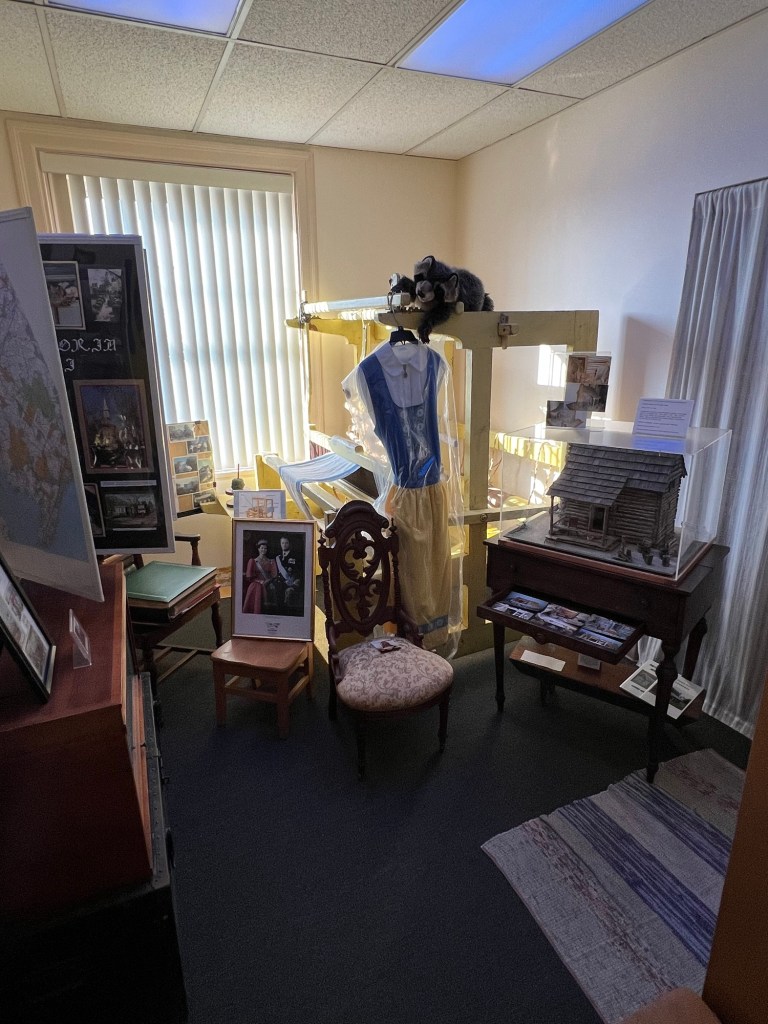
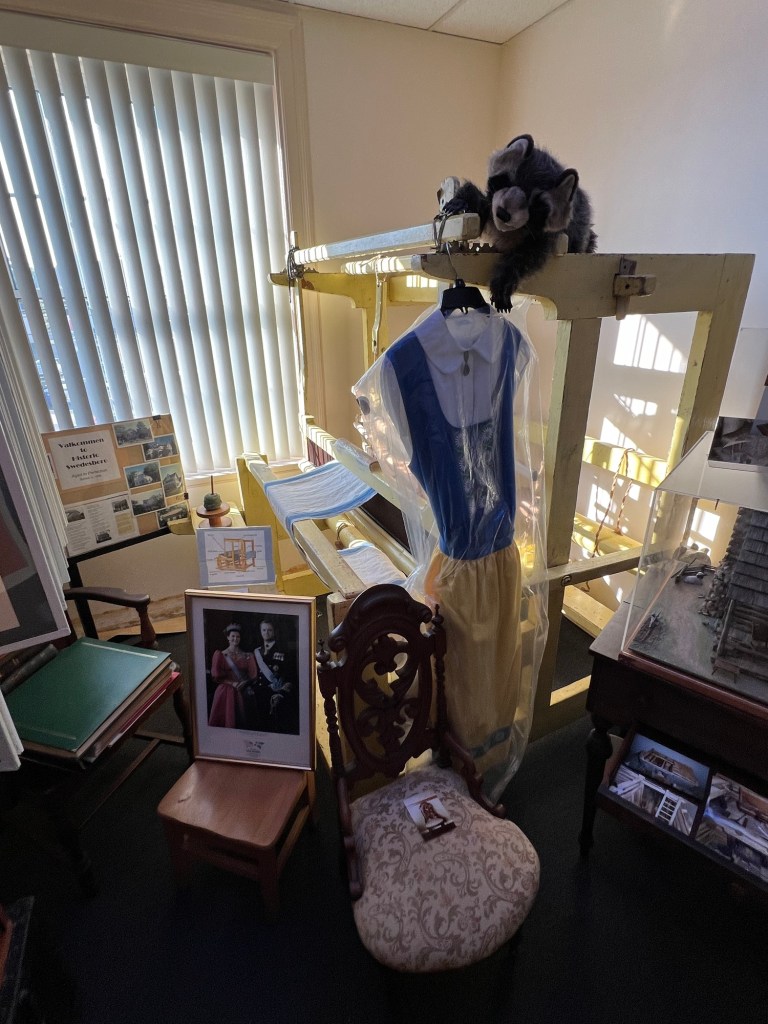
The next display room was the ‘Swedish Room’ dedicated to the Swedish citizens who settled in the Delaware Bay along with Dutch. Swedish immigrants populated this area along with the Dutch in the late 1600’s and were an influence in the Delaware Bay area. “New Sweden” was established and thrived through the Revolutionary War.
The Swedish Gallery with the theme of “New Sweden” colony
Some of the cultural items from the Swedish population that used to live here including a photo of the Swedish royal family
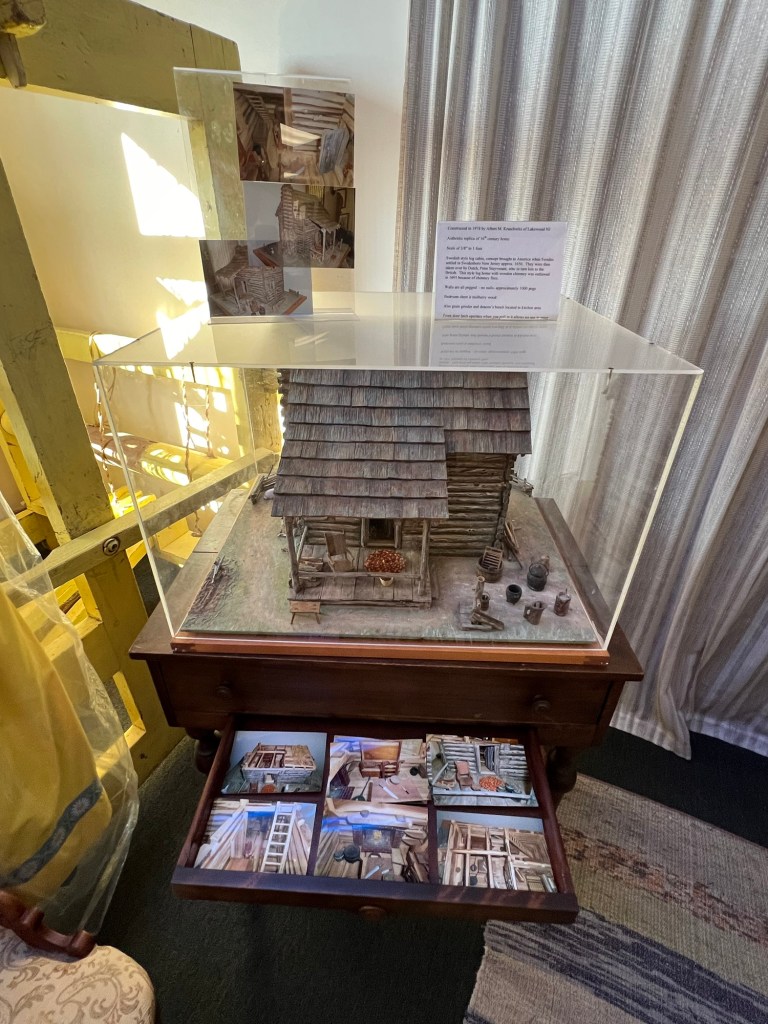
A recreation of a home of a Swedish family in that time period
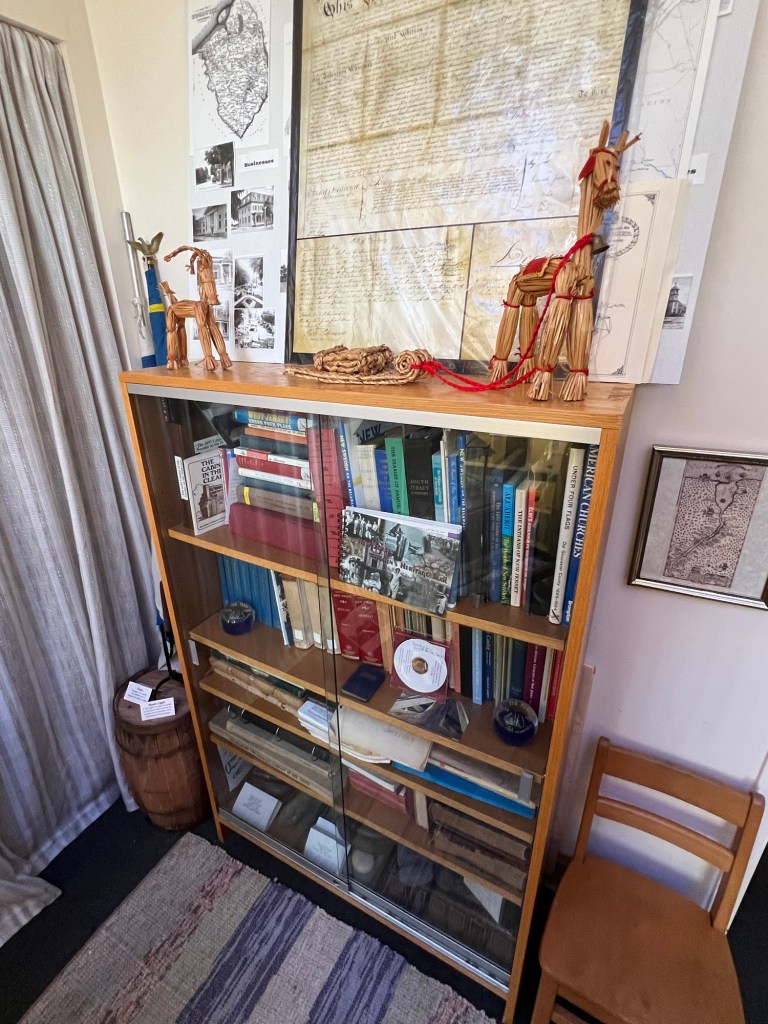
Books, maps and artifacts from the Swedish cultural the once dominated this community.
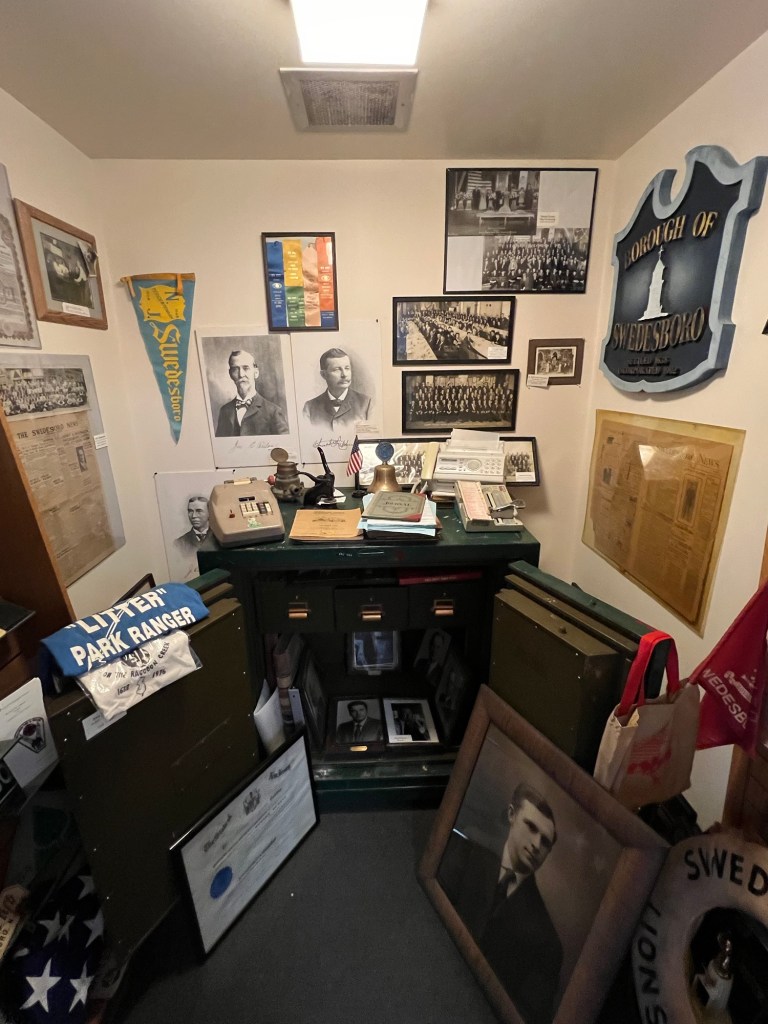
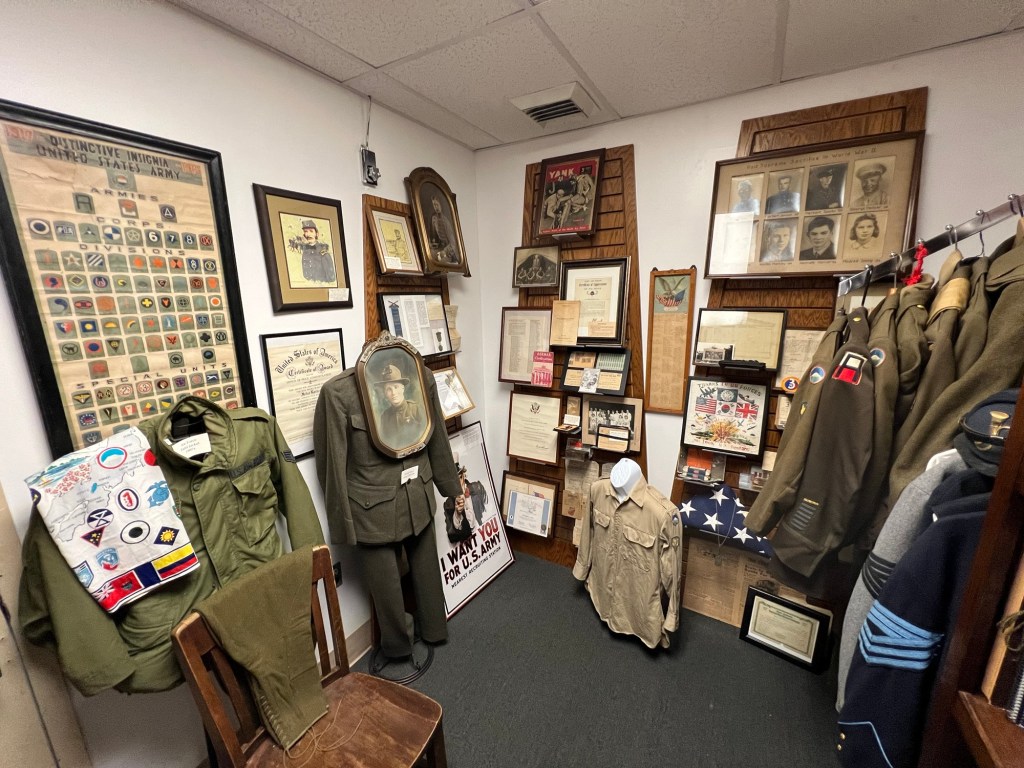
The last small gallery at the museum displayed the town’s Military contributions during the wars and artifacts on the town’s governing body.
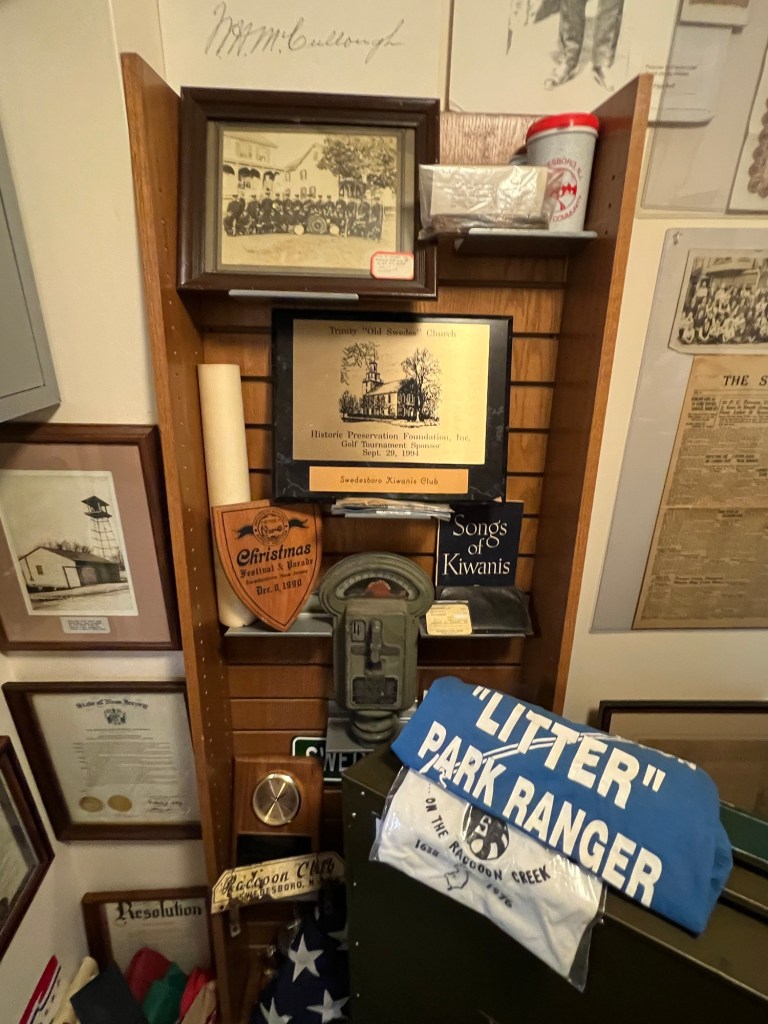
The history of the different fraternal orders that were once and still are part of the town of Swedesboro.
More of the awards and accolades of the organizations in town.
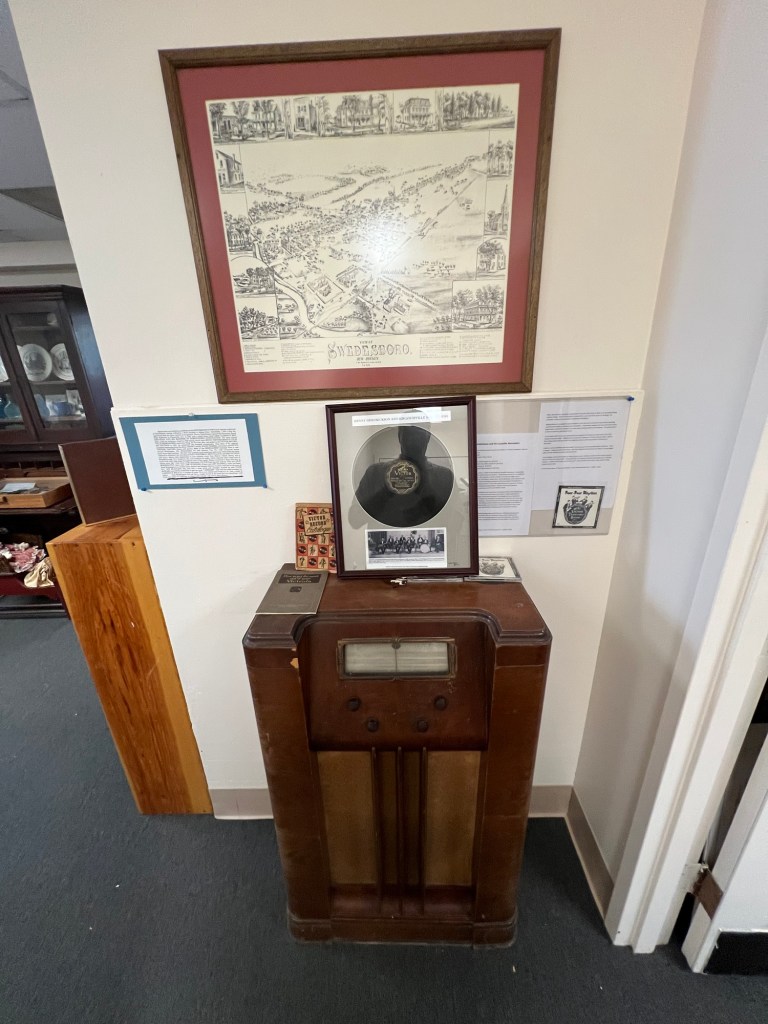
The map of the town around the turn of the last century
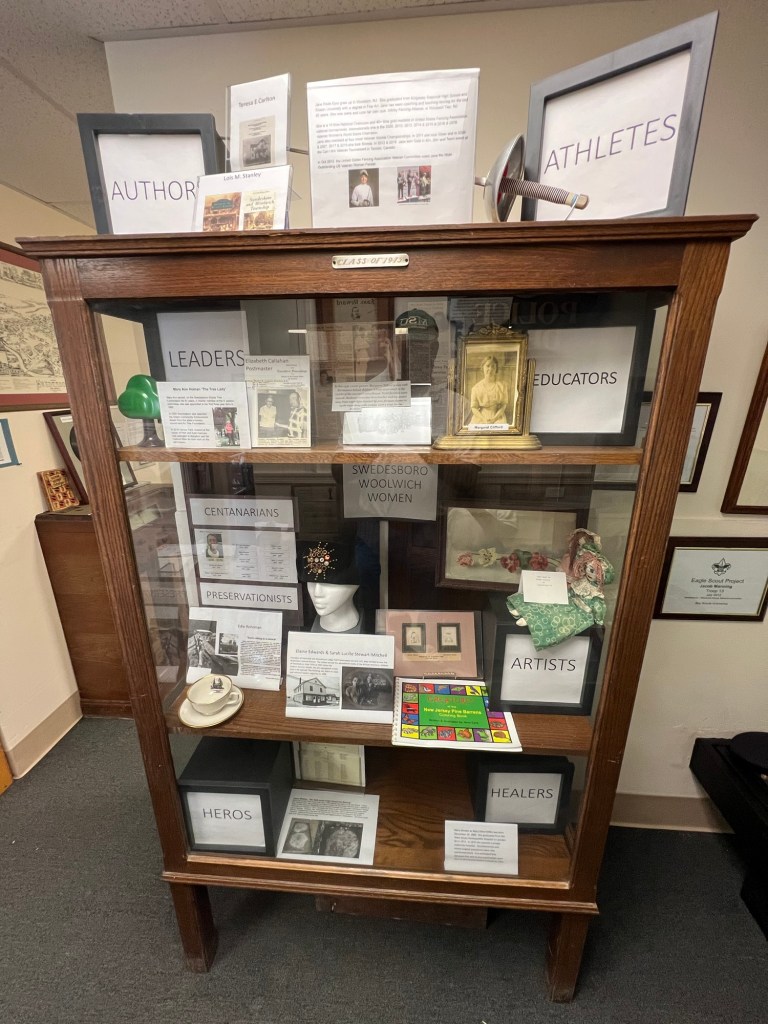
Members of the Swedesboro community
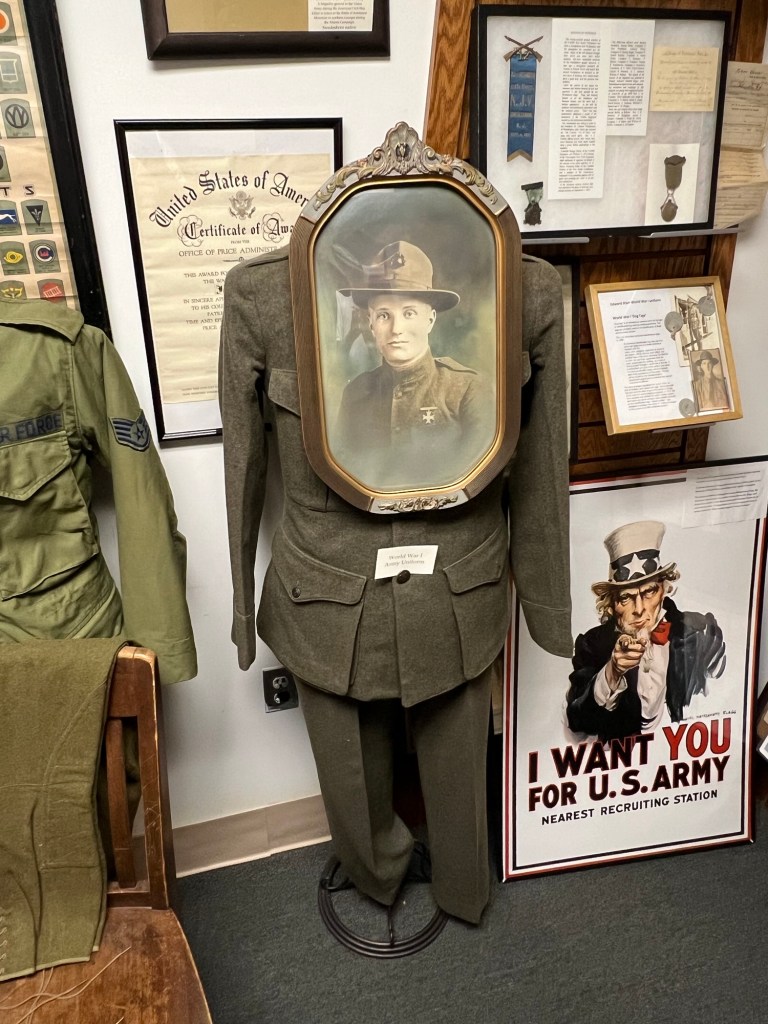
The Military Gallery with uniforms, pictures and artifacts including medals from the town’s citizens that fought in the wars
What was nice about this gallery is that it shows the contribution of a small town and what they did for the war effort. The collection of uniforms is quite extensive.
The uniform and picture of a soldier from WWI
In the entrance to the museum, there are more displays on the town’s farming past and the people who helped shape this community to what is today.
Artifacts that are part of the town’s agricultural past in farming strawberries
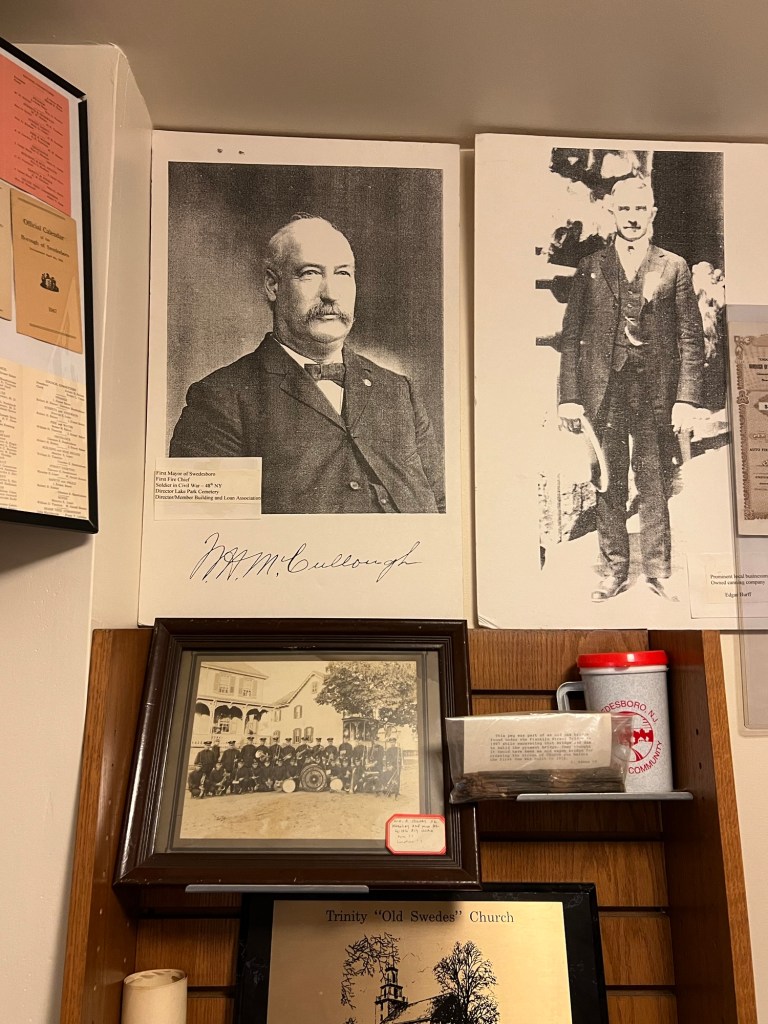
Pictures of the architect and first Mayor of the town that helped shape the town
For such a small museum, the galleries are packed with interesting information of the Town of Swedesboro, its past, its present and its future. The museum tells the story of where the community has been and how it will shape its future.
Take your time to stroll the three galleries and look at the fascinating past of this small New Jersey town. Then head outside and walk its downtown to stroll the present. There are a lot of wonderful stores and restaurant to visit there as well. This is what makes the town of Swedesboro so special.
The History of the Swedesboro Museum:
(from the Museum website)
The Swedesboro-Woolwich Historical Society provides cultural and educational events throughout the year for area residents. Its goal is to obtain and preserve the history of the Borough and surrounding Woolwich Township. To meet this end, the society collects and archives artifacts, documents, books, photos, family histories and items which help to keep Swedesboro’s rich history alive. To add to our collection, volunteer with exhibits, or to give an oral history, click here to contact the Swedesboro-Woolwich Historical Society. To become a member, click here to download a membership application.
Visit our booth on Swedesboro-Woolwich Day in September. Learn about local history, purchase books and other items to support the historical society. Civil War re-enactors also attend town events to educate people about Swedesboro’s rich history and memorialize fallen Swedesboro & Woolwich Township soldiers.
In addition to our presence at local events, the Historical Society participates in programs to excite the community about Swedesboro’s rich history. Twice a year, we visit Fourth Grade classrooms within the Swedesboro-Woolwich School District to encourage interest in the history and culture of our community among students and teachers alike. Our meetings, held on the third Wednesday of every month (except July & August) at 7:00 PM and open to the public, also feature special interest speakers, authors, re-enactors, traveling exhibits from the Gloucester County Historical Society, and special programs throughout the year.
To learn more about our organization and local history, please stop by our booth at town events, strike up a conversation with a re-enactor you meet on the street, or join us at our new location (on the second floor of Borough Hall at 1500 Kings Highway in Swedesboro) for a meeting. To support the Historical Society, click here to purchase Historic Swedesboro Merchandise. New publications are researched, written and printed each year!
Video at the Swedesboro Historical Society-A Special Visit
This visit showcases the pictures that I took all over the museum. This gives a more detailed description of all the artifacts in the museum.
As part of the Morris County “Pathways to History” tour I visited the small Lincoln Park History Museum just off the downtown. This colorful and well lit little museum is packed with information on the development of the town. The transformation took place with the form of transportation that changed the area starting with the Morris Canal running through then the railroad system and then the advent of the automobile. This area is still quite sleepy even though its located just an hour outside of New York City.
Lincoln Park History Museum, located at the original 1922 Library building. Lincoln Park, or as once known, Beavertown, is small in geographic nature but has a rich and diverse history. The museum’s goal is to rediscover the town’s past and celebrate / preserve the history, which sadly, at times, is lost and forgotten.
The history of the town’s police and fire departments
Join us and discover our past which includes: dinosaurs, native American artifacts, revolutionary roads /houses, civil war hometown hero, part of the Morris Canal path, part of the Boonton Line Railroad branch, airport, major flood events, some Hollywood film locations and of course our townsfolks who sacrificed in war, volunteers (fire department, police, first aid, pal, scouting etc.), all who made Lincoln Park a wonderful town to grow up in and formed pride and sense of community (Pathways Tour website).
The history of the Morris Canal that ran through the town before the railroads.
The Morris Canal was an important part of the town’s development.
Learn how the town transformed from a small crossroad in the American revolution to a canal stopping point with incline plane, lock and hotel. Learn how it progressed from farming to resort area to commuting town and transform to what it is today. The town keeps growing.
The day the Railroad came to town and it changed everything! On December 14, 1870 the first passenger train stopped at Beavertown. School was closed that day so the students could witness this momentous occasion. The following year Beavertown’s name was changed to Lincoln Park. This event, started a large and long transformation of the town. Prior to this, the town was all farmland and the few businesses in town centered on support of the Morris Canal. Once the railroad came, the transformation started (Pathways Tour website).
Small industries were created which used the train system for shipping freight and the population started to grow. In the earlier 1900s advertisements were placed in New York /Brooklyn newspapers advocating the benefits of country living. City folks would come by train for the summer and enjoy river activities and many of these folks became permanent residents. During this time the Morris canal was slowly fading away, not able to compete against the railroad. Soon, it was feasible to commute daily from Lincoln Park to New York by train and the population continued to grow along with more business to support the population (Pathways of History Tour of Morris County website).
Lincoln Park’s Farming past and Business District.
Lincoln Park’s town history of schools, fire and police departments.
The museum only takes about an hour to visit but take the time to see all the displays and talk to the docents. The town really has an interesting history.






 Visiting a Museum: The Unique, Unusual, Obscure and Historical