Tag: NY Historical Sites

Mount Vernon Hotel Museum & Garden           421 East 61st Street                                            New York, NY 10065

Mount Vernon Hotel Museum & Garden 421 East 61st Street New York, NY 10065

Mount Vernon Hotel Museum & Garden

421 East 61st Street

New York, NY  10065

(212) 838-6878

http://www.mvhm.org

Open: Tuesday-Sunday-11:00am-4:00pm (check the website during each season)

Fee: Adults $15.00/Seniors & Students $12.00/Children 16-12 $5.00/Children under 12 Free

TripAdvisor Review:

https://www.tripadvisor.com/Attraction_Review-g60763-d309468-Reviews-Mount_Vernon_Hotel_Museum_Garden-New_York_City_New_York.html?m=19905

The Mount Vernon Hotel Museum at 421 East 61st Street
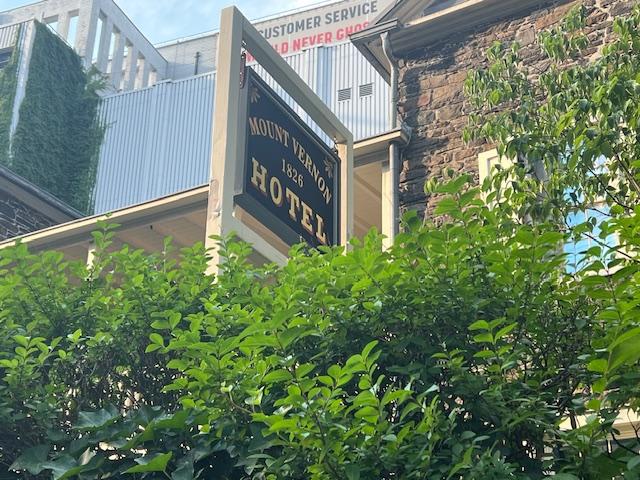
Mount Vernon historical sign during the summer months

The history of the building

The model of the building

I had come across the Mount Vernon Hotel Museum when I was walking on East 61st Street for my blog and went to take the tour of the building. It is a one hour (or more as I there for almost two hours but I was by myself) tour of both floors. You start with a film and a quick talk about the history of the building. The hotel building has had several owners and uses over its over hundred years.

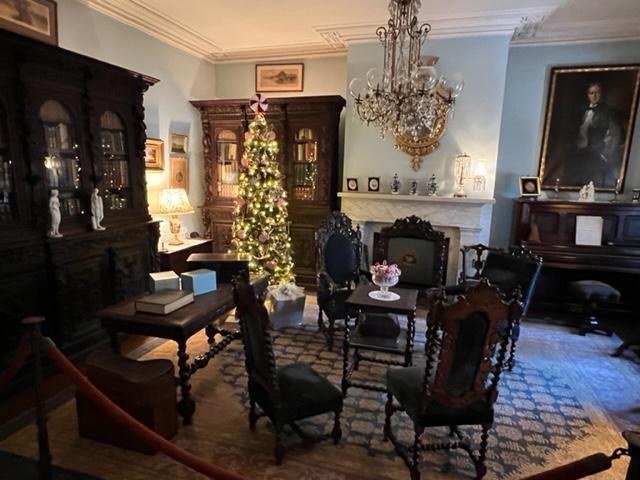
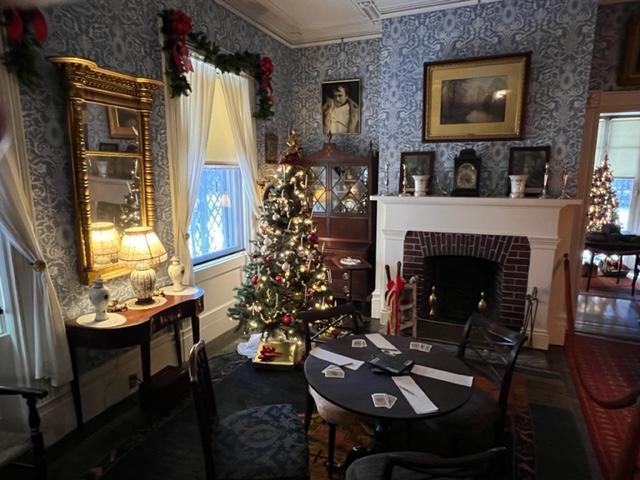
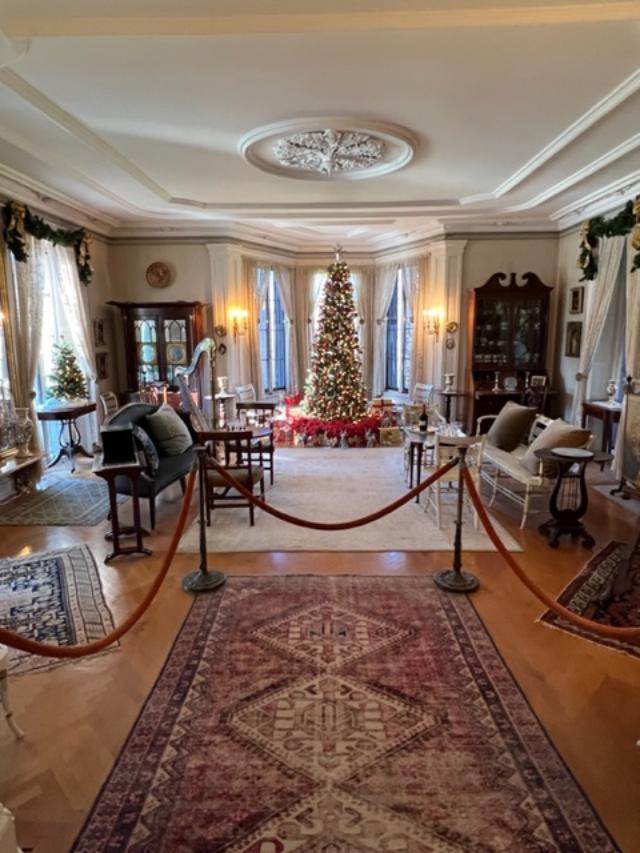
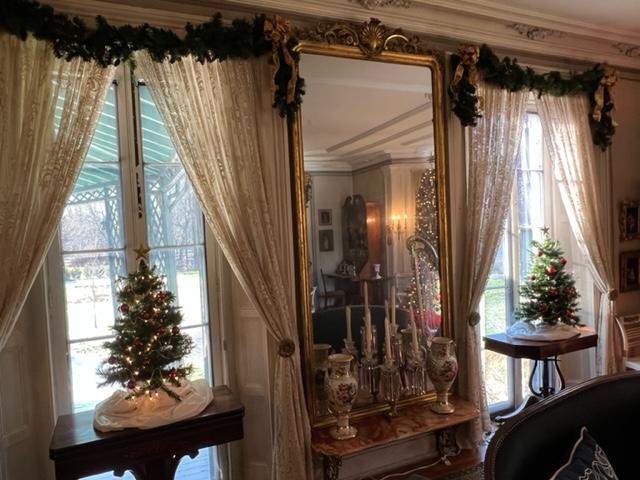
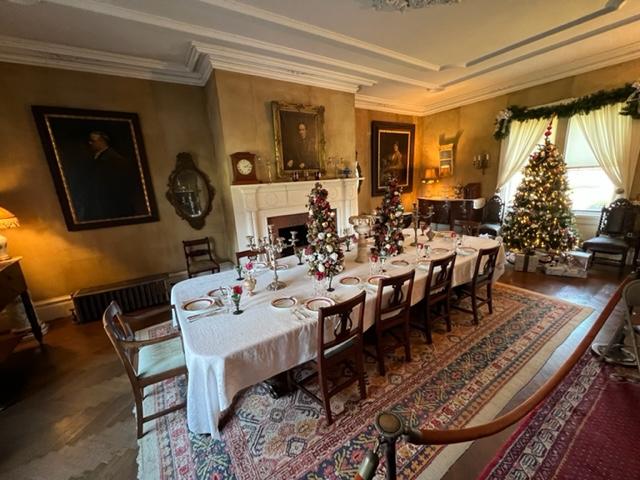
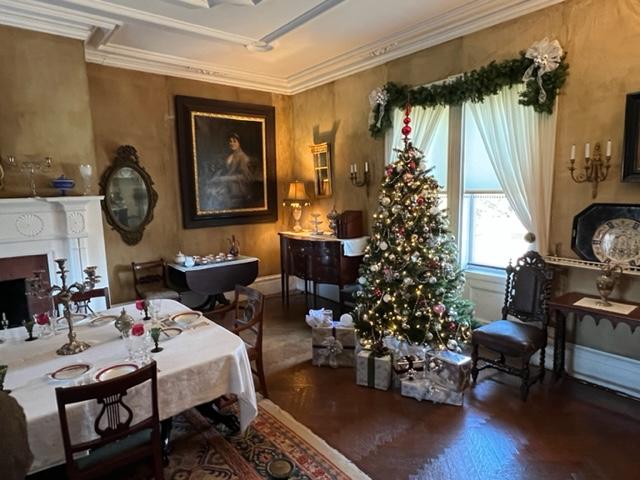
I visited the museum during the holiday season in 2025 and I got to see all the decorations around the hotel. There was elegant decorations in most of the rooms and got to see how people ate during the holiday season as well as with visits guests would have indulged in when they came for the day.

Then you start the tour of the upper room where the ladies would gather and talk. This is where they might have tea, musical recitals and read and sew. They would gather with other women for conversation and debate.

The Upstairs foyer gallery

The foyer landing decorated for the holidays with the former traveler, James Taylor, who discussed in his memoir about visiting the hotel

The Ladies Parlor

The upstairs is where the sleeping rooms and the ladies parlors are located, where female guests would enjoy tea, games, music and reading. The main landing was for dancing and for gatherings.

The Ladies Palour with the Chinese writing desk and festive decorations.

The room set for tea with Englishware

The holiday set up afternoon service

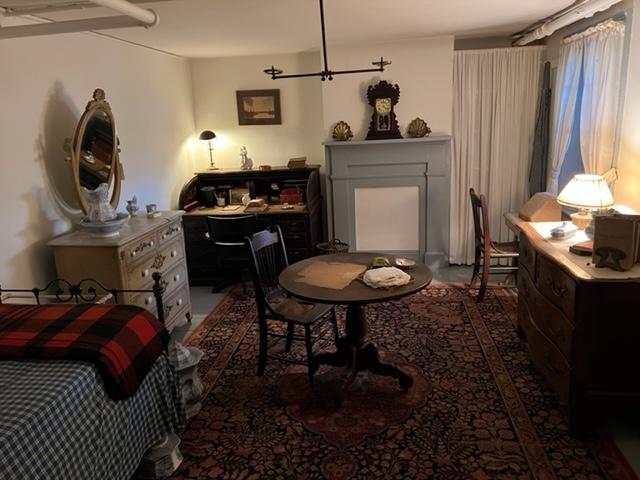
The sleeping rooms were kept simple and functional

The Men’s game room

The main floor was the Men’s gaming rooms, where there is a bar and two rooms for male activities such as cards, gambling and reading. Here the men would discuss politics and business over a drink and games of chance.

The main games room

The main entrance was used as the dining room for dinner (our lunch), which was the biggest meal of the day served around 2:00pm.

The bar area where spirits are sold

The afternoon supper was part of the package and couples would join one another for a several course meal, which would serve as the main meal of the day.

Dinner time at the Mount Vernon Hotel Museum

The tour guide went over what would have been served, menu’s and meal times. Dinner would have been served at 2:00pm, tea time would have been around 4:00pm-6:00pm and Supper around 8:00pm.

The multi course meal for everyday on display

The meal would include popular dishes such as turkey and oysters and a specialty, Turtle soup. Fresh vegetables and fancy desserts would be part of the package.

The tour of the kitchen show preparation of foods, recipe books and all kitchen equipment including the stoves and baking materials.

The kitchen for both the hotel and house

The kitchen used to cook afternoon meals

The area used for baking and roasting

If you like the history of “Old New York” and like old homes, hotels and buildings, this is a very interesting tour that deals with the City’s growing middle-class and the new ‘leisure time’ that was coming with the changes in the work week. There are many pieces of period furniture all over the building that show the growth of affluence of the time.

The side board set with holiday desserts

The side board ladened with holiday treats

Don’t miss the formal walled in garden in the back. It is a place of relaxation from the rest of the city. There are stone walk ways and landscaped gardens as well as an herb garden. The building is owned and maintained by the Colonial Dames of America.

The walled gardens during the winter

The walled garden in the winter

I revisited the museum for the holidays and the hotel was decked out in garland and holy based on the decor traditional for the Revolutionary War era Christmas. The archways and tables were lined with greenery and the tables were loaded with oranges plunged with cloves to give the homes at that time a rich citrus smell.

The downstairs dining table was set for a Christmas meal of wild turkey, mock turtle soup, and apple and pumpkin pies. This would have been served in the afternoon as the main meal while it was still light out.

Holiday goodies at the Mount Vernon Hotel Museum getting ready for the holidays

There had been a light snow while we were touring the hotel so when we visited the gardens, it really did have that Christmas feel to it with that light snow all over the pine and the bushes.

How the neighborhood has changed

The old stable area

During the time of the Revolutionary War and afterwards, homes were not as elaborately decorated as they would have been during Victorian times after the Civil War. Homes were lined with greenery that would have given the home the fragrant smell of pine and strings of cranberries and popcorn would have been used to decorate mantles.

The hotel decorated for the holidays

The hotel was getting ready for one of its many special events during the holidays so there was a lot of commotion going on downstairs. It is a very festive looking place for the holidays so try to tour it when it is open in the month of December.

The museum in the 2025 holiday season  

What is the Museum:

Constructed in 1799 as a carriage house and converted into a ‘day hotel’ in 1826, the Museum transports visitors back to Mount Vernon Hotel, a 19th Century country resort for New Yorkers escaping the crowded city below 14th Street.

The model of the original house layout

Recognizing the building as one of the few remaining 18th century sites and the only surviving day hotel in New York City Historic Landmark in 1967, added to the National Register of Historic Places in 1973 and accredited by the American Association of Museums in 1983.

History of the House:

The Mount Vernon Hotel Museum & Garden presents the period of the Mount Vernon Hotel which operated from 1826 until 1833.

Constructed in 1799 as a carriage house for a 23 acre estate and converted into the Mount Vernon in 1826, this stone building sits on land originally owned by Colonel William Stephens Smith and his wife, Abigail Adams Smith, the daughter of John Adams.

This fashionable country resort was popular among New Yorkers who wished to escape the hustle among the bustle of the city, which at that time extended only as far north 14th Street. The Hotel advertised “free from the noise and dust of the public roads and fitted up and intended for only the most gentle respectable” clientele. In those days, one could take the stagecoach or steamboat up to 61st Street spend the day at the hotel sipping lemonade in the ladies parlor or playing cards in the gentlemen’s.

In 1833, the house became the home for three generations of a New York City family. In 1905, as the area became more industrialized, the building was purchased by Standard Gas Light Company (today’s Con-Edison). The Colonial Dames of America, a woman’s patriotic society purchased the building in 1924 and did an extensive restoration to the structure, the Colonial Dames opened the site to the public in 1939. The building endures as a rare reminder of an important era in New York City’s history.

What the organization does:

*Welcome 5000 school children annually in grades-pre-K through high school for field trips.

*Summer History Weeks for children ages 6-12

*A Summer High School Internship for 15 students to support college readiness skills and career exploration.

*Two summer Hearst Fellowships for undergraduates or graduate students.

*40+public programs each year, including:

-monthly free Story time

-monthly Lunchtimes lectures

-holiday programs, garden concerts, hands on craft and cooking workshops.

*Temporary exhibitions on facets of life in early 19th century NYC, some promoting local contemporary artists.

*Special programs for individuals with Alzheimer’s and their caregivers.

*Outreach programs to schools, senior centers and homeless shelters.

*Themed group tours focused on 19th century food, decorative arts or literature.

*Three options for team building events.

*Two free admission days: Smithsonian Museum Day and Open House New York.

Programs are made possible in part by the support of the New York City Department of Cultural Affairs in partnership with the City Council and Council Member Ben Kallos, the New York State Council on the Arts with the support of Governor Andrew Cuomo and the New York State Legislature, the Manhattan Borough President Gale Brewer, the Institute of Museum and Library Services, the Rosenthal Foundation and the Michael Tuch Foundation.

(Mount Vernon Hotel Pamphlet)

The Colonial Dames of America:

With these words, spoken in April 1890, Maria Denning “May” Van Rensselaer imitated what was to become the oldest colonial lineage society for women in the United States. The Colonial Dames of America. Its mission is to preserve historic sites and objects, award scholarships, educate the public about American history, inspire patriotism and promote fellowship among its members.

(The Colonial Dames of America information).

The backyard gardens in the Winter time

Video on the museum
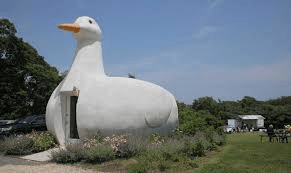
The Big Duck                                                      1012 Flanders Road                                     Flanders, New York 11901

The Big Duck 1012 Flanders Road Flanders, New York 11901

The Big Duck

1012 Flanders Road

Flanders, New York  11901

(631)852-3377

http://bigduck.org/

Open: Sunday-Saturday 10:00am-5:00pm

Fee: Free donations accepted

TripAdvisor Review:

https://www.tripadvisor.com/Attraction_Review-g754554-d3292234-Reviews-The_Big_Duck-Flanders_Long_Island_New_York.html?m=19905

The History of the Big Duck

IN 1931, Riverhead duck farmer, Martin Maurer and his wife, Jeule, decided to construct a giant duck-shaped poultry shop. They hoped to sell the Pekin ducks they raised to passing motorists, who would surely be drawn to the striking form of the ‘big duck’ along Riverhead’s West Main Street. The Maurers envisioned this plan while vacationing in California where they are known to have visited a roadside coffee shop shaped like a giant coffee pot.

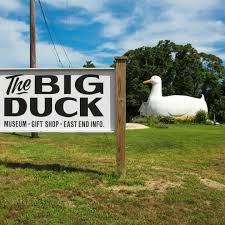
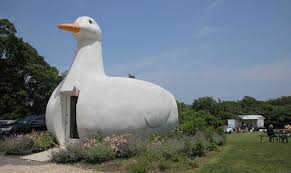
The Big Duck III

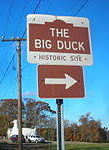
The historic sign

Seeking local assistance, the Maurers hired carpenter George Reeve and two eccentric stage show set designers, brothers William and Samuel Collins. A live duck tied with a string to their porch served as a model for the Collins’ design. Reeve studied the carcass of a cooked chicken in order to create a sturdy, bird-accurate, frame work for the building. Construction of The Big Duck had begun.

After The Big Duck’s wooden frame had been pieced together, wire mesh was attached. Cement was applied to the wire mesh with the assistance of Smith and Yeager Builders. The Big Duck was painted a lovely bright white, save the beak, of course, which was given its street-line orange color. The finishing touch was the placement of two Model-T taillights in The Big Duck’s head for eyes that would glow red at night. The Big Duck in its entirety measures 30 feet from beak to peaky tail, 15 feet from folded wing to folded wing and 20 feet from its base to the top of its head. As duck farms in the 1930’s were commonly known as duck ranches, Martin Maurer had his giant duck shop and business trademarked as The Big Duck Ranch.

The Big Duck II

The Big Duck roosted at The Big Duck Ranch on West Main Street till 1936. The Maurers’ had sold quite a few ducks from their unique shop and decided to relocate, Big Duck and all, to Route 24 in Flanders. The Flanders community welcomed The Big Duck with open arms and have cherished it since.

The Big Duck’s popularity grew and continues to grow steadily. When the land where The Big Duck rested was slated for development in 1987, Big Duck fans from all over joined Suffolk County in an effort to preserve The Big Duck. The Big Duck’s then current owners, Kia and Pouran Eshghi, generously donated The Big Duck to Suffolk County in December of 1987. The Big Duck was relocated to a nearby County Park. In 2007, since the former site had not been developed after all, the Big Duck was returned to the heart of Flanders.

The Big Duck is open to the public as a gift shop and museum. Visitors can browse historic photographs, antique postcards and published articles as well as photos of roadside architecture on display. Unusual duck merchandise or ‘duck-a-billia’ as well as other Long Island  gifts and handcrafted items are available for sale.

The Bid Duck

World Famous Duck Architecture

While The Big Duck is a well-known Long Island landmark, it has also lent its name to a specific style of roadside architecture. The architectural term, “duck” was coined by architects Robert Venturi and Denise Scott Brown in 1968. Duck buildings are highly sculptural forms which represent products or services available within as opposed to the more common ‘decorated sheds’ which are plain buildings whose functions are revealed by added signage.

Within Suffolk County’s Big Duck as with other architectural ducks, the building itself is the signage, a colossal, three dimensional, representational advertisement. Designed to mesmerize passing motorists and entice them ultimately to a purchase, ducks are fantastical while retaining their purely practical intentions. The Big Duck has become the most famous example of roadside architecture.

Another well-known architect named James Wines has proposed the Duck Design Theory, D.D.T., part of which states: ‘Form follows fantasy not function for architecture that cannot offer fantasy fails man’s need to dream.’

Long Island Duck Farms and its history:

How did the Pekin duck get to Long Island? According to legend, in 1870, a Long Island sailor traveled to China and returned with nine of the snowy-white, orange-beaked Pekin ducks. These ducks thrived on Long Island’s splendid waterways when shelter was provided them for the cold winters.

As Pekin duck meat was especially succulent, it marketing potential soon became evident to potential soon became evident to Long Islanders. Duck farms, sometimes known as duck ranches, sprang up all over Suffolk County, producing 60% of the nation’s ducks by 1969. Today that figure has dropped to below 15% due to escalating land values, increased production costs and environmental concerns.

Long Island duckling can still be found as a menu offering at the finest restaurants around the world.

The Big Duck Museum Store features many duck-inspired souvenirs. Find Big Duck t-shirts, caps, magnets, key chains, mugs, note cards, holiday ornaments and children’s items as well as other Duck-a-bilia. Also find many local products: Books on local history, Long Island seaside photography and artwork, hand-crafted items. calendars, post cards and much more.

Directions:

From Western Long Island:

From the LIE, exit 71 take Route 24 south through the Riverhead traffic circle. Cross Route 105 and continue 1 mile on Route 24 to The Big Duck on the left, right after Huntington Lane.

From the Sunrise Highway, take exit 64N (Riverhead), make a right onto Pleasure Drive, Flanders. At a right onto Pleasure Drive, Flanders. At the end, make a left onto Route 24. The Big Duck is on the right, after the access road to the Flanders Men’s Club.

From Eastern Long Island:

From the Sunrise Highway, take exit 65N, Riverhead and travel 5 miles on Route 24 to The Big Duck on the right after the access to the Flanders men’s Club.

Disclaimer: This information was taken directly from the Suffolk County Department of Parks, Recreation and Conservation Division of Historic Services pamphlet. The Big Duck is very unusual to visit and has bathroom facilities.


Locust Grove Estate                                                                 2683 South Road (Route 9)                                    Poughkeepsie, NY 12601

Locust Grove Estate 2683 South Road (Route 9) Poughkeepsie, NY 12601

Locust Grove: A National Historic Landmark

2683 South Road (Route 9)

Poughkeepsie, NY  12601

(845) 454-4500

http://www.lgny.org

https://www.lgny.org/

Open: Seasonal-See Below

Visitor Information: The gardens and grounds are open year round from 8:00am to dusk, weather permitting.

House Tours: Offered May through November, daily from 10:00am-5:00pm and weekends in April & December. Groups tours by appointment.

Visitor Center: Open January through March, weekdays from 10:00am-5:00pm. April through December daily from 10:00am-5:00pm.

Fee: Adults $12.00/Children (6-18) $6.00

TripAdvisor Review:

https://www.tripadvisor.com/Attraction_Review-g48443-d263920-Reviews-Locust_Grove_Estate-Poughkeepsie_New_York.html?m=19905

The Locus Grove Estate

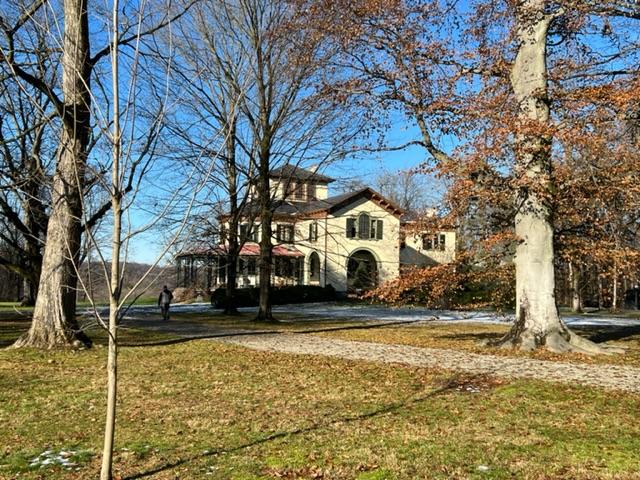
Overlooking the Hudson River, the 180 acre Locust Grove Estate includes an Italianate villa designed in 1851 by architect Alexander Jackson Davis for artist and inventor Samuel F. B. Morse.

The Locus Grove additions of the tower and back rooms

The estate, with miles of carriage roads, landscaped grounds, historic gardens and Hudson River views, was preserved as a museum and nature preserve by the Young family, whose collection of art and antiques is exhibited in the mansion’s 25 rooms.
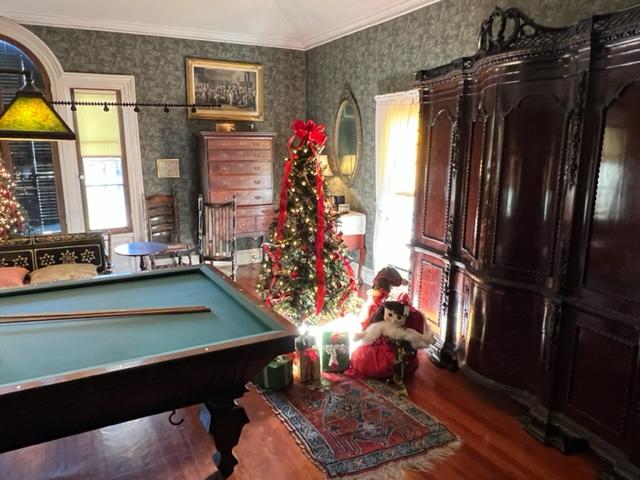
Entering Locus Grove for the Christmas holidays

I have visited the house twice for Christmas with the mansions elaborate but tasteful displays and once in the last fall when the foliage was in full peak. The house is an interesting example of turn of the century architecture and innovation of both the Morse and Young family’s love of Locust Grove. Each added their own touch to the house.

The Library right off the main hallway entrance used to be the original Dining Room when the Morse’s owned the house

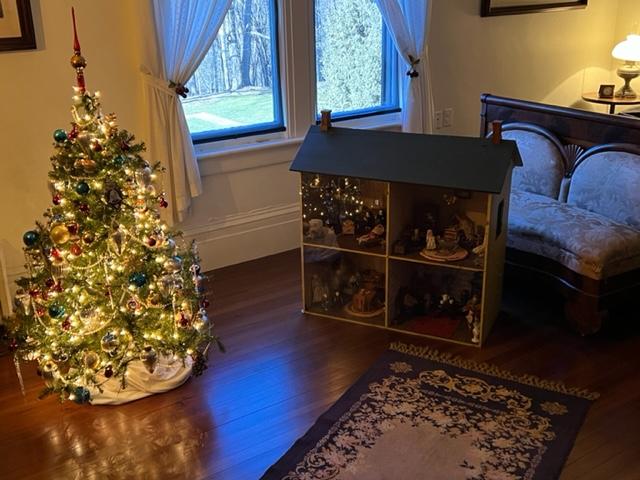
The Christmas tree in the Library

The Parlor across the hall from the Library

A closer look at the Christmas tree

During the Christmas holiday season, the house is beautifully decorated both inside and out for the holidays, with a formal tree in the back Living room, smaller trees and garland around the house on the first floor and smaller trees with presents in the bedrooms and in the Billiards room.

The Library at Locust Grove for the holidays

One of the rooms set for Afternoon Tea

One of the back offices

When the Young’s moved into the house, they needed more room for entertaining so they added the larger dining room (The Morse’s added the Tower to the home). So the old Dining Room became one of the reception rooms and a library. Some of the smaller rooms were used for social occasions so the first floor was reconfigured.

The Living Room in the Tower addition of the home

The mirror in the Living Room was the last thing left by the Morses

The larger Living Room held the most beautiful Christmas tree with a gorgeous view of the Hudson River from the back window. The room is elaborately decorated for the holidays and the volunteers created a very festive decor for the room. I do not know if the family would have decorated this much but still the halls were decked perfectly.

The Dining Room was set for an formal Christmas lunch with the family’s best china, crystal and silver and had displays of fruits and desserts that would have been served during the holidays. The Morse family spent their holidays in New York City so it would have been the Young’s who spent their holidays here.

The Dining Room set for Christmas lunch

The Christmas tree in the Dining Room

The Butler’s Pantry for the Dining Room

The upstairs to the bedrooms

The house had been added onto twice from the small cottage that had been built by the second owners, the Montgomery family. The back tower and wings were built by the Morse family and the formal dining room by the Young’s for their growing family.

The bedrooms were nicely decorated and the rooms had lots of Christmas decorations that you would not ordinarily see in a bedroom. Each room had its own Christmas tree.

The Master Bedroom with a breakfast nook overlooking the Hudson River

The paintings above the bed are of the Young family

The modern bathroom with hot and cold running water

The Young’s son lived in this room until he died

The Young’s daughter lived in this room until her death

The guest rooms were also nicely decorated

The dollhouse in the guest bedroom

Another guestroom

Guest room

The tour guide told us that the second floor Billiards Room was once a very popular and engaging room in the house for everyone visiting. There was always a lot of action going on in this room.

The Second Floor Billiards Room

The Christmas decorations in the Billiards Room

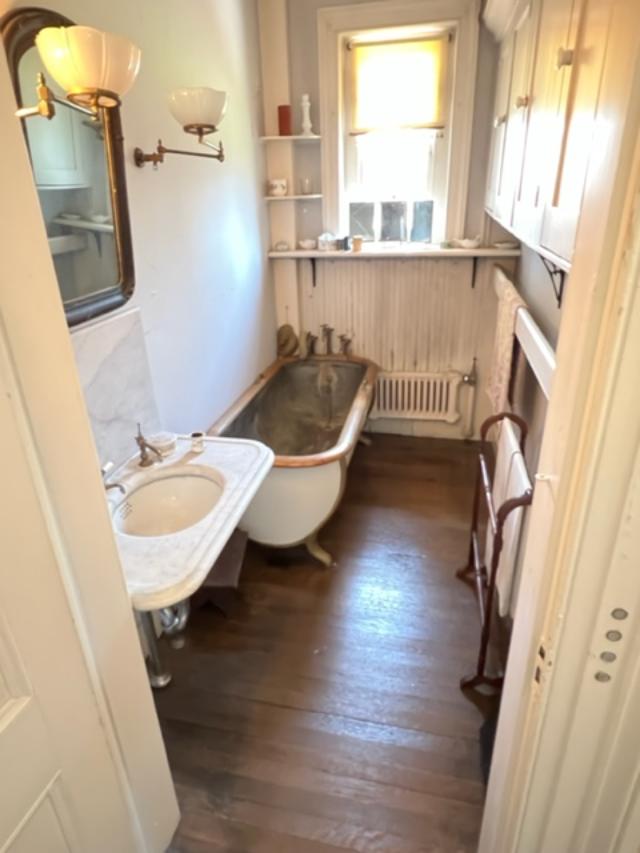
Our last stop on the second floor was the modern bathroom which was considered extremely innovative for its day. This was the most modern approach to plumbing.

The upstairs bathroom

The last stop on the tour was the downstairs Servants Quarters which were also decorated for the holidays. It showed what the Servants of the household would have been doing on a daily basis to help keep the house running.

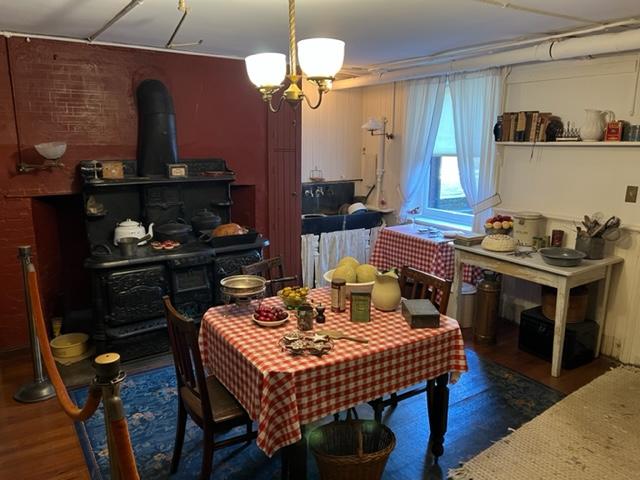
The Servants kitchen

The kitchen table in the Servants Quarters

The Servants Dining Room

Our tour guide, Ethel, did a nice job interpreting how each family would have used the house and for what occasions. The Young’s lived here full time until the last owner, Annette, died in 1975 and the Morse family used it as a summer retreat until Samuel Morse died in 1872.

locust-grove-ii.jpg

The view from the back of Locust Grove to the Hudson River during the early fall

The view to the Hudson River from the back of the house during Christmas 2022

The house is tastefully furnished both in turn of the last century decor and some more modern pieces. The grounds in the spring and summer months are in full bloom and in the fall awash with colors from the trees.

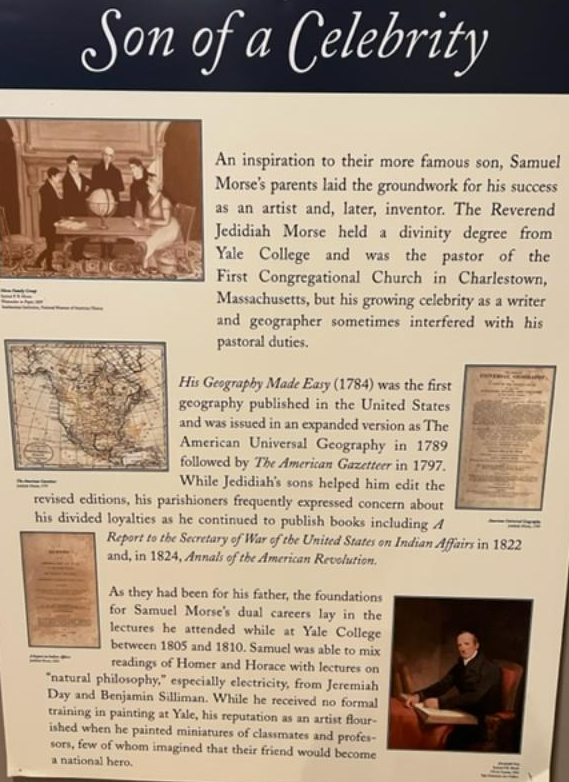
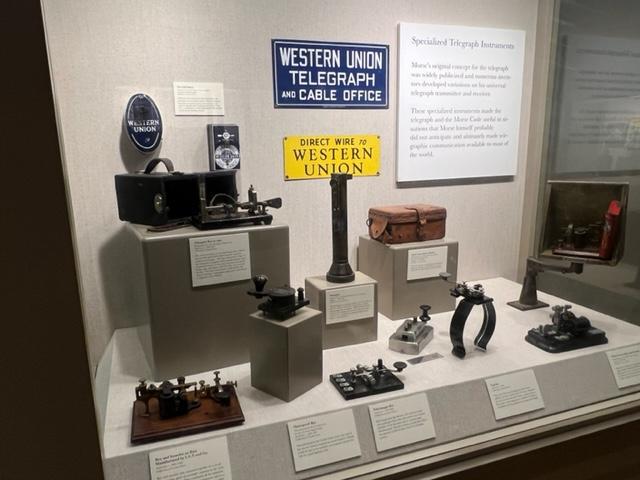
Also, don’t miss visiting the small museum of Samuel Morris’s paintings and his development of the telegraph system, where the patents is where most of the family fortune came from. Mr. Morse was an artist, educator and inventor and his life’s work is displayed in the galleries.

The Morse Family

Morse Museum: Samuel Morse family in the early Colonies

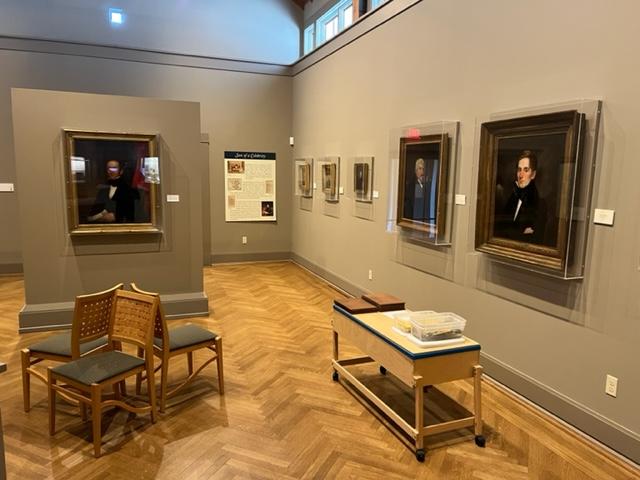
Samuel Morse with his career in portrait painting

Samuel Morse’s Portraits

Samuel Morse’s inventions and innovations with the telegraph

Samuel Morse’s innovations

The History of Locust Grove:

Locust Grove has an interesting history. The estate was first owned by Henry Livingston Jr. when he purchased the property from his father in 1771. The estate was such named because of the black locust trees that grew on the property. After his death, the estate was sold to John and Isabella Montgomery who built the original cottage on the estate. Mr. Livingston’s home had been torn down by this point.

The main house at Locust Grove is a villa in the Italianate style designed in 1850. Morse had recalled the elegant villas that he had visited years earlier in the Italian countryside and he sketched towers, windows and floor plans. Construction on the villa, sited on a dramatic bluff overlooking the Hudson River began in 1851 and was completed the following year.

He continued to expand the cottage and the gardens during his time and the family continued to use the house as a summer retreat and living in the winters in their brownstone in Gramercy Park. After Mr. Morse’s death, the family used the house occasionally and then sold it to one of their renters, the Young family.

William and Martha Young added modern amenities to the house like central heat and running water and updated the bathrooms. They added the new dining room and guest bedrooms in the new North Wing of the house. They also brought with the many family heirlooms and their decorative art collection which is still on display in the house.

After their deaths, the Young’s children, Annette and Ennis worked to preserved and restore their family’s homes in here, in New Haven, New York City and Ulster County. After the death of her brother in 1953, Annette Young continued to live at Locust Grove and began donating to museums the art, land and historic houses she inherited so that they would be protected. When she died in 1975, she established a not-for-profit foundation to ensure that Locust Grove with its collections and archives would be protected. The house is now available for touring and for weddings.

(Locust Grove History and Wiki: I give both organizations full credit for this information)

Location: Locust Grove is located on Route 9 in Poughkeepsie, NY, two miles south of the Mid-Hudson Bridge or 11 miles north of Interstate 84.

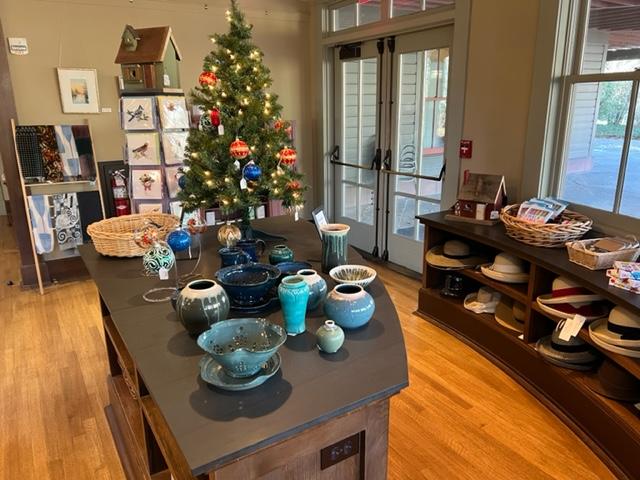
Locus Grove Gift Shop

Disclaimer: this information is taken from the Locust Grove Historic pamphlet. The site is very interesting and should be added to your list of ‘must sees’ in the area. Please call the site for more information.

Wilderstein Historic Site                                                            330 Morton Road                                                        Rhinebeck, NY 12572

Wilderstein Historic Site 330 Morton Road Rhinebeck, NY 12572

Wilderstein Historic Site

330 Morton Road

Rhinebeck, New York 12572

(845) 876-4818

http://www.wilderstein.org

Home

Open: Thursday-Sunday 1:00pm-4:00pm/Closed Monday-Wednesday

Fee: $10.00 donation at the Holidays/$16.00 Adults/$10.00 Seniors & Students/Children Under 12 free

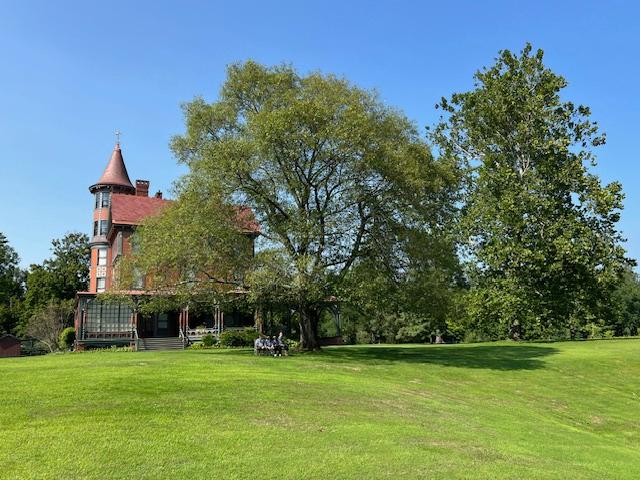
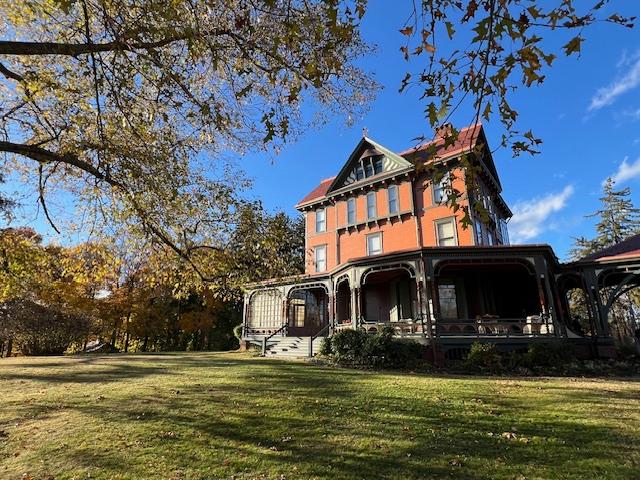
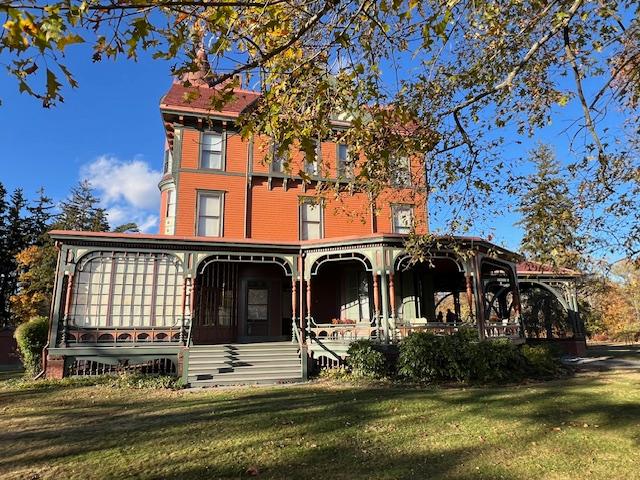
Visit Wilderstein-With its exquisite Queen Anne mansion and Calvert Vaux designed landscape, this historic estate is widely regarded as the Hudson Valley’s most important example of Victorian architecture.

TripAdvisor Review:

https://www.tripadvisor.com/Attraction_Review-g48486-d263984-Reviews-Wilderstein_Historic_Site-Rhinebeck_New_York.html?m=19905

The welcome sign for the estate

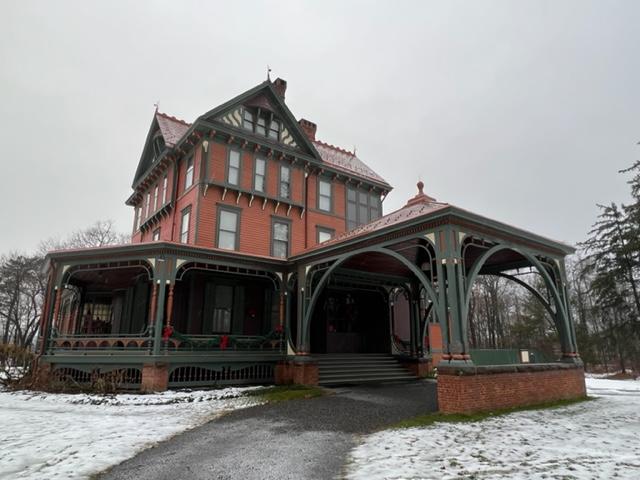
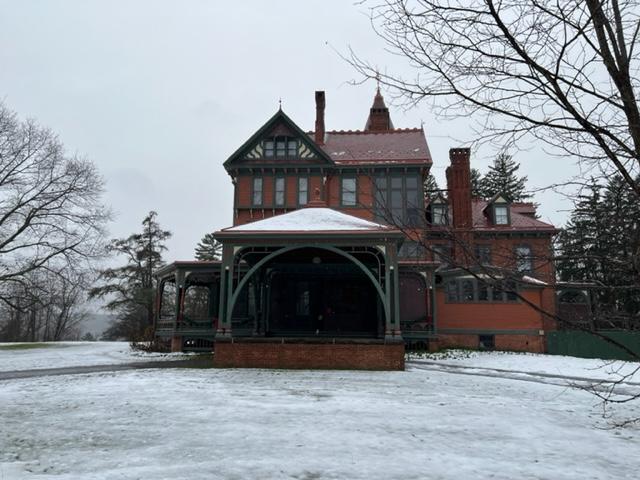
Wilderstein from the driveway at Christmas

The estate during the summer of 2024

I just visited Wilderstein for my third time at Christmas and it never gets boring. The house is so beautiful on its own, with its elegant woodwork and interesting family are portraits sometimes even the decorations get lost in its beauty.

The Wilderstein Carriage entrance

The carriage entrance in the summer of 2024

The entrance to Wilderstein at Christmas 2022

The same entrance in the Summer in 2024

Only the first floor is open to tourists (the rest of the house is under restoration and they fare hoping to open some rooms on the second floor by 2020) so the tour of the Receiving Room, The Dining Room, Living Room, Kitchen and Library does not take too long. Though take time to admire the rooms full of furniture that was owned by the Suckely family.

When you walk into the main hallway, you are greeted by portraits of the Suckley family descendants who line the walls of the house.  To the left is the grand staircase to the upper floors and right behind that is the library.

wilderstein-mansion-staircase.jpg

The staircase was decorated for Christmas

Off to the right is the Receiving Room which is still in need of a renovation as the silk furnishings and wall coverings need a lot of work. Still there is almost rotting elegance to it all as if you can still see how beautiful the room must have looked when it was new.

That lead to the Family Living Room with it’s breathtaking views of the Hudson River. The room had the family Christmas tree in it and was all set out for tea. Here was one of the most livable rooms in the house where the family must have gathered every night to enjoy each others company.

The Formal Dining Room with its heavy wood paneling and carved wood work is extremely detailed accented by stained glass windows and more portraits of the family tree. The room was decked out with holiday decorations and laid out for Christmas dinner.

Wilderstein Mansion III.jpg

The Family Dining Room decked out for Christmas

Off to the side of the Dining Room was the Butler’s pantry which Ms. Suckley used as her kitchen in the later years and was equipped with a modern oven and refrigerator. It must have been a very comfortable place to cook in.

Down the hall off to the side of the formal staircase is the Library where Ms. Suckley slept in her later years but still had loads of books lining the walls and a giant fireplace in the middle of the wall to keep the room warm. The whole room was lined with ivy and garland which gave it a festive look.

Wilderstein Mansion Library.jpg

The Wilderstein Library decked out for Christmas

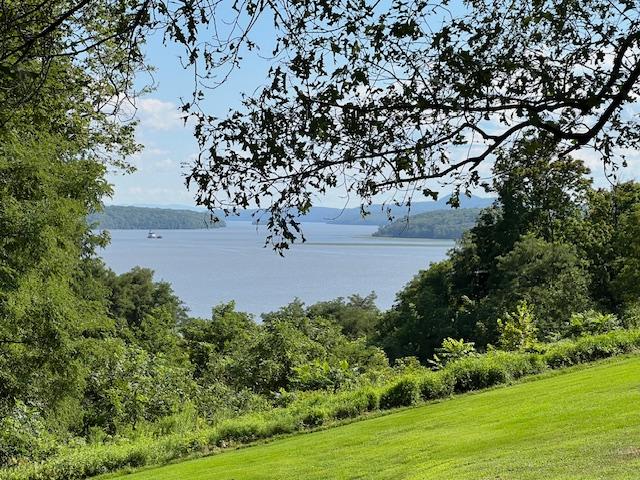
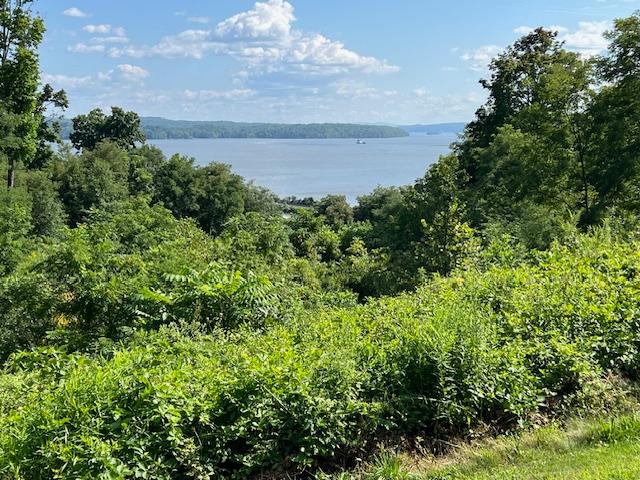
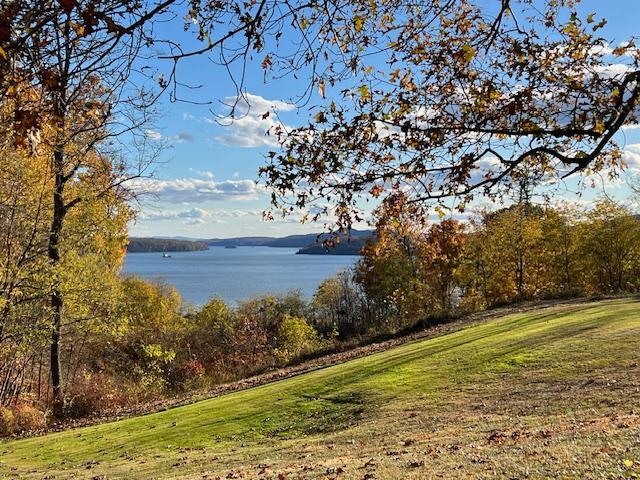
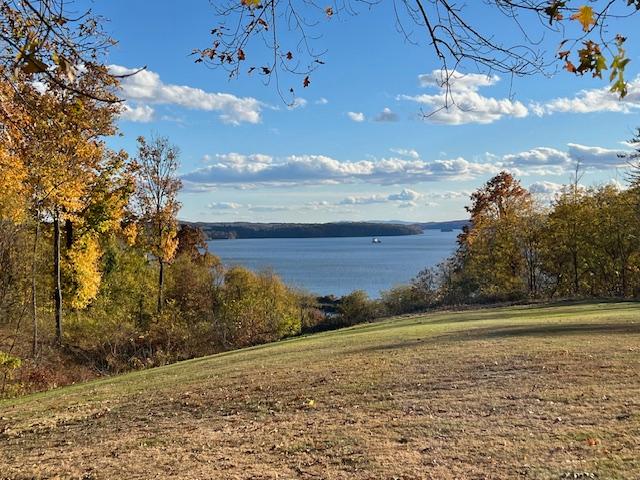
Touring the house takes about an hour as the first floor is the only floor open right now and there is only five rooms to tour. Take time to walk the grounds especially during the warmer months. There is a spectacular view of the Hudson River from the house and grounds. It must have been fun to sit on the veranda in the summer months and just look at the river.

The view from Wilderstein is amazing! This was in the Summer of 2024

The view of the Hudson River during the Summer of 2024

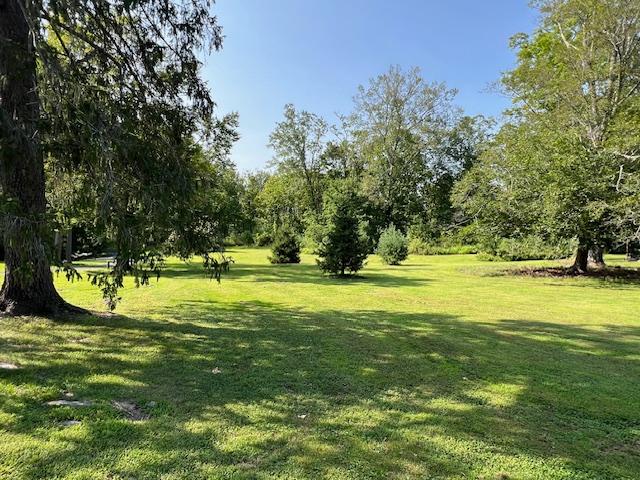
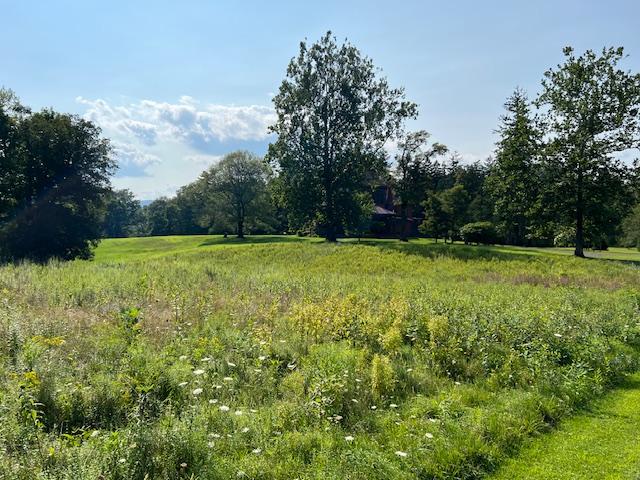
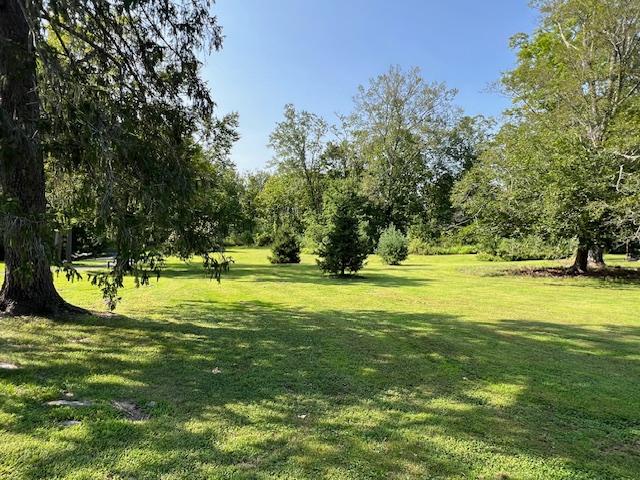
In the Summer of 2024, I was able to take time to tour the grounds, it has the most amazing views of the Hudson River. There was beautiful views of the grounds, the Hudson River and the fields of wildflowers. Just walking around the grounds it has colorful flowers, wonderful shade trees and a relaxing environment. It is so relaxing in the late afternoon.

No wonder Daisy Suckley never wanted to leave this house.

The view of the lawn overlooking the Hudson River at Christmas time

The estate in the Summer of 2024

History of Wilderstein Mansion:

The Mansion: Originally built in 1852 as a restrained Italianate Villa, the house was transformed in 1888 into the elaborate Queen Anne Victorian mansion seen today. The house was designed by Poughkeepsie architect Arnout Cannon who transformed the original two story Italianate villa that had been designed in 1852 by architect John Warren Rich to the Queen Anne style mansion of today.

Wilderstein estate in the summer

The Landscape: Renowned landscape architect Calvert Vaux designed Wilderstein’s romantic grounds taking advantage of the varied topography and magnificent views of the Hudson. It was laid out in the ‘American Romance’ style of landscape.

The grounds in the Summer of 2024

The fields of wildflowers on the estate

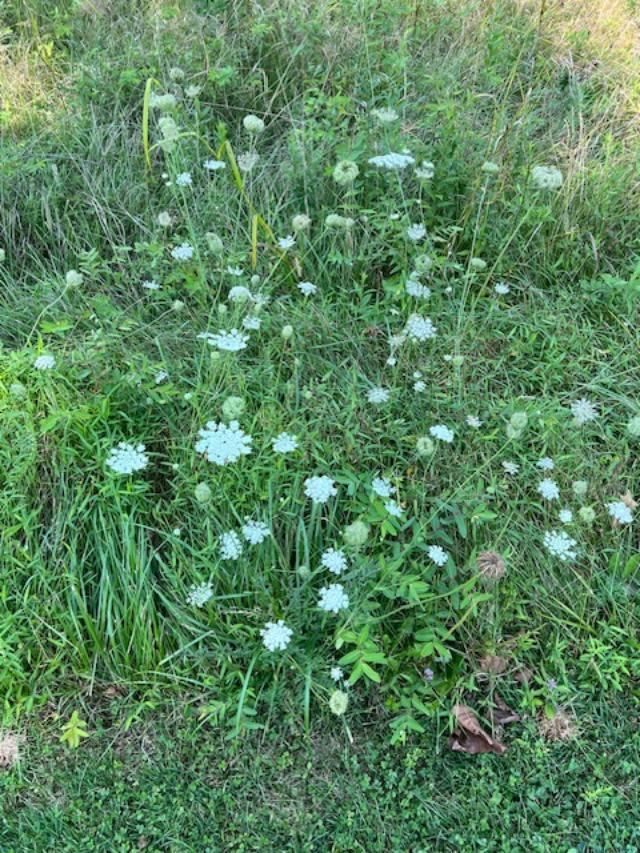
Queen Ann Lace on the estate

The Family: Wilderstein was home to three generations of the Suckley family. The last family member to live at Wilderstein was Margaret (Daisy)  Suckley, whose extraordinary friendship with Franklin Delano Roosevelt has been well-chronicled and is the subject of much interest.

The Mansion Interiors: Joseph Burr Tiffany decorated the first floor of the mansion in eclectic mix of styles. The interiors are virtually untouched since 1888 and contain original woodwork, stained glass, wall coverings and furniture.

Wilderstein at Christmas time

The mansion in the Summer of 2024

Mansion Information:

Directions: From the center of Rhinebeck travel south on Route 9, take first right to Mill Road and go 2.2 miles, take right to Morton Road (County Route 85) and Wilderstein’s entrance is one quarter mile on the left.

Hours: Tours May to October, Thursday through Sunday, from 1:00pm until 4:00pm (last tour at 3:30pm) and weekends in December. Group tours by advance reservation.

Disclaimer: This information is taken from the Wilderstein Historic Site pamphlet. Please call the site for more information.

The driveway at Wilderstein in the winter months

The grounds in the Summer of 2024

The view of the estate in the Summer of 2024

Wilderstein in the Fall of 2024

Wilderstein in the Fall of 2024

Wilderstein in the Fall of 2024

The views from Wilderstein in Fall 2024